EP0735540B1 - Nieder-Leistungs-Leseverstärker des Typs Gain Speicherzelle - Google Patents
Nieder-Leistungs-Leseverstärker des Typs Gain Speicherzelle Download PDFInfo
- Publication number
- EP0735540B1 EP0735540B1 EP96104548A EP96104548A EP0735540B1 EP 0735540 B1 EP0735540 B1 EP 0735540B1 EP 96104548 A EP96104548 A EP 96104548A EP 96104548 A EP96104548 A EP 96104548A EP 0735540 B1 EP0735540 B1 EP 0735540B1
- Authority
- EP
- European Patent Office
- Prior art keywords
- bit line
- line
- potential
- sense amplifier
- drain
- Prior art date
- Legal status (The legal status is an assumption and is not a legal conclusion. Google has not performed a legal analysis and makes no representation as to the accuracy of the status listed.)
- Expired - Lifetime
Links
- 230000004044 response Effects 0.000 claims description 9
- 238000007599 discharging Methods 0.000 claims description 6
- 230000003213 activating effect Effects 0.000 claims description 4
- 230000004913 activation Effects 0.000 claims description 4
- 238000000034 method Methods 0.000 claims 4
- 238000010586 diagram Methods 0.000 description 10
- 230000000717 retained effect Effects 0.000 description 3
- 230000007704 transition Effects 0.000 description 3
- 239000000969 carrier Substances 0.000 description 2
- 238000012986 modification Methods 0.000 description 2
- 230000004048 modification Effects 0.000 description 2
- 230000003068 static effect Effects 0.000 description 2
- 239000000758 substrate Substances 0.000 description 2
- 238000005516 engineering process Methods 0.000 description 1
- 230000017525 heat dissipation Effects 0.000 description 1
Images


Classifications
-
- G—PHYSICS
- G11—INFORMATION STORAGE
- G11C—STATIC STORES
- G11C7/00—Arrangements for writing information into, or reading information out from, a digital store
- G11C7/06—Sense amplifiers; Associated circuits, e.g. timing or triggering circuits
- G11C7/067—Single-ended amplifiers
-
- G—PHYSICS
- G11—INFORMATION STORAGE
- G11C—STATIC STORES
- G11C11/00—Digital stores characterised by the use of particular electric or magnetic storage elements; Storage elements therefor
- G11C11/21—Digital stores characterised by the use of particular electric or magnetic storage elements; Storage elements therefor using electric elements
- G11C11/34—Digital stores characterised by the use of particular electric or magnetic storage elements; Storage elements therefor using electric elements using semiconductor devices
- G11C11/40—Digital stores characterised by the use of particular electric or magnetic storage elements; Storage elements therefor using electric elements using semiconductor devices using transistors
- G11C11/401—Digital stores characterised by the use of particular electric or magnetic storage elements; Storage elements therefor using electric elements using semiconductor devices using transistors forming cells needing refreshing or charge regeneration, i.e. dynamic cells
- G11C11/4063—Auxiliary circuits, e.g. for addressing, decoding, driving, writing, sensing or timing
- G11C11/407—Auxiliary circuits, e.g. for addressing, decoding, driving, writing, sensing or timing for memory cells of the field-effect type
Definitions
- the present invention relates to a memory arrangement comprising a low power CMOS sense amplifier for gain memory cells.
- the output signal from a standard memory cell provides a well defined predetermined voltage difference for both logical states which can be sensed by a standard sense amplifier.
- a gain memory cell differs from the standard memory cell by not having a well defined voltage difference for both logic states. The gain memory cell will deliver charge only when a logical "1" is present. The output signal from a gain memory cell cannot be. sensed by a standard sense amplifier.
- the sense amplifier for a gain memory cell must provide a well defined output state for both logical levels "1" and "0" from a charge signal delivered only when a logical "1" is present.
- CMOS complementary metal-oxide-semiconductor
- a typical CMOS circuit application can provide very low standby power. Current flows in the circuit only when a transition of state is occurring. This feature makes it extremely easy to manage the power dissipation in CMOS designs.
- CMOS complementary metal-oxide-semiconductor
- For an n-channel device the current carriers are electrons, whereas for a p-channel device the carriers are holes.
- MOS transistor Source, drain, gate and substrate.
- the source, drain and gate voltages measured with respect to substrate are positive for an n-channel device and negative for a p-channel device.
- the output is always connected to one of the power supply rails because at any given state only one transistor is on and the other is off. This guarantees that the logic swing will be determined by the power supply voltage only, and not by the ratio of the effective impedance of the devices, as is the case with static nMOS design.
- the sense amplifier uses a feedback circuit to control the potential drop of the bit line.
- U.S. Patent No. 4,574,365 entitled Shared Access Lines Memory Cells, issued to R. E. Scheuerlein, discloses shared sense amplifiers for coupled memory cells. The memory cells are read out using a sense line, a first and a second bit line.
- U.S. Patent No. 4,970,689 entitled Charge Amplifying Trench Memory Cell, issued to Donald M. Kenney on November 13, 1990, discloses a memory cell with a storage node that is not directly connected to the bit line during a read. The circuit requires two data lines for writing and reading.
- European Patent Application EP 0 603 651 A3 relates to a memory system connected via bit lines to sense amplifiers having at least two pairs of MOS transistors which have opposite conductivity types.
- the disclosed sense amplifiers are used with gain memory cells.
- a problem typically associated with a sense amplifier for a gain memory cell is that of a relatively high component count.
- the high component count inflicts a cost and size penalty in the memory circuit and thus limits the operating speed and the density of the memory circuit.
- the present invention is a memory arrangement with a low power sense amplifier to sense the output of any memory cell which delivers a signal charge in one logical state and substantially no charge in the other logical state, and is especially suited for use with gain memory cells.
- the present invention low power sense amplifier circuit is based on an inverter with a feedback loop with additional circuitry providing stability after signal sensing.
- the bit sense line is discharged before sensing and after sensing it is locked to either a logical "0" or a logical "1" corresponding to the logical value of the gain memory cell during the read sensing cycle.
- the sense amplifier provides a logic output that is well defined with respect to the supply voltage and corresponds to the logic value of the gain memory cell.
- the present invention low power sense amplifier has no bias current flow during signal sensing and no power consumption in the stand by mode.
- the present invention low power sense amplifier is capable of being shared by two bit sense lines.
- the low power sense amplifier has a relatively low component count which allows for greater memory density and for the amplifier to be capable of very fast sensing of the output signals.
- the present invention low power sense amplifier can be used for a gain memory cell operative in a first state for storing a logical 1 and in a second state for storing a logical 0 wherein the gain memory cell is activated by applying a signal to a control line so that the gain memory cell applies a stored potential to a bit line, the stored potential indicative of a first potential level that corresponds to a stored logical 1 and a second potential level that corresponds to a stored logical 0.
- the sense amplifier comprises a preliminary discharge means, an actuatable sense amplifier means and an activation means.
- the preliminary discharge means is coupled to the bit line, for discharging the bit line prior to sensing.
- the actuatable sense amplifier means is responsive to an actuation control signal to sense a level on the bit line and provide an output signal.
- the sense amplifier means is coupled to the bit line.
- the output signal of the sense amplifier means has a first state of a supply voltage in response to the first potential level and a second floating state in response to the second potential level on the bit line.
- An output line for providing the output signal is being supplied by the supply voltage by means of switching means connected to the supply voltage.
- the output line is precharged by means of precharge switching means.
- the activation means is coupled to the control line of the memory gain cell so that the gain memory cell applies the stored potential level to the bit line and for activating the actuatable sense amplifier means to sense the bit line. Wherein the output signal of the actuatable sense amplifier means is operative in the first state when the gain memory cell contains the stored logical 1 and in the second state when the gain memory cell contains the stored logical 0.
- the present invention low power sense amplifier can be used to sense the outputs of any memory cell which delivers a signal charge in one logical state and substantially no charge in the other logical state, having only a small voltage difference between both logic states, the present invention is especially suited for use with gain memory cells. Accordingly the present invention low power sense amplifier will be described below in the context of a gain memory cell application in order to describe the best mode of the invention.
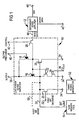
- FIG. 1 there is shown a preferred embodiment of the present invention low power sense amplifier 10 connected to a gain memory cell 14 with a secondary sense amplifier 12 and timing signal generator 52.
- the timing signal generator 52 provides the signals which are connected to the first bit discharge line 32, the hold line 36, the supply line 38, the output precharge line 40, the control line 42 and the word line. The sequence of the signals are shown in FIG. 2 and their functionality is explained later.
- the low power sense amplifier 10 is implemented utilizing two pMOS transistors 16 and 18 and five nMOS transistors 20, 22, 24, 26 and 28.
- a first bit sense line 30 from the gain memory cell 14 is commonly interconnected to the drain of nMOS transistor 20, the drain of nMOS transistor 22, the gate of nMOS transistor 26, and the drain of pMOS transistor 16.
- a first bit discharge line 32 is coupled to the gate of nMOS transistor 20.
- the source of nMOS transistor 20 is coupled to ground 34.
- the source of nMOS transistor 22 is coupled to the drain of nMOS transistor 24.
- a hold line 36 is coupled to the gate of nMOS transistor 24.
- the source of nMOS transistor 24 and the source of nMOS transistor 26 are coupled to ground 34.
- a supply line 38 is coupled to the source of pMOS transistor 16 and the source of pMOS transistor 18.
- An output precharge line 40 is coupled to the gate of pMOS transistor 18.
- the gate of pMOS transistor 16, the gate of nMOS transistor 22, the drain of pMOS transistor 18, the drain of nMOS transistor 26, and the drain of nMOS transistor 28 are commonly interconnected.
- a control line 42 is connected to the gate of pMOS transistor 28.
- a secondary sense amplifier 12 has a read data line 44, a word data line 46 and a R/W line 48.
- the read data line 44 is connected to the source of nMOS transistor 28.
- the secondary sense amplifier 12 can be a current sensitive differential amplifier connected to the read data line 44 and a reference current source or a voltage differential amplifier connected to the read data line 44 and a reference voltage source.
- the designs of a current sensitive differential amplifier and a voltage differential amplifier are well known to those ordinarily skilled in the art.
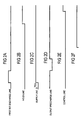
- FIG. 2 shows the timing of input signals from the first bit discharge line 32 (FIG. 2A), the hold line 36 (FIG. 2B), the supply line 38 (FIG. 2C), the output precharge line 40 (FIG. 2D), the control line 42 (FIG. 2E) and the word line (FIG. 2F) during a read sensing cycle.
- the input signals are generated by a timing signal generator 52.
- the timing signal generator 52 is constructed from logic gates and timers, electronic components that are well known in the art and can be selected by a person of ordinary skill in the art and from readily available commercial sources.
- the first bit discharge line 32 (FIG. 2A) becomes HIGH and turns nMOS transistor 20 ON which shunts the first bit sense line 30 to ground 34.
- a voltage source V DD is applied to the supply line 38 (FIG. 2C) which turns ON the low power sense amplifier 10 for sensing the signal of a gain memory cell.
- the first bit discharge line 32 (FIG. 2A) now becomes LOW which causes the first bit sense line 30 to float.
- the output precharge line 40 (FIG. 2D) becomes LOW and turns ON pMOS transistor 18 which shunts the drain of nMOS transistor 26 and the commonly connected component terminals to the supply line 38 (FIG. 2C) which has a voltage source V DD currently applied to it.
- the output precharge line 40 (FIG. 2D) now becomes HIGH and turns OFF pMOS transistor 18 which causes the drain of nMOS transistor 26 and the commonly connected component terminals to float.
- the gain memory cell 14 is now activated for sensing by turning ON an appropriate word line (FIG 2F).
- nMOS transistor 24 When the hold line 36 (FIG. 2B) becomes HIGH, nMOS transistor 24 is turned ON. Because nMOS transistor 22 is already ON the first bit sense line 30 is shunted to ground 34. This causes the first bit sense line 30 to remain stable with a LOW value for the duration of the sensing cycle.
- nMOS transistor 24 When the hold line 36 (FIG. 2B) becomes HIGH, nMOS transistor 24 is turned ON. However, because nMOS transistor 22 is OFF the first bit sense line 30 is not shunted to ground 34.
- the low power sense amplifier 10 has two primary modes, an active mode and a stand by mode.
- the low power sense amplifier 10 is in the stand by mode when the supply line 38 (FIG. 2C) is disconnected from the voltage source V DD or when the supply line 38 (FIG. 2C) is connected to ground 34. When operated in the stand by mode no power is consumed by the low power sense amplifier 10.
- the read data line 44 is precharged with voltage source V DD . Then the control line 42 (FIG. 2E) becomes HIGH and nMOS transistor 28 is turned ON which connects the low power sense amplifier 10 to the read data line 44. If the signal from the low power sense amplifier 10 has the value of logical "1" the read data line 44 remains HIGH. If the signal from the low power sense amplifier 10 has the value of logical "0" the read data line 44 is discharged and made LOW.
- an optional second bit sense line 50 reduces in half the number of low power sense amplifiers for a gain memory cell 14 array.
- the second bit sense line 50 represent a greater capacitive load to the low power sense amplifier 10. This increased capacitive load requires an increase of the channel size in nMOS transistor 20 and pMOS transistor 16 in order to provide the necessary increase in current.
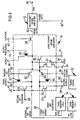
- FIG. 3 there is shown an alternate embodiment of the low power sense amplifier 10.
- the same reference numbers used in FIG. 1 have been retained to refer to the same components.
- the source and the drain of nMOS transistor 60 is connected in series with the first bit sense line 30.
- the source and the drain of nMOS transistor 62 is connected in series with the second bit sense line 50.
- a first bit control line 64 is connected to the gate of nMOS transistor 60.
- a second bit control line 66 is connected to the gate of nMOS transistor 62.
- the drain of nMOS transistor 70 is connected to the second bit sense line 50.
- Second bit discharge line 68 is connected to the gate of nMOS transistor 70.
- the source of nMOS transistor 70 is connected to ground 34.
- the timing signal generator 52 provides the first bit control signal 64, the second bit control signal 66, and the second bit precharge signal 68.
- first bit control line 64 is HIGH
- second bit control line 66 is HIGH
- nMOS transistor 62 is turned ON to connect second bit sense line 50.
- the first bit sense line 30 When the first bit sense line 30 is selected, the first bit sense line 30 is discharged as described before.
- the second bit sense line 50 is selected, the second bit discharge line 68 becomes HIGH to turn nMOS transistor 70 ON which shunts the second bit sense line 50 to ground 34. Further, after the second bit sense line 50 has been discharged, the second bit discharge line 68 becomes LOW to causes the second bit sense line 50 to float.
- the alternate embodiment of the low power sense amplifier 10 reduces the capacitive load by disconnecting either the first bit sense line 30 or the second bit sense line 50. Therefore, an increase of the channel size in nMOS transistor 20 and pMOS transistor 16 is not required.
- nMOS transistor 60 and the gate of nMOS transistor 62 it is necessary for the gate of nMOS transistor 60 and the gate of nMOS transistor 62 to be boosted in order to pass the full level of the signal from the corresponding bit sense line.
- FIG. 4 there is shown an alternate third embodiment of the low power sense amplifier 10.
- the same reference numbers used in FIG. 1 and in FIG. 3 have been retained to refer to the same components.
- the timing signal generator 52 provides the second supply signal 84 and the third supply signal 86.
- the pMOS transistor 16 shown in FIG. 3. has been replaced by separate pMOS transistors 80 and 82.
- the drain of pMOS transistor 80 is connected to the first bit sense line 30.
- the drain of pMOS transistor 82 is connected to the second bit sense line 50.
- the source of pMOS transistor 80 is connected to a second supply line 84.
- the source of pMOS transistor 82 is connected to a third supply line 86.
- the gate of pMOS transistor 80 and the gate of pMOS transistor 82 are connected in common with the drain of pMOS transistor 18, the drain of nMOS transistor 26, the drain of nMOS transistor 28 and the gate of nMOS transistor 22.
- the functioning of the alternate third embodiment of the low power sense amplifier 10 shown in FIG. 4 in relationship to the sequence of input signals is the same as described for the low power sense amplifier 10 shown in FIG. 3 except for the second supply line 84 and the third supply line 86.
- the voltage source V DD is applied to the second supply line 84 when the first bit sense line 30 is selected as previously described.
- the voltage source V DD is applied to the third supply line 86 when the second bit sense line 50 is selected as previously described.
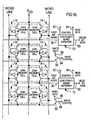
- the low power sense amplifier 10 has a first bit sense line 30, a second bit sense line 50, a control line 42, and a read data line 44.
- the first bit sense line 30 is connected to the array of gain memory cells 14.
- the connection to the second bit sense line 50 to another part of the array of the gain memory cells 14 is not shown for simplicity.
- the source and the drain of nMOS transfer transistor 92 is connected between the write data line signal 96 and the array of gain memory cells 14.
- the gate of the nMOS transfer transistor 92 is connected to the write control line 94.
- Writing into the gain memory cells 14 is accomplished by control of the read data line 44 by the control line 42 or by directly applying the write data line signal 96 to the bit sense line by the appropriate transfer transistor 92 by write control line 94. This results in a very short writing cycle time.
Landscapes
- Engineering & Computer Science (AREA)
- Microelectronics & Electronic Packaging (AREA)
- Computer Hardware Design (AREA)
- Dram (AREA)
- Static Random-Access Memory (AREA)
- Amplifiers (AREA)
- Semiconductor Memories (AREA)
Claims (15)
- Speicheranordnung, umfassend:wobei das betätigbare Leseverstärkermittel (10) auf ein Betätigungssteuersignal (38) reagiert, um einen Pegel auf der Bitleitung (30) zu lesen und ein Ausgangssignal auf einer Ausgangsleitung (44) bereitzustellen, wobei das Leseverstärkermittel (10) an die Bitleitung (30) angekoppelt ist und ein Rückkopplungsmittel (16, 22, 26) enthält, um einen vollen Potentialpegel zurück zu der Bitleitung (30) für den ersten Potentialpegel und für den zweiten Potentialpegel sicherzustellen,mindestens eine Hubspeicherzelle (14), die in einem ersten Zustand wirkt, um eine logische 1 zu speichern, und in einem zweiten Zustand wirkt, um eine logische 0 zu speichern, wobei die Hubspeicherzelle (14) durch Anlegen eines Signals an eine Steuerleitung aktiviert wird, so daß die Hubspeicherzelle (14) ein gespeichertes Potential an eine Bitleitung (30) anlegt, wobei das gespeicherte Potential einen ersten Potentialpegel, der einer gespeicherten logischen 1 entspricht, und einen zweiten Potentialpegel, der einer gespeicherten logischen 0 entspricht, anzeigt,ein an die Bitleitung (30) angekoppeltes Vorbereitungs-Entlademittel (20) zum Entladen der Bitleitung (30) vor dem Lesen;ein Aktivierungsmittel (52), das an die Steuerleitung der Hubspeicherzelle (14) angekoppelt ist, so daß die Hubspeicherzelle (14) den gespeicherten Potentialpegel an die Bitleitung (30) anlegt, zum Aktivieren eines betätigbarer. Verstärkermittels (10), um die Bitleitung (30) zu lesen;
wobei die Ausgangsleitung (44) des Leseverstärkermittels (10) als Reaktion auf den ersten Potentialpegel durch ein Schaltermittel (26), das mit einem Anschluß für eine Versorgungsspannung (34) verbunden ist, mit der Versorgungsspannung versorgt wird,
dadurch gekennzeichnet, daß.
das betätigbare Leseverstärkermittel (10) ein Vorlade-Schaltermittel (18) zum Anlegen eines Vorladepotentials (38) an die Ausgangsleitung, die sich als Reaktion auf den zweiten Potentialpegel auf der Bitleitung (30) in einem schwebenden Zustand befindet, enthält. - Speicheranordnung nach Anspruch 1, wobei das Vorbereitungs-Entlademittel (20) einen nMOS-Transistor mit einer Source-, einer Drain- und einer Gate-Elektrode umfaßt, wobei die Source-Elektrode so ausgelegt ist, daß sie ein erstes Potential (34) empfängt, wobei die Drain-Elektrode an die Bitleitung (30) und die Gate-Elektrode an eine Vorbereitungs-Entladesteuerleitung (32) angekoppelt ist.
- Speicheranordnung nach Anspruch 1, weiterhin mit einem Schaltermittel (28), das so ausgelegt ist, daß es das Ausgangssignal des betätigbaren Leseverstärkermittels (10) empfängt, um als Reaktion auf ein Schaltersteuersignal (42) ein geschaltetes Ausgangssignal bereitzustellen.
- Speicheranordnung nach Anspruch 3, wobei das Schaltermittel (28) einen nMOS-Transistor mit einer Source-, einer Drain- und einer Gate-Elektrode umfaßt, wobei die Drain-Elektrode so ausgelegt ist, daß sie das Ausgangssignal des betätigbaren Leseverstärkermittels (10) empfängt, wobei die Gate-Elektrode so ausgelegt ist, daß sie ein Schaltersteuersignal (42) empfängt.
- Speicheranordnung nach Anspruch 1, wobei das betätigbare Lesemittel (10) weiterhin folgendes umfaßt:wobei die Ausgangsleitung (44) gemeinsam an die Gate-Elektrode des ersten pMOS-Transistors (16), die Drain-Elektrode des zweiten pMOS-Transistors (18), die Gate-Elektrode des zweiten nMOS-Transistors (22) und die Drain-Elektrode des ersten nMOS-Transistors (26) angekoppelt ist.einen ersten nMOS-Transistor (26) mit einer Drain-, einer Source- und einer Gate-Elektrode, wobei die Gate-Elektrode an die Bitleitung (30) und die Source-Elektrode an das erste Potential (34) angekoppelt ist;einen zweiten nMOS-Transistor (22) mit einer Drain-, einer Source- und einer Gate-Elektrode, wobei die Drain-Elektrode an die Bitleitung (30) angekoppelt ist;einen dritten nMOS-Transistor (24) mit einer Drain-, einer Source- und einer Gate-Elektrode, wobei die Drain-Elektrode an die Source-Elektrode des zweiten nMOS-Transistors (22) und die Source-Elektrode an das erste Potential (34) angekoppelt ist, wobei der Gate-Anschluß so ausgelegt ist, daß er ein Haltesignal (36) empfängt;einen ersten pMOS-Transistor (16) mit einer Drain-, einer Source- und einer Gate-Elektrode, wobei die Source-Elektrode an ein zweites Potential (38) und die Drain-Elektrode an die Bitleitung (30) angekoppelt ist;einen zweiten pMOS-Transistor (18) mit einer Drain-, einer Source- und einer Gate-Elektrode, wobei die Source-Elektrode an das zweite Potential (38) angekoppelt und die Gate-Elektrode so ausgelegt ist, daß sie ein Vorlade-Steuersignal (40) empfängt;
- Speicheranordnung nach Anspruch 5, wobei der Leseverstärker (10) eine aktive Betriebsart und eine Standby-Betriebsart aufweist, wobei das zweite Potential (38) in der Standby-Betriebsart dem ersten Potential (34) äquivalent ist, wodurch der Leseverstärker (10) in der Standby-Betriebsart keinen Strom verbraucht.
- Speicheranordnung nach einem der Ansprüche 1 bis 6, umfassend:wobei das Aktivierungsmittel (52) an die Steuerleitung einer gewählten der mehreren Hubspeicherzellen (14) angekoppelt ist, so daß die gewählte der mehreren Hubspeicherzellen (14) den gespeicherten Potentialpegel an die gemeinsam benutzte Bitleitung anlegt und zum Aktivieren des betätigbaren Verstärkermittels (10), um die gemeinsam benutzte Bitleitung zu lesen.mehrere Hubspeicherzellen (14);eine gemeinsam benutzte Bitleitung, die gemeinsam mit der Bitleitung (30, 50) jeder Hubspeicherzelle (14) der mehreren Hubspeicherzellen (14) verbunden ist;
- Speicheranordnung nach Anspruch 7, wobei die gemeinsam benutzte Bitleitung durch mehrere Schaltermittel (60, 62) mit der Bitleitung (30, 50) jeder der mehreren Hubspeicherzellen (14) verbunden ist, um die Verbindungen zu schalten.
- Speicheranordnung nach Anspruch 8, wobei mehrere Entlademittel (20, 70) mit der Bitleitung (30, 50) jeder einzelnen der Hubspeicherzellen (14) vor dem aktiven Schaltermittel (60, 62) verbunden werden.
- Speicheranordnung nach Anspruch 8 oder 9, wobei jedes der mehreren Schaltermittel (60, 62) einen nMOS-Transistor mit einer Drain-, einer Source- und einer Gate-Elektrode umfaßt, wobei die Source-Elektrode an die Bitleitung (30, 50) einer der mehreren Hubspeicherzellen (14) und die Drain-Elektrode an die gemeinsam benutzte Bitleitung angekoppelt und die Gate-Elektrode so ausgelegt ist, daß sie ein Bitsteuersignal (64, 66) empfängt.
- Speicheranordnung nach Anspruch 9, wobei jedes der mehreren aktiven Entlademittel (20, 70) einen nMOS-Transistor mit einer Source-, einer Drain- und einer Gate-Elektrode umfaßt, wobei die Source-Elektrode an das erste Potential (34) und die Drain-Elektrode an die Bitleitung (30, 50) einer der mehreren Hubspeicherzellen (14) angekoppelt und die Gate-Elektrode ausgelegt ist, um ein Vorbereitungs-Entladungssteuersignal (68, 32) zu empfangen.
- Speicheranordnung nach Anspruch 7, wobei die mehreren Hubspeicherzellen (14), die gemeinsam mit der gemeinsam benutzten Bitleitung verbunden sind, zwei Hubspeicherzellen (14) umfassen.
- Verfahren zum Lesen mindestens einer Hubspeicherzelle (14), die in einem ersten Zustand wirkt, um eine logische 1 zu speichern, und in einem zweiten Zustand wirkt, um eine logische 0 zu speichern, wobei die Hubspeicherzelle (14) durch Anlegen eines Signals an eine Speichersteuerleitung aktiviert wird, so daß die Hubspeicherzelle (14) ein gespeichertes Potential an eine Bitleitung (30) anlegt, wobei das Potential in einem ersten Zustand, der der gespeicherten logischen 1 entspricht, und einem zweiten Zustand, der der gespeicherten logischen 0 entspricht, wirkt, mit den folgenden Schritten:gekennzeichnet durchzuerst Entladen der Bitleitung (30) als Reaktion auf ein Steuersignal (32);Anlegen eines Signals an die Speichersteuerleitung, so daß die Hubspeicherzelle (14) das Potential an die Bitleitung (30) anlegt;danach Aktivieren eines Rückkopplungsmittels (16, 22, 26), um einen vollen Potentialpegel zurück zu der Bitleitung (30) für das im ersten Zustand und im zweiten Zustand wirkende Potential sicherzustellen,Bereitstellen eines in einem Zustand einer Versorgungsspannung (34) wirkenden Ausgangssignals als Reaktion auf den ersten Zustand des Potentials,
Vorladen einer Ausgangsleitung (44) für das Ausgangssignal und Bereitstellen des in einem schwebenden Zustand wirkenden Ausgangssignals als Reaktion auf den zweiten Zustand des Potentials. - Verfahren nach Anspruch 13, weiterhin mit dem Schritt des Verriegelns des Ausgangssignals für eine vorbestimmte Zeitspanne.
- Verfahren nach Anspruch 13, wobei der Schritt des zuerst stattfindenden Entladens der Bitleitung (30) als Reaktion auf ein Steuersignal (32) einen nMOS-Transistor mit einem Source-, einem Drain- und einem Gate-Anschluß umfaßt, wobei der Source-Anschluß mit einem ersten Potential (34), der Drain-Anschluß mit der Bitleitung (30) und der Gate-Anschluß mit einer Vorbereitungs-Entladesteuerleitung verbunden wird.
Applications Claiming Priority (2)
| Application Number | Priority Date | Filing Date | Title |
|---|---|---|---|
| US41409095A | 1995-03-31 | 1995-03-31 | |
| US414090 | 1995-03-31 |
Publications (3)
| Publication Number | Publication Date |
|---|---|
| EP0735540A2 EP0735540A2 (de) | 1996-10-02 |
| EP0735540A3 EP0735540A3 (de) | 1996-10-30 |
| EP0735540B1 true EP0735540B1 (de) | 2002-06-19 |
Family
ID=23639918
Family Applications (1)
| Application Number | Title | Priority Date | Filing Date |
|---|---|---|---|
| EP96104548A Expired - Lifetime EP0735540B1 (de) | 1995-03-31 | 1996-03-21 | Nieder-Leistungs-Leseverstärker des Typs Gain Speicherzelle |
Country Status (7)
| Country | Link |
|---|---|
| US (1) | US5610540A (de) |
| EP (1) | EP0735540B1 (de) |
| JP (1) | JPH08287692A (de) |
| KR (1) | KR100417479B1 (de) |
| AT (1) | ATE219599T1 (de) |
| DE (1) | DE69621870T2 (de) |
| TW (1) | TW315541B (de) |
Families Citing this family (10)
| Publication number | Priority date | Publication date | Assignee | Title |
|---|---|---|---|---|
| US5734275A (en) * | 1996-07-18 | 1998-03-31 | Advanced Micro Devices, Inc. | Programmable logic device having a sense amplifier with virtual ground |
| US5929660A (en) * | 1997-12-29 | 1999-07-27 | United Technologies Corporation | Dynamic, single-ended sense amplifier |
| JP2002083493A (ja) * | 2000-09-05 | 2002-03-22 | Toshiba Corp | 半導体記憶装置 |
| US6753719B2 (en) * | 2002-08-26 | 2004-06-22 | Motorola, Inc. | System and circuit for controlling well biasing and method thereof |
| JP5518409B2 (ja) | 2009-09-15 | 2014-06-11 | ピーエスフォー ルクスコ エスエイアールエル | 半導体装置、半導体記憶装置、及び半導体装置を含む情報処理システム |
| FR2953643B1 (fr) | 2009-12-08 | 2012-07-27 | Soitec Silicon On Insulator | Cellule memoire flash sur seoi disposant d'une seconde grille de controle enterree sous la couche isolante |
| FR2957449B1 (fr) * | 2010-03-11 | 2022-07-15 | S O I Tec Silicon On Insulator Tech | Micro-amplificateur de lecture pour memoire |
| KR101288216B1 (ko) | 2011-09-23 | 2013-07-18 | 삼성전기주식회사 | 전력 증폭기 |
| JP2014142995A (ja) * | 2014-04-02 | 2014-08-07 | Ps4 Luxco S A R L | 半導体装置、半導体記憶装置、及び半導体装置を含む情報処理システム |
| CN108806742B (zh) | 2017-05-04 | 2022-01-04 | 汤朝景 | 随机存取存储器并且具有与其相关的电路、方法以及设备 |
Family Cites Families (13)
| Publication number | Priority date | Publication date | Assignee | Title |
|---|---|---|---|---|
| US3932848A (en) * | 1975-01-20 | 1976-01-13 | Intel Corporation | Feedback circuit for allowing rapid charging and discharging of a sense node in a static memory |
| JPS5836503B2 (ja) * | 1980-01-25 | 1983-08-09 | 株式会社東芝 | 半導体メモリ装置 |
| US4434381A (en) * | 1981-12-07 | 1984-02-28 | Rca Corporation | Sense amplifiers |
| US4574365A (en) * | 1983-04-18 | 1986-03-04 | International Business Machines Corporation | Shared access lines memory cells |
| US4567387A (en) * | 1983-06-30 | 1986-01-28 | Rca Corporation | Linear sense amplifier |
| JPS6254893A (ja) * | 1985-09-03 | 1987-03-10 | Nec Corp | 半導体メモリ装置 |
| US4970689A (en) * | 1988-03-07 | 1990-11-13 | International Business Machines Corporation | Charge amplifying trench memory cell |
| KR910008101B1 (ko) * | 1988-12-30 | 1991-10-07 | 삼성전자 주식회사 | 반도체 메모리 소자의 피드백형 데이타 출력 회로 |
| JPH0814995B2 (ja) * | 1989-01-27 | 1996-02-14 | 株式会社東芝 | 半導体メモリ |
| US5013943A (en) * | 1989-08-11 | 1991-05-07 | Simtek Corporation | Single ended sense amplifier with improved data recall for variable bit line current |
| US5138198A (en) * | 1991-05-03 | 1992-08-11 | Lattice Semiconductor Corporation | Integrated programmable logic device with control circuit to power down unused sense amplifiers |
| TW223172B (en) * | 1992-12-22 | 1994-05-01 | Siemens Ag | Siganl sensing circuits for memory system using dynamic gain memory cells |
| US5426385A (en) * | 1994-06-07 | 1995-06-20 | National Science Council | Double positive feedback loop precharge CMOS single-ended sense amplifier |
-
1996
- 1996-03-21 AT AT96104548T patent/ATE219599T1/de active
- 1996-03-21 DE DE69621870T patent/DE69621870T2/de not_active Expired - Fee Related
- 1996-03-21 EP EP96104548A patent/EP0735540B1/de not_active Expired - Lifetime
- 1996-03-22 TW TW085103483A patent/TW315541B/zh not_active IP Right Cessation
- 1996-03-28 KR KR1019960008696A patent/KR100417479B1/ko not_active Expired - Fee Related
- 1996-04-01 US US08/625,840 patent/US5610540A/en not_active Expired - Lifetime
- 1996-04-01 JP JP8079249A patent/JPH08287692A/ja active Pending
Also Published As
| Publication number | Publication date |
|---|---|
| DE69621870D1 (de) | 2002-07-25 |
| EP0735540A3 (de) | 1996-10-30 |
| KR960035644A (ko) | 1996-10-24 |
| US5610540A (en) | 1997-03-11 |
| KR100417479B1 (ko) | 2004-04-29 |
| JPH08287692A (ja) | 1996-11-01 |
| DE69621870T2 (de) | 2003-01-02 |
| TW315541B (de) | 1997-09-11 |
| EP0735540A2 (de) | 1996-10-02 |
| ATE219599T1 (de) | 2002-07-15 |
Similar Documents
| Publication | Publication Date | Title |
|---|---|---|
| US10482952B2 (en) | Integrated circuit with separate supply voltage for memory that is different from logic circuit supply voltage | |
| US6753720B2 (en) | Internal high voltage generation circuit capable of stably generating internal high voltage and circuit element therefor | |
| US5258950A (en) | Semiconductor memory device | |
| US5734604A (en) | Static random access memory capable of both reducing power consumption and retaining data at standby-time | |
| JP2006500702A (ja) | 低電力高性能記憶回路及び関連方法 | |
| JP2006500702A5 (de) | ||
| EP0821364B1 (de) | Leseschaltung | |
| US5793671A (en) | Static random access memory cell utilizing enhancement mode N-channel transistors as load elements | |
| KR19990036155A (ko) | 전하 전달 감지 증폭기 | |
| US5610540A (en) | Low power sensor amplifier for gain memory cells | |
| US6362661B1 (en) | Sense amplifier for use in a semiconductor memory device | |
| EP0439154A2 (de) | Halbleiterspeicheranordnung und Datenverarbeitungsanordnung und deren Verwendung | |
| US7046565B1 (en) | Bi-mode sense amplifier with dual utilization of the reference cells and dual precharge scheme for improving data retention | |
| GB2300282A (en) | Substrate bias voltage control circuit | |
| US20040017713A1 (en) | Ferroelectric memory supplying predetermined amount of direct-current bias electricity to first and second bit lines upon reading data from memory cell | |
| CA1169964A (en) | Decoder circuit for semiconductor memory | |
| US20040170077A1 (en) | Semiconductor memory device | |
| HK1003742A (en) | Low power sense amplifier for gain memory cells | |
| JP2003510754A (ja) | ゼロパワープリチャージsram | |
| US20010026189A1 (en) | Intermediate voltage control circuit having reduced power consumption five | |
| US5768200A (en) | Charging a sense amplifier | |
| KR100256295B1 (ko) | 에스램 회로 |
Legal Events
| Date | Code | Title | Description |
|---|---|---|---|
| PUAI | Public reference made under article 153(3) epc to a published international application that has entered the european phase |
Free format text: ORIGINAL CODE: 0009012 |
|
| PUAL | Search report despatched |
Free format text: ORIGINAL CODE: 0009013 |
|
| AK | Designated contracting states |
Kind code of ref document: A2 Designated state(s): AT DE FR GB IE IT NL |
|
| AK | Designated contracting states |
Kind code of ref document: A3 Designated state(s): AT DE FR GB IE IT NL |
|
| 17P | Request for examination filed |
Effective date: 19970522 |
|
| 17Q | First examination report despatched |
Effective date: 19991221 |
|
| RAP1 | Party data changed (applicant data changed or rights of an application transferred) |
Owner name: INFINEON TECHNOLOGIES AG |
|
| GRAG | Despatch of communication of intention to grant |
Free format text: ORIGINAL CODE: EPIDOS AGRA |
|
| GRAG | Despatch of communication of intention to grant |
Free format text: ORIGINAL CODE: EPIDOS AGRA |
|
| GRAH | Despatch of communication of intention to grant a patent |
Free format text: ORIGINAL CODE: EPIDOS IGRA |
|
| GRAH | Despatch of communication of intention to grant a patent |
Free format text: ORIGINAL CODE: EPIDOS IGRA |
|
| GRAA | (expected) grant |
Free format text: ORIGINAL CODE: 0009210 |
|
| AK | Designated contracting states |
Kind code of ref document: B1 Designated state(s): AT DE FR GB IE IT NL |
|
| PG25 | Lapsed in a contracting state [announced via postgrant information from national office to epo] |
Ref country code: NL Free format text: LAPSE BECAUSE OF FAILURE TO SUBMIT A TRANSLATION OF THE DESCRIPTION OR TO PAY THE FEE WITHIN THE PRESCRIBED TIME-LIMIT Effective date: 20020619 Ref country code: IT Free format text: LAPSE BECAUSE OF FAILURE TO SUBMIT A TRANSLATION OF THE DESCRIPTION OR TO PAY THE FEE WITHIN THE PRE;WARNING: LAPSES OF ITALIAN PATENTS WITH EFFECTIVE DATE BEFORE 2007 MAY HAVE OCCURRED AT ANY TIME BEFORE 2007. THE CORRECT EFFECTIVE DATE MAY BE DIFFERENT FROM THE ONE RECORDED.SCRIBED TIME-LIMIT Effective date: 20020619 Ref country code: FR Free format text: LAPSE BECAUSE OF FAILURE TO SUBMIT A TRANSLATION OF THE DESCRIPTION OR TO PAY THE FEE WITHIN THE PRESCRIBED TIME-LIMIT Effective date: 20020619 Ref country code: AT Free format text: LAPSE BECAUSE OF FAILURE TO SUBMIT A TRANSLATION OF THE DESCRIPTION OR TO PAY THE FEE WITHIN THE PRESCRIBED TIME-LIMIT Effective date: 20020619 |
|
| REF | Corresponds to: |
Ref document number: 219599 Country of ref document: AT Date of ref document: 20020715 Kind code of ref document: T |
|
| REG | Reference to a national code |
Ref country code: GB Ref legal event code: FG4D |
|
| REG | Reference to a national code |
Ref country code: IE Ref legal event code: FG4D |
|
| REF | Corresponds to: |
Ref document number: 69621870 Country of ref document: DE Date of ref document: 20020725 |
|
| NLV1 | Nl: lapsed or annulled due to failure to fulfill the requirements of art. 29p and 29m of the patents act | ||
| EN | Fr: translation not filed | ||
| PG25 | Lapsed in a contracting state [announced via postgrant information from national office to epo] |
Ref country code: IE Free format text: LAPSE BECAUSE OF NON-PAYMENT OF DUE FEES Effective date: 20030321 Ref country code: GB Free format text: LAPSE BECAUSE OF NON-PAYMENT OF DUE FEES Effective date: 20030321 |
|
| PLBE | No opposition filed within time limit |
Free format text: ORIGINAL CODE: 0009261 |
|
| STAA | Information on the status of an ep patent application or granted ep patent |
Free format text: STATUS: NO OPPOSITION FILED WITHIN TIME LIMIT |
|
| 26N | No opposition filed |
Effective date: 20030320 |
|
| GBPC | Gb: european patent ceased through non-payment of renewal fee |
Effective date: 20030321 |
|
| REG | Reference to a national code |
Ref country code: IE Ref legal event code: MM4A |
|
| REG | Reference to a national code |
Ref country code: HK Ref legal event code: WD Ref document number: 1003742 Country of ref document: HK |
|
| PGFP | Annual fee paid to national office [announced via postgrant information from national office to epo] |
Ref country code: DE Payment date: 20080510 Year of fee payment: 13 |
|
| PG25 | Lapsed in a contracting state [announced via postgrant information from national office to epo] |
Ref country code: DE Free format text: LAPSE BECAUSE OF NON-PAYMENT OF DUE FEES Effective date: 20091001 |