EP0736367B2 - Preconditioning preforms on a reheat blow molding system - Google Patents
Preconditioning preforms on a reheat blow molding system Download PDFInfo
- Publication number
- EP0736367B2 EP0736367B2 EP96105339A EP96105339A EP0736367B2 EP 0736367 B2 EP0736367 B2 EP 0736367B2 EP 96105339 A EP96105339 A EP 96105339A EP 96105339 A EP96105339 A EP 96105339A EP 0736367 B2 EP0736367 B2 EP 0736367B2
- Authority
- EP
- European Patent Office
- Prior art keywords
- preforms
- temperature
- preconditioning
- air
- section
- Prior art date
- Legal status (The legal status is an assumption and is not a legal conclusion. Google has not performed a legal analysis and makes no representation as to the accuracy of the status listed.)
- Expired - Lifetime
Links
Images


Classifications
-
- B—PERFORMING OPERATIONS; TRANSPORTING
- B29—WORKING OF PLASTICS; WORKING OF SUBSTANCES IN A PLASTIC STATE IN GENERAL
- B29C—SHAPING OR JOINING OF PLASTICS; SHAPING OF MATERIAL IN A PLASTIC STATE, NOT OTHERWISE PROVIDED FOR; AFTER-TREATMENT OF THE SHAPED PRODUCTS, e.g. REPAIRING
- B29C49/00—Blow-moulding, i.e. blowing a preform or parison to a desired shape within a mould; Apparatus therefor
- B29C49/42—Component parts, details or accessories; Auxiliary operations
- B29C49/4205—Handling means, e.g. transfer, loading or discharging means
- B29C49/42093—Transporting apparatus, e.g. slides, wheels or conveyors
- B29C49/42101—Conveyors, e.g. flat conveyor or clamping between two bands
-
- B—PERFORMING OPERATIONS; TRANSPORTING
- B29—WORKING OF PLASTICS; WORKING OF SUBSTANCES IN A PLASTIC STATE IN GENERAL
- B29C—SHAPING OR JOINING OF PLASTICS; SHAPING OF MATERIAL IN A PLASTIC STATE, NOT OTHERWISE PROVIDED FOR; AFTER-TREATMENT OF THE SHAPED PRODUCTS, e.g. REPAIRING
- B29C49/00—Blow-moulding, i.e. blowing a preform or parison to a desired shape within a mould; Apparatus therefor
- B29C49/42—Component parts, details or accessories; Auxiliary operations
- B29C49/64—Heating or cooling preforms, parisons or blown articles
- B29C49/6409—Thermal conditioning of preforms
-
- B—PERFORMING OPERATIONS; TRANSPORTING
- B29—WORKING OF PLASTICS; WORKING OF SUBSTANCES IN A PLASTIC STATE IN GENERAL
- B29C—SHAPING OR JOINING OF PLASTICS; SHAPING OF MATERIAL IN A PLASTIC STATE, NOT OTHERWISE PROVIDED FOR; AFTER-TREATMENT OF THE SHAPED PRODUCTS, e.g. REPAIRING
- B29C49/00—Blow-moulding, i.e. blowing a preform or parison to a desired shape within a mould; Apparatus therefor
- B29C49/42—Component parts, details or accessories; Auxiliary operations
- B29C49/64—Heating or cooling preforms, parisons or blown articles
- B29C49/6472—Heating or cooling preforms, parisons or blown articles in several stages
-
- B—PERFORMING OPERATIONS; TRANSPORTING
- B29—WORKING OF PLASTICS; WORKING OF SUBSTANCES IN A PLASTIC STATE IN GENERAL
- B29C—SHAPING OR JOINING OF PLASTICS; SHAPING OF MATERIAL IN A PLASTIC STATE, NOT OTHERWISE PROVIDED FOR; AFTER-TREATMENT OF THE SHAPED PRODUCTS, e.g. REPAIRING
- B29C49/00—Blow-moulding, i.e. blowing a preform or parison to a desired shape within a mould; Apparatus therefor
- B29C49/42—Component parts, details or accessories; Auxiliary operations
- B29C49/64—Heating or cooling preforms, parisons or blown articles
- B29C49/68—Ovens specially adapted for heating preforms or parisons
-
- B—PERFORMING OPERATIONS; TRANSPORTING
- B29—WORKING OF PLASTICS; WORKING OF SUBSTANCES IN A PLASTIC STATE IN GENERAL
- B29C—SHAPING OR JOINING OF PLASTICS; SHAPING OF MATERIAL IN A PLASTIC STATE, NOT OTHERWISE PROVIDED FOR; AFTER-TREATMENT OF THE SHAPED PRODUCTS, e.g. REPAIRING
- B29C35/00—Heating, cooling or curing, e.g. crosslinking or vulcanising; Apparatus therefor
- B29C35/02—Heating or curing, e.g. crosslinking or vulcanizing during moulding, e.g. in a mould
- B29C35/08—Heating or curing, e.g. crosslinking or vulcanizing during moulding, e.g. in a mould by wave energy or particle radiation
- B29C35/0805—Heating or curing, e.g. crosslinking or vulcanizing during moulding, e.g. in a mould by wave energy or particle radiation using electromagnetic radiation
- B29C2035/0822—Heating or curing, e.g. crosslinking or vulcanizing during moulding, e.g. in a mould by wave energy or particle radiation using electromagnetic radiation using IR radiation
-
- B—PERFORMING OPERATIONS; TRANSPORTING
- B29—WORKING OF PLASTICS; WORKING OF SUBSTANCES IN A PLASTIC STATE IN GENERAL
- B29C—SHAPING OR JOINING OF PLASTICS; SHAPING OF MATERIAL IN A PLASTIC STATE, NOT OTHERWISE PROVIDED FOR; AFTER-TREATMENT OF THE SHAPED PRODUCTS, e.g. REPAIRING
- B29C49/00—Blow-moulding, i.e. blowing a preform or parison to a desired shape within a mould; Apparatus therefor
- B29C49/02—Combined blow-moulding and manufacture of the preform or the parison
- B29C2049/023—Combined blow-moulding and manufacture of the preform or the parison using inherent heat of the preform, i.e. 1 step blow moulding
-
- B—PERFORMING OPERATIONS; TRANSPORTING
- B29—WORKING OF PLASTICS; WORKING OF SUBSTANCES IN A PLASTIC STATE IN GENERAL
- B29C—SHAPING OR JOINING OF PLASTICS; SHAPING OF MATERIAL IN A PLASTIC STATE, NOT OTHERWISE PROVIDED FOR; AFTER-TREATMENT OF THE SHAPED PRODUCTS, e.g. REPAIRING
- B29C2949/00—Indexing scheme relating to blow-moulding
- B29C2949/07—Preforms or parisons characterised by their configuration
- B29C2949/0715—Preforms or parisons characterised by their configuration the preform having one end closed
-
- B—PERFORMING OPERATIONS; TRANSPORTING
- B29—WORKING OF PLASTICS; WORKING OF SUBSTANCES IN A PLASTIC STATE IN GENERAL
- B29C—SHAPING OR JOINING OF PLASTICS; SHAPING OF MATERIAL IN A PLASTIC STATE, NOT OTHERWISE PROVIDED FOR; AFTER-TREATMENT OF THE SHAPED PRODUCTS, e.g. REPAIRING
- B29C49/00—Blow-moulding, i.e. blowing a preform or parison to a desired shape within a mould; Apparatus therefor
- B29C49/02—Combined blow-moulding and manufacture of the preform or the parison
- B29C49/06—Injection blow-moulding
-
- B—PERFORMING OPERATIONS; TRANSPORTING
- B29—WORKING OF PLASTICS; WORKING OF SUBSTANCES IN A PLASTIC STATE IN GENERAL
- B29C—SHAPING OR JOINING OF PLASTICS; SHAPING OF MATERIAL IN A PLASTIC STATE, NOT OTHERWISE PROVIDED FOR; AFTER-TREATMENT OF THE SHAPED PRODUCTS, e.g. REPAIRING
- B29C49/00—Blow-moulding, i.e. blowing a preform or parison to a desired shape within a mould; Apparatus therefor
- B29C49/02—Combined blow-moulding and manufacture of the preform or the parison
- B29C49/06—Injection blow-moulding
- B29C49/061—Injection blow-moulding with parison holding means displaceable between injection and blow stations
- B29C49/064—Injection blow-moulding with parison holding means displaceable between injection and blow stations following a rectilinear path, e.g. shuttle-type
-
- B—PERFORMING OPERATIONS; TRANSPORTING
- B29—WORKING OF PLASTICS; WORKING OF SUBSTANCES IN A PLASTIC STATE IN GENERAL
- B29C—SHAPING OR JOINING OF PLASTICS; SHAPING OF MATERIAL IN A PLASTIC STATE, NOT OTHERWISE PROVIDED FOR; AFTER-TREATMENT OF THE SHAPED PRODUCTS, e.g. REPAIRING
- B29C49/00—Blow-moulding, i.e. blowing a preform or parison to a desired shape within a mould; Apparatus therefor
- B29C49/42—Component parts, details or accessories; Auxiliary operations
- B29C49/4205—Handling means, e.g. transfer, loading or discharging means
- B29C49/42093—Transporting apparatus, e.g. slides, wheels or conveyors
- B29C49/42105—Transporting apparatus, e.g. slides, wheels or conveyors for discontinuous or batch transport
-
- B—PERFORMING OPERATIONS; TRANSPORTING
- B29—WORKING OF PLASTICS; WORKING OF SUBSTANCES IN A PLASTIC STATE IN GENERAL
- B29C—SHAPING OR JOINING OF PLASTICS; SHAPING OF MATERIAL IN A PLASTIC STATE, NOT OTHERWISE PROVIDED FOR; AFTER-TREATMENT OF THE SHAPED PRODUCTS, e.g. REPAIRING
- B29C49/00—Blow-moulding, i.e. blowing a preform or parison to a desired shape within a mould; Apparatus therefor
- B29C49/42—Component parts, details or accessories; Auxiliary operations
- B29C49/64—Heating or cooling preforms, parisons or blown articles
- B29C49/6409—Thermal conditioning of preforms
- B29C49/6418—Heating of preforms
-
- B—PERFORMING OPERATIONS; TRANSPORTING
- B29—WORKING OF PLASTICS; WORKING OF SUBSTANCES IN A PLASTIC STATE IN GENERAL
- B29C—SHAPING OR JOINING OF PLASTICS; SHAPING OF MATERIAL IN A PLASTIC STATE, NOT OTHERWISE PROVIDED FOR; AFTER-TREATMENT OF THE SHAPED PRODUCTS, e.g. REPAIRING
- B29C49/00—Blow-moulding, i.e. blowing a preform or parison to a desired shape within a mould; Apparatus therefor
- B29C49/42—Component parts, details or accessories; Auxiliary operations
- B29C49/64—Heating or cooling preforms, parisons or blown articles
- B29C49/6472—Heating or cooling preforms, parisons or blown articles in several stages
- B29C49/648—Heating or cooling preforms, parisons or blown articles in several stages of preforms or parisons
Definitions
- This invention is directed to a system for preconditioning preforms according to the preamble of claim 1, and more particularly to a blow molding system which preconditions preforms such that temperature distribution for each preform and among a plurality of preforms is uniformly distributed prior to reheating and blow molding.
- the described apparatus mixes ambient air with the re-circulating air in the oven to maintain the temperature of the air passing through the oven and over the preforms at a constant level. It does not address the adverse effects of variation in the amount of heat contained in the preforms during the day as shown in Figure 2 . Since in prior art two stage processes, preforms are generally injection molded hours or days before they are finally blow molded into their final shape and they are stored for a substantial period of time, their temperature will equilibrate to that of the ambient storage temperature. From Figure 2 of the US-A-5 322 651 it is obvious that preforms entering the reheat/blow stage can differ in temperature by up to 11°C.
- US-A-4 140 464 discloses an apparatus used to injection mold preforms.
- the preforms are removed at substantially their blowing temperature by a handling device and placed in a parison storage section where they are maintained at the blowing temperature until they are blown within the time frame of one injection molding cycle. Since the preforms are stored for a very short period of time, the inherent temperature variation from one preform to the next on removal from the injection mold will continue to be seen in preforms entering the blowing station.
- US-A-4 063 867 shows an apparatus with multiple sets of injection mold cores which support the preforms while they are moved from the injection molding station to a preblow station.
- the preforms are then moved to an oven where multiple sets of cores are stored for multiple injection molding cycles and finally to the blowing station.
- the preblown preforms are heated in an "oven” by blowing hot air over them while they are enclosed by an extension of the hot air supply duct.
- the purpose of the oven is to heat the preforms in preparation for the blowing station.
- the apparatus is assumed to equalize any variation in preform heat content since the preforms are "soaked” in the oven.
- This patent explicitly deals with uniformly heating individual preforms to the blowing temperature in an oven. It ignores the problem of variations in ambient temperature and the variation in heat content from one preform to the next, produce by each injection molding cycle.
- US-A-5 066 222 addresses the problems of uniformly heating a preform throughout its cross-section. It teaches heating the outside of the preform to a temperature below the blowing temperature; cooling the outside to prevent the outside from reaching a temperature above the blowing temperature while the inside wall continues to increase in temperature as a result of the heat added to and contained in the body of the preform from the first heating step; further heating the outside to a temperature above the blowing temperature, followed by a period where the outside and inside temperatures are allowed to converge to the desired blowing temperature.
- Figure 2 of the patent clearly shows that all the incoming preforms are at the initial temperature To.
- the key to this method is the provision of time to allow the outside and inside temperatures of the preform to converge to a desired value by providing exterior cooling means for the preform while the inner surface continues to warm up.
- the teaching of this patent does not consider incoming preforms of varying temperatures or heat content. The assumption is that all incoming preforms are at the same temperature To. An incoming preform that is hotter or cooler than To will result in a curve similar to Figure 2 of the US-A-5 066 222 for that preform which is shifted by the difference between the actual incoming temperature of the preform and To. This means that the final temperature of the preforms entering the blow station will vary by this amount. As previously stated this difference can be up to 11°C making it very difficult or impossible to produce consistently acceptable quality blown articles.
- US-A-5 206 039 discloses a preform conditioning apparatus with a conditioning section before the blow molding machine.
- the conditioning section can consist of more than one conditioning station. In a preferred embodiment, at least one cooling and one heating station are required.
- the disclosed apparatus has discrete conditioning stations into which the entire output of an injection molding machine cycle are simultaneously placed. The entire output is then picked up again and moved simultaneously to the next station.
- Another transfer device removes a portion of the preforms from the second conditioning station into the blow station. Each time that preforms are moved, they are gripped by their necks. This repeated gripping, picking up, moving and releasing adds complexity to the apparatus and increases the probability of damage to the neck finish.
- US-A-5 326 258 discloses a means to heat temperature sensitive preforms prior to blow molding.
- preforms are introduced first into an equalization section where they are "uniformly equalized throughout". They are then transported by a continuously moving conveyor through subsequent heating/cooling, temperature equalizing, surface treatment and tempering stages/stations.
- the equalizing refers to ensuring that each individual preform has a uniform temperature throughout its cross-section. This equalization allows the heat energy contained in each individual preform to dissipate throughout its entire mass. It does not address the problem of "equalizing" preforms of differing heat content due to differential cooling in an injection mold or variable ambient temperatures. This patent does not teach how this equalization is done. The figure appears to provide inadequate means to achieve the equalization required to ensure uniform temperatures across all preforms and within each preform.
- EP -A-0266804 describes, amongst other things, a reheat oven environment in which a plurality of temperature conditioning heaters are provided along the length of the parisons to provide the exact temperature profile needed by the parison in the finishing (i.e. blow-molding) operation.
- the oven operates to equalize the temperature between the inside and outside of the parison.
- DE-A-3908219 relates to a conditioning system for preforms in advance of blow-molding.
- US patent 5322651 discloses a preform oven in which the oven temperature is stabilized by mixing ambient air with recycled hot air that becomes heated as it carries away excess heat from the heating elements.
- the primary objective of this invention is to provide a blow molding system including a preconditioning section for insuring uniformity of temperature distribution for all preforms sent through the system.
- Another objective of this invention is to provide a blow molding system wherein low grade heat given off by a reheat section is incorporated into a preconditioning section for preconditioning the temperature distribution of preforms.
- Another objective of the present invention is to provide a blow molding system wherein waste heat can be used to preheat preforms as part of a preconditioning step in order to reduce the amount of heat energy that must be applied in a reheat/temperature profile section, making the entire system more energy efficient.
- Yet another object of this invention is to provide a blow molding machine having minimized air conditioning requirements for preconditioning preforms via the use of an air-flow regulation system.
- Still another object of this invention is to provide a blow molding system which causes preforms to be less thermally sensitive to environment influences, such as seasonal temperature fluctuations.
- the blow molding system of the instant invention which includes a system for preconditioning preforms prior to reheating the preforms for blow molding.
- a preconditioning system for preconditioning preforms prior to reheating said preforms in a reheat oven having heating elements arranged to condition the preforms for a subsequent blow molding operation comprising: a temperature preconditioning section having an area for receiving finished preforms, the temperature preconditioning section being separate from and upstream of the reheat oven; means for moving said preforms from said area through said temperature preconditioning section to the reheat oven and on to the blow molding operation such that, in use, preconditioned preforms from the temperature preconditioning section are conveyed by the means for moving into the reheat oven to undergo reheating by the heating elements; means for uniformly preconditioning the temperature of said preforms in said temperature preconditioning section prior to reheating said preforms in the reheat oven, where
- a process of preconditioning preforms in advance of blow molding comprising: receiving said preforms on a conveying mechanism from a preform source; transporting said preforms on said conveying mechanism from a temperature preconditioning section to a blow molding station via a reheat oven that is separate from the preconditioning section, the temperature preconditioning section arranged to precondition said preforms and the reheat oven arranged to reheat preconditioned preforms prior to blow molding the preforms in the blow molding station; preconditioning the temperature of said preforms in said temperature preconditioning section prior to reheating said preforms in the reheat oven, wherein said preconditioning is defined by the heat energy contained by each preform being substantially the same and said heat energy being substantially uniformly distributed throughout each preform, the uniformly preconditioning the temperature of the preforms is also related to the temperature variations of the preforms from one to another; and characterized by: ducting excess heat from the reheat oven through an air handling system arranged to provide
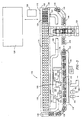
- FIG. 1 an overhead view of the reheat blow molding machine of the present invention, designated generally as 10.
- the reheat blow molding machine generally includes a set down area 12 for the reception of finished preforms, a conveying mechanism 14 for moving the preforms through a temperature preconditioning section 16 and onward to a reheat section 18.
- Machine 10 further includes a blow molding section 20 receiving preforms from the reheat section and an air handling system 22 for establishing and regulating air flow, which provides air in the appropriate mixtures and temperatures for the various sections of the machine.
- machine 10 is adapted to receive finished preforms 24 from a source 26 which may be in the form of, for example, an injection molder or an inventory supply device.
- Preforms 24 are moved from preform source 26 via a product handling device 28 which may be in any conventional form. Accordingly, preforms 24 are provided to set down area 12 for movement through preconditioning section 16.
- Set down area 12 is an entrance area for the preforms wherein pallets 30 receive preforms 24 from product handling device 28. After each pallet 30 is preferably filled with preforms, pallet 30 is moved via conveying mechanism 14 through the preconditioning section 16.
- Set down area 12 is preferably completely enclosed via an enclosure 32 so as to reduce any initial variations in heat content and temperature of preforms 24.
- the enclosure preferably opens for a period of time long enough for product handling device 28 to place preforms 24 onto one or more pallets 30.
- the opening mechanism may be in the form of a sliding door (not shown) which temporarily provides access to the set down area 12.
- preforms 24 are conveyed via conveying mechanism 14 through preconditioning section 16.
- preconditioning section 16 is preferably an enclosure enclosing the bottom, sides and top of preforms 24 on conveying mechanism 14. Ends 34 and 36 of conveying mechanism 14 are open so as to allow entrance and exit of pallets 30.
- Preconditioning section 16 receives preconditioned air from air handling system 22 through a duct 39 or the like. The air received through duct 39 into preconditioning section 16 is preferably at a uniform temperature and is provided for use for preconditioning by air handling system 22. The air is preferably blown or otherwise moved through preconditioning section 16, entering at end 36 and exiting at end 34. Other air flow paths could also be utilized.
- preforms 24 are preferably rotated on mandrels 41 located in pallets 30, as shown in FIG. 2.
- the air is blown or otherwise moved through this air tunnel formed by preconditioning section 16 via conventional methods, ensuring that both volume and particularly incoming temperature are constant as the air flow passes over the preforms.
- the preforms are preferably rotated as they move through preconditioning section 16.
- the preforms are rotated (occasionally or continuously) while moving through the preconditioning section 16, to ensure conditioning of all surfaces.
- the turbulent air flow supplied to preconditioning section 16 is at a substantially constant temperature entering section 16 and functions to insure that the heat energy contained by each preform is preferably substantially the same as other preforms; that the heat energy is uniformly distributed through each individual preform; and that the temperature of each preform preconditioned is preferably within 0 to 5°C of all other preforms preconditioned, and more particularly within 0 to 3°C of all other preforms preconditioned.
- the air entering section 16 is at a temperature between ambient and the blowing temperature, depending on the desired temperature and the amount of available waste heated air coming from reheat section 18. This reduces the amount of heating required at reheat section 18.
- every preform moving on to reheat section 18 includes substantially the same amount of heat energy as every other preform exiting end 36 while also having uniformly distributed heat energy.
- Exit end 36 should be as close as possible to the entrance of reheat section 18 to avoid unwanted influence of ambient conditions on preform temperature.
- preconditioning section 16 The exact velocity of the air flow through preconditioning section 16 is not critical so long as it is consistent and turbulent.
- the volumetric air flow is constant and counter to the direction of movement of the preforms, although other airflow paths could also be employed.
- a source of low grade heat is used to preheat the preforms in preconditioning section 16 to a temperature substantially above ambient temperature but substantially below their blowing temperature.
- This low grade heat is preferably provided from, as discussed in more detail below, reheat section 18 via air handling system 22.
- reheat section 18 the preform temperatures are increased to the desired blow molding temperature, and they may also be profiled by any one of a number of prior art methods.
- Reheat section 18 is preferably comprised of a plurality of infrared lamps 37 to heat the preforms as they pass through the reheat section, rotating about their longitudinal axis on pallets 30. Since the energy transferred to preforms 24 in reheat section 18 is generally substantially lower than the energy provided to the reheat section for heating the preforms, the components making up reheat section 18 are also heated. If this excess heat were allowed to accumulate, overheating and damage to the components of the reheat section and preform surfaces would result.
- the excess heat is removed from the reheat section via air handling system 22 and is preferably used, as discussed above as the low grade heat source for preconditioning the temperature of preforms 24 in preconditioning section 16.
- the excess heat of reheat section 18 is preferably collected in an enclosure 38, shown in FIG. 1.
- the excess heat is actively drawn away from enclosure 38 via air handling system 22.
- Preforms 24 on pallets 30 exit reheat section 18 at end 40, as shown in FIG. 1, where the preforms are then allowed to equilibrate, as is known in the art, in equilibration section 42 before they enter blow molding section 20 where the preforms 24 are blow molded into the desired form.
- blow molding section 20 blown preforms 24 on pallets 30 are preferably moved to a stripper section 44, where preforms 24 are removed from pallets 30.
- the empty pallets are then returned along path 46 to set down area 12 where pallets 30 are adapted to receive another set of preforms 24 from product handling device 28.
- Air handling device 22 is used to regulate the flow of air to and from the various sections, i.e. set down area 12, preconditioning section 16, and reheat section 18, and also to mix system air with ambient air to individually and independently regulate the air temperature supplied to each section.
- Air handling system 22 includes a plurality of enclosures 48, 50 and 52 and ducts maintaining many of the sections of system 10 in fluid communication.
- Each enclosure 48, 50 and 52 and/or in between air flow ducts have a conventional design comprising temperature and air flow sensors 53, control baffles 55 and/or variable or fixed output fans 57 and a controller 61 connected with sensors 53.
- the system senses conditions, determines deviation from desired check points, determines the required corrections and issues control signals to the active elements to cause a correction in the temperature, air flow, and other parameters of the air.
- the arrangement of fans, baffles and sensors shown in FIG. 1 is by way of example only, wherein different arrangements may be used as necessary for different conditions desired.
- Enclosure 48 has one substantially open side 54 connected in fluid communication with reheat section 18.
- Ducts 56 and 64 connect enclosure 48 with ambient air and duct 58 connects enclosure 48 with enclosure 32 of the set down area 12.
- Air is preferably removed from set down area 12 via conventional methods such as fans or vacuums or the like and the air is moved through duct 58 into enclosure 48.
- Ambient air is drawn from the surroundings from duct 56 via one of fans 57 and mixed in enclosure 48 with the air drawn from enclosure 32 of the set down area 12.
- Excess air in duct 58 from enclosure 32 is vented to the atmosphere via duct 64, if the air from enclosure 32 is too warm for reheat section 18 due to the conditions at set down area 12 and the required conditions for reheat.
- the air within enclosure 48 is conditioned prior to its input into reheat section 18 based on the air conditioning requirements of reheat section 18, for preventing overheating of the elements of reheat section 18 on the preform surfaces.
- the conditioning of the air within enclosure 48 is accomplished via the use of the elements discussed above including the inner mechanism of the air handling system 22.
- Enclosure 50 is in communication with reheat section enclosure 38 via open side 59 which is preferably attached in an air tight manner to the top of enclosure 38.
- the excess heat within enclosure 38 of reheat section 18 is removed by one of fans 57 of enclosure 50, under the supervision of the temperature and air flow sensors 53, baffles 55 and the controller 61, and moved into enclosure 52 through duct 60.
- Enclosure 52 is in communication with ambient air preferably through duct 62 drawing on ambient air for mixing the excess heat from reheat section 18 therewith for acquiring the necessary conditions of the air in terms of temperature and the like for preconditioning section 16, as determined by the temperature and air flow sensors 53 arranged within enclosure 52.
- the heat removed via at least one of fans 57 from reheat section 18 via enclosure 50 and moved into enclosure 52, is preferably mixed with ambient air from duct 62, wherein the necessary conditions of the air are acquired by use of the control elements therein.
- ambient air from 62 is introduced into enclosure 52, some of the heated air from enclosure 38 must be expelled to atmosphere in order to maintain a constant volumetric flow of air at a desired temperature. This excess air is expelled via duct 66 prior to entering enclosure 52.
- the influx of heated air and ambient air and the expulsion of excess heated air can be regulated to maintain the optimal air conditions for preconditioning.
- the properly preconditioned air is then forced or blown via a fan 57 into duct 39 and back into preconditioning section 16.
- the air is then forced through preconditioning section 16 in and between preforms 24 in a turbulent fashion and dispensed at exit end 34 through duct 58 to continue the process, as described above.
- FIG. 3 An alternative embodiment is shown in FIG. 3, wherein like numerals between embodiment 10 and embodiment 110 are intended to designate like elements, wherein embodiment 110 has a description similar to that of embodiment 10 described above. Differences in the embodiments are discussed below.
- Duct 158 runs directly from enclosure 132 of set down area 112 to enclosure 152. Enclosure 48 and ducts 56 and 64 have been removed. That is, where conditioning of air entering enclosure 138 is not required, duct 158 feeds air from enclosure 112 directly into enclosure 152. In this embodiment, ambient air can be drawn into enclosure 138 through openings (not shown) in the bottom of enclosure 138.
- Enclosure 152 may also include an additional expulsion duct 163. All other features are substantially as described above for FIG. 1.
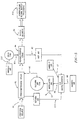
- FIGS. 1 and 3 The operation of the embodiments of FIGS. 1 and 3 is described below with reference to the flow diagrams shown in FIGS. 4 and 5. Differences in the operations among the two embodiments are specifically indicated below for the embodiment of FIG. 1 with reference only to FIG. 4 and for the embodiment of FIG. 3 with reference only to FIG. 5.
- the solid black arrows represent air movement through the system and the hollow arrows represent the movement of the plastic articles through the system. Unless otherwise indicated, the number and letter designations for the embodiment of FIGS. 1 and 4 refer also to the similarly designated elements of the FIGS. 3 and 5 embodiment
- step A1 set down area 12 receives finished preforms 24 from preform source 26 via product handling device or source 28 and air is removed from the set down area.
- the removed air from set down area 12 is handled differently for each embodiment and such differences are discussed specifically in later paragraphs.
- step A2 the finished preforms 24 are moved through the preconditioning stage in section 16 via conveying mechanism 14 wherein the reclaimed and preconditioned air from air handling system 22 is preferably forced via a fan or the like in a turbulent manner, between preforms 24 in step A3.
- the preforms are caused to achieve heat energy which is substantially the same among all preforms; heat energy which is uniformly distributed through each individual preform; and a temperature of each preform which does not vary more than 0° to 3°C from every other preform.
- preforms 24 on pallets 30 are sent into the reheat/prafile stage via reheat section 18 where the preforms are heated to a blow molding temperature. Damage to the preform surface from overheating is avoided by the use of air handling system 22 extracting excess hot air in step A5 from enclosure 38 of reheat section 18 at a rate which still allows preforms 24 to heat to the required temperature for blow molding.
- step A6 the air is then preferably moved through duct 60 into enclosure 52 wherein ambient air is mixed therewith in step A7 via duct 62 and as necessary for meeting the preconditioning parameters, creating a properly modulated air mixture.
- the excess hot air coming from enclosure 50 may be expelled to ambient in step A8 through a discharge vent 66.
- air is forced or blown through duct 39 in the preconditioning state and into preconditioning section 16 between the preforms, as described above for step A3.
- preforms After reheating in reheat section 18, preforms are moved to equilibration section 42 to allow to equilibration, as is known in the art, before being moved to the bottle blowing section 20, in step A9.
- the preforms are blow molded into the appropriate form and in step A10, are subsequently stripped away from pallet 30 for downstream bottle processing and so that pallet 30 may enter set down area 12 in a condition for receiving more preforms.
- air handling system 22 functions to condition and distribute air among and between the various sections in a slightly different manner for each embodiment.
- step B11 air mixer/diverter or enclosure 48
- step B12 the air is mixed to acquire the desired condition of the air for introduction into reheat section 18.
- step B14 Such air conditioning is accomplished via the active elements within enclosure 48 such as the temperature and air flow sensors 53, controlled baffles 55 and/or fans 57, and a controller 61 which function together to sense conditions, determine deviations from the desired conditions, determine the required corrections and issue control signals to activate the appropriate elements to cause the correction.
- the air is forced via a fan 57 or the like into enclosure 38 of reheat section 18 through open side 54 of enclosure 48. Steps B11-B14 occur substantially simultaneous to steps A1-A10. After step B14, the process resumes at step A5, discussed above.
- step C11 duct 158 feeds return air from enclosure 132 directly into enclosure 152.
- ambient air is drawn into enclosure 138 only through openings (not shown) in the bottom of enclosure 138 in step C12.
- air conditioning is accomplished via the active elements within the enclosures such as the temperature and air flow sensors 153, controlled baffles 155 and/or fans 157, and a controller 161 which function together to sense conditions, determine deviations from the desired conditions, determine the required corrections and issue control signals to activate the appropriate elements to cause the correction.
- active elements such as the temperature and air flow sensors 153, controlled baffles 155 and/or fans 157, and a controller 161 which function together to sense conditions, determine deviations from the desired conditions, determine the required corrections and issue control signals to activate the appropriate elements to cause the correction.
- step A5 enough hot air from the reheat section 118 during step A5 is mixed in enclosure 152 to maintain a constant temperature entering duct 139.
- the rest of the hot air is expelled into the atmosphere through duct 166 during step A8.
- the fan 157 in duct 160 would be drawing a constant flow of air from the reheat section to minimize variation within the reheat section.
- the air entering enclosure 152 from duct 158 in step A6 will typically be cooler than the desired air temperature in duct 139. This is particularly true when the preconditioning temperature and air from step C11 is significantly higher in temperature relative ambient.
- the air in duct 158 during step C11 would be hotter than the desired air temperature in duct 139. This would require the expulsion of all the air, via step A8, coming from enclosure 150 through duct 166 as well as some of the air from duct 158 through duct 163 in step C13, causing the desired modulated air mixture and the introduction of ambient air via duct 162, in step A7, within enclosure 152.
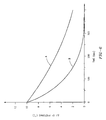
- the graph therein shows temperature convergence of preforms with an initial temperature difference of approximately 10°C under two conditions.
- Curve A shows that the time required to bring the temperature difference to 2°C is approximately 400 seconds or 6 to 7 minutes in still air, i.e. without a preconditioning step.
- Curve B shows that a 2°C difference can be obtained in approximately 150 seconds or 2 1/2 minutes with the instant invention, using the preconditioning section. This reduces the inventory of preforms and the required size of the preconditioning section to achieve the desired temperature difference.
- the primary advantage of this invention is that a blow molding system is provided including a preconditioning section for insuring uniformity of temperature distribution for all preforms sent through the system.
- a blow molding system is provided wherein low grade waste heat used in a reheat section is incorporated into a preconditioning section for equilibrating the temperature of preforms to a desired value prior to reheating to blowing temperature.
- a blow molding system is provided which reduces equilibration time for preforms.
- a blow molding system is provided with increased energy efficiency.
- a blow molding system is provided wherein the heat content of preforms entering the system is relatively more consistent than prior art systems.
Landscapes
- Engineering & Computer Science (AREA)
- Manufacturing & Machinery (AREA)
- Mechanical Engineering (AREA)
- Physics & Mathematics (AREA)
- Thermal Sciences (AREA)
- Blow-Moulding Or Thermoforming Of Plastics Or The Like (AREA)
- Tunnel Furnaces (AREA)
- Processing And Handling Of Plastics And Other Materials For Molding In General (AREA)
Applications Claiming Priority (2)
| Application Number | Priority Date | Filing Date | Title |
|---|---|---|---|
| US08/416,954 US5607706A (en) | 1995-04-05 | 1995-04-05 | Preconditioning preforms on a reheat blow molding system |
| US416954 | 1995-04-05 |
Publications (4)
| Publication Number | Publication Date |
|---|---|
| EP0736367A2 EP0736367A2 (en) | 1996-10-09 |
| EP0736367A3 EP0736367A3 (en) | 1996-10-16 |
| EP0736367B1 EP0736367B1 (en) | 1999-06-30 |
| EP0736367B2 true EP0736367B2 (en) | 2005-06-29 |
Family
ID=23651996
Family Applications (1)
| Application Number | Title | Priority Date | Filing Date |
|---|---|---|---|
| EP96105339A Expired - Lifetime EP0736367B2 (en) | 1995-04-05 | 1996-04-03 | Preconditioning preforms on a reheat blow molding system |
Country Status (6)
| Country | Link |
|---|---|
| US (2) | US5607706A (es) |
| EP (1) | EP0736367B2 (es) |
| JP (1) | JP2882773B2 (es) |
| AT (1) | ATE181693T1 (es) |
| DE (1) | DE69603044T3 (es) |
| ES (1) | ES2135129T5 (es) |
Families Citing this family (40)
| Publication number | Priority date | Publication date | Assignee | Title |
|---|---|---|---|---|
| CH690543A5 (fr) * | 1995-07-19 | 2000-10-13 | Tetra Pak Plastics Ltd Tetra P | Machines pour la fabrication de récipients en matière plastique. |
| CH690095A5 (fr) * | 1995-12-07 | 2000-04-28 | Tetra Pak Plastics Ltd Tetra P | Dispositif de chauffage pour machines de transformation de matières plastiques. |
| FR2769536A1 (fr) * | 1997-10-10 | 1999-04-16 | Jose Sendra | Machine de soufflage |
| DE19751909A1 (de) * | 1997-11-22 | 1999-05-27 | Krupp Corpoplast Masch | Verfahren und Vorrichtung zur Handhabung von Formlingen |
| DE19843053A1 (de) * | 1998-09-19 | 2000-03-23 | Krupp Corpoplast Masch | Verfahren und Vorrichtung zur Steuerung eines Blasvorganges |
| US6146134A (en) * | 1999-05-20 | 2000-11-14 | Husky Injection Molding Systems Ltd. | Oven-pallet alignment and profiled heating of preforms |
| IT1311733B1 (it) * | 1999-12-23 | 2002-03-19 | Sipa Spa | Impianto perfezionato per il riscaldamento ad infrarossi di preformein plastica |
| DE10037382C2 (de) * | 2000-08-01 | 2003-11-20 | Bekum Maschf Gmbh | Reheat-Blasmaschine und Verfahren zur Herstellung von Behältern mit der Reheat-Blasmaschine |
| DE10121160A1 (de) * | 2001-04-30 | 2002-10-31 | Sig Corpoplast Gmbh & Co Kg | Verfahren und Vorrichtung zur Temperierung von Vorformlingen |
| DE10140447C2 (de) * | 2001-08-17 | 2003-10-09 | Bekum Maschf Gmbh | Streckblasmaschine und Verfahren zur Herstellung von Behältern mit der Streckblasmaschine |
| US6730260B2 (en) * | 2001-10-22 | 2004-05-04 | Husky Injection Molding Systems Ltd. | Parts transfer method and apparatus for an injection stretch blow molding system |
| JP3874173B2 (ja) * | 2002-01-28 | 2007-01-31 | 株式会社吉野工業所 | プリフォーム搬送装置 |
| US6888103B2 (en) | 2002-05-30 | 2005-05-03 | Ball Corporation | Preform preheater |
| NZ540868A (en) * | 2003-01-21 | 2007-02-23 | Plastic Techn Inc | Apparatus and method for virtual prototyping of blow molded objects |
| EP1533102A1 (en) * | 2003-11-14 | 2005-05-25 | Total Petrochemicals Research Feluy | Polypropylene processing with reduced cycle time in injection-stretch-blow moulding. |
| US7220378B2 (en) * | 2004-01-07 | 2007-05-22 | Pressco Technology Inc. | Method and apparatus for the measurement and control of both the inside and outside surface temperature of thermoplastic preforms during stretch blow molding operations |
| US7248988B2 (en) * | 2004-03-01 | 2007-07-24 | Transmeta Corporation | System and method for reducing temperature variation during burn in |
| US6900650B1 (en) | 2004-03-01 | 2005-05-31 | Transmeta Corporation | System and method for controlling temperature during burn-in |
| US6897671B1 (en) * | 2004-03-01 | 2005-05-24 | Transmeta Corporation | System and method for reducing heat dissipation during burn-in |
| JP2007537298A (ja) * | 2004-05-14 | 2007-12-20 | フロウメディカ, インコーポレイテッド | うっ血性心不全の処置およびbnp療法のための両側性局所腎臓送達 |
| US7318722B2 (en) * | 2005-05-24 | 2008-01-15 | Husky Injection Molding Systems Ltd. | Molded article conveyance apparatus |
| US20060288699A1 (en) * | 2005-06-23 | 2006-12-28 | Corbett Bradford G Jr | Energy recovery system for rubber and plastic molding machines |
| US8056334B2 (en) * | 2005-06-23 | 2011-11-15 | Corbett Jr Bradford G | Energy recovery method for plastic pipe manufacturing systems |
| US20080038500A1 (en) * | 2006-02-16 | 2008-02-14 | Page Richard D | Stretch-blow molded polypropylene article |
| US7857613B2 (en) * | 2006-12-08 | 2010-12-28 | Nestle Waters North America Inc. | Mold cooling by recovery of energy from spent compressed air in blow-molding process |
| KR101350703B1 (ko) * | 2007-02-26 | 2014-01-10 | 도요세이칸 그룹 홀딩스 가부시키가이샤 | 공조 장착 블로우 성형기 |
| DE102008014215A1 (de) | 2008-03-13 | 2009-09-17 | Krones Ag | Vorrichtung zum Erwärmen von Behältnissen |
| CN102149532B (zh) * | 2009-04-07 | 2017-05-24 | 格莱汉姆包装公司 | 利用感应加热来对塑料包装的一部分进行重整的方法和设备 |
| US8734709B2 (en) | 2009-04-07 | 2014-05-27 | Graham Packaging Company, L.P. | Apparatus for reforming a portion of a plastic container |
| DE102009033902A1 (de) * | 2009-07-16 | 2011-01-20 | Khs Corpoplast Gmbh & Co. Kg | Verfahren und Vorrichtung zur Blasformung von Behältern |
| DE102009052289A1 (de) * | 2009-11-09 | 2011-05-12 | Krones Ag | Vorrichtung und Verfahren zum Etikettieren befüllter Behältnisse |
| DE102010021445A1 (de) * | 2010-05-25 | 2011-12-01 | Krones Ag | Verfahren und Vorrichtung zur Temperatursteuerung und/oder -regelung einer Heizvorrichtung für Vorformlinge |
| DE102010021446A1 (de) | 2010-05-25 | 2011-12-01 | Krones Ag | Verfahren und Vorrichtung zur Temperierung von Vorformlingen |
| DE102010029644A1 (de) | 2010-06-02 | 2011-12-08 | Krones Ag | Vorrichtung und Verfahren zum Herstellen von Kunststoffbehältern |
| DE202010018050U1 (de) * | 2010-10-26 | 2014-02-11 | Krones Ag | Vorrichtung zum Herstellen von Kunststoffbehältnissen |
| ITRM20130121A1 (it) * | 2013-02-28 | 2014-08-29 | Ne E Automazione S P A | Impianto di riscaldamento per preforme di contenitori |
| DE102013109717A1 (de) * | 2013-09-05 | 2015-03-05 | Krones Ag | Vorrichtung zum Erwärmen von Kunststoffvorformlingen mit variabler Kühlleistung |
| FR3035651B1 (fr) * | 2015-04-29 | 2017-04-21 | Sidel Participations | "procede de commande d'un convoyeur de corps creux a travers une station de chauffage et convoyeur associe" |
| WO2017111628A1 (en) * | 2015-12-23 | 2017-06-29 | Stm Spółka Z Ograniczoną Odpowiedzialnością | Power saving device for heating pet preforms within the process of containers blow molding, especially bottles |
| EP3565699A4 (en) * | 2017-01-06 | 2020-01-01 | Friendship Products LLC | MOLDING SYSTEMS AND RELATED PROCEDURES |
Family Cites Families (23)
| Publication number | Priority date | Publication date | Assignee | Title |
|---|---|---|---|---|
| US3079637A (en) * | 1960-09-13 | 1963-03-05 | Marrick Mfg Co Ltd | Apparatus for producing hollow articles |
| US4025294A (en) * | 1974-05-24 | 1977-05-24 | Beloit Corporation | Parison oven |
| JPS5129540A (ja) * | 1974-09-05 | 1976-03-12 | Toshiba Machine Co Ltd | Kanenkyapusutansochi |
| DE2545134C3 (de) * | 1975-10-08 | 1981-01-08 | Gildemeister Corpoplast Gmbh, 2000 Hamburg | Verfahren und Vorrichtung zum Erwärmen eines Vorformlings aus thermoplastischem Kunststoff |
| US4063867A (en) * | 1975-12-31 | 1977-12-20 | Pont-A-Mousson S.A. | Injection and blowing machine for manufacturing hollow bodies of plastics material |
| US4079104A (en) * | 1976-04-16 | 1978-03-14 | Owens-Illinois, Inc. | Method for heating plastic articles |
| JPS5923149B2 (ja) * | 1976-09-25 | 1984-05-31 | 松下電器産業株式会社 | 高精細度放送用コンバ−タ |
| US4140464A (en) * | 1977-06-13 | 1979-02-20 | Emhart Industries, Inc. | Machine system for formation of molecularly oriented plastic bottles |
| US4224263A (en) * | 1978-03-14 | 1980-09-23 | Owens-Illinois, Inc. | Method for blow molding |
| US4268975A (en) * | 1980-01-28 | 1981-05-26 | Owens-Illinois, Inc. | Apparatus for pre-heating thermoplastic parisons |
| DE3314106C2 (de) * | 1983-04-19 | 1986-07-24 | C.F. Spiess & Sohn Kunststoffwerk GmbH & Co, 6719 Kleinkarlbach | Vorrichtung zum Herstellen von Hohlkörpern aus warmformbarem Kunststoff |
| FR2561986B1 (fr) * | 1984-03-28 | 1986-09-26 | Pont A Mousson | Dispositif de chauffage d'ebauches en materiau thermoplastique en vue de former, par soufflage, des corps creux |
| US4690633A (en) * | 1984-09-07 | 1987-09-01 | Husky Injection Molding Systems Ltd. | Apparatus for preparing hollow plastic articles |
| US4793960A (en) * | 1985-05-14 | 1988-12-27 | Husky Injection Molding Systems Ltd. | Process for preparing hollow plastic articles |
| US4853171A (en) * | 1986-10-27 | 1989-08-01 | Owens-Illinois Plastic Products Inc. | Method of making partially crystalline biazially oriented heat set containers |
| JPS6417855A (en) * | 1987-07-14 | 1989-01-20 | Kobe Steel Ltd | Product galvanized with zn alloy excellent in corrosion resistance |
| GB8817390D0 (en) * | 1988-07-21 | 1988-08-24 | Metal Box Plc | Stretch blow-moulding thermoplastics articles |
| DE3908219C3 (de) * | 1989-03-14 | 1996-03-21 | Bekum Maschf Gmbh | Verfahren zur Erhitzung von einem Vorrat entnommenen kalten Vorformlingen zum Aufblasen zu Hohlkörpern |
| EP0387737B1 (de) * | 1989-03-14 | 1993-08-11 | BEKUM Maschinenfabriken GmbH | Verfahren zur Erhitzung von einem Vorrat entnommenen gespritzten Vorformlingen für das anschliessende Aufblasen zu Hohlkörpern in einer Blasform und Vorrichtung zum Blasformen vorgefertigter Vorformlinge |
| US4963086A (en) * | 1989-05-15 | 1990-10-16 | B & G Machinery | Reheat blow molding machine for forming articles from preforms |
| US5206039A (en) * | 1991-09-24 | 1993-04-27 | Valyi Emery I | Apparatus for conditioning pressure molded plastic articles |
| FR2689442B1 (fr) * | 1992-04-03 | 1995-06-23 | Sidel Sa | Procede de conditionnement thermique de preformes en matieres thermoplastiques et dispositif pour la mise en óoeuvre de ce procede. |
| DE4212248C2 (de) * | 1992-04-11 | 1996-01-25 | Bekum Maschf Gmbh | Verfahren und Vorrichtung zur Erhitzung von, einem Vorrat entnommenen, im Spritzverfahren hergestellten Vorformlingen aus teilkristallinen Kunststoffen |
-
1995
- 1995-04-05 US US08/416,954 patent/US5607706A/en not_active Expired - Fee Related
-
1996
- 1996-04-03 AT AT96105339T patent/ATE181693T1/de active
- 1996-04-03 ES ES96105339T patent/ES2135129T5/es not_active Expired - Lifetime
- 1996-04-03 EP EP96105339A patent/EP0736367B2/en not_active Expired - Lifetime
- 1996-04-03 DE DE69603044T patent/DE69603044T3/de not_active Expired - Lifetime
- 1996-04-04 JP JP8082210A patent/JP2882773B2/ja not_active Expired - Fee Related
- 1996-04-05 US US08/628,806 patent/US5718853A/en not_active Expired - Lifetime
Also Published As
| Publication number | Publication date |
|---|---|
| US5607706A (en) | 1997-03-04 |
| JP2882773B2 (ja) | 1999-04-12 |
| ES2135129T5 (es) | 2005-11-01 |
| US5718853A (en) | 1998-02-17 |
| JPH091641A (ja) | 1997-01-07 |
| DE69603044T3 (de) | 2005-12-01 |
| DE69603044T2 (de) | 1999-10-21 |
| EP0736367B1 (en) | 1999-06-30 |
| EP0736367A2 (en) | 1996-10-09 |
| EP0736367A3 (en) | 1996-10-16 |
| ES2135129T3 (es) | 1999-10-16 |
| ATE181693T1 (de) | 1999-07-15 |
| DE69603044D1 (de) | 1999-08-05 |
Similar Documents
| Publication | Publication Date | Title |
|---|---|---|
| EP0736367B2 (en) | Preconditioning preforms on a reheat blow molding system | |
| US5326258A (en) | Method and apparatus for heating preform blanks composed of partly crystalline synthetic resins produced by injection molding | |
| US20020011681A1 (en) | Process and device for controlling the molding of a container | |
| US5322651A (en) | Method and apparatus for the thermal treatment of thermoplastic preforms | |
| US4606723A (en) | Method and apparatus for heating thermoplastic bottle preforms | |
| US8221851B2 (en) | Process and device for treating the coating of thermoplastic resin containers | |
| US20040113326A1 (en) | Method and device for regulating the temperature of parisons | |
| US9358719B2 (en) | Apparatus and method of producing plastics material containers | |
| CN102962980B (zh) | 用于制造塑料材料容器的设备和方法 | |
| CA2028743A1 (en) | Wtn series laminar sterilizing tunnel | |
| CN102310556A (zh) | 用于制造塑料容器的装置和方法 | |
| US20220063173A1 (en) | Method and apparatus for producing plastic preforms and plastic containers with thermal preform storage | |
| CN106163763B (zh) | 用于对预制坯件进行调温的方法和设备 | |
| EP1366886B1 (en) | Preform preheater and method for its use | |
| US11724434B2 (en) | Temperature control device and container production machine | |
| JP2001048127A (ja) | 赤外線シュリンク装置 | |
| JP3062624B2 (ja) | 合成樹脂製壜体の製造方法および装置 | |
| CN108177324A (zh) | 用于制造塑料材料容器的设备和方法 | |
| JP3442141B2 (ja) | 吹き込み成形装置 | |
| CN117140917A (zh) | 热调节预型件的方法 | |
| AU656107B1 (en) | Method and apparatus for heating preform blanks composed of partly crystalline synthetic resins produced by injection molding | |
| KR100277556B1 (ko) | 사출 성형에 의해 제조된 부분 결정성 합성 수지로 구성된 예비 성형 블랭크를 가열 방법 및 장치 | |
| JPH0319284B2 (es) | ||
| HK1058502A (en) | Preform preheater | |
| ITMI991027A1 (it) | Procedimento di stampaggio di bottiglie e o flaconi tramite iniezionesoffiaggio e macchine per attuare tale procedimento |
Legal Events
| Date | Code | Title | Description |
|---|---|---|---|
| PUAI | Public reference made under article 153(3) epc to a published international application that has entered the european phase |
Free format text: ORIGINAL CODE: 0009012 |
|
| PUAL | Search report despatched |
Free format text: ORIGINAL CODE: 0009013 |
|
| AK | Designated contracting states |
Kind code of ref document: A2 Designated state(s): AT CH DE ES FR GB IT LI NL |
|
| AK | Designated contracting states |
Kind code of ref document: A3 Designated state(s): AT CH DE ES FR GB IT LI NL |
|
| 17P | Request for examination filed |
Effective date: 19961220 |
|
| 17Q | First examination report despatched |
Effective date: 19971209 |
|
| GRAG | Despatch of communication of intention to grant |
Free format text: ORIGINAL CODE: EPIDOS AGRA |
|
| GRAG | Despatch of communication of intention to grant |
Free format text: ORIGINAL CODE: EPIDOS AGRA |
|
| GRAH | Despatch of communication of intention to grant a patent |
Free format text: ORIGINAL CODE: EPIDOS IGRA |
|
| GRAH | Despatch of communication of intention to grant a patent |
Free format text: ORIGINAL CODE: EPIDOS IGRA |
|
| GRAA | (expected) grant |
Free format text: ORIGINAL CODE: 0009210 |
|
| AK | Designated contracting states |
Kind code of ref document: B1 Designated state(s): AT CH DE ES FR GB IT LI NL |
|
| REF | Corresponds to: |
Ref document number: 181693 Country of ref document: AT Date of ref document: 19990715 Kind code of ref document: T |
|
| REG | Reference to a national code |
Ref country code: CH Ref legal event code: NV Representative=s name: FREI PATENTANWALTSBUERO Ref country code: CH Ref legal event code: EP |
|
| REF | Corresponds to: |
Ref document number: 69603044 Country of ref document: DE Date of ref document: 19990805 |
|
| ET | Fr: translation filed | ||
| ITF | It: translation for a ep patent filed | ||
| REG | Reference to a national code |
Ref country code: ES Ref legal event code: FG2A Ref document number: 2135129 Country of ref document: ES Kind code of ref document: T3 |
|
| PLBQ | Unpublished change to opponent data |
Free format text: ORIGINAL CODE: EPIDOS OPPO |
|
| PLBI | Opposition filed |
Free format text: ORIGINAL CODE: 0009260 |
|
| PLBF | Reply of patent proprietor to notice(s) of opposition |
Free format text: ORIGINAL CODE: EPIDOS OBSO |
|
| 26 | Opposition filed |
Opponent name: KRUPP COROPLAST MASCHINENBAU GMBH Effective date: 20000327 |
|
| NLR1 | Nl: opposition has been filed with the epo |
Opponent name: KRUPP COROPLAST MASCHINENBAU GMBH |
|
| PLBF | Reply of patent proprietor to notice(s) of opposition |
Free format text: ORIGINAL CODE: EPIDOS OBSO |
|
| REG | Reference to a national code |
Ref country code: GB Ref legal event code: IF02 |
|
| PLAB | Opposition data, opponent's data or that of the opponent's representative modified |
Free format text: ORIGINAL CODE: 0009299OPPO |
|
| RDAH | Patent revoked |
Free format text: ORIGINAL CODE: EPIDOS REVO |
|
| R26 | Opposition filed (corrected) |
Opponent name: SIG CORPOPLAST GMBH & CO. KG Effective date: 20000327 |
|
| APAC | Appeal dossier modified |
Free format text: ORIGINAL CODE: EPIDOS NOAPO |
|
| APAC | Appeal dossier modified |
Free format text: ORIGINAL CODE: EPIDOS NOAPO |
|
| NLR1 | Nl: opposition has been filed with the epo |
Opponent name: SIG CORPOPLAST GMBH & CO. KG |
|
| APAC | Appeal dossier modified |
Free format text: ORIGINAL CODE: EPIDOS NOAPO |
|
| REG | Reference to a national code |
Ref country code: CH Ref legal event code: NV Representative=s name: BOVARD AG PATENTANWAELTE |
|
| APBU | Appeal procedure closed |
Free format text: ORIGINAL CODE: EPIDOSNNOA9O |
|
| APAA | Appeal reference recorded |
Free format text: ORIGINAL CODE: EPIDOS REFN |
|
| PUAH | Patent maintained in amended form |
Free format text: ORIGINAL CODE: 0009272 |
|
| STAA | Information on the status of an ep patent application or granted ep patent |
Free format text: STATUS: PATENT MAINTAINED AS AMENDED |
|
| 27A | Patent maintained in amended form |
Effective date: 20050629 |
|
| AK | Designated contracting states |
Kind code of ref document: B2 Designated state(s): AT CH DE ES FR GB IT LI NL |
|
| REG | Reference to a national code |
Ref country code: CH Ref legal event code: AEN Free format text: AUFRECHTERHALTUNG DES PATENTES IN GEAENDERTER FORM |
|
| NLR2 | Nl: decision of opposition |
Effective date: 20050629 |
|
| APAH | Appeal reference modified |
Free format text: ORIGINAL CODE: EPIDOSCREFNO |
|
| REG | Reference to a national code |
Ref country code: ES Ref legal event code: DC2A Date of ref document: 20050713 Kind code of ref document: T5 |
|
| NLR3 | Nl: receipt of modified translations in the netherlands language after an opposition procedure | ||
| ET3 | Fr: translation filed ** decision concerning opposition | ||
| PGFP | Annual fee paid to national office [announced via postgrant information from national office to epo] |
Ref country code: IT Payment date: 20070515 Year of fee payment: 12 |
|
| PG25 | Lapsed in a contracting state [announced via postgrant information from national office to epo] |
Ref country code: IT Free format text: LAPSE BECAUSE OF NON-PAYMENT OF DUE FEES Effective date: 20080403 |
|
| REG | Reference to a national code |
Ref country code: CH Ref legal event code: PFA Owner name: HUSKY INJECTION MOLDING SYSTEMS LTD. Free format text: HUSKY INJECTION MOLDING SYSTEMS LTD.#500 QUEEN STREET SOUTH#BOLTON ONTARIO L7E 5S5 (CA) -TRANSFER TO- HUSKY INJECTION MOLDING SYSTEMS LTD.#500 QUEEN STREET SOUTH#BOLTON ONTARIO L7E 5S5 (CA) |
|
| PGFP | Annual fee paid to national office [announced via postgrant information from national office to epo] |
Ref country code: CH Payment date: 20110310 Year of fee payment: 16 Ref country code: FR Payment date: 20110324 Year of fee payment: 16 Ref country code: NL Payment date: 20110316 Year of fee payment: 16 |
|
| PGFP | Annual fee paid to national office [announced via postgrant information from national office to epo] |
Ref country code: ES Payment date: 20110309 Year of fee payment: 16 Ref country code: GB Payment date: 20110309 Year of fee payment: 16 |
|
| PGFP | Annual fee paid to national office [announced via postgrant information from national office to epo] |
Ref country code: AT Payment date: 20110309 Year of fee payment: 16 |
|
| REG | Reference to a national code |
Ref country code: NL Ref legal event code: V1 Effective date: 20121101 |
|
| REG | Reference to a national code |
Ref country code: CH Ref legal event code: PL |
|
| REG | Reference to a national code |
Ref country code: AT Ref legal event code: MM01 Ref document number: 181693 Country of ref document: AT Kind code of ref document: T Effective date: 20120403 |
|
| GBPC | Gb: european patent ceased through non-payment of renewal fee |
Effective date: 20120403 |
|
| REG | Reference to a national code |
Ref country code: FR Ref legal event code: ST Effective date: 20121228 |
|
| PG25 | Lapsed in a contracting state [announced via postgrant information from national office to epo] |
Ref country code: GB Free format text: LAPSE BECAUSE OF NON-PAYMENT OF DUE FEES Effective date: 20120403 Ref country code: CH Free format text: LAPSE BECAUSE OF NON-PAYMENT OF DUE FEES Effective date: 20120430 Ref country code: LI Free format text: LAPSE BECAUSE OF NON-PAYMENT OF DUE FEES Effective date: 20120430 Ref country code: AT Free format text: LAPSE BECAUSE OF FAILURE TO SUBMIT A TRANSLATION OF THE DESCRIPTION OR TO PAY THE FEE WITHIN THE PRESCRIBED TIME-LIMIT Effective date: 20120403 |
|
| PG25 | Lapsed in a contracting state [announced via postgrant information from national office to epo] |
Ref country code: FR Free format text: LAPSE BECAUSE OF NON-PAYMENT OF DUE FEES Effective date: 20120430 |
|
| PG25 | Lapsed in a contracting state [announced via postgrant information from national office to epo] |
Ref country code: NL Free format text: LAPSE BECAUSE OF NON-PAYMENT OF DUE FEES Effective date: 20121101 |
|
| REG | Reference to a national code |
Ref country code: ES Ref legal event code: FD2A Effective date: 20130716 |
|
| PG25 | Lapsed in a contracting state [announced via postgrant information from national office to epo] |
Ref country code: ES Free format text: LAPSE BECAUSE OF NON-PAYMENT OF DUE FEES Effective date: 20120404 |
|
| PGFP | Annual fee paid to national office [announced via postgrant information from national office to epo] |
Ref country code: DE Payment date: 20130328 Year of fee payment: 18 |
|
| REG | Reference to a national code |
Ref country code: DE Ref legal event code: R082 Ref document number: 69603044 Country of ref document: DE Representative=s name: CORINNA VOSSIUS IP GROUP PATENT- UND RECHTSANW, DE |
|
| REG | Reference to a national code |
Ref country code: DE Ref legal event code: R119 Ref document number: 69603044 Country of ref document: DE |
|
| REG | Reference to a national code |
Ref country code: DE Ref legal event code: R119 Ref document number: 69603044 Country of ref document: DE Effective date: 20141101 |
|
| PG25 | Lapsed in a contracting state [announced via postgrant information from national office to epo] |
Ref country code: DE Free format text: LAPSE BECAUSE OF NON-PAYMENT OF DUE FEES Effective date: 20141101 |