EP0744947B1 - Metronidazolpräparate mit modifizierter freisetzung und verfahren für ihre herstellung und verwendung - Google Patents
Metronidazolpräparate mit modifizierter freisetzung und verfahren für ihre herstellung und verwendung Download PDFInfo
- Publication number
- EP0744947B1 EP0744947B1 EP95907963A EP95907963A EP0744947B1 EP 0744947 B1 EP0744947 B1 EP 0744947B1 EP 95907963 A EP95907963 A EP 95907963A EP 95907963 A EP95907963 A EP 95907963A EP 0744947 B1 EP0744947 B1 EP 0744947B1
- Authority
- EP
- European Patent Office
- Prior art keywords
- aqueous
- metronidazole
- weight
- meth
- soluble diluent
- Prior art date
- Legal status (The legal status is an assumption and is not a legal conclusion. Google has not performed a legal analysis and makes no representation as to the accuracy of the status listed.)
- Expired - Lifetime
Links
- VAOCPAMSLUNLGC-UHFFFAOYSA-N metronidazole Chemical compound CC1=NC=C([N+]([O-])=O)N1CCO VAOCPAMSLUNLGC-UHFFFAOYSA-N 0.000 title claims abstract description 208
- 229960000282 metronidazole Drugs 0.000 title claims abstract description 188
- 239000000203 mixture Substances 0.000 title claims abstract description 143
- 238000000034 method Methods 0.000 title claims abstract description 31
- 239000003085 diluting agent Substances 0.000 claims abstract description 61
- 229920002845 Poly(methacrylic acid) Polymers 0.000 claims abstract description 40
- 229920001577 copolymer Polymers 0.000 claims abstract description 38
- 239000008187 granular material Substances 0.000 claims abstract description 38
- 239000008194 pharmaceutical composition Substances 0.000 claims abstract description 22
- 239000000314 lubricant Substances 0.000 claims abstract description 12
- 239000008024 pharmaceutical diluent Substances 0.000 claims abstract description 6
- HQKMJHAJHXVSDF-UHFFFAOYSA-L magnesium stearate Chemical compound [Mg+2].CCCCCCCCCCCCCCCCCC([O-])=O.CCCCCCCCCCCCCCCCCC([O-])=O HQKMJHAJHXVSDF-UHFFFAOYSA-L 0.000 claims description 32
- GUBGYTABKSRVRQ-XLOQQCSPSA-N Alpha-Lactose Chemical compound O[C@@H]1[C@@H](O)[C@@H](O)[C@@H](CO)O[C@H]1O[C@@H]1[C@@H](CO)O[C@H](O)[C@H](O)[C@H]1O GUBGYTABKSRVRQ-XLOQQCSPSA-N 0.000 claims description 29
- 239000000839 emulsion Substances 0.000 claims description 26
- 239000000454 talc Substances 0.000 claims description 20
- 229910052623 talc Inorganic materials 0.000 claims description 20
- VYPSYNLAJGMNEJ-UHFFFAOYSA-N Silicium dioxide Chemical compound O=[Si]=O VYPSYNLAJGMNEJ-UHFFFAOYSA-N 0.000 claims description 18
- 239000003795 chemical substances by application Substances 0.000 claims description 18
- AMTWCFIAVKBGOD-UHFFFAOYSA-N dioxosilane;methoxy-dimethyl-trimethylsilyloxysilane Chemical compound O=[Si]=O.CO[Si](C)(C)O[Si](C)(C)C AMTWCFIAVKBGOD-UHFFFAOYSA-N 0.000 claims description 18
- 229940083037 simethicone Drugs 0.000 claims description 18
- GUBGYTABKSRVRQ-QKKXKWKRSA-N Lactose Natural products OC[C@H]1O[C@@H](O[C@H]2[C@H](O)[C@@H](O)C(O)O[C@@H]2CO)[C@H](O)[C@@H](O)[C@H]1O GUBGYTABKSRVRQ-QKKXKWKRSA-N 0.000 claims description 16
- 229960001375 lactose Drugs 0.000 claims description 16
- 239000008101 lactose Substances 0.000 claims description 16
- 229940075614 colloidal silicon dioxide Drugs 0.000 claims description 15
- 239000002245 particle Substances 0.000 claims description 13
- 235000019359 magnesium stearate Nutrition 0.000 claims description 12
- 229960004977 anhydrous lactose Drugs 0.000 claims description 11
- 239000002518 antifoaming agent Substances 0.000 claims description 11
- 239000011248 coating agent Substances 0.000 claims description 10
- 238000000576 coating method Methods 0.000 claims description 10
- 244000005700 microbiome Species 0.000 claims description 10
- 238000002156 mixing Methods 0.000 claims description 9
- 239000003814 drug Substances 0.000 claims description 7
- 239000012530 fluid Substances 0.000 claims description 6
- 208000005448 Trichomonas Infections Diseases 0.000 claims description 5
- 206010044620 Trichomoniasis Diseases 0.000 claims description 5
- 239000007900 aqueous suspension Substances 0.000 claims description 5
- 208000037265 diseases, disorders, signs and symptoms Diseases 0.000 claims description 5
- 208000004926 Bacterial Vaginosis Diseases 0.000 claims description 4
- 208000037009 Vaginitis bacterial Diseases 0.000 claims description 4
- 239000000463 material Substances 0.000 claims description 4
- 241000590002 Helicobacter pylori Species 0.000 claims description 3
- 201000010099 disease Diseases 0.000 claims description 3
- 229940037467 helicobacter pylori Drugs 0.000 claims description 3
- 238000004513 sizing Methods 0.000 claims description 3
- 208000004881 Amebiasis Diseases 0.000 claims description 2
- 206010001980 Amoebiasis Diseases 0.000 claims description 2
- 241000589989 Helicobacter Species 0.000 claims description 2
- 239000002552 dosage form Substances 0.000 claims description 2
- 238000005187 foaming Methods 0.000 claims 1
- 239000000377 silicon dioxide Substances 0.000 claims 1
- 235000012239 silicon dioxide Nutrition 0.000 claims 1
- 241000894007 species Species 0.000 claims 1
- 239000012729 immediate-release (IR) formulation Substances 0.000 abstract description 12
- 208000015181 infectious disease Diseases 0.000 abstract description 8
- 230000000813 microbial effect Effects 0.000 abstract description 2
- 238000009472 formulation Methods 0.000 description 49
- 239000003826 tablet Substances 0.000 description 36
- 229940063190 flagyl Drugs 0.000 description 18
- 239000007787 solid Substances 0.000 description 17
- ZZSNKZQZMQGXPY-UHFFFAOYSA-N Ethyl cellulose Chemical compound CCOCC1OC(OC)C(OCC)C(OCC)C1OC1C(O)C(O)C(OC)C(CO)O1 ZZSNKZQZMQGXPY-UHFFFAOYSA-N 0.000 description 16
- 229920003163 Eudragit® NE 30 D Polymers 0.000 description 12
- 238000005469 granulation Methods 0.000 description 12
- 230000003179 granulation Effects 0.000 description 12
- 239000001856 Ethyl cellulose Substances 0.000 description 11
- 235000019325 ethyl cellulose Nutrition 0.000 description 11
- 229920001249 ethyl cellulose Polymers 0.000 description 11
- 239000000725 suspension Substances 0.000 description 9
- 239000000546 pharmaceutical excipient Substances 0.000 description 7
- 229920003134 Eudragit® polymer Polymers 0.000 description 6
- 229920000168 Microcrystalline cellulose Polymers 0.000 description 6
- 239000006185 dispersion Substances 0.000 description 6
- 238000004090 dissolution Methods 0.000 description 6
- 238000001727 in vivo Methods 0.000 description 6
- 229940016286 microcrystalline cellulose Drugs 0.000 description 6
- 235000019813 microcrystalline cellulose Nutrition 0.000 description 6
- 239000008108 microcrystalline cellulose Substances 0.000 description 6
- 229920000178 Acrylic resin Polymers 0.000 description 5
- 239000004925 Acrylic resin Substances 0.000 description 5
- 230000000694 effects Effects 0.000 description 5
- 238000009477 fluid bed granulation Methods 0.000 description 5
- WSVLPVUVIUVCRA-KPKNDVKVSA-N Alpha-lactose monohydrate Chemical compound O.O[C@@H]1[C@@H](O)[C@@H](O)[C@@H](CO)O[C@H]1O[C@@H]1[C@@H](CO)O[C@H](O)[C@H](O)[C@H]1O WSVLPVUVIUVCRA-KPKNDVKVSA-N 0.000 description 4
- GUBGYTABKSRVRQ-DCSYEGIMSA-N Beta-Lactose Chemical compound OC[C@H]1O[C@@H](O[C@H]2[C@H](O)[C@@H](O)[C@H](O)O[C@@H]2CO)[C@H](O)[C@@H](O)[C@H]1O GUBGYTABKSRVRQ-DCSYEGIMSA-N 0.000 description 4
- 229940079593 drug Drugs 0.000 description 4
- 238000000338 in vitro Methods 0.000 description 4
- XLYOFNOQVPJJNP-UHFFFAOYSA-N water Substances O XLYOFNOQVPJJNP-UHFFFAOYSA-N 0.000 description 4
- 239000004480 active ingredient Substances 0.000 description 3
- 238000005243 fluidization Methods 0.000 description 3
- 239000004615 ingredient Substances 0.000 description 3
- 239000007921 spray Substances 0.000 description 3
- 238000005507 spraying Methods 0.000 description 3
- 230000001225 therapeutic effect Effects 0.000 description 3
- VBICKXHEKHSIBG-UHFFFAOYSA-N 1-monostearoylglycerol Chemical compound CCCCCCCCCCCCCCCCCC(=O)OCC(O)CO VBICKXHEKHSIBG-UHFFFAOYSA-N 0.000 description 2
- FBPFZTCFMRRESA-FSIIMWSLSA-N D-Glucitol Natural products OC[C@H](O)[C@H](O)[C@@H](O)[C@H](O)CO FBPFZTCFMRRESA-FSIIMWSLSA-N 0.000 description 2
- FBPFZTCFMRRESA-KVTDHHQDSA-N D-Mannitol Chemical compound OC[C@@H](O)[C@@H](O)[C@H](O)[C@H](O)CO FBPFZTCFMRRESA-KVTDHHQDSA-N 0.000 description 2
- FBPFZTCFMRRESA-JGWLITMVSA-N D-glucitol Chemical compound OC[C@H](O)[C@@H](O)[C@H](O)[C@H](O)CO FBPFZTCFMRRESA-JGWLITMVSA-N 0.000 description 2
- WQZGKKKJIJFFOK-GASJEMHNSA-N Glucose Natural products OC[C@H]1OC(O)[C@H](O)[C@@H](O)[C@@H]1O WQZGKKKJIJFFOK-GASJEMHNSA-N 0.000 description 2
- 229930195725 Mannitol Natural products 0.000 description 2
- CZMRCDWAGMRECN-UGDNZRGBSA-N Sucrose Chemical compound O[C@H]1[C@H](O)[C@@H](CO)O[C@@]1(CO)O[C@@H]1[C@H](O)[C@@H](O)[C@H](O)[C@@H](CO)O1 CZMRCDWAGMRECN-UGDNZRGBSA-N 0.000 description 2
- 229930006000 Sucrose Natural products 0.000 description 2
- 239000007864 aqueous solution Substances 0.000 description 2
- 230000008901 benefit Effects 0.000 description 2
- WQZGKKKJIJFFOK-VFUOTHLCSA-N beta-D-glucose Chemical compound OC[C@H]1O[C@@H](O)[C@H](O)[C@@H](O)[C@@H]1O WQZGKKKJIJFFOK-VFUOTHLCSA-N 0.000 description 2
- 229910052797 bismuth Inorganic materials 0.000 description 2
- JCXGWMGPZLAOME-UHFFFAOYSA-N bismuth atom Chemical compound [Bi] JCXGWMGPZLAOME-UHFFFAOYSA-N 0.000 description 2
- OSGAYBCDTDRGGQ-UHFFFAOYSA-L calcium sulfate Chemical compound [Ca+2].[O-]S([O-])(=O)=O OSGAYBCDTDRGGQ-UHFFFAOYSA-L 0.000 description 2
- 239000007891 compressed tablet Substances 0.000 description 2
- 239000000470 constituent Substances 0.000 description 2
- 239000008121 dextrose Substances 0.000 description 2
- 208000000718 duodenal ulcer Diseases 0.000 description 2
- 230000001747 exhibiting effect Effects 0.000 description 2
- 239000000594 mannitol Substances 0.000 description 2
- 235000010355 mannitol Nutrition 0.000 description 2
- 238000002360 preparation method Methods 0.000 description 2
- 239000000600 sorbitol Substances 0.000 description 2
- 238000003756 stirring Methods 0.000 description 2
- 239000005720 sucrose Substances 0.000 description 2
- -1 "first portion") Chemical compound 0.000 description 1
- 229910002016 Aerosil® 200 Inorganic materials 0.000 description 1
- 208000008710 Amebic Dysentery Diseases 0.000 description 1
- 206010001986 Amoebic dysentery Diseases 0.000 description 1
- 241000304886 Bacilli Species 0.000 description 1
- 241000606124 Bacteroides fragilis Species 0.000 description 1
- 241001135228 Bacteroides ovatus Species 0.000 description 1
- 241000606123 Bacteroides thetaiotaomicron Species 0.000 description 1
- 241000606215 Bacteroides vulgatus Species 0.000 description 1
- OKTJSMMVPCPJKN-UHFFFAOYSA-N Carbon Chemical compound [C] OKTJSMMVPCPJKN-UHFFFAOYSA-N 0.000 description 1
- 241000193403 Clostridium Species 0.000 description 1
- 241000224432 Entamoeba histolytica Species 0.000 description 1
- 241000186394 Eubacterium Species 0.000 description 1
- 241000605909 Fusobacterium Species 0.000 description 1
- 206010019375 Helicobacter infections Diseases 0.000 description 1
- 206010028813 Nausea Diseases 0.000 description 1
- 241000606210 Parabacteroides distasonis Species 0.000 description 1
- 241000206591 Peptococcus Species 0.000 description 1
- 241000191992 Peptostreptococcus Species 0.000 description 1
- 239000004098 Tetracycline Substances 0.000 description 1
- 241000224527 Trichomonas vaginalis Species 0.000 description 1
- 230000001154 acute effect Effects 0.000 description 1
- 229960003022 amoxicillin Drugs 0.000 description 1
- LSQZJLSUYDQPKJ-NJBDSQKTSA-N amoxicillin Chemical compound C1([C@@H](N)C(=O)N[C@H]2[C@H]3SC([C@@H](N3C2=O)C(O)=O)(C)C)=CC=C(O)C=C1 LSQZJLSUYDQPKJ-NJBDSQKTSA-N 0.000 description 1
- 238000003556 assay Methods 0.000 description 1
- 244000052616 bacterial pathogen Species 0.000 description 1
- 230000015572 biosynthetic process Effects 0.000 description 1
- 238000007906 compression Methods 0.000 description 1
- 230000006835 compression Effects 0.000 description 1
- 230000002596 correlated effect Effects 0.000 description 1
- 230000007423 decrease Effects 0.000 description 1
- 230000003247 decreasing effect Effects 0.000 description 1
- 239000008367 deionised water Substances 0.000 description 1
- 229910021641 deionized water Inorganic materials 0.000 description 1
- 238000010586 diagram Methods 0.000 description 1
- 230000008034 disappearance Effects 0.000 description 1
- 238000007922 dissolution test Methods 0.000 description 1
- 238000009826 distribution Methods 0.000 description 1
- 229940007078 entamoeba histolytica Drugs 0.000 description 1
- 235000011389 fruit/vegetable juice Nutrition 0.000 description 1
- 210000004051 gastric juice Anatomy 0.000 description 1
- 229940075507 glyceryl monostearate Drugs 0.000 description 1
- 238000004128 high performance liquid chromatography Methods 0.000 description 1
- 239000001866 hydroxypropyl methyl cellulose Substances 0.000 description 1
- 235000010979 hydroxypropyl methyl cellulose Nutrition 0.000 description 1
- 229920003088 hydroxypropyl methyl cellulose Polymers 0.000 description 1
- UFVKGYZPFZQRLF-UHFFFAOYSA-N hydroxypropyl methyl cellulose Chemical compound OC1C(O)C(OC)OC(CO)C1OC1C(O)C(O)C(OC2C(C(O)C(OC3C(C(O)C(O)C(CO)O3)O)C(CO)O2)O)C(CO)O1 UFVKGYZPFZQRLF-UHFFFAOYSA-N 0.000 description 1
- 230000000968 intestinal effect Effects 0.000 description 1
- 239000007788 liquid Substances 0.000 description 1
- 239000006194 liquid suspension Substances 0.000 description 1
- 238000004519 manufacturing process Methods 0.000 description 1
- 230000002906 microbiologic effect Effects 0.000 description 1
- 238000003801 milling Methods 0.000 description 1
- 238000012986 modification Methods 0.000 description 1
- 230000004048 modification Effects 0.000 description 1
- 239000007912 modified release tablet Substances 0.000 description 1
- 239000001788 mono and diglycerides of fatty acids Substances 0.000 description 1
- 210000000214 mouth Anatomy 0.000 description 1
- 230000008693 nausea Effects 0.000 description 1
- 239000007935 oral tablet Substances 0.000 description 1
- 229940096978 oral tablet Drugs 0.000 description 1
- LSQZJLSUYDQPKJ-UHFFFAOYSA-N p-Hydroxyampicillin Natural products O=C1N2C(C(O)=O)C(C)(C)SC2C1NC(=O)C(N)C1=CC=C(O)C=C1 LSQZJLSUYDQPKJ-UHFFFAOYSA-N 0.000 description 1
- 230000036470 plasma concentration Effects 0.000 description 1
- 229920000642 polymer Polymers 0.000 description 1
- 229920000193 polymethacrylate Polymers 0.000 description 1
- 239000011148 porous material Substances 0.000 description 1
- 238000012545 processing Methods 0.000 description 1
- 239000008213 purified water Substances 0.000 description 1
- 238000004064 recycling Methods 0.000 description 1
- 230000000630 rising effect Effects 0.000 description 1
- 238000007873 sieving Methods 0.000 description 1
- 239000000126 substance Substances 0.000 description 1
- 230000002459 sustained effect Effects 0.000 description 1
- 230000008961 swelling Effects 0.000 description 1
- 208000024891 symptom Diseases 0.000 description 1
- 238000003786 synthesis reaction Methods 0.000 description 1
- 238000012360 testing method Methods 0.000 description 1
- 229960002180 tetracycline Drugs 0.000 description 1
- 229930101283 tetracycline Natural products 0.000 description 1
- 235000019364 tetracycline Nutrition 0.000 description 1
- 150000003522 tetracyclines Chemical class 0.000 description 1
- 238000012546 transfer Methods 0.000 description 1
- 238000000870 ultraviolet spectroscopy Methods 0.000 description 1
- 238000009736 wetting Methods 0.000 description 1
Images


Classifications
-
- A—HUMAN NECESSITIES
- A61—MEDICAL OR VETERINARY SCIENCE; HYGIENE
- A61K—PREPARATIONS FOR MEDICAL, DENTAL OR TOILETRY PURPOSES
- A61K9/00—Medicinal preparations characterised by special physical form
- A61K9/20—Pills, tablets, discs, rods
- A61K9/2004—Excipients; Inactive ingredients
- A61K9/2022—Organic macromolecular compounds
- A61K9/2027—Organic macromolecular compounds obtained by reactions only involving carbon-to-carbon unsaturated bonds, e.g. polyvinyl pyrrolidone, poly(meth)acrylates
-
- A—HUMAN NECESSITIES
- A61—MEDICAL OR VETERINARY SCIENCE; HYGIENE
- A61K—PREPARATIONS FOR MEDICAL, DENTAL OR TOILETRY PURPOSES
- A61K31/00—Medicinal preparations containing organic active ingredients
- A61K31/33—Heterocyclic compounds
- A61K31/395—Heterocyclic compounds having nitrogen as a ring hetero atom, e.g. guanethidine or rifamycins
- A61K31/41—Heterocyclic compounds having nitrogen as a ring hetero atom, e.g. guanethidine or rifamycins having five-membered rings with two or more ring hetero atoms, at least one of which being nitrogen, e.g. tetrazole
- A61K31/415—1,2-Diazoles
-
- A—HUMAN NECESSITIES
- A61—MEDICAL OR VETERINARY SCIENCE; HYGIENE
- A61K—PREPARATIONS FOR MEDICAL, DENTAL OR TOILETRY PURPOSES
- A61K31/00—Medicinal preparations containing organic active ingredients
- A61K31/33—Heterocyclic compounds
- A61K31/395—Heterocyclic compounds having nitrogen as a ring hetero atom, e.g. guanethidine or rifamycins
- A61K31/41—Heterocyclic compounds having nitrogen as a ring hetero atom, e.g. guanethidine or rifamycins having five-membered rings with two or more ring hetero atoms, at least one of which being nitrogen, e.g. tetrazole
- A61K31/4164—1,3-Diazoles
-
- A—HUMAN NECESSITIES
- A61—MEDICAL OR VETERINARY SCIENCE; HYGIENE
- A61K—PREPARATIONS FOR MEDICAL, DENTAL OR TOILETRY PURPOSES
- A61K9/00—Medicinal preparations characterised by special physical form
- A61K9/20—Pills, tablets, discs, rods
- A61K9/2072—Pills, tablets, discs, rods characterised by shape, structure or size; Tablets with holes, special break lines or identification marks; Partially coated tablets; Disintegrating flat shaped forms
- A61K9/2077—Tablets comprising drug-containing microparticles in a substantial amount of supporting matrix; Multiparticulate tablets
-
- A—HUMAN NECESSITIES
- A61—MEDICAL OR VETERINARY SCIENCE; HYGIENE
- A61P—SPECIFIC THERAPEUTIC ACTIVITY OF CHEMICAL COMPOUNDS OR MEDICINAL PREPARATIONS
- A61P31/00—Antiinfectives, i.e. antibiotics, antiseptics, chemotherapeutics
- A61P31/04—Antibacterial agents
-
- Y—GENERAL TAGGING OF NEW TECHNOLOGICAL DEVELOPMENTS; GENERAL TAGGING OF CROSS-SECTIONAL TECHNOLOGIES SPANNING OVER SEVERAL SECTIONS OF THE IPC; TECHNICAL SUBJECTS COVERED BY FORMER USPC CROSS-REFERENCE ART COLLECTIONS [XRACs] AND DIGESTS
- Y02—TECHNOLOGIES OR APPLICATIONS FOR MITIGATION OR ADAPTATION AGAINST CLIMATE CHANGE
- Y02A—TECHNOLOGIES FOR ADAPTATION TO CLIMATE CHANGE
- Y02A50/00—TECHNOLOGIES FOR ADAPTATION TO CLIMATE CHANGE in human health protection, e.g. against extreme weather
- Y02A50/30—Against vector-borne diseases, e.g. mosquito-borne, fly-borne, tick-borne or waterborne diseases whose impact is exacerbated by climate change
Definitions
- This invention relates generally to metronidazole containing pharmaceutical compositions and particularly to modified release metronidazole compositions which, when taken once daily, release a therapeutically effective amount of metronidazole over a 24 hour period.
- metronidazole 1-(2-hydroxyethyl)-2-methyl-5-nitroimidazole
- metronidazole composition There are currently at least two effective ways to treat trichomoniasis or bacterial vaginosis with the administration of a metronidazole composition.
- a single, large dose ( ⁇ 2 grams) of metronidazole is given as a bolus to the patient.
- the single treatment is clinically effective.
- a major drawback to the administration of a single large dose of metronidazole is occurrence of significant and undesirable side effects such as nausea.
- a second and more generally accepted treatment entails orally administering 250 mgs of metronidazole three times a day for a period of 7 days.
- the lower dosages of metronidazole over a period of a week significantly reduce the occurrence and severity of side effects.
- patient compliance is a problem since patients can inadvertently forget to take one or more doses during the course of treatment, causing the plasma metronidazole levels to drop to below an acceptable therapeutic level for a period of several hours or more.
- metronidazole is also known for the treatment of various other conditions, including amebiasis (acute amebic dysentery), and Helicobacter pylori infections associated with duodenal ulcer disease, see, e.g., D. Graham, et al., Annals of Internal Medicine , 115, 266-269 (1991).
- metronidazole In order to reduce the number of daily doses of metronidazole needed to treat a microbial infection, while maintaining the benefits of making bioavailable effective amounts of the drug over an extended time period, it would be desirable to be able to deliver a therapeutically effective amount of metronidazole in a once daily dose.
- Metronidazole is aqueous soluble and is rapidly absorbed by the bloodstream. Metronidazole is also rapidly cleared from the bloodstream. Thus, merely administering increased amounts of immediate-release metronidazole results in a rapid peak, followed by a rapid decline in metronidazole levels. Such a profile is undesirable because of side effects caused by high peak levels of metronidazole. Also, the rapid clearing of the drug does not permit plasma metronidazole to remain at acceptable levels for 24 hours.
- EP-A-0 569 797 describes a slow release preparation dental device of 64 to 84 % of metronidazole and a polymethacrylate copolymer for local release of metronidazole into the oral cavity for a long period. Thereby, the metronidazole applied locally is absorbed at the site of the diseased tissue.
- a modified release metronidazole composition which is capable of delivering acceptable bioavailability for up to 24 hours.
- the composition should be readily compressible such that the entire dose may be provided in a single tablet suitable for oral administration.
- a minor amount of excipient (less than about 30% by weight) must be capable of imparting both compressibility properties (for tabletting) and modified release properties (for bioavailability).
- there has not been a modified release oral tablet dosage of metronidazole which is suitable for once daily dosing, even though metronidazole has been an accepted therapeutic treatment for trichomoniasis for over 25 years.
- the present invention provides pharmaceutical compositions for once daily dosing of metronidazole having substantial bioequivalence to immediate release metronidazole given three times per day.
- the compositions of the present invention comprise greater than 70% metronidazole and less than 30% excipient, yet, surprisingly, are capable of being tabletted and of providing modified release of metronidazole for up to 24 hours.
- the compositions of the invention comprise metronidazole containing granules and pharmaceutically acceptable excipients.
- the compositions comprise:
- a presently preferred modified release metronidazole composition comprises 74.05 wt% metronidazole, 8.22 wt% hydrous lactose, 2.47 wt% Eudragit® NE 30 D (solids), 1.23 wt% talc, 0.03 wt% simethicone emulsion, 12.90 wt% anhydrous lactose (direct tablet grade), 0.10 wt% colloidal silicon dioxide, and 0.99 wt% magnesium stearate.
- the present invention also includes a method for making a composition of the invention, which method comprises producing metronidazole containing granules in a fluid bed granulation step employing aqueous insoluble poly(meth)acrylic acid ester copolymer as the retard agent.
- aqueous insoluble poly(meth)acrylic acid ester copolymer as the retard agent.
- the present invention also entails the use of such tablet/composition forms for preparing a medicament for treating an infection caused by a microorganism which is susceptible to metronidazole, for administering once daily for a number of days sufficient to eliminate or resolve the infection.
- the invention provides modified release, metronidazole-containing compositions which permit a slow release of metronidazole into the bloodstream over a 24 hour period.
- the pharmaceutical compositions of the present invention which are capable of being compressed into a modified release, once daily dosage form of metronidazole comprise:
- compositions of present invention release greater than about 90%-98% of their total metronidazole content at a controlled rate over a 24-hour period.
- the C max and AUC attained after a single dose are comparable to the C max and AUC values which are achieved by thrice daily oral administration of 250 mg immediate release Flagyl® (G.D. Searle & Co., Skokie, IL 60077).
- C max means the maximum plasma metronidazole concentration achieved after oral administration of metronidazole.
- AUC or "area under the curve” mean the total amount of metronidazole absorbed by the bloodstream in a predetermined time, generally 24 hours.
- AUC is a measure of bioavailability which is calculated by integrating plasma metronidazole levels with respect to time.
- granules or "metronidazole-containing granules” as used herein refers to particles produced in a granulation process, which particles comprise metronidazole, poly(meth)acrylic acid ester copolymer, a detackifying agent and preferably an aqueous soluble diluent.
- compositions of the invention are defined as comprising metronidazole containing granules.
- the granules are blended with certain excipients to produce the pharmaceutical compositions.
- the major constituent of the granules is metronidazole (i.e., the "first portion of metronidazole").
- the granules may comprise up to about 98 wt% of metronidazole (i.e., "first portion"), depending upon the amount of other constituents in the granules.
- the granules comprise about 85 wt%-90 wt% metronidazole with respect to the total weight of the granules.
- compositions of the present invention may comprise, optionally, a second portion of metronidazole which is present in an amount of up to 20% by weight.
- This optional second portion of metronidazole is not utilized in forming the granules, but is mixed in with the granules after they are made.
- the addition of a second portion of metronidazole is referred to in the Examples herein as being added "neat.”
- the second portion of metronidazole typically augments the release profile of the compositions of the invention such as by increasing the C max attained.
- metronidazole The synthesis of metronidazole is well known, for example as shown in U.S. Patent No. 2,944,061. Metronidazole is also commercially available from Farchemia, S.p.A. (Treviglio, Italy) as well as from a variety of other commercial sources. It is presently preferred to mill the metronidazole (first portion and second portion, if any) to a particle size of about 40 mesh or smaller.
- Metronidazole containing granules further comprise a poly(meth)acrylic acid ester copolymer as a modified-release agent or retard agent.
- Poly(meth)acrylic acid ester copolymers which are contemplated for use in the compositions of the invention are pH-independent, aqueous insoluble, aqueous permeable and aqueous expandable, such as those copolymers which are commercially available under the name Eudragit® NE30D from Röhm Pharma (Weiterstadt, Germany).
- pH-independent it is meant that the copolymers are substantially insoluble in gastric juices, intestinal juices and water.
- aqueous permeable By use of the term “aqueous permeable” is meant that aqueous solutions can pass through pores in the structure of the copolymer.
- aqueous expandable it is meant that the copolymer composition is capable of swelling in an aqueous solution.
- Eudragit® NE30D copolymers have an average molecular weight of about 800,000 daltons.
- the compositions of the present invention comprise from about 1.5% by weight to about 3.0% by weight, more preferably from about 1.9% to about 2.5% by weight of a poly(meth)acrylic acid ester copolymer.
- Metronidazole containing granules desirably, but not necessarily, further comprise a first aqueous soluble diluent.
- first aqueous soluble diluents which may be used are lactose, sucrose, dextrose, mannitol, sorbitol, and the like.
- the first aqueous soluble diluent may comprise up to 23% by weight of the total weight of the pharmaceutical compositions of the invention. It is presently preferred that the first aqueous soluble diluent is present in an amount of from about 5% to about 11% by weight, more preferably from about 6% to about 9% by weight, based on the total weight of the pharmaceutical composition.
- a particularly preferred first aqueous soluble diluent is hydrous lactose.
- first aqueous soluble diluent employed in the granulation process
- the amount of first aqueous soluble diluent used reduces proportionately the amount of metronidazole which may granulated, and thus the number of tablets which may be produced in a single batch.
- the granules should also comprise an effective amount of a detackifying agent.
- Suitable detackifying agents include talc, magnesium stearate, calcium sulfate, glyceryl monostearate, and the like. Finely particulated talc (e.g., 500 mesh) is a preferred detackifying agent.
- a presently preferred method for preparing metronidazole containing granules employs fluidized bed granulation.
- dry particles of the active ingredient and diluent are suspended in a rising air column and substantially continuously sprayed with a liquid which binds the particles so as to gradually build-up granules as they are suspended in the air column.
- One advantage of fluidized bed granulation is that it produces dry granules. It may be desirable, although not necessary, to include an effective amount of an antifoam agent (e.g., 0.01 wt% - 0.05 wt% simethicone emulsion) in the liquid suspension which is sprayed during the fluid bed granulation process.
- an antifoam agent e.g. 0.01 wt% - 0.05 wt% simethicone emulsion
- an effective amount of glidant e.g., about 0.01% - 0.2% by weight or more
- glidant e.g., colloidal silicon dioxide.
- compositions of the present invention comprise a second aqueous soluble diluent, which may be the same as or different from the first aqueous soluble diluent.
- the second aqueous soluble diluent is an excipient which is blended with the produced granules and which may impart good compressibility, hardness and friability qualities to the compositions of the invention.
- second aqueous soluble diluents include lactose, sucrose, dextrose, mannitol, sorbitol and the like. These pharmaceutical diluents are well known and commercially available in forms which provide desirable compressibility traits (e.g., direct tablet grade (DTG) anhydrous lactose).
- compositions of the invention may comprise up to about 23% by weight, more preferably from about 8% to about 18% by weight, and most preferably from about 12% to about 17% by weight of the second aqueous soluble diluent.
- a presently preferred second aqueous soluble diluent is anhydrous lactose (direct tablet grade). While the first aqueous soluble diluent and the second aqueous soluble diluent may each comprise up to 23% by weight of the compositions of the invention, importantly, the sum of the weight percentages of the first and the second aqueous soluble diluents should be from about 16% to about 23% based on the total weight of the compositions.
- compositions of the present invention may be conventionally compressed into tablets after the metronidazole containing granules are mixed in with the above-described excipients. It is presently preferred that each tablet comprise between about 600 mg and about 1000 mg of metronidazole, more preferably about 750 mg of metronidazole, so as to provide a once daily dosage of metronidazole suitable for administration for a period of several days. It will be appreciated, however, that the compositions may be tabletted into smaller weight units if it were desired to administer more than one tablet at a time.
- an effective amount of a pharmaceutically acceptable lubricant may be added to the compositions. It is presently preferred to use magnesium stearate in an amount of from about 0.1% to about 2.0% by weight.
- the present invention entails a method for making a modified release metronidazole tablet which is capable of delivering, in a single oral dosage, a therapeutically effective amount of metronidazole over a 24 hour period.
- the method of the invention comprises the steps of:
- particle-sizing with respect to a mixture comprising metronidazole granules is meant processing a blended mixture which may have a wide distribution of particle sizes to yield a mixture having a substantially uniform particle size.
- Milling and sieving procedures used alone or in combination, are well known in the art for achieving a mixture having a uniform particle size within a predetermined size range (e.g., 20 mesh).
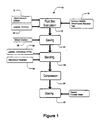
- an especially preferred method 10 for making the compositions of the invention, utilizing fluid bed granulation is described.
- Metronidazole 12 and hydrous lactose 14 are added as dry ingredients into the fluid bed granulator.
- the dry starting ingredients may have a particle size within a broad range so long as the particles may be suspended by the air flow during granulation.
- An aqueous suspension 16 comprising an aqueous dispersion of Eudragit® NE30D, talc and optionally simethicone emulsion (antifoam) is produced with gentle stirring to provide the aqueous suspension for spraying during granulation.
- Fluid bed granulation 18 is carried out as is well known in the art.
- the granules which are produced are mixed with colloidal silicon dioxide 20 , as a glidant, to improve the flow quality and sieved 22 through a screen having a suitable mesh size (e.g., 12 - 20 mesh), blended 24 in a conventional e.g., twin-shell blender with anhydrous lactose 26 and magnesium stearate (lubricant) 28 , conventionally compressed 30 into tablets, and coated 32 with a rapidly dissolving aqueous soluble polymeric film material such as hydroxypropyl methylcellulose polymer, as is well known in the art.
- a suitable mesh size e.g., 12 - 20 mesh
- a conventional e.g., twin-shell blender with anhydrous lactose 26 and magnesium stearate (lubricant) 28 , conventionally compressed 30 into tablets, and coated 32 with a rapidly dissolving aqueous soluble polymeric film material such as hydroxypropyl methylcellulose polymer, as is well known in the art.
- the present invention entails the use of the compositions/tablet according to the invention for preapring a medicament for treating a patient infected with a microorganism which is susceptible to metronidazole, for administering once daily for a number of days sufficient to eliminate or resolve an infection caused by the microorganisms.
- Metronidazole is known to be effective for killing such microorganisms as Trichomonas vaginalis, Entamoeba histolytica, Helicobacter species, such as Helicobacter pylori, anaerobic gram-negative Bacilli, including Bacteroides fragilis, Bacteroides distasonis, Bacteroides ovatus, Bacteroides thetaiotaomicron, Bacteroides vulgatus, Fusobacterium species, anaerobic gram-positive bacilli including Clostridium species and susceptible strains of Eubacterium, anaerobic gram-positive cocci including Peptococcus species and Peptostreptococcus species, and the like.
- trichomoniasis bacterial vaginosis and duodenal ulcer disease which is associated with the presence of Helicobacter pylori.
- H. pylori it is well known to administer metronidazole in combination with other active ingredients such as bismuth and amoxicillin or bismuth and tetracycline. Chiba et al., Am. J. Gastroenterology , 87, 1716-1727 (1992); E. Herschel et al., New England J. Med., 328, 308-312 (1993).
- a therapeutically effective regimen for treating an infection caused by a microorganism which is susceptible to metronidazole entails once daily oral administration of a composition of the invention which has between about 600 mg metronidazole and about 1000 mg metronidazole, preferably about 750 mg metronidazole for a period of between about 5 days and about 15 days or more.
- the clinical resolution of the infection or disease is readily determined by a clinician of ordinary skill in the art, such as by microbiological testing or disappearance of clinically characteristic symptoms.
- the dosage of metronidazole given and/or the length of treatment may be increased or decreased based on the type of infection, the degree of susceptibility of the microorganism to metronidazole, the age and general health of the patient, and like factors of which a clinician of ordinary skill in the art is aware and utilizes in the management of a patient.
- This example demonstrates a method for preparing a once-daily metronidazole tablet of the invention, employing fluid bed granulation.
- metronidazole (Farchemia, S.P.A., Treviglio, Italy) was milled using a Fitz-Mill fitted with a 40 mesh screen at medium speed, impact forward.
- the milled metronidazole and 20.55 kg of hydrous lactose (Sheffield, Corp., Norwich, NY) were combined in a Vector Freund, Model # FLF-200 fluid bed granulator (Marion, IA), fitted with a single spray arm having 3 nozzles for spraying the coating suspension.
- the coating suspension was prepared by combining the following in a mixing tank equipped with a suitable propeller mixer and fluid recycling capability: (i) 20.58 kg of Eudragit® NE30D (30% (w/v) aqueous dispersion) (Röhm Pharma, Rothstadt, Germany), (ii) 0.08 kg of Simethicone Emulsion (Dow Corning, Midland, MI), and (iii) 100 ml of water. After the Eudragit® containing suspension had stirred for several minutes, 3.07 kg of Alphafill 500 Talc (Luzenac America, Englewood, CO) was slowly added with mixing over a period of 30 minutes to ensure wetting of the talc particles, importantly, without imparting substantial shear to the Eudragit® polymer.
- the mixture was mixed and recirculated for an additional 60 minutes to provide a uniform suspension.
- the above-mentioned mixing tank may be fitted with an Arde Dispershear apparatus (Arde Barinco, Norwood, NJ), which, in combination with fluid recirculation, should likewise suspend the talc without imparting substantial shear.
- the granulator loaded with the metronidazole and lactose, was run until the inlet air temperature stabilized at 40° C (about 5 minutes). Once the inlet air temperature stabilized at 40° C, spraying of the coating suspension was begun with the spray gun operated at an atomizing pressure of 50-55 psig and a spray rate of about 600 grams per minute. The coating suspension was maintained with continuous stirring throughout the process. Inlet air temperature for the fluidization air was maintained at approximately 40° C throughout the granulation process.
- the pump was stopped and fluidization was continued to reduce the moisture content of the granulation to less than 1%. Then the granulator was stopped, 0.25 kg colloidal silicon dioxide (Aerosil 200, Degussa Corporation, Ridgefield Park, NJ) was added and mixed in by hand. The granulator was restarted and fluidization was continued for an additional 30 seconds to effect mixing.
- colloidal silicon dioxide Alluminal 200, Degussa Corporation, Ridgefield Park, NJ
- the granulation was removed from the granulator and sieved by sifting it through a Sprout-Waldron sifter fitted with a 14 mesh screen.
- the sieved granulation was transferred into a Patterson-Kelly V-blender (30 cubic foot capacity), combined with 32.25 kg anhydrous lactose (direct tablet grade) (Sheffield Corp., Norwich, NY), and the mixture was blended for 10 minutes.
- 2.50 kg of magnesium stearate (Mallinckrodt Chemical, St. Louis, MO) was added to the mixture and blended for 5 minutes to provide a metronidazole containing composition suitable for tabletting.
- the metronidazole-containing formulation was transferred to the hopper of a Stokes 454 (Stokes-Merrill, Bristol, PA) 35-station rotary tablet press which was fitted with 0.750" X 0.375" oval shape tablet tooling.
- the formulation was compressed into tablets at a theoretical weight of 1,013 mg to a thickness of 0.255" and a hardness of about 11 kilopounds.
- Opadry coating suspension was prepared by mixing 9.60 kg of Opadry Blue YS-1-4256 with 54.4 kg purified water for 30 minutes.
- the compressed tablets were loaded into a Vector Hi-Coater (Vector Corp., Marion, IA) and sprayed with the Opadry suspension at a rate of about 500 g/minute to produce the coated, metronidazole tablets.
- This example demonstrates the ability of defined formulations comprising 750 mg of metronidazole to provide, with a single daily dose, bioavailabilty of metronidazole over a 24-hour period, which is comparable to the bioavailability provided by thrice daily doses of immediate release metronidazole (Flagyl®, 250 mg, G. D. Searle & Co., Skokie, IL) as determined by the area under the curve (AUC).
- Flagyl® 250 mg, G. D. Searle & Co., Skokie, IL
- AUC area under the curve
- the protocol was essentially as the above-described study, except as follows. Twelve (12) healthy female volunteers were divided into four groups of three; two Eudragit®-containing formulations (C and D) and two ethylcellulose formulations (E and F) were tested; all individuals received Flagyl (250 mg) and either the two Eudragit®-containing formulations or the two Surelease®-containing formulations but there was no crossover between the Eudragit®-containing and ethylcellulose-containing formulations. Because of the linear bioavailability kinetics exhibited with Flagyl, the plasma metronidazole levels attained with a 250 mg dose were statistically scaled to a 750 mg dose.
- the formulations which were administered are as follows: FORMULATION A mg/tablet % w/w Metronidazole USP 750.0 80.95 Microcrystalline Cellulose, PH101 NF 83.3 8.99 Surelease Solids (Ethylcellulose Dispersion, 25% Solids) 83.3 8.99 Simethicone Emulsion USP (Antifoam C Emulsion) 0.7 0.08 Magnesium Stearate NF 9.2 0.99 926.5 FORMULATION B mg/tablet % w/w Metronidazole USP 750.0 82.79 Microcrystalline Cellulose, PH101 NF 83.3 9.20 Eudragit NE30D Solids (Acrylic Resin, 25% solids) 41.7 4.60 Talc USP (500 mesh) 20.8 2.30 Simethicone Emulsion USP (Antifoam C Emulsion) 0.3 0.03 Colloidal Silicon Dioxide NF 0.8 0.09 Magnesium Stearate NF 9.0 0.99 905.9 FORMULATION C mg
- Formulations C and D which comprise 2.47% and 1.95% Eudragit® NE30, respectively, provided bioavailability of metronidazole over 24 hours which was substantially equivalent to that of the immediate release Flagyl®, as determined by the PCNONLIN program.
- the ratio of AUC (formulation C) :AUC (Flagyl®) was 0.961, and the ratio of AUC (formulation D) :AUC (Flagyl®) was 1.01.
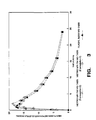
- these compositions exhibited desirable modified release characteristics; plasma metronidazole levels were maintained between about 2.5 mcg/ml and about 13.5 mcg/ml over the entire 24-hour period ( Figure 2).
- the ethylcellulose-containing compositions, Formulations E and F exhibited poor release characteristics. While the bioavailability of the ethylcellulose-containing compositions was similar to Flagyl® --the ratio of AUC (formulation E) :AUC (Flagyl®) was 1.07, and the ratio of AUC (formulation F) :AUC (Flagyl®) was 1.02-- the composition of Formulations E and F exhibited substantially no modified release characteristics.
- Figure 4 demonstrates that Formulation A (comprising ⁇ 9% Surelease®) and Formulation B (comprising 4.6% Eudragit® NE30D) were able to slow the release of metronidazole, but only at the cost of greatly reducing the bioavailability of metronidazole.
- the ratio of AUC (formulation A) :AUC (Flagyl®) was 0.357
- the ratio of AUC (formulation B) :AUC (Flagyl®) was 0.397.
- these compositions were able to provide only about 35%-40% bioavailability of metronidazole, compared to Flagyl®.
- compositions of the invention importantly provide bioavailability of metronidazole which is comparable to Flagyl®, while at the same time exhibiting a controlled rate of release so that plasma metronidazole levels are Flagyl®, while at the same time exhibiting a controlled rate of release so that plasma metronidazole levels are not caused to spike, but rather are maintained at levels of between about 2.5 mcg/ml and 13.5 mcg/ml over a 24 hour period, which provides sustained therapeutic effectiveness.
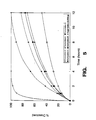
- This example demonstrates the rate of in vitro dissolution of modified release metronidazole tablets comprising poly(meth)acrylic acid ester.
- the dissolution rates for the compositions of the invention correlate to the in vivo bioavailability of metronidazole formulations comprising poly(meth)acrylic acid ester.
- the dissolution tests were performed using the standard USP XXII Dissolution Apparatus 2 (paddles), run at 50 RPM, in Deionized Water at 37°C for 12 hours.
- Five modified release formulations containing 750 mg metronidazole, and an immediate release formulation (Flagyl®, 3 x 250 mg.) as a control were tested.
- Three of the modified release formulations were Formulation B, Formulation C and Formulation D which are disclosed in Example 2, above.
- the other two modified release formulation are as follows: FORMULATION G mg/tablet % w/w Metronidazole USP (10% of metronidazole added neat) 750.0 78.48 Lactose, Hydrous NF 75.0 7.85 Eudragit NE30D Solids (Acrylic Resin, 30% Solids) 22.5 2.35 Talc USP (500 mesh) 11.3 1.18 Simethicone Emulsion USP (Antifoam C Emulsion) 0.3 0.03 Lactose, Anhydrous (DTG) NF 86.0 9.00 Colloidal Silicon Dioxide NF 1.0 0.10 Magnesium Stearate NF 9.5 0.99 955.6 FORMULATION H mg/tablet % w/w Metronidazole USP 750.0 77.42 Lactose, Hydrous NF 83.3 8.60 Eudragit NE30D Solids (Acrylic Resin, 30% Solids) 25.0 2.58 Talc USP (500 mesh) 12.5 1.29 Simethicone Em
Landscapes
- Health & Medical Sciences (AREA)
- Chemical & Material Sciences (AREA)
- Medicinal Chemistry (AREA)
- Pharmacology & Pharmacy (AREA)
- Life Sciences & Earth Sciences (AREA)
- Animal Behavior & Ethology (AREA)
- General Health & Medical Sciences (AREA)
- Public Health (AREA)
- Veterinary Medicine (AREA)
- Epidemiology (AREA)
- Engineering & Computer Science (AREA)
- Bioinformatics & Cheminformatics (AREA)
- Communicable Diseases (AREA)
- General Chemical & Material Sciences (AREA)
- Nuclear Medicine, Radiotherapy & Molecular Imaging (AREA)
- Organic Chemistry (AREA)
- Chemical Kinetics & Catalysis (AREA)
- Oncology (AREA)
- Pharmaceuticals Containing Other Organic And Inorganic Compounds (AREA)
- Medicinal Preparation (AREA)
Claims (44)
- Eine pharmazeutische Zusammensetzung, die dazu geeignet ist, komprimiert zu werden zu einer modifizierten Freigabe-, einmal täglich Dosierungsform von Metronidazol, wobei die Zusammensetzung enthält:worin die Zusammensetzung metronidazolhaltige Granulate umfasst, die (a), (b), (c) und (d) enthalten, worin die Summe der Gewichtsprozentanteile von Metronidazol, die durch (a) und (f) bereitgestellt wird, zwischen etwa 72 Gewichtsprozent und etwa 79 Gewichtsprozent liegt und worin die Summe der Gewichtsprozentanteile des wasserlöslichen Verdünnungsmittels, die durch (d) und (e) bereitgestellt wird zwischen etwa 16 Gewichtsprozent und etwa 23 Gewichtsprozent liegt.(a) eine erste Portion Metronidazol, die etwa 59 Gewichtsprozent bis etwa 79 Gewichtsprozent Metronidazol ausmacht;(b) etwa 1,5 Gewichtsprozent bis etwa 3,0 Gewichtsprozent eines wasserunlöslichen Poly(meth)acrylsäureestercopolymers, welches wasserdurchlässig, wasserausdehnbar und pHunabhängig ist;(c) etwa 0,1 Gewichtsprozent bis etwa 2,0 Gewichtsprozent eines die Klebrigkeit beseitigendes Mittel;(d) 0 bis etwa 23 Gewichtsprozent eines ersten wasserlöslichen pharmazeutischen Verdünnungsmittels;(e) 0 bis etwa 23 Gewichtsprozent eines zweiten wasserlöslichen Verdünnungsmittels, das geeignet ist, eine pharmazeutische Tablette zu bilden, wobei das zweite wasserlösliche Verdünnungsmittel das gleiche ist wie oder unterschiedlich vom ersten wasserlöslichen Verdünnungsmittel;(f) 0 bis etwa 20 Gewichtsprozent einer zweiten Portion Metronidazol;(g) 0 bis etwa 0,2 Gewichtsprozent eines Gleitmittels und(h) 0 bis etwa 2 Gewichtsprozent eines Schmiermittels,
- Eine pharmazeutische Zusammensetzung gemäss Anspruch 1, worin das erste wasserlösliche Verdünnungsmittel in einer Menge von etwa 5 % und etwa 11 Gewichtsprozent vorliegt und das zweite wasserlösliche Verdünnungsmittel in einer Menge von etwa 8% und etwa 18 Gewichtsprozent vorliegt.
- Eine pharmazeutische Zusammensetzung gemäss Anspruch 2, worin das erste wasserlösliche Verdünnungsmittel und das zweite wasserlösliche Verdünnungsmittel Laktose sind.
- Eine pharmazeutische Zusammensetzung gemäss Anspruch 1, die mindestens etwa 0,01 % eines pharmazeutisch verträglichen Gleitmittels und mindestens etwa 0,1 % eines pharmazeutisch verträglichen Schmiermittels enthält.
- Eine pharmazeutische Zusammensetzung gemäss Anspruch 1, enthaltend (i) von etwa 1,9 % bis etwa 2,5 % des wasserunlöslichen Poly(meth)acrylsäureestercopolymers; (ii) von etwa 6 % bis etwa 9 % des ersten wasserlöslichen Verdünnungsmittels und (iii) von etwa 12 % bis etwa 17 % des zweiten wasserlöslichen Verdünnungsmittels und worin die Summe der Prozentanteile der ersten Portion Metronidazol und der zweiten Portion Metronidazol von etwa 72,5 % bis etwa 74,5 % beträgt.
- Eine pharmazeutische Zusammensetzung gemäss Anspruch 1, worin das die Klebrigkeit beseitigende Mittel Talk ist.
- Eine pharmazeutische Zusammensetzung gemäss Anspruch 1, die etwa 74,05 % Metronidazol, etwa 8,22 % wasserhaltige Laktose, etwa 2,47% des wasserunlöslichen Poly(meth)acrylsäureestercopolymers, etwa 1,23 % Talk, etwa 0,03 % Simethiconemulsion, etwa 12,90 % wasserfreie Laktose, etwa 0,10 % colloidales Silikondioxid und etwa 0,99 % Magnesiumstearat enthält.
- Eine pharmazeutische Zusammensetzung gemäss Anspruch 1, die etwa 72,99 % Metronidazol, etwa 6,48 % wasserhaltige Laktose, etwa 1,95 % des wasserunlöslichen Poly(meth)acrylsäureestercopolymers, etwa 0,97 % Talk, etwa 0,03 % Simethiconemulsion, etwa 16,49 % wasserfreie Laktose, etwa 0,10 % colloidales Silikondioxid und etwa 0,99 % Magnesiumstearat enthält.
- Eine Methode zur Herstellung einer modifizierten Metronidazolfreigabezusammensetzung, wobei die Methode folgende Stufen umfasst:worin der Prozentanteil an Metronidazol, der durch (a) (1) und (d) bereitgestellt wird, von etwa 72 % bis etwa 79 Gewichtsprozent beträgt, bezogen auf das Gesamtgewicht der Tablette und(a) Kontaktieren in einem Fliessbedgranulator, unter Bedingungen, die zur Herstellung von Granulaten geeignet sind, (1) eines trockenen Gemisches enthaltend von etwa 59 bis etwa 79 Gewichtsteile einer ersten Portion Metronidazol und gegebenenfalls bis zu 23 Gewichtsteile eines ersten wasserlöslichen Verdünnungsmittels mit (2) einer wässrigen Suspension, enthaltend von etwa 1,5 bis etwa 3,0 Gewichtsteile eines wasserunlöslichen, pH-unabhängigen, wasserausdehnbaren Polymethacrylsäureestercopolymers und eine wirksame Menge eines die Klebrigkeit beseitigendes Mittel;(b) Vereinigen der in Stufe (a) produzierten Granulate mit einer wirksamen Menge eines pharmazeutisch verträglichen Gleitmittels;(c) gegebenenfalls Teilchensichtung des Gemischs von (b), um ein Gemisch mit einer im wesentlichen gleichförmigen Teilchengröße bereitzustellen, die sich zum Komprimieren in Tablettenform eignet;(d) gegebenenfalls Mischen des Gemischs mit bis zu 20 Gewichtsteilen einer zweiten Portion Metronidazol;(e) Mischen des Gemischs mit bis zu 23 Gewichtsteilen eines zweiten wasserlöslichen Verdünnungsmittels und einer wirksamen Menge eines pharmazeutisch verträglichen Schmiermittels und(f) Komprimieren einer vorbestimmten Menge des vermischten Gemischs von Stufe (e), um eine Tablette zu produzieren;
worin der Prozentanteil an wasserlöslichem Verdünnungsmittel, der durch (a) (1) und (e) bereitgestellt wird von etwa 16 % und etwa 23 Gewichtsprozent beträgt, bezogen auf das Gesamtgewicht der Tablette. - Eine Methode gemäss Anspruch 9, worin das erste wasserlösliche Verdünnungsmittel vorliegt in einer Menge von etwa 5 % bis etwa 11 Gewichtsprozent und das zweite wasserlösliche Verdünnungsmittel vorliegt in einer Menge von etwa 8 % und etwa 18 Gewichtsprozent.
- Eine Methode gemäss Anspruch 10, worin das erste wasserlösliche Verdünnungsmittel vorliegt in einer Menge von etwa 6 % und etwa 9 Gewichtsprozent und das zweite wasserlösliche Verdünnungsmittel vorliegt in einer Menge von etwa 12 % und etwa 17 Gewichtsprozent.
- Eine Methode gemäss Anspruch 10, worin das erste wasserlösliche Verdünnungsmittel und das zweite wasserlösliche Verdünnungsmittel Laktose sind.
- Eine Methode gemäss Anspruch 9, worin das die Klebrigkeit beseitigende Mittel Talk ist.
- Eine Methode gemäss Anspruch 9, worin das Gleitmittel Silikondioxid ist und vorliegt in einer Menge von etwa 0,1 Gewichtsprozent.
- Eine Methode gemäss Anspruch 9, worin das Schmiermittel Magnesiumstearat ist und vorliegt in einer Menge von etwa 1 Gewichtsprozent.
- Eine Methode gemäss Anspruch 9, worin die wässrige Suspension von (a) (ii) außerdem eine Menge eines Schaumbremsmittels enthält, das wirksam ist, um das Schäumen während Stufe (a) zu reduzieren.
- Eine Methode gemäss Anspruch 9, die weiterhin umfasst (g) das Überziehen der Tablette mit einem wasserlöslichen polymeren Überzugsmaterial.
- Eine modifizierte pharmazeutische Freigabetablette für einmal täglich Dosieren von Metronidazol, wobei die Tablette eine therapeutisch wirksame Menge einer pharmazeutischen Zusammensetzung enthält, umfassend:worin die Zusammensetzung metronidazolhaltige Granulate umfasst, die (a), (b), (c) und (d) enthalten, worin die Summe der Gewichtsprozentanteile von Metronidazol, die durch (a) und (f) bereitgestellt wird, zwischen etwa 72 Gewichtsprozent und etwa 79 Gewichtsprozent liegt und worin die Summe der Gewichtsprozentanteile des wasserlöslichen Verdünnungsmittels, die durch (d) und (e) bereitgestellt wird zwischen etwa 16 Gewichtsprozent und etwa 23 Gewichtsprozent liegt.(a) eine erste Portion Metronidazol, die etwa 59 Gewichtsprozent bis etwa 79 Gewichtsprozent Metronidazol ausmacht;(b) etwa 1,5 Gewichtsprozent bis etwa 3,0 Gewichtsprozent eines wasserunlöslichen Poly(meth)acrylsäureestercopolymers, welches wasserdurchlässig, wasserausdehnbar und pHunabhängig ist;(c) etwa 0,1 Gewichtsprozent bis etwa 2,0 Gewichtsprozent eines die Klebrigkeit beseitigendes Mittel;(d) 0 bis etwa 23 Gewichtsprozent eines ersten wasserlöslichen pharmazeutischen Verdünnungsmittels;(e) 0 bis etwa 23 Gewichtsprozent eines zweiten wasserlöslichen Verdünnungsmittels, das geeignet ist, eine pharmazeutische Tablette zu bilden, wobei das zweite wasserlösliche Verdünnungsmittel das gleiche ist wie oder unterschiedlich vom ersten wasserlöslichen Verdünnungsmittel;(f) 0 bis etwa 20 Gewichtsprozent einer zweiten Portion Metronidazol;(g) 0 bis etwa 0,2 Gewichtsprozent eines Gleitmittels und(h) 0 bis etwa 2 Gewichtsprozent eines Schmiermittels,
- Eine modifizierte pharmazeutische Freigabetablette gemäss Anspruch 18, worin das erste wasserlösliche Verdünnungsmittel in einer Menge von etwa 5 % und etwa 11 Gewichtsprozent vorliegt und das zweite wasserlösliche Verdünnungsmittel in einer Menge von etwa 8% und etwa 18 Gewichtsprozent vorliegt.
- Eine modifizierte pharmazeutische Freigabetablette gemäss Anspruch 19, worin das wasserunlösliche Poly(meth)acrylsäureestercopolymer ein Gemisch aus pH-unabhängigen, wasserunlöslichen, wasserdurchlässigen und wasserdehnbaren Poly(meth)acrylsäureestercopolymeren ist, mit einem Durchschnittsmolekulargewicht von etwa 800.000 Dalton.
- Eine modifizierte pharmazeutische Freigabetablette gemäss Anspruch 20, worin das erste wasserlösliche Verdünnungsmittel und das zweite wasserlösliche Verdünnungsmittel Laktose sind.
- Eine modifizierte pharmazeutische Freigabetablette gemäss Anspruch 21, die mindestens etwa 0,01 % eines pharmazeutisch verträglichen Gleitmittels und mindestens etwa 0,1 % eines pharmazeutisch verträglichen Schmiermittels enthält.
- Eine modifizierte pharmazeutische Freigabetablette gemäss Anspruch 18, die etwa 750 mg Metronidazol enthält.
- Eine modifizierte pharmazeutische Freigabetablette gemäss Anspruch 18, enthaltend (i) von etwa 1,9 % bis etwa 2,5 % des wasserunlöslichen Poly(meth)acrylsäureestercopolymers; (ii) von etwa 6 % bis etwa 9 % des ersten wasserlöslichen Verdünnungsmittels und (iii) von etwa 12 % bis etwa 17 % des zweiten wasserlöslichen Verdünnungsmittels und worin die Summe der Prozentanteile der ersten Portion Metronidazol und der zweiten Portion Metronidazol von etwa 72,5 % bis etwa 74,5 % beträgt.
- Eine modifizierte pharmazeutische Freigabetablette gemäss Anspruch 24, worin das wasserunlösliche Poly(meth)acrylsäureestercopolymer ein Gemisch aus pH-unabhängigen, wasserunlöslichen, wasserdurchlässigen und wasserdehnbaren Poly(meth)acrylsäureestercopolymeren ist mit einem Durchschnittsmolekulargewicht von etwa 800.000 Dalton.
- Eine modifizierte pharmazeutische Freigabetablette gemäss Anspruch 25, die etwa 750 mg Metronidazol enthält.
- Eine modifizierte pharmazeutische Freigabetablette gemäss Anspruch 18, die etwa 74,05 % Metronidazol, etwa 8,22 % wasserhaltige Laktose, etwa 2,47% des wasserunlöslichen Poly(meth)acrylsäureestercopolymers, etwa 1,23 % Talk, etwa 0,03 % Simethiconemulsion, etwa 12,90 % wasserfreie Laktose, etwa 0,10 % colloidales Silikondioxid und etwa 0,99 % Magnesiumstearat enthält.
- Eine modifizierte pharmazeutische Freigabetablette gemäss Anspruch 18, die etwa 72,99 % Metronidazol, etwa 6,48 % wasserhaltige Laktose, etwa 1,95 % des wasserunlöslichen Poly(meth)acrylsäureestercopolymers, etwa 0,97 % Talk, etwa 0,03 % Simethiconemulsion, etwa 16,49 % wasserfreie Laktose, etwa 0,10 % colloidales Silikondioxid und etwa 0,99 % Magnesiumstearat enthält.
- Eine modifizierte pharmazeutische Freigabetablette gemäss Anspruch 27, worin das wasserunlösliche Poly(meth)acrylsäureestercopolymer ein Gemisch aus pH-unabhängigen, wasserunlöslichen, wasserdurchlässigen und wasserdehnbaren Poly(meth)acryisäureestercopolymeren ist, mit einem Durchschnittsmolekulargewicht von etwa 800.000 Daiton.
- Eine modifizierte pharmazeutische Freigabetablette gemäss Anspruch 28, worin das wasserunlösliche Poly(meth)acrylsäureestercopolymer ein Gemisch aus pH-unabhängigen, wasserunlöslichen, wasserdurchlässigen und wasserdehnbaren Poly(meth)acrylsäureestercopolymeren ist, mit einem Durchschnittsmolekulargewicht von etwa 800.000 Dalton.
- Eine modifizierte pharmazeutische Freigabetablette gemäss Anspruch 25, die etwa 750 mg Metronidazol enthält.
- Eine modifizierte pharmazeutische Freigabetablette gemäss Anspruch 30, die etwa 750 mg Metronidazol enthält.
- Eine modifizierte pharmazeutische Freigabetablette gemäss Anspruch 29, worin die Tablette mit einem wasserlöslichen polymeren Überzugsmaterial überzogen ist.
- Eine modifizierte pharmazeutische Freigabetablette gemäss Anspruch 30, worin die Tablette mit einem wasserlöslichen polymeren Überzugsmaterial überzogen ist.
- Verwendung einer pharmazeutischen Tablette von Anspruch 18 zur Herstellung eines Medikamentes zur Verabreichung einmal täglich an einer Anzahl von Tagen, die ausreicht, um einen mit einem Mikroorganismus infizierten Patienten zu behandeln, der auf Metronidazol anspricht.
- Verwendung gemäss Anspruch 35, worin der Mikroorganismus eine Krankheit verursacht, die ausgewählt ist aus der Gruppe bestehend aus Trichomoniase, Amoebiase und bakterieller Vaginose.
- Verwendung gemäss Anspruch 35, worin der Mikroorganismus eine Spezies von Helicobacter ist.
- Verwendung gemäss Anspruch 37, worin der Mikroorganismus Helicobacter pylori ist.
- Verwendung gemäss Anspruch 35, worin die pharmazeutische Tablette etwa 74,05 % Metronidazol, etwa 8,22 % wasserhaltige Laktose, etwa 2,47% des wasserunlöslichen Poly(meth)acrylsäureestercopolymers, etwa 1,23 % Talk, etwa 0,03 % Simethiconemulsion, etwa 12,90 % wasserfreie Laktose, etwa 0,10 % colloidales Silikondioxid und etwa 0,99 % Magnesiumstearat enthält.
- Verwendung gemäss Anspruch 35, worin die pharmazeutische Tablette etwa 72,99 % Metronidazol, etwa 6,48 % wasserhaltige Laktose, etwa 1,95 % des wasserunlöslichen Poly(meth)acrylsäureestercopolymers, etwa 0,97 % Talk, etwa 0,03 % Simethiconemulsion, etwa 16,49 % wasserfreie Laktose, etwa 0,10 % colloidales Silikondioxid und etwa 0,99 % Magnesiumstearat enthält.
- Verwendung gemäss Anspruch 39, worin das wasserunlösliche Poly(meth)-acrylsäureestercopolymer ein Gemisch aus pH-unabhängigen, wasserunlöslichen, wasserdurchlässigen und wasserdehnbaren Poly(meth)acrylsäureestercopolymeren ist, mit einem Durchschnittsmolekulargewicht von etwa 800.000 Dalton.
- Verwendung gemäss Anspruch 40, worin das wasserunlösliche Poly(meth)-acrylsäureestercopolymer ein Gemisch aus pH-unabhängigen, wasserunlöslichen, wasserdurchlässigen und wasserdehnbaren Poly(meth)acrylsäureestercopolymeren ist, mit einem Durchschnittsmolekulargewicht von etwa 800.000 Dalton.
- Verwendung gemäss Anspruch 41, worin die pharmazeutische Tablette etwa 750 mg Metronidazol enthält.
- Verwendung gemäss Anspruch 42, worin die pharmazeutische Tablette etwa 750 mg Metronidazol enthält.
Applications Claiming Priority (3)
| Application Number | Priority Date | Filing Date | Title |
|---|---|---|---|
| US187568 | 1994-01-27 | ||
| US08/187,568 US6103262A (en) | 1994-01-27 | 1994-01-27 | Modified-release metronidazole compositions and methods for making and using same |
| PCT/US1995/000005 WO1995020383A1 (en) | 1994-01-27 | 1995-01-04 | Modified-release metronidazole compositions and methods for making and using same |
Publications (2)
| Publication Number | Publication Date |
|---|---|
| EP0744947A1 EP0744947A1 (de) | 1996-12-04 |
| EP0744947B1 true EP0744947B1 (de) | 2002-04-17 |
Family
ID=22689500
Family Applications (1)
| Application Number | Title | Priority Date | Filing Date |
|---|---|---|---|
| EP95907963A Expired - Lifetime EP0744947B1 (de) | 1994-01-27 | 1995-01-04 | Metronidazolpräparate mit modifizierter freisetzung und verfahren für ihre herstellung und verwendung |
Country Status (16)
| Country | Link |
|---|---|
| US (2) | US6103262A (de) |
| EP (1) | EP0744947B1 (de) |
| JP (1) | JPH09508381A (de) |
| KR (1) | KR100368769B1 (de) |
| CN (1) | CN1095665C (de) |
| AT (1) | ATE216236T1 (de) |
| AU (1) | AU682248B2 (de) |
| BR (1) | BR9506662A (de) |
| CA (1) | CA2181985C (de) |
| DE (1) | DE69526434T2 (de) |
| DK (1) | DK0744947T3 (de) |
| ES (1) | ES2174930T3 (de) |
| MX (1) | MX9602951A (de) |
| NZ (1) | NZ279368A (de) |
| PT (1) | PT744947E (de) |
| WO (1) | WO1995020383A1 (de) |
Families Citing this family (15)
| Publication number | Priority date | Publication date | Assignee | Title |
|---|---|---|---|---|
| AU8588898A (en) | 1997-07-28 | 1999-02-16 | Mary L. Redmond | Composition and process for the treatment of epidermal traumas such as decubitusulcers |
| US6322819B1 (en) * | 1998-10-21 | 2001-11-27 | Shire Laboratories, Inc. | Oral pulsed dose drug delivery system |
| DE19850445A1 (de) * | 1998-11-02 | 2000-05-04 | Falk Pharma Gmbh | Arzneimittel zur topischen Behandlung entzündlicher Darmerkrankungen |
| ECSP003851A (es) * | 1999-12-22 | 2002-05-23 | Pharmacia Corp | Composicon de liberacion doble de un inhibidor ciclooxigenasa-2 |
| US6423707B1 (en) | 2000-08-28 | 2002-07-23 | California Pacific Medical Center | Nitroimidazole ester analogues and therapeutic applications |
| US8846100B2 (en) * | 2006-05-12 | 2014-09-30 | Shire Llc | Controlled dose drug delivery system |
| WO2012075015A2 (en) | 2010-11-29 | 2012-06-07 | Dr. Reddy's Laboratories Ltd. | Oral metronidazole pharmaceutical compositions |
| EP2806861A1 (de) * | 2012-01-23 | 2014-12-03 | Ranbaxy Laboratories Limited | In-situ-mehrschichttablettentechnologie |
| JP6487534B2 (ja) | 2014-09-05 | 2019-03-20 | シンビオミックス セラピューティクス、エルエルシー | 細菌性膣炎の治療に使用するためのセクニダゾール |
| US11253501B2 (en) | 2015-06-01 | 2022-02-22 | Lupin Inc. | Secnidazole formulations and use in treating bacterial vaginosis |
| US11547675B2 (en) * | 2015-08-10 | 2023-01-10 | Purdue Research Foundation | Methods and systems for depositing active ingredients on substrates |
| GR1008992B (el) | 2015-12-17 | 2017-03-23 | Verisfield (Uk) Ltd, Υποκαταστημα Ελλαδας, Εμπορια Φαρμακων | Φαρμακευτικη συνθεση σε μορφη κοκκιων για χορηγηση απο το στομα που περιεχει μετρονιδαζολη ή παραγωγα αυτης και εναν παραγοντα καλυψης της γευσης |
| CN112007002B (zh) * | 2020-08-05 | 2022-08-12 | 河北君临药业有限公司 | 一种质量稳定的甲硝唑片剂组合物及其制备方法 |
| US12280037B2 (en) | 2020-09-22 | 2025-04-22 | Evofem Biosciences, Inc. | Method and pharmaceutical composition for treating or preventing trichomoniasis and uses thereof |
| US11826477B1 (en) * | 2022-06-17 | 2023-11-28 | Imam Abdulrahman Bin Faisal University | Metal organic framework/porous silicate and/or aluminosilicate nanocarrier for blastocystosis treatment |
Family Cites Families (7)
| Publication number | Priority date | Publication date | Assignee | Title |
|---|---|---|---|---|
| US2944061A (en) * | 1957-09-20 | 1960-07-05 | Acyl derivatives and process | |
| FI63335B (fi) * | 1979-02-02 | 1983-02-28 | Orion Yhtymae Oy | Foerfarande foer framstaellning av tabletter med foerdroejd loslighet av effektaemne |
| JPS6056122B2 (ja) * | 1980-05-21 | 1985-12-09 | 塩野義製薬株式会社 | 徐放性製剤 |
| GB8707416D0 (en) * | 1987-03-27 | 1987-04-29 | Wellcome Found | Pharmaceutical formulations |
| US4927639A (en) * | 1989-02-02 | 1990-05-22 | Warner-Lambert Company | Modified release gemfibrozil composition |
| DE4125048A1 (de) * | 1991-07-29 | 1993-02-04 | Peggy Albrecht | Arzneimittel mit verzoegerter freisetzung zur behandlung von periodontitis |
| CA2093282C (en) * | 1992-05-04 | 1999-01-12 | Tibor Sipos | Intraoral medicament-releasing device |
-
1994
- 1994-01-27 US US08/187,568 patent/US6103262A/en not_active Expired - Fee Related
-
1995
- 1995-01-04 CA CA002181985A patent/CA2181985C/en not_active Expired - Fee Related
- 1995-01-04 WO PCT/US1995/000005 patent/WO1995020383A1/en not_active Ceased
- 1995-01-04 KR KR1019960703863A patent/KR100368769B1/ko not_active Expired - Fee Related
- 1995-01-04 NZ NZ279368A patent/NZ279368A/en unknown
- 1995-01-04 DK DK95907963T patent/DK0744947T3/da active
- 1995-01-04 BR BR9506662A patent/BR9506662A/pt not_active IP Right Cessation
- 1995-01-04 JP JP7520048A patent/JPH09508381A/ja not_active Ceased
- 1995-01-04 MX MX9602951A patent/MX9602951A/es not_active IP Right Cessation
- 1995-01-04 ES ES95907963T patent/ES2174930T3/es not_active Expired - Lifetime
- 1995-01-04 DE DE69526434T patent/DE69526434T2/de not_active Expired - Fee Related
- 1995-01-04 CN CN95191364A patent/CN1095665C/zh not_active Expired - Fee Related
- 1995-01-04 PT PT95907963T patent/PT744947E/pt unknown
- 1995-01-04 AT AT95907963T patent/ATE216236T1/de not_active IP Right Cessation
- 1995-01-04 EP EP95907963A patent/EP0744947B1/de not_active Expired - Lifetime
- 1995-01-04 AU AU15967/95A patent/AU682248B2/en not_active Ceased
- 1995-05-19 US US08/445,309 patent/US5618559A/en not_active Expired - Lifetime
Also Published As
| Publication number | Publication date |
|---|---|
| ATE216236T1 (de) | 2002-05-15 |
| DE69526434T2 (de) | 2002-10-31 |
| CN1095665C (zh) | 2002-12-11 |
| CN1139382A (zh) | 1997-01-01 |
| AU1596795A (en) | 1995-08-15 |
| NZ279368A (en) | 1998-04-27 |
| WO1995020383A1 (en) | 1995-08-03 |
| MX9602951A (es) | 1997-06-28 |
| JPH09508381A (ja) | 1997-08-26 |
| EP0744947A1 (de) | 1996-12-04 |
| ES2174930T3 (es) | 2002-11-16 |
| US5618559A (en) | 1997-04-08 |
| CA2181985C (en) | 2000-12-05 |
| US6103262A (en) | 2000-08-15 |
| DE69526434D1 (de) | 2002-05-23 |
| KR100368769B1 (ko) | 2003-05-16 |
| AU682248B2 (en) | 1997-09-25 |
| DK0744947T3 (da) | 2002-07-29 |
| CA2181985A1 (en) | 1995-08-03 |
| PT744947E (pt) | 2002-08-30 |
| BR9506662A (pt) | 1997-11-18 |
Similar Documents
| Publication | Publication Date | Title |
|---|---|---|
| EP1340495B1 (de) | Clarithromycin-Tablette mit verlängerter Freisetzung | |
| US6558701B2 (en) | Multilayer tablet for administering a fixed combination of tramadol and diclofenac | |
| US6551616B1 (en) | Extended release formulations of erythromycin derivatives | |
| US8007827B2 (en) | Pharmaceutical dosage forms having immediate release and/or controlled release properties | |
| US20190125683A1 (en) | Once Daily Formulations Of Tetracyclines | |
| US5618559A (en) | Method of making modified-release metronidazole compositions | |
| US20110008426A1 (en) | Modified release pharmaceutical compositions comprising mycophenolate and processes thereof | |
| US6468560B2 (en) | Controlled release dosage form of [R-(Z)]-α-(methoxyimino)-α-(1-azabicyclo[2.2.2]oct-3yl) acetonitrile monohydrochloride | |
| US20040048814A1 (en) | Sustained release composition contraining clarithromycin | |
| AU724086B2 (en) | Controlled release dosage form of (R-(Z))-alpha- (methoxyimino)-alpha-(1-azabicyclo(2.2.2)oct-3-yl) acetonitrile monohydrochloride | |
| US20060159758A1 (en) | Coating composition for taste masking coating and methods for their application and use | |
| RU2435568C2 (ru) | Таблетки с высвобождением активного ингредиента, происходящим в определенном месте и в определенное время | |
| US20050064033A1 (en) | Extended release formulations of erythromycin derivatives | |
| EP2074990A1 (de) | Flurbiprofen mit kontrollierter Freisetzung und Muskelentspannungskombinationen | |
| MXPA04009906A (es) | Composiciones farmaceuticas de liberacion controlada de carbipoda y levopoda. | |
| US20050118256A1 (en) | Extended release alpha-2 agonist pharmaceutical dosage forms | |
| US20040192706A1 (en) | Method and compositions for treating anxiety | |
| CA2358395C (en) | Extended release formulations of erythromycin derivatives | |
| HK1027023B (en) | Extended release formulations of clarithromycin |
Legal Events
| Date | Code | Title | Description |
|---|---|---|---|
| PUAI | Public reference made under article 153(3) epc to a published international application that has entered the european phase |
Free format text: ORIGINAL CODE: 0009012 |
|
| 17P | Request for examination filed |
Effective date: 19960626 |
|
| AK | Designated contracting states |
Kind code of ref document: A1 Designated state(s): AT BE CH DE DK ES FR GB GR IE IT LI LU NL PT SE |
|
| 17Q | First examination report despatched |
Effective date: 19990112 |
|
| GRAG | Despatch of communication of intention to grant |
Free format text: ORIGINAL CODE: EPIDOS AGRA |
|
| GRAG | Despatch of communication of intention to grant |
Free format text: ORIGINAL CODE: EPIDOS AGRA |
|
| GRAG | Despatch of communication of intention to grant |
Free format text: ORIGINAL CODE: EPIDOS AGRA |
|
| GRAH | Despatch of communication of intention to grant a patent |
Free format text: ORIGINAL CODE: EPIDOS IGRA |
|
| GRAH | Despatch of communication of intention to grant a patent |
Free format text: ORIGINAL CODE: EPIDOS IGRA |
|
| REG | Reference to a national code |
Ref country code: GB Ref legal event code: IF02 |
|
| GRAA | (expected) grant |
Free format text: ORIGINAL CODE: 0009210 |
|
| AK | Designated contracting states |
Kind code of ref document: B1 Designated state(s): AT BE CH DE DK ES FR GB GR IE IT LI LU NL PT SE |
|
| REF | Corresponds to: |
Ref document number: 216236 Country of ref document: AT Date of ref document: 20020515 Kind code of ref document: T |
|
| REG | Reference to a national code |
Ref country code: CH Ref legal event code: EP |
|
| REG | Reference to a national code |
Ref country code: CH Ref legal event code: NV Representative=s name: DIETLIN & CIE SA Ref country code: IE Ref legal event code: FG4D |
|
| REF | Corresponds to: |
Ref document number: 69526434 Country of ref document: DE Date of ref document: 20020523 |
|
| REG | Reference to a national code |
Ref country code: DK Ref legal event code: T3 |
|
| REG | Reference to a national code |
Ref country code: PT Ref legal event code: SC4A Free format text: AVAILABILITY OF NATIONAL TRANSLATION Effective date: 20020603 |
|
| REG | Reference to a national code |
Ref country code: GR Ref legal event code: EP Ref document number: 20020402289 Country of ref document: GR |
|
| ET | Fr: translation filed | ||
| REG | Reference to a national code |
Ref country code: ES Ref legal event code: FG2A Ref document number: 2174930 Country of ref document: ES Kind code of ref document: T3 |
|
| PLBE | No opposition filed within time limit |
Free format text: ORIGINAL CODE: 0009261 |
|
| STAA | Information on the status of an ep patent application or granted ep patent |
Free format text: STATUS: NO OPPOSITION FILED WITHIN TIME LIMIT |
|
| 26N | No opposition filed |
Effective date: 20030120 |
|
| PGFP | Annual fee paid to national office [announced via postgrant information from national office to epo] |
Ref country code: GB Payment date: 20041210 Year of fee payment: 11 Ref country code: AT Payment date: 20041210 Year of fee payment: 11 |
|
| PGFP | Annual fee paid to national office [announced via postgrant information from national office to epo] |
Ref country code: DK Payment date: 20041213 Year of fee payment: 11 |
|
| PGFP | Annual fee paid to national office [announced via postgrant information from national office to epo] |
Ref country code: NL Payment date: 20041215 Year of fee payment: 11 |
|
| PGFP | Annual fee paid to national office [announced via postgrant information from national office to epo] |
Ref country code: LU Payment date: 20041220 Year of fee payment: 11 |
|
| PGFP | Annual fee paid to national office [announced via postgrant information from national office to epo] |
Ref country code: PT Payment date: 20041228 Year of fee payment: 11 |
|
| PGFP | Annual fee paid to national office [announced via postgrant information from national office to epo] |
Ref country code: FR Payment date: 20050105 Year of fee payment: 11 |
|
| PGFP | Annual fee paid to national office [announced via postgrant information from national office to epo] |
Ref country code: SE Payment date: 20050107 Year of fee payment: 11 |
|
| PGFP | Annual fee paid to national office [announced via postgrant information from national office to epo] |
Ref country code: IE Payment date: 20050111 Year of fee payment: 11 |
|
| PGFP | Annual fee paid to national office [announced via postgrant information from national office to epo] |
Ref country code: GR Payment date: 20050118 Year of fee payment: 11 |
|
| PGFP | Annual fee paid to national office [announced via postgrant information from national office to epo] |
Ref country code: ES Payment date: 20050119 Year of fee payment: 11 |
|
| PGFP | Annual fee paid to national office [announced via postgrant information from national office to epo] |
Ref country code: BE Payment date: 20050127 Year of fee payment: 11 |
|
| PGFP | Annual fee paid to national office [announced via postgrant information from national office to epo] |
Ref country code: DE Payment date: 20050131 Year of fee payment: 11 |
|
| PGFP | Annual fee paid to national office [announced via postgrant information from national office to epo] |
Ref country code: CH Payment date: 20050317 Year of fee payment: 11 |
|
| PG25 | Lapsed in a contracting state [announced via postgrant information from national office to epo] |
Ref country code: IE Free format text: LAPSE BECAUSE OF NON-PAYMENT OF DUE FEES Effective date: 20060104 Ref country code: GB Free format text: LAPSE BECAUSE OF NON-PAYMENT OF DUE FEES Effective date: 20060104 Ref country code: AT Free format text: LAPSE BECAUSE OF NON-PAYMENT OF DUE FEES Effective date: 20060104 |
|
| PG25 | Lapsed in a contracting state [announced via postgrant information from national office to epo] |
Ref country code: SE Free format text: LAPSE BECAUSE OF NON-PAYMENT OF DUE FEES Effective date: 20060105 Ref country code: ES Free format text: LAPSE BECAUSE OF NON-PAYMENT OF DUE FEES Effective date: 20060105 |
|
| PG25 | Lapsed in a contracting state [announced via postgrant information from national office to epo] |
Ref country code: LU Free format text: LAPSE BECAUSE OF NON-PAYMENT OF DUE FEES Effective date: 20060131 Ref country code: LI Free format text: LAPSE BECAUSE OF NON-PAYMENT OF DUE FEES Effective date: 20060131 Ref country code: FR Free format text: LAPSE BECAUSE OF NON-PAYMENT OF DUE FEES Effective date: 20060131 Ref country code: DK Free format text: LAPSE BECAUSE OF NON-PAYMENT OF DUE FEES Effective date: 20060131 Ref country code: CH Free format text: LAPSE BECAUSE OF NON-PAYMENT OF DUE FEES Effective date: 20060131 Ref country code: BE Free format text: LAPSE BECAUSE OF NON-PAYMENT OF DUE FEES Effective date: 20060131 |
|
| PGFP | Annual fee paid to national office [announced via postgrant information from national office to epo] |
Ref country code: IT Payment date: 20060131 Year of fee payment: 12 |
|
| PG25 | Lapsed in a contracting state [announced via postgrant information from national office to epo] |
Ref country code: PT Free format text: LAPSE BECAUSE OF NON-PAYMENT OF DUE FEES Effective date: 20060704 |
|
| PG25 | Lapsed in a contracting state [announced via postgrant information from national office to epo] |
Ref country code: NL Free format text: LAPSE BECAUSE OF NON-PAYMENT OF DUE FEES Effective date: 20060801 Ref country code: DE Free format text: LAPSE BECAUSE OF NON-PAYMENT OF DUE FEES Effective date: 20060801 |
|
| REG | Reference to a national code |
Ref country code: DK Ref legal event code: EBP |
|
| REG | Reference to a national code |
Ref country code: PT Ref legal event code: MM4A Effective date: 20060704 |
|
| REG | Reference to a national code |
Ref country code: CH Ref legal event code: PL |
|
| EUG | Se: european patent has lapsed | ||
| GBPC | Gb: european patent ceased through non-payment of renewal fee |
Effective date: 20060104 |
|
| NLV4 | Nl: lapsed or anulled due to non-payment of the annual fee |
Effective date: 20060801 |
|
| REG | Reference to a national code |
Ref country code: IE Ref legal event code: MM4A |
|
| REG | Reference to a national code |
Ref country code: FR Ref legal event code: ST Effective date: 20060929 |
|
| REG | Reference to a national code |
Ref country code: ES Ref legal event code: FD2A Effective date: 20060105 |
|
| BERE | Be: lapsed |
Owner name: G.D. *SEARLE & CO. Effective date: 20060131 |
|
| PG25 | Lapsed in a contracting state [announced via postgrant information from national office to epo] |
Ref country code: GR Free format text: LAPSE BECAUSE OF NON-PAYMENT OF DUE FEES Effective date: 20060802 |
|
| PG25 | Lapsed in a contracting state [announced via postgrant information from national office to epo] |
Ref country code: IT Free format text: LAPSE BECAUSE OF NON-PAYMENT OF DUE FEES Effective date: 20070104 |