EP0749149A2 - Appareil de traitement par plasma - Google Patents
Appareil de traitement par plasma Download PDFInfo
- Publication number
- EP0749149A2 EP0749149A2 EP96304454A EP96304454A EP0749149A2 EP 0749149 A2 EP0749149 A2 EP 0749149A2 EP 96304454 A EP96304454 A EP 96304454A EP 96304454 A EP96304454 A EP 96304454A EP 0749149 A2 EP0749149 A2 EP 0749149A2
- Authority
- EP
- European Patent Office
- Prior art keywords
- thin film
- conductive thin
- plasma
- microwave
- processing apparatus
- Prior art date
- Legal status (The legal status is an assumption and is not a legal conclusion. Google has not performed a legal analysis and makes no representation as to the accuracy of the status listed.)
- Granted
Links
Images

Classifications
-
- H—ELECTRICITY
- H01—ELECTRIC ELEMENTS
- H01J—ELECTRIC DISCHARGE TUBES OR DISCHARGE LAMPS
- H01J37/00—Discharge tubes with provision for introducing objects or material to be exposed to the discharge, e.g. for the purpose of examination or processing thereof
- H01J37/32—Gas-filled discharge tubes
- H01J37/32009—Arrangements for generation of plasma specially adapted for examination or treatment of objects, e.g. plasma sources
- H01J37/32192—Microwave generated discharge
- H01J37/32211—Means for coupling power to the plasma
- H01J37/32229—Waveguides
-
- H—ELECTRICITY
- H01—ELECTRIC ELEMENTS
- H01J—ELECTRIC DISCHARGE TUBES OR DISCHARGE LAMPS
- H01J37/00—Discharge tubes with provision for introducing objects or material to be exposed to the discharge, e.g. for the purpose of examination or processing thereof
- H01J37/32—Gas-filled discharge tubes
- H01J37/32009—Arrangements for generation of plasma specially adapted for examination or treatment of objects, e.g. plasma sources
- H01J37/32192—Microwave generated discharge
-
- H—ELECTRICITY
- H01—ELECTRIC ELEMENTS
- H01J—ELECTRIC DISCHARGE TUBES OR DISCHARGE LAMPS
- H01J37/00—Discharge tubes with provision for introducing objects or material to be exposed to the discharge, e.g. for the purpose of examination or processing thereof
- H01J37/32—Gas-filled discharge tubes
- H01J37/32009—Arrangements for generation of plasma specially adapted for examination or treatment of objects, e.g. plasma sources
- H01J37/32192—Microwave generated discharge
- H01J37/32211—Means for coupling power to the plasma
- H01J37/32238—Windows
-
- H—ELECTRICITY
- H01—ELECTRIC ELEMENTS
- H01J—ELECTRIC DISCHARGE TUBES OR DISCHARGE LAMPS
- H01J37/00—Discharge tubes with provision for introducing objects or material to be exposed to the discharge, e.g. for the purpose of examination or processing thereof
- H01J37/32—Gas-filled discharge tubes
- H01J37/32009—Arrangements for generation of plasma specially adapted for examination or treatment of objects, e.g. plasma sources
- H01J37/32192—Microwave generated discharge
- H01J37/32266—Means for controlling power transmitted to the plasma
Definitions
- the present invention relates to a plasma processing apparatus, and more particularly to a microwave-plasma processing apparatus for etching semiconductor wafers, or for forming thin films on the wafers.
- microwave-plasma processing apparatuses In fabrication of highly integrated semiconductor devices, microwave-plasma processing apparatuses have been widely used.
- reaction gases and microwaves are introduced into a vacuum chamber to generate gas-discharge, so that a plasma is produced in the chamber.
- the plasma is applied to a substrate to etch the surface thereof, or to form thin film layers thereon.
- microwave-plasma processing apparatuses controlling generation of the plasma and acceleration of ions in the plasma independently have become important and been studied extensively.
- Fig. 1 is a cross-sectional view illustrating a microwave-plasma processing apparatus disclosed in Japanese Patent Laying Open, Kokai Heisei 6-104098 filed by the common applicant to this application.
- the invention aimed to realize control of generation of a plasma and acceleration of ions in the plasma independently.
- a numeral reference "11" represents a reaction vessel, which is made of metal such as stainless steel, aluminum, or the like.
- the reaction vessel 11 has a periphery wall of double structure forming a coolant path 12.
- coolant circulates from a coolant inlet 12a to a coolant outlet 12b.
- a reaction chamber 13 is formed in the reaction vessel 11.
- the reaction vessel 11 is sealed at the top with a microwave introducing window 14, which is made of dielectric material, such as quartz glass, Pyrex glass, alumina, etc., having a low dielectric loss and heat resistance.
- a microwave introducing window 14 which is made of dielectric material, such as quartz glass, Pyrex glass, alumina, etc., having a low dielectric loss and heat resistance.
- an electric heater for heating the interior of the reaction chamber 13, an electric heater, not shown in Fig. 1, is provided around the reaction vessel 11. Both by heating with the electric heater and cooling with the coolant circulating in the coolant path 12, the inside the reaction chamber 13 is controlled in temperature precisely.
- the microwave introducing window 14 is provided on the lower surface with a conductive plate 31 of metal acting as a grounded electrode.
- the conductive plate 31 is provided with a plurality of microwave transmission openings 32, arranged perpendicularly to the direction of traveling of microwaves.
- the conductive plate 31 is grounded (33) through the reaction vessel 11.
- the conductive plate 31 may be placed in the middle between the microwave introducing window 14 and an object holder 15a, while the conductive plate 31 is grounded (33) through the reaction vessel 11, although the arrangement is not shown.
- the object holder 15a holding an object 30 to be processed is placed on a stage 15, which moves up and down by a driver (not shown).
- the object holder 15a is connected to a high-frequency power supply 18 to generate bias voltage on the surface of the object 30.
- the object holder 15a is provided with a chucking mechanism (not shown), such as an electrostatic chuck to hold the object 30 firmly.
- the object holder 15a is also provided with a cooling mechanism (not shown) in which coolant circulates for cooling the object 30.
- a gas outlet 16 connected to an exhaust apparatus (not shown) is formed on the bottom of the reaction vessel 11.
- a gas inlet 17 is formed to introduce predetermined reaction gas into the reaction chamber 13.
- the end of the dielectric line 21 is sealed with a reflecting plate 21b of metal.
- the dielectric layer 21c is attached on the lower surface of the metal plate 21a.
- the dielectric layer 21c is made of fluorine resin, polyethylene, polystyrene, or the like, having a low dielectric loss.
- the dielectric line 21 is connected through a waveguide 22 to a microwave oscillator 23, so that microwaves generated by the microwave oscillator 23 travel through the waveguide 22 into the dielectric line 21.
- the position of the stage 15 is adjusted in height so that the object 30 is placed at the appropriate position.
- unnecessary gases are discharged from the reaction chamber 13 through the gas outlet 16, then the reaction gas is introduced from the gas inlet 17 into the reaction chamber 13 until the pressure thereof reaches a predetermined level.
- the coolant is introduced from the coolant inlet 12a into the coolant path 12, and is discharged from the coolant outlet 12b.
- microwaves generated by the microwave oscillator 23 travels along the waveguide 22 to the dielectric line 21.
- the grounded potential is stable relative to the plasma, because the conductive plate 31 with the microwave transmission openings 32 are contacted on the microwave introducing window 14.
- the plasma potential becomes stable in the reaction chamber 13, and therefore, the stable bias voltage can be applied to the surface of the object 30 uniformly. Consequently, ion energy in the plasma can be well controlled, and the ions can be irradiated to the surface of the object vertically.
- the microwave introducing window 14 expands with the passage of time, when the apparatus keeps operating for a long time, so that an undesirable gap is formed between the conductive plate 31 and the microwave introducing window 14 because of a difference of thermal coefficient of expansion between them. As a result, undesirable electrical discharge may occur within the gap, and it becomes difficult to generate stable bias voltage on the object 30.
- the microwave introducing window 14 is eroded with plasma, because the microwave introducing window 14 is directly applied with plasma.
- the microwave introducing window 14 made of quartz glass, or the like is easily eroded with the halogen series of gas plasma, such as chlorine, fluorine and bromine.
- the microwave introducing window 14 is changed in width with the passage of time. Therefore, the density and distribution of plasma changes, and it becomes difficult to carry out plasma processing uniformly and stably.
- an object of the invention is to provide a plasma processing apparatus in which generation of undesirable electrical discharge can be avoided, so that stable bias voltage is uniformly applied to the surface of an object to be processed.
- Another object of the invention is to provide a plasma processing apparatus in which a microwave introducing window is protected from erosion.
- a plasma processing apparatus includes a conductive thin film provided on a surface of a microwave introducing member which is exposed to a processing chamber, in which an object to be processed is placed.
- the conductive thin film is provided at the entire portion excluding a transmission portion, through which microwaves pass into the processing chamber.
- the conductive thin film is grounded to act as an electrode.
- the conductive thin film is preferably be formed on the microwave introducing member by plasma sputtering technique.
- the conductive thin film may be mainly made of material selected from SiC, Si, C and Al to have a thickness of 10 ⁇ n to 100 ⁇ m.
- a plasma processing apparatus includes an insulation thin film provided on a surface of a microwave introducing member which is exposed to a processing chamber, in which an object to be processed is placed; and a conductive thin film provided on the entire surface of the microwave introducing member, excluding a transmission portion.
- the conductive thin film is grounded to act as an electrode.
- the insulation thin film is mainly made of inorganic oxide material or inorganic nitride material to have a thickness of 10 ⁇ m to 100 ⁇ m by plasma sputtering technique.
- the conductive thin film may be provided on the insulation thin film.
- the insulation thin film may be provided only at the transmission portion.
- the insulation thin film is provided at the transmission portion and over the conductive thin film.
- Fig. 1 is a cross-sectional view illustrating a conventional microwave-plasma processing apparatus.
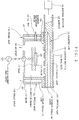
- Fig. 2 is a cross-sectional view illustrating a microwave-plasma processing apparatus of a first preferred embodiment according to the invention.
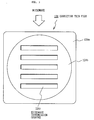
- Fig. 3 is a plan view showing a conductive thin film used in the first preferred embodiment shown in Fig. 2.
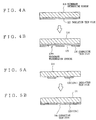
- Figs. 4A and 4B are cross-sectional views showing fabrication steps of a microwave introducing window with insulation thin film and conductive thin film, according to a second preferred embodiment of the invention.
- Figs. 5A and 5B are cross-sectional views showing fabrication steps of a microwave introducing window with insulation thin film and conductive thin film, according to a third preferred embodiment of the invention.
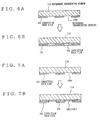
- Figs. 6A and 6B are cross-sectional views showing fabrication steps of a microwave introducing window with insulation thin film and conductive thin film, according to a fourth preferred embodiment of the invention.
- Figs. 7A and 7B are cross-sectional views showing fabrication steps of a microwave introducing window with insulation thin film and conductive thin film, according to a fifth preferred embodiment of the invention.
- Fig. 2 is a cross-sectional view illustrating a microwave-plasma processing apparatus of a first preferred embodiment according to the invention.
- a numeral reference "111" represents a reaction vessel, which is made of metal such as stainless steel, aluminum, or the like.
- the reaction vessel 111 has a periphery wall of double structure forming a coolant path 112. Along the coolant path 112, coolant circulates from a coolant inlet 112a to a coolant outlet 112b.
- a reaction chamber 113 is formed in the reaction vessel 111.
- the reaction vessel 111 is sealed at the top with a microwave introducing window 114, which is made of dielectric material, such as quartz glass, Pyrex glass, alumina, etc., having a low dielectric loss and heat resistance.
- a microwave introducing window 114 which is made of dielectric material, such as quartz glass, Pyrex glass, alumina, etc., having a low dielectric loss and heat resistance.
- an electric heater for heating the interior of the reaction chamber 113, an electric heater, not shown in Fig. 2, is provided around the reaction vessel 111. Both by heating with the electric heater and cooling with the coolant circulating in the coolant path 112, the inside the reaction chamber 113 is controlled in temperature precisely.
- the microwave introducing window 114 is selectively provided on the lower surface with a conductive thin film 124 functioning as a grounded electrode.
- the conductive thin film 124 is provided with a plurality of microwave transmission openings 124c, arranged perpendicularly to the direction of traveling of microwaves.
- the conductive thin film 124 is grounded (133) through the reaction vessel 111.
- the object holder 115a holding an object 130 to be processed is placed on a stage 115.
- the stage 115 is designed so as to move up and down by a driver (not shown).
- the object holder 115a is connected to a high-frequency power supply 118 to generate bias voltage on the surface of the object 130.
- the object holder 115a is provided at the top with a chucking mechanism (not shown), such as an electrostatic chuck to hold the object 130 firmly.
- the object holder 115a is also provided with a cooling mechanism (not shown) in which coolant circulates for cooling the object 130.
- a gas outlet 116 connected to an exhaust apparatus (not shown) is provided on the bottom of the reaction vessel 111.
- a gas inlet 117 is formed to introduce predetermined reaction gas into the reaction chamber 113.
- a dielectric line 121 composed of a metal plate 121a of aluminum, or the like, and a dielectric layer 121c.
- the end of the dielectric line 121 is sealed with a reflecting plate 121b of metal.
- the dielectric layer 121c is attached on the lower surface of the metal plate 121a.
- the dielectric layer 121c is made of fluorine resin, polyethylene, polystyrene, or the like, having a low dielectric loss.
- the dielectric line 121 is connected through a waveguide 122 to a microwave oscillator 123, so that microwaves generated by the microwave oscillator 123 travel through the waveguide 122 to the dielectric line 121.
- the position of the stage 115 is adjusted in height so that the object 130 is placed at the appropriate position.
- unnecessary gases are discharged from the reaction chamber 113 through the gas outlet 116, then the reaction gas is introduced from the gas inlet 117 into the reaction chamber 113 until the pressure thereof reaches a predetermined level.
- the coolant is introduced from the coolant inlet 112a into the coolant path 112, and is discharged from the coolant outlet 112b.
- microwaves generated by the microwave oscillator 123 travel along the waveguide 122 to the dielectric line 121.
- the microwaves When the microwaves are introduced in the dielectric line 121, electromagnetic field is generated under the dielectric line 121, and the microwaves pass through the microwave transmission openings 124c into the reaction chamber 113. In response to the microwaves, a plasma is generated in the reaction chamber 113. After that, when high-frequency voltage is applied from the high-frequency power supply 118 to the object holder 115a, the bias voltage is generated on the surface of the object 130. With the stable bias voltage, ions in the plasma are irradiated vertically to the surface of the object 130, while the energy of the ions is controlled. The object 130 is etched with the plasma in the reaction chamber 113.
- the conductive thin film 124 is entirely formed on the lower surface of the microwave introducing window 114 excluding the microwave transmission openings 124c by plasma sputtering technique.
- a numeral reference “124a” represents a contact portion being in contact with the reaction vessel 111
- "124b” represents a portion corresponding to the upper opening of the reaction chamber 113.
- the microwaves pass through the microwave transmission openings 124c into the reaction chamber 113.
- the conductive thin film 124 is electrically in contact with the reaction vessel 111 which is grounded, so that the conductive thin film 124 functions as a grounded electrode.
- the portion corresponding to the openings 124c are covered with a masking tape.
- the conductive thin film 124 is made of material having conductivity and high corrosion resistance to the halogen series of gas plasma, and not producing contaminants.
- material having conductivity and high corrosion resistance to the halogen series of gas plasma for instance, SiC, Si, C, Al or a kind of material having a thin oxidized layer, such as aluminum covered on the surface with an alumite layer.
- the conductive thin film 124 is preferably formed to have a thickness of 10 to 100 ⁇ m. If the thickness of the film 124 is less than 10 ⁇ m, the thin film 124 has inferior heat resistance and inferior plasma resistance. On the other hand, if the thickness of the conductive thin film 124 is more than 100 ⁇ m, the cost of formation thereof becomes high and the thin film 124 has low density, causing cracking and peeling thereof.
- microwave transmission openings 124c are not limited in shape, those are preferably shaped into rectangular slits as shown in Fig. 3.
- CVD Chemical Vapor Deposition
- LTAVD Low Temperature Arc Vapor Deposition
- sputtering technique is preferable, and any kinds of sputtering technique are applicable.
- conductive thin film 124 has characteristics of a low p.p.b. level of impurity; high corrosion resistance; high strength; high density; high heat resistance; high degree of adhesion to the microwave introducing window 114; high applicability of being coated on complicated shape of products; high applicability of changing the thickness; high crystal directivity for crystal metal, etc. Therefore, the conductive thin film 124 of the invention are suited for covering the microwave introducing window 114.
- a microwave introducing window 114 is provided on the lower surface facing the object holder 115a with a conductive thin film (134, 144, 154, 164) and an insulation thin film (125, 135, 155, 165).
- the combination of the conductive thin film and the insulation thin film is different from each other among the second to fifth preferred embodiments.
- FIGs. 4A and 4B are enlarged cross-sectional views illustrating the fabrication steps of a microwave introducing window 114 employed in a microwave-plasma processing apparatus of the second preferred embodiment.
- Figs. 4A and 4B only the microwave introducing window 114 is partly shown, because the other components of the apparatus are the same as those in the first preferred embodiment.
- an insulation thin film 125 is formed entirely on the lower surface of the microwave introducing window 114 facing the object holder 115a, as shown in Fig. 4A.
- the insulation thin film 125 is preferably made of material having high corrosion resistance and not contaminating easily. For instance, inorganic oxide material such as alumina (Al 2 O 3 ) and yttrium (Y 2 O 5 ), and inorganic nitride material such as silicon nitride (SiN) and boron nitride (BN) are applicable.
- the insulation thin film 125 can be formed in the same manner as the conductive thin film 124 shown in Figs. 2 and 3.
- the insulation thin film 125 is preferably formed to have a thickness of 10 to 100 ⁇ m. If the thickness of the insulation thin film 125 is less than 10 ⁇ m, the thin film 125 has inferior heat resistance and inferior plasma resistance.
- insulation thin film 125 has the same advantageous characteristics as the above mentioned conductive thin film 124.
- a conductive thin film 134 is formed on the insulation thin film 125 in the same manner as that in the first preferred embodiment.
- the conductive thin film 134 has the same thickness and shape as those of the conductive thin film 124 of the first preferred embodiment.
- the insulation thin film 125 is formed throughout on the lower surface of the microwave introducing window 114, and the conductive thin film 134 is selectively formed on the insulation thin film 125 having the same shape as the conductive thin film 124 shown in Fig. 3.
- microwaves pass through the portion, where the insulation thin film 125 is only formed, into the reaction chamber 113.
- FIGs. 5A and 5B are enlarged cross-sectional views illustrating the fabrication steps of a microwave introducing window 114 employed in a microwave-plasma processing apparatus of the third preferred embodiment.
- Figs. 5A and 5B only the microwave introducing window 114 is partly shown, because the other components of the apparatus are the same as those in the first preferred embodiment.
- an insulation thin film 135 is formed selectively on the lower surface of the microwave introducing window 114. Then, a conductive thin film 144 is formed at the remaining portion on the microwave introducing window 114. The portion at which the insulation thin film 135 is formed becomes the microwave transmission openings 124c shown in Fig. 3.
- the lower surface of the microwave introducing window 114 excluding the microwave transmission openings 124c is covered with a masking tape, then the insulation thin film 135 is formed by sputtering technique at the portion for the microwave transmission openings 124c.
- the insulation thin film 135 is covered with a masking tape, then the conductive thin film 144 is formed at the remaining portion.
- the insulation thin film 135 and conductive thin film 144 are preferably formed to have the same thickness.
- the insulation thin film 135 is formed only on the portion for the microwave transmission openings 124c, and the conductive thin film 144 is formed on the remaining portion on the lower surface of the microwave introducing window 114.
- microwaves pass through the microwave transmission openings 124c, on which the insulation thin film 135 is formed, into the reaction chamber 113.
- FIGs. 6A and 6B are enlarged cross-sectional views illustrating the fabrication steps of a microwave introducing window 114 employed in a microwave-plasma processing apparatus of the fourth preferred embodiment.
- Figs. 6A and 6B only the microwave introducing window 114 is partly shown, because the other components of the apparatus are the same as those in the first preferred embodiment.
- a conductive thin film 154 is selectively formed on the lower surface of the microwave introducing window 114 in the same manner as the first preferred embodiment. Then, an insulation thin film 155 is formed over the entire surface, corresponding to the upper opening (124b in Fig. 3) of the microwave introducing window 114, including the portion for the microwave transmission openings 124c.
- the conductive thin film 154 is first covered with a masking tape, then the insulation thin film 155 is formed at the portion for the microwave transmission openings 124c to have the same thickness as the conductive thin film 154. After that, the masking tape on the opening 124b is removed, and the insulation thin film 155 is formed again on the entire surface.
- the insulation thin film 155 is not formed on the contact portion 124a, shown in Fig. 3, because the portion 124a is to be grounded though the reaction vessel 111.
- the conductive thin film 154 is only formed.
- the insulation thin film 155 is formed on the conductive thin film 154 and on the portion for the microwave transmission openings 124c to have a flat surface.
- the thickness of the insulation thin film 155 is preferably 20 to 200 ⁇ m.
- the contact portion 124a is provided at the surface only with the conductive thin film 154, so that the conductive thin film 154 is grounded through the reaction vessel 111.
- the microwave transmission openings 124c are provided at the inside only with the insulation thin film 155, so that microwaves pass through them into the reaction chamber 113.
- FIGs. 7A and 7B are enlarged cross-sectional views illustrating the fabrication steps of a microwave introducing window 114 employed in a microwave-plasma processing apparatus of the fifth preferred embodiment.
- Figs. 7A and 7B only the microwave introducing window 114 is partly shown, because the other components of the apparatus are the same as those in the first preferred embodiment.
- a conductive thin film 164 is selectively formed on the lower surface of the microwave introducing window 114 in the same manner as the first preferred embodiment. Then, an insulation thin film 165 is formed over the entire surface, corresponding to the upper opening of the microwave introducing window 114 (shown as the portion "124b" in Fig. 3), including the portion for the microwave transmission openings 124c.
- the insulation thin film 165 is first covered with a masking tape, then the insulation thin film 165 is formed at the portion for the microwave transmission openings 124c to have the same thickness as the conductive thin film 164. After that, the masking tape on the opening 124b is removed, and the portion for the microwave transmission openings 124c are covered with a masking tape, then the insulation thin film 165 is again formed as shown in Fig. 7B.
- the conductive thin film 164 is formed in the same manner as the first preferred embodiment, as shown in Fig. 7A, then the insulation thin film 165 is formed on the upper opening 124b of the microwave introducing window 114 including the portion for the microwave transmission openings 124c.
- the contact portion 124a is covered with masking tape, then the insulation thin film 165 is formed on the upper opening 124b and the microwave transmission openings 124c simultaneously.
- the conductive thin film 164 is only formed.
- the insulation thin film 165 is formed on the conductive thin film 164 formed on the upper opening 124a excluding the microwave transmission openings 124c, and on the portion for the microwave transmission openings 124c.
- the thicknesses of the thin films are different between the portion on which only the insulation thin film 165 is formed and the portion on which both the conductive thin film 164 and the insulation thin film 165 are formed.
- the insulation thin film 165 at the microwave transmission openings 124c has the same thickness as the conductive thin film 164.
- the additional insulation thin film 165 is formed to have a thickness of 10 to 100 ⁇ m.
- the contact portion 124a is provided only with the conductive thin film 164, so that the conductive thin film 164 is grounded through the reaction vessel 111.
- the microwave transmission openings 124c are provided at the inside only with the insulation thin film 165, so that microwaves pass through them into the reaction chamber 113.
- Test 1 was carried out for the microwave-plasma processing apparatus of the first preferred embodiment shown in Figs. 2 and 3.
- the conductive thin film 124 is formed by plasma sputtering technique with target material of aluminum in an atmosphere of Ar gas to have a thickness of 50 ⁇ m, and each of the microwave transmission openings 124c is shaped to be a rectangle of 200mm ⁇ 30mm.
- a mean value of etching speed of a SiO 2 layer is examined. The etching process is performed pursuant to the conditions as follows:
- a mean value of etching speed of the SiO 2 layers is 600nm/minute, and a uniformity of the etching speed of the tested silicon wafers is ⁇ 5%.
- etching speed and its uniformity is examined to the last ten wafers.
- a mean value of etching speed is 590nm/minute and a uniformity of the etching speed is ⁇ 5%.
- Test 2 was carried out for the microwave-plasma processing apparatus of the fourth preferred embodiment shown in Figs. 6A and 6B.
- the conductive thin film 154 of aluminum is formed in the same manner as Test 1 to have a thickness of 50 ⁇ m.
- the insulation thin film 155 is formed by plasma sputtering technique with target material of Al 2 O 3 in an atmosphere of Ar gas to have a thickness of 50 ⁇ m.
- Each of the microwave transmission openings 124c is shaped to be a rectangle of 200mm ⁇ 30mm.
- a mean value of etching speed of a SiO 2 layer is examined. The etching process is performed pursuant to the conditions as follows:
- a mean value of etching speed of the SiO 2 layers is 680nm/minute, and a uniformity of the etching speed of the tested silicon wafers is ⁇ 5%.
- etching speed and its uniformity is examined to the last ten wafers.
- a mean value of etching speed is 570nm/minute and a uniformity of the etching speed is ⁇ 5%.
- the conventional apparatus includes the same components as the apparatus of the invention shown in Fig. 2 except that the microwave introducing window 14 is provided with the conductive plate 31.
- the conductive plate 31 is not attached on the microwave introducing window 14, but contacted on it.
- the test is performed in the same condition of Test 1.
- a mean value of etching speed of the SiO 2 layers is 600nm/minute, and a uniformity of the etching speed of the tested silicon wafers is ⁇ 5%.
- an undesirable gap is formed between the conductive plate 31 and the microwave introducing window 14.
- the microwave introducing window 114 is covered on the lower surface with the conductive thin film 124, so that it can be prevented that a gap is formed between the microwave introducing window 114 and the conductive thin film 114 (electrode), even if the apparatus operates long.
- the conductive thin film 124 is grounded, and the object holder 115a is applied with high-frequency voltage. As a result, no undesirable electric discharge occurs in the reaction chamber 113, and therefore, stable bias voltage can be applied to the surface of the object 130. Consequently, as understood from the results of the tests, the objects such as silicon wafers can be uniformly etched at a stable speed for a long time.
- the microwave introducing window 114 is covered at the opening portion (124b) with the insulation thin film 155 entirely including the portion on which the conductive thin film 154 is formed.
- the conductive thin film 154 is grounded, and the object holder 115a is applied with high-frequency voltage.
- the microwave introducing window 114 is not eroded with plasma. That is, the objects such as silicon wafers can be uniformly etched at a stable speed for a long time.
Landscapes
- Physics & Mathematics (AREA)
- Engineering & Computer Science (AREA)
- Plasma & Fusion (AREA)
- Chemical & Material Sciences (AREA)
- Analytical Chemistry (AREA)
- Drying Of Semiconductors (AREA)
- Plasma Technology (AREA)
- Physical Vapour Deposition (AREA)
- ing And Chemical Polishing (AREA)
- Physical Deposition Of Substances That Are Components Of Semiconductor Devices (AREA)
Applications Claiming Priority (6)
| Application Number | Priority Date | Filing Date | Title |
|---|---|---|---|
| JP14847395 | 1995-06-15 | ||
| JP14847395 | 1995-06-15 | ||
| JP148473/95 | 1995-06-15 | ||
| JP32763795A JP3164200B2 (ja) | 1995-06-15 | 1995-12-15 | マイクロ波プラズマ処理装置 |
| JP327637/95 | 1995-12-15 | ||
| JP32763795 | 1995-12-15 |
Publications (3)
| Publication Number | Publication Date |
|---|---|
| EP0749149A2 true EP0749149A2 (fr) | 1996-12-18 |
| EP0749149A3 EP0749149A3 (fr) | 1999-01-20 |
| EP0749149B1 EP0749149B1 (fr) | 2003-04-09 |
Family
ID=26478663
Family Applications (1)
| Application Number | Title | Priority Date | Filing Date |
|---|---|---|---|
| EP96304454A Expired - Lifetime EP0749149B1 (fr) | 1995-06-15 | 1996-06-14 | Appareil de traitement par plasma |
Country Status (6)
| Country | Link |
|---|---|
| US (1) | US5911852A (fr) |
| EP (1) | EP0749149B1 (fr) |
| JP (1) | JP3164200B2 (fr) |
| KR (1) | KR100260218B1 (fr) |
| DE (1) | DE69627241T2 (fr) |
| TW (1) | TW302593B (fr) |
Families Citing this family (55)
| Publication number | Priority date | Publication date | Assignee | Title |
|---|---|---|---|---|
| JP3430053B2 (ja) * | 1999-02-01 | 2003-07-28 | 東京エレクトロン株式会社 | プラズマ処理装置 |
| TW469534B (en) * | 1999-02-23 | 2001-12-21 | Matsushita Electric Industrial Co Ltd | Plasma processing method and apparatus |
| JP5036092B2 (ja) * | 1999-03-24 | 2012-09-26 | 東京エレクトロン株式会社 | マイクロ波プラズマ処理装置 |
| JP4488551B2 (ja) * | 1999-06-29 | 2010-06-23 | 東京エレクトロン株式会社 | マイクロ波プラズマ処理装置及び封止部材 |
| KR20010062209A (ko) * | 1999-12-10 | 2001-07-07 | 히가시 데쓰로 | 고내식성 막이 내부에 형성된 챔버를 구비하는 처리 장치 |
| JP2001203099A (ja) * | 2000-01-20 | 2001-07-27 | Yac Co Ltd | プラズマ生成装置およびプラズマ処理装置 |
| US6652763B1 (en) * | 2000-04-03 | 2003-11-25 | Hrl Laboratories, Llc | Method and apparatus for large-scale diamond polishing |
| JP2002249864A (ja) * | 2000-04-18 | 2002-09-06 | Ngk Insulators Ltd | 耐ハロゲンガスプラズマ用部材およびその製造方法 |
| US6613442B2 (en) * | 2000-12-29 | 2003-09-02 | Lam Research Corporation | Boron nitride/yttria composite components of semiconductor processing equipment and method of manufacturing thereof |
| US7670688B2 (en) | 2001-06-25 | 2010-03-02 | Applied Materials, Inc. | Erosion-resistant components for plasma process chambers |
| US7311797B2 (en) * | 2002-06-27 | 2007-12-25 | Lam Research Corporation | Productivity enhancing thermal sprayed yttria-containing coating for plasma reactor |
| US7137353B2 (en) * | 2002-09-30 | 2006-11-21 | Tokyo Electron Limited | Method and apparatus for an improved deposition shield in a plasma processing system |
| US7166166B2 (en) * | 2002-09-30 | 2007-01-23 | Tokyo Electron Limited | Method and apparatus for an improved baffle plate in a plasma processing system |
| US7147749B2 (en) * | 2002-09-30 | 2006-12-12 | Tokyo Electron Limited | Method and apparatus for an improved upper electrode plate with deposition shield in a plasma processing system |
| US6837966B2 (en) * | 2002-09-30 | 2005-01-04 | Tokyo Electron Limeted | Method and apparatus for an improved baffle plate in a plasma processing system |
| US7204912B2 (en) * | 2002-09-30 | 2007-04-17 | Tokyo Electron Limited | Method and apparatus for an improved bellows shield in a plasma processing system |
| US7166200B2 (en) | 2002-09-30 | 2007-01-23 | Tokyo Electron Limited | Method and apparatus for an improved upper electrode plate in a plasma processing system |
| US6798519B2 (en) | 2002-09-30 | 2004-09-28 | Tokyo Electron Limited | Method and apparatus for an improved optical window deposition shield in a plasma processing system |
| TW551782U (en) * | 2002-10-09 | 2003-09-01 | Ind Tech Res Inst | Microwave plasma processing device |
| US7780786B2 (en) | 2002-11-28 | 2010-08-24 | Tokyo Electron Limited | Internal member of a plasma processing vessel |
| CN100495413C (zh) | 2003-03-31 | 2009-06-03 | 东京毅力科创株式会社 | 用于邻接在处理元件上的相邻覆层的方法 |
| WO2004095532A2 (fr) * | 2003-03-31 | 2004-11-04 | Tokyo Electron Limited | Couche barriere pour un element de traitement et procede pour former la dite couche barriere |
| US7552521B2 (en) | 2004-12-08 | 2009-06-30 | Tokyo Electron Limited | Method and apparatus for improved baffle plate |
| US7601242B2 (en) | 2005-01-11 | 2009-10-13 | Tokyo Electron Limited | Plasma processing system and baffle assembly for use in plasma processing system |
| TW200640301A (en) * | 2005-05-12 | 2006-11-16 | Shimadzu Corp | Surface wave plasma processing apparatus |
| US7998307B2 (en) * | 2006-09-12 | 2011-08-16 | Tokyo Electron Limited | Electron beam enhanced surface wave plasma source |
| US7938081B2 (en) * | 2006-09-12 | 2011-05-10 | Tokyo Electron Limited | Radial line slot antenna having a conductive layer |
| JP2008181710A (ja) * | 2007-01-23 | 2008-08-07 | Canon Inc | プラズマ処理装置及び方法 |
| US20090120366A1 (en) * | 2007-01-29 | 2009-05-14 | Sumitomo Electric Industries, Ltd. | Microwave plasma cvd device |
| JP5204476B2 (ja) * | 2007-12-19 | 2013-06-05 | アプライド マテリアルズ インコーポレイテッド | プラズマ装置 |
| JP5478058B2 (ja) * | 2008-12-09 | 2014-04-23 | 国立大学法人東北大学 | プラズマ処理装置 |
| JP5136574B2 (ja) | 2009-05-01 | 2013-02-06 | 東京エレクトロン株式会社 | プラズマ処理装置及びプラズマ処理方法 |
| US20120168082A1 (en) * | 2009-09-15 | 2012-07-05 | Mitsubishi Electric Corporation | Plasma generating apparatus |
| TW201239130A (en) * | 2011-03-16 | 2012-10-01 | I-Nan Lin | Microwave plasma system |
| JP2016086099A (ja) * | 2014-10-27 | 2016-05-19 | 東京エレクトロン株式会社 | プラズマ処理装置 |
| JP6695705B2 (ja) * | 2016-02-17 | 2020-05-20 | 東京エレクトロン株式会社 | プラズマ処理装置 |
| JP7560478B2 (ja) | 2019-04-05 | 2024-10-02 | ヘレーウス コナミック ノース アメリカ エルエルシー | エッチング用途向けの制御された多孔質酸化イットリウム |
| KR102891785B1 (ko) | 2019-11-18 | 2025-11-27 | 헤레우스 코반틱스 노스 아메리카 엘엘씨 | 플라즈마 내성 이트륨 알루미늄 산화물 본체 |
| CN116075405B (zh) | 2020-10-03 | 2026-01-02 | 贺利氏科万特北美有限责任公司 | 用于大尺寸的烧结陶瓷体的制备的设备 |
| JP7654067B2 (ja) | 2020-10-03 | 2025-03-31 | ヘレーウス コナミック ノース アメリカ エルエルシー | 大きな寸法の焼結セラミック体及びその作製方法 |
| KR102831967B1 (ko) | 2020-10-03 | 2025-07-09 | 헤레우스 코반틱스 노스 아메리카 엘엘씨 | 큰 치수의 산화이트륨 소결체 |
| JP7667937B2 (ja) | 2020-10-15 | 2025-04-24 | ヘレーウス コバンティックス ノース アメリカ エルエルシー | 多層焼結セラミック体及びその作製方法 |
| JP7623492B2 (ja) | 2020-12-18 | 2025-01-28 | ヘレーウス コナミック ノース アメリカ エルエルシー | 多層焼結セラミック体 |
| WO2022154936A2 (fr) | 2020-12-18 | 2022-07-21 | Heraeus Conamic North America Llc | Composants de chambre d'oxyde d'yttrium-aluminium résistant au plasma |
| KR20220099004A (ko) * | 2021-01-05 | 2022-07-12 | 삼성전자주식회사 | 웨이퍼 처리 장치 |
| EP4367082A1 (fr) | 2021-07-07 | 2024-05-15 | Heraeus Conamic North America LLC | Céramiques frittées à base d'yttrium-zircone pour matériaux résistant au plasma |
| JP7695534B2 (ja) * | 2021-08-03 | 2025-06-19 | 日新電機株式会社 | プラズマ処理装置 |
| WO2023039357A1 (fr) | 2021-09-10 | 2023-03-16 | Heraeus Conamic North America Llc | Corps en céramique rouge activés par uv comprenant un yag pour utilisation dans des chambres de traitement de semi-conducteurs |
| US20250296884A1 (en) | 2021-12-23 | 2025-09-25 | Heraeus Covantics North America Llc | Multilayer sintered ceramic body and method of making |
| KR102802186B1 (ko) * | 2021-12-28 | 2025-05-02 | 세메스 주식회사 | 기판 처리 장치 |
| EP4215360A1 (fr) | 2022-01-24 | 2023-07-26 | Heraeus Conamic North America LLC | Corps fritté en céramique multicouche et son procédé de fabrication |
| TWI876287B (zh) | 2022-03-31 | 2025-03-11 | 美商賀利氏科納米北美有限責任公司 | 用於陶瓷之高頻率拋光的方法與設備以及多晶燒結陶瓷體 |
| EP4269024A1 (fr) | 2022-04-29 | 2023-11-01 | Heraeus Conamic North America LLC | Polissage de céramiques haute fréquence |
| EP4532445A2 (fr) | 2022-07-21 | 2025-04-09 | Heraeus Conamic North America LLC | Procédé de frittage de couches de yag à grand diamètre pratiquement exemptes d'oxyde d'yttrium inaltéré et de phases riches en yttrium |
| TW202517602A (zh) | 2023-10-30 | 2025-05-01 | 美商賀利氏科納米北美有限責任公司 美國亞利桑那州錢德勒市北羅斯福大道 301 號 | 鑭系元素增強的耐腐蝕性 |
Family Cites Families (12)
| Publication number | Priority date | Publication date | Assignee | Title |
|---|---|---|---|---|
| JPH03122273A (ja) * | 1989-10-06 | 1991-05-24 | Hitachi Ltd | マイクロ波を用いた成膜装置 |
| JPH03272136A (ja) * | 1990-03-22 | 1991-12-03 | Hitachi Ltd | ドライエッチング装置 |
| JPH04192325A (ja) * | 1990-11-24 | 1992-07-10 | Hitachi Ltd | マイクロ波プラズマ処理装置およびマイクロ波導入窓のクリーニング方法 |
| EP0502269A1 (fr) * | 1991-03-06 | 1992-09-09 | Hitachi, Ltd. | Méthode et dispositif pour traitements par plasma micro-onde |
| US5432315A (en) * | 1991-05-31 | 1995-07-11 | Hitachi, Ltd. | Plasma process apparatus including ground electrode with protection film |
| US5487875A (en) * | 1991-11-05 | 1996-01-30 | Canon Kabushiki Kaisha | Microwave introducing device provided with an endless circular waveguide and plasma treating apparatus provided with said device |
| JP2570090B2 (ja) * | 1992-10-08 | 1997-01-08 | 日本電気株式会社 | ドライエッチング装置 |
| JP3042208B2 (ja) * | 1992-09-22 | 2000-05-15 | 住友金属工業株式会社 | マイクロ波プラズマ処理装置 |
| JP2611732B2 (ja) * | 1993-12-13 | 1997-05-21 | 日本電気株式会社 | プラズマ処理装置 |
| JPH07263348A (ja) * | 1994-03-18 | 1995-10-13 | Hitachi Ltd | プラズマ処理装置 |
| JP3171222B2 (ja) * | 1994-06-14 | 2001-05-28 | 日本電気株式会社 | マイクロ波プラズマ処理装置 |
| US5545258A (en) * | 1994-06-14 | 1996-08-13 | Sumitomo Metal Industries, Ltd. | Microwave plasma processing system |
-
1995
- 1995-12-15 JP JP32763795A patent/JP3164200B2/ja not_active Expired - Fee Related
-
1996
- 1996-06-14 DE DE69627241T patent/DE69627241T2/de not_active Expired - Lifetime
- 1996-06-14 US US08/663,640 patent/US5911852A/en not_active Expired - Lifetime
- 1996-06-14 KR KR1019960021629A patent/KR100260218B1/ko not_active Expired - Fee Related
- 1996-06-14 EP EP96304454A patent/EP0749149B1/fr not_active Expired - Lifetime
- 1996-06-28 TW TW085107834A patent/TW302593B/zh not_active IP Right Cessation
Also Published As
| Publication number | Publication date |
|---|---|
| JP3164200B2 (ja) | 2001-05-08 |
| TW302593B (fr) | 1997-04-11 |
| DE69627241D1 (de) | 2003-05-15 |
| EP0749149B1 (fr) | 2003-04-09 |
| EP0749149A3 (fr) | 1999-01-20 |
| JPH0963794A (ja) | 1997-03-07 |
| KR100260218B1 (ko) | 2000-07-01 |
| US5911852A (en) | 1999-06-15 |
| DE69627241T2 (de) | 2004-01-08 |
Similar Documents
| Publication | Publication Date | Title |
|---|---|---|
| EP0749149B1 (fr) | Appareil de traitement par plasma | |
| EP1706898B1 (fr) | Ensemble d'anneaux de bordure a chaud a temperature regulee permettant de reduire la derive de la vitesse de gravure d'un reacteur a plasma | |
| US6171438B1 (en) | Plasma processing apparatus and plasma processing method | |
| KR100293034B1 (ko) | 플라즈마 처리장치 및 플라즈마 처리방법 | |
| US6422172B1 (en) | Plasma processing apparatus and plasma processing method | |
| EP0179665B1 (fr) | Appareil et procédé pour le dépôt chimique à partir de la phase vapeur avec un plasma amplifié par un dispositif magnétron | |
| EP0653775B1 (fr) | Equipement et procédé de traitement par plasma micro-ondes | |
| EP0688037B1 (fr) | Système de traitement par plasma généré par micro-ondes | |
| US6149730A (en) | Apparatus for forming films of a semiconductor device, a method of manufacturing a semiconductor device, and a method of forming thin films of a semiconductor | |
| EP0841838A1 (fr) | Appareil de traitement au plasma et procede de traitement au plasma | |
| EP0749148B1 (fr) | Appareil de traitement par plasma | |
| JP2001110784A (ja) | プラズマ処理装置および処理方法 | |
| US20050126711A1 (en) | Plasma processing apparatus | |
| US20030010453A1 (en) | Plasma processing apparatus and plasma processing method | |
| JP4193255B2 (ja) | プラズマ処理装置及びプラズマ処理方法 | |
| JPH10134995A (ja) | プラズマ処理装置及びプラズマ処理方法 | |
| US20050236109A1 (en) | Plasma etching apparatus and plasma etching method | |
| US20040040663A1 (en) | Plasma processing apparatus | |
| JPH10335308A (ja) | プラズマ処理方法 | |
| JPH10106796A (ja) | プラズマ処理装置 | |
| JPH0794480A (ja) | プラズマ処理方法及びプラズマ処理装置 | |
| JP3077144B2 (ja) | 試料保持装置 | |
| JPH05144773A (ja) | プラズマエツチング装置 | |
| JPH0896990A (ja) | プラズマ処理装置およびプラズマ処理方法 | |
| JPH07211696A (ja) | ドライエッチング方法 |
Legal Events
| Date | Code | Title | Description |
|---|---|---|---|
| PUAI | Public reference made under article 153(3) epc to a published international application that has entered the european phase |
Free format text: ORIGINAL CODE: 0009012 |
|
| AK | Designated contracting states |
Kind code of ref document: A2 Designated state(s): DE GB |
|
| PUAL | Search report despatched |
Free format text: ORIGINAL CODE: 0009013 |
|
| AK | Designated contracting states |
Kind code of ref document: A3 Designated state(s): DE GB |
|
| 17P | Request for examination filed |
Effective date: 19990211 |
|
| 17Q | First examination report despatched |
Effective date: 20001213 |
|
| GRAG | Despatch of communication of intention to grant |
Free format text: ORIGINAL CODE: EPIDOS AGRA |
|
| GRAG | Despatch of communication of intention to grant |
Free format text: ORIGINAL CODE: EPIDOS AGRA |
|
| GRAH | Despatch of communication of intention to grant a patent |
Free format text: ORIGINAL CODE: EPIDOS IGRA |
|
| GRAH | Despatch of communication of intention to grant a patent |
Free format text: ORIGINAL CODE: EPIDOS IGRA |
|
| GRAA | (expected) grant |
Free format text: ORIGINAL CODE: 0009210 |
|
| AK | Designated contracting states |
Designated state(s): DE GB |
|
| REG | Reference to a national code |
Ref country code: GB Ref legal event code: FG4D |
|
| RAP2 | Party data changed (patent owner data changed or rights of a patent transferred) |
Owner name: NEC ELECTRONICS CORPORATION Owner name: SUMITOMO METAL INDUSTRIES, LTD. |
|
| PLBE | No opposition filed within time limit |
Free format text: ORIGINAL CODE: 0009261 |
|
| STAA | Information on the status of an ep patent application or granted ep patent |
Free format text: STATUS: NO OPPOSITION FILED WITHIN TIME LIMIT |
|
| 26N | No opposition filed |
Effective date: 20040112 |
|
| PGFP | Annual fee paid to national office [announced via postgrant information from national office to epo] |
Ref country code: GB Payment date: 20070613 Year of fee payment: 12 |
|
| GBPC | Gb: european patent ceased through non-payment of renewal fee |
Effective date: 20080614 |
|
| PG25 | Lapsed in a contracting state [announced via postgrant information from national office to epo] |
Ref country code: GB Free format text: LAPSE BECAUSE OF NON-PAYMENT OF DUE FEES Effective date: 20080614 |
|
| PGFP | Annual fee paid to national office [announced via postgrant information from national office to epo] |
Ref country code: DE Payment date: 20120607 Year of fee payment: 17 |
|
| REG | Reference to a national code |
Ref country code: DE Ref legal event code: R082 Ref document number: 69627241 Country of ref document: DE Representative=s name: STREHL, SCHUEBEL-HOPF & PARTNER, DE |
|
| REG | Reference to a national code |
Ref country code: DE Ref legal event code: R082 Ref document number: 69627241 Country of ref document: DE Representative=s name: PATENTANWAELTE STREHL, SCHUEBEL-HOPF & PARTNER, DE Effective date: 20120828 Ref country code: DE Ref legal event code: R082 Ref document number: 69627241 Country of ref document: DE Representative=s name: STREHL, SCHUEBEL-HOPF & PARTNER, DE Effective date: 20120828 Ref country code: DE Ref legal event code: R081 Ref document number: 69627241 Country of ref document: DE Owner name: RENESAS ELECTRONICS CORPORATION, KAWASAKI-SHI, JP Free format text: FORMER OWNER: NEC ELECTRONICS CORP., KAWASAKI, KANAGAWA, JP Effective date: 20120828 Ref country code: DE Ref legal event code: R081 Ref document number: 69627241 Country of ref document: DE Owner name: RENESAS ELECTRONICS CORPORATION, JP Free format text: FORMER OWNER: NEC ELECTRONICS CORP., KAWASAKI, JP Effective date: 20120828 |
|
| REG | Reference to a national code |
Ref country code: DE Ref legal event code: R119 Ref document number: 69627241 Country of ref document: DE Effective date: 20140101 |
|
| PG25 | Lapsed in a contracting state [announced via postgrant information from national office to epo] |
Ref country code: DE Free format text: LAPSE BECAUSE OF NON-PAYMENT OF DUE FEES Effective date: 20140101 |