EP0764906A2 - Procédé de fonctionnement d'un système d'ordinateur en temps réel commandé par un système d'exploitation en temps réel - Google Patents
Procédé de fonctionnement d'un système d'ordinateur en temps réel commandé par un système d'exploitation en temps réel Download PDFInfo
- Publication number
- EP0764906A2 EP0764906A2 EP96113853A EP96113853A EP0764906A2 EP 0764906 A2 EP0764906 A2 EP 0764906A2 EP 96113853 A EP96113853 A EP 96113853A EP 96113853 A EP96113853 A EP 96113853A EP 0764906 A2 EP0764906 A2 EP 0764906A2
- Authority
- EP
- European Patent Office
- Prior art keywords
- interrupt
- program
- routine
- management routine
- memory
- Prior art date
- Legal status (The legal status is an assumption and is not a legal conclusion. Google has not performed a legal analysis and makes no representation as to the accuracy of the status listed.)
- Granted
Links
Images
Classifications
-
- G—PHYSICS
- G06—COMPUTING OR CALCULATING; COUNTING
- G06F—ELECTRIC DIGITAL DATA PROCESSING
- G06F9/00—Arrangements for program control, e.g. control units
- G06F9/06—Arrangements for program control, e.g. control units using stored programs, i.e. using an internal store of processing equipment to receive or retain programs
- G06F9/46—Multiprogramming arrangements
- G06F9/48—Program initiating; Program switching, e.g. by interrupt
- G06F9/4806—Task transfer initiation or dispatching
- G06F9/4812—Task transfer initiation or dispatching by interrupt, e.g. masked
-
- G—PHYSICS
- G06—COMPUTING OR CALCULATING; COUNTING
- G06F—ELECTRIC DIGITAL DATA PROCESSING
- G06F13/00—Interconnection of, or transfer of information or other signals between, memories, input/output devices or central processing units
- G06F13/14—Handling requests for interconnection or transfer
- G06F13/20—Handling requests for interconnection or transfer for access to input/output bus
- G06F13/24—Handling requests for interconnection or transfer for access to input/output bus using interrupt
Definitions
- the invention relates to a method for operating a real-time computer system controlled by a real-time operating system, which processes interrupt signals of a technical process.
- Such methods are e.g. used in real-time computer systems that are used in telecommunications modules of public and private networks.
- a real-time computer system is characterized in that the processing of a program activated, for example in response to an interrupt signal, can be interrupted within a known limited period of time in order to continue the processing of this program only when programs with higher priority have been processed.
- interrupt signals e.g. Approx. up to 50,000 interrupt signals occur per second, each of which necessitates the interruption of a program that is currently being processed and the reaction to the interrupt signals.
- interrupt blocking time is necessary so that the microprocessor can save its registers by executing an interrupt routine, can react at least partially to the interrupt signal and can finally update the registers again in order to be able to continue the interrupted program.
- the longer this interrupt blocking time the more incoming interrupt signals are ignored. An improved one would be advantageous Method for operating a real-time computer system in which the interrupt blocking time is reduced.
- the object of the invention is therefore to develop a real-time operating system component which allows the largest possible number of interrupt signals per unit time to be detected and reacted to.
- This task is solved by the following method steps: When an interrupt signal occurs, the real-time computer system interrupts a program that is currently being processed; the acceptance of further interrupt signals is blocked and an interrupt routine belonging to this interrupt signal is called; when this interrupt routine is processed, a first part of the program parameters of the program interrupted when the interrupt signal occurs are buffered; at least one item of data about the interrupt signal is stored in an interrupt memory; the interrupt routine branches to an interrupt management routine, the acceptance of further interrupt signals being released again when the interrupt management routine is processed; when the interrupt management routine is executed, the date belonging to the interrupt signal is deleted in the interrupt memory; the remaining part of the program parameters of the program interrupted when the interrupt signal occurs is buffered; depending on the date of the interrupt signal in the interrupt memory, at least one reaction routine belonging to this interrupt signal is activated and, if necessary, processed with the real-time operating system switched on; After the interrupt management routine has been processed, the real-time operating system branches back to the program interrupted when the interrupt signal occurs, using the temporarily stored program parameters.
- the invention is based on the consideration that shortening the interrupt blocking time contributes to the fact that one possible large number of interrupt signals can be processed.
- the interrupt blocking time can be shortened if previously necessary command sequences are outsourced from an interrupt routine, which in known methods fall within the interrupt blocking time.
- the invention provides an interrupt management routine for reaction routines belonging to the individual interrupt routines, into which the actions for processing the interrupt signal from the associated interrupt routines are swapped out, which actions do not necessarily have to be carried out immediately when the interrupt signal occurs. These actions include, for example, saving part of the microprocessor's register data, the majority of the steps previously carried out in the interrupt routine in response to the interrupt signal and restoring the part of the microprocessor's register data that did not have to be saved immediately when the interrupt signal occurred.
- the part of the register data of the microprocessor which must be saved immediately when the interrupt signal occurs is called the first part of the program parameters (context I) of the program which was interrupted when the interrupt signal occurred and can e.g. the contents of the microprocessor's flag register.
- the remaining data to be backed up are called the remaining part of the program parameters (context II and III) of the program interrupted when the interrupt signal occurs.
- An advantageous embodiment of the method according to the invention is that the release of the acceptance of further interrupt signals at the beginning of the interrupt management routine he follows.
- a preferred embodiment of the invention consists in storing the remaining part of the program parameters (context II) of the program interrupted when the interrupt signal occurs, partly in a first stack memory for program parameters assigned to the interrupted program and partly in a second stack memory for program parameters assigned to the interrupt management routine ( Context III) can be cached. This measure ensures that storage space can be saved since the program parameters stored in the second stack do not have to be stored separately for each interrupted program.
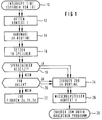
- FIG. 1 shows a flow diagram of the method steps according to the invention when an interrupt signal occurs (step 10). Immediately after the occurrence of the interrupt signal, the acceptance of further interrupt signals by the real-time computer system is blocked. In order for the microprocessor to be able to continue processing the interrupted program at a later point in time after being interrupted by the interrupt signal, the state of its registers must be saved before further method steps for processing the interrupt signal that has occurred are carried out.
- context I denotes that part of the program parameters of the program which was interrupted when the interrupt signal occurred and which must be saved or rescued immediately after the interrupt occurred. This rescue takes place with the effect of an interrupt lock (step 12), the program parameters being stored in a stack in a predetermined order.
- Step 14 After the microprocessor is now allowed to change the register contents again after saving the register data, it can accept the interrupt signal for other components of the real-time computer system, such as Interrupt acceptance circuits, confirm (step 14).
- Method steps 12 and 14 are carried out in known methods within the interrupt routine and, as a result, should also be regarded here as components of an interrupt routine.
- the microprocessor stores a date referring to the interrupt signal in an interrupt memory (step 16).
- This interrupt memory can be, for example, a memory cell having a plurality of bits combined to form a memory word, in which a specific bit is set depending on the type of interrupt signal occurring, so that it can later be determined which interrupt signal has occurred. This option is described below.
- the microprocessor checks whether program routines are being processed in the real-time computer system when the interrupt signal occurs, which are time-critical and therefore must not be interrupted (step 18).
- the number of such non-interruptible programs is determined by the microprocessor in a memory cell, e.g. in a lock counter with a certain initial value.
- the lock counter is incremented each time a program that cannot be interrupted is called and is reduced accordingly after execution of a program that cannot be interrupted.
- the microprocessor can thus determine in method step 18 whether programs which cannot be interrupted are being processed at the current time. If this is not the case, i.e.
- the microprocessor checks whether an interrupt management routine (IVR) is already active by querying a state memory cell in which the state of the interrupt management routine is stored (step 20). If the interrupt management routine is not activated, it is called (step 22). The method steps that are to be carried out within the interrupt management routine are explained below with reference to FIGS. 2a, 2b and 2c.
- IVR interrupt management routine
- step 18 If it is determined in method step 18 that the content of the lock counter deviates from its initial value, that is to say an uninterruptible program routine is active, or if it is determined in method step 20 based on the state memory cell that the interrupt management routine has already been activated, a return is made to the interrupt routine (step 24 ).
- the interrupt routine context I is restored by reading the data for the processor registers again in the reverse order from the storage (step 26). Thereafter, the acceptance of further interrupt signals is released and the program is interrupted when the interrupt occurs in order to continue processing (step 28).
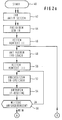
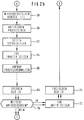
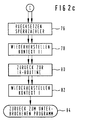
- FIGS. 2a, 2b and 2c show a flow diagram of the method steps of the interrupt management routine. After the interrupt management routine has been called in step 22, the microprocessor begins to process the steps of the interrupt management routine (step 40).
- the state memory cell is then set (step 42). In this way, when further interrupt signals occur in method step 20, it can be determined whether the interrupt management routine has already been activated, since it can only be activated once if the method is properly carried out.
- step 44 the acceptance of further interrupt signals is immediately released (step 44). After method step 44 has been processed, it is thus possible to accept and process further interrupt signals.
- These further interrupt signals are registered by the microprocessor as data in the form of set bits in the interrupt memory in method step 16. When the processing steps in the interrupt management routine are subsequently continued, these further interrupt signals can be taken into account.
- the program parameters of the program interrupted when the interrupt signal occurs are divided into two groups.
- a group is formed by program parameters, which are saved or temporarily stored in a stack memory for program parameters assigned to the interrupted program; this group of program parameters is referred to below as context II.
- the further group of remaining program parameters is temporarily stored in a stack memory for program parameters assigned to the interrupt management routine and is referred to below as context III.
- context II step 46
- context III step 50
- step 54 the processing routine corresponding to the interrupt signal is called (step 54).
- further interrupt signals may have already been accepted, which were then noted in step 16 by setting corresponding bits in the interrupt memory.
- the interrupt memory is queried by the microprocessor in step 54 for set bits (step 56). If such bits are set in the interrupt memory, the method continues in method step 52. The method is thus in a working loop which is formed by method steps 52 to 56.
- further interrupt signals can be accepted, which are signaled via the interrupt memory of the interrupt management routine and are taken into account in the query in method step 56. Since, in contrast to known methods, the processing of the interrupt signals takes place under interrupt release, the interrupt blocking time can be shortened considerably.
- the query for set bits in the interrupt memory in method step 56 takes into account a priority of the accepted interrupt signals.
- the individual bits of the interrupt memory can be ranked in the memory word of the interrupt memory, e.g. are queried from right to left, whereby a priority of the individual bits is determined, which decreases from right to left in the memory word.
- the interrupt management routine can be called up via the real-time operating system if non-interruptible programs are being processed when the interrupt signal occurs and the lock counter was set in method step 18. As explained above, method steps 24 to 28 were therefore carried out before the interrupt management routine was called by the real-time operating system and therefore must not be carried out again within the interrupt management routine.
- the interrupt management routine can be called via the real-time operating system in such a way that, after a non-interruptible program has been processed and the lock counter has been lowered, it is checked whether the lock counter has the initial value and at least one bit assigned to an interrupt signal is set in the interrupt memory. If both conditions are met, the interrupt management routine is called.
- a program stack memory assigned to a program management routine can be activated by loading the stack register of the microprocessor with the address of the stack memory of the interrupted program (step 60).
- the program management routine is part of the real-time operating system and coordinates the execution of programs, by noting programs to be processed and starting them in a predetermined order.
- the lock counter is then increased (step 62) since the following method steps 64 and 66 must not be interrupted.
- the interrupt management routine is then e.g. marked as inactive by resetting the state memory cell (step 64) to enable the interrupt management routine to be executed again.
- step 66 This is followed by a call to the program management routine (step 66), which possibly executes another program.
- the program management routine causes the interrupt management routine to return and the acceptance of further interrupt signals to be blocked (step 68).
- step 70 Since further interrupt signals may have been accepted during the execution of method steps 56 to 68, which result in the setting of assigned bits in method step 16 in the interrupt memory, when the interrupt management routine is processed, it is again asked whether bits are still set in the interrupt memory (step 70). If this is the case, the interrupt management routine is not exited, but is set to active again with the aid of the corresponding status memory cell (step 72) and the acceptance of further interrupt signals is released again (step 74). The method is then continued in method step 48. The interrupt management routine is now in a further work loop, consisting of process steps 48 to 74. This further work loop can only be left in process step 70 if all bits in the interrupt memory have already been reset. In this case, the lock counter is reset by reducing its value accordingly (step 76).
- Context II is then restored (step 78) by switching to the stack memory of the program interrupted when the interrupt signal occurs and reading the program parameters stored there in the reverse order to being stored.
- step 80 there is a return to the interrupt routine, in which context I is then restored (step 82).
- the program then returns to the interrupted program when the interrupt signal occurs (step 84). This completes the interrupt management routine.
Landscapes
- Engineering & Computer Science (AREA)
- Theoretical Computer Science (AREA)
- Physics & Mathematics (AREA)
- General Engineering & Computer Science (AREA)
- General Physics & Mathematics (AREA)
- Software Systems (AREA)
- Executing Machine-Instructions (AREA)
- Debugging And Monitoring (AREA)
- Bus Control (AREA)
Applications Claiming Priority (2)
| Application Number | Priority Date | Filing Date | Title |
|---|---|---|---|
| DE19535546A DE19535546B4 (de) | 1995-09-25 | 1995-09-25 | Verfahren zum Betreiben eines durch ein Realzeit-Betriebssystem gesteuerten Realzeit-Computersystems |
| DE19535546 | 1995-09-25 |
Publications (3)
| Publication Number | Publication Date |
|---|---|
| EP0764906A2 true EP0764906A2 (fr) | 1997-03-26 |
| EP0764906A3 EP0764906A3 (fr) | 1999-07-21 |
| EP0764906B1 EP0764906B1 (fr) | 2006-08-02 |
Family
ID=7773076
Family Applications (1)
| Application Number | Title | Priority Date | Filing Date |
|---|---|---|---|
| EP96113853A Expired - Lifetime EP0764906B1 (fr) | 1995-09-25 | 1996-08-29 | Procédé de fonctionnement d'un système d'ordinateur en temps réel commandé par un système d'exploitation en temps réel |
Country Status (4)
| Country | Link |
|---|---|
| US (1) | US5875341A (fr) |
| EP (1) | EP0764906B1 (fr) |
| CN (1) | CN1093957C (fr) |
| DE (2) | DE19535546B4 (fr) |
Cited By (1)
| Publication number | Priority date | Publication date | Assignee | Title |
|---|---|---|---|---|
| CN101836189A (zh) * | 2007-04-13 | 2010-09-15 | 施克莱无线公司 | 通过几个应用程序、相应的计算机程序和内存件来管理处理器的使用的方法和装置 |
Families Citing this family (19)
| Publication number | Priority date | Publication date | Assignee | Title |
|---|---|---|---|---|
| CA2257537C (fr) * | 1996-06-11 | 2005-01-25 | Yeong Kuang Oon | Technique de resolution de problemes iterative |
| US5850556A (en) * | 1996-12-26 | 1998-12-15 | Cypress Semiconductor Corp. | Interruptible state machine |
| JP3196681B2 (ja) * | 1997-03-13 | 2001-08-06 | ヤマハ株式会社 | 通信データ一時記憶装置 |
| US6304911B1 (en) * | 1997-06-25 | 2001-10-16 | Advanced Micro Devices, Inc. | Information packet reception indicator for reducing the utilization of a host system processor unit |
| US6021446A (en) * | 1997-07-11 | 2000-02-01 | Sun Microsystems, Inc. | Network device driver performing initial packet processing within high priority hardware interrupt service routine and then finishing processing within low priority software interrupt service routine |
| JPH11184712A (ja) * | 1997-12-24 | 1999-07-09 | Toshiba Corp | 情報処理装置 |
| JP2000047883A (ja) * | 1998-07-31 | 2000-02-18 | Denso Corp | タスク制御方法および記録媒体 |
| US6370607B1 (en) * | 1999-04-13 | 2002-04-09 | Advanced Micro Devices, Inc. | Automatic disabling of interrupts upon entry into interrupt service routine |
| JP3600095B2 (ja) * | 1999-12-07 | 2004-12-08 | 松下電器産業株式会社 | 割り込み管理装置及び割り込み管理方法 |
| US20020087614A1 (en) * | 2000-08-31 | 2002-07-04 | Andrej Kocev | Programmable tuning for flow control and support for CPU hot plug |
| US7774585B2 (en) * | 2003-11-12 | 2010-08-10 | Infineon Technologies Ag | Interrupt and trap handling in an embedded multi-thread processor to avoid priority inversion and maintain real-time operation |
| JP2005190207A (ja) * | 2003-12-25 | 2005-07-14 | Matsushita Electric Ind Co Ltd | 割り込み制御装置、制御方法 |
| JP4756914B2 (ja) * | 2005-05-30 | 2011-08-24 | キヤノン株式会社 | 遠隔協調作業支援システム及びその制御方法 |
| US7583268B2 (en) * | 2005-11-10 | 2009-09-01 | Via Technologies, Inc. | Graphics pipeline precise interrupt method and apparatus |
| US8166288B2 (en) * | 2009-01-30 | 2012-04-24 | Hewlett-Packard Development Company, L.P. | Managing requests of operating systems executing in virtual machines |
| CN102436405B (zh) * | 2011-09-05 | 2016-03-30 | 北京星网锐捷网络技术有限公司 | 一种进程上下文保存、篡改检测方法及装置 |
| CN103377079B (zh) * | 2012-04-16 | 2016-06-08 | 展讯通信(上海)有限公司 | 终端及其应用运行装置和方法,运行应用程序的方法 |
| US10942820B2 (en) * | 2019-06-27 | 2021-03-09 | EMC IP Holding Company LLC | Stream level uninterrupted restore operation using an interrupt service routine approach |
| US20250045091A1 (en) * | 2023-08-02 | 2025-02-06 | Qualcomm Incorporated | Low latency inter core communication |
Family Cites Families (30)
| Publication number | Priority date | Publication date | Assignee | Title |
|---|---|---|---|---|
| GB1397438A (en) * | 1971-10-27 | 1975-06-11 | Ibm | Data processing system |
| US3778780A (en) * | 1972-07-05 | 1973-12-11 | Ibm | Operation request block usage |
| US4079448A (en) * | 1975-04-07 | 1978-03-14 | Compagnie Honeywell Bull | Apparatus for synchronizing tasks on peripheral devices |
| US4015243A (en) * | 1975-06-02 | 1977-03-29 | Kurpanek Horst G | Multi-processing computer system |
| DE2754890C2 (de) * | 1977-12-09 | 1982-10-28 | Ibm Deutschland Gmbh, 7000 Stuttgart | Einrichtung zur Programmunterbrechung |
| JPS57196357A (en) * | 1981-05-29 | 1982-12-02 | Toshiba Corp | Data processor |
| US4488227A (en) * | 1982-12-03 | 1984-12-11 | Honeywell Information Systems Inc. | Program counter stacking method and apparatus for nested subroutines and interrupts |
| JPH0619747B2 (ja) * | 1984-01-18 | 1994-03-16 | 株式会社日立製作所 | I/o命令実行方法、i/o割込処理方法およびそれらを用いた計算機システム |
| US5392409A (en) * | 1984-01-18 | 1995-02-21 | Hitachi, Ltd. | I/O execution method for a virtual machine system and system therefor |
| US4719565A (en) * | 1984-11-01 | 1988-01-12 | Advanced Micro Devices, Inc. | Interrupt and trap handling in microprogram sequencer |
| US4768149A (en) * | 1985-08-29 | 1988-08-30 | International Business Machines Corporation | System for managing a plurality of shared interrupt handlers in a linked-list data structure |
| JPH02138632A (ja) * | 1988-11-18 | 1990-05-28 | Fujitsu Ltd | 情報退避・復元方式 |
| US5036539A (en) * | 1989-07-06 | 1991-07-30 | Itt Corporation | Real-time speech processing development system |
| EP0414651A1 (fr) * | 1989-08-14 | 1991-02-27 | International Business Machines Corporation | Système de traitement d'interruptions en Prolog |
| US5247671A (en) * | 1990-02-14 | 1993-09-21 | International Business Machines Corporation | Scalable schedules for serial communications controller in data processing systems |
| US5390329A (en) * | 1990-06-11 | 1995-02-14 | Cray Research, Inc. | Responding to service requests using minimal system-side context in a multiprocessor environment |
| US5418968A (en) * | 1990-10-31 | 1995-05-23 | Gobeli; Gregg P. | System and method for controlling interrupt processing |
| US5161226A (en) * | 1991-05-10 | 1992-11-03 | Jmi Software Consultants Inc. | Microprocessor inverse processor state usage |
| US5652890A (en) * | 1991-05-17 | 1997-07-29 | Vantus Technologies, Inc. | Interrupt for a protected mode microprocessor which facilitates transparent entry to and exit from suspend mode |
| US5542076A (en) * | 1991-06-14 | 1996-07-30 | Digital Equipment Corporation | Method and apparatus for adaptive interrupt servicing in data processing system |
| US5301312A (en) * | 1991-08-21 | 1994-04-05 | International Business Machines Corporation | Method and system for utilizing benign fault occurrence to measure interrupt-blocking times |
| JPH05313916A (ja) * | 1992-05-08 | 1993-11-26 | Fujitsu Ltd | 電子計算機における割込み処理方法及び電子計算機 |
| US5515538A (en) * | 1992-05-29 | 1996-05-07 | Sun Microsystems, Inc. | Apparatus and method for interrupt handling in a multi-threaded operating system kernel |
| US5640548A (en) * | 1992-10-19 | 1997-06-17 | Motorola, Inc. | Method and apparatus for unstacking registers in a data processing system |
| DE69423376T2 (de) * | 1993-04-23 | 2000-10-12 | Advanced Micro Devices, Inc. | Unterbrechungsverarbeitung |
| US5588125A (en) * | 1993-10-20 | 1996-12-24 | Ast Research, Inc. | Method and apparatus for increasing bus bandwidth on a system bus by inhibiting interrupts while posted I/O write operations are pending |
| US5717932A (en) * | 1994-11-04 | 1998-02-10 | Texas Instruments Incorporated | Data transfer interrupt pacing |
| US5539729A (en) * | 1994-12-09 | 1996-07-23 | At&T Corp. | Method for overload control in a packet switch that processes packet streams having different priority levels |
| US5535380A (en) * | 1994-12-16 | 1996-07-09 | International Business Machines Corporation | System to reduce latency for real time interrupts |
| US5689713A (en) * | 1995-03-31 | 1997-11-18 | Sun Microsystems, Inc. | Method and apparatus for interrupt communication in a packet-switched computer system |
-
1995
- 1995-09-25 DE DE19535546A patent/DE19535546B4/de not_active Expired - Fee Related
-
1996
- 1996-08-29 DE DE59611372T patent/DE59611372D1/de not_active Expired - Fee Related
- 1996-08-29 EP EP96113853A patent/EP0764906B1/fr not_active Expired - Lifetime
- 1996-09-24 US US08/719,413 patent/US5875341A/en not_active Expired - Lifetime
- 1996-09-25 CN CN96112412A patent/CN1093957C/zh not_active Expired - Fee Related
Cited By (2)
| Publication number | Priority date | Publication date | Assignee | Title |
|---|---|---|---|---|
| CN101836189A (zh) * | 2007-04-13 | 2010-09-15 | 施克莱无线公司 | 通过几个应用程序、相应的计算机程序和内存件来管理处理器的使用的方法和装置 |
| CN101836189B (zh) * | 2007-04-13 | 2013-03-20 | 施克莱无线公司 | 通过几个应用程序、相应的计算机程序和内存件来管理处理器的使用的方法和装置 |
Also Published As
| Publication number | Publication date |
|---|---|
| EP0764906B1 (fr) | 2006-08-02 |
| CN1093957C (zh) | 2002-11-06 |
| US5875341A (en) | 1999-02-23 |
| CN1155698A (zh) | 1997-07-30 |
| DE19535546A1 (de) | 1997-03-27 |
| DE19535546B4 (de) | 2004-04-08 |
| DE59611372D1 (de) | 2006-09-14 |
| EP0764906A3 (fr) | 1999-07-21 |
Similar Documents
| Publication | Publication Date | Title |
|---|---|---|
| EP0764906B1 (fr) | Procédé de fonctionnement d'un système d'ordinateur en temps réel commandé par un système d'exploitation en temps réel | |
| DE3889578T2 (de) | Vorrichtung zur Sicherung und Rückspeicherung einer Registerinformation. | |
| DE69803304T2 (de) | Hardwareunterstütztes verfahren zum kontextwechsel | |
| EP0635784B1 (fr) | Système multiprocesseur | |
| DE69730449T2 (de) | Erzeugung einer spiegeldatenkopie (bild) unter verwendung von referenzetiketten | |
| DE2054068A1 (de) | Mit Programmverschachtelung arbei tendes Datenverarbeitungssystem zur gleichzeitigen Verarbeitung mehrerer Programme | |
| DE2303596A1 (de) | Datenverarbeitungsanordnung | |
| DE2210704A1 (de) | Verfahren und Vorrichtung zur Datenverarbeitung | |
| CH654943A5 (de) | Pruefeinrichtung fuer mikroprogramme. | |
| DE2756890A1 (de) | Datenverarbeitungssystem | |
| DE1200581B (de) | Programmunterbrechungssystem fuer eine elektronische Rechenmaschine | |
| DE69130414T2 (de) | Prozessor und Verfahren zur parallelen Verarbeitung | |
| DE2758023B2 (de) | Anschlußschaltung für eine Eingabe-/ Ausgabeschnittstelle einer Datenverarbeitungsanlage | |
| EP1079307B1 (fr) | Procédé de fonctionnement d'un système de mémoire ainsi que système de mémoire | |
| CH625895A5 (fr) | ||
| EP1230590A2 (fr) | Systeme de processeur | |
| DE3043029C2 (de) | Schaltungsanordnung für Fernmeldeanlagen, insbesondere Fernsprechvermittlungsanlagen, mit Speichereinrichtungen für mit Zeitverzug abzugebende Steueraufträge | |
| DE2507405A1 (de) | Verfahren und anordnung zum synchronisieren der tasks in peripheriegeraeten in einer datenverarbeitungsanlage | |
| DE3854859T2 (de) | Unterbrechungsabwicklung in einem parallelen Datenverarbeitungssystem | |
| DE10065498A1 (de) | Verfahren und Vorrichtung zur Rekonstruktion des Prozessablaufs eines Steuerprogramms | |
| EP1085387B1 (fr) | Contrôleur de mémoire pour éffectuer une commutation d'accès aux céllules de mémoire | |
| DE69525850T2 (de) | System und verfahren zur verarbeitung von speicherdaten und kommunikationssystemen mit diesem system | |
| EP1291744A2 (fr) | Procédé et dispositif de synchronisation | |
| EP0586847B1 (fr) | Procédé pour la commande d'interruption de processus dans des systèmes de communication | |
| DE4424375C1 (de) | Verfahren zur Behandlung von Unterbrechungsanforderungen und Prozeßaufrufen bei im Echtzeitbetrieb arbeitenden Datenverarbeitungsanlagen |
Legal Events
| Date | Code | Title | Description |
|---|---|---|---|
| PUAI | Public reference made under article 153(3) epc to a published international application that has entered the european phase |
Free format text: ORIGINAL CODE: 0009012 |
|
| AK | Designated contracting states |
Kind code of ref document: A2 Designated state(s): DE FR GB IT |
|
| PUAL | Search report despatched |
Free format text: ORIGINAL CODE: 0009013 |
|
| AK | Designated contracting states |
Kind code of ref document: A3 Designated state(s): DE FR GB IT |
|
| RIC1 | Information provided on ipc code assigned before grant |
Free format text: 6G 06F 13/24 A, 6G 06F 9/46 B |
|
| 17P | Request for examination filed |
Effective date: 20000112 |
|
| GRAP | Despatch of communication of intention to grant a patent |
Free format text: ORIGINAL CODE: EPIDOSNIGR1 |
|
| GRAS | Grant fee paid |
Free format text: ORIGINAL CODE: EPIDOSNIGR3 |
|
| GRAA | (expected) grant |
Free format text: ORIGINAL CODE: 0009210 |
|
| AK | Designated contracting states |
Kind code of ref document: B1 Designated state(s): DE FR GB IT |
|
| REG | Reference to a national code |
Ref country code: GB Ref legal event code: FG4D Free format text: NOT ENGLISH |
|
| REF | Corresponds to: |
Ref document number: 59611372 Country of ref document: DE Date of ref document: 20060914 Kind code of ref document: P |
|
| GBT | Gb: translation of ep patent filed (gb section 77(6)(a)/1977) |
Effective date: 20060906 |
|
| PGFP | Annual fee paid to national office [announced via postgrant information from national office to epo] |
Ref country code: DE Payment date: 20061023 Year of fee payment: 11 |
|
| ET | Fr: translation filed | ||
| PLBE | No opposition filed within time limit |
Free format text: ORIGINAL CODE: 0009261 |
|
| STAA | Information on the status of an ep patent application or granted ep patent |
Free format text: STATUS: NO OPPOSITION FILED WITHIN TIME LIMIT |
|
| 26N | No opposition filed |
Effective date: 20070503 |
|
| PG25 | Lapsed in a contracting state [announced via postgrant information from national office to epo] |
Ref country code: DE Free format text: LAPSE BECAUSE OF NON-PAYMENT OF DUE FEES Effective date: 20080301 |
|
| PGFP | Annual fee paid to national office [announced via postgrant information from national office to epo] |
Ref country code: IT Payment date: 20080828 Year of fee payment: 13 |
|
| REG | Reference to a national code |
Ref country code: GB Ref legal event code: 732E Free format text: REGISTERED BETWEEN 20090604 AND 20090610 |
|
| REG | Reference to a national code |
Ref country code: FR Ref legal event code: TP |
|
| PG25 | Lapsed in a contracting state [announced via postgrant information from national office to epo] |
Ref country code: IT Free format text: LAPSE BECAUSE OF NON-PAYMENT OF DUE FEES Effective date: 20090829 |
|
| PGFP | Annual fee paid to national office [announced via postgrant information from national office to epo] |
Ref country code: FR Payment date: 20130725 Year of fee payment: 18 Ref country code: GB Payment date: 20130726 Year of fee payment: 18 |
|
| GBPC | Gb: european patent ceased through non-payment of renewal fee |
Effective date: 20140829 |
|
| REG | Reference to a national code |
Ref country code: FR Ref legal event code: ST Effective date: 20150430 |
|
| PG25 | Lapsed in a contracting state [announced via postgrant information from national office to epo] |
Ref country code: GB Free format text: LAPSE BECAUSE OF NON-PAYMENT OF DUE FEES Effective date: 20140829 |
|
| PG25 | Lapsed in a contracting state [announced via postgrant information from national office to epo] |
Ref country code: FR Free format text: LAPSE BECAUSE OF NON-PAYMENT OF DUE FEES Effective date: 20140901 |