EP0765732B1 - Markieren eines Formeinsatzes zur Herstellung von Kontaktlinsen - Google Patents
Markieren eines Formeinsatzes zur Herstellung von Kontaktlinsen Download PDFInfo
- Publication number
- EP0765732B1 EP0765732B1 EP96307057A EP96307057A EP0765732B1 EP 0765732 B1 EP0765732 B1 EP 0765732B1 EP 96307057 A EP96307057 A EP 96307057A EP 96307057 A EP96307057 A EP 96307057A EP 0765732 B1 EP0765732 B1 EP 0765732B1
- Authority
- EP
- European Patent Office
- Prior art keywords
- mark
- rms
- contact lens
- ratio
- molded
- Prior art date
- Legal status (The legal status is an assumption and is not a legal conclusion. Google has not performed a legal analysis and makes no representation as to the accuracy of the status listed.)
- Expired - Lifetime
Links
- 238000000034 method Methods 0.000 claims abstract description 31
- 239000002184 metal Substances 0.000 claims abstract description 24
- 230000003746 surface roughness Effects 0.000 claims abstract description 23
- 238000002347 injection Methods 0.000 claims abstract description 10
- 239000007924 injection Substances 0.000 claims abstract description 10
- 238000003754 machining Methods 0.000 claims abstract description 10
- 239000000017 hydrogel Substances 0.000 claims abstract description 7
- 238000000465 moulding Methods 0.000 claims abstract description 6
- 238000001746 injection moulding Methods 0.000 claims abstract description 5
- 229920001169 thermoplastic Polymers 0.000 claims description 12
- 239000004416 thermosoftening plastic Substances 0.000 claims description 11
- 238000004519 manufacturing process Methods 0.000 abstract description 6
- 238000005259 measurement Methods 0.000 abstract description 3
- 238000012360 testing method Methods 0.000 description 17
- 238000013459 approach Methods 0.000 description 5
- 239000000047 product Substances 0.000 description 4
- 238000004439 roughness measurement Methods 0.000 description 4
- 230000003287 optical effect Effects 0.000 description 3
- PBGKNXWGYQPUJK-UHFFFAOYSA-N 4-chloro-2-nitroaniline Chemical compound NC1=CC=C(Cl)C=C1[N+]([O-])=O PBGKNXWGYQPUJK-UHFFFAOYSA-N 0.000 description 2
- 230000000694 effects Effects 0.000 description 2
- 238000010329 laser etching Methods 0.000 description 2
- 239000000463 material Substances 0.000 description 2
- 230000035945 sensitivity Effects 0.000 description 2
- OKTJSMMVPCPJKN-UHFFFAOYSA-N Carbon Chemical compound [C] OKTJSMMVPCPJKN-UHFFFAOYSA-N 0.000 description 1
- 239000004743 Polypropylene Substances 0.000 description 1
- 239000004793 Polystyrene Substances 0.000 description 1
- FAPWRFPIFSIZLT-UHFFFAOYSA-M Sodium chloride Chemical compound [Na+].[Cl-] FAPWRFPIFSIZLT-UHFFFAOYSA-M 0.000 description 1
- 238000004458 analytical method Methods 0.000 description 1
- 230000009286 beneficial effect Effects 0.000 description 1
- 238000004364 calculation method Methods 0.000 description 1
- 239000003990 capacitor Substances 0.000 description 1
- 238000005266 casting Methods 0.000 description 1
- 238000012512 characterization method Methods 0.000 description 1
- 238000003486 chemical etching Methods 0.000 description 1
- 238000004040 coloring Methods 0.000 description 1
- 230000007812 deficiency Effects 0.000 description 1
- 238000013461 design Methods 0.000 description 1
- 230000001066 destructive effect Effects 0.000 description 1
- 229910003460 diamond Inorganic materials 0.000 description 1
- 239000010432 diamond Substances 0.000 description 1
- 230000003292 diminished effect Effects 0.000 description 1
- 239000007772 electrode material Substances 0.000 description 1
- 239000012467 final product Substances 0.000 description 1
- 229910002804 graphite Inorganic materials 0.000 description 1
- 239000010439 graphite Substances 0.000 description 1
- 238000003780 insertion Methods 0.000 description 1
- 230000037431 insertion Effects 0.000 description 1
- 239000000178 monomer Substances 0.000 description 1
- 238000004806 packaging method and process Methods 0.000 description 1
- 239000002861 polymer material Substances 0.000 description 1
- 238000006116 polymerization reaction Methods 0.000 description 1
- -1 polypropylene Polymers 0.000 description 1
- 229920001155 polypropylene Polymers 0.000 description 1
- 229920002223 polystyrene Polymers 0.000 description 1
- 238000012545 processing Methods 0.000 description 1
- 229920013730 reactive polymer Polymers 0.000 description 1
- 230000033458 reproduction Effects 0.000 description 1
- 239000000243 solution Substances 0.000 description 1
- 238000003860 storage Methods 0.000 description 1
- 239000012815 thermoplastic material Substances 0.000 description 1
- 238000012876 topography Methods 0.000 description 1
- 238000012795 verification Methods 0.000 description 1
- 230000000007 visual effect Effects 0.000 description 1
- 239000002023 wood Substances 0.000 description 1
Images




Classifications
-
- B—PERFORMING OPERATIONS; TRANSPORTING
- B29—WORKING OF PLASTICS; WORKING OF SUBSTANCES IN A PLASTIC STATE IN GENERAL
- B29D—PRODUCING PARTICULAR ARTICLES FROM PLASTICS OR FROM SUBSTANCES IN A PLASTIC STATE
- B29D11/00—Producing optical elements, e.g. lenses or prisms
- B29D11/00009—Production of simple or compound lenses
- B29D11/00317—Production of lenses with markings or patterns
- B29D11/00326—Production of lenses with markings or patterns having particular surface properties, e.g. a micropattern
- B29D11/00336—Production of lenses with markings or patterns having particular surface properties, e.g. a micropattern by making depressions in the lens surfaces
-
- B—PERFORMING OPERATIONS; TRANSPORTING
- B29—WORKING OF PLASTICS; WORKING OF SUBSTANCES IN A PLASTIC STATE IN GENERAL
- B29D—PRODUCING PARTICULAR ARTICLES FROM PLASTICS OR FROM SUBSTANCES IN A PLASTIC STATE
- B29D11/00—Producing optical elements, e.g. lenses or prisms
-
- B—PERFORMING OPERATIONS; TRANSPORTING
- B29—WORKING OF PLASTICS; WORKING OF SUBSTANCES IN A PLASTIC STATE IN GENERAL
- B29C—SHAPING OR JOINING OF PLASTICS; SHAPING OF MATERIAL IN A PLASTIC STATE, NOT OTHERWISE PROVIDED FOR; AFTER-TREATMENT OF THE SHAPED PRODUCTS, e.g. REPAIRING
- B29C33/00—Moulds or cores; Details thereof or accessories therefor
-
- B—PERFORMING OPERATIONS; TRANSPORTING
- B29—WORKING OF PLASTICS; WORKING OF SUBSTANCES IN A PLASTIC STATE IN GENERAL
- B29C—SHAPING OR JOINING OF PLASTICS; SHAPING OF MATERIAL IN A PLASTIC STATE, NOT OTHERWISE PROVIDED FOR; AFTER-TREATMENT OF THE SHAPED PRODUCTS, e.g. REPAIRING
- B29C33/00—Moulds or cores; Details thereof or accessories therefor
- B29C33/42—Moulds or cores; Details thereof or accessories therefor characterised by the shape of the moulding surface, e.g. ribs or grooves
- B29C33/424—Moulding surfaces provided with means for marking or patterning
-
- B—PERFORMING OPERATIONS; TRANSPORTING
- B29—WORKING OF PLASTICS; WORKING OF SUBSTANCES IN A PLASTIC STATE IN GENERAL
- B29D—PRODUCING PARTICULAR ARTICLES FROM PLASTICS OR FROM SUBSTANCES IN A PLASTIC STATE
- B29D11/00—Producing optical elements, e.g. lenses or prisms
- B29D11/00009—Production of simple or compound lenses
- B29D11/00038—Production of contact lenses
- B29D11/00125—Auxiliary operations, e.g. removing oxygen from the mould, conveying moulds from a storage to the production line in an inert atmosphere
-
- B—PERFORMING OPERATIONS; TRANSPORTING
- B29—WORKING OF PLASTICS; WORKING OF SUBSTANCES IN A PLASTIC STATE IN GENERAL
- B29D—PRODUCING PARTICULAR ARTICLES FROM PLASTICS OR FROM SUBSTANCES IN A PLASTIC STATE
- B29D11/00—Producing optical elements, e.g. lenses or prisms
- B29D11/00009—Production of simple or compound lenses
- B29D11/00317—Production of lenses with markings or patterns
-
- G—PHYSICS
- G01—MEASURING; TESTING
- G01B—MEASURING LENGTH, THICKNESS OR SIMILAR LINEAR DIMENSIONS; MEASURING ANGLES; MEASURING AREAS; MEASURING IRREGULARITIES OF SURFACES OR CONTOURS
- G01B9/00—Measuring instruments characterised by the use of optical techniques
- G01B9/02—Interferometers
- G01B9/0209—Low-coherence interferometers
-
- G—PHYSICS
- G02—OPTICS
- G02C—SPECTACLES; SUNGLASSES OR GOGGLES INSOFAR AS THEY HAVE THE SAME FEATURES AS SPECTACLES; CONTACT LENSES
- G02C7/00—Optical parts
- G02C7/02—Lenses; Lens systems ; Methods of designing lenses
- G02C7/021—Lenses; Lens systems ; Methods of designing lenses with pattern for identification or with cosmetic or therapeutic effects
Definitions
- the present invention relates generally to the marking of mold inserts to produce marked contact lenses, and more particularly pertains to electric discharge machining of mold inserts for contact lenses.
- the present invention is efficient, controllable, repeatable, and provides a readily visible mark in the final lens product without adding significantly to the expense of manufacture thereof.
- the present invention relates to a method of imparting visible marks to stabilized soft molded (SSM) hydrogel contact lenses.
- SSM soft molded
- Such visible marks are used as inversion indicators, which are visible marks of a special design placed on the lens to allow the user to determine if the lens is in the proper configuration or to determine if it has been inverted so as to be inside out.
- Other visible marks can be employed as trademarks to identify the manufacturer.
- Visible marks are also required in those types of contact lenses which require orientation with respect to the eye for insertion. Visible marks are also desirable to allow a user to more easily see and locate the lens when it is in a solution, such as a saline solution used in the original packaging of the contact lens or in a storage container.
- the present invention provides a method of producing visible marks in molded contact lenses.
- the present invention is directed to a method of providing visible marks in molded contact lenses, comprising placing recessed mark configuration in a metal mold insert defining a mold reference surface, wherein the recessed mark configuration is at least 10 microns deep, and has a Volume Index, which is the ratio of the quantity volume below said reference surface minus the volume above said reference surface over the volume below said reference surface, of at least 0.9; injection molding thermoplastic mold frames with the mold reference surface of the metal mold insert; molding a soft hydrogel contact lens in the thermoplastic mold frame, wherein the recessed mark configuration in the metal mold insert is transferred as a raised portion to the injection molded thermoplastic mold frame, and is subsequently transferred as a visible recessed mark in a contact lens molded in the thermoplastic mold frame prepared using the insert.
- the recessed mark configuration has a ratio of surface roughness (Ra), wherein Ra is the arithmetic average deviation from the center line or best fit surface, to a peak-to-valley (PV) measurement, Ra/PV, of greater than approximately 0.15, and has a ratio of surface roughness RMS, wherein RMS is the root-mean-square deviation from the center line or best fit surface, to a peak-to-valley (PV) measurement, RMS/PV, of greater than approximately 0.15.
- the method of the present invention is particularly applicable to stabilized soft molded (SSM) hydrogel contact lenses.
- the ratio of the surface roughness (RMS or Ra) to the height (H), wherein H is the distance between two reference lines in a profile of the mark, RMS/H or Ra/H, is at least approximately 1.5.
- a preferred method of imparting the recessed configuration to the insert is by Electric Discharge Machining (EDM).
- EDM Electric Discharge Machining
- the method of the present invention is efficient, controllable, repeatable, and provides a readily visible mark in the final lens product without adding significantly to the expense of manufacture thereof.
- the overall molding process employed by the present invention is well known in the prior art, and employs metal insert molds, each of which is used to produce many thermoplastic injection molded frames, each of which is subsequently used only once to mold a single contact lens.
- the thermoplastic frames are injection molded in the metal insert molds to produce two halves which are jointed in the course of the process to form a mold cavity.
- the mold cavity formed by the injection molded frames is then filled with monomer which is polymerized to form a lens, which is removed from the mold and further processed to yield the final product soft hydrogel lens.
- the frames may be manufactured from any thermoplastic material which is capable of being injection molded and which provides the final cast lens with the required optical properties, with preferred materials for frames being polystyrene and polypropylene.
- metal tool inserts of the required configuration are machined and mounted in an injection molding machine as is well known in the prior art.
- the injection molded frames are exact inverse reproductions of the metal mold inserts.
- recessed visibility mark configurations are machined into the face of the metal inserts.
- the thermoplastic polymer material conforms to the shape and dimensions of the metal insert, hence the injection molded frames have a raised portion on their surface which exactly conforms to the recessed configuration in the metal mold inserts.
- the reactive polymer dosed into the mold cavity exactly conforms to the mold surface, hence, after polymerization the lens has a recessed configuration which exactly conforms to the raised portion on the mold, and exactly replicates the recessed portion that was placed in the metal mold insert.
- the recessed configuration on the metal mold insert may be formed by any of several processes well known in the prior art such as laser etching, chemical etching, machining, electric discharge machining, etc., provided the required depth, surface roughness and volume index, all of which will be described hereinafter, are achieved.
- a preferred method of imparting a recessed configuration of proper parameters is through electric discharge machining (EDM).
- EDM Electric discharge machining
- One designed embodiment of the present invention used an M25J EDM unit as supplied by Mitsubishi International Corp. of Wood Dale, Illinois 60191.
- the electrode fires to the side walls as well as downwardly. This forms a roughness on both the sides and bottom of the mark.
- the current, rate of travel, electrode size, and number of passes influence the final surface roughness.
- Roughness is required to render visibility to the mark.
- Verification and determination of the achieved mark parameters can be accomplished by using a NewView 100 interferometer and MetroPro Software, both of which are supplied by ZYGO Corp. of Middle Field, Connecticut.
- the NewView 100 uses noncontact scanning white light interferometers to build high resolution x, y and z axis images for characterization of surface topography.
- the NewView 100 splits light from its own light source, transmitting one beam to a precise internal surface and the other to the sample surface. The reflected beams recombine inside the interferometer. The resulting optical path differences cause the beams to generate constructive and destructive interference, thereby producing the light and dark fringe pattern visible on the video monitor.
- EDM process burn
- a particular burn condition consists of the values of several variables.
- the values and the appropriate combination of these variables which will produce an acceptable burn have been predetermined by the manufacturer, and have been programmed into supplied software.
- These variable combinations are known as "E" packages (E-packs) and are designated by the letter “E” and a 4-digit number.
- Table 1 contains examples of some of the values of the burn conditions used, along with the E-pack designator, with the variables listed in the left column being defined in detail in the users manual available from the manufacturer. The variables listed in the left column have the following brief descriptions.
- EP-SEL selects the type of power supply:
- Positive polarity means spark is going from electrode to part
- Negative polarity means spark is going from part to electrode.
- AUX is the Auxiliary Setting Select: Auxiliary settings are used for power settings on SF, SC Circuits settings 0 to 9.
- Ip is the Peak Current Settings: For setting actual peak current amperage setting 0 to 10.
- DEL Ip is the Fine adjust of peak current amperage setting 0 to 10.
- GAP(F) is the Gap Voltage: The Gap setting has two purposes. First it selects the type of Servo response, either EP or MV. Second the Gap selects the gap voltage (voltage potential present while the gap is open and machining is on). Settings EP 0-5/MV 10-15. ON is the On time select: Selects the discharge pulse ON time. Settings 1 to 12. DEL ON is a fine adjust of on time.
- Settings 0 to 9. OFF is an off time select: The discharge pulse off time. Settings 1 to 12. DEL OFF is a fine adjust of off time. Settings 0 to 9. JUMPU is Jump Up which selects the actual distance between part and electrode. Settings 0 to 9. JUMPD is Jump Down which selects the actual jump down times. Settings 1 to 9.
- PCON is Parallel Condensers: The PCON setting selects the number of parallel condensers (capacitors) that can be added to the discharge circuit. Settings 0 to 5. JUMP is a Jump On/Off Select: The range is from 0 to 9, 0 (off) 1 to 9 (on). GAIN is a Gain Select: Controls the Servo Gain in units of 1 (smallest) to 99 (largest).
- OPAJ is an Optimizer Sensitivity Select: The range of the optimizer sensitivity is 0 (the most sensitive) to 10 (the least sensitive).
- Each variable of the E-pack can be independently changed in order to effect changes in the quality of the burn.
- the two main variables which afford the largest changes in mark performance are the amperage, Ip and DEL Ip variables.
- the theory is that the greater the amperage, the stronger and more deeper the burn, which results in a deeper, more well defined mark, thus translating to greater visibility and increased mark discernability.
- Electrode diameter is Another independent variable which effects the mark visibility. Appropriate electrode diameters can range from 0.005 to 0.010 inches. In some tests, it was found that larger diameter electrodes diminished the size of the upper triangle in the letter "A", resulting in less visible letters. Electrode diameter is best determined based upon the configuration of the mark applied to the lens.
- Each letter is interpolated onto the part by the EDM machine.
- the distance and the pattern which is made from the start of a character to the end of the character is considered one pass. It is theorized that the more passes made on a character, the deeper the burn, and thus the more visible the character.
- Table 2 gives examples of the number of passes made for specific characters, along with the total elapsed time, E-pack designator, and programmed letter height. Limitations on the number of passes depend upon yield performance, processing considerations, and lens geometry in reference to mark placement. It should also be noted that a deeper mark may exhibit a longer wear life on the insert surface over time with consecutive frame molding operations.
- Lenses were molded from thermoplastic frames produced from metal inserts marked under the burn conditions specified in Table 1 and labeled A, B and C. As indicated by Table 2, Lens A was molded from mold frames produced by metal inserts burned by E-pack E9521 with the designated number of passes. Lens B was molded from mold frames produced by metal inserts burned by E-pack E9520 with the designated number of passes. Lens C was molded from mold frames produced by metal inserts burned by E-pack E9521 with the designated number of passes.
- a mark rating team then rated each of the marks on a scale of 1 to 5, with 1 being barely visible and 5 being very visible.
- the data reported in the surface characteristic section with visibility ratings of 2.8, 4.1 and 4.4 directly corresponds to the shaded or starred burn conditions of Table 2.
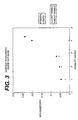
- Figure 1 illustrates a graph of mark depth versus visibility rating, and shows graphically that a mark must be deeper than 10 microns in order to be effectively visible. As shown by the mark depth graph, Figure 1, marks ranging between 0 and 5 microns were rated not very visible in a subjective rating scale. The maximum depth is determined by the process and the final lens geometry.
- Figure 2 illustrates a graph of volume index versus visibility rating, and shows graphically that as the volume index approaches 1, the effective visibility of the mark increases, and that the volume index must be a minimum of 0.9 in order for the mark to be effectively visible.
- Figure 5 illustrates graphically the Average Height (AvgHgt), which is defined as the average height of a test data area in relation to a reference data area in the instrument's z-axis. It compares an area defined by a test mask to an area defined by a reference mask and determines the vertical offset between them. Height refers to direction along the instrument's z-axis, also known as Avg Ht. If masks are not used in the analysis process, AvgHgt equals the arithmetic average of the data set.
- AvgHgt Average Height
- Figure 6 illustrates graphically the Swedish Height (H), which is defined as the distance between two reference lines inside the profile.
- the upper reference line is positioned at a depth which exposes 5% of the data and the lower reference line is positioned at a depth which exposes 90% of the data.
- Swedish height is less sensitive to data spikes than PV.
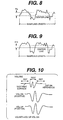
- FIG. 7 illustrates graphically the Peak-to-Valley (PV), which is defined as the distance between the highest and lowest points within the sample in the test area. Also known as R t , R y and R max .
- PV Peak-to-Valley
- R t the distance between the highest and lowest points within the sample in the test area.
- R t the distance between the highest and lowest points within the sample in the test area.
- R t the distance between the highest and lowest points within the sample in the test area.
- R t the maximum roughness height
- PV is the worst case point-to-point error in the data set. PV compares the two most extreme points on the surface; thus, it is possible for two very different surfaces to have the same PV.
- PV (All) is the distance between the highest and lowest points in both test and reference areas.
- FIG 9 illustrates graphically the Root-Mean-Square (RMS), which is the root-mean-square deviation from the center line or best fit surface, and calculates an average by squaring each value and then taking the square root of the mean. Also known as R q , rms is an area weighted statistic; it more accurately depicts the optical performance of the surface being measured than PV because it uses more data in the calculation.
- RMS y 1 2 + y 2 2 + y 3 2 ⁇ + y N 2 N 1 ⁇ 2 wherein y is the value of each data point, and N is the number of data points in the sample.
- Figure 10 illustrates graphically the volume, which is defined as the amount of space occupied by the data in the three-dimensional test area defined by the test mask. Volume is calculated by multiplying the height of each data point by the area of the pixel.
- Vol Dn Volume Down
- Volume Up is defined as the volume of the test area which is higher than the reference area. Positive Vol Up can be though of as the space occupied by bumps on the test area; a negative Vol Up result would extend below the reference area.
- Volume Net is defined as the overall volume of the test area. It is equal to the Vol Up minus the Vol Dn.
Landscapes
- Engineering & Computer Science (AREA)
- Health & Medical Sciences (AREA)
- Ophthalmology & Optometry (AREA)
- Mechanical Engineering (AREA)
- Manufacturing & Machinery (AREA)
- Physics & Mathematics (AREA)
- General Physics & Mathematics (AREA)
- General Health & Medical Sciences (AREA)
- Optics & Photonics (AREA)
- Moulds For Moulding Plastics Or The Like (AREA)
- Eyeglasses (AREA)
- Injection Moulding Of Plastics Or The Like (AREA)
- Casting Or Compression Moulding Of Plastics Or The Like (AREA)
Claims (12)
- Verfahren zum Anbringen sichtbarer Marken auf geformten Kontaktlinsen mit den Schritten:a) Plazieren einer vertieften Markenanordnung auf einem Metall-Formeinsatz, welcher eine Referenzfläche definiert, wobei die vertiefte Markenanordnung mindestens 10 Mikrometer tief ist und einen Volumenindex, d.h. das Verhältnis des Volumens unter der Referenzfläche minus dem Volumen über der Referenzfläche zum Volumen unter der Referenzfläche, von mindestens 0,9 aufweist;b) Spritzgießen thermoplastischer Formrahmen mit der Form-Referenzfläche auf dem Metall-Formeinsatz;c) Formen einer weichen Hydrogel-Kontaktlinse in dem thermoplastischen Formrahmen, wobei die vertiefte Markenanordnung des Metall-Formeinsatzes als erhabener Bereich auf den spritzgegossenen thermoplastischen Formrahmen und anschließend als sichtbare vertiefte Marke auf eine Kontaktlinse übertragen wird, die in dem unter Verwendung des Einsatzes aufgebauten thermoplastischen Formrahmen geformt wird.
- Verfahren zum Anbringen sichtbarer Marken auf einer geformten Kontaktlinse nach Anspruch 1, bei welchem die vertiefte Markenanordnung ein Verhältnis der als Ra gemessenen Oberflächenrauheit, wobei Ra die arithmetische Durchschnittsabweichung von der Mittellinie oder von der am besten angepaßten Oberfläche ist, zu PV, welches der Abstand zwischen dem höchsten und dem tiefsten Punkt der Marke ist, also ein Verhältnis Ra/PV größer als 0,15 aufweist.
- Verfahren zum Anbringen sichtbarer Marken auf einer geformten Kontaktlinse nach Anspruch 1, bei welchem die vertiefte Markenanordnung ein Verhältnis der als RMS gemessenen Oberflächenrauheit, wobei RMs die quadratische Durchschnittsabweichung von der Mittellinie oder von der am besten angepaßten Oberfläche ist, zu PV, welches der Abstand zwischen dem höchsten und dem tiefsten Punkt der Marke ist, also ein Verhältnis RMS/PV größer als 0,15 aufweist.
- Verfahren zum Anbringen sichtbarer Marken auf einer geformten Kontaktlinse nach Anspruch 1, bei welchem im Formungsschritt eine stabilisierte weiche geformte Hydrogel-Kontaktlinse hergestellt wird.
- Verfahren zum Anbringen sichtbarer Marken auf einer geformten Kontaktlinse nach Anspruch 1, bei welchem der Schritt der Plazierung einer vertieften Markenanordnung durch Eletroerosion erfolgt.
- Verfahren zum Anbringen sichtbarer Marken auf einer geformten Kontaktlinse nach Anspruch 1, bei welchem das Verhältnis der als Ra gemessenen Oberflächenrauheit des Einsatzes, wobei Ra die arithmetische Durchschnittsabweichung von der Mittellinie oder von der am besten angepaßten Oberfläche ist, zu H, wobei H der Abstand zwischen zwei Referenzlinien in einem Profil der Marke ist, also das Verhältnis Ra/H größer als 1,5 ist.
- Verfahren zum Anbringen sichtbarer Marken auf einer geformten Kontaktlinse nach Anspruch 1, bei welchem das Verhältnis der als RMS gemessenen Oberflächenrauheit des Einsatzes, wobei RMS die quadratische Durchschnittsabweichung von der Mittellinie oder von der am besten angepaßten Oberfläche ist, zu H, wobei H der Abstand zwischen zwei Referenzlinien in einem Profil der Marke ist, also das Verhältnis RMS/H größer als 1,5 ist.
- Verfahren zum Anbringen sichtbarer Marken auf einer geformten Kontaktlinse nach Anspruch 4, bei welchem der Schritt der Plazierung einer vertieften Markenanordnung durch Eletroerosion erfolgt.
- Verfahren zum Anbringen sichtbarer Marken auf einer geformten Kontaktlinse nach Anspruch 8, bei welchem die vertiefte Markenanordnung ein Verhältnis der als Ra gemessenen Oberflächenrauheit, wobei Ra die arithmetische Durchschnittsabweichung von der Mittellinie oder von der am besten angepaßten Oberfläche ist, zu PV, welches der Abstand zwischen dem höchsten und dem tiefsten Punkt der Marke ist, also das Verhältnis Ra/PV größer als 0,15 aufweist.
- Verfahren zum Anbringen sichtbarer Marken auf einer geformten Kontaktlinse nach Anspruch 9, bei welchem die vertiefte Markenanordnung ein Verhältnis der als RMS gemessenen Oberflächenrauheit, wobei RMs die quadratische Durchschnittsabweichung von der Mittellinie oder von der am besten angepaßten Oberfläche ist, zu PV, welches der Abstand zwischen dem höchsten und dem tiefsten Punkt der Marke ist, also ein Verhältnis RMS/PV größer als 0,15 aufweist.
- Verfahren zum Anbringen sichtbarer Marken auf einer geformten Kontaktlinse nach Anspruch 10, bei welchem das Verhältnis der als Ra gemessenen Oberflächenrauheit des Einsatzes, wobei Ra die arithmetische Durchschnittsabweichung von der Mittellinie oder von der am besten angepaßten Oberfläche ist, zu H, wobei H der Abstand zwischen zwei Referenzlinien in einem Profil der Marke ist, also das Verhältnis Ra/H größer als 1,5 ist.
- Verfahren zum Anbringen sichtbarer Marken auf einer geformten Kontaktlinse nach Anspruch 11, bei welchem das Verhältnis der als RMS gemessenen Oberflächenrauheit des Einsatzes, wobei RMS die quadratische Durchschnittsabweichung von der Mittellinie oder von der am besten angepaßten Oberfläche ist, zu H, wobei H der Abstand zwischen zwei Referenzlinien in einem Profil der Marke ist, also das Verhältnis RMS/H größer als 1,5 ist.
Applications Claiming Priority (2)
| Application Number | Priority Date | Filing Date | Title |
|---|---|---|---|
| US536159 | 1995-09-29 | ||
| US08/536,159 US5641437A (en) | 1995-09-29 | 1995-09-29 | Marking of mold inserts to produce marked contact lenses |
Publications (3)
| Publication Number | Publication Date |
|---|---|
| EP0765732A2 EP0765732A2 (de) | 1997-04-02 |
| EP0765732A3 EP0765732A3 (de) | 1997-10-15 |
| EP0765732B1 true EP0765732B1 (de) | 2002-05-08 |
Family
ID=24137398
Family Applications (1)
| Application Number | Title | Priority Date | Filing Date |
|---|---|---|---|
| EP96307057A Expired - Lifetime EP0765732B1 (de) | 1995-09-29 | 1996-09-27 | Markieren eines Formeinsatzes zur Herstellung von Kontaktlinsen |
Country Status (16)
| Country | Link |
|---|---|
| US (1) | US5641437A (de) |
| EP (1) | EP0765732B1 (de) |
| JP (1) | JP4443639B2 (de) |
| KR (1) | KR100441182B1 (de) |
| CN (1) | CN1067942C (de) |
| AT (1) | ATE217254T1 (de) |
| AU (1) | AU697272B2 (de) |
| BR (1) | BR9603926A (de) |
| CA (1) | CA2186570C (de) |
| DE (1) | DE69621089T2 (de) |
| IL (1) | IL119148A0 (de) |
| NO (1) | NO964097L (de) |
| NZ (1) | NZ299286A (de) |
| SG (1) | SG93802A1 (de) |
| TW (1) | TW355753B (de) |
| ZA (1) | ZA968177B (de) |
Families Citing this family (29)
| Publication number | Priority date | Publication date | Assignee | Title |
|---|---|---|---|---|
| US5861114A (en) * | 1994-06-10 | 1999-01-19 | Johnson&Johnson Vision Products, Inc. | Method of manufacturing complex optical designs in soft contact lenses |
| US5936704A (en) * | 1997-12-22 | 1999-08-10 | Gabrielian; Grant | Marked contact lens bearing optical marking element |
| US6365074B1 (en) | 1998-02-19 | 2002-04-02 | Technology Resource International Corporation | Method of inventory control for molded lenses |
| US6024448A (en) * | 1998-03-31 | 2000-02-15 | Johnson & Johnson Vision Products, Inc. | Contact lenses bearing identifying marks |
| US6203156B1 (en) | 1998-03-31 | 2001-03-20 | Johnson & Johnson Vision Care, Inc. | Contact lenses bearing marks |
| US6042230A (en) * | 1998-12-14 | 2000-03-28 | Johnson & Johnson Vision Products, Inc. | Markings for contact lenses |
| DE60124619T2 (de) * | 2000-05-25 | 2007-09-20 | Novartis Ag | Kontaktlinse mit gespritzter Inversionsmarkierung |
| US6634747B1 (en) | 2000-06-07 | 2003-10-21 | Novartis Ag | Sample indicator lens |
| WO2002087859A1 (en) * | 2001-05-02 | 2002-11-07 | Concepcionlicence Ag | Engraving for characterizing optical lenses |
| FR2825377B1 (fr) * | 2001-05-31 | 2003-09-19 | Essilor Int | Inserts de moulage |
| TW538418B (en) * | 2002-03-14 | 2003-06-21 | Darfon Electronics Corp | Push button using an elastic object with parameter marks and its manufacturing method |
| EP1657041B1 (de) * | 2003-08-19 | 2008-05-14 | Menicon Co., Ltd. | Verfahren zur herstellung von kontaktlinsen mit markierung und dadurch erhaltene kontaktlinsen mit markierung |
| US20060001828A1 (en) * | 2004-06-30 | 2006-01-05 | Robert Duggan | Automatic identification symbology suitable for contact lens manufacturing verification |
| JP4646705B2 (ja) * | 2005-06-03 | 2011-03-09 | アルプス電気株式会社 | 金型の製造方法及び成型品の製造方法 |
| US7320587B2 (en) * | 2005-08-09 | 2008-01-22 | Cooper Vision, Inc. | Contact lens molds and systems and methods for producing same |
| US7583389B2 (en) * | 2006-04-07 | 2009-09-01 | Amo Wavefront Sciences, Llc | Geometric measurement system and method of measuring a geometric characteristic of an object |
| JP4820348B2 (ja) * | 2007-08-31 | 2011-11-24 | 株式会社メニコン | コンタクトレンズおよびその製造方法 |
| US7973915B2 (en) * | 2008-02-20 | 2011-07-05 | Novartis Ag | Method and apparatus for inverting a flexible molding |
| US20100109176A1 (en) * | 2008-11-03 | 2010-05-06 | Chris Davison | Machined lens molds and methods for making and using same |
| JP6023589B2 (ja) * | 2009-10-01 | 2016-11-09 | クーパーヴィジョン インターナショナル ホウルディング カンパニー リミテッド パートナーシップ | シリコーンヒドロゲルコンタクトレンズおよびシリコーンヒドロゲルコンタクトレンズの製造方法 |
| CA2828458C (en) | 2011-02-28 | 2017-04-11 | Coopervision International Holding Company, Lp | Silicone hydrogel contact lenses having acceptable levels of energy loss |
| KR101742351B1 (ko) | 2011-02-28 | 2017-05-31 | 쿠퍼비젼 인터내셔날 홀딩 캄파니, 엘피 | 포스핀-함유 히드로겔 콘택트 렌즈 |
| TWI512355B (zh) | 2011-02-28 | 2015-12-11 | Coopervision Int Holding Co Lp | 聚矽氧水凝膠隱形眼鏡及相關組合物及方法 |
| CN103827175B (zh) | 2011-02-28 | 2016-08-10 | 库柏维景国际控股公司 | 硅酮水凝胶隐形眼镜 |
| KR101528997B1 (ko) | 2011-02-28 | 2015-06-15 | 쿠퍼비젼 인터내셔날 홀딩 캄파니, 엘피 | 치수 안정한 실리콘 히드로겔 콘택트 렌즈 |
| TWI509313B (zh) | 2011-02-28 | 2015-11-21 | Coopervision Int Holding Co Lp | 聚矽氧水凝膠隱形眼鏡 |
| KR101736534B1 (ko) | 2011-02-28 | 2017-05-16 | 쿠퍼비젼 인터내셔날 홀딩 캄파니, 엘피 | 습윤성 실리콘 히드로겔 콘택트 렌즈 |
| CN104023959B (zh) | 2011-12-31 | 2016-08-03 | 诺华股份有限公司 | 具有识别标记的接触透镜 |
| SG10201801793YA (en) * | 2013-09-11 | 2018-04-27 | Novartis Ag | Contact lens inspection system and method |
Family Cites Families (12)
| Publication number | Priority date | Publication date | Assignee | Title |
|---|---|---|---|---|
| US3829536A (en) * | 1971-04-05 | 1974-08-13 | Humphrey Res Ass | Method of forming an optical element of reduced thickness |
| DE2542714C2 (de) * | 1975-09-25 | 1984-01-19 | Agfa-Gevaert Ag, 5090 Leverkusen | Verfahren und Preßstempel zum Aufbringen von Markierungen auf Kontaktlinsen aus Silikonkautschuk |
| US4194814A (en) * | 1977-11-10 | 1980-03-25 | Bausch & Lomb Incorporated | Transparent opthalmic lens having engraved surface indicia |
| US4268133A (en) * | 1978-07-14 | 1981-05-19 | Bausch & Lomb Incorporated | Preferential orientation of contact lenses |
| US4525044A (en) * | 1983-05-05 | 1985-06-25 | Bauman Robert C | Soft contact lens with surface identification and method of using same |
| US5219497A (en) * | 1987-10-30 | 1993-06-15 | Innotech, Inc. | Method for manufacturing lenses using thin coatings |
| US5147585A (en) * | 1987-10-30 | 1992-09-15 | Blum Ronald D | Method for forming plastic optical quality spectacle lenses |
| JPH05119204A (ja) * | 1991-10-30 | 1993-05-18 | Toshiba Corp | 光学部品およびその製造方法 |
| US5247151A (en) * | 1992-01-30 | 1993-09-21 | Hagerman Johnny E | Mold making process |
| JPH06230321A (ja) * | 1992-12-09 | 1994-08-19 | Menicon Co Ltd | 眼用レンズのマーキング方法 |
| US5467149A (en) * | 1993-06-15 | 1995-11-14 | Bausch & Lomb Incorporated | Highly visible markings for contact lenses |
| JPH0724652A (ja) * | 1993-06-30 | 1995-01-27 | Omron Corp | 成形金型の加工方法 |
-
1995
- 1995-09-29 US US08/536,159 patent/US5641437A/en not_active Expired - Lifetime
-
1996
- 1996-08-28 IL IL11914896A patent/IL119148A0/xx unknown
- 1996-09-03 NZ NZ299286A patent/NZ299286A/en unknown
- 1996-09-11 SG SG9610597A patent/SG93802A1/en unknown
- 1996-09-11 AU AU65558/96A patent/AU697272B2/en not_active Expired
- 1996-09-25 KR KR1019960042607A patent/KR100441182B1/ko not_active Expired - Lifetime
- 1996-09-26 CA CA002186570A patent/CA2186570C/en not_active Expired - Lifetime
- 1996-09-27 EP EP96307057A patent/EP0765732B1/de not_active Expired - Lifetime
- 1996-09-27 CN CN96120155A patent/CN1067942C/zh not_active Expired - Lifetime
- 1996-09-27 DE DE69621089T patent/DE69621089T2/de not_active Expired - Lifetime
- 1996-09-27 AT AT96307057T patent/ATE217254T1/de not_active IP Right Cessation
- 1996-09-27 JP JP27534796A patent/JP4443639B2/ja not_active Expired - Lifetime
- 1996-09-27 NO NO964097A patent/NO964097L/no unknown
- 1996-09-27 ZA ZA9608177A patent/ZA968177B/xx unknown
- 1996-09-27 BR BR9603926A patent/BR9603926A/pt not_active IP Right Cessation
- 1996-12-06 TW TW085115051A patent/TW355753B/zh not_active IP Right Cessation
Also Published As
| Publication number | Publication date |
|---|---|
| IL119148A0 (en) | 1996-11-14 |
| ATE217254T1 (de) | 2002-05-15 |
| EP0765732A3 (de) | 1997-10-15 |
| MX9604510A (es) | 1997-07-31 |
| DE69621089D1 (de) | 2002-06-13 |
| JP4443639B2 (ja) | 2010-03-31 |
| AU6555896A (en) | 1997-04-10 |
| SG93802A1 (en) | 2003-01-21 |
| EP0765732A2 (de) | 1997-04-02 |
| DE69621089T2 (de) | 2002-10-10 |
| CN1165079A (zh) | 1997-11-19 |
| NO964097D0 (no) | 1996-09-27 |
| AU697272B2 (en) | 1998-10-01 |
| ZA968177B (en) | 1998-03-27 |
| CN1067942C (zh) | 2001-07-04 |
| BR9603926A (pt) | 1998-06-09 |
| US5641437A (en) | 1997-06-24 |
| NO964097L (no) | 1997-04-01 |
| TW355753B (en) | 1999-04-11 |
| NZ299286A (en) | 1997-12-19 |
| CA2186570A1 (en) | 1997-03-30 |
| KR970014997A (ko) | 1997-04-28 |
| JPH09220723A (ja) | 1997-08-26 |
| CA2186570C (en) | 2006-12-12 |
| KR100441182B1 (ko) | 2004-10-08 |
Similar Documents
| Publication | Publication Date | Title |
|---|---|---|
| US5641437A (en) | Marking of mold inserts to produce marked contact lenses | |
| AU758002B2 (en) | Markings for contact lenses | |
| CA2145683C (en) | Method of making plastic molds and process for cast molding contact lenses | |
| JP5149202B2 (ja) | コンタクトレンズの製造方法 | |
| KR910014721A (ko) | 콘택트렌즈의 제조방법 및 생산 시스템 | |
| CA2274763C (en) | Toric contact lens markings | |
| EP0347043A3 (de) | Kontaktlinsen und Verfahren und Vorrichtungen zu deren Herstellung | |
| KR910018158A (ko) | 콘택트 렌즈 제조 방법 | |
| DE68923660D1 (de) | Kontaktlinse, Materialien dafür und Verfahren zur Herstellung. | |
| CA2172957A1 (en) | Method for Molding Contact Lenses | |
| US20080110869A1 (en) | Method of machining mold surface using laser | |
| US5397511A (en) | Method of producing intraocular lens formed from polymide powder | |
| ES2096860T3 (es) | Procedimiento y aparato para producir lentes oftalmicas. | |
| EP1882576B1 (de) | Belüftete optische Leistungseinsatzbuchsen und damit zusammenhängende Systeme, sowie Verfahren zur Herstellung ophthalmischer Linsenformen und ophthalmischer Linsen | |
| Kuo et al. | Measuring the solidification time of silicone rubber using optical inspection technology | |
| CN211072236U (zh) | 一种激光打标机光路水平调节器 | |
| EP3894199A2 (de) | Verfahren zur herstellung torischer kontaktlinsen | |
| HK1025153B (en) | Toric contact lens markings |
Legal Events
| Date | Code | Title | Description |
|---|---|---|---|
| PUAI | Public reference made under article 153(3) epc to a published international application that has entered the european phase |
Free format text: ORIGINAL CODE: 0009012 |
|
| AK | Designated contracting states |
Kind code of ref document: A2 Designated state(s): AT BE CH DE DK ES FI FR GB GR IE IT LI NL PT SE |
|
| AX | Request for extension of the european patent |
Free format text: SI PAYMENT 961010 |
|
| PUAL | Search report despatched |
Free format text: ORIGINAL CODE: 0009013 |
|
| AK | Designated contracting states |
Kind code of ref document: A3 Designated state(s): AT BE CH DE DK ES FI FR GB GR IE IT LI NL PT SE |
|
| AX | Request for extension of the european patent |
Free format text: SI PAYMENT 961010 |
|
| 17P | Request for examination filed |
Effective date: 19980320 |
|
| 17Q | First examination report despatched |
Effective date: 19990708 |
|
| GRAG | Despatch of communication of intention to grant |
Free format text: ORIGINAL CODE: EPIDOS AGRA |
|
| GRAG | Despatch of communication of intention to grant |
Free format text: ORIGINAL CODE: EPIDOS AGRA |
|
| GRAH | Despatch of communication of intention to grant a patent |
Free format text: ORIGINAL CODE: EPIDOS IGRA |
|
| GRAH | Despatch of communication of intention to grant a patent |
Free format text: ORIGINAL CODE: EPIDOS IGRA |
|
| REG | Reference to a national code |
Ref country code: GB Ref legal event code: IF02 |
|
| GRAA | (expected) grant |
Free format text: ORIGINAL CODE: 0009210 |
|
| AK | Designated contracting states |
Kind code of ref document: B1 Designated state(s): AT BE CH DE DK ES FI FR GB GR IE IT LI NL PT SE |
|
| AX | Request for extension of the european patent |
Free format text: SI PAYMENT 19961010 |
|
| PG25 | Lapsed in a contracting state [announced via postgrant information from national office to epo] |
Ref country code: NL Free format text: LAPSE BECAUSE OF FAILURE TO SUBMIT A TRANSLATION OF THE DESCRIPTION OR TO PAY THE FEE WITHIN THE PRESCRIBED TIME-LIMIT Effective date: 20020508 Ref country code: LI Free format text: LAPSE BECAUSE OF FAILURE TO SUBMIT A TRANSLATION OF THE DESCRIPTION OR TO PAY THE FEE WITHIN THE PRESCRIBED TIME-LIMIT Effective date: 20020508 Ref country code: GR Free format text: LAPSE BECAUSE OF FAILURE TO SUBMIT A TRANSLATION OF THE DESCRIPTION OR TO PAY THE FEE WITHIN THE PRESCRIBED TIME-LIMIT Effective date: 20020508 Ref country code: FI Free format text: LAPSE BECAUSE OF FAILURE TO SUBMIT A TRANSLATION OF THE DESCRIPTION OR TO PAY THE FEE WITHIN THE PRESCRIBED TIME-LIMIT Effective date: 20020508 Ref country code: CH Free format text: LAPSE BECAUSE OF FAILURE TO SUBMIT A TRANSLATION OF THE DESCRIPTION OR TO PAY THE FEE WITHIN THE PRESCRIBED TIME-LIMIT Effective date: 20020508 Ref country code: BE Free format text: LAPSE BECAUSE OF FAILURE TO SUBMIT A TRANSLATION OF THE DESCRIPTION OR TO PAY THE FEE WITHIN THE PRESCRIBED TIME-LIMIT Effective date: 20020508 Ref country code: AT Free format text: LAPSE BECAUSE OF FAILURE TO SUBMIT A TRANSLATION OF THE DESCRIPTION OR TO PAY THE FEE WITHIN THE PRESCRIBED TIME-LIMIT Effective date: 20020508 |
|
| REF | Corresponds to: |
Ref document number: 217254 Country of ref document: AT Date of ref document: 20020515 Kind code of ref document: T |
|
| REG | Reference to a national code |
Ref country code: CH Ref legal event code: EP |
|
| REG | Reference to a national code |
Ref country code: IE Ref legal event code: FG4D |
|
| REF | Corresponds to: |
Ref document number: 69621089 Country of ref document: DE Date of ref document: 20020613 |
|
| PG25 | Lapsed in a contracting state [announced via postgrant information from national office to epo] |
Ref country code: SE Free format text: LAPSE BECAUSE OF FAILURE TO SUBMIT A TRANSLATION OF THE DESCRIPTION OR TO PAY THE FEE WITHIN THE PRESCRIBED TIME-LIMIT Effective date: 20020808 Ref country code: PT Free format text: LAPSE BECAUSE OF FAILURE TO SUBMIT A TRANSLATION OF THE DESCRIPTION OR TO PAY THE FEE WITHIN THE PRESCRIBED TIME-LIMIT Effective date: 20020808 Ref country code: DK Free format text: LAPSE BECAUSE OF FAILURE TO SUBMIT A TRANSLATION OF THE DESCRIPTION OR TO PAY THE FEE WITHIN THE PRESCRIBED TIME-LIMIT Effective date: 20020808 |
|
| NLV1 | Nl: lapsed or annulled due to failure to fulfill the requirements of art. 29p and 29m of the patents act | ||
| REG | Reference to a national code |
Ref country code: CH Ref legal event code: PL |
|
| PG25 | Lapsed in a contracting state [announced via postgrant information from national office to epo] |
Ref country code: ES Free format text: LAPSE BECAUSE OF FAILURE TO SUBMIT A TRANSLATION OF THE DESCRIPTION OR TO PAY THE FEE WITHIN THE PRESCRIBED TIME-LIMIT Effective date: 20021128 |
|
| PLBE | No opposition filed within time limit |
Free format text: ORIGINAL CODE: 0009261 |
|
| STAA | Information on the status of an ep patent application or granted ep patent |
Free format text: STATUS: NO OPPOSITION FILED WITHIN TIME LIMIT |
|
| 26N | No opposition filed |
Effective date: 20030211 |
|
| REG | Reference to a national code |
Ref country code: FR Ref legal event code: PLFP Year of fee payment: 20 |
|
| PGFP | Annual fee paid to national office [announced via postgrant information from national office to epo] |
Ref country code: GB Payment date: 20150923 Year of fee payment: 20 Ref country code: DE Payment date: 20150922 Year of fee payment: 20 Ref country code: IE Payment date: 20150909 Year of fee payment: 20 |
|
| PGFP | Annual fee paid to national office [announced via postgrant information from national office to epo] |
Ref country code: FR Payment date: 20150629 Year of fee payment: 20 |
|
| PGFP | Annual fee paid to national office [announced via postgrant information from national office to epo] |
Ref country code: IT Payment date: 20150925 Year of fee payment: 20 |
|
| REG | Reference to a national code |
Ref country code: DE Ref legal event code: R071 Ref document number: 69621089 Country of ref document: DE |
|
| REG | Reference to a national code |
Ref country code: GB Ref legal event code: PE20 Expiry date: 20160926 |
|
| PG25 | Lapsed in a contracting state [announced via postgrant information from national office to epo] |
Ref country code: GB Free format text: LAPSE BECAUSE OF EXPIRATION OF PROTECTION Effective date: 20160926 |
|
| REG | Reference to a national code |
Ref country code: IE Ref legal event code: MK9A |
|
| PG25 | Lapsed in a contracting state [announced via postgrant information from national office to epo] |
Ref country code: IE Free format text: LAPSE BECAUSE OF EXPIRATION OF PROTECTION Effective date: 20160927 |