EP0765873B1 - Urées cycliques et analogues utiles comme inhibiteurs de protéase rétrovirale - Google Patents
Urées cycliques et analogues utiles comme inhibiteurs de protéase rétrovirale Download PDFInfo
- Publication number
- EP0765873B1 EP0765873B1 EP96118182A EP96118182A EP0765873B1 EP 0765873 B1 EP0765873 B1 EP 0765873B1 EP 96118182 A EP96118182 A EP 96118182A EP 96118182 A EP96118182 A EP 96118182A EP 0765873 B1 EP0765873 B1 EP 0765873B1
- Authority
- EP
- European Patent Office
- Prior art keywords
- substituted
- alkyl
- hydrogen
- halogen
- nitrogen
- Prior art date
- Legal status (The legal status is an assumption and is not a legal conclusion. Google has not performed a legal analysis and makes no representation as to the accuracy of the status listed.)
- Expired - Lifetime
Links
- 0 CN(C(*)C(C(*)N1*)O)C1=* Chemical compound CN(C(*)C(C(*)N1*)O)C1=* 0.000 description 5
- YVAWGEUEZUQGNK-VYYMYZHRSA-N O[C@@H]([C@@H](Cc1ccccc1)N1Cc2cc3ccccc3cc2)C(/C=C/c2ccccc2)N(Cc2cc(cccc3)c3cc2)C1=O Chemical compound O[C@@H]([C@@H](Cc1ccccc1)N1Cc2cc3ccccc3cc2)C(/C=C/c2ccccc2)N(Cc2cc(cccc3)c3cc2)C1=O YVAWGEUEZUQGNK-VYYMYZHRSA-N 0.000 description 1
Classifications
-
- C—CHEMISTRY; METALLURGY
- C07—ORGANIC CHEMISTRY
- C07D—HETEROCYCLIC COMPOUNDS
- C07D239/00—Heterocyclic compounds containing 1,3-diazine or hydrogenated 1,3-diazine rings
- C07D239/02—Heterocyclic compounds containing 1,3-diazine or hydrogenated 1,3-diazine rings not condensed with other rings
- C07D239/06—Heterocyclic compounds containing 1,3-diazine or hydrogenated 1,3-diazine rings not condensed with other rings having one double bond between ring members or between a ring member and a non-ring member
- C07D239/08—Heterocyclic compounds containing 1,3-diazine or hydrogenated 1,3-diazine rings not condensed with other rings having one double bond between ring members or between a ring member and a non-ring member with hetero atoms directly attached in position 2
- C07D239/10—Oxygen or sulfur atoms
-
- A—HUMAN NECESSITIES
- A61—MEDICAL OR VETERINARY SCIENCE; HYGIENE
- A61P—SPECIFIC THERAPEUTIC ACTIVITY OF CHEMICAL COMPOUNDS OR MEDICINAL PREPARATIONS
- A61P31/00—Antiinfectives, i.e. antibiotics, antiseptics, chemotherapeutics
- A61P31/12—Antivirals
-
- A—HUMAN NECESSITIES
- A61—MEDICAL OR VETERINARY SCIENCE; HYGIENE
- A61P—SPECIFIC THERAPEUTIC ACTIVITY OF CHEMICAL COMPOUNDS OR MEDICINAL PREPARATIONS
- A61P31/00—Antiinfectives, i.e. antibiotics, antiseptics, chemotherapeutics
- A61P31/12—Antivirals
- A61P31/14—Antivirals for RNA viruses
- A61P31/18—Antivirals for RNA viruses for HIV
-
- C—CHEMISTRY; METALLURGY
- C07—ORGANIC CHEMISTRY
- C07C—ACYCLIC OR CARBOCYCLIC COMPOUNDS
- C07C205/00—Compounds containing nitro groups bound to a carbon skeleton
- C07C205/45—Compounds containing nitro groups bound to a carbon skeleton the carbon skeleton being further substituted by at least one doubly—bound oxygen atom, not being part of a —CHO group
-
- C—CHEMISTRY; METALLURGY
- C07—ORGANIC CHEMISTRY
- C07C—ACYCLIC OR CARBOCYCLIC COMPOUNDS
- C07C49/00—Ketones; Ketenes; Dimeric ketenes; Ketonic chelates
- C07C49/587—Unsaturated compounds containing a keto groups being part of a ring
- C07C49/703—Unsaturated compounds containing a keto groups being part of a ring containing hydroxy groups
- C07C49/723—Unsaturated compounds containing a keto groups being part of a ring containing hydroxy groups polycyclic
-
- C—CHEMISTRY; METALLURGY
- C07—ORGANIC CHEMISTRY
- C07C—ACYCLIC OR CARBOCYCLIC COMPOUNDS
- C07C49/00—Ketones; Ketenes; Dimeric ketenes; Ketonic chelates
- C07C49/587—Unsaturated compounds containing a keto groups being part of a ring
- C07C49/703—Unsaturated compounds containing a keto groups being part of a ring containing hydroxy groups
- C07C49/747—Unsaturated compounds containing a keto groups being part of a ring containing hydroxy groups containing six-membered aromatic rings
-
- C—CHEMISTRY; METALLURGY
- C07—ORGANIC CHEMISTRY
- C07D—HETEROCYCLIC COMPOUNDS
- C07D223/00—Heterocyclic compounds containing seven-membered rings having one nitrogen atom as the only ring hetero atom
- C07D223/02—Heterocyclic compounds containing seven-membered rings having one nitrogen atom as the only ring hetero atom not condensed with other rings
- C07D223/06—Heterocyclic compounds containing seven-membered rings having one nitrogen atom as the only ring hetero atom not condensed with other rings with hetero atoms or with carbon atoms having three bonds to hetero atoms with at the most one bond to halogen, e.g. ester or nitrile radicals, directly attached to ring carbon atoms
- C07D223/08—Oxygen atoms
- C07D223/10—Oxygen atoms attached in position 2
-
- C—CHEMISTRY; METALLURGY
- C07—ORGANIC CHEMISTRY
- C07D—HETEROCYCLIC COMPOUNDS
- C07D243/00—Heterocyclic compounds containing seven-membered rings having two nitrogen atoms as the only ring hetero atoms
- C07D243/04—Heterocyclic compounds containing seven-membered rings having two nitrogen atoms as the only ring hetero atoms having the nitrogen atoms in positions 1 and 3
-
- C—CHEMISTRY; METALLURGY
- C07—ORGANIC CHEMISTRY
- C07D—HETEROCYCLIC COMPOUNDS
- C07D245/00—Heterocyclic compounds containing rings of more than seven members having two nitrogen atoms as the only ring hetero atoms
- C07D245/02—Heterocyclic compounds containing rings of more than seven members having two nitrogen atoms as the only ring hetero atoms not condensed with other rings
-
- C—CHEMISTRY; METALLURGY
- C07—ORGANIC CHEMISTRY
- C07D—HETEROCYCLIC COMPOUNDS
- C07D267/00—Heterocyclic compounds containing rings of more than six members having one nitrogen atom and one oxygen atom as the only ring hetero atoms
- C07D267/02—Seven-membered rings
- C07D267/06—Seven-membered rings having the hetero atoms in positions 1 and 3
-
- C—CHEMISTRY; METALLURGY
- C07—ORGANIC CHEMISTRY
- C07D—HETEROCYCLIC COMPOUNDS
- C07D313/00—Heterocyclic compounds containing rings of more than six members having one oxygen atom as the only ring hetero atom
- C07D313/02—Seven-membered rings
- C07D313/04—Seven-membered rings not condensed with other rings
Definitions
- This invention relates to substituted cyclic carbonyls and derivatives thereof useful as retroviral protease inhibitors, to pharmaceutical compositions comprising such compounds, and to methods of using these compounds for treating viral infection.
- Proteases are enzymes which cleave proteins at specific peptide bonds. Many biological functions are controlled or mediated by proteases and their complementary protease inhibitors. For example, the protease renin cleaves the peptide angiotensinogen to produce the peptide angiotensin I. Angiotensin I is further cleaved by the protease angiotensin converting enzyme (ACE) to form the hypotensive peptide angiotensin II. Inhibitors of renin and ACE are known to reduce high blood pressure in vivo. However, no therapeutically useful renin protease inhibitors have been developed, due to problems of oral availability and in vivo stability.
- retroviruses encode a protease that is responsible for the proteolytic processing of one or more polyprotein precursors such as the pol and gag gene products. See Wellink, Arch. Virol. 98 1 (1988). Retroviral proteases most commonly process the gag precursor into the core proteins, and also process the pol precursor into reverse transcriptase and retroviral protease.
- U.S. Patent No. 4,652,552 discloses methyl ketone derivatives of tetrapeptides as inhibitors of viral proteases.
- U.S. Patent No. 4,644,055 discloses halomethyl derivatives of peptides as inhibitors of viral proteases.
- European Patent Application No. WO 87/07836 discloses L-glutamic acid gamma-monohydroxamate as an antiviral agent.
- the ability to inhibit a viral protease provides a method for blocking viral replication and therefore a treatment for viral diseases, such as AIDS, that may have fewer side effects, be more efficacious, and be less prone to drug resistance when compared to current treatments.
- the topic of the present invention is substituted cyclic carbonyls and derivatives thereof, which compounds are capable of inhibiting viral protease and which compounds are believed to serve as a means of combating viral diseases, such as AIDS.
- the substituted cyclic carbonyls and derivatives thereof of this invention provide significant improvements over protease inhibitors that are known in the art. A large number of compounds have been reported to be inhibitors of proteases, such as renin, but these have suffered from lack of adequate bioavailability and are thus not useful as therapeutic agents, particularly if oral administration is desired.
- inhibitors of other non-HIV proteases do not inhibit HIV protease.
- the structure-activity requirements of such inhibitors differ from those of HIV protease inhibitors.
- the substituted cyclic carbonyls and derivatives of the invention are particularly useful as inhibitors of HIV protease and similar retroviral proteases.
- HIV protease inhibitors have been reported, but to date none have been shown to be clinically effective. This lack of utility is due in part to the factors discussed above for renin inhibitors, particularly low bioavailability.
- the compounds of the invention offer a valuable solution to this problem in that they are of low molecular weight and many, therefore, have good oral absorption properties in mammals, ranging from 1-100% absolute oral availability.
- Preferred compounds of this invention are compounds wherein:
- the present invention also provides a pharmaceutical composition
- a pharmaceutical composition comprising the compounds of formulas (I)-(IV) as defined above and the use of the compounds of formulas (I)-(IV) as defined above for the preparation of a medicament for the treatment of viral infections such as HIV infection.
- any variable for example, R 1 through R 28 , R 4A and R 7A , m, n, W, Z, etc.
- its definition on each occurrence is independent of its definition at every other occurrence. Also, combinations of substituents and/or variables are permissible only if such combinations result in stable compounds.
- alkyl is intended to include both branched and straight-chain saturated aliphatic hydrocarbon groups having the specified number of carbon atoms; “alkoxy” represents an alkyl group of indicated number of carbon atoms attached through an oxygen bridge; “cycloalkyl” is intended to include saturated ring groups, such as cyclopropyl, cyclobutyl, cyclopentyl, cyclohexyl, cycloheptyl and cyclooctyl; and “biycloalkyl” is intended to include saturated bicyclic ring groups such as [3.3.0]bicyclooctane, [4.3.0]bicyclononane, [4.4.0]bicyclodecane (decalin) and [2.2.2]bicyclooctane.
- Alkenyl is intended to include hydrocarbon chains of either a straight or branched configuration and one or more unsaturated carbon-carbon bonds which may occur in any stable point along the chain, such as ethenyl and propenyl; and "alkynyl” is intended to include hydrocarbon chains of either a straight or branched configuration and one or more triple carbon-carbon bonds which may occur in any stable point along the chain, such as ethynyl and propynyl.
- Halo refers to fluoro, chloro, bromo, and iodo; and "counterion” is used to represent a small, negatively charged species such as chloride, bromide, hydroxide, acetate, sulfate and sulfate.
- aryl or “aromatic residue” is intended to mean phenyl or naphthyl;
- carbocyclic is intended to mean any stable 5- to 7- membered monocyclic or bicyclic or 7- to 14-membered bicyclic or tricyclic carbon ring, any of which may be saturated, partially unsaturated, or aromatic, for example, indanyl or tetrahydronaphthyl (tetralin).
- heterocycle is intended to mean a stable 5- to 7- membered monocyclic or bicyclic or 7- to 10-membered bicyclic heterocyclic ring which is either saturated or unsaturated, and which consists of carbon atoms and from 1 to 3 heteroatoms selected from N, O and S and wherein the nitrogen and sulfur heteroatoms may optionally be oxidized, and the nitrogen may optionally be quaternized, and including any bicyclic group in which any of the above-defined heterocyclic rings is fused to a benzene ring.
- the heterocyclic ring may be attached to its pendant group at any heteroatom or carbon atom which results in a stable structure.
- heterocyclic rings described herein may be substituted on carbon or on a nitrogen atom if the resulting compound is stable.
- heterocycles include pyridyl, pyrimidinyl, furanyl, thienyl, pyrrolyl, pyrazolyl, imidazolyl, tetrazolyl, benzofuranyl, benzothiophenyl, indolyl, indolenyl, quinolinyl, isoquinolinyl or benzimidazolyl, piperidinyl, 4-piperidonyl, pyrrolidinyl, 2-pyrrolidonyl, pyrrolinyl, tetrahydrofuranyl, tetrahydroquinolinyl, tetrahydroisoquinolinyl, decahydroquinolinyl and octahydroisoquinolinyl.
- substituted means that an one or more hydrogen on the designated atom is replaced with a selection from the indicated group, provided that the designated atom's normal valency is not exceeded, and that the substitution results in a stable compound.
- stable compound or “stable structure” is meant herein a compound that is sufficiently robust to survive isolation to a useful degree of purity from a reaction mixture, and formulation into an efficacious therapeutic agent.
- pharmaceutically acceptable salts and prodrugs refer to derivatives of the disclosed compounds that are modified by making acid or base salts, or by modifying functional groups present in the compounds in such a way that the modifications are cleaved, either in routine manipulation or in vivo , to the parent compounds.
- examples include mineral or organic acid salts of basic residues such as amines; alkali or organic salts of acidic residues such as carboxylic acids; and acetate, formate and benzoate derivatives of alcohols and amines.
- compositions of the compounds of the invention can be prepared by reacting the free acid or base forms of these compounds with a stoichiometric amount of the appropriate base or acid in water or in an organic solvent, or in a mixture of the two; generally, nonaqueous media like ether, ethyl acetate, ethanol, isopropanol, or acetonitrile are preferred. Lists of suitable salts are found in Remington's Pharmaceutical Sciences, 17th ed., Mack Publishing Company, Easton, PA, 1985, p. 1418.
- the compounds of the present invention may be synthesized using the general synthetic procedures described below.
- the compounds of formula (V) can be cyclized to form compounds of formula (VI) under conditions normally used to form cyclic ureas, as is known to one skilled in the art.
- J and J' are known; preferred are carbonyl diimidazole, thiocarbonyldiimidazole, phosgene, thiophosgene, diphenyl carbonate, or diphenyl thiocarbonate.
- R 20 is -OH
- Protecting groups used can include any of those listed in Greene, Protective Groups in Organic Synthesis , Chapter 2, Wiley, NY (1981).
- the preferred protecting groups are trimethylsilylethoxymethyl (SEM), methoxyethoxymethyl (MEM), or methoxymethyl (MOM).
- Another, preferred method to form compounds of formula (VI), in cases wherein R 22 and R 23 are linked to their respective nitrogens by a CH 2 residue, is to cyclize a compound of structure (V) where R 22 and R 23 are hydrogen, and to alkylate the nitrogens using a base, a phase transfer catalyst, and an alkylating agent, using methods well known in the art.
- the preferred base is sodium hydride
- the preferred alkylating agents are R 22 Y and R 23 Y, wherein Y is a halogen, triflate, or mesylate, preferably a bromide or iodide.
- Preferred conditions are in polar aprotic solvents between 0 and 100 °C.
- R 5 is other than OR 20 , some chemical manipulation of functional groups may need to be performed in the preparation of the compounds of formula (V) or (VI) as is appreciated by one of skill in the art of organic synthesis.
- the crude product was hydrolyzed directly in methanol (10 ml) and 4 N HCl/dioxane (5 ml) for up to 16 h at room temperature.
- the solution was evaporated and chromatographed directly on SiO 2 to afford the bis-alkylated cyclic ureas. Where nitrogen was present, the solutions were first basified with 1 N NaOH and extracted with ethyl acetate, dried over MgSO 4 , filtered, evaporated and chromatographed.
- Example 7o 100 mg, 0.15 mmol
- DMF dimethyl methoxysulfoxide
- NaN 3 100 mg, 1.5 mmol
- the solution was diluted with water and the resulting white solid is extracted into ethyl acetate. The organic extract is washed with water, brine, and dried over MgSO 4 .
- the solution is filtered and the solvent removed on a rotary evaporator and the resulting residue is HPLC chromatographed on silica gel (50% EtOAc/Hexanes) to give Example 7Y (80 mg ) as a white solid.
- MS (M+H) + 632.
- example 8A 100 mg, 0.2 mmol
- MeOH MeOH
- HCl HCl
- the solution is then evaporated to dryness at rt and the residue is HPLC chromatographed on silica gel (80% EtOAc/Hex) to give 48 mg of example 7Z as a white foam.
- MS: (CI, NH 3 ) (M+H) + 435.2
- example 8A 160 mg, 0.3 mmol
- methylene chloride (10 ml) methylene chloride
- DAST 50 mg, 0.3 mmol
- the solution is stirred at rt for 15 min and then quenched with water.
- the organic layer is washed with water and brine and dried over MgSO 4 .
- the solution is filtered, the solvent evaporated and the residue HPLC chromatographed on silica gel (50% EtOAc/Hex) to give 100 mg of example 8C.
- MS: (CI, NH 3 ) (M+H) + 525.4
- Example 5F 500 mg, 0.7 mmol
- methylene chloride (10 ml) methylene chloride (10 ml)
- DAST 112 mg, 0.7 mmol
- the solution is stirred at 0°C for 15 min and then quenched with sat'd NaHCO 3 .
- the organic layer is washed with water and brine and dried over MgSO 4 .
- the solution is filtered, the solvent evaporated and the residue HPLC chromatographed on silica gel (50% EtOAc/Hex) to give 250 mg of example 8E as a white foam.
- MS: (CI, NH 3 ) (M+H) + 721
- example 8E 200 mg, 0.28 mmol
- MeOH MeOH
- gaseous HCl 20 min
- stirred for an additional 40 min at 0°C.
- the solution is then evaporated to dryness at rt and the residue is HPLC chromatographed on silica gel (5% MeOH/CHCl 3 ) to give 120 mg of example 8F as a white foam.
- MS: (CI, NH 3 ) (M+H) + 541
- Example 7 O A solution of Example 7 O (150 mg, 0.22 mmol) in DMF was treated with sodium iodide (160 mg, 1.1 mmol) and heated at 90°C for 2 h. The mixture is cooled to room temperature, diluted with water and the precipitate is extracted into CH 2 Cl 2 . The extract is washed with water and brine, dried over MgSO 4 and evaporated to give a yellow oil. This is HPLC chromatographed on silica gel (50% EtOAc/Hex) to give 50 mg of alkene intermediate (XXIX) as a white solid.
- the crude ketone was dissolved in methanol (350 ml) and treated with cerium trichloride heptahydrate (37.2 g, 0.1 mol) and cooled in an ice bath. While stirring vigorously sodium borohydride (3.78 g 0.1 mol) was added slowly, a small portion at a time, over a period of 30 min. After the addition was complete the mixture was allowed to warm to room temperature and stirred for an additional 1 h. The solvent was removed under vacuum on a rotorary evaporator and the residue was partitioned between 1 N HCl and methylene chloride. The organic layer was washed with water, brine, and then dried over MgSO 4 , filtered and concentrated to give the desired allylic alcohol as an off-white solid which was used without further purification.
- Example 8A 160 mg, 0.3 mmol
- thiocarbonyldiimidazole 55 mg, 0.3 mmol
- THF THF
- the mixture was evaporated and the residue chromatographed on silica gel (50% EtOAc/Hex) to give 34 mg (0.055 mmol) of the corresponding thiocarbamate.
- the thiocarbamate was dissolved in 2 m 1 of toluene and heated to reflux. To the refluxing solution was added tributyltin hydride (32 mg, 0.1 mmol) and 2 mg of AIBN.
- the compounds of formula (I) possess retroviral protease inhibitory activity and are therefore useful as antiviral agents for the treatment of viral diseases. More particularly, the compounds of formula (I) possess HIV protease inhibitory activity and are effective as inhibitors of HIV growth.
- the protease inhibitory activity of the compounds of the present invention is demonstrated using standard assays of protease activity, for example, using the assay described below for assaying inhibitors of HIV protease activity.
- the ability of the compounds of the present invention to inhibit viral growth or infectivity is demonstrated in standard assay of viral growth or infectivity, for example, using the assays described below.
- a compound is considered to be active if it has an IC 50 or Ki value of less than 1 mM for the inhibition of HIV protease or HIV viral growth or infectivity.
- Inclusion bodies of E. coli harboring plasmid containing HIV protease under the control of an inducible T7 promoter were prepared according to Cheng et. al (1990) Gene 87: 243. Inclusion bodies were solubilized in 8 M urea, 50 mM tris pH 8.0. Protease activity was recovered by dilution 20-fold into buffer containing 50 mM sodium acetate pH 5.5, 1 mM EDTA, 10% glycerol and 5% ethylene glycol. Enzyme was used at a final concentration of 1.0-10 ⁇ g/ml.
- Substrate Peptide of sequence: Ala-Thr-His-Gln-Val-Tyr-Phe(NO 2 )-Val-Arg-Lys-Ala, containing ⁇ -nitrophenylalanine (Phe(NO 2 )), was prepared by solid phase peptide synthesis as previously described by Cheng et al. (1990) Proc. Natl. Acad. Sci. USA 87: 9660. Stock solutions of 10 mM were prepared in DMSO.
- Inhibitory compounds were dissolved in sufficient DMSO to make 2.5 or 25 mM stock solutions. All further dilutions were done in DMSO.
- HIV-1 protease inhibitory activity of representative compounds of the invention is shown in Table 1b.
- Protease Inclusion bodies of E. coli harboring plasmid containing plasmid T1718R with a synthetic gene coding for a single-chain tethered dimer of HIV protease were prepared as described in Cheng et al. (Proc. Natl. Acad. Sci. USA, 87, 9660-9664, 1990). Active protease was prepared as described therein by extraction with 67% acetic acid, dilution 33-fold with water, dialysis against water and then against a "refolding buffer" consisting of 20 mM MES, 1 mM dithiothreitol and 10% glycerol. Protease was stored as a stock preparation at 10 ⁇ M in refolding buffer.
- Substrate Peptide of sequence: aminobenzoyl-Ala-Thr-His-Gln-Val-Tyr-Phe(NO 2 )-Val-Arg-Lys-Ala containing p-nitrophenylalanine, was prepared by solid phase synthesis as previously described Cheng et al., op.cit. Stock solutions of 2 mM substrate were prepared in DMSO.
- Inhibitory compounds were dissolved in sufficient DMSO to make 3 mM stock solutions. All further dilutions were prepared in "assay buffer": 1 M NaCl, 50 mM MES, pH 5.5, 1 mM EDTA, 1mM DTT, 20% glycerol.
- Enzyme reaction In a 2 ml screw-cap centrifuge tube were added 50ul protease (final concentration 0.25 nM) and 0.1 ml inhibitory compound (final concentration 0.1-12,500). After 15 min preincubation at room temperature, the reaction was started with the addition of 0.05 ml substrate (final concentration 5 ⁇ M). Incubation was carried out at 30°C for 1 h. The reaction was stopped with 1 ml 0.1 M ammonium hydroxide.
- HPLC measurement of product formation The product (aminobenzoyl-Ala-Thr-His-Gln-Val-Tyr) was separated from substrate on a Pharmacia MonoQ anion exchange column. The injection volume was 0.2 ml.
- the mobile phases were: A (20 mM trisHCl, pH 9.0, 0.02% sodium Azide, 10% acetonitrile), B (20 mM tris HCl, pH 9.0, 0.02% sodium azide, 0.5 M ammonium formate, 10% acetonitrile).
- the mobile phases were pumped at 1 ml/min, with a gradient from 0 to 30% B in 5 min, 100 % B for 4 min to wash the column, and a re-equilibration for 4 min.
- MT-2 a human T-cell line
- FCS fetal calf serum
- RF heat inactivated fetal calf serum
- Human immunodeficiency virus strains, HIV (3B) and HIV(RF) were propagated in H-9 cells in RPMI with 5% FCS.
- Poly-L-lysine (Sigma) coated cell culture plates were prepared according to the method of Harada et al. (1985) Science 229: 563-566.
- MTT 3-(4,5-dimethyl-thiazol-2yl)-2,5-diphenyltetrazolium bromide, was obtained from Sigma.
- Test compounds were dissolved in dimethylsulfoxide to 5 mg/ml and serially diluted into RPMI medium to ten times the desired final concentration.
- MT-2 cells (5 x 10 5 /ml) in 2.3 ml were mixed with 0.3 ml of the appropriate test compound solution and allowed to sit for 30 minutes at room temperature.
- HIV (3B) or HIV (RF) ( ⁇ 5 x 10 5 plaque forming units/ml) in 0.375 ml was added to the cell and compound mixtures and incubated for one hour at 36°C. The mixtures were centrifuged at 1000 rpm for 10 minutes and the supernatants containing unattached virus were discarded.
- the cell pellets were suspended in fresh RPMI containing the appropriate concentrations of test compound and placed in a 36°C, 4% CO 2 incubator. Virus was allowed to replicate for 3 days. Cultures were centrifuged for 10 minutes at 1000 rpm and the supernatants containing cell free progeny virus were removed for plaque assay.
- the virus titers of the progeny virus produced in the presence or absence of test compounds were determined by plaque assay.
- Progeny virus suspensions were serially diluted in RPMI and 1.0 ml of each dilution was added to 9 ml of MT-2 cells in RPMI. Cells and virus were incubated for 3 hours at 36°C to allow for efficient attachment of the virus to cells. Each virus and cell mixture was aliquoted equally to two wells of a six well poly-L-lysine coated culture plate and incubated overnight at 36°C, 4% CO 2 .
- MT-2 a human T-cell line
- FCS fetal calf serum
- GEBCO gentamycin
- Human immunodeficiency virus strains HIV (3B) and HIV (RF) were propagated in H-9 cells in RPMI with 5% FCS.
- XTT benzene-sulfonic acid, 3,3'-[1-[(phenyl-amino)carbonyl]-3,4-tetrazolium]bis(4-methoxy-6-nitro)-, sodium salt, was obtained from Starks Associates, Inc.
- Test compounds were dissolved in dimethylsulfoxide to 5 mg/ml and serially diluted into RPMI medium to ten times the desired final concentration.
- MT-2 cells (5 x 10 4 /0.1 ml) were added to each well of a 96 well culture plate and 0.02 ml of the appropriate test compound solution was added to the cells such that each compound concentration was present in two wells. The cells and compounds were allowed to sit for 30 minutes at room temperature.
- HIV(3B) or HIV(RF) ( ⁇ 5 x 10 5 plaque forming units/ml) was diluted in medium and added to the cell and compound mixtures to give a multiplicity of infection of 0.01 plaque forming unit/cell.
- the mixtures were incubated for 7 days at 36°C, during which time the virus replicated and caused the death of unprotected cells.
- the percentage of cells protected from virus induced cell death was determined by the degree of metabolism of the tetrazolium dye, XTT. In living cells, XTT was metabolized to a colored formazan product which was quantitated spectrophotometrically at 450 nm. The amount of colored formazan was proportional to the number of cells protected from virus by the test compound. The concentration of compound protecting either 50% (IC 50 ) or 90% (IC 90 ) with respect to an uninfected cell culture was determined.
- Ki values were determined using the assay conditions described above under HIV Protease Inhibtion Assay.
- IC 90 values were determined using the assay conditions described above under HIV Low Multiplicity Assay.
- the antiviral compounds of this invention can be administered as treatment for viral infections by any means that produces contact of the active agent with the agent's site of action, the viral protease, in the body of a mammal. They can be administered by any conventional means available for use in conjunction with pharmaceuticals, either as individual therapeutic agents or in a combination of therapeutic agents. They can be administered alone, but generally administered with a pharmaceutical carrier selected on the basis of the chosen route of administration and standard pharmaceutical practice.
- the dosage administered will, of course, vary depending upon known factors, such as the pharmacodynamic characteristics of the particular agent and its mode and route of administration; the age, health and weight of the recipient; the nature and extent of the symptoms; the kind of concurrent treatment; the frequency of treatment; and the effect desired.
- a daily dosage of active ingredient can be expected to be . 0.001 to 1000 milligrams per kilogram of body weight, with the preferred dose being 0.1 to 30 mg/kg.
- compositions suitable for administration contain from 1 milligram to 100 milligrams of active ingredient per unit.
- the active ingredient will ordinarily be present in an amount of 0.5-95% by weight based on the total weight of the composition.
- the active ingredient can be administered orally in solid dosage forms, such as capsules, tablets, and powders, or in liquid dosage forms, such as elixirs, syrups, and suspensions. It can also be administered parenterally, in sterile liquid dosage forms.
- Gelatin capsules contain the active ingredient and powdered carriers, such as lactose, starch,cellulose derivatives, magnesium stearate and stearic acid.
- powdered carriers such as lactose, starch,cellulose derivatives, magnesium stearate and stearic acid.
- Similar diluents can be used to make compressed tablets. Both tablets and capsules can be manufactured as sustained release products to provide for continuous release of medication over a period of hours. Compressed tablets can be sugar coated or film coated to mask any unpleasant taste and protect the tablet from the atmosphere, or enteric coated for selective disintegration in the gastrointestinal tract.
- Liquid dosage forms for oral administration can contain coloring and flavoring to increase patient acceptance.
- parenteral solutions In general, water, a suitable oil, saline, aqueous dextrose (glucose), and related sugar solutions and glycols such as propylene glycol or polyethylene glycols are suitable carriers for parenteral solutions.
- Solutions for parenteral administration preferably contain a water soluble salt of the active ingredient, suitable stabilizing agents, and if necessary, buffer substances.
- Antioxidizing agents such as sodium bisulfite, sodium sulfite, or ascorbic acid, either alone or combined, are suitable stabilizing agents.
- citric acid and its salts and sodium EDTA are also used.
- parenteral solutions can contain preservatives, such as benzalkonium chloride, methyl- or propyl-paraben, and chlorobutanol.
- Suitable pharmaceutical carriers are described in Remington's Pharmaceutical Sciences , Mack Publishing Company, a standard reference text in this field.
- Useful pharmaceutical dosage-forms for administration of the compounds of this invention can be illustrated as follows:
- a large number of unit capsules are prepared by filling standard two-piece hard gelatin capsules each with 100 milligrams of powdered active ingredient, 150 milligrams of lactose, 50 milligrams of cellulose, and 6 milligrams magnesium stearate.
- a mixture of active ingredient in a digestable oil such as soybean oil, cottonseed oil or olive oil is prepared and injected by means of a positive displacement pump into gelatin to form soft gelatin capsules containing 100 milligrams of the active ingredient.
- the capsules are washed and dried.
- a large number of tablets are prepared by conventional procedures so that the dosage unit was 100 milligrams of active ingredient, 0.2 milligrams of colloidal silicon dioxide, 5 milligrams of magnesium stearate, 275 milligrams of microcrystalline cellulose, 11 milligrams of starch and 98.8 milligrams of lactose.
- Appropriate coatings may be applied to increase palatability or delay absorption.
- each of the Examples includes all stereoisomers of the indicated structure.
Landscapes
- Chemical & Material Sciences (AREA)
- Organic Chemistry (AREA)
- Health & Medical Sciences (AREA)
- Life Sciences & Earth Sciences (AREA)
- Virology (AREA)
- General Chemical & Material Sciences (AREA)
- Oncology (AREA)
- Chemical Kinetics & Catalysis (AREA)
- Communicable Diseases (AREA)
- Medicinal Chemistry (AREA)
- Nuclear Medicine, Radiotherapy & Molecular Imaging (AREA)
- Pharmacology & Pharmacy (AREA)
- Animal Behavior & Ethology (AREA)
- General Health & Medical Sciences (AREA)
- Public Health (AREA)
- Veterinary Medicine (AREA)
- AIDS & HIV (AREA)
- Molecular Biology (AREA)
- Tropical Medicine & Parasitology (AREA)
- Pharmaceuticals Containing Other Organic And Inorganic Compounds (AREA)
- Medicines That Contain Protein Lipid Enzymes And Other Medicines (AREA)
- Acyclic And Carbocyclic Compounds In Medicinal Compositions (AREA)
- Heterocyclic Carbon Compounds Containing A Hetero Ring Having Oxygen Or Sulfur (AREA)
- Heterocyclic Carbon Compounds Containing A Hetero Ring Having Nitrogen And Oxygen As The Only Ring Hetero Atoms (AREA)
- Pyrane Compounds (AREA)
- Other In-Based Heterocyclic Compounds (AREA)
- Nitrogen Condensed Heterocyclic Rings (AREA)
- Pyridine Compounds (AREA)
- Plural Heterocyclic Compounds (AREA)
- Indole Compounds (AREA)
- Organic Low-Molecular-Weight Compounds And Preparation Thereof (AREA)
- Heterocyclic Compounds Containing Sulfur Atoms (AREA)
- Peptides Or Proteins (AREA)
- Enzymes And Modification Thereof (AREA)
Claims (7)
- Composé de la formule (I):ou sel pharmaceutiquement acceptable ou forme de promédicament de celui-ci dans laquelle:
 dans lesquelles formules:R4 et R7 sont indépendamment choisis parmi les groupes suivants:un hydrogène;un groupe akyle C1-C8 substitué avec 0-3 R11;un groupe alcényle C2-C8 substitué avec 0-3 R11;un groupe alcynyle C2-C8 substitué avec 0-3 R11;un groupe cycloalkyle C3-C8 substitué avec 0-3 R11;un groupe bicycloalkyle C6-C10 substitué avec 0-3 R11;un groupe aryle substitué avec 0-3 R12;un résidu carbocyclique C6-C14 substitué avec 0-3 R12;un système d'anneau hétérocyclique subsbtué avec 0-2 R12, composé de 5 à 10 atomes incluant au moins un atome d'azote, d'oxygène ou de soufre;R4A et R7A sont indépendamment choisis parmi les groupes suivants:un hydrogène;un groupe akyle C1-C4 substitué avec un halogène ou un groupe alkoxy C1-C2;un groupe benzyle substitué avec un halogène ou un groupe alkoxy C1-C2;R4 et R4A peuvent selon une variante se joindre pour former un anneau carbocyclique de 5-7 membres substitué avec 0-2 R12;R7 et R7A peuvent selon une variante se joindre pour former un anneau carbocyclique de 5-7 membres substitué avec 0-2 R12;R5 est choisi parmi un groupe fluoio, difluoro, =O et -OR20;R20 est choisi parmi:un hydrogène;un groupe alkyle C1-C6 substitué avec 0-3 R11;un groupe alkoxyalkyle C3-C6 substitué avec 0-3 R11;un groupe alkylcarbonyle C1-C6 substitué avec 0-3 R11;un groupe alkoxycarbonyle C1-C6 substitué avec 0-3 R11;un groupe benzoyle substitué avec 0-3 R12;un groupe phénoxycarbonyle substitué avec 0-3 R12;un groupe phénylaminocarbonyle substitué avec 0-3 R12;R11 est choisi parmi un ou plusieurs des groupes suivants:céto, halogène, cyano, -CH2NR13R14, -NR13R14, -CO2R13, -OC(=O)R13, -OR13, alkoxyalkyle C2-C6, -S(O)mR13, -NHC(=NH)NHR13, -C(=NH)NHR13, -C(=O)NR13R14, -NR14C(=O)R13, -NOR14, -NR14C(=O)OR14, -OC(=O)NR13R14, -NR13C(=O)NR13R14, -NR14SO2NR13R14, -NR14SO2R13, -SO2NR13R14, alkyle C1-C4, alcényle C2-C4, cycloalkyle C3-C6, cycloalkylméthyle C3-C6;1-3 acides aminés, liés ensemble par l'intermédiaire de liaisons amides et liés à R4 ou R7 par l'intermédiaire de l'extrémité amine ou carboxylate;un résidu carbocyclique C5-C14 substitué avec 0-3 R12;un groupe aryle substitué avec 0-3 R12;un système d'anneau hétérocyclique substitué avec 0-2 R12, composé de 5 à 10 atomes incluant au moins un atome d'azote, d'oxygène ou de soufre;R12, lorsque c'est un substituant sur un carbone, est choisi parmi un ou plusieurs des groupes suivants;phényle, benzyle, phénéthyle, phénoxy, benzyloxy, halogène, hydroxyle, nitro, cyano, alkyle C1-C4, cycloalkyle C3-C6, cycloalkylméthyle C3-C6, arylalkyle C7-C10, alkoxy C1-C4, -CO2H, acide hydroxamique, hydrazide, oxime, acide boronique, sulfonamide, formyle, cycloalkoxy C3-C6, -OR13, alkyle C1-C4 substitué avec -NR13R14, -NR13R14, alkoxyalkyle C2-C6, hydroxyalkyle C1-C4, métylènedioxy, éthylènedioxy, haloalkyle C1-C4, haloalkoxy C1-C4, alkoxycarbonyle C1-C4, alkylcarbonyloxy C1-C4, alkylcarbonyle C1-C4, alkylcarbonylamino C1-C4, -S(O)mR13, -SO2NR13R14, -NHSO2R14, -OCH2CO2H, 2-(1-morpholino)éthoxy;un anneau hétérocyclique de 5 ou 6 membres contenant de 1 à 4 hétéroatomes choisis parmi un oxygène, un azote et un soufre;ou R12 peut être une chaíne de 3 ou 4 carbones attachée à des carbones adjacents sur l'anneau pour former un anneau condensé de 5 ou 6 membres, ledit anneau de 5 ou 6 membres étant éventuellement substitué sur les carbones aliphatiques avec un halogène, un groupe alkyle C1-C4, alkoxy C1-C4, hydroxyle ou -NR13R14; ou, lorsque R12 est attaché à un atome de carbone saturé, il peut être un groupe carbonyle ou thiocarbonyle;R12, lorsque c'est un substituant sur un azote, est choisi parmi un ou plusieurs des groupes suivants:phényle, benzyle, phénéthyle, hydroxyle, hydroxyalkyle C1-C4, alkoxy C1-C4, alkyle C1-C4, cycloalkyle C3-C6, cycloalkylméthyle C3-C6, -CH2NR13R14, -NR13R14, alkoxyalkyle C2-C6, haloalkyle C1-C4, alkoxycarbonyle C1-C4, -CO2H, alkylcarbonyloxy C1-C4, alkylcarbonyle C1-C4;R13 est H, un groupe phényle, benzyle, alkyle C1-C6 ou alkoxyalkyle C3-C6;R14 est OH, H, un groupe alkyle C1-C4 ou benzyle;R13 et R14 peuvent selon une variante se joindre pour former -(CH2)4-, -(CH2)5-, -CH2CH2N(R15)CH2CH2- ou -CH2CH2OCH2CH2-;R15 est H ou CH3;m est 0, 1 ou 2;W est choisi parmi:-N(R22)C(=Z) N(R23)-;-N(R22)S(=O)N(R23)-;Z est O, S Ou NR24;R22 et R23 sont indépendamment choisis parmi ce qui suit:un hydrogène;un groupe alkyle C1-C8 substitué avec 0-3 R31;un groupe alcényle C2-C8 substitué avec 0-3 R31;un goupe alcynyle C2-C8 substitué avec 0-3 R31;un groupe cycloalkyle C3-C8 substitué avec 0-3 R31,un groupe bicycloalkyle C6-C10 substitué avec 0-3 R31;un groupe aryle substitué avec 0-3 R32;un résidu carbocyclique C6-C14 substitué avec 0-3 R32;un système d'anneau hétérocyclique substitué avec 0-2 R32, composé de 5 à 10 atomes incluant au moins un atome d'azote, d'oxygène ou de soufre;R24 est choisi parmi: un groupe hydroxyle; amino, alkyle C1-C4; alkoxy C1-C4; aminoalkyle C1-C4; cyano; nitro; benzyloxy;selon une variante, R22 peut se joindre avec R4 ou R4A pour former un anneau hétéocyclique ou carbocyclique condensé de cinq ou six membres substitué avec 0-2 R12; etselon une variante, R23 peut se joindre avec R7 ou R7A pour former un anneau hétérocyclique ou carbocyclique condensé de cinq ou six membres substitué avec 0-2 R12; etselon une variante, W peut se joindre avec R5 pour former un anneau hétérocyclique ou carbocyclique condensé de trois à sept membres substitué avec 0-2 R12;R31 est choisi parmi un ou plusieurs des groupes suivants:céto, halogène, cyano, -CH2NR13R14, -NR13R14, -CO2R13, -OC(=O)R13, -OR13, alkoxyalkyle C2-C6, -S(O)mR13, -NHC(=NH)NHR13, -C(=NH)NHR13, -C(=O)NR13R14, -NR14C(=O)R13, =NOR14, -NR14C(=O)OR14, -OC(=O)NR13R14, -NR13C(=O)NR13R14, -NR14SO2NR13R14, -NR14SO2R13, -SO2NR13R14, alkyle C1-C4, alcényle C2-C4, cycloalkyle C3-C6, cycloalkylméthyle C3-C6;1-3 acides aminés, liés ensemble par l'intermédiaire de liaisons amides et liés à R4 ou R7 par l'intermédiaire de l'extrémité amine ou carboxylate;un résidu carbocyclique C5-C14 substitué avec 0-3 R32;un groupe aryle substitué avec 0-3 R32; ouun système d'anneau hétérocyclique substitué avec 0-2 R32, composé de 5 à 10 atomes incluant au moins un atome d'azote, d'oxygene ou de soufre;R32, lorsque c'est un substituant sur un carbone, est choisi parmi un ou plusieurs des groupes suivants:phényle, benzyle, phénéthyle, phénoxy, benzyloxy, halogène, hydroxyle, nitro, cyano, alkyle C1-C4, cycloalkyle C3-C6, cycloalkylméthyle C3-C6, arylalkyle C7-C10, alkoxy C1-C4, -CO2H, acide hydroxamique, hydrazide, oxime, acide boronique, sulfonamide, formyle, cycloalkoxy C3-C6, -OR13, alkyle C1-C4 substitué avec -NR13R14, -NR13R14, alkoxyalkyle C2-C6, hydroxyalkyle C1-C4, méthylènedioxy, éthylènedioxy, haloalkyle C1-C4, haloalkoxy C1-C4, alkoxycarbonyle C1-C4, alkylcarbonyloxy C1-C4, alkylcarbonyle C1-C4, alkylcarbonylamino C1-C4, -S(O)mR13, -SO2NR13R14, -NHSO2R14, -OCH2CO2H, 2-(1-morpholino)éthoxy, -C(R14)=N(OR14); ouun anneau hétérocyclique de 5 ou 6 membres contenant de 1 à 4 hetéroatomes choisis parmi un oxygène, un azote et un soufre;ou R32 peut être une chaíne de 3 ou 4 carbones attachée à des carbones adjacents sur l'anneau pour former un anneau condensé de 5 ou 6 membres, ledit anneau de 5 ou 6 membres étant éventuellement substitué sur les carbones aliphatiques avec un halogène, un groupe alkyle C1-C4, alkoxy C1-C4, hydroxyle ou -NR13R14; ou, lorsque R32 est attaché à un atome de carbons saturé, il peut être un goupe carbonyle ou thiocarbonyle;R32, lorsque c'est un substituant sur un azote, est choisi parmi un ou plusieurs des groupes suivants:sous réserve que:phényle, benzyle, phénéthyle, hydroxyle, hydroxyalkyle C1-C4, alkoxy C1-C4, alkyle C1-C4, cycloalkyle C3-C6, cycloalkylméthyle C3-C6, -CH2NR13R14, -NR13R14, alkoxyalkyle C2-C6, haloalkyle C1-C4, alkoxycarbonyle C1-C4, -CO2H, alkylcarbonyloxy C1-C4, alkylcarbonyle C1-C4, -C(R14)=N(OR14);R4, R4A, R7 et R7A ne soient pas tous des hydrogènes;lorsque R4 et R4A sont det hydrogènes, au moins un parmi R22 et R23 ne soit pas un hydrogène.
 - Composé suivant la revendication 1, dans lequel:dans laquelle formule:R4 et R7 sont indépendamment choisis parmi les groupes suivants:un hydrogène;un groupe alkyle C1-C4 substitué avec 0-3 R11;un groupe alcényle C3-C4 substitué avec 0-3 R11;un groupe alcynyle C3-C4 substitué avec 0-3 R11;R4A et R7A sont des hydrogènes;R20 est choisi parmi:un hydrogène;un groupe alkylcarbonyle C1-C6;un groupe alkoxycarbonyle C1-C6;un goupe benzoyle;R11 est choisi parmi un ou plusieurs des groupes suivants:céto, halogène, cyano, -CH2NR13R14, -NR13R14, -CO2R13, -OC(=O)R13, -OR13, alkoxyalkyle C2-C4, -S(O)mR13, alkyle C1-C4, alcényle C2-C4, cycloalkyle C3-C6;un résidu carbocyclique C5-C14 substitué avec 0-3 R12;un groupe aryle substitué avec 0-3 R12;un système d'anneau hétérocyclique substitué avec 0-2 R12, composé de 5 à 10 atomes incluant au moins un atome d'azote, d'oxygène ou de soufre;R12, lorsque c'est un substituant sur un carbone, est choisi parmi un ou plusieurs des groupes suivants:phényle, benzyle, phénéthyle, phénoxy, benzyloxy, halogène, hydroxyle, nitro, cyano, alkyle C1-C4, cycloalkyle C3-C6, cycloalkylméthyle C3-C6, arylalkyle C7-C10, alkoxy C1-C4, -CO2H, acide hydroxamique, hydrazide, oxime, acide boronique, sulfonamide, formyle, cycloalkoxy C3-C6, -OR13, alkyle C1-C4 substitué avec -NR13R14, -NR13R14, alkoxyalkyle C2-C6, hydroxyalkyle C1-C4, méthylènedioxy, éthylènedioxy, haloalkyle C1-C4, haloalkoxy C1-C4, alkoxycarbonyle C1-C4, alkylcarbonyloxy C1-C4, alkylcarbonyle C1-C4, alkylcarbonylamino C1-C4, -S(O)mR13, -SO2NR13R14, -NHSO2R14; ouun anneau hétérocyclique de 5 ou 6 membres contenant de 1 à 4 hétéroatomes choisis parmi un oxygène, un azote ou un soufre;ou R12 peut être une chaíne de 3 ou 4 carbones attachée à des carbones adjacents sur l'anneau pour former un anneau condensé de 5 ou 6 membres, ledit anneau de 5 ou 6 membres étant éventuellement substitué sur les carbones aliphatiques avec un halogène, un groupe alkyle C1-C4, alkoxy C1-C4, hydroxyle ou -NR13R14; ou, lorsque R12 est attaché à un atome de carbone saturé, il peut être un groupe carbonyle ou thiocarbonyle;R12, lorsque c'est un substituant sur un azote, est choisi parmi un ou plusieurs des groupes suivants:phényle, benzyle, phénéthyle, hydroxyle, hydroxyalkyle C1-C4, alkoxy C1-C4, alkyle C1-C4, cycloalkyle C3-C6, cycloalkylméthyle C3-C6, -CH2NR13R14, -NR13R14, alkoxyalkyle C2-C6, haloalkyle C1-C4, alkoxycarbonyle C1-C4, alkylcarbonyloxy C1-C4, alkylcarbonyle C1-C4, -CO2H;R13 est H, un groupe alkyle C1-C6 ou alkoxyalkyle C3-C6;R14 est OH, H, un groupe alkyle C1-C4 ou benzyle;R13 et R14 peuvent selon une variante se joindre pour former -(CH2)4-, -(CH2)5-, -CH2CH2N(R15)CH2CH2-, ou -CH2CH2OCH2CH2-;R15 est H ou CH3;m est 0, 1 ou 2;W est:Z est O, S, N-CN, N-OH, N-OCH3;R22 et R23 sont indépendamment choisis parmi ce qui suit:un hydrogène;un groupe alkyle C1-C8 substitué avec 0-3 R31;un groupe alcényle C3-C8 substitué avec 0-3 R31;un groupe alcynyle C3-C8 substitué avec 0-3 R31;un groupe cycloalkyle C3-C6 substitué avec 0-3 R31;R31 est choisi parmi un ou plusieurs des groupes suivants:céto, halogène, cyano, -CH2NR13R14, -NR13R14, -CO2R13, -OC(=O)R13, -OR13, alkoxyalkyle C2-C4, -S(O)mR13, alkyle C1-C4, alcényle C2-C4, cycloalkyle C3-C6;un résidu carbocyclique C5-C14 substitué avec 0-3 R12;un groupe aryle substitué avec 0-3 R32;un système d'ameau hétérocyclique substitué avec 0-2 R32, composé de 5 à 10 atomes incluant au moins un atome d'azote, d'oxygène ou de soufre;R32, lorsque c'est un substituant sur un carbone, est choisi parmi un ou plusieurs des groupes suivants:phényle, benzyle, phénéthyle, phénoxy, benzyloxy, halogène, hydroxyle, nitro, cyano, alkyle C1-C4, cycloalkyle C3-C6, cycloalkylméthyle C3-C6, arylalkyle C7-C10, alkoxy C1-C4, -CO2H, acide hydroxamique, hydrazide, oxime, acide boronique, sulfonamide, formyle, cycloalkoxy C3-C6, -OR13, alkyle C1-C4 substitué avec -NR13R14, -NR13R14, alkoxyalkyle C2-C6, hydroxyalkyle C1-C4, méthylènedioxy, éthylènedioxy, haloalkyle C1-C4, haloalkoxy C1-C4, alkoxycarbonyle C1-C4, alkylcarbonyloxy C1-C4, alkylcarbonyle C1-C4, alkylcarbonylamino C1-C4, -S(O)mR13, -SO2NR13R14, -NHSO2R14, -C(R14)=N(OR14);un anneau hétérocyclique de 5 ou 6 membres contenant de 1 à 4 hétéroatomes choisis parmi un oxygène, un azote et un soufre;ou R32 peut être une chaíne de 3 ou 4 carbones attachée à des carbones adjacents sur l'anneau pour former un anneau condensé de 5 ou 6 membres, ledit anneau de 5 ou 6 membres étant éventuellement substitué sur les carbones aliphatiques avec un halogène, un groupe alkyle C1-C4, alkoxy C1-C4, hydroxyle ou -NR13R14; ou, lorsque R32 est attaché à un atome de carbone saturé, il peut être un groupe carbonyle ou thiocarbonyle;R32, lorsque c'est un substituant sur un azote, est choisi parmi un ou plusieurs des groupes suivants:sous réserve que:phényle, benzyle, phénéthyle, hydroxyle, hydroxyalkyle C1-C4, alkoxy C1-C4, alkyle C1-C4, cycloalkyle C3-C6, cycloalkylméthyle C3-C6, -CH2NR13R14, -NR13R14, alkoxyalkyle C2-C6, haloalkyle C1-C4, alkoxycarbonyle C1-C4, alkylcarbonyloxy C1-C4, alkylcarbonyle C1-C4, -CO2H, -C(R14)=N(OR14);R4, R4A, R7 et R7A ne soient pas tous des hydrogènes;lorsque R4 et R4A sont deux hydrogènes, au moins un parmi R22 et R23 ne soit pas un hydrogène.
- Composé suivant la revendication 1, présentant la formule (II);ou sel pharmaceutiquement acceptable ou forme de promédicament de celui-ci dans laquelle:
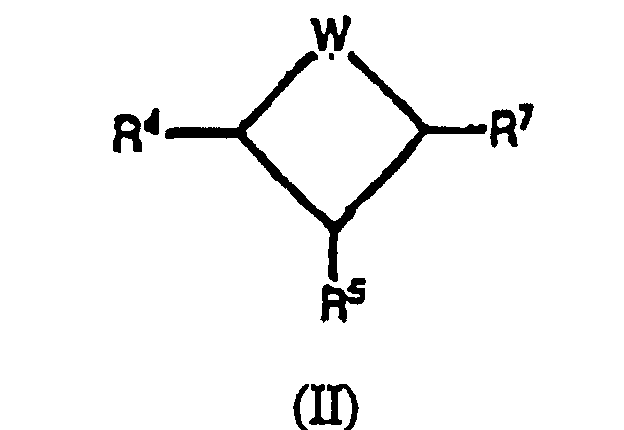 R4 et R7 sont indépendamment choisis parmi les groupes suivants:un hydrogène;un groupe alkyle C1-C4 substitué avec 0-3 R11;un groupe alcényle C3-C4 substitué avec 0-3 R11;R5 est -OR20;R20 est comme il est défini dans la revendication 1;R11 est choisi parmi un ou plusieurs des groupes suivants:céto, halogène, -CH2NR13R14, -NR13R14, -OR13, alkoxyalkyle C2-C4, alkyle C1-C4, alcényle C2-C4, cycloalkyle C3-C6;un groupe aryle substitué avec 0-3 R12;un système d'anneau hétérocyclique substitué avec 0-2 R12, composé de 5 à 10 atomes incluant au moins un atome d'azote, d'oxygène ou de soufre;R12, lorsque c'est un substituant sur un carbone, est choisi parmi un ou plusieurs des groupes suivants:phényle, benzyle, phénéthyle, pbénoxy, benzyloxy, halogène, alkyle C1-C4, arylalkyle C7-C10, alkoxy C1-C4, -CO2H, acide hydroxamique, hydrazide, oxime, acide boronique, sulfonamide, formyle, cycloalkoxy C3-C6, -OR13, alkyle C1-C4 substitué avec -NR13R14, -NR13R14, methylènedioxy, haloalkyle C1-C4, alkylcarbonyle C1-C4, alkylcarbonylamino C1-C4, hydroxyle, hydroxyméthyle; ouun anneau hétéroeyclique de 5 ou 6 membres contenant de 1 à 4 hétéroatomes choisis parmi un oxygène, un azote ou un soufre;R12, lorsque c'est un substituant sur un azote, est choisi parmi un groupe benzyle ou méthyle;R13 est H, un groupe alkyle C1-C2 ou alkoxyalkyle C3-C6;R14 est OH, H ou un groupe alkyle C1-C2;R13 et R14 peuvent selon une variante se joindre pour former -(CH2)4-, -(CH2)5-, -CH2CH2N(R15)CH2CH2- ou -CH2CH2OCH2CH2-;W est -N(R22)C(=Z)N(R23)-;
dans laquelle formule:Z est O, S ou N-CN;R22 et R23 sont indépendamment choisis parmi ce qui suit:un hydrogène;un groupe alkyle C1-C4 substitué avec 0-3 R31;un groupe alcényle C3-C4 substitué avec 0-3 R31;R31 est choisi parmi un ou plusieurs des groupes suivants:céto, halogène, -CH2NR13R14, -NR13R14, -OR13, alkoxyalkyle C2-C4, alkyle C1-C4, alcényle C2-C4, cycloalkyle C3-C6;un groupe aryle substitué avec 0-3 R32; ouun système d'anneau hétérocyclique substitué avec 0-2 R32, composé de 5 à 10 atomes incluant au moins un atome d'azote, d'oxygène ou de soufre;R32, lorsque c'est un substituant sur un carbone, est choisi parmi un ou plusieurs des groupes suivants:phényle, benzyle, phénéthyle, phénoxy, benzyloxy, halogène, alkyle C1-C4, arylalkyle C7-C10, alkoxy C1-C4, -CO2H, acide hydroxamique, hydrazide, oxime, acide boronique, sulfonamide, formyle, cycloalkoxy C3-C6, -OR13, alkyle C1-C4 substitué avec -NR13R14, -NR13R14, méthylènedioxy, haloalkyle C1-C4, alkylcarbonyle C1-C4, alkylcarbonylamino C1-C4, hydroxyle, hydroxyméthyle, - C(R14)=N(OR14);un anneau hétérocyclique de 5 ou 6 membres contenant de 1 à 4 hétéroatomes choisis parmi un oxygène, un azote et un soufre;R32, lorsque c'est un substituant sur un azote, est un goupe benzyle ou méthyle; sous réserve que:lorsque R4 est un hydrogène, R7 ne soit pas un hydrogène;lorsque R4 est un hydrogène, au moins un parmi R22 et R23 ne soit pas un hydrogène. - Composé suivant la revendication 1, présentant la formule (III):dans laquelle:
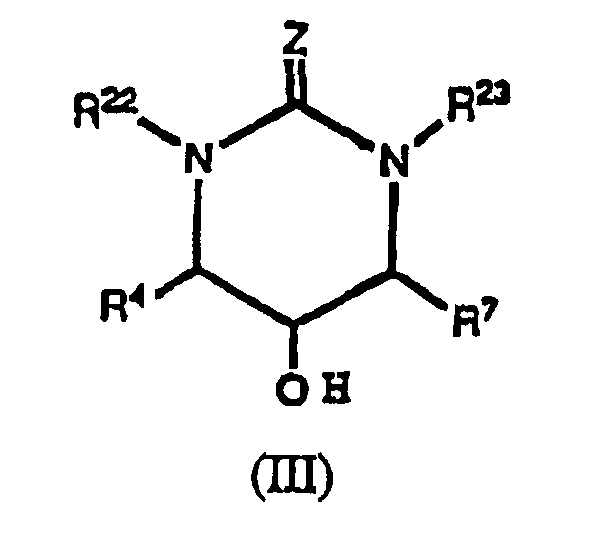 R4 et R7 sont indépendamment choisis parmi les groupes suivants:un hydrogène;un groupe alkyle C1-C3 substitué avec 0-3 R11;R11 est choisi parmi un ou plusieurs des groupes suivants:halogène, -OR13, alkyle C1-C4, cycloalkyle C3-C5;un groupe aryle substitué avec 0-2 R12;un système d'anneau hétérocyclique choisi parmi un groupe pyridyle, pyrimidinyle, triazinyle, furannyle, thiényle, pyrrolyle, pyrazolyle, imidazolyle, tétrazolyle, benzofurannyle, indolyle, quinoléinyle, isoquinoléinyle;R12, lorsque c'est un subsdtuant sur un carbone, est choisi parmi un ou plusieurs des groupes suivants:benzyloxy, halogène, méthyle, alkoxy C1-C4, CF3, 2-(1-motpholino)éthoxy, -CO2H, acide hydroxamique, hydrazide, oxime, cyano, acide boronique, sulfonamide, formyle, cycloalkoxy C3-C6, alkyle C1-C4 substitué avec -NR13R14, -NR13R14, hydroxyle, hydroxyméthyle; ouR12, lorsque c'est un substituant sur un azote, est un groupe méthyle;R13 est H ou un groupe méthyle;R14 est OH, H ou un groupe méthyle;R13 et R14 peuvent selon une variante se joindre pour former -(CH2)4-, -(CH2)5-,-CH2CH2N(R15)CH2CH2- ou -CH2CH2OCH2CH2-;R22 et R23 sont indépendamment choisis parmi ce qui suit:un hydrogène;un groupe alkyle C1-C4 substitué avec 0-1 R31;un groupe alcényle C3-C4 substitué avec 0-1 R31;R31 est choisi parmi un ou plusieurs des groupes suivants:halogène, -OR13, alkyle C1-C4, cycloalkyle C3-C5;un groupe aryle substitué avec 0-2 R32;un système d'anneau hétérocyclique choisi parmi un groupe pyridyle, pyrimidinyle, triazinyle, furannyle, thiényle, pyrrolyle, pyrazolyle, imidazolyle, tétrazolyle, benzofurannyle, indolyle, quinoléinyle, isoquinoléinyle;R32, lorsque c'est un substituant sur un carbone, est choisi parmi un ou plusieurs des groupes suivants:benzyloxy, halogène, méthyle, alkoxy C1-C4, CF3, 2-(1-morpholino)éthoxy, -CO2H, acide hydroxamique, hydrazide, oxime, cyano, acide boronique, sulfonamide, formyle, cycloalkoxy C3-C6, alkyle C1-C4 substitué avec -NR13R14, -NR13R14, hydroxyle, hydroxyméthyle, -C(R14)=N(OR14); ouR32, lorsque c'est un substatuant sur un azote, est un groupe méthyle;
sous réserve que:lorsque R4 est un hydrogène, R7 ne soit pas un hydrogène;lorsque R4 est un hydrogène, au moins un parmi R22 et R23 ne soit pas un hydrogène. - Composé suivant la revendication 1, présentant la formule (IV):ou sel pharmaceutiquement acceptable ou forme de promédicament de celui-ci dans laquelle:
 R33 est OH, un halogène, H, N3 ou peut selon une variante être pris ensemble avec R23 pour former une liaison directe;R22 et R23 sont indépendamment choisis parmi:un hydrogène, un groupe allyle, propyle, cyclopropylméthyle, n-butyle, i-butyle, CH2CH=CH(CH3)2, pyridylmétliyle, méthallyle, n-pentyle, i-pentyle, hexyle, benzyle, pyridylméthyle, isoprényle, propargyle, picolinyle, méthoxyéthyle, cyclohexylméthyle, diméthylbutyle, éthoxyéthyle, méthyloxazolinylméthyle, naphtylméthyle, méthyloxazolinylméthyle, vinyloxyéthyle, pentafluorobenzyle, quinoléinylméthyle, carboxybenzyle, chlorothiényle, picolinyle, benzyloxybenzyle, phénylbenzyle, adamantyléthyle, cyclopropylméthoxybenzyle, éthoxybenzyle, hydroxybenzyle, hydroxyméthylbenzyle, aminobenzyle, formylbenzyle, cyanobenzyle, cinnamyle, allyloxybenzyle, fluorobenzyle, cyclobutylméthyle, formaldoximebenzyle, cyclopentylméthyle, nitrobenzyle, nitrilobenzyle, carboxamidobenzyle, carbométhoxybenzyle et diméthylallyle.
 - Utilisation d'un composé suivant l'une quelconque des revendications 1 à 5 pour la préparation d'un médicament destiné au traitement d'infections virales.
- Composition pharmaceutique comprenant un excipient pharmaceutiquement acceptable et au moins un composé suivant l'une quelconque des revendications 1 à 5.
Priority Applications (1)
| Application Number | Priority Date | Filing Date | Title |
|---|---|---|---|
| EP01119426A EP1153921A3 (fr) | 1991-10-11 | 1992-10-13 | Urées cycliques et analogues utiles comme inhibiteurs de protéase rétrovirale |
Applications Claiming Priority (7)
| Application Number | Priority Date | Filing Date | Title |
|---|---|---|---|
| US77649191A | 1991-10-11 | 1991-10-11 | |
| US776491 | 1991-10-11 | ||
| US88394492A | 1992-05-15 | 1992-05-15 | |
| US883944 | 1992-05-15 | ||
| US95327292A | 1992-09-29 | 1992-09-29 | |
| US953272 | 1992-09-29 | ||
| EP92922262A EP0607334B1 (fr) | 1991-10-11 | 1992-10-13 | Urees cycliques et analogues utiles en tant qu'inhibiteurs de la protease retrovirale |
Related Parent Applications (2)
| Application Number | Title | Priority Date | Filing Date |
|---|---|---|---|
| EP92922262A Division EP0607334B1 (fr) | 1991-10-11 | 1992-10-13 | Urees cycliques et analogues utiles en tant qu'inhibiteurs de la protease retrovirale |
| EP92922262.8 Division | 1993-04-20 |
Related Child Applications (1)
| Application Number | Title | Priority Date | Filing Date |
|---|---|---|---|
| EP01119426A Division EP1153921A3 (fr) | 1991-10-11 | 1992-10-13 | Urées cycliques et analogues utiles comme inhibiteurs de protéase rétrovirale |
Publications (2)
| Publication Number | Publication Date |
|---|---|
| EP0765873A1 EP0765873A1 (fr) | 1997-04-02 |
| EP0765873B1 true EP0765873B1 (fr) | 2002-04-17 |
Family
ID=27419722
Family Applications (3)
| Application Number | Title | Priority Date | Filing Date |
|---|---|---|---|
| EP01119426A Withdrawn EP1153921A3 (fr) | 1991-10-11 | 1992-10-13 | Urées cycliques et analogues utiles comme inhibiteurs de protéase rétrovirale |
| EP92922262A Expired - Lifetime EP0607334B1 (fr) | 1991-10-11 | 1992-10-13 | Urees cycliques et analogues utiles en tant qu'inhibiteurs de la protease retrovirale |
| EP96118182A Expired - Lifetime EP0765873B1 (fr) | 1991-10-11 | 1992-10-13 | Urées cycliques et analogues utiles comme inhibiteurs de protéase rétrovirale |
Family Applications Before (2)
| Application Number | Title | Priority Date | Filing Date |
|---|---|---|---|
| EP01119426A Withdrawn EP1153921A3 (fr) | 1991-10-11 | 1992-10-13 | Urées cycliques et analogues utiles comme inhibiteurs de protéase rétrovirale |
| EP92922262A Expired - Lifetime EP0607334B1 (fr) | 1991-10-11 | 1992-10-13 | Urees cycliques et analogues utiles en tant qu'inhibiteurs de la protease retrovirale |
Country Status (18)
| Country | Link |
|---|---|
| EP (3) | EP1153921A3 (fr) |
| JP (1) | JP3208140B2 (fr) |
| KR (1) | KR100268694B1 (fr) |
| AT (2) | ATE156123T1 (fr) |
| AU (2) | AU2871592A (fr) |
| BR (1) | BR9206623A (fr) |
| CA (1) | CA2120925A1 (fr) |
| CZ (1) | CZ284872B6 (fr) |
| DE (2) | DE69221309T2 (fr) |
| DK (1) | DK0607334T3 (fr) |
| ES (1) | ES2104946T3 (fr) |
| FI (1) | FI941649A7 (fr) |
| GR (1) | GR3025005T3 (fr) |
| HU (1) | HU221816B1 (fr) |
| NO (1) | NO306720B1 (fr) |
| RU (1) | RU2131420C1 (fr) |
| SK (1) | SK280882B6 (fr) |
| WO (1) | WO1993007128A1 (fr) |
Cited By (2)
| Publication number | Priority date | Publication date | Assignee | Title |
|---|---|---|---|---|
| US10759804B2 (en) | 2015-06-29 | 2020-09-01 | Imperial College Innovations Limited | Compounds and their use as inhibitors of N-myristoyl transferase |
| US12599676B2 (en) | 2022-09-09 | 2026-04-14 | MyricX Pharma Limited | Cytotoxic imidazo[1,2-A]pyridine compounds and their use in therapy |
Families Citing this family (69)
| Publication number | Priority date | Publication date | Assignee | Title |
|---|---|---|---|---|
| US5610294A (en) * | 1991-10-11 | 1997-03-11 | The Du Pont Merck Pharmaceutical Company | Substituted cyclic carbonyls and derivatives thereof useful as retroviral protease inhibitors |
| USRE37781E1 (en) | 1991-10-11 | 2002-07-02 | Dupont Pharmaceuticals Company | Substituted cyclic carbonyls and derivatives thereof useful as retroviral protease inhibitors |
| ES2123065T3 (es) | 1992-08-25 | 1999-01-01 | Searle & Co | Hidroxietilamino-sulfonamidas utiles como inhibidores de proteasas retroviricas. |
| AU703962B2 (en) * | 1993-02-26 | 1999-04-01 | Du Pont Pharmaceuticals Company | Substituted cyclic carbonyls and derivatives |
| US5637780A (en) | 1993-03-30 | 1997-06-10 | The Dupont Merck Pharmaceutical Company | Method for preparing alkylating agents and their use for alkylating cyclic ureas |
| EP0708760A1 (fr) * | 1993-07-14 | 1996-05-01 | Novartis AG | Composes d'hydrazines cycliques |
| US5616578A (en) * | 1993-08-26 | 1997-04-01 | The Dupont Merck Pharmaceutical Company | Method of treating human immunodeficiency virus infection using a cyclic protease inhibitor in combination with a reverse transcriptase inhibitor |
| IL110752A (en) * | 1993-09-13 | 2000-07-26 | Abbott Lab | Liquid semi-solid or solid pharmaceutical composition for an HIV protease inhibitor |
| US5559158A (en) * | 1993-10-01 | 1996-09-24 | Abbott Laboratories | Pharmaceutical composition |
| US5559110A (en) * | 1994-03-09 | 1996-09-24 | The Dupont Merck Pharmaceutical Company | Pharmaceutical formulations of cyclic urea type compounds |
| US5508400A (en) * | 1994-04-20 | 1996-04-16 | The Du Pont Merck Pharmaceutical Company | Preparation of cyclic urea compounds |
| IL129871A (en) * | 1994-05-06 | 2003-11-23 | Pharmacia & Upjohn Inc | Process for preparing 4-phenyl-substituted octanoyl-oxazolidin-2-one intermediates that are useful for preparing pyran-2-ones useful for treating retroviral infections |
| DE4422911A1 (de) | 1994-06-30 | 1996-01-04 | Hoechst Ag | Phosphinsäure-Derivate, deren Herstellung sowie deren Verwendung |
| US5466797A (en) * | 1994-06-30 | 1995-11-14 | The Du Pont Merck Pharmaceutical Company | Intermediates for the preparation of cyclic urea |
| US5530124A (en) * | 1994-06-30 | 1996-06-25 | The Dupont Merck Pharmaceutical Company | Method for preparing cyclic ureas and their use for the synthesis of HIV protease inhibitors |
| US5705524A (en) * | 1994-11-04 | 1998-01-06 | Gilead Sciences, Inc. | Thiepane compounds |
| EP0789695A2 (fr) * | 1994-11-04 | 1997-08-20 | Gilead Sciences, Inc. | Composes de thiepane d'inhibition et de detection de la protease hiv |
| US6034118A (en) * | 1994-11-04 | 2000-03-07 | Gilead Sciences, Inc. | Thiepane compounds |
| EP0815108A1 (fr) * | 1995-03-17 | 1998-01-07 | The Du Pont Merck Pharmaceutical Company | Urees cycliques inhibitrices de la protease de vih |
| US5683999A (en) * | 1995-03-17 | 1997-11-04 | The Dupont Merck Pharmaceutical Company | Cyclic urea HIV protease inhibitors |
| US5532356A (en) * | 1995-06-06 | 1996-07-02 | The Dupont Merck Pharmaceutical Company | Method for preparing N,N'-disubstituted cyclic ureas |
| US5532357A (en) * | 1995-06-07 | 1996-07-02 | The Dupont Merck Pharmaceutical Company | Method for preparing N-monosubstituted and N,N'-disubstituted unsymmetrical cyclic ureas |
| US6037157A (en) | 1995-06-29 | 2000-03-14 | Abbott Laboratories | Method for improving pharmacokinetics |
| WO1997008150A1 (fr) * | 1995-08-22 | 1997-03-06 | The Du Pont Merck Pharmaceutical Company | Urees cycliques substituees et leurs derives utiles en tant qu'inhibiteurs de protease retrovirale |
| US5914332A (en) | 1995-12-13 | 1999-06-22 | Abbott Laboratories | Retroviral protease inhibiting compounds |
| EA001485B1 (ru) * | 1996-03-29 | 2001-04-23 | Пфайзер Инк. | Производные бензил(иден)-лактамов, их получение и применение в качестве селективных (ант)агонистов рецепторов 5-htи/или 5-ht |
| US6262047B1 (en) | 1996-10-11 | 2001-07-17 | Cor Therapeutics, Inc. | Selective factor Xa inhibitors |
| US6063794A (en) | 1996-10-11 | 2000-05-16 | Cor Therapeutics Inc. | Selective factor Xa inhibitors |
| US6194435B1 (en) | 1996-10-11 | 2001-02-27 | Cor Therapeutics, Inc. | Lactams as selective factor Xa inhibitors |
| US6369080B2 (en) | 1996-10-11 | 2002-04-09 | Cor Therapeutics, Inc. | Selective factor Xa inhibitors |
| CA2270963A1 (fr) * | 1996-11-08 | 1998-05-14 | The Dupont Merck Pharmaceutical Company | (4r,5s,6s,7r)-hexahydro-1- [5-(3-aminoinazole)methyl]- 3-butyl-5,6-dihydroxy-4,7-bis [phenylmethyl]- 2h-1,3-diazepin-2-one, sa preparation et son utilisation en tant qu'inhibiteurde protease de vih |
| ZA979868B (en) | 1996-11-08 | 1999-05-03 | Du Pont Merck Pharma | A 1-(3-aminondazol-5-yl)-3-buty-cyclic urea useful as a HIV protease inhibitor |
| ZA9710071B (en) * | 1996-11-21 | 1998-05-25 | Abbott Lab | Pharmaceutical composition. |
| US6232333B1 (en) | 1996-11-21 | 2001-05-15 | Abbott Laboratories | Pharmaceutical composition |
| AU6896298A (en) | 1997-04-14 | 1998-11-11 | Cor Therapeutics, Inc. | Selective factor xa inhibitors |
| WO1998046628A1 (fr) * | 1997-04-14 | 1998-10-22 | Cor Therapeutics, Inc. | INHIBITEURS SELECTIFS DU FACTEUR Xa |
| NZ500354A (en) | 1997-04-14 | 2001-11-30 | Cor Therapeutics Inc | Cyclic diaza compounds as selective factor Xa inhibitors for treating thrombotic related disorders |
| US6369063B1 (en) | 1997-04-14 | 2002-04-09 | Cor Therapeutics, Inc. | Selective factor Xa inhibitors |
| US6333321B1 (en) | 1997-08-11 | 2001-12-25 | Cor Therapeutics, Inc. | Selective factor Xa inhibitors |
| US6228854B1 (en) | 1997-08-11 | 2001-05-08 | Cor Therapeutics, Inc. | Selective factor Xa inhibitors |
| US6218382B1 (en) | 1997-08-11 | 2001-04-17 | Cor Therapeutics, Inc | Selective factor Xa inhibitors |
| KR100348561B1 (ko) * | 1997-08-12 | 2002-09-18 | 주식회사 엘지씨아이 | Lb71350과 dmp450을 함유하는 조성물 |
| KR19990016003A (ko) * | 1997-08-12 | 1999-03-05 | 성재갑 | 치토크롬 저해제 조성물 |
| US6313110B1 (en) | 1999-06-02 | 2001-11-06 | Dupont Pharmaceuticals Company | Substituted 2H-1,3-diazapin-2-one useful as an HIV protease inhibitor |
| DE19962923A1 (de) * | 1999-12-24 | 2001-07-05 | Bayer Ag | Substituierte Benzoylcyclohexandione |
| TR201809435T4 (tr) | 2000-01-19 | 2018-07-23 | Abbvie Inc | Geliştirilmiş farmasötik formülasyonlar. |
| FR2810039B1 (fr) | 2000-06-13 | 2007-05-25 | Centre Nat Rech Scient | Composes urees cycliques et leur procede de preparation |
| UA76977C2 (en) | 2001-03-02 | 2006-10-16 | Icos Corp | Aryl- and heteroaryl substituted chk1 inhibitors and their use as radiosensitizers and chemosensitizers |
| AU2003252259A1 (en) * | 2002-07-26 | 2004-02-16 | Nihon Nohyaku Co., Ltd. | Novel haloalkylsulfonanilide derivatives, herbicides and usage thereof |
| JP2004107323A (ja) * | 2002-07-26 | 2004-04-08 | Nippon Nohyaku Co Ltd | 新規なハロアルキルスルホンアニリド誘導体及び除草剤並びにその使用方法 |
| US7834043B2 (en) | 2003-12-11 | 2010-11-16 | Abbott Laboratories | HIV protease inhibiting compounds |
| US7777030B2 (en) | 2005-12-29 | 2010-08-17 | Centre National de la Recherge Scientifique (CNRS) | Compositions and methods for the treatment and prevention of disease |
| CA2678577A1 (fr) | 2007-02-26 | 2008-09-04 | Vitae Pharmaceuticals, Inc. | Inhibiteurs d'uree et de carbamate de 11b-hydroxysteroide deshydrogenase 1 cycliques |
| CN101631568B (zh) | 2007-03-12 | 2012-08-22 | 尼克塔治疗公司 | 低聚物-蛋白酶抑制剂偶联物 |
| AR069207A1 (es) | 2007-11-07 | 2010-01-06 | Vitae Pharmaceuticals Inc | Ureas ciclicas como inhibidores de la 11 beta - hidroxi-esteroide deshidrogenasa 1 |
| US8440658B2 (en) | 2007-12-11 | 2013-05-14 | Vitae Pharmaceuticals, Inc. | Cyclic urea inhibitors of 11β-hydroxysteroid dehydrogenase 1 |
| US9095620B2 (en) | 2008-03-12 | 2015-08-04 | Nektar Therapeutics | Reagents |
| NZ590495A (en) | 2008-07-25 | 2012-10-26 | Vitae Pharmaceuticals Inc | Dihydropyridin-phenyl-3-oxazinan-2-ones as inhibitors of 11beta-hydroxysteroid dehydrogenase 1 |
| WO2010010157A2 (fr) | 2008-07-25 | 2010-01-28 | Boehringer Ingelheim International Gmbh | Inhibiteurs de la 11 bêta-hydroxystéroïde déshydrogénase 1 |
| JP5679997B2 (ja) | 2009-02-04 | 2015-03-04 | ベーリンガー インゲルハイム インターナショナル ゲゼルシャフト ミット ベシュレンクテル ハフツング | 11β−ヒドロキシステロイドデヒドロゲナーゼ1の環状阻害剤 |
| US8680093B2 (en) | 2009-04-30 | 2014-03-25 | Vitae Pharmaceuticals, Inc. | Cyclic inhibitors of 11beta-hydroxysteroid dehydrogenase 1 |
| US8927539B2 (en) | 2009-06-11 | 2015-01-06 | Vitae Pharmaceuticals, Inc. | Cyclic inhibitors of 11β-hydroxysteroid dehydrogenase 1 based on the 1,3-oxazinan-2-one structure |
| JP2012530069A (ja) | 2009-06-12 | 2012-11-29 | ネクター セラピューティックス | プロテアーゼ阻害剤、水溶性非ペプチドオリゴマーおよび親油性部分を含む共有結合体 |
| US8569245B2 (en) * | 2009-06-26 | 2013-10-29 | University Of Florida Research Foundation, Inc. | Protease inhibitors, compositions and methods of use |
| EP2448928B1 (fr) | 2009-07-01 | 2014-08-13 | Vitae Pharmaceuticals, Inc. | Inhibiteurs cycliques de la 11-bêta-hydroxystéroïde déshydrogénase 1 |
| WO2011159760A1 (fr) | 2010-06-16 | 2011-12-22 | Vitae Pharmaceuticals, Inc. | Hétérocycles à 5, 6 et 7 chaînons substitués, médicaments contenant ces composés et leur utilisation |
| WO2011161128A1 (fr) | 2010-06-25 | 2011-12-29 | Boehringer Ingelheim International Gmbh | Azaspirohexanones comme inhibiteurs de 11-β-hsd1 pour le traitement de troubles métaboliques |
| PT2692346E (pt) * | 2010-10-13 | 2016-03-22 | Abbvie Bahamas Ltd | Um derivado de 1-fenil-2,5-dibenzimidazol-5-il-pirrolidina antiviral |
| WO2012059416A1 (fr) | 2010-11-02 | 2012-05-10 | Boehringer Ingelheim International Gmbh | Combinaisons pharmaceutiques destinées au traitement de troubles du métabolisme |
Family Cites Families (18)
| Publication number | Priority date | Publication date | Assignee | Title |
|---|---|---|---|---|
| ZA735593B (en) * | 1972-08-24 | 1974-07-31 | Ciba Geigy Ag | Piperidine derivatives and process for their manufacture |
| US5142056A (en) | 1989-05-23 | 1992-08-25 | Abbott Laboratories | Retroviral protease inhibiting compounds |
| US4652552A (en) | 1984-09-10 | 1987-03-24 | E. I. Du Pont De Nemours And Company | Tetrapeptide methyl ketone inhibitors of viral proteases |
| US4644055A (en) | 1984-12-17 | 1987-02-17 | E. I. Du Pont De Nemours And Company | Method for preparing specific inhibitors of virus-specified proteases |
| US4837204A (en) | 1985-01-23 | 1989-06-06 | Abbott Laboratories | Functionalized peptidyl aminodiols and -triols |
| JPH072736B2 (ja) * | 1985-08-27 | 1995-01-18 | 日本バイエルアグロケム株式会社 | ニトロメチレン誘導体、その製法及び殺虫剤 |
| CA1283101C (fr) * | 1986-05-06 | 1991-04-16 | Teruyuki Nagata | Methode de production d'urees cycliques |
| US4900820A (en) * | 1986-06-12 | 1990-02-13 | Mitsui Toatsu Chemicals, Inc. | Process for producing cyclic ureas |
| FR2600252A1 (fr) | 1986-06-19 | 1987-12-24 | Inst Nat Sante Rech Med | Medicament et composition medicamenteuse pour le traitement de maladies infectieuses dues aux virus, ainsi que pour le traitement des tumeurs |
| GB8806449D0 (en) * | 1988-03-18 | 1988-04-20 | Janssen Pharmaceutica Nv | Antiviral hexahydroimiazo(1 4)benzodiazepin-2-ones |
| IL90218A0 (en) | 1988-05-13 | 1989-12-15 | Abbott Lab | Retroviral protease inhibitors |
| EP0374097A3 (fr) | 1988-12-15 | 1991-06-12 | Ciba-Geigy Ag | Emploi d'isostères de peptides en tant qu'inhibiteurs de protéase rétrovirale |
| IL93136A (en) * | 1989-02-23 | 1995-01-24 | Janssen Pharmaceutica Nv | Tetrahydroimidazo (1,4) benzodiazepin-2-thione derivatives, their preparation and pharmaceutical compositions containing them |
| US5049548A (en) | 1989-03-03 | 1991-09-17 | Merck & Co., Inc. | Renin-inhibitory di-, tri-, and tetrapeptides |
| CA2010531A1 (fr) | 1989-03-06 | 1990-09-06 | Werner Neidhart | Derives d'acides amines |
| CA2032259A1 (fr) | 1989-12-18 | 1991-06-19 | Wayne J. Thompson | Inhibiteurs de la protease du vih utiles dans le traitement du sida |
| CA2026832A1 (fr) | 1990-10-03 | 1992-04-04 | Nouredine Haouas | Systeme demontable d'attache rapide pour objets tridimensionnels entre eux |
| US5206244A (en) * | 1990-10-18 | 1993-04-27 | E. R. Squibb & Sons, Inc. | Hydroxymethyl (methylenecyclopentyl) purines and pyrimidines |
-
1992
- 1992-10-13 DE DE69221309T patent/DE69221309T2/de not_active Expired - Fee Related
- 1992-10-13 HU HU9401020A patent/HU221816B1/hu not_active IP Right Cessation
- 1992-10-13 SK SK407-94A patent/SK280882B6/sk unknown
- 1992-10-13 EP EP01119426A patent/EP1153921A3/fr not_active Withdrawn
- 1992-10-13 BR BR9206623A patent/BR9206623A/pt not_active Application Discontinuation
- 1992-10-13 CZ CZ94814A patent/CZ284872B6/cs not_active IP Right Cessation
- 1992-10-13 WO PCT/US1992/008749 patent/WO1993007128A1/fr not_active Ceased
- 1992-10-13 JP JP50724493A patent/JP3208140B2/ja not_active Expired - Fee Related
- 1992-10-13 DK DK92922262.8T patent/DK0607334T3/da active
- 1992-10-13 EP EP92922262A patent/EP0607334B1/fr not_active Expired - Lifetime
- 1992-10-13 AT AT92922262T patent/ATE156123T1/de not_active IP Right Cessation
- 1992-10-13 DE DE69232568T patent/DE69232568T2/de not_active Expired - Fee Related
- 1992-10-13 CA CA002120925A patent/CA2120925A1/fr not_active Abandoned
- 1992-10-13 AU AU28715/92A patent/AU2871592A/en not_active Abandoned
- 1992-10-13 EP EP96118182A patent/EP0765873B1/fr not_active Expired - Lifetime
- 1992-10-13 RU RU94031126/04A patent/RU2131420C1/ru not_active IP Right Cessation
- 1992-10-13 AT AT96118182T patent/ATE216371T1/de not_active IP Right Cessation
- 1992-10-13 FI FI941649A patent/FI941649A7/fi unknown
- 1992-10-13 ES ES92922262T patent/ES2104946T3/es not_active Expired - Lifetime
- 1992-10-13 KR KR1019940701169A patent/KR100268694B1/ko not_active Expired - Fee Related
-
1994
- 1994-04-08 NO NO941278A patent/NO306720B1/no not_active IP Right Cessation
- 1994-05-02 AU AU61808/94A patent/AU694417B2/en not_active Ceased
-
1997
- 1997-10-09 GR GR970402648T patent/GR3025005T3/el unknown
Non-Patent Citations (2)
| Title |
|---|
| ZIGEUNER G ET AL: "Über Heterocyclen, 5. Mitt.: 1-Oxo-2,10a-diaza-9- oxaoctahydrophenanthrene", MONATSHEFTE FÜR CHEMIE, vol. 96, no. 6, 1965, pages 1943 - 1949 * |
| ZIGEUNER G ET AL: "Über Heterocyclen, 6. Mitt.: Cyclische Harnstoff - Aldehyd-Kondensate", MONATSHEFTE FÜR CHEMIE, vol. 96, no. 6, 1965, pages 1950 - 1966, XP001005272, DOI: doi:10.1007/BF01185922 * |
Cited By (3)
| Publication number | Priority date | Publication date | Assignee | Title |
|---|---|---|---|---|
| US10759804B2 (en) | 2015-06-29 | 2020-09-01 | Imperial College Innovations Limited | Compounds and their use as inhibitors of N-myristoyl transferase |
| US11466011B2 (en) | 2015-06-29 | 2022-10-11 | Imperial College Innovations Limited | Compounds and their use as inhibitors of N-myristoyl transferase |
| US12599676B2 (en) | 2022-09-09 | 2026-04-14 | MyricX Pharma Limited | Cytotoxic imidazo[1,2-A]pyridine compounds and their use in therapy |
Also Published As
Similar Documents
| Publication | Publication Date | Title |
|---|---|---|
| EP0765873B1 (fr) | Urées cycliques et analogues utiles comme inhibiteurs de protéase rétrovirale | |
| EP0686151B1 (fr) | Carbonyles cycliques substitues et leurs derives utiles comme inhibiteurs de protease retrovirale | |
| NO314936B1 (no) | 4,4-disubstituerte-3,4-dihydro-2(1H)-kinazolinoner, farmasöytiske sammensetninger, preparater og farmasöytiske sett til behandling av HIV-infeksjon, samt anvendelse av bestemte kinazolinoner for fremstilling av etfarmasöytisk preparat | |
| HK1045502A1 (en) | Nitrogen containing heterobicycles as factor xa inhibitors | |
| EP0691961B1 (fr) | Caprolactames substitues et leurs derives pour le traitement d'affections liees au vih | |
| WO1997008150A1 (fr) | Urees cycliques substituees et leurs derives utiles en tant qu'inhibiteurs de protease retrovirale | |
| WO1994008977A1 (fr) | Caprolactames substitues et leurs derives, utiles dans le traitement du sida | |
| US5763469A (en) | Substituted cyclic ureas and derivatives thereof useful as retroviral protease inhibitors | |
| US5932570A (en) | 1-(3-aminoindazol-5-yl)-3-phenylmethyl-cyclic ureas useful as HIV protease inhibitors | |
| KR920000763B1 (ko) | 신규 벤조디아제핀의 제조 방법 | |
| EP0937067B1 (fr) | Urees 1-(3-aminoindazol-5-yl)-3-phenylmethyl-cycliques utiles en tant qu'inhibiteurs de protease de vih | |
| US6313110B1 (en) | Substituted 2H-1,3-diazapin-2-one useful as an HIV protease inhibitor | |
| AU722489B2 (en) | (4r,5s,6s,7r)-hexahydro-1- {5-(3-aminoinazole)methyl} -3-butyl-5,6-dihydr oxy-4,7-bis {phaenylmethyl} -2h-1,3-diazepin-2-one, its preparation and its use as HIV protease inhibitor | |
| US5543517A (en) | Substituted bicyclic phosphoramides and derivatives thereof | |
| US20010011088A1 (en) | 1-(3-aminoindazol-5-yl)-3-butyl-cyclic urea useful as a HIV protease inhibitor | |
| US7015214B2 (en) | Cyanamide, alkoxyamino, and urea derivatives of 1,3-benzodiazepine as HIV reverse transcriptase inhibitors | |
| KR850000261B1 (ko) | 벤즈아제핀 유도체의 제조방법 | |
| HK1002257B (en) | Cyclic ureas and analogues useful as retroviral protease inhibitors | |
| MXPA99004286A (en) | 1-(3-aminoindazol-5-yl)-3-phenylmethyl-cyclic ureas useful as hiv protease inhibitors |
Legal Events
| Date | Code | Title | Description |
|---|---|---|---|
| PUAI | Public reference made under article 153(3) epc to a published international application that has entered the european phase |
Free format text: ORIGINAL CODE: 0009012 |
|
| 17P | Request for examination filed |
Effective date: 19961113 |
|
| AC | Divisional application: reference to earlier application |
Ref document number: 607334 Country of ref document: EP |
|
| AK | Designated contracting states |
Kind code of ref document: A1 Designated state(s): AT BE CH DE DK ES FR GB GR IE IT LI LU MC NL SE |
|
| 17Q | First examination report despatched |
Effective date: 19970626 |
|
| RAP1 | Party data changed (applicant data changed or rights of an application transferred) |
Owner name: DUPONT PHARMACEUTICALS COMPANY |
|
| RAP3 | Party data changed (applicant data changed or rights of an application transferred) |
Owner name: DUPONT PHARMACEUTICALS COMPANY |
|
| GRAG | Despatch of communication of intention to grant |
Free format text: ORIGINAL CODE: EPIDOS AGRA |
|
| GRAG | Despatch of communication of intention to grant |
Free format text: ORIGINAL CODE: EPIDOS AGRA |
|
| GRAH | Despatch of communication of intention to grant a patent |
Free format text: ORIGINAL CODE: EPIDOS IGRA |
|
| REG | Reference to a national code |
Ref country code: GB Ref legal event code: IF02 |
|
| GRAH | Despatch of communication of intention to grant a patent |
Free format text: ORIGINAL CODE: EPIDOS IGRA |
|
| GRAA | (expected) grant |
Free format text: ORIGINAL CODE: 0009210 |
|
| AC | Divisional application: reference to earlier application |
Ref document number: 607334 Country of ref document: EP |
|
| AK | Designated contracting states |
Kind code of ref document: B1 Designated state(s): AT BE CH DE DK ES FR GB GR IE IT LI LU MC NL SE |
|
| PG25 | Lapsed in a contracting state [announced via postgrant information from national office to epo] |
Ref country code: NL Free format text: LAPSE BECAUSE OF FAILURE TO SUBMIT A TRANSLATION OF THE DESCRIPTION OR TO PAY THE FEE WITHIN THE PRESCRIBED TIME-LIMIT Effective date: 20020417 Ref country code: LI Free format text: LAPSE BECAUSE OF FAILURE TO SUBMIT A TRANSLATION OF THE DESCRIPTION OR TO PAY THE FEE WITHIN THE PRESCRIBED TIME-LIMIT Effective date: 20020417 Ref country code: IT Free format text: LAPSE BECAUSE OF FAILURE TO SUBMIT A TRANSLATION OF THE DESCRIPTION OR TO PAY THE FEE WITHIN THE PRESCRIBED TIME-LIMIT;WARNING: LAPSES OF ITALIAN PATENTS WITH EFFECTIVE DATE BEFORE 2007 MAY HAVE OCCURRED AT ANY TIME BEFORE 2007. THE CORRECT EFFECTIVE DATE MAY BE DIFFERENT FROM THE ONE RECORDED. Effective date: 20020417 Ref country code: GR Free format text: LAPSE BECAUSE OF FAILURE TO SUBMIT A TRANSLATION OF THE DESCRIPTION OR TO PAY THE FEE WITHIN THE PRESCRIBED TIME-LIMIT Effective date: 20020417 Ref country code: CH Free format text: LAPSE BECAUSE OF FAILURE TO SUBMIT A TRANSLATION OF THE DESCRIPTION OR TO PAY THE FEE WITHIN THE PRESCRIBED TIME-LIMIT Effective date: 20020417 Ref country code: BE Free format text: LAPSE BECAUSE OF FAILURE TO SUBMIT A TRANSLATION OF THE DESCRIPTION OR TO PAY THE FEE WITHIN THE PRESCRIBED TIME-LIMIT Effective date: 20020417 Ref country code: AT Free format text: LAPSE BECAUSE OF FAILURE TO SUBMIT A TRANSLATION OF THE DESCRIPTION OR TO PAY THE FEE WITHIN THE PRESCRIBED TIME-LIMIT Effective date: 20020417 |
|
| REF | Corresponds to: |
Ref document number: 216371 Country of ref document: AT Date of ref document: 20020515 Kind code of ref document: T |
|
| REG | Reference to a national code |
Ref country code: CH Ref legal event code: EP |
|
| RAP2 | Party data changed (patent owner data changed or rights of a patent transferred) |
Owner name: BRISTOL-MYERS SQUIBB PHARMA COMPANY |
|
| REG | Reference to a national code |
Ref country code: IE Ref legal event code: FG4D |
|
| REF | Corresponds to: |
Ref document number: 69232568 Country of ref document: DE Date of ref document: 20020523 |
|
| NLT2 | Nl: modifications (of names), taken from the european patent patent bulletin |
Owner name: BRISTOL-MYERS SQUIBB PHARMA COMPANY |
|
| PG25 | Lapsed in a contracting state [announced via postgrant information from national office to epo] |
Ref country code: SE Free format text: LAPSE BECAUSE OF FAILURE TO SUBMIT A TRANSLATION OF THE DESCRIPTION OR TO PAY THE FEE WITHIN THE PRESCRIBED TIME-LIMIT Effective date: 20020717 Ref country code: DK Free format text: LAPSE BECAUSE OF FAILURE TO SUBMIT A TRANSLATION OF THE DESCRIPTION OR TO PAY THE FEE WITHIN THE PRESCRIBED TIME-LIMIT Effective date: 20020717 |
|
| ET | Fr: translation filed | ||
| NLV1 | Nl: lapsed or annulled due to failure to fulfill the requirements of art. 29p and 29m of the patents act | ||
| PGFP | Annual fee paid to national office [announced via postgrant information from national office to epo] |
Ref country code: FR Payment date: 20021008 Year of fee payment: 11 |
|
| PGFP | Annual fee paid to national office [announced via postgrant information from national office to epo] |
Ref country code: GB Payment date: 20021009 Year of fee payment: 11 |
|
| PGFP | Annual fee paid to national office [announced via postgrant information from national office to epo] |
Ref country code: LU Payment date: 20021016 Year of fee payment: 11 |
|
| PGFP | Annual fee paid to national office [announced via postgrant information from national office to epo] |
Ref country code: DE Payment date: 20021017 Year of fee payment: 11 |
|
| PGFP | Annual fee paid to national office [announced via postgrant information from national office to epo] |
Ref country code: IE Payment date: 20021029 Year of fee payment: 11 |
|
| PG25 | Lapsed in a contracting state [announced via postgrant information from national office to epo] |
Ref country code: ES Free format text: LAPSE BECAUSE OF FAILURE TO SUBMIT A TRANSLATION OF THE DESCRIPTION OR TO PAY THE FEE WITHIN THE PRESCRIBED TIME-LIMIT Effective date: 20021030 |
|
| PGFP | Annual fee paid to national office [announced via postgrant information from national office to epo] |
Ref country code: MC Payment date: 20021031 Year of fee payment: 11 |
|
| REG | Reference to a national code |
Ref country code: CH Ref legal event code: PL |
|
| PLBE | No opposition filed within time limit |
Free format text: ORIGINAL CODE: 0009261 |
|
| STAA | Information on the status of an ep patent application or granted ep patent |
Free format text: STATUS: NO OPPOSITION FILED WITHIN TIME LIMIT |
|
| 26N | No opposition filed |
Effective date: 20030120 |
|
| PG25 | Lapsed in a contracting state [announced via postgrant information from national office to epo] |
Ref country code: LU Free format text: LAPSE BECAUSE OF NON-PAYMENT OF DUE FEES Effective date: 20031013 Ref country code: IE Free format text: LAPSE BECAUSE OF NON-PAYMENT OF DUE FEES Effective date: 20031013 Ref country code: GB Free format text: LAPSE BECAUSE OF NON-PAYMENT OF DUE FEES Effective date: 20031013 |
|
| PG25 | Lapsed in a contracting state [announced via postgrant information from national office to epo] |
Ref country code: MC Free format text: LAPSE BECAUSE OF NON-PAYMENT OF DUE FEES Effective date: 20031031 |
|
| PG25 | Lapsed in a contracting state [announced via postgrant information from national office to epo] |
Ref country code: DE Free format text: LAPSE BECAUSE OF NON-PAYMENT OF DUE FEES Effective date: 20040501 |
|
| GBPC | Gb: european patent ceased through non-payment of renewal fee |
Effective date: 20031013 |
|
| PG25 | Lapsed in a contracting state [announced via postgrant information from national office to epo] |
Ref country code: FR Free format text: LAPSE BECAUSE OF NON-PAYMENT OF DUE FEES Effective date: 20040630 |
|
| REG | Reference to a national code |
Ref country code: IE Ref legal event code: MM4A |
|
| REG | Reference to a national code |
Ref country code: FR Ref legal event code: ST |