EP0773228B1 - Verfahren zur Herstellung von menschlichen monoklonalen Antikörpern und deren Verwendung - Google Patents
Verfahren zur Herstellung von menschlichen monoklonalen Antikörpern und deren Verwendung Download PDFInfo
- Publication number
- EP0773228B1 EP0773228B1 EP96117361A EP96117361A EP0773228B1 EP 0773228 B1 EP0773228 B1 EP 0773228B1 EP 96117361 A EP96117361 A EP 96117361A EP 96117361 A EP96117361 A EP 96117361A EP 0773228 B1 EP0773228 B1 EP 0773228B1
- Authority
- EP
- European Patent Office
- Prior art keywords
- ebna2
- epstein
- cells
- barr virus
- process according
- Prior art date
- Legal status (The legal status is an assumption and is not a legal conclusion. Google has not performed a legal analysis and makes no representation as to the accuracy of the status listed.)
- Expired - Lifetime
Links
Images



Classifications
-
- C—CHEMISTRY; METALLURGY
- C07—ORGANIC CHEMISTRY
- C07K—PEPTIDES
- C07K16/00—Immunoglobulins [IG], e.g. monoclonal or polyclonal antibodies
Definitions
- the invention relates to a method for producing human monoclonal antibodies according to the generic term of Claim 1.
- Antibodies are widely used in treatment and therapy of people. Antibodies are used in the Immunoprophylaxis, in the treatment of acute infections as well in the treatment of immunosuppressed patients. human Antibodies cannot be produced in sufficient quantities today. A method of the generic type is e.g. out Casali et al., (1986) Science 234, 476-479.
- Animal antibodies are therefore often used. Animal antibodies have the disadvantage that they are found in humans cause disruptive defense reactions and lost their effect goes. Human antibodies can be made from human Obtaining serum: This procedure has three major disadvantages: Suitable human serum is only available to a limited extent available, the purified antibodies are always polyclonal, the treatment is very expensive.
- the object of the invention is a method of the aforementioned Kind in such a way that monoclonal, human Antibodies are produced in sufficient quantity and high specificity can be.
- the procedure offers the possibility of human To produce antibodies in cell culture in such quantities that a purification of the antibodies and their medical Application is possible.
- antibodies are thus first produced B cells with an Epstein-Barr virus or either natural occurring or genetically engineered derivative of the Epstein-Barr virus.
- the invention uses a vector that at least has those sequences of the Epstein-Barr virus that are necessary to immortalize human B cells.
- Primary human B cells are preferably infected.
- Epstein-Barr virus is a lymphotropic herpes virus, that is responsible for infectious mononucleosis.
- the infectious mononucleosis also called Pfeiffer glandular fever, is a lymphoproliferative disorder that leads to hyperplasia and hypertrophy of the lymphoid tissue with characteristic Changes in blood count.
- EBV infects primary, dormant B cells, thereby proliferating indefinitely in vitro Lymphoblastoid cell lines (LCLs) arise. This process is also known as immortalization or transformation.
- the expressed virus genes code for six core proteins, three membrane proteins and two small nuclear RNAs that were not polyadenylated are. The minimum number of genes for the Transformation is required is still unknown.
- the EBNA2 gene is in the transformation defective virus by of the Burkitt lymphoma cell line P3HR1 is deleted. It occurs in natural isolates in two allelic forms (EBNA2A and EBNA2B), which show approximately 50% homology (Zimber et al., 1986).
- EBNA2 is the first virus gene which is expressed after infection of primary B cells, and it is a transcriptional activator of both latent viruses and also from latent cell genes (CD21, CD23 and c-fgr) (Calender et al., 1987; Wang et al., 1987; Cordier et al., 1990; Ghosh and Kieff, 1990; Fahraeus et al., 1990; Abbot et al., 1990; Knutson, 1990; Woisetschlaeger et al., 1991; Zimber-Strobl et al., 1991, 1993; Sung et al., 1991; Jin and Bacon, 1992; Ling et al., 1993; Laux et al., 1994a; Meitinger et al., 1995).
- EBNA2 has its transactivation function at least in part through attachment to an ubiquitous expressed cell gene, RBP-J ⁇ , which binds to the DNA in sequence-specific Manner binds (Zimber-Strobl et al., 1994; Henkel et al., 1994; Grossmann et al., 1994; Waltzer et al, 1994) and by interacting with transcription factors of the ets gene family (SPi-1, PU-1) (Laux et al., 1994b; and Johannsen et al., 1995).
- RBP-J ⁇ ubiquitous expressed cell gene
- EBNA2 protein expression of surface IgM and the Transcription of the Ig- ⁇ locus is reduced very efficiently.
- EBNA2 thus acts as a negative regulator of Ig- ⁇ transcription.
- the invention is described below using exemplary embodiments explained in more detail with the help of the figures.
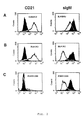
- the show Figures 1 and 2 exemplify the increase in immunoglobulin protein production by switching off EBNA2.
- Figures 3 and Figure 4 show immunoglobulin RNA production, respectively.
- the invention is based on the surprising fact that Epstein-Barr virus infected B cells only small amounts Produce immunoglobulin, production after inactivation of the EBNA2 gene, however, increases by at least 100 times.
- the invention is in the exemplary embodiments with reference to a IgM-producing B cell line described in more detail. The invention however, is not on such an IgM-producing B cell line limited.
- B cells can also pass through Immobilized EBV, the other immonglobulin classes express, for example IgG and IgA.
- the origin of the B cells used are usually humans with a high antibody titer for the desired antigen.
- Cells are preferably obtained from peripheral blood, and B cells are enriched according to standard procedures and with an Epstein-Barr virus-derived virus, which is a conditional EBNA2 expressed, infected.
- Epstein-Barr virus-derived virus which is a conditional EBNA2 expressed, infected.
- the virus described is particularly suitable for infection (cf. Fig. 5) and the following description.
- To activate the EBNA2 function must be added to the culture medium estrogen, to ensure a constitutive EBNA2 function.
- the immortalized B cells are expanded and repeated several times diluted estrogenic medium until the desired cell number is reached. The cells are reduced in microtiter plates Cell count plated out and expanded again. The supernatant The cells will target the specific antibodies you want examined.
- B cells, the antibodies with high specificity produce, are used as the basis of antibody production used.
- the EBNA2 activity is washed out of estrogen turned off. Other methods of removal of estrogen are also applicable.
- a plasmid The construction of a plasmid is described below, that for the conditional expression of the EBNA2 gene or a Derivative thereof can be used. However, the invention is not limited to the plasmid described here. According to the invention other vectors can be used with which the EBNA2 gene is conditionally expressible, i.e. in immortalization of the B cells is at least partially switched on and at least partially switched off before the antibodies are obtained is.
- the EBNA2 gene is preferred for immortalization essentially turned on and to raise the antibodies essentially turned off.
- the gene fragment coding for the hormone binding domain was by using the polymerase chain reaction (PCR) flanked by HE14 (Kumar et al., 1986) as a template from the EcoRI recognition sites and ligated into the EcoRI recognition site before the ORF of EBNA2.
- This PCR fragment included the Kozak sequence provided by HE14, however not the stop codon of the estrogen receptor.
- the C-terminal Fusion construct was by insertion of BglII and EcoRI recognition sites immediately from the stop codon of EBNA2 generated by in vitro mutagenesis.
- Fig. 5 shows the strategy for the expression of conditional EBNA2 mutants in growth transformed B cells.
- FIG. 5 shows mini-EBV plasmids that act in cis Elements exist that are used to replicate these plasmids essential in all phases of the life cycle of the Epstein-Barr virus are.
- These mini-EBV plasmids have the origin of replication of the plasmid (oriP), which is required for the maintenance of the EBV plasmids in the target cells are necessary, the lytic Origin of replication (oriLyt), which occurs when inducing the lytic Replication of the virus amplification with high copy number enables, and the terminal repeats (TR), the one Enable packaging of the mini-EBV plasmids in virions.
- oriP origin of replication of the plasmid
- oriLyt lytic Origin of replication
- TR terminal repeats
- the Hormone binding domain of the estrogen receptor (white boxes) were open at either the C or N terminus Wild-type EBNA2 reading frame attached (black boxes), which created the EBNA2 / ER or ER / EBNA2 mutants.
- the EBNA2 expression cassettes are flanked by EBV sequences, BamHI restriction fragments C, W, Y and H of the EBV genome, which partially represent the genome organization of the EBV-DNA and those in the non-transforming P3HR1-EBV strain Include deletion ( ⁇ P3HR1, open bar in B).
- EBNA2 and EBNA2 mutants can be transcribed from two alternative promoters be localized in the C or W fragments are.
- Fig. 5 (B) shows the EBV map with the growth transformed ones B cells transcribed EBNAs and LMPs and the Localization of their promoters in relation to the BamHI restriction map of the EBV strain B95.8.
- ER / EB2-3 and ER / EB2-5 are lymphoblastoid cell lines (LCLs) that pass through Coinfection of primary B cells with P3HR1 virus and a mini EBV plasmid, the ER / EBNA2 expresses and the the EBNA2 defect of the P3HR1 virus in trans complemented, were established (Kempkes et al., 1995).
- the estrogen-independent EB2-2 cell line was generated in parallel using wild-type EBNA2, to complement the EBNA2 defect of the P3HR1 virus.
- BL41 is an EBV-negative BL cell line with at (8; 14) translocation (Lenoir et al., 1985), BL41 / P3HR1 and BL41 / B95-8 are BL41 cells that are stably infected with P3HR1 and B95-8 viruses (converted) (Calender et al, 1987).
- BJAB is an EBV negative B lymphoma cell line (Klein et al, 1974);
- BJAB / P3 is a BJAB cell line that is stable with P3HR1 virus is infected.
- P3HR1 is a single cell clone of EBV-positive B-cell line Jijoye with at (8; 14) translocation (Hinuma et al, 1967).
- Jijoye produces an EBNA2-competent and the P3HR1 cells an EBNA2-defective virus (Bornkamm et al., 1982).
- the ER / EBNA2 expressing lymphoma cell lines are from Kempkes et al. described. All cell lines were in RPMI1640 medium cultured with 10% fetal calf serum, 100 U / ml penicillin and streptomycin and 1 mM pyruvate was supplemented. ⁇ -estradiol (Merck, Darmstadt) became the cell culture medium in a final concentration of 1 ⁇ M was added.
- the Northern blot analyzes were performed as for Eick and Bornkamm, Described in 1989. As Ig ⁇ gene probes that was 1.2 kb EcoRI / EcoRI fragment and the 0.9 kb EcoRI / SacI fragment the constant region described in Eick et al. (1985).
- Figure 1 shows that the CD23 and to a lesser extent CD21 expression by switching off the function of EBNA2 decreased by removing the estrogen. At the same time, however, took IgM expression increases sharply. The increase in IgM expression and the decrease in CD21 and CD23 expression were reversible, since both CD21 and CD-23 expression increased and IgM expression decreased when subsequently Estrogen was added. The results are not here individual reproduced.
- the decrease in surface IgM could either be due to EBNA2 itself or through other viral, downstream targets (e.g. the viral latent membrane proteins), which are caused by EBNA2 to be induced, to be mediated.
- EBNA2 e.g. the viral latent membrane proteins
- activation of the TP1 or LMP1 promoter was strict bound to the presence of estrogen, which shows that the ER / ENBA2 protein is actually functional in these cells.
- a FACS analysis before and after adding estrogen showed one sharp decrease in sIgM expression with the addition of estrogen (Fig. 2).
- Northern blot analyzes were carried out to find out at what level IgM expression by EBNA2 after is regulated below. By taking up RNA Pair cell lines, which are characterized by the presence or absence of the wild-type EBNA2 gene revealed the Northern blot analysis continues to answer the question of whether the IgM decrease not just through the EBNA2 estrogen receptor fusion protein is caused, but also by the wild-type EBNA2.
- the Pair cell lines included P3HR1, which is an EBNA2-defective virus produced, and its parent cell line Jijoye with a functional EBNA2 gene (EBNA2B allele) and BL41 cells associated with P3HR1 virus was stably infected / converted (BL41 / p3HR1) or the transformation-competent, EBNA2 wild-type positive B95-8 virus with the EBNA2 allele.
- P3HR1 is an EBNA2-defective virus produced
- Jijoye with a functional EBNA2 gene EBNA2B allele
- BL41 cells associated with P3HR1 virus was stably infected / converted (BL41 / p3HR1) or the transformation-competent, EBNA2 wild-type positive B95-8 virus with the EBNA2 allele.
- FIG. 3 shows, the surface expression by EBNA2 was decreased the Ig ⁇ RNA down regulated.
- Figure 2 shows the amount of IgM antibodies present in the presence (white area) and absence (black area) of ENBA2 activity of two Burkitt-Lymhom cell lines after 2 days is produced.
- FIG. 2 shows in particular the suppression of cell surface IgM by EBNA2 in B lymphoma cell lines.
- ER / EBNA2 transfected cells BJAB / K3, BL41 / K3 and P3HR1 / 3B6 were cultured for 2 days in the presence of (white histograms) or without (black histograms) 1 ⁇ M ⁇ -estradiol and then on cell surface CD21 and surfaces -IgM expression examined by FACS analysis. 1 x 10 6 cells were incubated with an excess of unlabelled mouse monoclonal antibodies which recognize human CD21 (BL13) or IgM (AF6).
- Figures 3 and 4 show in an analogous manner the amount of corresponding immunoglobulin RNAs.
- RNA was derived from JiJoye, P3HR1, BL41, BL41 / P3HR1, BL41 / B95-8 and ER / ENBA2-transfected cells, the cultured for two days with or without estrogens (A) or from LCL cell lines that contain the ER / EBNA2 protein (ER / EB2-3 and ER / EB2-5) or the wild-type EBNA2 protein (EB2-2) express, the cell lines being treated with estrogen were or depleted in estrogen for four days (B), isolated, and the cells were heavy chain related of Ig- ⁇ -, the light chain of Ig- ⁇ and GAPDH-RNA through Northern blot analysis analyzed.
- Fig. 4 shows the co-regulation of the Ig- ⁇ and the c-myc gene expression in ER / EBNA2-transfected BL cells.
- P3HR1 / 3B6 (A) cells were treated with estrogen (+) for the specified period treated and for expression of Ig- ⁇ and c-myc RNA by Northern analysis examined. At the bottom of the picture are the gels stained with ethidium bromide are shown.
- LCLs are the IG- ⁇ and the c-myc expression by Estrogen regulates in opposite directions (B).
- the first Human antibodies from B cells are provided in large quantities become.
- EBV or an EBV derivative uses immortalized B cells that carry the EBNA2 gene in conditional form included.
- the EBNA2 gene is switched on and used to produce the Antibody switches off the EBNA2 gene.
- the antibodies are preferably used where animal or manipulated animal antibodies to undesirable ones Lead to side effects in humans.
- the derivative of the Epstein-Barr virus can also be a mini-EBV virus, along with a helper virus is used.
- the EBV virus or its derivative has a preferred Embodiment of the invention has a nucleotide sequence which encoded for EBNA2 and which, in functional connection, with a nucleotide sequence that represents a hormone binding domain encodes so that a fusion gene is produced that for a fusion protein encoding the EBNA2 and the hormone binding domain includes.
- the hormone binding domain binds preferentially Estrogen or an androgen.
- the above-mentioned first culture medium comprises a hormone that is specific for the hormone binding domain, in one Concentration that is sufficient to immortalize B cells to produce, and the above-mentioned second culture medium exhibits a sufficiently reduced concentration of the hormone compared to the first culture medium to increase antibody production through the expanded B cell clone.
- the virus or its derivative has a nucleotide sequence which is suitable for EBNA2 encoded and that in functional connection with a nucleotide sequence stands for an inducible expression of the Nucleotide sequence encoding EBNA2 allowed.
- the EBNA2 protein is thus preferred as a fusion protein the hormone binding domain of the estrogen receptor or the EBNA2 protein is under the control of an inducible one Promoter.
- the virus or derivative is preferably a vector derived from the Epstein-Barr virus, the ones Epstein-Barr virus sequences contribute to immortalization are necessary.
- the expression of the EBNA2 protein can thus according to the invention under the control of an inducible promoter stand, the expression by an inductor in the step a) is induced and by removing the inductor before Step d) is reduced again.
- Epstein-Barr virus nuclear antigen 2 induces expression of the virus encoded latent membrane protein. J. Virol. 64, 2126-2134.
- Epstein-Barr virus induces expression of B-cell activation markers on in vitro infection of EBV-negative B-lymphoma cells. Proc. Natl. Acad. Sci. USA 84, 8060-8064.
- Epstein-Barr virus nuclear protein 2 is a key determinant of lymphocyte transformation. Proc. Natl. Acad. Sci. USA 86, 9558-9562.
- Epstein-Barr virus (EBV) nuclear-antigen-2-induced up-regulation of CD21 and CD23 molecules is dependent on a permissive cellular context. Int. J. Cancer 53, 153-160.
- Epstein-Barr virus encoded nuclear antigen 2 activates the viral latent membrane protein promoter by modulating the activity of a negative regulatory element. Proc. Natl. Acad. Sci. USA 87, 7390-7394.
- Epstein-Barr virus nuclear antigen 2 transactivator is directed to response elements by the J ⁇ recombination signal binding protein. Proc. Natl. Acad. Sci. USA 91, 7568-7572.
- Epstein-Barr virus nuclear protein 2 transactivation of the latent membrane protein 1 promoter is mediated by J ⁇ and PU.1. J. Virol. 69, 253-262.
- Epstein-Barr virus latent membrane protein 1 is essential for B-lymphocyte growth transformation. Proc. Natl. Acad. Sci. USA 90, 9150-9154.
- c-fgr RNA The level of c-fgr RNA is increased by EBNA-2, an Epstein-Barr virus gene required for B-cell immortalization. J. Virol. 64, 2530-2536.
- Burkitt's Lymphoma a Human Cancer Model . The use of lymphomatous and lymphoblastoid cell lines in the study of Burkitt's lymphoma. IARC. Sci. Publ. 309-318.
- Epstein-Barr virus nuclear antigen EBNA-3A, -3B, and -3C repress EBNA-2-mediated transactivation of the viral terminal protein 1 gene promoter.
- Epstein-Barr virus immortalizing protein EBNA-2 is targeted to DNA by a cellular enhancer-binding protein. Proc. Natl. Acad. Sci. USA 90, 9237-9241.
- Epstein-Barr virus nuclear antigen 3C is a transcriptional regulator. J. Virol. 69, 3624-3630.
- Epstein Barr virus adaptation to a life within the immune system. Trends Microbiol . 2, 125-130.
- a protein binding to the J kappa recombination sequence of immunoglobulin genes contains a sequence related to the integrase motif. Nature 342, 934-937.
- Epstein-Barr virus nuclear protein 3C modulates transcription through interaction with the sequence-specific DNA-binding protein J ⁇ . J. Virol. 69, 3108-3116.
- EBNA-2 transactivates a lymphoid-specific enhancer in the BamHIC promoter of Epstein-Barr virus. J. Virol. 65, 2164-2169.
- Epstein-Barr virus nuclear proteins EBNA-3A and EBNA-3C are essential for B-lymphocyte growth transformation. J. Virol. 67, 2014-2025.
- the human J ⁇ recombination signal sequence binding protein targets the Epstein-Barr virus EBNA2 protein to its DNA responsive elements. EMBO J. 13, 5633-5638.
- Epstein-Barr virus nuclear antigen 2 specifically induces expression of the B-cell activation antigen CD23. Proc. Natl. Acad. Sci. USA 84, 3452-3456.
- Epstein-Barr virus nuclear antigen 2 activates transcription of the terminal protein gene. J. Virol. 65, 415-423.
- the Epstein-Barr virus nuclear antigen 2 interacts with an EBNA2 responsive cis-element of the terminal protein 1 gene promoter. EMBO J. 12, 167-175.
- Epstein-Barr virus nuclear antigen 2 exerts its transactivating function through interaction with recombination signal binding protein RBP-J ⁇ , the homologue of drosophila suppressor of hairless.
Landscapes
- Chemical & Material Sciences (AREA)
- Organic Chemistry (AREA)
- Health & Medical Sciences (AREA)
- General Health & Medical Sciences (AREA)
- Biochemistry (AREA)
- Biophysics (AREA)
- Life Sciences & Earth Sciences (AREA)
- Genetics & Genomics (AREA)
- Medicinal Chemistry (AREA)
- Molecular Biology (AREA)
- Proteomics, Peptides & Aminoacids (AREA)
- Immunology (AREA)
- Micro-Organisms Or Cultivation Processes Thereof (AREA)
- Preparation Of Compounds By Using Micro-Organisms (AREA)
- Peptides Or Proteins (AREA)
Applications Claiming Priority (2)
| Application Number | Priority Date | Filing Date | Title |
|---|---|---|---|
| DE19541844A DE19541844C1 (de) | 1995-11-09 | 1995-11-09 | Verfahren zur Herstellung von menschlichen Antikörpern und deren Verwendung |
| DE19541844 | 1995-11-09 |
Publications (2)
| Publication Number | Publication Date |
|---|---|
| EP0773228A1 EP0773228A1 (de) | 1997-05-14 |
| EP0773228B1 true EP0773228B1 (de) | 2002-04-03 |
Family
ID=7777063
Family Applications (1)
| Application Number | Title | Priority Date | Filing Date |
|---|---|---|---|
| EP96117361A Expired - Lifetime EP0773228B1 (de) | 1995-11-09 | 1996-10-29 | Verfahren zur Herstellung von menschlichen monoklonalen Antikörpern und deren Verwendung |
Country Status (6)
| Country | Link |
|---|---|
| US (1) | US5798230A (da) |
| EP (1) | EP0773228B1 (da) |
| AT (1) | ATE215563T1 (da) |
| DE (2) | DE19541844C1 (da) |
| DK (1) | DK0773228T3 (da) |
| ES (1) | ES2173237T3 (da) |
Families Citing this family (64)
| Publication number | Priority date | Publication date | Assignee | Title |
|---|---|---|---|---|
| DE19740571C1 (de) * | 1997-09-15 | 1999-03-18 | Gsf Forschungszentrum Umwelt | Verfahren zur Stimulation von T-Zellen mit gewünschter Antigenspezifität |
| DE19816116C2 (de) * | 1998-04-09 | 2000-06-29 | Gsf Forschungszentrum Umwelt | Verfahren zur Immortalisation von Zellen mit Hilfe konditional transformierter Helferzellen |
| JP2002524529A (ja) | 1998-09-14 | 2002-08-06 | ボード オブ リージェンツ, ザ ユニバーシティ オブ テキサス システム | インテグリンアンタゴニストを用いて多発性骨髄腫および骨髄腫誘導骨吸収を治療する方法 |
| EP1119368A2 (en) | 1999-03-03 | 2001-08-01 | Biogen, Inc. | Methods of modulating lipid metabolism and storage |
| PT1173201E (pt) | 1999-04-22 | 2005-08-31 | Biogen Idec Inc | Metodo para o tratamento de fibrose utilizando um antagonista da subunidade alfa 4 de integrina |
| UA73300C2 (en) * | 1999-06-01 | 2005-07-15 | Biogen Inc | Use of composition containing homolog of antibody antagonizing interaction between integrin with alpha-4 subunit and its ligand for treating fibrosis |
| EP1181054A1 (en) | 1999-06-01 | 2002-02-27 | Biogen, Inc. | A blocking monoclonal antibody to vla-1 and its use for the treatment of inflammatory disorders |
| US7241443B1 (en) * | 1999-07-15 | 2007-07-10 | Camas Incorporated | Immunogen adherence inhibitor and method of making and using same |
| NZ519447A (en) | 1999-12-16 | 2004-03-26 | Biogen Inc | Methods of treating central nervous system ischemic or hemorrhagic injury using anti alpha4 integrin antagonists |
| DE60236735D1 (de) | 2001-04-13 | 2010-07-29 | Biogen Idec Inc | Antikörper gegen vla-1 |
| ATE555194T1 (de) | 2001-12-18 | 2012-05-15 | Cancer Rec Tech Ltd | Methode zur herstellung von proliferierenden und differenzierenden zelllinien |
| GB2387599B (en) * | 2002-04-17 | 2005-08-10 | Jason Peter Brown | Methods for producing antibodies |
| CA2514117A1 (en) | 2003-01-24 | 2004-08-12 | Elan Pharmaceuticals, Inc. | Composition for and treatment of demyelinating diseases and paralysis by administration of remyelinating agents |
| GB2398783A (en) | 2003-02-26 | 2004-09-01 | Antonio Lanzavecchia | A method for producing immortalised human B memory lymphocytes |
| AU2004249673A1 (en) * | 2003-05-23 | 2004-12-29 | Morphotek, Inc. | Anti alpha - folate - receptor - tetramer antibodies |
| EP1639014B1 (en) | 2003-06-13 | 2010-09-22 | Biogen Idec MA Inc. | Aglycosyl anti-cd154 (cd40 ligand) antibodies and uses thereof |
| CA2548813A1 (en) * | 2003-12-08 | 2005-06-23 | Morphotek, Inc. | Antibodies that specifically bind pms2 |
| JP4485475B2 (ja) * | 2004-02-12 | 2010-06-23 | 独立行政法人科学技術振興機構 | 核内レセプターのアゴニスト・アンタゴニスト検出用プローブとそれを用いた核内レセプターに対するアゴニストおよびアンタゴニストのスクリーニング方法 |
| EP3101034A1 (en) | 2004-02-12 | 2016-12-07 | Morphotek, Inc. | Monoclonal antibodies that specifically bind to folate receptor alpha |
| AU2005287406B2 (en) | 2004-07-26 | 2011-08-18 | Biogen Ma Inc. | Anti-CD154 antibodies |
| CA2478458A1 (en) * | 2004-08-20 | 2006-02-20 | Michael Panzara | Treatment of pediatric multiple sclerosis |
| CA2587597A1 (en) | 2004-11-19 | 2006-05-26 | Biogen Idec Ma Inc. | Treatment for multiple sclerosis |
| NZ581497A (en) * | 2004-12-03 | 2012-07-27 | Biogen Idec Inc | Delaying or preventing onset of multiple sclerosis by vla-4 ginding antibody |
| US7517870B2 (en) | 2004-12-03 | 2009-04-14 | Fondazione Telethon | Use of compounds that interfere with the hedgehog signaling pathway for the manufacture of a medicament for preventing, inhibiting, and/or reversing ocular diseases related with ocular neovascularization |
| EP1819736B1 (en) * | 2004-12-03 | 2010-08-04 | Morphotek, Inc. | Use of endosialin binding proteins to isolate endosialin positive cells |
| WO2006089095A2 (en) | 2005-02-17 | 2006-08-24 | Biogen Idec Ma Inc. | Treating neurological disorders |
| KR101213894B1 (ko) | 2005-03-02 | 2012-12-20 | 바이오겐 아이덱 엠에이 인코포레이티드 | Th2 매개성 병태를 치료하기 위한 kim-1 항체 |
| EP1861425B1 (en) | 2005-03-10 | 2012-05-16 | Morphotek, Inc. | Anti-mesothelin antibodies |
| EP1863519B1 (en) | 2005-03-31 | 2013-09-25 | The General Hospital Corporation | Modulating hgf/hgfr activity for treating lymphodema |
| DK2645106T4 (da) | 2005-04-04 | 2024-12-02 | Biogen Ma Inc | Fremgangsmåder til evaluering af et immunrespons på et terapeutisk middel |
| US20060230734A1 (en) * | 2005-04-14 | 2006-10-19 | Deere & Company, A Delaware Corporation | Twin belt mule drive |
| CA2607444C (en) | 2005-04-22 | 2015-03-10 | Morphotek, Inc. | Antibodies with immune effector activity and that internalize in folate receptor alpha-positive cells |
| EP1871809A2 (en) * | 2005-04-22 | 2008-01-02 | Morphotek, Inc. | Antibodies with immune effector activity and that internalize in endosialin-positive cells |
| TWI428143B (zh) | 2006-01-18 | 2014-03-01 | Gen Hospital Corp | 增加淋巴功能之方法 |
| EP1996622A2 (en) | 2006-03-10 | 2008-12-03 | Zymogenetics, Inc. | Antibodies that bind both il-17a and il-17f and methods of using the same |
| DE202006007499U1 (de) * | 2006-05-11 | 2007-01-11 | Osaka University | Verwendung einer Zusammensetzung, die Plexin-A1-DAP12-Interaktion inhibiert, zur Behandlung von Entzündungs-, Autoimmun- oder Knochenresorptionserkrankungen |
| DE202006007590U1 (de) * | 2006-05-12 | 2006-12-14 | Osaka University | Verwendung einer Zusammensetzung, die Sema7A- und VLA-1-Interaktion inhibiert, zum Behandeln von Cytokin-vermittelten Erkrankungen |
| PL2034830T3 (pl) | 2006-05-25 | 2015-04-30 | Biogen Ma Inc | Przeciwciało anty-VLA-1 do leczenia udaru |
| EP2056709A4 (en) | 2006-08-11 | 2013-05-01 | Univ New Jersey Med | DOUBLE-SENSITIZER WITH LUMINESCENCE COMPOUNDS, CONJUGATES AND USE |
| US8288110B2 (en) * | 2006-12-04 | 2012-10-16 | Perkinelmer Health Sciences, Inc. | Biomarkers for detecting cancer |
| EP2134855A4 (en) | 2007-03-12 | 2011-01-05 | Dana Farber Cancer Inst Inc | USES OF FANCI AND FANCI MODULATING AGENTS IN PROGNOSIS, DIAGNOSIS AND CANCER THERAPY |
| EP2583551A1 (en) * | 2007-03-13 | 2013-04-24 | National Jewish Health | Methods for generation of antibodies |
| ME00832B (me) | 2007-03-22 | 2012-03-20 | Ucb Biopharma Sprl | Vezivni proteini uključujući antitjela, derivate antitjela i fragmente antitjela, koji specifično vezuju cd154 i njihova upotreba |
| CA2682726C (en) * | 2007-04-05 | 2017-05-09 | Morphotek, Inc. | Methods for inhibiting the binding of endosialin to ligands |
| JP5116842B2 (ja) | 2007-04-27 | 2013-01-09 | ザイモジェネティクス, インコーポレイテッド | IL−17AおよびIl−17Fの両方に結合する抗体ならびにそれを使用する方法 |
| EP2150564A2 (en) | 2007-04-27 | 2010-02-10 | ZymoGenetics, Inc. | Antagonists to il-17a, il-17f, and il-23p19 and methods of use |
| NZ595526A (en) * | 2007-06-14 | 2013-03-28 | Biogen Idec Inc | Pharmaceutical composition comprising a vla-4 binding antibody, a phosphate buffer and a surfactant |
| AU2008284015B2 (en) | 2007-08-03 | 2014-05-15 | Musc Foundation For Research Development | Human monoclonal antibodies and methods for producing the same |
| CA2699988A1 (en) | 2007-08-16 | 2009-02-26 | Christine Dierks | Methods and compositions for treating cancers |
| CA2718321A1 (en) * | 2008-03-27 | 2009-10-01 | Dimiter S. Dimitrov | Human anti-mesothelin monoclonal antibodies |
| WO2009124109A1 (en) | 2008-04-04 | 2009-10-08 | The Government Of The U.S. A. As Represented By The Secretary Of The Dept. Of Health &Human Services | Human monoclonal antibodies specific for cd22 |
| WO2009149021A2 (en) | 2008-06-02 | 2009-12-10 | Dana-Farber Cancer Institute, Inc. | Xbp1, cd138, and cs1 peptides |
| JP2013525260A (ja) * | 2009-04-17 | 2013-06-20 | バイオジェン・アイデック・エムエイ・インコーポレイテッド | 急性骨髄性白血病を治療するための組成物および方法 |
| ES2666372T3 (es) | 2009-10-11 | 2018-05-04 | Biogen Ma Inc. | Ensayos relacionados con anti-VLA-4 |
| US9221759B2 (en) | 2010-01-13 | 2015-12-29 | Rutgers, The State University Of New Jersey | Fluorophore chelated lanthanide luminescent probes with improved quantum efficiency |
| HRP20171045T1 (hr) | 2010-04-16 | 2017-10-06 | Biogen Ma Inc. | Protutijela anti-vla-4 |
| WO2012027494A1 (en) | 2010-08-24 | 2012-03-01 | Regents Of The University Of Minnesota | Bispecific targeting reagents |
| WO2012033987A2 (en) | 2010-09-09 | 2012-03-15 | Purdue Research Foundation | Anti-human folate receptor beta antibodies and methods of use |
| EP2724157B1 (en) | 2011-06-27 | 2017-03-08 | Valneva | Method for screening cells |
| JP6345123B2 (ja) | 2012-02-16 | 2018-06-20 | サンタラス, インコーポレイテッド | 抗vla1(cd49a)抗体医薬組成物 |
| ES2731757T3 (es) | 2012-03-20 | 2019-11-18 | Biogen Ma Inc | Anticuerpos neutralizantes de JCV |
| CN103196817A (zh) * | 2013-04-10 | 2013-07-10 | 哈尔滨体育学院 | 一种优秀冰雪运动员eb病毒转化细胞凋亡鉴定方法 |
| WO2018140510A1 (en) | 2017-01-25 | 2018-08-02 | Biogen Ma Inc. | Compositions and methods for treatment of stroke and other cns disorders |
| CN119080931A (zh) | 2018-06-04 | 2024-12-06 | 马萨诸塞州渤健公司 | 具有降低的效应功能的抗vla-4抗体 |
-
1995
- 1995-11-09 DE DE19541844A patent/DE19541844C1/de not_active Expired - Fee Related
-
1996
- 1996-04-03 US US08/626,860 patent/US5798230A/en not_active Expired - Fee Related
- 1996-10-29 DE DE59609000T patent/DE59609000D1/de not_active Expired - Fee Related
- 1996-10-29 EP EP96117361A patent/EP0773228B1/de not_active Expired - Lifetime
- 1996-10-29 AT AT96117361T patent/ATE215563T1/de not_active IP Right Cessation
- 1996-10-29 ES ES96117361T patent/ES2173237T3/es not_active Expired - Lifetime
- 1996-10-29 DK DK96117361T patent/DK0773228T3/da active
Also Published As
| Publication number | Publication date |
|---|---|
| DK0773228T3 (da) | 2002-07-22 |
| ES2173237T3 (es) | 2002-10-16 |
| US5798230A (en) | 1998-08-25 |
| DE59609000D1 (de) | 2002-05-08 |
| EP0773228A1 (de) | 1997-05-14 |
| DE19541844C1 (de) | 1997-07-24 |
| ATE215563T1 (de) | 2002-04-15 |
Similar Documents
| Publication | Publication Date | Title |
|---|---|---|
| EP0773228B1 (de) | Verfahren zur Herstellung von menschlichen monoklonalen Antikörpern und deren Verwendung | |
| Wang et al. | The truncated form of the Epstein-Barr virus latent-infection membrane protein expressed in virus replication does not transform rodent fibroblasts | |
| Kempkes et al. | B‐cell proliferation and induction of early G1‐regulating proteins by Epstein‐Barr virus mutants conditional for EBNA2. | |
| Wang et al. | A bicistronic Epstein-Barr virus mRNA encodes two nuclear proteins in latently infected, growth-transformed lymphocytes | |
| Abbot et al. | Epstein-Barr virus nuclear antigen 2 induces expression of the virus-encoded latent membrane protein | |
| Kempkes et al. | Immortalization of human B lymphocytes by a plasmid containing 71 kilobase pairs of Epstein-Barr virus DNA | |
| DE69233104T2 (de) | Herstellung von Antikörpern | |
| DE69334191T2 (de) | Epstein-Barr-Virus verwandte Peptide und Nukleinsäuresegmente | |
| DE69532801T2 (de) | Rekombinanter Bakulovirus und seine Verwendung zur Herstellung monoklonaler Antikörper | |
| Thorley-Lawson et al. | Monoclonal antibodies against the major glycoprotein (gp350/220) of Epstein-Barr virus neutralize infectivity. | |
| Miller | The switch between latency and replication of Epstein-Barr virus | |
| DE3382659T2 (de) | Verfahren zur herstellung von poxvirus-rekombinanten zur expression fremder gene. | |
| EP1159405B1 (de) | Virale partikel, die nach infektion durch humanes cytomegalovirus freigesetzt werden und ihre verwendung als impfstoff | |
| DE3650536T2 (de) | Mittels rekombinanter DNS-Techniken gebildetes Hepatitis-B-Oberflächenantigen, Impfstoffe, Diagnostika, Zellinien und Verfahren zu deren Herstellung | |
| DE3851309T2 (de) | Transfizierte Zellstämme, die den menschlichen Rhinovirus-Hauptrezeptor exprimieren. | |
| Jochner et al. | Epstein‐Barr virus nuclear antigen 2 is a transcriptional suppressor of the immunoglobulin mu gene: implications for the expression of the translocated c‐myc gene in Burkitt's lymphoma cells. | |
| Whang et al. | Expression of the Epstein-Barr virus gp350/220 gene in rodent and primate cells | |
| Cordier‐Bussat et al. | Epstein‐Barr virus (EBV) nuclear‐antigen‐2‐induced up‐regulation of CD21 and CD23 molecules is dependent on a permissive cellular context | |
| DE69332501T3 (de) | Herpesvirus impfstoffe | |
| Liebowitz et al. | Epstein-Barr virus latent membrane protein: induction of B-cell activation antigens and membrane patch formation does not require vimentin | |
| Rowe et al. | Identification of the Epstein-Barr virus terminal protein gene products in latently infected lymphocytes | |
| DE69535466T2 (de) | Replikationsmangelhafte mutanten von herpesvirus | |
| EP0299354B1 (de) | Monoklonale Antikörper gegen E7-Protein des Humanen Papillomvirus Typ 16, Verfahren zu ihrer Herstellung sowie ihre Verwendung | |
| DE69028713T3 (de) | Schimäre immunoglobuline für cd4-rezeptoren | |
| SJÖGREN-JANSSON et al. | Production of human monoclonal antibodies in dialysis tubing |
Legal Events
| Date | Code | Title | Description |
|---|---|---|---|
| PUAI | Public reference made under article 153(3) epc to a published international application that has entered the european phase |
Free format text: ORIGINAL CODE: 0009012 |
|
| AK | Designated contracting states |
Kind code of ref document: A1 Designated state(s): AT BE CH DE DK ES FR GB IT LI NL SE |
|
| 17P | Request for examination filed |
Effective date: 19971001 |
|
| 17Q | First examination report despatched |
Effective date: 20000328 |
|
| GRAG | Despatch of communication of intention to grant |
Free format text: ORIGINAL CODE: EPIDOS AGRA |
|
| GRAG | Despatch of communication of intention to grant |
Free format text: ORIGINAL CODE: EPIDOS AGRA |
|
| GRAH | Despatch of communication of intention to grant a patent |
Free format text: ORIGINAL CODE: EPIDOS IGRA |
|
| GRAH | Despatch of communication of intention to grant a patent |
Free format text: ORIGINAL CODE: EPIDOS IGRA |
|
| REG | Reference to a national code |
Ref country code: GB Ref legal event code: IF02 |
|
| GRAA | (expected) grant |
Free format text: ORIGINAL CODE: 0009210 |
|
| AK | Designated contracting states |
Kind code of ref document: B1 Designated state(s): AT BE CH DE DK ES FR GB IT LI NL SE |
|
| REF | Corresponds to: |
Ref document number: 215563 Country of ref document: AT Date of ref document: 20020415 Kind code of ref document: T |
|
| REG | Reference to a national code |
Ref country code: CH Ref legal event code: NV Representative=s name: HEPP, WENGER & RYFFEL AG Ref country code: CH Ref legal event code: EP |
|
| REF | Corresponds to: |
Ref document number: 59609000 Country of ref document: DE Date of ref document: 20020508 |
|
| GBT | Gb: translation of ep patent filed (gb section 77(6)(a)/1977) |
Effective date: 20020614 |
|
| REG | Reference to a national code |
Ref country code: DK Ref legal event code: T3 |
|
| ET | Fr: translation filed | ||
| PGFP | Annual fee paid to national office [announced via postgrant information from national office to epo] |
Ref country code: SE Payment date: 20021004 Year of fee payment: 7 |
|
| PGFP | Annual fee paid to national office [announced via postgrant information from national office to epo] |
Ref country code: FR Payment date: 20021008 Year of fee payment: 7 |
|
| PGFP | Annual fee paid to national office [announced via postgrant information from national office to epo] |
Ref country code: AT Payment date: 20021011 Year of fee payment: 7 |
|
| PGFP | Annual fee paid to national office [announced via postgrant information from national office to epo] |
Ref country code: DK Payment date: 20021014 Year of fee payment: 7 |
|
| REG | Reference to a national code |
Ref country code: ES Ref legal event code: FG2A Ref document number: 2173237 Country of ref document: ES Kind code of ref document: T3 |
|
| PGFP | Annual fee paid to national office [announced via postgrant information from national office to epo] |
Ref country code: GB Payment date: 20021023 Year of fee payment: 7 |
|
| PGFP | Annual fee paid to national office [announced via postgrant information from national office to epo] |
Ref country code: DE Payment date: 20021029 Year of fee payment: 7 |
|
| PGFP | Annual fee paid to national office [announced via postgrant information from national office to epo] |
Ref country code: NL Payment date: 20021031 Year of fee payment: 7 Ref country code: ES Payment date: 20021031 Year of fee payment: 7 |
|
| PGFP | Annual fee paid to national office [announced via postgrant information from national office to epo] |
Ref country code: CH Payment date: 20021101 Year of fee payment: 7 |
|
| PGFP | Annual fee paid to national office [announced via postgrant information from national office to epo] |
Ref country code: BE Payment date: 20021220 Year of fee payment: 7 |
|
| PLBE | No opposition filed within time limit |
Free format text: ORIGINAL CODE: 0009261 |
|
| STAA | Information on the status of an ep patent application or granted ep patent |
Free format text: STATUS: NO OPPOSITION FILED WITHIN TIME LIMIT |
|
| 26N | No opposition filed |
Effective date: 20030106 |
|
| PG25 | Lapsed in a contracting state [announced via postgrant information from national office to epo] |
Ref country code: GB Free format text: LAPSE BECAUSE OF NON-PAYMENT OF DUE FEES Effective date: 20031029 Ref country code: AT Free format text: LAPSE BECAUSE OF NON-PAYMENT OF DUE FEES Effective date: 20031029 |
|
| PG25 | Lapsed in a contracting state [announced via postgrant information from national office to epo] |
Ref country code: SE Free format text: LAPSE BECAUSE OF NON-PAYMENT OF DUE FEES Effective date: 20031030 Ref country code: ES Free format text: LAPSE BECAUSE OF NON-PAYMENT OF DUE FEES Effective date: 20031030 |
|
| PG25 | Lapsed in a contracting state [announced via postgrant information from national office to epo] |
Ref country code: LI Free format text: LAPSE BECAUSE OF NON-PAYMENT OF DUE FEES Effective date: 20031031 Ref country code: DK Free format text: LAPSE BECAUSE OF NON-PAYMENT OF DUE FEES Effective date: 20031031 Ref country code: CH Free format text: LAPSE BECAUSE OF NON-PAYMENT OF DUE FEES Effective date: 20031031 Ref country code: BE Free format text: LAPSE BECAUSE OF NON-PAYMENT OF DUE FEES Effective date: 20031031 |
|
| BERE | Be: lapsed |
Owner name: FORSCHUNGSZENTRUM FUR UMWELT UND GESUNDHEIT G.M.B. Effective date: 20031031 |
|
| PG25 | Lapsed in a contracting state [announced via postgrant information from national office to epo] |
Ref country code: NL Free format text: LAPSE BECAUSE OF NON-PAYMENT OF DUE FEES Effective date: 20040501 Ref country code: DE Free format text: LAPSE BECAUSE OF NON-PAYMENT OF DUE FEES Effective date: 20040501 |
|
| EUG | Se: european patent has lapsed | ||
| REG | Reference to a national code |
Ref country code: DK Ref legal event code: EBP |
|
| REG | Reference to a national code |
Ref country code: CH Ref legal event code: PL |
|
| GBPC | Gb: european patent ceased through non-payment of renewal fee |
Effective date: 20031029 |
|
| PG25 | Lapsed in a contracting state [announced via postgrant information from national office to epo] |
Ref country code: FR Free format text: LAPSE BECAUSE OF NON-PAYMENT OF DUE FEES Effective date: 20040630 |
|
| NLV4 | Nl: lapsed or anulled due to non-payment of the annual fee |
Effective date: 20040501 |
|
| REG | Reference to a national code |
Ref country code: FR Ref legal event code: ST |
|
| REG | Reference to a national code |
Ref country code: ES Ref legal event code: FD2A Effective date: 20031030 |
|
| PG25 | Lapsed in a contracting state [announced via postgrant information from national office to epo] |
Ref country code: IT Free format text: LAPSE BECAUSE OF NON-PAYMENT OF DUE FEES;WARNING: LAPSES OF ITALIAN PATENTS WITH EFFECTIVE DATE BEFORE 2007 MAY HAVE OCCURRED AT ANY TIME BEFORE 2007. THE CORRECT EFFECTIVE DATE MAY BE DIFFERENT FROM THE ONE RECORDED. Effective date: 20051029 |