EP0776969A2 - Procédé de préparation de protéines à travers une protéolyse controlée des pro-protéines - Google Patents
Procédé de préparation de protéines à travers une protéolyse controlée des pro-protéines Download PDFInfo
- Publication number
- EP0776969A2 EP0776969A2 EP96890172A EP96890172A EP0776969A2 EP 0776969 A2 EP0776969 A2 EP 0776969A2 EP 96890172 A EP96890172 A EP 96890172A EP 96890172 A EP96890172 A EP 96890172A EP 0776969 A2 EP0776969 A2 EP 0776969A2
- Authority
- EP
- European Patent Office
- Prior art keywords
- protein
- pro
- factor
- protease
- column
- Prior art date
- Legal status (The legal status is an assumption and is not a legal conclusion. Google has not performed a legal analysis and makes no representation as to the accuracy of the status listed.)
- Granted
Links
Images







Classifications
-
- C—CHEMISTRY; METALLURGY
- C12—BIOCHEMISTRY; BEER; SPIRITS; WINE; VINEGAR; MICROBIOLOGY; ENZYMOLOGY; MUTATION OR GENETIC ENGINEERING
- C12N—MICROORGANISMS OR ENZYMES; COMPOSITIONS THEREOF; PROPAGATING, PRESERVING, OR MAINTAINING MICROORGANISMS; MUTATION OR GENETIC ENGINEERING; CULTURE MEDIA
- C12N9/00—Enzymes; Proenzymes; Compositions thereof; Processes for preparing, activating, inhibiting, separating or purifying enzymes
- C12N9/14—Hydrolases (3)
- C12N9/48—Hydrolases (3) acting on peptide bonds (3.4)
- C12N9/50—Proteinases, e.g. Endopeptidases (3.4.21-3.4.25)
- C12N9/64—Proteinases, e.g. Endopeptidases (3.4.21-3.4.25) derived from animal tissue
- C12N9/6421—Proteinases, e.g. Endopeptidases (3.4.21-3.4.25) derived from animal tissue from mammals
- C12N9/6424—Serine endopeptidases (3.4.21)
- C12N9/6429—Thrombin (3.4.21.5)
-
- A—HUMAN NECESSITIES
- A61—MEDICAL OR VETERINARY SCIENCE; HYGIENE
- A61P—SPECIFIC THERAPEUTIC ACTIVITY OF CHEMICAL COMPOUNDS OR MEDICINAL PREPARATIONS
- A61P7/00—Drugs for disorders of the blood or the extracellular fluid
-
- A—HUMAN NECESSITIES
- A61—MEDICAL OR VETERINARY SCIENCE; HYGIENE
- A61P—SPECIFIC THERAPEUTIC ACTIVITY OF CHEMICAL COMPOUNDS OR MEDICINAL PREPARATIONS
- A61P7/00—Drugs for disorders of the blood or the extracellular fluid
- A61P7/02—Antithrombotic agents; Anticoagulants; Platelet aggregation inhibitors
-
- C—CHEMISTRY; METALLURGY
- C12—BIOCHEMISTRY; BEER; SPIRITS; WINE; VINEGAR; MICROBIOLOGY; ENZYMOLOGY; MUTATION OR GENETIC ENGINEERING
- C12N—MICROORGANISMS OR ENZYMES; COMPOSITIONS THEREOF; PROPAGATING, PRESERVING, OR MAINTAINING MICROORGANISMS; MUTATION OR GENETIC ENGINEERING; CULTURE MEDIA
- C12N9/00—Enzymes; Proenzymes; Compositions thereof; Processes for preparing, activating, inhibiting, separating or purifying enzymes
- C12N9/14—Hydrolases (3)
- C12N9/48—Hydrolases (3) acting on peptide bonds (3.4)
- C12N9/50—Proteinases, e.g. Endopeptidases (3.4.21-3.4.25)
-
- C—CHEMISTRY; METALLURGY
- C12—BIOCHEMISTRY; BEER; SPIRITS; WINE; VINEGAR; MICROBIOLOGY; ENZYMOLOGY; MUTATION OR GENETIC ENGINEERING
- C12N—MICROORGANISMS OR ENZYMES; COMPOSITIONS THEREOF; PROPAGATING, PRESERVING, OR MAINTAINING MICROORGANISMS; MUTATION OR GENETIC ENGINEERING; CULTURE MEDIA
- C12N9/00—Enzymes; Proenzymes; Compositions thereof; Processes for preparing, activating, inhibiting, separating or purifying enzymes
- C12N9/14—Hydrolases (3)
- C12N9/48—Hydrolases (3) acting on peptide bonds (3.4)
- C12N9/50—Proteinases, e.g. Endopeptidases (3.4.21-3.4.25)
- C12N9/64—Proteinases, e.g. Endopeptidases (3.4.21-3.4.25) derived from animal tissue
-
- C—CHEMISTRY; METALLURGY
- C12—BIOCHEMISTRY; BEER; SPIRITS; WINE; VINEGAR; MICROBIOLOGY; ENZYMOLOGY; MUTATION OR GENETIC ENGINEERING
- C12N—MICROORGANISMS OR ENZYMES; COMPOSITIONS THEREOF; PROPAGATING, PRESERVING, OR MAINTAINING MICROORGANISMS; MUTATION OR GENETIC ENGINEERING; CULTURE MEDIA
- C12N9/00—Enzymes; Proenzymes; Compositions thereof; Processes for preparing, activating, inhibiting, separating or purifying enzymes
- C12N9/14—Hydrolases (3)
- C12N9/48—Hydrolases (3) acting on peptide bonds (3.4)
- C12N9/50—Proteinases, e.g. Endopeptidases (3.4.21-3.4.25)
- C12N9/64—Proteinases, e.g. Endopeptidases (3.4.21-3.4.25) derived from animal tissue
- C12N9/6421—Proteinases, e.g. Endopeptidases (3.4.21-3.4.25) derived from animal tissue from mammals
- C12N9/6424—Serine endopeptidases (3.4.21)
- C12N9/6432—Coagulation factor Xa (3.4.21.6)
-
- C—CHEMISTRY; METALLURGY
- C12—BIOCHEMISTRY; BEER; SPIRITS; WINE; VINEGAR; MICROBIOLOGY; ENZYMOLOGY; MUTATION OR GENETIC ENGINEERING
- C12P—FERMENTATION OR ENZYME-USING PROCESSES TO SYNTHESISE A DESIRED CHEMICAL COMPOUND OR COMPOSITION OR TO SEPARATE OPTICAL ISOMERS FROM A RACEMIC MIXTURE
- C12P21/00—Preparation of peptides or proteins
- C12P21/06—Preparation of peptides or proteins produced by the hydrolysis of a peptide bond, e.g. hydrolysate products
-
- C—CHEMISTRY; METALLURGY
- C12—BIOCHEMISTRY; BEER; SPIRITS; WINE; VINEGAR; MICROBIOLOGY; ENZYMOLOGY; MUTATION OR GENETIC ENGINEERING
- C12Y—ENZYMES
- C12Y304/00—Hydrolases acting on peptide bonds, i.e. peptidases (3.4)
- C12Y304/21—Serine endopeptidases (3.4.21)
- C12Y304/21005—Thrombin (3.4.21.5)
-
- C—CHEMISTRY; METALLURGY
- C12—BIOCHEMISTRY; BEER; SPIRITS; WINE; VINEGAR; MICROBIOLOGY; ENZYMOLOGY; MUTATION OR GENETIC ENGINEERING
- C12Y—ENZYMES
- C12Y304/00—Hydrolases acting on peptide bonds, i.e. peptidases (3.4)
- C12Y304/21—Serine endopeptidases (3.4.21)
- C12Y304/21006—Coagulation factor Xa (3.4.21.6)
Definitions
- the invention relates to a method for producing and obtaining proteins by controlled cleavage of pro-proteins using a protease.
- prothrombin is converted to thrombin by the protease factor Xa in a prothrombinase complex reaction.
- Inactive factor X is e.g. converted into active factor Xa by the protease factor IXa.
- the extraction of the activated proteins is of great interest both for clinical use and for diagnostics.
- the activated proteins in pure form can then e.g. to control other proteolytic processes, such as blood clotting by thrombin in surgery, for therapy or diagnosis or to obtain specific antibodies.
- the active proteins can only be obtained in very limited quantities from living organisms, such as human blood. Therefore, the pro-proteins or pro-enzymes are mostly converted into the activated forms in vitro by the action of suitable proteases.
- suitable proteases Such a method is known from EP-0 378 798. According to this process, prothrombin from human plasma is adsorbed onto a solid support and the material is treated with Ca 2+ ions and, together with proteases present in the plasma, thereby causes the conversion of prothrombin to thrombin.
- the pro-protein to be activated is immobilized on a support and then converted into the active enzyme by a soluble protease. In order to be able to control this transformation, it is in presence detergent or chaotropic substance. However, further purification steps are then necessary to obtain the activated proteins, in particular in order to separate the protease again.
- prothrombin in soluble form is converted into thrombin by adding coagulation-active salts to a solution containing prothrombin.
- Thrombin is then further purified by ion exchange chromatography and / or affinity chromatography.
- thrombin is produced by treating a prothrombin-containing solution with immobilized trypsin for 150 minutes.
- immobilized trypsin for 150 minutes.
- the use of the protease in immobilized form makes it easier to separate the protease after activation.
- recombinant human protein C (rHPC) is activated by a 2-hour treatment with thrombin immobilized on glass beads. Activated rHPC is separated from immobilized thrombin by centrifugation.
- a major disadvantage of these processes is that, even if slowed down, further degradation to protein fragments still occurs and protein mixtures are formed which additionally contain large amounts of additives, such as detergents or glycerol. Complex processes for cleaning the activated enzymes are therefore necessary.
- Protein fragments and detergents or chaotropic substances were removed according to EP-A-0 565 511 by means of relatively complex chromatographic methods.
- the object of the present invention is therefore to provide a production process for proteins from pro-proteins which can be used to achieve a high yield of proteins and which makes it possible in a simple manner to obtain proteins with very high specific activity and purity .
- the method should not only be limited to certain starting solutions, but should also be applicable to a comprehensive spectrum of starting solutions.
- This object is achieved according to the invention by a process for the production and production of proteins by controlled proteolytic cleavage of pro-proteins using a protease, which is characterized in that a pro-protein-containing solution with a protease and a solid carrier which has a higher Has affinity for the protein as for the pro-protein or its functionally inactive degradation products, is brought into contact, the pro-protein being proteolytically cleaved to the protein and the protein being selectively separated off by adsorption on the solid support.
- An immobilized protease is preferably used. This has the advantage that it can be easily separated from the solution.
- the pro-protein-containing solution is treated with the protease for a period of contact which is sufficient to bring about a cleavage of the pro-protein to the protein, but in which essentially no further functionally inactive degradation products of the protein are formed.
- the duration of exposure of the protease to the pro-protein is an important factor for the quality of the protein to be produced, and that compliance with a given contact time between protease / pro-protein under given parameters is important for the production of a particular protein.
- the contact time must be selected so that the conversion from the pro-protein to the protein takes place, but that a further, unwanted degradation of the protein can no longer take place, but the action of the protease is prevented beforehand.
- Critical parameters for determining the optimal contact time are therefore the protease used, the ratio of pro-protein to protease and the reaction temperature.
- any person skilled in the art can easily determine the critical parameters and their optimization before the start of the reaction, provided these are not already known in the prior art.
- the contact duration specific for the production of a certain protein can be determined in each case by simply varying the contact duration in separate test batches.
- the products obtained are analyzed in each case and then that contact time is defined as the given contact time with which a maximum of the desired protein and a minimum of further breakdown products or uncleaved pro-protein can be obtained.
- This given contact time is of course different from system (pro-protein / protease) to system, but in many systems it is less than 24 hours. Time periods between 1 second and 24 hours, in particular between 1 second and 5 hours, particularly preferably between 1 second and 30 minutes, have proven to be preferred exposure times for the protease.
- the protease-formed protein is bound to a carrier which has a higher affinity for the protein than for the pro-protein or its functionally inactive degradation products. The protein is thus withdrawn from the further action of the protease in the reaction mixture, and further degradation of the protein can no longer take place.
- this can be done by connecting the outlet of the second, selective carrier to the first, protease-coupled column, the unbound pro-protein being able to be made accessible again to the action of the protease. These steps can be repeated until essentially all of the pro-protein has been cleaved to protein.
- the method according to the invention can of course be used by everyone Protease-mediated conversions of pro-proteins to proteins are used, it is preferably used for the production of enzymes from pro-enzymes.
- proteases are suitable for the proteolytic cleavage of pro-proteins, e.g. Chymotrypsin, dispase, endopeptidase Arg-C, endoproteinase Lys-C, endoproteinase Glu-C, endoproteinase Asp-N, factor Xa, kallikrein, papain, pepsin, plasmin, pronase, proteinase K, staphylocoagulase, serine proteases of the subtilisin family, such as Kexin or furin-like proteases, or subtilisin, thrombin, trypsin (especially human, bovine, porcines), trypsin-like protease from arthropods or microorganisms, such as e.g.
- pro-proteins e.g. Chymotrypsin, dispase, endopeptidase Arg-C, endoproteinase Lys-C, endoproteinas
- Streptomyces griseus trypsin or serine proteases from venomous snakes venom proteases
- venom proteases e.g. the prothrombin activators from Echis carinatus Venom and from Oxyuranus scutellatus Venom; the activators for factor X and factor V from Russell's Viper Venom, or the protein C activator Agkistrodon contortrix Venom.
- Trypsin, chymotrypsin, kallikrein, dispase, endoproteinases Glu-C, Lys-C or Asp-N, furin or factor Xa are preferably used as proteases.
- Recombinant proteases can of course also be used.
- the protease is preferably immobilized on a solid support, so that at no time can the protease react in soluble form with the pro-protein or the protein formed.
- Suitable natural or synthetic carriers for immobilizing the protease are in particular cellulose, Sepharose, dextrans, in particular agarose, acrylates or silicates.
- the immobilized protease (the protease gel) is packed in a glass column and the pro-protein-containing solution is filtered through the protease gel.
- the flow rate is chosen so that the given contact time between the immobilized protease and pro-protein is maintained.
- the protein activated in this way is, according to this embodiment, directly from the desorption supernatant (eluate) to a selective one Carrier adsorbed.
- inactivated pro-protein should not be bound by the specific carrier if possible and should pass through the column containing the selective carrier unhindered.
- this pro-protein-containing fraction is again brought into contact with the protease gel during the given contact period, whereupon further protein is formed, which in turn is adsorbed from the solution by the selective carrier.
- the pro-protein is completely converted to activated protein without the activated protein being further cleaved by the protease.
- Activated protein accumulates on the selective support and can then be eluted from the support.
- proteins which can be produced by the method according to the invention are functionally active blood coagulation enzymes which result from the inactive precursors of these enzymes by proteolytic degradation.
- thrombin from prothrombin (factor II) factor IX from pro-factor IX, factor IXa from factor IX, from Willebrand factor from Pro-von Willebrand factor, factor Xa from factor X, activated protein C from protein C, factor XIIIa from factor XIII, factor VIIa from factor VII, factor VIIIa from factor VIII, factor Va from factor V.
- the starting solutions are not restricted to any specially prepared solutions in the process according to the invention.
- preferred pro-protein-containing solutions contain the pro-protein in a purified form, since then a particularly pure protein preparation is made possible.
- Pro-protein-containing solutions which contain the pro-protein in a mixture with other proteins are, however, also suitable for the method according to the invention, because contaminating proteins are not a significant disruptive factor for the method according to the invention due to its high specificity.
- Pro-protein-containing solutions of biological origin in particular plasma or solutions derived from plasma or from plasma fractions, are therefore preferably used in the present method.
- biotechnologically produced pro-protein-containing solutions in particular culture supernatants, which have been generated by recombinant cell cultures are used as starting solutions.
- Suitable solid supports for adsorbing the activated proteins for the protein to be produced are particularly suitable for a matrix immobilized heparin, immobilized benzamidine, immobilized hirudin or fragments and derivatives derived from hirudin, various immobilized proteins or peptides, in particular specific immobilized antibodies.
- the protein is preferably selectively eluted from the affinity carriers, so that any other proteins which should also be bound to the carrier (specific or non-specific), albeit in small amounts, are separated.
- virus inactivation measures generally known from the prior art can be carried out to inactivate any infectious agents, in particular viruses which are pathogenic to humans.
- the present invention relates to the use of the method according to the invention for the production of proteins from pro-protein, preferably from activated enzymes from pro-enzymes, in particular the production of activated factor II, of activated factor V, of activated factor VII, of activated factor VIII, factor IX, activated factor IX, activated factor X, activated factor XIII, Willebrand factor and activated protein C.
- the protein-containing fraction obtained by the process according to the invention is - owing to its high purity and its high specific activity - excellently suitable for the production of a pharmaceutical preparation and - starting from the eluted protein - can be processed with the usual methods for such a pharmaceutical preparation .
- Another aspect of the invention therefore relates to pharmaceutical compositions which contain a high-purity protein, in particular factor IIa, factor Va, factor VIIa, factor VIIIa, factor IX, factor IXa, factor Xa, factor XIIIa, activated protein C and / or or von Willebrand factor, and optionally contains one or more physiologically acceptable carriers and / or other pharmaceutical additives.
- the choice of the selective solid carrier for the protein formed is a central point in the process according to the invention. Immobilized hirudin and polypeptides and fragments derived therefrom (in particular in the production of factor IIa) have proven to be particularly preferred carriers.
- the invention therefore also relates to hirudin and polypeptides and peptide fragments or derivatives derived therefrom, which are immobilized on a solid surface.
- Peptides derived from hirudin which originate from the C-terminal region of the protein and contain the thrombin binding site, have proven to be particularly suitable.
- the selected peptides are preferably coupled to the support via sulfur or amino groups.
- both purified human factor II from plasma Prothrombin, Stago Diagnostica
- purified recombinant factor II Falkner, FG, et al., Thromb. Haemost. (1992), 68, 119-124) become one Protein mixture containing factor II (Falkner, FG, et al., Thromb. Haemost. (1992), 68, 119-124) and purified factor X (Boehringer Mannheim) are used as the pro-protein-containing solution.
- Both immobilized trypsin and immobilized factor Xa are preferably used as proteases.
- the invention also relates to a protein complex containing a protein adsorbed on a solid support, produced by the process according to the invention, in particular a thrombin complex containing thrombin, which is adsorbed on a solid support, preferably on a solid support containing hirudin or fragments or derivatives derived from hirudin.
- Another aspect of the present invention relates to a device arrangement consisting of a container (I) containing a protease and a container (II) containing a solid support, wherein (I) and (II) are directly connected to which device arrangement for carrying out the invention Process, preferably in its one-step embodiment, is used.
- container (I) and (II) is a column, the end piece of (I) being directly coupled to the head piece of (II) and optionally the end piece of (II) being connected to the head piece of (I).
- FIIa factor IIa
- the activity determination of factor IIa was carried out photometrically in 50 mM Tris-HCl buffer, pH 8.0, 300 mM NaCl, 0.5% albumin, 7.5 mM EDTA, at 37 ° C.
- the FIIa-specific chromogenic substrate AcOH-H-D-CHG-Ala-Arg-pNA (available from Pentapharm) with a concentration of 0.2 mM was used as the substrate.
- Para-nitroaniline (pNA) released from the substrate by enzymatic hydrolysis was determined photometrically as a function of time at 405 nm.
- pNA Para-nitroaniline released from the substrate by enzymatic hydrolysis was determined photometrically as a function of time at 405 nm.
- an FIIa concentration standard from Immuno AG
- the activity of the sample was determined from the rate of hydrolysis of the substrate.
- factor Xa Factor Xa
- the activity of factor Xa was determined photometrically in 50 mM Tris-HCl buffer, pH 7.8, 0.5% albumin, at 37 ° C.
- the FXa-specific chromogenic substrate Bz-Ile-Glu (piperidyl) -Gly-Arg-pNA (available from Chromogenix) with a concentration of 0.3 mM was used as the substrate.
- PNA released from the substrate by enzymatic hydrolysis was determined photometrically as a function of time at 405 nm.
- the activity of the sample was determined from the rate of hydrolysis of the substrate using an FXa concentration standard (from Immuno AG).
- FII / rFII natural factor II and recombinant factor II
- FIIa / rFIIa recombinant factor II
- the protein determination for FX or FXa was carried out by measuring the absorption at 280 nm using an extinction coefficient (1%, 1 cm) of 12.4 (Human Protein Data, Ed. By A. Haeberli, VCH Weinheim, New York, 1992) .
- the protein concentrations of protein mixtures were determined using the Bradford method (M. Bradford, Anal. Biochem., 72 (1976), 248-254) using a commercially available system from Bio-Rad.
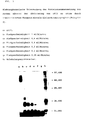
- the samples obtained were examined for their protein composition by denaturing electrophoresis (Laemmli, Nature, Vol. 227: 680-685, (1970)). The results are shown in FIG. 1, the molecular weight marker being shown in lane a, the 1-minute trypsin digestion in lane b and the 5-minute trypsin digestion in lane c.
- rFII was converted to rFIIa by digestion with trypsin. After only 1 minute exposure to rFII with an activity of 4 IU / ml rFIIa was formed therefrom with an activity of 500 IU / ml. With an exposure time of 5 minutes, however, the detectable activity of rFIIa was very low.
- the electrophoretic analysis shows that a trypsin exposure to rFII of only 1 minute results in a protein mixture with molecular weights (in Da) between 70,000 and 20,000, with a protein with a molecular weight between 31,000 and 36,000 dominating.
- thrombin Since thrombin is known to have a molecular mass of 33,000 in electrophoresis, it can be assumed that the protein with the molecular mass 31,000-36,000 is thrombin formed. However, residues of non-activated rFII (molecular weight 70000) are still present. In contrast, when incubating rFII with trypsin for 5 minutes, only low-molecular peptides were detected in electrophoresis. This indicates an almost complete digestion of the rFII by trypsin, but without the rFIIa accumulating.
- a glass column (1 cm in diameter) was filled with 0.1 ml of immobilized trypsin-agarose gel; this corresponds to a gel height of 1.25 mm.
- RFII was pumped through this trypsin agarose gel at different flow rates.
- rFII was dissolved at 0.5 mg / ml (3.5 IU / ml) in 20 mM Tris / HCl buffer, pH 8.0, 150 mM NaCl.
- the flow rate of the rFII solution through the gel was varied between 0.05 ml / minute and 1.0 ml / minute.
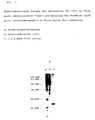
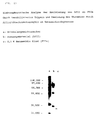
- the individual eluates were examined for their content of thrombin activity (see FIG. 2) and for their protein composition by means of electrophoresis (see FIG. 3).
- the flow rates and the dimensions of the trypsin agarose gel column result in average contact times of 6 seconds, 10 seconds, 15 seconds, 30 seconds, 60 Seconds and 120 seconds, with corresponding flow rates of 1.0 ml / minute, 0.6 ml / minute, 0.4 ml / minute, 0.2 ml / minute, 0.1 ml / minute and 0.05 ml / minute , between rFII and the immobilized Trypsin.
- ATU anti-thrombin units
- Pentapharm 4000 anti-thrombin units (ATU) hirudin (available from Pentapharm) were reduced and then according to the Manufacturer's instructions coupled to 1 ml of activated thiol-Sepharose (Pharmacia). Hirudin-thiol-Sepharose (HTS) was filled into a glass column (diameter 1 cm).
- the outlet of a glass column (diameter 1 cm) containing 0.1 ml of immobilized trypsin agarose gel (TAG) was connected to the inlet of the HTS column by a direct hose connection.
- the outlet of the HTS column could be connected to the inlet of the TAG column via a valve and a pump, creating a liquid circuit. Both columns were equilibrated with 20 mM Tris / -HCl buffer, pH 8.0.
- rFII was dissolved at 0.4 mg / ml (activity 3.5 IU / ml) in 4 ml of 20 mM Tris / HCl buffer, pH 8.0, and passed through the TAG at a flow rate of 0.8 ml / min. Pumped column. From there, the liquid flow was led directly to the HTS column without interruption and, after passing through the HTS column, pumped through the TAG column and HTS column a second time using a pump.
- the HTS column was then separated from the TAG column, rinsed with 50 mM citrate buffer, pH 6.5 (to remove unbound material) and then with 50 mM Na citrate buffer, pH 6.5, 500 mM NaCl , washed (0.5 M NaCl eluate).
- the HTS column was then eluted with 1.5 M KSCN in 50 mM citrate buffer, pH 6.5 (1.5 M KSCN eluate).
- FIG. 4 shows the electrophoretic examination of the activation described, the starting material (rFII) in lane a, the 1.5 M KSCN eluate (rFIIa) in lane b and a molecular weight marker being separated in lane c.
- thiol peptide 20 mg with the amino acid sequence NH2-Cys-Lys-Pro-Gln-Ser-His-Asn-Asp-Gly-Asp-Phe-Glu-Glu-Ile-Pro-Glu-Glu- Tyr-Leu-Gln-COOH were coupled to 1 ml of activated thiol-Sepharose (available from Pharmacia) in accordance with the manufacturer's instructions.
- Thiol-peptide-thiol-Sepharose (TPTS) was filled into a glass column (diameter 1 cm).
- a glass column (diameter 1 cm) containing 0.1 ml of immobilized trypsin agarose gel (TAG) was connected to the inlet of the TPTS column by a direct hose connection.
- the outlet of the TPTS column could be connected to the inlet of the TAG column via a valve and a pump, creating a liquid circuit. Both columns were equilibrated with 20 mM Tris / HCl buffer, pH 8.0.
- rFII was dissolved at 0.4 mg / ml (activity 3.5 IU / ml) in 4 ml of 20 mM Tris / HCl buffer, pH 8.0, and passed through the TAG at a flow rate of 0.8 ml / min. Pumped column. From there, the liquid flow was led directly to the TPTS column without interruption and after the passage of the TPTS column was pumped a second time through the TAG column and TPTS column.
- the TPTS column was then separated from the TAG column, rinsed with 50 mM citrate buffer, pH 6.5 (to remove unbound material) and then with 50 mM Na citrate buffer pH 6.5, 500 mM NaCl, washed (0.5 M NaCl eluate).
- the TPTS column was then eluted with 1.5 M KSCN in 50 mM citrate buffer, pH 6.5 (1.5 M KSCN eluate).
- the fractions obtained during activation were examined for thrombin activity (IU / ml), total activity (IU) and specific activity (thrombin activity / mg protein). The results of rFII activation obtained are listed in Table 3.
- Electrophoretic analysis of the activation of rFII to rFIIa by immobilized trypsin and recovery of the thrombin by Affinity chromatography on thiol-peptide-thiol-Sepharose is shown in FIG. 5, with the molecular weight marker in lane a, the starting material (rFII) in lane b and the 1.5 M KSCN eluate (rFIIa) in lane c.
- rFII was effectively converted to rFIIa by the described method.
- Formed rFIIa accumulated on the TPTS column and was obtained in electrophoretically pure form with a molecular weight of 33,000 and with very high specific activity by specific elution of the TPTS column.
- 1 I.U. rFII more than 150 IU pure rFIIa can be obtained.
- amino peptide amino peptide, AP
- amino acid sequence NH2-Lys-Pro-Gly-Pro-Gly-Ser-His-Ala-Asp-Gly-Asp-Phe-Glu-Glu-Ile-Pro-Glu- Glu-Tyr-Leu-COOH
- Pharmacia activated CH-Sepharose
- Amine-peptide-CH-Sepharose (APCHS) was filled into a glass column (1 cm in diameter).
- the outlet of a glass column (diameter 1 cm) containing 0.1 ml of immobilized trypsin agarose gel (TAG) was connected to the inlet of the APCHS column by a direct hose connection.
- the outlet of the APCHS column could be connected to the inlet of the TAG column via a valve and a pump, creating a liquid circuit. Both columns were equilibrated with 20 mM Tris / HCl buffer, pH 8.0.
- rFII was dissolved at 0.4 mg / ml (activity 3.5 IU / ml) in 4 ml of 20 mM Tris / HCl buffer, pH 8.0, and passed through the TAG at a flow rate of 0.8 ml / min. Pumped column. From there, the liquid flow was led directly to the APCHS column without interruption and, after passing through the APCHS column, again through the TAG column and APCHS column by means of a pump pumped.
- the APCHS column was then separated from the TAG column, rinsed with 50 mM citrate buffer, pH 6.5 (removing the unbound material) and then with 50 mM Na citrate buffer, pH 6.5, 500 mM NaCl, washed (0.5 M NaCl eluate).
- the APCHS column was then eluted with 1.5 M KSCN in 50 mM citrate buffer, pH 6.5 (1.5 M KSCN eluate).
- the fractions obtained during activation were examined for thrombin activity (IU / ml), total activity (IU) and specific activity (thrombin activity / mg protein).
- the results of rFII activation are summarized in Table 4.
- FIG. 6 shows the electrophoretic analysis of the activation of rFII to rFIIa by immobilized trypsin and recovery of the thrombin by affinity chromatography on amino-peptide-CH-Sepharose, with the molecular weight marker in lane a, the starting material (rFII) in lane b and in Lane c the 1.5 M KSCN eluate (rFIIa) have been separated.
- rFII was effectively converted to rFIIa by the method described in Example 5.
- Formed rFIIa accumulated on the APCHS column and was obtained in electrophoretically pure form with a molecular weight of 33,000 and with very high specific activity by specific elution of the APCHS column.
- more than 150 IU of pure rFIIa could be obtained from 1 IU of rFII.
- rFII was dissolved at 0.4 mg / ml (activity 3.5 IU / ml) in 4 ml of 20 mM Tris / HCl buffer, pH 8.0, and passed through the TAG at a flow rate of 0.8 ml / min. Pumped column. From there, the liquid flow was led directly to the BAS column without interruption and, after passing through the BAS column, was pumped a second time through the TAG column and BAS column. The BAS column was then separated from the TAG column, rinsed with 50 mM citrate buffer, pH 6.5 (to remove unbound material) and then with 50 mM Na citrate buffer, pH 6.5, 150 mM NaCl, washed (0.15 M NaCl eluate).
- FIG. 7 shows the electrophoretic analysis of the activation of rFII to rFIIa by immobilized trypsin and recovery of the thrombin by affinity chromatography on benzamidine-Sepharose, with the starting material (rFII) in lane a and the 0.1 M benzamidine eluate (rFIIa. In lane b) ) and the molecular weight markers have been applied in lane c.
- rFII was effectively converted to rFIIa by the method described in Example 6.
- Formed rFIIa accumulated on the BAS column and was obtained in electrophoretically pure form with a molecular weight of 33,000 and with very high specific activity by specific elution of the BAS column.
- 1 I.U. rFII more than 150 IU pure rFIIa can be obtained.
- rFII was dissolved at 0.4 mg / ml (activity 3.5 IU / ml) in 4 ml of 20 mM Tris / HCl buffer, pH 8.0, and passed through the TAG at a flow rate of 0.8 ml / min. Pumped column. From there, the liquid flow was led directly to the HS column without interruption and, after passing through the HS column, pumped through the TAG column and HS column a second time using a pump.
- the HS column was then separated from the TAG column, rinsed with 50 mM citrate buffer, pH 6.5 (to remove unbound material) and then with 50 mM Na citrate buffer, pH 6.5, 150 mM NaCl , washed (0.15 M NaCl eluate).
- the HS column was then eluted with 0.5 M NaCl in 50 mM citrate buffer, pH 6.5 (0.5 M NaCl eluate).
- the fractions obtained during activation were examined for thrombin activity (IU / ml), total activity (IU) and specific activity (thrombin activity / mg protein).
- Table 6 The results of the rFII activation from Example 7 are summarized in Table 6.
- FIG. 8 The electrophoretic analysis of the activation of rFII to rFIIa by immobilized trypsin and recovery of the thrombin by affinity chromatography on heparin-Sepharose is shown in FIG. 8, with the starting material (rFII) in lane a and the 0.5 M NaCl eluate in lane b (rFIIa) and in lane c the molecular weight markers have been applied.
- rFII was effectively converted to rFIIa by the method described in Example 7.
- Formed rFIIa accumulated on the HS column and was obtained in electrophoretically pure form with molecular weights of 33000 and 35000 and with very high specific activity by specific elution of the HS column.
- 1 I.U. rFII more than 150 IU pure rFIIa can be obtained.
- An amino peptide CH-Sepharose column (APCHS column) was prepared as described in Example 5.
- the outlet of a glass column (diameter 1 cm) containing 0.1 ml of immobilized trypsin agarose gel (TAG) was connected to the inlet of the APCHS column by a direct hose connection.
- the outlet of the APCHS column could be connected to the inlet of the TAG column via a valve and a pump, creating a liquid circuit. Both columns were equilibrated with 20 mM Tris / HCl buffer, pH 8.0.
- the APCHS column was then separated from the TAG column, rinsed with 50 mM citrate buffer, pH 6.5 (to remove unbound material) and then with 50 mM Na citrate buffer, pH 6.5, 500 mM NaCl , washed (0.5 M NaCl eluate).
- the APCHS column was then eluted with 1.5 M KSCN in 50 mM citrate buffer, pH 6.5 (1.5 M KSCN eluate).
- the fractions obtained during activation were based on thrombin activity (IU / ml), total activity (IE) and specific activity (thrombin activity / mg protein) were examined.
- the results of the rFII activation from Example 8 are summarized in Table 7.
- FIG. 9 shows the electrophoretic analysis of the activation of rFII to rFIIa in a protein mixture by immobilized trypsin and recovery of the thrombin by affinity chromatography on amino-peptide-CH-Sepharose, where in lane a the starting material (protein mixture), in lane b the 1.5 M KSCN eluate (rFIIa) and in lane c the molecular weight markers were applied.
- rFII was effectively converted to rFIIa in a protein mixture.
- Formed rFIIa accumulated on the APCHS column and was obtained in electrophoretically pure form with a molecular weight of 33,000 and with very high specific activity by specific elution of the APCHS column.
- 1 I.U. rFII more than 150 IU pure rFIIa can be obtained.
- hFII Human factor II
- the BAS column was then separated from the TAG column, rinsed with 50 mM citrate buffer, pH 6.5 (unbound material was removed in the process) and then with 50 mM Na citrate buffer, pH 6.5, 150 mM NaCl , washed (0.15 M NaCl eluate).
- the BAS column was then eluted with 0.1 M benzamidine in 50 mM citrate buffer, pH 6.5 (0.1 M benzamidine eluate).
- the fractions obtained during activation were examined for thrombin activity (IU / ml), total activity (IU) and specific activity (thrombin activity / mg protein).
- Table 8 The results of the FII activation from Example 9 are summarized in Table 8.
- FIG. 10 shows the electrophoretic analysis of the activation of hFII to FIIa by immobilized trypsin and recovery of the thrombin by affinity chromatography on benzamidine-Sepharose, with the molecular weight marker in lane a, the starting material (hFII) in lane b and 0.1 in lane c M benzamidine eluate (FIIa) has been applied.
- FIIa formed accumulated on the BAS column and was obtained in electrophoretically pure form with a molecular weight of 33,000 and with very high specific activity by specific elution of the BAS column. Using the described method, 1 I.U. FII more than 150 IU pure FIIa can be obtained.
- An amino peptide CH-Sepharose column (APCHS column) was prepared as described in Example 5. 30 mg of the protease factor Xa (Boehringer Mannheim) was coupled to 1 ml of CNBr-activated Sepharose (Pharmacia) according to the manufacturer's instructions and filled into a glass column (diameter 1 cm) (XaS column). The outlet of the XaS column was connected to the inlet of the APCHS column by a direct hose connection. The outlet of the APCHS column could be connected to the inlet of the XaS column via a valve and a pump, creating a liquid circuit. Both columns were equilibrated with 20 mM Tris / HCl buffer, pH 8.0.
- rFII was dissolved at 0.4 mg / ml (activity 3.5 IU / ml) in 4 ml of 20 mM Tris / HCl buffer, pH 8.0, and passed through the XaS at a flow rate of 0.1 ml / min. Pumped column. From there, the liquid flow was led directly to the APCHS column without interruption and after the passage of the APCHS column a second time by means of a pump through the XaS column and APCHS column pumped. This process was repeated three more times.
- the APCHS column was then separated from the XaS column, rinsed with 50 mM citrate buffer, pH 6.5 (removing unbound material) and then with 50 mM Na citrate buffer, pH 6.5, 500 mM NaCl , washed (0.5 M NaCl eluate).
- the APCHS column was then eluted with 1.5 M KSCN in 50 mM citrate buffer, pH 6.5 (1.5 M KSCN eluate).
- the fractions obtained during activation were examined for thrombin activity (IU / ml), total activity (IU) and specific activity (thrombin activity / mg protein).
- Table 9 The results of the rFII activation from Example 10 are summarized in Table 9.
- FIG. 11 shows the electrophoretic analysis of the activation of rFII to rFIIa by immobilized factor Xa and recovery of the thrombin by affinity chromatography on amino-peptide-CH-Sepharose, with the molecular weight marker in lane a, the starting material (rFII) in lane b and lane c the 1.5 M KSCN eluate (rFIIa) has been applied.
- rFII was also effectively converted to rFIIa by the protease factor Xa.
- Formed rFIIa accumulated on the APCHS column and was obtained in electrophoretically pure form with a molecular weight of 33,000 and with very high specific activity by specific elution of the APCHS column.
- more than 150 IU of pure rFIIa could be obtained from 1 IU rFII.
- the BAS column was then separated from the TAG column, rinsed with 50 mM citrate buffer, pH 6.5 (removal of unbound material) and then with 50 mM Na citrate buffer, pH 6.5, 150 mM NaCl, washed (0.15 M NaCl eluate).
- the BAS column was then eluted with 0.1 M benzamidine in 50 mM citrate buffer, pH 6.5 (0.1 M benzamidine eluate).
- the fractions obtained during activation were examined for activity of factor Xa (IU / ml), total activity (IU) and specific activity (activity / mg protein).
- the results of factor X activation from Example 11 are summarized in Table 10.
- FIG. 12 shows the electrophoretic analysis of the activation of FX to FXa by immobilized trypsin and recovery of the FXa by affinity chromatography on benzamidine-Sepharose, wherein in lane a the starting material (FX), in lane b the 0.1 M benzamidine eluate (FXa ) and the molecular weight markers have been applied in lane c.
Landscapes
- Health & Medical Sciences (AREA)
- Chemical & Material Sciences (AREA)
- Life Sciences & Earth Sciences (AREA)
- Engineering & Computer Science (AREA)
- Organic Chemistry (AREA)
- Wood Science & Technology (AREA)
- Bioinformatics & Cheminformatics (AREA)
- Zoology (AREA)
- Genetics & Genomics (AREA)
- General Health & Medical Sciences (AREA)
- General Engineering & Computer Science (AREA)
- Biochemistry (AREA)
- Biomedical Technology (AREA)
- Microbiology (AREA)
- Biotechnology (AREA)
- Molecular Biology (AREA)
- Medicinal Chemistry (AREA)
- Chemical Kinetics & Catalysis (AREA)
- General Chemical & Material Sciences (AREA)
- Nuclear Medicine, Radiotherapy & Molecular Imaging (AREA)
- Hematology (AREA)
- Diabetes (AREA)
- Pharmacology & Pharmacy (AREA)
- Animal Behavior & Ethology (AREA)
- Public Health (AREA)
- Veterinary Medicine (AREA)
- Peptides Or Proteins (AREA)
- Preparation Of Compounds By Using Micro-Organisms (AREA)
- Medicines That Contain Protein Lipid Enzymes And Other Medicines (AREA)
- Enzymes And Modification Thereof (AREA)
- Measuring Or Testing Involving Enzymes Or Micro-Organisms (AREA)
Priority Applications (1)
| Application Number | Priority Date | Filing Date | Title |
|---|---|---|---|
| AT96890172T ATE277169T1 (de) | 1995-11-24 | 1996-11-19 | Verfahren zur herstellung von proteinen durch kontrollierte proteolytische spaltung von pro- proteinen |
Applications Claiming Priority (3)
| Application Number | Priority Date | Filing Date | Title |
|---|---|---|---|
| AT0192795A AT404597B (de) | 1995-11-24 | 1995-11-24 | Verfahren zur herstellung von proteinen |
| AT192795 | 1995-11-24 | ||
| AT1927/95 | 1995-11-24 |
Publications (3)
| Publication Number | Publication Date |
|---|---|
| EP0776969A2 true EP0776969A2 (fr) | 1997-06-04 |
| EP0776969A3 EP0776969A3 (fr) | 1999-06-02 |
| EP0776969B1 EP0776969B1 (fr) | 2004-09-22 |
Family
ID=3524033
Family Applications (1)
| Application Number | Title | Priority Date | Filing Date |
|---|---|---|---|
| EP96890172A Expired - Lifetime EP0776969B1 (fr) | 1995-11-24 | 1996-11-19 | Procédé de préparation de protéines à travers une protéolyse controlée des pro-protéines |
Country Status (7)
| Country | Link |
|---|---|
| US (1) | US6010844A (fr) |
| EP (1) | EP0776969B1 (fr) |
| JP (1) | JP4180671B2 (fr) |
| AT (2) | AT404597B (fr) |
| CA (1) | CA2190802C (fr) |
| DE (1) | DE59611093D1 (fr) |
| NO (1) | NO319266B1 (fr) |
Cited By (1)
| Publication number | Priority date | Publication date | Assignee | Title |
|---|---|---|---|---|
| WO1999015197A1 (fr) * | 1997-09-19 | 1999-04-01 | Immuno Aktiengesellschaft | Preparation pour le traitement de troubles lies a la coagulation sanguine |
Families Citing this family (6)
| Publication number | Priority date | Publication date | Assignee | Title |
|---|---|---|---|---|
| US7560622B2 (en) * | 2000-10-06 | 2009-07-14 | Pioneer Hi-Bred International, Inc. | Methods and compositions relating to the generation of partially transgenic organisms |
| US6830917B2 (en) | 2001-12-10 | 2004-12-14 | Baxter Healthcare S.A. | Method of isolation and purification of trypsin from pronase protease and use thereof |
| US7235655B2 (en) * | 2002-03-22 | 2007-06-26 | Pharmacia & Upjohn Company | Processes to prepare eplerenone |
| ATE517914T1 (de) | 2004-03-08 | 2011-08-15 | Zymogenetics Inc | Dimere fusionsproteine und materialien und verfahren zu deren herstellung |
| JP2012050386A (ja) * | 2010-09-01 | 2012-03-15 | Kaneka Corp | 2種類以上の多孔質充填剤を充填するカラム |
| JP2012050387A (ja) * | 2010-09-01 | 2012-03-15 | Kaneka Corp | 2種類以上の分子を多孔質担体に固定化する方法 |
Citations (4)
| Publication number | Priority date | Publication date | Assignee | Title |
|---|---|---|---|---|
| EP0416890A1 (fr) | 1989-09-05 | 1991-03-13 | Eli Lilly And Company | Procédé d'activation de la protéine C |
| EP0541507A2 (fr) | 1991-11-04 | 1993-05-12 | IMMUNO Aktiengesellschaft | Thrombine et procédé pour sa production |
| EP0565511A1 (fr) | 1992-04-06 | 1993-10-13 | IMMUNO Aktiengesellschaft | Procédé pour cliver des protéines |
| EP0565512A1 (fr) | 1992-04-06 | 1993-10-13 | IMMUNO Aktiengesellschaft | Procédé pour l'activation de facteurs coagulants sanguins |
Family Cites Families (4)
| Publication number | Priority date | Publication date | Assignee | Title |
|---|---|---|---|---|
| CA2000887A1 (fr) * | 1988-11-01 | 1990-05-01 | Cecilia S.L. Ku | Materiaux thromboresistants et methode de production |
| US5053453A (en) * | 1988-11-01 | 1991-10-01 | Baxter International Inc. | Thromboresistant materials and methods for making same |
| DE3843126C3 (de) * | 1988-12-22 | 1994-10-06 | Octapharma Ag | Verfahren zur Herstellung eines hochreinen Thrombinkonzentrates |
| US5296352A (en) * | 1990-10-02 | 1994-03-22 | Ciba-Geigy Corporation | Monoclonal antibodies directed against complexes formed by thrombin and hirudin |
-
1995
- 1995-11-24 AT AT0192795A patent/AT404597B/de not_active IP Right Cessation
-
1996
- 1996-11-19 AT AT96890172T patent/ATE277169T1/de active
- 1996-11-19 EP EP96890172A patent/EP0776969B1/fr not_active Expired - Lifetime
- 1996-11-19 DE DE59611093T patent/DE59611093D1/de not_active Expired - Lifetime
- 1996-11-20 US US08/752,892 patent/US6010844A/en not_active Expired - Lifetime
- 1996-11-20 CA CA002190802A patent/CA2190802C/fr not_active Expired - Fee Related
- 1996-11-22 NO NO19964965A patent/NO319266B1/no not_active IP Right Cessation
- 1996-11-25 JP JP33027896A patent/JP4180671B2/ja not_active Expired - Fee Related
Patent Citations (4)
| Publication number | Priority date | Publication date | Assignee | Title |
|---|---|---|---|---|
| EP0416890A1 (fr) | 1989-09-05 | 1991-03-13 | Eli Lilly And Company | Procédé d'activation de la protéine C |
| EP0541507A2 (fr) | 1991-11-04 | 1993-05-12 | IMMUNO Aktiengesellschaft | Thrombine et procédé pour sa production |
| EP0565511A1 (fr) | 1992-04-06 | 1993-10-13 | IMMUNO Aktiengesellschaft | Procédé pour cliver des protéines |
| EP0565512A1 (fr) | 1992-04-06 | 1993-10-13 | IMMUNO Aktiengesellschaft | Procédé pour l'activation de facteurs coagulants sanguins |
Non-Patent Citations (6)
| Title |
|---|
| A. HAEBERLI: "Human Protein Data", 1992, VCH WEINHEIM, NEW YORK |
| F.G. FALKNER ET AL., THROMB. HAEMOST., vol. 68, 1992, pages 119 - 124 |
| KISIEL, HANAHAN, BIOCHIM. BIOPHYS. ACTA, vol. 329, 1973, pages 221 - 232 |
| LAEMMLI, NATURE, vol. 227, 1970, pages 680 - 685 |
| LANDABURU ET AL., AM. J. PHYSIOL., vol. 201, 1961, pages 298 - 302 |
| M. BRADFORD, ANAL. BIOCHEM., vol. 72, 1976, pages 248 - 254 |
Cited By (1)
| Publication number | Priority date | Publication date | Assignee | Title |
|---|---|---|---|---|
| WO1999015197A1 (fr) * | 1997-09-19 | 1999-04-01 | Immuno Aktiengesellschaft | Preparation pour le traitement de troubles lies a la coagulation sanguine |
Also Published As
| Publication number | Publication date |
|---|---|
| JPH09183794A (ja) | 1997-07-15 |
| CA2190802C (fr) | 2008-02-12 |
| DE59611093D1 (de) | 2004-10-28 |
| ATE277169T1 (de) | 2004-10-15 |
| EP0776969B1 (fr) | 2004-09-22 |
| CA2190802A1 (fr) | 1997-05-25 |
| NO319266B1 (no) | 2005-07-11 |
| ATA192795A (de) | 1998-05-15 |
| NO964965D0 (no) | 1996-11-22 |
| EP0776969A3 (fr) | 1999-06-02 |
| US6010844A (en) | 2000-01-04 |
| JP4180671B2 (ja) | 2008-11-12 |
| AT404597B (de) | 1998-12-28 |
| NO964965L (no) | 1997-05-26 |
Similar Documents
| Publication | Publication Date | Title |
|---|---|---|
| EP0966536B1 (fr) | Analogues du facteur x dont le site de clivage donnant une protease est modifie | |
| DE68915675T2 (de) | Verfahren zur Reinigung von Vitamin K-abhängigen Proteinen. | |
| EP1133555B1 (fr) | Preparation pharmaceutique a base d'un facteur vii | |
| EP1825865B1 (fr) | Préparations stabilisées de sérines endopeptidases, leur fabrication et utilisation | |
| EP1012303B1 (fr) | Mutants du facteur x a deletion d'acides amines et analogues desdits mutants | |
| EP0770625B1 (fr) | Procédé de purification de Facteur VII et Facteur VII activé | |
| EP0973544B1 (fr) | Preparation immunotolerante contenant un complexe de prothrombine | |
| DE2734427C3 (de) | Verfahren zur Gewinnung von thrombinartigen Enzymen aus Schlangengiften | |
| AT410216B (de) | Faktor x-analogon mit verbesserter aktivierbarkeit | |
| AT404597B (de) | Verfahren zur herstellung von proteinen | |
| EP0669342B1 (fr) | Procédé d'isolation et de purification des protéines vitamine-K dépendents | |
| DE60003449T2 (de) | Testverfahren | |
| EP0565512B1 (fr) | Procédé pour l'activation de facteurs coagulants sanguins | |
| EP0565511B1 (fr) | Procédé pour cliver des proenzymes | |
| DE69520844T2 (de) | Verfahren zur Verhinderung der Zersetzung des Proteins C | |
| DE69009668T2 (de) | Verfahren zur herstellung von aktiviertem protein c. | |
| EP0763596A1 (fr) | Procede pour la production de thrombine | |
| Workman Jr et al. | On the preparation of bovine α-thrombin | |
| AU740727B2 (en) | Activated vitamin K-dependent blood factor and method for the production thereof | |
| Ehrlich et al. | Protein C: Physiologie, Biochemie und Molekularbiologie | |
| DD234279A5 (de) | Verfahren zur herstellung einer serumunabhaengigen humanzellinie | |
| MXPA99008147A (en) | Activated vitamin k-dependent blood factor and method for the production thereof | |
| EP0256522A2 (fr) | Procédé de production d'une préparation de facteur de coagulation dépendant de la vitamine K, pauvre en prothrombine ainsi qu'un milieu pour l'obtenir | |
| DE1076060B (de) | Verfahren zur Gewinnung einer proteolytischen Enzymsubstanz |
Legal Events
| Date | Code | Title | Description |
|---|---|---|---|
| PUAI | Public reference made under article 153(3) epc to a published international application that has entered the european phase |
Free format text: ORIGINAL CODE: 0009012 |
|
| AK | Designated contracting states |
Kind code of ref document: A2 Designated state(s): AT BE CH DE DK ES FI FR GB IT LI NL SE |
|
| PUAL | Search report despatched |
Free format text: ORIGINAL CODE: 0009013 |
|
| AK | Designated contracting states |
Kind code of ref document: A3 Designated state(s): AT BE CH DE DK ES FI FR GB IT LI NL SE |
|
| RAP1 | Party data changed (applicant data changed or rights of an application transferred) |
Owner name: BAXTER AKTIENGESELLSCHAFT |
|
| 17P | Request for examination filed |
Effective date: 19990730 |
|
| RAP1 | Party data changed (applicant data changed or rights of an application transferred) |
Owner name: BAXTER AKTIENGESELLSCHAFT |
|
| 17Q | First examination report despatched |
Effective date: 20030528 |
|
| GRAP | Despatch of communication of intention to grant a patent |
Free format text: ORIGINAL CODE: EPIDOSNIGR1 |
|
| GRAS | Grant fee paid |
Free format text: ORIGINAL CODE: EPIDOSNIGR3 |
|
| GRAA | (expected) grant |
Free format text: ORIGINAL CODE: 0009210 |
|
| RIN1 | Information on inventor provided before grant (corrected) |
Inventor name: EIBL, JOHANN, DR. Inventor name: DORNER, FRIEDRICH, PROF. Inventor name: MITTERER, ARTUR, DR. Inventor name: FISCHER, BERNHARD, DOZ. |
|
| AK | Designated contracting states |
Kind code of ref document: B1 Designated state(s): AT BE CH DE DK ES FI FR GB IT LI NL SE |
|
| PG25 | Lapsed in a contracting state [announced via postgrant information from national office to epo] |
Ref country code: IT Free format text: LAPSE BECAUSE OF FAILURE TO SUBMIT A TRANSLATION OF THE DESCRIPTION OR TO PAY THE FEE WITHIN THE PRE;WARNING: LAPSES OF ITALIAN PATENTS WITH EFFECTIVE DATE BEFORE 2007 MAY HAVE OCCURRED AT ANY TIME BEFORE 2007. THE CORRECT EFFECTIVE DATE MAY BE DIFFERENT FROM THE ONE RECORDED.SCRIBED TIME-LIMIT Effective date: 20040922 Ref country code: FI Free format text: LAPSE BECAUSE OF FAILURE TO SUBMIT A TRANSLATION OF THE DESCRIPTION OR TO PAY THE FEE WITHIN THE PRESCRIBED TIME-LIMIT Effective date: 20040922 |
|
| REG | Reference to a national code |
Ref country code: GB Ref legal event code: FG4D Free format text: NOT ENGLISH |
|
| REG | Reference to a national code |
Ref country code: CH Ref legal event code: EP |
|
| REF | Corresponds to: |
Ref document number: 59611093 Country of ref document: DE Date of ref document: 20041028 Kind code of ref document: P |
|
| PG25 | Lapsed in a contracting state [announced via postgrant information from national office to epo] |
Ref country code: LI Free format text: LAPSE BECAUSE OF NON-PAYMENT OF DUE FEES Effective date: 20041130 Ref country code: CH Free format text: LAPSE BECAUSE OF NON-PAYMENT OF DUE FEES Effective date: 20041130 Ref country code: BE Free format text: LAPSE BECAUSE OF NON-PAYMENT OF DUE FEES Effective date: 20041130 |
|
| PG25 | Lapsed in a contracting state [announced via postgrant information from national office to epo] |
Ref country code: SE Free format text: LAPSE BECAUSE OF FAILURE TO SUBMIT A TRANSLATION OF THE DESCRIPTION OR TO PAY THE FEE WITHIN THE PRESCRIBED TIME-LIMIT Effective date: 20041222 Ref country code: DK Free format text: LAPSE BECAUSE OF FAILURE TO SUBMIT A TRANSLATION OF THE DESCRIPTION OR TO PAY THE FEE WITHIN THE PRESCRIBED TIME-LIMIT Effective date: 20041222 |
|
| PG25 | Lapsed in a contracting state [announced via postgrant information from national office to epo] |
Ref country code: ES Free format text: LAPSE BECAUSE OF FAILURE TO SUBMIT A TRANSLATION OF THE DESCRIPTION OR TO PAY THE FEE WITHIN THE PRESCRIBED TIME-LIMIT Effective date: 20050102 |
|
| GBT | Gb: translation of ep patent filed (gb section 77(6)(a)/1977) | ||
| BERE | Be: lapsed |
Owner name: BAXTER A.G. Effective date: 20041130 |
|
| REG | Reference to a national code |
Ref country code: CH Ref legal event code: PL |
|
| PLBE | No opposition filed within time limit |
Free format text: ORIGINAL CODE: 0009261 |
|
| STAA | Information on the status of an ep patent application or granted ep patent |
Free format text: STATUS: NO OPPOSITION FILED WITHIN TIME LIMIT |
|
| ET | Fr: translation filed | ||
| 26N | No opposition filed |
Effective date: 20050623 |
|
| BERE | Be: lapsed |
Owner name: *BAXTER A.G. Effective date: 20041130 |
|
| REG | Reference to a national code |
Ref country code: FR Ref legal event code: PLFP Year of fee payment: 20 |
|
| PGFP | Annual fee paid to national office [announced via postgrant information from national office to epo] |
Ref country code: GB Payment date: 20151127 Year of fee payment: 20 Ref country code: DE Payment date: 20151127 Year of fee payment: 20 |
|
| PGFP | Annual fee paid to national office [announced via postgrant information from national office to epo] |
Ref country code: AT Payment date: 20151103 Year of fee payment: 20 Ref country code: NL Payment date: 20151126 Year of fee payment: 20 Ref country code: FR Payment date: 20151117 Year of fee payment: 20 |
|
| REG | Reference to a national code |
Ref country code: DE Ref legal event code: R082 Ref document number: 59611093 Country of ref document: DE Representative=s name: HOFFMANN - EITLE PATENT- UND RECHTSANWAELTE PA, DE Ref country code: DE Ref legal event code: R081 Ref document number: 59611093 Country of ref document: DE Owner name: BAXALTA GMBH, GLATTPARK, CH Free format text: FORMER OWNER: BAXTER AG, WIEN, AT Ref country code: DE Ref legal event code: R081 Ref document number: 59611093 Country of ref document: DE Owner name: BAXALTA INCORPORATED, BANNOCKBURN, US Free format text: FORMER OWNER: BAXTER AG, WIEN, AT |
|
| REG | Reference to a national code |
Ref country code: NL Ref legal event code: PD Owner name: BAXTER EASTERN EUROPE VERTRIEBS GMBH; AT Free format text: DETAILS ASSIGNMENT: VERANDERING VAN EIGENAAR(S), VERANDERING VAN DE JURIDISCHE ENTITEIT; FORMER OWNER NAME: BAXTER AKTIENGESELLSCHAFT Effective date: 20160502 Ref country code: NL Ref legal event code: HC Owner name: BAXALTA INNOVATIONS GMBH; AT Free format text: DETAILS ASSIGNMENT: VERANDERING VAN EIGENAAR(S), VERANDERING VAN NAAM VAN DE EIGENAAR(S); FORMER OWNER NAME: BAXTER TRADING GMBH Effective date: 20160502 |
|
| REG | Reference to a national code |
Ref country code: NL Ref legal event code: PD Owner name: BAXALTA INCORPORATED; US Free format text: DETAILS ASSIGNMENT: VERANDERING VAN EIGENAAR(S), OVERDRACHT; FORMER OWNER NAME: BAXTER AKTIENGESELLSCHAFT Effective date: 20160524 |
|
| REG | Reference to a national code |
Ref country code: FR Ref legal event code: TQ Owner name: BAXALTA INNOVATIONS GMBH Effective date: 20160518 Ref country code: FR Ref legal event code: TQ Owner name: BAXALTA INCORPORATED, US Effective date: 20160518 Ref country code: FR Ref legal event code: CJ Effective date: 20160518 Ref country code: FR Ref legal event code: CD Owner name: BAXALTA INCORPORATED, US Effective date: 20160518 Ref country code: FR Ref legal event code: CD Owner name: BAXALTA INNOVATIONS GMBH Effective date: 20160518 |
|
| REG | Reference to a national code |
Ref country code: GB Ref legal event code: 732E Free format text: REGISTERED BETWEEN 20160707 AND 20160713 |
|
| REG | Reference to a national code |
Ref country code: AT Ref legal event code: PC Ref document number: 277169 Country of ref document: AT Kind code of ref document: T Owner name: BAXALTA GMBH, CH Effective date: 20160623 Ref country code: AT Ref legal event code: PC Ref document number: 277169 Country of ref document: AT Kind code of ref document: T Owner name: BAXALTA INCORPORATED, US Effective date: 20160623 |
|
| REG | Reference to a national code |
Ref country code: DE Ref legal event code: R071 Ref document number: 59611093 Country of ref document: DE |
|
| REG | Reference to a national code |
Ref country code: NL Ref legal event code: MK Effective date: 20161118 |
|
| REG | Reference to a national code |
Ref country code: GB Ref legal event code: PE20 Expiry date: 20161118 |
|
| REG | Reference to a national code |
Ref country code: AT Ref legal event code: MK07 Ref document number: 277169 Country of ref document: AT Kind code of ref document: T Effective date: 20161119 |
|
| PG25 | Lapsed in a contracting state [announced via postgrant information from national office to epo] |
Ref country code: GB Free format text: LAPSE BECAUSE OF EXPIRATION OF PROTECTION Effective date: 20161118 |