EP0780450B1 - Compositions, aqueuses d'encre contenant des amides comme agents contre l'enroulement de papier amide - Google Patents
Compositions, aqueuses d'encre contenant des amides comme agents contre l'enroulement de papier amide Download PDFInfo
- Publication number
- EP0780450B1 EP0780450B1 EP96118750A EP96118750A EP0780450B1 EP 0780450 B1 EP0780450 B1 EP 0780450B1 EP 96118750 A EP96118750 A EP 96118750A EP 96118750 A EP96118750 A EP 96118750A EP 0780450 B1 EP0780450 B1 EP 0780450B1
- Authority
- EP
- European Patent Office
- Prior art keywords
- ink
- curl
- curl agent
- colorant
- urea
- Prior art date
- Legal status (The legal status is an assumption and is not a legal conclusion. Google has not performed a legal analysis and makes no representation as to the accuracy of the status listed.)
- Expired - Lifetime
Links
- 239000000203 mixture Substances 0.000 title claims description 32
- 150000001408 amides Chemical class 0.000 title 1
- 239000000976 ink Substances 0.000 claims description 105
- 239000000049 pigment Substances 0.000 claims description 53
- 239000003795 chemical substances by application Substances 0.000 claims description 39
- 239000000975 dye Substances 0.000 claims description 32
- 150000001875 compounds Chemical class 0.000 claims description 28
- XLYOFNOQVPJJNP-UHFFFAOYSA-N water Substances O XLYOFNOQVPJJNP-UHFFFAOYSA-N 0.000 claims description 28
- 239000002270 dispersing agent Substances 0.000 claims description 24
- 239000006185 dispersion Substances 0.000 claims description 23
- 239000003086 colorant Substances 0.000 claims description 22
- 239000008365 aqueous carrier Substances 0.000 claims description 15
- 238000000034 method Methods 0.000 claims description 15
- 238000007639 printing Methods 0.000 claims description 11
- 229920000642 polymer Polymers 0.000 claims description 9
- 125000001495 ethyl group Chemical group [H]C([H])([H])C([H])([H])* 0.000 claims description 8
- 239000000758 substrate Substances 0.000 claims description 7
- 229940057054 1,3-dimethylurea Drugs 0.000 claims description 6
- MGJKQDOBUOMPEZ-UHFFFAOYSA-N N,N'-dimethylurea Chemical compound CNC(=O)NC MGJKQDOBUOMPEZ-UHFFFAOYSA-N 0.000 claims description 6
- 229920001400 block copolymer Polymers 0.000 claims description 6
- CNWSQCLBDWYLAN-UHFFFAOYSA-N butylurea Chemical compound CCCCNC(N)=O CNWSQCLBDWYLAN-UHFFFAOYSA-N 0.000 claims description 6
- LZMATGARSSLFMQ-UHFFFAOYSA-N propan-2-ylurea Chemical compound CC(C)NC(N)=O LZMATGARSSLFMQ-UHFFFAOYSA-N 0.000 claims description 6
- CYSGHNMQYZDMIA-UHFFFAOYSA-N 1,3-Dimethyl-2-imidazolidinon Chemical compound CN1CCN(C)C1=O CYSGHNMQYZDMIA-UHFFFAOYSA-N 0.000 claims description 4
- NQPJDJVGBDHCAD-UHFFFAOYSA-N 1,3-diazinan-2-one Chemical compound OC1=NCCCN1 NQPJDJVGBDHCAD-UHFFFAOYSA-N 0.000 claims description 4
- ZWAVGZYKJNOTPX-UHFFFAOYSA-N 1,3-diethylurea Chemical compound CCNC(=O)NCC ZWAVGZYKJNOTPX-UHFFFAOYSA-N 0.000 claims description 3
- DBSPZYVXETVRMN-UHFFFAOYSA-N 1-ethyl-1,3-diazinan-2-one Chemical compound CCN1CCCNC1=O DBSPZYVXETVRMN-UHFFFAOYSA-N 0.000 claims description 3
- COYPZADTXISTSJ-UHFFFAOYSA-N 1-methyl-1,3-diazinan-2-one Chemical compound CN1CCCNC1=O COYPZADTXISTSJ-UHFFFAOYSA-N 0.000 claims description 3
- CJEOGXVBPSWOEN-UHFFFAOYSA-N 4-ethyl-1,3-diazinan-2-one Chemical compound CCC1CCNC(=O)N1 CJEOGXVBPSWOEN-UHFFFAOYSA-N 0.000 claims description 3
- GOFSQILFNXDGTD-UHFFFAOYSA-N 4-methyl-1,3-diazinan-2-one Chemical compound CC1CCNC(=O)N1 GOFSQILFNXDGTD-UHFFFAOYSA-N 0.000 claims description 3
- RYECOJGRJDOGPP-UHFFFAOYSA-N Ethylurea Chemical compound CCNC(N)=O RYECOJGRJDOGPP-UHFFFAOYSA-N 0.000 claims description 3
- 125000004432 carbon atom Chemical group C* 0.000 claims description 3
- YAMHXTCMCPHKLN-UHFFFAOYSA-N imidazolidin-2-one Chemical compound O=C1NCCN1 YAMHXTCMCPHKLN-UHFFFAOYSA-N 0.000 claims description 3
- ZQZJKHIIQFPZCS-UHFFFAOYSA-N propylurea Chemical compound CCCNC(N)=O ZQZJKHIIQFPZCS-UHFFFAOYSA-N 0.000 claims description 3
- NYCCIHSMVNRABA-UHFFFAOYSA-N 1,3-diethylimidazolidin-2-one Chemical compound CCN1CCN(CC)C1=O NYCCIHSMVNRABA-UHFFFAOYSA-N 0.000 claims description 2
- 125000002496 methyl group Chemical group [H]C([H])([H])* 0.000 claims 2
- 125000004123 n-propyl group Chemical group [H]C([H])([H])C([H])([H])C([H])([H])* 0.000 claims 2
- 239000002609 medium Substances 0.000 description 9
- 239000002245 particle Substances 0.000 description 9
- NBIIXXVUZAFLBC-UHFFFAOYSA-N Phosphoric acid Chemical compound OP(O)(O)=O NBIIXXVUZAFLBC-UHFFFAOYSA-N 0.000 description 8
- 238000007641 inkjet printing Methods 0.000 description 8
- 239000003960 organic solvent Substances 0.000 description 7
- 238000002360 preparation method Methods 0.000 description 7
- 125000002091 cationic group Chemical group 0.000 description 6
- 238000001035 drying Methods 0.000 description 6
- 239000004615 ingredient Substances 0.000 description 6
- 239000004094 surface-active agent Chemical class 0.000 description 6
- JKNCOURZONDCGV-UHFFFAOYSA-N 2-(dimethylamino)ethyl 2-methylprop-2-enoate Chemical compound CN(C)CCOC(=O)C(C)=C JKNCOURZONDCGV-UHFFFAOYSA-N 0.000 description 5
- 125000000129 anionic group Chemical group 0.000 description 5
- 239000012860 organic pigment Substances 0.000 description 5
- 0 *C(C(N1)I)NC1=O Chemical compound *C(C(N1)I)NC1=O 0.000 description 4
- 229910000147 aluminium phosphate Inorganic materials 0.000 description 4
- 239000012736 aqueous medium Substances 0.000 description 4
- AOJOEFVRHOZDFN-UHFFFAOYSA-N benzyl 2-methylprop-2-enoate Chemical group CC(=C)C(=O)OCC1=CC=CC=C1 AOJOEFVRHOZDFN-UHFFFAOYSA-N 0.000 description 4
- 239000008367 deionised water Substances 0.000 description 4
- 229910021641 deionized water Inorganic materials 0.000 description 4
- 239000001023 inorganic pigment Substances 0.000 description 4
- WEVYAHXRMPXWCK-UHFFFAOYSA-N Acetonitrile Chemical compound CC#N WEVYAHXRMPXWCK-UHFFFAOYSA-N 0.000 description 3
- OKKJLVBELUTLKV-UHFFFAOYSA-N Methanol Chemical compound OC OKKJLVBELUTLKV-UHFFFAOYSA-N 0.000 description 3
- 239000012141 concentrate Substances 0.000 description 3
- MTHSVFCYNBDYFN-UHFFFAOYSA-N diethylene glycol Chemical compound OCCOCCO MTHSVFCYNBDYFN-UHFFFAOYSA-N 0.000 description 3
- 239000000986 disperse dye Substances 0.000 description 3
- 239000007787 solid Substances 0.000 description 3
- 239000000243 solution Substances 0.000 description 3
- 240000000254 Agrostemma githago Species 0.000 description 2
- 235000009899 Agrostemma githago Nutrition 0.000 description 2
- XEEYBQQBJWHFJM-UHFFFAOYSA-N Iron Chemical compound [Fe] XEEYBQQBJWHFJM-UHFFFAOYSA-N 0.000 description 2
- URLKBWYHVLBVBO-UHFFFAOYSA-N Para-Xylene Chemical group CC1=CC=C(C)C=C1 URLKBWYHVLBVBO-UHFFFAOYSA-N 0.000 description 2
- VYPSYNLAJGMNEJ-UHFFFAOYSA-N Silicium dioxide Chemical compound O=[Si]=O VYPSYNLAJGMNEJ-UHFFFAOYSA-N 0.000 description 2
- GWEVSGVZZGPLCZ-UHFFFAOYSA-N Titan oxide Chemical compound O=[Ti]=O GWEVSGVZZGPLCZ-UHFFFAOYSA-N 0.000 description 2
- 239000000654 additive Substances 0.000 description 2
- 239000007864 aqueous solution Substances 0.000 description 2
- 239000003139 biocide Substances 0.000 description 2
- 230000015572 biosynthetic process Effects 0.000 description 2
- 238000004821 distillation Methods 0.000 description 2
- 239000010419 fine particle Substances 0.000 description 2
- 238000009472 formulation Methods 0.000 description 2
- 239000007788 liquid Substances 0.000 description 2
- 229910052751 metal Inorganic materials 0.000 description 2
- 239000002184 metal Substances 0.000 description 2
- 229910044991 metal oxide Inorganic materials 0.000 description 2
- 150000004706 metal oxides Chemical class 0.000 description 2
- 238000002156 mixing Methods 0.000 description 2
- 230000003472 neutralizing effect Effects 0.000 description 2
- 230000035515 penetration Effects 0.000 description 2
- 150000003248 quinolines Chemical class 0.000 description 2
- 239000000126 substance Substances 0.000 description 2
- 238000003786 synthesis reaction Methods 0.000 description 2
- JNOGVQJEBGEKMG-UHFFFAOYSA-N (1-methoxy-2-methylprop-1-enoxy)-trimethylsilane Chemical compound COC(=C(C)C)O[Si](C)(C)C JNOGVQJEBGEKMG-UHFFFAOYSA-N 0.000 description 1
- ZSPOJBDHHFFJAP-UHFFFAOYSA-M 3-chlorobenzoate;tetrabutylazanium Chemical compound [O-]C(=O)C1=CC=CC(Cl)=C1.CCCC[N+](CCCC)(CCCC)CCCC ZSPOJBDHHFFJAP-UHFFFAOYSA-M 0.000 description 1
- QZHXKQKKEBXYRG-UHFFFAOYSA-N 4-n-(4-aminophenyl)benzene-1,4-diamine Chemical compound C1=CC(N)=CC=C1NC1=CC=C(N)C=C1 QZHXKQKKEBXYRG-UHFFFAOYSA-N 0.000 description 1
- 230000005653 Brownian motion process Effects 0.000 description 1
- RYGMFSIKBFXOCR-UHFFFAOYSA-N Copper Chemical compound [Cu] RYGMFSIKBFXOCR-UHFFFAOYSA-N 0.000 description 1
- 229920000742 Cotton Polymers 0.000 description 1
- KCXVZYZYPLLWCC-UHFFFAOYSA-N EDTA Chemical compound OC(=O)CN(CC(O)=O)CCN(CC(O)=O)CC(O)=O KCXVZYZYPLLWCC-UHFFFAOYSA-N 0.000 description 1
- JUJWROOIHBZHMG-UHFFFAOYSA-N Pyridine Chemical class C1=CC=NC=C1 JUJWROOIHBZHMG-UHFFFAOYSA-N 0.000 description 1
- 229910000831 Steel Inorganic materials 0.000 description 1
- ZJCCRDAZUWHFQH-UHFFFAOYSA-N Trimethylolpropane Chemical compound CCC(CO)(CO)CO ZJCCRDAZUWHFQH-UHFFFAOYSA-N 0.000 description 1
- XSQUKJJJFZCRTK-UHFFFAOYSA-N Urea Chemical class NC(N)=O XSQUKJJJFZCRTK-UHFFFAOYSA-N 0.000 description 1
- 239000000980 acid dye Substances 0.000 description 1
- 125000000641 acridinyl group Chemical class C1(=CC=CC2=NC3=CC=CC=C3C=C12)* 0.000 description 1
- NIXOWILDQLNWCW-UHFFFAOYSA-N acrylic acid group Chemical group C(C=C)(=O)O NIXOWILDQLNWCW-UHFFFAOYSA-N 0.000 description 1
- 230000001154 acute effect Effects 0.000 description 1
- 230000002411 adverse Effects 0.000 description 1
- 239000000956 alloy Substances 0.000 description 1
- 229910045601 alloy Inorganic materials 0.000 description 1
- 229910052782 aluminium Inorganic materials 0.000 description 1
- XAGFODPZIPBFFR-UHFFFAOYSA-N aluminium Chemical compound [Al] XAGFODPZIPBFFR-UHFFFAOYSA-N 0.000 description 1
- PNEYBMLMFCGWSK-UHFFFAOYSA-N aluminium oxide Inorganic materials [O-2].[O-2].[O-2].[Al+3].[Al+3] PNEYBMLMFCGWSK-UHFFFAOYSA-N 0.000 description 1
- 125000003277 amino group Chemical group 0.000 description 1
- 239000002280 amphoteric surfactant Substances 0.000 description 1
- 239000003945 anionic surfactant Substances 0.000 description 1
- 150000001450 anions Chemical class 0.000 description 1
- PYKYMHQGRFAEBM-UHFFFAOYSA-N anthraquinone Natural products CCC(=O)c1c(O)c2C(=O)C3C(C=CC=C3O)C(=O)c2cc1CC(=O)OC PYKYMHQGRFAEBM-UHFFFAOYSA-N 0.000 description 1
- -1 anthraquinone compounds Chemical class 0.000 description 1
- 125000000751 azo group Chemical group [*]N=N[*] 0.000 description 1
- 239000000981 basic dye Substances 0.000 description 1
- 238000009835 boiling Methods 0.000 description 1
- 238000005537 brownian motion Methods 0.000 description 1
- 125000002843 carboxylic acid group Chemical group 0.000 description 1
- 239000003054 catalyst Substances 0.000 description 1
- 229920006317 cationic polymer Polymers 0.000 description 1
- 239000003093 cationic surfactant Substances 0.000 description 1
- 150000001768 cations Chemical class 0.000 description 1
- 235000019646 color tone Nutrition 0.000 description 1
- 235000009508 confectionery Nutrition 0.000 description 1
- 229910052802 copper Inorganic materials 0.000 description 1
- 239000010949 copper Substances 0.000 description 1
- 239000006184 cosolvent Substances 0.000 description 1
- 230000002939 deleterious effect Effects 0.000 description 1
- 230000001419 dependent effect Effects 0.000 description 1
- 238000010790 dilution Methods 0.000 description 1
- 239000012895 dilution Substances 0.000 description 1
- CZZYITDELCSZES-UHFFFAOYSA-N diphenylmethane Chemical class C=1C=CC=CC=1CC1=CC=CC=C1 CZZYITDELCSZES-UHFFFAOYSA-N 0.000 description 1
- 239000000982 direct dye Substances 0.000 description 1
- 239000001041 dye based ink Substances 0.000 description 1
- 238000001704 evaporation Methods 0.000 description 1
- 230000008020 evaporation Effects 0.000 description 1
- 239000004744 fabric Substances 0.000 description 1
- 238000010304 firing Methods 0.000 description 1
- 235000013305 food Nutrition 0.000 description 1
- 239000000989 food dye Substances 0.000 description 1
- 125000000524 functional group Chemical group 0.000 description 1
- 230000005484 gravity Effects 0.000 description 1
- 238000010438 heat treatment Methods 0.000 description 1
- 229910001385 heavy metal Inorganic materials 0.000 description 1
- RBTKNAXYKSUFRK-UHFFFAOYSA-N heliogen blue Chemical compound [Cu].[N-]1C2=C(C=CC=C3)C3=C1N=C([N-]1)C3=CC=CC=C3C1=NC([N-]1)=C(C=CC=C3)C3=C1N=C([N-]1)C3=CC=CC=C3C1=N2 RBTKNAXYKSUFRK-UHFFFAOYSA-N 0.000 description 1
- 239000003906 humectant Substances 0.000 description 1
- 125000002887 hydroxy group Chemical group [H]O* 0.000 description 1
- 239000012535 impurity Substances 0.000 description 1
- 238000007373 indentation Methods 0.000 description 1
- 239000003999 initiator Substances 0.000 description 1
- 230000003993 interaction Effects 0.000 description 1
- 229910052742 iron Inorganic materials 0.000 description 1
- 231100000053 low toxicity Toxicity 0.000 description 1
- 238000004519 manufacturing process Methods 0.000 description 1
- 239000000463 material Substances 0.000 description 1
- 239000008204 material by function Substances 0.000 description 1
- 235000019988 mead Nutrition 0.000 description 1
- 239000002923 metal particle Substances 0.000 description 1
- 125000001434 methanylylidene group Chemical group [H]C#[*] 0.000 description 1
- 244000005700 microbiome Species 0.000 description 1
- 239000000178 monomer Substances 0.000 description 1
- 239000000983 mordant dye Substances 0.000 description 1
- 150000002828 nitro derivatives Chemical group 0.000 description 1
- QJGQUHMNIGDVPM-UHFFFAOYSA-N nitrogen group Chemical group [N] QJGQUHMNIGDVPM-UHFFFAOYSA-N 0.000 description 1
- 150000002832 nitroso derivatives Chemical group 0.000 description 1
- 239000002736 nonionic surfactant Substances 0.000 description 1
- 231100000252 nontoxic Toxicity 0.000 description 1
- 230000003000 nontoxic effect Effects 0.000 description 1
- 230000009965 odorless effect Effects 0.000 description 1
- 230000003287 optical effect Effects 0.000 description 1
- 150000004893 oxazines Chemical class 0.000 description 1
- IEQIEDJGQAUEQZ-UHFFFAOYSA-N phthalocyanine Chemical class N1C(N=C2C3=CC=CC=C3C(N=C3C4=CC=CC=C4C(=N4)N3)=N2)=C(C=CC=C2)C2=C1N=C1C2=CC=CC=C2C4=N1 IEQIEDJGQAUEQZ-UHFFFAOYSA-N 0.000 description 1
- 230000000704 physical effect Effects 0.000 description 1
- 229920000058 polyacrylate Polymers 0.000 description 1
- 238000006116 polymerization reaction Methods 0.000 description 1
- 229920005604 random copolymer Polymers 0.000 description 1
- 239000000985 reactive dye Substances 0.000 description 1
- 239000011347 resin Substances 0.000 description 1
- 229920005989 resin Polymers 0.000 description 1
- 238000000518 rheometry Methods 0.000 description 1
- 238000000926 separation method Methods 0.000 description 1
- 239000003352 sequestering agent Substances 0.000 description 1
- 239000000377 silicon dioxide Substances 0.000 description 1
- WXMKPNITSTVMEF-UHFFFAOYSA-M sodium benzoate Chemical compound [Na+].[O-]C(=O)C1=CC=CC=C1 WXMKPNITSTVMEF-UHFFFAOYSA-M 0.000 description 1
- 235000010234 sodium benzoate Nutrition 0.000 description 1
- 239000004299 sodium benzoate Substances 0.000 description 1
- 239000002904 solvent Substances 0.000 description 1
- 239000000992 solvent dye Substances 0.000 description 1
- 239000003381 stabilizer Substances 0.000 description 1
- 230000000087 stabilizing effect Effects 0.000 description 1
- 239000010959 steel Substances 0.000 description 1
- PJANXHGTPQOBST-UHFFFAOYSA-N stilbene Chemical group C=1C=CC=CC=1C=CC1=CC=CC=C1 PJANXHGTPQOBST-UHFFFAOYSA-N 0.000 description 1
- 238000003756 stirring Methods 0.000 description 1
- 238000003860 storage Methods 0.000 description 1
- 125000000542 sulfonic acid group Chemical group 0.000 description 1
- WHRNULOCNSKMGB-UHFFFAOYSA-N tetrahydrofuran thf Chemical compound C1CCOC1.C1CCOC1 WHRNULOCNSKMGB-UHFFFAOYSA-N 0.000 description 1
- 150000004897 thiazines Chemical class 0.000 description 1
- 150000003557 thiazoles Chemical class 0.000 description 1
- 229920000428 triblock copolymer Polymers 0.000 description 1
- 239000000984 vat dye Substances 0.000 description 1
- 239000004034 viscosity adjusting agent Substances 0.000 description 1
- 235000001892 vitamin D2 Nutrition 0.000 description 1
- 125000001834 xanthenyl group Chemical class C1=CC=CC=2OC3=CC=CC=C3C(C12)* 0.000 description 1
Classifications
-
- C—CHEMISTRY; METALLURGY
- C09—DYES; PAINTS; POLISHES; NATURAL RESINS; ADHESIVES; COMPOSITIONS NOT OTHERWISE PROVIDED FOR; APPLICATIONS OF MATERIALS NOT OTHERWISE PROVIDED FOR
- C09D—COATING COMPOSITIONS, e.g. PAINTS, VARNISHES OR LACQUERS; FILLING PASTES; CHEMICAL PAINT OR INK REMOVERS; INKS; CORRECTING FLUIDS; WOODSTAINS; PASTES OR SOLIDS FOR COLOURING OR PRINTING; USE OF MATERIALS THEREFOR
- C09D11/00—Inks
- C09D11/30—Inkjet printing inks
- C09D11/38—Inkjet printing inks characterised by non-macromolecular additives other than solvents, pigments or dyes
Definitions
- This invention relates to aqueous inks, and more particularly to aqueous ink jet ink compositions which eliminate curl in printed plain-paper elements.
- Ink jet printing is a non-impact method that produces droplets of ink that are deposited on a substrate, such as paper or transparent film, in response to an electronic digital signal.
- a substrate such as paper or transparent film
- Thermal or bubble jet drop-on-demand ink jet printers have found broad application as output for personal computers in the office and the home.
- Aqueous inks used in ink jet printing have water as a major component.
- Water has the advantage of being non-toxic, non-combustible and environmentally sound relative to non-aqueous inks which are largely composed of organic solvents. Water is also an excellent media for dispersed pigments or dissolved dyes.
- Water has a slow evaporation rate relative to low-boiling organic solvents, which reduces the rate of drying, and thus the rate of printing. Water also interacts with paper to cause two major distortions known as paper cockle and paper curl.
- Paper cockle is a distortion in which bumps, indentations and other irregularities are randomly produced on the printed paper, giving the paper a "wrinkled” appearance.
- Curl is a phenomena in which the edges of the paper migrate towards the center of the paper. The direction of curl may be on the printed side of the paper, or it may be on the non-printed side (the latter being known as "reverse curl").
- Curl may appear immediately after printing, or may take days to appear. In its final state, the paper sheet may take the form of a tube. Curled paper cannot be stacked, thereby causing much inconvenience to the user. Curled sheets are difficult to display or store and cannot be used in processes requiring near planarity, such as media feeding, tracking, and print alignment. Curl is most prevalent in solid fill printing and is therefore a more acute problem in graphics as opposed to text printing. For the same reason, it is mostly a concern in 4 color printing where graphics are prominent. The use of heating elements (commonly employed to increase the rate of drying of aqueous inks) are known to accelerate paper curl.
- heated rollers and tension applicators have been tried to reduce curl. These devices are only marginally effective and add considerably to the cost and size of the printer.
- Heatated rollers used to reduce curl differ from the heaters used to increase drying rate; in the former heat is applied to both sides of the paper after printing, whereas in the latter heat is applied during the printing process.
- Derwent Abstract AN 95-041515 (& JP 63 022 304) refers essentially to a combination of the compositions described in Derwent Abstract AN 85-321684 and Derwent Abstract AN-95-041515.
- EP-A-0 643 113 discloses an aqueous ink composition
- an aqueous ink composition comprising (a) an aqueous carrier medium; (b) a colorant; and at least (c) one anti-curl agent in an amount sufficient to substantially eliminate curl in plain-paper printed elements.
- a further subject matter is a process for reducing paper curl in plain-paper printed elements according to claim 11.
- a still further subject matter of the present invention is an aqueous ink according to claim 19.
- aqueous inks of this invention containing the anticurl agent are particularly suited for use in ink jet printers in general, and thermal ink jet printers in particular. These inks are also useful in air brush type applications.
- the ink compositions may contain either a pigment or dye colorant.
- the inks may be adapted to the requirements of a particular ink jet printer to provide a balance of light stability, smear resistance, viscosity, surface tension, optical density, low toxicity, high material compatibility and drying rate using additives known in the art.
- the aqueous carrier medium is water, or a mixture of water and at least one water soluble organic solvent other than the anti-curl agents. Deionized water is commonly used.
- Water-soluble organic solvents are well known, with representative examples disclosed in US Patent 5,085,698. Selection of a suitable mixture of water and water soluble organic solvent depends upon requirements of the specific application, such as desired surface tension and viscosity, the selected colorant, drying time of the ink, and the media substrate onto which the ink will be printed.
- a mixture of a water soluble organic solvent having at least two hydroxyl groups (e.g., diethylene glycol) and deionized water is preferred as the aqueous carrier medium.
- water is between 30% and 95%, preferably 60% to 95%, by weight of the aqueous medium, based on the total weight of the aqueous carrier medium including the anti-curl agent.
- the amount of aqueous carrier medium is in the range of approximately 70 to 99.8%, preferably 84 to 99.8%, based on total weight of the ink when an organic pigment is selected; approximately 25 to 99.8%, preferably 70 to 99.8% when an inorganic pigment is selected; and 80 to 99.8% when a dye is selected.
- the colorant may be a pigment dispersion or a dye.
- pigment means a colorant that is applied in an insoluble particulate state.
- dye means a colorant that is applied in a soluble state. Disperse dyes which are insoluble colorants, also may be selected.
- pigment dispersion refers to a mixture of a pigment and a dispersing agent.
- the dispersing agent is a polymeric dispersant.
- Useful dyes include anionic, cationic, amphoteric and non-ionic dyes. Such dyes are well known in the art. Anionic dyes yield colored anions in aqueous solution, and cationic dyes yield colored cations in aqueous solution. Typically anionic dyes contain carboxylic or sulfonic acid groups as the ionic moiety. Cationic dyes usually contain quaternary nitrogen groups.
- Amphoteric dyes may be anionic, cationic or have both charges as a function of solution pH. Certain non-ionic dyes have sufficient water solubility to be used in aqueous inks. Dyes with poor solubility are treated as pigments and may be dispersed for use in aqueous inks in the same manner as discussed below.
- dyes mentioned above are typically classified by their end use. Some of the more common classes of dyes are Acid, Basic, Direct, Food, Disperse, Mordant, Vat, Solvent and Reactive dyes. Any of these classes of dyes may have one or more distinct functional groups such as nitroso compounds, nitro compounds, azo compounds, stilbene compounds, triarylmethane compounds, xanthene compounds, quinoline compounds, thiazole compounds, azine compounds, oxazine compounds, thiazine compounds, aminoketone compounds, anthraquinone compounds, indigoid compounds and phthalocyanine compounds, diphenylmethane compounds, acridine compounds, quinoline compounds, methine or polymethine compounds, indamine or indophenyl compounds, among others, all of which are well known in the art.
- the color and amount of dye used in the ink is largely a function of choice, being primarily dependent upon the desired color of the print achieved with the ink, the purity of the dye, and its strength. Low concentrations of dye may not provide color vividness. High concentrations may result in poor printhead performance or dark colors.
- the dye is present in the amount of 0.01 to 20% by weight, preferably 0.05 to 8% by weight, more preferably 0.1 to 5% by weight, based on the total weight of the ink.
- Useful pigments for the dispersion include a wide variety of organic and inorganic pigments, alone or in combination. Dyes that are substantially insoluble in the aqueous carrier medium (e.g. disperse dyes) also may be selected.
- the pigment particles should be sufficiently small to permit free flow of the ink through the ink jet printing device. Particle size also has an influence on the stability of the pigment dispersion. Brownian motion of minute particles will help prevent the particles from settling. Small particle size is also desirable for maximum color strength.
- the range of useful particle size is approximately 0.005 micron to 15 microns.
- the pigment particle size should range from 0.005 to 5 micron, and most preferably from 0.01 to 0.5 micron.
- the selected pigment may be used in dry or wet form.
- pigments are usually manufactured in aqueous media and the resulting pigment is obtained as water wet presscake.
- presscake form the pigment is not aggregated to the extent that it is in dry form.
- pigments in water wet presscake form do not require as much deaggregation in the process of preparing the inks from dry pigments.
- Representative commercial dry and presscake pigments that may be selected are disclosed in the aforementioned US Patent 5, 085, 698.
- Fine particles of metal or metal oxides also may be selected.
- metal and metal oxides are suitable for the preparation of magnetic ink jet inks.
- Fine particle size oxides such as silica, alumina, titania, and the like, also may be selected.
- finely divided metal particles such as copper, iron, steel, aluminum and alloys, may be selected for appropriate applications.
- the ink may contain up to approximately 30% pigment by weight, but will typically be in the range of 0.1 to 15%, preferably 0.1 to 8%, by weight of the total ink composition for most thermal ink jet printing applications. If an inorganic pigment is selected, the ink will tend to contain higher weight percentages of pigment than with comparable inks employing organic pigment, and may be as high as approximately 75% in some cases, because inorganic pigments generally have higher specific gravities than organic pigments.
- Polymeric dispersants are the preferred dispersants for pigments. Suitable polymeric dispersants include AB, BAB or ABC block copolymers. Most preferred are polymeric dispersants made by the group transfer polymerization process because these are free from higher molecular weight species that tend to plug pen nozzles.
- Suitable AB or BAB block copolymers, and the synthesis thereof, are disclosed in the aforementioned US Patent 5,085,698.
- Suitable ABC triblock copolymers, and their synthesis, are disclosed in Ma et al., EPO Publication 0556649 A1, published August 25, 1993, and US Patent No. 5,219,945.
- random copolymers can be used as dispersing agents, they are not as effective in stabilizing pigment dispersions as the block polymers, and therefore are not preferred.
- the polymeric dispersant is generally present in the range of approximately 0.1 to 30%, preferably 0.1 to 8% by weight of the total ink composition. Dispersion stability of the pigment particles is adversely affected if insufficient polymeric dispersant is present.
- surfactant compounds may be used as dispersants. These may be anionic, cationic, nonionic, or amphoteric surfactants. A detailed list of non-polymeric as well as some polymeric dispersants is provided in the section on dispersants, pages 110-129, 1990 McCutcheon's Functional Materials, North American Edition, Manufacturing Confection Publishing Co., Glen Rock, NJ, 07452.
- the anti-curl agents used in practicing the present invention have a solubility in water of at least 4.5% (4.5 parts anti-curl agent in 100 parts of water) at 25°C and are selected from the classes of compounds discussed below.
- the anti-curl agents must be present in an amount of at least 10% by weight, based on the total weight of the ink composition.
- Acceptable ranges for the anti-curl agents are 10-75%, preferably 12-55%, and most preferably 15-30%, based on the total weight of ink.
- the ink may contain other ingredients.
- the surfactants mentioned above may be used to alter surface tension as well as maximize penetration. However, because surfactants may destabilize pigment dispersions, care should be taken to insure compatibility of the surfactant with the other ink components.
- the surfactants may be present in the amount of 0.01-5% and preferably 0.2-3%, based on the total weight of the ink.
- Biocides may be used in the ink compositions to inhibit growth of microorganisms.
- Dowicides® Dow Chemical, Midland, MI
- Nuosept® Huls America, Inc., Piscataway, NJ
- Omidines® Olin Corp., Cheshire, CT
- Nopcocides® Henkel Corp., Ambler, PA
- Troysans® Troy Chemical Corp., Newark, NJ
- sodium benzoate are examples of such biocides.
- sequestering agents such as EDTA may be included to eliminate deleterious effects of heavy metal impurities.
- Other known additives such as viscosity modifiers and other acrylic or non-acrylic polymers may also be added to improve various properties of the ink compositions.
- many of the anti-curl agents of this invention are effective humectants for many ink jet ink formulations.
- the ink compositions of the present invention are prepared in the same manner as other ink jet ink compositions. If a pigment dispersion is used as the colorant, the dispersion is prepared by premixing the selected pigment(s) and dispersant in water.
- the dispersion step may be accomplished in a horizontal mini mill, a ball mill, an attritor, or by passing the mixture through a plurality of nozzles within a liquid jet interaction chamber at a liquid pressure of at least 1000 psi to produce a uniform dispersion of the pigment particles in the aqueous carrier medium, as described in US Patent 5,026,427.
- Other cosolvents that improve penetration or decap properties may be present during the dispersion step.
- the dye-based ink is typically prepared in a well agitated vessel rather than in dispersing equipment.
- the ink jet inks in concentrated form, which is subsequently diluted to the appropriate concentration for use in the ink jet printing system.
- the ink is adjusted to the desired viscosity, color, hue, saturation density, and print area coverage for the particular application.
- Jet velocity, separation length of the droplets, drop size, and stream stability are greatly affected by the surface tension and the viscosity of the ink.
- Ink jet inks suitable for use with ink jet printing systems should have a surface tension in the range of about 18 dyne/cm to about 70 dyne/cm and, more preferably, in the range 20 dyne/cm to about 50 dyne/cm at 20°C.
- Acceptable viscosities are no greater than 20 cP, and preferably in the range of about 1.0 cP to about 10.0 cP at 20°C with appropriate rheology for both image setting and thermal ink jet firing refill frequencies.
- the ink has physical properties compatible with a wide range of ejecting conditions, i.e., driving voltage and pulse width for thermal ink jet printing devices, driving frequency of the piezo element for either a drop-on-demand device or a continuous device, and the shape and size of the nozzle. They may be used with a variety of ink jet printers such as continuous, piezoelectric drop-on-demand and thermal or bubble jet drop-on-demand, and are particularly adapted for use in thermal ink jet printers.
- the inks have excellent storage stability for a long period and do not clog in an ink jet apparatus.
- the inks of this invention are also suitable for use with a variety of print media, such as fabrics, transparencies, etc.
- the printed ink images have clear color tones and high density.
- the inks are compatible with the component parts of ink jet printing devices and they are essentially odorless.
- a 12-liter flask was equipped with a mechanical stirrer, thermometer, N2 inlet, drying tube outlet, and addition funnels.
- the catalyst tetrabutyl ammonium m-chlorobenzoate, 2.0 ml of a 1.0 M solution in acetonitrile, was then added.
- Initiator 1-methoxy-1-trimethylsiloxy-2-methyl propene, 155.1 gm (0.891 M) was injected.
- Feed I [2-dimethylaminoethyl methacrylate DMAEMA, 2801 gm (17.8 )] was started at 0.0 minutes and added over 45 minutes. One hundred minutes after Feed I was completed (over 99 % of the monomers had reacted) Feed II [benzyl methacrylate, 1568 gm (8.91 M)] was started and added over 30 minutes.
- a cyan pigment dispersion was prepared by thoroughly mixing the following ingredients: INGREDIENT AMOUNT (GM) Polymer from Preparation 1 (55.91% solids) 214.6 Copper phthalocyanine cyan pigment, (B 15:4 Cookson, Inc.) 180.0
- aqueous pigment dispersion concentrate was prepared by mixing the 2 roll mill chip and dissolving it, with adequate stirring, using phosphoric acid as the neutralizing agent: INGREDIENT AMOUNT (GM) Pigment Dispersion 1 80.00 Phosphoric acid (86.0 %) 13.14 Deionized water 307.00
- aqueous pigment concentrate that contained 11.01% pigment and had 90 mole % of the amine groups from the polymer neutralized with phosphoric acid.
- a cyan ink were prepared containing 2.5% pigment using the above described pigment dispersion.
- the ink had the following composition: INGREDIENT Vehicle (grams) Pigment Dispersion 1 4.2 2-ethyl-2(hydroxymethyl)-1,3-propanediol 5.0 Silwet®L7607 surfactant, Union Carbide Corporation, Danbury, CT. 1.0 Deionized water 89.8
- Ink Sample 1 contained 5% by weight butyl urea
- Ink Sample 2 contained 5% by weight 1,3-dimethyl urea in addition to the above identified vehicle components.
Landscapes
- Chemical & Material Sciences (AREA)
- Life Sciences & Earth Sciences (AREA)
- Engineering & Computer Science (AREA)
- Materials Engineering (AREA)
- Wood Science & Technology (AREA)
- Organic Chemistry (AREA)
- Inks, Pencil-Leads, Or Crayons (AREA)
- Ink Jet (AREA)
Claims (25)
- Utilisation d'un composé choisi parmi :comme agent antituilage dans des encres pour jet d'encre comprenant un milieu véhiculaire aqueux, un colorant et au moins un desdits agents antituilage en quantité efficace pour éliminer sensiblement le tuilage dans un substrat de papier normal, dans lequel l'agent antituilage a une solubilité dans l'eau d'au moins 4,5% à 25°C.(a) un composé ayant pour formule :dans laquelle R1, R2 et R3 sont indépendamment H, CH3 ou CH2CH3;
 (b) un composé ayant pour formule :dans laquelle R1 et R2 sont indépendamment H, CH3 ou CH2CH3; et
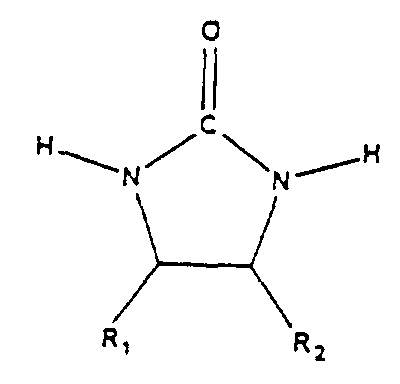 (c) un composé ayant pour formule :dans laquelle R' et R" sont indépendamment, H, CH3, -CH2CH3, -CH2CH2CH3, ou
 à condition que R' et R" aient conjointement jusqu'à 6 atomes de carbone,
- Utilisation selon la revendication 1, dans laquelle le colorant est une dispersion de pigment comprenant un pigment et un dispersant polymère.
- Utilisation selon la revendication 1, dans laquelle le colorant est un colorant normal.
- Utilisation selon la revendication 1, dans laquelle l'agent antituilage est choisi parmi les composés de structure (a) constitués de la tétrahydro-2-pyrimidone, de la 3-méthyl-tétrahydro-2-pyrimidone, de la 4-méthyl-tétrahydro-2-pyrimidone, de la 3-éthyltétrahydro-2-pyrimidone et de la 4-éthyl-tétrahydro-2-pyrimidone.
- Utilisation selon la revendication 1, dans laquelle l'agent antituilage est choisi parmi les composés de structure (b) constitués de la 2-imidazolidinone, de la diméthylimidazolidinone et de la diéthylimidazolidinone.
- Utilisation selon la revendication 1, dans laquelle l'agent antituilage est choisi parmi les composés de structure (c) constitués de la butylurée, de la 1,3-diméthylurée, de l'éthylurée, de la propylurée, de l'isopropylurée, de la 1,3-diéthylurée.
- Utilisation selon la revendication 2, dans laquelle ledit dispersant polymère est un copolymère séquencé et dans laquelle la composition d'encre comprend 0,1 à 8% de pigment, 0,1 à 8% d'un copolymère séquencé et 84 à 99,8% d'un milieu véhiculaire aqueux et d'un agent antituilage, par rapport au poids total de la composition d'encre.
- Utilisation selon la revendication 1, comprenant 0,01 à 20% d'un colorant normal et 80 à 99,99% d'un milieu véhiculaire aqueux et d'un agent antituilage, par rapport au poids total de la composition d'encre.
- Utilisation selon la revendication 1, 2 ou 3, dans laquelle l'agent antituilage est présent en quantité de 10 à 75% en poids, par rapport au poids total de l'encre.
- Utilisation selon la revendication 2 ou 3, dans laquelle ledit agent antituilage comprend 12 à 55% de ladite encre en poids.
- Procédé de réduction du tuilage de papier dans des éléments imprimés sur papier normal, ledit procédé consistant essentiellement à appliquer une composition pour jet d'encre à un substrat de papier normal, dans laquelle la composition d'encre comprend un milieu véhiculaire aqueux, un colorant et au moins un agent antituilage en quantité efficace pour sensiblement éliminer le tuilage dans ledit substrat de papier normal, dans lequel l'agent antituilage a une solubilité dans l'eau d'au moins 4,5% à 25°C et est choisi dans le groupe constitué des suivants :à condition que R' et R" aient conjointement jusqu'à 6 atomes de carbone.(a) un composé ayant pour formule :dans laquelle R1, R2 et R3 sont indépendamment H, CH3 ou CH2CH3;
 (b) un composé ayant pour formule :dans laquelle R' et R" sont indépendamment, H, CH3, -CH2CH3, -CH2CH2CH3, ou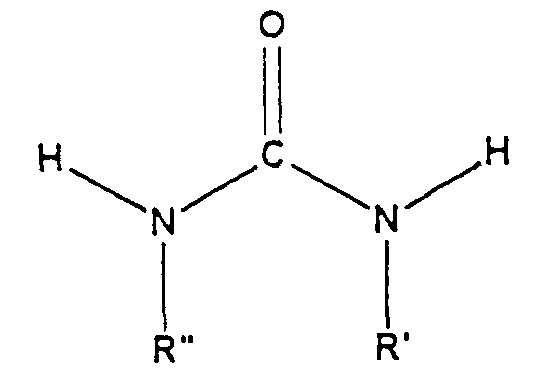
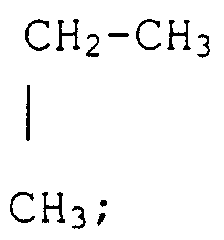
- Procédé selon la revendication 11, dans lequel le colorant est une dispersion de pigment comprenant un pigment et un dispersant polymère.
- Procédé selon la revendication 11, dans lequel le colorant est un colorant normal.
- Procédé selon la revendication 11, dans lequel l'agent antituilage est choisi parmi les composés de structure (a) constitués de la tétrahydro-2-pyrimidone, de la 3-méthyl-tétrahydro-2-pyrimidone, de la 4-méthyl-tétrahydro-2-pyrimidone, de la 3-éthyltétrahydro-2-pyrimidone et de la 4-éthyl-tétrahydro-2-pyrimidone.
- Procédé selon la revendication 11, dans lequel l'agent antituilage est choisi parmi les composés de structure (b) constitués de la butylurée, de la 1,3-diméthylurée, de l'éthylurée, de la propylurée, de l'isopropylurée, de la 1,3-diéthylurée.
- Procédé selon la revendication 12, dans lequel ledit dispersant polymère est un polymère séquencé et dans lequel la composition d'encre comprend 0,1 à 8% de pigment, 0,1 à 8% d'un polymère séquencé et 84 à 99,8% d'un milieu véhiculaire aqueux et d'un agent antituilage, par rapport au poids total de la composition d'encre.
- Procédé selon la revendication 11, comprenant 0,01 à 20% d'un colorant normal et 80% à 99,99% d'un milieu véhiculaire aqueux et d'un agent antituilage, par rapport au poids total de la composition d'encre.
- Procédé selon la revendication 11, dans lequel l'agent antituilage est présent en quantité de 10 à 75% en poids par rapport au poids total de l'encre.
- Encre aqueuse particulièrement adaptée à l'impression sur un substrat de papier normal dans une imprimante à jet d'encre, ladite encre comprenant un milieu véhiculaire aqueux, un colorant et une quantité efficace d'au moins un agent antituilage pour éliminer sensiblement le tuilage dans le substrat de papier; dans laquelle ledit agent antituilage comprend 10 à 75% de ladite encre en poids, a une solubilité dans l'eau d'au moins 4,5% à 25°C et est choisie parmi les composés (a) et (b) tels que définis dans l'une quelconque des revendications 11, 14 ou 15.
- Encre selon la revendication 19, dans laquelle le colorant est une dispersion de pigment comprenant un pigment et un dispersant polymère.
- Encre selon la revendication 19, dans laquelle le colorant est un colorant normal.
- Encre selon la revendication 20 ou 21, dans laquelle ledit agent antituilage constitue 12 à 55% de ladite encre en poids.
- Encre selon la revendication 19, dans laquelle ladite encre contient 0,1 à 8% de colorant pigmenté, 0,1 à 8% de dispersant polymère et 12 à 55% d'un agent antituilage en poids.
- Encre selon la revendication 19, dans laquelle ladite encre contient un polymère séquencé et 15 à 30% en poids d'au moins un agent antituilage.
- Encre selon la revendication 19, dans laquelle ladite encre contient un colorant normal et 15 à 30% d'au moins un agent antituilage.
Applications Claiming Priority (2)
| Application Number | Priority Date | Filing Date | Title |
|---|---|---|---|
| US08/574,473 US5580373A (en) | 1995-12-19 | 1995-12-19 | Aqueous ink compositions containing amide anti-curl agent |
| US574473 | 1995-12-19 |
Publications (3)
| Publication Number | Publication Date |
|---|---|
| EP0780450A2 EP0780450A2 (fr) | 1997-06-25 |
| EP0780450A3 EP0780450A3 (fr) | 1998-01-14 |
| EP0780450B1 true EP0780450B1 (fr) | 2001-05-23 |
Family
ID=24296286
Family Applications (1)
| Application Number | Title | Priority Date | Filing Date |
|---|---|---|---|
| EP96118750A Expired - Lifetime EP0780450B1 (fr) | 1995-12-19 | 1996-11-22 | Compositions, aqueuses d'encre contenant des amides comme agents contre l'enroulement de papier amide |
Country Status (4)
| Country | Link |
|---|---|
| US (1) | US5580373A (fr) |
| EP (1) | EP0780450B1 (fr) |
| JP (1) | JP3071152B2 (fr) |
| DE (1) | DE69612950T2 (fr) |
Families Citing this family (49)
| Publication number | Priority date | Publication date | Assignee | Title |
|---|---|---|---|---|
| US5693126A (en) * | 1994-12-27 | 1997-12-02 | Seiko Epson Corporation | Water-base ink composition and process for producing the same |
| JP3322830B2 (ja) | 1997-02-07 | 2002-09-09 | 花王株式会社 | インクジェット記録用水系インク |
| US5882389A (en) * | 1997-06-19 | 1999-03-16 | Xerox Corporation | Ink jet inks containing oxazolidinones |
| IES80901B2 (en) * | 1998-07-17 | 1999-06-16 | Inx Res & Dev Ltd | A printing ink |
| US6124376A (en) * | 1998-08-24 | 2000-09-26 | Xerox Corporation | Ink composition for ink jet printing |
| US6613815B2 (en) | 2001-02-02 | 2003-09-02 | Xerox Corporation | Inks comprising linear ABSCS′B′A′or BASCS′A′B′alkylene oxide/siloxane block copolymers |
| US6528557B2 (en) | 2001-02-02 | 2003-03-04 | Xerox Corporation | Inks comprising linear Asbs‘A’ block copolymers of alkylene oxide and siloxane |
| US6669767B2 (en) * | 2002-03-08 | 2003-12-30 | Eastman Kodak Company | Ink jet printing process |
| US6669768B2 (en) * | 2002-03-08 | 2003-12-30 | Eastman Kodak Company | Ink jet ink set |
| JP4599058B2 (ja) * | 2002-12-26 | 2010-12-15 | キヤノン株式会社 | カール低減剤、インクジェット用インク、インクジェット記録方法及びカール低減方法 |
| EP1589148A4 (fr) * | 2002-12-26 | 2006-03-08 | Canon Kk | Agent reducteur de tuilage, encre pour impression par jet d'encre, procede d'impression par jet d'encre et procede de reduction du tuilage |
| JP4438311B2 (ja) | 2003-04-16 | 2010-03-24 | 富士ゼロックス株式会社 | インクジェットインク組成物、インクセット、インクジェト用処理液、並びに、これらを用いたインクジェット記録方法およびインクジェット記録装置 |
| KR100538238B1 (ko) * | 2003-11-12 | 2005-12-21 | 삼성전자주식회사 | 잉크 조성물 |
| JP4736328B2 (ja) | 2004-02-09 | 2011-07-27 | コニカミノルタホールディングス株式会社 | インクジェット記録方法 |
| US7250078B2 (en) | 2004-02-09 | 2007-07-31 | Konica Minolta Holdings, Inc. | Ink-jet ink and ink-jet recording method |
| JP4856885B2 (ja) | 2004-03-16 | 2012-01-18 | キヤノン株式会社 | 液体組成物、液体組成物とインクのセット及び画像記録方法 |
| BRPI0507723A (pt) | 2004-03-16 | 2007-07-10 | Canon Kk | tinta para jato de tinta, método de gravação a jato de tinta, cartucho de tinta, e, aparelho de gravação a jato de tinta |
| JP3958325B2 (ja) * | 2004-03-16 | 2007-08-15 | キヤノン株式会社 | プリント媒体用塗布液、インクジェット用インク、画像形成方法、プリント媒体用塗布液とインクジェット用インクとのセット、及びインクジェット記録装置 |
| JP4508706B2 (ja) * | 2004-04-09 | 2010-07-21 | キヤノン株式会社 | インクジェット記録方法 |
| KR100601686B1 (ko) * | 2004-06-04 | 2006-07-14 | 삼성전자주식회사 | 잉크 조성물 |
| JP2006045450A (ja) * | 2004-08-09 | 2006-02-16 | Konica Minolta Holdings Inc | インクジェットインク及びインクジェット記録方法 |
| KR100677149B1 (ko) * | 2004-11-12 | 2007-02-02 | 삼성전자주식회사 | 잉크 조성물 |
| JP2006212787A (ja) * | 2005-02-01 | 2006-08-17 | Canon Inc | インクジェット記録装置 |
| US20060254459A1 (en) * | 2005-05-16 | 2006-11-16 | Konica Minolta Holdings, Inc. | Ink-jet ink |
| KR100750125B1 (ko) * | 2005-08-18 | 2007-08-21 | 삼성전자주식회사 | 잉크젯 잉크 조성물, 잉크 카트리지 및 잉크젯 기록장치 |
| JP2007119724A (ja) | 2005-09-29 | 2007-05-17 | Konica Minolta Holdings Inc | インクジェット用ブラックインク |
| JP3988783B2 (ja) * | 2005-11-28 | 2007-10-10 | 東洋インキ製造株式会社 | インキ組成物 |
| JP2007211081A (ja) * | 2006-02-08 | 2007-08-23 | Konica Minolta Holdings Inc | インクジェットインク及びインクジェット記録方法 |
| US7488381B2 (en) * | 2006-09-11 | 2009-02-10 | E.I. Du Pont De Nemours & Company | Inkjet ink |
| US7517398B2 (en) * | 2006-09-11 | 2009-04-14 | E.I. Du Pont De Nemours And Company | Inkjet ink |
| US7503969B2 (en) * | 2006-10-12 | 2009-03-17 | E.I. Du Pont De Nemours & Company | Inkjet ink |
| US8277610B2 (en) * | 2007-04-10 | 2012-10-02 | Xerox Corporation | Mechanical fiber paper with controlled curl |
| JP5376810B2 (ja) | 2008-02-13 | 2013-12-25 | 富士フイルム株式会社 | インク組成物、インクセット、及び画像形成方法 |
| JP5489473B2 (ja) | 2008-02-13 | 2014-05-14 | 富士フイルム株式会社 | インクジェット記録液およびインクジェット記録方法 |
| JP5247191B2 (ja) * | 2008-03-13 | 2013-07-24 | 富士フイルム株式会社 | インク組成物及び画像記録方法 |
| JP4772883B2 (ja) | 2008-03-19 | 2011-09-14 | 富士フイルム株式会社 | インクジェット記録液 |
| JP5268696B2 (ja) * | 2008-03-19 | 2013-08-21 | キヤノン株式会社 | インクジェット用インク、インクジェット記録方法、インクカートリッジ、記録ユニット、及びインクジェット記録装置 |
| US8596776B2 (en) | 2008-04-28 | 2013-12-03 | Kao Corporation | Aqueous ink for inkjet recording |
| WO2009133797A1 (fr) | 2008-04-28 | 2009-11-05 | 花王株式会社 | Encre aqueuse pour impression jet d’encre |
| ITVA20080032A1 (it) * | 2008-06-10 | 2009-12-11 | Lamberti Spa | Inchiostri e veicoli ceramici |
| JP2010248477A (ja) * | 2009-03-25 | 2010-11-04 | Seiko Epson Corp | インク組成物及びこれを用いた記録方法、記録物 |
| US7815692B1 (en) | 2009-07-30 | 2010-10-19 | Universal Beauty Products, Inc. | Hair coloring compositions |
| US8425675B2 (en) * | 2010-06-09 | 2013-04-23 | Dong-A Teaching Materials Co., Ltd. | Recrystallization type of ink composition |
| JP5601075B2 (ja) * | 2010-08-04 | 2014-10-08 | 株式会社リコー | インクジェット用インク、並びにインクカートリッジ、インクジェット記録方法、インクジェット記録装置及びインク記録物 |
| JP5942708B2 (ja) * | 2011-09-13 | 2016-06-29 | 株式会社リコー | インクジェット用インク、インクジェット記録方法、インクジェット記録装置及びインク記録物 |
| JP5757215B2 (ja) * | 2011-10-14 | 2015-07-29 | 株式会社リコー | インクジェット用インク、インクジェット記録方法、及びインクジェット記録装置 |
| WO2013101856A1 (fr) * | 2011-12-30 | 2013-07-04 | E. I. Du Pont De Nemours And Company | Dispersions aqueuses de pigment présentant des composants interagissant avec la cellulose |
| JP2014051625A (ja) * | 2012-09-07 | 2014-03-20 | Ricoh Co Ltd | インクジェット用インク、インクカイートリッジ、インクジェット記録装置、記録物 |
| JP6222636B2 (ja) | 2014-02-20 | 2017-11-01 | 富士フイルム株式会社 | インク組成物、インクセット及びインクジェット記録方法 |
Family Cites Families (22)
| Publication number | Priority date | Publication date | Assignee | Title |
|---|---|---|---|---|
| JPS56143274A (en) * | 1980-04-10 | 1981-11-07 | Canon Inc | Recording solution and method of recording |
| JPS56147860A (en) * | 1980-04-18 | 1981-11-17 | Canon Inc | Recording solution |
| JPS6036193B2 (ja) * | 1980-04-21 | 1985-08-19 | 富士写真フイルム株式会社 | インクジエツト印刷用水性インキ |
| JPS58213068A (ja) * | 1982-06-03 | 1983-12-10 | Canon Inc | 記録液 |
| JPS6060694A (ja) * | 1983-09-14 | 1985-04-08 | ヤマハ株式会社 | 波形発生装置 |
| JPH066684B2 (ja) * | 1984-04-24 | 1994-01-26 | 住友化学工業株式会社 | インクジエツトプリント用インク組成物 |
| US5026427A (en) | 1988-10-12 | 1991-06-25 | E. I. Dupont De Nemours And Company | Process for making pigmented ink jet inks |
| US5131949A (en) * | 1990-02-09 | 1992-07-21 | Canon Kabushiki Kaisha | Ink, ink-jet recording process, and instrument making use of the ink |
| US5085698A (en) | 1990-04-11 | 1992-02-04 | E. I. Du Pont De Nemours And Company | Aqueous pigmented inks for ink jet printers |
| US5160372A (en) * | 1991-06-13 | 1992-11-03 | E. I. Du Pont De Nemours And Company | Aqueous ink jet inks containing ester diol and amide diol cosolvents |
| US5223026A (en) * | 1991-07-30 | 1993-06-29 | Xerox Corporation | Ink jet compositions and processes |
| US5205861A (en) * | 1991-10-09 | 1993-04-27 | E. I. Du Pont De Nemours And Company | Aqueous ink jet inks containing alkylene oxide condensates of certain nitrogen heterocyclic compounds as cosolvents |
| US5224987A (en) * | 1991-11-12 | 1993-07-06 | E. I. Du Pont De Nemours And Company | Penetrants for aqueous ink jet inks |
| DE69325401T2 (de) | 1992-02-20 | 1999-11-25 | E.I. Du Pont De Nemours & Co., Inc. | Dreiblock-Polymer Dispersionsmittel enthaltende Wasserdispersionen |
| US5219945A (en) | 1992-02-20 | 1993-06-15 | E. I. Du Pont De Nemours And Company | ABC triblock methacrylate polymers |
| US5173112A (en) * | 1992-04-03 | 1992-12-22 | E. I. Du Pont De Nemours And Company | Nitrogen-containing organic cosolvents for aqueous ink jet inks |
| JP2602404B2 (ja) * | 1992-09-08 | 1997-04-23 | イー・アイ・デュポン・ドウ・ヌムール・アンド・カンパニー | 水性インク組成物 |
| EP0591004B1 (fr) * | 1992-10-02 | 1995-12-13 | Seiko Epson Corporation | Composition d'encre pour l'enregistrement par jet d'encre et son procédé de préparation |
| US5302197A (en) * | 1992-12-30 | 1994-04-12 | E. I. Du Pont De Nemours And Company | Ink jet inks |
| JPH06322304A (ja) * | 1993-05-07 | 1994-11-22 | Canon Inc | 記録液及びこれを用いたインクジェット記録方法、及び記録装置 |
| DE69331232T2 (de) * | 1993-09-09 | 2002-07-25 | E.I. Du Pont De Nemours And Co., Wilmington | Wässrige Tintenzusammensetzung, die Mittel gegen das Einrollen von Papier enthält |
| US5478383A (en) * | 1993-10-14 | 1995-12-26 | Canon Kabushiki Kaisha | Ink, and ink-jet recording method and instrument using the same |
-
1995
- 1995-12-19 US US08/574,473 patent/US5580373A/en not_active Expired - Lifetime
-
1996
- 1996-11-22 DE DE69612950T patent/DE69612950T2/de not_active Expired - Lifetime
- 1996-11-22 EP EP96118750A patent/EP0780450B1/fr not_active Expired - Lifetime
- 1996-12-18 JP JP8337985A patent/JP3071152B2/ja not_active Expired - Fee Related
Also Published As
| Publication number | Publication date |
|---|---|
| JPH09176538A (ja) | 1997-07-08 |
| JP3071152B2 (ja) | 2000-07-31 |
| US5580373A (en) | 1996-12-03 |
| EP0780450A2 (fr) | 1997-06-25 |
| DE69612950D1 (de) | 2001-06-28 |
| DE69612950T2 (de) | 2002-03-28 |
| EP0780450A3 (fr) | 1998-01-14 |
Similar Documents
| Publication | Publication Date | Title |
|---|---|---|
| EP0780450B1 (fr) | Compositions, aqueuses d'encre contenant des amides comme agents contre l'enroulement de papier amide | |
| US5356464A (en) | Aqueous ink compositions containing anti-curl agents | |
| US5750594A (en) | Ink set and process for alleviating bleed in printed elements | |
| US5518534A (en) | Ink set and process for alleviating bleed in printed elements | |
| US5713993A (en) | Pigmented ink set and process for alleviating bleed in printed elements using carboxylic acid additives | |
| US5250109A (en) | Derivatives of polyoxyalkyleneamines as cosolvents for aqueous ink jet inks | |
| US5555008A (en) | Process for alleviating bleed in printed elements | |
| US6040358A (en) | Ink jet inks containing linear polymer additives | |
| EP0679702B1 (fr) | Encres aqueuses ayant des proprietés d'halo améliorées | |
| EP0952195B1 (fr) | Assortiment d'encres pour améliorer la qualité d'impression | |
| US5969033A (en) | Polymer/dye reaction products for improved chroma in pigment-based ink jet inks | |
| JPH11263930A (ja) | 顔料で着色された水性インクジェットインキにおける斑点の改良 | |
| US5851590A (en) | Ink jet inks containing polyacrylamides | |
| JPH08209051A (ja) | アルコール混合物を含有するインクジェット用インク | |
| US5688311A (en) | Ink jet inks containing long chain alcohols | |
| EP0999243B1 (fr) | Liants d'alkoxysilane en tant qu'adjuvants des encres pour l'impression par jet d'encre | |
| JP3207838B2 (ja) | スターポリマー添加剤含有インクジェット用インキ | |
| EP0643113B1 (fr) | Composition aqueuse d'encre contenant des agents contre l'enroulement de papier |
Legal Events
| Date | Code | Title | Description |
|---|---|---|---|
| PUAI | Public reference made under article 153(3) epc to a published international application that has entered the european phase |
Free format text: ORIGINAL CODE: 0009012 |
|
| AK | Designated contracting states |
Kind code of ref document: A2 Designated state(s): DE FR GB |
|
| PUAL | Search report despatched |
Free format text: ORIGINAL CODE: 0009013 |
|
| AK | Designated contracting states |
Kind code of ref document: A3 Designated state(s): DE FR GB |
|
| 17P | Request for examination filed |
Effective date: 19980703 |
|
| 17Q | First examination report despatched |
Effective date: 19990426 |
|
| GRAG | Despatch of communication of intention to grant |
Free format text: ORIGINAL CODE: EPIDOS AGRA |
|
| GRAG | Despatch of communication of intention to grant |
Free format text: ORIGINAL CODE: EPIDOS AGRA |
|
| GRAH | Despatch of communication of intention to grant a patent |
Free format text: ORIGINAL CODE: EPIDOS IGRA |
|
| GRAH | Despatch of communication of intention to grant a patent |
Free format text: ORIGINAL CODE: EPIDOS IGRA |
|
| GRAA | (expected) grant |
Free format text: ORIGINAL CODE: 0009210 |
|
| AK | Designated contracting states |
Kind code of ref document: B1 Designated state(s): DE FR GB |
|
| ET | Fr: translation filed | ||
| REF | Corresponds to: |
Ref document number: 69612950 Country of ref document: DE Date of ref document: 20010628 |
|
| REG | Reference to a national code |
Ref country code: GB Ref legal event code: IF02 |
|
| PLBE | No opposition filed within time limit |
Free format text: ORIGINAL CODE: 0009261 |
|
| STAA | Information on the status of an ep patent application or granted ep patent |
Free format text: STATUS: NO OPPOSITION FILED WITHIN TIME LIMIT |
|
| 26N | No opposition filed | ||
| PGFP | Annual fee paid to national office [announced via postgrant information from national office to epo] |
Ref country code: DE Payment date: 20101117 Year of fee payment: 15 |
|
| PGFP | Annual fee paid to national office [announced via postgrant information from national office to epo] |
Ref country code: GB Payment date: 20101117 Year of fee payment: 15 |
|
| PGFP | Annual fee paid to national office [announced via postgrant information from national office to epo] |
Ref country code: FR Payment date: 20111118 Year of fee payment: 16 |
|
| GBPC | Gb: european patent ceased through non-payment of renewal fee |
Effective date: 20121122 |
|
| REG | Reference to a national code |
Ref country code: FR Ref legal event code: ST Effective date: 20130731 |
|
| REG | Reference to a national code |
Ref country code: DE Ref legal event code: R119 Ref document number: 69612950 Country of ref document: DE Effective date: 20130601 |
|
| PG25 | Lapsed in a contracting state [announced via postgrant information from national office to epo] |
Ref country code: DE Free format text: LAPSE BECAUSE OF NON-PAYMENT OF DUE FEES Effective date: 20130601 |
|
| PG25 | Lapsed in a contracting state [announced via postgrant information from national office to epo] |
Ref country code: GB Free format text: LAPSE BECAUSE OF NON-PAYMENT OF DUE FEES Effective date: 20121122 Ref country code: FR Free format text: LAPSE BECAUSE OF NON-PAYMENT OF DUE FEES Effective date: 20121130 |