EP0782976A1 - Composition de porcelaine dielectrique et son procede de production - Google Patents
Composition de porcelaine dielectrique et son procede de production Download PDFInfo
- Publication number
- EP0782976A1 EP0782976A1 EP95931429A EP95931429A EP0782976A1 EP 0782976 A1 EP0782976 A1 EP 0782976A1 EP 95931429 A EP95931429 A EP 95931429A EP 95931429 A EP95931429 A EP 95931429A EP 0782976 A1 EP0782976 A1 EP 0782976A1
- Authority
- EP
- European Patent Office
- Prior art keywords
- zno
- value
- sintering
- mno
- compounds containing
- Prior art date
- Legal status (The legal status is an assumption and is not a legal conclusion. Google has not performed a legal analysis and makes no representation as to the accuracy of the status listed.)
- Withdrawn
Links
Images




Classifications
-
- C—CHEMISTRY; METALLURGY
- C04—CEMENTS; CONCRETE; ARTIFICIAL STONE; CERAMICS; REFRACTORIES
- C04B—LIME, MAGNESIA; SLAG; CEMENTS; COMPOSITIONS THEREOF, e.g. MORTARS, CONCRETE OR LIKE BUILDING MATERIALS; ARTIFICIAL STONE; CERAMICS; REFRACTORIES; TREATMENT OF NATURAL STONE
- C04B35/00—Shaped ceramic products characterised by their composition; Ceramics compositions; Processing powders of inorganic compounds preparatory to the manufacturing of ceramic products
- C04B35/01—Shaped ceramic products characterised by their composition; Ceramics compositions; Processing powders of inorganic compounds preparatory to the manufacturing of ceramic products based on oxide ceramics
- C04B35/46—Shaped ceramic products characterised by their composition; Ceramics compositions; Processing powders of inorganic compounds preparatory to the manufacturing of ceramic products based on oxide ceramics based on titanium oxides or titanates
- C04B35/462—Shaped ceramic products characterised by their composition; Ceramics compositions; Processing powders of inorganic compounds preparatory to the manufacturing of ceramic products based on oxide ceramics based on titanium oxides or titanates based on titanates
- C04B35/465—Shaped ceramic products characterised by their composition; Ceramics compositions; Processing powders of inorganic compounds preparatory to the manufacturing of ceramic products based on oxide ceramics based on titanium oxides or titanates based on titanates based on alkaline earth metal titanates
- C04B35/47—Shaped ceramic products characterised by their composition; Ceramics compositions; Processing powders of inorganic compounds preparatory to the manufacturing of ceramic products based on oxide ceramics based on titanium oxides or titanates based on titanates based on alkaline earth metal titanates based on strontium titanates
-
- C—CHEMISTRY; METALLURGY
- C04—CEMENTS; CONCRETE; ARTIFICIAL STONE; CERAMICS; REFRACTORIES
- C04B—LIME, MAGNESIA; SLAG; CEMENTS; COMPOSITIONS THEREOF, e.g. MORTARS, CONCRETE OR LIKE BUILDING MATERIALS; ARTIFICIAL STONE; CERAMICS; REFRACTORIES; TREATMENT OF NATURAL STONE
- C04B35/00—Shaped ceramic products characterised by their composition; Ceramics compositions; Processing powders of inorganic compounds preparatory to the manufacturing of ceramic products
- C04B35/01—Shaped ceramic products characterised by their composition; Ceramics compositions; Processing powders of inorganic compounds preparatory to the manufacturing of ceramic products based on oxide ceramics
- C04B35/46—Shaped ceramic products characterised by their composition; Ceramics compositions; Processing powders of inorganic compounds preparatory to the manufacturing of ceramic products based on oxide ceramics based on titanium oxides or titanates
- C04B35/462—Shaped ceramic products characterised by their composition; Ceramics compositions; Processing powders of inorganic compounds preparatory to the manufacturing of ceramic products based on oxide ceramics based on titanium oxides or titanates based on titanates
- C04B35/465—Shaped ceramic products characterised by their composition; Ceramics compositions; Processing powders of inorganic compounds preparatory to the manufacturing of ceramic products based on oxide ceramics based on titanium oxides or titanates based on titanates based on alkaline earth metal titanates
-
- C—CHEMISTRY; METALLURGY
- C04—CEMENTS; CONCRETE; ARTIFICIAL STONE; CERAMICS; REFRACTORIES
- C04B—LIME, MAGNESIA; SLAG; CEMENTS; COMPOSITIONS THEREOF, e.g. MORTARS, CONCRETE OR LIKE BUILDING MATERIALS; ARTIFICIAL STONE; CERAMICS; REFRACTORIES; TREATMENT OF NATURAL STONE
- C04B35/00—Shaped ceramic products characterised by their composition; Ceramics compositions; Processing powders of inorganic compounds preparatory to the manufacturing of ceramic products
- C04B35/01—Shaped ceramic products characterised by their composition; Ceramics compositions; Processing powders of inorganic compounds preparatory to the manufacturing of ceramic products based on oxide ceramics
- C04B35/495—Shaped ceramic products characterised by their composition; Ceramics compositions; Processing powders of inorganic compounds preparatory to the manufacturing of ceramic products based on oxide ceramics based on vanadium, niobium, tantalum, molybdenum or tungsten oxides or solid solutions thereof with other oxides, e.g. vanadates, niobates, tantalates, molybdates or tungstates
Definitions
- the present invention concerns ceramic dielectrics for use in electronic components and, in particular, it relates to ceramic dielectrics having a large unloaded Q-value and high relative dielectric constant, and a small temperature coefficient of resonant frequency, as well as methods for forming them.
- ceramic dielectrics for high frequency have often been used as materials for antenna duplexers for radio communication equipment such as mobile phones, cellular phones and chordless telephones, resonators used, for example, in voltage-controlled oscillators, or filters used in tuners for CATV. Since the wavelength of electromagnetic waves can be shortened in ceramic dielectrics for high frequency, to ⁇ r - 1 / 2 ( ⁇ r : relative dielectric constant) of the wavelength in a vacuum, electronic components such as resonators can be miniaturized by using such ceramic dielectrics.
- the ceramic dielectrics used until now, for example, in microwave dielectric resonators have various kinds of compositions. They have been known to include BaO - TiO 2 - base and ZrTiO 4 - base ceramics.
- As ceramic dielectrics related to the present invention Ba(Zn 1/3 , Ta 2/3 )O 3 - base and Ba(Mg 1/3 , Ta 2/3 )O 3 - base ceramics have been known.
- Japanese Patent Publication No. 59-48484 describes ceramics of a particularly high unloaded Q-value having ingredients BaO, ZnO and Ta 2 O 5 .
- the relative dielectric constant ( ⁇ r ) and the unloaded Q-value are large and the temperature coefficient of resonant frequency ( ⁇ f ) is nearly equal to zero.
- ⁇ f temperature coefficient of resonant frequency
- a satisfactory sintering is obtained by a process, which is strictly controlled and follows certain conditions, for example, sintering a specimen while placing it on a platinum plate in a magnesia crucible.
- Other ceramics are also having problems involving poor sinterability at high temperatures. Stable characteristics can not be easily achieved due to the varying conditions of the sintering.
- a specific object of the present invention is to provide ceramic dielectrics that have a high Q-value, relative dielectric constant ( ⁇ r ) as high as 25 or more which is not attainable in existent materials containing a high Q-value and a temperature coefficient of resonant frequency ( ⁇ f ) of +20 to - 10 ppm/°C and a sintering temperature of 1650°C or less, which is lower than the existent sintering temperature range, and capable of providing stable dielectric characteristics, as well as methods of forming them.
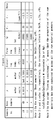
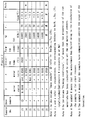
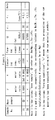
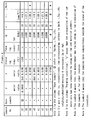
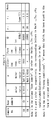
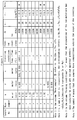
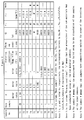
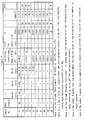
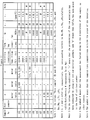
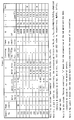
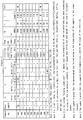
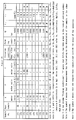
- Fig. 1 to Fig. 5 are illustrating the results of the measurements for a ceramic dielectric represented by: Ba(M 1/3 , Ta 2/3 )O 3 + yCaTiO 3 + zMnO/ZnO (in which M is Zn or Mg), regarding the values for y and z, the sintering temperature, forming conditions and electric characteristics (unloaded Q-value, relative dielectric constant ⁇ r and temperature coefficient of resonant frequency ⁇ f ).
- Fig. 6 is a schematic view for the main portion of an apparatus used for the measurement of ceramic dielectrics for an unloaded Q-value, relative dielectric constant ( ⁇ r ) and temperature coefficient of resonant frequency ( ⁇ f ) in which (a) is a plan view and (b) is a front profile view.
- Fig. 7 to Fig. 13 are illustrating the results of the measurements for a ceramic dielectric represented by: Ba x (M 1/3 , Ta 2/3 )O 3 + yCaTiO 3 + zSiO 2 /B 2 O 3 (in which M is Zn or Mg), regarding the values for x, y and z, the sintering temperature, forming conditions and electric characteristics (unloaded Q-value, relative dielectric constant ⁇ r and temperature coefficient of resonant frequency ⁇ f ).
- Fig. 14 to Fig. 18 are illustrating the results of the measurements for a ceramic dielectric represented by: Ba x (M 1/3 , Ta 2/3 )O 3 + yMgTiO 3 /SrTiO 3 + zMgO/ZnO (in which M is Zn or Mg), regarding the values for x, y and z, the sintering temperature, forming conditions and electric characteristics (unloaded Q-value, relative dielectric constant ⁇ r and temperature coefficient of resonant frequency ⁇ f ).
- the ceramic dielectric of the present invention is a composition represented by: Ba(M 1/3 , Ta 2/3 )O 3 + yCaTiO 3 + zMnO/ZnO (in which M is Zn or Mg, y is greater than 0 and less than, or equal to, 0.3, and z is greater than 0 and less than, or equal to, 0.05.
- y is 0 (zero), that is, CaTiO 3 is not included, then the sintering temperature is high, the relative dielectric constant ( ⁇ r ) is lower than 25, and the dielectric characteristics such as the Q-value are not stable.
- y exceeds 0.3, that is, if the molar ratio of CaTiO 3 to Ba(M 1/3 , Ta 2/3 )O 3 exceeds 0.3 mol, then the Q-value at 8 GHz is smaller than 10,000, thus failing to obtain ceramic dielectrics which have the sought-after characteristics. Accordingly, the range for y is defined as: 0 ⁇ y ⁇ 0.3.
- the range for z is: 0 ⁇ z ⁇ 0.05, that is, the molar ratio to Ba(M 1/3 , Ta 2/3 )O 3 is 0.05 or less (excluding 0). If MnO and/or ZnO is included, uniform sintering is brought about. However, if z is greater than 0.05, then the Q-value at 8 GHz is less than 10,000 and the temperature coefficient of resonant frequency ( ⁇ f ) is out of the range of +20 to - 10 ppm/°C, both of the preceding figures failing therefore to satisfy the conditions of the present invention.
- the ceramic dielectric has a high Q-value (10,000 or more at 8 GHz) and has a high value of 25 or more for the relative dielectric constant ( ⁇ r ) which is not found in existent materials of particularly high Q-value, and the temperature coefficient of resonant frequency ( ⁇ f ) also shows a value within a range of +20 to - 10 ppm/°C.
- the invention (3) described above is a method of calcining BaCO 3 , ZnO or MgO and Ta 2 O 5 and calcining CaCO 3 and TiO 2 separately, then mixing them so as to provide a predetermined composition as defined above in (3), further adding MnCO 3 and/or ZnO as additives and then applying the procedures of step 3 to 7 described above, to obtain a sintered specimen (ceramics).
- any of the compounds such as oxalates and nitrates may be used as the raw material, not restricted only to the oxides or carbonates described above, so long as the required ceramic dielectric can be obtained after sintering.
- a ceramic dielectric as described in (1) having a higher unloaded Q-value and a higher relative dielectric constant than usual and showing a smaller value for the temperature coefficient of resonant frequency ( ⁇ f ) can be formed easily at a lower sintering temperature (1300 ⁇ 1650°C) than usual.
- the invention (4) provides a ceramic dielectric represented by: Ba x (M 1/3 , Ta 2/3 )O 3 + yCaTiO 3 + zSiO 2 /B 2 O 3 (in which M is Zn or Mg, SiO 2 /B 2 O 3 means SiO 2 and/or B 2 O 3 , y is greater than 0 and less than, or equal to, 0.3 and z is greater than 0 and less than, or equal to, 0.05), by making the range of Ba/(M 1/3 , Ta 2/3 ) ratio more flexible (0.9 ⁇ 1.1 instead of 1) and adding CaTiO 3 and, further, SiO 2 and/or B 2 O 3 as the additives for enhancing the sinterability in an existent ceramics of Ba(M 1/3 , Ta 2/3) O 3 .
- Ba/(M 1/3 , Ta 2/3 ) ratio that is, x in the composition above, is defined as 0.9 ⁇ x ⁇ 1.1: a high Q-value can be maintained if x is within the required range, whilst the Q-value at 8 GHz is decreased as low as 5,000 or less if x is out of the required range.
- the range for y is: 0 ⁇ y ⁇ 0.3, that is, the molar ratio of CaTiO 3 to Ba x (M 1/3 , Ti 2/3 )O 3 is 0.3 mol or less (excluding 0). If y is 0 (zero), that is, if CaTiO 3 is not included, then the sintering temperature is high, thus the relative dielectric constant ( ⁇ r ) is less than 28, and dielectric characteristics such as the Q-value are not stable. On the other hand, if y exceeds 0.3, then the Q-value at 8 GHz is less than 10,000, thus failing to obtain a ceramic dielectric having the sought-after characteristics.
- the range for z is: 0 ⁇ z ⁇ 0.05, that is, the molar ratio of SiO 2 and/or B 2 O 3 to Ba x (M 1/3 , Ta 2/3 )O 3 is 0.05 mol or less (excluding 0). If z is 0, the relative dielectric constant ( ⁇ r ) is lower than 28 and, in particular, if the sintering temperature is 1400°C or less, the Q-value and the relative dielectric constant ( ⁇ r ) are not stable. On the other hand, if z exceeds 0.05, the Q-value at 8 GHz is lower than 10,000 and the temperature coefficient of resonant frequency ( ⁇ f ) is out of the range of +20 to - 10 ppm/°C.
- the ceramic dielectric has a higher Q-value (10,000 or more at 8 GHz) than usual, and has a high value of 28 or more for the relative dielectric constant ( ⁇ r ) which until now has not been attained, particularly in a material of a higher Q-value, and the temperature coefficient of resonant frequency( ⁇ f ) also shows a value within a range of +20 to -10 ppm/°C.
- Invention(5) is identical to invention (2) except for the preparation of the raw materials and the sintering condition. Only the different points are explained below, where reference numbers 1 ⁇ 7 are the same as those used in the invention (2) for the corresponding steps.
- the invention (6) is a method of calcining BaCO 3 , ZnO or MgO and Ta 2 O 5 and calcining CaCO 3 and TiO 2 separately, then mixing them so as to provide a predetermined composition as defined above in (6), then further adding SiO 2 and/or B 2 O 3 as additives and then applying the procedures of step 3 to 7 described above, to obtain a sintered specimen (ceramics).
- any of the compounds such as oxalates and nitrates may be used as the raw material, not restricted to the oxides or carbonates described above, so long as the required ceramic dielectric can be obtained after sintering.
- the sintering temperature can be lowered further (1200 ⁇ 1600°C) and it is possible to easily form a ceramic dielectric as described above in (4) having a higher unloaded Q-value and a higher relative dielectric constant than usual, and showing a smaller value for the temperature coefficient of resonant frequency( ⁇ f ).
- the invention (7) provides a ceramic dielectric represented by: Ba x (M 1/3 , Ta 2/3 )O 3 + yMgTiO 3 /SrTiO 3 + zMnO/ZnO (in which M is Zn or Mg, y is greater than 0 and less than, or equal to, 0.3, and z is of 0 to 0.05), by making the range of Ba/(M 1/3 , Ta 2/3 ) ratio more flexible (0.9 ⁇ 1.1 instead of 1) and adding MgTiO 3 and/or SrTiO 3 for enhancing the relative dielectric constant ( ⁇ r ) in the existent ceramics of Ba(M 1/3 , Ta 2/3 )O 3 .
- Ba/(M 1/3 , Ta 2/3 ) ratio that is, x in the composition above is defined as 0.9 ⁇ x ⁇ 1.1: a high Q-value can be maintained if the x is within the required range, whilst the Q-value at 8 GHz is decreased as low as 5,000 or less if x is out of the required range.
- the range for y is: 0 ⁇ y ⁇ 0.3, that is, the molar ratio of MgTiO 3 and/or SrTiO 3 to Ba x (M 1/3 , Ti 2/3 )O 3 ) is 0.3 mol or less (excluding 0). If y is 0 (zero), that is, if none of MgTiO 3 and SrTiO 3 is included, then the sintering temperature is high, thus the relative dielectric constant ( ⁇ r ) is less than 28. On the other hand, if y exceeds 0.3, then the Q-value at 8 GHz is less than 10,000, thus failing to obtain a ceramic dielectric having the sought-after characteristics. Additional MgTiO 3 and/or SrTiO 3 can also bring about the effect of controlling the temperature coefficient of resonant frequency ( ⁇ f ) to a value within a range of +20 to - 10 ppm/°C.
- z may be 0 (zero). However, if MnO and/or ZnO are included within such a range that z does not exceed 0.05, uniform sintering can be obtained. On the other hand, if z exceeds 0.05, then the Q-value at 8 GHz is lower than 10,000 and the temperature coefficient of resonant frequency ( ⁇ f ) is out of the range of +20 to - 10 ppm/°C.
- the ceramic dielectric has a higher Q-value (10,000 or more at 8 GHz) than usual, and has a high value of 28 or more for the relative dielectric constant ( ⁇ r ) which until now has not been attained, particularly in a material of a higher Q-value, and the temperature coefficient of resonant frequency ( ⁇ f ) also shows a value within a range of +20 to - 10 ppm/°C.
- Invention (8) is identical to invention (2) except for the preparation of the raw materials and the sintering condition, only the differences are explained below.
- Reference numbers, 1 ⁇ 7 are attached to the heads of the respective steps corresponding to the reference numbers, 1 ⁇ 7 used in the explanation for invention (2).
- the invention (9) is a method of calcining BaCO 3 , ZnO or MgO and Ta 2 O 5 and calcining MgCO 3 and/or SrCO 3 and TiO 2 separately, then mixing them so as to provide a predetermined composition as defined in (9), then further adding MnO and/or ZnO as additives and then applying the procedures at and after 3 described above, to obtain a sintered specimen (ceramics). Also in this case, MnO and/or ZnO as additives may not necessarily be added.
- any of the compounds such as oxalates and nitrates may be used as the raw material, not restricted to the oxides or carbonates described above, so long as the required ceramic dielectric can be obtained after sintering.
- inventions it is possible to easily form a ceramic dielectric as described above in (7) having a higher unloaded Q-value and a higher relative dielectric constant, and showing a smaller value for the temperature coefficient of resonant frequency ( ⁇ f ), at a lower sintering temperature (1300 ⁇ 1600°C) than usual.
- ceramic dielectrics represented by: Ba(Zn 1/3 , Ta 2/3 )O 3 + yCaTiO 3 + zMnO/ZnO, and Ba(Mg 1/3 , Ta 2/3 )O 3 + y CaTiO 3 + zMnO/ZnO were formed and their electric characteristics (unloaded Q-value, relative dielectric constant ⁇ r and temperature coefficient of resonant frequency ⁇ f ) were measured.
- alternative methods for obtaining ceramic dielectrics were conducted and electric characteristics (unloaded Q-value, relative dielectric constant ⁇ r and temperature coefficient of resonant frequency ⁇ f ) of the obtained product were measured.
- Fig. 1 to Fig. 5 show the values for y and z of the compositions, the sintering temperature (the sintering time was 4 hours in each case), and the forming conditions.
- 1 represents Ba(Zn 1/3 , Ta 2/3 )O 3
- 2 represents Ba(Mg 1/3 , Ta 2/3 )O 3 .
- a in the forming conditions column indicates that preparation of the raw materials for obtaining the predetermined composition, was conducted by using all the raw material powders and these materials were then calcined, granulated, pressed and sintered, while b demonstrates that the preparation of the raw materials was conducted by mixing the calcined powder of CaTiO 3 to the calcined powder of Ba(Zn 1/3 , Ta 2/3 )O 3 or Ba(Mg 1/3 , Ta 2/3 )O 3 which in turn were granulated, pressed and sintered.
- a corresponds to invention (2)
- b corresponds to invention (3).
- the Q-value, the relative dielectric constant ( ⁇ r ) and the temperature coefficient of resonant frequency ( ⁇ f ) were measured by the post-resonance technique (Hakki-Coleman dielectric resonator method) proposed by Hakki-Coleman.
- Fig. 6 is a schematic view for a main portion of an apparatus used for the measurement, in which (a) is a plan view and (b) is a front profile view (enlarged).
- a ceramic dielectric (specimen) shown as 1 was used as an object for measurement and was put between two parallel metal plates shown as 2.
- the unloaded Q-value was determined by previously measuring the dielectric loss of the metal plate 2 due to the surface resistivity of the metal plate that had been previously measured using a standard specimen, then subtracting the value from the measured value of the dielectric loss using the original specimen.
- the relative dielectric constant ( ⁇ r ) was determined by generating electromagnetic waves in high frequency from one of the probes as shown as 4 of a network analyzer to measure the frequency characteristic of the specimen and calculated by the result of resonant frequency peak in TEO1 ⁇ mode and the size of the specimen. Measured figures were satisfactory if the Q-value at 8 GHz was 10,000 or more and the relative dielectric constant ( ⁇ r ) was 25 or more. The specimen was then considered to be acceptable.
- the temperature coefficient of resonant frequency ( ⁇ f ) was determined by measuring the resonant frequency while varying the temperature of the measuring atmosphere of - 30°C to +85°C.
- the temperature coefficient of resonant frequency ( ⁇ f ) was considered to be satisfactory if it was within a range of +20 to - 10 ppm/°C. The specimen was then considered to be acceptable.
- Fig. 1 to Fig. 5 illustrate an average taken for 50 specimens in each sample number.
- the unloaded Q-value was high
- the relative dielectric constant ( ⁇ r ) had a high value of 25 or more
- the temperature coefficient of resonant frequency ( ⁇ f ) was also within a range of +20 to - 10 ppm/°C, all of these figures satisfying the prerequisite of the invention.
- ceramic dielectrics represented by: Ba x (Zn 1/3 , Ta 2/3 )O 3 + yCaTiO 3 + zSiO 2 /Bi 2 O 3 , and Ba x (Mg 1/3 , Ta 2/3 )O 3 + yCaTiO 3 + zSiO 2 /B 2 O 3 were formed and their electric characteristics (unloaded Q-value, relative dielectric constant ⁇ r and temperature coefficient of resonant frequency ⁇ f ) were measured.
- alternative methods for obtaining ceramic dielectrics were conducted and electric characteristics (unloaded Q-value, relative dielectric constant ⁇ r and temperature coefficient of resonant frequency ⁇ f ) of the obtained product were measured.
- Fig. 7 to Fig. 13 show the values for x, y and z of the compositions, the sintering conditions and the forming conditions.
- 3 represents Ba x (Zn 1/3 , Ta 2/3 )O 3
- 4 represents Ba x (Mg 1/3 , Ta 2/3 )O 3 .
- c in the forming conditions column indicates that preparation of the raw materials for obtaining the predetermined composition, was conducted by using all the raw material powders and these materials were then calcined, granulated, pressed and sintered, while d demonstrates that the preparation of the raw materials was conducted by mixing the calcined powder of CaTiO 3 to the calcined powder of Ba x (Zn 1/3 , Ta 2/3 )O 3 or Ba x (Mg 1/3 , T 2/3 )O 3 which in turn were granulated, pressed and sintered.
- c corresponds to invention (5)
- d corresponds to invention (6).
- Fig. 7 to Fig. 13 The results of the measurements are collectively shown in Fig. 7 to Fig. 13.
- the values shown in Fig. 7 to Fig. 13 illustrate an average taken for 20 specimens in each sample number.
- the Q-value was kept to 10,000 or more at 8 GHz
- the relative dielectric constant ( ⁇ r ) had a high value of 28 or more
- the temperature coefficient of resonant frequency ( ⁇ f ) also showed a value within a range of +20 to - 10 ppm/°C.
- ceramic dielectrics represented by: Ba x (Zn 1/3 , Ta 2/3 )O 3 + yMgTiO 3 /SrTiO 3 + zMnO/ZnO, and Ba x (Mg 1/3 , Ta 2/3 )O 3 + yMgTiO 3 /SrTiO 3 + zMnO/ZnO were formed and their electric characteristics (unloaded Q-value, relative dielectric constant ⁇ r and temperature coefficient ⁇ f of resonant frequency) were measured.
- alternative methods for obtaining ceramic dielectrics were conducted and electric characteristics (unloaded Q-value, relative dielectric constant ⁇ r and temperature coefficient of resonant frequency ⁇ f ) of the obtained product were measured.
- Fig. 14 to Fig. 18 show the values for x, y and z of the compositions, the sintering conditions and forming conditions.
- 3 represents Ba x (Zn 1/3 , Ta 2/3 )O 3
- 4 represents Ba x (Mg 1/3 , Ta 2/3 )O 3 .
- (A1) indicates the content of MgTiO 3
- (A2) indicates the content of SrTiO 3
- (B1) indicates the content of MnO
- (B2) indicates the content of ZnO.
- e in the forming conditions column indicates that preparation of the raw materials for obtaining the predetermined composition, was conducted by using all the raw material powders and these materials were then calcined, granulated, pressed and sintered, while f demonstrates that the preparation of the raw materials was conducted by mixing the calcined powder of MgTiO 3 and/or SrTiO 3 to the calcined powder of Ba x (Zn 1/3 , Ta 2/3 )O 3 or Ba x (Mg 1/3 , Ta 2/3 )O 3 which in turn were granulated, pressed and sintered.
- e corresponds to the invention (8) above
- f corresponds to the invention (9) above.
- Fig. 14 to Fig. 18 The results of the measurements are collectively shown in Fig. 14 to Fig. 18.
- the values shown in Fig. 14 to Fig. 18 illustrate an average taken for 50 specimens in each sample number.
- the Q-value was kept to 10,000 or more at 8 GHz
- the relative dielectric constant ( ⁇ r ) was as high as 28 or more
- the temperature coefficient of resonant frequency ( ⁇ f ) also showed a value within a range of +20 to - 10 ppm/°C.
- the ceramic dielectrics according to the present invention have a high unloaded Q-value and a high relative dielectric constant ( ⁇ r ) and show a value within a range of +20 to - 10 ppm/°C also for the temperature coefficient of resonant frequency ( ⁇ f ).
- ⁇ r the relative dielectric constant
- ⁇ f the temperature coefficient of resonant frequency
- the ceramic dielectrics according to the invention have a lower sintering temperature range than the known one and can be formed easily by the methods of the present invention.
Landscapes
- Engineering & Computer Science (AREA)
- Chemical & Material Sciences (AREA)
- Ceramic Engineering (AREA)
- Manufacturing & Machinery (AREA)
- Materials Engineering (AREA)
- Structural Engineering (AREA)
- Organic Chemistry (AREA)
- Inorganic Insulating Materials (AREA)
Applications Claiming Priority (7)
| Application Number | Priority Date | Filing Date | Title |
|---|---|---|---|
| JP225007/94 | 1994-09-20 | ||
| JP22500794 | 1994-09-20 | ||
| JP11084695 | 1995-05-09 | ||
| JP110575/95 | 1995-05-09 | ||
| JP11057595 | 1995-05-09 | ||
| JP110846/95 | 1995-05-09 | ||
| PCT/JP1995/001851 WO1996009264A1 (fr) | 1994-09-20 | 1995-09-14 | Composition de porcelaine dielectrique et son procede de production |
Publications (2)
| Publication Number | Publication Date |
|---|---|
| EP0782976A1 true EP0782976A1 (fr) | 1997-07-09 |
| EP0782976A4 EP0782976A4 (fr) | 1998-02-11 |
Family
ID=27311768
Family Applications (1)
| Application Number | Title | Priority Date | Filing Date |
|---|---|---|---|
| EP95931429A Withdrawn EP0782976A4 (fr) | 1994-09-20 | 1995-09-14 | Composition de porcelaine dielectrique et son procede de production |
Country Status (5)
| Country | Link |
|---|---|
| US (1) | US5733831A (fr) |
| EP (1) | EP0782976A4 (fr) |
| CN (1) | CN1158599A (fr) |
| FI (1) | FI971138A7 (fr) |
| WO (1) | WO1996009264A1 (fr) |
Cited By (2)
| Publication number | Priority date | Publication date | Assignee | Title |
|---|---|---|---|---|
| EP3113189A1 (fr) * | 2015-06-29 | 2017-01-04 | TDK Corporation | Composition diélectrique et composant électronique |
| EP3113188A1 (fr) * | 2015-06-29 | 2017-01-04 | TDK Corporation | Composition diélectrique et composant électronique |
Families Citing this family (12)
| Publication number | Priority date | Publication date | Assignee | Title |
|---|---|---|---|---|
| DE69738011D1 (de) * | 1996-10-25 | 2007-09-27 | Ngk Spark Plug Co | Dielektrisches Material, Verfahren zu dessen Herstellung und dieses Material enthaltende dielektrische Resonatorvorrichtung |
| CN1072628C (zh) * | 1997-12-05 | 2001-10-10 | 中国科学院上海硅酸盐研究所 | 高频用介质陶瓷组成及制备工艺 |
| CN1063733C (zh) * | 1998-04-19 | 2001-03-28 | 浙江大学 | 高介电常数微波介质陶瓷及其制备方法 |
| IL144461A0 (en) * | 1999-01-22 | 2002-05-23 | Kirin Brewery | Quinoline and quinazoline derivatives and pharmaceutical compositions containing them |
| US7557055B2 (en) * | 2004-09-20 | 2009-07-07 | Paratek Microwave, Inc. | Tunable low loss material composition |
| EP2530851A3 (fr) * | 2011-06-03 | 2015-07-08 | Samsung Electronics Co., Ltd. | Répéteur connecté à un gateway et à un appareil client par l'intermédiaire du protocol Wi-Fi avec filtrage de plusieurs bandes de fréquences |
| EP2530850A3 (fr) | 2011-06-03 | 2015-07-08 | Samsung Electronics Co., Ltd. | Répéteur connecté à un gateway et à un appareil client par l'intermédiaire du protocol Wi-Fi avec filtrage de plusieurs bandes de fréquences. |
| CN106316395B (zh) * | 2016-08-08 | 2019-09-13 | 苏州博恩希普新材料科技有限公司 | 一种高介电常数、高品质因子的微波介质陶瓷及制备方法 |
| CN106045513A (zh) * | 2016-08-08 | 2016-10-26 | 苏州博恩希普新材料科技有限公司 | 一种中介电常数、高品质因子的微波介质陶瓷及制备方法 |
| CN110407579B (zh) * | 2018-04-28 | 2021-04-16 | 中国科学院上海硅酸盐研究所 | 一种具有超高q值微波介质材料及其制备方法 |
| JP7723573B2 (ja) * | 2021-11-05 | 2025-08-14 | Tdk株式会社 | 誘電体組成物および電子部品 |
| CN115340374B (zh) * | 2022-08-16 | 2023-04-21 | 无锡市高宇晟新材料科技有限公司 | MgTiO3基复合微波介质陶瓷及其制备方法、应用 |
Family Cites Families (7)
| Publication number | Priority date | Publication date | Assignee | Title |
|---|---|---|---|---|
| JPS5951086B2 (ja) * | 1977-11-30 | 1984-12-12 | 松下電器産業株式会社 | 誘電体磁器材料 |
| JPS5825068B2 (ja) * | 1980-12-10 | 1983-05-25 | 松下電器産業株式会社 | 誘電体材料 |
| JPS5948484A (ja) * | 1982-09-14 | 1984-03-19 | Kitasato Inst:The | 抗生物質OM−173α↓2およびβ↓2物質ならびにその製造方法 |
| JPS6119004A (ja) * | 1984-07-04 | 1986-01-27 | 松下電器産業株式会社 | 誘電体磁器組成物 |
| US5525562A (en) * | 1994-01-25 | 1996-06-11 | Matsushita Electric Industrial Co., Ltd. | Dielectric ceramic compound |
| US5484753A (en) * | 1994-03-08 | 1996-01-16 | Matsushita Electric Industrial Co., Ltd. | Dielectric ceramic compositions |
| US5629252A (en) * | 1995-06-15 | 1997-05-13 | Matsushita Electric Industrial Co., Ltd. | Method for manufacturing a dielectric ceramic composition dielectric ceramic and multilayer high frequency device |
-
1995
- 1995-09-14 WO PCT/JP1995/001851 patent/WO1996009264A1/fr not_active Ceased
- 1995-09-14 FI FI971138A patent/FI971138A7/fi unknown
- 1995-09-14 US US08/809,073 patent/US5733831A/en not_active Expired - Fee Related
- 1995-09-14 EP EP95931429A patent/EP0782976A4/fr not_active Withdrawn
- 1995-09-14 CN CN95195188A patent/CN1158599A/zh active Pending
Non-Patent Citations (2)
| Title |
|---|
| No further relevant documents disclosed * |
| See also references of WO9609264A1 * |
Cited By (2)
| Publication number | Priority date | Publication date | Assignee | Title |
|---|---|---|---|---|
| EP3113189A1 (fr) * | 2015-06-29 | 2017-01-04 | TDK Corporation | Composition diélectrique et composant électronique |
| EP3113188A1 (fr) * | 2015-06-29 | 2017-01-04 | TDK Corporation | Composition diélectrique et composant électronique |
Also Published As
| Publication number | Publication date |
|---|---|
| EP0782976A4 (fr) | 1998-02-11 |
| FI971138L (fi) | 1997-03-18 |
| WO1996009264A1 (fr) | 1996-03-28 |
| FI971138A0 (fi) | 1997-03-18 |
| CN1158599A (zh) | 1997-09-03 |
| FI971138A7 (fi) | 1997-03-18 |
| US5733831A (en) | 1998-03-31 |
Similar Documents
| Publication | Publication Date | Title |
|---|---|---|
| EP1153896B1 (fr) | Composition céramique diélectrique,sa méthode de production et appareil de communication utilisant cette composition | |
| KR100434422B1 (ko) | 고주파 세라믹 콤팩트, 그 이용 및 그 제조방법 | |
| US5733831A (en) | Ceramic dielectrics and methods for forming them | |
| EP1020416B1 (fr) | Procédé de fabrication de matériau céramique diélectrique et résonateur diélectrique | |
| JP3974723B2 (ja) | 誘電体磁器の製造方法 | |
| US5256639A (en) | Dielectric ceramic composition | |
| EP1503971A2 (fr) | Ceramique d'alumine et procede de fabrication de celle-ci | |
| CA2010558C (fr) | Materiau ceramique dielectrique et methode de fabrication correspondante | |
| EP0727789A1 (fr) | Composition de porcelaine dielectrique et fabrication | |
| US6258462B1 (en) | Dielectric ceramic composition and device for communication apparatus using the same | |
| EP0882688B1 (fr) | Composition de porcellain diélectrique à micro-onde | |
| EP0540029A1 (fr) | Composition céramique diélectrique pour utilisation en fréquence haut, et matériau diélectrique | |
| US5504044A (en) | Dielectric ceramic composition for high-frequency applications | |
| JP3330024B2 (ja) | 高周波用誘電体磁器組成物 | |
| JPH11228216A (ja) | 誘電体磁器組成物およびこれを用いた通信機器用デバイス | |
| JP4494756B2 (ja) | 誘電体磁器組成物及びそれを用いた誘電体共振器 | |
| JPH07215765A (ja) | 誘電体磁器組成物及びその製造方法 | |
| JP3329980B2 (ja) | 高周波用誘電体磁器組成物及びその製造方法 | |
| JPH0877828A (ja) | 誘電体磁器組成物及びその製造方法 | |
| JP3359427B2 (ja) | 高周波用誘電体磁器組成物 | |
| JP3330011B2 (ja) | 高周波用誘電体磁器組成物 | |
| KR100823217B1 (ko) | 유전체 자기 조성물 및 그 제조 방법 | |
| JPH07235216A (ja) | 誘電体磁器組成物及びその製造方法 | |
| KR100298209B1 (ko) | 마이크로파유전체세라믹및그유전체세라믹용조성물 | |
| JPH0742165B2 (ja) | マイクロ波誘電体セラミックス |
Legal Events
| Date | Code | Title | Description |
|---|---|---|---|
| PUAI | Public reference made under article 153(3) epc to a published international application that has entered the european phase |
Free format text: ORIGINAL CODE: 0009012 |
|
| 17P | Request for examination filed |
Effective date: 19970414 |
|
| AK | Designated contracting states |
Kind code of ref document: A1 Designated state(s): DE GB SE |
|
| A4 | Supplementary search report drawn up and despatched | ||
| AK | Designated contracting states |
Kind code of ref document: A4 Designated state(s): DE GB SE |
|
| STAA | Information on the status of an ep patent application or granted ep patent |
Free format text: STATUS: THE APPLICATION HAS BEEN WITHDRAWN |
|
| 18W | Application withdrawn |
Withdrawal date: 19981005 |