EP0787537A1 - Agent, procede et materiel de nettoyage - Google Patents
Agent, procede et materiel de nettoyage Download PDFInfo
- Publication number
- EP0787537A1 EP0787537A1 EP95934846A EP95934846A EP0787537A1 EP 0787537 A1 EP0787537 A1 EP 0787537A1 EP 95934846 A EP95934846 A EP 95934846A EP 95934846 A EP95934846 A EP 95934846A EP 0787537 A1 EP0787537 A1 EP 0787537A1
- Authority
- EP
- European Patent Office
- Prior art keywords
- cleaning agent
- cleaning
- molecular weight
- low molecular
- drying
- Prior art date
- Legal status (The legal status is an assumption and is not a legal conclusion. Google has not performed a legal analysis and makes no representation as to the accuracy of the status listed.)
- Withdrawn
Links
Images





Classifications
-
- H—ELECTRICITY
- H10—SEMICONDUCTOR DEVICES; ELECTRIC SOLID-STATE DEVICES NOT OTHERWISE PROVIDED FOR
- H10P—GENERIC PROCESSES OR APPARATUS FOR THE MANUFACTURE OR TREATMENT OF DEVICES COVERED BY CLASS H10
- H10P72/00—Handling or holding of wafers, substrates or devices during manufacture or treatment thereof
-
- B—PERFORMING OPERATIONS; TRANSPORTING
- B08—CLEANING
- B08B—CLEANING IN GENERAL; PREVENTION OF FOULING IN GENERAL
- B08B3/00—Cleaning by methods involving the use or presence of liquid or steam
- B08B3/04—Cleaning involving contact with liquid
- B08B3/08—Cleaning involving contact with liquid the liquid having chemical or dissolving effect
-
- C—CHEMISTRY; METALLURGY
- C11—ANIMAL OR VEGETABLE OILS, FATS, FATTY SUBSTANCES OR WAXES; FATTY ACIDS THEREFROM; DETERGENTS; CANDLES
- C11D—DETERGENT COMPOSITIONS; USE OF SINGLE SUBSTANCES AS DETERGENTS; SOAP OR SOAP-MAKING; RESIN SOAPS; RECOVERY OF GLYCEROL
- C11D7/00—Compositions of detergents based essentially on non-surface-active compounds
- C11D7/50—Solvents
- C11D7/5004—Organic solvents
- C11D7/5018—Halogenated solvents
-
- C—CHEMISTRY; METALLURGY
- C11—ANIMAL OR VEGETABLE OILS, FATS, FATTY SUBSTANCES OR WAXES; FATTY ACIDS THEREFROM; DETERGENTS; CANDLES
- C11D—DETERGENT COMPOSITIONS; USE OF SINGLE SUBSTANCES AS DETERGENTS; SOAP OR SOAP-MAKING; RESIN SOAPS; RECOVERY OF GLYCEROL
- C11D7/00—Compositions of detergents based essentially on non-surface-active compounds
- C11D7/50—Solvents
- C11D7/5036—Azeotropic mixtures containing halogenated solvents
- C11D7/5068—Mixtures of halogenated and non-halogenated solvents
- C11D7/5095—Mixtures including solvents containing other heteroatoms than oxygen, e.g. nitriles, amides, nitroalkanes, siloxanes or thioethers
-
- C—CHEMISTRY; METALLURGY
- C23—COATING METALLIC MATERIAL; COATING MATERIAL WITH METALLIC MATERIAL; CHEMICAL SURFACE TREATMENT; DIFFUSION TREATMENT OF METALLIC MATERIAL; COATING BY VACUUM EVAPORATION, BY SPUTTERING, BY ION IMPLANTATION OR BY CHEMICAL VAPOUR DEPOSITION, IN GENERAL; INHIBITING CORROSION OF METALLIC MATERIAL OR INCRUSTATION IN GENERAL
- C23G—CLEANING OR DE-GREASING OF METALLIC MATERIAL BY CHEMICAL METHODS OTHER THAN ELECTROLYSIS
- C23G5/00—Cleaning or de-greasing metallic material by other methods; Apparatus for cleaning or de-greasing metallic material with organic solvents
- C23G5/02—Cleaning or de-greasing metallic material by other methods; Apparatus for cleaning or de-greasing metallic material with organic solvents using organic solvents
- C23G5/028—Cleaning or de-greasing metallic material by other methods; Apparatus for cleaning or de-greasing metallic material with organic solvents using organic solvents containing halogenated hydrocarbons
- C23G5/02803—Cleaning or de-greasing metallic material by other methods; Apparatus for cleaning or de-greasing metallic material with organic solvents using organic solvents containing halogenated hydrocarbons containing fluorine
-
- C—CHEMISTRY; METALLURGY
- C23—COATING METALLIC MATERIAL; COATING MATERIAL WITH METALLIC MATERIAL; CHEMICAL SURFACE TREATMENT; DIFFUSION TREATMENT OF METALLIC MATERIAL; COATING BY VACUUM EVAPORATION, BY SPUTTERING, BY ION IMPLANTATION OR BY CHEMICAL VAPOUR DEPOSITION, IN GENERAL; INHIBITING CORROSION OF METALLIC MATERIAL OR INCRUSTATION IN GENERAL
- C23G—CLEANING OR DE-GREASING OF METALLIC MATERIAL BY CHEMICAL METHODS OTHER THAN ELECTROLYSIS
- C23G5/00—Cleaning or de-greasing metallic material by other methods; Apparatus for cleaning or de-greasing metallic material with organic solvents
- C23G5/02—Cleaning or de-greasing metallic material by other methods; Apparatus for cleaning or de-greasing metallic material with organic solvents using organic solvents
- C23G5/032—Cleaning or de-greasing metallic material by other methods; Apparatus for cleaning or de-greasing metallic material with organic solvents using organic solvents containing oxygen-containing compounds
-
- C—CHEMISTRY; METALLURGY
- C23—COATING METALLIC MATERIAL; COATING MATERIAL WITH METALLIC MATERIAL; CHEMICAL SURFACE TREATMENT; DIFFUSION TREATMENT OF METALLIC MATERIAL; COATING BY VACUUM EVAPORATION, BY SPUTTERING, BY ION IMPLANTATION OR BY CHEMICAL VAPOUR DEPOSITION, IN GENERAL; INHIBITING CORROSION OF METALLIC MATERIAL OR INCRUSTATION IN GENERAL
- C23G—CLEANING OR DE-GREASING OF METALLIC MATERIAL BY CHEMICAL METHODS OTHER THAN ELECTROLYSIS
- C23G5/00—Cleaning or de-greasing metallic material by other methods; Apparatus for cleaning or de-greasing metallic material with organic solvents
- C23G5/02—Cleaning or de-greasing metallic material by other methods; Apparatus for cleaning or de-greasing metallic material with organic solvents using organic solvents
- C23G5/04—Apparatus
-
- C—CHEMISTRY; METALLURGY
- C11—ANIMAL OR VEGETABLE OILS, FATS, FATTY SUBSTANCES OR WAXES; FATTY ACIDS THEREFROM; DETERGENTS; CANDLES
- C11D—DETERGENT COMPOSITIONS; USE OF SINGLE SUBSTANCES AS DETERGENTS; SOAP OR SOAP-MAKING; RESIN SOAPS; RECOVERY OF GLYCEROL
- C11D2111/00—Cleaning compositions characterised by the objects to be cleaned; Cleaning compositions characterised by non-standard cleaning or washing processes
- C11D2111/10—Objects to be cleaned
- C11D2111/14—Hard surfaces
- C11D2111/22—Electronic devices, e.g. PCBs or semiconductors
-
- C—CHEMISTRY; METALLURGY
- C11—ANIMAL OR VEGETABLE OILS, FATS, FATTY SUBSTANCES OR WAXES; FATTY ACIDS THEREFROM; DETERGENTS; CANDLES
- C11D—DETERGENT COMPOSITIONS; USE OF SINGLE SUBSTANCES AS DETERGENTS; SOAP OR SOAP-MAKING; RESIN SOAPS; RECOVERY OF GLYCEROL
- C11D7/00—Compositions of detergents based essentially on non-surface-active compounds
- C11D7/22—Organic compounds
- C11D7/28—Organic compounds containing halogen
-
- H—ELECTRICITY
- H05—ELECTRIC TECHNIQUES NOT OTHERWISE PROVIDED FOR
- H05K—PRINTED CIRCUITS; CASINGS OR CONSTRUCTIONAL DETAILS OF ELECTRIC APPARATUS; MANUFACTURE OF ASSEMBLAGES OF ELECTRICAL COMPONENTS
- H05K3/00—Apparatus or processes for manufacturing printed circuits
- H05K3/22—Secondary treatment of printed circuits
- H05K3/26—Cleaning or polishing of the conductive pattern
Definitions
- Azeotropic or pseudo-azeotropic compositions are preferably used as cleaning agents. Because a fractional distillation does not occur in the azeotropic composition when it boils, it is capable of eliminating the flammability of a combustible solvent. In addition, a cleaning agent contaminated with a dirt component can be recovered without change in its composition by utilizing a vapor cleaning apparatus.
- a uniform liquid mixed composition consisting of hexamethyldisiloxane compatibilized with perfluoro hydrocarbons or perfluoro ethers is disclosed in Laid-Open Japanese Patent Publication HEI6-71238.
- the mixed liquid composition disclosed therein does not have a degreasing property appropriate for removing fat and oil to a high degree. Thus, it cannot be used for all of cleaning, rinsing, and drying processes unless it is improved in its composition.
- the conventional cleaning agents consisting of azeotropic compositions or pseudo-azeotropic compositions proposed to replace the chlorinated organic solvent are not as fine as the solvents of flons in their degreasing and drying properties. Further, they are required to be flame-retardant or incombustible.
- alcohols cannot be separated from water by distillation. Thus, they cannot be recovered. Further, because alcohols have low vapor densities, they are lost in a great degree due to volatility and in addition, they dry slowly. Thus, even after objects are dried by vapor, they are required to be dried by hot air depending on a case.
- a first cleansing method of the present invention comprises at least one step selected from the group consisting of cleaning an object with a polar cleaning agent having a solubility parameter not less than nine or a dielectric constant not less than four, rinsing the object by means of a mixed cleaning agent containing the polar cleaning agent having the solubility parameter not less than nine or the dielectric constant not less than four and a cleaning agent having a solubility parameter less than nine and a dielectric constant less than four, and drying the object by means of a mixed cleaning agent containing the polar cleaning agent having the solubility parameter not less than nine or the dielectric constant not less than four and a cleaning agent having a solubility parameter less than nine and a dielectric constant less than four.
- the dirt meant by the present invention includes work oil, greece, wax, flux or the like required to be cleaned.
- the present invention is intended to clean an object which has been stained with work oil, greece, wax, flux or the like or an object having a portion which contacts the dirt.
- the kind of objects to be cleaned are not limited to a specific one, but metal, semi-metal, ceramic, plastic and the like are intended to be cleaned by the method of the present invention.
- metal and semi-metal iron, aluminum, silicon, copper, stainless steel and the like are exemplified.
- ceramic, silicon nitride, silicon carbide, aluminum oxide, glass, porcelain are exemplified.
- the method of latent heat of vaporization comprises finding ⁇ H from the following formula (3), finding ⁇ E from the following formula (4) using the found magnitude of ⁇ H, and finding ⁇ from the following formula (5) which is derived from the formula (1).
- This method is most direct and permits exact calculation of ⁇ .
- the method of molecular attraction constant determines the solubility parameter ⁇ on the basis of the characteristic values of the component functional groups (atoms or atomic groups) of the molecular unit of a given compound, namely, the total of molecular attractions (G) and the molecular volume. It proves to be useful for the determination of the solubility parameter ⁇ such as of resin which, unlike solvents, is not easily vaporized.
- the solubility parameter ⁇ is determined by the following formula (6).
- G stands for a value equivalent to the product of the molecular cohesive energy multiplied by the molecular volume (molecular volume cohesive energy.)
- G a value equivalent to the product of the molecular cohesive energy multiplied by the molecular volume (molecular volume cohesive energy.)
- alcohols More specifically, as alcohols, methanol, ethanol, propanol, normal hexanol, 3,5,5-trimethylhexanol, 2-ethylhexanol, normal octanol, normal butanol, cyclohexanol, benzylalcohol are exemplified.
- glycols propyleneglycolmonoethylether, propyleneglycolmonobutylether, ethyleneglycolmonobutylether, and derivatives thereof are exemplified.
- phenols o-cresol, m-cresol, p-cresol, and derivatives thereof are exemplified.
- the low molecular weight siloxane compound include at least one substance selected from straight-chain polyorganosiloxane and its derivatives expressed by: where groups expressed by R are substituted or unsubstituted monovalent organic groups identical to each other or different from each other; l is integers 0 - 5; and cyclic polyorganosiloxane and its derivatives expressed by: where groups expressed by R are substituted or unsubstituted monovalent organic groups identical to each other or different from each other; m is integers 3 - 7.
- Low molecular weight siloxane compound, hydrocarbons, fluorocarbons, ethers, and acetals can be used singly or in combination thereof as the cleaning agents having solubility parameters less than nine and dielectric constants less than four.
- Table 2 shows examples of polar cleaning agents having solubility parameters not less than nine or dielectric constants not less than four.
- Table 3 shows examples of cleaning agents which have solubility parameters less than nine and dielectric constants less than four and ⁇ values, dielectric constants, and dipole moments thereof.
- the dielectric constants of substances shown in tables 2 and 3 are at 25°C except the substances marked by *1 - *4 in the column of dielectric constants in tables 2 and 3.
- the fourth cleaning method comprises the steps of cleaning, rinsing, and drying an object, using a cleaning agent containing a low molecular weight siloxane compound, fluorocarbons, and a polar cleaning agent having a solubility parameter not less than nine or a dielectric constant not less than four.
- the heat of vaporization of the liquid is not more than 100 cal/g, it does not absorb moisture from the atmospheric air when it becomes volatile after water is replaced therewith. Therefore, it does not generate stains on the object, thus providing a very favorable dewatering drying property.
- the weight percentage of each component in each of the first azeotropic composition and the first pseudo-azeotropic composition is as follows: Hexamethyldisiloxane: 2 - 20; tert-butanol: 2 - 20; and perfluorocarbon expressed by (C 6 F 14 ): 60 - 96.
- an azeotropic composition or a pseudo-azeotropic composition having an azeotropic temperature of 321 - 326K (760mmHg) is obtained.
- the mixing ratio between the components of the azeotropic composition varies depending on a condition.
- the pseudo-azeotropic composition contains one or more kinds of components than the azeotropic composition in a range that the former has a characteristic similar to that of the latter without substantially deteriorating that of the latter.
- perfluorocarbon expressed by C 6 F 14 does not have cleaning power, it is not suitable as a cleaning agent. But perfluorocarbon is superior in drying function because its heat of vaporization is about 21cal/g which is much smaller that of tert-butanol (about 131cal/g) and that of hexamethyldisiloxane (about 50cal/g).
- perfluorocarbon expressed by C 7 F 16 allows the flash point of a mixture of perfluorocarbon, isopropyl acetate which is a flammable liquid, and hexamethyldisiloxane which is also a flammable liquid to be higher than that of isopropyl acetate and hexamethyldisiloxane or that of a mixture of isopropyl acetate and hexamethyldisiloxane, thus allowing the mixture of the three substances to be flame-retardant or incombustible.
- a cleaning agent containing a sixth azeotropic composition and a sixth pseudo-azeotropic composition as its effective component consists of hexamethyldisiloxane, isopropyl acetate, and perfluorocarbon expressed by perfluoromorpholine.
- perfluoromorpholine to be used in the fifth and sixth azeotropic compositions and the fifth and sixth pseudo-azeotropic compositions perfluoro-N-alkylmorpholine is preferable and perfluoro-N-methylmorpholine expressed by C 5 F 11 NO is preferable.
- Hexamethyldisiloxane is compatible with tert-butanol and perfluoromorpholine at an arbitrary rate.
- Tert-butanol and perfluoromorpholine are hardly soluble in each other, but the addition of hexamethyldisiloxane to a mixture thereof allows the three substances to be compatible with each other to form a uniform an azeotropic or pseudo-azeotropic composition. That is, hexamethyldisiloxane functions as an agent for allowing the other two substances to be soluble in each other.
- the effect of the above function of hexamethyldisiloxane varies greatly depending on the kind of a polar solvent.
- Stabilizers may be added to the cleaning agents comprising any of the first through sixth azeotropic or pseudo-azeotropic compositions to prevent the components of the cleaning agents from being decomposed by ultraviolet rays or the like.
- the stabilizers include epoxide such as glycidol and cyclohexeneoxide; ethers such as 1,4-dioxane, 1,3,5-trioxane; unsaturated hydrocarbons such as 1-pentene and 1-hexene; and acrylic ester such as methyl acrylate and ethyl acrylate.
- 0.1-5 wt% of the stabilizers are added to the total weight of the cleaning agent.
- the stabilizers can be added to the cleaning agent singly or in combination thereof.
- the cleaning agent of the present invention is applicable to objects made of metals, semi-metals, ceramics, plastics, and the like.
- the metals and semi-metals include iron, aluminum, silicon, copper, stainless steel, and the like.
- Ceramics include silicon nitride, silicon carbide, aluminum oxide, glass, porcelain, and the like.
- Plastics include polyamide, polyimide, epoxy resin, polyolefin, polyester, acrylic resin, and the like.
- the object also includes complexes of above described materials.
- Objects to which the cleaning agent can be applied include electronic parts such as printed circuit boards, electric parts, semiconductor parts, metal parts, surface treatment parts, precision parts, optical parts, glass parts, ceramic parts, plastic parts, and the like.
- a cleaning agent containing a ninth azeotropic composition and a ninth pseudo-azeotropic composition as its effective component consist of fluorocarbons and a polar cleaning agent having a solubility parameter not less than nine or a dielectric constant not less than four.
- Table 4 shows flash points and boiling points of representative low molecular weight siloxane compounds.
- a cleaning agent containing the low molecular weight siloxane compound is used.
- the gas or liquid of incombustible or flame-retardant fluorocarbons is charged into or placed in at least one of the inside of the cleaning apparatus, the periphery of the cleaning apparatus, the inside of devices constituting the cleaning apparatus, and the periphery of the devices.
- liquid containing trifluoroethanol or a mixture of trifluoroethanol and the like can be effectively used not only for a water-replacing operation (immersion, vibration, agitation, ultrasonic waver, spray), but also for a drying operation (hot air drying, spin drying, vapor drying, lift drying, vacuum drying.)
- test pieces to be used in embodiment 40 as the evaluating test pieces of embodiment 47 - 50, cleaning, rinsing, and vapor drying operations were performed in the same condition as that of embodiment 40 to evaluate the cleaning property of each test piece, except that the kind of each of the cleaning agents, the rinsing agents, and vapor drying agents was different from that of embodiment 40, as shown in table 11.
- Table 12 shows evaluated results.
- the oil content was quantitatively determined (residual oil content after cleaning) by means of the oil content meter (OCMA 220 manufactured by Horiba Manufacturing Co., Ltd.) before and after the cleaning operation was performed.
- the appearance of the stainless test panel was visually observed to evaluate the cleaning performance of the cleaning agent.
- Table 20 shows the result of the quantitative determination of the oil content and the observation of the appearance of the stainless test panel.
- Table 20 Amount of oil content ( ⁇ l/piece) Appearance Before cleaning 200 x After cleaning 0.2 o
- a dewatering drying operation was conducted on the same object (glass lens) as that of embodiment 109.
- the glass lens was dewatered with an CFC113/surface-active agent (nonion surface-active agent 0.5 parts by weight) and taken out therefrom to dry it.
- dewatering drying operations were performed with IPA. Thereafter, similarly to embodiment 109, the water removing percentage was determined, and the appearance of each glass lens was observed visually after the drying operation terminated. Table 22 shows evaluated results.
- Table 23 indicates that in embodiment 110 in which trifluoroethanol was used as the dewatering drying liquid, trifluoroethanol removed water from the glass filters at a high percentage and was dried favorably after the operation of water-washing and dewatering drying operations were carried out 100 times, whereas in comparison example 19 in which the mixture of perfluorohexane and trifluoroethanol was used as the dewatering drying liquid, the mixture removed water from the glass filters at a lower percentage and was dried in a lower degree. In comparison example 20 in which IPA was used as the dewatering drying liquid, its drying performance was poor because stains were left on the glass filters. This is because water was not removed from IPA but water accumulated therein and IPA had a high heat of vaporization.
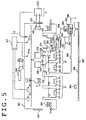
- the dewatering drying apparatus comprises a section for carrying out a water-washing process (A) having two water-washing tanks 201 and 201; and a section for carrying out a dewatering drying process (C) having two dipping dewatering tanks 207 and 207 each accommodating a dewatering drying liquid 202 consisting of trifluoroethanol to dewater (water replacement) an object 206 by immersing it in the dewatering drying liquid 202; and a section for carrying out a vapor drying process (D) having a vapor drying tank 208 in which the dewatering drying liquid 202 consisting of trifluoroethanol is heated by a heater 203 to generate vapor 202a.
- the dewatering drying liquid 202 in the dipping dewatering tank 207 and that in the vapor drying tank 208 are continuously fed to a distiller 205 to remove water of the dewatering drying liquid 202 by a distilling operation. Then, the recovered dewatering drying liquid 202 is fed to the vapor drying tank 208 in which it is utilized as the vapor 202a.
- Table 24 indicates that in embodiment 111 in which trifluoroethanol was used as the dewatering drying liquid, the glass filters were dewatered at a high percentage and dried favorably after the dewatering and drying operations were carried out 300 times, whereas in comparison example 22 in which IPA was used as the dewatering drying liquid, IPA was dried in a lower degree because stains were left on the glass filters.
- Gas chromatography condition An apparatus (GD-14A(TC-D)) used was manufactured by Shimazu Manufacturing Co., Ltd.; column: 2m x 3mm ⁇ (manufactured by GL Science chromosorb Corp. WAWDMCS; mesh: 60/80); filler: Silicone SE-30 10%; injection temperature: 523K; TC-D temperature: 523K; initial temperature: 323K; initial holding time: 0 min; temperature rise speed: 10K/min; final temperature: 523K; final holding time: 0 min; electric current: 100mA; FR CR He: 40ml; and attenuation: 64.
- the mixing wt% of tert-butanol and that of perfluorocarbon are 5.0 and 89.3, respectively.
- metal component parts 20 pieces (envelope parts) made of copper immersed in work oil G-6040 (commercial name) manufactured by Nippon Kosakuyu Co., Ltd. were cleaned in the following procedure, and cleaned states were evaluated. That is, first, the metal component parts were cleaned at about 303K in a first cleaning tank accommodating the above-described cleaning agent by irradiating respective metal component parts with ultrasonic wave. Then, respective metal component parts were cleaned again and rinsed at the normal room temperature in a second cleaning tank accommodating a cleaning agent having the same composition by irradiating respective metal component parts with ultrasonic wave. Finally, a cleaning agent containing the same composition accommodated in a third cleaning tank was heated to boil it. The respective metal component parts were subjected to vapor of the cleaning agent to dry them.
- hexamethyldisiloxane TSF451-0.65 (commercial name) (purity: not less than 99%) manufactured by Toshiba Silicone Co., Ltd., isopropyl acetate, and perfluorocarbon PF-5060 (commercial name) (manufactured by Sumitomo 3M Co., Ltd.) expressed by C 6 F 14 were put in a distillation flask at a volume ratio of 1:1:1.
- the mixture was distilled at the normal pressure by using a fractionating tower, the number of theoretical stages of which was 30.
- azeotropic fractions were obtained at 323 - 328K.
- the composition consisting of the azeotropic fractions was used as the cleaning agent.
- metal component parts 20 pieces made of copper immersed in work oil G-6040 (commercial name) manufactured by Nippon Kosakuyu Co., Ltd. were cleaned (rinsed and dried) in the same procedure as that of embodiment 115.
- the appearances of the cleaned (rinsed and dried) metal component parts were observed visually and by a microscope, and residual oil contents were measured in the same condition as that of embodiment 115.
- time periods required for the metal component parts to dry completely and the flash point of the cleaning agent were measured by the Cleveland open type flash point measuring device. Table 28 shows measured results and ozone depletion coefficient.
- the azeotropic and pseudo-azeotropic compositions of the present invention do not destroy the ozone layer and are more favorable than those of the comparison examples in their cleaning and drying properties.
- Table 29 indicates that the cleaning agent of embodiment 119 allows the cleaned (rinsed and dried) test pieces to have no residue on their surfaces, dried favorably, had a very small amount of oil content left thereon; the cleaning agent was incombustible; and did not destroy the ozone layer.
- the mixing ratio between the three components was determined in the same condition and method as those of embodiment 115. The result was that the weight percentage of hexamethyldisiloxane was 3.7; isopropyl acetate was 4.8; and perfluoromorpholine was 91.5.
- the preventive safety mechanism (F) comprises a sensor 561 for detecting the vapor density of the low molecular weight siloxane compound; a sensor 562 for detecting the concentration of oxygen; an inactive gas purge mechanism 563 which is actuated based on results detected by the sensors 561 and 562; and a mechanism 564 for generating alarm upon detection of liquid leakage.
- the present invention may be applied to a cleaning apparatus having only the rinsing process (B) and the drying process (C) so that it cleans objects dirty in a small degree or to a cleaning apparatus comprising the cleaning process (A), the rinsing process (B) or the drying process (C).
- Cooling pipes 616, 626, and 634 are installed on the upper inner wall surface of each of the cleaning agent tank 611, the rinsing tank 621, and the vapor cleaning tank 631, thus cooling and liquefying the vapor of the low molecular weight siloxane compound. In this manner, the vapor is prevented from dispersing to the outside from the cleaning apparatus.
- the preventive safety mechanism (D) has an inactive gas purge mechanism 642 for pressurizing the atmosphere inside the cleaning agent tank 611, the rinsing tank 621, and the vapor cleaning tank 631 and the atmosphere in the upper part thereof by means of inactive fluorocarbon gas such as the gas of perfluorocarbon C 4 F 10 so as to keep the atmosphere inside the cleaning apparatus at a pressure at which the low molecular weight siloxane compound does not inflame and prevent oxygen from penetrating into the cleaning apparatus.
- inactive fluorocarbon gas such as the gas of perfluorocarbon C 4 F 10
- the preventive safety mechanism (D) makes it possible to use the cleaning agent 612, the cleaning agent 622, and the vapor cleaning agent 632 safely.
- the vapor density sensor 643 for detecting the vapor density of the low molecular weight siloxane compound measures the density of the vapor of the low molecular weight siloxane compound, based on the degree of infrared absorption of the Si-O bond of the low molecular weight siloxane compound. Therefore, the vapor density of the low molecular weight siloxane compound can be detected at a high sensitivity, which secures safety against fire.
- the extinguishing mechanism (E) extinguishes a fire if the low molecular weight siloxane compound has been inflamed.
- the cleaning agent 612, the cleaning agent 622, and the vapor cleaning agent 632 can be used safely.
Landscapes
- Chemical & Material Sciences (AREA)
- Chemical Kinetics & Catalysis (AREA)
- Engineering & Computer Science (AREA)
- Organic Chemistry (AREA)
- General Chemical & Material Sciences (AREA)
- Materials Engineering (AREA)
- Mechanical Engineering (AREA)
- Metallurgy (AREA)
- Life Sciences & Earth Sciences (AREA)
- Oil, Petroleum & Natural Gas (AREA)
- Wood Science & Technology (AREA)
- Detergent Compositions (AREA)
Applications Claiming Priority (21)
| Application Number | Priority Date | Filing Date | Title |
|---|---|---|---|
| JP253487/94 | 1994-10-19 | ||
| JP253492/94 | 1994-10-19 | ||
| JP25349194 | 1994-10-19 | ||
| JP25349094 | 1994-10-19 | ||
| JP25348794 | 1994-10-19 | ||
| JP253488/94 | 1994-10-19 | ||
| JP253489/94 | 1994-10-19 | ||
| JP253491/94 | 1994-10-19 | ||
| JP25348994 | 1994-10-19 | ||
| JP25348894 | 1994-10-19 | ||
| JP253490/94 | 1994-10-19 | ||
| JP25349294 | 1994-10-19 | ||
| JP84066/95 | 1995-04-10 | ||
| JP8406695 | 1995-04-10 | ||
| JP10841295 | 1995-05-02 | ||
| JP108410/95 | 1995-05-02 | ||
| JP108411/95 | 1995-05-02 | ||
| JP108412/95 | 1995-05-02 | ||
| JP10841195 | 1995-05-02 | ||
| JP10841095 | 1995-05-02 | ||
| PCT/JP1995/002149 WO1996012571A1 (fr) | 1994-10-19 | 1995-10-19 | Agent, procede et materiel de nettoyage |
Publications (2)
| Publication Number | Publication Date |
|---|---|
| EP0787537A1 true EP0787537A1 (fr) | 1997-08-06 |
| EP0787537A4 EP0787537A4 (fr) | 2000-02-09 |
Family
ID=27580145
Family Applications (1)
| Application Number | Title | Priority Date | Filing Date |
|---|---|---|---|
| EP95934846A Withdrawn EP0787537A4 (fr) | 1994-10-19 | 1995-10-19 | Agent, procede et materiel de nettoyage |
Country Status (4)
| Country | Link |
|---|---|
| EP (1) | EP0787537A4 (fr) |
| KR (1) | KR100272002B1 (fr) |
| CN (1) | CN1173785C (fr) |
| WO (1) | WO1996012571A1 (fr) |
Cited By (11)
| Publication number | Priority date | Publication date | Assignee | Title |
|---|---|---|---|---|
| US5834416A (en) * | 1997-08-19 | 1998-11-10 | Dow Corning Corporation | Azeotropes of alkyl esters and hexamethyldisiloxane |
| FR2764898A1 (fr) * | 1997-06-24 | 1998-12-24 | Promosol Sa | Melange pour le sechage de solides par deplacement d'eau et procede correspondant |
| US6291417B1 (en) | 1995-01-20 | 2001-09-18 | 3M Innovative Properties Company | Cleaning process |
| US6376452B1 (en) | 1995-12-15 | 2002-04-23 | 3M Innovative Properties Company | Cleaning process and composition using fluorocarbons |
| US6506459B2 (en) | 1995-01-20 | 2003-01-14 | 3M Innovative Properties Company | Coating compositions containing alkoxy substituted perfluoro compounds |
| US6548471B2 (en) | 1995-01-20 | 2003-04-15 | 3M Innovative Properties Company | Alkoxy-substituted perfluorocompounds |
| EP1593734A3 (fr) * | 1995-05-16 | 2009-07-15 | Minnesota Mining And Manufacturing Company | Compositions du type azeotrope et leurs applications |
| EP2542709A4 (fr) * | 2010-03-03 | 2014-08-06 | L Air Liquide Société Anonyme Pour L Etude Et L Expl Des Procédés Georges Claude | Solvant de nettoyage et procédé de nettoyage destinés à un composé métallique |
| WO2016193866A1 (fr) * | 2015-05-29 | 2016-12-08 | Tbf Environmental Technology Inc. | Compositions de solvant à utiliser en tant que produits de remplacement de l'heptane |
| US10934506B2 (en) | 2016-06-07 | 2021-03-02 | 3M Innovative Properties Company | Siloxane/hydrocarbon compositions and cleaning method using the same |
| KR102654200B1 (ko) * | 2023-10-18 | 2024-04-03 | 주식회사 유주케어 | 접착제 제거용 조성물 |
Families Citing this family (9)
| Publication number | Priority date | Publication date | Assignee | Title |
|---|---|---|---|---|
| JP3220014B2 (ja) | 1996-07-03 | 2001-10-22 | ジーイー東芝シリコーン株式会社 | 水切り用組成物、それを用いた水切り乾燥方法および水切り用組成物の製造方法 |
| JP3349650B2 (ja) | 1997-04-18 | 2002-11-25 | 新オオツカ株式会社 | 水切り乾燥装置 |
| JP2003041297A (ja) * | 2001-07-26 | 2003-02-13 | Ge Toshiba Silicones Co Ltd | 洗浄剤および洗浄方法 |
| JP4932367B2 (ja) * | 2006-07-25 | 2012-05-16 | 出光興産株式会社 | 共沸様洗浄剤組成物 |
| JP4959397B2 (ja) * | 2007-03-28 | 2012-06-20 | 株式会社デンソー | 被処理物の洗浄乾燥方法及び洗浄乾燥装置 |
| JP2010214275A (ja) * | 2009-03-16 | 2010-09-30 | Sumitomo Chemical Co Ltd | 液晶性ポリエステル製造装置の洗浄方法 |
| KR101959815B1 (ko) * | 2017-11-14 | 2019-03-20 | 주식회사 제씨콤 | 통전기기 절연 세정제 조성물 |
| CN112582501A (zh) * | 2020-12-14 | 2021-03-30 | 张家港博佑光电科技有限公司 | 一种硅太阳能电池rena多晶制绒加工方法 |
| CN119086695A (zh) * | 2024-08-20 | 2024-12-06 | 江苏凯威特斯半导体科技有限公司 | 一种icp-ms痕量检测空气中金属离子含量的方法 |
Family Cites Families (14)
| Publication number | Priority date | Publication date | Assignee | Title |
|---|---|---|---|---|
| JPS61149204A (ja) * | 1984-12-25 | 1986-07-07 | Asahi Glass Co Ltd | 水切り乾燥方法 |
| JPH0321688A (ja) * | 1989-06-19 | 1991-01-30 | Daikin Ind Ltd | 含フッ素アルコール系脱水剤および物品の脱水乾燥方法 |
| JPH03167298A (ja) * | 1989-11-27 | 1991-07-19 | Showa Denko Kk | フラックス洗浄剤 |
| JPH03238072A (ja) * | 1990-02-09 | 1991-10-23 | Japan Fuirudo Kk | 洗浄装置 |
| JPH03252500A (ja) * | 1990-03-02 | 1991-11-11 | Showa Denko Kk | フラックス洗浄剤 |
| DE4013369A1 (de) * | 1990-04-26 | 1991-10-31 | Hoechst Ag | Neues azeotropes oder azeotropartiges gemisch aus 2,2,2-trifluorethyl-1,1,2,2-tetrafluorethylether und ethanol sowie dessen verwendung |
| JPH04145988A (ja) * | 1990-10-05 | 1992-05-19 | Japan Field Kk | 可燃性溶剤を用いた被洗浄物の洗浄方法および装置 |
| JPH04224898A (ja) * | 1990-12-26 | 1992-08-14 | Central Glass Co Ltd | 洗浄剤 |
| JPH04243503A (ja) * | 1991-01-25 | 1992-08-31 | Asahi Chem Ind Co Ltd | 水切り溶剤組成物 |
| JPH05320693A (ja) * | 1992-05-15 | 1993-12-03 | Olympus Optical Co Ltd | 混合溶剤組成物 |
| DE4227130A1 (de) * | 1992-08-17 | 1994-02-24 | Solvay Fluor & Derivate | Zusammensetzungen aus 1-Chlor-2,2,2-trifluorethyldifluormethylether und partiell fluorierten Alkanolen |
| JPH0671238A (ja) * | 1992-08-26 | 1994-03-15 | Olympus Optical Co Ltd | 洗浄方法 |
| JPH06122898A (ja) * | 1992-10-12 | 1994-05-06 | Olympus Optical Co Ltd | 洗浄組成物および洗浄方法 |
| EP0699746A4 (fr) * | 1993-05-17 | 1996-09-11 | Toshiba Kk | Agent nettoyant et procede et appareil de nettoyage |
-
1995
- 1995-10-19 KR KR1019970702638A patent/KR100272002B1/ko not_active Expired - Fee Related
- 1995-10-19 CN CNB95196867XA patent/CN1173785C/zh not_active Expired - Fee Related
- 1995-10-19 WO PCT/JP1995/002149 patent/WO1996012571A1/fr not_active Ceased
- 1995-10-19 EP EP95934846A patent/EP0787537A4/fr not_active Withdrawn
Cited By (18)
| Publication number | Priority date | Publication date | Assignee | Title |
|---|---|---|---|---|
| US6509309B2 (en) | 1995-01-20 | 2003-01-21 | 3M Innovative Properties Company | Cleaning composition comprising alkoxy substituted perfluoro compounds |
| US6506459B2 (en) | 1995-01-20 | 2003-01-14 | 3M Innovative Properties Company | Coating compositions containing alkoxy substituted perfluoro compounds |
| US6734154B2 (en) | 1995-01-20 | 2004-05-11 | 3M Innovative Properties Company | Cleaning process and composition using fluorocompounds |
| US6548471B2 (en) | 1995-01-20 | 2003-04-15 | 3M Innovative Properties Company | Alkoxy-substituted perfluorocompounds |
| US6291417B1 (en) | 1995-01-20 | 2001-09-18 | 3M Innovative Properties Company | Cleaning process |
| US6608019B1 (en) | 1995-01-20 | 2003-08-19 | 3M Innovative Properties Company | Alkoxy-substituted perfluorocompounds |
| US6380149B2 (en) | 1995-01-20 | 2002-04-30 | 3M Innovative Properties Company | Cleaning process and composition |
| EP0828815B1 (fr) * | 1995-05-16 | 2009-10-14 | Minnesota Mining And Manufacturing Company | Compositions du type azeotrope et leurs applications |
| EP1593734A3 (fr) * | 1995-05-16 | 2009-07-15 | Minnesota Mining And Manufacturing Company | Compositions du type azeotrope et leurs applications |
| US6376452B1 (en) | 1995-12-15 | 2002-04-23 | 3M Innovative Properties Company | Cleaning process and composition using fluorocarbons |
| FR2764898A1 (fr) * | 1997-06-24 | 1998-12-24 | Promosol Sa | Melange pour le sechage de solides par deplacement d'eau et procede correspondant |
| US6187107B1 (en) | 1997-06-24 | 2001-02-13 | Promosol S.A. | Mixture for drying solids by the movement of water |
| EP0887395A1 (fr) * | 1997-06-24 | 1998-12-30 | Promosol S.A. | Mélange pour le séchage de solides par déplacement d'eau et procédé correspondant |
| US5834416A (en) * | 1997-08-19 | 1998-11-10 | Dow Corning Corporation | Azeotropes of alkyl esters and hexamethyldisiloxane |
| EP2542709A4 (fr) * | 2010-03-03 | 2014-08-06 | L Air Liquide Société Anonyme Pour L Etude Et L Expl Des Procédés Georges Claude | Solvant de nettoyage et procédé de nettoyage destinés à un composé métallique |
| WO2016193866A1 (fr) * | 2015-05-29 | 2016-12-08 | Tbf Environmental Technology Inc. | Compositions de solvant à utiliser en tant que produits de remplacement de l'heptane |
| US10934506B2 (en) | 2016-06-07 | 2021-03-02 | 3M Innovative Properties Company | Siloxane/hydrocarbon compositions and cleaning method using the same |
| KR102654200B1 (ko) * | 2023-10-18 | 2024-04-03 | 주식회사 유주케어 | 접착제 제거용 조성물 |
Also Published As
| Publication number | Publication date |
|---|---|
| CN1173785C (zh) | 2004-11-03 |
| KR100272002B1 (ko) | 2000-11-15 |
| CN1170374A (zh) | 1998-01-14 |
| WO1996012571A1 (fr) | 1996-05-02 |
| KR970706917A (ko) | 1997-12-01 |
| EP0787537A4 (fr) | 2000-02-09 |
Similar Documents
| Publication | Publication Date | Title |
|---|---|---|
| EP0787537A1 (fr) | Agent, procede et materiel de nettoyage | |
| EP1288284B1 (fr) | Agent, procede et appareil de nettoyage | |
| EP0804537B1 (fr) | Procede et composition de nettoyage | |
| AU664586B2 (en) | Multiple solvent cleaning system | |
| CA2039828C (fr) | Solvant d'ether legerement fluorine pour nettoyer divers articles | |
| US20110195890A1 (en) | Cleaning compositions | |
| HK1007172B (en) | Multiple solvent cleaning system | |
| JP3323697B2 (ja) | オクタメチルトリシロキサンの共沸混合物を含む及び共沸混合物様組成物を含む組成物並びにこの組成物の使用方法 | |
| EP0739998A2 (fr) | Compositions azéotropiques contenant de l'octaméthyltrisiloxane et des alcools aliphatiques ou alicycliques | |
| US6355113B1 (en) | Multiple solvent cleaning system | |
| EP0696637B1 (fr) | Compositions azéotropiques contenant de l'octaméthyltrisiloxane | |
| WO1998050517A1 (fr) | Compositions de solvant sans danger pour l'environnement, a base de 1-bromopropane, stabilisees, ininflammables et ayant les caracteristiques de solvabilite voulues | |
| EP0702080B1 (fr) | Compositions azéotropiques contenant de l'octaméthyltrisiloxane et n-propoxypropanol | |
| CN1863901B (zh) | 部分共沸组合物 | |
| US20060249179A1 (en) | Process for removing water and apparatus for removing water | |
| AU7047094A (en) | Multiple solvent cleaning system | |
| US5478493A (en) | Hexamethyldisiloxane containing azeotropes | |
| KR20000065084A (ko) | 데카플루오로펜탄조성물 | |
| Dingess et al. | n-Propyl Bromide | |
| EP0444598A1 (fr) | Compositions de solvants azéotropes | |
| JP3002261B2 (ja) | 洗浄剤、洗浄方法および洗浄装置 | |
| TW528799B (en) | Cleaning agent, method and equipment | |
| RU2113921C1 (ru) | Жидкая очищающая композиция, ее вариант и способ удаления загрязнений с подложкой с использованием очищающей композиции | |
| KR970002044B1 (ko) | 세정 및 건조용 조성물, 그리고 세정 및 건조방법 | |
| Shubkm et al. | An Environmentally Acceptable Solvent Based On nomtal-Propyl Bromide |
Legal Events
| Date | Code | Title | Description |
|---|---|---|---|
| PUAI | Public reference made under article 153(3) epc to a published international application that has entered the european phase |
Free format text: ORIGINAL CODE: 0009012 |
|
| 17P | Request for examination filed |
Effective date: 19970417 |
|
| AK | Designated contracting states |
Kind code of ref document: A1 Designated state(s): DE ES FR GB IT NL |
|
| RAP1 | Party data changed (applicant data changed or rights of an application transferred) |
Owner name: TOSHIBA SILICONE CO., LTD. |
|
| A4 | Supplementary search report drawn up and despatched |
Effective date: 19991229 |
|
| AK | Designated contracting states |
Kind code of ref document: A4 Designated state(s): DE ES FR GB IT NL |
|
| 17Q | First examination report despatched |
Effective date: 20010607 |
|
| STAA | Information on the status of an ep patent application or granted ep patent |
Free format text: STATUS: THE APPLICATION IS DEEMED TO BE WITHDRAWN |
|
| 18D | Application deemed to be withdrawn |
Effective date: 20030114 |