EP0788498B1 - Phenyloxazolidinone mit antimikrobieller wirkung - Google Patents
Phenyloxazolidinone mit antimikrobieller wirkung Download PDFInfo
- Publication number
- EP0788498B1 EP0788498B1 EP95933718A EP95933718A EP0788498B1 EP 0788498 B1 EP0788498 B1 EP 0788498B1 EP 95933718 A EP95933718 A EP 95933718A EP 95933718 A EP95933718 A EP 95933718A EP 0788498 B1 EP0788498 B1 EP 0788498B1
- Authority
- EP
- European Patent Office
- Prior art keywords
- methyl
- phenyl
- oxo
- fluoro
- oxazolidinyl
- Prior art date
- Legal status (The legal status is an assumption and is not a legal conclusion. Google has not performed a legal analysis and makes no representation as to the accuracy of the status listed.)
- Expired - Lifetime
Links
- 239000004599 antimicrobial Substances 0.000 title abstract description 6
- NCTCGHLIHJJIBK-UHFFFAOYSA-N 3-phenyl-1,3-oxazolidin-2-one Chemical compound O=C1OCCN1C1=CC=CC=C1 NCTCGHLIHJJIBK-UHFFFAOYSA-N 0.000 title description 5
- 150000001875 compounds Chemical class 0.000 claims abstract description 157
- 150000003839 salts Chemical class 0.000 claims abstract description 7
- 125000002496 methyl group Chemical group [H]C([H])([H])* 0.000 claims description 62
- 125000001997 phenyl group Chemical group [H]C1=C([H])C([H])=C(*)C([H])=C1[H] 0.000 claims description 55
- IJGRMHOSHXDMSA-UHFFFAOYSA-N Atomic nitrogen Chemical compound N#N IJGRMHOSHXDMSA-UHFFFAOYSA-N 0.000 claims description 48
- 229910052731 fluorine Inorganic materials 0.000 claims description 30
- 229910052739 hydrogen Inorganic materials 0.000 claims description 30
- 125000002887 hydroxy group Chemical group [H]O* 0.000 claims description 26
- 229910052757 nitrogen Inorganic materials 0.000 claims description 25
- 125000004453 alkoxycarbonyl group Chemical group 0.000 claims description 20
- 125000004423 acyloxy group Chemical group 0.000 claims description 17
- 125000003545 alkoxy group Chemical group 0.000 claims description 17
- 125000002252 acyl group Chemical group 0.000 claims description 15
- 239000001257 hydrogen Substances 0.000 claims description 15
- 125000004178 (C1-C4) alkyl group Chemical group 0.000 claims description 14
- 125000004169 (C1-C6) alkyl group Chemical group 0.000 claims description 12
- 125000000229 (C1-C4)alkoxy group Chemical group 0.000 claims description 10
- 229910052736 halogen Inorganic materials 0.000 claims description 10
- 150000002367 halogens Chemical class 0.000 claims description 10
- 125000002924 primary amino group Chemical group [H]N([H])* 0.000 claims description 10
- UFHFLCQGNIYNRP-UHFFFAOYSA-N Hydrogen Chemical compound [H][H] UFHFLCQGNIYNRP-UHFFFAOYSA-N 0.000 claims description 9
- 125000004209 (C1-C8) alkyl group Chemical group 0.000 claims description 8
- 125000001584 benzyloxycarbonyl group Chemical group C(=O)(OCC1=CC=CC=C1)* 0.000 claims description 8
- 125000004442 acylamino group Chemical group 0.000 claims description 6
- 239000011737 fluorine Substances 0.000 claims description 6
- 125000003282 alkyl amino group Chemical group 0.000 claims description 5
- 150000002431 hydrogen Chemical group 0.000 claims description 5
- 125000000956 methoxy group Chemical group [H]C([H])([H])O* 0.000 claims description 5
- 125000005931 tert-butyloxycarbonyl group Chemical group [H]C([H])([H])C(OC(*)=O)(C([H])([H])[H])C([H])([H])[H] 0.000 claims description 5
- 125000006274 (C1-C3)alkoxy group Chemical group 0.000 claims description 4
- PXGOKWXKJXAPGV-UHFFFAOYSA-N Fluorine Chemical compound FF PXGOKWXKJXAPGV-UHFFFAOYSA-N 0.000 claims description 4
- 125000004435 hydrogen atom Chemical group [H]* 0.000 claims description 4
- 125000003236 benzoyl group Chemical group [H]C1=C([H])C([H])=C(C([H])=C1[H])C(*)=O 0.000 claims description 3
- 125000004663 dialkyl amino group Chemical group 0.000 claims description 3
- 125000004076 pyridyl group Chemical group 0.000 claims description 3
- 125000006273 (C1-C3) alkyl group Chemical group 0.000 claims description 2
- 125000004191 (C1-C6) alkoxy group Chemical group 0.000 claims description 2
- 125000005913 (C3-C6) cycloalkyl group Chemical group 0.000 claims description 2
- 241001465754 Metazoa Species 0.000 claims description 2
- 229910003844 NSO2 Inorganic materials 0.000 claims description 2
- 125000004466 alkoxycarbonylamino group Chemical group 0.000 claims description 2
- QVGXLLKOCUKJST-UHFFFAOYSA-N atomic oxygen Chemical group [O] QVGXLLKOCUKJST-UHFFFAOYSA-N 0.000 claims description 2
- 208000015181 infectious disease Diseases 0.000 claims description 2
- 230000000813 microbial effect Effects 0.000 claims description 2
- 239000001301 oxygen Substances 0.000 claims description 2
- 229910052760 oxygen Inorganic materials 0.000 claims description 2
- UYWQUFXKFGHYNT-UHFFFAOYSA-N phenylmethyl ester of formic acid Natural products O=COCC1=CC=CC=C1 UYWQUFXKFGHYNT-UHFFFAOYSA-N 0.000 claims description 2
- 125000003917 carbamoyl group Chemical class [H]N([H])C(*)=O 0.000 claims 4
- 125000001153 fluoro group Chemical group F* 0.000 claims 2
- 239000003814 drug Substances 0.000 claims 1
- 241001112696 Clostridia Species 0.000 abstract description 4
- 241000187479 Mycobacterium tuberculosis Species 0.000 abstract description 4
- 241000295644 Staphylococcaceae Species 0.000 abstract description 4
- 244000052769 pathogen Species 0.000 abstract description 4
- 241000894006 Bacteria Species 0.000 abstract description 3
- 241000192125 Firmicutes Species 0.000 abstract description 3
- 241000894007 species Species 0.000 abstract description 3
- OKKJLVBELUTLKV-UHFFFAOYSA-N Methanol Chemical compound OC OKKJLVBELUTLKV-UHFFFAOYSA-N 0.000 description 315
- YMWUJEATGCHHMB-UHFFFAOYSA-N Dichloromethane Chemical compound ClCCl YMWUJEATGCHHMB-UHFFFAOYSA-N 0.000 description 255
- XEKOWRVHYACXOJ-UHFFFAOYSA-N Ethyl acetate Chemical compound CCOC(C)=O XEKOWRVHYACXOJ-UHFFFAOYSA-N 0.000 description 181
- HEDRZPFGACZZDS-UHFFFAOYSA-N Chloroform Chemical compound ClC(Cl)Cl HEDRZPFGACZZDS-UHFFFAOYSA-N 0.000 description 134
- WYURNTSHIVDZCO-UHFFFAOYSA-N Tetrahydrofuran Chemical compound C1CCOC1 WYURNTSHIVDZCO-UHFFFAOYSA-N 0.000 description 123
- 239000000243 solution Substances 0.000 description 118
- XLYOFNOQVPJJNP-UHFFFAOYSA-N water Chemical compound O XLYOFNOQVPJJNP-UHFFFAOYSA-N 0.000 description 104
- 239000011541 reaction mixture Substances 0.000 description 89
- VLKZOEOYAKHREP-UHFFFAOYSA-N n-Hexane Chemical class CCCCCC VLKZOEOYAKHREP-UHFFFAOYSA-N 0.000 description 87
- 239000000203 mixture Substances 0.000 description 85
- 239000007787 solid Substances 0.000 description 83
- VYPSYNLAJGMNEJ-UHFFFAOYSA-N Silicium dioxide Chemical compound O=[Si]=O VYPSYNLAJGMNEJ-UHFFFAOYSA-N 0.000 description 77
- DLFVBJFMPXGRIB-UHFFFAOYSA-N Acetamide Chemical compound CC(N)=O DLFVBJFMPXGRIB-UHFFFAOYSA-N 0.000 description 70
- 230000002829 reductive effect Effects 0.000 description 64
- WEVYAHXRMPXWCK-UHFFFAOYSA-N Acetonitrile Chemical compound CC#N WEVYAHXRMPXWCK-UHFFFAOYSA-N 0.000 description 63
- YLQBMQCUIZJEEH-UHFFFAOYSA-N tetrahydrofuran Natural products C=1C=COC=1 YLQBMQCUIZJEEH-UHFFFAOYSA-N 0.000 description 61
- 229940093499 ethyl acetate Drugs 0.000 description 59
- 235000019439 ethyl acetate Nutrition 0.000 description 59
- 239000000741 silica gel Substances 0.000 description 56
- 229910002027 silica gel Inorganic materials 0.000 description 56
- ZMXDDKWLCZADIW-UHFFFAOYSA-N N,N-Dimethylformamide Chemical compound CN(C)C=O ZMXDDKWLCZADIW-UHFFFAOYSA-N 0.000 description 53
- CSCPPACGZOOCGX-UHFFFAOYSA-N Acetone Chemical compound CC(C)=O CSCPPACGZOOCGX-UHFFFAOYSA-N 0.000 description 51
- ZMANZCXQSJIPKH-UHFFFAOYSA-N Triethylamine Chemical compound CCN(CC)CC ZMANZCXQSJIPKH-UHFFFAOYSA-N 0.000 description 51
- KDLHZDBZIXYQEI-UHFFFAOYSA-N Palladium Chemical compound [Pd] KDLHZDBZIXYQEI-UHFFFAOYSA-N 0.000 description 50
- HEDRZPFGACZZDS-MICDWDOJSA-N Trichloro(2H)methane Chemical compound [2H]C(Cl)(Cl)Cl HEDRZPFGACZZDS-MICDWDOJSA-N 0.000 description 48
- 239000002904 solvent Substances 0.000 description 48
- 238000004458 analytical method Methods 0.000 description 44
- 238000000034 method Methods 0.000 description 42
- JUJWROOIHBZHMG-UHFFFAOYSA-N Pyridine Chemical compound C1=CC=NC=C1 JUJWROOIHBZHMG-UHFFFAOYSA-N 0.000 description 40
- 238000006243 chemical reaction Methods 0.000 description 40
- PMZURENOXWZQFD-UHFFFAOYSA-L Sodium Sulfate Chemical compound [Na+].[Na+].[O-]S([O-])(=O)=O PMZURENOXWZQFD-UHFFFAOYSA-L 0.000 description 38
- 229910052938 sodium sulfate Inorganic materials 0.000 description 38
- 235000011152 sodium sulphate Nutrition 0.000 description 38
- UIIMBOGNXHQVGW-UHFFFAOYSA-M Sodium bicarbonate Chemical compound [Na+].OC([O-])=O UIIMBOGNXHQVGW-UHFFFAOYSA-M 0.000 description 37
- IZXIZTKNFFYFOF-UHFFFAOYSA-N 2-Oxazolidone Chemical class O=C1NCCO1 IZXIZTKNFFYFOF-UHFFFAOYSA-N 0.000 description 34
- -1 styryl oxazolidinones Chemical class 0.000 description 33
- 238000005160 1H NMR spectroscopy Methods 0.000 description 30
- WFDIJRYMOXRFFG-UHFFFAOYSA-N Acetic anhydride Chemical compound CC(=O)OC(C)=O WFDIJRYMOXRFFG-UHFFFAOYSA-N 0.000 description 30
- IAZDPXIOMUYVGZ-UHFFFAOYSA-N Dimethylsulphoxide Chemical compound CS(C)=O IAZDPXIOMUYVGZ-UHFFFAOYSA-N 0.000 description 30
- 239000012267 brine Substances 0.000 description 30
- HPALAKNZSZLMCH-UHFFFAOYSA-M sodium;chloride;hydrate Chemical compound O.[Na+].[Cl-] HPALAKNZSZLMCH-UHFFFAOYSA-M 0.000 description 30
- 238000004587 chromatography analysis Methods 0.000 description 29
- MZRVEZGGRBJDDB-UHFFFAOYSA-N N-Butyllithium Chemical compound [Li]CCCC MZRVEZGGRBJDDB-UHFFFAOYSA-N 0.000 description 28
- 239000000706 filtrate Substances 0.000 description 27
- LFQSCWFLJHTTHZ-UHFFFAOYSA-N Ethanol Chemical compound CCO LFQSCWFLJHTTHZ-UHFFFAOYSA-N 0.000 description 26
- 150000001412 amines Chemical class 0.000 description 26
- 239000012044 organic layer Substances 0.000 description 25
- 238000003756 stirring Methods 0.000 description 25
- VEXZGXHMUGYJMC-UHFFFAOYSA-N Hydrochloric acid Chemical compound Cl VEXZGXHMUGYJMC-UHFFFAOYSA-N 0.000 description 24
- 239000003054 catalyst Substances 0.000 description 23
- AFVFQIVMOAPDHO-UHFFFAOYSA-N Methanesulfonic acid Chemical compound CS(O)(=O)=O AFVFQIVMOAPDHO-UHFFFAOYSA-N 0.000 description 22
- 239000003242 anti bacterial agent Substances 0.000 description 21
- MNFORVFSTILPAW-UHFFFAOYSA-N azetidin-2-one Chemical compound O=C1CCN1 MNFORVFSTILPAW-UHFFFAOYSA-N 0.000 description 21
- 239000003921 oil Substances 0.000 description 21
- XKJCHHZQLQNZHY-UHFFFAOYSA-N phthalimide Chemical class C1=CC=C2C(=O)NC(=O)C2=C1 XKJCHHZQLQNZHY-UHFFFAOYSA-N 0.000 description 21
- 238000001816 cooling Methods 0.000 description 20
- ZCSHNCUQKCANBX-UHFFFAOYSA-N lithium diisopropylamide Chemical compound [Li+].CC(C)[N-]C(C)C ZCSHNCUQKCANBX-UHFFFAOYSA-N 0.000 description 20
- UMJSCPRVCHMLSP-UHFFFAOYSA-N pyridine Natural products COC1=CC=CN=C1 UMJSCPRVCHMLSP-UHFFFAOYSA-N 0.000 description 20
- SKOLWUPSYHWYAM-UHFFFAOYSA-N carbonodithioic O,S-acid Chemical compound SC(S)=O SKOLWUPSYHWYAM-UHFFFAOYSA-N 0.000 description 19
- 239000000543 intermediate Substances 0.000 description 19
- 125000001797 benzyl group Chemical group [H]C1=C([H])C([H])=C(C([H])=C1[H])C([H])([H])* 0.000 description 18
- 125000000217 alkyl group Chemical group 0.000 description 17
- UHOVQNZJYSORNB-UHFFFAOYSA-N benzene Substances C1=CC=CC=C1 UHOVQNZJYSORNB-UHFFFAOYSA-N 0.000 description 17
- 239000000463 material Substances 0.000 description 16
- NXJCBFBQEVOTOW-UHFFFAOYSA-L palladium(2+);dihydroxide Chemical compound O[Pd]O NXJCBFBQEVOTOW-UHFFFAOYSA-L 0.000 description 16
- RTZKZFJDLAIYFH-UHFFFAOYSA-N Diethyl ether Chemical compound CCOCC RTZKZFJDLAIYFH-UHFFFAOYSA-N 0.000 description 15
- 239000012359 Methanesulfonyl chloride Substances 0.000 description 15
- RWRDLPDLKQPQOW-UHFFFAOYSA-N Pyrrolidine Chemical compound C1CCNC1 RWRDLPDLKQPQOW-UHFFFAOYSA-N 0.000 description 15
- YXFVVABEGXRONW-UHFFFAOYSA-N Toluene Chemical compound CC1=CC=CC=C1 YXFVVABEGXRONW-UHFFFAOYSA-N 0.000 description 15
- 150000001540 azides Chemical class 0.000 description 15
- QARBMVPHQWIHKH-UHFFFAOYSA-N methanesulfonyl chloride Chemical compound CS(Cl)(=O)=O QARBMVPHQWIHKH-UHFFFAOYSA-N 0.000 description 15
- 125000006239 protecting group Chemical group 0.000 description 15
- BDHFUVZGWQCTTF-UHFFFAOYSA-M sulfonate Chemical compound [O-]S(=O)=O BDHFUVZGWQCTTF-UHFFFAOYSA-M 0.000 description 15
- NLXLAEXVIDQMFP-UHFFFAOYSA-N Ammonium chloride Substances [NH4+].[Cl-] NLXLAEXVIDQMFP-UHFFFAOYSA-N 0.000 description 14
- PXIPVTKHYLBLMZ-UHFFFAOYSA-N Sodium azide Chemical compound [Na+].[N-]=[N+]=[N-] PXIPVTKHYLBLMZ-UHFFFAOYSA-N 0.000 description 14
- 239000000284 extract Substances 0.000 description 14
- 229920006395 saturated elastomer Polymers 0.000 description 14
- 238000010792 warming Methods 0.000 description 14
- ZPWVASYFFYYZEW-UHFFFAOYSA-L dipotassium hydrogen phosphate Chemical compound [K+].[K+].OP([O-])([O-])=O ZPWVASYFFYYZEW-UHFFFAOYSA-L 0.000 description 13
- 150000005181 nitrobenzenes Chemical class 0.000 description 13
- 229910000030 sodium bicarbonate Inorganic materials 0.000 description 13
- YLNSNVGRSIOCEU-ZCFIWIBFSA-N [(2r)-oxiran-2-yl]methyl butanoate Chemical compound CCCC(=O)OC[C@H]1CO1 YLNSNVGRSIOCEU-ZCFIWIBFSA-N 0.000 description 12
- 150000001414 amino alcohols Chemical class 0.000 description 12
- RAXXELZNTBOGNW-UHFFFAOYSA-N imidazole Natural products C1=CNC=N1 RAXXELZNTBOGNW-UHFFFAOYSA-N 0.000 description 12
- 239000012299 nitrogen atmosphere Substances 0.000 description 12
- 238000010992 reflux Methods 0.000 description 12
- ZQQSYPZAPHRXRY-UHFFFAOYSA-N 1-hydroxyazetidine Chemical compound ON1CCC1 ZQQSYPZAPHRXRY-UHFFFAOYSA-N 0.000 description 11
- KFZMGEQAYNKOFK-UHFFFAOYSA-N Isopropanol Chemical compound CC(C)O KFZMGEQAYNKOFK-UHFFFAOYSA-N 0.000 description 11
- 239000012298 atmosphere Substances 0.000 description 11
- HSDAJNMJOMSNEV-UHFFFAOYSA-N benzyl chloroformate Chemical compound ClC(=O)OCC1=CC=CC=C1 HSDAJNMJOMSNEV-UHFFFAOYSA-N 0.000 description 11
- 238000005984 hydrogenation reaction Methods 0.000 description 11
- 230000009467 reduction Effects 0.000 description 11
- 238000006722 reduction reaction Methods 0.000 description 11
- 235000017557 sodium bicarbonate Nutrition 0.000 description 11
- 238000001035 drying Methods 0.000 description 10
- YNESATAKKCNGOF-UHFFFAOYSA-N lithium bis(trimethylsilyl)amide Chemical compound [Li+].C[Si](C)(C)[N-][Si](C)(C)C YNESATAKKCNGOF-UHFFFAOYSA-N 0.000 description 10
- FKCMADOPPWWGNZ-YUMQZZPRSA-N [(2r)-1-[(2s)-2-amino-3-methylbutanoyl]pyrrolidin-2-yl]boronic acid Chemical compound CC(C)[C@H](N)C(=O)N1CCC[C@H]1B(O)O FKCMADOPPWWGNZ-YUMQZZPRSA-N 0.000 description 9
- AKZWRTCWNXHHFR-PDIZUQLASA-N [(3S)-oxolan-3-yl] N-[(2S,3S)-4-[(5S)-5-benzyl-3-[(2R)-2-carbamoyloxy-2,3-dihydro-1H-inden-1-yl]-4-oxo-3H-pyrrol-5-yl]-3-hydroxy-1-phenylbutan-2-yl]carbamate Chemical compound NC(=O)O[C@@H]1Cc2ccccc2C1C1C=N[C@](C[C@H](O)[C@H](Cc2ccccc2)NC(=O)O[C@H]2CCOC2)(Cc2ccccc2)C1=O AKZWRTCWNXHHFR-PDIZUQLASA-N 0.000 description 9
- 125000002915 carbonyl group Chemical group [*:2]C([*:1])=O 0.000 description 9
- 239000003153 chemical reaction reagent Substances 0.000 description 9
- 239000000047 product Substances 0.000 description 9
- 238000003786 synthesis reaction Methods 0.000 description 9
- QTBSBXVTEAMEQO-UHFFFAOYSA-N Acetic acid Chemical compound CC(O)=O QTBSBXVTEAMEQO-UHFFFAOYSA-N 0.000 description 8
- CDBYLPFSWZWCQE-UHFFFAOYSA-L Sodium Carbonate Chemical compound [Na+].[Na+].[O-]C([O-])=O CDBYLPFSWZWCQE-UHFFFAOYSA-L 0.000 description 8
- 150000001448 anilines Chemical class 0.000 description 8
- 150000003857 carboxamides Chemical class 0.000 description 8
- 239000012043 crude product Substances 0.000 description 8
- 229940111685 dibasic potassium phosphate Drugs 0.000 description 8
- 238000000605 extraction Methods 0.000 description 8
- 238000011049 filling Methods 0.000 description 8
- 238000007327 hydrogenolysis reaction Methods 0.000 description 8
- BWHMMNNQKKPAPP-UHFFFAOYSA-L potassium carbonate Chemical compound [K+].[K+].[O-]C([O-])=O BWHMMNNQKKPAPP-UHFFFAOYSA-L 0.000 description 8
- 238000002360 preparation method Methods 0.000 description 8
- 239000007858 starting material Substances 0.000 description 8
- 238000005406 washing Methods 0.000 description 8
- RUBQQRMAWLSCCJ-UHFFFAOYSA-N 1,2-difluoro-4-nitrobenzene Chemical compound [O-][N+](=O)C1=CC=C(F)C(F)=C1 RUBQQRMAWLSCCJ-UHFFFAOYSA-N 0.000 description 7
- BGKABGGFJSTLIL-UHFFFAOYSA-N 3-(hydroxymethyl)-1,3-oxazolidin-2-one Chemical class OCN1CCOC1=O BGKABGGFJSTLIL-UHFFFAOYSA-N 0.000 description 7
- WSFSSNUMVMOOMR-UHFFFAOYSA-N Formaldehyde Chemical compound O=C WSFSSNUMVMOOMR-UHFFFAOYSA-N 0.000 description 7
- 239000000538 analytical sample Substances 0.000 description 7
- 230000000844 anti-bacterial effect Effects 0.000 description 7
- 150000004657 carbamic acid derivatives Chemical class 0.000 description 7
- KPUWHANPEXNPJT-UHFFFAOYSA-N disiloxane Chemical compound [SiH3]O[SiH3] KPUWHANPEXNPJT-UHFFFAOYSA-N 0.000 description 7
- FURIRWDMXYIWLS-TUKIKUTGSA-N n-[[(5s)-3-[4-[(3s,4r)-3,4-dihydroxypyrrolidin-1-yl]-3-fluorophenyl]-2-oxo-1,3-oxazolidin-5-yl]methyl]acetamide Chemical compound O=C1O[C@@H](CNC(=O)C)CN1C(C=C1F)=CC=C1N1C[C@@H](O)[C@@H](O)C1 FURIRWDMXYIWLS-TUKIKUTGSA-N 0.000 description 7
- VHUUQVKOLVNVRT-UHFFFAOYSA-N Ammonium hydroxide Chemical compound [NH4+].[OH-] VHUUQVKOLVNVRT-UHFFFAOYSA-N 0.000 description 6
- PAYRUJLWNCNPSJ-UHFFFAOYSA-N Aniline Chemical compound NC1=CC=CC=C1 PAYRUJLWNCNPSJ-UHFFFAOYSA-N 0.000 description 6
- LYCAIKOWRPUZTN-UHFFFAOYSA-N Ethylene glycol Chemical compound OCCO LYCAIKOWRPUZTN-UHFFFAOYSA-N 0.000 description 6
- KRHYYFGTRYWZRS-UHFFFAOYSA-N Fluorane Chemical compound F KRHYYFGTRYWZRS-UHFFFAOYSA-N 0.000 description 6
- JGFZNNIVVJXRND-UHFFFAOYSA-N N,N-Diisopropylethylamine (DIPEA) Chemical compound CCN(C(C)C)C(C)C JGFZNNIVVJXRND-UHFFFAOYSA-N 0.000 description 6
- SECXISVLQFMRJM-UHFFFAOYSA-N N-Methylpyrrolidone Chemical compound CN1CCCC1=O SECXISVLQFMRJM-UHFFFAOYSA-N 0.000 description 6
- PXHVJJICTQNCMI-UHFFFAOYSA-N Nickel Chemical compound [Ni] PXHVJJICTQNCMI-UHFFFAOYSA-N 0.000 description 6
- 235000011114 ammonium hydroxide Nutrition 0.000 description 6
- 150000008064 anhydrides Chemical class 0.000 description 6
- 239000012065 filter cake Substances 0.000 description 6
- 239000010410 layer Substances 0.000 description 6
- XMJHPCRAQCTCFT-UHFFFAOYSA-N methyl chloroformate Chemical compound COC(Cl)=O XMJHPCRAQCTCFT-UHFFFAOYSA-N 0.000 description 6
- 125000000719 pyrrolidinyl group Chemical group 0.000 description 6
- 125000000547 substituted alkyl group Chemical group 0.000 description 6
- 239000006188 syrup Substances 0.000 description 6
- 235000020357 syrup Nutrition 0.000 description 6
- BCNZYOJHNLTNEZ-UHFFFAOYSA-N tert-butyldimethylsilyl chloride Chemical compound CC(C)(C)[Si](C)(C)Cl BCNZYOJHNLTNEZ-UHFFFAOYSA-N 0.000 description 6
- 125000001981 tert-butyldimethylsilyl group Chemical group [H]C([H])([H])[Si]([H])(C([H])([H])[H])[*]C(C([H])([H])[H])(C([H])([H])[H])C([H])([H])[H] 0.000 description 6
- FPGGTKZVZWFYPV-UHFFFAOYSA-M tetrabutylammonium fluoride Chemical compound [F-].CCCC[N+](CCCC)(CCCC)CCCC FPGGTKZVZWFYPV-UHFFFAOYSA-M 0.000 description 6
- YXOYOPPWBOGULQ-UHFFFAOYSA-N 3-phenyl-4-pyrrolidin-1-yl-1,3-oxazolidin-2-one Chemical class C=1C=CC=CC=1N1C(=O)OCC1N1CCCC1 YXOYOPPWBOGULQ-UHFFFAOYSA-N 0.000 description 5
- YYROPELSRYBVMQ-UHFFFAOYSA-N 4-toluenesulfonyl chloride Chemical compound CC1=CC=C(S(Cl)(=O)=O)C=C1 YYROPELSRYBVMQ-UHFFFAOYSA-N 0.000 description 5
- MHZGKXUYDGKKIU-UHFFFAOYSA-N Decylamine Chemical compound CCCCCCCCCCN MHZGKXUYDGKKIU-UHFFFAOYSA-N 0.000 description 5
- 239000007868 Raney catalyst Substances 0.000 description 5
- 229910000564 Raney nickel Inorganic materials 0.000 description 5
- KEAYESYHFKHZAL-UHFFFAOYSA-N Sodium Chemical compound [Na] KEAYESYHFKHZAL-UHFFFAOYSA-N 0.000 description 5
- 239000002253 acid Substances 0.000 description 5
- 239000000908 ammonium hydroxide Substances 0.000 description 5
- 125000004432 carbon atom Chemical group C* 0.000 description 5
- 239000013078 crystal Substances 0.000 description 5
- 238000002330 electrospray ionisation mass spectrometry Methods 0.000 description 5
- 239000006260 foam Substances 0.000 description 5
- 230000004048 modification Effects 0.000 description 5
- 238000012986 modification Methods 0.000 description 5
- 239000012074 organic phase Substances 0.000 description 5
- 150000003141 primary amines Chemical class 0.000 description 5
- 239000012312 sodium hydride Substances 0.000 description 5
- 229910000104 sodium hydride Inorganic materials 0.000 description 5
- FGTJJHCZWOVVNH-UHFFFAOYSA-N tert-butyl-[tert-butyl(dimethyl)silyl]oxy-dimethylsilane Chemical compound CC(C)(C)[Si](C)(C)O[Si](C)(C)C(C)(C)C FGTJJHCZWOVVNH-UHFFFAOYSA-N 0.000 description 5
- JOXIMZWYDAKGHI-UHFFFAOYSA-N toluene-4-sulfonic acid Chemical compound CC1=CC=C(S(O)(=O)=O)C=C1 JOXIMZWYDAKGHI-UHFFFAOYSA-N 0.000 description 5
- RIOQSEWOXXDEQQ-UHFFFAOYSA-N triphenylphosphine Chemical compound C1=CC=CC=C1P(C=1C=CC=CC=1)C1=CC=CC=C1 RIOQSEWOXXDEQQ-UHFFFAOYSA-N 0.000 description 5
- VHYFNPMBLIVWCW-UHFFFAOYSA-N 4-Dimethylaminopyridine Chemical compound CN(C)C1=CC=NC=C1 VHYFNPMBLIVWCW-UHFFFAOYSA-N 0.000 description 4
- OKKJLVBELUTLKV-MZCSYVLQSA-N Deuterated methanol Chemical compound [2H]OC([2H])([2H])[2H] OKKJLVBELUTLKV-MZCSYVLQSA-N 0.000 description 4
- IAZDPXIOMUYVGZ-WFGJKAKNSA-N Dimethyl sulfoxide Chemical compound [2H]C([2H])([2H])S(=O)C([2H])([2H])[2H] IAZDPXIOMUYVGZ-WFGJKAKNSA-N 0.000 description 4
- WTDHULULXKLSOZ-UHFFFAOYSA-N Hydroxylamine hydrochloride Chemical compound Cl.ON WTDHULULXKLSOZ-UHFFFAOYSA-N 0.000 description 4
- BAVYZALUXZFZLV-UHFFFAOYSA-N Methylamine Chemical compound NC BAVYZALUXZFZLV-UHFFFAOYSA-N 0.000 description 4
- LFTLOKWAGJYHHR-UHFFFAOYSA-N N-methylmorpholine N-oxide Chemical compound CN1(=O)CCOCC1 LFTLOKWAGJYHHR-UHFFFAOYSA-N 0.000 description 4
- 235000019270 ammonium chloride Nutrition 0.000 description 4
- 239000008346 aqueous phase Substances 0.000 description 4
- 238000009903 catalytic hydrogenation reaction Methods 0.000 description 4
- 150000002009 diols Chemical class 0.000 description 4
- OAYLNYINCPYISS-UHFFFAOYSA-N ethyl acetate;hexane Chemical compound CCCCCC.CCOC(C)=O OAYLNYINCPYISS-UHFFFAOYSA-N 0.000 description 4
- 238000001914 filtration Methods 0.000 description 4
- INQOMBQAUSQDDS-UHFFFAOYSA-N iodomethane Chemical compound IC INQOMBQAUSQDDS-UHFFFAOYSA-N 0.000 description 4
- 239000012948 isocyanate Substances 0.000 description 4
- 150000002513 isocyanates Chemical class 0.000 description 4
- 150000002576 ketones Chemical group 0.000 description 4
- CNQWNQZBQYYILF-LBPRGKRZSA-N n-[[(5s)-3-[3-fluoro-4-(3-hydroxyazetidin-1-yl)phenyl]-2-oxo-1,3-oxazolidin-5-yl]methyl]acetamide Chemical compound O=C1O[C@@H](CNC(=O)C)CN1C(C=C1F)=CC=C1N1CC(O)C1 CNQWNQZBQYYILF-LBPRGKRZSA-N 0.000 description 4
- 125000000449 nitro group Chemical group [O-][N+](*)=O 0.000 description 4
- BKIMMITUMNQMOS-UHFFFAOYSA-N nonane Chemical compound CCCCCCCCC BKIMMITUMNQMOS-UHFFFAOYSA-N 0.000 description 4
- KJIFKLIQANRMOU-UHFFFAOYSA-N oxidanium;4-methylbenzenesulfonate Chemical compound O.CC1=CC=C(S(O)(=O)=O)C=C1 KJIFKLIQANRMOU-UHFFFAOYSA-N 0.000 description 4
- BASFCYQUMIYNBI-UHFFFAOYSA-N platinum Chemical compound [Pt] BASFCYQUMIYNBI-UHFFFAOYSA-N 0.000 description 4
- 229910000027 potassium carbonate Inorganic materials 0.000 description 4
- 238000001953 recrystallisation Methods 0.000 description 4
- 229910000029 sodium carbonate Inorganic materials 0.000 description 4
- 150000003673 urethanes Chemical class 0.000 description 4
- UNILWMWFPHPYOR-KXEYIPSPSA-M 1-[6-[2-[3-[3-[3-[2-[2-[3-[[2-[2-[[(2r)-1-[[2-[[(2r)-1-[3-[2-[2-[3-[[2-(2-amino-2-oxoethoxy)acetyl]amino]propoxy]ethoxy]ethoxy]propylamino]-3-hydroxy-1-oxopropan-2-yl]amino]-2-oxoethyl]amino]-3-[(2r)-2,3-di(hexadecanoyloxy)propyl]sulfanyl-1-oxopropan-2-yl Chemical compound O=C1C(SCCC(=O)NCCCOCCOCCOCCCNC(=O)COCC(=O)N[C@@H](CSC[C@@H](COC(=O)CCCCCCCCCCCCCCC)OC(=O)CCCCCCCCCCCCCCC)C(=O)NCC(=O)N[C@H](CO)C(=O)NCCCOCCOCCOCCCNC(=O)COCC(N)=O)CC(=O)N1CCNC(=O)CCCCCN\1C2=CC=C(S([O-])(=O)=O)C=C2CC/1=C/C=C/C=C/C1=[N+](CC)C2=CC=C(S([O-])(=O)=O)C=C2C1 UNILWMWFPHPYOR-KXEYIPSPSA-M 0.000 description 3
- NRKYWOKHZRQRJR-UHFFFAOYSA-N 2,2,2-trifluoroacetamide Chemical compound NC(=O)C(F)(F)F NRKYWOKHZRQRJR-UHFFFAOYSA-N 0.000 description 3
- HUHZAMBLEKHDBP-UHFFFAOYSA-N 5-(aminomethyl)-1,3-oxazolidin-2-one Chemical compound NCC1CNC(=O)O1 HUHZAMBLEKHDBP-UHFFFAOYSA-N 0.000 description 3
- LSYOFPBORRARMF-UHFFFAOYSA-N 5-(hydroxymethyl)-1,3-oxazolidin-2-one Chemical class OCC1CNC(=O)O1 LSYOFPBORRARMF-UHFFFAOYSA-N 0.000 description 3
- QGZKDVFQNNGYKY-UHFFFAOYSA-N Ammonia Chemical compound N QGZKDVFQNNGYKY-UHFFFAOYSA-N 0.000 description 3
- FERIUCNNQQJTOY-UHFFFAOYSA-M Butyrate Chemical compound CCCC([O-])=O FERIUCNNQQJTOY-UHFFFAOYSA-M 0.000 description 3
- FERIUCNNQQJTOY-UHFFFAOYSA-N Butyric acid Natural products CCCC(O)=O FERIUCNNQQJTOY-UHFFFAOYSA-N 0.000 description 3
- CURLTUGMZLYLDI-UHFFFAOYSA-N Carbon dioxide Chemical compound O=C=O CURLTUGMZLYLDI-UHFFFAOYSA-N 0.000 description 3
- MGJKQDOBUOMPEZ-UHFFFAOYSA-N N,N'-dimethylurea Chemical compound CNC(=O)NC MGJKQDOBUOMPEZ-UHFFFAOYSA-N 0.000 description 3
- UIIMBOGNXHQVGW-DEQYMQKBSA-M Sodium bicarbonate-14C Chemical compound [Na+].O[14C]([O-])=O UIIMBOGNXHQVGW-DEQYMQKBSA-M 0.000 description 3
- FAPWRFPIFSIZLT-UHFFFAOYSA-M Sodium chloride Chemical class [Na+].[Cl-] FAPWRFPIFSIZLT-UHFFFAOYSA-M 0.000 description 3
- HEMHJVSKTPXQMS-UHFFFAOYSA-M Sodium hydroxide Chemical compound [OH-].[Na+] HEMHJVSKTPXQMS-UHFFFAOYSA-M 0.000 description 3
- DKGAVHZHDRPRBM-UHFFFAOYSA-N Tert-Butanol Chemical compound CC(C)(C)O DKGAVHZHDRPRBM-UHFFFAOYSA-N 0.000 description 3
- 150000001241 acetals Chemical class 0.000 description 3
- 229960000583 acetic acid Drugs 0.000 description 3
- 150000001263 acyl chlorides Chemical class 0.000 description 3
- 150000001350 alkyl halides Chemical class 0.000 description 3
- VZTDIZULWFCMLS-UHFFFAOYSA-N ammonium formate Chemical compound [NH4+].[O-]C=O VZTDIZULWFCMLS-UHFFFAOYSA-N 0.000 description 3
- 150000001539 azetidines Chemical class 0.000 description 3
- 125000002393 azetidinyl group Chemical group 0.000 description 3
- 235000011089 carbon dioxide Nutrition 0.000 description 3
- 239000012230 colorless oil Substances 0.000 description 3
- 125000004122 cyclic group Chemical group 0.000 description 3
- 238000010790 dilution Methods 0.000 description 3
- 239000012895 dilution Substances 0.000 description 3
- 238000006073 displacement reaction Methods 0.000 description 3
- 230000000694 effects Effects 0.000 description 3
- 238000004992 fast atom bombardment mass spectroscopy Methods 0.000 description 3
- XNXVOSBNFZWHBV-UHFFFAOYSA-N hydron;o-methylhydroxylamine;chloride Chemical compound Cl.CON XNXVOSBNFZWHBV-UHFFFAOYSA-N 0.000 description 3
- CFHGBZLNZZVTAY-UHFFFAOYSA-N lawesson's reagent Chemical compound C1=CC(OC)=CC=C1P1(=S)SP(=S)(C=2C=CC(OC)=CC=2)S1 CFHGBZLNZZVTAY-UHFFFAOYSA-N 0.000 description 3
- VNWKTOKETHGBQD-UHFFFAOYSA-N methane Natural products C VNWKTOKETHGBQD-UHFFFAOYSA-N 0.000 description 3
- 239000012046 mixed solvent Substances 0.000 description 3
- LIHOLEQEAIFLCI-QWAKEFERSA-N n-[1-[4-[(5s)-5-(acetamidomethyl)-2-oxo-1,3-oxazolidin-3-yl]-2-fluorophenyl]pyrrolidin-3-yl]-2-phenylmethoxyacetamide Chemical compound O=C1O[C@@H](CNC(=O)C)CN1C(C=C1F)=CC=C1N1CC(NC(=O)COCC=2C=CC=CC=2)CC1 LIHOLEQEAIFLCI-QWAKEFERSA-N 0.000 description 3
- GTIVSQBGPSMGTI-LBPRGKRZSA-N n-[[(5s)-3-[3-fluoro-4-(3-hydroxy-3-methylazetidin-1-yl)phenyl]-2-oxo-1,3-oxazolidin-5-yl]methyl]acetamide Chemical compound O=C1O[C@@H](CNC(=O)C)CN1C(C=C1F)=CC=C1N1CC(C)(O)C1 GTIVSQBGPSMGTI-LBPRGKRZSA-N 0.000 description 3
- HYLRPUOWWIHHNE-ABLWVSNPSA-N n-[[(5s)-3-[3-fluoro-4-(3-hydroxypyrrolidin-1-yl)phenyl]-2-oxo-1,3-oxazolidin-5-yl]methyl]acetamide Chemical compound O=C1O[C@@H](CNC(=O)C)CN1C(C=C1F)=CC=C1N1CC(O)CC1 HYLRPUOWWIHHNE-ABLWVSNPSA-N 0.000 description 3
- GRFZTXMSYHMQOI-ZDUSSCGKSA-N n-[[(5s)-3-[3-fluoro-4-(3-methoxy-3-methylazetidin-1-yl)phenyl]-2-oxo-1,3-oxazolidin-5-yl]methyl]acetamide Chemical compound C1C(OC)(C)CN1C1=CC=C(N2C(O[C@@H](CNC(C)=O)C2)=O)C=C1F GRFZTXMSYHMQOI-ZDUSSCGKSA-N 0.000 description 3
- NIWAJEJTIZRREQ-LBPRGKRZSA-N n-[[(5s)-3-[3-fluoro-4-(3-methoxyazetidin-1-yl)phenyl]-2-oxo-1,3-oxazolidin-5-yl]methyl]acetamide Chemical compound C1C(OC)CN1C1=CC=C(N2C(O[C@@H](CNC(C)=O)C2)=O)C=C1F NIWAJEJTIZRREQ-LBPRGKRZSA-N 0.000 description 3
- GXOCFYPKUOCHAZ-LBPRGKRZSA-N n-[[(5s)-3-[3-fluoro-4-(3-oxoazetidin-1-yl)phenyl]-2-oxo-1,3-oxazolidin-5-yl]methyl]acetamide Chemical compound O=C1O[C@@H](CNC(=O)C)CN1C(C=C1F)=CC=C1N1CC(=O)C1 GXOCFYPKUOCHAZ-LBPRGKRZSA-N 0.000 description 3
- MRPVEWZTQXOCRC-HNNXBMFYSA-N n-[[(5s)-3-[3-fluoro-4-[3-[2-fluoroethyl(methyl)amino]azetidin-1-yl]phenyl]-2-oxo-1,3-oxazolidin-5-yl]methyl]acetamide Chemical compound C1C(N(CCF)C)CN1C1=CC=C(N2C(O[C@@H](CNC(C)=O)C2)=O)C=C1F MRPVEWZTQXOCRC-HNNXBMFYSA-N 0.000 description 3
- 229910052698 phosphorus Inorganic materials 0.000 description 3
- 239000011574 phosphorus Substances 0.000 description 3
- 239000002002 slurry Substances 0.000 description 3
- 125000001424 substituent group Chemical group 0.000 description 3
- ITMCEJHCFYSIIV-UHFFFAOYSA-M triflate Chemical group [O-]S(=O)(=O)C(F)(F)F ITMCEJHCFYSIIV-UHFFFAOYSA-M 0.000 description 3
- GHYOCDFICYLMRF-UTIIJYGPSA-N (2S,3R)-N-[(2S)-3-(cyclopenten-1-yl)-1-[(2R)-2-methyloxiran-2-yl]-1-oxopropan-2-yl]-3-hydroxy-3-(4-methoxyphenyl)-2-[[(2S)-2-[(2-morpholin-4-ylacetyl)amino]propanoyl]amino]propanamide Chemical class C1(=CCCC1)C[C@@H](C(=O)[C@@]1(OC1)C)NC([C@H]([C@@H](C1=CC=C(C=C1)OC)O)NC([C@H](C)NC(CN1CCOCC1)=O)=O)=O GHYOCDFICYLMRF-UTIIJYGPSA-N 0.000 description 2
- IWZSHWBGHQBIML-ZGGLMWTQSA-N (3S,8S,10R,13S,14S,17S)-17-isoquinolin-7-yl-N,N,10,13-tetramethyl-2,3,4,7,8,9,11,12,14,15,16,17-dodecahydro-1H-cyclopenta[a]phenanthren-3-amine Chemical compound CN(C)[C@H]1CC[C@]2(C)C3CC[C@@]4(C)[C@@H](CC[C@@H]4c4ccc5ccncc5c4)[C@@H]3CC=C2C1 IWZSHWBGHQBIML-ZGGLMWTQSA-N 0.000 description 2
- JULIKVURNBQYAP-LLVKDONJSA-N (5r)-3-[3-fluoro-4-(3-methoxyazetidin-1-yl)phenyl]-5-(hydroxymethyl)-1,3-oxazolidin-2-one Chemical compound C1C(OC)CN1C1=CC=C(N2C(O[C@@H](CO)C2)=O)C=C1F JULIKVURNBQYAP-LLVKDONJSA-N 0.000 description 2
- SOPFNUNYHNRYPY-OAHLLOKOSA-N (5r)-3-[4-[3-[tert-butyl(dimethyl)silyl]oxyazetidin-1-yl]-3-fluorophenyl]-5-(hydroxymethyl)-1,3-oxazolidin-2-one Chemical compound C1C(O[Si](C)(C)C(C)(C)C)CN1C1=CC=C(N2C(O[C@@H](CO)C2)=O)C=C1F SOPFNUNYHNRYPY-OAHLLOKOSA-N 0.000 description 2
- LPEWILNFZYHCLH-JTQLQIEISA-N (5r)-5-(azidomethyl)-3-[3-fluoro-4-(3-methoxyazetidin-1-yl)phenyl]-1,3-oxazolidin-2-one Chemical compound C1C(OC)CN1C1=CC=C(N2C(O[C@@H](CN=[N+]=[N-])C2)=O)C=C1F LPEWILNFZYHCLH-JTQLQIEISA-N 0.000 description 2
- VROPXZNPMDYELJ-ZDUSSCGKSA-N (5r)-5-(azidomethyl)-3-[3-fluoro-4-[3-[2-fluoroethyl(methyl)amino]azetidin-1-yl]phenyl]-1,3-oxazolidin-2-one Chemical compound C1C(N(CCF)C)CN1C1=CC=C(N2C(O[C@@H](CN=[N+]=[N-])C2)=O)C=C1F VROPXZNPMDYELJ-ZDUSSCGKSA-N 0.000 description 2
- HUTMOHOPEPNHOT-HNNXBMFYSA-N (5r)-5-(azidomethyl)-3-[4-[3-[tert-butyl(dimethyl)silyl]oxy-3-methylazetidin-1-yl]-3-fluorophenyl]-1,3-oxazolidin-2-one Chemical compound C1C(O[Si](C)(C)C(C)(C)C)(C)CN1C1=CC=C(N2C(O[C@@H](CN=[N+]=[N-])C2)=O)C=C1F HUTMOHOPEPNHOT-HNNXBMFYSA-N 0.000 description 2
- AFIUKFULHXDDQD-AWEZNQCLSA-N (5r)-5-(azidomethyl)-3-[4-[3-[tert-butyl(dimethyl)silyl]oxyazetidin-1-yl]-3-fluorophenyl]-1,3-oxazolidin-2-one Chemical compound C1C(O[Si](C)(C)C(C)(C)C)CN1C1=CC=C(N2C(O[C@@H](CN=[N+]=[N-])C2)=O)C=C1F AFIUKFULHXDDQD-AWEZNQCLSA-N 0.000 description 2
- QWUWMCYKGHVNAV-UHFFFAOYSA-N 1,2-dihydrostilbene Chemical group C=1C=CC=CC=1CCC1=CC=CC=C1 QWUWMCYKGHVNAV-UHFFFAOYSA-N 0.000 description 2
- KATOLVAXCGIBLO-UHFFFAOYSA-N 1,3-dibenzylurea Chemical compound C=1C=CC=CC=1CNC(=O)NCC1=CC=CC=C1 KATOLVAXCGIBLO-UHFFFAOYSA-N 0.000 description 2
- RYHBNJHYFVUHQT-UHFFFAOYSA-N 1,4-Dioxane Chemical compound C1COCCO1 RYHBNJHYFVUHQT-UHFFFAOYSA-N 0.000 description 2
- WXVLJSWYTFAVGG-UHFFFAOYSA-N 1-(2-fluoro-4-nitrophenyl)-3-methoxy-3-methylazetidine Chemical compound C1C(OC)(C)CN1C1=CC=C([N+]([O-])=O)C=C1F WXVLJSWYTFAVGG-UHFFFAOYSA-N 0.000 description 2
- MXTFSETZRZCOIE-UHFFFAOYSA-N 1-(2-fluoro-4-nitrophenyl)-3-methoxyazetidine Chemical compound C1C(OC)CN1C1=CC=C([N+]([O-])=O)C=C1F MXTFSETZRZCOIE-UHFFFAOYSA-N 0.000 description 2
- UNKYNWBXTFJJSR-UHFFFAOYSA-N 1-(2-fluoro-4-nitrophenyl)-3-methylazetidin-3-ol Chemical compound C1C(C)(O)CN1C1=CC=C([N+]([O-])=O)C=C1F UNKYNWBXTFJJSR-UHFFFAOYSA-N 0.000 description 2
- RFLFVSJCVSQTKH-UHFFFAOYSA-N 1-(2-fluoro-4-nitrophenyl)azetidin-3-ol Chemical compound C1C(O)CN1C1=CC=C([N+]([O-])=O)C=C1F RFLFVSJCVSQTKH-UHFFFAOYSA-N 0.000 description 2
- JOZOHWCUJSNUHC-UHFFFAOYSA-N 1-benzhydryl-3-methoxy-3-methylazetidine Chemical compound C1C(OC)(C)CN1C(C=1C=CC=CC=1)C1=CC=CC=C1 JOZOHWCUJSNUHC-UHFFFAOYSA-N 0.000 description 2
- GBJQFXRPQYYFOX-UHFFFAOYSA-N 1-benzhydryl-3-methoxyazetidine Chemical compound C1C(OC)CN1C(C=1C=CC=CC=1)C1=CC=CC=C1 GBJQFXRPQYYFOX-UHFFFAOYSA-N 0.000 description 2
- ASMPVJOSECQRDB-UHFFFAOYSA-N 1-benzhydryl-3-methylazetidin-3-ol;hydrochloride Chemical compound Cl.C1C(C)(O)CN1C(C=1C=CC=CC=1)C1=CC=CC=C1 ASMPVJOSECQRDB-UHFFFAOYSA-N 0.000 description 2
- MFRGAGITJRHSBV-UHFFFAOYSA-N 1-benzhydryl-n-(2-fluoroethyl)-n-methylazetidin-3-amine Chemical compound C1C(N(CCF)C)CN1C(C=1C=CC=CC=1)C1=CC=CC=C1 MFRGAGITJRHSBV-UHFFFAOYSA-N 0.000 description 2
- XEZNGIUYQVAUSS-UHFFFAOYSA-N 18-crown-6 Chemical compound C1COCCOCCOCCOCCOCCO1 XEZNGIUYQVAUSS-UHFFFAOYSA-N 0.000 description 2
- NGNBDVOYPDDBFK-UHFFFAOYSA-N 2-[2,4-di(pentan-2-yl)phenoxy]acetyl chloride Chemical compound CCCC(C)C1=CC=C(OCC(Cl)=O)C(C(C)CCC)=C1 NGNBDVOYPDDBFK-UHFFFAOYSA-N 0.000 description 2
- XNRDLSNSMTUXBV-UHFFFAOYSA-N 2-fluoroethyl 4-methylbenzenesulfonate Chemical compound CC1=CC=C(S(=O)(=O)OCCF)C=C1 XNRDLSNSMTUXBV-UHFFFAOYSA-N 0.000 description 2
- QISAUDWTBBNJIR-UHFFFAOYSA-N 2-phenylmethoxyacetyl chloride Chemical compound ClC(=O)COCC1=CC=CC=C1 QISAUDWTBBNJIR-UHFFFAOYSA-N 0.000 description 2
- 241000606125 Bacteroides Species 0.000 description 2
- DGAQECJNVWCQMB-PUAWFVPOSA-M Ilexoside XXIX Chemical compound C[C@@H]1CC[C@@]2(CC[C@@]3(C(=CC[C@H]4[C@]3(CC[C@@H]5[C@@]4(CC[C@@H](C5(C)C)OS(=O)(=O)[O-])C)C)[C@@H]2[C@]1(C)O)C)C(=O)O[C@H]6[C@@H]([C@H]([C@@H]([C@H](O6)CO)O)O)O.[Na+] DGAQECJNVWCQMB-PUAWFVPOSA-M 0.000 description 2
- 241000186359 Mycobacterium Species 0.000 description 2
- OAICVXFJPJFONN-UHFFFAOYSA-N Phosphorus Chemical compound [P] OAICVXFJPJFONN-UHFFFAOYSA-N 0.000 description 2
- 239000004743 Polypropylene Substances 0.000 description 2
- DTQVDTLACAAQTR-UHFFFAOYSA-N Trifluoroacetic acid Chemical compound OC(=O)C(F)(F)F DTQVDTLACAAQTR-UHFFFAOYSA-N 0.000 description 2
- OKJPEAGHQZHRQV-UHFFFAOYSA-N Triiodomethane Natural products IC(I)I OKJPEAGHQZHRQV-UHFFFAOYSA-N 0.000 description 2
- 230000021736 acetylation Effects 0.000 description 2
- 238000006640 acetylation reaction Methods 0.000 description 2
- 230000009471 action Effects 0.000 description 2
- 125000003277 amino group Chemical group 0.000 description 2
- 239000000010 aprotic solvent Substances 0.000 description 2
- 238000010533 azeotropic distillation Methods 0.000 description 2
- VMAXJDJIFGIBGH-UHFFFAOYSA-N azetidin-3-ylmethanamine Chemical compound NCC1CNC1 VMAXJDJIFGIBGH-UHFFFAOYSA-N 0.000 description 2
- ZDDITYKAYRETDH-UHFFFAOYSA-N benzyl n-[3-fluoro-4-(3-methoxy-3-methylazetidin-1-yl)phenyl]carbamate Chemical compound C1C(OC)(C)CN1C(C(=C1)F)=CC=C1NC(=O)OCC1=CC=CC=C1 ZDDITYKAYRETDH-UHFFFAOYSA-N 0.000 description 2
- OILYVXFNEPZAPF-UHFFFAOYSA-N benzyl n-[3-fluoro-4-(3-methoxyazetidin-1-yl)phenyl]carbamate Chemical compound C1C(OC)CN1C(C(=C1)F)=CC=C1NC(=O)OCC1=CC=CC=C1 OILYVXFNEPZAPF-UHFFFAOYSA-N 0.000 description 2
- BUNDBVOOGIGAPH-UHFFFAOYSA-N benzyl n-[3-fluoro-4-[3-[2-fluoroethyl(methyl)amino]azetidin-1-yl]phenyl]carbamate Chemical compound C1C(N(CCF)C)CN1C(C(=C1)F)=CC=C1NC(=O)OCC1=CC=CC=C1 BUNDBVOOGIGAPH-UHFFFAOYSA-N 0.000 description 2
- FAQYQZVDJQCSCM-UHFFFAOYSA-N benzyl n-[4-[3-[tert-butyl(dimethyl)silyl]oxy-3-methylazetidin-1-yl]-3-fluorophenyl]carbamate Chemical compound C1C(O[Si](C)(C)C(C)(C)C)(C)CN1C(C(=C1)F)=CC=C1NC(=O)OCC1=CC=CC=C1 FAQYQZVDJQCSCM-UHFFFAOYSA-N 0.000 description 2
- REYFWYZABGNMOG-UHFFFAOYSA-N benzyl n-[4-[3-[tert-butyl(dimethyl)silyl]oxyazetidin-1-yl]-3-fluorophenyl]carbamate Chemical compound C1C(O[Si](C)(C)C(C)(C)C)CN1C(C(=C1)F)=CC=C1NC(=O)OCC1=CC=CC=C1 REYFWYZABGNMOG-UHFFFAOYSA-N 0.000 description 2
- 230000037396 body weight Effects 0.000 description 2
- 150000007942 carboxylates Chemical class 0.000 description 2
- 230000003197 catalytic effect Effects 0.000 description 2
- 229940127573 compound 38 Drugs 0.000 description 2
- 238000010511 deprotection reaction Methods 0.000 description 2
- 125000000118 dimethyl group Chemical group [H]C([H])([H])* 0.000 description 2
- 239000006185 dispersion Substances 0.000 description 2
- 238000001704 evaporation Methods 0.000 description 2
- 230000008020 evaporation Effects 0.000 description 2
- 125000002485 formyl group Chemical class [H]C(*)=O 0.000 description 2
- 239000007789 gas Substances 0.000 description 2
- KDCIHNCMPUBDKT-UHFFFAOYSA-N hexane;propan-2-one Chemical compound CC(C)=O.CCCCCC KDCIHNCMPUBDKT-UHFFFAOYSA-N 0.000 description 2
- 150000002429 hydrazines Chemical class 0.000 description 2
- 150000007857 hydrazones Chemical class 0.000 description 2
- 230000007062 hydrolysis Effects 0.000 description 2
- 238000006460 hydrolysis reaction Methods 0.000 description 2
- 150000002466 imines Chemical class 0.000 description 2
- 230000002401 inhibitory effect Effects 0.000 description 2
- 229910052500 inorganic mineral Inorganic materials 0.000 description 2
- 125000001449 isopropyl group Chemical group [H]C([H])([H])C([H])(*)C([H])([H])[H] 0.000 description 2
- 239000012280 lithium aluminium hydride Substances 0.000 description 2
- GTCAXTIRRLKXRU-UHFFFAOYSA-N methyl carbamate Chemical compound COC(N)=O GTCAXTIRRLKXRU-UHFFFAOYSA-N 0.000 description 2
- 235000010755 mineral Nutrition 0.000 description 2
- 239000011707 mineral Substances 0.000 description 2
- 239000002808 molecular sieve Substances 0.000 description 2
- CTIFDBSJHUGEON-UHFFFAOYSA-N n-(2-fluoroethyl)-1-(2-fluoro-4-nitrophenyl)-n-methylazetidin-3-amine Chemical compound C1C(N(CCF)C)CN1C1=CC=C([N+]([O-])=O)C=C1F CTIFDBSJHUGEON-UHFFFAOYSA-N 0.000 description 2
- IGBNXUZJNUEHGG-PYMCNQPYSA-N n-[1-[4-[(5s)-5-(acetamidomethyl)-2-oxo-1,3-oxazolidin-3-yl]-2-fluorophenyl]pyrrolidin-3-yl]-2-hydroxyacetamide Chemical compound O=C1O[C@@H](CNC(=O)C)CN1C(C=C1F)=CC=C1N1CC(NC(=O)CO)CC1 IGBNXUZJNUEHGG-PYMCNQPYSA-N 0.000 description 2
- FPBAEERLVMBLII-ZDUSSCGKSA-N n-[[(5s)-3-[3-fluoro-4-(3-methoxyiminoazetidin-1-yl)phenyl]-2-oxo-1,3-oxazolidin-5-yl]methyl]acetamide Chemical compound C1C(=NOC)CN1C1=CC=C(N2C(O[C@@H](CNC(C)=O)C2)=O)C=C1F FPBAEERLVMBLII-ZDUSSCGKSA-N 0.000 description 2
- IIBIPDSLMZYNEV-ZDUSSCGKSA-N n-[[(5s)-3-[3-fluoro-4-(3-oxopyrrolidin-1-yl)phenyl]-2-oxo-1,3-oxazolidin-5-yl]methyl]acetamide Chemical compound O=C1O[C@@H](CNC(=O)C)CN1C(C=C1F)=CC=C1N1CC(=O)CC1 IIBIPDSLMZYNEV-ZDUSSCGKSA-N 0.000 description 2
- VDJBNTZDORDBRK-MGULZYLOSA-N n-[[(5s)-3-[4-(2,4-dimethyl-3-oxopyrrolidin-1-yl)-3-fluorophenyl]-2-oxo-1,3-oxazolidin-5-yl]methyl]acetamide Chemical compound CC1C(=O)C(C)CN1C1=CC=C(N2C(O[C@@H](CNC(C)=O)C2)=O)C=C1F VDJBNTZDORDBRK-MGULZYLOSA-N 0.000 description 2
- OUXTXVBVAITFOL-KRWDZBQOSA-N n-[[(5s)-3-[4-[3-[tert-butyl(dimethyl)silyl]oxy-3-methylazetidin-1-yl]-3-fluorophenyl]-2-oxo-1,3-oxazolidin-5-yl]methyl]acetamide Chemical compound O=C1O[C@@H](CNC(=O)C)CN1C(C=C1F)=CC=C1N1CC(C)(O[Si](C)(C)C(C)(C)C)C1 OUXTXVBVAITFOL-KRWDZBQOSA-N 0.000 description 2
- MHZOBDKSUPUOKL-INIZCTEOSA-N n-[[(5s)-3-[4-[3-[tert-butyl(dimethyl)silyl]oxyazetidin-1-yl]-3-fluorophenyl]-2-oxo-1,3-oxazolidin-5-yl]methyl]acetamide Chemical compound O=C1O[C@@H](CNC(=O)C)CN1C(C=C1F)=CC=C1N1CC(O[Si](C)(C)C(C)(C)C)C1 MHZOBDKSUPUOKL-INIZCTEOSA-N 0.000 description 2
- LQNUZADURLCDLV-UHFFFAOYSA-N nitrobenzene Chemical compound [O-][N+](=O)C1=CC=CC=C1 LQNUZADURLCDLV-UHFFFAOYSA-N 0.000 description 2
- PIDFDZJZLOTZTM-KHVQSSSXSA-N ombitasvir Chemical compound COC(=O)N[C@@H](C(C)C)C(=O)N1CCC[C@H]1C(=O)NC1=CC=C([C@H]2N([C@@H](CC2)C=2C=CC(NC(=O)[C@H]3N(CCC3)C(=O)[C@@H](NC(=O)OC)C(C)C)=CC=2)C=2C=CC(=CC=2)C(C)(C)C)C=C1 PIDFDZJZLOTZTM-KHVQSSSXSA-N 0.000 description 2
- 125000000160 oxazolidinyl group Chemical group 0.000 description 2
- 150000002923 oximes Chemical class 0.000 description 2
- 229910052697 platinum Inorganic materials 0.000 description 2
- 229920001155 polypropylene Polymers 0.000 description 2
- TZLVRPLSVNESQC-UHFFFAOYSA-N potassium azide Chemical compound [K+].[N-]=[N+]=[N-] TZLVRPLSVNESQC-UHFFFAOYSA-N 0.000 description 2
- 239000003586 protic polar solvent Substances 0.000 description 2
- SBMSLRMNBSMKQC-UHFFFAOYSA-N pyrrolidin-1-amine Chemical compound NN1CCCC1 SBMSLRMNBSMKQC-UHFFFAOYSA-N 0.000 description 2
- 229910052708 sodium Inorganic materials 0.000 description 2
- 239000011734 sodium Substances 0.000 description 2
- URGAHOPLAPQHLN-UHFFFAOYSA-N sodium aluminosilicate Chemical compound [Na+].[Al+3].[O-][Si]([O-])=O.[O-][Si]([O-])=O URGAHOPLAPQHLN-UHFFFAOYSA-N 0.000 description 2
- BEOOHQFXGBMRKU-UHFFFAOYSA-N sodium cyanoborohydride Chemical compound [Na+].[B-]C#N BEOOHQFXGBMRKU-UHFFFAOYSA-N 0.000 description 2
- JQWHASGSAFIOCM-UHFFFAOYSA-M sodium periodate Chemical compound [Na+].[O-]I(=O)(=O)=O JQWHASGSAFIOCM-UHFFFAOYSA-M 0.000 description 2
- 150000003871 sulfonates Chemical class 0.000 description 2
- GQSCQZJQXHNUIV-UHFFFAOYSA-N tert-butyl-[1-(2-fluoro-4-nitrophenyl)-3-methylazetidin-3-yl]oxy-dimethylsilane Chemical compound C1C(O[Si](C)(C)C(C)(C)C)(C)CN1C1=CC=C([N+]([O-])=O)C=C1F GQSCQZJQXHNUIV-UHFFFAOYSA-N 0.000 description 2
- CTAWTJKKRQBYAP-UHFFFAOYSA-N tert-butyl-[1-(2-fluoro-4-nitrophenyl)azetidin-3-yl]oxy-dimethylsilane Chemical compound C1C(O[Si](C)(C)C(C)(C)C)CN1C1=CC=C([N+]([O-])=O)C=C1F CTAWTJKKRQBYAP-UHFFFAOYSA-N 0.000 description 2
- 150000003672 ureas Chemical class 0.000 description 2
- ABJSOROVZZKJGI-OCYUSGCXSA-N (1r,2r,4r)-2-(4-bromophenyl)-n-[(4-chlorophenyl)-(2-fluoropyridin-4-yl)methyl]-4-morpholin-4-ylcyclohexane-1-carboxamide Chemical compound C1=NC(F)=CC(C(NC(=O)[C@H]2[C@@H](C[C@@H](CC2)N2CCOCC2)C=2C=CC(Br)=CC=2)C=2C=CC(Cl)=CC=2)=C1 ABJSOROVZZKJGI-OCYUSGCXSA-N 0.000 description 1
- WWTBZEKOSBFBEM-SPWPXUSOSA-N (2s)-2-[[2-benzyl-3-[hydroxy-[(1r)-2-phenyl-1-(phenylmethoxycarbonylamino)ethyl]phosphoryl]propanoyl]amino]-3-(1h-indol-3-yl)propanoic acid Chemical compound N([C@@H](CC=1C2=CC=CC=C2NC=1)C(=O)O)C(=O)C(CP(O)(=O)[C@H](CC=1C=CC=CC=1)NC(=O)OCC=1C=CC=CC=1)CC1=CC=CC=C1 WWTBZEKOSBFBEM-SPWPXUSOSA-N 0.000 description 1
- FVUVTRMDHHXQCH-LLVKDONJSA-N (5r)-3-[3-fluoro-4-(3-methoxy-3-methylazetidin-1-yl)phenyl]-5-(hydroxymethyl)-1,3-oxazolidin-2-one Chemical compound C1C(OC)(C)CN1C1=CC=C(N2C(O[C@@H](CO)C2)=O)C=C1F FVUVTRMDHHXQCH-LLVKDONJSA-N 0.000 description 1
- ROVOQKZTOQFHIG-JCKWVBRZSA-N (5r)-3-[4-[(3s,4s)-3-(3,5-dimethyl-4-oxo-1,3,5-triazinan-1-yl)-4-methylpyrrolidin-1-yl]-3-fluorophenyl]-5-(hydroxymethyl)-1,3-oxazolidin-2-one Chemical compound N1([C@@H]2CN(C[C@@H]2C)C=2C(=CC(=CC=2)N2C(O[C@@H](CO)C2)=O)F)CN(C)C(=O)N(C)C1 ROVOQKZTOQFHIG-JCKWVBRZSA-N 0.000 description 1
- GIFZJLOFXSXJSU-OAHLLOKOSA-N (5r)-3-[4-[3-[tert-butyl(dimethyl)silyl]oxy-3-methylazetidin-1-yl]-3-fluorophenyl]-5-(hydroxymethyl)-1,3-oxazolidin-2-one Chemical compound C1C(O[Si](C)(C)C(C)(C)C)(C)CN1C1=CC=C(N2C(O[C@@H](CO)C2)=O)C=C1F GIFZJLOFXSXJSU-OAHLLOKOSA-N 0.000 description 1
- MIOPJNTWMNEORI-GMSGAONNSA-N (S)-camphorsulfonic acid Chemical compound C1C[C@@]2(CS(O)(=O)=O)C(=O)C[C@@H]1C2(C)C MIOPJNTWMNEORI-GMSGAONNSA-N 0.000 description 1
- DLFSPRHQGAULBQ-UHFFFAOYSA-N 1,1-dibenzylurea Chemical compound C=1C=CC=CC=1CN(C(=O)N)CC1=CC=CC=C1 DLFSPRHQGAULBQ-UHFFFAOYSA-N 0.000 description 1
- YBBLOADPFWKNGS-UHFFFAOYSA-N 1,1-dimethylurea Chemical compound CN(C)C(N)=O YBBLOADPFWKNGS-UHFFFAOYSA-N 0.000 description 1
- QENGWXHQBHRUCG-UHFFFAOYSA-N 1-(2-fluoro-4-nitrophenyl)pyrrolidin-3-ol Chemical compound C1C(O)CCN1C1=CC=C([N+]([O-])=O)C=C1F QENGWXHQBHRUCG-UHFFFAOYSA-N 0.000 description 1
- FQFKVNTZBGKHLL-UHFFFAOYSA-N 1-benzhydryl-n-methylazetidin-3-amine Chemical compound C1C(NC)CN1C(C=1C=CC=CC=1)C1=CC=CC=C1 FQFKVNTZBGKHLL-UHFFFAOYSA-N 0.000 description 1
- MMAJXKGUZYDTHV-UHFFFAOYSA-N 1-benzhydrylazetidin-3-ol Chemical compound C1C(O)CN1C(C=1C=CC=CC=1)C1=CC=CC=C1 MMAJXKGUZYDTHV-UHFFFAOYSA-N 0.000 description 1
- LCHTWRWPHBRTNO-UHFFFAOYSA-N 1-benzhydrylazetidin-3-ol;hydrochloride Chemical compound Cl.C1C(O)CN1C(C=1C=CC=CC=1)C1=CC=CC=C1 LCHTWRWPHBRTNO-UHFFFAOYSA-N 0.000 description 1
- DHGMDHQNUNRMIN-UHFFFAOYSA-N 1-benzylpyrrolidin-3-one Chemical compound C1C(=O)CCN1CC1=CC=CC=C1 DHGMDHQNUNRMIN-UHFFFAOYSA-N 0.000 description 1
- LOTKRQAVGJMPNV-UHFFFAOYSA-N 1-fluoro-2,4-dinitrobenzene Chemical compound [O-][N+](=O)C1=CC=C(F)C([N+]([O-])=O)=C1 LOTKRQAVGJMPNV-UHFFFAOYSA-N 0.000 description 1
- CMZSIQCZAFAEDH-UHFFFAOYSA-N 2,2,2-trifluoro-n-pyrrolidin-3-ylacetamide;hydrochloride Chemical compound Cl.FC(F)(F)C(=O)NC1CCNC1 CMZSIQCZAFAEDH-UHFFFAOYSA-N 0.000 description 1
- HEWZVZIVELJPQZ-UHFFFAOYSA-N 2,2-dimethoxypropane Chemical compound COC(C)(C)OC HEWZVZIVELJPQZ-UHFFFAOYSA-N 0.000 description 1
- VJIOTHIKTLSQFV-UHFFFAOYSA-N 2-(2-fluoro-4-nitrophenyl)-2,5-dihydro-1h-pyrrole Chemical compound FC1=CC([N+](=O)[O-])=CC=C1C1C=CCN1 VJIOTHIKTLSQFV-UHFFFAOYSA-N 0.000 description 1
- WAIAGADNPYIWQT-GFCCVEGCSA-N 2-[(5R)-3-[3-fluoro-4-(3-methoxy-3-methylazetidin-1-yl)phenyl]-2-oxo-1,3-oxazolidin-5-yl]ethanesulfonic acid Chemical compound C1C(OC)(C)CN1C1=CC=C(N2C(O[C@H](CCS(O)(=O)=O)C2)=O)C=C1F WAIAGADNPYIWQT-GFCCVEGCSA-N 0.000 description 1
- DCIQHPGOHGHQER-LLVKDONJSA-N 2-[(5R)-3-[3-fluoro-4-(3-methoxyazetidin-1-yl)phenyl]-2-oxo-1,3-oxazolidin-5-yl]ethanesulfonic acid Chemical compound C1C(OC)CN1C1=CC=C(N2C(O[C@H](CCS(O)(=O)=O)C2)=O)C=C1F DCIQHPGOHGHQER-LLVKDONJSA-N 0.000 description 1
- FDKGJSBAEVPCKS-CQSZACIVSA-N 2-[(5R)-3-[3-fluoro-4-[3-[2-fluoroethyl(methyl)amino]azetidin-1-yl]phenyl]-2-oxo-1,3-oxazolidin-5-yl]ethanesulfonic acid Chemical compound C1C(N(CCF)C)CN1C1=CC=C(N2C(O[C@H](CCS(O)(=O)=O)C2)=O)C=C1F FDKGJSBAEVPCKS-CQSZACIVSA-N 0.000 description 1
- YJTUKYSQVVQKMK-MRXNPFEDSA-N 2-[(5R)-3-[4-[3-[tert-butyl(dimethyl)silyl]oxy-3-methylazetidin-1-yl]-3-fluorophenyl]-2-oxo-1,3-oxazolidin-5-yl]ethanesulfonic acid Chemical compound C1C(O[Si](C)(C)C(C)(C)C)(C)CN1C1=CC=C(N2C(O[C@H](CCS(O)(=O)=O)C2)=O)C=C1F YJTUKYSQVVQKMK-MRXNPFEDSA-N 0.000 description 1
- YHWFUVFGVMXUBX-OAHLLOKOSA-N 2-[(5R)-3-[4-[3-[tert-butyl(dimethyl)silyl]oxyazetidin-1-yl]-3-fluorophenyl]-2-oxo-1,3-oxazolidin-5-yl]ethanesulfonic acid Chemical compound C1C(O[Si](C)(C)C(C)(C)C)CN1C1=CC=C(N2C(O[C@H](CCS(O)(=O)=O)C2)=O)C=C1F YHWFUVFGVMXUBX-OAHLLOKOSA-N 0.000 description 1
- TZGPACAKMCUCKX-UHFFFAOYSA-N 2-hydroxyacetamide Chemical class NC(=O)CO TZGPACAKMCUCKX-UHFFFAOYSA-N 0.000 description 1
- KPWDCOXYEPSQBD-UHFFFAOYSA-N 2-phenylmethoxyacetamide Chemical compound NC(=O)COCC1=CC=CC=C1 KPWDCOXYEPSQBD-UHFFFAOYSA-N 0.000 description 1
- IZLYAIYWYKRWJE-UHFFFAOYSA-N 3-phenyl-1,3-oxazolidin-2-one;pyrrolidin-2-one Chemical compound O=C1CCCN1.O=C1OCCN1C1=CC=CC=C1 IZLYAIYWYKRWJE-UHFFFAOYSA-N 0.000 description 1
- JVQIKJMSUIMUDI-UHFFFAOYSA-N 3-pyrroline Chemical compound C1NCC=C1 JVQIKJMSUIMUDI-UHFFFAOYSA-N 0.000 description 1
- WCPHPMASJFEPFP-UHFFFAOYSA-N 4-(azetidin-1-yl)-4-hydroxy-3-phenyl-1,3-oxazolidin-2-one Chemical compound C1CCN1C1(O)COC(=O)N1C1=CC=CC=C1 WCPHPMASJFEPFP-UHFFFAOYSA-N 0.000 description 1
- BDCGEKFIFQPIIZ-UHFFFAOYSA-N 4-[3-[tert-butyl(dimethyl)silyl]oxypyrrolidin-1-yl]-3-fluoroaniline Chemical compound C1C(O[Si](C)(C)C(C)(C)C)CCN1C1=CC=C(N)C=C1F BDCGEKFIFQPIIZ-UHFFFAOYSA-N 0.000 description 1
- HBAQYPYDRFILMT-UHFFFAOYSA-N 8-[3-(1-cyclopropylpyrazol-4-yl)-1H-pyrazolo[4,3-d]pyrimidin-5-yl]-3-methyl-3,8-diazabicyclo[3.2.1]octan-2-one Chemical class C1(CC1)N1N=CC(=C1)C1=NNC2=C1N=C(N=C2)N1C2C(N(CC1CC2)C)=O HBAQYPYDRFILMT-UHFFFAOYSA-N 0.000 description 1
- QTBSBXVTEAMEQO-UHFFFAOYSA-M Acetate Chemical compound CC([O-])=O QTBSBXVTEAMEQO-UHFFFAOYSA-M 0.000 description 1
- 241001148536 Bacteroides sp. Species 0.000 description 1
- ISMDILRWKSYCOD-GNKBHMEESA-N C(C1=CC=CC=C1)[C@@H]1NC(OCCCCCCCCCCCNC([C@@H](NC(C[C@@H]1O)=O)C(C)C)=O)=O Chemical compound C(C1=CC=CC=C1)[C@@H]1NC(OCCCCCCCCCCCNC([C@@H](NC(C[C@@H]1O)=O)C(C)C)=O)=O ISMDILRWKSYCOD-GNKBHMEESA-N 0.000 description 1
- VEXZGXHMUGYJMC-UHFFFAOYSA-M Chloride anion Chemical compound [Cl-] VEXZGXHMUGYJMC-UHFFFAOYSA-M 0.000 description 1
- 229940126639 Compound 33 Drugs 0.000 description 1
- XFXPMWWXUTWYJX-UHFFFAOYSA-N Cyanide Chemical compound N#[C-] XFXPMWWXUTWYJX-UHFFFAOYSA-N 0.000 description 1
- FEWJPZIEWOKRBE-JCYAYHJZSA-N Dextrotartaric acid Chemical compound OC(=O)[C@H](O)[C@@H](O)C(O)=O FEWJPZIEWOKRBE-JCYAYHJZSA-N 0.000 description 1
- RWSOTUBLDIXVET-UHFFFAOYSA-N Dihydrogen sulfide Chemical compound S RWSOTUBLDIXVET-UHFFFAOYSA-N 0.000 description 1
- 241000282412 Homo Species 0.000 description 1
- 238000006546 Horner-Wadsworth-Emmons reaction Methods 0.000 description 1
- CPELXLSAUQHCOX-UHFFFAOYSA-N Hydrogen bromide Chemical compound Br CPELXLSAUQHCOX-UHFFFAOYSA-N 0.000 description 1
- JVTAAEKCZFNVCJ-UHFFFAOYSA-M Lactate Chemical compound CC(O)C([O-])=O JVTAAEKCZFNVCJ-UHFFFAOYSA-M 0.000 description 1
- WHXSMMKQMYFTQS-UHFFFAOYSA-N Lithium Chemical compound [Li] WHXSMMKQMYFTQS-UHFFFAOYSA-N 0.000 description 1
- 241000186367 Mycobacterium avium Species 0.000 description 1
- 229910019142 PO4 Inorganic materials 0.000 description 1
- ABLZXFCXXLZCGV-UHFFFAOYSA-N Phosphorous acid Chemical class OP(O)=O ABLZXFCXXLZCGV-UHFFFAOYSA-N 0.000 description 1
- XBDQKXXYIPTUBI-UHFFFAOYSA-M Propionate Chemical compound CCC([O-])=O XBDQKXXYIPTUBI-UHFFFAOYSA-M 0.000 description 1
- XUIMIQQOPSSXEZ-UHFFFAOYSA-N Silicon Chemical group [Si] XUIMIQQOPSSXEZ-UHFFFAOYSA-N 0.000 description 1
- VMHLLURERBWHNL-UHFFFAOYSA-M Sodium acetate Chemical compound [Na+].CC([O-])=O VMHLLURERBWHNL-UHFFFAOYSA-M 0.000 description 1
- DWAQJAXMDSEUJJ-UHFFFAOYSA-M Sodium bisulfite Chemical compound [Na+].OS([O-])=O DWAQJAXMDSEUJJ-UHFFFAOYSA-M 0.000 description 1
- 241000191967 Staphylococcus aureus Species 0.000 description 1
- 241000193998 Streptococcus pneumoniae Species 0.000 description 1
- QAOWNCQODCNURD-UHFFFAOYSA-L Sulfate Chemical compound [O-]S([O-])(=O)=O QAOWNCQODCNURD-UHFFFAOYSA-L 0.000 description 1
- 108010059993 Vancomycin Proteins 0.000 description 1
- 241000748245 Villanova Species 0.000 description 1
- DHKHKXVYLBGOIT-UHFFFAOYSA-N acetaldehyde Diethyl Acetal Natural products CCOC(C)OCC DHKHKXVYLBGOIT-UHFFFAOYSA-N 0.000 description 1
- 150000003869 acetamides Chemical class 0.000 description 1
- 125000002777 acetyl group Chemical group [H]C([H])([H])C(*)=O 0.000 description 1
- 238000007171 acid catalysis Methods 0.000 description 1
- 125000002015 acyclic group Chemical group 0.000 description 1
- 230000010933 acylation Effects 0.000 description 1
- 238000005917 acylation reaction Methods 0.000 description 1
- 241001148470 aerobic bacillus Species 0.000 description 1
- 238000002814 agar dilution Methods 0.000 description 1
- 150000001298 alcohols Chemical class 0.000 description 1
- 229910000272 alkali metal oxide Inorganic materials 0.000 description 1
- 229910021529 ammonia Inorganic materials 0.000 description 1
- BFNBIHQBYMNNAN-UHFFFAOYSA-N ammonium sulfate Chemical class N.N.OS(O)(=O)=O BFNBIHQBYMNNAN-UHFFFAOYSA-N 0.000 description 1
- 238000005915 ammonolysis reaction Methods 0.000 description 1
- 238000009635 antibiotic susceptibility testing Methods 0.000 description 1
- 239000011260 aqueous acid Substances 0.000 description 1
- 125000003118 aryl group Chemical group 0.000 description 1
- 125000005228 aryl sulfonate group Chemical group 0.000 description 1
- XRWSZZJLZRKHHD-WVWIJVSJSA-N asunaprevir Chemical compound O=C([C@@H]1C[C@H](CN1C(=O)[C@@H](NC(=O)OC(C)(C)C)C(C)(C)C)OC1=NC=C(C2=CC=C(Cl)C=C21)OC)N[C@]1(C(=O)NS(=O)(=O)C2CC2)C[C@H]1C=C XRWSZZJLZRKHHD-WVWIJVSJSA-N 0.000 description 1
- FDPKMJDUXJFKOI-UHFFFAOYSA-N azetidin-3-amine Chemical class NC1CNC1 FDPKMJDUXJFKOI-UHFFFAOYSA-N 0.000 description 1
- GMWFCJXSQQHBPI-UHFFFAOYSA-N azetidin-3-ol Chemical class OC1CNC1 GMWFCJXSQQHBPI-UHFFFAOYSA-N 0.000 description 1
- HONIICLYMWZJFZ-UHFFFAOYSA-N azetidine Chemical compound C1CNC1 HONIICLYMWZJFZ-UHFFFAOYSA-N 0.000 description 1
- PUJDIJCNWFYVJX-UHFFFAOYSA-N benzyl carbamate Chemical compound NC(=O)OCC1=CC=CC=C1 PUJDIJCNWFYVJX-UHFFFAOYSA-N 0.000 description 1
- BQWOHXKGMJAHNU-IBGZPJMESA-N benzyl n-[1-[4-[(5s)-5-(acetamidomethyl)-2-oxo-1,3-oxazolidin-3-yl]-2-fluorophenyl]azetidin-3-yl]carbamate Chemical compound O=C1O[C@@H](CNC(=O)C)CN1C(C=C1F)=CC=C1N1CC(NC(=O)OCC=2C=CC=CC=2)C1 BQWOHXKGMJAHNU-IBGZPJMESA-N 0.000 description 1
- 230000015572 biosynthetic process Effects 0.000 description 1
- 229910052799 carbon Inorganic materials 0.000 description 1
- 229960004424 carbon dioxide Drugs 0.000 description 1
- 238000007385 chemical modification Methods 0.000 description 1
- 239000003638 chemical reducing agent Substances 0.000 description 1
- OQNGCCWBHLEQFN-UHFFFAOYSA-N chloroform;hexane Chemical compound ClC(Cl)Cl.CCCCCC OQNGCCWBHLEQFN-UHFFFAOYSA-N 0.000 description 1
- 238000011097 chromatography purification Methods 0.000 description 1
- 229940125797 compound 12 Drugs 0.000 description 1
- 229940126208 compound 22 Drugs 0.000 description 1
- 229940125961 compound 24 Drugs 0.000 description 1
- 239000006184 cosolvent Substances 0.000 description 1
- 239000010779 crude oil Substances 0.000 description 1
- 125000000753 cycloalkyl group Chemical group 0.000 description 1
- 125000001995 cyclobutyl group Chemical group [H]C1([H])C([H])([H])C([H])(*)C1([H])[H] 0.000 description 1
- 125000000113 cyclohexyl group Chemical group [H]C1([H])C([H])([H])C([H])([H])C([H])(*)C([H])([H])C1([H])[H] 0.000 description 1
- HCAJEUSONLESMK-UHFFFAOYSA-N cyclohexylsulfamic acid Chemical class OS(=O)(=O)NC1CCCCC1 HCAJEUSONLESMK-UHFFFAOYSA-N 0.000 description 1
- 125000001511 cyclopentyl group Chemical group [H]C1([H])C([H])([H])C([H])([H])C([H])(*)C1([H])[H] 0.000 description 1
- 125000001559 cyclopropyl group Chemical group [H]C1([H])C([H])([H])C1([H])* 0.000 description 1
- 238000000354 decomposition reaction Methods 0.000 description 1
- 150000004891 diazines Chemical group 0.000 description 1
- 125000004772 dichloromethyl group Chemical group [H]C(Cl)(Cl)* 0.000 description 1
- 125000004119 disulfanediyl group Chemical group *SS* 0.000 description 1
- 150000004662 dithiols Chemical class 0.000 description 1
- CCIVGXIOQKPBKL-UHFFFAOYSA-N ethanesulfonic acid Chemical class CCS(O)(=O)=O CCIVGXIOQKPBKL-UHFFFAOYSA-N 0.000 description 1
- VMDQZHVVJBTDKS-YSVLISHTSA-N ethyl n-[(3r,4r)-1-[4-[(5s)-5-(acetamidomethyl)-2-oxo-1,3-oxazolidin-3-yl]-2-fluorophenyl]-4-hydroxypyrrolidin-3-yl]carbamate Chemical compound C1[C@@H](O)[C@H](NC(=O)OCC)CN1C1=CC=C(N2C(O[C@@H](CNC(C)=O)C2)=O)C=C1F VMDQZHVVJBTDKS-YSVLISHTSA-N 0.000 description 1
- QJIMLJRCTIELNV-ISTRZQFTSA-N ethyl n-[(3s,4r)-1-[4-[(5s)-5-(acetamidomethyl)-2-oxo-1,3-oxazolidin-3-yl]-2-fluorophenyl]-4-methylpyrrolidin-3-yl]carbamate Chemical compound C1[C@@H](C)[C@H](NC(=O)OCC)CN1C1=CC=C(N2C(O[C@@H](CNC(C)=O)C2)=O)C=C1F QJIMLJRCTIELNV-ISTRZQFTSA-N 0.000 description 1
- QJIMLJRCTIELNV-YLQAJVPDSA-N ethyl n-[(3s,4s)-1-[4-[(5s)-5-(acetamidomethyl)-2-oxo-1,3-oxazolidin-3-yl]-2-fluorophenyl]-4-methylpyrrolidin-3-yl]carbamate Chemical compound C1[C@H](C)[C@H](NC(=O)OCC)CN1C1=CC=C(N2C(O[C@@H](CNC(C)=O)C2)=O)C=C1F QJIMLJRCTIELNV-YLQAJVPDSA-N 0.000 description 1
- GZBBVKYRAGYYFA-WUJWULDRSA-N ethyl n-[1-[4-[(5s)-5-(acetamidomethyl)-2-oxo-1,3-oxazolidin-3-yl]-2-fluorophenyl]pyrrolidin-3-yl]carbamate Chemical compound C1C(NC(=O)OCC)CCN1C1=CC=C(N2C(O[C@@H](CNC(C)=O)C2)=O)C=C1F GZBBVKYRAGYYFA-WUJWULDRSA-N 0.000 description 1
- CYFCDHWRWRIFCP-LXZKKBNFSA-N ethyl n-[[(3r,4r)-1-[4-[(5s)-5-(acetamidomethyl)-2-oxo-1,3-oxazolidin-3-yl]-2-fluorophenyl]-4-methylpyrrolidin-3-yl]methyl]carbamate Chemical compound C1[C@H](C)[C@H](CNC(=O)OCC)CN1C1=CC=C(N2C(O[C@@H](CNC(C)=O)C2)=O)C=C1F CYFCDHWRWRIFCP-LXZKKBNFSA-N 0.000 description 1
- CYFCDHWRWRIFCP-UNEWFSDZSA-N ethyl n-[[(3r,4s)-1-[4-[(5s)-5-(acetamidomethyl)-2-oxo-1,3-oxazolidin-3-yl]-2-fluorophenyl]-4-methylpyrrolidin-3-yl]methyl]carbamate Chemical compound C1[C@@H](C)[C@H](CNC(=O)OCC)CN1C1=CC=C(N2C(O[C@@H](CNC(C)=O)C2)=O)C=C1F CYFCDHWRWRIFCP-UNEWFSDZSA-N 0.000 description 1
- LVJDLWKXLYNUGS-WMCAAGNKSA-N ethyl n-[[1-[4-[(5s)-5-(acetamidomethyl)-2-oxo-1,3-oxazolidin-3-yl]-2-fluorophenyl]pyrrolidin-3-yl]methyl]carbamate Chemical compound C1C(CNC(=O)OCC)CCN1C1=CC=C(N2C(O[C@@H](CNC(C)=O)C2)=O)C=C1F LVJDLWKXLYNUGS-WMCAAGNKSA-N 0.000 description 1
- 239000008098 formaldehyde solution Substances 0.000 description 1
- VZCYOOQTPOCHFL-OWOJBTEDSA-L fumarate(2-) Chemical class [O-]C(=O)\C=C\C([O-])=O VZCYOOQTPOCHFL-OWOJBTEDSA-L 0.000 description 1
- 239000012362 glacial acetic acid Substances 0.000 description 1
- 150000004678 hydrides Chemical class 0.000 description 1
- XMBWDFGMSWQBCA-UHFFFAOYSA-N hydrogen iodide Chemical compound I XMBWDFGMSWQBCA-UHFFFAOYSA-N 0.000 description 1
- 229910000037 hydrogen sulfide Inorganic materials 0.000 description 1
- 125000004029 hydroxymethyl group Chemical group [H]OC([H])([H])* 0.000 description 1
- 238000000338 in vitro Methods 0.000 description 1
- 239000011261 inert gas Substances 0.000 description 1
- 239000002198 insoluble material Substances 0.000 description 1
- 150000002500 ions Chemical class 0.000 description 1
- 229940001447 lactate Drugs 0.000 description 1
- 239000011981 lindlar catalyst Substances 0.000 description 1
- 229910052744 lithium Inorganic materials 0.000 description 1
- 229940049920 malate Drugs 0.000 description 1
- BJEPYKJPYRNKOW-UHFFFAOYSA-L malate(2-) Chemical compound [O-]C(=O)C(O)CC([O-])=O BJEPYKJPYRNKOW-UHFFFAOYSA-L 0.000 description 1
- 238000003328 mesylation reaction Methods 0.000 description 1
- 229910052751 metal Inorganic materials 0.000 description 1
- 239000002184 metal Substances 0.000 description 1
- AFVFQIVMOAPDHO-UHFFFAOYSA-M methanesulfonate group Chemical class CS(=O)(=O)[O-] AFVFQIVMOAPDHO-UHFFFAOYSA-M 0.000 description 1
- WSFSSNUMVMOOMR-NJFSPNSNSA-N methanone Chemical compound O=[14CH2] WSFSSNUMVMOOMR-NJFSPNSNSA-N 0.000 description 1
- WVGCDNUZIQBKGB-ZSZQSSIHSA-N methyl [(5r)-3-[4-[(3s,4s)-3-(3,5-dimethyl-4-oxo-1,3,5-triazinan-1-yl)-4-methylpyrrolidin-1-yl]-3-fluorophenyl]-2-oxo-1,3-oxazolidin-5-yl]methanesulfonate Chemical compound O=C1O[C@@H](CS(=O)(=O)OC)CN1C(C=C1F)=CC=C1N1C[C@@H](N2CN(C)C(=O)N(C)C2)[C@@H](C)C1 WVGCDNUZIQBKGB-ZSZQSSIHSA-N 0.000 description 1
- KUIUMNWVZVDOMJ-JGGQBBKZSA-N methyl n-[(3r,4r)-1-[4-[(5s)-5-(acetamidomethyl)-2-oxo-1,3-oxazolidin-3-yl]-2-fluorophenyl]-4-hydroxypyrrolidin-3-yl]carbamate Chemical compound C1[C@@H](O)[C@H](NC(=O)OC)CN1C1=CC=C(N2C(O[C@@H](CNC(C)=O)C2)=O)C=C1F KUIUMNWVZVDOMJ-JGGQBBKZSA-N 0.000 description 1
- KYWQBJJIXCJVAC-DIOULYMOSA-N methyl n-[(3s,4r)-1-[4-[(5s)-5-(acetamidomethyl)-2-oxo-1,3-oxazolidin-3-yl]-2-fluorophenyl]-4-methylpyrrolidin-3-yl]carbamate Chemical compound C1[C@@H](C)[C@H](NC(=O)OC)CN1C1=CC=C(N2C(O[C@@H](CNC(C)=O)C2)=O)C=C1F KYWQBJJIXCJVAC-DIOULYMOSA-N 0.000 description 1
- KIPMENAAOQUIRL-ZDUSSCGKSA-N methyl n-[1-[4-[(5s)-5-(acetamidomethyl)-2-oxo-1,3-oxazolidin-3-yl]-2-fluorophenyl]azetidin-3-yl]carbamate Chemical compound C1C(NC(=O)OC)CN1C1=CC=C(N2C(O[C@@H](CNC(C)=O)C2)=O)C=C1F KIPMENAAOQUIRL-ZDUSSCGKSA-N 0.000 description 1
- RFJDBDGHMXOWDM-PYMCNQPYSA-N methyl n-[1-[4-[(5s)-5-(acetamidomethyl)-2-oxo-1,3-oxazolidin-3-yl]-2-fluorophenyl]pyrrolidin-3-yl]carbamate Chemical compound C1C(NC(=O)OC)CCN1C1=CC=C(N2C(O[C@@H](CNC(C)=O)C2)=O)C=C1F RFJDBDGHMXOWDM-PYMCNQPYSA-N 0.000 description 1
- HXMIQBIEFYBBKF-BJJXKVORSA-N methyl n-[[(3r,4r)-1-[4-[(5s)-5-(acetamidomethyl)-2-oxo-1,3-oxazolidin-3-yl]-2-fluorophenyl]-4-methylpyrrolidin-3-yl]methyl]carbamate Chemical compound C1[C@H](C)[C@H](CNC(=O)OC)CN1C1=CC=C(N2C(O[C@@H](CNC(C)=O)C2)=O)C=C1F HXMIQBIEFYBBKF-BJJXKVORSA-N 0.000 description 1
- HXMIQBIEFYBBKF-XPKDYRNWSA-N methyl n-[[(3r,4s)-1-[4-[(5s)-5-(acetamidomethyl)-2-oxo-1,3-oxazolidin-3-yl]-2-fluorophenyl]-4-methylpyrrolidin-3-yl]methyl]carbamate Chemical compound C1[C@@H](C)[C@H](CNC(=O)OC)CN1C1=CC=C(N2C(O[C@@H](CNC(C)=O)C2)=O)C=C1F HXMIQBIEFYBBKF-XPKDYRNWSA-N 0.000 description 1
- JIJVMCVPRSGEKC-WUJWULDRSA-N methyl n-[[1-[4-[(5s)-5-(acetamidomethyl)-2-oxo-1,3-oxazolidin-3-yl]-2-fluorophenyl]pyrrolidin-3-yl]methyl]carbamate Chemical compound C1C(CNC(=O)OC)CCN1C1=CC=C(N2C(O[C@@H](CNC(C)=O)C2)=O)C=C1F JIJVMCVPRSGEKC-WUJWULDRSA-N 0.000 description 1
- 230000011987 methylation Effects 0.000 description 1
- 238000007069 methylation reaction Methods 0.000 description 1
- PSHKMPUSSFXUIA-UHFFFAOYSA-N n,n-dimethylpyridin-2-amine Chemical compound CN(C)C1=CC=CC=N1 PSHKMPUSSFXUIA-UHFFFAOYSA-N 0.000 description 1
- HFVJPFKFNZSYII-YSVLISHTSA-N n-[(3r,4r)-1-[4-[(5s)-5-(acetamidomethyl)-2-oxo-1,3-oxazolidin-3-yl]-2-fluorophenyl]-4-hydroxypyrrolidin-3-yl]-2-methoxyacetamide Chemical compound C1[C@@H](O)[C@H](NC(=O)COC)CN1C1=CC=C(N2C(O[C@@H](CNC(C)=O)C2)=O)C=C1F HFVJPFKFNZSYII-YSVLISHTSA-N 0.000 description 1
- LXNONQXRWDPYJB-XKCSPQBFSA-N n-[(3r,4r)-1-[4-[(5s)-5-(acetamidomethyl)-2-oxo-1,3-oxazolidin-3-yl]-2-fluorophenyl]-4-hydroxypyrrolidin-3-yl]-2-phenylmethoxyacetamide Chemical compound O=C1O[C@@H](CNC(=O)C)CN1C(C=C1F)=CC=C1N1C[C@@H](NC(=O)COCC=2C=CC=CC=2)[C@H](O)C1 LXNONQXRWDPYJB-XKCSPQBFSA-N 0.000 description 1
- XJSJAKWEADECKK-ISTRZQFTSA-N n-[(3s,4r)-1-[4-[(5s)-5-(acetamidomethyl)-2-oxo-1,3-oxazolidin-3-yl]-2-fluorophenyl]-4-methylpyrrolidin-3-yl]-2-methoxyacetamide Chemical compound C1[C@@H](C)[C@H](NC(=O)COC)CN1C1=CC=C(N2C(O[C@@H](CNC(C)=O)C2)=O)C=C1F XJSJAKWEADECKK-ISTRZQFTSA-N 0.000 description 1
- YLXRCMKDJAOOLL-FRGLQRNOSA-N n-[(3s,4r)-1-[4-[(5s)-5-(acetamidomethyl)-2-oxo-1,3-oxazolidin-3-yl]-2-fluorophenyl]-4-methylpyrrolidin-3-yl]-2-phenylmethoxyacetamide Chemical compound N([C@@H]1CN(C[C@H]1C)C=1C(=CC(=CC=1)N1C(O[C@@H](CNC(C)=O)C1)=O)F)C(=O)COCC1=CC=CC=C1 YLXRCMKDJAOOLL-FRGLQRNOSA-N 0.000 description 1
- XJSJAKWEADECKK-YLQAJVPDSA-N n-[(3s,4s)-1-[4-[(5s)-5-(acetamidomethyl)-2-oxo-1,3-oxazolidin-3-yl]-2-fluorophenyl]-4-methylpyrrolidin-3-yl]-2-methoxyacetamide Chemical compound C1[C@H](C)[C@H](NC(=O)COC)CN1C1=CC=C(N2C(O[C@@H](CNC(C)=O)C2)=O)C=C1F XJSJAKWEADECKK-YLQAJVPDSA-N 0.000 description 1
- YLXRCMKDJAOOLL-JWNTYJGQSA-N n-[(3s,4s)-1-[4-[(5s)-5-(acetamidomethyl)-2-oxo-1,3-oxazolidin-3-yl]-2-fluorophenyl]-4-methylpyrrolidin-3-yl]-2-phenylmethoxyacetamide Chemical compound N([C@@H]1CN(C[C@@H]1C)C=1C(=CC(=CC=1)N1C(O[C@@H](CNC(C)=O)C1)=O)F)C(=O)COCC1=CC=CC=C1 YLXRCMKDJAOOLL-JWNTYJGQSA-N 0.000 description 1
- QWGDOFHJFSXXSH-ZDUSSCGKSA-N n-[1-[4-[(5s)-5-(acetamidomethyl)-2-oxo-1,3-oxazolidin-3-yl]-2-fluorophenyl]azetidin-3-yl]-2-hydroxyacetamide Chemical compound O=C1O[C@@H](CNC(=O)C)CN1C(C=C1F)=CC=C1N1CC(NC(=O)CO)C1 QWGDOFHJFSXXSH-ZDUSSCGKSA-N 0.000 description 1
- QGMOEWVUTQHIEU-BJJXKVORSA-N n-[[(3r,4r)-1-[4-[(5s)-5-(acetamidomethyl)-2-oxo-1,3-oxazolidin-3-yl]-2-fluorophenyl]-4-methylpyrrolidin-3-yl]methyl]-2-hydroxyacetamide Chemical compound C1[C@@H](CNC(=O)CO)[C@@H](C)CN1C1=CC=C(N2C(O[C@@H](CNC(C)=O)C2)=O)C=C1F QGMOEWVUTQHIEU-BJJXKVORSA-N 0.000 description 1
- YIYUBPPVACUWML-LXZKKBNFSA-N n-[[(3r,4r)-1-[4-[(5s)-5-(acetamidomethyl)-2-oxo-1,3-oxazolidin-3-yl]-2-fluorophenyl]-4-methylpyrrolidin-3-yl]methyl]-2-methoxyacetamide Chemical compound C1[C@H](C)[C@H](CNC(=O)COC)CN1C1=CC=C(N2C(O[C@@H](CNC(C)=O)C2)=O)C=C1F YIYUBPPVACUWML-LXZKKBNFSA-N 0.000 description 1
- QSTHJQMXSQRROL-ZEYPLWLESA-N n-[[(3r,4r)-1-[4-[(5s)-5-(acetamidomethyl)-2-oxo-1,3-oxazolidin-3-yl]-2-fluorophenyl]-4-methylpyrrolidin-3-yl]methyl]-2-phenylmethoxyacetamide Chemical compound C([C@@H]1CN(C[C@@H]1C)C=1C(=CC(=CC=1)N1C(O[C@@H](CNC(C)=O)C1)=O)F)NC(=O)COCC1=CC=CC=C1 QSTHJQMXSQRROL-ZEYPLWLESA-N 0.000 description 1
- QGMOEWVUTQHIEU-XPKDYRNWSA-N n-[[(3r,4s)-1-[4-[(5s)-5-(acetamidomethyl)-2-oxo-1,3-oxazolidin-3-yl]-2-fluorophenyl]-4-methylpyrrolidin-3-yl]methyl]-2-hydroxyacetamide Chemical compound C1[C@@H](CNC(=O)CO)[C@H](C)CN1C1=CC=C(N2C(O[C@@H](CNC(C)=O)C2)=O)C=C1F QGMOEWVUTQHIEU-XPKDYRNWSA-N 0.000 description 1
- YIYUBPPVACUWML-UNEWFSDZSA-N n-[[(3r,4s)-1-[4-[(5s)-5-(acetamidomethyl)-2-oxo-1,3-oxazolidin-3-yl]-2-fluorophenyl]-4-methylpyrrolidin-3-yl]methyl]-2-methoxyacetamide Chemical compound C1[C@@H](C)[C@H](CNC(=O)COC)CN1C1=CC=C(N2C(O[C@@H](CNC(C)=O)C2)=O)C=C1F YIYUBPPVACUWML-UNEWFSDZSA-N 0.000 description 1
- QSTHJQMXSQRROL-AAIMPIBUSA-N n-[[(3r,4s)-1-[4-[(5s)-5-(acetamidomethyl)-2-oxo-1,3-oxazolidin-3-yl]-2-fluorophenyl]-4-methylpyrrolidin-3-yl]methyl]-2-phenylmethoxyacetamide Chemical compound C([C@@H]1CN(C[C@H]1C)C=1C(=CC(=CC=1)N1C(O[C@@H](CNC(C)=O)C1)=O)F)NC(=O)COCC1=CC=CC=C1 QSTHJQMXSQRROL-AAIMPIBUSA-N 0.000 description 1
- OTLNHZGVHFEVKZ-NSHDSACASA-N n-[[(5s)-3-[3-fluoro-4-(2-oxoazetidin-1-yl)phenyl]-2-oxo-1,3-oxazolidin-5-yl]methyl]acetamide Chemical compound O=C1O[C@@H](CNC(=O)C)CN1C(C=C1F)=CC=C1N1C(=O)CC1 OTLNHZGVHFEVKZ-NSHDSACASA-N 0.000 description 1
- HRIFWWYNLZWJKZ-LBPRGKRZSA-N n-[[(5s)-3-[3-fluoro-4-(3-fluoroazetidin-1-yl)phenyl]-2-oxo-1,3-oxazolidin-5-yl]methyl]acetamide Chemical compound O=C1O[C@@H](CNC(=O)C)CN1C(C=C1F)=CC=C1N1CC(F)C1 HRIFWWYNLZWJKZ-LBPRGKRZSA-N 0.000 description 1
- PNGGYDFKAYYZIG-ZDUSSCGKSA-N n-[[(5s)-3-[3-fluoro-4-(3-formamidoazetidin-1-yl)phenyl]-2-oxo-1,3-oxazolidin-5-yl]methyl]acetamide Chemical compound O=C1O[C@@H](CNC(=O)C)CN1C(C=C1F)=CC=C1N1CC(NC=O)C1 PNGGYDFKAYYZIG-ZDUSSCGKSA-N 0.000 description 1
- NVMYGWBPYVWAGD-NKUHCKNESA-N n-[[(5s)-3-[3-fluoro-4-(3-hydroxy-2-oxoazetidin-1-yl)phenyl]-2-oxo-1,3-oxazolidin-5-yl]methyl]acetamide Chemical compound O=C1O[C@@H](CNC(=O)C)CN1C(C=C1F)=CC=C1N1C(=O)C(O)C1 NVMYGWBPYVWAGD-NKUHCKNESA-N 0.000 description 1
- BNTAXERVEDXUSE-LBPRGKRZSA-N n-[[(5s)-3-[3-fluoro-4-(3-hydroxyiminoazetidin-1-yl)phenyl]-2-oxo-1,3-oxazolidin-5-yl]methyl]acetamide Chemical compound O=C1O[C@@H](CNC(=O)C)CN1C(C=C1F)=CC=C1N1CC(=NO)C1 BNTAXERVEDXUSE-LBPRGKRZSA-N 0.000 description 1
- QZZLFJWMJKVVKZ-ZSOXZCCMSA-N n-[[(5s)-3-[3-fluoro-4-(3-methoxy-2-oxoazetidin-1-yl)phenyl]-2-oxo-1,3-oxazolidin-5-yl]methyl]acetamide Chemical compound O=C1C(OC)CN1C1=CC=C(N2C(O[C@@H](CNC(C)=O)C2)=O)C=C1F QZZLFJWMJKVVKZ-ZSOXZCCMSA-N 0.000 description 1
- UNRZSAAILOECRK-HQVZTVAUSA-N n-[[(5s)-3-[3-fluoro-4-(3-methyl-4-oxopyrrolidin-1-yl)phenyl]-2-oxo-1,3-oxazolidin-5-yl]methyl]acetamide Chemical compound C1C(=O)C(C)CN1C1=CC=C(N2C(O[C@@H](CNC(C)=O)C2)=O)C=C1F UNRZSAAILOECRK-HQVZTVAUSA-N 0.000 description 1
- GGOZPKXNYKGJFD-PBAUEHGMSA-N n-[[(5s)-3-[3-fluoro-4-[(2r)-3-fluoro-2-methylazetidin-1-yl]phenyl]-2-oxo-1,3-oxazolidin-5-yl]methyl]acetamide Chemical compound C[C@@H]1C(F)CN1C1=CC=C(N2C(O[C@@H](CNC(C)=O)C2)=O)C=C1F GGOZPKXNYKGJFD-PBAUEHGMSA-N 0.000 description 1
- GGOZPKXNYKGJFD-LLBSRUCJSA-N n-[[(5s)-3-[3-fluoro-4-[(2s)-3-fluoro-2-methylazetidin-1-yl]phenyl]-2-oxo-1,3-oxazolidin-5-yl]methyl]acetamide Chemical compound C[C@H]1C(F)CN1C1=CC=C(N2C(O[C@@H](CNC(C)=O)C2)=O)C=C1F GGOZPKXNYKGJFD-LLBSRUCJSA-N 0.000 description 1
- CQQWZWPBMIMYLI-AKWBHNSASA-N n-[[(5s)-3-[3-fluoro-4-[(3s,4r)-3-hydroxy-4-methylpyrrolidin-1-yl]phenyl]-2-oxo-1,3-oxazolidin-5-yl]methyl]acetamide Chemical compound C1[C@@H](O)[C@H](C)CN1C1=CC=C(N2C(O[C@@H](CNC(C)=O)C2)=O)C=C1F CQQWZWPBMIMYLI-AKWBHNSASA-N 0.000 description 1
- BERLXSGOQGLTLM-ZDUSSCGKSA-N n-[[(5s)-3-[3-fluoro-4-[3-(2-hydroxyacetyl)azetidin-1-yl]phenyl]-2-oxo-1,3-oxazolidin-5-yl]methyl]acetamide Chemical compound O=C1O[C@@H](CNC(=O)C)CN1C(C=C1F)=CC=C1N1CC(C(=O)CO)C1 BERLXSGOQGLTLM-ZDUSSCGKSA-N 0.000 description 1
- PHGGCGNEQPPKCW-ZDUSSCGKSA-N n-[[(5s)-3-[3-fluoro-4-[3-(methanesulfonamido)azetidin-1-yl]phenyl]-2-oxo-1,3-oxazolidin-5-yl]methyl]acetamide Chemical compound O=C1O[C@@H](CNC(=O)C)CN1C(C=C1F)=CC=C1N1CC(NS(C)(=O)=O)C1 PHGGCGNEQPPKCW-ZDUSSCGKSA-N 0.000 description 1
- CVPNDUHEHCXCAV-ZDUSSCGKSA-N n-[[(5s)-3-[3-fluoro-4-[3-(methoxyamino)azetidin-1-yl]phenyl]-2-oxo-1,3-oxazolidin-5-yl]methyl]acetamide Chemical compound C1C(NOC)CN1C1=CC=C(N2C(O[C@@H](CNC(C)=O)C2)=O)C=C1F CVPNDUHEHCXCAV-ZDUSSCGKSA-N 0.000 description 1
- XSVAGYUOCICIBR-AWEZNQCLSA-N n-[[(5s)-3-[3-fluoro-4-[3-(methoxymethylidene)azetidin-1-yl]phenyl]-2-oxo-1,3-oxazolidin-5-yl]methyl]acetamide Chemical compound C1C(=COC)CN1C1=CC=C(N2C(O[C@@H](CNC(C)=O)C2)=O)C=C1F XSVAGYUOCICIBR-AWEZNQCLSA-N 0.000 description 1
- MUFMDNXMVHTAQW-ZDUSSCGKSA-N n-[[(5s)-3-[4-(2,2-dimethyl-3-oxopyrrolidin-1-yl)-3-fluorophenyl]-2-oxo-1,3-oxazolidin-5-yl]methyl]acetamide Chemical compound O=C1O[C@@H](CNC(=O)C)CN1C(C=C1F)=CC=C1N1C(C)(C)C(=O)CC1 MUFMDNXMVHTAQW-ZDUSSCGKSA-N 0.000 description 1
- YWOCCALWLLVAPK-ZDUSSCGKSA-N n-[[(5s)-3-[4-(3,3-dimethyl-4-oxopyrrolidin-1-yl)-3-fluorophenyl]-2-oxo-1,3-oxazolidin-5-yl]methyl]acetamide Chemical compound O=C1O[C@@H](CNC(=O)C)CN1C(C=C1F)=CC=C1N1CC(C)(C)C(=O)C1 YWOCCALWLLVAPK-ZDUSSCGKSA-N 0.000 description 1
- RGDZSMVQNFHVEY-AWEZNQCLSA-N n-[[(5s)-3-[4-(3-acetamidoazetidin-1-yl)-3-fluorophenyl]-2-oxo-1,3-oxazolidin-5-yl]methyl]acetamide Chemical compound O=C1O[C@@H](CNC(=O)C)CN1C(C=C1F)=CC=C1N1CC(NC(C)=O)C1 RGDZSMVQNFHVEY-AWEZNQCLSA-N 0.000 description 1
- FURIRWDMXYIWLS-NILFDRSVSA-N n-[[(5s)-3-[4-[(3r,4r)-3,4-dihydroxypyrrolidin-1-yl]-3-fluorophenyl]-2-oxo-1,3-oxazolidin-5-yl]methyl]acetamide Chemical compound O=C1O[C@@H](CNC(=O)C)CN1C(C=C1F)=CC=C1N1C[C@@H](O)[C@H](O)C1 FURIRWDMXYIWLS-NILFDRSVSA-N 0.000 description 1
- LRONHVFJWXELJQ-LBPRGKRZSA-N n-[[(5s)-3-[4-[3-(difluoromethylidene)azetidin-1-yl]-3-fluorophenyl]-2-oxo-1,3-oxazolidin-5-yl]methyl]acetamide Chemical compound O=C1O[C@@H](CNC(=O)C)CN1C(C=C1F)=CC=C1N1CC(=C(F)F)C1 LRONHVFJWXELJQ-LBPRGKRZSA-N 0.000 description 1
- NOLKIVRGLNTEHF-ZVAWYAOSSA-N n-[[(5s)-3-[4-[3-[tert-butyl(dimethyl)silyl]oxypyrrolidin-1-yl]-3-fluorophenyl]-2-oxo-1,3-oxazolidin-5-yl]methyl]acetamide Chemical compound O=C1O[C@@H](CNC(=O)C)CN1C(C=C1F)=CC=C1N1CC(O[Si](C)(C)C(C)(C)C)CC1 NOLKIVRGLNTEHF-ZVAWYAOSSA-N 0.000 description 1
- KSWSFBOXEKLGTC-WUJWULDRSA-N n-[[1-[4-[(5s)-5-(acetamidomethyl)-2-oxo-1,3-oxazolidin-3-yl]-2-fluorophenyl]pyrrolidin-3-yl]methyl]-2-hydroxyacetamide Chemical compound O=C1O[C@@H](CNC(=O)C)CN1C(C=C1F)=CC=C1N1CC(CNC(=O)CO)CC1 KSWSFBOXEKLGTC-WUJWULDRSA-N 0.000 description 1
- HUNDKCGWEUYAAU-WMCAAGNKSA-N n-[[1-[4-[(5s)-5-(acetamidomethyl)-2-oxo-1,3-oxazolidin-3-yl]-2-fluorophenyl]pyrrolidin-3-yl]methyl]-2-methoxyacetamide Chemical compound C1C(CNC(=O)COC)CCN1C1=CC=C(N2C(O[C@@H](CNC(C)=O)C2)=O)C=C1F HUNDKCGWEUYAAU-WMCAAGNKSA-N 0.000 description 1
- FOGXYGVOGBOVTI-IAXKEJLGSA-N n-[[1-[4-[(5s)-5-(acetamidomethyl)-2-oxo-1,3-oxazolidin-3-yl]-2-fluorophenyl]pyrrolidin-3-yl]methyl]-2-phenylmethoxyacetamide Chemical compound O=C1O[C@@H](CNC(=O)C)CN1C(C=C1F)=CC=C1N1CC(CNC(=O)COCC=2C=CC=CC=2)CC1 FOGXYGVOGBOVTI-IAXKEJLGSA-N 0.000 description 1
- 150000002828 nitro derivatives Chemical class 0.000 description 1
- QJGQUHMNIGDVPM-UHFFFAOYSA-N nitrogen group Chemical group [N] QJGQUHMNIGDVPM-UHFFFAOYSA-N 0.000 description 1
- 229910000510 noble metal Inorganic materials 0.000 description 1
- 239000012038 nucleophile Substances 0.000 description 1
- 230000000269 nucleophilic effect Effects 0.000 description 1
- 238000006772 olefination reaction Methods 0.000 description 1
- 150000007524 organic acids Chemical class 0.000 description 1
- 239000003960 organic solvent Substances 0.000 description 1
- 239000012285 osmium tetroxide Substances 0.000 description 1
- 229910000489 osmium tetroxide Inorganic materials 0.000 description 1
- 239000007800 oxidant agent Substances 0.000 description 1
- 230000001590 oxidative effect Effects 0.000 description 1
- 229910052763 palladium Inorganic materials 0.000 description 1
- 239000008194 pharmaceutical composition Substances 0.000 description 1
- 239000012071 phase Substances 0.000 description 1
- NBIIXXVUZAFLBC-UHFFFAOYSA-K phosphate Chemical compound [O-]P([O-])([O-])=O NBIIXXVUZAFLBC-UHFFFAOYSA-K 0.000 description 1
- 239000010452 phosphate Substances 0.000 description 1
- 239000008363 phosphate buffer Substances 0.000 description 1
- 150000003018 phosphorus compounds Chemical class 0.000 description 1
- FYRHIOVKTDQVFC-UHFFFAOYSA-M potassium phthalimide Chemical compound [K+].C1=CC=C2C(=O)[N-]C(=O)C2=C1 FYRHIOVKTDQVFC-UHFFFAOYSA-M 0.000 description 1
- 239000002244 precipitate Substances 0.000 description 1
- 230000008569 process Effects 0.000 description 1
- 238000010926 purge Methods 0.000 description 1
- 238000000746 purification Methods 0.000 description 1
- 125000006513 pyridinyl methyl group Chemical group 0.000 description 1
- JHHZLHWJQPUNKB-UHFFFAOYSA-N pyrrolidin-3-ol Chemical compound OC1CCNC1 JHHZLHWJQPUNKB-UHFFFAOYSA-N 0.000 description 1
- 238000005932 reductive alkylation reaction Methods 0.000 description 1
- 238000002390 rotary evaporation Methods 0.000 description 1
- 229910001927 ruthenium tetroxide Inorganic materials 0.000 description 1
- 239000000523 sample Substances 0.000 description 1
- 150000003335 secondary amines Chemical class 0.000 description 1
- 238000010956 selective crystallization Methods 0.000 description 1
- 239000001632 sodium acetate Substances 0.000 description 1
- 235000017281 sodium acetate Nutrition 0.000 description 1
- 239000012279 sodium borohydride Substances 0.000 description 1
- 229910000033 sodium borohydride Inorganic materials 0.000 description 1
- 235000010267 sodium hydrogen sulphite Nutrition 0.000 description 1
- 229910000144 sodium(I) superoxide Inorganic materials 0.000 description 1
- MRTAVLDNYYEJHK-UHFFFAOYSA-M sodium;2-chloro-2,2-difluoroacetate Chemical compound [Na+].[O-]C(=O)C(F)(F)Cl MRTAVLDNYYEJHK-UHFFFAOYSA-M 0.000 description 1
- 238000010561 standard procedure Methods 0.000 description 1
- 239000012258 stirred mixture Substances 0.000 description 1
- 229940031000 streptococcus pneumoniae Drugs 0.000 description 1
- 125000003107 substituted aryl group Chemical group 0.000 description 1
- 229940086735 succinate Drugs 0.000 description 1
- KDYFGRWQOYBRFD-UHFFFAOYSA-L succinate(2-) Chemical compound [O-]C(=O)CCC([O-])=O KDYFGRWQOYBRFD-UHFFFAOYSA-L 0.000 description 1
- 239000000725 suspension Substances 0.000 description 1
- 229940095064 tartrate Drugs 0.000 description 1
- 125000000999 tert-butyl group Chemical group [H]C([H])([H])C(*)(C([H])([H])[H])C([H])([H])[H] 0.000 description 1
- QRMKWVNXYORDRU-DZGCQCFKSA-N tert-butyl n-[(3s,4s)-1-benzyl-4-methylpyrrolidin-3-yl]carbamate Chemical compound C1[C@@H](NC(=O)OC(C)(C)C)[C@@H](C)CN1CC1=CC=CC=C1 QRMKWVNXYORDRU-DZGCQCFKSA-N 0.000 description 1
- BKITXDSDJGOXPN-JGVFFNPUSA-N tert-butyl n-[(3s,4s)-4-methylpyrrolidin-3-yl]carbamate Chemical compound C[C@H]1CNC[C@H]1NC(=O)OC(C)(C)C BKITXDSDJGOXPN-JGVFFNPUSA-N 0.000 description 1
- DSQDHUIAVYHWPA-UHFFFAOYSA-N tert-butyl-[1-(2-fluoro-4-nitrophenyl)pyrrolidin-3-yl]oxy-dimethylsilane Chemical compound C1C(O[Si](C)(C)C(C)(C)C)CCN1C1=CC=C([N+]([O-])=O)C=C1F DSQDHUIAVYHWPA-UHFFFAOYSA-N 0.000 description 1
- MHYGQXWCZAYSLJ-UHFFFAOYSA-N tert-butyl-chloro-diphenylsilane Chemical compound C=1C=CC=CC=1[Si](Cl)(C(C)(C)C)C1=CC=CC=C1 MHYGQXWCZAYSLJ-UHFFFAOYSA-N 0.000 description 1
- XBXCNNQPRYLIDE-UHFFFAOYSA-N tert-butylcarbamic acid Chemical compound CC(C)(C)NC(O)=O XBXCNNQPRYLIDE-UHFFFAOYSA-N 0.000 description 1
- 238000012956 testing procedure Methods 0.000 description 1
- 150000007944 thiolates Chemical class 0.000 description 1
- 150000003573 thiols Chemical class 0.000 description 1
- LBLYYCQCTBFVLH-UHFFFAOYSA-M toluenesulfonate group Chemical group C=1(C(=CC=CC1)S(=O)(=O)[O-])C LBLYYCQCTBFVLH-UHFFFAOYSA-M 0.000 description 1
- 125000005490 tosylate group Chemical group 0.000 description 1
- 230000009466 transformation Effects 0.000 description 1
- 238000000844 transformation Methods 0.000 description 1
- XZZNDPSIHUTMOC-UHFFFAOYSA-N triphenyl phosphate Chemical compound C=1C=CC=CC=1OP(OC=1C=CC=CC=1)(=O)OC1=CC=CC=C1 XZZNDPSIHUTMOC-UHFFFAOYSA-N 0.000 description 1
- MYPYJXKWCTUITO-LYRMYLQWSA-N vancomycin Chemical compound O([C@@H]1[C@@H](O)[C@H](O)[C@@H](CO)O[C@H]1OC1=C2C=C3C=C1OC1=CC=C(C=C1Cl)[C@@H](O)[C@H](C(N[C@@H](CC(N)=O)C(=O)N[C@H]3C(=O)N[C@H]1C(=O)N[C@H](C(N[C@@H](C3=CC(O)=CC(O)=C3C=3C(O)=CC=C1C=3)C(O)=O)=O)[C@H](O)C1=CC=C(C(=C1)Cl)O2)=O)NC(=O)[C@@H](CC(C)C)NC)[C@H]1C[C@](C)(N)[C@H](O)[C@H](C)O1 MYPYJXKWCTUITO-LYRMYLQWSA-N 0.000 description 1
- 229960003165 vancomycin Drugs 0.000 description 1
- MYPYJXKWCTUITO-UHFFFAOYSA-N vancomycin Natural products O1C(C(=C2)Cl)=CC=C2C(O)C(C(NC(C2=CC(O)=CC(O)=C2C=2C(O)=CC=C3C=2)C(O)=O)=O)NC(=O)C3NC(=O)C2NC(=O)C(CC(N)=O)NC(=O)C(NC(=O)C(CC(C)C)NC)C(O)C(C=C3Cl)=CC=C3OC3=CC2=CC1=C3OC1OC(CO)C(O)C(O)C1OC1CC(C)(N)C(O)C(C)O1 MYPYJXKWCTUITO-UHFFFAOYSA-N 0.000 description 1
Classifications
-
- C—CHEMISTRY; METALLURGY
- C07—ORGANIC CHEMISTRY
- C07D—HETEROCYCLIC COMPOUNDS
- C07D413/00—Heterocyclic compounds containing two or more hetero rings, at least one ring having nitrogen and oxygen atoms as the only ring hetero atoms
- C07D413/02—Heterocyclic compounds containing two or more hetero rings, at least one ring having nitrogen and oxygen atoms as the only ring hetero atoms containing two hetero rings
- C07D413/10—Heterocyclic compounds containing two or more hetero rings, at least one ring having nitrogen and oxygen atoms as the only ring hetero atoms containing two hetero rings linked by a carbon chain containing aromatic rings
-
- A—HUMAN NECESSITIES
- A61—MEDICAL OR VETERINARY SCIENCE; HYGIENE
- A61K—PREPARATIONS FOR MEDICAL, DENTAL OR TOILETRY PURPOSES
- A61K31/00—Medicinal preparations containing organic active ingredients
- A61K31/33—Heterocyclic compounds
- A61K31/395—Heterocyclic compounds having nitrogen as a ring hetero atom, e.g. guanethidine or rifamycins
- A61K31/41—Heterocyclic compounds having nitrogen as a ring hetero atom, e.g. guanethidine or rifamycins having five-membered rings with two or more ring hetero atoms, at least one of which being nitrogen, e.g. tetrazole
- A61K31/42—Oxazoles
-
- A—HUMAN NECESSITIES
- A61—MEDICAL OR VETERINARY SCIENCE; HYGIENE
- A61P—SPECIFIC THERAPEUTIC ACTIVITY OF CHEMICAL COMPOUNDS OR MEDICINAL PREPARATIONS
- A61P31/00—Antiinfectives, i.e. antibiotics, antiseptics, chemotherapeutics
- A61P31/04—Antibacterial agents
Definitions
- the subject invention discloses new and useful phenyloxazolidinone compounds having either a pyrrolidinyl or azetidinyl moiety.
- the compounds are useful antimicrobial agents, effective against a number of human and veterinary pathogens, including gram-positive aerobic bacteria such as multiply-resistant staphylococci, streptococci and enterococci as well as anaerobic organisms such as Bacteroides spp. and Clostridia spp. species, and acid-fast organisms such as Mycobacterium tuberculosis, Mycobacterium avium and Mycobacterium spp. .
- the present compounds are related by their phenyloxazolidinone ring structure to the compounds disclosed in the publications below except that the subject compounds have a multi-substituted pyrrolidinyl or azetidinyl moiety.
- the instant compounds are unique and have useful antibacterial activity.
- PCT/US92/08267 application discloses substituted aryl and heteroaryl-phenyloxazolidinones useful as antibacterial agents.
- European Patent Publication 352,781 discloses phenyl and pyridyl substituted phenyl oxazolidinones.
- European Patent Publication 316,594 discloses 3-substituted styryl oxazolidinones.
- European Patent Publication 312,000 discloses phenylmethyl and pyridinylmethyl substituted phenyl oxazolidinones.
- the subject invention is a compound of structural Formula I: or pharmaceutically acceptable salts thereof wherein:
- the subject invention is a compound of structural Formula i:
- the subject invention is composed of structural Formula ii:
- the subject invention is composed of structural Formula iii:
- the subject invention is a compound of structural Formula iv:
- the subject invention is a compound of structural Formula v:
- the present invention discloses novel substituted azetidinyl- and pyrrolidinyl-phenyloxazolidinones of structural Formula I (and as structurally represented in Formulas i-v) as described above.
- the compounds are useful antimicrobial agents, effective against a number of human and veterinary pathogens, particularly aerobic gram-positive bacteria, including multiply-resistant staphylococci, enterococci and streptococci, as well as anaerobic organisms such as bacteroides and clostridia species, and acid-fast bacteria such as as Mycobacterium tuberculosis and other mycobacterial species.
- R 5 substituent is preferably hydrogen, methyl, dichloromethyl, hydroxymethyl or methoxy. More preferably R 5 is hydrogen, methoxy or methyl. It is most preferred that R 5 is methyl.
- Cycloalkyl means the designated number of carbon atoms forming cyclopropyl, cyclobutyl, cyclopentyl, cyclohexyl, etc. and isomeric forms thereof.
- Ph means phenyl.
- Amino means an NH 2
- alkylamino is where one of the hydrogen positions is replaced by an alkyl and “dialkylamino” is where both hydrogens are replaced by an alkyl group.
- “Pharmaceutically acceptable salts” are acid addition salts which can be prepared by any of the art recognized means. Typical, acid addition salts include hydrochloride, hydrobromide, hydroiodide, sulfate, phosphate, acetate, propionate, lactate, malate, succinate, tartrate, cyclohexanesulfamates, methanesulfonates, ethanesulfonates, benxenesulfonates, toluenesulfonates, fumarates and other pharmaceutically acceptable couter ions for amines.
- the preferred absolute configuration at C-5 of the oxazolidinone ring of compounds claimed in this invention is as represented in the structures of Formula i and ii.
- This absolute configuration is called ( S ) under the Cahn-Ingold-Prelog nomenclature system. It is this ( S )-enantiomer which is pharmacologically active as an antibacterial.
- the racemic mixture is useful in the same way and for the same purpose as the pure ( S )-enantiomer; the difference is that twice as much racemic material must be used to produce the same antibacterial effect.
- a suitable base for example sodium hydride
- a suitable solvent for example tetrahydrofuran (THF)
- alkylated with alkyl halides for example methyl iodide
- a suitable base/solvent combination for example dibasic potassium phosphate in dimethyl sulfoxide or N , N -diisopropylethylamine in acetonitrile or THF
- R 1 of a compound of structural Formula i or an advanced intermediate be hydroxy
- a suitable protecting group such as the tert -butyldimethylsilyl moiety
- a suitable solvent such as N , N -dimethylformamide (DMF) at ambient temperature
- this protecting group is merely representative and that alternative protecting groups, such as those described in Greene, T. W.; Wuts, P. G. M.
- the resultant sulfonate derivative 8 is then reacted with an azide source such as sodium or potassium azide in an aprotic solvent such as N,N -dimethylformamide (DMF) or 1-methyl-2-pyrrolidinone optionally in the presence of a catalyst such as 18-crown-6 at a temperature of 50-90 °C to afford the azide 9.
- an azide source such as sodium or potassium azide
- an aprotic solvent such as N,N -dimethylformamide (DMF) or 1-methyl-2-pyrrolidinone
- a catalyst such as 18-crown-6 at a temperature of 50-90 °C
- the azide is then reduced by hydrogenation with palladium on carbon or a platinum catalyst in an appropriate solvent such as ethyl acetate or methanol to give the corresponding amine 10.
- an appropriate solvent such as ethyl acetate or methanol
- the azide 9 can be reduced by treatment with a trivalent phosphorus compound such as triphenylphosphine in a suitable solvent such as tetrahydrofuran followed by the addition of water.
- the intermediate amine 10 may also be prepared by treatment of the phthalimide derivative 11 (obtained by reacting sulfonate 8 with potassium phthalimide in a suitable solvent, for example, acetonitrile at reflux temperature) with methylamine in ethanol/H 2 O at reflux temperature.
- the amine 10 may be prepared directly from the mesylate 8 by ammonolysis with aqueous ammonium hydroxide in a solvent system consisting of H 2 O/ispropanol/THF in a sealed reaction vessel immersed in a 70-95 °C oil bath.
- the amine 10 is then acylated by reactions known to those skilled in the art to give oxazolidinones of structure 12.
- the azetidine-containing oxazolidinones 12 themselves examples of antibacterial agents of structural Formula i, can be further elaborated to additional compounds of Formula i and also examples of structural Formula ii as shown in Chart III.
- Compound 13 is an example of an antibacterial agent of structural Formula ii.
- the ketone moiety of 13 is amenable to further modification.
- R 6 is CF 2 this would involve treatment of ketone 13 with (NaO 2 CCF 2 Cl) sodium difluorochloroacetate and triphenylphosphate, as described in Tetrahedron Letters 1964, p 1461.
- the resulting olefinic bond can be reduced by catalytic hydrogenation or other methods known to one skilled in the art to furnish examples of structural Formula i.
- Other compounds of structure 14, for example cyclic and acyclic ketals and dithio ketals, can be prepared by reacting compound 13 with diols, dithiols, alcohols or thiols under conditions, for example, described in Greene, T. W.; Wuts, P. G. M.
- Compounds 14 and 15 represent examples of oxazolidinone antibacterial agents of structural Formula i and ii.
- Compound 19 can be reduced with lithium aluminum hydride and the like to the corresponding 3-(aminomethyl)azetidine 20.
- Compound 19 can also be converted to the carboxylate derivative 21.
- Those skilled in the art can further transform the carboxylate moiety of 21 to the corresponding carboxamide or various acyl groups which, after further elaboration, comprise additional examples of antibacterial agents of structural Formula i.
- Compounds 17 and 20 can be further N-alkylated by procedures known to one skilled in the art, including treatment of 17 and 20 with alkyl halides or tosylates in the presence of a suitable base.
- selected alkyl groups can be appended on the nitrogen of 17 and 20 by a reductive alkylation procedure as described in March, J.
- the benzhydryl protecting group of 17-21 is then removed by hydrogenolysis in the presence of a suitable catalyst, for example palladium hydroxide on carbon, and in the presence of a mineral acid, for example hydrochloric acid, to give the intermediate azetidines 22 (R 1 not OR 7 ).
- a suitable catalyst for example palladium hydroxide on carbon
- a mineral acid for example hydrochloric acid
- Chart V outlines the elaboration of intermediate azetidines 22 to examples of structural Formula i (R 1 not OR 7 ).
- the chemistry is essentially identical to that described in Chart I.
- Compound 22 is initially converted to the nitrobenzene derivative 23.
- Reduction and conversion to carbamates of structure 24 is accomplished as described previously.
- intermediate 24 is elaborated to the optically active 5-(hydroxymethyl)oxazolidinone 25 .
- Application of procedures outlined in Chart II then allows for conversion of 25 to compounds of structure 26 . Removal of any appended protecting groups, for example BOC groups on compounds where R 1 is amino, is achieved by methods known to one skilled in the art, for instance those described in Greene, T. W.; Wuts, P. G. M.
- a suitable base such as triethylamine
- an appropriate solvent for example dichloromethane.
- the same nucleophilic displacements described in Chart IV for the mesylate 16 can be carried out on the more functionalized mesylate 27 to give compounds 28-30.
- 30 can be converted to the compounds 31 and 32 .
- Chart VII outlines procedures to prepare compounds of structural Formula iii.
- an appropriate base for example sodium hydride
- THF a suitable solvent
- X halogen
- Intermediate 34 can be converted via steps outlined in Charts I and II to compounds of structure 35, themselves examples of structural Formula iii, which are the subject of this invention.
- a suitable oxidant such as sodium metaperiodate
- solvent sytem for example ethyl acetate/water.
- azetindinyl-phenyloxazolidinones that can be prepared as part of this invention are as follows:
- the present invention discloses novel substituted pyrrolidinyl phenyloxazolidinones according to the structural Formulas iv and v, above.
- the compounds are useful antimicrobial agents, effective against a number of human and veterinary pathogens particularly aerobic Gram-positive bacteria, including multiply-antbiotic resistant staphylococci and streptococci, as well as anaerobic organisms such as bacteroides and clostridia species, and acid-fast organisms such as Mycobacterium tuberculosis and other mycobacterium species.
- Charts XI-XIX contain generic structural representations for the preparation of the various compounds of the invention centered around the core cyclic structure wherein Q is iv or v.
- derivatives of structure 1 can be protected with a diol, such as ethylene glycol, under conditions of acid catalysis with azeotropic removal of water to form the acetal 2.
- a diol such as ethylene glycol
- the N-benzyl group of 2 is then removed by hydrogenolysis in the presence of a noble metal catalyst, such as palladium on carbon or palladium hydroxide on carbon, in a suitable solvent, to give the pyrrolidine derivative 3.
- a noble metal catalyst such as palladium on carbon or palladium hydroxide on carbon
- Either of the carbamate derivatives 7 can be deprotonated with a lithium base such as n-butyllithium, lithium diisopropyl amide (LDA), or lithium bis(trimethylsilyl)amide (LHMDS), in a suitable solvent, such as THE, N, N-dimethylformamide (DMF), or mixtures thereof, at a suitable temperature, such as -78°C to -40°C to give a lithiated intermediate which is directly treated with commercially available (R)-(-)-glycidyl butyrate. Warming this reaction mixture to ambient temperature then affords the (hydroxymethyl)oxazolidinones 8 in highly enantiomerically enriched form.
- a lithium base such as n-butyllithium, lithium diisopropyl amide (LDA), or lithium bis(trimethylsilyl)amide (LHMDS)
- a suitable solvent such as THE, N, N-dimethylformamide (DMF), or mixtures thereof
- various olefination reagents such as phosphorus ylides (Wittig reagents), phosphonate esters (Horner-Emmons Reagents) or other reagents known to those skilled in the art. It can easily be seen that reduction of the olefinic bond by catalytic hydrogenation or other methods will provide examples of structural Formula v.
- intermediate 1, described in Chart XI is reduced to the alcohol 16 by treatment with any of a number of standard hydride reducing agents such as sodium borohydride, lithium aluminum hydride or the like.
- the benzyl protecting group of 16 can then be subsequently removed by hydrogenolysis using a catalyst such as palladium hydroxide on carbon, or 10% palladium on carbon to give amino alcohol 17.
- a catalyst such as palladium hydroxide on carbon, or 10% palladium on carbon to give amino alcohol 17.
- some examples of 17 may be commercially available, but the possibility of the de novo synthesis of 17 must be considered, in order to include more complex examples of high antibacterial interest.
- Carbamate derivative 21 can then be deprotonated by a base such as n-butyllithium or lithium diisopropylamide (LDA) or lithium bis(trimethylsilyl)amide (LHMDS) in a solvent such as THF or DMF or mixtures thereof, at a temperature in the range -78°C to -40°C to give a lithiated derivative which is treated with the commercially available (R)-(-)-glycidyl butyrate. The resulting mixture is then warmed to ambient temperature to directly afford the (hydroxymethyl)oxazolidinones 22.
- a base such as n-butyllithium or lithium diisopropylamide (LDA) or lithium bis(trimethylsilyl)amide (LHMDS) in a solvent such as THF or DMF or mixtures thereof.
- LDA lithium diisopropylamide
- LHMDS lithium bis(trimethylsilyl)amide
- intermediate oxazolidinone 22 can be used in a number of ways to prepare various embodiments of compounds of structural Formula iv.
- oxazolidinone 22 can be converted to (acylaminomethy)oxazolidinone 23 by a sequence of reactions identical with that used to convert compound 8 to compound 13 in Chart XII.
- compounds 23 and 24 represent examples of oxazolidinone antibacterial agents of structural Formula v.
- Bis -protected derivative 25 is selectively deprotected to remove the tert -butyldimethylsilyl ether protecting group by treatment with acetic acid using a co-solvent of water and THF in a variety of proportions at temperatures in the range 50-100°C to afford alcohol 26.
- Charts XVI-XIX outline the preparation of examples of structural Formula v where R 1 is the substituted amino moiety.
- Pyrrolidine 30 can be reacted with a nitroaromatic compound such as 4 in the presence of a suitable base, such as dibasic potassium phosphate, in an appropriate solvent, such as dimethyl sulfoxide (DMSO) or DMF to afford displacement product 31.
- a suitable base such as dibasic potassium phosphate
- an appropriate solvent such as dimethyl sulfoxide (DMSO) or DMF
- the nitro group of 31 is reduced by hydrogenation in the presence of 10% palladium on carbon or W-2 Raney nickel in a suitable solvent such as THF or ethyl acetate to afford aniline derivative 32.
- a dialkyl urea derivative such as N, N-dimethyl urea or N, N-dibenzyl urea
- Triazone 35 can then be deprotonated with a base such as n-butyllithium, lithium diisopropylamide (LDA) or lithium bis(trimethylsilyl)amide in a solvent such as DMF or mixtures of DMF and THF at temperatures in the range of -78° to -40°C to give a lithiated derivative which is directly treated with commercially available (R)-(-)-glycidyl butyrate. The resulting mixture is then warmed to ambient temperature to afford (hydroxymethyl)oxazolidinone 36.
- a base such as n-butyllithium, lithium diisopropylamide (LDA) or lithium bis(trimethylsilyl)amide in a solvent such as DMF or mixtures of DMF and THF at temperatures in the range of -78° to -40°C to give a lithiated derivative which is directly treated with commercially available (R)-(-)-glycidyl butyrate.
- the resulting mixture is
- Chart XVII describes the conversion of triazone derivative 36 to compounds of Formula v.
- triazone derivative 36 can be converted to (acylaminomethyl)oxazolidinone 37 by means identical to those used to convert compound 8 to 13 in Chart XII.
- the triazone group of 37 can be removed by hydrolysis with aqueous hydrochloric acid or treatment with saturated ammonium chloride solution to afford amine 38.
- R optionally substituted alkyl, alkoxy, alkylamino, etc.
- a catalyst such as 10% palladium on carbon or a reagent such as sodium cyanoborohydride in a protic solvent such as methanol.
- 38 could be treated with an optionally substituted alkyl halide in the presence of a base such as sodium carbonate in a suitable solvent such as THF or acetonitrile, optionally in the presence of water.
- a catalyst such as palladium hydroxide on carbon, or 10% palladium on carbon in a suitable solvent such as methanol to afford 42.
- Pyrrolidine 42 can be allowed to react with a nitrobenzene derivative such as 4 in the presence of a base, such as dibasic potassium phosphate.
- Aryl pyrrolidine 43 can be reduced by hydrogenation in the presence of a catalyst, such as 10% palladium on carbon or W-2 Raney nickel in a solvent such as THF or ethyl acetate to afford aniline derivative 44.
- Triazone 47 can be deprotonated with a base such as n-butyllithium, lithium diisopropylamide (LDA), or Lithium bis(trimethylsilyl)amide in a solvent such as DMF or mixtures of DMF and THF at temperatures in the range of -78° to -40°C to give a lithiated derivative which is directly treated with commercially available (R)-(-)-glycidyl butyrate. The resulting mixture is then warmed to ambient temperature to afford the (hydroxymethyl)oxazolidinone 48.
- a base such as n-butyllithium, lithium diisopropylamide (LDA), or Lithium bis(trimethylsilyl)amide in a solvent such as DMF or mixtures of DMF and THF at temperatures in the range of -78° to -40°C to give a lithiated derivative which is directly treated with commercially available (R)-(-)-glycidyl butyrate. The resulting mixture
- pyrrolidinyl-phenyloxazolidinones that can be prepared as part of this invention are as follows:
- the oxazolidinone antibacterial agents of this invention have useful activity against a variety of organisms.
- the in vitro activity of compounds of this invention can be assessed by standard testing procedures such as the determination of minimum inhibitory concentration (MIC) by agar dilution as described in "Methods for Dilution Antimicrobial Susceptibility Tests for Bacteria That Grow Aerobically" (MFT) published Jan. 1983 by the National Committee for Clinical Laboratory Standards, 771 East Lancaster Avenue, Villanova, Pennsylvania 19084, USA.
- MFT Minimum Inhibitory Concentration
- reaction mixture was filtered through Celite® and the filtrate concentrated under reduced pressure to an amber oil. This material was dissolved in dimethyl sulfoxide (30 mL) and treated with dipotassium hydrogen phosphate (6.88 g, 39.6 mmol) and 3,4-difluoronitrobenzene (1.05 mL, 9.49 mmol). The reaction mixture was stirred at ambient temperature for 16 h, at which time TLC analysis (silica gel, 6% acetonitrile/chloroform) revealed the reaction to be complete. The reaction mixture was diluted with water (150 mL) and extracted withchloroform (3 x 40 mL).
- Step 4 ( R )-[3-[3-fluoro-4-(3-methoxy-1-azetidinyl)phenyl]-2--oxo-5-oxazolidinyl]methanol
- Step 5 ( R )-[[3-[3-fluoro-4-(3-methoxy-1-azetidinyl)phenyl]-2-oxo-5-oxazolidinyl]methyl]methanesulfonate
- Step 6 ( R )-[[3-[3-fluoro-4-(3-methoxy-1-azetidinyl)phenyl]-2-oxo-5-oxazolidinyl]methyl]azide
- Step 7 ( S )-N-[[3-[3-fluoro-4-(3-methoxy-1-azetidinyl)phenyl]-2-oxo-5-oxazolidinyl]methyl]acetamide
- Step 2 4-[3-[( tert -butyldimethylsilyl)oxy]-1-azetidinyl]-3-fluoronitrobenzene
- Step 3 N-(carbobenzyloxy)-4-[3-[( tert -butyldimethylsilyl)oxy]-1-azetidinyl]-3-fluoroaniline
- reaction mixture was filtered through Celite® and the filtrate immediately placed under a nitrogen atmosphere and treated with sodium bicarbonate (1.41 g, 16.8 mmol) and benzyl chloroformate (0.528 mL, 3.69 mmol). After 30 min at ambient temperature, TLC analysis (15% ethyl acetate/hexane) indicated the reaction was complete. The reaction mixture was concentrated under reduced pressure to an off-white solid.
- Step 4 ( R )-[3-[4-[3-[( tert -butyldimethylsilyl)oxy]-1-azetidinyl]-3-fluorophenyl]-2-oxo-5-oxazolidinyl]methanol
- Step 5 ( R )-[[3-[4-[3-[( tert -butyldimethylsilyl)oxy]-1-azetidinyl]-3-fluorophenyl]-2-oxo-5-oxazolidinyl]methyl]methanesulfonate
- Step 6 ( R )-[[3-[4-[3-[( tert -butyldimethylsilyl)oxy]-1-azetidinyl]-3-fluorophenyl]-2-oxo-5-oxazolidinyl]methyl]azide
- reaction mixture was diluted with ethyl acetate (100 mL) and washed with water (3 x 25 mL) and brine, dried over sodium sulfate, filtered and concentrated in vacuo to an amber solid. Chromatography over silica gel (125 g), eluting with a gradient of 10-20% ethyl acetate/hexane, afforded, after concentration of appropriate fractions, 2.21 g (56% for 3 steps) of the title azide as a white solid with mp 121-122.5 °C and MS(EI) 421 (M + ).
- Step 7 ( S )-N-[[3-[4-[3-[( tert -butyldimethylsilyl]oxy]-1-azetidinyl]-3-fluorophenyl]-2-oxo-5-oxazolidinyl]methyl]acetamide
- the reaction mixture was filtered through Celite® and the filtrate concentrated under reduced pressure to a white solid.
- the crude 5-(aminomethyl)oxazolidinone was dissolved in dichloromethane (100 mL), cooled to 0 °C under a nitrogen atmosphere, and treated with pyridine (0.431 mL, 5.33 mmol) and acetic anhydride (0.503 mL, 5.33 mmol). After 30 min at 0 °C, the acetylation was complete by TLC (5% methanol/chloroform). The reaction mixture was washed with water and brine, dried over sodium sulfate, filtered and concentrated in vacuo to give the crude product as a tan solid.
- Step 8 ( S )-N-[[3-[3-fluoro-4-(3-hydroxy-1-azetidinyl)phenyl]-2-oxo-5-oxazolidinyl]methyl]acetamide
- Step 3 N-(carbobenzyloxy)-3-fluoro-4-[3-[N-(2-fluoroethyl)-N-methylamino]-1-azetidinyl]aniline
- the filtrate was cooled with an ice bath to ca. 0 °C and treated with potassium carbonate (6.8 g, 49 mmol) and benzylchloroformate (1.63 mL, 10.3 mmol).
- the reaction mixture was stirred at ca. 0°C for 1 h and then warmed to room temperature over 30 min. TLC analysis (6% acetonitrile/chloroform) at this time revealed the reaction to be complete.
- the reaction mixture was diluted with water (200 mL) and extracted with chloroform (3 x 75 mL). The combined organic extracts were washed with water and brine, dried over sodium sulfate, filtered and concentrated in vacuo to a dark amber syrup.
- Step 4 ( R )-N-[3-[3-fluoro-4-[3-[N-(2-fluoroethyl)-N-methylamino]-1-azetidinyl]phenyl]-2-oxo-5-oxazolidinyl]methanol
- reaction mixture When the addition was completed, the reaction mixture was allowed to warm to ambient temperature. After 1 h, the reaction appeared to be complete by TLC analysis (5% methanol/chloroform). The reaction mixture was quenched with saturated aqueous ammonium chloride (1 mL), diluted with water (100 mL), and extracted with chloroform (3 x 50 mL). The combined organic extracts were washed with water and brine, dried over sodium sulfate, filtered and concentrated under reduced pressure to an amber syrup.
- Step 5 ( R )-[[3-[4-[3-[N-(2-fluoroethyl)-N-methylamino]-1-azetidinyl]-3-fluorophenyl]-2-oxo-5-oxazolidinyl]methyl]methanesulfonate
- Step 6 ( R )-[[3-[4-[3-[N-(2-fluoroethyl)-N-methylamino]-1-azetidinyl]-3-fluorophenyl]-2-oxo-5-oxazolidinyl]methyl]azide
- Step 7 ( S )-N-[[3-[3-fluoro-4-[3-[N-(2-fluoroethyl)-N-methylamino]-1-azetidinyl]phenyl]-2-oxo-5-oxazolidinyl]methyl]acetamide
- Another synthetic run provided material with mp 189-192 °C and MS(EI) 350 (M + ).
- the reaction mixture was filtered through Celite® (dichloromethane and methanol wash) and the filtrate concentrated in vacuo to give a purple gum that was immediately dissolved in 1:1 acetone/water (30 mL) under N 2 .
- the mixture was cooled with an ice bath to 0 °C and treated with sodium bicarbonate (1.10 g, 13.4 mmol) and benzyl chloroformate (1.20 g, 1.00 mL, 7.37 mmol). The cooling bath was allowed to dissipate over a 3 h period. After stirring a further 2 h at ambient temperature, the reaction mixture was transferred to a separatory funnel with dichloromethane (50 mL).
- Step 4 ( R )-[3-[3-fluoro-4-(3-methoxy-3-methyl-1-azetidinyl)phenyl]-2-oxo-5-oxazolidinyl]methanol
- Step 5 ( R )-[[3-[3-fluoro-4-(3-methoxy-3-methyl-1-azetidinyl)phenyl]-2-oxo-5-oxazolidinyl]methyl]methanesulfonate
- Step 6 ( S )-N-[[3-[3-fluoro-4-(3-methoxy-3-methyl-1-azetidinyl)phenyl]-2-oxo-5-oxazolidinyl]methyl]acetamide
- the reaction mixture was transferred to a separatory funnel, along with dichloromethane (100 mL), and washed with water. The organic layer was dried over sodium sulfate, filtered and concentrated in vacuo .
- the crude 5-(aminomethyl)oxazolidinone was dissolved in dry dichloromethane (10 mL), cooled to 0 °C with an ice bath, and treated with pyridine (0.698 g, 0.708 mL, 8.75 mmol) and acetic anhydride (0.357 g, 0.330 mL, 3.50 mmol). The cooling bath was then removed and the reaction mixture stirred at ambient temperature overnight.
- reaction mixture was filtered through Celite® (dichloromethane wash) and the filtrate concentrated under reduced pressure to give an oil which was immediately taken-up in dry dimethyl sulfoxide (15 mL) and treated with dipotassium hydrogen phosphate (3.40 g, 19.8 mmol) and 3,4-difluoronitrobenzene (1.60 g, 1.10 mL, 9.9 mmol) at ambient temperature under N 2 . After stirring 16 hours at his temperature, TLC analysis (2:1 hexane/ethyl acetate) revealed the reaction to be essentially complete. The reaction mixture was transferred to a separatory funnel along with dichloromethane (100 mL) and water (150 mL). After shaking, the organic phase was separated.
- Step 2 4-[3-[( tert -butyldimethylsilyl)oxy]-3-methyl-1-azetidinyl]-3-fluoronitrobenzene
- Step 3 N-(carbobenzyloxy)-4-[3-[( tert -butyldimethylsilyl)oxy]-3-methyl-1-azetidinyl]-3-fluoroaniline
- reaction mixture was filtered through Celite® and the filtrate concentrated in vacuo to give the intermediate aniline as a solid which was immediately dissolved in 1:1 acetone/water, cooled to 0°C with an ice bath, and treated with sodium bicarbonate (0.840 g, 10.0 mmol) and then benzyl chloroformate (0.938 g, 0.785 mL, 5.5 mmol).
- the reaction mixture was left to stir overnight under N 2 with gradual dissipation of the cooling bath. After a total of 16 h, the reaction mixture was transferred to a separatory funnel along with dichloromethane (100 mL).
- Step 4 ( R )-[3-[4-[3-[( tert -butyldimethylsilyl)oxy]-3-methyl-1-azetidinyl]-3-fluorophenyl]-2-oxo-5-oxazolidinyl]methanol
- Step 5 ( R )-[[3-[4-[3-[( tert -butyldimethylsilyl)oxy]-3-methyl-1-azetidinyl]-3-fluorophenyl]-2-oxo-5-oxazolidinyl]methyl]methanesulfonate
- Step 6 ( R )-[[3-[4-[3-[( tert -butyldimethylsilyl)oxy]-3-methyl-1-azetidinyl]-3-fluorophenyl]-2-oxo-5-oxazolidinyl]methyl]azide
- Step 7 ( S )-N-[[3-[4-[3-[( tert -butyldimethylsilyl)oxy]-3-methyl-1-azetidinyl]-3-fluorophenyl]-2-oxo-5-oxazolidinyl]methyl]acetamide
- Step 8 ( S )-N-[[3-[3-fluoro-4-(3-hydroxy-3-methyl-1-azetidinyl)phenyl]-2-oxo-5-oxazolidinyl]methyl]acetamide
- the reaction mixture was transferred to an erlenmeyer flask along with some dichloromethane (150 mL). The stirred mixture was carefully treated with saturated aqueous sodium carbonate (300 mL, gas evolution). After gas evolution ceased, the mixture was transferred to a separatory funnel and the phases separated. The aqueous phase was neutralized to pH 7 by the addition of 6 N hydrochloric acid and extracted with dichloromethane. The combined organic extracts were dried over sodium sulfate, filtered and concentrated in vacuo .
- a solution of 1.45g(5.14mmol) of the previous compound in 50mL tetrahydrofuran was treated with 260mg of 10% palladium on carbon followed by hydrogenation at one atmosphere for 3h.
- the reaction vessel was purged with nitrogen and treated with 20mL saturated sodium bicarbonate solution followed by cooling to 0°C and addition of 1.75g(1.47mL, 10.27mmol) of benzyl chloroformate.
- the solution was stirred at 0°C for 30min followed by warming to ambient temperature for 18h.
- the mixture was diluted with 50mL ethyl acetate and 50mL water and filtered through celite, washing the filter cake with ethyl acetate.
- Benzyl chloroformate (3.0 ml) was added to a mixture of the previous compound (4.52 g) and sodium bicarbonate (1.76 g) in tetrahydrofuran (50 ml) at 0°C. The mixture was stirred at room temperature overnight and then filtered followed by washing with tetrahydrofuran. The combined filtrates were dried over sodium sulfate and concentrated under reduced pressure. The residue obtained was subjected to a silica gel column eluting with hexane/ethyl acetate (90/10).
- the mixtrure was treated with water (0.5 ml) and stirred at 40 °C for 4 hr, then at room temperature overnight. The mixture was concentrated under reduced pressure and dried by azeotropic evaporation with toluene. The residue obtained was suspended in dichloromethane (20 ml) and treated with pyridine (0.5 ml) and acetic anhydride (0.6 ml) at 0°C. The mixture was stirred at room temperature overnight and concentrated under reduced pressure. The residue was subjected to a silica gel column eluting with methanol/dichloromethane with increasing in the content of methanol (1% to 3%).
- Step 2 3-Fluoro-1-(phenylmethoxycarbonyl)amino-4-(3-trifluoroacetylamino)pyrrolidinylbenzene
- a solution of 4.10g(12.76mmol) of the nitro compound in 100mL ethyl acetate was treated with 500mg of 10% palladium on carbon, followed by hydrogenation at atmospheric pressure for 4hours.
- the mixture was filtered through celite washing the filter cake with ethyl acetate.
- the filtrate was concentrated in vacuo and the residue was dissolved in 50mL acetone and treated with 75mL saturated NaHCO 3 solution followed by cooling to 0°C and treatment with 4.36g(3.64mL, 25.53mmol) of benzyl chloroformate.
- the solution was then warmed to ambient temperature for 18h.
- Step 3 3-Fluoro-1-(phenylmethoxycarbonyl)amino-4-(3-(1,3-dimethylexahydro-2-oxo-1,35-triazin-5-yl)pyrrolidinyl)benzene
- Step 4 (R)-(3-(3-Fluoro-4-(3-(1,3-dimethylhexahydro-2-oxo-1,3,5-triazin-5-yl)pyrrolidnyl)phenyl)-2-oxo-5-oxazolidinyl)methanol
- Step 5 (R)-(3-(3-Fluoro-4-(3-(1,3-dimethylhexahydro-2-oxo-1,3,5-triazin-5-yl)pyrrolidnyl)phenyl)-2-oxo-5-oxazolidinyl)methanesulfonate
- Step 6 (S)-N-((3-(3-Fluoro-4-(3-(phenylmethoxyacetylamino)pyrrolidinyl)phenyl)-2-oxo-5-oxazolidinyl)methyl)acetamide
- Step 1 cis -3-(1,1-dimethylethoxycarbonylamino)-4-methylpyrrolidine
- Step 2 3-Fluoro-1-nitro-4-[ cis -3-(1,1-dimethylethoxycarbonylamino)-4-methylpyrrolidinyl]benzene
- Step 3 3-Fluoro-1-nitro-[ cis -3-(1,3-dimethylhexahydro-2-oxo-1,3,5-triazin-5-yl)-4-methylpyrrolidinyl]benzene
- Step 4 3-Fluoro-1-(phenylmethoxycarbonyl)amino-[ cis -3-(1,3-dimethylhexahydro-2-oxo-1.3.5-triazin-5-yl)-4-methylpyrrolidinyl]benzene
- Step 5 (R)-(3-(3-Fluoro-4-( cis -3-(1,3-dimethylhexahydro-2-oxo-1,3,5-triazin-5-yl)-4-methylpyrrolidinyl)phenyl)-2-oxo-5-oxazolidinyl)methanol
- Step 6 (R)-(3-(3-Fluoro-4-( cis -3-(1,3-dimethylhexahydro-2-oxo-1,3,5-triazin-5-yl)-4-methylpyrrolidinyl)phenyl)-2-oxo-5-oxazolidinyl)methanesulfonyloxymethane
- Step 7 ( S)-(N)-((3-Fluoro-4-( cis -3-(1,3-dimethylhexahydro-2-oxo-1,3,5-triazin-5-yl)-4-methylpyrrolidinyl)phenyl)-2-oxo-5-oxazolidinyl)methyl)acetamide
- Step 8 (S)-(N)-((3-Fluoro-4-( cis -3-amino-4-methylpyrrolidinyl)phenyl)-2-oxo-5-oxazolidinyl)methyl)acetamide
- Step 9 (S)-N-[[3-Fluoro-4-( cis -3-(methoxycarbonylamino)-4-methylpyrrolidinyl)phenyl]-2-oxo-5-oxazolidinyl]methyl]acetamide
- Step 1 (S)-N-[[3-Fluoro-4-( cis -3-(phenylmethoxyacetylamino)-4-methylpyrrolidinyl)phenyl]-2-oxo-5-xazolidinyl]methyl]acetamide
- Step 2 (S)-N-[[3-Fluoro-4-( cis -3-(hydroxyacetylamino)-4-methylpyrrolidinyl)phenyl]-2-oxo-5-oxazolidinyl]methyl]acetamide
Landscapes
- Chemical & Material Sciences (AREA)
- Organic Chemistry (AREA)
- Health & Medical Sciences (AREA)
- Life Sciences & Earth Sciences (AREA)
- Veterinary Medicine (AREA)
- Public Health (AREA)
- General Health & Medical Sciences (AREA)
- Medicinal Chemistry (AREA)
- Animal Behavior & Ethology (AREA)
- Pharmacology & Pharmacy (AREA)
- General Chemical & Material Sciences (AREA)
- Nuclear Medicine, Radiotherapy & Molecular Imaging (AREA)
- Chemical Kinetics & Catalysis (AREA)
- Oncology (AREA)
- Communicable Diseases (AREA)
- Epidemiology (AREA)
- Pharmaceuticals Containing Other Organic And Inorganic Compounds (AREA)
- Agricultural Chemicals And Associated Chemicals (AREA)
- Plural Heterocyclic Compounds (AREA)
- Heterocyclic Carbon Compounds Containing A Hetero Ring Having Nitrogen And Oxygen As The Only Ring Hetero Atoms (AREA)
- Nitrogen Condensed Heterocyclic Rings (AREA)
- Organic Low-Molecular-Weight Compounds And Preparation Thereof (AREA)
Claims (11)
- Verbindung der Strukturformel I :oder deren pharmazeutisch akzeptable Salze, worin:
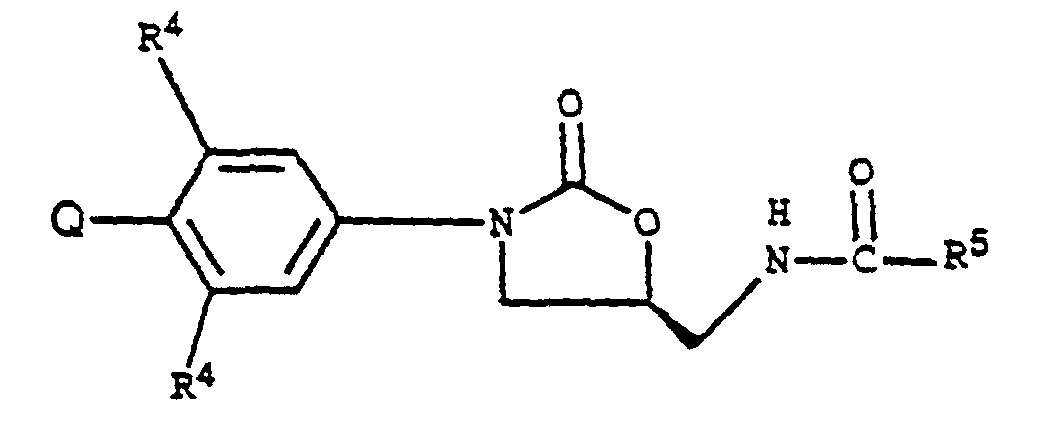
- Q
- aus den Strukturen i, ii, iii, iv und v:
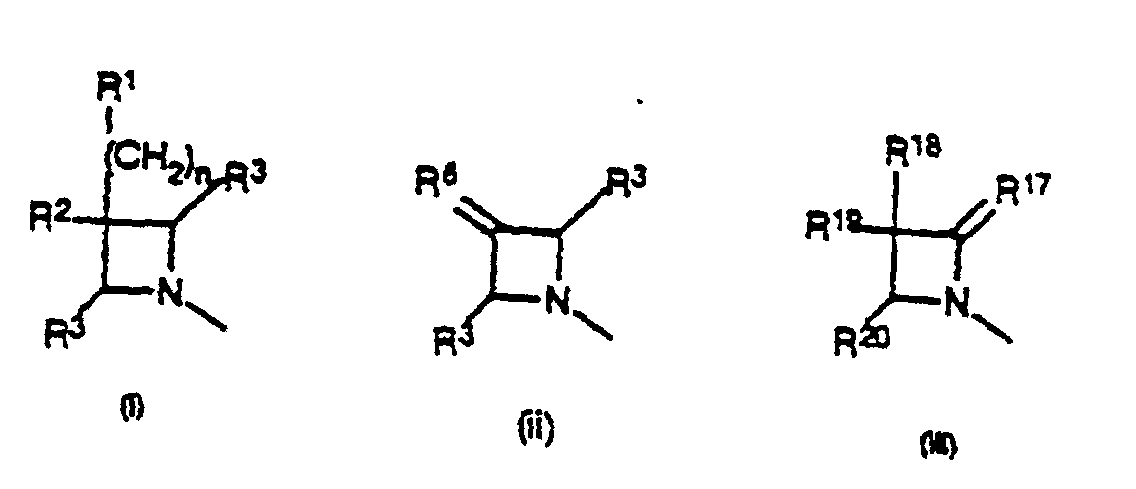 ausgewählt ist,
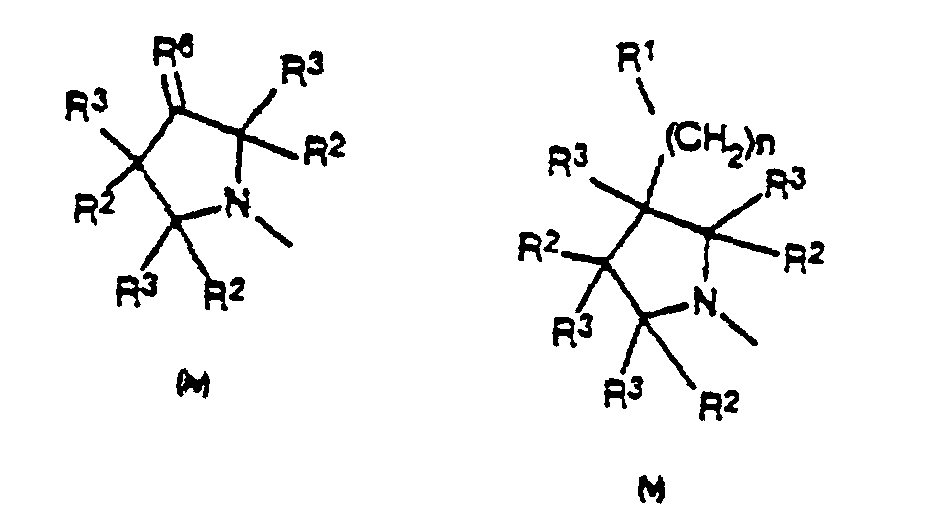
- R1
-
- (a) H oder F,
- (b) OR7,
- (c) SR7,
- (d) NR8R9,
- (e) CN,
- (f) C1-C4-Alkoxycarbonyl,
- (g) Carboxamid,
- (h) C1-C4-Acyl, optional substituiert mit einem oder mehr der folgenden Reste: Fluor, Hydroxy, C1-C4-Alkoxy, C1-C4-Acyloxy,
- (i) NHO(C1-C6-Alkyl), NHOCH2Ph,
- (j) NSO2R mit R gleich C1-6-Alkyl, optional substituiert mit einem oder mehr Resten F, Cl, C1-C6-Alkoxy oder Phenyl
- jedes R2
- in unabhängiger Weise aus
- (a) H oder F,
- (b) OH,
- (c) OR mit R gleich C1-C6-Alkyl,
- (d) C1-C4-Alkyl,
- (e) Ph
- jedes R3
- in unabhängiger Weise aus
- (a) H,
- (b) C1-C3-Alkyl, das optional mit F, Cl, Hydroxy, C1-C3-Alkoxycarbonyl, C1-C3-Acyloxy, C1-C3-Alkoxy oder N(C1-C4-Alkyl)2 substituiert sein kann,
- (c) Phenyl,
- (d) Pyridyl
- R4
- in unabhängiger Weise H, OCH3, F oder Cl bedeutet;
- R5
-
- (a) Wasserstoff,
- (b) C1-C8-Alkyl, optional substituiert mit einem oder mehr der folgenden Reste: F, Cl, Hydroxy, C1-C8-Alkoxy, C1-C8-Acyloxy,
- (c) C3-C6-Cycloalkyl,
- (d) Amino,
- (e) C1-C8-Alkylamino
- (f) C1-C8-Dialkylamino,
- (g) C1-C8-Alkoxy
- R6
-
- (a) O,
- (b) S,
- (c) NR10,
- (d) CR11R12,
- (e) (OR)2 mit R gleich C1-C6-Alkyl,
- (f) O(CH2)mO,
- (g) (SR)2 mit R gleich C1-C6-Alkyl,
- (h) S(CH2)mS,
- (i) zum Füllen der Valenz OH und H, H und H, H und F oder F und F
- R7
-
- (a) H,
- (b) C1-C8-Alkyl, optional substituiert mit einem oder mehr der folgenden Reste: F, Cl, -CN, Hydroxy, C1-C8-Alkoxy, C1-C8-Acyloxy, C1-C8-Alkoxycarbonyl, Phenyl,
- (c) C1-C8-Acyl, optional substituiert mit einem oder mehr der folgenden Reste: Hydroxy, C1-C8-Alkoxy, C1-C8-Acyloxy,
- (d) C1-C8-Alkoxycarbonyl,
- (e) Carboxamid, optional substituiert mit einem C1-C4-Alkyl oder Phenyl am Carboxamidstickstoff,
- (f) Phenyl, optional substituiert mit einem oder mehr der folgenden Reste: Halogen, CN, C1-C3-Alkoxy, C1-C3-Alkoxycarbonyl, C1-C4-Alkyl, optional substituiert mit einem oder mehr der Reste F oder C1-C3-Alkoxy
- R8 und R9
- unabhängig voneinander aus
- (a) H
- (b) C1-C8-Alkyl, optional substituiert mit einem oder mehr der folgenden Reste: F, Cl, -CN, Hydroxy, C1-C8-Alkoxy, C1-C8-Acyloxy, C1-C8-Alkoxycarbonyl, Phenyl,
- (c) C1-C8-Acyl, optional substituiert mit einem oder mehr der folgenden Reste: Hydroxy, C1-C8-Alkoxy, C1-C8-Acyloxy, Amino, C1-C8-Acylamino, Amino-C1-C4-Acylamino,
- (d) Benzoyl, optional substituiert mit einem oder mehr der folgenden Reste: F, Cl, Hydroxy, C1-C8-Alkoxy, C1-C8-Acyloxy, Amino, C1-C4-Acylamino, C1-C4-Alkoxycarbonylamino,
- (e) C1-C8-Alkoxycarbonyl, Benzyloxycarbonyl, tert.-Butoxycarbonyl,
- (f) Carboxamid, optional substituiert mit einem C1-C4-Alkyl oder Phenyl am Carboxamidstickstoff
- (g) Trifluoracetyl,
- (h) CO(C1-C6-Alkyl),
- R10
-
- (a) H,
- (b) OR7,
- (c) NHR7
- (d) C1-C8-Alkyl, optional substituiert mit Phenyl,
- R11 und R12
- unabhängig voneinander aus:
- (a) H, F,
- (b) C1-C4-Alkyl, optional substituiert mit Halogen, Hydroxy, C1-C4-Alkoxy, C1-C4-Alkoxycarbonyl, Phenyl,
- (c) C1-C8-Acyl,
- (d) C1-C4-Alkoxycarbonyl,
- (e) CN
- R17
-
- (a) O,
- (b) S
- R18 und R19
- unabhängig voneinander aus:
- (a) H,
- (b) C1-C4-Alkyl, optional substituiert mit Halogen, Hydroxy, C1-C4-Alkoxy,
- (c) OH,
- (d) C1-C4-Alkoxy, optional substituiert mit Hydroxy oder C1-C4-Alkoxy,
- (e) NR8R9,
- (f) -OC(O)C1-C4-Alkyl
- R20
-
- (a) H,
- (b) CH3
- n
- 0 oder 1 ist und m 2 oder 3 ist.
- Die Verbindung nach Anspruch 1, worin Q die Struktur (i) ist.
- Die Verbindung nach Anspruch 1, worin Q die Struktur (ii) ist.
- Die Verbindung nach Anspruch 1, worin Q die Struktur (iii) ist.
- Die Verbindung nach Anspruch 1, worin Q die Struktur (iv) ist.
- Die Verbindung nach Anspruch 1, worin Q die Struktur (v) ist.
- Die Verbindung nach Anspruch 1, worin jedes R4 Fluor ist.
- Die Verbindung nach Anspruch 1, worin ein Rest R4 Fluor und der andere Wasserstoff ist.
- Die Verbindung nach Anspruch 1, worin R5 Wasserstoff, Methoxy oder Methyl ist.
- Die Verbindung nach Anspruch 1, worin R6 Sauerstoff, OCH2CH2O, HOH oder NOCH3 ist.
- Verwendung einer Verbindung der Strukturformel I nach Anspruch 1 zur Herstellung eines Medikaments, das zur Behandlung mikrobieller Infektionen bei Warmblütern einschließlich Menschen durch Verabreichen einer pharmazeutisch wirksamen Menge der Verbindung an einen Patienten geeignet ist.
Priority Applications (1)
| Application Number | Priority Date | Filing Date | Title |
|---|---|---|---|
| SI9530528T SI0788498T1 (en) | 1994-10-26 | 1995-09-12 | Phenyloxazolidinone antimicrobials |
Applications Claiming Priority (3)
| Application Number | Priority Date | Filing Date | Title |
|---|---|---|---|
| US32971794A | 1994-10-26 | 1994-10-26 | |
| US329717 | 1994-10-26 | ||
| PCT/US1995/010992 WO1996013502A1 (en) | 1994-10-26 | 1995-09-12 | Phenyloxazolidinone antimicrobials |
Publications (2)
| Publication Number | Publication Date |
|---|---|
| EP0788498A1 EP0788498A1 (de) | 1997-08-13 |
| EP0788498B1 true EP0788498B1 (de) | 2001-08-16 |
Family
ID=23286694
Family Applications (1)
| Application Number | Title | Priority Date | Filing Date |
|---|---|---|---|
| EP95933718A Expired - Lifetime EP0788498B1 (de) | 1994-10-26 | 1995-09-12 | Phenyloxazolidinone mit antimikrobieller wirkung |
Country Status (22)
| Country | Link |
|---|---|
| EP (1) | EP0788498B1 (de) |
| JP (1) | JP3933198B2 (de) |
| KR (1) | KR100383403B1 (de) |
| CN (1) | CN1068325C (de) |
| AT (1) | ATE204277T1 (de) |
| AU (1) | AU694271B2 (de) |
| BR (1) | BR9509136A (de) |
| CA (1) | CA2200433C (de) |
| CZ (1) | CZ291847B6 (de) |
| DE (1) | DE69522234T2 (de) |
| DK (1) | DK0788498T3 (de) |
| ES (1) | ES2162941T3 (de) |
| FI (1) | FI971774A0 (de) |
| HU (1) | HU224044B1 (de) |
| NO (1) | NO309478B1 (de) |
| NZ (1) | NZ293741A (de) |
| PL (1) | PL183512B1 (de) |
| PT (1) | PT788498E (de) |
| RU (1) | RU2134692C1 (de) |
| SI (1) | SI0788498T1 (de) |
| SK (1) | SK282869B6 (de) |
| WO (1) | WO1996013502A1 (de) |
Families Citing this family (45)
| Publication number | Priority date | Publication date | Assignee | Title |
|---|---|---|---|---|
| US6277985B1 (en) * | 1995-09-15 | 2001-08-21 | Pharmacia & Upjohn Company | Aminoaryl oxazolidinone N-oxides |
| GB9601666D0 (en) * | 1996-01-27 | 1996-03-27 | Zeneca Ltd | Chemical compounds |
| GB9702213D0 (en) | 1996-02-24 | 1997-03-26 | Zeneca Ltd | Chemical compounds |
| SG85683A1 (en) * | 1996-04-11 | 2002-01-15 | Upjohn Co | Process to prepare oxazolidinones |
| GB9609919D0 (en) * | 1996-05-11 | 1996-07-17 | Zeneca Ltd | Chemical compounds |
| GB9717804D0 (en) | 1997-08-22 | 1997-10-29 | Zeneca Ltd | Chemical compounds |
| GB9717807D0 (en) | 1997-08-22 | 1997-10-29 | Zeneca Ltd | Chemical compounds |
| GB9725244D0 (en) | 1997-11-29 | 1998-01-28 | Zeneca Ltd | Chemical compounds |
| US7002020B1 (en) | 1998-01-23 | 2006-02-21 | Pharmacia & Upjohn Company | Oxazolidinone combinatorial libraries, compositions and methods of preparation |
| CA2318969A1 (en) | 1998-01-23 | 1999-07-29 | Mikhail F. Gordeev | Oxazolidinone combinatorial libraries, compositions and methods of preparation |
| US6562844B2 (en) | 1998-01-23 | 2003-05-13 | Pharmacia & Upjohn Company | Oxazolidinone combinatorial libraries, compositions and methods of preparation |
| PT1054874E (pt) * | 1998-02-13 | 2003-01-31 | Upjohn Co | Derivados de aminofenil-isoxazolina substituidos uteis como anti-microbianos |
| EP1082323A2 (de) | 1998-06-05 | 2001-03-14 | AstraZeneca UK Limited | Oxazolidinon-derivate, verfahren zu ihrer herstellung und diese derivate enthaltende pharmazeutische zusammensetzungen |
| CA2360740A1 (en) | 1999-03-02 | 2000-09-08 | Boehringer Ingelheim Pharmaceuticals, Inc. | Compounds useful as reversible inhibitors of cathepsin s |
| DE19919708A1 (de) * | 1999-04-30 | 2001-03-01 | Univ Stuttgart | Stufenweise Alkylierung von polymeren Aminen |
| US6608081B2 (en) | 1999-08-12 | 2003-08-19 | Ortho-Mcneil Pharmaceutical, Inc. | Bicyclic heterocyclic substituted phenyl oxazolidinone antibacterials, and related compositions and methods |
| US6420364B1 (en) | 1999-09-13 | 2002-07-16 | Boehringer Ingelheim Pharmaceuticals, Inc. | Compound useful as reversible inhibitors of cysteine proteases |
| FR2802091A1 (fr) * | 1999-12-08 | 2001-06-15 | Oreal | Compositions pour la teinture des fibres keratiniques contenant des derives de paraphenylenediamine a groupement azetidinyle |
| ATE321024T1 (de) | 2000-10-17 | 2006-04-15 | Pharmacia & Upjohn Co Llc | Verfahren zur herstellung von oxazolidinonverbindungen |
| US7160912B2 (en) | 2000-12-26 | 2007-01-09 | Dr.Reddy's Laboratories Ltd. | Heterocyclic compounds having antibacterial activity: process for their preparation and pharmaceutical compositions containing them |
| YU52403A (sh) | 2000-12-26 | 2006-03-03 | Dr.Reddy's Research Foundation | Heterociklična jedinjenja koja imaju antibakterijsko dejstvo, postupak za njihovo dobijanje i farmaceutske smeše koje ih sadrže |
| EP1358185A2 (de) | 2001-02-07 | 2003-11-05 | Ortho-Mcneil Pharmaceutical, Inc. | Antibakteriell wirksame pyridoarylphenyloxazolidinone und entsprechende zusammensetzungen und methoden |
| ES2186550B2 (es) * | 2001-06-27 | 2003-11-16 | Vita Lab | Nuevos derivados de oxazolidinonas como antibacterianos. |
| US6914058B2 (en) * | 2002-01-18 | 2005-07-05 | Dr. Reddy's Laboratories, Limited | Antibacterial compounds: process for their preparation and pharmaceutical compositions containing them |
| AR038536A1 (es) | 2002-02-25 | 2005-01-19 | Upjohn Co | N-aril-2-oxazolidinona-5- carboxamidas y sus derivados |
| US7141588B2 (en) | 2002-02-25 | 2006-11-28 | Pfizer, Inc. | N-aryl-2-oxazolidinone-5-carboxamides and their derivatives |
| EP1546140A2 (de) * | 2002-07-11 | 2005-06-29 | Wockhardt Limited | Antimikrobielle oxazolidinone, verfahren zu ihrer herstellung und sie enthaltende pharmazeutische zusammensetzungen |
| AU2003272071A1 (en) * | 2002-07-11 | 2004-02-02 | Wockhardt Limited | Antibacterial substituted cyanomethyl (ene) piperidinophenyl oxazolidinones, process or their preparation, and pharmaceutical compositions containing them |
| MXPA05001558A (es) | 2002-08-12 | 2005-09-08 | Pharmacia & Upjohn Co Llc | N-aril-2-oxazolidinonas y sus derivados. |
| ATE344036T1 (de) | 2002-11-21 | 2006-11-15 | Pharmacia & Upjohn Co Llc | N-(4-(piperazin-1-yl)-phenyl-2-oxazolidinon-5- carbonsäureamid-derivate und verwandte verbindungen als antibakterielle mittel |
| US7223788B2 (en) | 2003-02-14 | 2007-05-29 | Sanofi-Aventis Deutschland Gmbh | Substituted N-aryl heterocycles, process for their preparation and their use as medicaments |
| DE10306250A1 (de) * | 2003-02-14 | 2004-09-09 | Aventis Pharma Deutschland Gmbh | Substituierte N-Arylheterozyklen, Verfahren zu ihrer Herstellung und ihre Verwendung als Arzneimittel |
| US7687627B2 (en) * | 2003-09-08 | 2010-03-30 | Wockhardt Limited | Substituted piperidino phenyloxazolidinones having antimicrobial activity with improved in vivo efficacy |
| US7304050B2 (en) | 2003-09-16 | 2007-12-04 | Pfizer Inc. | Antibacterial agents |
| FR2862969A1 (fr) * | 2003-11-28 | 2005-06-03 | Oreal | Procede de preparation de derives paraphenylenediamine a groupement pyrrolidinyle, substitue par un radical azote, et composes intermediaires |
| JP2009500389A (ja) * | 2005-07-06 | 2009-01-08 | ファルマシア・アンド・アップジョン・カンパニー・エルエルシー | 抗菌剤としてのアゼチジンおよびシクロブタンを含むオキサゾリジノンカルボキサミド |
| WO2007004049A1 (en) * | 2005-07-06 | 2007-01-11 | Pharmacia & Upjohn Company Llc | Oxazolidinones containing azetidine as antibacterial agents |
| RU2479206C2 (ru) * | 2007-07-24 | 2013-04-20 | ДАУ ГЛОБАЛ ТЕКНОЛОДЖИЗ ЭлЭлСи | Способы и композиции для снижения и ингибирования роста концентрации микробов во флюидах на водной основе и системах с их применением |
| US8952199B2 (en) | 2007-07-24 | 2015-02-10 | Dow Global Technologies Llc | Methods of and formulations for reducing and inhibiting the growth of the concentration of microbes in water-based fluids and systems used with them |
| EP2141162A1 (de) * | 2008-07-01 | 2010-01-06 | Ferrer Internacional, S.A. | 3-(N-Heterocyclyl)-pyrrolidinyl-phenyl-oxazolidinone als antibakterielle Wirkstoffe |
| EP2141161A1 (de) * | 2008-07-01 | 2010-01-06 | Ferrer Internacional, S.A. | 3-Cyano-piperidinyl-phenyl-oxazolidinone als antibakterielle Wirkstoffe |
| CN101798302B (zh) * | 2009-02-06 | 2014-11-05 | 上海盟科药业有限公司 | 抗生素类药物1-(邻-氟苯基)二氢吡啶酮的合成及生产的方法和工艺 |
| US20130296569A1 (en) | 2010-11-03 | 2013-11-07 | Vijaykumar Jagdishwar Patil | Process for the preparation of phosphoric acid mono-(1--4-methoxymethyl-piperidin-4-yl) ester |
| WO2015173664A1 (en) | 2014-05-14 | 2015-11-19 | Wockhardt Limited | Process for the preparation of (5s)-n-{3-[3,5-difluoro-4-(4-hydroxy-4-methoxymethyl-piperidin-1-yl)-phenyl]-2-oxo-oxazolidin-5-ylmethyl}-acetamide |
| WO2020234636A1 (en) | 2019-05-17 | 2020-11-26 | Cadila Healthcare Limited | Novel compounds for the treatment of mammalian infections |
Family Cites Families (5)
| Publication number | Priority date | Publication date | Assignee | Title |
|---|---|---|---|---|
| ES533097A0 (es) * | 1983-06-07 | 1985-08-01 | Du Pont | Un procedimiento para la preparacion de nuevos derivados del amino-metil-oxooxazolidinil-benzeno. |
| ATE95176T1 (de) * | 1987-10-21 | 1993-10-15 | Du Pont Merck Pharma | Aminomethyl-oxo-oxazolidinyl-ethenylbenzenderivate, nuetzlich als antibakterielles mittel. |
| US4948801A (en) * | 1988-07-29 | 1990-08-14 | E. I. Du Pont De Nemours And Company | Aminomethyloxooxazolidinyl arylbenzene derivatives useful as antibacterial agents |
| ES2157934T3 (es) * | 1988-09-15 | 2001-09-01 | Upjohn Co | Fenil-5-beta-amidometiloxazolidin-2-onas sustituidas con nitrogeno en la posicion 3. |
| EP0610265B1 (de) * | 1991-11-01 | 1996-12-27 | PHARMACIA & UPJOHN COMPANY | Substituierte aryl- und heteroaryl-phenyloxazolidinone |
-
1995
- 1995-09-12 DE DE69522234T patent/DE69522234T2/de not_active Expired - Fee Related
- 1995-09-12 WO PCT/US1995/010992 patent/WO1996013502A1/en not_active Ceased
- 1995-09-12 AT AT95933718T patent/ATE204277T1/de not_active IP Right Cessation
- 1995-09-12 AU AU36254/95A patent/AU694271B2/en not_active Ceased
- 1995-09-12 KR KR1019970702729A patent/KR100383403B1/ko not_active Expired - Fee Related
- 1995-09-12 DK DK95933718T patent/DK0788498T3/da active
- 1995-09-12 RU RU97108157A patent/RU2134692C1/ru not_active IP Right Cessation
- 1995-09-12 JP JP51454096A patent/JP3933198B2/ja not_active Expired - Fee Related
- 1995-09-12 CZ CZ19971217A patent/CZ291847B6/cs not_active IP Right Cessation
- 1995-09-12 BR BR9509136A patent/BR9509136A/pt not_active IP Right Cessation
- 1995-09-12 NZ NZ293741A patent/NZ293741A/en unknown
- 1995-09-12 CN CN95195908A patent/CN1068325C/zh not_active Expired - Fee Related
- 1995-09-12 PL PL95319873A patent/PL183512B1/pl not_active IP Right Cessation
- 1995-09-12 HU HU9702015A patent/HU224044B1/hu not_active IP Right Cessation
- 1995-09-12 EP EP95933718A patent/EP0788498B1/de not_active Expired - Lifetime
- 1995-09-12 SK SK494-97A patent/SK282869B6/sk unknown
- 1995-09-12 PT PT95933718T patent/PT788498E/pt unknown
- 1995-09-12 SI SI9530528T patent/SI0788498T1/xx unknown
- 1995-09-12 CA CA002200433A patent/CA2200433C/en not_active Expired - Fee Related
- 1995-09-12 ES ES95933718T patent/ES2162941T3/es not_active Expired - Lifetime
-
1997
- 1997-04-25 FI FI971774A patent/FI971774A0/fi unknown
- 1997-04-25 NO NO971946A patent/NO309478B1/no unknown
Also Published As
| Publication number | Publication date |
|---|---|
| SI0788498T1 (en) | 2001-12-31 |
| KR970707123A (ko) | 1997-12-01 |
| DE69522234D1 (de) | 2001-09-20 |
| NZ293741A (en) | 1998-06-26 |
| NO971946L (no) | 1997-06-25 |
| SK49497A3 (en) | 1998-01-14 |
| BR9509136A (pt) | 1998-07-21 |
| CA2200433A1 (en) | 1996-05-09 |
| WO1996013502A1 (en) | 1996-05-09 |
| AU3625495A (en) | 1996-05-23 |
| CA2200433C (en) | 2006-02-07 |
| CZ291847B6 (cs) | 2003-06-18 |
| PL183512B1 (pl) | 2002-06-28 |
| ATE204277T1 (de) | 2001-09-15 |
| SK282869B6 (sk) | 2003-01-09 |
| DK0788498T3 (da) | 2001-11-05 |
| CN1162312A (zh) | 1997-10-15 |
| PT788498E (pt) | 2002-02-28 |
| ES2162941T3 (es) | 2002-01-16 |
| NO309478B1 (no) | 2001-02-05 |
| JP3933198B2 (ja) | 2007-06-20 |
| KR100383403B1 (ko) | 2004-05-31 |
| AU694271B2 (en) | 1998-07-16 |
| CN1068325C (zh) | 2001-07-11 |
| DE69522234T2 (de) | 2002-05-16 |
| FI971774A7 (fi) | 1997-04-25 |
| FI971774A0 (fi) | 1997-04-25 |
| HUT77602A (hu) | 1998-06-29 |
| RU2134692C1 (ru) | 1999-08-20 |
| CZ121797A3 (en) | 1997-07-16 |
| JPH10508017A (ja) | 1998-08-04 |
| EP0788498A1 (de) | 1997-08-13 |
| PL319873A1 (en) | 1997-09-01 |
| HU224044B1 (hu) | 2005-05-30 |
| NO971946D0 (no) | 1997-04-25 |
Similar Documents
| Publication | Publication Date | Title |
|---|---|---|
| AU694271B2 (en) | Phenyloxazolidinone antimicrobials | |
| AU687866B2 (en) | Substituted oxazine and thiazine oxazolidinone antimicrobials | |
| US5688792A (en) | Substituted oxazine and thiazine oxazolidinone antimicrobials | |
| US6090820A (en) | Spirocyclic and bicyclic diazinyl and carbazinyl oxazolidinones | |
| US5547950A (en) | Oxazolidinone antimicrobials containing substituted diazine moieties | |
| AU702733B2 (en) | Bicyclic oxazine and thiazine oxazolidinone antibacterials | |
| US5910504A (en) | Hetero-aromatic ring substituted phenyloxazolidinone antimicrobials | |
| NZ283011A (en) | Piperidino-phenyl-oxazolidinones and analogues; medicaments | |
| KR20020067557A (ko) | 설폭시민 관능기를 가지는 옥사졸리디논 및항미생물제로서의 그의 용도 | |
| US5883093A (en) | Phenyloxazolidinone antimicrobials | |
| EP1246810A1 (de) | Piperidinyloxy- und pyrrolidinyloxyphenyloxazolidinone als antibakterielle mittel | |
| AU767380B2 (en) | Bicyclic oxazolidinones as antibacterial agent | |
| CA2537559C (en) | Substituted piperidino phenyloxazolidinones having antimicriobial activity with improved in vivo efficacy | |
| RU2522582C2 (ru) | Новые противомикробные средства | |
| EP1904489B1 (de) | Verfahren zur synthese von triazolen | |
| KR100307211B1 (ko) | 옥사졸리디논유도체,이의제조방법및그를함유한항균제조성물 | |
| JP2000229978A (ja) | オキサゾリジノン及び抗菌剤としてのそれらの使用 | |
| WO2007004049A1 (en) | Oxazolidinones containing azetidine as antibacterial agents |
Legal Events
| Date | Code | Title | Description |
|---|---|---|---|
| PUAI | Public reference made under article 153(3) epc to a published international application that has entered the european phase |
Free format text: ORIGINAL CODE: 0009012 |
|
| 17P | Request for examination filed |
Effective date: 19970516 |
|
| AK | Designated contracting states |
Kind code of ref document: A1 Designated state(s): AT BE CH DE DK ES FR GB GR IE IT LI LU MC NL PT SE |
|
| AX | Request for extension of the european patent |
Free format text: LT PAYMENT 970516;LV PAYMENT 970516;SI PAYMENT 970516 |
|
| 17Q | First examination report despatched |
Effective date: 19991004 |
|
| GRAG | Despatch of communication of intention to grant |
Free format text: ORIGINAL CODE: EPIDOS AGRA |
|
| GRAG | Despatch of communication of intention to grant |
Free format text: ORIGINAL CODE: EPIDOS AGRA |
|
| GRAH | Despatch of communication of intention to grant a patent |
Free format text: ORIGINAL CODE: EPIDOS IGRA |
|
| GRAH | Despatch of communication of intention to grant a patent |
Free format text: ORIGINAL CODE: EPIDOS IGRA |
|
| GRAA | (expected) grant |
Free format text: ORIGINAL CODE: 0009210 |
|
| AK | Designated contracting states |
Kind code of ref document: B1 Designated state(s): AT BE CH DE DK ES FR GB GR IE IT LI LU MC NL PT SE |
|
| AX | Request for extension of the european patent |
Free format text: LT PAYMENT 19970516;LV PAYMENT 19970516;SI PAYMENT 19970516 |
|
| REF | Corresponds to: |
Ref document number: 204277 Country of ref document: AT Date of ref document: 20010915 Kind code of ref document: T |
|
| REG | Reference to a national code |
Ref country code: CH Ref legal event code: EP |
|
| REF | Corresponds to: |
Ref document number: 69522234 Country of ref document: DE Date of ref document: 20010920 |
|
| REG | Reference to a national code |
Ref country code: CH Ref legal event code: NV Representative=s name: E. BLUM & CO. PATENTANWAELTE |
|
| REG | Reference to a national code |
Ref country code: IE Ref legal event code: FG4D |
|
| ET | Fr: translation filed | ||
| REG | Reference to a national code |
Ref country code: DK Ref legal event code: T3 |
|
| REG | Reference to a national code |
Ref country code: GB Ref legal event code: IF02 |
|
| REG | Reference to a national code |
Ref country code: ES Ref legal event code: FG2A Ref document number: 2162941 Country of ref document: ES Kind code of ref document: T3 |
|
| REG | Reference to a national code |
Ref country code: PT Ref legal event code: SC4A Free format text: AVAILABILITY OF NATIONAL TRANSLATION Effective date: 20011114 Ref country code: GR Ref legal event code: EP Ref document number: 20010402055 Country of ref document: GR |
|
| PLBE | No opposition filed within time limit |
Free format text: ORIGINAL CODE: 0009261 |
|
| STAA | Information on the status of an ep patent application or granted ep patent |
Free format text: STATUS: NO OPPOSITION FILED WITHIN TIME LIMIT |
|
| 26N | No opposition filed | ||
| REG | Reference to a national code |
Ref country code: SI Ref legal event code: IF |
|
| PGFP | Annual fee paid to national office [announced via postgrant information from national office to epo] |
Ref country code: PT Payment date: 20050627 Year of fee payment: 11 |
|
| PGFP | Annual fee paid to national office [announced via postgrant information from national office to epo] |
Ref country code: LU Payment date: 20050701 Year of fee payment: 11 Ref country code: AT Payment date: 20050701 Year of fee payment: 11 |
|
| PGFP | Annual fee paid to national office [announced via postgrant information from national office to epo] |
Ref country code: GR Payment date: 20050726 Year of fee payment: 11 |
|
| PGFP | Annual fee paid to national office [announced via postgrant information from national office to epo] |
Ref country code: NL Payment date: 20050808 Year of fee payment: 11 Ref country code: DK Payment date: 20050808 Year of fee payment: 11 |
|
| PGFP | Annual fee paid to national office [announced via postgrant information from national office to epo] |
Ref country code: MC Payment date: 20050901 Year of fee payment: 11 |
|
| PGFP | Annual fee paid to national office [announced via postgrant information from national office to epo] |
Ref country code: SE Payment date: 20050905 Year of fee payment: 11 |
|
| PGFP | Annual fee paid to national office [announced via postgrant information from national office to epo] |
Ref country code: CH Payment date: 20050927 Year of fee payment: 11 |
|
| PGFP | Annual fee paid to national office [announced via postgrant information from national office to epo] |
Ref country code: BE Payment date: 20051006 Year of fee payment: 11 |
|
| PG25 | Lapsed in a contracting state [announced via postgrant information from national office to epo] |
Ref country code: AT Free format text: LAPSE BECAUSE OF NON-PAYMENT OF DUE FEES Effective date: 20060912 |
|
| PG25 | Lapsed in a contracting state [announced via postgrant information from national office to epo] |
Ref country code: SE Free format text: LAPSE BECAUSE OF NON-PAYMENT OF DUE FEES Effective date: 20060913 |
|
| PG25 | Lapsed in a contracting state [announced via postgrant information from national office to epo] |
Ref country code: MC Free format text: LAPSE BECAUSE OF NON-PAYMENT OF DUE FEES Effective date: 20060930 Ref country code: LI Free format text: LAPSE BECAUSE OF NON-PAYMENT OF DUE FEES Effective date: 20060930 Ref country code: CH Free format text: LAPSE BECAUSE OF NON-PAYMENT OF DUE FEES Effective date: 20060930 Ref country code: BE Free format text: LAPSE BECAUSE OF NON-PAYMENT OF DUE FEES Effective date: 20060930 |
|
| PG25 | Lapsed in a contracting state [announced via postgrant information from national office to epo] |
Ref country code: DK Free format text: LAPSE BECAUSE OF NON-PAYMENT OF DUE FEES Effective date: 20061002 |
|
| PG25 | Lapsed in a contracting state [announced via postgrant information from national office to epo] |
Ref country code: PT Free format text: LAPSE BECAUSE OF NON-PAYMENT OF DUE FEES Effective date: 20070312 |
|
| REG | Reference to a national code |
Ref country code: PT Ref legal event code: MM4A Free format text: LAPSE DUE TO NON-PAYMENT OF FEES Effective date: 20070312 |
|
| PG25 | Lapsed in a contracting state [announced via postgrant information from national office to epo] |
Ref country code: NL Free format text: LAPSE BECAUSE OF NON-PAYMENT OF DUE FEES Effective date: 20070401 |
|
| LTLA | Lt: lapse of european patent or patent extension |
Effective date: 20060912 |
|
| REG | Reference to a national code |
Ref country code: DK Ref legal event code: EBP |
|
| REG | Reference to a national code |
Ref country code: CH Ref legal event code: PL |
|
| EUG | Se: european patent has lapsed | ||
| NLV4 | Nl: lapsed or anulled due to non-payment of the annual fee |
Effective date: 20070401 |
|
| REG | Reference to a national code |
Ref country code: SI Ref legal event code: KO00 Effective date: 20070507 |
|
| PGFP | Annual fee paid to national office [announced via postgrant information from national office to epo] |
Ref country code: IE Payment date: 20070713 Year of fee payment: 13 |
|
| PGFP | Annual fee paid to national office [announced via postgrant information from national office to epo] |
Ref country code: ES Payment date: 20070920 Year of fee payment: 13 |
|
| BERE | Be: lapsed |
Owner name: *PHARMACIA & UPJOHN CY Effective date: 20060930 |
|
| PGFP | Annual fee paid to national office [announced via postgrant information from national office to epo] |
Ref country code: GB Payment date: 20070809 Year of fee payment: 13 |
|
| PGFP | Annual fee paid to national office [announced via postgrant information from national office to epo] |
Ref country code: IT Payment date: 20070913 Year of fee payment: 13 Ref country code: DE Payment date: 20070928 Year of fee payment: 13 |
|
| PGFP | Annual fee paid to national office [announced via postgrant information from national office to epo] |
Ref country code: FR Payment date: 20070904 Year of fee payment: 13 |
|
| PG25 | Lapsed in a contracting state [announced via postgrant information from national office to epo] |
Ref country code: LU Free format text: LAPSE BECAUSE OF NON-PAYMENT OF DUE FEES Effective date: 20060912 |
|
| PG25 | Lapsed in a contracting state [announced via postgrant information from national office to epo] |
Ref country code: GR Free format text: LAPSE BECAUSE OF NON-PAYMENT OF DUE FEES Effective date: 20070404 |
|
| GBPC | Gb: european patent ceased through non-payment of renewal fee |
Effective date: 20080912 |
|
| REG | Reference to a national code |
Ref country code: IE Ref legal event code: MM4A |
|
| REG | Reference to a national code |
Ref country code: FR Ref legal event code: ST Effective date: 20090529 |
|
| PG25 | Lapsed in a contracting state [announced via postgrant information from national office to epo] |
Ref country code: IE Free format text: LAPSE BECAUSE OF NON-PAYMENT OF DUE FEES Effective date: 20080912 |
|
| PG25 | Lapsed in a contracting state [announced via postgrant information from national office to epo] |
Ref country code: IT Free format text: LAPSE BECAUSE OF NON-PAYMENT OF DUE FEES Effective date: 20080912 Ref country code: DE Free format text: LAPSE BECAUSE OF NON-PAYMENT OF DUE FEES Effective date: 20090401 |
|
| PG25 | Lapsed in a contracting state [announced via postgrant information from national office to epo] |
Ref country code: FR Free format text: LAPSE BECAUSE OF NON-PAYMENT OF DUE FEES Effective date: 20080930 |
|
| REG | Reference to a national code |
Ref country code: ES Ref legal event code: FD2A Effective date: 20080913 |
|
| PG25 | Lapsed in a contracting state [announced via postgrant information from national office to epo] |
Ref country code: GB Free format text: LAPSE BECAUSE OF NON-PAYMENT OF DUE FEES Effective date: 20080912 |
|
| PG25 | Lapsed in a contracting state [announced via postgrant information from national office to epo] |
Ref country code: ES Free format text: LAPSE BECAUSE OF NON-PAYMENT OF DUE FEES Effective date: 20080913 |