EP0796855B1 - Inhibitoren der Knochenresorption und Vitronectinrezeptor-Antagonisten - Google Patents
Inhibitoren der Knochenresorption und Vitronectinrezeptor-Antagonisten Download PDFInfo
- Publication number
- EP0796855B1 EP0796855B1 EP97103712A EP97103712A EP0796855B1 EP 0796855 B1 EP0796855 B1 EP 0796855B1 EP 97103712 A EP97103712 A EP 97103712A EP 97103712 A EP97103712 A EP 97103712A EP 0796855 B1 EP0796855 B1 EP 0796855B1
- Authority
- EP
- European Patent Office
- Prior art keywords
- mmol
- formula
- alkyl
- solution
- dioxo
- Prior art date
- Legal status (The legal status is an assumption and is not a legal conclusion. Google has not performed a legal analysis and makes no representation as to the accuracy of the status listed.)
- Expired - Lifetime
Links
- 0 CN*ON(C)* Chemical compound CN*ON(C)* 0.000 description 16
- QWHNJUXXYKPLQM-UHFFFAOYSA-N CC1(C)CCCC1 Chemical compound CC1(C)CCCC1 QWHNJUXXYKPLQM-UHFFFAOYSA-N 0.000 description 1
- OUQMXTJYCAJLGO-UHFFFAOYSA-N Cc1c[s]c(N)n1 Chemical compound Cc1c[s]c(N)n1 OUQMXTJYCAJLGO-UHFFFAOYSA-N 0.000 description 1
- FZTAHPMAKYDRNE-UHFFFAOYSA-N Cc1nc(CCC2)c2[nH]1 Chemical compound Cc1nc(CCC2)c2[nH]1 FZTAHPMAKYDRNE-UHFFFAOYSA-N 0.000 description 1
- IDBINRAFJUIINL-UHFFFAOYSA-N Cc1nc(N)c[s]1 Chemical compound Cc1nc(N)c[s]1 IDBINRAFJUIINL-UHFFFAOYSA-N 0.000 description 1
- UZQYFLWZKIMYKS-UHFFFAOYSA-N Cc1nc2cncnc2[nH]1 Chemical compound Cc1nc2cncnc2[nH]1 UZQYFLWZKIMYKS-UHFFFAOYSA-N 0.000 description 1
- LXBGSDVWAMZHDD-UHFFFAOYSA-N Cc1ncc[nH]1 Chemical compound Cc1ncc[nH]1 LXBGSDVWAMZHDD-UHFFFAOYSA-N 0.000 description 1
- LNJMHEJAYSYZKK-UHFFFAOYSA-N Cc1ncccn1 Chemical compound Cc1ncccn1 LNJMHEJAYSYZKK-UHFFFAOYSA-N 0.000 description 1
- UCOSRTUSVXHIMK-UHFFFAOYSA-N NCc1nc(cccc2)c2[nH]1 Chemical compound NCc1nc(cccc2)c2[nH]1 UCOSRTUSVXHIMK-UHFFFAOYSA-N 0.000 description 1
Classifications
-
- C—CHEMISTRY; METALLURGY
- C07—ORGANIC CHEMISTRY
- C07D—HETEROCYCLIC COMPOUNDS
- C07D403/00—Heterocyclic compounds containing two or more hetero rings, having nitrogen atoms as the only ring hetero atoms, not provided for by group C07D401/00
- C07D403/02—Heterocyclic compounds containing two or more hetero rings, having nitrogen atoms as the only ring hetero atoms, not provided for by group C07D401/00 containing two hetero rings
- C07D403/12—Heterocyclic compounds containing two or more hetero rings, having nitrogen atoms as the only ring hetero atoms, not provided for by group C07D401/00 containing two hetero rings linked by a chain containing hetero atoms as chain links
-
- C—CHEMISTRY; METALLURGY
- C07—ORGANIC CHEMISTRY
- C07D—HETEROCYCLIC COMPOUNDS
- C07D233/00—Heterocyclic compounds containing 1,3-diazole or hydrogenated 1,3-diazole rings, not condensed with other rings
- C07D233/04—Heterocyclic compounds containing 1,3-diazole or hydrogenated 1,3-diazole rings, not condensed with other rings having one double bond between ring members or between a ring member and a non-ring member
- C07D233/28—Heterocyclic compounds containing 1,3-diazole or hydrogenated 1,3-diazole rings, not condensed with other rings having one double bond between ring members or between a ring member and a non-ring member with hetero atoms or with carbon atoms having three bonds to hetero atoms with at the most one bond to halogen, e.g. ester or nitrile radicals, directly attached to ring carbon atoms
- C07D233/30—Oxygen or sulfur atoms
- C07D233/32—One oxygen atom
- C07D233/36—One oxygen atom with hydrocarbon radicals, substituted by nitrogen atoms, attached to ring nitrogen atoms
-
- A—HUMAN NECESSITIES
- A61—MEDICAL OR VETERINARY SCIENCE; HYGIENE
- A61P—SPECIFIC THERAPEUTIC ACTIVITY OF CHEMICAL COMPOUNDS OR MEDICINAL PREPARATIONS
- A61P13/00—Drugs for disorders of the urinary system
- A61P13/02—Drugs for disorders of the urinary system of urine or of the urinary tract, e.g. urine acidifiers
-
- A—HUMAN NECESSITIES
- A61—MEDICAL OR VETERINARY SCIENCE; HYGIENE
- A61P—SPECIFIC THERAPEUTIC ACTIVITY OF CHEMICAL COMPOUNDS OR MEDICINAL PREPARATIONS
- A61P13/00—Drugs for disorders of the urinary system
- A61P13/12—Drugs for disorders of the urinary system of the kidneys
-
- A—HUMAN NECESSITIES
- A61—MEDICAL OR VETERINARY SCIENCE; HYGIENE
- A61P—SPECIFIC THERAPEUTIC ACTIVITY OF CHEMICAL COMPOUNDS OR MEDICINAL PREPARATIONS
- A61P15/00—Drugs for genital or sexual disorders; Contraceptives
-
- A—HUMAN NECESSITIES
- A61—MEDICAL OR VETERINARY SCIENCE; HYGIENE
- A61P—SPECIFIC THERAPEUTIC ACTIVITY OF CHEMICAL COMPOUNDS OR MEDICINAL PREPARATIONS
- A61P19/00—Drugs for skeletal disorders
- A61P19/08—Drugs for skeletal disorders for bone diseases, e.g. rachitism, Paget's disease
-
- A—HUMAN NECESSITIES
- A61—MEDICAL OR VETERINARY SCIENCE; HYGIENE
- A61P—SPECIFIC THERAPEUTIC ACTIVITY OF CHEMICAL COMPOUNDS OR MEDICINAL PREPARATIONS
- A61P27/00—Drugs for disorders of the senses
- A61P27/02—Ophthalmic agents
-
- A—HUMAN NECESSITIES
- A61—MEDICAL OR VETERINARY SCIENCE; HYGIENE
- A61P—SPECIFIC THERAPEUTIC ACTIVITY OF CHEMICAL COMPOUNDS OR MEDICINAL PREPARATIONS
- A61P29/00—Non-central analgesic, antipyretic or antiinflammatory agents, e.g. antirheumatic agents; Non-steroidal antiinflammatory drugs [NSAID]
-
- A—HUMAN NECESSITIES
- A61—MEDICAL OR VETERINARY SCIENCE; HYGIENE
- A61P—SPECIFIC THERAPEUTIC ACTIVITY OF CHEMICAL COMPOUNDS OR MEDICINAL PREPARATIONS
- A61P3/00—Drugs for disorders of the metabolism
- A61P3/08—Drugs for disorders of the metabolism for glucose homeostasis
-
- A—HUMAN NECESSITIES
- A61—MEDICAL OR VETERINARY SCIENCE; HYGIENE
- A61P—SPECIFIC THERAPEUTIC ACTIVITY OF CHEMICAL COMPOUNDS OR MEDICINAL PREPARATIONS
- A61P3/00—Drugs for disorders of the metabolism
- A61P3/12—Drugs for disorders of the metabolism for electrolyte homeostasis
- A61P3/14—Drugs for disorders of the metabolism for electrolyte homeostasis for calcium homeostasis
-
- A—HUMAN NECESSITIES
- A61—MEDICAL OR VETERINARY SCIENCE; HYGIENE
- A61P—SPECIFIC THERAPEUTIC ACTIVITY OF CHEMICAL COMPOUNDS OR MEDICINAL PREPARATIONS
- A61P35/00—Antineoplastic agents
-
- A—HUMAN NECESSITIES
- A61—MEDICAL OR VETERINARY SCIENCE; HYGIENE
- A61P—SPECIFIC THERAPEUTIC ACTIVITY OF CHEMICAL COMPOUNDS OR MEDICINAL PREPARATIONS
- A61P43/00—Drugs for specific purposes, not provided for in groups A61P1/00-A61P41/00
-
- A—HUMAN NECESSITIES
- A61—MEDICAL OR VETERINARY SCIENCE; HYGIENE
- A61P—SPECIFIC THERAPEUTIC ACTIVITY OF CHEMICAL COMPOUNDS OR MEDICINAL PREPARATIONS
- A61P9/00—Drugs for disorders of the cardiovascular system
-
- A—HUMAN NECESSITIES
- A61—MEDICAL OR VETERINARY SCIENCE; HYGIENE
- A61P—SPECIFIC THERAPEUTIC ACTIVITY OF CHEMICAL COMPOUNDS OR MEDICINAL PREPARATIONS
- A61P9/00—Drugs for disorders of the cardiovascular system
- A61P9/08—Vasodilators for multiple indications
-
- A—HUMAN NECESSITIES
- A61—MEDICAL OR VETERINARY SCIENCE; HYGIENE
- A61P—SPECIFIC THERAPEUTIC ACTIVITY OF CHEMICAL COMPOUNDS OR MEDICINAL PREPARATIONS
- A61P9/00—Drugs for disorders of the cardiovascular system
- A61P9/10—Drugs for disorders of the cardiovascular system for treating ischaemic or atherosclerotic diseases, e.g. antianginal drugs, coronary vasodilators, drugs for myocardial infarction, retinopathy, cerebrovascula insufficiency, renal arteriosclerosis
-
- C—CHEMISTRY; METALLURGY
- C07—ORGANIC CHEMISTRY
- C07D—HETEROCYCLIC COMPOUNDS
- C07D233/00—Heterocyclic compounds containing 1,3-diazole or hydrogenated 1,3-diazole rings, not condensed with other rings
- C07D233/04—Heterocyclic compounds containing 1,3-diazole or hydrogenated 1,3-diazole rings, not condensed with other rings having one double bond between ring members or between a ring member and a non-ring member
- C07D233/28—Heterocyclic compounds containing 1,3-diazole or hydrogenated 1,3-diazole rings, not condensed with other rings having one double bond between ring members or between a ring member and a non-ring member with hetero atoms or with carbon atoms having three bonds to hetero atoms with at the most one bond to halogen, e.g. ester or nitrile radicals, directly attached to ring carbon atoms
- C07D233/44—Nitrogen atoms not forming part of a nitro radical
- C07D233/52—Nitrogen atoms not forming part of a nitro radical with hetero atoms directly attached to said nitrogen atoms
-
- C—CHEMISTRY; METALLURGY
- C07—ORGANIC CHEMISTRY
- C07D—HETEROCYCLIC COMPOUNDS
- C07D233/00—Heterocyclic compounds containing 1,3-diazole or hydrogenated 1,3-diazole rings, not condensed with other rings
- C07D233/54—Heterocyclic compounds containing 1,3-diazole or hydrogenated 1,3-diazole rings, not condensed with other rings having two double bonds between ring members or between ring members and non-ring members
- C07D233/66—Heterocyclic compounds containing 1,3-diazole or hydrogenated 1,3-diazole rings, not condensed with other rings having two double bonds between ring members or between ring members and non-ring members with hetero atoms or with carbon atoms having three bonds to hetero atoms with at the most one bond to halogen, e.g. ester or nitrile radicals, directly attached to ring carbon atoms
- C07D233/72—Two oxygen atoms, e.g. hydantoin
-
- C—CHEMISTRY; METALLURGY
- C07—ORGANIC CHEMISTRY
- C07D—HETEROCYCLIC COMPOUNDS
- C07D233/00—Heterocyclic compounds containing 1,3-diazole or hydrogenated 1,3-diazole rings, not condensed with other rings
- C07D233/96—Heterocyclic compounds containing 1,3-diazole or hydrogenated 1,3-diazole rings, not condensed with other rings having three double bonds between ring members or between ring members and non-ring members
-
- C—CHEMISTRY; METALLURGY
- C07—ORGANIC CHEMISTRY
- C07D—HETEROCYCLIC COMPOUNDS
- C07D235/00—Heterocyclic compounds containing 1,3-diazole or hydrogenated 1,3-diazole rings, condensed with other rings
- C07D235/02—Heterocyclic compounds containing 1,3-diazole or hydrogenated 1,3-diazole rings, condensed with other rings condensed with carbocyclic rings or ring systems
- C07D235/04—Benzimidazoles; Hydrogenated benzimidazoles
- C07D235/24—Benzimidazoles; Hydrogenated benzimidazoles with hetero atoms or with carbon atoms having three bonds to hetero atoms with at the most one bond to halogen, e.g. ester or nitrile radicals, directly attached in position 2
- C07D235/30—Nitrogen atoms not forming part of a nitro radical
-
- C—CHEMISTRY; METALLURGY
- C07—ORGANIC CHEMISTRY
- C07D—HETEROCYCLIC COMPOUNDS
- C07D239/00—Heterocyclic compounds containing 1,3-diazine or hydrogenated 1,3-diazine rings
- C07D239/02—Heterocyclic compounds containing 1,3-diazine or hydrogenated 1,3-diazine rings not condensed with other rings
- C07D239/06—Heterocyclic compounds containing 1,3-diazine or hydrogenated 1,3-diazine rings not condensed with other rings having one double bond between ring members or between a ring member and a non-ring member
- C07D239/08—Heterocyclic compounds containing 1,3-diazine or hydrogenated 1,3-diazine rings not condensed with other rings having one double bond between ring members or between a ring member and a non-ring member with hetero atoms directly attached in position 2
- C07D239/12—Nitrogen atoms not forming part of a nitro radical
- C07D239/18—Nitrogen atoms not forming part of a nitro radical with hetero atoms attached to said nitrogen atoms, except nitro radicals, e.g. hydrazine radicals
-
- C—CHEMISTRY; METALLURGY
- C07—ORGANIC CHEMISTRY
- C07D—HETEROCYCLIC COMPOUNDS
- C07D249/00—Heterocyclic compounds containing five-membered rings having three nitrogen atoms as the only ring hetero atoms
- C07D249/02—Heterocyclic compounds containing five-membered rings having three nitrogen atoms as the only ring hetero atoms not condensed with other rings
- C07D249/08—1,2,4-Triazoles; Hydrogenated 1,2,4-triazoles
- C07D249/10—1,2,4-Triazoles; Hydrogenated 1,2,4-triazoles with hetero atoms or with carbon atoms having three bonds to hetero atoms with at the most one bond to halogen, e.g. ester or nitrile radicals, directly attached to ring carbon atoms
- C07D249/14—Nitrogen atoms
-
- C—CHEMISTRY; METALLURGY
- C07—ORGANIC CHEMISTRY
- C07D—HETEROCYCLIC COMPOUNDS
- C07D307/00—Heterocyclic compounds containing five-membered rings having one oxygen atom as the only ring hetero atom
- C07D307/77—Heterocyclic compounds containing five-membered rings having one oxygen atom as the only ring hetero atom ortho- or peri-condensed with carbocyclic rings or ring systems
- C07D307/78—Benzo [b] furans; Hydrogenated benzo [b] furans
- C07D307/79—Benzo [b] furans; Hydrogenated benzo [b] furans with only hydrogen atoms, hydrocarbon or substituted hydrocarbon radicals, directly attached to carbon atoms of the hetero ring
- C07D307/80—Radicals substituted by oxygen atoms
-
- C—CHEMISTRY; METALLURGY
- C07—ORGANIC CHEMISTRY
- C07D—HETEROCYCLIC COMPOUNDS
- C07D401/00—Heterocyclic compounds containing two or more hetero rings, having nitrogen atoms as the only ring hetero atoms, at least one ring being a six-membered ring with only one nitrogen atom
- C07D401/02—Heterocyclic compounds containing two or more hetero rings, having nitrogen atoms as the only ring hetero atoms, at least one ring being a six-membered ring with only one nitrogen atom containing two hetero rings
- C07D401/12—Heterocyclic compounds containing two or more hetero rings, having nitrogen atoms as the only ring hetero atoms, at least one ring being a six-membered ring with only one nitrogen atom containing two hetero rings linked by a chain containing hetero atoms as chain links
-
- C—CHEMISTRY; METALLURGY
- C07—ORGANIC CHEMISTRY
- C07D—HETEROCYCLIC COMPOUNDS
- C07D405/00—Heterocyclic compounds containing both one or more hetero rings having oxygen atoms as the only ring hetero atoms, and one or more rings having nitrogen as the only ring hetero atom
- C07D405/14—Heterocyclic compounds containing both one or more hetero rings having oxygen atoms as the only ring hetero atoms, and one or more rings having nitrogen as the only ring hetero atom containing three or more hetero rings
-
- C—CHEMISTRY; METALLURGY
- C07—ORGANIC CHEMISTRY
- C07D—HETEROCYCLIC COMPOUNDS
- C07D471/00—Heterocyclic compounds containing nitrogen atoms as the only ring hetero atoms in the condensed system, at least one ring being a six-membered ring with one nitrogen atom, not provided for by groups C07D451/00 - C07D463/00
- C07D471/02—Heterocyclic compounds containing nitrogen atoms as the only ring hetero atoms in the condensed system, at least one ring being a six-membered ring with one nitrogen atom, not provided for by groups C07D451/00 - C07D463/00 in which the condensed system contains two hetero rings
- C07D471/04—Ortho-condensed systems
-
- C—CHEMISTRY; METALLURGY
- C07—ORGANIC CHEMISTRY
- C07D—HETEROCYCLIC COMPOUNDS
- C07D471/00—Heterocyclic compounds containing nitrogen atoms as the only ring hetero atoms in the condensed system, at least one ring being a six-membered ring with one nitrogen atom, not provided for by groups C07D451/00 - C07D463/00
- C07D471/02—Heterocyclic compounds containing nitrogen atoms as the only ring hetero atoms in the condensed system, at least one ring being a six-membered ring with one nitrogen atom, not provided for by groups C07D451/00 - C07D463/00 in which the condensed system contains two hetero rings
- C07D471/10—Spiro-condensed systems
Definitions
- the present invention relates to compounds of the formula I and their physiologically tolerable salts and those containing such compounds pharmaceutical preparations, their preparation and use as Remedies, especially as inhibitors of bone resorption Osteoclasts, as inhibitors of tumor growth and tumor metastasis, as an anti-inflammatory, for the treatment or prophylaxis of cardiovascular Diseases such as arteriosclerosis or restenosis, for treatment or Prophylaxis of nephropathies and retinopathies, e.g. diabetic Retinopathy, as well as vitronectin receptor antagonists for treatment and Prevention of diseases based on the interaction between Vitronectin receptors and their ligands in cell-cell or cell-matrix interaction processes based.
- cardiovascular Diseases such as arteriosclerosis or restenosis
- Prophylaxis of nephropathies and retinopathies e.g. diabetic Retinopathy
- vitronectin receptor antagonists for treatment and Prevention of diseases based on the interaction between Vitronectin
- the invention further relates to the use of Compounds of formula I and their physiologically tolerable salts and pharmaceutical preparations containing such compounds as medicinal products to alleviate or cure diseases at least in part by a undesirable level of bone resorption, angiogenesis, or proliferation of Cells of the smooth vascular muscles are caused.
- Human bones are subject to constant dynamic Remodeling process that includes bone resorption and bone building. This Processes are controlled by specialized cell types. Bone formation relies on the deposition of bone matrix by osteoblasts, Bone resorption is based on the breakdown of bone matrix Osteoclasts. The majority of bone diseases are based on one disturbed balance between bone formation and bone resorption.
- Osteoporosis is characterized by a loss of bone matrix.
- Activated osteoclasts are multinucleated cells with a diameter of up to 400 ⁇ m, remove the bone matrix.
- Activated osteoclasts attach themselves to the Surface of the bone matrix and secrete proteolytic enzymes and Acids in the so-called “sealing zone", the area between their Cell membrane and the bone matrix. The acidic environment and the proteases cause the bone to degrade.
- the compounds of formula I according to the invention inhibit bone resorption by osteoclasts.
- Bone diseases against which the compounds according to the invention can be used are, above all, osteoporosis, hypercalcemia, osteopenia, for example caused by metastases, dental diseases, hyperparathyroidism, periarticular erosions in rheumatoid arthritis and Paget's disease.
- the compounds of the formula I can be used for the relief, avoidance or therapy of bone diseases which are caused by glucocorticoid, steroid or corticosteroid therapy or by a lack of sex hormone (s). All of these diseases are characterized by bone loss due to the imbalance between bone build-up and bone loss.
- osteoclasts to the bones controlled by integrin receptors on the cell surface of osteoclasts becomes.
- Integrins are a super family of receptors, which include the fibrinogen receptor ⁇ IIb ⁇ 3 on platelets and the vitronectin receptor ⁇ v ⁇ 3 .
- the vitronectin receptor ⁇ v ⁇ 3 is a membrane-bound glycoprotein which is expressed on the cell surface of a number of cells such as endothelial cells, cells of the smooth vascular muscles, osteoclasts and tumor cells.
- the vitronectin receptor ⁇ V ⁇ 3 which is expressed on the osteoclast membrane, controls the process of attachment to the bone and bone resorption and thus contributes to osteoporosis.
- ⁇ V ⁇ 3 binds to bone matrix proteins such as osteopontin, bone sialoprotein and thrombospontin, which contain the tripeptide motif Arg-Gly-Asp (or RGD).
- vitronectin receptor ⁇ V ⁇ 3 on human cells of the smooth vascular muscles of the aorta stimulates the migration of these cells into the neointima, which ultimately leads to arteriosclerosis and restenosis after angioplasty (Brown et al., Cardiovascular Res. 1994, 28, 1815).
- EP-A 449 079, EP-A 530 505, EP-A 566 919, WO 93/18057 are hydantoin derivatives, 5-ring heterocycles substituted in WO 95/14008 described that have antiplatelet effects.
- alkyl radicals occurring in the substituents can be straight-chain or be branched, saturated or mono- or polyunsaturated. The same applies to residues derived therefrom, such as Alkoxy. Cycloalkyl radicals can be mono-, bi- or tricyclic.
- Monocyclic cycloalkyl radicals are, in particular, cyclopropyl, cyclobutyl, cyclopentyl, cyclohexyl, cycloheptyl and cyclooctyl, but these can also be substituted by, for example, (C 1 -C 4 ) -alkyl.
- substituted cycloalkyl radicals are 4-methylcyclohexyl and 2,3-dimethylcyclopentyl.
- Bicyclic and tricyclic cycloalkyl radicals can be unsubstituted or substituted in any suitable position by one or more oxo groups and / or one or more identical or different (C 1 -C 4 ) alkyl groups, for example methyl or isopropyl groups, preferably methyl groups.
- the free bond of the bicyclic or tricyclic radical can be located in any position of the molecule, so the rest can be bonded via a bridgehead atom or an atom in a bridge.
- the free bond can also be in any stereochemical position, for example in an exo or an endo position.
- twistan tricyclo [4.4.0.0 3.8 ] decane
- adamantane tricyclo [3.3.1.1 3.7 ] decane
- noradamantane tricyclo [3.3.1.0 3.7 ] -nonane
- tricyclo [2.2.1.0 2.6 ] heptane tricyclo [5.3.2.0 4.9 ] dodecane
- Aryl are, for example, phenyl, naphthyl, biphenylyl, anthryl or fluorenyl, 1-naphthyl, 2-naphthyl and especially phenyl being preferred.
- Aryl radicals, in particular phenyl radicals can be substituted one or more times, preferably one, two or three times, by identical or different radicals from the series (C 1 -C 8 ) -alkyl, in particular (C 1 -C 4 ) -alkyl, (C 1 -C 8 ) alkoxy, in particular (C 1 -C 4 ) alkoxy, halogen, such as fluorine, chlorine and bromine, nitro, amino, trifluoromethyl, hydroxy, methylenedioxy, ethylenedioxy, -OC (CH 3 ) 2 O-, Cyano, hydroxycarbonyl, aminocarbonyl, (C 1 -C 4 ) alkoxycarbonyl, phenyl, phenoxy
- the substituent in the 2-, the 3- or the 4-position, the 3-position and the 4-position being preferred. is Phenyl substituted twice, the substituents in 1,2-, 1,3- or 1.4 position to each other. Preferred are doubly substituted Phenyl residues the two substituents in the 3- and the 4-position, based on the link, arranged.
- Aryl groups can furthermore represent mono- or polycyclic aromatic ring systems, in which 1 to 5 carbon atoms can be replaced by 1 to 5 heteroatoms, such as 2-pyridyl, 3-pyridyl, 4-pyridyl, pyrrolyl, furyl, thienyl, imidazolyl, pyrazolyl , Oxazolyl, isoxazolyl, thiazolyl, isothiazolyl, tetrazolyl, pyridyl, pyrazinyl, pyrimidinyl, indolyl, isoindolyl, indazolyl, phthalazinyl, quinolyl, isoquinolyl, quinoxalinyl, quinazolinyl, cinnolinyl, ⁇ -carbolellinyl, or a benzopentolinyl, or a benzopentanol, or cyclohepta-fused derivative of these residues.
- aryl groups there are preferably mono- or bicyclic aromatic ring systems with 1-3 heteroatoms from the series N, O, S, those with 1-3 substituents from the series (C 1 -C 6 ) -alkyl, (C 1 - C 6 ) alkoxy, fluorine, Cl, NO 2 , NH 2 , trifluoromethyl, OH, (C 1 -C 4 ) alkoxycarbonyl, phenyl, phenoxy, benzyloxy or benzyl may be substituted.
- 10-membered ring systems having 1 - - 3 heteroatoms from the series N, O, S, with 1 - 2 substituents from the series (C 1 -C 4) -alkyl, (C 1 Particularly preferred here are monocyclic or bicyclic aromatic 5 are -C 4 ) alkoxy, phenyl, phenoxy, benzyl or benzyloxy may be substituted.
- alkyl, cycloalkyl and aryl bivalent radicals such as alkanediyl, alkenediyl, alkindiyl, cycloalkanediyl and arylene.
- Physiologically acceptable salts of the compounds of the general formula I are, in particular, pharmaceutically usable or non-toxic salts. Such salts are formed, for example, from compounds of the general formula I, which contain acidic groups, for example carboxy, with alkali or alkaline earth metals, such as Na, K, Mg and Ca, and with physiologically compatible organic amines, such as triethylamine, ethanolamine or tris (2-hydroxyethyl) amine.
- the compounds of general formula I according to the invention can be optical active carbon atoms, which are independently R or S configurations may have contained and thus in the form of pure enantiomers or pure Diastereomers or in the form of mixtures of enantiomers or Mixtures of diastereomers are present. Both pure enantiomers and Mixtures of enantiomers and diastereomers and mixtures of diastereomers are the subject of the present invention.
- the compounds of general formula I according to the invention can be used also contain mobile hydrogen atoms, i.e. in different tautomeric forms exist. These tautomers are also the subject of present invention.
- the present invention relates to both pure E or Z isomers and E / Z isomer mixtures. Diastereomers, including E / Z isomers, can be separated into the individual isomers by chromatography. Racemates can be separated into the two enantiomers either by chromatography on chiral phases or by resolution.
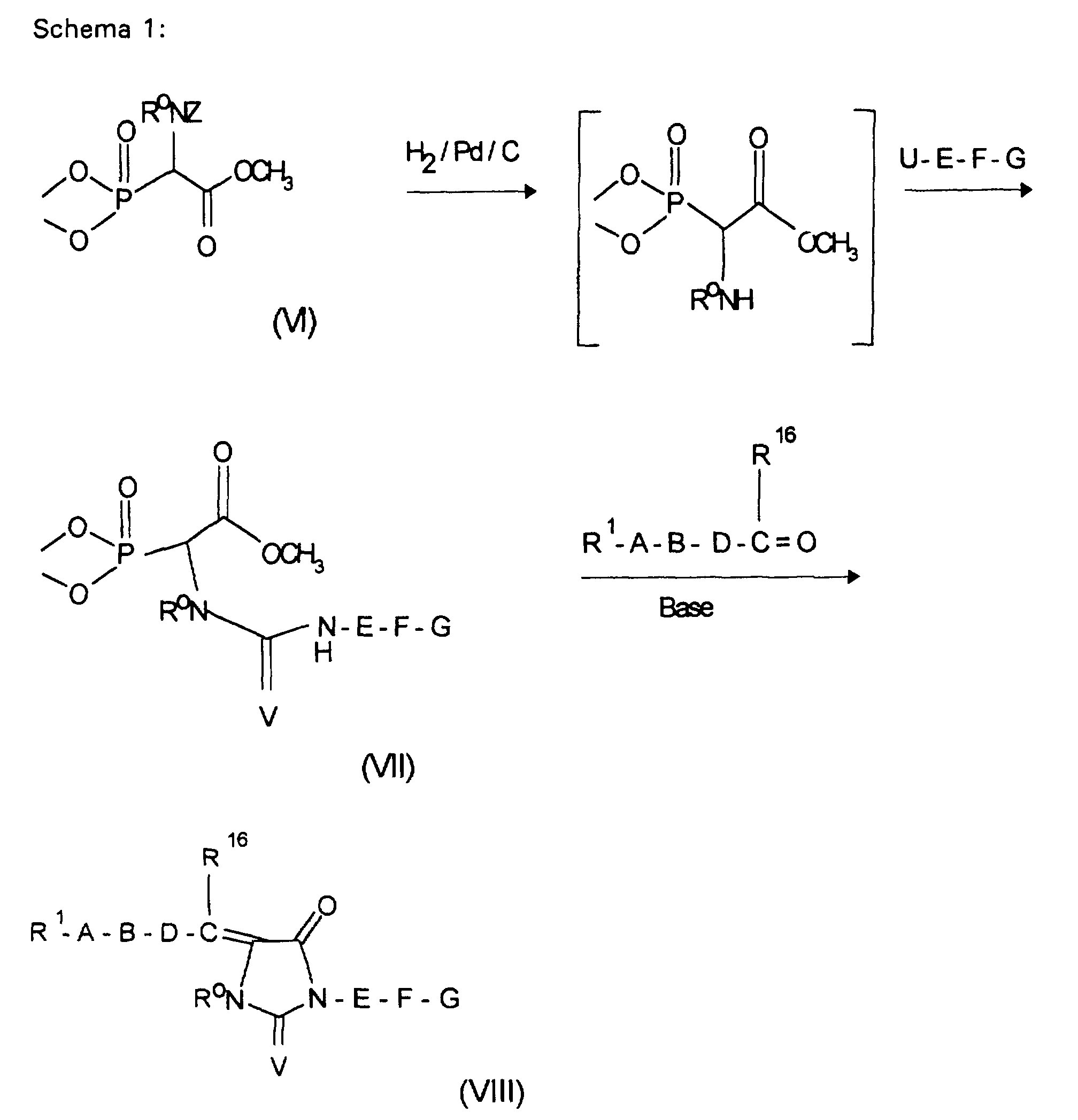
- Compounds of the formula I can generally, for example in the course of a convergent synthesis, by linking two or more fragments, which can be derived retrosynthetically from general formula I. become.
- functional groups may be necessary in each Synthesis step lead to undesirable reactions or side reactions could, through a protecting group strategy adapted to the synthesis problem to temporarily block what is known to the person skilled in the art.
- the method of Fragment linking is not limited to the examples below, but generally applicable for syntheses of the compounds of formula I.
- the existing protective groups are split off in a suitable manner.
- NO 2 groups (guanidino protection)
- benzyloxycarbonyl groups and benzyl esters can be hydrogenated.
- the protective groups of the tert-butyl type are split off acidically, while the 9-fluorenylmethyloxycarbonyl radical is removed by secondary amines.
- Q represents a nucleophilically substitutable leaving group such as e.g. Halogen, Mesylate, tosylate etc.
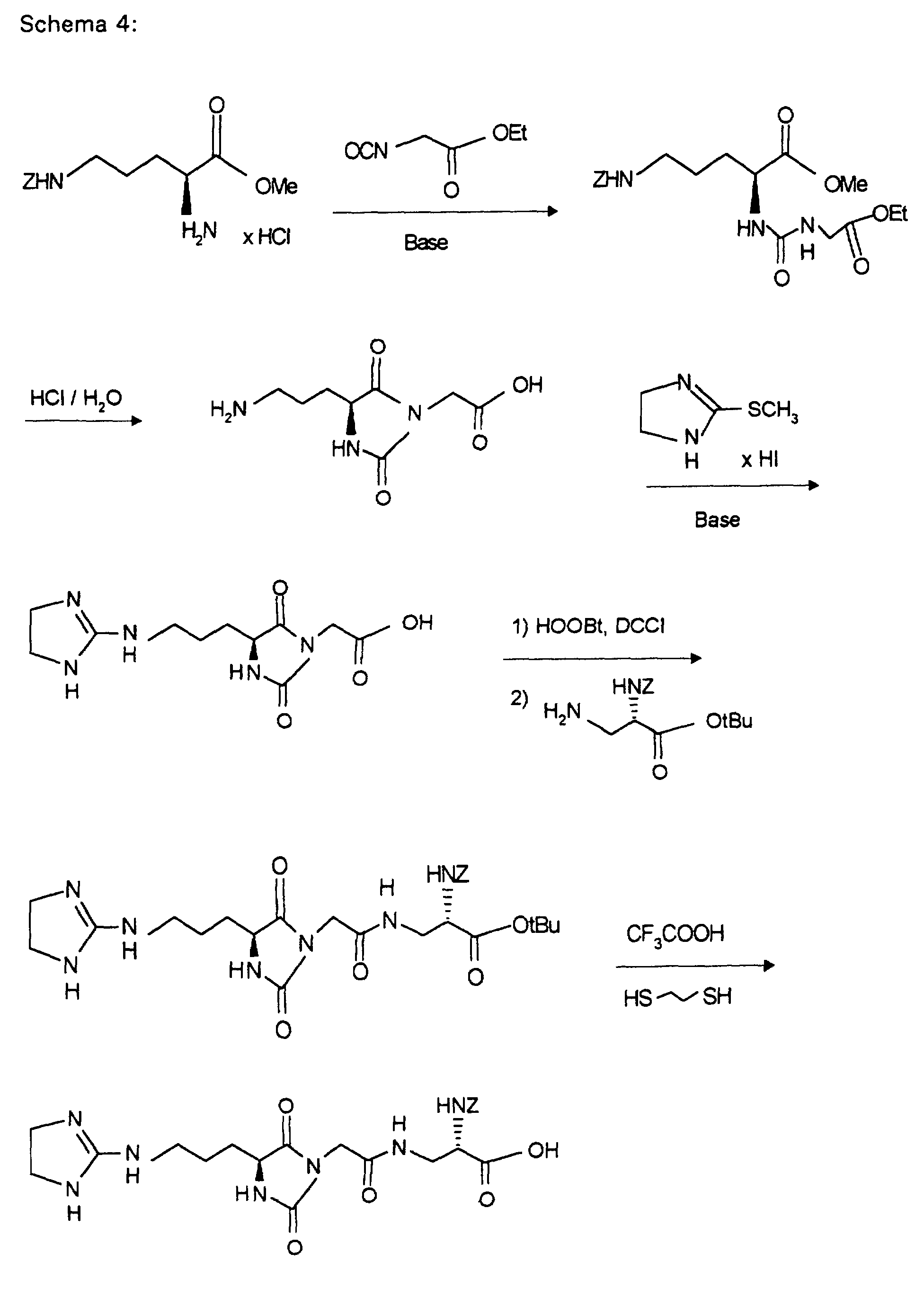
- example 1 may be mentioned here as an example:
- guanyl hydrazones can optionally be used as E / Z isomer mixtures incurred, which are separated according to common chromatography procedures can.
- reaction of an activated carboxylic acid derivative of the type Q (O) C- with the respective guanidine (derivative) is carried out in a manner known per se in a protic or aprotic polar but inert organic solvent.
- Most of the reactions of compounds of the type Q (O) C- with salt-free guanidines are advantageously carried out in aprotic inert solvents such as THF, dimethoxyethane, dioxane.
- water can also be used using a base (such as NaOH) as a solvent in the reaction of Q (O) C- with guanidines.
- a base such as NaOH
- Q Cl
- an acid scavenger for example in the form of excess guanidine (derivative) to set the hydrohalic acid.
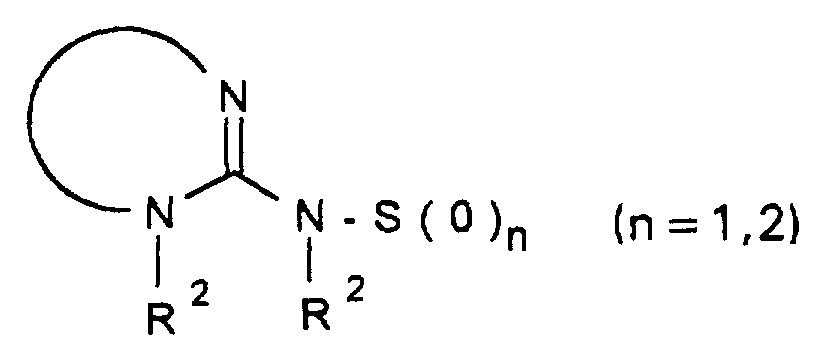
- FC (O) NR 2 , -SO 2 NR 2 - or -C (O) O- can, for example, by reacting (Q is an easily nucleophilically substitutable leaving group, such as OH, Cl, OMe etc.) with HR 2 NG or HO-G can be obtained by literature methods.
- R 1 -A is a mono- or polycycle of the type
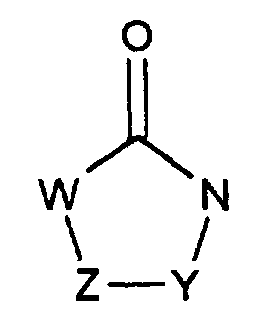
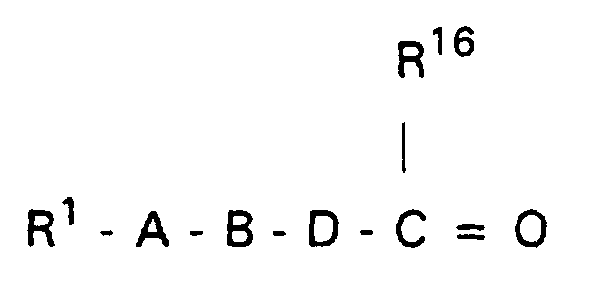
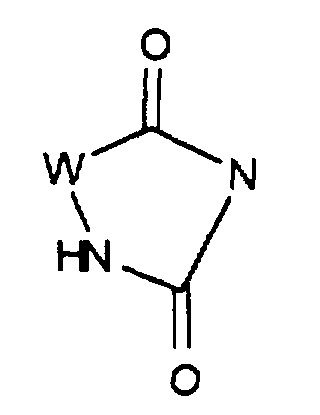
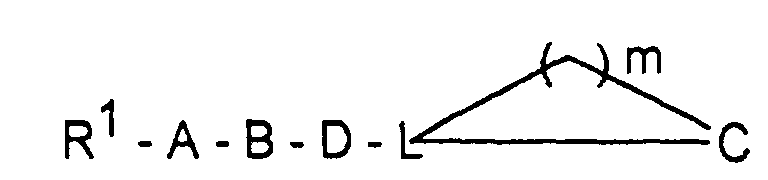
- W HR 2 NBDC (R 16 ) - or HR 2 NBDC (R 16 ) C or means with a mono- or polycycle of the type in which X represents a nucleophilically substitutable leaving group such as halogen or SH, SCH 3 , SOCH 3 , SO 2 CH 3 , SO 3 H or HN-NO 2 , according to methods known from the literature (see, for example, AF McKay et al., J. Med. Chem. 6 (1963) 587, MN Buchman et al., J. Am. Chem. Soc. 71 (1949), 766, F. Jung et al., J. Med. Chem. 34 (1991) 1110 or G. Sorba et al., Eur. J. Med. Chem. 21 (1986), 391).
- R 1 A is a mono- or polycycle of the type
- R 1 A is a mono- or polycycle of the type
- W HR 2 NBDC (R 16 ) - or HR 2 NBDC (R 16 ) C or means with a connection of the type in the X represents a leaving group, such as -SCH3, according to methods known from the literature (see, for example, T. Hiroki et al., Synthesis (1984) 703 or M. Purkayastha et al., Indian J. Chem. Sect. B 30 (1991 ) 646).
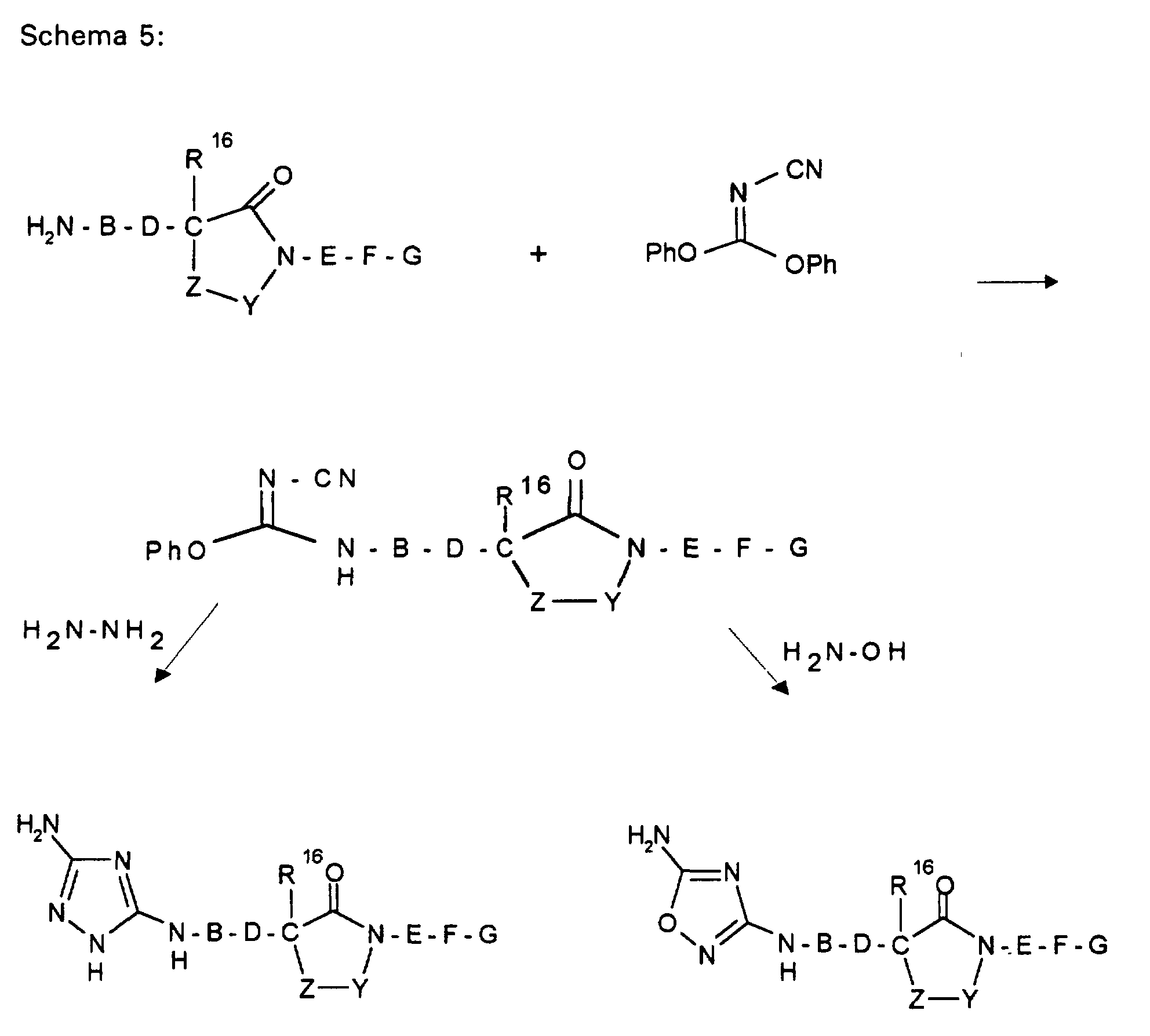
- R 1 A represents a bis-aminotriazole or a bis-amino-oxadiazole radical
- R 1 A represents a bis-aminotriazole or a bis-amino-oxadiazole radical
- the compounds of general formula I and their physiologically tolerable Salts can be found in animals, preferably in mammals, and especially in humans as a remedy on its own, in mixtures with each other or in the form of pharmaceutical preparations are administered, which enteral or allow parenteral use and which are effective as an active ingredient
- the preparations normally contain about 0.5 to 90% by weight the therapeutically active compound.
- the remedies can be administered orally, e.g. in the form of pills, tablets, coated tablets, Coated tablets, granules, hard and soft gelatin capsules, solutions, syrups, Emulsions, suspensions or aerosol mixtures can be administered.
- the Administration can also be rectal, e.g. in the form of suppositories, or parenterally, e.g. in the form of solutions for injection or infusion, microcapsules or rods, percutaneously, e.g. in the form of ointments or tinctures, or nasally, e.g. in Form of nasal sprays.
- the pharmaceutical preparations are produced in a manner known per se Way, being pharmaceutically inert inorganic or organic carriers be used.
- Pharmaceutically inert inorganic or organic carriers can be used.
- pills, tablets, coated tablets and Hard gelatin capsules can e.g. Lactose, corn starch or derivatives thereof, Use talc, stearic acid or its salts etc.
- Carriers for Soft gelatin capsules and suppositories are e.g. Fats, waxes, semi-solid and liquid polyols, natural or hardened oils etc.
- As carriers for the The preparation of solutions and syrups are suitable for example water, sucrose, Invert sugar, glucose, polyols etc.
- Injection solutions are water, alcohols, glycerin, polyols, vegetable Oils etc. are suitable as carriers for microcapsules, implants or rods Copolymers of glycolic acid and lactic acid.
- the pharmaceutical preparations can additives, such as Fillers, stretching, explosive, binding, sliding, mesh, Stabilizing, emulsifying, preserving, sweet, coloring, flavoring or Flavorings, thickeners, diluents, buffer substances, furthermore Solvents or solubilizers or agents to achieve a Depot effect, as well as salts to change the osmotic pressure, Contain coating agents or antioxidants.
- You can also choose two or several compounds of general formula I or their physiological contain acceptable salts; furthermore in addition to at least one connection of the Formula I one or more other therapeutically active substances.
- the dose can vary within wide limits and is in each individual case adapt to individual circumstances.
- the daily dose can be between 0.01 to 50 mg / kg, preferably 0.1 to 5 mg / kg, preferably 0.3 to 0.5 mg / kg body weight to achieve effective results, with intravenous administration the daily dose is generally about 0.01 to 100 mg / kg, preferably 0.05 to 10 mg / kg body weight.
- the daily dose can, especially in the Application of larger quantities, in several, e.g. 2, 3 or 4 sub-administrations be divided. If necessary, depending on individual behavior, be required from the specified daily dose upwards or downwards deviate below.
- DCCI 192 mg of DCCI are added to a solution of 430 mg (0.87 mmol) of (7.6) and 142.5 mg (0.87 mmol) of HOOBt in 10 ml of DMF at 0 ° C. After stirring for 1 hour at 0 ° C. and 1 hour at room temperature, 231 mg (1.04 mmol) of 2- (aminomethyl) benzimidazole and 0.5 ml of diisopropylethylamine (DIPEA) are added and the mixture is stirred for a further 2 hours at room temperature.
- DIPEA diisopropylethylamine
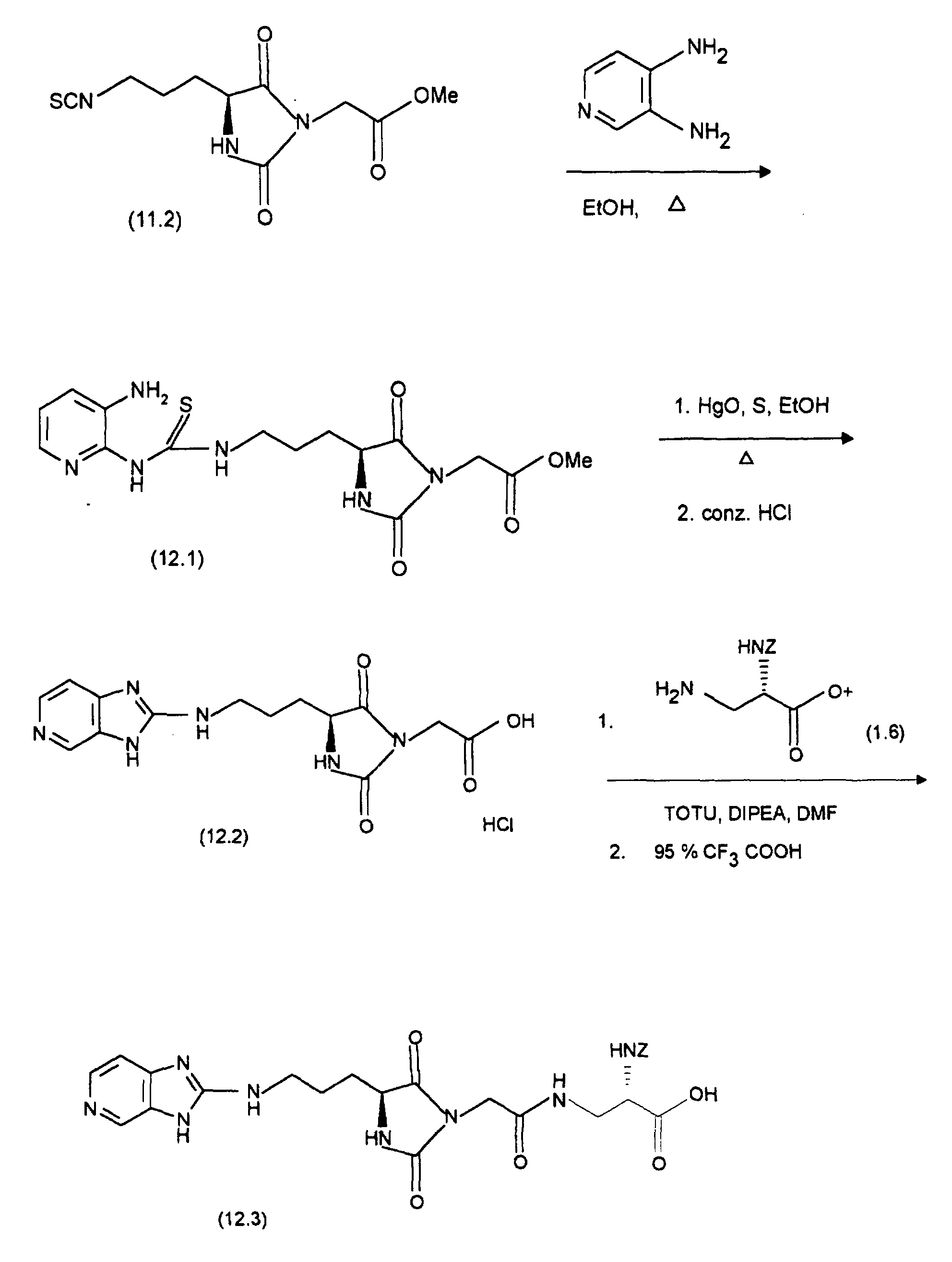
- the starting point for the synthesis of (12.3) is (11.2), which is analogous to the preparation from (11.3) with 3,4-diaminopyridine to (12.1). The latter will then cyclized with mercury oxide analogously to the preparation of (11.4) and (11.5) and with conc. HCI converted to (12.2). (12.2) is replaced by (1.6), as with the Preparation of (11.6) described, implemented and the resultant Coupling product with cleavage of the tert-butyl ester, as in the synthesis described from (11.7) from (11.6), converted into (12.3).
- the starting point for the synthesis of (15.3) is (11.2), which is analogous to the preparation from (11.3) with 4-methoxy-ortho-phenylenediamine at room temperature to (15.1) is implemented. The latter is then analogous to the production of (11.4) and (11.5) cyclized with mercury oxide and with conc. HCI converted to (15.2). (15.2) is then replaced by (1.6), as described in the preparation of (11.6), implemented and the coupling product thus obtained with cleavage of the tert-butyl ester, as described in the synthesis of (11.7) from (11.6), in (15.3) transferred.
- (16.1) takes place as described in the preparation of (15.3), by replacing 1-methoxy-3,4-diaminobenzene with 1,2-dimethoxy-4,5-diaminobenzene uses that from 1,2-dimethoxy-4,5-dinitrobenzene Hydrogenation over 10% Pd / C is made in methanol.
- a suspension of 10 g (42 mmol) of (21.8) in 420 ml of 0.1 M NaOH in ethanol is stirred for 16 h at room temperature.
- the reaction solution is concentrated, the residue is mixed with toluene and the solvent is removed in vacuo.
- 130 ml of DMF and 9.34 g (54.6 mmol) of benzyl bromide are added and the mixture is stirred at room temperature for 4 days.
- 2.1 liters of 1M NaHCO 3 solution are added and the mixture is extracted 3 times with ethyl acetate.
- the combined ethyl acetate phases are washed with 1 M NaHCO 3 solution and saturated NaCl solution and dried over magnesium sulfate.
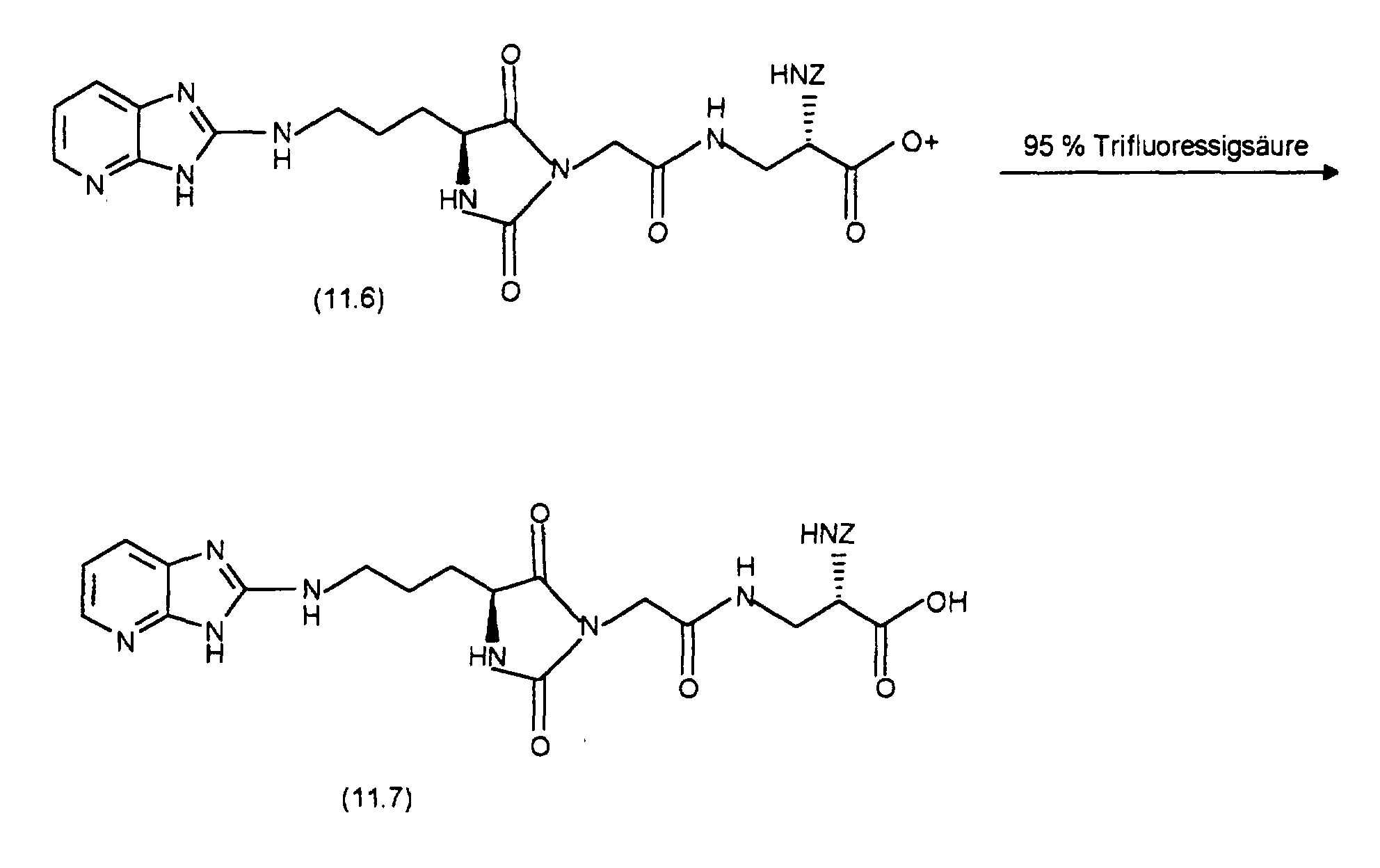
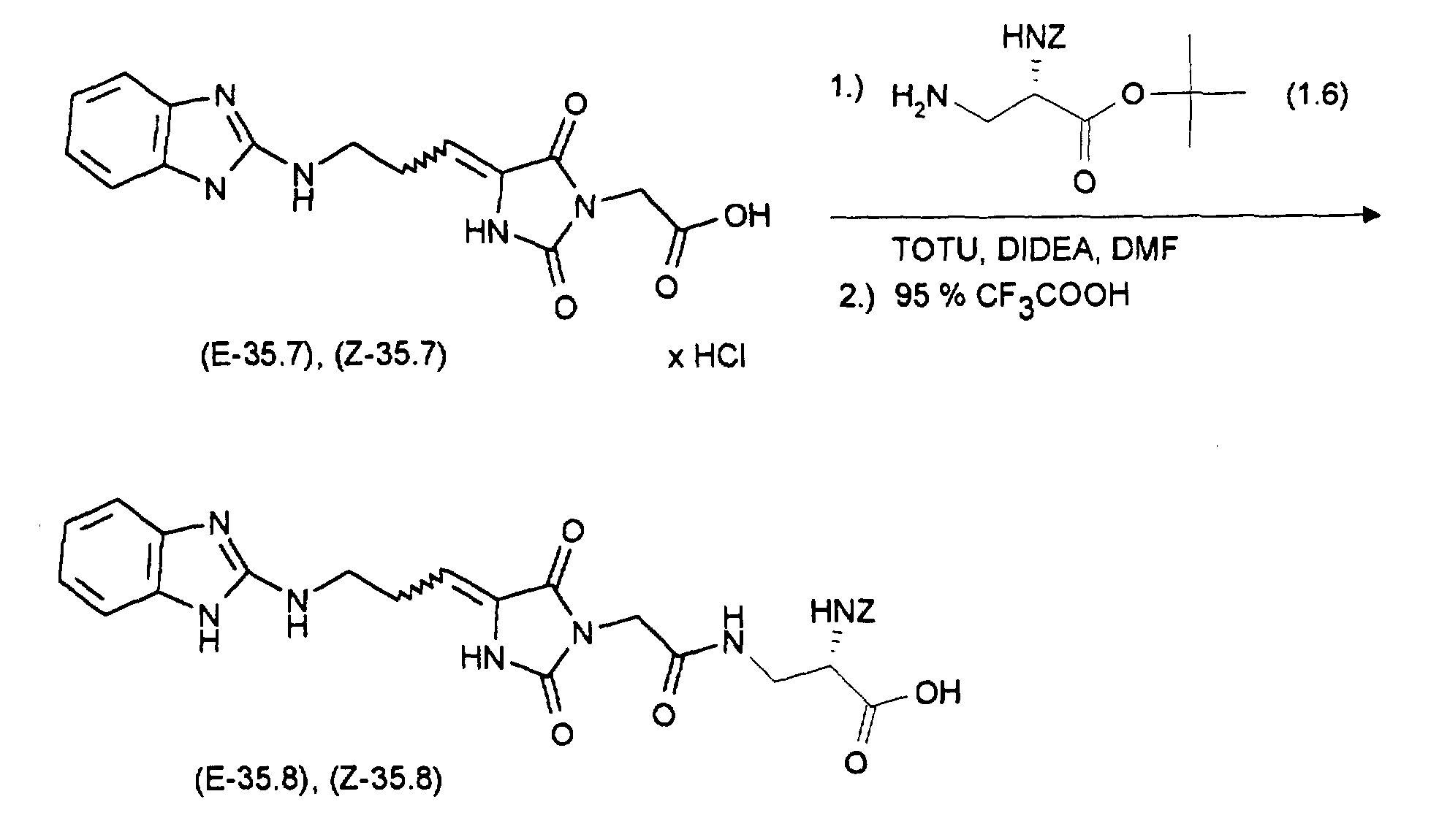
- the preparation takes place from (23.1) - (33.1) by cleavage of the tert-butoxycarbonyl group with 95% trifluoroacetic acid as in the production described from (22.4) from (22.3).
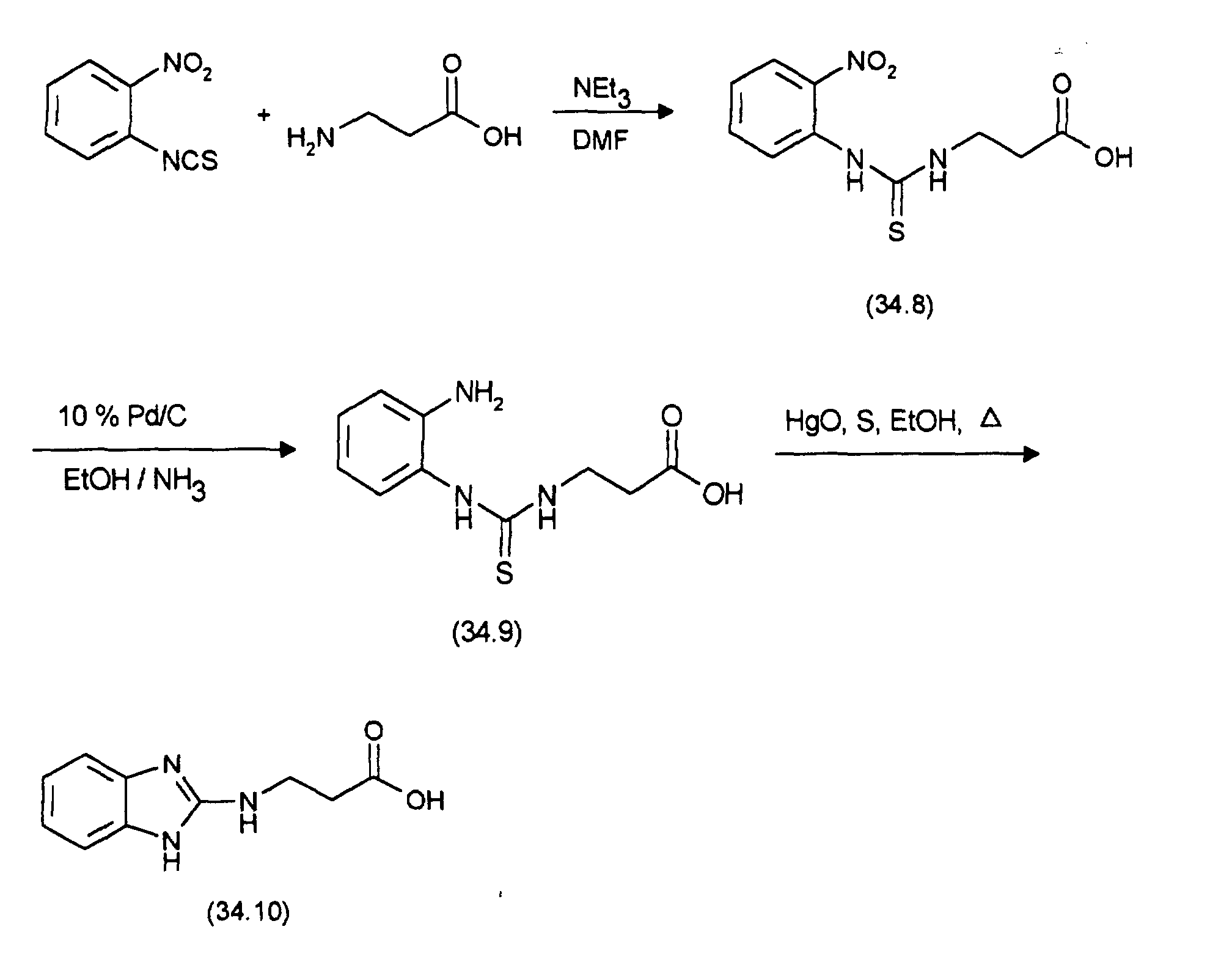
- (34.11) is synthesized by coupling (34.7) with (34.10) as in Example 15 described in the synthesis of (15.3) from (15.2).
- the amount obtained from 37a) is dissolved in an argon protective gas atmosphere (37.1) in approx. 30 ml dichloromethane and adds with stirring at room temperature 1.97 g (35.2), dissolved in approx. 50 ml dichloromethane, are added. After about 2 hours it is Reaction ended. The solution is first mixed with 100 ml of 2N Potassium hydrogen sulfate solution, then washed with 100 ml of water, the dried organic phase with anhydrous magnesium sulfate and filtered. After removing the solvent in vacuo, about 4.6 g of pure remain (37.2), (89%).
- the diastereomers can be separated by chromatography with ethyl acetate / n-heptane (2: 1) as eluent and silica gel as support material: 0.85 g (Z-37.3) and 0.7 g (E-37.3) are obtained
- 0.055g (E-38.3) are in 2ml 90% trifluoroacetic acid for 2h with ice cooling touched. Removing the solvent in a vacuum. and freeze drying the Residue delivers 0.02g (E-38.4). Analogously one obtains from 0.02g of (Z-38.3) 0.012g of (Z-38.4).
- the inhibition of bone resorption by the compounds according to the invention can be determined, for example, using an osteoclast resorption test (“PIT ASSAY”), for example analogously to WO 95/32710.
- PIT ASSAY osteoclast resorption test
- the test methods by which the antagonistic effect of the compounds according to the invention on the vitronectin receptor ⁇ v ⁇ 3 can be determined are described below.
- Test method 1 is used to list the test results with Vn / VnR abbreviated
- Test method 2 is used to list the test results with Kistrin / VnR abbreviated
Landscapes
- Chemical & Material Sciences (AREA)
- Organic Chemistry (AREA)
- Health & Medical Sciences (AREA)
- Veterinary Medicine (AREA)
- Life Sciences & Earth Sciences (AREA)
- Public Health (AREA)
- General Health & Medical Sciences (AREA)
- Animal Behavior & Ethology (AREA)
- Chemical Kinetics & Catalysis (AREA)
- General Chemical & Material Sciences (AREA)
- Medicinal Chemistry (AREA)
- Nuclear Medicine, Radiotherapy & Molecular Imaging (AREA)
- Pharmacology & Pharmacy (AREA)
- Bioinformatics & Cheminformatics (AREA)
- Engineering & Computer Science (AREA)
- Rheumatology (AREA)
- Urology & Nephrology (AREA)
- Heart & Thoracic Surgery (AREA)
- Cardiology (AREA)
- Endocrinology (AREA)
- Diabetes (AREA)
- Physical Education & Sports Medicine (AREA)
- Hematology (AREA)
- Obesity (AREA)
- Emergency Medicine (AREA)
- Ophthalmology & Optometry (AREA)
- Pain & Pain Management (AREA)
- Reproductive Health (AREA)
- Orthopedic Medicine & Surgery (AREA)
- Vascular Medicine (AREA)
- Pharmaceuticals Containing Other Organic And Inorganic Compounds (AREA)
- Plural Heterocyclic Compounds (AREA)
- Nitrogen Condensed Heterocyclic Rings (AREA)
- Medicines That Contain Protein Lipid Enzymes And Other Medicines (AREA)
- Acyclic And Carbocyclic Compounds In Medicinal Compositions (AREA)
- Organic Low-Molecular-Weight Compounds And Preparation Thereof (AREA)
Description
Ferner können die Verbindungen der Formel I zur Linderung, Vermeidung oder Therapie von Knochenerkrankungen, die durch eine Glucocortikoid-, Sterorid- oder Corticosteroid-Therapie oder durch einen Mangel an Sexualhormon(en) hervorgerufen werden, eingesetzt werden. Alle diese Erkrankungen sind durch Knochenverlust gekennzeichnet, der auf dem Ungleichgewicht zwischen Knochenaufbau und Knochenabbau beruht.

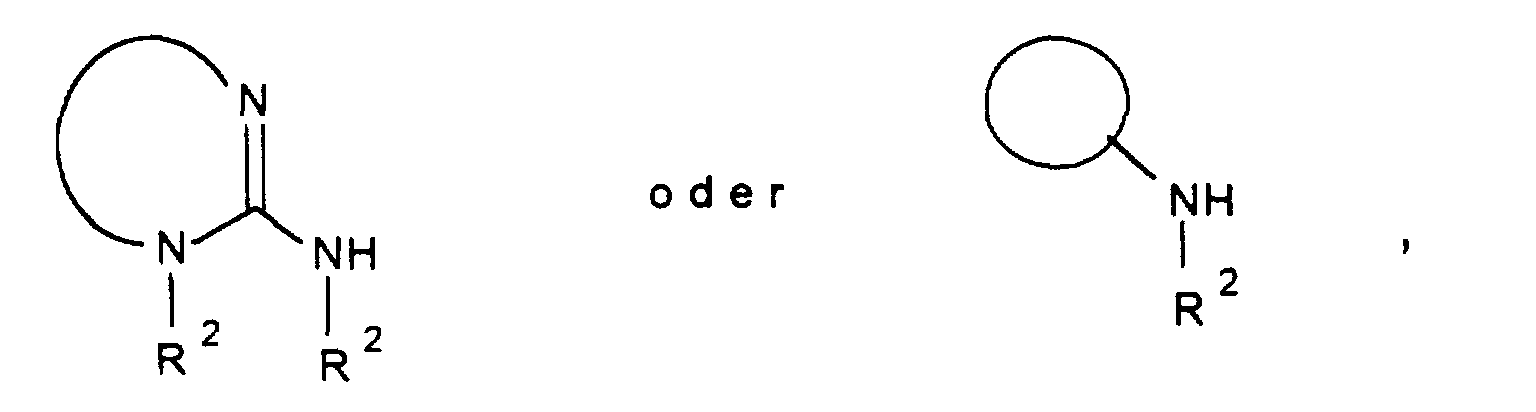
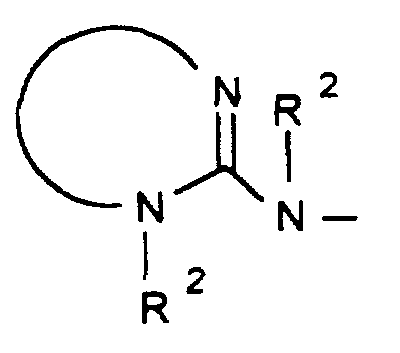
- A
- eine direkte Bindung, (C1-C4)-Alkandiyl, -NR2-N=CR2-, -NR2-C(O)-NR2-, -NR2-C(O)O-, -NR2-S(O)n-, -NR2-S(O)n-NR2-, -NR2-CO-, -NR2- oder -N=CR2, die jeweils durch NH und/oder einfach oder zweifach durch (C1-C4)-Alkandiyl substituiert sein können;
- B
- eine direkte Bindung, (C1-C4)-Alkandiyl, Phenylen, einen zweiwertigen Rest des Pyridins, Thiophens oder Furans, Cyclohexandiyl, -C≡C-, NR2-C(O)-,-C(O)-NR2-, -CR2=CR3-, die jeweils ein- oder zweifach durch (C1-C4)-Alkandiyl substituiert sein können,
- D
- eine direkte Bindung, (C1-C4)-Alkandiyl, Phenylen, -O-, -NR2-, -NR2-CO-, -NR2-C(O)-NR2-, -NR2-S(O)2-NR2-, -NR2-S(O)-, -NR2-S(O)2-, -N=CR2, -R2C=N-, die jeweils ein- oder zweifach durch (C1-C4)-Alkandiyl,
- E
- eine direkte Bindung oder (C1-C4)-Alkandiyl;
- F
- eine direkte Bindung, (C1-C6)-Alkandiyl, -O-, -CO-NR2-, -NR2-CO-, -NR2-C(O)-NR2-, -S(O)2-NR2-, -NR2-S(O)2-, -CR2=CR3-, -C≡C-, -N=CR2- oder -R2C=N-, die jeweils einfach oder zweifach durch (C1-C4)-Alkandiyl substituiert sein können;
- G
-
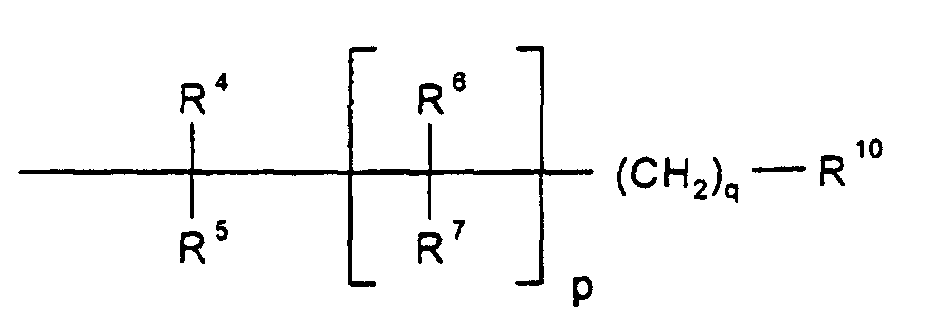
- R1
- R2R3N-C(= NR2)-,


 wobei Y' NH, O oder S bedeutet.
- R2, R3
- unabhängig voneinander H, (C1-C6)-Alkyl, Trifluormethyl, Pentafluorethyl, (C5-C6)-Cycloalkyl, (C5-C6)-Cycloalkyl-(C1-C2)-Alkyl, Phenyl, Benzyl, H2N, R8OR9, R8-(C5-C10)-ArylR9, R8NHR9, R8R8NR9, R8NHC(O)R9, H2N-C(=NH) oder H2N-C(=NH)-NH-;
- R4, R5, R6, R7
- unabhängig voneinander H, Fluor, OH, (C1-C6)-Alkyl, (C10-C12)-Cycloalkyl, (C10-C12)-Cycloalkyl-(C1-C6)-alkyl, R8OR9, R8-(C5-C10)-ArylR9, R8R8NR9, R8NHC(O)OR9, R8S(O)nNHR9, R8OC(O)NHR9 oder R8C(O)NHR9;
- R8
- H, (C1-C6)-Alkyl, (C10-C12)-Cycloalkyl, (C10-C12)-Cycloalkyl-(C1-C2)-Alkyl, (C5-C10)-Aryl oder (C5-C10)-Aryl-(C1-C2)-alkyl;
- R9
- eine direkte Bindung oder (C1-C6)-Alkandiyl;
- R10
- C(O)R11;
- R11
- OH, (C1-C6)-Alkoxy, Phenoxy, Benzyloxy, (C1-C4)-Alkylcarbonyloxy-(C1-C4)-alkoxy, NH2, Mono- oder Di-(C1-C6-alkyl)-amino;
- R16
- H, (C1-C4)-Alkyl, Trifluormethyl, Pentafluorethyl, (C5-C6)-Cycloalkyl, (C5-C6)-Cycloalkyl-(C1-C2)-alkyl, Phenyl oder Benzyl;
- n
- 1 oder 2; und
- p, q
- unabhängig voneinander 0 oder 1;
wobei Verbindungen ausgenommen sind, in denen R1-A-B-D-C(R16) gleich R1-K-C(R16) ist, wobei hier
- R1
- für X-NH-C(= NH)-(CH2)p, X1-NH-(CH2)p oder 4-Imidazolyl-CH2- steht, wobei p für eine ganze Zahl von 0 bis 3 stehen kann,
- X
- Wasserstoff, (C1-C6)-Alkyl, Hydroxy, (C1-C6)-Alkoxy, (C6-C14)-Aryl-(C1-C6)-alkoxy oder Amino bedeutet, wobei die Arylgruppen in X reine, gegebenenfalls einfach oder mehrfach substituierte, Carbocyclen darstellen,
- X1
- (C4-C14)-Aryl-(C1-C6)-alkoxy oder R'-NH-C(=N-R") bedeutet, wobei R' und R" unabhängig voneinander die Bedeutungen von X haben und wobei die Arylgruppen in X1 reine, gegebenenfalls einfach oder mehrfach substituierte, Carbocyclen darstellen,
- K
- (C1-C6)-Alkandiyl, Cyclohexandiyl, Phenylen, Phenylen-(C1-C6)-Alkandiyl, (C1-C6)-Alkandiyl-Phenylen, Phenylen-(C2-C6)-Alkendiyl oder einen zweiwertigen Rest eines 6-gliedrigen gesättigten oder ungesättigten Ringes, der 1 Stickstoffatom enthalten und einfach oder zweifach durch (C1-C6)-Alkyl oder doppelt gebundenen Sauerstoff oder Schwefel substituiert sein kann, bedeutet.
Diese Heterocyclen können mit den gleichen Substituenten wie die vorstehend genannten carbocyclischen Arylsysteme substituiert sein.
Solche Salze werden beispielsweise von Verbindungen der allgemeinen Formel I, welche saure Gruppen, z.B. Carboxy, enthalten, mit Alkali- oder Erdalkalimetallen gebildet, wie z.B. Na, K, Mg und Ca, sowie mit physiologisch verträglichen organischen Aminen, wie z.B. Triethylamin, Ethanolamin oder Tris-(2-hydroxyethyl)-amin.
Verbindungen der allgemeinen Formel I, welche basische Gruppen, z.B. eine Aminogruppe, eine Amidinogruppe oder eine Guanidinogruppe enthalten, bilden mit anorganischen Säuren, wie z.B. Salzsäure, Schwefelsäure oder Phosphorsäure, und mit organischen Carbon- oder Sulfonsäuren, wie z.B. Essigsäure, Citronensäure, Benzoesäure, Maleinsäure, Fumarsäure, Weinsäure, Methansulfonsäure oder p-Toluolsulfonsäure Salze.

- F
- ist CO-NR2-;

- Boc :
- t-Butoxycarbonyl
- DCCI :
- Dicyclohexylcarbodiimid
- DMF :
- Dimethylformamid
- HOOBt:
- 3-Hydroxy-4-oxo-3,4-dihydro-1,2,3-benzotriazin
- THF :
- Tetrahydrofuran
- HOBt:
- 1-Hydroxy-benzotriazol
- TOTU
- O-[Cyan(ethoxycarbonyl)methylenamino]-1,1,3,3-tetramethyluronium-tetrafluoroborat
- DIPEA:
- Diisopropyl-ethylamin
- RT :
- Raumtemperatur
- Z :
- Benzyloxycarbonyl


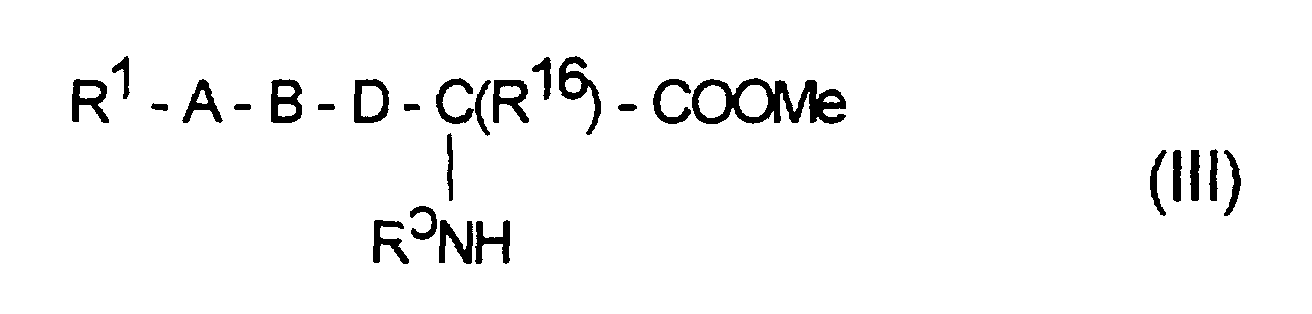
durch Reaktion von α-Aminosäuren oder N-substituierten α-Aminosäuren oder bevorzugt deren Ester, z.B. der Methyl-, Ethyl-, tert.-Butyl- oder Benzylester, beispielsweise einer Verbindung der allgemeinen Formel III


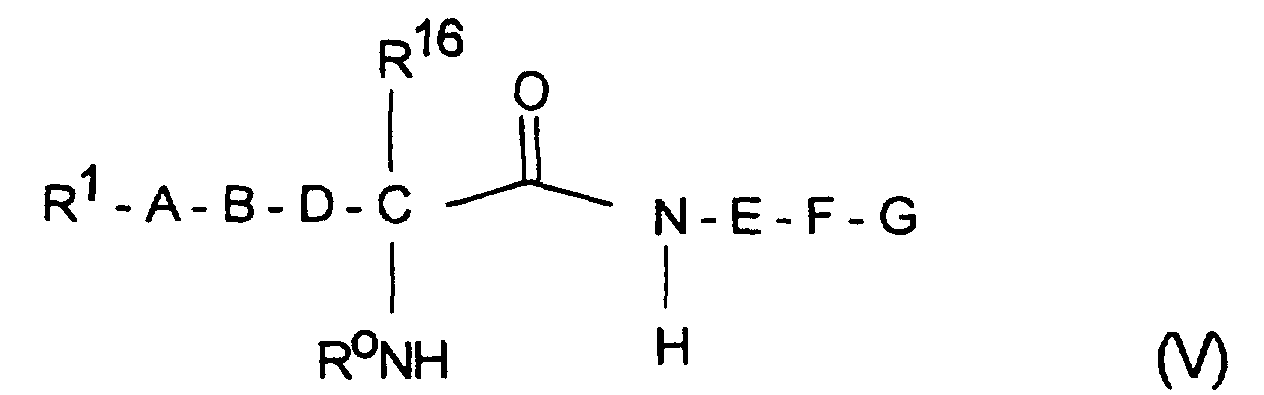



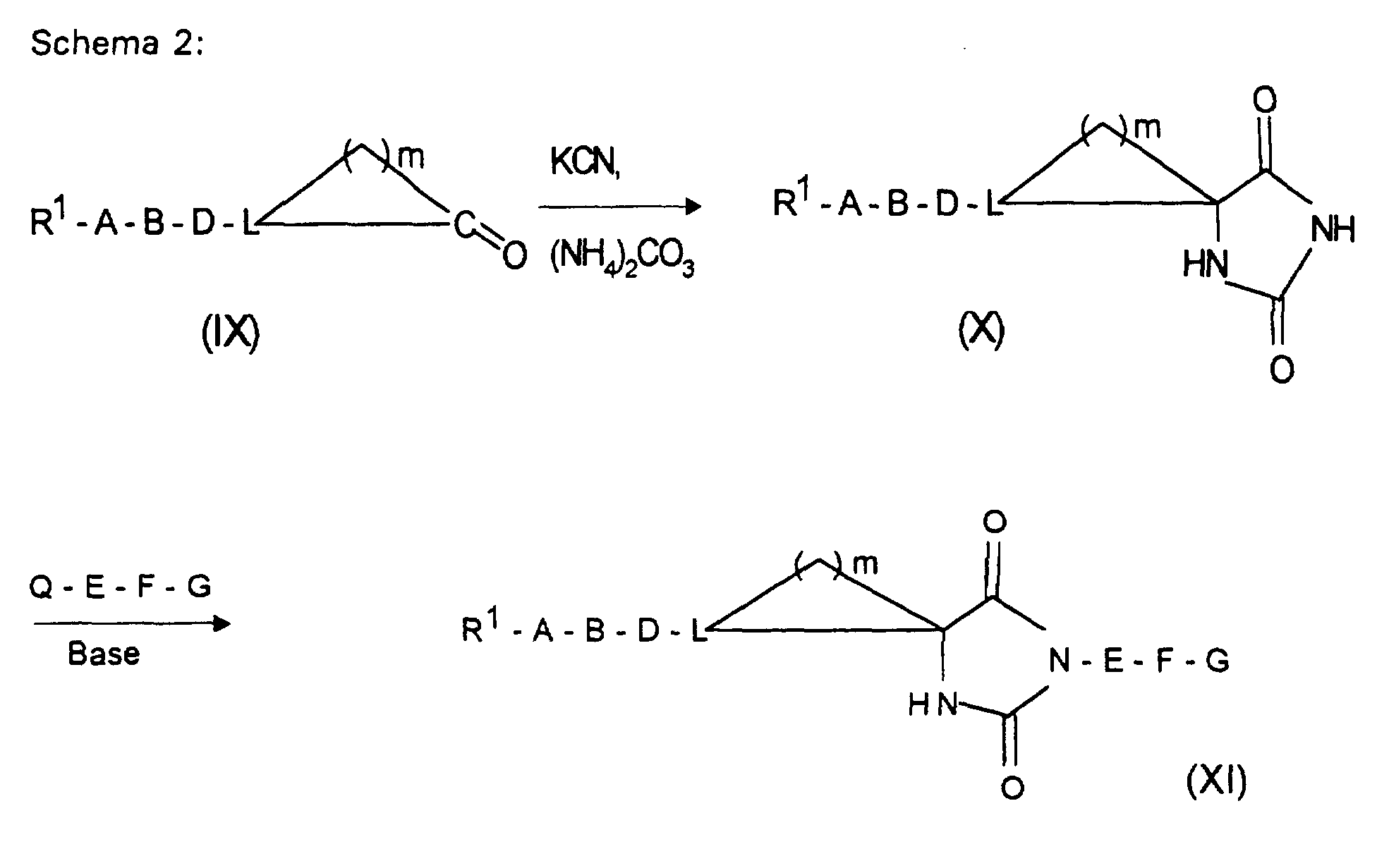

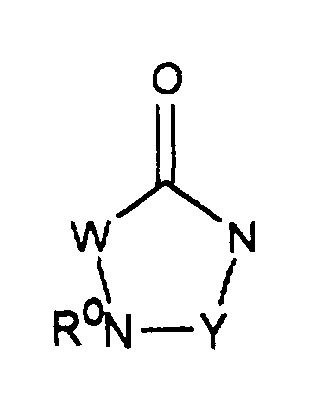
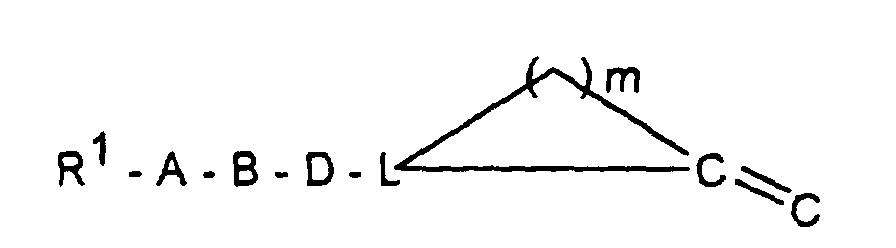

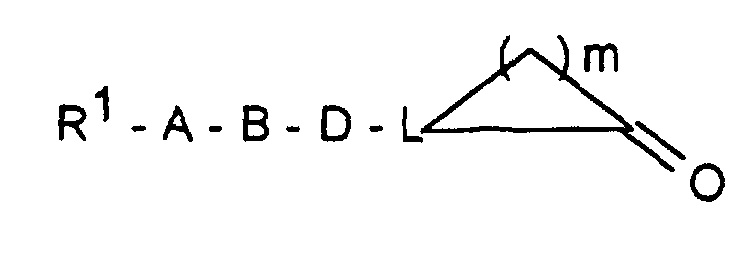
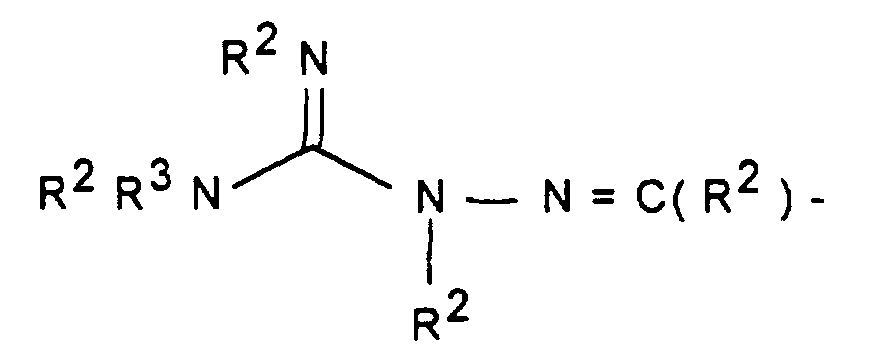


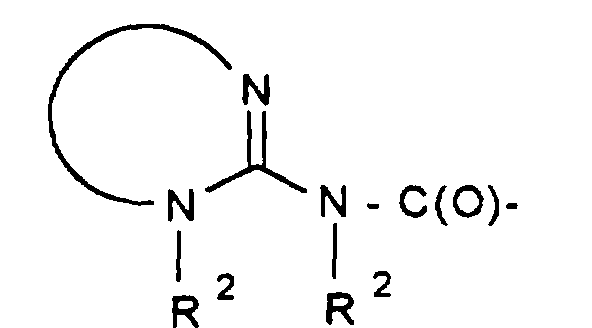


Wenn Q=Cl bedeutet, arbeitet man vorteilhaft unter Zusatz eines Säurefängers, z.B. in Form von überschüssigem Guanidin(derivat) zur Abbindung der Halogenwasserstoffsäure.












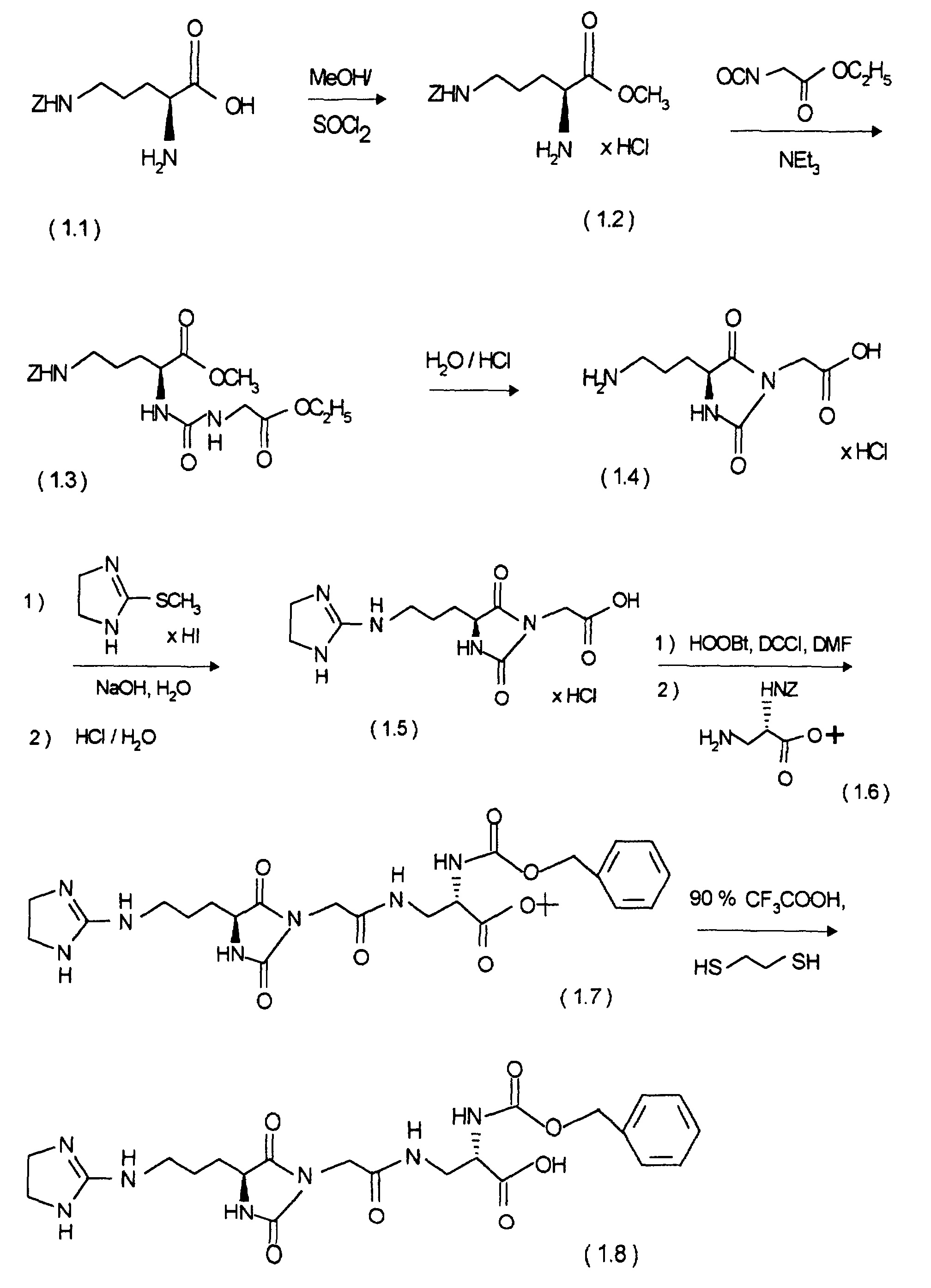

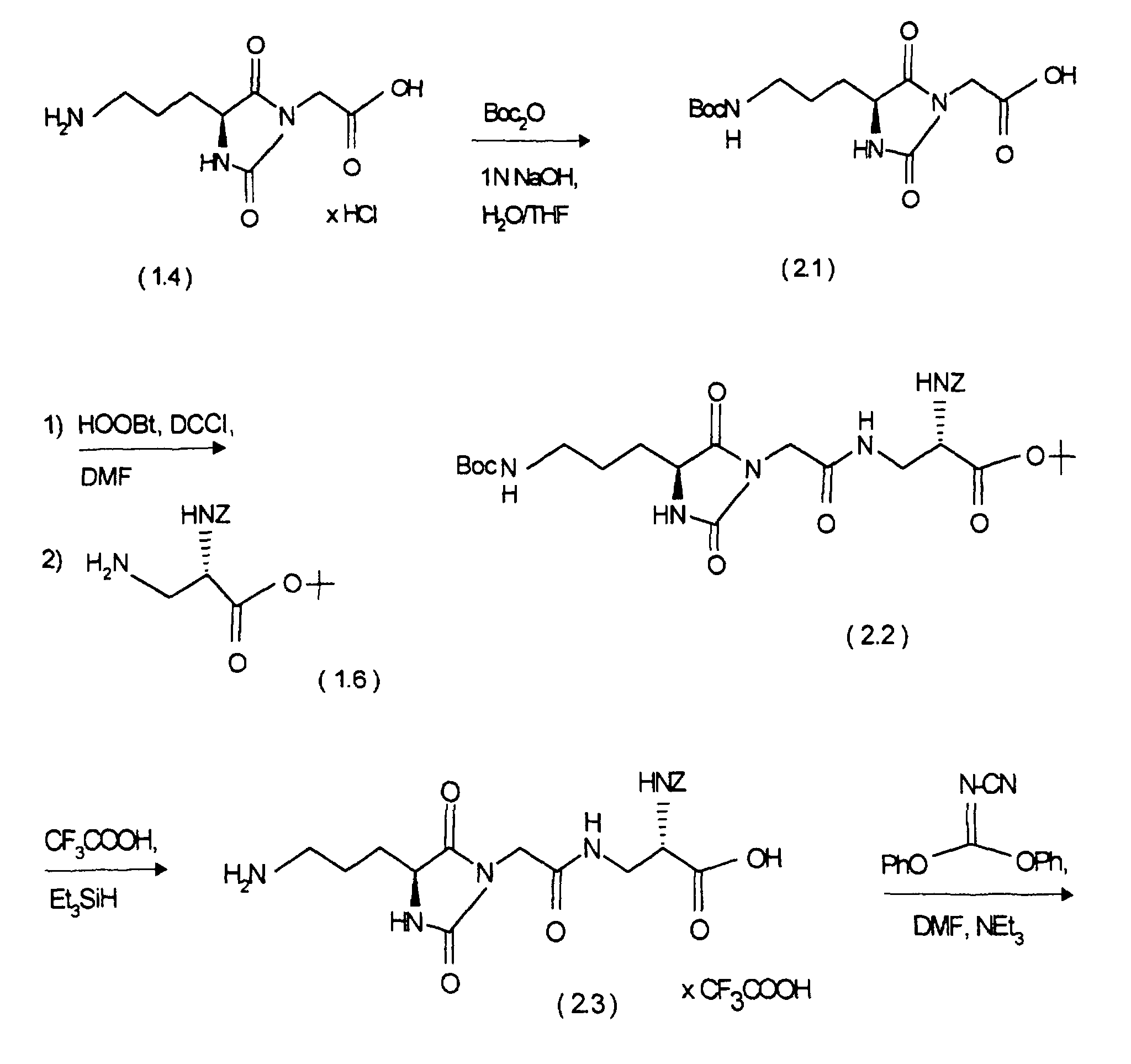
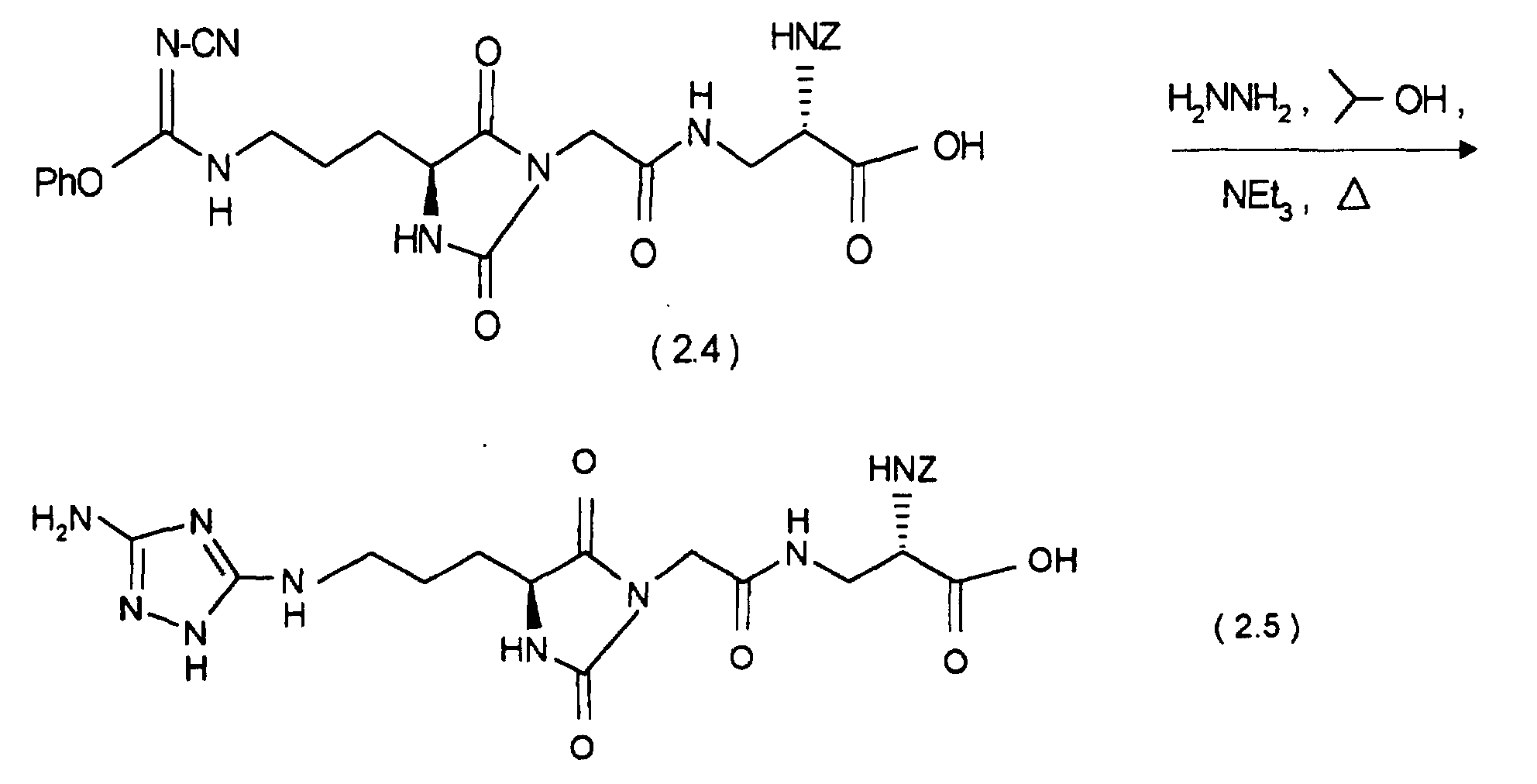


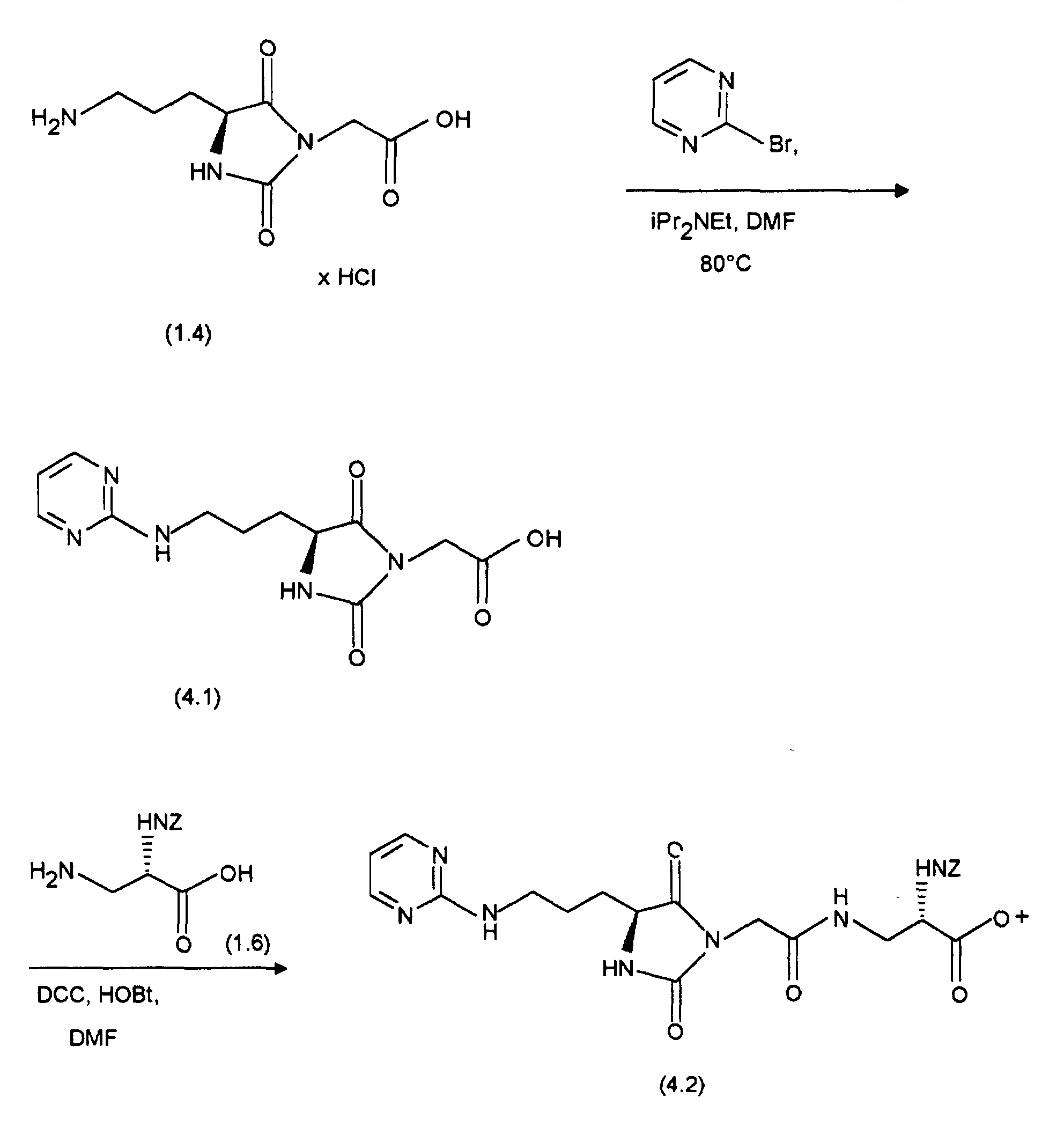


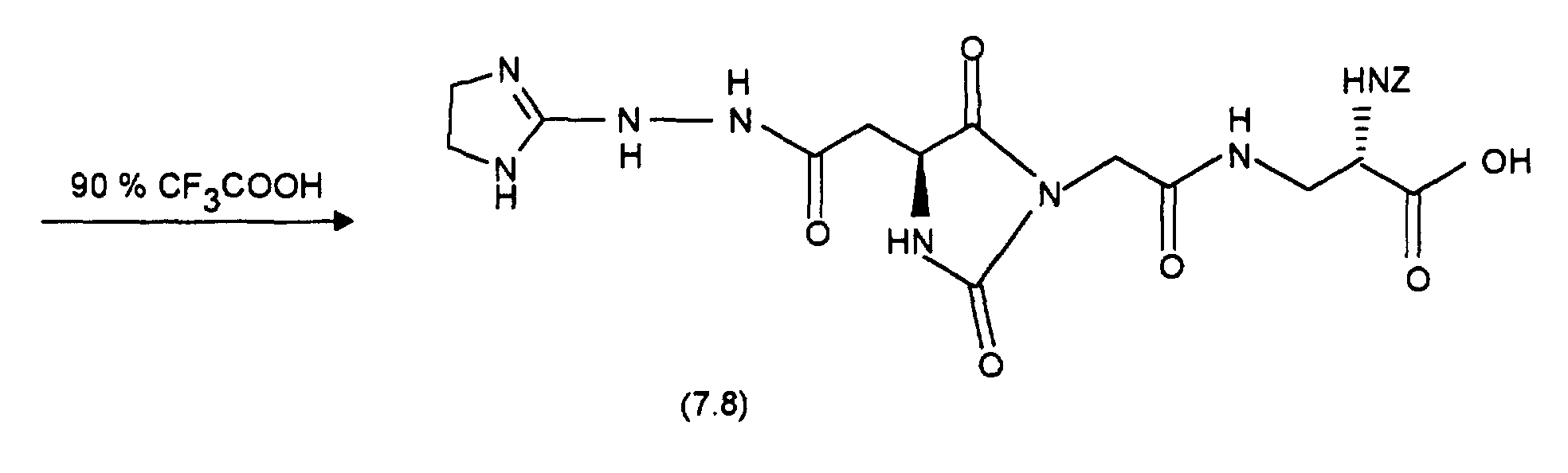
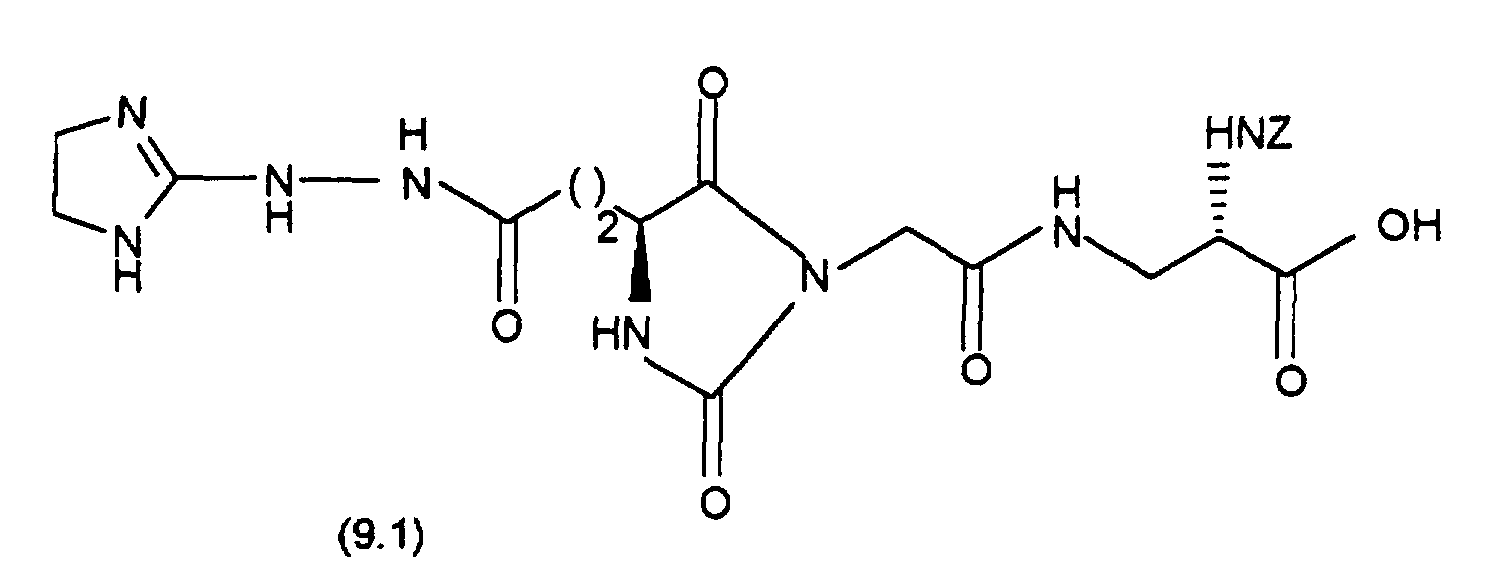
bei 0 °C 44,7 mg DCCI. Nach 1 h bei 0 °C und 1 h bei Raumtemperatur gibt man 36,8 mg (0,2 mMol) 2-Hydrazino-2-imidazol-hydrobromid zu und läßt 3 Tage bei Raumtemperatur rühren. Das Lösungsmittel wird im Vakuum entfernt und der Rückstand mit Dichlormethan/Methanol/Essigsäure/Wasser = 8/2/0,2/0,2 über Kieselgel chromatographiert. Die Produktfraktionen werden eingeengt und gefriergetrocknet. Man erhält 60 mg (52 %) an (7.7).


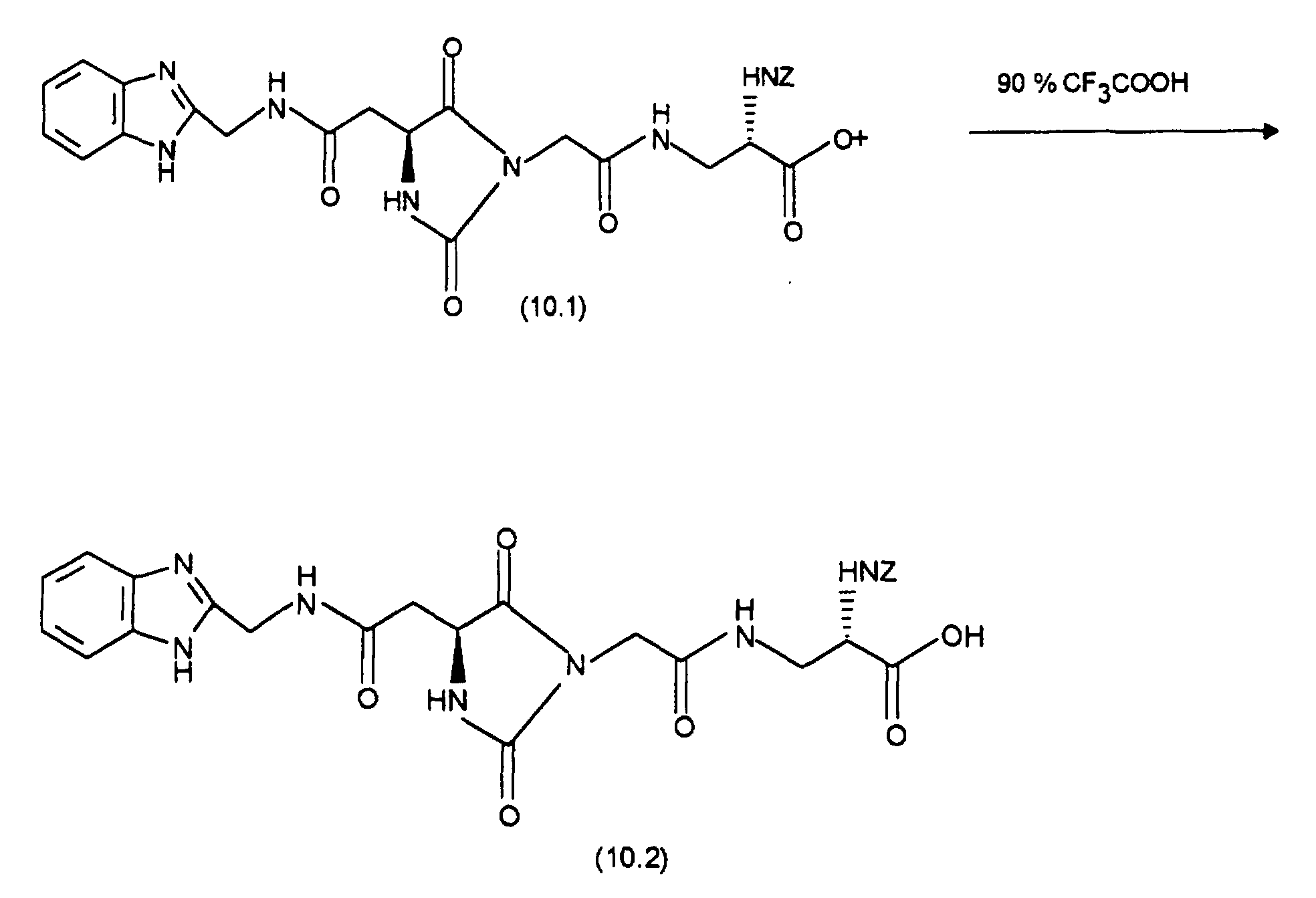
Nach Einengen der Produktfraktionen erhält man 390 mg (72 %) an (10.1).




Nach Einengen der Produktfraktionen erhält man 4,06g (49 %, bezogen auf (13.1)) an (13.3).
Nach Einengen der Produktfraktionen erhält man 46,3mg (8 %) an (13.6).

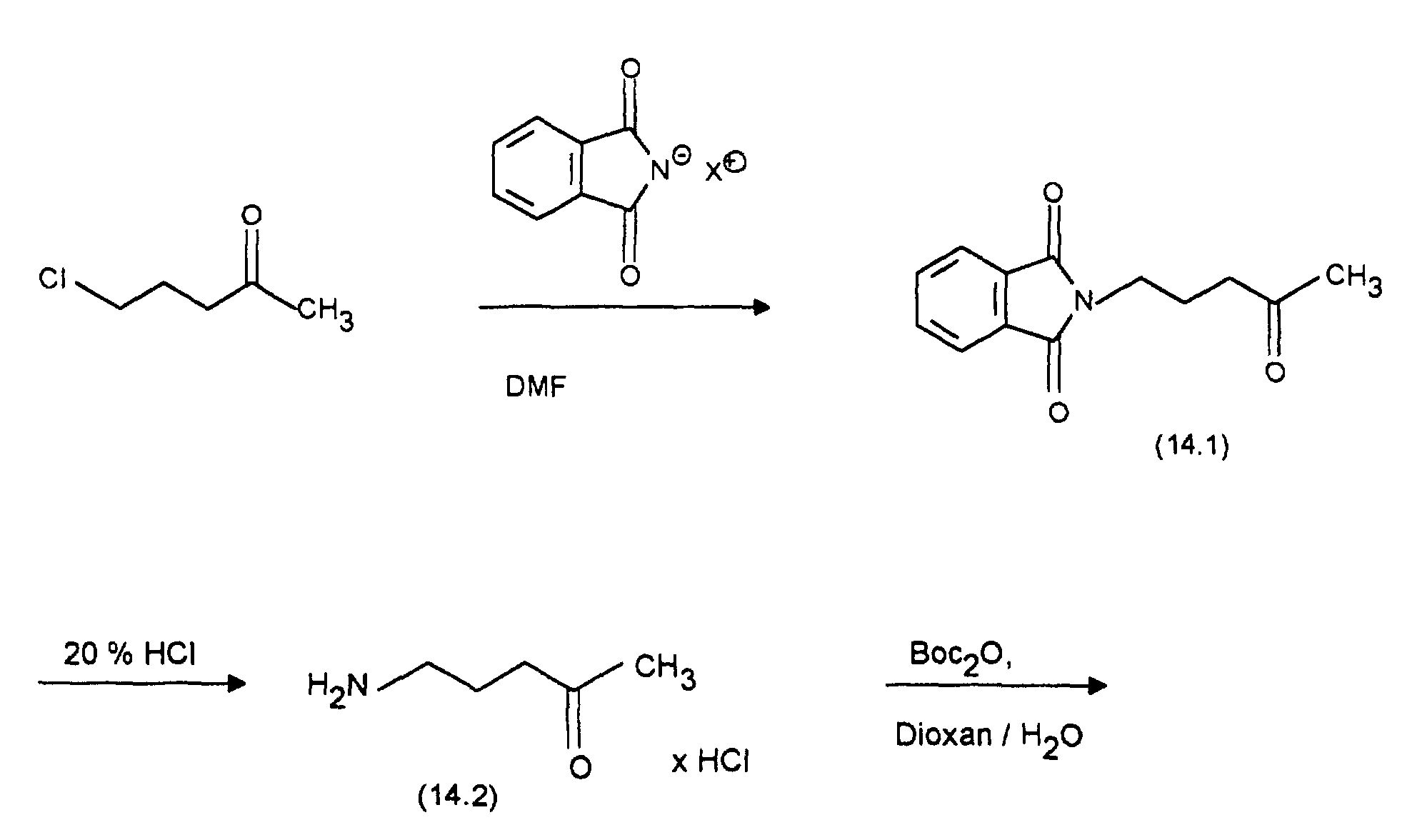


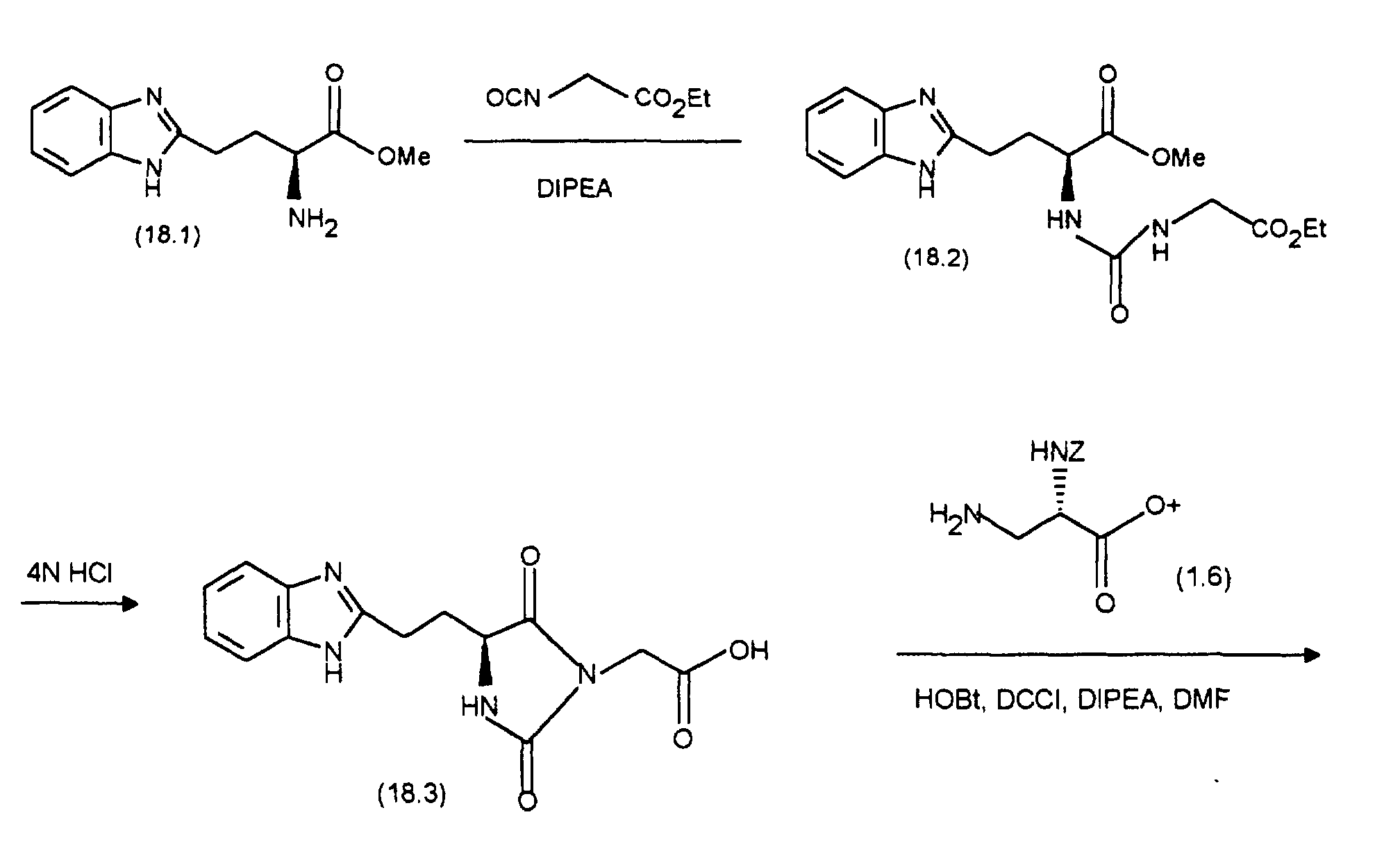

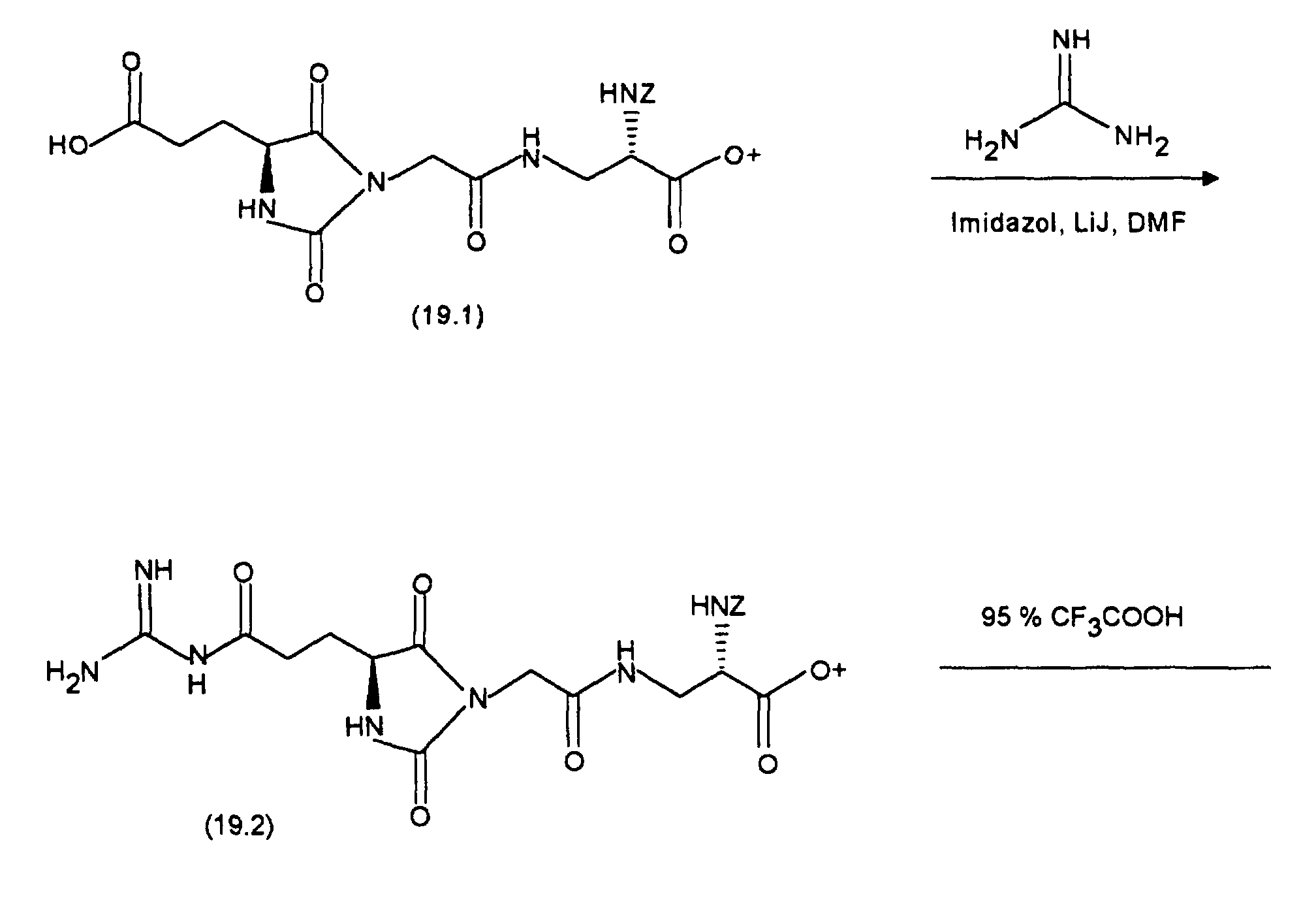
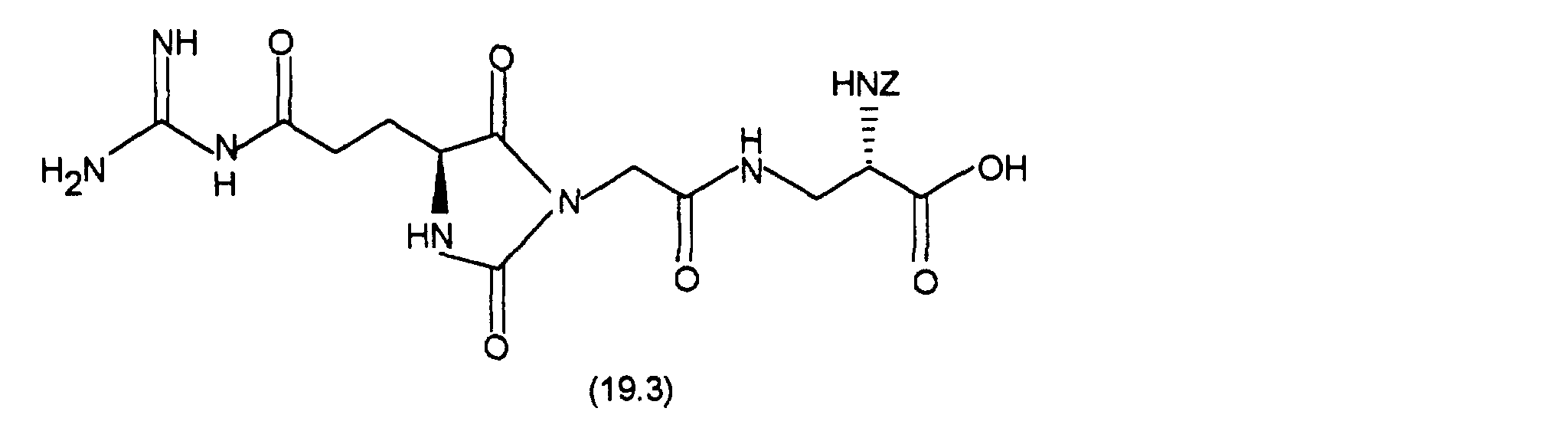
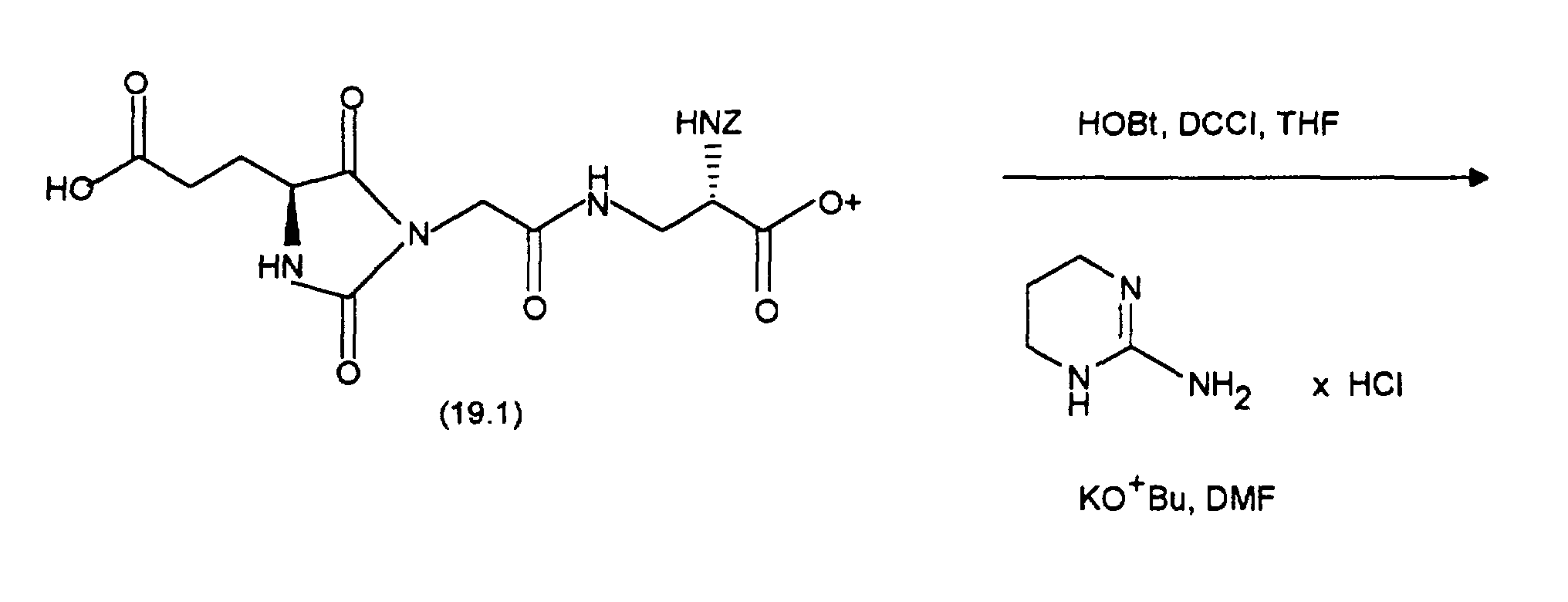


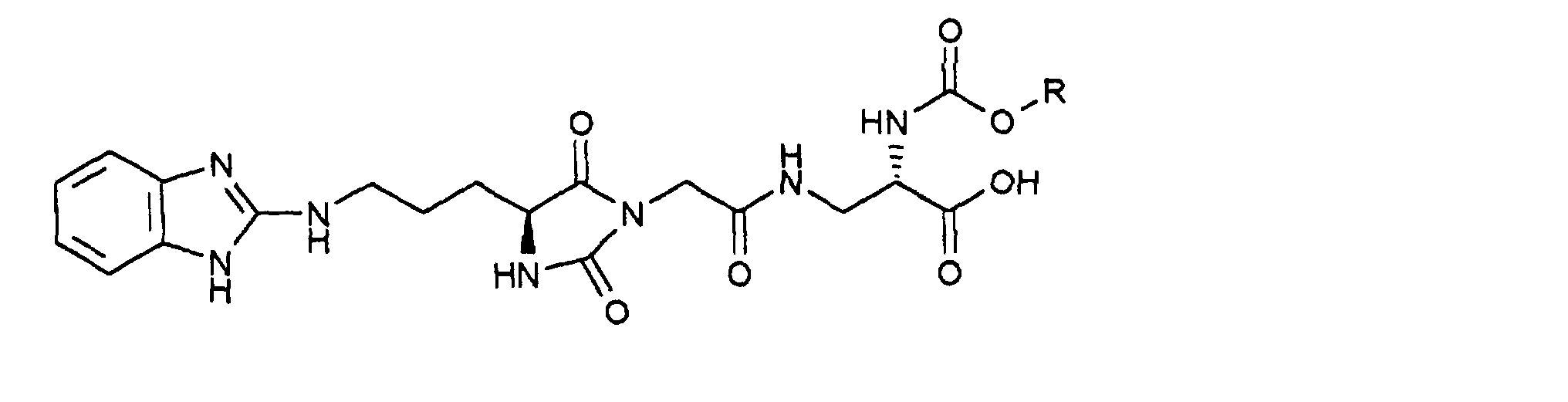


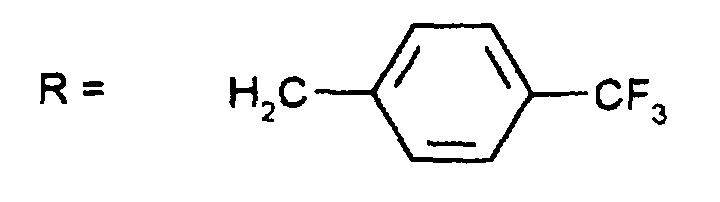

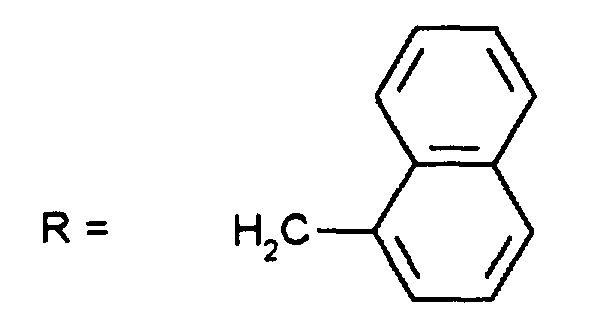




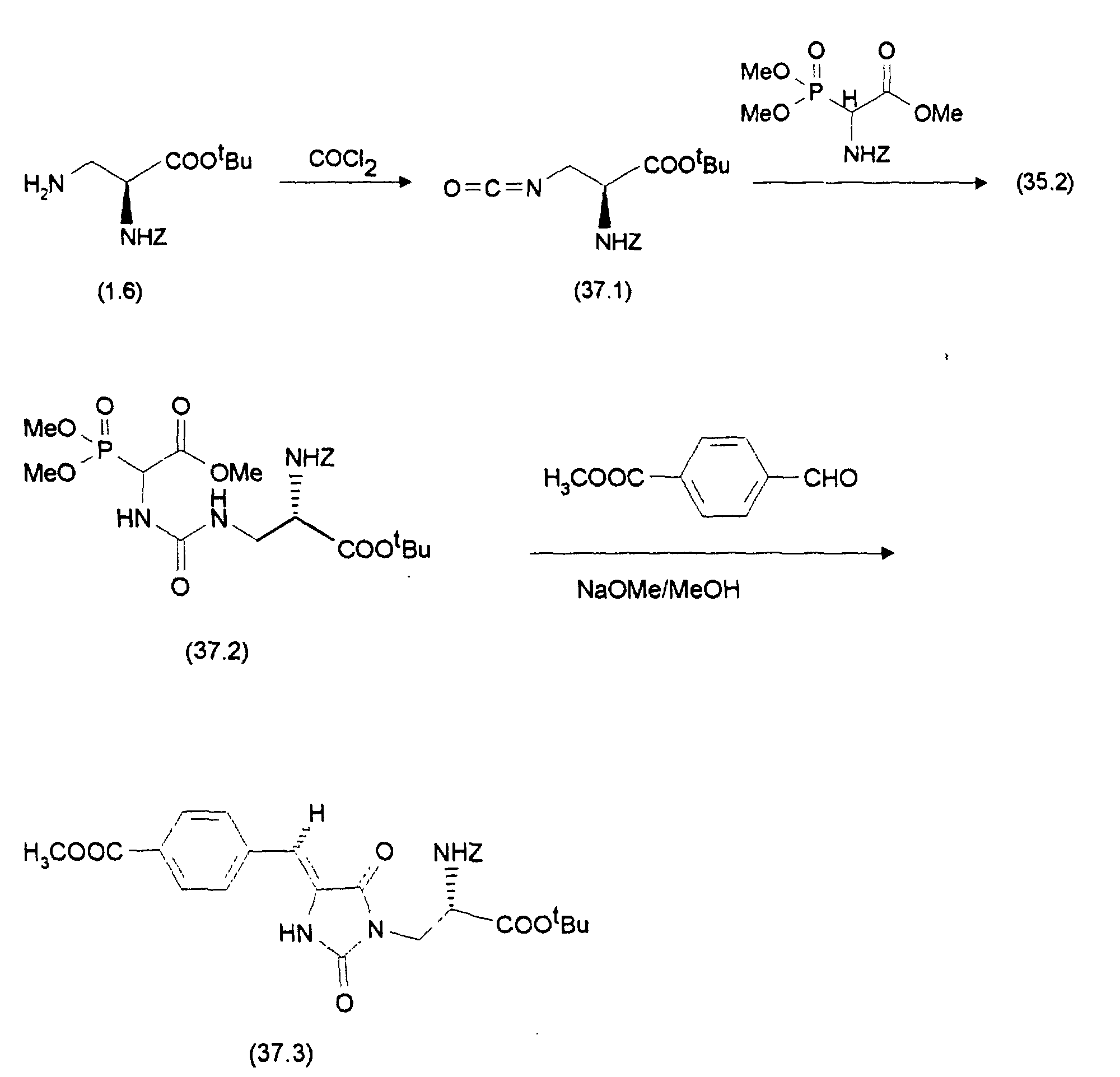

Durch Chromatographie mit Essigester/n-Heptan (2:1) als Eluens und Kieselgel als Trägermaterial sind die Diastereomeren auftrennbar: man erhält 0,85 g (Z-37.3) und 0,7 g (E-37.3)


Humanes Vitronectin wird aus menschlichem Plasma isoliert und durch Affinitätschromatographie nach der Methode von Yatohyo et al., Cell Structure and Function, 1988, 23, 281-292 gereinigt.
Humaner Vitronectinrezeptor wird aus der menschlichen Plazenta nach der Methode von Pytela et al., Methods Enzymol. 1987, 144, 475 gewonnen. Humaner Vitronectinrezeptor αvβ3 kann auch aus einigen Zellinien (z.B. aus 293 Zellen, einer humanen embryonalen Nierenzellinie), die mit DNA Sequenzen für beide Untereinheiten αv und β3 des Vitronectinrezeptors co-transfiziert sind, gewonnen werden. Die Untereinheiten werden mit Octylglycosid extrahiert und anschließend über Concanavalin A, Heparin-Sepharose und S-300 chromatographiert.
Murine monoklonale Antikörper, spezifisch für die β3 Untereinheit des Vitronectinrezeptors, werden nach der Methode von Newman et al., Blood, 1985, 227-232, oder nach einem ähnlichen Verfahren hergestellt. Das Kaninchen Fab 2 anti-Maus Fc Konjugat an Meerrettich Peroxidase (anti-Maus Fc HRP) wurde von Pel Freeze (Katalog Nr. 715 305-1) bezogen.
Nunc Maxisorb 96 well Mikrotiter Platten werden mit einer Lösung von humanem Vitronectin (0,002 mg/ml, 0,05 ml/well) in PBS (Phosphat gepufferte Kochsalzlösung) über Nacht bei 4°C belegt. Die Platten werden zweimal mit PBS/0,05 % Tween 20 gewaschen und durch Inkubieren (60 min) mit Rinderserum Albumin (BSA, 0,5 %, RIA Güteklasse oder besser) in Tris-HCI (50 mM), NaCI (100 mM), MgCl2 (1 mM), CaCl2 (1 mM), MnCl2 (1 mM), pH 7, geblockt. Man stellt Lösungen von bekannten Inhibitoren und von den Testsubstanzen in Konzentration von 2x10-12 - 2x10⁻⁶ Mol/l in Assay Puffer [BSA (0,5 %, RIA-Güteklasse oder besser) in Tris-HCI (50 mM/l), NaCl (100 mM), MgCl2 (1 mM), CaCl2 (1 mM), MnCl2 (1 mM), pH 7] her.
Die geblockten Platten werden entleert, und jeweils 0,025 ml dieser Lösung, die eine definierte Konzentration (2x10-12 bis 2x10⁻⁶) entweder an einem bekannten Inhibitor oder an einer Testsubstanz enthält, in jedes well gegeben. 0,025 ml einer Lösung des Vitronectinrezeptors im Testpuffer (0,03 mg/ml) werden in jedes well der Platte pipettiert und die Platte wird auf einem Schüttler 60-180 min bei Raumtemperatur inkubiert. In der Zwischenzeit wird eine Lösung (6 ml/Platte) eines für die β3-Untereinheit des Vitronectinrezeptors spezifischen murinen monoklonalen Antikörpers im Assay Puffer (0,0015 mg/ml) hergestellt. Zu dieser Lösung gibt man einen zweiten Kaninchen Antikörper (0,001 ml Stammlösung/6 ml der murinen monoklonalen anti-β3-Antikörper Lösung), der ein anti-Maus Fc HRP Antikörper Konjugat darstellt, und dieses Gemisch aus murinem anti-β3 Antikörper und Kaninchen anti-Maus Fc HRP Antikörper Konjugat läßt man während der Zeit der Rezeptor-Inhibitor Inkubation inkubieren.
Die Testplatten werden 4 mal mit PBS-Lösung, die 0,05 % Tween-20 enthält, gewaschen und man pipettiert jeweils 0,05 ml/well der Antikörpermischung in jedes well der Platte und inkubiert 60-180 min.. Die Platte wird 4 mal mit PBS/0,05 % Tween-20 gewaschen und anschließend mit 0,05 ml/well einer PBS-Lösung, die 0,67 mg/ml o-Phenylendiamin und 0,012 % H2O2 enthält, entwickelt. Alternativ hierzu kann o-Phenylendiamin in einem Puffer (pH 5) eingesetzt werden, der Na3PO4 (50 mM) und Zitronensäure (0,22 mM) enthält. Die Farbentwicklung wird mit 1N H2SO4 (0,05 ml/well) gestoppt. Die Absorption für jedes well wird bei 492-405 nm gemessen und die Daten werden nach Standardmethoden ausgewertet.
Kistrin wird nach den Methoden von Dennis et al., wie in Proc. Natl. Acad. Sci. USA 1989, 87, 2471-2475 und PROTEINS: Structure, Function and Genetics 1993, 15, 312-321, beschrieben, gereinigt.
siehe Testmethode 1.
siehe Testmethode 1.
Die Fähigkeit von Substanzen die Bindung von Kistrin an den Vitronectinrezeptor zu inhibieren, kann mit einem ELISA-Test ermittelt werden. Zu diesem Zweck werden Nunc 96 well Mikrotiterplatten mit einer Lösung von Kistrin (0,002 mg/ml) nach der Methode von Dennis et al., wie in PROTEINS: Structure, Function and Genetics 1993, 15, 312-321, beschrieben, belegt. Die weitere experimentelle Durchführung des ELISA-Test erfolgt wie bei Testmethode 1, Punkt 4, beschrieben.
| Testergebnisse: | ||
| Beispiel | Vn/VnR IC50 (µM) | Kistrin/VnR IC50 (µM) |
| 1 | 0,008 | 0,02 |
| 3 | 0,36 | |
| 4 | 1,66 | |
| 5 | 0,04 | |
| 7 | 0,58 | |
| 8 | 0,13 | |
| 18 | 0,81 | |
| 19 | 0,02 |
Claims (7)
- Verbindung der Formel I,worin bedeuten:

- A
- eine direkte Bindung, (C1-C4)-Alkandiyl, -NR2-N=CR2-, -NR2-C(O)-NR2-, -NR2-C(O)O-, -NR2-S(O)n-, -NR2-S(O)n-NR2-, -NR2-CO-, -NR2- oder -N=CR2, die jeweils durch NH und/oder einfach oder zweifach durch (C1-C4)-Alkandiyl substituiert sein können;
- B
- eine direkte Bindung, (C1-C4)-Alkandiyl, Phenylen, einen zweiwertigen Rest des Pyridins, Thiophens oder Furans, Cyclohexandiyl, -C≡C-, -CR2=CR3-, -C(O)-NR2- oder -NR2-C(O)-, die jeweils einfach oder zweifach durch (C1-C4)-Alkandiyl substituiert sein können;
- D
- eine direkte Bindung, (C1-C4)-Alkandiyl, Phenylen, -O-, -NR2-, -NR2-CO-,
-NR2-C(O)-NR2-, -R2N-S(O)2-NR2-, -NR2-S(O)2-, -NR2-S(O)-, -N=CR2-
oder
-R2C=N-, die jeweils einfach oder zweifach durch (C1-C4)-Alkandiyl substituiert sein können; - E
- eine direkte Bindung oder (C1-C4)-Alkandiyl;
- F
- eine direkte Bindung, (C1-C6)-Alkandiyl, -O-, -CO-NR2-, -NR2-CO-, -NR2-C(O)-NR2-, -S(O)2-NR2-, -NR2-S(O)2-, -CR2 = CR3-, -C≡C-,-N=CR2- oder -R2C = N-, die jeweils einfach oder zweifach durch (C1-C4)-Alkandiyl substituiert sein können;
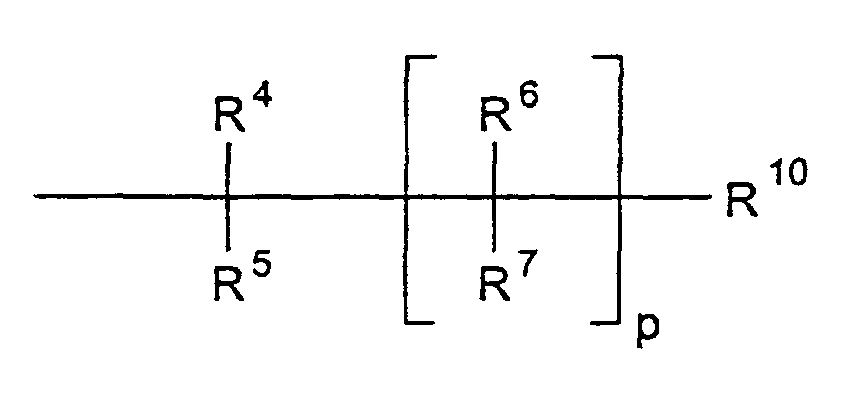
- G
-
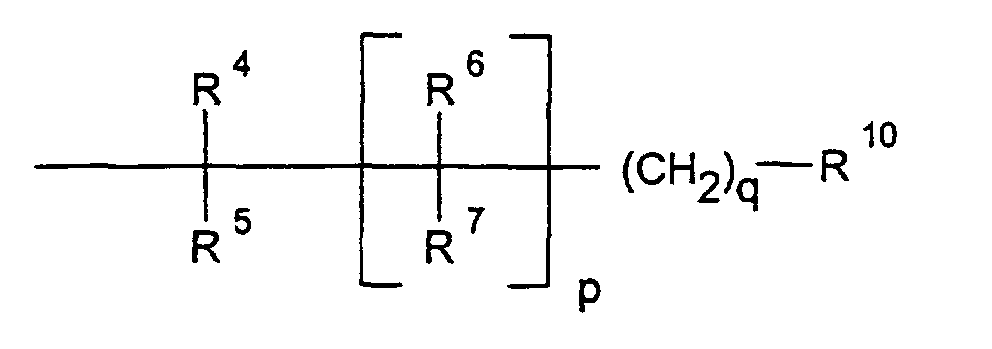
- R1
- R2R3N-C(=NR2)-,


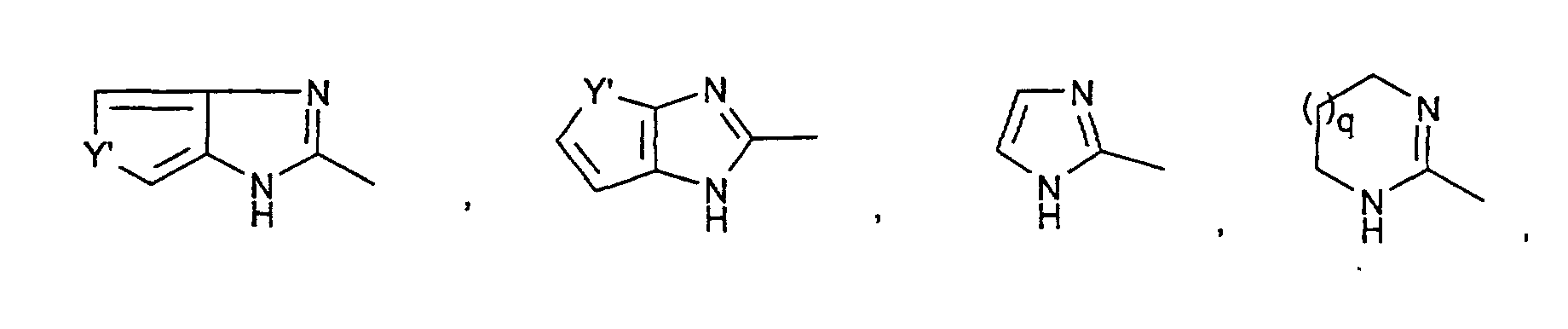


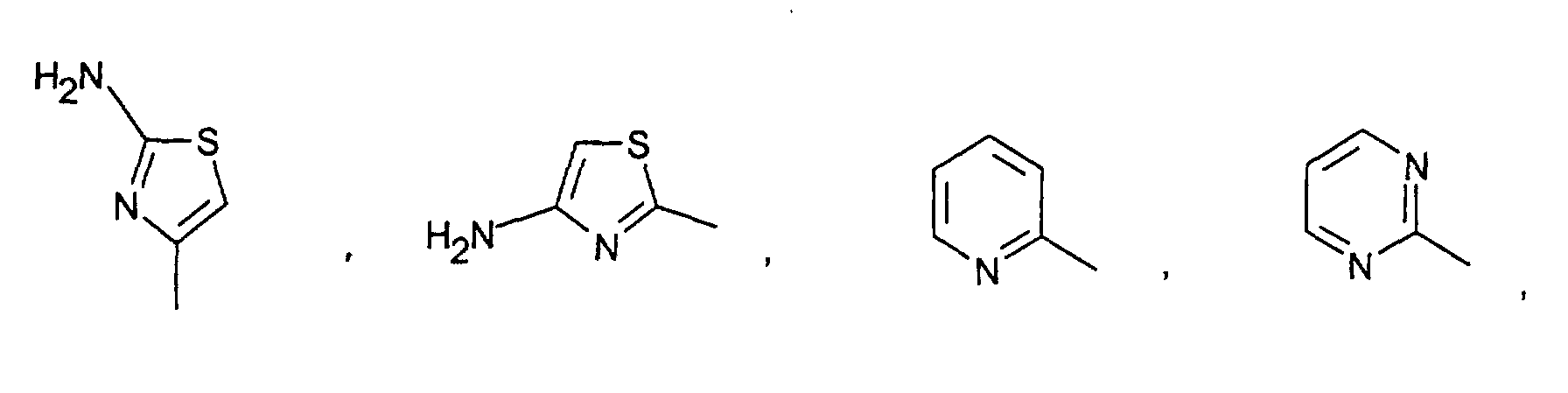
 wobei Y' NH, O oder S bedeutet.
- R2, R3
- unabhängig voneinander H, (C1-C6)-Alkyl, Trifluormethyl, Pentafluorethyl, (C5-C6)-Cycloalkyl, (C5-C6)-Cycloalkyl-(C1-C2)-Alkyl, Phenyl, Benzyl, H2N, R8OR9, R8-(C5-C10)-ArylR9, R8NHR9, R8R8NR9, R8NHC(O)R9, H2N-C(=NH) oder H2N-C(= NH)-NH-;
- R4, R5, R6, R7
- unabhängig voneinander H, Fluor, OH, (C1-C6)-Alkyl, (C10-C12)-Cycloalkyl, (C10-C12)-Cycloalkyl-(C1-C6)-alkyl, R8OR9, R8-(C5-C10)-ArylR9, R8R8NR9, R8NHC(O)OR9, R8S(O)nNHR9, R8OC(O)NHR9 oder R8C(O)NHR9;
- R8
- H, (C1-C6)-Alkyl, (C10-C12)-Cycloalkyl, (C10-C12)-Cycloalkyl-(C1-C2)-Alkyl, (C5-C10)-Aryl oder (C5-C10)-Aryl-(C1-C2)-alkyl;
- R9
- eine direkte Bindung oder (C1-C6)-Alkandiyl;
- R10
- C(O)R11;
- R11
- OH, (C1-C6)-Alkoxy, Phenoxy, Benzyloxy, (C1-C4)-Alkylcarbonyloxy-(C1-C4)-alkoxy, NH2, Mono- oder Di-(C1-C6-alkyl)-amino;
- R16
- H, (C1-C4)-Alkyl, Trifluormethyl, Pentafluorethyl, (C5-C6)-Cycloalkyl, (C5-C6)-Cycloalkyl-(C1-C2)-alkyl, Phenyl oder Benzyl;
- n
- 1 oder 2; und
- p, q
- unabhängig voneinander 0 oder 1;
- R1
- für X-NH-C(=NH)-(CH2)p, X1-NH-(CH2)p oder 4-Imidazolyl-CH2- steht, wobei p für eine ganze Zahl von 0 bis 3 stehen kann,
- X
- Wasserstoff, (C1-C6)-Alkyl, Hydroxy, (C1-C6)-Alkoxy, (C6-C14)-Aryl-(C1-C6)-alkoxy oder Amino bedeutet, wobei die Arylgruppen in X reine, gegebenenfalls einfach oder mehrfach substituierte, Carbocyclen darstellen,
- X1
- (C4-C14)-Aryl-(C1-C6)-alkoxy oder R'-NH-C(=N-R") bedeutet, wobei R' und R" unabhängig voneinander die Bedeutungen von X haben und wobei die Arylgruppen in X1 reine, gegebenenfalls einfach oder mehrfach substituierte, Carbocyclen darstellen,
- K
- (C1-C6)-Alkandiyl, Cyclohexandiyl, Phenylen, Phenylen-(C1-C6)-Alkandiyl, (C1-C6)-Alkandiyl-Phenylen, Phenylen-(C2-C6)-Alkendiyl oder einen zweiwertigen Rest eines 6-gliedrigen gesättigten oder ungesättigten Ringes, der 1 Stickstoffatom enthalten und einfach oder zweifach durch (C1-C6)-Alkyl oder doppelt gebundenen Sauerstoff oder Schwefel substituiert sein kann, bedeutet.
- Verbindung der Formel I gemäß Anspruch 1, worin F für -CO-NR2- steht, und ihre physiologisch verträglichen Salze.
- Verbindung der Formel I gemäß den Ansprüchen 1 und/oder 2, worin G fürsteht, und ihre physiologisch verträglichen Salze.
- Verfahren zur Herstellung einer Verbindung der Formel I gemäß den Ansprüchen 1 bis 3, worin F für -C(O)-NR2- steht, dadurch gekennzeichnet, daß man eine Verbindung der Formel IImit einer Verbindung der Formel HNR2-G kondensiert, wobei A, B, D, R1, R16, E und G die in den Ansprüchen 1 bis 3 angegebenen Bedeutungen haben oder auch funktionelle Gruppen in geschützter Form vorliegen können, und M für Hydroxycarbonyl, (C1-C6)-Alkoxycarbonyl oder ein aktiviertes Carbonsäurederivat steht.

- Verbindung der Formel I gemäß den Ansprüchen 1 bis 3 oder ein physiologisch verträgliches Salz davon zur Verwendung als Heilmittel.
- Verbindung der Formel I gemäß den Ansprüchen 1 bis 3 oder ein physiologisch verträgliches Salz davon als Inhibitor der Knochenresorption durch Osteoclasten, als Inhibitor von Tumorwachstum oder Tumormetastasierung, als Entzündungshemmer, zur Behandlung oder Prophylaxe von cardiovaskulären Erkrankungen, zur Behandlung oder Prophylaxe von Nephropatien oder Retinopathien oder als Vitronectinrezeptor-Antagonist zur Behandlung und Prophylaxe von Krankheiten, die auf der Wechselwirkung zwischen Vitronectinrezeptoren und deren Liganden bei Zell-Zell- oder Zell-Matrix-Interaktionsprozessen beruhen.
- Pharmazeutische Zubereitung, enthaltend mindestens eine Verbindung der Formel I gemäß den Ansprüchen 1 bis 3 oder ein physiologisch verträgliches Salz davon neben pharmazeutisch einwandfreien Trägerstoffen und/oder Zusatzstoffen.
Applications Claiming Priority (6)
| Application Number | Priority Date | Filing Date | Title |
|---|---|---|---|
| DE19610919 | 1996-03-20 | ||
| DE19610919 | 1996-03-20 | ||
| DE1996126701 DE19626701A1 (de) | 1996-07-03 | 1996-07-03 | Neue Inhibitoren der Knochenresorption und Vitronectinrezeptor-Antagonisten |
| DE19626701 | 1996-07-03 | ||
| DE19635522 | 1996-09-02 | ||
| DE1996135522 DE19635522A1 (de) | 1996-09-02 | 1996-09-02 | Neue Inhibitoren der Knochenresorption und Vitronectinrezeptor-Antagonisten |
Publications (2)
| Publication Number | Publication Date |
|---|---|
| EP0796855A1 EP0796855A1 (de) | 1997-09-24 |
| EP0796855B1 true EP0796855B1 (de) | 2002-02-06 |
Family
ID=27216049
Family Applications (1)
| Application Number | Title | Priority Date | Filing Date |
|---|---|---|---|
| EP97103712A Expired - Lifetime EP0796855B1 (de) | 1996-03-20 | 1997-03-06 | Inhibitoren der Knochenresorption und Vitronectinrezeptor-Antagonisten |
Country Status (24)
| Country | Link |
|---|---|
| US (3) | US6218415B1 (de) |
| EP (1) | EP0796855B1 (de) |
| JP (1) | JP4546584B2 (de) |
| KR (1) | KR970065523A (de) |
| CN (1) | CN1072647C (de) |
| AR (1) | AR006273A1 (de) |
| AT (1) | ATE212990T1 (de) |
| AU (1) | AU715729B2 (de) |
| BR (1) | BR9701335A (de) |
| CA (1) | CA2199923A1 (de) |
| CZ (1) | CZ289696B6 (de) |
| DE (1) | DE59706273D1 (de) |
| DK (1) | DK0796855T3 (de) |
| ES (1) | ES2171768T3 (de) |
| HR (1) | HRP970156A2 (de) |
| HU (1) | HUP9700602A3 (de) |
| IL (1) | IL120479A (de) |
| MX (1) | MX9702070A (de) |
| NO (1) | NO314547B1 (de) |
| NZ (1) | NZ314433A (de) |
| PL (1) | PL319071A1 (de) |
| PT (1) | PT796855E (de) |
| SK (1) | SK35097A3 (de) |
| TW (1) | TW363064B (de) |
Families Citing this family (51)
| Publication number | Priority date | Publication date | Assignee | Title |
|---|---|---|---|---|
| ATE212990T1 (de) | 1996-03-20 | 2002-02-15 | Hoechst Ag | Inhibitoren der knochenresorption und vitronectinrezeptor-antagonisten |
| US5981546A (en) * | 1996-08-29 | 1999-11-09 | Merck & Co., Inc. | Integrin antagonists |
| US5952341A (en) * | 1996-10-30 | 1999-09-14 | Merck & Co., Inc. | Integrin antagonists |
| US5919792A (en) * | 1996-10-30 | 1999-07-06 | Merck & Co., Inc. | Integrin antagonists |
| DE19647382A1 (de) | 1996-11-15 | 1998-05-20 | Hoechst Ag | Heterocyclen als Inhibitoren der Leukozytenadhäsion und VLA-4-Antagonisten |
| DE19647381A1 (de) | 1996-11-15 | 1998-05-20 | Hoechst Ag | Neue Heterocyclen als Inhibitoren der Leukozytenadhäsion und VLA-4-Antagonisten |
| DE19647380A1 (de) * | 1996-11-15 | 1998-05-20 | Hoechst Ag | 5-Ring-Heterocyclen als Inhibitoren der Leukozytenadhäsion und VLA-4-Antagonisten |
| US6482821B2 (en) | 1996-12-20 | 2002-11-19 | Hoechst Aktiengellschaft | Vitronectin receptor antagonists, their preparation and their use |
| DE19653645A1 (de) * | 1996-12-20 | 1998-06-25 | Hoechst Ag | Vitronectin - Rezeptorantagonisten, deren Herstellung sowie deren Verwendung |
| US6218387B1 (en) | 1996-12-20 | 2001-04-17 | Hoechst Aktiengesellschaft | Vitronectin receptor anatagonists, their preparation and their use |
| DE19653647A1 (de) * | 1996-12-20 | 1998-06-25 | Hoechst Ag | Vitronectin - Rezeptorantagonisten, deren Herstellung sowie deren Verwendung |
| US6017925A (en) * | 1997-01-17 | 2000-01-25 | Merck & Co., Inc. | Integrin antagonists |
| DE19741235A1 (de) | 1997-09-18 | 1999-03-25 | Hoechst Marion Roussel De Gmbh | Neue Imidazolidinderivate, ihre Herstellung, ihre Verwendung und sie enthaltende pharmazeutische Präparate |
| DE19741873A1 (de) * | 1997-09-23 | 1999-03-25 | Hoechst Marion Roussel De Gmbh | Neue 5-Ring-Heterocyclen, ihre Herstellung, ihre Verwendung und sie enthaltende pharmazeutische Präparate |
| DE19751251A1 (de) | 1997-11-19 | 1999-05-20 | Hoechst Marion Roussel De Gmbh | Substituierte Imidazolidinderivate, ihre Herstellung, ihre Verwendung und sie enthaltende pharmezeutische Präparate |
| US6048861A (en) * | 1997-12-17 | 2000-04-11 | Merck & Co., Inc. | Integrin receptor antagonists |
| US6017926A (en) * | 1997-12-17 | 2000-01-25 | Merck & Co., Inc. | Integrin receptor antagonists |
| EP1047425A4 (de) * | 1997-12-17 | 2009-04-22 | Merck & Co Inc | Integrinrezeptor antagonisten |
| US6211191B1 (en) | 1997-12-17 | 2001-04-03 | Merck & Co., Inc. | Integrin receptor antagonists |
| US6066648A (en) | 1997-12-17 | 2000-05-23 | Merck & Co., Inc. | Integrin receptor antagonists |
| WO1999052872A1 (en) | 1998-04-09 | 1999-10-21 | Meiji Seika Kaisha, Ltd. | AMINOPIPERIDINE DERIVATIVES AS INTEGRIN αvβ3 ANTAGONISTS |
| WO1999052879A1 (en) * | 1998-04-14 | 1999-10-21 | American Home Products Corporation | Acylresorcinol derivatives as selective vitronectin receptor inhibitors |
| DE19821483A1 (de) | 1998-05-14 | 1999-11-18 | Hoechst Marion Roussel De Gmbh | Imidazolidinderivate, ihre Herstellung, ihre Verwendung und sie enthaltende pharmazeutische Präparate |
| AU748621B2 (en) * | 1998-08-13 | 2002-06-06 | Merck & Co., Inc. | Integrin receptor antagonists |
| WO2000038715A2 (en) | 1998-12-23 | 2000-07-06 | G.D. Searle & Co. | Use of an integrin antagonist and radiation in the treatment of neoplasia |
| WO2000047207A1 (en) | 1999-02-09 | 2000-08-17 | Bristol-Myers Squibb Company | LACTAM INHIBITORS OF FXa AND METHOD |
| DE19922462A1 (de) | 1999-05-17 | 2000-11-23 | Aventis Pharma Gmbh | Spiro-imidazolidinderivate, ihre Herstellung ihre Verwendung und sie enthaltende pharmazeutische Präparate |
| DE60035779T2 (de) | 1999-06-02 | 2008-04-30 | Merck & Co., Inc. | Alpha v integrin-rezeptor antagonisten |
| EP1198231A1 (de) | 1999-07-21 | 2002-04-24 | American Home Products Corporation | Bicyklischer antagonist selektiv für (alpha)v (beta)3 integrin |
| EP1209152A4 (de) | 1999-08-05 | 2003-03-12 | Meiji Seika Kaisha | Omega-amino-alpha-hydroxy-carbonsäure-derivate mit einem integrin alpha v beta antagonismus |
| EP1229910A4 (de) * | 1999-10-04 | 2003-10-01 | Merck & Co Inc | Integrinrezeptorantagonisten |
| WO2001053297A1 (en) | 2000-01-20 | 2001-07-26 | Merck & Co., Inc. | Alpha v integrin receptor antagonists |
| FR2806082B1 (fr) * | 2000-03-07 | 2002-05-17 | Adir | Nouveaux composes bicycliques antagonistes des recepteurs de la vitronectine, leur procede de preparation et les compositions pharmaceutiques qui les contiennent |
| US6511973B2 (en) | 2000-08-02 | 2003-01-28 | Bristol-Myers Squibb Co. | Lactam inhibitors of FXa and method |
| DE10111877A1 (de) | 2001-03-10 | 2002-09-12 | Aventis Pharma Gmbh | Neue Imidazolidinderivate, ihre Herstellung, ihre Verwendung und sie enthaltende pharmazeutische Präparate |
| DE10137595A1 (de) | 2001-08-01 | 2003-02-13 | Aventis Pharma Gmbh | Neue Imidazolidinderivate, ihre Herstellung und ihre Verwendung |
| EP1620092A4 (de) * | 2003-05-07 | 2008-04-16 | Cytokinetics Inc | Verbindungen, zusammensetzungen und verfahren |
| UA87854C2 (en) | 2004-06-07 | 2009-08-25 | Мерк Энд Ко., Инк. | N-(2-benzyl)-2-phenylbutanamides as androgen receptor modulators |
| WO2007089335A2 (en) * | 2005-12-29 | 2007-08-09 | Lexicon Pharmaceutical Inc. | Multicyclic amino acid derivatives and methods of their use |
| US20080051335A1 (en) * | 2006-05-02 | 2008-02-28 | Kleiner Lothar W | Methods, compositions and devices for treating lesioned sites using bioabsorbable carriers |
| US8865909B2 (en) * | 2008-11-20 | 2014-10-21 | Yissum Research Development Company Of The Hebrew University Of Jerusalem Ltd. | Anti-biofilm agents |
| ES2864079T3 (es) | 2014-05-30 | 2021-10-13 | Pfizer | Derivados de carbonitrilo como moduladores selectivos del receptor de andrógenos |
| WO2017167622A1 (en) | 2016-03-30 | 2017-10-05 | Basf Se | Process for the flash calcination of a zeolitic material |
| CN109996541A (zh) | 2016-09-07 | 2019-07-09 | 普利安特治疗公司 | N-酰基氨基酸化合物及其使用方法 |
| US11046685B2 (en) | 2017-02-28 | 2021-06-29 | Morphic Therapeutic, Inc. | Inhibitors of (α-v)(β-6) integrin |
| EP4159727B1 (de) | 2017-02-28 | 2026-04-08 | Morphic Therapeutic, Inc. | Inhibitoren von (alpha-v)(beta-6)-integrin |
| PT3844162T (pt) | 2018-08-29 | 2025-03-28 | Morphic Therapeutic Inc | Inibidores da integrina alfa v beta6 |
| WO2020047208A1 (en) | 2018-08-29 | 2020-03-05 | Morphic Therapeutic, Inc. | Inhibitors of (alpha-v)(beta-6) integrin |
| AU2019327475B2 (en) | 2018-08-29 | 2025-06-05 | Morphic Therapeutic, Inc. | INHIBITING αV β6 INTEGRIN |
| US11478466B2 (en) | 2019-04-01 | 2022-10-25 | Cornell University | Small molecule promoting osteoblast differentiation |
| WO2023275715A1 (en) | 2021-06-30 | 2023-01-05 | Pfizer Inc. | Metabolites of selective androgen receptor modulators |
Family Cites Families (41)
| Publication number | Priority date | Publication date | Assignee | Title |
|---|---|---|---|---|
| DE3044236A1 (de) | 1980-11-25 | 1982-06-16 | Hoechst Ag, 6000 Frankfurt | Aminosaeurederivate und verfahren zu ihrer herstellung |
| DE2937779A1 (de) | 1979-09-19 | 1981-04-09 | Hoechst Ag, 6000 Frankfurt | Aminosaeurederivate und verfahren zu ihrer herstellung |
| FR2503155A2 (fr) | 1980-10-02 | 1982-10-08 | Science Union & Cie | Nouveaux imino diacides substitues, leurs procedes de preparation et leur emploi comme inhibiteur d'enzyme |
| FR2487829A2 (fr) | 1979-12-07 | 1982-02-05 | Science Union & Cie | Nouveaux imino acides substitues, leurs procedes de preparation et leur emploi comme inhibiteur d'enzyme |
| US4350704A (en) | 1980-10-06 | 1982-09-21 | Warner-Lambert Company | Substituted acyl derivatives of octahydro-1H-indole-2-carboxylic acids |
| DE3177130D1 (de) | 1980-08-30 | 1990-01-11 | Hoechst Ag | Aminosaeurederivate, verfahren zu ihrer herstellung, diese enthaltende mittel und deren verwendung. |
| US4344949A (en) | 1980-10-03 | 1982-08-17 | Warner-Lambert Company | Substituted acyl derivatives of 1,2,3,4-tetrahydroisoquinoline-3-carboxylic acids |
| FR2492381A1 (fr) | 1980-10-21 | 1982-04-23 | Science Union & Cie | Nouveaux acides aza bicyclo alcane carboxyliques substitues leurs procedes de preparation et leur emploi comme inhibiteur d'enzyme |
| LU88621I2 (fr) | 1980-10-23 | 1995-09-01 | Schering Corp | Sandopril |
| US4374847A (en) | 1980-10-27 | 1983-02-22 | Ciba-Geigy Corporation | 1-Carboxyalkanoylindoline-2-carboxylic acids |
| DE3226768A1 (de) | 1981-11-05 | 1983-05-26 | Hoechst Ag, 6230 Frankfurt | Derivate der cis, endo-2-azabicyclo-(3.3.0)-octan-3-carbonsaeure, verfahren zu ihrer herstellung, diese enthaltende mittel und deren verwendung |
| NZ202903A (en) | 1981-12-29 | 1988-01-08 | Hoechst Ag | 1-- pe pyrrol-2-yl-carboxylic acid derivatives and pharmaceutical compositions |
| DE3210496A1 (de) | 1982-03-23 | 1983-10-06 | Hoechst Ag | Neue derivate bicyclischer aminsaeuren, verfahren zu ihrer herstellung, diese enthaltende mittel und deren verwendung sowie neue bicyclische aminosaeuren als zwischenstufen und verfahren zu deren herstellung |
| DE3211397A1 (de) | 1982-03-27 | 1983-11-10 | Hoechst Ag, 6230 Frankfurt | Spiro (4.(3+n))-2-aza-3-carbonsaeure-derivate, verfahren zu ihrer herstellung, diese enthaltende mittel und ihre verwendung |
| DE3211676A1 (de) | 1982-03-30 | 1983-10-06 | Hoechst Ag | Neue derivate von cycloalka (c) pyrrol-carbonsaeuren, verfahren zu ihrer herstellung, diese enthaltende mittel und deren verwendung sowie neue cycloalka (c) pyrrol-carbonsaeuren als zwischenstufen und verfahren zu deren herstellung |
| DE3227055A1 (de) | 1982-07-20 | 1984-01-26 | Hoechst Ag, 6230 Frankfurt | Neue derivate der 2-aza-bicyclo(2.2.2)octan-3-carbonsaeure, verfahren zu ihrer herstellung, diese enthaltende mittel und deren verwendung sowie 2-aza-bicyclo(2.2.2)octan-3-carbonsaeure als zwischenstufe und verfahren zu deren herstellung |
| DE3242151A1 (de) | 1982-11-13 | 1984-05-17 | Hoechst Ag, 6230 Frankfurt | Neue derivate tricyclischer aminosaeuren, verfahren zu ihrer herstellung, diese enthaltende mittel und deren verwendung, sowie neue bicyclische aminosaeuren als zwischenstufen und verfahren zu deren herstellung |
| DE3246503A1 (de) | 1982-12-16 | 1984-06-20 | Hoechst Ag, 6230 Frankfurt | Derivate der cis, endo-2-azabicyclo-(5.3.0)-decan-3-carbonsaeure, verfahren zu ihrer herstellung, diese enthaltende mittel und deren verwendung |
| DE3643012A1 (de) | 1986-12-17 | 1988-06-30 | Hoechst Ag | 2,3-disubstituierte isoxazolidine, verfahren zu ihrer herstellung, diese enthaltende mittel und ihre verwendung |
| DE3818850A1 (de) | 1988-06-03 | 1989-12-07 | Hoechst Ag | Oligopeptide mit zyklischen prolin-analogen aminosaeuren |
| DE4009506A1 (de) | 1990-03-24 | 1991-09-26 | Hoechst Ag | Hydantoinderivate |
| JPH04367367A (ja) | 1991-06-11 | 1992-12-18 | Nkk Corp | ロータリノズル |
| DE4126277A1 (de) | 1991-08-08 | 1993-02-11 | Cassella Ag | Hydantoinderivate |
| US5217994A (en) * | 1991-08-09 | 1993-06-08 | Merck & Co., Inc. | Method of inhibiting osteoclast-mediated bone resorption by administration of aminoalkyl-substituted phenyl derivatives |
| US5204350A (en) | 1991-08-09 | 1993-04-20 | Merck & Co., Inc. | Method of inhibiting osteoclast-mediated bone resorption by administration of n-heterocyclicalkyl-substituted phenyl derivatives |
| DE4207254A1 (de) | 1992-03-07 | 1993-09-09 | Cassella Ag | 4-oxo-2-thioxoimidazolidin-derivate |
| DE4213634A1 (de) | 1992-04-24 | 1993-10-28 | Cassella Ag | 2,4-Dioxo-imidazolidin-Derivate |
| DE4224414A1 (de) * | 1992-07-24 | 1994-01-27 | Cassella Ag | Phenylimidazolidin-derivate, ihre Herstellung und ihre Verwendung |
| DE4228717A1 (de) | 1992-08-28 | 1994-03-03 | Cassella Ag | Imidazolidin-Derivate |
| EP0667773A4 (de) | 1992-10-14 | 1996-09-25 | Merck & Co Inc | Fibrinogen-rezeptor-antagonisten. |
| CA2150550A1 (en) | 1992-12-01 | 1994-06-09 | Melissa S. Egbertson | Fibrinogen receptor antagonists |
| DE4301747A1 (de) * | 1993-01-23 | 1994-07-28 | Cassella Ag | Substituierte Aminoverbindungen, ihre Herstellung und ihre Verwendung |
| DE4308034A1 (de) | 1993-03-13 | 1994-09-15 | Cassella Ag | Neue Heterocyclen, ihre Herstellung und ihre Verwendung |
| DE4427979A1 (de) * | 1993-11-15 | 1996-02-15 | Cassella Ag | Substituierte 5-Ring-Heterocyclen, ihre Herstellung und ihre Verwendung |
| US5770565A (en) | 1994-04-13 | 1998-06-23 | La Jolla Cancer Research Center | Peptides for reducing or inhibiting bone resorption |
| ATE227567T1 (de) | 1994-05-27 | 2002-11-15 | Merck & Co Inc | Präparate zur hemmung der durch osteoklasten vermittelten knochenresorption |
| WO1996000730A1 (en) | 1994-06-29 | 1996-01-11 | Smithkline Beecham Corporation | Vitronectin receptor antagonists |
| ZA955391B (en) | 1994-06-29 | 1996-02-09 | Smithkline Beecham Corp | Vitronectin receptor antagonists |
| TW449590B (en) * | 1995-04-14 | 2001-08-11 | Boehringer Ingelheim Kg | New arylglycinamide derivatives, processes for the manufacture thereof and pharmaceutical compositions containing these compounds |
| JP3895792B2 (ja) * | 1995-12-08 | 2007-03-22 | プロスケリア・エス・ア・エス | 骨形成促進剤 |
| ATE212990T1 (de) | 1996-03-20 | 2002-02-15 | Hoechst Ag | Inhibitoren der knochenresorption und vitronectinrezeptor-antagonisten |
-
1997
- 1997-03-06 AT AT97103712T patent/ATE212990T1/de not_active IP Right Cessation
- 1997-03-06 DK DK97103712T patent/DK0796855T3/da active
- 1997-03-06 DE DE59706273T patent/DE59706273D1/de not_active Expired - Lifetime
- 1997-03-06 PT PT97103712T patent/PT796855E/pt unknown
- 1997-03-06 ES ES97103712T patent/ES2171768T3/es not_active Expired - Lifetime
- 1997-03-06 EP EP97103712A patent/EP0796855B1/de not_active Expired - Lifetime
- 1997-03-13 CA CA002199923A patent/CA2199923A1/en not_active Abandoned
- 1997-03-18 NZ NZ314433A patent/NZ314433A/xx unknown
- 1997-03-18 HU HU9700602A patent/HUP9700602A3/hu unknown
- 1997-03-18 SK SK350-97A patent/SK35097A3/sk unknown
- 1997-03-18 HR HR19635522.2A patent/HRP970156A2/xx not_active Application Discontinuation
- 1997-03-18 AR ARP970101074A patent/AR006273A1/es unknown
- 1997-03-18 AU AU16380/97A patent/AU715729B2/en not_active Ceased
- 1997-03-18 IL IL12047997A patent/IL120479A/xx not_active IP Right Cessation
- 1997-03-18 CZ CZ1997823A patent/CZ289696B6/cs not_active IP Right Cessation
- 1997-03-19 NO NO19971268A patent/NO314547B1/no not_active IP Right Cessation
- 1997-03-19 JP JP08471197A patent/JP4546584B2/ja not_active Expired - Lifetime
- 1997-03-19 BR BR9701335A patent/BR9701335A/pt active Search and Examination
- 1997-03-19 CN CN97103324A patent/CN1072647C/zh not_active Expired - Fee Related
- 1997-03-19 MX MX9702070A patent/MX9702070A/es not_active IP Right Cessation
- 1997-03-20 US US08/821,253 patent/US6218415B1/en not_active Expired - Lifetime
- 1997-03-20 PL PL97319071A patent/PL319071A1/xx unknown
- 1997-03-20 KR KR1019970010269A patent/KR970065523A/ko not_active Ceased
- 1997-07-23 TW TW086103656A patent/TW363064B/zh active
-
2001
- 2001-03-06 US US09/798,995 patent/US20010021708A1/en not_active Abandoned
-
2002
- 2002-02-21 US US10/078,398 patent/US6620820B2/en not_active Expired - Lifetime
Also Published As
Similar Documents
| Publication | Publication Date | Title |
|---|---|---|
| EP0796855A1 (de) | Inhibitoren der Knochenresorption und Vitronectinrezeptor-Antagonisten | |
| EP0820991B1 (de) | Cycloalkyl-Derivate als Inhibitoren der Knochenresorption und Vitronectinrezeptor-Antagonisten | |
| EP0854140B1 (de) | Vitronectinrezeptor-Antagonisten, deren Herstellung sowie deren Verwendung | |
| EP0820988B1 (de) | Imino-Derivate als Inhibitoren der Knochenresorption und Vitronectinrezeptor-Antagonisten | |
| DE69809594T2 (de) | Acylguanidin derivate als inhibitoren von knochenresorption und als vitronectin rezeptor antagonisten | |
| EP0853084B1 (de) | Substituierte Purinderivate als Vitronectinrezeptor-Antagonisten | |
| EP0680469B1 (de) | Aminosäurederivate, diese verbindungen enthaltende arzneimittel und verfahren zu ihrer herstellung | |
| EP0729460B1 (de) | Substituierte 5-ring-heterocyclen, ihre herstellung und ihre verwendung | |
| EP1572210A1 (de) | Das r-isomer von beta-aminosäureverbindungen als integrinrezeptorantagonisten-derivate | |
| DE60009296T2 (de) | Substituierte purine-derivate als zell-adhäsionhemmer | |
| DE69927403T2 (de) | Cyclische hydrazinderivate als tnf-alpha-inhibitoren | |
| US6689754B1 (en) | Heterocyclic glycyl β-alanine derivatives | |
| DE60113248T2 (de) | Vitronektin rezeptor antagonisten | |
| RU2195460C2 (ru) | Новые ингибиторы рассасывания костей и антагонисты рецептора витронектина | |
| DE19626701A1 (de) | Neue Inhibitoren der Knochenresorption und Vitronectinrezeptor-Antagonisten | |
| US4285948A (en) | N-Aryl-N'-(1,4,5,6-tetrahydropyrimidine-2-yl)ureas as antihypertensives | |
| US4379786A (en) | N-Aryl-N-(4,5,6,7-tetrahydro-1H-1,3, diazepin-2-yl)ureas as antihypertensives | |
| DE19635522A1 (de) | Neue Inhibitoren der Knochenresorption und Vitronectinrezeptor-Antagonisten |
Legal Events
| Date | Code | Title | Description |
|---|---|---|---|
| PUAI | Public reference made under article 153(3) epc to a published international application that has entered the european phase |
Free format text: ORIGINAL CODE: 0009012 |
|
| AK | Designated contracting states |
Kind code of ref document: A1 Designated state(s): AT BE CH DE DK ES FI FR GB GR IE IT LI LU NL PT SE |
|
| AX | Request for extension of the european patent |
Free format text: SI PAYMENT 970407 |
|
| 17P | Request for examination filed |
Effective date: 19980324 |
|
| 17Q | First examination report despatched |
Effective date: 19990921 |
|
| GRAG | Despatch of communication of intention to grant |
Free format text: ORIGINAL CODE: EPIDOS AGRA |
|
| RAP1 | Party data changed (applicant data changed or rights of an application transferred) |
Owner name: GENENTECH INC. |
|
| GRAG | Despatch of communication of intention to grant |
Free format text: ORIGINAL CODE: EPIDOS AGRA |
|
| GRAH | Despatch of communication of intention to grant a patent |
Free format text: ORIGINAL CODE: EPIDOS IGRA |
|
| RAP1 | Party data changed (applicant data changed or rights of an application transferred) |
Owner name: GENENTECH INC. Owner name: HOECHST AKTIENGESELLSCHAFT |
|
| GRAH | Despatch of communication of intention to grant a patent |
Free format text: ORIGINAL CODE: EPIDOS IGRA |
|
| GRAA | (expected) grant |
Free format text: ORIGINAL CODE: 0009210 |
|
| REG | Reference to a national code |
Ref country code: GB Ref legal event code: IF02 |
|
| AK | Designated contracting states |
Kind code of ref document: B1 Designated state(s): AT BE CH DE DK ES FI FR GB GR IE IT LI LU NL PT SE |
|
| AX | Request for extension of the european patent |
Free format text: SI PAYMENT 19970407 |
|
| REF | Corresponds to: |
Ref document number: 212990 Country of ref document: AT Date of ref document: 20020215 Kind code of ref document: T |
|
| REG | Reference to a national code |
Ref country code: CH Ref legal event code: EP |
|
| REF | Corresponds to: |
Ref document number: 59706273 Country of ref document: DE Date of ref document: 20020321 |
|
| GBT | Gb: translation of ep patent filed (gb section 77(6)(a)/1977) |
Effective date: 20020411 |
|
| REG | Reference to a national code |
Ref country code: DK Ref legal event code: T3 |
|
| REG | Reference to a national code |
Ref country code: CH Ref legal event code: NV Representative=s name: A. BRAUN, BRAUN, HERITIER, ESCHMANN AG PATENTANWAE |
|
| ET | Fr: translation filed | ||
| REG | Reference to a national code |
Ref country code: PT Ref legal event code: SC4A Free format text: AVAILABILITY OF NATIONAL TRANSLATION Effective date: 20020506 |
|
| REG | Reference to a national code |
Ref country code: GR Ref legal event code: EP Ref document number: 20020401686 Country of ref document: GR |
|
| REG | Reference to a national code |
Ref country code: ES Ref legal event code: FG2A Ref document number: 2171768 Country of ref document: ES Kind code of ref document: T3 |
|
| PLBE | No opposition filed within time limit |
Free format text: ORIGINAL CODE: 0009261 |
|
| STAA | Information on the status of an ep patent application or granted ep patent |
Free format text: STATUS: NO OPPOSITION FILED WITHIN TIME LIMIT |
|
| 26N | No opposition filed |
Effective date: 20021107 |
|
| PGFP | Annual fee paid to national office [announced via postgrant information from national office to epo] |
Ref country code: PT Payment date: 20030217 Year of fee payment: 7 |
|
| PGFP | Annual fee paid to national office [announced via postgrant information from national office to epo] |
Ref country code: IE Payment date: 20030221 Year of fee payment: 7 |
|
| PGFP | Annual fee paid to national office [announced via postgrant information from national office to epo] |
Ref country code: SE Payment date: 20030225 Year of fee payment: 7 |
|
| PGFP | Annual fee paid to national office [announced via postgrant information from national office to epo] |
Ref country code: BE Payment date: 20030227 Year of fee payment: 7 |
|
| PGFP | Annual fee paid to national office [announced via postgrant information from national office to epo] |
Ref country code: LU Payment date: 20030305 Year of fee payment: 7 |
|
| PGFP | Annual fee paid to national office [announced via postgrant information from national office to epo] |
Ref country code: NL Payment date: 20030306 Year of fee payment: 7 Ref country code: FI Payment date: 20030306 Year of fee payment: 7 |
|
| PGFP | Annual fee paid to national office [announced via postgrant information from national office to epo] |
Ref country code: GR Payment date: 20030318 Year of fee payment: 7 Ref country code: DK Payment date: 20030318 Year of fee payment: 7 Ref country code: AT Payment date: 20030318 Year of fee payment: 7 |
|
| PG25 | Lapsed in a contracting state [announced via postgrant information from national office to epo] |
Ref country code: LU Free format text: LAPSE BECAUSE OF NON-PAYMENT OF DUE FEES Effective date: 20040306 Ref country code: FI Free format text: LAPSE BECAUSE OF NON-PAYMENT OF DUE FEES Effective date: 20040306 Ref country code: AT Free format text: LAPSE BECAUSE OF NON-PAYMENT OF DUE FEES Effective date: 20040306 |
|
| PG25 | Lapsed in a contracting state [announced via postgrant information from national office to epo] |
Ref country code: SE Free format text: LAPSE BECAUSE OF NON-PAYMENT OF DUE FEES Effective date: 20040307 |
|
| PG25 | Lapsed in a contracting state [announced via postgrant information from national office to epo] |
Ref country code: IE Free format text: LAPSE BECAUSE OF NON-PAYMENT OF DUE FEES Effective date: 20040308 |
|
| PG25 | Lapsed in a contracting state [announced via postgrant information from national office to epo] |
Ref country code: DK Free format text: LAPSE BECAUSE OF NON-PAYMENT OF DUE FEES Effective date: 20040331 Ref country code: BE Free format text: LAPSE BECAUSE OF NON-PAYMENT OF DUE FEES Effective date: 20040331 |
|
| BERE | Be: lapsed |
Owner name: *GENENTECH INC. Effective date: 20040331 Owner name: *HOECHST A.G. Effective date: 20040331 |
|
| PG25 | Lapsed in a contracting state [announced via postgrant information from national office to epo] |
Ref country code: NL Free format text: LAPSE BECAUSE OF NON-PAYMENT OF DUE FEES Effective date: 20041001 |
|
| PG25 | Lapsed in a contracting state [announced via postgrant information from national office to epo] |
Ref country code: GR Free format text: LAPSE BECAUSE OF NON-PAYMENT OF DUE FEES Effective date: 20041006 |
|
| PG25 | Lapsed in a contracting state [announced via postgrant information from national office to epo] |
Ref country code: PT Free format text: LAPSE BECAUSE OF NON-PAYMENT OF DUE FEES Effective date: 20041015 |
|
| EUG | Se: european patent has lapsed | ||
| REG | Reference to a national code |
Ref country code: PT Ref legal event code: MM4A Free format text: LAPSE DUE TO NON-PAYMENT OF FEES Effective date: 20040930 |
|
| NLV4 | Nl: lapsed or anulled due to non-payment of the annual fee |
Effective date: 20041001 |
|
| REG | Reference to a national code |
Ref country code: IE Ref legal event code: MM4A |
|
| PGFP | Annual fee paid to national office [announced via postgrant information from national office to epo] |
Ref country code: CH Payment date: 20060223 Year of fee payment: 10 |
|
| PGFP | Annual fee paid to national office [announced via postgrant information from national office to epo] |
Ref country code: ES Payment date: 20060309 Year of fee payment: 10 |
|
| PGFP | Annual fee paid to national office [announced via postgrant information from national office to epo] |
Ref country code: IT Payment date: 20060331 Year of fee payment: 10 |
|
| REG | Reference to a national code |
Ref country code: CH Ref legal event code: PL |
|
| PG25 | Lapsed in a contracting state [announced via postgrant information from national office to epo] |
Ref country code: CH Free format text: LAPSE BECAUSE OF NON-PAYMENT OF DUE FEES Effective date: 20070331 Ref country code: LI Free format text: LAPSE BECAUSE OF NON-PAYMENT OF DUE FEES Effective date: 20070331 |
|
| REG | Reference to a national code |
Ref country code: ES Ref legal event code: FD2A Effective date: 20070307 |
|
| PG25 | Lapsed in a contracting state [announced via postgrant information from national office to epo] |
Ref country code: PT Free format text: LAPSE BECAUSE OF NON-PAYMENT OF DUE FEES Effective date: 20040306 |
|
| PG25 | Lapsed in a contracting state [announced via postgrant information from national office to epo] |
Ref country code: ES Free format text: LAPSE BECAUSE OF NON-PAYMENT OF DUE FEES Effective date: 20070307 |
|
| PG25 | Lapsed in a contracting state [announced via postgrant information from national office to epo] |
Ref country code: IT Free format text: LAPSE BECAUSE OF NON-PAYMENT OF DUE FEES Effective date: 20070306 |
|
| REG | Reference to a national code |
Ref country code: FR Ref legal event code: PLFP Year of fee payment: 20 |
|
| PGFP | Annual fee paid to national office [announced via postgrant information from national office to epo] |
Ref country code: DE Payment date: 20160302 Year of fee payment: 20 |
|
| PGFP | Annual fee paid to national office [announced via postgrant information from national office to epo] |
Ref country code: FR Payment date: 20160208 Year of fee payment: 20 Ref country code: GB Payment date: 20160302 Year of fee payment: 20 |
|
| REG | Reference to a national code |
Ref country code: DE Ref legal event code: R071 Ref document number: 59706273 Country of ref document: DE |
|
| REG | Reference to a national code |
Ref country code: GB Ref legal event code: PE20 Expiry date: 20170305 |
|
| PG25 | Lapsed in a contracting state [announced via postgrant information from national office to epo] |
Ref country code: GB Free format text: LAPSE BECAUSE OF EXPIRATION OF PROTECTION Effective date: 20170305 |