EP0798949B1 - Keramisches Heizelement - Google Patents
Keramisches Heizelement Download PDFInfo
- Publication number
- EP0798949B1 EP0798949B1 EP97105271A EP97105271A EP0798949B1 EP 0798949 B1 EP0798949 B1 EP 0798949B1 EP 97105271 A EP97105271 A EP 97105271A EP 97105271 A EP97105271 A EP 97105271A EP 0798949 B1 EP0798949 B1 EP 0798949B1
- Authority
- EP
- European Patent Office
- Prior art keywords
- ceramic
- component
- ceramic heater
- heater according
- metal
- Prior art date
- Legal status (The legal status is an assumption and is not a legal conclusion. Google has not performed a legal analysis and makes no representation as to the accuracy of the status listed.)
- Expired - Lifetime
Links
- 239000000919 ceramic Substances 0.000 title claims description 170
- 238000010438 heat treatment Methods 0.000 claims description 50
- 229910052751 metal Inorganic materials 0.000 claims description 43
- 239000002184 metal Substances 0.000 claims description 43
- 238000005245 sintering Methods 0.000 claims description 35
- 229910052581 Si3N4 Inorganic materials 0.000 claims description 15
- 229910020968 MoSi2 Inorganic materials 0.000 claims description 14
- 229910052750 molybdenum Inorganic materials 0.000 claims description 14
- 229910052721 tungsten Inorganic materials 0.000 claims description 14
- 229910052758 niobium Inorganic materials 0.000 claims description 13
- 229910052715 tantalum Inorganic materials 0.000 claims description 13
- 150000004767 nitrides Chemical class 0.000 claims description 12
- 229910052804 chromium Inorganic materials 0.000 claims description 11
- 229910052735 hafnium Inorganic materials 0.000 claims description 11
- 229910052719 titanium Inorganic materials 0.000 claims description 11
- 229910052720 vanadium Inorganic materials 0.000 claims description 11
- 229910052726 zirconium Inorganic materials 0.000 claims description 11
- 229910015503 Mo5Si3 Inorganic materials 0.000 claims description 9
- BVKZGUZCCUSVTD-UHFFFAOYSA-L Carbonate Chemical compound [O-]C([O-])=O BVKZGUZCCUSVTD-UHFFFAOYSA-L 0.000 claims description 6
- 239000004020 conductor Substances 0.000 claims description 6
- 229910052914 metal silicate Inorganic materials 0.000 claims description 6
- 150000004649 carbonic acid derivatives Chemical class 0.000 claims description 4
- 229910001404 rare earth metal oxide Inorganic materials 0.000 claims description 4
- 150000004760 silicates Chemical class 0.000 claims description 4
- 239000011159 matrix material Substances 0.000 claims description 3
- 239000012535 impurity Substances 0.000 claims description 2
- 229910021332 silicide Inorganic materials 0.000 claims description 2
- FVBUAEGBCNSCDD-UHFFFAOYSA-N silicide(4-) Chemical compound [Si-4] FVBUAEGBCNSCDD-UHFFFAOYSA-N 0.000 claims description 2
- 229910052784 alkaline earth metal Inorganic materials 0.000 claims 1
- 239000003795 chemical substances by application Substances 0.000 description 19
- 239000000843 powder Substances 0.000 description 18
- 238000000465 moulding Methods 0.000 description 15
- 238000000034 method Methods 0.000 description 14
- 239000011148 porous material Substances 0.000 description 14
- 239000012071 phase Substances 0.000 description 10
- 239000000463 material Substances 0.000 description 8
- 239000010955 niobium Substances 0.000 description 8
- 239000002131 composite material Substances 0.000 description 5
- 239000007772 electrode material Substances 0.000 description 5
- 238000002844 melting Methods 0.000 description 5
- 239000002245 particle Substances 0.000 description 5
- ODINCKMPIJJUCX-UHFFFAOYSA-N Calcium oxide Chemical compound [Ca]=O ODINCKMPIJJUCX-UHFFFAOYSA-N 0.000 description 4
- CPLXHLVBOLITMK-UHFFFAOYSA-N Magnesium oxide Chemical compound [Mg]=O CPLXHLVBOLITMK-UHFFFAOYSA-N 0.000 description 4
- QVGXLLKOCUKJST-UHFFFAOYSA-N atomic oxygen Chemical compound [O] QVGXLLKOCUKJST-UHFFFAOYSA-N 0.000 description 4
- 230000000052 comparative effect Effects 0.000 description 4
- 230000008018 melting Effects 0.000 description 4
- 229910052760 oxygen Inorganic materials 0.000 description 4
- 239000001301 oxygen Substances 0.000 description 4
- 229910052702 rhenium Inorganic materials 0.000 description 4
- RUDFQVOCFDJEEF-UHFFFAOYSA-N yttrium(III) oxide Inorganic materials [O-2].[O-2].[O-2].[Y+3].[Y+3] RUDFQVOCFDJEEF-UHFFFAOYSA-N 0.000 description 4
- 239000000654 additive Substances 0.000 description 3
- 230000000996 additive effect Effects 0.000 description 3
- 229910000287 alkaline earth metal oxide Inorganic materials 0.000 description 3
- 239000011230 binding agent Substances 0.000 description 3
- 238000005219 brazing Methods 0.000 description 3
- 150000001875 compounds Chemical class 0.000 description 3
- 238000001816 cooling Methods 0.000 description 3
- 239000000203 mixture Substances 0.000 description 3
- 238000000859 sublimation Methods 0.000 description 3
- 230000008022 sublimation Effects 0.000 description 3
- PXHVJJICTQNCMI-UHFFFAOYSA-N Nickel Chemical compound [Ni] PXHVJJICTQNCMI-UHFFFAOYSA-N 0.000 description 2
- VYPSYNLAJGMNEJ-UHFFFAOYSA-N Silicium dioxide Chemical compound O=[Si]=O VYPSYNLAJGMNEJ-UHFFFAOYSA-N 0.000 description 2
- 238000005336 cracking Methods 0.000 description 2
- VQCBHWLJZDBHOS-UHFFFAOYSA-N erbium(III) oxide Inorganic materials O=[Er]O[Er]=O VQCBHWLJZDBHOS-UHFFFAOYSA-N 0.000 description 2
- 230000008020 evaporation Effects 0.000 description 2
- 238000001704 evaporation Methods 0.000 description 2
- 229910001120 nichrome Inorganic materials 0.000 description 2
- GUCVJGMIXFAOAE-UHFFFAOYSA-N niobium atom Chemical compound [Nb] GUCVJGMIXFAOAE-UHFFFAOYSA-N 0.000 description 2
- 238000003825 pressing Methods 0.000 description 2
- 230000035939 shock Effects 0.000 description 2
- GUVRBAGPIYLISA-UHFFFAOYSA-N tantalum atom Chemical compound [Ta] GUVRBAGPIYLISA-UHFFFAOYSA-N 0.000 description 2
- 239000010409 thin film Substances 0.000 description 2
- FIXNOXLJNSSSLJ-UHFFFAOYSA-N ytterbium(III) oxide Inorganic materials O=[Yb]O[Yb]=O FIXNOXLJNSSSLJ-UHFFFAOYSA-N 0.000 description 2
- OKTJSMMVPCPJKN-UHFFFAOYSA-N Carbon Chemical compound [C] OKTJSMMVPCPJKN-UHFFFAOYSA-N 0.000 description 1
- 229940126639 Compound 33 Drugs 0.000 description 1
- 229910002262 LaCrO3 Inorganic materials 0.000 description 1
- 229910003178 Mo2C Inorganic materials 0.000 description 1
- 229910016004 MoSi3 Inorganic materials 0.000 description 1
- PNUZDKCDAWUEGK-CYZMBNFOSA-N Sitafloxacin Chemical compound C([C@H]1N)N(C=2C(=C3C(C(C(C(O)=O)=CN3[C@H]3[C@H](C3)F)=O)=CC=2F)Cl)CC11CC1 PNUZDKCDAWUEGK-CYZMBNFOSA-N 0.000 description 1
- ATJFFYVFTNAWJD-UHFFFAOYSA-N Tin Chemical compound [Sn] ATJFFYVFTNAWJD-UHFFFAOYSA-N 0.000 description 1
- 229910008814 WSi2 Inorganic materials 0.000 description 1
- 229910007948 ZrB2 Inorganic materials 0.000 description 1
- 230000015572 biosynthetic process Effects 0.000 description 1
- VWZIXVXBCBBRGP-UHFFFAOYSA-N boron;zirconium Chemical compound B#[Zr]#B VWZIXVXBCBBRGP-UHFFFAOYSA-N 0.000 description 1
- 229910052681 coesite Inorganic materials 0.000 description 1
- 239000012141 concentrate Substances 0.000 description 1
- 229910052906 cristobalite Inorganic materials 0.000 description 1
- 238000009792 diffusion process Methods 0.000 description 1
- 230000000694 effects Effects 0.000 description 1
- 238000002474 experimental method Methods 0.000 description 1
- -1 for example Substances 0.000 description 1
- 229910002804 graphite Inorganic materials 0.000 description 1
- 239000010439 graphite Substances 0.000 description 1
- 230000009931 harmful effect Effects 0.000 description 1
- 238000007731 hot pressing Methods 0.000 description 1
- 238000001746 injection moulding Methods 0.000 description 1
- 239000007791 liquid phase Substances 0.000 description 1
- 239000007769 metal material Substances 0.000 description 1
- 238000004421 molding of ceramic Methods 0.000 description 1
- 229910052759 nickel Inorganic materials 0.000 description 1
- 230000003287 optical effect Effects 0.000 description 1
- 230000000704 physical effect Effects 0.000 description 1
- 238000007747 plating Methods 0.000 description 1
- 238000005498 polishing Methods 0.000 description 1
- 230000002035 prolonged effect Effects 0.000 description 1
- 150000002910 rare earth metals Chemical class 0.000 description 1
- 239000000377 silicon dioxide Substances 0.000 description 1
- 238000007711 solidification Methods 0.000 description 1
- 230000008023 solidification Effects 0.000 description 1
- 229910052682 stishovite Inorganic materials 0.000 description 1
- 239000000126 substance Substances 0.000 description 1
- 230000001629 suppression Effects 0.000 description 1
- 229910052905 tridymite Inorganic materials 0.000 description 1
Images


Classifications
-
- F—MECHANICAL ENGINEERING; LIGHTING; HEATING; WEAPONS; BLASTING
- F27—FURNACES; KILNS; OVENS; RETORTS
- F27D—DETAILS OR ACCESSORIES OF FURNACES, KILNS, OVENS OR RETORTS, IN SO FAR AS THEY ARE OF KINDS OCCURRING IN MORE THAN ONE KIND OF FURNACE
- F27D99/00—Subject matter not provided for in other groups of this subclass
- F27D99/0001—Heating elements or systems
- F27D99/0006—Electric heating elements or system
-
- C—CHEMISTRY; METALLURGY
- C04—CEMENTS; CONCRETE; ARTIFICIAL STONE; CERAMICS; REFRACTORIES
- C04B—LIME, MAGNESIA; SLAG; CEMENTS; COMPOSITIONS THEREOF, e.g. MORTARS, CONCRETE OR LIKE BUILDING MATERIALS; ARTIFICIAL STONE; CERAMICS; REFRACTORIES; TREATMENT OF NATURAL STONE
- C04B35/00—Shaped ceramic products characterised by their composition; Ceramics compositions; Processing powders of inorganic compounds preparatory to the manufacturing of ceramic products
- C04B35/515—Shaped ceramic products characterised by their composition; Ceramics compositions; Processing powders of inorganic compounds preparatory to the manufacturing of ceramic products based on non-oxide ceramics
- C04B35/58—Shaped ceramic products characterised by their composition; Ceramics compositions; Processing powders of inorganic compounds preparatory to the manufacturing of ceramic products based on non-oxide ceramics based on borides, nitrides, i.e. nitrides, oxynitrides, carbonitrides or oxycarbonitrides or silicides
- C04B35/581—Shaped ceramic products characterised by their composition; Ceramics compositions; Processing powders of inorganic compounds preparatory to the manufacturing of ceramic products based on non-oxide ceramics based on borides, nitrides, i.e. nitrides, oxynitrides, carbonitrides or oxycarbonitrides or silicides based on aluminium nitride
-
- C—CHEMISTRY; METALLURGY
- C04—CEMENTS; CONCRETE; ARTIFICIAL STONE; CERAMICS; REFRACTORIES
- C04B—LIME, MAGNESIA; SLAG; CEMENTS; COMPOSITIONS THEREOF, e.g. MORTARS, CONCRETE OR LIKE BUILDING MATERIALS; ARTIFICIAL STONE; CERAMICS; REFRACTORIES; TREATMENT OF NATURAL STONE
- C04B35/00—Shaped ceramic products characterised by their composition; Ceramics compositions; Processing powders of inorganic compounds preparatory to the manufacturing of ceramic products
- C04B35/515—Shaped ceramic products characterised by their composition; Ceramics compositions; Processing powders of inorganic compounds preparatory to the manufacturing of ceramic products based on non-oxide ceramics
- C04B35/58—Shaped ceramic products characterised by their composition; Ceramics compositions; Processing powders of inorganic compounds preparatory to the manufacturing of ceramic products based on non-oxide ceramics based on borides, nitrides, i.e. nitrides, oxynitrides, carbonitrides or oxycarbonitrides or silicides
- C04B35/584—Shaped ceramic products characterised by their composition; Ceramics compositions; Processing powders of inorganic compounds preparatory to the manufacturing of ceramic products based on non-oxide ceramics based on borides, nitrides, i.e. nitrides, oxynitrides, carbonitrides or oxycarbonitrides or silicides based on silicon nitride
-
- C—CHEMISTRY; METALLURGY
- C04—CEMENTS; CONCRETE; ARTIFICIAL STONE; CERAMICS; REFRACTORIES
- C04B—LIME, MAGNESIA; SLAG; CEMENTS; COMPOSITIONS THEREOF, e.g. MORTARS, CONCRETE OR LIKE BUILDING MATERIALS; ARTIFICIAL STONE; CERAMICS; REFRACTORIES; TREATMENT OF NATURAL STONE
- C04B35/00—Shaped ceramic products characterised by their composition; Ceramics compositions; Processing powders of inorganic compounds preparatory to the manufacturing of ceramic products
- C04B35/515—Shaped ceramic products characterised by their composition; Ceramics compositions; Processing powders of inorganic compounds preparatory to the manufacturing of ceramic products based on non-oxide ceramics
- C04B35/58—Shaped ceramic products characterised by their composition; Ceramics compositions; Processing powders of inorganic compounds preparatory to the manufacturing of ceramic products based on non-oxide ceramics based on borides, nitrides, i.e. nitrides, oxynitrides, carbonitrides or oxycarbonitrides or silicides
- C04B35/584—Shaped ceramic products characterised by their composition; Ceramics compositions; Processing powders of inorganic compounds preparatory to the manufacturing of ceramic products based on non-oxide ceramics based on borides, nitrides, i.e. nitrides, oxynitrides, carbonitrides or oxycarbonitrides or silicides based on silicon nitride
- C04B35/593—Shaped ceramic products characterised by their composition; Ceramics compositions; Processing powders of inorganic compounds preparatory to the manufacturing of ceramic products based on non-oxide ceramics based on borides, nitrides, i.e. nitrides, oxynitrides, carbonitrides or oxycarbonitrides or silicides based on silicon nitride obtained by pressure sintering
-
- C—CHEMISTRY; METALLURGY
- C04—CEMENTS; CONCRETE; ARTIFICIAL STONE; CERAMICS; REFRACTORIES
- C04B—LIME, MAGNESIA; SLAG; CEMENTS; COMPOSITIONS THEREOF, e.g. MORTARS, CONCRETE OR LIKE BUILDING MATERIALS; ARTIFICIAL STONE; CERAMICS; REFRACTORIES; TREATMENT OF NATURAL STONE
- C04B37/00—Joining burned ceramic articles with other burned ceramic articles or other articles by heating
- C04B37/02—Joining burned ceramic articles with other burned ceramic articles or other articles by heating with metallic articles
- C04B37/023—Joining burned ceramic articles with other burned ceramic articles or other articles by heating with metallic articles characterised by the interlayer used
- C04B37/026—Joining burned ceramic articles with other burned ceramic articles or other articles by heating with metallic articles characterised by the interlayer used consisting of metals or metal salts
-
- H—ELECTRICITY
- H05—ELECTRIC TECHNIQUES NOT OTHERWISE PROVIDED FOR
- H05B—ELECTRIC HEATING; ELECTRIC LIGHT SOURCES NOT OTHERWISE PROVIDED FOR; CIRCUIT ARRANGEMENTS FOR ELECTRIC LIGHT SOURCES, IN GENERAL
- H05B3/00—Ohmic-resistance heating
- H05B3/10—Heating elements characterised by the composition or nature of the materials or by the arrangement of the conductor
- H05B3/12—Heating elements characterised by the composition or nature of the materials or by the arrangement of the conductor characterised by the composition or nature of the conductive material
- H05B3/14—Heating elements characterised by the composition or nature of the materials or by the arrangement of the conductor characterised by the composition or nature of the conductive material the material being non-metallic
- H05B3/141—Conductive ceramics, e.g. metal oxides, metal carbides, barium titanate, ferrites, zirconia, vitrous compounds
-
- H—ELECTRICITY
- H05—ELECTRIC TECHNIQUES NOT OTHERWISE PROVIDED FOR
- H05B—ELECTRIC HEATING; ELECTRIC LIGHT SOURCES NOT OTHERWISE PROVIDED FOR; CIRCUIT ARRANGEMENTS FOR ELECTRIC LIGHT SOURCES, IN GENERAL
- H05B3/00—Ohmic-resistance heating
- H05B3/40—Heating elements having the shape of rods or tubes
- H05B3/42—Heating elements having the shape of rods or tubes non-flexible
- H05B3/48—Heating elements having the shape of rods or tubes non-flexible heating conductor embedded in insulating material
-
- C—CHEMISTRY; METALLURGY
- C04—CEMENTS; CONCRETE; ARTIFICIAL STONE; CERAMICS; REFRACTORIES
- C04B—LIME, MAGNESIA; SLAG; CEMENTS; COMPOSITIONS THEREOF, e.g. MORTARS, CONCRETE OR LIKE BUILDING MATERIALS; ARTIFICIAL STONE; CERAMICS; REFRACTORIES; TREATMENT OF NATURAL STONE
- C04B2235/00—Aspects relating to ceramic starting mixtures or sintered ceramic products
- C04B2235/02—Composition of constituents of the starting material or of secondary phases of the final product
- C04B2235/30—Constituents and secondary phases not being of a fibrous nature
- C04B2235/32—Metal oxides, mixed metal oxides, or oxide-forming salts thereof, e.g. carbonates, nitrates, (oxy)hydroxides, chlorides
- C04B2235/3205—Alkaline earth oxides or oxide forming salts thereof, e.g. beryllium oxide
- C04B2235/3206—Magnesium oxides or oxide-forming salts thereof
-
- C—CHEMISTRY; METALLURGY
- C04—CEMENTS; CONCRETE; ARTIFICIAL STONE; CERAMICS; REFRACTORIES
- C04B—LIME, MAGNESIA; SLAG; CEMENTS; COMPOSITIONS THEREOF, e.g. MORTARS, CONCRETE OR LIKE BUILDING MATERIALS; ARTIFICIAL STONE; CERAMICS; REFRACTORIES; TREATMENT OF NATURAL STONE
- C04B2235/00—Aspects relating to ceramic starting mixtures or sintered ceramic products
- C04B2235/02—Composition of constituents of the starting material or of secondary phases of the final product
- C04B2235/30—Constituents and secondary phases not being of a fibrous nature
- C04B2235/32—Metal oxides, mixed metal oxides, or oxide-forming salts thereof, e.g. carbonates, nitrates, (oxy)hydroxides, chlorides
- C04B2235/3205—Alkaline earth oxides or oxide forming salts thereof, e.g. beryllium oxide
- C04B2235/3208—Calcium oxide or oxide-forming salts thereof, e.g. lime
-
- C—CHEMISTRY; METALLURGY
- C04—CEMENTS; CONCRETE; ARTIFICIAL STONE; CERAMICS; REFRACTORIES
- C04B—LIME, MAGNESIA; SLAG; CEMENTS; COMPOSITIONS THEREOF, e.g. MORTARS, CONCRETE OR LIKE BUILDING MATERIALS; ARTIFICIAL STONE; CERAMICS; REFRACTORIES; TREATMENT OF NATURAL STONE
- C04B2235/00—Aspects relating to ceramic starting mixtures or sintered ceramic products
- C04B2235/02—Composition of constituents of the starting material or of secondary phases of the final product
- C04B2235/30—Constituents and secondary phases not being of a fibrous nature
- C04B2235/32—Metal oxides, mixed metal oxides, or oxide-forming salts thereof, e.g. carbonates, nitrates, (oxy)hydroxides, chlorides
- C04B2235/3224—Rare earth oxide or oxide forming salts thereof, e.g. scandium oxide
-
- C—CHEMISTRY; METALLURGY
- C04—CEMENTS; CONCRETE; ARTIFICIAL STONE; CERAMICS; REFRACTORIES
- C04B—LIME, MAGNESIA; SLAG; CEMENTS; COMPOSITIONS THEREOF, e.g. MORTARS, CONCRETE OR LIKE BUILDING MATERIALS; ARTIFICIAL STONE; CERAMICS; REFRACTORIES; TREATMENT OF NATURAL STONE
- C04B2235/00—Aspects relating to ceramic starting mixtures or sintered ceramic products
- C04B2235/02—Composition of constituents of the starting material or of secondary phases of the final product
- C04B2235/30—Constituents and secondary phases not being of a fibrous nature
- C04B2235/32—Metal oxides, mixed metal oxides, or oxide-forming salts thereof, e.g. carbonates, nitrates, (oxy)hydroxides, chlorides
- C04B2235/3224—Rare earth oxide or oxide forming salts thereof, e.g. scandium oxide
- C04B2235/3225—Yttrium oxide or oxide-forming salts thereof
-
- C—CHEMISTRY; METALLURGY
- C04—CEMENTS; CONCRETE; ARTIFICIAL STONE; CERAMICS; REFRACTORIES
- C04B—LIME, MAGNESIA; SLAG; CEMENTS; COMPOSITIONS THEREOF, e.g. MORTARS, CONCRETE OR LIKE BUILDING MATERIALS; ARTIFICIAL STONE; CERAMICS; REFRACTORIES; TREATMENT OF NATURAL STONE
- C04B2235/00—Aspects relating to ceramic starting mixtures or sintered ceramic products
- C04B2235/02—Composition of constituents of the starting material or of secondary phases of the final product
- C04B2235/30—Constituents and secondary phases not being of a fibrous nature
- C04B2235/32—Metal oxides, mixed metal oxides, or oxide-forming salts thereof, e.g. carbonates, nitrates, (oxy)hydroxides, chlorides
- C04B2235/3231—Refractory metal oxides, their mixed metal oxides, or oxide-forming salts thereof
-
- C—CHEMISTRY; METALLURGY
- C04—CEMENTS; CONCRETE; ARTIFICIAL STONE; CERAMICS; REFRACTORIES
- C04B—LIME, MAGNESIA; SLAG; CEMENTS; COMPOSITIONS THEREOF, e.g. MORTARS, CONCRETE OR LIKE BUILDING MATERIALS; ARTIFICIAL STONE; CERAMICS; REFRACTORIES; TREATMENT OF NATURAL STONE
- C04B2235/00—Aspects relating to ceramic starting mixtures or sintered ceramic products
- C04B2235/02—Composition of constituents of the starting material or of secondary phases of the final product
- C04B2235/30—Constituents and secondary phases not being of a fibrous nature
- C04B2235/32—Metal oxides, mixed metal oxides, or oxide-forming salts thereof, e.g. carbonates, nitrates, (oxy)hydroxides, chlorides
- C04B2235/3231—Refractory metal oxides, their mixed metal oxides, or oxide-forming salts thereof
- C04B2235/3232—Titanium oxides or titanates, e.g. rutile or anatase
-
- C—CHEMISTRY; METALLURGY
- C04—CEMENTS; CONCRETE; ARTIFICIAL STONE; CERAMICS; REFRACTORIES
- C04B—LIME, MAGNESIA; SLAG; CEMENTS; COMPOSITIONS THEREOF, e.g. MORTARS, CONCRETE OR LIKE BUILDING MATERIALS; ARTIFICIAL STONE; CERAMICS; REFRACTORIES; TREATMENT OF NATURAL STONE
- C04B2235/00—Aspects relating to ceramic starting mixtures or sintered ceramic products
- C04B2235/02—Composition of constituents of the starting material or of secondary phases of the final product
- C04B2235/30—Constituents and secondary phases not being of a fibrous nature
- C04B2235/32—Metal oxides, mixed metal oxides, or oxide-forming salts thereof, e.g. carbonates, nitrates, (oxy)hydroxides, chlorides
- C04B2235/3231—Refractory metal oxides, their mixed metal oxides, or oxide-forming salts thereof
- C04B2235/3239—Vanadium oxides, vanadates or oxide forming salts thereof, e.g. magnesium vanadate
-
- C—CHEMISTRY; METALLURGY
- C04—CEMENTS; CONCRETE; ARTIFICIAL STONE; CERAMICS; REFRACTORIES
- C04B—LIME, MAGNESIA; SLAG; CEMENTS; COMPOSITIONS THEREOF, e.g. MORTARS, CONCRETE OR LIKE BUILDING MATERIALS; ARTIFICIAL STONE; CERAMICS; REFRACTORIES; TREATMENT OF NATURAL STONE
- C04B2235/00—Aspects relating to ceramic starting mixtures or sintered ceramic products
- C04B2235/02—Composition of constituents of the starting material or of secondary phases of the final product
- C04B2235/30—Constituents and secondary phases not being of a fibrous nature
- C04B2235/32—Metal oxides, mixed metal oxides, or oxide-forming salts thereof, e.g. carbonates, nitrates, (oxy)hydroxides, chlorides
- C04B2235/3231—Refractory metal oxides, their mixed metal oxides, or oxide-forming salts thereof
- C04B2235/3241—Chromium oxides, chromates, or oxide-forming salts thereof
-
- C—CHEMISTRY; METALLURGY
- C04—CEMENTS; CONCRETE; ARTIFICIAL STONE; CERAMICS; REFRACTORIES
- C04B—LIME, MAGNESIA; SLAG; CEMENTS; COMPOSITIONS THEREOF, e.g. MORTARS, CONCRETE OR LIKE BUILDING MATERIALS; ARTIFICIAL STONE; CERAMICS; REFRACTORIES; TREATMENT OF NATURAL STONE
- C04B2235/00—Aspects relating to ceramic starting mixtures or sintered ceramic products
- C04B2235/02—Composition of constituents of the starting material or of secondary phases of the final product
- C04B2235/30—Constituents and secondary phases not being of a fibrous nature
- C04B2235/32—Metal oxides, mixed metal oxides, or oxide-forming salts thereof, e.g. carbonates, nitrates, (oxy)hydroxides, chlorides
- C04B2235/3231—Refractory metal oxides, their mixed metal oxides, or oxide-forming salts thereof
- C04B2235/3244—Zirconium oxides, zirconates, hafnium oxides, hafnates, or oxide-forming salts thereof
-
- C—CHEMISTRY; METALLURGY
- C04—CEMENTS; CONCRETE; ARTIFICIAL STONE; CERAMICS; REFRACTORIES
- C04B—LIME, MAGNESIA; SLAG; CEMENTS; COMPOSITIONS THEREOF, e.g. MORTARS, CONCRETE OR LIKE BUILDING MATERIALS; ARTIFICIAL STONE; CERAMICS; REFRACTORIES; TREATMENT OF NATURAL STONE
- C04B2235/00—Aspects relating to ceramic starting mixtures or sintered ceramic products
- C04B2235/02—Composition of constituents of the starting material or of secondary phases of the final product
- C04B2235/30—Constituents and secondary phases not being of a fibrous nature
- C04B2235/32—Metal oxides, mixed metal oxides, or oxide-forming salts thereof, e.g. carbonates, nitrates, (oxy)hydroxides, chlorides
- C04B2235/3231—Refractory metal oxides, their mixed metal oxides, or oxide-forming salts thereof
- C04B2235/3251—Niobium oxides, niobates, tantalum oxides, tantalates, or oxide-forming salts thereof
-
- C—CHEMISTRY; METALLURGY
- C04—CEMENTS; CONCRETE; ARTIFICIAL STONE; CERAMICS; REFRACTORIES
- C04B—LIME, MAGNESIA; SLAG; CEMENTS; COMPOSITIONS THEREOF, e.g. MORTARS, CONCRETE OR LIKE BUILDING MATERIALS; ARTIFICIAL STONE; CERAMICS; REFRACTORIES; TREATMENT OF NATURAL STONE
- C04B2235/00—Aspects relating to ceramic starting mixtures or sintered ceramic products
- C04B2235/02—Composition of constituents of the starting material or of secondary phases of the final product
- C04B2235/30—Constituents and secondary phases not being of a fibrous nature
- C04B2235/32—Metal oxides, mixed metal oxides, or oxide-forming salts thereof, e.g. carbonates, nitrates, (oxy)hydroxides, chlorides
- C04B2235/3231—Refractory metal oxides, their mixed metal oxides, or oxide-forming salts thereof
- C04B2235/3256—Molybdenum oxides, molybdates or oxide forming salts thereof, e.g. cadmium molybdate
-
- C—CHEMISTRY; METALLURGY
- C04—CEMENTS; CONCRETE; ARTIFICIAL STONE; CERAMICS; REFRACTORIES
- C04B—LIME, MAGNESIA; SLAG; CEMENTS; COMPOSITIONS THEREOF, e.g. MORTARS, CONCRETE OR LIKE BUILDING MATERIALS; ARTIFICIAL STONE; CERAMICS; REFRACTORIES; TREATMENT OF NATURAL STONE
- C04B2235/00—Aspects relating to ceramic starting mixtures or sintered ceramic products
- C04B2235/02—Composition of constituents of the starting material or of secondary phases of the final product
- C04B2235/30—Constituents and secondary phases not being of a fibrous nature
- C04B2235/32—Metal oxides, mixed metal oxides, or oxide-forming salts thereof, e.g. carbonates, nitrates, (oxy)hydroxides, chlorides
- C04B2235/3231—Refractory metal oxides, their mixed metal oxides, or oxide-forming salts thereof
- C04B2235/3258—Tungsten oxides, tungstates, or oxide-forming salts thereof
-
- C—CHEMISTRY; METALLURGY
- C04—CEMENTS; CONCRETE; ARTIFICIAL STONE; CERAMICS; REFRACTORIES
- C04B—LIME, MAGNESIA; SLAG; CEMENTS; COMPOSITIONS THEREOF, e.g. MORTARS, CONCRETE OR LIKE BUILDING MATERIALS; ARTIFICIAL STONE; CERAMICS; REFRACTORIES; TREATMENT OF NATURAL STONE
- C04B2235/00—Aspects relating to ceramic starting mixtures or sintered ceramic products
- C04B2235/02—Composition of constituents of the starting material or of secondary phases of the final product
- C04B2235/30—Constituents and secondary phases not being of a fibrous nature
- C04B2235/34—Non-metal oxides, non-metal mixed oxides, or salts thereof that form the non-metal oxides upon heating, e.g. carbonates, nitrates, (oxy)hydroxides, chlorides
- C04B2235/3427—Silicates other than clay, e.g. water glass
-
- C—CHEMISTRY; METALLURGY
- C04—CEMENTS; CONCRETE; ARTIFICIAL STONE; CERAMICS; REFRACTORIES
- C04B—LIME, MAGNESIA; SLAG; CEMENTS; COMPOSITIONS THEREOF, e.g. MORTARS, CONCRETE OR LIKE BUILDING MATERIALS; ARTIFICIAL STONE; CERAMICS; REFRACTORIES; TREATMENT OF NATURAL STONE
- C04B2235/00—Aspects relating to ceramic starting mixtures or sintered ceramic products
- C04B2235/02—Composition of constituents of the starting material or of secondary phases of the final product
- C04B2235/30—Constituents and secondary phases not being of a fibrous nature
- C04B2235/38—Non-oxide ceramic constituents or additives
- C04B2235/3804—Borides
- C04B2235/3813—Refractory metal borides
-
- C—CHEMISTRY; METALLURGY
- C04—CEMENTS; CONCRETE; ARTIFICIAL STONE; CERAMICS; REFRACTORIES
- C04B—LIME, MAGNESIA; SLAG; CEMENTS; COMPOSITIONS THEREOF, e.g. MORTARS, CONCRETE OR LIKE BUILDING MATERIALS; ARTIFICIAL STONE; CERAMICS; REFRACTORIES; TREATMENT OF NATURAL STONE
- C04B2235/00—Aspects relating to ceramic starting mixtures or sintered ceramic products
- C04B2235/02—Composition of constituents of the starting material or of secondary phases of the final product
- C04B2235/30—Constituents and secondary phases not being of a fibrous nature
- C04B2235/38—Non-oxide ceramic constituents or additives
- C04B2235/3817—Carbides
- C04B2235/3839—Refractory metal carbides
-
- C—CHEMISTRY; METALLURGY
- C04—CEMENTS; CONCRETE; ARTIFICIAL STONE; CERAMICS; REFRACTORIES
- C04B—LIME, MAGNESIA; SLAG; CEMENTS; COMPOSITIONS THEREOF, e.g. MORTARS, CONCRETE OR LIKE BUILDING MATERIALS; ARTIFICIAL STONE; CERAMICS; REFRACTORIES; TREATMENT OF NATURAL STONE
- C04B2235/00—Aspects relating to ceramic starting mixtures or sintered ceramic products
- C04B2235/02—Composition of constituents of the starting material or of secondary phases of the final product
- C04B2235/30—Constituents and secondary phases not being of a fibrous nature
- C04B2235/38—Non-oxide ceramic constituents or additives
- C04B2235/3817—Carbides
- C04B2235/3839—Refractory metal carbides
- C04B2235/3843—Titanium carbides
-
- C—CHEMISTRY; METALLURGY
- C04—CEMENTS; CONCRETE; ARTIFICIAL STONE; CERAMICS; REFRACTORIES
- C04B—LIME, MAGNESIA; SLAG; CEMENTS; COMPOSITIONS THEREOF, e.g. MORTARS, CONCRETE OR LIKE BUILDING MATERIALS; ARTIFICIAL STONE; CERAMICS; REFRACTORIES; TREATMENT OF NATURAL STONE
- C04B2235/00—Aspects relating to ceramic starting mixtures or sintered ceramic products
- C04B2235/02—Composition of constituents of the starting material or of secondary phases of the final product
- C04B2235/30—Constituents and secondary phases not being of a fibrous nature
- C04B2235/38—Non-oxide ceramic constituents or additives
- C04B2235/3817—Carbides
- C04B2235/3839—Refractory metal carbides
- C04B2235/3847—Tungsten carbides
-
- C—CHEMISTRY; METALLURGY
- C04—CEMENTS; CONCRETE; ARTIFICIAL STONE; CERAMICS; REFRACTORIES
- C04B—LIME, MAGNESIA; SLAG; CEMENTS; COMPOSITIONS THEREOF, e.g. MORTARS, CONCRETE OR LIKE BUILDING MATERIALS; ARTIFICIAL STONE; CERAMICS; REFRACTORIES; TREATMENT OF NATURAL STONE
- C04B2235/00—Aspects relating to ceramic starting mixtures or sintered ceramic products
- C04B2235/02—Composition of constituents of the starting material or of secondary phases of the final product
- C04B2235/30—Constituents and secondary phases not being of a fibrous nature
- C04B2235/38—Non-oxide ceramic constituents or additives
- C04B2235/3852—Nitrides, e.g. oxynitrides, carbonitrides, oxycarbonitrides, lithium nitride, magnesium nitride
- C04B2235/3886—Refractory metal nitrides, e.g. vanadium nitride, tungsten nitride
-
- C—CHEMISTRY; METALLURGY
- C04—CEMENTS; CONCRETE; ARTIFICIAL STONE; CERAMICS; REFRACTORIES
- C04B—LIME, MAGNESIA; SLAG; CEMENTS; COMPOSITIONS THEREOF, e.g. MORTARS, CONCRETE OR LIKE BUILDING MATERIALS; ARTIFICIAL STONE; CERAMICS; REFRACTORIES; TREATMENT OF NATURAL STONE
- C04B2235/00—Aspects relating to ceramic starting mixtures or sintered ceramic products
- C04B2235/02—Composition of constituents of the starting material or of secondary phases of the final product
- C04B2235/30—Constituents and secondary phases not being of a fibrous nature
- C04B2235/38—Non-oxide ceramic constituents or additives
- C04B2235/3891—Silicides, e.g. molybdenum disilicide, iron silicide
-
- C—CHEMISTRY; METALLURGY
- C04—CEMENTS; CONCRETE; ARTIFICIAL STONE; CERAMICS; REFRACTORIES
- C04B—LIME, MAGNESIA; SLAG; CEMENTS; COMPOSITIONS THEREOF, e.g. MORTARS, CONCRETE OR LIKE BUILDING MATERIALS; ARTIFICIAL STONE; CERAMICS; REFRACTORIES; TREATMENT OF NATURAL STONE
- C04B2235/00—Aspects relating to ceramic starting mixtures or sintered ceramic products
- C04B2235/02—Composition of constituents of the starting material or of secondary phases of the final product
- C04B2235/30—Constituents and secondary phases not being of a fibrous nature
- C04B2235/44—Metal salt constituents or additives chosen for the nature of the anions, e.g. hydrides or acetylacetonate
- C04B2235/442—Carbonates
-
- C—CHEMISTRY; METALLURGY
- C04—CEMENTS; CONCRETE; ARTIFICIAL STONE; CERAMICS; REFRACTORIES
- C04B—LIME, MAGNESIA; SLAG; CEMENTS; COMPOSITIONS THEREOF, e.g. MORTARS, CONCRETE OR LIKE BUILDING MATERIALS; ARTIFICIAL STONE; CERAMICS; REFRACTORIES; TREATMENT OF NATURAL STONE
- C04B2237/00—Aspects relating to ceramic laminates or to joining of ceramic articles with other articles by heating
- C04B2237/02—Aspects relating to interlayers, e.g. used to join ceramic articles with other articles by heating
- C04B2237/12—Metallic interlayers
- C04B2237/123—Metallic interlayers based on iron group metals, e.g. steel
-
- C—CHEMISTRY; METALLURGY
- C04—CEMENTS; CONCRETE; ARTIFICIAL STONE; CERAMICS; REFRACTORIES
- C04B—LIME, MAGNESIA; SLAG; CEMENTS; COMPOSITIONS THEREOF, e.g. MORTARS, CONCRETE OR LIKE BUILDING MATERIALS; ARTIFICIAL STONE; CERAMICS; REFRACTORIES; TREATMENT OF NATURAL STONE
- C04B2237/00—Aspects relating to ceramic laminates or to joining of ceramic articles with other articles by heating
- C04B2237/30—Composition of layers of ceramic laminates or of ceramic or metallic articles to be joined by heating, e.g. Si substrates
- C04B2237/32—Ceramic
- C04B2237/36—Non-oxidic
-
- C—CHEMISTRY; METALLURGY
- C04—CEMENTS; CONCRETE; ARTIFICIAL STONE; CERAMICS; REFRACTORIES
- C04B—LIME, MAGNESIA; SLAG; CEMENTS; COMPOSITIONS THEREOF, e.g. MORTARS, CONCRETE OR LIKE BUILDING MATERIALS; ARTIFICIAL STONE; CERAMICS; REFRACTORIES; TREATMENT OF NATURAL STONE
- C04B2237/00—Aspects relating to ceramic laminates or to joining of ceramic articles with other articles by heating
- C04B2237/30—Composition of layers of ceramic laminates or of ceramic or metallic articles to be joined by heating, e.g. Si substrates
- C04B2237/32—Ceramic
- C04B2237/36—Non-oxidic
- C04B2237/368—Silicon nitride
-
- C—CHEMISTRY; METALLURGY
- C04—CEMENTS; CONCRETE; ARTIFICIAL STONE; CERAMICS; REFRACTORIES
- C04B—LIME, MAGNESIA; SLAG; CEMENTS; COMPOSITIONS THEREOF, e.g. MORTARS, CONCRETE OR LIKE BUILDING MATERIALS; ARTIFICIAL STONE; CERAMICS; REFRACTORIES; TREATMENT OF NATURAL STONE
- C04B2237/00—Aspects relating to ceramic laminates or to joining of ceramic articles with other articles by heating
- C04B2237/30—Composition of layers of ceramic laminates or of ceramic or metallic articles to be joined by heating, e.g. Si substrates
- C04B2237/40—Metallic
-
- C—CHEMISTRY; METALLURGY
- C04—CEMENTS; CONCRETE; ARTIFICIAL STONE; CERAMICS; REFRACTORIES
- C04B—LIME, MAGNESIA; SLAG; CEMENTS; COMPOSITIONS THEREOF, e.g. MORTARS, CONCRETE OR LIKE BUILDING MATERIALS; ARTIFICIAL STONE; CERAMICS; REFRACTORIES; TREATMENT OF NATURAL STONE
- C04B2237/00—Aspects relating to ceramic laminates or to joining of ceramic articles with other articles by heating
- C04B2237/50—Processing aspects relating to ceramic laminates or to the joining of ceramic articles with other articles by heating
- C04B2237/59—Aspects relating to the structure of the interlayer
- C04B2237/592—Aspects relating to the structure of the interlayer whereby the interlayer is not continuous, e.g. not the whole surface of the smallest substrate is covered by the interlayer
-
- C—CHEMISTRY; METALLURGY
- C04—CEMENTS; CONCRETE; ARTIFICIAL STONE; CERAMICS; REFRACTORIES
- C04B—LIME, MAGNESIA; SLAG; CEMENTS; COMPOSITIONS THEREOF, e.g. MORTARS, CONCRETE OR LIKE BUILDING MATERIALS; ARTIFICIAL STONE; CERAMICS; REFRACTORIES; TREATMENT OF NATURAL STONE
- C04B2237/00—Aspects relating to ceramic laminates or to joining of ceramic articles with other articles by heating
- C04B2237/50—Processing aspects relating to ceramic laminates or to the joining of ceramic articles with other articles by heating
- C04B2237/84—Joining of a first substrate with a second substrate at least partially inside the first substrate, where the bonding area is at the inside of the first substrate, e.g. one tube inside another tube
-
- C—CHEMISTRY; METALLURGY
- C04—CEMENTS; CONCRETE; ARTIFICIAL STONE; CERAMICS; REFRACTORIES
- C04B—LIME, MAGNESIA; SLAG; CEMENTS; COMPOSITIONS THEREOF, e.g. MORTARS, CONCRETE OR LIKE BUILDING MATERIALS; ARTIFICIAL STONE; CERAMICS; REFRACTORIES; TREATMENT OF NATURAL STONE
- C04B2237/00—Aspects relating to ceramic laminates or to joining of ceramic articles with other articles by heating
- C04B2237/50—Processing aspects relating to ceramic laminates or to the joining of ceramic articles with other articles by heating
- C04B2237/86—Joining of two substrates at their largest surfaces, one surface being complete joined and covered, the other surface not, e.g. a small plate joined at it's largest surface on top of a larger plate
-
- F—MECHANICAL ENGINEERING; LIGHTING; HEATING; WEAPONS; BLASTING
- F27—FURNACES; KILNS; OVENS; RETORTS
- F27D—DETAILS OR ACCESSORIES OF FURNACES, KILNS, OVENS OR RETORTS, IN SO FAR AS THEY ARE OF KINDS OCCURRING IN MORE THAN ONE KIND OF FURNACE
- F27D99/00—Subject matter not provided for in other groups of this subclass
- F27D99/0001—Heating elements or systems
- F27D99/0006—Electric heating elements or system
- F27D2099/0008—Resistor heating
-
- H—ELECTRICITY
- H05—ELECTRIC TECHNIQUES NOT OTHERWISE PROVIDED FOR
- H05B—ELECTRIC HEATING; ELECTRIC LIGHT SOURCES NOT OTHERWISE PROVIDED FOR; CIRCUIT ARRANGEMENTS FOR ELECTRIC LIGHT SOURCES, IN GENERAL
- H05B2203/00—Aspects relating to Ohmic resistive heating covered by group H05B3/00
- H05B2203/027—Heaters specially adapted for glow plug igniters
Definitions
- the present invention relates to a ceramic heater and, for example, to a ceramic heater used in a ceramic glow plug or the like.
- a ceramic heater used in a ceramic glow plug or the like there is known a ceramic heater having a structure in which a heating element for performing resistive heating by current conduction is embedded in an electrically insulating ceramic body containing Si 3 N 4 or AlN as a main component.
- the heating element is formed from electrically conductive ceramics constituted by silicates, carbonates, borides or nitrides of W, Mo, etc. or from a high-melting-point metal wire of W, W-Re, Mo, etc.
- a ceramic heater is formed by embedding a heating element in a ceramic body.
- the ceramic body is formed from a sintered basic ceramic component comprising one member selected from the group consisting of Si 3 N 4 or AlN as a main component containing an adjustment ceramic component in the range of 1 to 3 % by weight.
- the adjustment ceramic component includes at least one component selected from the group consisting of metal silicate, metal carbonate, metal boride, and metal nitride each of which is larger in thermal expansion coefficient than the basic ceramic component.
- the ceramic heater in which the amount of an additive component for adjusting the thermal expansion coefficient of a ceramic body is set to be an optimum value has excellent durability. Accordingly, since the density of the sintered body is sufficiently high it is possible to obtain a ceramic heater having high mechanical strength without delicately adjusting the amount of the sintering assistant agent.
- the ceramic heater has the following characteristic in order to solve the conventional problems. That is, the ceramic body is formed by adding, as an adjustment ceramic component, into a basic ceramic component, at least one member of the group consisting of metal silicate, metal carbonate, metal boride and metal nitride each of which is larger in thermal expansion coefficient than the basic ceramic component by an amount in a range of from 1 to 3 % by weight in total, and sintering the ceramic component added with the at least one member.
- the ceramic body is formed by adding, as an adjustment ceramic component, into a basic ceramic component, at least one member of the group consisting of metal silicate, metal carbonate, metal boride and metal nitride each of which is larger in thermal expansion coefficient than the basic ceramic component by an amount in a range of from 1 to 3 % by weight in total, and sintering the ceramic component added with the at least one member.
- the metal silicate, the metal carbonate, the metal boride and the metal nitride are preferably selected from the group consisting of silicates, carbonates, borides and nitrides of W, Ta, Nb, Ti, Mo, Zr, Hf, V, and Cr in view of the chemical stability and the coefficient of thermal expansion.
- the basic ceramic component of the ceramic body preferably contains either Si 3 N 4 or AlN as a main component in view of heat/shock resistivity and the bend-resistant strength.
- the adjustment ceramic component is added by an amount in a range of from 1 to 3 % by weight to the ceramic body to thereby obtain a sufficient effect for reducing the thermal expansion coefficient difference between the ceramic body and the resistive heating element to thereby avoid concentrate of stress. Furthermore, the amount of oxide originated from the adjustment ceramic component is reduced. Accordingly, there is no fear that the durability of the heater is lowered accompanying with pores as formed described above.
- the amount of the adjustment ceramic component to be added is smaller than 1 % by weight, the difference in thermal expansion coefficient between the ceramic body and the resistive heating element becomes large, so that there may arise a problem as to the durability of the heater because concentration of stress based on the thermal expansion coefficient difference occurs in the heating element. If the amount is larger than 3 % by weight, on the contrary, the amount of generation of oxide originated from the adjustment ceramic component increases, so that there may arise a problem as to the durability of the heater because a large number of the aforementioned pores are formed by sublimation or evaporation of the oxide.
- the additive amount of the adjustment ceramic component is selected to be in a range of from 1 to 3 % by weight, preferably, in a range of from 2 to 3 % by weight in the present invention.
- the heating element may be formed from a ceramic electrically conductive material. Consequently, the life of the heating element can be prolonged.
- the ceramic electrically conductive material may have a structure in which an electrically conductive ceramic phase is dispersed in a matrix ceramic phase. Accordingly, the specific resistance of the heating element can be adjusted easily by changing the content of the electrically conductive ceramic phase.
- materials to be used as the electrically conductive material are selected by taking account of the coefficient of thermal expansion (x10 -6 /°C), the specific resistivity ( ⁇ cm), the coefficient of temperature resistance ((resistance at 1000°C)/(resistance at room temperature)), and the melting point (°C).
- the coefficient of thermal expansion of the electrically conductive material is within that of the ceramic body plus 10 (x10 -6 /°C) in account of the difference of their coefficient of thermal expansions, the ceramic body being selected by considering the degree of sintering, the heat/shock resistivity, the bend-resistant strength, and the like.
- the specific resistivity is preferably less than 10 3 in account of the temperature increment characteristic.
- the coefficient of temperature resistance is within 1 to 20 in account of the self-control function.
- the melting point is not less than 1500°C in account of the maximum temperature in practical use.
- the electrically conductive ceramic phase is mainly composed of at least compound selected from the group consisting of silicide of W, Ta, Nb, Ti, Mo, Zr, Hf, V and Cr; carbide of W, Ta, Nb, Ti, Mo, Zr, Hf, V and Cr; boride of W, Ta, Nb, Ti, Mo, Zr, Hf, V and Cr; and nitride of W, Ta, Nb, Ti, Mo, Zr, Hf, V and Cr.
- Table 1 shows examples of the compounds.
- MATERIAL CHARACTERISTIC VALUES (LITERATURE VALUES) COEFFICIENT OF THERMAL EXPANSION (x10 -6 /°c) SPECIFIC RESISTIVITY ( ⁇ cm) COEFFICIENT OF TEMPERATURE RESISTANCE (R(1000°c)/R(25°c) MELTING POINT (°C) WC 4.9 19.2 1.495 2800 TaN 3.6 128 1.03 3360 TaC 6.29 42.1 2.07 3877 TiN 9.35 25.0 3.48 2900 MoSi 2 8.3 21.6 7.48 2030 Mo 5 Si 3 4.3 45.9 1.66 2100 WSi 2 8.21 12.5 3.91 2150 ZrB 2 4.5 16.6 -- 3040 LaCrO 3 9.7 10 6 -- 2490 NbN 10.8 78.0 10.1 2050 Mo 2 C 6.15 71.0 -- 2500 Si 3 N 4 3.2 -- -- -- (Source: Kou-Yuuten Kagoubutsu Bussei Binran (High-M
- the resistive heating element made of WC or Mo 5 Si 3 has a good durability. Further, it has extremely high melting point which is higher than 2000°C. Although the coefficient of resistant temperature of MoSi 2 is slightly large, the ordinary temperature resistant value is made small by adjusting the amount of the material. Accordingly, since the supply current in a range near the ordinary temperature is made large, the temperature increment characteristic can be improved. Accordingly, WC, Mo 5 Si 3 and MoSi 2 are preferably used as the material of the resistive heating element. If the content is smaller than 30 % by weight, the specific resistance of the heating element is too large to obtain sufficient heating.
- the amount of the electrically conductive phase with respect to the heating element is adjusted to be in the range of 30 to 80 %, preferably, 50 to 70 % by weight.
- the heating element may be formed from a high-melting-point metal wire such as W, W-Re, Mo, etc.
- the basic ceramic component may contain a predetermined sintering assistant agent component, inevitable impurities or the like.
- the sintering assistant agent component may be formed of rare-earth oxide or alkali-earth metal oxide such as Y 2 O 3 , Er 2 O 3 , Yb 2 O 3 , CaO, MgO, etc., and may be added preferably in a range of from 3 to 15 % by weight relative to the basic ceramic component. If the amount of addition is smaller than 3 % by weight, sintering of the ceramic body becomes insufficient. If the amount is larger than 15 % by weight, on the other contrary, the heat-resisting property of the ceramic body becomes insufficient.
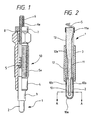
- Fig. 1 shows a glow plug using a ceramic heater according to the present invention and the internal structure thereof. That is, the glow plug 50 has a ceramic heater 1 provided in its one end side, an outer cylinder 3 of a metal for covering the outer circumferential surface of the ceramic heater 1 so as to project a front end portion 2 of the ceramic heater 1, a cylindrical metal housing 4 for further covering the outer cylinder 3 from the outside and so on.
- the ceramic heater 1 and the outer cylinder 3 are connected by brazing and the outer cylinder 3 and the metal housing 4 are also connected by brazing.
- connection member 5 having opposite ends each of which is formed from metal wire so as to be shaped like a coiled spring is fitted to a rear end portion of the ceramic heater 1 from the outside, whereas the other end of the connection member 5 is fitted to a corresponding one end portion of a metal shaft 6 inserted in the metal housing 4.
- the other end portion of the metal shaft 6 is extended to the outside of the metal housing 4, and a nut 7 is thread-engaged with a screw portion 6a formed on the outer circumferential surface of the metal shaft 6, so that the metal shaft 6 is fixed relative to the metal housing 4 by tightening the nut 7 toward the metal housing 4.
- an electrically insulating bush 8 is fitted between the nut 7 and the metal housing 4.
- a screw portion 5a for fixing the glow plug 50 to an engine block (not shown) is formed in the outer circumferential surface of the metal housing 4.
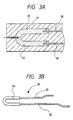
- the ceramic heater 1 has a U-shaped heating element 10 composed of a change-direction portion 10a which extends from its one base end portion and changes its direction at its front end portion into a different direction toward its other base end portion, and two linear portions 10b which extend in the same direction from the respective base end portions of the change-direction portion 10a.
- One end of a linear or rod-like electrode portion 11 and one end of a linear or rod-like electrode portion 12 are connected to the end portion of the two linear portions 11 respectively, and the whole of the heating element 10 and the electrode portions 11, 12 is embedded in a rod-like ceramic body 13 having a circular section.
- the heating element 10 is arranged so that the change-direction portion 10a is positioned in the end side of the ceramic body 13.
- the ceramic body 13 is obtained through a process in which at least one member (for example, MoSi 2 ) selected from silicates, carbonates, borides and nitrides of W, Ta, Nb, Ti, Mo, Zr, Hf, V and Cr is added, as an adjustment ceramic component, by amount, in total, in a range of from 1 to 3 % by weight, preferably, from 2 to 3 % by weight, into a basic ceramic component containing Si 3 N 4 as a main component, and then the thus obtained ceramic components are sintered.
- at least one member for example, MoSi 2
- an sintering assistant agent component of rare-earth oxide or alkali-earth metal oxide such as Y 2 O 3 , Er 2 O 3 , Yb 2 O 3 , CaO, MgO or the like, is added by an amount in a range of from 3 to 15 %, preferably, 6 to 12 % by weight to the basic ceramic component.
- the heating element 10 is formed through a process in which the same sintering assistant agent component as used in the ceramic body 13 is added/mixed by an amount in a range of from 0.8 to 10.5 % by weight into electrically conductive ceramics, for example, powder containing either WC, Mo 5 Si 3 and/or MoSi 3 as a main component and powder containing Si 3 N 4 as a main component, and then the mixture is sintered.
- electrically conductive ceramics for example, powder containing either WC, Mo 5 Si 3 and/or MoSi 3 as a main component and powder containing Si 3 N 4 as a main component, and then the mixture is sintered.
- the sinter composition is, WC type particles are dispersed in an Si 3 N 4 type matrix ceramic phase.
- a part of MoSi 2 may be changed to Mo 5 Si 3 by influence of the sintering assistant agent.
- each of the electrode portions 11 and 12 is formed from a metal wire of W, W-Re, Mo, Pt, niobium, nichrome, tantalum, etc.
- a thin layer (not shown) of a metal such as nickel or the like is formed on a surface of the ceramic body 13 and in a region including an exposure portion 12a of the electrode 12 by a predetermined method, for example, plating, gas-phase film-forming or the like.
- a metal thin layer is formed in a region including an exposure portion 11a of the electrode portion 11, and the connection member 5 is brazed to the thin film.
- a current is made flow in the heating element 10 from an electric source (not shown) through the metal shaft 6 (Fig. 1), the connection member 5 and the electrode portion 11 and grounded through the electrode portion 12, the outer cylinder 3, the metal housing 4 (Fig. 1) and the engine block (not shown).
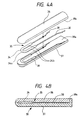
- electrode materials 30 are arranged in a mold 31 having a U-shaped cavity 32 corresponding to the heating element 10 so that one end portions of the respective electrode materials 30 are inserted into the end portions of the cavity 32.
- a compound 33 containing electrically conductive ceramic powder, powder containing Si 3 N 4 as a main component, sintering assistant agent powder and a binder is injected to form an integral molding 35 in which the electrode materials 30 are integrated with an electrically conductive ceramic power molding portion 34 as shown in Fig. 3B.
- the electrically conductive ceramic powder molding portion 34 is formed so as to have a substantially circular section.
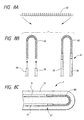
- separated preforms 36, 37 formed separately as upper and lower portions, respectively, as shown in Fig. 4A are prepared in advance through a process in which ceramic powder to form the ceramic body 13 is press-molded.
- the ceramic powder there is used powder obtained through a process in which adjustment ceramic component powder in a range of from 1 to 3 % by weight, sintering assistant agent powder in a range of from 3 to 15 % by weight and a slight amount of binder for press-molding are added and mixed into Si 3 N 4 powder which is a main component.
- Each of these separated preforms 36, 37 has a concave portion 38 formed in a mold-register face 39a having a shape correspondingly to the aforementioned integral molding 35. Then, the integral molding 35 is received in the concave portion 38 and the separated preforms 36, 37 are mold-registered in the mold-register faces 39a. Then, as shown in Fig. 5A, the separated preforms 36, 37 and the integral molding 35 in this condition are received in a cavity 61a of a mold 61 and pressed/compressed by using punches 62 and 63 to thereby form a composite molding 39 in which the integral molding 35 and the separated preforms are integrated with each other as shown in Figs. 5B and 6A.
- the pressing direction is selected to be substantially perpendicular to the mold-register faces 39a of the separated preforms 36, 37.
- composite molding 39 is first calcined at a predetermined temperature (for example, about 800°C) to thereby form a calcined matter 39' as shown in Fig. 6B. Then, as shown in Fig. 5B, the calcined matter 39' is set in cavities 65a, 66a of hot-press molds 65, 66 formed from graphite, or the like. While being pressed between the two molds 65, 66 in a furnace 64, the calcined matter 39' is sintered at a predetermined temperature (for example, about 1800°C) so as to form a sintered body 70 as shown in Fig. 6C. At this time, the electrically conductive ceramic powder molding portion 34 and the separated preforms 36, 37 as shown in Fig. 4B are designed to form the heating element 10 and the ceramic body 13, respectively. Further, the electrode materials 30 form the electrode portions 11, 12, respectively.
- a predetermined temperature for example, about 800°C
- a sintered body 70 is formed as shown in Fig. 6B.
- the circular section in each of the linear portions 34b of the electrically conductive ceramic powder molding portion 34 is deformed so as to be pressed in the aforementioned compressing direction to thereby form linear portions 10b of the heating element 10 having an ellipsoid section.
- the outer circumferential surface of the sintered body 70 is processed by polishing or the like, so as to shape the section of the ceramic body 13 circularly to thereby form a final ceramic heater 1.
- the shaped of the heating element may be pattern-printed on a molding of ceramic powder body by using paste of the electrically conductive ceramic powder and may be sintered the printed heating element pattern to thereby form a heating element 10.
- the heating element 10 may be formed from a metal wire of W, W-Re, Mo, Pt, niobium, nichrome, tantalum, etc.
- Figs. 8A to 8C A specific example and the method of producing the same are shown in Figs. 8A to 8C. Because this example is common to the case where the heating element is formed from ceramics in most part of configuration and producing method, mainly the point of difference between the both will be described below, and the description about the common portion will be omitted.
- the aforementioned high-melting-point metal material wire material 60 shaped like a coil as shown in Fig. 8A is bent in the form of U as shown in Fig. 8B and electrode materials 30 are inserted into the inside of the both ends of the wire material 60 so as to be integrated with the wire material 60 to thereby form a heating element unit 61.
- the heating element unit 61 instead of the integral injection molding 35, is attached into concave portions 38 of the separated preforms 36, 37 and they are united into one body by pressing to thereby form a composite molding.
- the composite molding is sintered by hot-pressing, there is obtained a ceramic heater 1 in which the wire material 60 as a heating element is embedded in the ceramic body 13 as shown in Fig. 8C.
- the ceramic heater according to the present invention can be applied not only to the glow plug but also to a heating element for burner ignitor or oxygen sensor, or the like.
- Various ceramic heaters each having the shape shown in Fig. 2 were produced by the aforementioned method with the use of MoSi 2 as the adjustment ceramic component and Y 2 O 3 as the sintering assistant agent.
- the amount of MoSi 2 to be added was adjusted to be in a range of from 1 to 10 % by weight (in a range of from 1 to 3 % by weight in Examples, and from 3.5 to 10 % by weight in Comparative Examples).
- hot-press sintering was performed at 1750°C and 300 kgf/cm 2 for 30 minutes.
- the ceramic heaters thus obtained were subjected to a current-conduction durability test and a cooling-heating cycle test.
- the experimental method for the current-conduction durability test was carried out as follows.
- one cycle is defined so that a predetermined voltage was applied to each of the ceramic heaters to make a current flow in the ceramic heaters, the current-conduction state was kept for 5 minutes after the temperature was equilibrated to 1400°C, thereafter the current conduction was then stopped, and the state was kept for 1 minute. This step was repeated by 10,000 cycles for every ceramic heater. If the heating temperature lowers not smaller than 150 °C in comparison with the first cycle, it is judged to be bad, and the other case where such lowering was not observed was judged to be good. On the other hand, the cooling-heating cycle test was carried out by putting the ceramic heater in an electric furnace and repeating a cycle of heating and cooling the ceramic heater between 400°C and 900°C by 5000 times under program control.
Landscapes
- Engineering & Computer Science (AREA)
- Chemical & Material Sciences (AREA)
- Ceramic Engineering (AREA)
- Materials Engineering (AREA)
- Structural Engineering (AREA)
- Organic Chemistry (AREA)
- Manufacturing & Machinery (AREA)
- Mechanical Engineering (AREA)
- General Engineering & Computer Science (AREA)
- Resistance Heating (AREA)
Claims (11)
- Keramisches Heizelement (1), das aufweist:einen keramischen Körper (13), der eine gesinterte Basiskeramikkomponente aufweist, die ein Element aufweist, das aus der Gruppe ausgewählt ist, die aus Si3N4 oder AIN besteht, enthaltend eine Einstellkeramikkomponente, die mindestens eine Komponente aufweist, die aus der Gruppe ausgewählt ist, die aus Metallsilikat, Metallkarbonat, Metallborid und Metallnitrid besteht, wobei jede größer im thermischen Expansionskoeffizienten als die Basiskeramikkomponente ist; undein Heizelement, das in den keramischen Körper eingebettet ist, dadurch gekennzeichnet, daß die Einstellkeramikkomponente in dem Bereich von 1 bis 3 % bezogen auf das Gewicht liegt.
- Keramisches Heizelement nach Anspruch 1, wobei das Heizelement ein keramisches, elektrisch leitfähiges Material aufweist.
- Keramisches Heizelement nach Anspruch 2, wobei das keramische, elektrisch leitfähige Material eine Struktur besitzt, in der eine elektrisch leiffähige, keramische Phase in einer Matrix-Keramik-Phase dispergiert ist.
- Keramisches Heizelement nach Anspruch 3, wobei die elektrisch leiffähige, keramische Phase mindestens ein Element aufweist, das aus der Gruppe ausgewählt ist, die aus einem Silizid von W, Ta, Nb, Ti, Mo, Zr, Hf, V und Cr; einem Karbid von W, Ta, Nb, Ti, Mo, Zr, Hf, V und Cr; einem Borid von W, Ta, Nb, Ti, Mo, Zr, Hf, V und Cr; und einem Nitrid von W, Ta, Nb, Ti, Mo, Zr, Hf, V und Cr besteht.
- Keramisches Heizelement nach Anspruch 4, wobei die elektrisch leiffähige, keramische Phase mindestens ein Element aufweist, das aus der Gruppe ausgewählt ist, die aus WC, Mo5Si3 und MoSi2 besteht.
- Keramisches Heizelement nach Anspruch 1, wobei die Einstellkeramikkomponente mindestens eine Komponente aufweist, die aus der Gruppe ausgewählt ist, die aus Silikaten, Karbonaten, Boriden und Nitriden von W, Ta, Nb, Ti, Mo, Zr, Hf, V und Cr besteht.
- Keramisches Heizelement nach Anspruch 1, wobei die gesinterte Basiskeramikkomponente eine Einstellkeramikkomponente in dem Bereich von 2 bis 3 % bezogen auf das Gewicht enthält.
- Keramisches Heizelement nach Anspruch 3, wobei der Gehalt der elektrisch leitfähigen, keramischen Phase in dem Heizelement in dem Bereich von 30 % bis 80 % bezogen auf das Gewicht liegt.
- Keramisches Heizelement nach Anspruch 1, wobei die gesinterte Basiskeramikkomponente weiterhin eine Komponente eines ein Sintern unterstützenden Mittels und unvermeidbare Verunreinigungen enthält.
- Keramisches Heizelement nach Anspruch 9, wobei die Komponente des das Sintern unterstützenden Mittels eine solche ist, die aus der Gruppe ausgewählt ist, die aus einem Seltenerdoxid und einem Alkalierdmetall besteht.
- Keramisches Heizelement nach Anspruch 10, wobei der Gehalt der Komponenten des das Sintern unterstützenden Mittels in der Basiskeramikkomponenten in dem Bereich von 3 bis 15 % bezogen auf das Gewicht liegt.
Applications Claiming Priority (3)
| Application Number | Priority Date | Filing Date | Title |
|---|---|---|---|
| JP10386196 | 1996-03-29 | ||
| JP103861/96 | 1996-03-29 | ||
| JP10386196 | 1996-03-29 |
Publications (3)
| Publication Number | Publication Date |
|---|---|
| EP0798949A2 EP0798949A2 (de) | 1997-10-01 |
| EP0798949A3 EP0798949A3 (de) | 1998-09-09 |
| EP0798949B1 true EP0798949B1 (de) | 1999-11-17 |
Family
ID=14365241
Family Applications (1)
| Application Number | Title | Priority Date | Filing Date |
|---|---|---|---|
| EP97105271A Expired - Lifetime EP0798949B1 (de) | 1996-03-29 | 1997-03-27 | Keramisches Heizelement |
Country Status (6)
| Country | Link |
|---|---|
| US (1) | US5948306A (de) |
| EP (1) | EP0798949B1 (de) |
| KR (1) | KR100462976B1 (de) |
| CN (1) | CN1126433C (de) |
| BR (1) | BR9700466A (de) |
| DE (1) | DE69700797T2 (de) |
Families Citing this family (24)
| Publication number | Priority date | Publication date | Assignee | Title |
|---|---|---|---|---|
| JP3657800B2 (ja) * | 1998-02-20 | 2005-06-08 | 株式会社リケン | 二珪化モリブデン系複合セラミックス発熱体及びその製造方法 |
| US6274855B1 (en) * | 1998-11-17 | 2001-08-14 | Ngk Spark Plug Co., Ltd. | Heating resistor for ceramic heaters, ceramic heaters and method of manufacturing ceramic heaters |
| US6236027B1 (en) * | 1999-03-26 | 2001-05-22 | Ibiden Co., Ltd. | Ceramic heater |
| JP2000277240A (ja) * | 1999-03-26 | 2000-10-06 | Ibiden Co Ltd | セラミックヒーター |
| US6274079B1 (en) | 1999-06-23 | 2001-08-14 | Robert Bosch Gmbh | Ceramic pin heating element with integrated connector contacts and method for making same |
| EP1193233A1 (de) * | 2000-02-07 | 2002-04-03 | Ibiden Co., Ltd. | Keramisches substrat zur herstellung von halbleitern/inspektions vorrichtung |
| US7011874B2 (en) * | 2000-02-08 | 2006-03-14 | Ibiden Co., Ltd. | Ceramic substrate for semiconductor production and inspection devices |
| RU2178958C2 (ru) * | 2000-02-17 | 2002-01-27 | Институт физики твердого тела РАН | Жаростойкий материал |
| JP2001336468A (ja) * | 2000-03-22 | 2001-12-07 | Ngk Spark Plug Co Ltd | グロープラグ制御装置、グロープラグ、及びエンジンの燃焼室内のイオン検出方法 |
| RU2311742C2 (ru) * | 2003-01-02 | 2007-11-27 | Владимир Павлович Лапин | Нагревательный элемент и способ его изготовления |
| US7607206B2 (en) * | 2005-12-29 | 2009-10-27 | Federal Mogul World Wide, Inc. | Method for forming layered heating element for glow plug |
| DE102006062374A1 (de) * | 2006-12-20 | 2008-06-26 | Fraunhofer-Gesellschaft zur Förderung der angewandten Forschung e.V. | Keramisches elektrisches Heizelement |
| RU2369046C1 (ru) * | 2008-05-15 | 2009-09-27 | Михаил Леонидович Струпинский | Нагревательный элемент и способ его изготовления |
| US8044561B2 (en) | 2008-08-28 | 2011-10-25 | Federal-Mogul Ignition Company | Ceramic electrode, ignition device therewith and methods of construction thereof |
| US9231381B2 (en) | 2008-08-28 | 2016-01-05 | Federal-Mogul Ignition Company | Ceramic electrode including a perovskite or spinel structure for an ignition device and method of manufacturing |
| US8481892B2 (en) * | 2009-03-30 | 2013-07-09 | Ngk Insulators, Ltd. | Ceramic heater and method for producing same |
| US8933373B2 (en) * | 2009-10-27 | 2015-01-13 | Kyocera Corporation | Ceramic heater |
| US20120006809A1 (en) * | 2010-06-23 | 2012-01-12 | Colorado State University Research Foundation | Sublimation crucible with embedded heater element |
| JP5436687B2 (ja) * | 2010-09-27 | 2014-03-05 | 京セラ株式会社 | ヒータおよびこれを備えたグロープラグ |
| EP2753144B1 (de) * | 2011-08-29 | 2019-07-17 | Kyocera Corporation | Heizelement und damit versehene glühkerze |
| WO2015002716A1 (en) * | 2013-07-03 | 2015-01-08 | United Technologies Corporation | Electrically heated filter screens |
| CN109851369B (zh) * | 2019-01-24 | 2022-04-05 | 江西中科上宇科技有限公司 | 一种制备高热导率氮化硅陶瓷的方法 |
| CN113004047B (zh) * | 2021-02-07 | 2022-02-11 | 燕山大学 | 一种(CrZrTiNbV)N高熵陶瓷块体及其制备方法 |
| CN114133222A (zh) * | 2021-12-27 | 2022-03-04 | 山东东大新材料研究院有限公司 | 一种导电陶瓷的制备方法、产品及其在加热雾化器中的应用 |
Family Cites Families (13)
| Publication number | Priority date | Publication date | Assignee | Title |
|---|---|---|---|---|
| JPS5978973A (ja) * | 1982-10-27 | 1984-05-08 | 株式会社日立製作所 | 導電性セラミツクス |
| JPS6028193A (ja) * | 1983-07-25 | 1985-02-13 | 株式会社日本自動車部品総合研究所 | セラミックヒ−タ |
| JPS6060983A (ja) * | 1983-09-08 | 1985-04-08 | 株式会社デンソー | セラミックヒ−タ及びその製造方法 |
| JPS60216484A (ja) * | 1984-04-09 | 1985-10-29 | 株式会社日本自動車部品総合研究所 | セラミツクヒ−タ |
| JPS60254586A (ja) * | 1984-05-30 | 1985-12-16 | 株式会社デンソー | セラミツクヒ−タ |
| DE3701929A1 (de) * | 1986-01-22 | 1987-08-13 | Jidosha Kiki Co | Gluehkerze fuer eine dieselmaschine |
| JPS6396883A (ja) * | 1986-10-09 | 1988-04-27 | 株式会社デンソー | セラミツクヒ−タ |
| DE3734274C2 (de) * | 1986-10-09 | 1996-07-11 | Nippon Denso Co | Keramische Glühkerze und Verfahren zu deren Herstellung |
| JPH01313362A (ja) * | 1988-06-09 | 1989-12-18 | Ngk Spark Plug Co Ltd | セラミック発熱体およびその製造方法 |
| CH681186A5 (de) * | 1989-11-09 | 1993-01-29 | Battelle Memorial Institute | |
| JP3044630B2 (ja) * | 1991-02-06 | 2000-05-22 | ボッシュ ブレーキ システム株式会社 | セラミックヒータ型グロープラグ |
| US5304778A (en) * | 1992-11-23 | 1994-04-19 | Electrofuel Manufacturing Co. | Glow plug with improved composite sintered silicon nitride ceramic heater |
| JP2828575B2 (ja) * | 1993-11-12 | 1998-11-25 | 京セラ株式会社 | 窒化珪素質セラミックヒータ |
-
1997
- 1997-03-26 BR BR9700466A patent/BR9700466A/pt not_active IP Right Cessation
- 1997-03-27 DE DE69700797T patent/DE69700797T2/de not_active Expired - Lifetime
- 1997-03-27 US US08/826,144 patent/US5948306A/en not_active Expired - Lifetime
- 1997-03-27 EP EP97105271A patent/EP0798949B1/de not_active Expired - Lifetime
- 1997-03-28 KR KR10-1997-0011212A patent/KR100462976B1/ko not_active Expired - Fee Related
- 1997-03-31 CN CN97104955A patent/CN1126433C/zh not_active Expired - Fee Related
Also Published As
| Publication number | Publication date |
|---|---|
| US5948306A (en) | 1999-09-07 |
| KR100462976B1 (ko) | 2005-05-24 |
| EP0798949A3 (de) | 1998-09-09 |
| KR19990008487A (ko) | 1999-02-05 |
| CN1126433C (zh) | 2003-10-29 |
| EP0798949A2 (de) | 1997-10-01 |
| DE69700797D1 (de) | 1999-12-23 |
| CN1180983A (zh) | 1998-05-06 |
| DE69700797T2 (de) | 2000-04-20 |
| BR9700466A (pt) | 1998-11-03 |
Similar Documents
| Publication | Publication Date | Title |
|---|---|---|
| US5948306A (en) | Ceramic heater | |
| US6049065A (en) | Ceramic heater, a method of making the same and a ceramic glow plug having the ceramic heater | |
| JP2804393B2 (ja) | セラミックヒータ | |
| EP0798948B1 (de) | Keramisches Heizelement | |
| EP1768456B1 (de) | Keramisches heizelement und glühkerze damit | |
| US20100288747A1 (en) | Ceramic heater and glow plug provided therewith | |
| US7020952B2 (en) | Method for producing a glow plug | |
| EP1282341B1 (de) | Keramisches Heizelement und das Verfahren von Herstellung desgleichen | |
| EP1054577B1 (de) | Heizwiderstände, Heizwiderstände, die für keramischen Heizelementen bestimmt sind, und keramische Heizelemente, die diegleichen benützen | |
| US6599457B2 (en) | Process for producing silicon nitride sintered body for use in ceramic heater for use in glow plug | |
| EP0876573B1 (de) | Keramischer zünder und verfahren zu seiner verwendung | |
| US6025579A (en) | Ceramic heater and method of manufacturing the same | |
| JP4018998B2 (ja) | セラミックヒータおよびグロープラグ | |
| JP4699816B2 (ja) | セラミックヒータの製造方法及びグロープラグ | |
| JP3160226B2 (ja) | セラミックヒータ | |
| JP2002299010A (ja) | セラミックヒータ及びその製造方法 | |
| JP3115254B2 (ja) | セラミックヒータ | |
| JPH10189226A (ja) | セラミックヒータおよびその製造方法 | |
| JP3689526B2 (ja) | セラミックヒータ | |
| JP4262847B2 (ja) | セラミックヒータ及びそれを備えるグロープラグ | |
| JP2001132949A (ja) | セラミックヒータ及びグロープラグ | |
| JP2001132947A (ja) | セラミックヒータ及びそれを備えるグロープラグ |
Legal Events
| Date | Code | Title | Description |
|---|---|---|---|
| PUAI | Public reference made under article 153(3) epc to a published international application that has entered the european phase |
Free format text: ORIGINAL CODE: 0009012 |
|
| AK | Designated contracting states |
Kind code of ref document: A2 Designated state(s): DE FR GB IT |
|
| PUAL | Search report despatched |
Free format text: ORIGINAL CODE: 0009013 |
|
| AK | Designated contracting states |
Kind code of ref document: A3 Designated state(s): DE FR GB IT |
|
| 17P | Request for examination filed |
Effective date: 19980917 |
|
| GRAG | Despatch of communication of intention to grant |
Free format text: ORIGINAL CODE: EPIDOS AGRA |
|
| 17Q | First examination report despatched |
Effective date: 19990210 |
|
| GRAG | Despatch of communication of intention to grant |
Free format text: ORIGINAL CODE: EPIDOS AGRA |
|
| GRAH | Despatch of communication of intention to grant a patent |
Free format text: ORIGINAL CODE: EPIDOS IGRA |
|
| GRAH | Despatch of communication of intention to grant a patent |
Free format text: ORIGINAL CODE: EPIDOS IGRA |
|
| GRAA | (expected) grant |
Free format text: ORIGINAL CODE: 0009210 |
|
| AK | Designated contracting states |
Kind code of ref document: B1 Designated state(s): DE FR GB IT |
|
| REF | Corresponds to: |
Ref document number: 69700797 Country of ref document: DE Date of ref document: 19991223 |
|
| ITF | It: translation for a ep patent filed | ||
| ET | Fr: translation filed | ||
| PLBE | No opposition filed within time limit |
Free format text: ORIGINAL CODE: 0009261 |
|
| STAA | Information on the status of an ep patent application or granted ep patent |
Free format text: STATUS: NO OPPOSITION FILED WITHIN TIME LIMIT |
|
| 26N | No opposition filed | ||
| REG | Reference to a national code |
Ref country code: GB Ref legal event code: IF02 |
|
| PGFP | Annual fee paid to national office [announced via postgrant information from national office to epo] |
Ref country code: IT Payment date: 20080328 Year of fee payment: 12 |
|
| PGFP | Annual fee paid to national office [announced via postgrant information from national office to epo] |
Ref country code: GB Payment date: 20080402 Year of fee payment: 12 |
|
| GBPC | Gb: european patent ceased through non-payment of renewal fee |
Effective date: 20090327 |
|
| PG25 | Lapsed in a contracting state [announced via postgrant information from national office to epo] |
Ref country code: GB Free format text: LAPSE BECAUSE OF NON-PAYMENT OF DUE FEES Effective date: 20090327 |
|
| PG25 | Lapsed in a contracting state [announced via postgrant information from national office to epo] |
Ref country code: IT Free format text: LAPSE BECAUSE OF NON-PAYMENT OF DUE FEES Effective date: 20090327 |
|
| REG | Reference to a national code |
Ref country code: FR Ref legal event code: PLFP Year of fee payment: 19 |
|
| PGFP | Annual fee paid to national office [announced via postgrant information from national office to epo] |
Ref country code: DE Payment date: 20150324 Year of fee payment: 19 |
|
| PGFP | Annual fee paid to national office [announced via postgrant information from national office to epo] |
Ref country code: FR Payment date: 20150309 Year of fee payment: 19 |
|
| REG | Reference to a national code |
Ref country code: DE Ref legal event code: R119 Ref document number: 69700797 Country of ref document: DE |
|
| REG | Reference to a national code |
Ref country code: FR Ref legal event code: ST Effective date: 20161130 |
|
| PG25 | Lapsed in a contracting state [announced via postgrant information from national office to epo] |
Ref country code: FR Free format text: LAPSE BECAUSE OF NON-PAYMENT OF DUE FEES Effective date: 20160331 Ref country code: DE Free format text: LAPSE BECAUSE OF NON-PAYMENT OF DUE FEES Effective date: 20161001 |