EP0801091B1 - Composition de polyamide semi-aromatique et procede de production - Google Patents
Composition de polyamide semi-aromatique et procede de production Download PDFInfo
- Publication number
- EP0801091B1 EP0801091B1 EP96935434A EP96935434A EP0801091B1 EP 0801091 B1 EP0801091 B1 EP 0801091B1 EP 96935434 A EP96935434 A EP 96935434A EP 96935434 A EP96935434 A EP 96935434A EP 0801091 B1 EP0801091 B1 EP 0801091B1
- Authority
- EP
- European Patent Office
- Prior art keywords
- semiaromatic polyamide
- polyamide composition
- carbon atoms
- weight
- acid
- Prior art date
- Legal status (The legal status is an assumption and is not a legal conclusion. Google has not performed a legal analysis and makes no representation as to the accuracy of the status listed.)
- Expired - Lifetime
Links
- 229920006012 semi-aromatic polyamide Polymers 0.000 title claims description 358
- 239000000203 mixture Substances 0.000 title claims description 283
- 238000000034 method Methods 0.000 title description 54
- 230000008569 process Effects 0.000 title description 40
- KKEYFWRCBNTPAC-UHFFFAOYSA-N Terephthalic acid Chemical compound OC(=O)C1=CC=C(C(O)=O)C=C1 KKEYFWRCBNTPAC-UHFFFAOYSA-N 0.000 claims description 129
- -1 aliphatic diamine Chemical class 0.000 claims description 116
- 125000004432 carbon atom Chemical group C* 0.000 claims description 90
- XLYOFNOQVPJJNP-UHFFFAOYSA-N water Substances O XLYOFNOQVPJJNP-UHFFFAOYSA-N 0.000 claims description 76
- QQVIHTHCMHWDBS-UHFFFAOYSA-N isophthalic acid Chemical compound OC(=O)C1=CC=CC(C(O)=O)=C1 QQVIHTHCMHWDBS-UHFFFAOYSA-N 0.000 claims description 54
- OFOBLEOULBTSOW-UHFFFAOYSA-N Malonic acid Chemical compound OC(=O)CC(O)=O OFOBLEOULBTSOW-UHFFFAOYSA-N 0.000 claims description 47
- 239000004952 Polyamide Substances 0.000 claims description 45
- 229920002647 polyamide Polymers 0.000 claims description 45
- 229920000642 polymer Polymers 0.000 claims description 43
- 238000009835 boiling Methods 0.000 claims description 34
- 239000003063 flame retardant Substances 0.000 claims description 31
- 229920005989 resin Polymers 0.000 claims description 30
- 239000011347 resin Substances 0.000 claims description 30
- RNFJDJUURJAICM-UHFFFAOYSA-N 2,2,4,4,6,6-hexaphenoxy-1,3,5-triaza-2$l^{5},4$l^{5},6$l^{5}-triphosphacyclohexa-1,3,5-triene Chemical compound N=1P(OC=2C=CC=CC=2)(OC=2C=CC=CC=2)=NP(OC=2C=CC=CC=2)(OC=2C=CC=CC=2)=NP=1(OC=1C=CC=CC=1)OC1=CC=CC=C1 RNFJDJUURJAICM-UHFFFAOYSA-N 0.000 claims description 29
- 150000003951 lactams Chemical class 0.000 claims description 29
- KXDHJXZQYSOELW-UHFFFAOYSA-N Carbamic acid Chemical compound NC(O)=O KXDHJXZQYSOELW-UHFFFAOYSA-N 0.000 claims description 28
- 125000001931 aliphatic group Chemical group 0.000 claims description 24
- 150000004985 diamines Chemical class 0.000 claims description 24
- 238000006116 polymerization reaction Methods 0.000 claims description 24
- 230000002787 reinforcement Effects 0.000 claims description 23
- 238000000465 moulding Methods 0.000 claims description 22
- 239000012736 aqueous medium Substances 0.000 claims description 21
- 238000004519 manufacturing process Methods 0.000 claims description 20
- 238000001746 injection moulding Methods 0.000 claims description 18
- QAOWNCQODCNURD-UHFFFAOYSA-N sulfuric acid Substances OS(O)(=O)=O QAOWNCQODCNURD-UHFFFAOYSA-N 0.000 claims description 15
- 239000004953 Aliphatic polyamide Substances 0.000 claims description 14
- 229920003231 aliphatic polyamide Polymers 0.000 claims description 14
- 238000001035 drying Methods 0.000 claims description 13
- 239000011261 inert gas Substances 0.000 claims description 13
- 229920000554 ionomer Polymers 0.000 claims description 13
- 238000010438 heat treatment Methods 0.000 claims description 12
- 239000004793 Polystyrene Substances 0.000 claims description 11
- 229920002223 polystyrene Polymers 0.000 claims description 11
- 239000007790 solid phase Substances 0.000 claims description 11
- 239000003153 chemical reaction reagent Substances 0.000 claims description 9
- 229920006122 polyamide resin Polymers 0.000 claims description 9
- 150000002989 phenols Chemical class 0.000 claims description 8
- 239000003054 catalyst Substances 0.000 claims description 7
- 239000011342 resin composition Substances 0.000 claims description 6
- NSBGJRFJIJFMGW-UHFFFAOYSA-N trisodium;stiborate Chemical group [Na+].[Na+].[Na+].[O-][Sb]([O-])([O-])=O NSBGJRFJIJFMGW-UHFFFAOYSA-N 0.000 claims description 5
- 230000000379 polymerizing effect Effects 0.000 claims description 4
- WNLRTRBMVRJNCN-UHFFFAOYSA-N adipic acid Chemical compound OC(=O)CCCCC(O)=O WNLRTRBMVRJNCN-UHFFFAOYSA-N 0.000 description 68
- 239000008188 pellet Substances 0.000 description 66
- NAQMVNRVTILPCV-UHFFFAOYSA-N hexane-1,6-diamine Chemical compound NCCCCCCN NAQMVNRVTILPCV-UHFFFAOYSA-N 0.000 description 63
- 229920001577 copolymer Polymers 0.000 description 54
- 238000011109 contamination Methods 0.000 description 36
- 239000004711 α-olefin Substances 0.000 description 36
- 239000001361 adipic acid Substances 0.000 description 34
- 235000011037 adipic acid Nutrition 0.000 description 34
- IJGRMHOSHXDMSA-UHFFFAOYSA-N Atomic nitrogen Chemical compound N#N IJGRMHOSHXDMSA-UHFFFAOYSA-N 0.000 description 28
- 238000006243 chemical reaction Methods 0.000 description 24
- VGGSQFUCUMXWEO-UHFFFAOYSA-N Ethene Chemical compound C=C VGGSQFUCUMXWEO-UHFFFAOYSA-N 0.000 description 21
- 239000005977 Ethylene Substances 0.000 description 21
- 229920002554 vinyl polymer Polymers 0.000 description 21
- 230000000052 comparative effect Effects 0.000 description 20
- 239000000047 product Substances 0.000 description 18
- 239000007789 gas Substances 0.000 description 17
- 238000011156 evaluation Methods 0.000 description 13
- 230000003247 decreasing effect Effects 0.000 description 12
- 238000002844 melting Methods 0.000 description 12
- 230000008018 melting Effects 0.000 description 12
- 229910052757 nitrogen Inorganic materials 0.000 description 12
- 125000005263 alkylenediamine group Chemical group 0.000 description 11
- 239000004760 aramid Substances 0.000 description 11
- 229920003235 aromatic polyamide Polymers 0.000 description 11
- 239000003365 glass fiber Substances 0.000 description 11
- 239000000155 melt Substances 0.000 description 11
- 238000006068 polycondensation reaction Methods 0.000 description 11
- 150000003839 salts Chemical class 0.000 description 11
- NBIIXXVUZAFLBC-UHFFFAOYSA-N Phosphoric acid Chemical compound OP(O)(O)=O NBIIXXVUZAFLBC-UHFFFAOYSA-N 0.000 description 10
- WPYMKLBDIGXBTP-UHFFFAOYSA-N benzoic acid Chemical compound OC(=O)C1=CC=CC=C1 WPYMKLBDIGXBTP-UHFFFAOYSA-N 0.000 description 10
- VXNZUUAINFGPBY-UHFFFAOYSA-N ethyl ethylene Natural products CCC=C VXNZUUAINFGPBY-UHFFFAOYSA-N 0.000 description 10
- 150000001993 dienes Chemical class 0.000 description 9
- 239000002253 acid Substances 0.000 description 8
- 125000002947 alkylene group Chemical group 0.000 description 8
- 150000001991 dicarboxylic acids Chemical class 0.000 description 8
- 229920001971 elastomer Polymers 0.000 description 8
- 229910021645 metal ion Inorganic materials 0.000 description 8
- 239000000178 monomer Substances 0.000 description 8
- 238000000926 separation method Methods 0.000 description 8
- 150000001732 carboxylic acid derivatives Chemical class 0.000 description 7
- 238000001125 extrusion Methods 0.000 description 7
- 238000002360 preparation method Methods 0.000 description 7
- QQONPFPTGQHPMA-UHFFFAOYSA-N propylene Natural products CC=C QQONPFPTGQHPMA-UHFFFAOYSA-N 0.000 description 7
- 125000004805 propylene group Chemical group [H]C([H])([H])C([H])([*:1])C([H])([H])[*:2] 0.000 description 7
- 230000035882 stress Effects 0.000 description 7
- VZCYOOQTPOCHFL-UHFFFAOYSA-N trans-butenedioic acid Natural products OC(=O)C=CC(O)=O VZCYOOQTPOCHFL-UHFFFAOYSA-N 0.000 description 7
- 238000011282 treatment Methods 0.000 description 7
- JBKVHLHDHHXQEQ-UHFFFAOYSA-N epsilon-caprolactam Chemical compound O=C1CCCCCN1 JBKVHLHDHHXQEQ-UHFFFAOYSA-N 0.000 description 6
- VZCYOOQTPOCHFL-UPHRSURJSA-N maleic acid Chemical compound OC(=O)\C=C/C(O)=O VZCYOOQTPOCHFL-UPHRSURJSA-N 0.000 description 6
- 239000011976 maleic acid Substances 0.000 description 6
- ISIJQEHRDSCQIU-UHFFFAOYSA-N tert-butyl 2,7-diazaspiro[4.5]decane-7-carboxylate Chemical compound C1N(C(=O)OC(C)(C)C)CCCC11CNCC1 ISIJQEHRDSCQIU-UHFFFAOYSA-N 0.000 description 6
- WSSSPWUEQFSQQG-UHFFFAOYSA-N 4-methyl-1-pentene Chemical compound CC(C)CC=C WSSSPWUEQFSQQG-UHFFFAOYSA-N 0.000 description 5
- 239000005711 Benzoic acid Substances 0.000 description 5
- 229910000147 aluminium phosphate Inorganic materials 0.000 description 5
- 150000008064 anhydrides Chemical class 0.000 description 5
- 235000010233 benzoic acid Nutrition 0.000 description 5
- 229920001400 block copolymer Polymers 0.000 description 5
- 150000001735 carboxylic acids Chemical class 0.000 description 5
- 230000000694 effects Effects 0.000 description 5
- 150000002148 esters Chemical class 0.000 description 5
- 230000009477 glass transition Effects 0.000 description 5
- VNWKTOKETHGBQD-UHFFFAOYSA-N methane Chemical compound C VNWKTOKETHGBQD-UHFFFAOYSA-N 0.000 description 5
- 239000003607 modifier Substances 0.000 description 5
- 239000000243 solution Substances 0.000 description 5
- 239000012899 standard injection Substances 0.000 description 5
- 238000005406 washing Methods 0.000 description 5
- AFFLGGQVNFXPEV-UHFFFAOYSA-N 1-decene Chemical compound CCCCCCCCC=C AFFLGGQVNFXPEV-UHFFFAOYSA-N 0.000 description 4
- KWSLGOVYXMQPPX-UHFFFAOYSA-N 5-[3-(trifluoromethyl)phenyl]-2h-tetrazole Chemical compound FC(F)(F)C1=CC=CC(C2=NNN=N2)=C1 KWSLGOVYXMQPPX-UHFFFAOYSA-N 0.000 description 4
- RRHGJUQNOFWUDK-UHFFFAOYSA-N Isoprene Chemical compound CC(=C)C=C RRHGJUQNOFWUDK-UHFFFAOYSA-N 0.000 description 4
- KFZMGEQAYNKOFK-UHFFFAOYSA-N Isopropanol Chemical compound CC(C)O KFZMGEQAYNKOFK-UHFFFAOYSA-N 0.000 description 4
- 235000002597 Solanum melongena Nutrition 0.000 description 4
- 244000061458 Solanum melongena Species 0.000 description 4
- XLOMVQKBTHCTTD-UHFFFAOYSA-N Zinc monoxide Chemical compound [Zn]=O XLOMVQKBTHCTTD-UHFFFAOYSA-N 0.000 description 4
- 150000001875 compounds Chemical class 0.000 description 4
- NNBZCPXTIHJBJL-UHFFFAOYSA-N decalin Chemical compound C1CCCC2CCCCC21 NNBZCPXTIHJBJL-UHFFFAOYSA-N 0.000 description 4
- 229910001873 dinitrogen Inorganic materials 0.000 description 4
- 229920001198 elastomeric copolymer Polymers 0.000 description 4
- HQQADJVZYDDRJT-UHFFFAOYSA-N ethene;prop-1-ene Chemical group C=C.CC=C HQQADJVZYDDRJT-UHFFFAOYSA-N 0.000 description 4
- 239000000706 filtrate Substances 0.000 description 4
- 238000001914 filtration Methods 0.000 description 4
- 150000002430 hydrocarbons Chemical group 0.000 description 4
- 239000003999 initiator Substances 0.000 description 4
- 239000007788 liquid Substances 0.000 description 4
- 238000005259 measurement Methods 0.000 description 4
- CXMXRPHRNRROMY-UHFFFAOYSA-N sebacic acid Chemical compound OC(=O)CCCCCCCCC(O)=O CXMXRPHRNRROMY-UHFFFAOYSA-N 0.000 description 4
- 229910001379 sodium hypophosphite Inorganic materials 0.000 description 4
- 238000013022 venting Methods 0.000 description 4
- CRSBERNSMYQZNG-UHFFFAOYSA-N 1-dodecene Chemical compound CCCCCCCCCCC=C CRSBERNSMYQZNG-UHFFFAOYSA-N 0.000 description 3
- LIKMAJRDDDTEIG-UHFFFAOYSA-N 1-hexene Chemical compound CCCCC=C LIKMAJRDDDTEIG-UHFFFAOYSA-N 0.000 description 3
- SMZOUWXMTYCWNB-UHFFFAOYSA-N 2-(2-methoxy-5-methylphenyl)ethanamine Chemical compound COC1=CC=C(C)C=C1CCN SMZOUWXMTYCWNB-UHFFFAOYSA-N 0.000 description 3
- NIXOWILDQLNWCW-UHFFFAOYSA-N 2-Propenoic acid Natural products OC(=O)C=C NIXOWILDQLNWCW-UHFFFAOYSA-N 0.000 description 3
- DZIHTWJGPDVSGE-UHFFFAOYSA-N 4-[(4-aminocyclohexyl)methyl]cyclohexan-1-amine Chemical compound C1CC(N)CCC1CC1CCC(N)CC1 DZIHTWJGPDVSGE-UHFFFAOYSA-N 0.000 description 3
- QTBSBXVTEAMEQO-UHFFFAOYSA-N Acetic acid Chemical class CC(O)=O QTBSBXVTEAMEQO-UHFFFAOYSA-N 0.000 description 3
- 229920000089 Cyclic olefin copolymer Polymers 0.000 description 3
- CERQOIWHTDAKMF-UHFFFAOYSA-N Methacrylic acid Chemical compound CC(=C)C(O)=O CERQOIWHTDAKMF-UHFFFAOYSA-N 0.000 description 3
- OKKJLVBELUTLKV-UHFFFAOYSA-N Methanol Chemical compound OC OKKJLVBELUTLKV-UHFFFAOYSA-N 0.000 description 3
- 239000004698 Polyethylene Substances 0.000 description 3
- QLBRROYTTDFLDX-UHFFFAOYSA-N [3-(aminomethyl)cyclohexyl]methanamine Chemical compound NCC1CCCC(CN)C1 QLBRROYTTDFLDX-UHFFFAOYSA-N 0.000 description 3
- 238000010521 absorption reaction Methods 0.000 description 3
- 125000003118 aryl group Chemical group 0.000 description 3
- MTAZNLWOLGHBHU-UHFFFAOYSA-N butadiene-styrene rubber Chemical compound C=CC=C.C=CC1=CC=CC=C1 MTAZNLWOLGHBHU-UHFFFAOYSA-N 0.000 description 3
- 239000007795 chemical reaction product Substances 0.000 description 3
- 238000001816 cooling Methods 0.000 description 3
- 125000004122 cyclic group Chemical group 0.000 description 3
- ILRSCQWREDREME-UHFFFAOYSA-N dodecanamide Chemical compound CCCCCCCCCCCC(N)=O ILRSCQWREDREME-UHFFFAOYSA-N 0.000 description 3
- 239000000284 extract Substances 0.000 description 3
- 239000000835 fiber Substances 0.000 description 3
- 150000004820 halides Chemical class 0.000 description 3
- FPYJFEHAWHCUMM-UHFFFAOYSA-N maleic anhydride Chemical compound O=C1OC(=O)C=C1 FPYJFEHAWHCUMM-UHFFFAOYSA-N 0.000 description 3
- 239000002245 particle Substances 0.000 description 3
- ACVYVLVWPXVTIT-UHFFFAOYSA-N phosphinic acid Chemical compound O[PH2]=O ACVYVLVWPXVTIT-UHFFFAOYSA-N 0.000 description 3
- 229920000573 polyethylene Polymers 0.000 description 3
- 229920000098 polyolefin Polymers 0.000 description 3
- 229920001155 polypropylene Polymers 0.000 description 3
- 239000000843 powder Substances 0.000 description 3
- 239000002904 solvent Substances 0.000 description 3
- 238000003756 stirring Methods 0.000 description 3
- 229920006132 styrene block copolymer Polymers 0.000 description 3
- PWGJDPKCLMLPJW-UHFFFAOYSA-N 1,8-diaminooctane Chemical compound NCCCCCCCCN PWGJDPKCLMLPJW-UHFFFAOYSA-N 0.000 description 2
- KWKAKUADMBZCLK-UHFFFAOYSA-N 1-octene Chemical compound CCCCCCC=C KWKAKUADMBZCLK-UHFFFAOYSA-N 0.000 description 2
- PBLZLIFKVPJDCO-UHFFFAOYSA-N 12-aminododecanoic acid Chemical compound NCCCCCCCCCCCC(O)=O PBLZLIFKVPJDCO-UHFFFAOYSA-N 0.000 description 2
- JAHNSTQSQJOJLO-UHFFFAOYSA-N 2-(3-fluorophenyl)-1h-imidazole Chemical compound FC1=CC=CC(C=2NC=CN=2)=C1 JAHNSTQSQJOJLO-UHFFFAOYSA-N 0.000 description 2
- JZUHIOJYCPIVLQ-UHFFFAOYSA-N 2-methylpentane-1,5-diamine Chemical compound NCC(C)CCCN JZUHIOJYCPIVLQ-UHFFFAOYSA-N 0.000 description 2
- IGSBHTZEJMPDSZ-UHFFFAOYSA-N 4-[(4-amino-3-methylcyclohexyl)methyl]-2-methylcyclohexan-1-amine Chemical compound C1CC(N)C(C)CC1CC1CC(C)C(N)CC1 IGSBHTZEJMPDSZ-UHFFFAOYSA-N 0.000 description 2
- XKRFYHLGVUSROY-UHFFFAOYSA-N Argon Chemical compound [Ar] XKRFYHLGVUSROY-UHFFFAOYSA-N 0.000 description 2
- KAKZBPTYRLMSJV-UHFFFAOYSA-N Butadiene Chemical compound C=CC=C KAKZBPTYRLMSJV-UHFFFAOYSA-N 0.000 description 2
- LFQSCWFLJHTTHZ-UHFFFAOYSA-N Ethanol Chemical compound CCO LFQSCWFLJHTTHZ-UHFFFAOYSA-N 0.000 description 2
- VZCYOOQTPOCHFL-OWOJBTEDSA-N Fumaric acid Chemical compound OC(=O)\C=C\C(O)=O VZCYOOQTPOCHFL-OWOJBTEDSA-N 0.000 description 2
- UQSXHKLRYXJYBZ-UHFFFAOYSA-N Iron oxide Chemical compound [Fe]=O UQSXHKLRYXJYBZ-UHFFFAOYSA-N 0.000 description 2
- JHWNWJKBPDFINM-UHFFFAOYSA-N Laurolactam Chemical compound O=C1CCCCCCCCCCCN1 JHWNWJKBPDFINM-UHFFFAOYSA-N 0.000 description 2
- BAPJBEWLBFYGME-UHFFFAOYSA-N Methyl acrylate Chemical compound COC(=O)C=C BAPJBEWLBFYGME-UHFFFAOYSA-N 0.000 description 2
- 229920002292 Nylon 6 Polymers 0.000 description 2
- 229920002302 Nylon 6,6 Polymers 0.000 description 2
- GLUUGHFHXGJENI-UHFFFAOYSA-N Piperazine Chemical compound C1CNCCN1 GLUUGHFHXGJENI-UHFFFAOYSA-N 0.000 description 2
- 239000005819 Potassium phosphonate Substances 0.000 description 2
- PPBRXRYQALVLMV-UHFFFAOYSA-N Styrene Chemical compound C=CC1=CC=CC=C1 PPBRXRYQALVLMV-UHFFFAOYSA-N 0.000 description 2
- 238000002441 X-ray diffraction Methods 0.000 description 2
- PHJJWPXKTFKKPD-UHFFFAOYSA-N [Ni+3].[O-]P([O-])[O-] Chemical compound [Ni+3].[O-]P([O-])[O-] PHJJWPXKTFKKPD-UHFFFAOYSA-N 0.000 description 2
- 238000005299 abrasion Methods 0.000 description 2
- 239000000654 additive Substances 0.000 description 2
- 150000001298 alcohols Chemical class 0.000 description 2
- XYLMUPLGERFSHI-UHFFFAOYSA-N alpha-Methylstyrene Chemical class CC(=C)C1=CC=CC=C1 XYLMUPLGERFSHI-UHFFFAOYSA-N 0.000 description 2
- VHRGRCVQAFMJIZ-UHFFFAOYSA-N cadaverine Chemical compound NCCCCCN VHRGRCVQAFMJIZ-UHFFFAOYSA-N 0.000 description 2
- 125000003178 carboxy group Chemical group [H]OC(*)=O 0.000 description 2
- LKKFBCXZHOATNA-UHFFFAOYSA-N cobalt(3+) phosphite Chemical compound [Co+3].[O-]P([O-])[O-] LKKFBCXZHOATNA-UHFFFAOYSA-N 0.000 description 2
- 239000000470 constituent Substances 0.000 description 2
- 238000007334 copolymerization reaction Methods 0.000 description 2
- YQLZOAVZWJBZSY-UHFFFAOYSA-N decane-1,10-diamine Chemical compound NCCCCCCCCCCN YQLZOAVZWJBZSY-UHFFFAOYSA-N 0.000 description 2
- 238000000354 decomposition reaction Methods 0.000 description 2
- YXXXKCDYKKSZHL-UHFFFAOYSA-M dipotassium;dioxido(oxo)phosphanium Chemical compound [K+].[K+].[O-][P+]([O-])=O YXXXKCDYKKSZHL-UHFFFAOYSA-M 0.000 description 2
- 239000012153 distilled water Substances 0.000 description 2
- QFTYSVGGYOXFRQ-UHFFFAOYSA-N dodecane-1,12-diamine Chemical compound NCCCCCCCCCCCCN QFTYSVGGYOXFRQ-UHFFFAOYSA-N 0.000 description 2
- 229940069096 dodecene Drugs 0.000 description 2
- 125000004494 ethyl ester group Chemical group 0.000 description 2
- 229920001038 ethylene copolymer Polymers 0.000 description 2
- 238000000605 extraction Methods 0.000 description 2
- NKHAVTQWNUWKEO-UHFFFAOYSA-N fumaric acid monomethyl ester Natural products COC(=O)C=CC(O)=O NKHAVTQWNUWKEO-UHFFFAOYSA-N 0.000 description 2
- 239000012760 heat stabilizer Substances 0.000 description 2
- 238000004898 kneading Methods 0.000 description 2
- 239000000395 magnesium oxide Substances 0.000 description 2
- CPLXHLVBOLITMK-UHFFFAOYSA-N magnesium oxide Inorganic materials [Mg]=O CPLXHLVBOLITMK-UHFFFAOYSA-N 0.000 description 2
- AXZKOIWUVFPNLO-UHFFFAOYSA-N magnesium;oxygen(2-) Chemical compound [O-2].[Mg+2] AXZKOIWUVFPNLO-UHFFFAOYSA-N 0.000 description 2
- GQYGRYMNLHLHNK-UHFFFAOYSA-N manganese(2+);diphosphite Chemical compound [Mn+2].[Mn+2].[Mn+2].[O-]P([O-])[O-].[O-]P([O-])[O-] GQYGRYMNLHLHNK-UHFFFAOYSA-N 0.000 description 2
- 229910052751 metal Inorganic materials 0.000 description 2
- 239000002184 metal Substances 0.000 description 2
- 150000004702 methyl esters Chemical class 0.000 description 2
- NKHAVTQWNUWKEO-IHWYPQMZSA-N methyl hydrogen fumarate Chemical compound COC(=O)\C=C/C(O)=O NKHAVTQWNUWKEO-IHWYPQMZSA-N 0.000 description 2
- LVHBHZANLOWSRM-UHFFFAOYSA-N methylenebutanedioic acid Natural products OC(=O)CC(=C)C(O)=O LVHBHZANLOWSRM-UHFFFAOYSA-N 0.000 description 2
- BDJRBEYXGGNYIS-UHFFFAOYSA-N nonanedioic acid Chemical compound OC(=O)CCCCCCCC(O)=O BDJRBEYXGGNYIS-UHFFFAOYSA-N 0.000 description 2
- NFVUAUVSFDFOJT-UHFFFAOYSA-N octanediamide Chemical compound NC(=O)CCCCCCC(N)=O NFVUAUVSFDFOJT-UHFFFAOYSA-N 0.000 description 2
- 150000001451 organic peroxides Chemical class 0.000 description 2
- 239000003960 organic solvent Substances 0.000 description 2
- YWAKXRMUMFPDSH-UHFFFAOYSA-N pentene Chemical compound CCCC=C YWAKXRMUMFPDSH-UHFFFAOYSA-N 0.000 description 2
- 150000002976 peresters Chemical class 0.000 description 2
- ACVYVLVWPXVTIT-UHFFFAOYSA-M phosphinate Chemical compound [O-][PH2]=O ACVYVLVWPXVTIT-UHFFFAOYSA-M 0.000 description 2
- 150000003017 phosphorus Chemical class 0.000 description 2
- 239000000049 pigment Substances 0.000 description 2
- KIDHWZJUCRJVML-UHFFFAOYSA-N putrescine Chemical compound NCCCCN KIDHWZJUCRJVML-UHFFFAOYSA-N 0.000 description 2
- DCKVNWZUADLDEH-UHFFFAOYSA-N sec-butyl acetate Chemical compound CCC(C)OC(C)=O DCKVNWZUADLDEH-UHFFFAOYSA-N 0.000 description 2
- 239000003381 stabilizer Substances 0.000 description 2
- KDYFGRWQOYBRFD-UHFFFAOYSA-N succinic acid Chemical compound OC(=O)CCC(O)=O KDYFGRWQOYBRFD-UHFFFAOYSA-N 0.000 description 2
- 238000012360 testing method Methods 0.000 description 2
- 238000003878 thermal aging Methods 0.000 description 2
- 238000012546 transfer Methods 0.000 description 2
- 229910001428 transition metal ion Inorganic materials 0.000 description 2
- VMFOHNMEJNFJAE-UHFFFAOYSA-N trimagnesium;diphosphite Chemical compound [Mg+2].[Mg+2].[Mg+2].[O-]P([O-])[O-].[O-]P([O-])[O-] VMFOHNMEJNFJAE-UHFFFAOYSA-N 0.000 description 2
- LWIHDJKSTIGBAC-UHFFFAOYSA-K tripotassium phosphate Chemical compound [K+].[K+].[K+].[O-]P([O-])([O-])=O LWIHDJKSTIGBAC-UHFFFAOYSA-K 0.000 description 2
- PXXNTAGJWPJAGM-UHFFFAOYSA-N vertaline Natural products C1C2C=3C=C(OC)C(OC)=CC=3OC(C=C3)=CC=C3CCC(=O)OC1CC1N2CCCC1 PXXNTAGJWPJAGM-UHFFFAOYSA-N 0.000 description 2
- 125000000391 vinyl group Chemical group [H]C([*])=C([H])[H] 0.000 description 2
- 239000011787 zinc oxide Substances 0.000 description 2
- OJOWICOBYCXEKR-APPZFPTMSA-N (1S,4R)-5-ethylidenebicyclo[2.2.1]hept-2-ene Chemical compound CC=C1C[C@@H]2C[C@@H]1C=C2 OJOWICOBYCXEKR-APPZFPTMSA-N 0.000 description 1
- HFVMEOPYDLEHBR-UHFFFAOYSA-N (2-fluorophenyl)-phenylmethanol Chemical compound C=1C=CC=C(F)C=1C(O)C1=CC=CC=C1 HFVMEOPYDLEHBR-UHFFFAOYSA-N 0.000 description 1
- KNDQHSIWLOJIGP-UMRXKNAASA-N (3ar,4s,7r,7as)-rel-3a,4,7,7a-tetrahydro-4,7-methanoisobenzofuran-1,3-dione Chemical compound O=C1OC(=O)[C@@H]2[C@H]1[C@]1([H])C=C[C@@]2([H])C1 KNDQHSIWLOJIGP-UMRXKNAASA-N 0.000 description 1
- PRBHEGAFLDMLAL-GQCTYLIASA-N (4e)-hexa-1,4-diene Chemical compound C\C=C\CC=C PRBHEGAFLDMLAL-GQCTYLIASA-N 0.000 description 1
- PMJHHCWVYXUKFD-SNAWJCMRSA-N (E)-1,3-pentadiene Chemical group C\C=C\C=C PMJHHCWVYXUKFD-SNAWJCMRSA-N 0.000 description 1
- WLQXEFXDBYHMRG-UPHRSURJSA-N (z)-4-(oxiran-2-ylmethoxy)-4-oxobut-2-enoic acid Chemical compound OC(=O)\C=C/C(=O)OCC1CO1 WLQXEFXDBYHMRG-UPHRSURJSA-N 0.000 description 1
- ZLYYJUJDFKGVKB-UPHRSURJSA-N (z)-but-2-enedioyl dichloride Chemical compound ClC(=O)\C=C/C(Cl)=O ZLYYJUJDFKGVKB-UPHRSURJSA-N 0.000 description 1
- HXJZEGBVQCRLOD-UHFFFAOYSA-N 1-triethoxysilylpropan-2-amine Chemical compound CCO[Si](CC(C)N)(OCC)OCC HXJZEGBVQCRLOD-UHFFFAOYSA-N 0.000 description 1
- GUOSQNAUYHMCRU-UHFFFAOYSA-N 11-Aminoundecanoic acid Chemical compound NCCCCCCCCCCC(O)=O GUOSQNAUYHMCRU-UHFFFAOYSA-N 0.000 description 1
- HECLRDQVFMWTQS-RGOKHQFPSA-N 1755-01-7 Chemical compound C1[C@H]2[C@@H]3CC=C[C@@H]3[C@@H]1C=C2 HECLRDQVFMWTQS-RGOKHQFPSA-N 0.000 description 1
- JCUZDQXWVYNXHD-UHFFFAOYSA-N 2,2,4-trimethylhexane-1,6-diamine Chemical compound NCCC(C)CC(C)(C)CN JCUZDQXWVYNXHD-UHFFFAOYSA-N 0.000 description 1
- VECYFPCPMVHUEN-UHFFFAOYSA-N 2,2-dimethylheptane-1,7-diamine Chemical compound NCC(C)(C)CCCCCN VECYFPCPMVHUEN-UHFFFAOYSA-N 0.000 description 1
- QPIDRHUVWIFOBW-UHFFFAOYSA-N 2,2-dimethylhexane-1,6-diamine Chemical compound NCC(C)(C)CCCCN QPIDRHUVWIFOBW-UHFFFAOYSA-N 0.000 description 1
- CRTFIUQMLDPORS-UHFFFAOYSA-N 2,2-dimethyloctane-1,8-diamine Chemical compound NCC(C)(C)CCCCCCN CRTFIUQMLDPORS-UHFFFAOYSA-N 0.000 description 1
- RMIUJCRSUIITNG-UHFFFAOYSA-N 2,3-dimethylbutane-1,4-diamine Chemical compound NCC(C)C(C)CN RMIUJCRSUIITNG-UHFFFAOYSA-N 0.000 description 1
- KEEWXLYVPARTPY-UHFFFAOYSA-N 2,3-dimethylheptane-1,7-diamine Chemical compound NCC(C)C(C)CCCCN KEEWXLYVPARTPY-UHFFFAOYSA-N 0.000 description 1
- DPQHRXRAZHNGRU-UHFFFAOYSA-N 2,4,4-trimethylhexane-1,6-diamine Chemical compound NCC(C)CC(C)(C)CCN DPQHRXRAZHNGRU-UHFFFAOYSA-N 0.000 description 1
- AHBYWKWAVAMOMN-UHFFFAOYSA-N 2,4-diethylhexane-1,6-diamine Chemical compound CCC(CN)CC(CC)CCN AHBYWKWAVAMOMN-UHFFFAOYSA-N 0.000 description 1
- UVCBXTALTSTYBM-UHFFFAOYSA-N 2,4-dimethylheptane-1,7-diamine Chemical compound NCC(C)CC(C)CCCN UVCBXTALTSTYBM-UHFFFAOYSA-N 0.000 description 1
- KSQSUDDRZLCKSW-UHFFFAOYSA-N 2,4-dimethylhexane-1,6-diamine Chemical compound NCC(C)CC(C)CCN KSQSUDDRZLCKSW-UHFFFAOYSA-N 0.000 description 1
- SQAPJTNHAUBTOP-UHFFFAOYSA-N 2,4-dimethyloctane-1,8-diamine Chemical compound NCC(C)CC(C)CCCCN SQAPJTNHAUBTOP-UHFFFAOYSA-N 0.000 description 1
- XGKKWUNSNDTGDS-UHFFFAOYSA-N 2,5-dimethylheptane-1,7-diamine Chemical compound NCC(C)CCC(C)CCN XGKKWUNSNDTGDS-UHFFFAOYSA-N 0.000 description 1
- YXOKJIRTNWHPFS-UHFFFAOYSA-N 2,5-dimethylhexane-1,6-diamine Chemical compound NCC(C)CCC(C)CN YXOKJIRTNWHPFS-UHFFFAOYSA-N 0.000 description 1
- NSMWYRLQHIXVAP-UHFFFAOYSA-N 2,5-dimethylpiperazine Chemical compound CC1CNC(C)CN1 NSMWYRLQHIXVAP-UHFFFAOYSA-N 0.000 description 1
- WROUWQQRXUBECT-UHFFFAOYSA-N 2-ethylacrylic acid Chemical compound CCC(=C)C(O)=O WROUWQQRXUBECT-UHFFFAOYSA-N 0.000 description 1
- VSKJLJHPAFKHBX-UHFFFAOYSA-N 2-methylbuta-1,3-diene;styrene Chemical compound CC(=C)C=C.C=CC1=CC=CC=C1.C=CC1=CC=CC=C1 VSKJLJHPAFKHBX-UHFFFAOYSA-N 0.000 description 1
- ODGCZQFTJDEYNI-UHFFFAOYSA-N 2-methylcyclohex-3-ene-1,2-dicarboxylic acid Chemical compound OC(=O)C1(C)C=CCCC1C(O)=O ODGCZQFTJDEYNI-UHFFFAOYSA-N 0.000 description 1
- CYVIUJLCIAZETI-UHFFFAOYSA-N 2-methylpent-1-ene-1,5-diamine Chemical compound NC=C(C)CCCN CYVIUJLCIAZETI-UHFFFAOYSA-N 0.000 description 1
- ACEKLXGWCBIDGA-UHFFFAOYSA-N 2-methylpentane-1,4-diamine Chemical compound CC(N)CC(C)CN ACEKLXGWCBIDGA-UHFFFAOYSA-N 0.000 description 1
- CFVWNXQPGQOHRJ-UHFFFAOYSA-N 2-methylpropyl prop-2-enoate Chemical compound CC(C)COC(=O)C=C CFVWNXQPGQOHRJ-UHFFFAOYSA-N 0.000 description 1
- OWRGRHKXXGTEHA-UHFFFAOYSA-N 3,3-dimethylhexane-1,6-diamine Chemical compound NCCC(C)(C)CCCN OWRGRHKXXGTEHA-UHFFFAOYSA-N 0.000 description 1
- WTXAAHKEBFFHIC-UHFFFAOYSA-N 3,3-dimethyloctane-1,8-diamine Chemical compound NCCC(C)(C)CCCCCN WTXAAHKEBFFHIC-UHFFFAOYSA-N 0.000 description 1
- NEIQVECNZQYVDC-UHFFFAOYSA-N 3,4-dimethyloctane-1,8-diamine Chemical compound NCCC(C)C(C)CCCCN NEIQVECNZQYVDC-UHFFFAOYSA-N 0.000 description 1
- RNLHGQLZWXBQNY-UHFFFAOYSA-N 3-(aminomethyl)-3,5,5-trimethylcyclohexan-1-amine Chemical compound CC1(C)CC(N)CC(C)(CN)C1 RNLHGQLZWXBQNY-UHFFFAOYSA-N 0.000 description 1
- AYKYXWQEBUNJCN-UHFFFAOYSA-N 3-methylfuran-2,5-dione Chemical compound CC1=CC(=O)OC1=O AYKYXWQEBUNJCN-UHFFFAOYSA-N 0.000 description 1
- OLTBRQIRRDQOTO-UHFFFAOYSA-N 3-methylpentane-1,4-diamine Chemical compound CC(N)C(C)CCN OLTBRQIRRDQOTO-UHFFFAOYSA-N 0.000 description 1
- XXSPKSHUSWQAIZ-UHFFFAOYSA-L 36026-88-7 Chemical compound [Ni+2].[O-]P=O.[O-]P=O XXSPKSHUSWQAIZ-UHFFFAOYSA-L 0.000 description 1
- ULLJDGWZKSOING-UHFFFAOYSA-N 4,4-dimethyloctane-1,8-diamine Chemical compound NCCCC(C)(C)CCCCN ULLJDGWZKSOING-UHFFFAOYSA-N 0.000 description 1
- CPWPLIIHQWYLLH-UHFFFAOYSA-N 4,5-dimethyloctane-1,8-diamine Chemical compound NCCCC(C)C(C)CCCN CPWPLIIHQWYLLH-UHFFFAOYSA-N 0.000 description 1
- BDBZTOMUANOKRT-UHFFFAOYSA-N 4-[2-(4-aminocyclohexyl)propan-2-yl]cyclohexan-1-amine Chemical compound C1CC(N)CCC1C(C)(C)C1CCC(N)CC1 BDBZTOMUANOKRT-UHFFFAOYSA-N 0.000 description 1
- WHLFXPIYRPOHGB-UHFFFAOYSA-N 4-methylpentane-1,4-diamine Chemical compound CC(C)(N)CCCN WHLFXPIYRPOHGB-UHFFFAOYSA-N 0.000 description 1
- UVJGPFKXFTVLIZ-UHFFFAOYSA-N 5-methylnonane-1,8-diamine Chemical compound CC(N)CCC(C)CCCCN UVJGPFKXFTVLIZ-UHFFFAOYSA-N 0.000 description 1
- MBRGOFWKNLPACT-UHFFFAOYSA-N 5-methylnonane-1,9-diamine Chemical compound NCCCCC(C)CCCCN MBRGOFWKNLPACT-UHFFFAOYSA-N 0.000 description 1
- SLXKOJJOQWFEFD-UHFFFAOYSA-N 6-aminohexanoic acid Chemical compound NCCCCCC(O)=O SLXKOJJOQWFEFD-UHFFFAOYSA-N 0.000 description 1
- XNQIUBJCXWNVIA-UHFFFAOYSA-N 6-methylnonane-1,8-diamine Chemical compound CC(N)CC(C)CCCCCN XNQIUBJCXWNVIA-UHFFFAOYSA-N 0.000 description 1
- GVNWZKBFMFUVNX-UHFFFAOYSA-N Adipamide Chemical compound NC(=O)CCCCC(N)=O GVNWZKBFMFUVNX-UHFFFAOYSA-N 0.000 description 1
- 0 CN(C)c(cc1)ccc1[N+](*)[O-] Chemical compound CN(C)c(cc1)ccc1[N+](*)[O-] 0.000 description 1
- 229920000049 Carbon (fiber) Polymers 0.000 description 1
- 239000004215 Carbon black (E152) Substances 0.000 description 1
- JIGUQPWFLRLWPJ-UHFFFAOYSA-N Ethyl acrylate Chemical compound CCOC(=O)C=C JIGUQPWFLRLWPJ-UHFFFAOYSA-N 0.000 description 1
- XLYMOEINVGRTEX-ARJAWSKDSA-N Ethyl hydrogen fumarate Chemical compound CCOC(=O)\C=C/C(O)=O XLYMOEINVGRTEX-ARJAWSKDSA-N 0.000 description 1
- PEEHTFAAVSWFBL-UHFFFAOYSA-N Maleimide Chemical compound O=C1NC(=O)C=C1 PEEHTFAAVSWFBL-UHFFFAOYSA-N 0.000 description 1
- 229920000914 Metallic fiber Polymers 0.000 description 1
- 229920000299 Nylon 12 Polymers 0.000 description 1
- 229920000305 Nylon 6,10 Polymers 0.000 description 1
- 229930182556 Polyacetal Natural products 0.000 description 1
- 239000004721 Polyphenylene oxide Substances 0.000 description 1
- 239000004743 Polypropylene Substances 0.000 description 1
- 239000005700 Putrescine Substances 0.000 description 1
- XTXRWKRVRITETP-UHFFFAOYSA-N Vinyl acetate Chemical compound CC(=O)OC=C XTXRWKRVRITETP-UHFFFAOYSA-N 0.000 description 1
- XZAHJRZBUWYCBM-UHFFFAOYSA-N [1-(aminomethyl)cyclohexyl]methanamine Chemical compound NCC1(CN)CCCCC1 XZAHJRZBUWYCBM-UHFFFAOYSA-N 0.000 description 1
- OXIKYYJDTWKERT-UHFFFAOYSA-N [4-(aminomethyl)cyclohexyl]methanamine Chemical compound NCC1CCC(CN)CC1 OXIKYYJDTWKERT-UHFFFAOYSA-N 0.000 description 1
- 150000008065 acid anhydrides Chemical class 0.000 description 1
- 125000002723 alicyclic group Chemical group 0.000 description 1
- 229910052783 alkali metal Inorganic materials 0.000 description 1
- 229910001413 alkali metal ion Inorganic materials 0.000 description 1
- 229910001420 alkaline earth metal ion Inorganic materials 0.000 description 1
- 125000000217 alkyl group Chemical group 0.000 description 1
- 150000001408 amides Chemical class 0.000 description 1
- 229960002684 aminocaproic acid Drugs 0.000 description 1
- 238000004458 analytical method Methods 0.000 description 1
- 229910000410 antimony oxide Inorganic materials 0.000 description 1
- 239000002216 antistatic agent Substances 0.000 description 1
- 239000008346 aqueous phase Substances 0.000 description 1
- 229910052786 argon Inorganic materials 0.000 description 1
- 239000012298 atmosphere Substances 0.000 description 1
- CJYXCQLOZNIMFP-UHFFFAOYSA-N azocan-2-one Chemical compound O=C1CCCCCCN1 CJYXCQLOZNIMFP-UHFFFAOYSA-N 0.000 description 1
- 239000002585 base Substances 0.000 description 1
- NIDNOXCRFUCAKQ-UHFFFAOYSA-N bicyclo[2.2.1]hept-5-ene-2,3-dicarboxylic acid Chemical compound C1C2C=CC1C(C(=O)O)C2C(O)=O NIDNOXCRFUCAKQ-UHFFFAOYSA-N 0.000 description 1
- KGBXLFKZBHKPEV-UHFFFAOYSA-N boric acid Chemical compound OB(O)O KGBXLFKZBHKPEV-UHFFFAOYSA-N 0.000 description 1
- 239000004327 boric acid Substances 0.000 description 1
- CQEYYJKEWSMYFG-UHFFFAOYSA-N butyl acrylate Chemical compound CCCCOC(=O)C=C CQEYYJKEWSMYFG-UHFFFAOYSA-N 0.000 description 1
- 229910001382 calcium hypophosphite Inorganic materials 0.000 description 1
- 229940064002 calcium hypophosphite Drugs 0.000 description 1
- 239000001506 calcium phosphate Substances 0.000 description 1
- 229910000389 calcium phosphate Inorganic materials 0.000 description 1
- 235000011010 calcium phosphates Nutrition 0.000 description 1
- 229910052799 carbon Inorganic materials 0.000 description 1
- 239000006229 carbon black Substances 0.000 description 1
- 239000004917 carbon fiber Substances 0.000 description 1
- 150000001733 carboxylic acid esters Chemical class 0.000 description 1
- 239000000919 ceramic Substances 0.000 description 1
- 239000003795 chemical substances by application Substances 0.000 description 1
- HNEGQIOMVPPMNR-IHWYPQMZSA-N citraconic acid Chemical compound OC(=O)C(/C)=C\C(O)=O HNEGQIOMVPPMNR-IHWYPQMZSA-N 0.000 description 1
- 229940018557 citraconic acid Drugs 0.000 description 1
- 239000004927 clay Substances 0.000 description 1
- 229910052570 clay Inorganic materials 0.000 description 1
- 229910017052 cobalt Inorganic materials 0.000 description 1
- 239000010941 cobalt Substances 0.000 description 1
- GUTLYIVDDKVIGB-UHFFFAOYSA-N cobalt atom Chemical compound [Co] GUTLYIVDDKVIGB-UHFFFAOYSA-N 0.000 description 1
- 229910000152 cobalt phosphate Inorganic materials 0.000 description 1
- ZBDSFTZNNQNSQM-UHFFFAOYSA-H cobalt(2+);diphosphate Chemical compound [Co+2].[Co+2].[Co+2].[O-]P([O-])([O-])=O.[O-]P([O-])([O-])=O ZBDSFTZNNQNSQM-UHFFFAOYSA-H 0.000 description 1
- 238000007906 compression Methods 0.000 description 1
- 230000006835 compression Effects 0.000 description 1
- 238000004132 cross linking Methods 0.000 description 1
- IFDVQVHZEKPUSC-UHFFFAOYSA-N cyclohex-3-ene-1,2-dicarboxylic acid Chemical compound OC(=O)C1CCC=CC1C(O)=O IFDVQVHZEKPUSC-UHFFFAOYSA-N 0.000 description 1
- GEQHKFFSPGPGLN-UHFFFAOYSA-N cyclohexane-1,3-diamine Chemical compound NC1CCCC(N)C1 GEQHKFFSPGPGLN-UHFFFAOYSA-N 0.000 description 1
- VKIRRGRTJUUZHS-UHFFFAOYSA-N cyclohexane-1,4-diamine Chemical compound NC1CCC(N)CC1 VKIRRGRTJUUZHS-UHFFFAOYSA-N 0.000 description 1
- 238000011161 development Methods 0.000 description 1
- 230000018109 developmental process Effects 0.000 description 1
- GDVKFRBCXAPAQJ-UHFFFAOYSA-A dialuminum;hexamagnesium;carbonate;hexadecahydroxide Chemical compound [OH-].[OH-].[OH-].[OH-].[OH-].[OH-].[OH-].[OH-].[OH-].[OH-].[OH-].[OH-].[OH-].[OH-].[OH-].[OH-].[Mg+2].[Mg+2].[Mg+2].[Mg+2].[Mg+2].[Mg+2].[Al+3].[Al+3].[O-]C([O-])=O GDVKFRBCXAPAQJ-UHFFFAOYSA-A 0.000 description 1
- 125000001142 dicarboxylic acid group Chemical group 0.000 description 1
- LDCRTTXIJACKKU-ARJAWSKDSA-N dimethyl maleate Chemical compound COC(=O)\C=C/C(=O)OC LDCRTTXIJACKKU-ARJAWSKDSA-N 0.000 description 1
- NJLLQSBAHIKGKF-UHFFFAOYSA-N dipotassium dioxido(oxo)titanium Chemical compound [K+].[K+].[O-][Ti]([O-])=O NJLLQSBAHIKGKF-UHFFFAOYSA-N 0.000 description 1
- 238000009826 distribution Methods 0.000 description 1
- 239000000975 dye Substances 0.000 description 1
- FWDBOZPQNFPOLF-UHFFFAOYSA-N ethenyl(triethoxy)silane Chemical compound CCO[Si](OCC)(OCC)C=C FWDBOZPQNFPOLF-UHFFFAOYSA-N 0.000 description 1
- 239000010419 fine particle Substances 0.000 description 1
- 239000001530 fumaric acid Substances 0.000 description 1
- XLYMOEINVGRTEX-UHFFFAOYSA-N fumaric acid monoethyl ester Natural products CCOC(=O)C=CC(O)=O XLYMOEINVGRTEX-UHFFFAOYSA-N 0.000 description 1
- 238000010559 graft polymerization reaction Methods 0.000 description 1
- 238000005469 granulation Methods 0.000 description 1
- 230000003179 granulation Effects 0.000 description 1
- 230000002140 halogenating effect Effects 0.000 description 1
- PWSKHLMYTZNYKO-UHFFFAOYSA-N heptane-1,7-diamine Chemical compound NCCCCCCCN PWSKHLMYTZNYKO-UHFFFAOYSA-N 0.000 description 1
- JVQUBHIPPUVHCN-UHFFFAOYSA-N hexane-1,2-diamine Chemical compound CCCCC(N)CN JVQUBHIPPUVHCN-UHFFFAOYSA-N 0.000 description 1
- HYQBVSXBLGKEDT-UHFFFAOYSA-N hexane-1,4-diamine Chemical compound CCC(N)CCCN HYQBVSXBLGKEDT-UHFFFAOYSA-N 0.000 description 1
- BBPXVYVXKAYBSS-UHFFFAOYSA-N hexane-2,5-diamine Chemical compound CC(N)CCC(C)N BBPXVYVXKAYBSS-UHFFFAOYSA-N 0.000 description 1
- 229930195733 hydrocarbon Natural products 0.000 description 1
- CPSYWNLKRDURMG-UHFFFAOYSA-L hydron;manganese(2+);phosphate Chemical compound [Mn+2].OP([O-])([O-])=O CPSYWNLKRDURMG-UHFFFAOYSA-L 0.000 description 1
- 229960001545 hydrotalcite Drugs 0.000 description 1
- 229910001701 hydrotalcite Inorganic materials 0.000 description 1
- 150000003949 imides Chemical class 0.000 description 1
- 239000007924 injection Substances 0.000 description 1
- 238000002347 injection Methods 0.000 description 1
- 150000002484 inorganic compounds Chemical class 0.000 description 1
- 239000011256 inorganic filler Substances 0.000 description 1
- 229910010272 inorganic material Inorganic materials 0.000 description 1
- 229910000765 intermetallic Inorganic materials 0.000 description 1
- 230000007774 longterm Effects 0.000 description 1
- 239000000314 lubricant Substances 0.000 description 1
- SEQVSYFEKVIYCP-UHFFFAOYSA-L magnesium hypophosphite Chemical compound [Mg+2].[O-]P=O.[O-]P=O SEQVSYFEKVIYCP-UHFFFAOYSA-L 0.000 description 1
- 229910001381 magnesium hypophosphite Inorganic materials 0.000 description 1
- GVALZJMUIHGIMD-UHFFFAOYSA-H magnesium phosphate Chemical compound [Mg+2].[Mg+2].[Mg+2].[O-]P([O-])([O-])=O.[O-]P([O-])([O-])=O GVALZJMUIHGIMD-UHFFFAOYSA-H 0.000 description 1
- 239000004137 magnesium phosphate Substances 0.000 description 1
- 229910000157 magnesium phosphate Inorganic materials 0.000 description 1
- 229960002261 magnesium phosphate Drugs 0.000 description 1
- 235000010994 magnesium phosphates Nutrition 0.000 description 1
- 239000011572 manganese Substances 0.000 description 1
- FLFJVPPJGJSHMF-UHFFFAOYSA-L manganese hypophosphite Chemical compound [Mn+2].[O-]P=O.[O-]P=O FLFJVPPJGJSHMF-UHFFFAOYSA-L 0.000 description 1
- 239000000463 material Substances 0.000 description 1
- 229910044991 metal oxide Inorganic materials 0.000 description 1
- 239000010445 mica Substances 0.000 description 1
- 229910052618 mica group Inorganic materials 0.000 description 1
- 238000002156 mixing Methods 0.000 description 1
- 238000012986 modification Methods 0.000 description 1
- 230000004048 modification Effects 0.000 description 1
- TVMXDCGIABBOFY-UHFFFAOYSA-N n-Octanol Natural products CCCCCCCC TVMXDCGIABBOFY-UHFFFAOYSA-N 0.000 description 1
- KYTZHLUVELPASH-UHFFFAOYSA-N naphthalene-1,2-dicarboxylic acid Chemical compound C1=CC=CC2=C(C(O)=O)C(C(=O)O)=CC=C21 KYTZHLUVELPASH-UHFFFAOYSA-N 0.000 description 1
- 238000006386 neutralization reaction Methods 0.000 description 1
- 230000003472 neutralizing effect Effects 0.000 description 1
- 229910000159 nickel phosphate Inorganic materials 0.000 description 1
- JOCJYBPHESYFOK-UHFFFAOYSA-K nickel(3+);phosphate Chemical compound [Ni+3].[O-]P([O-])([O-])=O JOCJYBPHESYFOK-UHFFFAOYSA-K 0.000 description 1
- SXJVFQLYZSNZBT-UHFFFAOYSA-N nonane-1,9-diamine Chemical compound NCCCCCCCCCN SXJVFQLYZSNZBT-UHFFFAOYSA-N 0.000 description 1
- SJYNFBVQFBRSIB-UHFFFAOYSA-N norbornadiene Chemical compound C1=CC2C=CC1C2 SJYNFBVQFBRSIB-UHFFFAOYSA-N 0.000 description 1
- 239000002667 nucleating agent Substances 0.000 description 1
- 239000012766 organic filler Substances 0.000 description 1
- VTRUBDSFZJNXHI-UHFFFAOYSA-N oxoantimony Chemical compound [Sb]=O VTRUBDSFZJNXHI-UHFFFAOYSA-N 0.000 description 1
- PNJWIWWMYCMZRO-UHFFFAOYSA-N pent‐4‐en‐2‐one Natural products CC(=O)CC=C PNJWIWWMYCMZRO-UHFFFAOYSA-N 0.000 description 1
- 229910052698 phosphorus Inorganic materials 0.000 description 1
- 239000011574 phosphorus Substances 0.000 description 1
- PMJHHCWVYXUKFD-UHFFFAOYSA-N piperylene Natural products CC=CC=C PMJHHCWVYXUKFD-UHFFFAOYSA-N 0.000 description 1
- 239000004014 plasticizer Substances 0.000 description 1
- 239000004417 polycarbonate Substances 0.000 description 1
- 229920000515 polycarbonate Polymers 0.000 description 1
- 229920006324 polyoxymethylene Polymers 0.000 description 1
- 229920006380 polyphenylene oxide Polymers 0.000 description 1
- 229910001380 potassium hypophosphite Inorganic materials 0.000 description 1
- 229910000160 potassium phosphate Inorganic materials 0.000 description 1
- 235000011009 potassium phosphates Nutrition 0.000 description 1
- CRGPNLUFHHUKCM-UHFFFAOYSA-M potassium phosphinate Chemical compound [K+].[O-]P=O CRGPNLUFHHUKCM-UHFFFAOYSA-M 0.000 description 1
- 239000002243 precursor Substances 0.000 description 1
- 238000010298 pulverizing process Methods 0.000 description 1
- 230000035484 reaction time Effects 0.000 description 1
- 230000009257 reactivity Effects 0.000 description 1
- 230000003014 reinforcing effect Effects 0.000 description 1
- 238000007151 ring opening polymerisation reaction Methods 0.000 description 1
- JIYNFFGKZCOPKN-UHFFFAOYSA-N sbb061129 Chemical compound O=C1OC(=O)C2C1C1C=C(C)C2C1 JIYNFFGKZCOPKN-UHFFFAOYSA-N 0.000 description 1
- 150000004756 silanes Chemical class 0.000 description 1
- 229920002050 silicone resin Polymers 0.000 description 1
- 239000001488 sodium phosphate Substances 0.000 description 1
- 229910000162 sodium phosphate Inorganic materials 0.000 description 1
- 235000011008 sodium phosphates Nutrition 0.000 description 1
- 239000007787 solid Substances 0.000 description 1
- 239000007858 starting material Substances 0.000 description 1
- 150000003440 styrenes Chemical class 0.000 description 1
- 239000000126 substance Substances 0.000 description 1
- 125000001424 substituent group Chemical group 0.000 description 1
- 239000000758 substrate Substances 0.000 description 1
- 239000001384 succinic acid Substances 0.000 description 1
- 239000000454 talc Substances 0.000 description 1
- 229910052623 talc Inorganic materials 0.000 description 1
- 238000009864 tensile test Methods 0.000 description 1
- CNALVHVMBXLLIY-IUCAKERBSA-N tert-butyl n-[(3s,5s)-5-methylpiperidin-3-yl]carbamate Chemical compound C[C@@H]1CNC[C@@H](NC(=O)OC(C)(C)C)C1 CNALVHVMBXLLIY-IUCAKERBSA-N 0.000 description 1
- DJZKNOVUNYPPEE-UHFFFAOYSA-N tetradecane-1,4,11,14-tetracarboxamide Chemical compound NC(=O)CCCC(C(N)=O)CCCCCCC(C(N)=O)CCCC(N)=O DJZKNOVUNYPPEE-UHFFFAOYSA-N 0.000 description 1
- UFDHBDMSHIXOKF-UHFFFAOYSA-N tetrahydrophthalic acid Natural products OC(=O)C1=C(C(O)=O)CCCC1 UFDHBDMSHIXOKF-UHFFFAOYSA-N 0.000 description 1
- 239000002562 thickening agent Substances 0.000 description 1
- QORWJWZARLRLPR-UHFFFAOYSA-H tricalcium bis(phosphate) Chemical compound [Ca+2].[Ca+2].[Ca+2].[O-]P([O-])([O-])=O.[O-]P([O-])([O-])=O QORWJWZARLRLPR-UHFFFAOYSA-H 0.000 description 1
- XWKBMOUUGHARTI-UHFFFAOYSA-N tricalcium;diphosphite Chemical compound [Ca+2].[Ca+2].[Ca+2].[O-]P([O-])[O-].[O-]P([O-])[O-] XWKBMOUUGHARTI-UHFFFAOYSA-N 0.000 description 1
- HTVULPNMIHOVRU-UHFFFAOYSA-N trimethoxy-[2-(oxiran-2-ylmethoxy)propyl]silane Chemical compound CO[Si](OC)(OC)CC(C)OCC1CO1 HTVULPNMIHOVRU-UHFFFAOYSA-N 0.000 description 1
- RYFMWSXOAZQYPI-UHFFFAOYSA-K trisodium phosphate Chemical compound [Na+].[Na+].[Na+].[O-]P([O-])([O-])=O RYFMWSXOAZQYPI-UHFFFAOYSA-K 0.000 description 1
- NCPXQVVMIXIKTN-UHFFFAOYSA-N trisodium;phosphite Chemical compound [Na+].[Na+].[Na+].[O-]P([O-])[O-] NCPXQVVMIXIKTN-UHFFFAOYSA-N 0.000 description 1
- BIKXLKXABVUSMH-UHFFFAOYSA-N trizinc;diborate Chemical compound [Zn+2].[Zn+2].[Zn+2].[O-]B([O-])[O-].[O-]B([O-])[O-] BIKXLKXABVUSMH-UHFFFAOYSA-N 0.000 description 1
- KLNPWTHGTVSSEU-UHFFFAOYSA-N undecane-1,11-diamine Chemical compound NCCCCCCCCCCCN KLNPWTHGTVSSEU-UHFFFAOYSA-N 0.000 description 1
- 229910052720 vanadium Inorganic materials 0.000 description 1
- LEONUFNNVUYDNQ-UHFFFAOYSA-N vanadium atom Chemical compound [V] LEONUFNNVUYDNQ-UHFFFAOYSA-N 0.000 description 1
- 229920001567 vinyl ester resin Polymers 0.000 description 1
- 238000010792 warming Methods 0.000 description 1
Images

Classifications
-
- C—CHEMISTRY; METALLURGY
- C08—ORGANIC MACROMOLECULAR COMPOUNDS; THEIR PREPARATION OR CHEMICAL WORKING-UP; COMPOSITIONS BASED THEREON
- C08G—MACROMOLECULAR COMPOUNDS OBTAINED OTHERWISE THAN BY REACTIONS ONLY INVOLVING UNSATURATED CARBON-TO-CARBON BONDS
- C08G69/00—Macromolecular compounds obtained by reactions forming a carboxylic amide link in the main chain of the macromolecule
- C08G69/02—Polyamides derived from amino-carboxylic acids or from polyamines and polycarboxylic acids
- C08G69/26—Polyamides derived from amino-carboxylic acids or from polyamines and polycarboxylic acids derived from polyamines and polycarboxylic acids
- C08G69/28—Preparatory processes
-
- C—CHEMISTRY; METALLURGY
- C08—ORGANIC MACROMOLECULAR COMPOUNDS; THEIR PREPARATION OR CHEMICAL WORKING-UP; COMPOSITIONS BASED THEREON
- C08K—Use of inorganic or non-macromolecular organic substances as compounding ingredients
- C08K5/00—Use of organic ingredients
- C08K5/02—Halogenated hydrocarbons
- C08K5/03—Halogenated hydrocarbons aromatic, e.g. C6H5-CH2-Cl
-
- C—CHEMISTRY; METALLURGY
- C08—ORGANIC MACROMOLECULAR COMPOUNDS; THEIR PREPARATION OR CHEMICAL WORKING-UP; COMPOSITIONS BASED THEREON
- C08G—MACROMOLECULAR COMPOUNDS OBTAINED OTHERWISE THAN BY REACTIONS ONLY INVOLVING UNSATURATED CARBON-TO-CARBON BONDS
- C08G69/00—Macromolecular compounds obtained by reactions forming a carboxylic amide link in the main chain of the macromolecule
- C08G69/02—Polyamides derived from amino-carboxylic acids or from polyamines and polycarboxylic acids
- C08G69/26—Polyamides derived from amino-carboxylic acids or from polyamines and polycarboxylic acids derived from polyamines and polycarboxylic acids
- C08G69/265—Polyamides derived from amino-carboxylic acids or from polyamines and polycarboxylic acids derived from polyamines and polycarboxylic acids from at least two different diamines or at least two different dicarboxylic acids
-
- C—CHEMISTRY; METALLURGY
- C08—ORGANIC MACROMOLECULAR COMPOUNDS; THEIR PREPARATION OR CHEMICAL WORKING-UP; COMPOSITIONS BASED THEREON
- C08G—MACROMOLECULAR COMPOUNDS OBTAINED OTHERWISE THAN BY REACTIONS ONLY INVOLVING UNSATURATED CARBON-TO-CARBON BONDS
- C08G69/00—Macromolecular compounds obtained by reactions forming a carboxylic amide link in the main chain of the macromolecule
- C08G69/02—Polyamides derived from amino-carboxylic acids or from polyamines and polycarboxylic acids
- C08G69/36—Polyamides derived from amino-carboxylic acids or from polyamines and polycarboxylic acids derived from amino acids, polyamines and polycarboxylic acids
-
- C—CHEMISTRY; METALLURGY
- C08—ORGANIC MACROMOLECULAR COMPOUNDS; THEIR PREPARATION OR CHEMICAL WORKING-UP; COMPOSITIONS BASED THEREON
- C08K—Use of inorganic or non-macromolecular organic substances as compounding ingredients
- C08K3/00—Use of inorganic substances as compounding ingredients
- C08K3/18—Oxygen-containing compounds, e.g. metal carbonyls
- C08K3/20—Oxides; Hydroxides
- C08K3/22—Oxides; Hydroxides of metals
- C08K3/2279—Oxides; Hydroxides of metals of antimony
-
- C—CHEMISTRY; METALLURGY
- C08—ORGANIC MACROMOLECULAR COMPOUNDS; THEIR PREPARATION OR CHEMICAL WORKING-UP; COMPOSITIONS BASED THEREON
- C08K—Use of inorganic or non-macromolecular organic substances as compounding ingredients
- C08K5/00—Use of organic ingredients
- C08K5/04—Oxygen-containing compounds
- C08K5/13—Phenols; Phenolates
- C08K5/136—Phenols containing halogens
-
- C—CHEMISTRY; METALLURGY
- C08—ORGANIC MACROMOLECULAR COMPOUNDS; THEIR PREPARATION OR CHEMICAL WORKING-UP; COMPOSITIONS BASED THEREON
- C08L—COMPOSITIONS OF MACROMOLECULAR COMPOUNDS
- C08L23/00—Compositions of homopolymers or copolymers of unsaturated aliphatic hydrocarbons having only one carbon-to-carbon double bond; Compositions of derivatives of such polymers
- C08L23/26—Compositions of homopolymers or copolymers of unsaturated aliphatic hydrocarbons having only one carbon-to-carbon double bond; Compositions of derivatives of such polymers modified by chemical after-treatment
-
- C—CHEMISTRY; METALLURGY
- C08—ORGANIC MACROMOLECULAR COMPOUNDS; THEIR PREPARATION OR CHEMICAL WORKING-UP; COMPOSITIONS BASED THEREON
- C08L—COMPOSITIONS OF MACROMOLECULAR COMPOUNDS
- C08L77/00—Compositions of polyamides obtained by reactions forming a carboxylic amide link in the main chain; Compositions of derivatives of such polymers
- C08L77/06—Polyamides derived from polyamines and polycarboxylic acids
Definitions
- the present invention relates to semiaromatic polyamide compositions capable of efficiently producing molded articles without bringing about contamination of a mold in the production of the molded articles and to processes for preparing the semiaromatic polyamide compositions.
- the present invention also relates to semiaromatic polyamide compositions containing the semiaromatic polyamide compositions.
- Japanese Patent Laid-Open Publication No. 50230/1992 filed by the present applicant discloses a process for preparing a polyamide composition which comprises dicarboxylic acid units (a) composed of 50 to 90 % by mol of terephthalic acid units and 0 to 40 % by mol of units of other aromatic dicarboxylic acid than the terephthalic acid or units of a linear aliphatic dicarboxylic acid of 6 to 18 carbon atoms, and alkylenediamine units (b), and which has an intrinsic viscosity ( ⁇ ), as measured in a concentrated sulfuric acid at 30 °C, of 0.5 to 3.0 dl/g.
- dicarboxylic acid units (a) composed of 50 to 90 % by mol of terephthalic acid units and 0 to 40 % by mol of units of other aromatic dicarboxylic acid than the terephthalic acid or units of a linear aliphatic dicarboxylic acid of 6 to 18 carbon atoms, and alky
- a composition comprising the above semiaromatic polyamide composition and a fibrous reinforcement is known to have high mechanical strength and heat resistance (see: Japanese Patent Laid-Open Publications No. 283654/1986, No. 249857/1989, No. 231965/1991 and No. 234764/1991).
- a composition comprising the semiaromatic polyamide composition and a modified elastomeric polymer is known to have excellent heat resistance and impact resistance (see: Japanese Patent Laid-Open Publications No. 41318/1990, No. 108855/1992 and No. 98152/1993).
- a composition comprising the semiaromatic polyamide composition and a flame retardant is known to be useful for connectors, etc. because of its excellent heat resistance and self-extinguishing properties (see: Japanese Patent Laid-Open Publications No. 260951/1988 and No. 138264/1990).
- the polyamide compositions mentioned above are prominently excellent in the heat resistance, mechanical properties and physiochemical properties, but when they are subjected to repeated injection molding operations using a mold, a white powder is sometimes precipitated inside the mold.
- the powder has been confirmed to be unreacted monomers and low oligomer components.
- the unreacted monomers and low molecular weight oligomer components (referred to as "MO components" hereinafter) may have evil influence on the appearance of the molded articles or the dimensional accuracy thereof.
- the MO components sometimes cause clogging of vent hole of the mold, and therefore the molding operation must be stopped to clean the mold.
- EP-A-0 284 968 discloses a process for removing caprolactam and its oligomers from granular polyamide by treating the granular polyamide with superheated steam.
- an object of the present invention to provide semiaromatic polyamide compositions hardly bringing about mold contamination in the molding process and capable of producing molded articles of excellent properties and to provide processes for preparing the semiaromatic polyamide compositions and compositions containing the semiaromatic polyamide compositions.
- the semiaromatic polyamide composition of the present invention is a semiaromatic polyamide having (A) recurring units derived from terephthalic acid and an aliphatic diamine of 4 to 12 carbon atoms, and optionally, (B) recurring units derived from isophthalic acid and an aliphatic diamine of 4 to 12 carbon atoms, (C) recurring units derived from an aliphatic dicarboxylic acid of 4 to 18 carbon atoms and an aliphatic diamine of 4 to 12 carbon atoms and (D) recurring units derived from a lactam or an aminocarboxylic acid of 6 to 20 carbon atoms; wherein said semiaromatic polyamide comprises 40 to 90 % by mol of the recurring units (A), 0 to 50 % by mol of the recurring units (B), 0 to 60 % by mol of the recurring units (C) and 0 to 50 % by mol of the recurring units (D), and the content of boiling water-soluble components (MO
- the first composition containing the semiaromatic polyamide composition of the invention is a semiaromatic polyamide composition comprising:
- the second composition containing the semiaromatic polyamide composition of the invention is a semiaromatic polyamide composition comprising:
- the second composition further contains the fibrous reinforcement [II].
- the third composition containing the semiaromatic polyamide composition of the invention is a semiaromatic polyamide composition comprising:
- the third semiaromatic polyamide composition may further contain the fibrous reinforcement [II] and/or the modified elastomeric polymer [III].
- the fourth composition containing the semiaromatic polyamide composition of the invention is a semiaromatic polyamide composition comprising:
- the flame retardant is composed of an organic flame retardant [VA], such as halogenated polystyrene and/or a condensate of halogenated phenol, and an inorganic auxiliary flame retardant [VB], such as sodium antimonate.
- VA organic flame retardant
- VB inorganic auxiliary flame retardant
- the fourth composition may be a semiaromatic polyamide composition comprising any one of the first to third compositions and the flame retardant.
- the semiaromatic polyamide composition of the invention can be prepared by a process comprising the steps of bringing terephthalic acid and optionally isophthalic acid and an aliphatic dicarboxylic acid of 4 to 18 carbon atoms into contact with an aliphatic diamine of 4 to 12 carbon atoms and optionally a lactam or an aminocarboxylic acid of 6 to 20 carbon atoms to prepare a semiaromatic polyamide, and then bringing the semiaromatic polyamide into contact with an aqueous medium.
- the contact of the semiaromatic polyamide composition with the aqueous medium is carried out in such a manner that the content of boiling water-soluble components (MO components) in the semiaromatic polyamide composition is decreased to not more than 0.25 % by weight.
- the temperature of the water contacted with the semiaromatic polyamide composition is in the range of 50 to 100 °C and that the semiaromatic polyamide is contacted with the water for a period of 10 to 120 minutes.
- the intrinsic viscosity ( ⁇ ) of the semiaromatic polyamide composition is preferably 0.7 to 2.0 dl/g.
- the semiaromatic polyamide composition of the invention can also be prepared by a process comprising the steps of:
- the post polymerization of the dry semiaromatic polyamide prepolymer generally proceeds when the semiaromatic polyamide prepolymer having been melted by heating is kneaded with applying thereto a shear stress.
- the temperature of the water contacted with the semiaromatic polyamide prepolymer in the post polymerization is in the range of 50 to 100 °C and that the semiaromatic polyamide prepolymer is contacted with the water for a period of 10 to 120 minutes.
- the intrinsic viscosity ( ⁇ ) of the semiaromatic polyamide prepolymer, as measured in a concentrated sulfuric acid at 30 °C, is preferably 0.05 to 0.6 dl/g.
- the intrinsic viscosity ( ⁇ ) of a semiaromatic polyamide resin composition obtained after the post polymerization of the semiaromatic polyamide prepolymer, as measured in a concentrated sulfuric acid at 30 °C, is preferably 0.9 to 2.5 dl/g. It is preferable that the dicarboxylic acid is contacted with the diamine in the presence of a catalyst and a terminating reagent to prepare the semiaromatic polyamide prepolymer.
- the amount of the water contacted with the semiaromatic polyamide prepolymer is preferably 1 to 10 times as much as the volume of the prepolymer.
- the semiaromatic polyamide composition of the invention can also be prepared by a process comprising the steps of:
- melt extrusion of the semiaromatic polyamide is carried out with supplying an inert gas into the polyamide resin in such a manner that the content of boiling water-soluble components (MO components) in the semiaromatic polyamide composition is decreased to not more than 0.25 % by weight.
- the semiaromatic polyamide composition having a decreased content of MO components can also be prepared by a process comprising the steps of:
- MO components oiling water-soluble components
- referred to herein mean linear or cyclic monomers and low oligomers, and the content thereof is measured by the following way.
- the extract is cooled and filtered.
- the filtrate is transferred into an eggplant type flask.
- over the pellets separated by filtration are poured 50 cc of water and then 50 cc of isopropanol, to wash the pellets and the flask.
- the resulting filtrate is transferred into the above-mentioned eggplant type flask and distilled to dryness under reduced pressure with removing the solvent, to obtain MO components.
- the MO components are weighed with tare by means of an accurate balance.
- the content (% by weight) of the MO components is calculated by the following equation.
- B/A ⁇ 100 X
- the content of the MO components (boiling water-soluble components) in the semiaromatic polyamide composition, as measured by the above-described way, is decreased. Therefore, when the semiaromatic polyamide composition is used to produce molded articles, mold contamination is hardly brought about and molded articles can be efficiently produced. Moreover, the resulting molded articles have excellent mechanical strength, heat resistance and flame retardance.
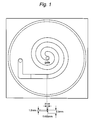
- Fig. 1 shows a spiral mold used for evaluating mold contamination.
- Fig. 2 shows a mold for producing a specimen used in the second method of evaluating mold contamination, and explains the evaluation method.
- the semiaromatic polyamide composition the processes for preparing the semiaromatic polyamide composition and the compositions containing the semiaromatic polyamide composition according to the invention are described in detail hereinafter.
- Polyamides are polymer compounds, which comprise recurring units derived from a dicarboxylic acid and diamine or additionally recurring units derived from lactam or an aminocarboxylic acid.
- the dicarboxylic acid for forming the semiaromatic polyamide of the invention is an aromatic dicarboxylic acid or an aliphatic dicarboxylic acid.
- aromatic dicarboxylic acids examples include terephthalic acid, its derivatives (e.g., salts, halides, esters), other aromatic dicarboxylic acids than the terephthalic acid (e.g., isophthalic acid, naphthalenedicarboxylic acid) and their derivatives.
- aliphatic dicarboxylic acids are preferably linear aliphatic dicarboxylic acids, more preferably linear aliphatic dicarboxylic acids having alkylene groups of 4 to 18 carbon atoms, particularly preferably those having alkylene groups of 4 to 12 carbon atoms.
- linear aliphatic dicarboxylic acids include succinic acid (SA), adipic acid (AA), azelaic acid, sebacic acid and their derivatives. Of these aliphatic dicarboxylic acids, preferable are adipic acid and sebacic acid.
- the alicyclic dicarboxylic acids include tetracyclohexanedicarboxylic acid and its derivatives.
- derivatives includes derivatives (e.g., salts, halides, esters) capable of forming recurring units by the reaction with diamines.
- the dicarboxylic acids and the diamines for use in the invention may have substituents such as alkyl groups, as far as the properties of the resulting polyamide resin are not marred.
- the meaning of each component used in the invention is the same as above.
- the diamine which constitutes the recurring units for forming the semiaromatic polyamide of the invention together with the dicarboxylic acid, is an aliphatic diamine of 4 to 25 carbon atoms, preferably that of 4 to 12 carbon atoms, or its derivative.
- the aliphatic diamine may be a linear alkylenediamine or a branched chain alkylenediamine.
- alkylenediamines examples include linear alkylenediamines, such as 1,4-diaminobutane, 1,5-diaminopentane, 1,6-diaminohexane, 1,7-diaminoheptane, 1,8-diaminooctane, 1,9-diaminononane, 1,10-diaminodecane, 1,11-diaminoundecane and 1,12-diaminododecane; and branched chain alkylenediamines, such as 1,4-diamino-1,1-dimethylbutane, 1,4-diamino-l-ethylbutane, 1,4-diamino-1,2-dimethylbutane, 1,4-diamino-1,3-dimethylbutane, 1,4-diamino-1,4-dimethylbutane, 1,4-diamino-2,
- linear alkylenediamines preferable are linear alkylenediamines, and particularly preferable are 1,6-diaminohexane (hexamethylenediamine, HMDA), 1,8-diaminooctane, 1,10-diaminodecane and 1,12-diaminododecane.
- HMDA hexamethylenediamine
- 1,8-diaminooctane 1,10-diaminodecane
- 1,12-diaminododecane 1,12-diaminododecane.
- These alkylenediamines can be used singly or in combination.
- Mixtures of the linear alkylenediamines as major components and small amounts of branched alkylenediamines, e.g., mixtures of 1,6-diaminohexane and 1,5-diamino-2-methylpentane are also preferably employed.
- a recurring unit represented by the following formula [I] is formed from the terephthalic acid (TA) and the diamine: wherein R 1 is a divalent hydrocarbon group derived from the diamine used, preferably an alkylene group of 4 to 25 carbon atoms, particularly preferably an alkylene group of 4 to 12 carbon atoms.
- a recurring unit represented by the following formula [II] is formed from the isophthalic acid and the diamine: wherein R 1 is a divalent hydrocarbon group derived from the diamine used, preferably an alkylene group of 4 to 25 carbon atoms, particularly preferably an alkylene group of 4 to 12 carbon atoms.
- a recurring unit represented by the following formula [III] is formed from the aliphatic dicarboxylic acid and the diamine: wherein R 1 is a divalent hydrocarbon group derived from the diamine used, preferably an alkylene group of 4 to 25 carbon atoms, particularly preferably an alkylene group of 4 to 12 carbon atoms, and n is a positive integer of usually 4 to 18, preferably 4 to 16, more preferably 4 to 12, particularly preferably 6 to 10.
- the semiaromatic polyamide of the invention may have recurring units derived from a lactam or an aminocarboxylic acid of 6 to 12 carbon atoms, preferably 6 to 12 carbon atoms, in addition to the recurring units derived from the dicarboxylic acid and the diamine.
- lactams and the aminocarboxylic acids examples include ⁇ -caprolactam, 6-aminocaproic acid, ⁇ -enantholactam, ⁇ -capryllactam, ⁇ -laurolactam, ⁇ -undecalactam, 11-aminoundecanoic acid and 12-aminododecanoic acid.
- n is an integer of 4 to 20, preferably 6 to 20, particularly preferably 5 to 12.
- the quantity of the recurring units represented by the formulas [I] to [III] corresponds to the quantity of the dicarboxylic acid used
- the quantity of the recurring units represented by the formula [IV] corresponds to the quantity of the lactam or the aminocarboxylic acid used.
- the semiaromatic polyamide of the invention is formed from polycondened units of:
- the amounts of the dicarboxylic acids used for preparing the semiaromatic polyamide are as follows.
- the terephthalic acid can be used in an amount of 40 to 90 % by mol, preferably 45 to 70 % by mol;
- the aromatic dicarboxylic acid other than the terephthalic acid can be used in an amount of 0 to 50 % by mol, preferably 5 to 45 % by mol, more preferably 15 to 40 % by mol;
- the linear aliphatic dicarboxylic acid of 4 to 18 carbon atoms can be used in an amount of 0 to 60 % by mol, preferably 10 to 55 % by mol, particularly preferably 20 to 55 % by mol.
- the diamine is used in an amount almost equimolar with the dicarboxylic acid.
- a small amount of an alicyclic diamine is also employable in the invention.
- a diamine having about 6 to 25 carbon atoms and having at least one alicyclic hydrocarbon ring is usually employed.
- alicyclic diamines examples include 1,3-diaminocyclohexane, 1,4-diaminocyclohexane, 1,3-bis(aminomethyl)cyclohexane, 1,4-bis(aminomethyl)cyclohexane, isophoronediamine, piperazine, 2,5-dimethylpiperazine, bis (4-aminocyclohexyl)methane, bis(4-aminocyclohexyl)propane, 4,4'-diamino-3,3'-dimethyldicyclohexylpropane, 4,4'-diamino-3,3'-dimethyldicyclohexylmethane, 4,4'-diamino-3,3'-dimethyl-5,5'-dimethyldicyclohexylmethane, 4,4'-diamino-3,3'-dimethyl-5,5'-dimethyldicyclohexylme
- alicyclic diamines preferable are bis(aminomethyl)cyclohexane, bis(4-aminocyclohexyl)methane, 1,3-bis(aminocyclohexyl)methane, 1,3-bis(aminomethyl)cyclohexane and 4,4'-diamino-3,3'-dimethyldicyclohexylmethane.
- the quantity of the recurring units derived from the lactam or the aminocarboxylic acid is in the range of usually 0 to 50 % by mol, preferably 0 to 30 % by mol.
- ⁇ -caprolactam means units derived from ⁇ -caprolactam
- TA means units derived from terephthalic acid
- IA means units derived from isophthalic acid
- AA means units derived from adipic acid
- HMDA means units derived from hexamethylenediamine
- MPMDA means units derived from 2-methylpentamethylenediamine.
- the semiaromatic polyamide having a low content of the MO components according to the invention can be prepared by, for example, the following processes.
- the semiaromatic polyamide prepolymer can be prepared by, for example, adding the dicarboxylic acid (or its derivative) and the diamine (or its derivative) to an aqueous medium, further adding if necessary the lactam or the aminocarboxylic acid, and heating them in the presence of a catalyst.
- the diamine is used in an amount of almost 1 mol based on 1 mol of the total of the aromatic dicarboxylic acids (total of the terephthalic acid and other aromatic dicarboxylic acids or linear aliphatic dicarboxylic acids optionally used).
- This reaction is usually conducted in an atmosphere of an inert gas.
- the reactor is purged with an inert gas such as a nitrogen gas.
- the aqueous medium used herein is usually water, but it may contain organic solvents soluble in water, e.g., alcohols such as methanol and ethanol.
- Examples of the catalysts employable for preparing the prepolymer in the invention include phosphoric acid, salts and ester compounds of the phosphoric acid, phosphorous acid, salts and ester compounds of the phosphorous acid, hypophosphorous acid, and salts and ester compounds of the hypophosphorous acid.
- These phosphorus type compounds can be used singly or in combination.
- the phosphorus type compound is used in an amount of usually 0.01 to 5 % by mol, preferably 0.02 to 2 % by mol, based on the dicarboxylic acid.
- a terminating reagent is preferably employed.
- the terminating reagents include benzoic acid, alkali metal salts of benzoic acid and acetic acid.
- the terminating reagent is used in an amount of usually 0.01 to 5 mol, preferably 0.1 to 2 mol, based on 1 mol of the dicarboxylic acid. Adjustment of the amount of the terminating reagent makes it possible to control an average molecular weight of the resulting prepolymer, specifically an intrinsic viscosity ( ⁇ ) thereof.
- the prepolymer [A] is prepared under the conditions of a reaction temperature of usually 200 to 290 °C, preferably 220 to 280 °C, and a reaction time of usually 0.5 to 5 hours, preferably 1 to 3 hours.
- This reaction may be carried out at atmospheric pressure or under pressure, but it is preferably carried out under pressure.
- the reaction pressure is set at usually 20 to 60 kg/cm 2 , preferably 25 to 50 kg/cm 2 .
- ⁇ intrinsic viscosity
- the semiaromatic polyamide prepolymer having the above intrinsic viscosity usually has a number-average molecular weight of 700 to 2,000.
- the semiaromatic polyamide prepolymer produced in the aqueous medium is separated from the reaction solution.
- the separation between the reaction solution and the semiaromatic polyamide prepolymer can be carried out by, for example, filtration, centrifugal separation, etc., but it is effective that the reaction solution containing the produced semiaromatic polyamide prepolymer is flashed in air through a nozzle to perform solid-liquid separation.
- the semiaromatic polyamide prepolymer obtained as above is contacted with water, dried and then subjected to post polymerization.
- the temperature of water contacted with the semiaromatic polyamide prepolymer is preferably high, that is, the temperature of the water used in the treatment (washing treatment) is usually 30 to 100 °C, preferably 50 to 100 °C, particularly preferably 70 to 100 °C.
- the contact time (i.e., washing time) of the semiaromatic polyamide prepolymer with the water is usually 5 to 500 minutes, preferably 10 to 120 minutes, particularly preferably 30 to 90 minutes.
- the amount of the water contacted with the semiaromatic polyamide prepolymer can be properly determined depending on the amount of the components (later-described MO components) to be transferred into the water from the semiaromatic polyamide prepolymer, the water temperature, the contact method, etc., but it is usually 50 to 10,000 parts by weight, preferably 200 to 1,000 parts by weight, based on 100 parts by weight of the semiaromatic polyamide prepolymer.
- the semiaromatic polyamide prepolymer thus contacted with water contains a large amount of water, so that the semiaromatic polyamide prepolymer is dried prior to the subsequent step.
- drying of the semiaromatic polyamide prepolymer is carried out under vacuum or in a stream of an inert gas (e.g., stream of nitrogen).
- the drying temperature is generally lower than the temperature at which the semiaromatic polyamide prepolymer is melted, and it is usually 100 to 180 °C, preferably 120 to 140 °C.
- the water concentration in the dry semiaromatic polyamide prepolymer is decreased to usually not more than 5,000 ppm, preferably not more than 3,000 ppm, more preferably not more than 1,000 ppm.
- infrared rays are employable as heating means.
- the dry semiaromatic polyamide prepolymer obtained as above is then subjected to post polymerization (polycondensation reaction).
- the post polymerization is carried out by heating the dry semiaromatic polyamide prepolymer to be molten and applying a shear stress to the molten resin.
- the dry semiaromatic polyamide prepolymer is heated to a temperature at which the prepolymer is at least melted.
- the dry semiaromatic polyamide prepolymer is heated to a temperature not lower than the melting point of the dry semiaromatic pomade prepolymer, preferably to a temperature higher than the melting point of the prepolymer by 10 to 60 °C.
- the shear stress can be applied to the molten resin by means of a twin-screw extruder with vent, a kneader, a Brabender mill or the like.
- the second process for preparing a semiaromatic polyamide composition having a low content of the MO components according to the invention is a process comprising the steps of preparing a high-molecular weight semiaromatic polyamide having an intrinsic viscosity ( ⁇ ) of not less than 0.7 dl/g and then treating the semiaromatic polyamide with water.
- the above-mentioned prepolymer is first prepared and the prepolymer is then melt kneaded to obtain the high-molecular weight semiaromatic polyamide, or the above-mentioned compounds are reacted with each other under heating to directly prepare the high-molecular weight semiaromatic polyamide.
- unreacted dicarboxylic acids unreacted diamine, unreacted lactam or aminocarboxylic acid, cyclic oligomer formed from one molecule of diamine and one molecule of dicarboxylic acid, particularly cyclic hexamethylene adipamide, and other low oligomers components, which are defined as MO components, are generally contained in addition to the desired semiaromatic polyamide. These components are soluble in boiling water.
- the content of the MO components in conventional semiaromatic polyamide compositions sometimes may reach as much as 2 % by weight.
- the semiaromatic polyamide composition of the invention has a low content of the MO components, and the content of the MO components in the invention (determined by immersing a sample in boiling water at 100 °C for 24 hours and measuring the quantity of the extracts) is usually not more than 0.25 % by weight, preferably not more than 0.15 % by weight, particularly preferably not more than 0.10 % by weight.
- the obtained semiaromatic polyamide composition is contacted with an aqueous medium to transfer the MO components contained in the semiaromatic polyamide into the aqueous medium and thereby remove them.
- the aqueous medium used herein is generally water, and this aqueous medium may contain water-soluble organic solvents such as alcohols, if needed.
- the contact of the semiaromatic polyamide with aqueous medium is carried out under warming or heating.
- the temperature and the amount of the aqueous medium are the same as those in case of the prepolymer.
- the contact time (i.e., washing time) of the semiaromatic polyamide with the water is usually 5 minutes to 24 hours, preferably 5 minutes to 15 hours, more preferably 10 minutes to 8 hours, particularly preferably 30 minutes to 5 hours.
- the aqueous medium into which the MO components have been extracted is separated from the semiaromatic polyamide, whereby the content of the MO components in the semiaromatic polyamide can be decreased to the above-mentioned extent.
- the separation between the aqueous medium and the semiaromatic polyamide can be carried out by a known method such as filtration or centrifugal separation.
- the semiaromatic polyamide composition thus separated from the aqueous medium is then generally dried to remove water content.
- the conditions for drying the semiaromatic polyamide and the water concentration in the semiaromatic polyamide after drying are the same as those in case of the prepolymer, except that the drying temperature is set at 100 to 250 °C, preferably 120 to 200 °C.
- Another process for preparing a semiaromatic polyamide composition having a low content of the MO components according to the invention is a process in which the semiaromatic polyamide composition is melt extruded, while an inert gas is supplied into the polyamide resin composition to form an inert gas flow in the extruder and thereby increase venting effect.
- the gas to be supplied is inert to the polyamide resin, and examples thereof include a nitrogen gas and other inert gases such as an argon gas.
- the ratio of the flow rate (m 3 /hr) of the supplied gas to the discharge rate (kg/hr) is preferably made to be not less than 0.02.
- the ratio of the gas flow rate (m 3 /hr) to the discharge rate (kg/hr) is particularly preferably not less than 0.05.
- a semiaromatic polyamide composition having a content of the MO components of not more than 0.25 % by weight can be easily prepared.
- the dicarboxylic acid and the diamine are polycondensed through melt reaction, to obtain a prepolymer having an intrinsic viscosity ( ⁇ ), as measured in a concentrated sulfic acid at 30° C (the same applies hereinafter), of 0.05 to 0.6 dl/g, preferably 0.08 to 0.3 dl/g, in the form of a solid.
- ⁇ intrinsic viscosity
- the reaction to prepare the prepolymer is conducted at a temperature of usually 200 to 290 °C, preferably 220 to 280 °C, for a period of usually 0.5 to 5 hours, preferably 1 to 3 hours.
- This reaction can be carried out at atmospheric pressure or under pressure, but it is preferably carried out under high pressure. In this case, the reaction pressure is in the range of usually 20 to 60 kg/cm 2 , preferably 25 to 50 kg/cm 2 .
- the prepolymer obtained in the above step is preferably subjected to removal of water content therefrom and adjustment of its crystallinity. That is, it is preferable that the water content in the prepolymer is decreased to not more than 5,000 ppm and the crystallinity is made to be not less than 20 %, though these conditions are not essential.
- the water content and the crystallinity of the prepolymer can be adjusted to be in the above-mentioned preferable ranges by heating the prepolymer at a temperature lower than the heating temperature in the solid phase polymerization step.
- the prepolymer is heated at a temperature of 50 to 170 °C, preferably 100 to 150 °C.
- the prepolymer is heated under vacuum or in a gas stream to perform solid phase polymerization, whereby an aromatic polyamide is prepared.
- the solid phase polymerization can be carried out in any of continuous and batchwise processes.
- the apparatus used for the polymerization may be any of vertical and horizontal ones, and it may be any of stationary type, main body rotary type and stirring type.
- the solid phase polymerization to prepare the semiaromatic polyamide composition is carried out by heating the prepolymer at usually 170 °C to a temperature of not higher than the melting point of the prepolymer, preferably 200 to 260 °C, for a period of usually 0.03 to 6 hours, preferably 0.1 to 2 hours.
- the solid phase polymerization can be conducted either under vacuum or in a gas stream, but it is preferably conducted in a gas stream, particularly in an inert gas stream.
- the gas is used in an amount of usually 1 to 500 liters, preferably 20 to 300 liters, based on 1 kg of the prepolymer.
- a semiaromatic polyamide composition having an intrinsic viscosity ( ⁇ ) of 0.5 to 1.0 dl/g, preferably 0.65 to 0.8 dl/g can be obtained.
- the MO components are contained in amounts smaller than those in a polyamide prepared by a melt kneading process or the like. If it is wanted to decrease the content of the MO components to not more than 0.25 % by weight, particularly not more than 0.15 % by weight, the above process is insufficient, so it is preferanle to combine with another process.
- the semiaromatic polyamide obtained above is then melted and polycondensed with applying a shear stress, whereby the desired aromatic polyamide of high polymerization degree can be obtained.
- a twin-screw vented extruder, a kneader, a Brabender, etc. are employable.
- the semiaromatic polyamide composition prepared as above has the aforesaid recurring units and has a glass transition temperature of 70 to 150 °C, preferably 80 to 125 °C. Further, the semiaromatic polyamide of the invention is crystalline, so that it has a melting point, and the melting point is in the range of 260 to 360 °C, in many cases 280 to 330 °C.
- the semiaromatic polyamide has an intrinsic viscosity ( ⁇ ), as measured in a concentrated sulfuric acid at 30 °C, of usually 0.5 to 3.0 dl/g, preferably 0.5 to 2.0 dl/g, more preferably 0.7 to 1,5 .dl/g, particularly preferably 0.8 to 1.2 dl/g.
- ⁇ intrinsic viscosity
- the semiaromatic polyamide has an intrinsic viscosity ( ⁇ ) of usually 0.5 to 3.0 dl/g, preferably 0.9 to 1.5 dl/g.
- the semiaromatic polyamide composition obtained as above has a low content of the MO components. Therefore, mold contamination caused by the MO components is hardly brought about and molded articles can be produced in a stable molding operation. Moreover, even by the above treatments, the properties of the semiaromatic polyamide are not deteriorated, and the molded articles produced by the use of the thus treated semiaromatic polyamide retain good heat resistance, high mechanical strength, low water absorption properties and good abrasion resistance, which are excellent properties inherent in the semiaromatic polyamide.
- the semiaromatic polyamide composition of the invention can be molded into articles of desired shapes by heating it to a temperature of not lower than the melting point and lower than the decomposition temperature of the semiaromatic polyamide using a conventional molding apparatus.
- the semiaromatic polyamide prepolymer is washed with, for example, boiling water to selectively transfer the unreacted starting monomers and low oligomers (MO components) into the aqueous phase and thereby remove them. Therefore, the polycondensation reaction under shear stress is hardly inhibited by the MO components, and hence a semiaromatic polyamide resin composition can be obtained for a short period of time.
- the amount per unit time of the semiaromatic polyamide prepolymer (starting material in the polycondensation) fed to the melt kneading apparatus can be increased.
- the semiaromatic polyamide compositions of the invention are the first to the fourth compositions mentioned above.
- the first composition comprises the semiaromatic polyamide composition and 5 to 250 parts by weight of a fibrous reinforcement based on 100 parts by weight of the semiaromatic polyamide composition.
- the second composition comprises 99 to 30 % by weight of the semiaromatic polyamide composition and 1 to 70 % by weight of a modified elastomeric polymer.
- This second composition preferably further contains the same fibrous reinforcement as mentioned above.
- the third composition comprises 99 to 30 % by weight of the semiaromatic polyamide composition and 1 to 70 % by weight of an aliphatic polyamide.
- This third composition preferably further contains the same modified elastomeric polymer and/or the same fibrous reinforcement as mentioned above.
- the fourth composition comprises the semiaromatic polyamide composition or a composition containing the same and a flame retardant.
- fibrous reinforcements employable in the invention include inorganic fibrous reinforcements, such as glass fiber, potassium titanate fiber, metal-coated glass fiber, ceramic fiber, wallastonite, carbon fiber, metallic carbide fiber and hardened metallic fiber; and organic fibrous reinforcements. These fibrous reinforcements may be surface treated with silane compounds, for example, vinyltriethoxysilane, 2-aminopropyltriethoxysilane and 2-glycidoxypropyltrimethoxysilane.
- silane compounds for example, vinyltriethoxysilane, 2-aminopropyltriethoxysilane and 2-glycidoxypropyltrimethoxysilane.
- inorganic fibrous reinforcement from the viewpoint of heat resistance, and particularly preferable is glass fiber because it exerts best reinforcing effects.
- the fibrous reinforcement is used in an amount of 5 to 250 parts by weight, preferably 10 to 220 parts by weight, more preferably 15 to 150 parts by weight, based on 100 parts by weight of the semiaromatic polyamide composition.
- the composition comprising the semiaromatic polyamide composition and the fibrous reinforcement according to the invention has a heat distortion temperature HDT, as measured in accordance with ASTM D 648 (load: 18.6 kg/cm 2 ), of not lower than 250 °C and a flexural modulus, as measured in accordance with ASTM D 750, of not less than 100,000 kg/cm 2 .
- HDT heat distortion temperature
- ASTM D 648 load: 18.6 kg/cm 2
- a flexural modulus as measured in accordance with ASTM D 750
- the modified elastomeric polymer employable in the invention is (i) a modified ⁇ -olefin elastomeric polymer or (ii) a modified aromatic vinyl/conjugated diene block copolymer.
- the modified ⁇ -olefin elastomeric polymer is obtained by graft copolymerizing an ⁇ -olefin elastomeric polymer containing ⁇ -olefin units as major constituents with an unsaturated acid or its derivative in an amount of 0.01 to 10 parts by weight, preferably 0.05 to 5 parts by weight, based on 100 parts by weight of the ⁇ -olefin elastomeric polymer.
- This modified ⁇ -olefin elastomeric polymer has a crystallinity of not more than 20 %, preferably 1 to 19 %, and has a melt flow rate at 190 °C (MFR 190°C ) of 0.01 to 50 g/10 min, preferably 0.05 to 20 g/10 min. Further, the modified ⁇ -olefin elastomeric polymer has a molecular weight distribution (Mw/Mn) of usually 1.5 to 50, preferably 2 to 30, and a glass transition temperature of usually not higher than -10 °C, preferably not higher than -20 °C.
- Mw/Mn molecular weight distribution
- the amounts of graft units of the unsaturated carboxylic acid or its derivative in the modified ⁇ -olefin elastomeric polymer are smaller than 0.01 part by weight, the compatibility with the semiaromatic polyamide becomes bad, resulting in lowering of impact strength of the polyamide composition.
- the graft amount exceeds 10 parts by weight, the degree of crosslinking of the graft modified product increases, and the effect of improving the impact resistance of the composition is sometimes lowered.
- the crystallinity of the modified ⁇ -olefin elastomeric polymer exceeds 20 %, the heat resistance of the polyamide composition is sometimes lowered.
- the ⁇ -olefin elastomeric polymer that is a base material of the modified ⁇ -olefin elastomeric polymer, may be a low-crystalline elastomeric polymer containing ⁇ -olefin units as major constituents, and it may consist of units of two or more ⁇ -olefins or may contain small amounts of diene units in addition to the ⁇ -olefin units.
- the amount of the ⁇ -olefin for constituting the ⁇ -olefin elastomeric polymer is usually not less than 65 % by mol, preferably not less than 70 % by mol, and the amount of the diene is usually 0 to 20 % by mol, preferably 0 to 15 % by mol.
- Examples of the ⁇ -olefins employable for forming the ⁇ -olefin elastomeric polymer include ethylene, propylene, 1-butene, 1-pentene, 4-methyl-1-pentene, 1-hexene, 1-octene, 1-decene and 1-dodecene.
- Examples of the dienes include non-conjugated dienes, such as 1,4-hexadiene, dicyclopentadiene, 5-ethylidene-2-norbornene and 2,5-norbornadiene; and conjugated dienes, such as butadiene, isoprene and piperylene.
- ⁇ -olefin elastomeric polymers examples include ⁇ -olefin elastomeric copolymers, such as an ethylene/propylene copolymer, an ethylene/1-butene copolymer, an ethylene/4-methyl-1-pentene copolymer, an ethylene/1-hexene copolymer, an ethylene/1-octene copolymer, an ethylene/1-decene copolymer, a propylene/ethylene copolymer, a propylene/1-butene copolymer, a propylene/4-methyl-1-pentene copolymer, a propylene/1-octene copolymer, a propylene/1-decene copolymer and a propylene/1-dodecene copolymer; and ⁇ -olefin/non-conjugated diene elastomeric copolymers, such as an ethylene/propylene/1,
- graft monomers used for graft modifying the ⁇ -olefin polymers include unsaturated dicarboxylic acids, such as acrylic acid, methacrylic acid, ⁇ -ethylacrylic acid, maleic acid, fumaric acid, itaconic acid, citraconic acid, tetrahydrophthalic acid, methyltetrahydrophthalic acid, endocis-bicyclo[2.2.1]hept-5-ene-2,5-dicarboxylic acid (nadic acidTM) and methyl-endocis-bicyclo[2.2.1]hept-5-ene-2,5-dicarboxylic acid (methylnadic acidTM); and acid halides, amides, imides, acid anhydrides and esters of the unsaturated dicarboxylic acids, such as maleic chloride, maleimide, maleic anhydride, citraconic anhydride, monomethyl maleate, dimethyl maleate and glycidyl maleate. Of these, preferable are unsaturated
- ⁇ -olefin elastomeric polymer For graft copolymerizing the ⁇ -olefin elastomeric polymer with the unsaturated carboxylic acid or its derivative to prepare the modified ⁇ -olefin elastomeric polymer, various known methods are available. For example, the ⁇ -olefin elastomeric polymer is melted and to the molten polymer is added a graft monomer to perform graft copolymerization, or the ⁇ -olefin elastomeric polymer is dissolved in a solvent and to the resulting solution is added a graft monomer to perform graft copolymerization.
- the reaction in the presence of a radical initiator so as to efficiently graft copolymerize the graft monomer.
- the graft reaction is carried out at a temperature of usually 60 to 350 °C.
- the radical initiator is used in an amount of usually 0.01 to 20 parts by weight based on 100 parts by weight of the ⁇ -olefin elastomeric polymer.
- examples of the radical initiators employable herein include organic peroxides, organic peresters and azo compounds.
- the modified aromatic vinyl/conjugated diene copolymer or its hydrogenated product employable in the invention is a graft modified product of a block copolymer of an aromatic vinyl hydrocarbon compound and a conjugated diene compound.
- a graft modified product of a hydrogenated product of this block copolymer is also employable in the invention.
- aromatic vinyl/conjugated diene copolymers and hydrogenated products thereof include a styrene/butadiene block copolymer rubber, a styrene/butadiene/styrene block copolymer rubber, a styrene/isoprene block copolymer rubber, a styrene/isoprene/styrene block copolymer rubber, a hydrogenated styrene/butadiene/styrene block copolymer rubber and a hydrogenated styrene/isoprene/styrene copolymer rubber.
- the molar ratio (aromatic vinyl hydrocarbon/conjugated diene) of the recurring units derived from the aromatic vinyl to the recurring units derived from the conjugated diene is in the range of usually 10/90 to 70/30.
- the term "hydrogenated copolymer rubber” means a copolymer obtained by partly or fully hydrogenating the double bonds remaining in the copolymer rubber.
- the aromatic vinyl/conjugated diene copolymer or its hydrogenated product has an intrinsic viscosity ( ⁇ ), as measured in decalin at 135 °C, of usually 0.01 to 10 dl/g, preferably 0.08 to 7 dl/g, and has a glass transition temperature (Tg) of usually not higher than 0 °C, preferably not higher than -10 °C, particularly preferably not higher than -20 °C.
- Tg glass transition temperature
- the crystallinity of the aromatic vinyl/conjugated diene copolymer or its hydrogenated product, as measured by X-ray diffractometry, is in the range of 0 to 10 %, preferably 0 to 7 %, particularly preferably 0 to 5 %.
- the modified aromatic vinyl/conjugated diene copolymer for use in the invention is prepared by graft modifying the unmodified aromatic vinyl/conjugated diene copolymer with an unsaturated acid, anhydride of an unsaturated acid or a derivative of an unsaturated acid in a manner similar to that for preparing the aforesaid modified ⁇ -olefin random elastomeric copolymer.
- Examples of the unsaturated carboxylic acids, anhydrides thereof and derivatives thereof include the same compounds as used in the preparation of the aforesaid graft modified ⁇ -olefin random elastomeric copolymer. These graft modifiers can be used singly or in combination.
- graft modifiers preferably used are anhydrides of unsaturated carboxylic acids, and particularly preferably used are maleic anhydride and nadic anhydride.
- the solution process, the melt process or the like described above in the modification of the ⁇ -olefin random elastomeric cdpolymer are available.
- the amount of the graft modifier is determined in consideration of its reactivity, but generally it is used in an amount of 1 to 10 parts by weight based on 100 parts by weight of the unmodified aromatic vinyl/conjugated diene copolymer or its hydrogenated product.
- radical initiators such as organic peroxides, organic peresters and azo compounds are employable similarly to the above-mentioned graft reaction.
- graft modified aromatic vinyl/conjugated diene copolymer or its hydrogenated product wherein the graft modifier is grafted in an amount of usually 0.01 to 10 parts by weight, preferably 0.05 to 5 parts by weight, based on 100 parts by weight of the unreacted aromatic vinyl/conjugated diene copolymer or its hydrogenated product.
- the graft modified aromatic vinyl/conjugated diene copolymer or its hydrogenated product obtained above is a low-crystalline or non-crystalline copolymer, and preferably is substantially non-crystalline. That is, a modified copolymer having a crystallinity, as measured by X-ray diffractometry, of usually not more than 10 %, preferably not more than 7 %, more preferably not more than 5 % is used in the invention. Particularly, a modified copolymer having a crystallinity of substantially 0 % is used. Accordingly, the modified aromatic vinyl/conjugated diene copolymer or its hydrogenated product often exhibits no definite melting point.
- the graft modified aromatic vinyl/conjugated diene copolymer or its hydrogenated product is non-rigid and has a tensile modulus of usually not less than 0.1 kg/cm 2 and less than 20,000 kg/cm 2 , preferably 1 to 15,000 kg/cm 2 .
- the melt index (measured at 190 °C) of the graft modified aromatic vinyl/conjugated diene copolymer or its hydrogenated product is usually in the range of 0.1 to 30 g/10 min, preferably 1.0 to 20 g/10 min, particularly preferably 2.0 to 15 g/10 min.
- the glass transition temperature (Tg) of the graft modified aromatic vinyl/conjugated diene copolymer or its hydrogenated product is usually in the range of -150 to +50 °C, preferably -80 to -20 °C; and the intrinsic viscosity ( ⁇ ) thereof, as measured in decalin at 135 °C, is in the range of usually 0.01 to 10 dl/g, preferably 1 to 5 dl/g.
- the amount of the modified ⁇ -olefin polymer or the modified aromatic vinyl/conjugated diene copolymer is in the range of preferably 0.5 to 50 parts by weight, more preferably 1.0 to 40 parts by weight, based on 100 parts by weight of the polyamide.
- the amount of the modified ⁇ -olefin elastomeric polymer is less than 0.5 part by weight, the impact strength of the polyamide composition becomes poor.
- the amount thereof exceeds 50 parts by weight the tensile strength, flexural strength, elastic modulus and heat resistance of the polyamide composition are sometimes lowered.
- the ionomer resin for use in the invention is a resin obtained by partly neutralizing an ethylene/unsaturated carboxylic acid copolymer with a divalent metal ion or a monovalent metal ion.
- the ethylene/unsaturated carboxylic acid copolymer for constituting the ionomer resin is a copolymer of ethylene and an unsaturated carboxylic acid.
- unsaturated carboxylic acids include unsaturated carboxylic acids of 3 to 8 carbon atoms, specifically acrylic acid, methacrylic acid, itaconic acid, maleic anhydride, maleic acid monomethyl ester and maleic acid monoethyl ester.
- unsaturated carboxylic acids particularly preferably used are acrylic acid and methacrylic acid.
- the ethylene/unsaturated carboxylic acid copolymer used in the invention may further contain the third component in addition to ethylene and the unsaturated carboxylic acid.
- the third component is, for example, a polar vinyl compound of about 3 to 12 carbon atoms.
- the polar vinyl compounds include unsaturated carboxylic acid esters, such as ethyl acrylate, isobutyl acrylate, n-butyl acrylate and methyl acrylate; and vinyl esters, such as vinyl acetate.
- ethylene is present in an amount of usually 50 to 99 % by weight, preferably 70 to 98 % by weight, and the unsaturated carboxylic acid is present in an amount of usually 1 to 50 % by weight, preferably 2 to 30 % by weight.
- the ethylene/unsaturated acid copolymer further contains the third component in addition to ethylene and the unsaturated carboxylic acid
- the third component is present in an amount of usually not more than 40 % by weight, preferably not more than 30 % by weight.
- the carboxyl groups in the ethylene/unsaturated carboxylic acid copolymer are neutralized with a divalent metal ion or a monovalent metal ion, preferably a divalent metal ion.
- metal ions preferably used for the ionomer resin include alkali metal ions, such as Na + , Li + and K + ; divalent transition metal ions, such as Zn ++ , Co ++ , Ni ++ , Pb ++ and Cu ++ ; and alkaline earth metal ions, such as Ca ++ and Mg ++ .
- alkali metal ions such as Na + , Li + and K +
- divalent transition metal ions such as Zn ++ , Co ++ , Ni ++ , Pb ++ and Cu ++
- alkaline earth metal ions such as Ca ++ and Mg ++ .
- Zn ++ is particularly preferably used.
- the degree of neutralization of the carboxyl groups of the ethylene/unsaturated carboxylic acid copolymer with the divalent metal ion, preferably divalent transition metal ion, is 3 to 95 %.
- the metal used for forming the ionomer resin is not limited to one kind, and the ionomer resin for use in the invention may have two or more kinds of metal ions.
- the ionomer resin is used in an amount equal to that in case of using the modified elastomeric polymer. Further, the ionomer resin can be used in combination with the modified elastomeric polymer.
- the composition comprising the semiaromatic polyamide and the modified elastomeric polymer and/or the ionomer resin not only has excellent impact resistance, particularly low-temperature impact resistance, but also has a low content of the MO components. Therefore. the composition hardly brings about mold contamination and is suitable for connectors, etc.
- aliphatic polyamides usable in the invention include polyamides formed by polycondensation of aliphatic dicarboxylic acids and aliphatic diamines, polyamides formed by ring opening polymerization of lactams, and polyamides formed from aliphatic aminocarboxylic acids, aliphatic diamines and lactams.
- These aliphatic polyamides generally have a structure represented by the following formula [V]. - (NH(CH 2 ) n -CO) m -
- aliphatic polyamides include:
- polycaprolactam polyhexamethylene adipamide, polyhexamethylene suberamide, polyundecamide, polydodecamide, polyhexamethylene undecamide and polyhexamethylene dodecamide are preferably used because molding flowability of the resulting composition can be improved when any of them is used.
- polyundecamide, polydodecamide, polyhexamethyene undecamide and polyhexamethylene dodecamide are particularly preferably used because thermal aging resistance of the resulting composition can be improved.
- the aliphatic polyamide (C) has an intrinsic viscosity ( ⁇ ) (measured in a concentrated sulfuric acid at 30 °C) of usually 0.5 to 3.0 dl/g, preferably 0.7 to 1.5 dl/g.
- the aliphatic polyamide (C) is contained in the resin components of the polyamide resin composition of the invention in an amount of 1 to 70 % by weight, preferably 1 to 30 % by weight, more preferably 3 to 20 % by weight.
- the content of the aliphatic polyamide (C) is in the above range, there can be obtained a composition having improved toughness and capable of producing molded articles showing a good balance of various properties such as heat resistance and water absorption properties.
- the moldability of the composition can be improved.
- Examples of the flame retardants for use in the invention includes an organic flame retardant and an inorganic auxiliary flame retardant.
- halogenated polystyrene and/or a condensate of halogenated phenol is particularly preferably employed.
- the halogenated polystyrene and the condensate of halogenated phenol are described below.
- halogenated polystyrene employable in the invention is represented by the following formula (1): wherein R is H or CH 3 , X is Br or Cl, m is an integer of 1 to 5, and n is an integer of 2 or more.
- halogenated polystyrenes represented by the formula (1) include polydibromostyrene, polytribromostyrene, polypentabromostyrene, polydichlorostyrene, polytrichlorostyrene, polypentachlorostyrene and polytribromo- ⁇ -methylstyrene.
- polytribromostyrene is preferable because flame retardance, heat resistance and thermal aging resistance of the resulting composition can be improved.
- Polydibromostyrene is also preferable because of good moldability.
- the halogenated polystyrene is prepared by polymerizing halogenated styrene or halogenated ⁇ methylstyrene, or halogenating polystyrene or poly- ⁇ -methylstyrene.
- the condensate of halogenated phenol employable in the invention is represented by the following formula (2): wherein X is Br or Cl, p is an integer of 1 to 4, and q is an integer of 5 or more.
- Examples of the condensates of halogenated phenols represented by the formula (2) include polydibromo-p-phenylene oxide, polytribromo-p-phenylene oxide, polydichloro-p-phenylene oxide, polybromo-p-phenylene oxide and polydibromo-o-phenylene oxide.
- polydibromo-p-phenylene oxide is preferable because heat resistance and flame retardance of the resulting composition can be improved.
- polytribromostyrene is most preferable because the resulting composition shows excellent heat stability in the molding process and exerts high effect of flame retardance.
- the inorganic auxiliary flame retardant used for the semiaromatic polyamide composition of the invention is preferably a metallic compound.
- the metallic compounds include metallic oxides, such as antimony oxide, zinc oxide, iron oxide and magnesium oxide; and metallic salts of boric acid, such as zinc borate. It is particularly preferable that the composition contains sodium antimonate.
- the sodium antimonate has chemical composition represented by the formula NaSbO 3 , and is preferably used in the form of fine particles having a particle diameter of not more than 30 ⁇ m, particularly not more than 10 ⁇ m.
- the semiaromatic polyamide composition of the invention further contains magnesium oxide, zinc oxide, hydrotalcite or a phosphorus compound as a heat stabilizer.
- These oxides are preferably as small as possible, and they desirably have a particle diameter of not more than 30 ⁇ m, particularly not more than 10 ⁇ m.
- the organic flame retardant is desirably contained in an amount of 20 to 100 parts by weight, preferably 30 to 80 parts by weight, more preferably 40 to 65 parts by weight, based on 100 parts by weight of the semiaromatic polyamide composition
- the inorganic auxiliary flame reardant is desirably contained in an amount of 2 to 20 parts by weight, preferably 4 to 16 parts by weight, more preferably 6 to 14 parts by weight, based on 100 parts by weight of the semiaromatic polyamide composition.
- the organic flame retardant and the inorganic auxiliary flame retardant in combination.
- the composition comprising the semiaromatic polyamide composition and the flame retardant has excellent flame retardance and hardly brings about mold contamination in the molding process. Therefore, the composition is suitably applied to uses, for example, for substrates requiring reflow solderability.
- the first composition of the invention comprises the semiaromatic polyamide composition and 5 to 250 parts by weight, preferably 10 to 220 parts by weight, more preferably 15 to 150 parts by weight of the fibrous reinforcement based on 100 parts by weight of the semiaromatic polyamide composition.
- the second composition of the invention comprises the semiaromatic polyamide composition in an amount of 30 to 99 % by weight, preferably 70 to 95 % by weight, and the modified elastomeric polymer in an amount of 1 to 70 % by weight, preferably 5 to 30 % by weight, and optionally contains the fibrous reinforcement in an amount of 5 to 250 parts by weight, preferably 10 to 220 parts by weight, based on 100 parts by weight of the total amount of the semiaromatic polyamide composition and the modified elastomeric polymer.
- the third composition of the invention comprises the semiaromatic polyamide composition in an amount of 30 to 99 % by weight, preferably 80 to 97 % by weight, and the aliphatic polyamide in an amount of 1 to 70 % by weight, preferably 3 to 20 % by weight, and optionally contains the fibrous reinforcement in an amount of 5 to 250 parts by weight, preferably 10 to 220 parts by weight, or the modified elastomeric polymer in an amount of 10 to 60 parts by weight, preferably 20 to 40 parts by weight, based on 100 parts by weight of the total amount of the semiaromatic polyamide composition and the aliphatic polyamide.
- the fourth composition of the invention comprises the semiaromatic polyamide composition and the flame retardant, and the flame retardant is desirably contained in an amount of 20 to 120 parts by weight, preferably 30 to 100 parts by weight, more preferably 40 to 80 parts by weight, based on 100 parts by weight of the semiaromatic polyamide composition.
- the first to the third compositions may further contain the flame retardant, and the amount of the flame retardant is the same as above.
- additives e.g., heat stabilizers, weathering stabilizers, plasticizers, thickening agents, antistatic agents, release agents, pigments, dyes, inorganic or organic fillers, nucleating agents and other inorganic compounds, such as carbon black, talc, clay and mica, may be contained within limits not prejudicial to the objects of the invention, in addition to the above-described components.
- polystyrene such as polyethylene, polypropylene and poly-4-methyl-1-pentene
- olefin copolymers such as an ethylene/propylene copolymer, an ethylene/1-butene copolymer, a propylene/ethylene copolymer and a propylene/1-butene copolymer
- polystyrene polyamide, polycarbonate, polyacetal, polyphenylene oxide, fluororesins, silicone resins and aliphatic polyamides
- polystyrene such as polyethylene, polypropylene and poly-4-methyl-1-pentene
- polystyrene such as polystyrene, polyamide, polycarbonate, polyacetal, polyphenylene oxide, fluororesins, silicone resins and aliphatic polyamides
- the semiaromatic polyamide compositions of the invention can be prepared by various known processes.
- the components are mixed by a Henschel mixer, a V-type blender, a ribbon blender, a tumbling blender or the like.
- the components are mixed and then melt kneaded by a single-screw extruder, a multi-screw extruder, a kneader, a Banbury mixer or the like, followed by granulation or pulverization.
- the semiaromatic polyamide composition contained in the semiaromatic polyamide compositions of the invention has a low content of the MO components, mold contamination caused by the MO components is hardly brought about and a vent of a mold is hardly clogged. Therefore, molded articles can be produced in a stable molding operation. Moreover, the properties of the semiaromatic polyamide composition are not lowered even by decreasing the content of the MO components, and therefore the molded articles formed from the semiaromatic polyamide compositions of the invention not only retain heat resistance, mechanical strength, low water absorption and abrasion resistance, which are excellent properties inherent in the semiaromatic polyamide composition, but also have excellent impact resistance and flexural strength. Especially when a flame retardant is introduced into the semiaromatic polyamide compositions, the molded articles obtained therefrom are excellent in flame retardance as well as in the above properties.
- the semiaromatic polyamide compositions of the invention can be molded into articles of desired shapes by heating them at a temperature of not lower than the melting point of the semiaromatic polyamide and lower than the decomposition temperature thereof using conventional molding apparatuses.
- the amounts of the MO components contained in the semiaromatic polyamide composition are decreased by contacting the semiaromatic polyamide composition with an aqueous medium or melt extruding the semiaromatic polyamide composition with injecting an inert gas into the polyamide resin.
- a reactor was charged with 99.8 kg (859 mol) of 1,6-diaminohexane, 63.8 kg (384 mol) of terephthalic acid, 68.6 kg (470 mol) of adipic acid, 204 g (1.92 mol) of sodium hypophosphite as a catalyst, 1.3 kg (10.6 mol) of benzoic acid as a terminating reagent and 24 liters of water. After the reactor was purged with nitrogen, the reaction was carried out for 1 hour under the conditions of a temperature of 250 °C and a pressure of 25 kg/cm 2 .
- reaction product produced in the reactor was flashed in air through a nozzle to perform solid-liquid separation and cooling at the same time, followed by drying.
- 215 kg of a dry semiaromatic polyamide prepolymer was obtained.
- the polyamide prepolymer was continuously fed to a twin-screw extruder of 57 mm diameter preset at a cylinder temperature of 340 °C at a feed rate of 55 kg/hr, to perform melt polycondensation.
- pellets of a semiaromatic polyamide composition consisting of 45 % by mol of recurring units ("6T") derived from the 1,6-diaminohexane and the terephthalic acid and 55 % by mol of recurring units ("66") derived from the 1,6-diaminohexane and the adipic acid were prepared.
- the semiaromatic polyamide composition had an intrinsic viscosity ( ⁇ ), as measured in a concentrated sulfuric acid at 30 °C, of 1.0 dl/g, a glass transition temperature (Tg) of 75 °C and a melting point (Tm) of 295 °C.
- the content of MO components in the semiaromatic polyamide composition was 0.46 % by weight.
- the intrinsic viscosity, tensile strength, tensile elongation, flexural strength, flexural modulus, Izod impact strength (notched), heat distortion temperature (HDT), SFL and the content of MO components of the untreated semiaromatic polyamide composition are set forth in Table 1.
- the content of the MO components was measured in the following manner.
- the extract was cooled and then filtered.
- the filtrate was transferred into an eggplant type flask.
- over the pellets separated by the filtration were poured 50 cc of water and then 50 cc of isopropanol, to wash the pellets and the flask.
- the resulting filtrate was then transferred into the above-mentioned eggplant type flask and distilled to dryness under reduced pressure with removing the solvent, to obtain MO components.
- the MO components were weighed with tare by means of an accurate balance.
- the content (% by weight) of the MO components was calculated by the following equation.
- B/A ⁇ 100 X
- the SFL was measured in the following manner
- a mold for injection molding was provided with a semicircular spiral groove.
- a molten resin was subjected to injection molding into a mold at a cylinder temperature of 320 °C and a mold temperature of 70 °C.
- the length by which the molten resin flows into the groove is taken as SFL.
- the semiaromatic polyamide composition pellets and 300 parts by weight of boiling water (100 °C) based on 100 parts by weight of the semiaromatic polyamide composition pellets were introduced into a drum, and they were stirred for 24 hours to contact them.
- the semiaromatic polyamide composition pellets were separated from the water and dried.
- the content of the MO components in the thus treated semiaromatic polyamide composition pellets was 0.05 % by weight.
- a mold for injection molding was provided with a spiral gas vent having an outer periphery of 0.3 ⁇ 3 mm.
- a resin was subjected to 100-shot injection molding in accordance with the standard injection conditions for various resins. Then, the clogging of the gas vent of the spiral mold (mold contamination) was visually evaluated.
- Example A-1 The MO components were removed in the same manner as in Example A-1, except that pellets of a semiaromatic polyamide composition consisting of 55 % by mol of recurring units ("6T") derived from the 1,6-diaminohexane and the terephthalic acid and 45 % by mol of recurring units ("66") derived from the 1,6-diaminohexane and the adipic acid were prepared and used.
- 6T recurring units
- 66 recurring units
- the properties of the semiaromatic polyamide composition before and after the treatment are set forth in Table 2.
- Example A-1 The MO components were removed in the same manner as in Example A-1, except that pellets of a semiaromatic polyamide composition consisting of 45 % by mol of recurring units ("6T") derived from the 1,6-diaminohexane and the terephthalic acid and 55 % by mol of recurring units ("66") derived from the 1,6-diaminohexane and the adipic acid and having a low intrinsic viscosity ( ⁇ ) were prepared in the extruder by varying the residence time and they were used.
- 6T recurring units
- 66 recurring units derived from the 1,6-diaminohexane and the adipic acid and having a low intrinsic viscosity ( ⁇ )
- Semiaromatic polyamide compositions were prepared in the same manner as in Example A-1, except that the semiaromatic polyamide compositions having compositions shown in Table 4 were used and they were each contacted with boiling water for a period of time shown in Table 4 to remove MO components.
- the semiaromatic polyamide compositions of the invention have low contents of the MO components. Therefore, mold contamination is hardly brought about and molded articles can be efficiently produced.
- An aromatic polyamide precursor (polyamide prepolymer) was prepared by the following process.
- a reactor was charged with 99.8 kg (859 mol) of 1,6-diaminohexane, 68.5 kg (412 mol) of terephthalic acid, 64.5 kg (441 mol) of adipic acid, 204 g (1.92 mol) of sodium hypophosphite as a catalyst, 1.3 kg (10.6 mol) of benzoic acid as a terminating reagent and 24 liters of water.
- the reaction was carried out for 1 hour under the conditions of a temperature of 250 °C and a pressure of 35 kg/cm 2 .
- the molar ratio between the terephthalic acid and the adipic acid was 48.3 : 51.7.
- the semiaromatic polyamide prepolymer was dehydrated by means of a centrifugal separator to decrease the water content to not more than 10 % by weight and then dried at 110 °C for 48 hours by means of a tray type vacuum dryer.
- the total content of the MO components in the obtained dry semiaromatic polyamide prepolymer, the water content therein and the intrinsic viscosity ( ⁇ ) thereof as measured in a concentrated sulfuric acid at 30 °C are as follows.
- the polyamide prepolymer was washed, dried, then continuously fed to a twin-screw extruder of 57 mm diameter preset at a cylinder temperature of 340 °C at a feed rate of 55 kg/hr and subjected to melt polycondensation, to obtain a semiaromatic polyamide composition.
- the properties of the semiaromatic polyamide composition are set forth in Table 5.
- a semiaromatic polyamide composition was obtained in the same manner as in Example B-1, except that the polyamide prepolymer was not washed and the feed rate of the prepolymer was varied to 45 kg/hr.
- the properties of the semiaromatic polyamide composition are set forth in Table 5.
- the polyamide prepolymer obtained above was washed, dried, then continuously fed to a twin-screw extruder of 57 mm diameter preset at a cylinder temperature of 340 °C at a feed rate of 70 kg/hr and subjected to melt polycondensation, to obtain a semiaromatic polyamide composition.
- the properties of the semiaromatic polyamide composition are set forth in Table 5.
- a semiaromatic polyamide composition was obtained in the same manner as in Example B-2, except that the polyamide prepolymer was not washed.
- the properties of the semiaromatic polyamide composition are set forth in Table 5.
- Property Items Ex. B-1 Comp. Ex. B-1 Ex. B-2 Comp. Ex. B-2 Feed rate (kg/hr) 55 45 70 70
- Intrinsic viscosity (dl/g) 1.08 1.08 0.90 0.72 Melting point (°C) 300 300 300 300 Tg (°C) 80 80 80 80
- the feed rate is a weight per hour of the prepolymer fed to the extruder and is expressed in kg/hr.
- the intrinsic viscosity ( ⁇ ) is measured in a concentrated sulfuric acid at 30 °C and expressed in dl/g.
- the content of the MO components is expressed in % by weight.
- pellets of a semiaromatic polyamide composition consisting of 55 % by mol of recurring units derived from 1,6-diaminohexane and terephthalic acid and 45 % by mol of recurring units derived from 1,6-diaminohexane and adipic acid were prepared.
- the semiaromatic polyamide composition pellets were melt extruded by an extruder (TEX-44, manufactured by Nippon Seikosho) at a rotational speed of 250 rpm.
- the flow rate of nitrogen was 5 m 3 /hr
- the discharge rate was 40 kg/hr
- the ratio of the flow rate of nitrogen to the discharge rate was 0.125.
- the nitrogen gas was released from the vent hole of the second barrel from the die.
- the content of the MO components in the thus treated semiaromatic polyamide composition pellets was 0.23 % by weight.
- the same semiaromatic polyamide composition pellets as those prepared in Example B-3 were melt extruded by an extruder (TEX-44, manufactured by Nippon Seikosho) at a rotational speed of 250 rpm.
- the flow rate of nitrogen was 2.5 m 3 /hr
- the discharge rate was 40 kg/hr
- the ratio of the flow rate of nitrogen to the discharge rate was 0.063.
- the nitrogen gas was released from the vent hole of the second barrel from the die.
- the content of the MO components in the thus treated semiaromatic polyamide pellets was 0.24 % by weight.
- the same semiaromatic polyamide composition pellets as those prepared in Example B-3 were melt extruded by an extruder (TEX-44, manufactured by Nippon Seikosho) at a rotational speed of 250 rpm.
- the discharge rate was 40 kg/hr, but supply of nitrogen was not carried out.
- the vent hole of the second barrel from the die was open.
- the content of the MO components in the thus treated semiaromatic polyamide pellets was 0.30 % by weight.
- the same semiaromatic polyamide composition pellets as those prepared in Example B-3 were melt extruded by an extruder (TEX-44, manufactured by Nippon Seikosho) at a rotational speed of 250 rpm. In this melt extrusion, supply of nitrogen was not carried out. Instead, vacuum venting was effected through the vent hole of the second barrel from the die at a degree of vacuum of 50 mmHg. The discharge rate was 40 kg/hr.
- the content of the MO components in the thus treated semiaromatic polyamide pellets was 0.27 % by weight.
- the semiaromatic polyamide pellets of Reference Example C-1 and 300 parts by weight of boiling water (100 °C) based on 100 parts by weight of the semiaromatic polyamide pellets were introduced into a drum, and they were stirred for 24 hours to contact them. Then, the semiaromatic polyamide pellets were separated from water and dried. The content of the MO components in the thus treated semiaromatic polyamide pellets was 0.04 % by weight.
- the content of the MO components in the semiaromatic polyamide pellets was 0.46 % by weight.
- the semiaromatic polyamide pellets of Reference Example C-3 and 300 parts by weight of boiling water (100 °C) based on 100 parts by weight of the semiaromatic polyamide pellets were introduced into a drum, and they were stirred for 24 hours to contact them with maintaining the temperature at 100 °C.
- the semiaromatic polyamide pellets were separated from water and dried.
- the content of the MO components in the thus treated semiaromatic polyamide pellets was 0.05 % by weight.
- the resulting pellets were molded by means of a 2 oz in-line screw type injection molding machine preset at a temperature of 320 °C, to evaluate mold contamination.
- the pellets were subjected to injection molding in a spiral mold shown in Fig. 1 in accordance with the standard injection conditions for various resins, and the number of times of injection molding with which the gas vent was clogged was measured.
- the mold contamination was evaluated in the same manner as in the above examples, except that the compositions shown in Table 6 were used.
- the content of the MO components in the semiaromatic polyamide pellets was 0.45 % by weight.
- the semiaromatic polyamide pellets of Reference Example D-1 and 300 parts by weight of boiling water (100 °C) based on 100 parts by weight of the semiaromatic polyamide pellets were introduced into a drum, and they were stirred for 24 hours to contact them with maintaining the temperature at 100 °C.
- the semiaromatic polyamide pellets were separated from water and dried.
- the content of the MO components in the thus treated semiaromatic polyamide pellets was 0.05 % by weight.
- the resins of the examples and the comparative examples were each subjected to injection molding by means of a spiral mold shown in Fig. 1 in accordance with the standard injection conditions for various resins in the same manner as described above, and the number of times of injection molding with which the gas vent was clogged was measured.
- the content of the MO components in the semiaromatic polyamide pellets was 0.45 % by weight.
- the semiaromatic polyamide pellets of Reference Example E-1 and 300 parts by weight of boiling water (100 °C) based on 100 parts by weight of the semiaromatic polyamide pellets were introduced into a drum, and they were stirred for 24 hours to contact them with maintaining the temperature at 100 °C.
- the semiaromatic polyamide pellets were separated from water and dried.
- the content of the MO components in the thus treated semiaromatic polyamide pellets was 0.05 % by weight.
- the content of the MO components in the semiaromatic polyamide pellets was 0.35 % by weight.
- the semiaromatic polyamide pellets of Reference Example F-1 and 300 parts by weight of boiling water (100 °C) based on 100 parts by weight of the semiaromatic polyamide pellets were introduced into a drum, and they were stirred for 24 hours to contact them with maintaining the temperature at 100 °C.
- the semiaromatic polyamide pellets were separated from water and dried.
- the content of the MO components in the thus treated semiaromatic polyamide pellets was 0.05 % by weight.
- the resulting pellets were molded by means of a 2 oz in-line screw type injection molding machine preset at a temperature of 320 °C, to evaluate mold contamination.
- the pellets were subjected to injection molding by means of a spiral mold shown in Fig. 1 in accordance with the standard injection conditions for various resins in the same manner as described above, and the number of times of injection molding with which the gas vent was clogged was measured.
- the mold contamination was evaluated in the same manner as in the above examples, except that the compositions shown in Table 9 were used.
- a reactor was charged with 99.8 kg (859 mol) of 1,6-diaminohexane, 63.8 kg (384 mol) of terephthalic acid, 68.6 kg (470 mol) of adipic acid, 204 g (1.92 mol) of sodium hypophosphite as a catalyst, 1.3 kg (10.6 mol) of benzoic acid as a terminating reagent and 24 liters of water.
- the molar ratio (ratio of charge weight) of the terephthalic acid to the adipic acid was 45 : 55. After the reactor was purged with nitrogen, the reaction was carried out for 1 hour under the conditions of a temperature of 250 °C and a pressure of 35 kg/cm 2 .
- the reaction product produced in the reactor was flashed in air through a nozzle to perform solid-liquid separation and cooling at the same time, followed by drying, to obtain a prepolymer.
- the prepolymer had an intrinsic viscosity ( ⁇ ) of 0.15 dl/g, a melting point of 305 °C and a mean particle diameter of 300 ⁇ m.
- the prepolymer of 40 kg was introduced into a dryer having an effective volume of 0.065 m 3 (paddle dryer, manufactured by Nara Kikai Seisakusho), heated from 15 °C to 240 °C over a period of 83 minutes and maintained at 240 °C for 18 minutes.
- the aromatic polyamide prepolymer A was continuously fed to a twin-screw extruder having a cylinder temperature of 350 °C, a screw rotational speed of 200 rpm and a diameter of 57 mm at a feed rate of 100 kg/hr and subjected to melt polycondensation, to obtain the desired aromatic polyamide of high polymerization degree.
- the resulting aromatic polyamide had an intrinsic viscosity ( ⁇ ) of 1.03 dl/g and a melting point of 310 °C.
- the content of the MO components in the semiaromatic polyamide pellets was 0,37 % by weight.
Landscapes
- Chemical & Material Sciences (AREA)
- Health & Medical Sciences (AREA)
- Chemical Kinetics & Catalysis (AREA)
- Medicinal Chemistry (AREA)
- Polymers & Plastics (AREA)
- Organic Chemistry (AREA)
- Life Sciences & Earth Sciences (AREA)
- Proteomics, Peptides & Aminoacids (AREA)
- General Chemical & Material Sciences (AREA)
- Polyamides (AREA)
- Compositions Of Macromolecular Compounds (AREA)
- Processes Of Treating Macromolecular Substances (AREA)
Claims (32)
- Composition de polyamide semi-aromatique comprenant un polyamide semi-aromatique comportant40 à 90 % en moles d'unités récurrentes (A) dérivées d'un acide téréphtalique et d'une diamine aliphatique de 4 à 12 atomes de carbone, de 0 à 50 % en moles d'unités récurrentes (B) dérivées d'un acide isophtalique et d'une diamine aliphatique de 4 à 12 atomes de carbone, de 0 à 60 % en moles d'unités récurrentes (C) dérivées d'un acide dicarboxylique aliphatique de 4 à 18 atomes de carbone et d'une diamine aliphatique de 4 à 12 atomes de carbone, et de 0 à 50 % en moles d'unités récurrentes (D) dérivées d'un lactame ou d'un acide aminocarboxylique de 6 à 12 atomes de carbone, etpas plus de 0,25 % en poids de composants solubles dans l'eau bouillante (composants MO), sur la base de la composition de polyamide semi-aromatique, tels qu'ils sont mesurés en immergeant la composition de polyamide dans l'eau bouillante à 100°C pendant 24 heures.
- Composition de polyamide semi-aromatique selon la revendication 1, ne comprenant pas plus de 0,15 % en poids de composants MO, sur la base de la composition de polyamide semi-aromatique.
- Composition de polyamide semi-aromatique comprenant un polyamide semi-aromatique tel que défini dans la revendication 1, un renfort fibreux en une proportion de 5 à 250 parties en poids sur la base de 100 parties en poids de la composition de polyamide semi-aromatique, et
pas plus de 0,25 % en poids de composants solubles dans l'eau bouillante (composants MO), sur la base de la composition de polyamide semi-aromatique, tels qu'ils sont mesurés en immergeant la composition de polyamide dans l'eau bouillante à 100°C pendant 24 heures. - Composition de polyamide semi-aromatique selon la revendication 3, ne comprenant pas plus de 0,15 % en poids de ccmposants MO, sur la base de la composition de polyamide semi-aromatique.
- Composition de polyamide semi-aromatique comprenant 99 à 30 % en poids d'un polyamide semi-aromatique tel que défini dans la revendication 1,de 1 à 70 % en poids d'un polymère élastomère modifié et/ou d'une résine de ionomère, etpas plus de 0,25 % en poids de composants solubles dans l'eau bouillante (composants MO), sur la base de la composition de polyamide semi-aromatique, tels qu'ils sont mesurés en immergeant la composition de polyamide dans l'eau bouillante à 100°C pendant 24 heures.
- Composition de polyamide semi-aromatique selon la revendication 5, ladite composition de polyamide semi-aromatique contenant en outre un renfort fibreux.
- Composition de polyamide semi-aromatique selon la revendication 5 ou la revendication 6, ne comprenant pas plus de 0,15 % en poids de composants MO, sur la base de la composition de polyamide semi-aromatique.
- Composition de polyamide semi-aromatique comprenant 99 à 30 % en poids d'un polyamide semi-aromatique tel que défini dans la revendication 1,
de 1 à 70 % en poids d'un polyamide aliphatique, et pas plus de 0,25 % en poids de composants solubles dans l'eau bouillante (composants MO), sur la base de la composition de polyamide semi-aromatique, tels qu'ils sont mesurés en immergeant la composition de polyamide dans l'eau bouillante à 100°C pendant 24 heures. - Composition de polyamide semi-aromatique selon la revendication 8, ladite composition de polyamide semi-aromatique contenant en outre un polymère élastomère modifié et/ou une résine de ionomère.
- Composition de polyamide semi-aromatique selon la revendication 9, ladite composition de polyamide semi-aromatique contenant en outre un renfort fibreux.
- Composition de polyamide semi-aromatique selon la revendication 8, la revendication 9 ou la revendication 10, ne comprenant pas plus de 0,15 % en poids de composants MO, sur la base de la composition de polyamide semi-aromatique.
- Composition de polyamide semi-aromatique comprenant un polyamide semi-aromatique tel que défini dans la revendication 1, un retardateur de flamme, et
pas plus de 0,25 % en poids de composants solubles dans l'eau bouillante (composants MO), sur la base de la composition de polyamide semi-aromatique, tels qu'ils sont mesurés en immergeant la composition de polyamide dans l'eau bouillante à 100°C pendant 24 heures. - Composition de polyamide semi-aromatique comprenant une composition de polyamide semi-aromatique selon l'une quelconque des revendications 3 à 11 et
un retardateur de flamme. - Composition de polyamide semi-aromatique selon la revendication 12 ou la revendication 13, dans laquelle le retardateur de flamme est un retardateur de flamme organique et/ou un retardateur de flamme auxiliaire inorganique.
- Composition de polyamide semi-aromatique selon la revendication 14, dans laquelle le retardateur de flamme organique est un polystyrène halogéné et/ou un condensat de phénol halogéné et le retardateur de flamme auxiliaire inorganique est de l'antimonate de sodium.
- Procédé de préparation d'une composition de polyamide semi-aromatique selon la revendication 1, comprenant les étapes consistant à : mettre un acide téréphtalique et optionnellement un acide isophtalique ainsi qu'un acide dicarboxylique aliphatique de 4 à 18 atomes de carbone en contact avec une diamine aliphatique de 4 à 12 atomes de carbone et optionnellement un lactame ou un acide aminocarboxylique de 6 à 20 atomes de carbone, et
mettre le polyamide semi-aromatique ainsi obtenu en contact avec un milieu aqueux afin de diminuer la teneur des composants MO dans la composition de polyamide semi-aromatique pour qu'elle ne dépasse pas 0,25 % en poids. - Procédé de préparation d'une composition de polyamide semi-aromatique selon la revendication 16, dans lequel le milieu aqueux est de l'eau à une température dans la plage de 50 à 100°C.
- Procédé de préparation d'une composition de polyamide semi-aromatique selon la revendication 16 ou la revendication 17, dans lequel le milieu aqueux est de l'eau et le temps de contact est de 10 à 120 minutes.
- Procédé de préparation d'une composition de polyamide semi-aromatique selon la revendication 16, dans lequel la composition de polyamide semi-aromatique présente une viscosité intrinsèque (η), telle qu'elle est mesurée dans l'acide sulfurique concentré à 30°C, de 0,7 à 2,0 dl/g.
- Procédé de préparation d'une composition de polyamide semi-aromatique selon la revendication 1, comprenant les étapes consistant à :mettre un acide téréphtalique et optionnellement un acide isophtalique ainsi qu'un acide dicarboxylique aliphatique de 4 à 18 atomes de carbone en contact avec une diamine aliphatique de 4 à 12 atomes de carbone et optionnellement un lactame ou un acide aminocarboxylique de 6 à 20 atomes de carbone, afin de préparer un prépolymère de polyamide semi-aromatique, comprenant40 à 90 % en moles d'unités récurrentes (A) dérivées de l'acide téréphtalique et de la diamine aliphatique de 4 à 12 atomes de carbone,0 à 50 % en moles d'unités récurrentes (B) dérivées de l'acide isophtalique et de la diamine aliphatique de 4 à 12 atomes de carbone,0 à 60 % en moles d'unités récurrentes (C) dérivées de l'acide dicarboxylique aliphatique de 4 à 18 atomes de carbone et de la diamine aliphatique de 4 à 12 atomes de carbone, et 0 à 50 % en moles d'unités récurrentes (D) dérivées du lactame ou de l'acide aminccarboxylique de 6 à 20 atomes de carbone,mettre le prépolymère de polyamide semi-aromatique en contact avec de l'eau,sécher le prépolymère de polyamide semi-aromatique, etpost-polymériser le prépolymère de polyamide semi-aromatique afin de diminuer la teneur des composants solubles dans l'eau bouillante (composants MO) dans la composition de polyamide semi-aromatique pour qu'elle ne dépasse pas 0,25 % en poids.
- Procédé de préparation d'une composition de polyamide semi-aromatique selon la revendication 20, dans lequel le prépolymère de polyamide semi-aromatique sec est fondu par chauffage et le prépolymère de polyamide semi-aromatique fondu est polycondensé en appliquant à celui-ci une contrainte de cisaillement.
- Procédé de préparation d'une composition de polyamide semi-aromatique selon la revendication 20, dans lequel la température de l'eau devant être mise en contact avec le prépolymère de polyamide semi-aromatique est dans la plage de 50 à 100°C.
- Procédé de préparation d'une composition de polyamide semi-aromatique selon l'une quelconque des revendications 20 à 22, dans lequel le prépolymère de polyamide semi-aromatique est amené en contact avec l'eau pendant une période de 10 à 120 minutes.
- Procédé de préparation d'une composition de polyamide semi-aromatique selon la revendication 20, dans lequel le prépolymère de polyamide semi-aromatique présente une viscosité intrinsèque (η), telle qu'elle est mesurée dans l'acide sulfurique concentré à 30°C, de 0,05 à 0,6 dl/g.
- Procédé de préparation d'une composition de polyamide semi-aromatique selon la revendication 20, dans lequel la composition de résine de polyamide semi-aromatique obtenue par la post-polymérisation du prépolymère de polyamide semi-aromatique présente une viscosité intrinsèque (η), telle qu'elle est mesurée dans l'acide sulfurique concentré à 30°C, de 0,9 à 2,5 dl/g.
- Procédé de préparation d'une composition de polyamide semi-aromatique selon la revendication 20, dans lequel l'acide dicarboxylique est amené en contact avec la diamine en présence d'un catalyseur et d'un réactif de rupture de chaíne afin de préparer le prépolymère de polyamide semi-aromatique.
- Procédé de préparation d'une composition de polyamide semi-aromatique selon la revendication 20, dans lequel le prépolymère de polyamide semi-aromatique est amené en contact avec l'eau en une proportion de 1 à 10 fois celle du volume du prépolymère.
- Procédé de préparation d'une composition de polyamide semi-aromatique selon la revendication 1 comprenant les étapes consistant à : mettre un acide téréphtalique et optionnellement un acide isophtalique ainsi qu'un acide dicarboxylique aliphatique de 4 à 18 atomes de carbone en contact avec une diamine aliphatique de 4 à 12 atomes de carbone et optionnellement un lactame ou un acide aminocarboxylique de 6 à 20 atomes de carbone, et
extruder en fusion le polyamide semi-aromatique ainsi obtenu en alimentant un gaz inerte dans la résine de polyamide afin de diminuer la teneur des composants solubles dans l'eau bouillante (composants MO) dans la composition de résine de polyamide semi-aromatique. - Procédé de préparation d'une composition de polyamide semi-aromatique selon la revendication 1, comprenant les étapes consistant à :mettre un acide téréphtalique et optionnellement un acide isophtalique ainsi qu'un acide dicarboxylique aliphatique de 4 à 18 atomes de carbone en contact avec une diamine aliphatique de 4 à 12 atomes de carbone et optionnellement un lactame ou un acide aminocarboxylique de 6 à 20 atomes de carbone, afin de préparer un prépolymère de polyamide semi-aromatique comprenant40 à 90 % en moles d'unités récurrentes (A) dérivées de l'acide téréphtalique et de la diamine aliphatique de 4 à 12 atomes de carbone,0 à 50 % en moles d'unités récurrentes (B) dérivées de l'acide isophtalique et de la diamine aliphatique de 4 à 12 atomes de carbone,0 à 60 % en moles d'unités récurrentes (C) dérivées de l'acide dicarboxylique aliphatique de 4 à 18 atomes de carbone et de la diamine aliphatique de 4 à 12 atomes de carbone, et0 à 50 % en moles d'unités récurrentes (D) obtenues à partir du lactame ou de l'acide aminocarboxylique de 6 à 20 atomes de carbone,soumettre le prépolymère de polyamide semi-aromatique à une prépolymérisation en phase solide, etpost-polymériser le prépolymère de polyamide semi-aromatique grâce à une extrudeuse afin de diminuer la teneur des composants solubles dans l'eau bouillante (composants MO) dans la composition de polyamide semi-aromatique.
- Utilisation de la composition de polyamide semi-aromatique selon les revendications 1 ou 2 en vue d'un moulage en continu.
- Utilisation selon la revendication 30, dans laquelle le moulage en continu est un moulage par injection.
- Utilisation de la composition de polyamide semi-aromatique selon la revendication 1 ou 2, en vue d'un moulage de pièces de précision.
Applications Claiming Priority (4)
| Application Number | Priority Date | Filing Date | Title |
|---|---|---|---|
| JP28099795 | 1995-10-27 | ||
| JP28099795 | 1995-10-27 | ||
| JP280997/95 | 1995-10-27 | ||
| PCT/JP1996/003107 WO1997015610A1 (fr) | 1995-10-27 | 1996-10-24 | Polyamide semi-aromatique, procede de production et composition contenant ce polyamide |
Publications (3)
| Publication Number | Publication Date |
|---|---|
| EP0801091A1 EP0801091A1 (fr) | 1997-10-15 |
| EP0801091A4 EP0801091A4 (fr) | 1998-05-06 |
| EP0801091B1 true EP0801091B1 (fr) | 2001-01-17 |
Family
ID=17632831
Family Applications (1)
| Application Number | Title | Priority Date | Filing Date |
|---|---|---|---|
| EP96935434A Expired - Lifetime EP0801091B1 (fr) | 1995-10-27 | 1996-10-24 | Composition de polyamide semi-aromatique et procede de production |
Country Status (8)
| Country | Link |
|---|---|
| US (1) | US5849826A (fr) |
| EP (1) | EP0801091B1 (fr) |
| KR (3) | KR100329532B1 (fr) |
| CN (1) | CN1090643C (fr) |
| CA (1) | CA2208840C (fr) |
| DE (1) | DE69611599T2 (fr) |
| TW (1) | TW472068B (fr) |
| WO (1) | WO1997015610A1 (fr) |
Families Citing this family (34)
| Publication number | Priority date | Publication date | Assignee | Title |
|---|---|---|---|---|
| US6140459A (en) * | 1996-08-29 | 2000-10-31 | E. I. Du Pont De Nemours And Company | Semi-crystalline, semi-aromatic copolymers with superior post-molding shrinkage and balance of mechanical performance |
| SG71170A1 (en) * | 1997-11-18 | 2000-03-21 | Mitsui Chemicals Inc | Process for preparing aromatic polyamides |
| FR2793252B1 (fr) * | 1999-05-05 | 2001-07-20 | Rhodianyl | Copolyamide hyperbranche, composition a base de ce copolyamide hyperbranche et procede d'obtention de ce dernier |
| US6297345B1 (en) * | 1999-05-27 | 2001-10-02 | Ube Industries, Ltd. | Polyamide having excellent stretching properties |
| US20020086927A1 (en) * | 1999-07-23 | 2002-07-04 | De Schryver Daniel A. | Flame retardant compositions |
| AU6511700A (en) * | 1999-08-02 | 2001-02-19 | E.I. Du Pont De Nemours And Company | An aromatic polyamide compositions for molding |
| JP4754077B2 (ja) * | 2000-02-21 | 2011-08-24 | 三井化学株式会社 | 電気・電子部品用成形材料 |
| CN1109059C (zh) * | 2000-03-30 | 2003-05-21 | 上海杰事杰新材料股份有限公司 | 一种长链尼龙及其制备工艺 |
| DE10122188B4 (de) * | 2001-05-08 | 2007-04-12 | Ems-Chemie Ag | Polyamidformmassen zur Herstellung optischer Linsen |
| JP4117130B2 (ja) * | 2001-12-26 | 2008-07-16 | 大塚化学ホールディングス株式会社 | 紫外線発生源用反射板材料 |
| JP4434762B2 (ja) | 2003-01-31 | 2010-03-17 | 東京応化工業株式会社 | レジスト組成物 |
| DE10329110A1 (de) * | 2003-06-27 | 2005-02-03 | Ems-Chemie Ag | Polyamidformmasse, Verfahren zur Herstellung der Polyamidformmasse und Formteile herstellbar aus der Polyamidformmasse |
| WO2006035614A1 (fr) * | 2004-09-27 | 2006-04-06 | Kuraray Co., Ltd. | Fibre liante et separateur de cellule alcaline utilisant celle-ci |
| JP5368111B2 (ja) * | 2006-01-26 | 2013-12-18 | ディーエスエム アイピー アセッツ ビー.ブイ. | 半結晶性半芳香族ポリアミド |
| US8003202B2 (en) * | 2006-06-16 | 2011-08-23 | E.I. Du Pont De Nemours And Company | Semiaromatic polyamide composite article and processes for its preparation |
| JP2007023298A (ja) * | 2006-10-30 | 2007-02-01 | Toray Ind Inc | コネクター用ポリアミド樹脂組成物 |
| KR100756349B1 (ko) * | 2006-12-18 | 2007-09-10 | 제일모직주식회사 | 나일론계 수지 복합재 |
| KR20100051669A (ko) * | 2007-07-23 | 2010-05-17 | 디에스엠 아이피 어셋츠 비.브이. | 조명 시스템용 플라스틱 부품 |
| JP5303764B2 (ja) * | 2007-07-23 | 2013-10-02 | ディーエスエム アイピー アセッツ ビー.ブイ. | E/eコネクタおよびそこに使用されるポリマー組成物 |
| JP2009073948A (ja) * | 2007-09-21 | 2009-04-09 | Mitsui Chemicals Inc | 熱可塑性樹脂組成物 |
| EP2305735B1 (fr) | 2008-06-30 | 2017-09-06 | Toray Industries, Inc. | Résine de polyamide, composition contenant la résine de polyamide et articles moulés de la résine de polyamide et de la composition |
| CN101759853B (zh) * | 2008-12-26 | 2012-04-18 | 金发科技股份有限公司 | 一种半芳香族聚酰胺的制备方法 |
| EP2589616A4 (fr) * | 2010-06-29 | 2014-05-14 | Mitsubishi Gas Chemical Co | Composé de polyamide |
| EP2813549A1 (fr) * | 2012-01-09 | 2014-12-17 | Kingfa Sci Tech. Co., Ltd. | Composition de polyamide ignifuge sans halogène, son procédé de préparation et son utilisation |
| CN102796258A (zh) * | 2012-07-25 | 2012-11-28 | 四川大学 | 一种原位增强半芳香聚酰胺复合材料的制备方法 |
| EP2746342B1 (fr) * | 2012-12-21 | 2015-10-21 | Ems-Patent Ag | Articles résistants aux taches et leur utilisation |
| FR3019826B1 (fr) * | 2014-04-15 | 2017-10-20 | Arkema France | Composition thermoplastique a base de polyamide polymere issu d'un prepolymere et d'un allongeur de chaine et procede de fabrication |
| TW201600538A (zh) | 2014-05-14 | 2016-01-01 | 英威達技術有限公司 | 非晶形高性能聚醯胺 |
| CN106700064B (zh) * | 2016-12-28 | 2019-01-08 | 浙江新和成特种材料有限公司 | 一种半芳香族聚酰胺生产方法及半芳香族聚酰胺 |
| JP6408637B2 (ja) * | 2017-04-13 | 2018-10-17 | 金発科技股▲ふん▼有限公司 | ハロゲンフリーの難燃性ポリアミド組成物の調製方法 |
| CN110318111A (zh) * | 2019-08-09 | 2019-10-11 | 四川斯派恩新材料有限公司 | 一种低吸水率耐高温半芳香族聚酰胺纤维及其制备方法 |
| CN110951074B (zh) * | 2019-11-04 | 2022-02-22 | 江门市德众泰工程塑胶科技有限公司 | 一种高结晶温度低瓦斯气聚酰胺的制备方法 |
| CN111303408B (zh) * | 2020-03-16 | 2022-11-01 | 珠海派锐尔新材料有限公司 | 一种高温尼龙的制备方法 |
| KR102240697B1 (ko) * | 2020-05-18 | 2021-04-15 | 지에스칼텍스 주식회사 | 폴리아미드 수지의 연속식 제조방법 및 제조장치 |
Family Cites Families (22)
| Publication number | Priority date | Publication date | Assignee | Title |
|---|---|---|---|---|
| JPS4911756B1 (fr) * | 1970-12-28 | 1974-03-19 | ||
| JPS60166324A (ja) * | 1984-02-09 | 1985-08-29 | Teijin Ltd | ポリアミドチツプの連続式洗浄装置 |
| JPS61283654A (ja) | 1985-06-11 | 1986-12-13 | Sumitomo Chem Co Ltd | 樹脂組成物 |
| NL8502038A (nl) * | 1985-07-16 | 1987-02-16 | Stamicarbon | Werkwijze voor de bereiding van een polyamide. |
| DE3710803A1 (de) * | 1987-03-31 | 1988-10-20 | Basf Ag | Verfahren zur entfernung von caprolactam und dessen oligomeren aus solches enthaltendem polyamidgranulat |
| CA1338392C (fr) * | 1987-04-20 | 1996-06-11 | Mitsui Chemicals, Incorporated | Composition ignifuge a base de polyamide, possedant une bonne resistance thermique |
| JPH0819327B2 (ja) * | 1987-11-25 | 1996-02-28 | 三井石油化学工業株式会社 | 耐熱性の良好な難燃性ポリアミド組成物 |
| JPH07103309B2 (ja) | 1987-04-20 | 1995-11-08 | 三井石油化学工業株式会社 | ポリアミド組成物 |
| DE3723688A1 (de) | 1987-07-17 | 1989-01-26 | Basf Ag | Teilaromatische copolyamide mit verringertem triamingehalt |
| DE3889787D1 (de) * | 1987-07-17 | 1994-07-07 | Basf Ag | Teilaromatische Copolyamide mit verringertem Triamingehalt. |
| DE3732170C1 (de) * | 1987-09-24 | 1989-02-16 | Bayer Ag | Verfahren zur kontinuierlichen Extraktion von Polyamiden sowie dafuer geeignetes Extraktionsrohr |
| DE3800096A1 (de) | 1988-01-05 | 1989-07-13 | Bayer Ag | Verwendung von benzimidazolderivaten als leistungsfoerderer |
| US5504146A (en) * | 1988-02-12 | 1996-04-02 | Basf Aktiengesellschaft | Toughened partly aromatic copolyamides |
| DE3804372A1 (de) * | 1988-02-12 | 1989-08-24 | Basf Ag | Schlagzaeh modifizierte teilaromatische copolyamide |
| US4891420A (en) * | 1988-06-30 | 1990-01-02 | Basf Aktiengesellschaft | Continuous process for the hydrolytic production of polycaprolactam by tempering unextracted granular polymer material with moist inert gas |
| JPH0224322A (ja) * | 1988-07-12 | 1990-01-26 | Toyobo Co Ltd | ポリカプラミドの精製方法 |
| JPH03231965A (ja) | 1989-12-18 | 1991-10-15 | Mitsui Petrochem Ind Ltd | ポリアミド樹脂組成物 |
| JPH03234764A (ja) | 1990-02-13 | 1991-10-18 | Toray Ind Inc | ポリアミド樹脂組成物 |
| JP2996695B2 (ja) * | 1990-06-18 | 2000-01-11 | 三井化学株式会社 | ポリアミド樹脂およびその製造方法 |
| JPH04108855A (ja) | 1990-08-28 | 1992-04-09 | Mitsui Petrochem Ind Ltd | プラスチック組成物およびその用途 |
| JP2546093B2 (ja) | 1991-10-04 | 1996-10-23 | 東レ株式会社 | ポリアミド樹脂組成物 |
| JP3242146B2 (ja) * | 1992-05-29 | 2001-12-25 | 三菱化学株式会社 | スケール付着の防止法 |
-
1996
- 1996-10-24 EP EP96935434A patent/EP0801091B1/fr not_active Expired - Lifetime
- 1996-10-24 US US08/860,250 patent/US5849826A/en not_active Expired - Lifetime
- 1996-10-24 CA CA002208840A patent/CA2208840C/fr not_active Expired - Lifetime
- 1996-10-24 DE DE69611599T patent/DE69611599T2/de not_active Expired - Lifetime
- 1996-10-24 TW TW085113061A patent/TW472068B/zh not_active IP Right Cessation
- 1996-10-24 KR KR20007008035A patent/KR100329532B1/ko not_active Expired - Lifetime
- 1996-10-24 WO PCT/JP1996/003107 patent/WO1997015610A1/fr not_active Ceased
- 1996-10-24 KR KR1019970704445A patent/KR100255706B1/ko not_active Expired - Lifetime
- 1996-10-24 CN CN96191289A patent/CN1090643C/zh not_active Expired - Lifetime
-
1997
- 1997-06-27 KR KR19977004445A patent/KR100285383B1/ko not_active Expired - Lifetime
Also Published As
| Publication number | Publication date |
|---|---|
| TW472068B (en) | 2002-01-11 |
| CA2208840A1 (fr) | 1997-05-01 |
| DE69611599D1 (de) | 2001-02-22 |
| EP0801091A4 (fr) | 1998-05-06 |
| CA2208840C (fr) | 2001-06-19 |
| KR100255706B1 (ko) | 2000-05-01 |
| KR100285383B1 (en) | 2001-03-15 |
| CN1090643C (zh) | 2002-09-11 |
| CN1166843A (zh) | 1997-12-03 |
| EP0801091A1 (fr) | 1997-10-15 |
| KR100329532B1 (ko) | 2002-03-23 |
| WO1997015610A1 (fr) | 1997-05-01 |
| KR980701010A (ko) | 1998-04-30 |
| US5849826A (en) | 1998-12-15 |
| DE69611599T2 (de) | 2001-06-13 |
Similar Documents
| Publication | Publication Date | Title |
|---|---|---|
| US5849826A (en) | Semiaromatic polyamides, processes for preparing the same and compositions containing the same | |
| US8674055B2 (en) | Method for producing polyamide resin | |
| EP0561886B1 (fr) | Copolyamides d'acides terephtalique | |
| TW238420B (fr) | ||
| KR20170044047A (ko) | 코폴리아미드, 이를 포함하는 성형 화합물 및 이로부터 제조되는 성형체 | |
| KR20140051930A (ko) | 결정성 폴리아미드 수지의 제조 방법 | |
| WO2002048239A1 (fr) | Polyamide | |
| US7816438B2 (en) | Flame-retardant polyamide composition | |
| US7645825B2 (en) | Flame-retardant polyamide composition | |
| US20090149590A1 (en) | Modified Polyamides, Uses Thereof and Process for Their Preparation | |
| CN116157472B (zh) | 末端改性聚酰胺树脂、其制备方法、组合物及成型品 | |
| CN110964316A (zh) | 聚酰胺组合物、成型品和半芳香族聚酰胺 | |
| JP2002114906A (ja) | 電気・電子部品成形材料および電気・電子部品 | |
| EP1273628B1 (fr) | Materiau pour le moulage de pieces electriques et electroniques | |
| JP3606783B2 (ja) | ポリアミドおよびポリアミド組成物の製造方法 | |
| JPH09279021A (ja) | 半芳香族ポリアミド組成物 | |
| EP0668323A1 (fr) | Composition de resine polyamide | |
| JP4754077B2 (ja) | 電気・電子部品用成形材料 | |
| JPWO1997015610A1 (ja) | 半芳香族ポリアミドおよびその製造方法ならびにそれを含む組成物 | |
| JP3413999B2 (ja) | 熱可塑性重合体組成物 | |
| JPH08134209A (ja) | 結晶性コポリアミドおよびそれを含んでなるポリアミド樹脂組成物 | |
| JPH09279019A (ja) | 半芳香族ポリアミド組成物 | |
| JP2000239523A (ja) | ポリアミド組成物 | |
| JPS62265349A (ja) | 熱可塑性成形材料 | |
| JPH064759B2 (ja) | 熱可塑性樹脂組成物 |
Legal Events
| Date | Code | Title | Description |
|---|---|---|---|
| PUAI | Public reference made under article 153(3) epc to a published international application that has entered the european phase |
Free format text: ORIGINAL CODE: 0009012 |
|
| AK | Designated contracting states |
Kind code of ref document: A1 Designated state(s): DE FR GB IT NL |
|
| 17P | Request for examination filed |
Effective date: 19971007 |
|
| A4 | Supplementary search report drawn up and despatched | ||
| AK | Designated contracting states |
Kind code of ref document: A4 Designated state(s): DE FR GB IT NL |
|
| RAP1 | Party data changed (applicant data changed or rights of an application transferred) |
Owner name: MITSUI CHEMICALS, INC. |
|
| 17Q | First examination report despatched |
Effective date: 19980902 |
|
| RTI1 | Title (correction) |
Free format text: SEMIAROMATIC POLYAMIDE COMPOSITION AND PROCESS FOR PRODUCING THE SAME |
|
| GRAG | Despatch of communication of intention to grant |
Free format text: ORIGINAL CODE: EPIDOS AGRA |
|
| GRAG | Despatch of communication of intention to grant |
Free format text: ORIGINAL CODE: EPIDOS AGRA |
|
| GRAH | Despatch of communication of intention to grant a patent |
Free format text: ORIGINAL CODE: EPIDOS IGRA |
|
| GRAH | Despatch of communication of intention to grant a patent |
Free format text: ORIGINAL CODE: EPIDOS IGRA |
|
| GRAA | (expected) grant |
Free format text: ORIGINAL CODE: 0009210 |
|
| AK | Designated contracting states |
Kind code of ref document: B1 Designated state(s): DE FR GB IT NL |
|
| REF | Corresponds to: |
Ref document number: 69611599 Country of ref document: DE Date of ref document: 20010222 |
|
| ET | Fr: translation filed | ||
| ITF | It: translation for a ep patent filed | ||
| PLBE | No opposition filed within time limit |
Free format text: ORIGINAL CODE: 0009261 |
|
| STAA | Information on the status of an ep patent application or granted ep patent |
Free format text: STATUS: NO OPPOSITION FILED WITHIN TIME LIMIT |
|
| REG | Reference to a national code |
Ref country code: GB Ref legal event code: IF02 |
|
| 26N | No opposition filed | ||
| REG | Reference to a national code |
Ref country code: FR Ref legal event code: PLFP Year of fee payment: 20 |
|
| PGFP | Annual fee paid to national office [announced via postgrant information from national office to epo] |
Ref country code: IT Payment date: 20151028 Year of fee payment: 20 Ref country code: DE Payment date: 20151022 Year of fee payment: 20 Ref country code: GB Payment date: 20151021 Year of fee payment: 20 |
|
| PGFP | Annual fee paid to national office [announced via postgrant information from national office to epo] |
Ref country code: NL Payment date: 20151021 Year of fee payment: 20 Ref country code: FR Payment date: 20151023 Year of fee payment: 20 |
|
| REG | Reference to a national code |
Ref country code: DE Ref legal event code: R071 Ref document number: 69611599 Country of ref document: DE |
|
| REG | Reference to a national code |
Ref country code: NL Ref legal event code: MK Effective date: 20161023 |
|
| REG | Reference to a national code |
Ref country code: GB Ref legal event code: PE20 Expiry date: 20161023 |
|
| PG25 | Lapsed in a contracting state [announced via postgrant information from national office to epo] |
Ref country code: GB Free format text: LAPSE BECAUSE OF EXPIRATION OF PROTECTION Effective date: 20161023 |