EP0804502B1 - Utilisation d'une composition a base de dioxyde de silicium traite au polyol comme agent anti-adherent - Google Patents
Utilisation d'une composition a base de dioxyde de silicium traite au polyol comme agent anti-adherent Download PDFInfo
- Publication number
- EP0804502B1 EP0804502B1 EP96901287A EP96901287A EP0804502B1 EP 0804502 B1 EP0804502 B1 EP 0804502B1 EP 96901287 A EP96901287 A EP 96901287A EP 96901287 A EP96901287 A EP 96901287A EP 0804502 B1 EP0804502 B1 EP 0804502B1
- Authority
- EP
- European Patent Office
- Prior art keywords
- silicon dioxide
- use according
- agent
- antiblocking agent
- antiblocking
- Prior art date
- Legal status (The legal status is an assumption and is not a legal conclusion. Google has not performed a legal analysis and makes no representation as to the accuracy of the status listed.)
- Expired - Lifetime
Links
- VYPSYNLAJGMNEJ-UHFFFAOYSA-N Silicium dioxide Chemical compound O=[Si]=O VYPSYNLAJGMNEJ-UHFFFAOYSA-N 0.000 title claims description 112
- 239000003795 chemical substances by application Substances 0.000 title claims description 62
- 235000012239 silicon dioxide Nutrition 0.000 title claims description 60
- 239000000377 silicon dioxide Substances 0.000 title claims description 53
- 229920005862 polyol Polymers 0.000 title claims description 21
- 150000003077 polyols Chemical class 0.000 title claims description 21
- 239000000203 mixture Substances 0.000 title claims description 5
- 239000012748 slip agent Substances 0.000 claims description 35
- 239000011148 porous material Substances 0.000 claims description 32
- 239000002245 particle Substances 0.000 claims description 12
- WXZMFSXDPGVJKK-UHFFFAOYSA-N pentaerythritol Chemical compound OCC(CO)(CO)CO WXZMFSXDPGVJKK-UHFFFAOYSA-N 0.000 claims description 10
- 229920000642 polymer Polymers 0.000 claims description 9
- 239000000654 additive Substances 0.000 claims description 7
- -1 methoxy, ethoxy Chemical group 0.000 claims description 7
- 239000004594 Masterbatch (MB) Substances 0.000 claims description 6
- 229920006254 polymer film Polymers 0.000 claims description 6
- 239000004743 Polypropylene Substances 0.000 claims description 5
- FATBGEAMYMYZAF-KTKRTIGZSA-N oleamide Chemical compound CCCCCCCC\C=C/CCCCCCCC(N)=O FATBGEAMYMYZAF-KTKRTIGZSA-N 0.000 claims description 5
- 125000003545 alkoxy group Chemical group 0.000 claims description 4
- UAUDZVJPLUQNMU-KTKRTIGZSA-N erucamide Chemical group CCCCCCCC\C=C/CCCCCCCCCCCC(N)=O UAUDZVJPLUQNMU-KTKRTIGZSA-N 0.000 claims description 4
- 239000004698 Polyethylene Substances 0.000 claims description 3
- 239000003963 antioxidant agent Substances 0.000 claims description 3
- 239000002216 antistatic agent Substances 0.000 claims description 3
- 229920000573 polyethylene Polymers 0.000 claims description 3
- 229920001155 polypropylene Polymers 0.000 claims description 3
- 125000004191 (C1-C6) alkoxy group Chemical group 0.000 claims description 2
- 125000004106 butoxy group Chemical group [*]OC([H])([H])C([H])([H])C(C([H])([H])[H])([H])[H] 0.000 claims description 2
- 229920000728 polyester Polymers 0.000 claims description 2
- 239000000741 silica gel Substances 0.000 claims description 2
- 238000004438 BET method Methods 0.000 claims 1
- 229910002055 micronized silica Inorganic materials 0.000 claims 1
- 230000000694 effects Effects 0.000 description 22
- 229920001223 polyethylene glycol Polymers 0.000 description 12
- 239000002202 Polyethylene glycol Substances 0.000 description 11
- RMAQACBXLXPBSY-UHFFFAOYSA-N silicic acid Chemical compound O[Si](O)(O)O RMAQACBXLXPBSY-UHFFFAOYSA-N 0.000 description 10
- 239000000499 gel Substances 0.000 description 9
- 238000001179 sorption measurement Methods 0.000 description 9
- 229920000098 polyolefin Polymers 0.000 description 8
- 230000000903 blocking effect Effects 0.000 description 7
- 238000000034 method Methods 0.000 description 5
- 229920001684 low density polyethylene Polymers 0.000 description 4
- 239000004702 low-density polyethylene Substances 0.000 description 4
- 238000004519 manufacturing process Methods 0.000 description 4
- VGGSQFUCUMXWEO-UHFFFAOYSA-N Ethene Chemical compound C=C VGGSQFUCUMXWEO-UHFFFAOYSA-N 0.000 description 3
- LYCAIKOWRPUZTN-UHFFFAOYSA-N Ethylene glycol Chemical compound OCCO LYCAIKOWRPUZTN-UHFFFAOYSA-N 0.000 description 3
- 238000001035 drying Methods 0.000 description 3
- 238000001125 extrusion Methods 0.000 description 3
- 239000011347 resin Substances 0.000 description 3
- 229920005989 resin Polymers 0.000 description 3
- 239000002904 solvent Substances 0.000 description 3
- CSCPPACGZOOCGX-UHFFFAOYSA-N Acetone Chemical compound CC(C)=O CSCPPACGZOOCGX-UHFFFAOYSA-N 0.000 description 2
- 241000251468 Actinopterygii Species 0.000 description 2
- IJGRMHOSHXDMSA-UHFFFAOYSA-N Atomic nitrogen Chemical compound N#N IJGRMHOSHXDMSA-UHFFFAOYSA-N 0.000 description 2
- 239000005909 Kieselgur Substances 0.000 description 2
- 125000002947 alkylene group Chemical group 0.000 description 2
- 238000000576 coating method Methods 0.000 description 2
- 150000001875 compounds Chemical class 0.000 description 2
- 238000011161 development Methods 0.000 description 2
- 235000014113 dietary fatty acids Nutrition 0.000 description 2
- 125000001301 ethoxy group Chemical group [H]C([H])([H])C([H])([H])O* 0.000 description 2
- 239000000194 fatty acid Substances 0.000 description 2
- 229930195729 fatty acid Natural products 0.000 description 2
- 150000004665 fatty acids Chemical class 0.000 description 2
- 125000002887 hydroxy group Chemical group [H]O* 0.000 description 2
- 238000005470 impregnation Methods 0.000 description 2
- 230000001788 irregular Effects 0.000 description 2
- 239000000463 material Substances 0.000 description 2
- 229920000570 polyether Polymers 0.000 description 2
- 125000005624 silicic acid group Chemical class 0.000 description 2
- 238000010998 test method Methods 0.000 description 2
- 239000001993 wax Substances 0.000 description 2
- IAYPIBMASNFSPL-UHFFFAOYSA-N Ethylene oxide Chemical compound C1CO1 IAYPIBMASNFSPL-UHFFFAOYSA-N 0.000 description 1
- 229920002565 Polyethylene Glycol 400 Polymers 0.000 description 1
- 239000004721 Polyphenylene oxide Substances 0.000 description 1
- 239000012963 UV stabilizer Substances 0.000 description 1
- 230000002411 adverse Effects 0.000 description 1
- 150000001408 amides Chemical class 0.000 description 1
- 238000007664 blowing Methods 0.000 description 1
- CJZGTCYPCWQAJB-UHFFFAOYSA-L calcium stearate Chemical compound [Ca+2].CCCCCCCCCCCCCCCCCC([O-])=O.CCCCCCCCCCCCCCCCCC([O-])=O CJZGTCYPCWQAJB-UHFFFAOYSA-L 0.000 description 1
- 235000013539 calcium stearate Nutrition 0.000 description 1
- 239000008116 calcium stearate Substances 0.000 description 1
- 239000011248 coating agent Substances 0.000 description 1
- 229910052681 coesite Inorganic materials 0.000 description 1
- 239000000470 constituent Substances 0.000 description 1
- 229910052906 cristobalite Inorganic materials 0.000 description 1
- 230000007423 decrease Effects 0.000 description 1
- 238000009826 distribution Methods 0.000 description 1
- 239000000945 filler Substances 0.000 description 1
- 235000013305 food Nutrition 0.000 description 1
- 150000002334 glycols Chemical class 0.000 description 1
- 238000000227 grinding Methods 0.000 description 1
- 239000000017 hydrogel Substances 0.000 description 1
- 239000007788 liquid Substances 0.000 description 1
- 238000005259 measurement Methods 0.000 description 1
- 238000002844 melting Methods 0.000 description 1
- 230000008018 melting Effects 0.000 description 1
- 125000000956 methoxy group Chemical group [H]C([H])([H])O* 0.000 description 1
- 238000002156 mixing Methods 0.000 description 1
- 229930014626 natural product Natural products 0.000 description 1
- 229910052757 nitrogen Inorganic materials 0.000 description 1
- 238000012856 packing Methods 0.000 description 1
- 239000012188 paraffin wax Substances 0.000 description 1
- 229920013716 polyethylene resin Polymers 0.000 description 1
- 238000000926 separation method Methods 0.000 description 1
- 229910002027 silica gel Inorganic materials 0.000 description 1
- 229910052682 stishovite Inorganic materials 0.000 description 1
- 238000003860 storage Methods 0.000 description 1
- 239000000126 substance Substances 0.000 description 1
- 229910002029 synthetic silica gel Inorganic materials 0.000 description 1
- 239000000454 talc Substances 0.000 description 1
- 229910052623 talc Inorganic materials 0.000 description 1
- 238000012360 testing method Methods 0.000 description 1
- 229910052905 tridymite Inorganic materials 0.000 description 1
- XLYOFNOQVPJJNP-UHFFFAOYSA-N water Substances O XLYOFNOQVPJJNP-UHFFFAOYSA-N 0.000 description 1
Images



Classifications
-
- C—CHEMISTRY; METALLURGY
- C08—ORGANIC MACROMOLECULAR COMPOUNDS; THEIR PREPARATION OR CHEMICAL WORKING-UP; COMPOSITIONS BASED THEREON
- C08K—Use of inorganic or non-macromolecular organic substances as compounding ingredients
- C08K9/00—Use of pretreated ingredients
- C08K9/08—Ingredients agglomerated by treatment with a binding agent
Definitions
- the invention relates to the use of a composition based on polyol-treated silicon dioxide as antiblocking agent.
- Micronized silicic acid gels are used to a large extent as antiblocking agents in polymer films.
- Synthetic amorphous silica gels have a relatively large specific pore volume (usually called porosity) and accordingly supply a larger number of particles (of a certain size) per gram than products having a smaller porosity (e.g. talc, chalk, natural silica gels such as diatomaceous earth).
- micronized synthetic silica gels are more effective antiblocking agents than products having a low or no porosity.
- the specific surface of products is linked to their porosity: a very low porosity (almost zero) corresponds to a very small specific surface (less than 1 m 2 /g).
- a slip agent is additionally added to the antiblocking agent in polymer films.
- the slip agent is a fatty acid amide such as oleic acid amide or erucic acid amide and makes the slipping of the film layers over one another easier (slipping effect).
- the antiblocking agent present reduces the effectiveness of the slip agent because the surface of the antiblocking agent is polar and the polar amide molecules are adsorbed on it. As a result, some of the slip agent is not available on the film surface where it is required for the desired slipping effect.
- Natural products have a very small surface of 0.1 to 0.5 m 2 /g, compared with synthetic SiO 2 products having a surface of 300 to 600 m 2 /g. They adsorb less slip agent than for example silica gel, but show only a very small antiblocking effect because of the low porosity and the small surface.
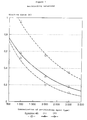
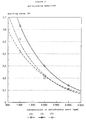
- a polyolefin film has for example to be supplied with 0.3 wt.% of an antiblocking agent having a small surface and 0.1 wt.% slip agent, or with 0.1 wt.% antiblocking agent made from synthetic silicic acid and 0.15 wt.% slip agent. This shows that the effectiveness of the slip agent in the presence of synthetic silicic acid is considerably reduced, i.e. approximately 50% more slip agent is required in order to obtain the same slipping effect or the same low coefficient of friction.
- Described in US-A-4 629 749 is the use of polyethylene glycol (PEG) together with antiblocking agents such as diatomaceous earth for improving the clarity of a blown film. Because of their small specific surface and their small pore volume, diatomaceous earths are not very efficient as antiblocking agents. Neither a slip agent nor the adsorption of slip agents at silicon dioxide is mentioned in the patent.
- the process described in US-A-4 629 749, used for the treatment of the silicon dioxide, is very expensive and disadvantageous because of solvent emission.
- the PEG is preferably dissolved in acetone and mixed with the silicon dioxide. The solvent is then evaporated.
- FR-A-2 484 428 Described in FR-A-2 484 428 is the use of ethylene glycol or polyethylene glycol with precipitated silicic acid.
- the silicic acid is used as filler for rubber.
- This publication does not relate to supplying polyolefin films with antiblocking agents or the adsorption of slip agents at silicon dioxide.
- the Japanese patent application JP 2 055 750 relates to a silicic acid which has either been treated with calcium stearate, paraffin wax or polyolefin wax in order to be used as antiblocking agent for polyolefin films.
- the silicic acid is itself merely called "finely powdered silicic acid". An adsorption of slip agent or the effect of glycols is not described.
- EP-A-0 442 325 Described in EP-A-0 442 325 is a dulling agent for coatings which is similar to the product of the present application. There is however no technological connection.
- EP-A-0 526 117 Described in EP-A-0 526 117 is a composition which contains synthetic silicon dioxide, a slip agent and an alkylene polyether (polyethylene glycol).
- the reduced slip agent effect is allegedly raised by adding the alkylene polyethers as "slip boosting agent", with the result that smaller quantities of slip agent suffice for the desired slip agent effect.
- a silicon dioxide with average pore volume is used (specific pore volume approx. 1.1 ml/g).
- the compatibility with slip agents has been improved, the thus-treated silicon dioxide does not show adequate compatibility or a high antiblocking effect.
- composition based on silicon dioxide as antiblocking agent which is characterized in that it contains silicon dioxide having
- an antiblocking agent based on silicon dioxide is in particular also used, which is characterized in that it contains silicon dioxide having
- the process for the production of the antiblocking agent used according to the invention is characterized in that the silicon dioxide is micronized to a particle size of 2 to 8 ⁇ m and treated with the polyol.
- the silicon dioxide or the silicic acid used according to the invention has a larger specific pore volume. It lies in the range from 1.4 to 2.0 ml/g.
- the pore volume and therefore the pore size of the silicon dioxide used according to the invention are considerably different from these (see Table on page 14).
- the polyols which can be used according to the invention have at least two OH groups, preferably 3 to 5 OH groups, and chains with a molecular weight up to 2000, preferably 100 to 800. In those cases where long-chained substances are used, their molecular weight is limited by the fact that they must be liquid. Polyethylene glycols are for example also suitable.
- a preferred polyol for the treatment of the silicon dioxide used is for example an alkoxylated pentaerythritol, whereby the alkoxy group is preferably a C 1 -C 6 alkoxy group, and in particular is a methoxy group, ethoxy group or butoxy group.
- the molar ratio of pentaerythritol to the alkoxy group preferably lies in the range from 1:0.5 to 1:25, more preferably 1:1 to 1:10 and most preferably 1:1 to 1:5.
- a particularly preferred embodiment is ethoxylated pentaerythritol. It has in particular a mole ratio of 1:3 (pentaerythritol : ethylene oxide) and a molecular weight of 270. The overall results achieved with it are especially good.
- silicon dioxide antiblocking agents have a pore volume of 0.8 to 1.2 ml/g. This means that the effectiveness is improved, compared with a nonporous material, as a result of the volume which is formed through the pores.
- the silicon dioxide used according to the invention does however have a pore volume of 1.4 to 2.0 ml/g which leads to an improvement of the antiblocking effect from 10 to above 80 %, compared with silicon dioxides with a specific pore volume of 1.2 ml/g.
- the larger pores of such a silicon dioxide used according to the invention improve the binding of the particles to the resin.
- the advantage consists in the fact that the number of agglomerates and "fish eyes” is reduced.
- the "fish eyes” are formed when the contact between the surface of the silicon dioxide particle and the resin is lost. This can occur in the presence of high shear forces during the blowing of the film, pouring of the film or film extension.
- the pore volume of the silicon dioxide is increased compared with that of known silicon dioxide by drying the silicon dioxide hydrogel (stage of the silicon dioxide production process when the pores are completely filled with water) using a process which permits high-speed drying (flash drying).
- a high-speed dryer the pre-ground particles are dried in less than 1 second and this leads to a pore volume of 1.4 to 2.0 ml/g, whilst the same silicon dioxide which has been dried in a fixed-bed dryer for a period of several minutes has a pore volume of 0.8 to 1.2 ml/g.
- Treatment of the antiblocking agent with the polyol can advantageously take place at the same time as the grinding, for example in a jet mill. Silicon dioxide and polyol are introduced at the same time into the jet mill. This process permits the particle size to be controlled and leads to a very homogeneous distribution of the polyol on the fine silicon dioxide particles. No further production steps are required, meaning that the costs too are not further increased, and no escaping solvent has to be handled or disposed of.
- the polymer additives which are protected according to the invention from an adsorption at the silicon dioxide are all those which are normally used in polyolefin films and contain polar groups.
- Such additives are for example fatty acid amides (erucic acid amide, oleic acid amide), antioxidants, anti-tarnish agents and anti-static agents.
- the concentration of the polyol required to prevent adsorption of slip agent at the silicon dioxide surface is 3 to 15 wt.% and preferably 6 to 10 wt.% of the silicon dioxide. It is important to note that the polyols are adsorbed very strongly at the silicon dioxide surface and do not therefore adversely influence other properties of the silicon dioxide antiblocking agent.
- the particle size of the silicon dioxide is measured in suitable manner using a Coulter Counter and the pore volume is determined using nitrogen adsorption.
- the silicon dioxide treated with polyol is used as antiblocking agent for polymer films, the films preferably being made from polyethylene, polypropylene or linear polyester, and in particular in a concentration of 200 to 4000 ppm, preferably 700 to 3000 ppm, relative to the film weight.
- polar additives can also be present. These other polar additives are for example compounds such as erucic acid amide or oleic acid amide which are then used in concentrations of for example 200 to 4000 ppm, preferably 700 to 3000 ppm in each case. They are preferably used with polyolefins.
- such polar additives include antioxidants, anti-static agents, anti-tarnish agents and UV stabilizers.
- the antiblocking agent or the combined antiblocking agent and slip agent is used in the form of a masterbatch, i.e. it is already incorporated in a relatively high concentration into a polymer, in particular a polyolefin.
- the polymer is preferably the same polymer from which the film is also comprised, into which the antiblocking agent or the combined antiblocking agent and slip agent is to be incorporated.
- concentration of the antiblocking agent or of the combined antiblocking and slip agent in the masterbatch is generally 5 to 25 wt.% or 10 to 50 wt.%.
- the coefficient of friction is measured according to ASTM D 1894.
- the "slip-stick” effect shown in the drawings can be described as an irregular, jerky movement of one film layer over the other film layer during measurement of the coefficient of friction. Normally, one film layer moves relative to the other at a constant speed and the necessarily expended force is constant. In the case of the "slip-stick” effect an irregular jerky movement of one of the film layers occurs and the measured friction force varies over a wide range (range of the "slip-stick”).
- the “slip-stick” effect normally happens directly after the film extrusion. It decreases after several days and depends on how quickly the slip agent can migrate to the film surface. The processor of polyolefin films quickly notices this phenomenon since it causes problems when the films are made into bags or carrier bags. The ideal film develops its constant coefficient of friction in a very short time after extrusion, for-example within 48 hours.
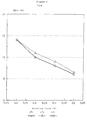
- the master-batch was added to a PP polymer (polypropylene polymer), a film extruder being used in order to obtain an antiblocking agent end-concentration of 1000, 2000 or 3000 ppm in films having a thickness of 40 ⁇ m. In each case the blocking force and the haze of the films were determined.
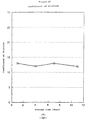
- 0.2 wt.% antiblocking agent and 0.2 wt.% oleic acid amide were incorporated into the polymer using a twin-screw mixer. Films measuring 10 cm wide and 1 mm thick were extruded from this resin. The dynamic coefficient of friction was measured after 1, 4, 7 and 10 days.
- Figures 5A, 5B and 5C show the improved behaviour of antiblocking agent 4 which is coated with the polyol according to the invention, compared with that of antiblocking agent 3 which is coated with polyethylene glycol, or antiblocking agent 2 (untreated silicon dioxide with large pore volume).
- the "slip-stick" effect has disappeared after one day in the case of antiblocking agent 4, whilst in the case of the antiblocking agent 3 coated with PEG, more than four days were required, and for the silicon dioxide without polyol (antiblocking agent 2), more than 7 days were required until the "slip-stick" effect disappeared.
Landscapes
- Chemical & Material Sciences (AREA)
- Health & Medical Sciences (AREA)
- Chemical Kinetics & Catalysis (AREA)
- Medicinal Chemistry (AREA)
- Polymers & Plastics (AREA)
- Organic Chemistry (AREA)
- Compositions Of Macromolecular Compounds (AREA)
- Agricultural Chemicals And Associated Chemicals (AREA)
- Manufacture Of Macromolecular Shaped Articles (AREA)
- Processes Of Treating Macromolecular Substances (AREA)
- Pigments, Carbon Blacks, Or Wood Stains (AREA)
Claims (11)
- Utilisation d'une composition à base de bioxide de silicium en tant qu'agent antiblocage, où le bioxide de silicium a une dimension de particule de 2 à 8 µm (mesurée par un Compteur Counter), une surface spécifique de 150 à 850 m2/g et un volume spécifique des pores de 1,4 à 2,0 ml/g (en déterminant via la méthode de BET) et a été traité avec un polyol.
- Utilisation selon la revendication 1, caractérisée en ce que le bioxide de silicium a été traité avec 3 à 15 % en poids de polyol, en se basant sur le poids du bioxide de silicium.
- Utilisation selon la revendication 1 ou 2, caractérisée en ce que le bioxide de silicium est du gel de silice micronisée.
- Utilisation selon l'une des revendications 1 à 3, caractérisée en ce que le polyol est du pentaérythritol alcoxylé, le groupe alcoxy est un groupe alcoxy C1-C6, en particulier sélectionné parmi méthoxy, éthoxy ou butoxy, et il y a un rapport molaire de pentaérythritol:alcoxy de 1:0,5 à 1:25.
- Utilisation selon l'une des revendications 1 à 4, caractérisée en ce que l'agent antiblocage est utilisé à une concentration de 200 à 4000 ppm, relativement au poids du film.
- Utilisation selon l'une des revendications 1 à 5, caractérisée en ce que l'agent antiblocage, avec un agent de glissement, qui est particulièrement sélectionné parmi l'amide de l'acide érucique et l'amide de l'acide oléïque et est utilisé de préférence à des concentrations de 200 à 4000 ppm relativement au poids du film, est utilisé comme agent antiblocage et agent de glissement combinés.
- Utilisation selon l'une des revendications 1 à 6, caractérisée en ce que le film polymère consiste en polyéthylène, polypropylène ou polyester linéaire.
- Utilisation selon l'une des revendications 1 à 7, caractérisée en ce que d'autres additifs polaires sont présents.
- Utilisation selon la revendication 8, caractérisée en ce que les autres additifs polaires comprennent des antioxidants, des agents antistatiques et des agents anti-ternissement.
- Utilisation selon l'une des revendications 1 à 9, caractérisée en ce que l'agent antiblocage, facultativement en combinaison avec un agent de glissement, est présent en étant incorporé dans un polymère sous la forme d'un mélange maítre.
- Utilisation selon la revendication 10, caractérisée en ce que le mélange-maítre se compose du polymère et de 10 à 50 % en poids de l'agent antiblocage et agent de glissement combinés.
Applications Claiming Priority (3)
| Application Number | Priority Date | Filing Date | Title |
|---|---|---|---|
| DE19502629 | 1995-01-19 | ||
| DE19502629A DE19502629C2 (de) | 1995-01-19 | 1995-01-19 | Verwendung einer Zusammensetzung auf Basis von polyolbehandeltem Siliciumdioxid als Antiblockingmittel |
| PCT/EP1996/000177 WO1996022326A1 (fr) | 1995-01-19 | 1996-01-17 | Utilisation d'une composition a base de dioxyde de silicium traite au polyol comme agent anti-adherent, agent anti-adherent et son procede de production |
Publications (2)
| Publication Number | Publication Date |
|---|---|
| EP0804502A1 EP0804502A1 (fr) | 1997-11-05 |
| EP0804502B1 true EP0804502B1 (fr) | 1998-08-12 |
Family
ID=7752506
Family Applications (1)
| Application Number | Title | Priority Date | Filing Date |
|---|---|---|---|
| EP96901287A Expired - Lifetime EP0804502B1 (fr) | 1995-01-19 | 1996-01-17 | Utilisation d'une composition a base de dioxyde de silicium traite au polyol comme agent anti-adherent |
Country Status (11)
| Country | Link |
|---|---|
| US (1) | US5609679A (fr) |
| EP (1) | EP0804502B1 (fr) |
| JP (1) | JPH10512605A (fr) |
| AU (1) | AU693642B2 (fr) |
| BR (1) | BR9607569A (fr) |
| CA (1) | CA2209566A1 (fr) |
| DE (2) | DE19502629C2 (fr) |
| DK (1) | DK0804502T3 (fr) |
| MY (1) | MY132197A (fr) |
| TW (1) | TW452585B (fr) |
| WO (1) | WO1996022326A1 (fr) |
Families Citing this family (8)
| Publication number | Priority date | Publication date | Assignee | Title |
|---|---|---|---|---|
| DE4424775A1 (de) * | 1994-07-05 | 1996-01-11 | Grace Gmbh | Antiblockingmittel und Verfahren zu dessen Herstellung |
| DK0971690T4 (en) | 1996-12-18 | 2015-07-13 | Bimeda Res & Dev Ltd | Anti-infective intramammary veterinary composition. |
| DE19805358A1 (de) * | 1998-02-12 | 1999-08-19 | Grace Gmbh | Integrierte Additivzusammensetzung, Verfahren zu ihrer Herstellung und ihre Verwendung |
| EP1149134B1 (fr) * | 1998-11-27 | 2002-08-28 | BP Chemicals Limited | Composition polymere destinee a des capsules de bouteilles a vis |
| US6593400B1 (en) * | 1999-06-30 | 2003-07-15 | Minerals Technologies Inc. | Talc antiblock compositions and method of preparation |
| JP3714061B2 (ja) | 1999-10-15 | 2005-11-09 | 住友化学株式会社 | アンチブロッキング剤マスターバッチ |
| US7467803B2 (en) * | 2003-12-12 | 2008-12-23 | Noel Buckley | Rear suspension system for bicycles |
| JP6943516B1 (ja) * | 2021-01-25 | 2021-10-06 | 富士シリシア化学株式会社 | シリカ複合体、樹脂組成物、及び樹脂フィルム又は樹脂シート |
Citations (1)
| Publication number | Priority date | Publication date | Assignee | Title |
|---|---|---|---|---|
| EP0442325A1 (fr) * | 1990-02-14 | 1991-08-21 | Grace GmbH | Agent de matité à base de silice, procÀ©dé de fabrication et d'utilisation |
Family Cites Families (8)
| Publication number | Priority date | Publication date | Assignee | Title |
|---|---|---|---|---|
| FR2484428A1 (fr) * | 1980-06-17 | 1981-12-18 | Naphtachimie Sa | Compositions d'absorption a base de silice et de glycols et leur application a la fabrication d'articles en caoutchouc |
| DE3337356A1 (de) * | 1983-10-14 | 1985-04-25 | Grace Gmbh, 2000 Norderstedt | Kombiniertes antiblocking- und gleitmittelkonzentrat |
| US4629749A (en) * | 1985-07-24 | 1986-12-16 | Enron Chemical Company | Clarity of low density polyethylene compositions containing anti-block agents by addition of polyethylene glycol |
| EP0227168B1 (fr) * | 1985-12-09 | 1996-07-10 | Mizusawa Industrial Chemicals Ltd. | Additif de résine à base d'alumine-silice |
| JPH0255750A (ja) * | 1988-08-22 | 1990-02-26 | Idemitsu Petrochem Co Ltd | ポリオレフィン樹脂組成物 |
| US5221337A (en) * | 1990-02-14 | 1993-06-22 | W. R. Grace & Co.-Conn. | SiO2 flatting agent, process for its production and its use |
| DE4116396C2 (de) * | 1991-05-18 | 1996-04-25 | Grace Gmbh | Modifizierte amorphe Kieselsäure, Verfahren zu deren Herstellung und Antiblockingmittel |
| GB9116498D0 (en) * | 1991-07-31 | 1991-09-11 | Bp Chem Int Ltd | Film processing |
-
1995
- 1995-01-19 DE DE19502629A patent/DE19502629C2/de not_active Expired - Fee Related
- 1995-06-07 US US08/486,417 patent/US5609679A/en not_active Expired - Fee Related
-
1996
- 1996-01-17 AU AU45368/96A patent/AU693642B2/en not_active Ceased
- 1996-01-17 WO PCT/EP1996/000177 patent/WO1996022326A1/fr not_active Ceased
- 1996-01-17 EP EP96901287A patent/EP0804502B1/fr not_active Expired - Lifetime
- 1996-01-17 CA CA002209566A patent/CA2209566A1/fr not_active Abandoned
- 1996-01-17 DE DE69600523T patent/DE69600523T2/de not_active Expired - Fee Related
- 1996-01-17 DK DK96901287T patent/DK0804502T3/da active
- 1996-01-17 BR BR9607569A patent/BR9607569A/pt not_active Application Discontinuation
- 1996-01-17 TW TW085100513A patent/TW452585B/zh active
- 1996-01-17 MY MYPI96000181A patent/MY132197A/en unknown
- 1996-01-17 JP JP8522039A patent/JPH10512605A/ja active Pending
Patent Citations (1)
| Publication number | Priority date | Publication date | Assignee | Title |
|---|---|---|---|---|
| EP0442325A1 (fr) * | 1990-02-14 | 1991-08-21 | Grace GmbH | Agent de matité à base de silice, procÀ©dé de fabrication et d'utilisation |
Also Published As
| Publication number | Publication date |
|---|---|
| DE19502629C2 (de) | 1998-11-05 |
| EP0804502A1 (fr) | 1997-11-05 |
| MX9705381A (es) | 1997-10-31 |
| MY132197A (en) | 2007-09-28 |
| DE69600523T2 (de) | 1999-05-06 |
| DE19502629A1 (de) | 1996-07-25 |
| AU693642B2 (en) | 1998-07-02 |
| CA2209566A1 (fr) | 1996-07-25 |
| DE69600523D1 (de) | 1998-09-17 |
| JPH10512605A (ja) | 1998-12-02 |
| DK0804502T3 (da) | 1998-11-16 |
| TW452585B (en) | 2001-09-01 |
| BR9607569A (pt) | 1998-07-21 |
| US5609679A (en) | 1997-03-11 |
| WO1996022326A1 (fr) | 1996-07-25 |
| AU4536896A (en) | 1996-08-07 |
Similar Documents
| Publication | Publication Date | Title |
|---|---|---|
| US6066691A (en) | Anti-blocking agent and process for its manufacture | |
| US6855759B2 (en) | Silica particles surface-treated with silane, process for producing the same and uses thereof | |
| US5366645A (en) | Anti-blocking agent containing modified amorphous silica | |
| US5609679A (en) | Polyol-treated antiblocking aid | |
| KR100281815B1 (ko) | 합성수지용첨가제및합성수지조성물 | |
| JP2001512503A (ja) | 静電気消散性組成物 | |
| EP1633908B1 (fr) | Composition anti-ternisssante et article contenant ladite composition | |
| ES2375950T3 (es) | Botella de poliéster que tiene un coeficiente de fricción reducido y una transparencia mejorada. | |
| US7270775B2 (en) | Corrosion inhibiting composition and article containing it | |
| EP0663933B1 (fr) | Corps moules en polyester qui contiennent des particules d'oxyde liees de maniere covalente | |
| KR100218698B1 (ko) | 열가소성폴리에스테르조성물 및 그것으로 구성하는 필름 | |
| JPWO2001040360A1 (ja) | スチレン系樹脂フィルム | |
| EP1239001A1 (fr) | Film en resine au styrene | |
| EP1053100B1 (fr) | Film glissant en polypropylene destine a l'emballage, etire biaxialement, a coefficient de frottement stable | |
| MXPA97005381A (en) | Use of a composition based on dioxide dilution treated with polyol as agent, block agent, anti-block agent and process your production | |
| US4898771A (en) | Agent for imparting antistatic characteristics to a thermoplastic polymer and a thermoplastic polymer composition containing the agent | |
| EP4019570A1 (fr) | Mélanges-maîtres de polymère à concentration élevée d'antioxydants de phosphite liquides présentant une meilleure résistance à l'hydrolyse | |
| EP0406727B1 (fr) | Procédé de préparation d'une matière première de polyester | |
| CA1042277A (fr) | Support d'enregistrement magnetique et mode de fabrication | |
| Zahedi et al. | Optimizing COF, blocking force, and printability of low density polyethylene | |
| JPH03121843A (ja) | 帯電防止・易接着性ポリエステルフイルム | |
| KR100808720B1 (ko) | 포장필름용 폴리에틸렌 수지 조성물 | |
| JPS6399254A (ja) | 帯電防止フイルム | |
| JPH0525373A (ja) | 熱可塑性ポリエステル組成物 |
Legal Events
| Date | Code | Title | Description |
|---|---|---|---|
| PUAI | Public reference made under article 153(3) epc to a published international application that has entered the european phase |
Free format text: ORIGINAL CODE: 0009012 |
|
| 17P | Request for examination filed |
Effective date: 19970728 |
|
| AK | Designated contracting states |
Kind code of ref document: A1 Designated state(s): BE DE DK FR GB IT NL SE |
|
| GRAG | Despatch of communication of intention to grant |
Free format text: ORIGINAL CODE: EPIDOS AGRA |
|
| 17Q | First examination report despatched |
Effective date: 19971118 |
|
| GRAG | Despatch of communication of intention to grant |
Free format text: ORIGINAL CODE: EPIDOS AGRA |
|
| GRAH | Despatch of communication of intention to grant a patent |
Free format text: ORIGINAL CODE: EPIDOS IGRA |
|
| GRAH | Despatch of communication of intention to grant a patent |
Free format text: ORIGINAL CODE: EPIDOS IGRA |
|
| GRAA | (expected) grant |
Free format text: ORIGINAL CODE: 0009210 |
|
| AK | Designated contracting states |
Kind code of ref document: B1 Designated state(s): BE DE DK FR GB IT NL SE |
|
| REF | Corresponds to: |
Ref document number: 69600523 Country of ref document: DE Date of ref document: 19980917 |
|
| REG | Reference to a national code |
Ref country code: DK Ref legal event code: T3 |
|
| ET | Fr: translation filed | ||
| PLBE | No opposition filed within time limit |
Free format text: ORIGINAL CODE: 0009261 |
|
| STAA | Information on the status of an ep patent application or granted ep patent |
Free format text: STATUS: NO OPPOSITION FILED WITHIN TIME LIMIT |
|
| 26N | No opposition filed | ||
| PGFP | Annual fee paid to national office [announced via postgrant information from national office to epo] |
Ref country code: DE Payment date: 19991231 Year of fee payment: 5 |
|
| PGFP | Annual fee paid to national office [announced via postgrant information from national office to epo] |
Ref country code: SE Payment date: 20000107 Year of fee payment: 5 |
|
| PGFP | Annual fee paid to national office [announced via postgrant information from national office to epo] |
Ref country code: DK Payment date: 20000110 Year of fee payment: 5 |
|
| PGFP | Annual fee paid to national office [announced via postgrant information from national office to epo] |
Ref country code: GB Payment date: 20000112 Year of fee payment: 5 Ref country code: FR Payment date: 20000112 Year of fee payment: 5 |
|
| PGFP | Annual fee paid to national office [announced via postgrant information from national office to epo] |
Ref country code: NL Payment date: 20000131 Year of fee payment: 5 |
|
| PGFP | Annual fee paid to national office [announced via postgrant information from national office to epo] |
Ref country code: BE Payment date: 20000315 Year of fee payment: 5 |
|
| PG25 | Lapsed in a contracting state [announced via postgrant information from national office to epo] |
Ref country code: GB Free format text: LAPSE BECAUSE OF NON-PAYMENT OF DUE FEES Effective date: 20010117 Ref country code: DK Free format text: LAPSE BECAUSE OF NON-PAYMENT OF DUE FEES Effective date: 20010117 |
|
| PG25 | Lapsed in a contracting state [announced via postgrant information from national office to epo] |
Ref country code: SE Free format text: LAPSE BECAUSE OF NON-PAYMENT OF DUE FEES Effective date: 20010118 |
|
| PG25 | Lapsed in a contracting state [announced via postgrant information from national office to epo] |
Ref country code: BE Free format text: LAPSE BECAUSE OF NON-PAYMENT OF DUE FEES Effective date: 20010131 |
|
| BERE | Be: lapsed |
Owner name: GRACE G.M.B.H. Effective date: 20010131 |
|
| PG25 | Lapsed in a contracting state [announced via postgrant information from national office to epo] |
Ref country code: NL Free format text: LAPSE BECAUSE OF NON-PAYMENT OF DUE FEES Effective date: 20010801 |
|
| GBPC | Gb: european patent ceased through non-payment of renewal fee |
Effective date: 20010117 |
|
| EUG | Se: european patent has lapsed |
Ref document number: 96901287.1 |
|
| REG | Reference to a national code |
Ref country code: DK Ref legal event code: EBP |
|
| PG25 | Lapsed in a contracting state [announced via postgrant information from national office to epo] |
Ref country code: FR Free format text: LAPSE BECAUSE OF NON-PAYMENT OF DUE FEES Effective date: 20010928 |
|
| NLV4 | Nl: lapsed or anulled due to non-payment of the annual fee |
Effective date: 20010801 |
|
| PG25 | Lapsed in a contracting state [announced via postgrant information from national office to epo] |
Ref country code: DE Free format text: LAPSE BECAUSE OF NON-PAYMENT OF DUE FEES Effective date: 20011101 |
|
| REG | Reference to a national code |
Ref country code: FR Ref legal event code: ST |
|
| PG25 | Lapsed in a contracting state [announced via postgrant information from national office to epo] |
Ref country code: IT Free format text: LAPSE BECAUSE OF NON-PAYMENT OF DUE FEES Effective date: 20050117 |