EP0817862B1 - One-pot enzymatic sulfation process using 3'-phosphoadenosine-5'-phosphosulfate and recycled phosphorylated adenosine intermediates - Google Patents
One-pot enzymatic sulfation process using 3'-phosphoadenosine-5'-phosphosulfate and recycled phosphorylated adenosine intermediates Download PDFInfo
- Publication number
- EP0817862B1 EP0817862B1 EP96908871A EP96908871A EP0817862B1 EP 0817862 B1 EP0817862 B1 EP 0817862B1 EP 96908871 A EP96908871 A EP 96908871A EP 96908871 A EP96908871 A EP 96908871A EP 0817862 B1 EP0817862 B1 EP 0817862B1
- Authority
- EP
- European Patent Office
- Prior art keywords
- sulfotransferase
- atp
- paps
- aps
- enzyme
- Prior art date
- Legal status (The legal status is an assumption and is not a legal conclusion. Google has not performed a legal analysis and makes no representation as to the accuracy of the status listed.)
- Expired - Lifetime
Links
- 238000000034 method Methods 0.000 title claims abstract description 56
- 230000008569 process Effects 0.000 title claims abstract description 36
- 150000003838 adenosines Chemical class 0.000 title claims abstract description 12
- GACDQMDRPRGCTN-KQYNXXCUSA-N 3'-phospho-5'-adenylyl sulfate Chemical compound C1=NC=2C(N)=NC=NC=2N1[C@@H]1O[C@H](COP(O)(=O)OS(O)(=O)=O)[C@@H](OP(O)(O)=O)[C@H]1O GACDQMDRPRGCTN-KQYNXXCUSA-N 0.000 title claims description 73
- 238000005670 sulfation reaction Methods 0.000 title claims description 22
- 230000019635 sulfation Effects 0.000 title claims description 21
- 239000000543 intermediate Substances 0.000 title claims description 8
- 230000002255 enzymatic effect Effects 0.000 title abstract description 15
- 238000005580 one pot reaction Methods 0.000 title description 4
- 102000004190 Enzymes Human genes 0.000 claims abstract description 70
- 108090000790 Enzymes Proteins 0.000 claims abstract description 70
- 108010022348 Sulfate adenylyltransferase Proteins 0.000 claims abstract description 69
- 102100040149 Adenylyl-sulfate kinase Human genes 0.000 claims abstract description 37
- 102000004896 Sulfotransferases Human genes 0.000 claims abstract description 34
- 108090001033 Sulfotransferases Proteins 0.000 claims abstract description 34
- 102000004523 Sulfate Adenylyltransferase Human genes 0.000 claims abstract description 31
- QAOWNCQODCNURD-UHFFFAOYSA-L Sulfate Chemical compound [O-]S([O-])(=O)=O QAOWNCQODCNURD-UHFFFAOYSA-L 0.000 claims description 32
- 108010058882 Alcohol sulfotransferase Proteins 0.000 claims description 23
- 102100029867 Sulfotransferase 2A1 Human genes 0.000 claims description 20
- 230000000694 effects Effects 0.000 claims description 20
- 150000001875 compounds Chemical class 0.000 claims description 15
- 108010037497 3'-nucleotidase Proteins 0.000 claims description 13
- 102000013009 Pyruvate Kinase Human genes 0.000 claims description 13
- 108020005115 Pyruvate Kinase Proteins 0.000 claims description 13
- 229910019142 PO4 Inorganic materials 0.000 claims description 12
- GFFGJBXGBJISGV-UHFFFAOYSA-N Adenine Chemical compound NC1=NC=NC2=C1N=CN2 GFFGJBXGBJISGV-UHFFFAOYSA-N 0.000 claims description 11
- 239000012431 aqueous reaction media Substances 0.000 claims description 11
- NBIIXXVUZAFLBC-UHFFFAOYSA-K phosphate Chemical compound [O-]P([O-])([O-])=O NBIIXXVUZAFLBC-UHFFFAOYSA-K 0.000 claims description 11
- 239000010452 phosphate Substances 0.000 claims description 11
- 230000000865 phosphorylative effect Effects 0.000 claims description 9
- 108020000543 Adenylate kinase Proteins 0.000 claims description 7
- 239000012736 aqueous medium Substances 0.000 claims description 7
- 229910001425 magnesium ion Inorganic materials 0.000 claims description 7
- 102000002281 Adenylate kinase Human genes 0.000 claims description 6
- LCTONWCANYUPML-UHFFFAOYSA-M Pyruvate Chemical compound CC(=O)C([O-])=O LCTONWCANYUPML-UHFFFAOYSA-M 0.000 claims description 6
- FYYHWMGAXLPEAU-UHFFFAOYSA-N Magnesium Chemical compound [Mg] FYYHWMGAXLPEAU-UHFFFAOYSA-N 0.000 claims description 5
- 108010042929 bisphosphoadenylate 3'-nucleotidase Proteins 0.000 claims description 5
- DLGJWSVWTWEWBJ-HGGSSLSASA-N chondroitin Chemical group CC(O)=N[C@@H]1[C@H](O)O[C@H](CO)[C@H](O)[C@@H]1OC1[C@H](O)[C@H](O)C=C(C(O)=O)O1 DLGJWSVWTWEWBJ-HGGSSLSASA-N 0.000 claims description 5
- 239000004615 ingredient Substances 0.000 claims description 5
- 239000011777 magnesium Substances 0.000 claims description 5
- 229910001414 potassium ion Inorganic materials 0.000 claims description 5
- 229920002567 Chondroitin Polymers 0.000 claims description 4
- 150000002085 enols Chemical class 0.000 claims description 4
- 238000004064 recycling Methods 0.000 claims description 4
- 229930024421 Adenine Natural products 0.000 claims 2
- 229960000643 adenine Drugs 0.000 claims 2
- 102000004357 Transferases Human genes 0.000 claims 1
- 108090000992 Transferases Proteins 0.000 claims 1
- 230000005764 inhibitory process Effects 0.000 abstract description 9
- 150000003467 sulfuric acid derivatives Chemical class 0.000 abstract description 3
- 108020004414 DNA Proteins 0.000 description 46
- 238000006243 chemical reaction Methods 0.000 description 43
- 108090000623 proteins and genes Proteins 0.000 description 42
- 239000000047 product Substances 0.000 description 34
- IRLPACMLTUPBCL-KQYNXXCUSA-N 5'-adenylyl sulfate Chemical compound C1=NC=2C(N)=NC=NC=2N1[C@@H]1O[C@H](COP(O)(=O)OS(O)(=O)=O)[C@@H](O)[C@H]1O IRLPACMLTUPBCL-KQYNXXCUSA-N 0.000 description 29
- 210000004027 cell Anatomy 0.000 description 28
- TWRXJAOTZQYOKJ-UHFFFAOYSA-L Magnesium chloride Chemical compound [Mg+2].[Cl-].[Cl-] TWRXJAOTZQYOKJ-UHFFFAOYSA-L 0.000 description 26
- 230000015572 biosynthetic process Effects 0.000 description 26
- 239000000872 buffer Substances 0.000 description 26
- 241000588724 Escherichia coli Species 0.000 description 25
- 238000003786 synthesis reaction Methods 0.000 description 25
- 239000013598 vector Substances 0.000 description 24
- 238000012408 PCR amplification Methods 0.000 description 23
- WHTCPDAXWFLDIH-UHFFFAOYSA-N PAP Natural products C1=NC=2C(N)=NC=NC=2N1C1OC(COP(O)(O)=O)C(OP(O)(O)=O)C1O WHTCPDAXWFLDIH-UHFFFAOYSA-N 0.000 description 22
- 239000000243 solution Substances 0.000 description 22
- HEDRZPFGACZZDS-UHFFFAOYSA-N Chloroform Chemical compound ClC(Cl)Cl HEDRZPFGACZZDS-UHFFFAOYSA-N 0.000 description 20
- 102100034937 Poly(A) RNA polymerase, mitochondrial Human genes 0.000 description 20
- 102000004169 proteins and genes Human genes 0.000 description 18
- QKNYBSVHEMOAJP-UHFFFAOYSA-N 2-amino-2-(hydroxymethyl)propane-1,3-diol;hydron;chloride Chemical compound Cl.OCC(N)(CO)CO QKNYBSVHEMOAJP-UHFFFAOYSA-N 0.000 description 17
- IAZDPXIOMUYVGZ-UHFFFAOYSA-N Dimethylsulphoxide Chemical compound CS(C)=O IAZDPXIOMUYVGZ-UHFFFAOYSA-N 0.000 description 17
- LFQSCWFLJHTTHZ-UHFFFAOYSA-N Ethanol Chemical compound CCO LFQSCWFLJHTTHZ-UHFFFAOYSA-N 0.000 description 17
- 238000002360 preparation method Methods 0.000 description 17
- PEDCQBHIVMGVHV-UHFFFAOYSA-N Glycerine Chemical compound OCC(O)CO PEDCQBHIVMGVHV-UHFFFAOYSA-N 0.000 description 15
- OKKJLVBELUTLKV-UHFFFAOYSA-N Methanol Chemical compound OC OKKJLVBELUTLKV-UHFFFAOYSA-N 0.000 description 15
- 229960000723 ampicillin Drugs 0.000 description 14
- 239000000758 substrate Substances 0.000 description 14
- UDMBCSSLTHHNCD-KQYNXXCUSA-N adenosine 5'-monophosphate Chemical compound C1=NC=2C(N)=NC=NC=2N1[C@@H]1O[C@H](COP(O)(O)=O)[C@@H](O)[C@H]1O UDMBCSSLTHHNCD-KQYNXXCUSA-N 0.000 description 13
- AVKUERGKIZMTKX-NJBDSQKTSA-N ampicillin Chemical compound C1([C@@H](N)C(=O)N[C@H]2[C@H]3SC([C@@H](N3C2=O)C(O)=O)(C)C)=CC=CC=C1 AVKUERGKIZMTKX-NJBDSQKTSA-N 0.000 description 13
- 229910001629 magnesium chloride Inorganic materials 0.000 description 13
- 239000002609 medium Substances 0.000 description 13
- UDMBCSSLTHHNCD-UHFFFAOYSA-N Coenzym Q(11) Natural products C1=NC=2C(N)=NC=NC=2N1C1OC(COP(O)(O)=O)C(O)C1O UDMBCSSLTHHNCD-UHFFFAOYSA-N 0.000 description 12
- LNQVTSROQXJCDD-UHFFFAOYSA-N adenosine monophosphate Natural products C1=NC=2C(N)=NC=NC=2N1C1OC(CO)C(OP(O)(O)=O)C1O LNQVTSROQXJCDD-UHFFFAOYSA-N 0.000 description 12
- 230000014509 gene expression Effects 0.000 description 12
- 235000021317 phosphate Nutrition 0.000 description 11
- ISWSIDIOOBJBQZ-UHFFFAOYSA-N Phenol Chemical compound OC1=CC=CC=C1 ISWSIDIOOBJBQZ-UHFFFAOYSA-N 0.000 description 10
- 239000011543 agarose gel Substances 0.000 description 10
- 230000003321 amplification Effects 0.000 description 10
- 238000003199 nucleic acid amplification method Methods 0.000 description 10
- XLYOFNOQVPJJNP-UHFFFAOYSA-N water Substances O XLYOFNOQVPJJNP-UHFFFAOYSA-N 0.000 description 10
- 239000013612 plasmid Substances 0.000 description 9
- 230000008929 regeneration Effects 0.000 description 9
- 238000011069 regeneration method Methods 0.000 description 9
- 101000702488 Rattus norvegicus High affinity cationic amino acid transporter 1 Proteins 0.000 description 8
- 108020004707 nucleic acids Proteins 0.000 description 8
- 102000039446 nucleic acids Human genes 0.000 description 8
- 150000007523 nucleic acids Chemical class 0.000 description 8
- 229910001868 water Inorganic materials 0.000 description 8
- 239000003153 chemical reaction reagent Substances 0.000 description 7
- 125000004122 cyclic group Chemical group 0.000 description 7
- 210000004185 liver Anatomy 0.000 description 7
- 230000002934 lysing effect Effects 0.000 description 7
- QTBSBXVTEAMEQO-UHFFFAOYSA-N Acetic acid Chemical compound CC(O)=O QTBSBXVTEAMEQO-UHFFFAOYSA-N 0.000 description 6
- CSCPPACGZOOCGX-UHFFFAOYSA-N Acetone Chemical compound CC(C)=O CSCPPACGZOOCGX-UHFFFAOYSA-N 0.000 description 6
- KCXVZYZYPLLWCC-UHFFFAOYSA-N EDTA Chemical compound OC(=O)CN(CC(O)=O)CCN(CC(O)=O)CC(O)=O KCXVZYZYPLLWCC-UHFFFAOYSA-N 0.000 description 6
- 238000003556 assay Methods 0.000 description 6
- 108010017957 carbohydrate sulfotransferases Proteins 0.000 description 6
- 230000000875 corresponding effect Effects 0.000 description 6
- 238000006911 enzymatic reaction Methods 0.000 description 6
- 244000005700 microbiome Species 0.000 description 6
- 238000010369 molecular cloning Methods 0.000 description 6
- 229930027945 nicotinamide-adenine dinucleotide Natural products 0.000 description 6
- -1 phosphorylated adenosine compound Chemical class 0.000 description 6
- 238000000746 purification Methods 0.000 description 6
- 239000011541 reaction mixture Substances 0.000 description 6
- 238000012216 screening Methods 0.000 description 6
- 102100038768 Carbohydrate sulfotransferase 3 Human genes 0.000 description 5
- 108010079295 Chondroitin 4-sulfotransferase Proteins 0.000 description 5
- 108010009595 Inorganic Pyrophosphatase Proteins 0.000 description 5
- 102100027050 Inorganic pyrophosphatase Human genes 0.000 description 5
- 239000007832 Na2SO4 Substances 0.000 description 5
- 241000589196 Sinorhizobium meliloti Species 0.000 description 5
- PMZURENOXWZQFD-UHFFFAOYSA-L Sodium Sulfate Chemical compound [Na+].[Na+].[O-]S([O-])(=O)=O PMZURENOXWZQFD-UHFFFAOYSA-L 0.000 description 5
- 229920004890 Triton X-100 Polymers 0.000 description 5
- 239000013504 Triton X-100 Substances 0.000 description 5
- XPPKVPWEQAFLFU-UHFFFAOYSA-J diphosphate(4-) Chemical compound [O-]P([O-])(=O)OP([O-])([O-])=O XPPKVPWEQAFLFU-UHFFFAOYSA-J 0.000 description 5
- 235000011180 diphosphates Nutrition 0.000 description 5
- 238000012869 ethanol precipitation Methods 0.000 description 5
- 239000013604 expression vector Substances 0.000 description 5
- 238000000605 extraction Methods 0.000 description 5
- 239000003112 inhibitor Substances 0.000 description 5
- 239000000463 material Substances 0.000 description 5
- 239000000203 mixture Substances 0.000 description 5
- 239000003284 nod factor Substances 0.000 description 5
- 229940048084 pyrophosphate Drugs 0.000 description 5
- 108091008146 restriction endonucleases Proteins 0.000 description 5
- 229910052938 sodium sulfate Inorganic materials 0.000 description 5
- 239000006228 supernatant Substances 0.000 description 5
- 108010092060 Acetate kinase Proteins 0.000 description 4
- 241001198387 Escherichia coli BL21(DE3) Species 0.000 description 4
- FAPWRFPIFSIZLT-UHFFFAOYSA-M Sodium chloride Chemical compound [Na+].[Cl-] FAPWRFPIFSIZLT-UHFFFAOYSA-M 0.000 description 4
- 238000002835 absorbance Methods 0.000 description 4
- 238000009835 boiling Methods 0.000 description 4
- 210000000845 cartilage Anatomy 0.000 description 4
- 239000002299 complementary DNA Substances 0.000 description 4
- 238000010276 construction Methods 0.000 description 4
- 230000029087 digestion Effects 0.000 description 4
- 230000006698 induction Effects 0.000 description 4
- 239000012528 membrane Substances 0.000 description 4
- BOPGDPNILDQYTO-NNYOXOHSSA-N nicotinamide-adenine dinucleotide Chemical compound C1=CCC(C(=O)N)=CN1[C@H]1[C@H](O)[C@H](O)[C@@H](COP(O)(=O)OP(O)(=O)OC[C@@H]2[C@H]([C@@H](O)[C@@H](O2)N2C3=NC=NC(N)=C3N=C2)O)O1 BOPGDPNILDQYTO-NNYOXOHSSA-N 0.000 description 4
- ZRSNZINYAWTAHE-UHFFFAOYSA-N p-methoxybenzaldehyde Chemical compound COC1=CC=C(C=O)C=C1 ZRSNZINYAWTAHE-UHFFFAOYSA-N 0.000 description 4
- 108091032973 (ribonucleotides)n+m Proteins 0.000 description 3
- 108010014303 DNA-directed DNA polymerase Proteins 0.000 description 3
- 102000016928 DNA-directed DNA polymerase Human genes 0.000 description 3
- 241001646716 Escherichia coli K-12 Species 0.000 description 3
- 239000006142 Luria-Bertani Agar Substances 0.000 description 3
- 241000589500 Thermus aquaticus Species 0.000 description 3
- 239000007984 Tris EDTA buffer Substances 0.000 description 3
- OIRDTQYFTABQOQ-KQYNXXCUSA-N adenosine Chemical compound C1=NC=2C(N)=NC=NC=2N1[C@@H]1O[C@H](CO)[C@@H](O)[C@H]1O OIRDTQYFTABQOQ-KQYNXXCUSA-N 0.000 description 3
- WHTCPDAXWFLDIH-KQYNXXCUSA-N adenosine 3',5'-bismonophosphate Chemical compound C1=NC=2C(N)=NC=NC=2N1[C@@H]1O[C@H](COP(O)(O)=O)[C@@H](OP(O)(O)=O)[C@H]1O WHTCPDAXWFLDIH-KQYNXXCUSA-N 0.000 description 3
- 238000012870 ammonium sulfate precipitation Methods 0.000 description 3
- 210000004899 c-terminal region Anatomy 0.000 description 3
- 230000015556 catabolic process Effects 0.000 description 3
- 238000005119 centrifugation Methods 0.000 description 3
- 210000003837 chick embryo Anatomy 0.000 description 3
- 238000001816 cooling Methods 0.000 description 3
- 238000006731 degradation reaction Methods 0.000 description 3
- 238000004925 denaturation Methods 0.000 description 3
- 230000036425 denaturation Effects 0.000 description 3
- VHJLVAABSRFDPM-QWWZWVQMSA-N dithiothreitol Chemical compound SC[C@@H](O)[C@H](O)CS VHJLVAABSRFDPM-QWWZWVQMSA-N 0.000 description 3
- 239000000284 extract Substances 0.000 description 3
- 239000012634 fragment Substances 0.000 description 3
- 238000000338 in vitro Methods 0.000 description 3
- 238000011534 incubation Methods 0.000 description 3
- 230000002401 inhibitory effect Effects 0.000 description 3
- 229910052816 inorganic phosphate Inorganic materials 0.000 description 3
- 239000002480 mineral oil Substances 0.000 description 3
- 235000010446 mineral oil Nutrition 0.000 description 3
- UEZVMMHDMIWARA-UHFFFAOYSA-M phosphonate Chemical compound [O-]P(=O)=O UEZVMMHDMIWARA-UHFFFAOYSA-M 0.000 description 3
- 239000002244 precipitate Substances 0.000 description 3
- 239000000523 sample Substances 0.000 description 3
- 239000007858 starting material Substances 0.000 description 3
- 150000003431 steroids Chemical class 0.000 description 3
- 239000000126 substance Substances 0.000 description 3
- 238000012546 transfer Methods 0.000 description 3
- KVUXYQHEESDGIJ-UHFFFAOYSA-N 10,13-dimethyl-2,3,4,5,6,7,8,9,11,12,14,15,16,17-tetradecahydro-1h-cyclopenta[a]phenanthrene-3,16-diol Chemical compound C1CC2CC(O)CCC2(C)C2C1C1CC(O)CC1(C)CC2 KVUXYQHEESDGIJ-UHFFFAOYSA-N 0.000 description 2
- 238000005160 1H NMR spectroscopy Methods 0.000 description 2
- NKDFYOWSKOHCCO-YPVLXUMRSA-N 20-hydroxyecdysone Chemical compound C1[C@@H](O)[C@@H](O)C[C@]2(C)[C@@H](CC[C@@]3([C@@H]([C@@](C)(O)[C@H](O)CCC(C)(O)C)CC[C@]33O)C)C3=CC(=O)[C@@H]21 NKDFYOWSKOHCCO-YPVLXUMRSA-N 0.000 description 2
- LNQVTSROQXJCDD-KQYNXXCUSA-N 3'-AMP Chemical compound C1=NC=2C(N)=NC=NC=2N1[C@@H]1O[C@H](CO)[C@@H](OP(O)(O)=O)[C@H]1O LNQVTSROQXJCDD-KQYNXXCUSA-N 0.000 description 2
- CWLKGDAVCFYWJK-UHFFFAOYSA-N 3-aminophenol Chemical compound NC1=CC=CC(O)=C1 CWLKGDAVCFYWJK-UHFFFAOYSA-N 0.000 description 2
- XTWYTFMLZFPYCI-KQYNXXCUSA-N 5'-adenylphosphoric acid Chemical compound C1=NC=2C(N)=NC=NC=2N1[C@@H]1O[C@H](COP(O)(=O)OP(O)(O)=O)[C@@H](O)[C@H]1O XTWYTFMLZFPYCI-KQYNXXCUSA-N 0.000 description 2
- HRPVXLWXLXDGHG-UHFFFAOYSA-N Acrylamide Chemical compound NC(=O)C=C HRPVXLWXLXDGHG-UHFFFAOYSA-N 0.000 description 2
- 101150111062 C gene Proteins 0.000 description 2
- 239000002126 C01EB10 - Adenosine Substances 0.000 description 2
- 229920001287 Chondroitin sulfate Polymers 0.000 description 2
- 229920002271 DEAE-Sepharose Polymers 0.000 description 2
- 241000287828 Gallus gallus Species 0.000 description 2
- 108010010803 Gelatin Proteins 0.000 description 2
- 102000005548 Hexokinase Human genes 0.000 description 2
- 108700040460 Hexokinases Proteins 0.000 description 2
- JLVVSXFLKOJNIY-UHFFFAOYSA-N Magnesium ion Chemical compound [Mg+2] JLVVSXFLKOJNIY-UHFFFAOYSA-N 0.000 description 2
- CSNNHWWHGAXBCP-UHFFFAOYSA-L Magnesium sulfate Chemical compound [Mg+2].[O-][S+2]([O-])([O-])[O-] CSNNHWWHGAXBCP-UHFFFAOYSA-L 0.000 description 2
- 241001442654 Percnon planissimum Species 0.000 description 2
- 108010009413 Pyrophosphatases Proteins 0.000 description 2
- 102000009609 Pyrophosphatases Human genes 0.000 description 2
- VMHLLURERBWHNL-UHFFFAOYSA-M Sodium acetate Chemical compound [Na+].CC([O-])=O VMHLLURERBWHNL-UHFFFAOYSA-M 0.000 description 2
- 101710137500 T7 RNA polymerase Proteins 0.000 description 2
- MUMGGOZAMZWBJJ-DYKIIFRCSA-N Testostosterone Chemical compound O=C1CC[C@]2(C)[C@H]3CC[C@](C)([C@H](CC4)O)[C@@H]4[C@@H]3CCC2=C1 MUMGGOZAMZWBJJ-DYKIIFRCSA-N 0.000 description 2
- PTKRUDMLGIIORX-ITGWJZMWSA-N [[(2r,3r,4r,5r)-5-(6-aminopurin-9-yl)-3-hydroxy-4-phosphonooxyoxolan-2-yl]methoxy-hydroxyphosphoryl] [(2r,3s,4r,5r)-5-(3-carbamoyl-4h-pyridin-1-yl)-3,4-dihydroxyoxolan-2-yl]methyl hydrogen phosphate;cyclohexanamine Chemical compound NC1CCCCC1.NC1CCCCC1.NC1CCCCC1.NC1CCCCC1.C1=CCC(C(=O)N)=CN1[C@H]1[C@H](O)[C@H](O)[C@@H](COP(O)(=O)OP(O)(=O)OC[C@@H]2[C@H]([C@@H](OP(O)(O)=O)[C@@H](O2)N2C3=NC=NC(N)=C3N=C2)O)O1 PTKRUDMLGIIORX-ITGWJZMWSA-N 0.000 description 2
- LIPOUNRJVLNBCD-UHFFFAOYSA-N acetyl dihydrogen phosphate Chemical compound CC(=O)OP(O)(O)=O LIPOUNRJVLNBCD-UHFFFAOYSA-N 0.000 description 2
- 229960005305 adenosine Drugs 0.000 description 2
- 229950006790 adenosine phosphate Drugs 0.000 description 2
- 150000001413 amino acids Chemical group 0.000 description 2
- BFNBIHQBYMNNAN-UHFFFAOYSA-N ammonium sulfate Chemical compound N.N.OS(O)(=O)=O BFNBIHQBYMNNAN-UHFFFAOYSA-N 0.000 description 2
- 229910052921 ammonium sulfate Inorganic materials 0.000 description 2
- 235000011130 ammonium sulphate Nutrition 0.000 description 2
- 238000000137 annealing Methods 0.000 description 2
- 238000010804 cDNA synthesis Methods 0.000 description 2
- 239000006285 cell suspension Substances 0.000 description 2
- 239000007795 chemical reaction product Substances 0.000 description 2
- 239000003795 chemical substances by application Substances 0.000 description 2
- 238000004440 column chromatography Methods 0.000 description 2
- 230000000295 complement effect Effects 0.000 description 2
- 230000001419 dependent effect Effects 0.000 description 2
- 230000030609 dephosphorylation Effects 0.000 description 2
- 238000006209 dephosphorylation reaction Methods 0.000 description 2
- 150000002016 disaccharides Chemical group 0.000 description 2
- 210000002257 embryonic structure Anatomy 0.000 description 2
- 230000029142 excretion Effects 0.000 description 2
- 239000000499 gel Substances 0.000 description 2
- 238000001502 gel electrophoresis Methods 0.000 description 2
- 239000008273 gelatin Substances 0.000 description 2
- 229920000159 gelatin Polymers 0.000 description 2
- 235000019322 gelatine Nutrition 0.000 description 2
- 235000011852 gelatine desserts Nutrition 0.000 description 2
- 230000007062 hydrolysis Effects 0.000 description 2
- 238000006460 hydrolysis reaction Methods 0.000 description 2
- 230000003993 interaction Effects 0.000 description 2
- 235000021374 legumes Nutrition 0.000 description 2
- 239000007788 liquid Substances 0.000 description 2
- 108020004999 messenger RNA Proteins 0.000 description 2
- 229920001542 oligosaccharide Polymers 0.000 description 2
- 150000002482 oligosaccharides Chemical class 0.000 description 2
- 230000002018 overexpression Effects 0.000 description 2
- 210000003101 oviduct Anatomy 0.000 description 2
- GTUJJVSZIHQLHA-XPWFQUROSA-N pApA Chemical compound C1=NC2=C(N)N=CN=C2N1[C@@H]([C@@H]1O)O[C@H](COP(O)(O)=O)[C@H]1OP(O)(=O)OC[C@H]([C@@H](O)[C@H]1O)O[C@H]1N1C(N=CN=C2N)=C2N=C1 GTUJJVSZIHQLHA-XPWFQUROSA-N 0.000 description 2
- YBYRMVIVWMBXKQ-UHFFFAOYSA-N phenylmethanesulfonyl fluoride Chemical compound FS(=O)(=O)CC1=CC=CC=C1 YBYRMVIVWMBXKQ-UHFFFAOYSA-N 0.000 description 2
- 229930029653 phosphoenolpyruvate Natural products 0.000 description 2
- DTBNBXWJWCWCIK-UHFFFAOYSA-N phosphoenolpyruvic acid Chemical compound OC(=O)C(=C)OP(O)(O)=O DTBNBXWJWCWCIK-UHFFFAOYSA-N 0.000 description 2
- 229920002401 polyacrylamide Polymers 0.000 description 2
- 239000012429 reaction media Substances 0.000 description 2
- 230000035484 reaction time Effects 0.000 description 2
- 239000011347 resin Substances 0.000 description 2
- 229920005989 resin Polymers 0.000 description 2
- 238000010839 reverse transcription Methods 0.000 description 2
- 230000002441 reversible effect Effects 0.000 description 2
- 239000011734 sodium Substances 0.000 description 2
- 239000001632 sodium acetate Substances 0.000 description 2
- 235000017281 sodium acetate Nutrition 0.000 description 2
- 239000011780 sodium chloride Substances 0.000 description 2
- FQENQNTWSFEDLI-UHFFFAOYSA-J sodium diphosphate Chemical compound [Na+].[Na+].[Na+].[Na+].[O-]P([O-])(=O)OP([O-])([O-])=O FQENQNTWSFEDLI-UHFFFAOYSA-J 0.000 description 2
- 238000002415 sodium dodecyl sulfate polyacrylamide gel electrophoresis Methods 0.000 description 2
- 229940048086 sodium pyrophosphate Drugs 0.000 description 2
- ATHGHQPFGPMSJY-UHFFFAOYSA-N spermidine Chemical compound NCCCCNCCCN ATHGHQPFGPMSJY-UHFFFAOYSA-N 0.000 description 2
- 235000019818 tetrasodium diphosphate Nutrition 0.000 description 2
- 239000001577 tetrasodium phosphonato phosphate Substances 0.000 description 2
- 230000009466 transformation Effects 0.000 description 2
- DGVVWUTYPXICAM-UHFFFAOYSA-N β‐Mercaptoethanol Chemical compound OCCS DGVVWUTYPXICAM-UHFFFAOYSA-N 0.000 description 2
- 238000001644 13C nuclear magnetic resonance spectroscopy Methods 0.000 description 1
- VOXZDWNPVJITMN-ZBRFXRBCSA-N 17β-estradiol Chemical compound OC1=CC=C2[C@H]3CC[C@](C)([C@H](CC4)O)[C@@H]4[C@@H]3CCC2=C1 VOXZDWNPVJITMN-ZBRFXRBCSA-N 0.000 description 1
- JDIIGWSSTNUWGK-UHFFFAOYSA-N 1h-imidazol-3-ium;chloride Chemical compound [Cl-].[NH2+]1C=CN=C1 JDIIGWSSTNUWGK-UHFFFAOYSA-N 0.000 description 1
- 229940018563 3-aminophenol Drugs 0.000 description 1
- SQDAZGGFXASXDW-UHFFFAOYSA-N 5-bromo-2-(trifluoromethoxy)pyridine Chemical group FC(F)(F)OC1=CC=C(Br)C=N1 SQDAZGGFXASXDW-UHFFFAOYSA-N 0.000 description 1
- 102100031126 6-phosphogluconolactonase Human genes 0.000 description 1
- 108010029731 6-phosphogluconolactonase Proteins 0.000 description 1
- 229920000936 Agarose Polymers 0.000 description 1
- NLXLAEXVIDQMFP-UHFFFAOYSA-N Ammonia chloride Chemical compound [NH4+].[Cl-] NLXLAEXVIDQMFP-UHFFFAOYSA-N 0.000 description 1
- VHUUQVKOLVNVRT-UHFFFAOYSA-N Ammonium hydroxide Chemical compound [NH4+].[OH-] VHUUQVKOLVNVRT-UHFFFAOYSA-N 0.000 description 1
- QADHLRWLCPCEKT-UHFFFAOYSA-N Androstenediol Natural products C1C(O)CCC2(C)C3CCC(C)(C(CC4)O)C4C3CC=C21 QADHLRWLCPCEKT-UHFFFAOYSA-N 0.000 description 1
- 108091006522 Anion exchangers Proteins 0.000 description 1
- 108060000550 Aryl sulfotransferase Proteins 0.000 description 1
- 102000008097 Aryl sulfotransferase Human genes 0.000 description 1
- 238000009020 BCA Protein Assay Kit Methods 0.000 description 1
- 241000894006 Bacteria Species 0.000 description 1
- 108700003860 Bacterial Genes Proteins 0.000 description 1
- 108010081290 Bile-salt sulfotransferase Proteins 0.000 description 1
- UXVMQQNJUSDDNG-UHFFFAOYSA-L Calcium chloride Chemical compound [Cl-].[Cl-].[Ca+2] UXVMQQNJUSDDNG-UHFFFAOYSA-L 0.000 description 1
- 102100038782 Carbohydrate sulfotransferase 1 Human genes 0.000 description 1
- 241000238366 Cephalopoda Species 0.000 description 1
- 108030004971 Chondroitin 6-sulfotransferases Proteins 0.000 description 1
- 108020004705 Codon Proteins 0.000 description 1
- 108010038202 Cortisol sulfotransferase Proteins 0.000 description 1
- NBSCHQHZLSJFNQ-GASJEMHNSA-N D-Glucose 6-phosphate Chemical compound OC1O[C@H](COP(O)(O)=O)[C@@H](O)[C@H](O)[C@H]1O NBSCHQHZLSJFNQ-GASJEMHNSA-N 0.000 description 1
- 102000012410 DNA Ligases Human genes 0.000 description 1
- 108010061982 DNA Ligases Proteins 0.000 description 1
- 101710088194 Dehydrogenase Proteins 0.000 description 1
- 108010024212 E-Selectin Proteins 0.000 description 1
- 102100023471 E-selectin Human genes 0.000 description 1
- 108010015856 Galactosylceramide sulfotransferase Proteins 0.000 description 1
- 102100040583 Galactosylceramide sulfotransferase Human genes 0.000 description 1
- IAJILQKETJEXLJ-UHFFFAOYSA-N Galacturonsaeure Natural products O=CC(O)C(O)C(O)C(O)C(O)=O IAJILQKETJEXLJ-UHFFFAOYSA-N 0.000 description 1
- VFRROHXSMXFLSN-UHFFFAOYSA-N Glc6P Natural products OP(=O)(O)OCC(O)C(O)C(O)C(O)C=O VFRROHXSMXFLSN-UHFFFAOYSA-N 0.000 description 1
- 108010018962 Glucosephosphate Dehydrogenase Proteins 0.000 description 1
- 229920002683 Glycosaminoglycan Polymers 0.000 description 1
- 102100021613 Golgi-resident adenosine 3',5'-bisphosphate 3'-phosphatase Human genes 0.000 description 1
- 102000004157 Hydrolases Human genes 0.000 description 1
- 108090000604 Hydrolases Proteins 0.000 description 1
- 206010061218 Inflammation Diseases 0.000 description 1
- 102100034343 Integrase Human genes 0.000 description 1
- 239000007836 KH2PO4 Substances 0.000 description 1
- 108010092694 L-Selectin Proteins 0.000 description 1
- 102000003855 L-lactate dehydrogenase Human genes 0.000 description 1
- 108700023483 L-lactate dehydrogenases Proteins 0.000 description 1
- 102100033467 L-selectin Human genes 0.000 description 1
- 108010054278 Lac Repressors Proteins 0.000 description 1
- CDOJPCSDOXYJJF-CBTAGEKQSA-N N,N'-diacetylchitobiose Chemical compound O[C@@H]1[C@@H](NC(=O)C)C(O)O[C@H](CO)[C@H]1O[C@H]1[C@H](NC(C)=O)[C@@H](O)[C@H](O)[C@@H](CO)O1 CDOJPCSDOXYJJF-CBTAGEKQSA-N 0.000 description 1
- LRHPLDYGYMQRHN-UHFFFAOYSA-N N-Butanol Chemical compound CCCCO LRHPLDYGYMQRHN-UHFFFAOYSA-N 0.000 description 1
- 125000003047 N-acetyl group Chemical group 0.000 description 1
- OVRNDRQMDRJTHS-KEWYIRBNSA-N N-acetyl-D-galactosamine Chemical group CC(=O)N[C@H]1C(O)O[C@H](CO)[C@H](O)[C@@H]1O OVRNDRQMDRJTHS-KEWYIRBNSA-N 0.000 description 1
- 241000286209 Phasianidae Species 0.000 description 1
- 102000009569 Phosphoglucomutase Human genes 0.000 description 1
- 108091000080 Phosphotransferase Proteins 0.000 description 1
- 108010059712 Pronase Proteins 0.000 description 1
- 108030004997 Quercetin-3,3'-bissulfate 7-sulfotransferases Proteins 0.000 description 1
- 108030004986 Quercetin-3-sulfate 3'-sulfotransferases Proteins 0.000 description 1
- 108030004995 Quercetin-3-sulfate 4'-sulfotransferases Proteins 0.000 description 1
- 108010092799 RNA-directed DNA polymerase Proteins 0.000 description 1
- 102000007056 Recombinant Fusion Proteins Human genes 0.000 description 1
- 108010008281 Recombinant Fusion Proteins Proteins 0.000 description 1
- 108010049982 Renilla-luciferin sulfotransferase Proteins 0.000 description 1
- 101710141795 Ribonuclease inhibitor Proteins 0.000 description 1
- 229940122208 Ribonuclease inhibitor Drugs 0.000 description 1
- 102100037968 Ribonuclease inhibitor Human genes 0.000 description 1
- 108091081024 Start codon Proteins 0.000 description 1
- 108010015519 Steroid sulfotransferase Proteins 0.000 description 1
- 229930006000 Sucrose Natural products 0.000 description 1
- CZMRCDWAGMRECN-UGDNZRGBSA-N Sucrose Chemical compound O[C@H]1[C@H](O)[C@@H](CO)O[C@@]1(CO)O[C@@H]1[C@H](O)[C@@H](O)[C@H](O)[C@@H](CO)O1 CZMRCDWAGMRECN-UGDNZRGBSA-N 0.000 description 1
- 102100028031 Sulfotransferase 2B1 Human genes 0.000 description 1
- 108030004970 Thiol sulfotransferases Proteins 0.000 description 1
- 108010090271 Tyrosine-ester sulfotransferase Proteins 0.000 description 1
- 108010022709 UDP-N-acetylgalactosamine-4-sulfate sulfotransferase Proteins 0.000 description 1
- 238000010521 absorption reaction Methods 0.000 description 1
- 238000009825 accumulation Methods 0.000 description 1
- 239000002253 acid Substances 0.000 description 1
- 238000001994 activation Methods 0.000 description 1
- IAJILQKETJEXLJ-QTBDOELSSA-N aldehydo-D-glucuronic acid Chemical compound O=C[C@H](O)[C@@H](O)[C@H](O)[C@H](O)C(O)=O IAJILQKETJEXLJ-QTBDOELSSA-N 0.000 description 1
- NIGUVXFURDGQKZ-UQTBNESHSA-N alpha-Neup5Ac-(2->3)-beta-D-Galp-(1->4)-[alpha-L-Fucp-(1->3)]-beta-D-GlcpNAc Chemical compound O[C@H]1[C@H](O)[C@H](O)[C@H](C)O[C@H]1O[C@H]1[C@H](O[C@H]2[C@@H]([C@@H](O[C@]3(O[C@H]([C@H](NC(C)=O)[C@@H](O)C3)[C@H](O)[C@H](O)CO)C(O)=O)[C@@H](O)[C@@H](CO)O2)O)[C@@H](CO)O[C@@H](O)[C@@H]1NC(C)=O NIGUVXFURDGQKZ-UQTBNESHSA-N 0.000 description 1
- 108010016861 amine sulfotransferase Proteins 0.000 description 1
- 235000011114 ammonium hydroxide Nutrition 0.000 description 1
- QADHLRWLCPCEKT-LOVVWNRFSA-N androst-5-ene-3beta,17beta-diol Chemical compound C1[C@@H](O)CC[C@]2(C)[C@H]3CC[C@](C)([C@H](CC4)O)[C@@H]4[C@@H]3CC=C21 QADHLRWLCPCEKT-LOVVWNRFSA-N 0.000 description 1
- 229950009148 androstenediol Drugs 0.000 description 1
- 238000005349 anion exchange Methods 0.000 description 1
- 238000013459 approach Methods 0.000 description 1
- 239000007864 aqueous solution Substances 0.000 description 1
- 230000008901 benefit Effects 0.000 description 1
- 230000003851 biochemical process Effects 0.000 description 1
- 230000031018 biological processes and functions Effects 0.000 description 1
- 239000001110 calcium chloride Substances 0.000 description 1
- 229910001628 calcium chloride Inorganic materials 0.000 description 1
- 150000001720 carbohydrates Chemical group 0.000 description 1
- 230000003197 catalytic effect Effects 0.000 description 1
- 238000006555 catalytic reaction Methods 0.000 description 1
- 230000021164 cell adhesion Effects 0.000 description 1
- 230000003915 cell function Effects 0.000 description 1
- 230000010261 cell growth Effects 0.000 description 1
- 230000006037 cell lysis Effects 0.000 description 1
- 230000006790 cellular biosynthetic process Effects 0.000 description 1
- 108010010026 choline sulfotransferase Proteins 0.000 description 1
- 238000004587 chromatography analysis Methods 0.000 description 1
- 238000003776 cleavage reaction Methods 0.000 description 1
- 238000010367 cloning Methods 0.000 description 1
- 238000012790 confirmation Methods 0.000 description 1
- 239000000356 contaminant Substances 0.000 description 1
- 230000001276 controlling effect Effects 0.000 description 1
- 230000002596 correlated effect Effects 0.000 description 1
- 239000000287 crude extract Substances 0.000 description 1
- 230000001351 cycling effect Effects 0.000 description 1
- 238000000354 decomposition reaction Methods 0.000 description 1
- FMGSKLZLMKYGDP-USOAJAOKSA-N dehydroepiandrosterone Chemical compound C1[C@@H](O)CC[C@]2(C)[C@H]3CC[C@](C)(C(CC4)=O)[C@@H]4[C@@H]3CC=C21 FMGSKLZLMKYGDP-USOAJAOKSA-N 0.000 description 1
- 239000008367 deionised water Substances 0.000 description 1
- 229910021641 deionized water Inorganic materials 0.000 description 1
- 108010082904 desulfoglucosinolate sulfotransferase Proteins 0.000 description 1
- 238000000502 dialysis Methods 0.000 description 1
- 239000012153 distilled water Substances 0.000 description 1
- 235000013601 eggs Nutrition 0.000 description 1
- 238000001952 enzyme assay Methods 0.000 description 1
- 229930182833 estradiol Natural products 0.000 description 1
- 229960005309 estradiol Drugs 0.000 description 1
- 108010017360 estrone sulfotransferase Proteins 0.000 description 1
- 125000001924 fatty-acyl group Chemical group 0.000 description 1
- 239000000706 filtrate Substances 0.000 description 1
- 108010042343 flavonol 3-sulfotransferase Proteins 0.000 description 1
- 238000005194 fractionation Methods 0.000 description 1
- 229930182830 galactose Natural products 0.000 description 1
- 229940097043 glucuronic acid Drugs 0.000 description 1
- 150000004676 glycans Chemical class 0.000 description 1
- 125000003147 glycosyl group Chemical group 0.000 description 1
- 210000002288 golgi apparatus Anatomy 0.000 description 1
- 210000004349 growth plate Anatomy 0.000 description 1
- 238000010438 heat treatment Methods 0.000 description 1
- 108010048322 heparin-glucosamine 3-O-sulfotransferase Proteins 0.000 description 1
- 108010066632 heparitin sulfotransferase Proteins 0.000 description 1
- 210000003630 histaminocyte Anatomy 0.000 description 1
- 230000002209 hydrophobic effect Effects 0.000 description 1
- 238000001727 in vivo Methods 0.000 description 1
- 238000011065 in-situ storage Methods 0.000 description 1
- 210000003000 inclusion body Anatomy 0.000 description 1
- 230000004054 inflammatory process Effects 0.000 description 1
- 229910052920 inorganic sulfate Inorganic materials 0.000 description 1
- 238000011835 investigation Methods 0.000 description 1
- 238000005342 ion exchange Methods 0.000 description 1
- 238000004255 ion exchange chromatography Methods 0.000 description 1
- 238000002955 isolation Methods 0.000 description 1
- 239000003446 ligand Substances 0.000 description 1
- 230000000670 limiting effect Effects 0.000 description 1
- 238000011068 loading method Methods 0.000 description 1
- 239000006166 lysate Substances 0.000 description 1
- 229910052943 magnesium sulfate Inorganic materials 0.000 description 1
- 230000001404 mediated effect Effects 0.000 description 1
- 230000004060 metabolic process Effects 0.000 description 1
- CXKWCBBOMKCUKX-UHFFFAOYSA-M methylene blue Chemical class [Cl-].C1=CC(N(C)C)=CC2=[S+]C3=CC(N(C)C)=CC=C3N=C21 CXKWCBBOMKCUKX-UHFFFAOYSA-M 0.000 description 1
- 229910000402 monopotassium phosphate Inorganic materials 0.000 description 1
- 229950006780 n-acetylglucosamine Drugs 0.000 description 1
- 230000007935 neutral effect Effects 0.000 description 1
- 230000024121 nodulation Effects 0.000 description 1
- 108010028584 nucleotidase Proteins 0.000 description 1
- 239000012044 organic layer Substances 0.000 description 1
- 239000003960 organic solvent Substances 0.000 description 1
- 230000036961 partial effect Effects 0.000 description 1
- 230000037361 pathway Effects 0.000 description 1
- 239000008188 pellet Substances 0.000 description 1
- 108091000115 phosphomannomutase Proteins 0.000 description 1
- 238000006366 phosphorylation reaction Methods 0.000 description 1
- 102000020233 phosphotransferase Human genes 0.000 description 1
- 239000013600 plasmid vector Substances 0.000 description 1
- 229920001467 poly(styrenesulfonates) Polymers 0.000 description 1
- 229920001282 polysaccharide Polymers 0.000 description 1
- 239000005017 polysaccharide Substances 0.000 description 1
- SCVFZCLFOSHCOH-UHFFFAOYSA-M potassium acetate Chemical compound [K+].CC([O-])=O SCVFZCLFOSHCOH-UHFFFAOYSA-M 0.000 description 1
- GNSKLFRGEWLPPA-UHFFFAOYSA-M potassium dihydrogen phosphate Chemical compound [K+].OP(O)([O-])=O GNSKLFRGEWLPPA-UHFFFAOYSA-M 0.000 description 1
- 230000003389 potentiating effect Effects 0.000 description 1
- 239000000843 powder Substances 0.000 description 1
- 229940062276 protamine hcl Drugs 0.000 description 1
- 235000019624 protein content Nutrition 0.000 description 1
- 108010084889 protein-tyrosine sulfotransferase Proteins 0.000 description 1
- 235000021251 pulses Nutrition 0.000 description 1
- 150000004728 pyruvic acid derivatives Chemical class 0.000 description 1
- 238000011084 recovery Methods 0.000 description 1
- 239000004627 regenerated cellulose Substances 0.000 description 1
- 230000001172 regenerating effect Effects 0.000 description 1
- 230000004044 response Effects 0.000 description 1
- 239000003161 ribonuclease inhibitor Substances 0.000 description 1
- 150000003839 salts Chemical class 0.000 description 1
- 230000007017 scission Effects 0.000 description 1
- 239000013606 secretion vector Substances 0.000 description 1
- 125000006850 spacer group Chemical group 0.000 description 1
- 238000001228 spectrum Methods 0.000 description 1
- 229940063673 spermidine Drugs 0.000 description 1
- 238000012289 standard assay Methods 0.000 description 1
- 150000005845 steroid sulfates Chemical class 0.000 description 1
- 239000005720 sucrose Substances 0.000 description 1
- 235000000346 sugar Nutrition 0.000 description 1
- 150000008163 sugars Chemical class 0.000 description 1
- 230000001180 sulfating effect Effects 0.000 description 1
- 230000031068 symbiosis, encompassing mutualism through parasitism Effects 0.000 description 1
- 229960003604 testosterone Drugs 0.000 description 1
- 210000002303 tibia Anatomy 0.000 description 1
- 210000001519 tissue Anatomy 0.000 description 1
- 238000013518 transcription Methods 0.000 description 1
- 230000035897 transcription Effects 0.000 description 1
- 238000006276 transfer reaction Methods 0.000 description 1
- 150000004043 trisaccharides Chemical class 0.000 description 1
- GPRLSGONYQIRFK-MNYXATJNSA-N triton Chemical compound [3H+] GPRLSGONYQIRFK-MNYXATJNSA-N 0.000 description 1
- 238000000108 ultra-filtration Methods 0.000 description 1
- 238000002525 ultrasonication Methods 0.000 description 1
- 210000000689 upper leg Anatomy 0.000 description 1
Images


Classifications
-
- C—CHEMISTRY; METALLURGY
- C12—BIOCHEMISTRY; BEER; SPIRITS; WINE; VINEGAR; MICROBIOLOGY; ENZYMOLOGY; MUTATION OR GENETIC ENGINEERING
- C12N—MICROORGANISMS OR ENZYMES; COMPOSITIONS THEREOF; PROPAGATING, PRESERVING, OR MAINTAINING MICROORGANISMS; MUTATION OR GENETIC ENGINEERING; CULTURE MEDIA
- C12N9/00—Enzymes; Proenzymes; Compositions thereof; Processes for preparing, activating, inhibiting, separating or purifying enzymes
- C12N9/10—Transferases (2.)
- C12N9/13—Transferases (2.) transferring sulfur containing groups (2.8)
-
- C—CHEMISTRY; METALLURGY
- C12—BIOCHEMISTRY; BEER; SPIRITS; WINE; VINEGAR; MICROBIOLOGY; ENZYMOLOGY; MUTATION OR GENETIC ENGINEERING
- C12N—MICROORGANISMS OR ENZYMES; COMPOSITIONS THEREOF; PROPAGATING, PRESERVING, OR MAINTAINING MICROORGANISMS; MUTATION OR GENETIC ENGINEERING; CULTURE MEDIA
- C12N9/00—Enzymes; Proenzymes; Compositions thereof; Processes for preparing, activating, inhibiting, separating or purifying enzymes
- C12N9/10—Transferases (2.)
- C12N9/12—Transferases (2.) transferring phosphorus containing groups, e.g. kinases (2.7)
- C12N9/1205—Phosphotransferases with an alcohol group as acceptor (2.7.1), e.g. protein kinases
-
- C—CHEMISTRY; METALLURGY
- C12—BIOCHEMISTRY; BEER; SPIRITS; WINE; VINEGAR; MICROBIOLOGY; ENZYMOLOGY; MUTATION OR GENETIC ENGINEERING
- C12N—MICROORGANISMS OR ENZYMES; COMPOSITIONS THEREOF; PROPAGATING, PRESERVING, OR MAINTAINING MICROORGANISMS; MUTATION OR GENETIC ENGINEERING; CULTURE MEDIA
- C12N9/00—Enzymes; Proenzymes; Compositions thereof; Processes for preparing, activating, inhibiting, separating or purifying enzymes
- C12N9/10—Transferases (2.)
- C12N9/12—Transferases (2.) transferring phosphorus containing groups, e.g. kinases (2.7)
- C12N9/1241—Nucleotidyltransferases (2.7.7)
-
- C—CHEMISTRY; METALLURGY
- C12—BIOCHEMISTRY; BEER; SPIRITS; WINE; VINEGAR; MICROBIOLOGY; ENZYMOLOGY; MUTATION OR GENETIC ENGINEERING
- C12P—FERMENTATION OR ENZYME-USING PROCESSES TO SYNTHESISE A DESIRED CHEMICAL COMPOUND OR COMPOSITION OR TO SEPARATE OPTICAL ISOMERS FROM A RACEMIC MIXTURE
- C12P11/00—Preparation of sulfur-containing organic compounds
-
- C—CHEMISTRY; METALLURGY
- C12—BIOCHEMISTRY; BEER; SPIRITS; WINE; VINEGAR; MICROBIOLOGY; ENZYMOLOGY; MUTATION OR GENETIC ENGINEERING
- C12P—FERMENTATION OR ENZYME-USING PROCESSES TO SYNTHESISE A DESIRED CHEMICAL COMPOUND OR COMPOSITION OR TO SEPARATE OPTICAL ISOMERS FROM A RACEMIC MIXTURE
- C12P19/00—Preparation of compounds containing saccharide radicals
- C12P19/26—Preparation of nitrogen-containing carbohydrates
- C12P19/28—N-glycosides
- C12P19/30—Nucleotides
Definitions
- the present invention relates to the enzymatic synthesis of sulfate esters, and more particularly to a single vessel enzyme-catalyzed sulfation of an acceptor molecule by 3'-phosphoadenosine-5'-phosphosulfate in which intermediate phosphorylated adenosine compounds are recycled.
- Sulfated biomolecules play important roles in many biological processes [Varki, Glycobiology , 3 :97 (1993)].
- the sulfated Lea tetra- and pentasaccharides [Yuen et al., J. Biol. Chem. , 269 :1595 (1994)] are potent E-selectin inhibitors and sialyl Lewis x with a sulfate group at the 6-position of galactose is a ligand for L-selectin [Hemmerich et al., Biochemistry , 33 :4830 (1994)].
- These sulfated sugars play important roles in cell adhesion in response to inflammatory reactions [Varki, Proc.
- inorganic sulfate is activated first, followed by a transfer of the sulfate group to the final acceptor [Bernstein et al., J. Biol. Chem. , 199 :745 (1952)].
- the two key enzymes involved in this activation process are ATP sulfurylase (EC 2.7.7.4) and adenosine-5'-phosphosulfate (APS) kinase (EC 2.7.1.25) [Robbins et al., J. Biol. Chem.
- 3'-Phosphoadenylsulfate also known as 3'-phosphoadenosine-5'-pbosphosulfate (PAPS)
- PAPS 3'-phosphoadenosine-5'-pbosphosulfate
- US-A-5 376 535 discloses a single-pot synthesis of PAPS using ATP as phosphate donor. ATP is regenerated using acetyl phosphate as phosphate donor and acetate kinase as the phosphorylating agent.
- ATP sulfurylase contains two different subunits . corresponding to two genes, cys D and cys N.
- APS kinase contains one subunit corresponding to the cys C gene.
- ATP is a substrate for ATP sulfurase and is a cofactor/substrate for APS kinase.
- ADP a product of the APS kinase-catalyzed reaction, is an inhibitor of APS kinase.
- APS is both a substrate/cofactor and inhibitor in the APS kinase reaction and a product and inhibitor in the APS sulfurase reaction [Renosto et al., J. Biol. Chem. , 259 :2113 (1989)].
- PAP 3'-phosphoadenosine 5'-phosphate
- PAP 3'-phosphoadenosine 3', 5'-bisphosphate
- Acta 717 :414-421 (1982) use PAPS as a sulfate donor in the sulfation of chondroitin, catalyzed by chondroitin sulfotransferase.
- Roche et al, Cell 67 : 1131-1143 (1991) use PAPS as a sulfate donor in the sulfation of Nod, catalysed by NodH sulfotransferase.
- the disclosure that follows illustrates a process in which intermediate substrate and product phosphorylated adenosine compound concentrations are minimized to minimize inhibitory reactions, while not necessitating a high concentration of an enzyme or large volume to obtain a high yield of a sulfated product.
- a process for using 3'-phosphoaderosine-5'-phosphosulfate (PAPS) in an enzyme-catalyzed sulfation of an acceptor is contemplated. That process recycles phosphorylated adenosine intermediates and comprises the steps of:
- the aqueous reaction medium is maintained at a pH value of about 5 to about 10 at a temperature of about zero degrees C to about 40°C for a time period sufficient for the acceptor to be sulfated.
- the sulfated acceptor is thereafter preferably recovered.
- the sulfotransferase may be, for example, chondroitin sulfotransferase, hydroxysteroid sulfotransferase or NodH sulfotransferase.
- a process of Scheme 3, below, for using APS to prepare PAPS with recycling of ATP and ADP thus comprises the steps of:
- the aqueous reaction medium so formed is (b) maintained at a pH value of about 5 to about 10 at a temperature of about zero degrees C to about 40°C for a time period sufficient for PAPS to form.
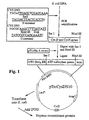
- Fig. 1 is a schematic representation of the steps utilized in preparing recombinant ATP sulfurase beginning with E. coli DNA. That DNA is subjected to PCR amplification using primers CYS DN5 and CYS DN3 (SEQ ID NOs: 1 and 2, respectively) that contain Sac I and Hind III restriction sites at their 5'- and 3'-termini. Bases present in the native sequence are underlined. That amplification is followed by digestion with those enzymes and ligation of the Sac I-Hind III fragment into vector pTrcHisA to form vector pTrcCysDNIO. That latter vector, once transformed into E. coli and induced with isopropylthio- ⁇ -D-galactoside (IPTG), expresses the recombinant enzyme.
- CYS DN5 and CYS DN3 SEQ ID NOs: 1 and 2, respectively
- Bases present in the native sequence are underlined. That amplification is followed by digestion with those enzyme
- Fig. 2 is a schematic representation similar to that of Fig. 1 showing the steps utilized in preparing recombinant APS kinase.
- primers CYS C5 and CYC C3 SEQ ID NOs: 3 and 4, respectively
- Sac I and Hind III restriction sites were used, with the remaining steps being similar to those in Fig. 1.
- Fig. 3 is a schematic representation similar to those of Figs. 1 and 2 that shows steps in the preparation of hydroxysteroid sulfotransferase (HSSTase).
- rat liver mRNA was the starting material that was converted into cDNA and subjected to PCR amplification using primers STAA5 and STAA3 (SEQ ID NOs: 5 and 6, respectively) that contain EcoR I and Xho I restriction sites, respectively. Digestion of the amplified cDNA with those two enzymes provided an EcoR I-Xho I fragment that was ligated into vector pFlag-1 that was also digested with those enzymes to form vector pflagHSST-12. Transformation of E. coli with that vector followed by IPTG induction led to expression of the desired recombinant HSSTase that was used herein.
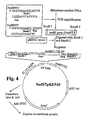
- Fig. 4 is another schematic representation similar to those of Figs. 1-3 that shows steps in the preparation of Nod factor sulfotransferase (NodHSST).
- NodHSST Nod factor sulfotransferase
- DNA from Rhizobium meliloti was subjected to PCR amplification using primers NodHST5' and NodHST3' (SEQ ID NOs: 7 and 8, respectively) that contained EcoR I and BamH I restriction sites, respectively. Digestion of the amplified cDNA with these two enzymes provided an EcoR I-BamH I fragment that was ligated into vector pKEN2 that was also digested with those enzymes to form vector NodSTpKEN10. Transformation of E. coli with that vector followed by IPTG induction led to expression of the desired NodHST that was used herein.
- ATP sulfurase, APS kinase and sulfotransferase are membrane-bound enzymes found in the Golgi apparatus of cells where the enzymes are typically involved in sulfating saccharide units of proteoglycan molecules.
- the synthesis of PAPS as shown in Scheme 1 suffices for the cell's needs, and it may not matter to the organism if PAP formed from using PAPS to sulfate a molecule inhibits a later reaction. Indeed, the degradation of PAPS observed in vitro may also be of little consequence in vivo because effects of cellular synthesis location that cause the formed PAPS to be used about as fast as it is produced.
- In vitro synthetic systems do not have the benefit of billions of years of evolution. Such in vitro systems are usually designed to maximize yield, and to do so, take concentration-dependent inhibitions into account as well as the instability of the sulfate donor (PAPS) and the fact that PAP is an inhibitor of enzymes involved in the sulfation process for which it is not a substrate, a cofactor or a product.
- PAPS sulfate donor
- One embodiment of the present invention provides a process through which high yields of sulfated product are obtained, in which concentration-dependent inhibitions are minimized, and in which PAP-mediated inhibition is minimized.
- This process takes place in a single vessel ("one-pot") and is a cyclic process in which phosphorylated adenosine-containing moieties including AMP, ADP, ATP, APS, PAPS and PAP are recycled while more and more sulfate product is prepared.
- a schematic representation of this process is shown in Scheme 2, below wherein "PEP” is phosphoenolpyruvate” and “Pyr” is pyruvate.
- 3'-nucleotidase EC 3.1.3.6
- 3'(2'),5'-Bisphosphate nucleotidase EC 3.1.3.7
- AMP-forming enzymes are not normally found in conjunction with Golgi membranes.
- 3'-nucleotidase usually hydrolyzes adenosine 3'-phosphate, and the finding that that enzyme could convert PAP to AMP is thought to be new.
- This formation of AMP removes PAP from the system to minimize the product inhibitory effect of that molecule on the sulfotransferase.
- This reaction also forms a new intermediate phosphorylated adenosine-containing molecule that can be formed into ADP and ATP via pyruvate kinase (PK; EC 2.7.1.40) and adenylate kinase (myokinase; EC 2.7.4.3) and reused in the synthesis.
- PK pyruvate kinase
- myokinase EC 2.7.4.3
- AMP sulfate ion in the presence of ATP sulfurase to form APS and inorganic pyrophosphate (PPi).
- Hydrolysis of pyrophosphate into two moles of inorganic phosphate (Pi) by an enzyme such as pyrophosphorylase (EC 3.6.1.1) removes the pyrophosphate.
- Another mole of ATP is utilized to react with APS in the presence of APS kinase to form PAPS, the substrate for the sulfotransferase and sulfate acceptor.
- the ATP sulfurylase-catalyzed sulfation reaction actually favors the reverse of the reaction shown.
- the forward reaction is driven as shown by the degradation of pyrophosphate into inorganic phosphate, another key feature of this process.
- the above one-pot, cyclic reaction is also driven in the direction shown by phosphorylation reactions before and after APS formation that involve PEP and pyruvate kinase, as shown in Scheme 2. It should be understood, however, that other phosphate donors and phosphorylating enzymes can be used.
- ADP can be converted to ATP by use of acetylphosphate as phosphate donor and acetate kinase (EC 2.7.2.1) as the phosphorylating enzyme.
- the PEP-pyruvate kinase adn myokinase or another donor-enzyme system can be more generally referred to as an ATP-regenerating system comprising a phosphate donor and phosphorylating enzyme that can form ATP using the phosphate donor.
- the myokinase, pyruvate kinase-PEP/Pyr system is preferred.
- pyruvate kinase and acetate kinase are available commercially as from Sigma Chemical Co., St. Louis, MO or Boeringer Mannheim, Indianapolis, IN.
- ATP sulfurase, APS kinase, hydroxysteroid sulfotransferase (HSSTase) and NodH (NodHST) sulfotransferase were cloned in E. coli, after amplification by PCR using the primers of SEQ ID NOs:1-8, as is discussed hereinafter.
- an adenosine phosphate other than PAP, APS and ADP be initially absent from the reaction medium because of their inhibitory activities on the enzymes.
- each of those compounds is formed, used and formed again cyclically as the reaction proceeds to form the sulfated product.
- This cyclic reuse of phosphorylated adenosine compounds is another salient feature of a contemplated process.
- a contemplated process is carried out in an aqueous medium at a pH value of about 5 to about 10, and preferably at about pH 6.5 to about 8.5 in buffer.
- the temperature at which the process is carried out can be from about zero degrees C to about 40°C, and preferably at about 20°C to about 35°C. Reactions are carried out at atmospheric pressure. Water-miscible organic solvents such as DMSO or acetone can be present at up to about 5 volume percent of the aqueous reaction medium.
- the aqueous medium also contains about 5 to about 30 mM KCl, and about 1 to about 10 mM MgCl 2 or other source of magnesium ions.
- Sulfate ion is also present in the reaction medium.
- concentration of sulfate is preferably in excess over ATP (viewed as all of the adenosine phosphates) by ratio of 2:1 to about 10:1. Equal amounts of sulfate ion and ATP can also be used.
- reaction is maintained under the above conditions for a period of time sufficient to form a desired sulfated product.
- Typical reaction times range from about one hour to about five days.
- a contemplated process thus comprises the steps of:
- the sulfated product is preferably recovered, although the product can be left place for the carrying out of a further reaction (s) on the product, such as one or more further glycosyl transfer reactions.
- a further reaction such as one or more further glycosyl transfer reactions.
- Products are typically recovered by well known chromatographic techniques, some of which are discussed hereinafter.
- Scheme 3 Another aspect of the present invention is shown in Scheme 3, that is shown below as were Schemes 1 and 2, and wherein "Pi" is inorganic phosphate.
- Scheme 3 illustrates a cyclic process that results in a build-up of PAPS via recycling of the phosphorylated adenosine compounds ATP and ADP.
- a process of Scheme 3, above, for using APS to prepare PAPS with recycling of ATP and ADP thus comprises the steps of:
- the aqueous reaction medium so formed is (b) maintained at a pH value of about 5 to about 10 at a temperature of about zero degrees C to about 40°C for a time period sufficient for PAPS to form.
- the enzymes, reagents and process conditions are as discussed before. Recovery is again preferred and is discussed before, although in situ , non-cyclic use of PAPS can also be made using a before-described sulfotransferase enzyme.
- phosphorylated adenine-containing compounds it is preferred that at least ATP be present initially.
- two moles of ATP are required to form one mole of PAPS, with one of those two moles of ATP being sulfated to form APS, whereas the second mole phosphorylates APS to form PAPS and ADP.
- the ADP so formed is then formed into ATP again that can form APS and be phosphorylate to PAPS.
- one-half of the ATP is consumed on each cycle of the reaction.
- Two primers cys DN5 and cys DN3 were designed to specifically complement with the C-terminal and N-terminal gene sequences of ATP sulfurylase (cys D and cys N genes). Leyh et al., J. Biol. Chem. , 268 :2409 (1988). The other two primers, cys C5 and cys C3 were designed to specifically complement with the N- and C-terminal sequences of APS kinase (cys C gene). Leyh et al., J. Biol. Chem. , 268 :2409 (1988). The sequences of the primers are shown in Figures 1 and 2 (SEQ ID NOs: 1-4).
- the primers cys DN5 and cys C5 contained a Sac I restriction site and the N-terminal six amino acid sequences of the genes.
- the primer cys DN3 and cys C3 contained a Hind III restriction site, stop codons, and the C-terminal six amino acid sequences of the genes.
- After PCR amplification only one band was observed with molecular weight about 2.3 kb that was consistent with the reported gene size of ATP sulfurylase, and another band of 800 bp correlated well with the APS kinase gene size. Leyh et al., J. Biol. Chem. , 268 :2409 (1988).
- the DNA was transformed into E. coli XL1-Blue MRF' strain and plated on the LB-ampicillin plates. The colonies were randomly selected from the plates and subjected to PCR amplification. Out of 20 colonies selected for ATP sulfurylase, 12 colonies showed that the PCR amplification product contained a 2.3 kb DNA band.
- One clone that gave the highest band intensity was selected for further confirmation of the insert. That clone was assigned as strain E. coli cys DN-10, and the plasmid was assigned as pTrccysDN-10. For APS kinase, 43 colonies were randomly selected from the plates. After cell lysis, the lysates were used for PCR amplification. One clone identified as E. coli cys C-10 was selected, and its plasmid was designated pTrccysC-10.
- E. coli cys DN-10 and cys C-10 were grown on LB medium [Sambrook et al., Molecular Cloning , 2nd ed., Cold Spring Harbor Laboratory, New York (1989)] containing 150 ⁇ g/mL ampicillin and induced with 0.5 mM IPTG as described hereinafter in the Materials and Methods Section.
- the expression level of the enzyme was followed with time and examined with SDS acrylamide gel. When the cells were growing at 37°C, the recombinant proteins were formed as inclusion bodies. Lowering the growing temperature to 25°C provided the proteins expressed as the soluble form after two hours of IPTG addition. The proteins remained soluble after 20 hours of induction.
- the activity of the expressed ATP sulfurylase was determined to be about 430 U/L, and that of APS kinase was about 560 U/L. After the ammonium sulfate fractionation, 80 percent of the enzyme activities in the cell extract were recovered and used for further purification.
- the PAPS yield was optimized by controlling the reaction time, as PAPS is highly unstable. According to the information provided from the catalog of Sigma Co. 1993, 46. The maximum yield was about 60 percent based on the consumption of ATP. [The yield was determined on FPLC using a Mono-Q ion exchange column and a UV detector (254 nm), see Materials and Methods]. It is noted that two equivalents of ATP are required for each equivalent of PAPS produced.
- the lower yield at higher concentrations of ATP may be related to the problem of product and substrate inhibition of ATP sulfurylase and APS kinase [Renosto et al., J. Biol. Chem. , 259 :2113 (1984)] in the APS kinase reaction, the K i value of APS is 23 ⁇ M, [Renosto et al., J. Biol. Chem. , 259 :2113 (1984)] and in the ATP sulfurylase reaction, APS shows a strong product inhibition (K i ⁇ 0.25 ⁇ M). Seubert et al., Arch. Biochem. Biophys. , 225 :679 (1983).
- PAPS prepared in this study was then used in the enzymatic sulfation of a hydroxysteroid and chondroitin.
- regeneration of PAPS from 3'-phosphoadenosine-5'-phosphate (PAP) was demonstrated in the enzymatic sulfation of the hydroxysteroid as is shown schematically in Scheme 5 hereinafter in the Materials and Methods Section.
- the vector pTrcHis was obtained from Invitrogen Co. (San Diego, CA).
- the vector contains the Trc promoter to permit a high expression of protein.
- the Trc promoter has the -35 region of the Trp promoter fused with the -10 region of the lac promoter. This promoter is repressed by the lac repressor, provided by a copy of the lacIq gene encoded by the vector. All the other chemicals were purchased from commercial sources as molecular biology grade reagents.
- E. coli K12 (ATCC 10798) was obtained from American Type Culture Collection.
- the microorganisms were maintained on LB (Luria-Bertani) medium. When host strains harbored plasmid vectors, LB medium containing 100 ⁇ g/mL of ampicillin was used. Stock cultures were kept as cell suspensions at -70°C in 20 percent glycerol solution.
- E. coli K12 The DNA of E. coli K12 was extracted according to the method described in Sambrook et al., Molecular Cloning , 2nd ed., Cold Spring Harbor Laboratory, New York, 1989.
- Vector pTrcHis A was transformed into E. coli XL1-Blue strain and prepared as described also by Sambrook et al., Molecular Cloning , 2nd ed., Cold Spring Harbor Laboratory, New York, 1989.
- Primers were custom synthesized and purified by acrylamide gel electrophoresis.
- PCR amplifications were performed in a 100 ⁇ L reaction mixture containing 1 ⁇ L (1.5 ⁇ g) of E. coli K12 DNA, 300 nmoles of primers cys DN5 and cys DN3 (shown in Fig. 1 and SEQ ID NOs:1 and 2, respectively; ATP sulfurylase) or cys C5 and cys C3 (shown in Fig.
- Thermus aquaticus DNA polymerase 200 ⁇ M of different dNTPs, 50 mM KCl, 10 mM Tris-HCl (pH 8.3), 2 mM MgCl 2 , 0.01 percent gelatin, 0.1 percent Triton X-100, and 2 units of Thermus aquaticus DNA polymerase.
- the reaction was overlayered with mineral oil and subjected to 35 cycles of amplifications. The cycle conditions were set as follows: denaturation, 94°C for one minutes, 55°C for two minutes; and elongation, 72°C for 1.5 minutes.
- the DNA insert obtained from PCR amplification was purified on 0.7 percent agarose gel.
- the DNA band corresponding to this insert was separated from the agarose gel and purified with Gene Clean kit (Bio 101, San Diego, CA).
- the DNA was dissolved in an appropriate restriction enzyme buffer (H buffer) supplied by Boehringer Mannheim Biochemical Co. (Indianapolis, IN) and digested with Sac I and Hind III each with 35 U/ ⁇ g DNA at 37°C for two hours.
- the digested DNA was then recovered by phenol/chloroform extraction and ethanol precipitation (70 percent of final ethanol concentration containing 10 percent of 3 N sodium acetate, pH 5.2) and purified by agarose (0.7 percent) gel electrophoresis.
- the DNA band was isolated from the agarose gel and extracted with QIAEX gel extraction kit (Qiagen Co., Chatworth, CA) and eluted with TE buffer (10 mM Tris.HCl and 1 mM EDTA, pH 7.5). This DNA was used as insert.
- the vector pTrcHis A was also digested with 5 U/ ⁇ g DNA of Sac I and Hind III and recovered with ethanol precipitation after extraction with phenol/chloroform. The digested vector was further purified in agarose gel as described above.
- the insert was then ligated with the vector by T4 DNA ligase. Sambrook et al., Molecular Cloning , 2d ed., Cold Spring Harbor Laboratory, New York, 1989.
- the ligated DNA was then transformed into E. coli XL1-Blue MRF' strain and plated on LB agar plates containing 250 ⁇ g/mL ampicillin.
- the PCR method was used for screening for positive clones. Because the host E. coli XL1-Blue also contains a similar gene, there may have some background amplification for non-recombinants. However, the positive clones showed a very intense color band on agarose gel (0.7 percent) due to the high copy number of the target gene presented in the cells. Thirty colonies were randomly selected from plates and lysed with 50 ⁇ L of cell lysing buffer (20 mM Tris-HCl containing 1 percent Triton X-100 and 2 mM EDTA, pH 8.5) and heated with boiling water for five minutes. The solution was used directly as a DNA template source for PCR amplification after cooling.
- cell lysing buffer (20 mM Tris-HCl containing 1 percent Triton X-100 and 2 mM EDTA, pH 8.5
- the procedure for the PCR amplification was the same as described above except 3 ⁇ L of the cell lysing solution were used to replace E. coli DNA.
- the colonies that gave intense PCR amplification were further grown on LB medium containing 150 ⁇ g/mL ampicillin and then the plasmids were extracted.
- the isolated plasmids were further digested with SacI and Hind III restriction enzymes and analyzed with agarose gel to confirm the target gene insert. The positive clones were selected and used for protein expression.
- the positive clone was grown on 100 mL of LB medium containing 250 ⁇ g/mL ampicillin at 37°C with shaking (300 rpm). After the cell growth reached to mid-logarithmic phase (OD 600 0.3-0.4), this culture was transferred to a fresh 4-L LB medium containing 250 ⁇ g/mL ampicillin, cultured at 37°C until OD 600 reached 0.4, and then induced with 0.5 mM IPTG at 25°C for 20 hours with shaking. The expression level of the targeted protein was analyzed by SDS-PAGE using Pharm System (Pharmacia Co.) with a 10-15 percent gradient of polyacrylamide.
- the culture broth was centrifuged (9,000 x g, 20 minutes, 4°C), and then suspended in 50 mL of Tris-HCl buffer (50 mM, pH 7.6).
- the cells were disrupted in a French pressure cell at 16,000 lb/in 2 and centrifuged at 18,000 x g for 50 minutes. The supernatant was collected and the protein was fractionated with ammonium sulfate.
- APS kinase 40-75 percent fraction of the ammonium sulfate precipitation was collected. In the case of ATP sulfurylase, 45 percent fraction of the ammonium sulfate precipitation was collected.
- Tris-HCl buffer 50 mM, pH 7.6 respectively. After dialysis against 4 L of the same buffer overnight (about 18 hours) at 4°C, the proteins were loaded on a column (40 cm x 3 cm) packed with DEAE Sepharose 6B-CL, and eluted with a linear gradient of from 0 to 1.0 M KCl (pH 7.6, total volume 0.5 L). The active fractions were pooled and used for organic synthesis without further purification.
- PAPS The quantitative determination of PAPS was carried out using an FPLC system (Pharmacia Co.). Varied concentrations of PAPS (purchased from Sigma Co.) were prepared (e.g. 5 mM, 2.5 mM, 1.25 mM, 0.5 mM, 0.25 mM) and then applied onto a 0.5 x 5 cm of Mono-Q anion exchange column, with a UV monitor (254 nm). Satishchandran et al., J. Biol. Chem. , 164 :15012 (1989).
- the column was first washed with 4 mL of water, then with a 55 mL gradient (from 50 mM to 1.0 M NH 4 HCO 3 ), and finally with 5 mL of 1.0 mM NH 4 HCO 3 .
- a linear relationship was established between the concentration of PAPS and the intensity of the signal detected by the UV monitor.
- Tris-HCl buffer (100 mL; 50 mM, pH 8.0) containing 20 mM KCl, 40 mM Na 2 SO4, 5 mM MgCl 2 , 2 mM ATP, 2 mM PEP, 20 U of ATP sulfurylase, 560 U of APS kinase, 400 U of inorganic pyrophosphatase, and 2000 U of pyruvate kinase was incubated at room temperature under N2. After 8 hours, the reaction solution was filtered to remove proteins and insoluble precipitates by using 10,000 NMWL regenerated cellulose membrane (Millipore Co., Bedford, MA).
- APS kinase For APS kinase, the activity of the forward reaction (APS consumption) was measured using a modified pyruvate kinase-lactate dehydrogenase coupled assay of Burnell and Whatley. Burnell et al., Anal. Biochem. , 68 :281 (1975).
- the reverse reaction was employed to assay ATP sulfurylase activity.
- Tris-HCl buffer 50 mM, pH 8.0
- 1 mM APS 5 mM MgCl 2
- 0.6 mM NADPH 1 mM glucose-6-phosphate and 1 mM sodium pyrophosphate were added 5 U of glucose-6-phosphate dehydrogenase, 10 U of hexokinase, and 30 ⁇ L of ATP sulfurylase.
- the reaction was started by adding APS after the absorbance of NADH became constant.
- the decrease in NADPH absorbance at 340 nm was measured to determine the activity of ATP sulfurylase.
- One unit of the enzyme activity is defined as 1 ⁇ mole of product formed per minute, and the amount of protein was determined by the Coomasie Plus kit (Pierce Co.).
- the chondroitin sulfate chains are hybrid sequences containing 4,6-sulfated GalNAc-GlcUA disaccharide units.
- the enzymatic sulfation with sulfotransferases occurs on either the 4- or the 6-position, or both, of the GalNAc moiety using PAPS as a donor.
- Chondroitin sulfotransferases have been found from various sources including hen oviduct, [Suzuki et al., Biochim. Biophys. Acta , 50 :16913 (1961); embryonic chick cartilage, [Robinson, Biochem. J. , 113 :543 (1969); Kimata et al., Mol. Cell. Biochem .
- chondroitin 6-sulfotransferase (EC 2.8.2.17) was isolated from chick embryo cartilage. Habuchi et al., J. Biol. Chem. , 246 :7357 (1971).
- the procedure is essentially the same as described previously in Habuchi et al., J. Biol. Chem., 246 :7357 (1971).
- the epiphyseal cartilage of tibias and femur of 13-14-day-old chick embryos (450 eggs, about 110g, wet) was homogenized by ultrasonication with 3 volume and 2 volume of Buffer A (0.02 M Tris-HCl, pH 7.2, 10 percent glycerol, 0.01 M 2-mercaptoethanol, 0.5 mM EDTA) and the other buffer containing 0.5 percent (w/v) Triton X-100 for one minute. The process was repeated for 15 times at an interval of one minute at 4°C, respectively.
- Buffer A 0.2 M Tris-HCl, pH 7.2, 10 percent glycerol, 0.01 M 2-mercaptoethanol, 0.5 mM EDTA
- the homogenates were centrifuged at 17000 x g for one hour at 4°C to provide the supernatant that was subjected to Toyopearl 650 M (anion-exchanger) column (5 x 42 cm) previously equilibrated with Buffer A.
- the column was first washed with one liter of Buffer A, and then eluted with a linear gradient between one liter of Buffer A and one liter of Buffer A containing 0.4 M NaCl in the reservoir.
- the flow rate was 120 mL/hour, and fractions (18 mL/each) were collected.
- the active fractions 45-75 were combined and concentrated to 25-30 mL on Ultrafiltration YM-10 membrane (Amicon).
- the concentrated enzyme preparation was dialyzed against 10 vol of Buffer A for 8 hours and then centrifuged at 50000 x g for one hour at 4°C to provide the supernatant as an enzyme preparation.
- DTT dithiothreitol
- protamine-HCl 2.5 ⁇ g
- protamine-HCl 2.5 ⁇ g
- protamine-HCl 2.5 ⁇ g
- chondroitin-Na as glucuronic acid
- 35 S-PAPS about 0.65 nmol, 27 x 10 5 cpm
- 10 ⁇ L of enzyme preparation in a total of 100 ⁇ L.
- the solution was adjusted to 300 ⁇ L, and 700 ⁇ L of 95 percent EtOH/1 percent KOAc/0.5 mM EDTA were added to precipitate chondroitin and its sulfate. After 30 minutes in an ice-bath, the precipitates formed were collected by centrifugation at 15000 rpm for 10 minutes at 4°C. This procedure was repeated for three times. The final precipitates were dissolved in 50 ⁇ L of distilled water, and a 10 ⁇ L portion was taken and counted by liquid scintillation in Clear-sol I. The remaining 40 ⁇ L solution was hydrolyzed with chontroitinase ABC in a total 80 ⁇ L solution for 30 minutes at 37°C.
- the 5000 chicken embryos were divided into 12 portions, treated as discussed above, and the enzymes were separated by the column chromatography as also described above. A total of 350 mL of the enzyme preparation was obtained.
- For the activity assay 1 ⁇ L of the preparation and about 1.3 nmol (about 54 x 10 5 cpm) of 35 S-PAPS were mixed in a total 100 ⁇ L of reaction mixture to give about 105 cpm.
- Hydroxysteroid sulfotransferases are mainly responsible for the metabolism of steroids. In the liver, steroid sulfation has been suggested to be a biochemical process resulting in the eventual excretion of the steroid sulfate formed in that tissue. Radominska et al., Biochem. J. , 272 :597 (1990); Lee et al., J. Biol. Chem. , 269 :15838 (1994).
- HSSTase The hydroxysteroid sulfotransferase (HSSTase) from rat liver transfers the sulfate group from PAPS to 3 ⁇ -hydroxy-5-androsten-17-one (dehydroepianhyrostone; DHA).
- DHA dehydroepianhyrostone
- the purified enzyme was also found to transfer the sulfate group to several other hydroxysteroids, such as estradiol, testosterone, and androstenediol.
- the reaction was competitively inhibited by both reaction products, DHA 3-sulfate, and PAP. Marcus et al., Anal. Biochem. , 107 :296 (1980).
- the sequence of this enzyme is reported in Ogura et al., Biochem. Biophys. Res. Comm. , 264 :17615 (1989).
- a secretion vector harboring the gene encoding the catalytic domain of the HSSTase was constructed for overexpression in E
- PAP can be cleaved at its 3'-phosphate catalyzed by 3'-nucleotidase.
- the AMP generated can therefore be phosphorylated to ATP in the presence of pyruvate kinase and phospho(enol)pyruvate (PEP), as shown in Scheme 2.
- PEP phospho(enol)pyruvate
- 3'-Nucleotidase has been found here to catalyze the 3'-phosphate cleavage of PAP to AMP, in addition to its natural reaction; i.e., the hydrolysis of adenosine 3'-monophosphate.
- PAPS was also accepted by 3'-nucleotidase at a relatively lower rate, the dephosphorylated product adenosine 5'-phosphosulfate (APS) can be converted back to PAPS catalyzed by APS kinase. The dephosphorylation of PAPS can therefore be avoided if a limited amount of 3-nucleotidase is used.
- the sulfated DHA was obtained either when HSSTase was used with isolated PAPS or in combination with the PAPS generating enzymes (ATP sulfurylase and APS kinase), or with the contemplated cyclic PAPS regeneration system as in Scheme 2.
- PAPS generating enzymes ATP sulfurylase and APS kinase
- Enzymes such as hexokinase, phosphoglucomutase and inorganic pyrophosphatase were purchased from Sigma Chemical Co.
- the total RNA of rat liver was purchased from Clonetech (Palo Alto, CA).
- the vector pFlag-1 was purchased from International Biotech. Inc. (New Haven, CT).
- the host strain E. coli XL1-Blue was obtained from Stratagene Co. (San Diego, CA). The microorganism was maintained on LB (Luria-Bertani) medium. When the host strain harbored a plasmid, LB medium containing 100 ⁇ g/mL of ampicillin was used. Stock culture was kept as cell suspension at -70°C in 20 percent glycerol solution.
- RNA from rat liver was used as template for cDNA synthesis without mRNA purification by using oligo(dT) 10 as primer (Riboclone cDNA synthesis system from Promega Co., WI).
- oligo(dT) 10 primer
- 5 ⁇ g of RNA were annealed with 500 ng of oligo(dT) 10 at 70°C for three minutes.
- the mixture was adjusted to contain 1 mM of dNTPs, 50 mM Tris-HCl, pH 8.3, 75 mM KCl, 10 mM MgCl 2 , 0.5 mM spermidine, 10 mM DTT, 4 mM sodium pyrophosphate, 1 U RNasin ribonuclease inhibitor and 10-15 U AMV reverse transcriptase.
- the reaction was carried out at 42°C for one hour and the reaction mixture heated at 94°C for five minutes to inactivate the enzyme.
- the volume was then brought up to 50 ⁇ L by addition of 25 ⁇ L of DEPC-treated water and used for PCR amplifications.
- the vector pFlag-1 was transformed into E. coli XL1-Blue strain and prepared as described in Sambrook et al., Molecular Cloning, 2nd ed.; Cold Spring Harbor Laboratory, New York, 1989.
- PCR amplification was performed in a 100 ⁇ L reaction mixture containing 3 ⁇ L of reverse transcription product, 400 nmol of primers STAA5 and STAA3 (custom synthesized from commercial sources, as illustrated in Figure 3 and SEQ ID NOs: 5 and 6, respectively), 200 ⁇ M of different dNTPs, 50 mM KCl, 10 mM Tris-HCl (pH 8.3), 2 mM MgCl 2 , 0.01 percent Triton X-100, and 2 units of Thermus aguaticus DNA polymerase
- the reaction was overlayed with mineral oil and subjected to 35 cycles of amplifications.
- the cycle conditions were set as follows: denaturation, 94°C for one minute; annealing, 55°C for two minutes; and elongation, 72°C for 1.5 minutes.
- the DNA obtained from PCR amplification was extracted with phenol/chloroform and precipitated with ethanol at -70°C for 30 minutes. The precipitated DNA was centrifuged and washed with 70 percent ethanol. The DNA pellet (about 500 ⁇ g) was then dissolved in a restriction enzyme buffer (H buffer from Boehringer Mannheim Biochemical Co.) and digested with EcoRI and Xho I (20 U each) at 37°C for two hours.
- a restriction enzyme buffer H buffer from Boehringer Mannheim Biochemical Co.
- the digested DNA was then recovered by phenol/chloroform extraction and ethanol precipitation (70 percent of final ethanol concentration containing 10 percent 3 N sodium acetate, pH 5.2). This DNA was redissolved in 50 ⁇ L of TE buffer (pH 7.7) and purified on 0.7 percent agarose gel. The DNA band corresponding to 0.9 kb was separated from agarose gel and purified with Gene Clean kit (Bio-101 Co., San Diego). This DNA was used as insert.
- the vector was also prepared from the digestion of pFlag-1 DNA (50 ⁇ g) with 20 U of EcoRI and Xho I and recovered with ethanol precipitation after extraction by phenol/chloroform. The vector was then further purified by agarose gel as described in the insert preparation. The insert was then ligated with the cut vector. Sambrook et al., Molecular Cloning , 2nd ed.; Cold Spring Harbor Laboratory, New York, 1989. The ligated DNA was then transformed into E. coli MF' strain (Stratagene Co., San Diego) and plated on LB agar plate containing 100 ⁇ g/mL ampicillin.
- the host strain E. coli does not contain the hydroxysteroid sulfotransferase gene, only the positive clones that contain this gene exhibited the PCR amplification product of 0.9 kb size when primers STAA5 and STAA3 were used. Therefore, the PCR method was used for screening. Forty colonies were randomly selected from plates and lysed with 50 ⁇ L of cell lysing buffer (20 mM Tris-HCl containing 1 percent Triton X-100 and 2 mM EDTA, pH 8.5). After boiling in water for 5 minutes and cooling, the cooled solution was used as a DNA template source for PCR amplification.
- the PCR amplification was the same as described in the amplification of hydroxysteroid sulfotransferase gene except 3 ⁇ L of cell lysing solution was used to replace the reverse transcription product. Three positive clones were identified. One clone that gave the most intense PCR amplification was selected. The resulting hydroxysteroid sulfotransferase expression vector is shown in Figure 3.
- Bacteria were grown on M9-CA medium (Na 2 HPO 4 .7H 2 O, 12.8 g; KH 2 PO 4 , 3.0 g; NaCl, 0.5 g; NH 4 Cl, 1.0 g; in 1 L of deionized water) containing 1 mM CaCl 2 and 250 ⁇ L ampicillin to mid-logarithmic phase (OD 600 0.5-0.6) at 37°C and then induced with 0.005 mM IPTG for 10 hours at 30°C with shaking.
- the culture from 2 L of grown E. coli cells were centrifuged at 9000 g for 25 minutes.
- Cells were homogenized in a solution of C buffer: 10 mM Tris-HCl (pH 7.5), 0.25 M sucrose, 1 mM phenylmethylsulfonyl fluoride and 10 percent glycerol (v/v). These cells were then disrupted with a W385 Sonicator (Heat system-Ultrasonics, Farmingdale, NY) and its microtip probe for three periods for 30 seconds each (2-s cycle pulses at 10 percent power output), interspersed by cooling for 30 seconds in an ice-salt bath. Chen, et al., Protein Expression Purification 1992 , 3, 421. By centrifugation at 10,000 g for five minutes, the supernatant was collected as crude enzyme for synthetic purpose.
- C buffer 10 mM Tris-HCl (pH 7.5), 0.25 M sucrose, 1 mM phenylmethylsulfonyl fluoride and 10 percent glycerol (v/v).
- W385 Sonicator Heat system-U
- Standard assays of the HSSTase activities toward DHA were performed in a final volume of 1 mL of C buffer containing the substrate (100 nmol) dissolved in dimethyl sulfoxide (DMSO, 50 ⁇ L), PAPS (120 nmol), and the enzyme solution. Enzymatic reactions were started by addition of the substrate solutions, and the mixtures were incubated for one hour at 37°C. The sulfate esters formed were extracted as hydrophobic methylene blue complexes with chloroform and the absorbance at 651 nm was measured as described previously. Nose et al., J. Biol. Chem. , 233 :1348 (1958); Ogura et al., Molecular Pharmacol. , 27 :848 (1990).
- the enzymatic reaction proceeded at 25°C in 1 mL of C buffer containing 20 mM KCl, 40 mM Na 2 SO 4 , 5 mM MgCl 2 , 1 U of ATP sulfurylase, 3.5 U of APS kinase, 2 U of inorganic pyrophosphatase, 20 U of pyruvate kinase, 100 ⁇ L of HSSTase, 2 mM ATP, 2 mM PEP, 1.5 mM DHA, and 2.5 percent DMSO.
- the product was detected by TLC with CHCl 3 : MeOH (4:1) and the p -anisaldehyde stain solution.
- the reaction was run for one day and then extracted with CHCl 3 .
- the collected organic layer was washed with water to remove DMSO and dried over MgSO 4 .
- the resulting solution was concentrated and applied to column chromatography with CHCl 3 :MeOH (5:1) to give the desired product.
- oligo- and polysaccharides become more obvious and important after they are sulfated.
- a particular example comes from the molecular signal exchange of the Rhizobium -legume symbiosis. [Fisher et al., Nature , 357 :655(1992); Roche et al., Cell , 67 :1131(1991)].
- the host legume releases signal to stimulate the coordinate expression of bacterial genes (nod genes) that are required for root nodulation of the legume.
- Nod genes encode enzymes involved in the synthesis of Nod factors. So far, all the Nod factors from Rhizobium meliloti have been determined as ⁇ -1,4- N -acetyl-D-glucosamine oligosaccharides with various N-linked fatty acyl groups on the nonreducing end, rather than the N -acetyl group. Another feature is the exclusive sulfation at 6-OH on the reducing terminal. [LeRouge et al., Nature, 344 :781(1990); Faucher et al., Mol.Plant-Microbe Interactions, 2 :291(1989); Faucher et al., J. Bacteriol.
- the plasmid pKEN2 was obtained from Professor G. L. Verdine (Department of Chemistry, Harvard University, Cambridge, MA 02138). Protein contents were measured using the BCA protein assay kit (Pierce Co.). All the chemicals were purchased from commercial sources as molecular biology grade reagents.
- the microorganism, Rhizobium meliloti containing Nod factor sulfotransferase (NodHST) gene was obtained from ATCC (ATCC 10310).
- the host strain E. coli BL21(DE3) were purchased from Novogen and were grown in LB (Laria-Bertani) medium.
- the E. coli BL21(DE3) containing plasmid derived from pKEN2 were grown in LB or SOB medium containing 10 mM MgCl 2 and 250mg/mL ampicillin. Stock cultures were kept at -70 °C in 20 percent glycerol solution.
- Rhizobium meliloti The cells of Rhizobium meliloti were suspended directly in cell lysing buffer (20 mM Tris-HCl, 1 percent Triton, and 20 mM EDTA; pH 8.5). After boiling in water for 5 minutes, the lysed cell solution was used as the DNA source for PCR amplification.
- the primers were designed to contain BamH I and EcoR I restriction sites and several extra bases as spacers between the ribosome binding site and start codons to maximize the expression (Fig. 4). PCR amplification was performed in a 100 mL reaction mixture containing 3mL of R.
- meliloti cell lysing solution 400 nmole each of primers NodST5' (SEQ ID NO:7) and NodST3' (SEQ ID NO:8), 200 mM of different dNTPs, 50 mM KCl, 10mM Tris-HCl (pH 8.3), 2 mM MgCl 2 , 0.01 percent gelatin, 0.1 percent TritonX100 and 2 U of Thermus aquaticus DNA polymerase.
- the reaction was overlayed with 100 mL of mineral oil and subjected to 35 cycles of amplification. The cycle conditions were set as denaturation at 94 °C for 1 minute, annealing at 55 °C for 1.5 minutes and elongation at 72 °C for 1.5 minutes.
- the DNA obtained from PCR was precipitated in 70 percent ethanol and purified on a 0.8 percent agarose gel.
- the DNA band conrresponding to 0.7 kb was separated and purified with Geneclean II kit obtained from Bio 101 (La Jolla, CA).
- the DNA was then dissolved in restriction enzyme buffer H (Boehringer Mannhein Biochemical Co.) and digested with BamH I and EcoR I (20 U/mg DNA) at 37'C for 2 hours.
- the digested DNA was then recovered by treatment with Strataclean resin obtained from Stratagene Co. (San Diego, CA) followed by ethanol precipitation, and resuspened in TE buffer (pH 7.7).
- the plasmid pKEN2 was also digested with BamH I and EcoR I under the same conditions as the PCR insert.
- the digested NodHST gene insert and pKEN vector were then ligated and transformed into E. coli BL21(DE3).
- the transformed cells were plated onto LB agar plates containing 250 mg/mL ampicillin.
- NodHST gene in pKEN2 vector was controlled by a T7 promotor and is expressed with T7 RNA polymerase.
- the host cell E. coli BL21(DE3) contains T7 RNA polymerase gene and can be induced by the addition of IPTG ( Methods in Enzymology , Vol 185, p.61-89).
- IPTG Methods in Enzymology , Vol 185, p.61-89.
- the expression level of the target protein was analyzed by SDS-PAGE using Pharm System (Pharmacia Co.) with a 10-15 percent gradient of polyacrylamide.
- the culture broth was centrifuged (9,000 x g, 25 min, 4 °C) and then suspended in 40 mL of Tris-HCl buffer (50 mM, pH 7.5). After lysing cells using French Press (15,000 psi), debris was removed by centrifugation at 4°C (16,000 x g for 45 minutes), and the supernatant was collected.
- the crude cell extracts were used in the synthetic studies of sulfation discussed below.
- the synthesis was carried out at 25°C in 1 mL of Tris-HCl (100 mM, pH 7.5) containing 20 mM MgCl 2 , 2 mM N,N',N"-triacetylchitotriose (or N,N'-diacetylchitobiose), 2 mM 3'-phosphoadenosine-5'-phosphosulfate (PAPS), and 200 mL of cell extract from above.
- the product was detected by TLC with CH 3 Cl 3 /MeOH/AcOH/H 2 O (25:15:2:1) and the p -anisaldehyde stain solution.
Landscapes
- Life Sciences & Earth Sciences (AREA)
- Chemical & Material Sciences (AREA)
- Organic Chemistry (AREA)
- Health & Medical Sciences (AREA)
- Engineering & Computer Science (AREA)
- Zoology (AREA)
- Wood Science & Technology (AREA)
- Genetics & Genomics (AREA)
- Bioinformatics & Cheminformatics (AREA)
- Biotechnology (AREA)
- Microbiology (AREA)
- Biochemistry (AREA)
- General Engineering & Computer Science (AREA)
- General Health & Medical Sciences (AREA)
- Molecular Biology (AREA)
- General Chemical & Material Sciences (AREA)
- Chemical Kinetics & Catalysis (AREA)
- Medicinal Chemistry (AREA)
- Biomedical Technology (AREA)
- Preparation Of Compounds By Using Micro-Organisms (AREA)
- Enzymes And Modification Thereof (AREA)
Applications Claiming Priority (3)
| Application Number | Priority Date | Filing Date | Title |
|---|---|---|---|
| US08/408,774 US5919673A (en) | 1995-03-22 | 1995-03-22 | One-pot enzymatic sulfation process using 3'-phosphoadenosine-5'-phosphosulfate and recycled phosphorylated adenosine intermediates |
| US408774 | 1995-03-22 | ||
| PCT/US1996/003792 WO1996029424A1 (en) | 1995-03-22 | 1996-03-21 | One-pot enzymatic sulfation process using 3'-phosphoadenosine-5'-phosphosulfate and recycled phosphorylated adenosine intermediates |
Publications (3)
| Publication Number | Publication Date |
|---|---|
| EP0817862A1 EP0817862A1 (en) | 1998-01-14 |
| EP0817862A4 EP0817862A4 (en) | 1998-10-21 |
| EP0817862B1 true EP0817862B1 (en) | 2003-02-19 |
Family
ID=23617712
Family Applications (1)
| Application Number | Title | Priority Date | Filing Date |
|---|---|---|---|
| EP96908871A Expired - Lifetime EP0817862B1 (en) | 1995-03-22 | 1996-03-21 | One-pot enzymatic sulfation process using 3'-phosphoadenosine-5'-phosphosulfate and recycled phosphorylated adenosine intermediates |
Country Status (7)
| Country | Link |
|---|---|
| US (1) | US5919673A (da) |
| EP (1) | EP0817862B1 (da) |
| AT (1) | ATE232908T1 (da) |
| AU (1) | AU5257096A (da) |
| DE (1) | DE69626277T2 (da) |
| DK (1) | DK0817862T3 (da) |
| WO (1) | WO1996029424A1 (da) |
Families Citing this family (14)
| Publication number | Priority date | Publication date | Assignee | Title |
|---|---|---|---|---|
| GB9620209D0 (en) * | 1996-09-27 | 1996-11-13 | Cemu Bioteknik Ab | Method of sequencing DNA |
| GB9626815D0 (en) | 1996-12-23 | 1997-02-12 | Cemu Bioteknik Ab | Method of sequencing DNA |
| US6274320B1 (en) * | 1999-09-16 | 2001-08-14 | Curagen Corporation | Method of sequencing a nucleic acid |
| US7211390B2 (en) * | 1999-09-16 | 2007-05-01 | 454 Life Sciences Corporation | Method of sequencing a nucleic acid |
| US7244559B2 (en) * | 1999-09-16 | 2007-07-17 | 454 Life Sciences Corporation | Method of sequencing a nucleic acid |
| DE602004026033D1 (de) * | 2003-01-29 | 2010-04-29 | 454 Corp | Zweiendige sequenzierung |
| US7575865B2 (en) * | 2003-01-29 | 2009-08-18 | 454 Life Sciences Corporation | Methods of amplifying and sequencing nucleic acids |
| CA3126805A1 (en) | 2019-01-15 | 2020-07-23 | Optimvia, Llc | Engineered aryl sulfate-dependent enzymes |
| AU2020310172A1 (en) | 2019-07-09 | 2022-03-03 | Optimvia Llc | Methods for synthesizing anticoagulant polysaccharides |
| CN112708569B (zh) * | 2019-10-24 | 2022-11-01 | 华熙生物科技股份有限公司 | 发酵生产硫酸软骨素的酵母工程菌及其应用 |
| WO2021199445A1 (en) * | 2020-04-03 | 2021-10-07 | Rensselaer Polytechnic Institute | Method for producing sulfated polysaccharide and method for producing paps |
| CN113046402B (zh) * | 2020-09-30 | 2023-04-28 | 江南大学 | 一种基于构建双功能酶合成paps的方法 |
| WO2024222534A1 (zh) * | 2023-04-28 | 2024-10-31 | 江南大学 | 一种基于aps和paps为活性磺酸供体的再生系统构建与应用方法 |
| CN118853719A (zh) * | 2024-06-26 | 2024-10-29 | 和度生物技术(上海)有限公司 | 一种用于催化胆固醇硫酸酯合成的工程微生物及其应用 |
Family Cites Families (2)
| Publication number | Priority date | Publication date | Assignee | Title |
|---|---|---|---|---|
| US4266048A (en) * | 1977-10-11 | 1981-05-05 | The United States Of America As Represented By The Department Of Health, Education And Welfare | Synthesis of analogs of 3'-phosphoadenosine 5'-phosphosulfate (PAPS) |
| JP3098591B2 (ja) * | 1991-11-14 | 2000-10-16 | ユニチカ株式会社 | 3’−ホスホアデノシン−5’−ホスホ硫酸の製造方法 |
-
1995
- 1995-03-22 US US08/408,774 patent/US5919673A/en not_active Expired - Lifetime
-
1996
- 1996-03-21 DK DK96908871T patent/DK0817862T3/da active
- 1996-03-21 AU AU52570/96A patent/AU5257096A/en not_active Abandoned
- 1996-03-21 DE DE69626277T patent/DE69626277T2/de not_active Expired - Fee Related
- 1996-03-21 EP EP96908871A patent/EP0817862B1/en not_active Expired - Lifetime
- 1996-03-21 WO PCT/US1996/003792 patent/WO1996029424A1/en not_active Ceased
- 1996-03-21 AT AT96908871T patent/ATE232908T1/de not_active IP Right Cessation
Also Published As
| Publication number | Publication date |
|---|---|
| AU5257096A (en) | 1996-10-08 |
| DE69626277T2 (de) | 2004-01-29 |
| ATE232908T1 (de) | 2003-03-15 |
| DK0817862T3 (da) | 2003-06-02 |
| WO1996029424A1 (en) | 1996-09-26 |
| US5919673A (en) | 1999-07-06 |
| DE69626277D1 (de) | 2003-03-27 |
| EP0817862A4 (en) | 1998-10-21 |
| EP0817862A1 (en) | 1998-01-14 |
Similar Documents
| Publication | Publication Date | Title |
|---|---|---|
| US8507227B2 (en) | Method of producing sialylated oligosaccharides | |
| US5278299A (en) | Method and composition for synthesizing sialylated glycosyl compounds | |
| US5919673A (en) | One-pot enzymatic sulfation process using 3'-phosphoadenosine-5'-phosphosulfate and recycled phosphorylated adenosine intermediates | |
| WO1996029424A9 (en) | One-pot enzymatic sulfation process using 3'-phosphoadenosine-5'-phosphosulfate and recycled phosphorylated adenosine intermediates | |
| EP1206551B1 (en) | Enzymatic synthesis of deoxyribonucleosides | |
| EP0576592A1 (en) | Oligosaccharide enzyme substrates and inhibitors: methods and compositions | |
| Lin et al. | Enzymic synthesis and regeneration of 3'-phosphoadenosine 5'-phosphosulfate (PAPS) for regioselective sulfation of oligosaccharides | |
| KR19980042777A (ko) | 뉴클레오사이드-5'-포스페이트 에스테르의 제조방법 | |
| JP4505011B2 (ja) | 3’−ホスホアデノシン−5’−ホスホ硫酸の酵素合成法 | |
| CN100562573C (zh) | 新的多磷酸amp磷酸转移酶 | |
| Ooi et al. | RNA lariat debranching enzyme | |
| JP3764755B2 (ja) | 「アデノシン5’−三リン酸の製造法及びその応用」 | |
| EP1816206B1 (en) | Method of producing uridine 5 -diphospho-n-acetylgalactosamine | |
| KR0145418B1 (ko) | 이노신-구아노신 키나아제 | |
| JP2004512002A (ja) | Gdp−マンノースのgdp−フコースへの酵素的転換 | |
| JPWO1998048031A1 (ja) | アデノシン5’−三リン酸の製造法及びその応用 | |
| De Luca et al. | Overexpression, one-step purification and characterization of UDP-glucose dehydrogenase and UDP-N-acetylglucosamine pyrophosphorylase | |
| JP4601060B2 (ja) | アジド化アミノ糖ヌクレオチド及びその応用 | |
| Pan et al. | Trehalose-P synthase of mycobacteria: its substrate specificity is affected by polyanions | |
| US5874272A (en) | Inosine-guanosine kinase | |
| EP0971035B1 (en) | Process for producing uridine diphosphate-n-acetylglucosamine | |
| JP2999256B2 (ja) | イノシングアノシンキナーゼ | |
| JP2001169797A (ja) | S―アデノシル−l−メチオニンの酵素的製造法 | |
| JP2000041695A (ja) | S―アデノシル−l−メチオニンの酵素的製造法 | |
| JP2003018997A (ja) | シトシンヌクレオシド化合物の製造方法 |
Legal Events
| Date | Code | Title | Description |
|---|---|---|---|
| PUAI | Public reference made under article 153(3) epc to a published international application that has entered the european phase |
Free format text: ORIGINAL CODE: 0009012 |
|
| 17P | Request for examination filed |
Effective date: 19971013 |
|
| AK | Designated contracting states |
Kind code of ref document: A1 Designated state(s): AT BE CH DE DK ES FI FR GB GR IE IT LI LU MC NL PT SE |
|
| AX | Request for extension of the european patent |
Free format text: LT PAYMENT 971013;LV PAYMENT 971013;SI PAYMENT 971013 |
|
| A4 | Supplementary search report drawn up and despatched |
Effective date: 19980904 |
|
| AK | Designated contracting states |
Kind code of ref document: A4 Designated state(s): AT BE CH DE DK ES FI FR GB GR IE IT LI LU MC NL PT SE |
|
| 17Q | First examination report despatched |
Effective date: 20010618 |
|
| GRAG | Despatch of communication of intention to grant |
Free format text: ORIGINAL CODE: EPIDOS AGRA |
|
| GRAG | Despatch of communication of intention to grant |
Free format text: ORIGINAL CODE: EPIDOS AGRA |
|
| GRAH | Despatch of communication of intention to grant a patent |
Free format text: ORIGINAL CODE: EPIDOS IGRA |
|
| GRAH | Despatch of communication of intention to grant a patent |
Free format text: ORIGINAL CODE: EPIDOS IGRA |
|
| GRAA | (expected) grant |
Free format text: ORIGINAL CODE: 0009210 |
|
| AK | Designated contracting states |
Designated state(s): AT BE CH DE DK ES FI FR GB GR IE IT LI LU MC NL PT SE |
|
| AX | Request for extension of the european patent |
Extension state: LT LV SI |
|
| PG25 | Lapsed in a contracting state [announced via postgrant information from national office to epo] |
Ref country code: BE Free format text: LAPSE BECAUSE OF FAILURE TO SUBMIT A TRANSLATION OF THE DESCRIPTION OR TO PAY THE FEE WITHIN THE PRESCRIBED TIME-LIMIT Effective date: 20030219 Ref country code: NL Free format text: LAPSE BECAUSE OF FAILURE TO SUBMIT A TRANSLATION OF THE DESCRIPTION OR TO PAY THE FEE WITHIN THE PRESCRIBED TIME-LIMIT Effective date: 20030219 Ref country code: LI Free format text: LAPSE BECAUSE OF FAILURE TO SUBMIT A TRANSLATION OF THE DESCRIPTION OR TO PAY THE FEE WITHIN THE PRESCRIBED TIME-LIMIT Effective date: 20030219 Ref country code: GR Free format text: LAPSE BECAUSE OF FAILURE TO SUBMIT A TRANSLATION OF THE DESCRIPTION OR TO PAY THE FEE WITHIN THE PRESCRIBED TIME-LIMIT Effective date: 20030219 Ref country code: FI Free format text: LAPSE BECAUSE OF FAILURE TO SUBMIT A TRANSLATION OF THE DESCRIPTION OR TO PAY THE FEE WITHIN THE PRESCRIBED TIME-LIMIT Effective date: 20030219 Ref country code: CH Free format text: LAPSE BECAUSE OF FAILURE TO SUBMIT A TRANSLATION OF THE DESCRIPTION OR TO PAY THE FEE WITHIN THE PRESCRIBED TIME-LIMIT Effective date: 20030219 Ref country code: AT Free format text: LAPSE BECAUSE OF FAILURE TO SUBMIT A TRANSLATION OF THE DESCRIPTION OR TO PAY THE FEE WITHIN THE PRESCRIBED TIME-LIMIT Effective date: 20030219 |
|
| REG | Reference to a national code |
Ref country code: GB Ref legal event code: FG4D |
|
| REG | Reference to a national code |
Ref country code: CH Ref legal event code: EP |
|
| REG | Reference to a national code |
Ref country code: IE Ref legal event code: FG4D |
|
| PG25 | Lapsed in a contracting state [announced via postgrant information from national office to epo] |
Ref country code: LU Free format text: LAPSE BECAUSE OF NON-PAYMENT OF DUE FEES Effective date: 20030321 |
|
| REF | Corresponds to: |
Ref document number: 69626277 Country of ref document: DE Date of ref document: 20030327 Kind code of ref document: P |
|
| PG25 | Lapsed in a contracting state [announced via postgrant information from national office to epo] |
Ref country code: MC Free format text: LAPSE BECAUSE OF NON-PAYMENT OF DUE FEES Effective date: 20030331 Ref country code: DK Free format text: LAPSE BECAUSE OF NON-PAYMENT OF DUE FEES Effective date: 20030331 |
|
| PG25 | Lapsed in a contracting state [announced via postgrant information from national office to epo] |
Ref country code: PT Free format text: LAPSE BECAUSE OF FAILURE TO SUBMIT A TRANSLATION OF THE DESCRIPTION OR TO PAY THE FEE WITHIN THE PRESCRIBED TIME-LIMIT Effective date: 20030519 |
|
| REG | Reference to a national code |
Ref country code: SE Ref legal event code: TRGR |
|
| REG | Reference to a national code |
Ref country code: DK Ref legal event code: T3 |
|
| LTIE | Lt: invalidation of european patent or patent extension |
Effective date: 20030219 |
|
| NLV1 | Nl: lapsed or annulled due to failure to fulfill the requirements of art. 29p and 29m of the patents act | ||
| PG25 | Lapsed in a contracting state [announced via postgrant information from national office to epo] |
Ref country code: ES Free format text: LAPSE BECAUSE OF FAILURE TO SUBMIT A TRANSLATION OF THE DESCRIPTION OR TO PAY THE FEE WITHIN THE PRESCRIBED TIME-LIMIT Effective date: 20030828 |
|
| REG | Reference to a national code |
Ref country code: CH Ref legal event code: PL |
|
| ET | Fr: translation filed | ||
| PLBE | No opposition filed within time limit |
Free format text: ORIGINAL CODE: 0009261 |
|
| STAA | Information on the status of an ep patent application or granted ep patent |
Free format text: STATUS: NO OPPOSITION FILED WITHIN TIME LIMIT |
|
| REG | Reference to a national code |
Ref country code: DK Ref legal event code: EBP |
|
| 26N | No opposition filed |
Effective date: 20031120 |
|
| PG25 | Lapsed in a contracting state [announced via postgrant information from national office to epo] |
Ref country code: SE Free format text: LAPSE BECAUSE OF NON-PAYMENT OF DUE FEES Effective date: 20040322 |
|
| EUG | Se: european patent has lapsed | ||
| PGFP | Annual fee paid to national office [announced via postgrant information from national office to epo] |
Ref country code: IT Payment date: 20060331 Year of fee payment: 11 |
|
| PGFP | Annual fee paid to national office [announced via postgrant information from national office to epo] |
Ref country code: IE Payment date: 20070313 Year of fee payment: 12 |
|
| PGFP | Annual fee paid to national office [announced via postgrant information from national office to epo] |
Ref country code: DE Payment date: 20070315 Year of fee payment: 12 |
|
| PGFP | Annual fee paid to national office [announced via postgrant information from national office to epo] |
Ref country code: GB Payment date: 20070321 Year of fee payment: 12 |
|
| PGFP | Annual fee paid to national office [announced via postgrant information from national office to epo] |
Ref country code: SE Payment date: 20030306 Year of fee payment: 8 |
|
| PGFP | Annual fee paid to national office [announced via postgrant information from national office to epo] |
Ref country code: FR Payment date: 20070308 Year of fee payment: 12 |
|
| GBPC | Gb: european patent ceased through non-payment of renewal fee |
Effective date: 20080321 |
|
| REG | Reference to a national code |
Ref country code: FR Ref legal event code: ST Effective date: 20081125 |
|
| REG | Reference to a national code |
Ref country code: IE Ref legal event code: MM4A |
|
| PG25 | Lapsed in a contracting state [announced via postgrant information from national office to epo] |
Ref country code: IE Free format text: LAPSE BECAUSE OF NON-PAYMENT OF DUE FEES Effective date: 20080321 Ref country code: DE Free format text: LAPSE BECAUSE OF NON-PAYMENT OF DUE FEES Effective date: 20081001 |
|
| PG25 | Lapsed in a contracting state [announced via postgrant information from national office to epo] |
Ref country code: FR Free format text: LAPSE BECAUSE OF NON-PAYMENT OF DUE FEES Effective date: 20080331 |
|
| PG25 | Lapsed in a contracting state [announced via postgrant information from national office to epo] |
Ref country code: GB Free format text: LAPSE BECAUSE OF NON-PAYMENT OF DUE FEES Effective date: 20080321 |
|
| PG25 | Lapsed in a contracting state [announced via postgrant information from national office to epo] |
Ref country code: IT Free format text: LAPSE BECAUSE OF NON-PAYMENT OF DUE FEES Effective date: 20070321 |