EP0818503A1 - Im wesentlichen transparentes antistatisches Acrylpolymer - Google Patents
Im wesentlichen transparentes antistatisches Acrylpolymer Download PDFInfo
- Publication number
- EP0818503A1 EP0818503A1 EP96111330A EP96111330A EP0818503A1 EP 0818503 A1 EP0818503 A1 EP 0818503A1 EP 96111330 A EP96111330 A EP 96111330A EP 96111330 A EP96111330 A EP 96111330A EP 0818503 A1 EP0818503 A1 EP 0818503A1
- Authority
- EP
- European Patent Office
- Prior art keywords
- methyl methacrylate
- substantially transparent
- acrylic polymer
- polymer
- methacrylate polymer
- Prior art date
- Legal status (The legal status is an assumption and is not a legal conclusion. Google has not performed a legal analysis and makes no representation as to the accuracy of the status listed.)
- Withdrawn
Links
- 229920000058 polyacrylate Polymers 0.000 title claims abstract description 62
- 229920000642 polymer Polymers 0.000 claims abstract description 80
- VVQNEPGJFQJSBK-UHFFFAOYSA-N Methyl methacrylate Chemical compound COC(=O)C(C)=C VVQNEPGJFQJSBK-UHFFFAOYSA-N 0.000 claims abstract description 75
- 239000000654 additive Substances 0.000 claims abstract description 57
- 239000002216 antistatic agent Substances 0.000 claims abstract description 55
- 239000003795 chemical substances by application Substances 0.000 claims abstract description 28
- 238000004519 manufacturing process Methods 0.000 claims abstract description 10
- 230000000996 additive effect Effects 0.000 claims description 35
- 239000000203 mixture Substances 0.000 claims description 31
- 239000012141 concentrate Substances 0.000 claims description 24
- 229920001515 polyalkylene glycol Polymers 0.000 claims description 20
- 238000000034 method Methods 0.000 claims description 19
- 238000002156 mixing Methods 0.000 claims description 18
- 239000004609 Impact Modifier Substances 0.000 claims description 12
- 229920001223 polyethylene glycol Polymers 0.000 claims description 11
- 150000001412 amines Chemical class 0.000 claims description 9
- 150000001875 compounds Chemical class 0.000 claims description 9
- OAICVXFJPJFONN-UHFFFAOYSA-N Phosphorus Chemical compound [P] OAICVXFJPJFONN-UHFFFAOYSA-N 0.000 claims description 7
- 238000010128 melt processing Methods 0.000 claims description 7
- 239000011574 phosphorus Substances 0.000 claims description 7
- 229910052698 phosphorus Inorganic materials 0.000 claims description 7
- 239000002202 Polyethylene glycol Substances 0.000 claims description 5
- KWSLGOVYXMQPPX-UHFFFAOYSA-N 5-[3-(trifluoromethyl)phenyl]-2h-tetrazole Chemical group FC(F)(F)C1=CC=CC(C2=NNN=N2)=C1 KWSLGOVYXMQPPX-UHFFFAOYSA-N 0.000 claims description 4
- 125000000129 anionic group Chemical group 0.000 claims description 4
- 239000000155 melt Substances 0.000 claims description 4
- 229920001451 polypropylene glycol Polymers 0.000 claims description 4
- 229910001379 sodium hypophosphite Inorganic materials 0.000 claims description 4
- 125000004178 (C1-C4) alkyl group Chemical group 0.000 claims description 2
- QGZKDVFQNNGYKY-UHFFFAOYSA-O Ammonium Chemical compound [NH4+] QGZKDVFQNNGYKY-UHFFFAOYSA-O 0.000 claims description 2
- 239000003513 alkali Substances 0.000 claims description 2
- 150000001447 alkali salts Chemical group 0.000 claims description 2
- 150000008052 alkyl sulfonates Chemical class 0.000 claims description 2
- 159000000013 aluminium salts Chemical class 0.000 claims description 2
- 150000003863 ammonium salts Chemical class 0.000 claims description 2
- 125000000753 cycloalkyl group Chemical group 0.000 claims description 2
- TVZISJTYELEYPI-UHFFFAOYSA-N hypodiphosphoric acid Chemical compound OP(O)(=O)P(O)(O)=O TVZISJTYELEYPI-UHFFFAOYSA-N 0.000 claims description 2
- 239000008188 pellet Substances 0.000 claims description 2
- 150000003839 salts Chemical class 0.000 claims description 2
- NIXOWILDQLNWCW-UHFFFAOYSA-N acrylic acid group Chemical group C(C=C)(=O)O NIXOWILDQLNWCW-UHFFFAOYSA-N 0.000 abstract description 2
- 238000000465 moulding Methods 0.000 description 14
- 238000012545 processing Methods 0.000 description 13
- PPBRXRYQALVLMV-UHFFFAOYSA-N Styrene Chemical compound C=CC1=CC=CC=C1 PPBRXRYQALVLMV-UHFFFAOYSA-N 0.000 description 12
- BAPJBEWLBFYGME-UHFFFAOYSA-N Methyl acrylate Chemical compound COC(=O)C=C BAPJBEWLBFYGME-UHFFFAOYSA-N 0.000 description 10
- 230000003287 optical effect Effects 0.000 description 9
- -1 vinyl halides Chemical class 0.000 description 8
- 239000012467 final product Substances 0.000 description 6
- 239000000178 monomer Substances 0.000 description 6
- NLHHRLWOUZZQLW-UHFFFAOYSA-N Acrylonitrile Chemical compound C=CC#N NLHHRLWOUZZQLW-UHFFFAOYSA-N 0.000 description 5
- JIGUQPWFLRLWPJ-UHFFFAOYSA-N Ethyl acrylate Chemical compound CCOC(=O)C=C JIGUQPWFLRLWPJ-UHFFFAOYSA-N 0.000 description 5
- 239000003638 chemical reducing agent Substances 0.000 description 5
- PNJWIWWMYCMZRO-UHFFFAOYSA-N pent‐4‐en‐2‐one Natural products CC(=O)CC=C PNJWIWWMYCMZRO-UHFFFAOYSA-N 0.000 description 5
- SOGAXMICEFXMKE-UHFFFAOYSA-N Butylmethacrylate Chemical compound CCCCOC(=O)C(C)=C SOGAXMICEFXMKE-UHFFFAOYSA-N 0.000 description 4
- IAYPIBMASNFSPL-UHFFFAOYSA-N Ethylene oxide Chemical group C1CO1 IAYPIBMASNFSPL-UHFFFAOYSA-N 0.000 description 4
- WSFSSNUMVMOOMR-UHFFFAOYSA-N Formaldehyde Chemical compound O=C WSFSSNUMVMOOMR-UHFFFAOYSA-N 0.000 description 4
- 239000007795 chemical reaction product Substances 0.000 description 4
- GLDOVTGHNKAZLK-UHFFFAOYSA-N octadecan-1-ol Chemical compound CCCCCCCCCCCCCCCCCCO GLDOVTGHNKAZLK-UHFFFAOYSA-N 0.000 description 4
- 239000000843 powder Substances 0.000 description 4
- 239000011347 resin Substances 0.000 description 4
- 229920005989 resin Polymers 0.000 description 4
- 239000000126 substance Substances 0.000 description 4
- QTBSBXVTEAMEQO-UHFFFAOYSA-N Acetic acid Chemical compound CC(O)=O QTBSBXVTEAMEQO-UHFFFAOYSA-N 0.000 description 3
- 239000004594 Masterbatch (MB) Substances 0.000 description 3
- OKKJLVBELUTLKV-UHFFFAOYSA-N Methanol Chemical compound OC OKKJLVBELUTLKV-UHFFFAOYSA-N 0.000 description 3
- 229920005379 Plexiglas® 8N Polymers 0.000 description 3
- GOOHAUXETOMSMM-UHFFFAOYSA-N Propylene oxide Chemical compound CC1CO1 GOOHAUXETOMSMM-UHFFFAOYSA-N 0.000 description 3
- 150000001252 acrylic acid derivatives Chemical class 0.000 description 3
- 238000011161 development Methods 0.000 description 3
- 229920001971 elastomer Polymers 0.000 description 3
- RTZKZFJDLAIYFH-UHFFFAOYSA-N ether Substances CCOCC RTZKZFJDLAIYFH-UHFFFAOYSA-N 0.000 description 3
- 238000001125 extrusion Methods 0.000 description 3
- 239000008187 granular material Substances 0.000 description 3
- 150000002734 metacrylic acid derivatives Chemical class 0.000 description 3
- 229920002857 polybutadiene Polymers 0.000 description 3
- 239000005060 rubber Substances 0.000 description 3
- 239000007787 solid Substances 0.000 description 3
- 238000004383 yellowing Methods 0.000 description 3
- LFQSCWFLJHTTHZ-UHFFFAOYSA-N Ethanol Chemical compound CCO LFQSCWFLJHTTHZ-UHFFFAOYSA-N 0.000 description 2
- LYCAIKOWRPUZTN-UHFFFAOYSA-N Ethylene glycol Chemical compound OCCO LYCAIKOWRPUZTN-UHFFFAOYSA-N 0.000 description 2
- GYCMBHHDWRMZGG-UHFFFAOYSA-N Methylacrylonitrile Chemical compound CC(=C)C#N GYCMBHHDWRMZGG-UHFFFAOYSA-N 0.000 description 2
- 229920005372 Plexiglas® Polymers 0.000 description 2
- 235000021355 Stearic acid Nutrition 0.000 description 2
- WYURNTSHIVDZCO-UHFFFAOYSA-N Tetrahydrofuran Chemical group C1CCOC1 WYURNTSHIVDZCO-UHFFFAOYSA-N 0.000 description 2
- QYKIQEUNHZKYBP-UHFFFAOYSA-N Vinyl ether Chemical class C=COC=C QYKIQEUNHZKYBP-UHFFFAOYSA-N 0.000 description 2
- 239000002253 acid Substances 0.000 description 2
- 150000008360 acrylonitriles Chemical class 0.000 description 2
- WNLRTRBMVRJNCN-UHFFFAOYSA-N adipic acid Chemical compound OC(=O)CCCCC(O)=O WNLRTRBMVRJNCN-UHFFFAOYSA-N 0.000 description 2
- 229910052784 alkaline earth metal Inorganic materials 0.000 description 2
- 150000001336 alkenes Chemical class 0.000 description 2
- 229940045714 alkyl sulfonate alkylating agent Drugs 0.000 description 2
- 125000002947 alkylene group Chemical group 0.000 description 2
- XYLMUPLGERFSHI-UHFFFAOYSA-N alpha-Methylstyrene Chemical compound CC(=C)C1=CC=CC=C1 XYLMUPLGERFSHI-UHFFFAOYSA-N 0.000 description 2
- 239000007864 aqueous solution Substances 0.000 description 2
- 230000005540 biological transmission Effects 0.000 description 2
- CQEYYJKEWSMYFG-UHFFFAOYSA-N butyl acrylate Chemical compound CCCCOC(=O)C=C CQEYYJKEWSMYFG-UHFFFAOYSA-N 0.000 description 2
- 230000000052 comparative effect Effects 0.000 description 2
- 229920001577 copolymer Polymers 0.000 description 2
- 230000002939 deleterious effect Effects 0.000 description 2
- SUPCQIBBMFXVTL-UHFFFAOYSA-N ethyl 2-methylprop-2-enoate Chemical compound CCOC(=O)C(C)=C SUPCQIBBMFXVTL-UHFFFAOYSA-N 0.000 description 2
- 235000019256 formaldehyde Nutrition 0.000 description 2
- 239000011159 matrix material Substances 0.000 description 2
- GOQYKNQRPGWPLP-UHFFFAOYSA-N n-heptadecyl alcohol Natural products CCCCCCCCCCCCCCCCCO GOQYKNQRPGWPLP-UHFFFAOYSA-N 0.000 description 2
- QIQXTHQIDYTFRH-UHFFFAOYSA-N octadecanoic acid Chemical compound CCCCCCCCCCCCCCCCCC(O)=O QIQXTHQIDYTFRH-UHFFFAOYSA-N 0.000 description 2
- OQCDKBAXFALNLD-UHFFFAOYSA-N octadecanoic acid Natural products CCCCCCCC(C)CCCCCCCCC(O)=O OQCDKBAXFALNLD-UHFFFAOYSA-N 0.000 description 2
- 239000004926 polymethyl methacrylate Substances 0.000 description 2
- 239000000047 product Substances 0.000 description 2
- NHARPDSAXCBDDR-UHFFFAOYSA-N propyl 2-methylprop-2-enoate Chemical compound CCCOC(=O)C(C)=C NHARPDSAXCBDDR-UHFFFAOYSA-N 0.000 description 2
- PNXMTCDJUBJHQJ-UHFFFAOYSA-N propyl prop-2-enoate Chemical compound CCCOC(=O)C=C PNXMTCDJUBJHQJ-UHFFFAOYSA-N 0.000 description 2
- 239000008117 stearic acid Substances 0.000 description 2
- 150000003440 styrenes Chemical class 0.000 description 2
- 229920001897 terpolymer Polymers 0.000 description 2
- 229920001169 thermoplastic Polymers 0.000 description 2
- 229920002554 vinyl polymer Polymers 0.000 description 2
- QMMJWQMCMRUYTG-UHFFFAOYSA-N 1,2,4,5-tetrachloro-3-(trifluoromethyl)benzene Chemical compound FC(F)(F)C1=C(Cl)C(Cl)=CC(Cl)=C1Cl QMMJWQMCMRUYTG-UHFFFAOYSA-N 0.000 description 1
- LRHPLDYGYMQRHN-UHFFFAOYSA-N N-Butanol Chemical class CCCCO LRHPLDYGYMQRHN-UHFFFAOYSA-N 0.000 description 1
- 229920003171 Poly (ethylene oxide) Polymers 0.000 description 1
- 239000005062 Polybutadiene Substances 0.000 description 1
- 239000006096 absorbing agent Substances 0.000 description 1
- 150000007513 acids Chemical class 0.000 description 1
- 229920006243 acrylic copolymer Polymers 0.000 description 1
- 239000001361 adipic acid Substances 0.000 description 1
- 235000011037 adipic acid Nutrition 0.000 description 1
- 150000001298 alcohols Chemical class 0.000 description 1
- 125000005599 alkyl carboxylate group Chemical class 0.000 description 1
- 125000005600 alkyl phosphonate group Chemical class 0.000 description 1
- 150000008051 alkyl sulfates Chemical class 0.000 description 1
- 150000001408 amides Chemical class 0.000 description 1
- 239000003963 antioxidant agent Substances 0.000 description 1
- 229920005601 base polymer Polymers 0.000 description 1
- 238000003490 calendering Methods 0.000 description 1
- 125000002091 cationic group Chemical group 0.000 description 1
- 238000000576 coating method Methods 0.000 description 1
- 238000013329 compounding Methods 0.000 description 1
- 238000007872 degassing Methods 0.000 description 1
- 230000001627 detrimental effect Effects 0.000 description 1
- 150000005690 diesters Chemical class 0.000 description 1
- 235000014113 dietary fatty acids Nutrition 0.000 description 1
- 239000012990 dithiocarbamate Substances 0.000 description 1
- 239000000428 dust Substances 0.000 description 1
- 230000000694 effects Effects 0.000 description 1
- 230000002708 enhancing effect Effects 0.000 description 1
- 229930195729 fatty acid Natural products 0.000 description 1
- 239000000194 fatty acid Substances 0.000 description 1
- 239000000945 filler Substances 0.000 description 1
- 230000009477 glass transition Effects 0.000 description 1
- 125000002887 hydroxy group Chemical group [H]O* 0.000 description 1
- WGCNASOHLSPBMP-UHFFFAOYSA-N hydroxyacetaldehyde Natural products OCC=O WGCNASOHLSPBMP-UHFFFAOYSA-N 0.000 description 1
- 238000010348 incorporation Methods 0.000 description 1
- 239000004615 ingredient Substances 0.000 description 1
- 238000002347 injection Methods 0.000 description 1
- 239000007924 injection Substances 0.000 description 1
- 238000010102 injection blow moulding Methods 0.000 description 1
- 238000001746 injection moulding Methods 0.000 description 1
- 239000000314 lubricant Substances 0.000 description 1
- 238000012423 maintenance Methods 0.000 description 1
- 238000012986 modification Methods 0.000 description 1
- 230000004048 modification Effects 0.000 description 1
- 239000000206 moulding compound Substances 0.000 description 1
- NMRPBPVERJPACX-UHFFFAOYSA-N octan-3-ol Chemical class CCCCCC(O)CC NMRPBPVERJPACX-UHFFFAOYSA-N 0.000 description 1
- 230000003647 oxidation Effects 0.000 description 1
- 238000007254 oxidation reaction Methods 0.000 description 1
- 238000000053 physical method Methods 0.000 description 1
- 239000004014 plasticizer Substances 0.000 description 1
- 229920003229 poly(methyl methacrylate) Polymers 0.000 description 1
- 238000006116 polymerization reaction Methods 0.000 description 1
- 238000002360 preparation method Methods 0.000 description 1
- BDERNNFJNOPAEC-UHFFFAOYSA-N propan-1-ol Chemical class CCCO BDERNNFJNOPAEC-UHFFFAOYSA-N 0.000 description 1
- 229910052708 sodium Inorganic materials 0.000 description 1
- 239000011734 sodium Substances 0.000 description 1
- 239000000243 solution Substances 0.000 description 1
- 230000003068 static effect Effects 0.000 description 1
- 150000003871 sulfonates Chemical class 0.000 description 1
- 238000004381 surface treatment Methods 0.000 description 1
- 150000003512 tertiary amines Chemical class 0.000 description 1
- 238000012360 testing method Methods 0.000 description 1
- 238000003856 thermoforming Methods 0.000 description 1
Images
Classifications
-
- C—CHEMISTRY; METALLURGY
- C08—ORGANIC MACROMOLECULAR COMPOUNDS; THEIR PREPARATION OR CHEMICAL WORKING-UP; COMPOSITIONS BASED THEREON
- C08K—Use of inorganic or non-macromolecular organic substances as compounding ingredients
- C08K3/00—Use of inorganic substances as compounding ingredients
- C08K3/32—Phosphorus-containing compounds
-
- C—CHEMISTRY; METALLURGY
- C08—ORGANIC MACROMOLECULAR COMPOUNDS; THEIR PREPARATION OR CHEMICAL WORKING-UP; COMPOSITIONS BASED THEREON
- C08K—Use of inorganic or non-macromolecular organic substances as compounding ingredients
- C08K5/00—Use of organic ingredients
- C08K5/16—Nitrogen-containing compounds
- C08K5/17—Amines; Quaternary ammonium compounds
Definitions
- the present invention relates generally to substantially transparent acrylic polymers which have been modified to provide rapid electrostatic charge decay with retaining their substantially transparent nature. More specifically, the present invention relates to acrylic polymers admixed with an internal antistatic additive, or combination of such antistatic additive with another type of additive, which show good processing characteristics, as well as maintenance of transparency and minimal build up of electrostatic charge. The present invention also relates to acrylic polymers containing one or more suitable ingredients to avoid yellowness. The present invention also relates to a process for preparing substantially transparent acrylic polymers which is conducted at temperatures less than the normal melt mixing temperature of the unmodified acrylic polymer.
- Acrylic polymers based on methyl methacrylate, including impact modified forms, are transparent, processible and possess a number of other physical and chemical properties making them suitable for use as molding resins for the production of a wide variety of useful articles. During and subsequent to the molding, such acrylic polymers tend to build up electrostatic charges which can attract dust, lint and other fine debris which render the article unsightly.
- antistatic surface treatments such as coatings can be applied to the molded article; however, this is generally only a temporary solution which must be periodically repeated. This also requires an additional processing step which adds to the processing time and cost.
- a combination of an acrylic polymer with a specific type of internal antistatic agent has now been discovered in which the agent not only provides effective antistatic properties to the acrylic polymer, but also does not deleteriously affect the optical properties once incorporated.
- this specific type of antistatic agent provides processing advantages as described below. Further it has been discovered that the aforementioned acrylic polymers are sensitive to produce color, i.e. enhancing the yellowness index. Therefore the invention is addressed to lower the levels of color and to avoid yellowness by addition of special reducing agents.
- a combination of an acrylic polymer, internal antistatic agent, reducing agent and a third additive has been discovered which not only maintains (or even betters) the optical properties of molded articles produced from the final product (as compared to the unmodified arcrylic polymer), but also provides enhanced processing advantages.
- a substantially transparent, antistatic acrylic polymer composition comprising, in its overall concept, a methyl methacrylate polymer having incorporated therein an additive component comprising an internal antistatic agent in an amount sufficient to inhibit the build up of electrostatic charges on an article formed from the methyl methacrylate polymer, wherein the internal antistatic agent comprises an alkoxylated amine internal antistatic agent.
- a substantially transparent, antistatic acrylic polymer composition comprising, in its overall concept, a methyl methacrylate polymer having incorporated therein additives comprising anorganic phosphorus-containing reducing agents in an small amount to avoid the development of yellowness.
- a substantially transparent antistatic acrylic polymer composition comprising, in its overall concept, a methyl methacrylate polymer having incorporated therein an additive component comprising:
- a process for preparing a substantially transparent antistatic acrylic polymer comprising a methyl methacrylate polymer having incorporated therein an additive component comprising an internal anistatic agent in an amount sufficient to inhibit the build up of electrostatic charges on an article formed from the methyl methacrylate polymer, the process comprising the steps of:
- this procedure allows easier processing of the methyl methacrylate polymers at lower temperatures which, in turn, maintains a better level of transparency and produces less yellowing in the final product.
- the present invention provides substantially transparent molded articles formed from the acrylic polymers as set forth above including, for example, lenses for the transportation industry, electronic and scientific equipment, and point of purchase displays.
- methyl methacrylate polymers suitable for use in accordance with the present invention are substantially thermoplastic polymers containing units derived at least in part from methyl methacrylate, and preferably predominantly from methyl methacrylate, as well as blends thereof with other polymers including impact modifiers.
- Such methyl methacrylate polymers are well-known to those of ordinary skill in the art, as exemplified by the previously incorporated references, as well as United States Patent Nos. 3,261,887,3,354,238,4,085,166,4,228,256, 4,242,469,5,061,747 and 5,290,860, all of which are also incorporated by reference herein for all purposes as if fully set forth.
- the methyl methacrylate polymers comprise units derived predominantly from methyl methacrylate and, optionally, one or more other flee-radically polymerizable monovinyl comonomers including, for example, acrylates and methacrylates other than methyl methacrylate, acrylonitriles and methacrylonitriles, styrenes, vinyl ethers, vinyl halides, olefins and other similar monovinyl compounds.
- suitable comonomers may be mentioned styrene, ⁇ -methyl styrene, methyl acrylate, ethyl acrylate, ethyl methacrylate, propyl acrylate, propyl methacrylate, butyl acrylate, butyl methacrylate, acrylonitrile and methacrylonitrile.
- the methyl methacrylate polymers preferred for use in the present invention should possess a molecular weight (Mw, weight average) of at least about 50000, and preferably in the range of from about 100000 to 300000, and a glass transition temperature of at least about 50°C.
- a preferred methyl methacrylate polymer may be mentioned a polymer comprising units derived predominantly from methyl methacrylate and, optionally minor amounts (e.g., 15 wt% or less, and preferably 5 wt% or less, based on the total monomer weight) of one or more other acrylates or methacrylates other than methyl methacrylate.
- methyl methacrylate polymer As a second example of a preferred methyl methacrylate polymer may be mentioned copolymers of:
- the aforementioned methyl methacrylate polymers have incorporated therein an impact modifier to increase the toughness thereof.
- an impact modifier should be compatible with the methyl methacrylate polymer so that the two systems can be dispersed into one another in small domain sizes, and should possess a refractive index substantially the same as that of the methyl methacrylate polymer, resulting in a resin with good transparency properties.
- Suitable such impact modifiers are in general well-known to those of ordinary skill in the art as exemplified in a number of the previously incorporated references.
- a grafted rubber such as a polybutadiene rubber grafted with one or more monomers such as, for example, acrylates and methacrylates, acrylonitriles and methacrylonitriles, styrenes, vinyl ethers, vinyl halides, olefins and other similar monovinyl compounds.
- suitable comonomers may be mentioned styrene, ⁇ -methyl styrene, methyl acrylate, methyl methacrylate, ethyl acrylate, ethyl methacrylate, propyl acrylate, propyl methacrylate, butyl acrylate, butyl methacrylate, acrylonitrile and methacrylonitrile.
- the weight ratio of rubber to graft monomers in the grafted rubber ranges from about 1 : 2 to about 6 : 1, and preferably from about 2 : 1 to about 4 : 1.
- acrylic copolymers of a core/shell structure for example, those having a hard core of a poly(alkylmethacrylate), an intermediate stage of a butyl acrylate copolymer, and an outer shell of poly(methylmethacrylate).
- the impact modifier may be incorporated into the methyl methacrylate polymer in widely varying amounts depending on the desired end properties, but is typically utilized in amounts of from about 5 % to about 25 % based upon the combined weight of the methyl methacrylate polymer and impact modifier.
- the methyl methacrylate polymer should possess a transparency of no less than about 70 %, and preferably no less than about 80 % (as measured in accordance with ASTM D-1003), and a haze of no more than about 15 %, and preferably no more than about 10 % (as measured in accordance with ASTM D-1003).
- These transparency and haze requirements also preferably apply to the complete acrylic polymer compositions including all additives as described below.
- methyl methacrylate polymers for use with the present invention are methyl methacrylate polymers commercially available under the trade designation of PLEXIGLAS®, and impact modified methyl methacrylate polymers commercially available under the trade designations XT®, CYROLITE® of Cyro Industries, Rockaway, New Jersey, USA and PLEXIGLAS® zK of Röhm GmbH, Darmstadt, Germany.
- the aforementioned acrylic polymers may be produced via procedures well-known to those of ordinary skill in the art as exemplified by the previously incorporated references.
- suitable internal antistatic agents for use in accordance with various aspects of the present invention may be mentioned the well-known non-ionic, cationic and anionic types, as well as mixtures thereof. Of these, the non-ionic types are preferred.
- non-ionic internal antistatic agents may be mentioned polyethylene oxides, alkoxylated amines, alkoxylated alkanolamines, alkoxylated alcohols, alkoxylated acid amides.
- alkoxylated amines such as the ethoxylated tertiary amines and fatty amines.
- alkoxylated amine antistatic agent may be mentioned ATMER® 163 (ICI Surfactans).
- anionic internal antistatic agents may be mentioned the alkali and alkaline earth metal salts of alkyl sulfonates, alkyl sulfates, alkyl phosphonates, alkyl dithiocarbamates and alkyl carboxylates. Preferred are the alkali salts of sulfonates such as the sodium alkylsulfonates.
- DEHYDAT® 7882 (Henkel).
- the antistatic agents may be incorporated in any amount sufficient to inhibit the build up of electrostatic charges on an article formed from the acrylic polymer, typically ranging from about 0.1 to about 10 wt% based upon the weight of the acrylic polymer.
- such additives are incorporated in amounts ranging from about 0.5 to about 5 wt%, and especially in amounts ranging from about 1 to about 3 wt%.
- antistatic agents may be the development of yellowness during processing, sometimes even at the low temperatures which are an embodiment of this invention.
- the low temperatures are specified later under Method of Preparing the Antistatic Polymers.
- the antistatic additives seem to be thermosensitive to a small extent. Decomposing products may generate some yellowness in the endproduct. It has been discovered that the development of yellowness can be for the most part excluded by addition of small amounts of anorganic phosphorus-containing reducing agents.
- Such suitable decoloring agents are alkali- and alkaline earth salts of hypophosphinic and hypophosphoric acid. Possible are also aluminium salts and ammonium salts of these acids. The ammonium ion can be substituted by C 1 - C 4 alkyl groups and/or C 5 - C 8 cycloalkyl groups. Most preferred is sodium hypophosphite.
- the amount of decoloring agents in the transparent antistatic acrylic polymer composition of the invention can vary from 10 to 1000 ppm, based on the weight of the methyl methacrylate polymer therein. An amount of 50 to 300 ppm is preferred. It is a special feature of this invention, that with as small amounts, lower than 300 ppm, even lower than 200 ppm of the phosphorus containing reducing agent such a good decoloring effect can be achieved.
- the decoloring agent can be added to the polymer in the same manner as the antistatic agent but not in mixture with it, as they are not miscible. Therefore the addition for the decoloring agent should be separated from the addition for the antistatic agent.
- the acrylic polymer compositions in accordance with the present invention may also include a variety of other additives to the extent that such additives do not substantially affect the optical properties of the final product.
- a preferred such additional additive is a polyalkylene glycol selected from the group consisting of:
- the polyalkylene glycol additives are solid or semi-solid at ambient conditions, and more preferably solid, and have number average molecular weights of at least about 600, more preferably at least about 1000, still more preferably in the range of about 1000 to about 20000, and especially in the range of from about 2000 to about 10000.
- polyethylene glycol is meant a polyalkylene glycol comprising predominantly ethylene oxide units. In addition to the ethylene oxide units, such polyethylene glycols may also optionally contain lesser amounts of other lower alkylene oxide units such as methylene oxide, propylene oxide and butylene oxide units.
- polypropylene glycol is meant a polyalkylene glycol comprising predominantly propylene oxide units. In addition to the propylene oxide units, such polyethylene glycols may also optionally contain lesser amounts of other lower alkylene oxide units such as methylene oxide, ethylene oxide and butylene oxide units.
- a “derivative" of a polyalkylene glycol is meant the mono- or di-adducts formed by reacting one or both of the hydroxyl groups of the polyalkylene glycol with, for example, monoalcohols such as methanol, ethanol, propanols, butanols, ethylhexanols and stearyl alcohol (to produce mono- and di-ether adducts); and monoacids such as adipic acid, phtalic acid, stearic acid and acetic acid (to produce mono- and di-esters).
- monoalcohols such as methanol, ethanol, propanols, butanols, ethylhexanols and stearyl alcohol
- monoacids such as adipic acid, phtalic acid, stearic acid and acetic acid (to produce mono- and di-esters).
- Such polyalkylene glycols and derivatives thereof are generally well-known to those of ordinary skill in the art and readily commercially available from numerous sources.
- Preferred for use with the present invention are the polyethylene glycols, and particularly the polyethylene glycols comprising essentially ethylene oxide units. Most preferred of these are those having a number average molecular weight of at least about 600, more preferably at least about 1000, and especially at least about 2000.
- polyethylene glycols are well-known to those skilled in the art and are readily available articles of commerce.
- such polyalkylene glycol additives may be incorporated in widely varying amounts typically ranging from about 0.1 to less than 10 wt% based upon the weight of the acrylic polymer.
- such additives are incorporated in amounts ranging from about 0.5 to about 8 wt%, and especially in amounts ranging from about 1 to about 7.5 wt%.
- the substantially transparent acrylic polymers in accordance with the present invention may optionally contain relatively minor amounts of other commonly utilzed additives, with the proviso that such other additives are compatible with the acrylic polymers in the sense that the optical properties remain within the values stated earlier.
- other additives may be mentioned lubricants such as stearyl alcohol, stearic acid, butyl stearate and the like; ultraviolett absorbers, hindered amine light stailizers and antioxidants; plasticizers; fillers; and the like. To compensate last traces of yellowness blueing agents are possible.
- the additive component taken together should preferably not exceed about 10 wt%, and more preferably not exceed about 7.5 wt%, as levels above these may decrease certain advantageous physical and chemical properties of the unmodified methyl methacrylate polymer to unacceptable levels.
- the internal antistatic agent and other optional additives may be incorporated into the acrylic polymer by any commonly utilized method for incorporating additives into such polymers, for example, by blending the components in an extruder.
- the method utilized is one that will intimately mix the components so that a substantially uniform mixture thereof occurs.
- the substantially transparent antistatic acrylic polymers in accordance with the present invention are preferably prepared by the process of:
- this process is applicable to incorporation of antistatic agents in general and applies, therefore, to the production of substantially transparent antistatic polymer compositions comprising a methyl methacrylate polymer having incorporated therein, in an amount sufficient to inhibit the build up of electrostatic charges on an article formed from the methyl methacrylate polymer, an internal antistatic agent.
- the low temperature processing of the acrylic polymer compositions in accordance with the present invention can be ether enhanced by incorporating the polyalkylene glycol additive into the concentrate.
- the concentrate should preferably contain greater than 10 wt% of the additive component based on the weight of the methyl methacrylate polymer therein. This preferred process leads to lower processing temperatures which minimizes oxidation of the base polymer and the antistatic agent and, in turn, reduces yellowing and loss of transparency in the end product.
- the lower processing temperature also minimizes devolatilization of the antistatic agent thus render the final product more effective from an antistatic viewpoint over a longer period of time.
- the concentrate can, for example, take the form of pellets which are added to additional unmodified methyl methacrylate polymer until the desired additive concentration is obtained.
- the resulting acrylic polymer composition can then be repelletized for later use, or can be fed directly into the molding operation which is advantageous where possible as such removes at least one additional processing step which may have a detrimental effect on the physical optical properties of the ultimate
- the acrylic polymers in accordance with the present invention find particular use as resins for shaped articles, which may be formed by any one of a variety of methods common for forming shaped articles from acrylic polymers. Such methods include, for example, molding, injection blow molding, extrusion molding, calendering, thermoforming, profile extrusion, sheet extrusion and the like. As indicated earlier, an especially preferred use of the acrylic polymers in accordance with the present invention is as a molding resin for use in forming shaped articles including, for example, lenses for the transportation industry (e.g., dashboard display lenses), electronic and scientific equipment, and point of purchase displays.
- lenses for the transportation industry e.g., dashboard display lenses
- electronic and scientific equipment e.g., point of purchase displays.
- the following example illustrates the preparation of transparent acrylic polymers based on methyl methacrylate using the commercial available molding powder PLEXGLAS® 8N from Röhm GmbH, Darmstadt, Germany, which contains > 99 % per weight units derived from methyl methacrylate.
- the production of the transparent antistatic according to this invention occurs in a two-step process.
- Step 1 Production of a concentrate containing the antistatic agent
- Step 2 Production of the antistatic moulding compound according to the invention
- 16,7 weight % of the concentrate of step 1 are mixed with 83,3 weight % of granules of PLEXIGLAS®8N molding powder, 0,8 ppm weight % of blueing agent Thermoplastblau 684 (BASF) and 166 ppm sodium hypophosphite in a mixing system.
- the mixture is compounded in a single screw extruder with a diameter of 35 mm at temperatures between 170 and 205°C.
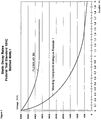
- End product is a molding compound in form of granules according to the invention. It contains 2,5 % of the antistatic agent and shows good static decay rates in comparison to a molding compound without antistatic agent, namely PLEXIGLAS®8N molding powders as shown in Fig. 1.
- a molding compound is produced in the same manner as in Example 1, but without addition of bluening agent. In spite of this, the Example lies within the invention.
- a molding compound is produced in the same manner as in Example 1, but without addition of sodium hypophosphite and without bluening agent. This Example lies outside the invention.
- test plaques of 65 x 40 x 3 mm were prepared by injection molding using a Battenfeld 350-CD machine with a cycle of 44 seconds. Barrel temperature of 210°, mold temperatures of 50°C are employed. Transmission, Yellowness index and Haze were measured according to ASTM-D 1003. Example Transmission Yellowness-index Haze 1 90,9 -0,1 0,8 A 91,9 1,2 0,8 B 91,8 1,8 0,7
- Example 1 and A which are carried out according the invention, are superior to Example B, which is not according the invention.
Landscapes
- Chemical & Material Sciences (AREA)
- Health & Medical Sciences (AREA)
- Chemical Kinetics & Catalysis (AREA)
- Medicinal Chemistry (AREA)
- Polymers & Plastics (AREA)
- Organic Chemistry (AREA)
- Compositions Of Macromolecular Compounds (AREA)
Priority Applications (1)
| Application Number | Priority Date | Filing Date | Title |
|---|---|---|---|
| EP96111330A EP0818503A1 (de) | 1996-07-13 | 1996-07-13 | Im wesentlichen transparentes antistatisches Acrylpolymer |
Applications Claiming Priority (1)
| Application Number | Priority Date | Filing Date | Title |
|---|---|---|---|
| EP96111330A EP0818503A1 (de) | 1996-07-13 | 1996-07-13 | Im wesentlichen transparentes antistatisches Acrylpolymer |
Publications (1)
| Publication Number | Publication Date |
|---|---|
| EP0818503A1 true EP0818503A1 (de) | 1998-01-14 |
Family
ID=8222991
Family Applications (1)
| Application Number | Title | Priority Date | Filing Date |
|---|---|---|---|
| EP96111330A Withdrawn EP0818503A1 (de) | 1996-07-13 | 1996-07-13 | Im wesentlichen transparentes antistatisches Acrylpolymer |
Country Status (1)
| Country | Link |
|---|---|
| EP (1) | EP0818503A1 (de) |
Citations (4)
| Publication number | Priority date | Publication date | Assignee | Title |
|---|---|---|---|---|
| JPS50109944A (de) * | 1974-02-08 | 1975-08-29 | ||
| EP0147728A1 (de) * | 1983-12-13 | 1985-07-10 | Mitsubishi Rayon Co., Ltd. | Methakrylsäureesterharzzusammensetzung |
| JPH04100886A (ja) * | 1990-08-20 | 1992-04-02 | Asahi Chem Ind Co Ltd | 帯電防止性メタクリル樹脂組成物 |
| EP0576877A1 (de) * | 1992-06-13 | 1994-01-05 | BASF Aktiengesellschaft | Polymethacryl- und Polyacrylimide mit verbesserter Eigenfarbe |
-
1996
- 1996-07-13 EP EP96111330A patent/EP0818503A1/de not_active Withdrawn
Patent Citations (4)
| Publication number | Priority date | Publication date | Assignee | Title |
|---|---|---|---|---|
| JPS50109944A (de) * | 1974-02-08 | 1975-08-29 | ||
| EP0147728A1 (de) * | 1983-12-13 | 1985-07-10 | Mitsubishi Rayon Co., Ltd. | Methakrylsäureesterharzzusammensetzung |
| JPH04100886A (ja) * | 1990-08-20 | 1992-04-02 | Asahi Chem Ind Co Ltd | 帯電防止性メタクリル樹脂組成物 |
| EP0576877A1 (de) * | 1992-06-13 | 1994-01-05 | BASF Aktiengesellschaft | Polymethacryl- und Polyacrylimide mit verbesserter Eigenfarbe |
Non-Patent Citations (2)
| Title |
|---|
| DATABASE WPI Section Ch Week 7738, Derwent World Patents Index; Class A14, AN 77-67312Y, XP002019335 * |
| DATABASE WPI Section Ch Week 9220, Derwent World Patents Index; Class A14, AN 92-162736, XP002019334 * |
Similar Documents
| Publication | Publication Date | Title |
|---|---|---|
| US4766168A (en) | Stabilized polyacetal compositions | |
| EP2558533B1 (de) | Schlagfeste methyl-methacrylat-harzzusammensetzung mit verbesserter kratzfestigkeit | |
| EP0359283A1 (de) | Kristalline Harzzusammensetzung | |
| GB1597478A (en) | Polyamide blends | |
| US5171770A (en) | Weather-resistant polyacetal resin compositions and weather-resistant molded articles formed thereof | |
| CN113845697B (zh) | 一种复合成核剂及聚丙烯组合物 | |
| EP0722979A1 (de) | Im wesentlichen transparentes antistatisches Acrylpolymer und Verfahren zu seiner Herstellung | |
| EP0396336A1 (de) | Thermische Stabilisierung von Glutarimidpolymeren | |
| JP2000034471A (ja) | 帯電防止剤組成物及びそれを含有する熱可塑性樹脂組成物 | |
| JPH05247311A (ja) | メタアクリル系樹脂組成物 | |
| US3935152A (en) | Styrene-acrylonitrile resin composition having good parting property | |
| JPH0641386A (ja) | メタクリル系樹脂組成物 | |
| JP2980686B2 (ja) | 帯電防止剤組成物及びそれを含有する熱可塑性樹脂組成物 | |
| US20240218157A1 (en) | Scratch - resistant polycarbonate composition | |
| KR840001450B1 (ko) | 수지 조성물 | |
| JPH05239311A (ja) | 低光沢性のポリオキシメチレン樹脂組成物 | |
| JPH06240093A (ja) | メタクリル系の樹脂組成物 | |
| EP0602241B1 (de) | Acryl-harzzusammensetzung | |
| JP7802002B2 (ja) | 添加剤組成物、樹脂組成物、樹脂組成物の製造方法および成形品 | |
| US4972012A (en) | Polyvinyl chloride resin composition | |
| JPH07331230A (ja) | 樹脂用帯電防止剤組成物及び帯電防止性樹脂組成物 | |
| CN118401605A (zh) | 注射成型或挤出成型用甲基丙烯酸系树脂组合物、树脂成型体及其制造方法 | |
| JPS6059256B2 (ja) | メタクリル樹脂組成物 | |
| JPH05239312A (ja) | 低光沢性ポリオキシメチレン樹脂組成物 | |
| JPH07113032A (ja) | アクリル系樹脂用帯電防止剤及びそれを含有するアクリル系樹脂組成物 |
Legal Events
| Date | Code | Title | Description |
|---|---|---|---|
| PUAI | Public reference made under article 153(3) epc to a published international application that has entered the european phase |
Free format text: ORIGINAL CODE: 0009012 |
|
| AK | Designated contracting states |
Kind code of ref document: A1 Designated state(s): AT BE CH DE DK ES FR GB IT LI NL SE |
|
| AKX | Designation fees paid |
Free format text: AT BE CH DE DK ES FR GB IT LI NL SE |
|
| RBV | Designated contracting states (corrected) |
Designated state(s): AT BE CH DE DK ES FR GB IT LI NL SE |
|
| STAA | Information on the status of an ep patent application or granted ep patent |
Free format text: STATUS: THE APPLICATION IS DEEMED TO BE WITHDRAWN |
|
| 18D | Application deemed to be withdrawn |
Effective date: 19980715 |