EP0826629A2 - Zurückgewinnung von Edelgasen - Google Patents
Zurückgewinnung von Edelgasen Download PDFInfo
- Publication number
- EP0826629A2 EP0826629A2 EP97305948A EP97305948A EP0826629A2 EP 0826629 A2 EP0826629 A2 EP 0826629A2 EP 97305948 A EP97305948 A EP 97305948A EP 97305948 A EP97305948 A EP 97305948A EP 0826629 A2 EP0826629 A2 EP 0826629A2
- Authority
- EP
- European Patent Office
- Prior art keywords
- gas
- noble gas
- noble
- mixtures
- hydrogen
- Prior art date
- Legal status (The legal status is an assumption and is not a legal conclusion. Google has not performed a legal analysis and makes no representation as to the accuracy of the status listed.)
- Granted
Links
- 229910052756 noble gas Inorganic materials 0.000 title claims abstract description 148
- 238000011084 recovery Methods 0.000 title description 16
- 150000002835 noble gases Chemical class 0.000 title description 5
- 239000007789 gas Substances 0.000 claims abstract description 169
- 238000010926 purge Methods 0.000 claims abstract description 81
- 238000000034 method Methods 0.000 claims abstract description 70
- 239000012528 membrane Substances 0.000 claims abstract description 67
- 239000001257 hydrogen Substances 0.000 claims abstract description 57
- 229910052739 hydrogen Inorganic materials 0.000 claims abstract description 57
- 239000000203 mixture Substances 0.000 claims abstract description 56
- KDLHZDBZIXYQEI-UHFFFAOYSA-N Palladium Chemical compound [Pd] KDLHZDBZIXYQEI-UHFFFAOYSA-N 0.000 claims abstract description 52
- UFHFLCQGNIYNRP-UHFFFAOYSA-N Hydrogen Chemical compound [H][H] UFHFLCQGNIYNRP-UHFFFAOYSA-N 0.000 claims abstract description 44
- 238000000926 separation method Methods 0.000 claims abstract description 34
- 239000012535 impurity Substances 0.000 claims abstract description 31
- 229910052763 palladium Inorganic materials 0.000 claims abstract description 26
- 229910052754 neon Inorganic materials 0.000 claims abstract description 24
- GKAOGPIIYCISHV-UHFFFAOYSA-N neon atom Chemical compound [Ne] GKAOGPIIYCISHV-UHFFFAOYSA-N 0.000 claims abstract description 24
- 229910052724 xenon Inorganic materials 0.000 claims abstract description 17
- FHNFHKCVQCLJFQ-UHFFFAOYSA-N xenon atom Chemical compound [Xe] FHNFHKCVQCLJFQ-UHFFFAOYSA-N 0.000 claims abstract description 17
- 150000002431 hydrogen Chemical class 0.000 claims abstract description 13
- 229910052743 krypton Inorganic materials 0.000 claims abstract description 8
- DNNSSWSSYDEUBZ-UHFFFAOYSA-N krypton atom Chemical compound [Kr] DNNSSWSSYDEUBZ-UHFFFAOYSA-N 0.000 claims abstract description 8
- IJGRMHOSHXDMSA-UHFFFAOYSA-N Atomic nitrogen Chemical compound N#N IJGRMHOSHXDMSA-UHFFFAOYSA-N 0.000 claims description 70
- CURLTUGMZLYLDI-UHFFFAOYSA-N Carbon dioxide Chemical compound O=C=O CURLTUGMZLYLDI-UHFFFAOYSA-N 0.000 claims description 63
- UGFAIRIUMAVXCW-UHFFFAOYSA-N Carbon monoxide Chemical compound [O+]#[C-] UGFAIRIUMAVXCW-UHFFFAOYSA-N 0.000 claims description 39
- 229910001868 water Inorganic materials 0.000 claims description 39
- QVGXLLKOCUKJST-UHFFFAOYSA-N atomic oxygen Chemical compound [O] QVGXLLKOCUKJST-UHFFFAOYSA-N 0.000 claims description 38
- 229910052760 oxygen Inorganic materials 0.000 claims description 38
- 239000001301 oxygen Substances 0.000 claims description 38
- XLYOFNOQVPJJNP-UHFFFAOYSA-N water Substances O XLYOFNOQVPJJNP-UHFFFAOYSA-N 0.000 claims description 37
- 239000010457 zeolite Substances 0.000 claims description 37
- 229910052757 nitrogen Inorganic materials 0.000 claims description 35
- 229910002092 carbon dioxide Inorganic materials 0.000 claims description 33
- VNWKTOKETHGBQD-UHFFFAOYSA-N methane Chemical compound C VNWKTOKETHGBQD-UHFFFAOYSA-N 0.000 claims description 32
- 229910002091 carbon monoxide Inorganic materials 0.000 claims description 31
- 229930195733 hydrocarbon Natural products 0.000 claims description 31
- 150000002430 hydrocarbons Chemical class 0.000 claims description 31
- 239000001569 carbon dioxide Substances 0.000 claims description 29
- 229910021536 Zeolite Inorganic materials 0.000 claims description 28
- HNPSIPDUKPIQMN-UHFFFAOYSA-N dioxosilane;oxo(oxoalumanyloxy)alumane Chemical compound O=[Si]=O.O=[Al]O[Al]=O HNPSIPDUKPIQMN-UHFFFAOYSA-N 0.000 claims description 28
- 239000003463 adsorbent Substances 0.000 claims description 27
- 239000000463 material Substances 0.000 claims description 23
- 238000001179 sorption measurement Methods 0.000 claims description 21
- XKRFYHLGVUSROY-UHFFFAOYSA-N Argon Chemical compound [Ar] XKRFYHLGVUSROY-UHFFFAOYSA-N 0.000 claims description 20
- 238000007789 sealing Methods 0.000 claims description 18
- VYPSYNLAJGMNEJ-UHFFFAOYSA-N Silicium dioxide Chemical compound O=[Si]=O VYPSYNLAJGMNEJ-UHFFFAOYSA-N 0.000 claims description 14
- PXHVJJICTQNCMI-UHFFFAOYSA-N Nickel Chemical compound [Ni] PXHVJJICTQNCMI-UHFFFAOYSA-N 0.000 claims description 13
- PNEYBMLMFCGWSK-UHFFFAOYSA-N aluminium oxide Inorganic materials [O-2].[O-2].[O-2].[Al+3].[Al+3] PNEYBMLMFCGWSK-UHFFFAOYSA-N 0.000 claims description 13
- 239000000853 adhesive Substances 0.000 claims description 12
- 230000001070 adhesive effect Effects 0.000 claims description 12
- 239000010949 copper Substances 0.000 claims description 12
- RYGMFSIKBFXOCR-UHFFFAOYSA-N Copper Chemical compound [Cu] RYGMFSIKBFXOCR-UHFFFAOYSA-N 0.000 claims description 11
- 230000003197 catalytic effect Effects 0.000 claims description 11
- 229910052802 copper Inorganic materials 0.000 claims description 11
- QPLDLSVMHZLSFG-UHFFFAOYSA-N Copper oxide Chemical compound [Cu]=O QPLDLSVMHZLSFG-UHFFFAOYSA-N 0.000 claims description 10
- QCWXUUIWCKQGHC-UHFFFAOYSA-N Zirconium Chemical compound [Zr] QCWXUUIWCKQGHC-UHFFFAOYSA-N 0.000 claims description 10
- 229910052786 argon Inorganic materials 0.000 claims description 10
- 238000009833 condensation Methods 0.000 claims description 9
- 230000005494 condensation Effects 0.000 claims description 9
- 239000002274 desiccant Substances 0.000 claims description 9
- 229910052726 zirconium Inorganic materials 0.000 claims description 9
- QGZKDVFQNNGYKY-UHFFFAOYSA-N Ammonia Chemical compound N QGZKDVFQNNGYKY-UHFFFAOYSA-N 0.000 claims description 8
- OKTJSMMVPCPJKN-UHFFFAOYSA-N Carbon Chemical compound [C] OKTJSMMVPCPJKN-UHFFFAOYSA-N 0.000 claims description 8
- 125000004432 carbon atom Chemical group C* 0.000 claims description 7
- 238000010438 heat treatment Methods 0.000 claims description 7
- 238000010521 absorption reaction Methods 0.000 claims description 6
- 239000011324 bead Substances 0.000 claims description 6
- 229910052759 nickel Inorganic materials 0.000 claims description 6
- 239000000741 silica gel Substances 0.000 claims description 6
- 229910002027 silica gel Inorganic materials 0.000 claims description 6
- 239000005751 Copper oxide Substances 0.000 claims description 5
- 229910000431 copper oxide Inorganic materials 0.000 claims description 5
- 230000003647 oxidation Effects 0.000 claims description 5
- 238000007254 oxidation reaction Methods 0.000 claims description 5
- 239000012466 permeate Substances 0.000 claims description 5
- 229910000838 Al alloy Inorganic materials 0.000 claims description 4
- DNXNYEBMOSARMM-UHFFFAOYSA-N alumane;zirconium Chemical compound [AlH3].[Zr] DNXNYEBMOSARMM-UHFFFAOYSA-N 0.000 claims description 4
- 229910021529 ammonia Inorganic materials 0.000 claims description 4
- 238000006243 chemical reaction Methods 0.000 claims description 4
- 239000000377 silicon dioxide Substances 0.000 claims description 4
- 229910000640 Fe alloy Inorganic materials 0.000 claims description 3
- 229910001093 Zr alloy Inorganic materials 0.000 claims description 3
- ZGTNJINJRMRGNV-UHFFFAOYSA-N [V].[Fe].[Zr] Chemical compound [V].[Fe].[Zr] ZGTNJINJRMRGNV-UHFFFAOYSA-N 0.000 claims description 3
- 229910045601 alloy Inorganic materials 0.000 claims description 3
- 239000000956 alloy Substances 0.000 claims description 3
- 239000012298 atmosphere Substances 0.000 claims description 3
- 230000000694 effects Effects 0.000 claims description 3
- -1 ethylene, propylene Chemical group 0.000 claims description 3
- 238000005304 joining Methods 0.000 claims description 3
- 238000002425 crystallisation Methods 0.000 claims description 2
- 238000003860 storage Methods 0.000 description 13
- 229910002090 carbon oxide Inorganic materials 0.000 description 9
- 239000003054 catalyst Substances 0.000 description 9
- 238000004519 manufacturing process Methods 0.000 description 7
- 238000000746 purification Methods 0.000 description 7
- 239000004215 Carbon black (E152) Substances 0.000 description 5
- OTMSDBZUPAUEDD-UHFFFAOYSA-N Ethane Chemical compound CC OTMSDBZUPAUEDD-UHFFFAOYSA-N 0.000 description 5
- 239000002250 absorbent Substances 0.000 description 4
- 230000002745 absorbent Effects 0.000 description 4
- 229960004643 cupric oxide Drugs 0.000 description 4
- 239000011261 inert gas Substances 0.000 description 4
- 239000007788 liquid Substances 0.000 description 4
- 230000013011 mating Effects 0.000 description 4
- 229930195735 unsaturated hydrocarbon Natural products 0.000 description 3
- 150000001335 aliphatic alkanes Chemical class 0.000 description 2
- 150000001336 alkenes Chemical class 0.000 description 2
- VSCWAEJMTAWNJL-UHFFFAOYSA-K aluminium trichloride Chemical compound Cl[Al](Cl)Cl VSCWAEJMTAWNJL-UHFFFAOYSA-K 0.000 description 2
- 239000011230 binding agent Substances 0.000 description 2
- 229910052799 carbon Inorganic materials 0.000 description 2
- 239000003795 chemical substances by application Substances 0.000 description 2
- NUJOXMJBOLGQSY-UHFFFAOYSA-N manganese dioxide Chemical compound O=[Mn]=O NUJOXMJBOLGQSY-UHFFFAOYSA-N 0.000 description 2
- VLKZOEOYAKHREP-UHFFFAOYSA-N n-Hexane Chemical class CCCCCC VLKZOEOYAKHREP-UHFFFAOYSA-N 0.000 description 2
- 229910000480 nickel oxide Inorganic materials 0.000 description 2
- 229910000510 noble metal Inorganic materials 0.000 description 2
- 229920006395 saturated elastomer Polymers 0.000 description 2
- 241001328961 Aleiodes compressor Species 0.000 description 1
- VGGSQFUCUMXWEO-UHFFFAOYSA-N Ethene Chemical compound C=C VGGSQFUCUMXWEO-UHFFFAOYSA-N 0.000 description 1
- 239000005977 Ethylene Substances 0.000 description 1
- OFBQJSOFQDEBGM-UHFFFAOYSA-N Pentane Chemical class CCCCC OFBQJSOFQDEBGM-UHFFFAOYSA-N 0.000 description 1
- 229910000756 V alloy Inorganic materials 0.000 description 1
- DIVGJYVPMOCBKD-UHFFFAOYSA-N [V].[Zr] Chemical compound [V].[Zr] DIVGJYVPMOCBKD-UHFFFAOYSA-N 0.000 description 1
- HSFWRNGVRCDJHI-UHFFFAOYSA-N alpha-acetylene Natural products C#C HSFWRNGVRCDJHI-UHFFFAOYSA-N 0.000 description 1
- 229910052782 aluminium Inorganic materials 0.000 description 1
- 150000001412 amines Chemical class 0.000 description 1
- 238000013459 approach Methods 0.000 description 1
- 230000015572 biosynthetic process Effects 0.000 description 1
- 238000009835 boiling Methods 0.000 description 1
- 235000013844 butane Nutrition 0.000 description 1
- 238000000576 coating method Methods 0.000 description 1
- 238000004891 communication Methods 0.000 description 1
- 238000010276 construction Methods 0.000 description 1
- 238000000354 decomposition reaction Methods 0.000 description 1
- 238000013461 design Methods 0.000 description 1
- JYIMWRSJCRRYNK-UHFFFAOYSA-N dialuminum;disodium;oxygen(2-);silicon(4+);hydrate Chemical compound O.[O-2].[O-2].[O-2].[O-2].[O-2].[O-2].[Na+].[Na+].[Al+3].[Al+3].[Si+4] JYIMWRSJCRRYNK-UHFFFAOYSA-N 0.000 description 1
- 238000009792 diffusion process Methods 0.000 description 1
- PUFKGWVZPFANLN-UHFFFAOYSA-N dioxomanganese oxocopper Chemical compound O=[Cu].O=[Mn]=O PUFKGWVZPFANLN-UHFFFAOYSA-N 0.000 description 1
- 238000001035 drying Methods 0.000 description 1
- 125000002534 ethynyl group Chemical group [H]C#C* 0.000 description 1
- 238000011049 filling Methods 0.000 description 1
- 239000012530 fluid Substances 0.000 description 1
- 238000005247 gettering Methods 0.000 description 1
- 239000011521 glass Substances 0.000 description 1
- 125000004836 hexamethylene group Chemical class [H]C([H])([*:2])C([H])([H])C([H])([H])C([H])([H])C([H])([H])C([H])([H])[*:1] 0.000 description 1
- XEEYBQQBJWHFJM-UHFFFAOYSA-N iron Substances [Fe] XEEYBQQBJWHFJM-UHFFFAOYSA-N 0.000 description 1
- 229910052742 iron Inorganic materials 0.000 description 1
- 238000011068 loading method Methods 0.000 description 1
- 238000005259 measurement Methods 0.000 description 1
- 229910001092 metal group alloy Inorganic materials 0.000 description 1
- 239000002808 molecular sieve Substances 0.000 description 1
- IJDNQMDRQITEOD-UHFFFAOYSA-N n-butane Chemical class CCCC IJDNQMDRQITEOD-UHFFFAOYSA-N 0.000 description 1
- 229940110728 nitrogen / oxygen Drugs 0.000 description 1
- 239000003921 oil Substances 0.000 description 1
- GNRSAWUEBMWBQH-UHFFFAOYSA-N oxonickel Chemical compound [Ni]=O GNRSAWUEBMWBQH-UHFFFAOYSA-N 0.000 description 1
- 125000004817 pentamethylene group Chemical class [H]C([H])([*:2])C([H])([H])C([H])([H])C([H])([H])C([H])([H])[*:1] 0.000 description 1
- 239000004033 plastic Substances 0.000 description 1
- 239000000047 product Substances 0.000 description 1
- 229910052761 rare earth metal Inorganic materials 0.000 description 1
- 150000002910 rare earth metals Chemical class 0.000 description 1
- URGAHOPLAPQHLN-UHFFFAOYSA-N sodium aluminosilicate Chemical compound [Na+].[Al+3].[O-][Si]([O-])=O.[O-][Si]([O-])=O URGAHOPLAPQHLN-UHFFFAOYSA-N 0.000 description 1
- 239000000758 substrate Substances 0.000 description 1
- 125000000383 tetramethylene group Chemical group [H]C([H])([*:1])C([H])([H])C([H])([H])C([H])([H])[*:2] 0.000 description 1
- 238000011144 upstream manufacturing Methods 0.000 description 1
Images

Classifications
-
- C—CHEMISTRY; METALLURGY
- C01—INORGANIC CHEMISTRY
- C01B—NON-METALLIC ELEMENTS; COMPOUNDS THEREOF; METALLOIDS OR COMPOUNDS THEREOF NOT COVERED BY SUBCLASS C01C
- C01B23/00—Noble gases; Compounds thereof
- C01B23/001—Purification or separation processes of noble gases
- C01B23/0094—Combined chemical and physical processing
-
- B—PERFORMING OPERATIONS; TRANSPORTING
- B01—PHYSICAL OR CHEMICAL PROCESSES OR APPARATUS IN GENERAL
- B01D—SEPARATION
- B01D53/00—Separation of gases or vapours; Recovering vapours of volatile solvents from gases; Chemical or biological purification of waste gases, e.g. engine exhaust gases, smoke, fumes, flue gases, aerosols
-
- B—PERFORMING OPERATIONS; TRANSPORTING
- B01—PHYSICAL OR CHEMICAL PROCESSES OR APPARATUS IN GENERAL
- B01D—SEPARATION
- B01D2257/00—Components to be removed
- B01D2257/10—Single element gases other than halogens
- B01D2257/11—Noble gases
-
- C—CHEMISTRY; METALLURGY
- C01—INORGANIC CHEMISTRY
- C01B—NON-METALLIC ELEMENTS; COMPOUNDS THEREOF; METALLOIDS OR COMPOUNDS THEREOF NOT COVERED BY SUBCLASS C01C
- C01B2210/00—Purification or separation of specific gases
- C01B2210/0001—Separation or purification processing
-
- C—CHEMISTRY; METALLURGY
- C01—INORGANIC CHEMISTRY
- C01B—NON-METALLIC ELEMENTS; COMPOUNDS THEREOF; METALLOIDS OR COMPOUNDS THEREOF NOT COVERED BY SUBCLASS C01C
- C01B2210/00—Purification or separation of specific gases
- C01B2210/0001—Separation or purification processing
- C01B2210/0009—Physical processing
- C01B2210/001—Physical processing by making use of membranes
-
- C—CHEMISTRY; METALLURGY
- C01—INORGANIC CHEMISTRY
- C01B—NON-METALLIC ELEMENTS; COMPOUNDS THEREOF; METALLOIDS OR COMPOUNDS THEREOF NOT COVERED BY SUBCLASS C01C
- C01B2210/00—Purification or separation of specific gases
- C01B2210/0001—Separation or purification processing
- C01B2210/0009—Physical processing
- C01B2210/0014—Physical processing by adsorption in solids
- C01B2210/0015—Physical processing by adsorption in solids characterised by the adsorbent
-
- C—CHEMISTRY; METALLURGY
- C01—INORGANIC CHEMISTRY
- C01B—NON-METALLIC ELEMENTS; COMPOUNDS THEREOF; METALLOIDS OR COMPOUNDS THEREOF NOT COVERED BY SUBCLASS C01C
- C01B2210/00—Purification or separation of specific gases
- C01B2210/0029—Obtaining noble gases
-
- C—CHEMISTRY; METALLURGY
- C01—INORGANIC CHEMISTRY
- C01B—NON-METALLIC ELEMENTS; COMPOUNDS THEREOF; METALLOIDS OR COMPOUNDS THEREOF NOT COVERED BY SUBCLASS C01C
- C01B2210/00—Purification or separation of specific gases
- C01B2210/0029—Obtaining noble gases
- C01B2210/0032—Neon
Definitions
- This invention relates to the recovery of noble gases such as xenon, neon and krypton from gas mixtures, and more particularly to the recovery of mixtures of xenon and neon from plasma display panel sealing furnaces.
- Plasma display panels are used in the manufacture of flat screen displays for televisions and computer monitors.
- European Patent Application No. 0 698 903 describes a plasma display panel containing a rare earth gas mixture comprised of neon and argon, xenon and/or krypton.
- Plasma display panels are generally manufactured by joining pairs of flat sheets of material with appropriate display circuitry in such a manner that an enclosed space is formed between the sheets. The enclosed space is filled with a noble gas, preferably xenon, neon or a mixture of the two, and the two sheets of material are sealed together to form the display panel.
- One method of gas recovery that can be practised is to evacuate the gas furnace after the panels are sealed.
- This method has the advantage of recovering the noble gas in a relatively pure form, i.e. it contains, in addition to the noble gas, only the gases formed during the heat sealing process and atmospheric gases that leak into the furnace or recovery system during evacuation.
- this method is not suitable for the recovery of the noble gas used with plasma displays because the sealed display panels will break in the sealing ovens if they are subjected to the very low pressures required to effect the high recovery necessary to make the process cost effective.
- the present invention provides a method of recovering noble gas from a chamber comprising passing a purge gas through the chamber, thereby purging substantially all of the noble gas from the chamber and producing a gaseous effluent comprising the noble gas and the purge gas; separating a noble gas stream and a substantially noble gas-free fraction from the gaseous effluent
- the invention is applicable in circumstances where a noble gas, preferably one selected from xenon, neon, argon, krypton and mixtures of these, is used in a process carried out in a closed chamber. Unused noble gas is recovered from the chamber for reuse by purging the chamber with a purge gas thereby producing a gaseous effluent comprising the noble gas and the purge gas.
- the purge gas is preferably selected from hydrogen, steam, ammonia, carbon dioxide, carbon monoxide, oxygen, and hydrocarbons having 2 to 6 carbon atoms.
- a noble gas stream is separated from the effluent, preferably by membrane separation, condensation, adsorption, absorption, crystallisation or combinations of these.
- the noble gases discussed in this invention can be used for producing arc lamps, plasma display panels, neon display signs, etc.
- the purge gas is hydrogen and the noble gas stream is separated from the gaseous effluent by membrane separation using a membrane which comprises palladium.
- the membrane is preferably operated to produce substantially pure hydrogen as the permeate gas and substantially pure noble gas as the residue gas, and one or both of these are recycled to the closed chamber with or without further purification.
- the membrane separation is carried out at a temperature of about 200°C to about 600°C and a pressure of about 3 to about 40 bara.
- any carbon oxides present in the gaseous effluent are removed therefrom prior to the membrane separation step.
- the palladium effects the reaction of the oxygen and hydrogen to produce water vapour on the residue side of the membrane.
- the water vapour is preferably removed from the noble gas stream by subjecting the noble gas stream to a temperature swing adsorption process using a desiccant selected from silica gel, activated alumina, and A or X zeolites such as zeolite 5A or zeolite 13X and mixtures of any of these.
- the purge gas may be oxygen and the noble gas separated from the gaseous effluent by membrane separation using an oxygen-ion-conducting membrane.
- the purge gas may be steam and the noble gas stream separated from the gaseous effluent by condensation.
- the noble gas stream may contain small amounts of impurities selected from water vapour, carbon monoxide, carbon dioxide, hydrogen, oxygen, argon, nitrogen, hydrocarbons and mixtures of two or more of these.
- the impurities may be removed from the noble gas stream after the removal of purge gas by one or more of:
- the impurity is preferably removed from the noble gas stream by method (a), above, carried out at a temperature in the range of about 0°C to about 100°C using an adsorbent selected from silica gel, activated alumina, zeolites, activated carbon and mixtures of these.
- the water vapour is preferably removed by contacting the noble gas stream with a desiccant selected from silica gel, activated alumina, zeolite A, zeolite X and mixtures of these.
- a desiccant selected from silica gel, activated alumina, zeolite A, zeolite X and mixtures of these.
- the impurity is preferably removed from the noble gas stream by method (d), above, carried out at a temperature in the range of about -50°C to about -200°C using an adsorbent selected from zeolite 4A, zeolite 5A, type X zeolite, type Y zeolite, mordenites, clinoptilolites and mixtures of these.
- the noble gas stream may contain nitrogen, hydrocarbons or mixtures of these, these may be removed from the noble gas stream by method (e), above, carried out at a temperature in the range of about 350°C to about 700°C using a zirconium-based material.
- the zirconium-based material is a zirconium-alloy.
- the zirconium-based alloy is a zirconium-aluminium alloy, a zirconium-vanadium-iron alloy or a mixture of these. This step is preferred when the noble gas stream contains only nitrogen and hydrocarbons after completion of steps (a), (b) and/or (c).
- ambient temperature means a temperature in the range of about -30°C to about 50°C.
- the plasma display panels manufactured by the process of the invention are made by joining two planar sections of sheet material together in such a manner that an enclosed envelope is created between the sections.
- the sections may be made of glass, plastic or other suitable material and they may be clear, translucent or opaque. These sections also contain appropriate coatings and circuitry for displaying images. They are joined together by an adhesive which forms a continuous seal around the edges of the sections.
- the planar sections may be flat, or one or both of the sections may be curvilinear.
- pairs of panel sections are placed in the furnace and positioned such that the mating sections face each other, with the bead of adhesive between the mating sections, and with both sections in contact with the adhesive.
- the furnace is then evacuated, preferably to a pressure of 0.0001 to 0.00001 bara, to remove all traces of gas impurities, and the furnace is heated to a temperature of about 400°C.
- the noble gas generally xenon or a mixture of xenon and neon, is charged into the furnace to a pressure of about 1.5 to about 3.0 bara.
- the adhesive softens and adheres to each section of the panels.
- the furnace is then allowed to cool.
- Purge gases useful in the process of the invention include hydrogen, steam, ammonia, carbon dioxide, carbon monoxide, lower hydrocarbons and oxygen.
- the term "lower hydrocarbons” means ethylene, propylene and saturated or ethylenically unsaturated hydrocarbons (i.e. alkanes or alkenes) having four to six hydrocarbons. Included in this group are ethylene, propylene, the butanes, the butenes, the pentanes, the pentenes, the hexanes the hexenes, and mixtures of two or more of these. It is desirable that the purge gas be substantially pure, since a given noble gas-purge gas separation method is generally highly effective only for a selected purge gas.
- the noble gas-purge gas separation technique used in the practice of the invention depends upon the particular purge gas used in the process. If it is desirable to recycle the purge gas a method of separation is employed which affords separation of substantially pure purge gas.
- substantially noble gas-free hydrogen and substantially hydrogen-free noble gas can be obtained when the purge gas is hydrogen and the method of purge gas-noble gas separation is by membranes.
- Membrane separation also provides a substantially clean separation when oxygen is used as the purge gas.
- the purge gas is relatively inexpensive and can be easily disposed of, or if it cannot be separated from the noble gas in substantially pure form, techniques such as condensation can be conveniently used. Such is the case with steam.
- Membrane separation using a palladium membrane is preferably employed as the gas recovery method when the purge gas is hydrogen.
- Membrane separation, using an oxygen-ion-conducting membrane is useful when the purge gas is oxygen.
- Condensation is preferably employed when the purge gas is steam, and this method of gas recovery can also be used when the purge gas is a hydrocarbon having a relatively high boiling point.
- Absorption, using copper aluminium chloride (CuAlCl 4 ) as the absorbent, is preferably employed when the purge gas is carbon monoxide; absorption using amines as the absorbent is preferably employed when purge gas is carbon dioxide; absorption, using higher hydrocarbons (alkanes and/or alkenes having seven or more carbon atoms) as the absorbent is preferably employed when the purge gas is a lower hydrocarbon; and absorption using water as the absorbent is preferably used when the purge gas is ammonia.
- CuAlCl 4 copper aluminium chloride
- Impurities remaining in the separated noble gas can be removed by one or more of various techniques. Trace amounts of hydrogen and/or oxygen can be removed from the noble gas by passing the gas through a bed of copper or nickel getter at a temperature in the range of about 25°C to about 200°C.
- a catalyst for oxygen removal containing 30wt % copper on a carrier substrate is available from BASF Corporation under the trade designation Catalyst R3-11.
- the catalyst can be used to remove oxygen from inert gases by gettering at temperatures up to 250° C., and the catalyst can be regenerated by reduction with hydrogen.
- a one-step process for the removal of impurities selected from oxygen, carbon monoxide, carbon dioxide, hydrogen, water, or mixtures of these at less than 1000ppmv in an inert gas is disclosed in US Patent No. 4,713,224.
- the gas is passed over a getter comprising at least 5wt % nickel at a temperature between 0°C and 50°C. and a product containing less than several ppmv impurities is obtained.
- the catalyst is regenerated by purging with nitrogen and hydrogen at 180° to 200°C.
- the getter is used only for oxygen and hydrogen removal.
- Water vapour can be removed using temperature swing adsorption (TSA) by passing the separated noble gas through a desiccant, such as silica gel or activated alumina.
- a desiccant such as silica gel or activated alumina.
- Carbon dioxide can be removed by TSA using an adsorbent such as zeolite molecular sieve, or activated alumina (including modified aluminas).
- Nitrogen, methane, ethane, and carbon monoxide can be removed from the separated noble gas by cryogenic adsorption using adsorbents such as CaX zeolite, NaX zeolite, type A zeolites, type Y zeolites, mordenites or clinoptilolites at temperatures in the range of about -50°C to about -200°C.
- Nitrogen and hydrocarbons can also be removed from the noble gas using zirconium alloys, such as zirconium-vanadium alloy.
- steam is used as the purge gas and condensation is used as the separation technique.
- Residual moisture in the purified noble gas stream can be removed by drying the noble gas using a desiccant which has a strong affinity for water vapour but not for the noble gas. The condensed moisture can be discarded.
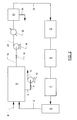
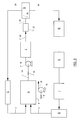
- FIGS. 1 and 3 show three of the various embodiments of a system for purging a noble gas from a treatment chamber and for separating the noble gas from the purge gas.
- the methods illustrated in Figures 1 and 3 provide for recovery and recycle of both the noble gas and the purge gas, and the method illustrated in Figure 2 provides for recovery of only the noble gas.
- the system illustrated in Figure 1 is a preferred system when the hydrogen-noble gas mixture being separated contains very little or no carbon oxides.
- the system illustrated therein includes, as major equipment units, gas treatment chamber A, membrane separation unit B, purge gas storage vessel C, optional catalytic getter purifier D, ambient temperature adsorption system E, optional cryogenic adsorption system F and noble gas storage vessel G. All of the individual equipment units are well known, and their design and operation forms no part of the present invention.
- Gas treatment chamber A may be any vessel in which a treatment operation involving the use of substantially pure xenon, neon, krypton or mixtures of these is carried out.
- chamber A is depicted as part of as a gas-tight furnace in which plasma display panels are manufactured. As such, it is equipped with doors for loading the display panel sections into the unit and with heating means to heat the chamber contents to the desired temperature.
- Chamber A is provided with noble gas supply line 2, which provides fluid communication between chamber A and noble gas storage vessel G, and with purge gas supply line 4, which connects purge gas storage vessel C to chamber A.
- Chamber A is also provided with evacuation line 6 and purged gas line 14.
- Vacuum pump 10 is capable of evacuating chamber A to an pressure of 0.00001 bara.
- the discharge end of vacuum pump 10 is connected to line 12 which can be connected to an atmospheric vent or to gas recovery means (not shown).
- Line 14, provided with valve 16, joins the purge gas outlet of chamber A to the inlet end of compressor 18.
- Compressor 18 is capable of increasing the pressure of the gas mixture in line 14 to that required for effective performance of membrane separation unit B. This pressure is typically in the range of about 4 to about 40 bara.
- the discharge end of compressor 18 is connected to line 20, which, in turn, is connected to the inlet end of gas heater 22.
- the outlet end of heater 22 is connected to the inlet end of membrane separation unit B through line 24.
- Membrane separation unit B is provided with a metallic membrane 26.
- Purified purge gas line 28 joins the permeate gas side of membrane 26 to purge gas storage vessel C.
- purifier E is an ambient temperature adsorption unit packed with one or more adsorbents which efficiently remove water vapour, carbon dioxide, heavy hydrocarbons (oils), etc., from the noble gas stream. Adsorbents which do not significantly adsorb neon, argon, xenon or krypton are preferred.
- purifier E may be packed with a desiccant, such as activated alumina or silica gel, and/or 13X or 5A zeolites, for removal of carbon dioxide, and/or activated carbon, for removal of heavy hydrocarbons.
- adsorbents can be regenerated with, for example, dry nitrogen, which will not cause any difficulty during noble gas purification since, as noted above, the downstream cryogenic adsorption unit efficiently removes nitrogen from the purified noble gas stream.
- cryogenic adsorption purifier F Located in line 30, downstream of purifier E is optional cryogenic adsorption purifier F.
- This adsorption unit is packed with an adsorbent which removes trace amounts of nitrogen, carbon monoxide and/or methane/ethane from the noble gas.
- a suitable adsorbent for this purifier is calcium-exchanged type A zeolite.
- Other adsorbents, such as type X zeolites, type Y zeolites, mordenites, etc. can be used in purifier F.
- the adsorbent in this unit can be regenerated by vacuum, by heating or both and final purging with the noble gas.
- Valve 8 is then closed and the temperature in chamber A is raised to about 400°C and a noble gas, which may be xenon, neon, argon or krypton, or mixtures of these, such as a mixture of xenon and neon, is charged into the chamber.
- a preferred noble gas mixture is 95% neon and 5% xenon (molar %).
- the noble gas is preferably introduced into chamber A when the temperature reaches 400°C, but it may be charged into chamber A before or during heating of the chamber. Sufficient noble gas is introduced into chamber A to raise the pressure therein to about 1.6 to about 1.7 bara. As the temperature in chamber A approaches 400°C, the bead of adhesive softens and becomes tacky.
- the heating means is inactivated and the chamber is allowed to cool. As the chamber cools the pressure inside the chamber drops. When the temperature reaches 350°C sufficient additional noble gas is charged into chamber A to again raise the pressure therein to about 1.6 to 1.7 bara. As the temperature inside chamber A continues to fall, the adhesive is set up and seals the two sections of each pair of mating panel sections together, with the desired quantity of noble gas sealed within the closed panel. As the temperature in chamber A falls below about 350°C valve 16 is opened (if it was closed) and purge gas from storage vessel C is introduced into vessel A. Compressor 18 is activated and is set to draw purged gas from chamber.
- Membrane 26 may be any metallic or other membrane that permits the purge gas to pass through its openings without permitting the noble gas to pass through.
- Heater 22 may be activated or not, depending upon the particular gas that is used as the purge gas.
- the purge gas is hydrogen
- the membrane is preferably palladium and heater 22 is set to heat the purged gas stream to about 400°C and compressor 18 is set to raise the pressure of the purged gas to about 20 bara.
- the purge gas passes through membrane 26 and leaves separator B through line 28, while the noble gas passes out of separator B through line 30.
- the purge gas is hydrogen and the membrane is palladium, very pure hydrogen, for example, greater than 99.999% purity, is obtained, and the high purity hydrogen passes through line 28 to purge gas storage vessel C. Any oxygen that is introduced into the system by leaks, etc. reacts with the hydrogen to form water vapour upon contact with the hot palladium membrane, and the water vapour passes from separator B with the separated noble gas through line 30.
- purifier D is a catalytic getter purifier and is designed to remove hydrogen and oxygen impurities in the noble gas. It preferably contains nickel, nickel oxide or more preferably copper oxide for hydrogen removal or metallic nickel or more preferably metallic copper for oxygen removal. It may also contain mixed nickel/nickel oxide or copper/copper oxide or mixtures of these to remove either hydrogen or oxygen or both.
- purifier F contains an adsorbent which removes nitrogen, carbon monoxide, methane and ethane from the noble gas. These gases may be introduced into the purged gas at various parts of the system, for instance due to leakage in the vacuum pump or during the curing of the adhesive beads. Purifier F is operated at cryogenic temperatures using a TSA cycle and selected adsorbents, as noted above.
- the purified gas leaving purifier F next passes into noble gas storage vessel G for reuse.
- this system is designed to operate with a purge gas that is not recycled, such as steam.
- the system shown in Figure 2 contains several of the units that are in the system of Figure 1.
- the Figure 2 system differs from the Figure 1 system in that it includes phase separator H instead of membrane separator B and cooler 32 instead of heater 22.
- Phase separator H is provided with condensate removal line 34 and separated noble gas discharge line 30.
- the gas passes through getter purifier D, if this unit is included in the system.
- the noble gas exiting purifier D will most likely be saturated with the purge gas. This is desirably removed in purifier E.
- purifier E may contain a desiccant to remove water vapour and/or an adsorbent to removed condensed hydrocarbon.
- the partially purified noble gas leaving purifier E passes through purifier F, as described above in the discussion of the Figure 1 system, and the purified noble gas leaving purifier F is returned to noble gas storage vessel G for reuse.
- the condensate recovered from separator H through line 34 can be heated back to the gaseous state and reused, if desired, or it can be disposed of.
- FIG. 3 The system illustrated in Figure 3 is similar to the Figure 1 system, except that it includes optional carbon oxides removal system J, and unit F is replaced with unit I, which is a high temperature zirconium-based purifier which removes nitrogen and hydrocarbons from the noble gas stream entering this unit.
- unit I which is a high temperature zirconium-based purifier which removes nitrogen and hydrocarbons from the noble gas stream entering this unit.
- Carbon oxides removal system J can be included in the system when the gas stream exiting chamber contains carbon monoxide and/or carbon dioxide. It is desirable to remove these gases from the feed to separator B when the membrane in separator B is a palladium membrane to prevent reaction between the carbon oxide(s) and hydrogen to form methane.
- the removal of these gases can be carried out at temperatures in the range of about ambient temperature to about 150C using, for example, a getter, a catalytic reactor or an adsorbent for the carbon monoxide removal and an adsorption unit for the removal of carbon dioxide. All of these systems are well known and the specific details of the various units form no part of the invention.
- suitable units for carbon monoxide removal include mixed copper oxide/manganese dioxide getter agent-containing units, noble metal catalyst-containing units, for example supported palladium-containing units, for the catalytic oxidation of carbon monoxide to carbon dioxide and copper-containing adsorbent-containing units.
- Typical carbon dioxide removal adsorption units include adsorbers packed with modified alumina and/or zeolites, such as zeolite 13 X, zeolite 5A or mixtures of these.
- the carbon dioxide removal unit is preferably positioned downstream of the carbon monoxide removal unit, particularly when the carbon monoxide removal unit is a catalytic unit which converts carbon monoxide to carbon dioxide.
- Unit I contains a zirconium-based material, such as a zirconium-aluminium alloy or a zirconium-vanadium-iron alloy as a getter agent for the removal of nitrogen and/or hydrocarbons from the noble metal gas stream leaving separator B.
- a zirconium-based material such as a zirconium-aluminium alloy or a zirconium-vanadium-iron alloy as a getter agent for the removal of nitrogen and/or hydrocarbons from the noble metal gas stream leaving separator B.
- the removal of simple hydrocarbons from rare gas using a 70% Zr-25% V-5% Fe getter is reported by George et al. in Gas Separation and Purification, Vol 3, No 2, pp 50-55, 1989. It is believed that the mechanism of hydrocarbon removal involves surface decomposition followed by the diffusion of hydrogen and carbon into the alloy.
- the operating temperature for the zirconium-based getter is generally in the range of about 350 to about 700°C.
- Unit J can be used in the system illustrated in the Figure 1 system , i.e. in combination with cryogenic adsorption system F, if desired.
- unit I can be used in place of cryogenic adsorption system F in a system which does not include unit J, for example, the Figure 1 system.
- Operation of the system of Figure 3 is similar to operation of the Figure 1 system.
- the gas stream exiting chamber A through line 14 is compressed to the desired pressure and introduced into system J, which may be operated at various temperatures, depending upon the particular carbon oxides removal units employed in system J.
- System J removes substantially all of the carbon monoxide and carbon dioxide contained in the chamber A effluent.
- the carbon oxides-free gas then passes through unit B and units D and E, if these units are included in the system.
- the gas stream exiting unit E (when present) next enters unit I, which, as noted above, is operated at a temperature in the range of about 350°C to about 700°C.
- the gas exiting unit I will be substantially free of nitrogen and hydrocarbons. This gas is then sent to vessel G for storage until need for reuse in vessel A.
- a vessel containing 10m 3 of impure neon at atmospheric pressure is purged with 100m 3 of hydrogen over a period of three hours.
- the impurities in the furnace include 100ppm oxygen, 400ppm nitrogen, 100ppm water, 200ppm methane, 5ppm argon, and 50ppm CO 2 .
- the gas exiting the furnace is compressed to a pressure of 20 bara, heated to a temperature of 400°C and passed through a hydrogen membrane cell containing palladium membranes.
- the hydrogen membrane cell can be obtained from Johnson Matthey of Wayne, PA. Hydrogen at a purity of about 99.9999% will be produced on the permeate side of the membrane and this can be sent to purge gas storage.
- the residue side of the membrane will contain all the impurities in the feed except oxygen which will be converted to water in the membrane unit. Residue side may also contain up to about 1% hydrogen (which was not removed in the palladium membrane unit).
- the gas mixture exiting the palladium membrane is heated to a temperature of 100°C and sent to a bed containing CuO on a silica support.
- a CuO material available from Engelhard Corporation of Edison, New Jersey can be used for this purpose. Prior to hydrogen removal, the material is oxidised to CuO using a nitrogen stream with 1% O 2 at 100°C. During passage through this bed hydrogen concentration in the gas stream will be reduced to less than 0.1ppm.
- the residue from the CuO-containing vessel is cooled to a temperature of 40°C and sent to an adsorber vessel containing an activated alumina adsorbent (Alcoa F-200, 3mm size) and a 13X zeolite adsorbent (UOP 13XAPG, 6x8 mesh).
- the vessel can be thermally regenerated with nitrogen prior to gas purification. Both CO 2 and H 2 O will be reduced to less than 0.1ppm in this vessel.
- a neon stream containing less than 2ppm total impurities will be recovered in the process and sent to the noble gas storage.
- the recovery of neon will be over 90% of that contained in the furnace.
- Example 1 The vessel used in Example 1 containing 10m 3 of impure neon at atmospheric pressure is purged with 100m 3 of steam at 350°C over a period of three hours. Again the impurities in the furnace are assumed to include 100ppm oxygen, 400ppm nitrogen, 100ppm water, 200ppm methane, 5ppm argon, and 50ppm CO 2 .
- the gas exiting the furnace is cooled to temperature of 40°C and the liquid water is removed in a water separator.
- the gas is then compressed to a pressure of 5 bara, cooled to a temperature of 25°C and again the liquid water is removed in a water separator.
- the gas mixture from the second water separator is sent to an adsorber vessel containing an activated alumina adsorbent (Alcoa F-200, 3mm size) and a 13X zeolite adsorbent (UOP 13XAPG, 6x8 mesh).
- the vessel is thermally regenerated with nitrogen prior to gas purification. Both CO 2 and H 2 O will be reduced to less than 0.1ppm in this vessel.
- the gas mixture exiting the vessel containing activated alumina and 13X zeolite is heated to a temperature of 100°C and sent to a bed containing Cu on a silica support.
- a Cu-getter available from Engelhard Corporation can be used for this purpose.
- the copper material Prior to usage, the copper material is reduced to metallic copper using a nitrogen stream with 1% H 2 at 150°C. During passage through this bed oxygen concentration in the gas stream will be reduced to less than 0.1ppm.
- the gas mixture exiting the Cu-getter bed is cooled to a temperature of -150°C and passed over a bed containing 5A zeolite available from UOP.
- the nitrogen, methane and argon impurities will be reduced to less than 0.5ppm each in the this bed.
- a neon stream containing less than 2ppm total impurities is recovered in the process and sent to the noble gas storage.
- the recovery of neon will be over 90% of that contained in the furnace.
- Example 1 The procedure of Example 1 can be repeated to purify an impure neon gas stream containing 100ppm oxygen 100ppm nitrogen, 100ppm water, 200ppm methane, 50ppm carbon monoxide and 50ppm carbon dioxide by the steps used in Example 1 except that the carbon monoxide and carbon dioxide can be removed from the furnace effluent gas prior to passing the gas through the hydrogen membrane cell by contacting the gas with a hopcalite or carulite catalyst at a temperature of about 50°C and the bed of zeolite 13X at ambient temperature, each positioned upstream of the hydrogen membrane cell, and the nitrogen and methane can be removed from the gas stream by replacing the CaX zeolite with a bed of zirconium metal alloy, such as a zirconium-aluminium alloy operated at a temperature of about 500°C.
- An advantage of using the system of this example is that additional methane is not produced in the hydrogen membrane cell.
- impurities other than those described herein can be removed from the noble gas stream by the described or other gas separation techniques, and impurities other than gaseous impurities can be removed from the noble gas stream.
- the source of noble gas to be recovered can be processes other than plasma display panel manufacture.
Landscapes
- Chemical & Material Sciences (AREA)
- Organic Chemistry (AREA)
- Chemical Kinetics & Catalysis (AREA)
- General Chemical & Material Sciences (AREA)
- Analytical Chemistry (AREA)
- Engineering & Computer Science (AREA)
- Inorganic Chemistry (AREA)
- Oil, Petroleum & Natural Gas (AREA)
- Separation Using Semi-Permeable Membranes (AREA)
- Hydrogen, Water And Hydrids (AREA)
- Separation Of Gases By Adsorption (AREA)
- Manufacture Of Electron Tubes, Discharge Lamp Vessels, Lead-In Wires, And The Like (AREA)
- Solid-Sorbent Or Filter-Aiding Compositions (AREA)
- Waste-Gas Treatment And Other Accessory Devices For Furnaces (AREA)
Applications Claiming Priority (4)
| Application Number | Priority Date | Filing Date | Title |
|---|---|---|---|
| US70371196A | 1996-08-27 | 1996-08-27 | |
| US88442197A | 1997-06-27 | 1997-06-27 | |
| US884421 | 1997-06-27 | ||
| US703711 | 1997-06-27 |
Publications (3)
| Publication Number | Publication Date |
|---|---|
| EP0826629A2 true EP0826629A2 (de) | 1998-03-04 |
| EP0826629A3 EP0826629A3 (de) | 1998-11-04 |
| EP0826629B1 EP0826629B1 (de) | 2002-11-20 |
Family
ID=27107192
Family Applications (1)
| Application Number | Title | Priority Date | Filing Date |
|---|---|---|---|
| EP97305948A Expired - Lifetime EP0826629B1 (de) | 1996-08-27 | 1997-08-05 | Rückgewinnung von Edelgasen |
Country Status (6)
| Country | Link |
|---|---|
| EP (1) | EP0826629B1 (de) |
| JP (1) | JP3913327B2 (de) |
| AT (1) | ATE228101T1 (de) |
| DE (1) | DE69717215T2 (de) |
| ES (1) | ES2183091T3 (de) |
| PL (1) | PL191279B1 (de) |
Cited By (11)
| Publication number | Priority date | Publication date | Assignee | Title |
|---|---|---|---|---|
| US6089282A (en) * | 1998-05-08 | 2000-07-18 | Aeronex, Inc. | Method for recovery and reuse of gas |
| WO2000078432A1 (en) * | 1999-06-18 | 2000-12-28 | Aeronex, Inc. | Recovery and purification of gases used in medical processes |
| EP1190759A3 (de) * | 2000-09-22 | 2002-12-04 | Nippon Sanso Corporation | Verfahren und Vorrichtung zum Sammeln von Edelgas |
| SG106161A1 (en) * | 2002-11-21 | 2004-09-30 | Asml Holding Nv | Method and apparatus for isolating light source gas from main chamber gas in a lithography tool |
| WO2005031168A1 (en) * | 2003-09-24 | 2005-04-07 | The Boc Group Plc | Vacuum pumping system |
| US6919573B2 (en) | 2003-03-20 | 2005-07-19 | Asml Holding N.V | Method and apparatus for recycling gases used in a lithography tool |
| US7744836B2 (en) | 2002-05-24 | 2010-06-29 | Taiyo Nippon Sanso Corporation | Gas purifying process and device |
| CN113439067A (zh) * | 2019-02-22 | 2021-09-24 | 环球油品有限责任公司 | 用于从氢气料流中除去氧气的方法 |
| CN114050100A (zh) * | 2018-02-09 | 2022-02-15 | 东京毅力科创株式会社 | 等离子体处理系统和等离子体处理方法 |
| WO2022225553A1 (en) * | 2021-04-19 | 2022-10-27 | Praxair Technology, Inc. | Method for regenerating a pre-purification vessel |
| CN116573611A (zh) * | 2023-07-13 | 2023-08-11 | 杭氧集团股份有限公司 | 一种发电、碳捕获与惰性组分回收耦合的装置及使用方法 |
Families Citing this family (6)
| Publication number | Priority date | Publication date | Assignee | Title |
|---|---|---|---|---|
| JP2002308605A (ja) * | 2001-04-11 | 2002-10-23 | Japan Pionics Co Ltd | 水素ガスの精製方法 |
| DE102006034601B3 (de) | 2006-07-26 | 2008-02-07 | Schmidt, Klaus, Prof. Dr. | Rückhaltung von Edelgasen im Atemgas bei beatmeten Patienten mit Hilfe von Membranseparation |
| WO2009073029A1 (en) * | 2007-12-06 | 2009-06-11 | Uop Llc | Process for safe membrane operation |
| JP5134588B2 (ja) * | 2009-06-12 | 2013-01-30 | 住友精化株式会社 | アルゴン精製方法、アルゴン精製装置、目的ガス精製方法、および目的ガス精製装置 |
| JP5287663B2 (ja) * | 2009-10-30 | 2013-09-11 | パナソニック株式会社 | ガス放電表示パネルおよびガスリサイクル方法 |
| US10076620B2 (en) | 2012-12-22 | 2018-09-18 | Dmf Medical Incorporated | Anesthetic circuit having a hollow fiber membrane |
Family Cites Families (2)
| Publication number | Priority date | Publication date | Assignee | Title |
|---|---|---|---|---|
| DE69518710T2 (de) * | 1994-09-27 | 2001-05-23 | Applied Materials Inc | Verfahren zum Behandeln eines Substrats in einer Vakuumbehandlungskammer |
| FR2730790B1 (fr) * | 1995-02-17 | 1997-05-23 | Air Liquide | Procede d'introduction d'un gaz de remplissage dans une enceinte et installation de mise en oeuvre |
-
1997
- 1997-08-05 ES ES97305948T patent/ES2183091T3/es not_active Expired - Lifetime
- 1997-08-05 EP EP97305948A patent/EP0826629B1/de not_active Expired - Lifetime
- 1997-08-05 DE DE69717215T patent/DE69717215T2/de not_active Expired - Lifetime
- 1997-08-05 AT AT97305948T patent/ATE228101T1/de not_active IP Right Cessation
- 1997-08-20 JP JP22333097A patent/JP3913327B2/ja not_active Expired - Fee Related
- 1997-08-26 PL PL321797A patent/PL191279B1/pl not_active IP Right Cessation
Cited By (22)
| Publication number | Priority date | Publication date | Assignee | Title |
|---|---|---|---|---|
| US6089282A (en) * | 1998-05-08 | 2000-07-18 | Aeronex, Inc. | Method for recovery and reuse of gas |
| WO2000078432A1 (en) * | 1999-06-18 | 2000-12-28 | Aeronex, Inc. | Recovery and purification of gases used in medical processes |
| EP1190759A3 (de) * | 2000-09-22 | 2002-12-04 | Nippon Sanso Corporation | Verfahren und Vorrichtung zum Sammeln von Edelgas |
| US6605134B2 (en) | 2000-09-22 | 2003-08-12 | Nippon Sanso Corporation | Method and apparatus for collecting rare gas |
| KR100763725B1 (ko) * | 2000-09-22 | 2007-10-04 | 다이요 닛산 가부시키가이샤 | 희가스의 회수 방법 및 장치 |
| US7744836B2 (en) | 2002-05-24 | 2010-06-29 | Taiyo Nippon Sanso Corporation | Gas purifying process and device |
| US8597584B2 (en) | 2002-05-24 | 2013-12-03 | Taiyo Nippon Sanso Corporation | Gas purifying process and device |
| SG106161A1 (en) * | 2002-11-21 | 2004-09-30 | Asml Holding Nv | Method and apparatus for isolating light source gas from main chamber gas in a lithography tool |
| US6894293B2 (en) | 2002-11-21 | 2005-05-17 | Asml Holding N.V. | System for recycling gases used in a lithography tool |
| US7087911B2 (en) | 2002-11-21 | 2006-08-08 | Asml Holding N.V. | Method for recycling gases used in a lithography tool |
| US6919573B2 (en) | 2003-03-20 | 2005-07-19 | Asml Holding N.V | Method and apparatus for recycling gases used in a lithography tool |
| US7135693B2 (en) | 2003-03-20 | 2006-11-14 | Asml Holding N.V. | Method and apparatus for recycling gases used in a lithography tool |
| WO2005031168A1 (en) * | 2003-09-24 | 2005-04-07 | The Boc Group Plc | Vacuum pumping system |
| CN100554698C (zh) * | 2003-09-24 | 2009-10-28 | 英国氧气集团有限公司 | 真空泵吸系统 |
| CN114050100A (zh) * | 2018-02-09 | 2022-02-15 | 东京毅力科创株式会社 | 等离子体处理系统和等离子体处理方法 |
| CN114050100B (zh) * | 2018-02-09 | 2023-03-24 | 东京毅力科创株式会社 | 等离子体处理系统和等离子体处理方法 |
| CN113439067A (zh) * | 2019-02-22 | 2021-09-24 | 环球油品有限责任公司 | 用于从氢气料流中除去氧气的方法 |
| EP3927657A4 (de) * | 2019-02-22 | 2022-11-16 | Uop Llc | Verfahren zur entfernung von sauerstoff aus einem wasserstoffstrom |
| WO2022225553A1 (en) * | 2021-04-19 | 2022-10-27 | Praxair Technology, Inc. | Method for regenerating a pre-purification vessel |
| US11619442B2 (en) | 2021-04-19 | 2023-04-04 | Praxair Technology, Inc. | Method for regenerating a pre-purification vessel |
| CN116573611A (zh) * | 2023-07-13 | 2023-08-11 | 杭氧集团股份有限公司 | 一种发电、碳捕获与惰性组分回收耦合的装置及使用方法 |
| CN116573611B (zh) * | 2023-07-13 | 2025-03-11 | 杭氧集团股份有限公司 | 一种发电、碳捕获与惰性组分回收耦合的装置及使用方法 |
Also Published As
| Publication number | Publication date |
|---|---|
| JP3913327B2 (ja) | 2007-05-09 |
| PL321797A1 (en) | 1998-03-02 |
| EP0826629A3 (de) | 1998-11-04 |
| EP0826629B1 (de) | 2002-11-20 |
| PL191279B1 (pl) | 2006-04-28 |
| ES2183091T3 (es) | 2003-03-16 |
| ATE228101T1 (de) | 2002-12-15 |
| DE69717215T2 (de) | 2003-07-24 |
| JPH10273307A (ja) | 1998-10-13 |
| DE69717215D1 (de) | 2003-01-02 |
Similar Documents
| Publication | Publication Date | Title |
|---|---|---|
| EP0826629B1 (de) | Rückgewinnung von Edelgasen | |
| US6113869A (en) | Process for argon purification | |
| JP3983310B2 (ja) | ガス流から二酸化炭素を除去する方法 | |
| US4129424A (en) | Gas separation | |
| US5248322A (en) | Depressurization effluent repressurized adsorption process | |
| CA2370873C (en) | High purity oxygen production by pressure swing adsorption | |
| US4539020A (en) | Methods for obtaining high-purity carbon monoxide | |
| EP0590615A1 (de) | Adsorptionverfahren mit Rückverdichtung von Spülabgasen | |
| JPH11179137A (ja) | ガスから水蒸気と二酸化炭素を除去する方法 | |
| JPH11253736A (ja) | 低温蒸留の前に吸着により空気を精製する方法 | |
| EP1427508A1 (de) | Heliumgewinnung | |
| EP0129444B2 (de) | Verfahren zur Herstellung von hochreinem Kohlenmonoxid | |
| JPH0459926B2 (de) | ||
| CA2016613C (en) | Adsorptive process for producing two gas streams from a gas mixture | |
| JP4481112B2 (ja) | 圧力変動吸着式ガス分離方法及び装置 | |
| US4874592A (en) | Production process of xenon | |
| JPH04265104A (ja) | プレッシャースイング式吸着方法および吸着装置 | |
| JP2761918B2 (ja) | プレッシャースイング法によるアルゴンの回収方法 | |
| NZ248804A (en) | Argon purification by cryogenic adsorption | |
| US20050252374A1 (en) | Adsorbent bed and process for removal of propane from feed streams | |
| JPS60819A (ja) | 吸着法を使用して一酸化炭素を含む混合ガス中の二酸化炭素を分離・除去する方法 | |
| JPS607919A (ja) | 吸着法を使用して一酸化炭素を含む混合ガス中の二酸化炭素を分離除去する方法 | |
| JPH02283608A (ja) | 一酸化炭素の分離回収方法 | |
| JPH08119603A (ja) | 混合ガスより一酸化炭素及び水素を併産する方法 | |
| JPH0351647B2 (de) |
Legal Events
| Date | Code | Title | Description |
|---|---|---|---|
| PUAI | Public reference made under article 153(3) epc to a published international application that has entered the european phase |
Free format text: ORIGINAL CODE: 0009012 |
|
| AK | Designated contracting states |
Kind code of ref document: A2 Designated state(s): AT BE CH DE DK ES FI FR GB GR IE IT LI LU MC NL PT SE |
|
| AX | Request for extension of the european patent |
Free format text: AL;LT;LV;RO;SI |
|
| PUAL | Search report despatched |
Free format text: ORIGINAL CODE: 0009013 |
|
| AK | Designated contracting states |
Kind code of ref document: A3 Designated state(s): AT BE CH DE DK ES FI FR GB GR IE IT LI LU MC NL PT SE |
|
| AX | Request for extension of the european patent |
Free format text: AL;LT;LV;RO;SI |
|
| 17P | Request for examination filed |
Effective date: 19990415 |
|
| AKX | Designation fees paid | ||
| RBV | Designated contracting states (corrected) |
Designated state(s): AT BE CH DE DK ES FI FR GB GR IE IT LI LU MC NL PT SE |
|
| 17Q | First examination report despatched |
Effective date: 19990928 |
|
| GRAG | Despatch of communication of intention to grant |
Free format text: ORIGINAL CODE: EPIDOS AGRA |
|
| RIC1 | Information provided on ipc code assigned before grant |
Free format text: 7C 01B 23/00 A, 7B 01D 53/00 B, 7B 01D 53/02 B, 7B 01D 53/22 B, 7H 01J 9/38 B, 7F 25J 3/06 B |
|
| GRAG | Despatch of communication of intention to grant |
Free format text: ORIGINAL CODE: EPIDOS AGRA |
|
| GRAH | Despatch of communication of intention to grant a patent |
Free format text: ORIGINAL CODE: EPIDOS IGRA |
|
| GRAH | Despatch of communication of intention to grant a patent |
Free format text: ORIGINAL CODE: EPIDOS IGRA |
|
| GRAA | (expected) grant |
Free format text: ORIGINAL CODE: 0009210 |
|
| AK | Designated contracting states |
Kind code of ref document: B1 Designated state(s): AT BE CH DE DK ES FI FR GB GR IE IT LI LU MC NL PT SE |
|
| PG25 | Lapsed in a contracting state [announced via postgrant information from national office to epo] |
Ref country code: LI Free format text: LAPSE BECAUSE OF FAILURE TO SUBMIT A TRANSLATION OF THE DESCRIPTION OR TO PAY THE FEE WITHIN THE PRESCRIBED TIME-LIMIT Effective date: 20021120 Ref country code: GR Free format text: LAPSE BECAUSE OF FAILURE TO SUBMIT A TRANSLATION OF THE DESCRIPTION OR TO PAY THE FEE WITHIN THE PRESCRIBED TIME-LIMIT Effective date: 20021120 Ref country code: FI Free format text: LAPSE BECAUSE OF FAILURE TO SUBMIT A TRANSLATION OF THE DESCRIPTION OR TO PAY THE FEE WITHIN THE PRESCRIBED TIME-LIMIT Effective date: 20021120 Ref country code: CH Free format text: LAPSE BECAUSE OF FAILURE TO SUBMIT A TRANSLATION OF THE DESCRIPTION OR TO PAY THE FEE WITHIN THE PRESCRIBED TIME-LIMIT Effective date: 20021120 Ref country code: BE Free format text: LAPSE BECAUSE OF FAILURE TO SUBMIT A TRANSLATION OF THE DESCRIPTION OR TO PAY THE FEE WITHIN THE PRESCRIBED TIME-LIMIT Effective date: 20021120 Ref country code: AT Free format text: LAPSE BECAUSE OF FAILURE TO SUBMIT A TRANSLATION OF THE DESCRIPTION OR TO PAY THE FEE WITHIN THE PRESCRIBED TIME-LIMIT Effective date: 20021120 |
|
| REF | Corresponds to: |
Ref document number: 228101 Country of ref document: AT Date of ref document: 20021215 Kind code of ref document: T |
|
| REG | Reference to a national code |
Ref country code: GB Ref legal event code: FG4D |
|
| REG | Reference to a national code |
Ref country code: CH Ref legal event code: EP |
|
| REG | Reference to a national code |
Ref country code: IE Ref legal event code: FG4D |
|
| REF | Corresponds to: |
Ref document number: 69717215 Country of ref document: DE Date of ref document: 20030102 |
|
| PG25 | Lapsed in a contracting state [announced via postgrant information from national office to epo] |
Ref country code: PT Free format text: LAPSE BECAUSE OF FAILURE TO SUBMIT A TRANSLATION OF THE DESCRIPTION OR TO PAY THE FEE WITHIN THE PRESCRIBED TIME-LIMIT Effective date: 20030220 Ref country code: DK Free format text: LAPSE BECAUSE OF FAILURE TO SUBMIT A TRANSLATION OF THE DESCRIPTION OR TO PAY THE FEE WITHIN THE PRESCRIBED TIME-LIMIT Effective date: 20030220 |
|
| REG | Reference to a national code |
Ref country code: ES Ref legal event code: FG2A Ref document number: 2183091 Country of ref document: ES Kind code of ref document: T3 |
|
| REG | Reference to a national code |
Ref country code: CH Ref legal event code: PL |
|
| ET | Fr: translation filed | ||
| PG25 | Lapsed in a contracting state [announced via postgrant information from national office to epo] |
Ref country code: LU Free format text: LAPSE BECAUSE OF NON-PAYMENT OF DUE FEES Effective date: 20030805 |
|
| PG25 | Lapsed in a contracting state [announced via postgrant information from national office to epo] |
Ref country code: MC Free format text: LAPSE BECAUSE OF NON-PAYMENT OF DUE FEES Effective date: 20030831 |
|
| PLBE | No opposition filed within time limit |
Free format text: ORIGINAL CODE: 0009261 |
|
| STAA | Information on the status of an ep patent application or granted ep patent |
Free format text: STATUS: NO OPPOSITION FILED WITHIN TIME LIMIT |
|
| 26N | No opposition filed |
Effective date: 20030821 |
|
| PGFP | Annual fee paid to national office [announced via postgrant information from national office to epo] |
Ref country code: NL Payment date: 20100810 Year of fee payment: 14 Ref country code: IE Payment date: 20100812 Year of fee payment: 14 Ref country code: ES Payment date: 20100915 Year of fee payment: 14 |
|
| PGFP | Annual fee paid to national office [announced via postgrant information from national office to epo] |
Ref country code: SE Payment date: 20100812 Year of fee payment: 14 Ref country code: IT Payment date: 20100816 Year of fee payment: 14 Ref country code: FR Payment date: 20100824 Year of fee payment: 14 Ref country code: DE Payment date: 20100728 Year of fee payment: 14 |
|
| PGFP | Annual fee paid to national office [announced via postgrant information from national office to epo] |
Ref country code: GB Payment date: 20100811 Year of fee payment: 14 |
|
| REG | Reference to a national code |
Ref country code: NL Ref legal event code: V1 Effective date: 20120301 |
|
| REG | Reference to a national code |
Ref country code: SE Ref legal event code: EUG |
|
| GBPC | Gb: european patent ceased through non-payment of renewal fee |
Effective date: 20110805 |
|
| REG | Reference to a national code |
Ref country code: FR Ref legal event code: ST Effective date: 20120430 |
|
| REG | Reference to a national code |
Ref country code: IE Ref legal event code: MM4A |
|
| PG25 | Lapsed in a contracting state [announced via postgrant information from national office to epo] |
Ref country code: NL Free format text: LAPSE BECAUSE OF NON-PAYMENT OF DUE FEES Effective date: 20120301 Ref country code: IT Free format text: LAPSE BECAUSE OF NON-PAYMENT OF DUE FEES Effective date: 20110805 |
|
| REG | Reference to a national code |
Ref country code: DE Ref legal event code: R119 Ref document number: 69717215 Country of ref document: DE Effective date: 20120301 |
|
| PG25 | Lapsed in a contracting state [announced via postgrant information from national office to epo] |
Ref country code: IE Free format text: LAPSE BECAUSE OF NON-PAYMENT OF DUE FEES Effective date: 20110805 |
|
| PG25 | Lapsed in a contracting state [announced via postgrant information from national office to epo] |
Ref country code: GB Free format text: LAPSE BECAUSE OF NON-PAYMENT OF DUE FEES Effective date: 20110805 Ref country code: FR Free format text: LAPSE BECAUSE OF NON-PAYMENT OF DUE FEES Effective date: 20110831 |
|
| REG | Reference to a national code |
Ref country code: ES Ref legal event code: FD2A Effective date: 20121207 |
|
| PG25 | Lapsed in a contracting state [announced via postgrant information from national office to epo] |
Ref country code: ES Free format text: LAPSE BECAUSE OF NON-PAYMENT OF DUE FEES Effective date: 20110806 |
|
| PG25 | Lapsed in a contracting state [announced via postgrant information from national office to epo] |
Ref country code: SE Free format text: LAPSE BECAUSE OF NON-PAYMENT OF DUE FEES Effective date: 20110806 |
|
| PG25 | Lapsed in a contracting state [announced via postgrant information from national office to epo] |
Ref country code: DE Free format text: LAPSE BECAUSE OF NON-PAYMENT OF DUE FEES Effective date: 20120301 |