EP0826822B1 - Matière composite à partir d'un substrate macromoléculaire hydrophile et des cristaux inorganique poreuses - Google Patents
Matière composite à partir d'un substrate macromoléculaire hydrophile et des cristaux inorganique poreuses Download PDFInfo
- Publication number
- EP0826822B1 EP0826822B1 EP97114717A EP97114717A EP0826822B1 EP 0826822 B1 EP0826822 B1 EP 0826822B1 EP 97114717 A EP97114717 A EP 97114717A EP 97114717 A EP97114717 A EP 97114717A EP 0826822 B1 EP0826822 B1 EP 0826822B1
- Authority
- EP
- European Patent Office
- Prior art keywords
- inorganic porous
- zeolite
- cellulose
- holding
- porous crystals
- Prior art date
- Legal status (The legal status is an assumption and is not a legal conclusion. Google has not performed a legal analysis and makes no representation as to the accuracy of the status listed.)
- Expired - Lifetime
Links
- 239000000758 substrate Substances 0.000 title claims description 54
- 239000002131 composite material Substances 0.000 title claims description 31
- 229920002678 cellulose Polymers 0.000 claims description 88
- 239000001913 cellulose Substances 0.000 claims description 88
- 239000007864 aqueous solution Substances 0.000 claims description 42
- HEMHJVSKTPXQMS-UHFFFAOYSA-M Sodium hydroxide Chemical group [OH-].[Na+] HEMHJVSKTPXQMS-UHFFFAOYSA-M 0.000 claims description 33
- RYGMFSIKBFXOCR-UHFFFAOYSA-N Copper Chemical compound [Cu] RYGMFSIKBFXOCR-UHFFFAOYSA-N 0.000 claims description 28
- -1 aluminum compound Chemical class 0.000 claims description 26
- 239000013078 crystal Substances 0.000 claims description 26
- HNPSIPDUKPIQMN-UHFFFAOYSA-N dioxosilane;oxo(oxoalumanyloxy)alumane Chemical compound O=[Si]=O.O=[Al]O[Al]=O HNPSIPDUKPIQMN-UHFFFAOYSA-N 0.000 claims description 26
- 229920002521 macromolecule Polymers 0.000 claims description 26
- 229910021536 Zeolite Inorganic materials 0.000 claims description 24
- 239000010457 zeolite Substances 0.000 claims description 24
- 229910052802 copper Inorganic materials 0.000 claims description 23
- 239000010949 copper Substances 0.000 claims description 23
- 239000000126 substance Substances 0.000 claims description 23
- 239000011159 matrix material Substances 0.000 claims description 21
- 238000000034 method Methods 0.000 claims description 21
- 150000003377 silicon compounds Chemical class 0.000 claims description 20
- 229910052782 aluminium Inorganic materials 0.000 claims description 17
- BQCADISMDOOEFD-UHFFFAOYSA-N Silver Chemical compound [Ag] BQCADISMDOOEFD-UHFFFAOYSA-N 0.000 claims description 11
- 229910052709 silver Inorganic materials 0.000 claims description 11
- 239000004332 silver Substances 0.000 claims description 11
- 150000001875 compounds Chemical class 0.000 claims description 8
- 229910052751 metal Inorganic materials 0.000 claims description 8
- 239000002184 metal Substances 0.000 claims description 8
- 238000004519 manufacturing process Methods 0.000 claims description 7
- KDLHZDBZIXYQEI-UHFFFAOYSA-N Palladium Chemical compound [Pd] KDLHZDBZIXYQEI-UHFFFAOYSA-N 0.000 claims description 6
- KWYUFKZDYYNOTN-UHFFFAOYSA-M Potassium hydroxide Chemical compound [OH-].[K+] KWYUFKZDYYNOTN-UHFFFAOYSA-M 0.000 claims description 6
- XEEYBQQBJWHFJM-UHFFFAOYSA-N Iron Chemical compound [Fe] XEEYBQQBJWHFJM-UHFFFAOYSA-N 0.000 claims description 4
- PXHVJJICTQNCMI-UHFFFAOYSA-N Nickel Chemical compound [Ni] PXHVJJICTQNCMI-UHFFFAOYSA-N 0.000 claims description 4
- BASFCYQUMIYNBI-UHFFFAOYSA-N platinum Chemical compound [Pt] BASFCYQUMIYNBI-UHFFFAOYSA-N 0.000 claims description 4
- HCHKCACWOHOZIP-UHFFFAOYSA-N Zinc Chemical compound [Zn] HCHKCACWOHOZIP-UHFFFAOYSA-N 0.000 claims description 3
- 229910052763 palladium Inorganic materials 0.000 claims description 3
- 229910052725 zinc Inorganic materials 0.000 claims description 3
- 239000011701 zinc Substances 0.000 claims description 3
- 229920002749 Bacterial cellulose Polymers 0.000 claims description 2
- 229920002101 Chitin Polymers 0.000 claims description 2
- 229920000742 Cotton Polymers 0.000 claims description 2
- 239000005016 bacterial cellulose Substances 0.000 claims description 2
- 238000006243 chemical reaction Methods 0.000 claims description 2
- 229910017052 cobalt Inorganic materials 0.000 claims description 2
- 239000010941 cobalt Substances 0.000 claims description 2
- GUTLYIVDDKVIGB-UHFFFAOYSA-N cobalt atom Chemical compound [Co] GUTLYIVDDKVIGB-UHFFFAOYSA-N 0.000 claims description 2
- 229910052742 iron Inorganic materials 0.000 claims description 2
- 229910052759 nickel Inorganic materials 0.000 claims description 2
- 229910052697 platinum Inorganic materials 0.000 claims description 2
- 210000002268 wool Anatomy 0.000 claims description 2
- 239000011324 bead Substances 0.000 description 57
- 230000000052 comparative effect Effects 0.000 description 31
- 239000000835 fiber Substances 0.000 description 12
- 239000000047 product Substances 0.000 description 10
- 238000007654 immersion Methods 0.000 description 9
- RWSOTUBLDIXVET-UHFFFAOYSA-N Dihydrogen sulfide Chemical compound S RWSOTUBLDIXVET-UHFFFAOYSA-N 0.000 description 8
- ANBBXQWFNXMHLD-UHFFFAOYSA-N aluminum;sodium;oxygen(2-) Chemical compound [O-2].[O-2].[Na+].[Al+3] ANBBXQWFNXMHLD-UHFFFAOYSA-N 0.000 description 8
- 229910000037 hydrogen sulfide Inorganic materials 0.000 description 8
- 229910001388 sodium aluminate Inorganic materials 0.000 description 8
- NTHWMYGWWRZVTN-UHFFFAOYSA-N sodium silicate Chemical compound [Na+].[Na+].[O-][Si]([O-])=O NTHWMYGWWRZVTN-UHFFFAOYSA-N 0.000 description 8
- XLYOFNOQVPJJNP-UHFFFAOYSA-N water Substances O XLYOFNOQVPJJNP-UHFFFAOYSA-N 0.000 description 8
- 229920000298 Cellophane Polymers 0.000 description 7
- 239000004115 Sodium Silicate Substances 0.000 description 7
- 239000005038 ethylene vinyl acetate Substances 0.000 description 7
- 239000002245 particle Substances 0.000 description 7
- 229920001200 poly(ethylene-vinyl acetate) Polymers 0.000 description 7
- 235000019795 sodium metasilicate Nutrition 0.000 description 7
- 229910052911 sodium silicate Inorganic materials 0.000 description 7
- 239000000945 filler Substances 0.000 description 6
- 239000000243 solution Substances 0.000 description 6
- 230000001877 deodorizing effect Effects 0.000 description 5
- GDVKFRBCXAPAQJ-UHFFFAOYSA-A dialuminum;hexamagnesium;carbonate;hexadecahydroxide Chemical compound [OH-].[OH-].[OH-].[OH-].[OH-].[OH-].[OH-].[OH-].[OH-].[OH-].[OH-].[OH-].[OH-].[OH-].[OH-].[OH-].[Mg+2].[Mg+2].[Mg+2].[Mg+2].[Mg+2].[Mg+2].[Al+3].[Al+3].[O-]C([O-])=O GDVKFRBCXAPAQJ-UHFFFAOYSA-A 0.000 description 5
- 239000007789 gas Substances 0.000 description 5
- 229910001701 hydrotalcite Inorganic materials 0.000 description 5
- 229960001545 hydrotalcite Drugs 0.000 description 5
- 229910052588 hydroxylapatite Inorganic materials 0.000 description 5
- XYJRXVWERLGGKC-UHFFFAOYSA-D pentacalcium;hydroxide;triphosphate Chemical compound [OH-].[Ca+2].[Ca+2].[Ca+2].[Ca+2].[Ca+2].[O-]P([O-])([O-])=O.[O-]P([O-])([O-])=O.[O-]P([O-])([O-])=O XYJRXVWERLGGKC-UHFFFAOYSA-D 0.000 description 5
- 238000001179 sorption measurement Methods 0.000 description 5
- IJKVHSBPTUYDLN-UHFFFAOYSA-N dihydroxy(oxo)silane Chemical compound O[Si](O)=O IJKVHSBPTUYDLN-UHFFFAOYSA-N 0.000 description 4
- RMAQACBXLXPBSY-UHFFFAOYSA-N silicic acid Chemical compound O[Si](O)(O)O RMAQACBXLXPBSY-UHFFFAOYSA-N 0.000 description 4
- JPVYNHNXODAKFH-UHFFFAOYSA-N Cu2+ Chemical compound [Cu+2] JPVYNHNXODAKFH-UHFFFAOYSA-N 0.000 description 3
- 230000000844 anti-bacterial effect Effects 0.000 description 3
- 239000011230 binding agent Substances 0.000 description 3
- 229910001431 copper ion Inorganic materials 0.000 description 3
- 150000002484 inorganic compounds Chemical class 0.000 description 3
- 229910010272 inorganic material Inorganic materials 0.000 description 3
- 229920000642 polymer Polymers 0.000 description 3
- 239000011148 porous material Substances 0.000 description 3
- 150000003839 salts Chemical class 0.000 description 3
- BNGXYYYYKUGPPF-UHFFFAOYSA-M (3-methylphenyl)methyl-triphenylphosphanium;chloride Chemical compound [Cl-].CC1=CC=CC(C[P+](C=2C=CC=CC=2)(C=2C=CC=CC=2)C=2C=CC=CC=2)=C1 BNGXYYYYKUGPPF-UHFFFAOYSA-M 0.000 description 2
- QGZKDVFQNNGYKY-UHFFFAOYSA-N Ammonia Chemical compound N QGZKDVFQNNGYKY-UHFFFAOYSA-N 0.000 description 2
- 229920003043 Cellulose fiber Polymers 0.000 description 2
- 239000004129 EU approved improving agent Substances 0.000 description 2
- CSNNHWWHGAXBCP-UHFFFAOYSA-L Magnesium sulfate Chemical compound [Mg+2].[O-][S+2]([O-])([O-])[O-] CSNNHWWHGAXBCP-UHFFFAOYSA-L 0.000 description 2
- FOIXSVOLVBLSDH-UHFFFAOYSA-N Silver ion Chemical compound [Ag+] FOIXSVOLVBLSDH-UHFFFAOYSA-N 0.000 description 2
- CDBYLPFSWZWCQE-UHFFFAOYSA-L Sodium Carbonate Chemical compound [Na+].[Na+].[O-]C([O-])=O CDBYLPFSWZWCQE-UHFFFAOYSA-L 0.000 description 2
- 230000002378 acidificating effect Effects 0.000 description 2
- 230000009471 action Effects 0.000 description 2
- 239000000853 adhesive Substances 0.000 description 2
- 230000001070 adhesive effect Effects 0.000 description 2
- ZOJBYZNEUISWFT-UHFFFAOYSA-N allyl isothiocyanate Chemical compound C=CCN=C=S ZOJBYZNEUISWFT-UHFFFAOYSA-N 0.000 description 2
- 150000004645 aluminates Chemical class 0.000 description 2
- VSCWAEJMTAWNJL-UHFFFAOYSA-K aluminium trichloride Chemical compound Cl[Al](Cl)Cl VSCWAEJMTAWNJL-UHFFFAOYSA-K 0.000 description 2
- 239000007900 aqueous suspension Substances 0.000 description 2
- FUWUEFKEXZQKKA-UHFFFAOYSA-N beta-thujaplicin Chemical compound CC(C)C=1C=CC=C(O)C(=O)C=1 FUWUEFKEXZQKKA-UHFFFAOYSA-N 0.000 description 2
- ZCCIPPOKBCJFDN-UHFFFAOYSA-N calcium nitrate Chemical compound [Ca+2].[O-][N+]([O-])=O.[O-][N+]([O-])=O ZCCIPPOKBCJFDN-UHFFFAOYSA-N 0.000 description 2
- 210000002421 cell wall Anatomy 0.000 description 2
- 239000011248 coating agent Substances 0.000 description 2
- 238000000576 coating method Methods 0.000 description 2
- BNIILDVGGAEEIG-UHFFFAOYSA-L disodium hydrogen phosphate Chemical compound [Na+].[Na+].OP([O-])([O-])=O BNIILDVGGAEEIG-UHFFFAOYSA-L 0.000 description 2
- 235000012055 fruits and vegetables Nutrition 0.000 description 2
- 125000000524 functional group Chemical group 0.000 description 2
- 229910052739 hydrogen Inorganic materials 0.000 description 2
- 239000001257 hydrogen Substances 0.000 description 2
- 238000005470 impregnation Methods 0.000 description 2
- 238000005342 ion exchange Methods 0.000 description 2
- 150000002500 ions Chemical class 0.000 description 2
- XMGQYMWWDOXHJM-UHFFFAOYSA-N limonene Chemical compound CC(=C)C1CCC(C)=CC1 XMGQYMWWDOXHJM-UHFFFAOYSA-N 0.000 description 2
- 239000000463 material Substances 0.000 description 2
- 229910021645 metal ion Inorganic materials 0.000 description 2
- 239000008239 natural water Substances 0.000 description 2
- 239000002861 polymer material Substances 0.000 description 2
- 235000019353 potassium silicate Nutrition 0.000 description 2
- 230000008569 process Effects 0.000 description 2
- 239000000377 silicon dioxide Substances 0.000 description 2
- 235000012239 silicon dioxide Nutrition 0.000 description 2
- VYPSYNLAJGMNEJ-UHFFFAOYSA-N silicon dioxide Inorganic materials O=[Si]=O VYPSYNLAJGMNEJ-UHFFFAOYSA-N 0.000 description 2
- SQGYOTSLMSWVJD-UHFFFAOYSA-N silver(1+) nitrate Chemical compound [Ag+].[O-]N(=O)=O SQGYOTSLMSWVJD-UHFFFAOYSA-N 0.000 description 2
- NOOLISFMXDJSKH-KXUCPTDWSA-N (-)-Menthol Chemical compound CC(C)[C@@H]1CC[C@@H](C)C[C@H]1O NOOLISFMXDJSKH-KXUCPTDWSA-N 0.000 description 1
- 229920001661 Chitosan Polymers 0.000 description 1
- VGGSQFUCUMXWEO-UHFFFAOYSA-N Ethene Chemical compound C=C VGGSQFUCUMXWEO-UHFFFAOYSA-N 0.000 description 1
- 239000005977 Ethylene Substances 0.000 description 1
- UFHFLCQGNIYNRP-UHFFFAOYSA-N Hydrogen Chemical compound [H][H] UFHFLCQGNIYNRP-UHFFFAOYSA-N 0.000 description 1
- 229920000297 Rayon Polymers 0.000 description 1
- 239000003513 alkali Substances 0.000 description 1
- 229910052783 alkali metal Inorganic materials 0.000 description 1
- 235000016720 allyl isothiocyanate Nutrition 0.000 description 1
- TUFYVOCKVJOUIR-UHFFFAOYSA-N alpha-Thujaplicin Natural products CC(C)C=1C=CC=CC(=O)C=1O TUFYVOCKVJOUIR-UHFFFAOYSA-N 0.000 description 1
- DIZPMCHEQGEION-UHFFFAOYSA-H aluminium sulfate (anhydrous) Chemical compound [Al+3].[Al+3].[O-]S([O-])(=O)=O.[O-]S([O-])(=O)=O.[O-]S([O-])(=O)=O DIZPMCHEQGEION-UHFFFAOYSA-H 0.000 description 1
- 229910021529 ammonia Inorganic materials 0.000 description 1
- 230000000845 anti-microbial effect Effects 0.000 description 1
- 238000010420 art technique Methods 0.000 description 1
- 230000015572 biosynthetic process Effects 0.000 description 1
- 229940043430 calcium compound Drugs 0.000 description 1
- 150000001674 calcium compounds Chemical class 0.000 description 1
- ICSSIKVYVJQJND-UHFFFAOYSA-N calcium nitrate tetrahydrate Chemical compound O.O.O.O.[Ca+2].[O-][N+]([O-])=O.[O-][N+]([O-])=O ICSSIKVYVJQJND-UHFFFAOYSA-N 0.000 description 1
- 239000003054 catalyst Substances 0.000 description 1
- 239000002734 clay mineral Substances 0.000 description 1
- 229910000365 copper sulfate Inorganic materials 0.000 description 1
- ARUVKPQLZAKDPS-UHFFFAOYSA-L copper(II) sulfate Chemical compound [Cu+2].[O-][S+2]([O-])([O-])[O-] ARUVKPQLZAKDPS-UHFFFAOYSA-L 0.000 description 1
- 230000000694 effects Effects 0.000 description 1
- 239000006260 foam Substances 0.000 description 1
- 150000002431 hydrogen Chemical class 0.000 description 1
- 230000008595 infiltration Effects 0.000 description 1
- 238000001764 infiltration Methods 0.000 description 1
- 230000005764 inhibitory process Effects 0.000 description 1
- 239000007924 injection Substances 0.000 description 1
- 238000002347 injection Methods 0.000 description 1
- 229910001410 inorganic ion Inorganic materials 0.000 description 1
- 229910017053 inorganic salt Inorganic materials 0.000 description 1
- 229910021331 inorganic silicon compound Inorganic materials 0.000 description 1
- JEIPFZHSYJVQDO-UHFFFAOYSA-N iron(III) oxide Inorganic materials O=[Fe]O[Fe]=O JEIPFZHSYJVQDO-UHFFFAOYSA-N 0.000 description 1
- 229940087305 limonene Drugs 0.000 description 1
- 235000001510 limonene Nutrition 0.000 description 1
- 229910052943 magnesium sulfate Inorganic materials 0.000 description 1
- 235000019341 magnesium sulphate Nutrition 0.000 description 1
- 230000014759 maintenance of location Effects 0.000 description 1
- 230000035800 maturation Effects 0.000 description 1
- LSDPWZHWYPCBBB-UHFFFAOYSA-N methyl mercaptane Natural products SC LSDPWZHWYPCBBB-UHFFFAOYSA-N 0.000 description 1
- 239000000203 mixture Substances 0.000 description 1
- 229920005615 natural polymer Polymers 0.000 description 1
- 239000003921 oil Substances 0.000 description 1
- 230000003287 optical effect Effects 0.000 description 1
- 239000012466 permeate Substances 0.000 description 1
- 239000011574 phosphorus Substances 0.000 description 1
- 229910052698 phosphorus Inorganic materials 0.000 description 1
- 229910052913 potassium silicate Inorganic materials 0.000 description 1
- KVOIJEARBNBHHP-UHFFFAOYSA-N potassium;oxido(oxo)alumane Chemical compound [K+].[O-][Al]=O KVOIJEARBNBHHP-UHFFFAOYSA-N 0.000 description 1
- 239000000843 powder Substances 0.000 description 1
- 230000001172 regenerating effect Effects 0.000 description 1
- 230000000717 retained effect Effects 0.000 description 1
- 238000007790 scraping Methods 0.000 description 1
- QZPQZTGNWBSSQP-UHFFFAOYSA-N silicic acid Chemical compound O[Si](O)(O)O.O[Si](O)(O)O QZPQZTGNWBSSQP-UHFFFAOYSA-N 0.000 description 1
- 229910001961 silver nitrate Inorganic materials 0.000 description 1
- 239000011734 sodium Substances 0.000 description 1
- 229910000029 sodium carbonate Inorganic materials 0.000 description 1
- 239000007858 starting material Substances 0.000 description 1
- 238000003786 synthesis reaction Methods 0.000 description 1
- 229920001059 synthetic polymer Polymers 0.000 description 1
- RLQWHDODQVOVKU-UHFFFAOYSA-N tetrapotassium;silicate Chemical compound [K+].[K+].[K+].[K+].[O-][Si]([O-])([O-])[O-] RLQWHDODQVOVKU-UHFFFAOYSA-N 0.000 description 1
- 229910052723 transition metal Inorganic materials 0.000 description 1
- 150000003624 transition metals Chemical class 0.000 description 1
- 229930007845 β-thujaplicin Natural products 0.000 description 1
Images




Classifications
-
- D—TEXTILES; PAPER
- D21—PAPER-MAKING; PRODUCTION OF CELLULOSE
- D21H—PULP COMPOSITIONS; PREPARATION THEREOF NOT COVERED BY SUBCLASSES D21C OR D21D; IMPREGNATING OR COATING OF PAPER; TREATMENT OF FINISHED PAPER NOT COVERED BY CLASS B31 OR SUBCLASS D21G; PAPER NOT OTHERWISE PROVIDED FOR
- D21H17/00—Non-fibrous material added to the pulp, characterised by its constitution; Paper-impregnating material characterised by its constitution
- D21H17/63—Inorganic compounds
- D21H17/67—Water-insoluble compounds, e.g. fillers, pigments
- D21H17/68—Water-insoluble compounds, e.g. fillers, pigments siliceous, e.g. clays
-
- C—CHEMISTRY; METALLURGY
- C08—ORGANIC MACROMOLECULAR COMPOUNDS; THEIR PREPARATION OR CHEMICAL WORKING-UP; COMPOSITIONS BASED THEREON
- C08K—Use of inorganic or non-macromolecular organic substances as compounding ingredients
- C08K9/00—Use of pretreated ingredients
- C08K9/08—Ingredients agglomerated by treatment with a binding agent
-
- D—TEXTILES; PAPER
- D21—PAPER-MAKING; PRODUCTION OF CELLULOSE
- D21H—PULP COMPOSITIONS; PREPARATION THEREOF NOT COVERED BY SUBCLASSES D21C OR D21D; IMPREGNATING OR COATING OF PAPER; TREATMENT OF FINISHED PAPER NOT COVERED BY CLASS B31 OR SUBCLASS D21G; PAPER NOT OTHERWISE PROVIDED FOR
- D21H11/00—Pulp or paper, comprising cellulose or lignocellulose fibres of natural origin only
- D21H11/16—Pulp or paper, comprising cellulose or lignocellulose fibres of natural origin only modified by a particular after-treatment
-
- D—TEXTILES; PAPER
- D21—PAPER-MAKING; PRODUCTION OF CELLULOSE
- D21H—PULP COMPOSITIONS; PREPARATION THEREOF NOT COVERED BY SUBCLASSES D21C OR D21D; IMPREGNATING OR COATING OF PAPER; TREATMENT OF FINISHED PAPER NOT COVERED BY CLASS B31 OR SUBCLASS D21G; PAPER NOT OTHERWISE PROVIDED FOR
- D21H21/00—Non-fibrous material added to the pulp, characterised by its function, form or properties; Paper-impregnating or coating material, characterised by its function, form or properties
- D21H21/14—Non-fibrous material added to the pulp, characterised by its function, form or properties; Paper-impregnating or coating material, characterised by its function, form or properties characterised by function or properties in or on the paper
- D21H21/36—Biocidal agents, e.g. fungicidal, bactericidal, insecticidal agents
-
- Y—GENERAL TAGGING OF NEW TECHNOLOGICAL DEVELOPMENTS; GENERAL TAGGING OF CROSS-SECTIONAL TECHNOLOGIES SPANNING OVER SEVERAL SECTIONS OF THE IPC; TECHNICAL SUBJECTS COVERED BY FORMER USPC CROSS-REFERENCE ART COLLECTIONS [XRACs] AND DIGESTS
- Y10—TECHNICAL SUBJECTS COVERED BY FORMER USPC
- Y10T—TECHNICAL SUBJECTS COVERED BY FORMER US CLASSIFICATION
- Y10T428/00—Stock material or miscellaneous articles
- Y10T428/249921—Web or sheet containing structurally defined element or component
- Y10T428/249953—Composite having voids in a component [e.g., porous, cellular, etc.]
-
- Y—GENERAL TAGGING OF NEW TECHNOLOGICAL DEVELOPMENTS; GENERAL TAGGING OF CROSS-SECTIONAL TECHNOLOGIES SPANNING OVER SEVERAL SECTIONS OF THE IPC; TECHNICAL SUBJECTS COVERED BY FORMER USPC CROSS-REFERENCE ART COLLECTIONS [XRACs] AND DIGESTS
- Y10—TECHNICAL SUBJECTS COVERED BY FORMER USPC
- Y10T—TECHNICAL SUBJECTS COVERED BY FORMER US CLASSIFICATION
- Y10T428/00—Stock material or miscellaneous articles
- Y10T428/249921—Web or sheet containing structurally defined element or component
- Y10T428/249953—Composite having voids in a component [e.g., porous, cellular, etc.]
- Y10T428/249962—Void-containing component has a continuous matrix of fibers only [e.g., porous paper, etc.]
-
- Y—GENERAL TAGGING OF NEW TECHNOLOGICAL DEVELOPMENTS; GENERAL TAGGING OF CROSS-SECTIONAL TECHNOLOGIES SPANNING OVER SEVERAL SECTIONS OF THE IPC; TECHNICAL SUBJECTS COVERED BY FORMER USPC CROSS-REFERENCE ART COLLECTIONS [XRACs] AND DIGESTS
- Y10—TECHNICAL SUBJECTS COVERED BY FORMER USPC
- Y10T—TECHNICAL SUBJECTS COVERED BY FORMER US CLASSIFICATION
- Y10T428/00—Stock material or miscellaneous articles
- Y10T428/249921—Web or sheet containing structurally defined element or component
- Y10T428/249953—Composite having voids in a component [e.g., porous, cellular, etc.]
- Y10T428/249962—Void-containing component has a continuous matrix of fibers only [e.g., porous paper, etc.]
- Y10T428/249964—Fibers of defined composition
- Y10T428/249965—Cellulosic
-
- Y—GENERAL TAGGING OF NEW TECHNOLOGICAL DEVELOPMENTS; GENERAL TAGGING OF CROSS-SECTIONAL TECHNOLOGIES SPANNING OVER SEVERAL SECTIONS OF THE IPC; TECHNICAL SUBJECTS COVERED BY FORMER USPC CROSS-REFERENCE ART COLLECTIONS [XRACs] AND DIGESTS
- Y10—TECHNICAL SUBJECTS COVERED BY FORMER USPC
- Y10T—TECHNICAL SUBJECTS COVERED BY FORMER US CLASSIFICATION
- Y10T428/00—Stock material or miscellaneous articles
- Y10T428/249921—Web or sheet containing structurally defined element or component
- Y10T428/249953—Composite having voids in a component [e.g., porous, cellular, etc.]
- Y10T428/249967—Inorganic matrix in void-containing component
-
- Y—GENERAL TAGGING OF NEW TECHNOLOGICAL DEVELOPMENTS; GENERAL TAGGING OF CROSS-SECTIONAL TECHNOLOGIES SPANNING OVER SEVERAL SECTIONS OF THE IPC; TECHNICAL SUBJECTS COVERED BY FORMER USPC CROSS-REFERENCE ART COLLECTIONS [XRACs] AND DIGESTS
- Y10—TECHNICAL SUBJECTS COVERED BY FORMER USPC
- Y10T—TECHNICAL SUBJECTS COVERED BY FORMER US CLASSIFICATION
- Y10T428/00—Stock material or miscellaneous articles
- Y10T428/249921—Web or sheet containing structurally defined element or component
- Y10T428/249953—Composite having voids in a component [e.g., porous, cellular, etc.]
- Y10T428/249967—Inorganic matrix in void-containing component
- Y10T428/249968—Of hydraulic-setting material
-
- Y—GENERAL TAGGING OF NEW TECHNOLOGICAL DEVELOPMENTS; GENERAL TAGGING OF CROSS-SECTIONAL TECHNOLOGIES SPANNING OVER SEVERAL SECTIONS OF THE IPC; TECHNICAL SUBJECTS COVERED BY FORMER USPC CROSS-REFERENCE ART COLLECTIONS [XRACs] AND DIGESTS
- Y10—TECHNICAL SUBJECTS COVERED BY FORMER USPC
- Y10T—TECHNICAL SUBJECTS COVERED BY FORMER US CLASSIFICATION
- Y10T428/00—Stock material or miscellaneous articles
- Y10T428/249921—Web or sheet containing structurally defined element or component
- Y10T428/249953—Composite having voids in a component [e.g., porous, cellular, etc.]
- Y10T428/249967—Inorganic matrix in void-containing component
- Y10T428/249969—Of silicon-containing material [e.g., glass, etc.]
Definitions
- the present invention relates to an inorganic porous crystals-hydrophilic macromolecule composite and production method thereof.
- an inorganic compound such as zeolite and aluminosilica gel
- a hydrophilic macromolecular substrate such as cellulose substrate (e.g. paper)
- Such attempts conventionally include coating and addition during paper making process.
- the above-mentioned inorganic compound which is generally called a filler, is merely held on the surface of a substrate, or when the substrate is paper, in gaps between fiber and fiber, by the action of an adhesive, yield improving agents, binder and the like.
- the filler When paper is manufactured by these methods, the filler coagulates as a result of the action of the above-mentioned binder and the like, thereby clogging a paper making wire. Thus, the paper making process itself is difficult to complete. In addition, the resulting paper sometimes loses strength significantly, because the filler held on between fibers inhibits the hydrogen bonding between fibers.
- JP-A-05 125694 discloses a method comprising impregnating paper with an aqueous solution of an alkali metal salt of silicic acid (silicate) to allow contact with an acidic gas, thereby carrying the silicic acid, to manufacture an inorganic paper having optical property, adsorbability, oil absorbability and printability.
- JP-A-05 106199 discloses a method comprising immersing fiber holding an inorganic silicon compound, in an aqueous solution of aluminate, and immersing same in an aqueous solution containing at least one member selected from water-soluble salts of copper, silver and zinc, to afford antibacterial property, deodorizing property and adsorbability of the fiber.
- JP-A-5017124 relates to a silicate/polymer composite, comprising silicate and a polymer material which has functional groups with active hydrogen, wherein the silicate is bonded to the polymer material via the functional groups.
- the silicate crystals are grown on the surface and do not enter the inner matrix of the substrate.
- JP-A-4122743 relates to an antibacterial cellulose powder comprising cellulose and zeolite.
- the composite powder can be obtained by regenerating cellulose from viscose. No natural cellulose is disclosed to be used.
- JP-A-55144489 discloses an acoustically absorbing paper wherein the gap between pulp fibers is filled with a foam of an inorganic salt such as an insoluble silica compound.
- the insoluble silica compound is adhered to the surface of each pulp fiber and fills the gap between the fibers, but does not enter the inner matrix of the pulp fibers.
- US-A-4775585 discloses a polymer article comprising synthetic or semi-synthetic polymers and previously prepared zeolite. No natural polymers are used and the polymer is not swollen.
- US-A-3099570 discloses a filler/paper composition the filler being prepared at a pH lower than 4. It is known in the art that an amorphous inorganic product is obtained, inorganic porous crystals are unstable under such acidic conditions.
- inorganic porous crystals such as zeolite and hydrotalcite capable of holding metal and the like better than aluminosilica gel and the like, are desired to be held in the inner matrix of hydrophilic macromolecular substrate such as cellulose.
- an object of the present invention to solve the above-mentioned problems by the provision of an inorganic porous crystals-hydrophilic macromolecule composite comprising a natural hydrophilic macromolecular substrate containing the inorganic porous crystals in the inner matrix of the swollen natural hydrophilic macromolecular substrate.
- Another object of the present invention is to provide a method for producing the above-mentioned hydrophilic macromolecule composite comprising a method for producing the inorganic porous crystals-hydrophilic macromolécule composite as defined above comprising reacting plural water-soluble compounds and at least one basic substance at a concentration of 10-5000 mmol/l, in the inner matrix of a swollen natural hydrophilic macromolecular substrate to form said inorganic porous crystals.
- inorganic porous crystals can be formed in the inner matrix of a hydrophilic macromolecular substrate swollen in an aqueous solution from among the synthetic conditions of the inorganic porous crystals to be held by the natural hydrophilic macromolecular substrate, which resulted in the completion of the invention.
- the natural hydrophilic macromolecular substrate to be used in the present invention is subject to no particular limitation as long as it swells in water.
- Examples thereof include pulp, cellulose, cotton, bacterial cellulose, natural hydrophilic macromolecules such as silk, wool, chitin, chitosan.
- pulp is preferably used as carrying substrates from the aspect of actual use, cost and easiness of handling.
- the inner matrix of hydrophilic macromolecular substrate in the present invention means, when the substrate is a cellulose, the inside of the macromolecular substance constituting the cellulose substrate, excluding the surface of the cell wall of cellulose fiber, fine pores present in the cell wall and lumen.
- the inorganic porous crystal in the inner matrix of cellulose substrate means that a part or the entirety of inorganic porous crystals is present in the inner matrix of cellulose substrate.
- the inorganic porous crystal to be used in the present invention is exemplified by inorganic ion exchanger crystals having ion exchange capability and adsorber crystals capable of adsorbing to the porous part, and is free of limitation as long as it does not dissolve, decompose or disintegrate hydrophilic macromolecular substrate.
- inorganic ion exchanger crystals having ion exchange capability and adsorber crystals capable of adsorbing to the porous part, and is free of limitation as long as it does not dissolve, decompose or disintegrate hydrophilic macromolecular substrate.
- zeolite, hydrotalcite, hydroxyapatite, clay minerals and the like may be used.
- zeolite is preferable in that it offers a wide range of use.
- 4A zeolite Na 12 Si 12 Al 12 O 48 ⁇ 27H 2 O is preferable, since it can be synthesized rather easily.
- the inorganic porous crystals-hydrophilic macromolecule composite of the present invention can be prepared by reacting plural water-soluble compounds and at least one basic substance in the inner matrix of swollen natural hydrophilic macromolecular substrate.
- the inorganic porous crystal is zeolite, at least one silicon compound, at least one aluminum compound and at least one basic substance are used; and when the inorganic porous crystal is hydroxyapatite, at least one phosphorus compound (e.g., disodium hydrogen phosphate), at least one calcium compound (e.g., calcium nitrate) and at least one basic substance are used, whereby the inorganic porous crystals are held on a natural hydrophilic macromolecular substrate.
- the combination of plural water-soluble compounds is not particularly limited.
- a production method of an inorganic porous crystals-hydrophilic macromolecule composite when the inorganic porous crystal is zeolite and the natural hydrophilic macromolecule is a cellulose substrate, is exemplarily shown in the following to explain the method (Method I) in detail.
- a zeolite-cellulose composite can be produced by, for example, impregnating a cellulose substrate with an aqueous solution of a silicon compound.
- the method for impregnation is not particularly limited, and the cellulose substrate may be immersed in the aqueous solution, or an aqueous solution may be sprayed on a cellulose substrate or applied using various coaters.
- the silicon compound may be any as long as it dissolves in water, and is exemplified by sodium metasilicate, potassium metasilicate, potassium orthosilicate, water glass, silica sol and the like. In view of the fact that zeolite having high solubility in water and high crystallizability can be obtained, sodium metasilicate is preferably used.
- the concentration of the aqueous solution of silicon compound is not particularly limited, but it is preferably 1.0 - 100 mmol/l, more preferably 10 - 50 mmol/l.
- the amount of the solution is preferably controlled.
- the method therefor includes scraping off with a blade, squeezing between rolls, squeezing with a press and the like.
- the amount of the solution after control is not particularly limited, but it is preferable that it be controlled to 1.0-20 fold amount of the dry weight of the cellulose substrate.
- the cellulose substrate impregnated with an aqueous solution of silicon compound may be given an impregnating time before or after controlling the amount of the solution, so that the solution can sufficiently infiltrate therethrough.
- the impregnating time is from 10 minutes to 2 hours, which can be appropriately determined according to the kind of cellulose substrate to be used.
- the cellulose substrate having a controlled amount of solution is then immersed in a mixed aqueous solution of aluminum compound and basic substance.
- aluminum compound include sodium aluminate, potassium aluminate, aluminum sulfate, aluminum chloride, aluminum nitrate and the like, with preference given to sodium aluminate, since it affords zeolite having high solubility in water and high crystallizability.
- concentration of the aqueous solution of aluminate is not particularly limited, it is preferably 1.0 - 1000 mmol/l, more preferably 10 - 500 mmol/l.
- Examples of basic substance include sodium hydroxide, potassium hydroxide and the like, with preference given to sodium hydroxide, , since it affords zeolite having high solubility in water and high crystallizability.
- the concentration of the basic substance need be considerably high to crystallize zeolite and is 10 - 5000 mmol/l, preferably 100 - 2500 mmol/l.
- One or more silicon compound(s), aluminum compound(s) and basic substance(s) may be used in the present invention.
- the temperature at which the substrate is immersed is 20-90°C, preferably 40-60°C.
- the immersing time is from 2 hours to 20 days, preferably from 12 hours to 2 days.
- the mixing ratio (molar ratio) of the silicon compound, aluminum compound and basic substance in the presence of swollen cellulose substrate is silicon compound:aluminum compound:basic substance of 1:1-10:10-50, preferably 1:3-5:12-30.
- the basic substance is added in excess of the silicon compound and aluminum compound. This is because, particularly in the case of 4A zeolite, zeolite crystal itself is in a metastable phase and cannot be synthesized under the conditions other than excess alkali conditions.
- the immersing temperature is from 20°C to 90°C
- the immersing time is from 2 hours to 20 days
- the mixing ratio (molar ratio) of the silicon compound, aluminum compound and basic substance is 1:1-10:10-50
- the inorganic porous crystals can be efficiently produced in the inner matrix of cellulose substrate.
- a different method for producing a zeolite-cellulose composite includes first impregnating a cellulose substrate with an aqueous solution of aluminum compound, and then immersing same in a mixed aqueous solution of silicon compound and basic substance.
- a cellulose substrate is first impregnated with a mixed aqueous solution of basic substance and one of silicon compound and aluminum compound, and then immersed in an aqueous solution of the remaining compound. That is, an aqueous solution of the silicon compound and that of aluminum compound produce gel upon mixing the two compounds. Thus, they cannot be used simultaneously for impregnating the cellulose substrate. Any immersing order except this can be employed.
- the cellulose substrate is impregnated with an aqueous solution of basic substance, and then immersed in an aqueous solution of silicon compound, whereafter finally immersed in an aqueous solution of aluminum compound, thus resulting in three steps.
- Method I inasmuch as the zeolite-cellulose composite produced by these methods is somewhat inferior to the zeolite-cellulose composite produced by Method I in the zeolite-holding ratio, it is preferable that Method I be used.
- Method I employs very mild synthetic conditions as compared to those of general synthesis of zeolite, so that zeolite can be held without causing damages to the cellulose substrate.
- the above-mentioned inorganic porous crystals-hydrophilic macromolecule composite has superior strength, smoothness, flame retardance, opacity and dimensional stability, besides functions as ion exchanger and adsorber. Consequently, when the natural hydrophilic macromolecular substrate is a cellulose fiber and paper is to be manufactured therefrom, no operation difficulty is encountered such as clogging of paper making wire.
- the above-mentioned inorganic porous crystals-hydrophilic macromolecule composite is taken out from the solution and washed with water, and then immersed in an aqueous solution of a metal salt capable of functioning as a catalyst, whereby a metal-holding inorganic porous crystals-hydrophilic macromolecule composite can be obtained.
- the metal to be used is exemplified by silver, copper, zinc, iron, nickel, cobalt, palladium and platinum, which may be used in combination.
- the aqueous solution of metal salt may have optional concentration, which is preferably 1.0 - 100 mmol/l, and is free of particular limitation on the temperature and time of immersion.
- the natural hydrophilic macromolecular substrate allows infiltration of an aqueous solution, so that the entirety of the inorganic porous crystals in the inner matrix of a natural hydrophilic macromolecular substrate can hold metal efficiently.
- a silver, copper or zinc-holding inorganic porous crystals-hydrophilic macromolecule composite shows antibacterial property
- a palladium or platinum-holding inorganic porous crystals-hydrophilic macromolecule composite can adsorb ethylene to retain freshness of fruits and vegetables.
- a silver or copper-holding inorganic porous crystals-hydrophilic macromolecule composite can adsorb and decompose hydrogen sulfide, thereby affording rust proof effect of metal and deodorizing effect, and can adsorb and decompose ammonia, thereby affording deodorizing effect.
- a silver-holding inorganic porous crystals-hydrophilic macromolecule composite can adsorb and decompose methyl mercaptane, thereby affording deodorizing effect.
- a natural hydrophilic macromolecular substrate can sufficiently permeate gases, it can adsorb and decompose gasses while using the entire metal-holding inorganic porous crystals in the inner matrix of the hydrophilic macromolecular substrate.
- a volatile substance may be added to the inorganic porous crystals-hydrophilic macromolecule composite to provide paper having various high functions.
- the volatile substance include L-menthol, hinokitiol, fitontsid, allyl isothiocyanate, limonene and the like. These can be held by a method known per se , such as impregnation, coating, injection and the like.
- Cellulose beads (10.0 g, average particle size 5 mm) were impregnated with an aqueous solution (5.68 g/100 ml) of sodium metasilicate 9 hydrate, and a mixed aqueous solution (100 ml) of sodium aluminate (4.68 g) and sodium hydroxide (10.00 g) was added, which was followed by immersion at 25°C for 10 days, to give 4A zeolite-holding cellulose beads (11.2 g).
- the 4A zeolite-holding cellulose beads had a 4A zeolite-holding percentage of 20.8 wt%.
- An SEM photograph of the obtained 4A zeolite-holding cellulose beads is shown in Fig. 1a and an enlarged view thereof is shown in Fig. 1b.
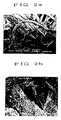
- Pulp (4.0 g) was impregnated with an aqueous solution (5.68 g/100 ml) of sodium metasilicate ⁇ 9 hydrate, and a mixed aqueous solution (100 ml) of sodium aluminate (4.68 g) and sodium hydroxide (10.00 g) was added, which was followed by immersion at 90°C for 2 hours, to give 4A zeolite-holding pulp.
- the 4A zeolite-holding pulp was prepared into paper using Square Type Sheet Machine manufactured by KUMAGAYA RIKI INDUSTRY Co., Ltd. (conditions: 80 mesh, natural water, suction, water 15 l).
- the 4A zeolite-holding paper thus obtained had a 4A zeolite-holding percentage of 18.1 wt%.
- An SEM photograph of the obtained 4A zeolite-holding paper is shown in Fig. 2a and an enlarged view thereof is shown in Fig. 2b.
- Cellophane (0.548 g) was impregnated with an aqueous solution (0.2904 g/5 ml) of sodium metasilicate ⁇ 9 hydrate, and a mixed aqueous solution (5 ml) of sodium aluminate (0.2360 g) and sodium hydroxide (0.5219 g) was added, which was followed by immersion at room temperature for 11 days, to give 4A zeolite-holding cellophane (0.652 g).
- the 4A zeolite-holding cellophane had a 4A zeolite-holding percentage of 23.8 wt%.
- An SEM photograph of the obtained 4A zeolite-holding cellophane is shown in Fig. 3a and an enlarged view thereof is shown in Fig. 3b.
- hydroxyapatite-holding cellulose beads (12.2 g).
- the obtained hydroxyapatite-holding cellulose beads had a hydroxyapatite-holding percentage of 18.0 wt%.
- An SEM photograph of the obtained hydroxyapatite-holding cellulose beads is shown in Fig. 5a and an enlarged view thereof is shown in Fig. 5b.
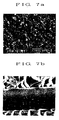
- a film of ethylene-vinyl acetate copolymer (5 ⁇ 7 cm piece, 4 pieces, 0.6860 g) was impregnated with an aqueous solution (0.1022 g/1.8 ml) of sodium metasilicate ⁇ 9 hydrate, and a mixed aqueous solution (1.8 ml) of sodium aluminate (0.0842 g) and sodium hydroxide (0.1800 g) was added, which was followed by immersion at 50°C for 48 hours, to give 4A zeolite-holding ethylene-vinyl acetate copolymer (0.7228 g).
- the obtained 4A zeolite-holding ethylene-vinyl acetate copolymer had a 4A zeolite-holding percentage of 5.1 wt%.
- An SEM photograph of the surface of the obtained 4A zeolite-holding ethylene-vinyl acetate copolymer is shown in Fig. 7a and an SEM photograph of the cross section thereof is shown in Fig. 7b.
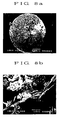
- aluminosilica gel-holding cellulose beads (11.3 g).
- the aluminosilica gel-holding cellulose beads had an aluminosilica gel-holding percentage of 19.8 wt%.
- An SEM photograph of the obtained aluminosilica gel-holding cellulose beads is shown in Fig. 8a and an enlarged view thereof is shown in Fig. 8b.
- Pulp (4.0 g) was impregnated with an aqueous suspension of commercially available zeolite (manufactured by TOSOH CO., LTD., 4A Zeolum, 3.7 g/100 ml) at 90°C for 2 hours, to give 4A zeolite-carrying pulp.
- the 4A zeolite-carrying pulp was processed into paper using Square Type Sheet Machine manufactured by KUMAGAYA RIKI INDUSTRY Co.,. Ltd. (conditions: 80 mesh, natural water, suction, water 15 l).
- the 4A zeolite-carrying paper thus obtained had a 4A zeolite-carrying percentage of 6.8 wt%.
- An SEM photograph of the obtained 4A zeolite-carrying paper is shown in Fig. 9a and an enlarged view thereof is shown in Fig. 9b.
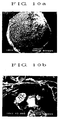
- Cellulose beads (10.0 g, average particle size 5 mm) were impregnated with an aqueous suspension of commercially available zeolite (manufactured by TOSOH CO., LTD., 4A Zeolum, 2.5 g/100 ml) at 90°C for 2 hours, to give 4A zeolite-carrying cellulose beads.
- the 4A zeolite-carrying cellulose beads had a 4A zeolite-carrying percentage of 5.5 wt%.
- An SEM photograph of the obtained 4A zeolite-carrying cellulose beads is shown in Fig. 10a and an enlarged view thereof is shown in Fig. 10b.
- the particle size of hydroxyapatite and hydrotalcite is too small even in SEM photographs, and it is inconclusive if the hydroxyapatite and hydrotalcite were held in the inner matrix of the cellulose beads.
- the ash obtained from incineration of hydroxyapatite-holding cellulose beads and hydrotalcite-holding cellulose beads retained the shape of cellulose beads. In consideration of greater amount held by the beads, moreover, it is appreciated that the beads held hydroxyapatite and hydrotalcite.
- Example 1 Each sample (1.0 g) obtained in Example 1, and Comparative Examples 1, 3 and 4 was immersed in an aqueous solution of silver nitrate (2.33 g/l, 1480 ppm) or an aqueous solution of copper sulfate ⁇ 5 hydrate (1.71 g/l, 435 ppm) at 25°C for 2 hours, and the removal percentage of metal ion ((initial concentration-final concentration) ⁇ 100/initial concentration) was calculated.
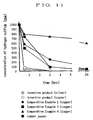
- inventive 4A zeolite-holding cellulose beads were extremely superior in silver ion and copper ion removing performance. It is also evident from Table 2 and Fig. 11 that the inventive silver-substituted 4A zeolite-holding cellulose beads and copper-substituted 4A zeolite-holding cellulose beads both showed quick hydrogen sulfide adsorption to the extent that hydrogen sulfide was completely removed in 3 hours. The superior hydrogen sulfide removing property was apparent, as compared to that by the copper powder.
- an inorganic porous crystals-hydrophilic macromolecule composite holding the inorganic porous crystals in the inner matrix of a natural hydrophilic macromolecular substrate can be obtained.
- Said hydrophilic macromolecule composite is particularly superior in adsorption of metal ion, specifically silver and copper ions, and the metal-holding inorganic porous crystals-hydrophilic macromolecule composite showed noticeably strong adsorption of hydrogen sulfide, so that it can be used as a deodorizer, antimicrobial material and freshness retention material for fruits and vegetable.
Landscapes
- Chemical & Material Sciences (AREA)
- Polymers & Plastics (AREA)
- Inorganic Chemistry (AREA)
- Health & Medical Sciences (AREA)
- Chemical Kinetics & Catalysis (AREA)
- Medicinal Chemistry (AREA)
- Dispersion Chemistry (AREA)
- Organic Chemistry (AREA)
- Solid-Sorbent Or Filter-Aiding Compositions (AREA)
- Paper (AREA)
- Compositions Of Macromolecular Compounds (AREA)
- Silicates, Zeolites, And Molecular Sieves (AREA)
- Agricultural Chemicals And Associated Chemicals (AREA)
Claims (11)
- Composite de cristaux poreux inorganiques-macromolécule hydrophile comprenant un substrat macromoléculaire hydrophile naturel contenant les cristaux poreux inorganiques dans la matrice interne du substrat macromoléculaire hydrophile naturel gonflé.
- Composite de cristaux poreux inorganiques-macromolécule hydrophile naturelle selon la revendication 1, dans lequel le substrat est choisi dans le groupe constitué de la pâte, la cellulose, le coton, la cellulose bactérienne, la soie, la laine et la chitine.
- Composite de cristaux poreux inorganiques-macromolécule hydrophile selon la revendication 1, dans lequel le substrat macromoléculaire hydrophile est un substrat de cellulose.
- Composite de cristaux poreux inorganiques-macromolécule hydrophile selon la revendication 1, dans lequel le cristal poreux inorganique est une zéolithe.
- Composite de cristaux poreux inorganiques-macromolécule hydrophile selon la revendication 1, comprenant au moins un type de métal porté sur le composite, lequel métal est choisi dans le groupe constitué de l'argent, le cuivre, le zinc, le fer, le nickel, le cobalt, le palladium et le platine.
- Procédé de production du composite de cristaux poreux inorganiques-macromolécule hydrophile tel que défini dans la revendication 1, comprenant la réaction de plusieurs composés solubles dans l'eau et d'au moins une substance basique à une concentration de 10 à 5 000 mmol/L, dans la matrice interne d'un substrat macromoléculaire hydrophile naturel gonflé pour former lesdits cristaux poreux inorganiques.
- Procédé selon la revendication 6, dans lequel les plusieurs composés solubles dans l'eau comprennent au moins un composé de silicium et au moins un composé d'aluminium.
- Procédé selon la revendication 6, dans lequel la réaction est effectuée de 20 à 90 °C.
- Procédé selon la revendication 7, dans lequel le composé de silicium, le composé d'aluminium et la substance basique sont mélangés en un rapport molaire (composé de silicium:composé d'aluminium:substance basique) de 1:1 à 10:10 à 50.
- Procédé selon la revendication 6, dans lequel la substance basique est de l'hydroxyde de sodium ou de l'hydroxyde de potassium.
- Procédé selon la revendication 6, comprenant l'imprégnation d'un substrat macromoléculaire hydrophile avec 'une solution aqueuse de l'un d'un composé de silicium et d'un composé d'aluminium, et le mélange d'une solution aqueuse de l'autre composé en présence de la au moins une substance basique, pour porter ainsi des cristaux poreux inorganiques dans la matrice interne du substrat macromoléculaire hydrophile.
Applications Claiming Priority (3)
| Application Number | Priority Date | Filing Date | Title |
|---|---|---|---|
| JP245538/96 | 1996-08-27 | ||
| JP24553896 | 1996-08-27 | ||
| JP24553896 | 1996-08-27 |
Publications (3)
| Publication Number | Publication Date |
|---|---|
| EP0826822A2 EP0826822A2 (fr) | 1998-03-04 |
| EP0826822A3 EP0826822A3 (fr) | 1998-11-11 |
| EP0826822B1 true EP0826822B1 (fr) | 2004-06-09 |
Family
ID=17135196
Family Applications (1)
| Application Number | Title | Priority Date | Filing Date |
|---|---|---|---|
| EP97114717A Expired - Lifetime EP0826822B1 (fr) | 1996-08-27 | 1997-08-26 | Matière composite à partir d'un substrate macromoléculaire hydrophile et des cristaux inorganique poreuses |
Country Status (4)
| Country | Link |
|---|---|
| US (1) | US5981052A (fr) |
| EP (1) | EP0826822B1 (fr) |
| CA (1) | CA2213936C (fr) |
| DE (1) | DE69729412T2 (fr) |
Cited By (7)
| Publication number | Priority date | Publication date | Assignee | Title |
|---|---|---|---|---|
| US8202532B2 (en) | 2006-05-26 | 2012-06-19 | Z-Medica Corporation | Clay-based hemostatic agents and devices for the delivery thereof |
| US8257731B2 (en) | 2005-02-09 | 2012-09-04 | Z-Medica Corporation | Devices and methods for the delivery of molecular sieve materials for the formation of blood clots |
| US8257732B2 (en) | 2006-05-26 | 2012-09-04 | Z-Medica Corporation | Clay-based hemostatic agents and devices for the delivery thereof |
| US8343537B2 (en) | 2006-05-26 | 2013-01-01 | Z-Medica, Llc | Clay-based hemostatic agents and devices for the delivery thereof |
| US8858969B2 (en) | 2010-09-22 | 2014-10-14 | Z-Medica, Llc | Hemostatic compositions, devices, and methods |
| US9072806B2 (en) | 2012-06-22 | 2015-07-07 | Z-Medica, Llc | Hemostatic devices |
| US9326995B2 (en) | 2005-04-04 | 2016-05-03 | The Regents Of The University Of California | Oxides for wound healing and body repair |
Families Citing this family (39)
| Publication number | Priority date | Publication date | Assignee | Title |
|---|---|---|---|---|
| EP0938925B1 (fr) * | 1998-02-25 | 2005-08-31 | Rengo Co., Ltd. | Composition contenant un materiau composite zéolithe-cellulose et produit obtenu à partir de celle-ci |
| US6372333B1 (en) | 1998-02-25 | 2002-04-16 | Rengo Co., Ltd. | Composition containing inorganic porous crystals-hydrophilic macromolecule composite and product made therefrom |
| US6843936B1 (en) * | 1998-10-22 | 2005-01-18 | Texas Instruments Incorporated | Getter for enhanced micromechanical device performance |
| GB9826486D0 (en) * | 1998-12-03 | 1999-01-27 | Johnson Matthey Plc | Improvements in coatings |
| IL146577A0 (en) | 1999-05-20 | 2002-07-25 | Exxon Chemical Patents Inc | Hydrocarbon conversion process and catalyst useful therein |
| US8110222B2 (en) * | 2002-11-15 | 2012-02-07 | Ut-Battelle, Llc. | Composite material |
| ATE489062T1 (de) | 2003-09-12 | 2010-12-15 | Z Medica Corp | Teilweise hydriertes hämostatisches mittel |
| WO2005027808A1 (fr) | 2003-09-12 | 2005-03-31 | Z-Medica Corporation | Agent hemostatique de zeolite de calcium |
| ITSA20030021A1 (it) * | 2003-11-17 | 2005-05-18 | Univ Degli Studi Salerno | Adsorbente per la conservazione di prodotti alimentari |
| US20060141060A1 (en) * | 2004-12-27 | 2006-06-29 | Z-Medica, Llc | Molecular sieve materials having increased particle size for the formation of blood clots |
| WO2006085240A1 (fr) * | 2005-02-10 | 2006-08-17 | Firmenich Sa | Produit alimentaire chauffe avec enrobage d'aromes encapsules |
| JP2008531498A (ja) | 2005-02-15 | 2008-08-14 | バージニア コモンウェルス ユニバーシティ | 緊急止血ならびに急性創傷および慢性潰瘍の治療のための鉱物技術(mt) |
| US20060211965A1 (en) * | 2005-03-16 | 2006-09-21 | Z-Medica, Llc | Device for the delivery of blood clotting materials to a wound site |
| US20060211971A1 (en) * | 2005-03-16 | 2006-09-21 | Z-Medica, Llc | Pillow for the delivery of blood clotting materials to a wound site |
| US20060282046A1 (en) * | 2005-04-13 | 2006-12-14 | Horn Jeffrey L | Device and method for subcutaneous delivery of blood clotting agent |
| US20070004995A1 (en) * | 2005-06-30 | 2007-01-04 | Horn Jeffrey L | Swab device and kit for the delivery of blood clotting materials to a wound site |
| US20070092725A1 (en) * | 2005-10-20 | 2007-04-26 | Nisshinbo Industries, Inc. | Process for producing zeolite-coated glass fibers and fibrous structure produced by the same |
| US20070104768A1 (en) * | 2005-11-07 | 2007-05-10 | Z-Medica Corporation | Devices for the delivery of molecular sieve materials for the formation of blood clots |
| EP1810697A3 (fr) * | 2005-11-07 | 2008-04-02 | Jeffrey L. Horn | Dispositifs pour la délivrance de tamis moléculaire pour la formation de caillots sanguins |
| US20070142783A1 (en) * | 2005-12-16 | 2007-06-21 | Huey Raymond J | Devices and methods for promoting the formation of blood clots at dialysis access sites |
| US20070154510A1 (en) * | 2005-12-30 | 2007-07-05 | Wilcher Steve A | Adsorbent-Containing Hemostatic Devices |
| US20070154509A1 (en) * | 2005-12-30 | 2007-07-05 | Wilcher Steve A | Adsorbent-Containing Hemostatic Devices |
| US8938898B2 (en) | 2006-04-27 | 2015-01-27 | Z-Medica, Llc | Devices for the identification of medical products |
| US20070276308A1 (en) * | 2006-05-26 | 2007-11-29 | Huey Raymond J | Hemostatic agents and devices for the delivery thereof |
| EP1873202B1 (fr) | 2006-06-29 | 2009-02-11 | Clariant Finance (BVI) Limited | Matériau transparent hybride zeolite-polymère avec des caractéristiques réglables |
| US20080063697A1 (en) * | 2006-09-08 | 2008-03-13 | Bedard Robert L | Use of Unactivated Calcium Exchanged Zeolites in Hemostatic Devices and Products |
| US20080145455A1 (en) * | 2006-12-13 | 2008-06-19 | Bedard Robert L | Combination of Inorganic Hemostatic Agents with Other Hemostatic Agents |
| WO2009020688A1 (fr) | 2007-05-21 | 2009-02-12 | University Of Maine System Board Of Trustees | Matériaux composites à base de zéolithe pour contrôler les odeurs de déchets |
| US20090047366A1 (en) * | 2007-08-15 | 2009-02-19 | Bedard Robert L | Inorganic Coagulation Accelerators for Individuals taking Platelet Blockers or Anticoagulants |
| US20090074837A1 (en) * | 2007-09-19 | 2009-03-19 | Ut-Battelle, Llc | Bioresorbable Calcium-Deficient Hydroxyapatite Hydrogel Composite |
| US8883194B2 (en) * | 2007-11-09 | 2014-11-11 | Honeywell International, Inc. | Adsorbent-containing hemostatic devices |
| DE102008022726A1 (de) | 2008-05-06 | 2009-11-12 | Winkler, Kurt, Dr. | Verfahren für den Kontakt einer Gasphase mit einer Flüssigkeit in Anwesenheit eines Feststoffes |
| US8795718B2 (en) * | 2008-05-22 | 2014-08-05 | Honeywell International, Inc. | Functional nano-layered hemostatic material/device |
| SG11201402580SA (en) * | 2011-11-24 | 2014-10-30 | Indian Inst Technology | Multilayer organic-templated-boehmite-nanoarchitecture for water purification |
| MX362092B (es) | 2012-04-17 | 2019-01-07 | Indian Institute Of Tech | Deteccion del caudal de agua con clusteres cuanticos. |
| KR20160007649A (ko) | 2013-05-17 | 2016-01-20 | 쓰리엠 이노베이티브 프로퍼티즈 컴파니 | 세정 용이성 표면 및 그의 제조 방법 |
| WO2015170303A1 (fr) * | 2014-05-09 | 2015-11-12 | Uniwersytet Jagielloński | Matériau nanocomposite modifié, procédé pour sa production et son application |
| CN110573673B (zh) | 2017-02-14 | 2022-12-06 | 日本制纸株式会社 | 组合物 |
| LU500847B1 (en) * | 2021-11-11 | 2023-05-11 | Kolicevo Karton D O O | Use of hydrophilic zeolites in the production of cellulose-based (cardboard) packaging |
Citations (2)
| Publication number | Priority date | Publication date | Assignee | Title |
|---|---|---|---|---|
| US3099570A (en) * | 1961-07-19 | 1963-07-30 | West Virginia Pulp & Paper Co | Filler for paper and method of making the same |
| US4775585A (en) * | 1983-01-21 | 1988-10-04 | Kanebo Ltd./Kanto Chemical Co. | Polymer article having an antibacterial property containing zeolite particles therein and the processes for producing same |
Family Cites Families (9)
| Publication number | Priority date | Publication date | Assignee | Title |
|---|---|---|---|---|
| JPS55144489A (en) * | 1979-04-24 | 1980-11-11 | Meisei Chemical Works Ltd | Paper made sound absorbing material and its manufacture |
| JPS57129779A (en) * | 1981-02-05 | 1982-08-11 | Sanyo Electric Co Ltd | Recording paper |
| JPS6272938A (ja) * | 1985-09-26 | 1987-04-03 | Akebono Brake Res & Dev Center Ltd | 湿式使用のペ−パ−系摩擦材 |
| US4826667A (en) * | 1986-01-29 | 1989-05-02 | Chevron Research Company | Zeolite SSZ-25 |
| JPH04122743A (ja) * | 1990-09-13 | 1992-04-23 | Kanebo Ltd | 抗菌性セルロース粒子 |
| JP2776998B2 (ja) * | 1991-03-08 | 1998-07-16 | 工業技術院長 | アパタイトシ−ト及びその製造方法 |
| JPH0761857B2 (ja) * | 1991-07-02 | 1995-07-05 | 工業技術院長 | ケイ酸塩/高分子複合体、ケイ酸塩成形体及びそれらの製造方法 |
| JPH05106199A (ja) * | 1991-10-15 | 1993-04-27 | Oji Paper Co Ltd | 抗菌性繊維 |
| JPH05125694A (ja) * | 1991-10-31 | 1993-05-21 | Oji Paper Co Ltd | 無機質紙の製造方法 |
-
1997
- 1997-08-26 CA CA002213936A patent/CA2213936C/fr not_active Expired - Fee Related
- 1997-08-26 EP EP97114717A patent/EP0826822B1/fr not_active Expired - Lifetime
- 1997-08-26 DE DE69729412T patent/DE69729412T2/de not_active Expired - Lifetime
- 1997-08-26 US US08/918,385 patent/US5981052A/en not_active Expired - Lifetime
Patent Citations (2)
| Publication number | Priority date | Publication date | Assignee | Title |
|---|---|---|---|---|
| US3099570A (en) * | 1961-07-19 | 1963-07-30 | West Virginia Pulp & Paper Co | Filler for paper and method of making the same |
| US4775585A (en) * | 1983-01-21 | 1988-10-04 | Kanebo Ltd./Kanto Chemical Co. | Polymer article having an antibacterial property containing zeolite particles therein and the processes for producing same |
Non-Patent Citations (4)
| Title |
|---|
| BRECK D.W.: 'Zeolite molecular Sieves', 1984, KRIEGER PUBLISHING COMPANY, INC., MALABAR, FLORIDA * |
| CASEY J.P.: 'Pulp and Paper', Chemistry and Chemical Technology. 3rd edition, vol.I, pages 1-19, JOHN WILEY & SONS, INC.,NEW YORK * |
| FALBE J. ET AL: Römpp Chemie Lexikon, 9th edition, page 3862, 1992, GEORG THIEME VERLAG, STUTTGART * |
| HUDSON S.M. ET AL: 'The Solubility of Unmodified Cellulose: A Critique of the Literature', J. MACROMOL. SCI.-REV. MACROMOL.CHEM., C18(1), 1980, pages 1 to 8 * |
Cited By (16)
| Publication number | Priority date | Publication date | Assignee | Title |
|---|---|---|---|---|
| US8512743B2 (en) | 2005-02-09 | 2013-08-20 | Z-Medica, Llc | Devices and methods for the delivery of molecular sieve materials for the formation of blood clots |
| US8257731B2 (en) | 2005-02-09 | 2012-09-04 | Z-Medica Corporation | Devices and methods for the delivery of molecular sieve materials for the formation of blood clots |
| US8557278B2 (en) | 2005-02-09 | 2013-10-15 | Z-Medica, Llc | Devices and methods for the delivery of blood clotting materials to bleeding wounds |
| US9326995B2 (en) | 2005-04-04 | 2016-05-03 | The Regents Of The University Of California | Oxides for wound healing and body repair |
| US8784876B2 (en) | 2006-05-26 | 2014-07-22 | Z-Medica, Llc | Clay-based hemostatic agents and devices for the delivery thereof |
| US8460699B2 (en) | 2006-05-26 | 2013-06-11 | Z-Medica, Llc | Clay-based hemostatic agents and devices for the delivery thereof |
| US8383148B2 (en) | 2006-05-26 | 2013-02-26 | Z-Medica, Llc | Clay-based hemostatic agents and devices for the delivery thereof |
| US8343537B2 (en) | 2006-05-26 | 2013-01-01 | Z-Medica, Llc | Clay-based hemostatic agents and devices for the delivery thereof |
| US8202532B2 (en) | 2006-05-26 | 2012-06-19 | Z-Medica Corporation | Clay-based hemostatic agents and devices for the delivery thereof |
| US8846076B2 (en) | 2006-05-26 | 2014-09-30 | Z-Medica, Llc | Hemostatic sponge |
| US9078782B2 (en) | 2006-05-26 | 2015-07-14 | Z-Medica, Llc | Hemostatic fibers and strands |
| US8257732B2 (en) | 2006-05-26 | 2012-09-04 | Z-Medica Corporation | Clay-based hemostatic agents and devices for the delivery thereof |
| US9333117B2 (en) | 2006-05-26 | 2016-05-10 | Z-Medica, Llc | Clay-based hemostatic agents and devices for the delivery thereof |
| US8858969B2 (en) | 2010-09-22 | 2014-10-14 | Z-Medica, Llc | Hemostatic compositions, devices, and methods |
| US9072806B2 (en) | 2012-06-22 | 2015-07-07 | Z-Medica, Llc | Hemostatic devices |
| US9352066B2 (en) | 2012-06-22 | 2016-05-31 | Z-Medica, Llc | Hemostatic devices |
Also Published As
| Publication number | Publication date |
|---|---|
| US5981052A (en) | 1999-11-09 |
| EP0826822A3 (fr) | 1998-11-11 |
| EP0826822A2 (fr) | 1998-03-04 |
| DE69729412T2 (de) | 2005-06-16 |
| CA2213936C (fr) | 2002-01-29 |
| CA2213936A1 (fr) | 1998-02-27 |
| DE69729412D1 (de) | 2004-07-15 |
Similar Documents
| Publication | Publication Date | Title |
|---|---|---|
| CA2213936C (fr) | Composite macromoleculaire, mineral, hydrophile, cristallise, poreux | |
| US6372333B1 (en) | Composition containing inorganic porous crystals-hydrophilic macromolecule composite and product made therefrom | |
| EP0938925B1 (fr) | Composition contenant un materiau composite zéolithe-cellulose et produit obtenu à partir de celle-ci | |
| JP3317660B2 (ja) | 無機多孔結晶−親水性高分子複合体 | |
| US5888526A (en) | Antibacterial antifungal agent and fibrous material containing the same | |
| CA1286220C (fr) | Polymere a teneur de particules d'aluminosilicate amorphe, et sa production | |
| KR100199445B1 (ko) | 복합분자체 화합물의 제조방법 | |
| JP4149066B2 (ja) | 無機多孔結晶−親水性高分子複合体を含有する織物、不織布または紙 | |
| TW201709966A (zh) | 酮系氣體吸附劑、氣體吸附劑組成物及消臭性加工品 | |
| JP4018284B2 (ja) | 無機多孔結晶−親水性高分子複合体を含有する組成物およびその成型物 | |
| EP0379581B1 (fr) | Substance deodorante et procede de production | |
| JP3254345B2 (ja) | 酸化チタン担持紙 | |
| US20020192131A1 (en) | Device for protecting plants against post-harvest decay and method for making same | |
| US5254195A (en) | Process for manufacturing moisture exchange element | |
| JP2002004193A (ja) | 調湿紙及びその製造方法 | |
| CN116948464B (zh) | 一种应用于果蔬保鲜的乙烯吸附涂层浆料及其制备方法和应用 | |
| JP4666826B2 (ja) | X型ゼオライト−親水性高分子複合体の製造方法 | |
| JPH05106199A (ja) | 抗菌性繊維 | |
| JP3891714B2 (ja) | 無機多孔結晶−親水性高分子傾斜複合体及びその製造方法 | |
| JP4801852B2 (ja) | 無機イオン交換体−親水性高分子複合体およびその製造方法 | |
| JP7598120B1 (ja) | 水蒸気吸着材を担持した除湿・結露防止部材及び該除湿・結露防止部材の製造方法 | |
| JPH10280298A (ja) | 消臭性シート | |
| JP2005029453A (ja) | 表面をゼオライト化したガラスの製造方法 | |
| JP3950565B2 (ja) | 多孔親水性高分子及びその製造方法 | |
| JP4300497B2 (ja) | 水酸アパタイト皮膜の製造方法 |
Legal Events
| Date | Code | Title | Description |
|---|---|---|---|
| PUAI | Public reference made under article 153(3) epc to a published international application that has entered the european phase |
Free format text: ORIGINAL CODE: 0009012 |
|
| AK | Designated contracting states |
Kind code of ref document: A2 Designated state(s): DE FR GB IT SE |
|
| PUAL | Search report despatched |
Free format text: ORIGINAL CODE: 0009013 |
|
| AK | Designated contracting states |
Kind code of ref document: A3 Designated state(s): AT BE CH DE DK ES FI FR GB GR IE IT LI LU MC NL PT SE |
|
| 17P | Request for examination filed |
Effective date: 19990105 |
|
| AKX | Designation fees paid |
Free format text: DE FR GB IT SE |
|
| 17Q | First examination report despatched |
Effective date: 20020416 |
|
| GRAP | Despatch of communication of intention to grant a patent |
Free format text: ORIGINAL CODE: EPIDOSNIGR1 |
|
| RAP1 | Party data changed (applicant data changed or rights of an application transferred) |
Owner name: RENGO CO., LTD. |
|
| GRAS | Grant fee paid |
Free format text: ORIGINAL CODE: EPIDOSNIGR3 |
|
| GRAA | (expected) grant |
Free format text: ORIGINAL CODE: 0009210 |
|
| AK | Designated contracting states |
Kind code of ref document: B1 Designated state(s): DE FR GB IT SE |
|
| REG | Reference to a national code |
Ref country code: GB Ref legal event code: FG4D |
|
| REG | Reference to a national code |
Ref country code: SE Ref legal event code: TRGR |
|
| REF | Corresponds to: |
Ref document number: 69729412 Country of ref document: DE Date of ref document: 20040715 Kind code of ref document: P |
|
| ET | Fr: translation filed | ||
| PLBE | No opposition filed within time limit |
Free format text: ORIGINAL CODE: 0009261 |
|
| STAA | Information on the status of an ep patent application or granted ep patent |
Free format text: STATUS: NO OPPOSITION FILED WITHIN TIME LIMIT |
|
| 26N | No opposition filed |
Effective date: 20050310 |
|
| PGFP | Annual fee paid to national office [announced via postgrant information from national office to epo] |
Ref country code: DE Payment date: 20140821 Year of fee payment: 18 |
|
| PGFP | Annual fee paid to national office [announced via postgrant information from national office to epo] |
Ref country code: FR Payment date: 20140808 Year of fee payment: 18 Ref country code: GB Payment date: 20140820 Year of fee payment: 18 Ref country code: SE Payment date: 20140826 Year of fee payment: 18 |
|
| PGFP | Annual fee paid to national office [announced via postgrant information from national office to epo] |
Ref country code: IT Payment date: 20140821 Year of fee payment: 18 |
|
| REG | Reference to a national code |
Ref country code: DE Ref legal event code: R119 Ref document number: 69729412 Country of ref document: DE |
|
| REG | Reference to a national code |
Ref country code: SE Ref legal event code: EUG |
|
| GBPC | Gb: european patent ceased through non-payment of renewal fee |
Effective date: 20150826 |
|
| PG25 | Lapsed in a contracting state [announced via postgrant information from national office to epo] |
Ref country code: IT Free format text: LAPSE BECAUSE OF NON-PAYMENT OF DUE FEES Effective date: 20150826 |
|
| PG25 | Lapsed in a contracting state [announced via postgrant information from national office to epo] |
Ref country code: SE Free format text: LAPSE BECAUSE OF NON-PAYMENT OF DUE FEES Effective date: 20150827 |
|
| REG | Reference to a national code |
Ref country code: FR Ref legal event code: ST Effective date: 20160429 |
|
| PG25 | Lapsed in a contracting state [announced via postgrant information from national office to epo] |
Ref country code: DE Free format text: LAPSE BECAUSE OF NON-PAYMENT OF DUE FEES Effective date: 20160301 Ref country code: GB Free format text: LAPSE BECAUSE OF NON-PAYMENT OF DUE FEES Effective date: 20150826 |
|
| PG25 | Lapsed in a contracting state [announced via postgrant information from national office to epo] |
Ref country code: FR Free format text: LAPSE BECAUSE OF NON-PAYMENT OF DUE FEES Effective date: 20150831 |