EP0831373A2 - Compositions photosensibles à base de résine et procédé de fabrication d'un moule à base de résine - Google Patents
Compositions photosensibles à base de résine et procédé de fabrication d'un moule à base de résine Download PDFInfo
- Publication number
- EP0831373A2 EP0831373A2 EP97202886A EP97202886A EP0831373A2 EP 0831373 A2 EP0831373 A2 EP 0831373A2 EP 97202886 A EP97202886 A EP 97202886A EP 97202886 A EP97202886 A EP 97202886A EP 0831373 A2 EP0831373 A2 EP 0831373A2
- Authority
- EP
- European Patent Office
- Prior art keywords
- resin composition
- photo
- resin
- component
- composition according
- Prior art date
- Legal status (The legal status is an assumption and is not a legal conclusion. Google has not performed a legal analysis and makes no representation as to the accuracy of the status listed.)
- Granted
Links
Images
Classifications
-
- G—PHYSICS
- G03—PHOTOGRAPHY; CINEMATOGRAPHY; ANALOGOUS TECHNIQUES USING WAVES OTHER THAN OPTICAL WAVES; ELECTROGRAPHY; HOLOGRAPHY
- G03F—PHOTOMECHANICAL PRODUCTION OF TEXTURED OR PATTERNED SURFACES, e.g. FOR PRINTING, FOR PROCESSING OF SEMICONDUCTOR DEVICES; MATERIALS THEREFOR; ORIGINALS THEREFOR; APPARATUS SPECIALLY ADAPTED THEREFOR
- G03F7/00—Photomechanical, e.g. photolithographic, production of textured or patterned surfaces, e.g. printing surfaces; Materials therefor, e.g. comprising photoresists; Apparatus specially adapted therefor
- G03F7/0037—Production of three-dimensional images
-
- G—PHYSICS
- G03—PHOTOGRAPHY; CINEMATOGRAPHY; ANALOGOUS TECHNIQUES USING WAVES OTHER THAN OPTICAL WAVES; ELECTROGRAPHY; HOLOGRAPHY
- G03F—PHOTOMECHANICAL PRODUCTION OF TEXTURED OR PATTERNED SURFACES, e.g. FOR PRINTING, FOR PROCESSING OF SEMICONDUCTOR DEVICES; MATERIALS THEREFOR; ORIGINALS THEREFOR; APPARATUS SPECIALLY ADAPTED THEREFOR
- G03F7/00—Photomechanical, e.g. photolithographic, production of textured or patterned surfaces, e.g. printing surfaces; Materials therefor, e.g. comprising photoresists; Apparatus specially adapted therefor
- G03F7/004—Photosensitive materials
- G03F7/027—Non-macromolecular photopolymerisable compounds having carbon-to-carbon double bonds, e.g. ethylenic compounds
-
- G—PHYSICS
- G03—PHOTOGRAPHY; CINEMATOGRAPHY; ANALOGOUS TECHNIQUES USING WAVES OTHER THAN OPTICAL WAVES; ELECTROGRAPHY; HOLOGRAPHY
- G03F—PHOTOMECHANICAL PRODUCTION OF TEXTURED OR PATTERNED SURFACES, e.g. FOR PRINTING, FOR PROCESSING OF SEMICONDUCTOR DEVICES; MATERIALS THEREFOR; ORIGINALS THEREFOR; APPARATUS SPECIALLY ADAPTED THEREFOR
- G03F7/00—Photomechanical, e.g. photolithographic, production of textured or patterned surfaces, e.g. printing surfaces; Materials therefor, e.g. comprising photoresists; Apparatus specially adapted therefor
- G03F7/004—Photosensitive materials
- G03F7/038—Macromolecular compounds which are rendered insoluble or differentially wettable
Definitions
- the present invention relates to a photo-curable resin composition and a process for preparing a resin mold by photo-fabricating using the photo-curable resin composition.
- a typical example of such an photo-fabricating process comprises forming a thin layer of a liquid photo-curable resin composition, selectively irradiating this thin layer with light, using, for example, an ultraviolet radiation laser to obtain a cured resin layer, feeding the photo-curable resin composition to form another thin layer of the composition over this cured resin layer, and selectively irradiating this thin layer with light to form a new cured resin layer which is integrally laminated over the previously formed cured resin layer.
- This combination of steps is repeated a number of times, with or without changing the pattern in which the light is irradiated to form a three-dimensional object consisting of integrally laminated multiple cured resin layers.
- the required characteristics of the photo-curable resin composition used for these photo-fabricating processes include a low viscosity, the capability of being rapidly cured by irradiation of light, non-swelling of the cured products when contacted by a photo-curable resin composition and minimal deformation due to shrinkage during curing with light or in a post-curing step.
- a low viscosity the capability of being rapidly cured by irradiation of light, non-swelling of the cured products when contacted by a photo-curable resin composition and minimal deformation due to shrinkage during curing with light or in a post-curing step.
- high dimensional accuracy of the cured product is difficult to achieve.
- the resin should be capable of molding even when the shape of the object is complicated.
- Three-dimensional objects prepared by photo-fabricating methods have conventionally been used for design models, models for medical services, and master models for resin molds.
- mount parts such as a connector, a plug, or a fan and to incorporate these parts for test purposes in products such as a heater, a motor, or an engine, wherein the mount parts are directly manufactured by photo-fabricating methods.
- these parts are required to have mechanical strength and heat resistance sufficient to withstand conditions of use.
- the conventional photo-fabricating method using a photo-curable resin composition cannot produce cured products with sufficient mechanical strength and heat resistance. It has therefore been difficult to manufacture three-dimensional objects for mounting parts having good mechanical strength and heat resistance which can withstand actual conditions of use.
- the present invention has been achieved in view of this situation and has an object of providing a photo-curable resin composition which can produce cured products having excellent mechanical strength and heat resistance and which is suitable as photo-curable material used in the photo-fabricating method. Another object of the present invention is to provide a process for easily manufacturing a resin-based mold which has high dimensional accuracy and exhibits superior repetition durability.
- the above objects can also be attained in the present invention by a process for preparing a resin-based mold comprising a plurality of integrally laminated layers of cured resin by repeating the step of forming a cured resin layer by selectively irradiating a photo-curable material with light, wherein the photo-curable material is the above-mentioned photo-curable resin composition.
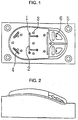
- Figure 1 is a diagram showing the configuration of the resin-based mold prepared in the Example.
- Figure 2 is a side elevation of the resin-based mold shown in Figure 1.
- the photo-curable resin composition of the present invention comprises as essential components the component (A), a compound having a cyclohexene oxide structure; the component (B), a cationic photo-initiator; the component (C), an ethylenicallyally unsaturated monomer; the component (D), a radical photo-initiator; and the component (E), spherical silica particles.
- the compounds having a cyclohexene oxide structure which are the component (A), are cationic polymerizable organic compounds which are polymerized and/or cross-linked in the presence of a cationic photo-initiator by irradiating with light.
- the epoxy compound (A) generally has a molecular weight of about 1000 or less, preferably it has a molecular weight of about 400 or lower and of about 100 or higher. Particularly preferred are epoxy compounds having on average about two epoxy groups.
- Examples of these compounds having a cyclohexene oxide structure include 3,4-epoxycyclohexylmethyl-3'4'-epoxycyclohexane carboxylate, 2-(3,4-epoxycyclohexyl-5,5-spiro-3,4-epoxy)cyclohexane-meth-dioxane, bis(3,4-epoxycyclohexylmethyl) adipate, vinylcyclohexene oxide, 4-vinylepoxycyclohexane, bis(3,4-epoxy-6-methylcyclohexylmethyl) adipate, 3,4-epoxy-6-methylcyclohexyl-3',4'-epoxy-6'-methylcyclohexane carboxylate, methylene bis(3,4-epoxycyclohexane), dicyclopentadiene diepoxide, di(3,4-epoxycyclohexylmethyl ether of ethylene glycol, ethylene
- preferred compounds having a cyclohexene oxide structure as the component (A) include epoxy compounds having two or more aliphatic epoxy groups, such as 3,4-epoxycyclohexylmethyl-3'4'-epoxycyclohexane carboxylate, bis(3,4-epoxycyclohexylmethyl) adipate, and the like.
- epoxy compounds having two or more aliphatic epoxy groups such as 3,4-epoxycyclohexylmethyl-3'4'-epoxycyclohexane carboxylate, bis(3,4-epoxycyclohexylmethyl) adipate, and the like.
- UVR-6100, UVR-6105, UVR-6110, UVR UVR-6128, UVR-6200 manufactured by Union Carbide Corporation
- the proportion of the component (A) in the photo-curable resin composition of the present invention is 5-60% by weight, preferably 10-50% by weight, and more preferably 15-40% by weight. If the proportion of the component (A) is too low, the photo-curability of the prepared resin composition is reduced, leading to a decrease in the fabrication effect. On the other hand, if the proportion of the component (A) is too high, the toughness of the three-dimensional object prepared from the resin composition is decreased and the durability required for the resulting mold tends to be reduced.
- the cationic photo-initiator used as the component (B) is a compound capable of liberating a substance which initiates cationic polymerization of the component (A) by receiving radiation such as light.
- formula (1) are compounds which release Lewis acid on receiving light: [R 1 a R 2 b R 3 c R 4 d Z] +m [MX n ] -m wherein the cation is onium; Z represents S, Se, Te
- M represents a metal or metalloid which constitutes a center atom of a halide complex.
- Typical examples of M are B, P, As, Sb, Fe, Sn, Bi, Al, Ca, In, Ti, Zn, Sc, V, Cr, Mn, and Co.
- X represents a halogen atom.
- m is a substantial electric charge and n is the number of atoms in the halide complex ion.
- MX n negative ion
- BF 4 - teterafluoroborate
- PF 6 - hexafluorophosphate
- SbF 6 - hexafluoroantimonate
- AsF 6 - hexafluoroarsenate
- SbCl 6 - hexachloroantimonate
- onium salts represented by the general formula [MX n (OH) - ] can be used as the cationic polymerizable initiator.
- onium salts including a negative ion for example, perchloric acid ion (ClO 4 - ), trifluoromethane sulfonate ion (CF 3 SO 3 - ), fluorosulfonate ion (FSO 3 - ), toluene sulfonate ion, trinitrobenzene sulfonate negative ion, and trinitrotoluene sulfonate negative ion are suitable.
- cationic photo-initiators may be used as the component (B) individually or in combinations of two or more.
- aromatic onium salts in which the following compounds are preferred: aromatic halonium salts described, for example, in Japanese Patent Applications Laid-open No. 151996/1975 and No. 158680/1975; VIA group aromatic onium salts described, for example, in Japanese Patent Applications Laid-open No. 151997/1975, No. 30899/1977, No. 55420/1981, and No. 125105/1980; VA group aromatic onium salts described, for example, in Japanese Patent Application Laid-open No. 158698/1975; oxosulfoxonium salts described, for example, in Japanese Patent Applications Laid-open No. 8428/1981, No.
- Preferred examples of commercially available products of the cationic photo-initiator which can be used as the component (B) include UVI-6950, UVI-6970, UVI-6974, UVI-6990 (manufactured by Union Carbide Corporation), Adekaoptomer SP-150, SP-151, SP-170, SP-171 (manufactured by Asahi Denka Kogyo Co., Ltd.), Irgacure 261 (manufactured by Ciba Geigy), CI-2481, CI-2624, CI-2639, CI-2064 (manufactured by Nippon Soda Co., Ltd.), CD-1010, CD-1011, CD-1012 (manufactured by Sartomer Co., Ltd.), DTS-102, DTS-103, NAT-103, NDS-103, TPS-103, MDS-103, MPI-103, BBI-103 (manufactured by Midori Chemical Co., Ltd.).
- the proportion of the component (B) in the photo-curable resin composition is 0.1-10% by weight, preferably 0.2-5% by weight, and more preferably 0.3-3% by weight. If the proportion of the component (B) is too low, the photo-curing characteristic of the resin composition obtained is insufficient. Hence, the produced three-dimensional object may have insufficient mechanical strength. Alternatively, if the proportion of the component (B) is too high, an appropriate light transmission capability (curing depth) cannot be obtained when the resulting resin composition is used in the photo-fabricating process. Mechanical strength such as the toughness of the three-dimensional object prepared from this resin composition tends to be reduced.
- Typical examples of the component (C) include monofunctional monomers having one ethylenically unsaturated bond in one molecule, and polyfunctional monomers having two or more ethylenically unsaturated bonds in one molecule.
- the unsaturated monomer generally has a molecular weight of about 80 or more, up to about 2000 or less. Preferably, the molecular weight is 1000 or less.
- Preferred examples of the monofunctional monomer used as the component (C) include acrylamide, (meth)acryloyl morpholine, 7-amino-3,7-dimethyloctyl (meth)acrylate, isobutoxymethyl (meth)acrylamide, isobornyloxyethyl (meth)acrylate, isobornyl (meth)acrylate, 2-ethylhexyl (meth)acrylate, ethyldiethylene glycol (meth)acrylate, t-octyl (meth)acrylamide, diacetone (meth)acrylamide, dimethylaminoethyl (meth)acrylate, diethylaminoethyl (meth)acrylate, lauryl (meth)acrylate, dicyclopentadiene (meth)acrylate, dicyclopentenyloxyethyl (meth)acrylate, dicyclopentenyl (meth)acrylate, N,N-dimethyl (me
- R 5 represents a hydrogen atom or a methyl group
- R 6 represents an alkylene group containing 2-6, preferably 2-4 carbon atoms
- R 7 represents an aromatic group, optionally substituted with an alkyl group containing 1-12, preferably 1-9 carbon atoms
- R 8 represents an alkylene group containing 2-8, preferably 2-5 carbon atoms
- r denotes an integer from 0-12, preferably from 1-8
- q denotes an integer from 1-8, preferably from 1-4
- R 9 is a tetrahydrofuryl group.
- isobornyl (meth)acrylate, lauryl (meth)acrylate, and phenoxyethyl (meth)acrylate are particularly preferred.
- Examples of commercially available products of the monofunctional monomers include Aronix M-101, M-102, M-111, M-113, M-117, M-152, TO-1210 (manufactured by Toagosei Co., Ltd.), KAYARAD TC-110S, R-564, R-128H (manufactured by Nippon Kayaku Co., Ltd.), Viscoat 192, Viscoat 220, Viscoat 2311HP, Viscoat 2000, Viscoat 2100, Viscoat 2150, Viscoat 8F, Viscoat 17F (manufactured by Osaka Organic Chemical Industry Co., Ltd.)
- Preferred examples of the polyfunctional monomers used as the component (C) include di(meth)acrylate compounds such as ethylene glycol di(meth)acrylate, dicyclopentenyl di(meth)acrylate, triethylene glycol di(meth)acrylate, tetraethylene glycol di(meth)acrylate, tricyclodecanediyldimethylene di(meth)acrylate, tris(2-hydroxyethyl) isocyanurate di(meth)acrylate, tripropylene glycol di(meth)acrylate, neopentyl glycol di(meth)acrylate, both terminal (meth)acrylic acid adduct of bisphenol A diglycidyl ether, 1,4-butanediol di(meth)acrylate, 1,6-hexanediol di(meth)acrylate, polyester di(meth)acrylate, polyethylene glycol di(meth)acrylate, ethylene oxide (hereainafter called [EO]) modified bisphenol
- the above-mentioned monofunctional monomers and polyfunctional monomers may be used as the component (C) either individually or in combinations of two or more. However, it is desirable that a polyfunctional monomer having three or more ethylenically unsaturated bonds in one molecule is used as all or part of the component (C).
- the proportion of the polyfunctional monomer having three or more functional groups is preferably more than 60% by weight and more preferably more than 80% by weight. A particularly preferable proportion of the polyfunctional monomer is substantially 100% by weight. If the proportion of the polyfunctional monomer having three or more functional groups is less than 60% by weight, the photo-curing characteristic of the resulting resin composition may become insufficient and the three-dimensional object fabricated tends to become deformed with time.
- the polyfunctional monomer having three or more polyfunctional groups can be selected from the above-mentioned tri(meth)acrylate compounds, tetra(meth)acrylate compounds, penta(meth)acrylate compounds, and hexa(meth)acrylate compounds.
- trimethylol propane tri(meth)acrylate, EO modified trimethylolpropane tri(meth)acrylate, dipentaerythritol hexa(meth)acrylate, dipentaerythritol penta(meth)acrylate, and ditrimethylolpropane tetra(meth)acrylate are particularly preferred.
- the proportion of the component (C) in the photo-curable resin composition of the present invention is generally 1-30% by weight, preferably 2-20% by weight, and more preferably 3-15% by weight. If the proportion of the component (C) is too low, the photo-curing characteristic of the resin composition may become insufficient. A three-dimensional object with sufficient mechanical strength cannot be molded from such a resin composition. On the other hand, if the proportion of the composition (C) is too high, the resulting resin composition shrinks easily during photo-curing and mechanical characteristics such as toughness of the three-dimensional object tend to be reduced.
- the radical photo-initiator which is the component (D) of the resin composition of the present invention is a compound which decomposes and generates radicals by receiving radiation such as light and initiates a radical polymerization reaction of the component (C) by the action of the radicals.
- radical photo-initiators which can be used as the component (D) are acetophenone, acetophenone benzyl ketal, anthraquinone, l-(4-isopropylphenyl)-2-hydroxy-2-methylpropan-1-one, carbazole, xanthone, 4-chlorobenzophenone, 4,4'-diaminobenzophenone, 1,1-dimethoxydeoxybenzoin, 3,3'-dimethyl-4-methoxybenzophenone, thioxanethone compounds, 2-methyl-1-[4-(methylthio) phenyl]-2-morpholino-propane-2-on, 2-benzyl-2-dimethylamino-l-(4-morpholinophenyl)-butane-1-one, triphenylamine, 2,4,6-trimethylbenzoyl diphenylphosphine oxide, bis(2,6-dimethoxybenzoyl)-2
- benzyl methyl ketal 1-hydroxycyclohexyl phenyl ketone, 2,4,6-trimethylbenzoyl diphenylphosphine oxide, 2-benzyl-2-dimethylamino-1-(4-morpholinophenyl)-butan-1-one, and the like are particularly preferred.
- the proportion of the component (D) in the photo-curable resin composition of the present invention is usually 0.01-8% by weight and preferably 0.1-5% by weight. If the proportion of the component (D) is too low, the rate (curing rate) of the radical polymerization is so reduced that fabrication time may be extended and the resolution may tend to be lower. On the other hand, if the proportion of the component (D) is too high, the excess polymerization initiator sometimes has an adverse effect on the curing characteristics of the resin composition and the specifications, heat resistance, and handling of the three-dimensional object obtained from the resin composition.
- the present invention is characterized in that spherical silica particles (the component (E)) are used as a filler in the photo-curable resin composition of the present invention.
- the spherical silica particles which are the component (E) improve the mechanical characteristics, heat resistance of the cured product and the durability of the resin-based mold formed from the cured product without damaging the photo-curing and fabricating characteristics of the resin composition containing these particles.
- the cured products prepared from the resin composition containing such silica particles can exhibit excellent mechanical characteristics and heat resistance. Also, because the silica particles are spherical, the fluidity of the resin composition containing the particles is improved and an excellently smooth laminated surface can be formed in the photo-fabricating process. Also, there is no occurrence of the phenomenon in which uncured resin remains in the fabricated product, while this phenomenon is often observed when using undefined particles.
- a mold provided with either high dimensional accuracy or superior durability can be produced by fabricating the resin composition containing the spherical silica particles.
- the spherical silica particles in the present invention are defined as particles having the average value of sphericity (hereinafter referred to as "average sphericity") of over 0.9.
- average sphericity which is otherwise called degree of circularity, is defined by the following formula.
- S p is a projection area
- c is the peripheral length of the projected image
- d pa is the diameter of a circle having the same area as that of the projection area
- d pc is the diameter of a circle having the same peripheral length as the projected image of the particle.
- This sphericity can be measured using an image analyzer which can analyze a microphotograph taken by a scanning electron microscope (SEM).
- SEM scanning electron microscope
- the average sphericity can be measured by calculating the average sphericity of 100 particles arbitrarily selected from a multitude of particles appearing in the microphotograph.
- the average sphericity of the silica particles which are the component (E) is preferably 0.92 or more, and more preferably 0.95 or more.
- Any compound including silicon oxide containing as a major component and a less amount of impurity such as an alkaline metal can be used.
- the average particle diameter of the spherical silica particles is preferably 1-50 ⁇ m, and more preferably 2-30 ⁇ m. If the average particle diameter is too small, the viscosity of the resulting resin composition is large and there are cases where the resulting cured product with a high dimensional accuracy can be produced only with difficulty. On the other hand, if the average particle diameter is too great, it is difficult to produce a cured product with a smooth surface from the resulting resin composition.
- the spherical silica particles used as the component (E) may be surface-treated using silane coupling agents.
- silane coupling agents include vinyltrichlorosilane, vinyltris( ⁇ -methoxyethoxy)silane, vinyltriethoxysilane, vinylmethoxysilane, ⁇ -(methacryloxypropyl)trimethoxysilane, ⁇ -(3,4-epoxycyclohexyl)ethyltrimethoxysilane, ⁇ -glysidoxypropyltrimethoxysilane, ⁇ -glysidoxypropyl-methyldiethoxysilane, N- ⁇ -(aminoethyl) ⁇ -aminopropyl-methyldimethoxysilane, ⁇ -aminopropyltriethoxysilane, N-phenyl- ⁇ -aminopropyltrimethoxysilane, ⁇ -mercaptopropyltrimethoxysilane, and ⁇ -chloropropyltrimethoxysilane.
- silane coupling agent products include Sunsphere NP-100, NP-200 (manufactured by Doukai Chemical Industries Co., Ltd.), Silstar MK-08, MK-15 (Nippon Chemical Industries Co., Ltd.), and FB-48 (manufactured by Denki Kagaku Kogyo Co., Ltd.).
- the proportion of the component (E) incorporated in the photo-curable resin composition is preferably 40-80% by weight and more preferably 45-75% by weight. If the proportion of the component (E) is too low, it is difficult to produce a cured product having high mechanical strength and excellent heat resistance and the durability of the resulting mold tends to be reduced. Alternatively, if the proportion of the component (E) is too high, the viscosity of the resin composition tends to be higher and a cured product having high dimensional accuracy can be obtained only with difficulty.
- Such optional components include cationic polymerizable organic compounds other than above-mentioned component (A).
- Typical examples of such cationic polymerizable organic compounds are epoxy compounds, oxetane compounds, oxalan compounds, cyclic acetal compounds, cyclic lactone compounds, thiirane compounds, thietane compounds, vinylether compounds, spiro-ortho ester compounds which are reaction products of an epoxy compound and lactone, ethylenically unsaturated compounds, cyclic ether compounds, cyclic thioether compounds, and vinyl compounds.
- polyether polyols obtained by adding one or more alkylene oxides to aliphatic higher alcohol such as bisphenol A diglycidyl ether, bisphenol F diglycidyl ether, bisphenol S diglycidyl ether, brominated bisphenol A diglycidyl ether, brominated bisphenol F diglycidyl ether, brominated bisphenol S diglycidyl ether, hydrogenated bisphenol A diglycidyl ether, hydrogenated bisphenol F diglycidyl ether, hydrogenated bisphenol AD diglycidyl ether, an epoxy novolak resin, 1,4-butanediol diglycidyl ether, 1,6-hexanediol diglycidyl ether, glycerol triglycidyl ether, trimethylolpropane triglycidyl ether, polyethylene glycol diglycidyl ether, and polypropylene glycol digly
- Epicoat 801, 828 manufactured by Yuka Shell Co., Ltd.
- PY-306, 0163, DY-022 manufactured by Ciba Geigy
- KRM-2720 manufactured by Ciba Geigy
- EP-4000, EP-4080, EP-4900, ED-505, ED-506 manufactured by Asahi Denka Kogyo Co., Ltd.
- the proportion of this epoxy compound is usually 0-20% by weight, preferably 2-18% by weight, and more preferably 3-15% by weight.
- the use of this epoxy compound causes the resulting three-dimensional object to have an improved deform stability and improved mechanical characteristics such as toughness.
- the proportion of this epoxy compound is too high, the curability of the resulting resin composition may be decreased, leading to a lower molding effect.
- cationic polymerizable organic compounds which can be used as the optional components include oxetanes such as trimethylene oxide, 3,3-dimethyl oxetane, 3,3-dichloromethyl oxetane, 3-ethyl-3-phenoxymethyl oxetane, and bis(3-ethyl-3-methyloxy) butane; oxalans such as tetrahydrofuran, and 2,3-dimethyltetrahydrofuran; cyclic acetals such as trioxan, 1,3-dioxalan, and 1,3,6-trioxan cycloctane; cyclic lactones such as ⁇ -propyolactone and ⁇ -caprolactone; thiiranes such as ethylene sulfide, 1,2-propylene sulfide, and thioepychlorohydrin; thiethanes such as 3,3-dimethyl thiethane
- the photo-curable resin composition of the present invention may include polyols as the optional component to develop the photo-curability of the cationic polymerizable compounds, and to develop the shape stability (resistance to deformation with time) and material stability of the three-dimensional object prepared by the photo-fabricating process.
- Polyols having 3 to 6 hydroxyl groups in one molecule are preferably used. When using polyols having 3 hydroxyl groups or more, the photo-curability and mechanical characteristics are improved. On the other hand, when using polyols having 6 or more hydroxyl groups, there is a tendency for the elongation and toughness of the three-dimensional object to be reduced.
- polyols include polyether polyols prepared by modifying polyhydric alcohol of a valence greater than 3, such as trimethylolpropane, glycerol, pentaerythritol, sorbitol, sucrose, and the like by a cyclic ether compound such as ethylene oxide, propylene oxide, butylene oxide, tetrahydrofuran, and the like; polycaprolactone polyols prepared by modifying by caprolactone; and polyester polyols.
- polyether polyols prepared by modifying polyhydric alcohol of a valence greater than 3, such as trimethylolpropane, glycerol, pentaerythritol, sorbitol, sucrose, and the like by a cyclic ether compound such as ethylene oxide, propylene oxide, butylene oxide, tetrahydrofuran, and the like
- polycaprolactone polyols prepared by modifying by caprolactone
- polyether polyols include EO modified trimethylolpropane, PO modified trimethylolpropane, tetrahydrofuran modified trimethylolpropane, caprolactone modified trimethylolpropane, EO modified glycerol, PO modified glycerol, tetrahydrofuran modified glycerol, caprolactone modified glycerol, EO modified pentaerythritol, PO modified pentaerythritol, tetrahydrofuran modified pentaerythritol, EO modified sorbitol, PO modified sorbitol, EO modified sucrose, PO modified sucrose, and EO modified quodor.
- EO modified trimethylolpropane PO modified trimethylolpropane, caprolactone modified trimethylolpropane, PO modified glycerol, caprolactone modified glycerol, and PO modified sorbitol are preferred.
- These polyols may be used either individually or in combinations of two or more.
- the preferable molecular weight of a polyether polyol is 100 to 2,000, and more preferably 160-1,000. If polyether polyols having too small a molecular weight are used, it is difficult to prepare a three-dimensional object with stable shape and properties. On the other hand, if polyether polyols having too large a molecular weight are used, the viscosity of the resulting resin composition becomes too large, resulting in lowering of the mechanical strength of the three-dimensional object obtained by the photo-fabricating process.
- polyether polyol products include Sunnix TP-400, Sunnix GP-600, Sunnix GP-1000, Sunnix SP-750, Sunnix GP-250, Sunnix GP-400, Sunnix GP-600 (manufactured by Sanyo Chemical Co., Ltd.), TMP-3 Glycol, PNT-4 Glycol, EDA-P-4, EDA-P-8 (manufactured by Nippon Nyukazai Co., Ltd.), G-300, G-400, G-700, T-400, EDP-450, SP-600, SC-800 (manufactured by Asahi Denka Kogyo Co., Ltd.), TONE0301, TONE0305, TONE0310 (manufactured by Union Carbide Corporation.) and Plakcel 303, Plakcel 305, Plakcel 308 (manufactured by Daicel Chemical Industries Ltd.).
- the proportion of polyol is usually 0-10% by weight and preferably 1-5% by weight. If the proportion of polyol is too large, the mechanical strength of the three-dimensional object obtained by the photo-fabricating process tends to be adversely affected by humidity and moisture.
- photosensitizers polymerization promoters of amine compounds such as triethanolamine, methyl diethanolamine, triethylamine, diethylamine; photosensitizers including thioxantone or its derivatives, anthraquinone or its derivatives, anthracene or its derivatives, perillene and its derivatives, benzophenone, benzoin isopropylether, and the like; and reactive diluents such as vinyl ether, vinyl sulfide, vinyl urethane, urethane acrylate, or vinyl urea; polymers or oligomers, such as epoxy resin, polyamide, polyamideimide, polyurethane, polybutadiene, polychloroprene, polyether, polyester, styrene-butadiene-styrene block copolymer, petroleum resin, xylene resin, ketone resin, cellulose resin, fluorine-containing oligomer, silicon-containing
- the photo-curable resin composition of the present invention can be manufactured by homogeneously blending the above-mentioned components (A) to (E) and the optional components, as required. It is desirable for the photo-curable resin composition of the present invention to possess a viscosity at 25°C preferably in the range of 500-20,000 cps, or more preferably in the range of 1,000-10,000 cps.
- the viscosity at 25°C of the resulting photo-curable resin composition is less than 500 cps, the precipitation rate of the silica particles is accelerated and the distribution of silica particles in the fabricated product is nonuniform. It is therefore difficult to prepare a mold with sufficient high mechanical strength to be injection-molded. In contrast, if the viscosity at 25°C of the photo-curable resin composition exceeds 20,000 cps, cured products with a smooth surface can be obtained only with difficulty and a mold with high dimensional accuracy cannot be prepared.
- the photo-curable resin composition of the present invention prepared in this manner is suitable as a photo-curable material used in photo-fabricating processes.
- a three-dimensional object with a desired shape consisting of integrally laminated cured resin layers can be obtained by repeating the step of forming a cured layer from the photo-curable resin composition of the present invention by selective irradiation using visible light, ultraviolet light, or infrared light.
- the photo-curable resin composition is supplied to a suitable supporting stage to form a thin layer (1) of the photo-curable resin composition, this thin layer (1) is selectively irradiated with light to produce a cured solid resin layer (1'), the photo-curable resin composition is supplied over this cured resin layer (1') to form a second thin layer (2), and this thin layer (2) is selectively irradiated with light to produce a new cured resin layer (2') integrally laminated on the first resin layer.
- This step is repeated for a prescribed number of times, with or without changing the pattern subjected to light irradiation, to produce a three-dimensional object consisting of a multiple number of cured resin layers (n) which are integrally laminated.
- Such light irradiation means include, for example, (1) a means for irradiating the composition while scanning with a laser beam or with a light converged by a lens, mirror, or the like, (2) a means for irradiating the composition with non-convergent light through a mask provided with a fixed pattern through which light is transmitted, (3) and a means for irradiating the composition with light via a number of optical fibers bundled in a light conductive member corresponding to a fixed pattern.
- the means using a mask it is optional to use a mask which electrooptically produces a mask image consisting of a light transmitting area and non-light-transmitting area according to a prescribed pattern by the same theory as that of the liquid crystal display apparatus.
- a mask which electrooptically produces a mask image consisting of a light transmitting area and non-light-transmitting area according to a prescribed pattern by the same theory as that of the liquid crystal display apparatus.
- the means for selectively irradiating the composition by scanning with laser light is preferred for fabricating a three-dimensional object possessing minute parts or requiring high dimensional accuracy.
- the three-dimensional object fabricated in this manner is processed to remove unreacted photo-curable resin composition remaining on the surface, and washed with a solvent for the uncured resin, as required.
- a solvent for the uncured resin as required.
- solvents alcohols such as isopropyl alcohol and ethyl alcohol, esters such as ethyl acetate, ketones such as acetone and methylethyl ketone, terpenes, and aliphatic organic solvents represented by glycol ester, or a low viscosity liquid thermosetting resin or photo-curable resin, can be used as the washing agent in this washing step.
- the product be subjected to a post-curing treatment, which may be a treatment with heat or light irradiation, after washing, depending on the type of curable resin used as the washing agent.
- a post-curing treatment which may be a treatment with heat or light irradiation, after washing, depending on the type of curable resin used as the washing agent.
- This post-curing treatment is effective not only for curing any uncured resin on the surface of the laminated body, but also for curing any uncured resin composition inside the laminated body.
- the post-curing treatment is also effective in the case where the fabricated three-dimensional object is washed with an organic solvent.
- a heat-curable or photo-curable hard coating agent it is desirable to cover the surface of the three-dimensional object after washing with a heat-curable or photo-curable hard coating agent to improve the strength and heat resistance of the surface.
- a hard coating agent an organic coating agent such as acryl resin, epoxy resin, silicone resin, or the like, or various inorganic coating agents can be used. These hard coating agents may be used individually or in combinations of two or more.
- the three-dimensional object obtained according to this invention has high dimensional accuracy, a high heat distortion temperature over 100°C, and the mechanical strength and excellent heat resistance required for a mold to be used under conditions of high pressure and high temperature
- this object is suitable as a resin-based mold which is used for various molding methods, such as an injection molding, press molding, vacuum molding, high-pressure molding, foaming mold, and pulp molding.
- microphotographs of spherical silica particles used as the component (E) and glass beads were taken using a scanning electron microscope (manufactured by JEOL Ltd.). The microphotographs were analyzed by an image analyzer to measure the projection area (S p ) and the peripheral length (c) of the projected image on the photograph. The average projection area (S p ) and peripheral length (c) of 100 particles selected from a multitude of particles were each measured to calculate the average sphericity of the particles or glass beads.
- the components (A), (B), (C), (D), and the optional components according to the formulations shown in Table 1 were placed in a vessel with a stirrer, and the mixture was agitated at 50°C for 2 hours to prepare a homogeneous resin solution.
- the resin solution was then mixed with spherical silica particles (average sphericity: 0.97, average particle diameter: 10 ⁇ m), after which the mixture was placed in a vessel with a high-speed stirrer and agitated (rotating speed: 3000 rpm) at room temperature for 10 minutes.
- the compositions (1) to (3) in which the component (E) was homogeneously dispersed were thus obtained as the photo-curable resin composition of the present invention. All the compositions (1)-(3) were opaque, homogeneous, and viscous solutions.
- the components (A), (B), (C), (D), and the optional components according to the formulations shown in Table 1 were placed in a vessel with a stirrer, and the mixture was agitated at 50°C for 2 hours to prepare a homogeneous resin solution.
- the resin solution was then mixed with spherical silica particles (average sphericity: 0.97, average particle diameter: 10 ⁇ m), after which the mixture was placed in a vessel with a high-speed stirrer and agitated (rotating speed: 3,000 rpm) at room temperature for 10 minutes.
- the composition (4) in which the component (E) was homogeneously dispersed was thus obtained as a comparative photo-curable resin composition.
- the composition (4) prepared in this Comparative Example 1 was an opaque, homogeneous, and viscous solution.
- This Comparative Example 1 is an example in which the resulting cured product from the resin composition has a heat distortion temperature of under 100°C.
- the components (A), (B), (C), (D), and the optional components according to the formulations shown in Table 1 were placed in a vessel with a stirrer, and the mixture was agitated at 50°C for 2 hours to prepare a homogeneous resin solution.
- the resin solution was then mixed with undefined silica particles (average sphericity: 0.85, average particle diameter: 14 ⁇ m), after which the mixture was placed in a vessel with a high-speed stirrer and agitated (rotating speed: 3,000 rpm) at room temperature for 10 minutes.
- the composition (5) in which the undefined particles were homogeneously dispersed was thus obtained as a comparative photo-curable resin composition.
- the composition (5) prepared in this Comparative Example 2 was an opaque, homogeneous, and viscous solution.
- This Comparative Example 2 is an example in which undefined silica particles are used for the component (E).
- the components (A), (B), (C), (D), and the optional components according to the formulations shown in Table 1 were placed in a vessel with a stirrer, and the mixture was agitated at 50°C for 2 hours to prepare a homogeneous resin solution.
- the resin solution was then mixed with glass beads (average sphericity: 0.97, average particle diameter: 17 ⁇ m) in the amount shown in Table 1, after which the mixture was placed in a vessel with a high-speed stirrer and agitated (rotating speed: 3,000 rpm) at room temperature for 10 minutes.
- the composition (6) in which the glass beads were homogeneously dispersed was thus obtained as a comparative photo-curable resin composition.
- the composition (6) prepared in this Comparative Example 3 was an opaque, homogeneous, and viscous solution.
- This Comparative Example 3 is an example in which glass beads are used for the component (E).
- the components (A), (B), and the optional components according to the formulations shown in Table 1 were placed in a vessel with a stirrer, and the mixture was agitated at 50°C for 2 hours to prepare a homogeneous resin solution.
- the resin solution was then mixed with the component (E) in the amount shown in Table 1, after which the mixture was placed in a vessel with a high-speed stirrer and agitated (rotating speed: 3,000 rpm) at room temperature for 10 minutes.
- the composition (7) in which the component (E) was homogeneously dispersed was thus obtained as a comparative photo-curable resin composition.
- the composition (7) prepared in this Comparative Example 4 was an opaque, homogeneous, and viscous solution.
- This Comparative Example 4 is an example in which the components (C) and (D) are not formulated.
- the above-mentioned composition was selectively irradiated by the laser beam under the condition of laser power of 100 mW measured on the irradiated surface (liquid level) while scanning.
- the scanning speed (optimum scanning speed) was measured when a cured resin film with a thickness of 0.3 mm was produced.
- the photo-curability was evaluated by the following standards:
- a part (length: 120mm, width: 11 mm, thickness: 4 mm) of a fabricating product was prepared under the following conditions.
- the fabricated product was washed with a solvent.
- the fabricated product was then annealed at 160°C for 2 hours in a thermal oven to prepare a test specimen for the measurement of heat distortion temperature.
- the heat distortion temperature was measured according to JIS K7207 A.
- Cavity molds and core molds were prepared from the compositions (1) to (5) obtained in the Examples 1-3 and the Comparative Examples 1 an 2 using an photo-fabricating apparatus "Solid Creator JSC-2000(tm)" (manufactured by Sony Corporation) under the following conditions.
- Figure 1 is a plan view and Figure 2 a sideview of the cavity mold.
- 1 denotes a pin form, 2 a rib, 3 a pin form, 4 a nail, 5 a securing screw hole, 6 a pin form.
- a molding material consisting of polycarbonate resin (Yupiron S-2000, manufactured by Mitsubishi Gas Chemical Co., Inc.) was injection-molded under a mold clamping force of 75 tons, a cylinder temperature of 300°C, a mold temperature of 65°C, an injection pressure of 200 kg/cm 2 , a holding pressure of 360 kg/cm 2 in the first stage (holding time: 4 seconds), and a holding pressure of 230 kg/cm 2 in the second stage (holding time: 6 seconds) to prepare a molded product.
- the dimensional accuracy of the molded product and repetition durability of the resin-made mold were evaluated by the following standards.
- compositions (1)-(3) prepared in the Examples 1-3 had a suitable photo-curability as the photo-curable material used in the photo-fabricating process. Also, the cured products prepared from the compositions had a high heat distortion temperature of over 100°C, which fact revealed that the compositions had sufficient heat resistance. It is understood that the resin-made molds fabricated from the compositions (1)-(3) used as the photo-curable material can provide molded products with high dimensional accuracy and that the resin-made molds have high repetition durability.
- the cured product from the composition (4) prepared in the Comparative Example 1 has a heat distortion temperature of less than 100°C. Fabricated products with a high dimensional accuracy could not be obtained using resin-based molds prepared from such compositions. The resulting resin-based molds have a low repetition durability.
- the cured products produced from the composition (5) prepared in the Comparative Example 2 have a suitable photo-curability as the photo-curable material used in the photo-fabricating process.
- the cured product has high heat resistance as shown by a high heat distortion temperature of 160°C.
- undefined silica particles are used instead of the spherical silica particles as the component (E)
- molded products with high dimensional accuracy could not be obtained using resin-made molds fabricateed using the composition.
- the resin-made molds have a low repetition durability.
- composition (6) prepared in the Comparative Example 3 cannot be cured by irradiation with a laser beam because spherical glass beads are used as the component (E) instead of the spherical silica particles.
- the composition (7) prepared in the Comparative Example 4 has a low cure rate, because of the absence of the components (C) and (D). A cured product with sufficient mechanical strength cannot be obtained from the composition.
- the photo-curable resin composition of the present invention can produce cured products exhibiting excellent mechanical strength and heat resistance.
- the composition can therefore be suitably used as the photo-curable material for photo-fabricating methods.
- the process for manufacturing a resin-based mold of the present invention can easily produce a resin-based mold which exhibits excellent molding dimensional precision and repetition durability as shown by the fact that the resin-based mold is neither deformed or damaged after repeating the molding treatment over 100 times.
Landscapes
- Physics & Mathematics (AREA)
- General Physics & Mathematics (AREA)
- Spectroscopy & Molecular Physics (AREA)
- Epoxy Resins (AREA)
- Polymerisation Methods In General (AREA)
- Moulds For Moulding Plastics Or The Like (AREA)
- Polyethers (AREA)
- Compositions Of Macromolecular Compounds (AREA)
- Laminated Bodies (AREA)
Applications Claiming Priority (3)
| Application Number | Priority Date | Filing Date | Title |
|---|---|---|---|
| JP25058496A JP3820289B2 (ja) | 1996-09-20 | 1996-09-20 | 樹脂製成形用型製造用光硬化性樹脂組成物および樹脂製成形用型の製造方法 |
| JP25058496 | 1996-09-20 | ||
| JP250584/96 | 1996-09-20 |
Publications (3)
| Publication Number | Publication Date |
|---|---|
| EP0831373A2 true EP0831373A2 (fr) | 1998-03-25 |
| EP0831373A3 EP0831373A3 (fr) | 1999-12-29 |
| EP0831373B1 EP0831373B1 (fr) | 2004-01-21 |
Family
ID=17210070
Family Applications (1)
| Application Number | Title | Priority Date | Filing Date |
|---|---|---|---|
| EP19970202886 Expired - Lifetime EP0831373B1 (fr) | 1996-09-20 | 1997-09-19 | Compositions photosensibles à base de résine et procédé de fabrication d'un moule à base de résine |
Country Status (3)
| Country | Link |
|---|---|
| EP (1) | EP0831373B1 (fr) |
| JP (1) | JP3820289B2 (fr) |
| DE (1) | DE69727274T2 (fr) |
Cited By (10)
| Publication number | Priority date | Publication date | Assignee | Title |
|---|---|---|---|---|
| EP0844262A3 (fr) * | 1996-11-26 | 2000-10-25 | Asahi Denka Kogyo Kabushiki Kaisha | Mélange de résine époxy, durcissable par irradation, composition de résene stéréolithographique et procédé stéréolithographique |
| WO2000067981A1 (fr) * | 1999-05-10 | 2000-11-16 | Dsm N.V. | Procede de post-traitement d'un objet photofabrique et moule |
| WO2001021374A1 (fr) * | 1999-09-20 | 2001-03-29 | Dsm N.V. | Procede de traitement d'un moule en resine et moule en resine ainsi obtenu |
| EP1508834A3 (fr) * | 2003-08-19 | 2006-05-17 | 3D Systems, Inc. | Résines stéréolithographiques garnies de nanoparticules |
| US7521155B2 (en) * | 2003-06-10 | 2009-04-21 | Dai Nippon Printing Co., Ltd. | Volume hologram layer and volume hologram transfer foil |
| USRE42593E1 (en) | 1996-12-13 | 2011-08-02 | Dsm Ip Assets B.V. | Photo-curable resin composition used for photo-fabrication of three-dimensional object |
| US9228073B2 (en) | 2013-11-05 | 2016-01-05 | Dsm Ip Assets B.V. | Stabilized matrix-filled liquid radiation curable resin compositions for additive fabrication |
| EP3561595A4 (fr) * | 2016-12-26 | 2020-09-16 | Toray Industries, Inc. | Composition de résine photosensible et précurseur pour plaque d'impression de résine photosensible contenant ladite composition |
| CN114609865A (zh) * | 2021-09-22 | 2022-06-10 | 住华科技股份有限公司 | 感光性着色树脂组成物及应用其的彩色滤光片与显示装置 |
| CN115960561A (zh) * | 2023-01-04 | 2023-04-14 | 宁波力合博汇光敏材料有限公司 | 一种阳离子光固化压敏胶及其制备方法和应用 |
Families Citing this family (5)
| Publication number | Priority date | Publication date | Assignee | Title |
|---|---|---|---|---|
| US8338074B2 (en) | 2003-06-25 | 2012-12-25 | Cmet Inc. | Actinic radiation-curable stereolithographic resin composition having improved stability |
| US7232850B2 (en) * | 2003-10-03 | 2007-06-19 | Huntsman Advanced Materials Americas Inc. | Photocurable compositions for articles having stable tensile properties |
| JP2009197155A (ja) * | 2008-02-22 | 2009-09-03 | Bridgestone Corp | 光硬化性組成物、その組成物の反射防止膜を有する反射防止フィルム、及びこれを備えたディスプレイ用光学フィルタ |
| JP6540940B2 (ja) * | 2014-07-15 | 2019-07-10 | 有限会社スワニー | 樹脂成形品量産用の金型の製造方法 |
| JP2025533019A (ja) * | 2022-09-30 | 2025-10-03 | ビーエーエスエフ ソシエタス・ヨーロピア | 三次元の型の製造に用いる放射線硬化性樹脂組成物 |
Family Cites Families (4)
| Publication number | Priority date | Publication date | Assignee | Title |
|---|---|---|---|---|
| JP2604438B2 (ja) * | 1988-09-19 | 1997-04-30 | 旭電化工業株式会社 | 樹脂の光学的造形方法 |
| JPH07103218B2 (ja) * | 1988-09-13 | 1995-11-08 | 旭電化工業株式会社 | 光学的造形用樹脂組成物 |
| JP2762389B2 (ja) * | 1994-07-06 | 1998-06-04 | 帝人製機株式会社 | 光学的立体造形用樹脂組成物 |
| JPH09174563A (ja) * | 1995-12-26 | 1997-07-08 | Teijin Seiki Co Ltd | 光造形型およびその製造方法 |
-
1996
- 1996-09-20 JP JP25058496A patent/JP3820289B2/ja not_active Expired - Lifetime
-
1997
- 1997-09-19 DE DE1997627274 patent/DE69727274T2/de not_active Expired - Lifetime
- 1997-09-19 EP EP19970202886 patent/EP0831373B1/fr not_active Expired - Lifetime
Cited By (13)
| Publication number | Priority date | Publication date | Assignee | Title |
|---|---|---|---|---|
| US6319652B1 (en) | 1996-11-26 | 2001-11-20 | Asahi Kogaku Kogyo Kabushiki Kaisha | Energy beam curable epoxy resin composition |
| EP0844262A3 (fr) * | 1996-11-26 | 2000-10-25 | Asahi Denka Kogyo Kabushiki Kaisha | Mélange de résine époxy, durcissable par irradation, composition de résene stéréolithographique et procédé stéréolithographique |
| USRE42593E1 (en) | 1996-12-13 | 2011-08-02 | Dsm Ip Assets B.V. | Photo-curable resin composition used for photo-fabrication of three-dimensional object |
| WO2000067981A1 (fr) * | 1999-05-10 | 2000-11-16 | Dsm N.V. | Procede de post-traitement d'un objet photofabrique et moule |
| WO2001021374A1 (fr) * | 1999-09-20 | 2001-03-29 | Dsm N.V. | Procede de traitement d'un moule en resine et moule en resine ainsi obtenu |
| US7521155B2 (en) * | 2003-06-10 | 2009-04-21 | Dai Nippon Printing Co., Ltd. | Volume hologram layer and volume hologram transfer foil |
| EP1508834A3 (fr) * | 2003-08-19 | 2006-05-17 | 3D Systems, Inc. | Résines stéréolithographiques garnies de nanoparticules |
| US9228073B2 (en) | 2013-11-05 | 2016-01-05 | Dsm Ip Assets B.V. | Stabilized matrix-filled liquid radiation curable resin compositions for additive fabrication |
| US12269933B2 (en) | 2013-11-05 | 2025-04-08 | Stratasys, Inc. | Stabilized matrix-filled liquid radiation curable resin compositions for additive fabrication |
| EP3561595A4 (fr) * | 2016-12-26 | 2020-09-16 | Toray Industries, Inc. | Composition de résine photosensible et précurseur pour plaque d'impression de résine photosensible contenant ladite composition |
| CN114609865A (zh) * | 2021-09-22 | 2022-06-10 | 住华科技股份有限公司 | 感光性着色树脂组成物及应用其的彩色滤光片与显示装置 |
| CN114609865B (zh) * | 2021-09-22 | 2025-01-03 | 住华科技股份有限公司 | 感光性着色树脂组成物及应用其的彩色滤光片与显示装置 |
| CN115960561A (zh) * | 2023-01-04 | 2023-04-14 | 宁波力合博汇光敏材料有限公司 | 一种阳离子光固化压敏胶及其制备方法和应用 |
Also Published As
| Publication number | Publication date |
|---|---|
| DE69727274T2 (de) | 2004-11-18 |
| EP0831373A3 (fr) | 1999-12-29 |
| EP0831373B1 (fr) | 2004-01-21 |
| JP3820289B2 (ja) | 2006-09-13 |
| DE69727274D1 (de) | 2004-02-26 |
| JPH1087810A (ja) | 1998-04-07 |
Similar Documents
| Publication | Publication Date | Title |
|---|---|---|
| US6096796A (en) | Photo-curable resin composition | |
| US6685869B2 (en) | Resin composition and three-dimensional object | |
| US6365644B1 (en) | Photo-curable resin composition used for photo-fabrication of three-dimensional object | |
| EP1171502B1 (fr) | Composition de resine pour la fabrication par photo-incision d'objets tridimensionnels | |
| EP0837366B1 (fr) | Composition à base de résine photodurcissable | |
| EP0938026B1 (fr) | Composition liquide à base de résine photodurcissable | |
| EP2135136B1 (fr) | Compositions de resine stereolithographique et objets tridimentionnels produits a partir de ces dernieres | |
| EP0892941B1 (fr) | Composition de resine photodurcissable | |
| JP4017238B2 (ja) | 光硬化性液状樹脂組成物 | |
| EP0831373B1 (fr) | Compositions photosensibles à base de résine et procédé de fabrication d'un moule à base de résine | |
| JP4620380B2 (ja) | 光学的立体造形用放射線硬化性液状樹脂組成物及びそれを光硬化させて得られる光造形物 | |
| JP2013166893A (ja) | 光学的立体造形用放射線硬化性組成物 | |
| JP4017236B2 (ja) | 光硬化性液状樹脂組成物 | |
| US20020045126A1 (en) | Photo-curable resin compositions and process for preparing a resin-based mold | |
| JP2005015627A (ja) | 光硬化性液状樹脂組成物 | |
| US6762002B2 (en) | Solid imaging compositions for preparing polypropylene-like articles | |
| JP2005281414A (ja) | 放射線硬化性液状樹脂組成物 | |
| KR100461688B1 (ko) | 광-경화성 수지조성물 |
Legal Events
| Date | Code | Title | Description |
|---|---|---|---|
| PUAI | Public reference made under article 153(3) epc to a published international application that has entered the european phase |
Free format text: ORIGINAL CODE: 0009012 |
|
| AK | Designated contracting states |
Kind code of ref document: A2 Designated state(s): CH DE FR GB LI |
|
| PUAL | Search report despatched |
Free format text: ORIGINAL CODE: 0009013 |
|
| AK | Designated contracting states |
Kind code of ref document: A3 Designated state(s): AT BE CH DE DK ES FI FR GB GR IE IT LI LU MC NL PT SE |
|
| RIC1 | Information provided on ipc code assigned before grant |
Free format text: 6G 03F 7/027 A, 6G 03C 9/08 B |
|
| 17P | Request for examination filed |
Effective date: 20000303 |
|
| AKX | Designation fees paid |
Free format text: CH DE FR GB LI |
|
| GRAH | Despatch of communication of intention to grant a patent |
Free format text: ORIGINAL CODE: EPIDOS IGRA |
|
| GRAS | Grant fee paid |
Free format text: ORIGINAL CODE: EPIDOSNIGR3 |
|
| RAP1 | Party data changed (applicant data changed or rights of an application transferred) |
Owner name: JAPAN FINE COATINGS CO., LTD. Owner name: JAPAN SYNTHETIC RUBBER CO., LTD. Owner name: DSM IP ASSETS B.V. |
|
| GRAA | (expected) grant |
Free format text: ORIGINAL CODE: 0009210 |
|
| AK | Designated contracting states |
Kind code of ref document: B1 Designated state(s): CH DE FR GB LI |
|
| REG | Reference to a national code |
Ref country code: GB Ref legal event code: FG4D |
|
| REG | Reference to a national code |
Ref country code: CH Ref legal event code: EP |
|
| REF | Corresponds to: |
Ref document number: 69727274 Country of ref document: DE Date of ref document: 20040226 Kind code of ref document: P |
|
| ET | Fr: translation filed | ||
| PLBE | No opposition filed within time limit |
Free format text: ORIGINAL CODE: 0009261 |
|
| STAA | Information on the status of an ep patent application or granted ep patent |
Free format text: STATUS: NO OPPOSITION FILED WITHIN TIME LIMIT |
|
| 26N | No opposition filed |
Effective date: 20041022 |
|
| REG | Reference to a national code |
Ref country code: FR Ref legal event code: PLFP Year of fee payment: 20 |
|
| PGFP | Annual fee paid to national office [announced via postgrant information from national office to epo] |
Ref country code: GB Payment date: 20160914 Year of fee payment: 20 Ref country code: DE Payment date: 20160913 Year of fee payment: 20 Ref country code: CH Payment date: 20160914 Year of fee payment: 20 |
|
| PGFP | Annual fee paid to national office [announced via postgrant information from national office to epo] |
Ref country code: FR Payment date: 20160816 Year of fee payment: 20 |
|
| REG | Reference to a national code |
Ref country code: DE Ref legal event code: R071 Ref document number: 69727274 Country of ref document: DE |
|
| REG | Reference to a national code |
Ref country code: CH Ref legal event code: PL |
|
| REG | Reference to a national code |
Ref country code: GB Ref legal event code: PE20 Expiry date: 20170918 |
|
| PG25 | Lapsed in a contracting state [announced via postgrant information from national office to epo] |
Ref country code: GB Free format text: LAPSE BECAUSE OF EXPIRATION OF PROTECTION Effective date: 20170918 |