EP0832917B1 - Objets en resine moulee a revetement organique dur resistant au rayage et revetement organique dur antibuee, leur procede de production et matieres de revetement pour cet usage - Google Patents
Objets en resine moulee a revetement organique dur resistant au rayage et revetement organique dur antibuee, leur procede de production et matieres de revetement pour cet usage Download PDFInfo
- Publication number
- EP0832917B1 EP0832917B1 EP19960916351 EP96916351A EP0832917B1 EP 0832917 B1 EP0832917 B1 EP 0832917B1 EP 19960916351 EP19960916351 EP 19960916351 EP 96916351 A EP96916351 A EP 96916351A EP 0832917 B1 EP0832917 B1 EP 0832917B1
- Authority
- EP
- European Patent Office
- Prior art keywords
- weight
- meth
- parts
- coat layer
- hard coat
- Prior art date
- Legal status (The legal status is an assumption and is not a legal conclusion. Google has not performed a legal analysis and makes no representation as to the accuracy of the status listed.)
- Expired - Lifetime
Links
- 239000000463 material Substances 0.000 title claims description 66
- 229920005989 resin Polymers 0.000 title claims description 50
- 239000011347 resin Substances 0.000 title claims description 50
- 238000000034 method Methods 0.000 title claims description 11
- 238000004519 manufacturing process Methods 0.000 title claims description 10
- 230000008569 process Effects 0.000 title claims description 3
- 239000011248 coating agent Substances 0.000 title description 4
- 238000000576 coating method Methods 0.000 title description 4
- NIXOWILDQLNWCW-UHFFFAOYSA-M Acrylate Chemical compound [O-]C(=O)C=C NIXOWILDQLNWCW-UHFFFAOYSA-M 0.000 claims description 119
- CERQOIWHTDAKMF-UHFFFAOYSA-N Methacrylic acid Chemical compound CC(=C)C(O)=O CERQOIWHTDAKMF-UHFFFAOYSA-N 0.000 claims description 69
- -1 polyethylene Polymers 0.000 claims description 51
- 229920005668 polycarbonate resin Polymers 0.000 claims description 31
- 239000004431 polycarbonate resin Substances 0.000 claims description 31
- 239000000203 mixture Substances 0.000 claims description 30
- 150000001875 compounds Chemical class 0.000 claims description 27
- 239000000178 monomer Substances 0.000 claims description 24
- 229920001223 polyethylene glycol Polymers 0.000 claims description 22
- 239000000758 substrate Substances 0.000 claims description 22
- 239000002202 Polyethylene glycol Substances 0.000 claims description 20
- 239000006087 Silane Coupling Agent Substances 0.000 claims description 20
- 239000002736 nonionic surfactant Substances 0.000 claims description 20
- 125000000217 alkyl group Chemical group 0.000 claims description 18
- 229920000515 polycarbonate Polymers 0.000 claims description 17
- 239000004417 polycarbonate Substances 0.000 claims description 17
- 125000002947 alkylene group Chemical group 0.000 claims description 15
- 125000004386 diacrylate group Chemical group 0.000 claims description 15
- 239000003945 anionic surfactant Substances 0.000 claims description 13
- 125000002496 methyl group Chemical group [H]C([H])([H])* 0.000 claims description 13
- 229920000193 polymethacrylate Polymers 0.000 claims description 13
- 239000004094 surface-active agent Substances 0.000 claims description 13
- 150000005846 sugar alcohols Polymers 0.000 claims description 12
- 229920001480 hydrophilic copolymer Polymers 0.000 claims description 11
- 150000004706 metal oxides Chemical class 0.000 claims description 11
- 238000006845 Michael addition reaction Methods 0.000 claims description 9
- 239000001257 hydrogen Substances 0.000 claims description 9
- 229910052739 hydrogen Inorganic materials 0.000 claims description 9
- 125000004435 hydrogen atom Chemical group [H]* 0.000 claims description 9
- 125000001997 phenyl group Chemical group [H]C1=C([H])C([H])=C(*)C([H])=C1[H] 0.000 claims description 9
- 229910000077 silane Inorganic materials 0.000 claims description 9
- 229920001515 polyalkylene glycol Polymers 0.000 claims description 8
- JOYRKODLDBILNP-UHFFFAOYSA-N Ethyl urethane Chemical compound CCOC(N)=O JOYRKODLDBILNP-UHFFFAOYSA-N 0.000 claims description 7
- BLRPTPMANUNPDV-UHFFFAOYSA-N Silane Chemical compound [SiH4] BLRPTPMANUNPDV-UHFFFAOYSA-N 0.000 claims description 7
- 239000012948 isocyanate Substances 0.000 claims description 7
- 150000002513 isocyanates Chemical class 0.000 claims description 7
- 239000003505 polymerization initiator Substances 0.000 claims description 7
- 229910044991 metal oxide Inorganic materials 0.000 claims description 6
- 239000010419 fine particle Substances 0.000 claims description 5
- 125000002924 primary amino group Chemical group [H]N([H])* 0.000 claims description 4
- 125000003647 acryloyl group Chemical group O=C([*])C([H])=C([H])[H] 0.000 claims description 3
- 150000001450 anions Chemical class 0.000 claims description 3
- 239000003795 chemical substances by application Substances 0.000 claims description 3
- 150000002009 diols Chemical class 0.000 claims description 3
- 125000004430 oxygen atom Chemical group O* 0.000 claims description 3
- 125000000843 phenylene group Chemical group C1(=C(C=CC=C1)*)* 0.000 claims description 3
- 229920001610 polycaprolactone Polymers 0.000 claims description 3
- 239000004632 polycaprolactone Substances 0.000 claims description 3
- 125000000467 secondary amino group Chemical group [H]N([*:1])[*:2] 0.000 claims description 3
- 125000003396 thiol group Chemical group [H]S* 0.000 claims description 3
- UFHFLCQGNIYNRP-UHFFFAOYSA-N Hydrogen Chemical compound [H][H] UFHFLCQGNIYNRP-UHFFFAOYSA-N 0.000 claims description 2
- 239000004698 Polyethylene Substances 0.000 claims description 2
- 125000001931 aliphatic group Chemical group 0.000 claims description 2
- 150000001735 carboxylic acids Chemical class 0.000 claims description 2
- 125000001183 hydrocarbyl group Chemical group 0.000 claims description 2
- 229920000573 polyethylene Polymers 0.000 claims description 2
- FZHAPNGMFPVSLP-UHFFFAOYSA-N silanamine Chemical compound [SiH3]N FZHAPNGMFPVSLP-UHFFFAOYSA-N 0.000 claims description 2
- TXDNPSYEJHXKMK-UHFFFAOYSA-N sulfanylsilane Chemical compound S[SiH3] TXDNPSYEJHXKMK-UHFFFAOYSA-N 0.000 claims description 2
- 239000006097 ultraviolet radiation absorber Substances 0.000 claims description 2
- 125000000391 vinyl group Chemical group [H]C([*])=C([H])[H] 0.000 claims description 2
- 238000010924 continuous production Methods 0.000 claims 3
- 239000003513 alkali Substances 0.000 claims 2
- 150000003863 ammonium salts Chemical class 0.000 claims 2
- 238000005956 quaternization reaction Methods 0.000 claims 2
- 150000001447 alkali salts Chemical class 0.000 claims 1
- 238000001125 extrusion Methods 0.000 claims 1
- 230000001678 irradiating effect Effects 0.000 claims 1
- 238000006116 polymerization reaction Methods 0.000 claims 1
- 125000005156 substituted alkylene group Chemical group 0.000 claims 1
- 125000005650 substituted phenylene group Chemical group 0.000 claims 1
- PEDCQBHIVMGVHV-UHFFFAOYSA-N Glycerine Chemical compound OCC(O)CO PEDCQBHIVMGVHV-UHFFFAOYSA-N 0.000 description 35
- 238000012360 testing method Methods 0.000 description 24
- KDYFGRWQOYBRFD-UHFFFAOYSA-N Succinic acid Natural products OC(=O)CCC(O)=O KDYFGRWQOYBRFD-UHFFFAOYSA-N 0.000 description 22
- WNLRTRBMVRJNCN-UHFFFAOYSA-N adipic acid Chemical compound OC(=O)CCCCC(O)=O WNLRTRBMVRJNCN-UHFFFAOYSA-N 0.000 description 22
- WXZMFSXDPGVJKK-UHFFFAOYSA-N pentaerythritol Chemical compound OCC(CO)(CO)CO WXZMFSXDPGVJKK-UHFFFAOYSA-N 0.000 description 21
- ZJCCRDAZUWHFQH-UHFFFAOYSA-N Trimethylolpropane Chemical compound CCC(CO)(CO)CO ZJCCRDAZUWHFQH-UHFFFAOYSA-N 0.000 description 20
- CXMXRPHRNRROMY-UHFFFAOYSA-N sebacic acid Chemical compound OC(=O)CCCCCCCCC(O)=O CXMXRPHRNRROMY-UHFFFAOYSA-N 0.000 description 20
- QXJQHYBHAIHNGG-UHFFFAOYSA-N trimethylolethane Chemical compound OCC(C)(CO)CO QXJQHYBHAIHNGG-UHFFFAOYSA-N 0.000 description 19
- OFOBLEOULBTSOW-UHFFFAOYSA-N Propanedioic acid Natural products OC(=O)CC(O)=O OFOBLEOULBTSOW-UHFFFAOYSA-N 0.000 description 17
- 235000011187 glycerol Nutrition 0.000 description 17
- VZCYOOQTPOCHFL-OWOJBTEDSA-N Fumaric acid Chemical compound OC(=O)\C=C\C(O)=O VZCYOOQTPOCHFL-OWOJBTEDSA-N 0.000 description 16
- LYCAIKOWRPUZTN-UHFFFAOYSA-N ethylene glycol Natural products OCCO LYCAIKOWRPUZTN-UHFFFAOYSA-N 0.000 description 16
- 239000000243 solution Substances 0.000 description 16
- WERYXYBDKMZEQL-UHFFFAOYSA-N butane-1,4-diol Chemical compound OCCCCO WERYXYBDKMZEQL-UHFFFAOYSA-N 0.000 description 13
- KFZMGEQAYNKOFK-UHFFFAOYSA-N Isopropanol Chemical compound CC(C)O KFZMGEQAYNKOFK-UHFFFAOYSA-N 0.000 description 12
- OKKJLVBELUTLKV-UHFFFAOYSA-N Methanol Chemical compound OC OKKJLVBELUTLKV-UHFFFAOYSA-N 0.000 description 12
- LFQSCWFLJHTTHZ-UHFFFAOYSA-N Ethanol Chemical compound CCO LFQSCWFLJHTTHZ-UHFFFAOYSA-N 0.000 description 11
- 239000001361 adipic acid Substances 0.000 description 11
- 235000011037 adipic acid Nutrition 0.000 description 11
- HRPVXLWXLXDGHG-UHFFFAOYSA-N Acrylamide Chemical compound NC(=O)C=C HRPVXLWXLXDGHG-UHFFFAOYSA-N 0.000 description 10
- 229940117913 acrylamide Drugs 0.000 description 10
- NIXOWILDQLNWCW-UHFFFAOYSA-N acrylic acid group Chemical group C(C=C)(=O)O NIXOWILDQLNWCW-UHFFFAOYSA-N 0.000 description 10
- 239000001384 succinic acid Substances 0.000 description 10
- VYPSYNLAJGMNEJ-UHFFFAOYSA-N Silicium dioxide Chemical compound O=[Si]=O VYPSYNLAJGMNEJ-UHFFFAOYSA-N 0.000 description 9
- MTHSVFCYNBDYFN-UHFFFAOYSA-N diethylene glycol Chemical compound OCCOCCO MTHSVFCYNBDYFN-UHFFFAOYSA-N 0.000 description 9
- 239000002245 particle Substances 0.000 description 9
- VZCYOOQTPOCHFL-UHFFFAOYSA-N trans-butenedioic acid Natural products OC(=O)C=CC(O)=O VZCYOOQTPOCHFL-UHFFFAOYSA-N 0.000 description 9
- RTBFRGCFXZNCOE-UHFFFAOYSA-N 1-methylsulfonylpiperidin-4-one Chemical compound CS(=O)(=O)N1CCC(=O)CC1 RTBFRGCFXZNCOE-UHFFFAOYSA-N 0.000 description 8
- JAHNSTQSQJOJLO-UHFFFAOYSA-N 2-(3-fluorophenyl)-1h-imidazole Chemical compound FC1=CC=CC(C=2NC=CN=2)=C1 JAHNSTQSQJOJLO-UHFFFAOYSA-N 0.000 description 8
- 150000001252 acrylic acid derivatives Chemical class 0.000 description 8
- JFCQEDHGNNZCLN-UHFFFAOYSA-N anhydrous glutaric acid Natural products OC(=O)CCCC(O)=O JFCQEDHGNNZCLN-UHFFFAOYSA-N 0.000 description 8
- 150000001732 carboxylic acid derivatives Chemical class 0.000 description 8
- 238000006243 chemical reaction Methods 0.000 description 8
- 230000000694 effects Effects 0.000 description 8
- 239000001530 fumaric acid Substances 0.000 description 8
- LVHBHZANLOWSRM-UHFFFAOYSA-N methylenebutanedioic acid Natural products OC(=O)CC(=C)C(O)=O LVHBHZANLOWSRM-UHFFFAOYSA-N 0.000 description 8
- 239000000047 product Substances 0.000 description 8
- 239000002253 acid Substances 0.000 description 6
- 239000008119 colloidal silica Substances 0.000 description 6
- XXMIOPMDWAUFGU-UHFFFAOYSA-N hexane-1,6-diol Chemical compound OCCCCCCO XXMIOPMDWAUFGU-UHFFFAOYSA-N 0.000 description 6
- FPYJFEHAWHCUMM-UHFFFAOYSA-N maleic anhydride Chemical compound O=C1OC(=O)C=C1 FPYJFEHAWHCUMM-UHFFFAOYSA-N 0.000 description 6
- ALVZNPYWJMLXKV-UHFFFAOYSA-N 1,9-Nonanediol Chemical compound OCCCCCCCCCO ALVZNPYWJMLXKV-UHFFFAOYSA-N 0.000 description 5
- 229910001111 Fine metal Inorganic materials 0.000 description 5
- 239000003999 initiator Substances 0.000 description 5
- SMZOUWXMTYCWNB-UHFFFAOYSA-N 2-(2-methoxy-5-methylphenyl)ethanamine Chemical compound COC1=CC=C(C)C=C1CCN SMZOUWXMTYCWNB-UHFFFAOYSA-N 0.000 description 4
- TXBCBTDQIULDIA-UHFFFAOYSA-N 2-[[3-hydroxy-2,2-bis(hydroxymethyl)propoxy]methyl]-2-(hydroxymethyl)propane-1,3-diol Chemical compound OCC(CO)(CO)COCC(CO)(CO)CO TXBCBTDQIULDIA-UHFFFAOYSA-N 0.000 description 4
- 238000005299 abrasion Methods 0.000 description 4
- 125000001797 benzyl group Chemical group [H]C1=C([H])C([H])=C(C([H])=C1[H])C([H])([H])* 0.000 description 4
- 238000007664 blowing Methods 0.000 description 4
- 239000007795 chemical reaction product Substances 0.000 description 4
- 238000001723 curing Methods 0.000 description 4
- 230000002950 deficient Effects 0.000 description 4
- WGCNASOHLSPBMP-UHFFFAOYSA-N hydroxyacetaldehyde Natural products OCC=O WGCNASOHLSPBMP-UHFFFAOYSA-N 0.000 description 4
- 229920003023 plastic Polymers 0.000 description 4
- 239000004033 plastic Substances 0.000 description 4
- 125000000954 2-hydroxyethyl group Chemical group [H]C([*])([H])C([H])([H])O[H] 0.000 description 3
- UUEWCQRISZBELL-UHFFFAOYSA-N 3-trimethoxysilylpropane-1-thiol Chemical compound CO[Si](OC)(OC)CCCS UUEWCQRISZBELL-UHFFFAOYSA-N 0.000 description 3
- FIHBHSQYSYVZQE-UHFFFAOYSA-N 6-prop-2-enoyloxyhexyl prop-2-enoate Chemical compound C=CC(=O)OCCCCCCOC(=O)C=C FIHBHSQYSYVZQE-UHFFFAOYSA-N 0.000 description 3
- 239000004925 Acrylic resin Substances 0.000 description 3
- 229920000178 Acrylic resin Polymers 0.000 description 3
- 0 CC1*CCCC1 Chemical compound CC1*CCCC1 0.000 description 3
- 239000005057 Hexamethylene diisocyanate Substances 0.000 description 3
- 229920003171 Poly (ethylene oxide) Polymers 0.000 description 3
- DNIAPMSPPWPWGF-UHFFFAOYSA-N Propylene glycol Chemical compound CC(O)CO DNIAPMSPPWPWGF-UHFFFAOYSA-N 0.000 description 3
- 229910000831 Steel Inorganic materials 0.000 description 3
- UWHCKJMYHZGTIT-UHFFFAOYSA-N Tetraethylene glycol, Natural products OCCOCCOCCOCCO UWHCKJMYHZGTIT-UHFFFAOYSA-N 0.000 description 3
- YXFVVABEGXRONW-UHFFFAOYSA-N Toluene Chemical compound CC1=CC=CC=C1 YXFVVABEGXRONW-UHFFFAOYSA-N 0.000 description 3
- 150000001298 alcohols Chemical class 0.000 description 3
- 230000015572 biosynthetic process Effects 0.000 description 3
- IISBACLAFKSPIT-UHFFFAOYSA-N bisphenol A Chemical class C=1C=C(O)C=CC=1C(C)(C)C1=CC=C(O)C=C1 IISBACLAFKSPIT-UHFFFAOYSA-N 0.000 description 3
- 230000000052 comparative effect Effects 0.000 description 3
- 239000007859 condensation product Substances 0.000 description 3
- 125000000113 cyclohexyl group Chemical group [H]C1([H])C([H])([H])C([H])([H])C([H])(*)C([H])([H])C1([H])[H] 0.000 description 3
- 150000002148 esters Chemical class 0.000 description 3
- 125000001495 ethyl group Chemical group [H]C([H])([H])C([H])([H])* 0.000 description 3
- 238000010438 heat treatment Methods 0.000 description 3
- RRAMGCGOFNQTLD-UHFFFAOYSA-N hexamethylene diisocyanate Chemical compound O=C=NCCCCCCN=C=O RRAMGCGOFNQTLD-UHFFFAOYSA-N 0.000 description 3
- 125000002887 hydroxy group Chemical group [H]O* 0.000 description 3
- 230000002045 lasting effect Effects 0.000 description 3
- 229920000728 polyester Polymers 0.000 description 3
- 239000007787 solid Substances 0.000 description 3
- 239000010959 steel Substances 0.000 description 3
- ZIBGPFATKBEMQZ-UHFFFAOYSA-N triethylene glycol Chemical compound OCCOCCOCCO ZIBGPFATKBEMQZ-UHFFFAOYSA-N 0.000 description 3
- XLYOFNOQVPJJNP-UHFFFAOYSA-N water Substances O XLYOFNOQVPJJNP-UHFFFAOYSA-N 0.000 description 3
- 210000002268 wool Anatomy 0.000 description 3
- DTGKSKDOIYIVQL-WEDXCCLWSA-N (+)-borneol Chemical group C1C[C@@]2(C)[C@@H](O)C[C@@H]1C2(C)C DTGKSKDOIYIVQL-WEDXCCLWSA-N 0.000 description 2
- PUPZLCDOIYMWBV-UHFFFAOYSA-N (+/-)-1,3-Butanediol Chemical compound CC(O)CCO PUPZLCDOIYMWBV-UHFFFAOYSA-N 0.000 description 2
- FFJCNSLCJOQHKM-CLFAGFIQSA-N (z)-1-[(z)-octadec-9-enoxy]octadec-9-ene Chemical compound CCCCCCCC\C=C/CCCCCCCCOCCCCCCCC\C=C/CCCCCCCC FFJCNSLCJOQHKM-CLFAGFIQSA-N 0.000 description 2
- ARXKVVRQIIOZGF-UHFFFAOYSA-N 1,2,4-butanetriol Chemical compound OCCC(O)CO ARXKVVRQIIOZGF-UHFFFAOYSA-N 0.000 description 2
- FKTHNVSLHLHISI-UHFFFAOYSA-N 1,2-bis(isocyanatomethyl)benzene Chemical compound O=C=NCC1=CC=CC=C1CN=C=O FKTHNVSLHLHISI-UHFFFAOYSA-N 0.000 description 2
- VZXPHDGHQXLXJC-UHFFFAOYSA-N 1,6-diisocyanato-5,6-dimethylheptane Chemical compound O=C=NC(C)(C)C(C)CCCCN=C=O VZXPHDGHQXLXJC-UHFFFAOYSA-N 0.000 description 2
- OZAIFHULBGXAKX-UHFFFAOYSA-N 2-(2-cyanopropan-2-yldiazenyl)-2-methylpropanenitrile Chemical compound N#CC(C)(C)N=NC(C)(C)C#N OZAIFHULBGXAKX-UHFFFAOYSA-N 0.000 description 2
- SJECZPVISLOESU-UHFFFAOYSA-N 3-trimethoxysilylpropan-1-amine Chemical compound CO[Si](OC)(OC)CCCN SJECZPVISLOESU-UHFFFAOYSA-N 0.000 description 2
- VVBLNCFGVYUYGU-UHFFFAOYSA-N 4,4'-Bis(dimethylamino)benzophenone Chemical compound C1=CC(N(C)C)=CC=C1C(=O)C1=CC=C(N(C)C)C=C1 VVBLNCFGVYUYGU-UHFFFAOYSA-N 0.000 description 2
- FLCAEMBIQVZWIF-UHFFFAOYSA-N 6-(dimethylamino)-2-methylhex-2-enamide Chemical compound CN(C)CCCC=C(C)C(N)=O FLCAEMBIQVZWIF-UHFFFAOYSA-N 0.000 description 2
- VEXZGXHMUGYJMC-UHFFFAOYSA-N Hydrochloric acid Chemical compound Cl VEXZGXHMUGYJMC-UHFFFAOYSA-N 0.000 description 2
- 239000005058 Isophorone diisocyanate Substances 0.000 description 2
- LRHPLDYGYMQRHN-UHFFFAOYSA-N N-Butanol Chemical compound CCCCO LRHPLDYGYMQRHN-UHFFFAOYSA-N 0.000 description 2
- 239000002390 adhesive tape Substances 0.000 description 2
- 230000002411 adverse Effects 0.000 description 2
- 238000005452 bending Methods 0.000 description 2
- 230000008901 benefit Effects 0.000 description 2
- ISAOCJYIOMOJEB-UHFFFAOYSA-N benzoin Chemical compound C=1C=CC=CC=1C(O)C(=O)C1=CC=CC=C1 ISAOCJYIOMOJEB-UHFFFAOYSA-N 0.000 description 2
- RWCCWEUUXYIKHB-UHFFFAOYSA-N benzophenone Chemical compound C=1C=CC=CC=1C(=O)C1=CC=CC=C1 RWCCWEUUXYIKHB-UHFFFAOYSA-N 0.000 description 2
- 239000012965 benzophenone Substances 0.000 description 2
- KDYFGRWQOYBRFD-NUQCWPJISA-N butanedioic acid Chemical compound O[14C](=O)CC[14C](O)=O KDYFGRWQOYBRFD-NUQCWPJISA-N 0.000 description 2
- 125000000484 butyl group Chemical group [H]C([*])([H])C([H])([H])C([H])([H])C([H])([H])[H] 0.000 description 2
- 125000003178 carboxy group Chemical group [H]OC(*)=O 0.000 description 2
- 125000002843 carboxylic acid group Chemical group 0.000 description 2
- 238000005336 cracking Methods 0.000 description 2
- KQWGXHWJMSMDJJ-UHFFFAOYSA-N cyclohexyl isocyanate Chemical compound O=C=NC1CCCCC1 KQWGXHWJMSMDJJ-UHFFFAOYSA-N 0.000 description 2
- GPLRAVKSCUXZTP-UHFFFAOYSA-N diglycerol Chemical compound OCC(O)COCC(O)CO GPLRAVKSCUXZTP-UHFFFAOYSA-N 0.000 description 2
- VFHVQBAGLAREND-UHFFFAOYSA-N diphenylphosphoryl-(2,4,6-trimethylphenyl)methanone Chemical compound CC1=CC(C)=CC(C)=C1C(=O)P(=O)(C=1C=CC=CC=1)C1=CC=CC=C1 VFHVQBAGLAREND-UHFFFAOYSA-N 0.000 description 2
- 125000003438 dodecyl group Chemical group [H]C([H])([H])C([H])([H])C([H])([H])C([H])([H])C([H])([H])C([H])([H])C([H])([H])C([H])([H])C([H])([H])C([H])([H])C([H])([H])C([H])([H])* 0.000 description 2
- 239000000428 dust Substances 0.000 description 2
- 150000002431 hydrogen Chemical class 0.000 description 2
- 229920001477 hydrophilic polymer Polymers 0.000 description 2
- 238000005286 illumination Methods 0.000 description 2
- NIMLQBUJDJZYEJ-UHFFFAOYSA-N isophorone diisocyanate Chemical compound CC1(C)CC(N=C=O)CC(C)(CN=C=O)C1 NIMLQBUJDJZYEJ-UHFFFAOYSA-N 0.000 description 2
- QQVIHTHCMHWDBS-UHFFFAOYSA-N isophthalic acid Chemical compound OC(=O)C1=CC=CC(C(O)=O)=C1 QQVIHTHCMHWDBS-UHFFFAOYSA-N 0.000 description 2
- 238000002156 mixing Methods 0.000 description 2
- SLCVBVWXLSEKPL-UHFFFAOYSA-N neopentyl glycol Chemical compound OCC(C)(C)CO SLCVBVWXLSEKPL-UHFFFAOYSA-N 0.000 description 2
- 229920002114 octoxynol-9 Polymers 0.000 description 2
- XNGIFLGASWRNHJ-UHFFFAOYSA-N phthalic acid Chemical compound OC(=O)C1=CC=CC=C1C(O)=O XNGIFLGASWRNHJ-UHFFFAOYSA-N 0.000 description 2
- 229920000058 polyacrylate Polymers 0.000 description 2
- 229920001281 polyalkylene Polymers 0.000 description 2
- 229920000642 polymer Polymers 0.000 description 2
- 229920005672 polyolefin resin Polymers 0.000 description 2
- 229920000259 polyoxyethylene lauryl ether Polymers 0.000 description 2
- 229920001296 polysiloxane Polymers 0.000 description 2
- 229920005990 polystyrene resin Polymers 0.000 description 2
- 229920006395 saturated elastomer Polymers 0.000 description 2
- 238000007493 shaping process Methods 0.000 description 2
- 238000003756 stirring Methods 0.000 description 2
- 125000000547 substituted alkyl group Chemical group 0.000 description 2
- 125000000999 tert-butyl group Chemical group [H]C([H])([H])C(*)(C([H])([H])[H])C([H])([H])[H] 0.000 description 2
- 238000003856 thermoforming Methods 0.000 description 2
- DVKJHBMWWAPEIU-UHFFFAOYSA-N toluene 2,4-diisocyanate Chemical compound CC1=CC=C(N=C=O)C=C1N=C=O DVKJHBMWWAPEIU-UHFFFAOYSA-N 0.000 description 2
- 238000002834 transmittance Methods 0.000 description 2
- RIOQSEWOXXDEQQ-UHFFFAOYSA-N triphenylphosphine Chemical compound C1=CC=CC=C1P(C=1C=CC=CC=1)C1=CC=CC=C1 RIOQSEWOXXDEQQ-UHFFFAOYSA-N 0.000 description 2
- 229920006305 unsaturated polyester Polymers 0.000 description 2
- DNIAPMSPPWPWGF-VKHMYHEASA-N (+)-propylene glycol Chemical compound C[C@H](O)CO DNIAPMSPPWPWGF-VKHMYHEASA-N 0.000 description 1
- ZODNDDPVCIAZIQ-UHFFFAOYSA-N (2-hydroxy-3-prop-2-enoyloxypropyl) 2-methylprop-2-enoate Chemical compound CC(=C)C(=O)OCC(O)COC(=O)C=C ZODNDDPVCIAZIQ-UHFFFAOYSA-N 0.000 description 1
- WYTZZXDRDKSJID-UHFFFAOYSA-N (3-aminopropyl)triethoxysilane Chemical compound CCO[Si](OCC)(OCC)CCCN WYTZZXDRDKSJID-UHFFFAOYSA-N 0.000 description 1
- 125000000008 (C1-C10) alkyl group Chemical group 0.000 description 1
- 125000006832 (C1-C10) alkylene group Chemical group 0.000 description 1
- ZWVMLYRJXORSEP-UHFFFAOYSA-N 1,2,6-Hexanetriol Chemical compound OCCCCC(O)CO ZWVMLYRJXORSEP-UHFFFAOYSA-N 0.000 description 1
- MTZUIIAIAKMWLI-UHFFFAOYSA-N 1,2-diisocyanatobenzene Chemical compound O=C=NC1=CC=CC=C1N=C=O MTZUIIAIAKMWLI-UHFFFAOYSA-N 0.000 description 1
- MSAHTMIQULFMRG-UHFFFAOYSA-N 1,2-diphenyl-2-propan-2-yloxyethanone Chemical compound C=1C=CC=CC=1C(OC(C)C)C(=O)C1=CC=CC=C1 MSAHTMIQULFMRG-UHFFFAOYSA-N 0.000 description 1
- BPXVHIRIPLPOPT-UHFFFAOYSA-N 1,3,5-tris(2-hydroxyethyl)-1,3,5-triazinane-2,4,6-trione Chemical compound OCCN1C(=O)N(CCO)C(=O)N(CCO)C1=O BPXVHIRIPLPOPT-UHFFFAOYSA-N 0.000 description 1
- YPFDHNVEDLHUCE-UHFFFAOYSA-N 1,3-propanediol Substances OCCCO YPFDHNVEDLHUCE-UHFFFAOYSA-N 0.000 description 1
- 229940035437 1,3-propanediol Drugs 0.000 description 1
- 229940043375 1,5-pentanediol Drugs 0.000 description 1
- WQHNZXURJISVCT-UHFFFAOYSA-N 1-butoxyethane-1,2-diol Chemical compound CCCCOC(O)CO WQHNZXURJISVCT-UHFFFAOYSA-N 0.000 description 1
- KXYFSIKIDIULNX-UHFFFAOYSA-N 1-sulfanyl-3-triethoxysilylpropan-2-ol Chemical compound CCO[Si](OCC)(OCC)CC(O)CS KXYFSIKIDIULNX-UHFFFAOYSA-N 0.000 description 1
- 125000004206 2,2,2-trifluoroethyl group Chemical group [H]C([H])(*)C(F)(F)F 0.000 description 1
- TXTIIWDWHSZBRK-UHFFFAOYSA-N 2,4-diisocyanato-1-methylbenzene;2-ethyl-2-(hydroxymethyl)propane-1,3-diol Chemical compound CCC(CO)(CO)CO.CC1=CC=C(N=C=O)C=C1N=C=O TXTIIWDWHSZBRK-UHFFFAOYSA-N 0.000 description 1
- YHYCMHWTYHPIQS-UHFFFAOYSA-N 2-(2-hydroxyethoxy)-1-methoxyethanol Chemical compound COC(O)COCCO YHYCMHWTYHPIQS-UHFFFAOYSA-N 0.000 description 1
- DZZAHLOABNWIFA-UHFFFAOYSA-N 2-butoxy-1,2-diphenylethanone Chemical compound C=1C=CC=CC=1C(OCCCC)C(=O)C1=CC=CC=C1 DZZAHLOABNWIFA-UHFFFAOYSA-N 0.000 description 1
- ZNQVEEAIQZEUHB-UHFFFAOYSA-N 2-ethoxyethanol Chemical compound CCOCCO ZNQVEEAIQZEUHB-UHFFFAOYSA-N 0.000 description 1
- QPXVRLXJHPTCPW-UHFFFAOYSA-N 2-hydroxy-2-methyl-1-(4-propan-2-ylphenyl)propan-1-one Chemical compound CC(C)C1=CC=C(C(=O)C(C)(C)O)C=C1 QPXVRLXJHPTCPW-UHFFFAOYSA-N 0.000 description 1
- XMLYCEVDHLAQEL-UHFFFAOYSA-N 2-hydroxy-2-methyl-1-phenylpropan-1-one Chemical compound CC(C)(O)C(=O)C1=CC=CC=C1 XMLYCEVDHLAQEL-UHFFFAOYSA-N 0.000 description 1
- VDDXIZMBRPVUGE-UHFFFAOYSA-N 3-[butyl(dimethoxy)silyl]propane-1-thiol Chemical compound CCCC[Si](OC)(OC)CCCS VDDXIZMBRPVUGE-UHFFFAOYSA-N 0.000 description 1
- IKYAJDOSWUATPI-UHFFFAOYSA-N 3-[dimethoxy(methyl)silyl]propane-1-thiol Chemical compound CO[Si](C)(OC)CCCS IKYAJDOSWUATPI-UHFFFAOYSA-N 0.000 description 1
- LTVATANLZVINHC-UHFFFAOYSA-N 3-[ethyl(dimethoxy)silyl]propane-1-thiol Chemical compound CC[Si](OC)(OC)CCCS LTVATANLZVINHC-UHFFFAOYSA-N 0.000 description 1
- UGZVKSPNMDLPQH-UHFFFAOYSA-N 3-triaminosilylpropane-1-thiol Chemical compound N[Si](N)(N)CCCS UGZVKSPNMDLPQH-UHFFFAOYSA-N 0.000 description 1
- DCQBZYNUSLHVJC-UHFFFAOYSA-N 3-triethoxysilylpropane-1-thiol Chemical compound CCO[Si](OCC)(OCC)CCCS DCQBZYNUSLHVJC-UHFFFAOYSA-N 0.000 description 1
- UPMLOUAZCHDJJD-UHFFFAOYSA-N 4,4'-Diphenylmethane Diisocyanate Chemical compound C1=CC(N=C=O)=CC=C1CC1=CC=C(N=C=O)C=C1 UPMLOUAZCHDJJD-UHFFFAOYSA-N 0.000 description 1
- PKGFXMMZRMYOQR-UHFFFAOYSA-N 4-[dimethoxy(methyl)silyl]butane-2-thiol Chemical compound CO[Si](C)(OC)CCC(C)S PKGFXMMZRMYOQR-UHFFFAOYSA-N 0.000 description 1
- PDOSDCQRPAABHW-UHFFFAOYSA-N 4-oxo-4-propoxybutanoic acid Chemical compound CCCOC(=O)CCC(O)=O PDOSDCQRPAABHW-UHFFFAOYSA-N 0.000 description 1
- ZWLDNGJSJBLBFK-UHFFFAOYSA-N 4-trimethoxysilylbutane-2-thiol Chemical compound CO[Si](OC)(OC)CCC(C)S ZWLDNGJSJBLBFK-UHFFFAOYSA-N 0.000 description 1
- ACAYZXFEFNEADF-UHFFFAOYSA-N 5-(4-carboxybutylsulfanyl)pentanoic acid Chemical compound OC(=O)CCCCSCCCCC(O)=O ACAYZXFEFNEADF-UHFFFAOYSA-N 0.000 description 1
- YJIDJZMBGGBFMU-UHFFFAOYSA-N 8-ethyldodecane-4,6-diol Chemical compound CCCCC(CC)CC(O)CC(O)CCC YJIDJZMBGGBFMU-UHFFFAOYSA-N 0.000 description 1
- ZWNGBXQHXLKZLV-UHFFFAOYSA-N 9-hydroxynonyl prop-2-enoate Chemical compound OCCCCCCCCCOC(=O)C=C ZWNGBXQHXLKZLV-UHFFFAOYSA-N 0.000 description 1
- 229910002012 Aerosil® Inorganic materials 0.000 description 1
- QEVGZEDELICMKH-UHFFFAOYSA-N Diglycolic acid Chemical compound OC(=O)COCC(O)=O QEVGZEDELICMKH-UHFFFAOYSA-N 0.000 description 1
- LCGLNKUTAGEVQW-UHFFFAOYSA-N Dimethyl ether Chemical compound COC LCGLNKUTAGEVQW-UHFFFAOYSA-N 0.000 description 1
- SNRUBQQJIBEYMU-UHFFFAOYSA-N Dodecane Natural products CCCCCCCCCCCC SNRUBQQJIBEYMU-UHFFFAOYSA-N 0.000 description 1
- 239000004593 Epoxy Substances 0.000 description 1
- VGGSQFUCUMXWEO-UHFFFAOYSA-N Ethene Chemical compound C=C VGGSQFUCUMXWEO-UHFFFAOYSA-N 0.000 description 1
- 239000005977 Ethylene Substances 0.000 description 1
- IAYPIBMASNFSPL-UHFFFAOYSA-N Ethylene oxide Chemical compound C1CO1 IAYPIBMASNFSPL-UHFFFAOYSA-N 0.000 description 1
- WOBHKFSMXKNTIM-UHFFFAOYSA-N Hydroxyethyl methacrylate Chemical compound CC(=C)C(=O)OCCO WOBHKFSMXKNTIM-UHFFFAOYSA-N 0.000 description 1
- ADYVCZCQSVYNPQ-UHFFFAOYSA-N N=C=O.N=C=O.C=1C=CC=CC=1C(C)C1=CC=CC=C1 Chemical compound N=C=O.N=C=O.C=1C=CC=CC=1C(C)C1=CC=CC=C1 ADYVCZCQSVYNPQ-UHFFFAOYSA-N 0.000 description 1
- CTQNGGLPUBDAKN-UHFFFAOYSA-N O-Xylene Chemical compound CC1=CC=CC=C1C CTQNGGLPUBDAKN-UHFFFAOYSA-N 0.000 description 1
- 229910019142 PO4 Inorganic materials 0.000 description 1
- ALQSHHUCVQOPAS-UHFFFAOYSA-N Pentane-1,5-diol Chemical compound OCCCCCO ALQSHHUCVQOPAS-UHFFFAOYSA-N 0.000 description 1
- 244000028419 Styrax benzoin Species 0.000 description 1
- 235000000126 Styrax benzoin Nutrition 0.000 description 1
- 235000008411 Sumatra benzointree Nutrition 0.000 description 1
- GWEVSGVZZGPLCZ-UHFFFAOYSA-N Titan oxide Chemical compound O=[Ti]=O GWEVSGVZZGPLCZ-UHFFFAOYSA-N 0.000 description 1
- OQHMGFSAURFQAF-UHFFFAOYSA-N [2-hydroxy-3-(2-methylprop-2-enoyloxy)propyl] 2-methylprop-2-enoate Chemical compound CC(=C)C(=O)OCC(O)COC(=O)C(C)=C OQHMGFSAURFQAF-UHFFFAOYSA-N 0.000 description 1
- YIMQCDZDWXUDCA-UHFFFAOYSA-N [4-(hydroxymethyl)cyclohexyl]methanol Chemical compound OCC1CCC(CO)CC1 YIMQCDZDWXUDCA-UHFFFAOYSA-N 0.000 description 1
- 150000007513 acids Chemical class 0.000 description 1
- 230000009471 action Effects 0.000 description 1
- 238000013019 agitation Methods 0.000 description 1
- 229910052783 alkali metal Inorganic materials 0.000 description 1
- 150000001340 alkali metals Chemical class 0.000 description 1
- 125000005037 alkyl phenyl group Chemical group 0.000 description 1
- PNEYBMLMFCGWSK-UHFFFAOYSA-N aluminium oxide Inorganic materials [O-2].[O-2].[O-2].[Al+3].[Al+3] PNEYBMLMFCGWSK-UHFFFAOYSA-N 0.000 description 1
- QGZKDVFQNNGYKY-UHFFFAOYSA-O ammonium group Chemical group [NH4+] QGZKDVFQNNGYKY-UHFFFAOYSA-O 0.000 description 1
- 150000008064 anhydrides Chemical class 0.000 description 1
- 239000002585 base Substances 0.000 description 1
- 229960002130 benzoin Drugs 0.000 description 1
- 235000019437 butane-1,3-diol Nutrition 0.000 description 1
- OWBTYPJTUOEWEK-UHFFFAOYSA-N butane-2,3-diol Chemical compound CC(O)C(C)O OWBTYPJTUOEWEK-UHFFFAOYSA-N 0.000 description 1
- 150000001805 chlorine compounds Chemical class 0.000 description 1
- 230000001143 conditioned effect Effects 0.000 description 1
- 230000036461 convulsion Effects 0.000 description 1
- 238000001816 cooling Methods 0.000 description 1
- 229920001577 copolymer Polymers 0.000 description 1
- IFDVQVHZEKPUSC-UHFFFAOYSA-N cyclohex-3-ene-1,2-dicarboxylic acid Chemical compound OC(=O)C1CCC=CC1C(O)=O IFDVQVHZEKPUSC-UHFFFAOYSA-N 0.000 description 1
- 230000007812 deficiency Effects 0.000 description 1
- 238000010586 diagram Methods 0.000 description 1
- TZAMQIAPGYOUKF-UHFFFAOYSA-N diethoxyphosphoryl(phenyl)methanone Chemical compound CCOP(=O)(OCC)C(=O)C1=CC=CC=C1 TZAMQIAPGYOUKF-UHFFFAOYSA-N 0.000 description 1
- XXJWXESWEXIICW-UHFFFAOYSA-N diethylene glycol monoethyl ether Chemical compound CCOCCOCCO XXJWXESWEXIICW-UHFFFAOYSA-N 0.000 description 1
- VAYGXNSJCAHWJZ-UHFFFAOYSA-N dimethyl sulfate Chemical compound COS(=O)(=O)OC VAYGXNSJCAHWJZ-UHFFFAOYSA-N 0.000 description 1
- PODOEQVNFJSWIK-UHFFFAOYSA-N diphenylphosphoryl-(2,4,6-trimethoxyphenyl)methanone Chemical compound COC1=CC(OC)=CC(OC)=C1C(=O)P(=O)(C=1C=CC=CC=1)C1=CC=CC=C1 PODOEQVNFJSWIK-UHFFFAOYSA-N 0.000 description 1
- SZXQTJUDPRGNJN-UHFFFAOYSA-N dipropylene glycol Chemical compound OCCCOCCCO SZXQTJUDPRGNJN-UHFFFAOYSA-N 0.000 description 1
- 239000002612 dispersion medium Substances 0.000 description 1
- 238000005516 engineering process Methods 0.000 description 1
- 125000000816 ethylene group Chemical group [H]C([H])([*:1])C([H])([H])[*:2] 0.000 description 1
- 238000011156 evaluation Methods 0.000 description 1
- 239000011521 glass Substances 0.000 description 1
- 230000009477 glass transition Effects 0.000 description 1
- 125000003055 glycidyl group Chemical group C(C1CO1)* 0.000 description 1
- 125000003827 glycol group Chemical group 0.000 description 1
- 235000019382 gum benzoic Nutrition 0.000 description 1
- 229920001519 homopolymer Polymers 0.000 description 1
- 230000007062 hydrolysis Effects 0.000 description 1
- 238000006460 hydrolysis reaction Methods 0.000 description 1
- 230000002209 hydrophobic effect Effects 0.000 description 1
- 238000001746 injection moulding Methods 0.000 description 1
- 125000000959 isobutyl group Chemical group [H]C([H])([H])C([H])(C([H])([H])[H])C([H])([H])* 0.000 description 1
- IQPQWNKOIGAROB-UHFFFAOYSA-N isocyanate group Chemical group [N-]=C=O IQPQWNKOIGAROB-UHFFFAOYSA-N 0.000 description 1
- ZFSLODLOARCGLH-UHFFFAOYSA-N isocyanuric acid Chemical compound OC1=NC(O)=NC(O)=N1 ZFSLODLOARCGLH-UHFFFAOYSA-N 0.000 description 1
- 238000002386 leaching Methods 0.000 description 1
- VZCYOOQTPOCHFL-UPHRSURJSA-N maleic acid Chemical compound OC(=O)\C=C/C(O)=O VZCYOOQTPOCHFL-UPHRSURJSA-N 0.000 description 1
- 239000011976 maleic acid Substances 0.000 description 1
- 239000000155 melt Substances 0.000 description 1
- 229910001507 metal halide Inorganic materials 0.000 description 1
- 150000005309 metal halides Chemical class 0.000 description 1
- 125000000956 methoxy group Chemical group [H]C([H])([H])O* 0.000 description 1
- SCVMAXDVEVNLCQ-UHFFFAOYSA-N methyl hydrogen sulfate;2-methylprop-2-enamide Chemical compound COS(O)(=O)=O.CC(=C)C(N)=O SCVMAXDVEVNLCQ-UHFFFAOYSA-N 0.000 description 1
- YLHXLHGIAMFFBU-UHFFFAOYSA-N methyl phenylglyoxalate Chemical compound COC(=O)C(=O)C1=CC=CC=C1 YLHXLHGIAMFFBU-UHFFFAOYSA-N 0.000 description 1
- 125000000325 methylidene group Chemical group [H]C([H])=* 0.000 description 1
- 239000011259 mixed solution Substances 0.000 description 1
- PHQOGHDTIVQXHL-UHFFFAOYSA-N n'-(3-trimethoxysilylpropyl)ethane-1,2-diamine Chemical compound CO[Si](OC)(OC)CCCNCCN PHQOGHDTIVQXHL-UHFFFAOYSA-N 0.000 description 1
- 239000012299 nitrogen atmosphere Substances 0.000 description 1
- KZCOBXFFBQJQHH-UHFFFAOYSA-N octane-1-thiol Chemical compound CCCCCCCCS KZCOBXFFBQJQHH-UHFFFAOYSA-N 0.000 description 1
- 230000003287 optical effect Effects 0.000 description 1
- 125000000951 phenoxy group Chemical group [H]C1=C([H])C([H])=C(O*)C([H])=C1[H] 0.000 description 1
- 235000021317 phosphate Nutrition 0.000 description 1
- 238000000016 photochemical curing Methods 0.000 description 1
- XNGIFLGASWRNHJ-UHFFFAOYSA-M phthalate(1-) Chemical compound OC(=O)C1=CC=CC=C1C([O-])=O XNGIFLGASWRNHJ-UHFFFAOYSA-M 0.000 description 1
- 229920006267 polyester film Polymers 0.000 description 1
- 239000005056 polyisocyanate Substances 0.000 description 1
- 229920001228 polyisocyanate Polymers 0.000 description 1
- 230000000379 polymerizing effect Effects 0.000 description 1
- 229920000166 polytrimethylene carbonate Polymers 0.000 description 1
- 239000000843 powder Substances 0.000 description 1
- ZNUBSYHFZUZVJK-UHFFFAOYSA-N propane-1,2,3-triol prop-2-enoic acid Chemical compound C(C=C)(=O)O.OCC(O)CO.OCC(O)CO.OCC(O)CO.OCC(O)CO.OCC(O)CO ZNUBSYHFZUZVJK-UHFFFAOYSA-N 0.000 description 1
- 238000004080 punching Methods 0.000 description 1
- 125000001453 quaternary ammonium group Chemical group 0.000 description 1
- 230000009467 reduction Effects 0.000 description 1
- 238000005057 refrigeration Methods 0.000 description 1
- 229910052814 silicon oxide Inorganic materials 0.000 description 1
- 238000005507 spraying Methods 0.000 description 1
- 239000000126 substance Substances 0.000 description 1
- KDYFGRWQOYBRFD-UHFFFAOYSA-M succinate(1-) Chemical compound OC(=O)CCC([O-])=O KDYFGRWQOYBRFD-UHFFFAOYSA-M 0.000 description 1
- 230000002195 synergetic effect Effects 0.000 description 1
- 238000003786 synthesis reaction Methods 0.000 description 1
- UFDHBDMSHIXOKF-UHFFFAOYSA-N tetrahydrophthalic acid Natural products OC(=O)C1=C(C(O)=O)CCCC1 UFDHBDMSHIXOKF-UHFFFAOYSA-N 0.000 description 1
- YODZTKMDCQEPHD-UHFFFAOYSA-N thiodiglycol Chemical compound OCCSCCO YODZTKMDCQEPHD-UHFFFAOYSA-N 0.000 description 1
- OGIDPMRJRNCKJF-UHFFFAOYSA-N titanium oxide Inorganic materials [Ti]=O OGIDPMRJRNCKJF-UHFFFAOYSA-N 0.000 description 1
- YUYCVXFAYWRXLS-UHFFFAOYSA-N trimethoxysilane Chemical compound CO[SiH](OC)OC YUYCVXFAYWRXLS-UHFFFAOYSA-N 0.000 description 1
- 239000008096 xylene Substances 0.000 description 1
Images

Classifications
-
- C—CHEMISTRY; METALLURGY
- C08—ORGANIC MACROMOLECULAR COMPOUNDS; THEIR PREPARATION OR CHEMICAL WORKING-UP; COMPOSITIONS BASED THEREON
- C08J—WORKING-UP; GENERAL PROCESSES OF COMPOUNDING; AFTER-TREATMENT NOT COVERED BY SUBCLASSES C08B, C08C, C08F, C08G or C08H
- C08J7/00—Chemical treatment or coating of shaped articles made of macromolecular substances
- C08J7/04—Coating
- C08J7/0427—Coating with only one layer of a composition containing a polymer binder
-
- C—CHEMISTRY; METALLURGY
- C08—ORGANIC MACROMOLECULAR COMPOUNDS; THEIR PREPARATION OR CHEMICAL WORKING-UP; COMPOSITIONS BASED THEREON
- C08J—WORKING-UP; GENERAL PROCESSES OF COMPOUNDING; AFTER-TREATMENT NOT COVERED BY SUBCLASSES C08B, C08C, C08F, C08G or C08H
- C08J7/00—Chemical treatment or coating of shaped articles made of macromolecular substances
- C08J7/04—Coating
- C08J7/042—Coating with two or more layers, where at least one layer of a composition contains a polymer binder
-
- C—CHEMISTRY; METALLURGY
- C08—ORGANIC MACROMOLECULAR COMPOUNDS; THEIR PREPARATION OR CHEMICAL WORKING-UP; COMPOSITIONS BASED THEREON
- C08J—WORKING-UP; GENERAL PROCESSES OF COMPOUNDING; AFTER-TREATMENT NOT COVERED BY SUBCLASSES C08B, C08C, C08F, C08G or C08H
- C08J7/00—Chemical treatment or coating of shaped articles made of macromolecular substances
- C08J7/04—Coating
- C08J7/043—Improving the adhesiveness of the coatings per se, e.g. forming primers
-
- C—CHEMISTRY; METALLURGY
- C08—ORGANIC MACROMOLECULAR COMPOUNDS; THEIR PREPARATION OR CHEMICAL WORKING-UP; COMPOSITIONS BASED THEREON
- C08J—WORKING-UP; GENERAL PROCESSES OF COMPOUNDING; AFTER-TREATMENT NOT COVERED BY SUBCLASSES C08B, C08C, C08F, C08G or C08H
- C08J7/00—Chemical treatment or coating of shaped articles made of macromolecular substances
- C08J7/04—Coating
- C08J7/046—Forming abrasion-resistant coatings; Forming surface-hardening coatings
-
- C—CHEMISTRY; METALLURGY
- C08—ORGANIC MACROMOLECULAR COMPOUNDS; THEIR PREPARATION OR CHEMICAL WORKING-UP; COMPOSITIONS BASED THEREON
- C08J—WORKING-UP; GENERAL PROCESSES OF COMPOUNDING; AFTER-TREATMENT NOT COVERED BY SUBCLASSES C08B, C08C, C08F, C08G or C08H
- C08J7/00—Chemical treatment or coating of shaped articles made of macromolecular substances
- C08J7/04—Coating
- C08J7/054—Forming anti-misting or drip-proofing coatings
-
- C—CHEMISTRY; METALLURGY
- C08—ORGANIC MACROMOLECULAR COMPOUNDS; THEIR PREPARATION OR CHEMICAL WORKING-UP; COMPOSITIONS BASED THEREON
- C08J—WORKING-UP; GENERAL PROCESSES OF COMPOUNDING; AFTER-TREATMENT NOT COVERED BY SUBCLASSES C08B, C08C, C08F, C08G or C08H
- C08J7/00—Chemical treatment or coating of shaped articles made of macromolecular substances
- C08J7/04—Coating
- C08J7/056—Forming hydrophilic coatings
-
- C—CHEMISTRY; METALLURGY
- C08—ORGANIC MACROMOLECULAR COMPOUNDS; THEIR PREPARATION OR CHEMICAL WORKING-UP; COMPOSITIONS BASED THEREON
- C08K—Use of inorganic or non-macromolecular organic substances as compounding ingredients
- C08K5/00—Use of organic ingredients
- C08K5/54—Silicon-containing compounds
- C08K5/544—Silicon-containing compounds containing nitrogen
-
- C—CHEMISTRY; METALLURGY
- C08—ORGANIC MACROMOLECULAR COMPOUNDS; THEIR PREPARATION OR CHEMICAL WORKING-UP; COMPOSITIONS BASED THEREON
- C08K—Use of inorganic or non-macromolecular organic substances as compounding ingredients
- C08K5/00—Use of organic ingredients
- C08K5/54—Silicon-containing compounds
- C08K5/548—Silicon-containing compounds containing sulfur
-
- C—CHEMISTRY; METALLURGY
- C08—ORGANIC MACROMOLECULAR COMPOUNDS; THEIR PREPARATION OR CHEMICAL WORKING-UP; COMPOSITIONS BASED THEREON
- C08J—WORKING-UP; GENERAL PROCESSES OF COMPOUNDING; AFTER-TREATMENT NOT COVERED BY SUBCLASSES C08B, C08C, C08F, C08G or C08H
- C08J2369/00—Characterised by the use of polycarbonates; Derivatives of polycarbonates
-
- C—CHEMISTRY; METALLURGY
- C08—ORGANIC MACROMOLECULAR COMPOUNDS; THEIR PREPARATION OR CHEMICAL WORKING-UP; COMPOSITIONS BASED THEREON
- C08J—WORKING-UP; GENERAL PROCESSES OF COMPOUNDING; AFTER-TREATMENT NOT COVERED BY SUBCLASSES C08B, C08C, C08F, C08G or C08H
- C08J2433/00—Characterised by the use of homopolymers or copolymers of compounds having one or more unsaturated aliphatic radicals, each having only one carbon-to-carbon double bond, and only one being terminated by only one carboxyl radical, or of salts, anhydrides, esters, amides, imides, or nitriles thereof; Derivatives of such polymers
-
- C—CHEMISTRY; METALLURGY
- C08—ORGANIC MACROMOLECULAR COMPOUNDS; THEIR PREPARATION OR CHEMICAL WORKING-UP; COMPOSITIONS BASED THEREON
- C08J—WORKING-UP; GENERAL PROCESSES OF COMPOUNDING; AFTER-TREATMENT NOT COVERED BY SUBCLASSES C08B, C08C, C08F, C08G or C08H
- C08J2433/00—Characterised by the use of homopolymers or copolymers of compounds having one or more unsaturated aliphatic radicals, each having only one carbon-to-carbon double bond, and only one being terminated by only one carboxyl radical, or of salts, anhydrides, esters, amides, imides, or nitriles thereof; Derivatives of such polymers
- C08J2433/04—Characterised by the use of homopolymers or copolymers of compounds having one or more unsaturated aliphatic radicals, each having only one carbon-to-carbon double bond, and only one being terminated by only one carboxyl radical, or of salts, anhydrides, esters, amides, imides, or nitriles thereof; Derivatives of such polymers esters
- C08J2433/06—Characterised by the use of homopolymers or copolymers of compounds having one or more unsaturated aliphatic radicals, each having only one carbon-to-carbon double bond, and only one being terminated by only one carboxyl radical, or of salts, anhydrides, esters, amides, imides, or nitriles thereof; Derivatives of such polymers esters of esters containing only carbon, hydrogen, and oxygen, the oxygen atom being present only as part of the carboxyl radical
- C08J2433/10—Homopolymers or copolymers of methacrylic acid esters
-
- Y—GENERAL TAGGING OF NEW TECHNOLOGICAL DEVELOPMENTS; GENERAL TAGGING OF CROSS-SECTIONAL TECHNOLOGIES SPANNING OVER SEVERAL SECTIONS OF THE IPC; TECHNICAL SUBJECTS COVERED BY FORMER USPC CROSS-REFERENCE ART COLLECTIONS [XRACs] AND DIGESTS
- Y10—TECHNICAL SUBJECTS COVERED BY FORMER USPC
- Y10T—TECHNICAL SUBJECTS COVERED BY FORMER US CLASSIFICATION
- Y10T428/00—Stock material or miscellaneous articles
- Y10T428/31504—Composite [nonstructural laminate]
- Y10T428/31507—Of polycarbonate
-
- Y—GENERAL TAGGING OF NEW TECHNOLOGICAL DEVELOPMENTS; GENERAL TAGGING OF CROSS-SECTIONAL TECHNOLOGIES SPANNING OVER SEVERAL SECTIONS OF THE IPC; TECHNICAL SUBJECTS COVERED BY FORMER USPC CROSS-REFERENCE ART COLLECTIONS [XRACs] AND DIGESTS
- Y10—TECHNICAL SUBJECTS COVERED BY FORMER USPC
- Y10T—TECHNICAL SUBJECTS COVERED BY FORMER US CLASSIFICATION
- Y10T428/00—Stock material or miscellaneous articles
- Y10T428/31504—Composite [nonstructural laminate]
- Y10T428/31855—Of addition polymer from unsaturated monomers
- Y10T428/31935—Ester, halide or nitrile of addition polymer
Definitions
- Resin molded articles having scuff - resistant organic hard coat layer and antifogging organic hard coat layer, process for manufacture thereof, and covering material used therefor.
- the present invention relates to a resin molded article having a scuff resistant organic hard coat layer and an antifogging organic hard coat layer.
- resins such as polycarbonate resin, acrylic resin, clear polyolefin resin, polystyrene resin, and the like, are used in highway noise - shield boards, automotive head light lenses, helmet shields, goggles, instrument cover materials, and the like.
- resin molded articles including polycarbonate resins which are hydrophobic, are deficient in that when such molded articles are used in a high humidity environment, dew forms on the surface of such molded articles, thereby adversely affecting its clarity.
- resin molded articles are deficient in that because they lack a high surface hardness, such as that of a glass product, the surfaces of said molded articles tend to have scratches, thereby adversely affecting the clarity of the molded article.
- Japanese Patent Laid-open Publications No. Sho57-69043 and Hei2-16185 have disclosed resin molded articles with an anti - dew formation capability by generating on the surface of a resin molded article a hydrophilic polymer coat layer, but there are disadvantages in that the adhesion between the hydrophilic polymer layer and the surface of the resin molded article is not sufficient and the durability of the anti - dew formation effect is deficient.
- a plastic molded article having an antifogging organic hard coat layer by applying a coating agent, which is obtained by adding 0.05-2% by weight of nonionic or anionic surfactant with a HLB value at 6-11 to a polyalkylene glycol di(meth)acrylate, onto the surface of a plastic molded article and then photoirradiating the coated surface, thereby hardening it.
- a coating agent which is obtained by adding 0.05-2% by weight of nonionic or anionic surfactant with a HLB value at 6-11 to a polyalkylene glycol di(meth)acrylate
- the plastic molded article provided with the antifogging organic coat layer obtained by this method exhibits a significantly better antifogging property compared to the prior art products, but the durability of the antifogging effect when in under a high humidity environment is not yet satisfactory, and in addition, the plastic molded article has an insufficient scuff resistance, so that when such a product is used as an outdoor illumination cover, a highway noise shield wall, an automotive headlight lens, a motorcycle helmet shield, and a pair of goggles, scratches on the surface of such a molded article occur easily, thereby causing a decrease in the light transmittance.
- EP-0399441 A discloses an antifog coating comprising polyethylene glycol di(meth)acrylate together with a surfactant and a polymerization initiator.
- the present inventors studied with the objective of forming resin molded article free of the above deficiencies, that is, a resin molded article provided with a lasting scuff resistance and lasting antifogging properties at satisfactory levels and have completed the present invention.
- a resin molded article in which its cross sectional structure is novel in that one side of the substrate of the resin molded article is provided with a scuff resistant organic hard coat layer having a haze value of not more than 5%, and the other side of the substrate is provided with an antifogging organic hard coat layer of a specific composition, wherein the invention having a feature in that the adhesion between the substrate and the organic hard coat layer is particularly outstanding whereby no peeling between the substrate and the organic hard coat layer occurs when the article is bent at a radius of curvature of not more than 50 mm.
- the haze value (%) in this invention is a numerical value calculated by the method defined in the section on test items for the resin molded articles in the examples given herein below.
- Figure 1 is an embodiment of a diagram showing continuous manufacturing steps for polycarbonate resin sheets provided with a scuff resistant organic hard coat layer and an antifogging organic hard coat layer.
- Resins which constitute the substrates of the resin molded articles of this invention include acrylic resins, polycarbonate resins, polystyrene resins, clear polyolefin resins, and the like, preferably, acrylic or polycarbonate resin of goocd light transmittance, in particular, a polycarbonate resin of high impact resistance.
- the substrate thickness is not particularly limited, but in view of bending processability, the sheet thickness is preferably in the range of 0.5-5 mm.
- any desired shapes are permitted, such as sheet form products, including extruded sheets and cast sheets, and the like, and illumination covers, automotive head light lenses, motorcycle helmet shields, goggles, and the like, and furthermore molded articles suitable for a variety of applications can be fabricated by punching or thermoforming.
- the resin molded article of this invention is characterized in that in spite of its having a scuff resistant hard coat layer, it can be thermoformed into a molded article having a radius of curvature not more than of 50 mm, and the substrate and the scuff resistant organic hard coat layer remain well adhered to each other and do not peel apart.
- the external face of the substrate (that is, the external surface) has a scuff resistant organic hard coat layer and resists scuffing when it is hit by with sandy dust, thereby maintaining clarity, while the internal face (that is, the surface toward the face) of the substrate does not fog due to moisture from the user's perspiration, and the like.
- the covering material for forming an antifogging organic hard coat layer used in this invention comprises the following compositions:
- the polyalkylene glycol di(meth)acrylate having a molecular weight of 150-2,000 used as an (a - 1) component is an essential component which generates a durable antifogging organic hard coat layer on a resin molded article of this invention, in particular, the (a - 1) component, through a synergistic effect with a hydrophilic copolymer (C) or metal oxide fine particles (D) chemically modified with a silane coupling agent, uniformly and strongly traps a nonpolymerizable surfactant (B) component up to 15% by weight in the antifogging organic hard coat layer, thereby exerting the effect of providing the antifogging hard coat layer with excellent antifogging properties.
- a hydrophilic copolymer C
- metal oxide fine particles D
- B nonpolymerizable surfactant
- antifogging covering material uses in it 10-90 parts by weight, particularly 50-90 parts by weight, of the (a - 1) component.
- the excellent effect of trapping the surfactant into the antifogging organic hard coat layer will be insufficient with the (a- 1) polyalkylene glycol di(meth)acrylate alone as the covering material, and that effect can be made significant by a combined use, as shown in this invention, of a hydrophilic copolymer (C) containing a quaternary ammonium base or a fine metal oxide powder (D) which has been chemically modified with a silane coupling agent containing a polymerizable vinyl group.
- the alkylene glycol di(meth)acrylate represented by (a - 2) is a component that renders excellent film adhesion and scuff resistance to the antifogging organic hard coat layer generated by the antifogging covering material used in this invention.
- the number of methylene linkages in the compound of general formula (1) constituting the (a - 2) is preferably in the range of 2-50, particularly 4-15.
- Such compounds are, for example, ethylene glycol di(meth)acrylate, 1,4-butane diol di(meth)acrylate, 1,6-hexane diol di(meth)acrylate, 1,9-nonane diol di(meth)acrylate, and the like.
- a covering material capable of generating a highly scuff resistant antifogging organic hard coat layer can be obtained by having the amount of (a - 2) component added in the antifogging covering material up to the range of 40 parts by weight, but if metal oxide fine particles (D) chemically modified with a silane coupling agent are used, one can form an antifogging organic hard coat layer having excellent scuff resistance from said covering material even when the (a 2) component is not added to the antifogging covering material.
- the mono- or poly(meth)acrylates represented by (a - 3) may include methyl (meth)acrylate, ethyl (meth)acrylate, 2-ethylhexyl(meth)acrylate, furfuryl (meth)acrylate, glycerine tri(meth)acrylate, pentaerythritol tri(meth)acrylate, pentaerythritol tetra(meth)acrylate, diglycerine tetra(meth)acrylate, dipentaerythritol hexa(meth)acrylate, polyethylene oxide-modified bisphenol A di(meth)acrylate, polyester poly(meth)acrylate, urethane di(meth)acrylates, and the like, and this component may be preferably used at a suitable ratio of not more than 90 parts by weight to improve the viscosity or cure characteristics of the antifogging covering material.
- the preferred nonionic surfactant used in this invention is a nonionic surfactant having an HLB value of 6-11, particularly the type represented by the general formula (4) R 10 - O - (CH 2 CH 2 O) p - H (where; R 10 is an alkyl or alkyl phenyl group; p is an integer of 1-50).
- Nonionic surfactants include, for example, polyoxyethylene lauryl ether, polyoxyethylene cetyl ether, polyoxyethylene stearyl ether, polyoxyethylene oleyl ether, polyoxyethylene octyl phenyl ether, polyoxyethylene nonyl phenyl ether, and the like.
- nonionic surfactant may be used in an amount of 0.1-15 parts by weight, particularly 0.1-10 parts by weight in the antifogging covering material of this invention.
- the anionic surfactant used in carrying out this invention is the type represented by general formula (5), which includes, for example, specifically a completely or partially neutralyzed mono- or di-ester phosphates of polyoxyethylene derivatives such as polyoxyethylene lauryl ether, polyoxyethylene cetyl ether, polyoxyethylene stearyl ether, polyoxyethylene oleyl ether, polyoxyethylene octyl phenyl ether, polyoxyethylene nonyl phenyl ether, or the like.
- R 7 is an alkyl group or phenyl group
- R 8 is -OX or -O-(CH 2 CH 2 O-)q -
- R 9 (where R 9 is an alkyl or phenyl group; q is an integer of 1-50); X represents an alkali metal or an ammonium group; and p is an integer of 1-50).
- the amount of the anionic surfactant to be added to the antifogging covering material may be in the range of 0.1-15 parts by weight, particularly 0.1-5 parts by weight.
- an antifogging organic hard coat layer from an antifogging covering material of this invention, a combination of 0.1-10 parts by weight of a nonionic surfactant and 0.1-5 parts by weight of an anionic surfactant may be used.
- the antifogging organic hard coat layer prepared from this covering layer maintains good antifogging properties even when it is subjected to a repeated history of wet heat.
- the hydrophilic copolymer (C) is a copolymer of 5-95 parts by weight of a compound represented by general formula (2) and 95-5 parts by weight of a compound represented by general formula (3), and it includes, for example, a polymer of 5/95 - 95/5 (by weight of) trimethylaminopropyl methacrylamide methyl sulfate/polyethyleneglycol monomethacrylate monomethylether with 23 repeating units.
- the amount of the hydrophilic copolymer (C) added to the antifogging covering material may be, preferably 0.1-50 parts by weight, particularly 0.2-20 parts by weight.
- the antifogging hard coat layer formed from an antifogging covering material to which a hydrophilic copolymer (C) is added has an extremely small amount of the surfactant leaching out of said layer, thereby providing the antifogging organic hard coat layer with lasting antifogging properties.
- Addition at a rate of 0.5-50 parts by weight of (D) fine metal oxide particles used in the embodiments of the present invention hemically modified with a polymerizable silane coupling agent used in carrying out this invention, can further enhance the excellent antifogging effect as well as scuff resistance of the antifogging organic hard coat layer prepared from such covering material.
- the silane coupling agent that can be used includes a compound represented by the general formula (6) (where R 11 is H or CH 3 ; R12 and R 13 represent H or a C 1 -C 10 alkyl group; R 14 is a C 1 -C 10 alkylene group; s is an integer of 0-1; and t is an integer of 1 - 2), or a Michael addition reaction product[I]of a silane containing a primary or secondary amino group with a polyalkylene (including the type containing -O- in the alkylene linkage) glycol poly(meth)acrylate [I] or a Michael addition reaction product [II] of a silane containing a mercapto group with a polyalkylene (including the type containing -O- in the alkylene linkage) glycol poly(meth)acrylate.
- Polyalkylene glycol polyacrylate is particularly preferable to be polyalkylene glycol diacrylate to have a molecular weight of 150-1,000 from the standpoint of
- silane coupling agents may also be used in combination with an unpolymerizable silane coupling agent.
- the silane coupling agent represented by general formula (6) includes, for example, ⁇ -(meth)acryloyloxypropyl trialkoxysilane, di(meth)acrylotloxydialkoxy silane, and the like.
- the Michael addition reaction product of a silane containing a primary or secondary amino group with a polyoxyalkylene glycol polyacrylate may be prepared in the following manner: (where; R 14 is H or CH 3 ; at least one of the R 14 groups is H; R 15 is an alkylene group; R 16 is an alkyl group; u is an integer of 1-10; z is an integer of 0-2).
- the Michael addition reaction product [II] of a silane containing a mercapto group with a polyalkylene glycol poly(meth)acrylate may be, for example, prepared in the following manner: (where; R 15 , R 16 , and u are the same as above; y represents an integer of 0-2).
- amino silane compounds include, for example, the following:
- the mercaptosilanes may include, as an example, the following compounds: ⁇ -mercaptopropyl trimethoxysilane, ⁇ -mercaptopropyl triethoxysilane, ⁇ -mercaptopropylmethyl dimethoxysilane, ⁇ -mercaptopropylethyl dimethoxysilane, ⁇ -mercaptopropylbutyl dimethoxy-silane, ⁇ -mercaptobutylmethyl dimethoxysilane, ⁇ -mercaptobutyltrimethoxy silane, ⁇ -mereapto-2-hydroxypropyl trimethoxysilane, ⁇ -mercapto-2-hydroxy propyl triethoxysilane, and ⁇ -mercaptopropyl triaminosilane.
- the fine metal oxide particles which are chemically modified by these silane coupling agents include, for example, fine titanium oxide particles, fine silicon oxide particles, fine alumina particles, and the like,having a particle size of 1 nm - 1 ⁇ m, preferably 5-20 nm, in particular, colloidal silica, aerosil, and the like, preferably colloidal silica.
- the dispersion media for colloidal silica include water, methanol, ethanol, isopropanol, butanol, cellosolve, dimethylacetazide, toluene, xylene, and the like.
- chemically modified with a silane coupling agent mean a condition where hydrolysis products of the polymerizable silane coupling agent or its condensation products are fixed on a part or all of the surface of a metal oxide fine particle, thereby the surface characteristics of the fine metal oxide particle being improved.
- the polymerization initiator (E) which is included in the covering material may be any known polymerization initiator, preferably, in particular, a photopolymerization initiator, such as benzophenone, Michler's ketone, benzoin butyl ether, benzoin, benzoin isopropyl ether, methyl benzoyl formate, 2-hydroxy-2-methyl-1-phenyl propane-1-one, 1-(4-isopropylphenyl)2-hydroxy-2-methyl propane-1-one, 2,4,6-trimethyl benzoyl diphenyl phosphine oxide, benzoyl diethoxy phosphine oxide, and the like.
- a photopolymerization initiator such as benzophenone, Michler's ketone, benzoin butyl ether, benzoin, benzoin isopropyl ether, methyl benzoyl formate, 2-hydroxy-2-methyl-1-phenyl propane-1-one, 1-(4-isopropylphenyl)
- the amount of the polymerization initiator (E) used should be in the range of 0.01-10 parts by weight per 100 parts by weight of a mixture of (a - 1) -(a - 3).
- the covering material used in this invention by having the above make-up, can give highly durable antifogging properties and scuff resistance when coated onto the surface of a resin molded article, followed by curing. Furthermore, if the substrate of the resin molded article is a sheet, the antifogging organic hard coat layer, even when thermoformed at a radius of curvature of not more than 50 mm, remains well adhered to the resin sheet without being peeled apart.
- the following explains the covering material capable of generating a scuff resistant organic hard coat layer having a haze value of not more than 5% after a steel wool test, and being provided on the other surface of the substrate of the resin molded article of this invention.
- the present invention calls for the haze value to be not more than 5%, preferably not more than 3.5%, more particularly not more than 1.5%.
- a haze value exceeding 5% is not preferable because, when the article is used outdoors, it will be scuffed by dust and thereby losing clarity.
- the crosslink-polymerizable compound [I] that constitutes the covering material for forming the scuff resistant organic hard coat layer used in carrying out this invention includes, for example, an ester compound obtained from a polyhydric alcohol and (meth)acrylic acid or a derivative thereof or an ester compound derived from a polyhydric alcohol, a polybasic carboxylic acid, and (meth)acrylic acid or a derivative there of.
- the polyhydric alcohols include, for example, dihydric alcohols, such as ethylene glycol, diethylene glycol, triethylene glycol, tetraethylene glycol, a polyethylene glycol having an average molecular weight of about 300 - about 1,000, propylene glycol, dipropylene glycol, 1,3-propane diol, 1,3-butane diol, 2,3-butane diol, 1,4-butane diol, 1,5-pentane diol, 1.6-hexane diol, 1,9-nonane diol, neopentyl glycol (that is, 2,2-dimethyl-1,3-propane diol), 2-ethylhexyl-1,3-hexane diol, 2,2'-thiodiethanol, 1,4-cyclohexane dimethanol, and the like; trihydric alcohols, such as trimethylolpropane (that is, 1,1,1-trimethylolpropane
- the crosslink-polymerizable compound [I] obtained as a poly(meth)acrylate of a polyhydric alcohol includes, for example, the compound represented by the following general formula (7): (where; v represents an integer of 0-4; not less than 2 of X 1 present in the molecute in not less than 4 represent in the molecule such that two or more represent (meth)acryloyloxy groups; and the remaining X 1 independently and respectively represents hydrogen atom, hydroxyl, amino, alkyl, or substituted alkyl groups.
- Compounds represented by this general formula (7) include, for example, trimethylolpropane tri(meth)acrylate, trimethylolethane tri(meth)acrylate, pentaglycerol tri(meth)acrylate, pentaerythritol tri(meth)acrylate, pentaerythritol tetra(meth)acrylate, dipentaerythritol (meth)acrylate, dipentaerythritol tetra(meth)acrylate, and the like.
- poly(meth)acrylates of polyhydric alcohols other than those compounds of the above general formula include, for example, diethylene glycol (meth)acrylate, triethylene glycol di(meth)acrylate, tetraethylene glycol di(meth)acrylate, 1,4-butane diol di(meth)acrylate, 1,6-hexane diol di(meth)acrylate, 1,9-nonane diol di(meth)acrylate, and the like.
- crosslink-polymerizable compound [I] is an ester compound from a polyhydric alcohol and (meth)acrylic acid or its derivative
- particularly preferred ester compounds are diethylene glycol di(meth)acrylate, triethylene glycol di(meth)acrylate, tetraethylene glycol di(meth)acrylate, 1,4-butane diol di(meth)acrylate, 1,6-hexane diol di(meth)acrylate, 1 ,9-nonane diol di(meth)acrylate, trimethylolpropane tri(meth)acrylate, pentaglycerol acrylate, and dipentaglycerol penta-acrylate.
- the ester compound which can be used as the crosslink - polymerizable compound [I] and whicht may be obtained from a polyhydric alcohol, polycarboxylic acid, and (meth)acrylate acid or their derivatives may be basically obtained by reacting a mixture in which the hydroxyl group of the polyhydric alcohol is ultimately equivalent in quantity to the carboxyl groups of the polycarboxylic acid and (meth)acrylic acid or its derivative.
- esters obtained from a polyhydric alcohol which is a dihydric alcohol or a trihydric alcohol or a mixture of a dihydric alcohol and trihydric alcohol, along with a dibasic carboxylic acid used as the polybasic carboxylic acid component.
- the molar ratio of the trihydric alcohol and dihydric alcohol can be freely selected.
- the molar ratio in the combination of a dibasic carboxylic acid and (meth)acrylic acid or its derivative may be preferably within the range of not more than 2 moles of the carboxylic acid groups of the dibasic carboxylic acid per I mole of the carboxylic acid group of the (meth)acrylic acid or its derivative.
- the dibasic carboxylic acid is in excess of the above range, the resultant ester will sometimes be too viscous, making it difficult to form a coated film.
- the dibasic carboxylic acids or their derivatives which are used in the synthesis of the above ester compounds include, for example, aliphatic dicarboxylic acids, such as succinic acid, adipic acid, sebacic acid, and the like; alicyclic dicarboxylic acids, such as tetrahydrophthalic acid, 3,6-endomethylene tetrahydrophthalic acid, and the like; aromatic dicarboxylic acids, such as phthalic acid, isophthalic acid, terephthatic acid, and the like; and others, such as thioglycols, thiodivaleric acid, diglycolic acid, maleic acid, fumaric acid, itaconic acid, and their chlorides, anhydrides, and esters.
- aliphatic dicarboxylic acids such as succinic acid, adipic acid, sebacic acid, and the like
- alicyclic dicarboxylic acids such as tetrahydrophthalic acid, 3,
- ester compounds used as the crosslink-polymerizable compounds [I] are specifically, for example, saturated or unsaturated polyester poly(meth)acrylates prepared from combinations, such as malonic acid/trimethylolethane/(meth)acrylic acid; malonic acid/trimethylolpropane/(meth)acrylic acid; malonic acid/glycerine/(meth)acrylic acid; malonic acid/pentaerythritol/(meth)acrylic acid; succinic acid/trimethylolethane/(meth)acrylic acid; succinic acid/trimethylolpropane/(meth)acrylic acid; succinic acid/glycerine/(meth)acrylic acid; succinic acid/pentaerythritol/(meth)acrylic acid; adipic acid/trimethylolethane/(meth)acrylic acid; adipic acid/trimethylolpropane/(meth)acrylic acid; adipic acid/pent
- the crosslink- polymerizable compound [I] includes urethane (meth)acrylates obtained by reacting by the usual methods a polyisocyanate, such as an isocyanate represented by the general formula (8) (where; R 17 represents an aliphatic alkylene group with the number of carbons being 1-12), hexamethylene diisocyanate, tolylene diisocyanate, diphenyl ethane diisocyanate, xylylene diisocyanate, 4,4'-methylene his(cyclohexyl isocyanate), isophorone diisocyanate, trimethyl hexamethylene diisocyanate, and the like with an acrylic monomer having active hydrogen, for example, 2-hydroxyethyl (meth)acrylate, 2-hydroxy-3-methoxypropyl(meth)acrylate, N-methylol (meth)acrylamide, N-hydroxy(meth)acryl amide, 3-acryloyloxy-2-hydroxypropyl (meth)acrylate, and
- the covering material used in this invention if it uses a mixture comprising not less than 50% by weight of the crosslink - polymerizable compound [I] with not more than 50% by weight of a compound [II] copolymerizable therewith, is capable of bringing the haze value to 50% or less, preferably 3% or less, more particularly 1.5% or less.
- the copolymerizable compound [II] includes, for example, a compound having a (meth)acryloyl group in the molecule, and the like. It includes specifically, for examples, methyl (meth)acrylate, ethyl (meth)acrylate, butyl (meth)acrylate, isobutyl (meth)acrylate, t-butyl (meth)acrylate, 2-ethylhexyl (meth)acrylate, lauryl (meth)acrylate, dodecyl (meth)acrylate, cyclohexyl (meth)acrylate, 2-hydroxyethyl (meth)acrylate, 2-hydroxypropyl (meth)acrylate, glycidyl (meth)acrylate, tetrahydrofurfuryl (meth)acrylate, benzyl (meth)acrylate, isobornyl (meth)acrylate, 1-adamantyl (meth)acrylate, 3,5 -dimethyl-1
- Mono(meth)acrylates represented by the following general formulae (9) or (10) are also included: X 2 - (C 2 H 4 ) w - R 22 (where; w is 1-10; X 2 represents a (meth)acryloyloxy group; R 22 represents an alkyl, substituted alkyl, phenyl, substituted phenyl, benzyl, or substituted benzyl group.)
- the mono(meth)acrylate represented by the general formulae (9) or (10) includes, for example, methoxy diethylene glycol (meth)acrylate, methoxy polyethylene glycol (meth)acrylate, phenoxy polyethylene glycol (meth)acrylate, and butoxyethylene glycol (meth)acrylate.
- the copolymerizable compound [II] includes, for example, ⁇ -(meth)acryloyloxyethyl hydrogen phthalate, ⁇ -(meth)acryloyloxyethyl hydrogen succinate, ⁇ -(meth)acryloyloxy propyl hydrogen succinate, and various known epoxy (meth)acrylates and urethane (meth)acrylates.
- Compound [II] is selected according to the application of the hardened coat film, and if a high surface hardness coated film is desired, use is made of monomer as a compound [II], which is capable of generating a homopolymer having a high glass transition temperature prepared from such monomer
- Specific compounds include, for example, t-butyl (meth)acrylate; cyclohexyl (meth)acrylate, isobornyl (meth)acrylate, 1-adamantyl (meth)acrylate, 3,5-dimethyl-1-adamantyl (meth)acrylate, dicyclopentanyl (meth)acrylate; dicyclopentenyl (meth)acrylate, and the like.
- these compounds [II] When used, they must be incorporated at a rate of not more than 50% by weight in the covering material, where a level not more than 30% by weight can provide a covering material capable of generating a scuff resistant organic hard coat layer with a haze value not more than 5%, preferably not more than 3%, more particularly not more than 1.5%.
- the particularly preferred covering material for forming a scuff resistant organic hard coat layer which is used for a resin sheet provided with the scuff resistant organic hard coat layer and antifogging organic hard coat layer of this invention and having an optimum capability to generate a sheet which can be bent to a radius of curvature of not less than 50 mm, may use a photocurable composition comprising; 100 parts by weight of a crosslinkable monomer mixture (F), the mixture comprising, 20-80 parts by weight of a polyfunctional (meth)acrylate monomer mixture consisting of (b - 1)1-99% by weight of a polyfunctional acrylate obtained by condensing a dibasic carboxylic acid/polyhydric alcohol/(meth)acrylic )acrylic acid and (b-2) 1-99% by weight of a polyfunctional (meth)acrylate obtained by reacting an isocyanate represented by general formula (8) with an active hydrogen containing (meth)acrylate, (b - 3) 0-20 parts by weight of a ure
- the resin molded article of this invention having the scuff resistant organic hard coat layer obtained by curing this composition particularly a sheet, preferably a polycarbonate sheet, has the advantage that it can be bent with no problem to a radius of curvature of 50 mm or less, thereby providing a highly processable sheet.
- R 18 is hydrogen or methyl
- R 19 is a hydrocarbyl group having 1-8 carbons
- R 20 is a phenylene group, substituted phenylene, or an alkylene group having 2-12 carbons
- R 21 is a polycaprolactone diol or (where; a is an integer of 1-8 and b is an integer of 0-10).
- the mixed condensate (b - 1) is a saturated or unsaturated polyester poly(meth)acrylate that is obtained by allowing the mixture to react in which the hydroxyl groups of the polyhydric alcohol and the carboxyl groups of both the polybasic carboxylic acid and the (meth)acrylic acid are ultimately equivalent in quantity; particularly preferred combinations in this invention obtained, from among those, include condensation products from combinations, such as malonic acid/trimethylolethane/(meth)acrylic )acrylic acid, malonic acid/trimethylolpropane/(meth)acrylic acid, malonic acid/glycerine/(meth)acrylic acid, malonic acid/pentaerythritol/(meth)acrylic acid, succinic acid/trimethylolethane/(meth)acrylic acid, succinic acid/trimethylolpropane/(meth)acrylic acid, succinic acid/glycerine/(meth)acrylic acid, succinic acid/pentaerythri
- Preferred examples of polyfunctional (meth)acrylates (b - 2) include urethane (meth)acrylates, and the like, obtained by treating by the usual methods an isocyanate represented by the general formula (8) obtained by trimerizing trimethylolpropane tolylene diisocyanate or hexamethylene diisocyanate, tolylene diisocyanate, diphenyl methane diisocyanate, xylylene diisocyanate, 4,4'-methylene.
- a (meth)acryl monomer having active hydrogen such as 2-hydroxyethyl (meth)acrylate, 2-hydroxypropyl (meth)acrylate, 2-hydroxy-3-methoxypropyl (meth)acrylate, 2-hydroxy-3-acryloyloxypropyl (meth)acrylate, N-methylol (meth)acrylamide, N-hydroxy (meth)acrylate, 1,2,3-propane triol-1,3-dimethacrylate, 3-acryloyloxy-2-hydroxypropyl methacrylate, and the like, at a rate of 3 or more moles per 1 mole of the isocyanate.
- a (meth)acryl monomer having active hydrogen such as 2-hydroxyethyl (meth)acrylate, 2-hydroxypropyl (meth)acrylate, 2-hydroxy-3-methoxypropyl (meth)acrylate, 2-hydroxy-3-acryloyloxypropyl (meth)acrylate, N-methylol (meth)acrylamide, N-hydroxy (meth)
- urethane (meth)acrylates (b - 3) represented by the general formula (II) used in this invention includes combinations of dibasic acids, such as succinic acid, adipic acid, sebacic acid, and the like, dihydric alcohols, such as ethylene glycol. 1,4-butane diol, 1,6-hexane diol, and the like, and difunctional isocyanates, such as hexamethylene diisocyanate, phenylene diisocyanate, 5-methyl phenylene-1,3-diisocyanate, as well as combinations of polycaprolactone diol with the above difunctional isocyanates.
- dibasic acids such as succinic acid, adipic acid, sebacic acid, and the like
- dihydric alcohols such as ethylene glycol. 1,4-butane diol, 1,6-hexane diol, and the like
- difunctional isocyanates such as hexamethylene diisocyanate,
- Preferred examples for the monomer (b-4) having 1-2 (meth)acrylate groups and having a viscosity at 25 °C of not more than 150 cp include methyl (meth)acrylate, ethyl (meth)acrylate, butyl (meth)acrylate, benzyl (meth)acrylate, phenyl (meth)acrylate, cyclohexyl (meth)acrylate, isobomyl (meth)acrylate, 2-ethylhexyl (meth)acrylate, tetrahydrofurfuryl (meth)acrylate, 1,4-butane diol di(meth)acrylate, 1,6-hexane diol di(meth)acrylate, 1,9-nonane diol di(meth)acrylate, polyethylene glycol di(meth)acrylate, and the like.
- 1,4-butane diol di(meth)acrylate 1,6-hexane diol di
- the amounts of monomers (b - 1) and (b - 2) in this invention is preferably such that the total of (b- 1) and (b- 2) is 20-80 parts by weight per 100 parts by weight of the monomer mixture (F); the range of 20 -80 parts by weight in the covering material can provide a resin sheet of this invention, particularly a polycarbonate sheet of this invention, having the scuff resistant organic hard coat layer with sufficient scuff resistance and excellent thermoforming processability.
- the amount of the monomer (b - 4) used in this invention should preferably be 20-80 % by weight of the 100 parts by weight of the monomer mixture (F) ; the resin sheet, particularly polycarbonate of this invention, having the scuff resistant organic hard coat layer formed from this covering material shows excellent scuff resistance and is also provided with good thermal forming processability.
- the present invention permits the concurrent use of monomer (b-3) in combinations to provide the organic hard coat layer with flexibility and with improved thermoformabilty, out the amount is preferably up to 20 parts by weight per 100 parts by weight of the monomer mixture (F).
- 1 is a T - die, which extrudes molten polycarbonate resin into a sheet form
- 2 is the sheet substrate extruded from the T-die
- 3 is a three-piece roll which accurately controls the thickness of the melt extruded sheet substrate 4.
- a release film (polyester film) 5 that is coated on the inside surface thereof with a covering material 6 for forming a scuff resistant hard coat layer and a release film 7 that is coated on the inside with a covering material for forming an antifogging organic hard coat layer while the pressure of the press rolls 9 being adjusted, thereby having the thickness of each uncured hard coat layer being controlled.
- the polycarbonate resin sheet coated with the uncured organic hard coat layers is then irradiated with UV light from a first photo-irradiation apparatus made up of 10 and 11 to give the polycarbonate resin sheet having a scuff resistant organic hard coat layer and an antifogging organic hard coat layer, respectively, being adhered to either side of the polycarbonate resin sheet, and thereafter this is followed by passing the sheet through press rollers 12 and peeling off the release films 13 and 14 from both surfaces of said polycarbonate resin sheet, to provide a resin sheet molded article of this invention.
- the sheet is passed through a second photo-irradiation section 15 and 16 to further complete the curing of these organic hard coat layers and then is cut into the desired length to give a polycarbonate resin sheet of this invention.
- the polycarbonate resin sheet can be heated by using an infrared heater or the heat generated from the UV lamp at the first photoirradiation section.
- the prepared polycarbonate resin in the above manner may be made into a molded article with the antifogging organic hard coat layer on the inside and having a radius of curvature of 50-50 mm in the following manner:
- the polycarbonate resin sheet is punched into a desired shape, for example, the shape of a motorcycle helmet shield.
- This shape is heated in a heating oven to 15-200 °C , preferably to 60-170 °C , then the heated shape is placed in a shape forming mold to give a curved shaped article with the antifogging organic hard coat layer on the inside and having a radius of curvature of 50-150 mm, and after cooling, it is removed from the shaping mold.
- the polycarbonate resin sheet of this invention does not cause the organic hard coat layer to be peeled apart from the polycarbonate sheet substrate when being punched out and does not generate optical distortions when subjected to a bending fabrication and has extremely outstanding properties as a motorcycle helmet shield.
- the substrate can be molded by a suitable method, such as injection molding, followed by covering the surface by a covering material by spraying, coating, or other suitable method, which is further followed by curing.
- the resin molded articles of this invention have significant features in that they exhibit excellent scuff resistance and antifogging properties and can be bend-processed to a radius of curvature of 50 mm or less, and should also be useful, in addition to the above applications, in vehicle window materials and refrigeration showcase window materials.
- Parts in the examples indicate parts by weight and the test items for the resin molded articles were carried out by the following methods:
- This test was carried out by blowing breath at a distance of 20-30 cm from one side of a test piece conditioned by standing for 24 hours in an environment at 23 °C and 50% RH under the same conditions and examining the way the antifogging hard coated surface became foggy. The results were rated by the standards given below.
- this evaluation was carried out before and after the test piece with the antifogging organic hard coat layer being on the inside was heated under a condition of 165 °C x 5 minutes and pushed into a wooden mold having a radius of curvature of 100 mm for curvature-shaping.
- 100grids with each grid being 1mm x 1mm were generated on the hard coated surface of the test piece; an adhesive tape (a product of Nichiban K.K., Cellotape) was attached to the surface with the grids; and the adhesive tape was peeled off in one jerk with this action being repeated three times; and the number of remaining grids on the organic hard coat layer of the test piece was obtained as n/100.
- an adhesive tape a product of Nichiban K.K., Cellotape
- test piece was left standing for five minutes in a saturated water vapor environment at 40 °C and then the antifogging hard coated surface of the test piece was scratched with the tip of a nail.
- the scuff mark generated was evaluated using the following standard.
- a 100mm x 100mm test piece was heated for 10 minutes in a hot air oven at 160 °C .
- the heated sample was forced and bent into a mold with a radius of curvature of 15 mm with the antifogging hard coated surface to be inside; then the conditions of the hard coated surface were evaluated using the following standard:
- a #000 steel wool was mounted on a circular pad with a 25 mm diameter.
- the sample was placed on the table of a reciprocating abrasion tester with the scuff resistant hard coated surface facing upwards.
- the above circular pad surface was brought into contact with the hard coated surface and the test piece was rotated in a reciprocating fashion 100 times under a load of 200 g/cm 2 to carry out the abrasion resistance test of the sample.
- the test sample after the abrasion test was completed was washed and dried.
- the haze value of the abraded section of the test piece was measured by a haze meter to be reported as haze; the abrasion resistance by the steel wool test of the test piece was expressed by the following equation in terms of haze value (%).
- Haze Value (%) (% Haze of the Sample After the Steel Wool Test) - (% Haze of the Test Piece Before the Steel Wool Test)
- crosslink-polymerizable compounds (a - 1), (a- 2) and (a-3) were made available.
- E - 529 Anionic surfactant (Manufactured by Toho Kagaku Kogyo K.K., Phosphanol[Phonetic translation] LO - 529).
- a flask equipped with a stirrer was charged with 88 parts of dimethylaminopropyl methacrylamide and 228 parts of methanol, followed by adding dropwise with agitation a mixture of 138 parts of dimethyl sulfate and 41.3 parts of methanol, with the internal temperature of the flask kept at not higher than 15 (C. It was further stirred for thirty minutes after the end of the dropwise addition. This generated a solution of a quaternary dimethylaminopropyl methacrylamide.
- a composition obtained by mixing 20 parts of a crosslinkable compound (hereafter TAS) obtained by condensing trimethylolethane/succinic acid/acrylic acid 2/1/4 (molar ratio), 20 parts of urethanized pentaacrylate (manufactured by Shin Nakumura Kagaku K.K., an NK Ester U - 6HA: hereafter U - 6HA), 60 parts of 1,6-hexane diol diacrylate (manufactured by Osaka Yuki Kagaku Kogyo) was mixed with 3 parts by weight of APO as a photopolymerization initiator along with 1 part by weight of benzophenone.
- 20 parts of urethanized pentaacrylate manufactured by Shin Nakumura Kagaku K.K., an NK Ester U - 6HA: hereafter U -
- polycarbonate was melt extruded from a T-die into a sheet form and passed through a three-piece press roll to form a 2 mm thick polycarbonate sheet.
- a 50 (m thick polyester release film with its inside surface being coated with the above covering material for forming the scuff resistant hard coat layer was brought into contact with the top surface of the polycarbonate sheet with the coated surface coming into contact with the polycarbonate sheet surface; at the same tome, a 50 ⁇ m thick film polyester release film with the film surface being coated with a covering material for forming an antifogging organic hard coat layer, as given in Tables 1 and 2, was brought into contact with the bottom surface of the polycarbonate sheet with the coated surface coming into contact with the polycarbonate surface, so as to be integrated together by the press rolls, which was followed by heating the resultant polycarbonate sheet to 45°C .
- the thicknesses of the coatings were 8 ⁇ m for the scuff resistant organic hard coat layer and 12 (m for the antifogging organic hard coat layer.
- the uncured coated films receiving contact times of 50 seconds with the polycarbonate sheets, it was passed at a line speed of 1.6 m/min through a train having on the top and bottom sides thereof installed metal halide lamps (ozoneless types) with an output of 120 W/cm. This was followed by peeling off the release films to obtain a polycarbonate sheet of this invention having a scuff resistant organic hard coat layer and an antifogging organic hard coat layer thereon.
- Polycarbonate sheets that were provided with scuff resistance and antifogging properties were prepared using the covering materials for forming antifogging organic hard coat layers shown in Tables 3 and 4 and using the covering material for forming the scuff resistant organic hard coat layers used in Example 1, in a manner similar to that of Example 1, and their performance was tested with the results being shown in Tables 3 and 4.
- reaction gave a solution containing a polymerizable silane coupling agent resulting from the Michael addition reaction of ⁇ -mercaptopropyl trimethoxysilane and the polyethylene glycol diacrylate.
- a mixed solution of the 160 parts of the resultant reaction solution and 4 parts by weight of the same type of polyethylene glycol diacrylate used as above was vigorously stirred and to this was added 234 parts by weight of an isopropanol solution of colloidal silica (manufactured by Nissan Kagaku Kogyo, IPA - ST: 30% by weight of solids); then, 6 parts by weight of 0.01 N aqueous hydrochloric acid solution was added followed by stirring for one hour at 40 °C to chemically modify the colloidal silica with the silane coupling agent.
- colloidal silica manufactured by Nissan Kagaku Kogyo, IPA - ST: 30% by weight of solids
- a composition for forming an antifogging organic hard coat layer [XV] was prepared by dissolving, in 100 parts by weight of the resultant reaction solution, 3 parts by weight of a nonionic surfactant having an HLB of 9.2 (manufactured by Kao K.K., Emarugen 905), 1.8 parts by weight of anionic surfactant (manufactured by Toho Kagaku Kogyo, Phosphanol LO - 529) of the general formula (4), and 1.5 parts by weight of an acyl phosphine oxide as a photopolymerization initiator.
- the above solution was mixed with 61 parts by weight of a polyethylene glycol diacrylate having a molecular weight of 400 (manufactured by Shin Nakamura Kagaku, NK Ester A - 400) and was treated by a rotary evaporator to distill off the volatile components at reduced pressure.
- a polyethylene glycol diacrylate having a molecular weight of 400 manufactured by Shin Nakamura Kagaku, NK Ester A - 400
- a composition for forming an antifogging organic hard coat layer [XVI] was prepared by dissolving, in 100 parts by weight of the resultant reaction solution, 3 parts by weight of a nonionic surfactant having an HLB of 9.2 (manufactured by Kao K.K., Emarugen 905), 1.8 parts by weight of an anionic surfactant (manufactured by Toho Kogaku Kogyo, Phosphanol LO - 529) of the general formula (4), and 1.5 parts by weight of an acyl phosphine oxide photopolymerization initiator.
- a covering material for forming an antifogging organic hard coat layer [XVII] shown in Table 5 was prepared by the same method as that used in the manufacture of the covering material for forming an antifogging organic hard coat layer [XVI].
- Polycarbonate sheets having a scuff resistant organic hard coat layer and an antifogging organic hard coat layer were prepared by the same manner, except for using as the covering material for forming the antifogging organic hard coat layer the above resultant covering materials for forming antifogging organic hard coat layers, [XV], [XVI] and [XVII].
- Table 5 shows the results of testing the characteristics of these polycarbonate sheets.
Landscapes
- Chemical & Material Sciences (AREA)
- Health & Medical Sciences (AREA)
- Chemical Kinetics & Catalysis (AREA)
- Medicinal Chemistry (AREA)
- Polymers & Plastics (AREA)
- Organic Chemistry (AREA)
- Laminated Bodies (AREA)
- Coating Of Shaped Articles Made Of Macromolecular Substances (AREA)
- Paints Or Removers (AREA)
Claims (19)
- Article en résine moulée comprenant un substrat ayant sur un côté une couche de revêtement organique dur résistant au rayage avec une valeur de diffusion ("haze value") de pas plus de 5 % et ayant sur l'autre côté une couche de revêtement organique dur antibuée comprenant le matériau de recouvrement suivant, dans lequel :le matériau de recouvrement pour former la couche de revêtement organique dur antibuée est une composition comprenant :100 parties en poids d'un mélange polymérisable par réticulation (A) comprenant les composants suivants (a-1) à (a-3) mélangés ensemble pour donner un total de 100 parties en poids :(a-1) 10 à 90 parties en poids d'un di(méth)acrylate de polyéthylène glycol avec une masse moléculaire de pas plus de 2000 ;(a-2) 0 à 40 parties en poids d'un di (méth) acrylate représenté par la formule générale suivante (1) :(où R1 représente H ou CH3 ; m représente un nombre entier de 2 à 50) ;
 (a-3) 0 à 90 parties en poids d'au moins un autre (méth)acrylate ou poly(méth)acrylate copolymérisable ;0,1 à 15 parties en poids d'un tensio-actif (B) choisi parmi les tensio-actifs non ioniques et anioniques ;0,1 à 20 parties en poids d'un copolymère hydrophile (C) de 5 à 95 parties en poids d'un monomère représenté par la formule générale (2) ci-dessous et de 95 à 5 parties en poids d'un monomère représenté par la formule générale (3) ci-dessous ou 10 à 150 parties en poids de particules fines d'oxyde de métal (D) qui sont chimiquement modifiées avec un agent de couplage de silane polymérisable ;(où R1 représente un atome d'hydrogène ou CH3 ; R2 est un groupe alkylène en C2 à C8 ; R3 à R5 sont des groupes alkyle en C1 à C50 ;
Z est un atome O ou NR6 ; R6 est H ou un groupe alkyle ; et Y est l'anion de l'agent de quaternisation.)(où R1 est le même que ci-dessus ; A représente un groupe alkylène en C2 à C10 ; et n est un nombre entier de 1 à 100 ; et 0,01 à 10 parties en poids d'un initiateur de polymérisation (E).
 - Article en résine moulée selon la revendication 1, dans lequel on utilise un matériau de recouvrement pour former une couche de revêtement organique antibuée comprenant de 0,1 à 10 parties en poids d'un tensio-actif non ionique avec une valeur HLB de 6 à 11 comme tensio-actif (B).
- Article en résine moulée selon la revendication 1, dans lequel on utilise un matériau de recouvrement pour former une couche de revêtement organique antibuée comprenant comme tensio-actif (B) une combinaison de 0,1 à 10 parties en poids d'un tensio-actif non ionique avec une valeur HBL de 6 à 11 et de 0,1 à 5 parties en poids d'un tensio-actif anionique représenté par la formule générale (5).(où R7 représente un groupe alkyle ou phényle ; R8 est -OX ou -O- (CH2CH2O-)q-R9 (où R9 représente un groupe alkyle ou phényle, q est un nombre entier de 1 à 50 ) ; X est un sel alcalin ou d'ammonium ; p est un nombre entier de 1 à 50.)

- Article en résine moulée selon l'une quelconque des revendications 1 à 3, dans lequel on utilise comme agent de couplage de silane polymérisable, un produit de l'addition de Michael d'un diacrylate de polyalkylène glycol ayant une masse moléculaire comprise de 150 à 1000, avec un mercaptosilane ou avec un aminosilane.
- Article en résine moulée selon l'une quelconque des revendications 1 à 4, dans lequel la couche de revêtement organique dur résistant au rayage ayant une valeur de diffusion ("haze value") de pas plus de 5 % est formée à partir du matériau de recouvrement suivant pour former une couche de revêtement drganique dur résistant au rayage, le matériau de recouvrement pour former la couche de revêtement organique dur résistant au rayage comprenant :100 parties en poids d'un mélange (F) de monomère pouvant être réticulé, le mélange comprenant 20 à 80 parties en poids d'un mélange de monomère de (méth)acrylate polyfonctionnel constitué de (b-1) 1 à 99 % en poids d'un acrylate polyfonctionnel obtenu par la condensation d'un acide carboxylique dibasique/un alcool polyhydrique/un acide (méth)acrylique et (b-2) 1 à 99 % % en poids d'un (méth)acrylate polyfonctionnel obtenu par la réaction d'un isocyante représenté par la formule générale (8) avec un (méth)acrylate contenant un hydrogène activé,(où R17 représente un groupe alkylène aliphatique ayant de 1 à 12 atomes de carbone.)

(b-3) 0 à 20 parties en poids d'un uréthane (méth)acrylate représenté par la formule générale (11),(où R18 représente un atome d'hydrogène ou un groupe méthyle, R19 est un groupe hydrocarbure ayant de 1 à 8 atomes de carbone, R20 est un groupe phénylène, un groupe phénylène substitué ou un groupe alkylène ayant de 2 à 12 atomes de carbone, R21 est polycaprolactone diol ou (où a représente un nombre entier de 1 à 8, b représente un nombre entier de 0 à 10),
et (b-4) 20 à 80 parties en poids d'un monomère ayant un ou deux groupes (méth)acryloyl, ayant une viscosité à 25°C de pas plus de 150 cp ; 0,1 à 10 parties en poids d'un photo-initiateur (G) ; et 0 à 6 parties en poids d'un absorbeur d'ultraviolets (H). - Article en résine moulée selon la revendication 5, dans lequel l'article en résine moulée est une feuille de résine organique.
- Article en résine moulée selon la revendication 5, dans lequel le substrat est une feuille de résine de polycarbonate avec une couche de revêtement organique dur antibuée formée sur la surface interne de la feuille, l'article en résine moulée étant moulé en un article moulé avec un rayon de courbure de pas plus de 50 mm.
- Pare-visage fabriqué à partir d'une résine de polycarbonate, dans laquelle la feuille de résine de polycarbonate selon la revendication 7 est coupée selon la forme d'un pare-visage, chauffée à 150-200°C, et moulée pour former une surface courbe, la couche de revêtement organique dur antibuée étant une surface interne et avec un rayon de courbure de 50 à 150 mm.
- Procédé continu pour la fabrication d'une feuille en résine de polycarbonate ayant une couche de revêtement organique dur résistant au rayage et une couché de revêtement organique dur antibuée comprenant :la formation d'un substrat d'une feuille en résine de polycarbonate par un procédé d'extrusion continu ;la formation sur un côté du substrat d'un revêtement non durci ("uncured") comprenant un matériau de recouvrement pour former une couche de revêtement organique dur résistant au rayage capable de former une couche de revêtement organique dur résistant au rayage avec une valeur de diffusion ("haze value") de pas plus de 5 % ;la formation sur l'autre côté de la feuille en résine de polycarbonate d'un revêtement non durci comprenant un matériau de recouvrement pouvant être durci par UV pour former une couche de revêtement organique dur antibuée selon la revendication 1, 2 ou 3 ;l'irradiation des revêtements non durcis dans des conditions où des films anti-adhésifs transparents à la lumière sont maintenus en contact avec ces surfaces enduites non durcies, durcissant ainsi ces revêtements et détachant par pelage les films anti-adhésifs.
- Procédé continu pour la fabrication d'une feuille en résine de polycarbonate selon la revendication 9, dans lequel la feuille en résine de polycarbonate a une épaisseur de 0,5 à 5 mm.
- Procédé continu pour la fabrication d'une feuille en résine de polycarbonate selon la revendication 9 ou la revendication 10, dans lequel la feuille en résine de polycarbonate est irradiée avec de la lumière dans des conditions où elle est chauffée à 30-70°C.
- Article en résine polycarbonate moulée selon l'une quelconque des revendications 1 à 4, dans lequel l'épaisseur de la feuille de polycarbonate avalée par le matériau de recouvrement pour former les couches de revêtement dur est de 0,01 à 5 µm.
- Article en résine moulée selon la revendication 1 ou la revendication 12, dans lequel la couche de revêtement organique dur résistant au rayage a une valeur de diffusion inférieure ou égale à 3 %.
- Article en résine moulée selon la revendication 1 ou la revendication 12, dans lequel la couche de revêtement organique dur résistant au rayage a une valeur de diffusion inférieure ou égale à 1,5 %.
- Matériau de recouvrement pour former une couche de revêtement organique dur antibuée comprenant :100 parties en poids d'un mélange polymérisable par réticulation (A) comprenant les composants suivants (a-i) à (a-3) mélangés ensemble pour donner un total de 100 parties en poids :(a-1) 10 à 90 parties en poids d'un di(méth)acrylate de polyéthylène glycol avec une masse moléculaire de pas plus de 2000 ;(a-2) 0 à 40 parties en poids d'un di(méth)acrylate représenté par la formule suivante (1) :(où R1 représente H ou CH3 ; m représente un nombre entier de 2 à 50) ;
 (a-3) 0 à 90 parties en poids d'au moins un autre (méth)acrylate ou poly(méth)acrylate copolymérisable ;0,1 à 15 parties en poids d'un tensio-actif choisi parmi les tensio-actifs non ioniques et anioniques (B) ;0,1 à 20 parties en poids d'un copolymère hydrophile (C) de 5 à 95 parties en poids d'un monomère représenté par la formule générale (2) et de 95 à 5 parties en poids d'un monomère représenté par la formule générale (3) ci-dessous, ou 10 à 150 parties en poids de particules fines d'oxyde de métal (D) qui sont chimiquement modifiées avec un agent de couplage de silane contenant un groupe vinyle polymérisable ;(où R1 représente un atome d'hydrogène ou CH3 ; R2 est un groupe alkylène ayant de 2 à 8 carbones ; R3 à R5 sont des groupes alkyle ayant de 1 à 50 carbones ;
; z est un atome d'oxygène ou NR6 ; R6 est H ou un groupe alkyle ; et Y est l'anion de l'agent de quaternisation.)(où R1 est le même que ci-dessus ; A représente un groupe alkylène en C2 à C10);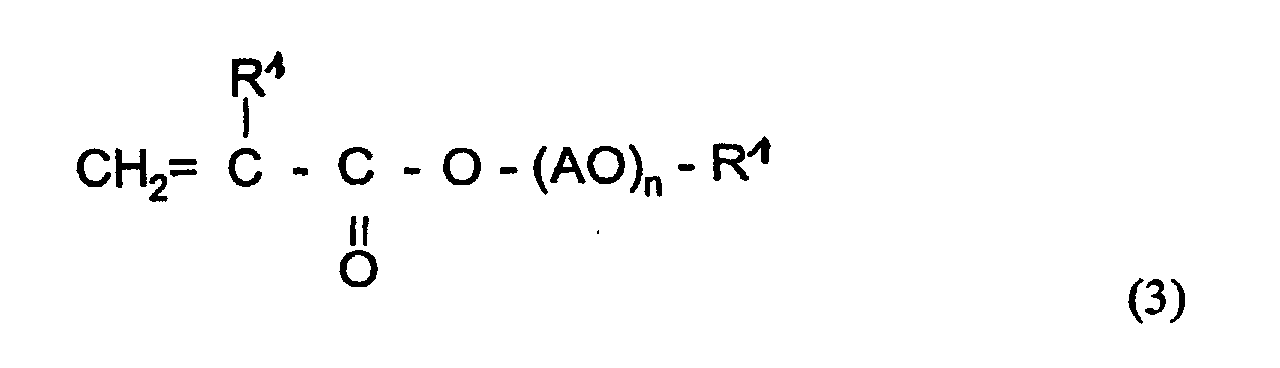
et0,01 à 10 parties en poids d'un initiateur de polymérisation (E). - Matériau de recouvrement pour former une couche de revêtement organique dur antibuée selon la revendication 15, dans lequel on utilise un matériau de recouvrement pour former une couche de revêtement organique antibuée comprenant de 0,1 à 10 parties en poids d'un tensio-actif non ionique avec une valeur HLB de 6 à 11 comme tensio-actif (B).
- Matériau de recouvrement pour former une couche de revêtement organique dur antibuée selon la revendication 16, dans lequel on utilise comme tensio-actif (B) une combinaison de 0,1 à 10 parties en poids d'un. tensio-actif non ionique avec une valeur HBL de 6 à 11 et de 0,1 à 5 parties en poids d'un tensio-actif anionique représenté par la formule générale (5) :(où R7 représente un groupe alkyle ou phényle ; R8 est -OX ou -O- (CH2CH2O-)q-R9 (où R9 représente un groupe alkyle ou phényle, q est un nombre entier de 1 à 50 ) ; X est un sel de métal alcalin ou d'ammonium ; p est un nombre entier de 1 à 50).

- Matériau de recouvrement pour former une couche de revêtement organique dur antibuée selon l'une quelconque des revendications 15 à 17, dans lequel on utilise comme agent de couplage de silane polymérisable, un produit de l'addition de Michael d'un diacrylate de polyalkylène glycol ayant une masse moléculaire de 150 à 1000, avec un silane contenant un groupe mercapto ou avec un silane contenant une amine primaire ou secondaire.
- Matériau de recouvrement selon la revendication 18, dans lequel on utilise comme agent de couplage de silane polymérisable, un produit de l'addition de Michael d'un poly(méth)acrylate avec un composé silane représenté par la formule générale (12) ci-dessous ou un composé représenté par la formule générale (13) :(où R22 représente un atome d'hydrogène ou un groupe alkyle ayant de 1 à 10 carbones, R23 représente un groupe alkylène substitué ou linéaire ayant de 1 à 10 carbones, R24 et R25 représentent des atomes d'hydrogène ou des groupes alkylène ayant de 1 à 10 carbones ; a est un nombre entier de 0 à 2) ;
 (où R23 représente un groupe alkylène substitué ou linéaire ayant de 1 à 10 carbones, R24 et R25 représentent des atomes d'hydrogène ou des groupes alkylène ayant de 1 à 10 carbones ; a est un nombre entier de 0 à 2).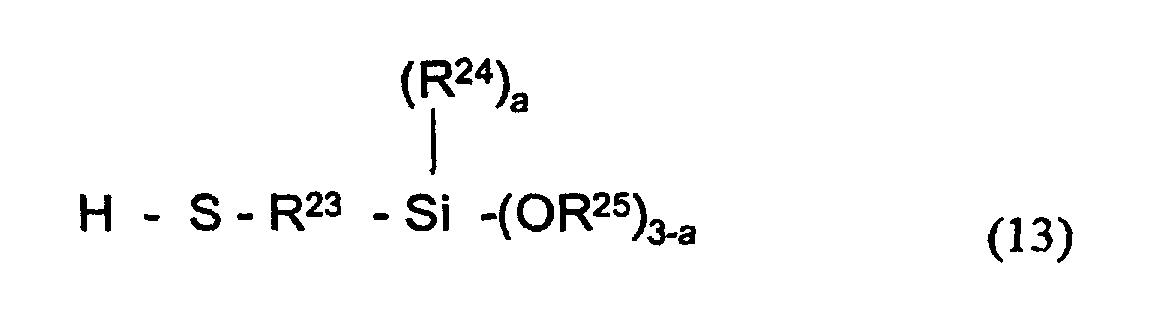
Applications Claiming Priority (7)
| Application Number | Priority Date | Filing Date | Title |
|---|---|---|---|
| JP167120/95 | 1995-06-09 | ||
| JP16712095 | 1995-06-09 | ||
| JP16712095 | 1995-06-09 | ||
| JP167833/95 | 1995-06-12 | ||
| JP16783395 | 1995-06-12 | ||
| JP16783395 | 1995-06-12 | ||
| PCT/JP1996/001567 WO1996041831A1 (fr) | 1995-06-09 | 1996-06-10 | Objets en resine moulee a revetement organique dur resistant au rayage et revetement organique dur antibuee, leur procede de production et matieres de revetement pour cet usage |
Publications (3)
| Publication Number | Publication Date |
|---|---|
| EP0832917A1 EP0832917A1 (fr) | 1998-04-01 |
| EP0832917A4 EP0832917A4 (fr) | 1999-04-21 |
| EP0832917B1 true EP0832917B1 (fr) | 2003-10-01 |
Family
ID=26491261
Family Applications (1)
| Application Number | Title | Priority Date | Filing Date |
|---|---|---|---|
| EP19960916351 Expired - Lifetime EP0832917B1 (fr) | 1995-06-09 | 1996-06-10 | Objets en resine moulee a revetement organique dur resistant au rayage et revetement organique dur antibuee, leur procede de production et matieres de revetement pour cet usage |
Country Status (5)
| Country | Link |
|---|---|
| US (1) | US6228499B1 (fr) |
| EP (1) | EP0832917B1 (fr) |
| KR (1) | KR100404289B1 (fr) |
| DE (1) | DE69630219T2 (fr) |
| WO (1) | WO1996041831A1 (fr) |
Families Citing this family (56)
| Publication number | Priority date | Publication date | Assignee | Title |
|---|---|---|---|---|
| JP2000182410A (ja) * | 1998-12-17 | 2000-06-30 | Koito Mfg Co Ltd | 車両用灯具 |
| FR2794225B3 (fr) * | 1999-05-25 | 2001-06-15 | Saint Gobain Vitrage | Porte d'enceinte refrigeree comportant un vitrage sous vide |
| US6908955B2 (en) * | 1999-07-09 | 2005-06-21 | Construction Research & Technology Gmbh | Oligomeric dispersant |
| US6455142B1 (en) * | 1999-12-17 | 2002-09-24 | Mitsubishi Polyester Film, Llc | Anti-fog coating and coated film |
| DE10002059A1 (de) * | 2000-01-18 | 2001-07-26 | Roehm Gmbh | Beschichtungszusammensetzung mit beschlagverhindernden Eigenschaften |
| KR100409069B1 (ko) * | 2000-03-06 | 2003-12-11 | 주식회사 엘지화학 | 흡수성 수지의 제조방법 |
| JP4565438B2 (ja) * | 2000-12-01 | 2010-10-20 | グンゼ株式会社 | 表面硬質透明シートとその製造方法 |
| EP1249470A3 (fr) * | 2001-03-30 | 2005-12-28 | Degussa AG | Composition fortement chargée en nano et/ou microcapsules hybrides à base de silice organique pâteuse pour des revêtements résistants aux rayures et à l'abrasion |
| JP4222480B2 (ja) * | 2001-06-13 | 2009-02-12 | Sdcテクノロジーズ・アジア株式会社 | 被覆用組成物と該組成物を塗布した物品 |
| US6808665B1 (en) * | 2001-08-03 | 2004-10-26 | Jeffrey D. Percival | Thermoforming process for masked polymers |
| JP4121782B2 (ja) * | 2002-06-06 | 2008-07-23 | 大日本印刷株式会社 | 親水性部材及びその製造方法 |
| JP4216031B2 (ja) * | 2002-09-24 | 2009-01-28 | リンテック株式会社 | タッチパネル又はディスプレー用ハードコートフィルム |
| JP4161182B2 (ja) * | 2002-10-08 | 2008-10-08 | 三菱瓦斯化学株式会社 | 硬化被膜を有するポリカーボネート樹脂積層体の製造方法。 |
| KR20050043513A (ko) * | 2003-11-06 | 2005-05-11 | 현대자동차주식회사 | 실링성이 우수한 플러그 튜브 가스켓 조성물 |
| JP4292985B2 (ja) * | 2003-12-25 | 2009-07-08 | Jsr株式会社 | 感放射線性組成物、マイクロレンズとその形成方法および液晶表示素子 |
| JP4508635B2 (ja) * | 2003-12-26 | 2010-07-21 | リンテック株式会社 | 画像表示装置用ハードコートフィルム |
| BRPI0418066A (pt) * | 2004-01-26 | 2007-04-17 | Gen Electric | artigos com suporte a microestruturas apresentando alto ìndice de refração |
| JP4539117B2 (ja) * | 2004-02-25 | 2010-09-08 | 住友ベークライト株式会社 | 紫外線硬化型防曇組成物 |
| US8361946B2 (en) * | 2004-04-08 | 2013-01-29 | Akzo Nobel N.V. | Detergent composition |
| US20060238870A1 (en) | 2005-04-26 | 2006-10-26 | Brian Sneek | Gauge lens with embedded anti-fog film and method of making the same |
| US20070050875A1 (en) * | 2005-08-22 | 2007-03-08 | Kirby Bentley | Face shield for helmet and method for making same |
| GB0602678D0 (en) | 2006-02-09 | 2006-03-22 | Dupont Teijin Films Us Ltd | Polyester film and manufacturing process |
| JP5332607B2 (ja) * | 2006-02-22 | 2013-11-06 | コニカミノルタ株式会社 | 反射防止フィルム、反射防止フィルムの製造方法、ハードコートフィルム、偏光板及び表示装置 |
| US7771826B2 (en) * | 2006-02-27 | 2010-08-10 | Konica Minolta Opto, Inc. | Antireflection film, producing method of antireflection film, polarizing plate and display device |
| JP2007277537A (ja) * | 2006-03-13 | 2007-10-25 | Mitsubishi Gas Chem Co Inc | 防曇性塗料組成物 |
| JP4843358B2 (ja) * | 2006-04-19 | 2011-12-21 | 株式会社日本触媒 | 制御された反りを有する熱可塑性樹脂シートの製造方法 |
| JP2008015317A (ja) * | 2006-07-07 | 2008-01-24 | Sony Corp | 光学膜 |
| JP5134233B2 (ja) * | 2006-11-29 | 2013-01-30 | 出光興産株式会社 | アダマンタン誘導体、その製造方法及びアダマンタン誘導体を含む樹脂組成物 |
| US20090004478A1 (en) * | 2007-06-29 | 2009-01-01 | 3M Innovative Properties Company | Flexible hardcoat compositions, articles, and methods |
| JP4964748B2 (ja) * | 2007-11-22 | 2012-07-04 | 新日鐵化学株式会社 | 透明積層体フィルムの製造方法 |
| FR2925912B1 (fr) * | 2007-12-26 | 2010-01-22 | Toray Plastics Europ | Film polyester enroulable comprenant sur au moins l'une de ses faces, un revetement reticule resistant aux rayures, procede d'obtention de ce film polyester |
| CN101469250B (zh) | 2007-12-26 | 2012-09-19 | 3M创新有限公司 | 可去除的防雾涂层、制品、涂料组合物和方法 |
| KR100926504B1 (ko) * | 2007-12-31 | 2009-11-17 | 제일모직주식회사 | 하드코트층을 구비한 플라스틱 시트 및 하드코팅 조성물 |
| WO2009090803A1 (fr) * | 2008-01-15 | 2009-07-23 | Kimoto Co., Ltd. | Composition durcissable, produit durci et stratifié |
| JP5020913B2 (ja) * | 2008-09-19 | 2012-09-05 | リンテック株式会社 | タッチパネル又はディスプレイ用ハードコートフィルム |
| JP5497342B2 (ja) * | 2009-06-02 | 2014-05-21 | 三菱レイヨン株式会社 | 積層樹脂板の製造方法及びディスプレー前面板 |
| KR101248743B1 (ko) * | 2010-04-08 | 2013-04-03 | (주)엘지하우시스 | 성형가공 후에도 높은 광택을 가지는 성형용 적층시트 및 그 제조방법 |
| EP2604644A4 (fr) * | 2010-08-13 | 2015-10-28 | Asahi Kasei E Materials Corp | Composition de résine silicone photosensible |
| AU2011250831A1 (en) * | 2010-12-03 | 2012-06-21 | Bayer Intellectual Property Gmbh | Security and/or valuable documents with a top layer with a scratch-resistant finish |
| WO2012111860A1 (fr) | 2011-02-18 | 2012-08-23 | ミドリ安全株式会社 | Composition de résine transparente à bonne résistance chimique, durabilité et stabilité dans des conditions ambiantes naturelles, dans des conditions ambiantes naturelles plus difficiles, et dans des conditions d'utilisation similaires ou plus difficiles, et produit utilisant cette composition |
| WO2013191822A1 (fr) * | 2012-06-19 | 2013-12-27 | 3M Innovative Properties Company | Compositions de revêtement comprenant un tensioactif non ionique polymérisable réduisant les traces d'empreinte |
| JP6268663B2 (ja) * | 2012-10-23 | 2018-01-31 | 荒川化学工業株式会社 | 活性エネルギー線硬化性樹脂組成物、活性エネルギー線硬化性コーティング剤、活性エネルギー線硬化物およびその成形物品 |
| KR101587190B1 (ko) | 2013-03-15 | 2016-01-20 | 주식회사 엘지화학 | 플라스틱 필름 |
| US10281619B2 (en) * | 2014-03-06 | 2019-05-07 | Konica Minolta, Inc. | Laminated film and method of producing the same |
| JP6684046B2 (ja) | 2014-07-30 | 2020-04-22 | デクセリアルズ株式会社 | 透明積層体 |
| JP6434785B2 (ja) * | 2014-11-20 | 2018-12-05 | 名阪真空工業株式会社 | 曲面状に成形された透明樹脂積層体、それを備えたディスプレイカバー及びそれを備えたモバイル端末 |
| US10377933B2 (en) * | 2016-01-14 | 2019-08-13 | Momentive Performance Materials Inc. | Antifog coating composition and method of making thereof |
| JP6841021B2 (ja) * | 2016-12-01 | 2021-03-10 | Dic株式会社 | 活性エネルギー線硬化型防曇性組成物およびこれを用いた硬化物 |
| WO2018147935A2 (fr) | 2016-12-16 | 2018-08-16 | 3M Innovative Properties Company | Ensemble optiquement transparent réfléchissant les infrarouges et son procédé de fabrication |
| JP2019006891A (ja) * | 2017-06-23 | 2019-01-17 | トーヨーポリマー株式会社 | 防曇コーティング組成物及びそれを用いた防曇性透明シート |
| EP3802083A1 (fr) | 2018-06-04 | 2021-04-14 | 3M Innovative Properties Company | Film optique multicouche résistant à l'abrasion thermoformé et son procédé de fabrication |
| WO2021025049A1 (fr) * | 2019-08-07 | 2021-02-11 | 三井化学株式会社 | Corps stratifié antiréfléchissant ayant des caractéristiques antibuée et son procédé de production |
| JP7334556B2 (ja) * | 2019-09-25 | 2023-08-29 | 大日本印刷株式会社 | ハードコート層付き有機ガラスの製造方法 |
| JP7236554B2 (ja) * | 2019-10-09 | 2023-03-09 | 帝人株式会社 | 湾曲部材の製造方法、及び、熱曲げ用ハードコート層付ポリカーボネート樹脂積層体 |
| JP7570960B2 (ja) * | 2021-03-29 | 2024-10-22 | 三井化学株式会社 | 積層体 |
| JP7706253B2 (ja) * | 2021-03-31 | 2025-07-11 | 東京応化工業株式会社 | 硬化性組成物、防曇コーティング剤、及び硬化膜 |
Family Cites Families (8)
| Publication number | Priority date | Publication date | Assignee | Title |
|---|---|---|---|---|
| JPH03141944A (ja) * | 1985-12-10 | 1991-06-17 | Daiichi Shoko Kk | ゴーグルの防曇加工法 |
| JPH02129235A (ja) * | 1988-11-08 | 1990-05-17 | Mitsubishi Rayon Co Ltd | 被覆材組成物及び耐摩耗性合成樹脂成形品の製造法 |
| CA2016740A1 (fr) * | 1989-05-26 | 1990-11-26 | Shih-Chung Chen | Revetement antibuee |
| US5258225A (en) * | 1990-02-16 | 1993-11-02 | General Electric Company | Acrylic coated thermoplastic substrate |
| US5214085A (en) * | 1992-02-03 | 1993-05-25 | General Electric Company | Abrasion-resistant coating compositions with improved weatherability |
| JPH0673212A (ja) * | 1992-08-28 | 1994-03-15 | Mitsubishi Rayon Co Ltd | 耐擦傷性及び帯電防止性に優れたポリカーボネート板及びその製造方法 |
| US5368941A (en) * | 1992-08-31 | 1994-11-29 | Dow Corning Corporation | Deformable, abrasion-resistant silicone coating and method of producing the same |
| US5663264A (en) * | 1993-12-27 | 1997-09-02 | Hitachi Chemical Company, Ltd. | Transparent resin and plastic lens |
-
1996
- 1996-06-10 KR KR1019970709246A patent/KR100404289B1/ko not_active Expired - Fee Related
- 1996-06-10 US US08/981,041 patent/US6228499B1/en not_active Expired - Lifetime
- 1996-06-10 EP EP19960916351 patent/EP0832917B1/fr not_active Expired - Lifetime
- 1996-06-10 DE DE1996630219 patent/DE69630219T2/de not_active Expired - Lifetime
- 1996-06-10 WO PCT/JP1996/001567 patent/WO1996041831A1/fr not_active Ceased
Also Published As
| Publication number | Publication date |
|---|---|
| DE69630219T2 (de) | 2004-07-22 |
| EP0832917A4 (fr) | 1999-04-21 |
| KR100404289B1 (ko) | 2005-01-17 |
| US6228499B1 (en) | 2001-05-08 |
| DE69630219D1 (de) | 2003-11-06 |
| EP0832917A1 (fr) | 1998-04-01 |
| KR19990022779A (ko) | 1999-03-25 |
| WO1996041831A1 (fr) | 1996-12-27 |
Similar Documents
| Publication | Publication Date | Title |
|---|---|---|
| US6228499B1 (en) | Molded resin articles having marproof organic hard coat layer and non fogging organic hard coat layer, process for the production of the same, and coating materials therefor | |
| US5104929A (en) | Abrasion resistant coatings comprising silicon dioxide dispersions | |
| JPH1081839A (ja) | 紫外線硬化性の被覆用組成物 | |
| WO2006019175A1 (fr) | Composition photodurcissable pour former un revêtement anti-buée | |
| JPH1177878A (ja) | 透明被覆成形品 | |
| CN115667338A (zh) | 光固化性树脂组合物、固化被膜及带有固化被膜的成型品 | |
| JP7199185B2 (ja) | 成形用反射防止ハードコートフィルム | |
| JPS60170635A (ja) | 光硬化性多官能性アクリル系被覆およびその被覆を施した装飾物品 | |
| JPH1176928A (ja) | 透明被覆成形品の製造方法 | |
| JPH1160992A (ja) | 紫外線硬化性被覆用組成物 | |
| KR950014730B1 (ko) | 자외선 경화형 방무제 조성물과 방무성 피막 제조방법 | |
| JPH1110767A (ja) | 透明被覆成形品およびその製造方法 | |
| JP3952586B2 (ja) | 透明被覆成形品およびその製造方法 | |
| JP3921829B2 (ja) | 透明被覆成形品 | |
| JPH10287824A (ja) | 被覆用組成物およびその用途 | |
| JP3782670B2 (ja) | 被覆用硬化性組成物、被覆物品、自動車用外板、および活性エネルギー線硬化性組成物 | |
| JP4069498B2 (ja) | 透明被覆成形品およびその製造方法 | |
| JP2897078B2 (ja) | 耐擦傷性有機ハードコート層及び防曇性有機ハードコート層を有する樹脂成形品及びその製造方法並びにそれに用いる被覆材 | |
| JP3687230B2 (ja) | 透明被覆成形品およびその製造方法 | |
| JPWO1996041831A1 (ja) | 耐擦傷性有機ハードコート層及び防曇性有機ハードコート層を有する樹脂成形品及びその製造方法並びにそれに用いる被覆材 | |
| JPH1060307A (ja) | 紫外線硬化型被覆剤組成物およびその用途 | |
| JP3921830B2 (ja) | 透明被覆成形品の製造方法 | |
| JP2000033672A (ja) | 透明被覆成形品およびその製造方法 | |
| JPH03152181A (ja) | 防曇性組成物 | |
| JPH1110805A (ja) | 透明被覆成形品およびその製造法 |
Legal Events
| Date | Code | Title | Description |
|---|---|---|---|
| PUAI | Public reference made under article 153(3) epc to a published international application that has entered the european phase |
Free format text: ORIGINAL CODE: 0009012 |
|
| 17P | Request for examination filed |
Effective date: 19980109 |
|
| AK | Designated contracting states |
Kind code of ref document: A1 Designated state(s): DE FR GB IT NL |
|
| A4 | Supplementary search report drawn up and despatched |
Effective date: 19990305 |
|
| AK | Designated contracting states |
Kind code of ref document: A4 Designated state(s): DE FR GB IT NL |
|
| 17Q | First examination report despatched |
Effective date: 19991006 |
|
| GRAH | Despatch of communication of intention to grant a patent |
Free format text: ORIGINAL CODE: EPIDOS IGRA |
|
| GRAH | Despatch of communication of intention to grant a patent |
Free format text: ORIGINAL CODE: EPIDOS IGRA |
|
| GRAA | (expected) grant |
Free format text: ORIGINAL CODE: 0009210 |
|
| AK | Designated contracting states |
Kind code of ref document: B1 Designated state(s): DE FR GB IT NL |
|
| PG25 | Lapsed in a contracting state [announced via postgrant information from national office to epo] |
Ref country code: NL Free format text: LAPSE BECAUSE OF FAILURE TO SUBMIT A TRANSLATION OF THE DESCRIPTION OR TO PAY THE FEE WITHIN THE PRESCRIBED TIME-LIMIT Effective date: 20031001 Ref country code: IT Free format text: LAPSE BECAUSE OF FAILURE TO SUBMIT A TRANSLATION OF THE DESCRIPTION OR TO PAY THE FEE WITHIN THE PRE;WARNING: LAPSES OF ITALIAN PATENTS WITH EFFECTIVE DATE BEFORE 2007 MAY HAVE OCCURRED AT ANY TIME BEFORE 2007. THE CORRECT EFFECTIVE DATE MAY BE DIFFERENT FROM THE ONE RECORDED.SCRIBED TIME-LIMIT Effective date: 20031001 Ref country code: FR Free format text: LAPSE BECAUSE OF FAILURE TO SUBMIT A TRANSLATION OF THE DESCRIPTION OR TO PAY THE FEE WITHIN THE PRESCRIBED TIME-LIMIT Effective date: 20031001 |
|
| REG | Reference to a national code |
Ref country code: GB Ref legal event code: FG4D |
|
| REF | Corresponds to: |
Ref document number: 69630219 Country of ref document: DE Date of ref document: 20031106 Kind code of ref document: P |
|
| NLV1 | Nl: lapsed or annulled due to failure to fulfill the requirements of art. 29p and 29m of the patents act | ||
| PLBE | No opposition filed within time limit |
Free format text: ORIGINAL CODE: 0009261 |
|
| STAA | Information on the status of an ep patent application or granted ep patent |
Free format text: STATUS: NO OPPOSITION FILED WITHIN TIME LIMIT |
|
| 26N | No opposition filed |
Effective date: 20040702 |
|
| EN | Fr: translation not filed | ||
| PGFP | Annual fee paid to national office [announced via postgrant information from national office to epo] |
Ref country code: GB Payment date: 20140604 Year of fee payment: 19 |
|
| PGFP | Annual fee paid to national office [announced via postgrant information from national office to epo] |
Ref country code: DE Payment date: 20140603 Year of fee payment: 19 |
|
| REG | Reference to a national code |
Ref country code: DE Ref legal event code: R119 Ref document number: 69630219 Country of ref document: DE |
|
| GBPC | Gb: european patent ceased through non-payment of renewal fee |
Effective date: 20150610 |
|
| PG25 | Lapsed in a contracting state [announced via postgrant information from national office to epo] |
Ref country code: DE Free format text: LAPSE BECAUSE OF NON-PAYMENT OF DUE FEES Effective date: 20160101 Ref country code: GB Free format text: LAPSE BECAUSE OF NON-PAYMENT OF DUE FEES Effective date: 20150610 |