EP0835006A2 - Integritätsprüfungsverfahren und -anordnung für serielle Übertragung - Google Patents
Integritätsprüfungsverfahren und -anordnung für serielle Übertragung Download PDFInfo
- Publication number
- EP0835006A2 EP0835006A2 EP97307672A EP97307672A EP0835006A2 EP 0835006 A2 EP0835006 A2 EP 0835006A2 EP 97307672 A EP97307672 A EP 97307672A EP 97307672 A EP97307672 A EP 97307672A EP 0835006 A2 EP0835006 A2 EP 0835006A2
- Authority
- EP
- European Patent Office
- Prior art keywords
- word
- check code
- data
- value
- host
- Prior art date
- Legal status (The legal status is an assumption and is not a legal conclusion. Google has not performed a legal analysis and makes no representation as to the accuracy of the status listed.)
- Withdrawn
Links
Images


Classifications
-
- G—PHYSICS
- G06—COMPUTING OR CALCULATING; COUNTING
- G06F—ELECTRIC DIGITAL DATA PROCESSING
- G06F11/00—Error detection; Error correction; Monitoring
- G06F11/07—Responding to the occurrence of a fault, e.g. fault tolerance
- G06F11/0703—Error or fault processing not based on redundancy, i.e. by taking additional measures to deal with the error or fault not making use of redundancy in operation, in hardware, or in data representation
- G06F11/0751—Error or fault detection not based on redundancy
- G06F11/0763—Error or fault detection not based on redundancy by bit configuration check, e.g. of formats or tags
-
- G—PHYSICS
- G06—COMPUTING OR CALCULATING; COUNTING
- G06F—ELECTRIC DIGITAL DATA PROCESSING
- G06F2201/00—Indexing scheme relating to error detection, to error correction, and to monitoring
- G06F2201/88—Monitoring involving counting
-
- H—ELECTRICITY
- H04—ELECTRIC COMMUNICATION TECHNIQUE
- H04L—TRANSMISSION OF DIGITAL INFORMATION, e.g. TELEGRAPHIC COMMUNICATION
- H04L1/00—Arrangements for detecting or preventing errors in the information received
- H04L1/12—Arrangements for detecting or preventing errors in the information received by using return channel
- H04L1/16—Arrangements for detecting or preventing errors in the information received by using return channel in which the return channel carries supervisory signals, e.g. repetition request signals
- H04L1/18—Automatic repetition systems, e.g. Van Duuren systems
Definitions
- This invention relates to a method and system for checking the integrity of full duplex serial communications between devices such as master and slave devices.
- serial interface between a peripheral device and a host microprocessor is that such an interface uses fewer data and control lines than a parallel interface.
- serial transactions get longer, the probability of extraneous signal noise corrupting the transaction increases, especially in noisy environments such as automobiles or the like.
- serial data transfer based protocols have been developed that use check sums transmitted from the host after transmission of a command or other data from the host.
- the peripheral only the peripheral knows if a data transfer error has occurred. In that event, the peripheral must then assert an interrupt requesting service from the host in the form of a retransmission of the corrupted data. However, in servicing that interrupt request, the host has no way of knowing which command and/or data previously sent to the peripheral is in error. As a result, the host must re-transmit all prior commands and/or data to ensure that the error is corrected. It is, therefore, extremely difficult to design a fault handler that can recover and reissue corrupted transactions, since such transactions may have been initiated from many possible locations.
- a seven byte transaction includes a three byte command message followed by a three byte reply message to check the integrity of the transaction.
- a three byte reply message to check the integrity of the transaction.
- an object of the present invention is to provide an improved method and system for checking the integrity of full duplex serial communications between devices such as a host device and a peripheral device.
- a method for checking the integrity of a full duplex multi-word serial transfer between first and second devices, the transfer including an actual last word.
- the method comprises transmitting a count word from the first device to the second device, the count word indicating a number of words to be transmitted including an expected last word, transmitting the actual last word from the first device to the second device, and transmitting, substantially simultaneously to transmission of the actual last word, a check code word from the second device to the first device, the check code word having a selected value if the actual last word is the expected last word, and another value otherwise.
- the method of the present invention further comprises determining a transfer error if the value of the check code word is other than the selected value.
- the present invention also provides a system for checking the integrity of a full duplex multi-word serial transfer between first and second devices, the transfer including an actual last word.
- the system comprises means for transmitting a count word from the first device to the second device, the count word indicating a number of words to be transmitted including an expected last word, means for transmitting the actual last word from the first device to the second device, and means for transmitting, substantially simultaneously to transmission of the actual last word, a check code word from the second device to the first device, the check code word having a selected value if the actual last word is the expected last word, and another value otherwise.
- the system of the present invention further comprises means for determining a transfer error if the value of the check code word is other than the selected value.
- the method and system of the present invention are designed to validate data transfers by supplying a check code at a specific location in the data transferred based on the message content. In so doing, the method and system of the present invention provide instantaneous feedback on the successful transmission and reception of messages transferred, and ensure the integrity of message transfers without additional bandwidth overhead.
- the method and system of the present invention were developed in order to ensure the integrity of multi-byte transfers when a Serial Peripheral Interface (SPI) is used in electronic modules.
- SPI Serial Peripheral Interface
- the method and system of the present invention employ a protocol which uses four electrical lines connected between a microprocessor and a peripheral device, and allows data to be sent in both directions between the two devices in the same transaction (i.e., full duplex serial data transfer).
- FIG. 1 an integrity check operation according to the method and system of the present invention indicating a successful data transfer between a host and a peripheral is shown.
- a number of host/peripheral interface signal lines are depicted over time including a chip select (CS) line (10) from the host to the peripheral, a serial clock (SCLK) line (12) originating from the host, a unidirectional data (MOSI) line (14) from the host to the peripheral, and a unidirectional data (MISO) line (16) from the peripheral to the host.
- CS chip select
- SCLK serial clock
- MOSI unidirectional data
- MISO unidirectional data
- a transaction is initiated by a falling edge (18) of CS (10).
- the host microprocessor then sends to the peripheral device a command code byte (20), followed by a count data byte (22) indicating the number of data bytes in the transaction (n), and therefore the number of data bytes to follow (1 to n).
- the host then sends to the peripheral the actual data (24, 26) bytes themselves.
- the peripheral device is also sending data bytes (28) back to the microprocessor in full duplex fashion, keeping track of the number of remaining bytes in the transaction.
- Such data bytes (28) transmitted from the peripheral to the microprocessor preferably have a value of zero. As is described in greater detail below, however, other values may also be used. As is also described in greater detail below, any such value represents an "invalid" check code.
- the peripheral device While the peripheral device is receiving the actual data byte (26) which according to the count byte (22) (previously sent by the host microprocessor) is the expected last data byte (n), it returns a check code byte (32) to the host. That is, as is described in greater detail below, the host returns a byte (32) having a value representing a "valid" check code. In the preferred embodiment, such a valid check code is a fixed hexadecimal value of 1B, although other values may be employed.
- check code data bytes, where the contents of such bytes represent either the valid check code (32), or an invalid check code (28).
- the valid check code while predetermined, need not be fixed or constant.
- the valid check code could alternatively be a generic "check sum" well known in the art predetermined based on previous data from the host (i.e., any or all data transmitted from the host to the peripheral prior to transmission of the valid check code from the peripheral to the host).
- the data transaction is terminated with the rising edge (36) of CS (10).
- the host microprocessor examines the last data byte (30) received from the peripheral, which was sent to the host, in full duplex fashion, substantially simultaneously to transmission of the actual last data byte (26) from the host to the peripheral. Since the value of the last data byte (30) from the peripheral (hexadecimal 1B) matches the value of the check code, the accuracy of the transaction has been verified.
- FIG. 2 an integrity check operation according to the method and system of the present invention indicating an unsuccessful data transfer between a host and a peripheral is shown.
- a number of host/peripheral interface signal lines are once again depicted over time including a chip select (CS) line (10) from the host to the peripheral, a serial clock (SCLK) line (12) originating from the host, a unidirectional data (MOSI) line (14) from the host to the peripheral, and a unidirectional data (MISO) line (16) from the peripheral to the host.
- CS chip select
- SCLK serial clock
- MOSI unidirectional data
- MISO unidirectional data
- a transaction is initiated by a falling edge (18) of CS (10).
- the host microprocessor then sends to the peripheral device a command code byte (20), followed by a count data byte (22) indicating the number of data bytes in the transaction (n), and therefore the number of data bytes to follow (1 to n).
- the host then sends to the peripheral the actual data (24, 26, 28) bytes themselves.
- the peripheral device is also sending data bytes (30) back to the microprocessor in full duplex fashion, keeping track of the number of remaining bytes in the transaction.
- Such data bytes (28) transmitted from the peripheral to the microprocessor preferably have a value of zero, although other values may be employed. Once again, any such value represents an invalid check code.
- the peripheral device While the peripheral device is receiving the actual data byte (26) which according to the count byte (22) (previously sent by the host microprocessor) is the expected last data byte (n), it returns a check code byte (32) to the host. That is, the host returns a byte (32) having a value representing a "valid" check code.
- the check code preferably has a fixed hexadecimal value of 1B, although other values may be employed.
- At least one additional actual data byte (n+1) (28) is sent from the host after the actual data byte (n) (26) which according to the count byte (22) was the expected last data byte.
- the peripheral sends another data byte (34) to the host.
- data byte (34) transmitted from the peripheral to the host is typically zero, which represents an invalid check code.
- any type of "signal” could be transmitted from the host after transmission of the data byte (26) which was the expected last data byte. Indeed, such a “signal” is most likely to be some sort of noise “glitch” caused by the operating environment of the host and peripheral, such as an automobile. Moreover, while not shown in Figure 2, such a “signal” may also be transmitted from the host prior to transmission of check code byte (32) from the peripheral.
- the method and system of the present invention are designed to recognise either case as a data transmission error.
- the data transaction is terminated with the rising edge (36) of CS (10).
- the host microprocessor examines the last data byte (34) received from the peripheral, which was sent to the host, in full duplex fashion, substantially simultaneously to transmission of the actual last data byte (28) from the host to the peripheral. Since the value of the last data byte (34) from the peripheral (zero) does not match the value of the check code (hexadecimal 1B), the transaction is determined to have been corrupted. In that event, the host microprocessor may attempt to reissue the transaction.
- check code data bytes, where the contents of such bytes represent either the valid check code (32), or an invalid check code (30, 34).
- check code data bytes, where the contents of such bytes represent either the valid check code (32), or an invalid check code (30, 34).
- any value may be used for the contents of the bytes (30, 34) representing an invalid check code.
- the peripheral also knows if the transaction was successful by verifying that the transaction was completed on the correct check code location as determined by the data count byte (22) sent by the host microprocessor at the start of the transaction. That is, the last byte transmitted from the host to the peripheral must correspond to transmission of the valid check code from the peripheral to the host for the transaction to be verified.
- the peripheral knows to refrain from executing such instructions. Indeed, in that instance, the instructions will likely be repeated to correct the data corruption error. It can thus be seen that the method and system of the present invention increase the efficiency of an integrity check of serial communications between a host and a peripheral.
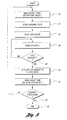
- FIG. 3 a flowchart depicting the integrity check method of the present invention is shown.
- the data transaction is initiated (40) by marking the start of a data packet. In the preferred embodiment, this is accomplished by assertion (18) of chip select (CS) line (10).
- CS chip select
- the command code byte (20) and the data count byte (22) are sent (42, 44) from the host microcontroller to the peripheral.
- actual data bytes (24, 26, 28) are individually sent (46) from the host to the peripheral. At each such transmission, it is determined (48) if the actual data byte (24, 26, 28) being sent is the last data byte (26). If not, an additional actual data byte (26, 28) is sent (46) from the host to the peripheral. If so, the last data byte sent from the peripheral to the host (32, 34) is retrieved (50) by the host.
- the data transaction is terminated (52) by marking the end of the data packet. In the preferred embodiment, this is accomplished by release (36) of chip select (CS) line (10). At that time, it is determined (54) whether the last data byte sent (32, 34) from the peripheral to the host matches the check code. If so, the data transaction has been verified as successful (56). If not, the data transaction has been corrupted, and retransmission may be undertaken (40).
- CS chip select
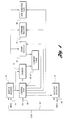
- the serial peripheral interface comprises a four line system which includes a chip select (CS) line (60) from the host to the peripheral, a serial clock (SCLK) line (62) originating from the host, a unidirectional data line (MOSI) (64) from the host to the peripheral, and a unidirectional data line (MISO) (66) from the peripheral to the host.
- CS chip select
- SCLK serial clock
- MOSI unidirectional data line
- MISO unidirectional data line
- CS line (60) is provided in communication with control logic (68).
- SCLK line (62) is provided in communication with both a shift-in register (70) and a shift-out register (72).
- Control logic (68) is itself provided in communication with shift-in register (70), shift-out register (72), a counter (74), a count register (76), a command register (78), and a plurality of data registers (1 to N) (80).
- Counter (74) and count register (76) are both provided in communication with compare logic (82), which is itself provided in communication with control logic (68).
- control logic (68) detects the falling edge of a signal from CS (60). In that event, control logic (68) directs the shift-out register (72) to output an invalid check code. As previously described, such an invalid check code is preferably zero.
- the first data byte received by the peripheral from the host is a command data byte.
- control logic (68) directs command register (78) to latch that data byte therein.
- the second data byte received by the peripheral from the host is the data count byte.
- control logic (68) directs count register (76) to latch that data byte therein.
- counter (74) is reset to a count of one.
- Control logic (68) also increments counter (74) after receipt of each such data byte in order to track the number of data bytes received.
- compare logic (82) After receipt of each such data byte, compare logic (82) compares the value of counter (74) and the contents of count register (76). Upon identifying a match, compare logic (82) signals control logic (68), which directs shift-out register (72) to transmit the valid check code. As previously described, such a valid check code is preferably a value of hexadecimal 1B. Control logic (68) then directs shift-out register (72) to transmit an invalid check code thereafter. Once again, such an invalid check code is preferably zero.
- control logic (68) Upon receipt of the rising edge of the signal from CS (60), control logic (68) terminates the data transaction. As previously described, if this occurs on an incorrect data location (i.e., the valid check code was not the last data byte transmitted by the peripheral to the host), control logic (68) directs the peripheral to ignore the command.
- the host compares the content of the last data byte received from the shift-out register (72) (i.e., the data byte received immediately preceding termination of the data transaction). If those contents do not have a value matching the value of the valid check code, the host knows that the data transaction has been corrupted. In that event, the host may reissue the transaction.
- the present invention provides an improved method and system for checking the integrity of multi-byte serial data transfers between a host device and a peripheral device, thereby improving the overall efficiency of such transfers. More specifically, the present invention provides for immediate recognition of a data transfer error, as well as for identification of the specific data transfer that must be reissued to correct that error, while avoiding extra overhead in the transaction in the form of wasted bandwidth. While such data transfers have been described in the preferred embodiment as bytes, those of ordinary skill in the art will recognise that the method and system of the present invention are suitable for use with serial data transfers of any type or size (i.e., "word").
Landscapes
- Engineering & Computer Science (AREA)
- Theoretical Computer Science (AREA)
- Quality & Reliability (AREA)
- Physics & Mathematics (AREA)
- General Engineering & Computer Science (AREA)
- General Physics & Mathematics (AREA)
- Detection And Prevention Of Errors In Transmission (AREA)
- Communication Control (AREA)
- Computer And Data Communications (AREA)
- Maintenance And Management Of Digital Transmission (AREA)
Applications Claiming Priority (2)
| Application Number | Priority Date | Filing Date | Title |
|---|---|---|---|
| US08/725,042 US5740189A (en) | 1996-10-03 | 1996-10-03 | Integrity check method and system for serial-based communication |
| US725042 | 2000-11-29 |
Publications (2)
| Publication Number | Publication Date |
|---|---|
| EP0835006A2 true EP0835006A2 (de) | 1998-04-08 |
| EP0835006A3 EP0835006A3 (de) | 1998-12-23 |
Family
ID=24912910
Family Applications (1)
| Application Number | Title | Priority Date | Filing Date |
|---|---|---|---|
| EP97307672A Withdrawn EP0835006A3 (de) | 1996-10-03 | 1997-09-30 | Integritätsprüfungsverfahren und -anordnung für serielle Übertragung |
Country Status (3)
| Country | Link |
|---|---|
| US (1) | US5740189A (de) |
| EP (1) | EP0835006A3 (de) |
| JP (1) | JPH10126463A (de) |
Cited By (1)
| Publication number | Priority date | Publication date | Assignee | Title |
|---|---|---|---|---|
| WO1999030466A3 (en) * | 1997-12-08 | 1999-09-02 | Lego As | A communications protocol |
Families Citing this family (8)
| Publication number | Priority date | Publication date | Assignee | Title |
|---|---|---|---|---|
| DE59711651D1 (de) * | 1996-03-04 | 2004-07-01 | Siemens Ag | Verfahren zur Übertragung von Informationen über die Funkschnittstelle eines zellularen Mobilfunknetzes sowie entprechende Teilnehrmereinrichtung und Netzeinrichtung |
| JPH10198633A (ja) * | 1997-01-08 | 1998-07-31 | Mitsubishi Electric Corp | シリアルデータ転送装置 |
| US6665265B1 (en) * | 1998-11-23 | 2003-12-16 | Cypress Semiconductor Corp. | Overhead serial communication scheme |
| US6502197B1 (en) | 1998-11-23 | 2002-12-31 | Cypress Semiconductor Corp. | Method and architecture for synchronizing a transport and path overhead generator and/or extractor to an path overhead transport and path processor |
| US7644201B2 (en) * | 2004-11-17 | 2010-01-05 | International Business Machines Corporation | Method and system for performance enhancement via transaction verification using a counter value in a polled data storage environment |
| DE102007029116A1 (de) * | 2007-06-25 | 2009-01-02 | Continental Automotive Gmbh | Verfahren zum Betreiben eines Mikrocontrollers und einer Ausführungseinheit sowie ein Mikrocontroller und eine Ausführungseinheit |
| DE102009044936B4 (de) * | 2009-09-24 | 2022-10-13 | Robert Bosch Gmbh | Verfahren zum Austauschen von Daten |
| US20130282564A1 (en) * | 2012-04-21 | 2013-10-24 | Research In Motion Limited | System and method for transmitting application data between two communication devices |
Family Cites Families (7)
| Publication number | Priority date | Publication date | Assignee | Title |
|---|---|---|---|---|
| FR2382809A1 (fr) * | 1977-03-04 | 1978-09-29 | Cit Alcatel | Dispositif de detection d'erreurs en ligne dans un systeme de transmission numerique |
| US4534025A (en) * | 1983-02-24 | 1985-08-06 | United Technologies Automotive, Inc. | Vehicle multiplex system having protocol/format for secure communication transactions |
| US5001705A (en) * | 1987-11-06 | 1991-03-19 | Fujitsu Limited | Protocol control circuit for data bus system |
| US4866609A (en) * | 1988-06-22 | 1989-09-12 | International Business Machines Corporation | Byte count handling in serial channel extender with buffering for data pre-fetch |
| US5390197A (en) * | 1992-12-04 | 1995-02-14 | Hughes Aircraft Company | Vestigial identification for co-channel interference in cellular communications |
| US5506958A (en) * | 1993-02-10 | 1996-04-09 | Conner Peripherals, Inc. | Error detection for parallel data transfer between a processor and a peripheral device by comparing regisgers storing a sum of values in bytes of data transferred |
| US5412651A (en) * | 1993-02-11 | 1995-05-02 | Nec America, Inc. | Structure and method for combining PCM and common control data on a backplane bus |
-
1996
- 1996-10-03 US US08/725,042 patent/US5740189A/en not_active Expired - Fee Related
-
1997
- 1997-09-30 EP EP97307672A patent/EP0835006A3/de not_active Withdrawn
- 1997-10-02 JP JP9270142A patent/JPH10126463A/ja active Pending
Cited By (1)
| Publication number | Priority date | Publication date | Assignee | Title |
|---|---|---|---|---|
| WO1999030466A3 (en) * | 1997-12-08 | 1999-09-02 | Lego As | A communications protocol |
Also Published As
| Publication number | Publication date |
|---|---|
| EP0835006A3 (de) | 1998-12-23 |
| JPH10126463A (ja) | 1998-05-15 |
| US5740189A (en) | 1998-04-14 |
Similar Documents
| Publication | Publication Date | Title |
|---|---|---|
| US6385210B1 (en) | Method for detecting and resolving data corruption in a UART based communication network | |
| US5383185A (en) | Method and apparatus for data collision detection in a multi-processor communication system | |
| KR101001074B1 (ko) | 버스 상에 데이터를 전송하기 위한 방법 | |
| US5845085A (en) | System for receiving a data stream of serialized data | |
| US5740189A (en) | Integrity check method and system for serial-based communication | |
| US5574865A (en) | System for data transfer protection during module connection/disconnection onto live bus | |
| EP0207313B1 (de) | Serielles Bussystem | |
| EP0384078B1 (de) | Netzwerk und Protokoll zur Echtzeitbetriebssteuerung einer Maschine | |
| JP2001142845A5 (de) | ||
| CA2004507C (en) | Communication network and protocol for real-time control of mailing machine operations | |
| CN118488024A (zh) | 基于can通信的大数据包传输方法、设备及系统 | |
| CN114244485B (zh) | 一种usb信号远距离传输时的数据管理方法 | |
| JPS609240A (ja) | 通信制御装置 | |
| CN119316090B (zh) | 一种机车硬线重联信号安全传输方法、系统及重联机车 | |
| JPH09326782A (ja) | シリアル通信方法 | |
| US6442196B1 (en) | Data communications system | |
| CN114726482B (zh) | 一种spi数据传输方法 | |
| JPH06290130A (ja) | データ通信制御装置 | |
| CN114884768B (zh) | 一种总线空闲状态的检测装置、系统及检测方法 | |
| JP2003016027A (ja) | Cpu間通信方式 | |
| EP0132645A2 (de) | Verfahren und Vorrichtung zur Erleichterung der Kollisionserkennung | |
| JPH09190388A (ja) | データ転送装置、インターフェース装置及びデータ転送方法 | |
| CN119316111A (zh) | 一种spi全双工数据传输方法、系统、装置及存储介质 | |
| CN119902925A (zh) | 一种全双工uart数据自检装置及方法 | |
| KR940004575B1 (ko) | 보드간의 데이타 송수신 방법 |
Legal Events
| Date | Code | Title | Description |
|---|---|---|---|
| PUAI | Public reference made under article 153(3) epc to a published international application that has entered the european phase |
Free format text: ORIGINAL CODE: 0009012 |
|
| AK | Designated contracting states |
Kind code of ref document: A2 Designated state(s): DE FR GB |
|
| AX | Request for extension of the european patent |
Free format text: AL;LT;LV;RO;SI |
|
| PUAL | Search report despatched |
Free format text: ORIGINAL CODE: 0009013 |
|
| AK | Designated contracting states |
Kind code of ref document: A3 Designated state(s): AT BE CH DE DK ES FI FR GB GR IE IT LI LU MC NL PT SE |
|
| AX | Request for extension of the european patent |
Free format text: AL;LT;LV;RO;SI |
|
| RHK1 | Main classification (correction) |
Ipc: H04L 1/16 |
|
| 17P | Request for examination filed |
Effective date: 19990525 |
|
| AKX | Designation fees paid |
Free format text: DE FR GB |
|
| STAA | Information on the status of an ep patent application or granted ep patent |
Free format text: STATUS: THE APPLICATION HAS BEEN WITHDRAWN |
|
| 18W | Application withdrawn |
Withdrawal date: 20020409 |