EP0835939A2 - Fusionsproteine mit Immunglobulinanteilen, ihre Herstellung und Verwendung - Google Patents
Fusionsproteine mit Immunglobulinanteilen, ihre Herstellung und Verwendung Download PDFInfo
- Publication number
- EP0835939A2 EP0835939A2 EP97120664A EP97120664A EP0835939A2 EP 0835939 A2 EP0835939 A2 EP 0835939A2 EP 97120664 A EP97120664 A EP 97120664A EP 97120664 A EP97120664 A EP 97120664A EP 0835939 A2 EP0835939 A2 EP 0835939A2
- Authority
- EP
- European Patent Office
- Prior art keywords
- immunoglobulin
- protein
- fusion
- fused
- parts
- Prior art date
- Legal status (The legal status is an assumption and is not a legal conclusion. Google has not performed a legal analysis and makes no representation as to the accuracy of the status listed.)
- Granted
Links
Images



Classifications
-
- C—CHEMISTRY; METALLURGY
- C07—ORGANIC CHEMISTRY
- C07K—PEPTIDES
- C07K16/00—Immunoglobulins [IG], e.g. monoclonal or polyclonal antibodies
- C07K16/18—Immunoglobulins [IG], e.g. monoclonal or polyclonal antibodies against material from animals or humans
-
- C—CHEMISTRY; METALLURGY
- C07—ORGANIC CHEMISTRY
- C07K—PEPTIDES
- C07K16/00—Immunoglobulins [IG], e.g. monoclonal or polyclonal antibodies
-
- A—HUMAN NECESSITIES
- A61—MEDICAL OR VETERINARY SCIENCE; HYGIENE
- A61P—SPECIFIC THERAPEUTIC ACTIVITY OF CHEMICAL COMPOUNDS OR MEDICINAL PREPARATIONS
- A61P13/00—Drugs for disorders of the urinary system
- A61P13/12—Drugs for disorders of the urinary system of the kidneys
-
- A—HUMAN NECESSITIES
- A61—MEDICAL OR VETERINARY SCIENCE; HYGIENE
- A61P—SPECIFIC THERAPEUTIC ACTIVITY OF CHEMICAL COMPOUNDS OR MEDICINAL PREPARATIONS
- A61P37/00—Drugs for immunological or allergic disorders
- A61P37/02—Immunomodulators
-
- A—HUMAN NECESSITIES
- A61—MEDICAL OR VETERINARY SCIENCE; HYGIENE
- A61P—SPECIFIC THERAPEUTIC ACTIVITY OF CHEMICAL COMPOUNDS OR MEDICINAL PREPARATIONS
- A61P37/00—Drugs for immunological or allergic disorders
- A61P37/08—Antiallergic agents
-
- A—HUMAN NECESSITIES
- A61—MEDICAL OR VETERINARY SCIENCE; HYGIENE
- A61P—SPECIFIC THERAPEUTIC ACTIVITY OF CHEMICAL COMPOUNDS OR MEDICINAL PREPARATIONS
- A61P7/00—Drugs for disorders of the blood or the extracellular fluid
- A61P7/04—Antihaemorrhagics; Procoagulants; Haemostatic agents; Antifibrinolytic agents
-
- A—HUMAN NECESSITIES
- A61—MEDICAL OR VETERINARY SCIENCE; HYGIENE
- A61P—SPECIFIC THERAPEUTIC ACTIVITY OF CHEMICAL COMPOUNDS OR MEDICINAL PREPARATIONS
- A61P9/00—Drugs for disorders of the cardiovascular system
-
- C—CHEMISTRY; METALLURGY
- C07—ORGANIC CHEMISTRY
- C07K—PEPTIDES
- C07K14/00—Peptides having more than 20 amino acids; Gastrins; Somatostatins; Melanotropins; Derivatives thereof
- C07K14/435—Peptides having more than 20 amino acids; Gastrins; Somatostatins; Melanotropins; Derivatives thereof from animals; from humans
- C07K14/46—Peptides having more than 20 amino acids; Gastrins; Somatostatins; Melanotropins; Derivatives thereof from animals; from humans from vertebrates
- C07K14/47—Peptides having more than 20 amino acids; Gastrins; Somatostatins; Melanotropins; Derivatives thereof from animals; from humans from vertebrates from mammals
-
- C—CHEMISTRY; METALLURGY
- C07—ORGANIC CHEMISTRY
- C07K—PEPTIDES
- C07K14/00—Peptides having more than 20 amino acids; Gastrins; Somatostatins; Melanotropins; Derivatives thereof
- C07K14/435—Peptides having more than 20 amino acids; Gastrins; Somatostatins; Melanotropins; Derivatives thereof from animals; from humans
- C07K14/475—Growth factors; Growth regulators
- C07K14/505—Erythropoietin [EPO]
-
- C—CHEMISTRY; METALLURGY
- C07—ORGANIC CHEMISTRY
- C07K—PEPTIDES
- C07K14/00—Peptides having more than 20 amino acids; Gastrins; Somatostatins; Melanotropins; Derivatives thereof
- C07K14/435—Peptides having more than 20 amino acids; Gastrins; Somatostatins; Melanotropins; Derivatives thereof from animals; from humans
- C07K14/705—Receptors; Cell surface antigens; Cell surface determinants
- C07K14/715—Receptors; Cell surface antigens; Cell surface determinants for cytokines; for lymphokines; for interferons
- C07K14/7155—Receptors; Cell surface antigens; Cell surface determinants for cytokines; for lymphokines; for interferons for interleukins [IL]
-
- C—CHEMISTRY; METALLURGY
- C07—ORGANIC CHEMISTRY
- C07K—PEPTIDES
- C07K14/00—Peptides having more than 20 amino acids; Gastrins; Somatostatins; Melanotropins; Derivatives thereof
- C07K14/435—Peptides having more than 20 amino acids; Gastrins; Somatostatins; Melanotropins; Derivatives thereof from animals; from humans
- C07K14/745—Blood coagulation or fibrinolysis factors
-
- C—CHEMISTRY; METALLURGY
- C12—BIOCHEMISTRY; BEER; SPIRITS; WINE; VINEGAR; MICROBIOLOGY; ENZYMOLOGY; MUTATION OR GENETIC ENGINEERING
- C12N—MICROORGANISMS OR ENZYMES; COMPOSITIONS THEREOF; PROPAGATING, PRESERVING, OR MAINTAINING MICROORGANISMS; MUTATION OR GENETIC ENGINEERING; CULTURE MEDIA
- C12N15/00—Mutation or genetic engineering; DNA or RNA concerning genetic engineering, vectors, e.g. plasmids, or their isolation, preparation or purification; Use of hosts therefor
- C12N15/09—Recombinant DNA-technology
- C12N15/11—DNA or RNA fragments; Modified forms thereof; Non-coding nucleic acids having a biological activity
- C12N15/62—DNA sequences coding for fusion proteins
-
- C—CHEMISTRY; METALLURGY
- C12—BIOCHEMISTRY; BEER; SPIRITS; WINE; VINEGAR; MICROBIOLOGY; ENZYMOLOGY; MUTATION OR GENETIC ENGINEERING
- C12N—MICROORGANISMS OR ENZYMES; COMPOSITIONS THEREOF; PROPAGATING, PRESERVING, OR MAINTAINING MICROORGANISMS; MUTATION OR GENETIC ENGINEERING; CULTURE MEDIA
- C12N9/00—Enzymes; Proenzymes; Compositions thereof; Processes for preparing, activating, inhibiting, separating or purifying enzymes
- C12N9/14—Hydrolases (3)
- C12N9/48—Hydrolases (3) acting on peptide bonds (3.4)
- C12N9/50—Proteinases, e.g. Endopeptidases (3.4.21-3.4.25)
- C12N9/64—Proteinases, e.g. Endopeptidases (3.4.21-3.4.25) derived from animal tissue
- C12N9/6421—Proteinases, e.g. Endopeptidases (3.4.21-3.4.25) derived from animal tissue from mammals
- C12N9/6424—Serine endopeptidases (3.4.21)
- C12N9/647—Blood coagulation factors not provided for in a preceding group or according to more than one of the proceeding groups
-
- A—HUMAN NECESSITIES
- A61—MEDICAL OR VETERINARY SCIENCE; HYGIENE
- A61K—PREPARATIONS FOR MEDICAL, DENTAL OR TOILETRY PURPOSES
- A61K38/00—Medicinal preparations containing peptides
-
- C—CHEMISTRY; METALLURGY
- C07—ORGANIC CHEMISTRY
- C07K—PEPTIDES
- C07K2319/00—Fusion polypeptide
-
- C—CHEMISTRY; METALLURGY
- C07—ORGANIC CHEMISTRY
- C07K—PEPTIDES
- C07K2319/00—Fusion polypeptide
- C07K2319/30—Non-immunoglobulin-derived peptide or protein having an immunoglobulin constant or Fc region, or a fragment thereof, attached thereto
-
- C—CHEMISTRY; METALLURGY
- C07—ORGANIC CHEMISTRY
- C07K—PEPTIDES
- C07K2319/00—Fusion polypeptide
- C07K2319/32—Fusion polypeptide fusions with soluble part of a cell surface receptor, "decoy receptors"
-
- C—CHEMISTRY; METALLURGY
- C07—ORGANIC CHEMISTRY
- C07K—PEPTIDES
- C07K2319/00—Fusion polypeptide
- C07K2319/50—Fusion polypeptide containing protease site
Definitions
- the invention relates to genetically generated soluble Fusion proteins consisting of non-immunoglobulin families associated human proteins or parts thereof and various Share the constant region of immunoglobulin molecules.
- the functional properties of both fusion partners surprisingly remain in the fusion protein.
- EP-A 0325 262 and EP-A 0314 317 are corresponding Fusion proteins consisting of different Domains of the CD4 membrane protein of human T cells and known from human IgG1 fractions. Some of these fusion proteins bind to the glycoprotein with the same affinity gp120 of the human immunodeficiency virus like the cell-bound CD4 molecule.
- the CD4 molecule belongs to the immunoglobulin family and is therefore very great in terms of its tertiary structure constructed similarly to immunoglobulin molecules. this is also valid for the ⁇ chain of the T cell antigen receptor, for those Mergers have also been described (Gascoigne et al., Proc. Natl. Acad. Sci. USA, Vol. 84 (1987), 2937-2940). Because of the very similar domain structure, was therefore in In this case, the maintenance of the biological activity of the both fusion partners can be expected in the fusion protein.
- immunoglobulin coupled human Proteins do not belong to the immunoglobulin family and are assigned to the following classes: (i) membrane-bound proteins, the whole or part of their extracellular domain Fusion is introduced.
- these are thromboplastin and cytokine and growth factor receptors like that cellular receptors for interleukin-4, interleukin-7, Tumor necrosis factor, GM-CSF, G-CSF, erythropoietin;
- non-membrane-soluble proteins that are whole or partially incorporated into the merger.
- proteins of therapeutic interest such as. Erythropoietin and other cytokines and growth factors.
- the fusion proteins can be in known pro- and eukaryotic Expression systems are manufactured, but preferably in mammalian cells (e.g. CHO, COS, BHK cells).
- mammalian cells e.g. CHO, COS, BHK cells.
- the fusion proteins according to the invention are based on of their immunoglobulin content using affinity chromatography easy to clean and have improved pharmacokinetic properties in vivo.
- the Fc part in the fusion protein is for the use in therapy and diagnostics quite advantageous and leads e.g. to improved pharmacokinetic Properties (EP-A 0232 262). Then again the possibility of removal for some applications of the Fc portion desirable after the fusion protein expressed in the advantageous manner described, has been detected and cleaned. Then this is the Case when the Fc portion is for use in therapy and diagnostics prove to be a hindrance, e.g. if that Fusion protein serve as an antigen for immunizations should.
- Papain or Pepsin are used, for example, for the production of F (ab) fragments from immunoglobulins used (Immunology, ed. Roitt, I. et al., Gower Medical Publishing, London (1989)), however, they do not split particularly specific.
- the blood coagulation factor Xa recognizes the relatively rare in a protein Tetrapeptide sequence Ile-Glu-Gly-Arg and performs one hydrolytic cleavage of the protein after the arginine residue by cleavage sequences that the described tetrapeptide were first included by Nagai and Thogersen in one Hybrid protein introduced by genetic engineering (Nagai, K.
- the invention thus relates to genetically engineered soluble fusion proteins consisting of non-immunoglobulin family belonging to human proteins or parts of it and different proportions of constant regions of heavy or light chains of immunoglobulins different subclasses (IgG, IgM, IgA, IgE).
- the constant part of immunoglobulin is preferred heavy chain of human IgG, particularly preferred of human IgG1, the fusion to the hinge area he follows.
- the Fc part by a built-in factor Xa cleavable cleavage sequence can be easily separated.
- the invention further relates to methods for genetic engineering Production of these fusion proteins and their Use for diagnostics and therapy.
- Blood clotting is a central process in the human organism. It is regulated accordingly Coagulation cascade, in which a variety of cellular factors and plasma proteins interact. The entirety of this Proteins (and their cofactors) are called clotting factors designated.
- the end products of the coagulation cascade are thrombin, which induces platelet aggregation, and fibrin, which stabilizes the platelet thrombus.
- throombin catalyzes the formation of fibrin from fibrinogen and will itself formed by limited proteolysis of prothrombin.
- factor X factor Xa
- factor Xa responsible in the presence of factor Va and Calcium ions bind to platelet membranes and prothrombin splits.
- thromboplastin becomes in the extrinsic "pathway" (Tissue Factor) synthesized by injured cells and activates factor X, along with factor VIIa and Calcium ions. It used to be assumed that the Thromboplastin activity limited to this reaction. However, the thromboplastin / VIIa complex intervenes at the level of factor IX also activating in the intrinsic "pathway". So there is a thromboplastin / VIIa complex one of the most important physiological activators of the Blood clotting.
- Thromboplastin is an integral membrane protein that is not belongs to the immunoglobulin family. Thromboplastin cDNA sequences are published by a total of four groups (Fisher et al., Thromb. Res., Vol. 48 (1987), 89-99; Morrisey et al. 1987 Cell 50: 129-135; Scarpati et al., Biochemistry, Vol. 26 (1987), 5234-5238; Spicer et al., Proc. Natl. Acad. Sci. USA, Vol.
- Thromboplastin cDNA includes an open reading frame that encodes a polypeptide of 295 amino acid residues, of which the N-terminal 32 amino acids act as a signal peptide.
- Mature thromboplastin consists of 263 amino acid residues and has a three-domain structure: i) amino terminals extracellular domain (219 amino acid residues); ii) transmembrane region (23 amino acid residues); iii) cytoplasmic Domain (carboxy terminus; 21 amino acid residues). In the extracellular domain there are three potential sites for N-glycosylation (Asn-X-Thr). Is thromboplastin usually glycosylated, but glycosylation appears not essential for the activity of the protein (Paborsky et al., Biochemistry, Vol. 28 (1989), 8072-8077).
- Thromboplastin is used as an additive to plasma samples in coagulation diagnostics needed.
- prothrombin coagulation time determination e.g. quick test
- the Thromboplastin required for diagnosis is currently being developed obtained from human tissue using the manufacturing process is difficult to standardize, the yield is low lies and considerable amounts of human raw material (Placentas) must be provided.
- Plucentas human raw material
- the thromboplastin fusion proteins according to the invention are from mammalian cells (e.g. CHO, BHK, COS cells) into Culture medium discharged via affinity chromatography protein A-Sepharose and surprisingly possess high activity in the one-step prothrombin coagulation time determination.
- mammalian cells e.g. CHO, BHK, COS cells
- the plasmid pCD4E gamma 1 (EP 0 325 262 A2; deposited with ATCC under number 67610) is used to express a Fusion protein from human CD4 receptor and human IgG1.
- the DNA sequence coding for the extracellular domain of CD4 is from this plasmid with the restriction enzymes HindIII and BamHI removed. With the enzyme HindIII may only partial cleavage to be carried out here only for one of the two contained in pCD4E gamma 1 Cut HindIII sites (position 2198). Then it lies an open vector, in which a eukaryotic Transcription regulation sequence (promoter) from the open HindIII site is followed.
- promoter eukaryotic Transcription regulation sequence
- the BamHI position is open at the beginning of the coding regions for one Pentapeptide linkers, followed by the hinge and the CH2 and Human IgG1 CH3 domains.
- the reading frame in the BamHI recognition sequence GGATCC is such that GAT as Aspartic acid is translated.
- DNA amplification with thermostable DNA polymerase enables a given Change sequence so that at one or both ends any sequences can be added.
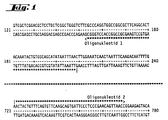
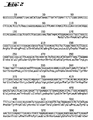
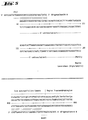
- Oligonucleotides Two oligonucleotides were synthesized using sequences in the 5'-untranslated region (A: 5 'GATCGATTAAGCTTCGGAACCCGCTCGATCTCGCCGCC 3') or coding region (B: 5 'GCATATCTGGATCCCCGTAGAATATTTCTCTGAATTCCCC 3') the Can hybridize thromboplastin cDNA. Oligonucleotide A is partially homologous to the coding sequence Stranges, oligonucleotide B is partially homologous to non-coding strand; see Fig. 3.
- the Desired fragment was obtained and after treatment with HindIII and BamHI in those described above with HindIII (partially) / BamHI cut vector pCD4E gamma 1 ligated.
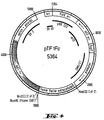
- the resulting plasmid was named pTF1Fc (Fig. 4).
- pTF1Fc The fusion protein encoded by the plasmid pTF1Fc is in the hereinafter referred to as pTF1Fc.
- pTF1Fc became transient in COS cells expressed.
- COS cells were used with the help of DEAE-dextran transfected with pTF1Fc (EP A 0325 262).
- Indirect immunofluorescence tests showed approximately 25% as Proportion of transfected cells. 24 hours after transfection the cells are transferred to serum-free medium. This cell supernatant was harvested after another three days.
- the first 9 fractions were immediately neutralized with 0.1 ml of 2M Tris buffer pH 8.6 combined and the protein contained by three cycles of concentration / dilution in the Amicon microconcentrator (Centricon 30) in TNE buffer (50mM Tris buffer pH 7.4, 50mM NaCl, 1mM EDTA).
- the so obtained pTF1Fc is electrophoretically pure in the SDS-PAGE (U.K. Lambli, Nature 227 (1970) 680-685). In absence from In SDS-PAGE, reducing agents behave like a Dimer (approx. 165 KDa).
- TF1Fc fusion protein is in low concentrations (> 50 ng / ml) in the one-step prothrombin clotting time determination (Vinazzer, H. Coagulation Physiology and Methods in the blood coagulation laboratory (1979), Fisher Verlag, Stuttgart) active.
- the clotting times achieved are comparable to the clotting times that with thromboplastin that human placenta was isolated.
- Interleukin-4 is synthesized by T cells and was originally referred to as B cell growth factor because it can stimulate B cell proliferation. It practices one Variety of effects on these cells. In particular is this stimulates the synthesis of molecules of the immunoglobulin subclasses IgG1 and IgE in activated B cells (Coffmann et al., Immunol. Rev., Vol. 102 (1988) 5). About that IL-4 also regulates proliferation and differentiation of T cells and other haematopoietic cells. It thus contributes to the regulation of allergic and others immunological reactions. IL-4 binds with high Affinity for a specific receptor.
- the cDNA for encoding the human IL-4 receptor was isolated (Idzerda et al., J.Exp.Med. Vol. 171 (1990) 861-873. From the analysis the amino acid sequence derived from the cDNA sequence shows that the IL-4 receptor consists of a total of 825 amino acids exists, the N-terminal 25 amino acids as Signal peptide act. Mature human IL-4 receptor exists from 800 amino acids and, like thromboplastin, has one Three domain structure: i) amino terminal extracellular domain (207 amino acids); ii) transmembrane region (24 amino acids) and iii) cytoplasmic domain (569 amino acids).
- IL-4 receptor Homologies to the human Il-6 receptor, to the ⁇ subunit of human IL-2 receptor, for mouse erythropoietin receptor and to the rat prolactin receptor (Idzerda et al., op. cit.). It thus, like thromboplastin, is not a member of the immunoglobulin family, but is together with the listed homologous proteins to the new family of hematopoietin receptors expected. Members of this family are 4 Cysteine residues and one located near the transmembrane region conserved sequence (Trp-Ser-X-Trp-Ser) common in the extracellular domain.
- IL-4 / IL-4 receptor system Due to the described function of the IL-4 / IL-4 receptor system is a therapeutic use of a recombinant Form of the IL-4 receptor for the suppression of IL-4-mediated Immune reactions (e.g. transplant rejection reaction, Autoimmune diseases, allergic reactions) possible.
- IL-4-mediated Immune reactions e.g. transplant rejection reaction, Autoimmune diseases, allergic reactions
- the IL-4 receptor fusion proteins are derived from mammalian cells (e.g. CHO, BHK, COS cells) discharged into the culture medium, via Affinity Chromatography on Protein A Sepharose cleaned and surprisingly possess identical functional properties as the extracellular Domain of the intact membrane-bound IL-4 receptor molecule.
- mammalian cells e.g. CHO, BHK, COS cells
- the plasmid pCD4EGamma1 is cut with XhoI and BamHI, there is an open vector with the open XhoI site is "downstream" from the promoter sequence.
- the BamHI site is open at the beginning of the coding regions for a pentapeptide linker, followed by the hinge and the Human IgG1 CH2 and CH3 domains.
- the reading frame in the BamHI recognition sequence GGATCC is such that GAT is translated as aspartic acid.
- DNA amplification with thermostable DNA polymerase enables a given Change sequence so that at one or both ends any sequences can be added.
- Oligonucleotide A is partially homologous to the sequence of the coding strand
- oligonucleotide B is partially homologous to the non-coding strand; see Fig. 5.
- thermostable DNA polymerase After Amplification by means of thermostable DNA polymerase is a DNA fragment before (836 bp), based on the coding strand at the 5 'end before the start of the coding Sequence an XhoI site, at the 3 'end before the last codon contains a BamHI site in the extracellular domain.
- the Reading frame in the BamHI interface is such that after ligation with the BamHI site in pCD4E gamma 1 one Gene fusion is achieved with a continuous reading frame from the initiation codon of the IL-4 receptor cDNA to IgG1 heavy chain stop codon.
- the desired Fragment was obtained after treatment with XhoI and BamHI in those cut with XhoI / BamHI described above Vector pCD4E gamma 1 ligated.
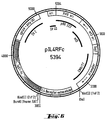
- the resulting plasmid was given the name pIL4RFc (Fig. 6).
- pIL4RFc The fusion protein encoded by the plasmid pIL4RFc is hereinafter referred to as pIL4RFc.
- pIL4RFc became transient expressed in COS cells.
- COS cells were used with the help of DEAE-dextran transfected with pIL4RFc (EP A 0325 262). Indirect immunofluorescence tests showed approximately 25% as Proportion of transfected cells. 24 hours after transfection the cells are transferred to serum-free medium. This cell supernatant was harvested after another three days.
- the first 9 fractions were immediately neutralized with 0.1 ml of 2M Tris buffer pH 8.6 combined and the protein contained by three cycles of concentration / dilution in the Amicon microconcentrator (Centricon 30) in TNE buffer (50mM Tris buffer pH 7.4, 50mM NaCl, 1mM EDTA) transferred. That so IL4RFc obtained is electrophoretically pure in SDS-PAGE (U.K. Lämmli, Nature 227 (1970) 680-685). In absence from In SDS-PAGE, reducing agents behave like a Dimer (approx. 150 KDa).
- Mature erythropoietin is one of 166 amino acids existing glycoprotein, which is essential for development of erythrocytes. It stimulates the maturation and the Terminal differentiation of erythroid progenitor cells.
- the Human EPO cDNA was cloned (EPA-0267 678) and encodes the 166 amino acids of the mature EPO and one for the secretion essential signal peptide of 22 amino acids. With the help of the cDNA, recombinant functional EPO produced in genetically modified mammalian cells and for the treatment of anemic symptoms of various origins (e.g. acute kidney failure) be used clinically.
- Oligonucleotide A is partial homologous to the sequence of the coding strand
- oligonucleotide B is partially homologous to the non-coding strand; compare Fig. 7.
- a DNA fragment before (598 bp) that based on the coding strand at the 5 'end in front of the initiation codon contains an XhoI site and at the 3 'end the codon for the penultimate C-terminal amino acid residue of EPO (Asp) is present in a BamHI recognition sequence.
- Reading frame in the BamHI interface is such that after ligation with the BamHI site in pCD4E gamma 1 one Gene fusion is achieved with a continuous reading frame from the initiation codon of the EPO cDNA to the stop codon of the heavy chain of IgG1.
- the desired fragment was obtained and after treatment with XhoI and BamHI in the above described vector pCD4E cut with XhoI / BamHI gamma 1 ligated.
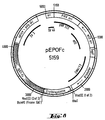
- the resulting plasmid was named pEPOFc (Fig. 8).
Landscapes
- Health & Medical Sciences (AREA)
- Chemical & Material Sciences (AREA)
- Life Sciences & Earth Sciences (AREA)
- Organic Chemistry (AREA)
- Genetics & Genomics (AREA)
- General Health & Medical Sciences (AREA)
- Medicinal Chemistry (AREA)
- Engineering & Computer Science (AREA)
- Bioinformatics & Cheminformatics (AREA)
- Molecular Biology (AREA)
- Biochemistry (AREA)
- Zoology (AREA)
- Biophysics (AREA)
- Proteomics, Peptides & Aminoacids (AREA)
- Immunology (AREA)
- Public Health (AREA)
- Nuclear Medicine, Radiotherapy & Molecular Imaging (AREA)
- General Chemical & Material Sciences (AREA)
- Biomedical Technology (AREA)
- Animal Behavior & Ethology (AREA)
- Veterinary Medicine (AREA)
- Pharmacology & Pharmacy (AREA)
- Chemical Kinetics & Catalysis (AREA)
- Gastroenterology & Hepatology (AREA)
- Toxicology (AREA)
- Wood Science & Technology (AREA)
- Hematology (AREA)
- Biotechnology (AREA)
- General Engineering & Computer Science (AREA)
- Microbiology (AREA)
- Diabetes (AREA)
- Pulmonology (AREA)
- Plant Pathology (AREA)
- Heart & Thoracic Surgery (AREA)
- Cell Biology (AREA)
- Urology & Nephrology (AREA)
- Cardiology (AREA)
- Physics & Mathematics (AREA)
- Peptides Or Proteins (AREA)
- Preparation Of Compounds By Using Micro-Organisms (AREA)
Abstract
Description
Claims (21)
- Lösliche Fusionsproteine bestehend aus nicht zur Immunglobulinfamilie gehörigen humanen Proteinen oder Teilen davon und verschiedenen Anteilen von Immunglobulinmolekülen aller Subklassen.
- Fusionsproteine nach Anspruch 1, dadurch gekennzeichnet, daß der Immunglobulinanteil der konstante Teil der schweren Kette von humanem IgG ist.
- Fusionsproteine nach Anspruch 2, dadurch gekennzeichnet, daß der Immunglobulinanteil der konstante Teil der schweren Kette von humanem IgG1 oder ein Protein-A-bindendes Fragment davon ist.
- Fusionsproteine nach Anspruch 2 oder Anspruch 3, dadurch gekennzeichnet, daß die Fusion an die "Hinge"-Region erfolgt.
- Fusionsproteine nach Ansprüchen 1-4, dadurch gekennzeichnet, daß das an Immunglobulin fusionierte Protein der extrazelluläre Anteil eines Membranproteins oder Teilen davon ist.
- Fusionsproteine nach Ansprüchen 1-4, dadurch gekennzeichnet, daß das an Immunglobulin fusionierte Protein der extrazelluläre Anteil von Thromboplastin oder Teilen davon ist.
- Fusionsproteine nach Ansprüchen 1-4, dadurch gekennzeichnet, daß das an Immunglobulin fusionierte Protein der extrazelluläre Anteil eines Cytokin- oder, Wachstumsfaktor-Rezeptors oder Teilen davon ist.
- Fusionsprotein nach Anspruch 7, dadurch gekennzeichnet, daß das an Immunglobulin fusionierte Protein der extrazelluläre Anteil von IL-4 Rezeptor oder Teilen davon ist.
- Fusionsprotein nach Anspruch 7, dadurch gekennzeichnet, daß das an Immunglobulin fusionierte Protein der extrazelluläre Anteil von IL-7-Rezeptor oder Teilen davon ist.
- Fusionsprotein nach Anspruch 7, dadurch gekennzeichnet, daß das an Immunglobulin fusionierte Protein der extrazelluläre Anteil von G-CSF-Rezeptor oder Teilen davon ist.
- Fusionsprotein nach Anspruch 7, dadurch gekennzeichnet, daß das an Immunglobulin fusionierte Protein der extrazelluläre Anteil von GM-CSF-Rezeptor oder Teilen davon ist.
- Fusionsprotein nach Anspruch 7, dadurch gekennzeichnet, daß das an Immunglobulin fusionierte Protein der extrazelluläre Anteil von Erythropoietin-Rezeptor oder Teilen davon ist.
- Fusionsprotein nach Ansprüchen 1-4, dadurch gekennzeichnet, daß das an Immunglobulin fusionierte Protein ein nicht membranständiges lösliches Protein oder Teil davon ist.
- Fusionsprotein nach Anspruch 13, dadurch gekennzeichnet, daß das an Immunglobulin fusionierte Protein ein Cytokin- oder Wachstumsfaktor oder Teil davon ist.
- Fusionsprotein nach Anspruch 14, dadurch gekennzeichnet, daß das an Immunglobulin fusionierte Protein Erythropoietin oder Teil davon ist.
- Fusionsprotein nach Anspruch 14, dadurch gekennzeichnet, daß das an Immunglobulin fusionierte Protein GM-CSF oder G-CSF bzw. Teil davon ist.
- Fusionsprotein nach Anspruch 14, dadurch gekennzeichnet, daß das an Immunglobulin fusionierte Protein Interleukin IL-1 bis IL-8 bzw. Teil davon ist.
- Fusionsprotein nach einem der vorausgehenden Ansprüche 1-17, dadurch gekennzeichnet, daß zusätzlich eine Faktor Xa Spaltstelle zwischen dem Immunglobulinteil und dem Nicht-Immunglobulinteil insertiert ist.
- Verfahren zur Herstellung von Fusionsproteinen nach einem der Ansprüche 1-18, dadurch gekennzeichnet, daß die für diese Konstrukte codierende DNA in ein Säugerzell-Expressionssystem eingebracht und nach Expression das gebildete Fusionsprotein mittels Affinitätschromatographie über den Immunglobulinanteil gereinigt wird.
- Verwendung der Fusionsproteine nach einem der Ansprüche 1-18 zur Diagnostik.
Priority Applications (1)
| Application Number | Priority Date | Filing Date | Title |
|---|---|---|---|
| EP05011561A EP1586635A1 (de) | 1990-06-28 | 1991-06-22 | Fusionsproteine mit Immunglobulinanteilen, ihre Herstellung und Verwendung |
Applications Claiming Priority (3)
| Application Number | Priority Date | Filing Date | Title |
|---|---|---|---|
| DE4020607 | 1990-06-28 | ||
| DE4020607 | 1990-06-28 | ||
| EP91110307A EP0464533B1 (de) | 1990-06-28 | 1991-06-22 | Fusionsproteine mit immunglobulinanteilen, ihre Herstellung und Verwendung |
Related Parent Applications (2)
| Application Number | Title | Priority Date | Filing Date |
|---|---|---|---|
| EP91110307A Division EP0464533B1 (de) | 1990-06-28 | 1991-06-22 | Fusionsproteine mit immunglobulinanteilen, ihre Herstellung und Verwendung |
| EP91110307.5 Division | 1991-06-22 |
Related Child Applications (2)
| Application Number | Title | Priority Date | Filing Date |
|---|---|---|---|
| EP05011561A Division EP1586635A1 (de) | 1990-06-28 | 1991-06-22 | Fusionsproteine mit Immunglobulinanteilen, ihre Herstellung und Verwendung |
| EP05011561.7 Division-Into | 2005-05-28 |
Publications (4)
| Publication Number | Publication Date |
|---|---|
| EP0835939A2 true EP0835939A2 (de) | 1998-04-15 |
| EP0835939A3 EP0835939A3 (de) | 1998-04-22 |
| EP0835939B1 EP0835939B1 (de) | 2005-11-09 |
| EP0835939B8 EP0835939B8 (de) | 2006-01-11 |
Family
ID=6409260
Family Applications (3)
| Application Number | Title | Priority Date | Filing Date |
|---|---|---|---|
| EP97120664A Expired - Lifetime EP0835939B8 (de) | 1990-06-28 | 1991-06-22 | Fusionsproteine mit Immunglobulinanteilen, ihre Herstellung und Verwendung |
| EP91110307A Expired - Lifetime EP0464533B1 (de) | 1990-06-28 | 1991-06-22 | Fusionsproteine mit immunglobulinanteilen, ihre Herstellung und Verwendung |
| EP05011561A Withdrawn EP1586635A1 (de) | 1990-06-28 | 1991-06-22 | Fusionsproteine mit Immunglobulinanteilen, ihre Herstellung und Verwendung |
Family Applications After (2)
| Application Number | Title | Priority Date | Filing Date |
|---|---|---|---|
| EP91110307A Expired - Lifetime EP0464533B1 (de) | 1990-06-28 | 1991-06-22 | Fusionsproteine mit immunglobulinanteilen, ihre Herstellung und Verwendung |
| EP05011561A Withdrawn EP1586635A1 (de) | 1990-06-28 | 1991-06-22 | Fusionsproteine mit Immunglobulinanteilen, ihre Herstellung und Verwendung |
Country Status (16)
| Country | Link |
|---|---|
| EP (3) | EP0835939B8 (de) |
| JP (2) | JPH05247094A (de) |
| KR (3) | KR100249572B1 (de) |
| AT (2) | ATE169030T1 (de) |
| AU (1) | AU655421B2 (de) |
| CA (1) | CA2045869C (de) |
| CY (2) | CY2151B1 (de) |
| DE (3) | DE59109032D1 (de) |
| DK (2) | DK0464533T3 (de) |
| ES (2) | ES2120949T4 (de) |
| GR (1) | GR3027567T3 (de) |
| IE (1) | IE912256A1 (de) |
| LU (1) | LU90592I2 (de) |
| NL (1) | NL300009I2 (de) |
| PT (1) | PT98113B (de) |
| UY (1) | UY25897A1 (de) |
Cited By (3)
| Publication number | Priority date | Publication date | Assignee | Title |
|---|---|---|---|---|
| WO2000018932A3 (en) * | 1998-09-25 | 2000-11-02 | Regeneron Pharma | Receptor based antagonists and methods of making and using |
| US6927044B2 (en) | 1998-09-25 | 2005-08-09 | Regeneron Pharmaceuticals, Inc. | IL-1 receptor based cytokine traps |
| US7083949B2 (en) | 1998-09-25 | 2006-08-01 | Regeneron Pharmaceuticals, Inc. | Receptor based antagonists and methods of making and using |
Families Citing this family (145)
| Publication number | Priority date | Publication date | Assignee | Title |
|---|---|---|---|---|
| US6541610B1 (en) | 1989-09-05 | 2003-04-01 | Immunex Corporation | Fusion proteins comprising tumor necrosis factor receptor |
| US5395760A (en) * | 1989-09-05 | 1995-03-07 | Immunex Corporation | DNA encoding tumor necrosis factor-α and -β receptors |
| NZ235148A (en) | 1989-09-05 | 1991-12-23 | Immunex Corp | Tumour necrosis factor receptor protein and dna sequences |
| EP0939121B2 (de) * | 1989-09-12 | 2007-12-26 | AHP Manufacturing B.V. | TFN-bindende Proteine |
| EP0533006A1 (de) * | 1991-09-18 | 1993-03-24 | F.Hoffmann-La Roche & Co. Aktiengesellschaft | Chimäre Interleukin 5-Rezeptor/Immunoglobulin-Polypeptide |
| DE4322330A1 (de) | 1992-08-31 | 1994-03-03 | Behringwerke Ag | Verwendung des IL-4-Rezeptors zur Therapie, Prophylaxe und Diagnose von allergischen, viralen, parasitären und bakteriellen Erkrankungen sowie von Pilzinfektionen |
| US6274348B1 (en) | 1992-05-19 | 2001-08-14 | Xoma Corporation | Methods for the preparation of positively charged proteins |
| US5643570A (en) * | 1992-05-19 | 1997-07-01 | Xoma Corporation | BPI-immunoglobulin fusion proteins |
| DE4228839A1 (de) | 1992-08-29 | 1994-03-03 | Behringwerke Ag | Verfahren zum Nachweis und zur Bestimmung von Mediatoren |
| EP0760849A1 (de) * | 1993-04-30 | 1997-03-12 | Incyte Pharmaceuticals, Inc. | Rekombinante, aud bpi und lbp basierende proteine, die für sie kodierenden nukleinsäuren, verfahren zu ihrer herstellung und ihre verwendung |
| DE4407386B4 (de) * | 1994-03-05 | 2009-01-15 | Dade Behring Marburg Gmbh | Verfahren zur Reaktivierung von gereinigten Membranproteinen durch Einfrieren |
| JPH08512139A (ja) * | 1994-04-28 | 1996-12-17 | デイド、インターナショナル、インコーポレイテッド | プロトロンビン時間(pt)アッセイ用のキャリブレーター |
| HUT76369A (en) * | 1994-07-29 | 1997-08-28 | Smithkline Beecham Corp | Novel soluble protein compounds |
| DE69534265T2 (de) * | 1994-12-12 | 2006-05-04 | Beth Israel Deaconess Medical Center, Inc., Boston | Chimäre zytokine und ihre verwendung |
| US6410008B1 (en) | 1994-12-12 | 2002-06-25 | Beth Israel Hospital Association | Chimeric IL-10 proteins and uses thereof |
| EP1658772A3 (de) * | 1995-01-17 | 2007-01-17 | The Brigham And Women's Hospital, Inc. | Rezeptorspezifischer transepithelealer Transport von Immunogenen |
| US6485726B1 (en) | 1995-01-17 | 2002-11-26 | The Brigham And Women's Hospital, Inc. | Receptor specific transepithelial transport of therapeutics |
| DE19538716A1 (de) * | 1995-10-18 | 1997-04-24 | Behringwerke Ag | Verfahren zur Quantifizierung von aktiviertem Gerinnungsfaktor VII (FVIIa) |
| US7427492B1 (en) | 1995-06-05 | 2008-09-23 | Human Genome Sciences, Inc. | Polynucleotides encoding human tumor necrosis factor receptor-like2 |
| US7429646B1 (en) | 1995-06-05 | 2008-09-30 | Human Genome Sciences, Inc. | Antibodies to human tumor necrosis factor receptor-like 2 |
| AU6163196A (en) * | 1995-06-07 | 1996-12-30 | Smithkline Beecham Corporation | Method for obtaining receptor agonist antibodies |
| GB9511935D0 (en) * | 1995-06-13 | 1995-08-09 | Smithkline Beecham Plc | Novel compound |
| DE19538715A1 (de) | 1995-10-18 | 1997-04-30 | Behringwerke Ag | Verfahren zur Reinigung von Faktor VII und aktiviertem Faktor VII |
| US6936439B2 (en) | 1995-11-22 | 2005-08-30 | Amgen Inc. | OB fusion protein compositions and methods |
| US20030040467A1 (en) | 1998-06-15 | 2003-02-27 | Mary Ann Pelleymounter | Ig/ob fusions and uses thereof. |
| US7888466B2 (en) | 1996-01-11 | 2011-02-15 | Human Genome Sciences, Inc. | Human G-protein chemokine receptor HSATU68 |
| US6635743B1 (en) | 1996-03-22 | 2003-10-21 | Human Genome Sciences, Inc. | Apoptosis inducing molecule II and methods of use |
| US7964190B2 (en) | 1996-03-22 | 2011-06-21 | Human Genome Sciences, Inc. | Methods and compositions for decreasing T-cell activity |
| US5866341A (en) * | 1996-04-03 | 1999-02-02 | Chugai Pharmaceutical Co., Ltd. | Compositions and methods for screening drug libraries |
| ATE412740T1 (de) | 1996-08-16 | 2008-11-15 | Human Genome Sciences Inc | Menschliches alpha-endokin |
| EP2065396A1 (de) | 1996-08-30 | 2009-06-03 | Human Genome Sciences, Inc. | Interleukin-19 |
| PT939804E (pt) | 1996-10-25 | 2005-11-30 | Human Genome Sciences Inc | Neutroquina alfa |
| ES2312179T3 (es) | 1996-12-06 | 2009-02-16 | Amgen Inc. | Terapia combinada que utiliza un inhibidor del il-1 para el tratamiento de enfermedades mediadas por el il-1. |
| JP2001505060A (ja) | 1997-01-14 | 2001-04-17 | ヒューマン ジノーム サイエンシーズ,インコーポレイテッド | 腫瘍壊死因子受容体 5 |
| US6455040B1 (en) | 1997-01-14 | 2002-09-24 | Human Genome Sciences, Inc. | Tumor necrosis factor receptor 5 |
| US7452538B2 (en) | 1997-01-28 | 2008-11-18 | Human Genome Sciences, Inc. | Death domain containing receptor 4 antibodies and methods |
| US6433147B1 (en) | 1997-01-28 | 2002-08-13 | Human Genome Sciences, Inc. | Death domain containing receptor-4 |
| PT1012274E (pt) | 1997-01-28 | 2007-08-14 | Craig A Rosen | Receptor 4 contendo um domínio de morte (dm4; receptor de morte 4), membro da super-família do ftn e ligação a liart (ap02) |
| US8329179B2 (en) | 1997-01-28 | 2012-12-11 | Human Genome Sciences, Inc. | Death domain containing receptor 4 antibodies and methods |
| US6872568B1 (en) | 1997-03-17 | 2005-03-29 | Human Genome Sciences, Inc. | Death domain containing receptor 5 antibodies |
| ATE487737T1 (de) | 1997-05-30 | 2010-11-15 | Human Genome Sciences Inc | 32 humane sekretierte proteine |
| US6165476A (en) * | 1997-07-10 | 2000-12-26 | Beth Israel Deaconess Medical Center | Fusion proteins with an immunoglobulin hinge region linker |
| US6187564B1 (en) | 1997-07-10 | 2001-02-13 | Beth Israel Deaconess Medical Center | DNA encoding erythropoietin multimers having modified 5′ and 3′ sequences and its use to prepare EPO therapeutics |
| AU8182298A (en) * | 1997-07-10 | 1999-02-08 | Beth Israel Deaconess Medical Center | Recombinant erythropoietin / immunoglobulin fusion proteins |
| US6242570B1 (en) | 1997-07-10 | 2001-06-05 | Beth Israel Deaconess Medical Center | Production and use of recombinant protein multimers with increased biological activity |
| JP2002017353A (ja) * | 1997-12-19 | 2002-01-22 | Japan Tobacco Inc | 変性ldlの定量方法 |
| CA2318030C (en) * | 1998-01-23 | 2009-02-17 | Immunex Corporation | Acpl dna and polypeptides |
| AU3072799A (en) | 1998-03-19 | 1999-10-11 | Human Genome Sciences, Inc. | Cytokine receptor common gamma chain like |
| JP4486256B2 (ja) | 1998-10-22 | 2010-06-23 | ザ・ジェネラル・ホスピタル・コーポレイション | 副甲状腺ホルモン(PTH)および副甲状腺ホルモン関連ペプチド(PTHrP)の生物活性ペプチドおよびペプチド誘導体 |
| ATE308609T1 (de) | 1998-12-31 | 2005-11-15 | Gen Hospital Corp | Pth rezeptor und testverfahren unter verwendung desselben |
| US6656728B1 (en) | 1999-02-08 | 2003-12-02 | Chiron Corporation | Fibroblast growth factor receptor-immunoglobulin fusion |
| AU3501700A (en) | 1999-02-26 | 2000-09-14 | Human Genome Sciences, Inc. | Human endokine alpha and methods of use |
| MXPA01011264A (es) * | 1999-05-07 | 2002-07-02 | Genentech Inc | Nuevos polipeptidos de eritropoyetina de chimpance (chepo) y aciodos nucleicos que codifican los mismos. |
| US6362324B1 (en) | 1999-06-30 | 2002-03-26 | Millennium Pharmaceuticals, Inc. | 17867 a novel human aminopeptidase |
| US6369210B1 (en) | 1999-06-30 | 2002-04-09 | Millennium Pharmaceuticals, Inc. | 22012, human carboxypeptidase |
| WO2001023521A2 (en) | 1999-09-29 | 2001-04-05 | The General Hospital Corporation | Polypeptide derivatives of parathyroid hormone (pth) |
| US6808902B1 (en) | 1999-11-12 | 2004-10-26 | Amgen Inc. | Process for correction of a disulfide misfold in IL-1Ra Fc fusion molecules |
| US6248353B1 (en) | 1999-12-10 | 2001-06-19 | Dade Behring Inc. | Reconstitution of purified membrane proteins into preformed liposomes |
| CA2401993A1 (en) * | 2000-03-02 | 2001-09-07 | Abgenix, Inc. | Human monoclonal antibodies against oxidized ldl receptor and pharmaceutical uses thereof |
| EP1712239A3 (de) | 2000-05-12 | 2007-08-22 | Immunex Corporation | Interleukin-1 Inhibitoren zur Behandlung von Erkrankungen |
| DK2990420T3 (en) | 2000-05-26 | 2017-04-03 | Immunex Corp | USE OF INTERLEUKIN-4 RECEPTOR ANTIBODIES AND COMPOSITIONS THEREOF |
| DE60143959D1 (de) | 2000-08-25 | 2011-03-10 | Basf Plant Science Gmbh | En kodieren |
| US6989247B2 (en) | 2000-11-28 | 2006-01-24 | Celltech R & D, Inc. | Compositions and methods for diagnosing or treating psoriasis |
| EP1683865A3 (de) | 2001-02-02 | 2006-10-25 | Eli Lilly & Company | Säugerproteine und insbesondere CD200 |
| JP2004536579A (ja) | 2001-04-13 | 2004-12-09 | ヒューマン ジノーム サイエンシーズ, インコーポレイテッド | 血管内皮増殖因子2 |
| US7348003B2 (en) | 2001-05-25 | 2008-03-25 | Human Genome Sciences, Inc. | Methods of treating cancer using antibodies that immunospecifically bind to TRAIL receptors |
| US7064189B2 (en) | 2001-05-25 | 2006-06-20 | Human Genome Sciences, Inc. | Antibodies that immunospecifically bind to trail receptors |
| US7361341B2 (en) | 2001-05-25 | 2008-04-22 | Human Genome Sciences, Inc. | Methods of treating cancer using antibodies that immunospecifically bind to trail receptors |
| EP2295081B1 (de) | 2001-06-26 | 2018-10-31 | Amgen Inc. | Antikörper gegen OPGL |
| AU2002339843B2 (en) | 2001-07-23 | 2007-12-06 | The General Hospital Corporation | Conformationally constrained parathyroid hormone (PTH) analogs |
| KR100453877B1 (ko) | 2001-07-26 | 2004-10-20 | 메덱스젠 주식회사 | 연쇄체화에 의한 면역 글로블린 융합 단백질의 제조 방법 및 이 방법에 의해 제조된 TNFR/Fc 융합 단백질, 상기 단백질을 코딩하는 DNA, 상기 DNA를 포함하는벡터, 및 상기 벡터에 의한 형질전환체 |
| WO2004009775A2 (en) | 2002-07-19 | 2004-01-29 | Targacept, Inc. | Methods and compositions relating to chimeric nicotinic receptor subunits |
| JP5116971B2 (ja) | 2002-10-15 | 2013-01-09 | インターセル アーゲー | B群連鎖球菌の接着因子をコードする核酸、b群連鎖球菌の接着因子、およびその使用 |
| JP2006518997A (ja) | 2003-01-21 | 2006-08-24 | ブリストル−マイヤーズ スクイブ カンパニー | 新規アシルコエンザイムa:モノアシルグリセロールアシルトランスフェラーゼ−3(mgat3)をコードするポリヌクレオチドおよびその用途 |
| EP2287315A1 (de) | 2003-03-04 | 2011-02-23 | Intercell AG | Streptococcus-pyogenes-Antigene |
| US7795220B2 (en) | 2003-03-19 | 2010-09-14 | The General Hospital Corporation | Conformationally constrained parathyroid hormones with alpha-helix stabilizers |
| EP2311988A1 (de) | 2003-04-15 | 2011-04-20 | Intercell AG | S. pneumoniae-Antigene |
| PL2298347T3 (pl) * | 2003-05-06 | 2016-03-31 | Bioverativ Therapeutics Inc | Białka chimeryczne czynnika krzepnięcia do leczenia zaburzenia hemostazy |
| AU2012203896B2 (en) * | 2003-05-06 | 2014-09-25 | Bioverativ Therapeutics Inc. | Clotting Factor-Fc Chimeric Proteins to Treat Hemophilia |
| TWI353991B (en) | 2003-05-06 | 2011-12-11 | Syntonix Pharmaceuticals Inc | Immunoglobulin chimeric monomer-dimer hybrids |
| EP2289907A3 (de) | 2003-05-07 | 2011-08-31 | Intercell AG | Streptococcus agalactiae-Antigene I + II |
| US20080175856A1 (en) | 2003-05-30 | 2008-07-24 | Intercell Ag | Enterococcus Antigens |
| JP4871128B2 (ja) | 2003-07-17 | 2012-02-08 | ザ ジェネラル ホスピタル コーポレイション | 高次構造的に制約された副甲状腺ホルモン(pth)アナログ |
| US8110665B2 (en) | 2003-11-13 | 2012-02-07 | Hanmi Holdings Co., Ltd. | Pharmaceutical composition comprising an immunoglobulin FC region as a carrier |
| ES2383300T3 (es) | 2003-11-13 | 2012-06-20 | Hanmi Holdings Co., Ltd | Fragmento Fc de IgG para un vehículo de fármacos y procedimiento para su preparación |
| CN1961070A (zh) | 2004-04-22 | 2007-05-09 | 泰勒克里斯生物治疗学公司 | 重组修饰的纤溶酶 |
| EP1598428A1 (de) | 2004-05-18 | 2005-11-23 | Georg Dewald | Verfahren und Kits zum Nachweis von erblichen angioedema typ III |
| EP2479277B1 (de) | 2004-07-22 | 2015-09-02 | Five Prime Therapeutics, Inc. | Verwendung von MGD-CDF zur Behandlung der Alzheimer's Krankheit |
| ES2368930T3 (es) | 2004-09-06 | 2011-11-23 | Bayer Pharma Aktiengesellschaft | Pirazolopirimidinas como inhibidores de proteína cinasa b (akt). |
| RU2437893C2 (ru) * | 2004-12-09 | 2011-12-27 | Мерк Патент Гмбх | Варианты il-7 со сниженной иммуногенностью |
| AU2006235266B2 (en) | 2005-04-07 | 2010-12-23 | The Cleveland Clinic Foundation | Gammaretrovirus associated with cancer |
| KR100754667B1 (ko) | 2005-04-08 | 2007-09-03 | 한미약품 주식회사 | 비펩타이드성 중합체로 개질된 면역글로불린 Fc 단편 및이를 포함하는 약제학적 조성물 |
| RU2428430C2 (ru) | 2005-08-16 | 2011-09-10 | Ханми Холдингс Ко., Лтд. | СПОСОБ МАССОВОГО ПРОИЗВОДСТВА ОБЛАСТИ Fc ИММУНОГЛОБУЛИНА С УДАЛЕННЫМИ НАЧАЛЬНЫМИ МЕТИОНИНОВЫМИ ОСТАТКАМИ |
| WO2007030820A2 (en) | 2005-09-09 | 2007-03-15 | The Johns Hopkins University | Manipulation of regulatory t cell and dc function by targeting neuritin gene using antibodies, agonists and antagonists |
| WO2007142667A2 (en) | 2005-10-13 | 2007-12-13 | Human Genome Sciences, Inc. | Treatment of patients with autoantibody positive disease |
| NZ568762A (en) | 2005-11-07 | 2011-11-25 | Scripps Research Inst | Use of an inhibitor of tissue factor signaling in the manufacture of a medcament for inhibiting or suppressing tissue factor/tissue factor VIIa signaling involving protease activated receptor 2 in a mammal |
| EP1785434A1 (de) | 2005-11-11 | 2007-05-16 | Ludwig-Maximilians-Universität München | Zielen und Folgen von Antigenen in lebenden Zellen |
| WO2007084631A2 (en) | 2006-01-20 | 2007-07-26 | Cell Signaling Technology, Inc. | Translocation and mutant ros kinase in human non-small cell lung carcinoma |
| US7625564B2 (en) | 2006-01-27 | 2009-12-01 | Novagen Holding Corporation | Recombinant human EPO-Fc fusion proteins with prolonged half-life and enhanced erythropoietic activity in vivo |
| AU2007240316A1 (en) | 2006-04-20 | 2007-11-01 | Becton, Dickinson And Company | Thermostable proteins and methods of making and using thereof |
| US7572618B2 (en) | 2006-06-30 | 2009-08-11 | Bristol-Myers Squibb Company | Polynucleotides encoding novel PCSK9 variants |
| WO2008019062A2 (en) | 2006-08-04 | 2008-02-14 | The General Hospital Corporation | Polypeptide derivatives of parathyroid hormone (pth) |
| JP2010503384A (ja) | 2006-09-15 | 2010-02-04 | インターセル アーゲー | ボレリア(Borrelia)抗原 |
| US7767206B2 (en) | 2006-10-02 | 2010-08-03 | Amgen Inc. | Neutralizing determinants of IL-17 Receptor A and antibodies that bind thereto |
| KR100888022B1 (ko) | 2006-12-21 | 2009-03-09 | 재단법인 목암생명공학연구소 | 면역글로불린 Fc와 인간 아포리포단백질(a)크링글절편의 융합단백질 LK8Fc |
| WO2008122039A2 (en) | 2007-04-02 | 2008-10-09 | The Government Of The United States Of America, As Represented By The Secretary, Department Of Health And Human Services | Selenocysteine mediated hybrid antibody molecules |
| CN102015754A (zh) | 2007-05-02 | 2011-04-13 | 英特塞尔股份公司 | 克雷伯菌(Klebsiella)抗原 |
| CN101883782A (zh) | 2007-06-18 | 2010-11-10 | 英特塞尔股份公司 | 衣原体抗原 |
| BRPI0814465B1 (pt) | 2007-07-26 | 2021-11-23 | Novagen Holding Corporation | Proteína de fusão, dímero, método para produzir uma proteína de fusão, linhagem de célula, usos de uma proteína de fusão e de uma composição farmacêutica e composição farmacêutica |
| CN104072606B (zh) | 2007-08-01 | 2017-09-22 | 总医院有限公司 | 利用g蛋白偶联受体和相关组合物的筛选方法 |
| CN101809153B (zh) | 2007-09-27 | 2014-01-01 | 日本烟草产业株式会社 | 参与疱疹病毒的潜伏感染的因子及其利用 |
| JP5769968B2 (ja) | 2007-10-18 | 2015-08-26 | セル・シグナリング・テクノロジー・インコーポレイテツド | ヒト非小細胞肺癌における転座および変異rosキナーゼ |
| CA2711394A1 (en) | 2008-01-11 | 2009-07-16 | Synovex Corporation | Cadherin-11 antagonists and methods for the treatment of inflammatory joint disorders |
| EP3023502A1 (de) | 2008-04-10 | 2016-05-25 | Cell Signaling Technology, Inc. | Zusammensetzungen und verfahren zur erkennung von egfr-mutationen bei krebs |
| WO2009149199A2 (en) | 2008-06-04 | 2009-12-10 | Talecris Biotherapeutics, Inc. | Composition, method and kit for preparing plasmin |
| MX2011000861A (es) | 2008-07-23 | 2011-06-21 | Hanmi Holdings Co Ltd | Un complejo polipeptidico que consiste en un polimero no-peptidil que posee tres terminaciones funcionales. |
| EP3266795A1 (de) | 2009-02-12 | 2018-01-10 | Cell Signaling Technology, Inc. | Verfahren zum detektieren von fig-ros-fusionspolynukleotid |
| EP2405938A2 (de) | 2009-02-13 | 2012-01-18 | Intercell AG | Nicht typisierbare haemophilus influenza-antigene |
| PT2403865E (pt) | 2009-03-03 | 2015-11-18 | Grifols Therapeutics Inc | Métodos de preparação de plasminogénio |
| TW201117824A (en) | 2009-10-12 | 2011-06-01 | Amgen Inc | Use of IL-17 receptor a antigen binding proteins |
| PH12012501364A1 (en) | 2010-01-15 | 2012-10-22 | Amgen K A Inc | Antibody formulation and therapeutic regimens |
| EP2525808A2 (de) | 2010-01-19 | 2012-11-28 | The Trustees Of Columbia University In The City Of New York | Osteocalcin als behandlungsmittel für männliche fortpflanzungsstörungen |
| KR20190000385A (ko) | 2010-05-04 | 2019-01-02 | 더 브리검 앤드 우먼즈 하스피털, 인크. | 섬유증의 검출 및 치료 |
| MX358161B (es) | 2010-05-13 | 2018-08-06 | The General Hospital Corp Star | Analogos de hormona paratiroidea y usos para los mismos. |
| RS57215B1 (sr) | 2010-07-15 | 2018-07-31 | Adheron Therapeutics Inc | Humanizovana antitela koja ciljaju ec1 domen kadherina-11 i kompozicije i postupci koji su u vezi sa njima |
| WO2013016220A1 (en) | 2011-07-22 | 2013-01-31 | Amgen Inc. | Il-17 receptor a is required for il-17c biology |
| US20150064163A1 (en) | 2011-09-02 | 2015-03-05 | Lifenet Health | BMP Peptides & Methods of Use |
| IN2014KN02831A (de) | 2012-05-24 | 2015-05-08 | Mountgate Group Ltd | |
| EP2685260A1 (de) | 2012-07-09 | 2014-01-15 | Ludwig-Maximilians-Universität München | Direkte und quantitative Erkennung von Zielen in lebenden Zellen |
| KR101609840B1 (ko) * | 2012-07-12 | 2016-04-07 | 한국생명공학연구원 | 항체의 Fc 부위 결합 펩타이드를 이용한 항체 정제용 흡착 칼럼 |
| SI2895188T1 (en) | 2012-09-11 | 2018-05-31 | Coherus Biosciences, Inc. | CORRECTED QUALITY ETHANERCEPT WITH HIGH QUALITY AND EXCELLENT EXPERIENCE |
| KR102073748B1 (ko) | 2013-01-31 | 2020-02-05 | 한미약품 주식회사 | 재조합 효모 형질전환체 및 이를 이용하여 면역글로불린 단편을 생산하는 방법 |
| WO2014152497A2 (en) | 2013-03-15 | 2014-09-25 | The Trustees Of Columbia University In The City Of New York | Osteocalcin as a treatment for cognitive disorders |
| AR096891A1 (es) | 2013-07-12 | 2016-02-03 | Hanmi Pharm Ind Co Ltd | Conjugado de monómero polipéptido biológicamente activo y conjugado de fragmento fc de inmunoglobulina, que muestra aclaramiento mediado por receptor reducido, y el método para la preparación del mismo |
| CA2944605C (en) | 2014-03-31 | 2023-10-17 | Kirin-Amgen, Inc. | Methods of treating nail and scalp psoriasis |
| US20170246259A1 (en) | 2014-09-10 | 2017-08-31 | Georgetown University | Compositions and Methods of Using Interleukin-4 Induced Gene 1 (IL-4I1) |
| JP7175608B2 (ja) | 2014-11-19 | 2022-11-21 | ザ トラスティーズ オブ コロンビア ユニバーシティ イン ザ シティ オブ ニューヨーク | 加齢に伴うフレイルのための治療としてのオステオカルシン |
| EP3268042B1 (de) | 2015-03-13 | 2024-11-27 | Samsung Bioepis Co., Ltd. | Anti-tnf-alpha-polypeptid-zusammensetzung und verwendung davon |
| EP3706795A4 (de) | 2017-11-09 | 2021-10-13 | Pinteon Therapeutics Inc. | Verfahren und zusammensetzungen zur erzeugung und verwendung von humanisierten konformationsspezifischen phosphorylierten tau-antikörpern |
| CN119930831A (zh) | 2018-03-14 | 2025-05-06 | 纪念斯隆凯特琳癌症中心 | 抗聚唾液酸抗体及其用途 |
| TW202016144A (zh) | 2018-06-21 | 2020-05-01 | 日商第一三共股份有限公司 | 包括cd3抗原結合片段之組成物及其用途 |
| WO2020053808A1 (en) | 2018-09-12 | 2020-03-19 | Georg Dewald | Method of diagnosing vasoregulatory disorders |
| EP3938400B1 (de) | 2019-03-11 | 2025-07-30 | Memorial Sloan Kettering Cancer Center | Cd22-antikörper und verfahren zur verwendung davon |
| CA3204628A1 (en) | 2021-01-13 | 2022-07-21 | John T. POIRIER | Antibody-pyrrolobenzodiazepine derivative conjugate |
| MX2023008285A (es) | 2021-01-13 | 2023-09-12 | Memorial Sloan Kettering Cancer Center | Conjugado de anticuerpo anti-dll3-farmaco. |
Family Cites Families (7)
| Publication number | Priority date | Publication date | Assignee | Title |
|---|---|---|---|---|
| EP0269455A3 (de) * | 1986-11-28 | 1989-09-06 | Takeda Chemical Industries, Ltd. | Hochgereinigtes Fusionsprotein, das ein menschliches IgE Fc-Fragment enthält, sowie dessen Herstellung |
| PT89484B (pt) * | 1988-01-22 | 1994-03-31 | Gen Hospital Corp | Genes clonados codificadores de proteinas de fusao ig-cd4 e sua utilizacao |
| KR927003613A (ko) * | 1989-08-23 | 1992-12-18 | 더 제너랄 호스피탈 코오퍼레이숀 | 비-인체 영장동물의 cd4폴리텝타이드, 글리코실화할 수 있는 인체 cd4분자, 그것의 단편, 그것의 융합 단백질, 유전자 서열 및 그것의 용도 |
| US5395760A (en) * | 1989-09-05 | 1995-03-07 | Immunex Corporation | DNA encoding tumor necrosis factor-α and -β receptors |
| EP0939121B2 (de) * | 1989-09-12 | 2007-12-26 | AHP Manufacturing B.V. | TFN-bindende Proteine |
| DE69133036T2 (de) * | 1990-11-09 | 2003-02-06 | Stephen D. Gillies | Cytokine immunokonjugate |
| EP0533006A1 (de) * | 1991-09-18 | 1993-03-24 | F.Hoffmann-La Roche & Co. Aktiengesellschaft | Chimäre Interleukin 5-Rezeptor/Immunoglobulin-Polypeptide |
-
1991
- 1991-06-22 DK DK91110307T patent/DK0464533T3/da active
- 1991-06-22 ES ES91110307T patent/ES2120949T4/es not_active Expired - Lifetime
- 1991-06-22 DK DK97120664T patent/DK0835939T3/da active
- 1991-06-22 EP EP97120664A patent/EP0835939B8/de not_active Expired - Lifetime
- 1991-06-22 AT AT91110307T patent/ATE169030T1/de active
- 1991-06-22 DE DE59109032T patent/DE59109032D1/de not_active Expired - Lifetime
- 1991-06-22 EP EP91110307A patent/EP0464533B1/de not_active Expired - Lifetime
- 1991-06-22 AT AT97120664T patent/ATE309376T1/de not_active IP Right Cessation
- 1991-06-22 ES ES97120664T patent/ES2251009T3/es not_active Expired - Lifetime
- 1991-06-22 DE DE59109269T patent/DE59109269D1/de not_active Expired - Lifetime
- 1991-06-22 EP EP05011561A patent/EP1586635A1/de not_active Withdrawn
- 1991-06-22 DE DE2000175010 patent/DE10075010I2/de active Active
- 1991-06-27 CA CA002045869A patent/CA2045869C/en not_active Expired - Lifetime
- 1991-06-27 PT PT98113A patent/PT98113B/pt not_active IP Right Cessation
- 1991-06-27 IE IE225691A patent/IE912256A1/en not_active IP Right Cessation
- 1991-06-27 AU AU79357/91A patent/AU655421B2/en not_active Expired
- 1991-06-28 JP JP3183772A patent/JPH05247094A/ja active Pending
- 1991-06-28 KR KR1019910010844A patent/KR100249572B1/ko not_active Expired - Lifetime
-
1998
- 1998-08-04 GR GR980401751T patent/GR3027567T3/el unknown
-
1999
- 1999-02-12 CY CY9900007A patent/CY2151B1/xx unknown
- 1999-03-19 KR KR1019990009324A patent/KR100280069B1/ko not_active Expired - Lifetime
- 1999-03-19 KR KR1019990009326A patent/KR100280070B1/ko not_active Expired - Lifetime
-
2000
- 2000-01-13 UY UY25897A patent/UY25897A1/es not_active Application Discontinuation
- 2000-05-31 LU LU90592C patent/LU90592I2/fr unknown
- 2000-06-09 NL NL300009C patent/NL300009I2/nl unknown
-
2001
- 2001-10-17 JP JP2001319607A patent/JP3768427B2/ja not_active Expired - Lifetime
-
2014
- 2014-06-18 CY CY2000009C patent/CY2000009I1/el unknown
Cited By (8)
| Publication number | Priority date | Publication date | Assignee | Title |
|---|---|---|---|---|
| WO2000018932A3 (en) * | 1998-09-25 | 2000-11-02 | Regeneron Pharma | Receptor based antagonists and methods of making and using |
| EP1405915A1 (de) * | 1998-09-25 | 2004-04-07 | Regeneron Pharmaceuticals, Inc. | IL-4 Falle auf der Basis von IL-Rezeptor Fusionsproteinen |
| US6927044B2 (en) | 1998-09-25 | 2005-08-09 | Regeneron Pharmaceuticals, Inc. | IL-1 receptor based cytokine traps |
| US7083949B2 (en) | 1998-09-25 | 2006-08-01 | Regeneron Pharmaceuticals, Inc. | Receptor based antagonists and methods of making and using |
| CN100345970C (zh) * | 1998-09-25 | 2007-10-31 | 里珍纳龙药品有限公司 | 以受体为基础的拮抗剂和制备方法及用途 |
| US7417134B2 (en) | 1998-09-25 | 2008-08-26 | Regeneron Pharmaceuticals, Inc. | IL-1 receptor based cytokine traps and method of using |
| US7927583B2 (en) | 1998-09-25 | 2011-04-19 | Regeneron Pharmaceuticals, Inc. | Receptor based antagonists and methods of making and using |
| US7361350B2 (en) | 2002-10-28 | 2008-04-22 | Regeneron Pharmaceuticals, Inc. | Use of an IL-1 antagonist for treating arthritis |
Also Published As
Similar Documents
| Publication | Publication Date | Title |
|---|---|---|
| EP0464533B1 (de) | Fusionsproteine mit immunglobulinanteilen, ihre Herstellung und Verwendung | |
| US7253264B1 (en) | Immunoglobulin fusion proteins, their production and use | |
| DE60224822T2 (de) | Dimerisierter wachstumsfaktor sowie materialien und verfahren zu seiner herstellung | |
| DE69534235T2 (de) | Cytokin lerk-7 | |
| DE60121808T2 (de) | Verwendung eines polypeptids, welches die extrazelluläre domäne von il-20ra und il-20rb enthält, zur behandlung von entzündungen | |
| DE60127656T2 (de) | Integrin antagonisten | |
| DE3855921T3 (de) | Verfahren und Desoxyribonukleinsäure zur Herstellung von Gewebefaktor-Protein | |
| DE69918946T2 (de) | Rezeptoren für il-18 | |
| DE69028671T3 (de) | Löslisches extrazellulares Fragment des menschlischen IFN-beta 2/IL-6-Rezeptors, seine Herstellung und diesen Fragment enthaltende pharmazeutische Mischung | |
| DE60122286T2 (de) | Steigerung der zirkulierenden halbwertzeit von auf antikörpern basierenden fusionsproteinen | |
| DE69628576T2 (de) | Procollagene | |
| DE69922269T2 (de) | IL-1 Rezeptor Fusionsproteine verwendet als Antagoniste und Verfahren zu deren Verwendung und Herstellung | |
| US5326558A (en) | Megakaryocytopoietic factor | |
| DE69737978T2 (de) | Als 2f1 bezeichnetes rezeptorprotein | |
| DE69032357T2 (de) | Rekombinanter Interleukin-2-Rezeptor | |
| DE69532436T2 (de) | Einzelkettenformen des clycoprotein-hormon-quartetts | |
| US20030064480A1 (en) | Fusion proteins with immunoglobulin portions, the preparation and use thereof | |
| DE60114819T2 (de) | Thrombomodulin analoga und ihre pharmazeutische verwendung | |
| DE602004007924T2 (de) | Thrombopoietinproteine mit verbesserten eigenschaften | |
| DE68923496T2 (de) | Verfahren zur Herstellung von motilinähnlichen Polypeptiden und seine Expression. | |
| DE60032598T2 (de) | Il-1 eta dna und polypeptide | |
| EP0732401A2 (de) | Megakaryozyt-stimulierender Factor (meg-CSF) | |
| DE69736325T2 (de) | Cr1 fragmente und deren verwendung | |
| DE3781017T2 (de) | Cytotoxische zusammensetzung aus "killer"-zellen. | |
| IE84574B1 (en) | Fusion proteins with parts of immunoglobulins, their production and use |
Legal Events
| Date | Code | Title | Description |
|---|---|---|---|
| PUAI | Public reference made under article 153(3) epc to a published international application that has entered the european phase |
Free format text: ORIGINAL CODE: 0009012 |
|
| PUAL | Search report despatched |
Free format text: ORIGINAL CODE: 0009013 |
|
| AC | Divisional application: reference to earlier application |
Ref document number: 464533 Country of ref document: EP |
|
| AK | Designated contracting states |
Kind code of ref document: A2 Designated state(s): AT BE CH DE DK ES FR GB GR IT LI LU NL SE |
|
| AK | Designated contracting states |
Kind code of ref document: A3 Designated state(s): AT BE CH DE DK ES FR GB GR IT LI LU NL SE |
|
| 17P | Request for examination filed |
Effective date: 19981022 |
|
| 17Q | First examination report despatched |
Effective date: 20031113 |
|
| GRAP | Despatch of communication of intention to grant a patent |
Free format text: ORIGINAL CODE: EPIDOSNIGR1 |
|
| GRAS | Grant fee paid |
Free format text: ORIGINAL CODE: EPIDOSNIGR3 |
|
| GRAA | (expected) grant |
Free format text: ORIGINAL CODE: 0009210 |
|
| AC | Divisional application: reference to earlier application |
Ref document number: 0464533 Country of ref document: EP Kind code of ref document: P |
|
| AK | Designated contracting states |
Kind code of ref document: B1 Designated state(s): AT BE CH DE DK ES FR GB GR IT LI LU NL SE |
|
| REG | Reference to a national code |
Ref country code: GB Ref legal event code: FG4D Free format text: NOT ENGLISH |
|
| REG | Reference to a national code |
Ref country code: CH Ref legal event code: EP |
|
| REF | Corresponds to: |
Ref document number: 59109269 Country of ref document: DE Date of ref document: 20051215 Kind code of ref document: P |
|
| RAP2 | Party data changed (patent owner data changed or rights of a patent transferred) |
Owner name: THE GENERAL HOSPITAL CORPORATION Owner name: SANOFI-AVENTIS DEUTSCHLAND GMBH |
|
| NLT2 | Nl: modifications (of names), taken from the european patent patent bulletin |
Owner name: SANOFI-AVENTIS DEUTSCHLAND GMBH EN THE GENERAL HOS Effective date: 20051221 |
|
| REG | Reference to a national code |
Ref country code: SE Ref legal event code: TRGR |
|
| REG | Reference to a national code |
Ref country code: DK Ref legal event code: T3 |
|
| REG | Reference to a national code |
Ref country code: GR Ref legal event code: EP Ref document number: 20060400210 Country of ref document: GR |
|
| GBT | Gb: translation of ep patent filed (gb section 77(6)(a)/1977) |
Effective date: 20060307 |
|
| REG | Reference to a national code |
Ref country code: ES Ref legal event code: FG2A Ref document number: 2251009 Country of ref document: ES Kind code of ref document: T3 |
|
| REG | Reference to a national code |
Ref country code: HK Ref legal event code: GR Ref document number: 1010216 Country of ref document: HK |
|
| ET | Fr: translation filed | ||
| PLBE | No opposition filed within time limit |
Free format text: ORIGINAL CODE: 0009261 |
|
| STAA | Information on the status of an ep patent application or granted ep patent |
Free format text: STATUS: NO OPPOSITION FILED WITHIN TIME LIMIT |
|
| 26N | No opposition filed |
Effective date: 20060810 |
|
| PGFP | Annual fee paid to national office [announced via postgrant information from national office to epo] |
Ref country code: LU Payment date: 20100616 Year of fee payment: 20 Ref country code: FR Payment date: 20100709 Year of fee payment: 20 Ref country code: DK Payment date: 20100610 Year of fee payment: 20 |
|
| PGFP | Annual fee paid to national office [announced via postgrant information from national office to epo] |
Ref country code: IT Payment date: 20100618 Year of fee payment: 20 Ref country code: AT Payment date: 20100610 Year of fee payment: 20 |
|
| PGFP | Annual fee paid to national office [announced via postgrant information from national office to epo] |
Ref country code: NL Payment date: 20100603 Year of fee payment: 20 Ref country code: ES Payment date: 20100713 Year of fee payment: 20 Ref country code: CH Payment date: 20100614 Year of fee payment: 20 Ref country code: BE Payment date: 20100615 Year of fee payment: 20 |
|
| PGFP | Annual fee paid to national office [announced via postgrant information from national office to epo] |
Ref country code: SE Payment date: 20100609 Year of fee payment: 20 Ref country code: GB Payment date: 20100616 Year of fee payment: 20 Ref country code: DE Payment date: 20100630 Year of fee payment: 20 |
|
| PGFP | Annual fee paid to national office [announced via postgrant information from national office to epo] |
Ref country code: GR Payment date: 20100514 Year of fee payment: 20 |
|
| REG | Reference to a national code |
Ref country code: DE Ref legal event code: R071 Ref document number: 59109269 Country of ref document: DE |
|
| REG | Reference to a national code |
Ref country code: DE Ref legal event code: R071 Ref document number: 59109269 Country of ref document: DE |
|
| REG | Reference to a national code |
Ref country code: NL Ref legal event code: V4 Effective date: 20110622 |
|
| BE20 | Be: patent expired |
Owner name: THE *GENERAL HOSPITAL CORP. Effective date: 20110622 Owner name: *SANOFI-AVENTIS DEUTSCHLAND GMBH Effective date: 20110622 |
|
| REG | Reference to a national code |
Ref country code: CH Ref legal event code: PL |
|
| REG | Reference to a national code |
Ref country code: DK Ref legal event code: EUP |
|
| REG | Reference to a national code |
Ref country code: GB Ref legal event code: PE20 Expiry date: 20110621 |
|
| PG25 | Lapsed in a contracting state [announced via postgrant information from national office to epo] |
Ref country code: GB Free format text: LAPSE BECAUSE OF EXPIRATION OF PROTECTION Effective date: 20110621 Ref country code: NL Free format text: LAPSE BECAUSE OF EXPIRATION OF PROTECTION Effective date: 20110622 |
|
| REG | Reference to a national code |
Ref country code: SE Ref legal event code: EUG |
|
| REG | Reference to a national code |
Ref country code: ES Ref legal event code: FD2A Effective date: 20120110 |
|
| PG25 | Lapsed in a contracting state [announced via postgrant information from national office to epo] |
Ref country code: ES Free format text: LAPSE BECAUSE OF EXPIRATION OF PROTECTION Effective date: 20110623 |
|
| PG25 | Lapsed in a contracting state [announced via postgrant information from national office to epo] |
Ref country code: DE Free format text: LAPSE BECAUSE OF EXPIRATION OF PROTECTION Effective date: 20110623 |