EP0837330B1 - Méthode pour mésurer endotoxine - Google Patents
Méthode pour mésurer endotoxine Download PDFInfo
- Publication number
- EP0837330B1 EP0837330B1 EP97118261A EP97118261A EP0837330B1 EP 0837330 B1 EP0837330 B1 EP 0837330B1 EP 97118261 A EP97118261 A EP 97118261A EP 97118261 A EP97118261 A EP 97118261A EP 0837330 B1 EP0837330 B1 EP 0837330B1
- Authority
- EP
- European Patent Office
- Prior art keywords
- endotoxin
- limulus
- surfactant
- sample
- brij
- Prior art date
- Legal status (The legal status is an assumption and is not a legal conclusion. Google has not performed a legal analysis and makes no representation as to the accuracy of the status listed.)
- Expired - Lifetime
Links
- 239000002158 endotoxin Substances 0.000 title claims description 183
- 238000000034 method Methods 0.000 title claims description 67
- 241000239218 Limulus Species 0.000 claims description 213
- 239000004094 surface-active agent Substances 0.000 claims description 100
- 239000003153 chemical reaction reagent Substances 0.000 claims description 58
- 150000003973 alkyl amines Chemical class 0.000 claims description 31
- ZMANZCXQSJIPKH-UHFFFAOYSA-N Triethylamine Chemical group CCN(CC)CC ZMANZCXQSJIPKH-UHFFFAOYSA-N 0.000 claims description 25
- 229960005486 vaccine Drugs 0.000 claims description 21
- 230000008014 freezing Effects 0.000 claims description 17
- 238000007710 freezing Methods 0.000 claims description 17
- 238000002360 preparation method Methods 0.000 claims description 13
- WPMWEFXCIYCJSA-UHFFFAOYSA-N Tetraethylene glycol monododecyl ether Chemical compound CCCCCCCCCCCCOCCOCCOCCOCCO WPMWEFXCIYCJSA-UHFFFAOYSA-N 0.000 claims description 11
- GPRLSGONYQIRFK-MNYXATJNSA-N triton Chemical compound [3H+] GPRLSGONYQIRFK-MNYXATJNSA-N 0.000 claims description 11
- 239000010836 blood and blood product Substances 0.000 claims description 4
- 229940125691 blood product Drugs 0.000 claims description 4
- 108010017384 Blood Proteins Proteins 0.000 claims description 3
- 102000004506 Blood Proteins Human genes 0.000 claims description 3
- 102000008100 Human Serum Albumin Human genes 0.000 claims description 3
- 108091006905 Human Serum Albumin Proteins 0.000 claims description 3
- 229960003971 influenza vaccine Drugs 0.000 claims description 3
- 229940124726 Japanese encephalitis vaccine Drugs 0.000 claims description 2
- 239000003242 anti bacterial agent Substances 0.000 claims description 2
- 229940088710 antibiotic agent Drugs 0.000 claims description 2
- 239000000126 substance Substances 0.000 description 122
- 239000000047 product Substances 0.000 description 68
- 230000000694 effects Effects 0.000 description 50
- 238000006243 chemical reaction Methods 0.000 description 46
- 239000000243 solution Substances 0.000 description 34
- 238000012360 testing method Methods 0.000 description 34
- 238000003556 assay Methods 0.000 description 26
- 239000000203 mixture Substances 0.000 description 26
- 238000005259 measurement Methods 0.000 description 23
- 239000007864 aqueous solution Substances 0.000 description 21
- 238000011051 endospecy test Methods 0.000 description 17
- 230000000415 inactivating effect Effects 0.000 description 17
- XLYOFNOQVPJJNP-UHFFFAOYSA-N water Chemical compound O XLYOFNOQVPJJNP-UHFFFAOYSA-N 0.000 description 17
- 239000012153 distilled water Substances 0.000 description 16
- 239000000758 substrate Substances 0.000 description 13
- 229920002498 Beta-glucan Polymers 0.000 description 12
- 238000011084 recovery Methods 0.000 description 12
- 238000010790 dilution Methods 0.000 description 10
- 239000012895 dilution Substances 0.000 description 10
- 206010022000 influenza Diseases 0.000 description 10
- HEMHJVSKTPXQMS-UHFFFAOYSA-M Sodium hydroxide Chemical compound [OH-].[Na+] HEMHJVSKTPXQMS-UHFFFAOYSA-M 0.000 description 9
- 239000006166 lysate Substances 0.000 description 9
- 238000000691 measurement method Methods 0.000 description 9
- FYGDTMLNYKFZSV-WFYNLLPOSA-N (2s,3r,4s,5s,6r)-2-[(2r,4r,5r,6s)-4,5-dihydroxy-2-(hydroxymethyl)-6-[(2r,3s,4r,5r,6s)-4,5,6-trihydroxy-2-(hydroxymethyl)oxan-3-yl]oxyoxan-3-yl]oxy-6-(hydroxymethyl)oxane-3,4,5-triol Chemical compound O[C@@H]1[C@@H](O)[C@H](O)[C@@H](CO)O[C@H]1OC1[C@@H](CO)O[C@@H](O[C@@H]2[C@H](O[C@H](O)[C@H](O)[C@H]2O)CO)[C@H](O)[C@H]1O FYGDTMLNYKFZSV-WFYNLLPOSA-N 0.000 description 8
- QGZKDVFQNNGYKY-UHFFFAOYSA-N Ammonia Chemical compound N QGZKDVFQNNGYKY-UHFFFAOYSA-N 0.000 description 8
- 241000588724 Escherichia coli Species 0.000 description 8
- 108010093965 Polymyxin B Proteins 0.000 description 8
- 230000002779 inactivation Effects 0.000 description 8
- 241001529572 Chaceon affinis Species 0.000 description 7
- 210000004369 blood Anatomy 0.000 description 7
- 239000008280 blood Substances 0.000 description 7
- 239000007853 buffer solution Substances 0.000 description 7
- 238000001514 detection method Methods 0.000 description 7
- 241000283973 Oryctolagus cuniculus Species 0.000 description 6
- 239000003463 adsorbent Substances 0.000 description 6
- 230000015271 coagulation Effects 0.000 description 6
- 238000005345 coagulation Methods 0.000 description 6
- 238000002156 mixing Methods 0.000 description 6
- 108090000765 processed proteins & peptides Proteins 0.000 description 6
- 206010014596 Encephalitis Japanese B Diseases 0.000 description 5
- 201000005807 Japanese encephalitis Diseases 0.000 description 5
- 239000000872 buffer Substances 0.000 description 5
- 239000003795 chemical substances by application Substances 0.000 description 5
- 229940079593 drug Drugs 0.000 description 5
- 239000003814 drug Substances 0.000 description 5
- 239000007788 liquid Substances 0.000 description 5
- 229920000024 polymyxin B Polymers 0.000 description 5
- 229960005266 polymyxin b Drugs 0.000 description 5
- 230000004044 response Effects 0.000 description 5
- UEUXEKPTXMALOB-UHFFFAOYSA-J tetrasodium;2-[2-[bis(carboxylatomethyl)amino]ethyl-(carboxylatomethyl)amino]acetate Chemical compound [Na+].[Na+].[Na+].[Na+].[O-]C(=O)CN(CC([O-])=O)CCN(CC([O-])=O)CC([O-])=O UEUXEKPTXMALOB-UHFFFAOYSA-J 0.000 description 5
- 108700023418 Amidases Proteins 0.000 description 4
- VEXZGXHMUGYJMC-UHFFFAOYSA-N Hydrochloric acid Chemical compound Cl VEXZGXHMUGYJMC-UHFFFAOYSA-N 0.000 description 4
- 108010022999 Serine Proteases Proteins 0.000 description 4
- 102000012479 Serine Proteases Human genes 0.000 description 4
- 230000003213 activating effect Effects 0.000 description 4
- 102000005922 amidase Human genes 0.000 description 4
- 229910021529 ammonia Inorganic materials 0.000 description 4
- 230000000704 physical effect Effects 0.000 description 4
- 108010048121 pro-clotting enzyme Proteins 0.000 description 4
- 239000002510 pyrogen Substances 0.000 description 4
- 238000011046 pyrogen test Methods 0.000 description 4
- 238000010998 test method Methods 0.000 description 4
- 238000004879 turbidimetry Methods 0.000 description 4
- SBKRTALNRRAOJP-BWSIXKJUSA-N N-[(2S)-4-amino-1-[[(2S,3R)-1-[[(2S)-4-amino-1-oxo-1-[[(3S,6S,9S,12S,15R,18R,21S)-6,9,18-tris(2-aminoethyl)-15-benzyl-3-[(1R)-1-hydroxyethyl]-12-(2-methylpropyl)-2,5,8,11,14,17,20-heptaoxo-1,4,7,10,13,16,19-heptazacyclotricos-21-yl]amino]butan-2-yl]amino]-3-hydroxy-1-oxobutan-2-yl]amino]-1-oxobutan-2-yl]-6-methylheptanamide (6S)-N-[(2S)-4-amino-1-[[(2S,3R)-1-[[(2S)-4-amino-1-oxo-1-[[(3S,6S,9S,12S,15R,18R,21S)-6,9,18-tris(2-aminoethyl)-15-benzyl-3-[(1R)-1-hydroxyethyl]-12-(2-methylpropyl)-2,5,8,11,14,17,20-heptaoxo-1,4,7,10,13,16,19-heptazacyclotricos-21-yl]amino]butan-2-yl]amino]-3-hydroxy-1-oxobutan-2-yl]amino]-1-oxobutan-2-yl]-6-methyloctanamide sulfuric acid Polymers OS(O)(=O)=O.CC(C)CCCCC(=O)N[C@@H](CCN)C(=O)N[C@@H]([C@@H](C)O)C(=O)N[C@@H](CCN)C(=O)N[C@H]1CCNC(=O)[C@@H](NC(=O)[C@H](CCN)NC(=O)[C@H](CCN)NC(=O)[C@H](CC(C)C)NC(=O)[C@@H](Cc2ccccc2)NC(=O)[C@@H](CCN)NC1=O)[C@@H](C)O.CC[C@H](C)CCCCC(=O)N[C@@H](CCN)C(=O)N[C@@H]([C@@H](C)O)C(=O)N[C@@H](CCN)C(=O)N[C@H]1CCNC(=O)[C@@H](NC(=O)[C@H](CCN)NC(=O)[C@H](CCN)NC(=O)[C@H](CC(C)C)NC(=O)[C@@H](Cc2ccccc2)NC(=O)[C@@H](CCN)NC1=O)[C@@H](C)O SBKRTALNRRAOJP-BWSIXKJUSA-N 0.000 description 3
- KWYUFKZDYYNOTN-UHFFFAOYSA-M Potassium hydroxide Chemical compound [OH-].[K+] KWYUFKZDYYNOTN-UHFFFAOYSA-M 0.000 description 3
- 241001222774 Salmonella enterica subsp. enterica serovar Minnesota Species 0.000 description 3
- 239000002253 acid Substances 0.000 description 3
- 238000004737 colorimetric analysis Methods 0.000 description 3
- ZBCBWPMODOFKDW-UHFFFAOYSA-N diethanolamine Chemical compound OCCNCCO ZBCBWPMODOFKDW-UHFFFAOYSA-N 0.000 description 3
- 231100000673 dose–response relationship Toxicity 0.000 description 3
- 230000008030 elimination Effects 0.000 description 3
- 238000003379 elimination reaction Methods 0.000 description 3
- 230000005764 inhibitory process Effects 0.000 description 3
- 229910052751 metal Inorganic materials 0.000 description 3
- 239000002184 metal Substances 0.000 description 3
- 239000000693 micelle Substances 0.000 description 3
- 231100001168 nonendotoxic Toxicity 0.000 description 3
- 229960003548 polymyxin b sulfate Drugs 0.000 description 3
- 229920000136 polysorbate Polymers 0.000 description 3
- 150000003839 salts Chemical class 0.000 description 3
- GETQZCLCWQTVFV-UHFFFAOYSA-N trimethylamine Chemical compound CN(C)C GETQZCLCWQTVFV-UHFFFAOYSA-N 0.000 description 3
- JKMHFZQWWAIEOD-UHFFFAOYSA-N 2-[4-(2-hydroxyethyl)piperazin-1-yl]ethanesulfonic acid Chemical compound OCC[NH+]1CCN(CCS([O-])(=O)=O)CC1 JKMHFZQWWAIEOD-UHFFFAOYSA-N 0.000 description 2
- TYMLOMAKGOJONV-UHFFFAOYSA-N 4-nitroaniline Chemical compound NC1=CC=C([N+]([O-])=O)C=C1 TYMLOMAKGOJONV-UHFFFAOYSA-N 0.000 description 2
- PAYRUJLWNCNPSJ-UHFFFAOYSA-N Aniline Chemical compound NC1=CC=CC=C1 PAYRUJLWNCNPSJ-UHFFFAOYSA-N 0.000 description 2
- OKTJSMMVPCPJKN-UHFFFAOYSA-N Carbon Chemical compound [C] OKTJSMMVPCPJKN-UHFFFAOYSA-N 0.000 description 2
- 208000035473 Communicable disease Diseases 0.000 description 2
- ROSDSFDQCJNGOL-UHFFFAOYSA-N Dimethylamine Chemical compound CNC ROSDSFDQCJNGOL-UHFFFAOYSA-N 0.000 description 2
- 102000004190 Enzymes Human genes 0.000 description 2
- 108090000790 Enzymes Proteins 0.000 description 2
- LFQSCWFLJHTTHZ-UHFFFAOYSA-N Ethanol Chemical compound CCO LFQSCWFLJHTTHZ-UHFFFAOYSA-N 0.000 description 2
- 241000233866 Fungi Species 0.000 description 2
- 229920000209 Hexadimethrine bromide Polymers 0.000 description 2
- 102000000589 Interleukin-1 Human genes 0.000 description 2
- 108010002352 Interleukin-1 Proteins 0.000 description 2
- TWRXJAOTZQYOKJ-UHFFFAOYSA-L Magnesium chloride Chemical compound [Mg+2].[Cl-].[Cl-] TWRXJAOTZQYOKJ-UHFFFAOYSA-L 0.000 description 2
- 108010040201 Polymyxins Proteins 0.000 description 2
- WCUXLLCKKVVCTQ-UHFFFAOYSA-M Potassium chloride Chemical compound [Cl-].[K+] WCUXLLCKKVVCTQ-UHFFFAOYSA-M 0.000 description 2
- 206010040070 Septic Shock Diseases 0.000 description 2
- FAPWRFPIFSIZLT-UHFFFAOYSA-M Sodium chloride Chemical compound [Na+].[Cl-] FAPWRFPIFSIZLT-UHFFFAOYSA-M 0.000 description 2
- DBMJMQXJHONAFJ-UHFFFAOYSA-M Sodium laurylsulphate Chemical compound [Na+].CCCCCCCCCCCCOS([O-])(=O)=O DBMJMQXJHONAFJ-UHFFFAOYSA-M 0.000 description 2
- GSEJCLTVZPLZKY-UHFFFAOYSA-N Triethanolamine Chemical compound OCCN(CCO)CCO GSEJCLTVZPLZKY-UHFFFAOYSA-N 0.000 description 2
- 238000002835 absorbance Methods 0.000 description 2
- 230000009471 action Effects 0.000 description 2
- 230000004913 activation Effects 0.000 description 2
- 239000003513 alkali Substances 0.000 description 2
- 229910052783 alkali metal Inorganic materials 0.000 description 2
- 230000036760 body temperature Effects 0.000 description 2
- 230000008859 change Effects 0.000 description 2
- HPNMFZURTQLUMO-UHFFFAOYSA-N diethylamine Chemical compound CCNCC HPNMFZURTQLUMO-UHFFFAOYSA-N 0.000 description 2
- 238000004090 dissolution Methods 0.000 description 2
- 238000010828 elution Methods 0.000 description 2
- 238000003366 endpoint assay Methods 0.000 description 2
- 229940088598 enzyme Drugs 0.000 description 2
- 238000011156 evaluation Methods 0.000 description 2
- 238000001879 gelation Methods 0.000 description 2
- 238000010438 heat treatment Methods 0.000 description 2
- 238000004128 high performance liquid chromatography Methods 0.000 description 2
- 238000011534 incubation Methods 0.000 description 2
- 230000002401 inhibitory effect Effects 0.000 description 2
- 238000003367 kinetic assay Methods 0.000 description 2
- 239000003446 ligand Substances 0.000 description 2
- 238000004519 manufacturing process Methods 0.000 description 2
- 239000012528 membrane Substances 0.000 description 2
- 239000002736 nonionic surfactant Substances 0.000 description 2
- 230000037361 pathway Effects 0.000 description 2
- VLTRZXGMWDSKGL-UHFFFAOYSA-N perchloric acid Chemical compound OCl(=O)(=O)=O VLTRZXGMWDSKGL-UHFFFAOYSA-N 0.000 description 2
- 239000000049 pigment Substances 0.000 description 2
- 210000002381 plasma Anatomy 0.000 description 2
- 230000001698 pyrogenic effect Effects 0.000 description 2
- 230000009257 reactivity Effects 0.000 description 2
- 210000002966 serum Anatomy 0.000 description 2
- 239000007787 solid Substances 0.000 description 2
- 239000002904 solvent Substances 0.000 description 2
- 239000007858 starting material Substances 0.000 description 2
- 239000011550 stock solution Substances 0.000 description 2
- 210000002845 virion Anatomy 0.000 description 2
- NMSBTWLFBGNKON-UHFFFAOYSA-N 2-(2-hexadecoxyethoxy)ethanol Chemical compound CCCCCCCCCCCCCCCCOCCOCCO NMSBTWLFBGNKON-UHFFFAOYSA-N 0.000 description 1
- IDOQDZANRZQBTP-UHFFFAOYSA-N 2-[2-(2,4,4-trimethylpentan-2-yl)phenoxy]ethanol Chemical compound CC(C)(C)CC(C)(C)C1=CC=CC=C1OCCO IDOQDZANRZQBTP-UHFFFAOYSA-N 0.000 description 1
- MGYUQZIGNZFZJS-KTKRTIGZSA-N 2-[2-[(z)-octadec-9-enoxy]ethoxy]ethanol Chemical compound CCCCCCCC\C=C/CCCCCCCCOCCOCCO MGYUQZIGNZFZJS-KTKRTIGZSA-N 0.000 description 1
- NLMKTBGFQGKQEV-UHFFFAOYSA-N 2-[2-[2-[2-[2-[2-[2-[2-[2-[2-[2-[2-[2-[2-[2-[2-[2-[2-[2-(2-hexadecoxyethoxy)ethoxy]ethoxy]ethoxy]ethoxy]ethoxy]ethoxy]ethoxy]ethoxy]ethoxy]ethoxy]ethoxy]ethoxy]ethoxy]ethoxy]ethoxy]ethoxy]ethoxy]ethoxy]ethanol Chemical compound CCCCCCCCCCCCCCCCOCCOCCOCCOCCOCCOCCOCCOCCOCCOCCOCCOCCOCCOCCOCCOCCOCCOCCOCCOCCO NLMKTBGFQGKQEV-UHFFFAOYSA-N 0.000 description 1
- IEQAICDLOKRSRL-UHFFFAOYSA-N 2-[2-[2-[2-[2-[2-[2-[2-[2-[2-[2-[2-[2-[2-[2-[2-[2-[2-[2-[2-[2-[2-(2-dodecoxyethoxy)ethoxy]ethoxy]ethoxy]ethoxy]ethoxy]ethoxy]ethoxy]ethoxy]ethoxy]ethoxy]ethoxy]ethoxy]ethoxy]ethoxy]ethoxy]ethoxy]ethoxy]ethoxy]ethoxy]ethoxy]ethoxy]ethanol Chemical compound CCCCCCCCCCCCOCCOCCOCCOCCOCCOCCOCCOCCOCCOCCOCCOCCOCCOCCOCCOCCOCCOCCOCCOCCOCCOCCOCCO IEQAICDLOKRSRL-UHFFFAOYSA-N 0.000 description 1
- QKNYBSVHEMOAJP-UHFFFAOYSA-N 2-amino-2-(hydroxymethyl)propane-1,3-diol;hydron;chloride Chemical compound Cl.OCC(N)(CO)CO QKNYBSVHEMOAJP-UHFFFAOYSA-N 0.000 description 1
- UMCMPZBLKLEWAF-BCTGSCMUSA-N 3-[(3-cholamidopropyl)dimethylammonio]propane-1-sulfonate Chemical compound C([C@H]1C[C@H]2O)[C@H](O)CC[C@]1(C)[C@@H]1[C@@H]2[C@@H]2CC[C@H]([C@@H](CCC(=O)NCCC[N+](C)(C)CCCS([O-])(=O)=O)C)[C@@]2(C)[C@@H](O)C1 UMCMPZBLKLEWAF-BCTGSCMUSA-N 0.000 description 1
- GUQQBLRVXOUDTN-XOHPMCGNSA-N 3-[dimethyl-[3-[[(4r)-4-[(3r,5s,7r,8r,9s,10s,12s,13r,14s,17r)-3,7,12-trihydroxy-10,13-dimethyl-2,3,4,5,6,7,8,9,11,12,14,15,16,17-tetradecahydro-1h-cyclopenta[a]phenanthren-17-yl]pentanoyl]amino]propyl]azaniumyl]-2-hydroxypropane-1-sulfonate Chemical compound C([C@H]1C[C@H]2O)[C@H](O)CC[C@]1(C)[C@@H]1[C@@H]2[C@@H]2CC[C@H]([C@@H](CCC(=O)NCCC[N+](C)(C)CC(O)CS([O-])(=O)=O)C)[C@@]2(C)[C@@H](O)C1 GUQQBLRVXOUDTN-XOHPMCGNSA-N 0.000 description 1
- OCGLKKKKTZBFFJ-UHFFFAOYSA-N 7-(aminomethyl)chromen-2-one Chemical compound C1=CC(=O)OC2=CC(CN)=CC=C21 OCGLKKKKTZBFFJ-UHFFFAOYSA-N 0.000 description 1
- 239000004475 Arginine Substances 0.000 description 1
- 239000007992 BES buffer Substances 0.000 description 1
- 241000894006 Bacteria Species 0.000 description 1
- 208000035143 Bacterial infection Diseases 0.000 description 1
- UXVMQQNJUSDDNG-UHFFFAOYSA-L Calcium chloride Chemical compound [Cl-].[Cl-].[Ca+2] UXVMQQNJUSDDNG-UHFFFAOYSA-L 0.000 description 1
- 108090000317 Chymotrypsin Proteins 0.000 description 1
- 108090000056 Complement factor B Proteins 0.000 description 1
- 102000003712 Complement factor B Human genes 0.000 description 1
- 108090000695 Cytokines Proteins 0.000 description 1
- 102000004127 Cytokines Human genes 0.000 description 1
- QUSNBJAOOMFDIB-UHFFFAOYSA-N Ethylamine Chemical compound CCN QUSNBJAOOMFDIB-UHFFFAOYSA-N 0.000 description 1
- 108010074860 Factor Xa Proteins 0.000 description 1
- 108010010803 Gelatin Proteins 0.000 description 1
- 239000006173 Good's buffer Substances 0.000 description 1
- 239000007995 HEPES buffer Substances 0.000 description 1
- OWXMKDGYPWMGEB-UHFFFAOYSA-N HEPPS Chemical compound OCCN1CCN(CCCS(O)(=O)=O)CC1 OWXMKDGYPWMGEB-UHFFFAOYSA-N 0.000 description 1
- 239000007996 HEPPS buffer Substances 0.000 description 1
- BABSVXFGKFLIGW-UWVGGRQHSA-N Leu-Gly-Arg Chemical compound CC(C)C[C@H](N)C(=O)NCC(=O)N[C@H](C(O)=O)CCCNC(N)=N BABSVXFGKFLIGW-UWVGGRQHSA-N 0.000 description 1
- CCQLQKZTXZBXTN-NHCYSSNCSA-N Leu-Gly-Ile Chemical compound [H]N[C@@H](CC(C)C)C(=O)NCC(=O)N[C@@H]([C@@H](C)CC)C(O)=O CCQLQKZTXZBXTN-NHCYSSNCSA-N 0.000 description 1
- 241000239220 Limulus polyphemus Species 0.000 description 1
- 239000007993 MOPS buffer Substances 0.000 description 1
- FSVCELGFZIQNCK-UHFFFAOYSA-N N,N-bis(2-hydroxyethyl)glycine Chemical compound OCCN(CCO)CC(O)=O FSVCELGFZIQNCK-UHFFFAOYSA-N 0.000 description 1
- JOCBASBOOFNAJA-UHFFFAOYSA-N N-tris(hydroxymethyl)methyl-2-aminoethanesulfonic acid Chemical compound OCC(CO)(CO)NCCS(O)(=O)=O JOCBASBOOFNAJA-UHFFFAOYSA-N 0.000 description 1
- 229920003171 Poly (ethylene oxide) Polymers 0.000 description 1
- 229920001213 Polysorbate 20 Polymers 0.000 description 1
- 229920001214 Polysorbate 60 Polymers 0.000 description 1
- 206010037660 Pyrexia Diseases 0.000 description 1
- 241001354013 Salmonella enterica subsp. enterica serovar Enteritidis Species 0.000 description 1
- 241000293869 Salmonella enterica subsp. enterica serovar Typhimurium Species 0.000 description 1
- 241000607715 Serratia marcescens Species 0.000 description 1
- 239000007994 TES buffer Substances 0.000 description 1
- 241000239222 Tachypleus Species 0.000 description 1
- 241000239221 Tachypleus gigas Species 0.000 description 1
- 241000239224 Tachypleus tridentatus Species 0.000 description 1
- 108090000190 Thrombin Proteins 0.000 description 1
- 239000007997 Tricine buffer Substances 0.000 description 1
- 239000013504 Triton X-100 Substances 0.000 description 1
- 229920004890 Triton X-100 Polymers 0.000 description 1
- 229920004929 Triton X-114 Polymers 0.000 description 1
- 229920004896 Triton X-405 Polymers 0.000 description 1
- 108090000631 Trypsin Proteins 0.000 description 1
- 102000004142 Trypsin Human genes 0.000 description 1
- 208000034953 Twin anemia-polycythemia sequence Diseases 0.000 description 1
- YTNGABPUXFEOGU-SRVKXCTJSA-N Val-Pro-Arg Chemical compound CC(C)[C@H](N)C(=O)N1CCC[C@H]1C(=O)N[C@@H](CCCN=C(N)N)C(O)=O YTNGABPUXFEOGU-SRVKXCTJSA-N 0.000 description 1
- 241000700605 Viruses Species 0.000 description 1
- 150000008044 alkali metal hydroxides Chemical class 0.000 description 1
- 150000001340 alkali metals Chemical class 0.000 description 1
- 239000002280 amphoteric surfactant Substances 0.000 description 1
- 238000004458 analytical method Methods 0.000 description 1
- 239000003945 anionic surfactant Substances 0.000 description 1
- 239000000427 antigen Substances 0.000 description 1
- ODKSFYDXXFIFQN-UHFFFAOYSA-N arginine Natural products OC(=O)C(N)CCCNC(N)=N ODKSFYDXXFIFQN-UHFFFAOYSA-N 0.000 description 1
- 229940031567 attenuated vaccine Drugs 0.000 description 1
- 208000022362 bacterial infectious disease Diseases 0.000 description 1
- 239000007998 bicine buffer Substances 0.000 description 1
- 210000004556 brain Anatomy 0.000 description 1
- 108010071063 butyloxycarbonyl-leucyl-glycyl-arginine-4-nitroanilide Proteins 0.000 description 1
- 210000004899 c-terminal region Anatomy 0.000 description 1
- 239000001110 calcium chloride Substances 0.000 description 1
- 229910001628 calcium chloride Inorganic materials 0.000 description 1
- 238000004364 calculation method Methods 0.000 description 1
- 125000003178 carboxy group Chemical group [H]OC(*)=O 0.000 description 1
- 210000002421 cell wall Anatomy 0.000 description 1
- 239000007795 chemical reaction product Substances 0.000 description 1
- 239000003593 chromogenic compound Substances 0.000 description 1
- 229960002376 chymotrypsin Drugs 0.000 description 1
- 108010055222 clotting enzyme Proteins 0.000 description 1
- 230000002542 deteriorative effect Effects 0.000 description 1
- 238000010586 diagram Methods 0.000 description 1
- 238000007865 diluting Methods 0.000 description 1
- 238000013399 early diagnosis Methods 0.000 description 1
- 230000007893 endotoxin activity Effects 0.000 description 1
- 238000001914 filtration Methods 0.000 description 1
- 238000005194 fractionation Methods 0.000 description 1
- 239000000499 gel Substances 0.000 description 1
- 238000005227 gel permeation chromatography Methods 0.000 description 1
- 239000008273 gelatin Substances 0.000 description 1
- 229920000159 gelatin Polymers 0.000 description 1
- 235000019322 gelatine Nutrition 0.000 description 1
- 235000011852 gelatine desserts Nutrition 0.000 description 1
- 239000011521 glass Substances 0.000 description 1
- 150000004676 glycans Chemical class 0.000 description 1
- BEBCJVAWIBVWNZ-UHFFFAOYSA-N glycinamide Chemical compound NCC(N)=O BEBCJVAWIBVWNZ-UHFFFAOYSA-N 0.000 description 1
- 210000000087 hemolymph Anatomy 0.000 description 1
- HNDVDQJCIGZPNO-UHFFFAOYSA-N histidine Natural products OC(=O)C(N)CC1=CN=CN1 HNDVDQJCIGZPNO-UHFFFAOYSA-N 0.000 description 1
- 230000007062 hydrolysis Effects 0.000 description 1
- 238000006460 hydrolysis reaction Methods 0.000 description 1
- 230000003301 hydrolyzing effect Effects 0.000 description 1
- 230000006872 improvement Effects 0.000 description 1
- 229940031551 inactivated vaccine Drugs 0.000 description 1
- 230000002757 inflammatory effect Effects 0.000 description 1
- 230000000670 limiting effect Effects 0.000 description 1
- 229920006008 lipopolysaccharide Polymers 0.000 description 1
- 210000002540 macrophage Anatomy 0.000 description 1
- 229910001629 magnesium chloride Inorganic materials 0.000 description 1
- 239000000463 material Substances 0.000 description 1
- 230000007246 mechanism Effects 0.000 description 1
- 230000004048 modification Effects 0.000 description 1
- 238000012986 modification Methods 0.000 description 1
- 229940126619 mouse monoclonal antibody Drugs 0.000 description 1
- GNVRJGIVDSQCOP-UHFFFAOYSA-N n-ethyl-n-methylethanamine Chemical compound CCN(C)CC GNVRJGIVDSQCOP-UHFFFAOYSA-N 0.000 description 1
- UMWKZHPREXJQGR-UHFFFAOYSA-N n-methyl-n-(2,3,4,5,6-pentahydroxyhexyl)decanamide Chemical compound CCCCCCCCCC(=O)N(C)CC(O)C(O)C(O)C(O)CO UMWKZHPREXJQGR-UHFFFAOYSA-N 0.000 description 1
- 230000003472 neutralizing effect Effects 0.000 description 1
- 230000009965 odorless effect Effects 0.000 description 1
- 239000008055 phosphate buffer solution Substances 0.000 description 1
- 230000001766 physiological effect Effects 0.000 description 1
- 239000002798 polar solvent Substances 0.000 description 1
- -1 polyoxyethylene Polymers 0.000 description 1
- 235000010486 polyoxyethylene sorbitan monolaurate Nutrition 0.000 description 1
- 239000000256 polyoxyethylene sorbitan monolaurate Substances 0.000 description 1
- 235000010482 polyoxyethylene sorbitan monooleate Nutrition 0.000 description 1
- 229920001282 polysaccharide Polymers 0.000 description 1
- 239000005017 polysaccharide Substances 0.000 description 1
- 229920000053 polysorbate 80 Polymers 0.000 description 1
- 239000001103 potassium chloride Substances 0.000 description 1
- 238000001556 precipitation Methods 0.000 description 1
- 238000004393 prognosis Methods 0.000 description 1
- 230000002062 proliferating effect Effects 0.000 description 1
- 102000004169 proteins and genes Human genes 0.000 description 1
- 108090000623 proteins and genes Proteins 0.000 description 1
- 238000012207 quantitative assay Methods 0.000 description 1
- 239000011535 reaction buffer Substances 0.000 description 1
- 230000002441 reversible effect Effects 0.000 description 1
- 230000000630 rising effect Effects 0.000 description 1
- BHRZNVHARXXAHW-UHFFFAOYSA-N sec-butylamine Chemical compound CCC(C)N BHRZNVHARXXAHW-UHFFFAOYSA-N 0.000 description 1
- 150000003335 secondary amines Chemical class 0.000 description 1
- 230000035939 shock Effects 0.000 description 1
- 239000011780 sodium chloride Substances 0.000 description 1
- FVEFRICMTUKAML-UHFFFAOYSA-M sodium tetradecyl sulfate Chemical compound [Na+].CCCCC(CC)CCC(CC(C)C)OS([O-])(=O)=O FVEFRICMTUKAML-UHFFFAOYSA-M 0.000 description 1
- 239000003381 stabilizer Substances 0.000 description 1
- 238000003756 stirring Methods 0.000 description 1
- 125000001424 substituent group Chemical group 0.000 description 1
- 150000003512 tertiary amines Chemical class 0.000 description 1
- 229960004072 thrombin Drugs 0.000 description 1
- 230000001988 toxicity Effects 0.000 description 1
- 231100000419 toxicity Toxicity 0.000 description 1
- 239000012588 trypsin Substances 0.000 description 1
- 238000002255 vaccination Methods 0.000 description 1
Images





Classifications
-
- G—PHYSICS
- G01—MEASURING; TESTING
- G01N—INVESTIGATING OR ANALYSING MATERIALS BY DETERMINING THEIR CHEMICAL OR PHYSICAL PROPERTIES
- G01N33/00—Investigating or analysing materials by specific methods not covered by groups G01N1/00 - G01N31/00
- G01N33/48—Biological material, e.g. blood, urine; Haemocytometers
- G01N33/50—Chemical analysis of biological material, e.g. blood, urine; Testing involving biospecific ligand binding methods; Immunological testing
- G01N33/579—Chemical analysis of biological material, e.g. blood, urine; Testing involving biospecific ligand binding methods; Immunological testing involving limulus lysate
-
- Y—GENERAL TAGGING OF NEW TECHNOLOGICAL DEVELOPMENTS; GENERAL TAGGING OF CROSS-SECTIONAL TECHNOLOGIES SPANNING OVER SEVERAL SECTIONS OF THE IPC; TECHNICAL SUBJECTS COVERED BY FORMER USPC CROSS-REFERENCE ART COLLECTIONS [XRACs] AND DIGESTS
- Y10—TECHNICAL SUBJECTS COVERED BY FORMER USPC
- Y10S—TECHNICAL SUBJECTS COVERED BY FORMER USPC CROSS-REFERENCE ART COLLECTIONS [XRACs] AND DIGESTS
- Y10S436/00—Chemistry: analytical and immunological testing
- Y10S436/825—Pretreatment for removal of interfering factors from sample
-
- Y—GENERAL TAGGING OF NEW TECHNOLOGICAL DEVELOPMENTS; GENERAL TAGGING OF CROSS-SECTIONAL TECHNOLOGIES SPANNING OVER SEVERAL SECTIONS OF THE IPC; TECHNICAL SUBJECTS COVERED BY FORMER USPC CROSS-REFERENCE ART COLLECTIONS [XRACs] AND DIGESTS
- Y10—TECHNICAL SUBJECTS COVERED BY FORMER USPC
- Y10T—TECHNICAL SUBJECTS COVERED BY FORMER US CLASSIFICATION
- Y10T436/00—Chemistry: analytical and immunological testing
- Y10T436/25—Chemistry: analytical and immunological testing including sample preparation
- Y10T436/25125—Digestion or removing interfering materials
Definitions
- the present invention relates to a limulus reaction for activating an amebocyte lysate, which is a hematocyte component of a horseshoe crab (Limulus) and is used for detecting endotoxin or (1 ⁇ 3)- ⁇ -D-glucan, and, more particularly, to an endotoxin-specific limulus reaction. More specifically, the present invention relates to a technical field related to means for measuring the amount of the endotoxin through use of the means for eliminating the influence of the non-endotoxin-like substance in the limulus reaction.
- the present invention further relates to (5) means for measuring the true amount of endotoxin contained in a biological product.
- Endotoxin is a lipopolysaccharide present in the outer membrane of cell wall of a Gram-negative bacteria and is known to be a highly-pyrogenic substance. Even a trace amount of endotoxin is known to induce various types of morbidity attributable to bacterial infection, as well as fever; e.g., the release of inflammatory cytokines, such as TNF or interleukin-1 (IL-1), in association with the activation of.macrophages or endotoxin shock. For these reasons, it is important to detect endotoxin contained in parenteral drugs, and an endotoxin test method is described in Pharmacopoeias in Japan and the U.S., as well as in the Minimum Requirements for Biological Products.
- Endotoxin is considered to be primarily responsible for the shock induced by Gram-negative infectious diseases.
- the amount of endotoxin contained in plasma is measured for the purposes of diagnosing Gram-negative infectious diseases, determining treatment effects or prognosis, or early diagnosis of endotoxin shock.
- a limulus test method is a method of detecting endotoxin by means of activation of an amebocyte lysate of a horseshoe crab performed by Gram-negative bacterial endotoxin (this reaction is called a limulus reaction, reagents using the limulus reaction are called limulus reagents, and assay using the limulus reaction is called limulus assay).
- this reaction is called a limulus reaction
- reagents using the limulus reaction are called limulus reagents
- assay using the limulus reaction is called limulus assay.
- this limulus test is roughly classified into a gelation method, turbidimetry which uses as an indicator variations in the degree of turbidity of a gel, and colorimetry which uses as an indicator a color developed as a result of the hydrolysis of a synthetic chromogenic substrate.
- the U.S. Food and Drug Administration approved the limulus test as an alternative to a rabbit pyrogen test, because of a high degree of correlation between these tests.
- the limulus test has been widely applied to a test for the safety of medical devices or drugs which include biological products such as vaccines or blood products.
- the limulus test is included, as an alternative to a rabbit pyrogen test, in Japanese pharmacopoeia and the Minimum Requirements for Biological Products.
- the amebocyte lysate of a horseshoe crab (hereinafter simply referred to as a lysate) contained in the limulus reagent has two coagulation cascades, i.e., a coagulation cascade participated with factor C in which reacts with an endotoxin to become active; and another coagulation cascade participated with factor G in which reacts with (1 ⁇ 3)- ⁇ -D-glucan (hereinafter may be referred to as ⁇ -D-glucan) to become active.
- limulus reagents used for specifically measuring the amount of endotoxin and the ⁇ -D-glucan, respectively, are already commercially available. Since there are many cases where the ⁇ -D-glucan is mixed in a sample to be subjected to a limulus test, the Japanese Minimum Requirements for Biological Products specify the use of endotoxin-specific limulus reagents.
- the endotoxin-specific limulus reagent is also known to react with several substances other than endotoxin, depending on the content of a sample for limulus assay (which signifies a sample to be subjected to measurement which utilizes a limulus reaction).
- serine proteases such as trypsin, thrombin, factor Xa
- the limulus reaction utilizes the reaction of serine-protease contained in the lysate; the action of the above-mentioned serine proteases is similar to that of coagulation enzymes included in the lysate, thereby testing positive) or chymotrypsin (which activates factor C under the absence of endotoxin, thereby testing positive)
- endotoxin-specific limulus reaction false-positive substances there are known substances other than endotoxin which specifically react with the endotoxin-specific limulus reagent (the substance will be hereinafter referred to as endotoxin-specific limulus reaction false-positive substances).
- the present inventors discovered that the substances which falsely test positive during the endotoxin-specific limulus reaction are different from the conventionally-known limulus reaction-activating substances and are difficult to eliminate by means of any one of the foregoing means for eliminating limulus reaction false-positive substance.
- the object of the present invention is to provide means for measuring the amount of the endoxin through use of the means for eliminating the influence of the non-endotoxin-like substance in the limulus reaction.
- the substance indicates falsely positive in response to the limulus reagent, thereby reducing the accuracy of detection of a desired substance (e.g., endotoxin).
- a desired substance e.g., endotoxin
- the means for inactivating the limulus reaction-activating substance of the present invention may be a method of mixing the substance with a surfactant selected from the group consisting of Brij 56, Brij 30, Triton N-101 and Tergitol NP-7 at a temperature ranging from that higher than a freezing point of the surfactant to 50 °C.
- a surfactant selected from the group consisting of Brij 56, Brij 30, Triton N-101 and Tergitol NP-7 at a temperature ranging from that higher than a freezing point of the surfactant to 50 °C.
- these surfactants be used as aqueous solution and have a certain micelle size.
- the solvent of the aqueous solution of the surfactant may be a buffer solution.
- the pH of the buffer solution is adjusted to be in the range of optimum pH of the cascade participated with factor C (more preferably a pH of about 7 to 9).
- the buffer solution include Good's buffers [e.g., HEPES (N-2-hydroxyethylpiperazine-N'-2-ethanesulfonic acid buffer), colaminechloride buffer, BES buffer, MOPS buffer, TES buffer, HEPPS buffer (N-2-hydroxyethylpiperazine-N'-3-propanesulfonic acid buffer), Tricine buffer, glycinamide buffer, or Bicine buffer, TAPS buffer]; tris-hydrochloric acid buffer; or the like.
- HEPES N-2-hydroxyethylpiperazine-N'-2-ethanesulfonic acid buffer
- colaminechloride buffer BES buffer
- MOPS buffer MOPS buffer
- TES buffer TES buffer
- the amount of the surfactant to coexist with the limulus reaction-activating substance is not particularly limited and can be changed depending on the amount of limulus reaction-activating substance or the type and amount of surfactant to coexist with the substance, as required.
- specific concentrations of surfactant are usually set to 0.005 % to 0.8 % (weight by volume), preferably 0.01% to 0.5% (weight by volume), and more preferably 0.05% to 0.3% (weight by volume) as the final concentration of the surfactant when it comes into contact with the sample.
- these concentrations are merely illustrative and are not intended to be construed in a limiting sense.
- An aqueous solution of the desired surfactant can be prepared by subjecting the solution to means for removing endotoxin from the solution, e.g., an activated carbon treatment, a membrane filtering treatment, or an autoclave treatment.
- means for removing endotoxin from the solution e.g., an activated carbon treatment, a membrane filtering treatment, or an autoclave treatment.
- the method and the sequence of causing the surfactant or the aqueous solution of the surfactant to coexist with the sample containing the limulus reaction-activating substance are not particularly limited, so long as the surfactant coexists in predetermined concentrations with the sample without being subjected to modification or disruption.
- the objective of the present invention can be achieved even if the surfactant is added to a limulus reagent in advance and the limulus reagent is mixed and concurrently reacted with a sample. However, in terms of effect, it is preferred to mix the surfactant with the sample before limulus reaction.
- the aqueous solution of the surfactant is desirably mixed with the sample at a ratio of 0.1 to 10 : 1 parts by volume. However, the ratio is not particularly limited, so long as the surfactant is added in a predetermined concentration into the sample and the effective concentration is maintained.
- the surfactant In order to inactivate the limulus reaction-activating substance, the surfactant must be mixed with the substance at a temperature ranging from that higher than a freezing point of the surfactant to 50 °C. At a temperature below the freezing point of the surfactant, the surfactant becomes frozen, thereby making it difficult to smoothly perform desired inactivation of the substance. In contrast, if the temperature exceeds 50 °C, endotoxin or the other substances to be measured is also inactivated, thereby making it difficult to correctly measure the amount of endotoxin or the like.
- the limulus reaction-activating substance can be brought into contact with the surfactant preferably at a temperature ranging from 1°C to 50°C , more preferably at a temperature ranging from 4 °C to 50°C, even more preferably at a temperature ranging from 4°C to 45°C, and particularly preferably at a temperature ranging from 15°C to 40°C.
- the present invention greatly differs from the existing technique (as disclosed in Japanese Patent Laid-Open (kokai) No. 6-118086) which employs a surfactant and actively heat to inactivate a limulus reaction false-positive substance.
- the method for achieving copresence of the sample and the surfactant is not particularly limited.
- the sample and the surfactant are usually made to coexist with each other by adding them together and sufficiently mixing this mixture.
- the time period is usually set to a period ranging from several seconds to five minutes, and one to two minutes are adequate for the time period.
- the limulus reaction-activating substance can be inactivated through use of the surfactant within a very short period of time.
- the foregoing method of inactivating the limulus reaction-activating substance can be directly applied to the inactivation of the limulus reaction-activating substance contained in the sample for limulus assay.
- the present invention comprises the use of the surfactant for the purpose of inactivating the limulus reaction-activating substance so as to mix the sample with the surfactant at a temperature ranging from that higher than a freezing point of the surfactant to 50 °C.
- an alkylamine preferably coexists with the sample in addition to surfactant.
- the present invention comprises the use of the surfactant for the purpose of inactivating the limulus reaction-activating substance so as to mix the sample with the surfactant and an alkylamine at a temperature ranging from that higher than a freezing point of the surfactant to 50°C.
- the present invention provides the methods for inactivating the limulus reaction-activating substance, thereby directly yielding a sample for limulus assay which contains the limulus reaction-activating substance inactivated by the surfactant.
- This inactivation methods can be applied to various forms.
- the inactivation methods can be applied to a surfactant-contained agent for inactivating a limulus reaction-activating substance based on the copresence of the sample and the surfactant at a temperature ranging from that higher than a freezing point of the surfactant to 50°C.
- the inactivation methods can be also applied to a limulus reagent which contains the inactivation agent, a kit for limulus assay which contains the limulus reagent, or a kit for limulus assay which contains both the inactivation agent and the limulus reagent.
- limulus assay used herein signifies measurement which uses a limulus reaction.
- kit for limulus assay used herein signifies a kit which is used for assay which uses a limulus reaction and contains at least a limulus reagent.
- the kit can contain an optional reagent, as required.
- this reagent includes distilled water for blank test purposes or reactive-reagent-dissolution/reaction buffer solutions.
- the reagent is not limited to these examples.
- the present invention further comprises a method of eliminating the effect of a sample for limulus assay on the limulus reaction, which method is characterized by copresence of a sample for limulus assay and the surfactant at a temperature ranging from that higher than a freezing point of the surfactant to 50°C to inactivate the limulus reaction-activating substance.
- the sample to be subjected to the inactivation of the limulus reaction-activating substance is not particularly limited, so long as the sample is subjected to the detection of endotoxin by means of a limulus reaction.
- Particularly preferable samples are so-called biological products which are biologically-derived limulus samples and have a higher possiblity that the limulus reaction-activating substance is contained.
- biological products used herein is a concept which excludes whole blood and blood fractions; i.e., whole blood, plasma, serum, or the like. More specifically, the biological products include vaccine preparations [which are generally prepared for the purpose of reducing a morbidity rate by increasing a blood antibody titer with respect to a target virus by means of vaccination; for example, vaccine preparations include inactivated vaccines which are usually manufactured by proliferating virions in a host, such as a transovarian allantoic cavity or a brain, and decomposing and inactivating highly-purified virions ⁇ e.g., influenza vaccine (influenza HA vaccine), Japanese Encephalitis vaccine, or the like ⁇ or attenuated vaccine], blood products [e.g., human serum albumin or human plasma protein which is usually produced from a starting material, such as plasma, and are fractionated and prepared to a high purity by changing various conditions of the starting material, such as pH, ionic strength, or ethanol concentrations and using a fraction
- the vaccine takes the form of a colorless-and-transparent or slightly-opaque, odorless liquid article to which a stabilizing agent such as gelatin has been added.
- a stabilizing agent such as gelatin has been added.
- freeze-dried vaccine which is a slightly-yellowish-white powdery solid. This vaccine is used in liquid form prepared by adding a specified quantity of distilled water is added to the solid.
- the sample, the surfactant, and the alkylamine are brought into copresence with each other at a temperature ranging from that higher than a freezing point of the surfactant to 50°C.
- a temperature ranging from that higher than a freezing point of the surfactant to 50°C a temperature ranging from that higher than a freezing point of the surfactant to 50°C.
- the sample is a biological product, and the preferred biological products have already been described.
- the amount of endotoxin contained in the sample can be more easily measured by use of a limulus reagent which contains an agent containing the surfactant for inactivating the limulus reaction-activating substance.
- a method of measuring the amount of endotoxin contained in a sample for limulus assay comprising:
- an endotoxin-specific limulus reagent is preferably used, although usable limulus reagents are not particularly limited, so long as the reagents enable the detection of endotoxin, in view that the limulus reaction-activating substance falsely tests positive during the course of the detection of endotoxin.
- the sample clearly does not contain any ⁇ -D-glucan, use of the endotoxin-specific limulus reagent is not necessarily required. In this case, a limulus reagent which detects both endotoxin and ⁇ -D-glucan may also be used.
- the limulus reagent is not limited, so long as the reagent enables the detection of endotoxin.
- a limulus reagent utilizing synthetic substrate method end-point assay or kinetic assay
- a limulus reagent utilizing an ordinary gelation method or turbidimetry end-point assay or kinetic assay
- various limulus reagents commercially available can be used; e.g., Toxicolor System LS-6, Toxicolor System LS-20, Toxicolor System LS-200, Endospecy ES-6, Endospecy-ES-200, Pyrodick, Pregel, Pregel-S, Pregel-M, Pyrotell Multitest, Pyrotell Single Test, Pyrotell-T (all of which are available from Seikagaku Corporation); Limulus J Test Wako, Limulus HS-J Test Wako, Limulus J Single Test Wako, Limulus HS-J Single Test Wako, Limulus F Test Wako, Limulus HS-F Test Wako, Limulus F Single Test Wako, Limulus HS-F Single Test Wako, Limulus ES-II Test Wako, Limulus ES-II Single Test Wako, Limulus ES-III Test Wako, Limulus ES-J Test Wako (
- limulus reagents two types of reagents, i.e., Endospecy and Limulus ES Test, are specific to endotoxin.
- the limulus reagent to be used in the present invention is not limited to the aforementioned commercially-available limulus reagents.
- a series of enzymes of factor C pathway i.e., a coagulation pathway
- a lysate which is prepared by means of a known method from the hematocyte of a horseshoe crab belonging to; e.g., the genera Tachypleus tridentatus, Tachypleus gigas, or Tachypleus rotundicauda (of Asia) or the genus Limulus polyphemus (of North America).
- a lysate can be produced from a hemolymph of the horseshoe crab by means of a method disclosed in, e.g., J. Biochem., 80, pp. 1011 to 1021 (1976).
- the endotoxin-specific limulus reagent can be prepared by specifically inhibiting, adsorbing, or eliminating factor G of the lysate (e.g., WO 90/02951, USP 5,155,032, USP 5,179,006, WO 92/03736, WO 92/06381, or Japanese Patent Application No. 5-61464) or by fractionating and reconstituting factor-C-based components [e.g., Japanese Patent Publication (kokoku) No. 2-18080, or Obayashi T. et. al., Clin. Chem. Acta., 149, pp. 55 to 65 (1985)].
- factor G e.g., WO 90/02951, USP 5,155,032, USP 5,179,006, WO 92/03736, WO 92/06381, or Japanese Patent Application No. 5-61464
- factor-C-based components e.g., Japanese Patent Publication (kokoku) No. 2-18080, or Obayashi
- the endotoxin-specific limulus reagent can also be produced from factor C, a synthetic peptide substrate which will be described later, a buffer solution and bivalent metal salt, or factor C, factor B, the synthetic peptide substrate, a buffer solution and a bivalent metal salt.
- Examples of the synthetic peptide substrate include synthetic peptide substrates whose carboxyl group of arginine at C-terminal of peptide capable of becoming a substrate of active factor C (e.g., peptide whose E-terminal is protected and which has an arrangement such as Val-Pro-Arg, Leu-Gly-Arg, or Ile-Glu-Ala-Arg or e.g., methoxycarbonyl-D-hexahydrotylosil-Gly-Arg) is combined through amide bonding with chromogenic residues (e.g., p-nitroaniline, p-(N, N-diethylamino)aniline, p-(N-ethyl-N-(-hydroxyethyl)aniline], fluorescent residues (e.g., 7-aminomethylcoumarin), luminous residues, or ammonia.
- chromogenic residues e.g., p-nitroaniline, p-(N, N-diethyla
- the activity of amidase can be determined by measurement of a reaction product (e.g., p-nitroaniline or ammonia) which is produced as a result of active factor C acting on the synthetic substrate.
- a reaction product e.g., p-nitroaniline or ammonia
- a mixture comprising a liquid to be tested and factor C, a buffer liquid and bivalent metal salt is prepared and reacted with a synthetic substance, and, if necessary, the product is transformed into another pigment.
- the pigments, fluorescent substances, luminous substances, or ammonia resulting from the reaction are measured by a spectrophotometer [see Japanese Patent Publication (kokoku) Nos. 63-26871 and 3-66319], a fluorophotometer, a chemoluminescense measuring device, or an ammonia detection electrode (see Japanese Patent Laid-Open (kokai) No. 62-148860), respectively.
- alkylamine with the surfactant in the detection system of endotoxin, enables endotoxin to be maintained in a suitable associated or dispersed state and minimizes the difference in solubility or reactivity between endotoxin owing to the type of fungus, thereby providing reproducible data.
- an alkylamine be brought into copresence with the sample and the surfactant when the sample and the surfactant coexist with each other at a temperature ranging from that higher than a freezing point of the surfactant to 50 °C.
- the method of bringing the sample, the surfactant, and an alkylamine into copresence is not particularly limited, it is preferred to employ a method in which after an alkylamine and the surfactant have been mixed to a predetermined concentration in advance, and the thus-produced mixture is directly mixed with a sample for limulus assay.
- any method may be employed, e.g., a method of bringing the surfactant into copresence with the sample and an alkylamine after the alkylamine has been brought into copresence with the sample, a method of bringing an alkylamine into copresence with the sample and the surfactant after the surfactant has been brought into copresence with the sample, or a method of bringing an alkylamine into copresence with a limulus reagent in advance.
- an alkylamine can be readily achieved by the sole addition of an alkylamine to the aqueous solution of surfactant prepared to a predetermined concentration in such a way that the final concentration of the alkylamine reaches the range of 0.0001 % to 0.05 % (weight by volume), and more preferably the range of 0.002 % to 0.01 % (weight by volume), when the alkylamine comes into contact with the sample for limulus assay, thereby resulting in a further improvement in the advantageous results of the present invention.
- Alkylamine may have a substituent. Any substance can be used as alkylamine, so long as the substance is usually soluble in a polar solvent or water and cannot be readily decomposed. Preferred examples of alkylamines include secondary amines such as methylmethaneamine or ethylethaneamine, and more preferred examples include tertiary amines such as dimethylamine or dimethylmethaneamine.
- N-ethylethaneamine diethylamine
- 2,2'-iminodiethanol bis(2-hydroxyethyl)amine (diethanolamine)
- N,N-diethylmethaneamine trimethylamine
- N,N-diethylethaneamine triethylamine
- tris(2-hydroxyethyl)amine triethanolamine
- the method of measuring endotoxin contained in a biological product enables the measurement of the true amount of endotoxin contained in a biological product by means of a limulus reaction which is found to be impossible for the existing known method to measure.
- the present invention also comprises a series of steps of measuring the amount of endotoxin through use of the limulus reagent after having eliminated the effect of the limulus reaction-activating substance contained in a biological product.
- a surfactant selected from the group consisting of Brij 56, Brij 30, Triton N-101 and Tergitol NP-7 whereby a biological product to be subjected to limulus-reagent is brought into copresence with the surfactant at a temperature ranging from that higher than a freezing point of the surfactant to 50°C.
- the biological product it is preferable to mix the biological product with an alkylamine in addition to the surfactant. More specifically, it is particularly preferred to use the surfactant and an alkylamine in such a way that the biological product, the surfactant, and the alkylamine coexist with each other at a temperature ranging from that higher than a freezing point of the surfactant to 50 °C.
- the present invention also comprises a method of pre-treating a biological product to be subjected to limulus-reagent measurement, the method being characterized by copresence of the surfactant with the biological product at a temperature ranging from that higher than a freezing point of the surfactant to 50 °C.
- the present invention also comprises a biological product to be subjected to limulus-reagent which is obtained by this pretreatment and which contains the surfactant.
- the sample is brought into copresence with the surfactant and an alkylamine at a temperature ranging from that higher than a freezing point of the surfactant to 50 °C.
- Limulus reagents which are usable for these steps are the same as those previously described as being usable for the endotoxin measurement method. Endotoxin-specific limulus reagents are more preferred.
- influenza HA vaccine IHA-Lot A
- 50 ⁇ l of Japanese B encephalitis JEC-Lot A
- the vaccines were applied to columns TSKgel G4000SW and TSKgel G3000SW which were joined together (columns manufactured by Toso Co., Ltd, each column measuring 7 x 30 mm and having a volume of 14.3 cm 9 ).
- the vaccine was eluted with a solvent, or distilled water from which endotoxin and ⁇ -D-glucan had been removed, at a flow rate of 0.5 ml/min.
- the thus-eluted liquid was fractionated every 1 ml.
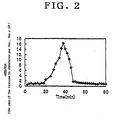
- the pattern of elution of influenza HA vaccine is shown in FIG. 2.
- Table 1 shows the results of comparison between the limulus reaction-activating substance manufactured from influenza HA vaccine (IHA-Lot A) and Japanese B encephalitis (JEC-Lot A) in the foregoing example, and various types of purified endotoxin (Westphal type endotoxin prepared from E. coli 0111:B4, E. coli 055:B5, E. coli UKT-B, Salmonella minnesota R595, S. marcescens , S. typhimurium , S. abrtus equi .) with regard to physical properties.
- purified endotoxin Westphal type endotoxin prepared from E. coli 0111:B4, E. coli 055:B5, E. coli UKT-B, Salmonella minnesota R595, S. marcescens , S. typhimurium , S. abrtus equi .
- the samples for limulus assay was made to react with an endotoxin-specific limulus reagent (Endospecy available from Seikagaku Corporation) on a microtiter plate ⁇ which was free from endotoxin and (1 ⁇ 3)- ⁇ -D-glucan (e.g., Toxipet Plate 96F available from Seikagaku Corporation) -in a microplate reader (Well Reader SK601 available from Seikagaku Corporation) for 30 min.
- the concentration of endotoxin was automatically calculated from the rate of changes (mAbs/min.) in the absorbance of light [having a wavelength of 405 to 492 nm] per minute.
- the residual activity of the limulus reaction-activating substance (%) and of endotoxin was calculated, taking the residual activity of an unprocessed control group as 100%. From Table 1, it is evident that the limulus reaction-activating substance contained in the influenza HA vaccine, the Japanese B encephalitis, or the like, has the effect of directly activating an endotoxin-sensitive factor (i.e., factor C) present in the amebocyte of a horseshoe crab.
- factor C an endotoxin-sensitive factor
- the limulus reaction-activating substance is a non-serine-protease (incapable of activating factor C, a proclotting enzyme, or directly hydrolyzing a synthetic substrate) and non-(1 ⁇ 3)- ⁇ -D-glucan (incapable of activating factor G) molecule and has physical properties similar to those of endotoxin which form a macromolecular amphipathic micelle.
- the limulus reaction-activating substance is found to have the property of not adhering to a glass test tube and the property of stably maintaining limulus action even when it is left for a long period of time.
- HEAT STABILITY The substance and endotoxin are heated at 100°C for 60 min.
- SOLUTION STABILITY The substance and endotoxin are left in 0.02M phosphate buffer solution (pH 7.0) at 4 °C for 10 days.
- ABILITY TO HYDROLYZE SYNTHETIC SUBSTRATE Boc-Leu-Gly-Arg-pNA • HCl (the number of reacted moles: 3.0 mM)
- ABILITY TO ACTIVATE FACTOR C The ability to activate factor C is measured by means of the amidase activity against the synthetic substrate of active factor C through use of purified factor C (prepared by the method disclosed in Nakamura T. et. al., Eur. J. Biochem.
- ANTI-FACTOR-C MONOCLONAL ANTIBODY The hindrance is measured after a 250-fold dilution of mouse monoclonal antibody against factor C (2C12) has been added to a sample for limulus assay in proportions of 1 : 1 part by volume.
- ABILITY TO ACTIVATE FACTOR G The proclotting enzyme-activation ability is measured by means of the amidase activity against a synthetic substrate through use of purified factor G [prepared by the method disclosed in Obayashi T. et al., Clin. Chi., Acta, 149, pp. 55 to 65 (1985)].
- ALKALI METAL OR OTHERS An aqueous solution of NaCl, KCl, MgCl 2 , or CaCl 2 (the number of reacted moles: 0 to 1.5M)
- ENDOTOXIN ADSORBENT Endotoxin is brought into contact with END-X-B15 (i.e., an adsorbent it's ligand is a neutralizing factor in the limulus amebocyte; adsorbent manufactured by Capecod Co., Ltd. and available from Seikagaku Corporation), and Pyrocep A&C (i.e., an adsorbent it's ligand is histidine; adsorbent manufactured by Tanabe Seiyaku Co., Ltd.
- nonionic surfactant solution such as a polyoxyethylene-based surfactant (available under the trade-names Tween, Triton, Brij or the like from Sigma Co., Ltd., Aldrich Co., Ltd., Wako Pure Chemical Industries, and Dojin Kagaku Laboratories), were added to and mixed with the substance and the endotoxin well. Subsequently, 50 ⁇ l of Endospecy were added and allowed to react with the mixture at 37 °C for 30 min. As in Example 1, the residual activity of the limulus reaction-activating substance and endotoxin (%) was calculated, with distilled water taken as an unprocessed control group.
- a polyoxyethylene-based surfactant available under the trade-names Tween, Triton, Brij or the like from Sigma Co., Ltd., Aldrich Co., Ltd., Wako Pure Chemical Industries, and Dojin Kagaku Laboratories
- the endotoxin recovery was calculated by adding a known concentration (1.2 EU/ml) of endotoxin (Et-B4) to various types of biological products which substantially do not contain any limulus reaction-activating substance.
- Et-B4 endotoxin
- Table 3 if an aqueous solution of surfactant prepared to a suitable concentration is used, there can be set conditions under which nonspecific endotoxin reaction does not remain and the amount of endotoxin alone can be specifically measured.
- a superior ratio of recovery of endotoxin and the elimination of the nonspecific endotoxin activity can be achieved by merely mixing the sample with the aqueous solutions of surfactant which respectively have suitable concentrations.
- the amount of endotoxin alone contained in the sample can be specifically measured.
- BIOLOGICAL PRODUCTS RESIDUAL LIMULUS ACTIVITY (EU/ml) ( ): ENDOTOXIN RECOVERY, % TERGITOL TRITON N-101 BRIJ 56 IHA 55.3(102.5) 61.4(98.5) 16.3(102.0) JEC 9.6(101.2) 10.0(99.5) 8.5(100.0) HSA 91.4(100.8) 91.4(99.8) 1.4( 99.8)
- Concentrations of surfactants mixed with the sample are Tergitol: 0.01%(weight by volume), Triton N-101: 0.008%(weight by volume), Brij 56: 0.125%(Weight by volume).
- the concentration of Brij 56 which enables the maximum inhibition of the activity of the nonspecific endotoxin (i.e., the limulus reaction-activating substance) while the endotoxin recovery is suitably maintained, as required. It is obvious that the limulus reaction-activating substance mixed in the sample can be inactivated and the amount of endotoxin alone can be specifically measured within the thus-selected extent of concentration.
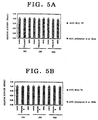
- Example 5 Influence of the temperature at which Brij is mixed with the sample and the time period over which the mixed sample is left after the mixing of Brij on the measurement of the amount of endotoxin contained in each of the various types of biological products
- the aqueous solution of Brij 56 was added to and mixed with 25 ⁇ l influenza HA vaccine (IHA-Lot B) in such a way that the concentration of Brij 56 in the mixture became 0.125%.
- the mixture was added at 4 to 80°C for one min. After having been mixed further, the mixture was left at the same temperature for 1 to 20 minutes.
- the relative value of the activity of endotoxin i.e., the ratio of residual limulus reaction which is obtained on the basis of distilled water being taken as a control group (having a residual limulus reaction ratio of 100%)] and the endotoxin recovery were calculated.
- FIG. 4 shows the results of such calculation at each temperature obtained when the mixture was stirred for one min.
- Example 3 A total of six lots of 25 ⁇ l of preparations containing biological products similar to those used in Example 3 were mixed with 25 ⁇ l of Polymyxin B sulfate (available from Sigma Co., Ltd., 2 mg/ml) solution, 25 ⁇ l of EDTA-4Na solution, or 25 ⁇ l of 0.25% (weight by volume) Brij 56 solution. 50 ⁇ l of Endospecy was added to each mixture, and the concentration of endotoxin (EU/ml) in the thus-prepared mixture was measured in the same way as in Example 1.
- Polymyxin B sulfate available from Sigma Co., Ltd., 2 mg/ml
- 25 ⁇ l of EDTA-4Na solution 25 ⁇ l of 0.25% (weight by volume) Brij 56 solution.
- 50 ⁇ l of Endospecy was added to each mixture, and the concentration of endotoxin (EU/ml) in the thus-prepared mixture was measured in the same way as in Example 1.
- control group a total amount of endotoxin and the limulus reaction-activating substance
- polymyxin B, EDTA-4Na, or Brij 56 a total amount of endotoxin and the limulus reaction-activating substance
- the activity ratio of the mixture to the control group was calculated under various conditions.
- the sum of the ratio of an endotoxin concentration and a limulus reaction-activating substance concentration obtained as a result of addition of the surfactant to the biological product to the control must represent a total amount of endotoxin and the limulus reaction-activating substance.
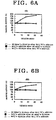
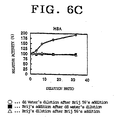
- 0.25% (weight by volume) Brij 56 solution were added in an equivalent amount to biological products similar to those used in Example 3. 25 ⁇ l of the solution ⁇ which was diluted 2 to 32 fold with distilled water or 0.125% Brij 56 solution -and 25 ⁇ l of the solution -which was diluted 2 to 32 fold with distilled water in advance-were poured into each of the Toxipet Plates 96F. Distilled water and 25 ⁇ l of 0.25% (weight by volume) Brij 56 solution were added to the respective plates and stirred well. 50 ⁇ l of Endospecy were added to the plates, and the concentration of endotoxin contained in the thus-prepared mixture on each plate was measured by the method described in Example 1.
- Each of the thus-measured endotoxin concentrations was divided by a true amount of endotoxin, i.e., a measured value obtained by adding 25 ⁇ l of 0.25% (weight by volume) Brij 56 solution to 25 ⁇ l of the sample, to thereby obtain a relative activity (%).
- the thus-obtained relative activities were plotted for each of dilution ratios. As shown in FIGs. 6A to 6C, as for the sample that is diluted with distilled water in advance and to which the Brij 56 solution was then added, stable relative activity was obtained in each of the dilution ratios. But the sample that diluted with distilled water after addition of the Brij 56 solution showed tendency that the relative activity was rising with the increase of dilution rate.
- the Brij 56 solution was added to the sample, and this sample was then diluted with 0.125% (weight by volume) Brij 56 solution in place of distilled water.
- the stable relative activity was obtained, as in the case where the Brij 56 solution was added to the sample, and a suitable dilution dose response is acknowledged.
- the reversible recovery of part of the activity of the limulus reaction-activating substance inactivated by Brij 56 was observed by addition of distilled water so as to dilute the limulus reaction-activating substance (i.e., by dilution of the concentration of Brij 56 in the sample).
- such a recovery phenomenon was not observed at all in the sample which was inactivated by Brij 56 and diluted with Brij 56 to the same concentration as that of the inactivated sample.
- a constant endotoxin concentration is obtained for any dilution ratio.
- the limulus reaction false-positive substance of the present invention is significantly different in properties from known limulus reaction false-positive substances, and the method of inactivating the limulus reaction-activating substance of the present invention is greatly different from the existing method of inactivating a limulus reaction false-positive substance produced predominantly from blood used as a sample for limulus assay. It is known that once the false-positive substance has been inactivated, the limulus activity of the substance is not recovered at all even if the substance undergoes treatment.
- the limulus-reaction-activating-ability of the limulus reaction-activating substance of the present invention is inhibited only when it coexists with a specific surfactant having a given concentration. Accordingly, in a case where a true amount of endotoxin contained in the sample is correctly measured by elimination of the effect of the limulus reaction-activating substance, the substance must be constantly held in copresence with the specific surfactant having a given concentration. In this respect, the endotoxin measurement method of the present invention is significantly different from the existing endotoxin measurement method associated with the method of inactivating a limulus reaction false-positive substance or the like.
- BIOLOGICAL PRODUCTS CONDITIONS LIMULUS REAGENTS FROM DIFFERENT MANUFACTURERS A B C D IHA NONE 20.0 21.0 25.6 28.5 Brij 30 4.0 4.1 3.9 4.3 JEC NONE 3.8 4.2 4.8 5.0 Brij 30 0.4 0.4 0.4 0.5 HSA NONE 10.2 10.8 12.4 13.0 Brij 30 0 0 0.1 0.2
- KINETIC QCL SYSTEM KINETIC COLORIMETRY
- the concentration of endotoxin contained in each of the samples was measured through use of various types of limulus reagents. As can be seen from Table 4, every sample shows a substantially similar tendency. It is obvious that the amount of endotoxin alone can be specifically measured by merely bringing Brij 30 into copresence with the sample even when another measurement method and another measurement reagent are used.
- endotoxin was checked by adding various types of endotoxin to influenza HA vaccine (IHA-Lot M) which is substantially free from endotoxin.
- IHA-Lot M influenza HA vaccine
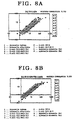
- FIGs. 8A and 8B in comparison with the case where endotoxin coexists solely with Brij 56, a superior convergence of titer lines (a multiple correlation of 0.850) is obtained in the case where triethylamine is added to the Brij 56 solution.
- the rate of changes (mAbs405-492 nm/min.) in the absorbance per minute was analyzed through use of parallel determination software (available under tradename EG301 from Seikagaku Corporation).
- the concentration of endotoxin (EU/ml) was calculated through use of standard endotoxin of the Japanese Pharmacopoeia (E.coli UKT-B). As shown in FIG. 9, suitable parallel lines and reproducibility were obtained for each of the preparations.
- the kit was able to specifically and accurately determine the amount of endotoxin contained in the biological products.
- 0.2M NaOH was added in an equivalent amount to each 50 ⁇ l of the various types of biological products described in Example 8. After the preparations had been heated at 37 °C for one hr., 50 ⁇ l of 0.2M HCl were added so as to neutralize the mixtures. (A) 50 ⁇ l of Endospecy were added to the thus-neutralized mixtures and brought into reaction at 37 (for 30 min., and the amount of the limulus reaction-activating substance was measured.
- the amount of the limulus reaction-activating substance mixed in the preparations alone can be specifically measured by merely adding NaOH to the preparation and heating at 37°C.
- the value obtained by adding the measured value (B) of endotoxin obtained by adding aqueous solution of the Brij 56 and Endospecy to the preparation to the measured value (A) of the limulus reaction-activating substance obtained by the foregoing method is substantially equivalent to the measured value (C) of the total amount of endotoxin and the limulus reaction-activating substance. Therefore, it is evident that the measurement method of the present invention enables correct measurement of the amount of limulus reaction-activating substance.
- the present invention provides a method of readily and quickly inactivating a non-endotoxin limulus reaction-activating substance which is mixed in a biological product and does not have pyrogenic characteristics, and of accurately measuring the amount of endotoxin alone through use of a limulus reagent.
- the amount of endotoxin in the biological product is correctly measured, and therefore the evaluation of safety of biological products can be performed more suitably, representing a great contribution to medical care. Further, since the limulus reaction-activating substance has physical properties similar to those of endotoxin, physiological properties and toxicity present new problems in the future.
- the method of measuring the amount of endotoxin and the limulus reaction-activating substance of the present invention possesses great medical significance.
Landscapes
- Life Sciences & Earth Sciences (AREA)
- Health & Medical Sciences (AREA)
- Engineering & Computer Science (AREA)
- Molecular Biology (AREA)
- Biomedical Technology (AREA)
- Chemical & Material Sciences (AREA)
- Hematology (AREA)
- Immunology (AREA)
- Urology & Nephrology (AREA)
- Cell Biology (AREA)
- Microbiology (AREA)
- Biotechnology (AREA)
- Food Science & Technology (AREA)
- Medicinal Chemistry (AREA)
- Physics & Mathematics (AREA)
- Analytical Chemistry (AREA)
- Biochemistry (AREA)
- General Health & Medical Sciences (AREA)
- General Physics & Mathematics (AREA)
- Pathology (AREA)
- Measuring Or Testing Involving Enzymes Or Micro-Organisms (AREA)
- Investigating Or Analysing Biological Materials (AREA)
Claims (13)
- Procédé de mesure d'endotoxine dans un produit biologique comprenant les étapes de :mise en contact d'un agent tensioactif choisi dans le groupe comprenant le Brij 56, le Brij 30, le Triton N-101 et le Tergitol NP-7 avec le produit biologique, etmesure d'endotoxine dans le produit biologique en utilisant un réactif limulus.
- Procédé selon la revendication 1, dans lequel le produit biologique est choisi parmi des préparations de vaccin, des produits du sang purifiés et des antibiotiques.
- Procédé selon la revendication 2, dans lequel la préparation de vaccin est un vaccin contre la grippe ou un vaccin contre l'encéphalite japonaise.
- Procédé selon la revendication 2, dans lequel le produit du sang purifié est une protéine de plasma humain.
- Procédé selon la revendication 4, dans lequel la protéine de plasma humain est l'albumine de sérum humain.
- Procédé selon l'une quelconque des revendications 1 à 5, dans lequel la concentration finale de l'agent tensioactif se situe dans l'intervalle de 0,004 % à 0,3 % (poids par volume) lorsque l'agent tensioactif est mis en contact avec le produit biologique.
- Procédé selon l'une quelconque des revendications 1 à 6, dans lequel l'agent tensioactif est mis en contact avec le produit biologique à une température allant du point de congélation de l'agent tensioactif à 50°C.
- Procédé selon l'une quelconque des revendications 1 à 7, dans lequel l'agent tensioactif est mis en contact avec le produit biologique pendant 1 à 2 minutes.
- Procédé selon l'une quelconque des revendications 1 à 8, dans lequel une alkylamine ainsi que l'agent tensioactif sont mis en contact avec le produit biologique.
- Procédé selon la revendication 9, dans lequel la concentration finale de l'alkylamine se situe dans l'intervalle de 0,0001 % à 0,05 % (poids par volume) lorsque l'alkylamine est mise en contact avec le produit biologique.
- Procédé selon la revendication 9 ou 10, dans lequel l'alkylamine est la triéthylamine.
- Procédé selon l'une quelconque des revendications 1 à 11, dans lequel le réactif limulus est un réactif limulus spécifique à l'endotoxine.
- Procédé selon l'une quelconque des revendications 1 à 12, dans lequel l'agent tensioactif est le Brij 56.
Applications Claiming Priority (3)
| Application Number | Priority Date | Filing Date | Title |
|---|---|---|---|
| JP29818696 | 1996-10-21 | ||
| JP29818696 | 1996-10-21 | ||
| JP298186/96 | 1996-10-21 |
Publications (3)
| Publication Number | Publication Date |
|---|---|
| EP0837330A2 EP0837330A2 (fr) | 1998-04-22 |
| EP0837330A3 EP0837330A3 (fr) | 1999-03-24 |
| EP0837330B1 true EP0837330B1 (fr) | 2005-08-24 |
Family
ID=17856337
Family Applications (1)
| Application Number | Title | Priority Date | Filing Date |
|---|---|---|---|
| EP97118261A Expired - Lifetime EP0837330B1 (fr) | 1996-10-21 | 1997-10-21 | Méthode pour mésurer endotoxine |
Country Status (3)
| Country | Link |
|---|---|
| US (1) | US6168924B1 (fr) |
| EP (1) | EP0837330B1 (fr) |
| DE (1) | DE69734046T2 (fr) |
Families Citing this family (4)
| Publication number | Priority date | Publication date | Assignee | Title |
|---|---|---|---|---|
| CN100390193C (zh) | 2001-06-28 | 2008-05-28 | 拜奥维塔克尔公司 | 检测内毒素的方法和试剂 |
| JP4346844B2 (ja) * | 2001-11-16 | 2009-10-21 | 生化学工業株式会社 | (1→3)−β−D−グルカン結合ドメインタンパク質、該物質を使用した測定法及び測定キット |
| US20090208995A1 (en) * | 2006-07-07 | 2009-08-20 | Seikagaku Corporation | Pro-clotting enzyme, and method for detection of endotoxin or (1-3)-beta-d-glucan using the same |
| CN117929736A (zh) * | 2023-12-28 | 2024-04-26 | 江苏杜瑞制药有限公司 | 一种基于甲磺酸萘莫司他的内毒素检测法 |
Family Cites Families (10)
| Publication number | Priority date | Publication date | Assignee | Title |
|---|---|---|---|---|
| JPS5885162A (ja) | 1981-11-16 | 1983-05-21 | Seikagaku Kogyo Co Ltd | エンドトキシン測定法 |
| JPH0715474B2 (ja) | 1988-02-27 | 1995-02-22 | 和光純薬工業株式会社 | エンドトキシンの測定法 |
| CA1328074C (fr) | 1988-09-01 | 1994-03-29 | Shigenori Tanaka | Indibiteur du facteur g du lysat de l'amibocyte de la limule |
| JP2944709B2 (ja) | 1990-06-21 | 1999-09-06 | 生化学工業株式会社 | (1→3)―β―D―グルカンの測定剤 |
| JP2944721B2 (ja) * | 1990-08-22 | 1999-09-06 | 生化学工業株式会社 | エンドトキシンの測定剤 |
| JP3122454B2 (ja) | 1990-09-27 | 2001-01-09 | 生化学工業株式会社 | カブトガニ・アメボサイト・ライセートの調製法 |
| JP2957251B2 (ja) * | 1990-09-28 | 1999-10-04 | 生化学工業株式会社 | エンドトキシンの測定法 |
| JP2737514B2 (ja) | 1992-01-24 | 1998-04-08 | 和光純薬工業株式会社 | エンドトキシン測定用試料の前処理方法 |
| JP3524120B2 (ja) | 1992-05-08 | 2004-05-10 | 生化学工業株式会社 | 前処理剤、前処理方法、前処理された試料による測定法、測定用キット及び試料の判定方法 |
| US5648230A (en) * | 1994-06-30 | 1997-07-15 | Seikagaku Kogyo Kabushiki Kaisha (Seikagaku Corporation) | Endotoxin stabilizing agent, endotoxin composition and method for assaying endotoxin |
-
1997
- 1997-10-21 US US08/954,792 patent/US6168924B1/en not_active Expired - Fee Related
- 1997-10-21 DE DE69734046T patent/DE69734046T2/de not_active Expired - Lifetime
- 1997-10-21 EP EP97118261A patent/EP0837330B1/fr not_active Expired - Lifetime
Also Published As
| Publication number | Publication date |
|---|---|
| DE69734046T2 (de) | 2006-06-14 |
| US6168924B1 (en) | 2001-01-02 |
| DE69734046D1 (de) | 2005-09-29 |
| EP0837330A2 (fr) | 1998-04-22 |
| EP0837330A3 (fr) | 1999-03-24 |
Similar Documents
| Publication | Publication Date | Title |
|---|---|---|
| JP5118849B2 (ja) | 微生物夾雑物の検出のための方法および組成物 | |
| JP3524120B2 (ja) | 前処理剤、前処理方法、前処理された試料による測定法、測定用キット及び試料の判定方法 | |
| AU685487B2 (en) | Reagent for endotoxin-specific assay | |
| KR100255260B1 (ko) | 내독소 검정용 시약 및 이를 사용하는 내독소 검정방법 | |
| JP2955345B2 (ja) | リムラス変形細胞溶解産物および発色原基質を用いたエンドトキシン反応速度論的アッセイ | |
| AU678173B2 (en) | Reagent for endotoxin-specific assay | |
| US11221335B2 (en) | Heat-treated limulus amebocyte lysates | |
| US20110033939A1 (en) | Method of measuring lipoarabinomannan and application thereof | |
| EP1021463B1 (fr) | Lysates des amebocytes reduits en quantite de facteur g pour detecter des endotoxines bacteriennes | |
| US6168924B1 (en) | Limulus reaction-activating substance, method for inactivating the substance and measuring its amount, and method for measuring limulus reaction | |
| WO2006064807A1 (fr) | Procédé de prétraitement d'un échantillon et procédé d'immunoessai utilisant celui-ci | |
| Joiner et al. | Comparison of endotoxin testing methods for pharmaceutical products | |
| JP3950470B2 (ja) | リムルス反応活性化物質、この物質の不活化方法、並びに、この物質及びエンドトキシンの測定方法 | |
| JP3869094B2 (ja) | エンドトキシンの測定方法 | |
| US20190025309A1 (en) | Pre-treatment agent and pre-treatment method for antithrombin iii to be subjected to limulus test | |
| Gould | Limulus amebocyte lysate assays and filter applications | |
| JP2004109147A (ja) | 前処理剤、前処理方法、前処理された試料による測定法、測定用キット及び試料の判定方法 |
Legal Events
| Date | Code | Title | Description |
|---|---|---|---|
| PUAI | Public reference made under article 153(3) epc to a published international application that has entered the european phase |
Free format text: ORIGINAL CODE: 0009012 |
|
| AK | Designated contracting states |
Kind code of ref document: A2 Designated state(s): DE FR GB SE |
|
| AX | Request for extension of the european patent |
Free format text: AL;LT;LV;RO;SI |
|
| PUAL | Search report despatched |
Free format text: ORIGINAL CODE: 0009013 |
|
| AK | Designated contracting states |
Kind code of ref document: A3 Designated state(s): AT BE CH DE DK ES FI FR GB GR IE IT LI LU MC NL PT SE |
|
| AX | Request for extension of the european patent |
Free format text: AL;LT;LV;RO;SI |
|
| 17P | Request for examination filed |
Effective date: 19990820 |
|
| AKX | Designation fees paid |
Free format text: DE FR GB SE |
|
| 17Q | First examination report despatched |
Effective date: 20011002 |
|
| RTI1 | Title (correction) |
Free format text: METHOD FOR MEASURING ENDOTOXIN |
|
| GRAP | Despatch of communication of intention to grant a patent |
Free format text: ORIGINAL CODE: EPIDOSNIGR1 |
|
| GRAS | Grant fee paid |
Free format text: ORIGINAL CODE: EPIDOSNIGR3 |
|
| GRAA | (expected) grant |
Free format text: ORIGINAL CODE: 0009210 |
|
| AK | Designated contracting states |
Kind code of ref document: B1 Designated state(s): DE FR GB SE |
|
| REG | Reference to a national code |
Ref country code: GB Ref legal event code: FG4D |
|
| REF | Corresponds to: |
Ref document number: 69734046 Country of ref document: DE Date of ref document: 20050929 Kind code of ref document: P |
|
| REG | Reference to a national code |
Ref country code: SE Ref legal event code: TRGR |
|
| ET | Fr: translation filed | ||
| REG | Reference to a national code |
Ref country code: FR Ref legal event code: CA |
|
| PLBE | No opposition filed within time limit |
Free format text: ORIGINAL CODE: 0009261 |
|
| STAA | Information on the status of an ep patent application or granted ep patent |
Free format text: STATUS: NO OPPOSITION FILED WITHIN TIME LIMIT |
|
| 26N | No opposition filed |
Effective date: 20060526 |
|
| REG | Reference to a national code |
Ref country code: FR Ref legal event code: PLFP Year of fee payment: 20 |
|
| PGFP | Annual fee paid to national office [announced via postgrant information from national office to epo] |
Ref country code: FR Payment date: 20160919 Year of fee payment: 20 |
|
| PGFP | Annual fee paid to national office [announced via postgrant information from national office to epo] |
Ref country code: DE Payment date: 20161018 Year of fee payment: 20 Ref country code: GB Payment date: 20161019 Year of fee payment: 20 |
|
| PGFP | Annual fee paid to national office [announced via postgrant information from national office to epo] |
Ref country code: SE Payment date: 20161011 Year of fee payment: 20 |
|
| REG | Reference to a national code |
Ref country code: DE Ref legal event code: R071 Ref document number: 69734046 Country of ref document: DE |
|
| REG | Reference to a national code |
Ref country code: GB Ref legal event code: PE20 Expiry date: 20171020 |
|
| PG25 | Lapsed in a contracting state [announced via postgrant information from national office to epo] |
Ref country code: GB Free format text: LAPSE BECAUSE OF EXPIRATION OF PROTECTION Effective date: 20171020 |