EP0857780A1 - Neue proteine die ausgezeichnet in leberkrebs expremiert werden, gene die diese proteine kodieren, antikörper gagegen und geeignete methoden - Google Patents
Neue proteine die ausgezeichnet in leberkrebs expremiert werden, gene die diese proteine kodieren, antikörper gagegen und geeignete methoden Download PDFInfo
- Publication number
- EP0857780A1 EP0857780A1 EP96930419A EP96930419A EP0857780A1 EP 0857780 A1 EP0857780 A1 EP 0857780A1 EP 96930419 A EP96930419 A EP 96930419A EP 96930419 A EP96930419 A EP 96930419A EP 0857780 A1 EP0857780 A1 EP 0857780A1
- Authority
- EP
- European Patent Office
- Prior art keywords
- protein
- dna
- base sequence
- rna
- encoding
- Prior art date
- Legal status (The legal status is an assumption and is not a legal conclusion. Google has not performed a legal analysis and makes no representation as to the accuracy of the status listed.)
- Withdrawn
Links
Images






Classifications
-
- C—CHEMISTRY; METALLURGY
- C07—ORGANIC CHEMISTRY
- C07K—PEPTIDES
- C07K14/00—Peptides having more than 20 amino acids; Gastrins; Somatostatins; Melanotropins; Derivatives thereof
- C07K14/435—Peptides having more than 20 amino acids; Gastrins; Somatostatins; Melanotropins; Derivatives thereof from animals; from humans
- C07K14/46—Peptides having more than 20 amino acids; Gastrins; Somatostatins; Melanotropins; Derivatives thereof from animals; from humans from vertebrates
- C07K14/47—Peptides having more than 20 amino acids; Gastrins; Somatostatins; Melanotropins; Derivatives thereof from animals; from humans from vertebrates from mammals
-
- G—PHYSICS
- G01—MEASURING; TESTING
- G01N—INVESTIGATING OR ANALYSING MATERIALS BY DETERMINING THEIR CHEMICAL OR PHYSICAL PROPERTIES
- G01N33/00—Investigating or analysing materials by specific methods not covered by groups G01N1/00 - G01N31/00
- G01N33/48—Biological material, e.g. blood, urine; Haemocytometers
- G01N33/50—Chemical analysis of biological material, e.g. blood, urine; Testing involving biospecific ligand binding methods; Immunological testing
- G01N33/53—Immunoassay; Biospecific binding assay; Materials therefor
- G01N33/575—Immunoassay; Biospecific binding assay; Materials therefor for cancer
- G01N33/57525—Immunoassay; Biospecific binding assay; Materials therefor for cancer of the liver or pancreas
-
- A—HUMAN NECESSITIES
- A61—MEDICAL OR VETERINARY SCIENCE; HYGIENE
- A61K—PREPARATIONS FOR MEDICAL, DENTAL OR TOILETRY PURPOSES
- A61K38/00—Medicinal preparations containing peptides
-
- G—PHYSICS
- G01—MEASURING; TESTING
- G01N—INVESTIGATING OR ANALYSING MATERIALS BY DETERMINING THEIR CHEMICAL OR PHYSICAL PROPERTIES
- G01N2333/00—Assays involving biological materials from specific organisms or of a specific nature
- G01N2333/82—Translation products from oncogenes
Definitions
- This invention relates to proteins expressed markedly in hepatic cancer, genes encoding the proteins, antibodies to the proteins, and methods for detecting the expressions of the proteins or the genes.
- Carcinoma or cancer is known to occur because of some abnormality in a gene.
- a change or abnormality in the gene at its transcription level is regarded as a major cause of cancer ("Science" Vo1. 222, 1983, pp. 765-771).
- the acquisition of a protein variedly expressed during carcinogenesis and a gene encoding the protein, or a protein different in the state of expression among tissues and a gene encoding the protein has been performed eagerly since about 1980.
- cancer-specific proteins, ⁇ -fetoprotein and CEA are known which were acquired by biochemically analyzing a carcinomatous tissue, and searching for its difference from a normal tissue.
- Methods used to identify these substances comprised preparing monoclonal antibodies to a carcinomatous tissue, and sorting antibodies reactive only with the cancer tissue from the resulting monoclonal antibodies, and then identifying a substance which would serve as an antigen reactive with the monoclonal antibodies.
- Information obtained by these methods was mostly concerned with a protein, and no gene was obtained directly. To acquire a gene from the protein obtained, therefore, the gene was selected from a population of genes, called a gene library, by a genetic engineering technique.
- this method of selection is described in "Molecu1ar C1oning Second Edition” (Co1d Spring Harbor Laboratory Press, 1989), chapters 8, 9 and 12.
- the method prepares a gene probe on the basis of information on the resulting protein, and acquires a gene corresponding to this gene probe from the gene library by a method called colony/plaque hybridization.
- the desired protein should be large in amount, or the use of the monoclonal antibodies requires an antigen protein of the cell surface type and with high antigenicity.
- a protein which obviates these requirements has been very difficult to obtain. Consequently, it has also been extremely difficult to yield a gene encoding the protein.
- the present invention uses methods entirely different from the foregoing some known methods, to isolate genes whose expression in a hepatic cancer tissue is increased compared with a normal hepatic tissue.
- an object of the present invention is to provide novel proteins increasing in expression during a carcinogenic process, novel genes encoding the proteins, and antibodies to the proteins.
- genes specifically expressed in rat hepatic cancer were extracted by the subtraction method, and genes whose expression was increased in hepatic cancer were isolated by dot screening. From a hepatic cancer cDNA library, the full length cDNA's of the genes, and the base sequences of the genes were determined. Further, amino acid sequences encoded by the genes were determined.
- Northern blot hybridization confirmed the cDNA's to be hepatic cancer specific genes. Also, proteins encoded by the cDNA's were expressed in recombinant Escherichia coli (E. coli), and the proteins were confirmed to have the same functions as those of their naturally occurring equivalents.
- Novel rat proteins CRTI or HTF
- HRPI or GADII
- GADII or CSAD
- genes encoding these proteins were isolated by the above-described means.
- a novel human protein, GADII, specific for hepatic cancer, and a gene encoding this protein were also isolated.
- the above proteins were each inoculated into a mammal other than a species from which the protein was derived (excluding human), to produce antibodies against the protein and confirm the antigenicity of the protein.
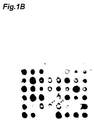
- Figs. 1A and 1B are views showing the results of dot blot screening performed by fixing to a membrane DNA that was extracted from a gene library obtained from hepatic cancer by the subtraction method in Example 1.
- Fig. 1A is a view showing the results of screening with a cDNA probe prepared from hepatic cancer polyA RNA
- Fig. 1B is a view showing the results of screening with a cDNA probe prepared from normal liver polyA RNA.
- An arrow 1 indicates a dot of a gene whose expression is increased in hepatic cancer
- an arrow 2 a dot of a gene whose expression is increased in hepatic cancer.
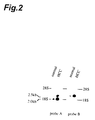
- Fig. 2 is a photograph showing the results of analysis by Northern blot hybridization in systems of the rat normal liver and 7-month hepatic cancer by use of probes prepared in Examples 3 and 4 (probe A and probe B), respectively, with the left lane showing the normal liver (normal), and the right lane showing hepatic cancer (HCC).
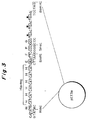
- Fig. 3 is a view showing pET3a vector used in Examples 3, 14 and 16.
- Fig. 4 is a photograph showing the results of analysis by Northern blot hybridization using gel electrophoresis of total RNA's prepared from a human hepatic cancer tissue and a non-cancerous hepatic tissue of the same patient.
- Lane 1 gives the results with the electrophoresed human hepatic cancer RNA
- lane 2 gives the results with the electrophoresed human non-cancerous RNA (a normal portion of the same patient).
- the band indicated by an arrow is the targeted band.
- Fig. 5 is a photograph showing the results of Western blotting (protein level analysis) of various hepatic cancer tissues prepared in Example 1. From the bottom of the drawing upwards lie a marker (for a ladder), rec (positive control, CRTI prepared in Example 4), N (normal liver), 1 (liver one month after onset of cancer), 3 (liver 3 months after cancer onset), 5 (liver 5 months after cancer onset) and 7 (liver 7 months after cancer onset).
- Fig. 6 is a photograph showing the results of Western blotting using various human cancer cells. From right to left in the drawing, lie a positive control, Li21, LiHM, LiNM (human hepatic cancer cells), RERF (human pulmonary cancer cells), AZ (human gastric cancer cells), Hecl (human uterine cancer cells), Alex (human hepatic cancer cells), MEWO (human melanoma), and PaCa (human pancreatic cancer cells).
- a band indicated by an arrow in the drawing represents CRTI.
- Fig. 7 is a photograph showing the results of Northern blot hybridization of CRTI gene distributed in various rat tissues.
- a band indicated by an arrow in the drawing is a band derived from CRTI gene.
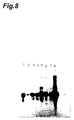
- Fig. 8 is a photograph showing the results of Northern blot hybridization of CRTI gene distributed in various human tissues.
- a band indicated by an arrow in the drawing is a band derived from CRTI gene.
- Lane 1 represents heart, 2 brain, 3 placenta, 4 lung, 5 liver, 6 skeletal muscle, 7 kidney, and 8 pancreas.
- Fig. 9 is a view showing the results of analysis by Northern blot hybridization of mRNA's from normal liver and hepatic cancer with the use of HRPI gene as a probe.
- Lane 1 is a lane for normal liver mRNA
- Lane 2 is a lane for mRNA of the hepatic cancer 12 hours after administration of DEN
- Lane 3 is a lane for mRNA of the hepatic cancer 24 hours after DEN administration
- Lane 4 is a lane for mRNA of the hepatic cancer 48 hours after DEN administration
- Lane 5 is a lane for mRNA of the hepatic cancer 1 month after DEN administration
- Lane 6 is a lane for mRNA of the hepatic cancer 3 months after DEN administration
- Lane 7 is a lane for mRNA of the hepatic cancer 5 months after DEN administration
- Lane 8 is a lane for mRNA of the hepatic cancer 7 months after DEN administration
- arrow 9 shows the position of
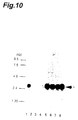
- Fig. 10 is a view showing the results of analysis by Northern blot hybridization of mRNA's from normal liver and hepatic cancer with the use of GADII gene as a probe.
- Lane 1 is a lane for normal liver mRNA
- Lane 2 is a lane for mRNA of the hepatic cancer 12 hours after administration of DEN
- Lane 3 is a lane for mRNA of the hepatic cancer 24 hours after DEN administration
- Lane 4 is a lane for mRNA of the hepatic cancer 48 hours after DEN administration
- Lane 5 is a lane for mRNA of the hepatic cancer 1 month after DEN administration
- Lane 6 is a lane for mRNA of the hepatic cancer 3 months after DEN administration
- Lane 7 is a lane for mRNA of the hepatic cancer 5 months after DEN administration
- Lane 8 is a lane for mRNA of the hepatic cancer 7 months after DEN administration
- arrow 9 shows the position
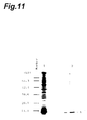
- Fig. 11 is a view showing the results of SDS-PAGE electrophoresis of a recombinant HRPI partial protein.
- Lane 1 is a lane for a protein prepared by recombinant E. coli.
- Lane 2 is a lane for purified recombinant HRPI partial protein.
- An arrow 3 represents the position of the band of the HRPI partial protein.
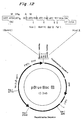
- Fig. 12 is a view showing pBluebacIII vector as used in Example 15.
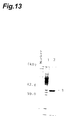
- Fig. 13 is a view showing the results of SDS-PAGE electrophoresis of recombinant HRPI.
- Lane 1 is a lane for a protein expressed by wild type Sf9 cells.
- Lane 2 is a lane for a protein expressed by recombinant Sf9 cells.
- An arrow 3 represents the position of the band of the recombinant HRPI.
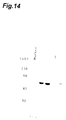
- Fig. 14 is a view showing the results of 10%SDS-PAGE electrophoresis of recombinant GADII (Lane 1). An arrow represents the position of the band of the recombinant GADII.
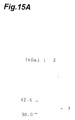
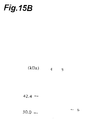
- Figs. 15A and 15B are views showing the results of Western blot analysis of the reaction product between a sample containing HRPI full length protein and anti-HRPI antibodies.
- Fig. 15A is a view showing the results of Western blot analysis of the reaction product between a sample containing recombinant HRPI full length protein and anti-HRPI antibodies.
- Fig. 15B is a view showing the results of Western blot analysis of the reaction product between the extract of a rat liver and anti-HRPI antibodies.
- Fig. 15A is a view showing the results of Western blot analysis of the reaction product between a sample containing recombinant HRPI full length protein and anti-HRPI antibodies.
- Fig. 15B is a view showing the results of Western blot analysis of the reaction product between the extract of a rat liver and anti-HRPI antibodies.
- lane 1 is a lane for the electrophoresed recombinant HRPI
- lane 2 is a lane for the electrophoresed hepatic cancer tissue extract
- an arrow 3 represents the position of the band of the recombinant HRPI
- lane 4 is a lane for the electrophoresed normal liver extract
- lane 5 is a lane for the electrophoresed extract of hepatic cancer 7 months after administration of DEN
- an arrow 6 represents the position of the band of HRPI.
- Fig. 16 is a view showing the expression of HRPI gene in various organs.
- Lane 1 is a lane for electrophoresed heart mRNA
- lane 2 is a lane for electrophoresed brain mRNA
- lane 3 is a lane for electrophoresed spleen mRNA
- lane 4 is a lane for electrophoresed lung mRNA
- lane 5 is a lane for electrophoresed liver mRNA
- lane 6 is a lane for electrophoresed skeletal muscle mRNA
- lane 7 is a lane for electrophoresed kidney mRNA
- lane 8 is a lane for electrophoresed testicle mRNA
- an arrow 9 represents the position of the band of HRPI mRNA.
- Fig. 17 is a view showing the expression of GADII gene in various organs.
- Lane 1 is a lane for electrophoresed heart mRNA
- lane 2 is a lane for electrophoresed brain mRNA
- lane 3 is a lane for electrophoresed spleen mRNA
- lane 4 is a lane for electrophoresed lung mRNA
- lane 5 is a lane for electrophoresed liver mRNA
- lane 6 is a lane for electrophoresed skeletal muscle mRNA
- lane 7 is a lane for electrophoresed kidney mRNA
- lane 8 is a lane for electrophoresed testicle mRNA
- an arrow 9 represents the position of the band of GADII mRNA.
- the present invention concerns proteins whose expression is increased in a hepatic cancer tissue compared with a normal hepatic tissue, genes encoding these proteins, antibodies specific for the proteins, and a method for monitoring cancer by detecting the proteins or the genes.
- the present invention is a protein specifically expressed in hepatic cancer, and a gene encoding the protein.
- the protein and the gene were obtained by isolating a gene, present specifically in hepatic cancer, from the liver of a rat by the subtraction method, and determining its base sequence. From this gene, a protein expressed specifically in hepatic cancer was confirmed and isolated.
- proteins specific for hepatic cancer were named rat CRTI, rat HRPI, rat GADII and human GADII, respectively.
- the amino acid sequences of these proteins, and gene sequences encoding them are shown in Seq. ID Nos. 1 and 2, 3 and 4, 5 and 6, and 7 and 8, respectively, in the Sequence Listing.
- Heterologous proteins with the same function are generally known to have homology of 30-40% or more, although they are somewhat different in amino acid sequence depending on species. It can be fully presumed, therefore, that mammals other than rat also have a protein having the same function as the protein isolated in the present invention (CRTI or HRPI), and having homology of 30% or more (preferably 40% or more) to this protein.
- the presence of homology is generally determined by a calculation method which counts homologous amino acids as positive. When two proteins are different in the length of the amino acid chain, the homology rate (%) is expressed as the proportion of the homologous portion to the length of the protein with the shorter amino acid chain.
- proteins relevant to the present invention are intended to mean those having the following two features:
- Spontaneous or artificial mutation can alter part of the structure of a polynucleotide, and accordingly, can mutate a protein encoded by the polynucleotide.
- the protein of the present invention too, it is possible to produce a mutant protein in which one or more amino acids of the amino acid sequence described as Seq. ID No. 1, 3, 5 or 7 in the Sequence Listing has or have been replaced, deleted or added.
- the protein of the present invention is recognized specifically by antibodies to the protein, so that the mutant protein of the present invention is characterized by being recognized by the antibodies (being mutated to a degree recognizable by the antibodies).
- genes encoding CRTI, HRPI and GADII concerned with the present invention are genes coding for the CRTI, HRPI and GADII defined earlier.
- the present invention clarifies the antigenicity of the above-mentioned proteins, i.e. CRTI, HRPI and GADII, such that these proteins easily give antibodies when used to immunize mammals other than the species of origin and other than human, as will be exemplified in the Examples.
- the antibodies of the present invention against CRTI, HRPI and GADII include, in their range, antisera and polyclonal antibodies which are obtained by the same method, namely, immunization of an animal other than the species from which the proteins were derived.
- the use, as an immunogen, of part of the protein or part of the protein bound to a carrier protein such as bovine serum albumin is a method in common use by those skilled in the art.
- the part of the protein may be synthesized by a peptide synthesizer.
- the part of the protein is 8 amino acid residues or more for sufficient use as an immunogen.
- monoclonal antibodies can be produced by hybridomas using lymphocytes of the immunized animal (e.g., see Antibodies, A Laboratory Manual (Cold Spring Harbor Laboratory Press, 1988), Chapter 6).
- the antibodies of the present invention to CRTI, HRPI and GADII include polyclonal antibodies and monoclonal antibodies in their scope.
- Methods for detecting CRTI, HRPI or GADII include, for example, the use of antibodies, the use of antibodies relying on an enzyme reaction, and the detection of the gene for the protein.
- Methods using antibodies are concretely (1) a method of detecting each protein by use of antibodies to the protein, and (2) a method of detecting each protein by using antibodies to the protein and labeled secondary antibodies to the antibodies.
- the labels are, for instance, radioisotopes (RI), enzymes, avidin or biotin, and fluorescent materials (FITC or rhodamine).
- Methods using antibodies relying on an enzyme reaction include, for example, ELISA.
- Methods for detecting genes are, for instance, Northern blot hybridization, RT-PCR ( Current Protocols in Molecular Biology (Greene Publishing Associates and Wiley-Interscience), Chapter 15), and in situ hybridization (ibid. Chapter 14).
- the optimum conditions for hybridization are known to be different according to the length of the probe or the membrane used. What conditions to be set can be easily chosen by those skilled in the art.
- hybridization needless to say, can be achieved under different hybridization conditions.
- hybridization may be effected in the absence of sodium pyrophosphate.
- a preferred embodiment is as follows:
- the number of bases of the human genome is said to be 3x10 9 . Since DNA of 16 bases comes in 4 16 types, this length of DNA enables human proteins to be all recognized.
- the length required of a probe is, theoretically, 16 bases.
- a length longer than it is desirable needless to say.
- Practically, a length of 12 bases or more is often used because of synthesis efficiency, operability and so on.
- the site used as the probe may be a noncoding region or a coding region.
- the site used as the probe has a GC content of 30 to 70%, it may be a noncoding region or a coding region.
- the antisense DNA or antisense RNA of the present invention (may be collectively called the antisense polynucleotide) includes all of nucleotides comprising bases, phosphates and sugars combined in a plurality of numbers, including those which are not present in nature.
- the antisense polynucleotide derivative of the present invention includes all of those which are similar to polynucleotide in conformation and function. Examples are polynucleotides linked at the 3'-terminal or 5'-terminal to other substances, polynucleotides having undergone modification, such as replacement, deletion, or addition, in at least part of the bases, sugars or phosphates, polynucleotides having bases, sugars or phosphates that do not naturally occur, and polynucleotides having a skeleton other than sugar-phosphate skeleton.
- the antisense polynucleotide or its derivative may be the one which hybridizes with any portion of a polynucleotide encoding the protein of the present invention whose expression is increased in hepatic cancer.
- the antisense polynucleotide or its derivative is preferably the one which has a base sequence complementary for part of mRNA encoding all or part of the protein, and which hybridizes with the mRNA.
- the particularly preferred one is that which hybridizes with mRNA encoding at least CRTI, HRPI or GADII.
- the antisense polynucleotide or its derivative is immediately usable as a research polynucleotide probe for investigating the presence and the status of expression, in a tissue or cells, of a polynucleotide encoding the protein of the present invention whose expression is increased in hepatic cancer.
- the antisense polynucleotide or its derivative is also usable as a diagnostic polynucleotide probe.
- the probe preferably has 12 bases or more and a GC content of 30 to 70%, more preferably, 16 bases or more and a GC content of 30 to 70%.
- an antisense pharmaceutical can be developed from the antisense polynucleotide or its derivative.
- the antisense polynucleotide derivative are known to be the derivatives with at least one of nuclease resistance, tissue selectivity, cell permeation, and binding capacity.
- the polynucleotide derivative is known to be the derivative having a phosphorothioate bond as a skeletal structure.
- the polynucleotide and its derivative of the present invention also include derivatives having such function or structure.
- the antisense polynucleotide derivative of the present invention can be prepared, for example, by the method described in Antisense Research and Applications (CRC Publishing, Florida, 1993).
- Wild type DNA or RNA can be synthesized by a chemical synthesizer.
- the antisense polynucleotide derivative of the present invention can be obtained by PCR using as a template a gene encoding the protein of the invention whose expression is increased in hepatic cancer.
- Some of the derivatives of the methyl phosphonate type or the phosphorothioate type can be synthesized by a chemical synthesizer (e.g. Model 394, Perkin-Elmer Japan).
- the procedure is performed in accordance with an Instruction Manual attached to the chemical synthesizer, and the resulting synthesis product is purified by HPLC using a reversed phase chromatograph, whereby the desired polynucleotide or polynucleotide derivative can be obtained.
- DNA or RNA When DNA or RNA is chemically or enzymatically synthesized, it is well known to subject it to a chemical modification, such as methylation or biotinylation of the side chain, or substitution of oxygen of the phosphate portion by sulfur.
- a chemical modification such as methylation or biotinylation of the side chain, or substitution of oxygen of the phosphate portion by sulfur.
- Main examples of the modification to be introducible during chemical synthesis are 1) biotinylation, 2) methylation, 3) conversion to digoxigenin derivative, 4) dephosphorylation, 5)fluorescence labeling (fluorescein, rhodamine, Texas Red and derivatives thereof), 6) amination, and 7) substitution of O of the phosphate group by S.
- Main examples of chemical modification to be introducible enzymatically are 1) biotinylation, 2) methylation, 3) conversion to digoxigenin derivative, 4) dephosphorylation, 5)fluorescence labeling (fluorescein, rhodamine, Texas Red and derivatives thereof), and 6) enzyme labeling (alkaline phosphatase).
- DNA described as Seq. ID No. 2, 4, 6 or 8 in the Sequence Listing is to be chemically synthesized, for instance, it is possible to synthesize DNA different from the DNA of the Sequence Listing itself by performing the chemical modification.
- the DNA and RNA of the present invention include in their scopes the chemically modified DNA and RNA.
- Monitoring of the progress of cancer by detection of CRTI, HRPI or GADII can be performed by investigating whether the protein is present or not in a tissue or cells sampled from subjects. If CRTI, HRPI or GADII is secreted or liberated outside cells, the progress of cancer can be monitored by examining whether CRTI, HRPI or GADII is present or absent in the blood of the subject. Concretely, the monitoring may be done in the same manner as the aforementioned method of detecting CRTI, HRPI or GADII (the method using antibodies, the method using antibodies relying on enzyme reaction, or the method detecting the relevant gene).
- Monitoring of the progress of cancer by use of gene can be done by checking for the gene in a tissue or cells sampled from the subject.
- the methods of detecting the gene include, for example, Northern blot hybridization, RT-PCR, and in situ hybridization, as stated previously.
- Hepatic cancer-bearing rats were prepared based on the Salt-Farber method ( Nature , Vol. 263, 1976, pp. 701-703). Actually, 5-week Wistar rats (Funabashi Farm) were intraperitoneally administered diethylnitrosamine (DEN). Two weeks later, oral administration of M Feed (Oriental Yeast) containing 0.02% of 2-aminoacetylfluorene (AAF) was started. One week later, a regenerative hepatic operation was performed. The livers were removed 12, 24, 48 hours and 1, 3, 5 and 7 months after DEN administration, and used for subsequent RNA preparation.
- DEN diethylnitrosamine
- AAF 2-aminoacetylfluorene
- livers 12, 24 and 48 hours after regenerative hepatic operation were acquired by removing the livers 12, 24 and 48 hours after regenerative hepatic operation. These livers were used later for analysis.
- CRTI gene was analyzed for hepatic cancer-derived polyA RNA by Northern blot hybridization using the probe of Example 3. As shown in Fig. 2 (probe A), two bands were detected. The band observed at about 2.0 kb corresponds to a gene of the base sequence from the 500th base to the 2,520th base of Seq. ID No. 2 in the Sequence Listing. A gene corresponding to the other band at about 2.5 kb was acquired by the method described in 11. of Example 1.
- the base sequence of the resulting gene was determined by the method described in 1. to 4. of Example 2. This gene was found to be an extension of the gene of about 2.0 kb by 499 bp on the 5' side.
- the CRTI gene base sequence of the resulting portion of about 2.5 kb is shown as Seq. ID No. 2 in the Sequence Listing.
- Northern blot hybridization was performed in accordance with the method described in Example 3 by using, as a probe, DNA ranging from the 1st base to the 372nd base of the 499 bp portion obtained above.
- the film was Kodak's XAR film, the screen used Du Pont's Lightening Plus(+), and exposure was performed for 24 hours at - 80°C.
- Fig. 2 (probe B) the presence of a band of 2.5 kb specific for rat hepatic cancer was confirmed (Fig. 2 (probe B)). This result showed that hepatic cancer could be detected based on the above-described DNA of 499 bp.
- TREB5 or XBP
- XBP is reported in Science, vol. 247, pp. 1581-1584 (1990).
- Rat MTN BlotTM (CLONTECH) was used. This product is a commercially available membrane blotted with polyA RNA's of rat tissues to be used in the above-mentioned Northern blot hybridization. This membrane was subjected to Northern blot hybridization by the method described in Molecular Cloning Second Edition , (Cold Spring Harbor Laboratory Press, 1989) pp. 7.3-7.84 in accordance with the product's instruction manual with the use of the same CRTI gene probe as prepared in Example 3. In autoradiography, the film was Kodak's XAR film, the screen used Du Pont's Lightening Plus(+), and exposure was performed for 24 hours at -80°C.
- CRTI gene was expressed in all organs examined, and intensely expressed in the liver and the lung, in particular.
- Example 3 suggest that if any organs become cancerous, the expression of CRTI gene may increase. Thus, CRTI gene can be expect to monitor the outbreak and progress of cancer in various organs.
- CRTI protein in various organs permits monitoring of the outbreak and progress of cancer in those organs.
- CRTI gene was expressed in all organs examined, and intensely expressed in the pancreas and liver, in particular.
- Example 6 suggest that if any human organs become cancerous, the expression of CRTI gene may increase. Thus, the use of CRTI gene can be expect to monitor the outbreak and progress of cancer in various organs in human.
- CRTI protein in various organs in human permits monitoring of the outbreak and progress of cancer in those organs.
- the detection of the CRTI or CRTI gene of the present invention in a tissue such as the liver makes it possible to diagnose cancer of the tissue, such as hepatic cancer.
- the use of a part or the whole of the CRTI gene enables the occurrence of cancer, such as hepatic cancer, to be diagnosed at the gene expression level.
- the use of the anti-CRTI antibodies also permits the immunohistological diagnosis of the outbreak of cancer such as hepatic cancer.
- the application of the gene or the antibodies to the treatment of cancer can be expected in the future.
- Rat MTN Blot (registered trademark, CLONTECH) was used. This product is a commercially available membrane blotted with polyA RNA's of rat tissues to be used in the above-mentioned Northern blot hybridization. This membrane was subject to Northern blot hybridization by the method described in Molecular Cloning Second Edition , (Cold Spring Harbor Laboratory Press, 1989) pp. 7.3-7.84 in accordance with the product's instruction manual with the use of the aforementioned HRPI gene probe and GADII gene probe.
- the detection of the HRPI or the HRPI gene or GADII or GADII gene of the present invention in the liver permits the monitoring of the progress of hepatic cancer, and diagnosis of hepatic cancer, especially the early diagnosis of hepatic cancer.
- the use of a part or the whole of the HRPI gene or GADII gene makes it possible to diagnose the onset of hepatic cancer at the gene expression level.
- the use of the anti-HRPI or anti-GADII antibodies permits the immunohistological diagnosis of hepatic cancer occurrence.
- genes, antisense genes to the genes, or antibodies to the genes can be expected to find use in the treatment of hepatic cancer.
Landscapes
- Health & Medical Sciences (AREA)
- Life Sciences & Earth Sciences (AREA)
- Chemical & Material Sciences (AREA)
- Molecular Biology (AREA)
- Engineering & Computer Science (AREA)
- Immunology (AREA)
- Biomedical Technology (AREA)
- Organic Chemistry (AREA)
- General Health & Medical Sciences (AREA)
- Hematology (AREA)
- Biochemistry (AREA)
- Medicinal Chemistry (AREA)
- Urology & Nephrology (AREA)
- Physics & Mathematics (AREA)
- Gastroenterology & Hepatology (AREA)
- Analytical Chemistry (AREA)
- Microbiology (AREA)
- Cell Biology (AREA)
- General Physics & Mathematics (AREA)
- Pathology (AREA)
- Toxicology (AREA)
- Zoology (AREA)
- Food Science & Technology (AREA)
- Biophysics (AREA)
- Genetics & Genomics (AREA)
- Proteomics, Peptides & Aminoacids (AREA)
- Biotechnology (AREA)
- Measuring Or Testing Involving Enzymes Or Micro-Organisms (AREA)
- Pharmaceuticals Containing Other Organic And Inorganic Compounds (AREA)
- Peptides Or Proteins (AREA)
Applications Claiming Priority (9)
| Application Number | Priority Date | Filing Date | Title |
|---|---|---|---|
| JP236264/95 | 1995-09-14 | ||
| JP23626495 | 1995-09-14 | ||
| JP33102395 | 1995-11-27 | ||
| JP331023/95 | 1995-11-27 | ||
| JP17988596 | 1996-06-20 | ||
| JP179885/96 | 1996-06-20 | ||
| JP22946996 | 1996-08-30 | ||
| JP229469/96 | 1996-08-30 | ||
| PCT/JP1996/002654 WO1997010333A1 (fr) | 1995-09-14 | 1996-09-17 | Nouvelles proteines s'exprimant specifiquement dans le cancer du foie, genes codant ces proteines, anticorps actifs contre ces proteines et procede de detection de l'expression de ces proteines |
Publications (2)
| Publication Number | Publication Date |
|---|---|
| EP0857780A1 true EP0857780A1 (de) | 1998-08-12 |
| EP0857780A4 EP0857780A4 (de) | 2001-12-05 |
Family
ID=27474911
Family Applications (1)
| Application Number | Title | Priority Date | Filing Date |
|---|---|---|---|
| EP96930419A Withdrawn EP0857780A4 (de) | 1995-09-14 | 1996-09-17 | Neue proteine die ausgezeichnet in leberkrebs expremiert werden, gene die diese proteine kodieren, antikörper gagegen und geeignete methoden |
Country Status (2)
| Country | Link |
|---|---|
| EP (1) | EP0857780A4 (de) |
| WO (1) | WO1997010333A1 (de) |
Cited By (7)
| Publication number | Priority date | Publication date | Assignee | Title |
|---|---|---|---|---|
| WO2001049717A3 (en) * | 1999-12-30 | 2001-12-06 | Harvard College | Methods and compositions relating to modulation of hepatocyte growth, plasma cell differentiation or t cell subset activity by modulation of xbp-1 activity |
| WO2002029103A3 (en) * | 2000-10-02 | 2003-09-04 | Gene Logic Inc | Gene expression profiles in liver cancer |
| US7812128B2 (en) | 2003-08-08 | 2010-10-12 | Hiroyuki Aburatani | Gene overexpressed in cancer |
| US8940479B2 (en) | 2008-01-14 | 2015-01-27 | Cornell University | Methods for modulating de novo hepatic lipogenesis by modulating XBP-1 activity |
| US9956236B2 (en) | 2011-02-07 | 2018-05-01 | Cornell University | Methods for increasing immune responses using agents that directly bind to and activate IRE-1 |
| US9957506B2 (en) | 2013-09-25 | 2018-05-01 | Cornell University | Compounds for inducing anti-tumor immunity and methods thereof |
| US10655130B2 (en) | 2012-03-09 | 2020-05-19 | Cornell University | Modulation of breast cancer growth by modulation of XBP1 activity |
Families Citing this family (5)
| Publication number | Priority date | Publication date | Assignee | Title |
|---|---|---|---|---|
| EP1354605B1 (de) * | 1996-10-02 | 2009-05-06 | Orient Chemical Industries, Ltd. | Metallphthalocyanin enthaltendes Deodorant |
| WO1999000495A1 (fr) * | 1997-06-26 | 1999-01-07 | Sumitomo Electric Industries, Ltd. | Nouvelle proteine ayant une excellente expression dans le cancer du sang, gene codant cette proteine, anticorps dirigee contre cette derniere et procede de detection de l'expression de cette proteine |
| CN1295668A (zh) * | 1998-02-13 | 2001-05-16 | 牛津糖科学(英国)有限公司 | 用于肝细胞癌诊断的方法和组合物 |
| WO1999057269A1 (fr) * | 1998-04-30 | 1999-11-11 | Sumitomo Electric Industries, Ltd. | Gene hrpi humain |
| EP1652923B1 (de) * | 2003-08-08 | 2011-10-12 | Perseus Proteomics Inc. | Bei krebs überexprimiertes gen |
Family Cites Families (1)
| Publication number | Priority date | Publication date | Assignee | Title |
|---|---|---|---|---|
| JPH09203734A (ja) * | 1996-01-26 | 1997-08-05 | Sumitomo Electric Ind Ltd | 抗血清、抗体、リガンド及びそれらの検出方法 |
-
1996
- 1996-09-17 EP EP96930419A patent/EP0857780A4/de not_active Withdrawn
- 1996-09-17 WO PCT/JP1996/002654 patent/WO1997010333A1/ja not_active Ceased
Cited By (13)
| Publication number | Priority date | Publication date | Assignee | Title |
|---|---|---|---|---|
| WO2001049717A3 (en) * | 1999-12-30 | 2001-12-06 | Harvard College | Methods and compositions relating to modulation of hepatocyte growth, plasma cell differentiation or t cell subset activity by modulation of xbp-1 activity |
| US6632608B2 (en) | 1999-12-30 | 2003-10-14 | President And Fellows Of Harvard College | Methods and compositions relating to modulation of hepatocyte growth, plasma cell differentiation or T cell subset activity by modulation of XBP-1 activity |
| US7358415B2 (en) | 1999-12-30 | 2008-04-15 | President And Fellows Of Harvard College | Methods and compositions relating to modulation of hepatocyte growth, plasma cell differentiation or T cell subset activity by modulation of XBP-1 activity |
| WO2002029103A3 (en) * | 2000-10-02 | 2003-09-04 | Gene Logic Inc | Gene expression profiles in liver cancer |
| US9376475B2 (en) | 2003-08-08 | 2016-06-28 | Hiroyuki Aburatani | Gene overexpressed in cancer |
| US7812128B2 (en) | 2003-08-08 | 2010-10-12 | Hiroyuki Aburatani | Gene overexpressed in cancer |
| US9434775B2 (en) | 2003-08-08 | 2016-09-06 | Hiroyuki Aburatani | Gene overexpressed in cancer |
| US8940479B2 (en) | 2008-01-14 | 2015-01-27 | Cornell University | Methods for modulating de novo hepatic lipogenesis by modulating XBP-1 activity |
| US9956236B2 (en) | 2011-02-07 | 2018-05-01 | Cornell University | Methods for increasing immune responses using agents that directly bind to and activate IRE-1 |
| US10655130B2 (en) | 2012-03-09 | 2020-05-19 | Cornell University | Modulation of breast cancer growth by modulation of XBP1 activity |
| US9957506B2 (en) | 2013-09-25 | 2018-05-01 | Cornell University | Compounds for inducing anti-tumor immunity and methods thereof |
| US10421965B2 (en) | 2013-09-25 | 2019-09-24 | Cornell University | Compounds for inducing anti-tumor immunity and methods thereof |
| US10450566B2 (en) | 2013-09-25 | 2019-10-22 | Cornell University | Compounds for inducing anti-tumor immunity and methods thereof |
Also Published As
| Publication number | Publication date |
|---|---|
| WO1997010333A1 (fr) | 1997-03-20 |
| EP0857780A4 (de) | 2001-12-05 |
Similar Documents
| Publication | Publication Date | Title |
|---|---|---|
| JP4106391B2 (ja) | 神経細胞アポトーシスの抑制タンパクとその遺伝子配列、並びに脊髄性筋萎縮症の原因となる当該遺伝子の突然変異 | |
| EP0728217B1 (de) | Die bestimmung von nukleinsäuremutationen durch analyse des sputum | |
| US8101349B2 (en) | Gene products differentially expressed in cancerous cells and their methods of use II | |
| JP3485186B2 (ja) | サイクリン複合体の転位およびそれに関連する使用 | |
| JP2004528810A (ja) | 癌組織でディファレンシャルに発現される核酸配列 | |
| US6251613B1 (en) | Method for detecting anti-GADII antibody and method for diagnosing cancer using said detection method | |
| CN1643148B (zh) | 小鼠精子形成基因、人男性不育关连基因、以及利用该基因的诊断系统 | |
| JP2002519027A (ja) | 網膜芽腫結合タンパク質(rbp−7)をコードする核酸および前記核酸に関連する多型マーカー | |
| WO1997010333A1 (fr) | Nouvelles proteines s'exprimant specifiquement dans le cancer du foie, genes codant ces proteines, anticorps actifs contre ces proteines et procede de detection de l'expression de ces proteines | |
| EP1016717A1 (de) | Neues protein exprimiert in leberkrbs, gen kodierend dafür, antikörper dagegen und ein verfahren zum nachweis der expression dieses proteins | |
| EP0472399B1 (de) | HLA-DR Antigen-Gen, dessen Nukleotidsequenz und Verwendung | |
| JP2000511765A (ja) | 精製SR―p70タンパク質 | |
| WO1999037764A2 (en) | New members of the glypican gene family | |
| BIRDSEY et al. | Evolution of alanine: glyoxylate aminotransferase intracellular targeting: structural and functional analysis of the guinea pig gene | |
| US5935783A (en) | Genes mapping in the digeorge and velocardiofacial syndrome minimal critical region | |
| JP2000228985A (ja) | フジツボキプリス幼生特異的付着変態関連遺伝子 | |
| JPWO1997010333A1 (ja) | 肝癌において顕著に発現される新規な蛋白質、それをコードする遺伝子、それに対する抗体、並びに該発現を検出する方法 | |
| WO2000011157A1 (en) | Dysferlin, a gene mutated in distal myopathy and limb girdle muscular dystrophy | |
| JPWO1999000495A1 (ja) | 肝癌において顕著に発現される新規な蛋白質、それをコードする遺伝子、それに対する抗体、並びに該発現を検出する方法 | |
| JP2002503952A (ja) | 多嚢胞性腎疾患遺伝子 | |
| EP0926157A1 (de) | Protein das mit tbp komplexe ausbilden kann, dafür kodierende polynukleotide, dagegen gerichtete antisens-polynukleotide und antikörper. | |
| JP3298901B2 (ja) | カルバミルリン酸合成酵素i変異遺伝子の検出方法およびそれに用いるdnaプローブ | |
| JP2002369696A (ja) | Kiaa0172遺伝子の疾病治療及び診断並びに創薬への利用 | |
| JP3824700B2 (ja) | ヒトsim遺伝子 | |
| WO2000011016A1 (en) | Dysferlin mutations |
Legal Events
| Date | Code | Title | Description |
|---|---|---|---|
| PUAI | Public reference made under article 153(3) epc to a published international application that has entered the european phase |
Free format text: ORIGINAL CODE: 0009012 |
|
| 17P | Request for examination filed |
Effective date: 19980302 |
|
| AK | Designated contracting states |
Kind code of ref document: A1 Designated state(s): CH DE FR GB LI |
|
| A4 | Supplementary search report drawn up and despatched |
Effective date: 20011022 |
|
| AK | Designated contracting states |
Kind code of ref document: A4 Designated state(s): CH DE FR GB LI |
|
| STAA | Information on the status of an ep patent application or granted ep patent |
Free format text: STATUS: THE APPLICATION HAS BEEN WITHDRAWN |
|
| 18W | Application withdrawn |
Withdrawal date: 20011126 |