EP0862236A2 - Adhésif pour batterie, batterie utilisant cet adhésif et procédé de fabrication - Google Patents
Adhésif pour batterie, batterie utilisant cet adhésif et procédé de fabrication Download PDFInfo
- Publication number
- EP0862236A2 EP0862236A2 EP98103305A EP98103305A EP0862236A2 EP 0862236 A2 EP0862236 A2 EP 0862236A2 EP 98103305 A EP98103305 A EP 98103305A EP 98103305 A EP98103305 A EP 98103305A EP 0862236 A2 EP0862236 A2 EP 0862236A2
- Authority
- EP
- European Patent Office
- Prior art keywords
- adhesive
- electrode
- battery
- separator
- negative electrode
- Prior art date
- Legal status (The legal status is an assumption and is not a legal conclusion. Google has not performed a legal analysis and makes no representation as to the accuracy of the status listed.)
- Withdrawn
Links
Images
Classifications
-
- H—ELECTRICITY
- H01—ELECTRIC ELEMENTS
- H01M—PROCESSES OR MEANS, e.g. BATTERIES, FOR THE DIRECT CONVERSION OF CHEMICAL ENERGY INTO ELECTRICAL ENERGY
- H01M50/00—Constructional details or processes of manufacture of the non-active parts of electrochemical cells other than fuel cells, e.g. hybrid cells
- H01M50/40—Separators; Membranes; Diaphragms; Spacing elements inside cells
- H01M50/409—Separators, membranes or diaphragms characterised by the material
- H01M50/449—Separators, membranes or diaphragms characterised by the material having a layered structure
-
- H—ELECTRICITY
- H01—ELECTRIC ELEMENTS
- H01M—PROCESSES OR MEANS, e.g. BATTERIES, FOR THE DIRECT CONVERSION OF CHEMICAL ENERGY INTO ELECTRICAL ENERGY
- H01M50/00—Constructional details or processes of manufacture of the non-active parts of electrochemical cells other than fuel cells, e.g. hybrid cells
- H01M50/40—Separators; Membranes; Diaphragms; Spacing elements inside cells
- H01M50/409—Separators, membranes or diaphragms characterised by the material
- H01M50/449—Separators, membranes or diaphragms characterised by the material having a layered structure
- H01M50/457—Separators, membranes or diaphragms characterised by the material having a layered structure comprising three or more layers
-
- H—ELECTRICITY
- H01—ELECTRIC ELEMENTS
- H01M—PROCESSES OR MEANS, e.g. BATTERIES, FOR THE DIRECT CONVERSION OF CHEMICAL ENERGY INTO ELECTRICAL ENERGY
- H01M50/00—Constructional details or processes of manufacture of the non-active parts of electrochemical cells other than fuel cells, e.g. hybrid cells
- H01M50/40—Separators; Membranes; Diaphragms; Spacing elements inside cells
- H01M50/46—Separators, membranes or diaphragms characterised by their combination with electrodes
-
- H—ELECTRICITY
- H01—ELECTRIC ELEMENTS
- H01M—PROCESSES OR MEANS, e.g. BATTERIES, FOR THE DIRECT CONVERSION OF CHEMICAL ENERGY INTO ELECTRICAL ENERGY
- H01M10/00—Secondary cells; Manufacture thereof
- H01M10/04—Construction or manufacture in general
- H01M10/0431—Cells with wound or folded electrodes
-
- H—ELECTRICITY
- H01—ELECTRIC ELEMENTS
- H01M—PROCESSES OR MEANS, e.g. BATTERIES, FOR THE DIRECT CONVERSION OF CHEMICAL ENERGY INTO ELECTRICAL ENERGY
- H01M10/00—Secondary cells; Manufacture thereof
- H01M10/05—Accumulators with non-aqueous electrolyte
- H01M10/052—Li-accumulators
- H01M10/0525—Rocking-chair batteries, i.e. batteries with lithium insertion or intercalation in both electrodes; Lithium-ion batteries
-
- H—ELECTRICITY
- H01—ELECTRIC ELEMENTS
- H01M—PROCESSES OR MEANS, e.g. BATTERIES, FOR THE DIRECT CONVERSION OF CHEMICAL ENERGY INTO ELECTRICAL ENERGY
- H01M10/00—Secondary cells; Manufacture thereof
- H01M10/05—Accumulators with non-aqueous electrolyte
- H01M10/058—Construction or manufacture
- H01M10/0587—Construction or manufacture of accumulators having only wound construction elements, i.e. wound positive electrodes, wound negative electrodes and wound separators
-
- H—ELECTRICITY
- H01—ELECTRIC ELEMENTS
- H01M—PROCESSES OR MEANS, e.g. BATTERIES, FOR THE DIRECT CONVERSION OF CHEMICAL ENERGY INTO ELECTRICAL ENERGY
- H01M50/00—Constructional details or processes of manufacture of the non-active parts of electrochemical cells other than fuel cells, e.g. hybrid cells
- H01M50/40—Separators; Membranes; Diaphragms; Spacing elements inside cells
- H01M50/46—Separators, membranes or diaphragms characterised by their combination with electrodes
- H01M50/461—Separators, membranes or diaphragms characterised by their combination with electrodes with adhesive layers between electrodes and separators
-
- H—ELECTRICITY
- H01—ELECTRIC ELEMENTS
- H01M—PROCESSES OR MEANS, e.g. BATTERIES, FOR THE DIRECT CONVERSION OF CHEMICAL ENERGY INTO ELECTRICAL ENERGY
- H01M6/00—Primary cells; Manufacture thereof
- H01M6/04—Cells with aqueous electrolyte
- H01M6/06—Dry cells, i.e. cells wherein the electrolyte is rendered non-fluid
- H01M6/10—Dry cells, i.e. cells wherein the electrolyte is rendered non-fluid with wound or folded electrodes
-
- H—ELECTRICITY
- H01—ELECTRIC ELEMENTS
- H01M—PROCESSES OR MEANS, e.g. BATTERIES, FOR THE DIRECT CONVERSION OF CHEMICAL ENERGY INTO ELECTRICAL ENERGY
- H01M6/00—Primary cells; Manufacture thereof
- H01M6/14—Cells with non-aqueous electrolyte
- H01M6/18—Cells with non-aqueous electrolyte with solid electrolyte
- H01M6/188—Processes of manufacture
-
- Y—GENERAL TAGGING OF NEW TECHNOLOGICAL DEVELOPMENTS; GENERAL TAGGING OF CROSS-SECTIONAL TECHNOLOGIES SPANNING OVER SEVERAL SECTIONS OF THE IPC; TECHNICAL SUBJECTS COVERED BY FORMER USPC CROSS-REFERENCE ART COLLECTIONS [XRACs] AND DIGESTS
- Y02—TECHNOLOGIES OR APPLICATIONS FOR MITIGATION OR ADAPTATION AGAINST CLIMATE CHANGE
- Y02E—REDUCTION OF GREENHOUSE GAS [GHG] EMISSIONS, RELATED TO ENERGY GENERATION, TRANSMISSION OR DISTRIBUTION
- Y02E60/00—Enabling technologies; Technologies with a potential or indirect contribution to GHG emissions mitigation
- Y02E60/10—Energy storage using batteries
-
- Y—GENERAL TAGGING OF NEW TECHNOLOGICAL DEVELOPMENTS; GENERAL TAGGING OF CROSS-SECTIONAL TECHNOLOGIES SPANNING OVER SEVERAL SECTIONS OF THE IPC; TECHNICAL SUBJECTS COVERED BY FORMER USPC CROSS-REFERENCE ART COLLECTIONS [XRACs] AND DIGESTS
- Y02—TECHNOLOGIES OR APPLICATIONS FOR MITIGATION OR ADAPTATION AGAINST CLIMATE CHANGE
- Y02P—CLIMATE CHANGE MITIGATION TECHNOLOGIES IN THE PRODUCTION OR PROCESSING OF GOODS
- Y02P70/00—Climate change mitigation technologies in the production process for final industrial or consumer products
- Y02P70/50—Manufacturing or production processes characterised by the final manufactured product
Definitions
- the present invention relates to a secondary battery for use in portable electronic apparatus, etc. More particularly, the present invention relates to a battery which can be in a thin form and an adhesive for use in the battery.
- a lithium ion battery is a secondary battery which can be expected to realize the highest voltage and largest energy density in conventional batteries, and its improvement is still under way on an extensive scale.
- a lithium ion battery comprises as essential elements a positive electrode plate, a negative electrode plate, and an ionically-conducting layer provided interposed therebetween.
- a lithium ion battery which has been put into practical use comprises as a positive electrode one obtained by applying a powder of lithium cobalt oxide or the like as an active material to a collector, and then forming the coated material into a plate and as a negative electrode one obtained by applying a powdered carbon-based material as an active material to a collector, and then forming the coated material into a plate.
- the ionically-conducting layer there is used a porous film of polyethylene or polypropylene impregnated with a nonaqueous electrolyte which acts as a separator interposed between the positive electrode and the negative electrode.
- JP-A-5-159802 for secondary solid battery discloses a production process which comprises binding an electrolyte layer to an electrode material layer with a thermoplastic resin binder under heating to integrate the battery elements in one.
- the integration of the electrode and the electrolyte makes it possible to maintain electrical contact therebetween, eliminating the necessity of applying an external pressure to the battery when it works properly.
- a thin film battery there is known one comprising as an ionically-conducting material a polymer gel as described in U.S. Patent 5,460,904.
- a copolymer of polyvinylidene fluoride and hexafluoropropylene is used as a polymer gel to integrate the positive electrode and the negative electrode in one.
- the conventional battery described in JP-A-8-83608 is disadvantageous in that a rigid casing made of a metal or the like which can withstand an external pressure must be used to keep the electrode layer and the electrolyte layer in full electrical contact with each other.
- the casing which is a portion other than the power-generating portion, accounts for a large portion of the battery in volume and weight, making it difficult to form a battery having a large energy density.
- the secondary solid battery disclosed in JP-A-5-159802 employs a solid binder to cover the electrode-electrolyte interface and thus is disadvantageous as compared with the foregoing type of a battery comprising a liquid electrolyte in a casing which can withstand an external pressure from the standpoint of the electrical conductivity of the electrode-electrolyte interface. If any used, no binders having an electrical conductivity equal to or higher than that of the liquid electrolyte have been generally found, making it impossible to provide an ionic conductivity equal to that of the battery comprising a liquid electrolyte.
- the thin film battery comprising a polyvinylidene fluoride disclosed in U.S. Patent 5,460,904 is disadvantageous in that since the polyvinylidene fluoride copolymer is thermoplastic, its adhesive strength can be easily affected by temperature. In particular, at high temperatures, the polyvinylidene fluoride copolymer shows a drop of adhesive strength that causes peeling between the electrode and the separator, making it impossible to accomplish the desired battery properties.
- the foregoing thin film battery is also disadvantageous in that it requires a complicated process.
- the polyvinylidene fluoride copolymer ionically conductive must previously comprise a plasticizer incorporated therein to render itself ionically conductive. The copolymer is then formed into a predetermined shape. The plasticizer is then extracted with an organic solvent.
- An object of the present invention is to provide an adhesive for battery which can easily form an electrode body having a good electrical contact between an electrode and an electrolyte within a wide temperature range free of rigid casing capable of withstanding an external pressure by connecting an electrode layer to an electrolyte layer, a battery formed by such an adhesive for battery, and a process for the production of such a battery.
- the present invention relates to an adhesive for battery for adhering an electrode to a separator, characterized in that said adhesive contains at least one organic vinyl compound having two or more vinyl groups per molecule and comprises a a volatile organic solvent.
- a first aspect of the adhesive for battery used for adhering an electrode to a separator of the present invention is an adhesive, which contains at least one organic vinyl compound having two or more vinyl groups per molecule and a volatile organic solvent.
- a second aspect of the adhesive is an adhesive according to the first aspect, which further contains a reaction catalyst.
- a third aspect of the adhesive is an adhesive according to the second aspect, which further contains a thermoplastic resin.
- a fourth aspect of the adhesive is an adhesive according to the first aspect, wherein said organic vinyl compound having two or more vinyl groups per molecule is selected from the group consisting of an acrylic ester and methacrylic ester.
- a fifth aspect of the adhesive is an adhesive according to the fourth aspect, which comprises in addition to said organic vinyl compound having two or more vinyl groups per molecule at least one organic vinyl compound containing one vinyl group per molecule.
- thermoplastic resin comprises at least one of a polyacrylic ester and polymethacrylic ester.
- a seventh aspect of the battery of the present invention is a battery, which comprises an electrode laminate having:
- a eighth aspect of the battery is a battery according to the seventh aspect, wherein each of said positive electrode and negative electrode comprises a collector and an electrode active material layer formed on the collector, and adhesive strength between the active material layer and the separator is not smaller than that between the active material layer and the collector.
- a ninth aspect of the battery is a battery according to the seventh aspect, wherein said battery has a plurality of electrode laminates.
- a tenth aspect of the battery is a battery according to the ninth aspect, wherein said plurality of electrode laminates are arranged by alternately interposing positive electrodes and negative electrodes between a plurality of cut separators one by one.
- An eleventh aspect of the battery is a battery according to the ninth aspect, wherein said plurality of electrode laminates are arranged by alternately interposing positive electrodes and negative electrodes between the gap of a wound separator one by one.
- a twelfth aspect of the battery is a battery according to the ninth aspect, wherein said plurality of electrode laminates are arranged by alternately interposing positive electrodes and negative electrodes between the gap of a pair of folded separators.
- a thirteenth aspect of the method of fabricating a battery is a method of present invention, which comprises the steps of:
- a fourteenth aspect of the method is a method according to the thirteenth aspect, wherein said adhesive further contains a catalyst.
- a fifteenth aspect of the method is a method according to the thirteenth aspect, wherein, wherein said adhesive further contains a thermoplastic resin.
- Fig. 3 is a sectional view of main part of battery illustrating a further embodiment of the battery according to the present invention.
- Fig. 4 is a sectional view of main part of battery illustrating a further embodiment of the battery according to the present invention.
- the inventors made extensive studies of preferred method of bonding the electrolyte layer (separator) to the electrode. As a result, the present invention has been worked out.
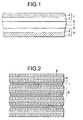
- the present invention concerns an adhesive 8 for bonding a positive electrode 1 to a separator 7 and a negative electrode 4 to a separator 7 in the production of a battery comprising a positive electrode 1 having an active positive electrode material layer 3 bonded to a positive electrode collector 2, a negative electrode 4 having an active negative electrode material layer 6 bonded to a negative electrode collector 5, and a separator 7 for retaining an electrolyte as shown in Figs. 1 to 4.
- Fig. 1 illustrates a battery comprising an electrode laminate 9 having a pair of electrodes 1, 4 made of active material layers 3, 6 bonded to collectors 2, 5, respectively, said pair of electrodes 1, 4 being bonded to a separator 7 on the active material layer sides 3, 6 thereof, respectively.
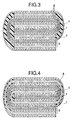
- Figs. 2 to 4 each illustrate a battery comprising a plurality of the foregoing electrode laminates 9.
- Fig. 2 illustrates a plurality of electrode laminates 9 formed by alternately arranging a positive electrode 1 and a negative electrode 4 between separated separators 7.
- Figs. 3 and 4 each illustrate a plurality of electrode laminates 9 formed by alternately arranging a positive electrode 1 and a negative electrode 4 between the gap of a wound separator 7.
- the plurality of electrode laminates may be formed by alternately arranging a positive electrode and a negative electrode between the gap of a folded separator.
- the arrangement of such a plurality of electrode laminates 9 makes it possible to provide a battery capacity in proportion to the number of the electrode laminates despite compact shape.
- the present invention is characterized by the composition of the adhesive 8 for bonding the electrodes 1, 4 to the separator 7.
- the adhesive 8 comprises an organic vinyl compound containing two or more vinyl groups per molecule, a reaction catalyst, and a volatile organic solvent.
- the production process of the present invention involves thermosetting of the adhesive 8.
- the inventors made extensive studies of how to provide a secondary battery with a high reliability for small thickness and raise its charge-discharge efficiency within a wide temperature range As a result, it was found that the use of an adhesive comprising an organic vinyl compound containing two or more vinyl groups per molecule, a reaction catalyst, and a volatile organic solvent makes it easy to produce a secondary battery having a secured reliability for small thickness and an excellent charge-discharge efficiency within a wide temperature range.
- the present invention has been worked out.
- an adhesive comprising an organic vinyl compound containing two or more vinyl groups per molecule, a reaction catalyst, and a volatile organic solvent as an adhesive 8 is applied to the surface of active materials 3, 6 or a separator 7.
- the active material layers 3, 6 are laminated on the separator 7.
- adhesive 8 become porous and have good adhesion and good heat resistance.
- the adhesive exhibits an adhesive strength large enough to integrate the battery elements in one within a wide temperature range.
- thermoplastic resin when added to the adhesive 8, a greater adhesive strength can be exerted.
- the reason for this phenomenon is unknown.
- an adhesive comprising an organic vinyl compound containing two or more vinyl groups per molecule, a reaction catalyst, and a volatile organic solvent
- the mixture exhibits a raised viscosity that gives good wetting properties with respect to the electrodes 1, 5 and the separator 7.
- the incorporation of the thermoplastic resin provides an adhesive with a raised viscosity that accelerates the curing thereof.
- organic vinyl compound containing two or more vinyl groups per molecule there may be used a compound such as divinylbenzene, ethylene glycol dimethacrylate, triethylene glycol dimethacrylate, 1, 3-butylene glycol dimethacrylate, 1, 6-hexanediol dimethacrylate, polyethylene glycol dimethacrylate, polybutylene glycol dimethacrylate and trimethylolpropane trimethacrylate or a mixture thereof.
- divinylbenzene ethylene glycol dimethacrylate, triethylene glycol dimethacrylate, 1, 3-butylene glycol dimethacrylate, 1, 6-hexanediol dimethacrylate, polyethylene glycol dimethacrylate, polybutylene glycol dimethacrylate and trimethylolpropane trimethacrylate or a mixture thereof.
- At least one acrylic ester or methacrylic ester is preferably used from the standpoint of availability and ease of handling.
- reaction catalyst examples include azobisisobutyronitrile, benzoyl peroxide, and lauroyl peroxide.
- volatile organic solvent there may be used a compound such as N-methylpyrrolidone, propylene carbonate, ethylene carbonate, tetrahydrofuran, 1, 3-dioxolan, diethyl carbonate, dimethyl carbonate, sulfolane, tert-butylether, iso-butylether, 1, 2-dimethoxyethane, 1, 2-ethoxymethoxyethane, acetone, methyl ethyl ketone, ethyl acetate, acetonitrile, diethylether, dimethylformamide and dimethyl sulfoxide or a mixture thereof.
- N-methylpyrrolidone propylene carbonate
- ethylene carbonate ethylene carbonate
- tetrahydrofuran 1, 3-dioxolan
- diethyl carbonate dimethyl carbonate
- sulfolane tert-butylether
- iso-butylether 1, 2-dimethoxyethane, 1,
- the foregoing organic vinyl compound containing two or more vinyl groups per molecule may be mixed and copolymerized with an organic vinyl compound containing only one vinyl group per molecule before used for bonding.
- organic vinyl compound containing only one vinyl group per molecule there may be used a compound such as methyl methacrylate (MMA), ethyl methacrylate, n-butyl methacrylate, i-butyl methacrylate, t-butyl methacrylate, 2-ethylhexyl methacrylate, cyclohexyl methacrylate, benzyl methacrylate, isobornyl methacrylate, tetrahydrofurfuryl methacrylate, styrene, vinyl chloride and acrylonitrile or a mixture thereof.
- MMA methyl methacrylate
- ethyl methacrylate ethyl methacrylate
- n-butyl methacrylate i-butyl methacrylate
- t-butyl methacrylate 2-ethylhexyl methacrylate
- 2-ethylhexyl methacrylate 2-ethylhex
- An active positive material paste comprising 87% by weight of LiCoO 2 , 8% by weight of a graphite powder and 5% by weight of a polyvinylidene fluoride was prepared.
- the active positive material paste thus prepared was applied to a support to a thickness of 300 ⁇ m by a doctor blade coating method to form a thin active material layer.
- An aluminum net having a thickness of 30 ⁇ m as a positive electrode collector 2 was then placed on the thin active material layer.
- the active positive material paste was then applied to the aluminum net to a thickness of 300 ⁇ m by a doctor blade coating method.
- the coated material was then allowed to stand in a 60°C dryer for 60 minutes so that it was half-dried to form a laminate.
- the laminate was then rolled to a thickness of 400 ⁇ m to prepare a positive electrode 1 comprising an active positive electrode material layer 3 laminated on a positive electrode collector 2.
- the positive electrode 1 thus prepared was dipped in an electrolyte, and then measured for adhesive strength between the active positive electrode material layer 3 and the positive electrode collector 2. The results were 20 gf/cm at 25°C and 15 gf/cm at 70°C.
- An active negative material paste comprising 95% by weight of mesophase microbead carbon (available from OSAKA GAS CO., LTD.) and 5% by weight of a polyvinylidene fluoride was prepared.
- the active negative material paste thus prepared was applied to a support to a thickness of 300 ⁇ m by a doctor blade coating method to form a thin active material layer.
- a copper net having a thickness of 20 ⁇ m as a negative electrode collector 5 was then placed on the thin active material layer.
- the active negative material paste was then applied to the copper net to a thickness of 300 ⁇ m by a doctor blade coating method.
- the coated material was then allowed to stand in a 60°C dryer for 60 minutes so that it was half-dried to form a laminate.
- the laminate was then rolled to a thickness of 400 ⁇ m to prepare a negative electrode 4 comprising an active negative electrode material layer 6 laminated on a negative electrode collector 5.
- the negative electrode 4 thus prepared was dipped in an electrolyte, and then measured for adhesive strength between the active negative electrode material layer 6 and the negative electrode collector 5. The results were 12 gf/cm at 25°C and 7 gf/cm at 70°C.
- Ethylene glycol dimethacrylate (hereinafter referred to as “EGDM”), methyl methacrylate (hereinafter referred to as “MMA”) and N-methylpyrrolidone (hereinafter referred to as “NMP”) were mixed in a weight proportion as set forth in Table 1.
- EGDM Ethylene glycol dimethacrylate
- MMA methyl methacrylate
- NMP N-methylpyrrolidone
- the adhesive thus prepared was then applied to both sides of a separator 7 made of a porous polypropylene sheet (Cellguard #2400, available from Hoexst Inc.) having a size of 55 mm square.
- the positive electrode 1 and the negative electrode 4 were then allowed to come in close contact with the respective side of the separator 7 to form a laminate having a predetermined thickness.
- the laminate thus formed was then pressed at a temperature of 80°C for 2 hours to obtain a battery structure.
- the battery structure thus obtained was inserted into an aluminum-laminated film bag.
- the battery structure was then impregnated with an electrolyte (Sol-Rite, available from Mitsubishi Chemical Corporation; electrolytic salt: LiClO 4 ; electrolytic solvent: mixture of ethylene carbonate and diethyl carbonate; electrolytic salt concentration: 1M) under reduced pressure.
- electrolyte Sol-Rite, available from Mitsubishi Chemical Corporation; electrolytic salt: LiClO 4 ; electrolytic solvent: mixture of ethylene carbonate and diethyl carbonate; electrolytic salt concentration: 1M
- Batteries were prepared in the same manner as in Embodiments 1 to 4 except that the adhesives used in Embodiments 1 to 4 were replaced by those obtained by mixing trimethylolpropane trimethacrylate (hereinafter referred to as "TMPTMA"), MMA and NMP in a weight proportion as set forth in Table 1, and then dissolving azobisisobutyronitrile in the mixture in an amount of one molecule per 100 vinyl groups in the mixture.
- TMPTMA trimethylolpropane trimethacrylate
- Batteries were prepared in the same manner as in Embodiments 1 to 4 except that the adhesives used in Embodiments 1 to 4 were replaced by those obtained by mixing EGDM, MMA, NMP and a poly(methyl methacrylate) (hereinafter referred to as "PMMA") having an average molecular weight of 9,960,000 in a weight proportion as set forth in Table 1, and then dissolving azobisisobutyronitrile in the mixture in an amount of one molecule per 100 vinyl groups in the mixture.
- PMMA poly(methyl methacrylate)
- Batteries were prepared in the same manner as in Embodiments 1 to 4 except that the adhesives used in Embodiments 1 to 4 were replaced by those obtained by mixing HDDM, MMA, NMP and PMMA in a weight proportion as set forth in Table 1, and then dissolving azobisisobutyronitrile in the mixture in an amount of one molecule per 100 vinyl groups in the mixture.
- Batteries were prepared in the same manner as in Embodiments 1 to 4 except that the adhesives used in Embodiments 1 to 4 were replaced by those obtained by mixing MMA, NMP and PMMA in a weight proportion as set forth in Table 1, and then dissolving azobisisobutyronitrile in the mixture in an amount of one molecule per 100 vinyl groups in the mixture.
- a battery and a bonded specimen were prepared in the same manner as in Examples 1 to 4 except that the adhesives used in Embodiments 1 to 4 were replaced by those obtained by mixing 100 parts by weight of styrene (hereinafter referred to as "ST"), 400 parts by weight of NMP and 5 parts by weight of azobisisobutyronitrile.
- ST styrene
- a battery having a flat laminated structure as shown in Fig. 2 was prepared from the same positive electrode and negative electrode as used in Embodiments 1 to 4 and the same adhesive as used in Embodiments 1 to 24.
- the adhesive 8 was applied to one side of each of two sheets of belt-like separators 7 made of a polypropylene sheet (Cellguard #2400, available from Hoext Inc.) bound in a roll.
- the belt-like negative electrode 4 (or positive electrode) was then positioned interposed between the two sheets of the separators 7 in such an arrangement that the coated surface of the two sheets were opposed to each other to form a laminate.
- the laminate was then pressed under heating.
- a predetermined size of a sheet was stamped out from the separator laminate having the negative electrode 4 (or positive electrode) provided interposed therebetween.
- the adhesive 8 was then applied to one side of the separator laminate thus stamped out.
- the coated laminate was then laminated with the positive electrode 1 (or negative electrode) on the coated side thereof. Further, the adhesive 8 was applied to one side of another separator stamped out in a predetermined size.
- the separator was then laminated with the foregoing laminate of two separator laminates on the coated side thereof. This procedure was then repeated to form a battery body having a plurality of electrode laminates 9.
- the battery body was then heated under pressure to prepare a battery structure having a flat laminated structure as shown in Fig. 2.
- a battery having a flat wound laminated structure as shown in Fig. 3 was prepared from the same positive electrode and negative electrode as used in Embodiments 1 to 4 and the same adhesive as used in Embodiments 1 to 24.
- the adhesive 8 was applied to one side of each of two sheets of belt-like separators 7 made of a polypropylene sheet (Cellguard #2400, available from Hoext Inc.) bound in a roll.
- the belt-like positive electrode 1 (or negative electrode) was then positioned interposed between the two sheets of the separators 7 in such an arrangement that the coated surface of the two sheets were opposed to each other to form a laminate.
- the laminate was then pressed under heating.
- the adhesive 8 was applied to one side of the belt-like separator laminate having the positive electrode 1 (or negative electrode) provided interposed therebetween.
- One end of the separator laminate was then folded back by a predetermined amount.
- the negative electrode 4 (or positive electrode) was then inserted into the gap of the folded separator.
- the resulting laminate was then passed through a laminator.
- the adhesive 8 was applied to the other side of the belt-like separator.
- Another sheet of the negative electrode 4 (or positive electrode) was laminated with the belt-like separator on the coated side thereof in a position corresponding to the negative electrode 4 (or positive electrode) inserted into the gap of the folded separator.
- the separator was then wound in an ellipsoidal form with another sheet of the negative electrode 4 (or positive electrode) being laminated thereon. This procedure was repeated to form a battery body having a plurality of electrode laminates 9.
- the battery body was heated under pressure to prepare a battery structure having a flat wound laminated structure as shown in Fig. 3.
- a battery having a flat wound laminated structure as shown in Fig. 4 was prepared from the same positive electrode and the negative electrode as used in Embodiments 1 to 4 and the same adhesive solution as used in Embodiments 1 to 24.
- the battery differs from that of Embodiment 26 in that the positive electrode, the negative electrode and the separator are simultaneously wound.
- the belt-like positive electrode 1 (or negative electrode) was arranged interposed between two sheets of belt-like separators made of a porous polypropylene sheet (Cellguard #2400, available from Hoext Inc.) bound in a roll.
- the belt-like negative electrode 4 (or positive electrode) was positioned on the outer side of one of the two sheets of the separators 7 in such an arrangement that it protruded from the edge of the separator by a predetermined amount.
- the adhesive 8 was applied to the inner side of the two sheets of the separators 7 and the outer side of the one of the two sheets of the separators on which the negative electrode 4 (or positive electrode) had been placed.
- the negative electrode 4 (or positive electrode), the two sheets of the separators 7 and the positive electrode 1 (or negative electrode) were then laminated.
- the laminate thus prepared was then passed through a laminator.
- the adhesive 8 was applied to the outer side of the other of the two sheets of the separators 7.
- the protruding negative electrode 4 (or positive electrode) was then folded around the laminate onto the adhesive-coated surface thereof.
- the separator laminate was then wound in an ellipsoidal form with the folded negative electrode 4 (or positive electrode) contained thereinside to form a battery body having a plurality of electrode laminates 9.
- the battery body was heated under pressure to prepare a battery structure having a flat wound laminated structure.
- Embodiments 26 and 27 have been described with reference to a battery comprising a wound belt-like separator.
- a negative electrode or positive electrode
- a battery adhesive for bonding an active material layer bonded to a collector to a separator comprising a mixture of at least one organic vinyl compound containing two or more vinyl groups per molecule, a reaction catalyst and a volatile organic solvent makes it possible to provide a practical battery having a desired adhesivity between the electrode and the separator within a wide temperature range, good battery charge-discharge properties, a secured reliability within a wide temperature range for small thickness and a high charge-discharge efficiency.
- a battery adhesive for bonding an active material layer bonded to a collector to a separator comprising a mixture of at least one organic vinyl compound containing two or more vinyl groups per molecule, a reaction catalyst, a volatile organic solvent and a thermoplastic resin makes it possible to provide a practical battery having a desired adhesivity between the electrode and the separator within a wide temperature range, good battery charge-discharge properties, a secured reliability within a wide temperature range for small thickness and a high charge-discharge efficiency.
- the use of a battery adhesive according to any one of eighth to twelfth aspect makes it possible to provide a practical battery having a secured reliability within a wide temperature range for small thickness.
Landscapes
- Chemical & Material Sciences (AREA)
- Chemical Kinetics & Catalysis (AREA)
- Electrochemistry (AREA)
- General Chemical & Material Sciences (AREA)
- Engineering & Computer Science (AREA)
- Manufacturing & Machinery (AREA)
- Materials Engineering (AREA)
- Secondary Cells (AREA)
- Battery Electrode And Active Subsutance (AREA)
- Adhesives Or Adhesive Processes (AREA)
Applications Claiming Priority (6)
| Application Number | Priority Date | Filing Date | Title |
|---|---|---|---|
| JP4568297 | 1997-02-28 | ||
| JP45682/97 | 1997-02-28 | ||
| JP4568297 | 1997-02-28 | ||
| JP311989/97 | 1997-11-13 | ||
| JP9311989A JPH10302843A (ja) | 1997-02-28 | 1997-11-13 | 電池用接着剤及びそれを用いた電池とその製造法 |
| JP31198997 | 1997-11-13 |
Publications (2)
| Publication Number | Publication Date |
|---|---|
| EP0862236A2 true EP0862236A2 (fr) | 1998-09-02 |
| EP0862236A3 EP0862236A3 (fr) | 2004-01-07 |
Family
ID=26385734
Family Applications (1)
| Application Number | Title | Priority Date | Filing Date |
|---|---|---|---|
| EP98103305A Withdrawn EP0862236A3 (fr) | 1997-02-28 | 1998-02-25 | Adhésif pour batterie, batterie utilisant cet adhésif et procédé de fabrication |
Country Status (4)
| Country | Link |
|---|---|
| US (1) | US6444355B1 (fr) |
| EP (1) | EP0862236A3 (fr) |
| JP (1) | JPH10302843A (fr) |
| KR (1) | KR100279068B1 (fr) |
Cited By (7)
| Publication number | Priority date | Publication date | Assignee | Title |
|---|---|---|---|---|
| EP0991132A3 (fr) * | 1998-09-17 | 2000-05-17 | Kabushiki Kaisha Toshiba | Accumulateur à électrolyte non-aqueux et son procédé de preparation |
| WO2000060690A1 (fr) * | 1999-03-31 | 2000-10-12 | Koninklijke Philips Electronics N.V. | Technique d'assemblage d'un separateur et d'une electrode, plus particulierement, une cathode ou une anode, ainsi qu'une batterie |
| WO2000062364A1 (fr) * | 1999-04-09 | 2000-10-19 | Basf Aktiengesellschaft | Corps composite utilisable comme batterie aux ions de lithium |
| EP0859417A3 (fr) * | 1997-02-12 | 2003-05-02 | Mitsubishi Denki Kabushiki Kaisha | Adhésif pour batterie, batterie utilisant cet adhésif et procédé de fabricaiton d'une telle batterie |
| US6620308B2 (en) | 1999-07-14 | 2003-09-16 | Eic Laboratories, Inc. | Electrically disbonding materials |
| WO2002099920A3 (fr) * | 2001-06-05 | 2003-12-18 | Aea Technology Battery Systems | Production d'une pile electrochimique |
| WO2008080507A1 (fr) * | 2006-12-20 | 2008-07-10 | Varta Microbattery Gmbh | Elément galvanique avec une liaison collée formée par des électrodes et un séparateur |
Families Citing this family (32)
| Publication number | Priority date | Publication date | Assignee | Title |
|---|---|---|---|---|
| JP4562304B2 (ja) * | 2001-03-13 | 2010-10-13 | 大阪瓦斯株式会社 | 非水系二次電池の製造方法 |
| JP2002298924A (ja) * | 2001-03-30 | 2002-10-11 | Toray Eng Co Ltd | 二次電池および二次電池製造方法ならびに二次電池製造装置 |
| US6558814B2 (en) | 2001-08-03 | 2003-05-06 | General Electric Company | Low thermal conductivity thermal barrier coating system and method therefor |
| JP3729164B2 (ja) | 2002-08-05 | 2005-12-21 | 日産自動車株式会社 | 自動車用電池 |
| US8236443B2 (en) | 2002-08-09 | 2012-08-07 | Infinite Power Solutions, Inc. | Metal film encapsulation |
| US7993773B2 (en) | 2002-08-09 | 2011-08-09 | Infinite Power Solutions, Inc. | Electrochemical apparatus with barrier layer protected substrate |
| US8394522B2 (en) | 2002-08-09 | 2013-03-12 | Infinite Power Solutions, Inc. | Robust metal film encapsulation |
| US8021778B2 (en) | 2002-08-09 | 2011-09-20 | Infinite Power Solutions, Inc. | Electrochemical apparatus with barrier layer protected substrate |
| US20070264564A1 (en) | 2006-03-16 | 2007-11-15 | Infinite Power Solutions, Inc. | Thin film battery on an integrated circuit or circuit board and method thereof |
| US8445130B2 (en) | 2002-08-09 | 2013-05-21 | Infinite Power Solutions, Inc. | Hybrid thin-film battery |
| US8404376B2 (en) | 2002-08-09 | 2013-03-26 | Infinite Power Solutions, Inc. | Metal film encapsulation |
| US8431264B2 (en) | 2002-08-09 | 2013-04-30 | Infinite Power Solutions, Inc. | Hybrid thin-film battery |
| US8728285B2 (en) | 2003-05-23 | 2014-05-20 | Demaray, Llc | Transparent conductive oxides |
| US20060068213A1 (en) * | 2004-09-29 | 2006-03-30 | O'brien Kevin | Decorative laminate assembly with improved tie sheet and bridging agent |
| US7959769B2 (en) | 2004-12-08 | 2011-06-14 | Infinite Power Solutions, Inc. | Deposition of LiCoO2 |
| KR101127370B1 (ko) | 2004-12-08 | 2012-03-29 | 인피니트 파워 솔루션스, 인크. | LiCoO2의 증착 |
| TWI467840B (zh) * | 2005-09-02 | 2015-01-01 | A123 Systems Inc | 奈米組成電極以及其相關裝置 |
| US8053112B2 (en) * | 2006-03-17 | 2011-11-08 | Sanyo Electric Co., Ltd. | Non-aqueous electrolyte battery and method of manufacturing the same |
| CN101523571A (zh) | 2006-09-29 | 2009-09-02 | 无穷动力解决方案股份有限公司 | 柔性基板上沉积的电池层的掩模和材料限制 |
| US8197781B2 (en) | 2006-11-07 | 2012-06-12 | Infinite Power Solutions, Inc. | Sputtering target of Li3PO4 and method for producing same |
| JP5401756B2 (ja) * | 2006-11-28 | 2014-01-29 | 日産自動車株式会社 | 二次電池 |
| CN101903560B (zh) | 2007-12-21 | 2014-08-06 | 无穷动力解决方案股份有限公司 | 用于电解质膜的溅射靶的方法 |
| US8268488B2 (en) | 2007-12-21 | 2012-09-18 | Infinite Power Solutions, Inc. | Thin film electrolyte for thin film batteries |
| US8518581B2 (en) | 2008-01-11 | 2013-08-27 | Inifinite Power Solutions, Inc. | Thin film encapsulation for thin film batteries and other devices |
| WO2009124191A2 (fr) | 2008-04-02 | 2009-10-08 | Infinite Power Solutions, Inc. | Commande de sur/sous tension passive et protection pour des dispositifs de stockage d’énergie associés à un captage d’énergie |
| JP2012500610A (ja) | 2008-08-11 | 2012-01-05 | インフィニット パワー ソリューションズ, インコーポレイテッド | 電磁エネルギー獲得ための統合コレクタ表面を有するエネルギーデバイスおよびその方法 |
| CN102150185B (zh) | 2008-09-12 | 2014-05-28 | 无穷动力解决方案股份有限公司 | 具有经由电磁能进行数据通信的组成导电表面的能量装置及其方法 |
| WO2010042594A1 (fr) | 2008-10-08 | 2010-04-15 | Infinite Power Solutions, Inc. | Module de capteurs sans fil alimenté par l’environnement |
| CN102576828B (zh) | 2009-09-01 | 2016-04-20 | 萨普拉斯特研究有限责任公司 | 具有集成薄膜电池的印刷电路板 |
| KR101093924B1 (ko) * | 2010-01-11 | 2011-12-13 | 삼성에스디아이 주식회사 | 이차전지 |
| EP2577777B1 (fr) | 2010-06-07 | 2016-12-28 | Sapurast Research LLC | Dispositif électrochimique à haute densité rechargeable |
| WO2020017418A1 (fr) * | 2018-07-20 | 2020-01-23 | 東亞合成株式会社 | Liant pour électrodes de batterie secondaire et son utilisation |
Family Cites Families (27)
| Publication number | Priority date | Publication date | Assignee | Title |
|---|---|---|---|---|
| US3625875A (en) * | 1968-02-29 | 1971-12-07 | Loctite Corp | Anaerobic adhesive and sealant compositions in nonflowable form |
| US3971766A (en) * | 1972-06-14 | 1976-07-27 | Teijin Limited | Pressure-sensitive adhesive and pressure-sensitive adhesive tape or drape |
| JPS5333984B2 (fr) * | 1972-12-21 | 1978-09-18 | ||
| US4182644A (en) * | 1975-03-27 | 1980-01-08 | E. I. Du Pont De Nemours And Company | Polymer in monomer adhesive composition and method employing same |
| US4293665A (en) * | 1978-04-24 | 1981-10-06 | Lord Corporation | Structural adhesive formulations |
| DE3041843C2 (de) * | 1980-11-06 | 1984-10-18 | Henkel KGaA, 4000 Düsseldorf | Verwendung von 9-Borabicyclo[3.3.1]-nonan und dessen Additionsprodukten an ethylenisch ungesättigte Verbindungen als Polymerisationsinitiatoren für Reaktionsklebstoffe auf Basis ethylenische Doppelbindungen enthaltender Systeme |
| US4612288A (en) * | 1983-12-15 | 1986-09-16 | Rohm And Haas Company | Oxirane resins for enzyme immobilization |
| US4798773A (en) * | 1986-11-21 | 1989-01-17 | Mitsubishi Petrochemical Co., Ltd. | Solid polymer electrolyte composition |
| JPH0799645B2 (ja) * | 1988-06-02 | 1995-10-25 | 日本石油株式会社 | 高分子固体電解質 |
| JP2679849B2 (ja) * | 1989-07-26 | 1997-11-19 | 松下電器産業株式会社 | 電子部品の実装方法およびこの方法に用いる接着剤 |
| US5212622A (en) * | 1989-11-03 | 1993-05-18 | Specialized Conductives Pty. Ltd. | Large surface area electrodes |
| EP0633618B1 (fr) * | 1992-12-25 | 2000-03-22 | TDK Corporation | Element secondaire au lithium |
| US5429891A (en) * | 1993-03-05 | 1995-07-04 | Bell Communications Research, Inc. | Crosslinked hybrid electrolyte film and methods of making and using the same |
| US5460904A (en) | 1993-08-23 | 1995-10-24 | Bell Communications Research, Inc. | Electrolyte activatable lithium-ion rechargeable battery cell |
| US5387641A (en) * | 1993-05-25 | 1995-02-07 | Yeung; Dominic W. K. | Aqueous polymer emulsions useful as wallcovering prepaste adhesives |
| CA2153009C (fr) * | 1994-07-07 | 2007-05-08 | Gary D. Grabaum | Capuchon de joint homocinetique et methode de fabrication |
| US5437692A (en) | 1994-11-02 | 1995-08-01 | Dasgupta; Sankar | Method for forming an electrode-electrolyte assembly |
| US5498489A (en) | 1995-04-14 | 1996-03-12 | Dasgupta; Sankar | Rechargeable non-aqueous lithium battery having stacked electrochemical cells |
| JPH08148140A (ja) * | 1994-11-21 | 1996-06-07 | Sanyo Electric Co Ltd | 集電板一体型シート状複合正極の製造方法及びこの正極を用いた高分子固体電解質電池の製造方法 |
| JP3475595B2 (ja) * | 1995-08-03 | 2003-12-08 | 日清紡績株式会社 | イオン導電性高分子固体電解質電池 |
| US5603982A (en) * | 1995-09-19 | 1997-02-18 | Battery Engineering, Inc. | Thin film solid electrolyte production method |
| CA2236939A1 (fr) * | 1995-11-07 | 1997-05-15 | E. John Deviny | Systeme initiateur et composition adhesive ainsi obtenue |
| US5824748A (en) * | 1996-06-03 | 1998-10-20 | Minnesota Mining And Manufacturing Company | Composite pressure sensitive adhesive microspheres |
| JP3225864B2 (ja) | 1996-12-04 | 2001-11-05 | 三菱電機株式会社 | リチウムイオン二次電池及びその製造方法 |
| JP3997573B2 (ja) * | 1997-01-28 | 2007-10-24 | 三菱電機株式会社 | リチウムイオン二次電池およびその製造方法 |
| JPH10289732A (ja) * | 1997-02-12 | 1998-10-27 | Mitsubishi Electric Corp | 電池用接着剤及びそれを用いた電池 |
| WO2000038265A1 (fr) | 1998-12-22 | 2000-06-29 | Mitsubishi Denki Kabushiki Kaisha | Solution electrolytique pour cellules et cellules fabriquees avec une telle solution |
-
1997
- 1997-11-13 JP JP9311989A patent/JPH10302843A/ja active Pending
-
1998
- 1998-02-23 US US09/028,097 patent/US6444355B1/en not_active Expired - Fee Related
- 1998-02-25 EP EP98103305A patent/EP0862236A3/fr not_active Withdrawn
- 1998-02-27 KR KR1019980006346A patent/KR100279068B1/ko not_active Expired - Fee Related
Cited By (12)
| Publication number | Priority date | Publication date | Assignee | Title |
|---|---|---|---|---|
| EP0859417A3 (fr) * | 1997-02-12 | 2003-05-02 | Mitsubishi Denki Kabushiki Kaisha | Adhésif pour batterie, batterie utilisant cet adhésif et procédé de fabricaiton d'une telle batterie |
| EP0991132A3 (fr) * | 1998-09-17 | 2000-05-17 | Kabushiki Kaisha Toshiba | Accumulateur à électrolyte non-aqueux et son procédé de preparation |
| US6465125B1 (en) | 1998-09-17 | 2002-10-15 | Kabushiki Kaisha Toshiba | Nonaqueous electrolyte secondary battery and method of manufacturing nonaqueous electrolyte secondary battery |
| WO2000060690A1 (fr) * | 1999-03-31 | 2000-10-12 | Koninklijke Philips Electronics N.V. | Technique d'assemblage d'un separateur et d'une electrode, plus particulierement, une cathode ou une anode, ainsi qu'une batterie |
| WO2000062364A1 (fr) * | 1999-04-09 | 2000-10-19 | Basf Aktiengesellschaft | Corps composite utilisable comme batterie aux ions de lithium |
| US6730440B1 (en) | 1999-04-09 | 2004-05-04 | Basf Aktiengesellschaft | Composite body suitable for utilization as a lithium ion battery |
| US6620308B2 (en) | 1999-07-14 | 2003-09-16 | Eic Laboratories, Inc. | Electrically disbonding materials |
| US7332218B1 (en) | 1999-07-14 | 2008-02-19 | Eic Laboratories, Inc. | Electrically disbonding materials |
| US7465492B2 (en) | 1999-07-14 | 2008-12-16 | Eic Laboratories, Inc. | Electrically disbondable compositions and related methods |
| US7968188B2 (en) | 1999-07-14 | 2011-06-28 | Eic Laboratories, Inc. | Electrically disbonding materials |
| WO2002099920A3 (fr) * | 2001-06-05 | 2003-12-18 | Aea Technology Battery Systems | Production d'une pile electrochimique |
| WO2008080507A1 (fr) * | 2006-12-20 | 2008-07-10 | Varta Microbattery Gmbh | Elément galvanique avec une liaison collée formée par des électrodes et un séparateur |
Also Published As
| Publication number | Publication date |
|---|---|
| JPH10302843A (ja) | 1998-11-13 |
| US6444355B1 (en) | 2002-09-03 |
| KR100279068B1 (ko) | 2001-01-15 |
| EP0862236A3 (fr) | 2004-01-07 |
| KR19980071787A (ko) | 1998-10-26 |
Similar Documents
| Publication | Publication Date | Title |
|---|---|---|
| US6444355B1 (en) | Adhesive for battery, battery using the same and method of fabricating the same | |
| EP1427049B1 (fr) | Batterie bipolaire et isolation | |
| EP0959513B1 (fr) | Batterie secondaire aux ions de lithium et fabrication de cette derniere | |
| US6468698B1 (en) | Lithium ion secondary battery and method of fabricating the same | |
| US6291102B1 (en) | Lithium ion secondary battery | |
| KR100279069B1 (ko) | 전지용 접착제, 그것을 사용하는 전지 및 그것을 사용하는전지의 제조방법 | |
| EP0982790A1 (fr) | Batterie aux ions lithium et son procede de fabrication | |
| JP2002520803A (ja) | リチウム2次電池 | |
| US6338920B1 (en) | Electrode for lithium ion secondary battery and lithium ion secondary battery using the same | |
| EP1043796A1 (fr) | Fabrication d'une batterie secondaire aux ions de lithium | |
| WO1999031751A1 (fr) | Batterie auxiliaire au lithium et sa fabrication | |
| EP0982789A1 (fr) | Accumulateur aux ions lithium et son procede de fabrication | |
| US6472105B2 (en) | Bonding agent for cells and cell using the same | |
| WO1999031750A1 (fr) | Adhesif pour elements, element l'utilisant et procede de fabrication d'elements | |
| US6537705B1 (en) | Lithium ion secondary battery and its manufacture | |
| EP0954043A1 (fr) | Agent de liaison pour accumulateurs, et accumulateur le mettant en oeuvre | |
| CN1214480C (zh) | 锂离子二次电池及其制造方法 | |
| KR20000021264A (ko) | 리튬 이온 이차전지용 극판 제조방법 및 그 제조장치 | |
| CN1237651C (zh) | 锂离子二次电池 | |
| KR100300534B1 (ko) | 전지용 접착제 및 이를 사용한 전지 | |
| JPWO1999026308A1 (ja) | 電池用接着剤およびそれを用いた電池 | |
| JPWO1999031750A1 (ja) | 電池用接着剤並びにそれを用いた電池および電池の製造方法 | |
| JPWO1999048163A1 (ja) | リチウムイオン電池およびその形成法 |
Legal Events
| Date | Code | Title | Description |
|---|---|---|---|
| PUAI | Public reference made under article 153(3) epc to a published international application that has entered the european phase |
Free format text: ORIGINAL CODE: 0009012 |
|
| AK | Designated contracting states |
Kind code of ref document: A2 Designated state(s): AT BE CH DE DK ES FI FR GB GR IE IT LI LU MC NL PT SE |
|
| AX | Request for extension of the european patent |
Free format text: AL;LT;LV;MK;RO;SI |
|
| PUAL | Search report despatched |
Free format text: ORIGINAL CODE: 0009013 |
|
| AK | Designated contracting states |
Kind code of ref document: A3 Designated state(s): AT BE CH DE DK ES FI FR GB GR IE IT LI LU MC NL PT SE |
|
| AX | Request for extension of the european patent |
Extension state: AL LT LV MK RO SI |
|
| AKX | Designation fees paid | ||
| REG | Reference to a national code |
Ref country code: DE Ref legal event code: 8566 |
|
| STAA | Information on the status of an ep patent application or granted ep patent |
Free format text: STATUS: THE APPLICATION IS DEEMED TO BE WITHDRAWN |
|
| 18D | Application deemed to be withdrawn |
Effective date: 20040708 |