EP0873754A1 - Aminosäuren zusammensetzungen - Google Patents
Aminosäuren zusammensetzungen Download PDFInfo
- Publication number
- EP0873754A1 EP0873754A1 EP97900113A EP97900113A EP0873754A1 EP 0873754 A1 EP0873754 A1 EP 0873754A1 EP 97900113 A EP97900113 A EP 97900113A EP 97900113 A EP97900113 A EP 97900113A EP 0873754 A1 EP0873754 A1 EP 0873754A1
- Authority
- EP
- European Patent Office
- Prior art keywords
- moles
- amino acid
- blood
- exercise
- acid composition
- Prior art date
- Legal status (The legal status is an assumption and is not a legal conclusion. Google has not performed a legal analysis and makes no representation as to the accuracy of the status listed.)
- Granted
Links
Images




Classifications
-
- A—HUMAN NECESSITIES
- A61—MEDICAL OR VETERINARY SCIENCE; HYGIENE
- A61K—PREPARATIONS FOR MEDICAL, DENTAL OR TOILETRY PURPOSES
- A61K31/00—Medicinal preparations containing organic active ingredients
- A61K31/185—Acids; Anhydrides, halides or salts thereof, e.g. sulfur acids, imidic, hydrazonic or hydroximic acids
- A61K31/19—Carboxylic acids, e.g. valproic acid
- A61K31/195—Carboxylic acids, e.g. valproic acid having an amino group
-
- A—HUMAN NECESSITIES
- A61—MEDICAL OR VETERINARY SCIENCE; HYGIENE
- A61K—PREPARATIONS FOR MEDICAL, DENTAL OR TOILETRY PURPOSES
- A61K31/00—Medicinal preparations containing organic active ingredients
- A61K31/33—Heterocyclic compounds
- A61K31/395—Heterocyclic compounds having nitrogen as a ring hetero atom, e.g. guanethidine or rifamycins
- A61K31/41—Heterocyclic compounds having nitrogen as a ring hetero atom, e.g. guanethidine or rifamycins having five-membered rings with two or more ring hetero atoms, at least one of which being nitrogen, e.g. tetrazole
- A61K31/415—1,2-Diazoles
-
- A—HUMAN NECESSITIES
- A61—MEDICAL OR VETERINARY SCIENCE; HYGIENE
- A61P—SPECIFIC THERAPEUTIC ACTIVITY OF CHEMICAL COMPOUNDS OR MEDICINAL PREPARATIONS
- A61P3/00—Drugs for disorders of the metabolism
-
- A—HUMAN NECESSITIES
- A61—MEDICAL OR VETERINARY SCIENCE; HYGIENE
- A61P—SPECIFIC THERAPEUTIC ACTIVITY OF CHEMICAL COMPOUNDS OR MEDICINAL PREPARATIONS
- A61P3/00—Drugs for disorders of the metabolism
- A61P3/02—Nutrients, e.g. vitamins, minerals
Definitions
- This invention relates to an amino acid composition prepared based on the knowledge about amino acid components found in hornet (Vespa mandarinia) larval saliva. More particularly, this invention relates to an amino acid composition which supplements blood amino acids reduced during hard exercise and which could improve motor function, reduce exhaustion after exercise and help recovery from fatigue and a supplementary liquid comprising such amino acid composition.
- the inventors of this invention have studied larval saliva of various kinds of hornets and determined a composition of the saliva. As a result, they have found that the saliva has an effect to control lipid and carbohydrate metabolism and elucidated the effective ingredients of the saliva. They have also found that an amino acid nutrient liquid secreted by the larval hornet controls the metabolism of lipid and carbohydrate during exercise when it is orally administered (see, for example, JP-A-3-128318, JP-A-4-95026, JP-A-4-112825 and JP-A-4-120020).
- the inventors have already found that the hornet nutrient liquid restrains the formation of fatigue substances and prevents the reduction of blood sugar level during exercise and increases the motor function. They have also found that the mechanism of the action is in that the liquid accelerates the utilization of lipid to provide energy for exercise. It has bee suggested that VAAM (Vespa Amino Acid Mixture), a main ingredient of the nutrient liquid would have various effects such as recovery from fatigue during exercise in addition to the actions mentioned above.
- VAAM Volspa Amino Acid Mixture
- the inventors of the present invention have further studied the relationship between the amino acid composition of the VAAM and blood amino acid levels after exercise. As a result, they have found that the amino acid composition of the VAAM has very high correlation with the blood amino acid levels which are reduced according to fatigue after exercise. Namely, the higher the reduction of an amino acid level in blood due to fatigue, the higher the level of the amino acid in the VAAM.
- An object of the present invention is to provide an amino acid composition which supplements blood amino acids which are reduced during hard exercise and has the ability to increase motor function, to reduce fatigue and to help recovery from fatigue, in particular a supplementary liquid.
- Another object of the present invention is to provide a method which restrains the variation of blood amino acid levels during hard exercise to keep the blood amino acid level constant, and an amino acid composition which is used in the method, in particular a supplementary liquid.
- the present invention provides an amino acid composition comprising the following amino acids at the molar ratio indicated below (hereinafter the composition may also be referred to as HVAAM).
- the present invention also provides a method for restraining the change in blood amino acid levels during exercise, which comprises administering HVAAM to a mammal.
- the present invention provides an amino acid composition for restraining the change in blood amino acid levels during exercise, which comprises amino acids in molar ratio equal to that in the VAAM, or between ⁇ 30% of the ratio in the VAAM (that is, between 30% greater than the ratio in the VAAM and 30% lower than the ratio in the VAAM), preferably ⁇ 20% of the ratio in the VAAM, more preferably ⁇ 10% of the ratio in the VAAM, that is, an amino acid composition comprising the following amino acids at the following molar ratio.
- the amino acid compositions may also be generically named as "VAAM”.
- VAAM the amino acid compositions may also be generically named as "VAAM”.
- the invention also provides a method for restraining the change in blood amino acid levels during exercise, which comprises administering the amino acid composition to a mammal.
- the present invention also relates to use of HVAAM for the preparation of an amino acid composition which can supplement blood amino acids reduced during hard exercise to improve motor function, to reduce the fatigue after exercise and to help recovery from the fatigue; use of VAAM for the preparation of an amino acid composition which can supplement blood amino acids reduced during hard exercise to improve motor function, to reduce the fatigue after exercise and to help recovery from the fatigue; use of HVAAM for the preparation of an amino acid composition which can restrain the change in blood amino acid levels to keep the levels constant; and, use of VAAM for the preparation of an amino acid composition which can restrain the change in blood amino acid levels to keep the levels constant.
- Fig. 1 shows a relationship between the amino acid composition in the VAAM (mole%) (A) and the decrease in blood amino acid levels during exercise fatigue ( ⁇ moles/L) (B).
- Fig. 2 shows a correlation between the decrease in blood amino acid levels (%) caused by exercise fatigue and the amino acid content in the VAAM (mole%) as shown in Fig. 1.
- Numerals in the figure are in the order of from the highest amino acid content in the VAAM and the amino acids to which the signal (*) is added show significant decrease.
- Fig. 3 is a graph which shows blood lactic acid levels (mean value) in the mice subjected to swimming after the administration of the composition of the present invention (HVAAM or VAAM). The vertical bars show standard deviation.
- Fig. 4 is a graph which shows blood sugar (glucose) levels (mean value) in the mice subjected to swimming after the administration of the composition of the present invention (HVAAM or VAAM). The vertical bars show standard deviation.
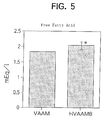
- Fig. 5 is a graph which shows blood free fatty acid levels (mean value) in the mice subjected to swimming after the administration of the composition of the present invention (HVAAM or VAAM). The vertical bars show standard deviation.
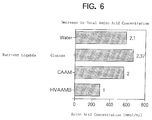
- Fig. 6 is a graph which shows the decrease in blood amino acid levels (mean value) in the mice subjected to swimming after the administration of the composition of the present invention (HVAAM), CAAM, glucose or distilled water.
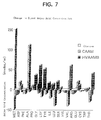
- Fig. 7 is a graph which shows the change in blood amino acid levels (mean value) in the mice subjected to swimming after the administration of the composition of the present invention (HVAAM), CAAM, glucose or distilled water.
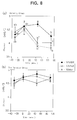
- Fig. 8 is a graph which shows the change with time in blood glucose levels (mean value) in the rats subjected to running for a given time (a) or non-running (b) after the administration of the composition of the present invention (VAAM), CAAM or distilled water.
- VAAM composition of the present invention
- CAAM composition of the present invention
- the vertical bars show standard deviation.
- Fig. 9 is a graph which shows the change with time in blood lactic acid levels (mean value) in the rats subjected to running for a given time (a) or non-running (b) after the administration of the composition of the present invention (VAAM), CAAM or distilled water.
- VAAM composition of the present invention
- CAAM composition of the present invention
- the vertical bars show standard deviation.
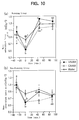
- Fig. 10 is a graph which shows the change with time in blood non-esterified fatty acid levels (mean value) in the rats subjected to running for a given time (a) or non-running (b) after the administration of the composition of the present invention (VAAM), CAAM or distilled water.
- VAAM composition of the present invention
- CAAM composition of the present invention
- the vertical bars show standard deviation.
- Fig. 11 is a graph which shows the change with time in blood amino acid levels in the rats subjected to running for a given time after the administration of the composition of the present invention (VAAM), CAAM or distilled water.
- VAAM composition of the present invention
- the black bars show blood amino acid levels in the VAAM administered group, the striped bars those in the CAAM administered group and the white bars those in the distilled water administered group.
- the composition of blood amino acids is presented for (a) before the administration, (b) 30 minutes after the administration (just before running), (c) after running for 45 minutes and (d) after running for 90 minutes.
- the signal (*) shows significant difference compared with the VAAM administered group (p ⁇ 0.05).
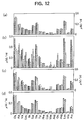
- Fig. 12 is a graph which shows the change with time in blood amino acid levels in the rats not subjected to running for a given time after the administration of the composition of the present invention (VAAM), CAAM or distilled water.
- VAAM composition of the present invention
- the black bars show blood amino acid levels in the VAAM administered group, the striped bars those in the CAAM administered group and the white bars those in the distilled water administered group.
- the composition of blood amino acids is presented for (a) before the administration, (b) 30 minutes after the administration, (c) 75 minutes after the administration and (d) 120 minutes after the administration.
- the signal (*) shows significant difference compared with the VAAM administered group (p ⁇ 0.05).
- the amino acid composition (HVAAM) of the preferred embodiment of the invention comprises the following amino acids at the indicated molar ratio.
- the amino acid composition (HVAAM) of the more preferred embodiment of the invention comprises the following amino acids at the indicated molar ratio.
- the molar ratio of histidine is preferably 6.4 to 11.9 moles, more preferably 7.2 to 11.0 moles and most preferably 8.1 to 10.1 moles, and that of glutamic acid is preferably 5.6 to 10.4 moles, more preferably 6.4 to 9.6 moles and most preferably 7.2 to 8.8 moles.
- Amino acids used in the amino acid composition of the present invention are preferably L-amino acids.
- the amino acid composition of the present invention may comprise, in addition to the amino acids mentioned above, methionine (preferably 0.3 to 0.7 mole%, more preferably 0.4 to 0.6 mole%), aspartic acid (preferably 0.1 to 0.3 mole%), taurine (Tau) (preferably 3 mole% or less), phosphoric acid ethanolamine (P-EtAm) (preferably 2 mole% or less), cystine (Cys) (preferably 0.5 mole% or less), ⁇ -alanine ( ⁇ -Ala) (preferably 1 mole% or less), ⁇ -amino butyric acid (GABA) (preferably 0.5 mole% or less), ornithine (Orn) or ethanolamine (EtAm) (preferably 3 mole% or less), ammonia (NH 3 ) (preferably 2 mole% or less), 1-methyl histidine (1-MeHis) (preferably 3 mole% or less), and
- the amino acid composition of the present invention may easily prepared by mixing the above-mentioned amino acids which are commercially available at the above-mentioned ratio.
- the supplementary liquid of the present invention may easily be prepared by dissolving the amino acid composition in distilled water.
- the amino acid composition of the present invention may usually be in the form of powder for convenience, and be dissolved in distilled water when necessary.
- Temperature at which the composition of the invention is prepared or stored is not limited to specific one but preferably a room temperature or below.
- the composition of the invention is bitter a little but does not show toxicity at all when it is orally administered to mice at the dose of 20 g/kg. It has LD 50 of much higher than 20 g/kg.
- the amino acid composition of the present invention is useful as a medicine or foods such as beverages. If it is used as a medicine, dosage forms are not limited to specific ones and it can be administered in the form of conventional administration such as oral or rectal administration, or other administration such as injection and infusion. If it is orally administered, it may be in the form of a composition having the above formulation or in the form of such formulations as tablets, capsules, powders, troche, and syrups with pharmaceutically acceptable carrier or excipient. However, solid formulations such as tablets and powders sometimes are hard to be adsorbed. Accordingly, oral administration in the form of for example liquid forms is preferred.
- aqueous solution comprising the amino acids and appropriate additives such as salts (e.g., sodium chloride), buffers, chelating agents.
- Injections may be prepared by adding appropriate buffers or isotonizing agents to the amino acid composition and dissolving them in sterilized distilled water, and they may be administered through intravenous drip infusion
- an appropriate flavor may be added to prepare drinkable preparations such as refreshing beverages, powdered drinks (e.g., encapsulated powders prepared by spray drying method, freeze drying method, or microfine powder method), or tablets.
- drinkable preparations such as refreshing beverages, powdered drinks (e.g., encapsulated powders prepared by spray drying method, freeze drying method, or microfine powder method), or tablets.
- composition of the present invention is very low toxic and dose amounts may vary widely. Dose amounts vary depending on administration methods and purposes, and the amounts usually are in the range of from 1 to 12 g/dose, and from 3 to 18 g/day, preferably 2 to 4 g/dose, and from 6 to 12 g/day, as a solid content of the amino acid composition.
- it is used as a supplementary liquid for before, during or after exercise, it is administered one to three times a day in the amount of from 200 to 500 ml per day, as 0.8 to 1.5% by weight solution. If it is used as injection, it is administered in the amount of from 100 to 400 ml, preferably from 150 to 300 ml per dose as 0.8 to 1.5% by weight solution.
- Test Example 1 (Running test in human)
- a blood sample (0.1 ml) was taken, to which the same amount of 1N perchloric acid was added to denature proteins and centrifuged. The supernatant (50 ⁇ l) was taken, to which one ml of a sample diluter for amino acid analysis was added to prepare a sample for the analysis. Amino acid analyzer (HITACHI 835) and ninhydrin reaction were used.
- Test subjects were subjected to running for 90 minutes on a treadmill under the load of 70% VO 2 max (70% of the maximum oxygen intake) at room temperature (24°C) and then they were subjected to bicycle ergometer exercise for 90 minutes. Bloods were taken before and after the exercise and examined for the concentration of amino acids. The results are shown in Table 1.
- Amino acids which decreased with significant difference are alanine, glycine, valine, threonine, leucine, histidine, serine, isoleucine, glutamic acid, etc.
- Tyrosine increased with significant difference.
- Phenylalanine and aspartic acid increased without significant difference.
- Lysine, arginine, methionine cystine and tryptophan decreased without significant difference.
- the amino acids which decreased with significant difference are those having high levels in the VAAM (see Fig. 1).
- A represents amino acid components (mole%) and B the decrease in blood amino acid concentration ( ⁇ mole/l) after exercise shown in Table 1.
- the results show the usefulness of the VAAM as an amino acid composition for exercise.
- Fig. 1 suggests, the concentration (A) of alanine and valine in the VAAM are lower than the decrease (B) in human after exercise.
- histidine and glutamic acid do not have any effect on lipid induction, which was previously reported.
- the decrease (%) in blood concentration of each amino acid after exercise was plotted against molar ratio of the amino acid in the VAAM to give Fig. 2.
- the decrease of histidine, glutamic acid, valine and alanine is 3.5, 2.5, 2.0 and 2.0 times, respectively, as large as that expected from the correlation regression line of Fig. 2.
- the amino acid composition of the present invention is prepared by increasing the contents of these four amino acids in an amino acid composition having the same amino acid composition of the VAAM
- HVAAMA amino acid compositions
- HVAAMB histidine and glutamic acid are relatively low in content and effect of lipid induction, it is possible to obtain the intended objects without the addition of these two amino acids.
- HVAAMB histidine and glutamic acid are relatively low in content and effect of lipid induction, it is possible to obtain the intended objects without the addition of these two amino acids.
- HVAAMB histidine and glutamic acid are relatively low in content and effect of lipid induction, it is possible to obtain the intended objects without the addition of these two amino acids.
- Amino acid Amino acid concentration (molar ratio) VAAM HVAAMA HVAAMB CAAM Pro 18.00 18.00 18.00 8.50 Ala 6.00 12.00 12.00 4.50 Gly 19.10 19.10 19.10 4.50 Val 5.90 11.80 11.80 5.50 Thr 7.20 7.20 7.20 2.50 Leu 6.20 6.20 6.20 8.50 His 2.60 9.10 2.60 2.50 Ser 2.50 2.50 2.50 8.00 Lys 8.60 8.60 8.60 7.00 Ile 4.50 4.50 4.50 5.50 Glu 3.20 8.00 3.20 19.60 Arg 3.50 3.50 3.50 3.00 Met 0.50 0.50 0.50 2.50 Asp 0.20 0.20 0.20 7.50 Phe 3.80 3.80 3.80 4.00 Tyr 6.00 6.00 6.00 5.00 Tip 2.20 2.20 1.20 1.00 Cys - - - 0.40
- the molar ratio of each amino acid may vary within ⁇ 30%, preferably ⁇ 20% more preferably ⁇ 10% of the molar ratio of each amino acid in HVAAMA and HVAAMB in Table 2.
- HVAAM amino acid composition of the present invention
- mice male; ddY
- mice 10 animals for each group, were fasted for 16 hours at room temperature and then orally administered a solution containing 1.8% (by weight) VAAM or HVAAMB in Table 2 at 37.5 ⁇ l per gram body weight.
- the mice were then allowed to rest for 30 minutes.
- mice were subjected to swimming exercise for 30 minutes in a river pool (a cylindrical water bath of 32 cm in diameter and 30 cm in depth) set at constant water flow rate of 8 m/min by a water circulation device and maintained at 35°C. After the swimming exercise, blood lactic acid, blood sugar (glucose) and blood free fatty acid in the mice were assayed. The results are shown in Tables 3, 4 and 5.
- the HVAAMB administered mice showed lower blood lactic acid (Fig. 3), but higher blood sugar (Fig. 4) and higher blood free fatty acid (Fig. 5). The results show that the HVAAM decreases the exercise load caused by the exercise much more than the VAAM
- HVAAM amino acid composition of the present invention
- mice Male; ddY
- mice 10 animals for each group, were fasted for 16 hours at room temperature and then orally administered a solution containing 1.8% (by weight) HVAAMB in Table 2, CAAM (casein amino acid mixture) or glucose, or distilled water at 37.5 ⁇ l per gram body weight. The mice were then allowed to rest for 30 minutes.
- HVAAMB casein amino acid mixture
- glucose or distilled water
- mice were subjected to swimming exercise for 30 minutes in the river pool. After the swimming exercise, the decrease in blood total amino acids in mice are shown in Fig. 6, and the change in blood amino acids for each nutrient administered group against the control group (distilled water administered group) is shown in Fig. 7.
- the HVAAMB administered mice showed lower blood total amino acid levels, i.e., 1/2 of the CAAM administered mice, 1/2.37 of the glucose administered mice, and 1/2.1 of the water administered mice.
- the administration of the HVAAMB decreased slightly blood levels of arginine, histidine, methionine, and aspartic acid. However, it did not decrease so much blood levels of other amino acids, in particular, glycine, lysine, valine, glutamic acid and threonine as compared with the administration of CAAM or glucose.
- the results suggest that oxidation of fatty acid be promoted by the increase of blood non-esterified fatty acid concentration, which result in suppression of the use of the amino acids in TCA cycle.
- Rats Male (Sprague Dawley rats; male)(aged 6 weeks and weighing 190 g (average), 8 animals for each group) were fasted for overnight and then orally administered 0.4 ml of a solution containing 3.8% (by weight) VAAM in Table 2, or CAAM (casein amino acid mixture), or distilled water. The rats were then allowed to rest for 30 minutes at room temperature.
- the rats were subjected to running exercise for 90 minutes on a motor-driven rodent treadmill with an incline of 7° at the rate of 23m/min. Blood samples were taken just before the administration of the test liquid (-30 min), at the start (0 min), half-way through (45 min) and at the end (90 min) of running to determine lactic acid, glucose and non-esterified fatty acid (NEFA). Another group of rats was treated with the same procedures except that they were not subjected to the running exercise. The results are shown in Figs. 8 to 12.
- Figs 8 to 10 show the effects of the administration of the VAAM, CAAM or distilled water to rats on blood glucose levels, blood lactic acid levels and blood non-esterified fatty acid levels.
- (a) represents the running group, and (b) the non-running group.
- (*) represents significant difference (p ⁇ 0.05) as compared with the VAAM administered group.
- the blood lactic acid levels in the CAAM and distilled water administered groups increased significantly (p ⁇ 0.05) after 45 min of running exercise but decreased after 90 min of running.
- the blood lactic acid levels in the VAAM administered group did not significantly (p ⁇ 0.05) change during the test. Any significant (p ⁇ 0.05) change in blood lactic acid levels was not found in the non-running group (Fig. 9(b)).
- the blood non-esterified fatty acid levels decreased in all the groups before the administration (0 min) because of fasting but increased significantly (p ⁇ 0.05) after 45 min of running exercise in the CAAM and VAAM administered groups with the VAAM group being significantly higher that the CAAM group. Any significant change in blood non-esterified fatty acid levels was not found in the non-running group (Fig. 10(b)).
- Figs. 11 and 12 show the effects of the administration of the VAAM, CAAM or distilled water on blood amino acid levels in rats.
- the black bar represents blood amino acid levels in the VAAM administered group
- the striped bar those in the CAAM administered group
- the white bar those in the distilled water administered group.
- Fig. 11 (the running group), (a) represents blood amino acid levels before the administration, (b) those after 30 min of the administration (0 min of running), (c) those after 45 min of running, and (d) those after 90 min of running.
- Fig. 12 (the non-running group), (a) represents blood amino acid levels before the administration, (b) those after 30 min of the administration, (c) those after 45 min of the administration, and (d) those after 120 min of the administration.
- (*) represents significant difference (p ⁇ 0.05) as compared with the VAAM administered group.
- the blood levels of glycine, alanine, valine, threonine, tyrosine, lysine and proline in the VAAM administered group were significantly higher than those of the water administered group.
- the blood levels of glycine, threonine, tyrosine and proline in the VAAM administered group were significantly higher than those of the CAAM administered group.
- the blood levels of valine and lysine in the CAAM administered group were significantly higher than those of the water administered group, but the blood levels of any amino acids in the CAAM administered group were not higher than those of the VAAM administered group.
- the levels of alanine and lysine did not increase in the VAAM administered group (Fig. 12(c)).
- the level of tyrosine in the non-running group was lower than that in running group.
- the level of tyrosine in the running group was higher than that in the non-running group.
- the levels of valine, leucine, serine, threonine, tyrosine and lysine in the VAAM administered group decreased little as compared with those after 45 min of running (Fig. 11(d)).
- the levels of threonine, tyrosine, lysine and proline in the VAAM administered group were significantly higher than those after 90 min of running in the water administered group.
- the levels of threonine and proline in the VAAM administered group were higher than those in the running group after 120 min of the administration of distilled water.
- the amino acid composition of the present invention supplements blood amino acids reduced during hard exercise and shows effects to improve motor function, to reduce fatigue after exercise and to help recovery from the fatigue.
- the administration of the composition of the present invention restrains the consumption of amino acids caused by exercise and the induction of fatigue by exercise.
Landscapes
- Health & Medical Sciences (AREA)
- Chemical & Material Sciences (AREA)
- Medicinal Chemistry (AREA)
- Pharmacology & Pharmacy (AREA)
- Life Sciences & Earth Sciences (AREA)
- Animal Behavior & Ethology (AREA)
- General Health & Medical Sciences (AREA)
- Public Health (AREA)
- Veterinary Medicine (AREA)
- Epidemiology (AREA)
- Diabetes (AREA)
- Nuclear Medicine, Radiotherapy & Molecular Imaging (AREA)
- Engineering & Computer Science (AREA)
- Hematology (AREA)
- Obesity (AREA)
- Chemical Kinetics & Catalysis (AREA)
- General Chemical & Material Sciences (AREA)
- Bioinformatics & Cheminformatics (AREA)
- Organic Chemistry (AREA)
- Nutrition Science (AREA)
- Acyclic And Carbocyclic Compounds In Medicinal Compositions (AREA)
- Coloring Foods And Improving Nutritive Qualities (AREA)
- Pharmaceuticals Containing Other Organic And Inorganic Compounds (AREA)
- Fertilizers (AREA)
- Organic Low-Molecular-Weight Compounds And Preparation Thereof (AREA)
Applications Claiming Priority (4)
| Application Number | Priority Date | Filing Date | Title |
|---|---|---|---|
| JP154796 | 1996-01-09 | ||
| JP154796 | 1996-01-09 | ||
| JP1547/96 | 1996-01-09 | ||
| PCT/JP1997/000028 WO1997025060A1 (en) | 1996-01-09 | 1997-01-09 | Amino acid compositions |
Publications (3)
| Publication Number | Publication Date |
|---|---|
| EP0873754A1 true EP0873754A1 (de) | 1998-10-28 |
| EP0873754A4 EP0873754A4 (de) | 1999-03-24 |
| EP0873754B1 EP0873754B1 (de) | 2003-07-30 |
Family
ID=11504556
Family Applications (1)
| Application Number | Title | Priority Date | Filing Date |
|---|---|---|---|
| EP97900113A Expired - Lifetime EP0873754B1 (de) | 1996-01-09 | 1997-01-09 | Aminosäurezusammensetzungen |
Country Status (7)
| Country | Link |
|---|---|
| US (1) | US6224861B1 (de) |
| EP (1) | EP0873754B1 (de) |
| KR (1) | KR19990077107A (de) |
| AT (1) | ATE245999T1 (de) |
| CA (1) | CA2242646C (de) |
| DE (1) | DE69723812D1 (de) |
| WO (1) | WO1997025060A1 (de) |
Cited By (6)
| Publication number | Priority date | Publication date | Assignee | Title |
|---|---|---|---|---|
| EP0983726A1 (de) * | 1998-08-24 | 2000-03-08 | Riken | Zusammensetzung, welche Aminosäuren und Trehalose enthält |
| EP1228706A1 (de) * | 2001-01-24 | 2002-08-07 | Sportmedizin Team Vertriebs GmbH | Präparat für Bindegewebsaufbau und zur Konditionierung bei hoher körperlicher Beanspruchung |
| EP1210940A3 (de) * | 2000-12-04 | 2003-05-07 | Yaizu Suisankagaku Industry Co., Ltd. | Zusammensetzung gegen Ermüdung enthaltend eine Imidazolverbindung |
| WO2004062656A1 (en) * | 2003-01-10 | 2004-07-29 | Universiteit Van Maastricht | Compositions and methods for improving the condition of patients suffering from copd and other diseases |
| EP1413209A4 (de) * | 2001-07-31 | 2004-10-13 | Ajinomoto Kk | Leistungssteigernde nahrungsmittelzusammensetzungen |
| WO2007084059A1 (en) * | 2006-01-20 | 2007-07-26 | Bjoerk Inger | A food composition comprising amino acids |
Families Citing this family (18)
| Publication number | Priority date | Publication date | Assignee | Title |
|---|---|---|---|---|
| US6506552B2 (en) | 1998-08-24 | 2003-01-14 | Meiji Dairies Corporation | Amino acid-trehalose composition |
| US20040033252A1 (en) * | 2000-10-27 | 2004-02-19 | Takanobu Yamamoto | Agents for recoverying from or preventing fatigue in the central nerve system and foods for recovering from or preventing fatigue |
| JP4128524B2 (ja) * | 2001-06-08 | 2008-07-30 | 独立行政法人理化学研究所 | 体温上昇性アミノ酸群飲食用及び医療用の剤 |
| GB0207830D0 (en) * | 2002-04-04 | 2002-05-15 | Mars Uk Ltd | Animal composition |
| JP2004123564A (ja) * | 2002-09-30 | 2004-04-22 | Inst Of Physical & Chemical Res | 中枢機能改善用アミノ酸組成物 |
| JPWO2005027898A1 (ja) * | 2003-09-19 | 2007-11-15 | 独立行政法人理化学研究所 | アミノ酸組成物 |
| JP4641942B2 (ja) | 2003-10-03 | 2011-03-02 | フェーイレン・ナムローゼ・フェンノートシャップ | ヒトおよび動物におけるigf−1血清レベルの低下と関連した種々の疾患状態の治療用の治療用組成物の製造のための血清中igf−1レベルを増加できる化合物の使用 |
| US20080114067A1 (en) * | 2005-01-31 | 2008-05-15 | Takanobu Yamamoto | Composition for Recovery From or Prevention of Central Nervous System Fatigue |
| WO2007041643A1 (en) * | 2005-10-03 | 2007-04-12 | University Of Tennessee Research Foundation | Dietary calcium for reducing the production of reactive oxygen species |
| US20070248648A1 (en) * | 2006-04-20 | 2007-10-25 | Next Proteins, Inc. | High protein, fatigue reducing powder |
| CA2679300C (en) * | 2007-02-28 | 2015-10-06 | Meiji Dairies Corporation | Amino acid composition |
| CN104922115A (zh) * | 2007-10-31 | 2015-09-23 | 株式会社明治 | 含有氨基酸组合物的抗疲劳剂 |
| RU2631597C2 (ru) | 2011-07-15 | 2017-09-25 | Нусерт Сайенсиз, Инк. | Композиции и способы модулирования метаболических путей |
| JP6431670B2 (ja) | 2011-08-08 | 2018-11-28 | 味の素株式会社 | 筋肉疲労の回復を促進するためのアミノ酸含有組成物 |
| US9198454B2 (en) | 2012-03-08 | 2015-12-01 | Nusirt Sciences, Inc. | Compositions, methods, and kits for regulating energy metabolism |
| SG10201709195TA (en) | 2012-11-13 | 2017-12-28 | Nusirt Sciences Inc | Compositions and methods for increasing energy metabolism |
| CN105228627B (zh) | 2013-03-15 | 2018-07-13 | 纽斯尔特科学公司 | 亮氨酸和烟酸降低脂质水平 |
| KR20160119863A (ko) | 2014-02-27 | 2016-10-14 | 뉴서트 사이언시스, 인크. | 간 지방증의 감소 또는 예방을 위한 조성물 및 방법 |
Family Cites Families (5)
| Publication number | Priority date | Publication date | Assignee | Title |
|---|---|---|---|---|
| JP2518692B2 (ja) * | 1989-06-14 | 1996-07-24 | 理化学研究所 | 筋力持続剤,滋養強壮剤,輸液用剤,栄養補給剤,疲労回復剤及び乳酸生成調節剤 |
| JP2873493B2 (ja) * | 1990-08-09 | 1999-03-24 | 理化学研究所 | 血糖調節剤 |
| JP3096052B2 (ja) * | 1990-09-11 | 2000-10-10 | 理化学研究所 | 脂質代謝調節剤 |
| JP3128318B2 (ja) | 1992-03-18 | 2001-01-29 | 株式会社クラレ | カチオン染料可染性ポリエステル極細繊維の製造方法 |
| JP3617102B2 (ja) * | 1995-01-27 | 2005-02-02 | 味の素株式会社 | ヒト筋肉疲労の早期回復効果を有するアミノ酸栄養組成物 |
-
1997
- 1997-01-09 AT AT97900113T patent/ATE245999T1/de not_active IP Right Cessation
- 1997-01-09 EP EP97900113A patent/EP0873754B1/de not_active Expired - Lifetime
- 1997-01-09 DE DE69723812T patent/DE69723812D1/de not_active Expired - Lifetime
- 1997-01-09 WO PCT/JP1997/000028 patent/WO1997025060A1/ja not_active Ceased
- 1997-01-09 CA CA002242646A patent/CA2242646C/en not_active Expired - Fee Related
- 1997-01-09 KR KR1019980705243A patent/KR19990077107A/ko not_active Ceased
-
1998
- 1998-07-09 US US09/112,354 patent/US6224861B1/en not_active Expired - Lifetime
Non-Patent Citations (4)
| Title |
|---|
| DATABASE BIOSIS BIOSCIENCES INFORMATION SERVICE, PHILADELPHIA, PA, US AN: 1995: 340637, T. ABE ET AL : "Effects of Vespa amino acid mixture (VAAM) isolated from hornet larval salive and modified VAAM on endurance exercise in swimming mice: Improvement in performance and changes of blood lactate and glucose" XP002090088 * |
| DATABASE CHEMABS CHEMICAL ABSTRACTS SERVICE, COLUMBUS, OHIO, US AN: 122:287556, TAKASHI ABE: "Effect of Vespa amino acid mixture from hornet larval saliva on endurance exercise" XP002090087 * |
| DATABASE CHEMABS CHEMICAL ABSTRACTS SERVICE, COLUMBUS, OHIO, US AN: 127:16965, H. TSUCHITA ET AL: "Effects of a Vespa amino acid mixture identical to hornet larval saliva on the blood biochemical indices of running rats" XP002090086 * |
| See also references of WO9725060A1 * |
Cited By (7)
| Publication number | Priority date | Publication date | Assignee | Title |
|---|---|---|---|---|
| EP0983726A1 (de) * | 1998-08-24 | 2000-03-08 | Riken | Zusammensetzung, welche Aminosäuren und Trehalose enthält |
| EP1210940A3 (de) * | 2000-12-04 | 2003-05-07 | Yaizu Suisankagaku Industry Co., Ltd. | Zusammensetzung gegen Ermüdung enthaltend eine Imidazolverbindung |
| US6855727B2 (en) | 2000-12-04 | 2005-02-15 | Yaizu Suisankagaku Industry Co., Ltd. | Muscular fatigue-controlling composition and method for providing muscular fatigue-controlling effect |
| EP1228706A1 (de) * | 2001-01-24 | 2002-08-07 | Sportmedizin Team Vertriebs GmbH | Präparat für Bindegewebsaufbau und zur Konditionierung bei hoher körperlicher Beanspruchung |
| EP1413209A4 (de) * | 2001-07-31 | 2004-10-13 | Ajinomoto Kk | Leistungssteigernde nahrungsmittelzusammensetzungen |
| WO2004062656A1 (en) * | 2003-01-10 | 2004-07-29 | Universiteit Van Maastricht | Compositions and methods for improving the condition of patients suffering from copd and other diseases |
| WO2007084059A1 (en) * | 2006-01-20 | 2007-07-26 | Bjoerk Inger | A food composition comprising amino acids |
Also Published As
| Publication number | Publication date |
|---|---|
| ATE245999T1 (de) | 2003-08-15 |
| DE69723812D1 (de) | 2003-09-04 |
| EP0873754A4 (de) | 1999-03-24 |
| US6224861B1 (en) | 2001-05-01 |
| WO1997025060A1 (en) | 1997-07-17 |
| KR19990077107A (ko) | 1999-10-25 |
| CA2242646A1 (en) | 1997-07-17 |
| EP0873754B1 (de) | 2003-07-30 |
| CA2242646C (en) | 2005-10-18 |
Similar Documents
| Publication | Publication Date | Title |
|---|---|---|
| EP0873754B1 (de) | Aminosäurezusammensetzungen | |
| US8012926B2 (en) | Amino acid composition and supplementary liquid containing the same | |
| JP2873497B2 (ja) | 脂質代謝調節剤 | |
| EP0983726B1 (de) | Zusammensetzung, welche Aminosäuren und Trehalose enthält | |
| Freund et al. | Chronic hepatic encephalopathy: Long-term therapy with a branched-chain amino-acid-enriched elemental diet | |
| JP2518692B2 (ja) | 筋力持続剤,滋養強壮剤,輸液用剤,栄養補給剤,疲労回復剤及び乳酸生成調節剤 | |
| JP3814683B2 (ja) | アミノ酸組成物 | |
| US20060128778A1 (en) | Amino acid composition for improving central functions | |
| US6506552B2 (en) | Amino acid-trehalose composition | |
| JP2873493B2 (ja) | 血糖調節剤 | |
| Hamada et al. | Effect of amino acids and glucose on exercise-induced gut and skeletal muscle proteolysis in dogs | |
| JP4009682B2 (ja) | アドレナリン及びノルアドレナリン分泌促進組成物 | |
| EP1674092A1 (de) | Aminosäure-zusammensetzungen | |
| HK1075608A (en) | Amino acid compositions for improving central functions | |
| HK1084896A (en) | Amino acid composition and fluid replacement | |
| HK1026345B (en) | Amino acid-trehalose composition | |
| HK1084896B (en) | Amino acid composition and fluid replacement |
Legal Events
| Date | Code | Title | Description |
|---|---|---|---|
| PUAI | Public reference made under article 153(3) epc to a published international application that has entered the european phase |
Free format text: ORIGINAL CODE: 0009012 |
|
| 17P | Request for examination filed |
Effective date: 19980810 |
|
| AK | Designated contracting states |
Kind code of ref document: A1 Designated state(s): AT BE DE ES FR GB IT |
|
| A4 | Supplementary search report drawn up and despatched |
Effective date: 19990204 |
|
| AK | Designated contracting states |
Kind code of ref document: A4 Designated state(s): AT BE DE ES FR GB IT |
|
| RAP1 | Party data changed (applicant data changed or rights of an application transferred) |
Owner name: MEIJI MILK PRODUCTS COMPANY LIMITED Owner name: RIKEN |
|
| 17Q | First examination report despatched |
Effective date: 20010702 |
|
| GRAH | Despatch of communication of intention to grant a patent |
Free format text: ORIGINAL CODE: EPIDOS IGRA |
|
| RAP1 | Party data changed (applicant data changed or rights of an application transferred) |
Owner name: MEIJI DAIRIES CORPORATION Owner name: RIKEN |
|
| RIC1 | Information provided on ipc code assigned before grant |
Ipc: 7A 61P 3/00 B Ipc: 7A 61K 31/40 B Ipc: 7A 61K 31/395 B Ipc: 7A 61K 31/195 B Ipc: 7A 61K 38/48 A |
|
| RAP1 | Party data changed (applicant data changed or rights of an application transferred) |
Owner name: MEIJI DAIRIES CORPORATION Owner name: RIKEN |
|
| GRAA | (expected) grant |
Free format text: ORIGINAL CODE: 0009210 |
|
| GRAH | Despatch of communication of intention to grant a patent |
Free format text: ORIGINAL CODE: EPIDOS IGRA |
|
| AK | Designated contracting states |
Designated state(s): AT BE DE ES FR GB IT |
|
| PG25 | Lapsed in a contracting state [announced via postgrant information from national office to epo] |
Ref country code: IT Free format text: LAPSE BECAUSE OF FAILURE TO SUBMIT A TRANSLATION OF THE DESCRIPTION OR TO PAY THE FEE WITHIN THE PRE;WARNING: LAPSES OF ITALIAN PATENTS WITH EFFECTIVE DATE BEFORE 2007 MAY HAVE OCCURRED AT ANY TIME BEFORE 2007. THE CORRECT EFFECTIVE DATE MAY BE DIFFERENT FROM THE ONE RECORDED.SCRIBED TIME-LIMIT Effective date: 20030730 Ref country code: FR Free format text: LAPSE BECAUSE OF NON-PAYMENT OF DUE FEES Effective date: 20030730 Ref country code: AT Free format text: LAPSE BECAUSE OF FAILURE TO SUBMIT A TRANSLATION OF THE DESCRIPTION OR TO PAY THE FEE WITHIN THE PRESCRIBED TIME-LIMIT Effective date: 20030730 |
|
| REG | Reference to a national code |
Ref country code: GB Ref legal event code: FG4D |
|
| REF | Corresponds to: |
Ref document number: 69723812 Country of ref document: DE Date of ref document: 20030904 Kind code of ref document: P |
|
| PG25 | Lapsed in a contracting state [announced via postgrant information from national office to epo] |
Ref country code: DE Free format text: LAPSE BECAUSE OF FAILURE TO SUBMIT A TRANSLATION OF THE DESCRIPTION OR TO PAY THE FEE WITHIN THE PRESCRIBED TIME-LIMIT Effective date: 20031031 |
|
| PG25 | Lapsed in a contracting state [announced via postgrant information from national office to epo] |
Ref country code: ES Free format text: LAPSE BECAUSE OF FAILURE TO SUBMIT A TRANSLATION OF THE DESCRIPTION OR TO PAY THE FEE WITHIN THE PRESCRIBED TIME-LIMIT Effective date: 20031110 |
|
| PG25 | Lapsed in a contracting state [announced via postgrant information from national office to epo] |
Ref country code: GB Free format text: LAPSE BECAUSE OF NON-PAYMENT OF DUE FEES Effective date: 20040109 |
|
| PLBE | No opposition filed within time limit |
Free format text: ORIGINAL CODE: 0009261 |
|
| STAA | Information on the status of an ep patent application or granted ep patent |
Free format text: STATUS: NO OPPOSITION FILED WITHIN TIME LIMIT |
|
| 26N | No opposition filed |
Effective date: 20040504 |
|
| EN | Fr: translation not filed | ||
| GBPC | Gb: european patent ceased through non-payment of renewal fee |
Effective date: 20040109 |
|
| PGFP | Annual fee paid to national office [announced via postgrant information from national office to epo] |
Ref country code: BE Payment date: 20130114 Year of fee payment: 17 |
|
| BERE | Be: lapsed |
Owner name: MEIJI DAIRIES CORP. Effective date: 20140131 |
|
| PG25 | Lapsed in a contracting state [announced via postgrant information from national office to epo] |
Ref country code: BE Free format text: LAPSE BECAUSE OF NON-PAYMENT OF DUE FEES Effective date: 20140131 |