EP0874900B1 - Verbesserte nukleinsäuren, welche für eine chimäre glycosyltransferase kodieren - Google Patents
Verbesserte nukleinsäuren, welche für eine chimäre glycosyltransferase kodieren Download PDFInfo
- Publication number
- EP0874900B1 EP0874900B1 EP97932659A EP97932659A EP0874900B1 EP 0874900 B1 EP0874900 B1 EP 0874900B1 EP 97932659 A EP97932659 A EP 97932659A EP 97932659 A EP97932659 A EP 97932659A EP 0874900 B1 EP0874900 B1 EP 0874900B1
- Authority
- EP
- European Patent Office
- Prior art keywords
- nucleic acid
- glycosyltransferase
- cell
- chimeric
- localisation signal
- Prior art date
- Legal status (The legal status is an assumption and is not a legal conclusion. Google has not performed a legal analysis and makes no representation as to the accuracy of the status listed.)
- Expired - Lifetime
Links
- 108700023372 Glycosyltransferases Proteins 0.000 title claims abstract description 85
- 150000007523 nucleic acids Chemical class 0.000 title claims abstract description 82
- 108020004707 nucleic acids Proteins 0.000 title claims abstract description 62
- 102000039446 nucleic acids Human genes 0.000 title claims abstract description 62
- 102000051366 Glycosyltransferases Human genes 0.000 title claims abstract description 58
- 210000000056 organ Anatomy 0.000 claims abstract description 24
- 108060003306 Galactosyltransferase Proteins 0.000 claims description 64
- 102000030902 Galactosyltransferase Human genes 0.000 claims description 63
- 102000004190 Enzymes Human genes 0.000 claims description 42
- 108090000790 Enzymes Proteins 0.000 claims description 42
- 230000004807 localization Effects 0.000 claims description 39
- 230000014509 gene expression Effects 0.000 claims description 31
- 102000004357 Transferases Human genes 0.000 claims description 29
- 108090000992 Transferases Proteins 0.000 claims description 29
- 230000003197 catalytic effect Effects 0.000 claims description 29
- 150000001720 carbohydrates Chemical class 0.000 claims description 27
- 241000894007 species Species 0.000 claims description 26
- 241000282414 Homo sapiens Species 0.000 claims description 23
- 238000000034 method Methods 0.000 claims description 19
- 239000000758 substrate Substances 0.000 claims description 18
- 108091028043 Nucleic acid sequence Proteins 0.000 claims description 16
- 101000893710 Homo sapiens Galactoside alpha-(1,2)-fucosyltransferase 2 Proteins 0.000 claims description 14
- 230000001177 retroviral effect Effects 0.000 claims description 14
- 102100040837 Galactoside alpha-(1,2)-fucosyltransferase 2 Human genes 0.000 claims description 13
- 230000001086 cytosolic effect Effects 0.000 claims description 13
- 241001465754 Metazoa Species 0.000 claims description 7
- 238000004806 packaging method and process Methods 0.000 claims description 7
- 230000009261 transgenic effect Effects 0.000 claims description 7
- 230000013595 glycosylation Effects 0.000 claims description 6
- 238000006206 glycosylation reaction Methods 0.000 claims description 6
- 241000699670 Mus sp. Species 0.000 claims description 5
- 241000288906 Primates Species 0.000 claims description 5
- 241000124008 Mammalia Species 0.000 claims description 4
- 102000003838 Sialyltransferases Human genes 0.000 claims description 4
- 108090000141 Sialyltransferases Proteins 0.000 claims description 4
- 241000282887 Suidae Species 0.000 claims description 4
- 239000013604 expression vector Substances 0.000 claims description 4
- 241000282472 Canis lupus familiaris Species 0.000 claims description 3
- 241000206602 Eukaryota Species 0.000 claims description 2
- 241000283973 Oryctolagus cuniculus Species 0.000 claims description 2
- 241000700159 Rattus Species 0.000 claims description 2
- 125000002924 primary amino group Chemical group [H]N([H])* 0.000 claims description 2
- 230000001131 transforming effect Effects 0.000 claims description 2
- 241000894006 Bacteria Species 0.000 claims 1
- 239000013613 expression plasmid Substances 0.000 claims 1
- 238000000338 in vitro Methods 0.000 claims 1
- 238000002054 transplantation Methods 0.000 abstract description 8
- 238000004519 manufacturing process Methods 0.000 abstract description 3
- 210000004027 cell Anatomy 0.000 description 114
- 102000045442 glycosyltransferase activity proteins Human genes 0.000 description 27
- 108700014210 glycosyltransferase activity proteins Proteins 0.000 description 27
- QIGJYVCQYDKYDW-SDOYDPJRSA-N alpha-D-galactosyl-(1->3)-D-galactose Chemical compound O[C@@H]1[C@@H](O)[C@@H](O)[C@@H](CO)O[C@@H]1O[C@H]1[C@@H](O)[C@@H](CO)OC(O)[C@@H]1O QIGJYVCQYDKYDW-SDOYDPJRSA-N 0.000 description 20
- 108020004635 Complementary DNA Proteins 0.000 description 19
- 235000014633 carbohydrates Nutrition 0.000 description 19
- 210000005220 cytoplasmic tail Anatomy 0.000 description 18
- 108020004414 DNA Proteins 0.000 description 17
- 238000003752 polymerase chain reaction Methods 0.000 description 17
- 238000010186 staining Methods 0.000 description 17
- 239000000126 substance Substances 0.000 description 17
- 108090000623 proteins and genes Proteins 0.000 description 16
- 108090001090 Lectins Proteins 0.000 description 13
- 102000004856 Lectins Human genes 0.000 description 13
- 239000002523 lectin Substances 0.000 description 13
- 230000000694 effects Effects 0.000 description 12
- KFEUJDWYNGMDBV-UHFFFAOYSA-N (N-Acetyl)-glucosamin-4-beta-galaktosid Natural products OC1C(NC(=O)C)C(O)OC(CO)C1OC1C(O)C(O)C(O)C(CO)O1 KFEUJDWYNGMDBV-UHFFFAOYSA-N 0.000 description 11
- KFEUJDWYNGMDBV-LODBTCKLSA-N N-acetyllactosamine Chemical compound O[C@@H]1[C@@H](NC(=O)C)[C@H](O)O[C@H](CO)[C@H]1O[C@H]1[C@H](O)[C@@H](O)[C@@H](O)[C@@H](CO)O1 KFEUJDWYNGMDBV-LODBTCKLSA-N 0.000 description 11
- HESSGHHCXGBPAJ-UHFFFAOYSA-N N-acetyllactosamine Natural products CC(=O)NC(C=O)C(O)C(C(O)CO)OC1OC(CO)C(O)C(O)C1O HESSGHHCXGBPAJ-UHFFFAOYSA-N 0.000 description 11
- 150000001413 amino acids Chemical group 0.000 description 11
- 102000004169 proteins and genes Human genes 0.000 description 11
- 239000002299 complementary DNA Substances 0.000 description 10
- 238000001890 transfection Methods 0.000 description 8
- 239000013612 plasmid Substances 0.000 description 7
- 108091032973 (ribonucleotides)n+m Proteins 0.000 description 6
- LFQSCWFLJHTTHZ-UHFFFAOYSA-N Ethanol Chemical compound CCO LFQSCWFLJHTTHZ-UHFFFAOYSA-N 0.000 description 6
- 239000002773 nucleotide Substances 0.000 description 6
- 125000003729 nucleotide group Chemical group 0.000 description 6
- NEZJDVYDSZTRFS-YBXAARCKSA-N Phenylgalactoside Chemical compound O[C@@H]1[C@@H](O)[C@@H](O)[C@@H](CO)O[C@H]1OC1=CC=CC=C1 NEZJDVYDSZTRFS-YBXAARCKSA-N 0.000 description 5
- 238000003556 assay Methods 0.000 description 5
- 210000002889 endothelial cell Anatomy 0.000 description 5
- 238000002474 experimental method Methods 0.000 description 5
- 230000014759 maintenance of location Effects 0.000 description 5
- 210000001519 tissue Anatomy 0.000 description 5
- 241000283690 Bos taurus Species 0.000 description 4
- 241000282693 Cercopithecidae Species 0.000 description 4
- 230000025545 Golgi localization Effects 0.000 description 4
- 108020001778 catalytic domains Proteins 0.000 description 4
- 230000006870 function Effects 0.000 description 4
- 239000000047 product Substances 0.000 description 4
- 238000010561 standard procedure Methods 0.000 description 4
- 230000004083 survival effect Effects 0.000 description 4
- 239000013598 vector Substances 0.000 description 4
- 241000283707 Capra Species 0.000 description 3
- 229910021380 Manganese Chloride Inorganic materials 0.000 description 3
- GLFNIEUTAYBVOC-UHFFFAOYSA-L Manganese chloride Chemical compound Cl[Mn]Cl GLFNIEUTAYBVOC-UHFFFAOYSA-L 0.000 description 3
- 241001529936 Murinae Species 0.000 description 3
- 241001494479 Pecora Species 0.000 description 3
- 108010076504 Protein Sorting Signals Proteins 0.000 description 3
- 238000006243 chemical reaction Methods 0.000 description 3
- 239000000284 extract Substances 0.000 description 3
- MHMNJMPURVTYEJ-UHFFFAOYSA-N fluorescein-5-isothiocyanate Chemical compound O1C(=O)C2=CC(N=C=S)=CC=C2C21C1=CC=C(O)C=C1OC1=CC(O)=CC=C21 MHMNJMPURVTYEJ-UHFFFAOYSA-N 0.000 description 3
- 238000000799 fluorescence microscopy Methods 0.000 description 3
- 210000002288 golgi apparatus Anatomy 0.000 description 3
- 210000000987 immune system Anatomy 0.000 description 3
- 238000010166 immunofluorescence Methods 0.000 description 3
- 239000011565 manganese chloride Substances 0.000 description 3
- 238000000926 separation method Methods 0.000 description 3
- 101710098620 Alpha-1,2-fucosyltransferase Proteins 0.000 description 2
- 241000282994 Cervidae Species 0.000 description 2
- HEDRZPFGACZZDS-UHFFFAOYSA-N Chloroform Chemical compound ClC(Cl)Cl HEDRZPFGACZZDS-UHFFFAOYSA-N 0.000 description 2
- 241000282412 Homo Species 0.000 description 2
- 241000699666 Mus <mouse, genus> Species 0.000 description 2
- 241000699660 Mus musculus Species 0.000 description 2
- 238000000636 Northern blotting Methods 0.000 description 2
- 239000004677 Nylon Substances 0.000 description 2
- 108700019146 Transgenes Proteins 0.000 description 2
- 239000011543 agarose gel Substances 0.000 description 2
- 238000004458 analytical method Methods 0.000 description 2
- 238000005349 anion exchange Methods 0.000 description 2
- 239000000427 antigen Substances 0.000 description 2
- 230000015572 biosynthetic process Effects 0.000 description 2
- 238000012761 co-transfection Methods 0.000 description 2
- 230000024203 complement activation Effects 0.000 description 2
- 230000000295 complement effect Effects 0.000 description 2
- 238000010276 construction Methods 0.000 description 2
- 238000010586 diagram Methods 0.000 description 2
- OGGXGZAMXPVRFZ-UHFFFAOYSA-M dimethylarsinate Chemical compound C[As](C)([O-])=O OGGXGZAMXPVRFZ-UHFFFAOYSA-M 0.000 description 2
- 210000002257 embryonic structure Anatomy 0.000 description 2
- 239000012634 fragment Substances 0.000 description 2
- 230000037433 frameshift Effects 0.000 description 2
- 239000000499 gel Substances 0.000 description 2
- 238000001415 gene therapy Methods 0.000 description 2
- 230000008105 immune reaction Effects 0.000 description 2
- 230000001506 immunosuppresive effect Effects 0.000 description 2
- 238000010348 incorporation Methods 0.000 description 2
- 230000010354 integration Effects 0.000 description 2
- 235000002867 manganese chloride Nutrition 0.000 description 2
- 239000012528 membrane Substances 0.000 description 2
- 238000000520 microinjection Methods 0.000 description 2
- 229920001778 nylon Polymers 0.000 description 2
- 108090000765 processed proteins & peptides Proteins 0.000 description 2
- 230000009885 systemic effect Effects 0.000 description 2
- 230000002123 temporal effect Effects 0.000 description 2
- 238000012546 transfer Methods 0.000 description 2
- 238000011830 transgenic mouse model Methods 0.000 description 2
- XLYOFNOQVPJJNP-UHFFFAOYSA-N water Substances O XLYOFNOQVPJJNP-UHFFFAOYSA-N 0.000 description 2
- 238000002689 xenotransplantation Methods 0.000 description 2
- 108020005345 3' Untranslated Regions Proteins 0.000 description 1
- 108020003589 5' Untranslated Regions Proteins 0.000 description 1
- 108091003079 Bovine Serum Albumin Proteins 0.000 description 1
- 238000009010 Bradford assay Methods 0.000 description 1
- 241000282832 Camelidae Species 0.000 description 1
- 241000282836 Camelus dromedarius Species 0.000 description 1
- 241000282465 Canis Species 0.000 description 1
- 108020004705 Codon Proteins 0.000 description 1
- SHZGCJCMOBCMKK-UHFFFAOYSA-N D-mannomethylose Natural products CC1OC(O)C(O)C(O)C1O SHZGCJCMOBCMKK-UHFFFAOYSA-N 0.000 description 1
- 108010008286 DNA nucleotidylexotransferase Proteins 0.000 description 1
- 238000001712 DNA sequencing Methods 0.000 description 1
- 102100029764 DNA-directed DNA/RNA polymerase mu Human genes 0.000 description 1
- 229920002307 Dextran Polymers 0.000 description 1
- 241000283086 Equidae Species 0.000 description 1
- 241000283073 Equus caballus Species 0.000 description 1
- PNNNRSAQSRJVSB-SLPGGIOYSA-N Fucose Natural products C[C@H](O)[C@@H](O)[C@H](O)[C@H](O)C=O PNNNRSAQSRJVSB-SLPGGIOYSA-N 0.000 description 1
- 241000219726 Griffonia simplicifolia Species 0.000 description 1
- 241001272567 Hominoidea Species 0.000 description 1
- 108010031792 IGF Type 2 Receptor Proteins 0.000 description 1
- 206010062016 Immunosuppression Diseases 0.000 description 1
- SHZGCJCMOBCMKK-DHVFOXMCSA-N L-fucopyranose Chemical compound C[C@@H]1OC(O)[C@@H](O)[C@H](O)[C@@H]1O SHZGCJCMOBCMKK-DHVFOXMCSA-N 0.000 description 1
- PNIWLNAGKUGXDO-UHFFFAOYSA-N Lactosamine Natural products OC1C(N)C(O)OC(CO)C1OC1C(O)C(O)C(O)C(CO)O1 PNIWLNAGKUGXDO-UHFFFAOYSA-N 0.000 description 1
- 239000007993 MOPS buffer Substances 0.000 description 1
- 102000019218 Mannose-6-phosphate receptors Human genes 0.000 description 1
- 108010062010 N-Acetylmuramoyl-L-alanine Amidase Proteins 0.000 description 1
- 108020004485 Nonsense Codon Proteins 0.000 description 1
- 108091005461 Nucleic proteins Proteins 0.000 description 1
- 206010053159 Organ failure Diseases 0.000 description 1
- 101000911993 Ovis aries CD59 glycoprotein Proteins 0.000 description 1
- 241000288935 Platyrrhini Species 0.000 description 1
- 102100040252 Protein ERGIC-53 Human genes 0.000 description 1
- 101710173608 Protein ERGIC-53 Proteins 0.000 description 1
- 108091008109 Pseudogenes Proteins 0.000 description 1
- 241000283984 Rodentia Species 0.000 description 1
- 241000282849 Ruminantia Species 0.000 description 1
- 238000002105 Southern blotting Methods 0.000 description 1
- 108091081024 Start codon Proteins 0.000 description 1
- 241000282898 Sus scrofa Species 0.000 description 1
- 229920004890 Triton X-100 Polymers 0.000 description 1
- 239000013504 Triton X-100 Substances 0.000 description 1
- HSCJRCZFDFQWRP-ABVWGUQPSA-N UDP-alpha-D-galactose Chemical compound O[C@@H]1[C@@H](O)[C@@H](O)[C@@H](CO)O[C@@H]1OP(O)(=O)OP(O)(=O)OC[C@@H]1[C@@H](O)[C@@H](O)[C@H](N2C(NC(=O)C=C2)=O)O1 HSCJRCZFDFQWRP-ABVWGUQPSA-N 0.000 description 1
- 240000003864 Ulex europaeus Species 0.000 description 1
- 235000010730 Ulex europaeus Nutrition 0.000 description 1
- 108010041865 Ulex europaeus lectins Proteins 0.000 description 1
- HSCJRCZFDFQWRP-UHFFFAOYSA-N Uridindiphosphoglukose Natural products OC1C(O)C(O)C(CO)OC1OP(O)(=O)OP(O)(=O)OCC1C(O)C(O)C(N2C(NC(=O)C=C2)=O)O1 HSCJRCZFDFQWRP-UHFFFAOYSA-N 0.000 description 1
- 206010047115 Vasculitis Diseases 0.000 description 1
- 230000001154 acute effect Effects 0.000 description 1
- 108010070113 alpha-1,3-mannosyl-glycoprotein beta-1,2-N-acetylglucosaminyltransferase I Proteins 0.000 description 1
- 230000004075 alteration Effects 0.000 description 1
- 238000004873 anchoring Methods 0.000 description 1
- 230000003466 anti-cipated effect Effects 0.000 description 1
- 230000000890 antigenic effect Effects 0.000 description 1
- 108091007433 antigens Proteins 0.000 description 1
- 102000036639 antigens Human genes 0.000 description 1
- 230000008901 benefit Effects 0.000 description 1
- 230000000903 blocking effect Effects 0.000 description 1
- 210000004369 blood Anatomy 0.000 description 1
- 239000008280 blood Substances 0.000 description 1
- 229940098773 bovine serum albumin Drugs 0.000 description 1
- 238000004364 calculation method Methods 0.000 description 1
- 230000001684 chronic effect Effects 0.000 description 1
- 108091092330 cytoplasmic RNA Proteins 0.000 description 1
- 230000001419 dependent effect Effects 0.000 description 1
- LOKCTEFSRHRXRJ-UHFFFAOYSA-I dipotassium trisodium dihydrogen phosphate hydrogen phosphate dichloride Chemical compound P(=O)(O)(O)[O-].[K+].P(=O)(O)([O-])[O-].[Na+].[Na+].[Cl-].[K+].[Cl-].[Na+] LOKCTEFSRHRXRJ-UHFFFAOYSA-I 0.000 description 1
- 210000002472 endoplasmic reticulum Anatomy 0.000 description 1
- 210000001163 endosome Anatomy 0.000 description 1
- 230000002255 enzymatic effect Effects 0.000 description 1
- 230000009088 enzymatic function Effects 0.000 description 1
- 238000001952 enzyme assay Methods 0.000 description 1
- 210000003743 erythrocyte Anatomy 0.000 description 1
- 210000003527 eukaryotic cell Anatomy 0.000 description 1
- 230000001747 exhibiting effect Effects 0.000 description 1
- 238000000605 extraction Methods 0.000 description 1
- 238000001943 fluorescence-activated cell sorting Methods 0.000 description 1
- 231100000221 frame shift mutation induction Toxicity 0.000 description 1
- 125000002446 fucosyl group Chemical group C1([C@@H](O)[C@H](O)[C@H](O)[C@@H](O1)C)* 0.000 description 1
- -1 fucosyl lactosamine Chemical compound 0.000 description 1
- 108020001507 fusion proteins Proteins 0.000 description 1
- 102000037865 fusion proteins Human genes 0.000 description 1
- 125000002519 galactosyl group Chemical group C1([C@H](O)[C@@H](O)[C@@H](O)[C@H](O1)CO)* 0.000 description 1
- 238000007429 general method Methods 0.000 description 1
- 230000035931 haemagglutination Effects 0.000 description 1
- 210000003494 hepatocyte Anatomy 0.000 description 1
- 238000002650 immunosuppressive therapy Methods 0.000 description 1
- 238000002513 implantation Methods 0.000 description 1
- 230000005764 inhibitory process Effects 0.000 description 1
- 239000007924 injection Substances 0.000 description 1
- 238000002347 injection Methods 0.000 description 1
- 230000003834 intracellular effect Effects 0.000 description 1
- 230000007774 longterm Effects 0.000 description 1
- 239000006166 lysate Substances 0.000 description 1
- 210000004962 mammalian cell Anatomy 0.000 description 1
- 210000001161 mammalian embryo Anatomy 0.000 description 1
- 238000013507 mapping Methods 0.000 description 1
- 241001515942 marmosets Species 0.000 description 1
- 230000007246 mechanism Effects 0.000 description 1
- 108020004999 messenger RNA Proteins 0.000 description 1
- WSFSSNUMVMOOMR-NJFSPNSNSA-N methanone Chemical compound O=[14CH2] WSFSSNUMVMOOMR-NJFSPNSNSA-N 0.000 description 1
- 238000000386 microscopy Methods 0.000 description 1
- 230000004048 modification Effects 0.000 description 1
- 238000012986 modification Methods 0.000 description 1
- 230000037434 nonsense mutation Effects 0.000 description 1
- 210000003463 organelle Anatomy 0.000 description 1
- 239000002953 phosphate buffered saline Substances 0.000 description 1
- 229920001467 poly(styrenesulfonates) Polymers 0.000 description 1
- 108010050934 polyleucine Proteins 0.000 description 1
- 229920001184 polypeptide Polymers 0.000 description 1
- 238000001556 precipitation Methods 0.000 description 1
- 102000004196 processed proteins & peptides Human genes 0.000 description 1
- 230000002035 prolonged effect Effects 0.000 description 1
- 108020001580 protein domains Proteins 0.000 description 1
- 238000000746 purification Methods 0.000 description 1
- 150000003212 purines Chemical class 0.000 description 1
- 150000003230 pyrimidines Chemical class 0.000 description 1
- 102000005962 receptors Human genes 0.000 description 1
- 108020003175 receptors Proteins 0.000 description 1
- 230000009467 reduction Effects 0.000 description 1
- 238000011160 research Methods 0.000 description 1
- 238000012216 screening Methods 0.000 description 1
- 210000004929 secretory organelle Anatomy 0.000 description 1
- 210000002966 serum Anatomy 0.000 description 1
- 230000004936 stimulating effect Effects 0.000 description 1
- 239000006228 supernatant Substances 0.000 description 1
- 230000008685 targeting Effects 0.000 description 1
- 238000012360 testing method Methods 0.000 description 1
- 238000002560 therapeutic procedure Methods 0.000 description 1
- 210000003412 trans-golgi network Anatomy 0.000 description 1
- 238000013518 transcription Methods 0.000 description 1
- 230000035897 transcription Effects 0.000 description 1
- 230000002103 transcriptional effect Effects 0.000 description 1
- 230000009466 transformation Effects 0.000 description 1
- 238000013519 translation Methods 0.000 description 1
- 238000011282 treatment Methods 0.000 description 1
- 230000002792 vascular Effects 0.000 description 1
- 210000003556 vascular endothelial cell Anatomy 0.000 description 1
Images





Classifications
-
- C—CHEMISTRY; METALLURGY
- C12—BIOCHEMISTRY; BEER; SPIRITS; WINE; VINEGAR; MICROBIOLOGY; ENZYMOLOGY; MUTATION OR GENETIC ENGINEERING
- C12N—MICROORGANISMS OR ENZYMES; COMPOSITIONS THEREOF; PROPAGATING, PRESERVING, OR MAINTAINING MICROORGANISMS; MUTATION OR GENETIC ENGINEERING; CULTURE MEDIA
- C12N9/00—Enzymes; Proenzymes; Compositions thereof; Processes for preparing, activating, inhibiting, separating or purifying enzymes
- C12N9/10—Transferases (2.)
- C12N9/1048—Glycosyltransferases (2.4)
-
- A—HUMAN NECESSITIES
- A61—MEDICAL OR VETERINARY SCIENCE; HYGIENE
- A61K—PREPARATIONS FOR MEDICAL, DENTAL OR TOILETRY PURPOSES
- A61K38/00—Medicinal preparations containing peptides
-
- A—HUMAN NECESSITIES
- A61—MEDICAL OR VETERINARY SCIENCE; HYGIENE
- A61K—PREPARATIONS FOR MEDICAL, DENTAL OR TOILETRY PURPOSES
- A61K48/00—Medicinal preparations containing genetic material which is inserted into cells of the living body to treat genetic diseases; Gene therapy
-
- C—CHEMISTRY; METALLURGY
- C07—ORGANIC CHEMISTRY
- C07K—PEPTIDES
- C07K2319/00—Fusion polypeptide
Definitions
- the present invention relates to nucleic acids which encode glycosyltransferase and are useful in producing cells and organs from one species which may be used for transplantation into a recipient of another species. Specifically the invention concerns production of nucleic acids which, when present in cells of a transplanted organ, result in reduced levels of antibody recognition of the transplanted organ.
- Xenotransplantation is the transplantation of organs from one species to a recipient of a different species. Rejection of the transplant in such cases is a particular problem, especially where the donor species is more distantly related, such as donor organs from pigs and sheep to human recipients. Vascular organs present a special difficulty because of hyperacute rejection (HAR).
- HAR hyperacute rejection
- HAR occurs when the complement cascade in the recipient is initiated by binding of antibodies to donor endothelial cells.
- Gal- ⁇ (1,3)-Gal epitope One strategy developed was effective to stably reduce the expression of the predominant Gal- ⁇ (1,3)-Gal epitope.
- This strategy took advantage of an intracellular competition between the gal-transferase and ⁇ (1,2)-fucosyltransferase (H-transferase) for a common acceptor substrate.
- the gal-transferase catalyses the transfer of a terminal galactose moiety to an N-acetyl lactosamine acceptor substrate, resulting in the formation of the terminal Gal- ⁇ (1,3)-Gal epitope.
- H-transferase catalyses the transfer of a fucosyl residue to the N-acetyl lactosamine acceptor substrate, and generates a fucosylated N-acetyl lactosamine (H-antigen, i.e ., the O blood group antigen), a glycosidic structure that is universally tolerated.
- H-antigen i.e ., the O blood group antigen
- expression of human H-transferase transfected cells resulted in high level expression of the non-antigenic H-epitope and significantly reduced the expression of the Gal- ⁇ (1,3)-Gal xenoepitope, there are still significant levels of Gal- ⁇ (1,3)-Gal epitope present on such cells.
- H transferase may be further increased by making a nucleic acid which encodes a H transferase catalytic domain but is anchored in the cell at a location where it is better able to compete for substrate with gal transferase.
- work by the inventors focused on a chimeric H transferase, other glycosyltransferase enzymes may also be produced in accordance with the invention.
- the invention provides a nucleic acid encoding a chimeric enzyme, wherein said chimeric enzyme comprises a catalytic domain of a first glycosyltransferase and a localisation signal of a second glycosyltransferase, whereby when said nucleic acid is expressed in a cell said chimeric enzyme is located in an area of the cell where it is able to compete for substrate with a second glycosyltransferase, resulting in reduced levels of a product from said second glycosyltransferase.
- the nucleic acid is in an isolated form; that is the nucleic acid is at least partly purified from other nucleic acids or proteins.
- the nucleic acid comprises the correct sequences for expressions, more preferably for expression in a eukaryotic cell.
- the nucleic acid may be present on any suitable eukaryotic expression vector such as pcDNA (Invitrogen).
- the nucleic acid may also be present on other vehicles whether suitable for eukaryotes or not, such as plasmids, phages and the like.
- the catalytic domain of the first glycosyltransferase is selected from H transferase and secretor sialyltransferase.
- the nucleic acid sequence encoding the catalytic domain may be derived from, or similar to a glycosyltransferase from any species.
- said species is a mammalian species such as human or other primate species, including Old World monkeys, or other mammals such as ungulates (for example pigs, sheep, goats, cows, horses, deer, camels) or dogs, mice, rats and rabbits.
- ungulates for example pigs, sheep, goats, cows, horses, deer, camels
- mice, rats and rabbits for example pigs, sheep, goats, cows, horses, deer, camels
- the term "similar to” means that the nucleic acid is at least partly homologous to the glycocyltransferase genes described above. The term also extends to fragments of and mutants, variants and derivatives of the catalytic domain whether naturally occurring or man made.
- the localisation signal is derived from a glycosyltransferase which produces glycosylation patterns which are recognised as foreign by a transplant recipient. More preferably the localisation signal is derived from ⁇ (1,3) galactosyltransferase. The effect of this is to downregulate the level of Gal- ⁇ (1,3)-Gal produced in a cell when the nucleic acid in expressed by the cell.
- the nucleic acid sequence encoding the localisation signal may be derived from any species such as those described above. Preferably it is derived from the same species as the cell which the nucleic acid is intended to transform i.e., if pig cells are to be transformed, preferably the localization signal is derived from pig.
- the nucleic acid comprises a nucleic acid sequence encoding the catalytic domain of H transferase and a nucleic acid sequence encoding a localisation signal from Gal transferase. Still more preferably both nucleic acid sequences are derived from pigs. Even more preferably the nucleic acid encodes gtHT described herein.
- nucleic acid refers to any nucleic acid comprising natural or synthetic purines and pyrimidines.
- the nucleic acid may be DNA or RNA, single or double stranded or covalently closed circular.
- catalytic domain of the chimeric enzyme refers to the amino acid sequences necessary for the enzyme to function catalytically. This comprises one or more contiguous or non-contiguous amino acid sequences. Other non-catalytically active portions also may be included in the chimeric enzyme.
- glycosyltransferase refers to a polypeptide with an ability to move carbohydrates from one molecule to another.
- the term "derived from” means that the catalytic domain is based on, or is similar, to that of a native enzyme.
- the nucleic acid sequence encoding the catalytic domain is not necessarily directly derived from the native gene.
- the nucleic acid sequence may be made by polymerase chain reaction (PCR), constructed de novo or cloned.
- localisation signal refers to the amino acid sequence of a glycosyltransferase which is responsible for anchoring it in location within the cell.
- localisation signals comprise amino terminal "tails" of the enzyme.
- the localisation signals are derived from a second glycosyltransferase, the activity of which it is desired to minimise.
- the localisation of a catalytic domain of a first enzyme in the same area as the second glycosyltransferase means that the substrata reaching that area is likely to be acted on by the catalytic domain of the first enzyme, enabling the amount of substrate catalysed by the second enzyme to be reduced.
- area of the cell refers to a region, compartment or organelle of the cell.
- the area of the cell is a secretory organelle such as the Golgi apparatus.
- the invention in another aspect relates to a method of producing a nucleic acid encoding a chimeric enzyme, said enzyme comprising a catalytic domain of a first glycosyltransferase and a localisation signal of a second glycosyltransferase whereby when said nucleic acid is expressed in a cell said chimeric enzyme is located in an area of the cell where it is able to compete for substrate with a second glycosyltransferase said method comprising operably linking a nucleic acid sequence encoding a catalytic domain from a first glycosyltransferase to a nucleic acid sequence encoding a localisation signal of a second glycosyltransferase.
- operably linking means that the nucleic acid sequences are ligated such that a functional protein is able to be transcribed and translated.
- nucleic acid sequences are the preferred sequences described above.
- the invention provides a method of reducing the level of a carbohydrate exhibited on the surface of a cell, said method comprising causing a nucleic acid to be expressed in said cell wherein said nucleic acid encodes a chimeric enzyme which comprises a catalytic domain of a first glycosyltransferase and a localisation signal of a second glycosyltransferase, whereby said chimeric enzyme is located in an area of the cell where it is able to compete for substrate with said second glycosyltransferase, and wherein said second glycosyltransferase is capable of producing said carbohydrate.
- reducing the level of a carbohydrate refers to lowering, minimising, or in some cases, ablating the amount of carbohydrate displayed on the surface of the cell.
- said carbohydrate is capable of stimulating recognition of the cell as "non-self" by the immune system of an animal. The reduction of such a carbohydrate therefore renders the cell, or an organ composed of said cells, more acceptable to the immune system of a recipient animal in a transplant situation or gene therapy situation.
- causing a nucleic acid to be expressed means that the nucleic acid is introduced into the cell (i.e. by transformation/transfection or other suitable means) and contains appropriate signals to allow expression in the cells.
- the cell may be any suitable cell, preferably mammalian, such as that of a New World monkey, ungulate (pig, sheep, goat, cow, horse, deer, camel, etc.) or other species such as dogs.
- the invention provides a method of producing a cell from one species (the donor) which is immunologically acceptable to another species (the recipient) by reducing levels of carbohydrate on said cell which cause it to be recognised as non-self by the other species, said method comprising causing a nucleic acid to be expressed in said cell wherein said nucleic acid encodes a chimeric enzyme which comprises a catalytic domain of a first glycosyltransferase and a localisation signal of a second glycosyltransferase, whereby said chimeric enzyme is located in an area of the cell where it is able to compete for substrate with said second glycosyltransferase, and wherein said second glycosyltransferase is capable of producing said carbohydrate.
- immunologically acceptable refers to producing a cell, or an organ made up of numbers of the cell, which does not cause the same degree of immunological reaction in the recipient species as a native cell from the donor species. Thus the cell may cause a lessened immunological reaction, only requiring low levels of immunosuppressive therapy to maintain such a transplanted organ or no immunosuppression therapy.
- the cell may be from any of the species mentioned above.
- the cell is from a New World primate or a pig. More preferably the cell is from a pig.
- the invention extends to cells produced by the above method and also to organs comprising the cells.
- the invention further extends to non-human transgenic animals harbouring the nucleic acid of the invention.
- the species is a human, ape or Old World monkey.
- the invention also extends to the proteins produced by the nucleic acid.
- the proteins are in an isolated form.
- the invention provides an expression unit which expresses the nucleic acid of the invention, resulting in a cell which is immunologically acceptable to an animal having reduced levels of a carbohydrate on its surface, which carbohydrate is recognised as non-self by said species.
- the expression unit is a retroviral packaging cell, cassette, a retroviral construct or retroviral producer cell.
- the species is a human, ape or Old World monkey.
- the retroviral packaging cells or retroviral producer cells may be cells of any animal origin where it is desired to reduce the level of carbohydrates on its surface to make it more immunologically acceptable to a host. Such cells may be derived from mammals such as canine, rodent or ruminant species and the like.
- the retroviral packaging and/or producer cells may be used in applications such as gene therapy. General methods involving use of such cells are described in PCT/US95/07554 and the references discussed therein.
- the invention also extends to a method of producing a retroviral packaging cell or a retroviral producer cell having reduced levels of a carbohydrate on its surface wherein the carbohydrate is recognised as non-self by a species, comprising transforming/transfecting a retroviral packaging cell or a retroviral producer cell with the nucleic acid of the invention under conditions such that the chimeric enzyme is produced.
- nucleic acid sequences encoding the catalytic domain of a glycosyltransferase may be any nucleic acid sequence such as those described in PCT/US95/07554 , which is herein incorporated by reference, provided that it encodes a functional catalytic domain with the desired glycosyltransferase activity.
- Preferred catalytic domains from glycosyltransferase include H transferase and secretor. Preferably these are based on human or porcine sequences.
- the nucleic acid sequences encoding the localisation signal of a second transglycosylase may be any nucleic acid sequence encoding a signal sequence such as signal sequences disclosed in P A Gleeson, R D Teasdale & J Bourke, Targeting of proteins to the Golgi apparatus. Glycoconjugate J. (1994) 11: 381-394 .
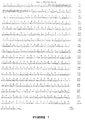
- the localisation signal is specific for the Golgi apparatus, more preferably for that of the trans Golgi. Still more preferably the localisation signal is based on that of Gal transferase. Even more preferably the localisation signal is based on porcine, murine or bovine sequences. Even more preferably the nucleic acid encodes a signal sequence with following amino acid sequence (in single letter code): MNVKGR (porcine), MNVKGK (mouse) or MVVKGK (bovine).
- Vectors for expression of the chimeric enzyme may be any suitable vector, including those disclosed in PCT/US95/07554 .
- the nucleic acid of the invention can be used to produce cells and organs with the desired glycosylation pattern by standard techniques, such as those disclosed in PCT/US95/07554 .
- embryos may be transfected by standard techniques such as microinjection of the nucleic acid in a linear form into the embryo (22).
- the embryos are then used to produce live animals, the organs of which may be subsequently used as donor organs for implantation.
- Cells, tissues and organs suitable for use in the invention will generally be mammalian cells.
- suitable cells and tissues such as endothelial cells, hepatic cells, pancreatic cells and the like are provided in PCT/US95/07554 .
- Plasmids - The plasmids used were prepared using standard techniques (7); pGT encodes the cDNA for the porcine ⁇ (1,3)galactosyltransferase (23), pHT encodes the cDNA for the ⁇ (1,2)fucosyltransferase (human) (25).
- Chimeric glycosyltransferase cDNAs were generated by polymerase chain reaction as follows: an 1105 bp product ht-GT was generated using primers corresponding to the 5' end of ht-GT (5'-GC GGATCC ATGTGGCTCCGGAGCC ATCGTCAGGTGGTTCTGTCAATGC TGCTTG-3') coding for nucleotides 1-24 of HT (25) followed immediately by nucleotides 68-89 of GT (8) and containing a BamH1 site (underlined) and a primer corresponding to the 3' end of ht-GT (5'-GC TCTAGA GCGTCAGATGTTATT TCTAACCAAATTATAC-3') containing complementarity to nucleotides 1102-1127 of GT with an Xba1 site downstream of the translational stop site (underlined); an 1110 bp product gt-HT was generated using primers corresponding to the 5' end of gt-HT (5'-GC GGAT
- PCR products were restricted BamH1/Xba1, gel-purified and ligated into a BamH1/Xba1 digested pcDNA1 expression vector (Invitrogen) and resulted in two plasmids pht-GT (encoding the chimeric glycosyltransferase ht-GT) and pgt-HT (encoding the chimeric glycosyltransferase gt-HT) which were characterised by restriction mapping, Southern blotting and DNA sequencing .
- Transfection and Serology - COS cells were maintained in Dulbecco's modified Eagles Medium (DMEM) (Trace Biosciences Pty. Ltd. , Castle Hill, NSW, Australia) and were transfected (1-10 ⁇ g DNA/5 x 105 cells) using DEAE-Dextran (26); 48h later cells were examined for cell surface expression of H substance or Gal- ⁇ (1,3)-Gal using FITC-conjugated lectins: IB4 lectin isolated from Griffonia simplicifolia (Sigma, St. Louis, MO) detects Gal- ⁇ (1,3)-Gal (27); UEAI lectin isolated from Ulex europaeus (Sigma, St. Louis, MO) detects H substance (28).
- DMEM Dulbecco's modified Eagles Medium
- H substance was also detected by indirect immunofluorescence using a monoclonal antibody (mAb) specific for the H substance (ASH-1952) developed at the Austin Research Institute, using FITC-conjugated goat antimouse IgG (Zymed Laboratories, San Francisco, CA) to detect mAb binding. Fluorescence was detected by microscopy.
- mAb monoclonal antibody
- FITC-conjugated goat antimouse IgG Zymed Laboratories, San Francisco, CA
- RNA Analyses Cytoplasmic RNA was prepared from transfected COS cells using RNAzol (Biotecx Laboratories, Houston, TX), and total RNA was electrophoresed in a 1% agarose gel containing formaldehyde, the gel blotted onto a nylon membrane and probed with random primed GT or HT cDNA.
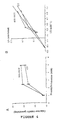
- Assays for HT activity (30) were performed in 25 ⁇ l containing 3mM [GDP- 14 C]fucose (specific activity 287 mCi/mmol, Amersham International), 5mM ATP, 50mM MOPS pH 6. 5, 20 mM MnCl2, using 2-10 ⁇ l of cell extract (approximately 15-20 ⁇ g of protein) and a range of concentrations (7. 5 -75 mM) of the acceptor phenyl-B-D-galactoside (Sigma). Samples were incubated for 2h at 37°C and reactions terminated by the addition of ethanol and water.
- GT assays (31) were performed in a volume of 25 ⁇ l using 3mM UDP[ 3 H]-Gal (specific activity 189mCi/mmol, Amersham International), 5mM ATP, 100mM cacodylate pH 6. 5, 20mM MnCl 2 and various concentrations (1 -10 mM) of the acceptor N-acetyl lactosamine (Sigma). Samples were incubated for 2h at 37°C and the reactions terminated by the addition of ethanol and water.
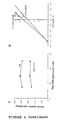
- the HT localisation signal placed the enzyme in an earlier temporal compartment than GT, it would have "first use” of the N-acetyl lactosamine substrate.
- a "first use” if it occurred, was not sufficient to adequately reduce GT.
- Two chimeric glycosyltransferases were constructed using PCR wherein the cytoplasmic tails of GT and HT were switched.
- ht-GT which consisted of the NH 2 terminal cytoplasmic tail of HT attached to the transmembrane, stem and catalytic domains of GT
- gt-HT which consisted of the NH 2 terminal cytoplasmic tail of GT attached to the transmembrane, stem and catalytic domains of HT.
- the chimeric cDNAs were subcloned into the eukaryotic expression vector pcDNAI and used in transfection experiments.
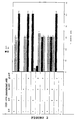
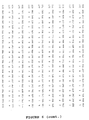
- the chimeric cDNAs encoding ht-GT and gt-HT were initially evaluated for their ability to induce glycosyltransferase expression in COS cells, as measured by the surface expression of the appropriate sugar using lectins. Forty-eight hours after transfection COS cells were tested by immunofluorescence for their expression of Gal- ⁇ (1,3)-Gal or H substance (Table 1 & Fig. 2). The staining with IB4 (lectin specific for Gal- ⁇ (1,3)-Gal) in cells expressing the chimera ht-GT (30% of cells stained positive) was indistinguishable from that of the normal GT staining (30%) (Table 1 & Fig. 2).
- the chimeric glycosyltransferases ht-GT and gt-HT are able to utilise N-acetyl lactosamine (ht-GT) and phenyl-B-D-galactoside (gt-HT) in the same way as the normal glycosyltransferases, thus switching the cytoplasmic domains of GT and HT does not alter the function of these glycosyltransferases and if indeed the cytoplasmic tail is the localisation signal then both enzymes function as well with the GT signal as with the HT signal.
- ht-GT N-acetyl lactosamine
- gt-HT phenyl-B-D-galactoside
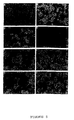
- the cDNAs encoding the chimeric transferases or normal transferases were simultaneously co-transfected into COS cells and after 48h the cells were stained with either IB4 or UEA1 lectin to detect Gal- ⁇ (1,3)-Gal and H substance respectively on the cell surface (Table 1 & Fig. 5).
- COS cells co-transfected with cDNAs for ht-GT + gt-HT showed 30 °% cells staining positive with IB4 (Table 1) but no staining on cells co-transfected with cDNAs for GT + HT (3%) (Fig. 5 panel A).
- glycosyltransferases with the same cytoplasmic tail leads to equal cell surface expression of the carbohydrate epitopes, with no "dominance" of one glycosyltransferase over the other observed, and presumably the glycosyltransferases localised at the same site appear to compete equally for the substrate.
- cytoplasmic tail domains of proteins including the KDEL and KKXX motifs in proteins resident within the endoplasmic reticulum (41,42) the latter motif also having been identified in the cis Golgi resident protein ERGIC-53 (43) and a di-leucine containing peptide motif in the mannose-6-phosphate receptor which directs the receptor from the trans-Golgi network to endosomes (44).
- These motifs are not present within the cytoplasmic tail sequences of HT or GT or in any other reported glycosyltransferase.
- a construct is made using PCR and subcloning as described in Example 1, such that amino acids #1 to #6 of the pig ⁇ (1,3)-galactosyltransferase (MNVKGR) replace amino acids #1 to 5 of the pig secretor (Fig 6). Constructs are tested as described in Example 1.
- Example 3 Use of pig H transferase in construction of a chimeric enzyme
- a construct is made using PCR and subcloning as described in Example 1, such that amino acids #1 to #6 of the pig ⁇ (1,3)-galactosyltransferase (MNVKGR) replace amino acids #1 to 8 of the pig H transferase (Fig 7). Constructs are tested as described in Example 1.
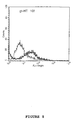
- the pig endothelial cell line PIEC expressing the chimeric ⁇ 1,2fucosyltransferase was produced by lipofectamine transfection of pgtHT plasmid DNA (20 ⁇ g) and pSV2NEO (2 ⁇ g) and selecting for stable integration by growing the transfected PIEC in media containing G418 (500 ⁇ g/ml; Gibco-BRL, Gaithersburg, MD). Fourteen independant clones were examined for cell surface expression of H substance by staining with UEA-1 lectin. >95% of cells of each of these clones were found to be positive.
- Fig. 8 shows a typical FACS profile obtained for these clones.
- NruI/NotI DNA fragment encoding the full length chimeric ⁇ 1,2fucosyltransferase, was generated utilising the Polymerase Chain Reaction and the phHT plasmid using the primers:
- the underlined sequence contains a NotI site
- the DNA was purified on gels, electroeluted and subcloned into a NruI/NotI cut genomic H-2Kb containing vector resulting in the plasmid clone (pH-2Kb-gtHT) encoding the chimeric ⁇ (1,2)-fucosyltransferase gene directionally cloned into exon 1 of the murine H-2Kb gene, resulting in a transcript that commences at the H-2Kb transcriptional start site, continuing through the gtHT cDNA insert.
- the construct was engineered such that translation would begin at the initiation codon (ATG) of the hHT cDNA and terminate at the in-phase stop codon (TGA).
- DNA was prepared for microinjection by digesting pH-2Kb-hHT with XhoI and purification of the H-2Kb-hHT DNA from vector by electrophoretic separation in agarose gels, followed by extraction with chloroform, and precipitation in ethanol to decontaminate the DNA. Injections were performed into the pronuclear membrane of (C57BL/6xSJL)F1 zygotes at concentrations between 2-5ng/ml, and the zygotes transferred to pseudopregnant (C57BL/6xSJL)F1 females.
- transgenic protein is examined by dot blotting. 5mg of genomic DNA was transferred to nylon filters and hybridized with the insert from gtHT, using a final wash at 68°C in 0.1xSSC/1% SDS.
- Fig. 9 shows the results of testing 12 live offspring, with two mice having the transgenic construct integrated into the genome. Expression of transgenic protein is examined by estimating the amount of UEAI lectin (specific for H substance) or anti-H mAb required to haemagglutinate red blood cells from transgenic mice. Hemagglutination in this assay demonstrates transgene expression.
Landscapes
- Life Sciences & Earth Sciences (AREA)
- Chemical & Material Sciences (AREA)
- Health & Medical Sciences (AREA)
- Genetics & Genomics (AREA)
- Organic Chemistry (AREA)
- Engineering & Computer Science (AREA)
- Bioinformatics & Cheminformatics (AREA)
- Zoology (AREA)
- Wood Science & Technology (AREA)
- Molecular Biology (AREA)
- Microbiology (AREA)
- Biotechnology (AREA)
- Biomedical Technology (AREA)
- Biochemistry (AREA)
- General Engineering & Computer Science (AREA)
- General Health & Medical Sciences (AREA)
- Medicinal Chemistry (AREA)
- Micro-Organisms Or Cultivation Processes Thereof (AREA)
- Enzymes And Modification Thereof (AREA)
Claims (23)
- Nukleinsäure, die ein chimäres Enzym kodiert, wobei das chimäre Enzym eine katalytische Domäne einer ersten Glycosyltransferase und ein Lokalisierungssignal einer zweiten Glycosyltransferase umfasst, wodurch, wenn die Nukleinsäure in einer Zelle exprimiert wird, das chimäre Enzym in einem Bereich der Zelle lokalisiert ist, in dem es in der Lage ist, mit einer zweiten Glycosyltransferase um das Substrat zu konkurrieren, was verringerte Spiegel eines Produkts von der zweiten Glycosyltransferase zur Folge hat.
- Nukleinsäure nach Anspruch 1, wobei das Lokalisierungssignal die katalytische Domäne lokalisiert, um dadurch der katalytischen Domäne zu ermöglichen, mit der zweiten Glycosyltransferase um ein Substrat zu konkurrieren.
- Nukleinsäure nach Anspruch 1 oder Anspruch 2, wobei sich das Lokalisierungssignal von einer Glycosyltransferase ableitet, welche Glycosylierungsmuster erzeugt, welche von einem Transplantatempfänger als fremd erkannt werden.
- Nukleinsäure nach einem der Ansprüche 1 bis 3, wobei das Lokalisierungssignal den Aminoterminus der zweiten Glycosyltransferase umfasst.
- Nukleinsäure nach einem der Ansprüche 1 bis 4, wobei sich das Lokalisierungssignal von α(1,3)-Galactosyltransferase ableitet.
- Nukleinsäure nach einem der Ansprüche 1 bis 5, wobei die erste Glycosyltransferase ausgewählt ist aus der Gruppe, bestehend aus einer H-Transferase und Sekretorsialyltransferase.
- Nukleinsäure nach einem der Ansprüche 1 bis 6, wobei die katalytische Domäne und das Lokalisierungssignal jeweils von einem Säugetier stammt, das ausgewählt ist aus der Gruppe, bestehend aus Mensch, Primaten, Huftieren, Hunden, Mäusen, Ratten und Kaninchen.
- Nukleinsäure nach einem der Ansprüche 1 bis 7, wobei sich das Lokalisierungssignal von derselben Spezies ableitet, wie die Zelle, welche die Nukleinsäure transformieren soll.
- Nukleinsäure gemäß einem der Ansprüche 1 bis 8, umfassend eine Sequenz, die die katalytische Domäne der H-Transferase kodiert und eine Nukleinsäuresequenz, die ein Lokalisierungssignal der Gal-Transferase kodiert.
- Nukleinsäure nach Anspruch 9, wobei sich die katalytische Domäne und das Lokalisierungssignal von Schweinen ableiten.
- Nukleinsäure nach einem der Ansprüche 1 bis 10, welche eine chimäre Transferase kodiert, umfassend eine α(1,2)-Fucosyltransferase, wobei die zytoplasmatische Domäne davon vollständig durch die zytoplasmatische Domäne der α(1,3)-Galactosyltransferase ersetzt ist.
- Trägersubstanz, umfassend eine Nukleinsäure nach einem der Ansprüche 1 bis 11.
- Trägersubstanz nach Anspruch 12, ausgewählt aus der Gruppe, bestehend aus einem Expressionsvektor, Plasmid und Phagen.
- Trägersubstanz nach Anspruch 12 oder Anspruch 13, welche der Nukleinsäure ermöglicht, in Prokaryoten oder in Eukaryoten exprimiert zu werden.
- Verfahren zum Herstellen einer Nukleinsäure nach einem der Ansprüche 1 bis 11, umfassend den Schritt des funktionsfähigen Verbindens einer Nukleinsäuresequenz, die eine katalytische Domäne von einer ersten Glycosyltransferase kodiert, mit einer Nukleinsäuresequenz, die ein Lokalisierungssignal einer zweiten Glycosyltransferase kodiert.
- In vitro-Verfahren des Verringerns des Spiegels eines Kohlenhydrats, das auf der Oberfläche einer Zelle gezeigt wird, wobei das Verfahren bewirkt, dass eine Nukleinsäure in der Zelle exprimiert wird, wobei die Nukleinsäure ein chimäres Enzym kodiert, welches eine katalytische Domäne einer ersten Glycosyltransferase und ein Lokalisierungssignal einer zweiten Glycosyltransferase umfasst, wodurch das chimäre Enzym in einem Bereich der Zelle lokalisiert ist, in dem es in der Lage ist, mit einer zweiten Glycosyltransferase um das Substrat zu konkurrieren, und wobei die zweite Glycosyltransferase in der Lage ist, ein Kohlenhydrat zu erzeugen.
- Verfahren zum Herstellen einer Zelle aus einer nichtmenschlichen Donorspezies, welche für eine Empfängerspezies durch Verringern der Spiegel eines Kohlenhydrats auf der Zelle immunologisch verträglich ist, welches bewirkt, dass es vom Empfänger als nichteigen erkannt wird, wobei das Verfahren umfasst, dass bewirkt wird, dass eine Nukleinsäure in der Zelle exprimiert wird, wobei die Nukleinsäure ein chimäres Enzym kodiert, welches eine katalytische Domäne einer ersten Glycosyltransferase und ein Lokalisierungssignal einer zweiten Glycosyltransferase umfasst, wodurch das chimäre Enzym in einem Bereich der Zelle lokalisiert ist, in dem es in der Lage ist, mit einer zweiten Glycosyltransferase um das Substrat zu konkurrieren, und wobei die zweite Glycosyltransferase in der Lage ist, ein Kohlenhydrat zu erzeugen.
- Zelle, die mit einem Verfahren nach Anspruch 17 hergestellt wurde.
- Nichtmenschliches Donororgan, das eine Zelle nach Anspruch 18 umfasst.
- Nichtmenschliches transgenes Tier, Organ oder Zelle, umfassend die Nukleinsäure nach einem der Ansprüche 1 bis 11.
- Expressionseinheit, welche eine Nukleinsäure nach einem der Ansprüche 1 bis 11 exprimiert, wobei es eine Zelle, welche für einen Empfänger immunologisch verträglich ist, mit verringerten Spiegeln eines Kohlenhydrats auf ihrer Oberfläche, deren Kohlenhydrat vom Empfänger als nichteigen erkannt wird, zur Folge hat.
- Expressionseinheit nach Anspruch 21, die ausgewählt ist aus der Gruppe, bestehend aus einer retroviralen Verpackungskassette, einem retroviralen Konstrukt oder einer retroviralen Herstellerzelle.
- Verfahren zum Herstellen einer Expressionseinheit nach Anspruch 21 oder Anspruch 22, wobei die Einheit verringerte Spiegel eines Kohlenhydrats auf ihrer Oberfläche aufweist, wobei das Kohlenhydrat von einer Spezies als nichteigen erkannt wird, umfassend das Transformieren/Transfizieren einer retroviralen Verpackungszelle oder einer retroviralen Herstellerzelle mit der Nukleinsäure der Erfindung unter derartigen Bedingungen, dass das chimäres Enzym produziert wird.
Applications Claiming Priority (5)
| Application Number | Priority Date | Filing Date | Title |
|---|---|---|---|
| AUPO1402A AUPO140296A0 (en) | 1996-08-02 | 1996-08-02 | Improved nucleic acids encoding a chimeric glycosyltransferase |
| AUPO0140/29 | 1996-08-02 | ||
| US2427996P | 1996-08-21 | 1996-08-21 | |
| US24279P | 1996-08-21 | ||
| PCT/AU1997/000492 WO1998005768A1 (en) | 1996-08-02 | 1997-08-01 | Improved nucleic acids encoding a chimeric glycosyltransferase |
Publications (3)
| Publication Number | Publication Date |
|---|---|
| EP0874900A1 EP0874900A1 (de) | 1998-11-04 |
| EP0874900A4 EP0874900A4 (de) | 2000-08-16 |
| EP0874900B1 true EP0874900B1 (de) | 2007-10-03 |
Family
ID=25645233
Family Applications (1)
| Application Number | Title | Priority Date | Filing Date |
|---|---|---|---|
| EP97932659A Expired - Lifetime EP0874900B1 (de) | 1996-08-02 | 1997-08-01 | Verbesserte nukleinsäuren, welche für eine chimäre glycosyltransferase kodieren |
Country Status (7)
| Country | Link |
|---|---|
| US (2) | US7001998B2 (de) |
| EP (1) | EP0874900B1 (de) |
| JP (1) | JPH11512933A (de) |
| AT (1) | ATE374816T1 (de) |
| CA (1) | CA2233705A1 (de) |
| DE (1) | DE69738177T2 (de) |
| WO (1) | WO1998005768A1 (de) |
Families Citing this family (28)
| Publication number | Priority date | Publication date | Assignee | Title |
|---|---|---|---|---|
| AUPO182396A0 (en) * | 1996-08-23 | 1996-09-12 | Austin Research Institute, The | Improved nucleic acids for reducing carbohydrate epitopes |
| NZ512185A (en) * | 1998-12-09 | 2004-02-27 | Dow Chemical Co | A method for manufacturing glycoproteins having human- type glycosylation in plant cells |
| CA2426669A1 (en) * | 1999-10-22 | 2001-05-03 | University Of Pittsburgh Of The Commonwealth System Of Higher Education | .alpha.1-3 galactosyltransferase gene and promoter |
| AU1738401A (en) | 1999-10-26 | 2001-05-08 | Plant Research International B.V. | Mammalian-type glycosylation in plants |
| US7625756B2 (en) | 2000-06-28 | 2009-12-01 | GycoFi, Inc. | Expression of class 2 mannosidase and class III mannosidase in lower eukaryotic cells |
| US7598055B2 (en) | 2000-06-28 | 2009-10-06 | Glycofi, Inc. | N-acetylglucosaminyltransferase III expression in lower eukaryotes |
| US7449308B2 (en) | 2000-06-28 | 2008-11-11 | Glycofi, Inc. | Combinatorial DNA library for producing modified N-glycans in lower eukaryotes |
| US8697394B2 (en) | 2000-06-28 | 2014-04-15 | Glycofi, Inc. | Production of modified glycoproteins having multiple antennary structures |
| US7863020B2 (en) | 2000-06-28 | 2011-01-04 | Glycofi, Inc. | Production of sialylated N-glycans in lower eukaryotes |
| ATE440959T1 (de) | 2000-06-28 | 2009-09-15 | Glycofi Inc | Verfahren für die herstellung modifizierter glykoproteine |
| CA2434364C (en) * | 2001-01-19 | 2013-03-19 | The Dow Chemical Company | Method for secretory production of glycoprotein having human-type sugar chain using plant cell |
| MXPA03008001A (es) * | 2001-03-06 | 2004-10-15 | Dow Chemical Co | Celula vegetal que tiene funcion de adicion de cadena de azucar tipo animal. |
| EP2319935B1 (de) | 2002-03-19 | 2016-04-27 | Stichting Dienst Landbouwkundig Onderzoek | GnTIII (UDP-N-acetylglucosamin:Beta -D mannoside Beta (1,4)-N -acetylglucosaminyltransferase III) expression in pflanzen |
| EP2339004B1 (de) | 2002-03-19 | 2015-02-25 | Stichting Dienst Landbouwkundig Onderzoek | Optimierung von Glycanprozessierung in Pflanzen |
| ES2338111T3 (es) | 2002-08-21 | 2010-05-04 | Revivicor, Inc. | Animales porcinos que carecen de cualquier expresion de alfa 1,3 galactosiltransferasa funcional. |
| CL2003002461A1 (es) * | 2002-11-27 | 2005-01-07 | Dow Chemical Company Agroscien | Inmunoglobulina que comprende al menos un glicano afucosilado, composicion que la contiene, secuencia nucleotidica y vector que la comprende, procedimiento para producir dicha inmunoglobulina en plantas. |
| JP4405736B2 (ja) | 2003-01-31 | 2010-01-27 | コニカミノルタホールディングス株式会社 | データベースシステム |
| US7332299B2 (en) | 2003-02-20 | 2008-02-19 | Glycofi, Inc. | Endomannosidases in the modification of glycoproteins in eukaryotes |
| CA2533259C (en) * | 2003-07-21 | 2014-01-28 | Lifecell Corporation | Acellular tissue matrices made from galactose .alpha.-1,3-galactose-deficient tissue |
| US7560538B2 (en) | 2003-11-05 | 2009-07-14 | University Of Pittsburgh | Porcine isogloboside 3 synthase protein, cDNA, genomic organization, and regulatory region |
| DK1734814T3 (en) | 2004-03-17 | 2015-04-07 | Revivicor Inc | Tissue DERIVED FROM ANIMALS IS MISSING ANY EXPRESSION OF FUNCTIONAL ALPHA-1,3 galactosyltransferase |
| PL2019864T3 (pl) | 2006-05-24 | 2012-02-29 | Univ De Provence Aix Marseille 1 | Wytwarzanie i zastosowania sekwencji genowych kodujących chimerowe glikozylotransferazy o optymalizowanej aktywności glikozylacji |
| NZ580510A (en) | 2007-04-17 | 2011-06-30 | Stichting Dienst Landbouwkundi | Mammalian-type glycosylation in plants by expression of non-mammalian glycosyltransferases |
| US9420770B2 (en) | 2009-12-01 | 2016-08-23 | Indiana University Research & Technology Corporation | Methods of modulating thrombocytopenia and modified transgenic pigs |
| US9034280B2 (en) | 2009-12-16 | 2015-05-19 | General Electric Corporation | High-throughput methods and systems for processing biological materials |
| CN102753819B (zh) * | 2010-02-18 | 2015-03-04 | 三菱重工业株式会社 | 用于风力涡轮发电机的便携式终端 |
| US20140115728A1 (en) | 2012-10-24 | 2014-04-24 | A. Joseph Tector | Double knockout (gt/cmah-ko) pigs, organs and tissues |
| ES2846758T3 (es) | 2013-11-04 | 2021-07-29 | Lifecell Corp | Métodos para eliminar la alfa-galactosa |
Family Cites Families (4)
| Publication number | Priority date | Publication date | Assignee | Title |
|---|---|---|---|---|
| KR950704497A (ko) * | 1992-11-27 | 1995-11-20 | 베르너 발데크 | 글리코실트랜스퍼라제 활성을 가진 단백질(Proteins Having Glycosyltransferase Activity) |
| EP0689597A4 (de) * | 1993-03-16 | 1998-10-21 | Austin Research Inst | VERWENDUNG VON SCHWEIN GAL-g(a)(1,3) GALAKTOSYLTRANSFERASE FÜR XENOGENE THERAPIEN |
| US6331658B1 (en) * | 1993-04-20 | 2001-12-18 | Integris Baptist Medical Center, Inc. | Genetically engineered mammals for use as organ donors |
| WO1995034202A1 (en) | 1994-06-15 | 1995-12-21 | Alexion Pharmaceuticals, Inc. | Methods for reducing hyperacute rejection of xenografts |
-
1997
- 1997-08-01 JP JP10507395A patent/JPH11512933A/ja active Pending
- 1997-08-01 CA CA002233705A patent/CA2233705A1/en not_active Abandoned
- 1997-08-01 US US09/051,034 patent/US7001998B2/en not_active Expired - Fee Related
- 1997-08-01 DE DE69738177T patent/DE69738177T2/de not_active Expired - Fee Related
- 1997-08-01 WO PCT/AU1997/000492 patent/WO1998005768A1/en not_active Ceased
- 1997-08-01 AT AT97932659T patent/ATE374816T1/de not_active IP Right Cessation
- 1997-08-01 EP EP97932659A patent/EP0874900B1/de not_active Expired - Lifetime
-
2005
- 2005-09-01 US US11/217,544 patent/US20070271621A1/en not_active Abandoned
Non-Patent Citations (1)
| Title |
|---|
| None * |
Also Published As
| Publication number | Publication date |
|---|---|
| US20070271621A1 (en) | 2007-11-22 |
| JPH11512933A (ja) | 1999-11-09 |
| US7001998B2 (en) | 2006-02-21 |
| ATE374816T1 (de) | 2007-10-15 |
| CA2233705A1 (en) | 1998-02-12 |
| DE69738177D1 (de) | 2007-11-15 |
| DE69738177T2 (de) | 2008-07-03 |
| EP0874900A1 (de) | 1998-11-04 |
| EP0874900A4 (de) | 2000-08-16 |
| US20010055584A1 (en) | 2001-12-27 |
| WO1998005768A1 (en) | 1998-02-12 |
Similar Documents
| Publication | Publication Date | Title |
|---|---|---|
| US7001998B2 (en) | Nucleic acids encoding a chimeric glycosyltransferase | |
| Sandrin et al. | Enzymatic remodelling of the carbohydrate surface of a xenogenic cell substantially reduces human antibody binding and complement-mediated cytolysis | |
| US5858751A (en) | Compositions and methods for producing sialyltransferases | |
| US6365365B1 (en) | Method of determining whether an agent modulates glycosyl sulfotransferase-3 | |
| JPH09501317A (ja) | シアリルトランスフェラーゼを製造するための組成物および方法 | |
| US5731420A (en) | Antibodies to human I-branching beta-1,6-N-acetylglucosaminyltransferase | |
| JPH07505771A (ja) | シアリルトランスフェラーゼの同定と合成のための構成物と方法 | |
| US6399758B1 (en) | Nucleic acids for reducing carbohydrate epitopes | |
| CA2114631C (en) | N-acetylglucosaminyltransferase v coding sequences | |
| US20050265987A1 (en) | Sulfatases and methods of use thereof | |
| AU720984B2 (en) | Improved nucleic acids encoding a chimeric glycosyltransferase | |
| JPH10313867A (ja) | グルクロン酸転移酵素をコードするdna | |
| WO2005014779A2 (en) | Cyclodextrin affinity purification | |
| US20060015955A1 (en) | Alpha(1,3)Galactosyltransferase enzyme that assembles the Galalpha(1,3)Gal xenoantigen | |
| AU734324B2 (en) | Improved nucleic acids for reducing carbohydrate epitopes | |
| WO2001012845A1 (en) | Screening for udp-glucose: glycoprotein glucosyltransferase (uggt) activity | |
| US20030190739A1 (en) | Tankyrase2 materials and methods | |
| WO1995007020A1 (en) | EXPRESSION OF THE DEVELOPMENTAL I ANTIGEN BY A CLONED HUMAN cDNA ENCODING A BETA-1,6-N-ACETYLGLUCOSAMINYLTRANSFERASE | |
| US6852518B1 (en) | Glycosyl sulfotransferases GST-4α, GST-4β, and GST-6 | |
| Egan et al. | Molecular cloning and expression analysis of a mouse UDP-GlcNAc: Gal (β1-4) Glc (NAc)-R β1, 3-N-acetylglucosaminyltransferase homologous to Drosophila melanogaster Brainiac and the β1, 3-galactosyltransferase family | |
| WO2002081688A1 (en) | Dna molecules encoding igb3 synthase, and uses thereof for the disruption of glycosyltransferase genes in xenotransplantation tissues and organs | |
| Van Den Eijnden et al. | α3-Galactosyltransferase | |
| Sandrin et al. | Modulation of aGal Epitope Expression |
Legal Events
| Date | Code | Title | Description |
|---|---|---|---|
| PUAI | Public reference made under article 153(3) epc to a published international application that has entered the european phase |
Free format text: ORIGINAL CODE: 0009012 |
|
| 17P | Request for examination filed |
Effective date: 19980807 |
|
| AK | Designated contracting states |
Kind code of ref document: A1 Designated state(s): AT BE CH DE DK ES FI FR GB GR IE IT LI LU MC NL PT SE |
|
| A4 | Supplementary search report drawn up and despatched |
Effective date: 20000703 |
|
| AK | Designated contracting states |
Kind code of ref document: A4 Designated state(s): AT BE CH DE DK ES FI FR GB GR IE IT LI LU MC NL PT SE |
|
| 17Q | First examination report despatched |
Effective date: 20041110 |
|
| GRAP | Despatch of communication of intention to grant a patent |
Free format text: ORIGINAL CODE: EPIDOSNIGR1 |
|
| RAP1 | Party data changed (applicant data changed or rights of an application transferred) |
Owner name: THE AUSTIN RESEARCH INSTITUTE |
|
| GRAS | Grant fee paid |
Free format text: ORIGINAL CODE: EPIDOSNIGR3 |
|
| GRAA | (expected) grant |
Free format text: ORIGINAL CODE: 0009210 |
|
| AK | Designated contracting states |
Kind code of ref document: B1 Designated state(s): AT BE CH DE DK ES FI FR GB GR IE IT LI LU MC NL PT SE |
|
| REG | Reference to a national code |
Ref country code: GB Ref legal event code: FG4D |
|
| REG | Reference to a national code |
Ref country code: CH Ref legal event code: EP |
|
| REG | Reference to a national code |
Ref country code: IE Ref legal event code: FG4D |
|
| REF | Corresponds to: |
Ref document number: 69738177 Country of ref document: DE Date of ref document: 20071115 Kind code of ref document: P |
|
| REG | Reference to a national code |
Ref country code: CH Ref legal event code: NV Representative=s name: E. BLUM & CO. AG PATENT- UND MARKENANWAELTE VSP |
|
| NLV1 | Nl: lapsed or annulled due to failure to fulfill the requirements of art. 29p and 29m of the patents act | ||
| PG25 | Lapsed in a contracting state [announced via postgrant information from national office to epo] |
Ref country code: SE Free format text: LAPSE BECAUSE OF FAILURE TO SUBMIT A TRANSLATION OF THE DESCRIPTION OR TO PAY THE FEE WITHIN THE PRESCRIBED TIME-LIMIT Effective date: 20080103 Ref country code: NL Free format text: LAPSE BECAUSE OF FAILURE TO SUBMIT A TRANSLATION OF THE DESCRIPTION OR TO PAY THE FEE WITHIN THE PRESCRIBED TIME-LIMIT Effective date: 20071003 Ref country code: ES Free format text: LAPSE BECAUSE OF FAILURE TO SUBMIT A TRANSLATION OF THE DESCRIPTION OR TO PAY THE FEE WITHIN THE PRESCRIBED TIME-LIMIT Effective date: 20080114 |
|
| PG25 | Lapsed in a contracting state [announced via postgrant information from national office to epo] |
Ref country code: PT Free format text: LAPSE BECAUSE OF FAILURE TO SUBMIT A TRANSLATION OF THE DESCRIPTION OR TO PAY THE FEE WITHIN THE PRESCRIBED TIME-LIMIT Effective date: 20080303 |
|
| ET | Fr: translation filed | ||
| PG25 | Lapsed in a contracting state [announced via postgrant information from national office to epo] |
Ref country code: AT Free format text: LAPSE BECAUSE OF FAILURE TO SUBMIT A TRANSLATION OF THE DESCRIPTION OR TO PAY THE FEE WITHIN THE PRESCRIBED TIME-LIMIT Effective date: 20071003 |
|
| PG25 | Lapsed in a contracting state [announced via postgrant information from national office to epo] |
Ref country code: DK Free format text: LAPSE BECAUSE OF FAILURE TO SUBMIT A TRANSLATION OF THE DESCRIPTION OR TO PAY THE FEE WITHIN THE PRESCRIBED TIME-LIMIT Effective date: 20071003 |
|
| PLBE | No opposition filed within time limit |
Free format text: ORIGINAL CODE: 0009261 |
|
| STAA | Information on the status of an ep patent application or granted ep patent |
Free format text: STATUS: NO OPPOSITION FILED WITHIN TIME LIMIT |
|
| PG25 | Lapsed in a contracting state [announced via postgrant information from national office to epo] |
Ref country code: BE Free format text: LAPSE BECAUSE OF FAILURE TO SUBMIT A TRANSLATION OF THE DESCRIPTION OR TO PAY THE FEE WITHIN THE PRESCRIBED TIME-LIMIT Effective date: 20071003 |
|
| 26N | No opposition filed |
Effective date: 20080704 |
|
| PGFP | Annual fee paid to national office [announced via postgrant information from national office to epo] |
Ref country code: DE Payment date: 20080814 Year of fee payment: 12 Ref country code: CH Payment date: 20080815 Year of fee payment: 12 |
|
| PGFP | Annual fee paid to national office [announced via postgrant information from national office to epo] |
Ref country code: IT Payment date: 20080828 Year of fee payment: 12 Ref country code: FR Payment date: 20080818 Year of fee payment: 12 |
|
| PGFP | Annual fee paid to national office [announced via postgrant information from national office to epo] |
Ref country code: GB Payment date: 20080813 Year of fee payment: 12 |
|
| PG25 | Lapsed in a contracting state [announced via postgrant information from national office to epo] |
Ref country code: GR Free format text: LAPSE BECAUSE OF FAILURE TO SUBMIT A TRANSLATION OF THE DESCRIPTION OR TO PAY THE FEE WITHIN THE PRESCRIBED TIME-LIMIT Effective date: 20080104 |
|
| PG25 | Lapsed in a contracting state [announced via postgrant information from national office to epo] |
Ref country code: MC Free format text: LAPSE BECAUSE OF NON-PAYMENT OF DUE FEES Effective date: 20080831 |
|
| PG25 | Lapsed in a contracting state [announced via postgrant information from national office to epo] |
Ref country code: IE Free format text: LAPSE BECAUSE OF NON-PAYMENT OF DUE FEES Effective date: 20080801 |
|
| PG25 | Lapsed in a contracting state [announced via postgrant information from national office to epo] |
Ref country code: FI Free format text: LAPSE BECAUSE OF FAILURE TO SUBMIT A TRANSLATION OF THE DESCRIPTION OR TO PAY THE FEE WITHIN THE PRESCRIBED TIME-LIMIT Effective date: 20071003 |
|
| REG | Reference to a national code |
Ref country code: CH Ref legal event code: PL |
|
| GBPC | Gb: european patent ceased through non-payment of renewal fee |
Effective date: 20090801 |
|
| PG25 | Lapsed in a contracting state [announced via postgrant information from national office to epo] |
Ref country code: LI Free format text: LAPSE BECAUSE OF NON-PAYMENT OF DUE FEES Effective date: 20090831 Ref country code: CH Free format text: LAPSE BECAUSE OF NON-PAYMENT OF DUE FEES Effective date: 20090831 |
|
| REG | Reference to a national code |
Ref country code: FR Ref legal event code: ST Effective date: 20100430 |
|
| PG25 | Lapsed in a contracting state [announced via postgrant information from national office to epo] |
Ref country code: LU Free format text: LAPSE BECAUSE OF NON-PAYMENT OF DUE FEES Effective date: 20080801 |
|
| PG25 | Lapsed in a contracting state [announced via postgrant information from national office to epo] |
Ref country code: FR Free format text: LAPSE BECAUSE OF NON-PAYMENT OF DUE FEES Effective date: 20090831 Ref country code: DE Free format text: LAPSE BECAUSE OF NON-PAYMENT OF DUE FEES Effective date: 20100302 |
|
| PG25 | Lapsed in a contracting state [announced via postgrant information from national office to epo] |
Ref country code: GB Free format text: LAPSE BECAUSE OF NON-PAYMENT OF DUE FEES Effective date: 20090801 |
|
| PG25 | Lapsed in a contracting state [announced via postgrant information from national office to epo] |
Ref country code: IT Free format text: LAPSE BECAUSE OF NON-PAYMENT OF DUE FEES Effective date: 20090801 |