EP0879901A1 - Revêtement de protection de pièces métalliques ayant une bonne résistance à la corrosion en atmosphère saline, et pièces métalliques comportant un tel revêtement de protection. - Google Patents
Revêtement de protection de pièces métalliques ayant une bonne résistance à la corrosion en atmosphère saline, et pièces métalliques comportant un tel revêtement de protection. Download PDFInfo
- Publication number
- EP0879901A1 EP0879901A1 EP98401213A EP98401213A EP0879901A1 EP 0879901 A1 EP0879901 A1 EP 0879901A1 EP 98401213 A EP98401213 A EP 98401213A EP 98401213 A EP98401213 A EP 98401213A EP 0879901 A1 EP0879901 A1 EP 0879901A1
- Authority
- EP
- European Patent Office
- Prior art keywords
- zinc
- alloy
- tin
- protective coating
- coating
- Prior art date
- Legal status (The legal status is an assumption and is not a legal conclusion. Google has not performed a legal analysis and makes no representation as to the accuracy of the status listed.)
- Granted
Links
- 230000007797 corrosion Effects 0.000 title claims abstract description 37
- 238000005260 corrosion Methods 0.000 title claims abstract description 37
- 229910052751 metal Inorganic materials 0.000 title claims abstract description 26
- 239000002184 metal Substances 0.000 title claims abstract description 26
- FAPWRFPIFSIZLT-UHFFFAOYSA-M Sodium chloride Chemical compound [Na+].[Cl-] FAPWRFPIFSIZLT-UHFFFAOYSA-M 0.000 title claims abstract description 15
- 239000011780 sodium chloride Substances 0.000 title claims abstract description 13
- 239000011253 protective coating Substances 0.000 title claims description 16
- 238000000576 coating method Methods 0.000 claims abstract description 83
- 239000011248 coating agent Substances 0.000 claims abstract description 62
- PXHVJJICTQNCMI-UHFFFAOYSA-N Nickel Chemical compound [Ni] PXHVJJICTQNCMI-UHFFFAOYSA-N 0.000 claims abstract description 58
- 239000011701 zinc Substances 0.000 claims abstract description 54
- HCHKCACWOHOZIP-UHFFFAOYSA-N Zinc Chemical compound [Zn] HCHKCACWOHOZIP-UHFFFAOYSA-N 0.000 claims abstract description 40
- 229910052725 zinc Inorganic materials 0.000 claims abstract description 31
- ATJFFYVFTNAWJD-UHFFFAOYSA-N Tin Chemical compound [Sn] ATJFFYVFTNAWJD-UHFFFAOYSA-N 0.000 claims abstract description 27
- 229910052759 nickel Inorganic materials 0.000 claims abstract description 19
- 229910045601 alloy Inorganic materials 0.000 claims abstract description 14
- 239000000956 alloy Substances 0.000 claims abstract description 14
- 229910001297 Zn alloy Inorganic materials 0.000 claims description 34
- 229910001128 Sn alloy Inorganic materials 0.000 claims description 19
- 229910000990 Ni alloy Inorganic materials 0.000 claims description 12
- 238000005868 electrolysis reaction Methods 0.000 claims description 7
- 239000000203 mixture Substances 0.000 claims description 7
- XFXPMWWXUTWYJX-UHFFFAOYSA-N Cyanide Chemical compound N#[C-] XFXPMWWXUTWYJX-UHFFFAOYSA-N 0.000 claims description 5
- 239000008139 complexing agent Substances 0.000 claims description 5
- GZCWPZJOEIAXRU-UHFFFAOYSA-N tin zinc Chemical compound [Zn].[Sn] GZCWPZJOEIAXRU-UHFFFAOYSA-N 0.000 claims description 5
- IJGRMHOSHXDMSA-UHFFFAOYSA-N Atomic nitrogen Chemical compound N#N IJGRMHOSHXDMSA-UHFFFAOYSA-N 0.000 claims description 4
- ZCDOYSPFYFSLEW-UHFFFAOYSA-N chromate(2-) Chemical compound [O-][Cr]([O-])(=O)=O ZCDOYSPFYFSLEW-UHFFFAOYSA-N 0.000 claims description 4
- 230000008021 deposition Effects 0.000 claims description 4
- GTLDTDOJJJZVBW-UHFFFAOYSA-N zinc cyanide Chemical compound [Zn+2].N#[C-].N#[C-] GTLDTDOJJJZVBW-UHFFFAOYSA-N 0.000 claims description 4
- 239000000654 additive Substances 0.000 claims description 3
- KXZJHVJKXJLBKO-UHFFFAOYSA-N chembl1408157 Chemical compound N=1C2=CC=CC=C2C(C(=O)O)=CC=1C1=CC=C(O)C=C1 KXZJHVJKXJLBKO-UHFFFAOYSA-N 0.000 claims description 3
- 230000000996 additive effect Effects 0.000 claims description 2
- TVQLLNFANZSCGY-UHFFFAOYSA-N disodium;dioxido(oxo)tin Chemical compound [Na+].[Na+].[O-][Sn]([O-])=O TVQLLNFANZSCGY-UHFFFAOYSA-N 0.000 claims description 2
- 229910052757 nitrogen Inorganic materials 0.000 claims description 2
- 229940079864 sodium stannate Drugs 0.000 claims description 2
- 229910000831 Steel Inorganic materials 0.000 description 27
- 239000010959 steel Substances 0.000 description 27
- 239000000758 substrate Substances 0.000 description 22
- 150000003839 salts Chemical class 0.000 description 16
- 230000006399 behavior Effects 0.000 description 14
- 229910052793 cadmium Inorganic materials 0.000 description 10
- BDOSMKKIYDKNTQ-UHFFFAOYSA-N cadmium atom Chemical compound [Cd] BDOSMKKIYDKNTQ-UHFFFAOYSA-N 0.000 description 10
- 230000001351 cycling effect Effects 0.000 description 10
- 230000008878 coupling Effects 0.000 description 8
- 238000010168 coupling process Methods 0.000 description 8
- 238000005859 coupling reaction Methods 0.000 description 8
- 239000007921 spray Substances 0.000 description 8
- 238000004090 dissolution Methods 0.000 description 6
- QELJHCBNGDEXLD-UHFFFAOYSA-N nickel zinc Chemical compound [Ni].[Zn] QELJHCBNGDEXLD-UHFFFAOYSA-N 0.000 description 5
- XLOMVQKBTHCTTD-UHFFFAOYSA-N Zinc monoxide Chemical compound [Zn]=O XLOMVQKBTHCTTD-UHFFFAOYSA-N 0.000 description 4
- 230000000052 comparative effect Effects 0.000 description 4
- 239000000463 material Substances 0.000 description 4
- 238000000151 deposition Methods 0.000 description 3
- 238000005259 measurement Methods 0.000 description 3
- 230000035945 sensitivity Effects 0.000 description 3
- 229910000838 Al alloy Inorganic materials 0.000 description 2
- 150000001412 amines Chemical group 0.000 description 2
- 239000003795 chemical substances by application Substances 0.000 description 2
- 230000008018 melting Effects 0.000 description 2
- 238000002844 melting Methods 0.000 description 2
- 230000001681 protective effect Effects 0.000 description 2
- 239000000243 solution Substances 0.000 description 2
- 239000000126 substance Substances 0.000 description 2
- 239000011787 zinc oxide Substances 0.000 description 2
- NWONKYPBYAMBJT-UHFFFAOYSA-L zinc sulfate Chemical compound [Zn+2].[O-]S([O-])(=O)=O NWONKYPBYAMBJT-UHFFFAOYSA-L 0.000 description 2
- UDHXJZHVNHGCEC-UHFFFAOYSA-N Chlorophacinone Chemical compound C1=CC(Cl)=CC=C1C(C=1C=CC=CC=1)C(=O)C1C(=O)C2=CC=CC=C2C1=O UDHXJZHVNHGCEC-UHFFFAOYSA-N 0.000 description 1
- VYZAMTAEIAYCRO-UHFFFAOYSA-N Chromium Chemical compound [Cr] VYZAMTAEIAYCRO-UHFFFAOYSA-N 0.000 description 1
- RYGMFSIKBFXOCR-UHFFFAOYSA-N Copper Chemical compound [Cu] RYGMFSIKBFXOCR-UHFFFAOYSA-N 0.000 description 1
- UFHFLCQGNIYNRP-UHFFFAOYSA-N Hydrogen Chemical compound [H][H] UFHFLCQGNIYNRP-UHFFFAOYSA-N 0.000 description 1
- DGAQECJNVWCQMB-PUAWFVPOSA-M Ilexoside XXIX Chemical compound C[C@@H]1CC[C@@]2(CC[C@@]3(C(=CC[C@H]4[C@]3(CC[C@@H]5[C@@]4(CC[C@@H](C5(C)C)OS(=O)(=O)[O-])C)C)[C@@H]2[C@]1(C)O)C)C(=O)O[C@H]6[C@@H]([C@H]([C@@H]([C@H](O6)CO)O)O)O.[Na+] DGAQECJNVWCQMB-PUAWFVPOSA-M 0.000 description 1
- 241000080590 Niso Species 0.000 description 1
- 229910020994 Sn-Zn Inorganic materials 0.000 description 1
- 229910009069 Sn—Zn Inorganic materials 0.000 description 1
- CDBYLPFSWZWCQE-UHFFFAOYSA-L Sodium Carbonate Chemical compound [Na+].[Na+].[O-]C([O-])=O CDBYLPFSWZWCQE-UHFFFAOYSA-L 0.000 description 1
- RTAQQCXQSZGOHL-UHFFFAOYSA-N Titanium Chemical compound [Ti] RTAQQCXQSZGOHL-UHFFFAOYSA-N 0.000 description 1
- 229910007567 Zn-Ni Inorganic materials 0.000 description 1
- 229910007614 Zn—Ni Inorganic materials 0.000 description 1
- 150000001408 amides Chemical group 0.000 description 1
- 230000015572 biosynthetic process Effects 0.000 description 1
- KGBXLFKZBHKPEV-UHFFFAOYSA-N boric acid Chemical compound OB(O)O KGBXLFKZBHKPEV-UHFFFAOYSA-N 0.000 description 1
- 239000004327 boric acid Substances 0.000 description 1
- 238000005282 brightening Methods 0.000 description 1
- 230000003197 catalytic effect Effects 0.000 description 1
- 229910052802 copper Inorganic materials 0.000 description 1
- 239000010949 copper Substances 0.000 description 1
- ZOMNIUBKTOKEHS-UHFFFAOYSA-L dimercury dichloride Chemical class Cl[Hg][Hg]Cl ZOMNIUBKTOKEHS-UHFFFAOYSA-L 0.000 description 1
- 239000003792 electrolyte Substances 0.000 description 1
- 239000008151 electrolyte solution Substances 0.000 description 1
- -1 for example Inorganic materials 0.000 description 1
- 239000000446 fuel Substances 0.000 description 1
- 230000036541 health Effects 0.000 description 1
- 239000001257 hydrogen Substances 0.000 description 1
- 229910052739 hydrogen Inorganic materials 0.000 description 1
- 238000000034 method Methods 0.000 description 1
- 239000003595 mist Substances 0.000 description 1
- CLDVQCMGOSGNIW-UHFFFAOYSA-N nickel tin Chemical compound [Ni].[Sn] CLDVQCMGOSGNIW-UHFFFAOYSA-N 0.000 description 1
- 239000003921 oil Substances 0.000 description 1
- 230000000750 progressive effect Effects 0.000 description 1
- 229910052708 sodium Inorganic materials 0.000 description 1
- 239000011734 sodium Substances 0.000 description 1
- MNWBNISUBARLIT-UHFFFAOYSA-N sodium cyanide Chemical compound [Na+].N#[C-] MNWBNISUBARLIT-UHFFFAOYSA-N 0.000 description 1
- 229910000162 sodium phosphate Inorganic materials 0.000 description 1
- 239000001488 sodium phosphate Substances 0.000 description 1
- 230000006641 stabilisation Effects 0.000 description 1
- 238000011105 stabilization Methods 0.000 description 1
- 229940071182 stannate Drugs 0.000 description 1
- 125000005402 stannate group Chemical group 0.000 description 1
- 239000010936 titanium Substances 0.000 description 1
- 229910052719 titanium Inorganic materials 0.000 description 1
- 230000001988 toxicity Effects 0.000 description 1
- 231100000419 toxicity Toxicity 0.000 description 1
- RYFMWSXOAZQYPI-UHFFFAOYSA-K trisodium phosphate Chemical compound [Na+].[Na+].[Na+].[O-]P([O-])([O-])=O RYFMWSXOAZQYPI-UHFFFAOYSA-K 0.000 description 1
Images
Classifications
-
- C—CHEMISTRY; METALLURGY
- C23—COATING METALLIC MATERIAL; COATING MATERIAL WITH METALLIC MATERIAL; CHEMICAL SURFACE TREATMENT; DIFFUSION TREATMENT OF METALLIC MATERIAL; COATING BY VACUUM EVAPORATION, BY SPUTTERING, BY ION IMPLANTATION OR BY CHEMICAL VAPOUR DEPOSITION, IN GENERAL; INHIBITING CORROSION OF METALLIC MATERIAL OR INCRUSTATION IN GENERAL
- C23C—COATING METALLIC MATERIAL; COATING MATERIAL WITH METALLIC MATERIAL; SURFACE TREATMENT OF METALLIC MATERIAL BY DIFFUSION INTO THE SURFACE, BY CHEMICAL CONVERSION OR SUBSTITUTION; COATING BY VACUUM EVAPORATION, BY SPUTTERING, BY ION IMPLANTATION OR BY CHEMICAL VAPOUR DEPOSITION, IN GENERAL
- C23C28/00—Coating for obtaining at least two superposed coatings either by methods not provided for in a single one of groups C23C2/00 - C23C26/00 or by combinations of methods provided for in subclasses C23C and C25C or C25D
- C23C28/02—Coating for obtaining at least two superposed coatings either by methods not provided for in a single one of groups C23C2/00 - C23C26/00 or by combinations of methods provided for in subclasses C23C and C25C or C25D only coatings only including layers of metallic material
- C23C28/021—Coating for obtaining at least two superposed coatings either by methods not provided for in a single one of groups C23C2/00 - C23C26/00 or by combinations of methods provided for in subclasses C23C and C25C or C25D only coatings only including layers of metallic material including at least one metal alloy layer
-
- C—CHEMISTRY; METALLURGY
- C23—COATING METALLIC MATERIAL; COATING MATERIAL WITH METALLIC MATERIAL; CHEMICAL SURFACE TREATMENT; DIFFUSION TREATMENT OF METALLIC MATERIAL; COATING BY VACUUM EVAPORATION, BY SPUTTERING, BY ION IMPLANTATION OR BY CHEMICAL VAPOUR DEPOSITION, IN GENERAL; INHIBITING CORROSION OF METALLIC MATERIAL OR INCRUSTATION IN GENERAL
- C23C—COATING METALLIC MATERIAL; COATING MATERIAL WITH METALLIC MATERIAL; SURFACE TREATMENT OF METALLIC MATERIAL BY DIFFUSION INTO THE SURFACE, BY CHEMICAL CONVERSION OR SUBSTITUTION; COATING BY VACUUM EVAPORATION, BY SPUTTERING, BY ION IMPLANTATION OR BY CHEMICAL VAPOUR DEPOSITION, IN GENERAL
- C23C28/00—Coating for obtaining at least two superposed coatings either by methods not provided for in a single one of groups C23C2/00 - C23C26/00 or by combinations of methods provided for in subclasses C23C and C25C or C25D
- C23C28/02—Coating for obtaining at least two superposed coatings either by methods not provided for in a single one of groups C23C2/00 - C23C26/00 or by combinations of methods provided for in subclasses C23C and C25C or C25D only coatings only including layers of metallic material
- C23C28/023—Coating for obtaining at least two superposed coatings either by methods not provided for in a single one of groups C23C2/00 - C23C26/00 or by combinations of methods provided for in subclasses C23C and C25C or C25D only coatings only including layers of metallic material only coatings of metal elements only
- C23C28/025—Coating for obtaining at least two superposed coatings either by methods not provided for in a single one of groups C23C2/00 - C23C26/00 or by combinations of methods provided for in subclasses C23C and C25C or C25D only coatings only including layers of metallic material only coatings of metal elements only with at least one zinc-based layer
-
- C—CHEMISTRY; METALLURGY
- C25—ELECTROLYTIC OR ELECTROPHORETIC PROCESSES; APPARATUS THEREFOR
- C25D—PROCESSES FOR THE ELECTROLYTIC OR ELECTROPHORETIC PRODUCTION OF COATINGS; ELECTROFORMING; APPARATUS THEREFOR
- C25D3/00—Electroplating: Baths therefor
- C25D3/02—Electroplating: Baths therefor from solutions
- C25D3/56—Electroplating: Baths therefor from solutions of alloys
- C25D3/565—Electroplating: Baths therefor from solutions of alloys containing more than 50% by weight of zinc
-
- C—CHEMISTRY; METALLURGY
- C25—ELECTROLYTIC OR ELECTROPHORETIC PROCESSES; APPARATUS THEREFOR
- C25D—PROCESSES FOR THE ELECTROLYTIC OR ELECTROPHORETIC PRODUCTION OF COATINGS; ELECTROFORMING; APPARATUS THEREFOR
- C25D3/00—Electroplating: Baths therefor
- C25D3/02—Electroplating: Baths therefor from solutions
- C25D3/56—Electroplating: Baths therefor from solutions of alloys
- C25D3/60—Electroplating: Baths therefor from solutions of alloys containing more than 50% by weight of tin
-
- Y—GENERAL TAGGING OF NEW TECHNOLOGICAL DEVELOPMENTS; GENERAL TAGGING OF CROSS-SECTIONAL TECHNOLOGIES SPANNING OVER SEVERAL SECTIONS OF THE IPC; TECHNICAL SUBJECTS COVERED BY FORMER USPC CROSS-REFERENCE ART COLLECTIONS [XRACs] AND DIGESTS
- Y10—TECHNICAL SUBJECTS COVERED BY FORMER USPC
- Y10S—TECHNICAL SUBJECTS COVERED BY FORMER USPC CROSS-REFERENCE ART COLLECTIONS [XRACs] AND DIGESTS
- Y10S428/00—Stock material or miscellaneous articles
- Y10S428/922—Static electricity metal bleed-off metallic stock
- Y10S428/9265—Special properties
- Y10S428/933—Sacrificial component
-
- Y—GENERAL TAGGING OF NEW TECHNOLOGICAL DEVELOPMENTS; GENERAL TAGGING OF CROSS-SECTIONAL TECHNOLOGIES SPANNING OVER SEVERAL SECTIONS OF THE IPC; TECHNICAL SUBJECTS COVERED BY FORMER USPC CROSS-REFERENCE ART COLLECTIONS [XRACs] AND DIGESTS
- Y10—TECHNICAL SUBJECTS COVERED BY FORMER USPC
- Y10T—TECHNICAL SUBJECTS COVERED BY FORMER US CLASSIFICATION
- Y10T428/00—Stock material or miscellaneous articles
- Y10T428/12—All metal or with adjacent metals
- Y10T428/12493—Composite; i.e., plural, adjacent, spatially distinct metal components [e.g., layers, joint, etc.]
- Y10T428/12535—Composite; i.e., plural, adjacent, spatially distinct metal components [e.g., layers, joint, etc.] with additional, spatially distinct nonmetal component
- Y10T428/12611—Oxide-containing component
-
- Y—GENERAL TAGGING OF NEW TECHNOLOGICAL DEVELOPMENTS; GENERAL TAGGING OF CROSS-SECTIONAL TECHNOLOGIES SPANNING OVER SEVERAL SECTIONS OF THE IPC; TECHNICAL SUBJECTS COVERED BY FORMER USPC CROSS-REFERENCE ART COLLECTIONS [XRACs] AND DIGESTS
- Y10—TECHNICAL SUBJECTS COVERED BY FORMER USPC
- Y10T—TECHNICAL SUBJECTS COVERED BY FORMER US CLASSIFICATION
- Y10T428/00—Stock material or miscellaneous articles
- Y10T428/12—All metal or with adjacent metals
- Y10T428/12493—Composite; i.e., plural, adjacent, spatially distinct metal components [e.g., layers, joint, etc.]
- Y10T428/12708—Sn-base component
-
- Y—GENERAL TAGGING OF NEW TECHNOLOGICAL DEVELOPMENTS; GENERAL TAGGING OF CROSS-SECTIONAL TECHNOLOGIES SPANNING OVER SEVERAL SECTIONS OF THE IPC; TECHNICAL SUBJECTS COVERED BY FORMER USPC CROSS-REFERENCE ART COLLECTIONS [XRACs] AND DIGESTS
- Y10—TECHNICAL SUBJECTS COVERED BY FORMER USPC
- Y10T—TECHNICAL SUBJECTS COVERED BY FORMER US CLASSIFICATION
- Y10T428/00—Stock material or miscellaneous articles
- Y10T428/12—All metal or with adjacent metals
- Y10T428/12493—Composite; i.e., plural, adjacent, spatially distinct metal components [e.g., layers, joint, etc.]
- Y10T428/12771—Transition metal-base component
- Y10T428/12785—Group IIB metal-base component
- Y10T428/12792—Zn-base component
-
- Y—GENERAL TAGGING OF NEW TECHNOLOGICAL DEVELOPMENTS; GENERAL TAGGING OF CROSS-SECTIONAL TECHNOLOGIES SPANNING OVER SEVERAL SECTIONS OF THE IPC; TECHNICAL SUBJECTS COVERED BY FORMER USPC CROSS-REFERENCE ART COLLECTIONS [XRACs] AND DIGESTS
- Y10—TECHNICAL SUBJECTS COVERED BY FORMER USPC
- Y10T—TECHNICAL SUBJECTS COVERED BY FORMER US CLASSIFICATION
- Y10T428/00—Stock material or miscellaneous articles
- Y10T428/12—All metal or with adjacent metals
- Y10T428/12493—Composite; i.e., plural, adjacent, spatially distinct metal components [e.g., layers, joint, etc.]
- Y10T428/12771—Transition metal-base component
- Y10T428/12785—Group IIB metal-base component
- Y10T428/12792—Zn-base component
- Y10T428/12799—Next to Fe-base component [e.g., galvanized]
Definitions
- the invention relates to a protective coating for metal parts having good resistance to corrosion in a saline atmosphere and a metal part comprising such a coating. It applies in particular to the protection of aeronautical steel parts such as aircraft engine parts which require a high degree of security and to the protection of aluminum alloy parts previously coated with an undercoat of chemical zincate.
- electrolytically deposited cadmium as a protective anodic coating. This coating can be used hot up to temperatures of the order of 235 ° C.
- cadmium provides good protection of metal parts against corrosion, it has a high degree of toxicity and intrinsic incompatibilities for use with current materials.
- cadmium presents a risk of intergranular corrosion with the formation of cracks on contact with titanium and its alloys, and catalytic actions unfavorable on contact with synthetic oils and fuels.
- Different types of coatings have been proposed to replace cadmium.
- zinc-nickel coatings comprising 6 to 8% of nickel and produced in an alkaline, non-cyanide medium have proved to be advantageous because they offer good resistance to salt corrosion, but their resistance to alternating cycling is poor.
- tin-nickel coatings comprising 35% nickel and applied to a copper undercoat offer good corrosion resistance properties.
- this type of coating does not have a sacrificial behavior with respect to steel substrates, which limits its service life under severe conditions such as alternating cycling.
- the invention aims to develop a protective coating a metal part not containing cadmium, constituting an effective anodic protection against corrosion in a saline atmosphere and in alternating cycling, and having a low sensitivity to galvanic corrosion.
- the invention relates to a binary coating of an alloy of tin and zinc comprising 8 to 35% by weight zinc.
- the protective coating of parts metal having good corrosion resistance in saline atmosphere is characterized in that it comprises at minus a layer of a tin and zinc alloy containing between 8 and 35% by weight of zinc, an underlay of an alloy zinc and nickel containing between 10 and 16% by weight of nickel, the underlay being arranged between the part metal and the tin and zinc alloy layer, and the thickness proportion of the two alloys of the coating being two-thirds for the zinc-nickel alloy and one third for the tin and zinc alloy.
- the tin and zinc alloy comprises between 12 and 25% by weight of zinc.
- the coating also includes an external chromate film.
- the layer of tin and zinc alloy and / or the sublayer of zinc and nickel alloy are deposited by electrolysis.
- the invention also relates to a metal part comprising a protective coating against atmospheric corrosion saline.
- coating To constitute an effective coating for the protection of metal parts against salt corrosion, coating must behave anodically with respect to the substrate metallic, i.e. it must have a behavior sacrificial in relation to the substrate.
- the galvanic coupling between the coating and the substrate must be low to reduce the risk of sensitivity of the coating to galvanic corrosion and increase its duration of life.
- a binary electrolytic coating consisting of a alloy of tin and zinc comprising between 8 and 35% in weight of zinc and preferably between 12 and 25% by weight zinc, exhibits salt corrosion behavior satisfactory even under severe cycling conditions alternating, and weak galvanic coupling with a substrate metallic.
- the electrolytic coating of tin and zinc can be used alone and deposited directly on the substrate metallic.
- the electrolytic coating of tin and zinc can also be used in a sandwich type coating. In that case it is deposited on a sub-layer of a zinc alloy of nickel comprising 10 to 16% by weight of nickel. The alloy of zinc and nickel is electrolytically deposited on the metallic substrate.
- the composition of the electrolytic bath can be different; in particular, for health and safety reasons, the cyanide complexing agent can be replaced by an alkaline nitrogen complexing agent which is not cyanide comprising for example one or more amine functions and / or one or more amide functions.
- the electrolytic coating of zinc and nickel (10 to 16% by weight of nickel) is carried out using an electrolytic bath known under the commercial name Slotoloy ZN50.
- composition of this bath is as follows: • welded 12.5 g / l • zinc 7.5 g / l • nickel 1.3 g / l • ZN51 40 ml / l • ZN52 75 ml / l • ZN53 5 ml / l
- the additive with the trade name ZN51 is a complexing agent comprising amines; the trade name additives ZN52 and ZN53 are grain refiners.
- Zinc is introduced in the form of zinc oxide ZnO; nickel is introduced in the form of NiSO 4 , 6H 2 0.
- the anodes used are nickel anodes.
- the temperature range of the electrolysis bath is between 63 and 67 ° C; the range of cathodic current densities applied during electrolysis is between 1 and 3 A / dm 2 ; the range of applied voltages is between 3 and 6 V.
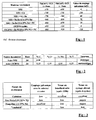
- Figure 1 represents a comparative table of the values of initial dissolution potentials and measured after one time t equal to 5 minutes, and the coupling value galvanic of different types of coatings made on steel substrates.
- Measuring electrochemical dissolution potentials assesses the risks of sensitivity to galvanic corrosion that may exist between a coating and the substrate on which it is deposited.
- galvanic coupling values greater than 250mV in the medium wet are likely to cause corrosion galvanic which results in a preferential attack of the coating if it has a sacrificial behavior by compared to the substrate on which it is deposited.
- the measurement of electrochemical potentials for dissolving materials or coatings shown in the table in Figure 1, is performed using an electronic multi-meter in using a saturated calomel reference electrode (noted DHW).
- the electrolyte used is a solution comprising 30 g / l of sodium chloride, 1.284 g / l of sodium phosphate and 0.187 g / l of boric acid.
- the pH of the solution electrolytic is maintained at 8 ⁇ 0.1 and the measurements are performed at room temperature.
- composition of the two types of steel considered is recalled in the table shown in Figure 2.
- the coatings considered are a cadmium coating deposited on a XES steel substrate without chromic finish and followed by a chromic finish; a coating of a alloy of tin and zinc comprising 8 to 35% by weight of zinc deposited on an unfinished XES steel substrate chromic and followed by a chromic finish; a coating of an alloy of zinc and nickel comprising 10 to 16% in nickel weight followed by a chrome finish.
- the coating of cadmium is used as a reference.
- the values of measured electrochemical dissolution potentials show that all coatings have a sacrificial behavior, the steel substrate provided with one of the coatings considered being more anodic than steel alone.
- the low galvanic coupling value between XES steel and a coating of a tin and zinc alloy containing 8 to 35% by weight of zinc suggests a long service life of this type of coating.
- FIG. 1 also shows that the deposition of a film of chromate, called chromic finish, on the coating of protection is particularly advantageous because it allows significantly reduce the value of the galvanic coupling between the steel substrate and the coating and thereby increase considerably the life of the coating.
- chromic finish a film of chromate
- Coating resistance tests in the presence of fog saline and alternating cycling were performed for all coatings considered in Figure 1 as well as for a additional coating, called sandwich coating, comprising a first layer consisting of a coating electrolytic alloy of zinc and nickel comprising 10 to 16% by weight of nickel and a second layer made of an electrolytic coating of an alloy tin and zinc comprising 8 to 35% by weight of zinc.
- the thicknesses of all the coverings considered are between 10 and 15 ⁇ m.
- cadmium coatings have excellent behavior in the presence of fog saline. After 336 hours of exposure, no corrosion of the steel substrate is not observed, which confirms the protective effect of this coating with respect to steel.
- the electrolytic coating of an alloy of zinc and nickel comprising 10 to 16% by weight of nickel and the electrolytic coatings of a tin and zinc alloy containing 8 to 35% by weight of zinc have behaviors similar in the presence of salt spray. From 216 hours of exposure to salt spray, fine drips of white corrosion appear, but these do not evolve not over time. After 336 hours of exposure to salt spray, no attack on the steel substrate is observed.
- the Zn - Ni coatings (10 to 16% by weight Ni), Sn - Zn (8 to 35% by weight Zn) and sandwich 2/3 Zn - Ni (10 to 16% by weight Ni) + 1/3 Sn - Zn (8 to 35% by weight Zn) have very close behavior in salt corrosion up to 336 hours of exposure to salt spray.
- Results obtained after exposure to salt spray are frequently different from the corrosion observed during exposure to the Earth's atmosphere. This is due to cyclical variations in climatic conditions and particular humidity, temperature, exposure to sunlight.
- Each cycle consists of exposing a given material for 15 hours in salt spray at a temperature of 35 ° C, then at place this material at a predetermined high temperature for 6 hours.
- High temperature is chosen lower than the melting point of the different elements of the coating.
- the temperature high is chosen equal to 235 ° C; for coating containing a tin and zinc alloy and the coating sandwich, the high temperature is chosen equal to 150 ° C in because of the low melting point of tin.
- the behavior, in alternating cycling, of the coating electrolytic alloy of tin and zinc comprising 8 to 35% by weight of zinc is similar to the behavior of electrolytic coating of zinc and nickel alloy.
- 15 to 20% of the surface of the steel substrate is attacked by white corrosion.
- the sandwich coating has the best behavior in saline corrosion and in alternating cycling compared to the zinc-nickel and tin-zinc coatings considered and constitutes an effective protection against corrosion of a steel part when the latter is used in severe conditions.
- Zinc-nickel and tin-zinc coatings can also be used as protective coatings on steel parts, in cases where the conditions of use of the parts are less severe.
- the zinc-nickel and tin-zinc coatings can also be applied to metal parts other than steel, such as, for example, aluminum alloy parts previously coated with an underlayer of chemical zincate.
- the invention is not limited to the examples of embodiments precisely described; in particular, the choice of an electrolytic route for depositing the alloys of the coating is advantageous in terms of the cost of producing the deposit and makes it possible to easily control the concentration of the elements of the alloy by choosing a density value of cathodic current applied during electrolysis and by the choice of an applied voltage value, but the deposition of the alloys considered can also be carried out by any other known method.
Landscapes
- Chemical & Material Sciences (AREA)
- Organic Chemistry (AREA)
- Engineering & Computer Science (AREA)
- Materials Engineering (AREA)
- Metallurgy (AREA)
- Chemical Kinetics & Catalysis (AREA)
- Mechanical Engineering (AREA)
- Electrochemistry (AREA)
- Electroplating Methods And Accessories (AREA)
- Electroplating And Plating Baths Therefor (AREA)
- Other Surface Treatments For Metallic Materials (AREA)
- Coating With Molten Metal (AREA)
- Laminated Bodies (AREA)
Abstract
Description
Pour protéger les pièces en acier contre la corrosion saline, il est connu d'utiliser le cadmium déposé par voie électrolytique en tant que revêtement anodique protecteur. Ce revêtement est utilisable à chaud jusqu'à des températures de l'ordre de 235°C.
Bien que le cadmium permette d'obtenir une bonne protection des pièces métalliques contre la corrosion, il présente un degré de toxicité élevé et des incompatibilités intrinsèques d'emploi avec les matériels actuels.
En particulier, le cadmium présente un risque de corrosion intergranulaire avec formation de criques lors du contact avec le titane et ses alliages, et des actions catalytiques défavorables au contact des huiles synthétiques et des carburants.
Différents types de revêtements ont été proposés pour remplacer le cadmium. Notamment les revêtements zinc-nickel comportant 6 à 8% de nickel et réalisés en milieu alcalin non cyanuré se sont avérés intéressants car ils offrent une bonne résistance à la corrosion saline, mais leur tenue en cyclage alterné est médiocre.
Il est également connu que dans le domaine de la connectique, les revêtements d'étain-nickel comportant 35 % de nickel et appliqués sur une sous-couche de cuivre offre de bonnes propriétés de résistance en corrosion. Cependant ce type de revêtement n'a pas un comportement sacrificiel par rapport aux substrats en acier ce qui limite sa durée de vie dans des conditions sévères telles que le cyclage alterné.
Avantageusement, la couche d'alliage d'étain et de zinc et/ou la sous-couche d'alliage de zinc et de nickel sont déposées par électrolyse.
- la figure 1, un tableau comparatif indiquant les valeurs des potentiels de dissolution et les valeurs de couplage galvanique de différents types de revêtements réalisés sur des substrats en acier ;
- la figure 2, un tableau rappelant la composition de deux types d'aciers considérés ;
- la figure 3, un tableau comparatif résumant les résultats obtenus pour les différents types de revêtements considérés lors d'essais de tenue en présence de brouillard salin et en cyclage alterné.
Le revêtement sandwich permet d'obtenir une double protection des pièces métalliques contre la corrosion saline, il permet d'augmenter la résistance à la corrosion en diminuant le couplage galvanique du revêtement par rapport au substrat métallique. L'alliage de zinc et de nickel est utilisé de préférence en sous-couche pour améliorer l'adhérence du revêtement sur la pièce métallique.
Le revêtement d'étain et de zinc ou de type sandwich peut comporter en outre un film externe de chromate permettant d'améliorer encore la tenue du revêtement en corrosion saline.
Les dépôts électrolytiques de l'alliage d'étain et de zinc et/ou de l'alliage de zinc et de nickel sont réalisés en utilisant des bains électrolytiques ne comportant aucun agent d'addition de type brillanteur organique ou métallique, car ces agents d'addition sont source de fragilisation par l'hydrogène.
Le revêtement électrolytique d'étain et de zinc est déposé en utilisant un bain dont un exemple de composition est donné ci-dessous :
- stannate de sodium : de 30 à 75 g/l et de préférence 67 g/l
- cyanure de zinc : de 2 à 10 g/l et de préférence 5,4 g/l
- soude : de 2 à 10 g/l et de préférence 5 g/l
- cyanure de sodium : de 15 à 45 g/l et de préférence 28 g/l
La plage des températures du bain d'électrolyse est comprise entre 63 et 67°C ; la plage des densités de courant cathodiques appliquée pendant l'électrolyse est comprise entre 1 et 3 A/dm2 ; la plage des tensions appliquées est comprise entre 2 et 5V.
Les anodes utilisées sont de préférence des anodes d'étain-zinc alliés, comportant par exemple 75 % en poids d'étain et 25 % en poids de zinc.
La composition du bain électrolytique peut être différente ; en particulier, pour des raisons d'hygiène et de sécurité, le complexant cyanure peut être remplacé par un complexant alcalin azoté non cyanuré comportant par exemple une ou plusieurs fonctions amines et/ou une ou plusieurs fonctions amides.
Le revêtement électrolytique de zinc et de nickel (10 à 16 % en poids de nickel) est effectué en utilisant un bain électrolytique connu sous le nom commercial Slotoloy ZN50.
| • soude | 12,5 g/l |
| • zinc | 7,5 g/l |
| • nickel | 1,3 g/l |
| • ZN51 | 40 ml/l |
| • ZN52 | 75 ml/l |
| • ZN53 | 5 ml/l |
Les revêtements zinc-nickel et étain-zinc peuvent également être utilisés en tant que revêtements protecteurs de pièces en acier, dans des cas où les conditions d'utilisation des pièces sont moins sévères.
Les revêtements zinc-nickel et étain-zinc peuvent également être appliqués sur des pièces métalliques autres que l'acier, telles que par exemple, des pièces en alliage d'aluminium préalablement revêtues d'une sous-couche de zincate chimique.
L'invention n'est pas limitée aux exemples de réalisations précisément décrits ; en particulier le choix d'une voie électrolytique pour déposer les alliages du revêtement est avantageuse au niveau du coût de réalisation du dépôt et permet de contrôler de façon simple la concentration des éléments de l'alliage par le choix d'une valeur de densité de courant cathodique appliquée pendant l'électrolyse et par le choix d'une valeur de tension appliquée, mais le dépôt des alliages considérés peut également être effectué par toute autre méthode connue.
Claims (9)
- Revêtement de protection de pièces métalliques ayant une bonne résistance à la corrosion en atmosphère saline, caractérisé en ce qu'il comporte au moins une couche d'un alliage d'étain et de zinc contenant entre 8 et 35 % en poids de zinc, une sous-couche d'un alliage de zinc et de nickel contenant entre 10 et 16 % en poids de nickel, la sous-couche étant disposée entre la pièce métallique et la couche d'alliage d'étain et de zinc, et la proportion en épaisseur des deux alliages du revêtement etant de deux tiers pour l'alliage de zinc et de nickel et de un tiers pour l'alliage d'étain et de zinc.
- Revêtement de protection de pièces métalliques selon la revendication 1, caractérisé en ce que la couche d'alliage d'étain et de zinc comporte entre 12 et 25 % en poids de zinc.
- Revêtement de protection de pièces métalliques selon l'une quelconque des revendications précédentes, caractérisé en ce qu'il comporte en outre un film externe de chromate.
- Revêtement de protection de pièces métalliques selon l'une quelconque des revendications précédentes, caractérisé en ce que la couche d'alliage d'étain et de zinc et/ou la sous-couche d'alliage de zinc et de nickel sont déposées par électrolyse.
- Revêtement de protection de pièces métalliques selon la revendication 4, caractérisé en ce que les dépôts électrolytiques de l'alliage d'étain et de zinc et/ou de l'alliage de zinc et de nickel sont réalisés en utilisant des bains électrolytiques ne comportant aucun agent d'addition de type brillanteur organique ou métallique.
- Revêtement de protection de pièces métalliques selon la revendication 5, caractérisé en ce que la composition du bain électrolytique utilisé pour le dépôt de l'alliage d'étain et de zinc est la suivante :
• stannate de sodium 67 g/l • cyanure de zinc 5,4 g/l • soude 5 g/l • cyanure de sodium 28 g/l - Revêtement de protection de pièces métalliques selon la revendication 6, caractérisé en ce que le complexant cyanure, utilisé dans le cyanure de zinc et le cyanure de sodium, est remplacé par un complexant alcalin azoté non cyanuré.
- Revêtement de protection de pièces métalliques selon l'une quelconque des revendications 4 à 6, caractérisé en ce que le dépôt électrolytique de l'alliage d'étain et de zinc est effectué en utilisant des anodes d'étain-zinc alliés.
- Pièce métallique comportant un revêtement de protection contre la corrosion en atmosphère saline, selon l'une quelconque des revendications précédentes.
Applications Claiming Priority (2)
| Application Number | Priority Date | Filing Date | Title |
|---|---|---|---|
| FR9706232 | 1997-05-22 | ||
| FR9706232A FR2763605B1 (fr) | 1997-05-22 | 1997-05-22 | Revetement de protection de pieces metalliques ayant une bonne resistance a la corrosion en atmosphere saline, et pieces metalliques comportant un tel revetement de protection |
Publications (2)
| Publication Number | Publication Date |
|---|---|
| EP0879901A1 true EP0879901A1 (fr) | 1998-11-25 |
| EP0879901B1 EP0879901B1 (fr) | 2002-03-20 |
Family
ID=9507103
Family Applications (1)
| Application Number | Title | Priority Date | Filing Date |
|---|---|---|---|
| EP98401213A Expired - Lifetime EP0879901B1 (fr) | 1997-05-22 | 1998-05-20 | Revêtement de protection de pièces métalliques ayant une bonne résistance à la corrosion en atmosphère saline, et pièces métalliques comportant un tel revêtement de protection. |
Country Status (7)
| Country | Link |
|---|---|
| US (1) | US5989735A (fr) |
| EP (1) | EP0879901B1 (fr) |
| JP (1) | JP3340386B2 (fr) |
| CA (1) | CA2238061C (fr) |
| DE (1) | DE69804267T2 (fr) |
| ES (1) | ES2171003T3 (fr) |
| FR (1) | FR2763605B1 (fr) |
Families Citing this family (8)
| Publication number | Priority date | Publication date | Assignee | Title |
|---|---|---|---|---|
| DE29801049U1 (de) * | 1998-01-22 | 1998-04-30 | Emhart Inc., Newark, Del. | Karosseriebauteil mit einer Zinn-Zink-Beschichtung |
| US6368486B1 (en) * | 2000-03-28 | 2002-04-09 | E. I. Du Pont De Nemours And Company | Low temperature alkali metal electrolysis |
| FR2856172A1 (fr) * | 2003-06-16 | 2004-12-17 | Neopost Ind | Machine d'affranchissement a dispositif d'alimentation en encre integre |
| US8021744B2 (en) | 2004-06-18 | 2011-09-20 | Borgwarner Inc. | Fully fibrous structure friction material |
| US8088498B2 (en) * | 2007-05-23 | 2012-01-03 | Hamilton Sundstrand Corporation | Electro-formed sheath for use on airfoil components |
| EP2233611A1 (fr) * | 2009-03-24 | 2010-09-29 | MTV Metallveredlung GmbH & Co. KG | Système de couche doté d'une résistance améliorée à la corrosion |
| US20130192982A1 (en) * | 2012-02-01 | 2013-08-01 | United Technologies Corporation | Surface implantation for corrosion protection of aluminum components |
| WO2015056786A1 (fr) * | 2013-10-18 | 2015-04-23 | 新日鐵住金株式会社 | Matériau d'acier plaqué, matériau d'acier revêtu et procédé de fabrication de matériau d'acier plaqué |
Citations (3)
| Publication number | Priority date | Publication date | Assignee | Title |
|---|---|---|---|---|
| US2675347A (en) * | 1951-10-15 | 1954-04-13 | Metal & Thermit Corp | Plating of tin-zinc alloys |
| JPH0533188A (ja) * | 1991-07-30 | 1993-02-09 | Nippon Steel Corp | 耐錆性と外観性の優れた容器用表面処理鋼板 |
| US5378346A (en) * | 1990-08-31 | 1995-01-03 | Ashiru; Oluwatoyin A. | Electroplating |
Family Cites Families (4)
| Publication number | Priority date | Publication date | Assignee | Title |
|---|---|---|---|---|
| JPS63290292A (ja) * | 1987-05-20 | 1988-11-28 | Nippon Steel Corp | 耐錆性、溶接性に優れた薄Snメツキ鋼板の製造方法 |
| US5275892A (en) * | 1987-11-05 | 1994-01-04 | Whyco Chromium Company, Inc. | Multi-layer corrosion resistant coating for fasteners and method of making |
| GB2230537B (en) * | 1989-03-28 | 1993-12-08 | Usui Kokusai Sangyo Kk | Heat and corrosion resistant plating |
| US5491035A (en) * | 1992-03-27 | 1996-02-13 | The Louis Berkman Company | Coated metal strip |
-
1997
- 1997-05-22 FR FR9706232A patent/FR2763605B1/fr not_active Expired - Fee Related
-
1998
- 1998-05-18 US US09/080,238 patent/US5989735A/en not_active Expired - Lifetime
- 1998-05-19 CA CA002238061A patent/CA2238061C/fr not_active Expired - Lifetime
- 1998-05-20 EP EP98401213A patent/EP0879901B1/fr not_active Expired - Lifetime
- 1998-05-20 ES ES98401213T patent/ES2171003T3/es not_active Expired - Lifetime
- 1998-05-20 DE DE69804267T patent/DE69804267T2/de not_active Expired - Lifetime
- 1998-05-22 JP JP14191798A patent/JP3340386B2/ja not_active Expired - Lifetime
Patent Citations (3)
| Publication number | Priority date | Publication date | Assignee | Title |
|---|---|---|---|---|
| US2675347A (en) * | 1951-10-15 | 1954-04-13 | Metal & Thermit Corp | Plating of tin-zinc alloys |
| US5378346A (en) * | 1990-08-31 | 1995-01-03 | Ashiru; Oluwatoyin A. | Electroplating |
| JPH0533188A (ja) * | 1991-07-30 | 1993-02-09 | Nippon Steel Corp | 耐錆性と外観性の優れた容器用表面処理鋼板 |
Non-Patent Citations (1)
| Title |
|---|
| DATABASE WPI Section Ch Week 9311, Derwent World Patents Index; Class M14, AN 93-089095, XP002056396 * |
Also Published As
| Publication number | Publication date |
|---|---|
| CA2238061C (fr) | 2005-07-12 |
| FR2763605A1 (fr) | 1998-11-27 |
| US5989735A (en) | 1999-11-23 |
| EP0879901B1 (fr) | 2002-03-20 |
| CA2238061A1 (fr) | 1998-11-22 |
| ES2171003T3 (es) | 2002-08-16 |
| DE69804267T2 (de) | 2002-11-21 |
| JPH10330964A (ja) | 1998-12-15 |
| JP3340386B2 (ja) | 2002-11-05 |
| FR2763605B1 (fr) | 1999-07-02 |
| DE69804267D1 (de) | 2002-04-25 |
Similar Documents
| Publication | Publication Date | Title |
|---|---|---|
| CN109072471B (zh) | 镀锡铜端子材及端子以及电线末端部结构 | |
| US20120168200A1 (en) | Method for manufacturing joint structure of steel sheet and aluminum sheet, and joint structure of steel sheet and aluminum sheet manufactured by the method | |
| EP0879901B1 (fr) | Revêtement de protection de pièces métalliques ayant une bonne résistance à la corrosion en atmosphère saline, et pièces métalliques comportant un tel revêtement de protection. | |
| FR2617868A1 (fr) | Procede pour le depot electrolytique d'un revetement metallique, de preference brasable, sur des objets fabriques en aluminium ou en un alliage de l'aluminium | |
| JPH05125567A (ja) | 耐食性に優れた継ぎ手構造 | |
| CA2863497C (fr) | Utilisation d'une solution contenant des ions sulfates pour reduire le noircissement ou le ternissement d'une tole lors de son stockage et tole traitee par une telle solution | |
| KR960006592B1 (ko) | 철 도금 알루미늄 합금 부품 및 그 도금 방법 | |
| US20040072012A1 (en) | Environmentally friendly surface treated steel sheet for electronic parts excellent in soldering wettability and resistance to rusting and formation of whisker | |
| MX2014002884A (es) | Galvanizado del aluminio. | |
| US6309760B1 (en) | Bearing material | |
| FR2554831A1 (fr) | Procede de depot d'un revetement protecteur sur des pieces metalliques | |
| FR2460346A1 (fr) | Procede pour preparer des toles d'acier revetues par galvanoplastie, ayant une excellente adherence des peintures | |
| US5712049A (en) | Sliding element and process for producing the same | |
| JPS5815554B2 (ja) | カチオン電着塗装用のメッキ鋼材 | |
| JPS625999B2 (fr) | ||
| NL9202145A (nl) | Werkwijze voor het aanbrengen van een gekleurde electroplateerlaag op een met zink geëlectroplateerd stalen voorwerp. | |
| EP3695029A1 (fr) | Revêtement de zn-ni résistant aux températures élevées sur un substrat en acier | |
| JPH04165096A (ja) | 電子部品用リード線 | |
| WO2006013184A1 (fr) | Revêtement de substrats à base de métaux legers ou d’alliage métallique léger | |
| JPH05126122A (ja) | 耐電食性に優れた締結具 | |
| WO2025052312A1 (fr) | Bain d'argentage sans cyanure, son procédé de préparation, procédé d'argentage correspondant et applications | |
| EP4367298B1 (fr) | Extrémité filetée d'un composant tubulaire pourvue d'un revêtement comprenant un alliage zinc-chrome | |
| EP0890655B1 (fr) | Procédé de traitement de surface de tôles d'acier galvanisé allié et tôle obtenue. | |
| KR100361615B1 (ko) | 프리니켈도금 처리된 아연-니켈도금강판의 아연-니켈도금층 박리용액 및 박리방법 | |
| JPH0631475B2 (ja) | カチオン電着塗装用ガルバニール鋼板の製法 |
Legal Events
| Date | Code | Title | Description |
|---|---|---|---|
| PUAI | Public reference made under article 153(3) epc to a published international application that has entered the european phase |
Free format text: ORIGINAL CODE: 0009012 |
|
| 17P | Request for examination filed |
Effective date: 19980606 |
|
| AK | Designated contracting states |
Kind code of ref document: A1 Designated state(s): DE ES FR GB IT |
|
| AX | Request for extension of the european patent |
Free format text: AL;LT;LV;MK;RO;SI |
|
| AKX | Designation fees paid |
Free format text: DE ES FR GB IT |
|
| 17Q | First examination report despatched |
Effective date: 20000125 |
|
| GRAG | Despatch of communication of intention to grant |
Free format text: ORIGINAL CODE: EPIDOS AGRA |
|
| GRAG | Despatch of communication of intention to grant |
Free format text: ORIGINAL CODE: EPIDOS AGRA |
|
| GRAH | Despatch of communication of intention to grant a patent |
Free format text: ORIGINAL CODE: EPIDOS IGRA |
|
| GRAH | Despatch of communication of intention to grant a patent |
Free format text: ORIGINAL CODE: EPIDOS IGRA |
|
| REG | Reference to a national code |
Ref country code: GB Ref legal event code: IF02 |
|
| RAP1 | Party data changed (applicant data changed or rights of an application transferred) |
Owner name: SNECMA MOTEURS |
|
| GRAA | (expected) grant |
Free format text: ORIGINAL CODE: 0009210 |
|
| AK | Designated contracting states |
Kind code of ref document: B1 Designated state(s): DE ES FR GB IT |
|
| REF | Corresponds to: |
Ref document number: 69804267 Country of ref document: DE Date of ref document: 20020425 |
|
| GBT | Gb: translation of ep patent filed (gb section 77(6)(a)/1977) |
Effective date: 20020524 |
|
| REG | Reference to a national code |
Ref country code: ES Ref legal event code: FG2A Ref document number: 2171003 Country of ref document: ES Kind code of ref document: T3 |
|
| PLBE | No opposition filed within time limit |
Free format text: ORIGINAL CODE: 0009261 |
|
| STAA | Information on the status of an ep patent application or granted ep patent |
Free format text: STATUS: NO OPPOSITION FILED WITHIN TIME LIMIT |
|
| 26N | No opposition filed |
Effective date: 20021223 |
|
| REG | Reference to a national code |
Ref country code: FR Ref legal event code: CD |
|
| PGFP | Annual fee paid to national office [announced via postgrant information from national office to epo] |
Ref country code: ES Payment date: 20120508 Year of fee payment: 15 |
|
| REG | Reference to a national code |
Ref country code: ES Ref legal event code: FD2A Effective date: 20140609 |
|
| PG25 | Lapsed in a contracting state [announced via postgrant information from national office to epo] |
Ref country code: ES Free format text: LAPSE BECAUSE OF NON-PAYMENT OF DUE FEES Effective date: 20130521 |
|
| REG | Reference to a national code |
Ref country code: FR Ref legal event code: PLFP Year of fee payment: 19 |
|
| REG | Reference to a national code |
Ref country code: FR Ref legal event code: PLFP Year of fee payment: 20 |
|
| PGFP | Annual fee paid to national office [announced via postgrant information from national office to epo] |
Ref country code: DE Payment date: 20170420 Year of fee payment: 20 Ref country code: FR Payment date: 20170427 Year of fee payment: 20 Ref country code: GB Payment date: 20170426 Year of fee payment: 20 |
|
| PGFP | Annual fee paid to national office [announced via postgrant information from national office to epo] |
Ref country code: IT Payment date: 20170421 Year of fee payment: 20 |
|
| REG | Reference to a national code |
Ref country code: FR Ref legal event code: CD Owner name: SAFRAN AIRCRAFT ENGINES Effective date: 20170719 |
|
| REG | Reference to a national code |
Ref country code: DE Ref legal event code: R071 Ref document number: 69804267 Country of ref document: DE |
|
| REG | Reference to a national code |
Ref country code: GB Ref legal event code: PE20 Expiry date: 20180519 |
|
| PG25 | Lapsed in a contracting state [announced via postgrant information from national office to epo] |
Ref country code: GB Free format text: LAPSE BECAUSE OF EXPIRATION OF PROTECTION Effective date: 20180519 |