EP0881919B1 - Dispositifs de prothese a base de polyethylene a poids moleculaire tres eleve, traites par fusion et rayonnement - Google Patents
Dispositifs de prothese a base de polyethylene a poids moleculaire tres eleve, traites par fusion et rayonnement Download PDFInfo
- Publication number
- EP0881919B1 EP0881919B1 EP97908650A EP97908650A EP0881919B1 EP 0881919 B1 EP0881919 B1 EP 0881919B1 EP 97908650 A EP97908650 A EP 97908650A EP 97908650 A EP97908650 A EP 97908650A EP 0881919 B1 EP0881919 B1 EP 0881919B1
- Authority
- EP
- European Patent Office
- Prior art keywords
- molecular weight
- high molecular
- ultra high
- weight polyethylene
- prosthesis
- Prior art date
- Legal status (The legal status is an assumption and is not a legal conclusion. Google has not performed a legal analysis and makes no representation as to the accuracy of the status listed.)
- Revoked
Links
Images

Classifications
-
- A—HUMAN NECESSITIES
- A61—MEDICAL OR VETERINARY SCIENCE; HYGIENE
- A61F—FILTERS IMPLANTABLE INTO BLOOD VESSELS; PROSTHESES; DEVICES PROVIDING PATENCY TO, OR PREVENTING COLLAPSING OF, TUBULAR STRUCTURES OF THE BODY, e.g. STENTS; ORTHOPAEDIC, NURSING OR CONTRACEPTIVE DEVICES; FOMENTATION; TREATMENT OR PROTECTION OF EYES OR EARS; BANDAGES, DRESSINGS OR ABSORBENT PADS; FIRST-AID KITS
- A61F2/00—Filters implantable into blood vessels; Prostheses, i.e. artificial substitutes or replacements for parts of the body; Appliances for connecting them with the body; Devices providing patency to, or preventing collapsing of, tubular structures of the body, e.g. stents
- A61F2/02—Prostheses implantable into the body
- A61F2/30—Joints
- A61F2/46—Special tools for implanting artificial joints
- A61F2/468—Testing instruments for artificial joints
-
- A—HUMAN NECESSITIES
- A61—MEDICAL OR VETERINARY SCIENCE; HYGIENE
- A61F—FILTERS IMPLANTABLE INTO BLOOD VESSELS; PROSTHESES; DEVICES PROVIDING PATENCY TO, OR PREVENTING COLLAPSING OF, TUBULAR STRUCTURES OF THE BODY, e.g. STENTS; ORTHOPAEDIC, NURSING OR CONTRACEPTIVE DEVICES; FOMENTATION; TREATMENT OR PROTECTION OF EYES OR EARS; BANDAGES, DRESSINGS OR ABSORBENT PADS; FIRST-AID KITS
- A61F2/00—Filters implantable into blood vessels; Prostheses, i.e. artificial substitutes or replacements for parts of the body; Appliances for connecting them with the body; Devices providing patency to, or preventing collapsing of, tubular structures of the body, e.g. stents
- A61F2/02—Prostheses implantable into the body
- A61F2/30—Joints
- A61F2/32—Joints for the hip
-
- A—HUMAN NECESSITIES
- A61—MEDICAL OR VETERINARY SCIENCE; HYGIENE
- A61F—FILTERS IMPLANTABLE INTO BLOOD VESSELS; PROSTHESES; DEVICES PROVIDING PATENCY TO, OR PREVENTING COLLAPSING OF, TUBULAR STRUCTURES OF THE BODY, e.g. STENTS; ORTHOPAEDIC, NURSING OR CONTRACEPTIVE DEVICES; FOMENTATION; TREATMENT OR PROTECTION OF EYES OR EARS; BANDAGES, DRESSINGS OR ABSORBENT PADS; FIRST-AID KITS
- A61F2/00—Filters implantable into blood vessels; Prostheses, i.e. artificial substitutes or replacements for parts of the body; Appliances for connecting them with the body; Devices providing patency to, or preventing collapsing of, tubular structures of the body, e.g. stents
- A61F2/02—Prostheses implantable into the body
- A61F2/30—Joints
- A61F2/46—Special tools for implanting artificial joints
- A61F2/4657—Measuring instruments used for implanting artificial joints
-
- A—HUMAN NECESSITIES
- A61—MEDICAL OR VETERINARY SCIENCE; HYGIENE
- A61L—METHODS OR APPARATUS FOR STERILISING MATERIALS OR OBJECTS IN GENERAL; DISINFECTION, STERILISATION OR DEODORISATION OF AIR; CHEMICAL ASPECTS OF BANDAGES, DRESSINGS, ABSORBENT PADS OR SURGICAL ARTICLES; MATERIALS FOR BANDAGES, DRESSINGS, ABSORBENT PADS OR SURGICAL ARTICLES
- A61L27/00—Materials for grafts or prostheses or for coating grafts or prostheses
- A61L27/14—Macromolecular materials
- A61L27/16—Macromolecular materials obtained by reactions only involving carbon-to-carbon unsaturated bonds
-
- B—PERFORMING OPERATIONS; TRANSPORTING
- B29—WORKING OF PLASTICS; WORKING OF SUBSTANCES IN A PLASTIC STATE IN GENERAL
- B29C—SHAPING OR JOINING OF PLASTICS; SHAPING OF MATERIAL IN A PLASTIC STATE, NOT OTHERWISE PROVIDED FOR; AFTER-TREATMENT OF THE SHAPED PRODUCTS, e.g. REPAIRING
- B29C71/00—After-treatment of articles without altering their shape; Apparatus therefor
- B29C71/02—Thermal after-treatment
-
- B—PERFORMING OPERATIONS; TRANSPORTING
- B29—WORKING OF PLASTICS; WORKING OF SUBSTANCES IN A PLASTIC STATE IN GENERAL
- B29C—SHAPING OR JOINING OF PLASTICS; SHAPING OF MATERIAL IN A PLASTIC STATE, NOT OTHERWISE PROVIDED FOR; AFTER-TREATMENT OF THE SHAPED PRODUCTS, e.g. REPAIRING
- B29C71/00—After-treatment of articles without altering their shape; Apparatus therefor
- B29C71/04—After-treatment of articles without altering their shape; Apparatus therefor by wave energy or particle radiation, e.g. for curing or vulcanising preformed articles
-
- A—HUMAN NECESSITIES
- A61—MEDICAL OR VETERINARY SCIENCE; HYGIENE
- A61F—FILTERS IMPLANTABLE INTO BLOOD VESSELS; PROSTHESES; DEVICES PROVIDING PATENCY TO, OR PREVENTING COLLAPSING OF, TUBULAR STRUCTURES OF THE BODY, e.g. STENTS; ORTHOPAEDIC, NURSING OR CONTRACEPTIVE DEVICES; FOMENTATION; TREATMENT OR PROTECTION OF EYES OR EARS; BANDAGES, DRESSINGS OR ABSORBENT PADS; FIRST-AID KITS
- A61F2/00—Filters implantable into blood vessels; Prostheses, i.e. artificial substitutes or replacements for parts of the body; Appliances for connecting them with the body; Devices providing patency to, or preventing collapsing of, tubular structures of the body, e.g. stents
- A61F2/02—Prostheses implantable into the body
- A61F2/30—Joints
- A61F2/30767—Special external or bone-contacting surface, e.g. coating for improving bone ingrowth
-
- A—HUMAN NECESSITIES
- A61—MEDICAL OR VETERINARY SCIENCE; HYGIENE
- A61F—FILTERS IMPLANTABLE INTO BLOOD VESSELS; PROSTHESES; DEVICES PROVIDING PATENCY TO, OR PREVENTING COLLAPSING OF, TUBULAR STRUCTURES OF THE BODY, e.g. STENTS; ORTHOPAEDIC, NURSING OR CONTRACEPTIVE DEVICES; FOMENTATION; TREATMENT OR PROTECTION OF EYES OR EARS; BANDAGES, DRESSINGS OR ABSORBENT PADS; FIRST-AID KITS
- A61F2/00—Filters implantable into blood vessels; Prostheses, i.e. artificial substitutes or replacements for parts of the body; Appliances for connecting them with the body; Devices providing patency to, or preventing collapsing of, tubular structures of the body, e.g. stents
- A61F2/02—Prostheses implantable into the body
- A61F2/30—Joints
- A61F2/3094—Designing or manufacturing processes
-
- A—HUMAN NECESSITIES
- A61—MEDICAL OR VETERINARY SCIENCE; HYGIENE
- A61F—FILTERS IMPLANTABLE INTO BLOOD VESSELS; PROSTHESES; DEVICES PROVIDING PATENCY TO, OR PREVENTING COLLAPSING OF, TUBULAR STRUCTURES OF THE BODY, e.g. STENTS; ORTHOPAEDIC, NURSING OR CONTRACEPTIVE DEVICES; FOMENTATION; TREATMENT OR PROTECTION OF EYES OR EARS; BANDAGES, DRESSINGS OR ABSORBENT PADS; FIRST-AID KITS
- A61F2/00—Filters implantable into blood vessels; Prostheses, i.e. artificial substitutes or replacements for parts of the body; Appliances for connecting them with the body; Devices providing patency to, or preventing collapsing of, tubular structures of the body, e.g. stents
- A61F2/02—Prostheses implantable into the body
- A61F2/30—Joints
- A61F2/32—Joints for the hip
- A61F2/34—Acetabular cups
-
- A—HUMAN NECESSITIES
- A61—MEDICAL OR VETERINARY SCIENCE; HYGIENE
- A61F—FILTERS IMPLANTABLE INTO BLOOD VESSELS; PROSTHESES; DEVICES PROVIDING PATENCY TO, OR PREVENTING COLLAPSING OF, TUBULAR STRUCTURES OF THE BODY, e.g. STENTS; ORTHOPAEDIC, NURSING OR CONTRACEPTIVE DEVICES; FOMENTATION; TREATMENT OR PROTECTION OF EYES OR EARS; BANDAGES, DRESSINGS OR ABSORBENT PADS; FIRST-AID KITS
- A61F2/00—Filters implantable into blood vessels; Prostheses, i.e. artificial substitutes or replacements for parts of the body; Appliances for connecting them with the body; Devices providing patency to, or preventing collapsing of, tubular structures of the body, e.g. stents
- A61F2/02—Prostheses implantable into the body
- A61F2/30—Joints
- A61F2/32—Joints for the hip
- A61F2/36—Femoral heads ; Femoral endoprostheses
-
- A—HUMAN NECESSITIES
- A61—MEDICAL OR VETERINARY SCIENCE; HYGIENE
- A61F—FILTERS IMPLANTABLE INTO BLOOD VESSELS; PROSTHESES; DEVICES PROVIDING PATENCY TO, OR PREVENTING COLLAPSING OF, TUBULAR STRUCTURES OF THE BODY, e.g. STENTS; ORTHOPAEDIC, NURSING OR CONTRACEPTIVE DEVICES; FOMENTATION; TREATMENT OR PROTECTION OF EYES OR EARS; BANDAGES, DRESSINGS OR ABSORBENT PADS; FIRST-AID KITS
- A61F2/00—Filters implantable into blood vessels; Prostheses, i.e. artificial substitutes or replacements for parts of the body; Appliances for connecting them with the body; Devices providing patency to, or preventing collapsing of, tubular structures of the body, e.g. stents
- A61F2/02—Prostheses implantable into the body
- A61F2/30—Joints
- A61F2/32—Joints for the hip
- A61F2/36—Femoral heads ; Femoral endoprostheses
- A61F2/3662—Femoral shafts
-
- A—HUMAN NECESSITIES
- A61—MEDICAL OR VETERINARY SCIENCE; HYGIENE
- A61F—FILTERS IMPLANTABLE INTO BLOOD VESSELS; PROSTHESES; DEVICES PROVIDING PATENCY TO, OR PREVENTING COLLAPSING OF, TUBULAR STRUCTURES OF THE BODY, e.g. STENTS; ORTHOPAEDIC, NURSING OR CONTRACEPTIVE DEVICES; FOMENTATION; TREATMENT OR PROTECTION OF EYES OR EARS; BANDAGES, DRESSINGS OR ABSORBENT PADS; FIRST-AID KITS
- A61F2/00—Filters implantable into blood vessels; Prostheses, i.e. artificial substitutes or replacements for parts of the body; Appliances for connecting them with the body; Devices providing patency to, or preventing collapsing of, tubular structures of the body, e.g. stents
- A61F2/02—Prostheses implantable into the body
- A61F2/30—Joints
- A61F2002/30001—Additional features of subject-matter classified in A61F2/28, A61F2/30 and subgroups thereof
- A61F2002/30003—Material related properties of the prosthesis or of a coating on the prosthesis
- A61F2002/3006—Properties of materials and coating materials
- A61F2002/30065—Properties of materials and coating materials thermoplastic, i.e. softening or fusing when heated, and hardening and becoming rigid again when cooled
-
- A—HUMAN NECESSITIES
- A61—MEDICAL OR VETERINARY SCIENCE; HYGIENE
- A61F—FILTERS IMPLANTABLE INTO BLOOD VESSELS; PROSTHESES; DEVICES PROVIDING PATENCY TO, OR PREVENTING COLLAPSING OF, TUBULAR STRUCTURES OF THE BODY, e.g. STENTS; ORTHOPAEDIC, NURSING OR CONTRACEPTIVE DEVICES; FOMENTATION; TREATMENT OR PROTECTION OF EYES OR EARS; BANDAGES, DRESSINGS OR ABSORBENT PADS; FIRST-AID KITS
- A61F2/00—Filters implantable into blood vessels; Prostheses, i.e. artificial substitutes or replacements for parts of the body; Appliances for connecting them with the body; Devices providing patency to, or preventing collapsing of, tubular structures of the body, e.g. stents
- A61F2/02—Prostheses implantable into the body
- A61F2/30—Joints
- A61F2002/30001—Additional features of subject-matter classified in A61F2/28, A61F2/30 and subgroups thereof
- A61F2002/30003—Material related properties of the prosthesis or of a coating on the prosthesis
- A61F2002/3006—Properties of materials and coating materials
- A61F2002/30084—Materials having a crystalline structure
-
- A—HUMAN NECESSITIES
- A61—MEDICAL OR VETERINARY SCIENCE; HYGIENE
- A61F—FILTERS IMPLANTABLE INTO BLOOD VESSELS; PROSTHESES; DEVICES PROVIDING PATENCY TO, OR PREVENTING COLLAPSING OF, TUBULAR STRUCTURES OF THE BODY, e.g. STENTS; ORTHOPAEDIC, NURSING OR CONTRACEPTIVE DEVICES; FOMENTATION; TREATMENT OR PROTECTION OF EYES OR EARS; BANDAGES, DRESSINGS OR ABSORBENT PADS; FIRST-AID KITS
- A61F2/00—Filters implantable into blood vessels; Prostheses, i.e. artificial substitutes or replacements for parts of the body; Appliances for connecting them with the body; Devices providing patency to, or preventing collapsing of, tubular structures of the body, e.g. stents
- A61F2/02—Prostheses implantable into the body
- A61F2/30—Joints
- A61F2002/30001—Additional features of subject-matter classified in A61F2/28, A61F2/30 and subgroups thereof
- A61F2002/30108—Shapes
- A61F2002/3011—Cross-sections or two-dimensional shapes
- A61F2002/30112—Rounded shapes, e.g. with rounded corners
- A61F2002/30125—Rounded shapes, e.g. with rounded corners elliptical or oval
-
- A—HUMAN NECESSITIES
- A61—MEDICAL OR VETERINARY SCIENCE; HYGIENE
- A61F—FILTERS IMPLANTABLE INTO BLOOD VESSELS; PROSTHESES; DEVICES PROVIDING PATENCY TO, OR PREVENTING COLLAPSING OF, TUBULAR STRUCTURES OF THE BODY, e.g. STENTS; ORTHOPAEDIC, NURSING OR CONTRACEPTIVE DEVICES; FOMENTATION; TREATMENT OR PROTECTION OF EYES OR EARS; BANDAGES, DRESSINGS OR ABSORBENT PADS; FIRST-AID KITS
- A61F2/00—Filters implantable into blood vessels; Prostheses, i.e. artificial substitutes or replacements for parts of the body; Appliances for connecting them with the body; Devices providing patency to, or preventing collapsing of, tubular structures of the body, e.g. stents
- A61F2/02—Prostheses implantable into the body
- A61F2/30—Joints
- A61F2002/30001—Additional features of subject-matter classified in A61F2/28, A61F2/30 and subgroups thereof
- A61F2002/30108—Shapes
- A61F2002/3011—Cross-sections or two-dimensional shapes
- A61F2002/30138—Convex polygonal shapes
- A61F2002/30158—Convex polygonal shapes trapezoidal
-
- A—HUMAN NECESSITIES
- A61—MEDICAL OR VETERINARY SCIENCE; HYGIENE
- A61F—FILTERS IMPLANTABLE INTO BLOOD VESSELS; PROSTHESES; DEVICES PROVIDING PATENCY TO, OR PREVENTING COLLAPSING OF, TUBULAR STRUCTURES OF THE BODY, e.g. STENTS; ORTHOPAEDIC, NURSING OR CONTRACEPTIVE DEVICES; FOMENTATION; TREATMENT OR PROTECTION OF EYES OR EARS; BANDAGES, DRESSINGS OR ABSORBENT PADS; FIRST-AID KITS
- A61F2/00—Filters implantable into blood vessels; Prostheses, i.e. artificial substitutes or replacements for parts of the body; Appliances for connecting them with the body; Devices providing patency to, or preventing collapsing of, tubular structures of the body, e.g. stents
- A61F2/02—Prostheses implantable into the body
- A61F2/30—Joints
- A61F2002/30001—Additional features of subject-matter classified in A61F2/28, A61F2/30 and subgroups thereof
- A61F2002/30316—The prosthesis having different structural features at different locations within the same prosthesis; Connections between prosthetic parts; Special structural features of bone or joint prostheses not otherwise provided for
- A61F2002/30317—The prosthesis having different structural features at different locations within the same prosthesis
- A61F2002/30324—The prosthesis having different structural features at different locations within the same prosthesis differing in thickness
-
- A—HUMAN NECESSITIES
- A61—MEDICAL OR VETERINARY SCIENCE; HYGIENE
- A61F—FILTERS IMPLANTABLE INTO BLOOD VESSELS; PROSTHESES; DEVICES PROVIDING PATENCY TO, OR PREVENTING COLLAPSING OF, TUBULAR STRUCTURES OF THE BODY, e.g. STENTS; ORTHOPAEDIC, NURSING OR CONTRACEPTIVE DEVICES; FOMENTATION; TREATMENT OR PROTECTION OF EYES OR EARS; BANDAGES, DRESSINGS OR ABSORBENT PADS; FIRST-AID KITS
- A61F2/00—Filters implantable into blood vessels; Prostheses, i.e. artificial substitutes or replacements for parts of the body; Appliances for connecting them with the body; Devices providing patency to, or preventing collapsing of, tubular structures of the body, e.g. stents
- A61F2/02—Prostheses implantable into the body
- A61F2/30—Joints
- A61F2002/30001—Additional features of subject-matter classified in A61F2/28, A61F2/30 and subgroups thereof
- A61F2002/30316—The prosthesis having different structural features at different locations within the same prosthesis; Connections between prosthetic parts; Special structural features of bone or joint prostheses not otherwise provided for
- A61F2002/30535—Special structural features of bone or joint prostheses not otherwise provided for
- A61F2002/30604—Special structural features of bone or joint prostheses not otherwise provided for modular
- A61F2002/30616—Sets comprising a plurality of prosthetic parts of different sizes or orientations
-
- A—HUMAN NECESSITIES
- A61—MEDICAL OR VETERINARY SCIENCE; HYGIENE
- A61F—FILTERS IMPLANTABLE INTO BLOOD VESSELS; PROSTHESES; DEVICES PROVIDING PATENCY TO, OR PREVENTING COLLAPSING OF, TUBULAR STRUCTURES OF THE BODY, e.g. STENTS; ORTHOPAEDIC, NURSING OR CONTRACEPTIVE DEVICES; FOMENTATION; TREATMENT OR PROTECTION OF EYES OR EARS; BANDAGES, DRESSINGS OR ABSORBENT PADS; FIRST-AID KITS
- A61F2/00—Filters implantable into blood vessels; Prostheses, i.e. artificial substitutes or replacements for parts of the body; Appliances for connecting them with the body; Devices providing patency to, or preventing collapsing of, tubular structures of the body, e.g. stents
- A61F2/02—Prostheses implantable into the body
- A61F2/30—Joints
- A61F2002/30001—Additional features of subject-matter classified in A61F2/28, A61F2/30 and subgroups thereof
- A61F2002/30667—Features concerning an interaction with the environment or a particular use of the prosthesis
- A61F2002/30682—Means for preventing migration of particles released by the joint, e.g. wear debris or cement particles
- A61F2002/30685—Means for reducing or preventing the generation of wear particulates
-
- A—HUMAN NECESSITIES
- A61—MEDICAL OR VETERINARY SCIENCE; HYGIENE
- A61F—FILTERS IMPLANTABLE INTO BLOOD VESSELS; PROSTHESES; DEVICES PROVIDING PATENCY TO, OR PREVENTING COLLAPSING OF, TUBULAR STRUCTURES OF THE BODY, e.g. STENTS; ORTHOPAEDIC, NURSING OR CONTRACEPTIVE DEVICES; FOMENTATION; TREATMENT OR PROTECTION OF EYES OR EARS; BANDAGES, DRESSINGS OR ABSORBENT PADS; FIRST-AID KITS
- A61F2/00—Filters implantable into blood vessels; Prostheses, i.e. artificial substitutes or replacements for parts of the body; Appliances for connecting them with the body; Devices providing patency to, or preventing collapsing of, tubular structures of the body, e.g. stents
- A61F2/02—Prostheses implantable into the body
- A61F2/30—Joints
- A61F2/30767—Special external or bone-contacting surface, e.g. coating for improving bone ingrowth
- A61F2002/30934—Special articulating surfaces
-
- A—HUMAN NECESSITIES
- A61—MEDICAL OR VETERINARY SCIENCE; HYGIENE
- A61F—FILTERS IMPLANTABLE INTO BLOOD VESSELS; PROSTHESES; DEVICES PROVIDING PATENCY TO, OR PREVENTING COLLAPSING OF, TUBULAR STRUCTURES OF THE BODY, e.g. STENTS; ORTHOPAEDIC, NURSING OR CONTRACEPTIVE DEVICES; FOMENTATION; TREATMENT OR PROTECTION OF EYES OR EARS; BANDAGES, DRESSINGS OR ABSORBENT PADS; FIRST-AID KITS
- A61F2/00—Filters implantable into blood vessels; Prostheses, i.e. artificial substitutes or replacements for parts of the body; Appliances for connecting them with the body; Devices providing patency to, or preventing collapsing of, tubular structures of the body, e.g. stents
- A61F2/02—Prostheses implantable into the body
- A61F2/30—Joints
- A61F2/32—Joints for the hip
- A61F2002/3233—Joints for the hip having anti-luxation means for preventing complete dislocation of the femoral head from the acetabular cup
-
- A—HUMAN NECESSITIES
- A61—MEDICAL OR VETERINARY SCIENCE; HYGIENE
- A61F—FILTERS IMPLANTABLE INTO BLOOD VESSELS; PROSTHESES; DEVICES PROVIDING PATENCY TO, OR PREVENTING COLLAPSING OF, TUBULAR STRUCTURES OF THE BODY, e.g. STENTS; ORTHOPAEDIC, NURSING OR CONTRACEPTIVE DEVICES; FOMENTATION; TREATMENT OR PROTECTION OF EYES OR EARS; BANDAGES, DRESSINGS OR ABSORBENT PADS; FIRST-AID KITS
- A61F2/00—Filters implantable into blood vessels; Prostheses, i.e. artificial substitutes or replacements for parts of the body; Appliances for connecting them with the body; Devices providing patency to, or preventing collapsing of, tubular structures of the body, e.g. stents
- A61F2/02—Prostheses implantable into the body
- A61F2/30—Joints
- A61F2/32—Joints for the hip
- A61F2/34—Acetabular cups
- A61F2002/3453—Acetabular cups having a non-hemispherical convex outer surface, e.g. quadric-shaped
- A61F2002/3462—Acetabular cups having a non-hemispherical convex outer surface, e.g. quadric-shaped having a frustoconical external shape, e.g. entirely frustoconical
-
- A—HUMAN NECESSITIES
- A61—MEDICAL OR VETERINARY SCIENCE; HYGIENE
- A61F—FILTERS IMPLANTABLE INTO BLOOD VESSELS; PROSTHESES; DEVICES PROVIDING PATENCY TO, OR PREVENTING COLLAPSING OF, TUBULAR STRUCTURES OF THE BODY, e.g. STENTS; ORTHOPAEDIC, NURSING OR CONTRACEPTIVE DEVICES; FOMENTATION; TREATMENT OR PROTECTION OF EYES OR EARS; BANDAGES, DRESSINGS OR ABSORBENT PADS; FIRST-AID KITS
- A61F2/00—Filters implantable into blood vessels; Prostheses, i.e. artificial substitutes or replacements for parts of the body; Appliances for connecting them with the body; Devices providing patency to, or preventing collapsing of, tubular structures of the body, e.g. stents
- A61F2/02—Prostheses implantable into the body
- A61F2/30—Joints
- A61F2/32—Joints for the hip
- A61F2/34—Acetabular cups
- A61F2002/348—Additional features
- A61F2002/349—Shell having a wavy or undulated peripheral rim
-
- A—HUMAN NECESSITIES
- A61—MEDICAL OR VETERINARY SCIENCE; HYGIENE
- A61F—FILTERS IMPLANTABLE INTO BLOOD VESSELS; PROSTHESES; DEVICES PROVIDING PATENCY TO, OR PREVENTING COLLAPSING OF, TUBULAR STRUCTURES OF THE BODY, e.g. STENTS; ORTHOPAEDIC, NURSING OR CONTRACEPTIVE DEVICES; FOMENTATION; TREATMENT OR PROTECTION OF EYES OR EARS; BANDAGES, DRESSINGS OR ABSORBENT PADS; FIRST-AID KITS
- A61F2/00—Filters implantable into blood vessels; Prostheses, i.e. artificial substitutes or replacements for parts of the body; Appliances for connecting them with the body; Devices providing patency to, or preventing collapsing of, tubular structures of the body, e.g. stents
- A61F2/02—Prostheses implantable into the body
- A61F2/30—Joints
- A61F2/32—Joints for the hip
- A61F2/34—Acetabular cups
- A61F2002/348—Additional features
- A61F2002/3493—Spherical shell significantly greater than a hemisphere, e.g. extending over more than 200 degrees
-
- A—HUMAN NECESSITIES
- A61—MEDICAL OR VETERINARY SCIENCE; HYGIENE
- A61F—FILTERS IMPLANTABLE INTO BLOOD VESSELS; PROSTHESES; DEVICES PROVIDING PATENCY TO, OR PREVENTING COLLAPSING OF, TUBULAR STRUCTURES OF THE BODY, e.g. STENTS; ORTHOPAEDIC, NURSING OR CONTRACEPTIVE DEVICES; FOMENTATION; TREATMENT OR PROTECTION OF EYES OR EARS; BANDAGES, DRESSINGS OR ABSORBENT PADS; FIRST-AID KITS
- A61F2/00—Filters implantable into blood vessels; Prostheses, i.e. artificial substitutes or replacements for parts of the body; Appliances for connecting them with the body; Devices providing patency to, or preventing collapsing of, tubular structures of the body, e.g. stents
- A61F2/02—Prostheses implantable into the body
- A61F2/30—Joints
- A61F2/32—Joints for the hip
- A61F2/34—Acetabular cups
- A61F2002/348—Additional features
- A61F2002/3495—Spherical shell significantly smaller than a hemisphere, e.g. extending over less than 160 degrees
-
- A—HUMAN NECESSITIES
- A61—MEDICAL OR VETERINARY SCIENCE; HYGIENE
- A61F—FILTERS IMPLANTABLE INTO BLOOD VESSELS; PROSTHESES; DEVICES PROVIDING PATENCY TO, OR PREVENTING COLLAPSING OF, TUBULAR STRUCTURES OF THE BODY, e.g. STENTS; ORTHOPAEDIC, NURSING OR CONTRACEPTIVE DEVICES; FOMENTATION; TREATMENT OR PROTECTION OF EYES OR EARS; BANDAGES, DRESSINGS OR ABSORBENT PADS; FIRST-AID KITS
- A61F2/00—Filters implantable into blood vessels; Prostheses, i.e. artificial substitutes or replacements for parts of the body; Appliances for connecting them with the body; Devices providing patency to, or preventing collapsing of, tubular structures of the body, e.g. stents
- A61F2/02—Prostheses implantable into the body
- A61F2/30—Joints
- A61F2/32—Joints for the hip
- A61F2/36—Femoral heads ; Femoral endoprostheses
- A61F2/3609—Femoral heads or necks; Connections of endoprosthetic heads or necks to endoprosthetic femoral shafts
- A61F2002/3611—Heads or epiphyseal parts of femur
-
- A—HUMAN NECESSITIES
- A61—MEDICAL OR VETERINARY SCIENCE; HYGIENE
- A61F—FILTERS IMPLANTABLE INTO BLOOD VESSELS; PROSTHESES; DEVICES PROVIDING PATENCY TO, OR PREVENTING COLLAPSING OF, TUBULAR STRUCTURES OF THE BODY, e.g. STENTS; ORTHOPAEDIC, NURSING OR CONTRACEPTIVE DEVICES; FOMENTATION; TREATMENT OR PROTECTION OF EYES OR EARS; BANDAGES, DRESSINGS OR ABSORBENT PADS; FIRST-AID KITS
- A61F2/00—Filters implantable into blood vessels; Prostheses, i.e. artificial substitutes or replacements for parts of the body; Appliances for connecting them with the body; Devices providing patency to, or preventing collapsing of, tubular structures of the body, e.g. stents
- A61F2/02—Prostheses implantable into the body
- A61F2/30—Joints
- A61F2/32—Joints for the hip
- A61F2/36—Femoral heads ; Femoral endoprostheses
- A61F2/3609—Femoral heads or necks; Connections of endoprosthetic heads or necks to endoprosthetic femoral shafts
- A61F2002/3611—Heads or epiphyseal parts of femur
- A61F2002/3623—Non-spherical heads
-
- A—HUMAN NECESSITIES
- A61—MEDICAL OR VETERINARY SCIENCE; HYGIENE
- A61F—FILTERS IMPLANTABLE INTO BLOOD VESSELS; PROSTHESES; DEVICES PROVIDING PATENCY TO, OR PREVENTING COLLAPSING OF, TUBULAR STRUCTURES OF THE BODY, e.g. STENTS; ORTHOPAEDIC, NURSING OR CONTRACEPTIVE DEVICES; FOMENTATION; TREATMENT OR PROTECTION OF EYES OR EARS; BANDAGES, DRESSINGS OR ABSORBENT PADS; FIRST-AID KITS
- A61F2/00—Filters implantable into blood vessels; Prostheses, i.e. artificial substitutes or replacements for parts of the body; Appliances for connecting them with the body; Devices providing patency to, or preventing collapsing of, tubular structures of the body, e.g. stents
- A61F2/02—Prostheses implantable into the body
- A61F2/30—Joints
- A61F2/32—Joints for the hip
- A61F2/36—Femoral heads ; Femoral endoprostheses
- A61F2/3609—Femoral heads or necks; Connections of endoprosthetic heads or necks to endoprosthetic femoral shafts
- A61F2002/3625—Necks
-
- A—HUMAN NECESSITIES
- A61—MEDICAL OR VETERINARY SCIENCE; HYGIENE
- A61F—FILTERS IMPLANTABLE INTO BLOOD VESSELS; PROSTHESES; DEVICES PROVIDING PATENCY TO, OR PREVENTING COLLAPSING OF, TUBULAR STRUCTURES OF THE BODY, e.g. STENTS; ORTHOPAEDIC, NURSING OR CONTRACEPTIVE DEVICES; FOMENTATION; TREATMENT OR PROTECTION OF EYES OR EARS; BANDAGES, DRESSINGS OR ABSORBENT PADS; FIRST-AID KITS
- A61F2/00—Filters implantable into blood vessels; Prostheses, i.e. artificial substitutes or replacements for parts of the body; Appliances for connecting them with the body; Devices providing patency to, or preventing collapsing of, tubular structures of the body, e.g. stents
- A61F2/02—Prostheses implantable into the body
- A61F2/30—Joints
- A61F2/32—Joints for the hip
- A61F2/36—Femoral heads ; Femoral endoprostheses
- A61F2/3609—Femoral heads or necks; Connections of endoprosthetic heads or necks to endoprosthetic femoral shafts
- A61F2002/3625—Necks
- A61F2002/3631—Necks with an integral complete or partial peripheral collar or bearing shoulder at its base
-
- A—HUMAN NECESSITIES
- A61—MEDICAL OR VETERINARY SCIENCE; HYGIENE
- A61F—FILTERS IMPLANTABLE INTO BLOOD VESSELS; PROSTHESES; DEVICES PROVIDING PATENCY TO, OR PREVENTING COLLAPSING OF, TUBULAR STRUCTURES OF THE BODY, e.g. STENTS; ORTHOPAEDIC, NURSING OR CONTRACEPTIVE DEVICES; FOMENTATION; TREATMENT OR PROTECTION OF EYES OR EARS; BANDAGES, DRESSINGS OR ABSORBENT PADS; FIRST-AID KITS
- A61F2/00—Filters implantable into blood vessels; Prostheses, i.e. artificial substitutes or replacements for parts of the body; Appliances for connecting them with the body; Devices providing patency to, or preventing collapsing of, tubular structures of the body, e.g. stents
- A61F2/02—Prostheses implantable into the body
- A61F2/30—Joints
- A61F2/32—Joints for the hip
- A61F2/36—Femoral heads ; Femoral endoprostheses
- A61F2/3609—Femoral heads or necks; Connections of endoprosthetic heads or necks to endoprosthetic femoral shafts
- A61F2002/365—Connections of heads to necks
-
- A—HUMAN NECESSITIES
- A61—MEDICAL OR VETERINARY SCIENCE; HYGIENE
- A61F—FILTERS IMPLANTABLE INTO BLOOD VESSELS; PROSTHESES; DEVICES PROVIDING PATENCY TO, OR PREVENTING COLLAPSING OF, TUBULAR STRUCTURES OF THE BODY, e.g. STENTS; ORTHOPAEDIC, NURSING OR CONTRACEPTIVE DEVICES; FOMENTATION; TREATMENT OR PROTECTION OF EYES OR EARS; BANDAGES, DRESSINGS OR ABSORBENT PADS; FIRST-AID KITS
- A61F2/00—Filters implantable into blood vessels; Prostheses, i.e. artificial substitutes or replacements for parts of the body; Appliances for connecting them with the body; Devices providing patency to, or preventing collapsing of, tubular structures of the body, e.g. stents
- A61F2/02—Prostheses implantable into the body
- A61F2/30—Joints
- A61F2/46—Special tools for implanting artificial joints
- A61F2002/4631—Special tools for implanting artificial joints the prosthesis being specially adapted for being cemented
-
- A—HUMAN NECESSITIES
- A61—MEDICAL OR VETERINARY SCIENCE; HYGIENE
- A61F—FILTERS IMPLANTABLE INTO BLOOD VESSELS; PROSTHESES; DEVICES PROVIDING PATENCY TO, OR PREVENTING COLLAPSING OF, TUBULAR STRUCTURES OF THE BODY, e.g. STENTS; ORTHOPAEDIC, NURSING OR CONTRACEPTIVE DEVICES; FOMENTATION; TREATMENT OR PROTECTION OF EYES OR EARS; BANDAGES, DRESSINGS OR ABSORBENT PADS; FIRST-AID KITS
- A61F2/00—Filters implantable into blood vessels; Prostheses, i.e. artificial substitutes or replacements for parts of the body; Appliances for connecting them with the body; Devices providing patency to, or preventing collapsing of, tubular structures of the body, e.g. stents
- A61F2/02—Prostheses implantable into the body
- A61F2/30—Joints
- A61F2/46—Special tools for implanting artificial joints
- A61F2/4657—Measuring instruments used for implanting artificial joints
- A61F2002/4666—Measuring instruments used for implanting artificial joints for measuring force, pressure or mechanical tension
-
- A—HUMAN NECESSITIES
- A61—MEDICAL OR VETERINARY SCIENCE; HYGIENE
- A61F—FILTERS IMPLANTABLE INTO BLOOD VESSELS; PROSTHESES; DEVICES PROVIDING PATENCY TO, OR PREVENTING COLLAPSING OF, TUBULAR STRUCTURES OF THE BODY, e.g. STENTS; ORTHOPAEDIC, NURSING OR CONTRACEPTIVE DEVICES; FOMENTATION; TREATMENT OR PROTECTION OF EYES OR EARS; BANDAGES, DRESSINGS OR ABSORBENT PADS; FIRST-AID KITS
- A61F2210/00—Particular material properties of prostheses classified in groups A61F2/00 - A61F2/26 or A61F2/82 or A61F9/00 or A61F11/00 or subgroups thereof
- A61F2210/0071—Particular material properties of prostheses classified in groups A61F2/00 - A61F2/26 or A61F2/82 or A61F9/00 or A61F11/00 or subgroups thereof thermoplastic
-
- A—HUMAN NECESSITIES
- A61—MEDICAL OR VETERINARY SCIENCE; HYGIENE
- A61F—FILTERS IMPLANTABLE INTO BLOOD VESSELS; PROSTHESES; DEVICES PROVIDING PATENCY TO, OR PREVENTING COLLAPSING OF, TUBULAR STRUCTURES OF THE BODY, e.g. STENTS; ORTHOPAEDIC, NURSING OR CONTRACEPTIVE DEVICES; FOMENTATION; TREATMENT OR PROTECTION OF EYES OR EARS; BANDAGES, DRESSINGS OR ABSORBENT PADS; FIRST-AID KITS
- A61F2230/00—Geometry of prostheses classified in groups A61F2/00 - A61F2/26 or A61F2/82 or A61F9/00 or A61F11/00 or subgroups thereof
- A61F2230/0002—Two-dimensional shapes, e.g. cross-sections
- A61F2230/0004—Rounded shapes, e.g. with rounded corners
- A61F2230/0008—Rounded shapes, e.g. with rounded corners elliptical or oval
-
- A—HUMAN NECESSITIES
- A61—MEDICAL OR VETERINARY SCIENCE; HYGIENE
- A61F—FILTERS IMPLANTABLE INTO BLOOD VESSELS; PROSTHESES; DEVICES PROVIDING PATENCY TO, OR PREVENTING COLLAPSING OF, TUBULAR STRUCTURES OF THE BODY, e.g. STENTS; ORTHOPAEDIC, NURSING OR CONTRACEPTIVE DEVICES; FOMENTATION; TREATMENT OR PROTECTION OF EYES OR EARS; BANDAGES, DRESSINGS OR ABSORBENT PADS; FIRST-AID KITS
- A61F2230/00—Geometry of prostheses classified in groups A61F2/00 - A61F2/26 or A61F2/82 or A61F9/00 or A61F11/00 or subgroups thereof
- A61F2230/0002—Two-dimensional shapes, e.g. cross-sections
- A61F2230/0017—Angular shapes
- A61F2230/0026—Angular shapes trapezoidal
-
- A—HUMAN NECESSITIES
- A61—MEDICAL OR VETERINARY SCIENCE; HYGIENE
- A61F—FILTERS IMPLANTABLE INTO BLOOD VESSELS; PROSTHESES; DEVICES PROVIDING PATENCY TO, OR PREVENTING COLLAPSING OF, TUBULAR STRUCTURES OF THE BODY, e.g. STENTS; ORTHOPAEDIC, NURSING OR CONTRACEPTIVE DEVICES; FOMENTATION; TREATMENT OR PROTECTION OF EYES OR EARS; BANDAGES, DRESSINGS OR ABSORBENT PADS; FIRST-AID KITS
- A61F2250/00—Special features of prostheses classified in groups A61F2/00 - A61F2/26 or A61F2/82 or A61F9/00 or A61F11/00 or subgroups thereof
- A61F2250/0014—Special features of prostheses classified in groups A61F2/00 - A61F2/26 or A61F2/82 or A61F9/00 or A61F11/00 or subgroups thereof having different values of a given property or geometrical feature, e.g. mechanical property or material property, at different locations within the same prosthesis
- A61F2250/0036—Special features of prostheses classified in groups A61F2/00 - A61F2/26 or A61F2/82 or A61F9/00 or A61F11/00 or subgroups thereof having different values of a given property or geometrical feature, e.g. mechanical property or material property, at different locations within the same prosthesis differing in thickness
-
- A—HUMAN NECESSITIES
- A61—MEDICAL OR VETERINARY SCIENCE; HYGIENE
- A61F—FILTERS IMPLANTABLE INTO BLOOD VESSELS; PROSTHESES; DEVICES PROVIDING PATENCY TO, OR PREVENTING COLLAPSING OF, TUBULAR STRUCTURES OF THE BODY, e.g. STENTS; ORTHOPAEDIC, NURSING OR CONTRACEPTIVE DEVICES; FOMENTATION; TREATMENT OR PROTECTION OF EYES OR EARS; BANDAGES, DRESSINGS OR ABSORBENT PADS; FIRST-AID KITS
- A61F2310/00—Prostheses classified in A61F2/28 or A61F2/30 - A61F2/44 being constructed from or coated with a particular material
- A61F2310/00005—The prosthesis being constructed from a particular material
- A61F2310/00011—Metals or alloys
-
- A—HUMAN NECESSITIES
- A61—MEDICAL OR VETERINARY SCIENCE; HYGIENE
- A61F—FILTERS IMPLANTABLE INTO BLOOD VESSELS; PROSTHESES; DEVICES PROVIDING PATENCY TO, OR PREVENTING COLLAPSING OF, TUBULAR STRUCTURES OF THE BODY, e.g. STENTS; ORTHOPAEDIC, NURSING OR CONTRACEPTIVE DEVICES; FOMENTATION; TREATMENT OR PROTECTION OF EYES OR EARS; BANDAGES, DRESSINGS OR ABSORBENT PADS; FIRST-AID KITS
- A61F2310/00—Prostheses classified in A61F2/28 or A61F2/30 - A61F2/44 being constructed from or coated with a particular material
- A61F2310/00005—The prosthesis being constructed from a particular material
- A61F2310/00011—Metals or alloys
- A61F2310/00017—Iron- or Fe-based alloys, e.g. stainless steel
-
- A—HUMAN NECESSITIES
- A61—MEDICAL OR VETERINARY SCIENCE; HYGIENE
- A61F—FILTERS IMPLANTABLE INTO BLOOD VESSELS; PROSTHESES; DEVICES PROVIDING PATENCY TO, OR PREVENTING COLLAPSING OF, TUBULAR STRUCTURES OF THE BODY, e.g. STENTS; ORTHOPAEDIC, NURSING OR CONTRACEPTIVE DEVICES; FOMENTATION; TREATMENT OR PROTECTION OF EYES OR EARS; BANDAGES, DRESSINGS OR ABSORBENT PADS; FIRST-AID KITS
- A61F2310/00—Prostheses classified in A61F2/28 or A61F2/30 - A61F2/44 being constructed from or coated with a particular material
- A61F2310/00005—The prosthesis being constructed from a particular material
- A61F2310/00011—Metals or alloys
- A61F2310/00023—Titanium or titanium-based alloys, e.g. Ti-Ni alloys
-
- A—HUMAN NECESSITIES
- A61—MEDICAL OR VETERINARY SCIENCE; HYGIENE
- A61F—FILTERS IMPLANTABLE INTO BLOOD VESSELS; PROSTHESES; DEVICES PROVIDING PATENCY TO, OR PREVENTING COLLAPSING OF, TUBULAR STRUCTURES OF THE BODY, e.g. STENTS; ORTHOPAEDIC, NURSING OR CONTRACEPTIVE DEVICES; FOMENTATION; TREATMENT OR PROTECTION OF EYES OR EARS; BANDAGES, DRESSINGS OR ABSORBENT PADS; FIRST-AID KITS
- A61F2310/00—Prostheses classified in A61F2/28 or A61F2/30 - A61F2/44 being constructed from or coated with a particular material
- A61F2310/00005—The prosthesis being constructed from a particular material
- A61F2310/00011—Metals or alloys
- A61F2310/00029—Cobalt-based alloys, e.g. Co-Cr alloys or Vitallium
-
- A—HUMAN NECESSITIES
- A61—MEDICAL OR VETERINARY SCIENCE; HYGIENE
- A61F—FILTERS IMPLANTABLE INTO BLOOD VESSELS; PROSTHESES; DEVICES PROVIDING PATENCY TO, OR PREVENTING COLLAPSING OF, TUBULAR STRUCTURES OF THE BODY, e.g. STENTS; ORTHOPAEDIC, NURSING OR CONTRACEPTIVE DEVICES; FOMENTATION; TREATMENT OR PROTECTION OF EYES OR EARS; BANDAGES, DRESSINGS OR ABSORBENT PADS; FIRST-AID KITS
- A61F2310/00—Prostheses classified in A61F2/28 or A61F2/30 - A61F2/44 being constructed from or coated with a particular material
- A61F2310/00005—The prosthesis being constructed from a particular material
- A61F2310/00011—Metals or alloys
- A61F2310/00035—Other metals or alloys
- A61F2310/00071—Nickel or Ni-based alloys
-
- A—HUMAN NECESSITIES
- A61—MEDICAL OR VETERINARY SCIENCE; HYGIENE
- A61F—FILTERS IMPLANTABLE INTO BLOOD VESSELS; PROSTHESES; DEVICES PROVIDING PATENCY TO, OR PREVENTING COLLAPSING OF, TUBULAR STRUCTURES OF THE BODY, e.g. STENTS; ORTHOPAEDIC, NURSING OR CONTRACEPTIVE DEVICES; FOMENTATION; TREATMENT OR PROTECTION OF EYES OR EARS; BANDAGES, DRESSINGS OR ABSORBENT PADS; FIRST-AID KITS
- A61F2310/00—Prostheses classified in A61F2/28 or A61F2/30 - A61F2/44 being constructed from or coated with a particular material
- A61F2310/00005—The prosthesis being constructed from a particular material
- A61F2310/00179—Ceramics or ceramic-like structures
-
- A—HUMAN NECESSITIES
- A61—MEDICAL OR VETERINARY SCIENCE; HYGIENE
- A61L—METHODS OR APPARATUS FOR STERILISING MATERIALS OR OBJECTS IN GENERAL; DISINFECTION, STERILISATION OR DEODORISATION OF AIR; CHEMICAL ASPECTS OF BANDAGES, DRESSINGS, ABSORBENT PADS OR SURGICAL ARTICLES; MATERIALS FOR BANDAGES, DRESSINGS, ABSORBENT PADS OR SURGICAL ARTICLES
- A61L2430/00—Materials or treatment for tissue regeneration
- A61L2430/24—Materials or treatment for tissue regeneration for joint reconstruction
-
- B—PERFORMING OPERATIONS; TRANSPORTING
- B29—WORKING OF PLASTICS; WORKING OF SUBSTANCES IN A PLASTIC STATE IN GENERAL
- B29C—SHAPING OR JOINING OF PLASTICS; SHAPING OF MATERIAL IN A PLASTIC STATE, NOT OTHERWISE PROVIDED FOR; AFTER-TREATMENT OF THE SHAPED PRODUCTS, e.g. REPAIRING
- B29C35/00—Heating, cooling or curing, e.g. crosslinking or vulcanising; Apparatus therefor
- B29C35/02—Heating or curing, e.g. crosslinking or vulcanizing during moulding, e.g. in a mould
- B29C35/08—Heating or curing, e.g. crosslinking or vulcanizing during moulding, e.g. in a mould by wave energy or particle radiation
- B29C35/0805—Heating or curing, e.g. crosslinking or vulcanizing during moulding, e.g. in a mould by wave energy or particle radiation using electromagnetic radiation
- B29C2035/085—Heating or curing, e.g. crosslinking or vulcanizing during moulding, e.g. in a mould by wave energy or particle radiation using electromagnetic radiation using gamma-ray
-
- B—PERFORMING OPERATIONS; TRANSPORTING
- B29—WORKING OF PLASTICS; WORKING OF SUBSTANCES IN A PLASTIC STATE IN GENERAL
- B29C—SHAPING OR JOINING OF PLASTICS; SHAPING OF MATERIAL IN A PLASTIC STATE, NOT OTHERWISE PROVIDED FOR; AFTER-TREATMENT OF THE SHAPED PRODUCTS, e.g. REPAIRING
- B29C35/00—Heating, cooling or curing, e.g. crosslinking or vulcanising; Apparatus therefor
- B29C35/02—Heating or curing, e.g. crosslinking or vulcanizing during moulding, e.g. in a mould
- B29C35/08—Heating or curing, e.g. crosslinking or vulcanizing during moulding, e.g. in a mould by wave energy or particle radiation
- B29C35/0866—Heating or curing, e.g. crosslinking or vulcanizing during moulding, e.g. in a mould by wave energy or particle radiation using particle radiation
- B29C2035/0877—Heating or curing, e.g. crosslinking or vulcanizing during moulding, e.g. in a mould by wave energy or particle radiation using particle radiation using electron radiation, e.g. beta-rays
-
- B—PERFORMING OPERATIONS; TRANSPORTING
- B29—WORKING OF PLASTICS; WORKING OF SUBSTANCES IN A PLASTIC STATE IN GENERAL
- B29C—SHAPING OR JOINING OF PLASTICS; SHAPING OF MATERIAL IN A PLASTIC STATE, NOT OTHERWISE PROVIDED FOR; AFTER-TREATMENT OF THE SHAPED PRODUCTS, e.g. REPAIRING
- B29C43/00—Compression moulding, i.e. applying external pressure to flow the moulding material; Apparatus therefor
-
- B—PERFORMING OPERATIONS; TRANSPORTING
- B29—WORKING OF PLASTICS; WORKING OF SUBSTANCES IN A PLASTIC STATE IN GENERAL
- B29C—SHAPING OR JOINING OF PLASTICS; SHAPING OF MATERIAL IN A PLASTIC STATE, NOT OTHERWISE PROVIDED FOR; AFTER-TREATMENT OF THE SHAPED PRODUCTS, e.g. REPAIRING
- B29C43/00—Compression moulding, i.e. applying external pressure to flow the moulding material; Apparatus therefor
- B29C43/02—Compression moulding, i.e. applying external pressure to flow the moulding material; Apparatus therefor of articles of definite length, i.e. discrete articles
- B29C43/16—Forging
-
- B—PERFORMING OPERATIONS; TRANSPORTING
- B29—WORKING OF PLASTICS; WORKING OF SUBSTANCES IN A PLASTIC STATE IN GENERAL
- B29K—INDEXING SCHEME ASSOCIATED WITH SUBCLASSES B29B, B29C OR B29D, RELATING TO MOULDING MATERIALS OR TO MATERIALS FOR MOULDS, REINFORCEMENTS, FILLERS OR PREFORMED PARTS, e.g. INSERTS
- B29K2023/00—Use of polyalkenes or derivatives thereof as moulding material
- B29K2023/04—Polymers of ethylene
- B29K2023/06—PE, i.e. polyethylene
- B29K2023/0658—PE, i.e. polyethylene characterised by its molecular weight
- B29K2023/0683—UHMWPE, i.e. ultra high molecular weight polyethylene
-
- B—PERFORMING OPERATIONS; TRANSPORTING
- B29—WORKING OF PLASTICS; WORKING OF SUBSTANCES IN A PLASTIC STATE IN GENERAL
- B29K—INDEXING SCHEME ASSOCIATED WITH SUBCLASSES B29B, B29C OR B29D, RELATING TO MOULDING MATERIALS OR TO MATERIALS FOR MOULDS, REINFORCEMENTS, FILLERS OR PREFORMED PARTS, e.g. INSERTS
- B29K2995/00—Properties of moulding materials, reinforcements, fillers, preformed parts or moulds
- B29K2995/0037—Other properties
- B29K2995/0087—Wear resistance
-
- B—PERFORMING OPERATIONS; TRANSPORTING
- B29—WORKING OF PLASTICS; WORKING OF SUBSTANCES IN A PLASTIC STATE IN GENERAL
- B29K—INDEXING SCHEME ASSOCIATED WITH SUBCLASSES B29B, B29C OR B29D, RELATING TO MOULDING MATERIALS OR TO MATERIALS FOR MOULDS, REINFORCEMENTS, FILLERS OR PREFORMED PARTS, e.g. INSERTS
- B29K2995/00—Properties of moulding materials, reinforcements, fillers, preformed parts or moulds
- B29K2995/0037—Other properties
- B29K2995/0089—Impact strength or toughness
-
- B—PERFORMING OPERATIONS; TRANSPORTING
- B29—WORKING OF PLASTICS; WORKING OF SUBSTANCES IN A PLASTIC STATE IN GENERAL
- B29L—INDEXING SCHEME ASSOCIATED WITH SUBCLASS B29C, RELATING TO PARTICULAR ARTICLES
- B29L2031/00—Other particular articles
- B29L2031/753—Medical equipment; Accessories therefor
- B29L2031/7532—Artificial members, protheses
-
- C—CHEMISTRY; METALLURGY
- C08—ORGANIC MACROMOLECULAR COMPOUNDS; THEIR PREPARATION OR CHEMICAL WORKING-UP; COMPOSITIONS BASED THEREON
- C08F—MACROMOLECULAR COMPOUNDS OBTAINED BY REACTIONS ONLY INVOLVING CARBON-TO-CARBON UNSATURATED BONDS
- C08F110/00—Homopolymers of unsaturated aliphatic hydrocarbons having only one carbon-to-carbon double bond
- C08F110/02—Ethene
-
- Y—GENERAL TAGGING OF NEW TECHNOLOGICAL DEVELOPMENTS; GENERAL TAGGING OF CROSS-SECTIONAL TECHNOLOGIES SPANNING OVER SEVERAL SECTIONS OF THE IPC; TECHNICAL SUBJECTS COVERED BY FORMER USPC CROSS-REFERENCE ART COLLECTIONS [XRACs] AND DIGESTS
- Y10—TECHNICAL SUBJECTS COVERED BY FORMER USPC
- Y10T—TECHNICAL SUBJECTS COVERED BY FORMER US CLASSIFICATION
- Y10T428/00—Stock material or miscellaneous articles
- Y10T428/31504—Composite [nonstructural laminate]
- Y10T428/31678—Of metal
- Y10T428/31692—Next to addition polymer from unsaturated monomers
-
- Y—GENERAL TAGGING OF NEW TECHNOLOGICAL DEVELOPMENTS; GENERAL TAGGING OF CROSS-SECTIONAL TECHNOLOGIES SPANNING OVER SEVERAL SECTIONS OF THE IPC; TECHNICAL SUBJECTS COVERED BY FORMER USPC CROSS-REFERENCE ART COLLECTIONS [XRACs] AND DIGESTS
- Y10—TECHNICAL SUBJECTS COVERED BY FORMER USPC
- Y10T—TECHNICAL SUBJECTS COVERED BY FORMER US CLASSIFICATION
- Y10T428/00—Stock material or miscellaneous articles
- Y10T428/31504—Composite [nonstructural laminate]
- Y10T428/31855—Of addition polymer from unsaturated monomers
Definitions
- the present invention relates to the orthopedic field and the provision of prostheses, such as hip and knee implants, as well as methods of manufacture of such devices and material used therein.
- macrophage-induced resorption of the periprosthetic bone is initiated.
- the macrophage often being unable to digest these polyethylene particles, synthesize and release large numbers of cytokines and growth factors which can ultimately result in bone resorption by osteoclasts and monocytes. This osteolysis can contribute to mechanical loosening of the prosthesis components, thereby sometimes requiring revision surgery with its concomitant problems.
- European Patent Application No. 0 729 981 (BMG Incorporated) discloses ultra high molecular weight mouldings for use in artificial joints.
- the moulded articles are said to have a low friction and excellent abrasion resistance as a result of irradiating the UHMWPE with a low dose of a radioactive ray to produce a very small amount of uoss-linking.
- European Patent Application No. 0 722 973 discloses chemically cross-linked ultra high molecular weight polyethylene for artificial human joints.
- the cross-linking leads to a reduction in the crystallinity of the polymer, allowing it to better withstand wear.
- UHMWPE radiation treated ultra high molecular weight polyethylene
- Still another object of the invention is to provide improved UHMWPE which has a high density of cross-links and no detectable free radicals.
- a still further object of the invention is to provide improved UHMWPE which has improved wear resistance.
- a radiation-treated ultra high molecular weight polyethylene (UHMWPE) having 2 or 3 melting peaks and a cross-linked structure is provided.
- a medical prosthesis is provided, the prosthesis being formed from the UHMWPE according to the first aspect of the invention.
- a fabricated article is provided, wherein the fabricated article is formed of the radiation-treated UHMWPE according to the first aspect of the present invention.
- a method for making UHMWPE having 2 or 3 melting peaks comprising the steps of: providing, at a temperature above room temperature but below the melting point of said UHMWPE, UHMWPE having polymeric chains; irradiating said ultra high molecular weight polyethylene so as to cross-link said polymeric chains; and cooling said irradiated ultra high molecular weight polyethylene.
- a product is provided which is made in accordance with a method according to the fourth aspect of the invention.
- a method of making a medical prosthesis from radiation treated UHMWPE having 2 or 3 melting peaks is provided, the resultant prosthesis benefiting from the reduced production of particles from said prosthesis during wear of said prosthesis, and the method comprising the steps of the method according to the fourth aspect of the invention, and forming a medical prosthesis from the UHMWPE, the UHMWPE forming a load bearing surface of the prosthesis.
- a seventh aspect of the present invention the use of radiation treated UHMWPE according to the first aspect of the invention to form a medical prosthesis is provided.
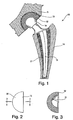
- the specific form of the prosthesis can vary greatly as known in the art. Many hip joint constructions are known and other prostheses such as knee joints, shoulder joints, ankle joints, elbow joints and finger joints are known. All such prior art prostheses can be benefited by making at least one load bearing surface of such prosthesis of a high molecular weight polyethylene material in accordance with this invention. Such load bearing surfaces can be in the form of layers, linings or actual whole devices as shown in FIG. 1. In all cases, it is preferred that the load bearing surface act in conjunction with a metallic or ceramic mating member of the prosthesis so that a sliding surface is formed therebetween. Such sliding surfaces are subject to breakdown of the polyethylene as known in the prior art. Such breakdown can be greatly diminished by use of the materials of the present invention.
- FIG. 2 shows the acetabular cup 12 in the form of a half hollow ball-shaped device better seen in the cross-section of FIG. 3.
- the outer surface 20 of the acetabular cup need not be circular or hemispherical but can be square or of any configuration to be adhered directly to the pelvis or to the pelvis through a metallic shell as known in the art.
- the radius of the acetabular cup shown at 21 in FIG. 3 of the preferred embodiment ranges from 20 mm to 35 mm.
- the thickness of the acetabular cup from its generally hemispherical hollow portion to the outer surface 20 is preferably 8 mm.
- the outer radius is preferably in the order of 20 mm to 35 mm.
- the ball joint can be made of the UHMWPE of this invention and the acetabular cup formed of metal, although it is preferred to make the acetabular cup or acetabular cup liner of UHMWPE to mate with the metallic ball.
- the particular method of attachment of the components of the prosthesis to the bones of the body can vary greatly as known in the art.
- the medical prosthesis of this invention is meant to include whole prosthetic devices or portions thereof, e.g., a component, layer or lining.
- the medical prosthesis includes, e.g., orthopedic joint and bone replacement parts, e.g., hip, knee, shoulder, elbow, ankle or finger replacements.
- the prosthesis can be in the form, e.g., of a cup or tray shaped article which has a load bearing surface. Other forms known to those skilled in the art are also included in the invention.
- Medical prostheses are also meant to include any wearing surface of a prosthesis, e.g., a coating on a surface of a prosthesis in which the prosthesis is made from a material other than the UHMWPE of this invention.
- the prostheses of this invention are useful for contact with metal containing parts formed of, e.g., cobalt chromium alloy, stainless steel, titanium alloy or nickel cobalt alloy, or with ceramic containing parts.
- metal containing parts formed of, e.g., cobalt chromium alloy, stainless steel, titanium alloy or nickel cobalt alloy, or with ceramic containing parts.
- a hip joint is constructed in which a cup shaped article having an inner radius of 25 mm, is contacted with a metal ball having an outer radius of 25 mm, so as to closely mate with the cup shaped article.
- the load bearing surface of the cup shaped article of this example is made from the UHMWPE of this invention, preferably having a thickness of at least 1 mm, more preferably having a thickness of at least 2 mm, more preferably having a thickness of at least 1 ⁇ 4 inch, and more preferably yet having a thickness of at least inch.
- the prostheses can have any standard known form, shape, or configuration, or be a custom design, but have at least one load bearing surface of UHMWPE of this invention.
- the prostheses of this invention are non-toxic to humans. They are not subject to deterioration by normal body constituents, e.g., blood or interstitial fluids. They are capable of being sterilized by standard means, including, e.g., heat or ethylene oxide.
- UHMWPE linear non-branched chains of ethylene that have molecular weights in excess of 500,000, preferably above 1,000,000, and more preferably above 2,000,000. Often the molecular weights can be at least as high as 8,000,000.
- initial average molecular weight is meant the average molecular weight of the UHMWPE starting material, prior to any irradiation.
- UHMWPE is standardly generated by Ziegler-Natta catalysis, and as the polymer chains are generated from the surface catalytic site, they crystallize, and interlock as chain folded crystals.
- UHMWPE powders include Hifax Grade 1900 polyethylene (obtained from Montell, Wilmington, Delaware), having a molecular weight of about 2 million g/mol and not containing any calcium stearate; GUR 4150, also known as GUR 415, (obtained from Hoescht Celanese Corp., Houston, TX), having a molecular weight of about 4-5 million g/mol and containing 500 ppm of calcium stearate; GUR 4050 (obtained from Hoescht Celanese Corp., Houston, TX), having a molecular weight of about 4-5 million g/mol and not containing any calcium stearate; GUR 4120 (obtained from Hoescht Celanese Corp., Houston, TX), having a molecular weight of about 2 million stea
- UHMWPE powder can be consolidated using a variety of different techniques, e.g., ram extrusion, compression molding or direct compression molding.
- ram extrusion the UHMWPE powder is pressurized through a heated barrel whereby it is consolidated into a rod stock, i.e., bar stock (can be obtained, e.g., from Westlake Plastics, Lenni, PA).
- bar stock can be obtained, e.g., from Westlake Plastics, Lenni, PA
- compression molding the UHMWPE powder is consolidated under high pressure into a mold (can be obtained, e.g., from Poly-Hi Solidur, Fort Wayne, IN, or Perplas, Stanmore, U.K.).
- the shape of the mold can be, e.g., a thick sheet.
- UHMWPE which has been treated with radiation, e.g., gamma radiation or electron radiation, so as to induce cross-links between the polymeric chains of the UHMWPE.
- radiation treated UHMWPE UHMWPE which has been treated with radiation, e.g., gamma radiation or electron radiation, so as to induce cross-links between the polymeric chains of the UHMWPE.
- substantially no detectable free radicals substantially no free radicals as measured by electron paramagnetic resonance, as described in Jahan et al., J. Biomedical Materials Research 25:1005 (1991).
- Free radicals include, e.g., unsaturated trans-vinylene free radicals.
- UHMWPE that has been irradiated below its melting point with ionizing radiation contains cross-links as well as long-lived trapped free radicals. These free radicals react with oxygen over the long-term and result in the embrittlement of the UHMWPE through oxidative degradation.
- An advantage of the UHMWPE and medical prostheses of this invention is that radiation treated UHMWPE is used which has no detectable free radicals.
- the free radicals can be eliminated by any method which gives this result, e.g., by heating the UHMWPE above its melting point such that substantially no residual crystalline structure remains. By eliminating the crystalline structure, the free radicals are able to recombine and thus are eliminated.
- the UHMWPE which is used in this invention has a cross-linked structure and 2 or 3 melting peaks.
- An advantage of having a cross-linked structure is that it will reduce production of particles from the prosthesis during wear of he prosthesis.
- the UHMWPE be substantially not oxidized.
- substantially not oxidized is meant that the ratio of the area under the carbonyl peak at 1740 cm -1 in the FTIR spectra to the area under the peak at 1460 cm -1 in the FTIR spectra of the cross-linked sample be of the same order of magnitude as the ratio for the sample before cross-linking.
- the UHMWPE be substantially oxidation resistant.
- substantially oxidation resistant is meant that it remains substantially not oxidized for at least 10 years.
- it remains substantially not oxidized for at least 20 years, more preferably for at least 30 years, more preferably yet for at least 40 years, and most preferably for the entire lifetime of the patient.
- the UHMWPE has three melting peaks.
- the first melting peak preferably is 105°C to 120°C, more preferably is 110°C to 120°C, and most preferably is about 118°C.
- the second melting peak preferably is 125°C to 140°C, more preferably is 130°C to 140°C, more preferably yet is about 135°C, and most preferably is about 137°C.
- the third melting peak preferably is 140°C to 150°C, more preferably is 140°C to 145°C, and most preferably is about 144°C.
- the UHMWPE has two melting peaks.
- the first melting peak preferably is 105°C to 120°C, more preferably is 110°C to 120°C, and most preferably is about 118°C.
- the second melting peak preferably is 125°C to 140°C, more preferably is 130°C to 140°C, more preferably yet is about 135°C, and most preferably is about 137°C.
- the UHMWPE has two melting peaks.
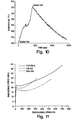
- the number of melting peaks is determined by differential scanning calorimetry (DSC) at a heating rate of 10°C/min.
- the polymeric structure of the UHMWPE used in the prostheses of this invention results in the reduction of production of UHMWPE particles from the prosthesis during wear of the prosthesis. As a result of the limited number of particles being shed into the body, the prosthesis exhibits longer implant life.
- the prosthesis can remain implanted in the body for at least 10 years, more preferably for at least 20 years and most preferably for the entire lifetime of the patient.
- the invention also includes other fabricated articles made from radiation treated UHMWPE having a cross-linked structure and 2 or 3 melting peaks.
- the UHMWPE is substantially oxidation resistant.
- the UHMWPE has three melting peaks.
- the UHMWPE has two melting peaks.
- the UHMWPE has two melting peaks.
- the fabricated articles include shaped articles and unshaped articles, including, e.g., machined objects, e.g., cups, gears, nuts, sled runners, bolts, fasteners, cables, pipes and the like, and bar stock, films, cylindrical bars, sheeting, panels, and fibers. Shaped articles can be made, e.g., by machining.
- the fabricated article can be, e.g., in the form of a bar stock which is capable of being shaped into a second article by machining.
- the fabricated articles are particularly suitable for load bearing applications, e.g., high wear resistance applications, e.g., as a load bearing surface, e.g., an articulating surface, and as metal replacement articles.
- Thin films or sheets of the UHMWPE of this invention can also be attached, e.g., with glue, onto supporting surfaces, and thus used as a wear resistant load bearing surface.
- the invention also includes radiation treated UHMWPE which has a cross-linked structure and 2 or 3 melting peaks.
- the UHMWPE is substantially not oxidized and is substantially oxidation resistant.
- the UHMWPE has three melting peaks.
- the UHMWPE has two melting peaks.
- the UHMWPE has two melting peaks.
- certain impurities may be present in the UHMWPE of this invention, including, e.g., calcium stearate, mold release agents, extenders, anti-oxidants and/or other conventional additives to polyethylene polymers.
- the invention also provides a method for making cross-linked UHMWPE having a cross-linked structure and 2 or 3 melting peaks.
- this UHMWPE is for use as a load bearing article with high wear resistance.
- Conventional UHMWPE having polymeric chains is provided.
- the conventional UHMWPE can be in the form of, e.g., a bar stock, a shaped bar stock, e.g., a puck, a coating, or a fabricated article, e.g., a cup or tray shaped article for use in a medical prosthesis.
- conventional UHMWPE is meant commercially available high density (linear) polyethylene of molecular weights greater than 500,000.
- the UHMWPE starting material has an average molecular weight of greater than 2 million.
- initial average molecular weight is meant the average molecular weight of the UHMWPE starting material, prior to any irradiation.
- the UHMWPE is irradiated so as to cross-link the polymeric chains.
- the irradiation can be done in an inert or non-inert environment.
- the irradiation is done in a non-inert environment, e.g., air.
- a method for irradiating UHMWPE which does not form part of the invention is called CIR-SM, i.e., cold irradiation and subsequent melting.
- the UHMWPE that is provided is at room temperature or below room temperature. Preferably, it is about 20°C.
- Irradiation of the UHMWPE can be with, e.g., gamma irradiation or electron irradiation.
- gamma irradiation gives a high penetration depth but takes a longer time, resulting in the possibility of more in-depth oxidation.
- electron irradiation gives more limited penetration depths but takes a shorter time, and the possibility of extensive oxidation is reduced.
- the irradiation is done so as to cross-link the polymeric chains.
- the irradiation dose can be varied to control the degree of cross-linking and crystallinity in the final UHMWPE product.
- the total absorbed dose of the irradiation is 0.5 to 1,000 Mrad, more preferably 1 to 100 Mrad, more preferably yet 4 to 30 Mrad, more preferably yet about 20 Mrad, and most preferably about 15 Mrad.
- a dose rate is used that does not generate enough heat to melt the UHMWPE. If gamma irradiation is used, the preferred dose rate is 0.05 to 0.2 Mrad/minute.
- the dose rate is 0.05 to 3,000 Mrad/minute, more preferably 0.05 to 5 Mrad/minute, and most preferably 0.05 to 0.2 Mrad/minute.
- the dose rate in electron irradiation is determined by the following parameters: (1) the power of the accelerator in kW, (ii) the conveyor speed, (iii) the distance between the surface of the irradiated specimen and the scan horn, and (iv) the scan width.
- the dose rate at an e-beam facility is often measured in Mrads per pass under the rastering e-beam.
- the energy of the electrons can be varied to change the depth of penetration of the electrons.
- the energy of the electrons is 0.5 MeV to 12 MeV, more preferably 5 MeV to 12 MeV.
- Such manipulability is particularly useful when the irradiated object is an article of varying thickness or depth, e.g., an articular cup for a medical prosthesis.
- the irradiated UHMWPE is heated above the melting temperature of the UHMWPE so that there are no detectable free radicals in the UHMWPE.
- the heating provides the molecules with sufficient mobility so as to eliminate the constraints derived from the crystals of the UHMWPE, thereby allowing essentially all of the residual free radicals to recombine.
- the UHMWPE is heated to a temperature of 137°C to 300°C, more preferably 140°C to 300°C, more preferably yet 140°C to 190°C, more preferably yet 145°C to 300°C, more preferably yet 145°C to 190°C, more preferably yet 146°C to 190°C, and most preferably about 150°C.
- WIR-SM warm irradiation and subsequent melting.
- the UHMWPE that is provided is pre-heated to a temperature below the melting temperature of the UHMWPE.
- the pre-heating can be done in an inert or non-inert environment. It is preferred that this pre-heating is done in air.
- the UHMWPE is pre-heated to a temperature of 20°C to 135°C, more preferably to a temperature greater than 20°C to 135°C, and most preferably to a temperature of about 50°C.
- the preferred method for making irradiated UHMWPE having a cross-linked structure and 2 or 3 melting peaks according to the claimed invention is called WIR-AM , i.e., warm irradiation and adiabatic melting.
- the UHMWPE that is provided is pre-heated to a temperature below the melting temperature of the UHMWPE.
- the pre-heating can be done in an inert or non-inert environment. It is preferred that this pre-heating is done in air.
- the pre-heating can be done, e.g., in an oven. It is preferred that the pre-heating is to a temperature between 100°C to below the melting temperature of the UHMWPE.
- the UHMWPE is pre-heated to a temperature of 100°C to 135°C, more preferably the temperature is about 130°C , and most preferably is about 120°C.
- the UHMWPE is in an insulating material so as to reduce heat loss from the UHMWPE during processing.
- the heat is meant to include, e.g., the pre-heat delivered before irradiation and the heat generated during irradiation.
- insulating material is meant any type of material which has insulating properties, e.g., a fiberglass pouch.
- the pre-heated UHMWPE is then irradiated to a high enough total dose and at a fast enough dose rate so as to generate enough heat in the polymer to melt substantially all the crystals in the material and thus ensure elimination of substantially all detectable free radicals generated by, e.g., the irradiating step. It is preferred that the irradiating step use electron irradiation so as to generate such adiabatic heating.
- adiabatic heating is meant no loss of heat to the surroundings during irradiation.
- Adiabatic heating results in adiabatic melting if the temperature is above the melting point.
- Adiabatic melting is meant to include complete or partial melting.
- the heating step of the method results from the adiabatic heating described above.
- the adiabatic heating completely melts the UHMWPE. In certain embodiments, the adiabatic heating only partially melts the UHMWPE.
- additional heating of the irradiated UHMWPE is done subsequent to the irradiation induced adiabatic heating so that the final temperature of the UHMWPE after the additional heating is above the melting temperature of the UHMWPE, so as to ensure complete melting of the UHMWPE.
- the temperature of the UHMWPE from the additional heating is 140°C to 200°C, more preferably is 145°C to 190°C more preferably yet is 146°C to 190°C and most preferably is about 150°C.
- CIR-AM Yet another method which does not form part of the claimed invention is called CIR-AM , i.e., cold irradiation and adiabatic heating.
- UHMWPE at room temperature or below room temperature is melted by adiabatic heating, with or without subsequent additional heating, as described above.
- Also provided in this invention is a method of making a medical prosthesis from UHMWPE having a cross-linked structure and 2 or 3 melting peaks, the prosthesis resulting in the reduced production of particles from the prosthesis during wear of the prosthesis.
- Radiation treated UHMWPE having a cross-linked structure and 2 or 3 melting peaks is provided.
- a medical prosthesis is formed from this UHMWPE so as to reduce production of particles from the prosthesis during wear of the prosthesis, the UHMWPE forming a load bearing surface of the prosthesis. Formation of the prosthesis can be accomplished by standard procedures known to those skilled in the art, e.g., machining.
- a medical prosthesis for use within the body which is formed of ultra high molecular weight polyethylene (UHMWPE) which has a polymeric structure with less than about 50% crystallinity, less than about 290 ⁇ lamellar thickness and less than about 940 MPa tensile elastic modulus, so as to reduce production of fine particles from the prosthesis during wear of the prosthesis, is provided.
- UHMWPE ultra high molecular weight polyethylene
- the UHMWPE of this embodiment has a polymeric structure with less than about 290 ⁇ lamellar thickness, preferably less than about 200 ⁇ lamellar thickness, and most preferably less than about 100 ⁇ lamellar thickness.
- the UHMWPE of this embodiment has a polymeric structure with about 40% crystallinity, about 100 ⁇ lamellar thickness and about 200 MPa tensile elastic modulus.
- the UHMWPE of this embodiment has no trapped free radicals, e.g., unsaturated trans-vinylene free radicals. It is preferred that the UHMWPE of this embodiment have a hardness less than about 65 on the Shore D scale, more preferably a hardness less than about 55 on the Shore D scale, most preferably a hardness less than about 50 on the Shore D scale. By hardness is meant the instantaneous indentation hardness measured on the Shore D scale using a durometer described in ASTM D2240. It is preferred that the UHMWPE of this embodiment be substantially not oxidized. The polymeric structure has extensive cross-linking such that a substantial portion of the polymeric structure does not dissolve in Decalin.
- the UHMWPE of this embodiment has a high density of entanglement so as to cause the formation of imperfect crystals and reduce crystallinity.
- the density of entanglement is meant the number of points of entanglement of polymer chains in a unit volume; a higher density of entanglement being indicated by the polymer sample's inability to crystallize to the same extent as conventional UHMWPE, thus leading to a lesser degree of crystallinity.
- the UHMWPE has high transmissivity of light, preferably a transmission greater than about 10% of light at 517 nm through a 1 mm thick sample, more preferably a transmission greater than about 30% of light at 517 nm through a 1 mm thick sample, and most preferably a transmission greater than about 40% of light at 517 nm through a 1 mm thick sample.
- Such UHMWPE is particularly useful for thin films or sheets which can be attached onto supporting surfaces of various articles, the film or sheet being transparent and wear resistant.
- melt irradiation Another method for cross-linking the UHMWPE which does not form part of the claimed invention is called melt irradiation (MIR).
- MIR melt irradiation
- Conventional UHMWPE is provided.
- the UHMWPE is surrounded with an inert material that is substantially free of oxygen.
- the UHMWPE is heated above the melting temperature of the UHMWPE so as to completely melt all crystalline structure.
- the heated UHMWPE is irradiated, and the irradiated UHMWPE is cooled to about 25°C.
- this UHMWPE is surrounded with an inert material that is substantially free of oxygen, e.g., nitrogen, argon or helium.
- a non-inert environment can be used.
- the UHMWPE is heated above its melting temperature for a time sufficient to allow all the crystals to melt.
- the temperature is 145°C to 230°C, and more preferably, is 175° to 200°C.
- the heating is maintained so to keep the polymer at the preferred temperature for 5 minutes to 3 hours, and more preferably for 30 minutes to 2 hours.
- the UHMWPE is then irradiated with gamma irradiation or electron irradiation.
- gamma irradiation gives a high penetration depth but takes a longer time, resulting in the possibility of some oxidation.
- electron irradiation gives more limited penetration depths but takes a shorter time, and hence the possibility of oxidation is reduced.
- the irradiation dose can be varied to control the degree of crosslinking and crystallinity in the final UHMWPE product.
- a dose of greater than about 1 Mrad is used, more preferably a dose of greater than about 20 Mrad is used.
- the energy of the electrons can be varied to change the depth of penetration of the electrons, thereby controlling the degree of crosslinking and crystallinity in the final UHMWPE product.
- the energy is 0.5 MeV to 12 MeV, more preferably 1 MeV to 10 MeV, and most preferably about 10 MeV.
- Such manipulability is particularly useful when the irradiated object is an article of varying thickness or depth, e.g., an articular cup for a prosthesis.
- the irradiated UHMWPE is then cooled to about 25°C.
- the cooling rate is equal to or greater than 0.5°C/min, more preferably equal to or greater than 20°C/min.
- the cooled UHMWPE can be machined.
- the cooled irradiated UHMWPE has substantially no detectable free radicals. Examples 1, 3 and 6 describe certain preferred embodiments of the method. Examples 2, 4 and 5, and FIGS. 4 through 7, illustrate certain properties of the melt-irradiated UHMWPE obtained from these preferred embodiments, as compared to conventional UHMWPE.
- highly entangled and crosslinked UHMWPE is made.
- Conventional UHMWPE is provided.
- the UHMWPE is surrounded with an inert material that is substantially free of oxygen.
- the UHMWPE is heated above the melting temperature of the UHMWPE for a time sufficient to enable the formation of entangled polymer chains in the UHMWPE.
- the heated UHMWPE is irradiated so as to trap the polymer chains in the entangled state.
- the irradiated UHMWPE is cooled to about 25°C.
- UHMWPE having a polymeric structure with less than 50% crystallinity, less than 290 ⁇ lamellar thickness and less than 940 MPa tensile elastic modulus is provided.
- a prosthesis is formed from this UHMWPE, the UHMWPE forming a load bearing surface of the prosthesis. Formation of the prosthesis can be accomplished by standard procedures known to those skilled in the art, e.g., machining.
- the ultra high molecular weight polyethylene forms a load bearing surface of the prosthesis .
- This example illustrates electron irradiation of melted UHMWPE.
- the atmosphere within the chamber consisted of low oxygen nitrogen gas ( ⁇ 0.5 ppm oxygen gas) (obtained from AIRCO, Murray Hill, NJ).
- the pressure in the chamber was approximately 1 atm.
- the temperature of the sample and the irradiation chamber was controlled using a heater, a variac and a thermocouple readout (manual) or temperature controller (automatic).
- the chamber was heated with a 270 W heating mantle.
- the chamber was heated (controlled by the variac) at a rate such that the steady state temperature of the sample was about 175°C.
- the sample was held at the steady state temperature for 30 minutes before starting the irradiation.
- Irradiation was done using a van de Graaff generator with electrons of energy 2.5 MeV and a dose rate of 1.67 MRad/min.
- the sample was given a dose of 20 MRad with the electron beam hitting the sample on the 60 mm x 12 mm surface.
- the heater was switched off after irradiation, and the sample was allowed to cool within the chamber under inert atmosphere, nitrogen gas, to 25°C at approximately 0.5°C/minute.
- similar specimens were prepared using unheated and unirradiated bar stock of conventional UHMWPE.
- This example illustrates various properties of the irradiated and unirradiated samples of UHMWPE bar stock (GUR 415) obtained from Example 1.
- the tested samples were as follows: the test sample was bar stock which was molten and then irradiated while molten; control was bar stock (no heating/melting, no irradiation).
- a Perkin-Elmer DSC7 was used with an ice-water heat sink and a heating and cooling rate of 10°C/minute with a continuous nitrogen purge.
- the crystallinity of the samples obtained from Example 1 was calculated from the weight of the sample and the heat of melting of polyethylene crystals (69.2 cal/g). The temperature corresponding to the peak of the endotherm was taken as the melting point.
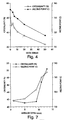
- the lamellar thickness was calculated by assuming a lamellar crystalline morphology, and knowing ⁇ H° the heat of melting of 100% crystalline polyethylene (69.2 cal/g), the melting point of a perfect crystal (418.15 K), the density of the crystalline regions (1.005 g/cm 3 ) and the end free surface energy of polyethylene (2.22 x 10 -6 cal/cm 2 ). The results are shown in Table 1 and FIG. 4.
- the hardness of the samples was measured using a durometer on the shore D scale. The hardness was recorded for instantaneous indentation. The results are shown in Table 4. Hardness (Shore D) Property GUR 415 (unirradiated) 0 MRad GUR 415 (melt-irradiated) 20 MRad Hardness (D Scale) 65.5 54.5 The results indicate that the melt-irradiated UHMWPE was softer than the unirradiated control.
- Transparency of the samples was measured as follows: Light transmission was studied for a light of wave length 517 nm passing through a sample of approximately 1 mm in thickness placed between two glass slides. The samples were prepared by polishing the surfaces against 600 grit paper. Silicone oil was spread on the surfaces of the sample and then the sample was placed in between two slides. The silicone oil was used in order to reduce diffuse light scattering due to the surface roughness of the polymer sample. The reference used for this purpose was two similar glass slides separated by a thin film of silicone oil. The transmissivity was measured using a Perkin Elmer Lambda 3B uv-vis spectrophotometer. The absorption coefficient and transmissivity of a sample exactly 1 mm thick were calculated using the Lambert-Beer law. The results are shown in Table 5.
- ESEM ElectroScan, Model 3
- 10 kV low voltage to reduce radiation damage to the sample
- gold coating approximately 20 ⁇ to enhance picture quality
- the samples were etched using a permanganate etch with a 1:1 sulfuric acid to orthophosphoric acid ratio and a 0.7% (w/v) concentration of potassium permanganate before being viewed under the ESEM.
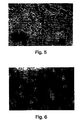
- FIG. 4 shows an ESEM (magnification of 10,000 x) of an etched surface of conventional UHMWPE (GUR 415; unheated; unirradiated).
- FIG. 5 shows an ESEM (magnification of 10,500 x) of an etched surface of melt-irradiated UHMWPE (GUR 415; melted; 20 MRad).
- the ESEMs indicated a reduction in size of the crystallites and the occurrence of imperfect crystallization in the melt-irradiated UHMWPE as compared to the conventional UHMWPE.
- FTIR of the samples was performed using a microsampler on the samples rinsed with hexane to remove surface impurities.
- the peaks observed around 1740 to 1700 cm -1 are bands associated with oxygen containing groups.
- the ratio of the area under the carbonyl peak at 1740 cm -1 to the area under the methylene peak at 1460 cm -1 is a measure of the degree of oxidation.
- the FTIR spectra indicate that the melt-irradiated UHMWPE sample showed more oxidation than the conventional unirradiated UHMWPE control, but a lot less oxidation than an UHMWPE sample irradiated in air at room temperature and given the same irradiation dose as the melt-irradiated sample.
- EPR was performed at room temperature on the samples which were placed in a nitrogen atmosphere in an air tight quartz tube.
- the instrument used was the Bruker ESP 300 EPR spectrometer and the tubes used were Taperlok EPR sample tubes obtained from Wilmad Glass Company, Buena, NJ.
- the unirradiated samples do not have any free radicals in them since irradiation is the process which creates free radicals in the polymer. On irradiation, free radicals are created which can last for several years under the appropriate conditions.
- the EPR results indicate that the melt-irradiated sample did not show any free radicals when studied using an EPR immediately after irradiation, whereas the sample which was irradiated at room temperature under nitrogen atmosphere showed trans-vinylene free radicals even after 266 days of storage at room temperature.
- the absence of free radicals in the melt-irradiated UHMWPE sample means that any further oxidative degradation was not possible.
- the wear resistance of the samples was measured using a bi-axial pin-on-disk wear tester.
- the unirradiated pin displayed a wear rate of 8 mg/million-cycles while the irradiated pin had a wear rate of 0.5 mg/million cycles.
- the results indicate that the melt-irradiated UHMWPE has far superior wear resistance than the unirradiated control.
- This example illustrates electron irradiation of a melted UHMWPE conventional articular cup.
- a conventional articular cup (high conformity unsterilized UHMWPE cup made by Zimmer, Inc., Warsaw, IN) of internal diameter 26 mm and made of GUR 415 ram extruded bar stock, was irradiated under controlled atmosphere and temperature conditions in an air-tight chamber with a titanium cup holder at the base and a thin stainless steel foil (0.001 inches thick) at the top.
- the atmosphere within this chamber consisted of low oxygen nitrogen gas ( ⁇ 0.5 ppm oxygen gas) (obtained from AIRCO, Murray Hill, NH).
- the pressure in the chamber was approximately 1 atm.
- the chamber was heated using a 270 W heating mantle at the base of the chamber which was controlled using a temperature controller and a variac.
- the chamber was heated such that the temperature at the top surface of the cup rose at approximately 1.5° to 2°C/min, finally asymptotically reaching a steady state temperature of approximately 175°C. Due to the thickness of the sample cup and the particular design of the equipment used, the steady state temperature of the cup varied between 200°C at the base to 175°C at the top. The cup was held at these temperatures for a period of 30 minutes before starting the irradiation.
- Irradiation was done using a van de Graaff generator with electrons of energy 2.5 MeV and a dose rate of 1.67 MRad/min.
- the beam entered the chamber through the thin foil at top and hit the concave surface of the cup.
- the dose received by the cup was such that a maximum dose of 20 MRad was received approximately 5 mm below the surface of the cup being hit by the electrons.
- the heating was stopped and the cup was allowed to cool to room temperature (approximately 25°C) while still in the chamber with nitrogen gas.
- the rate of cooling was approximately 0.5°C/min.
- the sample was removed from the chamber after the chamber and the sample had reached room temperature.
- This example illustrates the swell ratio and percent extract at different depths of the melt-irradiated articular cup obtained from Example 3.
- Samples of size 2 mm x 2 mm x 2 mm were cut from the cup at various depths along the axis of the cup. These samples were then kept submerged in Decalin at 150°C for a period of 24 hours.
- An antioxidant 1% N-phenyl-2-naphthylamine
- the swell ratio and percent extract were calculated by measuring the weight of the sample before the experiment, after swelling for 24 hours, and after vacuum drying the swollen sample. The results are shown in Table 6.
- This example illustrates the crystallinity and melting point at different depths of the melt-irradiated cup obtained from Example 3.
- the crystallinity is the fraction of the polymer that is crystalline.
- the melting point is the temperature corresponding to the peak in the DSC endotherm. The results are shown in FIG. 7.
- This example illustrates a method for making articular cups with melt-irradiated UHMWPE.
- Irradiation was done using a van de Graaff generator with electrons of energy 2.5 MeV and a dose rate of 1.67 MRad/min.
- the beam entered the chamber through the thin foil at top and hit the surface with the hemispherical hole.
- the dose received by the specimen was such that a maximum dose of 20 MRad was received approximately 5 mm below the surface of the polymer being hit by the electrons.
- the heating was stopped and the specimen was allowed to cool to room temperature (approximately 25°C) while still in the chamber with nitrogen gas. The rate of cooling was approximately 0.5°C/min. The sample was removed from the chamber after the chamber and the sample had reached room temperature.
- UHMWPE ram extruded bar stock (Hoescht Celanese GUR 415 bar stock obtained from Westlake Plastics, Lenni, PA) was used.
- the GUR 415 resin used for the bar stock had a molecular weight of 5,000,000 g/mol and contained 500 ppm of calcium stearate.
- the bar stock was cut into "hockey puck” shaped cylinders (height 4 cm, diameter 8.5 cm).
- the pucks were irradiated at room temperature with an electron-beam incident to one of the circular bases of the pucks with a linear electron accelerator operated at 10 MeV and 1 kW (AECL, Pinawa, Manitoba, Canada), with a scan width of 30 cm and a conveyor speed of 0.08 cm/sec. Due to a cascade effect, electron beam irradiation results in a non-uniform absorbed dose profile.
- Table 7 illustrates the calculated absorbed dose values at various depths in a specimen of polyethylene irradiated with 10 MeV electrons. The absorbed doses were the values measured at the top surface (surface of e-beam incidence).
- Comparative Example 8 Method of Making UHMWPE Using Cold Irradiation and Subsequent Melting (CIR-SM)
- UHMWPE ram extruded bar stock (Hoescht Celanese GUR 415 bar stock obtained from Westlake Plastics, Lenni, PA) was used.
- the GUR 415 resin used for the bar stock had a molecular weight of 5,000,000 g/mol and contained 500 ppm of calcium stearate.
- the bar stock was cut into "hockey puck” shaped cylinders (height 4 cm, diameter 8.5 cm).
- the residual free radicals are measured by electron paramagnetic resonance as described in Jahan et al., J. Biomedical Materials Research 25:1005 (1991).
- This example illustrates a method of making UHMWPE that has a cross-linked structure and has substantially no detectable free radicals, by irradiating UHMIPE that has been heated to below the melting point, and then melting the UHMWPE.
- the pucks were heated to 100°C in air in an oven.
- the heated pucks were then irradiated with an electron beam to a total dose of 20 Mrad at a dose rate of 2.5 Mrad per pass (E-Beam Services, Cranbury, NJ), with a scan width of 30 cm and a conveyor speed of 0.08 cm/sec.
- the pucks were heated to 150°C under vacuum for 2 hours, thereby allowing the free radicals to recombine leading to substantially no detectable residual free radicals.
- the pucks were then cooled to room temperature at a rate of 5°C/min.
- This example illustrates a method of making UHMWPE that has a cross-linked structure and has substantially no detectable free radicals, by irradiating UHMWPE that has been heated to below the melting point so as to generate adiabatic melting of the UHMWPE.
- UHMWPE ram extruded bar stock (Hoescht Celanese GUR 415 bar stock obtained from Westlake Plastics, Lenni, PA) was used.
- the GUR 415 resin used for the bar stock had a molecular weight of 5,000,000 g/mol and contained 500 ppm of calcium stearate.
- the bar stock was cut into "hockey puck” shaped cylinders (height 4 cm, diameter 8.5 cm).
- Comparative Example 11 Comparison of Properties of GUR 415 UHMWPE Bar Stock Pucks and CIR-SM and WIR-AM-Treated Bar Stock Pucks
- This example illustrates various properties of the irradiated and unirradiated samples of UHMWPE bar stock GUR 415 obtained from Examples 8 and 10.
- the tested samples were as follows: (i) test samples (pucks) from bar stock which was irradiated at room temperature, subsequently heated to about 150°C for complete melting of polyethylene crystals, followed by cooling to room temperature (CIR-SM), (ii) test samples (pucks) from bar stock which was heated to 120°C in a fiberglass pouch so as to minimize heat loss from the pucks, followed by immediate irradiation to generate adiabatic melting of the polyethylene crystals (WIR-AM), and (iii) control bar stock (no heating/melting, no irradiation).
- Infra-red (IR) spectroscopy of the samples was performed using a BioRad UMA 500 infrared microscope on thin sections of the samples obtained from Examples 8 and 10.
- the thin sections (50 ⁇ m) were prepared with a sledge microtome.
- the IR spectra were collected at 20 ⁇ m, 100 ⁇ m, and 3 mm below the irradiated surface of the pucks with an aperture size of 10 x 50 ⁇ m 2 .
- the peaks observed around 1740 to 1700 cm -1 are associated with the oxygen containing groups.
- a Perkin-Elmer DSC7 was used with an ice-water heat sink and a heating and cooling rate of 10°C/minute with a continuous nitrogen purge.
- the crystallinity of the specimens obtained from Examples 8 and 10 was calculated from the weight of the sample and the heat of melting of polyethylene crystals measured during the first heating cycle.
- the data shows that the crystallinity does not change significantly up to absorbed doses of 20 Mrad. Therefore, the elastic properties of the cross-linked material should remain substantially unchanged upon cross-linking. On the other hand, one could tailor the elastic properties by changing the crystallinity with higher doses.
- the data also shows that the WIR-AM material exhibited three melting peaks.
- the pin-on-disc (POD) experiments were carried out on a bi-axial pin-on-disc tester at a frequency of 2 Hz where polymeric pins were tested by a rubbing action of the pin against a highly polished Co-Cr disc.
- the pins were then machined from the core of the pucks and tested on the POD such that the surface of e-beam incidence was facing the Co-Cr disc.
- the wear tests were carried out to a total of 2,000,000 cycles in bovine serum.
- the samples were cut in cubes of size 2 x 2 x 2 mm 3 and kept submerged in xylene at 130°C for a period of 24 hours.
- An antioxidant 1% N-phenyl-2-naphthylamine
- the swell ratio and gel content were calculated by measuring the weight of the sample before the experiment, after swelling for 24 hours and after vacuum drying the swollen sample. The results are shown in Tables 14 and 15 for the specimens obtained from Examples 8 and 10.
- Electron paramagnetic resonance was performed at room temperature on the samples after placing in a nitrogen atmosphere in an air tight quartz tube.
- the instrument used was the Bruker ESP 300 EPR spectrometer and the tubes used were Taperlok EPR sample tubes (obtained from wilmad Glass Co., Buena, NJ).
- the unirradiated samples did not have any detectable free radicals in them.
- free radicals are created which can last for at least several years under the appropriate conditions.
- the cold-irradiated UHMWPE specimens exhibited a strong free radical signal when tested with the EPR technique. When the same samples were examined with EPR following a melting cycle, the EPR signal was found to be reduced to undetectable levels.
- the absence of free radicals in the cold irradiated subsequently melted (recrystallized) UHMWPE sample means that any further oxidative degradation cannot occur via attack on entrapped radicals.
- Comparative Example 13 Crystallinity and Melting Point at Different Depths for UHMWPE Prepared by Cold Irradiation and Subsequent Melting (CIR-SM)
- This example illustrates the crystallinity and melting point at different depths of the cross-linked UHMWPE specimens obtained from Example 8 with 20 Mrad total radiation dose. Samples were taken at various depths from the cross-linked specimen. The crystallinity and the melting point were determined using a Perkin Elmer differential scanning calorimeter as described in Example 10(B). The results are shown in Table 16.
- UHMWPE ram extruded bar stock (Hoescht Celanese GUR 415 bar stock obtained from Westlake Plastics, Lenni, PA) was used.
- the GUR 415 resin used for the bar stock had a molecular weight of 5,000,000 g/mol and contained 500 ppm of calcium stearate.
- the bar stock was cut into "hockey puck” shaped cylinders (height 4 cm, diameter 8.5 cm).
- Two pucks were irradiated at room temperature with a dose rate of 2.5 Mrad per pass to 17.5 Mrad total absorbed dose as measured on the top surface (e-beam incidence) (AECL, Pinawa, Manitoba, Canada), with a scan width of 30 cm and a conveyor speed of 0.07 cm/sec.
- the pucks were not packaged and the irradiation was carried out in air.
- one puck was heated under vacuum to 150°C for 2 hours, and the other puck was heated in air to 150°C for 2 hours, so as to attain a state of no detectable residual crystalline content and no detectable residual free radicals.
- the pucks were then cooled to room temperature at a rate of 5°C/min.
- Comparative Example 15 Method of Making UHMWPE Using Cold Irradiation and Subsequent Melting Using Gamma Irradiation (CIR-SM)
- This example illustrates a method of making UHMWPE that has a cross-linked structure and has substantially no detectable free radicals, by cold irradiating with gamma-radiation and then melting the UHMWPE.
- UHMWPE ram extruded bar stock (Hoescht Celanese GUR 415 bar stock obtained from Westlake Plastics, Lenni, PA) was used.
- the GUR 415 resin used for the bar stock had a molecular weight of 5,000,000 g/mol and contained 500 ppm of calcium stearate.
- the bar stock was cut into "hockey puck” shaped cylinders (height 4 cm, diameter 8.5 cm).
- the pucks were irradiated at room temperature at a dose rate of 0.05 Mrad/minute to 4 Mrad total absorbed dose as measured on the top surface (gamma ray incidence) (Isomedix, Northboro, MA).
- the pucks were not packaged and irradiation was carried out in air.
- the pucks were heated to 150°C under vacuum for 2 hours so as to melt the polymer and thereby result in the recombination of free radicals leading to substantially no detectable residual free radicals.
- Example 16 I. Method of Making UHMWPE Using Warm Irradiation and partial Adiabatic Melting with Subsequent Complete melting-(WIR-AM)
- This example illustrates a method of making UHMWPE that has a cross-linked structure, exhibits two distinct melting endotherms in a differential scanning calorimeter (DSC), and has substantially no detectable free radicals, by irradiating UHMWPE that has been heated to below the melting point so as to generate adiabatic partial melting of the UHMWPE and by subsequently melting the UHMWPE.
- DSC differential scanning calorimeter
- a GUR 4050 bar stock (made from ram extruded Hoescht Celanese GUR 4050 resin obtained from Westlake Plastics, Lenni, PA) was machined into 8.5 cm diameter and 4 cm thick hockey pucks. Twenty-five pucks, 25 aluminum holders and 25 20cm x 20cm fiberglass blankets were preheated to 125°C overnight in an air convection oven. The preheated pucks were each placed in a preheated aluminum holder which was covered by a preheated fiberglass blanket to minimize heat loss to the surroundings during irradiation. The pucks were then irradiated in air using a 10 MeV, 1 kw electron beam with a scan width of 30 cm (AECL, Pinawa, Manitoba, Canada).
- the conveyor speed was 0.07 cm/sec which gave a dose rate of 70 kGy per pass.
- the pucks were irradiated in two passes under the beam to achieve a total absorbed dose of 140 kGy.
- the conveyor belt motion was reversed as soon as the pucks were out of the electron beam raster area to avoid any heat loss from the pucks.
- 15 pucks were heated to 150°C for 2 hours so as to obtain complete melting of the crystals and substantial elimination of the free radicals.
- Table 18 shows the variations obtained in the melting behavior and crystallinity of the polymer as a function of depth away from the e-beam incidence surface.
- FIG. 8 shows representative DSC melting endotherms obtained at 2 cm below the surface of e-beam incidence obtained both before and after the subsequent melting.
- EPR was performed at room temperature on samples obtained from Example 16 after placing the samples in an air tight quartz tube in a nitrogen atmosphere.
- the instrument used was the Bruker ESP 300 EPR spectrometer and the tubes uses were Taperlok EPR sample tubes (obtained from Wilmad Glass Co., Buena, NJ).
- the unirradiated samples did not have any detectable free radicals in them.
- free radicals are created which can last for at least several years under the appropriate conditions.
- the EPR results showed a complex free radical peak composed of both peroxy and primary free radicals. After the subsequent melting the EPR free radical signal was reduced to undetectable levels. These results indicated that the free radicals induced by the irradiation process were substantially eliminated after the subsequent melting step. Thus, the UHMWPE was highly resistant to oxidation.
- Example 17 II. Method of Making UHMWPE Using Warm Irradiation and Partial Adiabatic Melting with Subsequent Complete Melting (WIR-AM)
- This example illustrates a method of making UHMWPE that has a cross-linked structure, exhibits two distinct melting endotherms in DSC, and has substantially no detectable free radicals, by irradiating UHMWPE that has been heated to below the melting point so as to generate the adiabatic partial melting of the UHMWPE and by subsequently melting the UHMWPE.
- a GUR 4020 bar stock (made from ram extruded Hoescht Celanese GUR 4020 resin obtained from Westlake Plastics, Lenni, PA) was machined into 8.5 cm diameter and 4 cm thick hockey pucks. Twenty-five pucks, 25 aluminum holders and 25 20cm x 20cm fiberglass blankets were preheated to 125°C overnight in an air convection oven. The preheated pucks were each placed in a preheated aluminum holder which was covered by a preheated fiberglass blanket to minimize heat loss to the surroundings during irradiation. The pucks were then irradiated in air using a 10 MeV, 1 kW electron beam with a scan width of 30 cm (AECL, Pinawa, Manitoba, Canada).
- the conveyor speed was 0.07 cm/sec which gave a dose rate of 70 kGy per pass.
- the pucks were irradiated in two passes under the beam to achieve a total absorbed dose of 140 kGy.
- the conveyor belt motion was reversed as soon as the pucks were out of the electron beam raster area to avoid any heat loss from the pucks.
- 15 pucks were heated to 150°C for 2 hours so as to obtain complete melting of the crystals and substantial elimination of the free radicals.
- Example 18 III. Method of Making UHMWPE Using Warm Irradiation and Partial Adiabatic Melting with Subsequent Complete Melting (WIR-AM)
- This example illustrates a method of making UHMWPE that has a cross-linked structure, exhibits two distinct melting endotherms in DSC, and has substantially no detectable free radicals, by irradiating UHMWPE that has been heated to below the melting point so as to generate adiabatic partial melting of the UHMWPE and by subsequently melting the UHMWPE.
- a GUR 1050 bar stock (made from ram-extruded Hoescht Celanese GUR 1050 resin obtained from Westlake Plastics, Lenni, PA) was machined into 8.5 cm diameter and 4 cm thick hockey pucks. Eighteen pucks, 18 aluminum holders and 18 20cm x 20cm fiberglass blankets were preheated to 125°C, 90°C, or 70°C, in an air convection oven overnight. Six pucks were used for each different pre-heat temperature. The preheated pucks were each placed in a preheated aluminum holder which was covered by a preheated fiberglass blanket to minimize heat loss to the surroundings during irradiation.
- the pucks were then irradiated in air using a 10 MeV and 1 kW electron beam with a scan width of 30 cm (AECL, Pinawa, Manitoba, Canada).
- the conveyer speed was 0.06 cm/sec which gave a dose rate of 75 kGy per pass.
- the pucks were irradiated in two passes under the beam to accumulate a total of 150 kGy of absorbed dose.
- the conveyor belt motion was reversed as soon as the pucks were out of the electron beam raster area to avoid any heat loss from the pucks.
- half of the pucks were heated to 150°C for 2 hours so as to obtain complete melting of the crystals and substantial elimination of the free radicals.
- a Perkin-Elmer DSC 7 was used with an ice water heat sink and a heating and cooling rate of 10°C/min with a continuous nitrogen purge.
- the crystallinity of the samples obtained from Example 18 was calculated from the weight of the sample and the heat of melting of polyethylene crystals (69.2 cal/gm). The temperature corresponding to the peak of the endotherm was taken as the melting point. In the case of multiple endotherm peaks, multiple melting points were reported.
- Table 19 shows the effect of pre-heat temperature on the melting behavior and crystallinity of the polymer.
- FIG. 9 shows the DSC profile of a puck processed with the WIR-AM method at a pre-heat temperature of 125°C both before and after subsequent melting.
- Example 19 IV. Method of Making UHMWPE Using Warm Irradiation and Partial Adiabatic Melting with Subsequent Complete Melting (WIR-AM)
- This example illustrates a method of making UHMWPE that has a cross-linked structure, exhibits two distinct melting endotherms in DSC, and has substantially no detectable free radicals, by irradiating UHMWPE that has been heated to below the melting point so as to generate adiabatic partial melting of the UHMWPE and by subsequently melting the polymer.
- a GUR 1020 bar stock (made from ram extruded Hoescht Celanese GUR 1020 resin obtained from Westlake Plastics, Lenni, PA) was machined in 7.5 cm diameter and 4 cm thick hockey pucks.
- Ten pucks, 10 aluminum holders and 10 20cm x 20cm fiberglass blankets were preheated to 125°C overnight in an air convection oven.
- the preheated pucks were each placed in a preheated aluminum holder which was covered by a preheated fiberglass blanket to minimize heat loss to the surroundings during irradiation.
- the pucks were then irradiated in air using a 10 MeV, 1 kW linear electron beam accelerator (AECL, Pinawa, Manitoba, Canada).
- the scan width and the conveyor speed was adjusted to achieve the desired dose rate per pass.
- the pucks were then irradiated to 61, 70, 80, 100, 140, and 160 kGy of total absorbed dose.
- 61, 70, 80 kGy absorbed dose the irradiation was completed in one pass; while for 100, 140, and 160 it was completed in two passes.
- six pucks were irradiated.
- the conveyor belt motion was reversed as soon as the pucks were out of the electron beam raster area to avoid any heat loss from the pucks.
- half of the pucks were heated to 150°C for 2 hours in an air convection oven so as to obtain complete melting of the crystals and substantial elimination of the free radicals.
- Example 20 V. Method of Making UHMWPE Using Warm Irradiation and Partial Adiabatic Melting with Subsequent Complete Melting (WIR-AM)
- This example illustrates a method of making UHMWPE that has a cross-linked structure, exhibits two distinct melting endotherms in DSC, and has substantially no detectable free radicals, by irradiating UHMWPE that has been heated to below the melting point so as to generate adiabatic partial melting of the UHMWPE and by subsequently melting the polymer.
- a GUR 4150 bar stock (made from ram extruded Hoescht Celanese GUR 4150 resin obtained from Westlake Plastics, Lenni, PA) was machined into 7.5 cm diameter and 4 cm thick hockey pucks.
- Ten pucks, 10 aluminum holders and 10 20cm x 20cm fiberglass blankets were preheated to 125°C overnight in an air convection oven.
- the preheated pucks were each placed in a preheated aluminum holder which was covered by a preheated fiberglass blanket to minimize heat loss to the surroundings during irradiation.
- the pucks were then irradiated in air using a 10 MeV, 1 kW linear electron beam accelerator (AECL, Pinawa, Manitoba, Canada).
- the scan width and the conveyor speed was adjusted to achieve the desired dose rate per pass.
- the pucks were irradiated to 61, 70, 80, 100, 140, and 160 kGy of total absorbed dose. For each absorbed dose level, six pucks were irradiated. For 61, 70, 80 kGy absorbed dose, the irradiation was completed in one pass; for 100, 140 and 160 kGy, it was completed in two passes.
- a Perkin-Elmer DSC 7 was used with an ice water heat sink and a heating and cooling rate of 10°C per minute with a continuous nitrogen purge.
- the crystallinity of the samples obtained from Example 20 was calculated from the weight of the sample and the heat of melting of polyethylene crystals (69.2 cal/gm). The temperature corresponding to the peak of the endotherm was taken as the melting point. In the case of multiple endotherm peaks, multiple melting points were reported.
- a GUR 4150 bar stock (made from ram extruded Hoescht Celanese GUR 4150 resin obtained from Westlake Plastics, Lenni, PA) was machined into a 8.5 cm diameter and 4 cm thick hockey puck. One hole was drilled into the body-center of the puck. A Type K thermocouple was placed in this hole. The puck was pre-heated to 130°C in air convection oven. The puck was then irradiated using 10 MeV, 1 kW electron beam (AECL, Pinawa, Manitoba, Canada). The irradiation was carried out in air with a scan width of 30 cm. The dose rate was 27 kGy/min and the puck was left stationary under the beam. The temperature of the puck was constantly measured during irradiation.
- FIG. 10 shows the temperature rise in the puck obtained during the irradiation process.
- the temperature is at the pre-heat temperature (130°C).
- the temperature increases, during which time the UHMWPE crystals melt.
- the UHMWPE crystals melt.
- complete melting is achieved. After that point, temperature continues to rise in the molten material.
- the absorbed dose level (duration of irradiation) can be adjusted to either partially or completely melt the polymer.
- the melting can be completed with an additional melting step in an oven to eliminate the free radicals.
- Comparative Example 22 Method of Making UHMWPE Using Cold Irradiation and Adiabatic Heating with Subsequent Complete Melting (CIR-AM)
- This example illustrates a method of making UHMWPE that has a cross-linked structure, and has substantially no detectable free radicals, by irradiating UHMWPE at a high enough dose rate to generate adiabatic heating of the UHMWPE and by subsequently melting the polymer.
- a GUR 4150 bar stock (made from ram extruded Hoescht Celanese GUR 4150 resin obtained from Westlake Plastics, Lenni, PA) was machined into 8.5 cm diameter and 4 cm thick hockey pucks. Twelve pucks were irradiated stationary, in air, at a dose rate of 60 kGy/min using 10 MeV, 30 kW electrons (E-Beam Services, Cranbury, NJ). Six of the pucks were irradiated to a total dose of 170 kGy, while the other six were irradiated to a total dose of 200 kGy. At the end of the irradiation the temperature of the pucks was greater than 100°C.
- one puck of each series was heated to 150°C for 2 hours to melt all the crystals and reduce the concentration of free radicals to undetectable levels.
- Table 21 summarizes the effect of total absorbed dose on the thermal properties of CIR-AM UHMWPE both before and after the subsequent melting process. The results obtained indicate one single melting peak both before and after the subsequent melting step.
- Example 23 Comparison of Tensile Deformation Behavior of Unirradiated UHMWPE, Cold-Irradiated and Subsequently Melted UHMWPE (CIR-SM), and Warm Irradiated and Partially Adiabatic Melted and Subsecruently Melted UHMWPE (WIR-AM)
- the ASTM D638 Type V standard was used to prepare dog bone specimens for the tensile test.
- the tensile test was carried out on an Instron 4120 Universal Tester at a cross-head speed of 10 mm/min.
- the engineering stress-strain behavior was calculated from the load-displacement data following ASTM D638.
- the dog bone specimens were machined from GUR 4150 hockey pucks (made from ram extruded Hoescht Celanese GUR 4150 resin obtained from Westlake Plastics, Lenni, PA) that were treated by CIR-SM and WIR-AM methods.
- CIR-SM the method described in Example 8 was followed, while for WIR-AM, the method described in Example 17 was followed. In both cases, the total dose administered was 150 kGy.
- FIG. 12 shows the tensile behavior obtained for the unirradiated control, CIR-SM treated, and WIR-AM treated specimens. It shows the variation in tensile deformation behavior in CIR-SM and WIR-AM treated UHMWPE, even though in both methods the irradiation was carried out to 150 kGy. This difference is due to the two phase structure generated by using the WIR-AM method.
Landscapes
- Health & Medical Sciences (AREA)
- Orthopedic Medicine & Surgery (AREA)
- Transplantation (AREA)
- Life Sciences & Earth Sciences (AREA)
- Veterinary Medicine (AREA)
- Public Health (AREA)
- Oral & Maxillofacial Surgery (AREA)
- General Health & Medical Sciences (AREA)
- Animal Behavior & Ethology (AREA)
- Biomedical Technology (AREA)
- Vascular Medicine (AREA)
- Heart & Thoracic Surgery (AREA)
- Engineering & Computer Science (AREA)
- Cardiology (AREA)
- Physical Education & Sports Medicine (AREA)
- Chemical & Material Sciences (AREA)
- Biophysics (AREA)
- Dermatology (AREA)
- Medicinal Chemistry (AREA)
- Epidemiology (AREA)
- Chemical Kinetics & Catalysis (AREA)
- Nuclear Medicine, Radiotherapy & Molecular Imaging (AREA)
- Surgery (AREA)
- Physics & Mathematics (AREA)
- Thermal Sciences (AREA)
- Materials For Medical Uses (AREA)
- Prostheses (AREA)
- Treatments Of Macromolecular Shaped Articles (AREA)
- Processes Of Treating Macromolecular Substances (AREA)
- Transition And Organic Metals Composition Catalysts For Addition Polymerization (AREA)
Claims (70)
- Polyéthylène de poids moléculaire très élevé traité par rayonnement, ayant 2 ou 3 pics de fusion et une structure réticulée.
- Polyéthylène de poids moléculaire très élevé selon la revendication 1, ledit polyéthylène de poids moléculaire très élevé étant sensiblement résistant à l'oxydation.
- Polyéthylène de poids moléculaire très élevé selon la revendication 1, ledit polyéthylène de poids moléculaire très élevé étant soumis à un chauffage par irradiation.
- Polyéthylène de poids moléculaire très élevé selon la revendication 1, ledit polyéthylène de poids moléculaire très élevé ayant une structure polymère unique caractérisée par une cristallinité inférieure à 50 % et un module élastique en traction inférieur à 940 MPa.
- Polyéthylène de poids moléculaire très élevé selon la revendication 1, ledit polyéthylène de poids moléculaire très élevé ayant une grande transmissivité de la lumière.
- Polyéthylène de poids moléculaire très élevé selon la revendication 1, ledit polyéthylène de poids moléculaire très élevé étant un film ou une feuille, ledit film ou ladite feuille étant transparent et résistant à l'usure.
- Prothèse médicale à utiliser à l'intérieur du corps, ladite prothèse étant formée de polyéthylène de poids moléculaire très élevé traité par rayonnement selon l'une quelconque des revendications 1 à 6.
- Prothèse selon la revendication 7, dans laquelle ledit polyéthylène de poids moléculaire très élevé est sensiblement non oxydé.
- Prothèse selon la revendication 7, dans laquelle ladite structure polymère a une réticulation extensive de sorte qu'une partie substantielle de ladite structure polymère n'est pas dissoute dans du xylène à 130°C ou dans de la décaline à 150°C pendant une durée de 24 heures.
- Prothèse selon la revendication 7, dans laquelle ledit polyéthylène de poids moléculaire très élevé a un poids moléculaire moyen initial supérieur à 2 millions.
- Prothèse selon la revendication 7, une partie de ladite prothèse étant sous la forme d'un article façonné en une coupelle ou un plateau ayant une surface portante.
- Prothèse selon la revendication 11, dans laquelle ladite surface portante est au contact d'une seconde partie de ladite prothèse ayant une surface portante conjuguée formée d'une matière métallique ou céramique.
- Prothèse selon la revendication 7, ladite prothèse étant construite et agencée pour le remplacement d'une articulation choisie dans l'ensemble constitué d'une articulation de la hanche, une articulation du genou, une articulation du coude, une articulation de l'épaule, une articulation de la cheville et une articulation d'un doigt.
- Prothèse selon la revendication 7, dans laquelle ledit polyéthylène de poids moléculaire très élevé a une structure polymère ayant une cristallinité inférieure à 50 % et un module élastique en traction inférieur à 940 MPa de façon à réduire la production de fines particules à partir de ladite prothèse pendant l'usure de ladite prothèse.
- Prothèse selon la revendication 14, dans laquelle ledit polyéthylène de poids moléculaire très élevé a une dureté inférieure à 65 sur l'échelle Shore D.
- Prothèse selon la revendication 14, dans laquelle ledit polyéthylène de poids moléculaire très élevé est fortement enchevêtré.
- Prothèse selon la revendication 14, dans laquelle ledit polyéthylène de poids moléculaire très élevé a une structure polymère avec une cristallinité inférieure à 50 %.
- Prothèse selon la revendication 14, dans laquelle ledit polyéthylène de poids moléculaire très élevé a une structure polymère avec une cristallinité de 40 %.
- Article manufacturé formé de polyéthylène de poids moléculaire très élevé traité par rayonnement selon l'une quelconque des revendications 1 à 6.
- Article manufacturé selon la revendication 19, ledit article manufacturé étant sous la forme d'une barre capable d'être façonnée en un second article par usinage.
- Article manufacturé selon la revendication 19, ledit article manufacturé ayant une surface portante.
- Procédé de préparation d'un polyéthylène réticulé de poids moléculaire très élevé ayant 2 ou 3 pics de fusion, comprenant les étapes consistant à :fournir un polyéthylène de poids moléculaire très élevé ayant des chaínes polymères et qu'on chauffe à une température supérieure à la température ambiante mais au-dessous du point de fusion dudit polyéthylène de poids moléculaire très élevé ;irradier ledit polyéthylène de poids moléculaire très élevé de façon à réticuler lesdites chaínes polymères ; etrefroidir ledit polyéthylène irradié de poids moléculaire très élevé.
- Procédé selon la revendication 22, dans lequel la température finale dudit polyéthylène de poids moléculaire très élevé après ladite étape d'irradiation est supérieure à la température de fusion dudit polyéthylène de poids moléculaire très élevé.
- Procédé selon l'une quelconque des revendications 22-23, comprenant en outre l'étape de chauffage dudit polyéthylène de poids moléculaire très élevé de façon à ce que la température finale dudit polyéthylène de poids moléculaire très élevé après ledit chauffage supplémentaire soit supérieure à la température de fusion dudit polyéthylène de poids moléculaire très élevé.
- Procédé selon l'une quelconque des revendications 22 à 24, dans lequel ladite étape d'irradiation utilise une irradiation par électrons.
- Procédé selon l'une quelconque des revendications 22 à 24, dans lequel ladite irradiation génère un chauffage suffisant pour faire fondre au moins partiellement ledit polyéthylène de poids moléculaire très élevé.
- Procédé selon l'une quelconque des revendications 22 à 24, dans lequel ladite étape d'irradiation utilise une irradiation par électrons et le débit de dose d'au moins 4 Mrad/minute.
- Procédé selon l'une quelconque des revendications 22 à 24, dans lequel ladite étape d'irradiation utilise une irradiation par électrons et le débit de dose de ladite irradiation par électrons est de 0,05 à 3000 Mrad/minute.
- Procédé selon l'une quelconque des revendications 22 à 24, dans lequel le débit de dose de ladite étape d'irradiation est de 0,05 à 5 Mrad/minute.
- Procédé selon l'une quelconque des revendications 22 à 24, dans lequel le débit de dose de ladite irradiation est de 0,05 à 10 Mrad/minute.
- Procédé selon l'une quelconque des revendications 22 à 24, dans lequel le débit de dose de ladite irradiation est de 4 à 5 Mrad/minute.
- Procédé selon l'une quelconque des revendications 22 à 24, dans lequel le débit de dose de ladite irradiation est de 2 à 3000 Mrad/minute.
- Procédé selon l'une quelconque des revendications 22 à 24, dans lequel le débit de dose de ladite irradiation est de 7 à 25 Mrad/minute.
- Procédé selon l'une quelconque des revendications 22 à 24, dans lequel le débit de dose de ladite irradiation est de 7 Mrad/minute.
- Procédé selon l'une quelconque des revendications 22 à 24, dans lequel la dose totale absorbée de ladite irradiation est de 0,5 à 1000 Mrad.
- Procédé selon l'une quelconque des revendications 22 à 24, dans lequel ladite étape d'irradiation délivre une dose supérieure à 20 Mrad audit polyéthylène chauffé de poids moléculaire très élevé.
- Procédé selon l'une quelconque des revendications 22 à 24, dans lequel la dose totale absorbée de ladite irradiation est de 1 à 100 Mrad.
- Procédé selon l'une quelconque des revendications 22 à 24, dans lequel la dose totale absorbée de ladite irradiation est de 4 à 30 Mrad.
- Procédé selon l'une quelconque des revendications 22 à 24, dans lequel la dose totale absorbée de ladite irradiation est de 20 Mrad.
- Procédé selon l'une quelconque des revendications 22 à 24, dans lequel la dose totale absorbée de ladite irradiation est de 15 Mrad.
- Procédé selon l'une quelconque des revendications 22 à 24, dans lequel la dose totale absorbée de ladite irradiation est de 5 à 22 Mrad.
- Procédé selon la revendication 22, dans lequel ladite température de chauffage dudit polyéthylène de poids moléculaire très élevé est de 20°C à 135°C.
- Procédé selon la revendication 22, dans lequel ladite température de chauffage dudit polyéthylène de poids moléculaire très élevé est de 50°C.
- Procédé selon la revendication 22, dans lequel ledit chauffage est effectué dans un environnement non inerte.
- Procédé selon la revendication 22, dans lequel ledit chauffage est effectué dans un environnement inerte.
- Procédé selon la revendication 22, dans lequel ladite température dudit polyéthylène de poids moléculaire très élevé avant ladite étape d'irradiation est de 100°C à 135°C.
- Procédé selon la revendication 22, dans lequel ladite température de chauffage dudit polyéthylène de poids moléculaire très élevé avant l'étape d'irradiation est de 120°C.
- Procédé selon la revendication 23, dans lequel ladite température finale est de 137°C à 300°C.
- Procédé selon la revendication 24, dans lequel ladite température finale est de 145°C à 190°C.
- Procédé selon la revendication 24, dans lequel ladite température finale est de 150°C.
- Procédé selon la revendication 24, dans lequel ladite température dudit polyéthylène de poids moléculaire très élevé après ledit chauffage supplémentaire est de 137°C à 300°C.
- Procédé selon la revendication 24, dans lequel ladite température dudit polyéthylène de poids moléculaire très élevé après ledit chauffage supplémentaire est de 145°C à 190°C.
- Procédé selon la revendication 24, dans lequel ladite température dudit polyéthylène de poids moléculaire très élevé après ledit chauffage supplémentaire est de 150°C.
- Procédé selon l'une quelconque des revendications 22 à 53, comprenant en outre l'étape de stérilisation dudit polyéthylène refroidi de poids moléculaire très élevé.
- Procédé selon l'une quelconque des revendications 22 à 53, dans lequel ledit polyéthylène de poids moléculaire très élevé dans ladite étape de fourniture est choisi dans l'ensemble constitué d'une barre, une barre façonnée, un revêtement et un article manufacturé.
- Procédé selon l'une quelconque des revendications 22 à 53, dans lequel ledit polyéthylène de poids moléculaire très élevé dans ladite étape de fourniture est un article en forme de coupelle ou de plateau pour une utilisation dans une prothèse.
- Procédé selon l'une quelconque des revendications 22 à 53, comprenant en outre l'étape d'usinage dudit polyéthylène refroidi de poids moléculaire très élevé.
- Procédé selon l'une quelconque des revendications 22 à 53, dans lequel ledit polyéthylène de poids moléculaire très élevé dans ladite étape de fourniture a un poids moléculaire moyen initial supérieur à 2 millions.
- Procédé selon l'une quelconque des revendications 22 à 53, dans lequel ladite étape d'irradiation est effectuée dans un environnement non inerte.
- Procédé selon l'une quelconque des revendications 22 à 53, dans lequel ladite étape d'irradiation est effectuée dans un environnement inerte.
- Procédé selon l'une quelconque des revendications 22 à 53, dans lequel ladite étape d'irradiation utilise une irradiation par électrons et l'énergie des électrons est de 0,5 MeV à 12 MeV.
- Procédé selon l'une quelconque des revendications 22 à 53, dans lequel ladite étape de refroidissement est effectuée à une vitesse supérieure à 0,1°C/minute.
- Procédé selon l'une quelconque des revendications 22 à 53, dans lequel ladite étape de refroidissement est effectuée à une vitesse supérieure à 0,5°C/minute.
- Procédé selon l'une quelconque des revendications 22 à 53, dans lequel ladite étape de refroidissement est effectuée à une vitesse de 0,5°C/minute.
- Procédé selon l'une quelconque des revendications 22 à 53, dans lequel ledit polyéthylène de poids moléculaire très élevé dans ladite étape de fourniture est un matériau isolant de façon à réduire la perte de chaleur à partir dudit polyéthylène de poids moléculaire très élevé (PEPMTE) pendant le traitement.
- Procédé selon l'une quelconque des revendications 22 à 53, dans lequel ladite étape d'irradiation utilise une irradiation par électrons.
- Produit préparé conformément à un procédé selon l'une quelconque des revendications 22 à 66.
- Procédé de fabrication d'une prothèse médicale à partir de polyéthylène de poids moléculaire très élevé traité par rayonnement, ayant 2 ou 3 pics de fusion, ladite prothèse aboutissant à la production réduite de particules à partir de ladite prothèse pendant l'usure de ladite prothèse, comprenant les étapes consistant à :fournir un polyéthylène de poids moléculaire très élevé traité par rayonnement en utilisant un procédé selon l'une quelconque des revendications 22 à 66 ; etformer une prothèse médicale à partir dudit polyéthylène de poids moléculaire très élevé, ledit polyéthylène de poids moléculaire très élevé formant une surface portante de ladite prothèse.
- Procédé selon la revendication 68, dans lequel ledit polyéthylène de poids moléculaire très élevé a une structure polymère avec une cristallinité inférieure à 50 % et un module élastique en traction inférieur à 940 MPa.
- Utilisation d'un polyéthylène de poids moléculaire très élevé traité par rayonnement selon l'une quelconque des revendications 1 à 6 pour former une prothèse médicale.
Priority Applications (1)
| Application Number | Priority Date | Filing Date | Title |
|---|---|---|---|
| EP05103259A EP1563857A3 (fr) | 1996-02-13 | 1997-02-11 | Dispositifs de prothèse à base de polyéthylène à poids moléculaire très élevé |
Applications Claiming Priority (5)
| Application Number | Priority Date | Filing Date | Title |
|---|---|---|---|
| US08/600,744 US5879400A (en) | 1996-02-13 | 1996-02-13 | Melt-irradiated ultra high molecular weight polyethylene prosthetic devices |
| US600744 | 1996-02-13 | ||
| US72631396A | 1996-10-02 | 1996-10-02 | |
| US726313 | 1996-10-02 | ||
| PCT/US1997/002220 WO1997029793A1 (fr) | 1996-02-13 | 1997-02-11 | Dispositifs de prothese a base de polyethylene a poids moleculaire tres eleve, traites par fusion et rayonnement |
Related Child Applications (1)
| Application Number | Title | Priority Date | Filing Date |
|---|---|---|---|
| EP05103259A Division EP1563857A3 (fr) | 1996-02-13 | 1997-02-11 | Dispositifs de prothèse à base de polyéthylène à poids moléculaire très élevé |
Publications (2)
| Publication Number | Publication Date |
|---|---|
| EP0881919A1 EP0881919A1 (fr) | 1998-12-09 |
| EP0881919B1 true EP0881919B1 (fr) | 2005-08-03 |
Family
ID=27083697
Family Applications (3)
| Application Number | Title | Priority Date | Filing Date |
|---|---|---|---|
| EP97908650A Revoked EP0881919B1 (fr) | 1996-02-13 | 1997-02-11 | Dispositifs de prothese a base de polyethylene a poids moleculaire tres eleve, traites par fusion et rayonnement |
| EP05103259A Withdrawn EP1563857A3 (fr) | 1996-02-13 | 1997-02-11 | Dispositifs de prothèse à base de polyéthylène à poids moléculaire très élevé |
| EP99934083A Withdrawn EP1202685A4 (fr) | 1996-02-13 | 1999-07-16 | Prothese de hanche en polyethylene avec amplitude articulaire accrue |
Family Applications After (2)
| Application Number | Title | Priority Date | Filing Date |
|---|---|---|---|
| EP05103259A Withdrawn EP1563857A3 (fr) | 1996-02-13 | 1997-02-11 | Dispositifs de prothèse à base de polyéthylène à poids moléculaire très élevé |
| EP99934083A Withdrawn EP1202685A4 (fr) | 1996-02-13 | 1999-07-16 | Prothese de hanche en polyethylene avec amplitude articulaire accrue |
Country Status (14)
| Country | Link |
|---|---|
| US (1) | US6641617B1 (fr) |
| EP (3) | EP0881919B1 (fr) |
| CN (1) | CN1301136C (fr) |
| AT (1) | ATE300964T1 (fr) |
| AU (1) | AU728605B2 (fr) |
| CA (1) | CA2246342C (fr) |
| CZ (1) | CZ295935B6 (fr) |
| DE (1) | DE69733879T2 (fr) |
| ES (1) | ES2243980T3 (fr) |
| HK (1) | HK1046499A1 (fr) |
| NZ (1) | NZ331107A (fr) |
| PL (2) | PL189246B1 (fr) |
| RU (1) | RU2211008C2 (fr) |
| WO (2) | WO1997029793A1 (fr) |
Cited By (5)
| Publication number | Priority date | Publication date | Assignee | Title |
|---|---|---|---|---|
| US8003709B2 (en) | 1996-07-09 | 2011-08-23 | Orthopaedic Hospital | Crosslinking of polyethylene for low wear using radiation and thermal treatments |
| US10967100B2 (en) | 2009-02-20 | 2021-04-06 | The General Hospital Corporation | Methods of making a layered consolidated UHMWPE comprising a pharmaceutical compound |
| US10981302B2 (en) | 2013-10-17 | 2021-04-20 | The General Hospital Corporation | Peroxide cross-linking and high temperature melting |
| US11667762B2 (en) | 2017-08-29 | 2023-06-06 | The General Hospital Corporation | UV-initiated reactions in polymeric materials |
| US12350403B2 (en) | 2015-11-12 | 2025-07-08 | The General Hospital Corporation | Methods of making therapeutic polymeric material |
Families Citing this family (196)
| Publication number | Priority date | Publication date | Assignee | Title |
|---|---|---|---|---|
| US5414049A (en) * | 1993-06-01 | 1995-05-09 | Howmedica Inc. | Non-oxidizing polymeric medical implant |
| US8563623B2 (en) | 1996-02-13 | 2013-10-22 | The General Hospital Corporation | Radiation melt treated ultra high molecular weight polyethylene prosthetic devices |
| EP0881919B1 (fr) * | 1996-02-13 | 2005-08-03 | Massachusetts Institute Of Technology | Dispositifs de prothese a base de polyethylene a poids moleculaire tres eleve, traites par fusion et rayonnement |
| US8865788B2 (en) | 1996-02-13 | 2014-10-21 | The General Hospital Corporation | Radiation and melt treated ultra high molecular weight polyethylene prosthetic devices |
| US6228900B1 (en) | 1996-07-09 | 2001-05-08 | The Orthopaedic Hospital And University Of Southern California | Crosslinking of polyethylene for low wear using radiation and thermal treatments |
| US6017975A (en) * | 1996-10-02 | 2000-01-25 | Saum; Kenneth Ashley | Process for medical implant of cross-linked ultrahigh molecular weight polyethylene having improved balance of wear properties and oxidation resistance |
| EP1028760B1 (fr) * | 1996-10-15 | 2004-04-14 | Orthopaedic Hospital | Polyethylene reticule a gradient de surface, resistant a l'usure |
| IT1298376B1 (it) * | 1997-12-16 | 2000-01-05 | Samo Spa | Trattamento di reticolazione e sterilizzazione per la produzione di manufatti in polietilene ad elevate caratteristiche tribologiche, |
| EP1413414B1 (fr) * | 1998-06-10 | 2006-12-13 | Depuy Products, Inc. | Procédé de préparation de paliers moulés en plastique réticulé |
| US6692679B1 (en) | 1998-06-10 | 2004-02-17 | Depuy Orthopaedics, Inc. | Cross-linked molded plastic bearings |
| DE69922435T2 (de) * | 1998-06-10 | 2005-12-08 | Depuy Products, Inc., Warsaw | Verfahren zur Herstellung vernetzter, geformter Kunststofflager |
| EP0995449A1 (fr) * | 1998-10-21 | 2000-04-26 | Sulzer Orthopädie AG | Polyéthylène UHMW pour implants |
| US6245276B1 (en) | 1999-06-08 | 2001-06-12 | Depuy Orthopaedics, Inc. | Method for molding a cross-linked preform |
| US6627141B2 (en) | 1999-06-08 | 2003-09-30 | Depuy Orthopaedics, Inc. | Method for molding a cross-linked preform |
| AU742611B2 (en) * | 1999-07-29 | 2002-01-10 | Depuy Orthopaedics, Inc. | Gamma irradiated heat treated implant for mechanical strength |
| US6143232A (en) * | 1999-07-29 | 2000-11-07 | Bristol-Meyers Squibb Company | Method of manufacturing an articulating bearing surface for an orthopaedic implant |
| AU4890400A (en) * | 1999-07-29 | 2001-02-01 | Depuy Orthopaedics, Inc. | Two step gamma irradiation of polymeric bioimplant |
| US6184265B1 (en) | 1999-07-29 | 2001-02-06 | Depuy Orthopaedics, Inc. | Low temperature pressure stabilization of implant component |
| US6794423B1 (en) | 1999-07-30 | 2004-09-21 | Stephen Li | Fracture-resistant, cross-linked ultra high molecular weight polyethylene shaped material and articles made therefrom |
| WO2001008713A1 (fr) * | 1999-07-30 | 2001-02-08 | New York Society For The Relief Of The Ruptured And Crippled Maintaining The Hospital For Special S Urgery | Materiau façonne en polyethylene reticule, resistant a la fracture, possedant un poids moleculaire extremement eleve et articles fabriques avec ce materiau |
| US6790228B2 (en) | 1999-12-23 | 2004-09-14 | Advanced Cardiovascular Systems, Inc. | Coating for implantable devices and a method of forming the same |
| US6365089B1 (en) * | 1999-09-24 | 2002-04-02 | Zimmer, Inc. | Method for crosslinking UHMWPE in an orthopaedic implant |
| WO2001045595A2 (fr) * | 1999-12-17 | 2001-06-28 | Cartificial A/S | Dispositif prothetique |
| US6395799B1 (en) | 2000-02-21 | 2002-05-28 | Smith & Nephew, Inc. | Electromagnetic and mechanical wave energy treatments of UHMWPE |
| EP2275052A1 (fr) | 2000-04-27 | 2011-01-19 | Orthopaedic Hospital | Polyéthylènes résistant à l'oxydation et hydrofugés pour les remplacements d'articulation humain et leurs procédés de fabrication |
| AU2001280610A1 (en) * | 2000-07-31 | 2002-02-13 | Massachusetts General Hospital | Improved acetabular components providing greater range of motion |
| ES2286131T3 (es) | 2000-07-31 | 2007-12-01 | Massachusetts General Hospital | Componente acetabular monopolar constreñido. |
| US6818172B2 (en) | 2000-09-29 | 2004-11-16 | Depuy Products, Inc. | Oriented, cross-linked UHMWPE molding for orthopaedic applications |
| WO2002048259A2 (fr) * | 2000-12-12 | 2002-06-20 | Massachusetts General Hospital | Manipulation controlee et selective de polymeres |
| US7205339B2 (en) | 2000-12-12 | 2007-04-17 | Massachusetts General Hospital | Selective controlled manipulation of polymers |
| DE10105085C1 (de) * | 2001-02-05 | 2002-04-18 | Plus Endoprothetik Ag Rotkreuz | Verfahren zur Herstellung von Implantatteilen aus hochvernetztem UHMWPE und deren Verwendung |
| US6547828B2 (en) | 2001-02-23 | 2003-04-15 | Smith & Nephew, Inc. | Cross-linked ultra-high molecular weight polyethylene for medical implant use |
| US7497874B1 (en) | 2001-02-23 | 2009-03-03 | Biomet Manufacturing Corp. | Knee joint prosthesis |
| US20020120340A1 (en) | 2001-02-23 | 2002-08-29 | Metzger Robert G. | Knee joint prosthesis |
| US7695521B2 (en) | 2001-05-01 | 2010-04-13 | Amedica Corporation | Hip prosthesis with monoblock ceramic acetabular cup |
| US7776085B2 (en) | 2001-05-01 | 2010-08-17 | Amedica Corporation | Knee prosthesis with ceramic tibial component |
| US20020173853A1 (en) * | 2001-05-17 | 2002-11-21 | Corl Harry E. | Movable joint and method for coating movable joints |
| EP1408874B1 (fr) | 2001-06-14 | 2012-08-08 | Amedica Corporation | Articulation composite metal-ceramique |
| GB0122117D0 (en) * | 2001-09-13 | 2001-10-31 | United Ind Operations Ltd | Method of crosslinking polyolefins |
| WO2003049930A1 (fr) * | 2001-12-12 | 2003-06-19 | Depuy Products, Inc. | Dispositif orthopedique et son procede de fabrication |
| WO2003059200A1 (fr) | 2002-01-04 | 2003-07-24 | Massachusetts General Hospital | Polyethylene reticule a module eleve et a concentration reduite en radicaux libres residuels elabore sous le point de fusion |
| US7186364B2 (en) * | 2002-01-28 | 2007-03-06 | Depuy Products, Inc. | Composite prosthetic bearing constructed of polyethylene and an ethylene-acrylate copolymer and method for making the same |
| US7819925B2 (en) | 2002-01-28 | 2010-10-26 | Depuy Products, Inc. | Composite prosthetic bearing having a crosslinked articulating surface and method for making the same |
| AU2003202796B2 (en) | 2002-01-29 | 2008-09-11 | Plus Orthopedics Ag | Sintering ultrahigh molecular weight polyethylene |
| EP1369094B1 (fr) | 2002-05-31 | 2014-11-26 | Zimmer GmbH | Implant et procédé pour fabriquer un implant emballé stérilement |
| CA2429930C (fr) | 2002-06-06 | 2008-10-14 | Howmedica Osteonics Corp. | Polyethylene sequence reticule |
| AU2003297195A1 (en) | 2002-12-17 | 2004-07-22 | Amedica Corporation | Total disc implant |
| EP2671538A1 (fr) | 2003-01-16 | 2013-12-11 | Massachusetts General Hospital | Procédés de fabrication de matériau polymère résistant à l'oxydation |
| US7108720B2 (en) | 2003-03-31 | 2006-09-19 | Depuy Products, Inc. | Reduced wear orthopaedic implant apparatus and method |
| US7938861B2 (en) | 2003-04-15 | 2011-05-10 | Depuy Products, Inc. | Implantable orthopaedic device and method for making the same |
| US20050118344A1 (en) | 2003-12-01 | 2005-06-02 | Pacetti Stephen D. | Temperature controlled crimping |
| US7214764B2 (en) * | 2003-06-30 | 2007-05-08 | Depuy Products, Inc. | Free radical quench process for irradiated ultrahigh molecular weight polyethylene |
| GB0321582D0 (en) * | 2003-09-15 | 2003-10-15 | Benoist Girard Sas | Prosthetic acetabular cup and prosthetic femoral joint incorporating such a cup |
| EP1529500B1 (fr) * | 2003-11-07 | 2007-01-03 | Bone and Joint Research S.A. | Dispositif pour remplacer les articulations osseuses de la hanche |
| EP1555598A1 (fr) * | 2004-01-14 | 2005-07-20 | Deutsche Thomson-Brandt Gmbh | Méthode pour générer un menu affiché sur un écran. |
| EP3111895B1 (fr) | 2004-02-03 | 2019-09-04 | The General Hospital Corporation | Polyethylene reticule hautement cristallin resistant a l'oxydation |
| JP5248107B2 (ja) | 2004-05-11 | 2013-07-31 | ザ、ジェネラル、ホスピタル、コーポレイション | 耐酸化性重合体状材料の製造方法 |
| US7384430B2 (en) | 2004-06-30 | 2008-06-10 | Depuy Products, Inc. | Low crystalline polymeric material for orthopaedic implants and an associated method |
| US7344672B2 (en) | 2004-10-07 | 2008-03-18 | Biomet Manufacturing Corp. | Solid state deformation processing of crosslinked high molecular weight polymeric materials |
| US8262976B2 (en) | 2004-10-07 | 2012-09-11 | Biomet Manufacturing Corp. | Solid state deformation processing of crosslinked high molecular weight polymeric materials |
| US7547405B2 (en) | 2004-10-07 | 2009-06-16 | Biomet Manufacturing Corp. | Solid state deformation processing of crosslinked high molecular weight polymeric materials |
| US7462318B2 (en) | 2004-10-07 | 2008-12-09 | Biomet Manufacturing Corp. | Crosslinked polymeric material with enhanced strength and process for manufacturing |
| US7673634B2 (en) | 2004-10-08 | 2010-03-09 | Depuy Spine, Inc | Method of treating or preventing osteolysis in a patient by UVB light irradiation |
| AU2006259555B2 (en) * | 2005-06-14 | 2011-03-03 | Omni Life Science, Inc. | Crosslinked polyethylene article |
| ES2441608T3 (es) * | 2005-08-18 | 2014-02-05 | Zimmer Gmbh | Artículos de polietileno de peso molecular ultra-alto y métodos para formar artículos de polietileno de peso molecular ulra-alto |
| AU2012203503B2 (en) * | 2005-08-18 | 2014-01-30 | Zimmer Gmbh | Ultra high molecular weight polyethylene articles and methods of forming ultra high molecular weight polyethylene articles |
| AU2014201581B2 (en) * | 2005-08-18 | 2015-11-26 | Zimmer Gmbh | Ultra high molecular weight polyethylene articles and methods of forming ultra high molecular weight polyethylene articles |
| WO2007024684A2 (fr) | 2005-08-22 | 2007-03-01 | The General Hospital Corporation Dba Massachusetts General Hospital | Polyethylene hautement cristallin |
| ATE529464T1 (de) | 2005-08-22 | 2011-11-15 | Gen Hospital Corp Dba Massachusetts General Hospital | Oxidationsbeständiges homogenisiertes polymermaterial |
| CZ297700B6 (cs) * | 2005-12-13 | 2007-03-07 | Ústav makromolekulární chemie AV CR | Zpusob modifikace ultravysokomolekulárního polyethylenu pro výrobu kloubních náhrad se zvýsenou zivotností |
| US9044323B2 (en) | 2006-02-06 | 2015-06-02 | Kyocera Medical Corporation | High wear-resistant bearing material and artificial joint replacement using the same |
| US8252058B2 (en) | 2006-02-16 | 2012-08-28 | Amedica Corporation | Spinal implant with elliptical articulatory interface |
| US8282646B2 (en) | 2006-02-27 | 2012-10-09 | Biomet Manufacturing Corp. | Patient specific knee alignment guide and associated method |
| US8377066B2 (en) | 2006-02-27 | 2013-02-19 | Biomet Manufacturing Corp. | Patient-specific elbow guides and associated methods |
| US7967868B2 (en) | 2007-04-17 | 2011-06-28 | Biomet Manufacturing Corp. | Patient-modified implant and associated method |
| US9339278B2 (en) | 2006-02-27 | 2016-05-17 | Biomet Manufacturing, Llc | Patient-specific acetabular guides and associated instruments |
| US9345548B2 (en) | 2006-02-27 | 2016-05-24 | Biomet Manufacturing, Llc | Patient-specific pre-operative planning |
| US8568487B2 (en) | 2006-02-27 | 2013-10-29 | Biomet Manufacturing, Llc | Patient-specific hip joint devices |
| US9173661B2 (en) | 2006-02-27 | 2015-11-03 | Biomet Manufacturing, Llc | Patient specific alignment guide with cutting surface and laser indicator |
| US20150335438A1 (en) | 2006-02-27 | 2015-11-26 | Biomet Manufacturing, Llc. | Patient-specific augments |
| US9113971B2 (en) | 2006-02-27 | 2015-08-25 | Biomet Manufacturing, Llc | Femoral acetabular impingement guide |
| US8241293B2 (en) | 2006-02-27 | 2012-08-14 | Biomet Manufacturing Corp. | Patient specific high tibia osteotomy |
| US8608749B2 (en) | 2006-02-27 | 2013-12-17 | Biomet Manufacturing, Llc | Patient-specific acetabular guides and associated instruments |
| US9907659B2 (en) | 2007-04-17 | 2018-03-06 | Biomet Manufacturing, Llc | Method and apparatus for manufacturing an implant |
| US8603180B2 (en) | 2006-02-27 | 2013-12-10 | Biomet Manufacturing, Llc | Patient-specific acetabular alignment guides |
| US8535387B2 (en) | 2006-02-27 | 2013-09-17 | Biomet Manufacturing, Llc | Patient-specific tools and implants |
| US10278711B2 (en) | 2006-02-27 | 2019-05-07 | Biomet Manufacturing, Llc | Patient-specific femoral guide |
| US8070752B2 (en) | 2006-02-27 | 2011-12-06 | Biomet Manufacturing Corp. | Patient specific alignment guide and inter-operative adjustment |
| US8473305B2 (en) | 2007-04-17 | 2013-06-25 | Biomet Manufacturing Corp. | Method and apparatus for manufacturing an implant |
| US9918740B2 (en) | 2006-02-27 | 2018-03-20 | Biomet Manufacturing, Llc | Backup surgical instrument system and method |
| US8864769B2 (en) | 2006-02-27 | 2014-10-21 | Biomet Manufacturing, Llc | Alignment guides with patient-specific anchoring elements |
| US8133234B2 (en) | 2006-02-27 | 2012-03-13 | Biomet Manufacturing Corp. | Patient specific acetabular guide and method |
| US8608748B2 (en) | 2006-02-27 | 2013-12-17 | Biomet Manufacturing, Llc | Patient specific guides |
| US8092465B2 (en) | 2006-06-09 | 2012-01-10 | Biomet Manufacturing Corp. | Patient specific knee alignment guide and associated method |
| US8298237B2 (en) | 2006-06-09 | 2012-10-30 | Biomet Manufacturing Corp. | Patient-specific alignment guide for multiple incisions |
| US8591516B2 (en) | 2006-02-27 | 2013-11-26 | Biomet Manufacturing, Llc | Patient-specific orthopedic instruments |
| US8858561B2 (en) | 2006-06-09 | 2014-10-14 | Blomet Manufacturing, LLC | Patient-specific alignment guide |
| US8407067B2 (en) | 2007-04-17 | 2013-03-26 | Biomet Manufacturing Corp. | Method and apparatus for manufacturing an implant |
| US9289253B2 (en) | 2006-02-27 | 2016-03-22 | Biomet Manufacturing, Llc | Patient-specific shoulder guide |
| US9795399B2 (en) | 2006-06-09 | 2017-10-24 | Biomet Manufacturing, Llc | Patient-specific knee alignment guide and associated method |
| DE102007031669A1 (de) * | 2006-08-04 | 2008-09-11 | Ceramtec Ag Innovative Ceramic Engineering | Asymmetrische Gestaltung von Hüftpfannen zur Verringerung der Pfannendeformationen |
| US8871131B2 (en) | 2006-10-30 | 2014-10-28 | Smith And Nephew Orthopaedics Ag | Processes comprising crosslinking polyethylene or using crosslinked polyethylene |
| US8163028B2 (en) | 2007-01-10 | 2012-04-24 | Biomet Manufacturing Corp. | Knee joint prosthesis system and method for implantation |
| US8562616B2 (en) | 2007-10-10 | 2013-10-22 | Biomet Manufacturing, Llc | Knee joint prosthesis system and method for implantation |
| US8157869B2 (en) | 2007-01-10 | 2012-04-17 | Biomet Manufacturing Corp. | Knee joint prosthesis system and method for implantation |
| US8187280B2 (en) | 2007-10-10 | 2012-05-29 | Biomet Manufacturing Corp. | Knee joint prosthesis system and method for implantation |
| US8328873B2 (en) | 2007-01-10 | 2012-12-11 | Biomet Manufacturing Corp. | Knee joint prosthesis system and method for implantation |
| EP2456283B1 (fr) | 2007-01-25 | 2015-12-16 | The General Hospital Corporation | Procédés de fabrication de matériaux polymériques réticulés résistant à l'oxydation |
| WO2008101116A1 (fr) * | 2007-02-14 | 2008-08-21 | Brigham And Women's Hospital, Inc. | Polymères réticulés et procédés pour les préparer |
| WO2008109515A1 (fr) | 2007-03-02 | 2008-09-12 | The General Hospital Corporation | Réticulation de polymères contenant des antioxydants |
| EP2486948B1 (fr) * | 2007-04-10 | 2018-02-21 | Zimmer, Inc. | Polyéthylène antioxydant, réticulé, stabilisé, à poids moléculaire très élevé pour des applications de dispositifs médicaux |
| US8664290B2 (en) | 2007-04-10 | 2014-03-04 | Zimmer, Inc. | Antioxidant stabilized crosslinked ultra-high molecular weight polyethylene for medical device applications |
| US8541484B2 (en) | 2007-04-24 | 2013-09-24 | The General Hospital Corporation | PVA-PAA hydrogels |
| US8641959B2 (en) | 2007-07-27 | 2014-02-04 | Biomet Manufacturing, Llc | Antioxidant doping of crosslinked polymers to form non-eluting bearing components |
| US8546460B2 (en) * | 2007-09-04 | 2013-10-01 | Smith & Nephew, Inc. | Ultra high molecular weight polyethylene for bearing surfaces |
| CN101396571B (zh) * | 2007-09-30 | 2013-04-24 | 南京理工大学 | 纳米颗粒增强超高分子量聚乙烯人工关节材料及其制法 |
| WO2009048456A1 (fr) * | 2007-10-12 | 2009-04-16 | Peak Plastic & Metal Products (International) Limited | Contenant pour plaquettes à structure de parois en quinconce |
| EP2249887B1 (fr) | 2008-01-30 | 2017-06-21 | Zimmer, Inc. | Composant orthopédique pour rigidité basse |
| ES2439586T3 (es) * | 2008-05-13 | 2014-01-23 | Smith & Nephew Orthopaedics Ag | UHMWPE altamente reticulado resistente a la oxidación |
| US20100022678A1 (en) * | 2008-07-24 | 2010-01-28 | Zimmer, Inc. | Reduction of free radicals in crosslinked polyethylene by infrared heating |
| CN102307945B (zh) | 2008-11-20 | 2015-07-01 | 捷迈有限责任公司 | 聚乙烯材料 |
| US8123815B2 (en) | 2008-11-24 | 2012-02-28 | Biomet Manufacturing Corp. | Multiple bearing acetabular prosthesis |
| JP5775694B2 (ja) | 2008-12-25 | 2015-09-09 | 京セラメディカル株式会社 | ポリマー摺動材料、人工関節部材、医療器具及びその製造方法 |
| US8170641B2 (en) | 2009-02-20 | 2012-05-01 | Biomet Manufacturing Corp. | Method of imaging an extremity of a patient |
| US20120070600A1 (en) * | 2009-05-20 | 2012-03-22 | Muratoglu Orhun K | Metods of preventing oxidation |
| CA2706233C (fr) * | 2009-06-04 | 2015-05-05 | Howmedica Osteonics Corp. | Surfaces de protheses orthopediques en polymere peek |
| US8308810B2 (en) | 2009-07-14 | 2012-11-13 | Biomet Manufacturing Corp. | Multiple bearing acetabular prosthesis |
| DE102009028503B4 (de) | 2009-08-13 | 2013-11-14 | Biomet Manufacturing Corp. | Resektionsschablone zur Resektion von Knochen, Verfahren zur Herstellung einer solchen Resektionsschablone und Operationsset zur Durchführung von Kniegelenk-Operationen |
| GB0922339D0 (en) | 2009-12-21 | 2010-02-03 | Mcminn Derek J W | Acetabular cup prothesis and introducer thereof |
| US8632547B2 (en) | 2010-02-26 | 2014-01-21 | Biomet Sports Medicine, Llc | Patient-specific osteotomy devices and methods |
| US9066727B2 (en) | 2010-03-04 | 2015-06-30 | Materialise Nv | Patient-specific computed tomography guides |
| US8399535B2 (en) | 2010-06-10 | 2013-03-19 | Zimmer, Inc. | Polymer [[s]] compositions including an antioxidant |
| FR2961387B1 (fr) * | 2010-06-17 | 2013-06-07 | Thomas Gradel | Cotyle ceramique a fixation externe |
| US9271744B2 (en) | 2010-09-29 | 2016-03-01 | Biomet Manufacturing, Llc | Patient-specific guide for partial acetabular socket replacement |
| US9968376B2 (en) | 2010-11-29 | 2018-05-15 | Biomet Manufacturing, Llc | Patient-specific orthopedic instruments |
| US9023112B2 (en) * | 2011-02-24 | 2015-05-05 | Depuy (Ireland) | Maintaining proper mechanics THA |
| US9241745B2 (en) | 2011-03-07 | 2016-01-26 | Biomet Manufacturing, Llc | Patient-specific femoral version guide |
| US8715289B2 (en) | 2011-04-15 | 2014-05-06 | Biomet Manufacturing, Llc | Patient-specific numerically controlled instrument |
| US9675400B2 (en) | 2011-04-19 | 2017-06-13 | Biomet Manufacturing, Llc | Patient-specific fracture fixation instrumentation and method |
| US8956364B2 (en) | 2011-04-29 | 2015-02-17 | Biomet Manufacturing, Llc | Patient-specific partial knee guides and other instruments |
| US8668700B2 (en) | 2011-04-29 | 2014-03-11 | Biomet Manufacturing, Llc | Patient-specific convertible guides |
| US8966868B2 (en) * | 2011-05-09 | 2015-03-03 | Abbott Cardiovascular Systems Inc. | Methods of stabilizing molecular weight of polymer stents after sterilization |
| US8532807B2 (en) | 2011-06-06 | 2013-09-10 | Biomet Manufacturing, Llc | Pre-operative planning and manufacturing method for orthopedic procedure |
| US9084618B2 (en) | 2011-06-13 | 2015-07-21 | Biomet Manufacturing, Llc | Drill guides for confirming alignment of patient-specific alignment guides |
| US8764760B2 (en) | 2011-07-01 | 2014-07-01 | Biomet Manufacturing, Llc | Patient-specific bone-cutting guidance instruments and methods |
| US20130001121A1 (en) | 2011-07-01 | 2013-01-03 | Biomet Manufacturing Corp. | Backup kit for a patient-specific arthroplasty kit assembly |
| US8597365B2 (en) | 2011-08-04 | 2013-12-03 | Biomet Manufacturing, Llc | Patient-specific pelvic implants for acetabular reconstruction |
| US9295497B2 (en) | 2011-08-31 | 2016-03-29 | Biomet Manufacturing, Llc | Patient-specific sacroiliac and pedicle guides |
| US9066734B2 (en) | 2011-08-31 | 2015-06-30 | Biomet Manufacturing, Llc | Patient-specific sacroiliac guides and associated methods |
| US9386993B2 (en) | 2011-09-29 | 2016-07-12 | Biomet Manufacturing, Llc | Patient-specific femoroacetabular impingement instruments and methods |
| US9554910B2 (en) | 2011-10-27 | 2017-01-31 | Biomet Manufacturing, Llc | Patient-specific glenoid guide and implants |
| ES2635542T3 (es) | 2011-10-27 | 2017-10-04 | Biomet Manufacturing, Llc | Guías glenoideas específicas para el paciente |
| KR20130046336A (ko) | 2011-10-27 | 2013-05-07 | 삼성전자주식회사 | 디스플레이장치의 멀티뷰 디바이스 및 그 제어방법과, 디스플레이 시스템 |
| US9301812B2 (en) | 2011-10-27 | 2016-04-05 | Biomet Manufacturing, Llc | Methods for patient-specific shoulder arthroplasty |
| US9451973B2 (en) | 2011-10-27 | 2016-09-27 | Biomet Manufacturing, Llc | Patient specific glenoid guide |
| US9668745B2 (en) | 2011-12-19 | 2017-06-06 | Depuy Ireland Unlimited Company | Anatomical concentric spheres THA |
| US9237950B2 (en) | 2012-02-02 | 2016-01-19 | Biomet Manufacturing, Llc | Implant with patient-specific porous structure |
| WO2013170005A1 (fr) * | 2012-05-11 | 2013-11-14 | The General Hospital Corporation | Implants d'articulation à antioxydant stabilisé |
| US8858645B2 (en) | 2012-06-21 | 2014-10-14 | DePuy Synthes Products, LLC | Constrained mobile bearing hip assembly |
| US9204977B2 (en) | 2012-12-11 | 2015-12-08 | Biomet Manufacturing, Llc | Patient-specific acetabular guide for anterior approach |
| US9060788B2 (en) | 2012-12-11 | 2015-06-23 | Biomet Manufacturing, Llc | Patient-specific acetabular guide for anterior approach |
| US9839438B2 (en) | 2013-03-11 | 2017-12-12 | Biomet Manufacturing, Llc | Patient-specific glenoid guide with a reusable guide holder |
| US9579107B2 (en) | 2013-03-12 | 2017-02-28 | Biomet Manufacturing, Llc | Multi-point fit for patient specific guide |
| US9826981B2 (en) | 2013-03-13 | 2017-11-28 | Biomet Manufacturing, Llc | Tangential fit of patient-specific guides |
| US9498233B2 (en) | 2013-03-13 | 2016-11-22 | Biomet Manufacturing, Llc. | Universal acetabular guide and associated hardware |
| US9517145B2 (en) | 2013-03-15 | 2016-12-13 | Biomet Manufacturing, Llc | Guide alignment system and method |
| CN103275382B (zh) * | 2013-06-21 | 2016-05-04 | 四川大学 | 人工关节用辐照交联聚乙烯共混物材料及其制备方法 |
| US9586370B2 (en) | 2013-08-15 | 2017-03-07 | Biomet Manufacturing, Llc | Method for making ultra high molecular weight polyethylene |
| US9708467B2 (en) | 2013-10-01 | 2017-07-18 | Zimmer, Inc. | Polymer compositions comprising one or more protected antioxidants |
| US20150112349A1 (en) | 2013-10-21 | 2015-04-23 | Biomet Manufacturing, Llc | Ligament Guide Registration |
| CA2942565A1 (fr) | 2014-03-12 | 2015-09-17 | Zimmer, Inc. | Polyethylene a poids moleculaire ultra-eleve stabilise a l'etat fondu et son procede de fabrication |
| US10282488B2 (en) | 2014-04-25 | 2019-05-07 | Biomet Manufacturing, Llc | HTO guide with optional guided ACL/PCL tunnels |
| US9408616B2 (en) | 2014-05-12 | 2016-08-09 | Biomet Manufacturing, Llc | Humeral cut guide |
| US9561040B2 (en) | 2014-06-03 | 2017-02-07 | Biomet Manufacturing, Llc | Patient-specific glenoid depth control |
| US9839436B2 (en) | 2014-06-03 | 2017-12-12 | Biomet Manufacturing, Llc | Patient-specific glenoid depth control |
| RU2563994C1 (ru) * | 2014-07-09 | 2015-09-27 | Федеральное государственное бюджетное учреждение "Новосибирский научно-исследовательский институт патологии кровообращения имени академика Е.Н. Мешалкина" Министерства здравоохранения Российской Федерации (ФГБУ "НИИПК им. акад. Е.Н. Мешалкина" Минздрава России) | Способ обработки протезов сосудов малого диаметра |
| US9833245B2 (en) | 2014-09-29 | 2017-12-05 | Biomet Sports Medicine, Llc | Tibial tubercule osteotomy |
| US9826994B2 (en) | 2014-09-29 | 2017-11-28 | Biomet Manufacturing, Llc | Adjustable glenoid pin insertion guide |
| BR112017008848A2 (pt) * | 2014-11-18 | 2017-12-19 | Sabic Global Technologies Bv | homopolímero ou copolímero de polietileno tendo propriedades de desgaste aprimoradas |
| US10265891B2 (en) | 2014-12-03 | 2019-04-23 | Zimmer, Inc. | Antioxidant-infused ultra high molecular weight polyethylene |
| WO2016153925A1 (fr) * | 2015-03-25 | 2016-09-29 | Zimmer, Inc. | Polyéthylène à ultra haut poids moléculaire stabilisé à l'état fondu |
| US9820868B2 (en) | 2015-03-30 | 2017-11-21 | Biomet Manufacturing, Llc | Method and apparatus for a pin apparatus |
| US10226262B2 (en) | 2015-06-25 | 2019-03-12 | Biomet Manufacturing, Llc | Patient-specific humeral guide designs |
| US10568647B2 (en) | 2015-06-25 | 2020-02-25 | Biomet Manufacturing, Llc | Patient-specific humeral guide designs |
| DE102015214668A1 (de) | 2015-07-31 | 2017-02-02 | Waldemar Link Gmbh & Co. Kg | Verfahren zur Bearbeitung eines Polymerwerkstücks für einen Einsatz in einem Gelenkimplantat |
| CN105167890B (zh) * | 2015-10-26 | 2017-04-12 | 北京威高亚华人工关节开发有限公司 | 一种多功能肘关节置换假体 |
| US12115289B2 (en) | 2016-02-05 | 2024-10-15 | The General Hospital Corporation | Drug eluting polymer composed of biodegradable polymers applied to surface of medical device |
| AU2017261160A1 (en) | 2016-05-02 | 2018-11-22 | The General Hospital Corporation | Implant surfaces for pain control |
| DE102016110501B3 (de) * | 2016-06-07 | 2017-04-06 | Karl Leibinger Medizintechnik Gmbh & Co. Kg | Granulatherstellung mit gerundeten Partikeln für die Implantatfertigung oder Werkzeugfertigung |
| DE102016110500B4 (de) | 2016-06-07 | 2019-03-14 | Karl Leibinger Medizintechnik Gmbh & Co. Kg | Implantatherstellverfahren mittels additivem selektivem Lasersintern und Implantat |
| CN108611006A (zh) * | 2016-12-19 | 2018-10-02 | 上海海优威新材料股份有限公司 | 辐照交联的粘结性保护膜及其制备方法 |
| FR3062298B1 (fr) * | 2017-02-02 | 2019-03-29 | Fournitures Hospitalieres Industrie | Implant cotyloidien a double mobilite et procede de fabrication d’un tel implant cotyloidien |
| US10722310B2 (en) | 2017-03-13 | 2020-07-28 | Zimmer Biomet CMF and Thoracic, LLC | Virtual surgery planning system and method |
| WO2019226796A1 (fr) | 2018-05-22 | 2019-11-28 | The Brigham And Women's Hospital, Inc. | Système de fixation de l'os |
| CN109161985A (zh) * | 2018-07-28 | 2019-01-08 | 安徽省义顺渔网渔具有限公司 | 一种高强度耐咬高性能渔网线 |
| US11970600B2 (en) | 2021-03-31 | 2024-04-30 | The General Hospital Corporation | Di-cumyl peroxide crosslinking of UHMWPE |
Family Cites Families (37)
| Publication number | Priority date | Publication date | Assignee | Title |
|---|---|---|---|---|
| US4123806A (en) * | 1977-01-31 | 1978-11-07 | Regents Of The University Of California | Total hip joint replacement |
| US4535486A (en) * | 1981-05-18 | 1985-08-20 | Rensselaer Polytechnic Institute | Low friction bearing surfaces and structures particularly for artificial prosthetic joints |
| JPS58157830A (ja) * | 1982-03-12 | 1983-09-20 | Nitto Electric Ind Co Ltd | 滑りシ−トの製造法 |
| US4586995A (en) | 1982-09-17 | 1986-05-06 | Phillips Petroleum Company | Polymer and irradiation treatment method |
| US4524467A (en) * | 1983-11-21 | 1985-06-25 | Joint Medical Products Corp. | Apparatus for constraining a socket bearing in an artificial joint |
| GB8333032D0 (en) | 1983-12-10 | 1984-01-18 | Bp Chem Int Ltd | Orientated polyolefins |
| DE3584133D1 (de) * | 1984-03-30 | 1991-10-24 | Osteonics Biomaterials Inc | Prothesenschaft eines femurhueftgelenkes. |
| IN164745B (fr) | 1984-05-11 | 1989-05-20 | Stamicarbon | |
| US4870136A (en) | 1985-11-30 | 1989-09-26 | Mitsui Pertrochemical Industries, Ltd. | Molecular oriented, silane-crosslinked ultra-high-molecular-weight polyethylene molded article and process for preparation thereof |
| JP2541567B2 (ja) | 1987-07-21 | 1996-10-09 | 三井石油化学工業株式会社 | 補強用繊維材料 |
| JPH04502028A (ja) * | 1988-12-02 | 1992-04-09 | イー・アイ・デユポン・ドウ・ヌムール・アンド・カンパニー | 超高分子量直鎖ポリエチレン、製品及び製造法 |
| US5478906A (en) | 1988-12-02 | 1995-12-26 | E. I. Du Pont De Nemours And Company | Ultrahigh molecular weight linear polyethylene and articles thereof |
| NL9001745A (nl) | 1990-08-01 | 1992-03-02 | Stamicarbon | Oplossing van ultra-hoog moleculair polyetheen. |
| JPH04185651A (ja) * | 1990-11-21 | 1992-07-02 | Fujikura Ltd | 架橋ポリオレフィン成形物の製法 |
| JPH04198242A (ja) * | 1990-11-27 | 1992-07-17 | Komatsu Ltd | 超高分子量ポリエチレンの組成物 |
| US5059196A (en) * | 1991-03-07 | 1991-10-22 | Dow Corning Wright Corporation | Femoral prosthesis holder/driver tool and method of implantation using same |
| US5972444A (en) | 1991-10-15 | 1999-10-26 | The Dow Chemical Company | Polyolefin compositions with balanced shrink properties |
| ATE155336T1 (de) * | 1991-11-27 | 1997-08-15 | Du Pont | Ultrahochmolekulares lineares polyaethylen und verfahren zur herstellung |
| US5414049A (en) | 1993-06-01 | 1995-05-09 | Howmedica Inc. | Non-oxidizing polymeric medical implant |
| WO1995006148A1 (fr) | 1993-08-20 | 1995-03-02 | Smith & Nephew Richards, Inc. | Composites de polyethylene auto-renforces a poids moleculaire extremement eleve |
| US5549700A (en) * | 1993-09-07 | 1996-08-27 | Ortho Development Corporation | Segmented prosthetic articulation |
| US5593719A (en) * | 1994-03-29 | 1997-01-14 | Southwest Research Institute | Treatments to reduce frictional wear between components made of ultra-high molecular weight polyethylene and metal alloys |
| CA2654851C (fr) * | 1994-09-21 | 2011-01-18 | Bmg Incorporated | Piece moulee en polyethylene a poids moleculaire ultra eleve utile pour les articulations artificielles et son procede de fabrication |
| CA2166450C (fr) * | 1995-01-20 | 2008-03-25 | Ronald Salovey | Polyethylene de masse moleculaire tres elevee, reticule chimiquement, pour articulations artificielles chez l'homme |
| US5577368A (en) * | 1995-04-03 | 1996-11-26 | Johnson & Johnson Professional, Inc. | Method for improving wear resistance of polymeric bioimplantable components |
| FR2735355B1 (fr) * | 1995-04-05 | 1997-12-19 | Lefoll Gerard | Implant cotyloidien a centre de rotation optimise |
| PL327988A1 (en) | 1996-01-22 | 1999-01-04 | Dow Chemical Co | Mixtures of polyolefinic elastomers of improved properties |
| EP0881919B1 (fr) * | 1996-02-13 | 2005-08-03 | Massachusetts Institute Of Technology | Dispositifs de prothese a base de polyethylene a poids moleculaire tres eleve, traites par fusion et rayonnement |
| US5879400A (en) * | 1996-02-13 | 1999-03-09 | Massachusetts Institute Of Technology | Melt-irradiated ultra high molecular weight polyethylene prosthetic devices |
| US5753182A (en) | 1996-02-14 | 1998-05-19 | Biomet, Inc. | Method for reducing the number of free radicals present in ultrahigh molecular weight polyethylene orthopedic components |
| US6228900B1 (en) * | 1996-07-09 | 2001-05-08 | The Orthopaedic Hospital And University Of Southern California | Crosslinking of polyethylene for low wear using radiation and thermal treatments |
| US6017975A (en) | 1996-10-02 | 2000-01-25 | Saum; Kenneth Ashley | Process for medical implant of cross-linked ultrahigh molecular weight polyethylene having improved balance of wear properties and oxidation resistance |
| EP1028760B1 (fr) * | 1996-10-15 | 2004-04-14 | Orthopaedic Hospital | Polyethylene reticule a gradient de surface, resistant a l'usure |
| JP3718306B2 (ja) * | 1997-01-06 | 2005-11-24 | 経憲 武井 | 人工臼蓋及び人工股関節 |
| DE19710934A1 (de) * | 1997-03-15 | 1998-09-17 | Kubein Meesenburg Dietmar | Künstlicher Gelenkkopf für das menschliche Hüftgelenk |
| US6245276B1 (en) | 1999-06-08 | 2001-06-12 | Depuy Orthopaedics, Inc. | Method for molding a cross-linked preform |
| US6184265B1 (en) * | 1999-07-29 | 2001-02-06 | Depuy Orthopaedics, Inc. | Low temperature pressure stabilization of implant component |
-
1997
- 1997-02-11 EP EP97908650A patent/EP0881919B1/fr not_active Revoked
- 1997-02-11 RU RU98117071/04A patent/RU2211008C2/ru active
- 1997-02-11 CN CNB971922322A patent/CN1301136C/zh not_active Expired - Lifetime
- 1997-02-11 ES ES97908650T patent/ES2243980T3/es not_active Expired - Lifetime
- 1997-02-11 PL PL97367276A patent/PL189246B1/pl not_active IP Right Cessation
- 1997-02-11 PL PL97328345A patent/PL189272B1/pl unknown
- 1997-02-11 WO PCT/US1997/002220 patent/WO1997029793A1/fr not_active Ceased
- 1997-02-11 AT AT97908650T patent/ATE300964T1/de not_active IP Right Cessation
- 1997-02-11 NZ NZ331107A patent/NZ331107A/xx not_active IP Right Cessation
- 1997-02-11 CZ CZ19982490A patent/CZ295935B6/cs not_active IP Right Cessation
- 1997-02-11 EP EP05103259A patent/EP1563857A3/fr not_active Withdrawn
- 1997-02-11 DE DE69733879T patent/DE69733879T2/de not_active Expired - Lifetime
- 1997-02-11 AU AU20506/97A patent/AU728605B2/en not_active Expired
- 1997-02-11 CA CA002246342A patent/CA2246342C/fr not_active Expired - Lifetime
-
1999
- 1999-07-16 WO PCT/US1999/016070 patent/WO2001005337A1/fr not_active Ceased
- 1999-07-16 HK HK02108098.2A patent/HK1046499A1/zh unknown
- 1999-07-16 EP EP99934083A patent/EP1202685A4/fr not_active Withdrawn
- 1999-12-03 US US09/454,123 patent/US6641617B1/en not_active Expired - Lifetime
Cited By (7)
| Publication number | Priority date | Publication date | Assignee | Title |
|---|---|---|---|---|
| US8003709B2 (en) | 1996-07-09 | 2011-08-23 | Orthopaedic Hospital | Crosslinking of polyethylene for low wear using radiation and thermal treatments |
| US8008365B2 (en) | 1996-07-09 | 2011-08-30 | Orthopaedic Hospital | Crosslinking of polyethylene for low wear using radiation and thermal treatments |
| US10967100B2 (en) | 2009-02-20 | 2021-04-06 | The General Hospital Corporation | Methods of making a layered consolidated UHMWPE comprising a pharmaceutical compound |
| US11850329B2 (en) | 2009-02-20 | 2023-12-26 | The General Hospital Corporation | Methods of making a layered consolidated UHMWPE for use as a medical implant, and products made by the methods |
| US10981302B2 (en) | 2013-10-17 | 2021-04-20 | The General Hospital Corporation | Peroxide cross-linking and high temperature melting |
| US12350403B2 (en) | 2015-11-12 | 2025-07-08 | The General Hospital Corporation | Methods of making therapeutic polymeric material |
| US11667762B2 (en) | 2017-08-29 | 2023-06-06 | The General Hospital Corporation | UV-initiated reactions in polymeric materials |
Also Published As
| Publication number | Publication date |
|---|---|
| CN1301136C (zh) | 2007-02-21 |
| DE69733879D1 (de) | 2005-09-08 |
| CN1211195A (zh) | 1999-03-17 |
| EP0881919A1 (fr) | 1998-12-09 |
| EP1202685A1 (fr) | 2002-05-08 |
| CZ295935B6 (cs) | 2005-12-14 |
| AU728605B2 (en) | 2001-01-11 |
| AU2050697A (en) | 1997-09-02 |
| CA2246342A1 (fr) | 1997-08-21 |
| HK1046499A1 (zh) | 2003-01-17 |
| ATE300964T1 (de) | 2005-08-15 |
| EP1202685A4 (fr) | 2002-09-25 |
| DE69733879T2 (de) | 2006-02-09 |
| PL189272B1 (pl) | 2005-07-29 |
| WO2001005337A1 (fr) | 2001-01-25 |
| US6641617B1 (en) | 2003-11-04 |
| NZ331107A (en) | 2000-04-28 |
| CA2246342C (fr) | 2008-04-22 |
| PL189246B1 (pl) | 2005-07-29 |
| EP1563857A3 (fr) | 2008-06-04 |
| WO1997029793A1 (fr) | 1997-08-21 |
| RU2211008C2 (ru) | 2003-08-27 |
| CZ249098A3 (cs) | 1999-04-14 |
| ES2243980T3 (es) | 2005-12-01 |
| EP1563857A2 (fr) | 2005-08-17 |
| PL328345A1 (en) | 1999-01-18 |
Similar Documents
| Publication | Publication Date | Title |
|---|---|---|
| US8865788B2 (en) | Radiation and melt treated ultra high molecular weight polyethylene prosthetic devices | |
| AU728605B2 (en) | Radiation and melt treated ultra high molecular weight polyethylene prosthetic devices | |
| US6464926B1 (en) | Process of making ultra high molecular weight polyethylene prosthetic devices | |
| US8563623B2 (en) | Radiation melt treated ultra high molecular weight polyethylene prosthetic devices | |
| AU784393B2 (en) | Oriented, cross-linked UHMWPE molding for orthopaedic applications | |
| US6503439B1 (en) | Process for forming shaped articles of ultra high molecular weight polyethylene suitable for use as a prosthetic device or a component thereof | |
| AU3562499A (en) | Wear resistant surface-gradient cross-linked polyethylene | |
| JP4752039B2 (ja) | 放射線および溶解処理済み超高分子量ポリエチレンプロテーゼおよびそれを用いた医療用物品 | |
| CA2615068C (fr) | Dispositifs de prothese a base de polyethylene a poids moleculaire tres eleve, traites par fusion et rayonnement | |
| JP5073626B2 (ja) | 放射線および溶融処理済み超高分子量ポリエチレンプロテーゼデバイス | |
| KR100538915B1 (ko) | 방사선 및 용융처리된 초고분자량 폴리에틸렌 보철장치 | |
| MXPA98006579A (en) | Radiation and melt treated ultra high molecular weight polyethylene prosthetic devices | |
| Bellare et al. | The polyethylene history |
Legal Events
| Date | Code | Title | Description |
|---|---|---|---|
| PUAI | Public reference made under article 153(3) epc to a published international application that has entered the european phase |
Free format text: ORIGINAL CODE: 0009012 |
|
| 17P | Request for examination filed |
Effective date: 19980901 |
|
| AK | Designated contracting states |
Kind code of ref document: A1 Designated state(s): AT BE CH DE DK ES FI FR GB GR IE IT LI LU MC NL PT SE |
|
| AX | Request for extension of the european patent |
Free format text: RO PAYMENT 980901;SI PAYMENT 980901 |
|
| RIN1 | Information on inventor provided before grant (corrected) |
Inventor name: VENUGOPALAN, PREMNATH Inventor name: O'CONNOR, DANIEL, O. Inventor name: BRAGDON, CHARLES, R. Inventor name: MURATOGLU, ORHUN Inventor name: JASTY, MURALI Inventor name: HARRIS, WILLIAM, H. Inventor name: MERRILL, EDWARD, W. |
|
| 17Q | First examination report despatched |
Effective date: 20010530 |
|
| GRAP | Despatch of communication of intention to grant a patent |
Free format text: ORIGINAL CODE: EPIDOSNIGR1 |
|
| GRAS | Grant fee paid |
Free format text: ORIGINAL CODE: EPIDOSNIGR3 |
|
| GRAA | (expected) grant |
Free format text: ORIGINAL CODE: 0009210 |
|
| AK | Designated contracting states |
Kind code of ref document: B1 Designated state(s): AT BE CH DE DK ES FI FR GB GR IE IT LI LU MC NL PT SE |
|
| AX | Request for extension of the european patent |
Extension state: RO SI |
|
| PG25 | Lapsed in a contracting state [announced via postgrant information from national office to epo] |
Ref country code: FI Free format text: LAPSE BECAUSE OF FAILURE TO SUBMIT A TRANSLATION OF THE DESCRIPTION OR TO PAY THE FEE WITHIN THE PRESCRIBED TIME-LIMIT Effective date: 20050803 Ref country code: BE Free format text: LAPSE BECAUSE OF FAILURE TO SUBMIT A TRANSLATION OF THE DESCRIPTION OR TO PAY THE FEE WITHIN THE PRESCRIBED TIME-LIMIT Effective date: 20050803 Ref country code: AT Free format text: LAPSE BECAUSE OF FAILURE TO SUBMIT A TRANSLATION OF THE DESCRIPTION OR TO PAY THE FEE WITHIN THE PRESCRIBED TIME-LIMIT Effective date: 20050803 |
|
| REG | Reference to a national code |
Ref country code: GB Ref legal event code: FG4D |
|
| REG | Reference to a national code |
Ref country code: CH Ref legal event code: EP |
|
| REG | Reference to a national code |
Ref country code: IE Ref legal event code: FG4D |
|
| REF | Corresponds to: |
Ref document number: 69733879 Country of ref document: DE Date of ref document: 20050908 Kind code of ref document: P |
|
| REG | Reference to a national code |
Ref country code: CH Ref legal event code: NV Representative=s name: MOINAS & SAVOYE SA |
|
| PG25 | Lapsed in a contracting state [announced via postgrant information from national office to epo] |
Ref country code: GR Free format text: LAPSE BECAUSE OF FAILURE TO SUBMIT A TRANSLATION OF THE DESCRIPTION OR TO PAY THE FEE WITHIN THE PRESCRIBED TIME-LIMIT Effective date: 20051103 Ref country code: DK Free format text: LAPSE BECAUSE OF FAILURE TO SUBMIT A TRANSLATION OF THE DESCRIPTION OR TO PAY THE FEE WITHIN THE PRESCRIBED TIME-LIMIT Effective date: 20051103 |
|
| REG | Reference to a national code |
Ref country code: SE Ref legal event code: TRGR |
|
| REG | Reference to a national code |
Ref country code: ES Ref legal event code: FG2A Ref document number: 2243980 Country of ref document: ES Kind code of ref document: T3 |
|
| PG25 | Lapsed in a contracting state [announced via postgrant information from national office to epo] |
Ref country code: PT Free format text: LAPSE BECAUSE OF FAILURE TO SUBMIT A TRANSLATION OF THE DESCRIPTION OR TO PAY THE FEE WITHIN THE PRESCRIBED TIME-LIMIT Effective date: 20060103 |
|
| PG25 | Lapsed in a contracting state [announced via postgrant information from national office to epo] |
Ref country code: IE Free format text: LAPSE BECAUSE OF NON-PAYMENT OF DUE FEES Effective date: 20060213 |
|
| PG25 | Lapsed in a contracting state [announced via postgrant information from national office to epo] |
Ref country code: MC Free format text: LAPSE BECAUSE OF NON-PAYMENT OF DUE FEES Effective date: 20060228 Ref country code: LU Free format text: LAPSE BECAUSE OF NON-PAYMENT OF DUE FEES Effective date: 20060228 |
|
| ET | Fr: translation filed | ||
| PLBI | Opposition filed |
Free format text: ORIGINAL CODE: 0009260 |
|
| 26 | Opposition filed |
Opponent name: SIGMARC GMBH Effective date: 20060503 |
|
| PLAX | Notice of opposition and request to file observation + time limit sent |
Free format text: ORIGINAL CODE: EPIDOSNOBS2 |
|
| NLR1 | Nl: opposition has been filed with the epo |
Opponent name: SIGMARC GMBH |
|
| PLAF | Information modified related to communication of a notice of opposition and request to file observations + time limit |
Free format text: ORIGINAL CODE: EPIDOSCOBS2 |
|
| REG | Reference to a national code |
Ref country code: IE Ref legal event code: MM4A |
|
| PLAF | Information modified related to communication of a notice of opposition and request to file observations + time limit |
Free format text: ORIGINAL CODE: EPIDOSCOBS2 |
|
| PLBB | Reply of patent proprietor to notice(s) of opposition received |
Free format text: ORIGINAL CODE: EPIDOSNOBS3 |
|
| PLAB | Opposition data, opponent's data or that of the opponent's representative modified |
Free format text: ORIGINAL CODE: 0009299OPPO |
|
| APBM | Appeal reference recorded |
Free format text: ORIGINAL CODE: EPIDOSNREFNO |
|
| APBP | Date of receipt of notice of appeal recorded |
Free format text: ORIGINAL CODE: EPIDOSNNOA2O |
|
| APAH | Appeal reference modified |
Free format text: ORIGINAL CODE: EPIDOSCREFNO |
|
| APAW | Appeal reference deleted |
Free format text: ORIGINAL CODE: EPIDOSDREFNO |
|
| APBQ | Date of receipt of statement of grounds of appeal recorded |
Free format text: ORIGINAL CODE: EPIDOSNNOA3O |
|
| REG | Reference to a national code |
Ref country code: DE Ref legal event code: R103 Ref document number: 69733879 Country of ref document: DE Ref country code: DE Ref legal event code: R064 Ref document number: 69733879 Country of ref document: DE |
|
| APBU | Appeal procedure closed |
Free format text: ORIGINAL CODE: EPIDOSNNOA9O |
|
| APBC | Information on closure of appeal procedure deleted |
Free format text: ORIGINAL CODE: EPIDOSDNOA9O |
|
| APBU | Appeal procedure closed |
Free format text: ORIGINAL CODE: EPIDOSNNOA9O |
|
| RDAF | Communication despatched that patent is revoked |
Free format text: ORIGINAL CODE: EPIDOSNREV1 |
|
| RDAG | Patent revoked |
Free format text: ORIGINAL CODE: 0009271 |
|
| STAA | Information on the status of an ep patent application or granted ep patent |
Free format text: STATUS: PATENT REVOKED |
|
| PGFP | Annual fee paid to national office [announced via postgrant information from national office to epo] |
Ref country code: CH Payment date: 20130225 Year of fee payment: 17 Ref country code: FR Payment date: 20130311 Year of fee payment: 17 Ref country code: GB Payment date: 20130227 Year of fee payment: 17 Ref country code: ES Payment date: 20130226 Year of fee payment: 17 Ref country code: DE Payment date: 20130227 Year of fee payment: 17 |
|
| REG | Reference to a national code |
Ref country code: CH Ref legal event code: PL |
|
| 27W | Patent revoked |
Effective date: 20130225 |
|
| GBPR | Gb: patent revoked under art. 102 of the ep convention designating the uk as contracting state |
Effective date: 20130225 |
|
| PGFP | Annual fee paid to national office [announced via postgrant information from national office to epo] |
Ref country code: NL Payment date: 20130224 Year of fee payment: 17 |
|
| PG25 | Lapsed in a contracting state [announced via postgrant information from national office to epo] |
Ref country code: LI Free format text: LAPSE BECAUSE OF THE APPLICANT RENOUNCES Effective date: 20050803 Ref country code: CH Free format text: LAPSE BECAUSE OF THE APPLICANT RENOUNCES Effective date: 20050803 |
|
| REG | Reference to a national code |
Ref country code: DE Ref legal event code: R107 Ref document number: 69733879 Country of ref document: DE Effective date: 20130926 |
|
| REG | Reference to a national code |
Ref country code: SE Ref legal event code: ECNC |
|
| REG | Reference to a national code |
Ref country code: SE Ref legal event code: ECNC |
|
| PGFP | Annual fee paid to national office [announced via postgrant information from national office to epo] |
Ref country code: SE Payment date: 20140227 Year of fee payment: 18 |
|
| PGFP | Annual fee paid to national office [announced via postgrant information from national office to epo] |
Ref country code: IT Payment date: 20140225 Year of fee payment: 18 |