EP0889133A2 - Procédé de préparation de transglutaminase microbienne - Google Patents
Procédé de préparation de transglutaminase microbienne Download PDFInfo
- Publication number
- EP0889133A2 EP0889133A2 EP98112315A EP98112315A EP0889133A2 EP 0889133 A2 EP0889133 A2 EP 0889133A2 EP 98112315 A EP98112315 A EP 98112315A EP 98112315 A EP98112315 A EP 98112315A EP 0889133 A2 EP0889133 A2 EP 0889133A2
- Authority
- EP
- European Patent Office
- Prior art keywords
- protein
- amino acid
- sequence
- dna
- mtg
- Prior art date
- Legal status (The legal status is an assumption and is not a legal conclusion. Google has not performed a legal analysis and makes no representation as to the accuracy of the status listed.)
- Granted
Links
- 108060008539 Transglutaminase Proteins 0.000 title claims abstract description 51
- 102000003601 transglutaminase Human genes 0.000 title claims abstract description 51
- 238000000034 method Methods 0.000 title claims abstract description 30
- 230000000813 microbial effect Effects 0.000 title description 2
- 108090000623 proteins and genes Proteins 0.000 claims abstract description 119
- 102000004169 proteins and genes Human genes 0.000 claims abstract description 101
- 230000000694 effects Effects 0.000 claims abstract description 44
- 241000588724 Escherichia coli Species 0.000 claims abstract description 39
- 125000001429 N-terminal alpha-amino-acid group Chemical group 0.000 claims abstract description 19
- 125000003607 serino group Chemical group [H]N([H])[C@]([H])(C(=O)[*])C(O[H])([H])[H] 0.000 claims abstract description 19
- 125000001500 prolyl group Chemical group [H]N1C([H])(C(=O)[*])C([H])([H])C([H])([H])C1([H])[H] 0.000 claims abstract description 11
- 238000012258 culturing Methods 0.000 claims abstract description 6
- 125000003275 alpha amino acid group Chemical group 0.000 claims abstract 6
- 108020004414 DNA Proteins 0.000 claims description 43
- 150000001413 amino acids Chemical class 0.000 claims description 32
- 108020004511 Recombinant DNA Proteins 0.000 claims description 19
- UYTPUPDQBNUYGX-UHFFFAOYSA-N guanine Chemical compound O=C1NC(N)=NC2=C1N=CN2 UYTPUPDQBNUYGX-UHFFFAOYSA-N 0.000 claims description 12
- RWQNBRDOKXIBIV-UHFFFAOYSA-N thymine Chemical compound CC1=CNC(=O)NC1=O RWQNBRDOKXIBIV-UHFFFAOYSA-N 0.000 claims description 12
- 239000013598 vector Substances 0.000 claims description 7
- 229940113082 thymine Drugs 0.000 claims description 6
- 230000009466 transformation Effects 0.000 claims description 6
- 235000018102 proteins Nutrition 0.000 description 87
- 230000014509 gene expression Effects 0.000 description 34
- 125000001360 methionine group Chemical group N[C@@H](CCSC)C(=O)* 0.000 description 30
- CKLJMWTZIZZHCS-REOHCLBHSA-N aspartic acid group Chemical group N[C@@H](CC(=O)O)C(=O)O CKLJMWTZIZZHCS-REOHCLBHSA-N 0.000 description 27
- 239000012634 fragment Substances 0.000 description 23
- 108020004705 Codon Proteins 0.000 description 15
- 210000003000 inclusion body Anatomy 0.000 description 15
- 239000002609 medium Substances 0.000 description 15
- 244000005700 microbiome Species 0.000 description 14
- 210000004027 cell Anatomy 0.000 description 13
- 238000010276 construction Methods 0.000 description 13
- 238000004519 manufacturing process Methods 0.000 description 13
- 239000013612 plasmid Substances 0.000 description 13
- 239000013613 expression plasmid Substances 0.000 description 12
- 235000001014 amino acid Nutrition 0.000 description 11
- 229940024606 amino acid Drugs 0.000 description 11
- 108091081024 Start codon Proteins 0.000 description 9
- 239000000047 product Substances 0.000 description 9
- 101710181812 Methionine aminopeptidase Proteins 0.000 description 8
- XSQUKJJJFZCRTK-UHFFFAOYSA-N Urea Chemical compound NC(N)=O XSQUKJJJFZCRTK-UHFFFAOYSA-N 0.000 description 8
- 235000003704 aspartic acid Nutrition 0.000 description 8
- OQFSQFPPLPISGP-UHFFFAOYSA-N beta-carboxyaspartic acid Natural products OC(=O)C(N)C(C(O)=O)C(O)=O OQFSQFPPLPISGP-UHFFFAOYSA-N 0.000 description 8
- 239000003398 denaturant Substances 0.000 description 8
- 102000004190 Enzymes Human genes 0.000 description 7
- 108090000790 Enzymes Proteins 0.000 description 7
- 229940088598 enzyme Drugs 0.000 description 7
- LFQSCWFLJHTTHZ-UHFFFAOYSA-N Ethanol Chemical compound CCO LFQSCWFLJHTTHZ-UHFFFAOYSA-N 0.000 description 6
- AVKUERGKIZMTKX-NJBDSQKTSA-N ampicillin Chemical compound C1([C@@H](N)C(=O)N[C@H]2[C@H]3SC([C@@H](N3C2=O)C(O)=O)(C)C)=CC=CC=C1 AVKUERGKIZMTKX-NJBDSQKTSA-N 0.000 description 6
- 229960000723 ampicillin Drugs 0.000 description 6
- 239000002244 precipitate Substances 0.000 description 6
- 239000000725 suspension Substances 0.000 description 6
- 125000000539 amino acid group Chemical group 0.000 description 5
- 238000005119 centrifugation Methods 0.000 description 5
- 108090000765 processed proteins & peptides Proteins 0.000 description 5
- HEDRZPFGACZZDS-UHFFFAOYSA-N Chloroform Chemical compound ClC(Cl)Cl HEDRZPFGACZZDS-UHFFFAOYSA-N 0.000 description 4
- 241001465754 Metazoa Species 0.000 description 4
- 241001282110 Pagrus major Species 0.000 description 4
- ISWSIDIOOBJBQZ-UHFFFAOYSA-N Phenol Chemical compound OC1=CC=CC=C1 ISWSIDIOOBJBQZ-UHFFFAOYSA-N 0.000 description 4
- 240000004808 Saccharomyces cerevisiae Species 0.000 description 4
- ISAKRJDGNUQOIC-UHFFFAOYSA-N Uracil Chemical compound O=C1C=CNC(=O)N1 ISAKRJDGNUQOIC-UHFFFAOYSA-N 0.000 description 4
- 239000004202 carbamide Substances 0.000 description 4
- 238000000502 dialysis Methods 0.000 description 4
- 238000001962 electrophoresis Methods 0.000 description 4
- 102000037865 fusion proteins Human genes 0.000 description 4
- 108020001507 fusion proteins Proteins 0.000 description 4
- 239000000243 solution Substances 0.000 description 4
- 102000053602 DNA Human genes 0.000 description 3
- FFEARJCKVFRZRR-BYPYZUCNSA-N L-methionine Chemical compound CSCC[C@H](N)C(O)=O FFEARJCKVFRZRR-BYPYZUCNSA-N 0.000 description 3
- PYUSHNKNPOHWEZ-YFKPBYRVSA-N N-formyl-L-methionine Chemical group CSCC[C@@H](C(O)=O)NC=O PYUSHNKNPOHWEZ-YFKPBYRVSA-N 0.000 description 3
- 102000035195 Peptidases Human genes 0.000 description 3
- 108091005804 Peptidases Proteins 0.000 description 3
- MTCFGRXMJLQNBG-UHFFFAOYSA-N Serine Natural products OCC(N)C(O)=O MTCFGRXMJLQNBG-UHFFFAOYSA-N 0.000 description 3
- 238000004458 analytical method Methods 0.000 description 3
- 239000007853 buffer solution Substances 0.000 description 3
- 238000006243 chemical reaction Methods 0.000 description 3
- 239000013604 expression vector Substances 0.000 description 3
- 230000004927 fusion Effects 0.000 description 3
- 238000010353 genetic engineering Methods 0.000 description 3
- 101150066555 lacZ gene Proteins 0.000 description 3
- 229930182817 methionine Natural products 0.000 description 3
- 239000008363 phosphate buffer Substances 0.000 description 3
- 229920002401 polyacrylamide Polymers 0.000 description 3
- 230000028327 secretion Effects 0.000 description 3
- 239000000126 substance Substances 0.000 description 3
- 239000000758 substrate Substances 0.000 description 3
- 239000006228 supernatant Substances 0.000 description 3
- 238000013519 translation Methods 0.000 description 3
- 238000001262 western blot Methods 0.000 description 3
- PLVPPLCLBIEYEA-WAYWQWQTSA-N (z)-3-(1h-indol-3-yl)prop-2-enoic acid Chemical compound C1=CC=C2C(\C=C/C(=O)O)=CNC2=C1 PLVPPLCLBIEYEA-WAYWQWQTSA-N 0.000 description 2
- HRPVXLWXLXDGHG-UHFFFAOYSA-N Acrylamide Chemical compound NC(=O)C=C HRPVXLWXLXDGHG-UHFFFAOYSA-N 0.000 description 2
- 229930024421 Adenine Natural products 0.000 description 2
- GFFGJBXGBJISGV-UHFFFAOYSA-N Adenine Chemical compound NC1=NC=NC2=C1N=CN2 GFFGJBXGBJISGV-UHFFFAOYSA-N 0.000 description 2
- OYPRJOBELJOOCE-UHFFFAOYSA-N Calcium Chemical compound [Ca] OYPRJOBELJOOCE-UHFFFAOYSA-N 0.000 description 2
- 241000699666 Mus <mouse, genus> Species 0.000 description 2
- 125000000729 N-terminal amino-acid group Chemical group 0.000 description 2
- NBIIXXVUZAFLBC-UHFFFAOYSA-N Phosphoric acid Chemical compound OP(O)(O)=O NBIIXXVUZAFLBC-UHFFFAOYSA-N 0.000 description 2
- FAPWRFPIFSIZLT-UHFFFAOYSA-M Sodium chloride Chemical compound [Na+].[Cl-] FAPWRFPIFSIZLT-UHFFFAOYSA-M 0.000 description 2
- 239000002253 acid Substances 0.000 description 2
- 229960000643 adenine Drugs 0.000 description 2
- 125000003295 alanine group Chemical group N[C@@H](C)C(=O)* 0.000 description 2
- 229910052791 calcium Inorganic materials 0.000 description 2
- 239000011575 calcium Substances 0.000 description 2
- 238000010367 cloning Methods 0.000 description 2
- 238000004043 dyeing Methods 0.000 description 2
- 235000013305 food Nutrition 0.000 description 2
- 238000001502 gel electrophoresis Methods 0.000 description 2
- PLVPPLCLBIEYEA-UHFFFAOYSA-N indoleacrylic acid Natural products C1=CC=C2C(C=CC(=O)O)=CNC2=C1 PLVPPLCLBIEYEA-UHFFFAOYSA-N 0.000 description 2
- 239000007788 liquid Substances 0.000 description 2
- 108020004999 messenger RNA Proteins 0.000 description 2
- 238000001556 precipitation Methods 0.000 description 2
- 230000008929 regeneration Effects 0.000 description 2
- 238000011069 regeneration method Methods 0.000 description 2
- 230000014621 translational initiation Effects 0.000 description 2
- 101150019416 trpA gene Proteins 0.000 description 2
- 238000000108 ultra-filtration Methods 0.000 description 2
- 229940035893 uracil Drugs 0.000 description 2
- QKNYBSVHEMOAJP-UHFFFAOYSA-N 2-amino-2-(hydroxymethyl)propane-1,3-diol;hydron;chloride Chemical compound Cl.OCC(N)(CO)CO QKNYBSVHEMOAJP-UHFFFAOYSA-N 0.000 description 1
- 241000186361 Actinobacteria <class> Species 0.000 description 1
- 239000004475 Arginine Substances 0.000 description 1
- DCXYFEDJOCDNAF-UHFFFAOYSA-N Asparagine Natural products OC(=O)C(N)CC(N)=O DCXYFEDJOCDNAF-UHFFFAOYSA-N 0.000 description 1
- BHPQYMZQTOCNFJ-UHFFFAOYSA-N Calcium cation Chemical compound [Ca+2] BHPQYMZQTOCNFJ-UHFFFAOYSA-N 0.000 description 1
- 101000666165 Cavia cutleri Protein-glutamine gamma-glutamyltransferase 2 Proteins 0.000 description 1
- 238000012270 DNA recombination Methods 0.000 description 1
- 108010071289 Factor XIII Proteins 0.000 description 1
- WQZGKKKJIJFFOK-GASJEMHNSA-N Glucose Natural products OC[C@H]1OC(O)[C@H](O)[C@@H](O)[C@@H]1O WQZGKKKJIJFFOK-GASJEMHNSA-N 0.000 description 1
- 108010093096 Immobilized Enzymes Proteins 0.000 description 1
- 102000011782 Keratins Human genes 0.000 description 1
- 108010076876 Keratins Proteins 0.000 description 1
- ODKSFYDXXFIFQN-BYPYZUCNSA-P L-argininium(2+) Chemical compound NC(=[NH2+])NCCC[C@H]([NH3+])C(O)=O ODKSFYDXXFIFQN-BYPYZUCNSA-P 0.000 description 1
- DCXYFEDJOCDNAF-REOHCLBHSA-N L-asparagine Chemical compound OC(=O)[C@@H](N)CC(N)=O DCXYFEDJOCDNAF-REOHCLBHSA-N 0.000 description 1
- ROHFNLRQFUQHCH-YFKPBYRVSA-N L-leucine Chemical compound CC(C)C[C@H](N)C(O)=O ROHFNLRQFUQHCH-YFKPBYRVSA-N 0.000 description 1
- KDXKERNSBIXSRK-YFKPBYRVSA-N L-lysine Chemical compound NCCCC[C@H](N)C(O)=O KDXKERNSBIXSRK-YFKPBYRVSA-N 0.000 description 1
- QIVBCDIJIAJPQS-VIFPVBQESA-N L-tryptophane Chemical compound C1=CC=C2C(C[C@H](N)C(O)=O)=CNC2=C1 QIVBCDIJIAJPQS-VIFPVBQESA-N 0.000 description 1
- ROHFNLRQFUQHCH-UHFFFAOYSA-N Leucine Natural products CC(C)CC(N)C(O)=O ROHFNLRQFUQHCH-UHFFFAOYSA-N 0.000 description 1
- KDXKERNSBIXSRK-UHFFFAOYSA-N Lysine Natural products NCCCCC(N)C(O)=O KDXKERNSBIXSRK-UHFFFAOYSA-N 0.000 description 1
- 239000004472 Lysine Substances 0.000 description 1
- 240000002129 Malva sylvestris Species 0.000 description 1
- 235000006770 Malva sylvestris Nutrition 0.000 description 1
- 241000699670 Mus sp. Species 0.000 description 1
- 108091028043 Nucleic acid sequence Proteins 0.000 description 1
- 239000004365 Protease Substances 0.000 description 1
- 102000007056 Recombinant Fusion Proteins Human genes 0.000 description 1
- 108010008281 Recombinant Fusion Proteins Proteins 0.000 description 1
- 241000187747 Streptomyces Species 0.000 description 1
- 241000520730 Streptomyces cinnamoneus Species 0.000 description 1
- 241000499056 Streptomyces griseocarneus Species 0.000 description 1
- 241001495137 Streptomyces mobaraensis Species 0.000 description 1
- 101150056735 TG gene Proteins 0.000 description 1
- QIVBCDIJIAJPQS-UHFFFAOYSA-N Tryptophan Natural products C1=CC=C2C(CC(N)C(O)=O)=CNC2=C1 QIVBCDIJIAJPQS-UHFFFAOYSA-N 0.000 description 1
- 239000006035 Tryptophane Substances 0.000 description 1
- 125000002252 acyl group Chemical group 0.000 description 1
- 238000001042 affinity chromatography Methods 0.000 description 1
- 229910000147 aluminium phosphate Inorganic materials 0.000 description 1
- 230000000692 anti-sense effect Effects 0.000 description 1
- ODKSFYDXXFIFQN-UHFFFAOYSA-N arginine Natural products OC(=O)C(N)CCCNC(N)=N ODKSFYDXXFIFQN-UHFFFAOYSA-N 0.000 description 1
- 235000009697 arginine Nutrition 0.000 description 1
- 125000000637 arginyl group Chemical group N[C@@H](CCCNC(N)=N)C(=O)* 0.000 description 1
- 235000009582 asparagine Nutrition 0.000 description 1
- 229960001230 asparagine Drugs 0.000 description 1
- 230000015572 biosynthetic process Effects 0.000 description 1
- 210000004369 blood Anatomy 0.000 description 1
- 229910001424 calcium ion Inorganic materials 0.000 description 1
- 235000013351 cheese Nutrition 0.000 description 1
- 238000001311 chemical methods and process Methods 0.000 description 1
- 239000003795 chemical substances by application Substances 0.000 description 1
- 238000003776 cleavage reaction Methods 0.000 description 1
- NKLPQNGYXWVELD-UHFFFAOYSA-M coomassie brilliant blue Chemical compound [Na+].C1=CC(OCC)=CC=C1NC1=CC=C(C(=C2C=CC(C=C2)=[N+](CC)CC=2C=C(C=CC=2)S([O-])(=O)=O)C=2C=CC(=CC=2)N(CC)CC=2C=C(C=CC=2)S([O-])(=O)=O)C=C1 NKLPQNGYXWVELD-UHFFFAOYSA-M 0.000 description 1
- 239000002537 cosmetic Substances 0.000 description 1
- ATDGTVJJHBUTRL-UHFFFAOYSA-N cyanogen bromide Chemical compound BrC#N ATDGTVJJHBUTRL-UHFFFAOYSA-N 0.000 description 1
- 230000006240 deamidation Effects 0.000 description 1
- 230000007850 degeneration Effects 0.000 description 1
- 238000012217 deletion Methods 0.000 description 1
- 230000037430 deletion Effects 0.000 description 1
- 230000003297 denaturating effect Effects 0.000 description 1
- 230000001419 dependent effect Effects 0.000 description 1
- 238000010790 dilution Methods 0.000 description 1
- 239000012895 dilution Substances 0.000 description 1
- 230000002255 enzymatic effect Effects 0.000 description 1
- 210000002615 epidermis Anatomy 0.000 description 1
- 108010032995 epsilon-(gamma-glutamyl)-lysine Proteins 0.000 description 1
- JPKNLFVGUZRHOB-YUMQZZPRSA-N epsilon-(gamma-glutamyl)lysine Chemical compound OC(=O)[C@@H](N)CCCCNC(=O)CC[C@H](N)C(O)=O JPKNLFVGUZRHOB-YUMQZZPRSA-N 0.000 description 1
- 230000008014 freezing Effects 0.000 description 1
- 238000007710 freezing Methods 0.000 description 1
- 238000002523 gelfiltration Methods 0.000 description 1
- 230000002068 genetic effect Effects 0.000 description 1
- 239000008103 glucose Substances 0.000 description 1
- 125000003630 glycyl group Chemical group [H]N([H])C([H])([H])C(*)=O 0.000 description 1
- 229960000789 guanidine hydrochloride Drugs 0.000 description 1
- PJJJBBJSCAKJQF-UHFFFAOYSA-N guanidinium chloride Chemical compound [Cl-].NC(N)=[NH2+] PJJJBBJSCAKJQF-UHFFFAOYSA-N 0.000 description 1
- 238000003505 heat denaturation Methods 0.000 description 1
- 230000007062 hydrolysis Effects 0.000 description 1
- 238000006460 hydrolysis reaction Methods 0.000 description 1
- 230000001939 inductive effect Effects 0.000 description 1
- 230000000977 initiatory effect Effects 0.000 description 1
- 238000011835 investigation Methods 0.000 description 1
- 238000004255 ion exchange chromatography Methods 0.000 description 1
- 235000015110 jellies Nutrition 0.000 description 1
- 235000005772 leucine Nutrition 0.000 description 1
- 235000018977 lysine Nutrition 0.000 description 1
- 239000000463 material Substances 0.000 description 1
- 235000013372 meat Nutrition 0.000 description 1
- 230000008018 melting Effects 0.000 description 1
- 238000002844 melting Methods 0.000 description 1
- 239000003094 microcapsule Substances 0.000 description 1
- 239000000203 mixture Substances 0.000 description 1
- 238000002703 mutagenesis Methods 0.000 description 1
- 231100000350 mutagenesis Toxicity 0.000 description 1
- 108020004707 nucleic acids Proteins 0.000 description 1
- 102000039446 nucleic acids Human genes 0.000 description 1
- 150000007523 nucleic acids Chemical class 0.000 description 1
- 210000000056 organ Anatomy 0.000 description 1
- 238000012510 peptide mapping method Methods 0.000 description 1
- 238000002360 preparation method Methods 0.000 description 1
- 239000013587 production medium Substances 0.000 description 1
- 238000000746 purification Methods 0.000 description 1
- 238000005215 recombination Methods 0.000 description 1
- 230000006798 recombination Effects 0.000 description 1
- 238000004153 renaturation Methods 0.000 description 1
- 108091008146 restriction endonucleases Proteins 0.000 description 1
- 238000004007 reversed phase HPLC Methods 0.000 description 1
- 238000005185 salting out Methods 0.000 description 1
- 230000007017 scission Effects 0.000 description 1
- 238000000926 separation method Methods 0.000 description 1
- 210000003491 skin Anatomy 0.000 description 1
- 239000011780 sodium chloride Substances 0.000 description 1
- 230000007928 solubilization Effects 0.000 description 1
- 238000005063 solubilization Methods 0.000 description 1
- 230000003381 solubilizing effect Effects 0.000 description 1
- 238000006467 substitution reaction Methods 0.000 description 1
- 239000012134 supernatant fraction Substances 0.000 description 1
- 238000003786 synthesis reaction Methods 0.000 description 1
- 238000012360 testing method Methods 0.000 description 1
- 238000013518 transcription Methods 0.000 description 1
- 230000035897 transcription Effects 0.000 description 1
- 238000006276 transfer reaction Methods 0.000 description 1
- 230000001131 transforming effect Effects 0.000 description 1
- 229960004799 tryptophan Drugs 0.000 description 1
- 238000011144 upstream manufacturing Methods 0.000 description 1
- 235000013618 yogurt Nutrition 0.000 description 1
Images



Classifications
-
- C—CHEMISTRY; METALLURGY
- C12—BIOCHEMISTRY; BEER; SPIRITS; WINE; VINEGAR; MICROBIOLOGY; ENZYMOLOGY; MUTATION OR GENETIC ENGINEERING
- C12N—MICROORGANISMS OR ENZYMES; COMPOSITIONS THEREOF; PROPAGATING, PRESERVING, OR MAINTAINING MICROORGANISMS; MUTATION OR GENETIC ENGINEERING; CULTURE MEDIA
- C12N9/00—Enzymes; Proenzymes; Compositions thereof; Processes for preparing, activating, inhibiting, separating or purifying enzymes
- C12N9/10—Transferases (2.)
- C12N9/1025—Acyltransferases (2.3)
- C12N9/104—Aminoacyltransferases (2.3.2)
- C12N9/1044—Protein-glutamine gamma-glutamyltransferase (2.3.2.13), i.e. transglutaminase or factor XIII
Definitions
- the present invention relates to a protein having transglutaminase activity, DNA which codes for the protein, and a process for producing the protein. Particularly, the present invention relates to a process for producing a protein having transglutaminase activity by a genetic engineering technique.
- Transglutaminase is an enzyme which catalyzes the acyl transfer reaction of a ⁇ -carboxyamido group in a peptide chain of a protein.
- a reaction i.e. an ⁇ -( ⁇ -Glu)-Lys forming reaction or substitution reaction of Gln with Glu by the deamidation of Glu can occur.
- the transglutaminase is used for the production of gelled foods such as jellies, yogurts, cheeses, gelled cosmetics, etc. and also for improving the quality of meats [see Japanese Patent Publication for Opposition Purpose (hereinafter referred to as "J. P. KOKOKU") No. Hei 1-50382].
- the transglutaminase is also used for the production of a material for microcapsules having a high thermal stability and a carrier for an immobilized enzyme. The transglutaminase is thus industrially very useful.
- transglutaminases those derived from animals and those derived from microorganisms (microbial transglutaminase; hereinafter referred to as "MTG") have been known hitherto.
- MTG microbial transglutaminase
- the transglutaminases derived from animals are calcium ion-dependent enzymes which are distributed in organs, skins and bloods of animals. They are, for example, guinea pig liver transglutaminase [K.Ikura et al., Biochemistry 27, 2898 (1988)], human epidermis keratin cell transglutaminase [M. A. Philips et al., Proc. Natl. Acad. Sci. USA 87, 9333 (1990)] and human blood coagulation factor XIII (A. Ichinose et al., Biochemistry 25, 6900 (1990)].
- transglutaminases derived from microorganisms those independent on calcium were obtained from microorganisms of the genus Streptoverticillium. They are, for example, Streptoverticillium griseocarneum IFO 12776, Streptoverticillium cinnamoneum sub sp. cinnamoneum IFO 12852 and Streptoverticillium mobaraense IFO 13819 [see Japanese Patent Unexamined Published Application (hereinafter referred to as "J. P. KOKAI") No. Sho 64-27471].
- transglutaminases derived from microorganisms are produced by the culture of the above-described microorganisms followed by the purification, they had problems in the supply amount, efficiency, and the like. It is also tried to produce them by a genetic engineering technique.
- This technique includes a process which is conducted by the secretion expression of a microorganism such as E. coli, yeast or the like (J. P. KOKAI No. Hei 5-199883), and a process wherein MTG is expressed as an inactive fusion protein inclusion body in E. coli, this inclusion body is solubilized with a protein denaturant, the denaturant is removed and then MTG is reactivated to obtain the active MTG (J. P. KOKAI No. Hei 6-30771).
- Processes proposed hitherto for obtaining a protein free from N-terminal methionine residue include a chemical process wherein a protein having methionine residue at the N-terminal or a fusion protein having a peptide added thereto through methionine residue is produced and then the product is specifically decomposed at the position of methionine residue with cyanogen bromide; and an enzymatic process wherein a recognition sequence of a certain site-specific proteolytic enzyme is inserted between a suitable peptide and an intended peptide to obtain a fusion peptide, and the site-specific hydrolysis is conducted with the enzyme.
- the former process cannot be employed when the protein sequence contains a methionine residue, and the intended protein might be denatured in the course of the reaction.
- the latter process cannot be employed when a sequence which is easily broken down is contained in the protein sequence because the yield of the intended protein is reduced.
- the use of such a proteolytic enzyme is unsuitable for the production of protein on an industrial scale from the viewpoint of the cost.
- the present invention has been completed for this purpose.
- the object of the present invention is to product MTG in a large amount in microorganisms such as E. coli.
- An object of the present invention is to provide a novel protein having a transglutaminase activity.
- Another object of the present invention is to provide a DNA encoding for the novel protein having a transglutaminase activity.
- Another object of the present invention is to provide a recombinant DNA encoding for the novel protein having a transglutaminase activity.
- Another object of the present invention is to provide a transformant obtained by the transformation with the recombinant DNA.
- Another object of the present invention is to provide a process for producing a protein having a transglutaminase activity.
- the inventors have constructed a massive expression system of protein having transglutaminase activity by changing the codon to that for E. coli, or preferably by using a multi-copy vector (pUC19) and a strong promoter (trp promoter).
- MTG is expressed and secreted in the prepro-form from microorganisms of actinomycetes, the MTG does not have methionine residue corresponding to the initiation codon at the N-terminal, but the protein expressed by the above-described expression method has the methionine residue at the N-terminal thereof.
- the inventors have paid attention to the substrate specificity of methionine aminopeptidase of E. coli, and succeeded in obtaining a protein having transglutaminase activity and free from methionine at the N-terminal by expressing the protein in the form free from the aspartic acid residue which is the N-terminal amino acid of MTG. The present invention has been thus completed.
- the present invention provides a protein having a transglutaminase activity, which comprises a sequence ranging from serine residue at the second position to proline residue at the 331st position in an amino acid sequence represented by SEQ ID No. 1 wherein N-terminal amino acid of the protein corresponds to serine residue at the second position of SEQ ID No. 1.
- a protein which consists of an amino acid sequence of from serine residue at the second position to proline residue at the 331st position in an amino acid sequence of SEQ ID No. 1.
- a recombinant DNA having said DNA, in particular, a recombinant DNA expressing said DNA.
- transformant obtained by the transformation with the recombinant DNA.
- a process for producing a protein having a transglutaminase activity which comprises the steps of culturing the transformant in a medium to produce the protein having a transglutaminase activity and recovering the protein.
- the process for producing the protein having transglutaminase activity and free of initial methionine is not limited to the removal of the N-terminal aspartic acid.
- the proteins having a transglutaminase activity according to the present invention comprise a sequence ranging from serine residue at the second position to proline residue at the 331st position in an amino acid sequence represented by SEQ ID No. 1 as an essential sequence but the protein may further have an amino acid or amino acids after proline residue at the 331st position.
- the preferred is a protein consisting of an amino acid sequence of from serine residue at the second position to proline residue at the 331st position in an amino acid sequence of SEQ ID No. 1.
- the present invention includes amino acid sequences wherein an amino acid or some amino acids are delete d, substituted or inserted as far as such amino acid sequences have a transglutaminase activity.
- the DNA of the present invention encodes the above-mentioned proteins.
- the preferred is a DNA wherein a base sequence encoding for Arg at the forth position from the N-terminal amino acid is CGT or CGC, and a base sequence encoding for Val at the fifth position from the N-terminal amino acid is GTT or GTA.
- the preferred is a DNA wherein a base sequence encoding for the N-terminal amino acid to fifth amino acid, Ser-Asp-Asp-Arg-Val, has the following sequence.
- a DNA wherein a base sequence encoding for amino acid sequence of from sixth amino acid to ninth amino acid from the N-terminal amino acid, Thr-Pro-Pro-Ala, has the following sequence.
- the preferred is a DNA comprising a sequence ranging from thymine base at the fourth position to guanine base at the 993rd position in the base sequence of SEQ ID No. 2.
- nucleic acids encoding an amino acid or some amino acids may be deleted, substituted or inserted as far as such DNA encodes an amino acid sequence having a transglutaminase activity.
- the recombinant DNA of the present invention has one of DNA mentioned above.
- the preferred is a DNA having a promoter selected from the group consisting of trp, tac, lac, trc, ⁇ PL and T7.
- the transformants of the present invention are obtained by the transformation with the above-mentioned recombinant DNA.
- a transformation be conducted by use of a multi-copy vector, and that the transformants belong to Escherichia coli.
- the process for producing a protein having a transglutaminase activity comprises the steps of culturing one of the above-mentioned transformants in a medium to produce the protein having a transglutaminase activity and recovering the protein.
- MTG gene has been already completely synthesized, taking the frequency of using codons of E. coli and yeast into consideration (J. P. KOKAI No. Hei 5-199883).
- the gene sequence thereof was not optimum for the expression in E. coli. Namely, all of codons of thirty arginine residues were AGA (minor codons). Under these conditions, about 200 bases from the N-terminal of MTG gene were resynthesized to become a sequence optimum for the expression of E. coli.
- trp promoter capable of easily deriving the transcription in a medium lacking tryptophane was used.
- Plasmid pTTG2-22 J. P. KOKAI No. Hei 6-225775
- TG transglutaminase
- the sequence in the upstream of the TG gene of Pagrus major was designed so that a foreign protein is highly expressed in E. coli.
- the ClaI/HpaI fragment of the Synthetic DNA gene has a base sequence from ClaI site in the downstream of trp promoter of pTTG2-22 to translation initiation codon, and 216 bases from the N-terminal of MTG gene.
- the base sequence in MTG structural gene was determined with reference to the frequency of using codon in E coli so as to be optimum for the expression in E. coli.
- the third letter of the degenerated codon in the domain of encoding the N-terminal part was converted to a codon rich in adenine and uracil so as to avoid the arrangement of the same bases as far as possible.
- the ClaI/Hpal fragment of the Synthetic DNA gene was so designed that it had EcoRI and HindIII sites at the terminal.
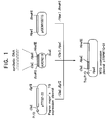
- the designed gene was divided into blocks each comprising about 40 to 50 bases so that the + chain and the - chain overlapped each other. Twelve DNA fragments corresponding to each sequence were synthesized (SEQ ID Nos. 4 to 15). 5' terminal of the synthetic DNA was phosphatized. Synthetic DNA fragments to be paired therewith were annealed, and they were connected with each other. After the acrylamide gel electrophoresis, the DNA fragments of an intended size was taken out and integrated in EcoRI/HindIII sites of pUC19. The sequence was confirmed and the correct one was named pUCN216. From the pUCN216, a ClaI/HpaI fragment (small) was taken out and used for the construction of pTRPMTG-01.
- E. coli JM109 transformed with pUCTRPMTG-02(+) and pUC19 was cultured by shaking in 3 ml of 2xYT medium containing 150 ⁇ g/ml of ampicillin at 37°C for ten hours (pre-culture). 0.5 ml of the culture suspension was added to 50 ml of 2xYT medium containing 150 ⁇ g/ml of ampicilli n, and the shaking culture was conducted at 37°C for 20 hours.
- the cells were collected from the culture suspension and broken by ultrasonic disintegration.
- the results of SDS-polyacrylamide electrophoresis of the whole fraction, and supernatant and precipitation fractions both obtained by the centrifugation are shown in Fig. 3.
- the high expression of the protein having a molecular weight equal to that of MTG was recognized in the whole fraction of broken pUCTRPMTG-02(+)/JM109 cells and the precipitate fraction obtained by the centrifugation. It was confirmed by the western blotting that the protein was reactive with mice anti-MTG antibody.
- the expression of the protein was 500 to 600 mg/L. A sufficient, high expression was obtained even when 3- ⁇ -indole acrylic acid was not added to the production medium.
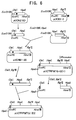
- pTRPMTG-00 was constructed by connecting PvuII/PstI fragment (small) from Pagrus major's TG expression plasmid pTRPMTG-02 with PstI/HimdIII fragment (small, including PvuII site) and PvuII/HindIII fragment (small) of pGEM15BTG (J. P. KOKAI No. Hei 6-30771).
- pTRPMTG-00 was multi-copied. EcoO109I fragment (small) containing trp promoter and trpA terminator of pTRPMTG-00 was smoothened and then integrated into HincII site of pUC19 which is a multi-copy plasmid. pUCTRPMTG-00(+) in which lacZ promoter and trp promoter were in the same direction, and pUCTRPMTG-00(-) in which they were in the opposite direction to each other were constructed.
- E. coli JM109 transformed with pUCTRPMTG-02 (+) or (-), pUCTRPMTG-00 (+) or (-), pTRPMTG-02, pTRPMTG-01, pTRPMTG-00 or pUC19 was cultured by shaking in 3 ml of 2xYT medium containing 150 ⁇ g/ml of ampicillin at 37°C for ten hours (pre-culture). 0.5 ml of the culture suspension was added to 50 ml of 2xYT medium containing 150 ⁇ g/ml of ampicillin, and the shaking culture was conducted at 37 °C for 20 hours.
- N-terminal amino acid residue of the protein inclusion bodies of expressed MTG was analyzed to find that about 60 % of the sequence of N-terminal was methionine residue and about 40 % thereof was formylmethionine residue. (Formyl)methionine residue corresponding to the initiation codon was removed by a technical idea described below.
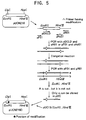
- pUCN216 is a plasmid obtained by cloning about 216 bp's containing ClaI-HpaI fragment of N-terminal of MTG in EcoRI/HindIII site of pUC19.
- pF01 SEQ ID No. 56
- pR01 SEQ ID No. 57
- pDELD SEQ ID No. 58
- pHd01 SEQ ID No. 59
- pHd01 is that obtained by replacing C with G not to include HindIII site.
- pF01 and pDELD are sense primers and pR01 and pHd01 are antisense primers.
- the second PCR product was extracted with phenol/chloroform, precipitated with ethanol, and treated with HindIII and EcoRI. After pUC19 subcloning, pUCN216D was obtained (Fig. 5). The sequence of the obtained pUCN216D was confirmed to be the intended one.
- E. coli JM109 transformed with pUCTRPMTG(+)D2 was cultured by shaking in 3 ml of 2xYT medium containing 150 ⁇ g/ml of ampicillin at 37 °C for ten hours (pre-culture). 0.5 ml of the culture suspension was added to 50 ml of 2xYT medium containing 150 ⁇ g/ml of ampicillin, and the shaking culture was conducted at 37 °C for 20 hours. The cells were broken by the ultrasonic disintegration.
- the N-terminal amino acid sequence of the protein inclusion bodies was analyzed to find that about 90 % thereof was serine as shown in Fig.8.
- MTG inclusion bodies lacking aspartic acid was partially purified by repeating the centrifugation several times, and then dissolved in 8 M urea [50 mM phosphate buffer (pH 5.5)] to obtain the 2 mg/ml solutio n. Precipitates were removed from the solution by the centrifugation and the solution was diluted to a concentration of 0.5 M urea with 50 mM phosphate buffer (pH 5.5). The diluted solution was further dialyzed with 50 mM phosphate buffer (pH 5.5) to remove urea. According to Mono S column test, the peak having TG activity was eluted when NaCl concentration was in the range of 100 to 150 mM.
- the specific activity of the fraction was determined by the hydroxamate method to find that the specific activity of the aspartic acid residue-lacking MTG was about 30 U/mg. This is equal to the specific activity of natural MT G. It is thus apparent that the lack of aspartic acid residue exerts no influence on the specific activity.
Landscapes
- Life Sciences & Earth Sciences (AREA)
- Chemical & Material Sciences (AREA)
- Health & Medical Sciences (AREA)
- Genetics & Genomics (AREA)
- Organic Chemistry (AREA)
- Zoology (AREA)
- Engineering & Computer Science (AREA)
- Bioinformatics & Cheminformatics (AREA)
- Wood Science & Technology (AREA)
- Microbiology (AREA)
- Biotechnology (AREA)
- Biomedical Technology (AREA)
- Molecular Biology (AREA)
- Biochemistry (AREA)
- General Engineering & Computer Science (AREA)
- General Health & Medical Sciences (AREA)
- Medicinal Chemistry (AREA)
- Micro-Organisms Or Cultivation Processes Thereof (AREA)
- Enzymes And Modification Thereof (AREA)
- Preparation Of Compounds By Using Micro-Organisms (AREA)
Applications Claiming Priority (3)
| Application Number | Priority Date | Filing Date | Title |
|---|---|---|---|
| JP18001097 | 1997-07-04 | ||
| JP180010/97 | 1997-07-04 | ||
| JP18001097 | 1997-07-04 |
Publications (3)
| Publication Number | Publication Date |
|---|---|
| EP0889133A2 true EP0889133A2 (fr) | 1999-01-07 |
| EP0889133A3 EP0889133A3 (fr) | 1999-09-08 |
| EP0889133B1 EP0889133B1 (fr) | 2004-03-10 |
Family
ID=16075884
Family Applications (1)
| Application Number | Title | Priority Date | Filing Date |
|---|---|---|---|
| EP98112315A Expired - Lifetime EP0889133B1 (fr) | 1997-07-04 | 1998-07-02 | Procédé de préparation de transglutaminase microbienne |
Country Status (7)
| Country | Link |
|---|---|
| US (2) | US6013498A (fr) |
| EP (1) | EP0889133B1 (fr) |
| CN (1) | CN1151252C (fr) |
| BR (1) | BR9802403A (fr) |
| CA (1) | CA2237041A1 (fr) |
| DE (1) | DE69822251T2 (fr) |
| DK (1) | DK0889133T3 (fr) |
Cited By (4)
| Publication number | Priority date | Publication date | Assignee | Title |
|---|---|---|---|---|
| WO2000040706A1 (fr) * | 1998-12-28 | 2000-07-13 | Ajinomoto Co., Inc. | Procede de production de transglutaminase |
| WO2001029187A1 (fr) * | 1999-10-18 | 2001-04-26 | Ajinomoto Co., Inc. | Procede de production de transglutaminase derivee d'un micro-organisme |
| US6849095B2 (en) | 2000-09-01 | 2005-02-01 | Trumpler Gmbh & Co. Chemische Fabrik | Agent and method for enzymatically tanning skins |
| EP1310560A4 (fr) * | 2000-08-17 | 2005-07-13 | Ajinomoto Kk | Procede de modification de transglutaminase de micro-organismes (mtg) |
Families Citing this family (18)
| Publication number | Priority date | Publication date | Assignee | Title |
|---|---|---|---|---|
| US6821763B2 (en) * | 1997-07-04 | 2004-11-23 | Ajinomoto Co., Inc. | Process for producing microbial transglutaminase |
| DE69822251T2 (de) * | 1997-07-04 | 2005-01-27 | Ajinomoto Co., Inc. | Verfahren zur Herstellung von mikrobieller Transglutaminase |
| DE10046605A1 (de) | 2000-09-20 | 2002-03-28 | Roehm Enzyme Gmbh | Verwendung von Transglutaminasen zur Herstellung von weizenarmen Backwaren |
| JP3951584B2 (ja) | 2000-10-10 | 2007-08-01 | 味の素株式会社 | 改質された原料乳の製造方法及びそれを用いた乳製品 |
| US6633800B1 (en) | 2001-01-31 | 2003-10-14 | Ainsworth Inc. | Remote control system |
| US6664299B2 (en) * | 2002-02-14 | 2003-12-16 | Dow Corning Corporation | Masterbatch method for economically and efficiently producing soap dispersions in textile fluids for synthetic fiber treatment |
| US7101695B2 (en) * | 2002-03-01 | 2006-09-05 | Szu-Yi Chou | Method of producing transglutaminase having broad substrate activity |
| US20030219853A1 (en) * | 2002-03-01 | 2003-11-27 | Szu-Yi Chou | Method of cross-linking a compound |
| US7485438B2 (en) | 2002-03-01 | 2009-02-03 | Szu-Yi Chou | Method of producing polyvalent antigens |
| ES2223227B1 (es) * | 2002-05-31 | 2006-04-16 | Consejo Sup. Investig. Cientificas | Secuencia de nucleotidos de maiz codificante de una proteina con actividad transglutaminasa, y su uso. |
| CN101691560B (zh) * | 2008-12-19 | 2011-08-31 | 华南理工大学 | 大肠杆菌及其可溶性表达转谷氨酰胺酶酶原的方法 |
| US20100316764A1 (en) * | 2009-06-10 | 2010-12-16 | Engrain, LLC | Flour supplement compositions and methods for preparing wheat flour |
| CN102517242A (zh) * | 2011-12-30 | 2012-06-27 | 齐河百多安生物医药科技有限公司 | 一种提高茂原链轮丝菌谷氨酰胺转胺酶表达量的方法及其专用工程菌 |
| CN102586167B (zh) * | 2012-03-01 | 2013-07-24 | 华南理工大学 | 一株重组的枯草芽孢杆菌及由其生产转谷氨酰胺酶的方法 |
| CN106720302A (zh) * | 2016-11-29 | 2017-05-31 | 中国农业大学 | 一种改善乳蛋白浓缩物凝胶性的方法及其应用 |
| CA3080512A1 (fr) | 2017-11-07 | 2019-05-16 | Codexis, Inc. | Variants de transglutaminase |
| CN113528479B (zh) * | 2020-04-13 | 2023-01-24 | 中国科学院微生物研究所 | 一种转谷氨酰胺酶的高效制备方法及其专用工程菌 |
| CN111826389B (zh) * | 2020-05-26 | 2022-05-13 | 江南大学 | 提高大肠杆菌重组蛋白胞外分泌水平的方法 |
Family Cites Families (11)
| Publication number | Priority date | Publication date | Assignee | Title |
|---|---|---|---|---|
| JPH0665280B2 (ja) * | 1987-03-04 | 1994-08-24 | 味の素株式会社 | タンパクゲル化剤及びそれを用いるタンパクのゲル化方法 |
| JPS6450382A (en) * | 1987-08-20 | 1989-02-27 | Hitachi Heating Appl | Plane-form heating body |
| JP3010589B2 (ja) * | 1990-10-19 | 2000-02-21 | 天野製薬株式会社 | リコンビナントトランスグルタミナーゼ |
| EP0481504B1 (fr) * | 1990-10-19 | 1996-01-17 | Amano Pharmaceutical Co., Ltd. | Transglutaminase recombinante |
| EP0555649B1 (fr) * | 1992-01-14 | 2004-12-08 | Ajinomoto Co., Inc. | Gène codant pour une transglutaminase de poisson |
| JPH0630771A (ja) * | 1992-07-14 | 1994-02-08 | Ajinomoto Co Inc | バクテリアルトランスグルタミナーゼの製造法及び関連物 |
| EP0693556B1 (fr) * | 1994-01-28 | 2004-10-06 | Ajinomoto Co., Inc. | Transglutaminase produite par l'huitre du japon |
| DE69535037T2 (de) * | 1994-08-26 | 2006-12-07 | Novozymes A/S | Mikrobielle transglutaminasen, ihre herstellung und ihre verwendung |
| EP0871712B1 (fr) * | 1995-01-19 | 2003-08-27 | Novozymes A/S | Transglutaminases d'oomycetes |
| JP3669390B2 (ja) * | 1995-02-09 | 2005-07-06 | 味の素株式会社 | バチルス属細菌由来のトランスグルタミナーゼ |
| DE69822251T2 (de) * | 1997-07-04 | 2005-01-27 | Ajinomoto Co., Inc. | Verfahren zur Herstellung von mikrobieller Transglutaminase |
-
1998
- 1998-07-02 DE DE69822251T patent/DE69822251T2/de not_active Expired - Lifetime
- 1998-07-02 US US09/109,063 patent/US6013498A/en not_active Expired - Lifetime
- 1998-07-02 EP EP98112315A patent/EP0889133B1/fr not_active Expired - Lifetime
- 1998-07-02 DK DK98112315T patent/DK0889133T3/da active
- 1998-07-03 CN CNB98103375XA patent/CN1151252C/zh not_active Expired - Lifetime
- 1998-07-03 CA CA002237041A patent/CA2237041A1/fr not_active Abandoned
- 1998-07-06 BR BR9802403-5A patent/BR9802403A/pt not_active Application Discontinuation
-
1999
- 1999-11-24 US US09/448,310 patent/US6538122B1/en not_active Expired - Lifetime
Cited By (5)
| Publication number | Priority date | Publication date | Assignee | Title |
|---|---|---|---|---|
| WO2000040706A1 (fr) * | 1998-12-28 | 2000-07-13 | Ajinomoto Co., Inc. | Procede de production de transglutaminase |
| WO2001029187A1 (fr) * | 1999-10-18 | 2001-04-26 | Ajinomoto Co., Inc. | Procede de production de transglutaminase derivee d'un micro-organisme |
| EP1310560A4 (fr) * | 2000-08-17 | 2005-07-13 | Ajinomoto Kk | Procede de modification de transglutaminase de micro-organismes (mtg) |
| US7553650B2 (en) | 2000-08-17 | 2009-06-30 | Ajinomoto Co., Inc. | Polynucleotide encoding a mutant transglutaminase |
| US6849095B2 (en) | 2000-09-01 | 2005-02-01 | Trumpler Gmbh & Co. Chemische Fabrik | Agent and method for enzymatically tanning skins |
Also Published As
| Publication number | Publication date |
|---|---|
| DK0889133T3 (da) | 2004-04-13 |
| US6538122B1 (en) | 2003-03-25 |
| CN1253177A (zh) | 2000-05-17 |
| CA2237041A1 (fr) | 1999-01-04 |
| DE69822251D1 (de) | 2004-04-15 |
| CN1151252C (zh) | 2004-05-26 |
| EP0889133B1 (fr) | 2004-03-10 |
| US6013498A (en) | 2000-01-11 |
| EP0889133A3 (fr) | 1999-09-08 |
| DE69822251T2 (de) | 2005-01-27 |
| BR9802403A (pt) | 2000-01-11 |
Similar Documents
| Publication | Publication Date | Title |
|---|---|---|
| EP0889133B1 (fr) | Procédé de préparation de transglutaminase microbienne | |
| US7972829B2 (en) | Process for producing transglutaminase | |
| CA1200773A (fr) | Liens d'expression | |
| JP3669390B2 (ja) | バチルス属細菌由来のトランスグルタミナーゼ | |
| JPH08308564A (ja) | 組換えdna法によるトランスグルタミナーゼの効率的製造法 | |
| JPH07147984A (ja) | ポリクリングルプラスミノーゲン活性化因子をコードする遺伝子およびそれを含有するベクター | |
| US6821763B2 (en) | Process for producing microbial transglutaminase | |
| EP1142990B1 (fr) | Procede de production de transglutaminase | |
| JPH1175876A (ja) | 新規な微生物トランスグルタミナーゼの製造法 | |
| CN100362105C (zh) | 胰羧肽酶原b、其同工型和突变蛋白的制备及应用 | |
| McCaman et al. | A mutated bovine prochymosin zymogen can be activated without proteolytic processing at low pH. | |
| US6194190B1 (en) | Amino-terminal deblocking enzyme | |
| EP0352387B1 (fr) | Méthode de préparation d'une hirudine | |
| US7459526B2 (en) | Method for synthesizing peptides, peptide mimetics and proteins | |
| JP2005229807A (ja) | トランスグルタミナーゼの製造法 | |
| JP2938352B2 (ja) | 組換え人マトリライシンの製造方法 | |
| JP2781997B2 (ja) | ポリペプチドの製造方法 | |
| KR100492417B1 (ko) | 신규한조직형플라스미노젠엑티베이터뮤테인 | |
| KR100899173B1 (ko) | 인간 유래 조직형 플라스미노겐 활성화 인자의 대량발현용 재조합 유전자 및 그 단백질의 재구성 방법 | |
| CA1200775A (fr) | Liens d'expression | |
| JP4252306B2 (ja) | 組換えタンパク質のインビトロプロセシングのための新規可溶性エンドプロテアーゼ | |
| JP2003135058A (ja) | メタノール資化性酵母を用いたトランスグルタミナーゼの製造法 | |
| JPH10229884A (ja) | 分泌型Kex2誘導体の製造方法 | |
| JPH02142481A (ja) | 新規組換えプラスミド、それを含む大腸菌、それを用いて得られるジヒドロ葉酸還元酵素及びその分離精製方法 |
Legal Events
| Date | Code | Title | Description |
|---|---|---|---|
| PUAI | Public reference made under article 153(3) epc to a published international application that has entered the european phase |
Free format text: ORIGINAL CODE: 0009012 |
|
| AK | Designated contracting states |
Kind code of ref document: A2 Designated state(s): BE DE DK ES FR GB IT NL SE |
|
| AX | Request for extension of the european patent |
Free format text: AL;LT;LV;MK;RO;SI |
|
| PUAL | Search report despatched |
Free format text: ORIGINAL CODE: 0009013 |
|
| RIC1 | Information provided on ipc code assigned before grant |
Free format text: 6C 12N 15/54 A, 6C 12N 15/70 B, 6C 12N 1/21 B, 6C 12N 9/10 B, 6C 12N 1/21 J, 6C 12R 1:19 J |
|
| AK | Designated contracting states |
Kind code of ref document: A3 Designated state(s): AT BE CH CY DE DK ES FI FR GB GR IE IT LI LU MC NL PT SE |
|
| AX | Request for extension of the european patent |
Free format text: AL;LT;LV;MK;RO;SI |
|
| 17P | Request for examination filed |
Effective date: 20000225 |
|
| AKX | Designation fees paid |
Free format text: BE DE DK ES FR GB IT NL SE |
|
| 17Q | First examination report despatched |
Effective date: 20011002 |
|
| REG | Reference to a national code |
Ref country code: GB Ref legal event code: FG4D |
|
| GRAP | Despatch of communication of intention to grant a patent |
Free format text: ORIGINAL CODE: EPIDOSNIGR1 |
|
| GRAS | Grant fee paid |
Free format text: ORIGINAL CODE: EPIDOSNIGR3 |
|
| GRAA | (expected) grant |
Free format text: ORIGINAL CODE: 0009210 |
|
| AK | Designated contracting states |
Kind code of ref document: B1 Designated state(s): BE DE DK ES FR GB IT NL SE |
|
| PG25 | Lapsed in a contracting state [announced via postgrant information from national office to epo] |
Ref country code: IT Free format text: LAPSE BECAUSE OF FAILURE TO SUBMIT A TRANSLATION OF THE DESCRIPTION OR TO PAY THE FEE WITHIN THE PRESCRIBED TIME-LIMIT;WARNING: LAPSES OF ITALIAN PATENTS WITH EFFECTIVE DATE BEFORE 2007 MAY HAVE OCCURRED AT ANY TIME BEFORE 2007. THE CORRECT EFFECTIVE DATE MAY BE DIFFERENT FROM THE ONE RECORDED. Effective date: 20040310 Ref country code: BE Free format text: LAPSE BECAUSE OF FAILURE TO SUBMIT A TRANSLATION OF THE DESCRIPTION OR TO PAY THE FEE WITHIN THE PRESCRIBED TIME-LIMIT Effective date: 20040310 |
|
| REG | Reference to a national code |
Ref country code: DK Ref legal event code: T3 |
|
| REF | Corresponds to: |
Ref document number: 69822251 Country of ref document: DE Date of ref document: 20040415 Kind code of ref document: P |
|
| PG25 | Lapsed in a contracting state [announced via postgrant information from national office to epo] |
Ref country code: SE Free format text: LAPSE BECAUSE OF FAILURE TO SUBMIT A TRANSLATION OF THE DESCRIPTION OR TO PAY THE FEE WITHIN THE PRESCRIBED TIME-LIMIT Effective date: 20040610 |
|
| PG25 | Lapsed in a contracting state [announced via postgrant information from national office to epo] |
Ref country code: ES Free format text: LAPSE BECAUSE OF FAILURE TO SUBMIT A TRANSLATION OF THE DESCRIPTION OR TO PAY THE FEE WITHIN THE PRESCRIBED TIME-LIMIT Effective date: 20040621 |
|
| ET | Fr: translation filed | ||
| PLBE | No opposition filed within time limit |
Free format text: ORIGINAL CODE: 0009261 |
|
| STAA | Information on the status of an ep patent application or granted ep patent |
Free format text: STATUS: NO OPPOSITION FILED WITHIN TIME LIMIT |
|
| 26N | No opposition filed |
Effective date: 20041213 |
|
| REG | Reference to a national code |
Ref country code: FR Ref legal event code: PLFP Year of fee payment: 19 |
|
| REG | Reference to a national code |
Ref country code: FR Ref legal event code: PLFP Year of fee payment: 20 |
|
| PGFP | Annual fee paid to national office [announced via postgrant information from national office to epo] |
Ref country code: GB Payment date: 20170628 Year of fee payment: 20 Ref country code: FR Payment date: 20170613 Year of fee payment: 20 |
|
| PGFP | Annual fee paid to national office [announced via postgrant information from national office to epo] |
Ref country code: NL Payment date: 20170614 Year of fee payment: 20 |
|
| PGFP | Annual fee paid to national office [announced via postgrant information from national office to epo] |
Ref country code: DE Payment date: 20170627 Year of fee payment: 20 |
|
| PGFP | Annual fee paid to national office [announced via postgrant information from national office to epo] |
Ref country code: DK Payment date: 20170711 Year of fee payment: 20 |
|
| REG | Reference to a national code |
Ref country code: DE Ref legal event code: R071 Ref document number: 69822251 Country of ref document: DE |
|
| REG | Reference to a national code |
Ref country code: NL Ref legal event code: MK Effective date: 20180701 |
|
| REG | Reference to a national code |
Ref country code: DK Ref legal event code: EUP Effective date: 20180702 |
|
| REG | Reference to a national code |
Ref country code: GB Ref legal event code: PE20 Expiry date: 20180701 |
|
| PG25 | Lapsed in a contracting state [announced via postgrant information from national office to epo] |
Ref country code: GB Free format text: LAPSE BECAUSE OF EXPIRATION OF PROTECTION Effective date: 20180701 |