EP0890260B1 - Commande d'un magnetoscope depuis un ordinateur domestique - Google Patents
Commande d'un magnetoscope depuis un ordinateur domestique Download PDFInfo
- Publication number
- EP0890260B1 EP0890260B1 EP97915900A EP97915900A EP0890260B1 EP 0890260 B1 EP0890260 B1 EP 0890260B1 EP 97915900 A EP97915900 A EP 97915900A EP 97915900 A EP97915900 A EP 97915900A EP 0890260 B1 EP0890260 B1 EP 0890260B1
- Authority
- EP
- European Patent Office
- Prior art keywords
- signal
- personal computer
- vcr
- video
- control signal
- Prior art date
- Legal status (The legal status is an assumption and is not a legal conclusion. Google has not performed a legal analysis and makes no representation as to the accuracy of the status listed.)
- Expired - Lifetime
Links
- 238000000034 method Methods 0.000 claims description 13
- 230000004044 response Effects 0.000 claims description 10
- 230000008569 process Effects 0.000 description 11
- 230000003068 static effect Effects 0.000 description 4
- 230000005540 biological transmission Effects 0.000 description 3
- 230000008859 change Effects 0.000 description 2
- 230000006870 function Effects 0.000 description 2
- 238000010276 construction Methods 0.000 description 1
- PWPJGUXAGUPAHP-UHFFFAOYSA-N lufenuron Chemical compound C1=C(Cl)C(OC(F)(F)C(C(F)(F)F)F)=CC(Cl)=C1NC(=O)NC(=O)C1=C(F)C=CC=C1F PWPJGUXAGUPAHP-UHFFFAOYSA-N 0.000 description 1
- 238000004519 manufacturing process Methods 0.000 description 1
- 238000012986 modification Methods 0.000 description 1
- 230000004048 modification Effects 0.000 description 1
Images


Classifications
-
- H—ELECTRICITY
- H04—ELECTRIC COMMUNICATION TECHNIQUE
- H04N—PICTORIAL COMMUNICATION, e.g. TELEVISION
- H04N5/00—Details of television systems
- H04N5/76—Television signal recording
- H04N5/765—Interface circuits between an apparatus for recording and another apparatus
-
- H—ELECTRICITY
- H04—ELECTRIC COMMUNICATION TECHNIQUE
- H04N—PICTORIAL COMMUNICATION, e.g. TELEVISION
- H04N5/00—Details of television systems
- H04N5/76—Television signal recording
- H04N5/78—Television signal recording using magnetic recording
- H04N5/782—Television signal recording using magnetic recording on tape
-
- H—ELECTRICITY
- H04—ELECTRIC COMMUNICATION TECHNIQUE
- H04N—PICTORIAL COMMUNICATION, e.g. TELEVISION
- H04N7/00—Television systems
- H04N7/08—Systems for the simultaneous or sequential transmission of more than one television signal, e.g. additional information signals, the signals occupying wholly or partially the same frequency band, e.g. by time division
- H04N7/087—Systems for the simultaneous or sequential transmission of more than one television signal, e.g. additional information signals, the signals occupying wholly or partially the same frequency band, e.g. by time division with signal insertion during the vertical blanking interval only
- H04N7/088—Systems for the simultaneous or sequential transmission of more than one television signal, e.g. additional information signals, the signals occupying wholly or partially the same frequency band, e.g. by time division with signal insertion during the vertical blanking interval only the inserted signal being digital
- H04N7/0887—Systems for the simultaneous or sequential transmission of more than one television signal, e.g. additional information signals, the signals occupying wholly or partially the same frequency band, e.g. by time division with signal insertion during the vertical blanking interval only the inserted signal being digital for the transmission of programme or channel identifying signals
Definitions
- the present invention relates to a system for controlling a video cassette recorder from a personal computer.
- US-A-4706121 discloses a system for controlling a television receiver so as to permit user selection of broadcast programs from schedule information.
- the schedule information is received by an FM receiver, decoded and demodulated and applied to a data processor.
- a user remote control supplies user selection inputs to the data processor and the data processor selects programs from the schedule information based on the user inputs.
- the schedule information for the selected programs is stored in a memory and is used by the data processor to control a programmable T.V. tuner so as to provide the broadcast signals for the selected programs to the T.V. receiver at the time of broadcast.
- the system disclosed by this reference may also be used to control a VCR for unattended recording of the selected programs.
- EP-A-0607734 discloses a system for automatic programming a video cassette recorder utilizing a data processing system. Programming information is extracted from a broadcast television system and displayed on a monitor of a personal computer. The information may be selected by a user and instructions for control of the VCR by an infra-red device.
- Personal computers have been developed and marketed with the capability to receive and display publicly broadcasted television signals.
- the broadcasted video images may be displayed in a separate window that allows the user to watch television while performing other operations on the personal computer.
- It may be desirable to store the television signals in a disk drive of the computer. Analog video signals, once digitized, typically require a large amount of memory space on the disk. For this reason, storing television signals on the disk drive is generally undesirable.
- VCR video cassette recorder
- Video cassette recorders are typically located in a different room than the personal computer. Therefore a system that controls a video cassette recorder through a personal computer would require routing a plurality of cables between the VCR and the computer. Routing cables can be both expensive and time consuming. It would be desirable to provide a system that allows a personal computer to remotely control the operation of a video cassette recorder.
- the present invention is a system that allows a personal computer to remotely control the operation of a video cassette recorder (VCR).
- the system includes a radio frequency (RF) transmitter connected to a personal computer.
- the computer is programmed to generate a first VCR control signal that is transmitted by the RF transmitter to a RF receiver located within a transceiver base unit.
- the transceiver base unit transmits a second VCR control signal to the VCR using an infrared (IR transmitter) in response to the first VCR control signal.
- the VCR control signals include commands to record, stop, play, etc. the video cassette recorder.
- the first VCR control signal can be transmitted in response to a control data signal that is inserted into the vertical blanking interval of a publicly broadcasted video signal that is received and decoded by the personal computer.
- the control data signal may contain program information which is used to trigger the transmission of the first VCR control signal.
- FIG. 1 shows a video cassette recording system 10 of the present invention.
- the system includes a broadcaster 12, a personal computer 14 and a video cassette recorder (VCR) 16.
- the video cassette recorder 16 receives a video cassette tape 18.
- the VCR 16 can read and write video signals onto the tape 18.
- the VCR 16 has internal circuitry to perform start, stop, play, rewind, forward, etc. functions as is known in the art.
- the VCR 16 has a remote receiver 20 which can receive VCR control signals that control the various start, record, play, stop, etc. functions of the recorder 16.
- the remote receiver 20 may receive input signals in the infrared (IR) waveband.
- the video cassette recorder 16 is typically connected to a television receiver 21 which may also have a remote receiver (not shown).
- the personal computer 14 includes a central processing unit (CPU) 22, a memory device 24 and a mass storage device such as a disk drive 26.
- the personal computer 14 may be connected to a printer 27.
- the computer 14 generates the first VCR control signal that is transmitted by a transmitter 28.
- the transmitter 28 may be a RF device.
- the first VCR control signal may be received by the receiver 30 of a transceiver base unit 32.
- the transceiver 32 may have a transmitter 34 that transmits a second VCR control signal in response to the reception of the first VCR control signal.
- the second VCR control signal may be received by the remote receiver 20 of the VCR.
- the transmitter 28 and transceiver receiver 30 are RF devices.
- the transceiver transmitter 34 and VCR receiver 20 are preferably IR devices.
- the transceiver 32 can also generate control signals to control the television receiver 21, including signals to change the channels of the television 21.
- the broadcaster 12 may include a video signal source 36 that generates a video signal and a data signal source 38 that generates a data signal.
- the broadcaster 12 may also include a vertical blanking interval (VBI) inserter 40 that inserts the data signal into the vertical blanking interval of the video signal.
- the inserted video signal is transmitted by a transmitter 42.
- the VBI inserter 40 may be a unit sold by Norpak Corp. of Ottawa, Ontario, Canada under the model number TDS-3 or similar ones from Wavephone of Canada or EEG of New York.
- the data source 38 may generate data that corresponds to the program being broadcasted from the video source 36.
- the data signal may include a title and a description of the broadcasted program.
- XDS a standard commonly referred to as XDS which defines the information which can be inserted into a vertical blanking interval of a video signal.
- the personal computer 14 is connected to a television receiver 44 which can receive the inserted video signal transmitted by the broadcaster 12.
- the receiver 44 contains a tuner that can tune to various broadcasted channels.
- the receiver 44 is connected to a vertical blanking interval decoder 46 which separates the data signal from the video signal.
- the video signal may be connected to a NTSC decoder 48 which decoded the decoded video signal to a computer monitor 50.
- the separated data signal is provided to the CPU 22 for further processing.
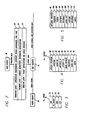
- the format of the inserter 40 may have different application layers, including a transport layer 60, a network layer 62 and a datalink layer 64 which convert the program information into a serial data stream that can be inserted into the vertical blanking interval by the VBI inserter 40.
- the transport layer 60 provides an interface with the data source 38.
- the network layer 62 packetizes the data.
- the datalink layer 64 serializes the packeted data for serial transmission to the VBI inserter 40.
- the data is provided to the VBI inserter in a Vt_Frame 70 shown in Figure 3.
- the Vt_Frame 70 includes a start frame field STX 72, a data packet field Vt_Packet 74, a check field CRC 76 and an end of frame character ETX 78.
- the Vt_Packet 74 is formatted as shown in Figure 4.
- the nPacketProtocal field 80 is a byte-length field which identifies the packet as one supported by the protocol.
- the nVersion field 82 specifies the type of inserter that is transmitting the packet.
- the nChanID field 84 is an integer value which provides the channel number of the packet in the serialized bitstream.
- the nMessageID field 86 specifies the message number of the channel on which the packet is transmitted.
- the nPacketID field 88 defines the number of packets in a particular message.
- the fMorePackets field 90 specifies whether there are any more packets in the message.
- the fReserved field 92 is reserved for further use.
- the length of the data is specified in the nDataSize field 94.
- the nData field 96 contains the data.
- the data is typically provided to the inserter 40 by the data source in the format shown in Figure 5.
- the nMessageProtocal field 98 is a byte length field which identifies the type of transmission being provided.
- the nVersion field 100 identifies the version of the protocol.
- the flsHint field 102 indicates that the data is to precede an event such as a television program.
- the flsUPdate field 104 indicates whether the information is updating transmitted information.
- the fReserved field 106 is unused and reserved for later use.
- the field nDataSize 108 specifies the number of bytes in the data field.
- the nOpcode field 110 define a particular operation to be performed with the data. For example, the operation may be a read memory command.
- the fReserved2 field 112 is not used and the bData field 114 contains the data.
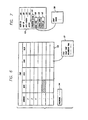
- the personal computer 14 may contain a program that creates a graphical user interface program map 120 which is display by the computer monitor 50.
- the map 120 may be divided into a plurality of blocks that correspond to TIME and CHANNEL listings.
- the data signals inserted into the vertical blanking interval of the video signal may have program information that is displayed by the map 120.
- the broadcaster 12 may periodically insert data that provides the title and a short description of the present broadcasted program plus three subsequent programs, and so forth and so on.
- the personal computer 14 receives the program information and displays the title and description within the appropriate block.
- the personal computer can continuously update the static map 120 with broadcasted program information.
- the user can record a program(s) by selecting the appropriate box(es) on the map 120.
- the user can request a recording of a program on channel 2 that begins at 9:00 PM by selecting the box that corresponds to channel 2 and 9:00 PM.
- the program then stores the selection in memory.
- the personal computer At a predetermine time interval before 9:00 PM the personal computer generates VCR control signals to initiate a recording sequence of the program with the video cassette recorder.
- the first VCR control signals can be generated when new program information is detected in the vertical blanking interval, indicating that a new program has begun.
- the selected programs can be highlighted to indicate which programs will be recorded. Each highlighted program may have a "drop box" 122 which list the title, start, recording time, etc. of the selected program.
- the drop box 122 may be reviewed by entering a command or double selecting the map block.
- the program may have a configuration dialog 124 which contains a user identification (ID) field 126, a video cassette tape ID field 128, a tape length field 130, a recording speed field 132 and a Program Guide command 134.
- the static map 120 can be viewed by selecting the Program Guide Command 134.
- the dialog 124 may also have a VCR type command 136 with a separate drop box 138 that list the various manufacturing brands of video cassette recorders.
- the personal computer may have a look up table that contains the various control signal protocols for the different VCRs. The correct control signals can be generated when the user selects the make of the VCR in the drop box 138.
- the dialog may contain a Print Label field 140 which when selected prints a label of the programs that are recorded.
- the dialog may also include a Parental Lock-in field 142 which when selected prevents recording or viewing of a program unless a valid password is entered.
- the static map 120 may include a password field 144 that receives a password.
- the program may include a dialog 150 that list the various programs that were recorded.
- the dialog 150 may have a plurality of tape slots 152 that each contain the start time and title of a recorded program.
- a recorded program can be viewed by the user by selecting a tape slot 152.
- the computer In response to the selection of a tape slot 152, the computer generates VCR control signals to rewind the video cassette tape and then forward the tape (if required) to the location of the selected program.
- the dialog 150 may also have a Record command 154 that allows the user to select which part of the tape will be used for further recording. For example, the user may select PROGRAM 2 to be the slot in the tape where the next recorded program is to be stored.
- the personal computer compares the length of the next recorded program selected by the user with the selected tape slot to insure that the tape slot has enough space to store the entire program. If the next selected program exceeds the time interval of the tape slot, the program may provide a message to request the user to select another tape slot or another tape.
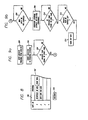
- Figures 9a-b show a flowchart of a process that records a program.
- the user has selected the appropriate entries in the configuration dialog, including the selection of program that is to be recorded.
- the personal computer sets the tuner of the receiver 44 to the selected channel in block 202.
- decision block 204 the process determines whether the present time equals the start time of the selected program.
- the start time that is compared with the present time may be slightly before the program start time to allow for the generation of control signals and the power, tuning, etc. of the VCR.
- decision block 206 determines whether the vertical blanking data has changed.
- a change in the vertical blanking data is an indication that a new program has started. If the vertical blanking data has changed, the personal computer generates VCR control signals to turn on the VCR, select the appropriate channel and record the program in block 208.
- decision block 210 compares the present time with the end time of the selected program. When the times are equal the personal computer generates control signals to stop the VCR and store the program information in the dialog 150 in block 212.
- the program determines whether the VCR should be turned off, factoring whether another program has been selected for recording and the time interval until the broadcasting of the selected program in decision block 214. If the VCR is to be turned off, the personal computer generates control signals to turn off the VCR. The process then proceeds back to block 200.
- Figures 10a-b show a flowchart of a personal computer process that scans the broadcasted channels to retrieve program information from the vertical blanking interval.
- the tuner of the personal computer is set to a first channel in processing block 250.
- the personal computer determines whether the channel is set in decision block 252. If the channel is set a timer is started in block 254. The value of the timer is compared to a threshold time value in decision block 256. If the value of the timer is less than the threshold value then the process proceeds to decision block 258 to determine if there is data in the vertical blanking interval. If there is vertical blanking data, the data is stored in the personal computer in block 260. If there is no data the process proceeds back to block 256.
- the process proceeds to decision block 262 to determine whether there is vertical blanking interval data. If there is vertical blanking data the data is stored in block 260. After the vertical blanking data is stored, or if there is no data as determined in block 262, the tuner is incremented one channel in block 264. The process proceeds to decision block 266 which determines whether the channel is equal to a threshold value. If the incremented channel is equal to the threshold value the channel is decremented back to the original channel in block 268. After block 264 and 266 the process proceeds to block 250.
- the information stored in block 260 is used to fill the static map 120 of the program and may also be used to trigger a recording of a program.
Landscapes
- Engineering & Computer Science (AREA)
- Multimedia (AREA)
- Signal Processing (AREA)
- Television Signal Processing For Recording (AREA)
- Selective Calling Equipment (AREA)
Claims (10)
- Système pour programmer à distance un magnétoscope qui a un récepteur à distance, le magnétoscope étant couplé à un récepteur de télévision, comprenant :un ordinateur personnel situé à l'extérieur du magnétoscope, l'ordinateur personnel comprend un écran d'ordinateur pour afficher une interface utilisateur graphique, et un premier décodeur pour recevoir un signal de radiodiffusion et séparer un signal de données de commande ayant des informations sur le programme provenant du signal de radiodiffusion, l'ordinateur personnel devant afficher les informations sur le programme sur l'interface utilisateur graphique pour permettre la sélection par l'utilisateur des informations sur le programme, l'ordinateur personnel comprend un deuxième décodeur qui décode le signal de radiodiffusion de manière à ce qu'une image vidéo radiodiffusée puisse être affichée sur l'écran de l'ordinateur, l'ordinateur personnel comprend en outre un émetteur sans fil pour émettre un premier signal de commande du magnétoscope en réponse à la sélection par l'utilisateur des informations sur le programme, dans lequel ledit premier signal de commande du magnétoscope est un signal RF ; etun émetteur/récepteur situé à l'extérieur de l'ordinateur personnel et du magnétoscope, l'émetteur/récepteur devant recevoir sans fil le premier signal de commande du magnétoscope émis par l'ordinateur personnel et, en réponse, devant émettre sans fil un deuxième signal de commande du magnétoscope vers le récepteur à distance du magnétoscope pour commander le magnétoscope, dans lequel ledit deuxième signal de commande du magnétoscope est un signal de commande par infrarouge.
- Système selon la revendication 1, dans lequel ledit l'ordinateur personnel émet ledit premier signal de commande du magnétoscope en réponse à la détection d'informations sur un nouveau programme dans un intervalle de suppression de trame.
- Système selon la revendication 2, dans lequel ledit signal de données de commande comprend des informations sur le programme concernant un programme radiodiffusé publiquement.
- Système selon la revendication 3, dans lequel ledit l'ordinateur personnel compare lesdites informations sur le programme avec de précédentes informations sur le programme, et ledit l'ordinateur personnel émet un premier signal de commande du magnétoscope si lesdites informations sur le programme ne correspondent pas audites précédentes informations sur le programme.
- Système selon la revendication 1, dans lequel l'émetteur comprend un émetteur radiofréquence qui émet ledit premier signal de commande du magnétoscope, et dans lequel ledit émetteur/récepteur comprend un récepteur radiofréquence qui reçoit ledit premier signal de commande du magnétoscope.
- Système selon la revendication 5, dans lequel ledit émetteur/récepteur comprend un émetteur infrarouge qui génère ledit deuxième signal de commande du magnétoscope.
- Système selon la revendication 1, dans lequel lesdits premier et deuxième signaux de commande du magnétoscope comprennent une commande de début pour commencer à enregistrer un signal vidéo avec le magnétoscope, et une commande d'arrêt qui arrête l'enregistrement du signal vidéo.
- Système selon la revendication 1, dans lequel lesdits premier et deuxième signaux de commande du magnétoscope comprennent une commande de lecture pour commencer à lire un signal vidéo avec le magnétoscope, et une commande d'arrêt qui arrête la lecture du signal vidéo.
- Système pour programmer à distance un magnétoscope qui a un récepteur à distance, le magnétoscope étant couplé à un récepteur de télévision, comprenant :des moyens formant ordinateur personnel situés à l'extérieur du magnétoscope, les moyens formant ordinateur personnel pour (i) afficher une interface utilisateur graphique sur un écran d'ordinateur, (ii) recevoir un signal de radiodiffusion et séparer un signal de données de commande ayant des informations sur le programme provenant du signal de radiodiffusion, (iii) afficher les informations sur le programme sur l'interface utilisateur graphique pour permettre la sélection par l'utilisateur des informations sur le programme, (iv) décoder le signal de radiodiffusion de manière à ce qu'une image vidéo radiodiffusée puisse être affichée sur l'écran d'ordinateur, et (v) émettre sans fil un premier signal de commande du magnétoscope en réponse à la sélection par l'utilisateur des informations sur le programme, dans lequel ledit premier signal de commande du magnétoscope est un signal RF ; etdes moyens formant émetteur/récepteur situés à l'extérieur des moyens formant ordinateur personnel et du magnétoscope, les moyens formant émetteur/récepteur devant recevoir sans fil le premier signal de commande du magnétoscope provenant des moyens formant ordinateur personnel et, en réponse, devant émettre sans fil un deuxième signal de commande du magnétoscope vers le récepteur à distance du magnétoscope pour commander le magnétoscope, dans lequel ledit deuxième signal de commande du magnétoscope est un signal de commande par infrarouge.
- Procédé pour enregistrer un signal vidéo émis sur un magnétoscope qui est couplé à un récepteur de télévision utilisant un ordinateur personnel, comprenant :l'affichage d'une interface utilisateur graphique sur un écran d'ordinateur ;l'entrée de données dans un champ de l'interface utilisateur graphique ;l'insertion d'un signal de données de commande dans un signal vidéo ;l'émission des signaux de données de commande et vidéo ;la réception des signaux de données de commande et vidéo ;la séparation du signal de données de commande qui a des informations sur le programme du signal vidéo ;l'affichage des informations sur le programme sur l'interface utilisateur graphique sur l'écran d'ordinateur pour permettre la sélection par l'utilisateur des informations sur le programme avec les données entrées ;le décodage du signal vidéo émis ;l'affichage du signal vidéo sur l'écran d'ordinateur ;la comparaison des données de commande séparées avec les données entrées ;l'émission sans fil d'un premier signal de commande du magnétoscope à partir d'un ordinateur personnel situé à l'extérieur du magnétoscope vers un émetteur/récepteur situé à l'extérieur de l'ordinateur personnel et du magnétoscope, en réponse à un signal de données de commande séparé si le signal de données de commande correspond aux données entrées, dans lequel ledit premier signal de commande du magnétoscope est un signal RF ;la réception dudit premier signal de commande du magnétoscope par ledit émetteur/récepteur ;l'émission sans fil d'un deuxième signal de commande du magnétoscope à partir dudit émetteur/récepteur vers le magnétoscope, en réponse audit premier signal de commande du magnétoscope provenant de l'ordinateur personnel, dans lequel ledit deuxième signal de commande du magnétoscope est un signal de commande par infrarouge, dans lequel lesdits premier et deuxième signaux de commande du magnétoscope fournissent une commande de contrôle pour commander le magnétoscope ; etl'enregistrement du signal vidéo en réponse au premier signal de commande du magnétoscope.
Applications Claiming Priority (3)
| Application Number | Priority Date | Filing Date | Title |
|---|---|---|---|
| US623585 | 1990-12-07 | ||
| US08/623,585 US6195501B1 (en) | 1996-03-28 | 1996-03-28 | Computer control of a video cassette recorder using wireless communication and a vertical blanking interval triggering |
| PCT/US1997/003763 WO1997036422A1 (fr) | 1996-03-28 | 1997-03-10 | Commande d'un magnetoscope depuis un ordinateur domestique |
Publications (3)
| Publication Number | Publication Date |
|---|---|
| EP0890260A1 EP0890260A1 (fr) | 1999-01-13 |
| EP0890260A4 EP0890260A4 (fr) | 2000-07-05 |
| EP0890260B1 true EP0890260B1 (fr) | 2003-07-09 |
Family
ID=24498638
Family Applications (1)
| Application Number | Title | Priority Date | Filing Date |
|---|---|---|---|
| EP97915900A Expired - Lifetime EP0890260B1 (fr) | 1996-03-28 | 1997-03-10 | Commande d'un magnetoscope depuis un ordinateur domestique |
Country Status (6)
| Country | Link |
|---|---|
| US (1) | US6195501B1 (fr) |
| EP (1) | EP0890260B1 (fr) |
| AU (1) | AU2321097A (fr) |
| CA (1) | CA2250925C (fr) |
| DE (1) | DE69723427T2 (fr) |
| WO (1) | WO1997036422A1 (fr) |
Families Citing this family (82)
| Publication number | Priority date | Publication date | Assignee | Title |
|---|---|---|---|---|
| US6769128B1 (en) | 1995-06-07 | 2004-07-27 | United Video Properties, Inc. | Electronic television program guide schedule system and method with data feed access |
| US6388714B1 (en) | 1995-10-02 | 2002-05-14 | Starsight Telecast Inc | Interactive computer system for providing television schedule information |
| US8850477B2 (en) | 1995-10-02 | 2014-09-30 | Starsight Telecast, Inc. | Systems and methods for linking television viewers with advertisers and broadcasters |
| US6323911B1 (en) | 1995-10-02 | 2001-11-27 | Starsight Telecast, Inc. | System and method for using television schedule information |
| US6469753B1 (en) | 1996-05-03 | 2002-10-22 | Starsight Telecast, Inc. | Information system |
| WO1998010589A1 (fr) * | 1996-09-03 | 1998-03-12 | Starsight Telecast, Inc. | Systeme de programmation presentant une aptitude superieure d'enregistrement |
| US20030005463A1 (en) * | 1999-09-30 | 2003-01-02 | Douglas B Macrae | Access to internet data through a television system |
| US20030066085A1 (en) | 1996-12-10 | 2003-04-03 | United Video Properties, Inc., A Corporation Of Delaware | Internet television program guide system |
| CN1941863B (zh) | 1997-07-21 | 2011-06-29 | 骏升发展(美国)有限公司 | 在电子节目导视中向用户显示目标广告的方法 |
| US6141488A (en) | 1997-09-05 | 2000-10-31 | United Video Properties, Inc. | Program guide system for recording television programs |
| TW392402B (en) | 1997-10-22 | 2000-06-01 | Hitachi Ltd | Method for using audio and video machine and audio and video machine system |
| JPH11252471A (ja) * | 1998-03-03 | 1999-09-17 | Matsushita Electric Ind Co Ltd | 番組及び番組情報を放送するセンター装置と端末装置 |
| CN1867068A (zh) | 1998-07-14 | 2006-11-22 | 联合视频制品公司 | 交互式电视节目导视系统及其方法 |
| US6668158B1 (en) * | 1998-07-16 | 2003-12-23 | Sony Corporation | Control method, control apparatus, data receiving and recording method, data receiver and receiving method |
| EP1942668B1 (fr) | 1998-07-17 | 2017-07-12 | Rovi Guides, Inc. | Système de guide interactif de programmes télévisés possédant plusieurs dispositifs dans une maison |
| AR020608A1 (es) | 1998-07-17 | 2002-05-22 | United Video Properties Inc | Un metodo y una disposicion para suministrar a un usuario acceso remoto a una guia de programacion interactiva por un enlace de acceso remoto |
| JP2000050186A (ja) * | 1998-07-24 | 2000-02-18 | Toshiba Video Products Japan Kk | 記録装置 |
| US6898762B2 (en) | 1998-08-21 | 2005-05-24 | United Video Properties, Inc. | Client-server electronic program guide |
| US6810199B1 (en) * | 1998-09-14 | 2004-10-26 | Sony Corporation | Information processing apparatus, information processing method, and recording medium |
| US6865746B1 (en) | 1998-12-03 | 2005-03-08 | United Video Properties, Inc. | Electronic program guide with related-program search feature |
| US6637028B1 (en) * | 1999-02-18 | 2003-10-21 | Cliq Distribution, Inc. | Integrated television and internet information system |
| US6438751B1 (en) | 1999-02-18 | 2002-08-20 | Joseph F. Voyticky | Integrated television and internet information system |
| AU774039B2 (en) * | 1999-04-26 | 2004-06-17 | Sony Corporation | Image recording system |
| US6993134B1 (en) * | 1999-08-09 | 2006-01-31 | Koninklijke Philips Electronics N.V. | Key exchange via a portable remote control device |
| WO2001011867A2 (fr) * | 1999-08-09 | 2001-02-15 | Gemstar Development Corporation | Procede et dispositif de programmation d'enregistrement pour magnetoscopes |
| AU4711601A (en) | 1999-12-10 | 2001-07-03 | United Video Properties, Inc. | Systems and methods for coordinating interactive and passive advertisement and merchandising opportunities |
| AUPQ506000A0 (en) * | 2000-01-13 | 2000-02-03 | Right Hemisphere Pty Limited | Video recorder with improved control system |
| US7895610B1 (en) * | 2000-01-18 | 2011-02-22 | Koninklijke Philips Electronics N.V. | System and method for displaying information on the screen of a user interface device under the control of a digital audio playback device |
| DK1252767T3 (da) | 2000-02-01 | 2010-09-27 | United Video Properties Inc | Fremgangsmåder og systemer til tvungen reklame |
| FR2805699A1 (fr) * | 2000-02-25 | 2001-08-31 | Thomson Multimedia Sa | Methode de gestion d'une liste d'evenements diffuses et dispositif associe |
| US7673315B1 (en) | 2000-03-30 | 2010-03-02 | Microsoft Corporation | System and method for providing program criteria representing audio and/or visual programming |
| US20010054060A1 (en) * | 2000-06-16 | 2001-12-20 | Fillebrown Lisa A. | Personal wireless network |
| CN101707693B (zh) | 2000-10-11 | 2017-04-26 | 乐威指南公司 | 提供数据存储到点播媒体传递系统中服务器上的系统和方法 |
| WO2002043353A2 (fr) * | 2000-11-16 | 2002-05-30 | Mydtv, Inc. | Systeme et procedes de determination de l'opportunite d'evenements de programmation video |
| WO2002056536A1 (fr) * | 2001-01-09 | 2002-07-18 | Telefonaktiebolaget Lm Ericsson | Procede et systeme pour lier deux dispositifs bluetooth |
| BR0207769A (pt) | 2001-02-21 | 2004-09-14 | United Video Properties Inc | Sistemas e métodos para guias de programas interativos com caracterìsticas de gravação de vìdeo pessoais |
| US20030206719A1 (en) * | 2002-04-23 | 2003-11-06 | Jim Bumgardner | Storage Management for a Video Recorder |
| US7774816B2 (en) * | 2002-04-23 | 2010-08-10 | Rovi Technologies Corporation | Conflict manager for a video recorder |
| GB2400508B (en) * | 2002-12-18 | 2006-10-25 | Chris Skelton | Automatic recording device for use with set top boxes |
| US7493646B2 (en) | 2003-01-30 | 2009-02-17 | United Video Properties, Inc. | Interactive television systems with digital video recording and adjustable reminders |
| US8116611B2 (en) * | 2003-02-10 | 2012-02-14 | Aptiv Digital, Inc. | Tuner sharing video recorder system architecture |
| US20040174863A1 (en) * | 2003-03-07 | 2004-09-09 | Rami Caspi | System and method for wireless remote control of a digital personal media stream manager |
| US20040177375A1 (en) * | 2003-03-07 | 2004-09-09 | Rami Caspi | System and method for short message service control of an integrated communications center |
| US7787749B2 (en) * | 2003-03-07 | 2010-08-31 | Siemens Enterprise Communications, Inc. | System and method for voice portal control of an integrated communications center |
| US20040177371A1 (en) * | 2003-03-07 | 2004-09-09 | Rami Caspi | System and method for integrated communications center |
| US7519073B2 (en) * | 2003-03-07 | 2009-04-14 | Siemens Communications, Inc. | System and method for instant messaging control of an integrated communications center |
| US7525975B2 (en) * | 2003-03-07 | 2009-04-28 | Rami Caspi | System and method for integrated audio stream manager |
| US7536708B2 (en) * | 2003-03-07 | 2009-05-19 | Siemens Communications, Inc. | System and method for context-based searching and control of an integrated communications center |
| US7761898B2 (en) * | 2003-03-07 | 2010-07-20 | Siemens Enterprise Communications, Inc. | System and method for e-mail control of an integrated communications center |
| JP2004297545A (ja) * | 2003-03-27 | 2004-10-21 | Matsushita Electric Ind Co Ltd | 遠隔制御装置 |
| US20040213557A1 (en) * | 2003-04-23 | 2004-10-28 | Pioneer Digital Technologies, Inc. | Non-hierarchical interface screens for use in a video recorder |
| US7984468B2 (en) | 2003-11-06 | 2011-07-19 | United Video Properties, Inc. | Systems and methods for providing program suggestions in an interactive television program guide |
| US9021529B2 (en) * | 2004-07-15 | 2015-04-28 | Microsoft Technology Licensing, Llc | Content recordation techniques |
| US8806533B1 (en) | 2004-10-08 | 2014-08-12 | United Video Properties, Inc. | System and method for using television information codes |
| US7739280B2 (en) | 2006-03-06 | 2010-06-15 | Veveo, Inc. | Methods and systems for selecting and presenting content based on user preference information extracted from an aggregate preference signature |
| US8316394B2 (en) | 2006-03-24 | 2012-11-20 | United Video Properties, Inc. | Interactive media guidance application with intelligent navigation and display features |
| EP3343904A1 (fr) * | 2006-09-29 | 2018-07-04 | Rovi Guides, Inc. | Systèmes et procédés pour application de tableau de bord de guidage multimédia modulaire |
| US8832742B2 (en) | 2006-10-06 | 2014-09-09 | United Video Properties, Inc. | Systems and methods for acquiring, categorizing and delivering media in interactive media guidance applications |
| US8209424B2 (en) | 2006-12-20 | 2012-06-26 | United Video Properties, Inc. | Systems and methods for providing remote access to interactive media guidance applications |
| US7801888B2 (en) | 2007-03-09 | 2010-09-21 | Microsoft Corporation | Media content search results ranked by popularity |
| US8418206B2 (en) | 2007-03-22 | 2013-04-09 | United Video Properties, Inc. | User defined rules for assigning destinations of content |
| US8087047B2 (en) | 2007-04-20 | 2011-12-27 | United Video Properties, Inc. | Systems and methods for providing remote access to interactive media guidance applications |
| US8107977B2 (en) | 2007-09-07 | 2012-01-31 | United Video Properties, Inc. | Cross-platform messaging |
| US20090165049A1 (en) | 2007-12-19 | 2009-06-25 | United Video Properties, Inc. | Methods and devices for presenting and interactive media guidance application |
| CA2715385A1 (fr) * | 2008-02-12 | 2009-08-20 | Pacific Biosciences Of California, Inc. | Compositions et procedes utilisables dans des reactions analytiques |
| US8989561B1 (en) | 2008-05-29 | 2015-03-24 | Rovi Guides, Inc. | Systems and methods for alerting users of the postponed recording of programs |
| US8601526B2 (en) | 2008-06-13 | 2013-12-03 | United Video Properties, Inc. | Systems and methods for displaying media content and media guidance information |
| US10063934B2 (en) | 2008-11-25 | 2018-08-28 | Rovi Technologies Corporation | Reducing unicast session duration with restart TV |
| US20100333151A1 (en) * | 2009-06-30 | 2010-12-30 | Gemstar Development Corporation | Cross platform entertainment architecture |
| US9166714B2 (en) | 2009-09-11 | 2015-10-20 | Veveo, Inc. | Method of and system for presenting enriched video viewing analytics |
| US9014546B2 (en) | 2009-09-23 | 2015-04-21 | Rovi Guides, Inc. | Systems and methods for automatically detecting users within detection regions of media devices |
| US9201627B2 (en) | 2010-01-05 | 2015-12-01 | Rovi Guides, Inc. | Systems and methods for transferring content between user equipment and a wireless communications device |
| US9204193B2 (en) | 2010-05-14 | 2015-12-01 | Rovi Guides, Inc. | Systems and methods for media detection and filtering using a parental control logging application |
| US9167196B2 (en) | 2010-05-19 | 2015-10-20 | Rovi Guides, Inc. | Systems and methods for trimming recorded content using a media guidance application |
| US9736524B2 (en) | 2011-01-06 | 2017-08-15 | Veveo, Inc. | Methods of and systems for content search based on environment sampling |
| US9854318B2 (en) | 2011-06-06 | 2017-12-26 | Rovi Guides, Inc. | Systems and methods for sharing interactive media guidance information |
| US8949901B2 (en) | 2011-06-29 | 2015-02-03 | Rovi Guides, Inc. | Methods and systems for customizing viewing environment preferences in a viewing environment control application |
| US8805418B2 (en) | 2011-12-23 | 2014-08-12 | United Video Properties, Inc. | Methods and systems for performing actions based on location-based rules |
| US9218122B2 (en) | 2011-12-29 | 2015-12-22 | Rovi Guides, Inc. | Systems and methods for transferring settings across devices based on user gestures |
| US9253262B2 (en) | 2013-01-24 | 2016-02-02 | Rovi Guides, Inc. | Systems and methods for connecting media devices through web sockets |
| US9674563B2 (en) | 2013-11-04 | 2017-06-06 | Rovi Guides, Inc. | Systems and methods for recommending content |
| US9288521B2 (en) | 2014-05-28 | 2016-03-15 | Rovi Guides, Inc. | Systems and methods for updating media asset data based on pause point in the media asset |
Family Cites Families (15)
| Publication number | Priority date | Publication date | Assignee | Title |
|---|---|---|---|---|
| US4963994A (en) * | 1981-12-14 | 1990-10-16 | Levine Michael R | VCR programmer |
| US4706121B1 (en) * | 1985-07-12 | 1993-12-14 | Insight Telecast, Inc. | Tv schedule system and process |
| US5056070A (en) * | 1988-06-06 | 1991-10-08 | Sony Corporation | Timer programming apparatus |
| US4977455B1 (en) * | 1988-07-15 | 1993-04-13 | System and process for vcr scheduling | |
| US5307173A (en) * | 1988-12-23 | 1994-04-26 | Gemstar Development Corporation | Apparatus and method using compressed codes for television program record scheduling |
| KR900010504A (ko) * | 1988-12-31 | 1990-07-07 | 안시환 | 비디오 테이프 레코오더를 이용한 가정자동화 방법 및 장치 |
| US5293357A (en) * | 1990-09-10 | 1994-03-08 | The Superguide Corporation | Method and apparatus for controlling a television program recording device |
| US5488409A (en) * | 1991-08-19 | 1996-01-30 | Yuen; Henry C. | Apparatus and method for tracking the playing of VCR programs |
| JP3334166B2 (ja) * | 1992-06-30 | 2002-10-15 | ソニー株式会社 | Vtr |
| KR0165246B1 (ko) * | 1992-09-04 | 1999-03-20 | 윤종용 | 문자입력 예약녹화 방법 및 장치 |
| EP0607734A3 (fr) | 1993-01-21 | 1994-08-10 | International Business Machines Corporation | Programmation d'un enregistreur à cassette vidéo |
| US5515173A (en) * | 1993-03-05 | 1996-05-07 | Gemstar Developement Corporation | System and method for automatically recording television programs in television systems with tuners external to video recorders |
| JP3353370B2 (ja) * | 1993-04-02 | 2002-12-03 | ソニー株式会社 | 記録再生機の遠隔制御装置および遠隔制御方法 |
| US5481296A (en) * | 1993-08-06 | 1996-01-02 | International Business Machines Corporation | Apparatus and method for selectively viewing video information |
| US5557724A (en) * | 1993-10-12 | 1996-09-17 | Intel Corporation | User interface, method, and apparatus selecting and playing channels having video, audio, and/or text streams |
-
1996
- 1996-03-28 US US08/623,585 patent/US6195501B1/en not_active Expired - Lifetime
-
1997
- 1997-03-10 CA CA002250925A patent/CA2250925C/fr not_active Expired - Fee Related
- 1997-03-10 DE DE69723427T patent/DE69723427T2/de not_active Expired - Fee Related
- 1997-03-10 EP EP97915900A patent/EP0890260B1/fr not_active Expired - Lifetime
- 1997-03-10 WO PCT/US1997/003763 patent/WO1997036422A1/fr not_active Ceased
- 1997-03-10 AU AU23210/97A patent/AU2321097A/en not_active Abandoned
Also Published As
| Publication number | Publication date |
|---|---|
| DE69723427T2 (de) | 2004-05-27 |
| CA2250925C (fr) | 2001-08-21 |
| WO1997036422A1 (fr) | 1997-10-02 |
| EP0890260A1 (fr) | 1999-01-13 |
| CA2250925A1 (fr) | 1997-10-02 |
| US6195501B1 (en) | 2001-02-27 |
| AU2321097A (en) | 1997-10-17 |
| EP0890260A4 (fr) | 2000-07-05 |
| DE69723427D1 (de) | 2003-08-14 |
Similar Documents
| Publication | Publication Date | Title |
|---|---|---|
| US6195501B1 (en) | Computer control of a video cassette recorder using wireless communication and a vertical blanking interval triggering | |
| WO1997036422A9 (fr) | Commande d'un magnetoscope depuis un ordinateur domestique | |
| US6341195B1 (en) | Apparatus and methods for a television on-screen guide | |
| CA2130691C (fr) | Recepteur de signaux radiodiffuses, methode de detection de canaux supplementaires et enregistreur a bande magnetique | |
| US5659367A (en) | Television on/off detector for use in a video cassette recorder | |
| US4641205A (en) | Television system scheduler with on-screen menu type programming prompting apparatus | |
| EP0337336B1 (fr) | Applications pour les informations transmises pendant l'intervalle de retour vertical d'un signal de télévision | |
| US5640484A (en) | Switch for automatic selection of television signal sources for delivery of television guide data | |
| US6400406B1 (en) | Device and method for displaying broadcast program guide in a programmed recording system | |
| KR100283916B1 (ko) | 비디오 테이프 레코더 | |
| JPH1021601A (ja) | 録画予約方法 | |
| US5895123A (en) | Information recording/reproduction apparatus for reproducing picture and audio signals in synchronization | |
| US6208800B1 (en) | Recording apparatus, recording system, and recording method | |
| KR100211248B1 (ko) | 브이시알의 하이라이트 녹화처리 시스템 및 처리방법 | |
| EP1290880A2 (fr) | Systeme de television ameliore | |
| JPH09163298A (ja) | ビデオ装置 | |
| US20020010918A1 (en) | Apparatus and methods for a television on-screen guide | |
| EP0393556B1 (fr) | Améliorations dans des applications d'informations transmises pendant l'intervalle de retour vertical de signal de télévision | |
| EP0715464A2 (fr) | Récepteurs de signal de radio-diffusion | |
| JP4689131B2 (ja) | 映像音声放送番組の映像表示方法及び映像表示装置 | |
| US20060088290A1 (en) | Controller device connected via IEEE 1394 serial bus to device having tuner function and digital recording device | |
| GB2262419A (en) | Cable television receiving apparatus | |
| JP3287479B2 (ja) | テレビジョン放送方法およびテレビジョン受信装置 | |
| JPH10208327A (ja) | 番組予約記録方法および番組予約記録装置 | |
| US6907185B1 (en) | Method and apparatus for reserve-recording a viewing broadcast program |
Legal Events
| Date | Code | Title | Description |
|---|---|---|---|
| PUAI | Public reference made under article 153(3) epc to a published international application that has entered the european phase |
Free format text: ORIGINAL CODE: 0009012 |
|
| 17P | Request for examination filed |
Effective date: 19981027 |
|
| AK | Designated contracting states |
Kind code of ref document: A1 Designated state(s): DE FR GB |
|
| RIC1 | Information provided on ipc code assigned before grant |
Free format text: 7H 04N 5/76 A, 7H 04N 5/782 B |
|
| A4 | Supplementary search report drawn up and despatched |
Effective date: 20000517 |
|
| AK | Designated contracting states |
Kind code of ref document: A4 Designated state(s): DE FR GB |
|
| 17Q | First examination report despatched |
Effective date: 20020205 |
|
| GRAH | Despatch of communication of intention to grant a patent |
Free format text: ORIGINAL CODE: EPIDOS IGRA |
|
| GRAH | Despatch of communication of intention to grant a patent |
Free format text: ORIGINAL CODE: EPIDOS IGRA |
|
| GRAA | (expected) grant |
Free format text: ORIGINAL CODE: 0009210 |
|
| AK | Designated contracting states |
Designated state(s): DE FR GB |
|
| REG | Reference to a national code |
Ref country code: GB Ref legal event code: FG4D |
|
| REF | Corresponds to: |
Ref document number: 69723427 Country of ref document: DE Date of ref document: 20030814 Kind code of ref document: P |
|
| ET | Fr: translation filed | ||
| PLBE | No opposition filed within time limit |
Free format text: ORIGINAL CODE: 0009261 |
|
| STAA | Information on the status of an ep patent application or granted ep patent |
Free format text: STATUS: NO OPPOSITION FILED WITHIN TIME LIMIT |
|
| 26N | No opposition filed |
Effective date: 20040414 |
|
| PGFP | Annual fee paid to national office [announced via postgrant information from national office to epo] |
Ref country code: DE Payment date: 20090327 Year of fee payment: 13 |
|
| PGFP | Annual fee paid to national office [announced via postgrant information from national office to epo] |
Ref country code: FR Payment date: 20090317 Year of fee payment: 13 |
|
| PGFP | Annual fee paid to national office [announced via postgrant information from national office to epo] |
Ref country code: GB Payment date: 20090403 Year of fee payment: 13 |
|
| GBPC | Gb: european patent ceased through non-payment of renewal fee |
Effective date: 20100310 |
|
| REG | Reference to a national code |
Ref country code: FR Ref legal event code: ST Effective date: 20101130 |
|
| PG25 | Lapsed in a contracting state [announced via postgrant information from national office to epo] |
Ref country code: FR Free format text: LAPSE BECAUSE OF NON-PAYMENT OF DUE FEES Effective date: 20100331 |
|
| PG25 | Lapsed in a contracting state [announced via postgrant information from national office to epo] |
Ref country code: DE Free format text: LAPSE BECAUSE OF NON-PAYMENT OF DUE FEES Effective date: 20101001 |
|
| PG25 | Lapsed in a contracting state [announced via postgrant information from national office to epo] |
Ref country code: GB Free format text: LAPSE BECAUSE OF NON-PAYMENT OF DUE FEES Effective date: 20100310 |