EP0890433B9 - Vanne rotative dans une marge des feuilles d'une presse offset - Google Patents
Vanne rotative dans une marge des feuilles d'une presse offset Download PDFInfo
- Publication number
- EP0890433B9 EP0890433B9 EP19980250235 EP98250235A EP0890433B9 EP 0890433 B9 EP0890433 B9 EP 0890433B9 EP 19980250235 EP19980250235 EP 19980250235 EP 98250235 A EP98250235 A EP 98250235A EP 0890433 B9 EP0890433 B9 EP 0890433B9
- Authority
- EP
- European Patent Office
- Prior art keywords
- air
- air passage
- valve body
- suction
- hollow portion
- Prior art date
- Legal status (The legal status is an assumption and is not a legal conclusion. Google has not performed a legal analysis and makes no representation as to the accuracy of the status listed.)
- Expired - Lifetime
Links
Images



Classifications
-
- F—MECHANICAL ENGINEERING; LIGHTING; HEATING; WEAPONS; BLASTING
- F16—ENGINEERING ELEMENTS AND UNITS; GENERAL MEASURES FOR PRODUCING AND MAINTAINING EFFECTIVE FUNCTIONING OF MACHINES OR INSTALLATIONS; THERMAL INSULATION IN GENERAL
- F16K—VALVES; TAPS; COCKS; ACTUATING-FLOATS; DEVICES FOR VENTING OR AERATING
- F16K5/00—Plug valves; Taps or cocks comprising only cut-off apparatus having at least one of the sealing faces shaped as a more or less complete surface of a solid of revolution, the opening and closing movement being predominantly rotary
- F16K5/04—Plug valves; Taps or cocks comprising only cut-off apparatus having at least one of the sealing faces shaped as a more or less complete surface of a solid of revolution, the opening and closing movement being predominantly rotary with plugs having cylindrical surfaces; Packings therefor
- F16K5/0407—Plug valves; Taps or cocks comprising only cut-off apparatus having at least one of the sealing faces shaped as a more or less complete surface of a solid of revolution, the opening and closing movement being predominantly rotary with plugs having cylindrical surfaces; Packings therefor with particular plug arrangements, e.g. particular shape or built-in means
-
- B—PERFORMING OPERATIONS; TRANSPORTING
- B65—CONVEYING; PACKING; STORING; HANDLING THIN OR FILAMENTARY MATERIAL
- B65H—HANDLING THIN OR FILAMENTARY MATERIAL, e.g. SHEETS, WEBS, CABLES
- B65H3/00—Separating articles from piles
- B65H3/08—Separating articles from piles using pneumatic force
- B65H3/0808—Suction grippers
- B65H3/0891—Generating or controlling the depression
-
- B—PERFORMING OPERATIONS; TRANSPORTING
- B65—CONVEYING; PACKING; STORING; HANDLING THIN OR FILAMENTARY MATERIAL
- B65H—HANDLING THIN OR FILAMENTARY MATERIAL, e.g. SHEETS, WEBS, CABLES
- B65H2557/00—Means for control not provided for in groups B65H2551/00 - B65H2555/00
- B65H2557/30—Control systems architecture or components, e.g. electronic or pneumatic modules; Details thereof
- B65H2557/37—Control systems architecture or components, e.g. electronic or pneumatic modules; Details thereof for fluid control
- B65H2557/371—Rotary valve
-
- Y—GENERAL TAGGING OF NEW TECHNOLOGICAL DEVELOPMENTS; GENERAL TAGGING OF CROSS-SECTIONAL TECHNOLOGIES SPANNING OVER SEVERAL SECTIONS OF THE IPC; TECHNICAL SUBJECTS COVERED BY FORMER USPC CROSS-REFERENCE ART COLLECTIONS [XRACs] AND DIGESTS
- Y10—TECHNICAL SUBJECTS COVERED BY FORMER USPC
- Y10T—TECHNICAL SUBJECTS COVERED BY FORMER US CLASSIFICATION
- Y10T137/00—Fluid handling
- Y10T137/8593—Systems
- Y10T137/86389—Programmer or timer
- Y10T137/86405—Repeating cycle
-
- Y—GENERAL TAGGING OF NEW TECHNOLOGICAL DEVELOPMENTS; GENERAL TAGGING OF CROSS-SECTIONAL TECHNOLOGIES SPANNING OVER SEVERAL SECTIONS OF THE IPC; TECHNICAL SUBJECTS COVERED BY FORMER USPC CROSS-REFERENCE ART COLLECTIONS [XRACs] AND DIGESTS
- Y10—TECHNICAL SUBJECTS COVERED BY FORMER USPC
- Y10T—TECHNICAL SUBJECTS COVERED BY FORMER US CLASSIFICATION
- Y10T137/00—Fluid handling
- Y10T137/8593—Systems
- Y10T137/86493—Multi-way valve unit
- Y10T137/86574—Supply and exhaust
- Y10T137/86638—Rotary valve
- Y10T137/86646—Plug type
- Y10T137/86654—For plural lines
-
- Y—GENERAL TAGGING OF NEW TECHNOLOGICAL DEVELOPMENTS; GENERAL TAGGING OF CROSS-SECTIONAL TECHNOLOGIES SPANNING OVER SEVERAL SECTIONS OF THE IPC; TECHNICAL SUBJECTS COVERED BY FORMER USPC CROSS-REFERENCE ART COLLECTIONS [XRACs] AND DIGESTS
- Y10—TECHNICAL SUBJECTS COVERED BY FORMER USPC
- Y10T—TECHNICAL SUBJECTS COVERED BY FORMER US CLASSIFICATION
- Y10T137/00—Fluid handling
- Y10T137/8593—Systems
- Y10T137/86493—Multi-way valve unit
- Y10T137/86574—Supply and exhaust
- Y10T137/86638—Rotary valve
- Y10T137/86646—Plug type
- Y10T137/86662—Axial and radial flow
Definitions
- the present invention relates to a rotary valve disposed between intake and exhaust air sources and suction and discharge units, to supply or stop supplying air.
- Fig. 9 shows a conventional rotary valve.
- a main body 2 formed into a substantially rectangular parallelepiped shape is fixed to a frame 5 of a sheet feeding unit through a bracket 5a.
- the first and second suckers, a leveling foot, and an air blower (not shown) are provided to the sheet feeding unit.
- the lower portion of the main body 2 in one end side in the direction of an arrow Y swells in an arcuated manner to constitute a swelling portion 2a.
- a through hole 3 extending in the direction of an arrow X is formed in the swelling portion 2a, and a cylindrical sleeve 4 is fixed to the inner circumferential surface of the through hole 3.
- a valve body 6 is engaged in the sleeve 4. End shafts 6a and 6b on the two ends of the valve body 6 are rotatably supported by the sleeve 4 through bearings 7a and 7b. The valve body 6 rotates in an interlocked manner with rotation of the printing press through one end shaft 6a.
- the air passages 10a to 10d are connected to suction heads (to be described later), serving as the first and second suckers, through hoses 18a and 18b.
- the air passages 10a and 10b constitute a suction air passage.
- the air passages 10c and 10d are connected to nozzles (to be described later), respectively serving as a leveling foot and an air blower, through hoses 18c and 18d.
- the air passages 10c and 10d constitute a discharge air passage.
- Vent holes 11a, 11b, 11c, and 11d are formed in the sleeve 4 to respectively correspond to the intake air passages 9a and 9b and the exhaust air passages 9c and 9d. Vent holes 12a, 12b, 12c, and 12d are also formed in the sleeve 4 to respectively correspond to the suction air passages 10a and 10b and the discharge air passages 10c and 10d.
- a notch 13c through which the vent holes 11c and 12c communicate with each other is formed in the circumferential surface of the valve body 6 corresponding to the intake air passage 9c and the suction air passage 10c.
- a notch 13d through which the vent holes 11d and 12d communicate with each other is formed in the circumferential surface of the valve body 6 corresponding to the intake air passage 9d and the suction air passage 10d, at a position displaced from the notch 13c in the axial direction and to be phase-shifted from the notch 13c in the rotating direction of the valve body 6.
- the notch 13d of the valve body 6 opposes the vent holes 11d and 12d of the sleeve 4, and the exhaust air passage 9d and the discharge air passage 10d communicate with each other through the notch 13d.
- air exhausted from the exhaust pump flows through the air passages 9d and 10d that communicate with each other through the notch 13d, and is discharged from the nozzles to blow air to the sheets.
- the notch 13b opposes the vent holes 11b and 12b, and the intake air passage 9b and the suction air passage 10b communicate with each other through the notch 13b.
- the intake air taken by the intake pump flows through the air passages 9b and 10b that communicate with each other through the notch 13b, to draw a sheet by suction with the second sucker.
- the notch 13a is displaced from the vent hole 12a, and the intake air passage 9a and the suction air passage 10a are disconnected from each other.
- suction air supply is stopped, and the sheet suction operation with the first sucker is stopped.
- the notch 13b is displaced from the vent hole 12b in accordance with rotation of the valve body 6, and the intake air passage 9b and the suction air passage 10b are disconnected from each other.
- intake air supply is stopped, and the sheet suction operation with the second sucker is stopped.
- a notch 32b opposes the reverse air passage 31, and the reverse air passage 31 and the suction air passage 10b communicate with each other through the notch 32b.
- the exhaust air exhausted from the exhaust pump flows through the air passages 31 and 10b and is blown out from the second sucker.
- the sheet is quickly released from the second sucker that has ended the suction operation, and is supplied to above the feeder board.
- the notch 13c constituting the air passage from the exhaust pump is formed smaller than the notch 13a constituting the air passage from the intake pump, as shown in Figs. 10A and 10B.
- the notch 13a is formed smaller than the notch 13c, as shown in Figs. 12A and 12B.
- the amount of air from the nozzles becomes short and air blowing to the stacked sheets is not performed sufficiently, and two or more sheets are undesirably drawn by the suction heads.
- operation of the printing press must be stopped, or the printing press may cause a trouble to decrease the productivity. Since the supply amount of reverse air from the suction heads becomes short to delay sheet release from the suction heads, the sheet may be cut or bent to degrade the printing quality.
- a pressure b3 of the discharge air between the machine angles ⁇ 1 and ⁇ 2 of rotation becomes lower than a necessary pressure b4 by a pressure difference ⁇ P. This is due to the following reason. Since the notch 13c is small, along with rotation of the valve body 6, as the opening of the vent hole 11c is enlarged, the opening of the vent hole 12c is narrowed, so the air exhausted from the exhaust pump 36 is not sufficiently supplied to the nozzles.
- Document DE-A-4 215 226 discloses a rotary valve in which the compressed air source and the hollow portion are connected through a hole extending towards a radial direction of valve body and whole of a main body. Therefore, the compressed air sources.in the hollow portion are either disconnected or connected from each other by a rotation the valve body.
- the opening in the rotary valve according to the mentioned document is in the circumferential surface of the valve body. This means that the opening and air source on the circumferential surface of the valve are intermittently connected to each other, where the intermittence is subjected to the rotation of the valve body. In a structure where the intermittence is subject to the rotation of the valve body, the air flow is interrupted.
- Document US-A-3 884 460 shows a spool valve member in which a chamber is formed along the central axis. Pressurized air supplied into the chamber flows into the outlet channel through the radial bores, so as to provide a blast to the suction cup. Pressurized air is supplied into the chamber in a radial direction, i.e. through the supply channel, the inlet opening and the distribution channel.
- a rotary valve which is interposed between a first and a second air source for supplying air, and at least one air unit that performs a predetermined operation upon reception of the air supplied from the first and second air sources, to supply/stop supplying air, comprising a valve body rotatably driven in a cylinder, a main body for rotatably supporting the valve body, notches formed in a circumferential surface of the valve body, to be connected to the first air source, and further comprising a first hollow portion formed in said valve body, and wherein said rotary valve comprises a first air passage formed in said main body and having one end side connected to said first air source and the other end side that opens in an inner circumferential surface of said cylinder, a second air passage formed in said main body and having one end side connected to the first air unit and the other end side that opens in said inner circumferential surface of said cylinder, said first air passage being connected to said second air passage through said notches and a first air passage formed in said main body and having one end side connected to said first air
- main body having one end side connected to the second air unit and the other end side that opens in an inner circumferential surface of said cylinder, a second hollow portion formed in said valve body in an axial direction and connected to said first air source, and a second communication hole formed in said valve body to connect said second hollow portion and said third air passage to each other.
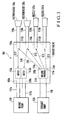
- Fig. 3 shows the schematic arrangement of a sheet feeding unit for a printing press.
- the air source side of a rotary valve 101 is connected to an intake pump 134 serving as an intake air source, and an exhaust pump 136 serving as an exhaust air source, through hoses 117a and 117b, and a hose 119, respectively.
- the suction/discharging side of the rotary valve 101 is connected to suction heads 135a and 135b serving as the suction units, and nozzles 137a and 137b serving as the discharge unit, through hoses 118a and 118b, and hoses 118c and 118d, respectively.
- the suction heads 135a and 135b serve as the first and second suckers of the sheet feeding unit, and the nozzles 137a and 137b serve as a leveling food and an air blower.
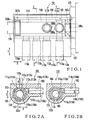
- Fig. 1 shows the rotary valve shown in Fig. 3.
- a main body 102 formed into a substantially rectangular parallelepiped shape is fixed to a frame 105 of the sheet feeding unit through a bracket 105a.
- the lower portion of the main body 102 in one end side in the direction of an arrow Y swells in an arcuated manner to constitute a swelling portion 102a.
- Air passages 110a and 110b are formed in the main body 102 to extend in the direction of the arrow Y perpendicularly to the intake air passages 109a and 109b. Also, air passages 110c and 110d are formed in parallel to the air passages 110a and 110b. One end of each of the air passages 110a to 110d opens to the outside of the main body 102 while the other end thereof is connected to the through hole 103.
- Vent holes 111a and 111b are formed in the sleeve 104 to respectively correspond to the intake air passages 109a and 109b. Vent holes 112a, 112b, 112c, and 112d are also formed in the sleeve 104 to respectively correspond to the suction air passages 110a and 110b and the discharge air passages 110c and 110d.
- a blind hole-like hollow portion 114 is formed in the valve body 106 to have an opening in the end face of the valve body 106 on one end shaft 106b side and to extend in the direction of an arrow X to a position corresponding to the intake air passage 109a.
- the exhaust pump 136 is connected to the opening side of the hollow portion 114 through the hose 119. Accordingly, the hollow portion 114 constitutes an exhaust air passage (air passage for the exhaust air source).
- a communication hole 115a (Fig. 2A) is formed in the valve body 106.
- the communication hole 115a allows the hollow portion 114 to communicate with the suction air passage 110a through the vent hole 112a.
- a communication hole 115b is formed in the valve body 106 at a position displaced from the communication hole 115a in the axial direction and to be phase-shifted from the communication hole 115a in the rotating direction.
- the communication hole 115b allows the hollow portion 114 to communicate with the suction air passage 110b through the vent hole 112b.
- a communication hole 115c (Fig. 2B) is formed in the valve body 106.
- the communication hole 115c allows the hollow portion 114 to communicate with the discharge air passage 110c through the vent hole 112c.
- a communication hole 115d is formed in the valve body 106 at a position displaced from the communication hole 115c in the axial direction and to be phase-shifted from the communication hole 115c in the rotating direction.
- the communication hole 115d allows the hollow portion 114 to communicate with the discharge air passage 110d through the vent hole 112d.
- a notch 113a through which the vent holes 111a and 112a communicate with each other is formed in the circumferential surface of the valve body 106 corresponding to the intake air passage 109a and the suction air passage 110a.
- a notch 113b through which the vent holes 111b and 112b communicate with each other is formed in the circumferential surface of the valve body 106 corresponding to the intake air passage 109b and the suction air passage 110b, at a position displaced from the notch 113a in the axial direction and to be phase-shifted from the notch 113a in the rotating direction of the valve body 106.
- the characteristic feature of this embodiment resides in that the blind hole-like hollow portion 114 having a circular section is formed in the valve body 106 to extend in the axial direction and that this hollow portion 114 serves as the exhaust air passage.
- the conventional exhaust air passages 9c and 9d and reverse air passage 31 shown in Fig. 9 and Figs. 10A and 10B are replaced with the hollow portion 114, so that the reverse air passage 31 and the notches 32a and 32b formed in the valve body 6 become unnecessary.
- valve body 106 When the valve body 106 is rotated in an interlocked manner with rotation of the printing press, the communication hole 115d of the valve body 106 opposes the vent hole 112d of the sleeve 104, and the hollow portion 114 serving as the exhaust air passage and the discharge air passage 110d communicate with each other through the communication hole 115d and the vent hole 112d. Therefore, exhaust air from the exhaust pump 136 flows through the hollow portion 114 and the air passage 110d, and is discharged from the nozzle 137b to blow the air to the sheets (step S11).
- the communication hole 115c opposes the vent hole 112c of the sleeve 104, and the hollow portion 114 serving as the exhaust air passage and the discharge air passage 110c communicate with each other through the communication hole 115c and a vent hole 111c, as shown in Fig. 2B.
- Exhaust air B from the exhaust pump 134 is supplied to the nozzle 137a, serving as the leveling foot, through the hollow portion 114 and the air passage 110c. The air is blown to a portion between the highest sheet and the second sheet, to separate them from each other (step S13).
- the communication hole 115a of the valve body 106 opposes the vent hole 112a, and the hollow portion 114 and the suction air passage 110a communicate with each other through the communication hole 115a and the vent hole 112a.
- the exhaust air from the exhaust pump 136 is supplied to the suction head 135a, serving as the first sucker, through the hollow portion 114 and the air passage 110a.
- the sheet is quickly released from the suction head 135a that has ended the suction operation (step S15). As a result, a sheet which is conveyed to above the feeder board while being drawn by the suction head 135b, serving as the second sucker will not be cut or bent.
- the air is supplied from the exhaust pump 136 to the nozzles 137a and 137b through the hollow portion 114 and the communication holes 115c and 115d. Therefore, the air blowing and leveling foot operation can be reliably performed within a short period of time with sufficiently high-pressurized air.
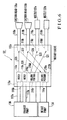
- the first embodiment is different from the embodiment shown in Fig 1 in that, as shown in Fig. 4, a partition wall 114c is formed at the center of a hollow portion 114 to divide the hollow portion 114 into a first hollow portion 114a and a second hollow portion 114b.
- the first hollow portion 114a is connected to an intake pump 134 through a hose 119a to constitute an intake air passage.
- the second hollow portion 114b is connected to an exhaust pump 136 through a hose 119b, in the same manner as in the first embodiment.
- Air passages 116a and 116b formed in the upper end side of a main body 102 are connected to the exhaust pump 136 through hoses 117a and 117b to constitute an exhaust air passage.
- a communication hole 215a (Fig. 5A), where the hollow portion 114 extends to communicate with a suction air passage 110a through a vent hole 112a, is formed in the valve body 106.
- a communication hole 215b where the hollow portion 114 extends to communicate with the suction air passage 110b through a vent hole 112b, is formed in the valve body 106, at a position displaced from the communication hole 215a in the axial direction and to be phase-shifted from the communication hole 215a in the rotating direction.
- a communication hole 215c (Fig. 5B), where the hollow portion 114 extends to communicate with a discharge air passage 110c through a vent hole 112c, is also formed in the valve body 106.
- a communication hole 215d where the hollow portion 114 extends to communicate with a suction air passage 110d through a vent hole 112d, is formed in the valve body 106, at a position displaced from the communication hole 215c in the axial direction and to be phase-shifted from the communication hole 215c in the rotating direction.
- valve body 106 When the valve body 106 is continuously rotated, its communication hole 215a opposes the vent hole 112a, and the first hollow portion 114a serving as the intake air passage and the suction air passage 110a communicate with each other through the communication hole 215a and the vent hole 112a.
- Intake air from the intake pump 134 is supplied to a suction head 135a, serving as the first sucker, through the suction air passage 110a and the first hollow portion 114a, to draw a sheet by suction (step S22).
- a notch 113a opposes the vent hole 112a and a vent hole 111a, and an exhaust air passage 116a and the discharge air passage 110a communicate with each other through the notch 113a, as shown in Fig. 5A.
- the exhaust air B from the exhaust pump 136 is supplied to the suction head 135a, serving as the first sucker, through the air passages 116a and 110a.
- the sheet is quickly released from the suction head 135a that has ended the suction operation (step S25).
- a sheet which is conveyed to above the feeder board while being drawn by the suction head 135b, serving as the second sucker will not be cut or bent.
- a notch 113b opposes the vent hole 112b and a vent hole 111b, and an exhaust air passage 116b and the discharge air passage 110b communicate with each other through the notch 113b.
- the exhaust air from the exhaust pump 136 is supplied to the suction head 135b through the air passages 116b and 110b.
- the sheet is quickly released from the suction head 135b, and is supplied to above the feeder board (step S26).
- the air is supplied from the intake pump 134 to the suction heads 135a and 135b through the first hollow portion 114a and the communication holes 215a and 215b. Therefore, the suction operation can be reliably performed within a short period of time with sufficiently high-pressurized air.
- the first hollow portion 114a, the communication holes 215a and 215b, and the vent holes 112a and 112b are located in a substantially straight line, so that the pressure loss of the suction air is decreased. Since the first hollow portion 114a of the valve body 106, which has a large sectional area, serves as the intake air passage, the pressure loss of the air at the valve portion is small.
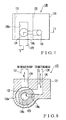
- Fig. 7 shows another rotary valve
- Fig. 8 shows a section taken along the line V - V of Fig. 7.
- a rotary valve 120 of the embodiment according to Fig. 7 controls to supply/stop supplying of the air of the first sucker of the sheet feeding unit. More specifically, a through hole 122 is formed in a main body 121 of the rotary valve 120. A valve body 123 which rotates in an interlocked manner with the printing press is rotatably engaged with the inner surface of the through hole 122. An intake air passage 124 and a suction air passage 125 are formed in the upper portion of the main body 121. The air passage 124 has an open upper end and a lower end that communicates with the through hole 122. The suction air passage 125 has an L-shaped section.
- the upper end open side of the intake air passage 124 is connected to an intake pump through a hose 127.
- the upper end open side of the suction air passage 125 is connected to a suction head, serving as the first sucker, through a hose 128.
- a notch 126a is formed in part of the circumferential surface of the valve body 123.
- a blind hole-like hollow portion 126b is formed in the valve body 123 to extend in the axial direction.
- a communication hole 126c, through which the hollow portion 126b and the suction air passage 125 communicate with each other, is also formed in the valve body 123.
- the open end side of the hollow portion 126b is connected to an exhaust pump through a hose 129.
- the hollow portion 126b constitutes an exhaust air passage.
- Intake air A is supplied to a suction head, serving as the first sucker, through the air passages 124 and 125, to draw a sheet by suction.
- the communication hole 126c of the valve body 123 opposes the suction air passage 125, and the hollow portion 126b and the suction air passage 125 communicate with each other.
- Exhaust air B from the exhaust pump is supplied to the suction head, serving as the first sucker, through the suction air passage 125, and a.sheet is quickly released from the suction head that has ended the suction operation.
- a sheet which is drawn by the suction head, serving as the second sucker, and is conveyed to above the feeder board will not be cut or bent.
- a sufficient amount of air can be supplied to the suction heads through the hollow portion 126b and the communication hole 126c within a short period of time. Since the hollow portion 126b, the communication hole 126c, and the suction air passage 125 are located in a substantially straight line and the distance between the hollow portion 126b and the suction air passage 125 reaches a minimum, the air pressure loss in the air passage is decreased.
- the rotary valve is applied to the sheet feeding unit.
- the present invention is not limited to this, but can similarly be applied to, e.g., the convertible cylinder unit or a sheet discharge unit of a printing press main body.
- the hollow portion is formed to have a circular section, it can have various other sections, e.g., an elliptical section, a square section, or a triangular section.
- a series of a plurality of rotary valves may be used.
- the valve body of the rotary valve has a hollow portion and a notched portion respectively connected to different air sources, and the hollow portions and notched portions are combined with air passages that require predetermined characteristics. If the hollow portion is used as an air passage having a short air operation time and the notched portion is used as an air passage having a long air operation time, predetermined air pressures required for the respective air passages can be obtained.
- the reverse air passage from the suction unit can also be constituted by a hollow portion or a notch formed in the valve body, thus decreasing the manufacturing cost.
Landscapes
- Engineering & Computer Science (AREA)
- General Engineering & Computer Science (AREA)
- Mechanical Engineering (AREA)
- Sheets, Magazines, And Separation Thereof (AREA)
- Sliding Valves (AREA)
- Ink Jet (AREA)
- Multiple-Way Valves (AREA)
- Inking, Control Or Cleaning Of Printing Machines (AREA)
- Delivering By Means Of Belts And Rollers (AREA)
Claims (7)
- Distributeur rotatif disposé entre une première source d'air (136) et une seconde source d'air (134) destinées à transmettre de l'air, et au moins une unité pneumatique (135a, 135b, 137a, 137b) qui exécute une opération prédéterminée lors de la réception de l'air transmis par les première et seconde sources d'air (136, 134), afin que la transmission d'air soit assurée ou arrêtée, comprenant :un corps (106) de distributeur entraíné en rotation dans un cylindre,un corps principal (102) destiné à supporter en rotation le corps de distributeur (106), etdes encoches (113a, 113b) formées à une surface circonférentielle du corps de distributeur (106) afin qu'elles soient reliées à la première source d'air (136), et comportant en outre une première partie creuse (114a) formée dans le corps de distributeur (106), et dans lequel le distributeur rotatif comprend :un premier passage d'air (116a, 116b) formé dans le corps principal (102) et ayant un premier côté d'extrémité relié à la première source d'air (136) et l'autre côté d'extrémité qui débouche à une surface circonférentielle interne du cylindre,un second passage d'air (110a, 110b) formé dans le corps principal (102) et ayant un premier côté d'extrémité relié à la première unité pneumatique (135a, 135b) et l'autre côté d'extrémité qui débouche à la surface circonférentielle interne du cylindre, le premier passage d'air (116a, 116b) étant relié au second passage d'air (110a, 110b) par les encoches (113a, 113b), etun premier trou de communication (215a, 215b) formé dans le corps de distributeur (106) afin qu'il relie la première partie creuse (114a) et le second passage d'air (110a, 110b) l'un à l'autre, caractérisé en ce que la première partie creuse (114a) est formée dans le corps de distributeur (106) dans une direction axiale et elle comporte, à une première face d'extrémité du corps de distributeur (106), une ouverture par laquelle la première partie creuse (114a) est reliée à la seconde source d'air (134), et en ce que le distributeur rotatif comporte en outre :un troisième passage d'air (110c, 110d) formé dans le corps principal (102) et ayant un premier côté d'extrémité relié à la seconde unité pneumatique (137a, 137b) et l'autre côté d'extrémité qui débouche à une surface circonférentielle interne du cylindre,une seconde partie creuse (114b) formée dans le corps de distributeur (106) en direction axiale et reliée à la première source d'air (136), etun second trou de communication (215c, 215d) formé dans le corps de distributeur (106) pour relier la seconde partie creuse (114b) et le troisième passage d'air (110c, 110d) l'un à l'autre.
- Distributeur rotatif selon la revendication 1, dans lequel l'une des première et seconde sources d'air comporte une pompe d'admission destinée à transmettre de l'air d'admission, et l'autre des première et seconde sources d'air comporte une pompe d'évacuation destinée à transmettre de l'air d'évacuation.
- Distributeur rotatif selon la revendication 2, dans lequel le premier côté d'extrémité du premier passage d'air est relié à la pompe d'évacuation, le premier côté d'extrémité du second passage d'air est relié à l'unité d'aspiration, la première partie creuse est reliée à la pompe d'admission, et l'unité d'aspiration est reliée à la pompe d'évacuation par l'intermédiaire du second passage d'air, de l'encoche et du premier passage d'air, et à la pompe d'admission par l'intermédiaire du second passage d'air, du premier trou de communication et de la première partie creuse.
- Distributeur rotatif selon la revendication 1, dans lequel l'une des première et seconde sources d'air comprend une pompe d'admission destinée à transmettre de l'air d'admission, l'autre des première et seconde sources d'air comprend une pompe d'évacuation destinée à transmettre de l'air d'évacuation, l'une des première et seconde unités pneumatiques comprend une unité d'aspiration qui exécute une opération d'aspiration lors de la réception d'air d'admission de la pompe d'admission, et l'autre des première et seconde unités pneumatiques comporte une unité de refoulement qui effectue une opération de refoulement lors de la réception de l'air d'évacuation de la pompe d'évacuation.
- Distributeur rotatif selon la revendication 4, dans lequel les premier et second trous de communication sont disposés afin qu'ils soient décalés l'un par rapport à l'autre dans la direction axiale du cylindre, le premier trou de communication est placé à la même position qu'une ouverture du second passage d'air dans la direction axiale du cylindre, et le second trou de communication a la même position qu'une ouverture du troisième passage d'air dans la direction axiale du cylindre.
- Distributeur rotatif selon la revendication 1, dans lequel des ouvertures des premier et troisième passages d'air sont disposées afin qu'elles soient décalées les unes par rapport aux autres dans la direction axiale du cylindre.
- Distributeur rotatif selon la revendication 1, dans lequel des ouvertures des premier et second passages d'air ont la même position dans la direction axiale du cylindre et sont déphasées l'une par rapport à l'autre dans la direction de rotation du corps de distributeur.
Applications Claiming Priority (6)
| Application Number | Priority Date | Filing Date | Title |
|---|---|---|---|
| JP17054297 | 1997-06-26 | ||
| JP170542/97 | 1997-06-26 | ||
| JP17054297 | 1997-06-26 | ||
| JP27142/98 | 1998-02-09 | ||
| JP2714298 | 1998-02-09 | ||
| JP2714298A JPH1172168A (ja) | 1997-06-26 | 1998-02-09 | ロータリーバルブ |
Publications (4)
| Publication Number | Publication Date |
|---|---|
| EP0890433A2 EP0890433A2 (fr) | 1999-01-13 |
| EP0890433A3 EP0890433A3 (fr) | 1999-04-28 |
| EP0890433B1 EP0890433B1 (fr) | 2003-04-16 |
| EP0890433B9 true EP0890433B9 (fr) | 2003-10-29 |
Family
ID=26365037
Family Applications (1)
| Application Number | Title | Priority Date | Filing Date |
|---|---|---|---|
| EP19980250235 Expired - Lifetime EP0890433B9 (fr) | 1997-06-26 | 1998-06-25 | Vanne rotative dans une marge des feuilles d'une presse offset |
Country Status (5)
| Country | Link |
|---|---|
| US (1) | US6254082B1 (fr) |
| EP (1) | EP0890433B9 (fr) |
| JP (1) | JPH1172168A (fr) |
| DE (1) | DE69813393T2 (fr) |
| ES (1) | ES2196484T3 (fr) |
Families Citing this family (4)
| Publication number | Priority date | Publication date | Assignee | Title |
|---|---|---|---|---|
| US6976464B2 (en) * | 2003-05-28 | 2005-12-20 | Dragon America Motor Technologies, Inc. | Semi-rotating valve assembly for use with an internal combustion engine |
| JP4336223B2 (ja) * | 2004-02-24 | 2009-09-30 | 株式会社リコー | 空気式給紙装置及びそれを備えた電子写真装置 |
| JP5658868B2 (ja) * | 2009-02-19 | 2015-01-28 | 株式会社東芝 | 紙葉類取り出し装置 |
| US8939445B2 (en) * | 2013-05-30 | 2015-01-27 | Kimberly-Clark Worldwide, Inc. | Vacuum roll with internal rotary valve |
Family Cites Families (13)
| Publication number | Priority date | Publication date | Assignee | Title |
|---|---|---|---|---|
| DE199488C (fr) | 1905-05-24 | |||
| US1207769A (en) * | 1914-10-10 | 1916-12-12 | Under Feed Stoker Company Of America | Valve for automatic stoker-controllers. |
| US1677499A (en) * | 1927-11-19 | 1928-07-17 | William J Smith | Rotary valve |
| CH199488A (de) * | 1936-09-23 | 1938-08-31 | Georg Dr Ing E H Spiess | Drehschiebersteuervorrichtung von pneumatischen Bogenanlegern. |
| US3069025A (en) | 1959-07-01 | 1962-12-18 | Berkley Machine Co | Rotary valve for controlling application of suction |
| DE1786165A1 (de) | 1968-08-26 | 1972-01-20 | Harris Intertype Corp | Steuerung fuer einen Bogenzufuehrer |
| CS155031B1 (fr) * | 1972-05-26 | 1974-04-30 | ||
| USRE31529E (en) * | 1979-02-16 | 1984-03-06 | Ball Corporation | Electronic valve assembly for glassware forming machinery |
| CH639623A5 (de) * | 1979-06-23 | 1983-11-30 | Winkler Duennebier Kg Masch | Einrichtung zum transportieren von flaechenhaften teilen, insbesondere papierblaettern, karten, brief- oder versandhuellen. |
| JP2505327B2 (ja) | 1991-07-16 | 1996-06-05 | セントラル硝子株式会社 | 軟質フッ素樹脂を含む積層材料 |
| DE4215226C2 (de) | 1992-05-09 | 1995-09-07 | Kba Planeta Ag | Drehschieberventil zum Ansteuern von Saug- und Blasluftverbrauchern |
| DE4315549C2 (de) | 1993-05-10 | 2003-11-20 | Heidelberger Druckmasch Ag | Einrichtung zur Saugluftsteuerung für eine Bogenübergabetrommel |
| DE19515301C2 (de) | 1995-04-26 | 1998-07-30 | Roland Man Druckmasch | Luftsteueranordnung |
-
1998
- 1998-02-09 JP JP2714298A patent/JPH1172168A/ja active Pending
- 1998-06-24 US US09/104,024 patent/US6254082B1/en not_active Expired - Fee Related
- 1998-06-25 ES ES98250235T patent/ES2196484T3/es not_active Expired - Lifetime
- 1998-06-25 EP EP19980250235 patent/EP0890433B9/fr not_active Expired - Lifetime
- 1998-06-25 DE DE1998613393 patent/DE69813393T2/de not_active Expired - Fee Related
Also Published As
| Publication number | Publication date |
|---|---|
| EP0890433B1 (fr) | 2003-04-16 |
| EP0890433A2 (fr) | 1999-01-13 |
| DE69813393D1 (de) | 2003-05-22 |
| EP0890433A3 (fr) | 1999-04-28 |
| ES2196484T3 (es) | 2003-12-16 |
| US6254082B1 (en) | 2001-07-03 |
| JPH1172168A (ja) | 1999-03-16 |
| DE69813393T2 (de) | 2004-02-19 |
Similar Documents
| Publication | Publication Date | Title |
|---|---|---|
| EP0890433B9 (fr) | Vanne rotative dans une marge des feuilles d'une presse offset | |
| US20040094052A1 (en) | Devices for turning sheets in a sheet-fed rotary printing machine | |
| JPH11334035A (ja) | 枚葉紙印刷機における枚葉紙送り装置、およびこれを有する印刷機 | |
| KR20150086296A (ko) | 흡입 롤 시스템 | |
| JP4252642B2 (ja) | ロータリーバルブ | |
| US7437873B2 (en) | Connection block for a hydrostatic piston machine | |
| JPH09138629A (ja) | 空気マニホールドシステム | |
| CN100503241C (zh) | 带有可翻转印刷机构的单张轮转胶印刷机 | |
| CN118255105A (zh) | 物料输送装置 | |
| US7497431B2 (en) | Pneumatic type paper feeding apparatus | |
| US7631599B2 (en) | Sheet guide apparatus | |
| EP1669197B1 (fr) | Machines rotatives à imprimer des feuilles avec mechanisme de retournement de feuille | |
| JPH05256269A (ja) | 流体機械 | |
| JP4413467B2 (ja) | 空気圧制御可能な枚葉紙保持機構を有する枚葉紙案内胴 | |
| JPS6344661B2 (fr) | ||
| CN106414076B (zh) | 印刷机的润湿装置及具有该润湿装置的印刷机 | |
| JP3341882B2 (ja) | インクジェットプリンタ | |
| JPH04101001A (ja) | スクロール型流体機械 | |
| US5240237A (en) | Air flow path switching device for printing apparatus | |
| JPH0312514Y2 (fr) | ||
| JPH0716098Y2 (ja) | 静圧軸受装置 | |
| JPH1059567A (ja) | 枚葉印刷機の給紙装置 | |
| US2884059A (en) | Suction roll nozzle with manifold and valve means | |
| JPH06100188A (ja) | 空気分配弁 | |
| JP3905749B2 (ja) | ブランケット胴用基軸ローラ及びブランケット胴 |
Legal Events
| Date | Code | Title | Description |
|---|---|---|---|
| PUAI | Public reference made under article 153(3) epc to a published international application that has entered the european phase |
Free format text: ORIGINAL CODE: 0009012 |
|
| 17P | Request for examination filed |
Effective date: 19980723 |
|
| AK | Designated contracting states |
Kind code of ref document: A2 Designated state(s): CH DE ES FR GB IT LI NL SE |
|
| AX | Request for extension of the european patent |
Free format text: AL;LT;LV;MK;RO;SI |
|
| PUAL | Search report despatched |
Free format text: ORIGINAL CODE: 0009013 |
|
| AK | Designated contracting states |
Kind code of ref document: A3 Designated state(s): AT BE CH CY DE DK ES FI FR GB GR IE IT LI LU MC NL PT SE |
|
| AX | Request for extension of the european patent |
Free format text: AL;LT;LV;MK;RO;SI |
|
| AKX | Designation fees paid |
Free format text: CH DE ES FR GB IT LI NL SE |
|
| 17Q | First examination report despatched |
Effective date: 20000413 |
|
| GRAH | Despatch of communication of intention to grant a patent |
Free format text: ORIGINAL CODE: EPIDOS IGRA |
|
| RIC1 | Information provided on ipc code assigned before grant |
Free format text: 7B 41F 21/00 A, 7B 65H 3/08 B, 7B 65H 3/14 B, 7B 65H 3/48 B, 7F 16K 5/04 B |
|
| GRAH | Despatch of communication of intention to grant a patent |
Free format text: ORIGINAL CODE: EPIDOS IGRA |
|
| GRAA | (expected) grant |
Free format text: ORIGINAL CODE: 0009210 |
|
| AK | Designated contracting states |
Designated state(s): CH DE ES FR GB IT LI NL SE |
|
| REG | Reference to a national code |
Ref country code: GB Ref legal event code: FG4D |
|
| REG | Reference to a national code |
Ref country code: SE Ref legal event code: TRGR |
|
| REG | Reference to a national code |
Ref country code: CH Ref legal event code: EP |
|
| REF | Corresponds to: |
Ref document number: 69813393 Country of ref document: DE Date of ref document: 20030522 Kind code of ref document: P |
|
| REG | Reference to a national code |
Ref country code: CH Ref legal event code: NV Representative=s name: LUCHS & PARTNER PATENTANWAELTE |
|
| ET | Fr: translation filed | ||
| REG | Reference to a national code |
Ref country code: ES Ref legal event code: FG2A Ref document number: 2196484 Country of ref document: ES Kind code of ref document: T3 |
|
| PLBE | No opposition filed within time limit |
Free format text: ORIGINAL CODE: 0009261 |
|
| STAA | Information on the status of an ep patent application or granted ep patent |
Free format text: STATUS: NO OPPOSITION FILED WITHIN TIME LIMIT |
|
| NLR4 | Nl: receipt of corrected translation in the netherlands language at the initiative of the proprietor of the patent | ||
| 26N | No opposition filed |
Effective date: 20040119 |
|
| ET1 | Fr: translation filed ** revision of the translation of the patent or the claims | ||
| PGFP | Annual fee paid to national office [announced via postgrant information from national office to epo] |
Ref country code: NL Payment date: 20090615 Year of fee payment: 12 |
|
| PGFP | Annual fee paid to national office [announced via postgrant information from national office to epo] |
Ref country code: SE Payment date: 20090605 Year of fee payment: 12 Ref country code: IT Payment date: 20090619 Year of fee payment: 12 |
|
| PGFP | Annual fee paid to national office [announced via postgrant information from national office to epo] |
Ref country code: ES Payment date: 20090710 Year of fee payment: 12 Ref country code: CH Payment date: 20090615 Year of fee payment: 12 |
|
| PGFP | Annual fee paid to national office [announced via postgrant information from national office to epo] |
Ref country code: GB Payment date: 20090624 Year of fee payment: 12 Ref country code: DE Payment date: 20090619 Year of fee payment: 12 |
|
| REG | Reference to a national code |
Ref country code: NL Ref legal event code: V1 Effective date: 20110101 |
|
| REG | Reference to a national code |
Ref country code: CH Ref legal event code: PL |
|
| EUG | Se: european patent has lapsed | ||
| GBPC | Gb: european patent ceased through non-payment of renewal fee |
Effective date: 20100625 |
|
| REG | Reference to a national code |
Ref country code: FR Ref legal event code: ST Effective date: 20110228 |
|
| PG25 | Lapsed in a contracting state [announced via postgrant information from national office to epo] |
Ref country code: IT Free format text: LAPSE BECAUSE OF NON-PAYMENT OF DUE FEES Effective date: 20100625 |
|
| PG25 | Lapsed in a contracting state [announced via postgrant information from national office to epo] |
Ref country code: CH Free format text: LAPSE BECAUSE OF NON-PAYMENT OF DUE FEES Effective date: 20100630 Ref country code: DE Free format text: LAPSE BECAUSE OF NON-PAYMENT OF DUE FEES Effective date: 20110101 Ref country code: LI Free format text: LAPSE BECAUSE OF NON-PAYMENT OF DUE FEES Effective date: 20100630 |
|
| PG25 | Lapsed in a contracting state [announced via postgrant information from national office to epo] |
Ref country code: NL Free format text: LAPSE BECAUSE OF NON-PAYMENT OF DUE FEES Effective date: 20110101 Ref country code: FR Free format text: LAPSE BECAUSE OF NON-PAYMENT OF DUE FEES Effective date: 20100630 |
|
| REG | Reference to a national code |
Ref country code: ES Ref legal event code: FD2A Effective date: 20110718 |
|
| PG25 | Lapsed in a contracting state [announced via postgrant information from national office to epo] |
Ref country code: ES Free format text: LAPSE BECAUSE OF NON-PAYMENT OF DUE FEES Effective date: 20110706 Ref country code: GB Free format text: LAPSE BECAUSE OF NON-PAYMENT OF DUE FEES Effective date: 20100625 |
|
| PG25 | Lapsed in a contracting state [announced via postgrant information from national office to epo] |
Ref country code: ES Free format text: LAPSE BECAUSE OF NON-PAYMENT OF DUE FEES Effective date: 20100626 |
|
| PG25 | Lapsed in a contracting state [announced via postgrant information from national office to epo] |
Ref country code: SE Free format text: LAPSE BECAUSE OF NON-PAYMENT OF DUE FEES Effective date: 20100626 |
|
| PGFP | Annual fee paid to national office [announced via postgrant information from national office to epo] |
Ref country code: FR Payment date: 20090611 Year of fee payment: 12 |