EP0906920B1 - Fester Aktivierungsträger für die Metallocenkatalysatoren in der Olefinpolymerisation, Herstellungsverfahren, Katalysatorsystem und entsprechendes Polymerisationsverfahren - Google Patents
Fester Aktivierungsträger für die Metallocenkatalysatoren in der Olefinpolymerisation, Herstellungsverfahren, Katalysatorsystem und entsprechendes Polymerisationsverfahren Download PDFInfo
- Publication number
- EP0906920B1 EP0906920B1 EP98402400A EP98402400A EP0906920B1 EP 0906920 B1 EP0906920 B1 EP 0906920B1 EP 98402400 A EP98402400 A EP 98402400A EP 98402400 A EP98402400 A EP 98402400A EP 0906920 B1 EP0906920 B1 EP 0906920B1
- Authority
- EP
- European Patent Office
- Prior art keywords
- support
- particles
- groups
- process according
- ranging
- Prior art date
- Legal status (The legal status is an assumption and is not a legal conclusion. Google has not performed a legal analysis and makes no representation as to the accuracy of the status listed.)
- Expired - Lifetime
Links
- 239000007787 solid Substances 0.000 title claims abstract description 66
- 238000000034 method Methods 0.000 title claims abstract description 40
- 150000001336 alkenes Chemical class 0.000 title claims abstract description 38
- 239000012190 activator Substances 0.000 title claims abstract description 34
- 239000012968 metallocene catalyst Substances 0.000 title claims abstract description 26
- 238000002360 preparation method Methods 0.000 title description 11
- 239000002245 particle Substances 0.000 claims abstract description 46
- 230000003197 catalytic effect Effects 0.000 claims abstract description 28
- 239000000725 suspension Substances 0.000 claims abstract description 28
- 239000003795 chemical substances by application Substances 0.000 claims abstract description 19
- 229910052782 aluminium Inorganic materials 0.000 claims abstract description 18
- 238000007306 functionalization reaction Methods 0.000 claims abstract description 17
- 238000003682 fluorination reaction Methods 0.000 claims abstract description 16
- 239000000203 mixture Substances 0.000 claims abstract description 13
- 229910052749 magnesium Inorganic materials 0.000 claims abstract description 12
- 239000003054 catalyst Substances 0.000 claims abstract description 11
- 238000006243 chemical reaction Methods 0.000 claims abstract description 10
- JRZJOMJEPLMPRA-UHFFFAOYSA-N olefin Natural products CCCCCCCC=C JRZJOMJEPLMPRA-UHFFFAOYSA-N 0.000 claims abstract description 10
- 239000002841 Lewis acid Substances 0.000 claims abstract description 9
- 229910052500 inorganic mineral Inorganic materials 0.000 claims abstract description 9
- 239000011707 mineral Substances 0.000 claims abstract description 9
- 229910019077 Mg—F Inorganic materials 0.000 claims abstract description 3
- 238000004519 manufacturing process Methods 0.000 claims abstract 2
- -1 magnesium Lewis-acid Chemical class 0.000 claims description 48
- 238000006116 polymerization reaction Methods 0.000 claims description 48
- 150000001875 compounds Chemical class 0.000 claims description 40
- VYPSYNLAJGMNEJ-UHFFFAOYSA-N Silicium dioxide Chemical compound O=[Si]=O VYPSYNLAJGMNEJ-UHFFFAOYSA-N 0.000 claims description 38
- VGGSQFUCUMXWEO-UHFFFAOYSA-N Ethene Chemical compound C=C VGGSQFUCUMXWEO-UHFFFAOYSA-N 0.000 claims description 30
- 239000005977 Ethylene Substances 0.000 claims description 28
- 238000010438 heat treatment Methods 0.000 claims description 23
- 238000011282 treatment Methods 0.000 claims description 22
- 239000003446 ligand Substances 0.000 claims description 21
- 239000000377 silicon dioxide Substances 0.000 claims description 19
- 125000000217 alkyl group Chemical group 0.000 claims description 16
- 125000001485 cycloalkadienyl group Chemical group 0.000 claims description 16
- 125000002496 methyl group Chemical group [H]C([H])([H])* 0.000 claims description 15
- XAGFODPZIPBFFR-UHFFFAOYSA-N aluminium Chemical compound [Al] XAGFODPZIPBFFR-UHFFFAOYSA-N 0.000 claims description 13
- 239000011777 magnesium Substances 0.000 claims description 13
- 150000003624 transition metals Chemical class 0.000 claims description 13
- 125000003118 aryl group Chemical group 0.000 claims description 12
- 229910052723 transition metal Inorganic materials 0.000 claims description 12
- 239000011261 inert gas Substances 0.000 claims description 11
- 125000000058 cyclopentadienyl group Chemical group C1(=CC=CC1)* 0.000 claims description 10
- 125000003983 fluorenyl group Chemical group C1(=CC=CC=2C3=CC=CC=C3CC12)* 0.000 claims description 10
- 239000002904 solvent Substances 0.000 claims description 10
- 229920000642 polymer Polymers 0.000 claims description 8
- 238000005406 washing Methods 0.000 claims description 8
- LIKMAJRDDDTEIG-UHFFFAOYSA-N 1-hexene Chemical compound CCCCC=C LIKMAJRDDDTEIG-UHFFFAOYSA-N 0.000 claims description 7
- 125000003545 alkoxy group Chemical group 0.000 claims description 7
- QVGXLLKOCUKJST-UHFFFAOYSA-N atomic oxygen Chemical compound [O] QVGXLLKOCUKJST-UHFFFAOYSA-N 0.000 claims description 7
- 239000007789 gas Substances 0.000 claims description 7
- 239000001257 hydrogen Substances 0.000 claims description 7
- 229910052739 hydrogen Inorganic materials 0.000 claims description 7
- 230000003647 oxidation Effects 0.000 claims description 7
- 238000007254 oxidation reaction Methods 0.000 claims description 7
- 239000001301 oxygen Substances 0.000 claims description 7
- 229910052760 oxygen Inorganic materials 0.000 claims description 7
- VOITXYVAKOUIBA-UHFFFAOYSA-N triethylaluminium Chemical compound CC[Al](CC)CC VOITXYVAKOUIBA-UHFFFAOYSA-N 0.000 claims description 7
- KRHYYFGTRYWZRS-UHFFFAOYSA-N Fluorane Chemical compound F KRHYYFGTRYWZRS-UHFFFAOYSA-N 0.000 claims description 6
- 125000003837 (C1-C20) alkyl group Chemical group 0.000 claims description 5
- UFHFLCQGNIYNRP-UHFFFAOYSA-N Hydrogen Chemical compound [H][H] UFHFLCQGNIYNRP-UHFFFAOYSA-N 0.000 claims description 5
- 125000004432 carbon atom Chemical group C* 0.000 claims description 5
- 229910052731 fluorine Inorganic materials 0.000 claims description 5
- 238000002844 melting Methods 0.000 claims description 5
- 230000008018 melting Effects 0.000 claims description 5
- 125000004642 (C1-C12) alkoxy group Chemical group 0.000 claims description 4
- 125000004400 (C1-C12) alkyl group Chemical group 0.000 claims description 4
- AFFLGGQVNFXPEV-UHFFFAOYSA-N 1-decene Chemical compound CCCCCCCCC=C AFFLGGQVNFXPEV-UHFFFAOYSA-N 0.000 claims description 4
- KWKAKUADMBZCLK-UHFFFAOYSA-N 1-octene Chemical compound CCCCCCC=C KWKAKUADMBZCLK-UHFFFAOYSA-N 0.000 claims description 4
- HFDVRLIODXPAHB-UHFFFAOYSA-N 1-tetradecene Chemical compound CCCCCCCCCCCCC=C HFDVRLIODXPAHB-UHFFFAOYSA-N 0.000 claims description 4
- WSSSPWUEQFSQQG-UHFFFAOYSA-N 4-methyl-1-pentene Chemical compound CC(C)CC=C WSSSPWUEQFSQQG-UHFFFAOYSA-N 0.000 claims description 4
- 150000001338 aliphatic hydrocarbons Chemical class 0.000 claims description 4
- 239000004411 aluminium Substances 0.000 claims description 4
- 125000004429 atom Chemical group 0.000 claims description 4
- 239000011737 fluorine Substances 0.000 claims description 4
- 229910052736 halogen Inorganic materials 0.000 claims description 4
- 150000002367 halogens Chemical class 0.000 claims description 4
- 150000002430 hydrocarbons Chemical group 0.000 claims description 4
- CPOFMOWDMVWCLF-UHFFFAOYSA-N methyl(oxo)alumane Chemical compound C[Al]=O CPOFMOWDMVWCLF-UHFFFAOYSA-N 0.000 claims description 4
- 239000011148 porous material Substances 0.000 claims description 4
- 125000001424 substituent group Chemical group 0.000 claims description 4
- 239000004711 α-olefin Substances 0.000 claims description 4
- PNEYBMLMFCGWSK-UHFFFAOYSA-N aluminium oxide Inorganic materials [O-2].[O-2].[O-2].[Al+3].[Al+3] PNEYBMLMFCGWSK-UHFFFAOYSA-N 0.000 claims description 3
- 125000003710 aryl alkyl group Chemical group 0.000 claims description 3
- 239000012986 chain transfer agent Substances 0.000 claims description 3
- 229910052710 silicon Inorganic materials 0.000 claims description 3
- MCULRUJILOGHCJ-UHFFFAOYSA-N triisobutylaluminium Chemical compound CC(C)C[Al](CC(C)C)CC(C)C MCULRUJILOGHCJ-UHFFFAOYSA-N 0.000 claims description 3
- 125000004209 (C1-C8) alkyl group Chemical group 0.000 claims description 2
- YBYIRNPNPLQARY-UHFFFAOYSA-N 1H-indene Natural products C1=CC=C2CC=CC2=C1 YBYIRNPNPLQARY-UHFFFAOYSA-N 0.000 claims description 2
- YHQXBTXEYZIYOV-UHFFFAOYSA-N 3-methylbut-1-ene Chemical compound CC(C)C=C YHQXBTXEYZIYOV-UHFFFAOYSA-N 0.000 claims description 2
- LDTAOIUHUHHCMU-UHFFFAOYSA-N 3-methylpent-1-ene Chemical compound CCC(C)C=C LDTAOIUHUHHCMU-UHFFFAOYSA-N 0.000 claims description 2
- 125000003358 C2-C20 alkenyl group Chemical group 0.000 claims description 2
- 125000005234 alkyl aluminium group Chemical group 0.000 claims description 2
- CTNFGBKAHAEKFE-UHFFFAOYSA-N bis(2-methylpropyl)alumanyloxy-bis(2-methylpropyl)alumane Chemical compound CC(C)C[Al](CC(C)C)O[Al](CC(C)C)CC(C)C CTNFGBKAHAEKFE-UHFFFAOYSA-N 0.000 claims description 2
- 125000003454 indenyl group Chemical group C1(C=CC2=CC=CC=C12)* 0.000 claims description 2
- TVMXDCGIABBOFY-UHFFFAOYSA-N n-Octanol Natural products CCCCCCCC TVMXDCGIABBOFY-UHFFFAOYSA-N 0.000 claims description 2
- 125000001181 organosilyl group Chemical group [SiH3]* 0.000 claims description 2
- 230000000737 periodic effect Effects 0.000 claims description 2
- 229910019975 (NH4)2SiF6 Inorganic materials 0.000 claims 2
- PXGOKWXKJXAPGV-UHFFFAOYSA-N Fluorine Chemical compound FF PXGOKWXKJXAPGV-UHFFFAOYSA-N 0.000 claims 2
- 150000001398 aluminium Chemical class 0.000 claims 2
- 125000000954 2-hydroxyethyl group Chemical group [H]C([*])([H])C([H])([H])O[H] 0.000 claims 1
- DBNGNEQZXBWPTJ-UHFFFAOYSA-N CCCC[Mg]C(C)CC Chemical compound CCCC[Mg]C(C)CC DBNGNEQZXBWPTJ-UHFFFAOYSA-N 0.000 claims 1
- 125000004435 hydrogen atom Chemical group [H]* 0.000 claims 1
- 125000006574 non-aromatic ring group Chemical group 0.000 claims 1
- 150000007517 lewis acids Chemical class 0.000 abstract description 4
- 229910018085 Al-F Inorganic materials 0.000 abstract 1
- 229910018179 Al—F Inorganic materials 0.000 abstract 1
- 150000002222 fluorine compounds Chemical class 0.000 abstract 1
- 229910044991 metal oxide Inorganic materials 0.000 abstract 1
- 150000004706 metal oxides Chemical class 0.000 abstract 1
- IMNFDUFMRHMDMM-UHFFFAOYSA-N N-Heptane Chemical compound CCCCCCC IMNFDUFMRHMDMM-UHFFFAOYSA-N 0.000 description 43
- YXFVVABEGXRONW-UHFFFAOYSA-N Toluene Chemical compound CC1=CC=CC=C1 YXFVVABEGXRONW-UHFFFAOYSA-N 0.000 description 30
- 229910007926 ZrCl Inorganic materials 0.000 description 30
- 150000003254 radicals Chemical class 0.000 description 26
- XKRFYHLGVUSROY-UHFFFAOYSA-N Argon Chemical compound [Ar] XKRFYHLGVUSROY-UHFFFAOYSA-N 0.000 description 18
- 230000000694 effects Effects 0.000 description 15
- 230000000052 comparative effect Effects 0.000 description 11
- 229910004298 SiO 2 Inorganic materials 0.000 description 10
- 230000003213 activating effect Effects 0.000 description 10
- 229910007928 ZrCl2 Inorganic materials 0.000 description 9
- 229910052786 argon Inorganic materials 0.000 description 9
- 239000006228 supernatant Substances 0.000 description 9
- IJGRMHOSHXDMSA-UHFFFAOYSA-N Atomic nitrogen Chemical compound N#N IJGRMHOSHXDMSA-UHFFFAOYSA-N 0.000 description 8
- VLKZOEOYAKHREP-UHFFFAOYSA-N n-Hexane Chemical compound CCCCCC VLKZOEOYAKHREP-UHFFFAOYSA-N 0.000 description 8
- 239000011949 solid catalyst Substances 0.000 description 7
- 239000000243 solution Substances 0.000 description 7
- ZSWFCLXCOIISFI-UHFFFAOYSA-N endo-cyclopentadiene Natural products C1C=CC=C1 ZSWFCLXCOIISFI-UHFFFAOYSA-N 0.000 description 6
- 230000007704 transition Effects 0.000 description 6
- 238000005804 alkylation reaction Methods 0.000 description 5
- 229920001577 copolymer Polymers 0.000 description 5
- 125000001449 isopropyl group Chemical group [H]C([H])([H])C([H])(*)C([H])([H])[H] 0.000 description 5
- 125000000654 isopropylidene group Chemical group C(C)(C)=* 0.000 description 5
- 229910000077 silane Inorganic materials 0.000 description 5
- 238000003756 stirring Methods 0.000 description 5
- RTZKZFJDLAIYFH-UHFFFAOYSA-N Diethyl ether Chemical compound CCOCC RTZKZFJDLAIYFH-UHFFFAOYSA-N 0.000 description 4
- FYYHWMGAXLPEAU-UHFFFAOYSA-N Magnesium Chemical compound [Mg] FYYHWMGAXLPEAU-UHFFFAOYSA-N 0.000 description 4
- QQONPFPTGQHPMA-UHFFFAOYSA-N Propene Chemical compound CC=C QQONPFPTGQHPMA-UHFFFAOYSA-N 0.000 description 4
- 230000029936 alkylation Effects 0.000 description 4
- 125000002091 cationic group Chemical group 0.000 description 4
- 239000000460 chlorine Substances 0.000 description 4
- 238000007334 copolymerization reaction Methods 0.000 description 4
- 125000001495 ethyl group Chemical group [H]C([H])([H])C([H])([H])* 0.000 description 4
- 229910052757 nitrogen Inorganic materials 0.000 description 4
- XLYOFNOQVPJJNP-UHFFFAOYSA-N water Substances O XLYOFNOQVPJJNP-UHFFFAOYSA-N 0.000 description 4
- AFABGHUZZDYHJO-UHFFFAOYSA-N 2-Methylpentane Chemical compound CCCC(C)C AFABGHUZZDYHJO-UHFFFAOYSA-N 0.000 description 3
- UHOVQNZJYSORNB-UHFFFAOYSA-N Benzene Chemical compound C1=CC=CC=C1 UHOVQNZJYSORNB-UHFFFAOYSA-N 0.000 description 3
- 208000005156 Dehydration Diseases 0.000 description 3
- YCKRFDGAMUMZLT-UHFFFAOYSA-N Fluorine atom Chemical compound [F] YCKRFDGAMUMZLT-UHFFFAOYSA-N 0.000 description 3
- 239000004698 Polyethylene Substances 0.000 description 3
- 125000002723 alicyclic group Chemical group 0.000 description 3
- 125000000484 butyl group Chemical group [H]C([*])([H])C([H])([H])C([H])([H])C([H])([H])[H] 0.000 description 3
- 238000010908 decantation Methods 0.000 description 3
- 230000018044 dehydration Effects 0.000 description 3
- 238000006297 dehydration reaction Methods 0.000 description 3
- 229930195733 hydrocarbon Natural products 0.000 description 3
- 238000005470 impregnation Methods 0.000 description 3
- 125000004108 n-butyl group Chemical group [H]C([H])([H])C([H])([H])C([H])([H])C([H])([H])* 0.000 description 3
- 229920000573 polyethylene Polymers 0.000 description 3
- 239000012429 reaction media Substances 0.000 description 3
- 150000004756 silanes Chemical class 0.000 description 3
- 241000894007 species Species 0.000 description 3
- VPGLGRNSAYHXPY-UHFFFAOYSA-L zirconium(2+);dichloride Chemical compound Cl[Zr]Cl VPGLGRNSAYHXPY-UHFFFAOYSA-L 0.000 description 3
- WKBOTKDWSSQWDR-UHFFFAOYSA-N Bromine atom Chemical compound [Br] WKBOTKDWSSQWDR-UHFFFAOYSA-N 0.000 description 2
- BRHODLBZJKAKRN-UHFFFAOYSA-N C1=CC=CC1[Zr](C)(C)C1C=CC=C1 Chemical compound C1=CC=CC1[Zr](C)(C)C1C=CC=C1 BRHODLBZJKAKRN-UHFFFAOYSA-N 0.000 description 2
- PXCWOMBHWLFECP-UHFFFAOYSA-N C1=CC=CC1[Zr](C=1C=CC=CC=1)(C=1C=CC=CC=1)C1C=CC=C1 Chemical compound C1=CC=CC1[Zr](C=1C=CC=CC=1)(C=1C=CC=CC=1)C1C=CC=C1 PXCWOMBHWLFECP-UHFFFAOYSA-N 0.000 description 2
- DLZJQXSNPNJLLT-UHFFFAOYSA-N C=1C=CC=CC=1C[Zr](C1C=CC=C1)(C1C=CC=C1)CC1=CC=CC=C1 Chemical compound C=1C=CC=CC=1C[Zr](C1C=CC=C1)(C1C=CC=C1)CC1=CC=CC=C1 DLZJQXSNPNJLLT-UHFFFAOYSA-N 0.000 description 2
- UGVVIPAIDGTTNN-UHFFFAOYSA-N C[Zr]C Chemical compound C[Zr]C UGVVIPAIDGTTNN-UHFFFAOYSA-N 0.000 description 2
- ZAMOUSCENKQFHK-UHFFFAOYSA-N Chlorine atom Chemical compound [Cl] ZAMOUSCENKQFHK-UHFFFAOYSA-N 0.000 description 2
- BLRPTPMANUNPDV-UHFFFAOYSA-N Silane Chemical compound [SiH4] BLRPTPMANUNPDV-UHFFFAOYSA-N 0.000 description 2
- 150000001450 anions Chemical class 0.000 description 2
- 230000015572 biosynthetic process Effects 0.000 description 2
- KZUKCLOWAMFDDB-UHFFFAOYSA-L butylcyclopentane;dichlorozirconium Chemical compound Cl[Zr]Cl.CCCC[C]1[CH][CH][CH][CH]1.CCCC[C]1[CH][CH][CH][CH]1 KZUKCLOWAMFDDB-UHFFFAOYSA-L 0.000 description 2
- 229910052799 carbon Inorganic materials 0.000 description 2
- DCFKHNIGBAHNSS-UHFFFAOYSA-N chloro(triethyl)silane Chemical compound CC[Si](Cl)(CC)CC DCFKHNIGBAHNSS-UHFFFAOYSA-N 0.000 description 2
- IJOOHPMOJXWVHK-UHFFFAOYSA-N chlorotrimethylsilane Chemical compound C[Si](C)(C)Cl IJOOHPMOJXWVHK-UHFFFAOYSA-N 0.000 description 2
- QRUYYSPCOGSZGQ-UHFFFAOYSA-L cyclopentane;dichlorozirconium Chemical compound Cl[Zr]Cl.[CH]1[CH][CH][CH][CH]1.[CH]1[CH][CH][CH][CH]1 QRUYYSPCOGSZGQ-UHFFFAOYSA-L 0.000 description 2
- 238000000151 deposition Methods 0.000 description 2
- 238000011161 development Methods 0.000 description 2
- IVTQDRJBWSBJQM-UHFFFAOYSA-L dichlorozirconium;indene Chemical compound C1=CC2=CC=CC=C2C1[Zr](Cl)(Cl)C1C2=CC=CC=C2C=C1 IVTQDRJBWSBJQM-UHFFFAOYSA-L 0.000 description 2
- 230000004927 fusion Effects 0.000 description 2
- NNPPMTNAJDCUHE-UHFFFAOYSA-N isobutane Chemical compound CC(C)C NNPPMTNAJDCUHE-UHFFFAOYSA-N 0.000 description 2
- QWTDNUCVQCZILF-UHFFFAOYSA-N isopentane Chemical compound CCC(C)C QWTDNUCVQCZILF-UHFFFAOYSA-N 0.000 description 2
- 238000005259 measurement Methods 0.000 description 2
- VNWKTOKETHGBQD-UHFFFAOYSA-N methane Chemical compound C VNWKTOKETHGBQD-UHFFFAOYSA-N 0.000 description 2
- DVSDBMFJEQPWNO-UHFFFAOYSA-N methyllithium Chemical compound C[Li] DVSDBMFJEQPWNO-UHFFFAOYSA-N 0.000 description 2
- 230000004048 modification Effects 0.000 description 2
- 238000012986 modification Methods 0.000 description 2
- 125000004805 propylene group Chemical group [H]C([H])([H])C([H])([*:1])C([H])([H])[*:2] 0.000 description 2
- 238000002444 silanisation Methods 0.000 description 2
- 125000006318 tert-butyl amino group Chemical group [H]N(*)C(C([H])([H])[H])(C([H])([H])[H])C([H])([H])[H] 0.000 description 2
- 238000012360 testing method Methods 0.000 description 2
- ZCYVEMRRCGMTRW-UHFFFAOYSA-N 7553-56-2 Chemical compound [I] ZCYVEMRRCGMTRW-UHFFFAOYSA-N 0.000 description 1
- KLZUFWVZNOTSEM-UHFFFAOYSA-K Aluminium flouride Chemical class F[Al](F)F KLZUFWVZNOTSEM-UHFFFAOYSA-K 0.000 description 1
- PYTPZZGJNMQOKN-UHFFFAOYSA-N C1=CC2=CC=CC=C2C1[Zr](C)(C)C1C2=CC=CC=C2C=C1 Chemical compound C1=CC2=CC=CC=C2C1[Zr](C)(C)C1C2=CC=CC=C2C=C1 PYTPZZGJNMQOKN-UHFFFAOYSA-N 0.000 description 1
- DOHJCDUJLBBUBD-UHFFFAOYSA-L C[Al](C)[F]C[Al](F)F Chemical compound C[Al](C)[F]C[Al](F)F DOHJCDUJLBBUBD-UHFFFAOYSA-L 0.000 description 1
- XFLUWCNKGSXTGB-UHFFFAOYSA-L C[SiH](C)C=1C(C2=CC=CC=C2C=1)[Zr](Cl)(Cl)C1C=CC2=CC=CC=C12 Chemical compound C[SiH](C)C=1C(C2=CC=CC=C2C=1)[Zr](Cl)(Cl)C1C=CC2=CC=CC=C12 XFLUWCNKGSXTGB-UHFFFAOYSA-L 0.000 description 1
- VAYDOCMAGNZHQJ-UHFFFAOYSA-N C[Zr](C)C1C=CC2=C1CCCC2 Chemical compound C[Zr](C)C1C=CC2=C1CCCC2 VAYDOCMAGNZHQJ-UHFFFAOYSA-N 0.000 description 1
- OKTJSMMVPCPJKN-UHFFFAOYSA-N Carbon Chemical compound [C] OKTJSMMVPCPJKN-UHFFFAOYSA-N 0.000 description 1
- 239000004215 Carbon black (E152) Substances 0.000 description 1
- XDTMQSROBMDMFD-UHFFFAOYSA-N Cyclohexane Chemical compound C1CCCCC1 XDTMQSROBMDMFD-UHFFFAOYSA-N 0.000 description 1
- OTMSDBZUPAUEDD-UHFFFAOYSA-N Ethane Chemical compound CC OTMSDBZUPAUEDD-UHFFFAOYSA-N 0.000 description 1
- CTQNGGLPUBDAKN-UHFFFAOYSA-N O-Xylene Chemical compound CC1=CC=CC=C1C CTQNGGLPUBDAKN-UHFFFAOYSA-N 0.000 description 1
- 239000004743 Polypropylene Substances 0.000 description 1
- XUIMIQQOPSSXEZ-UHFFFAOYSA-N Silicon Chemical compound [Si] XUIMIQQOPSSXEZ-UHFFFAOYSA-N 0.000 description 1
- 229910010068 TiCl2 Inorganic materials 0.000 description 1
- 238000006653 Ziegler-Natta catalysis Methods 0.000 description 1
- UCIKZESDXASJNG-UHFFFAOYSA-L [Cl-].[Cl-].C1=CC=C2C([Zr+2])C=CC2=C1 Chemical compound [Cl-].[Cl-].C1=CC=C2C([Zr+2])C=CC2=C1 UCIKZESDXASJNG-UHFFFAOYSA-L 0.000 description 1
- QWNLZLFPURFXNX-UHFFFAOYSA-L [Cl-].[Cl-].C1CCCC2=C1C([Zr+2])C=C2 Chemical compound [Cl-].[Cl-].C1CCCC2=C1C([Zr+2])C=C2 QWNLZLFPURFXNX-UHFFFAOYSA-L 0.000 description 1
- 239000002253 acid Substances 0.000 description 1
- 230000002378 acidificating effect Effects 0.000 description 1
- 230000004913 activation Effects 0.000 description 1
- 125000001931 aliphatic group Chemical group 0.000 description 1
- 125000002877 alkyl aryl group Chemical group 0.000 description 1
- 229940100198 alkylating agent Drugs 0.000 description 1
- 239000002168 alkylating agent Substances 0.000 description 1
- 230000002152 alkylating effect Effects 0.000 description 1
- AZDRQVAHHNSJOQ-UHFFFAOYSA-N alumane Chemical class [AlH3] AZDRQVAHHNSJOQ-UHFFFAOYSA-N 0.000 description 1
- 238000004458 analytical method Methods 0.000 description 1
- 239000012300 argon atmosphere Substances 0.000 description 1
- 150000004945 aromatic hydrocarbons Chemical class 0.000 description 1
- 239000012298 atmosphere Substances 0.000 description 1
- 125000001797 benzyl group Chemical group [H]C1=C([H])C([H])=C(C([H])=C1[H])C([H])([H])* 0.000 description 1
- GDTBXPJZTBHREO-UHFFFAOYSA-N bromine Substances BrBr GDTBXPJZTBHREO-UHFFFAOYSA-N 0.000 description 1
- 229910052794 bromium Inorganic materials 0.000 description 1
- 125000004106 butoxy group Chemical group [*]OC([H])([H])C([H])([H])C(C([H])([H])[H])([H])[H] 0.000 description 1
- FQGXXPOPDMJRDS-UHFFFAOYSA-N carbanide;1h-inden-1-ide;zirconium(4+) Chemical compound [CH3-].[CH3-].[Zr+4].C1=CC=C2[CH-]C=CC2=C1.C1=CC=C2[CH-]C=CC2=C1 FQGXXPOPDMJRDS-UHFFFAOYSA-N 0.000 description 1
- 230000015556 catabolic process Effects 0.000 description 1
- 238000005660 chlorination reaction Methods 0.000 description 1
- 229910052801 chlorine Inorganic materials 0.000 description 1
- 230000000536 complexating effect Effects 0.000 description 1
- 229940125904 compound 1 Drugs 0.000 description 1
- 230000001143 conditioned effect Effects 0.000 description 1
- 125000004122 cyclic group Chemical group 0.000 description 1
- 125000000753 cycloalkyl group Chemical group 0.000 description 1
- 125000000113 cyclohexyl group Chemical group [H]C1([H])C([H])([H])C([H])([H])C([H])(*)C([H])([H])C1([H])[H] 0.000 description 1
- IDASTKMEQGPVRR-UHFFFAOYSA-N cyclopenta-1,3-diene;zirconium(2+) Chemical compound [Zr+2].C=1C=C[CH-]C=1.C=1C=C[CH-]C=1 IDASTKMEQGPVRR-UHFFFAOYSA-N 0.000 description 1
- 125000001511 cyclopentyl group Chemical group [H]C1([H])C([H])([H])C([H])([H])C([H])(*)C1([H])[H] 0.000 description 1
- 238000006731 degradation reaction Methods 0.000 description 1
- JZZIHCLFHIXETF-UHFFFAOYSA-N dimethylsilicon Chemical group C[Si]C JZZIHCLFHIXETF-UHFFFAOYSA-N 0.000 description 1
- 238000009826 distribution Methods 0.000 description 1
- 238000001035 drying Methods 0.000 description 1
- 238000001914 filtration Methods 0.000 description 1
- 238000004334 fluoridation Methods 0.000 description 1
- 229910052735 hafnium Inorganic materials 0.000 description 1
- 125000004051 hexyl group Chemical group [H]C([H])([H])C([H])([H])C([H])([H])C([H])([H])C([H])([H])C([H])([H])* 0.000 description 1
- 230000036571 hydration Effects 0.000 description 1
- 238000006703 hydration reaction Methods 0.000 description 1
- 150000002431 hydrogen Chemical class 0.000 description 1
- 230000002209 hydrophobic effect Effects 0.000 description 1
- 238000002347 injection Methods 0.000 description 1
- 239000007924 injection Substances 0.000 description 1
- 229910052740 iodine Inorganic materials 0.000 description 1
- 239000011630 iodine Substances 0.000 description 1
- PNDPGZBMCMUPRI-UHFFFAOYSA-N iodine Chemical compound II PNDPGZBMCMUPRI-UHFFFAOYSA-N 0.000 description 1
- 239000001282 iso-butane Substances 0.000 description 1
- 125000000959 isobutyl group Chemical group [H]C([H])([H])C([H])(C([H])([H])[H])C([H])([H])* 0.000 description 1
- 239000000155 melt Substances 0.000 description 1
- 229910052751 metal Inorganic materials 0.000 description 1
- 239000002184 metal Substances 0.000 description 1
- HZVOZRGWRWCICA-UHFFFAOYSA-N methanediyl Chemical compound [CH2] HZVOZRGWRWCICA-UHFFFAOYSA-N 0.000 description 1
- POPACFLNWGUDSR-UHFFFAOYSA-N methoxy(trimethyl)silane Chemical compound CO[Si](C)(C)C POPACFLNWGUDSR-UHFFFAOYSA-N 0.000 description 1
- LAQFLZHBVPULPL-UHFFFAOYSA-N methyl(phenyl)silicon Chemical group C[Si]C1=CC=CC=C1 LAQFLZHBVPULPL-UHFFFAOYSA-N 0.000 description 1
- 230000000877 morphologic effect Effects 0.000 description 1
- 125000001280 n-hexyl group Chemical group C(CCCCC)* 0.000 description 1
- 125000002734 organomagnesium group Chemical group 0.000 description 1
- 125000002524 organometallic group Chemical group 0.000 description 1
- 238000006213 oxygenation reaction Methods 0.000 description 1
- 125000000951 phenoxy group Chemical group [H]C1=C([H])C([H])=C(O*)C([H])=C1[H] 0.000 description 1
- 125000001997 phenyl group Chemical group [H]C1=C([H])C([H])=C(*)C([H])=C1[H] 0.000 description 1
- 239000002574 poison Substances 0.000 description 1
- 231100000614 poison Toxicity 0.000 description 1
- 229920001155 polypropylene Polymers 0.000 description 1
- 239000000843 powder Substances 0.000 description 1
- 238000012545 processing Methods 0.000 description 1
- 239000000047 product Substances 0.000 description 1
- 125000001436 propyl group Chemical group [H]C([*])([H])C([H])([H])C([H])([H])[H] 0.000 description 1
- 238000000197 pyrolysis Methods 0.000 description 1
- 238000011160 research Methods 0.000 description 1
- 125000005372 silanol group Chemical group 0.000 description 1
- 239000010703 silicon Substances 0.000 description 1
- 238000004611 spectroscopical analysis Methods 0.000 description 1
- 230000006641 stabilisation Effects 0.000 description 1
- 238000011105 stabilization Methods 0.000 description 1
- 238000003786 synthesis reaction Methods 0.000 description 1
- 229910052719 titanium Inorganic materials 0.000 description 1
- ZWYDDDAMNQQZHD-UHFFFAOYSA-L titanium(ii) chloride Chemical compound [Cl-].[Cl-].[Ti+2] ZWYDDDAMNQQZHD-UHFFFAOYSA-L 0.000 description 1
- 125000003944 tolyl group Chemical group 0.000 description 1
- 239000005051 trimethylchlorosilane Substances 0.000 description 1
- 125000003258 trimethylene group Chemical group [H]C([H])([*:2])C([H])([H])C([H])([H])[*:1] 0.000 description 1
- 239000008096 xylene Substances 0.000 description 1
- 229910052726 zirconium Inorganic materials 0.000 description 1
Classifications
-
- C—CHEMISTRY; METALLURGY
- C08—ORGANIC MACROMOLECULAR COMPOUNDS; THEIR PREPARATION OR CHEMICAL WORKING-UP; COMPOSITIONS BASED THEREON
- C08F—MACROMOLECULAR COMPOUNDS OBTAINED BY REACTIONS ONLY INVOLVING CARBON-TO-CARBON UNSATURATED BONDS
- C08F10/00—Homopolymers and copolymers of unsaturated aliphatic hydrocarbons having only one carbon-to-carbon double bond
-
- C—CHEMISTRY; METALLURGY
- C08—ORGANIC MACROMOLECULAR COMPOUNDS; THEIR PREPARATION OR CHEMICAL WORKING-UP; COMPOSITIONS BASED THEREON
- C08F—MACROMOLECULAR COMPOUNDS OBTAINED BY REACTIONS ONLY INVOLVING CARBON-TO-CARBON UNSATURATED BONDS
- C08F110/00—Homopolymers of unsaturated aliphatic hydrocarbons having only one carbon-to-carbon double bond
- C08F110/02—Ethene
-
- C—CHEMISTRY; METALLURGY
- C08—ORGANIC MACROMOLECULAR COMPOUNDS; THEIR PREPARATION OR CHEMICAL WORKING-UP; COMPOSITIONS BASED THEREON
- C08F—MACROMOLECULAR COMPOUNDS OBTAINED BY REACTIONS ONLY INVOLVING CARBON-TO-CARBON UNSATURATED BONDS
- C08F110/00—Homopolymers of unsaturated aliphatic hydrocarbons having only one carbon-to-carbon double bond
- C08F110/04—Monomers containing three or four carbon atoms
- C08F110/06—Propene
-
- C—CHEMISTRY; METALLURGY
- C08—ORGANIC MACROMOLECULAR COMPOUNDS; THEIR PREPARATION OR CHEMICAL WORKING-UP; COMPOSITIONS BASED THEREON
- C08F—MACROMOLECULAR COMPOUNDS OBTAINED BY REACTIONS ONLY INVOLVING CARBON-TO-CARBON UNSATURATED BONDS
- C08F2410/00—Features related to the catalyst preparation, the catalyst use or to the deactivation of the catalyst
- C08F2410/07—Catalyst support treated by an anion, e.g. Cl-, F-, SO42-
-
- C—CHEMISTRY; METALLURGY
- C08—ORGANIC MACROMOLECULAR COMPOUNDS; THEIR PREPARATION OR CHEMICAL WORKING-UP; COMPOSITIONS BASED THEREON
- C08F—MACROMOLECULAR COMPOUNDS OBTAINED BY REACTIONS ONLY INVOLVING CARBON-TO-CARBON UNSATURATED BONDS
- C08F4/00—Polymerisation catalysts
- C08F4/42—Metals; Metal hydrides; Metallo-organic compounds; Use thereof as catalyst precursors
- C08F4/44—Metals; Metal hydrides; Metallo-organic compounds; Use thereof as catalyst precursors selected from light metals, zinc, cadmium, mercury, copper, silver, gold, boron, gallium, indium, thallium, rare earths or actinides
- C08F4/60—Metals; Metal hydrides; Metallo-organic compounds; Use thereof as catalyst precursors selected from light metals, zinc, cadmium, mercury, copper, silver, gold, boron, gallium, indium, thallium, rare earths or actinides together with refractory metals, iron group metals, platinum group metals, manganese, rhenium technetium or compounds thereof
- C08F4/62—Refractory metals or compounds thereof
- C08F4/64—Titanium, zirconium, hafnium or compounds thereof
- C08F4/659—Component covered by group C08F4/64 containing a transition metal-carbon bond
- C08F4/65912—Component covered by group C08F4/64 containing a transition metal-carbon bond in combination with an organoaluminium compound
-
- C—CHEMISTRY; METALLURGY
- C08—ORGANIC MACROMOLECULAR COMPOUNDS; THEIR PREPARATION OR CHEMICAL WORKING-UP; COMPOSITIONS BASED THEREON
- C08F—MACROMOLECULAR COMPOUNDS OBTAINED BY REACTIONS ONLY INVOLVING CARBON-TO-CARBON UNSATURATED BONDS
- C08F4/00—Polymerisation catalysts
- C08F4/42—Metals; Metal hydrides; Metallo-organic compounds; Use thereof as catalyst precursors
- C08F4/44—Metals; Metal hydrides; Metallo-organic compounds; Use thereof as catalyst precursors selected from light metals, zinc, cadmium, mercury, copper, silver, gold, boron, gallium, indium, thallium, rare earths or actinides
- C08F4/60—Metals; Metal hydrides; Metallo-organic compounds; Use thereof as catalyst precursors selected from light metals, zinc, cadmium, mercury, copper, silver, gold, boron, gallium, indium, thallium, rare earths or actinides together with refractory metals, iron group metals, platinum group metals, manganese, rhenium technetium or compounds thereof
- C08F4/62—Refractory metals or compounds thereof
- C08F4/64—Titanium, zirconium, hafnium or compounds thereof
- C08F4/659—Component covered by group C08F4/64 containing a transition metal-carbon bond
- C08F4/6592—Component covered by group C08F4/64 containing a transition metal-carbon bond containing at least one cyclopentadienyl ring, condensed or not, e.g. an indenyl or a fluorenyl ring
- C08F4/65922—Component covered by group C08F4/64 containing a transition metal-carbon bond containing at least one cyclopentadienyl ring, condensed or not, e.g. an indenyl or a fluorenyl ring containing at least two cyclopentadienyl rings, fused or not
-
- Y—GENERAL TAGGING OF NEW TECHNOLOGICAL DEVELOPMENTS; GENERAL TAGGING OF CROSS-SECTIONAL TECHNOLOGIES SPANNING OVER SEVERAL SECTIONS OF THE IPC; TECHNICAL SUBJECTS COVERED BY FORMER USPC CROSS-REFERENCE ART COLLECTIONS [XRACs] AND DIGESTS
- Y10—TECHNICAL SUBJECTS COVERED BY FORMER USPC
- Y10S—TECHNICAL SUBJECTS COVERED BY FORMER USPC CROSS-REFERENCE ART COLLECTIONS [XRACs] AND DIGESTS
- Y10S526/00—Synthetic resins or natural rubbers -- part of the class 520 series
- Y10S526/943—Polymerization with metallocene catalysts
Definitions
- the present invention relates to a solid support activator of the metallocene catalysts used for the polymerization of olefins; on a preparation process of such a support; on the catalytic system correspondent; as well as on the polymerization of olefins, in suspension or in the gas phase, using a such a catalytic system.
- aluminoxanes in particular the which is the most commonly used methylaluminoxane, have the disadvantages of being products expensive and unstable, partly responsible for the poor morphology of polymers, which causes fouling reactors and makes conveying very complicated.
- the Depositing Company sought to resolve this problem in order to propose a catalytic system to metallocene base, active in polymerization of olefins, not using or using less aluminoxane than by past.
- a metallocene complex has a cationic nature in its active form. This was verified by several spectrometric methods and by the equivalence of the properties of two polymers produced one by the metallocene / aluminoxane system, and the other by stable metallocene systems / cationic salts.
- the role of the aluminoxane is assumed to be the alkylation of the metallocene, activation of the methylated species by formation of a cationic complex, and the stabilization of this species active.
- Many non-coordinating counter anions have been proposed to replace aluminoxane in its role activator [J. EWEN, M. ELDER, R. JONES, L. HASPESLAGH, J.
- the counter anion of the active cationic complex could be constituted by a solid support, advantageously of defined structure and controlled comparable to that of the supports used in classic Ziegler-Natta catalysis to allow the physical development of the polymerization, said support being functionalized to create acidic sites which activate the metallocene without complexing it.
- the solid support according to the invention constitutes an activating support which has allowed to reach levels of activity in polymerization olefins at least equal, but often greater, than the activity displayed by a purely homogeneous system.
- the present invention therefore firstly relates to a solid support activating metallocenes as catalysts in the polymerization of olefins, characterized in that it consists of a set of support particles of solid catalytic component, formed at least less a porous mineral oxide, said particles having been modified to carry, on the surface, Lewis acid, aluminum and / or magnesium sites, of formula: or -Mg-F, groups coming from a functionalizing agent which has reacted on -OH radicals carried by the base particles of the support, the functionalizing reaction having been followed by a fluorination reaction.
- Porous mineral oxides are advantageously chosen from silica, alumina and their mixtures.
- the support before its modification, has -OH radicals on its surface, in particular from 0.25 to 10, and, even more preferably, 0.5 to 4 -OH radicals per nm 2 .
- said support After its modification, has as many Lewis and aluminum or magnesian acid sites at least partially fluorinated per nm 2 .
- the support can be diverse. next its nature, its state of hydration and its ability to retain water, we may have to undergo treatments more or less intense dehydration, depending on the content in radicals -OH desired at the surface.
- the silica can be heated between 100 and 1000 ° C. and, preferably, between 140 and 800 ° C., under scanning of an inert gas such as nitrogen or argon, at atmospheric pressure or under vacuum, for example of absolute pressure 1 ⁇ 10 -2 millibars, for for example at least 60 min.
- an inert gas such as nitrogen or argon
- the silica can be mixed for example with NH 4 Cl so as to accelerate the dehydration.
- This heat treatment is between 100 and 450 ° C, it is possible to follow it with a silanization treatment.
- This kind of treatment succeeds to graft, on the surface of the support, a species derived from silicon to make this surface more hydrophobic.
- This silane can, for example, be an alkoxytrialkylsilane such as methoxytrimethylsilane, a trialkylchlorosilane such than trimethylchlorosilane or triethylchlorosilane.
- This silane is generally applied to the support by suspending this support in a solution organic silane.
- This silane could, for example, be in concentration between 0.1 and 10 moles per mole of OH radicals on the support.
- the solvent of this solution may be chosen from aliphatic hydrocarbons linear or branched such as hexane or heptane, the optionally substituted alicyclic hydrocarbons such as cyclohexane, aromatic hydrocarbons such as toluene, benzene or xylene.
- Support processing by the silane solution is generally carried out between 50 ° C and 150 ° C, for 1 to 48 hours and with stirring.
- the solvent is removed, by example by siphoning or filtration, the support then being washed, preferably abundantly, for example with 0.3 l of solvent per gram of support.
- the surface rate of the support in -OH radicals can be measured according to known techniques such as, for example, by reaction of an organomagnesium like CH 3 MgI on the support, with measurement of the quantity of methane released [Mc Daniel, J. Catal., 67 , 71 (1981)]; by reaction of triethylaluminium on the support, with measurement of the quantity of ethane released [Thixe de Véronique Gachard-Pasquet, convinced Claude Bernard - LYON 1, France, 1985, pages 221-224].
- compounds (I) mention may be made of those in which the R 1 represent methyl, ethyl, butyl and hexyl, the aluminum possibly bearing 1, 2 or 3 different groups; a preferred compound (I) is triethylaluminum.
- compounds (III) mention may be made of dibutoxyaluminoxytriethoxysilane (C 2 H 5 O) 3 Si-O-Al- (OC 4 H 9 ) 2 , tetraisobutyldialuminoxane (iBu) 2 Al-O-Al ( iBu) 2 , and the alkyl aluminoxane linear oligomers, in particular those in which R 3 and R 4 are methyl groups.
- the compounds (IV) are alkyl aluminoxane cyclic oligomers; there may be mentioned in particular those in which R 5 is a methyl group.
- the present invention also relates to a fluorinated functionalized support, as it has just been describes, in the prepreg state with a metallocene catalyst, said metallocene catalyst having been subjected if necessary to a prealkylation treatment before or after the prepreg of said support.
- the present invention also relates to a process for the preparation of a solid support activating metallocenes as catalysts in polymerization olefins, characterized in that one subjects to a functionalization a set of support particles of solid catalytic component, formed from at least one oxide porous mineral and bearing, on the surface, -OH radicals, using a functionalizing agent capable of grafting on said particles of Lewis acid sites, aluminum and / or magnesium; and then we submit the said support particles thus grafted to a treatment of fluoridation.
- we conduct the functionalization by treating a suspension of said particles in a solvent medium by said functionalizing agent at a temperature of -150 ° C at + 150 ° C for a period of 1 minute to 12 hours, then recovering the grafted particles after washing.
- the solvent is chosen in particular from hydrocarbons aliphatic, alicyclic and aromatic, and conditions more preferred temperature and duration are 30 to 100 ° C and 1 to 3 hours. 0.5 to 20 is used in particular mmoles of functionalizing agent per g of particles.
- a heat treatment under an inert gas (such as argon or nitrogen), preferably in a fluidized bed with said inert gas, said treatment being intended to remove the alkoxy groups present on the surface, which could come from the functionalizing agent carrying alkoxy radicals R 3 and / or R 4 .
- This heat treatment, or pyrolysis is advantageously carried out at approximately 200 - 600 ° C for approximately 1 - 10 hours. If not carried out, the alkoxy groups could be at the origin of the formation of water by reaction with oxygen during an oxidation treatment which may be provided before the final fluorination. We are trying to eliminate all traces of water, because water is likely to alter or poison the solid.
- the oxidation treatment which has just been indicated can advantageously consist of a heat treatment functionalized support particles in a fluidized bed with oxygen, for example at 200 - 600 ° C, for 1 - 10 hours. This treatment increases the acidity of support surface, and therefore the performance of the catalytic system.
- the radicals R 1 , R 2 , R 3 , R 4 and R 5 are at least partially replaced by F during the final fluorination step.
- the fluorination can be carried out by bringing into contact with gaseous hydrofluoric acid the functionalized support particles where appropriate after heat treatment under inert gas and / or after oxidation, this bringing into contact being carried out for a period of time of 1 minute to 24 hours, at a temperature of 20 to 800 ° C; however, hydrofluoric acid can advantageously be replaced by (NH 4 ) 2 SiF 6 , in which case it is mixed with (NH 4 ) 2 SiF 6 in powder form the functionalized support particles, if necessary after heat treatment under inert gas and / or after oxidation; the actual fluorination treatment with (NH 4 ) 2 SiF 6 notably consists in slightly fluidizing the aforementioned mixture of the support particles and (NH 4 ) 2 SiF 6 with an inert gas such as argon or nitrogen and at conduct a heat treatment at a
- M is in particular Ti, Zr or Hf.
- type skeleton grouping cycloalkadienyl means the cycloalkadienyl group itself or a substituted cycloalkadienyl group.
- cocatalyst (b) we can cite methylaluminoxane, triisobutylaluminum and triethylaluminum.
- the catalyst metallocene can be prepreg on the activator support.
- This prepreg can be carried out as follows:
- the activator support is placed in suspension in a solvent chosen from aliphatic hydrocarbons, alicyclic or aromatic, with the metallocene.
- the operation is carried out between 0 and 140 ° C, for 1 h at 10 hours.
- the proportion of metallocene represents between 0.01 and 20% by mass relative to the activating support.
- the medium is decanted to eliminate the supernatant.
- the support is then washed several times, between 20 and 140 ° C, with an amount of solvent between 50 and 300 ml per gram of support.
- the metallocene (a) may have been subjected to a pre-alkylation; in the event that a pre-impregnation of the activator support with the metallocene (a), this pre-alkylation can take place either before or after prepreg.
- Prealkylation can be done with an agent alkylating agent, such as an alkyllithium or an alkylmagnesium, the alkyl group, straight or branched chain, having from 1 to 20 carbon atoms, under the following conditions:
- agent alkylating agent such as an alkyllithium or an alkylmagnesium, the alkyl group, straight or branched chain, having from 1 to 20 carbon atoms, under the following conditions:
- the metallocene or the impregnated solid are placed in a Schlenk tube containing 10 to 50 ml of a solvent chosen from aliphatic, alicyclic or aromatic, per gram of support or for 10 milligrams of metallocene.
- the temperature of the medium is brought between -100 and 0 ° C.
- Between 1 and 5 moles of agent are then introduced alkylating per mole of metallocene. After the introduction, let the reaction medium slowly return to temperature room. The complete operation lasts between 1 and 10 hours.
- the molar ratio Al of the cocatalyst (b1) or (b2) to the metal of metallocene transition is in particular from 1 to 10,000, in individuals from 1 to 2,000; and the Al molar ratio of cocatalyst (b3) or (b4) to the transition metal of the metallocene (a) is in particular from 1 to 10,000, in particular from 10 to 200.
- the solid activator is used in particular at a rate of 0.01 to 2,000 mg, in particular of 0.01 to 200 mg, per ⁇ mol of metallocene catalyst.
- the present invention also relates to a homopolymerization or copolymerization process for olefins, in suspension or in gas phase, in the presence of a catalytic system as defined above.
- the olefins that can be used for the polymerization are, by example, olefins having two to twenty atoms of carbon and, in particular, the alpha-olefins of this group.
- olefin there may be mentioned ethylene, propylene, 1-butene, 4-methyl-1-pentene, 1-octene, 1-hexene, 3-methyl-1-pentene, 3-methyl-1-butene, 1-decene, 1-tetradecene, or their mixtures.
- the olefin is ethylene.
- the polymerization process is conduit in suspension
- an inert medium such as a hydrocarbon aliphatic
- aliphatic hydrocarbon it is possible to use n-heptane, n-hexane, isohexane, isopentane or isobutane.
- the aforementioned polymerization processes can involve a chain transfer agent, so as to control the melt index of the polymer to produce.
- a chain transfer agent we can use hydrogen, which is introduced in an amount that can go up to 90% and preferably between 0.01 and 60% by mole of the whole olefin and hydrogen brought to the reactor.
- the solid activators of the metallocene catalysts prepared were noted according to the preparation steps: SiO 2 / functionalizing agent / O 2 (oxygenation) / F (fluorination).
- Activities and productivities are considered to be zero when they are less than 10 2 g / mol.h or g / mol respectively.
- Metallocene catalysts used are:
- This step is followed by heat treatment identical to the previous one but by fluidizing the strain with oxygen.
- the silica used in this example is identical to that of Example 1 and has undergone the same heat treatment. 4.6 g of this silica are suspended in 20 cm 3 of heptane. This suspension is treated with 13.5 cm 3 of a solution of MgBu 2 in hexane (1 mole / l) at 50 ° C for 1 hour. At the end of the reaction, 100 cm 3 of heptane are added. After 10 minutes of stirring, the suspension is decanted to remove the supernatant. The washing operation was repeated 3 times. After the last washing, the strain is dried for 1 hour at 100 ° C. under dynamic vacuum.
- This polymerization is carried out as in Example 1 (b), except that 16 mg of the compound is used solid 2 ⁇ .
- the silica used in this example is identical to that of Example 1 and has undergone the same heat treatment. 1 g of this silica is suspended in 20 cm 3 of heptane. This suspension is treated with 0.8 cm 3 of TEA (1.5 mol / l in heptane) at 50 ° C for 1 hour. At the end of the reaction, 100 cm 3 of heptane are added. After 10 minutes of stirring, the suspension is decanted to remove the supernatant. The washing operation is repeated 3 times. After the last washing, the strain is dried for 1 hour at 100 ° C. under dynamic vacuum.
- This polymerization is carried out as in Example 1 (b), except that 14 mg of the compound is used solid 3 ⁇ .
- Example 4 (comparative) : Polymerization of ethylene in the absence of a solid activator of metallocene catalyst
- Example 1 Polymerization of ethylene is carried out under the conditions of Example 1 (b), except that the MAO is replaced by 0.4 cm 3 of TiBA (1.4 mole / l in heptane, ie 2 mmol / l) and that the solid 1 ⁇ was used at a rate of 15 mg instead of 17 mg.
- Example 5 The procedure is as in Example 5, except that the TiBA is replaced by 1.0 cm 3 of TEA (1.5 mol / l in heptane, ie 5 mmol / l).
- Homopolymerization of the ethylene is carried out as in Example 5, except that the 0.9 ⁇ mole of Cp 2 ZrCl 2 is replaced by 0.9 ⁇ mole of Ind 2 ZrCl 2 .
- Homopolymerization of the ethylene is carried out as in Example 5, except that the 0.9 ⁇ mole of Cp 2 ZrCl 2 is replaced by 0.9 ⁇ mole of Ind 2 ZrMe 2 .
- Homopolymerization of the ethylene is carried out as in Example 5, except that the 0.9 ⁇ mole of Cp 2 ZrCl 2 is replaced by 0.9 ⁇ mole of Me 2 Si (Ind) 2 ZrCl 2 and that the TiBA cocatalyst is used at a rate of 5 mmol / l.
- Example 18 The procedure was as in Example 18, except that the activating solids 2 ⁇ and 3 ⁇ respectively were used to obtain the solids respectively and .
- Example 19 1.19 g of solid activator 2 ⁇ and 55 mg of Cp 2 ZrCl 2 were used .
- Example 20 877 mg of solid activator 3 ⁇ and 80 mg of Cp 2 ZrCl 2 were used .
- the prepreg solid is suspended in 20 cm 3 of toluene. The temperature of the suspension is then lowered to -80 ° C. 0.14 cm 3 of methyllithium (1.6 mol / l in ether) is then added dropwise. At the end of the addition, the reaction medium is allowed to slowly return to ambient temperature. After decantation, the supernatant is removed. The solid is dried at 40 ° C for 30 minutes.
- Example 23 was repeated, except that silica SiO 2 calcined according to the technique of Example 1 (a) or a silica modified in a manner different from that according to the present invention was used as activating solid. : by fluorination of SiO 2 or SiO 2 / dibutoxyaluminoxytriethoxysilane with (NH 4 ) 2 SiF 6 in the case of Examples 25 and 27 respectively; stopping at the stages SiO 2 / Dibutoxyaluminoxytriethoxysilane and SiO 2 / Dibutoxyaluminoxytriethoxysilane / O 2 respectively in the case of Examples 26 and 28 respectively; by chlorination of SiO 2 / Dibutoxyaluminoxytriethoxysilane / O 2 with NH 4 Cl in the case of Example 29.
- Example 1 The silica of Example 1 which has undergone the initial heat treatment (silica containing 1 mmol OH / g).
- Example (la) The procedure is as in Example (la) except that 62 mg of (NH 4 ) 2 SiF 6 is added to the strain functionalized with dibutoxyaluminoxytriethoxysilane, dried for 1 hour at 100 ° C. under dynamic vacuum, and the mixture is subjected to mixture, slightly fluidized by a stream of argon, the heat treatment indicated at the end of Example 1 (a).
- the oxygen heat treatment of Example 1 (a) is not carried out here.
- Example 30 We proceed as in Example 30, except that we does not use a solid catalyst activator.
- Example 32 We proceed as in Example 32, except that we does not use a solid catalyst activator.
- Example 34 We proceed as in Example 34, except that we does not use a solid activator, and that the catalyst metallocene is used at a rate of 3 ⁇ moles / l and that the TiBA is used at a rate of 1 mmol / l.
- the contents of the 50 cm 3 flask are introduced into the 500 cm 3 flask.
- the whole is then introduced into the polymerization reactor.
- the test takes place at 80 ° C. under 4 bars of ethylene. After 30 minutes of polymerization, 20.2 g of polymer are obtained.
- Example 35 The procedure is as in Example 35, except that the metallocene catalyst is used at a rate of 0.5 ⁇ mol / l and that the TiBA is replaced by MAO used at a rate of 0.5 mmol / l, respecting the proportions of aluminum.
Landscapes
- Chemical & Material Sciences (AREA)
- Health & Medical Sciences (AREA)
- Chemical Kinetics & Catalysis (AREA)
- Medicinal Chemistry (AREA)
- Polymers & Plastics (AREA)
- Organic Chemistry (AREA)
- Crystallography & Structural Chemistry (AREA)
- Engineering & Computer Science (AREA)
- Materials Engineering (AREA)
- Transition And Organic Metals Composition Catalysts For Addition Polymerization (AREA)
- Polymerization Catalysts (AREA)
- Addition Polymer Or Copolymer, Post-Treatments, Or Chemical Modifications (AREA)
Claims (40)
- Fester Träger zur Aktivierung von Metallocenen als Katalysatoren bei der Olefinpolymerisation, dadurch gekennzeichnet, dass er aus einem Gemenge von Teilchen eines Trägers einer festen, katalytischen Verbindung besteht, gebildet aus mindestens einem porösen anorganischen Oxid; die genannten Teilchen sind so oberflächenmodifiziert, dass sie aluminium- oder magnesiumhaltige Lewis-saure Reste der Formeln:oder ―Mg―F

aufweisen, wobei dieGruppen aus einem Funktionalisierungsmittel stammen,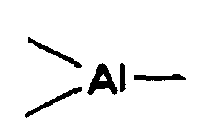
das mit OH-Gruppen reagiert hat, die aus den Teilchen des Basisträgermaterials stammen, und wobei der Funktionalisierungsreaktion eine Fluorierungsreaktion folgt. - Träger nach Anspruch 1, dadurch gekennzeichnet, dass die anorganischen Oxide ausgewählt sind aus Siliziumdioxid, Aluminiumoxid und deren Mischungen.
- Träger nach einem der Ansprüche 1 und 2, dadurch gekennzeichnet, dass die Teilchen Poren mit einem Durchmesser von 7,5 bis 30 nm aufweisen.
- Träger nach einem der Ansprüche 1 bis 3, dadurch gekennzeichnet, dass die Teilchen eine Porosität von 1 bis 4 cm3/g aufweisen.
- Träger nach einem der Ansprüche 1 bis 4, dadurch gekennzeichnet, dass die Teilchen eine spezifische Oberfläche von 100 bis 600 m2/g aufweisen.
- Träger nach einem der Ansprüche 1 bis 5, dadurch gekennzeichnet, dass die Teilchen einen mittleren Durchmesser von 1 bis 100 µm aufweisen.
- Träger nach einem der Ansprüche 1 bis 6, dadurch gekennzeichnet, dass die Teilchen auf ihrer Oberfläche 0,25 bis 10, insbesondere 0,5 bis 4, der zuvor genannten aluminium und/oder magnesiumhaltigen Lewis-sauren Reste pro nm2 aufweisen, die mindestens teilweise fluoriert sind.
- Träger nach einem der Ansprüche 1 bis 7, dadurch gekennzeichnet, dass die aluminium- und/oder magneslumhaltigen Lewis-sauren Reste, die mindestens teilweise fluoriert sind, aus der Reaktion der OH-Gruppen der Teilchen des Basisträgermaterials mit mindestens einem Funktionalisierungsmittel stammen, letzteres ausgewählt aus:und diese Funktionalisierungsreaktion von einer Fluorierungsreaktion gefolgt wird.Verbindungen der Formel (I):Verbindungen der Formel (II):Verbindungen der Formel (III):in der:
 die Reste R3, gleich oder verschieden, jeweils einen C1- bis C12-Alkylrest oder einen C1- bis C12- Alkoxyrest darstellen;die Reste R4, gleich oder verschieden, jeweils einen C1- bis C12-Alkylrest oder einen C1- bis C12- Alkoxyrest darstellen;Y Al oder Si darstellt und m einen Wert von 2 hat, wenn Y Aluminium ist und einen Wert von 3 hat, wenn Y = Si ist; undn entweder 0 oder eine ganze Zahl zwischen 1 und 40 darstellt; vorzugsweise hat n den Wert 0 oder ist eine ganze Zahl zwischen 1 und 20;Verbindungen der Formel (IV):in der:
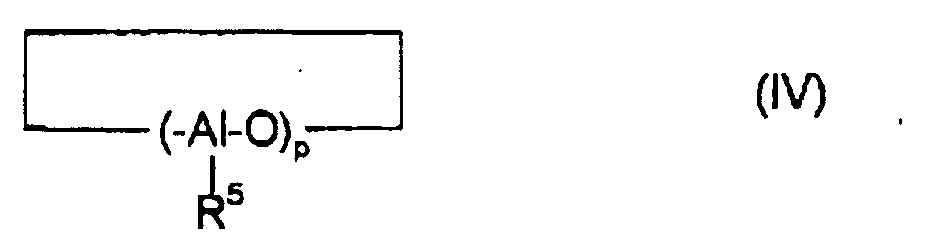 die Reste R5 jeweils einen C1- bis C8- Alkylrest darstellen; undp eine ganze Zahl zwischen 3 und 20 ist,
 - Träger nach Anspruch 8, dadurch gekennzeichnet, dass die Verbindung (I) Triethylaluminium ist.
- Träger nach Anspruch 8, dadurch gekennzeichnet, dass die Verbindung (II) n-Butylsek.-butylmagnesium ist.
- Träger nach Anspruch 8, dadurch gekennzeichnet, dass die Verbindung (III) Dibutoxyaluminoxytriethoxysilan (C2H5O)3Si-O-Al-(OC4H9)2, Tetraisobutyldialuminoxan (i-Bu)2-Al-O-Al-(i-Bu)2 oder ein lineares oligomeres Alkylaluminoxan ist, insbesondere solche, in denen R3 und R4 Methylgruppen sind.
- Träger nach einem der Ansprüche 1 bis 11, präimprägniert mit einem Metallocenkatalysator, wobei dieser Metallocenkatalysator gegebenenfalls einer Präalkylierungsbehandlung unterzogen wurde, die vor oder nach der Präimprägnierung dieses Trägers durchgeführt wird.
- Verfahren zur Herstellung eines festen Trägers zur Aktivierung von Metallocenen als Katalysatoren bei der Olefinpolymerisation, dadurch gekennzeichnet, dass ein Gemenge von Teilchen eines Trägers, die aus mindestens einem porösen anorganischen Oxid stammen und auf der Oberfläche OH-Gruppen aufweisen, unter Verwendung eines Funktionalisierungsmittels, welches zur Pfropfung von aluminium- und/oder magnesiumhaltigen Lewis-sauren Gruppen auf diese Teichen geeignet ist, einer Funktionalisierung unterzogen wird; und dass anschließend diese so gepfropften Teilchen des Trägers einer Fluorierungsbehandlung unterzogen werden.
- Verfahren nach Anspruch 13, dadurch gekennzeichnet, dass die anorganischen Oxide ausgewählt sind aus Siliziumdioxid, Aluminiumoxid und deren Mischungen.
- Verfahren nach einem der Ansprüche 13 und 14, dadurch gekennzeichnet, dass man Teilchen verwendet, die Poren mit einem Durchmesser von 7,5 bis 30 nm aufweisen.
- Verfahren nach einem der Ansprüche 13 bis 15, dadurch gekennzeichnet, dass man Teilchen verwendet, die eine Porosität von 1 bis 4 cm3/g aufweisen.
- Verfahren nach einem der Ansprüche 13 bis 16, dadurch gekennzeichnet, dass man Teilchen verwendet, die eine spezifische Oberfläche von 100 bis 600 m2/g aufweisen.
- Verfahren nach einem der Ansprüche 13 bis 17, dadurch gekennzeichnet, dass man Teilchen verwendet, die einen mittleren Durchmesser von 1 bis 100 µm aufweisen.
- Verfahren nach einem der Ansprüche 14 bis 18, dadurch gekennzeichnet, dass man Teilchen verwendet, die auf ihrer Oberfläche 0,25 bis 10, insbesondere 0,5 bis 4, dieser OH-Gruppen pro nm2 aufweisen.
- Verfahren nach einem der Ansprüche 13 bis 19, dadurch gekennzeichnet, dass man ein Funktionalisierungsmittel verwendet, wie es zuvor in einem der Ansprüche 8 bis 11 definiert wurde.
- Verfahren nach einem der Ansprüche 13 bis 20, dadurch gekennzeichnet, dass man die Funktionalisierung durchführt, in dem man eine Suspension der genannten Teilchen in einem Lösemittel mit dem genannten Funktionalisierungsmittel bei einer Temperatur von -150 bis +150 °C für eine Dauer zwischen 1 Minute und 12 Stunden behandelt und anschließend nach einem Waschvorgang die gepfropften Teilchen abtrennt.
- Verfahren nach einem der Ansprüche 13 bis 21, dadurch gekennzeichnet, dass man 0,5 bis 20 mmol des Funktionalisierungsmittels pro g Teilchen verwendet.
- Verfahren nach einem der Ansprüche 13 bis 22, dadurch gekennzeichnet, dass man nach der Funktionalisierung eine thermische Behandlung unter Inertgas durchführt, vorzugsweise in einem Festbett, das mit Inertgas fluidisiert ist, wobei diese Behandlung der Entfernung der auf der Oberfläche befindlichen Alkoxygruppen dient.
- Verfahren nach einem der Ansprüche 13 bis 23, dadurch gekennzeichnet, dass man vor der Fluorierung eine Oxidationsbehandlung durchführt, die insbesondere aus einer thermischen Behandlung in einem durch Sauerstoff fluidisierten Festbett besteht.
- Verfahren nach einem der Ansprüche 13 bis 24, dadurch gekennzeichnet, dass man eine Fluorierung durchführt, in dem man gegebenenfalls nach einer thermischen Behandlung unter Inertgas und/oder nach einer Oxidation, die funktionalisierten Trägerteilchen mit gasförmigem Fluorwasserstoff in einem Verhältnis von 1 bis 5 Gew.-%, bevorzugt 3 bis 5 Gew.-%, Fluor - bezogen auf die Trägerteilchen - in Kontakt bringt, dieses Inkontaktbringen erfolgt für eine Dauer zwischen 1 Minute und 24 Stunden bei einer Temperatur von 20 bis 800 °C.
- Verfahren nach einem der Ansprüche 13 bis 24, dadurch gekennzeichnet, dass man die Fluorierung mittels (NH4)2SiF6 durchführt, in dem man die funktionalisierten Trägerteilchen, gegebenenfalls nach einer thermischen Behandlung unter Inertgas und/oder nach einer Oxidation, mit pulverförmigem (NH4)2SiF6 in einem Verhältnis von 1 bis 5 Gew.-%, insbesondere von 3 bis 5 Gew.-%, Fluor - bezogen auf die Trägerteilchen - mischt; anschließend die gefällte Mischung mit einem Inertgas leicht fluidisiert und eine thermische Behandlung bei einer Temperatur von ca. 300 bis 500 °C für eine Dauer von 1 bis 10 Stunden durchführt.
- Katalytisches System für die Polymerisation von Olefinen, enthaltend:der Co-Katalysator (b) kann entfallen, wenn der Metallocenkatalysator (a) zuvor alkyliert wurde; der Träger (c) kann mit dem Metallocenkatalysator (a) imprägniert sein, wobei dieser gegebenenfalls einer Präalkylierungsbehandlung unterzogen wird, die entweder vor oder nach der Präimprägnierung dieses Trägers durchgeführt wird.(a) einen Metallocenkatalysator, der gegebenenfalls einer Präalkylierung unterzogen ist;(b) einen Co-Katalysator, und(c) einen festen Träger zur Aktivierung von Metallocenen nach einem der Ansprüche 1 bis 11 oder hergestellt nach einem Verfahren der Ansprüche 13 bis 26;
- Katalytisches System nach Anspruch 27, dadurch gekennzeichnet, dass der Metailocenkatalysator (a) ausgewählt ist aus den Verbindung der Formel (V):M ein Übergangsmetall aus der Gruppe 4b des Periodensystems der Elemente darstellt;L einen Koordinationsliganden für ein Übergangsmetall darstellt, mindestens aber einen Liganden L aus der Gruppe der Cycloalkadienylreste;x der Valenz des Übergangsmetalls und der Liganden L entspricht, die Liganden L sind gleich oder verschieden und ihre Anzahl entspricht der Valenz des Übergangsmetalls M;wenn die Verbindung (V) mindestens 2 Cycloalkadienylreste aufweist, sind mindestens zwei dieser Gruppen untereinander durch eine zweiwertige Gruppe verbunden;wenn eine der Cycloalkadienylgruppen subsituiert ist, können die Substituenten ausgewählt sein aus der Gruppe der C1 bis C20- Alkylreste, der C2- bis C20- Alkenylreste, der Aryl- und Aralkylreste; die Substituenten können ausgewählt sein aus zwei benachbarten Substituenten des gleichen Cyclopentadienylrings, die miteinander unter Bildung eines aromatischen oder nicht-aromatischen Rings, der mit den genannten Cycloalkadienylgruppen kondensiert ist, verbunden sein können und in dem Fall, wo dieser letztgenannte Ring ein Cyclopentadienylring ist, kann der resultierende kondensierte Cyclus ein Indenylring, Trahydroindenylring, Fluorenylring oder Octahydrofluorenylring sein.mindestens ein Ligand L kann ausgewählt sein aus der Gruppe der Formeln -O-, -S-, -NR6- oder -PR6 (wobei R6 ein Wasserstoffatom oder eine Gruppe darstellt, ausgesucht aus der Gruppe der Silyl-, Alkyl- oder Arylreste, wobei die beiden letzteren eventuell halogeniert sind), wobei eine der freien Valenzen an das Übergangsmetall M und die andere freie Valenz an eine zweiwertige Gruppe gebunden ist, die wiederum an einen Liganden L an einem Cycloalkadienylrest gebunden ist; oder ausgewählt aus den Gruppen der Formeln -O-, -R7-, -SR7-, -NR7 2 oder -PR7 2 (R7 stellt die gleichen Reste wie vorher R8 dar), in denen die freie Valenz an einen zweiwertigen Rest gebunden ist, der wiederum an einen Liganden L an einem Cycloalkadienylrest gebunden ist;die Liganden L, die von den vorgenannten verschieden sind, können ausgewählt sein aus der Gruppe der Kohlenwasserstoffe mit 1 bis 20 Kohlenstoffatomen, der Alkoxyverbindungen und der Halogene.
- Katalytisches System nach einem der Ansprüche 27 und 28, dadurch gekennzeichnet, dass der Co-Katalysator (b) ausgewählt ist aus:(b1)Alkylaluminiumverbindungen der Formel (la)(b2) Aluminiumsesquihalogeniden;(b3)Verbindungen der Formel (IIIa) bestehend aus den Verbindungen der Formel (III) wie vorstehend in Anspruch 8 genannt, wobei Y = Aluminium ist;(b4) Verbindungen der Formel (IV) wie in Anspruch 8 definiert.
- Katalytisches System nach Anspruch 29, dadurch gekennzeichnet, dass der Co-Katalysator (b) ausgewählt ist aus Methylaluminoxan, Triisobutylaluminium und Triethylaluminium.
- Katalytisches System nach einem der Ansprüche 27 bis 30, dadurch gekennzeichnet, dass das molare Verhältnis von Aluminium des Co-Katalysators (b1) oder (b2) zu dem Übergangsmetall des Metallocens zwischen 1 und 10.000, insbesondere zwischen 1 und 2.000, liegt und das molare Verhältnis von Aluminium des Co-Katalysators (b3) oder (b4) zu dem Übergangsmetall des Metaliocens (a) zwischen 1 und 10.000, insbesondere zwischen 10 und 200, liegt.
- Katalytisches System nach einem der Ansprüche 27 bis 31, dadurch gekennzeichnet, dass der feste Aktivator in einer Menge zwischen 0,01 und 2000 mg, insbesondere in einer Menge zwischen 0,01 und 200 mg, eingesetzt wird pro µmol Metallocenkatalysator.
- Verfahren zur Homopolymerisation oder Copolymerisation von Olefinen, in Suspension oder in der Gasphase, in Gegenwart eines katalytischen Systems der Ansprüche 27 bis 32.
- Verfahren nach Anspruch 33, dadurch gekennzeichnet, dass man C2- bis C20- Olefine, insbesondere α-Olefine wie Ethylen, Propylen, 1-Buten, 4-Methyl-1-penten, 1-Octen, 1-Hexen, 3-Methylpenten, 3-Methyl-1-buten, 1-Decen, und 1-Tetradecen einsetzt.
- Verfahren nach Anspruch 34, dadurch gekennzeichnet, dass das zu (co-)polymerisierende Olefin Ethylen ist.
- , Verfahren nach einem der Ansprüche 33 bis 35, durchgeführt in Suspension, dadurch gekennzeichnet, dass man in einen Reaktor eine Suspension eines katalytischen Systems in einem inerten Milieu, wie zum Beispiel in einem aliphatischen Kohlenwasserstoff, in einer Konzentration von Metallocen (a) zwischen 0,5 µmol/l und 10 µmol/l zugibt, wobei die Konzentration des Co-Katalysators (b) von 0,01 bis 5 mmol/l und die Menge an festem Aktivator zwischen 0,5 und 1000 mg/l liegt; anschließend gibt man das oder die Olefine unter einem Druck zwischen 1 bis 250 bar hinzu, wobei die (Co-)Polymerisation bei einer Temperatur zwischen -20 °C und 250 °C für eine Dauer von 5 Minuten bis 10 Stunden durchgeführt wird.
- Verfahren nach Anspruch 36, dadurch gekennzeichnet, dass man das oder die Olefine unter einem Druck zwischen 0,5 und 60 bar hinzugibt und dass man bei einer Temperatur zwischen 10 °C und einer Temperatur leicht unterhalb der Schmelztemperatur des Polymers arbeitet.
- Verfahren nach einem der Ansprüche 33 bis 35, durchgeführt in gasförmiger Phase, dadurch gekennzeichnet, dass man das oder die Olefine unter einem Druck zwischen 1 und 60 bar bei einer Temperatur zwischen 10 und 110 °C in einen Reaktor einspritzt, der ein gerührtes und/oder fluidisiertes Bett aus dem katalytischem System enthält.
- Verfahren nach einem der Ansprüche 33 bis 38, dadurch gekennzeichnet, dass man in Gegenwart eines Kettenübertragungsmittels arbeitet, wie zum Beispiel Wasserstoff.
- Verfahren nach einem der Ansprüche 33 bis 39, dadurch gekennzeichnet, dass man zunächst eine Präpolymerisation, in Suspension oder vorzugsweise in Gasphase, mit einem der zuvor beschriebenen katalytischen Systeme nach einem der Ansprüche 27 bis 32 durchführt und dann die so erhaltenen Präpolymerteilchen in das Co-Polymerisationsverfahren einführt, genauer gesagt in Suspension oder in der Gasphase.
Applications Claiming Priority (2)
| Application Number | Priority Date | Filing Date | Title |
|---|---|---|---|
| FR9712270 | 1997-10-02 | ||
| FR9712270A FR2769245B1 (fr) | 1997-10-02 | 1997-10-02 | Support solide activateur des catalyseurs metallocenes en polymerisation des olefines, son procede de preparation, systeme catalytique et procede de polymerisation correspondants |
Publications (2)
| Publication Number | Publication Date |
|---|---|
| EP0906920A1 EP0906920A1 (de) | 1999-04-07 |
| EP0906920B1 true EP0906920B1 (de) | 2003-05-14 |
Family
ID=9511728
Family Applications (1)
| Application Number | Title | Priority Date | Filing Date |
|---|---|---|---|
| EP98402400A Expired - Lifetime EP0906920B1 (de) | 1997-10-02 | 1998-09-30 | Fester Aktivierungsträger für die Metallocenkatalysatoren in der Olefinpolymerisation, Herstellungsverfahren, Katalysatorsystem und entsprechendes Polymerisationsverfahren |
Country Status (11)
| Country | Link |
|---|---|
| US (3) | US6239059B1 (de) |
| EP (1) | EP0906920B1 (de) |
| JP (1) | JP4292288B2 (de) |
| KR (1) | KR100522281B1 (de) |
| CN (1) | CN1146592C (de) |
| AT (1) | ATE240353T1 (de) |
| CA (1) | CA2246003C (de) |
| DE (1) | DE69814554T2 (de) |
| ES (1) | ES2200286T3 (de) |
| FR (1) | FR2769245B1 (de) |
| NO (1) | NO317994B1 (de) |
Families Citing this family (58)
| Publication number | Priority date | Publication date | Assignee | Title |
|---|---|---|---|---|
| US6300271B1 (en) * | 1998-05-18 | 2001-10-09 | Phillips Petroleum Company | Compositions that can produce polymers |
| BR9917674B1 (pt) * | 1998-05-18 | 2012-06-12 | processo para produzir uma composiÇço de catalisador para polimerizar monâmeros. | |
| US6368999B1 (en) | 1998-08-26 | 2002-04-09 | Exxon Mobil Chemical Patents Inc. | Highly active supported catalyst compositions |
| IT1304181B1 (it) * | 1998-12-17 | 2001-03-08 | Enichem Spa | Composizione attivante di complessi metallocenici nella catalisi deiprocessi di (co)polimerizzazione delle olefine. |
| DE19917984A1 (de) * | 1999-04-21 | 2000-11-09 | Targor Gmbh | Chemische Verbindung, Verfahren zu deren Herstellung und deren Verwendung in Katalysatorsystem zur Herstellung von Polyolefinen |
| DE19917985A1 (de) | 1999-04-21 | 2000-10-26 | Targor Gmbh | Katalysatorsystem |
| US6355594B1 (en) | 1999-09-27 | 2002-03-12 | Phillips Petroleum Company | Organometal catalyst compositions |
| US6395666B1 (en) | 1999-09-29 | 2002-05-28 | Phillips Petroleum Company | Organometal catalyst compositions |
| US6548441B1 (en) * | 1999-10-27 | 2003-04-15 | Phillips Petroleum Company | Organometal catalyst compositions |
| US6391816B1 (en) | 1999-10-27 | 2002-05-21 | Phillips Petroleum | Organometal compound catalyst |
| US6548442B1 (en) * | 1999-12-03 | 2003-04-15 | Phillips Petroleum Company | Organometal compound catalyst |
| EP2325215B1 (de) * | 1999-12-16 | 2016-03-09 | Chevron Phillips Chemical Company LP | Polymer mit bestimmtem schmelzindex, bestimmter polydispersität, bestimmtem verhältnis der schmelzflussindices und bestimmter molekulargewichtverteilung und verfahren zu seiner herstellung |
| US6750302B1 (en) | 1999-12-16 | 2004-06-15 | Phillips Petroleum Company | Organometal catalyst compositions |
| US6524987B1 (en) * | 1999-12-22 | 2003-02-25 | Phillips Petroleum Company | Organometal catalyst compositions |
| US20080281063A9 (en) * | 1999-12-30 | 2008-11-13 | Sukhadia Ashish M | Ethylene polymers and copolymers with high optical opacity and methods of making the same |
| US7041617B2 (en) | 2004-01-09 | 2006-05-09 | Chevron Phillips Chemical Company, L.P. | Catalyst compositions and polyolefins for extrusion coating applications |
| US7259216B2 (en) * | 2000-09-28 | 2007-08-21 | Basell Polyolefine Gmbh | Method for producing highly branched ethylene polymers |
| CA2357385C (en) | 2001-09-17 | 2010-06-15 | Nova Chemicals Corporation | Supported phosphinimine polymerization catalyst |
| US20030207757A1 (en) * | 2002-04-30 | 2003-11-06 | Daelim Industries Co., Ltd. | Catalyst composition comprising metallocene compound having bulky cycloalkyl-substituted cyclopentadienyl ligand, and process for olefin polymerization using the same |
| EP1539837A1 (de) * | 2002-08-20 | 2005-06-15 | BP Chemicals Limited | GETRûGERTE POLYMERISATIONSKATALYSATOREN |
| WO2004018531A1 (en) * | 2002-08-20 | 2004-03-04 | Bp Chemicals Limited | Supported polymerisation catalysts |
| US6900154B2 (en) * | 2002-11-26 | 2005-05-31 | Univation Technologies, Llc | Methods of forming a supported activated catalyst composition |
| WO2004074329A1 (en) * | 2003-02-24 | 2004-09-02 | China Petroleum & Chemical Corporation | Complex support suitable for propylene polymerization catalyst, a catalyst component and catalyst containing the same |
| US6908876B2 (en) * | 2003-04-16 | 2005-06-21 | Saudi Basic Industries Corporation | Supported metallocene catalyst system for olefin polymerization, method for making and using the same |
| US7501372B2 (en) * | 2003-11-21 | 2009-03-10 | Chevron Phillips Chemical Company Lp | Catalyst compositions for producing polyolefins in the absence of cocatalysts |
| US7217676B2 (en) * | 2004-01-16 | 2007-05-15 | Exxon Mobil Chemical Patents Inc. | Hydrophobization and silica for supported catalyst |
| US7119153B2 (en) * | 2004-01-21 | 2006-10-10 | Jensen Michael D | Dual metallocene catalyst for producing film resins with good machine direction (MD) elmendorf tear strength |
| CN100487005C (zh) * | 2004-01-30 | 2009-05-13 | 托塔尔石油化学产品研究弗吕公司 | 茂金属催化用的活化载体 |
| EP1559730A1 (de) * | 2004-01-30 | 2005-08-03 | Total Petrochemicals Research Feluy | Aktivierende Träger zur Metallocenkatalyse |
| US7094857B2 (en) * | 2004-03-10 | 2006-08-22 | Chevron Phillips Chemical Company, L.P. | Ethylene polymers and copolymers with high optical opacity |
| US7294599B2 (en) * | 2004-06-25 | 2007-11-13 | Chevron Phillips Chemical Co. | Acidic activator-supports and catalysts for olefin polymerization |
| EP1734058A1 (de) * | 2005-06-13 | 2006-12-20 | Total Petrochemicals Research Feluy | Ethylen und Alpha-Olefine Polymerisationskatalysatorsystem mit Fluorenylligand |
| EP1749841A1 (de) | 2005-08-03 | 2007-02-07 | Total Petrochemicals Research Feluy | Aktivierte-fluorierte Träger mit Eisen-organische komplexe |
| EP1749842A1 (de) * | 2005-08-03 | 2007-02-07 | Total Petrochemicals Research Feluy | Übergangsnetalkomplex geträgert auf einem Fluorierten aktivierten Träger |
| US8110518B2 (en) | 2006-04-28 | 2012-02-07 | Fina Technology, Inc. | Fluorinated transition metal catalysts and formation thereof |
| US20070254800A1 (en) * | 2006-04-28 | 2007-11-01 | Fina Technology, Inc. | Fluorinated transition metal catalysts and formation thereof |
| US20070255026A1 (en) * | 2006-04-28 | 2007-11-01 | Fina Technology, Inc. | Process for polyolefin production using fluorinated transition metal catalysts having a low pH |
| US20070255022A1 (en) * | 2006-04-28 | 2007-11-01 | Fina Technology, Inc. | Fluorinated transition metal catalysts and formation thereof |
| US20070255028A1 (en) * | 2006-04-28 | 2007-11-01 | Fina Technology, Inc. | Fluorinated transition metal catalysts and formation thereof |
| EP1972642A1 (de) | 2007-03-19 | 2008-09-24 | Total Petrochemicals Research Feluy | homo- oder copolymere von ethylen mit einer kombination aus verarbeitbarkeits- und belastbarkeitseigenschaften |
| US8138285B2 (en) * | 2007-10-26 | 2012-03-20 | Fina Technology, Inc. | Fluorinated impregnated catalyst systems and methods of forming the same |
| EP2172493A1 (de) | 2008-10-02 | 2010-04-07 | Total Petrochemicals Research Feluy | Aktivierungsträger auf Basis von perfluorierten Borsäuren |
| EP2251362A1 (de) * | 2009-05-07 | 2010-11-17 | Total Petrochemicals Research Feluy | Aktivierung von Trägern mit kontrollierter Verteilung von OH-Gruppen |
| KR101753549B1 (ko) | 2009-06-16 | 2017-07-03 | 셰브론 필립스 케미컬 컴퍼니 엘피 | 메탈로센-ssa 촉매시스템을 이용한 알파 올레핀 올리고머화 및 윤활제 블렌드 제조를 위한 생성된 폴리알파올레핀의 용도 |
| US20110082323A1 (en) * | 2009-10-06 | 2011-04-07 | Chevron Phillips Chemical Company Lp | Oligomerization of olefin waxes using metallocene-based catalyst systems |
| KR20130026531A (ko) * | 2010-02-22 | 2013-03-13 | 유니베이션 테크놀로지즈, 엘엘씨 | 폴리올레핀 생산물을 생산하기 위한 촉매 시스템 및 이의 사용 방법 |
| CN101942047B (zh) * | 2010-08-27 | 2013-02-20 | 吉化集团吉林市星云工贸有限公司 | 一种烯烃聚合用复合载体催化剂及其制备方法 |
| EP2465876A1 (de) | 2010-12-15 | 2012-06-20 | INEOS Manufacturing Belgium NV | Aktivierung von Trägern |
| CN103370344A (zh) | 2011-01-20 | 2013-10-23 | 英尼奥斯商业服务英国有限公司 | 活化载体 |
| EP2791189B1 (de) | 2011-12-14 | 2018-05-02 | Ineos Europe AG | Neuartige polymere |
| US8937139B2 (en) | 2012-10-25 | 2015-01-20 | Chevron Phillips Chemical Company Lp | Catalyst compositions and methods of making and using same |
| US8895679B2 (en) | 2012-10-25 | 2014-11-25 | Chevron Phillips Chemical Company Lp | Catalyst compositions and methods of making and using same |
| US8877672B2 (en) | 2013-01-29 | 2014-11-04 | Chevron Phillips Chemical Company Lp | Catalyst compositions and methods of making and using same |
| US9034991B2 (en) | 2013-01-29 | 2015-05-19 | Chevron Phillips Chemical Company Lp | Polymer compositions and methods of making and using same |
| KR101610879B1 (ko) | 2013-06-18 | 2016-04-08 | 주식회사 엘지화학 | 실리카 담체 및 그 제조방법과 이를 이용한 메탈로센 촉매 |
| US9303106B1 (en) * | 2014-10-17 | 2016-04-05 | Chevron Phillips Chemical Company Lp | Processes for preparing solid metallocene-based catalyst systems |
| US9732300B2 (en) | 2015-07-23 | 2017-08-15 | Chevron Phillipa Chemical Company LP | Liquid propylene oligomers and methods of making same |
| CN110869397B (zh) * | 2017-05-19 | 2022-12-06 | 埃克森美孚化学专利公司 | 催化剂体系和使用其的聚合方法 |
Family Cites Families (13)
| Publication number | Priority date | Publication date | Assignee | Title |
|---|---|---|---|---|
| FR427697A (fr) | 1911-03-27 | 1911-08-10 | Jens Frederik Johnsen Lenler | Machine à coudre les doublures |
| US4077904A (en) * | 1976-06-29 | 1978-03-07 | Union Carbide Corporation | Olefin polymerization process and catalyst therefor |
| US4806513A (en) | 1984-05-29 | 1989-02-21 | Phillips Petroleum Company | Silicon and fluorine-treated alumina containing a chromium catalyst and method of producing same |
| EP0279863B1 (de) * | 1986-08-26 | 1992-10-14 | Mitsui Petrochemical Industries, Ltd. | Katalysator zur polymerisierung von alpha-olefin und verfahren |
| AU616642B2 (en) | 1987-01-30 | 1991-11-07 | Sony Corporation | Device for loading a tape like substance |
| JPH0783036B2 (ja) | 1987-12-11 | 1995-09-06 | 三菱電機株式会社 | キヤリアテープ |
| DE69026907T2 (de) | 1989-10-10 | 1996-10-10 | Fina Technology | Metallocenkatalysator mit Lewissäure und Alkylaluminium |
| IL96810A0 (en) | 1990-01-02 | 1991-09-16 | Exxon Chemical Patents Inc | Supported ionic metallocene catalysts for olefin polymerization and methods for the preparation thereof |
| US5064796A (en) * | 1991-01-07 | 1991-11-12 | Exxon Chemical Patents Inc. | Support adjuvant for improved vanadium polymerization catalyst |
| EP0594914A1 (de) * | 1992-10-26 | 1994-05-04 | Bp Chemicals S.N.C. | Herstellung eines Katalysators zur Herstellung von Polyethylen |
| US5543376A (en) | 1994-02-25 | 1996-08-06 | Phillips Petroleum Company | Process for producing polyolefins |
| US5939347A (en) | 1995-01-25 | 1999-08-17 | W.R. Grace & Co. -Conn. | Supported catalytic activator |
| EP0728773B1 (de) | 1995-02-21 | 1998-11-04 | Mitsubishi Chemical Corporation | Katalysatoren für Olefinpolymerisation und Verfahren zur Herstellung von damit erhaltenen Olefinpolymeren |
-
1997
- 1997-10-02 FR FR9712270A patent/FR2769245B1/fr not_active Expired - Fee Related
-
1998
- 1998-09-30 DE DE69814554T patent/DE69814554T2/de not_active Expired - Lifetime
- 1998-09-30 NO NO19984568A patent/NO317994B1/no not_active IP Right Cessation
- 1998-09-30 AT AT98402400T patent/ATE240353T1/de active
- 1998-09-30 EP EP98402400A patent/EP0906920B1/de not_active Expired - Lifetime
- 1998-09-30 CN CNB981243142A patent/CN1146592C/zh not_active Expired - Fee Related
- 1998-09-30 ES ES98402400T patent/ES2200286T3/es not_active Expired - Lifetime
- 1998-10-01 CA CA002246003A patent/CA2246003C/fr not_active Expired - Fee Related
- 1998-10-01 JP JP27987598A patent/JP4292288B2/ja not_active Expired - Fee Related
- 1998-10-02 KR KR1019980041605A patent/KR100522281B1/ko not_active Expired - Fee Related
- 1998-10-02 US US09/165,345 patent/US6239059B1/en not_active Expired - Lifetime
-
2001
- 2001-04-02 US US09/822,840 patent/US6605561B1/en not_active Expired - Lifetime
-
2003
- 2003-04-01 US US10/402,939 patent/US6780946B2/en not_active Expired - Fee Related
Also Published As
| Publication number | Publication date |
|---|---|
| CA2246003A1 (fr) | 1999-04-02 |
| US6605561B1 (en) | 2003-08-12 |
| ATE240353T1 (de) | 2003-05-15 |
| JP4292288B2 (ja) | 2009-07-08 |
| CA2246003C (fr) | 2003-06-03 |
| KR100522281B1 (ko) | 2006-01-27 |
| FR2769245B1 (fr) | 1999-10-29 |
| DE69814554D1 (de) | 2003-06-18 |
| NO984568L (no) | 1999-04-06 |
| US20040014596A1 (en) | 2004-01-22 |
| JPH11171911A (ja) | 1999-06-29 |
| DE69814554T2 (de) | 2004-04-08 |
| NO317994B1 (no) | 2005-01-17 |
| US6239059B1 (en) | 2001-05-29 |
| US6780946B2 (en) | 2004-08-24 |
| CN1146592C (zh) | 2004-04-21 |
| ES2200286T3 (es) | 2004-03-01 |
| CN1214342A (zh) | 1999-04-21 |
| KR19990036831A (ko) | 1999-05-25 |
| NO984568D0 (no) | 1998-09-30 |
| EP0906920A1 (de) | 1999-04-07 |
| FR2769245A1 (fr) | 1999-04-09 |
Similar Documents
| Publication | Publication Date | Title |
|---|---|---|
| EP0906920B1 (de) | Fester Aktivierungsträger für die Metallocenkatalysatoren in der Olefinpolymerisation, Herstellungsverfahren, Katalysatorsystem und entsprechendes Polymerisationsverfahren | |
| US7759271B2 (en) | Activating supports for metallocene catalysis | |
| EP1773899B1 (de) | Polymerisationskatalysatoren zur herstellung von langkettenverzweigungsarmen polymeren | |
| US8329833B2 (en) | Nano-linked metallocene catalyst compositions and their polymer products | |
| US20030092925A1 (en) | Metallocenes, polymerization catalyst systems, their preparation, and use | |
| HUT55419A (en) | Process for producing polyethylene vax by gas phase polymerization | |
| JPH0725845B2 (ja) | 1―オレフィン及び1,4―ジオレフィンの共重合用の、担持された触媒 | |
| CN1610702A (zh) | 用于调节金属茂催化的烯烃共聚物的熔体性能的方法 | |
| US20020177676A1 (en) | Method for making and using a metallocene catalyst system | |
| EP0889065B1 (de) | Fester Katalysatorbestandteil zur Olefinpolymerisation | |
| EP2427508A1 (de) | Aktivierende träger mit kontrollierter verteilung von oh-gruppen | |
| US20040002420A1 (en) | Stable catalysts and co-catalyst compositions formed from hydroxyaluminoxane and their use | |
| US6482967B2 (en) | Metallocenes, polymerization catalyst systems, their preparation, and use | |
| EP1361922A2 (de) | Stabile katalysatoren und co-katalysatoren auf basis von hydroxyaluminoxane und verwendung in der polymerisation von olefinen | |
| EP1559730A1 (de) | Aktivierende Träger zur Metallocenkatalyse | |
| EP1042377A1 (de) | Verfahren zur suspensionspolymerisation mit alkylsubstituierten biscyclopentadienlymetallocenen | |
| KR101203772B1 (ko) | 메탈로센 촉매 작용을 위한 활성화 지지체 | |
| HK1098772B (en) | Polymerization catalysts for producing polymers with low levels of long chain branching |
Legal Events
| Date | Code | Title | Description |
|---|---|---|---|
| PUAI | Public reference made under article 153(3) epc to a published international application that has entered the european phase |
Free format text: ORIGINAL CODE: 0009012 |
|
| 17P | Request for examination filed |
Effective date: 19981029 |
|
| AK | Designated contracting states |
Kind code of ref document: A1 Designated state(s): AT BE DE ES FI FR GB IT NL SE |
|
| AX | Request for extension of the european patent |
Free format text: AL;LT;LV;MK;RO;SI |
|
| AKX | Designation fees paid |
Free format text: AT BE DE ES FI FR GB IT NL SE |
|
| RAP1 | Party data changed (applicant data changed or rights of an application transferred) |
Owner name: ATOFINA |
|
| GRAH | Despatch of communication of intention to grant a patent |
Free format text: ORIGINAL CODE: EPIDOS IGRA |
|
| GRAH | Despatch of communication of intention to grant a patent |
Free format text: ORIGINAL CODE: EPIDOS IGRA |
|
| GRAA | (expected) grant |
Free format text: ORIGINAL CODE: 0009210 |
|
| AK | Designated contracting states |
Designated state(s): AT BE DE ES FI FR GB IT NL SE |
|
| REG | Reference to a national code |
Ref country code: GB Ref legal event code: FG4D Free format text: NOT ENGLISH |
|
| REF | Corresponds to: |
Ref document number: 69814554 Country of ref document: DE Date of ref document: 20030618 Kind code of ref document: P |
|
| REG | Reference to a national code |
Ref country code: SE Ref legal event code: TRGR |
|
| GBT | Gb: translation of ep patent filed (gb section 77(6)(a)/1977) | ||
| REG | Reference to a national code |
Ref country code: ES Ref legal event code: FG2A Ref document number: 2200286 Country of ref document: ES Kind code of ref document: T3 |
|
| PLBE | No opposition filed within time limit |
Free format text: ORIGINAL CODE: 0009261 |
|
| STAA | Information on the status of an ep patent application or granted ep patent |
Free format text: STATUS: NO OPPOSITION FILED WITHIN TIME LIMIT |
|
| 26N | No opposition filed |
Effective date: 20040217 |
|
| BECH | Be: change of holder |
Owner name: *TOTAL PETROCHEMICALS FRANCE Effective date: 20050617 |
|
| REG | Reference to a national code |
Ref country code: GB Ref legal event code: 732E |
|
| NLS | Nl: assignments of ep-patents |
Owner name: TOTAL PETROCHEMICALS FRANCE Effective date: 20060628 |
|
| NLT1 | Nl: modifications of names registered in virtue of documents presented to the patent office pursuant to art. 16 a, paragraph 1 |
Owner name: ARKEMA |
|
| REG | Reference to a national code |
Ref country code: FR Ref legal event code: TP |
|
| BECH | Be: change of holder |
Owner name: *TOTAL PETROCHEMICALS FRANCE Effective date: 20050617 |
|
| PGFP | Annual fee paid to national office [announced via postgrant information from national office to epo] |
Ref country code: ES Payment date: 20110926 Year of fee payment: 14 |
|
| PGFP | Annual fee paid to national office [announced via postgrant information from national office to epo] |
Ref country code: NL Payment date: 20110929 Year of fee payment: 14 |
|
| REG | Reference to a national code |
Ref country code: NL Ref legal event code: V1 Effective date: 20130401 |
|
| PG25 | Lapsed in a contracting state [announced via postgrant information from national office to epo] |
Ref country code: NL Free format text: LAPSE BECAUSE OF NON-PAYMENT OF DUE FEES Effective date: 20130401 |
|
| REG | Reference to a national code |
Ref country code: ES Ref legal event code: FD2A Effective date: 20131018 |
|
| PG25 | Lapsed in a contracting state [announced via postgrant information from national office to epo] |
Ref country code: ES Free format text: LAPSE BECAUSE OF NON-PAYMENT OF DUE FEES Effective date: 20121001 |
|
| PGFP | Annual fee paid to national office [announced via postgrant information from national office to epo] |
Ref country code: FI Payment date: 20140911 Year of fee payment: 17 Ref country code: DE Payment date: 20140922 Year of fee payment: 17 |
|
| PGFP | Annual fee paid to national office [announced via postgrant information from national office to epo] |
Ref country code: SE Payment date: 20140918 Year of fee payment: 17 Ref country code: GB Payment date: 20140919 Year of fee payment: 17 Ref country code: FR Payment date: 20140919 Year of fee payment: 17 Ref country code: AT Payment date: 20140911 Year of fee payment: 17 |
|
| PGFP | Annual fee paid to national office [announced via postgrant information from national office to epo] |
Ref country code: IT Payment date: 20140930 Year of fee payment: 17 |
|
| PGFP | Annual fee paid to national office [announced via postgrant information from national office to epo] |
Ref country code: BE Payment date: 20140919 Year of fee payment: 17 |
|
| REG | Reference to a national code |
Ref country code: DE Ref legal event code: R119 Ref document number: 69814554 Country of ref document: DE |
|
| PG25 | Lapsed in a contracting state [announced via postgrant information from national office to epo] |
Ref country code: IT Free format text: LAPSE BECAUSE OF NON-PAYMENT OF DUE FEES Effective date: 20150930 |
|
| REG | Reference to a national code |
Ref country code: AT Ref legal event code: MM01 Ref document number: 240353 Country of ref document: AT Kind code of ref document: T Effective date: 20150930 |
|
| GBPC | Gb: european patent ceased through non-payment of renewal fee |
Effective date: 20150930 |
|
| PG25 | Lapsed in a contracting state [announced via postgrant information from national office to epo] |
Ref country code: FI Free format text: LAPSE BECAUSE OF NON-PAYMENT OF DUE FEES Effective date: 20150930 |
|
| REG | Reference to a national code |
Ref country code: SE Ref legal event code: EUG |
|
| REG | Reference to a national code |
Ref country code: FR Ref legal event code: ST Effective date: 20160531 |
|
| PG25 | Lapsed in a contracting state [announced via postgrant information from national office to epo] |
Ref country code: GB Free format text: LAPSE BECAUSE OF NON-PAYMENT OF DUE FEES Effective date: 20150930 Ref country code: DE Free format text: LAPSE BECAUSE OF NON-PAYMENT OF DUE FEES Effective date: 20160401 |
|
| PG25 | Lapsed in a contracting state [announced via postgrant information from national office to epo] |
Ref country code: SE Free format text: LAPSE BECAUSE OF NON-PAYMENT OF DUE FEES Effective date: 20151001 Ref country code: FR Free format text: LAPSE BECAUSE OF NON-PAYMENT OF DUE FEES Effective date: 20150930 Ref country code: AT Free format text: LAPSE BECAUSE OF NON-PAYMENT OF DUE FEES Effective date: 20150930 |
|
| PG25 | Lapsed in a contracting state [announced via postgrant information from national office to epo] |
Ref country code: BE Free format text: LAPSE BECAUSE OF NON-PAYMENT OF DUE FEES Effective date: 20150930 |