EP0908493A1 - Beschichtungsmaterial und filme mit exzellenten grenzflächeneigenschaften sowie verfahren zu deren herstellung - Google Patents
Beschichtungsmaterial und filme mit exzellenten grenzflächeneigenschaften sowie verfahren zu deren herstellung Download PDFInfo
- Publication number
- EP0908493A1 EP0908493A1 EP96939314A EP96939314A EP0908493A1 EP 0908493 A1 EP0908493 A1 EP 0908493A1 EP 96939314 A EP96939314 A EP 96939314A EP 96939314 A EP96939314 A EP 96939314A EP 0908493 A1 EP0908493 A1 EP 0908493A1
- Authority
- EP
- European Patent Office
- Prior art keywords
- vinylidene chloride
- weight
- chloride copolymer
- peak
- film
- Prior art date
- Legal status (The legal status is an assumption and is not a legal conclusion. Google has not performed a legal analysis and makes no representation as to the accuracy of the status listed.)
- Withdrawn
Links
Images


Classifications
-
- B—PERFORMING OPERATIONS; TRANSPORTING
- B32—LAYERED PRODUCTS
- B32B—LAYERED PRODUCTS, i.e. PRODUCTS BUILT-UP OF STRATA OF FLAT OR NON-FLAT, e.g. CELLULAR OR HONEYCOMB, FORM
- B32B27/00—Layered products comprising a layer of synthetic resin
- B32B27/06—Layered products comprising a layer of synthetic resin as the main or only constituent of a layer, which is next to another layer of the same or of a different material
- B32B27/08—Layered products comprising a layer of synthetic resin as the main or only constituent of a layer, which is next to another layer of the same or of a different material of synthetic resin
-
- B—PERFORMING OPERATIONS; TRANSPORTING
- B32—LAYERED PRODUCTS
- B32B—LAYERED PRODUCTS, i.e. PRODUCTS BUILT-UP OF STRATA OF FLAT OR NON-FLAT, e.g. CELLULAR OR HONEYCOMB, FORM
- B32B27/00—Layered products comprising a layer of synthetic resin
- B32B27/28—Layered products comprising a layer of synthetic resin comprising synthetic resins not wholly covered by any one of the sub-groups B32B27/30 - B32B27/42
- B32B27/281—Layered products comprising a layer of synthetic resin comprising synthetic resins not wholly covered by any one of the sub-groups B32B27/30 - B32B27/42 comprising polyimides
-
- B—PERFORMING OPERATIONS; TRANSPORTING
- B32—LAYERED PRODUCTS
- B32B—LAYERED PRODUCTS, i.e. PRODUCTS BUILT-UP OF STRATA OF FLAT OR NON-FLAT, e.g. CELLULAR OR HONEYCOMB, FORM
- B32B27/00—Layered products comprising a layer of synthetic resin
- B32B27/30—Layered products comprising a layer of synthetic resin comprising vinyl (co)polymers; comprising acrylic (co)polymers
- B32B27/302—Layered products comprising a layer of synthetic resin comprising vinyl (co)polymers; comprising acrylic (co)polymers comprising aromatic vinyl (co)polymers, e.g. styrenic (co)polymers
-
- B—PERFORMING OPERATIONS; TRANSPORTING
- B32—LAYERED PRODUCTS
- B32B—LAYERED PRODUCTS, i.e. PRODUCTS BUILT-UP OF STRATA OF FLAT OR NON-FLAT, e.g. CELLULAR OR HONEYCOMB, FORM
- B32B27/00—Layered products comprising a layer of synthetic resin
- B32B27/30—Layered products comprising a layer of synthetic resin comprising vinyl (co)polymers; comprising acrylic (co)polymers
- B32B27/304—Layered products comprising a layer of synthetic resin comprising vinyl (co)polymers; comprising acrylic (co)polymers comprising vinyl halide (co)polymers, e.g. PVC, PVDC, PVF, PVDF
-
- B—PERFORMING OPERATIONS; TRANSPORTING
- B32—LAYERED PRODUCTS
- B32B—LAYERED PRODUCTS, i.e. PRODUCTS BUILT-UP OF STRATA OF FLAT OR NON-FLAT, e.g. CELLULAR OR HONEYCOMB, FORM
- B32B27/00—Layered products comprising a layer of synthetic resin
- B32B27/30—Layered products comprising a layer of synthetic resin comprising vinyl (co)polymers; comprising acrylic (co)polymers
- B32B27/306—Layered products comprising a layer of synthetic resin comprising vinyl (co)polymers; comprising acrylic (co)polymers comprising vinyl acetate or vinyl alcohol (co)polymers
-
- B—PERFORMING OPERATIONS; TRANSPORTING
- B32—LAYERED PRODUCTS
- B32B—LAYERED PRODUCTS, i.e. PRODUCTS BUILT-UP OF STRATA OF FLAT OR NON-FLAT, e.g. CELLULAR OR HONEYCOMB, FORM
- B32B27/00—Layered products comprising a layer of synthetic resin
- B32B27/32—Layered products comprising a layer of synthetic resin comprising polyolefins
-
- B—PERFORMING OPERATIONS; TRANSPORTING
- B32—LAYERED PRODUCTS
- B32B—LAYERED PRODUCTS, i.e. PRODUCTS BUILT-UP OF STRATA OF FLAT OR NON-FLAT, e.g. CELLULAR OR HONEYCOMB, FORM
- B32B27/00—Layered products comprising a layer of synthetic resin
- B32B27/34—Layered products comprising a layer of synthetic resin comprising polyamides
-
- B—PERFORMING OPERATIONS; TRANSPORTING
- B32—LAYERED PRODUCTS
- B32B—LAYERED PRODUCTS, i.e. PRODUCTS BUILT-UP OF STRATA OF FLAT OR NON-FLAT, e.g. CELLULAR OR HONEYCOMB, FORM
- B32B27/00—Layered products comprising a layer of synthetic resin
- B32B27/36—Layered products comprising a layer of synthetic resin comprising polyesters
-
- B—PERFORMING OPERATIONS; TRANSPORTING
- B32—LAYERED PRODUCTS
- B32B—LAYERED PRODUCTS, i.e. PRODUCTS BUILT-UP OF STRATA OF FLAT OR NON-FLAT, e.g. CELLULAR OR HONEYCOMB, FORM
- B32B27/00—Layered products comprising a layer of synthetic resin
- B32B27/36—Layered products comprising a layer of synthetic resin comprising polyesters
- B32B27/365—Layered products comprising a layer of synthetic resin comprising polyesters comprising polycarbonates
-
- C—CHEMISTRY; METALLURGY
- C08—ORGANIC MACROMOLECULAR COMPOUNDS; THEIR PREPARATION OR CHEMICAL WORKING-UP; COMPOSITIONS BASED THEREON
- C08J—WORKING-UP; GENERAL PROCESSES OF COMPOUNDING; AFTER-TREATMENT NOT COVERED BY SUBCLASSES C08B, C08C, C08F, C08G or C08H
- C08J3/00—Processes of treating or compounding macromolecular substances
- C08J3/02—Making solutions, dispersions, lattices or gels by other methods than by solution, emulsion or suspension polymerisation techniques
- C08J3/09—Making solutions, dispersions, lattices or gels by other methods than by solution, emulsion or suspension polymerisation techniques in organic liquids
- C08J3/11—Making solutions, dispersions, lattices or gels by other methods than by solution, emulsion or suspension polymerisation techniques in organic liquids from solid polymers
-
- C—CHEMISTRY; METALLURGY
- C08—ORGANIC MACROMOLECULAR COMPOUNDS; THEIR PREPARATION OR CHEMICAL WORKING-UP; COMPOSITIONS BASED THEREON
- C08J—WORKING-UP; GENERAL PROCESSES OF COMPOUNDING; AFTER-TREATMENT NOT COVERED BY SUBCLASSES C08B, C08C, C08F, C08G or C08H
- C08J5/00—Manufacture of articles or shaped materials containing macromolecular substances
- C08J5/18—Manufacture of films or sheets
-
- C—CHEMISTRY; METALLURGY
- C08—ORGANIC MACROMOLECULAR COMPOUNDS; THEIR PREPARATION OR CHEMICAL WORKING-UP; COMPOSITIONS BASED THEREON
- C08J—WORKING-UP; GENERAL PROCESSES OF COMPOUNDING; AFTER-TREATMENT NOT COVERED BY SUBCLASSES C08B, C08C, C08F, C08G or C08H
- C08J7/00—Chemical treatment or coating of shaped articles made of macromolecular substances
- C08J7/04—Coating
- C08J7/0427—Coating with only one layer of a composition containing a polymer binder
-
- C—CHEMISTRY; METALLURGY
- C08—ORGANIC MACROMOLECULAR COMPOUNDS; THEIR PREPARATION OR CHEMICAL WORKING-UP; COMPOSITIONS BASED THEREON
- C08J—WORKING-UP; GENERAL PROCESSES OF COMPOUNDING; AFTER-TREATMENT NOT COVERED BY SUBCLASSES C08B, C08C, C08F, C08G or C08H
- C08J7/00—Chemical treatment or coating of shaped articles made of macromolecular substances
- C08J7/04—Coating
- C08J7/048—Forming gas barrier coatings
-
- C—CHEMISTRY; METALLURGY
- C09—DYES; PAINTS; POLISHES; NATURAL RESINS; ADHESIVES; COMPOSITIONS NOT OTHERWISE PROVIDED FOR; APPLICATIONS OF MATERIALS NOT OTHERWISE PROVIDED FOR
- C09D—COATING COMPOSITIONS, e.g. PAINTS, VARNISHES OR LACQUERS; FILLING PASTES; CHEMICAL PAINT OR INK REMOVERS; INKS; CORRECTING FLUIDS; WOODSTAINS; PASTES OR SOLIDS FOR COLOURING OR PRINTING; USE OF MATERIALS THEREFOR
- C09D127/00—Coating compositions based on homopolymers or copolymers of compounds having one or more unsaturated aliphatic radicals, each having only one carbon-to-carbon double bond, and at least one being terminated by a halogen; Coating compositions based on derivatives of such polymers
- C09D127/02—Coating compositions based on homopolymers or copolymers of compounds having one or more unsaturated aliphatic radicals, each having only one carbon-to-carbon double bond, and at least one being terminated by a halogen; Coating compositions based on derivatives of such polymers not modified by chemical after-treatment
- C09D127/04—Coating compositions based on homopolymers or copolymers of compounds having one or more unsaturated aliphatic radicals, each having only one carbon-to-carbon double bond, and at least one being terminated by a halogen; Coating compositions based on derivatives of such polymers not modified by chemical after-treatment containing chlorine atoms
- C09D127/08—Homopolymers or copolymers of vinylidene chloride
-
- B—PERFORMING OPERATIONS; TRANSPORTING
- B32—LAYERED PRODUCTS
- B32B—LAYERED PRODUCTS, i.e. PRODUCTS BUILT-UP OF STRATA OF FLAT OR NON-FLAT, e.g. CELLULAR OR HONEYCOMB, FORM
- B32B2323/00—Polyalkenes
- B32B2323/10—Polypropylene
-
- B—PERFORMING OPERATIONS; TRANSPORTING
- B32—LAYERED PRODUCTS
- B32B—LAYERED PRODUCTS, i.e. PRODUCTS BUILT-UP OF STRATA OF FLAT OR NON-FLAT, e.g. CELLULAR OR HONEYCOMB, FORM
- B32B2327/00—Polyvinylhalogenides
- B32B2327/06—PVC, i.e. polyvinylchloride
-
- B—PERFORMING OPERATIONS; TRANSPORTING
- B32—LAYERED PRODUCTS
- B32B—LAYERED PRODUCTS, i.e. PRODUCTS BUILT-UP OF STRATA OF FLAT OR NON-FLAT, e.g. CELLULAR OR HONEYCOMB, FORM
- B32B2367/00—Polyesters, e.g. PET, i.e. polyethylene terephthalate
-
- B—PERFORMING OPERATIONS; TRANSPORTING
- B32—LAYERED PRODUCTS
- B32B—LAYERED PRODUCTS, i.e. PRODUCTS BUILT-UP OF STRATA OF FLAT OR NON-FLAT, e.g. CELLULAR OR HONEYCOMB, FORM
- B32B2369/00—Polycarbonates
-
- B—PERFORMING OPERATIONS; TRANSPORTING
- B32—LAYERED PRODUCTS
- B32B—LAYERED PRODUCTS, i.e. PRODUCTS BUILT-UP OF STRATA OF FLAT OR NON-FLAT, e.g. CELLULAR OR HONEYCOMB, FORM
- B32B2377/00—Polyamides
-
- B—PERFORMING OPERATIONS; TRANSPORTING
- B32—LAYERED PRODUCTS
- B32B—LAYERED PRODUCTS, i.e. PRODUCTS BUILT-UP OF STRATA OF FLAT OR NON-FLAT, e.g. CELLULAR OR HONEYCOMB, FORM
- B32B2379/00—Other polymers having nitrogen, with or without oxygen or carbon only, in the main chain
- B32B2379/08—Polyimides
-
- B—PERFORMING OPERATIONS; TRANSPORTING
- B32—LAYERED PRODUCTS
- B32B—LAYERED PRODUCTS, i.e. PRODUCTS BUILT-UP OF STRATA OF FLAT OR NON-FLAT, e.g. CELLULAR OR HONEYCOMB, FORM
- B32B2439/00—Containers; Receptacles
- B32B2439/70—Food packaging
-
- C—CHEMISTRY; METALLURGY
- C08—ORGANIC MACROMOLECULAR COMPOUNDS; THEIR PREPARATION OR CHEMICAL WORKING-UP; COMPOSITIONS BASED THEREON
- C08J—WORKING-UP; GENERAL PROCESSES OF COMPOUNDING; AFTER-TREATMENT NOT COVERED BY SUBCLASSES C08B, C08C, C08F, C08G or C08H
- C08J2323/00—Characterised by the use of homopolymers or copolymers of unsaturated aliphatic hydrocarbons having only one carbon-to-carbon double bond; Derivatives of such polymers
- C08J2323/02—Characterised by the use of homopolymers or copolymers of unsaturated aliphatic hydrocarbons having only one carbon-to-carbon double bond; Derivatives of such polymers not modified by chemical after treatment
- C08J2323/10—Homopolymers or copolymers of propene
- C08J2323/12—Polypropene
-
- C—CHEMISTRY; METALLURGY
- C08—ORGANIC MACROMOLECULAR COMPOUNDS; THEIR PREPARATION OR CHEMICAL WORKING-UP; COMPOSITIONS BASED THEREON
- C08J—WORKING-UP; GENERAL PROCESSES OF COMPOUNDING; AFTER-TREATMENT NOT COVERED BY SUBCLASSES C08B, C08C, C08F, C08G or C08H
- C08J2327/00—Characterised by the use of homopolymers or copolymers of compounds having one or more unsaturated aliphatic radicals, each having only one carbon-to-carbon double bond, and at least one being terminated by a halogen; Derivatives of such polymers
- C08J2327/02—Characterised by the use of homopolymers or copolymers of compounds having one or more unsaturated aliphatic radicals, each having only one carbon-to-carbon double bond, and at least one being terminated by a halogen; Derivatives of such polymers not modified by chemical after-treatment
- C08J2327/04—Characterised by the use of homopolymers or copolymers of compounds having one or more unsaturated aliphatic radicals, each having only one carbon-to-carbon double bond, and at least one being terminated by a halogen; Derivatives of such polymers not modified by chemical after-treatment containing chlorine atoms
- C08J2327/08—Homopolymers or copolymers of vinylidene chloride
-
- C—CHEMISTRY; METALLURGY
- C08—ORGANIC MACROMOLECULAR COMPOUNDS; THEIR PREPARATION OR CHEMICAL WORKING-UP; COMPOSITIONS BASED THEREON
- C08J—WORKING-UP; GENERAL PROCESSES OF COMPOUNDING; AFTER-TREATMENT NOT COVERED BY SUBCLASSES C08B, C08C, C08F, C08G or C08H
- C08J2427/00—Characterised by the use of homopolymers or copolymers of compounds having one or more unsaturated aliphatic radicals, each having only one carbon-to-carbon double bond, and at least one being terminated by a halogen; Derivatives of such polymers
-
- Y—GENERAL TAGGING OF NEW TECHNOLOGICAL DEVELOPMENTS; GENERAL TAGGING OF CROSS-SECTIONAL TECHNOLOGIES SPANNING OVER SEVERAL SECTIONS OF THE IPC; TECHNICAL SUBJECTS COVERED BY FORMER USPC CROSS-REFERENCE ART COLLECTIONS [XRACs] AND DIGESTS
- Y10—TECHNICAL SUBJECTS COVERED BY FORMER USPC
- Y10T—TECHNICAL SUBJECTS COVERED BY FORMER US CLASSIFICATION
- Y10T428/00—Stock material or miscellaneous articles
- Y10T428/31504—Composite [nonstructural laminate]
- Y10T428/31855—Of addition polymer from unsaturated monomers
- Y10T428/31909—Next to second addition polymer from unsaturated monomers
- Y10T428/31913—Monoolefin polymer
- Y10T428/3192—Next to vinyl or vinylidene chloride polymer
-
- Y—GENERAL TAGGING OF NEW TECHNOLOGICAL DEVELOPMENTS; GENERAL TAGGING OF CROSS-SECTIONAL TECHNOLOGIES SPANNING OVER SEVERAL SECTIONS OF THE IPC; TECHNICAL SUBJECTS COVERED BY FORMER USPC CROSS-REFERENCE ART COLLECTIONS [XRACs] AND DIGESTS
- Y10—TECHNICAL SUBJECTS COVERED BY FORMER USPC
- Y10T—TECHNICAL SUBJECTS COVERED BY FORMER US CLASSIFICATION
- Y10T428/00—Stock material or miscellaneous articles
- Y10T428/31504—Composite [nonstructural laminate]
- Y10T428/31855—Of addition polymer from unsaturated monomers
- Y10T428/31909—Next to second addition polymer from unsaturated monomers
- Y10T428/31928—Ester, halide or nitrile of addition polymer
Definitions
- the present invention relates to a film or a laminated film of a vinylidene chloride copolymer, which is excellent in barrier properties, and a method for producing the same.
- Coating films of vinylidene chloride copolymers are characterized by excellent barrier properties. Accordingly, films coated with the vinylidene chloride copolymers have been used for making it possible to store food packaged, with oxygen and water vapor cut off, for a long period of time without making the food therein moisturized or oxidized. Of films, some are excellent in barrier properties against oxygen or water vapor. However, films which can cut both oxygen and water vapor off at a high level are rare except for the vinylidene chloride copolymer films. The films coated with the vinylidene chloride copolymers have been widely used mainly as food packaging materials.
- Methods for preparing the vinylidene chloride copolymer films are roughly divided into two methods. One is a method of preparing the films by melt extrusion (melt extrusion method), and the other is a method of coating films with aqueous dispersions of the vinylidene chloride copolymers or solutions of the vinylidene chloride copolymers in organic solvents (coating method).
- melt extrusion method melt extrusion method
- coating method aqueous dispersions of the vinylidene chloride copolymers or solutions of the vinylidene chloride copolymers in organic solvents
- the polymers are orientated by drawing the vinylidene chloride copolymer films after extrusion, and the films excellent in barrier properties can be prepared.
- thermal degradation takes place upon extrusion. Extrusion thereof is therefore practically difficult.
- the coating method even the polymers having a vinylidene chloride content as high as 88% or more can be formed into films, so that films excellent in barrier properties per unit thickness can be obtained.
- the present inventors have obtained a surprising finding as described below. That is to say, the present inventors have discovered that application of a coating material obtained by dissolving a vinylidene chloride copolymer in an organic solvent, then cooling the resulting solution to nearly a temperature at which the solution is gelated, and allowing it to stand can provide a vinylidene chloride copolymer film or laminated film having a unique structure, in which although the density is scarcely different, the degree of orientation is high as compared with the films obtained by the prior art, and being excellent in barrier properties, thus completing the present invention.
- the base film for use herein is at least one polymer selected from polyesters, polyamides, polyimides, polypropylene, polyethylene, polyvinyl alcohol, cellophane, polystyrene, polyvinyl chloride, ethylene-vinyl alcohol copolymers and polycarbonates.
- the ratio (Q/P) is preferably 2 or more. When the integrated intensity ratio is less than 1.5, sufficient barrier properties are not exhibited because of low degree of orientation.
- the intensity ratio (I/J) is preferably 1.8 or above. When the intensity ratio is less than 1.4, sufficient barrier properties are not exhibited because of low degree of orientation.
- Methods for producing the vinylidene chloride copolymer film or laminated film of the present invention include the following methods:
- gelation temperature means the highest temperature of the temperature range in which, if a solution of a vinylidene chloride copolymer in an organic solvent is allowed to stand for one hour or more, the solution reaches a state showing no fluidity at all.
- the organic solvent for use in the present invention is a good solvent alone or a mixture of a good solvent and a poor solvent.
- the good solvent includes tetrahydrofuran and methyl ethyl ketone, and tetrahydrofuran is particularly preferred.
- the poor solvent includes aromatic hydrocarbons such as toluene and xylene and esters such as butyl acetate, and toluene is particularly preferred.
- the ratio of the poor solvent contained in the organic solvent exceeds 50% of the totaI of all solvents, the transparency of a coating film is impaired. Accordingly, the ratio of the poor solvent is preferably within the range of from 20% to 50%, and more preferably within the range of from 30% to 45%.
- the coating material of the present invention has an excellent characteristic of forming a vinylidene chloride copolymer film or laminated film having excellent barrier properties.
- the ratio of the poor solvent in the organic solvents of the coating materials is elevated.
- the ratio of the poor solvents it is necessary that the dissolution of the powder of the vinylidene chloride copolymers be carried out at a higher temperature in order to completely dissolve it. Dissolution at higher temperatures unfavorably causes coloring of the solutions and a problem of the working environment due to evaporation of solvent vapor. Then, it is preferred that the powder of the vinylidene chloride copolymers is completely dissolved at a low temperature, and further that the solution having a high poor solvent ratio is prepared.
- the powder of the vinylidene chloride copolymers is completely dissolved in a good solvent alone or organic solvents having a low poor solvent ratio, and then, the poor solvent is added thereto, thereby being able to prepare the solution having a high poor solvent ratio with a low dissolving temperature.
- the vinylidene chloride copolymer for use in the present invention when the ratio of vinylidene chloride exceeds 93% by weight, the solubility thereof in a solvent becomes poor, unfavorably resulting in failure of complete dissolution under usual dissolving conditions. On the other hand, less than 88% by weight unfavorably results in poor barrier properties and reduction in the effects of the present invention. Accordingly, the vinylidene chloride content of the copolymers is required to be within the range of 88% to 93% by weight, and more preferably within the range of 89% to 92% by weight.
- the monomers copolymerizable with vinylidene chloride include vinyl chloride, acrylic esters such as methyl acrylate, ethyl acrylate, butyl acrylate, 2-ethylhexyl acrylate and 2-hydroxyethyl acrylate, methacrylic esters such as methyl methacrylate and glycidyl methacrylate, acrylonitrile, methacrylonitrile, and unsaturated carboxylic acids such as acrylic acid, methacrylic acid, itaconic acid and maleic acid. One or two or more kinds of them can be selectively used.
- the solution is allowed to stand preferably at a temperature ranging from 0°C to a gelation temperature + 20°C for one hour or more, and more preferably at a temperature ranging from 0°C to a gelation temperature + 10°C for one hour or more.
- the solution has a too high viscosity at a coating temperature not higher than a gelation temperature, which causes problems upon coating. Then, in case where the solution is allowed to stand at a temperature not higher than a gelation temperature, it becomes necessary to heat the solution before coating to reduce the viscosity thereof. In this case, it is preferred that the solution is applied within one hour after heating at a gelation temperature + 30°C or less.
- the heat treatment temperature in this case is preferably within the range of from 30°C to 80°C, and more preferably within the range of from 35°C to 70°C.
- the heat treatment is preferably carried out until crystallization sufficiently proceeds.
- the ratio of the absorbance of a peak at 1046 cm -1 on the basis of that at 1070 cm -1 increases, as measured with an infrared spectrophotometer.
- the heat treatment time is preferably a period of time taken until the absorbance ratio becomes to exhibit no substantial increase. Rough measures of the heat treatment time are about 24 hours in case of the heat treatment temperature being 40°C, and about 4 hours in case of 60°C and about 2 hours in case of 80°C.
- the thermally stimulated current method is a method in which polarization is developed in a sample, and thereafter, the sample is rapidly cooled to freeze the polarization, followed by elevation of the temperature to measure current flowing in depolarizing the frozen polarization. Accordingly, a higher depolarizing temperature results in a state in which molecules are more difficult to move.
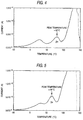
- the vinylidene chloride copolymer film or laminated film obtained by application of the vinylidene chloride copolymer is measured by the thermally stimulated current method (TSC), two peaks are observed between about 0°C and about 100°C, and the peak on the higher temperature side is ⁇ a dispersion. It can be, therefore, considered that a higher peak temperature (particularly, with respect to a ⁇ a peak temperature in a high temperature portion) shows lower molecular movability and more excellent barrier properties.
- the vinylidene chloride copolymer films or laminated films obtained by application of a vinylidene chloride copolymer according to the prior art techniques have a ⁇ a peak temperature of 60°C or less.
- the vinylidene chloride copolymer film or laminated film obtained by the producing method of the present invention has a ⁇ a peak temperature of 70°C or more, and is very low in molecular movability and extremely excellent in barrier properties.
- preferred examples of methods for producing the vinylidene chloride copolymer powder include a method of adding an aqueous dispersion obtained by emulsion polymerization to an aqueous solution of a coagulating agent to coagulate it, followed by washing and drying to prepare the vinylidene chloride copolymer powder.
- a method of adding an aqueous dispersion obtained by emulsion polymerization to an aqueous solution of a coagulating agent to coagulate it followed by washing and drying to prepare the vinylidene chloride copolymer powder.
- the coagulating agent used in this method include acids such as hydrochloric acid, sulfuric acid, nitric acid, acetic acid and phosphoric acid, alkali metal salts such as sodium chloride, alkaline earth metal salts such as calcium chloride and magnesium sulfate, and aluminum salts such as aluminum sulfate. They can be used alone or as a mixture thereof. Although there is no particular limitation on the amount thereof added, they are usually added in an amount of about 0.05% to about 10% by weight based on the copolymer. It is preferred that the amount added is as small as possible, because the amount of the agent contained in the powder can be reduced.
- a diffraction profile was taken by the reflection method.
- the density was measured at 20°C by the density-gradient tube method using zinc chloride.
- the oxygen permeability was measured, based on JIS K 7126, method B (equal pressure method) under the conditions of 20°C and 70% RH, and the measurements were converted to 2.5 g/m 2 .
- a glass-lined pressure reaction vessel was charged with 100 parts of ion-exchanged water, 0.1 part of sodium alkylsulfonate and 0.9 part of sodium persulfate, and degassed, followed by keeping the temperature of contents at 50°C.
- 90% by weight of vinylidene chloride and 10% by weight of acrylonitrile were weighed out and mixed with each other to prepare a monomer mixture.
- 0.6 part of acrylonitrile and 0.8 part of itaconic acid were added, and then, the whole of the above-mentioned monomer mixture (100 parts) was continuously added thereto over 16 hours.
- a biaxial oriented polypropylene film (having a thickness of 18 ⁇ m) was coated with the solution in a similar manner so as to give a dry amount coated of 2.5 g/m 2 , and heat treated to obtain a desired laminated film.
- This solution had a gelation temperature of 30°C.
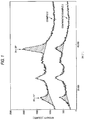
- Example 1 The vinylidene chloride copolymer solution as prepared in Example 1 was allowed to stand at 50°C for one hour or for 4 hours. Then, a vinylidene chloride copolymer film and a laminated film were prepared in the same manner as in Example 1. A diffraction diagram of this vinylidene chloride copolymer film according to the wide angle X-ray reflection method is shown in Fig. 1.
- Example 2 The vinylidene chloride copolymer solution as prepared in Example 1 was allowed to stand at 20°C for 3 hours. As a result, the solution gelled. Then, the gel was heated at 50°C for 30 minutes to a solution state. Thereafter, a vinylidene chloride copolymer film and a laminated film were prepared in the same manner as in Example 1. A diffraction diagram of this laminated film according to the wide angle X-ray reflection method is shown in Fig. 2.
- Example 3 The vinylidene chloride copolymer solution as prepared and dissolved at 70°C in Example 1 was allowed to stand at the temperature for one hour or for 4 hours. Thereafter, a vinylidene chloride copolymer film and a laminated film were prepared in the same manner as in Example 1. A diffraction diagram of this laminated film according to the wide angle X-ray reflection method is shown in Fig. 3.
- Example 1 The vinylidene chloride copolymer solution as prepared in Example 1 was allowed to stand at 50°C for 30 minutes. Thereafter, a vinylidene chloride copolymer film and a laminated film were prepared in the same manner as in Example 1. A diffraction diagram of this vinylidene chloride copolymer film according to the wide angle X-ray reflection method is shown in Fig. 1.
- Example 2 Twelve grams of the vinylidene chloride copolymer as prepared in Example 1 was added to a mixed solvent of 12 g of tetrahydrofuran, 36 g of methyl ethyl ketone and 12 g of toluene, and then, the temperature was elevated to 50°C to dissolve the copolymer completely. The resulting solution was allowed to stand at 30°C for one hour or for 4 hours. Then, a vinylidene chloride copolymer film and a laminated film were prepared in the same manner as in Example 1. This solution had a gelation temperature of 20°C.
- Example 4 The vinylidene chloride copolymer solution as prepared in Example 4 was allowed to stand at 10°C for 3 hours. As a result, the solution gelled. Then, the gel was heated at 45°C for 30 minutes to a solution state. Thereafter, a vinylidene chloride copolymer film and a laminated film were prepared in the same manner as in Example 1.
- Example 4 The vinylidene chloride copolymer solution as prepared in Example 4 was allowed to stand at 50°C for one hour or for 4 hours. Then, a vinylidene chloride copolymer film and a laminated film were prepared in the same manner as in Example 1.
- Example 4 The vinylidene chloride copolymer solution as prepared in Example 4 was allowed to stand at 30°C for 30 minutes. Then, a vinylidene chloride copolymer film and a laminated film were prepared in the same manner as in Example 1.
- a glass-lined pressure reaction vessel was charged with 100 parts of ion-exchanged water, 0.1 part of sodium alkylsulfonate and 0.9 part of sodium persulfate, and degassed, followed by keeping the temperature of contents at 50°C.
- 90% by weight of vinylidene chloride, 5% by weight of methacrylonitrile and 5% by weight of methyl methacrylate were weighed out and mixed with each other to prepare a monomer mixture.
- 0.6 part of methacrylonitrile and 0.8 part of itaconic acid were added, and then, the whole of the above-mentioned monomer mixture (100 parts) was continuously added thereto over 16 hours.
- Example 6 The vinylidene chloride copolymer solution as prepared in Example 6 was allowed to stand at 45°C for one hour or for 4 hours. Then, a vinylidene chloride copolymer film and a laminated film were prepared in the same manner as in Example 1.
- Example 6 The vinylidene chloride copolymer solution as prepared in Example 6 was allowed to stand at 10°C for 3 hours. As a result, the solution gelled. Then, the gel was heated at 50°C for 30 minutes to a solution state. Thereafter, a vinylidene chloride copolymer film and a laminated film were prepared in the same manner as in Example 1.
- the vinylidene chloride copolymer solution as prepared in Example 6 was dissolved at 65°C, and then, toluene was added thereto so as to give a total solvent composition of THF/MEK/TOL of 5/3/4. Then, the resulting solution was allowed to stand at 45°C for one hour or for 4 hours. Thereafter, a vinylidene chloride copolymer film and a laminated film were prepared in the same manner as in Example 1. The gelation temperature of this solution was 25°C.
- Example 6 The vinylidene chloride copolymer solution as prepared in Example 6 was allowed to stand at 65°C for one hour or for 4 hours. Then, a vinylidene chloride copolymer film and a laminated film were prepared in the same manner as in Example 1.
- Example 6 The vinylidene chloride copolymer solution as prepared in Example 6 was allowed to stand at 45°C for 30 minutes. Then, a vinylidene chloride copolymer film and a laminated film were prepared in the same manner as in Example 1. The results of measurement of thermally stimulated current for this laminated film are shown in Fig. 5.
- Example 6 The vinylidene chloride copolymer solution as prepared in Example 6 was dissolved at 65°C, and then, toluene was added thereto so as to give a total solvent composition of THF/MEK/TOL of 5/3/4. Immediately after that, a vinylidene chloride copolymer film and a laminated film were prepared in the same manner as in Example 1.
- Example 1 the coating films obtained in Examples 1 to 9 are high in the degree of polymer orientation and extremely excellent in barrier properties, as compared to those obtained in Comparative Examples 1 to 7.
- Laminated Film Conditions of Standing After Dissolution ⁇ a Peak Temperature (°C) X-Ray Intensity (I/J) Half Band Width (°) Oxygen Permeability (cc/m 2 .atm.24hr)
- Example 6 35°C, 1 hr 82 1.5 2.0 2.1 4 hr 84 1.7 2.0 1.7
- Example 7 45°C, 1 hr 77 1.5 2.5 2.4 4 hr 82 1.6 2.0 2.0 2.0
- Example 8 10°C, 3 hr ⁇ 50°C, 30 min 85 1.9 2.0 1.5
- Example 9 After addition of TOL 45°C, 1 hr 85 1.6 2.0 1.6 45°C, 4 hr 86 2.1 2.0 1.4 Comparative Example 5 65°C, 1 hr 60 1.2 2.2 3.0 4 hr 60 1.1 2.3
- the vinylidene chloride copolymer films or laminated films of the present invention have considerably excellent barrier properties, compared with the conventional ones, so that the same barrier properties can be attained with a smaller coating amount and a reduction in coating cost and an improvement in quality can be achieved.
Landscapes
- Chemical & Material Sciences (AREA)
- Organic Chemistry (AREA)
- Chemical Kinetics & Catalysis (AREA)
- Medicinal Chemistry (AREA)
- Polymers & Plastics (AREA)
- Health & Medical Sciences (AREA)
- Engineering & Computer Science (AREA)
- Manufacturing & Machinery (AREA)
- Materials Engineering (AREA)
- Life Sciences & Earth Sciences (AREA)
- Wood Science & Technology (AREA)
- Dispersion Chemistry (AREA)
- Laminated Bodies (AREA)
Applications Claiming Priority (9)
| Application Number | Priority Date | Filing Date | Title |
|---|---|---|---|
| JP9670696 | 1996-04-18 | ||
| JP96706/96 | 1996-04-18 | ||
| JP166617/96 | 1996-06-07 | ||
| JP166616/96 | 1996-06-07 | ||
| JP16661796 | 1996-06-07 | ||
| JP16661696 | 1996-06-07 | ||
| JP195832/96 | 1996-07-25 | ||
| JP19583296 | 1996-07-25 | ||
| PCT/JP1996/003472 WO1997039061A1 (en) | 1996-04-18 | 1996-11-27 | Coating material and films excellent in barrier properties and process for the production thereof |
Publications (2)
| Publication Number | Publication Date |
|---|---|
| EP0908493A1 true EP0908493A1 (de) | 1999-04-14 |
| EP0908493A4 EP0908493A4 (de) | 2000-07-19 |
Family
ID=27468464
Family Applications (1)
| Application Number | Title | Priority Date | Filing Date |
|---|---|---|---|
| EP96939314A Withdrawn EP0908493A4 (de) | 1996-04-18 | 1996-11-27 | Beschichtungsmaterial und filme mit exzellenten grenzflächeneigenschaften sowie verfahren zu deren herstellung |
Country Status (4)
| Country | Link |
|---|---|
| US (1) | US6306519B1 (de) |
| EP (1) | EP0908493A4 (de) |
| AU (1) | AU7639296A (de) |
| WO (1) | WO1997039061A1 (de) |
Cited By (1)
| Publication number | Priority date | Publication date | Assignee | Title |
|---|---|---|---|---|
| CN110358228A (zh) * | 2019-07-02 | 2019-10-22 | 南通大学 | 一种高阻隔阻燃珍珠母/聚偏氯乙烯乳液及其制备方法 |
Families Citing this family (6)
| Publication number | Priority date | Publication date | Assignee | Title |
|---|---|---|---|---|
| JP2007505182A (ja) * | 2003-09-11 | 2007-03-08 | セイフグラース (ユーロップ) リミテッド | 安全特性を改良したガラス状材料 |
| JP2008268938A (ja) * | 2007-03-29 | 2008-11-06 | Fujifilm Corp | 保護フィルム、偏光板、及び液晶表示装置 |
| JP6724680B2 (ja) * | 2016-09-16 | 2020-07-15 | 三菱ケミカル株式会社 | Ptp用多層シート、及びそれを用いたptp |
| JP7157069B2 (ja) * | 2017-10-04 | 2022-10-19 | 日本製紙株式会社 | バリア素材 |
| JP2020146909A (ja) * | 2019-03-13 | 2020-09-17 | 旭化成株式会社 | 耐変色性多層シート |
| JP7365131B2 (ja) * | 2019-03-27 | 2023-10-19 | 三井化学東セロ株式会社 | バリア性フィルムの製造方法 |
Family Cites Families (12)
| Publication number | Priority date | Publication date | Assignee | Title |
|---|---|---|---|---|
| US4097433A (en) * | 1976-05-20 | 1978-06-27 | E. I. Du Pont De Nemours And Company | Heat-sealable vinylidene chloride copolymer coating composition |
| US4324714A (en) * | 1978-09-15 | 1982-04-13 | The Dow Chemical Company | Vinylidene chloride polymer microgel powder lacquer coating composition and substrates coated therewith |
| JPS5710628A (en) | 1980-06-24 | 1982-01-20 | Daicel Chem Ind Ltd | Preparation of covering film |
| JPS6045648B2 (ja) * | 1980-09-26 | 1985-10-11 | 三菱油化バ−ディツシエ株式会社 | 高結晶性塩化ビニリデン系重合体水性分散体 |
| JPS5941660B2 (ja) * | 1980-10-29 | 1984-10-08 | 旭化成株式会社 | 塩化ビニリデン系樹脂水分散体組成物 |
| US4451632A (en) * | 1981-06-25 | 1984-05-29 | The Dow Chemical Company | High vinylidene chloride content interpolymer coating resins and method of preparation |
| AU554224B2 (en) * | 1981-06-25 | 1986-08-14 | Dow Chemical Company, The | Vinylidine chloride by emulsion polymerisation |
| DE3440790A1 (de) * | 1984-11-08 | 1986-05-15 | Basf Ag, 6700 Ludwigshafen | Stabile waessrige dispersionen von vinylidenchloridcopolymerisaten und deren verwendung |
| JPH0354244A (ja) * | 1989-07-21 | 1991-03-08 | Daicel Chem Ind Ltd | ガスバリア性塗布剤 |
| EP0435792A3 (en) * | 1989-12-28 | 1991-11-06 | American National Can Company | Vinylidene chloride copolymer films |
| JP2914743B2 (ja) * | 1990-10-09 | 1999-07-05 | ダイセル化学工業株式会社 | 積層フィルムおよびその製造方法 |
| JP3830237B2 (ja) * | 1997-07-22 | 2006-10-04 | 旭化成ケミカルズ株式会社 | 塩化ビニリデン系共重合体ラテックス |
-
1996
- 1996-11-27 AU AU76392/96A patent/AU7639296A/en not_active Abandoned
- 1996-11-27 WO PCT/JP1996/003472 patent/WO1997039061A1/ja not_active Ceased
- 1996-11-27 EP EP96939314A patent/EP0908493A4/de not_active Withdrawn
-
1998
- 1998-10-16 US US09/174,007 patent/US6306519B1/en not_active Expired - Lifetime
Cited By (2)
| Publication number | Priority date | Publication date | Assignee | Title |
|---|---|---|---|---|
| CN110358228A (zh) * | 2019-07-02 | 2019-10-22 | 南通大学 | 一种高阻隔阻燃珍珠母/聚偏氯乙烯乳液及其制备方法 |
| CN110358228B (zh) * | 2019-07-02 | 2021-09-24 | 南通大学 | 一种高阻隔阻燃珍珠母/聚偏氯乙烯乳液及其制备方法 |
Also Published As
| Publication number | Publication date |
|---|---|
| US6306519B1 (en) | 2001-10-23 |
| WO1997039061A1 (en) | 1997-10-23 |
| EP0908493A4 (de) | 2000-07-19 |
| AU7639296A (en) | 1997-11-07 |
Similar Documents
| Publication | Publication Date | Title |
|---|---|---|
| EP0525205B1 (de) | Wässrige dispersion und damit beschichtetes substrat | |
| US4615943A (en) | Vinylidene fluoride copolymer film | |
| US5095081A (en) | Process for the manufacture of vinylidene fluoride polymers and use of vinylidene fluoride polymers for paint formulation | |
| US6306519B1 (en) | Coating material and film extremely excellent in barrier properties, and method for producing the same | |
| JP3021494B2 (ja) | 偏光フイルムおよびその製造法 | |
| CN105237788B (zh) | 涂布有偏氯乙烯系共聚物混合物的聚酰胺膜及其制造方法 | |
| JPH0559946B2 (de) | ||
| US3911193A (en) | Coated granulates of ethylene/vinyl acetate copolymers | |
| EP0009221B1 (de) | Vinylidenchlorid-Polymerisat-Mikrogele und deren Verwendung bei der Herstellung von Beschichtungen | |
| US4451632A (en) | High vinylidene chloride content interpolymer coating resins and method of preparation | |
| JPS588702B2 (ja) | 塩化ビニリデン系ラテツクスの製造方法 | |
| US4324714A (en) | Vinylidene chloride polymer microgel powder lacquer coating composition and substrates coated therewith | |
| JPWO1997039061A1 (ja) | バリヤー性に非常に優れたコーティング剤及びフィルム並びにその製造方法 | |
| JP2000302821A (ja) | 塩化ビニリデン系共重合体及びコーティング剤 | |
| EP0005344B1 (de) | Kristallisierbare Copolymerisate von Vinylidenchlorid und Methylmethacrylat mit kontrollierter Zusammensetzung und Verfahren zur Herstellung derselben | |
| JPH04183738A (ja) | 樹脂水性分散液の製造方法 | |
| JPH08136728A (ja) | 偏光フィルム | |
| US20230192967A1 (en) | Aqueous dispersions and methods for production | |
| JP3194614B2 (ja) | 水性分散液 | |
| JP3210717B2 (ja) | 水性分散液および分散安定剤 | |
| JP4329013B2 (ja) | 易接着性ポリエステルフィルムおよびその製造方法 | |
| CA1218790A (en) | High vinylidene chloride content interpolymer coating resins and method of preparation | |
| JPH08188624A (ja) | ポリビニルアルコールフィルム | |
| JP3212044B2 (ja) | 多層構造体の製法 | |
| JP3131505B2 (ja) | 多層構造体 |
Legal Events
| Date | Code | Title | Description |
|---|---|---|---|
| PUAI | Public reference made under article 153(3) epc to a published international application that has entered the european phase |
Free format text: ORIGINAL CODE: 0009012 |
|
| 17P | Request for examination filed |
Effective date: 19981112 |
|
| AK | Designated contracting states |
Kind code of ref document: A1 Designated state(s): AT BE CH DE DK ES FI FR GB GR IE IT LI LU MC NL PT SE |
|
| A4 | Supplementary search report drawn up and despatched |
Effective date: 20000606 |
|
| AK | Designated contracting states |
Kind code of ref document: A4 Designated state(s): AT BE CH DE DK ES FI FR GB GR IE IT LI LU MC NL PT SE |
|
| RIC1 | Information provided on ipc code assigned before grant |
Free format text: 7C 08L 27/08 A, 7C 08J 5/18 B, 7C 08J 7/04 B |
|
| RAP1 | Party data changed (applicant data changed or rights of an application transferred) |
Owner name: ASAHI KASEI KABUSHIKI KAISHA |
|
| 17Q | First examination report despatched |
Effective date: 20010430 |
|
| STAA | Information on the status of an ep patent application or granted ep patent |
Free format text: STATUS: THE APPLICATION IS DEEMED TO BE WITHDRAWN |
|
| 18D | Application deemed to be withdrawn |
Effective date: 20040227 |