EP0909762B1 - Zweikernige Iridium(I)-phosphinkomplexe und ihre Verwendung als Katalysator in der asymmetrischen Hydroaminierung von Olefinen - Google Patents
Zweikernige Iridium(I)-phosphinkomplexe und ihre Verwendung als Katalysator in der asymmetrischen Hydroaminierung von Olefinen Download PDFInfo
- Publication number
- EP0909762B1 EP0909762B1 EP98119241A EP98119241A EP0909762B1 EP 0909762 B1 EP0909762 B1 EP 0909762B1 EP 98119241 A EP98119241 A EP 98119241A EP 98119241 A EP98119241 A EP 98119241A EP 0909762 B1 EP0909762 B1 EP 0909762B1
- Authority
- EP
- European Patent Office
- Prior art keywords
- diphenylphosphino
- ferrocene
- ethyl
- bis
- optionally substituted
- Prior art date
- Legal status (The legal status is an assumption and is not a legal conclusion. Google has not performed a legal analysis and makes no representation as to the accuracy of the status listed.)
- Expired - Lifetime
Links
- KSHARGNRPFMEHY-UHFFFAOYSA-N P.[Ir+] Chemical class P.[Ir+] KSHARGNRPFMEHY-UHFFFAOYSA-N 0.000 title claims abstract description 18
- 238000005913 hydroamination reaction Methods 0.000 title claims abstract description 16
- 150000001336 alkenes Chemical class 0.000 title claims abstract description 13
- 239000003054 catalyst Substances 0.000 title claims description 8
- VURFVHCLMJOLKN-UHFFFAOYSA-N Diphosphine Natural products PP VURFVHCLMJOLKN-UHFFFAOYSA-N 0.000 claims abstract description 43
- 238000000034 method Methods 0.000 claims abstract description 27
- 239000003446 ligand Substances 0.000 claims abstract description 24
- 150000001412 amines Chemical class 0.000 claims abstract description 21
- 125000000217 alkyl group Chemical group 0.000 claims abstract description 14
- 229910052801 chlorine Inorganic materials 0.000 claims abstract description 12
- 238000006243 chemical reaction Methods 0.000 claims abstract description 9
- 239000000203 mixture Substances 0.000 claims abstract description 9
- 125000002252 acyl group Chemical group 0.000 claims abstract description 8
- 229910052794 bromium Inorganic materials 0.000 claims abstract description 8
- 229910052731 fluorine Inorganic materials 0.000 claims abstract description 8
- 125000001072 heteroaryl group Chemical group 0.000 claims abstract description 8
- 229910052740 iodine Inorganic materials 0.000 claims abstract description 7
- 150000001408 amides Chemical class 0.000 claims abstract description 4
- 125000003710 aryl alkyl group Chemical group 0.000 claims abstract description 4
- JRZJOMJEPLMPRA-UHFFFAOYSA-N olefin Natural products CCCCCCCC=C JRZJOMJEPLMPRA-UHFFFAOYSA-N 0.000 claims abstract description 4
- 239000007787 solid Substances 0.000 claims abstract description 4
- 125000003107 substituted aryl group Chemical group 0.000 claims abstract description 4
- -1 fluoride ions Chemical class 0.000 claims description 55
- 125000001495 ethyl group Chemical group [H]C([H])([H])C([H])([H])* 0.000 claims description 54
- 239000000460 chlorine Substances 0.000 claims description 17
- FVZVCSNXTFCBQU-UHFFFAOYSA-N phosphanyl Chemical group [PH2] FVZVCSNXTFCBQU-UHFFFAOYSA-N 0.000 claims description 16
- MUALRAIOVNYAIW-UHFFFAOYSA-N binap Chemical compound C1=CC=CC=C1P(C=1C(=C2C=CC=CC2=CC=1)C=1C2=CC=CC=C2C=CC=1P(C=1C=CC=CC=1)C=1C=CC=CC=1)C1=CC=CC=C1 MUALRAIOVNYAIW-UHFFFAOYSA-N 0.000 claims description 8
- KTWOOEGAPBSYNW-UHFFFAOYSA-N ferrocene Chemical class [Fe+2].C=1C=C[CH-]C=1.C=1C=C[CH-]C=1 KTWOOEGAPBSYNW-UHFFFAOYSA-N 0.000 claims description 8
- WKBOTKDWSSQWDR-UHFFFAOYSA-N Bromine atom Chemical compound [Br] WKBOTKDWSSQWDR-UHFFFAOYSA-N 0.000 claims description 7
- ZAMOUSCENKQFHK-UHFFFAOYSA-N Chlorine atom Chemical compound [Cl] ZAMOUSCENKQFHK-UHFFFAOYSA-N 0.000 claims description 7
- GDTBXPJZTBHREO-UHFFFAOYSA-N bromine Substances BrBr GDTBXPJZTBHREO-UHFFFAOYSA-N 0.000 claims description 7
- 239000011737 fluorine Substances 0.000 claims description 7
- ZCYVEMRRCGMTRW-UHFFFAOYSA-N 7553-56-2 Chemical compound [I] ZCYVEMRRCGMTRW-UHFFFAOYSA-N 0.000 claims description 6
- 125000004432 carbon atom Chemical group C* 0.000 claims description 6
- 125000001153 fluoro group Chemical group F* 0.000 claims description 6
- 239000001257 hydrogen Substances 0.000 claims description 6
- 229910052739 hydrogen Inorganic materials 0.000 claims description 6
- 239000011630 iodine Substances 0.000 claims description 6
- 125000004435 hydrogen atom Chemical group [H]* 0.000 claims description 5
- 125000001997 phenyl group Chemical group [H]C1=C([H])C([H])=C(*)C([H])=C1[H] 0.000 claims description 5
- 125000001424 substituent group Chemical group 0.000 claims description 5
- KRHYYFGTRYWZRS-UHFFFAOYSA-M Fluoride anion Chemical compound [F-] KRHYYFGTRYWZRS-UHFFFAOYSA-M 0.000 claims description 4
- PAYRUJLWNCNPSJ-UHFFFAOYSA-N N-phenyl amine Natural products NC1=CC=CC=C1 PAYRUJLWNCNPSJ-UHFFFAOYSA-N 0.000 claims description 4
- 125000001309 chloro group Chemical group Cl* 0.000 claims description 4
- 150000002476 indolines Chemical class 0.000 claims description 4
- 125000004169 (C1-C6) alkyl group Chemical group 0.000 claims description 3
- 239000004913 cyclooctene Substances 0.000 claims description 3
- 239000012454 non-polar solvent Substances 0.000 claims description 3
- 150000007530 organic bases Chemical class 0.000 claims description 3
- IRKKKQOVDCZGGC-UHFFFAOYSA-M tris(dimethylamino)-[[tris(dimethylamino)-$l^{5}-phosphanylidene]amino]phosphanium;fluoride Chemical compound [F-].CN(C)[P+](N(C)C)(N(C)C)N=P(N(C)C)(N(C)C)N(C)C IRKKKQOVDCZGGC-UHFFFAOYSA-M 0.000 claims description 3
- 125000004178 (C1-C4) alkyl group Chemical group 0.000 claims description 2
- 125000004191 (C1-C6) alkoxy group Chemical group 0.000 claims description 2
- UFHFLCQGNIYNRP-UHFFFAOYSA-N Hydrogen Chemical compound [H][H] UFHFLCQGNIYNRP-UHFFFAOYSA-N 0.000 claims description 2
- JAZCEXBNIYKZDI-UHFFFAOYSA-N [Ir+] Chemical compound [Ir+] JAZCEXBNIYKZDI-UHFFFAOYSA-N 0.000 claims description 2
- URYYVOIYTNXXBN-UPHRSURJSA-N cyclooctene Chemical compound C1CCC\C=C/CC1 URYYVOIYTNXXBN-UPHRSURJSA-N 0.000 claims description 2
- PXGOKWXKJXAPGV-UHFFFAOYSA-N Fluorine Chemical compound FF PXGOKWXKJXAPGV-UHFFFAOYSA-N 0.000 claims 1
- XYFCBTPGUUZFHI-UHFFFAOYSA-N phosphine group Chemical group P XYFCBTPGUUZFHI-UHFFFAOYSA-N 0.000 claims 1
- 238000002360 preparation method Methods 0.000 abstract description 10
- 125000002619 bicyclic group Chemical group 0.000 abstract description 6
- 125000002950 monocyclic group Chemical group 0.000 abstract description 6
- 125000003118 aryl group Chemical group 0.000 abstract description 4
- 125000003545 alkoxy group Chemical group 0.000 abstract description 3
- DYLIWHYUXAJDOJ-OWOJBTEDSA-N (e)-4-(6-aminopurin-9-yl)but-2-en-1-ol Chemical compound NC1=NC=NC2=C1N=CN2C\C=C\CO DYLIWHYUXAJDOJ-OWOJBTEDSA-N 0.000 abstract description 2
- 125000003387 indolinyl group Chemical class N1(CCC2=CC=CC=C12)* 0.000 abstract 2
- 125000004475 heteroaralkyl group Chemical group 0.000 abstract 1
- 238000007363 ring formation reaction Methods 0.000 abstract 1
- UHOVQNZJYSORNB-UHFFFAOYSA-N Benzene Chemical compound C1=CC=CC=C1 UHOVQNZJYSORNB-UHFFFAOYSA-N 0.000 description 45
- YXFVVABEGXRONW-UHFFFAOYSA-N Toluene Chemical compound CC1=CC=CC=C1 YXFVVABEGXRONW-UHFFFAOYSA-N 0.000 description 30
- 239000000243 solution Substances 0.000 description 19
- 238000005481 NMR spectroscopy Methods 0.000 description 16
- OFBQJSOFQDEBGM-UHFFFAOYSA-N Pentane Chemical compound CCCCC OFBQJSOFQDEBGM-UHFFFAOYSA-N 0.000 description 14
- VLKZOEOYAKHREP-UHFFFAOYSA-N n-Hexane Chemical compound CCCCCC VLKZOEOYAKHREP-UHFFFAOYSA-N 0.000 description 14
- GKIRPKYJQBWNGO-OCEACIFDSA-N clomifene Chemical compound C1=CC(OCCN(CC)CC)=CC=C1C(\C=1C=CC=CC=1)=C(\Cl)C1=CC=CC=C1 GKIRPKYJQBWNGO-OCEACIFDSA-N 0.000 description 10
- XEKOWRVHYACXOJ-UHFFFAOYSA-N Ethyl acetate Chemical compound CCOC(C)=O XEKOWRVHYACXOJ-UHFFFAOYSA-N 0.000 description 9
- 230000008569 process Effects 0.000 description 9
- 239000000047 product Substances 0.000 description 9
- 239000000725 suspension Substances 0.000 description 9
- KFZMGEQAYNKOFK-UHFFFAOYSA-N Isopropanol Chemical compound CC(C)O KFZMGEQAYNKOFK-UHFFFAOYSA-N 0.000 description 8
- URYYVOIYTNXXBN-UHFFFAOYSA-N cyclooctene Chemical compound [CH]1[CH]CCCCCC1 URYYVOIYTNXXBN-UHFFFAOYSA-N 0.000 description 8
- RTZKZFJDLAIYFH-UHFFFAOYSA-N Diethyl ether Chemical compound CCOCC RTZKZFJDLAIYFH-UHFFFAOYSA-N 0.000 description 6
- HEMHJVSKTPXQMS-UHFFFAOYSA-M Sodium hydroxide Chemical compound [OH-].[Na+] HEMHJVSKTPXQMS-UHFFFAOYSA-M 0.000 description 6
- 125000004437 phosphorous atom Chemical group 0.000 description 6
- 239000002904 solvent Substances 0.000 description 6
- 238000003756 stirring Methods 0.000 description 6
- QTBSBXVTEAMEQO-UHFFFAOYSA-N acetic acid Substances CC(O)=O QTBSBXVTEAMEQO-UHFFFAOYSA-N 0.000 description 5
- JFNLZVQOOSMTJK-KNVOCYPGSA-N norbornene Chemical compound C1[C@@H]2CC[C@H]1C=C2 JFNLZVQOOSMTJK-KNVOCYPGSA-N 0.000 description 5
- 239000000843 powder Substances 0.000 description 5
- 238000000607 proton-decoupled 31P nuclear magnetic resonance spectroscopy Methods 0.000 description 5
- 239000011541 reaction mixture Substances 0.000 description 5
- VGGSQFUCUMXWEO-UHFFFAOYSA-N Ethene Chemical compound C=C VGGSQFUCUMXWEO-UHFFFAOYSA-N 0.000 description 4
- IMNFDUFMRHMDMM-UHFFFAOYSA-N N-Heptane Chemical compound CCCCCCC IMNFDUFMRHMDMM-UHFFFAOYSA-N 0.000 description 4
- WYURNTSHIVDZCO-UHFFFAOYSA-N Tetrahydrofuran Chemical compound C1CCOC1 WYURNTSHIVDZCO-UHFFFAOYSA-N 0.000 description 4
- JJVJVIBMKKRCSO-UHFFFAOYSA-N [3-methyl-2-(2-methylphenyl)phenyl]-diphenylphosphane Chemical group CC1=CC=CC=C1C1=C(C)C=CC=C1P(C=1C=CC=CC=1)C1=CC=CC=C1 JJVJVIBMKKRCSO-UHFFFAOYSA-N 0.000 description 4
- 150000001875 compounds Chemical class 0.000 description 4
- 150000003254 radicals Chemical class 0.000 description 4
- JOXIMZWYDAKGHI-UHFFFAOYSA-N toluene-4-sulfonic acid Chemical compound CC1=CC=C(S(O)(=O)=O)C=C1 JOXIMZWYDAKGHI-UHFFFAOYSA-N 0.000 description 4
- YMWUJEATGCHHMB-UHFFFAOYSA-N Dichloromethane Chemical compound ClCCl YMWUJEATGCHHMB-UHFFFAOYSA-N 0.000 description 3
- 239000012018 catalyst precursor Substances 0.000 description 3
- 238000000921 elemental analysis Methods 0.000 description 3
- 229910052741 iridium Inorganic materials 0.000 description 3
- GKOZUEZYRPOHIO-UHFFFAOYSA-N iridium atom Chemical compound [Ir] GKOZUEZYRPOHIO-UHFFFAOYSA-N 0.000 description 3
- 239000003921 oil Substances 0.000 description 3
- 230000003287 optical effect Effects 0.000 description 3
- 239000012071 phase Substances 0.000 description 3
- 239000010414 supernatant solution Substances 0.000 description 3
- MCSXGCZMEPXKIW-UHFFFAOYSA-N 3-hydroxy-4-[(4-methyl-2-nitrophenyl)diazenyl]-N-(3-nitrophenyl)naphthalene-2-carboxamide Chemical compound Cc1ccc(N=Nc2c(O)c(cc3ccccc23)C(=O)Nc2cccc(c2)[N+]([O-])=O)c(c1)[N+]([O-])=O MCSXGCZMEPXKIW-UHFFFAOYSA-N 0.000 description 2
- XKRFYHLGVUSROY-UHFFFAOYSA-N Argon Chemical compound [Ar] XKRFYHLGVUSROY-UHFFFAOYSA-N 0.000 description 2
- LFQSCWFLJHTTHZ-UHFFFAOYSA-N Ethanol Chemical compound CCO LFQSCWFLJHTTHZ-UHFFFAOYSA-N 0.000 description 2
- 239000005977 Ethylene Substances 0.000 description 2
- CSNNHWWHGAXBCP-UHFFFAOYSA-L Magnesium sulfate Chemical compound [Mg+2].[O-][S+2]([O-])([O-])[O-] CSNNHWWHGAXBCP-UHFFFAOYSA-L 0.000 description 2
- AFVFQIVMOAPDHO-UHFFFAOYSA-N Methanesulfonic acid Chemical compound CS(O)(=O)=O AFVFQIVMOAPDHO-UHFFFAOYSA-N 0.000 description 2
- JUJWROOIHBZHMG-UHFFFAOYSA-N Pyridine Chemical compound C1=CC=NC=C1 JUJWROOIHBZHMG-UHFFFAOYSA-N 0.000 description 2
- VYPSYNLAJGMNEJ-UHFFFAOYSA-N Silicium dioxide Chemical compound O=[Si]=O VYPSYNLAJGMNEJ-UHFFFAOYSA-N 0.000 description 2
- 125000004390 alkyl sulfonyl group Chemical group 0.000 description 2
- 125000003277 amino group Chemical group 0.000 description 2
- QVGXLLKOCUKJST-UHFFFAOYSA-N atomic oxygen Chemical compound [O] QVGXLLKOCUKJST-UHFFFAOYSA-N 0.000 description 2
- 125000003236 benzoyl group Chemical group [H]C1=C([H])C([H])=C(C([H])=C1[H])C(*)=O 0.000 description 2
- 230000003197 catalytic effect Effects 0.000 description 2
- 239000013078 crystal Substances 0.000 description 2
- IJKVHSBPTUYDLN-UHFFFAOYSA-N dihydroxy(oxo)silane Chemical compound O[Si](O)=O IJKVHSBPTUYDLN-UHFFFAOYSA-N 0.000 description 2
- ZUOUZKKEUPVFJK-UHFFFAOYSA-N diphenyl Chemical compound C1=CC=CC=C1C1=CC=CC=C1 ZUOUZKKEUPVFJK-UHFFFAOYSA-N 0.000 description 2
- 238000001035 drying Methods 0.000 description 2
- 230000000694 effects Effects 0.000 description 2
- 239000003480 eluent Substances 0.000 description 2
- 150000002222 fluorine compounds Chemical class 0.000 description 2
- 229910052736 halogen Inorganic materials 0.000 description 2
- 150000002367 halogens Chemical class 0.000 description 2
- 238000004128 high performance liquid chromatography Methods 0.000 description 2
- 125000002496 methyl group Chemical group [H]C([H])([H])* 0.000 description 2
- 125000004170 methylsulfonyl group Chemical group [H]C([H])([H])S(*)(=O)=O 0.000 description 2
- 239000001301 oxygen Substances 0.000 description 2
- 229910052760 oxygen Inorganic materials 0.000 description 2
- 239000002244 precipitate Substances 0.000 description 2
- 238000010992 reflux Methods 0.000 description 2
- 125000000999 tert-butyl group Chemical group [H]C([H])([H])C(*)(C([H])([H])[H])C([H])([H])[H] 0.000 description 2
- YLQBMQCUIZJEEH-UHFFFAOYSA-N tetrahydrofuran Natural products C=1C=COC=1 YLQBMQCUIZJEEH-UHFFFAOYSA-N 0.000 description 2
- OVPWEQROJNJHAG-UHFFFAOYSA-N (1-naphthalen-1-ylnaphthalen-2-yl)-diphenylphosphane Chemical compound C1=CC=CC=C1P(C=1C(=C2C=CC=CC2=CC=1)C=1C2=CC=CC=C2C=CC=1)C1=CC=CC=C1 OVPWEQROJNJHAG-UHFFFAOYSA-N 0.000 description 1
- 125000006552 (C3-C8) cycloalkyl group Chemical group 0.000 description 1
- NLMDJJTUQPXZFG-UHFFFAOYSA-N 1,4,10,13-tetraoxa-7,16-diazacyclooctadecane Chemical compound C1COCCOCCNCCOCCOCCN1 NLMDJJTUQPXZFG-UHFFFAOYSA-N 0.000 description 1
- ZDZHCHYQNPQSGG-UHFFFAOYSA-N 1-naphthalen-1-ylnaphthalene Chemical compound C1=CC=C2C(C=3C4=CC=CC=C4C=CC=3)=CC=CC2=C1 ZDZHCHYQNPQSGG-UHFFFAOYSA-N 0.000 description 1
- QRWRJDVVXAXGBT-UHFFFAOYSA-N 2-Methylindoline Chemical class C1=CC=C2NC(C)CC2=C1 QRWRJDVVXAXGBT-UHFFFAOYSA-N 0.000 description 1
- ATKRMENXGNZBKM-UHFFFAOYSA-N 2-methyl-1-(4-methylphenyl)sulfonyl-2,3-dihydroindole Chemical compound CC1CC2=CC=CC=C2N1S(=O)(=O)C1=CC=C(C)C=C1 ATKRMENXGNZBKM-UHFFFAOYSA-N 0.000 description 1
- 125000000094 2-phenylethyl group Chemical group [H]C1=C([H])C([H])=C(C([H])=C1[H])C([H])([H])C([H])([H])* 0.000 description 1
- UMPZTUVEROYNCC-UHFFFAOYSA-N 2-prop-1-enylaniline Chemical class CC=CC1=CC=CC=C1N UMPZTUVEROYNCC-UHFFFAOYSA-N 0.000 description 1
- YLNDNABNWASMFD-UHFFFAOYSA-N 4-[(1,3-dimethylimidazol-1-ium-2-yl)diazenyl]-n,n-dimethylaniline Chemical compound C1=CC(N(C)C)=CC=C1N=NC1=[N+](C)C=CN1C YLNDNABNWASMFD-UHFFFAOYSA-N 0.000 description 1
- YYROPELSRYBVMQ-UHFFFAOYSA-N 4-toluenesulfonyl chloride Chemical compound CC1=CC=C(S(Cl)(=O)=O)C=C1 YYROPELSRYBVMQ-UHFFFAOYSA-N 0.000 description 1
- XVMSFILGAMDHEY-UHFFFAOYSA-N 6-(4-aminophenyl)sulfonylpyridin-3-amine Chemical compound C1=CC(N)=CC=C1S(=O)(=O)C1=CC=C(N)C=N1 XVMSFILGAMDHEY-UHFFFAOYSA-N 0.000 description 1
- WDYVUKGVKRZQNM-UHFFFAOYSA-N 6-phosphonohexylphosphonic acid Chemical compound OP(O)(=O)CCCCCCP(O)(O)=O WDYVUKGVKRZQNM-UHFFFAOYSA-N 0.000 description 1
- HBAQYPYDRFILMT-UHFFFAOYSA-N 8-[3-(1-cyclopropylpyrazol-4-yl)-1H-pyrazolo[4,3-d]pyrimidin-5-yl]-3-methyl-3,8-diazabicyclo[3.2.1]octan-2-one Chemical class C1(CC1)N1N=CC(=C1)C1=NNC2=C1N=C(N=C2)N1C2C(N(CC1CC2)C)=O HBAQYPYDRFILMT-UHFFFAOYSA-N 0.000 description 1
- QJCMAJXWIAFFED-UHFFFAOYSA-N 9-phosphabicyclo[3.3.1]nonane Chemical compound C1CCC2CCCC1P2 QJCMAJXWIAFFED-UHFFFAOYSA-N 0.000 description 1
- QGZKDVFQNNGYKY-UHFFFAOYSA-O Ammonium Chemical compound [NH4+] QGZKDVFQNNGYKY-UHFFFAOYSA-O 0.000 description 1
- 0 C**=CCC1=C(*)C(*)=C(*)C(*)C1* Chemical compound C**=CCC1=C(*)C(*)=C(*)C(*)C1* 0.000 description 1
- 230000005526 G1 to G0 transition Effects 0.000 description 1
- 239000012359 Methanesulfonyl chloride Substances 0.000 description 1
- QECVIPBZOPUTRD-UHFFFAOYSA-N N=S(=O)=O Chemical class N=S(=O)=O QECVIPBZOPUTRD-UHFFFAOYSA-N 0.000 description 1
- ISWSIDIOOBJBQZ-UHFFFAOYSA-N Phenol Chemical compound OC1=CC=CC=C1 ISWSIDIOOBJBQZ-UHFFFAOYSA-N 0.000 description 1
- CDBYLPFSWZWCQE-UHFFFAOYSA-L Sodium Carbonate Chemical class [Na+].[Na+].[O-]C([O-])=O CDBYLPFSWZWCQE-UHFFFAOYSA-L 0.000 description 1
- ZVQOOHYFBIDMTQ-UHFFFAOYSA-N [methyl(oxido){1-[6-(trifluoromethyl)pyridin-3-yl]ethyl}-lambda(6)-sulfanylidene]cyanamide Chemical compound N#CN=S(C)(=O)C(C)C1=CC=C(C(F)(F)F)N=C1 ZVQOOHYFBIDMTQ-UHFFFAOYSA-N 0.000 description 1
- 229960000583 acetic acid Drugs 0.000 description 1
- 229910001515 alkali metal fluoride Inorganic materials 0.000 description 1
- 150000001448 anilines Chemical class 0.000 description 1
- 239000008346 aqueous phase Substances 0.000 description 1
- 229910052786 argon Inorganic materials 0.000 description 1
- 150000004982 aromatic amines Chemical class 0.000 description 1
- 125000003435 aroyl group Chemical group 0.000 description 1
- 125000001797 benzyl group Chemical group [H]C1=C([H])C([H])=C(C([H])=C1[H])C([H])([H])* 0.000 description 1
- 150000005347 biaryls Chemical group 0.000 description 1
- 230000015572 biosynthetic process Effects 0.000 description 1
- 239000004305 biphenyl Substances 0.000 description 1
- 235000010290 biphenyl Nutrition 0.000 description 1
- 125000000484 butyl group Chemical group [H]C([*])([H])C([H])([H])C([H])([H])C([H])([H])[H] 0.000 description 1
- 125000001589 carboacyl group Chemical group 0.000 description 1
- 229910052799 carbon Inorganic materials 0.000 description 1
- 238000006555 catalytic reaction Methods 0.000 description 1
- 150000001768 cations Chemical class 0.000 description 1
- 239000013522 chelant Substances 0.000 description 1
- 239000012230 colorless oil Substances 0.000 description 1
- 238000004440 column chromatography Methods 0.000 description 1
- 238000001816 cooling Methods 0.000 description 1
- 150000003983 crown ethers Chemical class 0.000 description 1
- 239000002739 cryptand Substances 0.000 description 1
- 238000002447 crystallographic data Methods 0.000 description 1
- 125000000113 cyclohexyl group Chemical group [H]C1([H])C([H])([H])C([H])([H])C([H])(*)C([H])([H])C1([H])[H] 0.000 description 1
- 125000000522 cyclooctenyl group Chemical group C1(=CCCCCCC1)* 0.000 description 1
- GGRQLKPIJPFWEZ-UHFFFAOYSA-N cycloprop-2-en-1-one Chemical compound O=C1C=C1 GGRQLKPIJPFWEZ-UHFFFAOYSA-N 0.000 description 1
- HPNMFZURTQLUMO-UHFFFAOYSA-N diethylamine Chemical compound CCNCC HPNMFZURTQLUMO-UHFFFAOYSA-N 0.000 description 1
- 238000009792 diffusion process Methods 0.000 description 1
- 125000002147 dimethylamino group Chemical group [H]C([H])([H])N(*)C([H])([H])[H] 0.000 description 1
- 238000001704 evaporation Methods 0.000 description 1
- 230000008020 evaporation Effects 0.000 description 1
- 230000002349 favourable effect Effects 0.000 description 1
- 238000003818 flash chromatography Methods 0.000 description 1
- 125000000524 functional group Chemical group 0.000 description 1
- 125000002541 furyl group Chemical group 0.000 description 1
- 238000007429 general method Methods 0.000 description 1
- 239000012362 glacial acetic acid Substances 0.000 description 1
- 125000005842 heteroatom Chemical group 0.000 description 1
- 125000004051 hexyl group Chemical group [H]C([H])([H])C([H])([H])C([H])([H])C([H])([H])C([H])([H])C([H])([H])* 0.000 description 1
- 238000011065 in-situ storage Methods 0.000 description 1
- 125000001041 indolyl group Chemical group 0.000 description 1
- 239000011261 inert gas Substances 0.000 description 1
- PNDPGZBMCMUPRI-UHFFFAOYSA-N iodine Chemical group II PNDPGZBMCMUPRI-UHFFFAOYSA-N 0.000 description 1
- 150000002500 ions Chemical class 0.000 description 1
- 150000002503 iridium Chemical class 0.000 description 1
- 125000000959 isobutyl group Chemical group [H]C([H])([H])C([H])(C([H])([H])[H])C([H])([H])* 0.000 description 1
- 125000001449 isopropyl group Chemical group [H]C([H])([H])C([H])(*)C([H])([H])[H] 0.000 description 1
- 229910052943 magnesium sulfate Inorganic materials 0.000 description 1
- 235000019341 magnesium sulphate Nutrition 0.000 description 1
- 230000014759 maintenance of location Effects 0.000 description 1
- 238000004519 manufacturing process Methods 0.000 description 1
- 229940098779 methanesulfonic acid Drugs 0.000 description 1
- QARBMVPHQWIHKH-UHFFFAOYSA-N methanesulfonyl chloride Chemical compound CS(Cl)(=O)=O QARBMVPHQWIHKH-UHFFFAOYSA-N 0.000 description 1
- MOVBJUGHBJJKOW-UHFFFAOYSA-N methyl 2-amino-5-methoxybenzoate Chemical compound COC(=O)C1=CC(OC)=CC=C1N MOVBJUGHBJJKOW-UHFFFAOYSA-N 0.000 description 1
- LQFLWKPCQITJIH-UHFFFAOYSA-N n-allyl-aniline Chemical compound C=CCNC1=CC=CC=C1 LQFLWKPCQITJIH-UHFFFAOYSA-N 0.000 description 1
- 125000001624 naphthyl group Chemical group 0.000 description 1
- 230000007935 neutral effect Effects 0.000 description 1
- 230000003647 oxidation Effects 0.000 description 1
- 238000007254 oxidation reaction Methods 0.000 description 1
- 125000001147 pentyl group Chemical group C(CCCC)* 0.000 description 1
- 125000003170 phenylsulfonyl group Chemical group C1(=CC=CC=C1)S(=O)(=O)* 0.000 description 1
- 150000003140 primary amides Chemical class 0.000 description 1
- 150000003141 primary amines Chemical class 0.000 description 1
- 125000001436 propyl group Chemical group [H]C([*])([H])C([H])([H])C([H])([H])[H] 0.000 description 1
- 238000000425 proton nuclear magnetic resonance spectrum Methods 0.000 description 1
- UMJSCPRVCHMLSP-UHFFFAOYSA-N pyridine Natural products COC1=CC=CN=C1 UMJSCPRVCHMLSP-UHFFFAOYSA-N 0.000 description 1
- 125000004076 pyridyl group Chemical group 0.000 description 1
- 125000000714 pyrimidinyl group Chemical group 0.000 description 1
- 125000000168 pyrrolyl group Chemical group 0.000 description 1
- 230000036632 reaction speed Effects 0.000 description 1
- 230000009257 reactivity Effects 0.000 description 1
- 230000008707 rearrangement Effects 0.000 description 1
- 239000012047 saturated solution Substances 0.000 description 1
- 238000000926 separation method Methods 0.000 description 1
- 239000000741 silica gel Substances 0.000 description 1
- 229910002027 silica gel Inorganic materials 0.000 description 1
- 239000012453 solvate Substances 0.000 description 1
- 125000003003 spiro group Chemical group 0.000 description 1
- 229940124530 sulfonamide Drugs 0.000 description 1
- 150000003456 sulfonamides Chemical class 0.000 description 1
- 125000000472 sulfonyl group Chemical group *S(*)(=O)=O 0.000 description 1
- DZLFLBLQUQXARW-UHFFFAOYSA-N tetrabutylammonium Chemical compound CCCC[N+](CCCC)(CCCC)CCCC DZLFLBLQUQXARW-UHFFFAOYSA-N 0.000 description 1
- CULOEOTWMUCRSJ-UHFFFAOYSA-M thallium(i) fluoride Chemical compound [Tl]F CULOEOTWMUCRSJ-UHFFFAOYSA-M 0.000 description 1
- 125000001544 thienyl group Chemical group 0.000 description 1
- 125000002088 tosyl group Chemical group [H]C1=C([H])C(=C([H])C([H])=C1C([H])([H])[H])S(*)(=O)=O 0.000 description 1
- 230000007306 turnover Effects 0.000 description 1
- 238000000825 ultraviolet detection Methods 0.000 description 1
- XLYOFNOQVPJJNP-UHFFFAOYSA-N water Substances O XLYOFNOQVPJJNP-UHFFFAOYSA-N 0.000 description 1
- 238000012982 x-ray structure analysis Methods 0.000 description 1
Classifications
-
- C—CHEMISTRY; METALLURGY
- C07—ORGANIC CHEMISTRY
- C07B—GENERAL METHODS OF ORGANIC CHEMISTRY; APPARATUS THEREFOR
- C07B53/00—Asymmetric syntheses
-
- C—CHEMISTRY; METALLURGY
- C07—ORGANIC CHEMISTRY
- C07F—ACYCLIC, CARBOCYCLIC OR HETEROCYCLIC COMPOUNDS CONTAINING ELEMENTS OTHER THAN CARBON, HYDROGEN, HALOGEN, OXYGEN, NITROGEN, SULFUR, SELENIUM OR TELLURIUM
- C07F15/00—Compounds containing elements of Groups 8, 9, 10 or 18 of the Periodic Table
- C07F15/0006—Compounds containing elements of Groups 8, 9, 10 or 18 of the Periodic Table compounds of the platinum group
- C07F15/0033—Iridium compounds
- C07F15/004—Iridium compounds without a metal-carbon linkage
Definitions
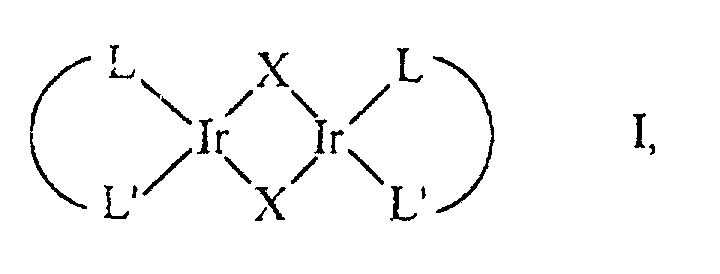
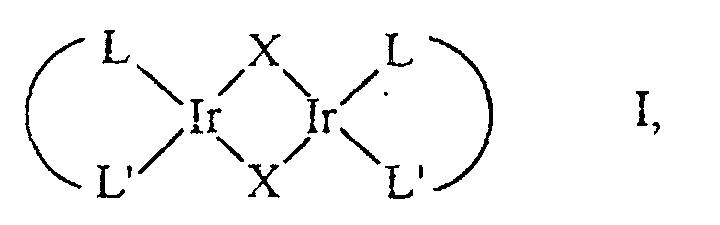
- the present invention relates to neutral dinuclear iridium (I) -phosphine complexes of the general formula
- X is fluorine, chlorine, bromine or iodine, and each represents a chiral bidentate diphosphine ligand.
- the complexes have a square-planar configuration at the iridium centers and can therefore occur in two stereoisomeric forms ( cis and trans form) if the diphosphine ligands do not have a C 2 symmetry relationship between the two phosphorus atoms. In these cases, both stereoisomers are always meant here and below, both in pure form and in a mixture.
- the invention further relates to a process for the preparation of these complexes.
- the invention relates to methods for asymmetric hydroamination of Olefins under catalysis by iridium (I) -phosphine complexes of the formula I.
- the object of the present invention was therefore to provide catalysts which in asymmetric hydroamination a higher activity over a large number exhibit catalytic cycles and deliver high optical yields.
- this task is accomplished by the binuclear iridium (I) phosphine complexes solved according to claim 1.
- Chiral bidentate diphosphine ligands are those molecules that have at least one chiral element (chiral center, chiral plane or chiral axis) and two coordinatable tertiary phosphorus atoms with an oxidation number of -3, the spatial arrangement of the phosphorus atoms allowing the formation of a chelate ring.
- ligands with different basic structures are known from the literature, in particular those which have a biaryl system such as biphenyl or 1,1'-binaphthalene or a metallocene system as the basic structure.
- Some of the ligands which can be used according to the invention are commercially available, others can be prepared by known processes or in analogy to them (see, for example, BA Togni et al., Inorg. Chim. Acta 1994, 222, 213-224; Y Hayashi et al., J. Organomet. Chem. 1995, 503 , 143-148; EP-A-0 564 406; EP-A-0 612 758).
- the complexes according to the invention are preferably isolated in solid form.
- the chiral bidentate diphosphine ligands are preferably 1,2-disubstituted ferrocenes with the phosphino groups as and / or on the two substituents. These ferrocenes preferably have the general formula
- R a and R b are identical or different and in each case C 1-6 alkyl, optionally substituted phenyl or C 3-8 cycloalkyl or the two radicals R a and / or R b together with the adjacent phosphorus atom form a monocyclic atom or bicyclic system with 3 to 9 ring members.
- Particularly preferred meanings of R a and R b are tert- butyl, phenyl, 3,5-dimethylphenyl, 4- tert- butylphenyl and cyclohexyl.
- R a and / or R b together with the neighboring phosphorus atom form a 9-phosphabicyclo [3.3.1] nonane.
- R c is C 1-6 alkyl, preferably methyl.
- the asterisk (*) indicates a chirality center.
- the 1,2-disubstituted ferrocenes are known compounds or can be obtained analogously to known compounds by known methods. (See, for example: EP-A-0 612 758; EP-A-0 564 406; A. Togni et al., Inorg. Chim. Acta 1994 , 222 , 213-224.)
- the chiral bidentate diphosphine ligands are preferably selected from the group consisting of ( R ) -2,2'-bis (diphenylphosphino) -1,1'-binaphthalene, ( S ) -2,2'-bis (diphenylphosphino) -1.1 '-binaphthalene, ( R ) -2,2'-bis (diphenylphosphino) -6,6'-dimethyl-1,1'-biphenyl, ( S ) -2,2'-bis (diphenylphosphino) -6.6'-dimethyl-1,1'-biphenyl, 1- [1 ( R ) - (dicyclohexylphosphino) ethyl] -2 ( S ) - (diphenylphosphino) ferrocene, 1- [1 ( S ) - (dicyclohexylphosphino) ethyl] -2
- Benzene or toluene is preferably used as the non-polar solvent.
- the complexes according to the invention can be isolated and purified by methods known per se, for example by concentrating the reaction mixture, the olefins liberated during the ligand exchange volatilize with the solvent, and optionally recrystallizing the residue.
- a separation of the cis / trans isomer mixtures obtained from diphosphine ligands with non-equivalent phosphorus atoms is generally not possible in this way.
- they can also crystallize directly from the reaction mixture.
- the complexes according to the invention are preferably used as catalysts or catalyst precursors in the asymmetric hydroamination of prochiral olefins.
- catalyst precursor means here that the actual catalytically active species may only form under the reaction conditions of the hydroamination.
- Prochiral olefins are to be understood here as those which give chiral products in the formal addition of an unsymmetrical compound AB to the double bond.
- the complexes according to the invention can of course also be used in the hydroamination of non-prochiral olefins; Since achiral products are formed in this case, the use of chiral diphosphine ligands has no particular advantages.
- the complexes according to the invention can, if appropriate, also be prepared in situ .
- the hydroamination can take place both inter- and intramolecularly.
- 2-methylindolines can be obtained from o- allyl and / or o- propenyl anilines.
- the hydroamination normally takes place in such a way that the amino group in olefins with the double bond between non-equivalent carbon atoms is added to the less sterically loaded carbon atom. If two diastereomeric addition products are possible, for example in the case of norbornene, the sterically more favorable ( exo ) isomer is generally formed.
- the asymmetric hydroamination is preferably carried out in the presence of fluoride ions. It has been found that this can significantly increase both the reactivity and the optical yield.
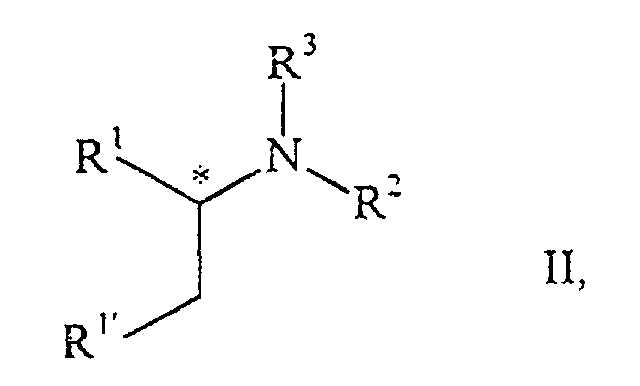
- a preferred embodiment of the asymmetric hydroamination is a process for the preparation of optically active amines of the general formula
- R 2 is an optionally substituted aryl or acyl group and R 3 is hydrogen, an optionally substituted acyl, alkanesulfonyl or arenesulfonyl group.
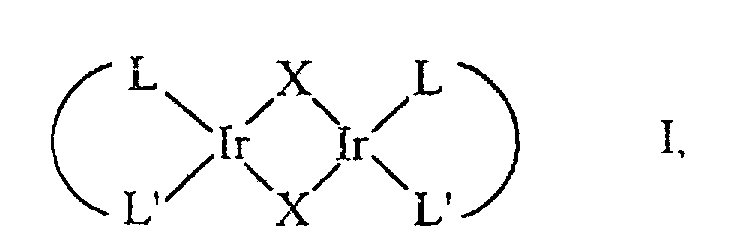
- optically active amines (II) are prepared according to the invention in that an olefin of the general formula in which R 1 and R 1 'have the meanings given above, in the presence of a chiral dinuclear iridium (I) phosphine complex of the general formula in which X is fluorine, chlorine, bromine or iodine and each represents a chiral bidentate diphosphine ligand, with an amine or amide of the general formula R 2 -NH-R 3 (IV), in which R 2 and R 3 have the meanings given above, is reacted.
- a chiral dinuclear iridium (I) phosphine complex of the general formula in which X is fluorine, chlorine, bromine or iodine and each represents a chiral bidentate diphosphine ligand with an amine or amide of the general formula R 2 -NH-R 3 (IV), in which R 2 and R 3 have the meanings given above,
- C 1-6 alkyl groups in the above statements and in the following are to be understood as all linear and branched primary, secondary or tertiary alkyl groups with 1-6 carbon atoms, for example methyl, ethyl, propyl, isopropyl, butyl, isobutyl, tert- butyl , Pentyl and hexyl.
- C 1-6 alkoxy groups are understood to mean the groups composed of C 1-6 alkyl and oxygen.
- Mono- or bicyclic cycloaliphatic systems are understood to mean in particular those systems which consist of one or two rings each having 3 to 7 ring carbon atoms.
- the rings can have the same or different number of members and can be both condensed and bridged or spiro-linked.
- the mono- or bicyclic systems can also carry functional groups and / or substituents.
- Aryl groups are understood to mean mono- or polycyclic aromatic radicals, in particular groups such as phenyl or naphthyl.
- Heteroaryl groups are to be understood as meaning mono- or polycyclic aromatic radicals having one or more heteroatoms, in particular groups such as furyl, thiophenyl, pyrrolyl, pyridyl, pyrimidyl or indolyl.
- Arylalkyl groups and (heteroaryl) alkyl groups are accordingly to be understood as meaning alkyl groups in which a hydrogen atom has been replaced by one of the aryl groups or heteroaryl groups defined above, for example benzyl, phenethyl or furylmethyl (furfuryl). All of these groups can also carry one or more identical or different substituents. Suitable substituents here, as in the groups referred to as “optionally substituted”, are all those which are stable under the reaction conditions and which react neither with the amino group nor with the olefinic double bond or the iridium complex. In particular, this can be, for example, C 1-4 - Be alkyl groups, halogens or C 1-4 alkoxy groups.
- Acyl groups are understood to mean both alkanoyl groups, in particular C 1-6 alkanoyl, and aroyl groups such as, for example, benzoyl or substituted benzoyl.
- Sulfonyl groups are understood to mean both alkanesulfonyl groups and arenesulfonyl groups, in particular C 1-6 -alkanesulfonyl, for example methanesulfonyl (“mesyl”), and optionally substituted benzenesulfonyl, for example p- toluenesulfonyl (“tosyl”). It has been shown that especially strained cyclic olefins such as norbornene or cyclopropenone give good results.
- Preferred amines (IV) are those which can be deprotonated relatively easily, that is to say aromatic amines or N -acyl- or N -sulfonylamines (or amides or sulfonamides).
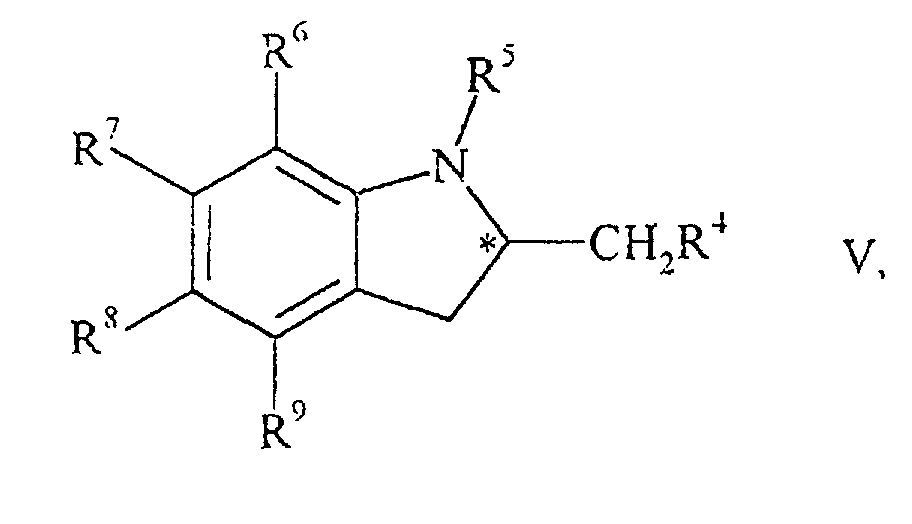
- Another preferred embodiment of the asymmetric hydroamination is a process for the preparation of optically active indolines of the general formula wherein R 4 is hydrogen or an optionally substituted C 1-4 alkyl group, R 5 has one of the meanings given above for R 2 and R 3 and R 6 to R 9 independently of one another are hydrogen, optionally substituted C 1-6 alkyl or optionally substituted C 1-6 alkoxy.
- an o -alkenylaniline of the general formula in which R 4 to R 9 have the meanings given above in the presence of a chiral dinuclear iridium (I) phosphine complex of the general formula in which X is fluorine, chlorine, bromine or iodine and each represents a chiral bidentate diphosphine ligand, cyclized
- the process according to the invention for producing the optically active amines (II) or indolines (V) is preferably carried out in the presence of fluoride ions.
- the fluoride ions are preferably in "naked" form, ie not solvated or as an ion pair.
- Thallium (I) fluoride or an alkali metal fluoride, the cation of which is complexed by a suitable crown ether or cryptand, can be used as a source of fluoride ions.
- Fluorides or complex fluorides of organic bases such as, for example, are particularly preferred Tetramethylammonium fluoride or tetrabutylammonium triphenyldifluorosilicate.
- the 1,1,1,3,3,3-hexakis (dimethylamino) diphosphazenium fluoride is very particularly preferred as the source for “naked” fluoride ions.
- the catalysts used are preferably those iridium ((I) -phosphine complexes (I) in which the chiral bidentate diphosphine ligands from the group consisting of ( R ) -2 , 2'-bis (diphenylphosphino) -1,1'-binaphthalene, ( S ) -2,2'-bis (diphenylphosphino) -1,1'-binaphthalene, ( R ) -2,2'-bis (diphenylphosphino) -6,6'-dimethyl-1,1'-biphenyl, ( S ) -2,2'-bis (diphenylphosphino) -6,6'-dimethyl-1,1'-biphenyl, 1- [1 ( R ) - (Dicyclohexylphosphino) e
- catalysts are those iridium (I) -phosphine complexes (I), in where X is chlorine.
- R 1 and R 1 ' together form a cyclopentane-1,3-diyl group, ie norbornene (bicyclo [2.2.1] hept-2-ene) used as olefin (III).
- R 2 is an optionally substituted phenyl group, ie an optionally substituted aniline is used as the amine (IV).
- Ethene was passed through a yellow suspension of 2.961 g (3.305 mmol) of di- ⁇ -chlorotetrakis ( ⁇ 2 -cyclooctene) diiridium (I) in 30 ml of heptane at 0 ° C. for 10 min. The mixture was cooled to -78 ° C. and 120 ml of pentane were added with stirring, a whitish solid being formed. The supernatant solution was decanted off and 100 ml of toluene was added.
- Ethylene was passed through a suspension of 264.4 mg (275 ⁇ mol) di- ⁇ -chloro-tetrakis ( ⁇ 2 -cyclooctene) diiridium (1) in 2 ml heptane at 0 ° C. for 10 min. After the suspension had cooled to -78 ° C., 2 ml of hexane were added with stirring and, after stirring for a further 10 minutes, the supernatant solution was decanted off. The slightly yellowish precipitate was briefly dried in a high vacuum and then dissolved in 2 ml of toluene.
- the optical yield was determined by HPLC (stationary phase: Daicel Chiralcel® OJH, mobile phase: hexane / 2-propanol 90:10). The retention times were 15.5 min for the (2 R ) -enantiomer and 17.2 min for the (2 S ) -enantiomer. An ee value of 50% in favor of the (2 R ) enantiomer was found.
- a viscous oil was obtained from 2.31 g (17.3 mmol) of o- allylaniline, 1.5 ml of methanesulfonyl chloride and 1.5 ml of pyridine in 20 ml of benzene, which oil was determined by means of flash chromatography (silica gel 60, mobile phase Toluene / ethyl acetate 7: 1) was purified. Yield: 1.37 g (37%, based on o- allylaniline).
- p -Toluenesulfonic acid o -allylanilide 100 mg was mixed with 5 mg (approx. 1 mol%) of the iridium (I) phosphine complex in 0.1 ml of a 0.6 M solution of 1,1,1,3,3 , 3-Hexakis (dimethylamino) diphosphazenium fluoride dissolved in benzene and then transferred to a Schlenk flask with 0.5 ml of toluene. This solution was stirred at the respective reaction temperature for the duration of the reaction. The solvent was then distilled off in vacuo and the residue was filtered through silica gel 60 using hexane / ethyl acetate.
- the product ratios were determined by integrating the signals in the 1 H NMR spectrum.
- the p- toluenesulfonyl group was cleaved with HBr / glacial acetic acid in phenol at 80 ° C.
- the reaction mixture was then taken up in toluene, the solution was washed with sodium hydroxide solution and saturated sodium carbonate solution, dried over magnesium sulfate and concentrated in vacuo.
- the residue was distilled in a Kugelrohr (160 ° C, approx. 10 mbar).
- the distillate was purified by HPLC (Chiralcel® OD-H, 4.6 ⁇ 250 mm, grain size 5 ⁇ m, eluent hexane / isopropyl alcohol 99.1 with 0.3% diethylamine, flow rate 0.5 ml / min, UV detection at 300 nm) separated into the enantiomers.
Landscapes
- Chemical & Material Sciences (AREA)
- Organic Chemistry (AREA)
- Catalysts (AREA)
- Organic Low-Molecular-Weight Compounds And Preparation Thereof (AREA)
- Low-Molecular Organic Synthesis Reactions Using Catalysts (AREA)
- Indole Compounds (AREA)
Description


und

durch ein geeignetes Verfahren leicht hergestellt werden können.
Chirale zweizähnige Diphosphinliganden sind solche Moleküle, die wenigstens ein Chiralitätselement (Chiralitätszentrum, Chiralitätsebene oder Chiralitätsachse) und zwei koordinationsfähige tertiäre Phosphoratome der Oxidationszahl -3 besitzen, wobei die räumliche Anordnung der Phosphoratome die Bildung eines Chelatringes erlaubt. Zahlreiche solcher Liganden mit unterschiedlichen Grundstrukturen sind aus der Literatur bekannt,
insbesondere solche, die ein Biarylsystem wie beispielsweise Biphenyl oder 1,1'-Binaphthalin oder ein Metallocensystem als Grundstruktur aufweisen. Einige der erfindungsgemäss einsetzbaren Liganden sind kommerziell erhältlich, andere können nach bekannten Verfahren oder in Analogie zu solchen hergestellt werden (siehe z. B. A. Togni et al., Inorg. Chim. Acta 1994, 222, 213-224; Y Hayashi et al., J. Organomet. Chem. 1995, 503, 143-148; EP-A-0 564 406; EP-A-0 612 758).

Rc ist C1-6-Alkyl, vorzugsweise Methyl. Der Stern (*) kennzeichnet ein Chiralitätszentrum. Die 1,2-disubstituierten Ferrocene sind bekannte Verbindungen oder analog zu bekannten Verbindungen nach bekannten Methoden erhältlich. (Siehe z. B.: EP-A-0 612 758; EP-A-0 564 406; A. Togni et al., Inorg. Chim. Acta 1994, 222, 213-224.)
Für die Verwendung als Katalysator bzw Katalysator-Vorstufe ist es nicht erforderlich, die erfindungsgemässen Komplexe zu isolieren, sondern sie können gegebenenfalls auch in situ hergestellt werden.
Die Hydroaminierung kann sowohl inter- als auch intramolekular erfolgen. So können beispielsweise aus o-Allyl- und/oder o-Propenylanilinen 2-Methylindoline erhalten werden. Die Hydroaminierung läuft normalerweise so ab, dass die Aminogruppe bei Olefinen mit der Doppelbindung zwischen nicht-äquivalenten Kohlenstoffatomen an das sterisch weniger belastete Kohlenstoffatom addiert wird. Sind zwei diastereomere Additionsprodukte möglich, wie beispielsweise bei Norbornen, dann wird in der Regel das sterisch günstigere (exo-) Isomere gebildet.
Eine bevorzugte Ausführungsform der asymmetrischen Hydroaminierung ist ein Verfahren zur Herstellung von optisch aktiven Aminen der allgemeinen Formel


Unter mono- oder bicyclischen cycloaliphatischen Systemen sind insbesondere solche Systeme zu verstehen, die aus einem oder zwei Ringen mit jeweils 3 bis 7 Ringkohlenstoffatomen bestehen. Im Falle von bicyclischen Systemen können die Ringe gleiche oder verschiedene Gliederzahl aufweisen und sowohl kondensiert als auch verbrückt oder spiroverknüpft sein. Ebenso können die mono- oder bicyclischen Systeme funktionelle Gruppen und/oder Substituenten tragen.
Unter Arylgruppen sind mono- oder polycyclische aromatische Reste zu verstehen, insbesondere Gruppen wie Phenyl oder Naphthyl.
Unter Heteroarylgruppen sind entsprechend mono- oder polycyclische aromatische Reste mit einem oder mehreren Heteroatomen zu verstehen, insbesondere Gruppen wie Furyl, Thiophenyl, Pyrrolyl, Pyridyl, Pyrimidyl oder Indolyl. Entsprechend sind unter Arylalkylgruppen und (Heteroaryl)alkylgruppen Alkylgruppen zu verstehen, in denen ein Wasserstoffatom durch eine der vorstehend definierten Arylgruppen bzw. Heteroarylgruppen ersetzt ist, also beispielsweise Benzyl, Phenethyl oder Furylmethyl (Furfuryl). Alle diese Gruppen können auch einen oder mehrere gleiche oder verschiedene Substituenten tragen. Als Substituenten kommen hier ebenso wie in den oben als "gegebenenfalls substituiert" bezeichneten Gruppen alle diejenigen in Frage, die unter den Reaktionsbedingungen stabil sind und weder mit der Aminogruppe noch mit der olefinischen Doppelbindung oder dem Iridiumkomplex reagieren Insbesondere können dies beispielsweise C1-4-Alkylgruppen, Halogene oder C1-4-Alkoxygruppen sein.
Unter Acylgruppen sind sowohl Alkanoylgruppen, insbesondere C1-6-Alkanoyl, als auch Aroylgruppen wie beispielsweise Benzoyl oder substituiertes Benzoyl zu verstehen.
Unter Sulfonylgruppen sind sowohl Alkansulfonylgruppen als auch Arensulfonylgruppen zu verstehen, insbesondere C1-6-Alkansulfonyl, beispielsweise Methansulfonyl ("Mesyl"), und gegebenenfalls substituiertes Benzolsulfonyl, beispielsweise p-Toluolsulfonyl ("Tosyl"). Es hat sich gezeigt, dass insbesondere gespannte cyclische Olefine wie zum Beispiel Norbornen oder Cyclopropenon gute Resultate liefern.


Wie bereits erwähnt, wird das erfindungsgemässe Verfahren zur Herstellung der optisch aktiven Amine (II) oder Indoline (V) vorzugsweise in Gegenwart von Fluoridionen durchgeführt. Die Fluoridionen liegen vorzugsweise in "nackter" Form, also nicht solvatisiert oder als Ionenpaar, vor Als Quelle für Fluoridionen kann beispielsweise Thallium(I)fluorid oder ein Alkalifluorid, dessen Kation durch einen geeigneten Kronenether oder Kryptanden komplexiert ist, eingesetzt werden.
| 1H NMR (CDCl3, 250 MHz): δ | 1,2-1,7 (8H); 2,2-2,4 (6H). |
| 13C NMR (CDCl3, 60 MHz): δ | 26,4; 29,9; 30,3; 63,4. |
Ausbeute: 3,05 g (84%).
| C72H88Cl2Fe2Ir2P4·½C6H6·½ C5H12: | Ber. | C 54,13 | H 5,69 |
| Gef. | C 54,30 | H 5,98 |
δ-0,13 (2 J PP' + 4 J PP' = 29,9 Hz) (Isomer A); 0,07 (2 J PP' + 4 J PP' = 35,2 Hz) (Isomer B);
30,16 (2 J PP' + 4 J PP' = 30,1 Hz) (Isomer A); 30,95 (2 J PP' + 4 J PP' = 35,0 Hz) (Isomer B).
1H NMR (C6D6, 250 MHz):
δ 0,85-2,30 (m, 48H), 2,50-2,75 (m, 2H); 2,75-3,20 (m, 2H); 3,55 und 3,63 (2 s, 10H); 3,75-4,00 (m, 2H); 3,97 (m, 2H); 4,08 (m, 2H); 4,25-4,35 (m, 2H); 7,00-7,40 (m, 12H), 7,55-7,75 (m, 2H); 7,75-7,85 (m, 2H); 8,30-8,45 (m, 2H); 8,60-8,75 (m, 2H).
| C72H64Cl2Fe2Ir2P4 · 1,5 C6H6 | Ber | C 56,00 | H 4,24 |
| Gef | C 56,03 | H 4,33 |
δ -2.82 (2 J PP' + 4 J PP' = 38,5 Hz) (Isomer A); -1,98 (2 J PP' + 4 J PP' = 30,7 Hz) (Isomer B);
23,35 (2 J PP' + 4 J PP' = 38,5 Hz) (Isomer A); 24,34 (2 J PP' + 4 J PP' = 30,7 Hz) (Isomer B)
1H NMR (THF-d8, 250 MHz):
δ 0,60-0,85 (m, 6H); 3,43 und 3,50 (2 s, 10H); 3,50-3,90 (m, 4H); 4,10 (m, 2H);
4,19 (m, 2H); 6,85-7,65 (m, 28H); 8,00-8,35 (m, 10H); 8,50-8,65 (m, 2H).
Ausbeute: 2,40 g (88%) gelbes Pulver.
| C80H80Cl2Fe2Ir2P4 | Ber. | C 55,46 | H 4,65 |
| Gef | C 55,18 | H 4,80 |
δ -4,22 (2 J PP' + 4 J PP' = 38,3 Hz) (Isomer A); -1,01 (2 J PP' + 4 J PP' = 30,6 Hz) (Isomer B);
22,70 (2 J PP' + 4 J PP' = 38,2 Hz) (Isomer A); 26,73 (2 J PP' + 4 J PP' = 30,6 Hz) (Isomer B).
1H NMR (C6D6, 250 MHz):
δ 1,05-1,20 (m, 6H, Isomer A); 1,25-1,35 (m, 6H, Isomer B); 2,12 (s, 12H, Isomer B); 2,17 (s, 12 H, Isomer B); 2,22 (s, 12H, Isomer A); 2,38 (s, 12H, Isomer A); 3,57 (s, 10H, Isomer B); 3,68 (s, 10H, Isomer A); 3,75-4,20 (m, 8H, Isomere A + B); 6,75-8,55 (m, 32H, Isomere A + B).
31P NMR (C6D6, 100 MHz) zwei Isomere
δ 13,5 (d, 2 J PP' + 4 J PP' = 20,5 Hz), 18,9 (d, 2 J PP' + 4 J PP' = 19,8 Hz),
24,3 (d, 2 J PP' + 4 J PP' = 33,3 Hz), 26,5 (d, 2 J PP' + 4 J PP' = 33,2 Hz).
31P NMR (C6D6, 100 MHz) zwei Isomere
δ -5,2 (d, 2 J PP' + 4 J PP' = 39,3 Hz); -1,8 (d, 2 J PP' + 4 J PP' = 39,0 Hz), 1,0 (d, 2 J PP' + 4 J PP' = 42,5 Hz); 3,4 (d, 2 J PP' + 4
Ausbeute: 580 mg (88%) rotes Pulver.
| C88H64Cl2Ir2P4·½C5H12 | Ber. | C 62,59 | H 4,06 |
| Gef. | C 62,99 | H 4,01 |
1H NMR (C6D6): δ 6,67-8,53 (m).
Toluol erhalten.
Kristallographische Daten von C88H64Cl2Ir2P4·C4H10O·C4H8O (bei -30 °C):
a = 17,0108 Å; b = 13,6600 Å; c = 18,9391 Å
β = 115,8189°
Raumgruppe P2t (Nr. 4); Z = 2.
Ausbeute: 659 mg (87%) rotes Pulver.
| C78H64Cl2Ir2P4 | Ber. | C 58,64 | H 4,14 |
| Gef. | C 58,41 | H 3,91 |
1H NMR (C6D6): δ 1,43 (s, 12H); 6,51-8,33 (m, 52H).
Ausbeute: 814 mg (80%) blassgelbes Öl.
Die optische Ausbeute wurde durch HPLC (stationäre Phase: Daicel Chiralcel® OJH, mobile Phase: Hexan/2-Propanol 90:10) bestimmt. Die Retentionszeiten betrugen 15,5 min für das (2R)-Enantiomere und 17,2 min für das (2S)-Enantiomere. Es wurde ein ee-Wert von 50% zugunsten des (2R)-Enantiomeren gefunden.
| Kat. aus Beispiel | ϑ [°C] | [F-]/[Ir] | Ausbeute [%] | ee [%] (Konfig.) |
| 2 | 50 | 0 | 12 | 51 (2S) |
| 2 | 50 | 0,25 | 76 | 31(2R) |
| 2 | 50 | 4 | 51 | 16 (2R) |
| 2 | 25 | 1 | 12 | 60 (2R) |
| 2 | 75 | 1 | 81 | 38(2R) |
| 3 | 50 | 1 | 27 | 9 (2R) |
| 4 | 50 | 1 | 36 | 26 (2R) |
| 7 | 50 | 0 | 12 | 57 (2R) |
| 7 | 75 | 2 | 45 | 78 (2R) |
| 7 | 75 | 4 | 22 | 95 (2R) |
| 8 | 50 | 1 | 13 | 51 (2S) |
| 8 | 75 | 1 | 37 | 43 (2S) |
| 8 | 75 | 2 | 27 | 69 (2S) |
| 8 | 75 | 4 | 24 | 92 (2S) |
Ausbeute: 10,0 g (61,3%) farbloses Öl, erstarrt bei 4 °C.
1H NMR (CDCl3, 250 MHz):
δ 2,40 (s, 3H); 3,02 (d, J = 6,0 Hz, 1H); 4,94 (dd, J = 17,0 und 1,8 Hz, 1H);
5,09 (dd, J = 10,3 und 1,5 Hz, 1H); 5,78 (tdd, J = 6,0; 17,3 und 10,3 Hz, 1H); 6,63 (s, 1H). 7,0-7,7 (m, 8H).
13C NMR (CDCl3, 60 MHz):
δ 21,5; 38,0; 117,1; 124.4; 126,2; 127,1; 127,7; 129,6; 130,5; 135,5.
Ausbeute: 1,37 g (37%, bezogen auf o-Allylanilin).
'H NMR (CDCl3, 250 MHz):
δ 3,01 (s, 3H); 3,44 (d, J = 6,0 Hz, 2H); 5,08 (dd, J = 17,3 und 1,5 Hz, 1H);
5,19 (dd, J = 10,3 und 1,5 Hz, 1H); 5,96 (tdd, J = 6,0; 17,3 und 10,3 Hz, 1H); 6,44 (s, 1H), 7,2-7,5 (m, 4H).
13C NMR (CDCl3, 60 MHz):
37; 42; 117; 128; 129; 136.
Zur Bestimmung der ee-Werte ("enantiomeric excess") wurde die p-Toluolsulfonylgruppe mit HBr/Eisessig in Phenol bei 80 °C abgespalten. Das Reaktionsgemisch wurde dann in Toluol aufgenommen, die Lösung mit Natronlauge und gesättigter Natriumcarbonatlösung gewaschen, über Magnesiumsulfat getrocknet und im Vakuum eingeengt. Der Rückstand wurde im Kugelrohr destilliert (160 °C, ca. 10 mbar). Das Destillat wurde durch HPLC (Chiralcel® OD-H, 4,6 × 250 mm, Korngrösse 5 µm, Laufmittel Hexan/Isopropylalkohol 99.1 mit 0,3% Diethylamin, Flussrate 0,5 ml/min, UV-Detektion bei 300 nm) in die Enantiomeren getrennt.
| Kat. aus Beispiel | ϑ [°C] | t | Ausbeute [%] | ee [%] |
| 5 | 120 | 18 h | 18,6 | 47,4 |
| 2 | 120 | 18 h | 25,5 | 57,3 |
| 5 | 80 | 14 d | 15,3 | 35,7 |
| 2 | 80 | 14 d | 26,1 | 57,9 |
| Kat. aus Beispiel | ϑ [°C] | t | Umsatz [%] | Ausbeute [%] | ee [%] |
| 5 | 25 | 3-4 d | 26,5 | 8,2 | 52 |
| 5 | 120 | 18 h | 100 | 21,6 | 35,3 |
| 2 | 25 | 3-4 d | 100 | 14 | 43,6 |
Claims (17)
- Iridium(I)-phosphinkomplexe der allgemeinen Formelworin X Fluor, Chlor, Brom oder Iod ist und
 jeweils einen chiralen zweizähnigen Diphosphinliganden bedeutet, einschliesslich deren cis-/trans-Isomeren und Isomerengemische.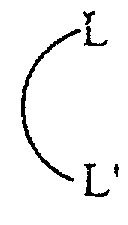
- Iridium(I)-phosphinkomplexe nach Anspruch 1 in fester Form.
- Iridium(I)-phosphinkomplexe nach Anspruch 1 oder 2, dadurch gekennzeichnet, dass der chirale zweizähnige Diphosphinligand ein 1,2-disubstituiertes Ferrocen mit den Phosphinogruppen als und/oder an den beiden Substituenten ist.
- Iridium(I)-phosphinkomplexe nach Anspruch 1 oder 2, dadurch gekennzeichnet, dass der chirale zweizähnige Diphosphinligand ausgewählt ist aus der Gruppe bestehend aus (R)-2,2'-Bis(diphenylphosphino)-1,1'-binaphthalin, (S)-2,2'-Bis(diphenylphosphino)-1,1'-binaphthalin, (R)-2,2'-Bis(diphenylphosphino)-6,6'-dimethyl-1,1'-biphenyl, (S)-2,2'-Bis(diphenylphosphino)-6,6'-dimethyl-1,1'-biphenyl, 1-[1(R)-(Dicyclohexylphosphino)ethyl]-2(S)-(diphenylphosphino)ferrocen, 1-[1(S)-(Dicyclohexylphosphino)ethyl]-2(R)-(diphenylphosphino)ferrocen, 1-[1(R)-(Diphenylphyosphino)ethyl]-2(S)-(diphenylphosphino)ferrocen, 1-[1(S)-(Diphenylphosphino)ethyl]-2(R)-(diphenylphosphino)ferrocen, 1-[1(R)-(Diphenylphosphino)ethyl]-2(S)-(di-tert-butylphosphino)ferrocen, 1-[1(S)-(Diphenylphosphino)ethyl]-2(R)-(di-tert-butylphosphino)-ferrocen, 1-{1(R)-[Bis(3,5-dimethylphenyl)phosphino]ethyl}-2(S)-(diphenylphosphino)ferrocen, 1-{1(S)-[Bis(3,5-dimethylphenyl)phosphino]ethyl]ethyl]-2(R)-(diphenylphosphino)ferrocen, 1-{1(R)-[Bis(4-tert-butylphenyl)phosphino]ethyl}-2(S)-(diphenylphosphino)ferrocen, 1-{1(S)-[Bis(4-tert-butylphenyl)phosphino]ethyl}-2(R)-(diphenylphosphino)ferrocen, 1-[1(S)-(9-Phosphabicyclo[3.3.1]nonan-9-yl)ethyl]-2(R)-(diphenylphosphino)ferrocen und 1-[1(R)-(9-Phosphabicyclo[3.3.1]nonan-9-yl)ethyl]-2(S)-(diphenylphosphino)ferrocen.
- Iridium(I)-phosphinkomplexe nach einem der Ansprüche 1 bis 4, dadurch gekennzeichnet, dass X Chlor ist.
- Verfahren zur Herstellung von Iridium(I)-phosphinkomplexen gemäss einem der Ansprüche 1 bis 5, dadurch gekennzeichnet, dass ein Iridium(I)komplex der Formel [IrX(coe)2]2 oder [IrX(C2H4)4], worin X die in Anspruch 1 genannte Bedeutung hat und coe Cycloocten bedeutet, in einem unpolaren Lösungsmittel mit dem entsprechenden chiralen zweizähnigen Diphosphin umgesetzt wird.
- Verwendung der Iridium(I)-phosphinkomplexe gemäss einem der Ansprüche 1 bis 5 als Katalysator in der asymmetrischen Hydroaminierung von prochiralen Olefinen
- Verwendung nach Anspruch 7, dadurch gekennzeichnet, dass die Hydroaminierung in Gegenwart von Fluoridionen durchgeführt wird.
- Verfahren zur Herstellung von optisch aktiven Aminen der allgemeinen Formelworin entweder R1 und R1' unabhängig voneinander jeweils eine gegebenenfalls substituierte C1-6-Alkylgruppe, eine gegebenenfalls substituierte Arylgruppe, eine gegebenenfalls substituierte Arylalkylgruppe, eine gegebenenfalls substituierte Heteroarylgruppe oder eine gegebenenfalls substituierte (Heteroaryl)alkylgruppe bedeuten, mit der Massgabe, dass R1 nicht R1'-CH2- ist, oder R1 und R1' zusammen mit den dazwischenliegenden Kohlenstoffatomen ein prochirales mono- oder bicyclisches cycloaliphatisches System biiden,
R2 eine gegebenenfalls substituierte Arylgruppe oder Acylgruppe
und R3 Wasserstoff oder eine gegebenenfalls substituierte Acylgruppe,
Alkansulfonylgruppe oder Arensulfonylgruppe ist.
dadurch gekennzeichnet, dass ein Olefin der allgemeinen Formelin der R1 und R1' die oben genannten Bedeutungen haben, in Gegenwart eines chiralen zweikernigen Iridium(I)phosphinkomplexes der allgemeinen Formel in der X Fluor, Chlor, Brom oder Iod ist und
 jeweils einen chiralen zweizähnigen Diphosphinliganden bedeutet, mit einem Amin oder Amid der allgemeinen Formel R2-NH-R3 (IV), worin R2 und R3 die oben genannten Bedeutungen haben, umgesetzt wird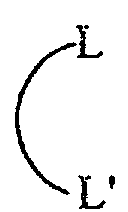
- Verfahren zur Herstellung von optisch aktiven indolinen der allgemeinen Formelworin R4 Wasserstoff oder eine gegebenenfalls substituierte C1-4-Alkylgruppe ist, R5 eine der oben für R2 und R3 genannten Bedeutungen hat und R6 bis R9 unabhängig voneinander Wasserstoff, gegebenenfalls substituiertes C1-6-Alkyl oder gegebenenfalls substituiertes C1-6-Alkoxy bedeuten, dadurch gekennzeichnet, dass ein o-Alkenylanilin der allgemeinen Formel
 in der R4 bis R9 die oben genannten Bedeutungen haben, in Gegenwart eines chiralen zweikernigen Iridium(1)phosphinkomplexes der allgemeinen Formel
 in der X Fluor, Chlor, Brom oder Iod ist und
 jeweils, einen chiralen zweizähnigen Diphosphinliganden bedeutet, cyclisiert wird.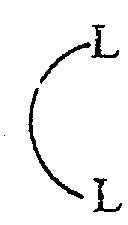
- Verfahren nach Anspruch 9 oder 10, dadurch gekennzeichnet, dass die Reaktion in Gegenwart von Fluoridionen durchgeführt wird.
- Verfahren nach Anspruch 11, dadurch gekennzeichnet, dass die Fluoridionen in Form des Fluorids einer organischen Base eingesetzt werden.
- Verfahren nach Anspruch 12, dadurch gekennzeichnet, dass als Fluorid einer organischen Base 1,1,1,3,3,3-Hexakis(dimethylamino)diphosphazenium-fluorid eingesetzt wird.
- Verfahren nach einem der Ansprüche 9 bis 13, dadurch gekennzeichnet, dass der chirale zweizähnige Diphosphinligand ausgewählt ist aus der Gruppe bestehend aus (R)-2,2'-Bis(diphenylphosphino)-1,1'-binaphthalin, (S)-2,2'-Bis(diphenylphosphino)-1,1'-binaphthalin, (R)-2,2'-Bis(diphenylphosphino)-6,6'-dimethyl-1,1'-biphenyl, (S)-2,2'-Bis(diphenylphosphino)-6,6'-dirnethyl-1,1'-biphenyl, 1-[1(R)-(Dicyclohexylphosphino)-ethyl]-2(S)-(diphenylphosphino)ferrocen, 1-[1(S)-(Dicyclohexylphosphino)ethyl]-2(R)-(diphenylphosphino)ferrocen, 1-[(R)-(Diphenylphosphino)ethyl]-2(S)-(diphenylphosphino)ferrocen, 1-[1(S)-(Diphenylphosphino)ethyl]-2(R)-(diphenylphosphino)ferrocen, 1-[1(R)-(Diphenylphosphino)ethyl]-2(S)-(di-tert-butylphosphino)ferrocen, 1-[1(S)-(Diphenylphosphino)ethyl]-2(R)-(di-tert-butylphosphino)ferrocen, 1-{1(R)-[Bis(3,5-dimethylphenyl)phosphino]ethyl}-2(S)-(diphenylphosphino)ferrocen, 1-{1(S)-[Bis(3,5-dimethylphenyl)phosphino]ethyl}-2(R)-(diphenylphosphino)ferrocen, 1-{1(R)-[Bis(4-tert-butylphenyl)phosphino]ethyl}-2(S)-(diphenylphosphino)ferrocen, 1-{1(S)-[Bis(4-tert-butylphenyl)phosphino]ethyl}2(R)-(diphenylphosphino)ferrocen, 1-[1(S)-(9-Phosphabicyclo[3.3.1]nonan-9-yl)ethyl]-2(R)-(diphenylphosphino)ferrocen und 1-[1(R)-(9-Phosphabicyclo[3.3.1]nonan-9-yl)ethyl]-2(S)-(diphenylphosphino)ferrocen.
- Verfahren nach einem der Ansprüche 9 bis 14, dadurch gekennzeichnet, dass X Chlor ist.
- Verfahren nach Anspruch 9 und gegebenenfalls einem der Ansprüche 11 bis 15, dadurch gekennzeichnet, dass R1 und R1' zusammen eine Cyclopentan-1,3-diylgruppe bilden.
- Verfahren nach Anspruch 9 und gegebenenfalls einem der Ansprüche 11 bis 16, dadurch gekennzeichnet, dass R2 eine gegebenenfalls substituierte Phenylgruppe ist.
Applications Claiming Priority (3)
| Application Number | Priority Date | Filing Date | Title |
|---|---|---|---|
| CH239297 | 1997-10-14 | ||
| CH239297 | 1997-10-14 | ||
| CH2392/97 | 1997-10-14 |
Publications (3)
| Publication Number | Publication Date |
|---|---|
| EP0909762A2 EP0909762A2 (de) | 1999-04-21 |
| EP0909762A3 EP0909762A3 (de) | 1999-10-06 |
| EP0909762B1 true EP0909762B1 (de) | 2003-04-09 |
Family
ID=4232707
Family Applications (1)
| Application Number | Title | Priority Date | Filing Date |
|---|---|---|---|
| EP98119241A Expired - Lifetime EP0909762B1 (de) | 1997-10-14 | 1998-10-12 | Zweikernige Iridium(I)-phosphinkomplexe und ihre Verwendung als Katalysator in der asymmetrischen Hydroaminierung von Olefinen |
Country Status (9)
| Country | Link |
|---|---|
| US (1) | US5929265A (de) |
| EP (1) | EP0909762B1 (de) |
| JP (1) | JP4218088B2 (de) |
| AT (1) | ATE236913T1 (de) |
| CA (1) | CA2249958C (de) |
| DE (1) | DE59807829D1 (de) |
| DK (1) | DK0909762T3 (de) |
| ES (1) | ES2195252T3 (de) |
| PT (1) | PT909762E (de) |
Families Citing this family (7)
| Publication number | Priority date | Publication date | Assignee | Title |
|---|---|---|---|---|
| DE19952348A1 (de) * | 1998-12-19 | 2000-06-21 | Degussa | Liganden und Komplexe zur enantioselektiven Hydrierung |
| US6384282B2 (en) | 2000-03-01 | 2002-05-07 | Yale University | Transition metal-catalyzed process for addition of amines to carbon-carbon double bonds |
| JP5185485B2 (ja) * | 2000-07-03 | 2013-04-17 | ソルヴィーアス アクチェンゲゼルシャフト | フェロセニルジホスフィンおよびその使用 |
| AU9619301A (en) | 2000-10-20 | 2002-04-29 | Biovitrum Ab | 2-, 3-, 4-, or 5-substituted-n1-(benzensulfonyl)indoles and their use in therapy |
| CN100395250C (zh) * | 2004-11-25 | 2008-06-18 | 友达光电股份有限公司 | 有机金属络合物以及包括该有机金属络合物的有机电致发光装置 |
| WO2006090688A1 (ja) * | 2005-02-25 | 2006-08-31 | Mitsui Chemicals, Inc. | 重合触媒組成物およびポリマーの製造方法 |
| US10396298B2 (en) * | 2017-01-25 | 2019-08-27 | National Tsing Hua University | Iridium complex and organic light-emitting diode using the same |
Family Cites Families (6)
| Publication number | Priority date | Publication date | Assignee | Title |
|---|---|---|---|---|
| FR2408388A1 (fr) * | 1977-11-10 | 1979-06-08 | Ugine Kuhlmann | Complexe binucleaire du rhodium en tant que catalyseur d'hydroformylation et d'hydrogenation |
| US5011995A (en) * | 1987-07-28 | 1991-04-30 | Ciba-Geigy Corporation | Process for the preparation of optically active secondary amines |
| DE59009835D1 (de) * | 1989-09-18 | 1995-12-07 | Ciba Geigy Ag | Iridiumkomplexe, Verfahren zu deren Herstellung und deren Verwendung. |
| DE59309554D1 (de) * | 1992-04-02 | 1999-06-10 | Novartis Ag | Ferrocenyldiphosphine als Liganden für homogene Katalysatoren |
| DE59410267D1 (de) * | 1993-02-26 | 2003-05-15 | Syngenta Participations Ag | Ferrocenyldiphosphine als Liganden für homogene Katalysatoren |
| JP3338243B2 (ja) * | 1995-07-21 | 2002-10-28 | 高砂香料工業株式会社 | 光学活性非対称ジホスフィン化合物及びその製造方法 |
-
1998
- 1998-10-12 AT AT98119241T patent/ATE236913T1/de active
- 1998-10-12 JP JP28989398A patent/JP4218088B2/ja not_active Expired - Fee Related
- 1998-10-12 DE DE59807829T patent/DE59807829D1/de not_active Expired - Lifetime
- 1998-10-12 PT PT98119241T patent/PT909762E/pt unknown
- 1998-10-12 ES ES98119241T patent/ES2195252T3/es not_active Expired - Lifetime
- 1998-10-12 DK DK98119241T patent/DK0909762T3/da active
- 1998-10-12 EP EP98119241A patent/EP0909762B1/de not_active Expired - Lifetime
- 1998-10-13 CA CA002249958A patent/CA2249958C/en not_active Expired - Fee Related
- 1998-10-13 US US09/170,114 patent/US5929265A/en not_active Expired - Lifetime
Also Published As
| Publication number | Publication date |
|---|---|
| CA2249958C (en) | 2008-12-09 |
| JP4218088B2 (ja) | 2009-02-04 |
| JPH11228589A (ja) | 1999-08-24 |
| ATE236913T1 (de) | 2003-04-15 |
| DE59807829D1 (de) | 2003-05-15 |
| DK0909762T3 (da) | 2003-08-18 |
| ES2195252T3 (es) | 2003-12-01 |
| PT909762E (pt) | 2003-08-29 |
| EP0909762A3 (de) | 1999-10-06 |
| CA2249958A1 (en) | 1999-04-14 |
| EP0909762A2 (de) | 1999-04-21 |
| US5929265A (en) | 1999-07-27 |
Similar Documents
| Publication | Publication Date | Title |
|---|---|---|
| EP1349863B1 (de) | Neue n-phenylpyrrolbisphosphanverbindungen und deren metallkomplexe | |
| EP2459579B1 (de) | Imidazolgruppenhaltige phosphinoboran-verbindungen und verfahren zur herstellung von imidazolgruppenhaltige phosphorverbindungen | |
| EP0104375A1 (de) | Neue, phosphorhaltige Biphenylderivate und deren Verwendung für asymmetrische Hydrierungen und enantioselektive Wasserstoffverschiebungen | |
| DE20320324U1 (de) | Rutheniumkomplexe als (Prä)Katalysatoren für Metathesereaktionen | |
| EP0646590A1 (de) | Mit Fluoralkyl substituierte Ferrocenyldiphosphine als Liganden für homogene Katalysatoren | |
| EP0582692B1 (de) | Diphosphinliganden | |
| EP4644353A2 (de) | Ylid-funktionalisierte phosphane zur verwendung in metallkomplexen und der homogenen katalyse | |
| WO2009101162A1 (de) | Imidazolgruppenhaltige phosphorverbindungen | |
| EP0579797B1 (de) | Diphosphinliganden | |
| DE69223240T2 (de) | Chirale dreizahnige bis-phospholan-liganden | |
| DE602004008478T2 (de) | Biphosphinrutheniumkomplexe mit chiralen diaminliganden als katalysatoren | |
| EP0909762A2 (de) | Zweikernige Iridium(I)-phosphinkomplexe und ihre Verwendung als Katalysator in der asymmetrischen Hydroaminierung von Olefinen | |
| DE69709883T2 (de) | Chirale ferrocene | |
| EP1175426B1 (de) | Bidentate organophosphorliganden und ihre verwendung | |
| DE69629918T2 (de) | Chirale organometallverbindungen | |
| EP0803510B1 (de) | 2,2'-Disubstituierte 1,1'-Diphosphino-ferrocene und 1',2-disubstituierte 1-Phosphino-ferrocene, Verfahren zu ihrer Herstellung, ihre Verwendung sowie sie enthaltende Übergangsmetallkomplexe | |
| EP0419409A2 (de) | Iridiumkomplexe, Verfahren zu deren Herstellung und deren Verwendung | |
| EP0839135B1 (de) | Verfahren zur herstellung von optisch aktivem 1-(p-methoxybenzyl)-1,2,3,4,5,6,7,8-octahydroisochinolin | |
| EP0570764B1 (de) | Asymmetrische Hydrierung | |
| Chen et al. | Chiral cyclopalladated complex promoted asymmetric synthesis of diester-substituted P, N-ligands via stepwise hydrophosphination and hydroamination reactions | |
| US20050107608A1 (en) | Ligands for use in catalytic processes | |
| EP0104376B1 (de) | Verfahren zur Herstellung von optisch aktiven Aminen und Enaminen | |
| EP0915076B1 (de) | Verfahren zur Herstellung von trans-(R,R)-Actinol | |
| EP0864576A1 (de) | Neue Amidophosphin-Phosphinit-Verbindungen | |
| EP0889049B1 (de) | Neue Diarsinverbindungen |
Legal Events
| Date | Code | Title | Description |
|---|---|---|---|
| PUAI | Public reference made under article 153(3) epc to a published international application that has entered the european phase |
Free format text: ORIGINAL CODE: 0009012 |
|
| AK | Designated contracting states |
Kind code of ref document: A2 Designated state(s): AT BE CH DE DK ES FI FR GB IE IT LI NL PT SE |
|
| AX | Request for extension of the european patent |
Free format text: AL;LT;LV;MK;RO;SI |
|
| PUAL | Search report despatched |
Free format text: ORIGINAL CODE: 0009013 |
|
| RIC1 | Information provided on ipc code assigned before grant |
Free format text: 6C 07F 15/00 A, 6C 07B 53/00 B, 6C 07D 207/00 B |
|
| AK | Designated contracting states |
Kind code of ref document: A3 Designated state(s): AT BE CH CY DE DK ES FI FR GB GR IE IT LI LU MC NL PT SE |
|
| AX | Request for extension of the european patent |
Free format text: AL;LT;LV;MK;RO;SI |
|
| 17P | Request for examination filed |
Effective date: 20000328 |
|
| AKX | Designation fees paid |
Free format text: AT BE CH DE DK ES FI FR GB IE IT LI NL PT SE |
|
| GRAH | Despatch of communication of intention to grant a patent |
Free format text: ORIGINAL CODE: EPIDOS IGRA |
|
| GRAH | Despatch of communication of intention to grant a patent |
Free format text: ORIGINAL CODE: EPIDOS IGRA |
|
| GRAA | (expected) grant |
Free format text: ORIGINAL CODE: 0009210 |
|
| AK | Designated contracting states |
Designated state(s): AT BE CH DE DK ES FI FR GB IE IT LI NL PT SE |
|
| REG | Reference to a national code |
Ref country code: GB Ref legal event code: FG4D Free format text: NOT ENGLISH |
|
| REG | Reference to a national code |
Ref country code: CH Ref legal event code: EP |
|
| GBT | Gb: translation of ep patent filed (gb section 77(6)(a)/1977) |
Effective date: 20030409 |
|
| REG | Reference to a national code |
Ref country code: IE Ref legal event code: FG4D Free format text: GERMAN |
|
| REG | Reference to a national code |
Ref country code: SE Ref legal event code: TRGR |
|
| REG | Reference to a national code |
Ref country code: DK Ref legal event code: T3 |
|
| ET | Fr: translation filed | ||
| PLBE | No opposition filed within time limit |
Free format text: ORIGINAL CODE: 0009261 |
|
| STAA | Information on the status of an ep patent application or granted ep patent |
Free format text: STATUS: NO OPPOSITION FILED WITHIN TIME LIMIT |
|
| 26N | No opposition filed |
Effective date: 20040112 |
|
| PG25 | Lapsed in a contracting state [announced via postgrant information from national office to epo] |
Ref country code: IT Free format text: LAPSE BECAUSE OF NON-PAYMENT OF DUE FEES Effective date: 20091012 |
|
| PGRI | Patent reinstated in contracting state [announced from national office to epo] |
Ref country code: IT Effective date: 20110616 |
|
| PGFP | Annual fee paid to national office [announced via postgrant information from national office to epo] |
Ref country code: CH Payment date: 20110923 Year of fee payment: 14 Ref country code: DK Payment date: 20110926 Year of fee payment: 14 |
|
| PGFP | Annual fee paid to national office [announced via postgrant information from national office to epo] |
Ref country code: IE Payment date: 20120924 Year of fee payment: 15 Ref country code: SE Payment date: 20120821 Year of fee payment: 15 Ref country code: FI Payment date: 20120817 Year of fee payment: 15 Ref country code: GB Payment date: 20120817 Year of fee payment: 15 |
|
| PGFP | Annual fee paid to national office [announced via postgrant information from national office to epo] |
Ref country code: BE Payment date: 20120817 Year of fee payment: 15 Ref country code: FR Payment date: 20120828 Year of fee payment: 15 |
|
| PGFP | Annual fee paid to national office [announced via postgrant information from national office to epo] |
Ref country code: DE Payment date: 20120817 Year of fee payment: 15 Ref country code: NL Payment date: 20120817 Year of fee payment: 15 Ref country code: PT Payment date: 20120413 Year of fee payment: 15 |
|
| PGFP | Annual fee paid to national office [announced via postgrant information from national office to epo] |
Ref country code: IT Payment date: 20121015 Year of fee payment: 15 Ref country code: ES Payment date: 20121019 Year of fee payment: 15 |
|
| PGFP | Annual fee paid to national office [announced via postgrant information from national office to epo] |
Ref country code: AT Payment date: 20120817 Year of fee payment: 15 |
|
| REG | Reference to a national code |
Ref country code: PT Ref legal event code: MM4A Free format text: LAPSE DUE TO NON-PAYMENT OF FEES Effective date: 20140414 |
|
| BERE | Be: lapsed |
Owner name: *LONZA A.G. Effective date: 20131031 |
|
| REG | Reference to a national code |
Ref country code: NL Ref legal event code: V1 Effective date: 20140501 |
|
| REG | Reference to a national code |
Ref country code: DK Ref legal event code: EBP Effective date: 20131031 |
|
| REG | Reference to a national code |
Ref country code: CH Ref legal event code: PL |
|
| REG | Reference to a national code |
Ref country code: SE Ref legal event code: EUG |
|
| REG | Reference to a national code |
Ref country code: AT Ref legal event code: MM01 Ref document number: 236913 Country of ref document: AT Kind code of ref document: T Effective date: 20131012 |
|
| GBPC | Gb: european patent ceased through non-payment of renewal fee |
Effective date: 20131012 |
|
| REG | Reference to a national code |
Ref country code: DE Ref legal event code: R119 Ref document number: 59807829 Country of ref document: DE Effective date: 20140501 |
|
| REG | Reference to a national code |
Ref country code: IE Ref legal event code: MM4A |
|
| PG25 | Lapsed in a contracting state [announced via postgrant information from national office to epo] |
Ref country code: LI Free format text: LAPSE BECAUSE OF NON-PAYMENT OF DUE FEES Effective date: 20131031 Ref country code: GB Free format text: LAPSE BECAUSE OF NON-PAYMENT OF DUE FEES Effective date: 20131012 Ref country code: CH Free format text: LAPSE BECAUSE OF NON-PAYMENT OF DUE FEES Effective date: 20131031 |
|
| REG | Reference to a national code |
Ref country code: FR Ref legal event code: ST Effective date: 20140630 |
|
| PG25 | Lapsed in a contracting state [announced via postgrant information from national office to epo] |
Ref country code: AT Free format text: LAPSE BECAUSE OF NON-PAYMENT OF DUE FEES Effective date: 20131012 Ref country code: FI Free format text: LAPSE BECAUSE OF NON-PAYMENT OF DUE FEES Effective date: 20131012 Ref country code: FR Free format text: LAPSE BECAUSE OF NON-PAYMENT OF DUE FEES Effective date: 20131031 Ref country code: IT Free format text: LAPSE BECAUSE OF NON-PAYMENT OF DUE FEES Effective date: 20131012 Ref country code: NL Free format text: LAPSE BECAUSE OF NON-PAYMENT OF DUE FEES Effective date: 20140501 Ref country code: DE Free format text: LAPSE BECAUSE OF NON-PAYMENT OF DUE FEES Effective date: 20140501 Ref country code: PT Free format text: LAPSE BECAUSE OF NON-PAYMENT OF DUE FEES Effective date: 20140414 Ref country code: SE Free format text: LAPSE BECAUSE OF NON-PAYMENT OF DUE FEES Effective date: 20131013 |
|
| PG25 | Lapsed in a contracting state [announced via postgrant information from national office to epo] |
Ref country code: BE Free format text: LAPSE BECAUSE OF NON-PAYMENT OF DUE FEES Effective date: 20131031 |
|
| PG25 | Lapsed in a contracting state [announced via postgrant information from national office to epo] |
Ref country code: IE Free format text: LAPSE BECAUSE OF NON-PAYMENT OF DUE FEES Effective date: 20131012 Ref country code: DK Free format text: LAPSE BECAUSE OF NON-PAYMENT OF DUE FEES Effective date: 20131031 |
|
| REG | Reference to a national code |
Ref country code: ES Ref legal event code: FD2A Effective date: 20141107 |
|
| PG25 | Lapsed in a contracting state [announced via postgrant information from national office to epo] |
Ref country code: ES Free format text: LAPSE BECAUSE OF NON-PAYMENT OF DUE FEES Effective date: 20131013 |