EP0918872B1 - Ein verfahren zur inhibierung immunglobulininduzierter toxizität aufgrund von der verwendung von immunoglobinen in therapie und in vivo diagnostik - Google Patents
Ein verfahren zur inhibierung immunglobulininduzierter toxizität aufgrund von der verwendung von immunoglobinen in therapie und in vivo diagnostik Download PDFInfo
- Publication number
- EP0918872B1 EP0918872B1 EP97937087A EP97937087A EP0918872B1 EP 0918872 B1 EP0918872 B1 EP 0918872B1 EP 97937087 A EP97937087 A EP 97937087A EP 97937087 A EP97937087 A EP 97937087A EP 0918872 B1 EP0918872 B1 EP 0918872B1
- Authority
- EP
- European Patent Office
- Prior art keywords
- mutated
- amino acid
- antibody
- acid position
- immunoglobulin
- Prior art date
- Legal status (The legal status is an assumption and is not a legal conclusion. Google has not performed a legal analysis and makes no representation as to the accuracy of the status listed.)
- Expired - Lifetime
Links
Images





















Classifications
-
- C—CHEMISTRY; METALLURGY
- C07—ORGANIC CHEMISTRY
- C07K—PEPTIDES
- C07K16/00—Immunoglobulins [IG], e.g. monoclonal or polyclonal antibodies
- C07K16/18—Immunoglobulins [IG], e.g. monoclonal or polyclonal antibodies against material from animals or humans
- C07K16/28—Immunoglobulins [IG], e.g. monoclonal or polyclonal antibodies against material from animals or humans against receptors, cell surface antigens or cell surface determinants
- C07K16/30—Immunoglobulins [IG], e.g. monoclonal or polyclonal antibodies against material from animals or humans against receptors, cell surface antigens or cell surface determinants from tumour cells
-
- A—HUMAN NECESSITIES
- A61—MEDICAL OR VETERINARY SCIENCE; HYGIENE
- A61K—PREPARATIONS FOR MEDICAL, DENTAL OR TOILETRY PURPOSES
- A61K47/00—Medicinal preparations characterised by the non-active ingredients used, e.g. carriers or inert additives; Targeting or modifying agents chemically bound to the active ingredient
- A61K47/50—Medicinal preparations characterised by the non-active ingredients used, e.g. carriers or inert additives; Targeting or modifying agents chemically bound to the active ingredient the non-active ingredient being chemically bound to the active ingredient, e.g. polymer-drug conjugates
- A61K47/51—Medicinal preparations characterised by the non-active ingredients used, e.g. carriers or inert additives; Targeting or modifying agents chemically bound to the active ingredient the non-active ingredient being chemically bound to the active ingredient, e.g. polymer-drug conjugates the non-active ingredient being a modifying agent
- A61K47/68—Medicinal preparations characterised by the non-active ingredients used, e.g. carriers or inert additives; Targeting or modifying agents chemically bound to the active ingredient the non-active ingredient being chemically bound to the active ingredient, e.g. polymer-drug conjugates the non-active ingredient being a modifying agent the modifying agent being an antibody, an immunoglobulin or a fragment thereof, e.g. an Fc-fragment
- A61K47/6801—Drug-antibody or immunoglobulin conjugates defined by the pharmacologically or therapeutically active agent
- A61K47/6803—Drugs conjugated to an antibody or immunoglobulin, e.g. cisplatin-antibody conjugates
-
- A—HUMAN NECESSITIES
- A61—MEDICAL OR VETERINARY SCIENCE; HYGIENE
- A61K—PREPARATIONS FOR MEDICAL, DENTAL OR TOILETRY PURPOSES
- A61K47/00—Medicinal preparations characterised by the non-active ingredients used, e.g. carriers or inert additives; Targeting or modifying agents chemically bound to the active ingredient
- A61K47/50—Medicinal preparations characterised by the non-active ingredients used, e.g. carriers or inert additives; Targeting or modifying agents chemically bound to the active ingredient the non-active ingredient being chemically bound to the active ingredient, e.g. polymer-drug conjugates
- A61K47/51—Medicinal preparations characterised by the non-active ingredients used, e.g. carriers or inert additives; Targeting or modifying agents chemically bound to the active ingredient the non-active ingredient being chemically bound to the active ingredient, e.g. polymer-drug conjugates the non-active ingredient being a modifying agent
- A61K47/68—Medicinal preparations characterised by the non-active ingredients used, e.g. carriers or inert additives; Targeting or modifying agents chemically bound to the active ingredient the non-active ingredient being chemically bound to the active ingredient, e.g. polymer-drug conjugates the non-active ingredient being a modifying agent the modifying agent being an antibody, an immunoglobulin or a fragment thereof, e.g. an Fc-fragment
- A61K47/6835—Medicinal preparations characterised by the non-active ingredients used, e.g. carriers or inert additives; Targeting or modifying agents chemically bound to the active ingredient the non-active ingredient being chemically bound to the active ingredient, e.g. polymer-drug conjugates the non-active ingredient being a modifying agent the modifying agent being an antibody, an immunoglobulin or a fragment thereof, e.g. an Fc-fragment the modifying agent being an antibody or an immunoglobulin bearing at least one antigen-binding site
- A61K47/6851—Medicinal preparations characterised by the non-active ingredients used, e.g. carriers or inert additives; Targeting or modifying agents chemically bound to the active ingredient the non-active ingredient being chemically bound to the active ingredient, e.g. polymer-drug conjugates the non-active ingredient being a modifying agent the modifying agent being an antibody, an immunoglobulin or a fragment thereof, e.g. an Fc-fragment the modifying agent being an antibody or an immunoglobulin bearing at least one antigen-binding site the antibody targeting a determinant of a tumour cell
-
- A—HUMAN NECESSITIES
- A61—MEDICAL OR VETERINARY SCIENCE; HYGIENE
- A61P—SPECIFIC THERAPEUTIC ACTIVITY OF CHEMICAL COMPOUNDS OR MEDICINAL PREPARATIONS
- A61P35/00—Antineoplastic agents
-
- A—HUMAN NECESSITIES
- A61—MEDICAL OR VETERINARY SCIENCE; HYGIENE
- A61P—SPECIFIC THERAPEUTIC ACTIVITY OF CHEMICAL COMPOUNDS OR MEDICINAL PREPARATIONS
- A61P37/00—Drugs for immunological or allergic disorders
- A61P37/02—Immunomodulators
- A61P37/04—Immunostimulants
-
- A—HUMAN NECESSITIES
- A61—MEDICAL OR VETERINARY SCIENCE; HYGIENE
- A61K—PREPARATIONS FOR MEDICAL, DENTAL OR TOILETRY PURPOSES
- A61K38/00—Medicinal preparations containing peptides
-
- C—CHEMISTRY; METALLURGY
- C07—ORGANIC CHEMISTRY
- C07K—PEPTIDES
- C07K2317/00—Immunoglobulins specific features
- C07K2317/20—Immunoglobulins specific features characterized by taxonomic origin
- C07K2317/24—Immunoglobulins specific features characterized by taxonomic origin containing regions, domains or residues from different species, e.g. chimeric, humanized or veneered
-
- C—CHEMISTRY; METALLURGY
- C07—ORGANIC CHEMISTRY
- C07K—PEPTIDES
- C07K2317/00—Immunoglobulins specific features
- C07K2317/70—Immunoglobulins specific features characterized by effect upon binding to a cell or to an antigen
- C07K2317/73—Inducing cell death, e.g. apoptosis, necrosis or inhibition of cell proliferation
- C07K2317/732—Antibody-dependent cellular cytotoxicity [ADCC]
-
- C—CHEMISTRY; METALLURGY
- C07—ORGANIC CHEMISTRY
- C07K—PEPTIDES
- C07K2317/00—Immunoglobulins specific features
- C07K2317/70—Immunoglobulins specific features characterized by effect upon binding to a cell or to an antigen
- C07K2317/73—Inducing cell death, e.g. apoptosis, necrosis or inhibition of cell proliferation
- C07K2317/734—Complement-dependent cytotoxicity [CDC]
-
- C—CHEMISTRY; METALLURGY
- C07—ORGANIC CHEMISTRY
- C07K—PEPTIDES
- C07K2319/00—Fusion polypeptide
Definitions
- the present invention relates to methods for inhibiting or reducing immunoglobulin-induced toxicity resulting from therapy or in vivo diagnosis. Specifically, in lieu of using unmodified antibodies or recombinant binding proteins for in vivo use, the invention provides the use of modified antibodies or recombinant binding proteins which have been structurally altered in the constant domain so that upon administration immunoglobulin-induced toxicity is reduced or inhibited.
- Immunoglobulin (Ig) molecules which constitute an important part of the immune system are of great interest because they (1) react with a diverse family of ligands, (2) possess different effector functions and (3) are of great biological importance.
- Ig Immunoglobulin
- a persistent problem with immunoglobulin immunotherapy has been, among other problems, the toxic effect to normal cells of using antibodies which recognize both normal and diseased cells. This problem is far-reaching because the majority of antibodies presently available recognize a target located on both normal and diseased cells ( Slavin-Chiorini, et al., Int. J. Cancer 53: 97-103 (1993) ).
- the constant region can promote cell death through antibody dependent cell mediated cytotoxicity (ADCC) or by complement dependent cytotoxicity (CDC). Despite the deletion of portions of the constant region, particularly the CH 2 domain, the antigen binding function can be retained ( D. Yelton, M. Scharf, Mutant monoclonal antibody with alterations in biological functions, J. Exp. Methods. 156:1131-1148 (1982) ).
- the constant region of the IgG chain was structurally altered by either deleting the CH2 domain or point mutating two cysteine residues at the hinge region of the IgG molecule.
- the CH2 deletion led to a drastically reduced ADCC and CDC activity.
- the cysteine mutation resulted in a greatly reduced ADCC activity and a reduced, but still significant, ability to mediate CDC.
- G. J. Weiner et al, Journal of Immunology, vol. 152, 1994, p. 2385-2392 disclose a bispecific anti-CD3 x antitumor F(ab') 2 antibody being used for immune therapy.
- the F c part of the antibody has been removed to reduce the toxic side effects encountered in preliminary patient studies, such as ADCC and non-specific T cell activation.
- a binding to human IgG2 cannot be detected. Furthermore, a point mutation at position 235 resulted in the greatest reduction of Fc ⁇ RI binding and point mutations at positions 234 and 237 resulted in the greatest reduction of Fc ⁇ RII binding.
- A. Morgan et al, Immunology, 1995, vol. 86, p. 319-324 disclose that changing the leucine 235 in the CH2 region of IgG1 abolished human complement lysis and changing the glycine at 237 to alanine of IgG1 reduced human complement lysis. Exchanging the whole region 233-236 with the sequence found in human IgG2 abolished human complement lysis.
- whole antibody molecules are composed of two heavy (H) and two light (L) chains which are held together by covalent bonds (disulfide) and non-covalent interactions.
- Each chain contains a variable region (V) and a constant region (C).
- the variable regions at the amino termini of the two chains form the antigen binding region.
- the constant region of the H chain has three components or domains.
- the first constant region domain (CH 1 ) interacts with the C region of the L chain through hydrophobic interactions and generally a disulfide bond, depending on isotype.
- the next C region stretch is the hirige-acting disulfide bond stably introduced between two H chains.
- the second constant region domain (CH 2 ) is adjacent to the hinge region.
- CH 2 contains sequences important for effector functions of the antibody, such as the sequences responsible for complement fixation, and Fc receptor binding
- the third constant region domain (CH 3 ) is located at the carboxyl terminus of the H chain, and is considered to play an important role in H chain assembly as well as some C region functions.
- the present invention first provides a BR96 antibody having a human IgG1 constant region which has been structurally altered in the CH2 domain wherein leucine at amino acid position 235 is mutated to alanine; glycine at amino acid position 237 is mutated to alanine; glutamic acid at amino acid position 318 is mutated to serine; lysine at amino acid position 320 is mutated to serine; and lysine at amino acid position 322 is mutated to serine.
- the present invention also provides a BR96 antibody having a human IgG1 constant region which has been structurally altered in the CH2 domain wherein leucine at amino acid position 235 is mutated to alanine; glycine at amino acid position 237 is mutated to alanine; and proline at amino acid position 331 is mutated to alanine.
- the present invention provides a BR96 antibody having a human IgG1 constant region which has been structurally altered in the CH2 domain wherein leucine at amino acid position 235 is mutated to alanine; glycine at amino acid position 237 is mutated to alanine; glutamic acid at amino acid position 318 is mutated to serine; lysine at amino acid position 320 is mutated to serine; lysine at amino acid position 322 is mutated to serine; and proline at amino acid position 331 is mutated to alanine.
- Structural alteration of the constant region may be effected in a number of ways as long as it results in reducing or inhibiting immunoglobulin-induced toxicity.
- Structural alteration of the constant region is effected by deletion of the entire constant region.
- only the CH 2 domain is deleted.
- only that portion of the CH 2 domain that binds the Fc receptor is deleted.
- only that portion of the CH 2 domain that binds the complement component C1q is deleted.
- multiple deletions in discrete Fc receptor and complement component binding domains are effected.
- structural alteration is effected by single or multiple mutations in the CH 2 domain such as amino acid insertions and substitutions.
- the mutation or mutations must result in inhibiting immunoglobulin-induced toxicity.
- the amino acids in multiple toxicity associated domains in the constant region can be altered so as to render the constant region unable to mediate a ADCC response or activate complement thereby inhibiting immunoglobulin induced toxicity resulting from immunotherapy.
- multiple amino acids in a single toxicity associated domain in the constant region can be altered.
- structural alteration can be effected by isotype switching resulting in an altered immunoglobulin molecule that either does not induce toxicity or induces some limited toxicity but does not cause a harmful effect.
- isotype switching can result in the constant region being unable to mediate a CDC or ADCC response or some other activity which mediates toxicity.
- the term "inhibiting immunoglobulin-induced toxicity” means to reduce or alleviate symptoms generally associated with toxicity caused by immunoglobulin or Ig fusion protein therapy, e.g., toxicity mediated by effector functions of the Fc receptor.
- BR96 antibody recognizes and binds BR96 antigen which is found at some levels in the gastrointestinal tract and at elevated levels in tumors (as compared to the gastrointestinal tract of normal tissues). The binding of BR96 antibody to BR96 antigen in vivo causes symptoms associated with gastrointestinal toxicity. These symptoms include rapid onset of vomiting, often with blood, and nausea. In humans the bleeding is limited to the fundus of the stomach, causing erosion of the superficial mucosa of the stomach.
- the pathology of the wound is limited and resolves. However, the extreme nature of the nausea and vomiting, unrelieved by anti-emetics, defines it as the dose-limiting toxicity. For highly elevated levels of other antigens found in the central nervous system (CNS), liver, and other locations, the toxicity will be characterized by symptoms other than those described above.
- CNS central nervous system
- immunoglobulin molecule can be produced by B cells or be generated through recombinant engineering or chemical synthetic means.
- immunoglobulin molecules include (1) antibodies, e.g., polyclonal and monoclonal antibodies, chimeric or humanized, and (2) recombinant Ig containing binding proteins, e.g., Ig fusion proteins.
- Recombinant Ig containing binding proteins include cell surface proteins, e.g., CD antigens (in one embodiment, CTLA4), to which an Ig tail is joined.
- structural altered means manipulating the constant region so that the resulting molecule or protein exhibits a diminished ability to induce toxicity.
- Structural alteration can be by chemical modification, proteolytic alteration, or by recombinant genetic means.
- Recombinant genetic means may include, but is not limited to, the deletion, insertion and substitution of amino acid moieties.
- multiple toxicity associated domains means more than one discrete toxicity associated domain. As there appear to be at least two toxicity associated domains in the immunoglobulin molecule, one roughly localized to amino acids 231-238 and another roughly localized to amino acids 310-331, an example of the structural alteration of multiple toxicity associated domains comprises the insertion, substitution or deletion of amino acid residues in both of these domains. This definition excludes structural alterations targeting a single toxicity associated domain.
- the constant region of the immunoglobulin molecule can be structurally altered so that the molecule no longer mediates a CDC or ADCC response.
- the methods of the invention encompasses the use of structurally altered immunoglobulin molecules regardless of whether it mediates a CDC or ADCC response. The underlying requirement is that the altered molecule must inhibit immunoglobulin-induced toxicity.
- the present invention first provides a BR96 antibody having a human IgG1 constant region which has been structurally altered in the CH2 domain wherein leucine at amino acid position 235 is mutated to alanine; glycine at amino acid position 237 is mutated to alanine; glutamic acid at amino acid position 318 is mutated to serine; lysine at amino acid position 320 is mutated to serine; and lysine at amino acid position 322 is mutated to serine.
- the present invention also provides a BR96 antibody having a human IgGI constant region which has been structurally altered in the CH2 domain wherein leucine at amino acid position 235 is mutated to alanine; glycine at amino acid position 237 is mutated to alanine; and proline at amino acid position 331 is mutated to alanine.
- the present invention provides a BR96 antibody having a human IgGI constant region which has been structurally altered in the CH2 domain wherein leucine at amino acid position 235 is mutated to alanine; glycine at amino acid position 237 is mutated to alanine; glutamic acid at amino acid position 318 is mutated to serine; lysine at amino acid position 320 is mutated to serine; lysine at amino acid position 322 is mutated to serine; and proline at amino acid position 331 is mutated to alanine.
- Structural alteration can be effected in a number of ways. For example, structural alteration can be effected by deletion of the entire constant region.
- structural alteration can be effected by deletion of the entire CH 2 domain of the constant region.
- deletion of the entire CH 2 domain may render the molecule unable to (1) bind an Fc receptor thereby eliminating the molecule's possibility of mediating antibody-dependent cellular cytotoxicity (ADCC), (2) bind C1q, or (3) activate complement.
- ADCC antibody-dependent cellular cytotoxicity
- structural alteration can be effected by deletion of only that portion of the CH 2 domain that binds the Fc receptor or complement.
- a single mutation or multiple mutations such as substitutions and insertions in the CH 2 domain can be made.
- the underlying requirement of any mutation is that it must inhibit, diminish, or block immunoglobulin-induced toxicity. For example, this can be achieved by mutating the constant region such that the altered molecule is rendered unable to mediate a CDC response or an ADCC response, or to activate complement.
- structural alteration can be effected by isotype switching (also known as class switching) so that the altered molecule does not induce toxicity in the subject.
- the constant region of the immunoglobulin is structurally altered so that it no longer binds the Fc receptor or a complement component, e.g., switching a molecule's original IgG isotype from IgG1 to IgG4.
- Isotype switching can be effected regardless of species, i.e., an isotype from a non-human being can be switched with an isotype from a human being ( E.D. Finkelman et al. (1990) Annu. Rev. Immunol. 8:303-333 ; T. Honjo et al. (1979) Cell 18: 559-568 ; T. Honjo et al. In "Immunoglobulin Genes" pp. 124-149 Academic Press, Lond on)).
- Ig fusion protein means any recombinantly produced antigen or ligand binding domain having a constant region which can be structurally altered.
- cytotoxic agent includes antimetabolites, alkylating agents, anthracyclines, antibiotics, anti-mitotic agents, and chemotherapeutic agents. Specific examples within these groups include but are not limited to ricin, doxorubicin, daunorubicin, taxol, ethidium bromide, mitomycin, etoposide, tenoposide, vincristine, vinblastine, colchicine, supporin, gelonin, PE40, bryodin, dihydroxy anthracin dione, actinomycin D, and 1-dehydrotestosterone.
- BR96 refers to (1) the whole BR96 monoclonal antibody disclosed in PCT No. 95/305444, published March 6, 1996 , (2) chimeric BR96 monoclonal antibody disclosed in PCT No. 95/305444, published March 6, 1996 , or (3) BR96 mutant molecules disclosed in PCT No. 95/305444, published March 6, 1996 .
- treating means to (1) provide tumor regression so that the tumor is not palpable for a period of time (standard tumor measurement procedures may be followed ( A.B. Miller et al. "Reporting results of cancer treatment” Cancer 47:207-214 (1981) ); (2) stabilize the disease; or (3) provide any clinically beneficial effects.
- an "effective amount” is an amount of the antibody, immunoconjugate, or recombinant molecule which kills cells or inhibits the proliferation thereof.
- administering means oral administration, administration as a suppository, topical contact, intravenous, intraperitoneal, intramuscular or subcutaneous administration, or the implantation of a slow-release device such as a miniosmotic pump, to the subject.
- pharmaceutically acceptable carrier includes any material which when combined with the antibody retains the antibody's specificity or efficacy and is non-reactive with the subject's immune system. Examples include, but are not limited to, any of the standard pharmaceutical carriers such as a phosphate buffered saline solution, water, emulsions such as oil/water emulsion, and various types of wetting agents. Other carriers may also include sterile solutions, tablets including coated tablets and capsules.
- Such carriers typically contain excipients such as starch, milk, sugar, certain types of clay, gelatin, stearic acid or salts thereof, magnesium or calcium stearate, talc, vegetable fats or oils, gums, glycols, or other known excipients.
- excipients such as starch, milk, sugar, certain types of clay, gelatin, stearic acid or salts thereof, magnesium or calcium stearate, talc, vegetable fats or oils, gums, glycols, or other known excipients.
- Such carriers may also include flavor and color additives or other ingredients.
- Compositions comprising such carriers are formulated by well known conventional methods.
- mutation means a single amino acid or nucleic acid mutation or multiple mutations by whatever means, e.g., homologous recombination, error prone PCR, or site directed mutagenesis.
- Disclosed herein is a method for inhibiting immunoglobulin-induced toxicity resulting from the use of immunoglobulin during therapy or in vivo diagnosis.
- the methods of the invention would be useful to minimize the toxicity associated with prolonged clinical exposure to immunoglobulin use during or after tumor imaging with radiolabeled antibodies.
- the subject includes, but is not limited to, human, equine, porcine, bovine, murine, canine, feline, and avian subjects.
- Other warm blooded animals are also included in this invention.
- This method comprises administering an immunoglobulin molecule to the subject.
- the immunoglobulin can be IgG, IgM, or IgA. IgG is preferred.
- the immunoglobulin molecule recognizes and binds Le y . In another embodiment, the immunoglobulin recognizes and binds Le x . In a further embodiment, the immunoglobulin is a monoclonal antibody BR96 produced by the hybridoma deposited on February 22,1989 with the American Type Culture Collection (ATCC), 12301 Parklawn Drive, Rockville, MD 20852 and accorded ATCC Accession No.: HB 10036. In yet another embodiment, the immunoglobulin is a chimeric antibody ChiBR96 produced by the hybridoma deposited on May 23, 1990, with the ATCC, 12301 Parklawn Drive, Rockville, MD 20852 and accorded ATCC Accession No.: HB 10460.
- the immunoglobulin can be a bispecific antibody with a binding specificity for two different antigens, one of the antigens being that with which the monoclonal antibody BR96 produced by the hybridoma having the identifying characteristics of HB 10036 as deposited with the ATCC binds. Also, in accordance with the practice of the invention, the immunoglobulin can be an anti-idiotypic antibody.
- the constant region of the immunoglobulin molecule is structurally altered. Structural alteration can be effected by a number of means. In one embodiment, the entire constant region, i.e., CH 1 , CH 2 , and CH 3 domains, can be deleted.
- only the CH 2 domain is deleted from the immunoglobulin molecule (e.g., cBR96-A ( Figure 5 ), hBR96-2A ( Figure 4 ).
- the CH 2 deletion may result in a molecule unable to bind the Fc receptor or a complement component.
- the immunoglobulin molecule may be modified by structurally altering multiple toxicity associated domains in the constant region so that immunoglobulin-induced toxicity is inhibited. A discussion of such mutations are further found hereinafter.
- immunoglobulin-induced toxicity is substantially reduced or inhibited.
- immunoglobulin-induced toxicity is inhibited by structurally altering the constant region such that the molecule's ability to mediate a CDC response or ADCC response and/or activate the complement cascade is prevented or inhibited.
- Methods for determining whether the molecule is able to inhibit a CDC response are well known, e.g., one method involves a 51 Cr-release test ( H. Garrigues et al. Int. J. Cancer 29:511 (1982 ); I. Hellström et al. PNAS 82:1499 (1985 )).
- Structural alteration of the constant region may include deletion of the entire C region or portions thereof, e.g., alteration of the CH 2 domain so that the altered molecule no longer binds the Fc receptor or a complement component.
- the method comprises administering to the subject an antibody which has been modified so that at least a portion of the constant region has been structurally altered as discussed supra.
- the antibody recognizes and binds Le y .
- the antibody recognizes and binds to Le x .
- the antibody can be monoclonal antibody BR96 produced by the hybridoma having the identifying characteristics of HB 10036 as deposited with the ATCC.
- the antibody can be chimeric antibody ChiBR96 produced by the hybridoma having the identifying characteristics of HB 10460 as deposited with the ATCC.
- the antibody can be a bispecific antibody with a binding specificity for two different antigens, one of the antigens being that with which the monoclonal antibody BR96 produced by the hybridoma having the identifying characteristics of HB 10036 as deposited with the ATCC binds.
- a method for inhibiting immunoglobulin-induced toxicity resulting from immunotherapy for a disease in a subject will vary with the antigen sought to be bound.
- diseases include but are not limited to immunological diseases, cancer, cardiovascular diseases, neurological diseases, dermatological diseases or kidney disease.
- Step one provides selecting an antibody for a target.
- the target is associated with the disease and the antibody directed to the target is known.
- the target can be the BR96 antigen and the antibody selected is BR96.
- Step two of this method provides structurally altering the constant region of the antibody so selected so that immunoglobulin induced toxicity is inhibited.
- Inactivation can include any of the means discussed above.
- inactivation can be effected by structurally altering multiple toxicity associated domains in the CH 2 domain of the constant region of the Ig protein so selected.
- Step three of this method provides administering the structurally altered antibody of step two to the subject under conditions that the structurally altered antibody recognizes and binds the target and that such binding directly or indirectly alleviates symptoms associated with the disease.
- step one provides selecting an Ig fusion protein for a target. Further, the method provides mutating the Ig fusion protein so selected by structurally altering the CH 2 domain of the constant region of the Ig protein by the same means discussed above.
- Disclsoed herein are methods to treat human carcinoma.
- the immunoglobulin, antibody, or Ig fusion protein discussed above can be used in combination with standard or conventional treatment methods such as chemotherapy, radiation therapy or can be conjugated or linked to a therapeutic drug, or toxin, as well as to a lymphokine or a tumor-inhibitory growth factor, for delivery of the therapeutic agent to the site of the carcinoma.
- the structurally altered antibody or Ig fusion protein can be coupled to high-energy radiative agents, e.g., a radioisotope such as 131 I; which, when localized at the tumor site, results in a killing of several cell diameters (see, e.g., Order, "Analysis, Results, And Future Prospective Of The Therapeutic Use Of Radiolabeled Antibody In Cancer Therapy", in Monoclonal Antibodies For Cancer Detection And Therapy, Baldwin et al. (eds.), pp. 303-16 (Academic Press 1985 )).
- the structurally altered BR96 antibody can be conjugated to a second antibody to form an antibody heteroconjugate for the treatment of tumor cells as described by Segal in United States Patent 4,676,980 .
- Still other therapeutic applications for the structurally altered antibody or Ig fusion protein of the invention include conjugation or linkage, e.g., by recombinant DNA techniques or protein chemical techniques, to an enzyme capable of converting a prodrug into a cytotoxic drug and the use of that antibody-enzyme conjugate in combination with the prodrug to convert the prodrug to a cytotoxic agent at the tumor site (see, e.g., Senter et al., "Anti-Tumor Effects Of Antibody-alkaline Phosphatase", Proc. Natl. Acad. Sci.
- the present invention encompasses pharmaceutical compositions including immunoglobulin molecules, antibodies, and Ig fusion proteins all having structurally altered CH 2 domains, and their use in methods for treating human carcinomas.
- the invention includes pharmaceutical compositions for use in the treatment of human carcinomas comprising a pharmaceutically effective amount of a structurally altered BR96 and a pharmaceutically acceptable carrier.
- compositions may contain the structurally altered antibody or Ig fusion protein or antibody fragments, either unmodified, conjugated to a therapeutic agent (e.g., drug, toxin, enzyme or second antibody).
- a therapeutic agent e.g., drug, toxin, enzyme or second antibody.
- compositions may additionally include other antibodies or conjugates for treating carcinomas (e.g., an antibody cocktail).
- compositions of the invention can be administered using conventional modes of administration including, but not limited to, intrathecal, intravenous, intraperitoneal, oral, intralymphatic or administration directly into the tumor. Intravenous administration is preferred.
- composition of the invention can be in a variety of dosage forms which include, but are not limited to, liquid solutions or suspensions, tablets, pills, powders, suppositories, polymeric microcapsules or microvesicles, liposomes, and injectable or infusible solutions.
- dosage forms include, but are not limited to, liquid solutions or suspensions, tablets, pills, powders, suppositories, polymeric microcapsules or microvesicles, liposomes, and injectable or infusible solutions.
- the preferred form depends upon the mode of administration and the therapeutic application.
- compositions of the invention also preferably include conventional pharmaceutically acceptable carriers and adjuvants known in the art such as human serum albumin, ion exchangers, alumina, lecithin, buffer substances such as phosphates, glycine, sorbic acid, potassium sorbate, and salts or electrolytes such as protamine sulfate.
- conventional pharmaceutically acceptable carriers and adjuvants known in the art such as human serum albumin, ion exchangers, alumina, lecithin, buffer substances such as phosphates, glycine, sorbic acid, potassium sorbate, and salts or electrolytes such as protamine sulfate.
- the pharmaceutical carrier can be a lipid carrier.
- the lipid carrier can be a phospholipid.
- the lipid carrier can be a fatty acid.
- the lipid carrier can be a detergent.
- a detergent is any substance that alters the surface tension of a liquid, generally lowering it.
- the detergent can be a nonionic detergent.
- nonionic detergents include, but are not limited to, polysorbate 80 (also known as Tweec®80 or (polyoxyethylenesorbitan monooleate), Brij®, and Triton® (for example Triton®WR-1339 and Triton®A-20).
- the detergent can be an ionic detergent.
- An example of an ionic detergent includes, but is not limited to, alkyltrimethylammonium bromide.
- the lipid carrier can be a liposome.
- a liposome is any membrane bound vesicle which contains any molecules of the invention or combinations thereof.
- compositions of this invention depends upon the severity and course of the disease, the patient's health and response to treatment and the judgment of the treating physician.
- Adjustments in the dosage regimen can be made to optimize the tumor cell growth inhibiting and killing response, e.g., doses can be divided and administered on a daily basis or the dose reduced proportionally depending upon the situation (e.g., several divided doses can be administered daily or proportionally reduced depending on the specific therapeutic situation).
- the present invention first provides a BR96 antibody having a human IgG1 constant region which has been structurally altered in the CH2 domain wherein leucine at amino acid position 235 is mutated to alanine; glycine at amino acid position 237 is mutated to alanine; glutamic acid at amino acid position 318 is mutated to serine; lysine at amino acid position 320 is mutated to serine; and lysine at amino acid position 322 is mutated to serine.
- the present invention also provides a BR96 antibody having a human IgG1 constant region which has been structurally altered in the CH2 domain wherein leucine at amino acid position 235 is mutated to alanine; glycine at amino acid position 237 is mutated to alanine; and proline at amino acid position 331 is mutated to alanine.
- the present invention provides a BR96 antibody having a human IgG constant region which has been structurally altered in the CH2 domain wherein leucine at amino acid position 235 is mutated to alanine; glycine at amino acid position 237 is mutated to alanine; glutamic acid at amino acid position 318 is mutated to serine; lysine at amino acid position 320 is mutated to serine; lysine at amino acid position 322 is mutated to serine; and proline at amino acid position 331 is mutated to alanine.
- BR96 or BR96 Ig fusion proteins Disclosed herein are structurally altered BR96 or BR96 Ig fusion proteins. Structurally altered BR96 antibodies or Ig fusion proteins have the variable region of BR96 and a modified constant region. This modification provides structurally altered BR96 antibodies or Ig fusion proteins with the ability to inhibit immunoglobulin-induced toxicity.
- CBR96-A the entire CH 2 domain of cBR96 was deleted.
- CBR96-A is expressed by the plasmid having the sequence shown in SEQ. ID. NO. 10.
- cBR96 is expressed by a plasmid having the sequence in SEQ ID NO. 9.
- hBR96-2A the entire CH 2 domain of hBR96 was deleted.
- hBR96-A is expressed by the plasmid having the sequence shown in SEQ. ID. NO. 12.
- hBR96 is a mutant BR96 having the H1, H2, and H3 mutations described in PCT Application No. 95/305444, published March 6, 1996 .
- the leucine residue located at amino acid position 235 is mutated to alanine.
- the glycine residue located at amino acid position 237 is mutated to alanine.
- the amino acid position numbering used is described in Kabat et al. Sequences of Proteins of Immunological Interest 5th Edition (1991) United States Department of Health and Human Services .
- the glutamic acid residue at position 318 is mutated to serine; the lysine residue located at position 320 is mutated to serine; and the lysine residue located at position 322 is mutated to serine using standard protocols ( Alexander R. Duncan and Greg Winter "The binding site for C1q on IgG” Nature 332:738 (1988 )).
- the proline residue at position 331 is mutated to alanine ( M-H. Tao et al., "Structural features of human immunoglobulin G that determine isotype-specific differences in complement activation” J. Exp. Med. 178:661-667 (1993) ; Y. Xu et al., "Residue at position 331 in the IgG1 and IgG4 domains contributes to their differential ability to bind and activate complement” J. Biol. Chem. 269:3469-3474 (1994) ).
- the leucine residue at position 235 is mutated to alanine; the glycine residue located at position 237 is mutated to alanine; the glutamic acid residue located at position 318 is mutated to serine; the lysine residue located at position 320 is mutated to serine; and the lysine residue located at position 322 is mutated to serine ( A. Morgan et al., "The N-terminal end of the CH2 domain of chimeric human IgG1 anti-HLA-DR is necessary for C1q, Fc(gamma)RI and Fc(gamma)RIII binding" Immunol. 86:319-324 (1995) ).
- the leucine residue located at position 235 is mutated to alanine; the glycine residue located at position 237 is mutated to alanine; and the proline residue located at position 331 is mutated to alanine.
- the glutamic acid residue located at position 318 is mutated to serine; the lysine residue located at position 320 is mutated to serine; the lysine residue located at position 322 is mutated to serine; and the proline residue located at position 331 is mutated to alanine.
- the leucine residue located at position 235 is mutated to alanine; the glycine residue located at position 237 is mutated to alanine; the glutamic acid residue at position 318 is mutated to serine; the lysine residue located at position 320 is mutated to serine; the lysine residue located at position 322 is mutated to serine; and the proline residue located at position 331 is mutated to alanine.
- a structurally altered BR96 antibody or fusion protein can be a monofunctional antibody, such as a monoclonal antibody, or bifunctional antibody, such as a bispecific antibody or a heteroantibody.
- the uses of structurally altered BR96, i.e., as a therapeutic or diagnostic agent, will determine the different forms of structurally altered BR96 which is made.
- Immunoexpression libraries can be combined with transfectoma technology, i.e., the genes for the Fab molecules derived from the immunoglobulin gene expression library can be connected to the desired constant-domain exons. These recombinant genes can then be transfected and expressed in a transfectoma that would secrete an antibody molecule.
- polypeptides of the invention can be modified, i.e., by amino acid modifications within the molecule, so as to produce derivative molecules.
- derivative molecules would retain the functional property of the polypeptide, namely, the molecule having such substitutions will still permit the binding of the polypeptide to the BR96 antigen or portions thereof.
- Amino acid substitutions include, but are not necessarily limited to, amino acid substitutions known in the art as "conservative”.
- Such changes include substituting any of isoleucine (I), valine (V), and leucine (L) for any other of these hydrophobic amino acids; aspartic acid (D) for glutamic acid (E) and vice versa; glutamine (Q) for asparagine (N) and vice versa; and serine (S) for threonine (T) and vice versa.
- substitutions can also be considered conservative, depending on the environment of the particular amino acid and its role in the three-dimensional structure of the protein.
- G glycine
- A alanine
- V valine
- Methionine (M) which is relatively hydrophobic, can frequently be interchanged with leucine and isoleucine, and sometimes with valine. Lysine (K) and arginine (R) are frequently interchangeable in locations in which the significant feature of the amino acid residue is its charge and the differing pK's of these two amino acid residues are not significant. Still other changes can be considered "conservative" in particular environments.
- the polypeptide is substantially pure, i.e., free of other amino acid residues which would inhibit or diminish binding of the polypeptide to its target and would inhibit or reduce gastrointestinal toxicity which are normally exhibited during or after antibody therapy.
- nucleotide sequences and the amino acid sequences of the variable and constant regions of BR96 are known.
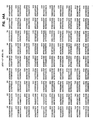
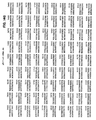
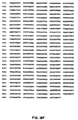
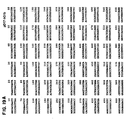
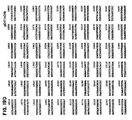
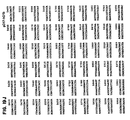
- sequence for the immunoglobulin constant region is known and provided in Figure 18 .
- Specific mutations in the constant region of the BR96 antibody were made.
- Nucleic acid molecules encoding the seven mutants described above are as follows.
- alanine at amino acid positions 235 and 237 is encoded by codons GCU, GCC, GCA, or GCG.
- serine at positions 318, 320, and 322 is encoded by UCU, UCC, UCA, or UGG.
- alanine at position 331 is encoded by codons GCU, GCC, GCA, or GCG.
- alanine at positions 235 and 237 is encoded by codons GCU, GCC, GCA, or GCG.
- Serine at positions 318, 320, and 322 is encoded by UCU, UCC, UCA, or UGG.
- alanine at positions 235, 237, and 331 is encoded by codons GCU, GCC, GCA, or GCG.
- serine at positions 318, 320, 322 is encoded by UCU, UCC, UCA, or UGG. Further, the alanine at position 331 is encoded by codons GCU, GCC, GCA, or GCG.
- alanine at positions 235, 237, and 331 is encoded by codons GCU, GCC, GCA, or GCG. Additionally, serine at positions 318, 320, 322 is encoded by UCU, UCC, UCA, or UGG.
- DNA deoxyribonucleic acid
- cDNA complementary DNA
- RNA ribonucleic acid
- Immunoconjugates having whole antibody or Ig fusion proteins
- chemotherapeutic agents such as folic acid and anthracyclines
- Peterson et al. "Transport And Storage Of Anthracyclines In Experimental Systems And Human Leukemia", in Anthracycline Antibiotics In Cancer Therapy, Muggia et al. (Eds.), p. 132 (Martinus Nijhoff Publishers (1982 ); Smyth et al., "Specific Targeting of Chlorambucil to Tumors With the Use of Monoclonal Antibodies", J. Natl.
- BR96 has been conjugated to doxorubicin and has been shown to be effective in therapy of certain cancers or carcinomas ( Trail, P.A., Willner, D., Lasch, S.J., Henderson, A.J., Casazza, A.M., Firestone, R.A., Hellström, I., and Hellström, K.E. Cure of xenografted human carcinomas by BR96-doxorubicin immunoconjugates. Science, 261:212-215, 1993 ).
- structurally altered BR96 can be used in forms including unreduced IgG, reduced structurally altered IgG, and fusion proteins ( PCT Application No. 95/305444, published March 6, 1996 ).
- Suitable therapeutic agents for use in making the immunoconjugate includes Pseudomonas exotoxin A (PE) in either the native PE or LysPE40 form.
- LysPE40 is a truncated form containing a genetically modified amino terminus that includes a lysine residue for conjugation purposes.
- Doxorubicin is also a suitable therapeutic agent.
- therapeutic agents include, but are not limited to, antimetabolites, alkylating agents, anthracyclines, antibiotics, and anti-mitotic agents.
- Antimetabolites include methotrexate, 6-mercaptopurine, 6-thioguanine, cytarabine, 5-fluorouracil decarbazine.
- Alkylating agents include mechlorethamine, thiotepa chlorambucil, melphalan, carmustine (BSNU) and lomustine (CCNU), cyclothosphamide, busulfan, dibromomannitol, streptozotocin, mitomycin C, and cis-dichlorodiamine platinum (II) (DDP) cisplatin.
- Anthracyclines include daunorubicin (formerly daunomycin) and doxorubicin (also referred to herein as adriamycin). Additional examples include mitozantrone and bisantrene.
- Antibiotics include dactinomycin (formerly actinomycin), bleomycin, mithramycin, and anthramycin (AMC).
- Antimitotic agents include vincristine and vinblastine (which are commonly referred to as vinca alkaloids).
- cytotoxic agents include procarbazine, hydroxyurea, asparaginase, corticosteroids, mytotane (O,P'-(DDD)), interferons.
- cytotoxic agents include, but are not limited to, ricin, bryodin, gelonin, supporin, doxorubicin, taxol, cytochalasin B, gramicidin D, ethidium bromide, etoposide, tenoposide, colchicine, dihydroxy anthracin dione, 1-dehydrotestosterone, and glucocorticoid.
- the chemotherapuetic agent aminopterin has a correlative improved analog namely methotrexate.
- the improved analog of doxorubicin is an Fe-chelate.
- the improved analog for 1-methylnitrosourea is lomustine.
- the improved analog of vinblastine is vincristine.
- the improved analog of mechlorethamine is cyclophosphamide.
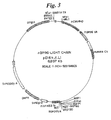
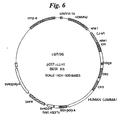
- vector pD 17-hG 1 b which contains only the constant region of IgG1 and not the V domain of hBR96, has the fl origin of replication.
- Kunkel, et al. Kunkel, T.A., J.D. Roberts, and R.A. Zakour, 1987 Methods Enzymol. 154:367-383 ) as provided in the Bio-Rad Muta-Gene® phagemid in vitro mutagenesis kit, version 2.
- Kunkel, et al. Kunkel, T.A., J.D. Roberts, and R.A. Zakour, 1987 Methods Enzymol. 154:367-383
- hBR96-2B, -C, -D, -E, -F, -G, and -H were made by this method.
- Block plates by flicking them and blotting on paper towels Add 200 ⁇ l/well of Genetic Systems, Specimen Diluent Concentrate (1x). Incubate at least 1 hour at room temperature and then dump the contents of the plates. Wash the plates 3x in saline/Tween. Blot to dry. Allow the plates to dry at R.T. (45 min. to 1 hour). Seal and store the plates at 4°C.
- Test samples as follows. Dilute samples and standards in Specimen Diluent at 1:10. Perform serial dilutions in separate round bottom plates. Transfer 100 ⁇ l/well of final dilutions to antigen coated assay plates; then incubate O.N. at 4°C. Wash plates 3x with saline/Tween.
- conjugation For conjugation add 100 ⁇ l/well of antibody-HRP conjugate in Genetic Systems Conjugate Diluent (1x). Incubate plates at Room Temp. for 60 min. Wash plates 3x in saline/Tween.
- the amplified hinge and CH 3 domain PCR fragments were added into Eco47-III sites on BR96 IgG1 molecules by in vivo homologous recombination ( P. Bubeck et al., Nucleic Acid Research (1993) 21:3601-3602 ).
- the new BR96 IgG1 molecules were verified by restriction mapping and sequencing.
- the CH 1 domain was amplified as a 580 bp fragment with a sense oligonucleotide (5' TGG CAC CGA AAG CTT TCT GGG GCA GGC CAG GCC TGA 3') (primer A) and an antisense oligonucleotide (5' TCC GAG CAT GTT GGT ACC CAC GTG GTG GTC GAC GCT GAG CCT GGC TTC GAG CAG ACA 3') (primer B) from a linearized human IgG1 constant region vector (pN ⁇ 1.7).
- a sense oligonucleotide 5' TGG CAC CGA AAG CTT TCT GGG GCA GGC CAG GCC TGA 3'
- an antisense oligonucleotide 5' TCC GAG CAT GTT GGT ACC CAC GTG GTG GTC GAC GCT GAG CCT GGC TTC GAG CAG ACA 3'
- the PCR fragment extends from the 5' end of the Hind-III site (in bold) through the Cel-II, Sal-I, Dra-III, Kpn-I, 6 bp nucleotide spacer and Mro-I sites (in bold) at the 3' end of the CH 1 domain.
- the CH 3 domain was then partially amplified (to the Xba-I site) with a sense primer (5' GTC GAC CAC CAC GTG GGT ACC AAC ATG TCC GGA GCC ACA TGG ACA GAG GCC GGC T 3') (primer C) and an antisense primer (5' CTG GTT CTT GTT CAT CTC CTC TCT AGA TGG 3') (primer D) from a linearized human IgGI constant region vector (pN ⁇ 1.7).
- a sense primer 5' GTC GAC CAC CAC GTG GGT ACC AAC ATG TCC GGA GCC ACA TGG ACA GAG GCC GGC T 3'
- an antisense primer 5' CTG GTT CTT GTT CAT CTC CTC TCT AGA TGG 3'
- a PCR fragment (about 150 bp) with Sal-I, Dra-III, Kpn-I, 6 nucleotide spacer and Mro-I sites (in bold) on its 5' end, extends only through the Xba-1 site (in bold) within the CH 3 domain.
- the CH 1 and CH 3 partial PCR fragments were combined in a PCR without any primer.
- the reaction was run through two full cycles of denaturation and reannealing to allow the fragments to combine at the homologous region at the 3' ends.
- Primers A and D (described above) were added to the reaction and the PCR cycle was completed.
- the polymerase extends the DNA with primer A and primer D, yielding a full- length (660 bp) PCR fragment.
- the newly extended PCR fragment is arranged from the 5' end to the 3' end in the following order: Hind-III - CH 1 - Cel-II - Sal-I - Dra-III - Kpn-I - 6 bp spacer - Mro-I - CH 3 partial - Xba-1.
- both the pEMBL18 and pN ⁇ 1.7 vectors were digested with Hind-III and Xba-I.
- the Hind-III and Xba-I fragment was ligated into the same sites on a linearized pN ⁇ 1.7 vector.
- the new construct, with CH 1 and a full CH 3 domain, was designated the pN ⁇ 1.10 vector.
- the hinge fragment was amplified from a Hind-III digested pN ⁇ 1.7 vector with the primers designed to flank the hinge exon with a Sal-I and a Dra-III cloning site at each end. These sites also exist between the CH 1 and CH 3 domains of the pN ⁇ 1.10 construct.
- the sense oligonucleotide (5' ACC ATG GTC GAC CTC AGA CCT GCC AAG AGC CAT ATC 3') with a 6 bp spacer and a Sal-I cloning site (in bold) and the antisense oligonucleotide (5' CAT GGT CAC GTG GTG TGT CCC TGG ATG CAG GCT ACT CTA G 3') with a 6 bp spacer and a Dra-III cloning site (in bold) were used for the amplication of the hinge fragment (250 bp).
- the hinge region PCR fragment was cloned into a Sma-I site on pEMBL18 by blunt end ligation.
- Both the pEMBL18 with the hinge domain and the pN ⁇ 1.10 with the CH 2 and CH 3 domains were digested with Sal-1 and Dra-III.
- the digested hinge fragment was cloned into the Sal-1 and Dra-III linearized sites on the pN ⁇ 1.10 vector.
- the new construct, now carrying the CH 1 , hinge and CH 3 domains, was designated pN ⁇ 1.11.
- both the pN ⁇ 1.11 construct and pN ⁇ 1.11 vector were digested with BamH1 and HindIII.
- a fragment containing the CH 1 , hinge and CH 3 domains was cloned into the linearized pN ⁇ 1.11 vector.
- the new constant region IgG1 construct lacks the CH 2 domain and is designated pN ⁇ 1.14 ( Figure 11 ).
- FIG. 12 is a diagrammatic representation of the pD17-hBR96-2 vector showing the Eco47-III sites used in cloning.
- the CH 2 deleted BR96 IgG 1 was then constructed as follows.
- the hinge and CH 3 domains were amplified from a CH 2 deleted L6 IgG1 (pN ⁇ 1.14) construct with a sense oligonucleotide (5' CAGGGAGGGAGGGTGTCTGCTGGAAGCCAGGCTC AGCGCT GACCTCAG A 3') homologous to the constant region sequence of IgGI at the 5' end of the Eco47-III site (in bold) and an antisense oligonucleotide (5'GGAAAGAACCATCACAGTCTCGCAGGGG CCCAGGGC AGCGCT GGGTGCTT 3') homologous to the constant region sequence of IgG1 at the 3' end of the Eco47-III site (in bold).
- the Eco47-III site at the 3' end of the pN ⁇ 1.14 construct is modified in the cloning process. The Eco47-III site is thus introduced into an antisense primer and used in amplification of the hinge and CH 3 domains
- the pD17-BR96 IgG1 vector was digested with Eco47-III and the hinge, CH 2 and CH 3 domains were removed.
- the linearized pD17-BR96 IgG1 vector was mixed with equimolar amounts of hinge and CH 3 PCR fragments. Cotransformation of the PCR fragment with linearized DNA into E.coli DH5a competent cells resulted in a recombinant molecule, mediated by homologous recombination in bacteria.
- This construct lacks the CH 2 domain of BR96 IgG1 molecules, and is designated pD17-BR96-dCH2 ( Figure 13 ).
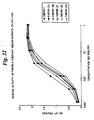
- Figure 1 shows the measurement of the clearance of the cBR96-A in high Le Y expressing dogs.
- the study used chimeric versus constant region mutant of cBR96-2.
- CBR96-2 did clear faster than the chimeric BR96.
- the localization of cBR96-A to the gastrointestinal epithelium is not significantly affected by this more rapid clearance. More than enough of the cBR96-A localized to have caused toxicity.
- the constant region of chimeric IgG is responsible for the GI toxicity seen in clinical trials, e.g. with chiBR96-dox.
- the GI toxicity seen in the dog model is very similar to the clinical toxicity.
- administration of the unconjugated antibody mediates an acute GI toxicity characterized by rapid onset of vomiting, often with blood.
- the CH 2 domain is known to mediate complement and FcR binding. It was not known that structural alteration of the CH 2 domain would result in immunoglobulin-induced toxicity inhibition.
- PCR polymerase chain reaction
- the heavy and light chain V genes were amplified by PCR from a single-stranded M 13 DNA template and subcloned by in vivo recombination ( Jones, D.H. And B.H. Howard. 1991. A rapid method for recombination and site-specific mutagenesis by placing homologous ends on DNA using polymerase chain reaction. BioTechniques 10:62-66 ) into vectors pD17-hG1a and pD16-hC ⁇ , to form pBR96-hGla and pBR96-hC ⁇ respectively.
- pD17-hGla and pD16-hC ⁇ are eukaryotic immunoglobulin expression vectors derived from pcDNA3 (Invitrogen, San Diego, CA).
- the plasmid pBR96-hG1a was further modified by site-directed mutagenesis to introduce two Eco47-III restriction sites flanking the immunoglobulin hinge-CH 2 -CH 3 domains using standard procedures.
- the recipient vector was then prepared by digesting pBR96-hG 1 a with Eco47-III, isolating the vector backbone by agarose gel electrophoresis followed by extracting the vector DNA from the excised gel slice using the Qiagen Gel Extraction kit (Qiagen, Chatsworth, CA).
- the strategy for introducing multiple mutations within the immunoglobulin CH 2 gene relies on the in vivo homologous recombination of several independently amplified PCR products with each other as well as with the pBR96-hG1a vector DNA.
- two PCR products are synthesized ( Figure 24B ).
- One end of each PCR product is for recombining with an homologous end of the linear vector, and the other end, encoding the mutation(s) of interest, is for recombining with the neighboring PCR product.
- additional distally-located mutations can be introduced into a target sequence by increasing the number of PCR products proportionately.
- the oligonucleotide primers encoding these ends contain complementary mutant residues.
- the mutagenic PCR primers contain at least 15 nucleotides of wild-type sequence flanking each side of the mutant residues for either priming the polymerization reaction or mediating recombination.
- Two 49-nucleotide long PCR sense and anti-sense primers (Rs and Ra) contain sequences for recombining with the end regions of the Eco47-III digested pBR96-hG1a vector.
- Each L mutation was amplified in a separate PCR reaction.
- the reaction conditions were 250 ng intact pBR96-hG1a DNA template, 10 ul of 1X Pfu buffer (Stratagene, Inc. San Diego, CA), 10 nmol dNTPs, 200ng each of the appropriate PCR primers, 10% dimethysulfoxide (ATCC, Rockville, MD) and 2.5 units cloned Pfu DNA polymerase in a 100ul reaction volume.
- Figure 25 shows a sample diagnostic restriction analysis of DNA prepared from clones derived from quadruple homologous recombination events (three PCR products plus vector). Additional sampling of clones resulting from quadruple recombination yielded a cloning efficiency of 29% (7 clones containing inserts/24 clones sampled). At this point, due to the small sampling sizes, we do not know whether the differences in the cloning efficiencies observed between the triple and quadruple recombination events are meaningful.
- miniprep DNAs from 6 clones derived from the triple recombination reaction and 6 clones derived from the quadruple recombination reaction exhibiting the predicted diagnostic Eco47-III restriction patterns were isolated, mixed with pBR96- hC ⁇ DNA and used to co-transfect COS7 cells.
- 48 hour spent supernatants from 3 ml cultures were assayed for total IgG production and for Le ⁇ binding activity by enzyme-linked immunosorbent assay (EIA) as described ( Yelton, D.E., M.J. Rosok, G.A. Cruz, W.L. Cosand, J. Bajorath, I.
- a RPCR procedure for homologously recombining up to three separate PCR-generated mutated antibody sequence products into a eukaryotic expression vector for the rapid construction of engineered IgG molecules is described herein.
- the advantage of this approach is the ability to simultaneously introduce multiple distally-located mutations with PCR products synthesized by a single round of PCR. Recombinant DNAs are produced with a reasonably high cloning efficiency and fidelity of correct nucleotide sequences.
- the ability to efficiently rejoin several distinct PCR products should permit combinatorial strategies for constructing complexly mutated protein domains as well as broadening the number and location of desired mutations.
- This example provides two methods for introducing site specific mutations into the CH2 domain of human IgG1 constant region containing vectors.
- One method involves PCR amplification of a segment or segments of the constant region, wherein mutations are introduced using appropriately constructed oligonucleotides.
- the vector receiving the fragment(s) is digested with a restriction enzyme to linearize the vector.
- PCR amplification primers are designed so that the 5' ends of the PCR fragments can hybridize to the DNA sequence of the vectors. If more than one PCR fragment is amplified, then common sequences to the two fragments are introduced by oligonucleotides.
- Bacteria are transfected with the PCR fragments and with the digested vector. The fragments and vector can recombine by homologous recombination using the bacteria's recombination machinery.
- DNA is then introduced into mammalian cells as described for the CH2 deleted antibody, and the expressed antibody analyzed for binding and functional activity.
- mutations Leu to Ala at residue 235 in CH2 and Gly to Ala at residue 237 were introduced by the procedure disclosed in Example 4.
- the heavy chain vector used for this procedure was pD17-hG1a, similar to pD17-BR96 vector described herein except that humanized V regions ( Rosok, M.J., D.E. Yelton, L.J. Harris, J. Bajorath, K-E. Hellstrom, I, Hellstrom, G.A. Cruz, K. Kristensson, H. Lin, W.D. Huse, and S.M. Glaser, 1996. J. Biol. Chem 271 37:22611-22618 ) with three affinity mutations (H1, H2, and H3 mutations) were substituted.
- pBR96-hG1a contains two Eco47-III restriction sites flanking the Ig hinge-CH2-CH3 domains.
- the recipient vector was prepared by (1) digesting pBR96-hG1a with Eco 47-III, (2) isolating the vector by agarose gel electrophoresis, and (3) extracting the vector DNA from the excised gel slice using the Qiagen Gel Extraction kit (Qiagen, Chatsworth, CA). To introduce mutations at a single location, such as for positions 235 and 237, two PCR products were synthesized.
- mutant F also referred to herein as hBR96-2F
- mutant F also referred to herein as hBR96-2F
- the recombination of neighboring PCR products occurs across the regions containing the desired mutations, therefore the oligonucleotide primers encoding these ends contain complementary mutant residues.
- the mutagenic PCR primers contain at least 15 nucleotides of wild-type sequence flanking each side of the mutant residues for either priming the polymerization reaction or mediating recombination.
- Two 49-nucleotide long PCR sense and anti-sense primers containing sequences for recombining with the end regions of the Eco 47-III digested pBR96-hG1a vector.
- PCR amplification used 250 ng intact pBR96-hG1a DNA template, 10 ⁇ l of 10X Pfu buffer (Stratagene, Inc., San Diego, CA), 10 nmol dNTPs, 200 ng each of the appropriate PCR primers, 10% dimethylsulfoxide (ATCC, Rockville, MD) and 2.5 units cloned Pfu DNA polymerase (Stratagen, Inc. San Diego, CA) in 100 ⁇ l reaction.
- 10X Pfu buffer (Stratagene, Inc., San Diego, CA)
- 10 nmol dNTPs 200 ng each of the appropriate PCR primers
- 10% dimethylsulfoxide ATCC, Rockville, MD
- 2.5 units cloned Pfu DNA polymerase (Stratagen, Inc. San Diego, CA) in 100 ⁇ l reaction.
- Samples were denatured at 95°C for 5 min, annealed at 45°C for 5 min, and extended at 72°C for 1 min followed by 25 cycles of denaturation at 94°C for 45 sec, annealing at 45°C for 45 sec, extension at 72°C for 1 min/kb, and a final extension at 72°C for 7 min.
- the amplified products were purified from a 1% agarose gel, extracted with the Qiagen Gel Extraction kit and quantitated.
- each PCR product 50 mg was mixed with 25 ng of the Eco47-III digested pBR96-hG1a vector and transfected in E.coli MAX Efficiency DH5 ⁇ TM according to the manufacturer's instructions (GIBCO BRL/Life Technologies; Gaithersburg, MD). The entire transfection reaction was plated onto LB agar plated containing 100 ⁇ g/ml ampicillin.
- the second method for introducing site specific mutations into the CH 2 domain of human IgG1 involved the method of Kunkel (1987 Methods Enzymology, supra).
- pD17-hG1b DNA with the F1 origin of replication was introduced into electrocompetent E. coli CJ236 dut-ung- (Bio-Rad Laboratories, Hercules, CA) by electroporation according to manufacturer's instructions.
- PD17-hGlb is a vector having a constant region but no variable region.
- the F1 ori site allows treatment of this vector as a phagemid.
- Bacteria containing the plasmid were selected by ampicillin resistance. Single stranded uridinylated DNA was prepared using the Muta-Gene Phagemid In Vitro Mutagenesis Version 2 protocol (Bio-Rad). Mutations were introduced by site-directed mutagenesis with the appropriate antisense oligonucleotide. For molecules with mutations at more than one location, mutations were introduced by either of the two methods discussed above. One method would be to (1) prepare one mutant, for example, mutant 2C (also referred to herein as BR96-2C) with the mutations at residues 318, 320, 322, (2) isolate ssDNA, and (3) introduce a second mutation set with the appropriate anti-sense oligonucleotide.
- mutant 2C also referred to herein as BR96-2C
- the second method would be to anneal two antisense oligonucleotides with the same uridinylated ssDNA and screen for mutants with both sets of changes.
- Mutant 2H (hBR96-2H) was also prepared by a combination of thse methods.
- the V region of humanized BR96-2 heavy chain was introduced by the homologous recombination method described above in pD 17-hJm 14.H 1.
- the pD17-hJm14.H1 plasmid contains the BR96 humanized variable region with the H1/H2/H3 mutations and the plasmid was used to transfect mutant sequences into mammalian cells.
- the pD17Glb vector containing the Fc mutation(s) was digested with NheI for 3 hr at 37° C and the DNA isolated by methods described above. Insertion of the V region into the vector was determined by size and restriction enzyme mapping and confirmed by sequence analysis.
- Transient expression of whole antibodies was performed by transfection of COS cells.
- stable transfections of CHO cells were performed (see description of deleted CH2 mutant). All mutants were purified from CHO culture supernatants by protein A chromatography.
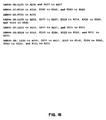
- oligonucleotide primers homologous to the vector and used to introduce the constant regions mutations were as follows:
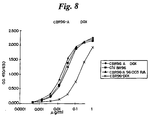
- mutant hBR96-2B has approximately 10 fold less activity than the control hBR96-1 (two affinity mutations, one in H2 and one in H3, refer to previous patent ( Figure 20 )).
- the mutants that have the least ability to kill cells in the presence of complement is hBR96-2C with the triple mutations at positions 318, 320, and 322 and the hBR96-2H mutant (least cytotoxic antibodies in the panel) which contains all six mutations at the three different locations.
- ADCC activity was most affected by the CH2 deleted hBR96-2 molecule ( Figure 21 ).
- hBR96-2B and -2H lost between 100 and 1000 fold activity to kill in the presence of effector cells. In the ADCC assay the hBR96-2B molecule also lost approximately 10 fold activity ( Figure 21 ).
- Figures 26-28 provide the amino acid sequences for the heavy chain variable region for both chimeric and humanized BR96 having the H1, H2, and H3 mutations.
- the amino acid sequence for the light chain variable region is known and methods for generating it are found in PCT Application No. 95/305444 . Additionally provided is the amino acid sequence for the IgG1 constant region. Mutations in the constant region are marked.
Landscapes
- Health & Medical Sciences (AREA)
- Chemical & Material Sciences (AREA)
- Immunology (AREA)
- Life Sciences & Earth Sciences (AREA)
- Bioinformatics & Cheminformatics (AREA)
- Engineering & Computer Science (AREA)
- General Health & Medical Sciences (AREA)
- Medicinal Chemistry (AREA)
- Organic Chemistry (AREA)
- Pharmacology & Pharmacy (AREA)
- Animal Behavior & Ethology (AREA)
- Public Health (AREA)
- Veterinary Medicine (AREA)
- Cell Biology (AREA)
- Epidemiology (AREA)
- Biochemistry (AREA)
- Nuclear Medicine, Radiotherapy & Molecular Imaging (AREA)
- Molecular Biology (AREA)
- Proteomics, Peptides & Aminoacids (AREA)
- Biophysics (AREA)
- Chemical Kinetics & Catalysis (AREA)
- General Chemical & Material Sciences (AREA)
- Genetics & Genomics (AREA)
- Peptides Or Proteins (AREA)
- Medicines Containing Antibodies Or Antigens For Use As Internal Diagnostic Agents (AREA)
- Medicines That Contain Protein Lipid Enzymes And Other Medicines (AREA)
- Preparation Of Compounds By Using Micro-Organisms (AREA)
- Micro-Organisms Or Cultivation Processes Thereof (AREA)
- Pharmaceuticals Containing Other Organic And Inorganic Compounds (AREA)
Claims (18)
- BR96-Antikörper, der eine menschliche IgG1-Konstantregion aufweist, die in der CH2-Domäne strukturell geändert worden ist, wobei Leucin an der Aminosäureposition 235 zu Alanin mutiert wird; Glycin an der Aminosäureposition 237 zu Alanin mutiert wird; Glutaminsäure an der Aminosäureposition 318 zu Serin mutiert wird; Lysin an der Aminosäureposition 320 zu Serin mutiert wird; und Lysin an der Aminosäureposition 322 zu Serin mutiert wird.
- BR96-Antikörper, der eine menschliche IgG1-Konstantregion aufweist, die in der CH2-Domäne strukturell geändert worden ist, wobei Leucin an der Aminosäureposition 235 zu Alanin mutiert wird; Glycin an der Aminosäureposition 237 zu Alanin mutiert wird; und Prolin an der Aminosäureposition 331 zu Alanin mutiert wird.
- BR96-Antikörper, der eine menschlicher IgG1-Konstantregion aufweist, die in der CH2-Domäne strukturell geändert worden ist, wobei Leucin an der Aminosäureposition 235 zu Alanin mutiert wird; Glycin an der Aminosäureposition 237 zu Alanin mutiert wird; Glutaminsäure an der Aminosäureposition 318 zu Serin mutiert wird; Lysin an der Aminosäureposition 320 zu Serin mutiert wird; Lysin an der Aminosäureposition 322 zu Serin mutiert wird; und Prolin an der Aminosäureposition 331 zu Alanin mutiert wird,
- Nucleinsäuremolekül, das einen Antikörper ausgewählt unter den BR96.Antikörpem nach den Ansprüchen 1-3 kodiert.
- cDNA nach Anspruch 4.
- Plasmid, das das Nucleinsäuremolekül nach Anspruch 4 umfasst.
- Wirtsvekrorsystem umfassend ein Plasmid nach Anspruch 6 in einer geeigneten Wirtszelle.
- Methode für die Herstellung eines Proteins, umfassend das Züchten der Wirtszellen nach Anspruch 7, die das Plasmid enthalten, um das Protein in dem Wirt herzustellen, und das Gewinnen des so erzeugten Proteins.
- Pharmazeutische Zusammensetzung umfassend einen akzeptablen Träger und eine pharmazeutisch wirksame Menge eines Immunoglobulinmoleküls, das eine variable Region und eine Konstantregion aufweist, wobei das Immunoglobulinmolekül durch strukturelles Ändern multipler, mit Toxizität verbundener Domänen in der CH2-Domäne der konstanten Region eines monoklonalen Antikörpers BR96 modifiziert wird und die multiplen, mit Toxizität verbundenen Domänen so geändert werden, dass die Toxizität, die sonst durch den monoklonalen Antikörper BR96 induziert wird, gehemmt wird, wobei das modifizierte Immunoglobulinmolekül unter den Antikörpers nach den Ansprüchen 1-3 ausgewählt wird,
- Zusammensetzung nach Anspruch 9, wobei das strukturell geänderte Immunoglobulinmolekül ein Target, das mit Krebs verbunden ist, erkennt und bindet.
- Verwendung der Zusammensetzung nach Anspruch 10 für die Herstellung eines Medikaments zur Verwendung bei einer Methode für die Behandlung von Karzinomen in vivo, umfassend das Verabreichen einer pharmazeutisch wirksamen Menge der Zusammensetzung einem Patienten,
- Verwendung nach Anspruch 11, wobei das strukturell geänderte Immunoglobulinmolekül in der Zusammensetzung mit einer Verbindung ausgewählt aus der Gruppe bestehend aus einem Radiolabel, einem Enzym, einem Chromophor, einem Chemilumineszenzbildner und einem Fluoreszenzbildner so gelabelt wird, um direkt oder indirekt ein wahrnehmbares Signal zu erzeugen.
- Verwendung der Zusammensetzung nach Anspruch 10 für die Herstellung eines Medikaments für die Behandlung eines Patienten, der an Krebs leidet, wobei der Krebs als Gruppe von Zellen gekennzeichnet ist, die an der Zelloberfläche ein mit Tumor verbundenes Antigen aufweisen, durch Verabreichen dem Patienten einer krebstötenden Menge der Zusammensetzung umfassend ein zytotoxisches Mittel angeknüpftes Immunoglobulin unter Bedingungen, die es dem so angeknüpften Molekül erlauben, das mit dem Tumor verbundene Antigen an der Zelloberfläche so zu binden, dass die so gebundenen Zellen getötet werden, wodurch der Patient behandelt wird.
- Verwendung nach Anspruch 13, wobei das Immunoglobulin an Doxorubicin konjugiert wird.
- Verwendung eines Immunoglobulinmoleküls, das eine variable Region und eine Konstantregion aufweist, wobei das Immunoglobulinmolekül durch strukturelles Ändern multipler, mit Toxizität verbundener Domänen in der CH2-Domäne der konstanten Region eines monoklonalen Antikörpers BR96 modifiziert wird und die multiplen, mit Toxizität verbundenen Domänen so geändert werden, dass die Toxizität, die sonst durch den monoklonalen Antikörper BTR96 induziert wird, gehemmt wird, für die Herstellung eines Medikaments für das Hemmen der durch Immunoglobulin induzierten Toxizität, die aus der Immunoglobulinimmuntherapie bei einem Patienten herrührt, wobei das modifizierte Immunoglobulinmolekül unter den Antikörpern nach den Ansprüchen 1-3 ausgewählt wird.
- Verwendung nach Anspruch 15, wobei das strukturell geänderte Molekül keine komplementabhängige Zytotoxizität oder antikörperabhängige Zellzytotoxizität mehr vermittelt.
- Verwendung nach Anspruch 15, wobei das Immunoglobulinmolekül Ley erkennt und bindet.
- Pharmazeutische Zusammensetzung nach Anspruch 9 zur Verwendung als therapeutisches Mittel.
Applications Claiming Priority (3)
| Application Number | Priority Date | Filing Date | Title |
|---|---|---|---|
| US2303396P | 1996-08-02 | 1996-08-02 | |
| US23033P | 1996-08-02 | ||
| PCT/US1997/013562 WO1998005787A1 (en) | 1996-08-02 | 1997-08-01 | A method for inhibiting immunoglobulin-induced toxicity resulting from the use of immunoglobulins in therapy and in vivo diagnosis |
Publications (2)
| Publication Number | Publication Date |
|---|---|
| EP0918872A1 EP0918872A1 (de) | 1999-06-02 |
| EP0918872B1 true EP0918872B1 (de) | 2008-02-20 |
Family
ID=21812739
Family Applications (1)
| Application Number | Title | Priority Date | Filing Date |
|---|---|---|---|
| EP97937087A Expired - Lifetime EP0918872B1 (de) | 1996-08-02 | 1997-08-01 | Ein verfahren zur inhibierung immunglobulininduzierter toxizität aufgrund von der verwendung von immunoglobinen in therapie und in vivo diagnostik |
Country Status (8)
| Country | Link |
|---|---|
| EP (1) | EP0918872B1 (de) |
| JP (1) | JP2001506967A (de) |
| AT (1) | ATE386809T1 (de) |
| AU (1) | AU3968897A (de) |
| CA (1) | CA2262405A1 (de) |
| DE (1) | DE69738522T2 (de) |
| ES (1) | ES2300113T3 (de) |
| WO (1) | WO1998005787A1 (de) |
Families Citing this family (206)
| Publication number | Priority date | Publication date | Assignee | Title |
|---|---|---|---|---|
| GB9809951D0 (en) | 1998-05-08 | 1998-07-08 | Univ Cambridge Tech | Binding molecules |
| JP2003531149A (ja) | 2000-04-13 | 2003-10-21 | ザ・ロツクフエラー・ユニバーシテイ | 抗体由来の免疫応答の増強 |
| NZ527283A (en) * | 2001-01-29 | 2006-03-31 | Biogen Idec Inc | Modified antibodies and methods of use |
| WO2002096948A2 (en) | 2001-01-29 | 2002-12-05 | Idec Pharmaceuticals Corporation | Engineered tetravalent antibodies and methods of use |
| US7662925B2 (en) | 2002-03-01 | 2010-02-16 | Xencor, Inc. | Optimized Fc variants and methods for their generation |
| US7317091B2 (en) | 2002-03-01 | 2008-01-08 | Xencor, Inc. | Optimized Fc variants |
| US8188231B2 (en) | 2002-09-27 | 2012-05-29 | Xencor, Inc. | Optimized FC variants |
| US20040132101A1 (en) | 2002-09-27 | 2004-07-08 | Xencor | Optimized Fc variants and methods for their generation |
| US8968730B2 (en) | 2002-08-14 | 2015-03-03 | Macrogenics Inc. | FcγRIIB specific antibodies and methods of use thereof |
| US8946387B2 (en) | 2002-08-14 | 2015-02-03 | Macrogenics, Inc. | FcγRIIB specific antibodies and methods of use thereof |
| US8530627B2 (en) | 2002-08-14 | 2013-09-10 | Macrogenics, Inc. | FcγRIIB specific antibodies and methods of use thereof |
| US8187593B2 (en) | 2002-08-14 | 2012-05-29 | Macrogenics, Inc. | FcγRIIB specific antibodies and methods of use thereof |
| US7217797B2 (en) | 2002-10-15 | 2007-05-15 | Pdl Biopharma, Inc. | Alteration of FcRn binding affinities or serum half-lives of antibodies by mutagenesis |
| DK1562972T3 (da) | 2002-10-15 | 2010-12-06 | Facet Biotech Corp | Modifikation af FcRn-bindingsaffiniteter eller serumhalveringstider for antistoffer ved mutagenese |
| US7365168B2 (en) | 2002-10-15 | 2008-04-29 | Pdl Biopharma, Inc. | Alteration of FcRn binding affinities or serum half-lives of antibodies by mutagenesis |
| US7361740B2 (en) | 2002-10-15 | 2008-04-22 | Pdl Biopharma, Inc. | Alteration of FcRn binding affinities or serum half-lives of antibodies by mutagenesis |
| CA2512729C (en) | 2003-01-09 | 2014-09-16 | Macrogenics, Inc. | Identification and engineering of antibodies with variant fc regions and methods of using same |
| US7960512B2 (en) | 2003-01-09 | 2011-06-14 | Macrogenics, Inc. | Identification and engineering of antibodies with variant Fc regions and methods of using same |
| US20090010920A1 (en) | 2003-03-03 | 2009-01-08 | Xencor, Inc. | Fc Variants Having Decreased Affinity for FcyRIIb |
| US8084582B2 (en) | 2003-03-03 | 2011-12-27 | Xencor, Inc. | Optimized anti-CD20 monoclonal antibodies having Fc variants |
| US8388955B2 (en) | 2003-03-03 | 2013-03-05 | Xencor, Inc. | Fc variants |
| US9051373B2 (en) | 2003-05-02 | 2015-06-09 | Xencor, Inc. | Optimized Fc variants |
| TWI353991B (en) | 2003-05-06 | 2011-12-11 | Syntonix Pharmaceuticals Inc | Immunoglobulin chimeric monomer-dimer hybrids |
| NZ544924A (en) | 2003-06-27 | 2009-03-31 | Biogen Idec Inc | Modified binding molecules comprising connecting peptides |
| AU2004266159A1 (en) | 2003-08-22 | 2005-03-03 | Biogen Idec Ma Inc. | Improved antibodies having altered effector function and methods for making the same |
| US9714282B2 (en) | 2003-09-26 | 2017-07-25 | Xencor, Inc. | Optimized Fc variants and methods for their generation |
| US8101720B2 (en) | 2004-10-21 | 2012-01-24 | Xencor, Inc. | Immunoglobulin insertions, deletions and substitutions |
| WO2005037867A1 (en) | 2003-10-15 | 2005-04-28 | Pdl Biopharma, Inc. | ALTERATION OF Fc-FUSION PROTEIN SERUM HALF-LIVES BY MUTAGENESIS OF POSITIONS 250, 314 AND/OR 428 OF THE HEAVY CHAIN CONSTANT REGION OF IG |
| WO2005047327A2 (en) | 2003-11-12 | 2005-05-26 | Biogen Idec Ma Inc. | NEONATAL Fc RECEPTOR (FcRn)-BINDING POLYPEPTIDE VARIANTS, DIMERIC Fc BINDING PROTEINS AND METHODS RELATED THERETO |
| EP1737890A2 (de) | 2004-03-24 | 2007-01-03 | Xencor, Inc. | Immunoglobulinvarianten ausserhalb der fc-region |
| US20150010550A1 (en) | 2004-07-15 | 2015-01-08 | Xencor, Inc. | OPTIMIZED Fc VARIANTS |
| AU2005287406B2 (en) | 2004-07-26 | 2011-08-18 | Biogen Ma Inc. | Anti-CD154 antibodies |
| AU2005274905B2 (en) | 2004-08-04 | 2010-12-23 | Mentrik Biotech, Llc | Variant Fc regions |
| AU2005335714B2 (en) | 2004-11-10 | 2012-07-26 | Macrogenics, Inc. | Engineering Fc antibody regions to confer effector function |
| US8802820B2 (en) | 2004-11-12 | 2014-08-12 | Xencor, Inc. | Fc variants with altered binding to FcRn |
| US8546543B2 (en) | 2004-11-12 | 2013-10-01 | Xencor, Inc. | Fc variants that extend antibody half-life |
| AU2005304624B2 (en) | 2004-11-12 | 2010-10-07 | Xencor, Inc. | Fc variants with altered binding to FcRn |
| US8367805B2 (en) | 2004-11-12 | 2013-02-05 | Xencor, Inc. | Fc variants with altered binding to FcRn |
| EP1838736B1 (de) * | 2005-01-05 | 2013-03-06 | Biogen Idec MA Inc. | Cripto-bindende moleküle |
| US9284375B2 (en) | 2005-04-15 | 2016-03-15 | Macrogenics, Inc. | Covalent diabodies and uses thereof |
| US11254748B2 (en) | 2005-04-15 | 2022-02-22 | Macrogenics, Inc. | Covalent diabodies and uses thereof |
| US9963510B2 (en) | 2005-04-15 | 2018-05-08 | Macrogenics, Inc. | Covalent diabodies and uses thereof |
| ES2971647T3 (es) | 2005-04-15 | 2024-06-06 | Macrogenics Inc | Diacuerpos covalentes y usos de los mismos |
| US8008443B2 (en) | 2005-04-26 | 2011-08-30 | Medimmune, Llc | Modulation of antibody effector function by hinge domain engineering |
| AU2006265936A1 (en) | 2005-07-01 | 2007-01-11 | Medimmune, Llc | An integrated approach for generating multidomain protein therapeutics |
| PL2573114T3 (pl) | 2005-08-10 | 2016-10-31 | Identyfikacja i inżynieria przeciwciał z wariantami regionów FC oraz sposoby ich stosowania | |
| WO2007041635A2 (en) | 2005-10-03 | 2007-04-12 | Xencor, Inc. | Fc variants with optimized fc receptor binding properties |
| WO2007044616A2 (en) | 2005-10-06 | 2007-04-19 | Xencor, Inc. | Optimized anti-cd30 antibodies |
| KR20080073293A (ko) | 2005-10-14 | 2008-08-08 | 메디뮨 엘엘씨 | 항체 라이브러리의 세포 디스플레이 |
| CN104761637B (zh) | 2006-03-31 | 2021-10-15 | 中外制药株式会社 | 调控抗体血液动力学的方法 |
| WO2008105886A2 (en) | 2006-05-26 | 2008-09-04 | Macrogenics, Inc. | HUMANIZED FCγRIIB-SPECIFIC ANTIBODIES AND METHODS OF USE THEREOF |
| ES2599319T3 (es) | 2006-06-26 | 2017-02-01 | Macrogenics, Inc. | Anticuerpos específicos de Fc RIIB y métodos de uso de éstos |
| WO2008002933A2 (en) | 2006-06-26 | 2008-01-03 | Macrogenics, Inc. | Combination of fcgammariib antibodies and cd20-specific antibodies and methods of use thereof |
| PL2383297T3 (pl) | 2006-08-14 | 2013-06-28 | Xencor Inc | Zoptymalizowane przeciwciała ukierunkowane na CD19 |
| WO2008036688A2 (en) | 2006-09-18 | 2008-03-27 | Xencor, Inc. | Optimized antibodies that target hm1.24 |
| US8652466B2 (en) | 2006-12-08 | 2014-02-18 | Macrogenics, Inc. | Methods for the treatment of disease using immunoglobulins having Fc regions with altered affinities for FcγRactivating and FcγRinhibiting |
| PE20140196A1 (es) | 2007-08-09 | 2014-03-19 | Boehringer Ingelheim Int | Anticuerpos anti-cd37 |
| ES2595638T3 (es) | 2007-09-26 | 2017-01-02 | Chugai Seiyaku Kabushiki Kaisha | Método para modificar el punto isoeléctrico de un anticuerpo mediante la sustitución de aminoácidos en una CDR |
| US8795667B2 (en) | 2007-12-19 | 2014-08-05 | Macrogenics, Inc. | Compositions for the prevention and treatment of smallpox |
| HRP20150279T1 (hr) | 2007-12-26 | 2015-05-08 | Xencor, Inc. | Fc inaäśice s promijenjenim vezanjem na fcrn |
| US12492253B1 (en) | 2008-02-25 | 2025-12-09 | Xencor, Inc. | Anti-human C5 antibodies |
| ES2589912T3 (es) | 2008-04-02 | 2016-11-17 | Macrogenics, Inc. | Anticuerpos específicos para el complejo BCR y procedimientos de uso de los mismos |
| WO2009123894A2 (en) | 2008-04-02 | 2009-10-08 | Macrogenics, Inc. | Her2/neu-specific antibodies and methods of using same |
| KR102057826B1 (ko) | 2008-04-11 | 2019-12-20 | 추가이 세이야쿠 가부시키가이샤 | 복수 분자의 항원에 반복 결합하는 항원 결합 분자 |
| JP2012514458A (ja) | 2008-12-31 | 2012-06-28 | バイオジェン・アイデック・エムエイ・インコーポレイテッド | 抗リンホトキシン抗体 |
| CA2771999A1 (en) | 2009-08-24 | 2011-03-10 | Amunix Operating Inc. | Coagulation factor vii compositions and methods of making and using same |
| WO2011028952A1 (en) | 2009-09-02 | 2011-03-10 | Xencor, Inc. | Compositions and methods for simultaneous bivalent and monovalent co-engagement of antigens |
| JP5898082B2 (ja) | 2009-10-07 | 2016-04-06 | マクロジェニクス,インコーポレーテッド | フコシル化程度の変更により改良されたエフェクター機能を示すFc領域含有ポリペプチドおよびその使用法 |
| MX341084B (es) | 2009-11-02 | 2016-08-05 | Univ Washington | Composiciones de nucleasas terapéuticas y métodos. |
| WO2011091078A2 (en) | 2010-01-19 | 2011-07-28 | Xencor, Inc. | Antibody fc variants with enhanced complement activity |
| EP2542256B1 (de) | 2010-03-04 | 2019-05-22 | MacroGenics, Inc. | Mit b7-h3 reagierende antikörper, immunologisch wirkende fragmente davon und verwendungen davon |
| PH12012501751A1 (en) | 2010-03-04 | 2012-11-12 | Macrogenics Inc | Antibodies reactive with b7-h3, immunologically active fragments thereof and uses thereof |
| TW201217527A (en) | 2010-07-09 | 2012-05-01 | Biogen Idec Hemophilia Inc | Processable single chain molecules and polypeptides made using same |
| AU2011286024B2 (en) | 2010-08-02 | 2014-08-07 | Macrogenics, Inc. | Covalent diabodies and uses thereof |
| UA112062C2 (uk) | 2010-10-04 | 2016-07-25 | Бьорінгер Інгельхайм Інтернаціональ Гмбх | Cd33-зв'язувальний агент |
| EP2647706B1 (de) | 2010-11-30 | 2023-05-17 | Chugai Seiyaku Kabushiki Kaisha | Antigenbindende moleküle zur wiederholten bindung an mehrere antigenmoleküle |
| ES2666303T3 (es) | 2011-04-29 | 2018-05-03 | University Of Washington | Composiciones terapéuticas de nucleasa y métodos |
| BR112013029892A2 (pt) | 2011-05-21 | 2016-12-20 | Macrogenics Inc | polipeptídeo, molécula de ligação a antígeno, diacorpo e uso de uma porção polipeptídica de uma proteína de ligação a soro desimunizada |
| US9486507B2 (en) | 2011-06-10 | 2016-11-08 | Biogen Ma Inc. | Pro-coagulant compounds and methods of use thereof |
| WO2013012733A1 (en) | 2011-07-15 | 2013-01-24 | Biogen Idec Ma Inc. | Heterodimeric fc regions, binding molecules comprising same, and methods relating thereto |
| UY34317A (es) | 2011-09-12 | 2013-02-28 | Genzyme Corp | Anticuerpo antireceptor de célula T (alfa)/ß |
| WO2013039954A1 (en) | 2011-09-14 | 2013-03-21 | Sanofi | Anti-gitr antibodies |
| AU2012347972B2 (en) | 2011-12-05 | 2018-05-10 | X-Body, Inc. | PDGF receptor beta binding polypeptides |
| CN104271150A (zh) | 2012-01-12 | 2015-01-07 | 比奥根艾迪克Ma公司 | 嵌合因子viii多肽及其用途 |
| EP2822577B1 (de) | 2012-02-15 | 2019-02-06 | Bioverativ Therapeutics Inc. | Rekombinante faktor-viii-proteine |
| JP6256882B2 (ja) | 2012-02-15 | 2018-01-10 | アムニクス オペレーティング インコーポレイテッド | 第viii因子組成物、ならびに組成物の作製方法および用途 |
| HUE037720T2 (hu) | 2012-03-28 | 2018-09-28 | Sanofi Sa | Bradikinin B1 receptor ligandumok elleni antitestek |
| MX2014013637A (es) | 2012-05-07 | 2015-02-05 | Sanofi Sa | Metodos para prevencion de la formacion de biopelicula. |
| WO2013175276A1 (en) | 2012-05-23 | 2013-11-28 | Argen-X B.V | Il-6 binding molecules |
| WO2013185113A1 (en) | 2012-06-08 | 2013-12-12 | Biogen Idec Ma Inc. | Procoagulant compounds |
| CA2875247A1 (en) | 2012-06-08 | 2013-12-12 | Biogen Idec Ma Inc. | Chimeric clotting factors |
| US10023628B2 (en) | 2012-07-06 | 2018-07-17 | Bioverativ Therapeutics Inc. | Cell line expressing single chain factor VIII polypeptides and uses thereof |
| CN104661674A (zh) | 2012-07-11 | 2015-05-27 | 阿穆尼克斯运营公司 | 具有xten和血管性血友病因子蛋白的因子viii复合物、及其用途 |
| SG10201709559PA (en) | 2012-08-24 | 2017-12-28 | Chugai Pharmaceutical Co Ltd | Fcγriib-specific fc region variant |
| WO2014030750A1 (ja) | 2012-08-24 | 2014-02-27 | 中外製薬株式会社 | マウスFcγRII特異的Fc抗体 |
| US9790268B2 (en) | 2012-09-12 | 2017-10-17 | Genzyme Corporation | Fc containing polypeptides with altered glycosylation and reduced effector function |
| PL3366705T3 (pl) | 2012-09-12 | 2023-09-18 | Genzyme Corporation | FC zawierające polipeptydy o zmienionej glikozylacji i zmniejszonej funkcji efektorowej |
| WO2014127215A1 (en) | 2013-02-15 | 2014-08-21 | Biogen Idec Ma Inc. | Optimized factor viii gene |
| US9487587B2 (en) | 2013-03-05 | 2016-11-08 | Macrogenics, Inc. | Bispecific molecules that are immunoreactive with immune effector cells of a companion animal that express an activating receptor and cells that express B7-H3 and uses thereof |
| US9701753B2 (en) | 2013-03-11 | 2017-07-11 | Genzyme Corporation | Hyperglycosylated binding polypeptides |
| SMT202100464T1 (it) | 2013-03-14 | 2021-11-12 | Macrogenics Inc | Molecole bispecifiche che sono immunoreattive con cellule effettrici immunitarie che esprimono un recettore di attivazione |
| WO2014144549A1 (en) | 2013-03-15 | 2014-09-18 | Biogen Idec Ma Inc. | Factor ix polypeptide formulations |
| CN105246914B (zh) | 2013-04-02 | 2021-08-27 | 中外制药株式会社 | Fc区变体 |
| WO2015021423A2 (en) | 2013-08-08 | 2015-02-12 | Biogen Idec Ma Inc. | Purification of chimeric fviii molecules |
| UA116479C2 (uk) | 2013-08-09 | 2018-03-26 | Макродженікс, Інк. | БІСПЕЦИФІЧНЕ МОНОВАЛЕНТНЕ Fc-ДІАТІЛО, ЯКЕ ОДНОЧАСНО ЗВ'ЯЗУЄ CD32B I CD79b, ТА ЙОГО ЗАСТОСУВАННЯ |
| US11384149B2 (en) | 2013-08-09 | 2022-07-12 | Macrogenics, Inc. | Bi-specific monovalent Fc diabodies that are capable of binding CD32B and CD79b and uses thereof |
| HK1221725A1 (zh) | 2013-08-13 | 2017-06-09 | Sanofi | 纤溶酶原激活剂抑制剂-1(pai-1)的抗体及其用途 |
| TW201722994A (zh) | 2013-08-13 | 2017-07-01 | 賽諾菲公司 | 胞漿素原活化素抑制劑-1(pai-1)之抗體及其用途 |
| TW202003554A (zh) | 2013-08-14 | 2020-01-16 | 美商百歐維拉提夫治療公司 | 因子viii-xten融合物及其用途 |
| EP2840091A1 (de) | 2013-08-23 | 2015-02-25 | MacroGenics, Inc. | Bispezifische Diabodies, die gpA33 und CD3 binden können und Anwendungen dieser |
| EP2839842A1 (de) | 2013-08-23 | 2015-02-25 | MacroGenics, Inc. | Bispezifische monovalente Diabodies mit Fähigkeit zur Bindung von CD123 und CD3 und Verwendungen davon |
| HUE057005T2 (hu) | 2013-09-25 | 2022-04-28 | Bioverativ Therapeutics Inc | Oszlopon történõ vírusinaktiváló eljárások |
| HRP20192080T1 (hr) | 2013-10-31 | 2020-02-07 | Resolve Therapeutics, Llc | Terapeutske fuzije nukleaza-albumine i postupci |
| EP3065769A4 (de) | 2013-11-08 | 2017-05-31 | Biogen MA Inc. | Prokoagulatorische fusionsverbindung |
| AU2015204646B2 (en) | 2014-01-10 | 2020-08-27 | Bioverativ Therapeutics Inc. | Factor VIII chimeric proteins and uses thereof |
| WO2015143091A1 (en) | 2014-03-19 | 2015-09-24 | Genzyme Corporation | Site-specific glycoengineering of targeting moieties |
| KR102399028B1 (ko) | 2014-03-21 | 2022-05-17 | 엑스-바디 인코포레이티드 | 이중-특이적 항원-결합 폴리펩티드 |
| US11008561B2 (en) | 2014-06-30 | 2021-05-18 | Bioverativ Therapeutics Inc. | Optimized factor IX gene |
| EA202193002A2 (ru) | 2014-09-03 | 2022-03-31 | Бёрингер Ингельхайм Интернациональ Гмбх | Соединение, нацеленное на ил-23a и фно-альфа, и его применение |
| CU20170038A7 (es) | 2014-09-26 | 2017-10-05 | Bayer Pharma AG | Derivados de adrenomedulina estabililzados especialmente útiles en el tratamiento y/o prevención de trastornos cardiovasculares, edematosos y/o inflamatorios |
| MX386297B (es) | 2014-09-29 | 2025-03-18 | Univ Duke | Moleculas biespecificas que comprenden un brazo orientado a la envoltura vih-1. |
| CA3205824A1 (en) | 2014-10-09 | 2016-04-14 | Genzyme Corporation | Glycoengineered antibody drug conjugates |
| BR112017007765B1 (pt) | 2014-10-14 | 2023-10-03 | Halozyme, Inc | Composições de adenosina deaminase-2 (ada2), variantes do mesmo e métodos de usar o mesmo |
| KR101860280B1 (ko) | 2014-12-19 | 2018-05-21 | 추가이 세이야쿠 가부시키가이샤 | 항-마이오스타틴 항체, 변이체 Fc 영역을 함유하는 폴리펩타이드, 및 사용 방법 |
| KR102605798B1 (ko) | 2015-02-05 | 2023-11-23 | 추가이 세이야쿠 가부시키가이샤 | 이온 농도 의존적 항원 결합 도메인을 포함하는 항체, Fc 영역 개변체, IL-8에 결합하는 항체, 및 그들의 사용 |
| JP7114460B2 (ja) | 2015-06-26 | 2022-08-08 | サノフィ・バイオテクノロジー | モノクローナル抗IL-1RAcP抗体 |
| WO2017019729A1 (en) | 2015-07-27 | 2017-02-02 | The General Hospital Corporation | Antibody derivatives with conditionally enabled effector function |
| EA201890423A1 (ru) | 2015-08-03 | 2018-07-31 | Биовератив Терапьютикс Инк. | Слитые белки фактора ix, способы их получения и применения |
| WO2017046746A1 (en) | 2015-09-15 | 2017-03-23 | Acerta Pharma B.V. | Therapeutic combinations of a btk inhibitor and a gitr binding molecule, a 4-1bb agonist, or an ox40 agonist |
| WO2017110981A1 (en) | 2015-12-25 | 2017-06-29 | Chugai Seiyaku Kabushiki Kaisha | Anti-myostatin antibodies and methods of use |
| CA3012695A1 (en) | 2016-02-01 | 2017-08-10 | Bioverativ Therapeutics Inc. | Optimized factor viii genes |
| GEP20227398B (en) | 2016-04-15 | 2022-07-25 | Macrogenics Inc | Novel b7-h3 binding molecules, antibody drug conjugates thereof and usage thereof |
| CA3029627A1 (en) | 2016-07-01 | 2018-01-04 | Resolve Therapeutics, Llc | Optimized binuclease fusions and methods |
| EP3494991A4 (de) | 2016-08-05 | 2020-07-29 | Chugai Seiyaku Kabushiki Kaisha | Zusammensetzung zur vorbeugung oder behandlung von erkrankungen im zusammenhang mit il-8 |
| SG10201607778XA (en) | 2016-09-16 | 2018-04-27 | Chugai Pharmaceutical Co Ltd | Anti-Dengue Virus Antibodies, Polypeptides Containing Variant Fc Regions, And Methods Of Use |
| TWI788307B (zh) | 2016-10-31 | 2023-01-01 | 美商艾歐凡斯生物治療公司 | 用於擴增腫瘤浸潤性淋巴細胞之工程化人造抗原呈現細胞 |
| JP2019536794A (ja) | 2016-12-02 | 2019-12-19 | バイオベラティブ セラピューティクス インコーポレイテッド | 凝固因子に対する免疫寛容を誘導する方法 |
| MX2019006444A (es) | 2016-12-02 | 2019-10-30 | Bioverativ Therapeutics Inc | Métodos de tratamiento de artropatía hemofílica utilizando factores de coagulación quiméricos. |
| MX2019007963A (es) | 2017-01-06 | 2019-10-21 | Iovance Biotherapeutics Inc | Expansion de linfocitos infiltrantes de tumor (til) con agonistas de la superfamilia de recptor de factor de necrosis tumoral (tnfrsf) y combinaciones terapeuticas de til- y agonistas de tnfrsf. |
| CA3049165A1 (en) | 2017-01-06 | 2018-07-12 | Iovance Biotherapeutics, Inc. | Expansion of tumor infiltrating lymphocytes with potassium channel agonists and therapeutic uses thereof |
| KR20200003913A (ko) | 2017-05-10 | 2020-01-10 | 이오반스 바이오테라퓨틱스, 인크. | 액상 종양으로부터의 종양 침윤 림프구의 확장 및 그의 치료 용도 |
| NZ762100A (en) | 2017-08-09 | 2025-12-19 | Bioverativ Therapeutics Inc | Nucleic acid molecules and uses thereof |
| CA3073537A1 (en) | 2017-08-22 | 2019-02-28 | Sanabio, Llc | Soluble interferon receptors and uses thereof |
| EP3714041A1 (de) | 2017-11-22 | 2020-09-30 | Iovance Biotherapeutics, Inc. | Expansion von peripheren blutlymphozyten (pbls) aus peripherem blut |
| US20210369775A1 (en) | 2017-12-15 | 2021-12-02 | Iovance Biotherapeutics, Inc. | Systems and methods for determining the beneficial administration of tumor infiltrating lymphocytes, and methods of use thereof and beneficial administration of tumor infiltrating lymphocytes, and methods of use thereof |
| AU2019215063B2 (en) | 2018-02-01 | 2025-10-16 | Bioverativ Therapeutics, Inc. | Use of lentiviral vectors expressing Factor VIII |
| CA3090795A1 (en) | 2018-02-13 | 2019-08-22 | Iovance Biotherapeutics, Inc. | Expansion of tumor infiltrating lymphocytes (tils) with adenosine a2a receptor antagonists and therapeutic combinations of tils and adenosine a2a receptor antagonists |
| CN112119090B (zh) | 2018-03-15 | 2023-01-13 | 中外制药株式会社 | 对寨卡病毒具有交叉反应性的抗登革热病毒抗体及使用方法 |
| PE20210313A1 (es) | 2018-03-28 | 2021-02-12 | Bristol Myers Squibb Co | Proteinas de fusion interleucina-2/receptor alfa de interleucina-2 y metodos de uso |
| PL3793588T3 (pl) | 2018-05-18 | 2025-09-01 | Bioverativ Therapeutics Inc. | Sposoby leczenia hemofilii a |
| CN119080931A (zh) | 2018-06-04 | 2024-12-06 | 马萨诸塞州渤健公司 | 具有降低的效应功能的抗vla-4抗体 |
| KR20210027426A (ko) | 2018-07-03 | 2021-03-10 | 브리스톨-마이어스 스큅 컴퍼니 | Fgf21 제제 |
| EP3833766A1 (de) | 2018-08-09 | 2021-06-16 | Bioverativ Therapeutics Inc. | Nukleinsäuremoleküle und verwendungen davon zur nichtviralen gentherapie |
| TW202031273A (zh) | 2018-08-31 | 2020-09-01 | 美商艾歐凡斯生物治療公司 | 抗pd-1抗體難治療性之非小細胞肺癌(nsclc)病患的治療 |
| US12611427B2 (en) | 2018-11-05 | 2026-04-28 | Iovance Biotherapeutics, Inc. | Treatment of NSCLC patients refractory for anti-PD-1 antibody |
| WO2020142740A1 (en) | 2019-01-04 | 2020-07-09 | Resolve Therapeutics, Llc | Treatment of sjogren's disease with nuclease fusion proteins |
| WO2020180733A1 (en) | 2019-03-01 | 2020-09-10 | Iovance Biotherapeutics, Inc. | Expansion of tumor infiltrating lymphocytes from liquid tumors and therapeutic uses thereof |
| CN120192414A (zh) | 2019-04-03 | 2025-06-24 | 建新公司 | 具有降低的断裂的抗αβTCR结合多肽 |
| EP3986918A1 (de) | 2019-06-18 | 2022-04-27 | Bayer Aktiengesellschaft | Adrenomedullin-analoga zur langzeitstabilisierung und ihre verwendung |
| KR20220097891A (ko) | 2019-09-30 | 2022-07-08 | 바이오버라티브 테라퓨틱스 인크. | 렌티바이러스 벡터 제형 |
| JP2023514152A (ja) | 2020-02-06 | 2023-04-05 | ブリストル-マイヤーズ スクイブ カンパニー | Il-10およびその使用 |
| KR20220148235A (ko) | 2020-02-28 | 2022-11-04 | 젠자임 코포레이션 | 최적화된 약물 접합을 위한 변형된 결합 폴리펩티드 |
| MX2023000156A (es) | 2020-06-24 | 2023-02-16 | Bioverativ Therapeutics Inc | Metodos para la eliminacion de factor viii libre de preparaciones de vectores lentivirales modificados para expresar dicha proteina. |
| CA3165342A1 (en) | 2020-06-29 | 2022-01-06 | James Arthur Posada | Treatment of sjogren's syndrome with nuclease fusion proteins |
| JP2023546359A (ja) | 2020-10-06 | 2023-11-02 | アイオバンス バイオセラピューティクス,インコーポレイテッド | 腫瘍浸潤リンパ球療法によるnsclc患者の治療 |
| WO2022076606A1 (en) | 2020-10-06 | 2022-04-14 | Iovance Biotherapeutics, Inc. | Treatment of nsclc patients with tumor infiltrating lymphocyte therapies |
| EP4259164A1 (de) | 2020-12-11 | 2023-10-18 | Iovance Biotherapeutics, Inc. | Behandlung von krebspatienten mit tumorinfiltrierenden lymphozytentherapien in kombination mit braf-hemmern und/oder mek-hemmern |
| EP4262827A1 (de) | 2020-12-17 | 2023-10-25 | Iovance Biotherapeutics, Inc. | Behandlung von krebs mit tumorinfiltrierenden lymphozyten |
| AU2021401302A1 (en) | 2020-12-17 | 2023-07-06 | Iovance Biotherapeutics, Inc. | Treatment with tumor infiltrating lymphocyte therapies in combination with ctla-4 and pd-1 inhibitors |
| JP2024501845A (ja) | 2020-12-31 | 2024-01-16 | アイオバンス バイオセラピューティクス,インコーポレイテッド | 腫瘍浸潤リンパ球の自動化された産生のためのデバイス及びプロセス |
| WO2022165260A1 (en) | 2021-01-29 | 2022-08-04 | Iovance Biotherapeutics, Inc. | Methods of making modified tumor infiltrating lymphocytes and their use in adoptive cell therapy |
| EP4301138A2 (de) | 2021-03-05 | 2024-01-10 | Iovance Biotherapeutics, Inc. | Tumorspeicherungs- und zellkulturzusammensetzungen |
| US20240191191A1 (en) | 2021-03-19 | 2024-06-13 | Iovance Biotherapeutics, Inc. | Methods for infiltrating lymphocyte (til) expansion related to cd39/cd69 selection and gene knockout in tils |
| CA3213080A1 (en) | 2021-03-23 | 2022-09-29 | Krit RITTHIPICHAI | Cish gene editing of tumor infiltrating lymphocytes and uses of same in immunotherapy |
| JP2024512029A (ja) | 2021-03-25 | 2024-03-18 | アイオバンス バイオセラピューティクス,インコーポレイテッド | T細胞共培養効力アッセイのための方法及び組成物、ならびに細胞療法製品との使用 |
| CA3215830A1 (en) | 2021-04-19 | 2022-10-27 | Rafael CUBAS | Chimeric costimulatory receptors, chemokine receptors, and the use of same in cellular immunotherapies |
| JP2024519029A (ja) | 2021-05-17 | 2024-05-08 | アイオバンス バイオセラピューティクス,インコーポレイテッド | Pd-1遺伝子編集された腫瘍浸潤リンパ球及び免疫療法におけるその使用 |
| EP4373270A2 (de) | 2021-07-22 | 2024-05-29 | Iovance Biotherapeutics, Inc. | Verfahren zur kryokonservierung von festen tumorfragmenten |
| JP2024527961A (ja) | 2021-07-28 | 2024-07-26 | アイオバンス バイオセラピューティクス,インコーポレイテッド | Kras阻害剤と併用した腫瘍浸潤リンパ球療法によるがん患者の治療 |
| WO2023039488A1 (en) | 2021-09-09 | 2023-03-16 | Iovance Biotherapeutics, Inc. | Processes for generating til products using pd-1 talen knockdown |
| US20250000903A1 (en) | 2021-09-24 | 2025-01-02 | Iovance Biotherapeutics, Inc. | Expansion processes and agents for tumor infiltrating lymphocytes |
| WO2023077015A2 (en) | 2021-10-27 | 2023-05-04 | Iovance Biotherapeutics, Inc. | Systems and methods for coordinating manufacturing of cells for patient-specific immunotherapy |
| CA3237410A1 (en) | 2021-11-10 | 2023-05-19 | Friedrich Graf Finck VON FINCKENSTEIN | Methods of expansion treatment utilizing cd8 tumor infiltrating lymphocytes |
| CA3243416A1 (en) | 2022-01-28 | 2023-08-03 | Iovance Biotherapeutics, Inc. | TUMOR INFILTRATION LYMPHOCYTES MODIFIED TO EXPRESS PAYLOADS |
| EP4469065A1 (de) | 2022-01-28 | 2024-12-04 | Iovance Biotherapeutics, Inc. | Zusammensetzungen und verfahren für cytokinassoziierte tumorinfiltrierende lymphozyten |
| WO2023196877A1 (en) | 2022-04-06 | 2023-10-12 | Iovance Biotherapeutics, Inc. | Treatment of nsclc patients with tumor infiltrating lymphocyte therapies |
| JP2025512401A (ja) | 2022-04-15 | 2025-04-17 | アイオバンス バイオセラピューティクス,インコーポレイテッド | 特定のサイトカインの組み合わせ及び/またはAKTi処理を使用したTIL拡張プロセス |
| CA3251533A1 (en) | 2022-05-10 | 2023-11-16 | Iovance Biotherapeutics, Inc. | TREATMENT OF CANCER PATIENTS WITH TUMOR-INFILTRATING LYMPHOCYTE THERAPIES IN COMBINATION WITH AN IL-15R AGONIST |
| WO2024011114A1 (en) | 2022-07-06 | 2024-01-11 | Iovance Biotherapeutics, Inc. | Devices and processes for automated production of tumor infiltrating lymphocytes |
| US20260021181A1 (en) | 2022-08-01 | 2026-01-22 | Iovance Biotherapeutics, Inc. | Chimeric costimulatory receptors, chemokine receptors, and the use of same in cellular immunotherapies |
| AR130550A1 (es) | 2022-09-21 | 2024-12-18 | Sanofi Biotechnology | Anticuerpo anti-il-1r3 humanizado y métodos de uso |
| WO2024089609A1 (en) | 2022-10-25 | 2024-05-02 | Ablynx N.V. | Glycoengineered fc variant polypeptides with enhanced effector function |
| EP4612277A1 (de) | 2022-11-04 | 2025-09-10 | Iovance Biotherapeutics, Inc. | Verfahren zur expansion von tumorinfiltrierenden lymphozyten (til) im zusammenhang mit cd39/cd103-auswahl |
| WO2024098024A1 (en) | 2022-11-04 | 2024-05-10 | Iovance Biotherapeutics, Inc. | Expansion of tumor infiltrating lymphocytes from liquid tumors and therapeutic uses thereof |
| JP2025539816A (ja) | 2022-11-21 | 2025-12-09 | アイオバンス バイオセラピューティクス,インコーポレイテッド | 腫瘍浸潤リンパ球の増幅のための2次元プロセス及びそれからの治療法 |
| JP2025539712A (ja) | 2022-11-21 | 2025-12-09 | アイオバンス バイオセラピューティクス,インコーポレイテッド | 遺伝子編集されたt細胞の増殖能を評価するための方法 |
| WO2024151885A1 (en) | 2023-01-13 | 2024-07-18 | Iovance Biotherapeutics, Inc. | Use of til as maintenance therapy for nsclc patients who achieved pr/cr after prior therapy |
| WO2025015318A2 (en) | 2023-07-13 | 2025-01-16 | Iovance Biotherapeutics, Inc. | Cytokine encoding lentiviral vectors and uses thereof for making tumor infiltrating lymphocytes |
| WO2025019790A1 (en) | 2023-07-19 | 2025-01-23 | Iovance Biotherapeutics, Inc. | Treatment of cancer patients with tumor infiltrating lymphocyte therapies in combination with trop-2 targeting adc |
| WO2025041077A1 (en) | 2023-08-23 | 2025-02-27 | Sanofi | Ctla-4-based lysosomal degraders and uses thereof |
| WO2025101484A1 (en) | 2023-11-06 | 2025-05-15 | Iovance Biotherapeutics, Inc. | Treatment of endometrial cancers with tumor infiltrating lymphocyte therapies |
| WO2025147696A1 (en) | 2024-01-05 | 2025-07-10 | Resolve Therapeutics, Llc | Treatment of symptoms associated with sars-cov viral infection or a prior sars-cov viral infection with nuclease agents |
| WO2025171182A1 (en) | 2024-02-08 | 2025-08-14 | Iovance Biotherapeutics, Inc. | Treatment of cancer patients with tumor infiltrating lymphocyte therapies in combination with cancer vaccine |
| WO2026006784A1 (en) | 2024-06-28 | 2026-01-02 | Iovance Biotherapeutics, Inc. | Methods of making tumor reactive peripheral blood lymphocytes (trpbl) |
| WO2026035866A1 (en) | 2024-08-07 | 2026-02-12 | Iovance Biotherapeutics, Inc. | Treatment of cancer patients with tumor infiltrating lymphocyte therapies in combination with a lag-3 inhibitor and a pd-1 inhibitor |
| WO2026072794A2 (en) | 2024-09-26 | 2026-04-02 | Iovance Biotherapeutics, Inc. | Expansion processes for til product enriched with neoantigen- reactive t cells (narts) |
Family Cites Families (1)
| Publication number | Priority date | Publication date | Assignee | Title |
|---|---|---|---|---|
| US5792456A (en) * | 1994-08-04 | 1998-08-11 | Bristol-Myers Squibb Company | Mutant BR96 antibodies reactive with human carcinomas |
-
1997
- 1997-08-01 DE DE69738522T patent/DE69738522T2/de not_active Expired - Lifetime
- 1997-08-01 AU AU39688/97A patent/AU3968897A/en not_active Abandoned
- 1997-08-01 AT AT97937087T patent/ATE386809T1/de not_active IP Right Cessation
- 1997-08-01 JP JP50808998A patent/JP2001506967A/ja not_active Ceased
- 1997-08-01 WO PCT/US1997/013562 patent/WO1998005787A1/en not_active Ceased
- 1997-08-01 ES ES97937087T patent/ES2300113T3/es not_active Expired - Lifetime
- 1997-08-01 CA CA002262405A patent/CA2262405A1/en not_active Abandoned
- 1997-08-01 EP EP97937087A patent/EP0918872B1/de not_active Expired - Lifetime
Non-Patent Citations (2)
| Title |
|---|
| CANFIELD S. ET AL.,, J. EXP. MED., vol. 173, 1991, pages 1483 - 1491 * |
| MORGAN A. ET AL., IMMUNOLOGY, vol. 86, 1995, pages 319 - 324 * |
Also Published As
| Publication number | Publication date |
|---|---|
| DE69738522T2 (de) | 2009-04-02 |
| WO1998005787A1 (en) | 1998-02-12 |
| DE69738522D1 (de) | 2008-04-03 |
| ATE386809T1 (de) | 2008-03-15 |
| CA2262405A1 (en) | 1998-02-12 |
| JP2001506967A (ja) | 2001-05-29 |
| ES2300113T3 (es) | 2008-06-01 |
| AU3968897A (en) | 1998-02-25 |
| EP0918872A1 (de) | 1999-06-02 |
Similar Documents
| Publication | Publication Date | Title |
|---|---|---|
| EP0918872B1 (de) | Ein verfahren zur inhibierung immunglobulininduzierter toxizität aufgrund von der verwendung von immunoglobinen in therapie und in vivo diagnostik | |
| US7247302B1 (en) | Method for inhibiting immunoglobulin-induced toxicity resulting from the use of immunoglobulins in therapy and in vivo diagnosis | |
| EP0783313B1 (de) | Cdr-ausgetauschte typ iii anti-cea humanisierte monoklonale mausantikörper | |
| US7090843B1 (en) | Recombinant anti-CD30 antibodies and uses thereof | |
| US6652852B1 (en) | Chimeric antibody with specificity to human B cell surface antigen | |
| EP1098979B1 (de) | Antikörper mit verbesserter produzierbarkeit | |
| EP0266663B1 (de) | Chimärer Antikörper mit Spezifität für menschliches Tumor-Antigen | |
| JP6454269B2 (ja) | Cd33抗体及び癌を処置するためのその使用 | |
| CA2095926C (en) | Anti-human milk fat globule humanised antibodies | |
| US5472693A (en) | Family of anti-carcinoembryonic antigen chimeric antibodies | |
| EP2301965B1 (de) | Antikörper, die an zellassoziiertes CA 125/O722P binden, und Verfahren zu deren Anwendung | |
| KR102847971B1 (ko) | 항체-약물 컨쥬게이트 및 이의 암 치료 용도 | |
| TW201709932A (zh) | Cd123抗體及其共軛物 | |
| CA2429987A1 (en) | Methods for the prevention and treatment of cancer using anti-c3b(i) antibodies | |
| US20080063598A1 (en) | Humanized Antibody | |
| WO2004050867A1 (en) | MODIFIED L49-sFv EXHIBITING INCREASED STABILITY AND METHODS OF USE THEREOF | |
| AU723073B2 (en) | CDR-grafted type III anti-CEA humanized mouse monoclonal antibodies | |
| AU606653B2 (en) | Chimeric antibody with specificity to human b cell surface antigen | |
| CA2322003A1 (en) | Human monoclonal antibodies capable of oligospecifically recognizing the major tumor-associated gangliosides and methods of use thereof | |
| US20060160174A1 (en) | Modified l49-sfv exhibiting increased stability and methods of use thereof | |
| KR20070022219A (ko) | 인간화 항체 |
Legal Events
| Date | Code | Title | Description |
|---|---|---|---|
| PUAI | Public reference made under article 153(3) epc to a published international application that has entered the european phase |
Free format text: ORIGINAL CODE: 0009012 |
|
| 17P | Request for examination filed |
Effective date: 19990301 |
|
| AK | Designated contracting states |
Kind code of ref document: A1 Designated state(s): AT BE CH DE DK ES FI FR GB GR IE IT LI LU MC NL PT SE |
|
| 17Q | First examination report despatched |
Effective date: 20030912 |
|
| 17Q | First examination report despatched |
Effective date: 20030912 |
|
| GRAP | Despatch of communication of intention to grant a patent |
Free format text: ORIGINAL CODE: EPIDOSNIGR1 |
|
| GRAJ | Information related to disapproval of communication of intention to grant by the applicant or resumption of examination proceedings by the epo deleted |
Free format text: ORIGINAL CODE: EPIDOSDIGR1 |
|
| GRAP | Despatch of communication of intention to grant a patent |
Free format text: ORIGINAL CODE: EPIDOSNIGR1 |
|
| GRAS | Grant fee paid |
Free format text: ORIGINAL CODE: EPIDOSNIGR3 |
|
| GRAA | (expected) grant |
Free format text: ORIGINAL CODE: 0009210 |
|
| AK | Designated contracting states |
Kind code of ref document: B1 Designated state(s): AT BE CH DE DK ES FI FR GB GR IE IT LI LU MC NL PT SE |
|
| REG | Reference to a national code |
Ref country code: GB Ref legal event code: FG4D |
|
| REG | Reference to a national code |
Ref country code: CH Ref legal event code: EP |
|
| RAP2 | Party data changed (patent owner data changed or rights of a patent transferred) |
Owner name: BRISTOL-MYERS SQUIBB COMPANY |
|
| REG | Reference to a national code |
Ref country code: IE Ref legal event code: FG4D |
|
| REF | Corresponds to: |
Ref document number: 69738522 Country of ref document: DE Date of ref document: 20080403 Kind code of ref document: P |
|
| REG | Reference to a national code |
Ref country code: ES Ref legal event code: FG2A Ref document number: 2300113 Country of ref document: ES Kind code of ref document: T3 |
|
| NLT2 | Nl: modifications (of names), taken from the european patent patent bulletin |
Owner name: BRISTOL-MYERS SQUIBB COMPANY Effective date: 20080402 |
|
| PG25 | Lapsed in a contracting state [announced via postgrant information from national office to epo] |
Ref country code: FI Free format text: LAPSE BECAUSE OF FAILURE TO SUBMIT A TRANSLATION OF THE DESCRIPTION OR TO PAY THE FEE WITHIN THE PRESCRIBED TIME-LIMIT Effective date: 20080220 |
|
| NLV1 | Nl: lapsed or annulled due to failure to fulfill the requirements of art. 29p and 29m of the patents act | ||
| PG25 | Lapsed in a contracting state [announced via postgrant information from national office to epo] |
Ref country code: AT Free format text: LAPSE BECAUSE OF FAILURE TO SUBMIT A TRANSLATION OF THE DESCRIPTION OR TO PAY THE FEE WITHIN THE PRESCRIBED TIME-LIMIT Effective date: 20080220 |
|
| PG25 | Lapsed in a contracting state [announced via postgrant information from national office to epo] |
Ref country code: BE Free format text: LAPSE BECAUSE OF FAILURE TO SUBMIT A TRANSLATION OF THE DESCRIPTION OR TO PAY THE FEE WITHIN THE PRESCRIBED TIME-LIMIT Effective date: 20080220 |
|
| ET | Fr: translation filed | ||
| PG25 | Lapsed in a contracting state [announced via postgrant information from national office to epo] |
Ref country code: SE Free format text: LAPSE BECAUSE OF FAILURE TO SUBMIT A TRANSLATION OF THE DESCRIPTION OR TO PAY THE FEE WITHIN THE PRESCRIBED TIME-LIMIT Effective date: 20080520 Ref country code: PT Free format text: LAPSE BECAUSE OF FAILURE TO SUBMIT A TRANSLATION OF THE DESCRIPTION OR TO PAY THE FEE WITHIN THE PRESCRIBED TIME-LIMIT Effective date: 20080721 Ref country code: NL Free format text: LAPSE BECAUSE OF FAILURE TO SUBMIT A TRANSLATION OF THE DESCRIPTION OR TO PAY THE FEE WITHIN THE PRESCRIBED TIME-LIMIT Effective date: 20080220 Ref country code: DK Free format text: LAPSE BECAUSE OF FAILURE TO SUBMIT A TRANSLATION OF THE DESCRIPTION OR TO PAY THE FEE WITHIN THE PRESCRIBED TIME-LIMIT Effective date: 20080220 |
|
| PLBE | No opposition filed within time limit |
Free format text: ORIGINAL CODE: 0009261 |
|
| STAA | Information on the status of an ep patent application or granted ep patent |
Free format text: STATUS: NO OPPOSITION FILED WITHIN TIME LIMIT |
|
| 26N | No opposition filed |
Effective date: 20081121 |
|
| PG25 | Lapsed in a contracting state [announced via postgrant information from national office to epo] |
Ref country code: MC Free format text: LAPSE BECAUSE OF NON-PAYMENT OF DUE FEES Effective date: 20080831 |
|
| REG | Reference to a national code |
Ref country code: CH Ref legal event code: PL |
|
| PG25 | Lapsed in a contracting state [announced via postgrant information from national office to epo] |
Ref country code: LI Free format text: LAPSE BECAUSE OF NON-PAYMENT OF DUE FEES Effective date: 20080831 Ref country code: CH Free format text: LAPSE BECAUSE OF NON-PAYMENT OF DUE FEES Effective date: 20080831 |
|
| PG25 | Lapsed in a contracting state [announced via postgrant information from national office to epo] |
Ref country code: IE Free format text: LAPSE BECAUSE OF NON-PAYMENT OF DUE FEES Effective date: 20080801 |
|
| PG25 | Lapsed in a contracting state [announced via postgrant information from national office to epo] |
Ref country code: LU Free format text: LAPSE BECAUSE OF NON-PAYMENT OF DUE FEES Effective date: 20080801 |
|
| PG25 | Lapsed in a contracting state [announced via postgrant information from national office to epo] |
Ref country code: GR Free format text: LAPSE BECAUSE OF FAILURE TO SUBMIT A TRANSLATION OF THE DESCRIPTION OR TO PAY THE FEE WITHIN THE PRESCRIBED TIME-LIMIT Effective date: 20080521 |
|
| PGFP | Annual fee paid to national office [announced via postgrant information from national office to epo] |
Ref country code: ES Payment date: 20110915 Year of fee payment: 15 |
|
| PGFP | Annual fee paid to national office [announced via postgrant information from national office to epo] |
Ref country code: IT Payment date: 20110811 Year of fee payment: 15 |
|
| PG25 | Lapsed in a contracting state [announced via postgrant information from national office to epo] |
Ref country code: IT Free format text: LAPSE BECAUSE OF NON-PAYMENT OF DUE FEES Effective date: 20120801 |
|
| REG | Reference to a national code |
Ref country code: ES Ref legal event code: FD2A Effective date: 20131021 |
|
| PG25 | Lapsed in a contracting state [announced via postgrant information from national office to epo] |
Ref country code: ES Free format text: LAPSE BECAUSE OF NON-PAYMENT OF DUE FEES Effective date: 20120802 |
|
| REG | Reference to a national code |
Ref country code: FR Ref legal event code: PLFP Year of fee payment: 20 |
|
| PGFP | Annual fee paid to national office [announced via postgrant information from national office to epo] |
Ref country code: DE Payment date: 20160726 Year of fee payment: 20 Ref country code: GB Payment date: 20160727 Year of fee payment: 20 |
|
| PGFP | Annual fee paid to national office [announced via postgrant information from national office to epo] |
Ref country code: FR Payment date: 20160712 Year of fee payment: 20 |
|
| REG | Reference to a national code |
Ref country code: DE Ref legal event code: R071 Ref document number: 69738522 Country of ref document: DE |
|
| REG | Reference to a national code |
Ref country code: GB Ref legal event code: PE20 Expiry date: 20170731 |
|
| PG25 | Lapsed in a contracting state [announced via postgrant information from national office to epo] |
Ref country code: GB Free format text: LAPSE BECAUSE OF EXPIRATION OF PROTECTION Effective date: 20170731 |