EP0923657B1 - Tissus lyocellulaires et leur traitement - Google Patents
Tissus lyocellulaires et leur traitement Download PDFInfo
- Publication number
- EP0923657B1 EP0923657B1 EP97939011A EP97939011A EP0923657B1 EP 0923657 B1 EP0923657 B1 EP 0923657B1 EP 97939011 A EP97939011 A EP 97939011A EP 97939011 A EP97939011 A EP 97939011A EP 0923657 B1 EP0923657 B1 EP 0923657B1
- Authority
- EP
- European Patent Office
- Prior art keywords
- fabric
- lyocell
- swelling agent
- yarns
- fibres
- Prior art date
- Legal status (The legal status is an assumption and is not a legal conclusion. Google has not performed a legal analysis and makes no representation as to the accuracy of the status listed.)
- Expired - Lifetime
Links
- 239000004744 fabric Substances 0.000 title claims abstract description 159
- 229920000433 Lyocell Polymers 0.000 title claims abstract description 50
- 238000011282 treatment Methods 0.000 title description 25
- HEMHJVSKTPXQMS-UHFFFAOYSA-M Sodium hydroxide Chemical compound [OH-].[Na+] HEMHJVSKTPXQMS-UHFFFAOYSA-M 0.000 claims abstract description 102
- 230000008961 swelling Effects 0.000 claims abstract description 44
- 239000003795 chemical substances by application Substances 0.000 claims abstract description 31
- XLYOFNOQVPJJNP-UHFFFAOYSA-N water Substances O XLYOFNOQVPJJNP-UHFFFAOYSA-N 0.000 claims abstract description 13
- 238000004090 dissolution Methods 0.000 claims abstract description 5
- 238000000034 method Methods 0.000 claims description 34
- 239000000835 fiber Substances 0.000 claims description 16
- 238000004043 dyeing Methods 0.000 claims description 14
- 238000007865 diluting Methods 0.000 claims description 9
- 238000001035 drying Methods 0.000 claims description 4
- 230000001939 inductive effect Effects 0.000 claims description 2
- 230000000694 effects Effects 0.000 abstract description 15
- 230000015572 biosynthetic process Effects 0.000 abstract description 4
- 206010042674 Swelling Diseases 0.000 description 35
- 235000011121 sodium hydroxide Nutrition 0.000 description 30
- 239000004745 nonwoven fabric Substances 0.000 description 7
- 229920002678 cellulose Polymers 0.000 description 6
- 239000001913 cellulose Substances 0.000 description 6
- 239000000243 solution Substances 0.000 description 5
- WMFOQBRAJBCJND-UHFFFAOYSA-M Lithium hydroxide Chemical compound [Li+].[OH-] WMFOQBRAJBCJND-UHFFFAOYSA-M 0.000 description 3
- KWYUFKZDYYNOTN-UHFFFAOYSA-M Potassium hydroxide Chemical compound [OH-].[K+] KWYUFKZDYYNOTN-UHFFFAOYSA-M 0.000 description 3
- 206010061592 cardiac fibrillation Diseases 0.000 description 3
- 230000002600 fibrillogenic effect Effects 0.000 description 3
- 239000000463 material Substances 0.000 description 3
- 238000005406 washing Methods 0.000 description 3
- QGZKDVFQNNGYKY-UHFFFAOYSA-N Ammonia Chemical compound N QGZKDVFQNNGYKY-UHFFFAOYSA-N 0.000 description 2
- 229920000742 Cotton Polymers 0.000 description 2
- UIIMBOGNXHQVGW-UHFFFAOYSA-M Sodium bicarbonate Chemical compound [Na+].OC([O-])=O UIIMBOGNXHQVGW-UHFFFAOYSA-M 0.000 description 2
- 238000005299 abrasion Methods 0.000 description 2
- 238000005452 bending Methods 0.000 description 2
- 239000003518 caustics Substances 0.000 description 2
- 230000000052 comparative effect Effects 0.000 description 2
- 230000002596 correlated effect Effects 0.000 description 2
- 230000002255 enzymatic effect Effects 0.000 description 2
- 239000000203 mixture Substances 0.000 description 2
- 229920000728 polyester Polymers 0.000 description 2
- 238000000926 separation method Methods 0.000 description 2
- BVKZGUZCCUSVTD-UHFFFAOYSA-M Bicarbonate Chemical compound OC([O-])=O BVKZGUZCCUSVTD-UHFFFAOYSA-M 0.000 description 1
- 108010059892 Cellulase Proteins 0.000 description 1
- 108090000790 Enzymes Proteins 0.000 description 1
- 102000004190 Enzymes Human genes 0.000 description 1
- LFTLOKWAGJYHHR-UHFFFAOYSA-N N-methylmorpholine N-oxide Chemical compound CN1(=O)CCOCC1 LFTLOKWAGJYHHR-UHFFFAOYSA-N 0.000 description 1
- CDBYLPFSWZWCQE-UHFFFAOYSA-L Sodium Carbonate Chemical compound [Na+].[Na+].[O-]C([O-])=O CDBYLPFSWZWCQE-UHFFFAOYSA-L 0.000 description 1
- 239000003513 alkali Substances 0.000 description 1
- 229910052783 alkali metal Inorganic materials 0.000 description 1
- 150000001340 alkali metals Chemical class 0.000 description 1
- 239000012670 alkaline solution Substances 0.000 description 1
- 229910021529 ammonia Inorganic materials 0.000 description 1
- 229940106157 cellulase Drugs 0.000 description 1
- 239000003085 diluting agent Substances 0.000 description 1
- 238000010790 dilution Methods 0.000 description 1
- 239000012895 dilution Substances 0.000 description 1
- 239000000975 dye Substances 0.000 description 1
- 229940088598 enzyme Drugs 0.000 description 1
- 238000007730 finishing process Methods 0.000 description 1
- 238000009940 knitting Methods 0.000 description 1
- 238000004519 manufacturing process Methods 0.000 description 1
- 230000003287 optical effect Effects 0.000 description 1
- 239000003960 organic solvent Substances 0.000 description 1
- 238000009971 piece dyeing Methods 0.000 description 1
- 238000002203 pretreatment Methods 0.000 description 1
- 239000000985 reactive dye Substances 0.000 description 1
- 230000000717 retained effect Effects 0.000 description 1
- 238000009991 scouring Methods 0.000 description 1
- 235000017557 sodium bicarbonate Nutrition 0.000 description 1
- 229910000030 sodium bicarbonate Inorganic materials 0.000 description 1
- 150000003512 tertiary amines Chemical class 0.000 description 1
- 238000009941 weaving Methods 0.000 description 1
- 239000002759 woven fabric Substances 0.000 description 1
Images


Classifications
-
- D—TEXTILES; PAPER
- D06—TREATMENT OF TEXTILES OR THE LIKE; LAUNDERING; FLEXIBLE MATERIALS NOT OTHERWISE PROVIDED FOR
- D06M—TREATMENT, NOT PROVIDED FOR ELSEWHERE IN CLASS D06, OF FIBRES, THREADS, YARNS, FABRICS, FEATHERS OR FIBROUS GOODS MADE FROM SUCH MATERIALS
- D06M11/00—Treating fibres, threads, yarns, fabrics or fibrous goods made from such materials, with inorganic substances or complexes thereof; Such treatment combined with mechanical treatment, e.g. mercerising
- D06M11/58—Treating fibres, threads, yarns, fabrics or fibrous goods made from such materials, with inorganic substances or complexes thereof; Such treatment combined with mechanical treatment, e.g. mercerising with nitrogen or compounds thereof, e.g. with nitrides
- D06M11/59—Treating fibres, threads, yarns, fabrics or fibrous goods made from such materials, with inorganic substances or complexes thereof; Such treatment combined with mechanical treatment, e.g. mercerising with nitrogen or compounds thereof, e.g. with nitrides with ammonia; with complexes of organic amines with inorganic substances
- D06M11/61—Liquid ammonia
-
- D—TEXTILES; PAPER
- D06—TREATMENT OF TEXTILES OR THE LIKE; LAUNDERING; FLEXIBLE MATERIALS NOT OTHERWISE PROVIDED FOR
- D06B—TREATING TEXTILE MATERIALS USING LIQUIDS, GASES OR VAPOURS
- D06B7/00—Mercerising, e.g. lustring by mercerising
- D06B7/08—Mercerising, e.g. lustring by mercerising of fabrics of indefinite length
-
- D—TEXTILES; PAPER
- D06—TREATMENT OF TEXTILES OR THE LIKE; LAUNDERING; FLEXIBLE MATERIALS NOT OTHERWISE PROVIDED FOR
- D06M—TREATMENT, NOT PROVIDED FOR ELSEWHERE IN CLASS D06, OF FIBRES, THREADS, YARNS, FABRICS, FEATHERS OR FIBROUS GOODS MADE FROM SUCH MATERIALS
- D06M11/00—Treating fibres, threads, yarns, fabrics or fibrous goods made from such materials, with inorganic substances or complexes thereof; Such treatment combined with mechanical treatment, e.g. mercerising
- D06M11/32—Treating fibres, threads, yarns, fabrics or fibrous goods made from such materials, with inorganic substances or complexes thereof; Such treatment combined with mechanical treatment, e.g. mercerising with oxygen, ozone, ozonides, oxides, hydroxides or percompounds; Salts derived from anions with an amphoteric element-oxygen bond
- D06M11/36—Treating fibres, threads, yarns, fabrics or fibrous goods made from such materials, with inorganic substances or complexes thereof; Such treatment combined with mechanical treatment, e.g. mercerising with oxygen, ozone, ozonides, oxides, hydroxides or percompounds; Salts derived from anions with an amphoteric element-oxygen bond with oxides, hydroxides or mixed oxides; with salts derived from anions with an amphoteric element-oxygen bond
- D06M11/38—Oxides or hydroxides of elements of Groups 1 or 11 of the Periodic Table
-
- D—TEXTILES; PAPER
- D06—TREATMENT OF TEXTILES OR THE LIKE; LAUNDERING; FLEXIBLE MATERIALS NOT OTHERWISE PROVIDED FOR
- D06M—TREATMENT, NOT PROVIDED FOR ELSEWHERE IN CLASS D06, OF FIBRES, THREADS, YARNS, FABRICS, FEATHERS OR FIBROUS GOODS MADE FROM SUCH MATERIALS
- D06M11/00—Treating fibres, threads, yarns, fabrics or fibrous goods made from such materials, with inorganic substances or complexes thereof; Such treatment combined with mechanical treatment, e.g. mercerising
- D06M11/73—Treating fibres, threads, yarns, fabrics or fibrous goods made from such materials, with inorganic substances or complexes thereof; Such treatment combined with mechanical treatment, e.g. mercerising with carbon or compounds thereof
- D06M11/76—Treating fibres, threads, yarns, fabrics or fibrous goods made from such materials, with inorganic substances or complexes thereof; Such treatment combined with mechanical treatment, e.g. mercerising with carbon or compounds thereof with carbon oxides or carbonates
-
- D—TEXTILES; PAPER
- D06—TREATMENT OF TEXTILES OR THE LIKE; LAUNDERING; FLEXIBLE MATERIALS NOT OTHERWISE PROVIDED FOR
- D06M—TREATMENT, NOT PROVIDED FOR ELSEWHERE IN CLASS D06, OF FIBRES, THREADS, YARNS, FABRICS, FEATHERS OR FIBROUS GOODS MADE FROM SUCH MATERIALS
- D06M23/00—Treatment of fibres, threads, yarns, fabrics or fibrous goods made from such materials, characterised by the process
-
- D—TEXTILES; PAPER
- D06—TREATMENT OF TEXTILES OR THE LIKE; LAUNDERING; FLEXIBLE MATERIALS NOT OTHERWISE PROVIDED FOR
- D06M—TREATMENT, NOT PROVIDED FOR ELSEWHERE IN CLASS D06, OF FIBRES, THREADS, YARNS, FABRICS, FEATHERS OR FIBROUS GOODS MADE FROM SUCH MATERIALS
- D06M2101/00—Chemical constitution of the fibres, threads, yarns, fabrics or fibrous goods made from such materials, to be treated
- D06M2101/02—Natural fibres, other than mineral fibres
- D06M2101/04—Vegetal fibres
- D06M2101/06—Vegetal fibres cellulosic
Definitions
- This invention relates to the treatment of fabrics and has particular reference to the treatment of fabrics consisting of or containing lyocell fibre.
- Lyocell fibre is a cellulosic fibre formed in a process in which cellulose is dissolved in an aqueous organic solvent without the formation of a derivative and is subsequently solvent-spun.
- Cellulosic fibres are formed into fabrics in a number of different ways. Typically, staple lyocell fibre is spun or twisted to form yarns, which are then converted into fabrics by weaving or knitting.
- the yarns may be formed entirely of lyocell fibres and the fabrics may be formed entirely of lyocell yarns. However, it is possible to produce blended yarns containing less than 100% lyocell - the remaining fibre may be cotton or polyester or any other suitable fibre.
- the fabric can be produced from a mixture of yarns some of which may be 100% lyocell fibre yarns or blended yarns, the remaining yarns can then be either blends or completely different fibres such as polyester or cotton.
- the yarns may be formed of continuous filament lyocell.
- lyocell fabrics by which is meant herein fabrics at least partly formed of yarns containing or consisting exclusively of lyocell fibres, are known for their flexible drape or handle. It is also known, however, that lyocell fabrics do have a tendency to crease when being wet processed (for example in dyeing or in the enzymatic treatments used to produce the so-called "peach-skin” effect on lyocell fabrics).
- a method of inducing set in a fabric formed of yarns, at least some of the fibres in at least some of the yarns being lyocell fibres characterised in that it includes the steps of:
- the preferred swelling agent comprises an alkali such as sodium hydroxide or lithium hydroxide or potassium hydroxide or ammonia.
- the swelling agent may comprise a bicarbonate of an alkali metal such as sodium bicarbonate.
- other swelling agents such as aqueous tertiary amine oxides, typically aqueous N-methylmorpholine N-oxide, may be used as the swelling agent.
- the fabric may be maintained in a state free to shrink by being in woven piece-form.
- the fabric can be placed around a dummy or other cylindrical member so that the fabric does not have any sharp corners.
- the fabric Once the fabric has been treated with a swelling agent such as sodium hydroxide, it is then treated with water so as to dilute the effect of the swelling agent (e.g. sodium hydroxide). Subsequently, the fabric may be dried for manufacture into garments and subsequent wet processing such as dyeing. Alternatively, the fabric may go straight from the diluting step into a dyeing or other wet processing finishing process.
- a swelling agent such as sodium hydroxide
- the fabric is a woven fabric, but the fabric may alternatively be a knitted fabric, for example a knitted single jersey fabric, for which the setting process may reduce curl in the fabric.
- the fabric may alternatively be a nonwoven fabric, for example a hydroentangled or needle-punched or bonded nonwoven fabric.
- the swelling agent may comprise sodium hydroxide at a concentration in water in the range 3 to 10 per cent, preferably in the range 5 to 9 per cent, further preferably in the range 7 to 8 per cent, by weight.
- the swelling agent may be at ambient temperature or at elevated or reduced temperature.
- the swelling agent should not dissolve the lyocell fibres to such an extent that their structure is destroyed. Higher concentrations of swelling agent increase the dissolution of the cellulose and it is preferred that the cellulose should not be dissolved to a substantial extent, for example 10 per cent.
- the fabric may be processed continuously in piece-form by being passed through a shrinking bath containing the swelling agent and then through an aqueous diluting bath.
- a lyocell fabric which has a uniform separation of fibres, said uniform separation having been obtained by pre-swelling the lyocell fibres in said fabric in an unrestrained condition and setting said pre-swollen fabric.
- a method ofprocessing lyocell fabric containing lyocell fibres which comprises the steps of:-
- the fabric material subjected to the subsequent wet processing may have been made up into the form of garments prior to the subsequent wet processing if it was not in such form prior to pre-swelling.
- lyocell fibre whether said fabrics comprise 100 per cent lyocell fibre or a lesser amount of lyocell fibre, have proved to be extremely popular.
- the present invention provides a method of producing fabrics and treating fabrics which reduces this effect .
- the material, in fabric form is treated with a swelling agent, typically sodium hydroxide, so as to cause swelling of the lyocell fibre in the fabric.
- a swelling agent typically sodium hydroxide
- the amount of sodium hydroxide is so chosen as to result in a swelling in excess of that which occurs during normal wet processing of the fabric but not so high as to destroy the fibres by excessive dissolution. It has been found that, if lyocell fabric is swollen with a swelling agent such as sodium hydroxide and the swelling agent is then diluted, the fabric takes on a set whereby the yarns in the fabric are fixed in a position relative to one another, which reduces the creasing in subsequent wet processing.
- the fabric as a whole shrinks during the swelling process. Because the fabric is in an unrestrained condition this shrinkage can occur.
- an unrestrained or substantially unrestrained condition as used herein is meant a condition in which shrinkage of the fabric is permitted. In other words the fabric. although under a small amount of tension in some cases, can still shrink. The shrinkage is believed to result from the lyocell fibres forming a crimp along their length.
- the fabric having swollen lyocell-containing yarn is washed with water as a diluting agent, the effect of the swelling agent is removed. This means that the fibres shrink.
- the fabric itself does not expand to its original condition so that the fibres and yarns within the fabric are in a relatively spaced state.
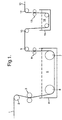
- this shows a fabric 1 passing around a roller 2 and through the nip of a pair of rollers 3 and being pushed down into a bath 4 containing 7 per cent by weight aqueous sodium hydroxide solution 5 at room temperature.
- the fabric runs around a pair of rollers 6,7 and up through the nip of a pair of rollers 8.
- the fabric then passes around guide rollers 9 and 10 before being passed through a bath 11 containing water 12.
- the fabric then passes through the nip of a pair of rollers 13 before passing around a guide 14 for subsequent processing.
- the rollers 3 run more quickly than the rollers 8.
- the fabric passing through the bath 5 is in a substantially unrestrained condition, so that it can shrink as it passes through the sodium hydroxide solution.
- This causes the lyocell fibres in the fabric to swell.
- the fabric is then passed through the bath 11, being pulled by the rollers 13 in a substantially unrestrained condition, so as to dilute the sodium hydroxide by passing the swollen fabric through the bath 11.
- This causes the lyocell fibres to shrink in diameter but the fabric itself does not increase in length, thus forming a slightly looser fabric which can be subsequently processed in wet processing, so as to give less creasing and less creased dyeing.
- the fabric at point 15 can go direct to wet processing such as piece dyeing and/or enzyme treatment.
- the fabric at point 15 can be dried and made into garments prior to wet processing.
- the first sample of fabric was immersed in a solution of 80 g/litre sodium hydroxide in water (8% by weight sodium hydroxide). The sample was then washed and dyed with a reactive dye in an alkaline solution containing 3g/litre sodium hydroxide (0.3% by weight sodium hydroxide). The treatment in 8% sodium hydroxide was at room temperature. The fabric was then subjected to a wet softness test.
- the actual test comprised a bending length test.
- a wet strip of fabric is pushed up an incline of 45° until the end of the strip of fabric passes the upper end of the incline. Initially, the fabric maintains the 45° angle until eventually the weight of the fabric over the end of the incline causes the fabric to bend.
- a measure of the length of the fabric which has passed the end of the incline gives an indication of the softness of the fabric. Clearly the softer the fabric, the smaller the amount which can support itself beyond the end of the incline before bending.
- the preferred range for the sodium hydroxide concentration in the pre-treatment and swelling step is 3% to 10% by weight. As the sodium hydroxide concentration increases, the amount of cellulose dissolved increases and at 10% by weight sodium hydroxide 8% of the cellulose is dissolved. This is about the maximum acceptable for this technique, and the preferred range of 7 to 8% sodium hydroxide gives the optimum combination of improved softness together with a reduction in crease marking and damage marking, whilst having acceptably low levels of cellulose dissolved.
- the invention is of further particular interest in the treatment of non-woven fabrics.
- the swelling treatment and subsequent dilution treatment 'sets' the structure of the nonwoven fabric so that the fabric is stronger in subsequent wet processing such as dyeing and the fibres in the fabric are less likely to fall out.
- the nonwoven fabric is stronger, it is still softer compared to nonwoven fabrics which have not been given the swelling technique of the present invention.
- the nonwoven fabric is preferably a hydroentangled fabric.
- the softness of the fabric is particularly noticeable when the fabric is wet.
- Two pieces of lyocell fabric were produced, one treated in accordance with the method of the invention by preswelling the fabric with aqueous sodium hydroxide whilst free to shrink and then setting the fabric by diluting the effect of the sodium hydroxide with water, the other not being given the treatment of the invention.
- the two pieces of fabric were then dried and compared.
- the pieces of fabrics and the processing prior to and including the treatment according to the invention were chosen so that in the dried state the pieces of fabric had virtually identical feel to the hand. On being picked up in each hand and squashed into a ball, the two pieces of fabric felt the same in the dry state.
- the difference in properties has a very material effect during wet processing of the fabric, i.e. during the dyeing process or during subsequent washing at home of garments made from such fabrics. Because the untreated sample readily creases there is enhanced abrasion of the fabric samples along the ridges formed by the peaks of the creases. As lyocell is a fibre which has a tendency to fibrillate, this wet abrasion gives rise to greater fibrillation along the lines of the creases than in the bulk of the fabric. This fibrillation produces a large number of minute fibrils which have a whiter effect optically when the fabric is subsequently dried.
- the handle of the dry fabrics is little different whether the method of the invention has been used or not, and although the handle of the wet fabric is of little significance to the wearer of the eventual garments (with few exceptions clothes are worn dry and if they become wet in use it is unlikely that the user would notice the difference in handle between one wet garment and another compared to the difference between dry and wet garments), the use of the invention means that fabrics can be processed with much less chance of crease marks appearing during dyeing and with much less chance of crease marks appearing during the home washing process. Furthermore, if the fabric samples shown in Figure 2 are merely dried, then the sample on the left tends to dry much flatter whereas the sample on the right tends to dry with the creases built in. It is, therefore, easier to maintain garments processed from fabric produced in accordance with the invention than otherwise.
- this effect can be correlated to the force required for wet crease pull-out.
- this force is correlated with caustic soda concentration in the solution of sodium hydroxide used to treat the fabric in the method of the invention, both in bathwise treatment and in pad treatment.
- Table 1 is reproduced graphically in Figure 3 of the drawings, the force for bend straightening (mg.cm) being plotted along the y-axis and the caustic soda concentration in g/l being plotted along the x axis.
Landscapes
- Engineering & Computer Science (AREA)
- Textile Engineering (AREA)
- Chemical & Material Sciences (AREA)
- Inorganic Chemistry (AREA)
- Chemical Or Physical Treatment Of Fibers (AREA)
- Medicines Containing Material From Animals Or Micro-Organisms (AREA)
- Treatments For Attaching Organic Compounds To Fibrous Goods (AREA)
- Treatment Of Fiber Materials (AREA)
- Artificial Filaments (AREA)
Claims (9)
- Procédé pour amorcer la prise dans un tissu formé de fils, certaines des fibres au moins dans certains des fils au moins étant des fibres de lyocell, caractérisé en ce qu'il comprend les étapes consistant à:(i) maintenir le tissu sous une forme dans laquelle il soit libre de rétrécir ;(ii) mettre en contact le tissu, pendant qu'il est sous ladite forme, avec un agent gonflant miscible avec l'eau, de manière (a) à ce que les fibres de lyocell aient un diamètre qui gonfle sans dissolution substantielle et (b) à ce que le tissu rétrécisse ;(iii) diluer l'agent gonflant avec de l'eau dans des conditions telles (a) que les fibres aient un diamètre qui rétrécisse et (b) que les fils se prennent dans les positions relatives qu'adoptent les fils, les uns par rapport aux autres, pendant le rétrécissement du tissu provoqué dans l'étape (ii) ; et(iv) sécher le tissu.
- Procédé selon la revendication 1, caractérisé en ce que le tissu est soumis à une mise en oeuvre humide ultérieure, entre l'étape (iii) et l'étape (iv), aucune de ces étapes de mise en oeuvre humide ultérieure ne provoquant autant de gonflement de la fibre de lyocell que dans l'étape (ii).
- Procédé selon la revendication 2, caractérisé en ce que le tissu est séché après l'étape (iii), mais avant ladite mise en oeuvre humide ultérieure.
- Procédé selon la revendication 2 ou la revendication 3, caractérisé en ce que la mise en oeuvre humide ultérieure comprend une étape de teinture.
- Procédé selon l'une quelconque des revendications précédentes, caractérisé en ce que l'agent gonflant est de l'hydroxyde de sodium aqueux de concentration 3 à 10 pour cent en poids.
- Procédé selon la revendication 5, caractérisé en ce que l'agent gonflant est de l'hydroxyde de sodium aqueux de concentration 5 à 9 pour cent en poids.
- Procédé selon la revendication 6, caractérisé en ce que l'agent gonflant est de l'hydroxyde de sodium aqueux de concentration 7 à 8 pour cent en poids.
- Procédé selon l'une quelconque des revendications précédentes, caractérisé en ce que le tissu est soit (a) sous forme de morceau tissé, soit (b) sous forme de vêtement, maintenu de manière à ne pas présenter d'angle aigu.
- Procédé selon l'une quelconque des revendications 1 à 7, caractérisé en ce que le tissu est sous forme de morceau continu.
Applications Claiming Priority (3)
| Application Number | Priority Date | Filing Date | Title |
|---|---|---|---|
| GB9618358 | 1996-09-03 | ||
| GB9618358A GB2316690A (en) | 1996-09-03 | 1996-09-03 | Lyocell fabric treatment |
| PCT/GB1997/002355 WO1998010132A1 (fr) | 1996-09-03 | 1997-09-02 | Issus lyocellulaires et leur traitement |
Publications (2)
| Publication Number | Publication Date |
|---|---|
| EP0923657A1 EP0923657A1 (fr) | 1999-06-23 |
| EP0923657B1 true EP0923657B1 (fr) | 2002-12-11 |
Family
ID=10799328
Family Applications (1)
| Application Number | Title | Priority Date | Filing Date |
|---|---|---|---|
| EP97939011A Expired - Lifetime EP0923657B1 (fr) | 1996-09-03 | 1997-09-02 | Tissus lyocellulaires et leur traitement |
Country Status (11)
| Country | Link |
|---|---|
| EP (1) | EP0923657B1 (fr) |
| JP (1) | JP3527251B2 (fr) |
| KR (1) | KR20000068297A (fr) |
| AT (1) | ATE229586T1 (fr) |
| AU (1) | AU4124397A (fr) |
| DE (1) | DE69717828T2 (fr) |
| ES (1) | ES2188973T3 (fr) |
| GB (1) | GB2316690A (fr) |
| PT (1) | PT923657E (fr) |
| TR (1) | TR199900454T2 (fr) |
| WO (1) | WO1998010132A1 (fr) |
Cited By (1)
| Publication number | Priority date | Publication date | Assignee | Title |
|---|---|---|---|---|
| US10793984B2 (en) | 2016-08-04 | 2020-10-06 | Pvh Corporation | Non-iron fabrics and garments, and a method of finishing the same |
Families Citing this family (6)
| Publication number | Priority date | Publication date | Assignee | Title |
|---|---|---|---|---|
| GB0101815D0 (en) | 2001-01-24 | 2001-03-07 | Tencel Ltd | Dyed lyocell fabric |
| GB0211916D0 (en) * | 2002-05-23 | 2002-07-03 | Tencel Ltd | Process for making a garment having recoverable stretch properties |
| FR2857989B1 (fr) | 2003-07-25 | 2005-08-26 | Sarl P A T | Procede pour rendre un tissu elastique par traitement a la soude et relaxation, machine de mise en oeuvre du procede et tissu obtenu par le procede |
| CN108505169B (zh) * | 2018-05-31 | 2023-11-21 | 上海题桥纺织染纱有限公司 | 一种莱赛尔丝光针织内衣面料及其加工方法 |
| CN109023651A (zh) * | 2018-10-23 | 2018-12-18 | 江苏联发纺织股份有限公司 | 一种高保形全棉织物的生产工艺 |
| EP4653606A1 (fr) * | 2023-01-19 | 2025-11-26 | Tohoku Seiren Co., Ltd. | Procédé de production de fibres de cellulose régénérées renforcées |
Family Cites Families (5)
| Publication number | Priority date | Publication date | Assignee | Title |
|---|---|---|---|---|
| GB9404510D0 (en) * | 1994-03-09 | 1994-04-20 | Courtaulds Fibres Holdings Ltd | Fibre treatment |
| GB9407496D0 (en) * | 1994-04-15 | 1994-06-08 | Courtaulds Fibres Holdings Ltd | Fibre treatment |
| JPH08291461A (ja) * | 1995-02-23 | 1996-11-05 | Asahi Chem Ind Co Ltd | セルロース繊維及びそれからなる布帛のアルカリ処理方法 |
| JPH09158054A (ja) * | 1995-11-30 | 1997-06-17 | Toray Ind Inc | 繊維構造物およびその製造方法 |
| GB9526169D0 (en) * | 1995-12-21 | 1996-02-21 | Courtaulds Fibres Holdings Ltd | Manufacture of cellulosic articles |
-
1996
- 1996-09-03 GB GB9618358A patent/GB2316690A/en not_active Withdrawn
-
1997
- 1997-09-02 AT AT97939011T patent/ATE229586T1/de active
- 1997-09-02 TR TR1999/00454T patent/TR199900454T2/xx unknown
- 1997-09-02 KR KR1019997001444A patent/KR20000068297A/ko not_active Ceased
- 1997-09-02 ES ES97939011T patent/ES2188973T3/es not_active Expired - Lifetime
- 1997-09-02 PT PT97939011T patent/PT923657E/pt unknown
- 1997-09-02 DE DE69717828T patent/DE69717828T2/de not_active Expired - Lifetime
- 1997-09-02 EP EP97939011A patent/EP0923657B1/fr not_active Expired - Lifetime
- 1997-09-02 WO PCT/GB1997/002355 patent/WO1998010132A1/fr not_active Ceased
- 1997-09-02 AU AU41243/97A patent/AU4124397A/en not_active Abandoned
- 1997-09-02 JP JP51234298A patent/JP3527251B2/ja not_active Expired - Fee Related
Cited By (1)
| Publication number | Priority date | Publication date | Assignee | Title |
|---|---|---|---|---|
| US10793984B2 (en) | 2016-08-04 | 2020-10-06 | Pvh Corporation | Non-iron fabrics and garments, and a method of finishing the same |
Also Published As
| Publication number | Publication date |
|---|---|
| DE69717828T2 (de) | 2003-09-04 |
| EP0923657A1 (fr) | 1999-06-23 |
| GB2316690A (en) | 1998-03-04 |
| JP3527251B2 (ja) | 2004-05-17 |
| ATE229586T1 (de) | 2002-12-15 |
| ES2188973T3 (es) | 2003-07-01 |
| KR20000068297A (ko) | 2000-11-25 |
| WO1998010132A1 (fr) | 1998-03-12 |
| GB9618358D0 (en) | 1996-10-16 |
| PT923657E (pt) | 2003-04-30 |
| DE69717828D1 (de) | 2003-01-23 |
| JP2000517382A (ja) | 2000-12-26 |
| AU4124397A (en) | 1998-03-26 |
| TR199900454T2 (xx) | 1999-07-21 |
Similar Documents
| Publication | Publication Date | Title |
|---|---|---|
| JP3479078B2 (ja) | 繊維の処理 | |
| JP3205962B2 (ja) | セルロースマルチフィラメント糸及びそれからなる布帛 | |
| EP0923657B1 (fr) | Tissus lyocellulaires et leur traitement | |
| JP2501545B2 (ja) | セルロ―ス系繊維布帛の風合改良方法 | |
| JP3304934B2 (ja) | 麻糸の加工方法、およびその加工麻糸による麻編地 | |
| EP4092185A1 (fr) | Fibre de cellulose régénérée fibrillée et tissu utilisant ladite fibre | |
| JP3057668B2 (ja) | セルロ―ス繊維の処理方法および該方法により得られる形状の記憶されたセルロース繊維 | |
| JPH02251674A (ja) | 粗糸のシルケット加工方法 | |
| JP3409716B2 (ja) | セルロース系繊維含有構造物の防縮加工方法 | |
| JP2002030567A (ja) | 絹短繊維を用いた加工糸又は布帛及びその製造方法 | |
| US3498737A (en) | Process of producing sculptured lace from flat lace | |
| CN120958191A (zh) | 纤维素人造纤维织物的臭氧处理 | |
| JP2902855B2 (ja) | 再生セルロース系繊維構造物のストーンウォッシュ調仕上方法 | |
| JPH02175975A (ja) | パイナップル繊維含有繊維構造物の防縮毛羽防止加工方法 | |
| JPH10158975A (ja) | セルロース系繊維含有構造物の防縮加工方法 | |
| JP2024109164A (ja) | 羊毛製品の処理方法及び羊毛製品 | |
| WO1980000463A1 (fr) | Produits fibreux et leur preparation | |
| JPH0319962A (ja) | セルロース系繊維とフィブリル化型複合繊維を含む繊維構造物の製造方法 | |
| JP3874518B2 (ja) | シボ織物およびその製造方法 | |
| CN121065939A (zh) | 可机洗羊绒针织面料的加工方法以及可机洗羊绒针织面料 | |
| JPH09256271A (ja) | 木綿繊維含有繊維製品およびその製造方法 | |
| JP3195075B2 (ja) | シルケット加工方法 | |
| JP2004211218A (ja) | 吸湿発熱性セルロース系嵩高織編物の製造方法 | |
| JPH093779A (ja) | 綿含有織編物の柔軟加工 | |
| JPH07279043A (ja) | セルロース系繊維含有繊維製品及びその製造方法 |
Legal Events
| Date | Code | Title | Description |
|---|---|---|---|
| PUAI | Public reference made under article 153(3) epc to a published international application that has entered the european phase |
Free format text: ORIGINAL CODE: 0009012 |
|
| 17P | Request for examination filed |
Effective date: 19990326 |
|
| AK | Designated contracting states |
Kind code of ref document: A1 Designated state(s): AT CH DE ES FR GB IT LI PT |
|
| 17Q | First examination report despatched |
Effective date: 19991112 |
|
| RAP1 | Party data changed (applicant data changed or rights of an application transferred) |
Owner name: TENCEL LIMITED |
|
| GRAG | Despatch of communication of intention to grant |
Free format text: ORIGINAL CODE: EPIDOS AGRA |
|
| GRAG | Despatch of communication of intention to grant |
Free format text: ORIGINAL CODE: EPIDOS AGRA |
|
| GRAH | Despatch of communication of intention to grant a patent |
Free format text: ORIGINAL CODE: EPIDOS IGRA |
|
| GRAH | Despatch of communication of intention to grant a patent |
Free format text: ORIGINAL CODE: EPIDOS IGRA |
|
| GRAA | (expected) grant |
Free format text: ORIGINAL CODE: 0009210 |
|
| AK | Designated contracting states |
Kind code of ref document: B1 Designated state(s): AT CH DE ES FR GB IT LI PT |
|
| PG25 | Lapsed in a contracting state [announced via postgrant information from national office to epo] |
Ref country code: LI Free format text: LAPSE BECAUSE OF FAILURE TO SUBMIT A TRANSLATION OF THE DESCRIPTION OR TO PAY THE FEE WITHIN THE PRESCRIBED TIME-LIMIT Effective date: 20021211 Ref country code: FR Free format text: LAPSE BECAUSE OF NON-PAYMENT OF DUE FEES Effective date: 20021211 Ref country code: CH Free format text: LAPSE BECAUSE OF FAILURE TO SUBMIT A TRANSLATION OF THE DESCRIPTION OR TO PAY THE FEE WITHIN THE PRESCRIBED TIME-LIMIT Effective date: 20021211 |
|
| REF | Corresponds to: |
Ref document number: 229586 Country of ref document: AT Date of ref document: 20021215 Kind code of ref document: T |
|
| REG | Reference to a national code |
Ref country code: GB Ref legal event code: FG4D |
|
| REG | Reference to a national code |
Ref country code: CH Ref legal event code: EP |
|
| REF | Corresponds to: |
Ref document number: 69717828 Country of ref document: DE Date of ref document: 20030123 |
|
| REG | Reference to a national code |
Ref country code: PT Ref legal event code: SC4A Free format text: AVAILABILITY OF NATIONAL TRANSLATION Effective date: 20030310 |
|
| REG | Reference to a national code |
Ref country code: CH Ref legal event code: PL |
|
| REG | Reference to a national code |
Ref country code: ES Ref legal event code: FG2A Ref document number: 2188973 Country of ref document: ES Kind code of ref document: T3 |
|
| PLBE | No opposition filed within time limit |
Free format text: ORIGINAL CODE: 0009261 |
|
| STAA | Information on the status of an ep patent application or granted ep patent |
Free format text: STATUS: NO OPPOSITION FILED WITHIN TIME LIMIT |
|
| EN | Fr: translation not filed | ||
| 26N | No opposition filed |
Effective date: 20030912 |
|
| REG | Reference to a national code |
Ref country code: PT Ref legal event code: PC4A Owner name: LENZING AKTIENGESELLSCHAFT, AT Effective date: 20110119 |
|
| REG | Reference to a national code |
Ref country code: GB Ref legal event code: 732E Free format text: REGISTERED BETWEEN 20110127 AND 20110202 |
|
| REG | Reference to a national code |
Ref country code: ES Ref legal event code: PC2A Owner name: LENZING AKTIENGESELLSCHAFT Effective date: 20110405 |
|
| REG | Reference to a national code |
Ref country code: DE Ref legal event code: R082 Ref document number: 69717828 Country of ref document: DE Representative=s name: MEISSNER, BOLTE & PARTNER GBR, DE |
|
| REG | Reference to a national code |
Ref country code: DE Ref legal event code: R082 Ref document number: 69717828 Country of ref document: DE Representative=s name: MEISSNER BOLTE PATENTANWAELTE RECHTSANWAELTE P, DE Effective date: 20110808 Ref country code: DE Ref legal event code: R082 Ref document number: 69717828 Country of ref document: DE Representative=s name: MEISSNER, BOLTE & PARTNER GBR, DE Effective date: 20110808 Ref country code: DE Ref legal event code: R081 Ref document number: 69717828 Country of ref document: DE Owner name: LENZING AG, AT Free format text: FORMER OWNER: TENCEL LTD., SPONDON, DERBY, GB Effective date: 20110808 |
|
| PGFP | Annual fee paid to national office [announced via postgrant information from national office to epo] |
Ref country code: GB Payment date: 20160920 Year of fee payment: 20 Ref country code: DE Payment date: 20160921 Year of fee payment: 20 |
|
| PGFP | Annual fee paid to national office [announced via postgrant information from national office to epo] |
Ref country code: PT Payment date: 20160901 Year of fee payment: 20 Ref country code: AT Payment date: 20160921 Year of fee payment: 20 |
|
| PGFP | Annual fee paid to national office [announced via postgrant information from national office to epo] |
Ref country code: ES Payment date: 20160916 Year of fee payment: 20 |
|
| PGFP | Annual fee paid to national office [announced via postgrant information from national office to epo] |
Ref country code: IT Payment date: 20160922 Year of fee payment: 20 |
|
| REG | Reference to a national code |
Ref country code: DE Ref legal event code: R071 Ref document number: 69717828 Country of ref document: DE |
|
| REG | Reference to a national code |
Ref country code: GB Ref legal event code: PE20 Expiry date: 20170901 |
|
| REG | Reference to a national code |
Ref country code: AT Ref legal event code: MK07 Ref document number: 229586 Country of ref document: AT Kind code of ref document: T Effective date: 20170902 |
|
| PG25 | Lapsed in a contracting state [announced via postgrant information from national office to epo] |
Ref country code: PT Free format text: LAPSE BECAUSE OF EXPIRATION OF PROTECTION Effective date: 20170912 Ref country code: GB Free format text: LAPSE BECAUSE OF EXPIRATION OF PROTECTION Effective date: 20170901 |
|
| REG | Reference to a national code |
Ref country code: ES Ref legal event code: FD2A Effective date: 20180508 |
|
| PG25 | Lapsed in a contracting state [announced via postgrant information from national office to epo] |
Ref country code: ES Free format text: LAPSE BECAUSE OF EXPIRATION OF PROTECTION Effective date: 20170903 |