EP0928094A2 - Verfahren und System zur Überbrückung eines Empfängerschleifenschlusszeitgebers für Sprachgesteuerte Wählsysteme und zur Unterstützung von sprachgesteuerten Ziffernwahl - Google Patents
Verfahren und System zur Überbrückung eines Empfängerschleifenschlusszeitgebers für Sprachgesteuerte Wählsysteme und zur Unterstützung von sprachgesteuerten Ziffernwahl Download PDFInfo
- Publication number
- EP0928094A2 EP0928094A2 EP98403240A EP98403240A EP0928094A2 EP 0928094 A2 EP0928094 A2 EP 0928094A2 EP 98403240 A EP98403240 A EP 98403240A EP 98403240 A EP98403240 A EP 98403240A EP 0928094 A2 EP0928094 A2 EP 0928094A2
- Authority
- EP
- European Patent Office
- Prior art keywords
- mode
- switch
- timer
- dialing
- transferring
- Prior art date
- Legal status (The legal status is an assumption and is not a legal conclusion. Google has not performed a legal analysis and makes no representation as to the accuracy of the status listed.)
- Withdrawn
Links
- 238000000034 method Methods 0.000 title claims abstract description 34
- 230000000977 initiatory effect Effects 0.000 claims description 9
- 230000007704 transition Effects 0.000 description 9
- 238000010586 diagram Methods 0.000 description 3
- 230000008901 benefit Effects 0.000 description 2
- 230000000694 effects Effects 0.000 description 2
- 230000011664 signaling Effects 0.000 description 2
- 101100172879 Caenorhabditis elegans sec-5 gene Proteins 0.000 description 1
- 101100172886 Caenorhabditis elegans sec-6 gene Proteins 0.000 description 1
- 230000008859 change Effects 0.000 description 1
- 238000004891 communication Methods 0.000 description 1
- 238000012790 confirmation Methods 0.000 description 1
- 238000010276 construction Methods 0.000 description 1
- 230000009977 dual effect Effects 0.000 description 1
- 230000003993 interaction Effects 0.000 description 1
- 230000002093 peripheral effect Effects 0.000 description 1
- 230000008569 process Effects 0.000 description 1
Images



Classifications
-
- H—ELECTRICITY
- H04—ELECTRIC COMMUNICATION TECHNIQUE
- H04Q—SELECTING
- H04Q3/00—Selecting arrangements
- H04Q3/0016—Arrangements providing connection between exchanges
- H04Q3/0025—Provisions for signalling
-
- H—ELECTRICITY
- H04—ELECTRIC COMMUNICATION TECHNIQUE
- H04M—TELEPHONIC COMMUNICATION
- H04M3/00—Automatic or semi-automatic exchanges
- H04M3/22—Arrangements for supervision, monitoring or testing
- H04M3/2272—Subscriber line supervision circuits, e.g. call detection circuits
-
- H—ELECTRICITY
- H04—ELECTRIC COMMUNICATION TECHNIQUE
- H04M—TELEPHONIC COMMUNICATION
- H04M3/00—Automatic or semi-automatic exchanges
- H04M3/42—Systems providing special services or facilities to subscribers
- H04M3/42204—Arrangements at the exchange for service or number selection by voice
-
- H—ELECTRICITY
- H04—ELECTRIC COMMUNICATION TECHNIQUE
- H04M—TELEPHONIC COMMUNICATION
- H04M2201/00—Electronic components, circuits, software, systems or apparatus used in telephone systems
- H04M2201/40—Electronic components, circuits, software, systems or apparatus used in telephone systems using speech recognition
-
- H—ELECTRICITY
- H04—ELECTRIC COMMUNICATION TECHNIQUE
- H04Q—SELECTING
- H04Q2213/00—Indexing scheme relating to selecting arrangements in general and for multiplex systems
- H04Q2213/13204—Protocols
-
- H—ELECTRICITY
- H04—ELECTRIC COMMUNICATION TECHNIQUE
- H04Q—SELECTING
- H04Q2213/00—Indexing scheme relating to selecting arrangements in general and for multiplex systems
- H04Q2213/13213—Counting, timing circuits
-
- H—ELECTRICITY
- H04—ELECTRIC COMMUNICATION TECHNIQUE
- H04Q—SELECTING
- H04Q2213/00—Indexing scheme relating to selecting arrangements in general and for multiplex systems
- H04Q2213/13378—Speech recognition, speech analysis
-
- H—ELECTRICITY
- H04—ELECTRIC COMMUNICATION TECHNIQUE
- H04Q—SELECTING
- H04Q2213/00—Indexing scheme relating to selecting arrangements in general and for multiplex systems
- H04Q2213/13405—Dual frequency signaling, DTMF
-
- H—ELECTRICITY
- H04—ELECTRIC COMMUNICATION TECHNIQUE
- H04Q—SELECTING
- H04Q2213/00—Indexing scheme relating to selecting arrangements in general and for multiplex systems
- H04Q2213/13546—Intelligent Peripheral
Definitions
- the present invention relates to a voice recognition method and a system for use with a telephone dialing, and more particularly to a callflow dialog that automatically transfers between different dialing modes.
- a conventional telephone network switch has a timeout period, i.e. Receiver Off Hook ("ROH timer") to indicate when a telephone receiver is placed offhook and there is no activity on that line. Since this switch considers dialing to be the only detectable "activity", a voice dialog between a caller and a voice recognition system does not normally disengage the ROH timer Therefore, callflow dialogs prior to connection must typically be constructed to be complete before the ROH timeout occurs, i.e. within 10-20 seconds after the handset is taken offhook. This significantly constrains interaction options.
- ROH timer Receiver Off Hook
- a conventional Voice Activated Dialing (VAD) service such as Bell Atlantic's Easy VoiceTM, used an in-band switch protocol such as a Network Facility Access (NFA) protocol or a Proxy protocol. Both of these protocols provide the capability to connect an Intelligent Peripheral (IP) that performs voice recognition for enhanced voice-enabled services.
- IP Intelligent Peripheral
- IP Intelligent Peripheral
- These in-band protocols use the seize signal, the wink signal, and dual tone multiple frequency (DTMF) tones to transmit call setup and control information.
- the system has a switch interface which interprets two bit patterns: onhook and offhook. These patterns correspond to "00" for an offhook state and "11" for an onhook state.
- the VAD switch interface distinguishes a "seize” signal from the switch as a transition from the onhook to the offhook states; "wink” is a transition from the offhook to the onhook state and then back to the offhook state.
- VAD callflows for the VAD system above may be initiated in the "implicit" mode.
- the caller has generally three options: (1) manually dial a number using DTMF tones, (2) speak a name (e.g., "John Smith") contained in a VAD directory, and have the VAD dial the corresponding number that is stored in the VAD directory, or (3) speak the directory management command (e.g., "directory") or dial the corresponding star-code command (e.g. "*44”) to get into the explicit directory management mode.
- the NFA and Proxy switch protocols are similar. They both provide two modes of operation.
- One mode is an implicit mode which occurs automatically when a provisioned caller line is taken offhook.
- a DTMF receiver is enabled only to listen for DTMF signals.
- the ROH timer is also enabled.
- Another mode is an explicit mode which conventionally occurs when a star code, for example "*XX" ("X" representing a DTMF numerical signal), is entered via DTMF signals.
- the DTMF receiver and the ROH timer are disabled.
- the switch neither listen for the DTMF signals nor disconnects the line when the ROH timer expires. Instead, the control of the line is transferred to the IP.
- IP may have a voice recognition detector and a DTMF signal receiver.
- Both the NFA and Proxy protocol transmits a two-digit code during the call setup connection to the IP.
- a service code of "00" indicates the implicit mode of NFA
- "01” indicates the implicit mode of Proxy
- "44" indicates the explicit mode for either protocol.
- the IP interprets the service code in order to determine the prompts and call flow options that will be provided to the caller. For example, when a caller line goes offhook, the IP receives a call setup with an implicit service code (i.e., "00" or "01") and the IP provides a "beep" prompt to the caller.
- the implicit call is disconnected; the IP receives a new call setup from the switch with the "*44" service code; and the IP provides a prompt of directory management options.
- the IP handles this explicit directory management session as a separate call from the initiating implicit session.
- the implicit mode has a short time period (10-20 seconds configured as the ROH timer) before a call is disconnected. Thus, there is a set time limit for the implicit mode to dial before a disconnect.
- the explicit mode operates indefinitely with no timeout for automatic disconnect.
- the ROH time limit on the implicit mode severely restricts the call flow options for a dialog with the caller.
- spoken number dialing e.g., "dial 512-555-1212”
- spoken name dialing e.g. "John Smith”
- Spoken number dialing allows the caller to have the option of saying "dial 512-555-1212” and the voice recognition system confirms the recognition by announcing "Calling 5-1-2-5-5-5-1-2-1-2", and then dials the number.
- the first attempt may not be properly recognized. In this situation, it is desirable to allow the caller multiple attempts. However, due to the ROH time restriction, the call flow dialog with the caller and the number of retry attempts must be limited. Therefore, the human factors of the call dialog are not optimal.
- a blended callflow method in which an automatic transition from implicit to explicit mode is initiated anywhere within the call flow dialog of an implicit VAD call session, without the caller's explicit command.
- a spoken digit dial option is added to the caller option for dialing, where it allows a mode detailed call flow and allows the caller to confirm the number's accuracy, prior to dialing, without automatic disconnect.
- the present invention also provides for extending the spoken name dialing call flow to allow for multiple recognition retries and extended announcement instructions, without an automatic disconnect. There is also an option wherein the voice recognition system switches to the explicit mode if the system determines that voice input is being received near the expiration of the ROH timer.
- the present invention further provides for retaining the call context information and voice recognition results from the initial implicit session and using that information in the subsequent explicit session to seamlessly continue the call flow dialog with the caller.
- a basic architecture of the present invention includes a caller/user 1 who, using a Voice Recognition System (VR) 3, completes a call handled by a telephone network switch 2.
- the VR 3 can be of any known type, for example, InfusionTM IP4000 by DSC Communication Corporation that provides the Bell Atlantic Easy Voice service.
- FIG. 2 shows a flowchart for software used to implement the present method in the VR 3.
- the caller 1 takes the telephone handset offhook; the switch 2 connects to the caller line; and the switch 2 activates the ROH timer.
- the switch 2 initiates call setup 16 with the VR 3.
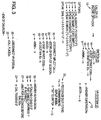
- the call setup 16 includes each of the following steps as shown in Figure 3. First, the switch 2 sends a seize signal 14, followed by DTMF tones for a two digit Service Code 4, and a ten digit Network Facility Access code (NFA) 5 to the VR system 3.
- the NFA code 5 is a telephone number for the caller's line.
- the VR system 3 responds to the switch 2 with an answer/supervision signal 12 which indicates a transition from the onhook state to the offhook state. Finally, the switch 2 sends a wink 6 to the VR system 3 to complete the call setup between the switch 2 and the VR 3.
- the VR 3 plays a "beep" prompt for the caller 1.
- the caller 1 now has, for example, four options.
- Option A is to dial a number, for example, "5125551212” using DTMF or pulse.
- Option B (step 300) allows the caller 1 to speak a command, for example, requesting a directory of available numbers by saying, for example, "Directory”. This step can also be performed using DTMF input, e.g., *44.
- the system goes into explicit mode, goes into the system directory, and allows, e.g., the caller to enter a new name in the directory.
- Option C is to speak a name, for example, "John Smith”.
- the system looks up the spoken name in a directory, and dials a corresponding number.
- the advantage of the present invention is that the caller 1 has an additional option D (steps 130-180) which allows him or her to speak the desired number as a digit string, for example, "5-1-2-5-5-5-1-2-1-2" (step 130).
- the caller 1 has to say, for example "Dial 5-1-2-5-5-5-1-2-1-2" for this option to initiate.
- the VR system upon receiving the option D, i.e., upon recognition of a spoken string of digits, (step 145) initiates the transition from an implicit mode that the switch is currently on, to an explicit mode 11.
- the initiation is done by sending a signal 15 to the switch 2 (step 150).
- the signal 15 from the VR 3 may, for example contain "*XX" which is recognized by the switch 2 as a request for initiation the explicit mode 11. It is to be understood that recognition of the spoken digits strings is accomplished by the same recognition software, e.g. C, assembly language or any other programming language used to recognize spoken names or commands in the VAD service.
- the VR system 3 may send a request for initiation of the explicit mode 11 when it recognizes that the ROH timer is about to expire (for example 2 or 3 seconds left on the ROH timer) and the caller has not finished executing a spoken command or a spoken name.
- the switch 2 Upon receiving the initiation signal 15 from the VR system 3, the switch 2 disconnects the implicit mode 10, and then establishes the explicit mode 20 (step 160). The switch 2 then sends the seize signal 14 together with the two digit Service Code 14 and the ten digit NFA code 15 to the VR system 3 (in the same manner as in the implicit mode). The VR system 3 responds with the answer/supervision 12. The switch 2 then sends the wink 6 to the VR system 3 (also in the manner as the implicit mode).
- the VR system 3 responds by sending an announcement 18, for example, that it is "calling 5125551212" (step 170). If the announced number is incorrect, then the caller 1 is given, for example two options 19: to say “Cancel” or to press “1" (or any other number). The VR system 3 has a pause 17, for, e.g., three seconds to see if the caller inputs one of these choices (step 180). If the caller 1 does not respond, for example, within 3 seconds, the VR system 3 dials 21 the number (step 190), for example, "5125551212". This dialing is done in the same manner as the spoken name of step 200. Once the number is dialed and the call is placed the switch 2 disconnects 22 the VR system 3 and the switch 2 places call 23.
- an announcement 18 for example, that it is "calling 5125551212"
- Figure 4 shows a flowchart for software for implementing additional features of the present invention.
- the caller 1 can speak one of several options commands.
- Figure 4 shows the option C (name dialing) and the option D (number dialing).
- the VR system 3 monitors the amount of time that has transpired to determine if the ROH timer is about to expire (i.e., is within a predetermined time threshold, e.g., three seconds from the ROH timeout).
- the VR system 3 determines that the ROH timer is about to expire, and the caller 1 is still speaking, the VR system 3 will automatically transition to the explicit mode (step 206), avoiding the ROH timeout; re-prompt the caller 1 for voice input (step 207), listen for the caller 1 to re-speak the phrase (step 208); recognizes the spoken name or number (step 209); and continue through the remaining voice dialing call flow.
- the VR system 3 continues until it recognizes a spoken name or number (step 202). If a number is recognized the call flow described in Figure 2 is as follows. If the spoken name is recognized, the VR system 3 continues in the implicit mode. The VR system 3 looks up the corresponding number in the directory (step 3). While still in the implicit mode, the predetermined threshold of the ROH timer is being monitored (step 204) to determine if at any point the VR system 3 needs to be transferred to the explicit mode (step 205). Once an explicit mode transfer is preformed after a successful recognition (step 205), the recognition results are maintained by the VR system 3 and used in the subsequent confirmation prompting to the caller 1 (step 230 or 170).
- Table 1 shows an exemplary timing for the blended callflow.
- Caller 1 says "Dial 5125551212” Initiating and switching to the explicit mode 10, 11, 15, 20 VR System 3 says "Calling 5125551212” ⁇ pause 17 ⁇ VR System 3 dials 5125551212
- the advantages of the present invention is that it allows an automatic transfer from the implicit mode to the explicit mode upon recognition of a spoken digit string or spoken commands near the expiration of the ROH timer, which transfer mode could, for example, take up to two seconds to exchange in-band signaling, i.e. sending DTMF signals to the switch.
- This time delay must be positioned in the callflow at a natural pause location that is not obtrusive to the caller; the position between the spoken digits and the announcement of those digits is such a location. If the DTMF in-band signaling signals occur during spoken input, those DTMF signals will cut off voice signals and hamper proper voice recognition.
- Another feature of the present invention is that during the transfer to the explicit mode, the switch 2 terminates the implicit mode; disconnects from the VR system 3; and then initiates a new explicit call session.
- the new session will contain an explicit service code (e.g., either "*44" or a special service code for transitions).
- the VR system 3 may have successfully completed recognition and completed a portion of the call flow.
- the VR system 3 In order to allow the explicit session to resume the call flow dialog without interruption, the VR system 3 must retain the recognition results and call flow information from implicit session and supply this context information to the new explicit session. This information can be stored in any known memory or buffer in the VR system 3. Since the call setup for both the implicit and the explicit mode sessions contain the same caller access number, the VR system 3 can associate two sequential sessions from the same caller and transfer the context information.
- the present invention may be written in any conventional programming languages. Also, the present invention, with minor alternations apparent to those skilled in the art, may be adopted to work with switches and switch protocols used by Nortel, AT&T, or Bell Atlantic or any other switch manufacturer.
- dialing includes any method of connecting a telephone through a telephone network switching system to one or more other telephones.
Landscapes
- Engineering & Computer Science (AREA)
- Signal Processing (AREA)
- Computer Networks & Wireless Communication (AREA)
- Telephonic Communication Services (AREA)
- Telephone Function (AREA)
Applications Claiming Priority (2)
| Application Number | Priority Date | Filing Date | Title |
|---|---|---|---|
| US1182 | 1997-12-30 | ||
| US09/001,182 US6167118A (en) | 1997-12-30 | 1997-12-30 | Method and a system for by-passing a receiver-off-hook timer for voice dialing systems and for supporting spoken digit dialing |
Publications (2)
| Publication Number | Publication Date |
|---|---|
| EP0928094A2 true EP0928094A2 (de) | 1999-07-07 |
| EP0928094A3 EP0928094A3 (de) | 2003-05-14 |
Family
ID=21694796
Family Applications (1)
| Application Number | Title | Priority Date | Filing Date |
|---|---|---|---|
| EP98403240A Withdrawn EP0928094A3 (de) | 1997-12-30 | 1998-12-21 | Verfahren und System zur Überbrückung eines Empfängerschleifenschlusszeitgebers für Sprachgesteuerte Wählsysteme und zur Unterstützung von sprachgesteuerten Ziffernwahl |
Country Status (3)
| Country | Link |
|---|---|
| US (1) | US6167118A (de) |
| EP (1) | EP0928094A3 (de) |
| JP (1) | JP4455684B2 (de) |
Cited By (1)
| Publication number | Priority date | Publication date | Assignee | Title |
|---|---|---|---|---|
| EP1189417A3 (de) * | 2000-09-13 | 2004-01-28 | Mitel Knowledge Corporation | Fernsprechapparatunabhängige Bereitstellung von Spracherkennung bei Wahlton und weiteren Anruffortschrittzustanden |
Families Citing this family (23)
| Publication number | Priority date | Publication date | Assignee | Title |
|---|---|---|---|---|
| US6292675B1 (en) * | 1997-10-21 | 2001-09-18 | Byard G. Nilsson | Wireless mobile telephone system with voice-dialing telephone instruments and DTMF capability |
| US6308053B1 (en) | 1997-06-19 | 2001-10-23 | Byard G. Nilsson | Recyclable wireless telephone unit with a secured activation switch |
| US6862463B1 (en) | 1997-06-19 | 2005-03-01 | Byard G. Nilsson | Wireless telephone system with information service |
| US6473610B1 (en) | 1997-06-19 | 2002-10-29 | Byard G. Nilsson | Wireless prepaid telephone system with dispensable instruments |
| US6993321B1 (en) | 1997-06-19 | 2006-01-31 | Nilsson Byard G | Wireless telephone system with mobile instruments for outgoing calls |
| US6298250B1 (en) | 1997-06-19 | 2001-10-02 | Kimberly Nanette Engen | Wireless prepaid telephone system with extended capability |
| US6049710A (en) | 1997-06-19 | 2000-04-11 | Kimberley Nanette Engen | Wireless prepaid telephone system with dispensable instruments |
| US6751482B1 (en) | 1997-06-19 | 2004-06-15 | Byard G. Nilsson | Wireless mobile telephone system with alternative power instruments and DTMF Capability |
| US7260187B1 (en) * | 1999-05-11 | 2007-08-21 | Verizon Services Corp. | Voice response apparatus and method of providing automated voice responses with silent prompting |
| GB2353887B (en) * | 1999-09-04 | 2003-09-24 | Ibm | Speech recognition system |
| DE19956747C1 (de) * | 1999-11-25 | 2001-01-11 | Siemens Ag | Verfahren und Vorrichtung zur Spracherkennung sowie ein Telekommunikationssystem |
| AU2001239880A1 (en) * | 2000-02-25 | 2001-09-03 | Pulsar Communications, Inc. | Apparatus and method for providing enhanced telecommunications services |
| US6757362B1 (en) * | 2000-03-06 | 2004-06-29 | Avaya Technology Corp. | Personal virtual assistant |
| US7203651B2 (en) * | 2000-12-07 | 2007-04-10 | Art-Advanced Recognition Technologies, Ltd. | Voice control system with multiple voice recognition engines |
| US20030007608A1 (en) * | 2001-07-06 | 2003-01-09 | Buntschuh Bruce Melvin | System and method for making calls to vanity numbers using voice dialing |
| US7343005B2 (en) * | 2002-05-29 | 2008-03-11 | Time Warner Cable, A Division Of Time Warner Entertainment Company, L.P. | Method and apparatus for voice-over IP services triggered by off-hook event |
| US7283624B1 (en) * | 2002-07-25 | 2007-10-16 | Cisco Technology, Inc. | Idle detection for answer supervision |
| US7269563B2 (en) * | 2003-05-12 | 2007-09-11 | Motorola, Inc. | String matching of locally stored information for voice dialing on a cellular telephone |
| US20080069327A1 (en) * | 2005-02-08 | 2008-03-20 | Kingsley Christopher G | Apparatus and method for providing enhanced telecommunications services |
| US8315412B2 (en) * | 2007-10-17 | 2012-11-20 | The Chamberlain Group, Inc. | Method and apparatus to facilitate use of background noise when providing secure access to equipment |
| US9691377B2 (en) | 2013-07-23 | 2017-06-27 | Google Technology Holdings LLC | Method and device for voice recognition training |
| US9275638B2 (en) | 2013-03-12 | 2016-03-01 | Google Technology Holdings LLC | Method and apparatus for training a voice recognition model database |
| US9548047B2 (en) | 2013-07-31 | 2017-01-17 | Google Technology Holdings LLC | Method and apparatus for evaluating trigger phrase enrollment |
Family Cites Families (9)
| Publication number | Priority date | Publication date | Assignee | Title |
|---|---|---|---|---|
| US4481382A (en) * | 1982-09-29 | 1984-11-06 | Villa Real Antony Euclid C | Programmable telephone system |
| CA1295064C (en) * | 1987-05-29 | 1992-01-28 | Kuniyoshi Marui | Voice recognition system used in telephone apparatus |
| US4959850A (en) * | 1987-05-29 | 1990-09-25 | Kabushiki Kaisha Toshiba | Radio telephone apparatus |
| US4870686A (en) * | 1987-10-19 | 1989-09-26 | Motorola, Inc. | Method for entering digit sequences by voice command |
| US4928302A (en) * | 1987-11-06 | 1990-05-22 | Ricoh Company, Ltd. | Voice actuated dialing apparatus |
| US5185781A (en) * | 1990-10-12 | 1993-02-09 | At&T Bell Laboratories | Automation of telephone operator assistance calls |
| US5325421A (en) * | 1992-08-24 | 1994-06-28 | At&T Bell Laboratories | Voice directed communications system platform |
| US5483579A (en) * | 1993-02-25 | 1996-01-09 | Digital Acoustics, Inc. | Voice recognition dialing system |
| US5864607A (en) * | 1996-08-23 | 1999-01-26 | Compaq Computer Corp. | Communication with a computer using telephones |
-
1997
- 1997-12-30 US US09/001,182 patent/US6167118A/en not_active Expired - Lifetime
-
1998
- 1998-12-21 EP EP98403240A patent/EP0928094A3/de not_active Withdrawn
- 1998-12-28 JP JP37394998A patent/JP4455684B2/ja not_active Expired - Fee Related
Cited By (2)
| Publication number | Priority date | Publication date | Assignee | Title |
|---|---|---|---|---|
| EP1189417A3 (de) * | 2000-09-13 | 2004-01-28 | Mitel Knowledge Corporation | Fernsprechapparatunabhängige Bereitstellung von Spracherkennung bei Wahlton und weiteren Anruffortschrittzustanden |
| US6778641B2 (en) | 2000-09-13 | 2004-08-17 | Mitel Knowledge Corporation | Telephone independent provision of speech recognition during dial tone and subsequent call progress states |
Also Published As
| Publication number | Publication date |
|---|---|
| EP0928094A3 (de) | 2003-05-14 |
| JPH11317803A (ja) | 1999-11-16 |
| JP4455684B2 (ja) | 2010-04-21 |
| US6167118A (en) | 2000-12-26 |
Similar Documents
| Publication | Publication Date | Title |
|---|---|---|
| US6167118A (en) | Method and a system for by-passing a receiver-off-hook timer for voice dialing systems and for supporting spoken digit dialing | |
| US5668861A (en) | Telecommunications system with notification hold | |
| JPH0865747A (ja) | ページャまたは代替電話機に呼び出し情報を中継するための装置および方法 | |
| KR20010032732A (ko) | 회의 중에 입중계호에 응답하기 위한 시스템 및 방법 | |
| JP2758121B2 (ja) | ネットワーク内のdtmf信号伝播の選択的制御方法 | |
| JPS5986357A (ja) | 自動交換電話装置 | |
| KR980007319A (ko) | 지능형 정보 제공 시스템을 이용한 자동 전화 응답 서비스 구현 장치 및 구현 방법 | |
| JP3227368B2 (ja) | 転送装置 | |
| CA2058594C (en) | Electronic switch connected to intelligent peripheral while permitting call processing of dialed digits | |
| KR960001085B1 (ko) | 사설교환기의 내부가입자 통화시 외부가입자 연결방법 | |
| JPH1042047A (ja) | 交換制御方法および装置 | |
| JPH05316233A (ja) | 着信転送方式 | |
| KR100228204B1 (ko) | 자동음성 안내장치 | |
| JPH09135299A (ja) | 呼処理制御方法及び呼処理制御装置、加入者端末装置 | |
| JPS61238156A (ja) | 悪意呼記録方式 | |
| JP2526791B2 (ja) | ファクシミリ通信における呼び出し信号の自動送信停止制御方法および制御システム | |
| JP2786173B2 (ja) | 留守番電話制御システム | |
| JPH11252233A (ja) | ワイヤレスローカルループシステムの固定電話加入者ユニット | |
| JPH0477160A (ja) | 自動応答録音方式 | |
| JPS6321378B2 (de) | ||
| JPH02216954A (ja) | 電話番号通知加入者制御方式 | |
| JPS6188645A (ja) | 自動通話ランゲ−ジアシスト方式 | |
| JPH01288027A (ja) | 通信装置 | |
| JPS63236451A (ja) | 音声ダイアル制御装置 | |
| JPS6252503B2 (de) |
Legal Events
| Date | Code | Title | Description |
|---|---|---|---|
| PUAI | Public reference made under article 153(3) epc to a published international application that has entered the european phase |
Free format text: ORIGINAL CODE: 0009012 |
|
| AK | Designated contracting states |
Kind code of ref document: A2 Designated state(s): AT BE CH CY DE DK ES FI FR GB GR IE IT LI LU MC NL PT SE |
|
| AX | Request for extension of the european patent |
Free format text: AL PAYMENT 19981229;LT PAYMENT 19981229;LV PAYMENT 19981229;MK PAYMENT 19981229;RO PAYMENT 19981229;SI PAYMENT 19981229 |
|
| PUAL | Search report despatched |
Free format text: ORIGINAL CODE: 0009013 |
|
| AK | Designated contracting states |
Designated state(s): AT BE CH CY DE DK ES FI FR GB GR IE IT LI LU MC NL PT SE |
|
| AX | Request for extension of the european patent |
Extension state: AL LT LV MK RO SI |
|
| 17P | Request for examination filed |
Effective date: 20031106 |
|
| AKX | Designation fees paid |
Designated state(s): AT BE CH CY DE DK ES FI FR GB GR IE IT LI LU MC NL PT SE |
|
| AXX | Extension fees paid |
Extension state: SI Payment date: 19981229 Extension state: RO Payment date: 19981229 Extension state: MK Payment date: 19981229 Extension state: LV Payment date: 19981229 Extension state: LT Payment date: 19981229 Extension state: AL Payment date: 19981229 |
|
| 17Q | First examination report despatched |
Effective date: 20060831 |
|
| 111Z | Information provided on other rights and legal means of execution |
Free format text: AT BE CH CY DE DK ES FI FR GB GR IE IT LI LU MC NL PT SE Effective date: 20130410 |
|
| D11X | Information provided on other rights and legal means of execution (deleted) | ||
| STAA | Information on the status of an ep patent application or granted ep patent |
Free format text: STATUS: THE APPLICATION IS DEEMED TO BE WITHDRAWN |
|
| 18D | Application deemed to be withdrawn |
Effective date: 20160302 |