EP0928563B1 - Verfahren zur Herstellung von Masa-Mehl, Masa-Mehl und Verwendungen - Google Patents
Verfahren zur Herstellung von Masa-Mehl, Masa-Mehl und Verwendungen Download PDFInfo
- Publication number
- EP0928563B1 EP0928563B1 EP99400043A EP99400043A EP0928563B1 EP 0928563 B1 EP0928563 B1 EP 0928563B1 EP 99400043 A EP99400043 A EP 99400043A EP 99400043 A EP99400043 A EP 99400043A EP 0928563 B1 EP0928563 B1 EP 0928563B1
- Authority
- EP
- European Patent Office
- Prior art keywords
- flour
- semolina
- corn
- thermal treatment
- mixture
- Prior art date
- Legal status (The legal status is an assumption and is not a legal conclusion. Google has not performed a legal analysis and makes no representation as to the accuracy of the status listed.)
- Expired - Lifetime
Links
- 235000013312 flour Nutrition 0.000 title claims abstract description 122
- 241000718541 Tetragastris balsamifera Species 0.000 title claims abstract description 46
- 238000000034 method Methods 0.000 title claims description 77
- 235000002017 Zea mays subsp mays Nutrition 0.000 claims abstract description 37
- 239000000203 mixture Substances 0.000 claims abstract description 37
- 239000000126 substance Substances 0.000 claims abstract description 21
- 229920002472 Starch Polymers 0.000 claims abstract description 16
- 235000019698 starch Nutrition 0.000 claims abstract description 16
- 239000008107 starch Substances 0.000 claims abstract description 16
- 239000000654 additive Substances 0.000 claims abstract description 12
- 238000007669 thermal treatment Methods 0.000 claims abstract 14
- 235000005824 Zea mays ssp. parviglumis Nutrition 0.000 claims description 29
- 235000005822 corn Nutrition 0.000 claims description 29
- XLYOFNOQVPJJNP-UHFFFAOYSA-N water Substances O XLYOFNOQVPJJNP-UHFFFAOYSA-N 0.000 claims description 29
- 239000000463 material Substances 0.000 claims description 14
- 241000482268 Zea mays subsp. mays Species 0.000 claims description 11
- AXCZMVOFGPJBDE-UHFFFAOYSA-L calcium dihydroxide Chemical group [OH-].[OH-].[Ca+2] AXCZMVOFGPJBDE-UHFFFAOYSA-L 0.000 claims description 8
- 235000011116 calcium hydroxide Nutrition 0.000 claims description 8
- 239000000920 calcium hydroxide Substances 0.000 claims description 8
- 229910001861 calcium hydroxide Inorganic materials 0.000 claims description 8
- 238000010411 cooking Methods 0.000 claims description 7
- 235000018185 Betula X alpestris Nutrition 0.000 claims description 6
- 235000018212 Betula X uliginosa Nutrition 0.000 claims description 6
- 238000001035 drying Methods 0.000 claims description 6
- 230000036571 hydration Effects 0.000 claims description 5
- 238000006703 hydration reaction Methods 0.000 claims description 5
- 238000010521 absorption reaction Methods 0.000 claims description 4
- 239000001913 cellulose Substances 0.000 claims description 4
- 229920002678 cellulose Polymers 0.000 claims description 4
- 229920002134 Carboxymethyl cellulose Polymers 0.000 claims description 2
- 239000001768 carboxy methyl cellulose Substances 0.000 claims description 2
- 235000010948 carboxy methyl cellulose Nutrition 0.000 claims description 2
- 239000008112 carboxymethyl-cellulose Substances 0.000 claims description 2
- 239000003755 preservative agent Substances 0.000 claims description 2
- 238000001033 granulometry Methods 0.000 claims 7
- 239000000725 suspension Substances 0.000 claims 3
- 240000008042 Zea mays Species 0.000 abstract description 26
- 238000004519 manufacturing process Methods 0.000 abstract description 10
- 238000002360 preparation method Methods 0.000 abstract description 10
- 238000002156 mixing Methods 0.000 abstract description 3
- 235000016383 Zea mays subsp huehuetenangensis Nutrition 0.000 abstract 2
- 235000009973 maize Nutrition 0.000 abstract 2
- 238000010348 incorporation Methods 0.000 abstract 1
- 239000000047 product Substances 0.000 description 26
- 238000010438 heat treatment Methods 0.000 description 23
- 235000010675 chips/crisps Nutrition 0.000 description 16
- 239000002245 particle Substances 0.000 description 14
- 235000013339 cereals Nutrition 0.000 description 11
- 235000012184 tortilla Nutrition 0.000 description 10
- 235000008371 tortilla/corn chips Nutrition 0.000 description 6
- 235000008733 Citrus aurantifolia Nutrition 0.000 description 5
- 235000011941 Tilia x europaea Nutrition 0.000 description 5
- 238000005119 centrifugation Methods 0.000 description 5
- 239000004571 lime Substances 0.000 description 5
- 238000000227 grinding Methods 0.000 description 3
- 239000010903 husk Substances 0.000 description 3
- 239000003607 modifier Substances 0.000 description 3
- 231100000678 Mycotoxin Toxicity 0.000 description 2
- UIIMBOGNXHQVGW-UHFFFAOYSA-M Sodium bicarbonate Chemical compound [Na+].OC([O-])=O UIIMBOGNXHQVGW-UHFFFAOYSA-M 0.000 description 2
- 238000004140 cleaning Methods 0.000 description 2
- 230000001627 detrimental effect Effects 0.000 description 2
- 238000009826 distribution Methods 0.000 description 2
- 230000008030 elimination Effects 0.000 description 2
- 238000003379 elimination reaction Methods 0.000 description 2
- 238000005516 engineering process Methods 0.000 description 2
- 235000013305 food Nutrition 0.000 description 2
- 238000004898 kneading Methods 0.000 description 2
- 238000005096 rolling process Methods 0.000 description 2
- 238000002791 soaking Methods 0.000 description 2
- 238000003756 stirring Methods 0.000 description 2
- 239000006228 supernatant Substances 0.000 description 2
- 238000005406 washing Methods 0.000 description 2
- 101710083734 CTP synthase Proteins 0.000 description 1
- 102100039866 CTP synthase 1 Human genes 0.000 description 1
- 101710184866 Mexicain Proteins 0.000 description 1
- 235000010627 Phaseolus vulgaris Nutrition 0.000 description 1
- 244000046052 Phaseolus vulgaris Species 0.000 description 1
- 235000021307 Triticum Nutrition 0.000 description 1
- 241000209140 Triticum Species 0.000 description 1
- 238000002835 absorbance Methods 0.000 description 1
- 244000052616 bacterial pathogen Species 0.000 description 1
- 230000015572 biosynthetic process Effects 0.000 description 1
- 244000309464 bull Species 0.000 description 1
- 238000005266 casting Methods 0.000 description 1
- 239000003153 chemical reaction reagent Substances 0.000 description 1
- 238000004040 coloring Methods 0.000 description 1
- 238000001816 cooling Methods 0.000 description 1
- 238000011143 downstream manufacturing Methods 0.000 description 1
- 230000000694 effects Effects 0.000 description 1
- 239000010419 fine particle Substances 0.000 description 1
- 239000000796 flavoring agent Substances 0.000 description 1
- 235000019634 flavors Nutrition 0.000 description 1
- 239000007788 liquid Substances 0.000 description 1
- 238000003801 milling Methods 0.000 description 1
- 239000002636 mycotoxin Substances 0.000 description 1
- 230000003287 optical effect Effects 0.000 description 1
- 244000045947 parasite Species 0.000 description 1
- 230000003071 parasitic effect Effects 0.000 description 1
- 230000002093 peripheral effect Effects 0.000 description 1
- 108090000623 proteins and genes Proteins 0.000 description 1
- 102000004169 proteins and genes Human genes 0.000 description 1
- 230000001105 regulatory effect Effects 0.000 description 1
- 238000010008 shearing Methods 0.000 description 1
- 235000017557 sodium bicarbonate Nutrition 0.000 description 1
- 229910000030 sodium bicarbonate Inorganic materials 0.000 description 1
- WSWCOQWTEOXDQX-MQQKCMAXSA-N sorbic acid group Chemical group C(\C=C\C=C\C)(=O)O WSWCOQWTEOXDQX-MQQKCMAXSA-N 0.000 description 1
- 238000003860 storage Methods 0.000 description 1
- 239000008400 supply water Substances 0.000 description 1
- 235000012789 taco shells Nutrition 0.000 description 1
- 235000020985 whole grains Nutrition 0.000 description 1
Images


Classifications
-
- A—HUMAN NECESSITIES
- A23—FOODS OR FOODSTUFFS; TREATMENT THEREOF, NOT COVERED BY OTHER CLASSES
- A23L—FOODS, FOODSTUFFS OR NON-ALCOHOLIC BEVERAGES, NOT OTHERWISE PROVIDED FOR; PREPARATION OR TREATMENT THEREOF
- A23L7/00—Cereal-derived products; Malt products; Preparation or treatment thereof
- A23L7/10—Cereal-derived products
- A23L7/117—Flakes or other shapes of ready-to-eat type; Semi-finished or partly-finished products therefor
-
- A—HUMAN NECESSITIES
- A21—BAKING; EDIBLE DOUGHS
- A21D—TREATMENT OF FLOUR OR DOUGH FOR BAKING, e.g. BY ADDITION OF MATERIALS; BAKING; BAKERY PRODUCTS
- A21D13/00—Finished or partly finished bakery products
- A21D13/40—Products characterised by the type, form or use
- A21D13/42—Tortillas
-
- A—HUMAN NECESSITIES
- A23—FOODS OR FOODSTUFFS; TREATMENT THEREOF, NOT COVERED BY OTHER CLASSES
- A23L—FOODS, FOODSTUFFS OR NON-ALCOHOLIC BEVERAGES, NOT OTHERWISE PROVIDED FOR; PREPARATION OR TREATMENT THEREOF
- A23L7/00—Cereal-derived products; Malt products; Preparation or treatment thereof
- A23L7/10—Cereal-derived products
- A23L7/198—Dry unshaped finely divided cereal products, not provided for in groups A23L7/117 - A23L7/196 and A23L29/00, e.g. meal, flour, powder, dried cereal creams or extracts
Definitions
- Masa flour obtained by a traditional process or by a treatment thermal with slaked lime which allows confer cohesive properties and bring the characteristic Tex Mex taste.
- This Masa flour with its cohesion properties nonexistent in a flour not having undergone such treatment, allows the making a dough which is then rolled to lead to the shape of the finished product.
- This paste is either used directly for making tortilla chips or table tortillas, either dried to make Masa flour.
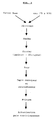
- Figure 1 in the appendix is a representation schematic of the traditional manufacturing process of masa dough and flour.
- the present invention aims to overcome the disadvantages reported above and more particularly to offer a process for preparing Masa flour suitable for all varieties of corn, especially those whose characteristics are different from the American varieties of dent corn that are not grown in Europe.
- Another object of the present invention concomitant of the above, is to offer a process alternative to the traditional nixtamalization process, effluent-free, using flour, pericarp already removed, from the original Corné Denté varieties including Limagne, while guaranteeing quality Masa flour identical to American Masa flour imported into Europe.
- the process of the invention is characterized on the one hand by the choice of flours resulting from a milling and secondly, by heat treatment then a mixture advantageously adapted to the varieties of Toothed Corn.
- a schematic representation of the process according to the invention is given in FIG. 2 in Annex.
- One of the quality criteria for Masa flour is its particle size. This parameter is used to regulate the blistering of the chips (bubbles on the surface). At the time where the chips are immersed in the frying, the water present in the chips turns into vapor and looking to go out. If the dough used is only composed fine particles, a homogeneous and waterproof structure is obtained when passing through the oven translating during "deep frying" by the formation of puffed crisps. To allow the passage of steam, large particles are incorporated into the mixture to create break points facilitating steam evacuation. But too much large particles give hard chips (absence of blistering).
- step (b) consists in submitting, separately, on the one hand the flour and other by semolina, from step (a), to one and / or the other, and advantageously both with an alkaline substance added to it heat treatment allowing gelatinization of starch, then mix in step (c) the flours and semolina having undergone the heat treatment of step (B).
- alkaline substance advantageously with flour and semolina or mixture of these aims to increase the pH of these up to a value of the order of 6 to 8.5.
- the substance alkaline can be as in the prior art of the slaked lime, but any other alkaline material making it possible to improve the gelatinization of starch and food acceptable, may be used, such as for example sodium bicarbonate.
- the alkaline substance can be added either before or time of heat treatment, but not after heat treatment.
- Masa taste is an important aspect of process of the invention, since specific to the products Tex Mex. This taste is directly linked to the pH of the dough and therefore the amount of slaked lime used. Lime added also changes the gelatinization level of starch and therefore the ability to form a paste.
- the amount of substance added alkaline is, by weight, between 0.15 and 0.6% of the total amount of flour and semolina prepared from step (a).
- Another quality criterion for flour Masa is the degree of gelatinization responsible for cohesion of the dough and its machinability on line. Unlike wheat, corn proteins are not able to form a three-dimensional network and give a paste. It is therefore by gelatinizing the starch from the corn flour a paste can be formed. Level of gelatinization of flour conditions the quality of flour. The optimum is sought to obtain a paste sufficiently cohesive and non-sticky that is easily machinable on line. If the flour is not fairly gelatinized, the dough lacks cohesion and it is impossible to make chips. On the contrary, if the flour is too gelatinized, the dough is very cohesive but too sticky and impossible to laminate.
- the flour (s) and the semolina (s) or the mixture thereof having undergone the heat treatment of step (b) have degrees of gelatinization of between 20 and 45% measured according to the method described by Birch & Priestley (Die Särcke, 25 (3), 98-100, 1973).
- This method consists of preparing 2 times 200 mg of ground sample, treating 200 mg of this sample with 100 ml of 0.2 M KOH with stirring for 10 minutes, and 200 mg of this sample with 100 ml of 0.4 KOH M with stirring for 100 minutes, then centrifuge each of these samples at 3000 rpm for 10 minutes.
- 1 ml of supernatant is then removed from the sample treated with 0.2 M KOH which is neutralized with 0.2 N HCl (1 ml) by adjusting to 20 ml in a 25 ml tube.
- 1 ml of supernatant is removed from the sample treated with 0.4 M KOH which is neutralized with 0.2 N HCl (2 ml) by adjusting to 20 ml in a 25 ml tube.
- 100 ⁇ l of iodized reagent (1 g I 2 + 4 g of KI in 100 ml of water) are added to each tube, then gently mixed and the absorbance of each sample is determined at 600 nm.
- Heat treatment according to step (b) of the process of the invention is characterized by a simultaneous supply water or vapor, the alkaline substance and of thermal energy to gelatinize the starch in a very short time, less than 1 hour, in particular 5 minutes, 2 to 5 minutes, without adding too much energy mechanical, for example shearing, detrimental to the quality of Masa flour.
- step (b) Different processing technologies thermal capable of being used in step (b) exist in the prior art. Among these, we can quote: the extruder cooker, Stéphan technology, etc ...
- the heat treatment of step (b) is carried out with a technique usually used for debacterize sounds, germs and flours, to dry and pregelatinize flour.
- This technique is based on suspending the product at high turbulence in a stream of heated air in contact permanent with a surface also heated.
- a device for implementing this technique has two parts: a cooker and a dryer, each consisting of a horizontal cylinder where a propeller horizontal keeps the product against walls by centrifugation.
- a thermal oil circuit ensures the heating of the cylinders thanks to a jacket coaxial.
- the cooker can receive water and / or steam and various other additives, as of course lime slaked.
- properties rheological (viscosity, water absorption capacity, cohesion, etc.) of the starch are modified.
- the product is then transferred to the dryer, where air heated via a heat exchanger is injected into the cylinder.
- the product is then dried by conduction (heated walls) and by convection (heated air).
- the main parameters to be regulated are the material flow rates and water, residence times and temperatures used.
- Flour and semolina from step (a) of process of the invention are separately or in mixture heat treated on this tool by providing water or steam and lime then immediately dried.
- the water supplied associated with the heat treatment helps gelatinize starch. It is therefore a partial treatment allowing the starch contained in the flour absorb water during the kneading phase casting and give the cohesion necessary for rolling. Any additional lime added during this heat treatment facilitates the gelatinization while providing the characteristic taste Tex Mex.
- step (c) If the flours and semolina have separately undergone the processing of step (b), these are mixed in step (c).
- This step (c) consists of the two modes for carrying out the process of the invention to be added optionally to the mixture of flour (s) and semolina having heat treated one or more additives allowing to modify and bring new functionality of Masa flour obtained by the process of the invention, as a better absorption capacity or better viscosity, particularly useful in the case of tortilla table manufacturing where looking for better flexibility to roll products, known in English as rollability.
- additives include cellulose, carboxymethyl cellulose and other derivatives of cellulose which provide better capacity water absorption and therefore better flexibility on the finished product. Acid-type preservatives propionic or sorbic can also be added to extend the life of finished products.
- the process of the invention is remarkable in what it allows to obtain a Masa flour with a degree of gelatinization between 20 and 45% measured according to the method described by Birch & Priestley (Die Särcke, 25 (3), 98-100, 1973), a pH between 6 and 8.5, a particle size with an average size of particles (D50) is between 150 and 400 ⁇ m and a final humidity between 7 and 12%.
- the current invention therefore relates to a Masa flour having these characteristics particularly suited to the preparation of Mexican flavored products.
- the method of the invention can be implemented work with flour and semolina, defined previously prepared from any variety of corn from which the pericarp has been removed. It could be American varieties of dent corn that are not grown in Europe or European varieties of corn Corné Denté.
- One of the advantages of the process according to present invention is to allow the use of varieties of Corn Cornés Dentées for the manufacture of Masa flour. Indeed, these varieties are well known and characterized, in particular by the Applicant, and it is therefore possible to make order changes technological, thanks in particular to selection tools, while guaranteeing full traceability.
- the process of the invention is more particularly suitable for varieties of dentate corn such as the varieties known by the names Banguy or Anjou.
- the designated Corné Denté variety Safrane selected on rheological criteria, in particular of viscosity, and of machinability, in particular passage in the sheeter, offers results remarkable in the process of the invention.
- the variety horned corn Safrane is registered in the catalog French held by the Permanent Technical Committee of the Selection (CTPS) under deposit number LZM 342/01 and is available in the catalog of the Limagrain Company.
- CPS Permanent Technical Committee of the Selection
- LZM 342/01 deposit number of the Limagrain Company.
- In flour and semolina from this variety in accordance with step (a) of the process of the invention, has great flexibility and supports variations in the process easily. This flour, after specific heat treatment thus allows to bring the cohesion necessary for the manufacture of the dough prepared from Masa flour of the invention avoiding any problem of tights limiting the passage in machine.
- the invention therefore relates to everything especially the use of flour or mixture of flours and semolina or a mixture of semolina from one or more varieties of corn Corné Denté, and more particularly of the variety known under the name Safrane for the preparation a Masa flour, as well as a prepared Masa flour, in particular according to the method of the invention, from flour and / or semolina from one or more varieties of Corné Denté corn, and more particularly of the variety known under the name Safrane.
- the invention therefore also relates to a flour and semolina prepared in step (a) of the process of the invention.
- Flour prepared from a variety of corn from which the pericarp was removed according to the invention is characterized by a particle size average between 75 and 200 ⁇ m, calculated by laser determination of particle size according to light diffraction principle in accordance with NF X11-666 standard.
- Semolina prepared from a variety of corn from which the pericarp was removed according to the invention is characterized by a particle size average between 300 and 750 ⁇ m calculated as previously for flours.
- the invention also relates to a flour and a semolina prepared in accordance with step (b) of the process of the invention.
- Such flours and semolina present a pH of the order of 6 to 8.5 and a degree of gelatinization between 20 and 45% measured according to the method described by Birch & Priestley.
- the invention also relates to the products Mexican taste made from Masa flour according to the invention.
- Example 1 Preparation of Masa flour with Corné Denté varieties and more particularly with the variety of Safrane corn.
- Example 2 Preparation of Masa flour with Corné Denté varieties and more particularly with the variety of Safrane corn.
- Example 3 Preparation of Tortillas Chips with Masa flour from Example 1 or Example 2.
- Example 1 The flour of Example 1 is mixed with 88% water, then kneaded in a shaft mixer horizontal for a period of 7 minutes.
- the dough is incorporated into the feeder which is the device for continuously feeding the sheeter.
- the speed of it is medium. In in all cases, this is where the dough should be cohesive enough to form a paste and be laminated without being too sticky. Indeed, as soon as the dough has a degree of gelatinization too high, it becomes sticky, adheres to cylinders thus considerably limiting the throughput and quality final tortilla chips.
- An oven using gas and infrared and at 3 levels with product turnaround is used.
- the objective is to continue gelatinization and bring the final cohesion of the wet crisps. It is also during this stage that part of the water made during kneading is eliminated.
- the settings used are a temperature between 285 and 310 ° C (infrared and gas).
- the average residence time of chips is around 25 seconds.
- the chips are gradually cooled to using a conveyor. This step is important because it allows the product to be balanced with a homogeneous distribution of moisture in the heart of the product.
- the "balanced" chips are then immersed in oil at about 200 ° C for about 45 seconds. Water in liquid form thus passes under vapor form and tends to come out of the entraining product a slight expansion giving the final blistering and therefore the specific texture of the tortilla chips.
- the crisps obtained have the same organoleptic characteristics that the crisps obtained with Masa flour and the process of the prior art.
Landscapes
- Engineering & Computer Science (AREA)
- Food Science & Technology (AREA)
- Life Sciences & Earth Sciences (AREA)
- Polymers & Plastics (AREA)
- Chemical & Material Sciences (AREA)
- Nutrition Science (AREA)
- Health & Medical Sciences (AREA)
- Bakery Products And Manufacturing Methods Therefor (AREA)
- Cereal-Derived Products (AREA)
- Compounds Of Unknown Constitution (AREA)
- Noodles (AREA)
- Vending Machines For Individual Products (AREA)
- Transition And Organic Metals Composition Catalysts For Addition Polymerization (AREA)
- Coloring (AREA)
Claims (20)
- Verfahren zur Bereitung eines Masa-Mehls, dadurch gekennzeichnet, dass es die folgenden Schritte aufweist:(a) man bereitet durch jedwedes geeignete Mittel mindestens ein Mehl und mindestens einen Grieß, wobei sowohl das Mehl als auch der Grieß aus einer oder mehreren Sorten Mais gewonnen wurden, deren Fruchthülle entfernt wurde,(b) man fügt gleichzeitig dem oder den Mehlen und dem oder den Grießen, die in Schritt (a) bereitet wurden, oder der Mischung dieser eine alkalische Substanz, Wasser oder Dampf und thermische Energie hinzu, wobei diese thermische Behandlung ein Gelieren der Stärke in einer sehr kurzen Zeit von weniger als einer Stunde ermöglicht,(c) man mischt das Mehl oder die Mehle und den Grieß oder die Grieße, wenn diese bei der thermischen Behandlung von Schritt (b) noch nicht gemischt worden sind, und man fügt eventuell einen oder mehrere Zusatzstoffe hinzu, mit denen das gewonnene Masa-Mehl modifiziert werden kann und ihm neue Funktionalitäten verliehen werden können.
- Verfahren zur Bereitung eines Masa-Mehls nach Anspruch 1, dadurch gekennzeichnet, dass es die folgenden Schritte aufweist:(a) man bereitet durch jedwedes geeignete Mittel mindestens ein Mehl und mindestens einen Grieß, wobei sowohl das Mehl als auch der Grieß aus einer oder mehreren Sorten Mais gewonnen wurden, deren Fruchthülle entfernt wurde,(b) man mischt das Mehl oder die Mehle mit dem Grieß oder den Grießen, die in Schritt (a) bereitet wurden, wobei dem einen oder anderen Mehl oder Grieß oder der Mischung eine alkalische Substanz hinzugefügt wurde, und man fügt dieser Mischung Wasser oder Dampf und thermische Energie hinzu, wobei die besagte thermische Behandlung mit einem Hydratisierungsgrad von 5 bis 30 Prozent erfolgt,(c) man fügt eventuell einen oder mehrere Zusatzstoffe hinzu, mit denen das gewonnene Masa-Mehl modifiziert werden kann und ihm neue Funktionalitäten verliehen werden können.
- Verfahren zur Bereitung eines Masa-Mehls nach Anspruch 1, dadurch gekennzeichnet, dass es die folgenden Schritte aufweist:(a) man bereitet durch jedwedes geeignete Mittel mindestens ein Mehl und mindestens einen Grieß, wobei sowohl das Mehl als auch der Grieß aus einer oder mehreren Sorten Mais gewonnen wurden, deren Fruchthülle entfernt wurde,(b) man fügt jedem der Grieße und Mehle, die in Schritt (a) bereitet wurden, separat eine alkalische Substanz, Wasser oder Dampf und thermische Energie hinzu, wobei diese thermische Behandlung ein Gelieren der Stärke in einer sehr kurzen Zeit von weniger als einer Stunde ermöglicht,(c) man mischt ein oder mehrere Mehle und einen oder mehrere Grieße, die separat der Behandlung von Schritt (b) unterzogen wurden, und man fügt dieser Mischung eventuell einen oder mehrere Zusatzstoffe hinzu, mit denen das gewonnene Masa-Mehl modifiziert werden kann und ihm neue Funktionalitäten verliehen werden können.
- Verfahren nach Anspruch 3, dadurch gekennzeichnet, dass die thermische Behandlung von Schritt (b) mit einem Hydratisierungsgrad von 5 bis 50 Prozent erfolgt.
- Verfahren nach einem der vorhergehenden Ansprüche, dadurch gekennzeichnet, dass man in Schritt (a) Folgendes bereitet:ein oder mehrere Mehle mit einer durchschnittlichen Korngröße von 75 bis 200 µm, die durch Laser-Korngrößenbestimmung gemäß dem Prinzip der Lichtbrechung berechnet wurde, undeinen oder mehrere Grieße mit einer durchschnittlichen Korngröße von 300 bis 750 µm, die wie bei den o. g. Mehlen berechnet wird.
- Verfahren nach einem der vorhergehenden Ansprüche, dadurch gekennzeichnet, dass man in Schritt (b) eine ausreichende Menge an alkalischer Substanz hinzufügt, damit das Mehl und der Grieß oder die Mischung dieser einen pH-Wert von 6 bis 8,5 aufweist.
- Verfahren nach einem der vorhergehenden Ansprüche, dadurch gekennzeichnet, dass die hinzugefügte Menge alkalischer Substanz hinsichtlich ihres Gewichts 0,15 bis 0,6 Prozent im Verhältnis zur in Schritt (a) bereiteten Gesamtmehl- und -grießmenge beträgt.
- Verfahren nach einem der vorhergehenden Ansprüche, dadurch gekennzeichnet, dass die alkalische Substanz Löschkalk ist.
- Verfahren nach einem der vorhergehenden Ansprüche, dadurch gekennzeichnet, dass die thermische Behandlung von Schritt (b) so durchgeführt wird, dass man Mehle und Grieße oder eine Mischung dieser erhält, deren Geliergrad von 20 bis 45 Prozent beträgt, gemessen gemäß der von Birch & Priestley beschriebenen Methode.
- Verfahren nach einem der vorhergehenden Ansprüche, dadurch gekennzeichnet, dass die thermische Behandlung von Schritt (b) darin besteht, jedem der Mehle und Grieße, die in Schritt (a) bereitet wurden, oder der Mischung dieser eine alkalische Substanz, Wasser oder Dampf und thermische Energie hinzuzufügen, wodurch die Stärke in einer sehr kurzen Zeit von fünf Minuten gelieren kann.
- Verfahren nach einem der vorhergehenden Ansprüche, dadurch gekennzeichnet, dass die thermische Behandlung von Schritt (b) darin besteht, alle Mehle und Grieße von Schritt (a) oder die Mischung dieser in einem Warmluftstrom und in ständigem Kontakt mit einer ebenfalls geheizten Fläche schwebend zu verwirbeln.
- Verfahren nach Anspruch 11, dadurch gekennzeichnet, dass die thermische Behandlung von Schritt (b), die darin besteht, alle Mehle und Grieße voneinander getrennt schwebend zu verwirbeln, mit den folgenden Hauptparametern durchgeführt wird:einem Stoffdurchsatz - Mehl oder Grieß - von 100 bis 200 kg/h,einem Wasserdurchsatz, der so berechnet wurde, dass der Wassereintrag im Verhältnis zum Stoffdurchsatz 5 bis 40 Prozent beträgt,einem Durchsatz von Löschkalk, der so berechnet wurde, dass der Löschkalkeintrag im Verhältnis zum Stoffdurchsatz 0,15 bis 0,6 Prozent beträgt,Koch- und Trocknungstemperaturen von 120 bis 200 °C.
- Verfahren nach Anspruch 11, dadurch gekennzeichnet, dass die thermische Behandlung von Schritt (b), die darin besteht, die Mischung aus Mehl(en) und Grieß(en) schwebend zu verwirbeln, mit den folgenden Hauptparametern durchgeführt wird:einem Stoffdurchsatz - Mehl oder Grieß - von 150 kg/h,einem Wasserdurchsatz, der so berechnet wurde, dass der Wassereintrag im Verhältnis zum Stoffdurchsatz 8 Prozent beträgt,einem Durchsatz von Löschkalk, der so berechnet wurde, dass der Löschkalkeintrag im Verhältnis zum Stoffdurchsatz 0,3 Prozent beträgt,Koch- und Trocknungstemperaturen von 150 °C,einem Geliergrad von 30 Prozent.
- Verfahren nach einem der vorhergehenden Ansprüche, dadurch gekennzeichnet, dass die Zusatzstoffe, die eventuell in Schritt (c) hinzugefügt werden, aus Zellulose, Carboxymethylzellulose und den anderen Derivaten der Zellulose ausgewählt wurden, die eine bessere Fähigkeit zur Absorption von Wasser und/oder Konservierungsstoffen verschaffen.
- Verfahren nach einem der vorhergehenden Ansprüche, dadurch gekennzeichnet, dass die Mehle und/oder Grieße, die in Etappe (a) bereitet wurden, aus einer oder mehreren Sorten Zahn-Hartmais gewonnen wurden, deren Fruchthülle entfernt wurde.
- Verfahren nach Anspruch 15, dadurch gekennzeichnet, dass die Zahn-Hartmaissorte die Sorte Safrane ist.
- Ein Mehl, das aus einer Sorte Mais gewonnen wurde, deren Fruchthülle entfernt wurde, der eine durchschnittliche Korngröße von 75 bis 200 µm aufweist, die durch Laser-Korngrößenbestimmung gemäß dem Prinzip der Lichtbrechung nach dem Schritt (a) des Verfahrens nach einem der Ansprüche 1 bis 16 berechnet wurde, und welches den Schritt (b) des Verfahrens nach einem der Ansprüche 1 bis 16 durchlaufen hat, dadurch gekennzeichnet, dass es einen pH-Wert von 6 bis 8,5 aufweist und einen Geliergrad von 20 bis 45 Prozent, gemessen gemäß der von Birch & Priestley beschriebenen Methode.
- Ein Mehl nach Anspruch 17, dadurch gekennzeichnet, dass dieses aus einer Sorte Zahn-Hartmais und insbesondere aus der Sorte Safrane gewonnen wurde.
- Ein Grieß, der aus einer Sorte Mais gewonnen wurde, deren Fruchthülle entfernt wurde, welcher eine durchschnittliche Korngröße von 300 bis 750 µm hat, die durch Laser-Korngrößenbestimmung gemäß dem Prinzip der Lichtbrechung nach dem Schritt (a) des Verfahrens nach einem der Ansprüche 1 bis 16 berechnet wurde, und der den Schritt (b) des Verfahrens nach einem der Ansprüche 1 bis 16 durchlaufen hat, dadurch gekennzeichnet, dass er einen pH-Wert von 6 bis 8,5 aufweist und einen Geliergrad von 20 bis 45 Prozent, gemessen gemäß der von Birch & Priestley beschriebenen Methode.
- Ein Grieß nach Anspruch 19, dadurch gekennzeichnet, dass dieser aus einer Sorte Zahn-Hartmais und insbesondere aus der Sorte Safrane gewonnen wurde.
Applications Claiming Priority (2)
| Application Number | Priority Date | Filing Date | Title |
|---|---|---|---|
| FR9800140A FR2773304B1 (fr) | 1998-01-08 | 1998-01-08 | Procede de preparation d'une farine masa, farine masa et ses applications |
| FR9800140 | 1998-01-08 |
Publications (2)
| Publication Number | Publication Date |
|---|---|
| EP0928563A1 EP0928563A1 (de) | 1999-07-14 |
| EP0928563B1 true EP0928563B1 (de) | 2003-05-02 |
Family
ID=9521611
Family Applications (1)
| Application Number | Title | Priority Date | Filing Date |
|---|---|---|---|
| EP99400043A Expired - Lifetime EP0928563B1 (de) | 1998-01-08 | 1999-01-08 | Verfahren zur Herstellung von Masa-Mehl, Masa-Mehl und Verwendungen |
Country Status (4)
| Country | Link |
|---|---|
| EP (1) | EP0928563B1 (de) |
| AT (1) | ATE238691T1 (de) |
| DE (1) | DE69907285T2 (de) |
| FR (1) | FR2773304B1 (de) |
Families Citing this family (2)
| Publication number | Priority date | Publication date | Assignee | Title |
|---|---|---|---|---|
| CA2609515A1 (en) * | 2005-05-24 | 2006-11-30 | Cargill, Incorporated | Stabilized whole grain flour |
| ITMO20130213A1 (it) * | 2013-07-24 | 2015-01-25 | Luca Consolini | Metodo per la preparazione di un alimento a base di farina di cereali |
Family Cites Families (9)
| Publication number | Priority date | Publication date | Assignee | Title |
|---|---|---|---|---|
| FR700337A (fr) * | 1929-08-23 | 1931-02-27 | Woodlands Ltd | Perfectionnements au traitement calorifique de la farine et du blé |
| FR805723A (fr) * | 1935-04-29 | 1936-11-27 | Brabender G M B H | Procédé et dispositif pour augmenter les propriétés boulangères des farines de céréales |
| US3655385A (en) * | 1970-06-08 | 1972-04-11 | Roberto Gonzalez Barrera | Tortilla and process using edible hydrophilic gum |
| US3869558A (en) * | 1970-10-26 | 1975-03-04 | Ogilvie Flour Mills Company Li | Process for making a free flowing flour |
| US5652010A (en) * | 1984-12-14 | 1997-07-29 | Nabisco, Inc. | Production of masa corn-based products |
| DE4137161C2 (de) * | 1991-11-12 | 1994-02-24 | Stephan & Soehne | Verfahren zur Teigbereitung |
| US5558886A (en) * | 1993-10-21 | 1996-09-24 | Centro De Investigacion Y De Estudios Avanzados Del I.P.N. | Extrusion apparatus for the preparation of instant fresh corn dough or masa |
| AU2128497A (en) * | 1996-02-20 | 1997-09-02 | Conagra, Inc. | Method for producing a masa flour |
| US6025011A (en) * | 1997-06-09 | 2000-02-15 | J. R. Short Milling Company | Process for producing nixtamal and masa flour |
-
1998
- 1998-01-08 FR FR9800140A patent/FR2773304B1/fr not_active Expired - Fee Related
-
1999
- 1999-01-08 EP EP99400043A patent/EP0928563B1/de not_active Expired - Lifetime
- 1999-01-08 DE DE69907285T patent/DE69907285T2/de not_active Expired - Lifetime
- 1999-01-08 AT AT99400043T patent/ATE238691T1/de not_active IP Right Cessation
Also Published As
| Publication number | Publication date |
|---|---|
| DE69907285T2 (de) | 2004-03-25 |
| FR2773304A1 (fr) | 1999-07-09 |
| FR2773304B1 (fr) | 2000-03-10 |
| EP0928563A1 (de) | 1999-07-14 |
| DE69907285D1 (de) | 2003-06-05 |
| ATE238691T1 (de) | 2003-05-15 |
Similar Documents
| Publication | Publication Date | Title |
|---|---|---|
| EP0105100A1 (de) | Verfahren zur Herstellung von Teigwaren auf Basis von Stärkeprodukten | |
| ZA200706539B (en) | Instant masa | |
| EP0150715B1 (de) | Verfahren zur Herstellung einer in kochendem Wasser dispergierbaren Stärke | |
| EP0619082A1 (de) | Verfahren zur Herstellung von Panierbeschichtung und damit hergestelltes Produkt | |
| FR2640472A1 (fr) | Procede pour fabriquer des cereales agglomerees instantanees pour former un produit consommable cremeux | |
| EP0591793B1 (de) | Reisteigware | |
| EP0561092A1 (de) | Verfahren zur durchlaufige Herstellung eines Produkt für die menschliche Nährung | |
| CA2889531A1 (fr) | Procede de fabrication de compositions proteiques a faible solubilite, compositions obtenues et leur utilisation dans les produits de panification | |
| EP1138210B1 (de) | Stärkehaltiges Instant-Produkt | |
| EP0445550B1 (de) | Verfahren zur Herstellung von getrockneten Teigwaren | |
| RU2460301C1 (ru) | Быстрый способ никстамализации кукурузы | |
| EP1860957B1 (de) | Nahrungsmittelverarbeitungsprodukt aus frischem kartoffelpüree | |
| EP0928563A1 (de) | Verfahren zur Herstellung von Masa-Mehl, Masa-Mehl und Verwendungen | |
| EP1085823B1 (de) | Verfahren zum herstellen von parboiled reis und charge von parboiled reis | |
| CN1092612A (zh) | 谷类食物产品 | |
| FR2458227A1 (fr) | Procede et dispositif de fabrication de chapelure | |
| EP0682876B1 (de) | Verfahren zur Herstellung eines getrockneten Schnellkochhülsenfrüchtepürees | |
| EP0915665B1 (de) | Vorgebackene geformte getreidenahrungsmittel und deren herstellung | |
| FR2754430A1 (fr) | Produit alimentaire de type pellet expansable aux micro-ondes et procede d'obtention | |
| EP0948904A1 (de) | Verfahren zur Herstellung von funktionellen Bestandteilen aus wachsartigem Maismehl, danach hergestellte Produkte und ihre Verwendungen | |
| FR2594298A1 (fr) | Pain naturel, surhydrate, procede de fabrication et farine pour la mise en oeuvre du procede | |
| EP0516867B1 (de) | Verfahren zur Erzeugung pasteurisierter Granulate aus Getreidemehl | |
| EP1166648A1 (de) | Instant Reiskörner | |
| EP1850672B1 (de) | Instant-masa | |
| FR2626439A1 (fr) | Procede de fabrication industrielle de chips a base de fecule derivees de produits vegetaux et notamment de mais ou autres cereales et une ligne de mise en oeuvre |
Legal Events
| Date | Code | Title | Description |
|---|---|---|---|
| PUAI | Public reference made under article 153(3) epc to a published international application that has entered the european phase |
Free format text: ORIGINAL CODE: 0009012 |
|
| AK | Designated contracting states |
Kind code of ref document: A1 Designated state(s): AT BE CH CY DE DK ES FI FR GB GR IE IT LI LU MC NL PT SE |
|
| AX | Request for extension of the european patent |
Free format text: AL;LT;LV;MK;RO;SI |
|
| 17P | Request for examination filed |
Effective date: 20000114 |
|
| AKX | Designation fees paid |
Free format text: AT BE CH CY DE DK ES FI FR GB GR IE IT LI LU MC NL PT SE |
|
| 17Q | First examination report despatched |
Effective date: 20011009 |
|
| GRAH | Despatch of communication of intention to grant a patent |
Free format text: ORIGINAL CODE: EPIDOS IGRA |
|
| GRAH | Despatch of communication of intention to grant a patent |
Free format text: ORIGINAL CODE: EPIDOS IGRA |
|
| GRAA | (expected) grant |
Free format text: ORIGINAL CODE: 0009210 |
|
| AK | Designated contracting states |
Designated state(s): AT BE CH CY DE DK ES FI FR GB GR IE IT LI LU MC NL PT SE |
|
| PG25 | Lapsed in a contracting state [announced via postgrant information from national office to epo] |
Ref country code: NL Free format text: LAPSE BECAUSE OF FAILURE TO SUBMIT A TRANSLATION OF THE DESCRIPTION OR TO PAY THE FEE WITHIN THE PRESCRIBED TIME-LIMIT Effective date: 20030502 Ref country code: IT Free format text: LAPSE BECAUSE OF FAILURE TO SUBMIT A TRANSLATION OF THE DESCRIPTION OR TO PAY THE FEE WITHIN THE PRESCRIBED TIME-LIMIT;WARNING: LAPSES OF ITALIAN PATENTS WITH EFFECTIVE DATE BEFORE 2007 MAY HAVE OCCURRED AT ANY TIME BEFORE 2007. THE CORRECT EFFECTIVE DATE MAY BE DIFFERENT FROM THE ONE RECORDED. Effective date: 20030502 Ref country code: IE Free format text: LAPSE BECAUSE OF NON-PAYMENT OF DUE FEES Effective date: 20030502 Ref country code: FI Free format text: LAPSE BECAUSE OF FAILURE TO SUBMIT A TRANSLATION OF THE DESCRIPTION OR TO PAY THE FEE WITHIN THE PRESCRIBED TIME-LIMIT Effective date: 20030502 Ref country code: CY Free format text: LAPSE BECAUSE OF FAILURE TO SUBMIT A TRANSLATION OF THE DESCRIPTION OR TO PAY THE FEE WITHIN THE PRESCRIBED TIME-LIMIT Effective date: 20030502 Ref country code: AT Free format text: LAPSE BECAUSE OF FAILURE TO SUBMIT A TRANSLATION OF THE DESCRIPTION OR TO PAY THE FEE WITHIN THE PRESCRIBED TIME-LIMIT Effective date: 20030502 |
|
| REG | Reference to a national code |
Ref country code: GB Ref legal event code: FG4D Free format text: NOT ENGLISH |
|
| REG | Reference to a national code |
Ref country code: CH Ref legal event code: EP |
|
| REF | Corresponds to: |
Ref document number: 69907285 Country of ref document: DE Date of ref document: 20030605 Kind code of ref document: P |
|
| REG | Reference to a national code |
Ref country code: IE Ref legal event code: FG4D Free format text: FRENCH |
|
| PG25 | Lapsed in a contracting state [announced via postgrant information from national office to epo] |
Ref country code: SE Free format text: LAPSE BECAUSE OF FAILURE TO SUBMIT A TRANSLATION OF THE DESCRIPTION OR TO PAY THE FEE WITHIN THE PRESCRIBED TIME-LIMIT Effective date: 20030802 Ref country code: GR Free format text: LAPSE BECAUSE OF FAILURE TO SUBMIT A TRANSLATION OF THE DESCRIPTION OR TO PAY THE FEE WITHIN THE PRESCRIBED TIME-LIMIT Effective date: 20030802 Ref country code: DK Free format text: LAPSE BECAUSE OF FAILURE TO SUBMIT A TRANSLATION OF THE DESCRIPTION OR TO PAY THE FEE WITHIN THE PRESCRIBED TIME-LIMIT Effective date: 20030802 |
|
| PG25 | Lapsed in a contracting state [announced via postgrant information from national office to epo] |
Ref country code: PT Free format text: LAPSE BECAUSE OF FAILURE TO SUBMIT A TRANSLATION OF THE DESCRIPTION OR TO PAY THE FEE WITHIN THE PRESCRIBED TIME-LIMIT Effective date: 20030804 |
|
| GBT | Gb: translation of ep patent filed (gb section 77(6)(a)/1977) |
Effective date: 20030714 |
|
| PG25 | Lapsed in a contracting state [announced via postgrant information from national office to epo] |
Ref country code: ES Free format text: LAPSE BECAUSE OF FAILURE TO SUBMIT A TRANSLATION OF THE DESCRIPTION OR TO PAY THE FEE WITHIN THE PRESCRIBED TIME-LIMIT Effective date: 20030813 |
|
| NLV1 | Nl: lapsed or annulled due to failure to fulfill the requirements of art. 29p and 29m of the patents act | ||
| REG | Reference to a national code |
Ref country code: IE Ref legal event code: FD4D Ref document number: 0928563E Country of ref document: IE |
|
| PG25 | Lapsed in a contracting state [announced via postgrant information from national office to epo] |
Ref country code: LU Free format text: LAPSE BECAUSE OF NON-PAYMENT OF DUE FEES Effective date: 20040108 |
|
| PG25 | Lapsed in a contracting state [announced via postgrant information from national office to epo] |
Ref country code: MC Free format text: LAPSE BECAUSE OF NON-PAYMENT OF DUE FEES Effective date: 20040131 Ref country code: LI Free format text: LAPSE BECAUSE OF NON-PAYMENT OF DUE FEES Effective date: 20040131 Ref country code: CH Free format text: LAPSE BECAUSE OF NON-PAYMENT OF DUE FEES Effective date: 20040131 Ref country code: BE Free format text: LAPSE BECAUSE OF NON-PAYMENT OF DUE FEES Effective date: 20040131 |
|
| PLBQ | Unpublished change to opponent data |
Free format text: ORIGINAL CODE: EPIDOS OPPO |
|
| PLBI | Opposition filed |
Free format text: ORIGINAL CODE: 0009260 |
|
| PLAX | Notice of opposition and request to file observation + time limit sent |
Free format text: ORIGINAL CODE: EPIDOSNOBS2 |
|
| 26 | Opposition filed |
Opponent name: WESTHOVE Effective date: 20040130 |
|
| PLAX | Notice of opposition and request to file observation + time limit sent |
Free format text: ORIGINAL CODE: EPIDOSNOBS2 |
|
| BERE | Be: lapsed |
Owner name: *ULICE Effective date: 20040131 |
|
| PLBP | Opposition withdrawn |
Free format text: ORIGINAL CODE: 0009264 |
|
| REG | Reference to a national code |
Ref country code: CH Ref legal event code: PL |
|
| PLBB | Reply of patent proprietor to notice(s) of opposition received |
Free format text: ORIGINAL CODE: EPIDOSNOBS3 |
|
| PLCK | Communication despatched that opposition was rejected |
Free format text: ORIGINAL CODE: EPIDOSNREJ1 |
|
| PLBN | Opposition rejected |
Free format text: ORIGINAL CODE: 0009273 |
|
| STAA | Information on the status of an ep patent application or granted ep patent |
Free format text: STATUS: OPPOSITION REJECTED |
|
| 27O | Opposition rejected |
Effective date: 20050305 |
|
| PLAB | Opposition data, opponent's data or that of the opponent's representative modified |
Free format text: ORIGINAL CODE: 0009299OPPO |
|
| REG | Reference to a national code |
Ref country code: DE Ref legal event code: R082 Ref document number: 69907285 Country of ref document: DE Representative=s name: BOEHMERT & BOEHMERT, DE |
|
| REG | Reference to a national code |
Ref country code: DE Ref legal event code: R082 Ref document number: 69907285 Country of ref document: DE Representative=s name: BOEHMERT & BOEHMERT ANWALTSPARTNERSCHAFT MBB -, DE Effective date: 20130828 Ref country code: DE Ref legal event code: R082 Ref document number: 69907285 Country of ref document: DE Representative=s name: BOEHMERT & BOEHMERT ANWALTSPARTNERSCHAFT MBB -, DE Effective date: 20130806 Ref country code: DE Ref legal event code: R082 Ref document number: 69907285 Country of ref document: DE Representative=s name: BOEHMERT & BOEHMERT, DE Effective date: 20130806 Ref country code: DE Ref legal event code: R082 Ref document number: 69907285 Country of ref document: DE Representative=s name: BOEHMERT & BOEHMERT, DE Effective date: 20130828 Ref country code: DE Ref legal event code: R081 Ref document number: 69907285 Country of ref document: DE Owner name: LIMAGRAIN CEREALES INGREDIENTS S.A.S, FR Free format text: FORMER OWNER: LIMAGRAIN CEREALES INGREDIENTS S.A.S., SAINT IGNAT, FR Effective date: 20130828 Ref country code: DE Ref legal event code: R081 Ref document number: 69907285 Country of ref document: DE Owner name: LIMAGRAIN CEREALES INGREDIENTS S.A.S, FR Free format text: FORMER OWNER: ULICE, RIOM, FR Effective date: 20130806 |
|
| REG | Reference to a national code |
Ref country code: GB Ref legal event code: 732E Free format text: REGISTERED BETWEEN 20130919 AND 20130925 |
|
| REG | Reference to a national code |
Ref country code: FR Ref legal event code: TP Owner name: LIMAGRAIN CEREALES INGREDIENTS SA, FR Effective date: 20131002 |
|
| REG | Reference to a national code |
Ref country code: FR Ref legal event code: PLFP Year of fee payment: 18 |
|
| REG | Reference to a national code |
Ref country code: FR Ref legal event code: PLFP Year of fee payment: 19 |
|
| REG | Reference to a national code |
Ref country code: FR Ref legal event code: PLFP Year of fee payment: 20 |
|
| PGFP | Annual fee paid to national office [announced via postgrant information from national office to epo] |
Ref country code: FR Payment date: 20171221 Year of fee payment: 20 |
|
| PGFP | Annual fee paid to national office [announced via postgrant information from national office to epo] |
Ref country code: GB Payment date: 20171222 Year of fee payment: 20 |
|
| PGFP | Annual fee paid to national office [announced via postgrant information from national office to epo] |
Ref country code: DE Payment date: 20171218 Year of fee payment: 20 |
|
| REG | Reference to a national code |
Ref country code: DE Ref legal event code: R071 Ref document number: 69907285 Country of ref document: DE |
|
| REG | Reference to a national code |
Ref country code: GB Ref legal event code: PE20 Expiry date: 20190107 |
|
| PG25 | Lapsed in a contracting state [announced via postgrant information from national office to epo] |
Ref country code: GB Free format text: LAPSE BECAUSE OF EXPIRATION OF PROTECTION Effective date: 20190107 |