EP0934526B1 - Procedes et systemes permettant de selectionner des peptides et des proteines qui possedent une affinite specifique envers une cible - Google Patents
Procedes et systemes permettant de selectionner des peptides et des proteines qui possedent une affinite specifique envers une cible Download PDFInfo
- Publication number
- EP0934526B1 EP0934526B1 EP97943221A EP97943221A EP0934526B1 EP 0934526 B1 EP0934526 B1 EP 0934526B1 EP 97943221 A EP97943221 A EP 97943221A EP 97943221 A EP97943221 A EP 97943221A EP 0934526 B1 EP0934526 B1 EP 0934526B1
- Authority
- EP
- European Patent Office
- Prior art keywords
- peptides
- phage
- antibodies
- target
- binding
- Prior art date
- Legal status (The legal status is an assumption and is not a legal conclusion. Google has not performed a legal analysis and makes no representation as to the accuracy of the status listed.)
- Expired - Lifetime
Links
- 108090000765 processed proteins & peptides Proteins 0.000 title claims abstract description 89
- 238000000034 method Methods 0.000 title claims abstract description 63
- 102000004196 processed proteins & peptides Human genes 0.000 title claims abstract description 60
- 108090000623 proteins and genes Proteins 0.000 title claims abstract description 47
- 102000004169 proteins and genes Human genes 0.000 title abstract description 29
- 230000027455 binding Effects 0.000 claims abstract description 57
- 230000009870 specific binding Effects 0.000 claims abstract description 17
- 239000007790 solid phase Substances 0.000 claims abstract description 13
- 239000000427 antigen Substances 0.000 claims description 22
- 102000036639 antigens Human genes 0.000 claims description 22
- 108091007433 antigens Proteins 0.000 claims description 22
- 239000002245 particle Substances 0.000 claims description 15
- 102000015636 Oligopeptides Human genes 0.000 claims description 10
- 108010038807 Oligopeptides Proteins 0.000 claims description 10
- 241000894006 Bacteria Species 0.000 claims description 8
- 238000002823 phage display Methods 0.000 claims description 7
- 108010021625 Immunoglobulin Fragments Proteins 0.000 claims description 6
- 102000008394 Immunoglobulin Fragments Human genes 0.000 claims description 6
- 238000005406 washing Methods 0.000 claims description 5
- 238000012216 screening Methods 0.000 claims description 4
- 230000002194 synthesizing effect Effects 0.000 claims description 4
- 238000003780 insertion Methods 0.000 claims description 3
- 230000037431 insertion Effects 0.000 claims description 3
- 108010052285 Membrane Proteins Proteins 0.000 claims description 2
- 102000006496 Immunoglobulin Heavy Chains Human genes 0.000 claims 1
- 108010019476 Immunoglobulin Heavy Chains Proteins 0.000 claims 1
- 102000013463 Immunoglobulin Light Chains Human genes 0.000 claims 1
- 108010065825 Immunoglobulin Light Chains Proteins 0.000 claims 1
- 240000004808 Saccharomyces cerevisiae Species 0.000 claims 1
- 102400000368 Surface protein Human genes 0.000 claims 1
- 244000005700 microbiome Species 0.000 claims 1
- 210000001519 tissue Anatomy 0.000 description 54
- 210000004027 cell Anatomy 0.000 description 39
- 239000012634 fragment Substances 0.000 description 24
- 239000002953 phosphate buffered saline Substances 0.000 description 22
- 238000003314 affinity selection Methods 0.000 description 15
- 238000011534 incubation Methods 0.000 description 15
- 239000000872 buffer Substances 0.000 description 11
- 238000002965 ELISA Methods 0.000 description 10
- 241001465754 Metazoa Species 0.000 description 10
- 238000010521 absorption reaction Methods 0.000 description 9
- 150000001413 amino acids Chemical class 0.000 description 8
- 238000013459 approach Methods 0.000 description 8
- 230000000903 blocking effect Effects 0.000 description 8
- 238000005516 engineering process Methods 0.000 description 8
- 235000010482 polyoxyethylene sorbitan monooleate Nutrition 0.000 description 8
- 229920000053 polysorbate 80 Polymers 0.000 description 8
- 239000013598 vector Substances 0.000 description 8
- 101000913074 Homo sapiens High affinity immunoglobulin gamma Fc receptor I Proteins 0.000 description 7
- 238000004458 analytical method Methods 0.000 description 7
- 230000001580 bacterial effect Effects 0.000 description 7
- 210000004408 hybridoma Anatomy 0.000 description 7
- 238000002360 preparation method Methods 0.000 description 7
- 239000000243 solution Substances 0.000 description 7
- LFQSCWFLJHTTHZ-UHFFFAOYSA-N Ethanol Chemical compound CCO LFQSCWFLJHTTHZ-UHFFFAOYSA-N 0.000 description 6
- ROHFNLRQFUQHCH-YFKPBYRVSA-N L-leucine Chemical compound CC(C)C[C@H](N)C(O)=O ROHFNLRQFUQHCH-YFKPBYRVSA-N 0.000 description 6
- ROHFNLRQFUQHCH-UHFFFAOYSA-N Leucine Natural products CC(C)CC(N)C(O)=O ROHFNLRQFUQHCH-UHFFFAOYSA-N 0.000 description 6
- 210000003719 b-lymphocyte Anatomy 0.000 description 6
- KRKNYBCHXYNGOX-UHFFFAOYSA-N citric acid Chemical compound OC(=O)CC(O)(C(O)=O)CC(O)=O KRKNYBCHXYNGOX-UHFFFAOYSA-N 0.000 description 6
- 230000002068 genetic effect Effects 0.000 description 6
- 210000000987 immune system Anatomy 0.000 description 6
- 238000004519 manufacturing process Methods 0.000 description 6
- HVLSXIKZNLPZJJ-TXZCQADKSA-N HA peptide Chemical compound C([C@@H](C(=O)N[C@@H](CC(O)=O)C(=O)N[C@@H](C(C)C)C(=O)N1[C@@H](CCC1)C(=O)N[C@@H](CC(O)=O)C(=O)N[C@@H](CC=1C=CC(O)=CC=1)C(=O)N[C@@H](C)C(O)=O)NC(=O)[C@H]1N(CCC1)C(=O)[C@@H](N)CC=1C=CC(O)=CC=1)C1=CC=C(O)C=C1 HVLSXIKZNLPZJJ-TXZCQADKSA-N 0.000 description 5
- 102100026122 High affinity immunoglobulin gamma Fc receptor I Human genes 0.000 description 5
- 102000003992 Peroxidases Human genes 0.000 description 5
- 238000010276 construction Methods 0.000 description 5
- 210000003527 eukaryotic cell Anatomy 0.000 description 5
- 230000028993 immune response Effects 0.000 description 5
- 238000003364 immunohistochemistry Methods 0.000 description 5
- 238000000338 in vitro Methods 0.000 description 5
- 238000002955 isolation Methods 0.000 description 5
- 239000000203 mixture Substances 0.000 description 5
- 108040007629 peroxidase activity proteins Proteins 0.000 description 5
- 230000000644 propagated effect Effects 0.000 description 5
- CSCPPACGZOOCGX-UHFFFAOYSA-N Acetone Chemical compound CC(C)=O CSCPPACGZOOCGX-UHFFFAOYSA-N 0.000 description 4
- IJGRMHOSHXDMSA-UHFFFAOYSA-N Atomic nitrogen Chemical compound N#N IJGRMHOSHXDMSA-UHFFFAOYSA-N 0.000 description 4
- 108091034117 Oligonucleotide Proteins 0.000 description 4
- 239000004698 Polyethylene Substances 0.000 description 4
- 229920001213 Polysorbate 20 Polymers 0.000 description 4
- 102000007056 Recombinant Fusion Proteins Human genes 0.000 description 4
- 108010008281 Recombinant Fusion Proteins Proteins 0.000 description 4
- JLCPHMBAVCMARE-UHFFFAOYSA-N [3-[[3-[[3-[[3-[[3-[[3-[[3-[[3-[[3-[[3-[[3-[[5-(2-amino-6-oxo-1H-purin-9-yl)-3-[[3-[[3-[[3-[[3-[[3-[[5-(2-amino-6-oxo-1H-purin-9-yl)-3-[[5-(2-amino-6-oxo-1H-purin-9-yl)-3-hydroxyoxolan-2-yl]methoxy-hydroxyphosphoryl]oxyoxolan-2-yl]methoxy-hydroxyphosphoryl]oxy-5-(5-methyl-2,4-dioxopyrimidin-1-yl)oxolan-2-yl]methoxy-hydroxyphosphoryl]oxy-5-(6-aminopurin-9-yl)oxolan-2-yl]methoxy-hydroxyphosphoryl]oxy-5-(6-aminopurin-9-yl)oxolan-2-yl]methoxy-hydroxyphosphoryl]oxy-5-(6-aminopurin-9-yl)oxolan-2-yl]methoxy-hydroxyphosphoryl]oxy-5-(6-aminopurin-9-yl)oxolan-2-yl]methoxy-hydroxyphosphoryl]oxyoxolan-2-yl]methoxy-hydroxyphosphoryl]oxy-5-(5-methyl-2,4-dioxopyrimidin-1-yl)oxolan-2-yl]methoxy-hydroxyphosphoryl]oxy-5-(4-amino-2-oxopyrimidin-1-yl)oxolan-2-yl]methoxy-hydroxyphosphoryl]oxy-5-(5-methyl-2,4-dioxopyrimidin-1-yl)oxolan-2-yl]methoxy-hydroxyphosphoryl]oxy-5-(5-methyl-2,4-dioxopyrimidin-1-yl)oxolan-2-yl]methoxy-hydroxyphosphoryl]oxy-5-(6-aminopurin-9-yl)oxolan-2-yl]methoxy-hydroxyphosphoryl]oxy-5-(6-aminopurin-9-yl)oxolan-2-yl]methoxy-hydroxyphosphoryl]oxy-5-(4-amino-2-oxopyrimidin-1-yl)oxolan-2-yl]methoxy-hydroxyphosphoryl]oxy-5-(4-amino-2-oxopyrimidin-1-yl)oxolan-2-yl]methoxy-hydroxyphosphoryl]oxy-5-(4-amino-2-oxopyrimidin-1-yl)oxolan-2-yl]methoxy-hydroxyphosphoryl]oxy-5-(6-aminopurin-9-yl)oxolan-2-yl]methoxy-hydroxyphosphoryl]oxy-5-(4-amino-2-oxopyrimidin-1-yl)oxolan-2-yl]methyl [5-(6-aminopurin-9-yl)-2-(hydroxymethyl)oxolan-3-yl] hydrogen phosphate Polymers Cc1cn(C2CC(OP(O)(=O)OCC3OC(CC3OP(O)(=O)OCC3OC(CC3O)n3cnc4c3nc(N)[nH]c4=O)n3cnc4c3nc(N)[nH]c4=O)C(COP(O)(=O)OC3CC(OC3COP(O)(=O)OC3CC(OC3COP(O)(=O)OC3CC(OC3COP(O)(=O)OC3CC(OC3COP(O)(=O)OC3CC(OC3COP(O)(=O)OC3CC(OC3COP(O)(=O)OC3CC(OC3COP(O)(=O)OC3CC(OC3COP(O)(=O)OC3CC(OC3COP(O)(=O)OC3CC(OC3COP(O)(=O)OC3CC(OC3COP(O)(=O)OC3CC(OC3COP(O)(=O)OC3CC(OC3COP(O)(=O)OC3CC(OC3COP(O)(=O)OC3CC(OC3COP(O)(=O)OC3CC(OC3COP(O)(=O)OC3CC(OC3CO)n3cnc4c(N)ncnc34)n3ccc(N)nc3=O)n3cnc4c(N)ncnc34)n3ccc(N)nc3=O)n3ccc(N)nc3=O)n3ccc(N)nc3=O)n3cnc4c(N)ncnc34)n3cnc4c(N)ncnc34)n3cc(C)c(=O)[nH]c3=O)n3cc(C)c(=O)[nH]c3=O)n3ccc(N)nc3=O)n3cc(C)c(=O)[nH]c3=O)n3cnc4c3nc(N)[nH]c4=O)n3cnc4c(N)ncnc34)n3cnc4c(N)ncnc34)n3cnc4c(N)ncnc34)n3cnc4c(N)ncnc34)O2)c(=O)[nH]c1=O JLCPHMBAVCMARE-UHFFFAOYSA-N 0.000 description 4
- 210000003484 anatomy Anatomy 0.000 description 4
- 238000010828 elution Methods 0.000 description 4
- 230000004927 fusion Effects 0.000 description 4
- 108020001507 fusion proteins Proteins 0.000 description 4
- 102000037865 fusion proteins Human genes 0.000 description 4
- 230000003053 immunization Effects 0.000 description 4
- 208000015181 infectious disease Diseases 0.000 description 4
- 239000002609 medium Substances 0.000 description 4
- 235000010486 polyoxyethylene sorbitan monolaurate Nutrition 0.000 description 4
- 239000000256 polyoxyethylene sorbitan monolaurate Substances 0.000 description 4
- 230000008569 process Effects 0.000 description 4
- 210000001236 prokaryotic cell Anatomy 0.000 description 4
- 238000002415 sodium dodecyl sulfate polyacrylamide gel electrophoresis Methods 0.000 description 4
- 238000010561 standard procedure Methods 0.000 description 4
- 239000000126 substance Substances 0.000 description 4
- 239000000758 substrate Substances 0.000 description 4
- WQZGKKKJIJFFOK-GASJEMHNSA-N Glucose Natural products OC[C@H]1OC(O)[C@H](O)[C@@H](O)[C@@H]1O WQZGKKKJIJFFOK-GASJEMHNSA-N 0.000 description 3
- 241001494479 Pecora Species 0.000 description 3
- 230000002788 anti-peptide Effects 0.000 description 3
- 230000015572 biosynthetic process Effects 0.000 description 3
- 230000000694 effects Effects 0.000 description 3
- 239000008103 glucose Substances 0.000 description 3
- 238000002649 immunization Methods 0.000 description 3
- 230000002055 immunohistochemical effect Effects 0.000 description 3
- 238000006386 neutralization reaction Methods 0.000 description 3
- 239000012188 paraffin wax Substances 0.000 description 3
- 210000004180 plasmocyte Anatomy 0.000 description 3
- -1 polyethylene Polymers 0.000 description 3
- 229920000573 polyethylene Polymers 0.000 description 3
- 239000007787 solid Substances 0.000 description 3
- 239000000725 suspension Substances 0.000 description 3
- 238000003786 synthesis reaction Methods 0.000 description 3
- 210000004881 tumor cell Anatomy 0.000 description 3
- QKNYBSVHEMOAJP-UHFFFAOYSA-N 2-amino-2-(hydroxymethyl)propane-1,3-diol;hydron;chloride Chemical compound Cl.OCC(N)(CO)CO QKNYBSVHEMOAJP-UHFFFAOYSA-N 0.000 description 2
- 241000478345 Afer Species 0.000 description 2
- 101710132601 Capsid protein Proteins 0.000 description 2
- 101710094648 Coat protein Proteins 0.000 description 2
- 102000001189 Cyclic Peptides Human genes 0.000 description 2
- 108010069514 Cyclic Peptides Proteins 0.000 description 2
- 241000588724 Escherichia coli Species 0.000 description 2
- WSFSSNUMVMOOMR-UHFFFAOYSA-N Formaldehyde Chemical compound O=C WSFSSNUMVMOOMR-UHFFFAOYSA-N 0.000 description 2
- 108010010803 Gelatin Proteins 0.000 description 2
- 102100021181 Golgi phosphoprotein 3 Human genes 0.000 description 2
- 108091006013 HA-tagged proteins Proteins 0.000 description 2
- 241000282412 Homo Species 0.000 description 2
- 108060003951 Immunoglobulin Proteins 0.000 description 2
- 101710125418 Major capsid protein Proteins 0.000 description 2
- 108091028043 Nucleic acid sequence Proteins 0.000 description 2
- 101710141454 Nucleoprotein Proteins 0.000 description 2
- 108010058846 Ovalbumin Proteins 0.000 description 2
- 239000004793 Polystyrene Substances 0.000 description 2
- 101710083689 Probable capsid protein Proteins 0.000 description 2
- 108020004511 Recombinant DNA Proteins 0.000 description 2
- 108020005038 Terminator Codon Proteins 0.000 description 2
- 239000004098 Tetracycline Substances 0.000 description 2
- 230000000890 antigenic effect Effects 0.000 description 2
- 239000011324 bead Substances 0.000 description 2
- 238000001514 detection method Methods 0.000 description 2
- 238000007598 dipping method Methods 0.000 description 2
- BFMYDTVEBKDAKJ-UHFFFAOYSA-L disodium;(2',7'-dibromo-3',6'-dioxido-3-oxospiro[2-benzofuran-1,9'-xanthene]-4'-yl)mercury;hydrate Chemical compound O.[Na+].[Na+].O1C(=O)C2=CC=CC=C2C21C1=CC(Br)=C([O-])C([Hg])=C1OC1=C2C=C(Br)C([O-])=C1 BFMYDTVEBKDAKJ-UHFFFAOYSA-L 0.000 description 2
- 238000001035 drying Methods 0.000 description 2
- 235000013861 fat-free Nutrition 0.000 description 2
- 238000000684 flow cytometry Methods 0.000 description 2
- 239000012530 fluid Substances 0.000 description 2
- 238000007710 freezing Methods 0.000 description 2
- 230000008014 freezing Effects 0.000 description 2
- 229920000159 gelatin Polymers 0.000 description 2
- 239000008273 gelatin Substances 0.000 description 2
- 235000019322 gelatine Nutrition 0.000 description 2
- 235000011852 gelatine desserts Nutrition 0.000 description 2
- 102000018358 immunoglobulin Human genes 0.000 description 2
- 238000001727 in vivo Methods 0.000 description 2
- 239000007788 liquid Substances 0.000 description 2
- 229910052757 nitrogen Inorganic materials 0.000 description 2
- 210000000056 organ Anatomy 0.000 description 2
- 229940092253 ovalbumin Drugs 0.000 description 2
- 210000001322 periplasm Anatomy 0.000 description 2
- 229920002223 polystyrene Polymers 0.000 description 2
- 210000005211 primary lymphoid organ Anatomy 0.000 description 2
- 230000012743 protein tagging Effects 0.000 description 2
- 230000008707 rearrangement Effects 0.000 description 2
- 238000003118 sandwich ELISA Methods 0.000 description 2
- 210000005212 secondary lymphoid organ Anatomy 0.000 description 2
- 230000003248 secreting effect Effects 0.000 description 2
- 238000010187 selection method Methods 0.000 description 2
- 210000002966 serum Anatomy 0.000 description 2
- 230000007480 spreading Effects 0.000 description 2
- 238000003892 spreading Methods 0.000 description 2
- 238000012360 testing method Methods 0.000 description 2
- 229960002180 tetracycline Drugs 0.000 description 2
- 229930101283 tetracycline Natural products 0.000 description 2
- 235000019364 tetracycline Nutrition 0.000 description 2
- 150000003522 tetracyclines Chemical class 0.000 description 2
- 239000007160 ty medium Substances 0.000 description 2
- 241001515965 unidentified phage Species 0.000 description 2
- 239000001993 wax Substances 0.000 description 2
- 208000030507 AIDS Diseases 0.000 description 1
- 101100136076 Aspergillus oryzae (strain ATCC 42149 / RIB 40) pel1 gene Proteins 0.000 description 1
- 108010047041 Complementarity Determining Regions Proteins 0.000 description 1
- 108020004414 DNA Proteins 0.000 description 1
- 241000283074 Equus asinus Species 0.000 description 1
- 108010054477 Immunoglobulin Fab Fragments Proteins 0.000 description 1
- 102000001706 Immunoglobulin Fab Fragments Human genes 0.000 description 1
- 108700005091 Immunoglobulin Genes Proteins 0.000 description 1
- 102000018697 Membrane Proteins Human genes 0.000 description 1
- 101710157639 Minor capsid protein Proteins 0.000 description 1
- 108091006012 Myc-tagged proteins Proteins 0.000 description 1
- 206010028980 Neoplasm Diseases 0.000 description 1
- 239000000020 Nitrocellulose Substances 0.000 description 1
- CTQNGGLPUBDAKN-UHFFFAOYSA-N O-Xylene Chemical compound CC1=CC=CC=C1C CTQNGGLPUBDAKN-UHFFFAOYSA-N 0.000 description 1
- 108700020796 Oncogene Proteins 0.000 description 1
- 241000283973 Oryctolagus cuniculus Species 0.000 description 1
- 229930040373 Paraformaldehyde Natural products 0.000 description 1
- 241000276498 Pollachius virens Species 0.000 description 1
- 108010029485 Protein Isoforms Proteins 0.000 description 1
- 102000001708 Protein Isoforms Human genes 0.000 description 1
- 101710136297 Protein VP2 Proteins 0.000 description 1
- 241000283984 Rodentia Species 0.000 description 1
- 239000007983 Tris buffer Substances 0.000 description 1
- 108700025716 Tumor Suppressor Genes Proteins 0.000 description 1
- 102000044209 Tumor Suppressor Genes Human genes 0.000 description 1
- 101150117115 V gene Proteins 0.000 description 1
- 241000251539 Vertebrata <Metazoa> Species 0.000 description 1
- 238000002835 absorbance Methods 0.000 description 1
- 238000001042 affinity chromatography Methods 0.000 description 1
- 230000009824 affinity maturation Effects 0.000 description 1
- 230000004520 agglutination Effects 0.000 description 1
- 125000000539 amino acid group Chemical group 0.000 description 1
- 229960000723 ampicillin Drugs 0.000 description 1
- AVKUERGKIZMTKX-NJBDSQKTSA-N ampicillin Chemical compound C1([C@@H](N)C(=O)N[C@H]2[C@H]3SC([C@@H](N3C2=O)C(O)=O)(C)C)=CC=CC=C1 AVKUERGKIZMTKX-NJBDSQKTSA-N 0.000 description 1
- 230000003321 amplification Effects 0.000 description 1
- 230000003466 anti-cipated effect Effects 0.000 description 1
- 210000000628 antibody-producing cell Anatomy 0.000 description 1
- 238000003556 assay Methods 0.000 description 1
- OHDRQQURAXLVGJ-HLVWOLMTSA-N azane;(2e)-3-ethyl-2-[(e)-(3-ethyl-6-sulfo-1,3-benzothiazol-2-ylidene)hydrazinylidene]-1,3-benzothiazole-6-sulfonic acid Chemical compound [NH4+].[NH4+].S/1C2=CC(S([O-])(=O)=O)=CC=C2N(CC)C\1=N/N=C1/SC2=CC(S([O-])(=O)=O)=CC=C2N1CC OHDRQQURAXLVGJ-HLVWOLMTSA-N 0.000 description 1
- 210000004666 bacterial spore Anatomy 0.000 description 1
- 239000011230 binding agent Substances 0.000 description 1
- 210000004204 blood vessel Anatomy 0.000 description 1
- 230000010307 cell transformation Effects 0.000 description 1
- 239000013522 chelant Substances 0.000 description 1
- 238000004140 cleaning Methods 0.000 description 1
- 230000000295 complement effect Effects 0.000 description 1
- 150000001875 compounds Chemical class 0.000 description 1
- 239000012228 culture supernatant Substances 0.000 description 1
- 210000004748 cultured cell Anatomy 0.000 description 1
- 238000005520 cutting process Methods 0.000 description 1
- 230000006378 damage Effects 0.000 description 1
- 230000003247 decreasing effect Effects 0.000 description 1
- 230000007123 defense Effects 0.000 description 1
- 238000004925 denaturation Methods 0.000 description 1
- 230000036425 denaturation Effects 0.000 description 1
- 230000001419 dependent effect Effects 0.000 description 1
- 238000003745 diagnosis Methods 0.000 description 1
- HPNMFZURTQLUMO-UHFFFAOYSA-N diethylamine Chemical compound CCNCC HPNMFZURTQLUMO-UHFFFAOYSA-N 0.000 description 1
- LOKCTEFSRHRXRJ-UHFFFAOYSA-I dipotassium trisodium dihydrogen phosphate hydrogen phosphate dichloride Chemical compound P(=O)(O)(O)[O-].[K+].P(=O)(O)([O-])[O-].[Na+].[Na+].[Cl-].[K+].[Cl-].[Na+] LOKCTEFSRHRXRJ-UHFFFAOYSA-I 0.000 description 1
- 230000003511 endothelial effect Effects 0.000 description 1
- 238000006911 enzymatic reaction Methods 0.000 description 1
- 239000013604 expression vector Substances 0.000 description 1
- 238000001943 fluorescence-activated cell sorting Methods 0.000 description 1
- 210000004602 germ cell Anatomy 0.000 description 1
- 239000011521 glass Substances 0.000 description 1
- 230000013595 glycosylation Effects 0.000 description 1
- 238000006206 glycosylation reaction Methods 0.000 description 1
- 238000003306 harvesting Methods 0.000 description 1
- 238000005734 heterodimerization reaction Methods 0.000 description 1
- 230000000984 immunochemical effect Effects 0.000 description 1
- 230000002163 immunogen Effects 0.000 description 1
- 230000005847 immunogenicity Effects 0.000 description 1
- 229940072221 immunoglobulins Drugs 0.000 description 1
- 238000001114 immunoprecipitation Methods 0.000 description 1
- 239000012678 infectious agent Substances 0.000 description 1
- 230000004807 localization Effects 0.000 description 1
- 210000004698 lymphocyte Anatomy 0.000 description 1
- 210000005210 lymphoid organ Anatomy 0.000 description 1
- 230000003211 malignant effect Effects 0.000 description 1
- 239000003550 marker Substances 0.000 description 1
- 239000000463 material Substances 0.000 description 1
- 239000012528 membrane Substances 0.000 description 1
- 230000002906 microbiologic effect Effects 0.000 description 1
- 239000008267 milk Substances 0.000 description 1
- 210000004080 milk Anatomy 0.000 description 1
- 235000013336 milk Nutrition 0.000 description 1
- 238000010369 molecular cloning Methods 0.000 description 1
- 230000035772 mutation Effects 0.000 description 1
- 229920001220 nitrocellulos Polymers 0.000 description 1
- 230000009871 nonspecific binding Effects 0.000 description 1
- 238000003199 nucleic acid amplification method Methods 0.000 description 1
- 108020004707 nucleic acids Proteins 0.000 description 1
- 102000039446 nucleic acids Human genes 0.000 description 1
- 150000007523 nucleic acids Chemical class 0.000 description 1
- 229920002866 paraformaldehyde Polymers 0.000 description 1
- 101150040383 pel2 gene Proteins 0.000 description 1
- 101150050446 pelB gene Proteins 0.000 description 1
- 230000000149 penetrating effect Effects 0.000 description 1
- 238000010647 peptide synthesis reaction Methods 0.000 description 1
- 239000008363 phosphate buffer Substances 0.000 description 1
- 230000004481 post-translational protein modification Effects 0.000 description 1
- 238000001556 precipitation Methods 0.000 description 1
- 238000009597 pregnancy test Methods 0.000 description 1
- 238000004321 preservation Methods 0.000 description 1
- 239000000047 product Substances 0.000 description 1
- BALXUFOVQVENIU-KXNXZCPBSA-N pseudoephedrine hydrochloride Chemical group [H+].[Cl-].CN[C@@H](C)[C@@H](O)C1=CC=CC=C1 BALXUFOVQVENIU-KXNXZCPBSA-N 0.000 description 1
- 238000011160 research Methods 0.000 description 1
- 230000028327 secretion Effects 0.000 description 1
- 238000000926 separation method Methods 0.000 description 1
- 230000000392 somatic effect Effects 0.000 description 1
- 238000010186 staining Methods 0.000 description 1
- 239000007858 starting material Substances 0.000 description 1
- 239000006228 supernatant Substances 0.000 description 1
- 230000001225 therapeutic effect Effects 0.000 description 1
- 108091005703 transmembrane proteins Proteins 0.000 description 1
- 102000035160 transmembrane proteins Human genes 0.000 description 1
- LENZDBCJOHFCAS-UHFFFAOYSA-N tris Chemical compound OCC(N)(CO)CO LENZDBCJOHFCAS-UHFFFAOYSA-N 0.000 description 1
- 238000012800 visualization Methods 0.000 description 1
- XLYOFNOQVPJJNP-UHFFFAOYSA-N water Substances O XLYOFNOQVPJJNP-UHFFFAOYSA-N 0.000 description 1
- 238000001262 western blot Methods 0.000 description 1
- 239000008096 xylene Substances 0.000 description 1
- 210000005253 yeast cell Anatomy 0.000 description 1
- DGVVWUTYPXICAM-UHFFFAOYSA-N β‐Mercaptoethanol Chemical compound OCCS DGVVWUTYPXICAM-UHFFFAOYSA-N 0.000 description 1
Images


Classifications
-
- C—CHEMISTRY; METALLURGY
- C40—COMBINATORIAL TECHNOLOGY
- C40B—COMBINATORIAL CHEMISTRY; LIBRARIES, e.g. CHEMICAL LIBRARIES
- C40B30/00—Methods of screening libraries
- C40B30/04—Methods of screening libraries by measuring the ability to specifically bind a target molecule, e.g. antibody-antigen binding, receptor-ligand binding
-
- C—CHEMISTRY; METALLURGY
- C12—BIOCHEMISTRY; BEER; SPIRITS; WINE; VINEGAR; MICROBIOLOGY; ENZYMOLOGY; MUTATION OR GENETIC ENGINEERING
- C12N—MICROORGANISMS OR ENZYMES; COMPOSITIONS THEREOF; PROPAGATING, PRESERVING, OR MAINTAINING MICROORGANISMS; MUTATION OR GENETIC ENGINEERING; CULTURE MEDIA
- C12N15/00—Mutation or genetic engineering; DNA or RNA concerning genetic engineering, vectors, e.g. plasmids, or their isolation, preparation or purification; Use of hosts therefor
- C12N15/09—Recombinant DNA-technology
- C12N15/10—Processes for the isolation, preparation or purification of DNA or RNA
- C12N15/1034—Isolating an individual clone by screening libraries
- C12N15/1037—Screening libraries presented on the surface of microorganisms, e.g. phage display, E. coli display
-
- C—CHEMISTRY; METALLURGY
- C40—COMBINATORIAL TECHNOLOGY
- C40B—COMBINATORIAL CHEMISTRY; LIBRARIES, e.g. CHEMICAL LIBRARIES
- C40B40/00—Libraries per se, e.g. arrays, mixtures
- C40B40/02—Libraries contained in or displayed by microorganisms, e.g. bacteria or animal cells; Libraries contained in or displayed by vectors, e.g. plasmids; Libraries containing only microorganisms or vectors
-
- G—PHYSICS
- G01—MEASURING; TESTING
- G01N—INVESTIGATING OR ANALYSING MATERIALS BY DETERMINING THEIR CHEMICAL OR PHYSICAL PROPERTIES
- G01N33/00—Investigating or analysing materials by specific methods not covered by groups G01N1/00 - G01N31/00
- G01N33/48—Biological material, e.g. blood, urine; Haemocytometers
- G01N33/50—Chemical analysis of biological material, e.g. blood, urine; Testing involving biospecific ligand binding methods; Immunological testing
- G01N33/53—Immunoassay; Biospecific binding assay; Materials therefor
- G01N33/543—Immunoassay; Biospecific binding assay; Materials therefor with an insoluble carrier for immobilising immunochemicals
- G01N33/554—Immunoassay; Biospecific binding assay; Materials therefor with an insoluble carrier for immobilising immunochemicals the carrier being a biological cell or cell fragment, e.g. bacteria, yeast cells
-
- G—PHYSICS
- G01—MEASURING; TESTING
- G01N—INVESTIGATING OR ANALYSING MATERIALS BY DETERMINING THEIR CHEMICAL OR PHYSICAL PROPERTIES
- G01N33/00—Investigating or analysing materials by specific methods not covered by groups G01N1/00 - G01N31/00
- G01N33/48—Biological material, e.g. blood, urine; Haemocytometers
- G01N33/50—Chemical analysis of biological material, e.g. blood, urine; Testing involving biospecific ligand binding methods; Immunological testing
- G01N33/53—Immunoassay; Biospecific binding assay; Materials therefor
- G01N33/569—Immunoassay; Biospecific binding assay; Materials therefor for microorganisms, e.g. protozoa, bacteria, viruses
- G01N33/56983—Viruses
-
- G—PHYSICS
- G01—MEASURING; TESTING
- G01N—INVESTIGATING OR ANALYSING MATERIALS BY DETERMINING THEIR CHEMICAL OR PHYSICAL PROPERTIES
- G01N33/00—Investigating or analysing materials by specific methods not covered by groups G01N1/00 - G01N31/00
- G01N33/48—Biological material, e.g. blood, urine; Haemocytometers
- G01N33/50—Chemical analysis of biological material, e.g. blood, urine; Testing involving biospecific ligand binding methods; Immunological testing
- G01N33/68—Chemical analysis of biological material, e.g. blood, urine; Testing involving biospecific ligand binding methods; Immunological testing involving proteins, peptides or amino acids
- G01N33/6803—General methods of protein analysis not limited to specific proteins or families of proteins
- G01N33/6845—Methods of identifying protein-protein interactions in protein mixtures
Definitions
- This invention relates to the field of proteinaceous biological molecules having specific affinity for a target. More specifically the invention relates to such molecules derived from specific binding peptides such as proteins such as antibodies, in particular monoclonal antibodies or specific binding derivatives or fragments thereof. In an exemplary embodiment the invention relates to peptides and antibodies which are more or less randomly produced as large collections of different molecules (libraries) expressed on the surface of a replicable genetic package. From these libraries peptides or antibodies are affinity-selected for binding to the target molecule.
- Antibodies are complex proteins usually composed of two light chains and two heavy chains which comprise constant regions and variable regions which variable regions again comprise hypervariable domains, which determine the binding specificity of the antibody (complementarity determining regions, (CDR)).
- CDR complementarity determining regions
- Antibodies are part of the normal defense system of higher vertebrates. They are produced by cells of the immune system. Until 1975 antibodies were obtained by administrating an antigenic substance to an animal (often a rodent) and harvesting the antibodies produced by the animal in its immune response. This resulted in mixtures of antibodies having many different specifities for different binding sites on the antigenic substance. These mixtures are referred to as polyclonal antisera.
- Monoclonal antibodies are conventionally made by fusing antibody-secreting plasma cells from an immunized animal with a tumor cell line in order to immortalize the former plasma cells.
- the immortalized hybridomas are screened for the production of antibodies with the desired specificities.
- Selected hybridomas are expanded to large numbers and the monoclonal antibodies secreted into the medium are harvested and purified for application. Since the arrival of hybridoma technology, monoclonal antibodies have found broad application in procedures aimed at examining and identifying many antigens in many formats from pregnancy tests to AIDS tests.
- monoclonal antibodies that are reactive with specific antigens expressed on subpopulations of cells can be utilized to detect these cells in tissue sections using immunohistochemical or immunofluorescent approaches.
- monoclonal compared to polyclonal antibodies is that they react only with one specific epitope and that they are standardized from batch to batch and from laboratory to laboratory.
- CDR-grafting whereby only the CDR's are of animal origin, which CDR's are inserted in a human antibody framework.
- Another way of modifying antibodies is trying to obtain the smallest fragment that will still specifically bind the antigen (or to be more precise the epitope) with a significant affinity.
- CDR3 of the heavy chain i.e. CDR3 of the heavy chain.
- genetically engineering antibodies ways have also been found to avoid having to express at least two different subunits (a heavy and a light chain) for obtaining one antibody. This has been achieved by making a fusion through a peptide linker between a heavy and a light chain subunit. This results in so-called single chain antibodies, which will be discussed in more detail later on.
- Immunohistochemical and immunofluorescent procedures involving tissue sections generally consist of the steps of embedding a tissue in an embedding medium, with or withour prior or subsequent fixation or freezing of the tissue, cutting the embedded tissue in thin sections, incubating the tissue sections with monoclonal antibodies, amplification of the signal and visualisation of cells that have bound antibody by an enzymatic reaction and precipitation of substrate or by fluorescent labels.
- monoclonal antibodies A drawback of conventional monoclonal antibodies is that they often do not bind to target epitopes in fixed tissue sections, presumably as a result of destruction of the target epitope by the fixation procedure.
- replicable genetic display package describes a biological particle which has genetic information providing the particle with the ability to replicate.
- the package can display a fusion protein including an antibody, antibo dy fragment, protein or peptide.
- the fusion protein is presented by the display pac kage in a context which permits the antibody to bind a target structure that is contac ted with the display package.
- the display package can be, for example, derived from bacterial cells, bacterial spores or bacterial virusses.
- phage display technology a gene fusion is made between a sequence encoding a peptide of interest and a sequence encoding a protein displayed on the outside of a phage (actually the peptide sequence is inserted in the proteins encoding sequence).
- Libraries of very large numbers of display packages containing all kinds of different peptides within one of their surface proteins can be easily produced and selected and tested based on their binding affinity for other molecules or cells, etc.
- Display libraries of antibody variable regions may be constructed by a variety of methods.
- a large collection of antibodies or antibody-fragments is expressed on the surface of a replicable genetic display package.
- the display package is a phage particle which comprises an antibody-coat protein fusion; the nucleotide sequences used for construction of the antibodies are of human origin.
- the library of surface expressed antibody molecules is brought into contact with the target antigen for affinity selection of antibodies that bind to the antigen. This procedure allows the rapid screening of very large collections of displayed antibody molecules, yields human antibodies and does not require immunization of an animal. Novel specificities may be obtained from such libraries.
- Phages expressing antibody specificities of interest are selected from libraries in a four step procedure 1) affinity binding of phages to the target antigen, 2) removal of non-bound phages by washing 3) elution of bound phages and 4) infection and propagation of eluted phages in E Coli bacteria.
- targets has been successfully employed to obtain phage antibodies from libraries by affinity selection.
- Phage antibody affinity selections have been performed on purified antigens coated to a solid phase, on intact eukaryotic cells in suspension or in monolayers and on prokaryotic cells.
- affinity binding and “affinity selection” as well as “differential binding” refer to the separation of members of the peptide or antibody display library based on the differing abilities of these molecules on the surface of each of the display packages of the library to bind to the target structure.
- affinity selection include affinity chromatography, immunoprecipitation, fluorescence activated cell sorting, agglutination and plaque lifts.
- the present invention provides further selection methods whereby novel specificities can be easily obtained and/or useful antibody fragments and epitopes (or even any combination of two peptides or proteinaceous substances having binding affinity for each other) can be identified and obtained.
- the invention provides a method for identifying a peptide or antibody capable of specific binding to a proteinaceous target, comprising displaying the peptide or antibody on the surface of a replicable display package, synthesizing sets of oligopeptides derived from the proteinaceous target on a solid phase and contacting the specific binding peptide with the solid-phase-bound oligopeptide to allow for binding.
- the peptides expressed on the replicable display package may be linear or have another conformation as for example in di-sulfide bridged circular peptides or peptides that contain more than one disulfide bridge and have an unprodictable conformation.
- the target oligopeptides may be linear or comprise another configuration.
- the present invention provides a method that allows the directed pre-selection of phage antibodies (or other binding peptides) to defined sets of oligopeptides representing (sub)regions of the target molecule.
- the term antibody in its various grammatical forms is art-recognized and includes immunoglobulin molecules and immunologically active portions and/or derivatives thereof, i.e. molecules that contain an antigen binding site.
- the peptides are synthesized in overlapping or non-overlapping sets of multimers on polystyrene rods or other solid phases such as membranes or beads. In the preferred embodiment, polystyrene rods used for pepscan technology are used.
- oligopeptides enriched for anti-oligopeptide phage antibodies can be used in subsequent rounds to select anti-oligopeptide phages that also bind to the target molecule in a another configuration or to select antibodies that discriminate between various forms of the target proteinaceous substance.
- anti-oligopeptide antibodies that bind to the target protein the oligopeptide is derived from have been described in the scientific literature.
- oligopeptides are defined as comprising 6-30, preferably 8-20 amino acid residues. They will also be simply referred to as peptides.
- pepscan relates to a procedure for rapid concurrent synthesis on solid supports of hundreds of peptides, essentially as described (Geysen H., et al., Proc. Natl. Acad. Sci. USA 81, 3998 (1984).
- the peptides are synthesized on polyethylene rods as solid support.
- Other solid supports such a membraneous filters or beads may also be used.
- Various peptide formats may be synthesized including linear peptides and di-sulfide bridged circular peptides.
- the present invention provides a method for generating antibodies specific for sets of peptides synthesized on a solid phase such as the polyethylene rods used in pepscan technology.
- the subject method generally comprises the steps of synthesizing on a solid phase sets of peptides spanning a target molecule or a subregion thereof; the construction of a display library of antibodies or peptides; the selection of displayed peptides or antibodies that bind to the solid-phage-bound peptides using affinity selection and affinity absorption techniques.
- the display library of peptides or antibodies can be a phage display library or a display library generated on bacterial or yeast cell surface.
- the binding displayed antibodies or peptides may be subjected to additional rounds of selection on peptides or on the target protein in its native or denatured configuration.
- the subject method can be used to isolate anti-peptide antibodies that also bind to the target protein in its native configuration, for example a marker expressed on normal or malignant eukaryotic cells, or in denatured configuration such as markers expressed on cells in fixed tissue sections.
- the subject method can be used to generate antibodies which can discriminate between a protein and other related forms of the protein, by using a subtractive approach.
- the related forms of the protein can differ by one or more amino acids from the target protein or differ as a result of post translational modifications such as glycosylation.
- a specific antibody can be generated by affinity selection using a synthetic antibody phage display library.
- the phage library is incubated with the pepscan block containing rods covered with peptides spanning the extracellular region of a transmembrane protein and phages are allowed to bind to individual rods. After removal of non-bound phages by washing, bound phages are eluted from the rods and propagated in bacterial cells. Multiple subsequent rounds of selection may be performed using the same approach.
- the binding phages from the first round of selection on solid phase-bound peptides may be selected for binding to the protein in another configuration such as that expressed on a cell or a recombinant protein.
- phages eluted from the peptides in the first and/or subsequent round(s) of selection may be incubated with rods covered with other peptides, such as peptides differing one or more amino acids from the peptide used for the initial selection, in order to absorb phages that crossreact with related molecules.
- the present invention can be applied to obtain bi-specific antibodies that bind to two non-overlapping epitopes on the same molecule of mono meric antigen. Such antibodies have been shown to have enhanced affinity due to the chelate effect (Cheong, H.S., et al. Biochem. Biophys. Res. Comm 173, 795 (1990)).
- the DNA encoding the pool of phage antibodies affinity selected for binding to a set of overlapping peptides may be recloned into vectors permitting the display of various formats of bi-specific antibodies.
- the displayed bi-specific antibodies may be affinity selected for binding to the target protein to obtain high affinity binding phages. Uisng the same strategy, bi-specific antibodies may be obtained that bind to two epitopes that are expressed on different molecules.
- individual antibodies or peptides, and the genes or oligonucleotides encoding these antibodies or peptides can be isolated from the phage display library after affinity enrichment.
- These genes and oligonucleotides can be used for subcloning into expression vectors for production of antibodies and derivatives of the oligonucleotides can be used for nucelotide se quencing and the information used to produce chemically synthesized peptides or peptides produced by recombinant DNA methods such as production in prokaryotic or eukaryotic expression systems.
- the present invention provides a method for identifying a peptide capable of specific binding to a fixated biological target, comprising displaying the peptide on the surface of a replicable display package and contacting said specific binding peptide with the fixated target to allow for binding.
- the present invention provides a method that facilitates the selection of antibodies that are suitable for immmunohistochemical and immunofluorescent procedures with tissue sections that have been embedded and fixed with a variety of procedures.
- the procedure facilitates the isolation of antibody specificities that bind to particular anatomical regions of a tissue section, for example a region infiltrated by tumor cells by using a subtraction procedure and/or micromanipulation of individual cells or small groups of cells.
- the method employs large libraries of antibodies or peptides expressed on the surface of a replicable display package.
- the display libraries may be constructed by a variety of methods.
- the display package is a phage particle which comprises an antibody-coat protein fusion; the nucleotide sequences used for construction of the antibodies are partially synthesized and assembled in vitro .
- These libraries contain many novel specificities, including antibodies against self antigens.
- phages expressing antibody specificities of interest are selected from this library in again a four step procedure 1) binding of phages to the embedded and fixed tissue sections, 2) removal of non-bound phages by washing 3) elution of bound phages and 4) infection and propagation of eluted phages in E. Coli bacteria.
- the method may be extended by absorbing eluted phage antibodies to remove unwanted specificities. This may be achieved by incubating eluted phage antibodies with sections of other tissues or with sections of the same tissue not containing the target cell of interest and subsequent propagation of unbound phages.
- individual or groups of cells or pieces of tissue and attached phages may be scraped from the tissue section by a micromanipulator.
- the present invention makes available a powerful directed approach for isolating specific antibodies or peptides by antibody or peptide display technologies in combination with solid-phase-dependent peptide synthesis.
- the present invention further makes available a powerful directed approach for isolating specific antibodies or peptides by antibody or peptide display technologies in combination with selection procedures on tissue sections or whole tissues.
- the display package is a phage particle which comprises an antibody fusion coat protein that includes the amino acid sequence of an antibody variable region.
- a library of replicable phage vectors, especially phagemids encoding a library of antibody fusion coat proteins is generated and used to infect suitable host cells.
- the antibody variable genes used to construct the phage library may be entirely derived from the lymphocytes of individuals or (partly) assembled in vitro as in semi-synthetic phage antibody display libraries. An important determinant of the composition and diversity of these in vitro immune systems is the source of antibody genes used as building blocks to construct the library.
- Libraries may be assembled from the V regions expressed by the B lymphocytes of an individual known to have mounted a particular immune response as a result of immunization or exposure to an infectious agent.
- the B cell repertoire in the lymphoid organs of these individuals is enriched for antigen-specific B cells and plasma cells that have undergone clonal expansion and antigen affinity maturation, thus increasing the likelihood of selecting high affinity antibody fragments from the eventual "immunized” phage library.
- Libraries may be constructed from the V regions expressed by the B cells of "non-immunized" individual in an attempt to recruit all the diversity generated by the natural immune system.
- B lymphocytes of naive, immunized or infected individuals have been through positive and negative selection forces in primary and secondary lymphoid organs.
- the net effect of these processes is a B cell repertoire that is less diverse than potentially attainable, based on rearrangement of immunoglobulin gene segments, N region insertions and somatic hypermutation.
- This in vivo antibody repertoire selection is mirrored in the eventual "naive" phage library.
- An alternative approach to create diverse libraries exploits the use of large collections of cloned V genes to which randomized CDR3 and JH regions are fused in vitro by PCR.
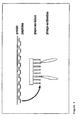
- Phage particles formed from the chimaeric protein can be separated by affinity selection based on the ability of the phage-associated antibody to bind to the target peptide synthesized on rods of a pepscan block.
- the rods on the pepscan block are decorated with individual peptides, the amino acid sequence of which is determined by the amino acid sequence of the target protein. After one or multiple rounds of selection on peptides synthesized on the pepscan block, the phages are selected for binding to the target protein in its native or denatured configuration.
- the target protein may be a purified recombinant protein expressed in eukaryotic or prokaryotic cells, or a recombinant protein expressed on the cell surface of a prokaryotic or eukaryotic cell. Phages binding to the target protein are eluted, propagated and eventually analyzed for binding.
- a subtractive or absorption step may be included to obtain phages that discriminate between two closely related peptides.
- phages that discrimintate between the closely related peptide repre sented by the amino acid sequences DLVYKDPARPKI and DLVYKDPYRPKI may be obtained by affinity selection on the amino acid sequence DLVYKDPARPKI, followed by absorption of phages binding to the amino acid sequence DLVYKDPYRPKI.
- non-discriminative phages recognizing both peptides are removed and not used for propagation.
- Antibodies produced by this method can for example be used to distinguish various naturally occuring isoforms of a protein or for immunochemical assays for detecting cell transformations arising due to mutation of an oncogene or an anti-oncogene.
- absorption and subtraction refer to the removal of phage antibodies with unwanted specificities from a collection of phages obtained after or prior to affinity selection.
- the absorption step itself is an affinity selection step on a target expected not to bear the epitopes of interest.
- the target used for absorption/selection may be tissue sections, cell lines recombinant proteins, peptides etc.
- the synthetic antibody library was constructed essentially as described (de Kruif et al., J. Mol. Biol. 248, 97 (1995)). Briefly, degenerate oligonucleotides were used to add synthetic CDR3 regions to a collection of 49 previously cloned germline VH genes. Subsequently, these in vitro 'rearranged' VH genes were cloned into a collection of pHEN1 phagemid-derived vectors containing 7 different light chain V regions, fused in frame to the gene encoding the phage minor capsid protein geneIII. Introduction of these constructs into bacteria results, in the presence of helper phage, in the expression of scFv antibody fragments as geneIII fusion proteins on the surface of bacteriophage.
- Pepscan synthesis was carried out essentially as described (Geysen, H.M., et al, Proc. Natl. Acad. Sci. USA, 81, 3998 (1984)).
- the extracellular domain of the CD64 molecule was synthesized on 25 polyethylene rods as adjacent, non-overlapping sets of 12-mer peptides, according to the scheme in Table I. Peptide-specific phages were isolated by affinity binding to the CD64 peptide-covered rods.
- the rods were blocked by incubation for two hours at room tempertaure by placing the pepscan block for two hours at roomtemperature in wells of a 96-well microtiter plate containing 300 microliter 1x blocking buffer per well (2x blocking buffer: 10% ovalbumin/10% horse serum/1% Tween 80 in PBS).
- the phages were were mixed 1:1 (v/v) with 2x blocking buffer and incubated for 30 minutes at room temperature. 250 microliter of the blocked phage solution containing approximately 10 12 phages were added per well of a 96 well plate and the 25 rods of the pepscan block were submerged in individual wells and incubated for 3 hours at roomtempera ture.
- Non-specific phage antibodies were then removed by washing the rods 10 times in PBS/0.5% Tween 80 and one final time in PBS. Phage antibodies bound to the rods were then eluted by adding 300 microliter of 0.1M diethylamine buffer to each well of a microtiter plate and incubation for 5 minutes at roomtemperature. After collection of the 300 microliter, the elution step was repeated. To 600 microliter of eluted phages, 300 microliter of 1M Tris buffer pH 7.4 was added for neutralization. The 900 microliter eluted phage suspension was added to 4 ml 2TY containing 5% glucose and 10 microgram/ml tetracycline.
- Blocks used for ELISA or phage selections were cleaned by submerging the pep scan blocks in disruptbuffer (phosphatebuffer/1%SDS/0.1%beta-mercapto-ethanol, pH 7.2) and placing the block in a ultrasonic waterbath at 70°C for 1 hour.
- disruptbuffer phosphatebuffer/1%SDS/0.1%beta-mercapto-ethanol, pH 7.2
- the rods were rinsed twice with PBS/0.05% Tween 80 and incubated for 1 hour at roomtemperature with 150 microliter scFv-containing periplasmic preparations prepared as described in de Kruif et al, J. Biol. Chem. 271, 7630 (1996)) mixed with 150 microliter blocking buffer.
- the rods were washed twice with PBS/0.05% Tween 80 and incubated for 1 hour with 300 microliter culture supernatant of a hybridoma secreting the anti-Myc tag antibody 9E10 (de Kruif, J., et al, J. Biol. Chem. 271, 7630 (1996)).
- Phage populations enriched for binding to peptides on the pepscan block may in the second or subsequent rounds be selected for binding to prokaryotic or eukaryotic cells expressing the target protein employing flow cytometry and cell sorting.
- the procedure for phage selection on intact cells using this procedure has been descibed in detail (de Kruif, J., et al. Proc. Natl. Acad. Sci. USA, 92,3938). Approximately 10 13 phage antibody particles are blocked for 15 minutes in 4 ml 4% milkpowder in PBS (MPBS). 5 * 10 6 target cells were added to the blocked phages and the mixture was slowly rotated overnight at 4°C.
- the cells were incubated in 10 ⁇ l of 1/200 diluted sheep anti-M13 polyclonal antibody (Pharmacia, Uppsala. Sweden), washed twice and incubated in 10 ⁇ l of 20 ⁇ g/ml PE-labeled donkey anti-sheep polyclonal antibody (Jackson Immu noresearch, West Grove, PA), each for 20 minutes on ice.
- Tissue sections from target organs are prepared and fixed by standard methods. For example, tissues may be submerged in OCT embedding medium and gently frozen by dipping in liquid nitrogen for 1 minute. Using a cryostat, 10 micrometer frozen sections are prepared and collected on microscope slides. The sections are dried for 10 minutes at roomtemperature and fixed in 100% acetone for 5 seconds, followed by drying at roomtemperature. Before incubation with the phage library, the tissue sections are sealed with wax to prevent spreading of fluid and blocked by incubation with MPBS for 30 minutes at roomtemperature.
- a total of 10 12 phages from a phage antibody library pre-selected for binding to peptides is blocked with MPBS in a volume of 100 microliter and added to the droplet of MPBS on the slide.
- the tissue sections are incubated overnight in a moist chamber at 40°C to facilitate binding of phage antibodies.
- the sections are rinsed with a total of 2 liter PBS/0.5% Tween 20 for 2 hours at roomtemperature with ten 200 ml changes of PBS/0.5% Tween 20.
- the phage antibodies are eluted by placing 300 microliter 76 mM citric acid buffer (pH 2.5) on the slide and incubation for 5 minutes at roomtemperature.
- Add 150 microliter of 1 M Tris-HCL buffer are added to the slide for neutralization and the suspensi on is brought in 3 ml 2 TY medium in a 15 ml tube.
- 3 ml of XL-1 blue bacteria is added to the tube and infection and production of phages are allowed to proceed as described in the standard protocol.
- Afer 2-3 rounds of selection, monoclonal phage antibodies are prepared for analysis.
- Binding of monoclonal phage antibodies to tissues was determined by immunohistological screening. To this end, 5 ⁇ m frozen tissue sections were collected on gelatin coated microscope slides. Sections were then incubated with 50 microliter phage solutions containing 10 10 phage particles in a moist chamber for 30 min. Non-adherent phages were removed by vigorously rinsing the slides in M-PBS-Tw. Bound MoPhabs were visualized by incubation of the sections with a 1:50 diluted sheep anti-M13 peroxidase conjugate, followed by incubation with the substrate diamino benzidene.
- Monoclonal phage antibodies selected for binding to the CD64 peptides may be pooled and recloned in display vectors permitting the display of bi-specific antibodies such as for example vectors for diabodies (Holliger, P. et al., Proc. Nat. Acad. Sci. USA, 90, 6444 (1993) or leucine zippered bi-specific antibodies (de Kruif, J., et al. J. Biol. Chem. 271, 7630 (1996).
- a phagemid vector was constructed that facilitates the in vivo bacterial expression and assembly of bispecific (scFv)2 fragments as secreted molecules or g3p fusion proteins on the surface of bacteriophages.
- the Fos and Jun scFv leucine zipper constructs we described (de Kruif, J., et al. J. Biol. Chem. 271, 7630 (1996); figure 3, 1 and 2) are PCR amplified using primers M13R and PDIM3 (5'-TTT GCA TTC AAG CTT TTA TTA GCC CGC ATA GTC AGG AAC ATC GTA TGG GTA TGC GGC AGC GCA ACC ACC).
- Primer PDIM3 replaces the Myc tag with a haemagglutinin (HA) tag and adds a stopcodon and a HindIII site to these fragments.
- PCR products are digested with HindIII and cloned into vector pHEN1 (Hoogenboom, H.R., et al., Nucleic Acid Res. 19, 4133 (1991)) containing a scFv gene fused to the complementary leucine zipper and a Myc tag.
- pHEN1 Hoogenboom, H.R., et al., Nucleic Acid Res. 19, 4133 (1991)
- Two ribosome binding sites allow the proteins to be translated individually, the first scFv fragment fused to a Fos zipper domain and an HA tag, the second scFv to a Jun zipper and a Myc tag (Figure 3, 3).
- Figure 3, 3 To determine the effect of the position of the scFv-zippers relative to the g3p protein, an additional construct was made in which the scFv-zipper fragments were reversed ( Figure 3, 4).
- an amber codon inserted between the Myc tag and gene 3 permits the production of phage particles displaying a scFv fragment fused via a zipper region to gene 3.
- the second scFv will associate with the phage in the periplasmic space by heterodimeri zation of the Fos and Jun leucine zippers, thus creating a phage expressing a bispecific antibody on its surface.
- bispecific (scFv) 2 fragments linked by a Fos Jun leucine zipper will be assembled in the periplasmic space.
- bispecific phage particles from construct 4 were spiked in a 1:1000 ratio in an antibody phage display library and subjected to one round of selection in immunotubes coated with either IgG or DNP.
- the frequency of bispecific phages after selection was estimated by PCR on individual colonies using primers M13R and FOSCON (5'-CGC CAG GAT GAA CTC C, situated in the Fos zipper). Frequencies of bispecific phages after selection were 0/32 (spiked library), 9/32 (selected on IgG) and 6/32 (selected on DNP). Calculated enrichment factors ( ⁇ 250x) are comparable to those obtained using monospecific phage antibodies.
- This vector permits the expression of bispecific antibodies that can be functionally expressed on phages using Fos and Jun leucine zippers. It is therefore possible to construct libraries of phages expressing two different scFv fragments and select the desired combinations from these. Furthermore, selected bispecific (scFv)2 fragments can be produced in non-suppressor strains and purified using anti-Myc followed by anti-HA affinity columns.
- bi-specific antibodies For the selection of bi-specific antibodies from phage antibody collections pre-selected for binding to peptides on pepscan blocks, care is taken to restrict the number of selection rounds (usually 2-3) on the rod-bound peptides to ensure enrichment for binders but to prevent loss of diversity by overselection.
- the V gene pools encoding the phage antibodies enriched for binding to the peptides are recloned into the leucine-zipper constructs and bi-specific phage antibodies binding to the target protein are selected by any of the afore-described methods.
- higher affinity bi-specific antibodies are directly isolated by performing phage selection with the aid of surface palsmon resonance (Jonsson, U., et al. Biotechniques, 11: 620 (1991).
- Tissue sections from target organs are prepared and fixed by standard methods. For example, tissues may be embedded in an embedding compound such as OCT and gently frozen by dipping in liquid nitrogen for 1 minute. Using a cryostat, 10 micrometer frozen sections are prepared and collected on microscope slides. The sections are dried for 10 minutes at roomtemperature and fixed in 100% acetone for 5 seconds, followed by drying at roomtemperature.
- an embedding compound such as OCT
- tissues may be fixed by incubation for several hours in 4% freshly prepared paraformaldehyde solution, dehydrated by serial passage through increasing concentrations of ethanol and embedding in paraffin wax. Paraffin blocks are cut into 6-8 micrometer sections. Instead of tissue sections, freshly isolated or cultured cells may be used and subjected to the same procedures.
- the frozen tissue sections are briefly dried at room temperature.
- the parraffin-embedded tissue sections are placed at 60°C for 1 hour and deparaffinized by immersing in three changes of fresh xylene, 4 minutes each, followed by two changes of 100% ethanol, 2 minutes each.
- Tissue sections are rehydrated in solutions of decreasing concentrations of ethanol and finally water, and washed with PBS.
- the tissue sections Before incubation with the phage library, the tissue sections are sealed with wax to prevent spreading of fluid over the object glass, and blocked by incubation with 1% non-fat milkpowder in phosphate buffered saline (MPBS) for 30 minutes at roomtemperature. After the blocking step, a total of 10 13 phages from the synthetic phage antibody display library is blocked with MPBS in a volume of 300 microliter and added to the droplet of MPBS on the slide. The tissue sections are incubated over night in a moist chamber at 40°C to facilitate binding of phage antibodies.
- MPBS phosphate buffered saline
- the sections are rinsed with a total of 2 liter PBS/0.5% Tween 20 for 2 hours at roomtemperature with 10 200 ml changes of PBS/0.5% Tween 20.
- the phage antibodies are eluted by placing 300 microliter 76 mM citric acid buffer (pH 2.5) on the slide and incubation for 5 minutes at roomtemperature.
- 150 microliter of 1 M Tris-HCL buffer is added to the slide for neutrlaization and the suspension is brought in 3 ml 2 TY medium in a 15 ml tube.
- 3 ml of XL-1 blue bacteria are added to the tube and infection and production of phages are allowed to proceed as described in the standard protocol.
- monoclonal phage antibodies are prepared for analysis by immunohistochemistry.
- Binding of monoclonal phage antibodies to tissues was determined by immunohistological screening. To this end, 5 ⁇ m frozen tissue sections were collected on gelatin coated microscope slides. Sections were then incubated with 50 microliter phage solutions containing approximately 10 10 phage particles in a moist chamber for 30 min. Non-adherent phages were removed by vigorously rinsing the slides in MPBS-Tw. Bound phage antibodies were visualized by incubation of the sections with a 1:50 diluted sheep anti-M13 peroxidase conjugate, followed by incubation with diaminobenzidene substrate.
- a collection of phage antibodies selected for binding to a tissue section may be absorbed for unwanted phage antibody specificities.
- a 4% (w/v) MPBS solution is added to the eluate to reach a 1% concentration of non-fat milk.
- the phage solution is subsequently incu bated with a tissue sections of for example another tissue or a different anatomical region of the same tissue.
- Non-binding phages are removed and propagated directly or incubated with another tissue secion for another round of absorption. This absorption procedure may be repeated multiple times before the eventual non-binding phages are propagated in bacteria.
- tissue and binding phages may be scraped from tissue sections using a micromanipulator or similar device, essentially as described (Kupper, R., et al. EMBO-J, 12 4955 (1993)).
- This procedure allows the isolation of phages that bind to particular anatomical structure or individual cells in a tissue section. For example, this procedure allows the isolation of endothelial of bloodves sels penetrating a tumor mass or allow the isolation of individual tumor cells.
- the bound phages are eluted and propagated as described in the basic protocol.
- LacZ promoters triangles
- ribosome binding sites circles
- pelB leaders P
- Pos-zippers F
- Jun-zippers J
- Myc tag M
- H H
- stopcodons arrows
Landscapes
- Health & Medical Sciences (AREA)
- Life Sciences & Earth Sciences (AREA)
- Engineering & Computer Science (AREA)
- Chemical & Material Sciences (AREA)
- Molecular Biology (AREA)
- Immunology (AREA)
- Biomedical Technology (AREA)
- Microbiology (AREA)
- Organic Chemistry (AREA)
- Biochemistry (AREA)
- Hematology (AREA)
- Urology & Nephrology (AREA)
- Biotechnology (AREA)
- Medicinal Chemistry (AREA)
- Physics & Mathematics (AREA)
- General Health & Medical Sciences (AREA)
- Cell Biology (AREA)
- Pathology (AREA)
- General Physics & Mathematics (AREA)
- Food Science & Technology (AREA)
- Analytical Chemistry (AREA)
- Bioinformatics & Cheminformatics (AREA)
- Virology (AREA)
- Genetics & Genomics (AREA)
- General Engineering & Computer Science (AREA)
- Chemical Kinetics & Catalysis (AREA)
- General Chemical & Material Sciences (AREA)
- Zoology (AREA)
- Biophysics (AREA)
- Wood Science & Technology (AREA)
- Mycology (AREA)
- Crystallography & Structural Chemistry (AREA)
- Tropical Medicine & Parasitology (AREA)
- Plant Pathology (AREA)
- Proteomics, Peptides & Aminoacids (AREA)
- Bioinformatics & Computational Biology (AREA)
- Peptides Or Proteins (AREA)
- Micro-Organisms Or Cultivation Processes Thereof (AREA)
- Investigating Or Analysing Biological Materials (AREA)
- Apparatus Associated With Microorganisms And Enzymes (AREA)
Claims (10)
- Procédé pour identifier un peptide capable de liaison spécifique à une cible protéique, consistant à afficher le peptide sur la surface d'un paquet d'affichage réplicable, synthétiser des oligopeptides dérivés de la. cible protéique sur une phase solide et mettre en contact le peptide de liaison spécifique avec l'oligopeptide pour permettre la liaison.
- Procédé pour distinguer entre des peptides capables de liaison spécifique à un antigène protéique et des peptides n'ayant pas cette capacité, consistant à afficher des peptides candidats sur la surface d'un paquet d'affichage réplicable, synthétiser des oligopeptides dérivés de l'antigène protéique sur une phase solide et mettre en contact les peptides candidats avec les oligopeptides pour permettre la liaison et le lavage de la phase solide pour éliminer les paquets d'affichage non liés spécifiquement.
- Procédé selon l'une quelconque des revendications ci-dessus, dans lequel le paquet d'affichage réplicable est une particule de phage.
- Procédé selon l'une quelconque des revendications ci-dessus, dans lequel le paquet d'affichage réplicable est une bactérie, une levure ou un spore d'un micro-organisme.
- Procédé selon la revendication 3, dans lequel le peptide de liaison spécifique est affiché sur la surface du phage par insertion de sa séquence codante dans un gène codant pour une protéine de surface dudit phage.
- Procédé selon l'une quelconque des revendications précédentes, dans lequel le peptide affiché est une chaíne lourde d'immunoglobulines, une chaíne légère d'immunoglobulines, une paire de chaínes lourde-légère, un VH, un VL, un Fab, un Fv, un scFv ou un Fv à pont disulfure.
- Procédé selon l'une quelconque des revendications précédentes, dans lequel le peptide de liaison spécifique est un fragment d'anticorps à chaíne unique, de préférence, un scFv.
- Procédé selon l'une quelconque des revendications précédentes, comprenant de plus une étape dans laquelle les peptides affichés sont mis en contact avec un échantillon ne contenant pas la cible d'intérêt.
- Procédé pour cribler une banque de paquets d'affichages réplicables pour des peptides capables de liaison spécifique à une cible protéique ou à une cible biologique fixée consistant à soumettre les peptides dans la banque à un procédé selon l'une quelconque des revendications ci-dessus.
- Procédé selon la revendication 9, dans lequel ladite banque est une banque d'affichage de phages.
Priority Applications (1)
| Application Number | Priority Date | Filing Date | Title |
|---|---|---|---|
| EP97943221A EP0934526B1 (fr) | 1996-10-08 | 1997-10-07 | Procedes et systemes permettant de selectionner des peptides et des proteines qui possedent une affinite specifique envers une cible |
Applications Claiming Priority (4)
| Application Number | Priority Date | Filing Date | Title |
|---|---|---|---|
| EP96202791 | 1996-10-08 | ||
| EP96202791 | 1996-10-08 | ||
| EP97943221A EP0934526B1 (fr) | 1996-10-08 | 1997-10-07 | Procedes et systemes permettant de selectionner des peptides et des proteines qui possedent une affinite specifique envers une cible |
| PCT/NL1997/000557 WO1998015833A1 (fr) | 1996-10-08 | 1997-10-07 | Procedes et systemes permettant de selectionner des peptides et des proteines qui possedent une affinite specifique envers une cible |
Publications (2)
| Publication Number | Publication Date |
|---|---|
| EP0934526A1 EP0934526A1 (fr) | 1999-08-11 |
| EP0934526B1 true EP0934526B1 (fr) | 2003-01-08 |
Family
ID=8224468
Family Applications (1)
| Application Number | Title | Priority Date | Filing Date |
|---|---|---|---|
| EP97943221A Expired - Lifetime EP0934526B1 (fr) | 1996-10-08 | 1997-10-07 | Procedes et systemes permettant de selectionner des peptides et des proteines qui possedent une affinite specifique envers une cible |
Country Status (9)
| Country | Link |
|---|---|
| EP (1) | EP0934526B1 (fr) |
| JP (1) | JP2001512560A (fr) |
| AT (1) | ATE230850T1 (fr) |
| AU (1) | AU4474497A (fr) |
| CA (1) | CA2267139A1 (fr) |
| DE (1) | DE69718341T2 (fr) |
| DK (1) | DK0934526T3 (fr) |
| ES (1) | ES2190543T3 (fr) |
| WO (1) | WO1998015833A1 (fr) |
Cited By (2)
| Publication number | Priority date | Publication date | Assignee | Title |
|---|---|---|---|---|
| US7569357B2 (en) | 1998-01-20 | 2009-08-04 | Board Of Trustees Of The University Of Illinois | High affinity TCR proteins and methods |
| US8921281B2 (en) | 2009-05-20 | 2014-12-30 | Novimmune S.A. | Synthetic polypeptide libraries and methods for generating naturally diversified polypeptide variants |
Families Citing this family (123)
| Publication number | Priority date | Publication date | Assignee | Title |
|---|---|---|---|---|
| CA2405246A1 (fr) * | 1990-12-03 | 1992-06-11 | Genentech, Inc. | Methode d'enrichissement de proteines variantes aux proprietes liantes a lterees |
| US6696251B1 (en) | 1996-05-31 | 2004-02-24 | Board Of Trustees Of The University Of Illinois | Yeast cell surface display of proteins and uses thereof |
| EP1046036A4 (fr) * | 1997-07-29 | 2003-08-27 | James S Huston | Procedes d'obtention de sondes de fonction de peptides |
| DE19802576B4 (de) * | 1998-01-23 | 2004-10-28 | Xerion Pharmaceuticals Ag | Verfahren zur gleichzeitigen Identifizierung von Proteinen und ihren Bindungspartnern |
| IL140918A0 (en) | 1998-07-27 | 2002-02-10 | Genentech Inc | Improved transformation efficiency in phage display through modification of a coat protein |
| US7488590B2 (en) | 1998-10-23 | 2009-02-10 | Amgen Inc. | Modified peptides as therapeutic agents |
| US6660843B1 (en) | 1998-10-23 | 2003-12-09 | Amgen Inc. | Modified peptides as therapeutic agents |
| WO2000052054A2 (fr) | 1999-03-01 | 2000-09-08 | Genentech, Inc. | Anticorps destines au traitement et au diagnostic du cancer |
| EP1169473B1 (fr) | 1999-04-14 | 2006-11-22 | THE GOVERNMENT OF THE UNITED STATES OF AMERICA, as represented by THE SECRETARY, DEPARTMENT OF HEALTH AND HUMAN SERVICES | Expression de phages permettant la detection de biomolecules avec une sensibilite elevee |
| JP2002544522A (ja) * | 1999-05-14 | 2002-12-24 | マクギル ユニバーシティー | タンパク質間相互作用並びに相互作用するタンパク質および相互作用部位のアミノ酸配列を同定する方法 |
| EP1684077A1 (fr) * | 1999-05-14 | 2006-07-26 | McGill University | Procédé d'identification de modulateurs de protéines interagissantes |
| CA2395715A1 (fr) * | 1999-12-27 | 2001-07-05 | Atsushi Sato | Peptide du type cytokine |
| DE60038132T2 (de) * | 1999-12-27 | 2009-04-02 | Crucell Holland B.V. | Antikörper gegen Ep-Cam |
| DE10009341A1 (de) * | 2000-02-22 | 2001-09-06 | Florian Kern | Verfahren zur antigen-spezifischen Stimulation von T-Lymphozyten |
| SE0000597D0 (sv) * | 2000-02-24 | 2000-02-24 | Active Biotech Ab | Novel antibody |
| EP1130099A1 (fr) * | 2000-02-25 | 2001-09-05 | Crucell Holland B.V. | Vitronectine activée comme marqueur d'angiogénèse détectée par des anticorps d'origine de phages |
| WO2001062930A1 (fr) * | 2000-02-25 | 2001-08-30 | Crucell Holland B.V. | Vitronectine activee utilisee comme traceur de l'angiogenese detectee avec des anticorps bacteriophages |
| CN101289511A (zh) | 2000-04-11 | 2008-10-22 | 杰南技术公司 | 多价抗体及其应用 |
| AU2001257173B2 (en) | 2000-04-21 | 2005-09-22 | Amgen Inc. | Apo-ai/aii peptide derivatives |
| US6677136B2 (en) | 2000-05-03 | 2004-01-13 | Amgen Inc. | Glucagon antagonists |
| EP1174440A1 (fr) * | 2000-07-19 | 2002-01-23 | U-BISys B.V. | Un épitope exprimé sélectivement sur la molécule humaine CD38 et détecté par un fragment d'un anticorps humain de forme scFv dérivé d'une librairie "phage display" |
| PT1303293E (pt) | 2000-07-27 | 2009-03-11 | Genentech Inc | Administração sequencial de cpt-11 e polipéptido apo-2l |
| FR2821856B1 (fr) * | 2001-03-09 | 2003-12-26 | Didier Elmlinger | Procede de criblage croise d'une banque d'expression d'adn et d'une banque de molecules cibles isolees sur un support permettant la comparaison simultanee de l'affinite et la selectivite de leurs interactions |
| ATE549354T1 (de) | 2001-05-11 | 2012-03-15 | Amgen Inc | Peptide und damit zusammenhängende an tall-1 bindende moleküle |
| US20070160576A1 (en) | 2001-06-05 | 2007-07-12 | Genentech, Inc. | IL-17A/F heterologous polypeptides and therapeutic uses thereof |
| CA2633171C (fr) | 2001-06-20 | 2012-11-20 | Genentech, Inc. | Compositions et procedes destines au diagnostic et au traitement de tumeurs |
| AU2002319613A1 (en) * | 2001-07-19 | 2003-03-03 | Signet Laboratories, Inc. | Human tissue specific drug screening procedure |
| EP1487877B1 (fr) | 2001-09-18 | 2010-10-27 | Genentech, Inc. | Compositions et procedes pour le diagnostic de tumeurs |
| US7332474B2 (en) | 2001-10-11 | 2008-02-19 | Amgen Inc. | Peptides and related compounds having thrombopoietic activity |
| US7138370B2 (en) | 2001-10-11 | 2006-11-21 | Amgen Inc. | Specific binding agents of human angiopoietin-2 |
| WO2003088808A2 (fr) | 2002-04-16 | 2003-10-30 | Genentech, Inc. | Compositions et methodes permettant de diagnostiquer et de traiter une tumeur |
| NZ533933A (en) | 2002-01-02 | 2008-06-30 | Genentech Inc | Compositions and methods for the diagnosis and treatment of glioma tumor |
| EP1513879B1 (fr) | 2002-06-03 | 2018-08-22 | Genentech, Inc. | Bibliotheques de phages et anticorps synthetiques |
| CA2489004C (fr) | 2002-06-13 | 2013-01-08 | Crucell Holland B.V. | Molecules de liaison agonistes capables de se lier au recepteur ox40 humain |
| NZ537277A (en) | 2002-07-18 | 2008-04-30 | Crucell Holland Bv | Recombinant production of mixtures of antibodies |
| USRE47770E1 (en) | 2002-07-18 | 2019-12-17 | Merus N.V. | Recombinant production of mixtures of antibodies |
| US6919426B2 (en) | 2002-09-19 | 2005-07-19 | Amgen Inc. | Peptides and related molecules that modulate nerve growth factor activity |
| WO2004045532A2 (fr) | 2002-11-15 | 2004-06-03 | Chiron Corporation | Procedes de prevention et de traitement de metastase cancereuse et de perte osseuse liee a la metastase cancereuse |
| ES2408582T3 (es) | 2003-05-30 | 2013-06-21 | Merus B.V. | Biblioteca de Fab para la preparación de una mezcla de anticuerpos |
| US20100069614A1 (en) | 2008-06-27 | 2010-03-18 | Merus B.V. | Antibody producing non-human mammals |
| NZ543635A (en) | 2003-06-25 | 2008-05-30 | Crucell Holland Bv | Human C-type lectin: a suitable target molecule for binding molecules, particularly immunoconjugates, in the diagnosis, prevention and/or treatment of myeloid neoplastic diseases such as AML and CML |
| PL2784084T5 (pl) | 2003-07-08 | 2024-12-02 | Novartis Pharma Ag | Przeciwciała antagonistyczne heterologicznych polipeptydów il-17a/f |
| SI2295073T1 (sl) | 2003-11-17 | 2014-07-31 | Genentech, Inc. | Protitelo proti CD22 za zdravljenje tumorja hematopoetskega izvora |
| DK1737971T3 (da) | 2004-01-20 | 2017-11-13 | Merus Nv | Blandinger af bindingsproteiner |
| US7785903B2 (en) | 2004-04-09 | 2010-08-31 | Genentech, Inc. | Variable domain library and uses |
| AU2011218688B2 (en) * | 2004-05-27 | 2013-01-10 | Crucell Holland B.V. | Binding molecules capable of neutralizing rabies virus and uses thereof |
| CN1961002B (zh) | 2004-05-27 | 2011-05-18 | 克鲁塞尔荷兰公司 | 能中和狂犬病病毒的结合分子及其应用 |
| WO2006010057A2 (fr) | 2004-07-08 | 2006-01-26 | Amgen Inc. | Peptides therapeutiques |
| HUE024953T2 (en) | 2004-08-23 | 2016-02-29 | Yeda Res & Dev | Peptide inhibitors to mediate stress responses |
| EA011879B1 (ru) | 2004-09-24 | 2009-06-30 | Эмджин Инк. | МОЛЕКУЛЫ С МОДИФИЦИРОВАННЫМ Fc ФРАГМЕНТОМ |
| WO2006040322A1 (fr) | 2004-10-12 | 2006-04-20 | Crucell Holland B.V. | Molecules de liaison destinees au traitement et a la detection du cancer |
| EP1812067B1 (fr) | 2004-11-11 | 2012-03-21 | Crucell Holland B.V. | Compositions contre le coronavirus du sras et utilisations de ces compositions |
| US8022040B2 (en) | 2004-11-29 | 2011-09-20 | The Regents Of The University Of California | Hydroxyapatite-binding peptides for bone growth and inhibition |
| CA2591665C (fr) | 2004-12-20 | 2015-05-05 | Crucell Holland B.V. | Molecules de liaison capables de neutraliser le virus du nil occidental et utilisations correspondantes |
| EP1869076A2 (fr) | 2005-03-10 | 2007-12-26 | Genentech, Inc. | Procedes et compositions de modulation de l'integrite vasculaire |
| AU2006245734C1 (en) | 2005-05-12 | 2012-05-24 | Crucell Holland B.V. | Host cell specific binding molecules capable of neutralizing viruses and uses thereof |
| US8008453B2 (en) | 2005-08-12 | 2011-08-30 | Amgen Inc. | Modified Fc molecules |
| US8642513B2 (en) | 2005-09-15 | 2014-02-04 | Crucell Holland B.V. | Method for preparing immunoglobulin libraries |
| EA015860B1 (ru) | 2005-10-13 | 2011-12-30 | Хьюман Дженом Сайенсиз, Инк. | Способы лечения аутоиммунных заболеваний при использовании антагониста нейтрокина-альфа |
| PL2005185T3 (pl) | 2006-03-22 | 2011-05-31 | Viral Logic Systems Tech Corp | Sposoby identyfikowania celów polipeptydowych |
| US8129334B2 (en) | 2006-03-31 | 2012-03-06 | The Regents Of The University Of California | Methods and compositions for treating neurodegenerative disorders and Alzheimer'S disease and improving normal memory |
| WO2007126455A2 (fr) | 2006-04-05 | 2007-11-08 | Genentech, Inc. | Méthode d'utilisation du boc/cdo pour moduler l'émission des signaux du hedgehog |
| US9283260B2 (en) | 2006-04-21 | 2016-03-15 | Amgen Inc. | Lyophilized therapeutic peptibody formulations |
| US8377448B2 (en) | 2006-05-15 | 2013-02-19 | The Board Of Trustees Of The Leland Standford Junior University | CD47 related compositions and methods for treating immunological diseases and disorders |
| US7960518B2 (en) | 2006-06-06 | 2011-06-14 | Crucell Holland B.V. | Human binding molecules having killing activity against enterococci and uses thereof |
| WO2007141274A2 (fr) | 2006-06-06 | 2007-12-13 | Crucell Holland B.V. | Molécules de liaison humaines présentant une activité bactéricide contre les staphylocoques et leurs utilisations |
| US7981425B2 (en) | 2006-06-19 | 2011-07-19 | Amgen Inc. | Thrombopoietic compounds |
| EP2520935A3 (fr) | 2006-08-09 | 2013-02-13 | Homestead Clinical Corporation | Protéines spécifiques d'organes et leurs procédés d'utilisation |
| NZ574581A (en) | 2006-09-07 | 2012-02-24 | Crucell Holland Bv | Human binding molecules capable of neutralizing influenza virus h5n1 and uses thereof |
| JP5161882B2 (ja) | 2006-09-07 | 2013-03-13 | クルセル ホランド ベー ヴェー | インフルエンザウイルスh5n1を中和しうるヒト結合性分子およびその使用 |
| WO2008032833A1 (fr) | 2006-09-14 | 2008-03-20 | Medical & Biological Laboratories Co., Ltd. | Anticorps présentant une activité adcc accrue et son procédé de production |
| CN101557799B (zh) | 2006-12-05 | 2012-08-22 | 克鲁塞尔荷兰公司 | 液体抗狂犬病抗体制剂 |
| CA2676790A1 (fr) | 2007-02-22 | 2008-08-28 | Genentech, Inc. | Methode de detection d'une maladie intestinale inflammatoire |
| WO2008118476A2 (fr) | 2007-03-26 | 2008-10-02 | Codon Devices, Inc. | Affichage de surface d'une cellule, criblage et production de protéines d'intérêt |
| ES2500066T3 (es) | 2008-01-25 | 2014-09-30 | Amgen, Inc | Anticuerpos frente a ferroportina y métodos de uso |
| CA2722600C (fr) | 2008-05-01 | 2014-01-21 | Amgen Inc. | Anticorps anti-hepcidine et methodes d'utilisation associees |
| WO2009154025A1 (fr) | 2008-06-20 | 2009-12-23 | 国立大学法人岡山大学 | ANTICORPS CONTRE UN COMPLEXE LDL/β2GPI OXYDÉ ET SON UTILISATION |
| EP2307456B1 (fr) | 2008-06-27 | 2014-10-15 | Amgen Inc. | Inhibition de l ang-2 pour traiter la sclérose en plaques |
| US9182406B2 (en) | 2008-08-04 | 2015-11-10 | Biodesy, Inc. | Nonlinear optical detection of molecules comprising an unnatural amino acid possessing a hyperpolarizability |
| AU2010247530B2 (en) | 2009-05-11 | 2016-10-13 | Janssen Vaccines & Prevention B.V. | Human binding molecules capable of neutralizing influenza virus H3N2 and uses thereof |
| US8697386B2 (en) | 2009-10-22 | 2014-04-15 | Genentech, Inc. | Methods and compositions for modulating hepsin activation of macrophage-stimulating protein |
| BR112012012750A2 (pt) | 2009-11-30 | 2020-08-11 | Genentech Inc | anticorpo isolado, célula, ácido nucleíco isolado e método |
| TWI429453B (zh) | 2010-02-23 | 2014-03-11 | 建南德克公司 | 抗tat419抗體及其用途 |
| MX342239B (es) | 2010-05-03 | 2016-09-21 | Genentech Inc * | Composiciones y metodos para el diagnostico y tratamiento de tumores. |
| US20120100166A1 (en) | 2010-07-15 | 2012-04-26 | Zyngenia, Inc. | Ang-2 Binding Complexes and Uses Thereof |
| CA2827170A1 (fr) | 2011-02-11 | 2012-08-16 | David M. Hilbert | Complexes plurispecifiques monovalents et multivalents et leurs utilisations |
| US9428789B2 (en) | 2011-03-21 | 2016-08-30 | Biodesy, Inc. | Classification of kinase inhibitors using nonlinear optical techniques |
| EP2715350B1 (fr) | 2011-05-23 | 2017-09-27 | Yeda Research and Development Co. Ltd. | Utilisation de la phosphorylation d'akt en tant que biomarqueur pour le pronostic et le traitement de maladies neurodégénératives |
| EP2714738B1 (fr) | 2011-05-24 | 2018-10-10 | Zyngenia, Inc. | Complexes plurispécifiques multivalents et monovalents, et leurs utilisations |
| DK2731967T3 (en) | 2011-07-14 | 2017-01-16 | Janssen Vaccines & Prevention Bv | HUMAN BINDING MOLECULES CAPABLE OF NEUTRALIZING INFLUENZA A VIRUS FROM PHYLOGENETIC GROUP 1 AND PHYLOGENETIC GROUP 2 AND INFLUENZA B VIRUS |
| JP2014533927A (ja) | 2011-09-15 | 2014-12-18 | ジェネンテック, インコーポレイテッド | 分化を促進する方法 |
| WO2013056148A2 (fr) | 2011-10-15 | 2013-04-18 | Genentech, Inc. | Procédés d'utilisation d'antagonistes de scd1 |
| PT2794626T (pt) | 2011-12-22 | 2018-01-12 | Glycomimetics Inc | Compostos de antagonistas de e-selectina |
| US20130183294A1 (en) | 2012-01-18 | 2013-07-18 | Genentech, Inc. | Methods of using fgf19 modulators |
| KR102148303B1 (ko) | 2012-02-11 | 2020-08-26 | 제넨테크, 인크. | R-스폰딘 전위 및 그의 사용 방법 |
| JP6198807B2 (ja) | 2012-03-16 | 2017-09-20 | ジェネンテック, インコーポレイテッド | 操作され立体構造的に安定化されたタンパク質 |
| KR20140135198A (ko) | 2012-03-16 | 2014-11-25 | 에프. 호프만-라 로슈 아게 | Pak1 억제제로 흑색종을 치료하는 방법 |
| US9139863B2 (en) | 2012-03-16 | 2015-09-22 | Genentech, Inc. | Engineered conformationally-stabilized proteins |
| SI2838917T1 (sl) | 2012-04-20 | 2019-11-29 | Merus Nv | Postopki in sredstva za produkcijo heterodimernih IG-podobnih molekul |
| GB2517857A (en) | 2012-04-25 | 2015-03-04 | Biodesy Inc | Methods for detecting allosteric modulators of proteins |
| WO2013170191A1 (fr) | 2012-05-11 | 2013-11-14 | Genentech, Inc. | Procédés d'utilisation d'antagonistes de biosynthèse de nicotinamide adénine dinucléotide à partir de nicotinamide |
| CA2891514C (fr) | 2012-12-07 | 2020-08-25 | Glycomimetics, Inc. | Composes, compositions et procedes utilisant des antagonistes d'e-selectine pour la mobilisation de cellules hematopoietiques |
| US9458246B2 (en) | 2013-03-13 | 2016-10-04 | Amgen Inc. | Proteins specific for BAFF and B7RP1 |
| PH12022550138A1 (en) | 2013-03-13 | 2023-03-06 | Amgen Inc | Proteins specific for baff and b7rp1 and uses thereof |
| WO2014139130A1 (fr) | 2013-03-14 | 2014-09-18 | Adagene Inc. | Système intégré pour construction d'une bibliothèque, criblage de lieur par affinité et expression associée |
| BR112015023752B1 (pt) | 2013-03-15 | 2023-11-14 | Zyngenia, Inc. | Domínio de reconhecimento modular (mrd), complexo compreendendo mrd e cetuximabe, usos do complexo para inibir a angiogênese e tratar câncer e composição farmacêutica compreendendo o dito complexo |
| KR102389677B1 (ko) | 2013-03-15 | 2022-04-21 | 제넨테크, 인크. | Pd-1 및 pd-l1 관련 상태를 치료하기 위한 바이오마커 및 방법 |
| AU2015211021B2 (en) | 2014-01-28 | 2020-07-02 | Buck Institute For Research On Aging | Methods and compositions for killing senescent cells and for treating senescence-associated diseases and disorders |
| WO2015116902A1 (fr) | 2014-01-31 | 2015-08-06 | Genentech, Inc. | Récepteurs couplés aux protéines g dans la signalisation hedgehog |
| KR20170005016A (ko) | 2014-05-23 | 2017-01-11 | 제넨테크, 인크. | MiT 바이오마커 및 그의 사용 방법 |
| US10562946B2 (en) | 2014-06-20 | 2020-02-18 | Genentech, Inc. | Chagasin-based scaffold compositions, methods, and uses |
| EP3237906B8 (fr) | 2014-12-23 | 2020-10-28 | Bluelight Therapeutics, Inc. | Fixation de protéines à des interfaces destinées à être utilisées en détection optique non linéaire |
| RS61907B1 (sr) | 2015-04-06 | 2021-06-30 | Subdomain Llc | Polipeptidi koji sadrže de novo vezujući domen i njihova primena |
| AU2016252773B2 (en) | 2015-04-24 | 2022-06-02 | Genentech, Inc. | Multispecific antigen-binding proteins |
| EP3509616A1 (fr) | 2016-09-09 | 2019-07-17 | H. Hoffnabb-La Roche Ag | Inhibiteurs peptidiques sélectifs de frizzled |
| WO2018152496A1 (fr) | 2017-02-17 | 2018-08-23 | The Usa, As Represented By The Secretary, Dept. Of Health And Human Services | Compositions et méthodes de diagnostic et de traitement de l'infection par le virus zika |
| EP4230649A3 (fr) | 2017-04-25 | 2023-10-25 | The U.S.A. As Represented By The Secretary, Department Of Health And Human Services | Anticorps et procédés de diagnostic et de traitement d'infection par le virus d'epstein barr |
| US11827669B2 (en) | 2017-07-19 | 2023-11-28 | The Usa, As Represented By The Secretary, Dept. Of Health And Human Services | Antibodies and methods for the diagnosis and treatment of hepatitis b virus infection |
| BR112021010715A2 (pt) | 2018-12-20 | 2021-11-16 | Ksq Therapeutics Inc | Pirazolopirimidinas substituídas e purinas substituídas e seu uso como inibidores de protease de processamento ubiquitina-específica 1 (usp1) |
| AR122263A1 (es) | 2019-05-09 | 2022-08-31 | Genentech Inc | Métodos para producir anticuerpos |
| KR20230098186A (ko) | 2020-10-30 | 2023-07-03 | 케이에스큐 세러퓨틱스 인코포레이티드 | 치환된 피라졸로피리미딘의 고체 상태 형태 및 이의 용도 |
| WO2023066881A1 (fr) | 2021-10-18 | 2023-04-27 | Astrazeneca Ab | Inhibition de map3k15 pour le traitement et la prévention du diabète |
| KR20260011157A (ko) | 2023-05-12 | 2026-01-22 | 제넨테크, 인크. | 항체 점도를 낮추는 방법 및 조성물 |
Family Cites Families (4)
| Publication number | Priority date | Publication date | Assignee | Title |
|---|---|---|---|---|
| AU662503B2 (en) * | 1990-11-07 | 1995-09-07 | Abbott Laboratories | Monoclonal antibodies to hepatitis C virus and method for using same |
| EP0575485A1 (fr) * | 1991-03-01 | 1993-12-29 | Dyax Corp. | Procede de developpement de mini-proteines de liaison |
| EP0733070A1 (fr) * | 1993-12-08 | 1996-09-25 | Genzyme Corporation | Procede de generation d'anticorps specifiques |
| SE9401650D0 (sv) * | 1994-05-11 | 1994-05-11 | Lars Frykberg | Nytt sätt att identifiera peptider samt hjälpmedel som kan användas vid sättet |
-
1997
- 1997-10-07 EP EP97943221A patent/EP0934526B1/fr not_active Expired - Lifetime
- 1997-10-07 CA CA002267139A patent/CA2267139A1/fr not_active Abandoned
- 1997-10-07 JP JP51741298A patent/JP2001512560A/ja active Pending
- 1997-10-07 AT AT97943221T patent/ATE230850T1/de not_active IP Right Cessation
- 1997-10-07 DE DE69718341T patent/DE69718341T2/de not_active Expired - Fee Related
- 1997-10-07 ES ES97943221T patent/ES2190543T3/es not_active Expired - Lifetime
- 1997-10-07 AU AU44744/97A patent/AU4474497A/en not_active Abandoned
- 1997-10-07 DK DK97943221T patent/DK0934526T3/da active
- 1997-10-07 WO PCT/NL1997/000557 patent/WO1998015833A1/fr not_active Ceased
Cited By (2)
| Publication number | Priority date | Publication date | Assignee | Title |
|---|---|---|---|---|
| US7569357B2 (en) | 1998-01-20 | 2009-08-04 | Board Of Trustees Of The University Of Illinois | High affinity TCR proteins and methods |
| US8921281B2 (en) | 2009-05-20 | 2014-12-30 | Novimmune S.A. | Synthetic polypeptide libraries and methods for generating naturally diversified polypeptide variants |
Also Published As
| Publication number | Publication date |
|---|---|
| AU4474497A (en) | 1998-05-05 |
| ES2190543T3 (es) | 2003-08-01 |
| EP0934526A1 (fr) | 1999-08-11 |
| DE69718341D1 (de) | 2003-02-13 |
| ATE230850T1 (de) | 2003-01-15 |
| JP2001512560A (ja) | 2001-08-21 |
| WO1998015833A1 (fr) | 1998-04-16 |
| CA2267139A1 (fr) | 1998-04-16 |
| DK0934526T3 (da) | 2003-05-05 |
| DE69718341T2 (de) | 2003-10-30 |
Similar Documents
| Publication | Publication Date | Title |
|---|---|---|
| EP0934526B1 (fr) | Procedes et systemes permettant de selectionner des peptides et des proteines qui possedent une affinite specifique envers une cible | |
| Vincke et al. | Generation of single domain antibody fragments derived from camelids and generation of manifold constructs | |
| EP2067788B1 (fr) | Bibliothèque des fragments Fab et méthodes d'utilisation | |
| US20030040605A1 (en) | Rh(D)-binding proteins and magnetically activated cell sorting method for production thereof | |
| US7723269B2 (en) | Process for selecting anti-angiogenesis antibody fragments, anti-angiogenesis antibody fragments thus obtained and their use | |
| JP2003536048A (ja) | タンパク質の単離および分析 | |
| RU2402777C2 (ru) | Способ скрининга библиотеки фагового дисплея | |
| JP4101298B2 (ja) | タンパク質の製造のための磁気活性化細胞の分類 | |
| US20080286274A1 (en) | Vector for Efficient Selection and/or Maturation of an Antibody and Uses Thereof | |
| JPWO2001096401A1 (ja) | 蛍光タンパク質を融合したscFv抗体の作製方法 | |
| Mersmann et al. | Monitoring of scFv selected by phage display using detection of scFv–pIII fusion proteins in a microtiter scale assay | |
| RU2268068C2 (ru) | Новое антитело со специфичностью к злокачественной опухоли толстой кишки | |
| Neri et al. | Antibodies from phage display libraries as immunochemical reagents | |
| AU773394B2 (en) | Methods and means for selecting peptides and proteins having specific affinity for a target | |
| AU2004200792A1 (en) | Methods and means for selecting peptides and having specific affinity for a target | |
| Spillner et al. | Paratope-based protein identification by antibody and peptide phage display | |
| Ravn et al. | Identification of phage antibodies toward the Werner protein by selection on Western blots | |
| US20040214242A1 (en) | Method for the isolation of large variances of specific molecules for a target molecule from phagemid gene libraries, and a test kit | |
| JP4729043B2 (ja) | 抗体ライブラリーをスクリーニングする方法 | |
| JP2000502896A (ja) | 病気の状態に対する治療標的およびその中和抗体様分子の同時検出法 | |
| Meulemans et al. | Phage displayed antibodies specific for a cytoskeletal antigen. Selection by competitive elution with a monoclonal antibody | |
| Figini et al. | Isolation of human monoclonal antibodies using guided selection with mouse monoclonal antibodies | |
| AU781486B2 (en) | Method for identifying substances which mimic mammal epitopes | |
| WO2005027847A2 (fr) | Anticorps destines a lutter contre le sras | |
| Küttner et al. | A phage library-derived single-chain Fv fragment in complex with turkey egg-white lysozyme: characterization, crystallization and preliminary X-ray analysis |
Legal Events
| Date | Code | Title | Description |
|---|---|---|---|
| PUAI | Public reference made under article 153(3) epc to a published international application that has entered the european phase |
Free format text: ORIGINAL CODE: 0009012 |
|
| 17P | Request for examination filed |
Effective date: 19990507 |
|
| AK | Designated contracting states |
Kind code of ref document: A1 Designated state(s): AT BE CH DE DK ES FI FR GB GR IE IT LI LU MC NL PT SE |
|
| AX | Request for extension of the european patent |
Free format text: AL PAYMENT 19990507;LT PAYMENT 19990507;LV PAYMENT 19990507;RO PAYMENT 19990507;SI PAYMENT 19990507 |
|
| RAP1 | Party data changed (applicant data changed or rights of an application transferred) |
Owner name: U-BISYS B.V. |
|
| 17Q | First examination report despatched |
Effective date: 20000825 |
|
| GRAG | Despatch of communication of intention to grant |
Free format text: ORIGINAL CODE: EPIDOS AGRA |
|
| GRAG | Despatch of communication of intention to grant |
Free format text: ORIGINAL CODE: EPIDOS AGRA |
|
| GRAG | Despatch of communication of intention to grant |
Free format text: ORIGINAL CODE: EPIDOS AGRA |
|
| GRAH | Despatch of communication of intention to grant a patent |
Free format text: ORIGINAL CODE: EPIDOS IGRA |
|
| GRAH | Despatch of communication of intention to grant a patent |
Free format text: ORIGINAL CODE: EPIDOS IGRA |
|
| GRAA | (expected) grant |
Free format text: ORIGINAL CODE: 0009210 |
|
| AK | Designated contracting states |
Kind code of ref document: B1 Designated state(s): AT BE CH DE DK ES FI FR GB GR IE IT LI LU MC NL PT SE |
|
| AX | Request for extension of the european patent |
Free format text: AL PAYMENT 19990507;LT PAYMENT 19990507;LV PAYMENT 19990507;RO PAYMENT 19990507;SI PAYMENT 19990507 |
|
| REF | Corresponds to: |
Ref document number: 230850 Country of ref document: AT Date of ref document: 20030115 Kind code of ref document: T |
|
| REG | Reference to a national code |
Ref country code: GB Ref legal event code: FG4D |
|
| REG | Reference to a national code |
Ref country code: CH Ref legal event code: EP |
|
| REG | Reference to a national code |
Ref country code: IE Ref legal event code: FG4D |
|
| REF | Corresponds to: |
Ref document number: 69718341 Country of ref document: DE Date of ref document: 20030213 Kind code of ref document: P |
|
| REG | Reference to a national code |
Ref country code: SE Ref legal event code: TRGR |
|
| REG | Reference to a national code |
Ref country code: CH Ref legal event code: NV Representative=s name: BOVARD AG PATENTANWAELTE |
|
| REG | Reference to a national code |
Ref country code: DK Ref legal event code: T3 |
|
| REG | Reference to a national code |
Ref country code: GR Ref legal event code: EP Ref document number: 20030401321 Country of ref document: GR |
|
| LTIE | Lt: invalidation of european patent or patent extension |
Effective date: 20030108 |
|
| ET | Fr: translation filed | ||
| REG | Reference to a national code |
Ref country code: ES Ref legal event code: FG2A Ref document number: 2190543 Country of ref document: ES Kind code of ref document: T3 |
|
| PLBE | No opposition filed within time limit |
Free format text: ORIGINAL CODE: 0009261 |
|
| STAA | Information on the status of an ep patent application or granted ep patent |
Free format text: STATUS: NO OPPOSITION FILED WITHIN TIME LIMIT |
|
| 26N | No opposition filed |
Effective date: 20031009 |
|
| PGFP | Annual fee paid to national office [announced via postgrant information from national office to epo] |
Ref country code: MC Payment date: 20060920 Year of fee payment: 10 Ref country code: AT Payment date: 20060920 Year of fee payment: 10 |
|
| PGFP | Annual fee paid to national office [announced via postgrant information from national office to epo] |
Ref country code: PT Payment date: 20060921 Year of fee payment: 10 |
|
| PGFP | Annual fee paid to national office [announced via postgrant information from national office to epo] |
Ref country code: NL Payment date: 20061024 Year of fee payment: 10 |
|
| PGFP | Annual fee paid to national office [announced via postgrant information from national office to epo] |
Ref country code: GB Payment date: 20061025 Year of fee payment: 10 |
|
| PGFP | Annual fee paid to national office [announced via postgrant information from national office to epo] |
Ref country code: ES Payment date: 20061026 Year of fee payment: 10 Ref country code: IE Payment date: 20061026 Year of fee payment: 10 |
|
| PGFP | Annual fee paid to national office [announced via postgrant information from national office to epo] |
Ref country code: SE Payment date: 20061027 Year of fee payment: 10 Ref country code: CH Payment date: 20061027 Year of fee payment: 10 |
|
| PGFP | Annual fee paid to national office [announced via postgrant information from national office to epo] |
Ref country code: FI Payment date: 20061030 Year of fee payment: 10 Ref country code: DK Payment date: 20061030 Year of fee payment: 10 Ref country code: GR Payment date: 20061030 Year of fee payment: 10 |
|
| PGFP | Annual fee paid to national office [announced via postgrant information from national office to epo] |
Ref country code: IT Payment date: 20061031 Year of fee payment: 10 |
|
| PGFP | Annual fee paid to national office [announced via postgrant information from national office to epo] |
Ref country code: LU Payment date: 20061107 Year of fee payment: 10 |
|
| PGFP | Annual fee paid to national office [announced via postgrant information from national office to epo] |
Ref country code: BE Payment date: 20061124 Year of fee payment: 10 |
|
| PGFP | Annual fee paid to national office [announced via postgrant information from national office to epo] |
Ref country code: DE Payment date: 20061130 Year of fee payment: 10 |
|
| REG | Reference to a national code |
Ref country code: PT Ref legal event code: MM4A Free format text: LAPSE DUE TO NON-PAYMENT OF FEES Effective date: 20080407 |
|
| BERE | Be: lapsed |
Owner name: U-BISYS B.V. Effective date: 20071031 |
|
| PG25 | Lapsed in a contracting state [announced via postgrant information from national office to epo] |
Ref country code: MC Free format text: LAPSE BECAUSE OF NON-PAYMENT OF DUE FEES Effective date: 20071031 |
|
| REG | Reference to a national code |
Ref country code: DK Ref legal event code: EBP |
|
| EUG | Se: european patent has lapsed | ||
| GBPC | Gb: european patent ceased through non-payment of renewal fee |
Effective date: 20071007 |
|
| REG | Reference to a national code |
Ref country code: CH Ref legal event code: PL |
|
| NLV4 | Nl: lapsed or anulled due to non-payment of the annual fee |
Effective date: 20080501 |
|
| PG25 | Lapsed in a contracting state [announced via postgrant information from national office to epo] |
Ref country code: FI Free format text: LAPSE BECAUSE OF NON-PAYMENT OF DUE FEES Effective date: 20071007 Ref country code: DE Free format text: LAPSE BECAUSE OF NON-PAYMENT OF DUE FEES Effective date: 20080501 Ref country code: CH Free format text: LAPSE BECAUSE OF NON-PAYMENT OF DUE FEES Effective date: 20071031 Ref country code: LI Free format text: LAPSE BECAUSE OF NON-PAYMENT OF DUE FEES Effective date: 20071031 |
|
| PG25 | Lapsed in a contracting state [announced via postgrant information from national office to epo] |
Ref country code: AT Free format text: LAPSE BECAUSE OF NON-PAYMENT OF DUE FEES Effective date: 20071007 |
|
| PG25 | Lapsed in a contracting state [announced via postgrant information from national office to epo] |
Ref country code: BE Free format text: LAPSE BECAUSE OF NON-PAYMENT OF DUE FEES Effective date: 20071031 Ref country code: PT Free format text: LAPSE BECAUSE OF NON-PAYMENT OF DUE FEES Effective date: 20080407 |
|
| REG | Reference to a national code |
Ref country code: FR Ref legal event code: ST Effective date: 20080630 |
|
| PG25 | Lapsed in a contracting state [announced via postgrant information from national office to epo] |
Ref country code: SE Free format text: LAPSE BECAUSE OF NON-PAYMENT OF DUE FEES Effective date: 20071008 Ref country code: NL Free format text: LAPSE BECAUSE OF NON-PAYMENT OF DUE FEES Effective date: 20080501 Ref country code: IE Free format text: LAPSE BECAUSE OF NON-PAYMENT OF DUE FEES Effective date: 20071008 Ref country code: DK Free format text: LAPSE BECAUSE OF NON-PAYMENT OF DUE FEES Effective date: 20071031 |
|
| PGFP | Annual fee paid to national office [announced via postgrant information from national office to epo] |
Ref country code: FR Payment date: 20061017 Year of fee payment: 10 |
|
| PG25 | Lapsed in a contracting state [announced via postgrant information from national office to epo] |
Ref country code: GB Free format text: LAPSE BECAUSE OF NON-PAYMENT OF DUE FEES Effective date: 20071007 |
|
| REG | Reference to a national code |
Ref country code: ES Ref legal event code: FD2A Effective date: 20071008 |
|
| PG25 | Lapsed in a contracting state [announced via postgrant information from national office to epo] |
Ref country code: FR Free format text: LAPSE BECAUSE OF NON-PAYMENT OF DUE FEES Effective date: 20071031 Ref country code: ES Free format text: LAPSE BECAUSE OF NON-PAYMENT OF DUE FEES Effective date: 20071008 |
|
| PG25 | Lapsed in a contracting state [announced via postgrant information from national office to epo] |
Ref country code: GR Free format text: LAPSE BECAUSE OF NON-PAYMENT OF DUE FEES Effective date: 20080505 |
|
| PG25 | Lapsed in a contracting state [announced via postgrant information from national office to epo] |
Ref country code: LU Free format text: LAPSE BECAUSE OF NON-PAYMENT OF DUE FEES Effective date: 20071007 Ref country code: IT Free format text: LAPSE BECAUSE OF NON-PAYMENT OF DUE FEES Effective date: 20071007 |