EP0936802B1 - Drucker, Steuerungsverfahren dafür und Aufzeichnungsmedium für das Steuerungsprogramm des Druckers - Google Patents
Drucker, Steuerungsverfahren dafür und Aufzeichnungsmedium für das Steuerungsprogramm des Druckers Download PDFInfo
- Publication number
- EP0936802B1 EP0936802B1 EP99301001A EP99301001A EP0936802B1 EP 0936802 B1 EP0936802 B1 EP 0936802B1 EP 99301001 A EP99301001 A EP 99301001A EP 99301001 A EP99301001 A EP 99301001A EP 0936802 B1 EP0936802 B1 EP 0936802B1
- Authority
- EP
- European Patent Office
- Prior art keywords
- image
- printer
- panorama
- printing
- panoramic
- Prior art date
- Legal status (The legal status is an assumption and is not a legal conclusion. Google has not performed a legal analysis and makes no representation as to the accuracy of the status listed.)
- Expired - Lifetime
Links
- 238000000034 method Methods 0.000 title claims description 50
- 238000012545 processing Methods 0.000 claims description 110
- 239000000203 mixture Substances 0.000 claims description 79
- 239000003550 marker Substances 0.000 claims description 36
- 238000000859 sublimation Methods 0.000 claims description 9
- 230000008022 sublimation Effects 0.000 claims description 9
- 230000006835 compression Effects 0.000 claims description 8
- 238000007906 compression Methods 0.000 claims description 8
- 230000004044 response Effects 0.000 claims 2
- 239000000976 ink Substances 0.000 description 38
- 230000006870 function Effects 0.000 description 22
- 239000002131 composite material Substances 0.000 description 13
- 238000010586 diagram Methods 0.000 description 10
- 238000010276 construction Methods 0.000 description 7
- 239000003086 colorant Substances 0.000 description 4
- PXFBZOLANLWPMH-UHFFFAOYSA-N 16-Epiaffinine Natural products C1C(C2=CC=CC=C2N2)=C2C(=O)CC2C(=CC)CN(C)C1C2CO PXFBZOLANLWPMH-UHFFFAOYSA-N 0.000 description 3
- 238000004364 calculation method Methods 0.000 description 3
- 230000008859 change Effects 0.000 description 3
- 230000009466 transformation Effects 0.000 description 3
- 238000006243 chemical reaction Methods 0.000 description 2
- 238000012790 confirmation Methods 0.000 description 2
- 230000006837 decompression Effects 0.000 description 2
- 230000003287 optical effect Effects 0.000 description 2
- 230000015572 biosynthetic process Effects 0.000 description 1
- 238000004040 coloring Methods 0.000 description 1
- 230000000295 complement effect Effects 0.000 description 1
- 238000003825 pressing Methods 0.000 description 1
- 230000008569 process Effects 0.000 description 1
- 230000001681 protective effect Effects 0.000 description 1
- 238000001454 recorded image Methods 0.000 description 1
- 239000004065 semiconductor Substances 0.000 description 1
- 238000003786 synthesis reaction Methods 0.000 description 1
- 238000009966 trimming Methods 0.000 description 1
Images





Classifications
-
- H—ELECTRICITY
- H04—ELECTRIC COMMUNICATION TECHNIQUE
- H04N—PICTORIAL COMMUNICATION, e.g. TELEVISION
- H04N1/00—Scanning, transmission or reproduction of documents or the like, e.g. facsimile transmission; Details thereof
- H04N1/387—Composing, repositioning or otherwise geometrically modifying originals
- H04N1/3876—Recombination of partial images to recreate the original image
-
- H—ELECTRICITY
- H04—ELECTRIC COMMUNICATION TECHNIQUE
- H04N—PICTORIAL COMMUNICATION, e.g. TELEVISION
- H04N1/00—Scanning, transmission or reproduction of documents or the like, e.g. facsimile transmission; Details thereof
- H04N1/387—Composing, repositioning or otherwise geometrically modifying originals
Definitions
- a memory of a large capacity is necessary for the panorama composition, resulting in a large increase in costs of the printer.
- a panorama image with an aspect ratio of 1 : 3 is composed from three images each consisting of 8 bits of RGB of (1024 x 768) pixels and is printed at a resolution of 300 dpi onto a paper with a size of (100 x 300) mm is now considered.
- a memory capacity of (100/25.4 x 300/25.4 x 300 x 300 x x 3) 9.8 MBytes is needed.
- printer buffer memory is indispensable because it is used for a final print-out, the work memory can be also reduced because it is used to temporarily store intermediate data.
- a method, therefore, whereby panorama images are color area-sequentially composed and composed image data is printed, thereby performing a panorama composition in a work area corresponding to one color of a print color is considered.
- the panorama composition processing can be performed by a limited memory by this method, since the same processing is repeated three times processing time increases. If the original image size is excessively large or the number of images to be composed is equal to or larger than 3, the memory capacity is also insufficient.
- Another concern of the invention is to provide a printer, a control method of the printer, and a storage medium which can automatically print a panorama image or a standard image in accordance with the state of an apparatus.
- Still another concern of the invention is to provide a printer and its control method which can perform a panorama composition by a work memory with a smaller capacity.
- Another concern of the invention is to provide a printer, a control method of the printer, and a storage medium, in which even when there are many images and they cannot be displayed together by display means, images that are specified by marks are preferentially displayed, so that the images specified by the marks can be easily recognized.
- Patent Abstracts of Japan Vol. 1998, No. 04, 31 March 1998 and Japanese Patent Specification No. JP 09322039 disclose an image pickup element which can pick up a plurality of images which are overlapped. On depression of a switch instructing panoramic synthesis and printout, a plurality of images from the memory are extracted and the images are synthesised. The data is then sent to a printer sequentially via a printer interface.
- US 5,682,197 discloses an electronic camera capable of panoramic mode that tags images that are to be combined in a panoramic picture. Alignment indicia in a viewfinder of the camera aid the user in aligning the adjacent images.
- a printer as set out in claim 1 and a method of printing panoramic images as set out in claim 13.
- Reference numeral 11 denotes a thermal head obtained by arranging a number of recording electrodes in correspondence to a recording density; 12 an ink cassette in which ink sheets sequentially arranged in accordance with the order of yellow, magenta, and cyan are enclosed in a wound shape; and 13 a platen portion which has a surface of high smoothness and sandwiches an image receiving paper and an ink sheet by a thermal head so as to be movable.
- the printer has a standard mode to print an image onto a paper of a standard size and a panorama mode to print an image onto a paper of a panorama size (a length in the landscape direction is twice as long as that of the standard paper).
- Reference numeral 19b denotes a rear edge position of the paper cassette in case of the standard paper; 21, a tray to support a portion which protrudes to the rear side of the casing upon recording to the panorama image receiving paper and 21a indicates a pull-out extending portion.
- the pull-out extending portion is usually enclosed in the casing portion and, upon panorama recording, it is pulled out and is used.
- a slot 25 to insert a media in which image pickup data of a digital camera has been recorded, a switch 26 to instruct the start of printing, keys 40 to perform various operations; and a display lamp 27 to display a warning or the like are prepared at proper positions of the casing, respectively.
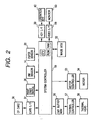
- Fig. 2 is a block diagram showing a construction of a control system of a sublimation type image recording apparatus according to the invention.
- a print start signal is inputted through an operation key interface 39.
- a system controller 55 discriminates the kinds of set ink cassette 12 and set image receiving paper cassette 19 by the ink sensor 14 and paper sensor 20 and executes either the panorama printing operation or the standard printing operation in accordance with a discrimination result. For example, in case of the ink cassette and image receiving paper for panorama, the panorama mode is selected and a sequence in the panorama mode, which will be explained hereinlater, is executed and a panorama image is composed.
- a resultant image is transferred to a buffer memory 56.
- the system controller 55 comprising a CPU, an ROM, an RAM, and the like reciprocates the image receiving paper three times between the thermal head and the ink sheet of the corresponding color every color of yellow, magenta, and cyan according to the composite image data, thereby recording an image.
- the above operation is executed by supplying a driving pulse to an ink cassette and image receiving paper conveying motor 54 and controlling the movement amounts of the ink cassette and image receiving paper by a motor controller 53.
- the landscape width of the panorama size is twice as large as the standard size, the movements of ink and paper in the panorama mode are twice as large as those in the standard size mode.
- a thermal controller 57 the number of strobe pulses is controlled so as to allow the thermal head to generate a desired amount of heat and a coloring density of each color on the image receiving paper. According to such a construction, by merely pressing the automatic print start switch 26, the user can easily obtain a desired print irrespective of the panorama size or standard size.
- the apparatus also has a video interface 59 to connect an external video monitor 60.
- step S1 when it is confirmed that the automatic print switch 26 has been pressed, outputs of the ink sensor 14 and paper sensor 20 are checked in steps S2 and S3. If YES in both steps S2 and S3, a panorama composition processing in step S4 and subsequent steps is executed.
- step S2 When it is determined to be YES in step S2 and is decided to be NO in step S3 or when it is determined to be NO in step S2 and is decided to be YES in step S3A, the display lamp 27 is flickered, thereby warning the user that the kinds of ink cassette and paper are mismatched.
- the processing routine is returned to step S1.
- step S4 a panorama marker file 74 in the CF card inserted into the slot 25 is read.
- Information showing which images in the image data have been photographed for the purpose of the panorama composition has been stored in the panorama marker file 74.
- images 1, 10, and 11 denote images in which the printing has been designated
- images 2, 8, 9, 12, 13, etc. are images in which the printing is not particularly designated
- images 3, 4, and 5 are a series of image groups for panorama composition
- images 6 and 7 are another series of image groups for panorama composition.
- step S5 the read information is analyzed, the use of the images 3, 4, and 5 as a first panorama composition processing is decided, and the use of the images 6 and 7 as a second panorama composition processing is determined.
- step S6 the images decided in step S5 are read out from the CF card and are temporarily stored into an image memory 52. Ordinarily, the image recorded in the card has been compressed in a form of JPEG or the like, in this case, a proper decompression processing is executed and a stored result is recorded.
- a panorama composition processing is executed to the recorded image data by using a well-known algorithm as disclosed in, for example, JP-A-9-93430 .
- any one of the well-known algorithms can be used, it is particularly desirable to use an algorithm including a processing such that a joint portion of a composite image in the image composition is made inconspicuous.
- the order for example, arranging order of each of the photographed original images when they are counted from the left side thereof
- the panorama composite picture plane has been inserted in the panorama marker file 74.
- a panorama composition algorithm which can automatically discriminate the order, it can be also omitted.
- the panorama image which has once been composed in a well-known RGB form is converted into print density data of yellow, magenta, and cyan by a color conversion processing and is recorded into the buffer memory 56.
- step S7 the density data is converted into the number and voltages of strobe pulses of the head to be realized on the image receiving paper and the thermal head is driven while conveying the ink cassette and the image receiving paper on the basis of them.
- the motor control is set so that the value of the conveyance amounts are twice as large as that in the standard mode.
- step S8 After completion of the area-sequential panorama recording, the image receiving paper is ejected in step S8 and the recording of the panorama group 1 is finished.
- step S9 a check is made to see if the print processing of all of the panorama groups has been finished or not with reference to the number of panorama groups determined in step S5. If YES, the processing routine is finished. If NO, the processing routine is returned to step S6 and the processings in steps S6 to S8 are executed to the next panorama group.
- step S11 a print marker file 75 in the CF card inserted in the slot 25 is read. Information showing which images in the image data have been print designated by the user has been stored in the print marker file 75. For example, as shown in Fig. 4 , the images 1, 10, and 11 are the images in which the printing has been designated. Such print marker information can be simultaneously formed upon photographing by the digital camera or can be also additionally recorded and formed by a personal computer later.
- step S12 the read information is analyzed and the designated images are read out from the CF card and are temporarily stored into the image memory 52.
- the image recorded in the card has been compressed in a form of JPEG or the like, in this case, a proper decompression processing is executed and a stored result is recorded.
- the panorama image which has temporarily been composed in the RGB form is converted into print density data of yellow, magenta, and cyan by the color conversion processing and is recorded into the buffer memory 56.
- the density data is converted into the number of strobe pulses and voltage of the head to be realized on the image receiving paper and the thermal head is driven while conveying the ink cassette and the image receiving paper on the basis of them.
- the motor control sets the standard conveyance amount to be performed.
- step S14 After completion of the standard print recording, the image receiving paper is ejected in step S14 and the recording of the image is finished.
- step S15 a check is made to see if the print processing of the image designated by the print marker determined in step S12 has been finished or not. If YES, the processing routine is finished. If NO, the processing routine is returned to step S13 and the processings in steps S13 and S14 are executed to the next image.
- sublimation type printer has been considered as a printer
- the invention can be also applied to a printer of any one of the thermal transfer type, ink jet type, and electrophotographic type.
- the present printer has been described with respect to the case of reading the CF card, another card such as a PCMCIA card or the like can be also used or two kinds of slots can be also prepared so as to enable both of the CF card and the PCMCIA card to be read out.
- the present printer is characterized in that it is connected to the monitor or the like and a panorama image can be printed without controlling the operation of the printer by the OSD.
- the feature of the invention in which the panorama composite image can be printed by using one button is effective even in the case where in order to meet needs of an image confirmation or the like, a video output is provided to thereby enable the image confirmation and the OSD to be performed although the costs slightly rise.
- a desired print can be derived in any one of the panorama and standard sizes by using one button and the troublesomeness of the user can be remarkably reduced.
- a panorama image can be easily printed without transmitting through the personal computer.
- a panorama image and a standard image can be automatically printed in accordance with a state of the apparatus.
- Fig. 2 when the ink cassette for panorama and the recording papers have been set, the system controller 55 selects the panorama mode and selects a few original images to be panorama composed by a proper method.
- a method of selecting the original images it is also possible to use a method whereby thumbnail images of the images read out from a CF card 50 are supplied to the monitor 60 through the video interface 59 and are displayed thereon and the user selects proper images by the operation key 40. By adhering proper markers to the original images, the original images can be also automatically selected.
- the system controller 55 reads out the image data of the selected original images from the CF card 50, executes a color sequential panorama mode composition processing, and area-sequentially writes the panorama image data of each color into the print buffer memory 56.
- the print buffer memory 56 has a memory capacity that is necessary and enough to print an image of a panorama size at a resolution of 300 dpi.
- the panorama image of yellow is composed and stored into the print buffer memory 56.
- the thermal controller 57 controls the applied voltage and the number of strobe pulses of the thermal head 11 in accordance with the image data of yellow which is stored into the print buffer memory 56.
- the system controller 55 controls drive amounts of the conveying motor 54 of an ink sheet 12a and recording paper 15 by the motor controller 53 and controls conveyance amounts of the ink sheet 12a and recording paper 15.
- the image of yellow is recorded onto the recording paper 15.
- the ink sheet 12a is wound so as to become a magenta portion.
- the recording paper 15 is returned to the original position as mentioned before and is set in a manner such that its front edge is located at a predetermined position by the paper sensor.
- the panorama composition processing of magenta is precedingly executed even during the resetting of the recording paper 15.
- the magenta image is recorded onto the recording paper 15 in a manner similar to yellow and, further, a cyan image is recorded onto the recording paper 15. In this manner, the recording of all colors is finished.
- Fig. 5 shows a flowchart in the panorama mode of the embodiment.
- the system controller 55 confirms the outputs of the ink sensor 14 and paper sensor 20 (step S501).
- step S502 When both of the outputs indicate the image for the panorama size, the panorama composition processing in step S502 and subsequent steps is executed. If either one of the outputs indicates the image for the standard size, the standard print processing is executed.
- the recording paper 15 for panorama is conveyed (S502) and the original images are selected (S503).
- the recording paper 15 is conveyed to the initial position where the left edge of the panorama recording paper 15 is located at the position 15a (S504).
- the ink sheet 12a is moved in the ink cassette 12 and the ink sheet 12a is set into yellow (S505).
- the panorama composition processing of yellow is executed (S506) and the yellow composite image is recorded onto the recording paper (S507).
- the recording paper 15 is returned (S508) and its left edge is set to the position 15a (S509).
- the ink sheet 12a is set into magenta (S510).
- the panorama composition processing of magenta is executed (S511).
- the magenta panorama composite image is printed onto the recording paper 15 (S512).
- the recording paper 15 is returned (S513) and its left edge is set to the position 15a (S514).
- the ink sheet 12a is set into cyan (S515), the panorama composition processing of cyan is executed (S516), and the cyan panorama composite image is printed onto the recording paper 15 (S517).
- panorama composition processings (S506, S511, S516) are executed in parallel with the operations for setting the recording paper 15 and ink sheet 12a, it is preferable from a viewpoint of the time saving.
- Fig. 6 shows a detailed flowchart of step S506 (yellow panorama composition processing) in Fig. 5 .
- parameters necessary to panorama composition namely, a position and a corresponding point of a joint portion, an affine transformation coefficient, parameters ⁇ , ⁇ 1, ⁇ 2, and ⁇ 3, and the like, which will be explained hereinlater, are determined (S621 - S626).
- "1" is set into an image number variable N (S621).
- An image N is read out from the CF card and is decompressed and is stored into the print buffer memory 56 (S622). Since a density that is almost equal to that of the original image is not always necessary in the parameter setting, for instance, the image is thinned out into 1/4 in each of the vertical and lateral directions and the whole image is compressed into 1/16 (S623).
- a degree of thin-out is determined to be an optimum value in consideration of a balance between the precision and the memory capacity.
- parameters necessary for panorama composition are determined from the three images stored in the memory 56 (S626).
- a luminance signal is desirable as a signal which is used for such a processing
- a G signal can be also used.
- a well-known algorithm as disclosed in JP-A-9-93430 can be used for such a processing
- Fig. 7 it is now assumed that two joint portions L1 and L2 and a maximum inscribed image P are determined.
- a portion to the left side from the joint portion L1 is labeled as an area R1
- a portion to the right side from the joint portion L1 and to the left side from the joint portion L2 is labeled as an area R2
- a portion to the right side from the joint portion L2 is labeled as an area R3, respectively.
- the area R1 can be determined from the data of the image 1
- the area R2 can be decided from the data of the image 2
- the area R3 can be decided from the data of the image 3, respectively.
- step S626 Data for printing is subsequently composed. In the subsequent steps, only the parameters decided in step S626 are necessary and the image data stored so far in the memory 56 is unnecessary.
- a memory area of the image P is determined (S627). It is now assumed that a portrait side of each of the areas R1, R2, and R3 is ⁇ times as large as a portrait size of each of the images 1, 2, and 3 and landscape sizes of the areas R1, R2, and R3 are ⁇ 1 times, ⁇ 2 times, and ⁇ 3 times as large as the landscape sizes of the images 1, 2, and 3, respectively. Since it is sufficient to use a capacity for only one color as a memory capacity which is necessary to store the image P, it is equal to 1536 x 1024 x ⁇ x ( ⁇ 1 + ⁇ 2 + ⁇ 3). The values of ⁇ , ⁇ 1, ⁇ 2, and ⁇ 3 change in accordance with overlap states of the original images 1, 2, and 3. Usually, since ( ⁇ ⁇ 1) and ( ⁇ 1 + ⁇ 2 + ⁇ 3 ⁇ 3), the memory capacity to store the image P does not exceed 4.5 MBytes.
- the image 1 is again read out from the CF card and is JPEG decompressed and stored into the memory 56. Even in this case, the necessary memory capacity does not exceed 6 MBytes.
- the corresponding coordinates (x', y') on the image 1 are obtained by using the above-mentioned affine transformation in accordance with the order of the coordinates (x, y) of the image in the area R1, thereby obtaining the RGB values of the original images (S629).
- a density value Y of yellow is calculated from the obtained RGB values (S630) and a calculation result is sequentially written at a storing position corresponding to the coordinates (x, y) in the image P (S631).
- the density value Y of yellow can be also formed from only the B data with a complementary relation among RGB.
- a mask processing or the like as disclosed in Japanese Patent No. 2640347 or No. 2689479 and to arithmetically operate from all of the data of RGB and to decide.
- Processings for the area R2 are subsequently similarly executed by using the image 2 (S632 to S634) and processings for the area R3 are subsequently similarly executed by using the image 3 (S636 to S639).
- the largest memory capacity is needed at the stage of S636 to S639 and it is equal to [3 + ⁇ x ( ⁇ 1 + ⁇ 2 + ⁇ 3)] times of 1536 x 1024. Therefore, at this time point, the necessary memory capacity does not exceed 9 MBytes and all of the processings can be finished by using the print buffer memory 56 of 11.9 MBytes.
- the yellow density is decided with regard to all of the pixels of the image P.
- the number of pixels of the image P at this stage is not always equal to the number of pixels of the print (in this example, 1181 x 3543). Therefore, an area of the aspect ratio of 1 : 3 is properly extracted from the image P (S640) and an interpolation processing is executed, thereby finally obtaining data of 1181 x 3543 (S641). If the image P is laterally longer than the aspect ratio 1 : 3, the landscape width is slightly cut out. In the opposite case, the upper and lower portions are cut out. It is also possible to print with upper and lower or right and left margins remained without trimming.
- the panorama composition processing of yellow can be executed by the limited memory capacity.
- the panorama composition of magenta and cyan can be also realized by similar processings with a similar memory capacity. If the panorama composition conditions are the same for all of the colors, a color deviation does not occur and an arithmetic operation amount can be also reduced. Therefore, for magenta and cyan, it is preferable to use the panorama composition conditions calculated for yellow as they are.
- the panorama image can be printed with a small memory capacity although it takes a slightly long processing time.
- sublimation type thermal printer has been described as an example of a printer
- the invention can be also applied to a printer of another type such as thermal transfer type, electrophotographic type, or the like, for example, the printer of the ink jet type so long as it is of the color area-sequential type.
- the embodiment has been described on the assumption that the recording medium is the CF card, a PCMCIA card or the like can be also used or two kinds of slots can be also prepared so as to enable both of the CF card and the PCMCIA card to be read.
- the embodiment can be applied to a system comprising a plurality of equipment (for example, a host computer, interface equipment, a reader, a printer, and the like) or can be also applied to an apparatus comprising one equipment (for instance, a copying apparatus or a facsimile apparatus).
- equipment for example, a host computer, interface equipment, a reader, a printer, and the like
- apparatus for instance, a copying apparatus or a facsimile apparatus.
- the present invention also incorporates a case where in order to make various devices operative so as to realize the functions of the foregoing embodiment, program codes of software to realize the functions of the embodiment are supplied to a computer of an apparatus or a system connected to those various devices and a computer (CPU or MPU) of such an apparatus or system reads out the program codes and makes the various devices operative in accordance with the stored program.
- program codes of software to realize the functions of the embodiment are supplied to a computer of an apparatus or a system connected to those various devices and a computer (CPU or MPU) of such an apparatus or system reads out the program codes and makes the various devices operative in accordance with the stored program.
- the program codes themselves of the software realize the functions of the embodiment mentioned above and the program codes themselves and means for supplying the program codes to the computer, for example, a storage medium in which the program codes have been stored construct the invention.
- a storage medium to store the program codes for example, it is possible to use any one of a floppy disk, a hard disk, an optical disk, a magnetooptic disk, a CD-ROM, a magnetic tape, a non-volatile memory card, an ROM, and the like.
- the invention also incorporates a case where the supplied program codes are stored into a memory equipped for a function expanding board of a computer or a function expanding unit connected to the computer and, after that, a CPU or the like provided for the function expanding board or function expanding unit executes a part or all of the actual processings on the basis of instructions of the program codes, and the functions of the embodiment are realized by those processings.
- the panorama composite image can be outputted even with a small memory capacity.
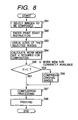
- Fig. 8 shows a flowchart for the composition processing in the embodiment.
- a plurality of images to be composed are selected by the panorama marker (S81).
- the system controller 55 confirms a size (or data amount) of the selected image (S83). For example, in case of a JPEG file, a bit map file, or the like, since information of the image size has been stored in the header of the file, it is sufficient to read it.
- a work memory size V that is necessary for composition is calculated on the basis of the image size (S84).
- the necessary work memory size V is compared with a work memory size U of the buffer memory 56 for CMY which is currently available (S85).
- U work memory size
- the composition processing is executed (S87).
- V is equal to or less than U (S85)
- the composition processing is immediately executed (S87).
- a well-known method is used for the composition processing (S87) itself.
- a composition result is supplied to a thermal head 58 and is printed and outputted (S88).
- a method of calculating the work memory size V necessary for composition will now be described in more detail. For example, it is assumed that two images of image sizes A1 and A2 are composed. The simplest case will be considered here.
- a memory size which is necessary when the data of two images is stored in the work memory 56 is equal to A1 + A2.
- the image size after the composition varies depending on a composing method, it is roughly equal to A1 + A2.
- T a total memory size necessary for composition can be calculated as 2 x (A1 + A2) + T. This total memory size is compared with the currently available memory size U (S85).
- the above method is the simplest calculating method and the memory size V necessary for composition can be further reduced by devising a composition algorithm.
- the printer is a thermal sublimation type printer
- the printing operation is area-sequentially executed. Therefore, if the composition is performed every color, the printing operation is performed each time, and upon composition of a next color, data is overwritten into the data area which has already been printed and is now unnecessary, the image size after completion of the composition is reduced into 1/3.
- the necessary memory size can be further reduced.
- step S87 it is preferable to devise an algorithm so as to reduce the memory size necessary for composition as much as possible.
- the memory size is calculated in correspondence to the algorithm.
- the image size is compressed (S86). A degree of compression of the image size will now be briefly explained.
- the memory size V necessary for composition is equal to 2 x (A1 + A2) + T.
- the composition processing can be performed within the currently available memory size.
- the compression degree is too large in the compression processing, there is a case where when the composite image is printed, it remarkably differs from the original image. To avoid such a situation, it is sufficient to limit the degree of the compression processing and not to perform the composition processing and print processing when it is necessary to further compress.
- composition processing has merely been described in the above explanation, besides what is called a panorama composition processing, the invention can be also effectively applied to the other composition processings such as pixel shift processing as disclosed in JP-A-5-7366 and JP-A-9-307802 and dynamic range zoom processing as disclosed in JP-A-8-37628 and JP-A-8-149487 . That is, the invention can be applied to various image processings.
- the memory size has been calculated as 2 x (A1 + A2) + T as shown in the foregoing embodiment.
- the embodiment can be applied to a system comprising a plurality of equipment or can be also applied to an apparatus comprising one equipment.
- a case where program codes of software to realize the functions of the embodiment are supplied to a computer of an apparatus or system connected to various devices so as to make the various devices operative in order to realize the functions of the embodiment and the computer (CPU or MPU) of the apparatus or system reads out the program codes and makes the various devices operative in accordance with a stored program, thereby embodying the invention is also incorporated in the scope of the invention.
- the program codes themselves of the software realize the functions of the embodiment mentioned above and the program codes themselves and means for supplying the program codes to the computer, for example, a storage medium in which the program codes have been stored construct the invention.
- a storage medium to store the program codes for example, it is possible to use any one of a floppy disk, a hard disk, an optical disk, a magnetooptic disk, a CD-ROM, a magnetic tape, a non-volatile memory card, an ROM, and the like.
- the invention also incorporates a case where the supplied program codes are stored into a memory equipped for a function expanding board of a computer or a function expanding unit connected to the computer and, after that, a CPU or the like provided for the function expanding board or function expanding unit executes a part or all of the actual processings on the basis of instructions of the program codes, and the functions of the embodiment are realized by those processings.
- composition processings such as a panorama composition processing and the like and its output can be performed even by a limited memory.
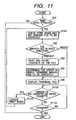
- step S94 the order to display the thumbnail images onto the monitor is determined in the following manner.
- the file names have already been stored in the work memory in accordance with the order of the image data added with the panorama composition instruction mark and print instruction mark.
- the image data other than the above image data is sequentially added into the work memory in accordance with the order of the file names or the order of the stored images.
- the thumbnail files are sequentially displayed on the monitor 60 in accordance with the order of the file names on the work memory.
- step S92 When no marker file is found in step S92, the images are sequentially displayed on the monitor in accordance with the order of the file names or the order of the stored thumbnail images.
- the images which are specified by the marks are preferentially displayed, so that the images specified by the marks can be easily recognized. Since the images specified by the same mark are collectively displayed, the images specified by the various marks can be easily confirmed and the work to print out is also simplified.
Landscapes
- Engineering & Computer Science (AREA)
- Multimedia (AREA)
- Signal Processing (AREA)
- Record Information Processing For Printing (AREA)
- Editing Of Facsimile Originals (AREA)
- Television Signal Processing For Recording (AREA)
- Studio Devices (AREA)
Claims (25)
- An einen Aufzeichnungsträger (50) anschließbarer Drucker, umfassend:eine Bestimmungseinrichtung (14, 20, 52), um auf der Grundlage der Art der in den Drucker eingelegten Papierkassette (19) und/oder Tintenpatrone (12) zu bestimmen, ob sich der Drucker in einem Panoramamodus befindet;eine Leseeinrichtung (51, 54), um, falls die Bestimmungseinrichtung (14, 20, 52) bestimmt, dass sich der Drucker im Panoramamodus befindet, vom Aufzeichnungsträger (50) eine Panoramamarkierungsdatei (74) zu lesen, in der Information zum Spezifizieren einer Folge von Bilddateien für ein Panoramabild gespeichert ist und die unabhängig von den Bilddateien (73) vorgesehen ist, und um die Folge von Bilddateien zu lesen, die von der Panoramamarkierungsdatei (74) spezifiziert wird;eine Verarbeitungseinrichtung (55) zum Zusammensetzen eines Panoramabilds aus den gelesenen Folgen von Bilddateien; undeine Druckeinrichtung (54, 58) zum Drucken des von der Verarbeitungseinrichtung zusammengesetzten Panoramabilds,wobei, falls die Bestimmungseinrichtung (14, 20, 52) bestimmt, dass sich der Drucker nicht im Panoramamodus befindet, sondern in einem Standardmodus, die Leseeinrichtung (51, 54) konfiguriert ist, um vom Aufzeichnungsträger eine Druckmarkierungsdatei (75) zu lesen, in der Information zum Spezifizieren einer zu druckenden Bilddatei gespeichert ist, und die Druckeinrichtung dafür ausgelegt ist, ein Bild auf der Grundlage der von der Druckmarkierungsdatei spezifizierten Bilddatei zu drucken.
- Drucker nach Anspruch 1, wobei die Druckeinrichtung (54, 58) ein Sublimationsdrucker ist, ausgebildet zum Ausführen eines Panoramadrucks für den Fall, dass eine Tintenpatrone (12) für den Panoramadruck eingelegt wurde, und/oder für den Fall, dass eine Papierkassette (19) für den Panoramadruck eingelegt wurde.
- Drucker nach Anspruch 1 oder 2, wobei die Druckeinrichtung (54, 58) ein Tintenstrahldrucker und dazu ausgebildet ist, einen Panoramadruck für den Fall auszuführen, dass mittels eines Schalters ein Panoramadruckmodus eingestellt wurde.
- Drucker nach einem vorhergehenden Anspruch, weiterhin umfassend eine Befehlseinrichtung zum Befehlen, dass ein automatischer Druckvorgang gestartet wird,
so dass auf der Grundlage eines Befehls durch die Befehlseinrichtung das Lesen durch die Leseeinrichtung (51, 54), das Zusammensetzen durch die Verarbeitungseinrichtung (55) und das Drucken durch die Druckeinrichtung (54, 58) ausgeführt werden. - Drucker nach einem vorhergehenden Anspruch, wobei
die Verarbeitungseinrichtung (55) konfiguriert ist zum Zusammensetzen eines Panoramafarbbilds für jede Farbkomponente der Folge von Bilddateien (73), und
die Druckeinrichtung (54, 58) dazu ausgebildet ist, das von der Verarbeitungseinrichtung (55) zusammengesetzte Panoramabild bereichsweise zu drucken. - Drucker nach einem vorhergehenden Anspruch, wobei die Verarbeitungseinrichtung (55) konfiguriert ist zum Vergleichen einer zum Zusammensetzen des Panoramabilds verfügbaren Speichergröße mit der zum Zusammensetzen des Panoramabilds benötigten Speichergröße und zum Ausführen einer Zoom-Verarbeitung der Bilddateien nach Maßgabe des Vergleichsergebnisses.
- Drucker nach einem vorhergehenden Anspruch, wobei die Verarbeitungseinrichtung (55) konfiguriert ist zum Ausführen einer Kompressionsverarbeitung der Bilddateien, wenn eine zum Zusammensetzen des Panoramabilds verfügbare Speichergröße kleiner ist als die zum Zusammensetzen des Panoramabilds benötigte Speichergröße.
- Drucker nach einem vorhergehenden Anspruch, weiterhin umfassend eine Einrichtung zum Auswählen der Folge von Bilddateien auf der Grundlage der auf dem Aufzeichnungsträger (50) gespeicherten Panoramamarkierungsdatei (74) und zum Zulassen des den ausgewählten Bilddateien entsprechenden Panoramabilds für die bevorzugte Anzeige durch eine Anzeigeeinrichtung vor nicht-ausgewählten Bilddateien.
- Drucker nach einem vorhergehenden Anspruch, wobei die Panoramamarkierungsdatei (74) in sich Information speichert, welche die Reihenfolge der Folge von Bilddateien bei der Zusammensetzung des Panoramabilds angibt.
- Drucker nach einem vorhergehenden Anspruch, wobei die Panoramamarkierungsdatei (74) in sich Information (PG1/2/IMG_0004) speichert, die eine Folge von Bilddateien für mehrere Panoramabilder spezifiziert.
- Drucker nach Anspruch 10, wobei die Panoramamarkierungsdatei (74) in sich Information (PG1, PG2) speichert zur Korrespondenz der jeweiligen Folgen von Bilddateien und der mehreren Panoramabilder.
- Drucker nach einem vorhergehenden Anspruch, wobei die Bestimmungseinrichtung (14, 20, 52) dafür ausgelegt ist, ansprechend auf einen Druckstartbefehl eine Art von in den Drucker eingelegte Papierkassette (19) und/oder Tintenpatrone (12) nachzuweisen und zu bestimmen, dass sich der Drucker im Panoramamodus befindet, wenn die in den Drucker eingelegte Papierkassette (19) und/oder Tintenpatrone (12) für den Panoramadruck vorgesehen sind/ist.
- Verfahren zum Steuern eines an einen Aufzeichnungsträger (50) anschließbaren Druckers, umfassend:einen Bestimmungsschritt (S2, S3, S3A), um auf der Grundlage einer Art der in den Drucker eingelegten Papierkassette (19) und/oder Tintenpatrone (12) zu bestimmen, ob sich der Drucker in einem Panoramamodus befindet;einen ersten Leseschritt (S4), um, falls im Bestimmungsschritt bestimmt wird, dass sich der Drucker im Panoramamodus befindet, von einem Aufzeichnungsträger (50) eine Panoramamarkierungsdatei (74) zu lesen, in der Information zum Spezifizieren einer Folge von Bilddateien für ein Panoramabild gespeichert ist und die unabhängig von den Bilddateien vorgesehen ist; und einen zweiten Leseschritt (S5), um die Folge von Bilddateien, die von der gelesenen Panoramamarkierungsdatei (74) spezifiziert wird, zu lesen;einen Verarbeitungsschritt zum Zusammensetzen (S6) eines Panoramabilds aus der gelesenen Folge von Bilddateien; undeinen ersten Druckschritt (S7) zum Drucken des im Verarbeitungsschritt zusammengesetzten Panoramabilds,wobei, falls im Bestimmungsschritt bestimmt wird, dass sich der Drucker nicht im Panoramamodus, sondern in einem Standardmodus befindet, das Verfahren umfasst: einen dritten Leseschritt (S11 ), um vom Aufzeichnungsträger (50) eine Druckmarkierungsdatei (75) zu lesen, in der Information zum Spezifizieren einer zu druckenden Bilddatei gespeichert ist; und einen zweiten Druckschritt (S13) zum Drucken eines Bilds auf der Grundlage der von der Druckmarkierungsdatei spezifizierten (S12) Bilddatei.
- Verfahren nach Anspruch 13, wobei der erste Druckschritt (S7) ausgeführt wird von einem Sublimationsdrucker, wenn eine Tintenpatrone (12) für den Panoramadruck eingelegt wurde und/oder wenn eine Papierkassette (19) für den Panoramadruck eingelegt wurde.
- Verfahren nach Anspruch 13 oder 14, wobei der erste Druckschritt (S7) von einem Tintenstrahldrucker ausgeführt wird, wenn mittels eines Schalters ein Panoramadruckmodus eingestellt wurde.
- Verfahren nach einem der Ansprüche 13 bis 15, weiterhin umfassend:einen Befehlsschritt zum Befehlen, dass ein automatischer Druckvorgang gestartet wird,wobei auf der Grundlage eines Befehls im Befehlsschritt die Leseschritte (S4, S5), der Verarbeitungsschritt (S6) und der erste Druckschritt (S7) ausgeführt werden.
- Verfahren nach einem der Ansprüche 13 bis 16, weiterhin umfassend:im Verarbeitungsschritt (S6), das Zusammensetzen eines Panoramafarbbilds in jeder Farbkomponente, undim ersten Druckschritt (S7), ein bereichsweises Drucken des Panoramafarbbilds.
- Verfahren nach einem der Ansprüche 13 bis 17, wobei im Verarbeitungsschritt (S6) eine zum Zusammensetzen des Panoramabilds verfügbare Speichergröße verglichen wird mit der zum Zusammensetzen des Panoramabilds benötigten Speichergröße und eine Zoom-Verarbeitung der Bilddateien nach Maßgabe des Vergleichsergebnisses ausgeführt wird.
- Verfahren nach einem der Ansprüche 13 bis 18, wobei im Verarbeitungsschritt (S6) eine Kompressionsverarbeitung der Bilddateien ausgeführt wird, wenn eine zum Zusammensetzen des Panoramabilds verfügbare Speichergröße kleiner ist als die zum Zusammensetzen des Panoramabilds benötigte Speichergröße.
- Verfahren nach einem der Ansprüche 13 bis 19, weiterhin umfassend einen Schritt des Auswählens der Folge von Bilddateien auf der Grundlage der auf dem Aufzeichnungsträger gespeicherten Panoramamarkierungsdatei (74) und des Zulassens der den ausgewählten Bilddateien entsprechenden Bilder für die bevorzugte Anzeige vor den nicht-ausgewählten Bilddateien.
- Verfahren nach einem der Ansprüche 13 bis 20, wobei die Panoramamarkierungsdatei (74) in sich Information speichert, welche die Reihenfolge der Folge von Bilddateien für die Zusammensetzung des Panoramabilds angibt.
- Verfahren nach einem der Ansprüche 13 bis 21, wobei die Panoramamarkierungsdatei (74) in sich Information (PG1/2/IMG_0004) speichert, die eine Folge von Bilddateien zum Zusammensetzen mehrerer Panoramabilder spezifiziert.
- Verfahren nach Anspruch 22, wobei die Panoramamarkierungsdatei (74) in sich Information (PG1, PG2) speichert zur Korrespondenz der jeweiligen Folgen von Bilddateien und der mehreren Panoramabilder.
- Verfahren nach einem der Ansprüche 13 bis 23, wobei der Bestimmungsschritt (S2, S3, S3A) umfasst, ansprechend auf einen Druckstartbefehl eine Art von in den Drucker eingelegte Papierkassette (19) und/oder Tintenpatrone (12) nachzuweisen und zu bestimmen, dass sich der Drucker im Panoramamodus befindet, wenn die in den Drucker eingelegte Papierkassette (19) und/oder Tintenpatrone (12) für den Panoramadruck vorgesehen sind/ist.
- Speichermedium, das prozessorimplementierbare Befehle zum Steuern eines elektronischen Prozessors zum Durchführen sämtlicher Schritte des Verfahrens nach einem der Ansprüche 13 bis 24 speichert.
Applications Claiming Priority (8)
| Application Number | Priority Date | Filing Date | Title |
|---|---|---|---|
| JP3284498A JPH11232006A (ja) | 1998-02-16 | 1998-02-16 | 出力装置、出力方法、及び、記憶媒体 |
| JP3284498 | 1998-02-16 | ||
| JP3284398 | 1998-02-16 | ||
| JP03284398A JP4297998B2 (ja) | 1998-02-16 | 1998-02-16 | プリンタ、プリント方法、及び、記憶媒体 |
| JP11799498 | 1998-04-28 | ||
| JP10117994A JPH11313201A (ja) | 1998-04-28 | 1998-04-28 | 画像形成装置及び方法並びに記憶媒体 |
| JP10161893A JPH11355553A (ja) | 1998-06-10 | 1998-06-10 | 画像処理装置及び方法並びに記憶媒体 |
| JP16189398 | 1998-06-10 |
Publications (3)
| Publication Number | Publication Date |
|---|---|
| EP0936802A2 EP0936802A2 (de) | 1999-08-18 |
| EP0936802A3 EP0936802A3 (de) | 2000-08-30 |
| EP0936802B1 true EP0936802B1 (de) | 2011-06-15 |
Family
ID=27459694
Family Applications (1)
| Application Number | Title | Priority Date | Filing Date |
|---|---|---|---|
| EP99301001A Expired - Lifetime EP0936802B1 (de) | 1998-02-16 | 1999-02-11 | Drucker, Steuerungsverfahren dafür und Aufzeichnungsmedium für das Steuerungsprogramm des Druckers |
Country Status (2)
| Country | Link |
|---|---|
| US (1) | US6867879B1 (de) |
| EP (1) | EP0936802B1 (de) |
Families Citing this family (11)
| Publication number | Priority date | Publication date | Assignee | Title |
|---|---|---|---|---|
| JP3554177B2 (ja) * | 1997-04-23 | 2004-08-18 | キヤノン株式会社 | 出力制御装置、出力制御方法、記憶媒体 |
| KR100505069B1 (ko) * | 2000-06-14 | 2005-07-29 | 마쯔시다덴기산교 가부시키가이샤 | 휴대형 기억매체 및 그 기록장치 |
| US20020044295A1 (en) * | 2000-10-16 | 2002-04-18 | Olympus Optical Co., Ltd. | Printer device |
| JP3775381B2 (ja) * | 2002-11-27 | 2006-05-17 | コニカミノルタビジネステクノロジーズ株式会社 | 画像処理装置 |
| JP2009182937A (ja) * | 2008-02-01 | 2009-08-13 | Hoya Corp | 画像信号処理ユニット、デジタルカメラ、およびプリンタ |
| JP2010218416A (ja) * | 2009-03-18 | 2010-09-30 | Seiko Epson Corp | 印刷指示装置および印刷システム |
| JP5676950B2 (ja) * | 2009-08-20 | 2015-02-25 | キヤノン株式会社 | 画像形成装置 |
| JP5588222B2 (ja) * | 2010-05-12 | 2014-09-10 | キヤノン株式会社 | 画像形成装置及びその制御方法とプログラム |
| JP2017128070A (ja) | 2016-01-21 | 2017-07-27 | キヤノンファインテック株式会社 | キャリッジ装置 |
| JP6104488B1 (ja) * | 2016-10-26 | 2017-03-29 | 三菱電機株式会社 | サーマルプリンタおよびサーマルプリンタの制御方法 |
| JP7191626B2 (ja) | 2018-10-05 | 2022-12-19 | キヤノン株式会社 | 記録装置、およびその制御方法 |
Family Cites Families (17)
| Publication number | Priority date | Publication date | Assignee | Title |
|---|---|---|---|---|
| US4682216A (en) | 1983-03-08 | 1987-07-21 | Canon Kabushiki Kaisha | Color image picture forming process and apparatus which improves the quality of the black portions of the picture |
| JPS6098764A (ja) | 1983-11-04 | 1985-06-01 | Canon Inc | カラ−画像形成方法 |
| JPH067664B2 (ja) | 1984-02-29 | 1994-01-26 | キヤノン株式会社 | カラー画像信号処理装置 |
| JPS6125365A (ja) | 1984-07-13 | 1986-02-04 | Canon Inc | 中間調画像形成方法 |
| US4731662A (en) | 1985-03-21 | 1988-03-15 | Canon Kabushiki Kaisha | Image processing method for processing an image signal differently depending on the range of an image characteristic thereof relative to the range within which an output device can reproduce the image characteristic |
| US5113267A (en) | 1989-11-09 | 1992-05-12 | Lee Aldric K | Apparatus for and method of reconstructing a document |
| JPH057366A (ja) | 1991-06-27 | 1993-01-14 | Olympus Optical Co Ltd | 撮像装置 |
| US5337164A (en) * | 1992-01-30 | 1994-08-09 | Konica Corporation | Negative film image reading device |
| US5502541A (en) | 1994-05-10 | 1996-03-26 | Eastman Kodak Company | Photographic printer and method for automatically detecting panoramic format image frames |
| JP3382359B2 (ja) | 1994-07-22 | 2003-03-04 | キヤノン株式会社 | 撮像装置 |
| JP3535585B2 (ja) | 1994-11-18 | 2004-06-07 | キヤノン株式会社 | 画像処理方法、画像処理装置及び撮像装置 |
| US5682197A (en) | 1995-05-12 | 1997-10-28 | Eastman Kodak Company | Electronic panoramic camera for use with an external processor |
| JP3495826B2 (ja) * | 1995-08-24 | 2004-02-09 | 富士写真フイルム株式会社 | ファイリング・システムおよび再生装置 |
| US5784149A (en) * | 1995-09-21 | 1998-07-21 | Fuji Photo Film Co., Ltd. | Film image processing method and apparatus |
| JP3530652B2 (ja) | 1995-09-26 | 2004-05-24 | キヤノン株式会社 | 画像合成方法及び画像合成装置 |
| JPH09307802A (ja) | 1996-05-10 | 1997-11-28 | Canon Inc | 固体撮像装置 |
| JPH09322039A (ja) | 1996-05-28 | 1997-12-12 | Canon Inc | 撮像装置 |
-
1999
- 1999-02-09 US US09/247,086 patent/US6867879B1/en not_active Expired - Fee Related
- 1999-02-11 EP EP99301001A patent/EP0936802B1/de not_active Expired - Lifetime
Also Published As
| Publication number | Publication date |
|---|---|
| US6867879B1 (en) | 2005-03-15 |
| EP0936802A2 (de) | 1999-08-18 |
| EP0936802A3 (de) | 2000-08-30 |
Similar Documents
| Publication | Publication Date | Title |
|---|---|---|
| KR100282946B1 (ko) | 인쇄장치 및 인쇄시스템 | |
| US7830411B2 (en) | Digital camera and printing system | |
| JP2003244630A (ja) | 画像処置装置、画像処理方法及びデジタルカメラ | |
| EP0936802A2 (de) | Drucker, Steuerungsverfahren dafür und Aufzeichnungsmedium für das Steuerungsprogramm des Druckers | |
| US20060061814A1 (en) | Recording medium and print apparatus | |
| JP4456202B2 (ja) | カメラシステム及びプリンタ付きカメラ | |
| JP2000333123A (ja) | プリント指定方法及び装置、並びにプリント方法及び装置 | |
| US7456877B2 (en) | Image sensing apparatus, control method therefor, and printer | |
| US20090231599A1 (en) | Automatic trimming of image data | |
| JP5020517B2 (ja) | 印刷システム、印刷装置、撮像装置、及び制御方法 | |
| US20030161608A1 (en) | Image reproducing apparatus and image reproducing method | |
| JP3922223B2 (ja) | 画像データの出力画像調整 | |
| US20010033734A1 (en) | Image information processing system | |
| JP4297998B2 (ja) | プリンタ、プリント方法、及び、記憶媒体 | |
| EP1524837A1 (de) | Bildverarbeitungsgerät | |
| JP4659533B2 (ja) | プリンタ、プリントシステム及びプリンタの制御方法 | |
| JP3635981B2 (ja) | 画像データ印刷装置 | |
| US7719570B2 (en) | Digital camera, print system, and data structure | |
| JP2008087416A (ja) | 画像形成装置、画像供給装置、画像印刷システム、画像印刷方法、画像形成プログラム及び画像供給プログラム | |
| US7760384B2 (en) | Image processing method, image processing apparatus, and control program for image processing apparatus | |
| JP2009267973A (ja) | 撮像装置、その制御方法及びプログラム | |
| JP2002237988A (ja) | 電子カメラ及び電子カメラシステム | |
| JP2000092422A (ja) | 画像形成装置 | |
| JP2000059600A (ja) | プリンタ及び記録媒体 | |
| JPH11249862A (ja) | 画像プリント装置及びスイッチ |
Legal Events
| Date | Code | Title | Description |
|---|---|---|---|
| PUAI | Public reference made under article 153(3) epc to a published international application that has entered the european phase |
Free format text: ORIGINAL CODE: 0009012 |
|
| AK | Designated contracting states |
Kind code of ref document: A2 Designated state(s): DE FR GB IT NL |
|
| AX | Request for extension of the european patent |
Free format text: AL;LT;LV;MK;RO;SI |
|
| PUAL | Search report despatched |
Free format text: ORIGINAL CODE: 0009013 |
|
| AK | Designated contracting states |
Kind code of ref document: A3 Designated state(s): AT BE CH CY DE DK ES FI FR GB GR IE IT LI LU MC NL PT SE |
|
| AX | Request for extension of the european patent |
Free format text: AL;LT;LV;MK;RO;SI |
|
| 17P | Request for examination filed |
Effective date: 20010123 |
|
| AKX | Designation fees paid |
Free format text: DE FR GB IT NL |
|
| 17Q | First examination report despatched |
Effective date: 20050502 |
|
| GRAP | Despatch of communication of intention to grant a patent |
Free format text: ORIGINAL CODE: EPIDOSNIGR1 |
|
| GRAS | Grant fee paid |
Free format text: ORIGINAL CODE: EPIDOSNIGR3 |
|
| GRAA | (expected) grant |
Free format text: ORIGINAL CODE: 0009210 |
|
| AK | Designated contracting states |
Kind code of ref document: B1 Designated state(s): DE FR GB IT NL |
|
| REG | Reference to a national code |
Ref country code: GB Ref legal event code: FG4D |
|
| REG | Reference to a national code |
Ref country code: DE Ref legal event code: R096 Ref document number: 69943493 Country of ref document: DE Effective date: 20110721 |
|
| REG | Reference to a national code |
Ref country code: NL Ref legal event code: VDEP Effective date: 20110615 |
|
| PG25 | Lapsed in a contracting state [announced via postgrant information from national office to epo] |
Ref country code: NL Free format text: LAPSE BECAUSE OF FAILURE TO SUBMIT A TRANSLATION OF THE DESCRIPTION OR TO PAY THE FEE WITHIN THE PRESCRIBED TIME-LIMIT Effective date: 20110615 |
|
| PLBE | No opposition filed within time limit |
Free format text: ORIGINAL CODE: 0009261 |
|
| STAA | Information on the status of an ep patent application or granted ep patent |
Free format text: STATUS: NO OPPOSITION FILED WITHIN TIME LIMIT |
|
| 26N | No opposition filed |
Effective date: 20120316 |
|
| PG25 | Lapsed in a contracting state [announced via postgrant information from national office to epo] |
Ref country code: IT Free format text: LAPSE BECAUSE OF FAILURE TO SUBMIT A TRANSLATION OF THE DESCRIPTION OR TO PAY THE FEE WITHIN THE PRESCRIBED TIME-LIMIT Effective date: 20110615 |
|
| REG | Reference to a national code |
Ref country code: DE Ref legal event code: R097 Ref document number: 69943493 Country of ref document: DE Effective date: 20120316 |
|
| REG | Reference to a national code |
Ref country code: FR Ref legal event code: ST Effective date: 20121031 |
|
| PG25 | Lapsed in a contracting state [announced via postgrant information from national office to epo] |
Ref country code: FR Free format text: LAPSE BECAUSE OF NON-PAYMENT OF DUE FEES Effective date: 20120229 |
|
| PGFP | Annual fee paid to national office [announced via postgrant information from national office to epo] |
Ref country code: DE Payment date: 20150228 Year of fee payment: 17 |
|
| PGFP | Annual fee paid to national office [announced via postgrant information from national office to epo] |
Ref country code: GB Payment date: 20150220 Year of fee payment: 17 |
|
| REG | Reference to a national code |
Ref country code: DE Ref legal event code: R119 Ref document number: 69943493 Country of ref document: DE |
|
| GBPC | Gb: european patent ceased through non-payment of renewal fee |
Effective date: 20160211 |
|
| PG25 | Lapsed in a contracting state [announced via postgrant information from national office to epo] |
Ref country code: DE Free format text: LAPSE BECAUSE OF NON-PAYMENT OF DUE FEES Effective date: 20160901 Ref country code: GB Free format text: LAPSE BECAUSE OF NON-PAYMENT OF DUE FEES Effective date: 20160211 |