EP0939089A1 - Amélioration de la stabilité thermique de polymères greffés d'acrylates alpha-substitués - Google Patents
Amélioration de la stabilité thermique de polymères greffés d'acrylates alpha-substitués Download PDFInfo
- Publication number
- EP0939089A1 EP0939089A1 EP99103297A EP99103297A EP0939089A1 EP 0939089 A1 EP0939089 A1 EP 0939089A1 EP 99103297 A EP99103297 A EP 99103297A EP 99103297 A EP99103297 A EP 99103297A EP 0939089 A1 EP0939089 A1 EP 0939089A1
- Authority
- EP
- European Patent Office
- Prior art keywords
- propylene
- ethylene
- olefin
- alpha
- copolymer
- Prior art date
- Legal status (The legal status is an assumption and is not a legal conclusion. Google has not performed a legal analysis and makes no representation as to the accuracy of the status listed.)
- Granted
Links
Images

Classifications
-
- C—CHEMISTRY; METALLURGY
- C08—ORGANIC MACROMOLECULAR COMPOUNDS; THEIR PREPARATION OR CHEMICAL WORKING-UP; COMPOSITIONS BASED THEREON
- C08F—MACROMOLECULAR COMPOUNDS OBTAINED BY REACTIONS ONLY INVOLVING CARBON-TO-CARBON UNSATURATED BONDS
- C08F265/00—Macromolecular compounds obtained by polymerising monomers on to polymers of unsaturated monocarboxylic acids or derivatives thereof as defined in group C08F20/00
- C08F265/04—Macromolecular compounds obtained by polymerising monomers on to polymers of unsaturated monocarboxylic acids or derivatives thereof as defined in group C08F20/00 on to polymers of esters
- C08F265/06—Polymerisation of acrylate or methacrylate esters on to polymers thereof
-
- C—CHEMISTRY; METALLURGY
- C08—ORGANIC MACROMOLECULAR COMPOUNDS; THEIR PREPARATION OR CHEMICAL WORKING-UP; COMPOSITIONS BASED THEREON
- C08L—COMPOSITIONS OF MACROMOLECULAR COMPOUNDS
- C08L51/00—Compositions of graft polymers in which the grafted component is obtained by reactions only involving carbon-to-carbon unsaturated bonds; Compositions of derivatives of such polymers
- C08L51/06—Compositions of graft polymers in which the grafted component is obtained by reactions only involving carbon-to-carbon unsaturated bonds; Compositions of derivatives of such polymers grafted on to homopolymers or copolymers of aliphatic hydrocarbons containing only one carbon-to-carbon double bond
-
- C—CHEMISTRY; METALLURGY
- C08—ORGANIC MACROMOLECULAR COMPOUNDS; THEIR PREPARATION OR CHEMICAL WORKING-UP; COMPOSITIONS BASED THEREON
- C08F—MACROMOLECULAR COMPOUNDS OBTAINED BY REACTIONS ONLY INVOLVING CARBON-TO-CARBON UNSATURATED BONDS
- C08F255/00—Macromolecular compounds obtained by polymerising monomers on to polymers of hydrocarbons as defined in group C08F10/00
- C08F255/02—Macromolecular compounds obtained by polymerising monomers on to polymers of hydrocarbons as defined in group C08F10/00 on to polymers of olefins having two or three carbon atoms
-
- C—CHEMISTRY; METALLURGY
- C08—ORGANIC MACROMOLECULAR COMPOUNDS; THEIR PREPARATION OR CHEMICAL WORKING-UP; COMPOSITIONS BASED THEREON
- C08F—MACROMOLECULAR COMPOUNDS OBTAINED BY REACTIONS ONLY INVOLVING CARBON-TO-CARBON UNSATURATED BONDS
- C08F255/00—Macromolecular compounds obtained by polymerising monomers on to polymers of hydrocarbons as defined in group C08F10/00
- C08F255/02—Macromolecular compounds obtained by polymerising monomers on to polymers of hydrocarbons as defined in group C08F10/00 on to polymers of olefins having two or three carbon atoms
- C08F255/04—Macromolecular compounds obtained by polymerising monomers on to polymers of hydrocarbons as defined in group C08F10/00 on to polymers of olefins having two or three carbon atoms on to ethylene-propylene copolymers
-
- C—CHEMISTRY; METALLURGY
- C08—ORGANIC MACROMOLECULAR COMPOUNDS; THEIR PREPARATION OR CHEMICAL WORKING-UP; COMPOSITIONS BASED THEREON
- C08F—MACROMOLECULAR COMPOUNDS OBTAINED BY REACTIONS ONLY INVOLVING CARBON-TO-CARBON UNSATURATED BONDS
- C08F255/00—Macromolecular compounds obtained by polymerising monomers on to polymers of hydrocarbons as defined in group C08F10/00
- C08F255/08—Macromolecular compounds obtained by polymerising monomers on to polymers of hydrocarbons as defined in group C08F10/00 on to polymers of olefins having four or more carbon atoms
-
- C—CHEMISTRY; METALLURGY
- C08—ORGANIC MACROMOLECULAR COMPOUNDS; THEIR PREPARATION OR CHEMICAL WORKING-UP; COMPOSITIONS BASED THEREON
- C08F—MACROMOLECULAR COMPOUNDS OBTAINED BY REACTIONS ONLY INVOLVING CARBON-TO-CARBON UNSATURATED BONDS
- C08F263/00—Macromolecular compounds obtained by polymerising monomers on to polymers of esters of unsaturated alcohols with saturated acids as defined in group C08F18/00
Definitions
- This invention relates to a process for making graft copolymers of a propylene polymer material and a polymerizable alpha-substituted acrylate monomer.
- Alpha-substituted polymers such as methacrylates, methacrylonitriles, and ⁇ -methylstyrene are thermally unstable and are known to depolymerise to their corresponding monomers at temperatures greater than 230°C. Above 300°C, poly(methyl methacrylate) (PMMA) depolymerizes rapidly at high conversions (>95%). Typical extruding and molding temperatures for such polymers are 200°-290°C. Significant depolymerization to the respective monomers would occur in this temperature range, affecting the safety of the operation as well as the properties of the product. Polymethacrylates, and in particular PMMA, are the alpha-substituted polymers most widely used in commercial applications. In order to broaden the range of applications for these polymers it is critical to improve their thermal stability.
- graft copolymers comprising a backbone of a propylene polymer material, to which is grafted poly(methyl methacrylate)
- small amounts of nonmethacrylate monomers such as methyl acrylate, butyl acrylate and styrene are typically copolymerized with the methyl methacrylate to improve thermal stability, since polymers of these monomers are much more stable to heat and undergo degradation at relatively higher temperatures.
- addition of these monomers affects the mechanical properties of the graft copolymers as well as the molecular weight and grafting efficiency.
- methacrylate monomers have been used with methyl methacrylate to improve compatibility with other functional polymers such as polycarbonates, but the authors concluded that they did not improve thermal stability.
- the method of this invention for improving the thermal stability of alpha-substituted acrylate graft copolymers comprises:
- Copolymerization of a small amount of a 1-3 C alkyl-substituted acrylic acid with the alpha-substituted acrylate during the preparation of graft copolymers of propylene polymer materials significantly increases the thermal stability of the graft copolymer.
- the room temperature mechanical properties and molecular weight of the graft copolymer, and the grafting efficiency are not adversely affected.
- the first step in the process of this invention for improving the thermal stability of alpha-substituted acrylate graft copolymers is making a graft copolymer comprising a backbone of a propylene polymer material having graft polymerized thereto monomers comprising (i) a 1-3 C alkyl-substituted-acrylic acid and (ii) an ester of a 1-3 C alkyl-substituted acrylic acid.
- the propylene polymer material that is used as the backbone of the graft copolymer can be:
- Room or ambient temperature is ⁇ 25°C.
- Alpha-olefins useful in the preparation of (d) and (e) include, for example, butene-1; pentene-1; hexene-1; 4-methylpentene-1, and octene-1.
- the diene when present, is typically a butadiene; 1,4-hexadiene; 1,5-hexadiene, or ethylidenenorbornene.
- Propylene polymer materials (d) and (e) can be prepared by polymerization in at least two stages, where in the first stage the propylene; propylene and ethylene; propylene and an alpha-olefin, or propylene, ethylene and an alpha-olefin are polymerized to form component (i) of (d) or (e), and in the following stages the mixtures of ethylene and propylene; ethylene and the alpha-olefin, or ethylene, propylene and the alpha-olefin, and optionally a diene, are polymerized to form components (ii) and (iii) of (d) or (e).
- the polymerization can be conducted in liquid phase, gas phase, or liquid-gas phase using separate reactors, all of which can be done either by batch or continuously.
- propylene polymer material (d) is described in more detail in U.S. Patents 5,212,246 and 5,409,992, which preparation is incorporated herein by reference.
- the preparation of propylene polymer material (e) is described in more detail in U.S. Patents 5,302,454 and 5,409,992, which preparation is incorporated herein by reference.
- Propylene homopolymer is the preferred propylene polymer backbone material.
- One of the monomers that is graft polymerized onto the backbone of propylene polymer material is a 1-3 C alkyl-substituted acrylic acid.
- Methacrylic acid is the preferred substituted acrylic acid.
- the amount of substituted acrylic acid is about 1% to about 20%, preferably about 1% to about 10%, and most preferably about 1% to about 5%, based on the total weight of the monomers.
- Acrylic acid is not effective at similar concentrations (see Figure 2).
- the other monomer that is graft polymerized onto the backbone of propylene polymer material is an ester of a 1-3 C alkyl-substituted acrylic acid.
- Methacrylic acid is the preferred substituted acrylic acid.
- Suitable esters include, for example, the methyl, ethyl, butyl, benzyl, phenylethyl, phenoxyethyl, epoxypropyl, and hydroxypropyl esters. Esters of 1-4 C alkanols are preferred. Methyl methacrylate is most preferred
- the total amount of polymerizable monomers is about 20 to about 240 parts, preferably about 30 to about 95 parts, per hundred parts of the propylene polymer material.
- the graft copolymer can be made according to any one of various methods.
- One of these methods involves forming active grafting sites on the propylene polymer material by treatment with a peroxide or other chemical compound that is a free radical polymerization initiator, or by irradiation with high energy ionizing radiation.
- the free radicals produced in the polymer as a result of the chemical or irradiation treatment form active grafting sites on the polymer and initiate the polymerization of the monomers at these sites.
- Graft copolymers produced by peroxide-initiated grafting methods are preferred.
- the monomers also polymerize to form a certain amount of free or ungrafted polymer or copolymer.
- the morphology of the graft copolymer is such that the propylene polymer material is the continuous or matrix phase, and the polymerized monomers, both grafted and ungrafted, are a dispersed phase.
- the last step of the process of this invention is removing any unreacted grafting monomer from the resulting grafted propylene polymer material, decomposing any unreacted initiator, and deactivating any residual free radicals in the material.
- graft copolymers by contacting the propylene polymer with a free radical polymerization initiator such as an organic peroxide and a vinyl monomer is described in more detail in U.S. 5,140,074, which preparation is incorporated herein by reference.
- a free radical polymerization initiator such as an organic peroxide and a vinyl monomer
- Preparation of graft copolymers by irradiating an olefin polymer and then treating with a vinyl monomer is described in more detail in U.S. 5,411,994, which preparation is incorporated herein by reference.
- Compositions containing the graft copolymers of this invention can easily be impact-modified by the addition of one or more rubber components selected from the group consisting of (i) an olefin copolymer rubber, (ii) a monoalkenyl aromatic hydrocarbon-conjugated diene block copolymer, and (iii) a core-shell rubber. Any of these rubber components can have acid or anhydride functionality or can be free of these functional groups.
- the preferred rubber components are (i) and (ii), either alone or in combination.
- Suitable olefin copolymer rubbers include, for example, saturated olefin copolymer rubbers such as ethylene/propylene monomer rubbers (EPM), ethylene/octene-1, and ethylene/butene- 1 rubbers, and unsaturated olefin terpolymer rubbers such as ethylene/propylene/diene monomer rubbers (EPDM).
- EPM ethylene/propylene monomer rubbers
- EPDM ethylene/propylene/diene monomer rubbers
- the preferred olefin copolymer rubbers are ethylene/propylene, ethylene/butene-1, and ethylene/octene-1 copolymers.
- Various grades of copolymers of this type are commercially available. The grades differ in structure, molecular weight of the mid and end blocks, and ratio of monoalkenyl aromatic hydrocarbon to rubber.
- the block copolymer can also be hydrogenated.
- Typical monoalkenyl aromatic hydrocarbon monomers are styrene, ring-substituted 1-4 C linear or branched alkyl styrenes, and vinyltoluene. Styrene is preferred. Suitable conjugated dienes include, for example, butadiene and isoprene. Preferred block copolymers are hydrogenated styrene/ethylene-butene/styrene triblock copolymers.
- the weight average molecular weight M w of the block copolymers generally will be in the range of about 45,000 to about 260,000 g/mole, average molecular weights in the range of about 50,000 to about 125,000 g/mole being preferred because they produce compositions having the best balance of impact strength and stiffness. Also, while block copolymers having unsaturated as well as saturated rubber blocks can be used, copolymers having saturated rubber blocks are preferred, also on the basis of the impact/stiffness balance of the compositions containing them.
- the weight ratio of monoalkenyl aromatic hydrocarbon to conjugated diene rubber in the block copolymer is in the range of about 5/95 to about 50/50, preferably about 10/90 to about 40/60.
- the core-shell rubber components comprise small particles of crosslinked rubber phase surrounded by a compatibilizing shell, normally a glassy polymer or copolymer.
- the core is typically a diene rubber such as butadiene or isoprene, or an acrylate.
- the shell is typically a polymer of two or more monomers selected from styrene, methyl methacrylate, and acrylonitrile. Particularly preferred core-shell rubbers have an acrylate core.
- Suitable impact modifiers include, for example, Engage 8100, 8150, and 8200 ethylene/octene-1 copolymers, commercially available from DuPont Dow Elastomers; EPM 306P random ethylene/propylene copolymer, commercially available from Miles Inc., Polysar Rubber Division; Kraton G 1652 styrene/ethylene-butene/styrene triblock copolymer, commercially available from Shell Chemical Company; Exact ethylene/butene-1 copolymers, commercially available from Exxon Chemical Company, and KS080 and KS350 heterophasic polyolefins, commercially available from Montell USA Inc.
- the impact modifier if present, is used in an amount of about 2% to about 30%, preferably about 5% to about 15%, by weight, based on the total weight of the composition.
- the composition can also contain a broad molecular weight distribution (M w /M n ) propylene polymer material (BMWD PP).
- BMWD PP broad molecular weight distribution propylene polymer material
- the BMWD PP has a M w /M n of about 5 to about 60, preferably about 5 to about 40; a melt flow rate of about 0.5 to about 50, preferably about 1 to about 30 g/10 min, and xylene insolubles at 25°C of greater than or equal to 94%, preferably greater than or equal to 96%, and most preferably greater than or equal to 98%.
- the propylene polymer material having a broad molecular weight distribution can be a homopolymer of propylene or an ethylene/propylene rubber impact-modified homopolymer of propylene, wherein the propylene homopolymer has a broad molecular weight distribution.
- the BMWD PP can be prepared by sequential polymerization in at least two stages, in the presence of a Ziegler-Natta catalyst supported on magnesium halide in active form.
- the polymerization process occurs in separate and consecutive stages, and in each stage polymerization takes place in the presence of the polymer and the catalyst coming from the preceding stage.
- the polymerization process can be carried out in a batch or in a continuous mode according to known techniques, operating in liquid phase in the presence or not of an inert diluent, or in gas phase, or liquid-gas phase, preferably in gas phase.
- an inert diluent or in gas phase, or liquid-gas phase, preferably in gas phase.
- the preparation of the BMWD PP is described in more detail in U.S. Patent 5,286,791, which preparation is incorporated herein by reference.
- the BMWD PP if present, is used in an amount of about 5% to about 90%, preferably about 10% to about 70%, based on the total weight of the composition.
- additives such as fillers and reinforcing agents, e.g., carbon black and glass fibers, as well as inorganic powders such as calcium carbonate, talc, and mica; pigments; slip agents; waxes; oils; antiblocking agents, and antioxidants can also be present.
- test methods used to evaluate the molded specimens were:
- the porosity of the propylene homopolymer used as the backbone polymer in the manufacture of the graft copolymers is measured as described in Winslow, N. M. and Shapiro, J. J., "An Instrument for the Measurement of Pore-Size Distribution by Mercury Penetration," ASTM Bull., TP 49, 39-44 (Feb. 1959), and Rootare, H. M., "Review of Mercury Porosimetry," 225-252 (In Hirshhom, J. S. and Roll, K. H., Eds., Advanced Experimental Techniques in Powder Metallurgy , Plenum Press, New York, 1970).
- This example demonstrates the thermal stability of a graft copolymer comprising a propylene homopolymer backbone, to which was grafted methyl methacrylate/methacrylic acid copolymers (MMA/MAA) with varying amounts of methacrylic acid.
- MMA/MAA methyl methacrylate/methacrylic acid copolymers
- the results were compared with the thermal stability of a graft copolymer comprising a propylene homopolymer backbone to which was grafted poly(methyl methacrylate) or a methyl methacrylate/methyl acrylate copolymer (MMA/MeAc).
- the propylene homopolymer used as the backbone polymer had the following properties: spherical form, melt flow rate (MFR) of 9 g/10 min, a porosity of 0.45 cm 3 /g and a weight average molecular weight (M w ) of 170,000.
- the monomers were grafted onto the polypropylene backbone at a grafting temperature of 115°C using the previously described peroxide-initiated graft polymerization process.
- Ninety-five parts by weight of monomers were added per 100 parts of polypropylene.
- the monomers were fed at a rate of 1 pph/min. A monomer to initiator molar ratio of 120 was used.
- After the grafting reaction was complete the temperature was raised to 140°C for 2 hours under a nitrogen purge.
- the % conversion of monomer to polymer was 97.2 - 97.7 for the MMA/MAA copolymers and 99.7 for the MMA/MeAc copolymer
- the graft copolymer (68.4 wt. %) was then blended with 31.6 wt. % of a broad molecular weight distribution polypropylene (BMWD PP) having a polydispersity index of 7.4, a MFR of 1 g/10 min, and xylene solubles at room temperature of 1.5%, commercially available from Montell USA Inc.
- BMWD PP broad molecular weight distribution polypropylene
- the BMWD PP was added to adjust the effective add level to 50 parts of polymerized monomer(s) per hundred parts of polypropylene.
- the samples were compounded on a 34 mm co-rotating, intermeshing Leistritz LSM twin screw extruder. Each sample was extruded as pellets at a barrel temperature of 210°C, a screw speed of 300 rpm, and a throughput rate of 20 lb/hr.
- the stabilizer package used was 0.1 wt. % calcium stearate and 0.25 wt. % Irganox B215 antioxidant.
- Irganox B 215 antioxidant is a mixture of 1 part Irganox 1010 tetrakis[methylene(3,5-di-t-butyl-4-hydroxyhydrocinnamate)]methane antioxidant, and 2 parts Irgafos 168 tris(2,4-di-t-butylphenyl) phosphite antioxidant, both commercially available from CIBA Specialty Chemicals Corporation.
- thermogravimetric analysis TGA
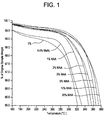
- Perkin-Elmer TGA-7 analyzer About 10 mg of sample were scanned at 10°C/min in nitrogen from 30°C to 900°C and the weight loss was monitored. The region of interest lies between 200°C and 350°C, where poly(methyl methacrylate) tends to lose weight by depolymerization. The results are shown in Table 1 and Figure 1.
- the data show that the graft copolymers having various levels of methacrylic acid are more stable at a given temperature than the graft copolymers made with 100% MMA or MMA/MeAc (4.4%).
- This example demonstrates the physical properties of a graft copolymer comprising a propylene homopolymer backbone, to which was grafted a methyl methacrylate/methacrylic acid copolymer with varying amounts of methacrylic acid. The results were compared with a control comprising a graft copolymer comprising a propylene homopolymer as the backbone polymer, to which was grafted a MMA/MeAc copolymer containing 4.4% methyl acrylate.
- the graft copolymers were prepared as described in Example 1.
- the graft copolymer (38.6 wt. %) was then blended with 42.9 wt. % of the BMWD PP described in Example 1 to adjust the effective add level to 30 pph of polymerized monomers per hundred parts of polypropylene.
- Engage 8150 ethylene/octene elastomer containing 25% octene commercially available from DuPont-Dow Elastomers (14.55 wt. %), was added to the samples.
- Ampacet 19472 black pigment commercially available from Ampacet Corporation, was also added in an amount of 2.91 wt. %.
- the stabilizer package used was 0.05% Pationic 1240 modified calcium salt of lactic acid, commercially available from Patco Polymer Additives Division, American Ingredients Company; 0.20% of Irganox LC 20 FF stabilizer, a mixture of 1 part Irganox 1010 antioxidant and 1 part Irgafos 12 stabilizer, which is 2,2',2''-nitrilotriethyl-tris[3,3',5',5'-tetra-t-butyl-1,1'-biphenyl-2,2'-diyl] phosphite, both commercially available from CIBA Specialty Chemicals Corporation; 0.30% Tinuvin 328 2-(2-hydroxy-3,5-di-t-amylphenyl)-2H-benzotriazole antioxidant, commercially available from CIBA Specialty Chemicals Corporation; 0.24% Tinuvin 770 bis(2,2,6,6-tetramethyl-4-piperidinyl) sebacate antioxidant, commercially available
- the samples were compounded on a 40 mm co-rotating, intermeshing twin screw Werner & Pfleiderer ZSK extruder. Each sample was extruded as pellets at a barrel temperature of 210°C, a screw speed of 490 rpm, and a throughput rate of 170 lb/hr.
- This example shows the effect of using methacrylic acid as one of the grafting monomers on the molecular properties and grafting efficiency of a graft copolymer comprising a backbone of propylene homopolymer to which was grafted a methyl methacrylate/methacrylic acid copolymer.
- the results were compared to the properties of a graft copolymer comprising a backbone of propylene homopolymer, to which was grafted poly(methyl methacrylate) or a MMA/MeAc (4.4%) copolymer.
- the graft copolymers were prepared as described in Example 1. Weight and number average molecular weights, soluble MMA copolymer (XSRT) and grafting efficiency were measured using a Bio-Rad FTS-7 infrared spectrometer and a Perkin-Elmer room temperature gel permeation chromatography (GPC) assembly with a refractive index detector and a tetrahydrofuran mobile phase. It was found that MMA/MAA copolymer grafts were only sparingly soluble in xylene, the solvent normally used for the XSRT measurements, even when only 1% MAA was present in the poly(methyl methacrylate). Cycloheptanone was therefore chosen as the solvent.
- total pph refers to the total amount of monomers per hundred parts of the propylene homopolymer.
- M w and M n are the weight average and number average molecular weights, respectively, of the polymerized monomers that are not grafted to the polypropylene backbone.
- MAA in MMA/MAA wt. %
- M n (10 3 ) XSRT (wt.
Landscapes
- Chemical & Material Sciences (AREA)
- Health & Medical Sciences (AREA)
- Chemical Kinetics & Catalysis (AREA)
- Medicinal Chemistry (AREA)
- Polymers & Plastics (AREA)
- Organic Chemistry (AREA)
- Compositions Of Macromolecular Compounds (AREA)
- Graft Or Block Polymers (AREA)
- Addition Polymer Or Copolymer, Post-Treatments, Or Chemical Modifications (AREA)
- Macromonomer-Based Addition Polymer (AREA)
- Other Resins Obtained By Reactions Not Involving Carbon-To-Carbon Unsaturated Bonds (AREA)
- Polymerisation Methods In General (AREA)
Applications Claiming Priority (2)
| Application Number | Priority Date | Filing Date | Title |
|---|---|---|---|
| US32479 | 1998-02-27 | ||
| US09/032,479 US6046273A (en) | 1998-02-27 | 1998-02-27 | Thermal stability of alpha-substituted acrylate graft copolymers |
Publications (2)
| Publication Number | Publication Date |
|---|---|
| EP0939089A1 true EP0939089A1 (fr) | 1999-09-01 |
| EP0939089B1 EP0939089B1 (fr) | 2004-09-15 |
Family
ID=21865149
Family Applications (1)
| Application Number | Title | Priority Date | Filing Date |
|---|---|---|---|
| EP99103297A Expired - Lifetime EP0939089B1 (fr) | 1998-02-27 | 1999-02-19 | Polymères greffés d'acrylates alpha-substitués de propylène |
Country Status (12)
| Country | Link |
|---|---|
| US (1) | US6046273A (fr) |
| EP (1) | EP0939089B1 (fr) |
| JP (1) | JPH11292939A (fr) |
| KR (1) | KR19990072977A (fr) |
| CN (1) | CN1187384C (fr) |
| AT (1) | ATE276290T1 (fr) |
| AU (1) | AU751574B2 (fr) |
| BR (1) | BR9900840A (fr) |
| CA (1) | CA2262471C (fr) |
| DE (1) | DE69920077T2 (fr) |
| TW (1) | TW552273B (fr) |
| ZA (1) | ZA991541B (fr) |
Cited By (1)
| Publication number | Priority date | Publication date | Assignee | Title |
|---|---|---|---|---|
| WO2000066641A1 (fr) * | 1999-04-29 | 2000-11-09 | Solvay (Societe Anonyme) | Polyolefines et procede pour leur fabrication |
Families Citing this family (6)
| Publication number | Priority date | Publication date | Assignee | Title |
|---|---|---|---|---|
| US6806319B2 (en) * | 2001-08-08 | 2004-10-19 | Basell Polioelfine Italia S.P.A. | Retarding the thermal degradation of polymers using unsaturated aliphatic compounds |
| US6777484B2 (en) | 2001-08-08 | 2004-08-17 | Basell Poliolefine Italia S.P.A. | Polypropylene graft copolymer/fluorinated polyolefin blends |
| WO2004046214A2 (fr) | 2002-10-15 | 2004-06-03 | Exxonmobil Chemical Patents Inc. | Systeme catalyseur multiple pour la polymerisation d'olefines et polymeres ainsi produits |
| US7541402B2 (en) | 2002-10-15 | 2009-06-02 | Exxonmobil Chemical Patents Inc. | Blend functionalized polyolefin adhesive |
| US7550528B2 (en) | 2002-10-15 | 2009-06-23 | Exxonmobil Chemical Patents Inc. | Functionalized olefin polymers |
| US7700707B2 (en) | 2002-10-15 | 2010-04-20 | Exxonmobil Chemical Patents Inc. | Polyolefin adhesive compositions and articles made therefrom |
Citations (3)
| Publication number | Priority date | Publication date | Assignee | Title |
|---|---|---|---|---|
| EP0420615A2 (fr) * | 1989-09-27 | 1991-04-03 | Rohm And Haas Company | Copolymères greffés modificateurs de la résistance à l'impact |
| EP0479171A2 (fr) * | 1990-10-05 | 1992-04-08 | Montell North America Inc. | Mélanges de copolymère greffé de polymère de propylène et de copolymère greffé de caoutchouc oléfinique |
| EP0560496A1 (fr) * | 1992-02-24 | 1993-09-15 | Rohm And Haas Company | Traitement de polymères polaires et mélange ainsi obtenu |
Family Cites Families (9)
| Publication number | Priority date | Publication date | Assignee | Title |
|---|---|---|---|---|
| US5229456A (en) * | 1988-03-29 | 1993-07-20 | Rohm And Haas Company | Graft copolymers and blends thereof with polyolefins |
| IT1230133B (it) * | 1989-04-28 | 1991-10-14 | Himont Inc | Composizioni polipropileniche plasto-elastiche |
| CA2031406C (fr) * | 1989-12-21 | 2002-05-28 | Paolo Galli | Copolymeres greffes de polyolefines et une methode pour les produire |
| US5140074A (en) * | 1990-01-26 | 1992-08-18 | Himont Incorporated | Method of producing olefin polymer graft copolymers |
| US5212246A (en) * | 1990-09-28 | 1993-05-18 | Himont Incorporated | Olefin polymer films |
| US5310794A (en) * | 1992-03-31 | 1994-05-10 | Himont Incorporated | Theromoplastic blends containing graft copolymers of polyacrylates as impact modifiers |
| JP3279714B2 (ja) * | 1993-04-09 | 2002-04-30 | 鐘淵化学工業株式会社 | ポリオレフィン系樹脂組成物およびその製造法、ならびにそれからなる成形体 |
| US5409992A (en) * | 1994-02-28 | 1995-04-25 | Himont Incorporated | Calenderable blends containing broad molecular weight distribution propylene polymer material |
| US6252005B1 (en) * | 1998-08-07 | 2001-06-26 | Montell Technology Company Bv | Thermal oxidative stability of acrylic polymers |
-
1998
- 1998-02-27 US US09/032,479 patent/US6046273A/en not_active Expired - Fee Related
-
1999
- 1999-02-19 EP EP99103297A patent/EP0939089B1/fr not_active Expired - Lifetime
- 1999-02-19 DE DE69920077T patent/DE69920077T2/de not_active Expired - Fee Related
- 1999-02-19 AT AT99103297T patent/ATE276290T1/de not_active IP Right Cessation
- 1999-02-22 CA CA002262471A patent/CA2262471C/fr not_active Expired - Fee Related
- 1999-02-25 JP JP11048360A patent/JPH11292939A/ja active Pending
- 1999-02-25 ZA ZA9901541A patent/ZA991541B/xx unknown
- 1999-02-26 BR BR9900840-8A patent/BR9900840A/pt active Search and Examination
- 1999-02-26 AU AU18454/99A patent/AU751574B2/en not_active Ceased
- 1999-02-26 CN CNB991024516A patent/CN1187384C/zh not_active Expired - Fee Related
- 1999-02-26 TW TW088102901A patent/TW552273B/zh active
- 1999-02-26 KR KR1019990006478A patent/KR19990072977A/ko not_active Abandoned
Patent Citations (3)
| Publication number | Priority date | Publication date | Assignee | Title |
|---|---|---|---|---|
| EP0420615A2 (fr) * | 1989-09-27 | 1991-04-03 | Rohm And Haas Company | Copolymères greffés modificateurs de la résistance à l'impact |
| EP0479171A2 (fr) * | 1990-10-05 | 1992-04-08 | Montell North America Inc. | Mélanges de copolymère greffé de polymère de propylène et de copolymère greffé de caoutchouc oléfinique |
| EP0560496A1 (fr) * | 1992-02-24 | 1993-09-15 | Rohm And Haas Company | Traitement de polymères polaires et mélange ainsi obtenu |
Cited By (3)
| Publication number | Priority date | Publication date | Assignee | Title |
|---|---|---|---|---|
| WO2000066641A1 (fr) * | 1999-04-29 | 2000-11-09 | Solvay (Societe Anonyme) | Polyolefines et procede pour leur fabrication |
| US6586532B1 (en) | 1999-04-29 | 2003-07-01 | Solvay (Societe Anonyme) | Polyolefins and method for the production thereof |
| US6884851B2 (en) | 1999-04-29 | 2005-04-26 | Solvay (Societe Anonyme) | Polyolefins and process for manufacturing them |
Also Published As
| Publication number | Publication date |
|---|---|
| KR19990072977A (ko) | 1999-09-27 |
| CA2262471A1 (fr) | 1999-08-27 |
| CN1227229A (zh) | 1999-09-01 |
| ZA991541B (en) | 1999-08-25 |
| CN1187384C (zh) | 2005-02-02 |
| AU1845499A (en) | 1999-09-09 |
| JPH11292939A (ja) | 1999-10-26 |
| BR9900840A (pt) | 1999-12-21 |
| DE69920077D1 (de) | 2004-10-21 |
| TW552273B (en) | 2003-09-11 |
| ATE276290T1 (de) | 2004-10-15 |
| CA2262471C (fr) | 2004-06-01 |
| US6046273A (en) | 2000-04-04 |
| DE69920077T2 (de) | 2005-09-08 |
| AU751574B2 (en) | 2002-08-22 |
| EP0939089B1 (fr) | 2004-09-15 |
Similar Documents
| Publication | Publication Date | Title |
|---|---|---|
| EP0899277B1 (fr) | Procédé de fabrication de polymères greffés à base de polypropyléne, contenants des groupes anhydrides | |
| RU2171821C2 (ru) | Полимерная композиция | |
| JP3497278B2 (ja) | 異相オレフィンポリマー材料により耐衝撃性が改良されたプロピレンポリマー材料のグラフトコポリマー | |
| US6667367B1 (en) | Directly paintable polypropylene graft copolymers | |
| US6046273A (en) | Thermal stability of alpha-substituted acrylate graft copolymers | |
| EP1023346B1 (fr) | Polymeres acryliques greffes de polypropylene resistants a l'oxydation thermique et leur procede de preparation | |
| EP0953597A2 (fr) | Amélioration de la résistance des polyoléfines greffés en utilisant des composés de zinc-mercapto | |
| US6777484B2 (en) | Polypropylene graft copolymer/fluorinated polyolefin blends | |
| MXPA99001883A (en) | Improvement of thermal stability of sterile acrylate copolymers replaced in position a | |
| MXPA00003319A (en) | Improving the thermal oxidative stability of acrylic polymers | |
| CZ62599A3 (cs) | Zlepšení tepelné stability alfa-substituovaných akrylátových roubovaných kopolymerů | |
| MXPA98006861A (en) | Process for elaborating polypropylene grafting pools that contain anhydr groups | |
| CZ20001604A3 (cs) | Zlepšení tepelné oxidační stability akrylových polymerů |
Legal Events
| Date | Code | Title | Description |
|---|---|---|---|
| PUAI | Public reference made under article 153(3) epc to a published international application that has entered the european phase |
Free format text: ORIGINAL CODE: 0009012 |
|
| AK | Designated contracting states |
Kind code of ref document: A1 Designated state(s): AT BE CH DE DK ES FI FR GB IT LI NL PT SE |
|
| AX | Request for extension of the european patent |
Free format text: AL;LT;LV;MK;RO;SI |
|
| 17P | Request for examination filed |
Effective date: 20000217 |
|
| AKX | Designation fees paid |
Free format text: AT BE CH DE DK ES FI FR GB IT LI NL PT SE |
|
| RAP1 | Party data changed (applicant data changed or rights of an application transferred) |
Owner name: BASELL NORTH AMERICA INC. |
|
| RAP1 | Party data changed (applicant data changed or rights of an application transferred) |
Owner name: BASELL POLIOLEFINE ITALIA S.P.A. |
|
| 17Q | First examination report despatched |
Effective date: 20020712 |
|
| RTI1 | Title (correction) |
Free format text: THERMALLY STABLE ALPHA-SUBSTITUTED ACRYLATE GRAFT COPOLYMERS OF PROPYLENE |
|
| GRAP | Despatch of communication of intention to grant a patent |
Free format text: ORIGINAL CODE: EPIDOSNIGR1 |
|
| GRAS | Grant fee paid |
Free format text: ORIGINAL CODE: EPIDOSNIGR3 |
|
| GRAA | (expected) grant |
Free format text: ORIGINAL CODE: 0009210 |
|
| AK | Designated contracting states |
Kind code of ref document: B1 Designated state(s): AT BE CH DE DK ES FI FR GB IT LI NL PT SE |
|
| PG25 | Lapsed in a contracting state [announced via postgrant information from national office to epo] |
Ref country code: NL Free format text: LAPSE BECAUSE OF FAILURE TO SUBMIT A TRANSLATION OF THE DESCRIPTION OR TO PAY THE FEE WITHIN THE PRESCRIBED TIME-LIMIT Effective date: 20040915 Ref country code: LI Free format text: LAPSE BECAUSE OF FAILURE TO SUBMIT A TRANSLATION OF THE DESCRIPTION OR TO PAY THE FEE WITHIN THE PRESCRIBED TIME-LIMIT Effective date: 20040915 Ref country code: FI Free format text: LAPSE BECAUSE OF FAILURE TO SUBMIT A TRANSLATION OF THE DESCRIPTION OR TO PAY THE FEE WITHIN THE PRESCRIBED TIME-LIMIT Effective date: 20040915 Ref country code: CH Free format text: LAPSE BECAUSE OF FAILURE TO SUBMIT A TRANSLATION OF THE DESCRIPTION OR TO PAY THE FEE WITHIN THE PRESCRIBED TIME-LIMIT Effective date: 20040915 Ref country code: BE Free format text: LAPSE BECAUSE OF FAILURE TO SUBMIT A TRANSLATION OF THE DESCRIPTION OR TO PAY THE FEE WITHIN THE PRESCRIBED TIME-LIMIT Effective date: 20040915 Ref country code: AT Free format text: LAPSE BECAUSE OF FAILURE TO SUBMIT A TRANSLATION OF THE DESCRIPTION OR TO PAY THE FEE WITHIN THE PRESCRIBED TIME-LIMIT Effective date: 20040915 |
|
| REG | Reference to a national code |
Ref country code: GB Ref legal event code: FG4D Ref country code: CH Ref legal event code: EP |
|
| REF | Corresponds to: |
Ref document number: 69920077 Country of ref document: DE Date of ref document: 20041021 Kind code of ref document: P |
|
| PG25 | Lapsed in a contracting state [announced via postgrant information from national office to epo] |
Ref country code: SE Free format text: LAPSE BECAUSE OF FAILURE TO SUBMIT A TRANSLATION OF THE DESCRIPTION OR TO PAY THE FEE WITHIN THE PRESCRIBED TIME-LIMIT Effective date: 20041215 Ref country code: DK Free format text: LAPSE BECAUSE OF FAILURE TO SUBMIT A TRANSLATION OF THE DESCRIPTION OR TO PAY THE FEE WITHIN THE PRESCRIBED TIME-LIMIT Effective date: 20041215 |
|
| PG25 | Lapsed in a contracting state [announced via postgrant information from national office to epo] |
Ref country code: ES Free format text: LAPSE BECAUSE OF FAILURE TO SUBMIT A TRANSLATION OF THE DESCRIPTION OR TO PAY THE FEE WITHIN THE PRESCRIBED TIME-LIMIT Effective date: 20041226 |
|
| REG | Reference to a national code |
Ref country code: CH Ref legal event code: PL |
|
| NLV1 | Nl: lapsed or annulled due to failure to fulfill the requirements of art. 29p and 29m of the patents act | ||
| ET | Fr: translation filed | ||
| PLBE | No opposition filed within time limit |
Free format text: ORIGINAL CODE: 0009261 |
|
| STAA | Information on the status of an ep patent application or granted ep patent |
Free format text: STATUS: NO OPPOSITION FILED WITHIN TIME LIMIT |
|
| 26N | No opposition filed |
Effective date: 20050616 |
|
| PGFP | Annual fee paid to national office [announced via postgrant information from national office to epo] |
Ref country code: DE Payment date: 20060221 Year of fee payment: 8 |
|
| PGFP | Annual fee paid to national office [announced via postgrant information from national office to epo] |
Ref country code: IT Payment date: 20060228 Year of fee payment: 8 |
|
| GBPC | Gb: european patent ceased through non-payment of renewal fee |
Effective date: 20070219 |
|
| PG25 | Lapsed in a contracting state [announced via postgrant information from national office to epo] |
Ref country code: PT Free format text: LAPSE BECAUSE OF NON-PAYMENT OF DUE FEES Effective date: 20050215 |
|
| PG25 | Lapsed in a contracting state [announced via postgrant information from national office to epo] |
Ref country code: DE Free format text: LAPSE BECAUSE OF NON-PAYMENT OF DUE FEES Effective date: 20070901 |
|
| PG25 | Lapsed in a contracting state [announced via postgrant information from national office to epo] |
Ref country code: GB Free format text: LAPSE BECAUSE OF NON-PAYMENT OF DUE FEES Effective date: 20070219 |
|
| PGFP | Annual fee paid to national office [announced via postgrant information from national office to epo] |
Ref country code: GB Payment date: 20060223 Year of fee payment: 8 |
|
| PG25 | Lapsed in a contracting state [announced via postgrant information from national office to epo] |
Ref country code: IT Free format text: LAPSE BECAUSE OF NON-PAYMENT OF DUE FEES Effective date: 20070219 |
|
| PGFP | Annual fee paid to national office [announced via postgrant information from national office to epo] |
Ref country code: FR Payment date: 20110309 Year of fee payment: 13 |
|
| REG | Reference to a national code |
Ref country code: FR Ref legal event code: ST Effective date: 20121031 |
|
| PG25 | Lapsed in a contracting state [announced via postgrant information from national office to epo] |
Ref country code: FR Free format text: LAPSE BECAUSE OF NON-PAYMENT OF DUE FEES Effective date: 20120229 |