EP0948041A2 - Transistor à grille isolée, méthode de fabrication et dispositif de circuit intégré à base de semiconductor - Google Patents
Transistor à grille isolée, méthode de fabrication et dispositif de circuit intégré à base de semiconductor Download PDFInfo
- Publication number
- EP0948041A2 EP0948041A2 EP99104477A EP99104477A EP0948041A2 EP 0948041 A2 EP0948041 A2 EP 0948041A2 EP 99104477 A EP99104477 A EP 99104477A EP 99104477 A EP99104477 A EP 99104477A EP 0948041 A2 EP0948041 A2 EP 0948041A2
- Authority
- EP
- European Patent Office
- Prior art keywords
- gate electrode
- gate
- conductive type
- region
- semiconductor substrate
- Prior art date
- Legal status (The legal status is an assumption and is not a legal conclusion. Google has not performed a legal analysis and makes no representation as to the accuracy of the status listed.)
- Withdrawn
Links
Images


Classifications
-
- H—ELECTRICITY
- H10—SEMICONDUCTOR DEVICES; ELECTRIC SOLID-STATE DEVICES NOT OTHERWISE PROVIDED FOR
- H10D—INORGANIC ELECTRIC SEMICONDUCTOR DEVICES
- H10D30/00—Field-effect transistors [FET]
- H10D30/01—Manufacture or treatment
- H10D30/021—Manufacture or treatment of FETs having insulated gates [IGFET]
- H10D30/0223—Manufacture or treatment of FETs having insulated gates [IGFET] having source and drain regions or source and drain extensions self-aligned to sides of the gate
- H10D30/0227—Manufacture or treatment of FETs having insulated gates [IGFET] having source and drain regions or source and drain extensions self-aligned to sides of the gate having both lightly-doped source and drain extensions and source and drain regions self-aligned to the sides of the gate, e.g. lightly-doped drain [LDD] MOSFET or double-diffused drain [DDD] MOSFET
-
- H—ELECTRICITY
- H10—SEMICONDUCTOR DEVICES; ELECTRIC SOLID-STATE DEVICES NOT OTHERWISE PROVIDED FOR
- H10D—INORGANIC ELECTRIC SEMICONDUCTOR DEVICES
- H10D30/00—Field-effect transistors [FET]
- H10D30/60—Insulated-gate field-effect transistors [IGFET]
-
- H—ELECTRICITY
- H10—SEMICONDUCTOR DEVICES; ELECTRIC SOLID-STATE DEVICES NOT OTHERWISE PROVIDED FOR
- H10D—INORGANIC ELECTRIC SEMICONDUCTOR DEVICES
- H10D62/00—Semiconductor bodies, or regions thereof, of devices having potential barriers
- H10D62/10—Shapes, relative sizes or dispositions of the regions of the semiconductor bodies; Shapes of the semiconductor bodies
- H10D62/17—Semiconductor regions connected to electrodes not carrying current to be rectified, amplified or switched, e.g. channel regions
- H10D62/351—Substrate regions of field-effect devices
- H10D62/357—Substrate regions of field-effect devices of FETs
- H10D62/364—Substrate regions of field-effect devices of FETs of IGFETs
- H10D62/371—Inactive supplementary semiconductor regions, e.g. for preventing punch-through, improving capacity effect or leakage current
-
- H—ELECTRICITY
- H10—SEMICONDUCTOR DEVICES; ELECTRIC SOLID-STATE DEVICES NOT OTHERWISE PROVIDED FOR
- H10D—INORGANIC ELECTRIC SEMICONDUCTOR DEVICES
- H10D84/00—Integrated devices formed in or on semiconductor substrates that comprise only semiconducting layers, e.g. on Si wafers or on GaAs-on-Si wafers
- H10D84/01—Manufacture or treatment
- H10D84/0123—Integrating together multiple components covered by H10D12/00 or H10D30/00, e.g. integrating multiple IGBTs
- H10D84/0126—Integrating together multiple components covered by H10D12/00 or H10D30/00, e.g. integrating multiple IGBTs the components including insulated gates, e.g. IGFETs
- H10D84/0156—Manufacturing their doped wells
-
- H—ELECTRICITY
- H10—SEMICONDUCTOR DEVICES; ELECTRIC SOLID-STATE DEVICES NOT OTHERWISE PROVIDED FOR
- H10D—INORGANIC ELECTRIC SEMICONDUCTOR DEVICES
- H10D84/00—Integrated devices formed in or on semiconductor substrates that comprise only semiconducting layers, e.g. on Si wafers or on GaAs-on-Si wafers
- H10D84/01—Manufacture or treatment
- H10D84/02—Manufacture or treatment characterised by using material-based technologies
- H10D84/03—Manufacture or treatment characterised by using material-based technologies using Group IV technology, e.g. silicon technology or silicon-carbide [SiC] technology
- H10D84/038—Manufacture or treatment characterised by using material-based technologies using Group IV technology, e.g. silicon technology or silicon-carbide [SiC] technology using silicon technology, e.g. SiGe
-
- H—ELECTRICITY
- H10—SEMICONDUCTOR DEVICES; ELECTRIC SOLID-STATE DEVICES NOT OTHERWISE PROVIDED FOR
- H10D—INORGANIC ELECTRIC SEMICONDUCTOR DEVICES
- H10D84/00—Integrated devices formed in or on semiconductor substrates that comprise only semiconducting layers, e.g. on Si wafers or on GaAs-on-Si wafers
- H10D84/80—Integrated devices formed in or on semiconductor substrates that comprise only semiconducting layers, e.g. on Si wafers or on GaAs-on-Si wafers characterised by the integration of at least one component covered by groups H10D12/00 or H10D30/00, e.g. integration of IGFETs
- H10D84/82—Integrated devices formed in or on semiconductor substrates that comprise only semiconducting layers, e.g. on Si wafers or on GaAs-on-Si wafers characterised by the integration of at least one component covered by groups H10D12/00 or H10D30/00, e.g. integration of IGFETs of only field-effect components
- H10D84/83—Integrated devices formed in or on semiconductor substrates that comprise only semiconducting layers, e.g. on Si wafers or on GaAs-on-Si wafers characterised by the integration of at least one component covered by groups H10D12/00 or H10D30/00, e.g. integration of IGFETs of only field-effect components of only insulated-gate FETs [IGFET]
- H10D84/83138—Integrated devices formed in or on semiconductor substrates that comprise only semiconducting layers, e.g. on Si wafers or on GaAs-on-Si wafers characterised by the integration of at least one component covered by groups H10D12/00 or H10D30/00, e.g. integration of IGFETs of only field-effect components of only insulated-gate FETs [IGFET] the IGFETs characterised by having different shapes or dimensions of their gate conductors
-
- H—ELECTRICITY
- H10—SEMICONDUCTOR DEVICES; ELECTRIC SOLID-STATE DEVICES NOT OTHERWISE PROVIDED FOR
- H10D—INORGANIC ELECTRIC SEMICONDUCTOR DEVICES
- H10D84/00—Integrated devices formed in or on semiconductor substrates that comprise only semiconducting layers, e.g. on Si wafers or on GaAs-on-Si wafers
- H10D84/80—Integrated devices formed in or on semiconductor substrates that comprise only semiconducting layers, e.g. on Si wafers or on GaAs-on-Si wafers characterised by the integration of at least one component covered by groups H10D12/00 or H10D30/00, e.g. integration of IGFETs
- H10D84/82—Integrated devices formed in or on semiconductor substrates that comprise only semiconducting layers, e.g. on Si wafers or on GaAs-on-Si wafers characterised by the integration of at least one component covered by groups H10D12/00 or H10D30/00, e.g. integration of IGFETs of only field-effect components
- H10D84/83—Integrated devices formed in or on semiconductor substrates that comprise only semiconducting layers, e.g. on Si wafers or on GaAs-on-Si wafers characterised by the integration of at least one component covered by groups H10D12/00 or H10D30/00, e.g. integration of IGFETs of only field-effect components of only insulated-gate FETs [IGFET]
- H10D84/85—Complementary IGFETs, e.g. CMOS
- H10D84/856—Complementary IGFETs, e.g. CMOS the complementary IGFETs having different architectures than each other, e.g. high-voltage and low-voltage CMOS
-
- H—ELECTRICITY
- H10—SEMICONDUCTOR DEVICES; ELECTRIC SOLID-STATE DEVICES NOT OTHERWISE PROVIDED FOR
- H10P—GENERIC PROCESSES OR APPARATUS FOR THE MANUFACTURE OR TREATMENT OF DEVICES COVERED BY CLASS H10
- H10P30/00—Ion implantation into wafers, substrates or parts of devices
- H10P30/20—Ion implantation into wafers, substrates or parts of devices into semiconductor materials, e.g. for doping
- H10P30/22—Ion implantation into wafers, substrates or parts of devices into semiconductor materials, e.g. for doping using masks
-
- H—ELECTRICITY
- H10—SEMICONDUCTOR DEVICES; ELECTRIC SOLID-STATE DEVICES NOT OTHERWISE PROVIDED FOR
- H10D—INORGANIC ELECTRIC SEMICONDUCTOR DEVICES
- H10D30/00—Field-effect transistors [FET]
- H10D30/01—Manufacture or treatment
- H10D30/021—Manufacture or treatment of FETs having insulated gates [IGFET]
- H10D30/0217—Manufacture or treatment of FETs having insulated gates [IGFET] forming self-aligned punch-through stoppers or threshold implants under gate regions
Definitions
- the present invention relates to insulated gate transistors such as MOS transistor and the like, a method of manufacturing same, and semiconductor integrated circuit device.
- p-type impurities are implanted into the vicinity of surface of a semiconductor substrate, which becomes a channel region, by ion implantation method.
- the p-type impurity implantation is aimed mainly at setting a threshold voltage of element at a desired value.
- ion implantation of p-type impurities are performed on whole surface of p-channel MOS transistor forming region, and subsequently, gate oxide film and gate electrodes are formed.
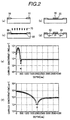
- FIG. 2 A manufacturing method of p-channel MOS transistor using n-type silicone substrate is indicated in FIG. 2 as an example of conventional processes.
- LOCOS oxide film 10, 11 are formed on the n-type silicone substrate.
- thermal oxide film 80 is formed thinly, and p-type impurity layer 90 is formed by implanting p-type impurity ions (B+, or BF2+, and the like) 70 into whole surface of the silicone substrate by approximately 10 12 - 10 14 cm -2 with 10 - tens keV.
- FIG. 2 (c) after removing all the thermal oxide film 80 formed in FIG.
- FIG. 2(b) is a graph indicating a concentration distribution of boron ions in a depth direction under the gate oxide film 80, when the boron ions are implanted with a dose of 1 x 10 12 cm -2 by an acceleration energy of 60 keV.
- FIG. 2 (f) is a graph indicating a concentration distribution of boron ions in a depth direction under the gate oxide film 20 as an example, when the boron ions are implanted with a dose of 1 x 10 12 cm -2 by an acceleration energy of 60 keV before forming the gate oxide film and the gate electrode , and subsequently, a heat treatment at 1100°C for 360 minutes is performed for forming the channel layer of the high withstand voltage element.
- the surface concentration which determined the threshold voltage of the MOS transistor
- the threshold voltage of the MOS transistor can not be controlled.
- the implantation dose is increased in order to increase the surface concentration, the junction depth of the p-type diffusion layer becomes deep, and the p-type diffusion layers of the source region and the drain region are combined, and the MOS transistor becomes inoperable.
- the size of the element of low withstand voltage p-channel MOS transistor is made small so as to realize high integration; that is, if the length of the gate is shortened, depletion layers of source junction and drain junction are contacted; a phenomenon called as punch-through, which means that the current becomes uncontrollable by the gate; and a problem that the p-channel MOS transistor becomes inoperable is generated.
- the present invention is achieved in consideration of the above problem of the prior art described above, and aimed at providing a structure and a manufacturing method of insulated gate transistor suitable for integrating high withstand voltage elements and low withstand voltage insulated gate transistors on a chip simultaneously.
- the insulated gate transistor in accordance with the present invention comprises; second conductive type source region and drain region provided on surface of a substrate of first conductive type semiconductor; and gate electrodes provided on surface of the substrate of the semiconductor via an insulating film at a region located between the source region and the drain region. Furthermore, the second conductive type semiconductor layers having an impurity concentration lower than that of the source region and the drain region are formed on the surface of the substrate of the semiconductor at the location beneath the gate electrode, and at a region connected with the source region and the drain region and deeper than the source region and the drain region in the substrate of the semiconductor. An interval between the deepest point at the portion connected with the source region and the deepest point at the portion connected with the drain region is set so as to be larger than the gate length of the gate electrode.
- the first conductive type and the second conductive type are any of p-type and n-type contrary each other.
- the depletion layers in the semiconductor substrate are scarcely contacted each other at the region formed deeper than the source region and the drain region in the second semiconductor layer, because the interval between the deepest point at the portion connected with the source region and the deepest point at the portion connected with the drain region is set so as to be larger than the gate length of the gate electrode. Therefore, deterioration of characteristics and impossibility of operation of the semiconductor accompanied with contact of the depletion layers can be prevented.
- the advantages of the present invention are significant when the channels are shortened by decreasing the gate length, and deterioration accompanied with shortening the channels can be prevented.
- the insulated gate transistor described above is manufactured by the following method.
- the manufacturing method in accordance with the present invention comprises the steps of the first process for forming the gate oxide film and the gate electrode on the surface of the semiconductor substrate, the second process for applying resist or providing insulating member on side wall of the gate electrode, and the third process for implanting ions of the second conductive type impurity in the semiconductor substrate using the gate oxide film, the gate electrode, and the resist or the insulating member as masks so that the impurity is introduced into the surface of the semiconductor substrate located beneath the gate electrode.
- the second conductive type impurity is introduced deepest into the regions of the semiconductor substrate, where are not masked with the gate electrode, at both sides of the gate electrode, respectively, but the depth of the introduction of the second conductive type impurity in the region of the semiconductor substrate coated with the resist or the insulating member at the side wall of the gate electrode is depressed. Therefore, subsequent to the third process for forming the second conductive type source region and the drain region, the interval between the deepest point of the second conductive type semiconductor layer formed in the second process in the region contacting with the source region and the deepest point in the region contacting with the drain region becomes longer than the length of the gate of the source electrode.
- the present invention relates to a semiconductor integrated circuit device comprising fine insulated gate transistor having small gate length, and its manufacturing method is suitable for applying to the semiconductor integrated circuit device including a high temperature thermal treatment such as a case when high withstand voltage semiconductor elements exist simultaneously. That is, in a case when high energy ions for adjusting a threshold voltage are implanted using the gate electrode as a mask after the heat treatment by proving the insulated member at the side wall of the gate electrode, deterioration in the characteristics of the insulated gate transistor; accompanied with contact of the depletion layers between the layers of the semiconductors formed deeply in the regions of the semiconductor substrate, where are not masked with the gate electrode, at both sides of the gate electrode; can be prevented.
- the advantages of the present invention are significant on the semiconductor integrated circuit device comprising the insulated gate transistor having short gate length and the semiconductor elements having a high withstand voltage, and deterioration of the characteristics of the fine insulated gate transistor can be prevented.
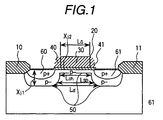
- FIG. 1 is a schematic cross sectional view of p-channel MOS transistor of the embodiment of the present invention.
- LOCOS oxide films 10, 11 for separating elements are formed on the surface of the n-type semiconductor substrate, and p-type source 60 and drain 61 having a high impurity concentration are formed on the surface of the semiconductor substrate between these LOCOS oxide films.
- Each of source electrode and drain electrode (not shown in the figure) is connected by ohmic junction to the source 60 and the drain 61, respectively.
- MOS gate is formed by providing thin gate silicone oxide film 20 and polysilicon gate electrode 30 laminated thereon onto the surface of the semiconductor substrate to be channel region between the source 60 and the drain 61.
- the p-type semiconductor layer for adjusting threshold voltage of the MOS gate having a lower impurity concentration than those of the source and the drain is formed in the region from the surface of the semiconductor substrate just beneath the gate electrode 30 to the region contacting with the source 60 and the drain 61 in the semiconductor substrate and deeper region than these semiconductor regions. Only the portion on the surface of the semiconductor substrate just beneath the gate electrode 30 of the p-type semiconductor layer 50 has substantially a function to adjust the threshold voltage. However, in accordance with forming the p-type semiconductor layer 50 to the region where the source 60 and the drain 61 are located, the threshold voltage adjustment by the ion implantation using the gate electrode as a mask becomes possible as stated later.
- the interval between the region contacting with the source 60 and the region contacting with the drain in the p-type semiconductor layer 50 that is, the distance between source and drain as indicated as L SD in the figure is broadened as it goes deeper from the surface of the semiconductor substrate, and the interval L d at the deepest point becomes larger than the width of the gate electrode 30, that is, the gate length L G . Therefore, generation of punch-through of the depletion layers between the source and the drain becomes difficult, and operation of the p-channel MOS transistor becomes sufficiently possible, even if the gate length is as shortened as equal to or less than 2 ⁇ m.
- insulating films 40, 41 made of silicon oxide are provided at the side wall of the gate electrode 30.
- the silicon oxide is formed being adhered to the side wall of the gate electrode 30 extending along the side wall to the portion off the end of the gate electrode of the gate oxide film 20.
- the p-type semiconductor layer 50 such as the present embodiment can be formed by ion implantation using the gate electrode 30 as a mask as stated later.
- the p-channel MOS transistor having short channel and the semiconductor element having a high withstand voltage can be integrated on a same semiconductor chip as explained later in the embodiment.
- composition of the present embodiment operating certainly as the p-channel MOS transistor studied by the inventors of the present invention are explained hereinafter.
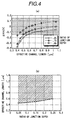
- FIG. 4(a) A result of simulation study on variation of the threshold value is indicated in FIG. 4(a); when effective channel length (a distance between the source and the drain L CD under the gate oxide film, that is, the width of the p-type semiconductor layer 50 under the gate oxide film in a direction of the gate length) is varied using the ratio of the p-channel MOS transistor having a junction depth x j1 of the p-type semiconductor layer 50 contacting with the source and drain in the range of approximately 3000-6000 ⁇ to the junction depth x j2 of the p-type semiconductor layer 50 under the gate oxide film as a parameter.
- effective channel length a distance between the source and the drain L CD under the gate oxide film, that is, the width of the p-type semiconductor layer 50 under the gate oxide film in a direction of the gate length
- the composition does not operate as the MOS transistor, nor the threshold voltage can be determined.
- the ratio is smaller than 0.05, the threshold voltage can not be controlled.
- the MOS transistor is designed so that the threshold voltage varies in the range of ⁇ 0.15 V, in order to depress the variation of the threshold voltage depending on the temperature change, and variation in drain current depending on the elevation of the threshold voltage. Therefore, in accordance with the FIG.
- the critical effective channel length off the range of ⁇ 0.15 V is determined, and a relationship between the ratio of junction depth of the p-type semiconductor layer 50 and the critical effective channel length off the range of ⁇ 0.15 V is determined.
- the result is indicated in FIG. 4 (b).
- the p-channel MOS transistor operates certainly, if the ratio of the junction depth and the effective channel length of the transistor are in the region of the hatched area of the FIG. 4(b).
- FIG. 5 is a set of the schematic cross sections of the p-channel MOS transistor indicating the steps of the manufacturing method of the second embodiment of the present invention.
- LOCOS oxide film 10, 11 are formed on a n-type silicon substrate by a conventional MOS transistor manufacturing method, and a region wherein the MOS transistor is formed is made an active region.
- gate silicon oxide film 20 is accumulated in a height of tens-hundreds ⁇ by thermal growth method, and n-type polysilicon film 30 is accumulated in a height of hundreds-thousands ⁇ by CVD method.
- a photoprocess is performed on the gate silicon oxide film 20 and the polysilicon film 30 so as to remain a gate region of gate length 0.5 ⁇ m - 2 ⁇ m, and unnecessary region is removed by dry etching.
- resist 100 is applied onto the portion other than the polysilicon with the thickness of at least 2 ⁇ m so as to be adhered to the side wall of the silicon film in the gate region, and ion implantation is performed on the whole surface of the silicon substrate with p-type impurity ions (B+ or BF2+, and the like) 70 by tens-hundreds keV.
- the resist of thousands ⁇ thick is applied onto the upper plane of the polysilicon and a width of hundreds nm to a several microns from the side plane of the polysilicon as indicated in FIG. 5 (d).
- ion implantation is performed on the whole surface of the silicon substrate with p-type impurity ions (B+ or BF2+, and the like) 70 by tens-hundreds keV.
- p-type impurity ions B+ or BF2+, and the like
- the source/ drain regions 60, 61 of the p-channel MOS transistor are formed by the conventional MOS transistor manufacturing process as indicated in FIG. 5 (e).
- the punch-through is suppressed, because the end portion of the source/drain does not reach the beneath portion of the side wall of the gate electrode.
- Shallow p-type impurity layer 51 is formed exactly beneath the gate electrode by the process indicated in FIG. 5(c), and the threshold voltage of the manufactured p-channel MOS transistor can be controlled to be a desired value.
- the p-type impurity layers 50, 51, 52 for adjusting the threshold voltage can not form ohmic contact with the source and drain electrodes (not shown in the figure), because the impurity concentration is low. Therefore, p-type impurity is further implanted to be a concentration capable of forming the ohmic contact (generally, at least 1 X 10 15 /cm 2 ) to form the source 60 and the drain 61.
- concentration capable of forming the ohmic contact generally, at least 1 X 10 15 /cm 2
- the depths of the p-type source and the drain must be shallow as the gate length becomes shorter in order to prevent the contact of the depletion layers.
- the source and the drain are formed by the ion implantation using B+ with 30 keV, and BF2+ with 60 keV. If the gate length is shortened, the same or lower acceleration energy as the above acceleration energy is used.
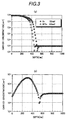
- FIG. 3 (a) indicates a concentration distribution of boron ions in a depth direction in a case when the ion implantation is performed with B+ with the acceleration energy of 30 keV, and BF2+ with the acceleration energy of 60 keV, and subsequent conventional processes for recoverying defects and forming interlayer insulating film are performed.
- the junction depth of the source/drain of a high concentration becomes approximately 450-500 nm.
- the ions in order to form the p-type impurity layer 51 just beneath the gate oxide film, the ions must be implanted by the acceleration energy with the surface concentration sufficiently exceeding 1 X 10 16 /cm 3 for penetrating the gate electrode and the gate oxide film, and adjusting the threshold voltage of the p-channel MOS transistor.
- the thickness of the gate electrode is approximately 3000-4000 ⁇ for n-type polysilicon in the process of conventional gate length of approximately 1 ⁇ m, approximately 1000 ⁇ for n-type polysilicon and approximately 1500 ⁇ for polycide or silicide and the like in the process of gate length of approximately 0.8 ⁇ m.
- Thickness of the gate oxide film is approximately 100-300 ⁇ . In a case when the gate oxide film of 250 ⁇ and polysilicon film of 3500 ⁇ are used, which are generally used in the process for gate length of approximately 1.3 ⁇ m, an acceleration energy equal to or more than 100 keV is necessary for implanting B+ through the gate oxide film and exceeding the surface concentration of 1 X 10 16 /cm 3 sufficiently.
- FIG. 3(b) is a graph indicating a concentration distribution of B+ in a depth direction of the p-type semiconductor layers 50, 52, which are formed simultaneously with formation of the p-type semiconductor layer 51 by implanting B+ by an acceleration energy of 90 keV.
- the figure reveals that the junction depth is approximately 550 pm.
- the p-type semiconductor layers 50, 52 of relatively low concentration exist in positions of the junction depth deeper than the source 60 and the drain 61 of high concentration.
- the p-channel MOS transistor having the gate length of equal to or less than 1.3 ⁇ m, ensuring a distance between the source and the drain equal to or more than the gate length is necessary at the junction depth position of the low concentration in order to prevent contact of the depletion layers.
- ion implantation is performed with applying resist 100 onto the side wall of the gate 30. Therefore, the interval between the p-type semiconductor layers 50, 52, that is the source ⁇ drain interval L d at the deepest point shown in FIG. 1, can be made longer than the gate length.
- n-type silicon substrate an example of only n-type silicon substrate is indicated.
- the present invention is applicable to any of p-type silicon substrate, SOI substrate, DI separated substrate, and other.
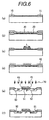
- FIG. 6 is a set of the schematic cross sections of the p-channel MOS transistor indicating the steps of the manufacturing method of the third embodiment of the present invention.
- LOCOS oxide film 10, 11 are formed on a n-type silicon substrate by a conventional MOS transistor manufacturing method, and a region wherein the MOS transistor is formed is made an active region.
- gate silicon oxide film 20 is accumulated in a height of tens-hundreds ⁇ by thermal growth method, and n-type polysilicon film 30 is accumulated in a height of hundreds-thousands ⁇ by CVD method.
- a photoprocess is performed on the gate silicon oxide film 20 and the polysilicon film 30 so as to remain a gate region of gate length 0.5 ⁇ m - 2 ⁇ m as indicated in FIG.
- silicon oxide film 42 is accumulated on all the surface of the silicon substrate in a height of thousands ⁇ by CVD method.
- an anisotropic etching on the accumulated silicon oxide film by dry etching method, the side walls 40, 41 of the silicon oxide film, an insulating material, are remained; the silicon oxide film is adhered to the side planes along the polysilicon film in the gate region until reaching the gate oxide film as indicated in FIG. 6(e).
- ion implantation is performed on the whole surface of the silicon substrate with p-type impurity ions (B+ or BF2+, and the like) 70 by tens-hundreds keV.
- the source/ drain regions 60, 61 of the p-channel MOS transistor are formed by the conventional MOS transistor manufacturing process, and the p-channel MOS transistor as indicated in FIG. 6 (f) is obtained.
- a shallow p-type impurity layer 51 is formed exactly beneath the gate electrode, and the threshold voltage of the manufactured p-channel MOS transistor can be controlled to be a desired value.
- n-type silicon substrate an example of only n-type silicon substrate is indicated.
- the present invention is applicable to any of p-type silicon substrate, SOI substrate, DI separated substrate, and other.
- FIG. 7 is a set of the schematic cross sections of semiconductor integrated circuit device, wherein enhancement type n-channel MOS transistors and p-channel MOS transistors are formed on a chip, indicating the steps of the manufacturing method of the fourth embodiment of the present invention.
- LOCOS oxide film 10, 11, 12 are formed on a n-type silicon substrate by a conventional MOS transistor manufacturing method, and regions wherein the p-channel and the n-channel MOS transistors are formed are made active regions.
- p-well 200 is formed by ion implantation of p-type impurity such as boron ions and the like and heat treatment at a high temperature.
- gate silicon oxide film 20 is accumulated in a height of tens-hundreds ⁇ by thermal growth method, and n-type polysilicon film 30 is accumulated in a height of hundreds-thousands ⁇ by CVD method.
- a photoprocess is performed on the gate silicon oxide film 20 and the polysilicon film 30 so as to remain a gate region of gate length 0.5 ⁇ m - 2 ⁇ m in each of the regions, wherein the n-channel MOS transistor and the p-channel MOS transistor are formed respectively as indicated in FIG. 7(c), and unnecessary region is removed by dry etching.
- silicon oxide film 44 is accumulated on all the surface of the silicon substrate in a height of thousands ⁇ by CVD method.
- ion implantation is performed on the whole surface of the silicon substrate with p-type impurity ions (B+ or BF2+, and the like) 70 by tens-hundreds keV.
- p-type source/ drain regions 62, 63 are formed in the region forming the p-channel MOS transistor and n-type source/ drain regions 60, 61 are formed in the region forming the n-channel MOS transistor by the conventional MOS transistor manufacturing process.
- shallow p-type impurity layers 50, 51 are formed exactly beneath the gate electrode, and the threshold voltages of both the manufactured p-channel MOS transistor and n-channel MOS transistor can be controlled to be desired values.
- n-type silicon substrate an example of only n-type silicon substrate is indicated.
- the present invention is applicable to any of p-type silicon substrate, SOI substrate, DI separated substrate, and other.
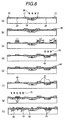
- FIG. 8 is a set of the schematic cross sections of semiconductor integrated circuit device, wherein high withstand voltage n-channel MOS transistors and low withstand voltage p-channel MOS transistors are formed on a chip, indicating the steps of the manufacturing method of the fifth embodiment of the present invention.
- LOCOS oxide film 10, 11, 12, 13 are formed on a n-type silicon substrate by a conventional MOS transistor manufacturing method, and regions wherein the high withstand voltage n-channel MOS transistors and low withstand voltage p-channel MOS transistors are formed are made active regions.
- An n-well is formed by ion implantation of n-type impurity 90 such as phosphorus and the like and heat treatment at a high temperature.
- gate silicon oxide film 20 is accumulated in a height of tens-hundreds ⁇ by thermal growth method, and n-type polysilicon film 30 is accumulated in a height of hundreds-thousands ⁇ by CVD method.
- a photoprocess is performed on the gate silicon oxide film 20 and the polysilicon film 30 so as to remain gate regions of gate length L2, L3 of several ⁇ m for the high withstand voltage n-channel field effect transistor and the gate regions of gate length L1 of 0.5 - 2 ⁇ m for the low withstand voltage p-channel field effect transistor, respectively as indicated in FIG. 8(c), and unnecessary region is removed by dry etching.
- p-type impurity ions (B+ or BF2+ and others) 70 are introduced into only the region of the high withstand voltage n-channel MOS transistor by ion implantation, and deep p-type impurity layer 65 as indicated in FIG.
- ion implantation is performed on only the region of the low withstand voltage p-channel field effect transistor with p-type impurity ions (B+ or BF2+, and the like) 70 by tens-hundreds keV to form the p-type impurity layer 50.
- n-type source/ drain regions 62, 63 are formed in the region forming the high withstand voltage n-channel MOS transistor and p-type source/ drain regions 60, 61 are formed in the region forming the low withstand voltage p-channel MOS transistor by the conventional MOS transistor manufacturing process.
- the ion implantation of p-type impurity ions for adjusting the threshold voltage is performed after completion of the gate electrode. Accordingly, the low withstand voltage p-channel MOS transistor is not influenced by the heat treatment at a high temperature for forming channel stop region of the high withstand voltage n-channel MOS transistor, and the threshold value of the p-channel MOS transistor can be controlled to be a desired value.
- n-type silicon substrate an example of only n-type silicon substrate is indicated.
- the present invention is applicable to any of p-type silicon substrate, SOI substrate, DI separated substrate, and other.
- an embodiment of forming the high withstand voltage n-channel MOS transistor and the low withstand voltage p-channel MOS transistor on a chip is indicated, but high withstand voltage p-channel MOS transistor and the low withstand voltage p-channel MOS transistor can be formed similarly on a chip.
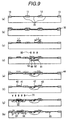
- FIG. 9 is a set of the schematic cross sections of semiconductor integrated circuit device, wherein IGBT and p-channel MOS transistors are formed on a chip, indicating the steps of the manufacturing method of the sixth embodiment of the present invention.
- LOCOS oxide film 10, 11, 12, 13 are formed on a n-type silicon substrate by a conventional MOS transistor manufacturing method, and regions wherein the field effect transistors and the IGBT are formed are made active regions.
- gate silicon oxide film 20 is accumulated in a height of tens-hundreds ⁇ by thermal growth method, and n-type polysilicon film 30 is accumulated in a height of hundreds-thousands ⁇ by CVD method.
- a photoprocess is performed on the gate silicon oxide film 20 and the polysilicon film 30 so as to remain gate regions of gate length L of several ⁇ m for the IGBT and the gate regions of gate length L of 0.5 - 2 ⁇ m for the low withstand voltage p-channel MOS transistor, respectively as indicated in FIG. 9(c), and unnecessary region is removed by dry etching.
- p-type impurity ions 90 are introduced into only the region of the IGBT by ion implantation and by thermal diffusion process at hundreds to a thousand and several hundreds degrees for tens - several hundreds minutes for forming the deep p-type impurity layer 61 as indicated in FIG. 9 (d).
- p-type impurity ions are introduced similarly by ion implantation and thermal diffusion process at hundreds to a thousand and several hundreds degrees for tens - several hundreds minutes for forming the p-type impurity layer 60. Furthermore, ion implantation is performed for forming n-type anode of the IGBT. Then, silicon oxide film 44 is accumulated on all the surface of the silicon substrate in a height of thousands ⁇ by CVD method as indicated in FIG. 9 (e). By performing an etching on the accumulated silicon oxide film by dry etching method, the side walls 40, 41, 423, 43 of the silicon oxide film are remained at side planes of the gate silicon oxide film and the polysilicon film as indicated in FIG. 9 (f).
- ion implantation is performed on only the region of the low withstand voltage p-channel field effect transistor with p-type impurity ions (B+ or BF2+, and the like) 70 by tens-hundreds keV to form the p-type impurity layer 50.
- p-type collector 65 is formed for the IGBT, and p-type source/ drain regions 63, 64 are formed for the low withstand voltage p-channel MOS transistor by the conventional IGBT and MOS manufacturing process.
- the ion implantation of p-type impurity ions for adjusting the threshold voltage is performed after completion of the gate electrode. Accordingly, the low withstand voltage p-channel MOS transistor is not influenced by the heat treatment at a high temperature for forming channel stop region of the IGBT, and the threshold value of the p-channel MOS transistor can be controlled to be a desired value.
- the IGBT and the low withstand voltage p-channel MOS transistor can be mounted on a same chip.
- n-type silicon substrate an example of only n-type silicon substrate is indicated.
- the present invention is applicable to any of p-type silicon substrate, SOI substrate, DI separated substrate, and other.
- the high withstand voltage elements and short channel fine low withstand voltage MOS transistor can be existed simultaneously.
Landscapes
- Insulated Gate Type Field-Effect Transistor (AREA)
- Metal-Oxide And Bipolar Metal-Oxide Semiconductor Integrated Circuits (AREA)
Applications Claiming Priority (2)
| Application Number | Priority Date | Filing Date | Title |
|---|---|---|---|
| JP8320498 | 1998-03-30 | ||
| JP10083204A JPH11284178A (ja) | 1998-03-30 | 1998-03-30 | 絶縁ゲートトランジスタ及びその製造方法並びに半導体集積回路装置 |
Publications (2)
| Publication Number | Publication Date |
|---|---|
| EP0948041A2 true EP0948041A2 (fr) | 1999-10-06 |
| EP0948041A3 EP0948041A3 (fr) | 1999-12-22 |
Family
ID=13795805
Family Applications (1)
| Application Number | Title | Priority Date | Filing Date |
|---|---|---|---|
| EP99104477A Withdrawn EP0948041A3 (fr) | 1998-03-30 | 1999-03-05 | Transistor à grille isolée, méthode de fabrication et dispositif de circuit intégré à base de semiconductor |
Country Status (4)
| Country | Link |
|---|---|
| EP (1) | EP0948041A3 (fr) |
| JP (1) | JPH11284178A (fr) |
| KR (1) | KR19990078010A (fr) |
| CN (1) | CN1238564A (fr) |
Cited By (1)
| Publication number | Priority date | Publication date | Assignee | Title |
|---|---|---|---|---|
| US20130295730A1 (en) * | 2012-05-03 | 2013-11-07 | International Business Machines Corporation | Semiconductor substrate with transistors having different threshold voltages |
Families Citing this family (8)
| Publication number | Priority date | Publication date | Assignee | Title |
|---|---|---|---|---|
| US6806580B2 (en) * | 2002-12-26 | 2004-10-19 | Fairchild Semiconductor Corporation | Multichip module including substrate with an array of interconnect structures |
| JP5081030B2 (ja) * | 2008-03-26 | 2012-11-21 | ルネサスエレクトロニクス株式会社 | 半導体装置及びその製造方法 |
| US20110024764A1 (en) * | 2008-03-31 | 2011-02-03 | Tomohiro Kimura | Semiconductor device, method for producing the same, and display device |
| KR101063690B1 (ko) | 2008-11-21 | 2011-09-14 | 주식회사 동부하이텍 | 반도체 소자 및 그 제조 방법 |
| CN101764095B (zh) * | 2008-12-25 | 2014-04-02 | 北大方正集团有限公司 | 一种cmos芯片处理方法及设备 |
| CN102479813A (zh) * | 2010-11-22 | 2012-05-30 | 北大方正集团有限公司 | 晶体管及其制造方法、芯片及太阳能计算器 |
| CN102683354B (zh) * | 2012-03-22 | 2014-12-17 | 京东方科技集团股份有限公司 | 顶栅型n-tft、阵列基板及其制备方法和显示装置 |
| CN113506741A (zh) * | 2021-06-17 | 2021-10-15 | 上海华虹宏力半导体制造有限公司 | 一种改善pmos晶体管短沟道效应的方法 |
Family Cites Families (1)
| Publication number | Priority date | Publication date | Assignee | Title |
|---|---|---|---|---|
| JPH05102184A (ja) * | 1991-03-29 | 1993-04-23 | Miyazaki Oki Electric Co Ltd | レジストによるlddサイドウオール形成方法 |
-
1998
- 1998-03-30 JP JP10083204A patent/JPH11284178A/ja active Pending
-
1999
- 1999-03-05 EP EP99104477A patent/EP0948041A3/fr not_active Withdrawn
- 1999-03-18 KR KR1019990009156A patent/KR19990078010A/ko not_active Withdrawn
- 1999-03-30 CN CN99105631A patent/CN1238564A/zh active Pending
Cited By (2)
| Publication number | Priority date | Publication date | Assignee | Title |
|---|---|---|---|---|
| US20130295730A1 (en) * | 2012-05-03 | 2013-11-07 | International Business Machines Corporation | Semiconductor substrate with transistors having different threshold voltages |
| US8642415B2 (en) * | 2012-05-03 | 2014-02-04 | International Business Machines Corporation | Semiconductor substrate with transistors having different threshold voltages |
Also Published As
| Publication number | Publication date |
|---|---|
| CN1238564A (zh) | 1999-12-15 |
| EP0948041A3 (fr) | 1999-12-22 |
| KR19990078010A (ko) | 1999-10-25 |
| JPH11284178A (ja) | 1999-10-15 |
Similar Documents
| Publication | Publication Date | Title |
|---|---|---|
| US6255154B1 (en) | Semiconductor device and method of manufacturing the same | |
| US6163053A (en) | Semiconductor device having opposite-polarity region under channel | |
| KR100459872B1 (ko) | 트렌치 게이트를 갖는 매몰 채널형 트랜지스터 및 그제조방법 | |
| US5714393A (en) | Diode-connected semiconductor device and method of manufacture | |
| JPH08222645A (ja) | 軽くドープしたドレイン領域を形成する方法 | |
| US6649461B1 (en) | Method of angle implant to improve transistor reverse narrow width effect | |
| JP3206026B2 (ja) | 高電圧用misfetを備える半導体装置 | |
| US20010002058A1 (en) | Semiconductor apparatus and method of manufacture | |
| JPH07201974A (ja) | 半導体装置の製造方法 | |
| US6608336B2 (en) | Lateral double diffused MOS transistor | |
| US6261885B1 (en) | Method for forming integrated circuit gate conductors from dual layers of polysilicon | |
| EP0948041A2 (fr) | Transistor à grille isolée, méthode de fabrication et dispositif de circuit intégré à base de semiconductor | |
| US6768148B1 (en) | Devices with active areas having increased ion concentrations adjacent to isolation structures | |
| US20020175380A1 (en) | Cmos with a fixed charge in the gate dielectric | |
| KR0139773B1 (ko) | 반도체 집적 회로 장치 및 그 제조 방법 | |
| US5114868A (en) | Manufacturing method of well region in coms intergrated circuit | |
| JP2001085533A (ja) | 半導体装置及びその製造方法 | |
| US6251744B1 (en) | Implant method to improve characteristics of high voltage isolation and high voltage breakdown | |
| US6110788A (en) | Surface channel MOS transistors, methods for making the same, and semiconductor devices containing the same | |
| US7736961B2 (en) | High voltage depletion FET employing a channel stopping implant | |
| US6706582B2 (en) | Semiconductor integrated circuit device and method of manufacturing the same | |
| US7335549B2 (en) | Semiconductor device and method for fabricating the same | |
| JP2001298187A (ja) | 高電圧トランジスタの製造方法 | |
| JP2953915B2 (ja) | 半導体集積回路装置及びその製造方法 | |
| JP2004140059A (ja) | 絶縁ゲート電界効果トランジスタの製造方法 |
Legal Events
| Date | Code | Title | Description |
|---|---|---|---|
| PUAI | Public reference made under article 153(3) epc to a published international application that has entered the european phase |
Free format text: ORIGINAL CODE: 0009012 |
|
| AK | Designated contracting states |
Kind code of ref document: A2 Designated state(s): DE FR GB NL SE |
|
| AX | Request for extension of the european patent |
Free format text: AL;LT;LV;MK;RO;SI |
|
| PUAL | Search report despatched |
Free format text: ORIGINAL CODE: 0009013 |
|
| AK | Designated contracting states |
Kind code of ref document: A3 Designated state(s): AT BE CH CY DE DK ES FI FR GB GR IE IT LI LU MC NL PT SE |
|
| AX | Request for extension of the european patent |
Free format text: AL;LT;LV;MK;RO;SI |
|
| 17P | Request for examination filed |
Effective date: 20000119 |
|
| AKX | Designation fees paid |
Free format text: DE FR GB NL SE |
|
| STAA | Information on the status of an ep patent application or granted ep patent |
Free format text: STATUS: THE APPLICATION HAS BEEN WITHDRAWN |
|
| 18W | Application withdrawn |
Effective date: 20040428 |