EP0948190A2 - Übertragungssystem für Facsimilesignale - Google Patents
Übertragungssystem für Facsimilesignale Download PDFInfo
- Publication number
- EP0948190A2 EP0948190A2 EP99106608A EP99106608A EP0948190A2 EP 0948190 A2 EP0948190 A2 EP 0948190A2 EP 99106608 A EP99106608 A EP 99106608A EP 99106608 A EP99106608 A EP 99106608A EP 0948190 A2 EP0948190 A2 EP 0948190A2
- Authority
- EP
- European Patent Office
- Prior art keywords
- signal
- reception
- facsimile
- transmission
- party
- Prior art date
- Legal status (The legal status is an assumption and is not a legal conclusion. Google has not performed a legal analysis and makes no representation as to the accuracy of the status listed.)
- Withdrawn
Links
Images










Classifications
-
- H—ELECTRICITY
- H04—ELECTRIC COMMUNICATION TECHNIQUE
- H04N—PICTORIAL COMMUNICATION, e.g. TELEVISION
- H04N1/00—Scanning, transmission or reproduction of documents or the like, e.g. facsimile transmission; Details thereof
- H04N1/32—Circuits or arrangements for control or supervision between transmitter and receiver or between image input and image output device, e.g. between a still-image camera and its memory or between a still-image camera and a printer device
- H04N1/327—Initiating, continuing or ending a single-mode communication; Handshaking therefor
- H04N1/32795—Arrangements for keeping the communication line open
-
- H—ELECTRICITY
- H04—ELECTRIC COMMUNICATION TECHNIQUE
- H04N—PICTORIAL COMMUNICATION, e.g. TELEVISION
- H04N1/00—Scanning, transmission or reproduction of documents or the like, e.g. facsimile transmission; Details thereof
- H04N1/32—Circuits or arrangements for control or supervision between transmitter and receiver or between image input and image output device, e.g. between a still-image camera and its memory or between a still-image camera and a printer device
- H04N1/327—Initiating, continuing or ending a single-mode communication; Handshaking therefor
- H04N1/32702—Initiating, continuing or ending a single-mode communication; Handshaking therefor using digital control signals
Definitions
- This invention relates to a facsimile signal transmission system for enhancing facsimile signal transmission efficiency in facsimile communication in an international public switched network, an intra-enterprise communication network, etc.
- a facsimile signal transmission system In a facsimile signal transmission system, a DCS signal, an EPT signal, a training signal, a TCF signal, an image signal, and a control signal of facsimile signals are output from a transmission facsimile terminal to a reception facsimile terminal in sequence, whereby the facsimile signals are transmitted.
- the DCS signal is a digital command signal of a facsimile signal output from the transmission facsimile terminal. It is output after a digital identification signal (DIS) of a facsimile signal output from the reception facsimile terminal is received.
- DIS digital identification signal
- the capabilities of the reception facsimile terminal (modulation system, modulation speed, receivable original picture sizes, resolution, etc.,) are recognized according to the received DIS and are compared with the capabilities of the transmission facsimile terminal for judging communicatable capabilities. The judgement result is returned to the reception facsimile terminal as the DCS signal.
- the EPT signal is an echo protect tone signal for instructing an echo canceller existing in a transmission path for facsimile communication to stop the operation. After the signal is received, the echo canceller existing in the transmission path stops the echo cancel operation.
- the training signal is a signal for training a reception section (demodulation section) in the reception facsimile terminal so as to correctly receive the image signal and the TCF signal.
- a synchronizing circuit, an adaptive equalizer, and the like in the demodulation section are trained for the functions required for correctly receiving the image signal.
- the TCF signal is a training check signal for checking to see if the circuits, etc., are trained correctly by the training signal so that later the image signal can be received correctly. It is a signal with "0" data modulated for 1.5 seconds and is used to determine whether or not "0" can be received correctly for a given time at the reception facsimile terminal.
- the image signal is a signal for indicating original picture data.
- the control signal includes the DCS signal, an EOP signal, etc.
- the EOP signal is a signal for indicating the end of original data transmission.
- a flag signal is transmitted before the facsimile control signals (DCS signal, EOP signal, etc.,) other than the TCF signal or the image signal. It is a synchronizing signal for receiving the control signals.
- the flag signal is a signal with "7E" data modulated for one second.
- facsimile signal transmission equipment in a related art is a digital circuit multiplication equipment (DCME) applied to an international public switched network. Facsimile signal transmission system for DCME is described in ITU-T Recommendation G.766 and a part of the facsimile signal transmission system in the digital circuit multiplication equipment is shown in FIGS. 17 to 20.
- DCME digital circuit multiplication equipment
- FIG. 17 is a flowchart in the facsimile signal transmission system for transmission DCME to output a DCS signal, an EPT signal, a training signal, and a TCF signal output from a transmission facsimile terminal to reception DCME.
- FIG. 18 is a flowchart in the facsimile signal transmission system for the reception DCME to output the DCS signal, the EPT signal, the training signal, and the TCF signal of the facsimile signals output from the transmission DCME to a reception facsimile terminal.
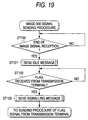
- FIG. 19 is a flowchart in the facsimile signal transmission system for the transmission DCME to output an image signal and a control signal output from the transmission facsimile terminal to the reception DCME.
- FIG. 20 is a flowchart in the facsimile signal transmission system for the reception DCME to output the image signal and the control signal of the facsimile signals output from the transmission DCME to the reception facsimile terminal.
- FIG. 21 shows a transmission sequence of these signals between the transmission facsimile terminal and the reception facsimile terminal.
- the transmission facsimile terminal sends the DCS signal, one of facsimile control signals, indicating the capabilities of the transmission facsimile terminal such as the modulation system, the modulation speed, and receivable image resolution in accordance with transmission sequence defined in ITU-T Recommendation T.30, then sends the EPT signal for 185 ms to 200 ms in a silent time of 75 ms ⁇ 20 ms and subsequently sends the training signal and the TCF signal in a silent time of 20 ms to 25 ms.
- the transmission DCME detects the end of the DCS signal, then sends an IDLE message signal indicating the end of the DCS signal to the reception DCME. Subsequently, the transmission DCME sends an EPT massage signal after detecting the EPT signal, an END_EPT message signal after detecting the end of the EPT signal, a TRAINING message signal after detecting the training signal, and a FAX_DATA message signal after detecting the end of the training signal to the reception DCME (ST80 to ST87). After this, the transmission DCME sends the TCF signal to the reception DCME.
- the reception DCME after receiving the EPT message signal from the transmission DCME (ST91), the reception DCME sends the EPT signal to the reception facsimile terminal (ST92) until reception of the END_EPT message signal (ST93).
- the reception DCME After receiving the TRAINING message signal from the transmission DCME (ST94), the reception DCME sends the training signal to the reception facsimile terminal (ST95) until reception of the FAX_DATA message signal (ST96).
- FIG. 22 shows a transmission sequence of these signals between the transmission facsimile terminal and the reception facsimile terminal. It shows a sequence for transmitting an original of only one page between the facsimile terminals as an example.
- the transmission facsimile terminal sends facsimile image signal corresponding to one page of facsimile image, then sends a flag signal in a silent time of 75 ms ⁇ 20 ms and subsequently an end-of-procedures signal (EOP signal), one of the facsimile control signals.
- EOP signal end-of-procedures signal
- the transmission DCME detects the end of the image signal (ST100), then sends an IDLE message signal indicating the end of the image signal to the reception DCME (ST101). Subsequently, the transmission DCME detects the flag signal (ST102), then sends a SIGNALLING message signal (ST103), then sends flag and EOP signals.
- the reception DCME receives the SIGNALLING message signal from the transmission DCME (ST111), then sends the flag signal and the EOP signal received from the transmission DCME to the reception facsimile terminal.
- the facsimile signals are thus transmitted between transmission and reception facsimile terminals in the facsimile signal transmission system in the related art, it is feared that the time interval of facsimile signal sent from the transmission facsimile terminal defined in Recommendation T.30 may not be held.
- the EPT message signal may arrive at the reception DCME after the expiration of 95 ms or more because of detection delay of the EPT signal in the transmission DCME and sending delay of the EPT message signal to the reception DCME.
- the time interval between the DCS signal sending end and the EPT signal sending start in the reception DCME becomes 95 ms or more. It is also feared that the EPT sending time to the reception facsimile terminal may become shorter than the stipulated time.
- the TRAINING message signal may arrive at the reception DCME after the expiration of 25 ms or more because of detection delay of the training signal in the transmission DCME and sending delay of the TRAINING message signal to the reception DCME.
- the time interval between the EPT signal sending end and the training signal sending start in the reception DCME becomes 25 ms or more.
- the SIGNALLING message signal may arrive at the reception DCME after the expiration of 95 ms or more because of detection delay of the flag signal in the transmission DCME and sending delay of the SIGNALLING message signal to the reception DCME.
- the time interval between the image signal sending end and the EOP signal sending start in the reception DCME becomes 95 ms or more.
- the reception facsimile terminal judges that the signal is a communication error, and the communication erroneously terminates at the worst.
- a facsimile signal transmission system for outputting a digital command signal (DCS signal), an echo protect tone signal (EPT signal), a training signal, a training check signal (TCF signal), an image signal, and a control signal of facsimile signals in sequence from a transmission facsimile terminal to a reception facsimile terminal, wherein if an IDLE message signal output from a transmission party at the end of the DCS signal is received in a reception party, a first timer operated for a first predetermined time is started, wherein when the first predetermined time has elapsed, sending of the EPT signal to the reception facsimile terminal is started, wherein a second timer operated for a second predetermined time is started at the same time as sending of the EPT signal is started, wherein when the second predetermined time has elapsed, sending of the EPT signal is terminated, wherein a third timer operated for a third predetermined time is started at the same time as sending of the EPT signal is terminated
- TCF signal data is stored until sending of the training signal terminates.
- the TCF signal To output the TCF signal to the reception facsimile terminal, if a FAX_DATA message signal output from the transmission party at the end of the training signal is received in the reception party, the TCF signal is output to the reception facsimile terminal and on the other hand, while no FAX_DATA message signal is received, a dummy signal generated in the reception party is output to the reception facsimile terminal.
- a facsimile signal transmission system for outputting a DCS signal, an EPT signal, a training signal, a TCF signal, an image signal, and a control signal of facsimile signals in sequence from a transmission facsimile terminal to a reception facsimile terminal, wherein if the end of the DCS signal is detected in a transmission party, a first timer operated for a first predetermined time is started, wherein when the first predetermined time has elapsed, an EPT message signal is sent to a reception party and a second timer operated for a second predetermined time is started, wherein when the second predetermined time has elapsed, an END_EPT message signal is sent to the reception party and a third timer operated for a third predetermined time is started, and wherein when the third predetermined time has elapsed, a TRAINING message signal is sent to the reception party and after the expiration of a predetermined training time, a FAX_DATA message signal is sent.
- the TCF signal is received from the transmission facsimile terminal in a training time end wait state, the TCF signal is stored until the end of the predetermined training time.
- the TCF signal output from the transmission facsimile terminal is output to the reception party and on the other hand, while no TCF signal is received, a dummy signal generated in the transmission party is output to the reception party.
- a facsimile signal transmission system for outputting a DCS signal, an EPT signal, a training signal, a TCF signal, an image signal, and a control signal of facsimile signals in sequence from a transmission facsimile terminal to a reception facsimile terminal, wherein if an IDLE message signal output from a transmission party at the end of the image signal is received in a reception party, a timer operated for a predetermined time is started and wherein if a SIGNALLING message signal is received from a transmission party after the expiration of the predetermined time, sending of a flag signal received from the transmission party to the reception facsimile terminal is started and on the other hand, if no SIGNALLING message signal is received from the transmission party, a dummy signal generated in the reception party is sent to the reception facsimile terminal.
- a facsimile signal transmission system for outputting a DCS signal, an EPT signal, a training signal, a TCF signal, an image signal, and a control signal of facsimile signals in sequence from a transmission facsimile terminal to a reception facsimile terminal, wherein if the end of the image signal is detected in a transmission party, a timer operated for a predetermined time is started, wherein a SIGNALLING message signal is output to a reception party after the expiration of the predetermined time, and wherein sending of a flag signal to the reception party is started and on the other hand, if flag signal transmission to the reception party is not started, a dummy signal generated in the transmission party is sent to the reception party.
- Flag data is used as the dummy signal.
- a facsimile signal transmission system for outputting a DCS signal, an EPT signal, a training signal, a TCF signal, an image signal, and a control signal of facsimile signals in sequence from a transmission facsimile terminal to a reception facsimile terminal, wherein a facsimile control signal output from a transmission party after the end of the image signal is not output from a reception party to the reception facsimile terminal and a second facsimile control signal output from the transmission party is output to the reception facsimile terminal.
- a facsimile signal transmission system for outputting a DCS signal, an EPT signal, a training signal, a TCF signal, an image signal, and a control signal of facsimile signals in sequence from a transmission facsimile terminal to a reception facsimile terminal, wherein after the end of the image signal, a facsimile control signal is not output from a transmission part to a reception party and a second facsimile control signal output from the transmission facsimile terminal is output to the reception party.
- FIGS. 1 and 2 are flowcharts to show the operation of a facsimile signal transmission system according to a first embodiment of the invention in a reception party.
- ST1 denotes means for determining whether or not an IDLE message signal indicating the end of a DCS signal has been received from a transmission party
- ST2 denotes means for starting a 75-ms timer
- ST3 denotes means for determining whether or not the value indicated by the 75-ms timer is 75 ms or more
- ST4 denotes means for resetting the 75-ms timer
- ST5 denotes means for starting an EPT timer
- ST6 denotes means for sending an EPT signal to a reception facsimile terminal
- ST7 denotes means for determining whether or not the value indicated by the EPT timer is 185 ms or more
- ST8 denotes means for resetting the EPT timer.
- ST9 denotes means for starting a 20-ms timer
- ST10 denotes means for determining whether or not the value indicated by the 20-ms timer is 20 ms or more
- ST11 denotes means for resetting the 20-ms timer
- ST12 denotes means for sending a training signal to a reception facsimile terminal
- ST13 denotes means for determining whether or not the training signal has been sent to the reception facsimile terminal for a stipulated time
- ST14 denotes means for determining whether or not TCF data has been received from the transmission party
- ST15 is means for storing the TCF data.
- reception DCME receives an IDLE message signal from transmission DCME (ST1), then starts the 75-ms timer (ST2).
- the reception DCME resets the 75-ms timer (ST4) and starts the EPT timer (ST5), then sends an EPT signal to a reception facsimile terminal (ST6) until the value of the EPT timer becomes 185 ms or more regardless of whether or not an END_EPT message signal is received.
- the reception DCME resets the EPT timer (ST8) and starts the 20-ms timer (ST9).
- the reception DCME thus sends the EPT signal to the reception facsimile terminal for 185 ms in 75 ms after completion of sending a DCS signal.
- the reception DCME resets the 20-ms timer (ST11) regardless of whether or not a TRAINING message signal is received, then sends a training signal to the reception facsimile terminal (ST12) until completion of sending the training signal for a stipulated time regardless of whether or not a FAX_DATA message signal is received.
- the reception DCME sends a TCF signal from the transmission DCME to the reception facsimile terminal. If a TCF signal is received from the transmission DCME (ST14) while the training signal is being sent to the reception facsimile terminal, the received TCF data is stored (ST15).
- the EPT signal and the training signal are sent to the reception facsimile terminal for the stipulated time after the expiration of the stipulated time regardless of whether or not a message signal is received from the transmission party. Resultantly, facsimile communication can be prevented from erroneously terminating.
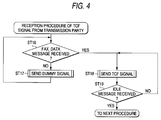
- FIG. 4 is a flowchart to show the operation of a facsimile signal transmission system in a reception party according to a second embodiment of the invention. It shows a sending procedure of a TCF signal to a reception facsimile terminal following the first embodiment.
- ST16 denotes means for determining whether or not a FAX_DATA message signal has been received
- ST17 denotes means for sending a TCF signal to a reception facsimile terminal
- ST18 denotes means for determining whether or not an IDLE message signal indicating the end of the TCF signal has been received from a transmission party
- ST19 denotes means for generating a dummy signal and sending the dummy signal to a reception facsimile terminal.
- a FAX_DATA message signal is received from transmission DCME (ST16). If the FAX_DATA message signal is not received, a TCF signal is not yet received from the transmission DCME, thus a dummy signal is sent to a reception facsimile terminal (ST17) until the FAX_DATA message signal is received. After the FAX_DATA message signal is received, a TCF signal is sent to the reception facsimile terminal (ST18) until an IDLE message signal indicating the end of TCF is received from the transmission DCME (ST19). Thus, after a training signal is sent to the reception facsimile terminal, output signals are sent to the reception facsimile terminal without a break and sending of the TCF signal can be completed correctly.
- a dummy signal is sent to the reception facsimile terminal so that no break occurs between the training signal and the TCF signal. If fill data (00h) is used as a dummy signal, the reception facsimile terminal receives the correct TCF signal containing the dummy signal from the reception DCME, thus facsimile communication can be executed sucessfully.
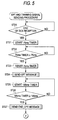
- FIGS. 5 and 6 are flowcharts to show the operation of a facsimile signal transmission system according to a third embodiment of the invention in a transmission party.
- ST20 denotes means for determining whether or not the end of a DCS signal from a transmission facsimile terminal has been detected
- ST21 denotes means for starting a 75-ms timer
- ST22 denotes means for determining whether or not the value indicated by the 75-ms timer is 75 ms or more
- ST23 denotes means for resetting the 75-ms timer
- ST24 denotes means for sending an EPT message signal to a reception party
- ST25 denotes means for starting an EPT timer
- ST26 denotes means for determining whether or not the value indicated by the EPT timer is 185 ms or more
- ST27 denotes means for sending an END_EPT message signal to the reception party.
- ST28 denotes means for starting a 20-ms timer
- ST29 denotes means for determining whether or not the value indicated by the 20-ms timer is 20 ms or more
- ST30 denotes means for resetting the 20-ms timer
- ST31 denotes means for sending a TRAINING message signal to reception DCME
- ST32 denotes means for determining whether or not the expected training time has been elapsed
- ST33 denotes means for sending a FAX_DATA message signal to the reception party
- ST34 denotes means for determining whether or not a TCF signal has been received from the transmission facsimile terminal
- ST35 is means for storing TCF data.
- transmission DCME detects the end of a DCS signal from a transmission facsimile terminal (ST20), then starts the 75-ms timer (ST21).
- the transmission DCME resets the 75-ms timer (ST23) and starts the EPT timer (ST25), then sends an EPT message signal to reception DCME (ST24).
- the transmission DCME When the value of the EPT timer becomes 185 ms or more (ST26) regardless of whether or not reception of the EPT signal from the transmission facsimile terminal terminates, the transmission DCME resets the EPT timer, starts the 20-ms timer (ST28), and sends an END_EPT message signal to the reception DCME (ST27).
- the transmission DCME thus sends the EPT message signal to the reception DCME in 75 ms after completion of sending the DCS signal and sends the END_EPT message signal to the reception DCME in 185 ms after sending the EPT message signal.
- the transmission DCME resets the 20-ms timer (ST30) regardless of whether or not a training signal is received from the transmission facsimile terminal, then sends a TRAINING message signal to the reception DCME (ST31).
- the transmission DCME sends a FAX_DATA message signal to the reception DCME (ST33). If a TCF signal is received from the transmission facsimile terminal (ST34) while the training signal is being received, the received TCF data is stored (ST35).
- the EPT message signal, the EPT_END message signal, and the TRAINING message signal are sent to the reception DCME for the stipulated time regardless of the delay time detecting the EPT signal and the training signal from the transmission facsimile terminal. Resultantly, based on reception of the message signals, the reception DCME sends the EPT signal and the training signal satisfying the time stipulation to the reception facsimile terminal at the time interval between the signals satisfying the time stipulation, so that facsimile communication can be prevented from erroneously terminating.
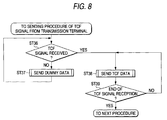
- FIG. 8 is a flowchart to show the operation of a facsimile signal transmission system in a transmission party according to a fourth embodiment of the invention. It shows a sending procedure of a TCF signal to reception DCME following the third embodiment.
- ST36 denotes means for determining whether or not a TCF message signal has been received from a transmission facsimile terminal
- ST37 denotes means for generating dummy data and sending the dummy data to reception DCME
- ST38 denotes means for sending TCF data to the reception DCME
- ST39 denotes means for determining whether or not the end of the TCF signal has been received from the transmission facsimile terminal.
- a TCF signal is determined by transmission DCME (ST16). If a TCF signal is not yet received from the transmission facsimile terminal, dummy data is sent to reception DCME (ST37) until the TCF signal is received. After the TCF signal is received, TCF data is sent to the reception DCME (ST38) until the end of the TCF signal is received from the transmission facsimile terminal (ST39). Thus, after a FAX_DATA message signal is sent to the reception DCME, facsimile data is sent to the reception DCME without a break. Resultantly, the reception DCME can complete sending of the TCF signal correctly.
- dummy data is sent to the reception DCME so that no break occurs between the FAX_DATA message signal and the TCF data. If fill data (00h) is used as dummy data, the reception facsimile terminal receives the correct TCF signal containing the dummy data from the reception DCME, thus facsimile communication can be executed successfully.
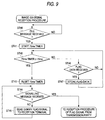
- FIG. 9 is a flowchart to show the operation of a facsimile signal transmission system in a reception party according to a fifth embodiment of the invention.
- ST40 denotes means for determining whether or not an IDLE message signal indicating the end of an image signal has been received from a transmission party
- ST41 denotes means for starting a 75-ms timer
- ST42 denotes means for determining whether or not the value indicated by the 75-ms timer is 75 ms or more
- ST43 denotes means for resetting the 75-ms timer
- ST44 denotes means for determining whether or not a SIGNALLING message signal indicating the start of a facsimile control signal has been received from the transmission party
- ST45 denotes means for sending a dummy signal to a reception facsimile terminal
- ST46 denotes means for determining whether or not flag data has been received from the transmission party
- ST47 denotes means for storing the flag data received from the transmission party.
- reception DCME receives an IDLE message signal indicating the end of image data from transmission DCME (ST40), then starts the 75-ms timer (ST41).
- the reception DCME resets the 75-ms timer (ST43), then sends a dummy signal to a reception facsimile terminal (ST45) until a SIGNALLING message signal is received.
- the reception DCME After receiving the SIGNALLING message signal (ST44), the reception DCME starts sending a flag signal and an EOP signal from the transmission party to the reception facsimile terminal.
- a dummy signal is sent to the reception facsimile terminal in 75 ms regardless of whether or not the SIGNALLING message signal is received from the transmission party. Resultantly, facsimile communication can be prevented from erroneously terminating.
- a dummy signal is sent to the reception facsimile terminal so as to satisfy the stipulation of the time interval between the image signal and the flag signal. If flag data (7Eh) is used as a dummy signal, the reception facsimile terminal receives the correct flag signal containing the dummy signal from the reception DCME, thus facsimile communication can be executed successfully.
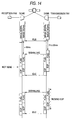
- FIG. 11 is a flowchart to show the operation of a facsimile signal transmission system in a transmission party according to a sixth embodiment of the invention.
- ST50 denotes means for determining whether or not reception of an image signal from a transmission facsimile terminal terminates
- ST51 denotes means for starting a 75-ms timer
- ST52 denotes means for determining whether or not the value indicated by the 75-ms timer is 75 ms or more
- ST53 denotes means for resetting the 75-ms timer
- ST54 denotes means for sending a SIGNALLING message signal to a reception party
- ST55 denotes the means for determining whether or not a flag signal at the beginning of facsimile control signals has been received from the transmission facsimile terminal
- ST56 denotes means for sending dummy flag data to the reception party
- ST57 denotes means for determining whether or not a flag signal has been received from the transmission facsimile terminal
- ST58 denote
- transmission DCME detects the end of image data from a transmission facsimile terminal (ST50), then starts the 75-ms timer (ST51).
- the transmission DCME resets the 75-ms timer (ST53), then sends a SIGNALLING message signal and dummy data to a reception facsimile terminal (ST56).
- the transmission DCME After receiving the flag signal at the beginning of facsimile control signals from the transmission facsimile terminal (ST55), the transmission DCME starts sending the flag signal and an EOP signal from the transmission facsimile terminal to the reception DCME.
- a dummy signal is sent to the reception DCME in 75 ms regardless of whether or not the flag signal is received from the transmission facsimile terminal. Resultantly, facsimile communication can be prevented from erroneously terminating.
- dummy data is sent to the reception DCME so as to satisfy the stipulation of the time interval between the image signal and the flag signal. If flag data (7Eh) is used as dummy data, the reception facsimile terminal receives the correct flag signal containing the dummy signal from the reception DCME, thus facsimile communication can be executed successfully.
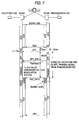
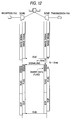
- FIG. 13 is a flowchart to show the operation of a facsimile signal transmission system in a reception party according to a seventh embodiment of the invention.
- ST60 denotes means for determining whether or not an IDLE message signal indicating the end of an image signal has been received from a transmission party
- ST61 denotes means for determining whether or not a second SIGNALLING message signal indicating the beginning of facsimile control signals has been received from the transmission party.
- reception DCME receives an IDLE message signal indicating the output end of image data from transmission DCME (ST60), then waits for a SIGNALLING message signal to be received from the transmission DCME (ST61). Then, the reception DCME receives a SIGNALLING message signal from the transmission DCME. As previously described in (Related Art), the SIGNALLING message signal may be received after the expiration of 95 ms or more since reception of the IDLE message signal.
- the reception DCME does not send a flag signal or an EOP signal after reception of the first SIGNALLING message signal after reception of an image signal to a reception facsimile terminal and sends a flag signal and an EOP signal after reception of the second SIGNALLING message signal to the reception facsimile terminal
- the reception facsimile terminal correctly receives the image signal, the flag signal, and the EOP signal from the reception DCME, thus facsimile communication is executed successfully.
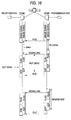
- FIG. 15 is a flowchart to show the operation of a facsimile signal transmission system in a transmission party according to an eighth embodiment of the invention.
- ST70 denotes means for determining whether or not reception of an image signal from a transmission facsimile terminal terminates and ST71 denotes means for determining whether or not a second flag signal indicating the beginning of facsimile control signals has been received from the transmission facsimile terminal.
- transmission DCME detects the end of an image signal from a transmission facsimile terminal (ST70), then waits for a flag signal to be received from the transmission facsimile terminal. Then, the transmission DCME receives a flag signal from the transmission DCME. As previously described in [Related Art], the flag signal may be received after the expiration of 95 ms or more since detection of the end of the image signal. Then, at the ST71 means, the transmission DCME does not send the first flag signal or EOP signal after detection of the end of the image signal to reception DCME and sends the second flag signal and EOP signal to the reception DCME.
- the reception facsimile terminal correctly receives the image signal, the flag signal, and the EOP signal from the reception DCME, thus facsimile communication is executed successfully.
- the facsimile signal transmission system for outputting a digital command signal (DCS signal), an echo protect tone signal (EPT signal), a training signal, a training check signal (TCF signal), an image signal, and a control signal of facsimile signals in sequence from a transmission facsimile terminal to a reception facsimile terminal
- DCS signal digital command signal
- EPT signal echo protect tone signal
- TCF signal training check signal
- image signal an image signal
- a control signal of facsimile signals in sequence from a transmission facsimile terminal to a reception facsimile terminal
- a first timer operated for a first predetermined time is started.
- sending of the EPT signal to the reception facsimile terminal is started.
- a second timer operated for a second predetermined time is started at the same time as sending of the EPT signal is started.
- sending of the EPT signal is terminated.
- a third timer operated for a third predetermined time is started at the same time as sending of the EPT signal is terminated.
- sending of the training signal to the reception facsimile terminal is started.
- the EPT signal and the training signal can be sent to the reception facsimile terminal for the predetermined time after the expiration of the predetermined time regardless of whether or not a message signal is received from the transmission party. Resultantly, facsimile communication can be prevented from erroneously terminating.
- TCF signal data can be stored until sending of the training signal terminates.
- the TCF signal To output the TCF signal to the reception facsimile terminal, if a FAX_DATA message signal output from the transmission party at the end of the training signal is received in the reception party, the TCF signal is output to the reception facsimile terminal and on the other hand, while no FAX_DATA message signal is received, a dummy signal generated in the reception party is output to the reception facsimile terminal, whereby after the training signal is sent to the reception facsimile terminal, output signals are sent to the reception facsimile terminal without a break and sending of the TCF signal can be completed successfully.
- a facsimile signal transmission system for outputting a DCS signal, an EPT signal, a training signal, a TCF signal, an image signal, and a control signal of facsimile signals in sequence from a transmission facsimile terminal to a reception facsimile terminal
- a first timer operated for a first predetermined time is started.
- an EPT message signal is sent to a reception party and a second timer operated for a second predetermined time is started.
- an END_EPT message signal is sent to the reception party and a third timer operated for a third predetermined time is started.
- a TRAINING message signal is sent to the reception party and after the expiration of a predetermined training time, a FAX_DATA message signal is sent.
- the EPT message signal, the EPT_END message signal, and the TRAINING message signal are sent to the reception DCME for the predetermined time regardless of the delay time detecting the EPT signal and the training signal from the transmission facsimile terminal.
- the reception DCME sends the EPT signal and the training signal satisfying the time stipulation to the reception facsimile terminal at the time interval between the signals satisfying the time stipulation, so that facsimile communication can be prevented from erroneously terminating.
- the TCF signal can be stored until the end of the predetermined training time.
- the TCF signal output from the transmission facsimile terminal is output to the reception party and on the other hand, while no TCF signal is received, a dummy signal generated in the transmission party is output to the reception party, whereby after a FAX_DATA message signal is sent to the reception DCME, facsimile data is sent to the reception DCME without a break, and the reception DCME can complete sending of the TCF signal correctly. Resultantly, facsimile communication can be prevented from erroneously terminating.
- a facsimile signal transmission system for outputting a DCS signal, an EPT signal, a training signal, a TCF signal, an image signal, and a control signal of facsimile signals in sequence from a transmission facsimile terminal to a reception facsimile terminal, if an IDLE message signal output from a transmission party at the end of the image signal is received in a reception party, a timer operated for a predetermined time is started.
- a facsimile signal transmission system for outputting a DCS signal, an EPT signal, a training signal, a TCF signal, an image signal, and a control signal of facsimile signals in sequence from a transmission facsimile terminal to a reception facsimile terminal, if the end of the image signal is detected in a transmission party, a timer operated for a predetermined time is started.
- a SIGNALLING message signal is output to a reception party after the expiration of the predetermined time.
- Sending of a flag signal to the reception party is started and on the other hand, if flag signal transmission to the reception party is not started, a dummy signal generated in the transmission party is sent to the reception party.
- a dummy signal is sent to the reception DCME regardless of whether or not the flag signal is received from the transmission facsimile terminal. Resultantly, facsimile communication can be prevented from erroneously terminating.
- Flag data is used as the dummy signal, whereby the correct flag signal can be sent to the reception facsimile terminal. Resultantly, facsimile communication can be prevented from erroneously terminating.
- a facsimile control signal output from a transmission party after the end of the image signal is not output from a reception party to the reception facsimile terminal and a second facsimile control signal output from the transmission party is output to the reception facsimile terminal, whereby the reception facsimile terminal correctly receives the image signal, the flag signal, and the EOP signal from the reception DCME, and facsimile communication is executed successfully.
- a facsimile signal transmission system for outputting a DCS signal, an EPT signal, a training signal, a TCF signal, an image signal, and a control signal of facsimile signals in sequence from a transmission facsimile terminal to a reception facsimile terminal, after the end of the image signal, a facsimile control signal is not output from a transmission part to a reception party and a second facsimile control signal output from the transmission facsimile terminal is output to the reception party, whereby the reception facsimile terminal correctly receives the image signal, the flag signal, and the EOP signal from the reception DCME, and facsimile communication is executed successfully.
Landscapes
- Engineering & Computer Science (AREA)
- Multimedia (AREA)
- Signal Processing (AREA)
- Facsimile Transmission Control (AREA)
- Communication Control (AREA)
- Facsimiles In General (AREA)
Applications Claiming Priority (2)
| Application Number | Priority Date | Filing Date | Title |
|---|---|---|---|
| JP8973298 | 1998-04-02 | ||
| JP10089732A JPH11289445A (ja) | 1998-04-02 | 1998-04-02 | ファクシミリ信号中継伝送方式 |
Publications (2)
| Publication Number | Publication Date |
|---|---|
| EP0948190A2 true EP0948190A2 (de) | 1999-10-06 |
| EP0948190A3 EP0948190A3 (de) | 2001-01-31 |
Family
ID=13978948
Family Applications (1)
| Application Number | Title | Priority Date | Filing Date |
|---|---|---|---|
| EP99106608A Withdrawn EP0948190A3 (de) | 1998-04-02 | 1999-03-31 | Übertragungssystem für Facsimilesignale |
Country Status (4)
| Country | Link |
|---|---|
| US (1) | US6373597B1 (de) |
| EP (1) | EP0948190A3 (de) |
| JP (1) | JPH11289445A (de) |
| CA (1) | CA2267584C (de) |
Cited By (1)
| Publication number | Priority date | Publication date | Assignee | Title |
|---|---|---|---|---|
| WO2000013404A1 (en) * | 1998-08-27 | 2000-03-09 | Telefonaktiebolaget Lm Ericsson (Publ) | Method for handling long delays in telecommunication systems |
Families Citing this family (2)
| Publication number | Priority date | Publication date | Assignee | Title |
|---|---|---|---|---|
| US6628429B1 (en) * | 1998-11-10 | 2003-09-30 | Nortel Networks Limited | System and method to effectively suppress idle fax signals |
| US20030223463A1 (en) * | 2002-05-30 | 2003-12-04 | Mehrdad Abrishami | Method to improve fax transmission quality over packet based networks with significant delay and packet jitter using protocol re-timing |
Family Cites Families (14)
| Publication number | Priority date | Publication date | Assignee | Title |
|---|---|---|---|---|
| JPS6331366A (ja) * | 1986-07-25 | 1988-02-10 | Nec Corp | フアクシミリ装置のエコ−保護ト−ン制御方法 |
| JPH0831935B2 (ja) | 1987-09-21 | 1996-03-27 | 国際電信電話株式会社 | ファクシミリ通信方法 |
| IL89461A (en) | 1989-03-02 | 1994-06-24 | Eci Telecom Limited | Facsimile telecommunication compression system |
| US5243438A (en) | 1989-10-30 | 1993-09-07 | At&T Bell Laboratories | Facsimile compression for transmission |
| US5216519A (en) * | 1990-09-27 | 1993-06-01 | At&T Bell Laboratories | Echo protection tone detection and regeneration for digital transmission of facsimile calls |
| EP0478205B1 (de) * | 1990-09-27 | 1996-08-21 | AT&T Corp. | Apparat zur digitalen Faksimileübertragung mit einer Echoschutzton-Erkennung und -Regeneration |
| US5307174A (en) * | 1991-01-11 | 1994-04-26 | Mitsubishi Denki Kabushiki Kaisha | High efficiency facsimile transmission apparatus |
| US5488653A (en) * | 1991-09-04 | 1996-01-30 | Comsat Corporation | Facsimile interface unit (FIU) enhanced capabilities negotiation |
| JP2760217B2 (ja) | 1992-07-01 | 1998-05-28 | 三菱電機株式会社 | ディジタル回線多重化伝送装置 |
| JPH06133135A (ja) * | 1992-10-20 | 1994-05-13 | Fuji Xerox Co Ltd | ファクシミリ装置 |
| US5491565A (en) * | 1993-12-03 | 1996-02-13 | Telefonaktiebolaget Lm Ericsson | System and method for varying the transmission rate of facsimile data in a telecommunication system |
| JP2587594B2 (ja) * | 1994-08-26 | 1997-03-05 | 宮城日本電気株式会社 | ファクシミリ信号伝送方式 |
| WO1997002697A1 (en) * | 1995-06-30 | 1997-01-23 | International Mobile Satellite Organization | Communication method and apparatus |
| US6339481B1 (en) * | 1997-03-03 | 2002-01-15 | Texas Instruments Incorporated | Real-time facsimile transmission over digital networks |
-
1998
- 1998-04-02 JP JP10089732A patent/JPH11289445A/ja active Pending
-
1999
- 1999-03-31 CA CA002267584A patent/CA2267584C/en not_active Expired - Fee Related
- 1999-03-31 EP EP99106608A patent/EP0948190A3/de not_active Withdrawn
- 1999-04-01 US US09/283,570 patent/US6373597B1/en not_active Expired - Fee Related
Cited By (1)
| Publication number | Priority date | Publication date | Assignee | Title |
|---|---|---|---|---|
| WO2000013404A1 (en) * | 1998-08-27 | 2000-03-09 | Telefonaktiebolaget Lm Ericsson (Publ) | Method for handling long delays in telecommunication systems |
Also Published As
| Publication number | Publication date |
|---|---|
| US6373597B1 (en) | 2002-04-16 |
| CA2267584A1 (en) | 1999-10-02 |
| EP0948190A3 (de) | 2001-01-31 |
| CA2267584C (en) | 2001-11-27 |
| JPH11289445A (ja) | 1999-10-19 |
Similar Documents
| Publication | Publication Date | Title |
|---|---|---|
| US5289582A (en) | Communication control unit | |
| JP3318571B2 (ja) | 通信方法及び装置 | |
| US6437870B1 (en) | Facsimile apparatus having V.8 protocol facility and facsimile communication method | |
| CA2267584C (en) | Facsimile signal transmission system | |
| US4519081A (en) | Facsimile communication method with anti-echo strategy | |
| US6628414B1 (en) | Method for handling long delays in telecommunication systems | |
| US5406388A (en) | Data communication apparatus | |
| JPH08242352A (ja) | ファクシミリ装置の画像伝送制御方法 | |
| JP3365093B2 (ja) | ファクシミリの切断命令送達確認装置 | |
| JP2805760B2 (ja) | ファクシミリ通信方法 | |
| JP3465559B2 (ja) | ファクシミリ装置 | |
| JP2895290B2 (ja) | ファクシミリ放送受信装置 | |
| JP3458395B2 (ja) | プリアンブル時間制御方式および通信装置 | |
| JP2547753B2 (ja) | 通信制御装置 | |
| US6574006B1 (en) | Method for improving transmission between terminals in a telecommunication system | |
| JP2724064B2 (ja) | 同報ファクシミリ受信アダプタ装置 | |
| JP3368077B2 (ja) | ファクシミリ装置 | |
| JP2002300230A (ja) | 転送機能付き通信端末装置 | |
| JP2002290622A (ja) | 転送機能付き通信端末装置 | |
| JP2574604B2 (ja) | 画像通信装置 | |
| KR100260638B1 (ko) | 팩시밀리의동작모드제어장치 | |
| JP3690243B2 (ja) | 通信端末装置 | |
| JPS6016061A (ja) | フアクシミリ装置 | |
| JPH0822011B2 (ja) | 通信制御装置 | |
| JPH1127497A (ja) | ファクシミリ装置 |
Legal Events
| Date | Code | Title | Description |
|---|---|---|---|
| PUAI | Public reference made under article 153(3) epc to a published international application that has entered the european phase |
Free format text: ORIGINAL CODE: 0009012 |
|
| AK | Designated contracting states |
Kind code of ref document: A2 Designated state(s): DE FR GB |
|
| AX | Request for extension of the european patent |
Free format text: AL;LT;LV;MK;RO;SI |
|
| PUAL | Search report despatched |
Free format text: ORIGINAL CODE: 0009013 |
|
| AK | Designated contracting states |
Kind code of ref document: A3 Designated state(s): AT BE CH CY DE DK ES FI FR GB GR IE IT LI LU MC NL PT SE |
|
| AX | Request for extension of the european patent |
Free format text: AL;LT;LV;MK;RO;SI |
|
| 17P | Request for examination filed |
Effective date: 20010601 |
|
| AKX | Designation fees paid |
Free format text: DE FR GB |
|
| RAP1 | Party data changed (applicant data changed or rights of an application transferred) |
Owner name: MITSUBISHI DENKI KABUSHIKI KAISHA |
|
| STAA | Information on the status of an ep patent application or granted ep patent |
Free format text: STATUS: THE APPLICATION IS DEEMED TO BE WITHDRAWN |
|
| 18D | Application deemed to be withdrawn |
Effective date: 20061003 |