EP0951558B1 - Verfahren zur herstellung parthenokarper oder weiblich-steriler transgener pflanzen - Google Patents
Verfahren zur herstellung parthenokarper oder weiblich-steriler transgener pflanzen Download PDFInfo
- Publication number
- EP0951558B1 EP0951558B1 EP97953889A EP97953889A EP0951558B1 EP 0951558 B1 EP0951558 B1 EP 0951558B1 EP 97953889 A EP97953889 A EP 97953889A EP 97953889 A EP97953889 A EP 97953889A EP 0951558 B1 EP0951558 B1 EP 0951558B1
- Authority
- EP
- European Patent Office
- Prior art keywords
- gene
- defh9
- promoter
- plants
- dna sequence
- Prior art date
- Legal status (The legal status is an assumption and is not a legal conclusion. Google has not performed a legal analysis and makes no representation as to the accuracy of the status listed.)
- Expired - Lifetime
Links
- 230000009261 transgenic effect Effects 0.000 title description 63
- 238000000034 method Methods 0.000 title description 19
- 241000196324 Embryophyta Species 0.000 claims abstract description 225
- 108090000623 proteins and genes Proteins 0.000 claims abstract description 140
- 230000014509 gene expression Effects 0.000 claims abstract description 101
- 108091028043 Nucleic acid sequence Proteins 0.000 claims abstract description 65
- 230000000694 effects Effects 0.000 claims abstract description 52
- 238000011161 development Methods 0.000 claims abstract description 45
- 240000001436 Antirrhinum majus Species 0.000 claims abstract description 34
- 235000013399 edible fruits Nutrition 0.000 claims abstract description 33
- 108020004511 Recombinant DNA Proteins 0.000 claims abstract description 19
- 230000001965 increasing effect Effects 0.000 claims abstract description 13
- 230000002708 enhancing effect Effects 0.000 claims abstract description 3
- SEOVTRFCIGRIMH-UHFFFAOYSA-N indole-3-acetic acid Chemical compound C1=CC=C2C(CC(=O)O)=CNC2=C1 SEOVTRFCIGRIMH-UHFFFAOYSA-N 0.000 claims description 113
- 229930192334 Auxin Natural products 0.000 claims description 76
- 239000002363 auxin Substances 0.000 claims description 76
- 101150063121 iaaM gene Proteins 0.000 claims description 34
- 210000002826 placenta Anatomy 0.000 claims description 29
- 102000004169 proteins and genes Human genes 0.000 claims description 27
- 108091026890 Coding region Proteins 0.000 claims description 17
- 230000015572 biosynthetic process Effects 0.000 claims description 15
- 102000053602 DNA Human genes 0.000 claims description 14
- 239000002773 nucleotide Substances 0.000 claims description 12
- 125000003729 nucleotide group Chemical group 0.000 claims description 12
- 241000589615 Pseudomonas syringae Species 0.000 claims description 6
- 239000000463 material Substances 0.000 claims description 6
- 108090000765 processed proteins & peptides Proteins 0.000 claims description 6
- 238000003786 synthesis reaction Methods 0.000 claims description 6
- 108020005544 Antisense RNA Proteins 0.000 claims description 5
- 150000001413 amino acids Chemical class 0.000 claims description 5
- 239000003184 complementary RNA Substances 0.000 claims description 5
- 230000015556 catabolic process Effects 0.000 claims description 4
- 230000021615 conjugation Effects 0.000 claims description 4
- 238000006731 degradation reaction Methods 0.000 claims description 4
- 230000003834 intracellular effect Effects 0.000 claims description 4
- 102000004196 processed proteins & peptides Human genes 0.000 claims description 4
- 150000001720 carbohydrates Chemical class 0.000 claims description 3
- 229920001184 polypeptide Polymers 0.000 claims description 3
- 239000002243 precursor Substances 0.000 claims description 3
- 101100018713 Arabidopsis thaliana ILR1 gene Proteins 0.000 claims description 2
- 108010077805 Bacterial Proteins Proteins 0.000 claims description 2
- 101710180958 Putative aminoacrylate hydrolase RutD Proteins 0.000 claims description 2
- 230000003301 hydrolyzing effect Effects 0.000 claims 1
- 108700039691 Genetic Promoter Regions Proteins 0.000 abstract description 15
- 206010021928 Infertility female Diseases 0.000 abstract description 13
- 210000004027 cell Anatomy 0.000 description 82
- 230000018109 developmental process Effects 0.000 description 45
- 210000001519 tissue Anatomy 0.000 description 45
- 210000000056 organ Anatomy 0.000 description 28
- 101150075111 ROLB gene Proteins 0.000 description 26
- 239000003617 indole-3-acetic acid Substances 0.000 description 23
- 244000061458 Solanum melongena Species 0.000 description 22
- 235000002597 Solanum melongena Nutrition 0.000 description 21
- 230000001850 reproductive effect Effects 0.000 description 20
- 239000013612 plasmid Substances 0.000 description 18
- 102000039446 nucleic acids Human genes 0.000 description 15
- 108020004707 nucleic acids Proteins 0.000 description 15
- 150000007523 nucleic acids Chemical class 0.000 description 15
- 235000002637 Nicotiana tabacum Nutrition 0.000 description 14
- 230000004720 fertilization Effects 0.000 description 13
- 239000012634 fragment Substances 0.000 description 13
- 230000001105 regulatory effect Effects 0.000 description 13
- JZYHZABGLQFCHU-UHFFFAOYSA-N Hydroxyethylindole Chemical compound C1=CC=C2NC(CCO)=CC2=C1 JZYHZABGLQFCHU-UHFFFAOYSA-N 0.000 description 12
- 238000006243 chemical reaction Methods 0.000 description 12
- 108020004414 DNA Proteins 0.000 description 11
- 244000061176 Nicotiana tabacum Species 0.000 description 11
- 230000009466 transformation Effects 0.000 description 11
- 230000009105 vegetative growth Effects 0.000 description 11
- 238000004458 analytical method Methods 0.000 description 10
- 230000010152 pollination Effects 0.000 description 10
- 239000000047 product Substances 0.000 description 10
- 230000008929 regeneration Effects 0.000 description 10
- 238000011069 regeneration method Methods 0.000 description 10
- 108091032973 (ribonucleotides)n+m Proteins 0.000 description 9
- 239000002775 capsule Substances 0.000 description 9
- 238000009396 hybridization Methods 0.000 description 9
- 210000001672 ovary Anatomy 0.000 description 9
- 241000589156 Agrobacterium rhizogenes Species 0.000 description 8
- 241000589155 Agrobacterium tumefaciens Species 0.000 description 8
- 240000003768 Solanum lycopersicum Species 0.000 description 8
- OJOBTAOGJIWAGB-UHFFFAOYSA-N acetosyringone Chemical compound COC1=CC(C(C)=O)=CC(OC)=C1O OJOBTAOGJIWAGB-UHFFFAOYSA-N 0.000 description 8
- 230000000692 anti-sense effect Effects 0.000 description 8
- 230000005078 fruit development Effects 0.000 description 8
- 238000000338 in vitro Methods 0.000 description 8
- 108020004999 messenger RNA Proteins 0.000 description 8
- 241000894006 Bacteria Species 0.000 description 7
- 108091034117 Oligonucleotide Proteins 0.000 description 7
- 241001148183 Pseudomonas savastanoi Species 0.000 description 7
- 101100137545 Solanum lycopersicum TPRP-F1 gene Proteins 0.000 description 7
- 230000002411 adverse Effects 0.000 description 7
- 238000013459 approach Methods 0.000 description 7
- 238000000636 Northern blotting Methods 0.000 description 6
- 230000004071 biological effect Effects 0.000 description 6
- 238000009395 breeding Methods 0.000 description 6
- 230000001488 breeding effect Effects 0.000 description 6
- 238000004519 manufacturing process Methods 0.000 description 6
- 230000004048 modification Effects 0.000 description 6
- 238000012986 modification Methods 0.000 description 6
- 229930195732 phytohormone Natural products 0.000 description 6
- 239000000523 sample Substances 0.000 description 6
- 230000000638 stimulation Effects 0.000 description 6
- 235000007688 Lycopersicon esculentum Nutrition 0.000 description 5
- 230000004075 alteration Effects 0.000 description 5
- 230000001580 bacterial effect Effects 0.000 description 5
- 239000002299 complementary DNA Substances 0.000 description 5
- 150000001875 compounds Chemical class 0.000 description 5
- 230000004927 fusion Effects 0.000 description 5
- 230000012010 growth Effects 0.000 description 5
- 239000003102 growth factor Substances 0.000 description 5
- ZOAMBXDOGPRZLP-UHFFFAOYSA-N indole-3-acetamide Chemical compound C1=CC=C2C(CC(=O)N)=CNC2=C1 ZOAMBXDOGPRZLP-UHFFFAOYSA-N 0.000 description 5
- 230000002147 killing effect Effects 0.000 description 5
- 239000000126 substance Substances 0.000 description 5
- SIKJAQJRHWYJAI-UHFFFAOYSA-N Indole Chemical compound C1=CC=C2NC=CC2=C1 SIKJAQJRHWYJAI-UHFFFAOYSA-N 0.000 description 4
- 238000010276 construction Methods 0.000 description 4
- 238000001514 detection method Methods 0.000 description 4
- 238000002474 experimental method Methods 0.000 description 4
- 229930182478 glucoside Natural products 0.000 description 4
- 150000008131 glucosides Chemical class 0.000 description 4
- 239000002609 medium Substances 0.000 description 4
- 230000004060 metabolic process Effects 0.000 description 4
- 230000008569 process Effects 0.000 description 4
- 210000001938 protoplast Anatomy 0.000 description 4
- 230000010153 self-pollination Effects 0.000 description 4
- 241000894007 species Species 0.000 description 4
- VBHFPIWVTVHWES-UHFFFAOYSA-N 2-(1h-indol-2-yl)acetamide Chemical class C1=CC=C2NC(CC(=O)N)=CC2=C1 VBHFPIWVTVHWES-UHFFFAOYSA-N 0.000 description 3
- QTBSBXVTEAMEQO-UHFFFAOYSA-N Acetic acid Chemical compound CC(O)=O QTBSBXVTEAMEQO-UHFFFAOYSA-N 0.000 description 3
- 241000589158 Agrobacterium Species 0.000 description 3
- 241000219195 Arabidopsis thaliana Species 0.000 description 3
- 235000002566 Capsicum Nutrition 0.000 description 3
- 108090000994 Catalytic RNA Proteins 0.000 description 3
- 102000053642 Catalytic RNA Human genes 0.000 description 3
- WSFSSNUMVMOOMR-UHFFFAOYSA-N Formaldehyde Chemical compound O=C WSFSSNUMVMOOMR-UHFFFAOYSA-N 0.000 description 3
- QIVBCDIJIAJPQS-VIFPVBQESA-N L-tryptophane Chemical compound C1=CC=C2C(C[C@H](N)C(O)=O)=CNC2=C1 QIVBCDIJIAJPQS-VIFPVBQESA-N 0.000 description 3
- 241000208125 Nicotiana Species 0.000 description 3
- 239000004365 Protease Substances 0.000 description 3
- QIVBCDIJIAJPQS-UHFFFAOYSA-N Tryptophan Natural products C1=CC=C2C(CC(N)C(O)=O)=CNC2=C1 QIVBCDIJIAJPQS-UHFFFAOYSA-N 0.000 description 3
- 239000007640 basal medium Substances 0.000 description 3
- 238000007796 conventional method Methods 0.000 description 3
- 230000007613 environmental effect Effects 0.000 description 3
- 230000002068 genetic effect Effects 0.000 description 3
- 238000010353 genetic engineering Methods 0.000 description 3
- 239000005556 hormone Substances 0.000 description 3
- 229940088597 hormone Drugs 0.000 description 3
- 108010072869 indolepyruvate decarboxylase Proteins 0.000 description 3
- 229930027917 kanamycin Natural products 0.000 description 3
- 229960000318 kanamycin Drugs 0.000 description 3
- SBUJHOSQTJFQJX-NOAMYHISSA-N kanamycin Chemical compound O[C@@H]1[C@@H](O)[C@H](O)[C@@H](CN)O[C@@H]1O[C@H]1[C@H](O)[C@@H](O[C@@H]2[C@@H]([C@@H](N)[C@H](O)[C@@H](CO)O2)O)[C@H](N)C[C@@H]1N SBUJHOSQTJFQJX-NOAMYHISSA-N 0.000 description 3
- 229930182823 kanamycin A Natural products 0.000 description 3
- 230000035790 physiological processes and functions Effects 0.000 description 3
- 108091092562 ribozyme Proteins 0.000 description 3
- 230000035945 sensitivity Effects 0.000 description 3
- 229960004799 tryptophan Drugs 0.000 description 3
- 239000005631 2,4-Dichlorophenoxyacetic acid Substances 0.000 description 2
- RSTKLPZEZYGQPY-UHFFFAOYSA-N 3-(indol-3-yl)pyruvic acid Chemical compound C1=CC=C2C(CC(=O)C(=O)O)=CNC2=C1 RSTKLPZEZYGQPY-UHFFFAOYSA-N 0.000 description 2
- FWMNVWWHGCHHJJ-SKKKGAJSSA-N 4-amino-1-[(2r)-6-amino-2-[[(2r)-2-[[(2r)-2-[[(2r)-2-amino-3-phenylpropanoyl]amino]-3-phenylpropanoyl]amino]-4-methylpentanoyl]amino]hexanoyl]piperidine-4-carboxylic acid Chemical compound C([C@H](C(=O)N[C@H](CC(C)C)C(=O)N[C@H](CCCCN)C(=O)N1CCC(N)(CC1)C(O)=O)NC(=O)[C@H](N)CC=1C=CC=CC=1)C1=CC=CC=C1 FWMNVWWHGCHHJJ-SKKKGAJSSA-N 0.000 description 2
- BHELIUBJHYAEDK-OAIUPTLZSA-N Aspoxicillin Chemical compound C1([C@H](C(=O)N[C@@H]2C(N3[C@H](C(C)(C)S[C@@H]32)C(O)=O)=O)NC(=O)[C@H](N)CC(=O)NC)=CC=C(O)C=C1 BHELIUBJHYAEDK-OAIUPTLZSA-N 0.000 description 2
- IJGRMHOSHXDMSA-UHFFFAOYSA-N Atomic nitrogen Chemical compound N#N IJGRMHOSHXDMSA-UHFFFAOYSA-N 0.000 description 2
- 231100000699 Bacterial toxin Toxicity 0.000 description 2
- 240000008574 Capsicum frutescens Species 0.000 description 2
- 241000219112 Cucumis Species 0.000 description 2
- 235000015510 Cucumis melo subsp melo Nutrition 0.000 description 2
- 102000004190 Enzymes Human genes 0.000 description 2
- 108090000790 Enzymes Proteins 0.000 description 2
- ZHNUHDYFZUAESO-UHFFFAOYSA-N Formamide Chemical compound NC=O ZHNUHDYFZUAESO-UHFFFAOYSA-N 0.000 description 2
- 240000009088 Fragaria x ananassa Species 0.000 description 2
- 101150060034 ILL1 gene Proteins 0.000 description 2
- 101150003214 ILL2 gene Proteins 0.000 description 2
- 101150090530 ILR1 gene Proteins 0.000 description 2
- 101150005851 NOS gene Proteins 0.000 description 2
- 206010028980 Neoplasm Diseases 0.000 description 2
- 240000007817 Olea europaea Species 0.000 description 2
- 108091005804 Peptidases Proteins 0.000 description 2
- 108700008625 Reporter Genes Proteins 0.000 description 2
- 241000208292 Solanaceae Species 0.000 description 2
- 108700009124 Transcription Initiation Site Proteins 0.000 description 2
- 108700019146 Transgenes Proteins 0.000 description 2
- 239000006035 Tryptophane Substances 0.000 description 2
- 241000219094 Vitaceae Species 0.000 description 2
- FJJCIZWZNKZHII-UHFFFAOYSA-N [4,6-bis(cyanoamino)-1,3,5-triazin-2-yl]cyanamide Chemical compound N#CNC1=NC(NC#N)=NC(NC#N)=N1 FJJCIZWZNKZHII-UHFFFAOYSA-N 0.000 description 2
- 238000000246 agarose gel electrophoresis Methods 0.000 description 2
- 210000004102 animal cell Anatomy 0.000 description 2
- 238000003556 assay Methods 0.000 description 2
- 239000000688 bacterial toxin Substances 0.000 description 2
- 102000006995 beta-Glucosidase Human genes 0.000 description 2
- 108010047754 beta-Glucosidase Proteins 0.000 description 2
- 239000001390 capsicum minimum Substances 0.000 description 2
- 235000014633 carbohydrates Nutrition 0.000 description 2
- 229960004261 cefotaxime Drugs 0.000 description 2
- AZZMGZXNTDTSME-JUZDKLSSSA-M cefotaxime sodium Chemical compound [Na+].N([C@@H]1C(N2C(=C(COC(C)=O)CS[C@@H]21)C([O-])=O)=O)C(=O)\C(=N/OC)C1=CSC(N)=N1 AZZMGZXNTDTSME-JUZDKLSSSA-M 0.000 description 2
- 230000010261 cell growth Effects 0.000 description 2
- 239000003795 chemical substances by application Substances 0.000 description 2
- 210000000349 chromosome Anatomy 0.000 description 2
- 230000001276 controlling effect Effects 0.000 description 2
- 238000005520 cutting process Methods 0.000 description 2
- 230000002939 deleterious effect Effects 0.000 description 2
- 230000004069 differentiation Effects 0.000 description 2
- 238000004520 electroporation Methods 0.000 description 2
- 210000002257 embryonic structure Anatomy 0.000 description 2
- 230000002255 enzymatic effect Effects 0.000 description 2
- 229940088598 enzyme Drugs 0.000 description 2
- 230000002538 fungal effect Effects 0.000 description 2
- 101150104752 iaaH gene Proteins 0.000 description 2
- WHOOUMGHGSPMGR-UHFFFAOYSA-N indol-3-ylacetaldehyde Chemical compound C1=CC=C2C(CC=O)=CNC2=C1 WHOOUMGHGSPMGR-UHFFFAOYSA-N 0.000 description 2
- PZOUSPYUWWUPPK-UHFFFAOYSA-N indole Natural products CC1=CC=CC2=C1C=CN2 PZOUSPYUWWUPPK-UHFFFAOYSA-N 0.000 description 2
- RKJUIXBNRJVNHR-UHFFFAOYSA-N indolenine Natural products C1=CC=C2CC=NC2=C1 RKJUIXBNRJVNHR-UHFFFAOYSA-N 0.000 description 2
- 230000002401 inhibitory effect Effects 0.000 description 2
- 230000003993 interaction Effects 0.000 description 2
- 239000007788 liquid Substances 0.000 description 2
- 230000001404 mediated effect Effects 0.000 description 2
- 239000002207 metabolite Substances 0.000 description 2
- 230000003278 mimic effect Effects 0.000 description 2
- 108091027963 non-coding RNA Proteins 0.000 description 2
- 102000042567 non-coding RNA Human genes 0.000 description 2
- 230000003647 oxidation Effects 0.000 description 2
- 238000007254 oxidation reaction Methods 0.000 description 2
- 230000037361 pathway Effects 0.000 description 2
- WLJVXDMOQOGPHL-UHFFFAOYSA-N phenylacetic acid Chemical compound OC(=O)CC1=CC=CC=C1 WLJVXDMOQOGPHL-UHFFFAOYSA-N 0.000 description 2
- 230000008121 plant development Effects 0.000 description 2
- 230000008635 plant growth Effects 0.000 description 2
- 238000003757 reverse transcription PCR Methods 0.000 description 2
- 239000006152 selective media Substances 0.000 description 2
- 230000001568 sexual effect Effects 0.000 description 2
- 238000010561 standard procedure Methods 0.000 description 2
- 235000021012 strawberries Nutrition 0.000 description 2
- 238000012360 testing method Methods 0.000 description 2
- 230000035897 transcription Effects 0.000 description 2
- 238000013518 transcription Methods 0.000 description 2
- 230000005030 transcription termination Effects 0.000 description 2
- 230000002103 transcriptional effect Effects 0.000 description 2
- 230000017260 vegetative to reproductive phase transition of meristem Effects 0.000 description 2
- 102000040650 (ribonucleotides)n+m Human genes 0.000 description 1
- XFNJVKMNNVCYEK-UHFFFAOYSA-N 1-naphthaleneacetamide Chemical compound C1=CC=C2C(CC(=O)N)=CC=CC2=C1 XFNJVKMNNVCYEK-UHFFFAOYSA-N 0.000 description 1
- OVSKIKFHRZPJSS-UHFFFAOYSA-N 2,4-D Chemical compound OC(=O)COC1=CC=C(Cl)C=C1Cl OVSKIKFHRZPJSS-UHFFFAOYSA-N 0.000 description 1
- 108020005065 3' Flanking Region Proteins 0.000 description 1
- 241000219068 Actinidia Species 0.000 description 1
- 241000219066 Actinidiaceae Species 0.000 description 1
- TWCMVXMQHSVIOJ-UHFFFAOYSA-N Aglycone of yadanzioside D Natural products COC(=O)C12OCC34C(CC5C(=CC(O)C(O)C5(C)C3C(O)C1O)C)OC(=O)C(OC(=O)C)C24 TWCMVXMQHSVIOJ-UHFFFAOYSA-N 0.000 description 1
- PLMKQQMDOMTZGG-UHFFFAOYSA-N Astrantiagenin E-methylester Natural products CC12CCC(O)C(C)(CO)C1CCC1(C)C2CC=C2C3CC(C)(C)CCC3(C(=O)OC)CCC21C PLMKQQMDOMTZGG-UHFFFAOYSA-N 0.000 description 1
- 108010016529 Bacillus amyloliquefaciens ribonuclease Proteins 0.000 description 1
- 108030001720 Bontoxilysin Proteins 0.000 description 1
- 241000167854 Bourreria succulenta Species 0.000 description 1
- 241000219193 Brassicaceae Species 0.000 description 1
- 241000219357 Cactaceae Species 0.000 description 1
- 240000004160 Capsicum annuum Species 0.000 description 1
- 241000219172 Caricaceae Species 0.000 description 1
- 229940123982 Cell wall synthesis inhibitor Drugs 0.000 description 1
- 244000241235 Citrullus lanatus Species 0.000 description 1
- 235000012828 Citrullus lanatus var citroides Nutrition 0.000 description 1
- 241000207199 Citrus Species 0.000 description 1
- 108020004705 Codon Proteins 0.000 description 1
- 240000008067 Cucumis sativus Species 0.000 description 1
- 235000010799 Cucumis sativus var sativus Nutrition 0.000 description 1
- 241000219104 Cucurbitaceae Species 0.000 description 1
- 102000004163 DNA-directed RNA polymerases Human genes 0.000 description 1
- 108090000626 DNA-directed RNA polymerases Proteins 0.000 description 1
- 108010042407 Endonucleases Proteins 0.000 description 1
- 102000004533 Endonucleases Human genes 0.000 description 1
- 241000588697 Enterobacter cloacae Species 0.000 description 1
- 241000208421 Ericaceae Species 0.000 description 1
- 241000588724 Escherichia coli Species 0.000 description 1
- 108700039887 Essential Genes Proteins 0.000 description 1
- 241000220485 Fabaceae Species 0.000 description 1
- 229920002148 Gellan gum Polymers 0.000 description 1
- 229930191978 Gibberellin Natural products 0.000 description 1
- WQZGKKKJIJFFOK-GASJEMHNSA-N Glucose Natural products OC[C@H]1OC(O)[C@H](O)[C@@H](O)[C@@H]1O WQZGKKKJIJFFOK-GASJEMHNSA-N 0.000 description 1
- 102000004157 Hydrolases Human genes 0.000 description 1
- 108090000604 Hydrolases Proteins 0.000 description 1
- 206010020649 Hyperkeratosis Diseases 0.000 description 1
- 102100034343 Integrase Human genes 0.000 description 1
- 108091092195 Intron Proteins 0.000 description 1
- 241001113425 Iridaceae Species 0.000 description 1
- 241000274177 Juniperus sabina Species 0.000 description 1
- 241000234280 Liliaceae Species 0.000 description 1
- 241000209510 Liliopsida Species 0.000 description 1
- 241001074285 Liparis <scorpaeniform fish> Species 0.000 description 1
- 102000004882 Lipase Human genes 0.000 description 1
- 108090001060 Lipase Proteins 0.000 description 1
- 239000004367 Lipase Substances 0.000 description 1
- 108060001084 Luciferase Proteins 0.000 description 1
- 239000005089 Luciferase Substances 0.000 description 1
- 244000182264 Lucuma nervosa Species 0.000 description 1
- 235000011430 Malus pumila Nutrition 0.000 description 1
- 244000070406 Malus silvestris Species 0.000 description 1
- 235000015103 Malus silvestris Nutrition 0.000 description 1
- 241000219071 Malvaceae Species 0.000 description 1
- 241000218231 Moraceae Species 0.000 description 1
- UFWIBTONFRDIAS-UHFFFAOYSA-N Naphthalene Chemical compound C1=CC=CC2=CC=CC=C21 UFWIBTONFRDIAS-UHFFFAOYSA-N 0.000 description 1
- 244000187664 Nerium oleander Species 0.000 description 1
- 241000208128 Nicotiana glauca Species 0.000 description 1
- 108700026244 Open Reading Frames Proteins 0.000 description 1
- 238000002944 PCR assay Methods 0.000 description 1
- 241001106477 Paeoniaceae Species 0.000 description 1
- 108090000526 Papain Proteins 0.000 description 1
- 241000218180 Papaveraceae Species 0.000 description 1
- 241000218995 Passifloraceae Species 0.000 description 1
- 239000006002 Pepper Substances 0.000 description 1
- 102000035195 Peptidases Human genes 0.000 description 1
- 108700020962 Peroxidase Proteins 0.000 description 1
- 102000003992 Peroxidases Human genes 0.000 description 1
- 235000016761 Piper aduncum Nutrition 0.000 description 1
- 240000003889 Piper guineense Species 0.000 description 1
- 235000017804 Piper guineense Nutrition 0.000 description 1
- 235000008184 Piper nigrum Nutrition 0.000 description 1
- 241000013557 Plantaginaceae Species 0.000 description 1
- 241000209504 Poaceae Species 0.000 description 1
- 208000020584 Polyploidy Diseases 0.000 description 1
- 241000208476 Primulaceae Species 0.000 description 1
- 241000589516 Pseudomonas Species 0.000 description 1
- 235000014443 Pyrus communis Nutrition 0.000 description 1
- 240000001987 Pyrus communis Species 0.000 description 1
- 108010092799 RNA-directed DNA polymerase Proteins 0.000 description 1
- 101100173636 Rattus norvegicus Fhl2 gene Proteins 0.000 description 1
- 102100037486 Reverse transcriptase/ribonuclease H Human genes 0.000 description 1
- 108010046983 Ribonuclease T1 Proteins 0.000 description 1
- 108010083644 Ribonucleases Proteins 0.000 description 1
- 102000006382 Ribonucleases Human genes 0.000 description 1
- 235000004789 Rosa xanthina Nutrition 0.000 description 1
- 241000220222 Rosaceae Species 0.000 description 1
- 241001107098 Rubiaceae Species 0.000 description 1
- 241001093501 Rutaceae Species 0.000 description 1
- 108091081024 Start codon Proteins 0.000 description 1
- 208000037065 Subacute sclerosing leukoencephalitis Diseases 0.000 description 1
- 206010042297 Subacute sclerosing panencephalitis Diseases 0.000 description 1
- 108700026226 TATA Box Proteins 0.000 description 1
- 108010006785 Taq Polymerase Proteins 0.000 description 1
- HFCYZXMHUIHAQI-UHFFFAOYSA-N Thidiazuron Chemical compound C=1C=CC=CC=1NC(=O)NC1=CN=NS1 HFCYZXMHUIHAQI-UHFFFAOYSA-N 0.000 description 1
- 102000004142 Trypsin Human genes 0.000 description 1
- 108090000631 Trypsin Proteins 0.000 description 1
- 241001106476 Violaceae Species 0.000 description 1
- 235000009754 Vitis X bourquina Nutrition 0.000 description 1
- 235000012333 Vitis X labruscana Nutrition 0.000 description 1
- 240000006365 Vitis vinifera Species 0.000 description 1
- 235000014787 Vitis vinifera Nutrition 0.000 description 1
- 241000209149 Zea Species 0.000 description 1
- 240000008042 Zea mays Species 0.000 description 1
- 235000016383 Zea mays subsp huehuetenangensis Nutrition 0.000 description 1
- 235000002017 Zea mays subsp mays Nutrition 0.000 description 1
- 230000001133 acceleration Effects 0.000 description 1
- 230000009471 action Effects 0.000 description 1
- 239000004480 active ingredient Substances 0.000 description 1
- 239000011543 agarose gel Substances 0.000 description 1
- 238000000137 annealing Methods 0.000 description 1
- 239000003242 anti bacterial agent Substances 0.000 description 1
- 229940088710 antibiotic agent Drugs 0.000 description 1
- 230000003851 biochemical process Effects 0.000 description 1
- 230000006696 biosynthetic metabolic pathway Effects 0.000 description 1
- 125000003178 carboxy group Chemical group [H]OC(*)=O 0.000 description 1
- 230000030833 cell death Effects 0.000 description 1
- 230000032823 cell division Effects 0.000 description 1
- 239000007795 chemical reaction product Substances 0.000 description 1
- 235000019693 cherries Nutrition 0.000 description 1
- 238000004891 communication Methods 0.000 description 1
- 230000000295 complement effect Effects 0.000 description 1
- 244000038559 crop plants Species 0.000 description 1
- 230000023753 dehiscence Effects 0.000 description 1
- 238000007598 dipping method Methods 0.000 description 1
- 201000010099 disease Diseases 0.000 description 1
- 208000037265 diseases, disorders, signs and symptoms Diseases 0.000 description 1
- 230000036253 epinasty Effects 0.000 description 1
- 241001233957 eudicotyledons Species 0.000 description 1
- 230000002349 favourable effect Effects 0.000 description 1
- 239000000835 fiber Substances 0.000 description 1
- 230000008124 floral development Effects 0.000 description 1
- 230000035784 germination Effects 0.000 description 1
- IXORZMNAPKEEDV-UHFFFAOYSA-N gibberellic acid GA3 Natural products OC(=O)C1C2(C3)CC(=C)C3(O)CCC2C2(C=CC3O)C1C3(C)C(=O)O2 IXORZMNAPKEEDV-UHFFFAOYSA-N 0.000 description 1
- 239000003448 gibberellin Substances 0.000 description 1
- -1 glucanases Proteins 0.000 description 1
- 239000008103 glucose Substances 0.000 description 1
- 235000021021 grapes Nutrition 0.000 description 1
- 239000001963 growth medium Substances 0.000 description 1
- 239000003630 growth substance Substances 0.000 description 1
- 210000003783 haploid cell Anatomy 0.000 description 1
- PFOARMALXZGCHY-UHFFFAOYSA-N homoegonol Natural products C1=C(OC)C(OC)=CC=C1C1=CC2=CC(CCCO)=CC(OC)=C2O1 PFOARMALXZGCHY-UHFFFAOYSA-N 0.000 description 1
- 230000003054 hormonal effect Effects 0.000 description 1
- 231100000508 hormonal effect Toxicity 0.000 description 1
- 238000005286 illumination Methods 0.000 description 1
- 230000006872 improvement Effects 0.000 description 1
- 238000007901 in situ hybridization Methods 0.000 description 1
- JTEDVYBZBROSJT-UHFFFAOYSA-N indole-3-butyric acid Chemical compound C1=CC=C2C(CCCC(=O)O)=CNC2=C1 JTEDVYBZBROSJT-UHFFFAOYSA-N 0.000 description 1
- 108010079535 indoleacetamide hydrolase Proteins 0.000 description 1
- 208000015181 infectious disease Diseases 0.000 description 1
- 239000003112 inhibitor Substances 0.000 description 1
- 230000005764 inhibitory process Effects 0.000 description 1
- 230000000670 limiting effect Effects 0.000 description 1
- 235000019421 lipase Nutrition 0.000 description 1
- 150000002632 lipids Chemical class 0.000 description 1
- 238000009630 liquid culture Methods 0.000 description 1
- 235000021073 macronutrients Nutrition 0.000 description 1
- 235000009973 maize Nutrition 0.000 description 1
- 210000001161 mammalian embryo Anatomy 0.000 description 1
- 230000007246 mechanism Effects 0.000 description 1
- 230000000813 microbial effect Effects 0.000 description 1
- 238000000520 microinjection Methods 0.000 description 1
- 239000011785 micronutrient Substances 0.000 description 1
- 235000013369 micronutrients Nutrition 0.000 description 1
- 239000000203 mixture Substances 0.000 description 1
- 238000010369 molecular cloning Methods 0.000 description 1
- 239000013642 negative control Substances 0.000 description 1
- 230000001613 neoplastic effect Effects 0.000 description 1
- 229910052757 nitrogen Inorganic materials 0.000 description 1
- 230000024121 nodulation Effects 0.000 description 1
- 108010058731 nopaline synthase Proteins 0.000 description 1
- 230000002018 overexpression Effects 0.000 description 1
- 229940055729 papain Drugs 0.000 description 1
- 235000019834 papain Nutrition 0.000 description 1
- 230000036961 partial effect Effects 0.000 description 1
- 239000002245 particle Substances 0.000 description 1
- 230000008506 pathogenesis Effects 0.000 description 1
- 239000008188 pellet Substances 0.000 description 1
- 239000003279 phenylacetic acid Substances 0.000 description 1
- 229960003424 phenylacetic acid Drugs 0.000 description 1
- 239000005648 plant growth regulator Substances 0.000 description 1
- 230000037039 plant physiology Effects 0.000 description 1
- 238000004161 plant tissue culture Methods 0.000 description 1
- 230000004983 pleiotropic effect Effects 0.000 description 1
- 230000008092 positive effect Effects 0.000 description 1
- 230000021625 positive regulation of cell division Effects 0.000 description 1
- 238000002360 preparation method Methods 0.000 description 1
- 230000000644 propagated effect Effects 0.000 description 1
- 230000001902 propagating effect Effects 0.000 description 1
- 235000019419 proteases Nutrition 0.000 description 1
- 108700022487 rRNA Genes Proteins 0.000 description 1
- 238000009790 rate-determining step (RDS) Methods 0.000 description 1
- 238000011084 recovery Methods 0.000 description 1
- 230000009467 reduction Effects 0.000 description 1
- 230000002829 reductive effect Effects 0.000 description 1
- 230000003014 reinforcing effect Effects 0.000 description 1
- 230000004044 response Effects 0.000 description 1
- 108091008146 restriction endonucleases Proteins 0.000 description 1
- 238000012552 review Methods 0.000 description 1
- 210000003705 ribosome Anatomy 0.000 description 1
- 235000001520 savin Nutrition 0.000 description 1
- 238000012216 screening Methods 0.000 description 1
- 230000008117 seed development Effects 0.000 description 1
- 230000007226 seed germination Effects 0.000 description 1
- 239000007921 spray Substances 0.000 description 1
- 239000007858 starting material Substances 0.000 description 1
- 239000000758 substrate Substances 0.000 description 1
- 239000013589 supplement Substances 0.000 description 1
- 239000000725 suspension Substances 0.000 description 1
- 231100000331 toxic Toxicity 0.000 description 1
- 231100000167 toxic agent Toxicity 0.000 description 1
- 230000002588 toxic effect Effects 0.000 description 1
- 239000003440 toxic substance Substances 0.000 description 1
- 239000003053 toxin Substances 0.000 description 1
- 231100000765 toxin Toxicity 0.000 description 1
- 108700012359 toxins Proteins 0.000 description 1
- 230000005026 transcription initiation Effects 0.000 description 1
- 238000011426 transformation method Methods 0.000 description 1
- 230000001131 transforming effect Effects 0.000 description 1
- 230000001052 transient effect Effects 0.000 description 1
- 238000013519 translation Methods 0.000 description 1
- 239000012588 trypsin Substances 0.000 description 1
- 230000004222 uncontrolled growth Effects 0.000 description 1
- 238000011144 upstream manufacturing Methods 0.000 description 1
- 230000002792 vascular Effects 0.000 description 1
- 239000011782 vitamin Substances 0.000 description 1
- 235000013343 vitamin Nutrition 0.000 description 1
- 229940088594 vitamin Drugs 0.000 description 1
- 229930003231 vitamin Natural products 0.000 description 1
Images





Classifications
-
- C—CHEMISTRY; METALLURGY
- C07—ORGANIC CHEMISTRY
- C07K—PEPTIDES
- C07K14/00—Peptides having more than 20 amino acids; Gastrins; Somatostatins; Melanotropins; Derivatives thereof
- C07K14/415—Peptides having more than 20 amino acids; Gastrins; Somatostatins; Melanotropins; Derivatives thereof from plants
-
- C—CHEMISTRY; METALLURGY
- C12—BIOCHEMISTRY; BEER; SPIRITS; WINE; VINEGAR; MICROBIOLOGY; ENZYMOLOGY; MUTATION OR GENETIC ENGINEERING
- C12N—MICROORGANISMS OR ENZYMES; COMPOSITIONS THEREOF; PROPAGATING, PRESERVING, OR MAINTAINING MICROORGANISMS; MUTATION OR GENETIC ENGINEERING; CULTURE MEDIA
- C12N15/00—Mutation or genetic engineering; DNA or RNA concerning genetic engineering, vectors, e.g. plasmids, or their isolation, preparation or purification; Use of hosts therefor
- C12N15/09—Recombinant DNA-technology
- C12N15/63—Introduction of foreign genetic material using vectors; Vectors; Use of hosts therefor; Regulation of expression
- C12N15/79—Vectors or expression systems specially adapted for eukaryotic hosts
- C12N15/82—Vectors or expression systems specially adapted for eukaryotic hosts for plant cells, e.g. plant artificial chromosomes (PACs)
- C12N15/8216—Methods for controlling, regulating or enhancing expression of transgenes in plant cells
- C12N15/8222—Developmentally regulated expression systems, tissue, organ specific, temporal or spatial regulation
-
- C—CHEMISTRY; METALLURGY
- C12—BIOCHEMISTRY; BEER; SPIRITS; WINE; VINEGAR; MICROBIOLOGY; ENZYMOLOGY; MUTATION OR GENETIC ENGINEERING
- C12N—MICROORGANISMS OR ENZYMES; COMPOSITIONS THEREOF; PROPAGATING, PRESERVING, OR MAINTAINING MICROORGANISMS; MUTATION OR GENETIC ENGINEERING; CULTURE MEDIA
- C12N15/00—Mutation or genetic engineering; DNA or RNA concerning genetic engineering, vectors, e.g. plasmids, or their isolation, preparation or purification; Use of hosts therefor
- C12N15/09—Recombinant DNA-technology
- C12N15/63—Introduction of foreign genetic material using vectors; Vectors; Use of hosts therefor; Regulation of expression
- C12N15/79—Vectors or expression systems specially adapted for eukaryotic hosts
- C12N15/82—Vectors or expression systems specially adapted for eukaryotic hosts for plant cells, e.g. plant artificial chromosomes (PACs)
- C12N15/8216—Methods for controlling, regulating or enhancing expression of transgenes in plant cells
- C12N15/8222—Developmentally regulated expression systems, tissue, organ specific, temporal or spatial regulation
- C12N15/823—Reproductive tissue-specific promoters
- C12N15/8233—Female-specific, e.g. pistil, ovule
-
- C—CHEMISTRY; METALLURGY
- C12—BIOCHEMISTRY; BEER; SPIRITS; WINE; VINEGAR; MICROBIOLOGY; ENZYMOLOGY; MUTATION OR GENETIC ENGINEERING
- C12N—MICROORGANISMS OR ENZYMES; COMPOSITIONS THEREOF; PROPAGATING, PRESERVING, OR MAINTAINING MICROORGANISMS; MUTATION OR GENETIC ENGINEERING; CULTURE MEDIA
- C12N15/00—Mutation or genetic engineering; DNA or RNA concerning genetic engineering, vectors, e.g. plasmids, or their isolation, preparation or purification; Use of hosts therefor
- C12N15/09—Recombinant DNA-technology
- C12N15/63—Introduction of foreign genetic material using vectors; Vectors; Use of hosts therefor; Regulation of expression
- C12N15/79—Vectors or expression systems specially adapted for eukaryotic hosts
- C12N15/82—Vectors or expression systems specially adapted for eukaryotic hosts for plant cells, e.g. plant artificial chromosomes (PACs)
- C12N15/8241—Phenotypically and genetically modified plants via recombinant DNA technology
- C12N15/8261—Phenotypically and genetically modified plants via recombinant DNA technology with agronomic (input) traits, e.g. crop yield
- C12N15/8287—Phenotypically and genetically modified plants via recombinant DNA technology with agronomic (input) traits, e.g. crop yield for fertility modification, e.g. apomixis
-
- C—CHEMISTRY; METALLURGY
- C12—BIOCHEMISTRY; BEER; SPIRITS; WINE; VINEGAR; MICROBIOLOGY; ENZYMOLOGY; MUTATION OR GENETIC ENGINEERING
- C12N—MICROORGANISMS OR ENZYMES; COMPOSITIONS THEREOF; PROPAGATING, PRESERVING, OR MAINTAINING MICROORGANISMS; MUTATION OR GENETIC ENGINEERING; CULTURE MEDIA
- C12N15/00—Mutation or genetic engineering; DNA or RNA concerning genetic engineering, vectors, e.g. plasmids, or their isolation, preparation or purification; Use of hosts therefor
- C12N15/09—Recombinant DNA-technology
- C12N15/63—Introduction of foreign genetic material using vectors; Vectors; Use of hosts therefor; Regulation of expression
- C12N15/79—Vectors or expression systems specially adapted for eukaryotic hosts
- C12N15/82—Vectors or expression systems specially adapted for eukaryotic hosts for plant cells, e.g. plant artificial chromosomes (PACs)
- C12N15/8241—Phenotypically and genetically modified plants via recombinant DNA technology
- C12N15/8261—Phenotypically and genetically modified plants via recombinant DNA technology with agronomic (input) traits, e.g. crop yield
- C12N15/8287—Phenotypically and genetically modified plants via recombinant DNA technology with agronomic (input) traits, e.g. crop yield for fertility modification, e.g. apomixis
- C12N15/829—Female sterility
-
- C—CHEMISTRY; METALLURGY
- C12—BIOCHEMISTRY; BEER; SPIRITS; WINE; VINEGAR; MICROBIOLOGY; ENZYMOLOGY; MUTATION OR GENETIC ENGINEERING
- C12N—MICROORGANISMS OR ENZYMES; COMPOSITIONS THEREOF; PROPAGATING, PRESERVING, OR MAINTAINING MICROORGANISMS; MUTATION OR GENETIC ENGINEERING; CULTURE MEDIA
- C12N15/00—Mutation or genetic engineering; DNA or RNA concerning genetic engineering, vectors, e.g. plasmids, or their isolation, preparation or purification; Use of hosts therefor
- C12N15/09—Recombinant DNA-technology
- C12N15/63—Introduction of foreign genetic material using vectors; Vectors; Use of hosts therefor; Regulation of expression
- C12N15/79—Vectors or expression systems specially adapted for eukaryotic hosts
- C12N15/82—Vectors or expression systems specially adapted for eukaryotic hosts for plant cells, e.g. plant artificial chromosomes (PACs)
- C12N15/8241—Phenotypically and genetically modified plants via recombinant DNA technology
- C12N15/8261—Phenotypically and genetically modified plants via recombinant DNA technology with agronomic (input) traits, e.g. crop yield
- C12N15/8291—Hormone-influenced development
- C12N15/8294—Auxins
Definitions
- the present invention relates to the use of the promoter region of the DefH9 gene of Antirrhinum majus and of promoter regions of homologous genes in other species for the highly specific expression of genes in the placenta and/or ovules of plants or tissues derived from placenta or ovules in order to achieve, for example, parthenocarpy, female sterility and for an enhancement in fruit setting and development.
- the present invention also relates to DNA constructs in which said promoter controls the expression of a DNA sequence which upon expression leads to the above mentioned effects.
- the present invention relates to transgenic plants genetically modified with such constructs which can develop fruits also in the absence of fertilization (i.e. with parthenocarpic development) or which are female sterile as well as to the fruits of these plants and to the propagation material of these plants.
- plants which are suitable for breeding plants with the mentioned desired properties have so far been available only to a limited degree. Indeed, it is common practice for some horticultural plants to treat (i.e. spray) flower buds with synthetic growth factors to cause parthenocarpic development (references above, and: La Tone and Imbroglini, Informatore Agrario 16 (1992), 71-78; Roberts and Hooley, Plant Growth Regulators, Chapman and Hall (New York (1988)).
- the success of exogenous application of phytohormones relies on their even action on the plant organ, it is labor-intensive and adds extra costs to the production process.
- the chemicals can be transported from the site of application, and so they can affect other parts of the plant or the whole plant.
- Plant genetic engineering has recently been applied in order to circumvent the above-mentioned drawbacks connected with the use of mutants or the exogenous application of phytohormones to the plants.
- Barg Acts of the III I.S.H.S. Symposium on "In vitro culture and horticultural breeding” Jerusalem, June 16-21 (1996), 13 disclosed the generation of transgenic tomato plants which contain a rolB gene under the control of the TPRP-F1 promoter (from tomato).
- the use of this promoter leads to the expression of the rolB gene preferentially in the ovary and young fruit.
- the plants showed parthenocarpic development.
- the promoter used displays also a well detectable level of expression in vegetative tissue (i.e.
- the TPRP-F1 promoter used in the disclosed chimeric genes has the drawback that due to its basal level of expression also in vegetative tissue it is also active after transformation and during the regeneration process of transformed cells. Since the expression of the iaaM gene or of genes leading to a higher sensitivity for auxins (like rolB) interferes with the regeneration process, the TPRP-F1 promoter is not suitable to obtain optimal plants transgenic for the iaaM or rolB gene. The reason for this is its constitutive basal level of expression in vegetative tissue. This feature of the promoter hinders the efficient regeneration of plants with an optimum level of expression and unaltered in their vegetative growth.
- transgenic plants are regenerated which do not express the iaaM gene and/or plants are regenerated with a level of constitutive expression of the iaaM or rolB gene so low to be compatible with regeneration.
- constitutive expression of the iaaM gene has deleterious effects in transgenic plants (Gaudin et al., Plant Physiol. Biochem. 32 (1994), 11-29).
- these plants do not represent optimal products since i) they might be altered in their vegetative growth (auxin affects many physiological processes including interactions with environmental and microbial factors) and ii) their level of expression in the ovary might be curtailed and not strong enough to promote parthenocarpic development efficiency.
- a chimeric gene able to alter auxin content and activity should take place specifically in cells of the female reproductive organs, preferably in the ovules and most preferably also in tissue derived therefrom.
- WO 96/40951 discloses an ovule-specific promoter from tomato which is also active in anthers.
- the technical problem underlying the present invention is the provision of methods and means for the production of transgenic plants which due to the highly specific expression of a transgene in cells of the female reproductive organ, in particular in the placenta and/or the ovule, are female sterile or show a parthenocarpic development or an enhanced parthenocarpic development.
- the present invention relates to the use of a DefH9 promoter for the expression of a DNA sequence in plant cells for a purpose which requires highly specific expression in the placenta and/or ovule of a transgenic plant and an extremely low level of expression in cells of vegetative tissue.
- a DefH9 promoter for the expression of a DNA sequence in plant cells for a purpose which requires highly specific expression in the placenta and/or ovule of a transgenic plant and an extremely low level of expression in cells of vegetative tissue.
- Examples for such purposes are the establishment of parthenocarpy or female sterility by expressing specific DNA sequences in cells of the female reproductive organ of transgenic plants. Further purposes are the increase in the rate of gynogenesis and the production of haploid-double haploid lines or hybridization between distant plant species.
- the present invention relates to the use of the promoter region of the DefH9 gene of Antirrhinum majus or of a promoter region of a gene homologous to the DefH9 gene of Antirrhinum majus and capable of directing placenta and/or ovule specific expression of a DNA sequence linked to it in plants for the establishment of parthenocarpy.
- the invention is based on the finding that the promoter region driving expression of the DefH9 gene of Antirrhinum majus has an extremely low level of basal activity in tissues other than the placenta and/or the ovule.
- this promoter is on the one hand suitable to obtain highly specific expression of a DNA sequence in the above-mentioned tissues of female reproductive organs of plants. This helps to avoid unwanted modifications of other physiological and developmental processes which constitute the drawbacks of the methods known in the art.
- the basal level of constitutive expression of the introduced chimeric gene which affects, for example, the auxin metabolism has to be as low as possible (i.e. preferentially below detection limit).
- This aspect is particularly relevant when the genetic information introduced into the plant cells controls the level and activity of growth factors, such as the phytohormones belonging to the auxin type as is the case when trying to establish parthenocarpy by increasing the auxin content or activity.
- this promoter due to its extremely low level of basal activity in vegetative tissue helps to circumvent the problems described above which arise when using, for example, the TPRP-F1 promoter.
- the DefH9 promoter is not active during the regeneration of transformed plant cells to transgenic plants, there is no selection for cells which have only a very low level of promoter activity.
- this promoter is particularly suited and useful for the use in the generation of transgenic plants which show a parthenocarpic development due to the expression of a foreign DNA sequence specifically in cells of the female reproductive organ, namely in the placenta and/or ovule and most preferably in tissue derived from placenta or ovule, such as the integument of seeds.
- DefH9 promoter means the promoter region of the DefH9 gene of Antirrhinum majus including regulatory sequences which is capable to specifically direct expression in the placenta and/or the ovules of transgenic plants or in tissue derived therefrom and which does not show a detectable level of basal expression in vegetative tissues.
- the promoter starts to direct expression in these tissues before the onset of anthesis.
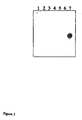
- “Not showing a detectable level of expression” in this context means that expression of a gene linked to a DefH9 promoter cannot be detected in a Northern blot analysis in probes of vegetative tissue.
- a Northern blot analysis can be carried out according to methods known in the art and is preferably carried out as described in the Examples (see below).
- the expression of the DefH9 gene occurs very specifically in the placenta and in the ovules during early phases of flower development as shown by in situ hybridization. It is shown in the present invention that the level of expression of the DefH9 promoter in vegetative tissue is below the detection limit of Northern blot analysis (see Fig. 3).
- the DefH9 (Deficiens homologue 9) gene of Antirrhinum majus is described in the Ph. D. thesis of Rolf Hansen (1993, University of Cologne, Faculty of Mathematics and Sciences).
- the DefH9 gene is a MADS box gene, expression of which occurs in early stages specifically in the developing placenta and ovules of the female reproductive organ, and becomes restricted at later stages to the ovules and the vascular bundles of the placenta.
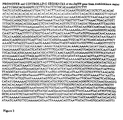
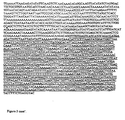
- the nucleotide sequence of the DefH9 promoter and regulatory regions is depicted in Figure 2 and also in SEQ ID No. 1. In the sequence the transcription initiation site is located at position 2265. The first intron is located in the transcribed but untranslated leader and corresponds to nucleotides 2418 to 3462 of the sequence given in SEQ ID No. 1.
- promoter refers to the nucleotide sequences necessary for transcription initiation, i.e. RNA polymerase binding, and also includes, for example the TATA box.
- regulatory regions refers to sequences which further influence the level of expression, for example, in the sense that they confer tissue specificity. Such regions can be located upstream of the transcription initiation site, but can also be located downstream of it, e.g. in transcribed but nontranslated leader sequences, especially in introns.
- the term "DefH9 promoterm is used as comprising a promoter and the regulatory regions necessary to obtain the above described specificity, namely specific expression in the placenta and/or ovule of plants and no detectable expression in the cells of vegetative tissue.
- the promoter comprises the nucleotides 1 to 2264 of the nucleotide sequence as set forth in SEQ ID No. 1 or a fragment thereof which still confers specific expression in the placenta and/or ovules of transgenic plants.
- a fragment comprises besides a promoter furthermore nucleotides 2285 to 3480, which corresponds to the transcribed but untranslated leader sequence of the DefH9 gene of A.
- DefH9 promoter also includes promoter regions and regulatory regions of a gene from the same or another plant species which is homologous to the DefH9 gene of A. majus and the promoter region of which has the same tissue specificity as the DefH9 promoter. Such promoters are characterized by an extremely low level of activity in organs and tissues other than cells of the female reproductive organs, namely of cells of the placenta and/or the ovule or of tissue derived from placenta or ovule. Genes homologous to the DefH9 gene of A.
- majus are genes which encode a protein which is structurally or functionally homologous to the DefH9 gene product of A. majus.
- Structural homology preferably means that the coding region of the gene shows a sequence identity to the coding region of the DefH9 gene of A. majus of at least 40%, preferably of at least 60% and more preferably of at least 80%. More preferably, the gene homologous to the DefH9 gene of A. majus encodes a protein belonging to the family of the MADS box proteins and even more preferred a protein belonging to the AGAMOUS subfamily of the MADS box proteins.
- promoters from other species can be used that are structurally or functionally homologous to the DefH9 promoter from Antirrhinum majus, or promoters that display an identical pattern of expression, in the sense of being not only expressed in the ovules and/or placenta but, and most important, not showing a detectable level of expression in vegetative tissue. It is possible for the person skilled in the art to isolate with the help of the known DefH9 gene from A. majus corresponding genes from other plant varieties or plant species. This can be done by conventional techniques known in the art, for example, by using the DefH9 gene as a hybridization probe or by designing appropriate PCR primers.
- the present invention also relates to the use of promoter regions which are substantially identical to the DefH9 promoter of Antirrhinum majus or to a promoter of a homologous gene or to parts thereof and which are able to confer specific expression in the placenta and/or ovules in plants without detectable expression in cells of vegetative tissue.
- Such promoters differ at one or more positions from the above-mentioned promoters but still have the same specificity, namely they comprise the same or similar sequence motifs responsible for the above-described tissue specificity.
- promoters hybridize to one of the above-mentioned promoters, most preferably under stringent conditions.
- promoters which share at least 85%, more preferably 90% and most preferably 95% sequence identity with one of the above-mentioned promoters and has the same specificity.
- the DefH9 promoter or a promoter of a homologous gene which displays the same or a similar expression pattern with a very low basal level of expression in vegetative tissue are particularly useful for the generation of plants showing a parthenocarpic development by genetic engineering.
- One approach to achieve parthenocarpic development in plants is the increase in auxin content and/or activity in cells of the female reproductive organ of a plant, preferably in the placenta and/or ovule. In general, this can be achieved in different ways.
- an increase in the content and/or activity of at least one auxin in the cells of the female reproductive organ is achieved by expressing in the plants a DNA sequence under the control of the DefH9 promoter, wherein said DNA sequence upon expression leads to an increase in the intracellular content or activity of at least one auxin.
- a DNA sequence under the control of the DefH9 promoter is that the synthesis rate of an auxin is increased. This might be achieved, for example, by increasing the conversion of a metabolite directly into an auxin or alternatively by increasing the synthesis and consequently the concentration of a precursor of an auxin which is then converted into the respective auxin.
- Another meaning of this term is that the release of conjugated auxins is enhanced or the conjugation of auxins is prevented or reduced.
- auxin comprises in this context naturally occurring and synthetic organic substances acting as a phytohormone in the sense that they promote elongation of shoots and inhibit elongation of roots, preferably in very low concentrations, most preferably already in concentrations lower than 10 -6 M.
- an auxin shows at least one of the following effects on plant development: stimulation of cell division, of cell elongation, and/or of cell expansion, of apical dominance, stimulation of xylem differentiation, stimulation of the cell elongation and cell division activity of the cells of the cambium, stimulation of lateral and adventitious root formation, stimulation of nodulation, of germination, of leaf epinasty, of ovary cell growth, of parthenocarpy, of the formation of female flowers and of leaf expansion.
- auxin refers to indole acetic acid (IAA) which is most likely synthesized in plant cells from tryptophane via indole-3-pyruvate and indole-3-acetaldehyde, and which is degraded via enzymatically catalyzed oxidation.
- IAA indole acetic acid
- the term also comprises other naturally occurring compounds which act as an auxin and which are derived from indole or from another compound, for example, the naturally occurring phenyl acetic acid which is a non-indolic auxin or 4-(indole-3-yl) butyric acid.
- this term comprises compounds from organisms other than plants or chemically synthesized compounds which have at least one of the effects on plant development as listed above.
- An example for such a compound is (2,4-dichlorophenoxy)-acetic acid (2,4-D).
- the DNA sequence linked to a DefH9 promoter codes for a polypeptide which is naturally involved in the biosynthesis of at least one auxin in plant cells.
- the expression of the DNA sequence in plant cells then leads to an increase in the biological (for example, enzymatic) activity of this polypeptide and consequently to the increase of the content and/or activity of at least one auxin in the cells.
- the auxin content and/or activity can be increased in plant cells by increasing the biosynthesis of at least one auxin due to a stimulation/acceleration of a biosynthetic pathway which naturally occurs in plant cells.
- the DNA sequence linked to a DefH9 promoter codes for a protein which is naturally not expressed in plant cells and which upon expression in plant cells leads to the synthesis of at least one auxin or a precursor of an auxin from a metabolite present in plant cells.
- Genetic information which may be used in this regard is, for example, present in the genomes of several bacteria. For instance, in many cases of bacteria-induced phytopathogenesis, alterations of hormone biosynthesis, content and activity play an important role in the interaction between plants and bacteria.
- the DNA sequence linked to the DefH9 promoter codes for a bacterial protein, namely a protein which leads in plant cells to the increase of the content or activity of at least one auxin.
- DNA sequence codes for a protein of a bacterium from the genus Pseudomonas or Agrobacterium. More preferably, said DNA sequence codes for a protein of Pseudomonas syringae or of Agrobacterium rhizogenes or tumefaciens.
- a gene which is preferably used for the purpose of the present invention is the iaaM gene of Pseudomonas syringae pv. savastanoi, the etiological agent of plant tumors in olive or oleander trees (Spena et al., Curr.
- the iaaM gene codes for the indoleacetamide monooxigenase, and it is responsible for converting by oxidation the amino acid tryptophan to indoleacetamide.
- Indoleacetamide has no particular auxin activity, but it is slowly converted, either chemically or enzymatically, by plant hydrolases to IAA, the major form of auxin in plants.
- the iaaM gene in transgenic plants is able by itself to cause modification of hormone metabolism and activity, and consequently to modify plant biochemical and developmental processes (Sitbon et al., Plant Physiol. 95 (1991), 480-485).
- the iaaM coding sequence is, according to the present invention, placed under the control of a DefH9 promoter.
- the present invention demonstrates that the iaaM gene of Pseudomonas syringae is able to cause parthenocarpic development in plants when driven by the DefH9 promoter. It is furthermore shown that the temporally and spatially precise and specific control of expression of the iaaM gene plays a crucial role in the genesis of parthenocarpic development. Expression under the highly specific and tightly regulated DefH9 promoter and controlling sequences allows the regeneration of transgenic plants unmodified in their vegetative growth, but modified in fruit setting and development.
- a basal level of expression of the iaaM in vegetative tissues is not compatible with regeneration of transgenic plants unmodified in their vegetative growth and still expressing the iaaM gene with optimum strength in the desired tissue or organ.
- the iaaM gene from Pseudomonas syringae subsp. savastanoi is known and its sequence has been published (Yamada et al., Proc. Natl. Acad. Sci. USA 82 (1985), 6522-6526). According to the invention genes homologous in function to the iaaM gene of P. syringae might be used for the purpose of this invention.
- genes which are preferably also homologous with respect to the nucleotide sequence can be isolated by the person skilled in the art using known methods, e.g., the screening of cDNA or genomic libraries with probes designed on the basis of the iaaM gene of P. syringae and subsequently testing the gene product for its biological activity.
- Such genes with an activity similar to that of the iaaM gene product of P. syringae have been cloned, for instance, from some strains of Agrobacteria (i.e. A. tumefaciens and rhizogenes; see, for instance, Klee et al., Gene Dev. 1 (1987), 86-96; White et al., J. Bacteriol. 164 (1985), 33-44; Cardaretti et al., Mol. Gen. Genet. 208 (1987), 457-463).
- Agrobacteria i.e. A. tumefaciens and
- the experimental data provided by the present application furthermore show that the expression of the iaaM gene under the control of a DefH9 promoter has the unexpected effect that these plants show fruit setting and fruit development even under conditions which represent very adverse climatic conditions for eggplant fertilization and fruit development.
- the present invention provides evidence that the expression of DNA sequence leading to an increase in auxin concentration and/or activity specifically in cells of the female reproductive organs of plants can lead to fruit setting even under adverse climate conditions. This means that in this way an enhancement of fruit setting and fruit development is achieved.
- the transgenic plants of the present invention are able to set fruit (with or without pollination) and to develop them under climatic conditions which in non-transgenic plants would not allow fertilization and/or fruit development.
- the DNA sequence the expression of which is driven by the DefH9 promoter is the rolB gene from the A4 Ri plasmid of Agrobacterium rhizogenes, the etiological agent of the hairy-root disease (Spena et al., 1992; loc. cit.; Gaudin et al., 1994; loc. cit.) or a gene from another source which is functionally equivalent to the rolB gene.
- the rolB gene is able by itself to alter plant growth.
- the rolB gene is not able, in all cases, to trigger parthenocarpic development by itself, at least not in tobacco.
- the rolB gene under the control of a DefH9 promoter is preferably used in plants which show on their own a parthenocarpic development under specific circumstances, for example, under specific environmental conditions. In these cases the occurrence of parthenocarpic development can be increased by expressing the rolB gene under the control of a DefH9 promoter.
- the rolB gene and the iaaM gene are used in combination to achieve parthenocarpic development This might, for example, either be done by introducing the two genes simultaneously or by subsequently transforming plants with these genes.
- two plants, one of which comprises the iaaM gene under the control of a DefH9 promoter and the other which comprises the rolB gene under the control of a DefH9 promoter may be crossed. In these cases it is possible that, even if expression of the DefH9-roIB-gene itself is not able to cause parthenocarpic development in all plants of interest, it can increase parthenocarpic development, preferably in conjunction with the DefH9-iaaM chimeric gene.
- the rolB gene product is a ⁇ -glucosidase which might hydrolyze the inactive indolethanol- ⁇ -glucoside and therefore releasing indolethanol, a natural auxin.
- An increase of IAA is followed by an increased conversion of IAA to indolethanol, which is in turn converted to indolethanol- ⁇ -glucoside.
- plants transgenic, for instance, for the DefH9-iaaM gene would have an increase not only in IAA but also in the content of the inactive indolethanol- ⁇ -glucoside providing the substrate for the rolB gene product within the ovary.
- the expression of the rolB gene in the same tissues will hydrolyse indolethanol- ⁇ -glucoside to the active auxin indolethanol (which in turn can be converted back to IAA; Cohen and Bialek, in "The Biosynthesis and Metabolism in Higher Plants, Eds. Crozier and Hillmann, Society for Experimental Biology Seminar 23 (1984), 165-181).
- the use of the DefH9-rolB construct will reinforce the auxin effect of the DefH9-iaaM gene by increasing primarily the indolethanol content.
- a practical consequence of this is the possibility to screen DefH9-rolB transgenic plants to be used in crosses for their capacity to develop parthenocarpic fruits by chemical treatment of the flower buds with indolethanol.
- the exogenously supplied indolethanol will have a transient action due to its conversion to the inactive indolethanol- ⁇ -glucoside in normal and not expressing transgenic plants, however the expression of a sufficiency high level of the rolB protein will hydrolyse the inactive glucoside to the active aglycone. Consequently the two genes would act in two different ways to increase auxin content and activity: (1) the DefH9-iaaM chimeric gene will increase the content primarily of IAA via indoleacetamide, (2) the DefH9-rolB will have an auxin effect by releasing primarily indolethanol from its glucosides.
- indolethanol-ß-glucoside can be achieved either by chemically adding IAA or indolethanol, or in transgenic plants by expressing the iaaM gene.
- the DNA sequence expression of which is driven by a DefH9 promoter is one coding for indolepyruvate decarboxylase.
- indolepyruvate decarboxylase is the key enzyme in the indole pyruvic pathway of IAA synthesis in which IAA is synthesized from tryptophane. The conversion of indolepyruvic acid is in this pathway the rate limiting step.
- a DNA sequence encoding a suitable indolepyruvate decarboxylase has been cloned, for example, from Enterobacter cloacae (see, e.g., Koga et al., Mol. Gen. Genet. 226 (1991), 10-16).
- auxin present in plants is mainly conjugated through its carboxyl group to a variety of amino acids, peptides and carbohydrates.
- the conjugates represent approximately 95% of the IAA present in the cells. It is assumed that these conjugates allow rapid alteration of free IAA concentration.
- Another approach to increase the auxin content and/or activity in cells of the female reproductive organs of plants would be to express under the control of a DefH9 promoter a DNA sequence which upon expression leads to an increased release of an auxin, for example, of IAA, from its conjugated form(s) or to a decrease of the conversion of free auxin into a conjugated form.
- An example for such a DNA sequence is a DNA sequence which hydrolyses the conjugates between IAA and an amino acid, a peptide or a carbohydrate.
- the DNA sequence, the expression of which is driven by a DefH9 promoter is the ILR1 gene of plants.
- the protein encoded by an ILR1 gene has aminohydrolase activity and releases IAA from conjugates with amino acids.
- ILR1 genes are known from different plants, for example, from Arabidopsis thaliana (Bartel and fink, Science 263 (1995), 1745-1748; GenBank accession no. U23794). DNA sequences encoding proteins with a similar enzymatic activity may be also obtained from bacteria. Further examples are ILL1 and ILL2 genes coding for ILL1 and ILL2 proteins, respectively. Such DNA sequences have been isolated, for example, from Arabidopsis thaliana and are available under GenBank accession numbers U23795 and U23796, respectively.
- auxin content and/or activity in plant cells is to reduce the rate of conversion of free IAA into its conjugates. This may be achieved by inhibiting expression of genes coding for proteins catalyzing this conversion. Possible approaches are, for example, the expression of an antisense RNA, a ribozyme or of a specific inhibitor.
- a protein catalyzing such a reaction is, for example, the protein encoded by the iaglu gene of maize. The corresponding DNA sequence has been cloned (see, for instance, Szersen et al., Science 265 (1994), 1699).
- the reduction of the degradation rate -of an auxin by inhibiting the expression of the enzymes which are involved in the degradation of this auxin, for example, of IAA.
- a further possibility to increase auxin content and/or activity is the inhibition of its transport.
- auxin content and/or activity Another meaning of the term "increase in the auxin content and/or activity" is that the activity or sensitivity of an auxin receptor is increased.
- Another approach to establish parthenocarpy in plants is the increase at the content and/or activity of at least one gibberellin in the cells of the female reproductive organ. This might be achieved, for example, by overexpression of genes coding for proteins involved in the biosynthesis of gibbereilins in plants. Such genes are described, for example, in Sun et al. (Plant Cell 4 (1992), 119-128) and Bensen et al. (Plant Cell 7 (1995), 75-84).
- the present invention rolates to the use of the promoter region of the DefH9 gene of Antirrhinum majus or of a promoter region of a gene homologous to the DefH9 gene of Antirrhinum majus and capable of directing placenta and/or ovule specific expression of a DNA sequence linked to it in plants for the establishment of female sterility.
- female sterility can be achieved by expressing specifically in cells of the female reproductive organs of a plant a so-called "female-sterility DNA", i.e. a DNA which upon expression significantly disturbs adversely the proper metabolism, functioning and/or development of a cell of a female reproductive organ.
- a so-called "female-sterility DNA” i.e. a DNA which upon expression significantly disturbs adversely the proper metabolism, functioning and/or development of a cell of a female reproductive organ.
- said DNA leads upon expression in a cell to cell death.
- DNA sequences which in combination with the DefH9 promoter region might be used to establish female sterility in plants are: DNases (e.g. endonucleases such as restriction endonucleases), RNases (e.g. Barnase or RNase T1 ), proteases (e.g.
- DNA sequences which encode an antisense RNA molecule of a transcript of a gene normally expressed in the plant cells comprise preferably those which encode for RNA or proteins which are essential for plant-cell functioning, eg. rRNA genes.
- DNA sequence which might be used as a "female-sterility-DNA” is a DNA sequence which encodes a ribozyme capable of highly specifically cleaving a given target sequence.
- a target sequence is again preferably a transcript of a gene the product of which is essential for plant cell functioning.
- the DefHg gene is among the flower-specific genes tested so far, the only one displaying an undetectable level of expression in vegetative tissues. This requirement is essential when using a gene the expression of which influences the auxin content and/or activity in plants or leads to the killing or disabling of cells. For example, an increase of auxin content and activity within the ovary achieved by ovule-specific expression is bound to mimic the exogenous subministration of auxin used in horticultural practice. However, even a very low basal expression within vegetative tissue is bound to interfere with plant regeneration and/or plant growth. A modification of vegetative growth, however, is an undesired trait in horticultural and fruit crops.
- the present invention also relates to recombinant DNA molecules comprising a DefH9 promoter and linked thereto at least one DNA sequence which leads when expressed in plants to the increase of the content and/or activity of at least one auxin in the cells.
- a recombinant DNA molecule comprises in general furthermore a transcriptional termination region at the 3' end of said DNA sequence.
- the promoter used in such a recombinant molecule comprises the nucleotide sequence as set forth in SEQ. ID No. 1 or a fragment thereof which still confers specific expression in the placenta and ovules of transgenic plants.
- the DNA sequence linked to said promoter in such a construct is preferably one of the DNA sequences mentioned above in connection with the use of a DefH9 promoter for the generation of plants showing parthenocarpic development.
- the present invention also relates to recombinant DNA molecules comprising a DefH9 promoter and linked thereto at least one DNA sequence which leads when expressed in plants to the killing and/or disabling of cells of the female reproductive organ of the plants thereby resulting in female sterility.
- a recombinant DNA molecule comprises in general furthermore a transcriptional termination region at the 3' end of said DNA sequence.
- the promoter used in such a recombinant molecule comprises the nucleotide sequence as set forth in SEQ. ID No. 1 or a fragment thereof which still confers specific expression in the placenta and ovules of transgenic plants.
- the DNA sequence linked to said promoter in such a construct is preferably one of the DNA sequences mentioned above in connection with the use of a DefH9 promoter for the generation of plants showing female sterility.
- the present invention also relates to host cells transformed with a recombinant DNA molecule as described above comprising a DefH9 promoter and linked thereto a DNA sequence which leads when expressed in plants to the increase of the content and/or activity of at least one auxin in the cells.
- the host cells can be prokaryotic, for example, bacterial, or eukaryotic, for example fungal or animal cells.
- the host cells are plant cells.
- the present invention also relates to transgenic plant cells transformed with and genetically engineered with a recombinant DNA molecule comprising a DefH9 promoter and linked thereto a DNA sequence which leads when expressed in plants to the increase of the content and/or activity of at least one auxin in the cells.
- Such cells are characterized by the feature that they contain stably integrated into their genome a recombinant DNA molecule as described above.
- the plant cells are transformed with an iaaM gene as well as with a rolB gene, both under the control of a DefH9 promoter.
- the present invention also relates to transgenic plants comprising plant cells according to the invention.
- Such plants can show parthenocarpic development due to the increase in auxin content and/or activity without alterations of their vegetative growth.
- This last feature is particularly relevant and it is due to the absence of detectable expression in vegetative tissue of the DNA sequence linked to the DefH9 promoter.
- the plants according to the invention show at least one of the following features:
- the present invention also relates to parts of the plants according to the invention which parts comprise the above-described cells.
- the present invention relates to the fruits of these plants as well as to any kind of propagation material, for example, seeds, seedlings or cuttings.
- the present invention also relates to host cells transformed with a recombinant DNA molecule comprising a DefH9 promoter and linked thereto a DNA sequence which leads when expressed in plants comprising such cells to the killing or disabling of cells of the female reproductive organs of plants so as to render the plant female sterile.
- the host cells can be prokaryotic, for example, bacterial cells, or eukaryotic, such as fungal or animal cells.
- the host cells are plant cells.
- the present invention also relates to transgenic plant cells transformed with and genetically engineered with a recombinant DNA molecule comprising a DefH9 promoter and linked thereto a DNA sequence which leads when expressed in plants comprising such cells to the killing or disabling of cells of the female reproductive organs of plants so as to render the plant female sterile.
- a recombinant DNA molecule comprising a DefH9 promoter and linked thereto a DNA sequence which leads when expressed in plants comprising such cells to the killing or disabling of cells of the female reproductive organs of plants so as to render the plant female sterile.
- Such cells are characterized by the feature that they contain stably integrated into their genome a recombinant DNA molecule as described above.
- the present invention also relates to transgenic plants comprising plant cells as described above. Such plants show female sterility due to the expression of the DNA sequence linked to the DefH9 promoter in cells of the female reproductive organs.
- the present invention relates to parts of the above-described plants which comprise plant cells according to the invention and, in particular, to propagation material, for example, pollen, cuttings etc.
- Plants according to the invention can belong to any desired plant species, preferably used are plants of a family selected from the group consisting of Solanaceae, Cactaceae, Papilionaceae, Actinidiaceae, Cucurbitaceae, Rubiaceae, Moraceae, Rutaceae, Vitaceae, Ebenaceaea, Crassularaceae, Rosaceae, Drupaceae, Passifloraceae, Caricaceae, Ericaceae, Gramineae, Cruciferae, Cariofillaceae, Amaryllidiaceae, Iridaceae, Leguminosae, Liliaceae, Paeoniaceae, Papaveraceae, Primulaceae, Scrophulariaceae, Violaceae, Malvaceae and Graminaceae or from the species Actinidia sinensis.
- Plants derived from eggplant, tomato, melon or watermelon, cucumber, citrus species, pepper, strawberries, grapes, apple, pear, cherry or olive are especially preferred.
- both dicotyledons and monocotyledons are suitable starting materials for the preparation of the plants of the invention.
- transgenic plants of the invention can be used as a source of explants (i.e. ovary and/or ovules) for the production of haploid or double-haploid gynogenetic plants.
- explants i.e. ovary and/or ovules
- auxins are growth factors included in the media employed to obtain in vitro gynogenetic callus or embryos and, then, plants.
- chimeric genes in the ovules and placenta of the transgenic plants for example, the DefH9-iaaM chimeric gene by itself, the DefH9-rolB chimeric gene by itself or a combination of the iaaM and rolB coding regions under the control of DefH9 sequences, ensures an increase of auxins which allows either to improve the frequency of gynogenetic plants produced in the plant species where this technique is currently used or to widen the number of species where gynogenesis might be used.
- auxin content and activity within the ovary achieved by ovule-specific expression improves also the recovery of gynogenetic plants following pollination with incompetent pollen by reinforcing the stimulation of the haploid cells division in the embryo sac otherwise caused only by pollen tube growth and fertilization (for a review see: Keller and Korzum, in: Jain, Sopory and Veilleux (Eds); In vitro haploid production of higher plants, Vol. 1 (1996), 217-235; Kluwer Academic Publishers; The Netherlands).
- the transgenic plants of the invention can further be used for breeding plants with parthenocarpic development, or to increase by breeding the expressivity of the parthenocarpic trait in varieties showing partial parthenocarpic development
- the transgenic plants can be also used as a source of material for gynogenesis and/or in vitro fertilization.
- the transgenic plant cells and plants can be prepared according to conventional methods known in the art.
- the plants can be produced by any of the following processes:
- the combination can be achieved: (i) by co-transformation of independent constructs; (ii) by harbouring on the same construct both chimeric genes (i.e. DefH9-iaaM and DefH9-rolB genes); (iii) by building a bicistronic mRNA containing an internal entry site for ribosomes between the two open reading frames in order to ensure that both are expressed under the control of the DefH9 promoter and controlling sequences; or (iv) by sexual and asexual hybridization of two independent transgenic plants containing either, for example the DefH9-iaaM or DefH9-rolB genes.
- E. coli. cells DH5 ⁇ were used for propagating the recombinant plasmids. All recombinant plasmids were introduced either by electroporation or by conjugation into Agrobacterium tumefaciens strain GV3101 using standard techniques (Koncz and Schell, Mol. Gen. Genet. 204 (1986), 383-396).
- Agrobacterium tumefaciens mediated transformation of tobacco plants cv Petit Havana SR1 were obtained using the leaf-disk method.
- Leaf-disks were prepared from in vitro-grown plants and pre-cultured for two days in MS (Murashige and Skoog, Physiologia Plantarum 15 (1962), 473-497) basal medium supplemented with 0.5 mg/l thidiazuron and 0.1 mg/l IAA, were dipped for 5 min. in an overnight agrobacteria culture resuspended at 0.1 OD 600 in liquid MS basal medium containing 200 ⁇ M acetosyringone and placed back in the same petri dish.
- the leaf-disks were cultured in the same medium containing 100 mg/l kanamycin and 500 mg/l cefotaxime and subcultured every three weeks. Developed shoots were rooted in MS hormone-free medium containing 50 mg/l kanamycin. After acclimatization the plants were grown under greenhouse condition.
- the cut edges of the hypocotyls were cut again and all the explants were infected by dipping in bacteria suspension for 5 min, blotted dry onto sterile filter paper and placed back in the same plates. After 48 h the explants were transferred to selective medium (described above) without acetosyringone and supplemented with 30 mgl -1 kanamycin and 500 mgl -1 cefotaxime. Shoot-bud differentiation and shoot elongation was achieved by transferring calli with compact green nodules to the same selective medium without NAA.
- Genomic DNA was obtained from leaf tissue according to Doyle and Doyle (1987). 100 ng DNA were analyzed by PCR by using the 5' ATGATTGAACAAGATGGATTGCACGCAGG 3' (Seq ID No. 2) and 5' GAAGAACTCGTCAAGAAGGCGATA 3' (Seq ID No. 3) primers which amplified a fragment of 739 bp of the nptll coding region and 5' TCTTGGCTTGTAATGGGGATCC 3' (Seq ID No. 4) and 5' GGGTGAATTAAAATGGTCATACAT 3' (Seq ID No. 5) primers which amplified a fragment of 450 bp of DefH9-iaaM gene.
- PCR reactions were performed in 25 ⁇ l of final volume containing 1 x buffer (Perkin Elmer), 100 ⁇ M dNPTs, 50 pM of each primers 1U Taq polymerase. Forty-five cycles at an annealing temperature of 55°C were employed.
- the complementary cDNA was synthesized by using iaaM specific primers (5' GGGTGAATTAAAATGGTCATACAT 3'; Seq ID No. 5 and 5' TTCTTTGGAACTCGTGTTGAGCTC 3'; Seq ID No. 8) and reverse transcriptase for 1 hour at 45°C.
- the cDNA was used as template for a first PCR reaction, performed at 53°C for 35 cycles using the same iaaM specific primer and a primer located in the untranscribed but untranslated leader sequence of DefH9 gene at the 5' end of the intron.
- the recombinant plasmid pPCV002-DefH9-iaaM was obtained by ligating the EcoRI-Kpnl fragment of 3480 (14+2250-1212+4 bp) spanning the promoter (2250 bp) and regulatory sequences (1212 bp) of the gene DefH9 from Antirrhinum majus to the Kpnl-Sphl fragment of 1775 bp (2+53+1671+49) spanning the coding region of the iaaM gene from Pseudomonas syringae pv. savastanoi.
- the iaaM gene has been characterized by Yamada et al.
- the sequence used contains 1773 bp (53+1671+49) from the Dral site located 53 bp before the ATG initiation codon till the Sphl site 46 bp after the TAA stop codon.
- the transcription termination sequences from the nopaline synthase gene of Agrobacterium tumefaciens are used at the 3' of the coding region.
- the DNA sequence used is 222 bp long from the site Sphl to the site Hindlll, both provided by linker sequences. Consequently, the plasmid pPCV002-DefH9-iaaM obtained possesses the following structural features:
- the recombinant plasmid pPCV002-DefH9-rolB was obtained by ligating the EcoRI-Kpnl fragment of 3480 bp spanning the promoter and regulatory sequences of the gene DefH9 from Antirrhinum majus to the Kpnl-HindIII fragment of 1509 bp (39+774+694+2 extra bases added with the Kon I linker) spanning the coding sequence of the rolB gene. Consequently, the plasmid pPCV002-DefH9-rolB obtained possesses the following structural features:
- the expected product of 168 bp was detected in 10 out of 10 transgenic plants analyzed but not in the negative control (i.e. untransformed tobacco plants).
- the fragments contain a Kpn I site as shown by agarose gel electrophoresis and DNA blot analysis.
- the DNA of the RT-PCR product from one transgenic plant was sequenced. The DNA sequence confirmed that the 168 bp fragment corresponds to the spliced mRNA of the DefH9-iaaM gene.
- transgenic plants expressed the gene in immature flower buds and the pre-mRNA is properly spliced.
- Tobacco plants transgenic for the DefH9-iaaM gene do not show any alteration of vegetative growth when compared to untransformed tobacco plants (see Figures 4 and 5). Moreover, they show normal capsule development when pollinated (see Figure 6). However, when emasculated, transgenic plants expressing the DefH9-iaaM gene in the flower buds show parthenocarpic development, and consequently seedless capsules (see Figure 9). Untransformed tobacco plants (and plants not expressing efficiently the DefH9-iaaM gene) do not show parthenocarpic development. The trait is transmitted to the progeny in a mendelian fashion.
Landscapes
- Health & Medical Sciences (AREA)
- Genetics & Genomics (AREA)
- Life Sciences & Earth Sciences (AREA)
- Engineering & Computer Science (AREA)
- Chemical & Material Sciences (AREA)
- Biomedical Technology (AREA)
- Organic Chemistry (AREA)
- Zoology (AREA)
- Biotechnology (AREA)
- General Engineering & Computer Science (AREA)
- Bioinformatics & Cheminformatics (AREA)
- Wood Science & Technology (AREA)
- Molecular Biology (AREA)
- Biophysics (AREA)
- Biochemistry (AREA)
- General Health & Medical Sciences (AREA)
- Physics & Mathematics (AREA)
- Plant Pathology (AREA)
- Microbiology (AREA)
- Cell Biology (AREA)
- Endocrinology (AREA)
- Reproductive Health (AREA)
- Botany (AREA)
- Gastroenterology & Hepatology (AREA)
- Medicinal Chemistry (AREA)
- Proteomics, Peptides & Aminoacids (AREA)
- Pregnancy & Childbirth (AREA)
- Breeding Of Plants And Reproduction By Means Of Culturing (AREA)
- Micro-Organisms Or Cultivation Processes Thereof (AREA)
- Organic Low-Molecular-Weight Compounds And Preparation Thereof (AREA)
- Cosmetics (AREA)
- Pharmaceuticals Containing Other Organic And Inorganic Compounds (AREA)
- External Artificial Organs (AREA)
- Mushroom Cultivation (AREA)
Claims (20)
- Verwendung des Promotors des Defizienshomolog 9 (DefH9)-Gens von Antirrhinum majus oder eines Promotors eines Gens, das homolog zu dem DefH9-Gen von Antirrhinum majus ist, wobei der codierende Bereich des Gens, das homolog zu dem DefH9-Gen ist, eine Sequenzübereinstimmung von mindestens 60% zu dem codierenden Bereich des DefH9-Gens von Antirrhinum majus hat und ein Protein codiert, das zu der Familie der MADS Box-Proteine gehört, wobei der Promotor in der Lage ist, Plazenta- und/oder Eizelle-spezifische Expression einer DNA-Sequenz zu vermitteln, die damit verknüpft ist, zur Ausprägung von Parthenocarpie oder Beschleunigung der Fruchtbildung und -entwicklung.
- Verwendung nach Anspruch 1, wobei der Promotor des DefH9-Gens von Antirrhinum majus die in SEQ ID NO: 1 dargestellte Nucleotidsequenz oder einen Teil davon umfasst, die/der in der Lage ist, spezifische Expression in der Plazenta und/oder der Eizelle von Pflanzen zu ermöglichen.
- Verwendung nach den Ansprüchen 1 oder 2, wobei Parthenocarpie erreicht wird durch die Verknüpfung des Promotors mit einer DNA-Sequenz, welche bei der Expression in Pflanzenzellen zu einem Anstieg des intrazellulären Gehalts und/oder der Aktivität von mindestens einem Auxin führt.
- Verwendung nach Anspruch 3, wobei die DNA-Sequenz ein Protein codiert, das an der Biosynthese eines Auxins in Pflanzenzellen beteiligt ist.
- Verwendung nach Anspruch 3, wobei die DNA-Sequenz ein Protein codiert, das normalerweise nicht in Pflanzenzellen exprimiert wird, welches zur Synthese eines Auxins oder eines Vorläufers eines Auxins führt, wenn es in Pflanzenzellen exprimiert wird.
- Verwendung nach Anspruch 5, wobei die DNA-Sequenz ein bakterielles Protein codiert.
- Verwendung nach Anspruch 5 oder 6, wobei die DNA-Sequenz das iaaM-Gen von Pseudomonas syringae oder ein Gen ist, das ein funktionell equivalentes Protein eines anderen Organismus codiert.
- Verwendung nach Anspruch 3, wobei die DNA-Sequenz ein Polypeptid codiert, welches bei Expression zu einer gesteigerten Freisetzung mindestens eines Auxins aus seiner konjugierten Form führt.
- Verwendung nach Anspruch 8, wobei die DNA-Sequenz ein Protein codiert, das Konjugate zwischen IAA und einer Aminosäure, einem Peptid oder einem Kohlenhydrat hydrolysiert.
- Verwendung nach Anspruch 9, wobei die DNA-Sequenz ein ILR1-Protein codiert, welches Aminohydrolase-Aktivität besitzt.
- Verwendung nach Anspruch 3, wobei die DNA-Sequenz bei Expression in Pflanzenzellen zu einer Abnahme des Abbaus oder der Konjugation mindestens eines Auxins führt, wodurch es zu einem Anstieg des intrazellulären Gehalts und/oder der Aktivität wenigstens eines Auxins kommt.
- Verwendung nach Anspruch 11, wobei die DNA-Sequenz eine Antisense-RNA gegen ein Transkript für ein Protein codiert, das am Abbau oder der Konjugation wenigstens eines Auxins in Pflanzenzellen beteiligt ist.
- Rekombinantes DNA-Molekül umfassend:(a) den Promotor des DefH9-Gens von Antirrhinum majus oder einen Promotor eines Gens, das homolog zu diesem Gen ist, wobei der codierende Bereich des Gens, das homolog zu dem DefH9-Gen ist, eine Sequenzübereinstimmung von mindestens 60% zu dem codierenden Bereich des DefH9-Gens von Antirrhinum majus hat und ein Protein codiert, das zu der Familie der MADS Box-Proteine gehört, wobei der Promotor in der Lage ist, Plazenta- und/oder Eizelle-spezifische Expression zu vermitteln; und(b) funktionell verknüpft damit eine DNA-Sequenz, welche bei einer Expression in Pflanzenzellen zu einem Anstieg des intrazellulären Gehalts und/oder der Aktivität wenigstens eines Auxins führt.
- Rekombinantes DNA-Molekül nach Anspruch 13, wobei der Promotor der in Anspruch 2 definierte Promotor ist.
- Rekombinantes DNA-Molekül nach Anspruch 13 oder 14, wobei die DNA-Sequenz eine der in den Ansprüchen 3 bis 12 definierte DNA-Sequenzen ist.
- Wirtszelle, transformiert mit einem rekombinanten DNA-Molekül nach einem der Ansprüche 13 bis 15.
- Pflanzenzelle, umfassend ein rekombinantes DNA-Molekül nach einem der Ansprüche 13 bis 15.
- Pflanze, umfassend eine Pflanzenzelle nach Anspruch 17.
- Teile einer Pflanze nach Anspruch 18, umfassend Pflanzenzellen nach Anspruch 17.
- Teil einer Pflanze nach Anspruch 19, welche eine Frucht, ein Samen oder ein beliebiges Fortpflanzungsmaterial ist.
Priority Applications (1)
| Application Number | Priority Date | Filing Date | Title |
|---|---|---|---|
| EP97953889A EP0951558B1 (de) | 1996-12-20 | 1997-12-19 | Verfahren zur herstellung parthenokarper oder weiblich-steriler transgener pflanzen |
Applications Claiming Priority (8)
| Application Number | Priority Date | Filing Date | Title |
|---|---|---|---|
| EP96120645 | 1996-12-20 | ||
| EP96120645 | 1996-12-20 | ||
| EP97104156 | 1997-03-12 | ||
| EP97104156 | 1997-03-12 | ||
| EP97105843 | 1997-04-09 | ||
| EP97105843 | 1997-04-09 | ||
| EP97953889A EP0951558B1 (de) | 1996-12-20 | 1997-12-19 | Verfahren zur herstellung parthenokarper oder weiblich-steriler transgener pflanzen |
| PCT/EP1997/007202 WO1998028430A1 (en) | 1996-12-20 | 1997-12-19 | Methods for producing parthenocarpic or female sterile transgenic plants |
Publications (2)
| Publication Number | Publication Date |
|---|---|
| EP0951558A1 EP0951558A1 (de) | 1999-10-27 |
| EP0951558B1 true EP0951558B1 (de) | 2005-03-16 |
Family
ID=27237479
Family Applications (1)
| Application Number | Title | Priority Date | Filing Date |
|---|---|---|---|
| EP97953889A Expired - Lifetime EP0951558B1 (de) | 1996-12-20 | 1997-12-19 | Verfahren zur herstellung parthenokarper oder weiblich-steriler transgener pflanzen |
Country Status (12)
| Country | Link |
|---|---|
| US (1) | US6483012B1 (de) |
| EP (1) | EP0951558B1 (de) |
| JP (1) | JP2001506857A (de) |
| AT (1) | ATE291093T1 (de) |
| AU (1) | AU728015C (de) |
| BR (1) | BR9714425A (de) |
| CA (1) | CA2275974C (de) |
| DE (1) | DE69732792D1 (de) |
| IL (1) | IL130457A0 (de) |
| NZ (1) | NZ336555A (de) |
| TR (2) | TR199901418T2 (de) |
| WO (1) | WO1998028430A1 (de) |
Families Citing this family (14)
| Publication number | Priority date | Publication date | Assignee | Title |
|---|---|---|---|---|
| IT1306169B1 (it) * | 1999-07-16 | 2001-05-30 | G In E St R A Soc Consortile A | Metodo per modulare l'espressione di geni che inducono il caratterepartenocarpia in piante. |
| WO2001021785A2 (en) * | 1999-09-20 | 2001-03-29 | Cambia | Megagametophyte transcriptional control elements and uses thereof |
| EP1263975A1 (de) | 2000-03-02 | 2002-12-11 | Südwestdeutsche Saatzucht | Embryosack spezifische gene |
| ATE530654T1 (de) | 2001-07-06 | 2011-11-15 | Monsanto Technology Llc | Verfahren zur förderung der aufspaltung von transgenen bei pflanzen und zusammensetzungen dafür |
| CA2485689A1 (en) * | 2002-06-19 | 2003-12-31 | Basf Plant Science Gmbh | Compositions and methods for improving plant performance |
| WO2004108903A2 (en) * | 2003-06-06 | 2004-12-16 | Arborgen, Llc | Plant transformation and selection |
| US8129588B2 (en) * | 2004-04-20 | 2012-03-06 | Syngenta Participations Ag | Regulatory sequences for expressing gene products in plant reproductive tissue |
| WO2007134234A2 (en) | 2006-05-12 | 2007-11-22 | Monsanto Technology Llc | Methods and compositions for obtaining marker-free transgenic plants |
| BRPI0705683A (pt) | 2006-12-01 | 2008-07-15 | Univ Pontificia Catolica Chile | método para produzir flores macho estéreis e frutos partenocárpicos mediante silenciamento gênico, seqüências associadas e vetores que as contêm |
| IL183902A0 (en) * | 2007-06-13 | 2007-10-31 | Zeraim Gedera Ltd | Parthenocarpic pepper |
| US8178756B2 (en) * | 2009-02-05 | 2012-05-15 | Curry Seed & Chili Co. | Thin-skinned chile pepper variety |
| CN102597244B (zh) * | 2009-10-26 | 2014-07-23 | 先锋国际良种公司 | 胚珠体细胞特异性启动子及应用方法 |
| CA2860611A1 (en) * | 2012-01-06 | 2013-07-11 | Pioneer Hi-Bred International, Inc. | Compositions and methods for the expression of a sequence in a reproductive tissue of a plant |
| CN105916372B (zh) * | 2013-12-12 | 2019-08-27 | 瑞克斯旺种苗集团公司 | 茄子中不依赖于受精的果实形成 |
Family Cites Families (5)
| Publication number | Priority date | Publication date | Assignee | Title |
|---|---|---|---|---|
| US4943674A (en) * | 1987-05-26 | 1990-07-24 | Calgene, Inc. | Fruit specific transcriptional factors |
| US6268546B1 (en) * | 1989-07-19 | 2001-07-31 | Calgene Llc | Ovary-tissue transcriptional factors |
| DE69033667T2 (de) * | 1989-08-04 | 2001-03-29 | Aventis Cropscience N.V., Gent | Pflanzen mit modifizierten Blüten, Samen oder Embryos |
| IL117139A0 (en) | 1996-02-14 | 1996-06-18 | Volcani Center | Method for the induction of genetic parthenocarpy in plants |
| US5877400A (en) | 1996-05-01 | 1999-03-02 | Pioneer Hi-Bred International, Inc. | Transgenic methods and compositions for producing parthenocarpic fruits and vegetables |
-
1997
- 1997-12-19 AU AU57623/98A patent/AU728015C/en not_active Ceased
- 1997-12-19 BR BR9714425-8A patent/BR9714425A/pt not_active IP Right Cessation
- 1997-12-19 CA CA002275974A patent/CA2275974C/en not_active Expired - Fee Related
- 1997-12-19 AT AT97953889T patent/ATE291093T1/de not_active IP Right Cessation
- 1997-12-19 US US09/331,359 patent/US6483012B1/en not_active Expired - Fee Related
- 1997-12-19 NZ NZ336555A patent/NZ336555A/xx unknown
- 1997-12-19 EP EP97953889A patent/EP0951558B1/de not_active Expired - Lifetime
- 1997-12-19 JP JP52838498A patent/JP2001506857A/ja not_active Ceased
- 1997-12-19 DE DE69732792T patent/DE69732792D1/de not_active Expired - Lifetime
- 1997-12-19 TR TR1999/01418T patent/TR199901418T2/xx unknown
- 1997-12-19 IL IL13045797A patent/IL130457A0/xx unknown
- 1997-12-19 TR TR2000/00858T patent/TR200000858T2/xx unknown
- 1997-12-19 WO PCT/EP1997/007202 patent/WO1998028430A1/en not_active Ceased
Also Published As
| Publication number | Publication date |
|---|---|
| TR200000858T2 (tr) | 2000-07-21 |
| DE69732792D1 (de) | 2005-04-21 |
| CA2275974A1 (en) | 1998-07-02 |
| WO1998028430A1 (en) | 1998-07-02 |
| AU5762398A (en) | 1998-07-17 |
| BR9714425A (pt) | 2000-04-25 |
| JP2001506857A (ja) | 2001-05-29 |
| EP0951558A1 (de) | 1999-10-27 |
| US6483012B1 (en) | 2002-11-19 |
| AU728015C (en) | 2002-02-21 |
| AU728015B2 (en) | 2001-01-04 |
| CA2275974C (en) | 2008-05-27 |
| IL130457A0 (en) | 2000-06-01 |
| ATE291093T1 (de) | 2005-04-15 |
| TR199901418T2 (xx) | 1999-10-21 |
| NZ336555A (en) | 2000-12-22 |
Similar Documents
| Publication | Publication Date | Title |
|---|---|---|
| US7816580B2 (en) | Promotion of somatic embryogenesis in plants by Wuschel gene expression | |
| AU728015C (en) | Methods for producing parthenocarpic or female sterile transgenic plants | |
| MXPA06013287A (es) | Promocion de la embriogenesis somatica en plantas mediante la expresion del gene de pga37. | |
| TWI484907B (zh) | 使用經修飾的啟動子之植物老化操縱技術 | |
| JP2010524474A5 (de) | ||
| AU2002342173A1 (en) | Promotion of somatic embryogenesis in plants by wuschel gene expression | |
| CN102731633B (zh) | 植物侧枝数目相关转录因子AtDOF4.2及其编码基因与应用 | |
| EP2423316B1 (de) | Methode zur Bestimmung der meiotischen Rekombinationsfrequenz in Pflanzen | |
| AU2007201633B2 (en) | Promotion of somatic embryogenesis in plants by wuschel gene expression | |
| Eswara Reddyl et al. | Analysis of Dihydrodipicolinate Synthase Promoter Activity in Arabidopsis thaliana by In-Planta Transformation | |
| WO2007028979A1 (en) | Plant transformation | |
| US7745603B1 (en) | Plant promoter and uses therefor | |
| MXPA99005743A (en) | Methods for producing parthenocarpic or female sterile transgenic plants | |
| Jamshidnia et al. | Optimization and overexpression of pyrroline-5-carboxylate synthetase to increase cold stress tolerance in three commercial petunias | |
| AU5839199A (en) | A novel plant promoter and uses therefor |
Legal Events
| Date | Code | Title | Description |
|---|---|---|---|
| PUAI | Public reference made under article 153(3) epc to a published international application that has entered the european phase |
Free format text: ORIGINAL CODE: 0009012 |
|
| 17P | Request for examination filed |
Effective date: 19990720 |
|
| AK | Designated contracting states |
Kind code of ref document: A1 Designated state(s): AT BE CH DE DK ES FI FR GB GR IE IT LI NL PT SE |
|
| 17Q | First examination report despatched |
Effective date: 20030818 |
|
| RAP1 | Party data changed (applicant data changed or rights of an application transferred) |
Owner name: SPENA, ANGELO Owner name: ISTITUTO SPERIMENTALE PER L'ORTICOLTURA Owner name: GREENTECGESELLSCHAFT FUER PFLANZENBIOTECHNOLOGIE M |
|
| GRAP | Despatch of communication of intention to grant a patent |
Free format text: ORIGINAL CODE: EPIDOSNIGR1 |
|
| GRAS | Grant fee paid |
Free format text: ORIGINAL CODE: EPIDOSNIGR3 |
|
| RIN1 | Information on inventor provided before grant (corrected) |
Inventor name: ROTINO, GIUSEPPE, LEONARDO Inventor name: SOMMER, HANS Inventor name: SAEDLER, HEINZ Inventor name: SPENA, ANGELO |
|
| GRAA | (expected) grant |
Free format text: ORIGINAL CODE: 0009210 |
|
| AK | Designated contracting states |
Kind code of ref document: B1 Designated state(s): AT BE CH DE DK ES FI FR GB GR IE IT LI NL PT SE |
|
| PG25 | Lapsed in a contracting state [announced via postgrant information from national office to epo] |
Ref country code: NL Free format text: LAPSE BECAUSE OF FAILURE TO SUBMIT A TRANSLATION OF THE DESCRIPTION OR TO PAY THE FEE WITHIN THE PRESCRIBED TIME-LIMIT Effective date: 20050316 Ref country code: LI Free format text: LAPSE BECAUSE OF FAILURE TO SUBMIT A TRANSLATION OF THE DESCRIPTION OR TO PAY THE FEE WITHIN THE PRESCRIBED TIME-LIMIT Effective date: 20050316 Ref country code: IT Free format text: LAPSE BECAUSE OF FAILURE TO SUBMIT A TRANSLATION OF THE DESCRIPTION OR TO PAY THE FEE WITHIN THE PRESCRIBED TIME-LIMIT;WARNING: LAPSES OF ITALIAN PATENTS WITH EFFECTIVE DATE BEFORE 2007 MAY HAVE OCCURRED AT ANY TIME BEFORE 2007. THE CORRECT EFFECTIVE DATE MAY BE DIFFERENT FROM THE ONE RECORDED. Effective date: 20050316 Ref country code: FI Free format text: LAPSE BECAUSE OF FAILURE TO SUBMIT A TRANSLATION OF THE DESCRIPTION OR TO PAY THE FEE WITHIN THE PRESCRIBED TIME-LIMIT Effective date: 20050316 Ref country code: CH Free format text: LAPSE BECAUSE OF FAILURE TO SUBMIT A TRANSLATION OF THE DESCRIPTION OR TO PAY THE FEE WITHIN THE PRESCRIBED TIME-LIMIT Effective date: 20050316 Ref country code: BE Free format text: LAPSE BECAUSE OF FAILURE TO SUBMIT A TRANSLATION OF THE DESCRIPTION OR TO PAY THE FEE WITHIN THE PRESCRIBED TIME-LIMIT Effective date: 20050316 Ref country code: AT Free format text: LAPSE BECAUSE OF FAILURE TO SUBMIT A TRANSLATION OF THE DESCRIPTION OR TO PAY THE FEE WITHIN THE PRESCRIBED TIME-LIMIT Effective date: 20050316 |
|
| REG | Reference to a national code |
Ref country code: GB Ref legal event code: FG4D |
|
| RIN1 | Information on inventor provided before grant (corrected) |
Inventor name: ROTINO, GIUSEPPE, LEONARDO Inventor name: SOMMER, HANS Inventor name: SAEDLER, HEINZ Inventor name: SPENA, ANGELO |
|
| REG | Reference to a national code |
Ref country code: CH Ref legal event code: EP |
|
| REG | Reference to a national code |
Ref country code: IE Ref legal event code: FG4D |
|
| REF | Corresponds to: |
Ref document number: 69732792 Country of ref document: DE Date of ref document: 20050421 Kind code of ref document: P |
|
| PG25 | Lapsed in a contracting state [announced via postgrant information from national office to epo] |
Ref country code: GR Free format text: LAPSE BECAUSE OF FAILURE TO SUBMIT A TRANSLATION OF THE DESCRIPTION OR TO PAY THE FEE WITHIN THE PRESCRIBED TIME-LIMIT Effective date: 20050616 Ref country code: DK Free format text: LAPSE BECAUSE OF FAILURE TO SUBMIT A TRANSLATION OF THE DESCRIPTION OR TO PAY THE FEE WITHIN THE PRESCRIBED TIME-LIMIT Effective date: 20050616 |
|
| PG25 | Lapsed in a contracting state [announced via postgrant information from national office to epo] |
Ref country code: DE Free format text: LAPSE BECAUSE OF FAILURE TO SUBMIT A TRANSLATION OF THE DESCRIPTION OR TO PAY THE FEE WITHIN THE PRESCRIBED TIME-LIMIT Effective date: 20050617 |
|
| PG25 | Lapsed in a contracting state [announced via postgrant information from national office to epo] |
Ref country code: ES Free format text: LAPSE BECAUSE OF FAILURE TO SUBMIT A TRANSLATION OF THE DESCRIPTION OR TO PAY THE FEE WITHIN THE PRESCRIBED TIME-LIMIT Effective date: 20050627 |
|
| NLV1 | Nl: lapsed or annulled due to failure to fulfill the requirements of art. 29p and 29m of the patents act | ||
| PG25 | Lapsed in a contracting state [announced via postgrant information from national office to epo] |
Ref country code: PT Free format text: LAPSE BECAUSE OF FAILURE TO SUBMIT A TRANSLATION OF THE DESCRIPTION OR TO PAY THE FEE WITHIN THE PRESCRIBED TIME-LIMIT Effective date: 20050907 |
|
| REG | Reference to a national code |
Ref country code: CH Ref legal event code: PL |
|
| PLBE | No opposition filed within time limit |
Free format text: ORIGINAL CODE: 0009261 |
|
| STAA | Information on the status of an ep patent application or granted ep patent |
Free format text: STATUS: NO OPPOSITION FILED WITHIN TIME LIMIT |
|
| 26N | No opposition filed |
Effective date: 20051219 |
|
| EN | Fr: translation not filed | ||
| PG25 | Lapsed in a contracting state [announced via postgrant information from national office to epo] |
Ref country code: SE Free format text: LAPSE BECAUSE OF FAILURE TO SUBMIT A TRANSLATION OF THE DESCRIPTION OR TO PAY THE FEE WITHIN THE PRESCRIBED TIME-LIMIT Effective date: 20050616 |
|
| PG25 | Lapsed in a contracting state [announced via postgrant information from national office to epo] |
Ref country code: FR Free format text: LAPSE BECAUSE OF NON-PAYMENT OF DUE FEES Effective date: 20051231 |
|
| PG25 | Lapsed in a contracting state [announced via postgrant information from national office to epo] |
Ref country code: FR Free format text: LAPSE BECAUSE OF NON-PAYMENT OF DUE FEES Effective date: 20050316 |
|
| PGFP | Annual fee paid to national office [announced via postgrant information from national office to epo] |
Ref country code: IE Payment date: 20111205 Year of fee payment: 15 |
|
| PGFP | Annual fee paid to national office [announced via postgrant information from national office to epo] |
Ref country code: GB Payment date: 20120126 Year of fee payment: 15 |
|
| GBPC | Gb: european patent ceased through non-payment of renewal fee |
Effective date: 20121219 |
|
| REG | Reference to a national code |
Ref country code: IE Ref legal event code: MM4A |
|
| PG25 | Lapsed in a contracting state [announced via postgrant information from national office to epo] |
Ref country code: IE Free format text: LAPSE BECAUSE OF NON-PAYMENT OF DUE FEES Effective date: 20121219 |
|
| PG25 | Lapsed in a contracting state [announced via postgrant information from national office to epo] |
Ref country code: GB Free format text: LAPSE BECAUSE OF NON-PAYMENT OF DUE FEES Effective date: 20121219 |