EP0960116B1 - Induzierbares expressionssystem zur erzeugung von verpackungszelllinien für pseudotypisierte retrovirale vektoren - Google Patents
Induzierbares expressionssystem zur erzeugung von verpackungszelllinien für pseudotypisierte retrovirale vektoren Download PDFInfo
- Publication number
- EP0960116B1 EP0960116B1 EP97936255A EP97936255A EP0960116B1 EP 0960116 B1 EP0960116 B1 EP 0960116B1 EP 97936255 A EP97936255 A EP 97936255A EP 97936255 A EP97936255 A EP 97936255A EP 0960116 B1 EP0960116 B1 EP 0960116B1
- Authority
- EP
- European Patent Office
- Prior art keywords
- ligand
- cell
- transactivator
- domain
- binding domain
- Prior art date
- Legal status (The legal status is an assumption and is not a legal conclusion. Google has not performed a legal analysis and makes no representation as to the accuracy of the status listed.)
- Expired - Lifetime
Links
Images





Classifications
-
- C—CHEMISTRY; METALLURGY
- C12—BIOCHEMISTRY; BEER; SPIRITS; WINE; VINEGAR; MICROBIOLOGY; ENZYMOLOGY; MUTATION OR GENETIC ENGINEERING
- C12N—MICROORGANISMS OR ENZYMES; COMPOSITIONS THEREOF; PROPAGATING, PRESERVING, OR MAINTAINING MICROORGANISMS; MUTATION OR GENETIC ENGINEERING; CULTURE MEDIA
- C12N15/00—Mutation or genetic engineering; DNA or RNA concerning genetic engineering, vectors, e.g. plasmids, or their isolation, preparation or purification; Use of hosts therefor
- C12N15/09—Recombinant DNA-technology
- C12N15/63—Introduction of foreign genetic material using vectors; Vectors; Use of hosts therefor; Regulation of expression
- C12N15/79—Vectors or expression systems specially adapted for eukaryotic hosts
- C12N15/85—Vectors or expression systems specially adapted for eukaryotic hosts for animal cells
- C12N15/86—Viral vectors
-
- C—CHEMISTRY; METALLURGY
- C12—BIOCHEMISTRY; BEER; SPIRITS; WINE; VINEGAR; MICROBIOLOGY; ENZYMOLOGY; MUTATION OR GENETIC ENGINEERING
- C12N—MICROORGANISMS OR ENZYMES; COMPOSITIONS THEREOF; PROPAGATING, PRESERVING, OR MAINTAINING MICROORGANISMS; MUTATION OR GENETIC ENGINEERING; CULTURE MEDIA
- C12N2740/00—Reverse transcribing RNA viruses
- C12N2740/00011—Details
- C12N2740/10011—Retroviridae
- C12N2740/13011—Gammaretrovirus, e.g. murine leukeamia virus
- C12N2740/13041—Use of virus, viral particle or viral elements as a vector
- C12N2740/13043—Use of virus, viral particle or viral elements as a vector viral genome or elements thereof as genetic vector
-
- C—CHEMISTRY; METALLURGY
- C12—BIOCHEMISTRY; BEER; SPIRITS; WINE; VINEGAR; MICROBIOLOGY; ENZYMOLOGY; MUTATION OR GENETIC ENGINEERING
- C12N—MICROORGANISMS OR ENZYMES; COMPOSITIONS THEREOF; PROPAGATING, PRESERVING, OR MAINTAINING MICROORGANISMS; MUTATION OR GENETIC ENGINEERING; CULTURE MEDIA
- C12N2830/00—Vector systems having a special element relevant for transcription
- C12N2830/001—Vector systems having a special element relevant for transcription controllable enhancer/promoter combination
- C12N2830/002—Vector systems having a special element relevant for transcription controllable enhancer/promoter combination inducible enhancer/promoter combination, e.g. hypoxia, iron, transcription factor
-
- C—CHEMISTRY; METALLURGY
- C12—BIOCHEMISTRY; BEER; SPIRITS; WINE; VINEGAR; MICROBIOLOGY; ENZYMOLOGY; MUTATION OR GENETIC ENGINEERING
- C12N—MICROORGANISMS OR ENZYMES; COMPOSITIONS THEREOF; PROPAGATING, PRESERVING, OR MAINTAINING MICROORGANISMS; MUTATION OR GENETIC ENGINEERING; CULTURE MEDIA
- C12N2830/00—Vector systems having a special element relevant for transcription
- C12N2830/001—Vector systems having a special element relevant for transcription controllable enhancer/promoter combination
- C12N2830/005—Vector systems having a special element relevant for transcription controllable enhancer/promoter combination repressible enhancer/promoter combination, e.g. KRAB
- C12N2830/006—Vector systems having a special element relevant for transcription controllable enhancer/promoter combination repressible enhancer/promoter combination, e.g. KRAB tet repressible
-
- C—CHEMISTRY; METALLURGY
- C12—BIOCHEMISTRY; BEER; SPIRITS; WINE; VINEGAR; MICROBIOLOGY; ENZYMOLOGY; MUTATION OR GENETIC ENGINEERING
- C12N—MICROORGANISMS OR ENZYMES; COMPOSITIONS THEREOF; PROPAGATING, PRESERVING, OR MAINTAINING MICROORGANISMS; MUTATION OR GENETIC ENGINEERING; CULTURE MEDIA
- C12N2840/00—Vectors comprising a special translation-regulating system
- C12N2840/20—Vectors comprising a special translation-regulating system translation of more than one cistron
-
- C—CHEMISTRY; METALLURGY
- C12—BIOCHEMISTRY; BEER; SPIRITS; WINE; VINEGAR; MICROBIOLOGY; ENZYMOLOGY; MUTATION OR GENETIC ENGINEERING
- C12N—MICROORGANISMS OR ENZYMES; COMPOSITIONS THEREOF; PROPAGATING, PRESERVING, OR MAINTAINING MICROORGANISMS; MUTATION OR GENETIC ENGINEERING; CULTURE MEDIA
- C12N2840/00—Vectors comprising a special translation-regulating system
- C12N2840/20—Vectors comprising a special translation-regulating system translation of more than one cistron
- C12N2840/203—Vectors comprising a special translation-regulating system translation of more than one cistron having an IRES
Definitions
- This invention relates generally to the field of recombinant retroviral particles for use in gene delivery, e.g., for use in gene therapy.
- Retroviruses are enveloped RNA viruses that, after infection of a host cell, reverse transcribe their RNA genomes into a DNA intermediate, or provirus.
- the provirus can be stably integrated into the host's cellular DNA. Gene products encoded by the provirus are then expressed by the host cell to produce retroviral virions, thereby replicating the virus. Because the retroviral genome can be manipulated to include exogenous nucleotide sequence(s) of interest for expression in a target cell, retroviral vectors are important tools for stable gene transfer into mammalian cells.
- Retroviral vectors suitable for use in such applications are generally defective retroviral vectors that are capable of infecting the target cell, reverse transcribing their RNA genomes, and integrating the reverse transcribed DNA into the target cell genome, but are incapable of replicating within the target cell to produce infectious retroviral particles (e.g., the retroviral genome transferred into the target cell is defective in gag , the gene encoding virion structural proteins, and/or in pol , the gene encoding reverse transcriptase).
- retroviral vectors Use of retroviral vectors is limited in many aspects. For example, although retroviruses can efficiently infect and stably integrate into the genome of rapidly-dividing cells, retroviral integration into the genome of non-dividing or slowly dividing cells is inefficient (Springett et al. 1989 J. Virol. 63 :3865-3869; Miller et al. 1990 Mol. Cell. Biol. 10 :4239-4242; Roe et al. 1993 EMBO J. 12 :2099-2108). Most packaging systems provide only modest vector titers, and the fragility of retroviral vector particles complicate purification and concentration (Paul et al. 1993 Hum. Gene Therap. 4 :609-615).
- retroviruses enter target cells by binding of retroviral envelope glycoproteins (encoded by the env gene) to specific target cell surface receptors.
- This envelope protein-cell surface receptor interaction is often species specific, and in some cases even tissue specific.
- the level of expression of the cell surface receptor on the target cells can vary widely among target cells.
- retroviruses usually have a limited host range (Kavanaugh et al. 1994 Proc. Natl. Acad. Sci. USA 91 :7071-7075; Hopkins 1993 Proc. Natl. Acad. Sci. USA 90 :8759-8760).
- Pseudotyped retroviral vectors useful in transformation of target cells are generally composed of retroviral virion structural proteins (e.g, Gag proteins), a recombinant RNA genome containing the nucleotide sequence of interest, the Pol protein for reverse transcription of the recombinant RNA contained in the virion, and a non-retroviral envelope protein or an envelope protein from a different retrovirus.
- the recombinant RNA genome is usually replication defective, e.g., defective in the pol and/or gag genes, to prevent production of infectious retrovirus following transfer of the nucleotide sequence of interest into the target cell.
- the envelope protein of the pseudotyped retrovirus is normally selected to provide a broader host range or to provide selective targeting of cells to be infected.
- VSV G The envelope protein of vesicular stomatitis virus (VSV), termed VSV G, is a strong candidate for use in the production of pseudotyped retroviral vectors.
- VSV G can infect a variety of cell types from a wide range of mammalian and non-mammalian species, including humans, hamsters, insects, fish, and frogs, with a greater efficiency than traditional amphotropic retroviral vectors.
- the putative receptor(s) for VSV include phosphatidyl serine, phosphatidyl inositol and/or GM3 ganglioside (Mastromarino, et al., 1987 J. Gen. Virol .
- VSV G pseudotyped retroviral vectors have enhanced structural stability allowing for concentration to titers of greater than 10 9 /ml by ultracentrifugation.
- VSV G When expressed in packaging cells, VSV G efficiently forms pseudotyped virions with the genome and core components derived from retroviruses such as murine leukemia virus (MuLV).
- Packaging cell lines that express the retroviral gag and pol genes and the VSV G envelope protein produce pseudotyped retroviral particles having the retroviral Gag and Pol proteins enclosed in a VSV G-containing envelope (see Fig. 1), resulting in the production of virions whose infectivity is blocked by anti-VSV G antibodies (Emi et al. 1991 supra; Yee et al. 1994 supra ).
- These properties of VSV G pseudotyped virions not only expand the use of retroviral vectors for genetic studies in previously inaccessible species, but also facilitate more efficient pre-clinical and clinical studies of the potential for human gene therapy.
- VSV G pseudotyped retroviral virions have met with several difficulties.
- VSV G is cytotoxic. High level expression of VSV G in mammalian cells leads to syncytia formation and cell death, making it difficult to establish stable cell lines expressing VSV G (Yee et al. 1994 supra; Burns et al. 1993 supra).
- Pseudotyped VSV G virions have been produced by transient expression of the VSV G gene after DNA transfection of 293GP cells expressing the Gag and Pol components of MuLV, yielding vector preparations having titers of 10 5 -10 6 /ml (Yee et al 1994 supra ).
- generation of VSV G pseudotyped virions by transient VSV G expression is cumbersome, labor intensive, and unlikely to be amenable to clinical applications that demand reproducible, certified vector preparations.
- inducible promoter systems have been described including those controlled by heavy metals (Mayo et al. 1982 Cell 29 :99-108), RU-486 (a progesterone antagonist) (Wang et al. 1994 Proc. Natl. Acad. Sci. USA 91 :8180-8184), steroids (Mader and White, 1993 Proc. Natl. Acad. Sci. USA 90 :5603-5607), and tetracycline (Gossen and Bujard 1992 Proc. Natl. Acad. Sci. USA 89 :5547-5551; USPN 5,464,758).
- heavy metals are toxic to cells, compromising the use of this inducible promoter system.
- the inducible promoter of the RU-486 system is significantly expressed in the absence of RU-486 and is induced only 10- to 20-fold in the presence of RU-486 (Wang et al. 1994), making this system undesirable for expression of VSV G for production of pseudotyped retroviral virions.
- tTA chimeric transcription factor
- E. coli Escherichia coli
- tetR tetracycline-resistance operon
- VP16 virion protein 16
- HSV herpes simplex virus
- CMV minimal cytomegalovirus
- the tetR portion of the transactivator binds the tetO sequences of the promoter and the VP16 portion facilitates transcription.
- tetracycline binds the tetR portion of tTA, which in turn prevents binding of the tetR portion to the tetO sequence(s) of the promoter, thus inhibiting transcription. Since even low concentrations of tetracycline are sufficient to block tTA function, and since most mammalian cells can tolerate tetracycline, this system provides a tightly regulated on/off switch for gene expression that can be controlled by varying the tetracycline concentration to which the cells are exposed.
- tTA tetracycline-transactivator
- the present invention features compositions and methods for the inducible expression of a polypeptide, especially a polypeptide normally cytotoxic to the eukaryotic host cell in which it is to be expressed.
- a nucleotide sequence encoding a polypeptide of interest is operably linked to an inducible promoter (e.g, a promoter composed of a minimal promoter linked to multiple copies of tetO, the binding site for the tetracycline repressor (tetR) of the Escherichia coli tetracycline resistance operon Tn 10).
- an inducible promoter e.g, a promoter composed of a minimal promoter linked to multiple copies of tetO, the binding site for the tetracycline repressor (tetR) of the Escherichia coli tetracycline resistance operon Tn 10).
- Expression from the inducible promoter is regulated by a multi-chimeric transactivating factor, composed of a first ligand-binding domain that negatively regulates transcription (e.g., a prokaryotic tetracycline repressor polypeptide), a transcriptional activation domain, and a second ligand-binding domain that positively regulates the transcriptional activation function of the transactivator (e.g., a ligand-binding domain of a steroid receptor, preferably an estrogen receptor (ER)).
- a multi-chimeric transactivating factor composed of a first ligand-binding domain that negatively regulates transcription (e.g., a prokaryotic tetracycline repressor polypeptide), a transcriptional activation domain, and a second ligand-binding domain that positively regulates the transcriptional activation function of the transactivator (e.g., a ligand-binding domain of a steroid receptor, preferably an estrogen receptor (ER)).
- Transcription of the nucleotide sequence under control of the inducible promoter is activated by the multi-chimeric transactivator when both the ligand that binds the first ligand-binding domain (e.g., tetracycline) is absent and the ligand that binds the second ligand-binding domain (e.g., a steroid) is present.
- This inducible expression system is particularly useful in the expression of the cytotoxic protein VSV G for the production of pseudotyped retroviral vectors.
- a primary object of the invention is to provide a system for inducible expression of a polypeptide in a eukaryotic cell, particularly a polypeptide that is cytotoxic to the host cell when expressed at normal to high levels.
- Another object of the invention is to provide a system for inducible expression of a polypeptide that utilizes a transactivating factor that does not significantly affect general cellular transcription.
- Yet another object of the invention is to provide an inducible expression system that can be used to generate packaging cell lines that provide high titers of VSV G pseudotyped retroviral vectors.
- Another object of the invention is to provide VSV G pseudotyped retroviral vectors having an expanded host range to allow transformation of species, including non-mammalian species previously inaccessible using conventional transformation techniques.
- An advantage of the present invention is that any nucleotide sequence can be expressed using the inducible expression system of the invention.
- transcriptional activation function of the transactivating factor is substantially inactive until exposed to steroid (or an analog thereof), thus decreasing any possible interference with general cellular transcription.
- Another advantage is that activation of the inducible expression system requires two independent signals (i.e., the absence of tetracycline and the presence of estrogen), thus reducing the incidence of undesired transcriptional activation (e.g., transcriptional activation of the sequence operably linked to the inducible promoter under conditions other than the absence of tetracycline and the presence of steroid).
- inducible expression system is meant a construct or combination of constructs that includes a nucleotide sequence encoding a multi-chimeric transactivator, an inducible promoter that can be transcriptionally activated by the multi-chimeric transactivator, and a nucleotide sequence of interest operably linked to the inducible promoter.
- an exemplary inducible expression system of the invention includes a nucleotide sequence encoding tTAER and a nucleotide sequence of interest operably linked to a inducible promoter composed of a minimal promoter operably linked to at least one tetO sequence.
- transactivator By “transactivator,” “transactivating factor,” or “transcriptional activator” is meant a polypeptide that facilitates transcription from a promoter. Where the promoter is an inducible promoter, the transactivator activates transcription in response to a specific transcriptional signal or set of transcriptional signals.
- tTAER is a transactivator that facilitates transcription from the inducible tetO promoter when tTAER is not bound to tetracycline and is bound to estrogen.
- multi-chimeric transactivator is meant a transactivator composed of a fusion protein derived from at least three different polypeptides.
- the multi-chimeric transactivators of the invention are composed of: 1) a first ligand-binding domain that, when bound to its ligand, n egatively a ffects t ranscriptional activation by the multi-chimeric transactivator (NAT domain); 2) a transcriptional activation domain, generally derived from a eukaryotic transcriptional activator; and 3) a second ligand-binding domain that, when bound to its respective ligand, p ositively a ffects t ranscriptional activation by the multi-chimeric transactivator (PAT domain).
- the NAT domain is a prokaryotic tetracycline repressor polypeptide and the PAT domain is a ligand binding-domain of a steroid receptor.
- the transcriptional activation domain is the carboxyl terminal domain of virion protein 16 (VP16) of herpes simplex virus (HSV).
- tTAER is meant a multi-chimeric transactivator composed of a tetR polypeptide, as activation domain of VP16, and a ligand binding domain of an estrogen receptor.
- Tetracycline repressor protein tetracycline repressor polypeptide
- tetR polypeptide tetR protein
- tetR protein a polypeptide that exhibits both 1) specific binding to tetracycline and/or tetracycline derivatives; and 2) specific binding to tetO sequences when the tetR polypeptide is not bound by tetracycline or a tetracycline analog(s).
- TetR polypeptide is meant to include a naturally-occurring (i.e., native) tetR polypeptide sequence and functional derivatives thereof.
- transcriptional activation domain is meant a polypeptide sequence that facilitates transcriptional activation from a promoter.
- Transcriptional activation domain includes transcriptional activation domains derived from the naturally-occurring amino acid sequence of a transcription factor as well as functional derivatives thereof.
- ligand-binding domain of a steroid receptor is meant a polypeptide that 1) exhibits specific binding to a steroid and/or a steroid analog; and 2) when present in a multi-chimeric transactivator and when bound to steroid or a steroid analog, the multi-chimeric transactivator to facilitate transcription from a promoter.
- Ligand-binding domain of a steroid receptor is meant to include naturally-occurring (i.e., native) steroid receptor ligand-binding domains and functional derivatives thereof.
- envelope protein is meant a polypeptide that 1) can be incorporated into an envelope of a retrovirus; and 2) can bind target cells and facilitate infection of the target cell by the RNA virus that it envelops.
- envelope protein is meant to include naturally-occurring (i.e., native) envelope proteins and functional derivatives thereof.
- a polypeptide By “functional derivative of a polypeptide” is meant a an amino acid sequence derived from a naturally-occurring polypeptide that is altered relative to the naturally-occurring polypeptide by virtue of addition, deletion, substitution, or other modification of the amino acid sequence. "Functional derivatives” contemplated herein exhibit the characteristics of the naturally-occurring polypeptide essential to the operation of the invention.
- “functional derivative of tetR” is meant a polypeptide derived from tetR that retains both 1) tetracycline or tetracycline analog binding and 2) the ability to inhibit transcriptional activation by tTAER when bound to tetracycline or an analog thereof.
- a VP16 transcriptional activation domain a polypeptide derived from a VP16 transcriptional activation domain that can facilitate transcription from the promoter.
- a ligand-binding domain of a steroid receptor a polypeptide derived from a ligand-binding domain of a steroid receptor that retains both 1) steroid or steroid analog binding, and 2) the ability to facilitate transcription by a multi-chimeric transactivator when bound to steroid or a steroid analog.
- promoter is meant a minimal DNA sequence sufficient to direct transcription of a DNA sequence to which it is operably linked.
- Promoter is also meant to encompass those promoter elements sufficient for promoter-dependent gene expression controllable for cell-type specific expression, tissue-specific expression, or inducible by external signals or agents; such elements may be located in the 5' or 3' regions of the naturally-occurring gene.
- inducible promoter is meant a promoter that is transcriptionally active when bound to a transcriptional activator, which in turn is activated under a specific set of conditions, e.g., in the presence of a particular combination of chemical signals that affect binding of the transcriptional activator to the inducible promoter and/or affect function of the transcriptional activator itself.
- the transcriptional activator of the present invention tTAER, induces transcription from its corresponding inducible promoter when estrogen (or an analog thereof) is present and when tetracycline is absent, i.e. tetracycline is not bound to tTAER.
- construct is meant a recombinant nucleotide sequence, generally a recombinant DNA molecule, that has been generated for the purpose of the expression of a specific nucleotide sequence(s), or is to be used in the construction of other recombinant nucleotide sequences.
- construct is used herein to refer to a recombinant DNA molecule.
- operably linked is meant that a DNA sequence and a regulatory sequence(s) are connected in such a way as to permit gene expression when the appropriate molecules (e.g., transcriptional activator proteins) are bound to the regulatory sequence(s).
- operatively inserted is meant that a nucleotide sequence of interest is positioned adjacent a nucleotide sequence that directs transcription and translation of the introduced nucleotide sequence of interest (i.e., facilitates the production of, e.g., a polypeptide encoded by a DNA of interest).
- transformation is meant a permanent or transient genetic change, preferably a permanent genetic change, induced in a cell following incorporation of new DNA (i.e., DNA exogenous to the cell).
- a permanent genetic change is generally achieved by introduction of the DNA into the genome of the cell.
- target cell is meant a cell(s) that is to be transformed using the methods and compositions of the invention. Transformation may be designed to non-selectively or selectively transform the target cell(s).
- target cell as used herein means a eukaryotic cell that can be infected by a VSV G pseudotyped retroviral vector according to the invention.
- transformed cell is meant a cell into which (or into an ancestor of which) has been introduced, by means of recombinant DNA techniques, a DNA molecule encoding a gene product (e.g., RNA and/or protein) of interest (e.g., nucleic acid encoding a therapeutic cellular product).
- a gene product e.g., RNA and/or protein
- a therapeutic cellular product e.g., nucleic acid encoding a therapeutic cellular product
- nucleotide sequence of interest or “DNA of interest” is meant any nucleotide or DNA sequence that encodes a protein or other molecule that is desirable for expression in a target cell (e.g., for production of the protein or other biological molecule (e.g., a therapeutic cellular product) in the target cell).
- the nucleotide sequence of interest is generally operatively linked to other sequences which are needed for its expression, e.g., a promoter.
- therapeutic gene product is meant a polypeptide, RNA molecule or other gene product that, when expressed in a target cell, provides a desired therapeutic effect, e.g., repair of a genetic defect in the target cell genome (e.g., by complementation), expression of a polypeptide having a desired biological activity, and/or expression of an RNA molecule for antisense therapy (e.g., regulation of expression of a endogenous or heterologous gene in the target cell genome).
- a desired therapeutic effect e.g., repair of a genetic defect in the target cell genome (e.g., by complementation), expression of a polypeptide having a desired biological activity, and/or expression of an RNA molecule for antisense therapy (e.g., regulation of expression of a endogenous or heterologous gene in the target cell genome).
- subject or “patient” is meant any subject for which cell transformation or gene therapy is desired, including humans, cattle, dogs, cats, guinea pigs, rabbits, mice, insects, horses, chickens, and any other genus or species having cells that can be infected with a viral vector having an envelope containing VSV G.
- transgenic organism is meant a non-human organism (e.g., single-cell organisms (e.g., yeast), mammal, non-mammal (e.g., nematode or Drosophila)) having a non-endogenous (i.e., heterologous) nucleic acid sequence present as an extrachromosomal element in a portion of its cells or stably integrated into its germ line DNA.
- non-human organism e.g., single-cell organisms (e.g., yeast), mammal, non-mammal (e.g., nematode or Drosophila)
- non-endogenous nucleic acid sequence present as an extrachromosomal element in a portion of its cells or stably integrated into its germ line DNA.
- transgenic animal is meant a non-human animal, usually a mammal, having a non-endogenous (i.e., heterologous) nucleic acid sequence present as an extrachromosomal element in a portion of its cells or stably integrated into its germ line DNA (i.e., in the genomic sequence of most or all of its cells).
- heterologous nucleic acid is introduced into the germ line of such transgenic animals by genetic manipulation of, for example, embryos or embryonic stem cells of the host animal.
- viral vector is meant a recombinant viral particle that accomplishes transformation of a target cell with a nucleotide sequence of interest.
- RNA genome of the retroviral particle is usually a recombinant RNA genome, e.g., contains an RNA sequence exogenous to the native retroviral genome and/or is defective in an endogenous retroviral sequence (e.g., is defective in pol, gag, and/or env , and, as used herein, is normally defective in all three genes).
- pseudotyped viral particle or "pseudotyped retroviral particle” is meant a viral particle having an envelope protein that is from a virus other than the virus from which the RNA genome is derived.
- the envelope protein can be from a retrovirus of a species different from the retrovirus from which the RNA genome is derived or from a non-retroviral virus (e.g., vesicular stomatitis virus (VSV)).
- VSV vesicular stomatitis virus
- the envelope protein of the pseudotyped retroviral particle is VSV G.
- VSV G or "VSV G envelope protein” is meant the envelope protein of vesicular stomatitis virus (VSV) or a polypeptide derived therefrom or recombinant fusion polypeptide having a VSV G polypeptide sequence fused to a heterologous polypeptide sequence, where the VSV G-derived polypeptide of recombinant fusion polypeptide can be contained in a viral envelope of a pseudotyped retroviral particle and retains infectivity for a desired target cell (e.g., a range of desired eukaryotic cells, or a specific target cell of interest).
- VSV G vesicular stomatitis virus
- VSV G pseudotyped virus By “VSV G pseudotyped virus,” “VSV G pseudotyped retrovirus,” “VSV G pseudotyped viral particle,” or “VSV G pseudotyped retroviral particle,” is meant a retrovirus having the envelope protein VSV G, e.g, either in combination with or substantially substituted for the endogenous retroviral envelope.
- VSV G is present in the VSV G pseudotyped viral envelope such that VSV G represents about 50% of the envelope protein(s) present in the envelope, more preferably about 75%, even more preferably about 90% to about 95%, still more preferably greater than about 95%, most preferably about 100% or such that VSV G is substantially the only envelope protein present in the pseudotyped viral particle envelope.
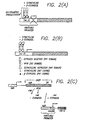
- Figs. 2A-2C show a schematic illustration of the basic components of the inducible expression system of the invention.
- the inducible expression system is composed of at least two major components: 1) a multi-chimeric transactivator; and 2) an inducible promoter, where transcription from the inducible promoter is facilitated by the multi-chimeric transactivator (Fig. 2C).
- the multi-chimeric transactivator is a fusion protein minimally composed of: 1) a first ligand-binding domain that, when bound to its ligand, negatively affects transcriptional activation by the multi-chimeric transactivator (referred to herein as the binding domain that n egatively a ffects t ranscription or NAT domain); 2) a t ranscriptional a ctivation d omain (TAD), generally derived from a eukaryotic transcriptional activator; and 3) a second ligand-binding domain that, when bound to its respective ligand, positively affects transcriptional activation by the multi-chimeric transactivator (referred to herein as the binding domain that positively affects transcription or PAT domain).
- the domains of the multi-chimeric transactivator are preferably ordered, from N-terminus to C-terminus NAT-TAD-PAT, although the domains may be differently ordered (e.g., from N-terminus to C-terminus, PAT-TAD-NAT).
- the NAT domain is the repressor of Escherichia coli ( E. coli ) tetracycline-resistance operon (tetR), the TAD domain is the activation domain (carboxyl terminal domain) of virion protein 16 (VP16) of herpes simplex virus (HSV) (Triezenberg et al. 1988 Genes Dev.
- E. coli Escherichia coli
- tetR tetracycline-resistance operon
- the TAD domain is the activation domain (carboxyl terminal domain) of virion protein 16 (VP16) of herpes simplex virus (HSV) (Triezenberg et al. 1988 Genes Dev.
- the PAT domain is the ligand-binding portion of a steroid receptor, preferably a ligand binding portion of an estrogen receptor (ER), a glucocorticoid receptor (GR), a mineralocorticoid receptor (MR), an androgen receptor (AR), or a progesterone receptor (PR), more preferably an estrogen receptor.
- ER estrogen receptor
- GR glucocorticoid receptor
- MR mineralocorticoid receptor
- AR an androgen receptor
- PR progesterone receptor
- transcription from the inducible promoter is only activated when both the ER domain (PAT domain) is bound to estrogen (a PAT ligand) and the tetR domain (NAT domain) is not bound to tetracycline (a NAT ligand) (Fig. 2B). If ligand is bound to the NAT domain or if the PAT domain is free of ligand, the multi-chimeric transactivator does not significantly facilitate transcription from the inducible promoter (Fig. 2A).
- the inducible expression system of the invention is composed of: 1) a multi-chimeric transactivator, tTAER, which is a fusion protein composed of (preferably from N-terminus to C-terminus) the E. coli tetR polypeptide, the transcriptional activation domain of HSV VP16, and the ligand-binding domain of estrogen receptor (ER); and 2) a minimal promoter derived from the immediate early gene of CMV operably linked to seven tandem copies of tetO, which in turn can be operably linked to a nucleotide sequence of interest.
- tTAER a multi-chimeric transactivator
- tTAER When estrogen is bound to the ER portion of tTAER, tTAER facilitates expression from the tetO inducible promoter via binding of the tetR domain to a tetO sequence(s) of the inducible promoter, thereby allowing the VP16 domain to facilitate transcriptional activation. tTAER does not significantly affect transcription from the tetO inducible promoter in the absence of estrogen. Transcriptional activation of the tetO inducible promoter by tTAER is inhibited in the presence of tetracycline, which binds to the tetR portion of tTAER. This embodiment is described below in more detail.
- transcription from the inducible promoter is increased from about 10-fold to about 50-fold, preferably from about 40-fold to 90-fold, more preferably from about 40-fold to 104-fold, and may be 240-fold or more relative to transcription in the presence of NAT ligand.
- Transcription from the inducible promoter is about 2-fold to about 4-fold, preferably from about 3-fold to 10-fold, greater when the transactivator is bound by PAT ligand than when the transactivator is bound by both NAT and PAT ligands, or when the transactivator is bound by neither ligand.
- the multi-chimeric transactivator can be expressed at high levels in a eukaryotic cell without significantly adversely affecting general cellular transcription in the host cell, i.e., without significantly eliciting the "squelching effect associated with high level expression of other transactivator proteins (e.g., tTA of the tetracycline-inducible system of Gossen and Bujard, supra ).
- high levels is meant an amount of multi-chimeric transactivator expression that is sufficient to facilitate transactivation of the inducible promoter, but that is not detrimental to the cell (e.g., is not toxic to the cell).
- “High levels” can be a level of expression that allows detection of the transactivator by Western blot of about 10 6 cells or fewer.
- the multi-chimeric transactivator can preferably be expressed in a wide variety of cell types, including mammalian and non-mammalian cells such as, but not limited to, human, monkey, mouse, hamster, cow, insect, fish, and frog cells.
- the multi-chimeric transactivator can be expressed either in vivo or in vitro, and expression of the transactivator can be controlled through selection of the promoter to which the nucleotide sequence encoding the transactivator is operably linked.
- the promoter can be a constitutive promoter or an inducible promoter.
- promoters include the human cytomegalovirus promoter IE (Boshart et al., 1985 Cell 41 :521-530), ubiquitously expressing promoters such as HSV-Tk (McKnight et al., 1984 Cell 37: 253-262) and ⁇ -actin promoters (e.g. the human ⁇ -actin promoter as described by Ng et al., Mol. Cell Biol. 1985 5 :2720-2732).
- the promoter of the multi-chimeric transactivator can be a cell type-specific or tissue-specific promoter that preferentially facilitates transcription of the transactivator in a desired cell of tissue type.
- exemplary cell type-specific and/or tissue-specific promoters include promoters such as albumin (liver specific; Pinkert et al., 1987 Genes Dev. 1 :268-277), lymphoid specific promoters (Calame et al., 1988 Adv. Immunol . 43 :235-275); in particular promoters of T-cell receptors (Winoto et al., 1989 EMBO J.
- Promoters for expression of the multi-chimeric transactivator can also be developmentally-regulated promoters such as the murine homeobox promoters (Kessel et al., 1990 Science 249 :374-379) or the ⁇ -fetoprotein promoter (Campes et al., 1989 Genes Dev. 3 :537-546).
- the promoter can be used in combination with control regions allowing integration site independent expression of the transactivator (Grosveld et al., 1987 Cell 51 :975-985).
- the promoter is constitutive in the respective cell types.
- the promoter is a CMV promoter, more preferably a CMV immediate early gene promoter.
- the ligand-binding domain that negatively affects transcription from the inducible promoter can be derived from any polypeptide that inhibits transcription from a promoter when bound to a specific ligand.
- the NAT domain inhibits transcription by preventing binding of the multi-chimeric transactivator to a specific nucleotide sequence within a promoter; more preferably, the specific sequence to which the multi-chimeric transactivator binds to facilitate transcription (when the NAT domain is not bound to its ligand) is a sequence that can be readily incorporated into a desired promoter to facilitate transcriptional regulation of the promoter by multi-chimeric transactivator binding.
- the NAT domain can be, for example, a repressor protein that binds a specific DNA sequence in a NAT ligand-dependent manner.
- the NAT domain binds the specific nucleotide sequence in the inducible promoter, thus allowing the transcriptional activation domain (TAD) of the multi-chimeric transactivator to facilitate transcription from the inducible promoter.
- TAD transcriptional activation domain
- binding of NAT domain to the specific nucleotide sequence is relatively tight, e.g., having a binding constant (k a )of at least 10 5 M -1 , preferably at least about 10 6 M -1 , more preferably at least about 10 8 M -1 to 10 9 M -1 , and can be 10 9 M -1 or greater.
- k a binding constant
- the NAT ligand binds the NAT domain, thereby preventing the NAT domain from binding the specific nucleotide sequence in the inducible promoter, thus inhibiting multi-chimeric transactivation-mediated transcriptional activation.
- Exemplary NAT domains include, but are not limited to, the repressor (tetR) of the prokaryotic tetracycline-resistance operon, the lac repressor of other prokaryotic lactose operon, GAL4 of the galactose operon (Conner et al., 1993 Virol. 195 :569, the mammalian jun and creb transactivators (Yin et al. 1995 J. Virol. 69 :6209-6218) and transactivators found in plants (Wilde et al. 1994 Plant Mol. Biol. 24 :38).
- tetR the repressor of the prokaryotic tetracycline-resistance operon
- lac repressor of other prokaryotic lactose operon
- GAL4 of the galactose operon
- the mammalian jun and creb transactivators Yin et al. 1995 J. Virol.
- the NAT domain of the multi-chimeric transactivator is a native tetR polypeptide or a functional derivative of tetR, since tetR binds its specific DNA sequence (tetO) with greater affinity than either lacR or GAL4 bind their respective sequences.
- tetR binds tetracycline much tighter (k a ⁇ 10 9 M -1 ; Takahashi et al., J. Mol. Biol.
- tetR a polypeptide derived from tetR that retains both 1) tetracycline or tetracycline analog binding and 2) the ability to inhibit transcription from the inducible promoter by preventing binding of the tetR domain to tetO sequences within the inducible promoter.
- tetR The nucleotide sequence encoding tetR can be obtained according to Postel et al., 1984 Nucl. Acids Res. 2 :4849-4863, herein incorporated by reference.
- Other tetR sequences useful in the invention, and the respective binding sites for these repressors, are described in (Waters et al., 1983 Nucl. Acids Res. 11 :6089-6105; Postle et al., supra; Unger et al., 1984 Gene 31 :103-108; Unger et al., 1984 Nucl. Acids Res. 12 7693-7703; Tovar et al., 1988 Mol. Gen. Genet.
- the ligand that binds the ligand-binding domain of the transactivator NAT domain can be the natural ligand that binds the NAT domain or an analog of the natural ligand.
- the natural ligand and/or natural ligand analog is substantially non-toxic to eukaryotic cells at concentrations required for NAT domain-mediated regulation of the inducible promoter, and can be administered to animals and/or humans at these concentrations with few or no serious side effects.
- Tetracycline analogs can be any one of a number of compounds that are closely related to tetracycline and which bind to the tet repressor with a K a of at least about 10 6 M -1 .
- the tetracycline analogs binds with an affinity of about 10 9 M -1 or greater, e.g., binds with an affinity of about 10 11 M -1 .
- Examples of such tetracycline analogs include, but re not limited to those disclosed by Hlavka and Boother, "The Tetracyclines," IN: Handbook of Experimental Pharmacology 78, R.K.
- the ligand-binding domain that positively affects transcription from the inducible promoter can be derived from any polypeptide that promotes transcription from a promoter when bound to a specific ligand.
- the transactivator is bound to ligand at its NAT domain (e.g, tetracycline is bound to the tetR domain)
- the NAT domain inhibits transcriptional activation by the multi-chimeric transactivator even if the PAT domain is bound to a PAT ligand.
- the PAT domain can be derived from any polypeptide having a ligand-binding domain that, when not bound to ligand, renders the polypeptide non-functional, but when bound to ligand renders the polypeptide functional.
- polypeptides having such ligand-binding domains that can be used as a PAT domain in the multi-chimeric transactivator of the invention include, but are not limited to, the ligand-binding domain of thyroid receptors, retinoid receptors, and steroid receptors.
- the PAT domain is a ligand-binding domain of a steroid receptor.
- the steroid receptor can be a receptor for estrogen (ER; Eilers et al.
- the steroid receptor is an estrogen receptor (ER). Isolation of the estrogen-binding domain of the estrogen receptor has been described (Kumar et al. 1986 EMBO J .
- the ligand that binds the ligand-binding domain of the transactivator's PAT domain can be the natural ligand that binds the PAT domain or an analog of the natural ligand.
- the natural ligand and/or natural ligand analog is substantially non-toxic to eukaryotic cells at concentrations required for PAT domain-mediated regulation of the inducible promoter, and can be administered to animals and/or humans at these concentrations with few or no serious side effects.
- the PAT domain of the multi-chimeric transactivator is derived from a ligand-binding domain of an estrogen receptor (ER)
- the natural ligand is estrogen.
- Estrogen analogs that can be used with ER-containing transactivators include 17 ⁇ -estradiol, 17 ⁇ -estradiol, 17 ⁇ -estradiol, and other estrogen and estradiol derivatives that can bind the estrogen-binding domain of the estrogen receptor.
- HSP90 heat-shock protein 90
- Steroid binding results in release of the HSP90 complex, and protein activation.
- the steroid-reversible protein inactivation function of the steroid-binding domain may work via a mechanism involving steric hindrance by the HSP90 complex.
- any PAT domain having a ligand-binding portion that, when unbound by ligand, binds an HSP90-containing complex and sterically hinders transactivation by the multi-chimeric transactivation is suitable for use in the present invention.
- the transcriptional activation domain can be derived from any transcriptional activator.
- the transcriptional activation domains are polypeptide sequences having a distinct conformational and/or charge characteristics.
- “acid blob" domains are transcriptional domains of HSV transcriptional activators that facilitate transcriptional activation through interaction of the domain's highly negatively charged polypeptide sequence with proteins essential for transcriptional activation (see Triezenberg et al. 1988 Genes Dev. 2 :718-729).
- the transcriptional activation domain of the multi-chimeric transactivator is the negatively charged C-terminal domain of VP16, the transactivator of herpes simplex virus immediate early gene expression, described in Triezenberg et al. 1988 Genes Dev.
- the transcriptional activation domain of the multi-chimeric transactivator is composed of the C-terminal 130 amino acids of VP16.
- the inducible promoter used in conjunction with the transactivator in the inducible expression system of the invention is any promoter from which transcription can be regulated by the multi-chimeric transactivator.
- transcription from the inducible promoter is both positively and negatively regulated by the transactivator.
- the transactivator when the transactivator is bound to ligand at its NAT domain (e.g., a tetR domain), the transactivator cannot bind to the inducible promoter, and transcription does not occur at a significant level even when the transactivator is bound to ligand at its PAT domain (e.g, a steroid-binding domain), the transactivator binds the inducible promoter to facilitate transcription.
- the composition of the inducible promoter is correlated with the relevant components of the multi-chimeric transactivator, and can be present as multiple, tandemly repeated copies.
- the inducible promoter is preferably a minimal promoter containing at least one tetO sequence, preferably at least 2 or more tandemly repeated tetO sequences, even more preferably at least 5 or more tandemly repeated tetO sequences, most preferably at least 7 tandemly repeated tetO sequences or more.
- the inducible promoter contains at least one laci sequence.
- the minimal promoter portion of the inducible promoter can be derived from any desired promoter, and is selected according to tet cell line in which the inducible expression system is to be used. Where the cell is a mammalian cell, a preferred minimal promoter is derived from CMV, preferably from the CMV immediate early gene 1A.
- the inducible promoter is a minimal promoter operatively linked to at least one tet operator (tetO) sequence.
- tetO tet operator sequence
- the tetO sequence can be obtained, for example, according to Hillen & Wissmann 1989, supra, each of which are herein incorporated by reference with respect to the description and sequence of tetO.
- tetO sequences that can be used in the practice of the invention can be obtained from the following references: Waters et al., 1983, supra; Postle et al., 1984, supra; Unger et al., 1984, supra; Unger et al., 1984, supra; Tovar et al., 1988, supra; for comparison and overview see Hillen and Wissmann 1989, supra, the disclosures of which are fully herein incorporated by reference.
- One, two, three, four, five, six, seven, eight, nine or ten or more copies of the tet operator sequence can be used.
- promoters having a greater number of copies of tetO allow an enhanced range of transactivator regulation of transcription from the promoter. Regulation of tetracycline-regulatable promoters containing tetO sequences is discussed in USPN 5,464,758, and in Gossen and Brujand, 1992 Proc. Natl. Acad. Sci. USA 89 :5547-5551, each of which are herein incorporated by reference.
- the basic components of the inducible expression system e.g., the nucleotide sequence encoding the transactivator and the inducible promoter operably linked to a nucleotide sequence of interest, can be contained within a single construct or within two separate constructs.
- the construct can be derived from any of a variety of constructs know in the art and/or commercially available, and can be capable of replication in prokaryotic cells, eukaryotic cells, or, preferably, both prokaryotic and eukaryotic cells.
- the construct can additionally contain nucleotide sequence encoding gene(s) that can serve as selectable markers, e.g., antibiotic resistance genes (e.g, ampicillin, hygromycin, G418), ⁇ -galactosidase, or other gene products that can be used for selection of cells containing the construct.
- the construct can additionally contain other expression-facilitating sequences, such as enhancers, introns, or other sequences that facilitate expression of the transactivator and/or, where appropriate, expression of the nucleotide sequence of interest operably linked to the inducible promoter.
- Any eukaryotic cell line that can be stably transformed with the inducible expression system of the invention can be used to inducible express a desired gene product, e.g., a cytotoxic polypeptide.
- Suitable host cells include cells of both mammalian (e.g., human, simian, canine, feline, equine, and rodent) and non-mammalian origin (e.g, insect, reptile, fish and avian).
- Specific exemplary host cells include 293GP cells and HT1080 cells. The host cells can be either an in vitro cell culture or present in an organism in vivo.
- the inducible expression system is introduced into the cell as a single recombinant nucleotide sequence (e.g., rather than as two separate sequences, one encoding the transactivator and one encoding the gene product of interest under control of the inducible promoter).
- Introduction of the nucleotide sequence encoding the inducible expression system into host cells can be accomplished either in vitro or in vivo according to methods well known in the art (see, e.g., Sambrook et al., 1987 Molecular Cloning: A Laboratory Manual, Cold Spring Harbor Press, Cold Spring Harbor, New York).
- the inducible expression system is introduced into the host cell by infection with a retroviral vector containing the nucleotide sequence encoding the multi-chimeric transactivator and/or the inducible promoter operably linked to the nucleotide sequence of interest, and the nucleotide sequence encoding the inducible expression system is stably integrated into the host cell genome.
- a nucleotide sequence(s) encoding the inducible expression system of the invention can be used to generate transgenic animals for regulated expression of a nucleotide sequence of interest.
- Such transgenic animals can be generated by (1) for example, injecting a nucleotide molecule encoding the multi-chimeric transactivator and/or an individual promoter operatively linked to a sequence encoding a gene product of interest into a fertilized egg.
- the fertilized egg is allowed to develop into an adult animal.
- a few hundred DNA molecules are injected into the pro-nucleus of a fertilized, single-cell egg.
- the microinjected eggs are then transferred into the oviducts of pseudopregnant foster mothers and allowed to develop.
- the transgenic animals can be obtained by utilizing recombinant ES cells for the generation of the transgenes, as described by Gossler et al., 1986 Proc. Natl. Acad. Sci. USA 83 :9065-9069.
- Animals transgenic for the multi-chimeric transactivator under the transcriptional control of one of the promoter sequences described above and/or the sequences under control of this regulatory protein can be generated, e.g., by coinjection of the two molecules.
- independent animal lines transgenic for only one of the sequences can be generated by breeding the two transgenic animal lines.
- Expression of the nucleotide sequence in the inducible expression system present in the host cell either in vitro or in vivo (e.g., in transgenic animals) can be regulated by exposing the cells to tetracycline (or analogs thereof) and estrogen (or analogs thereof, preferably 17 ⁇ -estradiol).
- Expression in transgenic animals can be regulated by administering tetracycline and/or estrogen by any suitable means, e.g., orally, transdermally, or by injection via a parenteral, subcutaneous, intravenous, intramuscular, or intraperitoneal route. The dosage administered will vary with a variety of factors including the age, health, and weight of the animal.
- the inducible expression system of the invention can be used to generate packaging cells useful in the production of recombinant pseudotyped retroviral vectors, which are suitable for use in the introduction of a DNA sequence of interest into a target cell and the regulated expression of the introduced nucleotide sequence either in vitro or in vivo.
- Pseudotyped retroviral particles are retroviral particles having an envelope protein that is derived from a virus other than the virus from which the viral RNA genome is derived.
- the envelope protein can be from a retrovirus of a species different from the retrovirus from which the RNA genome is derived or from a non-retroviral virus (e.g., vesicular stomatitis virus (VSV)).
- VSV vesicular stomatitis virus
- the pseudotyped retroviral vectors are defective, i.e., the retroviral vector is derived from a naturally-occurring virus that has been genetically altered to render the virus replication-defective.
- the virus delivers its genetic material into a target cell, the virus introduces the recombinant nucleotide sequence into cell, preferably as a stably chromosomally integrated sequence, but does not generate additional infectious virus upon expression of the introduced retroviral sequence.
- the retroviral vector containing the nucleotide sequence of interest is attenuated, i.e. does not cause significant pathology or morbidity in the infected host (i.e., the virus is nonpathogenic or causes only minor disease symptoms).
- Pseudotyped retroviral particles can be produced by introducing a defective, recombinant retroviral genome into a packaging cell (e.g., by infection with a defective retroviral particle, or by other means for introducing DNA into a target cell (e.g., conventional transformation techniques)).
- the defective retroviral genome minimally contains the long terminal repeats, the exogenous nucleotide sequence of interest to be transferred, and a packaging sequence ( ⁇ ).
- the packaging cell provides the missing retroviral components essential for retroviral replication, integration, and encapsidation, and also expresses a nucleotide sequence encoding the desired envelope protein.
- the packaging cell does not have all of the components essential for the production of retroviral particles.
- the nucleotide sequence(s) encoding the missing viral component(s) in the packaging cell can be either stably integrated into the packaging cell genome, and/or can be provided by a co-infecting helper virus.
- the nucleotide sequences encoding the retroviral components and the retroviral RNA genome can be derived from any desired retrovirus (e.g., murine, simian, avian, or human retroviruses). Most defective retroviruses developed for gene therapy applications are murine retroviruses (e.g., murine leukemia virus (MuLV), Moloney murine leukemia virus (MoMLV)), (see, e.g., Miller et al. 1992 Nature 357 :455-460; and Mulligan 1993 Science 260 :926-932).
- the retroviral components can be derived from any retrovirus that can form pseudotyped retroviral particles with the desired envelope protein, e.g., VSV G.
- the retroviral components can be derived from MuLV, MoMLV, avian leukosis virus (ALV), human immunodeficiency virus (HIV), or any other retrovirus that can form pseudotyped virus with VSV G as the only envelope protein or with VSV G and a relatively small amount of retroviral envelope protein.
- the free virion form of pseudotyped defective murine retrovirus contains the structural and enzymatic proteins of the retrovirus (including reverse transcriptase), two RNA copies of the retroviral genome, and portions of the cell's plasma membrane in which is embedded the desired viral envelope glycoprotein (e.g., VSV G).
- the genome is organized into four main regions: the long terminal repeat (LTR), the gag gene, the pol gene, and the env gene.
- LTR long terminal repeat
- gag gene the gag gene
- the pol gene the pol gene
- env gene The three genes gag, pol, and env , which are located between the terminal LTRs, encode internal viral structural proteins and reverse transcriptase, respectively, and the env gene encodes the envelope glycoprotein that confers infectivity and host range specificity to the virus.
- the retroviral genome is defective in one or all three of these genes.
- the retroviral genome can contain a nucleotide sequence of interest to be ultimately transferred to a target cell.
- the LTR is positioned at both ends of the proviral genome, and is a composite of the 5' and 3' ends of the RNA genome.
- the LTR contains cis -acting elements necessary for the initiation and termination of transcription.
- An exemplary packaging cell of the invention contains genes encoding Gag and Pol, as well as the desired envelope protein, but does not contain the packaging signal " ⁇ ."
- a packaging cell can only form empty virion particles; once a retroviral RNA genome (which contains the nucleotide sequence of interest) is introduced into the packaging cell, the packaging cell can produce pseudotyped, defective retroviral particles.
- Packaging cells thus provide the missing retroviral components (i.e., the components for which the retroviral genome is defective) essential for viral replication in trans.
- Methods for production of replication-deficient retroviral genomes containing a nucleotide sequence of interest, as well as methods for generating a packaging cell line expressing the gag and pol genes, are well known in the art and are described in, for example, USPN 4,861,719; PCT published application no. WO 92/05266, published April 2, 1992; and PCT published application no. WO 92/14829, published September 2, 1992, each of which are incorporated herein by reference with respect to production of replication-deficient retroviral genomes and packaging cell lines expressing retroviral gag and pol genes.
- the cell line 293GP is used to generate a packaging cell line according to the invention.
- Retroviral packaging cell lines can be derived from any mammalian or non-mammalian cell that can express the retroviral Gag and Pol proteins, and can express the desired envelope protein (e.g., can tolerate expression of VSV G for several hours to several days, preferably for at least one week to two weeks or more).
- Pseudotyped retroviral particles are produced according to the invention by introducing a defective, recombinant retroviral genome containing a nucleotide sequence of interest into a packaging cell line that contains nucleotide sequences encoding for 1) functional retroviral proteins for which the introduced RNA genome is defective (e.g., gag and pol ), and 2) an inducible expression system of the invention which facilitates expression of a desired envelope protein.
- the defective, recombinant RNA genome can be introduced into the packaging cell line by any means, including infection with a defective viral particle or other conventional means of transformation.
- the packaging cell expresses a retroviral Gag protein, a retroviral Pol protein, and a desired envelope protein that is inducibly expressed using the system of the invention.
- the inducible expression system contained within the packaging cell line is composed of 1) a nucleotide sequence encoding a multi-chimeric transactivator, and 2) a nudeotide sequence composed of an inducible promoter operably linked to a nucleotide sequence encoding the desired envelope protein.
- the inducible expression system can be introduced as a single construct or as multiple constructs.
- the multi-chimeric transactivator is a fusion protein composed of a tetR domain, a transcriptional activation domain (preferably a transcriptional activation domain of VP16), and a ligand-binding domain of a steroid receptor (preferably a ligand binding domain of an estrogen receptor).
- the inducible promoter is preferably a minimal promoter derived from a CMV early gene promoter which is operably linked to at least one tetO sequence, preferably at least 2 or more tandemly repeated tetO .sequences, even more preferably at least 5 or more tandemly repeated tetO sequences, most preferably at least 7 tandemly repeated tetO sequences or more.
- the nucleotide sequence encoding the desired envelope protein for production of retroviral particles is preferably a nucleotide sequence encoding VSV G, the envelope protein of vesicular stomatitis virus (VSV), or a functional derivative thereof.
- VSV G vesicular stomatitis virus
- the nucleotide sequence encoding VSV G is described in Rose et al. 1982 Cell . 30 :753-762, herein incorporated by reference with respect to disclosure of the VSV G nucleotide and amino acid sequences.
- VSV G can be present as the only envelope protein in the pseudotyped retroviral virion, or can be present in combination with other envelope proteins (e.g., the retroviral envelope protein normally associated with the retrovirus from which the retroviral components of other pseudotyped virion are derived).
- VSV G is present in the viral envelope such that VSV G represents about 50% of the envelope proteins present in the viral envelope, more preferably about 75%, even more preferably about 90% to about 95%, still more preferably greater than 95%, most preferably about 100% or such that VSV G is substantially the only envelope protein in the viral envelope.
- VSV G can be a native (i.e., naturally-occurring) VSV G, or a functional derivative thereof.
- Functional derivatives of VSV G include, but are not limited to, VSV G-derived polypeptides having amino acid substitutions, deletions, additions, and/or chemical modifications relative to native VSV G.
- Functional VSV G derivatives thus include, but are not limited to, VSV G-derived polypeptides having a function different from or in addition to that normally associated with native VSV G.
- VSV G can be fused to a polypeptide derived from an antibody having binding affinity for a tissue-specific or cell-specific antigen.
- Pseudotyped viral particles having such a VSV G-single chain antibody fusion protein present in the viral envelope can preferentially infect cells expressing on their surface the antigen to which the antibody chain binds.
- Other VSV G functional derivatives can likewise alter the host cell range of the pseudotyped viral particle and/or provide other desired characteristics.
- any VSV G functional derivative that can form pseudotyped retroviral virions according to the invention can be used.
- VSV G When the envelope-expressing packaging cell is exposed to tetracycline (or an analog thereof), substantially no or very little VSV G is expressed from the inducible promoter.
- expression of the envelope protein In the absence of tetracycline and in the presence of the steroid or an analog thereof that binds the steroid receptor portion of the multi-chimeric transactivator, expression of the envelope protein is increased from about 10-fold to about 50-fold, preferably from about 40-fold to 90-fold, more preferably from about 40-fold to 100-fold, and may be 200-fold or more relative to transcription in the presence of tetracycline.
- expression of the multi-chimeric transactivator can be regulated by operably linking the nucleotide sequence encoding the multi-chimeric transactivator to a regulatable promoter.
- the packaging cell of the invention can provide two or more levels of regulation of expression of the desired envelope protein: 1) negative regulation of expression of the envelope protein by the addition of tetracycline; 2) positive regulation by removing tetracycline and adding steroid or steroid analog; and, optionally, 3) regulated expression of the nucleotide sequence encoding the multi-chimeric transactivator.
- the packaging cell line of the invention capable of inducible expression of a desired envelope protein can be used to produce pseudotyped retroviral vectors at pre-centrifugation viral titers of at least more than 10 4 /ml, preferably more than 10 5 /ml, even more preferably more than 10 6 /ml.
- the packaging cells can be maintained under conditions that allow for production of infectious pseudotyped virions (e.g, in the presence of steroid and the absence of tetracycline) for at least 4 days, preferably at least 8 days, even more preferably at least 12 days, and can be maintained for 16 days or longer.
- the VSV G pseudotyped virus packaging cell lines of the invention can produce 10 4 to 10 6 infectious viral particles per ml and can produce infectious virus for about 5 days to about 16 days or more, depending on the sensitivity of the packaging cell to VSV G.
- the packaging cells are present within a transgenic animal for in vivo production of pseudotyped retroviral particles that can be harvested from the animals (e.g., by collecting and isolating pseudotyped virions from the animal's blood or any other body fluid).
- pseudotyped retroviral particles that can be harvested from the animals (e.g., by collecting and isolating pseudotyped virions from the animal's blood or any other body fluid).
- the nucleotide sequence(s) encoding the retroviral Gag and Pol proteins and the nucleotide sequence(s) encoding the inducible expression system can be used to generate transgenic animals according to methods well known in the art as described above.
- the animals can then be infected with infectious, replication defective retroviral virions containing the nucleotide sequence of interest, which can then infect the " in vivo " packaging cells present in the transgenic animal to produce high titers of pseudotyped retroviral vector particles.
- Expression of the envelope protein encoded by the inducible expression system can be regulated by administration of tetracycline or steroid to the transgenic animal as described above.
- the pseudotyped retroviral vector particles generated using the packaging cells of the invention can be used to facilitate delivery of a nucleotide sequence of interest to a host cell either in vitro or in vivo.
- the pseudotyped retroviral vector particles can be used in gene therapy applications to deliver therapeutic gene product-encoding sequence to a subject, e.g., a mammalian subject, preferably a human subject.
- the pseudotyped retroviral vector particles can also be used to develop various disease or development animal or in vitro models.
- Example 1 Constructs for use in the inducible expression system
- the nucleotide sequence encoding the multi-chimeric transactivator tTAER was generated by isolating a 1-kilobase pair (kb) EcoRI-BamHI DNA fragment containing the tTA gene from the construct pUHD15-1 (Gossen et al., 1992 supra) (Fig. 3).
- the 1 kb EcoRI-BamHI fragment was ligated to a 0.95-kb BamHI-SstI DNA fragment containing the estrogen receptor (ER) ligand-binding domain from pHE14 (Kumar et al., 1986 EMBO J . 5 :2231-2236) (Fig. 3).
- tTAER which is composed of (from N-terminus to C-terminus) tetR, the activation domain of VP16, and the ER (Fig. 3).
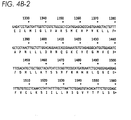
- the nucleotide and amino acid sequence of tTAER are shown in Figs. 4A-4C.
- constructs were prepared to test the expression and function of tTAER, and to produce stable cell lines expressing tTAER.
- the construct pCMV-tTAER (Fig. 5) was generated by inserting the 1.95-kb EcoRI fragment containing the complete tTAER gene into the unique BamHI site in pCMV-Bam (Yee et al., 1994, supra); expression of tTAER from the pCMV-tTAER construct is under the control of the CMV immediate early gene 1A promoter.
- the construct phyg-CMV-tTAER (Fig.
- the pTetO-G-1 construct (Fig. 5) was prepared by isolating a 1.6-kb BamHI DNA fragment containing the VSV-G gene from pCMV-G (Yee et al., 1994, supra) and inserting the VSV-G-encoding fragment at the unique BamHI site in pUHG10-3 (Gossen et al., 1992, supra) (Fig. 5).
- the pTetO-G-2 construct (Fig.
- the 1.9-kb Xhol-XbaI DNA fragment containing the TetO-CAT cassette was isolated from pTetO-CAT and was inserted at the unique XhoI site immediately downstream of the gene encoding neomycin phosphotransferase (neo) gene in pTEPN (Fig. 6).
- the pTEPN-G plasmid (Fig. 6) was similarly constructed by inserting the 2.1-kb XhoI DNA fragment containing the TetO-G cassette isolated from pTetO-G-1 into the unique XhoI site in pTEPN.
- Example 2 Inducible expression of the luciferase gene using the tTAER inducible expression system
- tTAER The transactivation function of tTAER was tested by co-transfecting human 293GP kidney cells (293GP cells) with pCMV-tTAER and pUHC13-3, which contains the firefly lux gene under the control of a minimum promoter linked to seven tandem copies of tetO (Gossen et al., 1992, supra ).
- the human 293GP kidney cell line expresses the Gag and Pol proteins of MoMLV and has been described previously (Burns et al., 1993 Proc. Natl. Acad. Sci. USA 90 :8033-8037; PCT published application no.
- the 293GP cells containing tTAER (293GP/tTAER) were maintained in Dulbecco's modified essential medium (DMEM) containing 10% fetal calf serum (FCS), 1 ⁇ g/ml tetracycline, 1 ⁇ g/ml puromycin, and 800 ⁇ g/ml hygromycin.
- DMEM Dulbecco's modified essential medium
- FCS fetal calf serum
- FCS fetal calf serum
- puromycin 1 ⁇ g/ml puromycin
- 800 ⁇ g/ml hygromycin 800 ⁇ g/ml hygromycin.
- VSV-G expression was induced by removing the tetracycline-containing medium, washing the cells twice with DMEM with at least 30 min incubation in DMEM between washes. The cells were then maintained in DMEM/10% FCS containing 17 ⁇ -estradiol at a concentration of 2 ⁇ M. Luciferase (lux) activity was detected in cell extracts prepared by subjecting the cells to three cycles of freeze-thawing in lysis buffer (0.1M potassium phosphate/1mM dithiothreitol, pH7.8), followed by centrifugation at room temperature for 3 min to remove cell debris. Lux activity was determined as described (de Wet et al., 1987 Mol. Cell. Biol. 7 :725-737).
- the negative effect of the VP16 activation domain upon general cellular transcription is also regulated by the ER ligand-binding domain in tTAER, which allows for increased efficiency in the isolation of tTAER-expressing cell lines in the absence of 17 ⁇ -estradiol.
- Example 3 Expression of tTAER from a retroviral vector
- the bicistronic retroviral vector, pTEPN was constructed with the tTAER gene followed by the internal ribosome entry site derived from the poliovirus genome and the neomycin phosphotransferase gene (neo) (Fig. 6). Expression of both genes was under the control of the MoMLV 5' long terminal repeat (LTR).
- LTR MoMLV 5' long terminal repeat
- Human HT1080 fibrosarcoma cells (ATCC CCL 121) were co-transfected with pTEPN and with pTetO-CAT, which contains the CAT gene controlled by tetO, which is composed of a minimal promoter of the CMV immediate early gene linked to seven tandem copies of the tetR-binding site (Fig. 6).
- G418-resistant HT1080 cells were routinely maintained in 1 ⁇ g/ml tetracycline and 800 ⁇ g/ml G418-containing medium. Tetracycline was removed by washing the cells with medium containing no tetracycline and incubating the cells at 37°C for 30 minutes. The washing procedure was repeated a minimum of three times. For induction of gene expression, cells were incubated in phenol red-free DMEM containing 10% charcoal/dextran-treated fetal calf serum and 2 ⁇ M 17 ⁇ -estradiol for 72 hours before the cell extract was prepared. Approximately 48 hours after transfection, CAT activity was determined by the method of Sleigh (Sleigh, M.J. 1986 Anal. Biochem. 156 :251-256).
- a 100 ⁇ l sample of reaction mixture contained 150 mM Tris-HCl (pH7.8), 1.6 mM chloramphenicol, 90 ⁇ M acetyl coenzyme A (Pharmacia), 1 ⁇ Ci [ 14 C]acetyl coenzyme A (Amersham; 60 mCi/mmol), and 10 ⁇ l of cell extract.
- the mixture was incubated at 37°C for 60 minutes, and the labeled chloramphenicol was quantitated by liquid scintillation counting after extraction into the ethyl acetate layer. Protein concentration was determined by the method of Bradford (Bradford, M.D. 1976 Anal. Biochem. 72 :248-254). The results of these experiments are shown in Fig. 8.
- the numbers above the bars in the graph represent the relative fold induction by normalizing the CAT activity of each condition to that of tetracycline-containing medium which was arbitrarily set as 1.
- CAT expression was not activated in the presence of tetracycline alone or tetracycline plus the estrogen analog 17 ⁇ -estradiol, consistent with the model that tTAER cannot bind DNA in the presence of tetracycline.
- tTAER failed to activate the CAT expression upon the removal of tetracycline from the culture medium.
- CAT expression was strongly activated only when tetracycline was removed and 17 ⁇ -estradiol was added to the culture medium.
- Example 4 Establishment of 293GP cells stably-expressing tTAER
- tetO-lux-containing construct pUHC13-3 To test for stable tTAER expression, cells derived from these thirty clones were transfected with tetO-lux-containing construct pUHC13-3. The pUHC13-3 transfected cells were maintained in the presence of tetracycline or 17 ⁇ -estradiol, and lux activity determined 48 hours after transfection. All 30 clones responded to 17 ⁇ -estradiol induction with increased lux activities ranging from 2 to 90 fold when compared with that in tetracycline-containing medium. This result is consistent with the prediction that tTAER is less toxic than tTA and that stable cell lines expressing tTAER can thus be established more readily.
- Example 5 Establishment of 293GP packaging cell lines for VSV-G pseudotyped retroviral vectors
- the clone which generated the highest induction level of the lux activity in Example 2 was chosen for the introduction of pTetO-G-2 for inducible VSV-G expression.
- Approximately 5 x 10 5 293GP/tTAER cells described above were transfected with 20 ⁇ g of pTetO-G-2 (Fig. 5).
- Approximately 70 puromycin-resistant colonies were picked and expanded.
- the 293GP/tTAER/G cells were maintained in DMEM containing 10% FCS, 1 ⁇ g/ml tetracycline, 1 ⁇ g/ml puromycin and 800 ⁇ g/ml hygromycin.
- Approximately one-third of these puromycin-resistant clones failed to survive serial passage even in the presence of tetracycline, probably due to high basal levels of VSV-G expression.
- the remaining puromycin-resistant clones were screened for inducible VSV-G expression by immunoblot assay. Approximately 1 x 10 5 cells derived from each clone were harvested after 48 hr incubation in medium containing either 1 ⁇ g/ml tetracycline or 2 ⁇ M 17 ⁇ -estradiol and the cells were lysed in a 25 ⁇ l of buffer containing 50 mM Tris-HCl (pH7.5), 150 mM NaCl, 1% Nonidet P-40, 0.5% deoxycholic acid and 0.1% SDS.
- VSV-G protein was detected by the ECL Western blotting system (Amersham) with the I1 monoclonal antibody specific for VSV G (provided by John Holland, University of California at San Diego). 17 ⁇ -estradiol-inducible VSV-G expression was confirmed in 34 clones.
- VSV-G mRNA expression in two 293GP/tTAER/G clones was confirmed by examining VSV-G mRNA expression in two 293GP/tTAER/G clones (clones 13 and 21). Briefly, parental 293GP/tTAER cells (negative control) and from two 293GP/tTAER/G clones (clones 13 and 21) were grown in the presence of tetracycline or 17 ⁇ -estradiol and total RNA isolated according to the procedure of Chomczynski and Sacchi (Chomczynski et al., 1987 Anal. Biochem. 162 :155-159).
- mRNA was isolated using the polyATract mRNA isolation system (Promega), separated on a 2.2M formaldehyde/1% agarose gel, and transferred to a nylon membrane (Micron Separation Inc.). The membrane was hybridized with 32 P-labeled probes prepared by the random primed DNA labeling kit (Boehringer Mannheim).
- the probe for VSV-G was derived from a 1.6-kb BamHI DNA fragment of pCMV-G containing the VSV-G gene (Fig. 6; Yee et al., 1994, supra ).
- the probe for rabbit ⁇ -actin was derived from a 2-kb PstI DNA fragment of pUCA1 (Cleveland et al., 1980 Cell 20 :95-105).
- VSV-G mRNA in clone 13 was faintly detectable in the presence of tetracycline. Upon 17 ⁇ -estradiol induction, the level of the VSV-G mRNA increased dramatically. In contrast, the VSV-G mRNA in clone 21 was undetectable in the presence oftetracycline, but became detectable upon 17 ⁇ -estradiol induction. Consistent with the levels of the VSV-G mRNA, 17 ⁇ -estradiol induction of clone 13 led to severe cytopathic effects and cell death within 4 days whereas the cell morphology of clone 21 remained relatively normal under the same conditions.
- Example 6 Inducible production of VSV-G pseudotyped retroviral vectors from 293GP/tTAER/G cells
- LTK-FIX a retroviral vector LTK-FIX containing both the canine Factor IX cDNA and the neomycin-resistant gene under the control of the HSV TK promoter (Fig. 5).
- the retroviral vector LTK-FIX was generated by transfection of 20 ⁇ g of pCMV-G into 293GP cells harboring plasmid pLTK-FIX. The virus was harvested 60 hours after DNA transfection and the resulting virus was used to infect clone 13 and 21.
- the G418-resistant colonies were pooled and the level of cell surface VSV G expression determined by reacting the cells with the monoclonal anti-VSV-G antibody I1, staining with the fluorescein isothiocyanate-conjugated goat antimouse immunoglobulins (Biosource), and analyzing the stained cells by flow cytometry, as described previously (Burns et al., 1993 Proc. Natl. Acad. Sci. USA 90 :8033-8037).
- VSV-G cell surface expression of VSV-G was undetectable in LTK-FIX virus-infected clone 21 cells in the presence of tetracycline and was induced upon the removal of tetracycline and the addition of 17 ⁇ -estradiol.
- a significant level of VSV-G expression was detected in the LTK-FIX virus-infected clone 13 cells even in the presence of tetracycline and the level of VSV-G was increased further upon 17 ⁇ -estradiol induction.
- the levels of VSV-G on the surface of cells in the presence of tetracycline or 17 ⁇ -estradiol is in good agreement with the level of VSV-G mRNA in these two clones under the same conditions (see Example 5).
- Example 7 Production of VSV-G pseudotyped retroviral particles containing LTK-FIX-encoding RNA from 293GP/tTAER/G packaging cells
- Pseudotyped virus was generated from the LTK-FIX virus-infected clone 13 and clone 21 cells by growing the cells in tetracycline-containing medium to a confluence of approximately 90%. The cells were then washed and the medium was changed to tetracycline-free medium with or without 17 ⁇ -estradiol as described above. The pseudotyped virus was collected at different times (e.g., 48 hours, and/or 2, 4, 6, and 8 days post-infection) and the titer of the virus determined by selection of infected rat 208F cells in G418-containing medium.
- Virus stocks were tested for the presence of replication-competent helper retrovirus (RCR) by first amplifying the virus stocks in NIH3T3 cells (ATCC CCRL 1658; grown in high-glucose DMEM/10% FCS) for two weeks, and testing for the presence of RCR using the marker rescue assay in HT1080/LSHL cells(grown in high glucose DMEM/10% FCS) as described (Yee et al., 1994, supra ).
- RCR replication-competent helper retrovirus
- the LTK-FIX virus produced from the infected clone 13 and 21 cells was harvested following 48 hr incubation in tetracycline- or 17 ⁇ -estradiol-containing medium and the virus titers determined by infection of rat 208F cells as described above, followed by selection for G418-resistant colonies. As shown in Table 1, virus production increased in both clones upon 17 ⁇ -estradiol induction. However, despite the fact that clone 13 expressed significantly more VSV-G upon induction, the virus titers generated from both clones were similar. This may be due to the cytopathic effect generated from overexpression of VSV-G in clone 13 cells upon 17 ⁇ -estradiol induction (see below).
- clone 13 expresses detectable amounts of VSV-G in the presence of tetracycline and can be maintained for more than six months in culture indicates that human 293 cells can tolerate low levels of VSV-G expression.
- the amounts of virus generated from the two clones are similar 48 hr after 17 ⁇ -estradiol induction (Table 1 and Fig. 10). This may be attributed to the cytopathic effect observed in clone 13 after 17 ⁇ -estradiol induction, an effect probably caused by the relatively high level of VSV-G expression.
- VSV-G The toxicity of VSV-G is most likely the result of its expression on the cell surface which leads to syncytia formation.
- the levels of VSV-G expression in clones 13 and 21 correlate well with the observed degree of the cytopathic effect in these two clones after 17 ⁇ -estradiol induction. This observation suggests that a lower level of VSV-G expression such as that in clone 21 cells may have the advantage of allowing the producer cells to survive for prolonged periods after 17 ⁇ -estradiol induction, thereby producing more pseudotyped virus from the producer cells.
- Example 8 Duration of VSV-G pseudotyped retroviral production from 293GP/tTAER/G packaging cells
- 17 ⁇ -estradiol induces not only virus production but also VSV-G accumulation in the cells that inevitably leads to cell death, it is important to determine the duration of virus production from the producer cells upon induction.
- Cells derived from clone 21 or clone 13 were infected with the LTK-FIX virus and selected for G418 resistance.
- the G418-resistant colonies were pooled and incubated in DMEM (diamond), DMEM plus tetracycline (circle), or DMEM plus 17 ⁇ -estradiol (square) for the period indicated in Fig. 10.
- the medium of the pooled cells was changed every 48 hr, and the titer of the accumulated virus was determined at the time indicated by infection of rat 208F cells followed by selection in G418-containing medium.
- the viral titers increased from 10 3 cfu/ml to 4 x 10 6 cfu/ml over a period of two weeks after the removal of tetracycline (Fig. 10, clone 21). Mass cell death, accompanied by a reduction in virus titer, occurred after three weeks of incubation in this medium. The reason for the dramatic increase in virus titers remains unclear at the present time. To determine whether the increase in virus titers was due to the presence of helper virus contamination, the virus stocks collected from day 14 and day 16 after 17 ⁇ -estradiol induction were amplified in NIH3T3 cells followed by a marker rescue assay as described above. No helper virus was detected using this assay.
- the LTK-FIX virus titer from individually isolated G418-resistant colonies of the infected clone 21 cells has also been determined (Table 2). Removal of tetracycline and addition of 17 ⁇ -estradiol for 60 hours resulted in an increase in the virus titer exceeding 3-4 orders of magnitude. Similar results were obtained with clone 13-derived cells (data not shown). The virus titers generated from independently isolated clones of LTK-FIX virus-infected clone 21 cells. Clone No.
- Virus Titer (Cfu/ml) + tetracycline - 17 ⁇ -estradiol - tetracycline + 17 ⁇ -estradiol 1 81 5.9 X 10 5 2 36 5.2 X 10 5 3 100 2.7 X 10 5 4 24 2.4 X 10 5 5 111 0.8 X 10 5 6 71 2.0 X 10 5 7 24 0.9 X 10 5 8 34 5.7 X 10 5
- Example 9 Comparison of viral titers produced by transient transfection method to viral titers produced using the inducible expression system of the invention
- the transient transfection method of virus production was compared to virus production using the stable packaging cell lines clone 13 and clone 21.
- Transient transfection was accomplished by co-transfecting the LTK-FIX construct with pCMV-G (which expresses VSV G from the CMV immediate early gene promoter) into 293GP cells using the method of calcium phosphate co-precipitation (Graham et al., 1973 Virology 52: 456-467). Sixteen days after transfection, the virus harvested.
- a 293GP/LTK-FIX clone produced by the transient transfection method produced the LTK-FIX virus at a titer of 3 x 10 6 cfu/ml.
- virus with a titer of 4 X 10 6 cfu/ml was generated from a pooled population of virus-producing clone 21 cells 48 hours after introduction of the TLK-FIX construct into the clone 21 cells.
- this latter approach of the invention have the advantage of avoiding the time-consuming step of identifying high producer clones, it is likely, as in other retrovirus production methods, that the isolation of optimal producer clones would result in even higher virus titers.
- the packaging cell lines described herein are useful in large-scale production of clinical-grade virus especially appropriate for studies aimed at human gene therapy.
- Example 10 Production of VSV-G pseudotyped retroviral particles containing ⁇ -galactosidase-encoding RNA from 293GP/tTAER/G packaging cells
- the retroviral vector pLZRNL (Yee et al., 1994, supra; Fig. 5), which expresses ⁇ -galactosidase, was used infect 293GP/tTAER/G clones 13 and 21 to produce packaging cell lines using the methods described above for the production of LTK-FIX virus-producing cell lines.
- the LZRNL-producing 293GP/tTAER/G clone 13 and clone 21 producer cell lines exhibited viral titers similar to those of the LTK-FCX 293GP/tTAER/G clone 13 and clone 21 producer cell lines described above.
- Example 11 Production of HT1080 cells stably expressine tTAER
- Infectious TEPN virus was generated by transfecting the pTEPN plasmid into 293GP cells using calcium phosphate co-precipitation (Graham et al. 1973, supra). Forty-either hours after transfection, infectious TEPN virus was harvested and used to infect HT1080 cells. Seventeen individual G418-resistant HT1080 colonies were picked and expanded. To test for the tTAER activity, plasmid pTetO-CAT was transfected into these clones and the CAT expression was determined 72 hours after transfection. As shown in Fig.
- Example 12 Production of tTAER and inducible CAT expression from a single retroviral vector in HT1080 cells
- an inducible expression system of the invention was designed so that stable producer clones can be generated using a single retroviral construct in a single transfection step.
- the pTEPN-CAT construct (Fig. 6), which contains both the TetO-CAT cassette (inserted immediate downstream of the neo gene in pTEPN) and the CMV-tTAER cassette was transfected into 293GP cells using calcium phosphate co-precipitation (Graham et al., 1973, supra ). Forty-either hours after transfection, infectious TEPN-CAT virus was harvested and used to infect HT1080 cells. Twelve G418-resistant TEPN-CAT HT1080 clones were picked and expanded, and CAT expression tested as described above.
- Example 13 Inducible expression of VSV-G in HT1080 cells using the tTAER inducible system in a single retroviral vector
- the CAT gene in pTEPN-CAT was replaced with the VSV G gene to create the construct pTEPN-G.
- Infectious TEPN-G retroviral vectors were generated from 293GP cells transfected with pTEPN-G and used to infect HT1080 cells as described in Example 12.
- Inducible expression of VSV G with 17 ⁇ -estradiol was confirmed in thirty out of thirty-five individually derived G418-resistant TEPN-G 293GP clones using immunoblotting analysis as described above.
- clone 24 was grown in tetracycline- or 17 ⁇ -estradiol-containing medium, and mRNA isolated and analyzed by Northern blot analysis. Northern blot analysis was performed as described above, except that the probe for the VSV G gene was derived from a 1-kb KpnI fragment of pTetO-G-1 (Fig. 5).
- Both the 7.1-kb retroviral genomic transcript initiated from the 5'LTR and the 2.2-kb transcript initiated from the tetO-containing promoter were detectable with the VSV G gene probe in cells grown in tetracycline-containing medium (see Fig. 5 for the relative positions of the 7.1 and 2.2 kb transcripts).
- at least three other minor bands with a size of 6.8 kb, 6 kb, and 4.5 kb were observed. Since the 5' splice donor site of MoMLV was retained in pTEPN-G, these minor transcripts may arise from the use of this splice donor site and the downstream cryptic splice acceptor sites.
- the level of the 7.1-kb genomic transcripts in the TEPN-G HT1080 cells increased approximately 4 fold whereas the level of the 2.2-kb transcript increased approximately 28 fold under the same conditions (as determined by densitometric analysis).
- Cell surface expression of VSV-G upon induction is thus correlated with an increase in transcription of the VSV-G gene from the tetO-containing promoter.
- mRNA expression studies indicate that the effect of the LTR enhancer on the tetO-containing promoter in the TEPN-G construct, if any, is minimum.
- the tetO-containing promoter in the retroviral construct may be activated fortuitously by the MoMLV LTR enhancer, which functions efficiently in many mammalian cell types.
- Minimal LTR-enhancer promoted transcription from inducible tetO promoter may be due to the fact that, except for the TATA box, the inducible tetO promoter contains no other regulatory elements from which LTR enhancer-activated transcription can occur.
- Transcriptional activation of the tetO-containing promoter by tTAER may be due to the close proximity of the tetO sites to the promoter.
- the levels of mRNA initiated from the 5'LTR increased upon 17 ⁇ -estradiol induction.
- the presence of putative estrogen-responsive elements in the MoMLV LTR may account for the observed increase.
- the strong transactivation domain of VP16 in tTAER may boost the LTR promoter activity upon binding of tTAER to the tetO sites.
Landscapes
- Life Sciences & Earth Sciences (AREA)
- Health & Medical Sciences (AREA)
- Genetics & Genomics (AREA)
- Engineering & Computer Science (AREA)
- Zoology (AREA)
- Bioinformatics & Cheminformatics (AREA)
- Biomedical Technology (AREA)
- Organic Chemistry (AREA)
- Biotechnology (AREA)
- General Engineering & Computer Science (AREA)
- Chemical & Material Sciences (AREA)
- Wood Science & Technology (AREA)
- Microbiology (AREA)
- Physics & Mathematics (AREA)
- Plant Pathology (AREA)
- Virology (AREA)
- Molecular Biology (AREA)
- Biochemistry (AREA)
- General Health & Medical Sciences (AREA)
- Biophysics (AREA)
- Micro-Organisms Or Cultivation Processes Thereof (AREA)
- Preparation Of Compounds By Using Micro-Organisms (AREA)
- Investigating Or Analysing Biological Materials (AREA)
Claims (33)
- Nukleinsäuremolekül, codierend für einen multi-chimären Transaktivator, umfassend:wobei der multi-chimäre Transaktivator die Transkription von einem induzierbaren Promotor aus erleichtert, wenn die erste Liganden-Bindungs-Domäne nicht an einen ersten Liganden gebunden ist und die zweite Liganden-Bindungs-Domäne an den zweiten Liganden gebunden ist.eine erste Liganden-Bindungs-Domäne, wobei die Bindung eines ersten Liganden an die erste Liganden-Bindungs-Domäne die Transkriptionsaktivierung durch den multi-chimären Transaktivator inhibiert;eine eukaryotische Transkriptionsaktivierungs-Domäne; undeine zweite Liganden-Bindungs-Domäne, wobei die Bindung eines zweiten Liganden an die zweite Liganden-Bindungs-Domäne die Transkriptionsaktivierung durch den multi-chimären Transaktivator erleichtert;
- Nukleinsäuremolekül von Anspruch 1, wobei die eukaryotische Transkriptionsaktivierungs-Domäne eine Transkriptionsaktivierungs-Domäne von VP16 ist.
- Nukleinsäuremolekül von Anspruch 1 oder 2, wobei die erste Liganden-Bindungs-Domäne eine Tetracyclin-Repressor-Polypeptiddomäne ist; und die zweite Liganden-Bindungs-Domäne eine Liganden-Bindungs-Domäne eines Steroidrezeptors ist.
- Nukleinsäuremolekül von Anspruch 3, wobei der Steroidrezeptor ein Östrogen-Rezeptor ist.
- Nukleinsäuremolekül von mindestens einem der vorstehenden Ansprüche, welches ferner einen induzierbaren Promotor und eine Nukleotidsequenz, codierend ein Genprodukt von Interesse, in funktionstüchtiger Verknüpfung an den induzierbaren Promotor umfasst, wobei die Transkription von dem induzierbaren Promotor und die Expression des Genprodukts von Interesse durch den multi-chimären Transaktivator reguliert wird.
- Nukleinsäuremolekül von mindestens einem der vorstehenden Ansprüche, welches ein DNA-Molekül ist.
- Nukleinsäuremolekül von mindestens einem der Ansprüche 1 bis 5, welches ein RNA-Molekül ist.
- Virus, umfassend das RNA-Molekül von Anspruch 7.
- Eukaryotische Zelle, infiziert mit dem Virus von Anspruch 8.
- Multi-chimärer Transaktivator, codiert durch das Nukleinsäuremolekül von mindestens einem der Ansprüche 1 bis 4.
- Transformierte Zelle, umfassend das Nukleinsäuremolekül von mindestens einem der Ansprüche 1 bis 7.
- Verfahren zum Transformieren einer eukaryotischen Zelle, wobei das Verfahren das Inkontaktbringen der eukaryotischen Zelle in vitro mit einem Virus gemäß Anspruch 8 umfasst.
- Verfahren von Anspruch 12, wobei die Zelle innerhalb einer Gruppe von Zellen vorliegt.
- Virus von Anspruch 8 zur Verwendung in einem Verfahren zum Transformieren einer eukaryotischen Zelle durch Inkontaktbringen der Zelle in vivo mit dem Virus.
- Virus von Anspruch 14, wobei das RNA-Molekül des Virus ferner eine Nukleotidsequenz, codierend für einen induzierbaren Promotor, und eine Nukleotidsequenz, codierend ein Genprodukt von Interesse, in funktionstüchtiger Verknüpfung an den induzierbaren Promotor umfasst, wobei die Transkription von dem induzierbaren Promotor und die Expression des Genprodukts von Interesse durch den multi-chimären Transaktivator reguliert wird.
- Virus von Anspruch 15, wobei das Genprodukt ein endogenes humanes Protein ist.
- Verfahren von Anspruch 12 oder 13 oder Virus von Anspruch 14, 15 oder 16, wobei die eukaryotische Zelle eine humane Zelle ist.
- Induzierbares Expressionssystem, umfassend:wobei der multi-chimäre Transaktivator die Transkription der Nukleotidsequenz von Interesse von dem induzierbaren Promotor aus erleichtert, wenn die erste Liganden-Bindungs-Domäne des Transaktivators nicht an einen ersten Liganden gebunden ist und die zweite Liganden-Bindungs-Domäne des Transaktivators an einen zweiten Liganden gebunden ist.(a) eine erste Nukleotidsequenz, codierend für einen multi-chimären Transaktivator, umfassend:(i) eine erste Liganden-Bindungs-Domäne, wobei die Bindung eines ersten Liganden an die Liganden-Bindungs-Domäne die Transkriptionsaktivierung durch den multi-chimären Transaktivator inhibiert;(ii) eine eukaryotische Transkriptionsaktivierungs-Domäne; und ,(iii) eine zweite Liganden-Bindungs-Domäne, wobei die Bindung eines zweiten Liganden an die zweite Liganden-Bindungs-Domäne die Transkriptionsaktivierung durch den multi-chimären Transaktivator erleichtert;(b) einen induzierbaren Promotor, wobei die Transkription von dem induzierbaren Promotor aus durch den multi-chimären Transaktivator aktiviert wird; und(c) eine zweite Nukleotidsequenz, wobei die zweite Nukleotidsequenz ein Genprodukt von Interesse codiert und funktionstüchtig an den induzierbaren Promotor geknüpft ist;
- Induzierbares Expressionssystem von Anspruch 18, wobei die erste Liganden-Bindungs-Domäne des Transaktivators eine Tetracyclin-Repressor-Polypeptiddomäne ist und die zweite Liganden-Bindungs-Domäne des Transaktivators eine Liganden-Bindungs-Domäne des Steroidrezeptors ist.
- Induzierbares Expressionssystem von Anspruch 18, wobei die eukaryotische Transkriptionsaktivierungs-Domäne des Transaktivators eine Transkriptionsaktivierungs-Domäne von VP16 ist, und der induzierbare Promotor ein minimaler eukaryotischer Promotor mit mindestens einer Tetracyclin-Operator-Sequenz ist.
- Induzierbares Expressionssystem von Anspruch 19, wobei der Steroidrezeptor ein Östrogenrezeptor ist.
- Induzierbares Expressionssystem von mindestens einem der Ansprüche 18 bis 21, wobei die Nukleotidsequenz von Interesse für VSV G codiert.
- Transformierte Zelle, umfassend das induzierbare Expressionssystem von mindestens einem der Ansprüche 18 bis 22.
- Eukaryotische Zelle zum Verpacken eines pseudotypisierten retroviralen Vektors, wobei die Zelle umfasst:eine stabil chromosomal integrierte erste Nukleotidsequenz, codierend für ein retrovirales Gag-Polypeptid;eine stabil chromosomal integrierte zweite Nukleotidsequenz, codierend für ein retrovirales Pol-Polypeptid;eine dritte Nukleotidsequenz, codierend für ein Hüllprotein, in funktionstüchtiger Verknüpfung an einen induzierbaren Promotor; undeine vierte Nukleotidsequenz, codierend für einen multi-chimären Transaktivator wie definiert in mindestens einem der Ansprüche 1 bis 4 und 18 bis 21, wobei die Transkription von dem induzierbaren Promotor aus durch den multi-chimären Transaktivator aktiviert wird.
- GP293-Zelle, umfassend eine Nukleotidsequenz, codierend für einen multi-chimären Transaktivator, wobei der Transaktivator (i) eine Tetracyclin-Repressor-Polypeptiddomäne; (ii) eine eukaryotische Transkriptionsaktivierungs-Domäne; und (iii) eine Liganden-Bindungs-Domäne eines Steroidrezeptors umfasst, wobei die Bindung von Steroid oder Steroidanalog an die Steroidrezeptor-Ligandenbindungs-Domäne die Transkriptionsaktivierung des induzierbaren Promotors durch den multi-chimären Transaktivator erleichtert.
- GP293-Zelle von Anspruch 25, wobei die Zelle ferner eine Hüllen-codierende Nukleotidsequenz in funktionstüchtiger Verknüpfung an einen induzierbaren Promotor umfasst.
- GP293-Zelle von Anspruch 26, wobei die Hüllen-codierende Nukleotidsequenz VSV G codiert.
- Verfahren zur Herstellung rekombinanter retroviraler Teilchen, wobei das Verfahren umfasst:wobei die Expression der ersten und zweiten Nukleotidsequenzen zur Expression der Gag- und Pol-Proteine führt, und das Binden des zweiten Liganden an den multi-chimären Transaktivator die Transkription vom induzierbaren Promotor aus aktiviert, was zur Herstellung des Hüllproteins führt und was zur Verpackung des rekombinanten retroviralen Genoms und zur Herstellung pseudotypisierter retroviraler Teilchen führt.Einführen in eine eukaryotische Zelle von (a) einer ersten Nukleotidsequenz, codierend für ein retrovirales Gag-Polypeptid, (b) einer zweiten Nukleotidsequenz, codierend für ein retrovirales Pol-Polypeptid, (c) einer dritten Nukleotidsequenz, codierend für ein Hüllprotein, wobei die dritte Nukleotidsequenz funktionstüchtig an einen induzierbaren Promotor geknüpft ist, und (d) einer vierten Nukleotidsequenz, codierend für einen multi-chimären Transaktivator, wobei der Transaktivator folgendes umfasst:(i) eine erste Liganden-Bindungs-Domäne, wobei die Bindung eines ersten Liganden an die erste Liganden-Bindungs-Domäne die Transkriptionsaktivierung durch den multi-chimären Transaktivator inhibiert;(ii) eine eukaryotische Transkriptionsaktivierungs-Domäne; und(iii) eine zweite Liganden-Bindungs-Domäne, wobei die Bindung eines zweiten Liganden an die zweite Liganden-Bindungs-Domäne die Transkriptionsaktivierung durch den multi-chimären Transaktivator erleichtert;Einführen eines rekombinanten retroviralen Genoms zum Einschluß in ein pseudotypisiertes retrovirales Teilchen in die Zelle; undAussetzen der Zelle an eine ausreichende Menge an zweitem Ligand, um den multi-chimären Transaktivator zu binden und die Transkription vom induzierbaren Promotor aus zu erleichtern, während die Zelle an eine Menge an erstem Ligand ausgesetzt ist, welche nicht ausreicht, um die Transkription durch den multi-chimären Transaktivator zu inhibieren;
- Verfahren von Anspruch 28, wobei die erste Liganden-Bindungs-Domäne des Transaktivators eine Tetracyclin-Repressor-Polypeptiddomäne ist und die zweite Liganden-Bindungs-Domäne des Transaktivators eine Liganden-Bindungs-Domäne eines Steroidrezeptors ist.
- Verfahren von Anspruch 28 oder 29, wobei die eukaryotische Transkriptionsaktivierungs-Domäne des multi-chimären Transaktivators eine Transkriptionsaktivierungs-Domäne von VP16 ist, und die Liganden-Bindungs-Steroidrezeptordomäne eine Liganden-Bindungs-Domäne eines Östrogenrezeptors ist.
- Verfahren von Anspruch 28, 29 oder 30, wobei die Expression der Gag- und Pol-Proteine konstitutiv ist.
- Verfahren von mindestens einem der Ansprüche 28 bis 31 oder die Zelle von Anspruch 24, wobei das Hüllprotein VSV G ist.
- Nicht-menschliches, transgenes Tier mit einer transgenen Nukleotidsequenz, codierend einen multi-chimären Transaktivator, wie definiert in mindestens einem der Ansprüche 1 bis 4.
Applications Claiming Priority (3)
| Application Number | Priority Date | Filing Date | Title |
|---|---|---|---|
| US693940 | 1996-08-07 | ||
| US08/693,940 US6133027A (en) | 1996-08-07 | 1996-08-07 | Inducible expression system |
| PCT/US1997/013221 WO1998005754A2 (en) | 1996-08-07 | 1997-07-29 | Packaging cell lines containing expression constructs producing pseudotyped retroviral vectors |
Publications (3)
| Publication Number | Publication Date |
|---|---|
| EP0960116A2 EP0960116A2 (de) | 1999-12-01 |
| EP0960116A4 EP0960116A4 (de) | 2002-09-04 |
| EP0960116B1 true EP0960116B1 (de) | 2004-06-09 |
Family
ID=24786762
Family Applications (1)
| Application Number | Title | Priority Date | Filing Date |
|---|---|---|---|
| EP97936255A Expired - Lifetime EP0960116B1 (de) | 1996-08-07 | 1997-07-29 | Induzierbares expressionssystem zur erzeugung von verpackungszelllinien für pseudotypisierte retrovirale vektoren |
Country Status (5)
| Country | Link |
|---|---|
| US (2) | US6133027A (de) |
| EP (1) | EP0960116B1 (de) |
| AT (1) | ATE268822T1 (de) |
| DE (1) | DE69729481T2 (de) |
| WO (1) | WO1998005754A2 (de) |
Families Citing this family (61)
| Publication number | Priority date | Publication date | Assignee | Title |
|---|---|---|---|---|
| EP1717248A1 (de) | 1997-06-04 | 2006-11-02 | Oxford Biomedica (UK) Limited | Gegen Tumoren gerichteter Vektor |
| US6479653B1 (en) | 1997-08-26 | 2002-11-12 | Ariad Gene Therapeutics, Inc. | Compositions and method for regulation of transcription |
| IL136454A0 (en) * | 1997-12-04 | 2001-06-14 | Genzyme Corp | Compositions and methods for inducing gene expression |
| US6784340B1 (en) | 1998-01-28 | 2004-08-31 | The Rockefeller University | Chemical inducible promoter used to obtain transgenic plants with a silent marker |
| GB0009760D0 (en) | 2000-04-19 | 2000-06-07 | Oxford Biomedica Ltd | Method |
| GB0024550D0 (de) | 2000-10-06 | 2000-11-22 | Oxford Biomedica Ltd | |
| US6787321B1 (en) * | 2000-10-13 | 2004-09-07 | The Regents Of The University Of California | Mammalian two-hybrid system for screening for modulators of the accumulation of metabolic products |
| CA2344208A1 (en) | 2001-04-30 | 2002-10-30 | Oxford Biomedica (Uk) Limited | Method |
| AUPR518501A0 (en) | 2001-05-22 | 2001-06-14 | Unisearch Limited | Yin yang-1 |
| US20030082511A1 (en) * | 2001-09-25 | 2003-05-01 | Brown Steven J. | Identification of modulatory molecules using inducible promoters |
| US20030221203A1 (en) * | 2001-10-03 | 2003-11-27 | Agha-Mohammadi Siamak | High efficiency regulatable gene expression system |
| US6835568B2 (en) * | 2001-10-30 | 2004-12-28 | Virxsys Corporation | Regulated nucleic acid expression system |
| EP1318400A1 (de) * | 2001-12-06 | 2003-06-11 | Unisensor S.A. | Verfahren zur in vitro Diagnose auf der Basis von Gen-Regulation Mechanismen und entsprechendes Reagenz |
| EP1504108B1 (de) | 2002-02-01 | 2013-04-17 | Oxford Biomedica (UK) Limited | Lentiviraler Vektor |
| US7527942B2 (en) * | 2002-02-08 | 2009-05-05 | The Regents Of The University Of California | Transcription amplification system for molecular imaging |
| AU2003213818A1 (en) * | 2002-03-08 | 2003-09-22 | University Of Massachusetts | Altering viral tropism |
| US7153685B2 (en) * | 2002-03-11 | 2006-12-26 | The Board Of Trustees Of The University Of Illinois | Tamoxifen and 4-hydroxytamoxifen-activated system for regulated production of proteins in eukaryotic cells |
| CA2485939C (en) * | 2002-05-29 | 2013-10-29 | Regeneron Pharmaceuticals, Inc. | Inducible eukaryotic expression system |
| US8673589B2 (en) | 2002-05-29 | 2014-03-18 | Regeneron Pharmaceuticals, Inc. | Inducible eukaryotic expression system |
| EP1947116B1 (de) | 2003-02-10 | 2017-06-21 | 2-BBB Medicines B.V. | Differenziell exprimierte Nukleinsäuren der Blut-Hirnschranke bei einer Entzündung |
| CA2543329A1 (en) * | 2003-10-24 | 2005-05-06 | Istituto Di Ricerche Di Biologia Molecolare P. Angeletti Spa | Orthogonal gene switches |
| EP1781337A4 (de) * | 2004-08-05 | 2010-06-23 | Univ Leland Stanford Junior | Verfahren und zusammensetzungen zur zellaktivierung |
| EP2045268B1 (de) | 2005-05-13 | 2011-09-21 | Oxford BioMedica (UK) Limited | Vom Tumorantigen 5t4 abgeleitete Mhc-Klasse-I- und II-Peptidantigene |
| WO2007095201A2 (en) * | 2006-02-15 | 2007-08-23 | The Regents Of The University Of California | Pseudotyped retroviral vectors and methods of use thereof |
| DK2308514T3 (da) | 2007-03-23 | 2013-09-02 | To Bbb Holding B V | Konjugater til målrettet lægemiddeltransport gennem blod-hjerne barrieren |
| WO2009155950A1 (en) | 2008-06-27 | 2009-12-30 | King Faisal Specialist Hospital And Research Centre | Cloning-free method of generating transcriptionally and post-transcriptionally controllable expression active linear reporter constructs |
| WO2010085660A2 (en) | 2009-01-23 | 2010-07-29 | Roger Williams Hospital | Viral vectors encoding multiple highly homologous non-viral polypeptides and the use of same |
| WO2010087702A1 (en) | 2009-01-30 | 2010-08-05 | Stichting Katholieke Universiteit | TET2 gene as a marker for diagnosing a myelodysuplastic syndrome (MDS) or an acute myeloid leukemia (AML) and determining the prognosis in a subject |
| ES2579909T3 (es) | 2009-02-03 | 2016-08-17 | Koninklijke Nederlandse Akademie Van Wetenschappen | Medio de cultivo para células madre epiteliales y organoides que comprenden dichas células madre |
| EP2412800A1 (de) | 2010-07-29 | 2012-02-01 | Koninklijke Nederlandse Akademie van Wetenschappen | Leberorganoid, Verwendungen davon und Kultivierungsverfahren zum Erhalten davon |
| US9752124B2 (en) | 2009-02-03 | 2017-09-05 | Koninklijke Nederlandse Akademie Van Wetenschappen | Culture medium for epithelial stem cells and organoids comprising the stem cells |
| JP2013505232A (ja) | 2009-09-16 | 2013-02-14 | スティヒティング ヘット ネーデルラント カンカー インスティテュート | 癌治療のための薬剤標的としてのFra−1標的遺伝子 |
| EP2305717A1 (de) | 2009-09-21 | 2011-04-06 | Koninklijke Nederlandse Akademie van Wetenschappen | Hemmung von TNIK zur Behandlung von Darmkrebs |
| WO2012007458A1 (en) | 2010-07-12 | 2012-01-19 | Universidad Autónoma De Barcelona | Gene therapy composition for use in diabetes treatment |
| WO2012047093A1 (en) | 2010-10-05 | 2012-04-12 | Academisch Ziekenhuis Bij De Universiteit Van Amsterdam | Treatment of the sjögren's syndrome |
| CN103328038A (zh) | 2010-12-01 | 2013-09-25 | 史拜诺莫度雷森公司 | 向神经解剖结构直接递送药剂 |
| EP2465928A1 (de) | 2010-12-16 | 2012-06-20 | Academisch Medisch Centrum bij de Universiteit van Amsterdam | Behandlung von Th17-vermittelten Krankheiten |
| EP2568289A3 (de) | 2011-09-12 | 2013-04-03 | International AIDS Vaccine Initiative | Immunselektion von rekombinantem vesikulärem Stomatitisvirus mit Expression von HIV-1-Proteinen durch Breitbandneutralisierungs-Antikörper |
| US9402894B2 (en) | 2011-10-27 | 2016-08-02 | International Aids Vaccine Initiative | Viral particles derived from an enveloped virus |
| US9347065B2 (en) | 2012-03-29 | 2016-05-24 | International Aids Vaccine Initiative | Methods to improve vector expression and genetic stability |
| AU2013281328B2 (en) | 2012-06-27 | 2017-11-23 | MeiraGTx Gene Regulation Limited | Combination for treating an inflammatory disorder |
| EP2692868A1 (de) | 2012-08-02 | 2014-02-05 | Universitat Autònoma De Barcelona | Adenoassoziierte virale (AAV) Vektoren für die Transduktion von Fettgewebe |
| TW201522637A (zh) | 2013-03-15 | 2015-06-16 | Jackson Lab | 非胚胎幹細胞之單離及其用途 |
| GB201318804D0 (en) | 2013-10-24 | 2013-12-11 | Adaptimmune Ltd | Vectors for transgene expression |
| CA2945320A1 (en) | 2014-04-10 | 2015-10-15 | Seattle Children's Hospital (dba Seattle Children's Research Institute) | Drug regulated transgene expression |
| CA2960912A1 (en) | 2014-09-16 | 2016-03-24 | Universitat Autonoma De Barcelona | Adeno-associated viral vectors for the gene therapy of metabolic diseases |
| EP3242945B1 (de) | 2015-01-07 | 2021-09-01 | Universitat Autònoma de Barcelona | Einzelvektor-genkonstrukt mit insulin- und glucokinasegenen |
| EP3364973A1 (de) | 2015-10-23 | 2018-08-29 | The Jackson Laboratory | Nicotinamid zur verwendung bei der behandlung und prävention von neurodegenerativen erkrankungen des auges (z. b. glaukom) |
| CN110291200B (zh) * | 2016-12-12 | 2024-05-14 | 西雅图儿童医院(Dba西雅图儿童研究所) | 对哺乳动物细胞中转基因表达的药剂配体诱导具有增大的灵敏度的嵌合转录因子变异体 |
| WO2018215613A1 (en) | 2017-05-24 | 2018-11-29 | Universitat Autonoma De Barcelona | Viral expression construct comprising a fibroblast growth factor 21 (fgf21) coding sequence |
| IL306098A (en) | 2017-05-24 | 2023-11-01 | Univ Barcelona Autonoma | Viral expression vectors containing the coding sequence for FIBROBLAST GROWTH FACTOR 21 (FGF21) |
| GB201721615D0 (en) | 2017-12-21 | 2018-02-07 | Koninklijke Nederlandse Akademie Van Wetenschappen | Immune cell organoid co-cultures |
| EP3732285A1 (de) | 2017-12-28 | 2020-11-04 | Tract Pharmaceuticals, Inc. | Stammzellkultursysteme für säulenförmige epithelstammzellen und verwendungen davon |
| EP3914720B9 (de) | 2019-07-10 | 2023-09-27 | Masonic Medical Research Laboratory | Vgll4 mit ucp-1-cis-regulierendem element und verfahren zu dessen verwendung |
| TW202122582A (zh) | 2019-08-26 | 2021-06-16 | 美商航海家醫療公司 | 病毒蛋白之控制表現 |
| DE102020111571A1 (de) | 2020-03-11 | 2021-09-16 | Immatics US, Inc. | Wpre-mutantenkonstrukte, zusammensetzungen und zugehörige verfahren |
| DE102020106710A1 (de) | 2020-03-11 | 2021-09-16 | Immatics US, Inc. | Wpre-mutantenkonstrukte, zusammensetzungen und zugehörige verfahren |
| US20240141378A1 (en) | 2021-03-03 | 2024-05-02 | Voyager Therapeutics, Inc. | Controlled expression of viral proteins |
| US20240141377A1 (en) | 2021-03-03 | 2024-05-02 | Voyager Therapeutics, Inc. | Controlled expression of viral proteins |
| US20260085328A1 (en) | 2022-09-08 | 2026-03-26 | Voyager Therapeutics, Inc. | Controlled expression of viral proteins |
| WO2025240518A1 (en) | 2024-05-14 | 2025-11-20 | Dispatch Biotherapeutics, Inc. | Modified lentiviral transfer plasmids |
Family Cites Families (8)
| Publication number | Priority date | Publication date | Assignee | Title |
|---|---|---|---|---|
| US4861719A (en) * | 1986-04-25 | 1989-08-29 | Fred Hutchinson Cancer Research Center | DNA constructs for retrovirus packaging cell lines |
| EP1285967A3 (de) * | 1990-09-21 | 2005-03-02 | Chiron Corporation | Humanische Retroviren- Packaging Zellinie |
| US5512421A (en) * | 1991-02-19 | 1996-04-30 | The Regents Of The University Of California | Generation, concentration and efficient transfer of VSV-G pseudotyped retroviral vectors |
| DE69131908T3 (de) * | 1991-02-19 | 2008-04-03 | Oxford Biomedica (Uk) Ltd. | Viruspartikel mit veraendertem wirtspektrum |
| JPH09500526A (ja) * | 1993-06-14 | 1997-01-21 | ベーアーエスエフ アクツィエンゲゼルシャフト | テトラサイクリン反応性プロモーターによる真核細胞の遺伝子発現の厳密な制御 |
| US5464758A (en) * | 1993-06-14 | 1995-11-07 | Gossen; Manfred | Tight control of gene expression in eucaryotic cells by tetracycline-responsive promoters |
| US5710037A (en) * | 1994-06-10 | 1998-01-20 | The United States Of America As Represented By The Department Of Health And Human Services | Retroviral vector particles |
| US5739018A (en) * | 1996-08-07 | 1998-04-14 | The Regents Of The University Of California | Packaging cell lines for pseudotyped retroviral vectors |
-
1996
- 1996-08-07 US US08/693,940 patent/US6133027A/en not_active Expired - Lifetime
-
1997
- 1997-07-29 AT AT97936255T patent/ATE268822T1/de not_active IP Right Cessation
- 1997-07-29 EP EP97936255A patent/EP0960116B1/de not_active Expired - Lifetime
- 1997-07-29 WO PCT/US1997/013221 patent/WO1998005754A2/en not_active Ceased
- 1997-07-29 DE DE69729481T patent/DE69729481T2/de not_active Expired - Fee Related
-
2000
- 2000-05-08 US US09/566,660 patent/US6432705B1/en not_active Expired - Fee Related
Also Published As
| Publication number | Publication date |
|---|---|
| DE69729481D1 (de) | 2004-07-15 |
| US6133027A (en) | 2000-10-17 |
| DE69729481T2 (de) | 2005-06-09 |
| US6432705B1 (en) | 2002-08-13 |
| EP0960116A4 (de) | 2002-09-04 |
| EP0960116A2 (de) | 1999-12-01 |
| WO1998005754A2 (en) | 1998-02-12 |
| ATE268822T1 (de) | 2004-06-15 |
| WO1998005754A3 (en) | 1998-04-30 |
Similar Documents
| Publication | Publication Date | Title |
|---|---|---|
| EP0960116B1 (de) | Induzierbares expressionssystem zur erzeugung von verpackungszelllinien für pseudotypisierte retrovirale vektoren | |
| US5739018A (en) | Packaging cell lines for pseudotyped retroviral vectors | |
| WO1998005754A9 (en) | Packaging cell lines containing expression constructs producing pseudotyped retroviral vectors | |
| Chen et al. | Generation of packaging cell lines for pseudotyped retroviral vectors of the G protein of vesicular stomatitis virus by using a modified tetracycline inducible system. | |
| US6218181B1 (en) | Retroviral packaging cell line | |
| Kaufman | [39] Vectors used for expression in mammalian cells | |
| EP0832254B1 (de) | Ein autoreguliertes tetracyclin-reguliertes system fur die induzierte genexpression in eukaryoten | |
| Iida et al. | Inducible gene expression by retrovirus-mediated transfer of a modified tetracycline-regulated system | |
| Bosselman et al. | Replication-defective chimeric helper proviruses and factors affecting generation of competent virus: expression of Moloney murine leukemia virus structural genes via the metallothionein promoter | |
| US5919667A (en) | Modular assembly retroviral vectors and uses thereof | |
| JP2002514054A (ja) | ウイルスベクターおよびそれらの使用 | |
| US20040234504A1 (en) | Methods of inhibiting gene expression by RNA interference | |
| Broome et al. | Rous sarcoma virus encodes a transcriptional activator | |
| CA2307933A1 (en) | Replicating or semi-replicating viral constructs, preparation and uses for gene delivery | |
| WO2002064749A2 (en) | Collections of transgenic animal lines (living library) | |
| CN113699146B (zh) | 启动元件及包含其的逆转录病毒基因组转录盒和载体 | |
| AU654713B2 (en) | Transgenic non-human animal carrying a non-infectious HIV genome | |
| Qiao et al. | High translation efficiency is mediated by the encephalomyocarditis virus internal ribosomal entry sites if the natural sequence surrounding the eleventh AUG is retained | |
| AU773015B2 (en) | Lentiviral vectors | |
| CA2604824C (en) | Retroviral packaging cell line | |
| AU773277B2 (en) | Viral vectors and their uses | |
| US6268211B1 (en) | Non-infectious HIV transgene | |
| JP2000502261A (ja) | 毒性タンパク質発現ウイルスおよびプロデューサー細胞株 | |
| Biosciences | BD RevTet™ System User Manual | |
| JP2004535151A (ja) | ウイルス性成分の活性および/または特異性の評価に対する新システム |
Legal Events
| Date | Code | Title | Description |
|---|---|---|---|
| PUAI | Public reference made under article 153(3) epc to a published international application that has entered the european phase |
Free format text: ORIGINAL CODE: 0009012 |
|
| 17P | Request for examination filed |
Effective date: 19990305 |
|
| AK | Designated contracting states |
Kind code of ref document: A2 Designated state(s): AT BE CH DE DK ES FI FR GB GR IE IT LI LU MC NL PT SE |
|
| RAP1 | Party data changed (applicant data changed or rights of an application transferred) |
Owner name: CITY OF HOPE Owner name: THE REGENTS OF THE UNIVERSITY OF CALIFORNIA |
|
| RIC1 | Information provided on ipc code assigned before grant |
Free format text: 7C 12N 15/86 A, 7C 12N 15/63 B, 7C 12N 5/10 B, 7A 61K 48/00 B, 7C 07H 21/04 B, 7C 07H 21/02 B, 7C 12N 15/48 B, 7C 12N 5/16 B, 7A 01N 43/08 B |
|
| A4 | Supplementary search report drawn up and despatched |
Effective date: 20020723 |
|
| AK | Designated contracting states |
Kind code of ref document: A4 Designated state(s): AT BE CH DE DK ES FI FR GB GR IE IT LI LU MC NL PT SE |
|
| 17Q | First examination report despatched |
Effective date: 20021128 |
|
| GRAP | Despatch of communication of intention to grant a patent |
Free format text: ORIGINAL CODE: EPIDOSNIGR1 |
|
| GRAS | Grant fee paid |
Free format text: ORIGINAL CODE: EPIDOSNIGR3 |
|
| GRAA | (expected) grant |
Free format text: ORIGINAL CODE: 0009210 |
|
| AK | Designated contracting states |
Kind code of ref document: B1 Designated state(s): AT BE CH DE DK ES FI FR GB GR IE IT LI LU MC NL PT SE |
|
| PG25 | Lapsed in a contracting state [announced via postgrant information from national office to epo] |
Ref country code: FI Free format text: LAPSE BECAUSE OF FAILURE TO SUBMIT A TRANSLATION OF THE DESCRIPTION OR TO PAY THE FEE WITHIN THE PRESCRIBED TIME-LIMIT Effective date: 20040609 |
|
| REG | Reference to a national code |
Ref country code: GB Ref legal event code: FG4D |
|
| REG | Reference to a national code |
Ref country code: CH Ref legal event code: EP |
|
| REF | Corresponds to: |
Ref document number: 69729481 Country of ref document: DE Date of ref document: 20040715 Kind code of ref document: P |
|
| REG | Reference to a national code |
Ref country code: IE Ref legal event code: FG4D |
|
| PG25 | Lapsed in a contracting state [announced via postgrant information from national office to epo] |
Ref country code: SE Free format text: LAPSE BECAUSE OF FAILURE TO SUBMIT A TRANSLATION OF THE DESCRIPTION OR TO PAY THE FEE WITHIN THE PRESCRIBED TIME-LIMIT Effective date: 20040909 Ref country code: GR Free format text: LAPSE BECAUSE OF FAILURE TO SUBMIT A TRANSLATION OF THE DESCRIPTION OR TO PAY THE FEE WITHIN THE PRESCRIBED TIME-LIMIT Effective date: 20040909 Ref country code: DK Free format text: LAPSE BECAUSE OF FAILURE TO SUBMIT A TRANSLATION OF THE DESCRIPTION OR TO PAY THE FEE WITHIN THE PRESCRIBED TIME-LIMIT Effective date: 20040909 |
|
| PG25 | Lapsed in a contracting state [announced via postgrant information from national office to epo] |
Ref country code: ES Free format text: LAPSE BECAUSE OF FAILURE TO SUBMIT A TRANSLATION OF THE DESCRIPTION OR TO PAY THE FEE WITHIN THE PRESCRIBED TIME-LIMIT Effective date: 20040920 |
|
| REG | Reference to a national code |
Ref country code: CH Ref legal event code: NV Representative=s name: R. A. EGLI & CO. PATENTANWAELTE |
|
| ET | Fr: translation filed | ||
| PLBE | No opposition filed within time limit |
Free format text: ORIGINAL CODE: 0009261 |
|
| STAA | Information on the status of an ep patent application or granted ep patent |
Free format text: STATUS: NO OPPOSITION FILED WITHIN TIME LIMIT |
|
| 26N | No opposition filed |
Effective date: 20050310 |
|
| PG25 | Lapsed in a contracting state [announced via postgrant information from national office to epo] |
Ref country code: PT Free format text: LAPSE BECAUSE OF NON-PAYMENT OF DUE FEES Effective date: 20041109 |
|
| PGFP | Annual fee paid to national office [announced via postgrant information from national office to epo] |
Ref country code: MC Payment date: 20090701 Year of fee payment: 13 Ref country code: IE Payment date: 20090728 Year of fee payment: 13 Ref country code: FR Payment date: 20090717 Year of fee payment: 13 |
|
| PGFP | Annual fee paid to national office [announced via postgrant information from national office to epo] |
Ref country code: NL Payment date: 20090724 Year of fee payment: 13 Ref country code: LU Payment date: 20090821 Year of fee payment: 13 Ref country code: GB Payment date: 20090727 Year of fee payment: 13 Ref country code: DE Payment date: 20090729 Year of fee payment: 13 Ref country code: CH Payment date: 20090728 Year of fee payment: 13 Ref country code: AT Payment date: 20090702 Year of fee payment: 13 |
|
| PGFP | Annual fee paid to national office [announced via postgrant information from national office to epo] |
Ref country code: BE Payment date: 20090818 Year of fee payment: 13 |
|
| PGFP | Annual fee paid to national office [announced via postgrant information from national office to epo] |
Ref country code: IT Payment date: 20090729 Year of fee payment: 13 |
|
| BERE | Be: lapsed |
Owner name: *CITY OF HOPE Effective date: 20100731 Owner name: THE *REGENTS OF THE UNIVERSITY OF CALIFORNIA Effective date: 20100731 |
|
| REG | Reference to a national code |
Ref country code: NL Ref legal event code: V1 Effective date: 20110201 |
|
| PG25 | Lapsed in a contracting state [announced via postgrant information from national office to epo] |
Ref country code: MC Free format text: LAPSE BECAUSE OF NON-PAYMENT OF DUE FEES Effective date: 20100731 |
|
| REG | Reference to a national code |
Ref country code: CH Ref legal event code: PL |
|
| GBPC | Gb: european patent ceased through non-payment of renewal fee |
Effective date: 20100729 |
|
| REG | Reference to a national code |
Ref country code: FR Ref legal event code: ST Effective date: 20110331 |
|
| REG | Reference to a national code |
Ref country code: IE Ref legal event code: MM4A |
|
| PG25 | Lapsed in a contracting state [announced via postgrant information from national office to epo] |
Ref country code: CH Free format text: LAPSE BECAUSE OF NON-PAYMENT OF DUE FEES Effective date: 20100731 Ref country code: DE Free format text: LAPSE BECAUSE OF NON-PAYMENT OF DUE FEES Effective date: 20110201 Ref country code: LI Free format text: LAPSE BECAUSE OF NON-PAYMENT OF DUE FEES Effective date: 20100731 |
|
| REG | Reference to a national code |
Ref country code: DE Ref legal event code: R119 Ref document number: 69729481 Country of ref document: DE Effective date: 20110201 |
|
| PG25 | Lapsed in a contracting state [announced via postgrant information from national office to epo] |
Ref country code: IT Free format text: LAPSE BECAUSE OF NON-PAYMENT OF DUE FEES Effective date: 20100729 Ref country code: NL Free format text: LAPSE BECAUSE OF NON-PAYMENT OF DUE FEES Effective date: 20110201 Ref country code: FR Free format text: LAPSE BECAUSE OF NON-PAYMENT OF DUE FEES Effective date: 20100802 Ref country code: AT Free format text: LAPSE BECAUSE OF NON-PAYMENT OF DUE FEES Effective date: 20100729 |
|
| PG25 | Lapsed in a contracting state [announced via postgrant information from national office to epo] |
Ref country code: BE Free format text: LAPSE BECAUSE OF NON-PAYMENT OF DUE FEES Effective date: 20100731 |
|
| PG25 | Lapsed in a contracting state [announced via postgrant information from national office to epo] |
Ref country code: IE Free format text: LAPSE BECAUSE OF NON-PAYMENT OF DUE FEES Effective date: 20100729 Ref country code: GB Free format text: LAPSE BECAUSE OF NON-PAYMENT OF DUE FEES Effective date: 20100729 |
|
| PG25 | Lapsed in a contracting state [announced via postgrant information from national office to epo] |
Ref country code: LU Free format text: LAPSE BECAUSE OF NON-PAYMENT OF DUE FEES Effective date: 20100729 |