EP0832254B1 - Ein autoreguliertes tetracyclin-reguliertes system fur die induzierte genexpression in eukaryoten - Google Patents
Ein autoreguliertes tetracyclin-reguliertes system fur die induzierte genexpression in eukaryoten Download PDFInfo
- Publication number
- EP0832254B1 EP0832254B1 EP96921541A EP96921541A EP0832254B1 EP 0832254 B1 EP0832254 B1 EP 0832254B1 EP 96921541 A EP96921541 A EP 96921541A EP 96921541 A EP96921541 A EP 96921541A EP 0832254 B1 EP0832254 B1 EP 0832254B1
- Authority
- EP
- European Patent Office
- Prior art keywords
- tetracycline
- protein
- polynucleotide molecule
- expression
- promoter
- Prior art date
- Legal status (The legal status is an assumption and is not a legal conclusion. Google has not performed a legal analysis and makes no representation as to the accuracy of the status listed.)
- Expired - Lifetime
Links
- 239000004098 Tetracycline Substances 0.000 title claims abstract description 146
- 235000019364 tetracycline Nutrition 0.000 title claims abstract description 146
- 150000003522 tetracyclines Chemical class 0.000 title claims abstract description 146
- 229960002180 tetracycline Drugs 0.000 title claims abstract description 143
- 229930101283 tetracycline Natural products 0.000 title claims abstract description 143
- 230000014509 gene expression Effects 0.000 title claims abstract description 113
- 230000001939 inductive effect Effects 0.000 title claims abstract description 63
- 230000001042 autoregulative effect Effects 0.000 title abstract description 33
- 230000001105 regulatory effect Effects 0.000 title abstract description 20
- 241000206602 Eukaryota Species 0.000 title description 7
- 108090000623 proteins and genes Proteins 0.000 claims abstract description 136
- 102000040430 polynucleotide Human genes 0.000 claims abstract description 94
- 108091033319 polynucleotide Proteins 0.000 claims abstract description 94
- 239000002157 polynucleotide Substances 0.000 claims abstract description 94
- 102000004169 proteins and genes Human genes 0.000 claims abstract description 70
- 239000013612 plasmid Substances 0.000 claims abstract description 25
- 238000000034 method Methods 0.000 claims abstract description 19
- 230000027455 binding Effects 0.000 claims abstract description 17
- 108091023040 Transcription factor Proteins 0.000 claims description 116
- 102000040945 Transcription factor Human genes 0.000 claims description 105
- 108020001507 fusion proteins Proteins 0.000 claims description 37
- 102000037865 fusion proteins Human genes 0.000 claims description 36
- 108020004414 DNA Proteins 0.000 claims description 16
- 108700026244 Open Reading Frames Proteins 0.000 claims description 15
- 239000000203 mixture Substances 0.000 claims description 15
- 108700020534 tetracycline resistance-encoding transposon repressor Proteins 0.000 claims description 13
- 229920001184 polypeptide Polymers 0.000 claims description 12
- 108090000765 processed proteins & peptides Proteins 0.000 claims description 12
- 102000004196 processed proteins & peptides Human genes 0.000 claims description 12
- 230000014621 translational initiation Effects 0.000 claims description 11
- 101710195626 Transcriptional activator protein Proteins 0.000 claims description 10
- 239000013599 cloning vector Substances 0.000 claims description 8
- 230000007423 decrease Effects 0.000 claims description 6
- 108091034117 Oligonucleotide Proteins 0.000 claims description 5
- 230000001131 transforming effect Effects 0.000 claims description 4
- 210000003527 eukaryotic cell Anatomy 0.000 claims 7
- FWMNVWWHGCHHJJ-SKKKGAJSSA-N 4-amino-1-[(2r)-6-amino-2-[[(2r)-2-[[(2r)-2-[[(2r)-2-amino-3-phenylpropanoyl]amino]-3-phenylpropanoyl]amino]-4-methylpentanoyl]amino]hexanoyl]piperidine-4-carboxylic acid Chemical compound C([C@H](C(=O)N[C@H](CC(C)C)C(=O)N[C@H](CCCCN)C(=O)N1CCC(N)(CC1)C(O)=O)NC(=O)[C@H](N)CC=1C=CC=CC=1)C1=CC=CC=C1 FWMNVWWHGCHHJJ-SKKKGAJSSA-N 0.000 claims 1
- 108060001084 Luciferase Proteins 0.000 abstract description 57
- 239000005089 Luciferase Substances 0.000 abstract description 53
- 241001465754 Metazoa Species 0.000 abstract description 24
- 230000009261 transgenic effect Effects 0.000 abstract description 20
- 231100000331 toxic Toxicity 0.000 abstract description 8
- 230000002588 toxic effect Effects 0.000 abstract description 8
- 210000004748 cultured cell Anatomy 0.000 abstract description 5
- 230000002708 enhancing effect Effects 0.000 abstract description 2
- 230000003247 decreasing effect Effects 0.000 abstract 1
- 210000004027 cell Anatomy 0.000 description 107
- 235000018102 proteins Nutrition 0.000 description 53
- 230000000694 effects Effects 0.000 description 39
- 230000006798 recombination Effects 0.000 description 35
- 238000005215 recombination Methods 0.000 description 35
- 108700019146 Transgenes Proteins 0.000 description 28
- 101000744443 Homo sapiens E3 ubiquitin-protein ligase RAG1 Proteins 0.000 description 27
- 108010032099 V(D)J recombination activating protein 2 Proteins 0.000 description 26
- 102100039793 E3 ubiquitin-protein ligase RAG1 Human genes 0.000 description 25
- 102100029591 V(D)J recombination-activating protein 2 Human genes 0.000 description 24
- 241000699670 Mus sp. Species 0.000 description 22
- 108091032973 (ribonucleotides)n+m Proteins 0.000 description 19
- 238000013518 transcription Methods 0.000 description 19
- 230000035897 transcription Effects 0.000 description 19
- 239000012634 fragment Substances 0.000 description 18
- 210000001519 tissue Anatomy 0.000 description 18
- 239000002253 acid Substances 0.000 description 17
- 150000001413 amino acids Chemical group 0.000 description 17
- 230000006698 induction Effects 0.000 description 17
- 101150061166 tetR gene Proteins 0.000 description 17
- 241000699660 Mus musculus Species 0.000 description 15
- 150000007513 acids Chemical class 0.000 description 15
- 108020004999 messenger RNA Proteins 0.000 description 15
- 238000011830 transgenic mouse model Methods 0.000 description 15
- 235000001014 amino acid Nutrition 0.000 description 14
- 241000701024 Human betaherpesvirus 5 Species 0.000 description 13
- 210000001541 thymus gland Anatomy 0.000 description 13
- 238000001890 transfection Methods 0.000 description 13
- 108010078072 VDJ Recombinases Proteins 0.000 description 12
- 101150024821 tetO gene Proteins 0.000 description 12
- 238000003556 assay Methods 0.000 description 11
- 108020004635 Complementary DNA Proteins 0.000 description 9
- 238000010804 cDNA synthesis Methods 0.000 description 9
- 239000002299 complementary DNA Substances 0.000 description 9
- 238000010276 construction Methods 0.000 description 9
- 239000013604 expression vector Substances 0.000 description 9
- 210000002950 fibroblast Anatomy 0.000 description 9
- 102000039446 nucleic acids Human genes 0.000 description 9
- 108020004707 nucleic acids Proteins 0.000 description 9
- 150000007523 nucleic acids Chemical class 0.000 description 9
- 210000003819 peripheral blood mononuclear cell Anatomy 0.000 description 9
- 239000013598 vector Substances 0.000 description 9
- 108091026890 Coding region Proteins 0.000 description 8
- 239000000284 extract Substances 0.000 description 8
- 210000004072 lung Anatomy 0.000 description 8
- 239000002773 nucleotide Substances 0.000 description 8
- 125000003729 nucleotide group Chemical group 0.000 description 8
- 239000000523 sample Substances 0.000 description 8
- 239000000758 substrate Substances 0.000 description 8
- 238000001262 western blot Methods 0.000 description 8
- 230000003213 activating effect Effects 0.000 description 7
- 230000018109 developmental process Effects 0.000 description 7
- 235000013601 eggs Nutrition 0.000 description 7
- 238000002474 experimental method Methods 0.000 description 7
- 238000004519 manufacturing process Methods 0.000 description 7
- 230000014616 translation Effects 0.000 description 7
- 238000011144 upstream manufacturing Methods 0.000 description 7
- PEDCQBHIVMGVHV-UHFFFAOYSA-N Glycerine Chemical compound OCC(O)CO PEDCQBHIVMGVHV-UHFFFAOYSA-N 0.000 description 6
- 108700008625 Reporter Genes Proteins 0.000 description 6
- 210000004899 c-terminal region Anatomy 0.000 description 6
- 238000012217 deletion Methods 0.000 description 6
- 230000037430 deletion Effects 0.000 description 6
- 238000011161 development Methods 0.000 description 6
- 230000003993 interaction Effects 0.000 description 6
- 238000013519 translation Methods 0.000 description 6
- 108091092195 Intron Proteins 0.000 description 5
- 101000744431 Mus musculus E3 ubiquitin-protein ligase RAG1 Proteins 0.000 description 5
- 101001061852 Mus musculus V(D)J recombination-activating protein 2 Proteins 0.000 description 5
- 108091028043 Nucleic acid sequence Proteins 0.000 description 5
- 230000004913 activation Effects 0.000 description 5
- 239000003795 chemical substances by application Substances 0.000 description 5
- 239000003651 drinking water Substances 0.000 description 5
- 235000020188 drinking water Nutrition 0.000 description 5
- 230000006870 function Effects 0.000 description 5
- 230000000977 initiatory effect Effects 0.000 description 5
- 210000004698 lymphocyte Anatomy 0.000 description 5
- 239000006166 lysate Substances 0.000 description 5
- 239000012139 lysis buffer Substances 0.000 description 5
- 239000002609 medium Substances 0.000 description 5
- 239000006228 supernatant Substances 0.000 description 5
- 230000004568 DNA-binding Effects 0.000 description 4
- 241000699666 Mus <mouse, genus> Species 0.000 description 4
- 238000000636 Northern blotting Methods 0.000 description 4
- 108091081024 Start codon Proteins 0.000 description 4
- 229960000723 ampicillin Drugs 0.000 description 4
- AVKUERGKIZMTKX-NJBDSQKTSA-N ampicillin Chemical compound C1([C@@H](N)C(=O)N[C@H]2[C@H]3SC([C@@H](N3C2=O)C(O)=O)(C)C)=CC=CC=C1 AVKUERGKIZMTKX-NJBDSQKTSA-N 0.000 description 4
- 230000033228 biological regulation Effects 0.000 description 4
- 238000010367 cloning Methods 0.000 description 4
- 150000001875 compounds Chemical class 0.000 description 4
- 230000010354 integration Effects 0.000 description 4
- 231100000518 lethal Toxicity 0.000 description 4
- 230000001665 lethal effect Effects 0.000 description 4
- 230000008488 polyadenylation Effects 0.000 description 4
- 230000008569 process Effects 0.000 description 4
- 239000000047 product Substances 0.000 description 4
- 238000012360 testing method Methods 0.000 description 4
- 241000894006 Bacteria Species 0.000 description 3
- 108020004705 Codon Proteins 0.000 description 3
- 241000196324 Embryophyta Species 0.000 description 3
- 102000004190 Enzymes Human genes 0.000 description 3
- 108090000790 Enzymes Proteins 0.000 description 3
- WSFSSNUMVMOOMR-UHFFFAOYSA-N Formaldehyde Chemical compound O=C WSFSSNUMVMOOMR-UHFFFAOYSA-N 0.000 description 3
- 108700039691 Genetic Promoter Regions Proteins 0.000 description 3
- 108010068250 Herpes Simplex Virus Protein Vmw65 Proteins 0.000 description 3
- 108010034634 Repressor Proteins Proteins 0.000 description 3
- 102000009661 Repressor Proteins Human genes 0.000 description 3
- 101710185500 Small t antigen Proteins 0.000 description 3
- 238000002105 Southern blotting Methods 0.000 description 3
- 235000004279 alanine Nutrition 0.000 description 3
- 238000004458 analytical method Methods 0.000 description 3
- 210000000349 chromosome Anatomy 0.000 description 3
- 201000010099 disease Diseases 0.000 description 3
- 208000037265 diseases, disorders, signs and symptoms Diseases 0.000 description 3
- 238000005516 engineering process Methods 0.000 description 3
- 239000000499 gel Substances 0.000 description 3
- 239000001963 growth medium Substances 0.000 description 3
- 235000014304 histidine Nutrition 0.000 description 3
- 102000018358 immunoglobulin Human genes 0.000 description 3
- 238000001727 in vivo Methods 0.000 description 3
- 238000003780 insertion Methods 0.000 description 3
- 230000037431 insertion Effects 0.000 description 3
- 238000005304 joining Methods 0.000 description 3
- 210000003734 kidney Anatomy 0.000 description 3
- 210000004185 liver Anatomy 0.000 description 3
- 239000012528 membrane Substances 0.000 description 3
- 230000029279 positive regulation of transcription, DNA-dependent Effects 0.000 description 3
- 230000022532 regulation of transcription, DNA-dependent Effects 0.000 description 3
- 238000011160 research Methods 0.000 description 3
- 108091008146 restriction endonucleases Proteins 0.000 description 3
- 230000002441 reversible effect Effects 0.000 description 3
- 229940040944 tetracyclines Drugs 0.000 description 3
- 108091006106 transcriptional activators Proteins 0.000 description 3
- 238000003146 transient transfection Methods 0.000 description 3
- 108010085238 Actins Proteins 0.000 description 2
- 102000007469 Actins Human genes 0.000 description 2
- IJGRMHOSHXDMSA-UHFFFAOYSA-N Atomic nitrogen Chemical compound N#N IJGRMHOSHXDMSA-UHFFFAOYSA-N 0.000 description 2
- 108060003951 Immunoglobulin Proteins 0.000 description 2
- QNAYBMKLOCPYGJ-REOHCLBHSA-N L-alanine Chemical compound C[C@H](N)C(O)=O QNAYBMKLOCPYGJ-REOHCLBHSA-N 0.000 description 2
- 108020004511 Recombinant DNA Proteins 0.000 description 2
- MTCFGRXMJLQNBG-UHFFFAOYSA-N Serine Natural products OCC(N)C(O)=O MTCFGRXMJLQNBG-UHFFFAOYSA-N 0.000 description 2
- 108700009124 Transcription Initiation Site Proteins 0.000 description 2
- 210000005221 acidic domain Anatomy 0.000 description 2
- 239000012190 activator Substances 0.000 description 2
- 238000013459 approach Methods 0.000 description 2
- 230000015572 biosynthetic process Effects 0.000 description 2
- 210000004556 brain Anatomy 0.000 description 2
- 239000001506 calcium phosphate Substances 0.000 description 2
- 229910000389 calcium phosphate Inorganic materials 0.000 description 2
- 235000011010 calcium phosphates Nutrition 0.000 description 2
- 230000001413 cellular effect Effects 0.000 description 2
- 230000008859 change Effects 0.000 description 2
- 238000012761 co-transfection Methods 0.000 description 2
- 230000000295 complement effect Effects 0.000 description 2
- 238000009795 derivation Methods 0.000 description 2
- 230000004069 differentiation Effects 0.000 description 2
- 239000003623 enhancer Substances 0.000 description 2
- 102000034356 gene-regulatory proteins Human genes 0.000 description 2
- 108091006104 gene-regulatory proteins Proteins 0.000 description 2
- 230000002068 genetic effect Effects 0.000 description 2
- 230000012010 growth Effects 0.000 description 2
- 150000002411 histidines Chemical class 0.000 description 2
- 210000004408 hybridoma Anatomy 0.000 description 2
- 230000006872 improvement Effects 0.000 description 2
- 210000004962 mammalian cell Anatomy 0.000 description 2
- 239000003550 marker Substances 0.000 description 2
- 239000000463 material Substances 0.000 description 2
- 238000005259 measurement Methods 0.000 description 2
- 229910052757 nitrogen Inorganic materials 0.000 description 2
- 210000000056 organ Anatomy 0.000 description 2
- 239000013641 positive control Substances 0.000 description 2
- 108020001580 protein domains Proteins 0.000 description 2
- 230000010076 replication Effects 0.000 description 2
- 238000012552 review Methods 0.000 description 2
- 238000012216 screening Methods 0.000 description 2
- 230000035939 shock Effects 0.000 description 2
- 210000000952 spleen Anatomy 0.000 description 2
- 238000003153 stable transfection Methods 0.000 description 2
- 239000000126 substance Substances 0.000 description 2
- 238000003786 synthesis reaction Methods 0.000 description 2
- 210000001550 testis Anatomy 0.000 description 2
- 230000002103 transcriptional effect Effects 0.000 description 2
- 230000001052 transient effect Effects 0.000 description 2
- 238000011282 treatment Methods 0.000 description 2
- QORWJWZARLRLPR-UHFFFAOYSA-H tricalcium bis(phosphate) Chemical compound [Ca+2].[Ca+2].[Ca+2].[O-]P([O-])([O-])=O.[O-]P([O-])([O-])=O QORWJWZARLRLPR-UHFFFAOYSA-H 0.000 description 2
- 239000003656 tris buffered saline Substances 0.000 description 2
- XLYOFNOQVPJJNP-UHFFFAOYSA-N water Substances O XLYOFNOQVPJJNP-UHFFFAOYSA-N 0.000 description 2
- MTCFGRXMJLQNBG-REOHCLBHSA-N (2S)-2-Amino-3-hydroxypropansäure Chemical compound OC[C@H](N)C(O)=O MTCFGRXMJLQNBG-REOHCLBHSA-N 0.000 description 1
- 108020005065 3' Flanking Region Proteins 0.000 description 1
- 229920000936 Agarose Polymers 0.000 description 1
- 102000002260 Alkaline Phosphatase Human genes 0.000 description 1
- 108020004774 Alkaline Phosphatase Proteins 0.000 description 1
- 244000105975 Antidesma platyphyllum Species 0.000 description 1
- 238000012935 Averaging Methods 0.000 description 1
- 101100174784 Bacillus subtilis (strain 168) ganR gene Proteins 0.000 description 1
- 238000009010 Bradford assay Methods 0.000 description 1
- 238000011740 C57BL/6 mouse Methods 0.000 description 1
- 241000283707 Capra Species 0.000 description 1
- 206010007269 Carcinogenicity Diseases 0.000 description 1
- 101710094648 Coat protein Proteins 0.000 description 1
- 241000701022 Cytomegalovirus Species 0.000 description 1
- IGXWBGJHJZYPQS-SSDOTTSWSA-N D-Luciferin Chemical compound OC(=O)[C@H]1CSC(C=2SC3=CC=C(O)C=C3N=2)=N1 IGXWBGJHJZYPQS-SSDOTTSWSA-N 0.000 description 1
- 239000003298 DNA probe Substances 0.000 description 1
- CYCGRDQQIOGCKX-UHFFFAOYSA-N Dehydro-luciferin Natural products OC(=O)C1=CSC(C=2SC3=CC(O)=CC=C3N=2)=N1 CYCGRDQQIOGCKX-UHFFFAOYSA-N 0.000 description 1
- 101100364969 Dictyostelium discoideum scai gene Proteins 0.000 description 1
- 241000588724 Escherichia coli Species 0.000 description 1
- 241000282326 Felis catus Species 0.000 description 1
- 108090000331 Firefly luciferases Proteins 0.000 description 1
- BJGNCJDXODQBOB-UHFFFAOYSA-N Fivefly Luciferin Natural products OC(=O)C1CSC(C=2SC3=CC(O)=CC=C3N=2)=N1 BJGNCJDXODQBOB-UHFFFAOYSA-N 0.000 description 1
- 102000005915 GABA Receptors Human genes 0.000 description 1
- 108010005551 GABA Receptors Proteins 0.000 description 1
- 108010010803 Gelatin Proteins 0.000 description 1
- 241000238631 Hexapoda Species 0.000 description 1
- 108700002232 Immediate-Early Genes Proteins 0.000 description 1
- 108700005091 Immunoglobulin Genes Proteins 0.000 description 1
- ZQISRDCJNBUVMM-UHFFFAOYSA-N L-Histidinol Natural products OCC(N)CC1=CN=CN1 ZQISRDCJNBUVMM-UHFFFAOYSA-N 0.000 description 1
- ONIBWKKTOPOVIA-BYPYZUCNSA-N L-Proline Chemical compound OC(=O)[C@@H]1CCCN1 ONIBWKKTOPOVIA-BYPYZUCNSA-N 0.000 description 1
- ZQISRDCJNBUVMM-YFKPBYRVSA-N L-histidinol Chemical compound OC[C@@H](N)CC1=CNC=N1 ZQISRDCJNBUVMM-YFKPBYRVSA-N 0.000 description 1
- FFEARJCKVFRZRR-BYPYZUCNSA-N L-methionine Chemical compound CSCC[C@H](N)C(O)=O FFEARJCKVFRZRR-BYPYZUCNSA-N 0.000 description 1
- 102000003960 Ligases Human genes 0.000 description 1
- 108090000364 Ligases Proteins 0.000 description 1
- DDWFXDSYGUXRAY-UHFFFAOYSA-N Luciferin Natural products CCc1c(C)c(CC2NC(=O)C(=C2C=C)C)[nH]c1Cc3[nH]c4C(=C5/NC(CC(=O)O)C(C)C5CC(=O)O)CC(=O)c4c3C DDWFXDSYGUXRAY-UHFFFAOYSA-N 0.000 description 1
- 239000006142 Luria-Bertani Agar Substances 0.000 description 1
- 241001529936 Murinae Species 0.000 description 1
- 101100364971 Mus musculus Scai gene Proteins 0.000 description 1
- 241001045988 Neogene Species 0.000 description 1
- 239000004677 Nylon Substances 0.000 description 1
- 241000283973 Oryctolagus cuniculus Species 0.000 description 1
- 102100035591 POU domain, class 2, transcription factor 2 Human genes 0.000 description 1
- 101710084411 POU domain, class 2, transcription factor 2 Proteins 0.000 description 1
- 239000002033 PVDF binder Substances 0.000 description 1
- 229920001213 Polysorbate 20 Polymers 0.000 description 1
- ONIBWKKTOPOVIA-UHFFFAOYSA-N Proline Natural products OC(=O)C1CCCN1 ONIBWKKTOPOVIA-UHFFFAOYSA-N 0.000 description 1
- 108700005075 Regulator Genes Proteins 0.000 description 1
- 108020001027 Ribosomal DNA Proteins 0.000 description 1
- 240000004808 Saccharomyces cerevisiae Species 0.000 description 1
- 229930006000 Sucrose Natural products 0.000 description 1
- CZMRCDWAGMRECN-UGDNZRGBSA-N Sucrose Chemical compound O[C@H]1[C@H](O)[C@@H](CO)O[C@@]1(CO)O[C@@H]1[C@H](O)[C@@H](O)[C@H](O)[C@@H](CO)O1 CZMRCDWAGMRECN-UGDNZRGBSA-N 0.000 description 1
- 108700042075 T-Cell Receptor Genes Proteins 0.000 description 1
- 210000001744 T-lymphocyte Anatomy 0.000 description 1
- 108700026226 TATA Box Proteins 0.000 description 1
- 108020005038 Terminator Codon Proteins 0.000 description 1
- AYFVYJQAPQTCCC-UHFFFAOYSA-N Threonine Natural products CC(O)C(N)C(O)=O AYFVYJQAPQTCCC-UHFFFAOYSA-N 0.000 description 1
- 239000004473 Threonine Substances 0.000 description 1
- 241000251539 Vertebrata <Metazoa> Species 0.000 description 1
- 125000003295 alanine group Chemical group N[C@@H](C)C(=O)* 0.000 description 1
- 239000003242 anti bacterial agent Substances 0.000 description 1
- 230000000692 anti-sense effect Effects 0.000 description 1
- 229940088710 antibiotic agent Drugs 0.000 description 1
- 150000004945 aromatic hydrocarbons Chemical class 0.000 description 1
- 210000003719 b-lymphocyte Anatomy 0.000 description 1
- 230000001580 bacterial effect Effects 0.000 description 1
- 230000007940 bacterial gene expression Effects 0.000 description 1
- 230000008901 benefit Effects 0.000 description 1
- 230000003115 biocidal effect Effects 0.000 description 1
- 230000008827 biological function Effects 0.000 description 1
- 230000005540 biological transmission Effects 0.000 description 1
- 238000009395 breeding Methods 0.000 description 1
- 230000001488 breeding effect Effects 0.000 description 1
- 238000004364 calculation method Methods 0.000 description 1
- 231100000260 carcinogenicity Toxicity 0.000 description 1
- 230000007670 carcinogenicity Effects 0.000 description 1
- 101150055766 cat gene Proteins 0.000 description 1
- 230000021164 cell adhesion Effects 0.000 description 1
- 238000004113 cell culture Methods 0.000 description 1
- 230000030833 cell death Effects 0.000 description 1
- 230000003915 cell function Effects 0.000 description 1
- 230000010267 cellular communication Effects 0.000 description 1
- 210000001638 cerebellum Anatomy 0.000 description 1
- 210000004720 cerebrum Anatomy 0.000 description 1
- 238000012512 characterization method Methods 0.000 description 1
- 238000001311 chemical methods and process Methods 0.000 description 1
- 239000003153 chemical reaction reagent Substances 0.000 description 1
- 229960005091 chloramphenicol Drugs 0.000 description 1
- WIIZWVCIJKGZOK-RKDXNWHRSA-N chloramphenicol Chemical compound ClC(Cl)C(=O)N[C@H](CO)[C@H](O)C1=CC=C([N+]([O-])=O)C=C1 WIIZWVCIJKGZOK-RKDXNWHRSA-N 0.000 description 1
- 238000004891 communication Methods 0.000 description 1
- 230000001276 controlling effect Effects 0.000 description 1
- 238000007796 conventional method Methods 0.000 description 1
- 108010057085 cytokine receptors Proteins 0.000 description 1
- 102000003675 cytokine receptors Human genes 0.000 description 1
- 230000009089 cytolysis Effects 0.000 description 1
- 210000004292 cytoskeleton Anatomy 0.000 description 1
- 230000034994 death Effects 0.000 description 1
- 230000007547 defect Effects 0.000 description 1
- 230000002939 deleterious effect Effects 0.000 description 1
- 230000001419 dependent effect Effects 0.000 description 1
- 238000001514 detection method Methods 0.000 description 1
- 230000029087 digestion Effects 0.000 description 1
- 239000012895 dilution Substances 0.000 description 1
- 238000010790 dilution Methods 0.000 description 1
- 238000009826 distribution Methods 0.000 description 1
- 239000003814 drug Substances 0.000 description 1
- -1 e.g. Proteins 0.000 description 1
- 238000001962 electrophoresis Methods 0.000 description 1
- 210000001671 embryonic stem cell Anatomy 0.000 description 1
- 238000001976 enzyme digestion Methods 0.000 description 1
- YQGOJNYOYNNSMM-UHFFFAOYSA-N eosin Chemical compound [Na+].OC(=O)C1=CC=CC=C1C1=C2C=C(Br)C(=O)C(Br)=C2OC2=C(Br)C(O)=C(Br)C=C21 YQGOJNYOYNNSMM-UHFFFAOYSA-N 0.000 description 1
- 102000015694 estrogen receptors Human genes 0.000 description 1
- 108010038795 estrogen receptors Proteins 0.000 description 1
- 238000000855 fermentation Methods 0.000 description 1
- 230000004151 fermentation Effects 0.000 description 1
- 230000008175 fetal development Effects 0.000 description 1
- 230000001605 fetal effect Effects 0.000 description 1
- 238000011049 filling Methods 0.000 description 1
- 229960003692 gamma aminobutyric acid Drugs 0.000 description 1
- BTCSSZJGUNDROE-UHFFFAOYSA-N gamma-aminobutyric acid Chemical compound NCCCC(O)=O BTCSSZJGUNDROE-UHFFFAOYSA-N 0.000 description 1
- 238000001502 gel electrophoresis Methods 0.000 description 1
- 239000008273 gelatin Substances 0.000 description 1
- 229920000159 gelatin Polymers 0.000 description 1
- 235000019322 gelatine Nutrition 0.000 description 1
- 235000011852 gelatine desserts Nutrition 0.000 description 1
- 210000004602 germ cell Anatomy 0.000 description 1
- 235000013531 gin Nutrition 0.000 description 1
- ZDXPYRJPNDTMRX-UHFFFAOYSA-N glutamine Natural products OC(=O)C(N)CCC(N)=O ZDXPYRJPNDTMRX-UHFFFAOYSA-N 0.000 description 1
- 235000009424 haa Nutrition 0.000 description 1
- 230000009931 harmful effect Effects 0.000 description 1
- 229910001385 heavy metal Inorganic materials 0.000 description 1
- HNDVDQJCIGZPNO-UHFFFAOYSA-N histidine Natural products OC(=O)C(N)CC1=CN=CN1 HNDVDQJCIGZPNO-UHFFFAOYSA-N 0.000 description 1
- 230000006801 homologous recombination Effects 0.000 description 1
- 238000002744 homologous recombination Methods 0.000 description 1
- 238000009396 hybridization Methods 0.000 description 1
- 210000000987 immune system Anatomy 0.000 description 1
- 229940072221 immunoglobulins Drugs 0.000 description 1
- 230000001976 improved effect Effects 0.000 description 1
- 238000011534 incubation Methods 0.000 description 1
- 230000005764 inhibitory process Effects 0.000 description 1
- 239000002198 insoluble material Substances 0.000 description 1
- 150000002500 ions Chemical class 0.000 description 1
- BPHPUYQFMNQIOC-NXRLNHOXSA-N isopropyl beta-D-thiogalactopyranoside Chemical compound CC(C)S[C@@H]1O[C@H](CO)[C@H](O)[C@H](O)[C@H]1O BPHPUYQFMNQIOC-NXRLNHOXSA-N 0.000 description 1
- 238000002372 labelling Methods 0.000 description 1
- 101150043267 lacR gene Proteins 0.000 description 1
- 101150066555 lacZ gene Proteins 0.000 description 1
- 239000007788 liquid Substances 0.000 description 1
- 230000007774 longterm Effects 0.000 description 1
- 238000003670 luciferase enzyme activity assay Methods 0.000 description 1
- 210000001165 lymph node Anatomy 0.000 description 1
- 230000037353 metabolic pathway Effects 0.000 description 1
- 229930182817 methionine Natural products 0.000 description 1
- 238000000520 microinjection Methods 0.000 description 1
- 238000010369 molecular cloning Methods 0.000 description 1
- 239000004570 mortar (masonry) Substances 0.000 description 1
- 101150091879 neo gene Proteins 0.000 description 1
- 238000010606 normalization Methods 0.000 description 1
- 210000004940 nucleus Anatomy 0.000 description 1
- 229920001778 nylon Polymers 0.000 description 1
- 210000003101 oviduct Anatomy 0.000 description 1
- 239000000813 peptide hormone Substances 0.000 description 1
- 230000001766 physiological effect Effects 0.000 description 1
- 238000007747 plating Methods 0.000 description 1
- 229920002401 polyacrylamide Polymers 0.000 description 1
- 239000000256 polyoxyethylene sorbitan monolaurate Substances 0.000 description 1
- 235000010486 polyoxyethylene sorbitan monolaurate Nutrition 0.000 description 1
- 229920002981 polyvinylidene fluoride Polymers 0.000 description 1
- 230000023603 positive regulation of transcription initiation, DNA-dependent Effects 0.000 description 1
- 231100000683 possible toxicity Toxicity 0.000 description 1
- 239000000843 powder Substances 0.000 description 1
- 230000035935 pregnancy Effects 0.000 description 1
- 230000002035 prolonged effect Effects 0.000 description 1
- 238000001243 protein synthesis Methods 0.000 description 1
- 108020003175 receptors Proteins 0.000 description 1
- 102000005962 receptors Human genes 0.000 description 1
- 230000004044 response Effects 0.000 description 1
- 238000010839 reverse transcription Methods 0.000 description 1
- 230000035945 sensitivity Effects 0.000 description 1
- 229910052709 silver Inorganic materials 0.000 description 1
- 239000004332 silver Substances 0.000 description 1
- 238000002415 sodium dodecyl sulfate polyacrylamide gel electrophoresis Methods 0.000 description 1
- 239000000243 solution Substances 0.000 description 1
- 241000894007 species Species 0.000 description 1
- 230000003393 splenic effect Effects 0.000 description 1
- 230000004936 stimulating effect Effects 0.000 description 1
- 239000005720 sucrose Substances 0.000 description 1
- 230000002195 synergetic effect Effects 0.000 description 1
- 230000002123 temporal effect Effects 0.000 description 1
- 229940072172 tetracycline antibiotic Drugs 0.000 description 1
- 229940124597 therapeutic agent Drugs 0.000 description 1
- 230000001225 therapeutic effect Effects 0.000 description 1
- 231100000419 toxicity Toxicity 0.000 description 1
- 230000001988 toxicity Effects 0.000 description 1
- 238000003151 transfection method Methods 0.000 description 1
- 230000009466 transformation Effects 0.000 description 1
- 238000012250 transgenic expression Methods 0.000 description 1
- 210000004291 uterus Anatomy 0.000 description 1
- 238000005406 washing Methods 0.000 description 1
Images












Classifications
-
- C—CHEMISTRY; METALLURGY
- C12—BIOCHEMISTRY; BEER; SPIRITS; WINE; VINEGAR; MICROBIOLOGY; ENZYMOLOGY; MUTATION OR GENETIC ENGINEERING
- C12N—MICROORGANISMS OR ENZYMES; COMPOSITIONS THEREOF; PROPAGATING, PRESERVING, OR MAINTAINING MICROORGANISMS; MUTATION OR GENETIC ENGINEERING; CULTURE MEDIA
- C12N15/00—Mutation or genetic engineering; DNA or RNA concerning genetic engineering, vectors, e.g. plasmids, or their isolation, preparation or purification; Use of hosts therefor
- C12N15/09—Recombinant DNA-technology
- C12N15/63—Introduction of foreign genetic material using vectors; Vectors; Use of hosts therefor; Regulation of expression
- C12N15/79—Vectors or expression systems specially adapted for eukaryotic hosts
- C12N15/85—Vectors or expression systems specially adapted for eukaryotic hosts for animal cells
-
- C—CHEMISTRY; METALLURGY
- C12—BIOCHEMISTRY; BEER; SPIRITS; WINE; VINEGAR; MICROBIOLOGY; ENZYMOLOGY; MUTATION OR GENETIC ENGINEERING
- C12N—MICROORGANISMS OR ENZYMES; COMPOSITIONS THEREOF; PROPAGATING, PRESERVING, OR MAINTAINING MICROORGANISMS; MUTATION OR GENETIC ENGINEERING; CULTURE MEDIA
- C12N15/00—Mutation or genetic engineering; DNA or RNA concerning genetic engineering, vectors, e.g. plasmids, or their isolation, preparation or purification; Use of hosts therefor
- C12N15/09—Recombinant DNA-technology
- C12N15/63—Introduction of foreign genetic material using vectors; Vectors; Use of hosts therefor; Regulation of expression
- C12N15/635—Externally inducible repressor mediated regulation of gene expression, e.g. tetR inducible by tetracyline
-
- C—CHEMISTRY; METALLURGY
- C12—BIOCHEMISTRY; BEER; SPIRITS; WINE; VINEGAR; MICROBIOLOGY; ENZYMOLOGY; MUTATION OR GENETIC ENGINEERING
- C12N—MICROORGANISMS OR ENZYMES; COMPOSITIONS THEREOF; PROPAGATING, PRESERVING, OR MAINTAINING MICROORGANISMS; MUTATION OR GENETIC ENGINEERING; CULTURE MEDIA
- C12N2830/00—Vector systems having a special element relevant for transcription
- C12N2830/001—Vector systems having a special element relevant for transcription controllable enhancer/promoter combination
- C12N2830/005—Vector systems having a special element relevant for transcription controllable enhancer/promoter combination repressible enhancer/promoter combination, e.g. KRAB
- C12N2830/006—Vector systems having a special element relevant for transcription controllable enhancer/promoter combination repressible enhancer/promoter combination, e.g. KRAB tet repressible
-
- C—CHEMISTRY; METALLURGY
- C12—BIOCHEMISTRY; BEER; SPIRITS; WINE; VINEGAR; MICROBIOLOGY; ENZYMOLOGY; MUTATION OR GENETIC ENGINEERING
- C12N—MICROORGANISMS OR ENZYMES; COMPOSITIONS THEREOF; PROPAGATING, PRESERVING, OR MAINTAINING MICROORGANISMS; MUTATION OR GENETIC ENGINEERING; CULTURE MEDIA
- C12N2840/00—Vectors comprising a special translation-regulating system
- C12N2840/44—Vectors comprising a special translation-regulating system being a specific part of the splice mechanism, e.g. donor, acceptor
Definitions
- the invention is related to the recombinant DNA technology.
- a tetracycline-regulated system which provides autoregulatory, inducible gene expression in cultured cells and transgenic animals is described.
- a hybrid fusion protein the tetracycline transactivator (tTA) combines the tet R DNA binding domain with the transcriptional activation domain of VP-16, such that when tTA binds to a minimal promoter containing tet O sequences, transcription of the target gene is activated.
- Tetracycline binding to tTA prevents activation presumably by causing a conformational change in the tetR portion of t TA which blocks binding of tTA to tet O (Hinrichs, W., et al., Science 264 :418-420 (1994)); gene activation is achieved by removing tetracycline (Gossen, M. & Bujard, H., Proc. Natl. Acad. Sci. USA 89 :5547-5551 (1992)).
- an autoregulatory tTA expression vector is created that allows high levels of tTA expression. It is demonstrated herein that this strategy permits the creation of highly inducible transfected cells with much greater efficiency than the constitutive system. Furthermore, it allows the creation of transgenic mice in which expression of a luciferase reporter gene can be controlled by altering the concentration of tetracycline in the drinking water of the animals.
- the autoregulated expression of transactivator protein should make the tetracycline system applicable to a wide array of problems requiring inducible mammalian gene expression.
- the first embodiment of the invention relates to a composition of matter comprising a polynucleotide molecule encoding a tetracycline transactivator fusion protein, said protein comprising a prokaryotic tet repressor and a eucaryotic transcriptional activator protein, and said polynucleotide molecule being operably linked to an inducible minimal promoter, which promoter contains at least one tet operator sequence.
- the open reading frame of the polynucleotide molecule encoding the tetracycline transactivator fusion protein is modified at its 5' end to provide an optimal context for translational initiation. In a preferred embodiment of the invention, it is modified to provide a unique restriction site, such as Hind III.
- the open reading frame of the polynucleotide molecule encoding the tetracycline transactivator fusion protein is modified at its 5' end to encode an oligonucleotide identified as SEQ ID NO. 1.
- the polynucleotide molecule encoding a tetracycline transactivator fusion protein is DNA.
- the second embodiment of the invention relates to a cloning vector containing the polynucleotide molecule of the invention.
- the most preferred embodiments of the invention relate to plasmids pTet-Splice and pTet-tTAK.
- the third embodiment of the invention relates to a eucaryotic cell transfected with the polynucleotide molecule of the present invention.
- the eucaryotic cell contains tetracycline in an amount sufficient to suppress binding of tetracycline transactivator fusion protein to said inducible minimal promoter.
- the eucaryotic cell is further transfected with a polynucleotide molecule encoding a heterologous protein operably linked to an inducible minimal promoter, which contains at least one tet operator sequence.
- at least one of the polynucleotide molecules is operably linked to a minimal promoter and seven tet operator sequences.
- the polynucleotide molecule encoding a tetracycline transactivator fusion protein is expressed in an amount sufficient to drive expression of the polynucleotide molecule, encoding the heterologous protein, in the absence of tetracycline.
- the tetracycline transactivator fusion protein is present in an amount sufficient to drive expression of the heterologous protein.
- the sixth embodiment of the invention relates to a kit comprising a carrier means having in close confinement therein at least two container means, wherein a first container means contains a first polynucleotide molecule encoding a tetracycline transactivator fusion protein, said protein comprising a procaryotic tet repressor and a eucaryotic transcriptional activator protein, and said polynucleotide molecule being operably linked to an inducible minimal promoter, which promoter contains at least one tet operator sequence; and a second container means contains a second polynucleotide molecule encoding said inducible minimal promoter, which promoter contains at least one tet operator sequence, which tet operator sequence is strategically positioned for being operably linked to a heterologous polynucleotide sequence encoding a polypeptide.
- the seventh embodiment of the invention relates to a kit comprising a carrier means having in close confinement therein at least two container means, wherein a first container means contains a eucaryotic cell transfected with a first polynucleotide molecule encoding a tetracycline transactivator fusion protein, said protein comprising a procaryotic tet repressor and a eucaryotic transcriptional activator protein, and said polynucleotide molecule being operably linked to an inducible minimal promoter, which promoter contains at least one tet operator sequence; and a second container means contains a second polynucleotide molecule comprising an inducible minimal promoter, which promoter contains at least one tet operator sequence, which tet operator sequence is strategically positioned for being operably linked to a heterologous polynucleotide sequence encoding a heterologous polypeptide.
- polynucleotides described in this invention and cell lines containing said polynucleotides are research tools which allow one to tightly and quantitatively control the expression of a large variety of genes. This is of interest in broad areas of basic as well as applied research.
- the invention also relates to the construction of eucaryotic production cell lines and strains in which the synthesis of the product, RNA or protein, is controlled by the tet regulatory system.
- These cell lines and strains allow one to induce protein synthesis at a predetermined time point or within a time window during a fermentation process. This control allows one to synthesize in large scale cultures gene products whose prolonged presence is lethal to the cells.
- the cells allow one to induce production of RNA when it is desirable to generate RNA molecules used to achieve a variety of cellular tasks, regulation, and function. Induction of RNA production can be controlled where, for example, the RNA are used as antisense oligos to inhibit the function of a gene which is either homologous or heterologous to the cell.
- the invention also relates to the construction of cell lines which can be used in screening systems to identify compounds of pharmaceutical or other commercial value.
- target molecules including but not limited to receptors such as the GABA or estrogen receptor, whose long term presence, in particular, in high copy numbers is often cell damaging, can be temporarily and quantitatively controlled.
- the invention also relates to the construction of transgenic animals in which the expression of a single gene can be controlled externally by the tet regulatory system.
- genes include human genes whose expression, failure of expression, or other defects are involved in human diseases.
- Such transgenic animals can serve as models for human diseases in therapeutic studies and for the screening of compounds of pharmaceutical interest.
- the invention also relates to the construction of transgenic animals for the production of compounds of pharmaceutical or other commercial interest.
- Another important application of this system makes possible the temporal control of gene expression, where for example, the gene of interest is introduced into a cell, animal, or plant to compensate for lethal knock out of certain genes in the transgene.
- the system to introduce a copy of the gene which has been suppressed or deactivated, enough protein or RNA can be produced to allow growth and development of the cell or the plant or animal until a time at which it is desired to shut off production of the gene and carry out the manipulations that require the lethal knock out of said gene.
- tTA transactivator fusion protein
- the autoregulatory system When used to drive expression of the recombination activating genes RAG-1 and RAG-2, the autoregulatory system yielded both substantially higher levels of V(D)J recombination activity (70 fold on average) and inducible expression in a much larger fraction of transfected cells (autoregulatory, 90% vs. constitutive, 18%).
- this system allowed the creation of inducible transgenic mice in which expression of a luciferase transgene was induced tens to hundreds fold the basal levels in most tissues examined. Induced levels of expression were highest in thymus and lung and appear to be substantially higher than in previously reported inducible luciferase transgenic mice created with the constitutive system.
- transactivator mRNA and protein were easily detected in cell lines by RNA and western blotting, and transactivator mRNA was detected by RNA blotting in some tissues of transgenic mice.
- This autoregulatory system represents an improved strategy for tetracycline regulated gene expression both in cultured cells and in transgenic animals.
- the inducible tetracycline expression system described recently relies on constitutive expression of the tTA gene from a fully functional human cytomegalovirus (hCMV) promoter, and a luciferase reporter gene under the control of the inducible promoter Tetp.
- hCMV human cytomegalovirus
- Tetp a luciferase reporter gene under the control of the inducible promoter Tetp.
- tetracycline prevents the activation of luciferase gene expression, but does not prevent the tTA protein from exerting potentially deleterious effects on cells (Gill, G. & Ptashne, M., Nature (London) 334 :721-724 (1988)).
- tTAk a modified tTA gene called tTAk was placed under the control of Tetp ( Figure 1).
- Tetracycline prevents tTA from binding to Tetp, preventing expression of both tTA and luciferase.
- This negative feedback cycle ensures that little or no tTA is produced in the presence of tetracycline, thereby reducing or eliminating possible toxic effects.
- tetracycline is removed, however, this strategy predicts that tiny amounts of tTA protein (which may result from the leakiness of the minimal promoter), will bind to Tet-op and stimulate expression of the tTAk gene.
- tTAk For constitutive expression of tTA, the tTAk gene was placed under the control of the hCMV promoter, followed with additional sequences to direct RNA splicing and polyadenylation of the tTA transcript.
- This plasmid (pcDNA-tTAk) also includes the neo gene, which allows for selection of the plasmid in mammalian cells.
- the present invention relates to an autoregulatory control system that in eucaryotic cells allows regulation of expression of an individual gene over 200 to 3700 fold.
- This system is based on regulatory elements of a tetracycline-resistance operon, e.g. Tn 10 of E. coli (Hillen & Wissmann, "Topics in Molecular and Structural Biology,” in Protein-Nucleic Acid Interaction, Saeger & Heinemann, eds., Macmillan, London, 1989, Vol. 10, pp. 143-162), in which transcription of resistance-mediating genes is negatively regulated by a tetracycline repressor ( tet R).
- Tn 10 of E. coli Hillen & Wissmann, "Topics in Molecular and Structural Biology," in Protein-Nucleic Acid Interaction, Saeger & Heinemann, eds., Macmillan, London, 1989, Vol. 10, pp. 143-16
- tet R does not bind to its operators located within the promoter region of the operon and allows transcription.
- a protein domain capable of activating transcription in eucaryotes such as (i) acidic domains (e.g. the C-terminal domain of VP16 from HSV (Triezenberg et al., Genes Dev. 2 :718-729 (1988)) or empirically determined, non-eucaryotic acidic domains identified by genetic means (Giniger and Ptashne, Nature 330 :670-672 (1987))) or (ii) proline rich domains (e.g.
- a hybrid transactivator is generated that stimulates minimal promoters fused to tetracycline operator ( tet O) sequences. These promoters are virtually silent in the presence of low concentrations of tetracycline, which prevents the tetracycline-controlled transactivator (tTA) from binding to tet O sequences.
- the invention relates to a first polynucleotide molecule coding for a transactivator fusion protein comprising the tet repressor ( tet R) and a protein domain capable of activating transcription in eucaryotes, wherein the first polynucleotide molecule is operably linked to an inducible minimal promoter, which promoter contains at least one tet operator sequence.
- the polynucleotide coding for tet R may be obtained according to Postle et al., Nucl. Acids Res. 12 :4849-4863 (1984), the contents of which are fully incorporated by reference herein.
- the polynucleotide coding for the negatively charged C-terminal domain of HSV-16 a protein known to be a powerful transcription transactivator in eucaryotes, may be obtained according to Triezenberg et al., Genes Dev . 2 :718-729 (1988), the contents of which are fully incorporated by reference herein.
- the activating domain comprises the C-terminal 130 amino acids of the virion protein 16.
- the polynucleotide molecule coding for tet R may be linked to a polynucleotide molecule coding for the activating domain of HSV-16 and recombined with vector DNA in accordance with conventional techniques, including blunt-ended or stagger-ended termini for ligation, restriction enzyme digestion to provide appropriate termini, filling in of cohesive ends as appropriate, alkaline phosphatase treatment to avoid undesirable joining, and ligation with appropriate ligases.
- the tet O sequence may be obtained, for example, according to Hillen & Wissmann, "Topics in Molecular and Structural Biology,” in Protein-Nucleic Acid Interaction , Saeger & Heinemann, eds., Macmillan, London, 1989, Vol. 10, pp. 143-162, the contents of which are fully incorporated by reference herein.
- Other tet O sequences which may be used in the practice of the invention may be obtained from the references given in the following (Waters et al., Nucl. Acids Res. 11 :6089-6105 (1983); Postle et al., Nucl. Acids Res.
- One, two, three, four, five, six, seven, eight, nine or ten or more copies of the tet operator sequence may be employed, with a greater number of such sequences allowing an enhanced range of regulation. Multiple copies of the tet operator sequence provides a synergistic effect on the ability to control expression of the heterologous protein.
- the polynucleotide sequence specifying the cytomegalovirus promoter may be obtained according to Boshart et al., Cell 41 :521-530 (1985), the contents of which are fully incorporated by reference herein. Preferably, positions +75 to -53 or +75 to -31 of the promoter-enhancer may be employed.
- the promoter may be followed by a polylinker and then by the gene coding for the tetracycline transactivator fusion protein.
- the invention also relates to an autoregulatory tetracycline-regulated system for inducing gene expression in eucaryotes, wherein a second polynucleotide molecule is introduced into the host.
- the second polynucleotide molecule encodes a protein of interest, wherein said polynucleotide is operably linked to a minimal promoter operatively linked to at least one tet operator ( tet O) sequence.
- tet O tet operator
- the difference between the first and the second polynucleotide molecules is that the promoter may be followed by a polylinker and then by the gene encoding the protein of interest. While the luciferase gene or other reporter genes may be used to demonstrate the operability of the regulatory system, the invention is not intended to be so limited.
- the invention further relates to homologous and heterologous genes involved in developmental and differentiation processes, as well as in metabolic pathways ensuring cellular function and communication. It relates furthermore to cellular systems utilized in the production of substances of commercial interest, including, but not limited to immunoglobulins, components of the cytoskeleton, cell adhesion proteins, receptors, cytokines peptide hormones and enzymes.
- the present invention also relates to eucaryotic cells transfected with the polynucleotide molecules of the present invention.
- the invention relates to eucaryotic cells transfected with
- the two polynucleotide molecules may reside on the same or separate vectors.
- the first polynucleotide is integrated into the chromosome of a eucaryotic cell or transgenic animal and the second polynucleotide is introduced as part of a vector. Integration may be achieved where there is crossover at regions of homology shared between the incoming polynucleotide molecule and the particular genome.
- the expression of the heterologous protein from such transfected eucaryotic cells may be tightly regulated.
- the autoregulatory expression system of the present invention may be used to induce expression by greater than 200 to 3700 fold, compared to greater than 50 to 100 fold increase observed when the constitutive expression system is used.
- the expression system of the present invention allows one to rapidly turn on and off the expression of the heterologous gene in a reversible way.
- the expression system of the invention allows one to achieve a desired level of expression according to how much tetracycline or tetracycline analogue is employed.
- the autoregulatory expression system of the present invention is a great advance in the art.
- the invention also relates to a method to decrease or to shut off (deactivate) the expression of a protein coded for by a polynucleotide, comprising cultivating the transfected eucaryotic cells of the present invention in a medium comprising tetracycline or a tetracycline analogue. It is possible to closely control the extent of expression by carefully controlling the concentration of tetracycline or tetracycline analogue in the culture media. As little as 0.0001 ⁇ g/ml of tetracycline will begin to result in a decrease of polypeptide (luciferase) expression. At about 0.1-1.0 ⁇ g/ml the expression is essentially shut off.
- the concentration of tetracycline or tetracycline analog which can be used to regulate the expression level may range from about 0.0001 to about 1 ⁇ g/ml.
- the invention also relates to a method to turn on (activate) or to increase the expression of a protein coded for by a polynucleotide, comprising cultivating the eucaryotic cell of the invention in a medium lacking tetracycline or a tetracycline analogue.
- Media which may be used in the practice of the invention include any media which are compatible with the transfected eucaryotic cells of the present invention. Such media are commercially available (Gibco/BRL).
- the invention also relates to transgenic animals comprising one or two of the polynucleotide molecules of the present invention.
- transgenic animals may be obtained, for example, by injecting the polynucleotide into a fertilized egg which is allowed to develop into an adult animal.
- a few hundred DNA molecules are injected into the pro-nucleus of a fertilized one cell egg.
- the microinjected eggs are then transferred into the oviducts of pseudopregnant foster mothers and allowed to develop. It has been reported by Brinster et al., Proc. Natl. Acad. Sci. USA 82 :4438-4442 (1985) that about 25% of mice which develop will inherit one or more copies of the microinjected DNA.
- the transgenic animals may be obtained by utilizing recombinant ES cells for the generation of the transgenes, as described by Gossler et al., Proc. Natl. Acad Sci. USA 83 :9065-9069 (1986).
- Animals transgenic for the gene encoding a tet R/transcriptional activator domain fusion protein under the transcriptional control of at least one Tet-op sequences described above and/or the gene under control of this regulatory protein can be generated e.g. by the coinjection of the two polynucleotide molecules.
- independent animal lines transgenic for only one of the polynucleotides described can be generated in a first step:
- the desired double transgenic animals are obtained by breeding the two complementary transgenic animal lines.
- Expression is the process by which a polypeptide is produced from a structural gene. The process involves transcription of the gene into mRNA and the translation of such mRNA into polypeptide(s).
- Autoregulatory expression vector It refers to the invention as described herein.
- a modified tTA gene called tTAk is placed under the control of Tetp ( Figure 1).
- Tetracycline prevents tTA from binding to Tetp, preventing expression of both tTA and thus the desired protein (such as luciferase in Figure 1).
- This negative feedback cycle ensures that little or no tTA is produced in the presence of tetracycline, thereby reducing or eliminating possible toxic effects.
- tetracycline is removed, however, this strategy predicts that tiny amounts of tTA protein (which may result from the leakiness of the minimal promoter), will bind to Tet-op and stimulate expression of the tTAk gene.
- a positive feedforward loop is initiated which in turn leads to higher levels of expression of tTA and thus, luciferase ( Figure 1).
- Optimal context for translational initiation consists of the ATG methionine initiation codon, plus flanking nucleotides as defined by: Kozak, M., Cell 44 :283-292 (1986). The sequence is: CC(A or G)CCATGG, with the initiation codon shown in bold. This sequence provides for the most efficient initiation of translation by the translation machinery.
- Promoter A DNA sequence generally described as the region 5' of a gene, located proximal to the start site of transcription. The transcription of an adjacent gene(s) is initiated at the promoter region. If a promoter is an inducible promoter, then the rate of transcription increases in response to an inducing agent. In contrast, the rate of transcription is not regulated by an inducing agent if the promoter is a constitutive promoter.
- Inducible Minimal Promoter It refers to the minimum number of nucleic acids from a promoter sequence, which in combination with other regulatory elements, is capable of initiating transcription.
- a minimal promoter at the minimum, defines the transcription start site but by itself is not capable, if at all, of initiating transcription efficiently.
- the activity of such minimal promoters depend on the binding of activators such as a tetracycline-controlled transactivator to operably link binding sites.
- V(D)J Recombination So called for the variable (V), diversity (D), and joining (J) gene segments used in recombination, it is a process by which the developing lymphocytes begin to generate their enormous range of binding specificities from a limited amount of genetic information. It is known to assemble seven different loci in developing lymphocytes: ⁇ , ⁇ , and ⁇ in B cells, and ⁇ , ⁇ , ⁇ , and ⁇ in T cells (for reviews see Blackwell and Alt (1988), Immunoglobulin gines , In Molecular Immunology , Hames and Glover, eds. (Washington, D.C.: IRL Press), pp. 1-60; Davis and Bjorkman, Nature 334 :395-402 (1988); Raulet, D.H., Annu. Rev. Immunol. 7 :175-207 (1989)).
- RAG-1 and RAG-2 are genes co-expressed in maturing lymphocytes. Expression of both genes is absolutely required for V(D)J recombination and lymphocyte development. When transfected together into fibroblasts, RAG-1 and RAG-2 induce V(D)J recombination activity.
- the RAG-1 and RAG-2 genes lie adjacent to each other in the vertebrate genome and encode unrelated proteins. Both RAG-1 and RAG-2 are conserved between species that carry out V(D)J recombination, and their expression pattern correlates precisely with that of V(D)J recombinase activity.
- Founder It is the original (first generation) transgenic animal, i.e. an animal carrying a transgene, which has been made by manipulating the genome of a fertilized egg and implanting the egg into a pseudopregnant animal.
- Operon is a unit of bacterial gene expression and regulation, including structural genes and control elements in DNA recognized by regulator gene product(s).
- Repressor It is a protein that binds to operator on DNA or to RNA to prevent transcription or translation, respectively.
- Repression is the ability of an organism to prevent synthesis of certain enzymes when their products are present: more generally, refers to inhibition of transcription (or translation) by binding of repressor protein to specific site on DNA (or mRNA).
- Open Reading Frame contains a series of triplets coding for amino acids without any termination codons; sequence is (potentially) translatable into protein.
- Heterologous Protein is a protein that does not naturally occur in the specific host organism in which it is present.
- Unique Restriction site refers to a single occurrence of a site on the nucleic acid that is recognized by a restriction enzyme.
- Tetracycline Transactivator Fusion Protein A hybrid fusion protein, the tetracycline transactivator (tTA), combines the tet R DNA binding domain with the transcriptional activation domain of VP-16, such that when tTA binds to a minimal promoter containing tet O sequences, transcription of the target gene is activated. Tetracycline binding to tTA prevents activation presumably by causing a conformational change in the tetR portion of tTA which blocks binding of tTA to tet O (Hinrichs, W., et al., Science 264 :418-420 (1994)); gene activation is achieved by removing tetracycline (Gossen, M. & Bujard, H., Proc. Natl. Acad. Sci. USA 89 :5547-5551 (1992)).
- Domain of a protein is a discrete continuous part of the amino acid sequence that can be equated with a particular function.
- Cloning vector A plasmid or phage DNA or other DNA sequence which is able to replicate autonomously in a host cell, and which is characterized by one or a small number of restriction endonuclease recognition sites at which such DNA sequences may be cut in a determinable fashion without loss of an essential biological function of the vector, and into which a DNA fragment may be spliced in order to bring about its replication and cloning.
- the cloning vector may further contain a marker suitable for use in the identification of cells transformed with the cloning vector.
- Expression vector A vector similar to a cloning vector but which is capable of enhancing the expression of a gene which has been cloned into it, after transformation into a host.
- the cloned gene is usually placed under the control of (i.e., operably linked to) certain control sequences such as promoter sequences.
- Promoter sequences may be either constitutive or inducible.
- a eucaryotic cell may be a cell of any eucaryotic organism including, but not limited to, yeast, plant cells, insect cells, e.g. Schneider and Sf9 cells; mammalian cells, e.g. lymphoid and HeLa cells (human), NIH3T3 and embryonic stem cells (murine), and RK13 (rabbit) cells.
- a recombinant eucaryotic host may be any eucaryotic cell which contains the polynucleotide molecules of the present invention on an expression vector or cloning vector. This term is also meant to include those eucaryotic cells that have been genetically engineered to contain the desired polynucleotide molecules in the chromosome, genome or episome of that organism. Thus, the recombinant eucaryotic host cells are capable of stably or transiently expressing the proteins.
- Recombinant vector Any cloning vector or expression vector which contains the polynucleotide molecules of the invention.
- Host Any prokaryotic or eucaryotic cell that is the recipient of a replicable vector.
- a "host,” as the term is used herein, also includes prokaryotic or eucaryotic cells that can be genetically engineered by well known techniques to contain desired gene(s) on its chromosome or genome. For examples of such hosts, see Sambrook et al., Molecular Cloning: A Laboratory Manual , Second Edition, Cold Spring Harbor Laboratory, Cold Spring Harbor, New York (1989).
- Gene A DNA sequence that contains information needed for expressing a polypeptide or RNA molecule, including an RNA molecule which is not translated into polypeptide and functions as RNA, e.g., ribosomal genes.
- Structural gene A DNA sequence that is transcribed into messenger RNA (mRNA) that is then translated into a sequence of amino acids characteristic of a specific polypeptide.
- mRNA messenger RNA
- a polynucleotide molecule may be a polydeoxyribonucleic acid molecule (DNA) or a polyribonucleic acid molecule (RNA).
- cDNA Complementary DNA
- a "complementary DNA,” or “cDNA” gene includes recombinant genes synthesized by reverse transcription of mRNA and from which intervening sequences (introns) have been removed.
- Fragment A "fragment" of a polypeptide or a polynucleotide molecule is meant to refer to any polypeptide or polynucleotide subset of that molecule.
- Tetracycline Analogue is any one of a number of compounds that are closely related to tetracycline and which bind to the tet repressor with a K a of at least about 10 6 M -1 .
- the tetracycline analogue binds with an affinity of about 10 9 M -1 or greater, e.g. 10 11 M -1 .
- Examples of such tetracycline analogues include, but are not limited to those disclosed by Hlavka and Boothe, "The Tetracyclines," in Handbook of Experimental Pharmacology 78, R.K. Blackwood et al .
- RAG-1 and RAG-2 participate in the assembly of functional immunoglobulin and T cell receptor genes from component variable (V), diversity (D) and joining (J) gene segments, a process known as V(D)J recombination.
- V component variable
- D diversity
- J joining
- RAG-1 and RAG-2 are necessary and sufficient to activate the V(D)J recombinase in non-lymphoid cells (reviewed in Schatz, D. G. et al., Annu. Rev. Immunol. 10 :359-383 (1992)), and the activity of the V(D)J recombinase can be quantitatively assayed using extrachromosomal recombination substrates (Hesse, J. E. et al., Cell 49 :775-783 (1987)).
- Rn correlates strongly with RAG expression levels over at least three orders of magnitude (Rn from 0.01% to well above 10%; Oltz, E. M., et al., Mol. Cell. Biol. 13 (10):6223-6230 (1993)).
- NIH3T3 fibroblast clones stably transfected with pcDNA-tTAk (17 clones) or with pTet-tTAk (10 clones) were tested for their ability to perform V(D)J recombination after transient transfection with a recombination substrate and Tetp-regulated RAG-1 and RAG-2 ( Figure 2).
- Each clone was assayed in parallel in the presence (uninduced state) or absence (induced state) of tetracycline and the results compared to control transfections either lacking RAG-1 or RAG-2 (first sample in Figures 2A and 2B) or containing highly active, constitutive RAG expression constructs (in which RAG expression is driven by the hCMV promoter; second sample in Figures 2A and 2B).
- two NIH3T3 clones stably transfected with pTet-tTAk and the Tetp-regulated RAG expression vectors were assayed by transient transfection of the recombination substrate in the presence or absence of tetracycline (last two samples in Figure 2B).
- the autoregulatory expression system represents a substantial improvement over the constitutive expression system (pcDNA-tTAk). Only 3 of 17 (18%) pcDNA-tTAk transfectants had clearly detectable levels of V(D)J recombination ( Figure 2A), with the highest levels of recombination (in clone S1-17) being 3 fold that seen in the positive control with constitutively active RAG expression vectors (second sample; Figure 2A). Removal of tetracycline induced recombination in these three clones (S1-12, S1-13, S1-17) by greater than 50 to 100 fold.
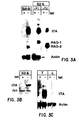
- Figure 3A demonstrates that mRNA corresponding to the tTAk and RAG-1 and RAG-2 genes is detected in induced cell lines stably expressing tTA and stably or transiently expressing RAG-1 and/or RAG-2.
- Figure 3B shows that in S2-6 cells induced for 48 hours by tetracycline removal, tTA protein is easily detectable by Western blotting.
- PBMCs peripheral blood mononuclear cells
- Founder #11 was leaky and #12 showed no inducible luciferase in PBMCs. It is presumed that variability in inducibility and leakiness of transgenes in different founders is a consequence of the site of integration and/or structure of the integrated transgenes. There was no obvious correlation between levels of luciferase expression or leakiness in PBMCs and the copy number of the transgenes. Particularly significant was that when mouse #20 was again given water containing tetracycline for 18 days, after a previous 7 day induction in the absence of tetracycline, luciferase levels dropped essentially to background, demonstrating that transgene induction is reversible (Table 1).
- b Values represent light units (with lysis buffer background subtracted) per 10 6 cells measured in cell extracts of PBMCs from mice removed from tetracycline for the indicated number of days. Values in parentheses are the fold increase or decrease in luciferase activities relative to that in cell extracts from a transgene negative mouse in the assay performed the same day. Day 7* denotes luciferase activity measured in cell extracts from mice in whose drinking water tetracycline was removed for 7 days and then restored for 18 days.
- transgenic mice To analyze more carefully the inducibility of luciferase in transgenic mice, a variety of tissues and organs of second or third generation transgene positive progeny of founder #17 and #20 (backcrossed to C57B1/6) were removed from tetracycline for 7 or 8 days and were compared to transgene identical positive progeny maintained on tetracycline. As shown in Figure 4 and Table 2, the progeny of mouse #51 (from Founder #17) showed luciferase activity in all organs examined. Levels of luciferase activity varied substantially between tissues, with expression consistently high in thymus and lung, and low in liver and kidney. Induction ranged from 2-fold in testes to 150-fold in thymus.
- Luciferase activity (10 5 -4x10 6 rLU/mg protein) was also detected in day 17 fetal brain and liver of transgene positive mice conceived in the absence of tetracycline. Additionally, transgene positive mice conceived and maintained from gestation through 3.5 months in the absence of tetracycline continued to express optimal levels of luciferase and appeared normal. Progeny from founder #20 also showed highest levels of inducible luciferase activity in thymus and lung, although inducibility and tissue distribution of luciferase were more restricted than in the progeny of founder #17.
- the autoregulatory system (pTet-tTAk) described here represents a substantial improvement over a constitutive expression strategy (pcDNA-tTAk) in cultured cells, in all likelihood because it prevents toxic effects of the transactivator in the uninduced state and allows for higher levels of transactivator after induction.
- the constitutive expression strategy is less effective in two regards: a smaller fraction of clones produce any expression at all (18% versus 90%) and induced V(D)J recombinase levels are much lower (by more than 70 fold, averaging over all clones). The kinetics of induction of gene expression with the two systems appears comparable.
- the autoregulatory system provides approximately two orders of magnitude more luciferase activity in thymus (1.1 x 10 4 rLU/mg protein maximum with the constitutive system vs. 2.5 x 10 6 rLU/mg protein with the autoregulatory system) and lung (1.5 x 10 3 rLU/mg protein maximum with constitutive system vs. 1.7 x 10 5 rLU/mg protein with autoregulatory system).
- autoregulatory system appears to be a greater induction of luciferase activity in the thymus (150-fold vs. 67-fold), and easily detectable levels of luciferase activity in tissues which show little or no activity in the unmodified system such as lung, kidney and brain. Additionally, since activity in thymus, spleen, and lymph nodes is detected, this system might be especially suited to studies of the immune system. No gross perturbations of splenic architecture were observed in hematoxalin/eosin stained tissue sections from adult, luciferase expressing, transgenic mice maintained in the absence of tetracycline since conception. As seen with the unmodified system, leakiness varies between tissues, though it is higher in the thymus with the autoregulatory system than with the constitutive system.
- the luciferase activity that was observed in thymus corresponds to an average of approximately 30 molecules of luciferase per cell.
- mice can develop normally in the presence of tetracycline and these transgenes, and that induction by removal of tetracycline does not lead to any obvious ill-effects on the mice, their ability to breed, or fetal development. Therefore, the potential toxicity of the tTA protein in vivo may not be a serious difficulty. Induced mice still express optimal levels of luciferase 3.5 months post tetracycline removal and remain viable at least six months in the absence of tetracycline, suggesting that transgene expression is tolerated and is not downregulated.
- the pTet-tTAk system should be able to direct expression of any desired gene or genes in an inducible manner.
- This expression system should be widely applicable to the study of gene function in transfected cells and in vivo , to the creation of disease models for the testing of therapeutic agents, and to efforts to understand the development of mammalian organisms. It will be particularly useful in allowing regulated transgenic expression of genes otherwise too toxic to be tolerated by the organism during development.
- the plasmid pUHC 13-3 (described by Gossen & Bujard, Proc. Natl. Acad. Sci. USA:89 :5547-5551 (1992)) is 5157 base pairs in size and has three EcoRI restriction sites (at positions 454, 667, 4036) which may be used for a diagnostic restriction digest.
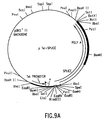
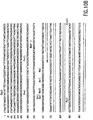
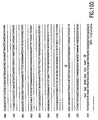
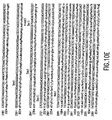
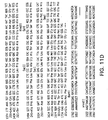
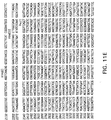
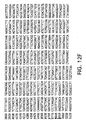
- the plasmid consists of three main fragments: (1) pBR322-sequences including co 1E1-origin of replication, ⁇ -lactamase-resistance-gene with the P bla/p3 of Tn2661 (HincII-site and PstI-site removed); (2) the regulatory region with hCMV minimal promotor (-53 relative to start site) with heptamerized tet-operators upstream; and (3) the luciferase gene with 3'-flanking region from pSV-2-luc (de Wet, et al., Mol. Cell. Biol. 7 :725-37 (1987)). See Figure 12A for a map of pURC 13-3, and Figures 12B-12F for a sequence of pUHC 13-3.
- This modified tTA gene is herein referred to as tTAk.
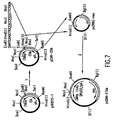
- the HindIII to BamHI fragment of pCMV-tTAk containing the tTAk gene was then cloned into the HindIII to BamHI sites of pcDNAI-neo (Invitrogen Corporation) to generate pcDNA-tTAk (step 2 of figure 7).
- the plasmid pTet-tTAk places a modified tTA gene called tTAk (abbreviation used herein for the tTA gene with a consensus kozak translation initiation site inserted therein) under control of the Tet promoter of pUHC-13-3 (Gossen & Bujard, Proc. Natl. Acad Sci. USA:89 :5547-5551 (1992)).
- tTAk abbreviation used herein for the tTA gene with a consensus kozak translation initiation site inserted therein
- the construct is therefore autoregulatory.
- pTet-tTAk was constructed by first constructing a vector with the Tet promoter of pUHC-13-3 in a vector with an SV40 splice and poly-A site and then inserting tTAk between the Tet promoter and the splice/poly A.
- the starting plasmid for the construction of pTet-tTAk, pSplice-PA was constructed by inserting the ScaI to EcoRI fragment of pHAV-CAT, Jones, et al ., Nuc. Acids Res. 19 :6547-6551 (1991), into the XbaI site of pBKSII + (Stratagene) by ligation of Xbal linkers after Klenow fill in of the EcoRI site.
- the pSplice-PA plasmid contains the SV40 intervening sequence derived from the small T antigen and the SV40 early polyadenylation sequence, as shown in Figure 8.
- pTet-Splice contains a number of unique restriction sites for easy insertion of genes of interest between Tetp and the splice/poly A sequences.
- the Tetp-controlled mouse RAG-1 expression construct used in these experiments was constructed by inserting the coding region of pR1A/C as a BamHI (blunted with Klenow) to XbaI fragment into the EcoRV to SpeI sites of pTet-Splice to yield pTet-R1A/C.
- the nucleic acid molecule encoding RAG-1 can be synthesized chemically using known methods in the art or can be isolated from any other source. For the complete sequence of RAG-1, see Schatz, D. G. et al., Cell 59 :1035-1048 (1989).
- the RAG-1 coding region of pR1A/C has been altered, as compared to full length mouse RAG-1, by deletion of amino acids 2-89 and amino acids 1009-1040, the addition of six histidines immediately following the second codon, the insertion of alanine and serine codons immediately after the histidines to introduce a site for NheI, and the addition of a consensus translation initiation context surrounding the AUG start codon.
- This deletion mutant of RAG-1 has significantly greater V(D)J recombinase activity than full length mouse RAG-1.
- the tetracycline-controlled mouse RAG-2 expression construct used here was constructed by inserting the Xhol to Xbal fragment of pR2A-CDM8 into the SalI to SpeI sites of pTet-Splice to yield pTet-R2A.
- the nucleic acid molecule encoding RAG-2 can be synthesized chemically using known methods in the art or can be isolated from any other available source. For the complete sequence of RAG-2, see U.S.P.N. 5,159,066, issued October 27, 1992, or Oettinger, M. A. et al., Science 248 :1517-1523 (1990).
- the RAG-2 coding region of pR2A-CDM8 has been altered, relative to full length mouse RAG-2, by the C-terminal deletion of amino acids 492-527, the addition of a consensus translation initiation context surrounding the AUG start codon, and the insertion of an alanine codon at position 2.
- This RAG-2 mutant has somewhat higher V(D)J recombinase activity than full length mouse RAG-2.
- the number of added nucleotides depends on whether one counts the nucleotides of the EcoRI and XbaI enzyme sites.
- the modified 5' end of the ORF is referred to herein as a 30 bp oligo.
- the modified tTA gene is hereafter referred to as tTAk.
- the HindIII-BamHI tTAk fragment was cloned into the HindIII-BamHI sites of pcDNAI-neo (Invitrogen Corporation) to yield pcDNA-tTAk.
- the tTAk gene is under the transcriptional control of the enhancer and promoter sequences of the immediate early gene of human cytomegalovirus (hCMV).
- the plasmid pSplice-PA was constructed by inserting the SV40 small T antigen intervening sequence and the SV40 early polyadenylation sequence from pHAV-CAT (Jones, S. N. et al., Nucl. Acids Res. 19 :6547-6551 (1991)), into pBKSII + (Stratagene).
- pBKSII + (Stratagene).
- the XhoI-SalI fragment of pUHC13-3 Gossen, M. & Bujard, H., Proc. Matl. Acad Sci.
- Tetp tet operator upstream of a minimal promoter
- the Tetp-controlled mouse RAG-1 expression construct (pTet-R1A/C) was constructed by inserting the coding region of pR1A/C into pTet-Splice.
- the RAG-1 coding region of pR1A/C has been altered, as compared to full length mouse RAG-1, by small N and C terminal deletions which result in at least a twofold increase in V(D)J recombinase activity, i.e. two fold increase in VDJ with R1A/C over R1A and R2A over R2.
- the Tetp-controlled mouse RAG-2 expression construct (pTet-R2A) was constructed by inserting the coding region of pR2A-CDM8 into pTet-Splice.
- This RAG-2 coding region is altered relative to full length mouse RAG-2 by a small C-terminal deletion which results in a small increase in V(D)J recombinase activity.
- pTet-R1 and pTet-R2 consist of the complete RAG-1 and RAG-2 ORFs, respectively, inserted into pTet-splice.
- Example 2 Cell culture and derivation of transfected cell lines
- Stable transfectants of pcDNA-tTAk were generated by calcium phosphate/glycerol shock transfection of 10 ⁇ g of linearized plasmid into 0.5 x 10 6 NIH 3T3 fibroblast cells as described (Schatz, D. G. et al., Cell 59 :1035-1048 (1989)) and 48 hours after transfection plating cells in 0.75 mg/ml G418 plus 0.5 ⁇ g/ml tetracycline. Single colonies picked after 12 days were expanded in 0.5 mg/ml G418, 0.5 ⁇ g/ml tetracycline.
- Stable transfectants of pTet-tTAk alone or pTet-tTAk plus pTet-R1A/C plus pTet-R2A were generated by transfecting 10 ⁇ g of each linearized plasmid with 1 ⁇ g of linearized pSV2-His, followed by selection in media containing L-histidinol but lacking histidine as described previously (Schatz, D. G. et al., Cell 59 :1035-1048 (1989)). Transfected cells were maintained in the presence of 0.5 ⁇ g/ml tetracycline, beginning at the time of transfection.
- V(D)J recombinase activity was measured using the extrachromosomal reporter plasmid pD243 (a signal joint deletion substrate) as described by others (Lewis, S. M. & Hesse, J. E., EMBO J. 10 (12):3631-3639 (1991)). Briefly, NIH3T3 fibroblast cell lines were transfected with 10 ⁇ g of pD243, and where indicated 6 ⁇ g of pTet-R1A/C and 4.8 ⁇ g of pTet-R2A, by the calcium phosphate/glycerol shock transfection method. Tetracycline was omitted from the culture medium after the transfection in the samples indicated "tet - ".
- tet + cells were maintained in media containing 0.5 ⁇ g/ml tetracycline.
- Extrachromosomal plasmid molecules were harvested by rapid alkaline lysis of the cells 48 hours after transfection, and a small aliquot of the isolated DNA was electroporated into MC1061 bacteria.
- the electroporated bacteria were spread on LB agar plates containing 100 ⁇ g/ml ampicillin (A) and on plates containing 11 ⁇ g/ml chloramphenicol and 100 ⁇ g/ml ampicillin (CA). After sixteen hours of growth at 37 °C the percent recombination, Rn, was calculated as the total number of CA resistant colonies divided by the total number of A resistant colonies, multiplied by 100.
- Probes detecting RAG-1 and RAG-2 mRNA were prepared from fragments of the RAG-1 or RAG-2 coding regions (Schatz, D. G. et al ., Cell 59 :1035-1048 (1989); Oettinger, M. A. et al ., Science 248 :1517-1523 (1990)), respectively.
- the probe for actin has been described previously (Schatz, D. G. et al ., Cell 59 :1035-1048 (1989)).
- Protein from 1.5 x 10 7 cells per lane was subjected to SDS-PAGE on an 8% polyacrylamide gel and electroblotted to a 0.2 micron PVDF membrane (BIO-RAD Laboratories).
- Membranes were blocked at room temperature (RT) overnight in a solution of 1%BSA, 0.5% gelatin, in TTBS (Tris buffered saline + 0.1% Tween-20), washed 2 X 5 minutes in TTBS and probed overnight with a monoclonal anti- tet R antibody (9F 10)-containing hybridoma supernatant (S. Freundlich and H. Bujard, Heidelberg, Germany), diluted 1:4 in 1%BSA in TTBS.
- TTBS Tris buffered saline + 0.1% Tween-20
- blots were washed 4 x 10 minutes in TTBS and tTA protein was detected by incubation for 40 minutes with goat anti-mouse antibody (1:10,000 in TTBS) (Amersham), washing in TTBS 4 x 10 minutes and TBS 2 x 10 minutes, and subsequent developing with an ECL western blotting kit (Amersham).
- mice doubly transgenic for pTet-tTAk (XhoI to NotI fragment) and pUHC13-3 (XhoI to AseI fragment) were created by co-microinjection of gel purified DNA (in the presence of 0.5 ⁇ g/ml tetracycline) into fertilized F1 (C57BL/6 x C3H) eggs, which were then implanted into the uterus of pseudopregnant females.
- Pregnant females were provided with water containing 100 ⁇ g/ml tetracycline and 5% sucrose.
- Progeny were screened by probing Southern blots of tail DNA with tTA (761 bp XbaI-SalI) or luciferase (1365 bp HindIII-EcoRV) fragments labeled with ⁇ - 32 P-dCTP as above. Transgene copy number was estimated by comparison of the Southern blot signal to those obtained from dilutions of plasmid DNA fragments.
- Luciferase activity in tissues of transgenic mice was measured using an assay system according to the manufacturers instructions (#E1500, Promega Corporation).
- Peripheral blood mononuclear cells (PBMCs) (0.1-1.0 x 10 6 cells) were lysed in 50 ⁇ l of lysis buffer for 15 minutes at room temperature, and after pelleting the insoluble material for 5 seconds at 14,000 rpm, 20 ⁇ l of the supernatant was mixed with 100 ⁇ l of luciferin reagent and the light produced in 10 seconds was measured in a luminometer (Berthold, Lumat LB9501, Germany). The number of cell equivalents of lysate in the assay was used to normalize luciferase activity between samples.
- PBMCs Peripheral blood mononuclear cells
Landscapes
- Health & Medical Sciences (AREA)
- Genetics & Genomics (AREA)
- Life Sciences & Earth Sciences (AREA)
- Engineering & Computer Science (AREA)
- Chemical & Material Sciences (AREA)
- Wood Science & Technology (AREA)
- Organic Chemistry (AREA)
- Biotechnology (AREA)
- General Engineering & Computer Science (AREA)
- Biomedical Technology (AREA)
- Zoology (AREA)
- Bioinformatics & Cheminformatics (AREA)
- Molecular Biology (AREA)
- Microbiology (AREA)
- Plant Pathology (AREA)
- Physics & Mathematics (AREA)
- Biochemistry (AREA)
- General Health & Medical Sciences (AREA)
- Biophysics (AREA)
- Micro-Organisms Or Cultivation Processes Thereof (AREA)
- Saccharide Compounds (AREA)
- Preparation Of Compounds By Using Micro-Organisms (AREA)
- Pharmaceuticals Containing Other Organic And Inorganic Compounds (AREA)
Claims (20)
- Stoffzusammensetzung, welche ein Polynukleotidmolekül, dass ein Tetracyclin-Transaktivator-Fusionsprotein kodiert, aufweist, wobei das Protein einen prokaryotischen tet Repressor und ein eukaryotisches transkriptorisches Aktivatorprotein aufweist, und wobei das Polynukleotidmolekül funktionsfähig mit einem induzierbaren minimalen Promoter verbunden ist, welcher Promoter zumindest eine tet Operatorsequenz enthält, wobei der offene Leserahmen des Polynukleotidmoleküls, das ein Tetracyclin-Transaktivator-Fusionsprotein kodiert, an seinem 5'-Ende modifiziert ist, um einen optimale Umgebung für die translatorische Initiation bereitzustellen.
- Stoffzusammensetzung nach Anspruch 1, wobei das Polynukleotidmolekül, welches das Tetracyclin-Transaktivator-Fusionsprotein kodiert, an seinem 5'-Ende modifiziert ist, um die Sequenz CC(A oder G)CCATGG bereitzustellen.
- Stoffzusammensetzung nach Anspruch 1, wobei das 5'-Ende des offenen Leserahmens des Polynukleotidmoleküls, welches das Tetracyclin-Transaktivator-Fusionsprotein kodiert, weiters modifiziert ist, um eine einzigartige Restrikitonsstelle bereitzustellen.
- Stoffzusammensetzung nach Anspruch 3, wobei die einzigartige Restriktionsstelle HindIII ist.
- Stoffzusammensetzung nach Anspruch 4, wobei der offene Leserahmen des Polynukleotidmoleküls, welches das Tetracyclin-Transaktivator-Fusionsprotein kodiert, an seinem 5'-Ende modifiziert ist, um ein Oligonukleotid, welches als SEQ ID Nr. 1 identifiziert wurde, zu kodieren.
- Stoffzusammensetzung nach Anspruch 1, weiche DNA ist.
- Stoffzusammensetzung, welche einen Klonierungsvektor, der das Polynukleotidmolekül nach Anspruch 1 enthält, aufweist.
- Stoffzusammensetzung, welche eine eukaryotische Zelle, die mit dem Polynukleotidmolekül nach Anspruch 1 transfiziert ist, aufweist.
- Stoffzusammensetzung nach Anspruch 8, wobei die eukaryotische Zelle weiters mit einem Polynukleotidmolekül transfiziert ist, welches ein heterologes Protein kodiert, dass funktionsfähig mit einem induzierbaren minimalen Promoter verbunden ist, welcher zumindest eine tet Operatorsequenz enthält.
- Stoffzusammensetzung nach Anspruch 9, wobei zumindest eines der Polynukleotidmoleküle funktionsfähig mit einem minimalen Promoter und sieben tet Operatorsequenzen verbunden ist.
- Verfahren zum Verringern oder zum Ausschalten der Expression eines heterologen Proteins, welches Folgendes aufweist:a) transformieren einer eukaryotischen Zelle mit ti.) einem ersten Polynukleotid, dass ein Tetxacyclin-Transaktivator-Fusionsprotein kodiert, wobei das Protein einen prokaryotischen tet Repressor und ein eukaryotisches transkriptorisches Aktivatorprotein aufweist, und wobei das Polynuklentidmolekül funktionsfähig mit einem induzierbaren minimalen Promoter verbunden ist, welcher Promoter zumindest eine tet Operatorsequenz enthält, wobei der offene Leserahmen des Polynukleotidmoleküls, das ein Tetracyclin-Transaktivator-Fusionsprotein kodiert, an seinem 5'-Ende modifiziert ist um eine optimale Umgebung für die translatorische Initiation bereitzustellen;ü.) einem zweiten Polynukleotidmolekül, welches ein heterologes Protein kodiert, wobei das Protein funktionsfähig mit einem induzieren minimalen Promoter verbunden ist, und wobei der Promoter zumindest eine tet Operatorsequenz enthält; undb) Kultivieren der eukaryotischen Zelle in einem Medium, welches Tetracyclin oder ein Tetracyclin-Analogon aufweist.
- Verfahren nach Anspruch 11, wobei das zweite Polynukleotidmolekül funktionsfähig mit einem minimalen Promoter und sieben tet Operatorsequenzen verbunden ist.
- Verfahren zum Aktivieren oder zum Steigern der Expression eines heterologen Proteins, welches Folgendes aufweist:a) transformieren einer eukaryotischen Zelle miti.) einem ersten Polynukleotidmolekül, dass ein Tetracyclin-Transaktivator-Fusionsprotein kodiert, wobei das Protein einen prokaryotischen tet Repressor und ein eukaryotisches transkriptorisches Aktivatorprotein aufweist, und wobei das Polynukleotidmolekül funktionsfähig mit einem induzierbaren minimalen Promoter verbunden ist, welcher Promoter zumindest eine tet Operatorsequenz enthält, wobei der offene Leserahmen des Polynukleotidmoleküls, das ein Tetracyclin-Transaktivator-Fusionsprotein kodiert, an seinem 5'-Ende modifiziert ist um eine optimale Umgebung für die translatorische Initiation bereitzustellen;ii.) einem zweiten Polynukleotidmolekül, welches ein heterologes Protein kodiert, wobei das Protein funktionsfähig mit einem induzierbaren minimalen Promoter verbunden ist, und wobei der Promoter zumindest eine tet Operatorsequenz enthält; undb) Kultivieren der eukaryotischen Zelle in einem Medium, welchem Tetracyclin oder ein Tetracyclin-Analogon fehlt.
- Stoffzusammensetzung nach Anspruch 8, welche Tetracyclin in einer Menge enthält, die ausreicht um die Bindung des Tetracyclin-Transaktivator-Fusionsproteins an den induzierbaren minimalen Promoter zu unterdrücken.
- Stoffzusammensetzung nach Anspruch 9, wobei das Polynukleotidmolekül, welches ein Tetracyclin-Transaktivator-Fusionsprotein kodiert, in einer Menge exprimiert wird, die ausreicht um die Expression des Polynukleotids, welches das heterologe Protein kodiert, in der Abwesenheit von Tetracyclin anzutreiben.
- Stoffzusammensetzung nach Anspruch 9, wobei das Tetracyclin-Transaktivator-Fusionsprotein in einer Menge vorhanden ist, die ausreicht um die Expression des heterologen Proteins anzutreiben.
- Stoffzusammensetzung, die im Wesentlichen aus dem Plasmid pTet-Splice, wie in Figur 9A dargestellt ist, besteht, wobei pTet-Splice die SEQ ID Nr. 2 aufweist.
- Stoffzusammensetzung, die im Wesentlichen aus dem Plasmid pTet-tTAK, wie in Figur 10A dargestellt ist, besteht, wobei pTet-tTAk die SEQ ID Nr, 3 aufweist.
- Ausrüstungssatz, welcher ein Trägermittel aufweist, welches darin in strengem Abschluß zumindest zwei Containermittel hat, wobei das erste Containermittel ein erstes Polynukleotidmolekül beinhaltet, dass ein Tetracyclin-Transaktivator-Fusionsprotein kodiert, wobei das Protein einen prokaryotischen tet Repressor und ein eukaryotisches transkriptorisches Aktivatorprotein aufweist, und wobei das Polynukleotidmolekül funktionsfähig mit einem induzierbaren minimalen Promoter verbunden ist, welcher Promoter zumindest eine tet Operatorsequenz enthält, wobei der offene Leserahmen des Polynukleotidmoleküls, das ein Tetracyclin-Transaktivator-Fusionsprotein kadiert, an seinem 5'-Ende modifiziert ist um eine optimale Umgebung für die translatorische Initiation bereitzustellen; und ein zweites Containennittel, welches ein zweites Polynukleotidmolekül enthält, welches den induzierbaren minmalen Promoter kodiert, welcher Promoter zumindest eine tet Operatorsequenz aufweist, wobei die tet Operatorsequenz strategisch positioniert ist, um funktionsfähig mit einer heterologen Polynukleotidsequenz, welche ein Polypeptid kodiert, verbunden zu sein.
- Ausrüstungssatz, welcher ein Trägermittel aufweist, welches darin in strengem Abschluß zumindest zwei Containermittel hat, wobei das erste Containermittel eine eukaryotische Zelle enthält, die mit einem ersten Polynukleotidmolekül transfiziert ist, dass ein Tetracyclin-Transaktivator-Fusionsprotein kodiert, wobei das Protein einen prokaryotischen tet Repressor und ein eukaryotisches transkriptorisches Aktivatorprotein aufweist, und wobei das Polynukleotidmolekül funktionsfähig mit einem induzierbaren minimalen Promoter verbunden ist, welcher Promoter zumindest eine tet Operatorsequenz enthält, wobei der offene Leserahmen des Polynukleotidmoleküls, das ein Tetracyclin-Transaktivator-Fusionsprotein kodiert, an seinem 5'-Ende modifiziert ist um eine optimale Umgebung für die translatorische Initiation bereitzustellen; und ein zweites Containermittel, welches ein zweites Polynukleotidmolekül enthält, welches den induzierbaren minimalen Promoter aufweist, welcher Promoter zumindest eine tet Operatorsequenz aufweist, wobei die tet Operatorsequenz strategisch positioniert ist, um funktionsfähig mit einer heterologen Polynukleotidsequenz, welche ein heterologes Polypeptid kodiert, verbunden zu sein.
Applications Claiming Priority (3)
| Application Number | Priority Date | Filing Date | Title |
|---|---|---|---|
| US474169 | 1990-02-02 | ||
| US08/474,169 US5851796A (en) | 1995-06-07 | 1995-06-07 | Autoregulatory tetracycline-regulated system for inducible gene expression in eucaryotes |
| PCT/US1996/010109 WO1996040946A1 (en) | 1995-06-07 | 1996-06-07 | An autoregulatory tetracycline-regulated system for inducible gene expression in eucaryotes |
Publications (2)
| Publication Number | Publication Date |
|---|---|
| EP0832254A1 EP0832254A1 (de) | 1998-04-01 |
| EP0832254B1 true EP0832254B1 (de) | 2006-03-29 |
Family
ID=23882456
Family Applications (1)
| Application Number | Title | Priority Date | Filing Date |
|---|---|---|---|
| EP96921541A Expired - Lifetime EP0832254B1 (de) | 1995-06-07 | 1996-06-07 | Ein autoreguliertes tetracyclin-reguliertes system fur die induzierte genexpression in eukaryoten |
Country Status (7)
| Country | Link |
|---|---|
| US (1) | US5851796A (de) |
| EP (1) | EP0832254B1 (de) |
| JP (1) | JPH11507539A (de) |
| AT (1) | ATE321871T1 (de) |
| AU (1) | AU6274596A (de) |
| DE (1) | DE69635992T2 (de) |
| WO (1) | WO1996040946A1 (de) |
Families Citing this family (64)
| Publication number | Priority date | Publication date | Assignee | Title |
|---|---|---|---|---|
| DK0870044T3 (da) * | 1995-12-01 | 2004-08-02 | Crucell Holland Bv | Reguleret proteinekspression i stabilt transfekterede pattedyrsceller |
| US5891718A (en) * | 1996-03-27 | 1999-04-06 | Vical Incorporated | Tetracycline inducible/repressible systems |
| DE19635568C1 (de) * | 1996-09-02 | 1998-03-26 | Gsf Forschungszentrum Umwelt | Vektorsysteme zur konditionalen Genexpression |
| WO1998037185A2 (en) * | 1997-02-20 | 1998-08-27 | The Board Of Regents Of The University Of Texas System | Vectors for controlled gene expression |
| US6087166A (en) * | 1997-07-03 | 2000-07-11 | Basf Aktiengesellschaft | Transcriptional activators with graded transactivation potential |
| US6878516B1 (en) | 1998-01-16 | 2005-04-12 | Pharmacia & Upjohn Company | Autoregulatory system for validating microbial genes as possible antimicrobial targets using a tetracycline-controllable element |
| AU2312699A (en) * | 1998-01-16 | 1999-08-02 | Pharmacia & Upjohn Company | An autoregulatory system for validating microbial genes as possible antimicrobial targets using tetracycline-controllable element |
| BR9908096A (pt) * | 1998-02-19 | 2000-10-31 | Eastern Virginia Med School | Proteìna 3 da zona pelúcida humana (hzp3), ativa, recombinante |
| US7037663B2 (en) * | 1998-02-19 | 2006-05-02 | Eastern Virginia Medical School | Human zona pellucida protein 3 and uses thereof |
| DE19831420A1 (de) * | 1998-07-14 | 2000-01-20 | Hoechst Marion Roussel De Gmbh | Expressionssysteme enthaltend chimäre Promotoren mit Bindungsstellen für rekombinante Transkriptionsfaktoren |
| US20050037335A1 (en) * | 1998-11-07 | 2005-02-17 | Wolfgang Hillen | Method for identifying novel transcriptional regulatory proteins |
| US6706491B1 (en) | 1999-04-09 | 2004-03-16 | The Board Of Trustees Of The University Of Illinois | Reagents and methods for identifying and modulating expression of genes regulated by p21 |
| ATE458818T1 (de) * | 1999-06-07 | 2010-03-15 | Tet Systems Holding Gmbh & Co | Tet repressor basierte transkriptionale regulatorische proteine |
| GB2355459B (en) | 1999-11-29 | 2001-09-26 | Isis Innovation | A dominant conditional lethal genetic system |
| JP2005516586A (ja) * | 2001-07-20 | 2005-06-09 | ボード オブ トラスティーズ オブ ザ ユニヴァースティ オブ イリノイ | 癌の処置に対する遺伝子標的を同定するための試薬および方法 |
| EP1421104A4 (de) * | 2001-08-02 | 2005-08-24 | Trinity Biomedical Technology | Humane zona-pellucida-proteine und verfahren zu deren verwendung bei der diagnose männlicher unfruchtbarkeit |
| GB2402675B (en) * | 2003-05-12 | 2008-02-20 | Oxitec Ltd | Resistance dilution |
| GB2403475B (en) * | 2003-07-01 | 2008-02-06 | Oxitec Ltd | Stable integrands |
| GB2404382B (en) | 2003-07-28 | 2008-01-30 | Oxitec Ltd | Pest control |
| US20090123468A1 (en) | 2003-10-24 | 2009-05-14 | Gencia Corporation | Transducible polypeptides for modifying metabolism |
| US8507277B2 (en) | 2003-10-24 | 2013-08-13 | Gencia Corporation | Nonviral vectors for delivering polynucleotides |
| WO2005056752A2 (en) | 2003-10-24 | 2005-06-23 | Gencia Corporation | Methods and compositions for delivering polynucleotides |
| US8133733B2 (en) | 2003-10-24 | 2012-03-13 | Gencia Corporation | Nonviral vectors for delivering polynucleotides to target tissues |
| US8062891B2 (en) | 2003-10-24 | 2011-11-22 | Gencia Corporation | Nonviral vectors for delivering polynucleotides to plants |
| US20080307549A1 (en) | 2005-08-03 | 2008-12-11 | Adelaide Research & Innovation Pty Ltd. | Polysaccharide Synthases |
| GB2443186A (en) | 2006-10-25 | 2008-04-30 | Oxitec Ltd | Expression system for mediating alternative splicing |
| EP3159414A1 (de) * | 2006-02-10 | 2017-04-26 | Oxitec Limited | Expressionssystem |
| US8080647B2 (en) * | 2006-11-22 | 2011-12-20 | Pioneer Hi Bred International Inc | Tetracycline repressor and uses thereof |
| AU2007352618B2 (en) | 2007-05-02 | 2013-07-18 | Boehringer Ingelheim Animal Health USA Inc. | DNA plasmids having improved expression and stability |
| EP2364322A1 (de) * | 2008-10-28 | 2011-09-14 | Pioneer Hi-Bred International Inc. | Sulfonylharnstoffreaktive repressorproteine |
| US8124400B2 (en) | 2008-12-10 | 2012-02-28 | Synthetic Genomics, Inc. | Production of branched-chain alcohols by photosynthetic microorganisms |
| WO2011008565A1 (en) | 2009-06-29 | 2011-01-20 | Synthetic Genomics, Inc. | Acyl-acp thioesterase genes and uses therefor |
| WO2011019858A1 (en) | 2009-08-11 | 2011-02-17 | Synthetic Genomics, Inc. | Microbial production of fatty alcohols |
| EP2719757A1 (de) | 2009-09-04 | 2014-04-16 | President and Fellows of Harvard College | Herstellung sekretierter bioprodukte aus photosynthese-mikroben |
| EP2655615A4 (de) | 2010-12-23 | 2014-04-23 | Exxonmobil Res & Eng Co | Prokaryotische acyl-acp-thioesterasen zur herstellung von fettsäuren in genetisch modifizierten mikroorganismen |
| AU2011349729B2 (en) | 2010-12-23 | 2015-09-24 | Exxonmobil Research And Engineering Company | Genetically engineered microorganisms comprising 4-hydroxybenzoly-CoA thioesterases and methods of using the same for producing free fatty acids and fatty acid derivatives |
| US9187726B2 (en) | 2010-12-23 | 2015-11-17 | Exxonmobil Research And Engineering Company | Culturing a microorganism in a medium with an elevated level of a carboxylate counterion source |
| EP2658963A4 (de) | 2010-12-31 | 2014-05-14 | Exxonmobil Res & Eng Co | Verbesserung der biomasseproduktion durch disruption von lichtenergiedissipationswegen |
| WO2012135668A1 (en) | 2011-03-31 | 2012-10-04 | Exxonmobil Research And Engineering Company | Metabolic pathway targeting by transcription factor overexpression |
| US20130005590A1 (en) | 2011-06-06 | 2013-01-03 | The Regents Of The University Of California | Synthetic biology tools |
| MX2013015327A (es) | 2011-06-30 | 2014-01-31 | Exxonmobil Res & Eng Co | Regulacion de genes toxina y antitoxina para contencion biologica. |
| CN103975070A (zh) | 2011-09-27 | 2014-08-06 | 艾克森美孚研究与工程公司 | 酰基-酰基载体蛋白(acyl-acp)蜡酯合酶 |
| US9096834B2 (en) | 2012-02-24 | 2015-08-04 | Exxonmobil Research And Engineering Company | Recombinant microorganisms comprising thioesterase and lysophosphatidic acid acyltransferase genes for fatty acid production |
| PT2814972T (pt) | 2012-02-24 | 2020-06-16 | Exxonmobil Res & Eng Co | Produção melhorada de ácidos gordos e derivados de ácidos gordos por micro-organismos recombinantes |
| US8962299B2 (en) | 2012-02-29 | 2015-02-24 | Exxonmobil Research And Engineering Company | Four-gene pathway for wax ester synthesis |
| GB2500113A (en) | 2012-03-05 | 2013-09-11 | Oxitec Ltd | Arthropod male germline gene expression system |
| US9181568B2 (en) | 2012-04-23 | 2015-11-10 | Exxonmobil Research And Engineering Company | Cell systems and methods for improving fatty acid synthesis by expression of dehydrogenases |
| GB201303932D0 (en) | 2013-03-05 | 2013-04-17 | Oxitec Ltd | Muscle actin promoter |
| GB2526867A (en) | 2014-06-05 | 2015-12-09 | Oxitec Ltd | Gene expression system |
| AU2016318230B2 (en) | 2015-09-11 | 2020-05-21 | Biosceptre (Aust) Pty Ltd | Chimeric antigen receptors and uses thereof |
| US20170267984A1 (en) | 2016-03-18 | 2017-09-21 | Exxonmobil Research And Engineering Company | Chlorophyllase overproduction to enhance photosynthetic efficiency |
| WO2018007526A1 (en) * | 2016-07-06 | 2018-01-11 | Danmarks Tekniske Universitet | Use of prokaryotic transcriptional activators as metabolite biosensors in eukaryotic cells |
| US11866733B2 (en) | 2016-08-01 | 2024-01-09 | University of Pittsburgh—of the Commonwealth System of Higher Education | Human induced pluripotent stem cells for high efficiency genetic engineering |
| US11827876B2 (en) | 2016-08-12 | 2023-11-28 | Oxitec Ltd. | Self-limiting, sex-specific gene and methods of using |
| TW201907937A (zh) | 2017-05-08 | 2019-03-01 | 美商葛利史東腫瘤科技公司 | 阿爾法病毒新抗原載體 |
| WO2019169291A1 (en) | 2018-03-02 | 2019-09-06 | The United States Of America, As Represented By The Secretary, Department Of Health And Human Services | Use of il-34 to treat retinal inflammation and neurodegeneration |
| AR117409A1 (es) | 2018-03-29 | 2021-08-04 | Oxitec Ltd | Noctuidas autolimitantes |
| CN112166193A (zh) | 2018-05-21 | 2021-01-01 | 生物权威(英国)有限公司 | 具有经修饰的接头结构域的嵌合抗原受体及其用途 |
| MX2021014525A (es) | 2019-05-30 | 2022-03-17 | Gritstone Bio Inc | Adenovirus modificados. |
| US12534512B2 (en) | 2019-11-11 | 2026-01-27 | Vanderbilt University | Human monoclonal antibodies to hantavirus and methods of use therefore |
| EP4192496A4 (de) | 2020-08-06 | 2025-01-01 | Gritstone bio, Inc. | Multiepitop-impfstoffkassetten |
| AU2021337747A1 (en) * | 2020-09-05 | 2023-02-23 | Ginkgo Bioworks, Inc. | Synthetic expression systems |
| WO2022241455A1 (en) * | 2021-05-12 | 2022-11-17 | Baylor College Of Medicine | A synthetic circuit for buffering gene dosage variation between individual mammalian cells |
| US20240384277A1 (en) * | 2021-06-15 | 2024-11-21 | Modernatx, Inc. | Engineered polynucleotides for cell-type or microenvironment-specific expression |
Family Cites Families (8)
| Publication number | Priority date | Publication date | Assignee | Title |
|---|---|---|---|---|
| DE3934454A1 (de) * | 1989-10-14 | 1991-04-18 | Merck Patent Gmbh | Regulierbare expressionsvektoren fuer bacillus |
| WO1991019784A1 (en) * | 1990-06-13 | 1991-12-26 | The Trustees Of Princeton University | A Lac REPRESSOR-HSV VP16 CHIMERIC TRANSCRIPTIONAL ACTIVATOR PROTEIN SYSTEM FUNCTIONING IN TRANSFECTED MAMMALIAN CELLS |
| GB9028062D0 (en) * | 1990-12-24 | 1991-02-13 | Agricultural & Food Res | Production of transgenic animals |
| DE4100594A1 (de) * | 1991-01-08 | 1992-07-09 | Inst Genbiologische Forschung | Neue plasmide zur zeitlichen und oertlichen kontrollierten expression eines heterologen produktes in pflanzen |
| AU664847B2 (en) * | 1991-05-15 | 1995-12-07 | Cell Genesys, Inc. | Genomic modifications with homologous DNA targeting |
| GB9113097D0 (en) * | 1991-06-18 | 1991-08-07 | Boehringer Ingelheim Int | Chimeric gene |
| US5464758A (en) * | 1993-06-14 | 1995-11-07 | Gossen; Manfred | Tight control of gene expression in eucaryotic cells by tetracycline-responsive promoters |
| US5866755A (en) * | 1993-06-14 | 1999-02-02 | Basf Aktiengellschaft | Animals transgenic for a tetracycline-regulated transcriptional inhibitor |
-
1995
- 1995-06-07 US US08/474,169 patent/US5851796A/en not_active Expired - Lifetime
-
1996
- 1996-06-07 EP EP96921541A patent/EP0832254B1/de not_active Expired - Lifetime
- 1996-06-07 WO PCT/US1996/010109 patent/WO1996040946A1/en not_active Ceased
- 1996-06-07 AT AT96921541T patent/ATE321871T1/de active
- 1996-06-07 JP JP9502206A patent/JPH11507539A/ja not_active Ceased
- 1996-06-07 DE DE69635992T patent/DE69635992T2/de not_active Expired - Lifetime
- 1996-06-07 AU AU62745/96A patent/AU6274596A/en not_active Abandoned
Also Published As
| Publication number | Publication date |
|---|---|
| DE69635992T2 (de) | 2007-02-01 |
| WO1996040946A1 (en) | 1996-12-19 |
| EP0832254A1 (de) | 1998-04-01 |
| US5851796A (en) | 1998-12-22 |
| AU6274596A (en) | 1996-12-30 |
| JPH11507539A (ja) | 1999-07-06 |
| ATE321871T1 (de) | 2006-04-15 |
| DE69635992D1 (de) | 2006-05-18 |
Similar Documents
| Publication | Publication Date | Title |
|---|---|---|
| US5851796A (en) | Autoregulatory tetracycline-regulated system for inducible gene expression in eucaryotes | |
| US5650298A (en) | Tight control of gene expression in eucaryotic cells by tetracycline-responsive promoters | |
| US5859310A (en) | Mice transgenic for a tetracycline-controlled transcriptional activator | |
| US5888981A (en) | Methods for regulating gene expression | |
| Shockett et al. | A modified tetracycline-regulated system provides autoregulatory, inducible gene expression in cultured cells and transgenic mice. | |
| JP4820344B2 (ja) | テトラサイクリン調節される転写モジュレーター | |
| US5464758A (en) | Tight control of gene expression in eucaryotic cells by tetracycline-responsive promoters | |
| CA2376665C (en) | Novel tet repressor-based transcriptional regulatory proteins | |
| US5654168A (en) | Tetracycline-inducible transcriptional activator and tetracycline-regulated transcription units | |
| Schultze et al. | Efficient control of gene expression by single step integration of the tetracycline system in transgenic mice | |
| US5789156A (en) | Tetracycline-regulated transcriptional inhibitors | |
| JP4817657B2 (ja) | 誘導性の真核生物発現システム | |
| WO1998005754A9 (en) | Packaging cell lines containing expression constructs producing pseudotyped retroviral vectors | |
| US6576469B1 (en) | Inducible methods for repressing gene function | |
| Mortensen et al. | Selection of transfected mammalian cells | |
| US20230304062A1 (en) | Controlled transcription of polynucleotides | |
| EP2085475B1 (de) | Verfahren zur herstellung eines zellstamms mit fähigkeit zur tetracyclin-induzierten genexpression oder eines zellstamms mit konditionalem gen-knockout sowie verwendung der zellstämme | |
| EP1161527B1 (de) | VERBESSERTER EXPRESSIONSVEKTOR FüR DIE GLEICHMäSSIGE ZELLULäRE EXPRESSION DES TET-REPRESSORS IN MEHREREN ZELLTYPEN | |
| US20010049828A1 (en) | Genetic system for controlling background expression of transgene products | |
| Kim | Improvement and establishment of the tTA-dependent inducible system in the mouse brain | |
| Gingrich | Characterization of a neural-specific inducible genetic system in transgenic mice | |
| WO2000062604A1 (en) | Genetic system for controlling background expression of transgene products | |
| US20050235370A1 (en) | Spatiotemporally controlled adult somatic mutagenesis system | |
| HK1075364B (en) | Inducible eukaryotic expression system |
Legal Events
| Date | Code | Title | Description |
|---|---|---|---|
| PUAI | Public reference made under article 153(3) epc to a published international application that has entered the european phase |
Free format text: ORIGINAL CODE: 0009012 |
|
| 17P | Request for examination filed |
Effective date: 19971217 |
|
| AK | Designated contracting states |
Kind code of ref document: A1 Designated state(s): AT BE CH DE DK ES FI FR GB GR IE IT LI LU MC NL PT SE |
|
| 17Q | First examination report despatched |
Effective date: 20031008 |
|
| GRAP | Despatch of communication of intention to grant a patent |
Free format text: ORIGINAL CODE: EPIDOSNIGR1 |
|
| GRAC | Information related to communication of intention to grant a patent modified |
Free format text: ORIGINAL CODE: EPIDOSCIGR1 |
|
| GRAS | Grant fee paid |
Free format text: ORIGINAL CODE: EPIDOSNIGR3 |
|
| GRAA | (expected) grant |
Free format text: ORIGINAL CODE: 0009210 |
|
| AK | Designated contracting states |
Kind code of ref document: B1 Designated state(s): AT BE CH DE DK ES FI FR GB GR IE IT LI LU MC NL PT SE |
|
| PG25 | Lapsed in a contracting state [announced via postgrant information from national office to epo] |
Ref country code: NL Free format text: LAPSE BECAUSE OF FAILURE TO SUBMIT A TRANSLATION OF THE DESCRIPTION OR TO PAY THE FEE WITHIN THE PRESCRIBED TIME-LIMIT Effective date: 20060329 |
|
| REG | Reference to a national code |
Ref country code: GB Ref legal event code: FG4D |
|
| REG | Reference to a national code |
Ref country code: CH Ref legal event code: EP |
|
| REG | Reference to a national code |
Ref country code: IE Ref legal event code: FG4D |
|
| REF | Corresponds to: |
Ref document number: 69635992 Country of ref document: DE Date of ref document: 20060518 Kind code of ref document: P |
|
| PG25 | Lapsed in a contracting state [announced via postgrant information from national office to epo] |
Ref country code: IE Free format text: LAPSE BECAUSE OF NON-PAYMENT OF DUE FEES Effective date: 20060607 |
|
| PG25 | Lapsed in a contracting state [announced via postgrant information from national office to epo] |
Ref country code: SE Free format text: LAPSE BECAUSE OF FAILURE TO SUBMIT A TRANSLATION OF THE DESCRIPTION OR TO PAY THE FEE WITHIN THE PRESCRIBED TIME-LIMIT Effective date: 20060629 Ref country code: DK Free format text: LAPSE BECAUSE OF FAILURE TO SUBMIT A TRANSLATION OF THE DESCRIPTION OR TO PAY THE FEE WITHIN THE PRESCRIBED TIME-LIMIT Effective date: 20060629 |
|
| PG25 | Lapsed in a contracting state [announced via postgrant information from national office to epo] |
Ref country code: MC Free format text: LAPSE BECAUSE OF NON-PAYMENT OF DUE FEES Effective date: 20060630 |
|
| PG25 | Lapsed in a contracting state [announced via postgrant information from national office to epo] |
Ref country code: ES Free format text: LAPSE BECAUSE OF FAILURE TO SUBMIT A TRANSLATION OF THE DESCRIPTION OR TO PAY THE FEE WITHIN THE PRESCRIBED TIME-LIMIT Effective date: 20060710 |
|
| REG | Reference to a national code |
Ref country code: CH Ref legal event code: NV Representative=s name: KIRKER & CIE SA |
|
| PG25 | Lapsed in a contracting state [announced via postgrant information from national office to epo] |
Ref country code: PT Free format text: LAPSE BECAUSE OF FAILURE TO SUBMIT A TRANSLATION OF THE DESCRIPTION OR TO PAY THE FEE WITHIN THE PRESCRIBED TIME-LIMIT Effective date: 20060829 |
|
| REG | Reference to a national code |
Ref country code: CH Ref legal event code: PFA Owner name: YALE UNIVERSITY Free format text: YALE UNIVERSITY#451 COLLEGE STREET#NEW HAVEN CT 06520 (US) -TRANSFER TO- YALE UNIVERSITY#TWO WHITNEY AVENUE#NEW HAVEN, CT 06511 (US) |
|
| RAP2 | Party data changed (patent owner data changed or rights of a patent transferred) |
Owner name: YALE UNIVERSITY |
|
| NLV1 | Nl: lapsed or annulled due to failure to fulfill the requirements of art. 29p and 29m of the patents act | ||
| ET | Fr: translation filed | ||
| REG | Reference to a national code |
Ref country code: FR Ref legal event code: CA |
|
| PLBE | No opposition filed within time limit |
Free format text: ORIGINAL CODE: 0009261 |
|
| STAA | Information on the status of an ep patent application or granted ep patent |
Free format text: STATUS: NO OPPOSITION FILED WITHIN TIME LIMIT |
|
| 26N | No opposition filed |
Effective date: 20070102 |
|
| BECA | Be: change of holder's address |
Owner name: *YALE UNIVERSITYTWO WHITNEY AVENUE, US - NEW HAVEN Effective date: 20060329 |
|
| PG25 | Lapsed in a contracting state [announced via postgrant information from national office to epo] |
Ref country code: GR Free format text: LAPSE BECAUSE OF FAILURE TO SUBMIT A TRANSLATION OF THE DESCRIPTION OR TO PAY THE FEE WITHIN THE PRESCRIBED TIME-LIMIT Effective date: 20060630 |
|
| PG25 | Lapsed in a contracting state [announced via postgrant information from national office to epo] |
Ref country code: FI Free format text: LAPSE BECAUSE OF FAILURE TO SUBMIT A TRANSLATION OF THE DESCRIPTION OR TO PAY THE FEE WITHIN THE PRESCRIBED TIME-LIMIT Effective date: 20060329 |
|
| PG25 | Lapsed in a contracting state [announced via postgrant information from national office to epo] |
Ref country code: LU Free format text: LAPSE BECAUSE OF NON-PAYMENT OF DUE FEES Effective date: 20060607 |
|
| PGFP | Annual fee paid to national office [announced via postgrant information from national office to epo] |
Ref country code: BE Payment date: 20090710 Year of fee payment: 14 |
|
| BERE | Be: lapsed |
Owner name: *YALE UNIVERSITY Effective date: 20100630 |
|
| PG25 | Lapsed in a contracting state [announced via postgrant information from national office to epo] |
Ref country code: IT Free format text: LAPSE BECAUSE OF NON-PAYMENT OF DUE FEES Effective date: 20100607 |
|
| PG25 | Lapsed in a contracting state [announced via postgrant information from national office to epo] |
Ref country code: BE Free format text: LAPSE BECAUSE OF NON-PAYMENT OF DUE FEES Effective date: 20100630 |
|
| REG | Reference to a national code |
Ref country code: FR Ref legal event code: PLFP Year of fee payment: 20 |
|
| PGFP | Annual fee paid to national office [announced via postgrant information from national office to epo] |
Ref country code: CH Payment date: 20150629 Year of fee payment: 20 Ref country code: GB Payment date: 20150629 Year of fee payment: 20 Ref country code: DE Payment date: 20150629 Year of fee payment: 20 |
|
| PGFP | Annual fee paid to national office [announced via postgrant information from national office to epo] |
Ref country code: AT Payment date: 20150520 Year of fee payment: 20 Ref country code: FR Payment date: 20150617 Year of fee payment: 20 |
|
| PGFP | Annual fee paid to national office [announced via postgrant information from national office to epo] |
Ref country code: IT Payment date: 20150625 Year of fee payment: 20 |
|
| REG | Reference to a national code |
Ref country code: DE Ref legal event code: R071 Ref document number: 69635992 Country of ref document: DE |
|
| REG | Reference to a national code |
Ref country code: CH Ref legal event code: PL |
|
| REG | Reference to a national code |
Ref country code: GB Ref legal event code: PE20 Expiry date: 20160606 |
|
| REG | Reference to a national code |
Ref country code: AT Ref legal event code: MK07 Ref document number: 321871 Country of ref document: AT Kind code of ref document: T Effective date: 20160607 |
|
| PG25 | Lapsed in a contracting state [announced via postgrant information from national office to epo] |
Ref country code: GB Free format text: LAPSE BECAUSE OF EXPIRATION OF PROTECTION Effective date: 20160606 |